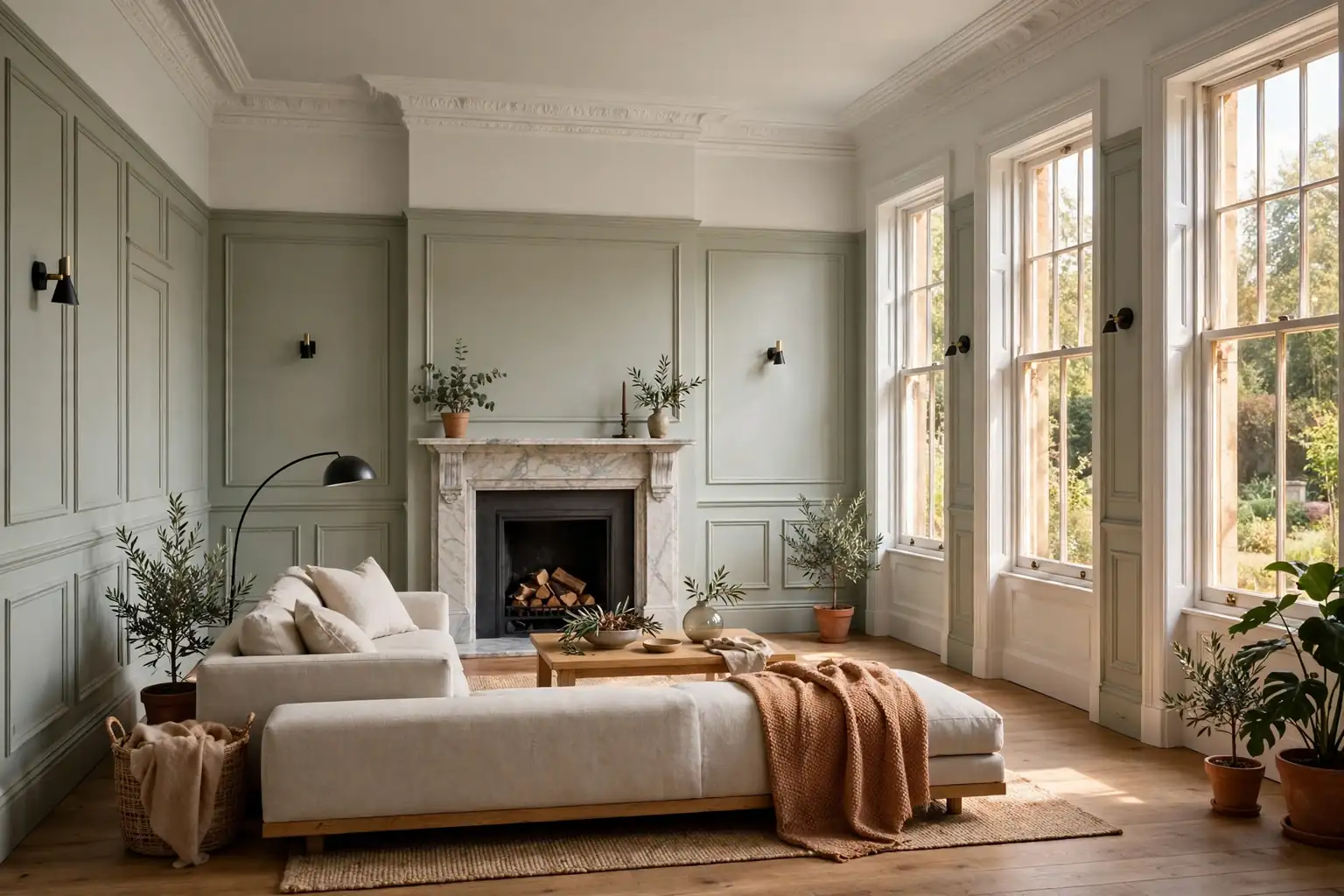
A Victorian living room already has a head start: tall ceilings, deep windows, a fireplace, and mouldings that newer rooms often lack. The trick is to let those features do the talking and keep everything else quieter, with low furniture, plain fabrics, and a calm colour base. These 22 modern Victorian living room design ideas show how to pair ornate details with modern comfort, from painted panelling and glass tables to brass accents and bay window seats. Start with the room you have, keep the details worth keeping, and change one layer at a time. For small room layout help, the zoning advice in these cozy apartment living room ideas pairs well with the Victorian layouts below.
Key Takeaways
- Keep the Victorian bones: mouldings, fireplaces, sash windows and ceiling roses are the room’s best features, so clean and repair them before adding anything new.
- Let modern pieces sit low and plain, so ornate walls and ceilings stay the focus instead of competing with bulky furniture.
- Use one calm base colour on walls and large furniture, then add depth with velvet, brass, glass, wood and plants.
- Layer light at several heights, with picture lights, floor lamps and table lamps, rather than relying on one central light.
- Give the fireplace a clear role, whether as a seating focus, an art wall, or a quiet corner, instead of letting it fight with the television.
- Choose a few Victorian details to repeat, such as brass, arch shapes or dark wood, and leave the rest of the room simple.
1. Paint the Panelling One Calm Colour
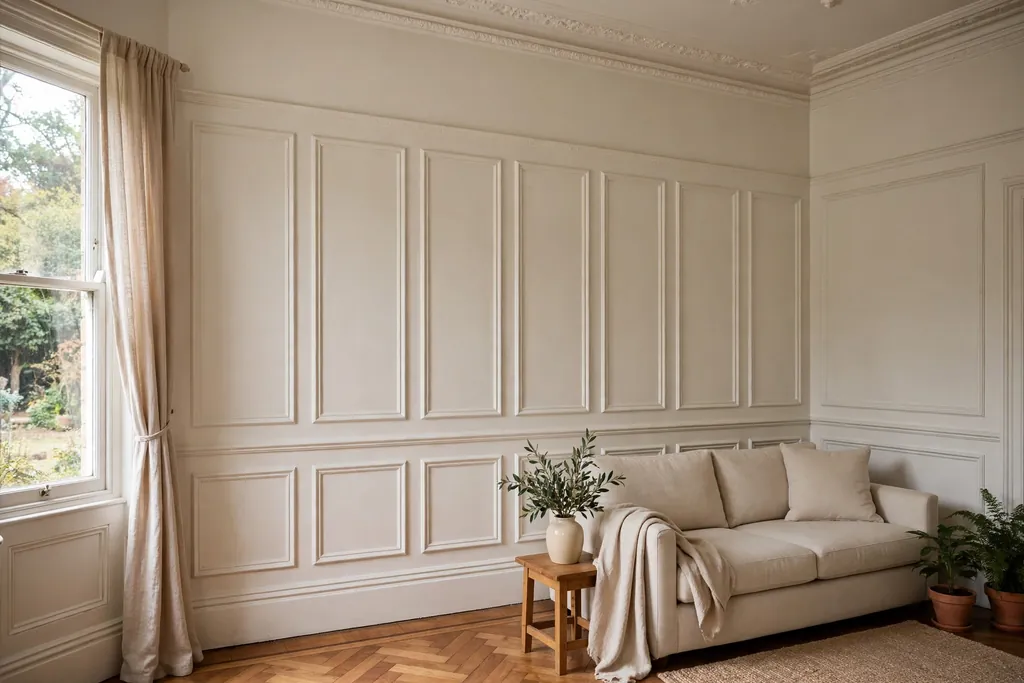
Paint wall panelling, skirting and the picture rail in a single calm colour, such as warm white, pale greige or soft sage, so the mouldings read as texture rather than as a busy pattern. One colour lets the shadows in the panelling do the work, and it gives modern furniture a quiet background. This suits a room where dark wood panelling feels heavy, but removing it would lose the Victorian character.
Use a washable paint finish that suits the room’s use, and keep the ceiling a shade lighter so the room still feels tall. Test the colour on one panel in daylight and lamplight before painting the whole wall, since mouldings change how a colour looks. If you rent, the same calm base can come from large curtains, a pale rug and light furniture, without painting at all.
2. Keep the Ceiling Rose and Fit a Simple Pendant
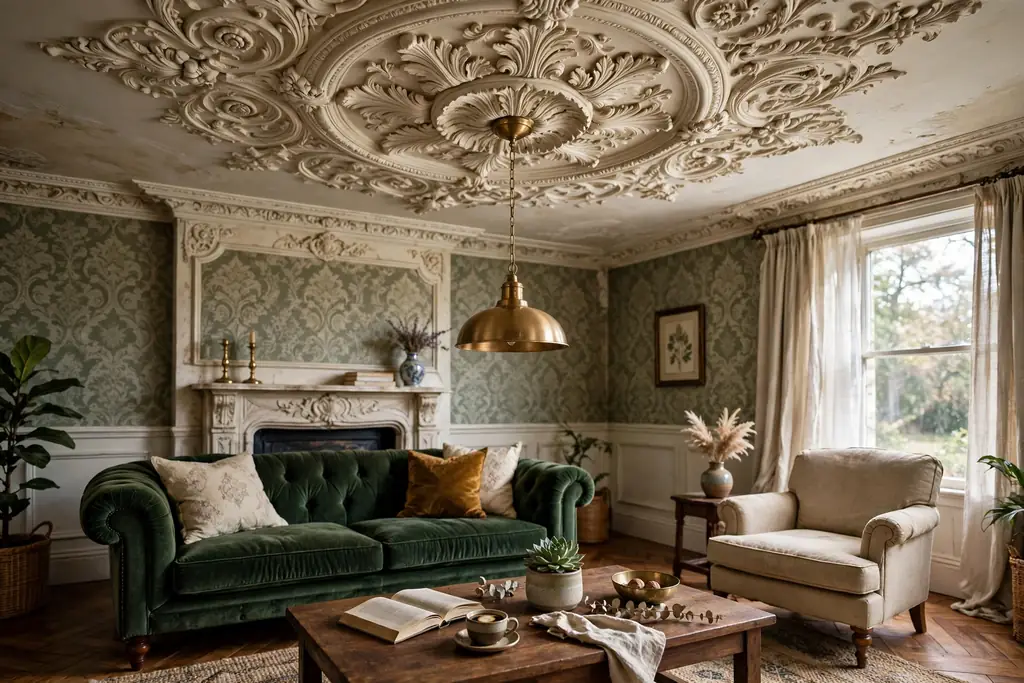
Keep the original ceiling rose and hang a simple modern pendant from it, rather than replacing the rose with a plain ceiling fitting. A slim pendant in brass, black metal or clear glass hangs low enough to light a coffee table, while the rose above keeps the Victorian detail in view. This suits rooms with high ceilings, where a pendant can hang at a comfortable height without crowding the room.
Choose a pendant with a warm bulb and a dimmer, so the light can shift from bright daytime use to a soft evening glow. Keep the cord plain and the shade simple, since an ornate chandelier plus an ornate rose can make the ceiling feel crowded. If the rose is damaged, a plaster repair is usually cheaper and more in keeping than removing it.
3. Dress Sash Windows With Sheer Linen
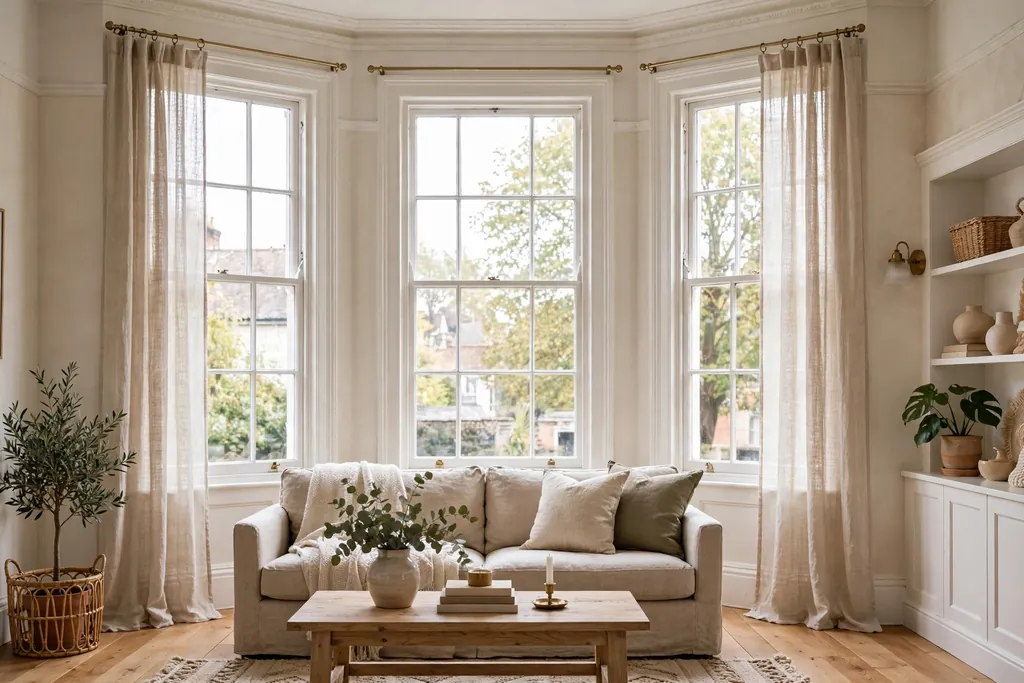
Dress original sash windows with sheer linen panels that soften daylight without hiding the window frame or the view. Sheer linen keeps the tall Victorian proportions visible, gives privacy in the daytime, and moves gently when the window is open. This suits rooms where heavy curtains would darken the space or hide the best feature of the wall.
Hang the rod close to the ceiling and wider than the frame, so the panels stack on the wall when open. Add a plain roller blind behind the linen if you need full privacy at night, rather than a second heavy curtain layer. Keep the linen in a pale neutral, and wash it as advised on the label, since window fabric collects dust.
4. Let the Marble Fireplace Stay the Focus
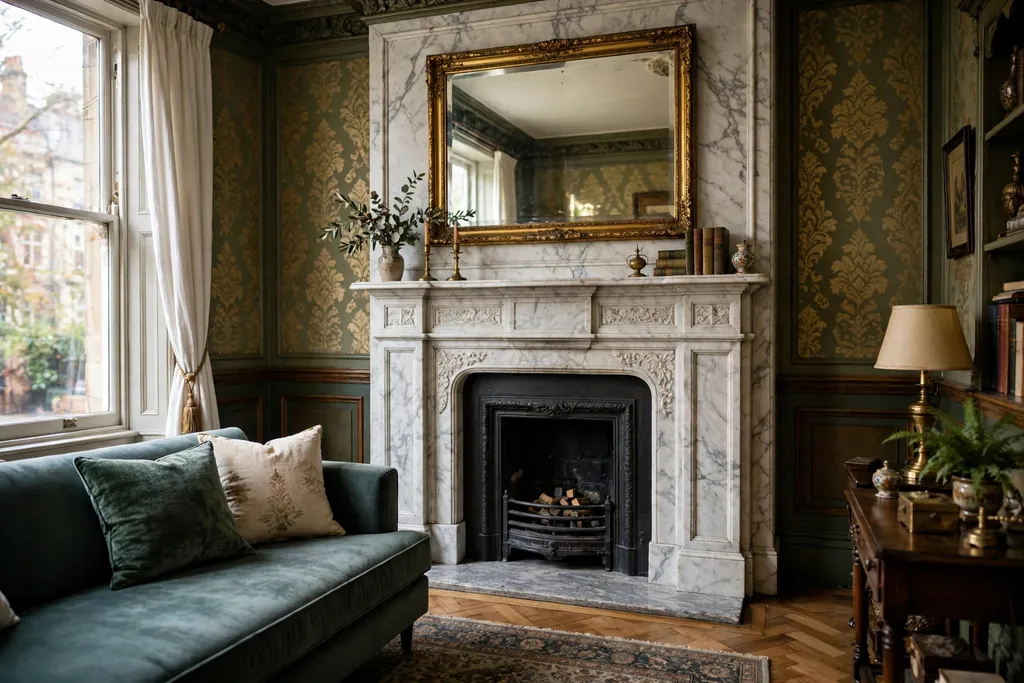
Keep a marble fireplace surround as the room’s focus, and style it with restraint: one mirror or one piece of art above it, two simple objects on the mantel, and a clear hearth. Marble already has colour and pattern, so it needs little help, and a calm surround lets a modern sofa sit well beside it. This suits rooms where the fireplace is in good condition but the rest of the room has been changed over time.
Clean the marble with a method suited to stone, and avoid harsh cleaners that can mark it. Keep the fire opening clear and safe, and use a simple fire screen if the fireplace is still in use. If the fireplace is no longer used, a row of candles in glass holders or a stack of logs in the opening gives it a quiet purpose without a fake fire effect.
5. Choose a Low Modern Sofa for High Rooms
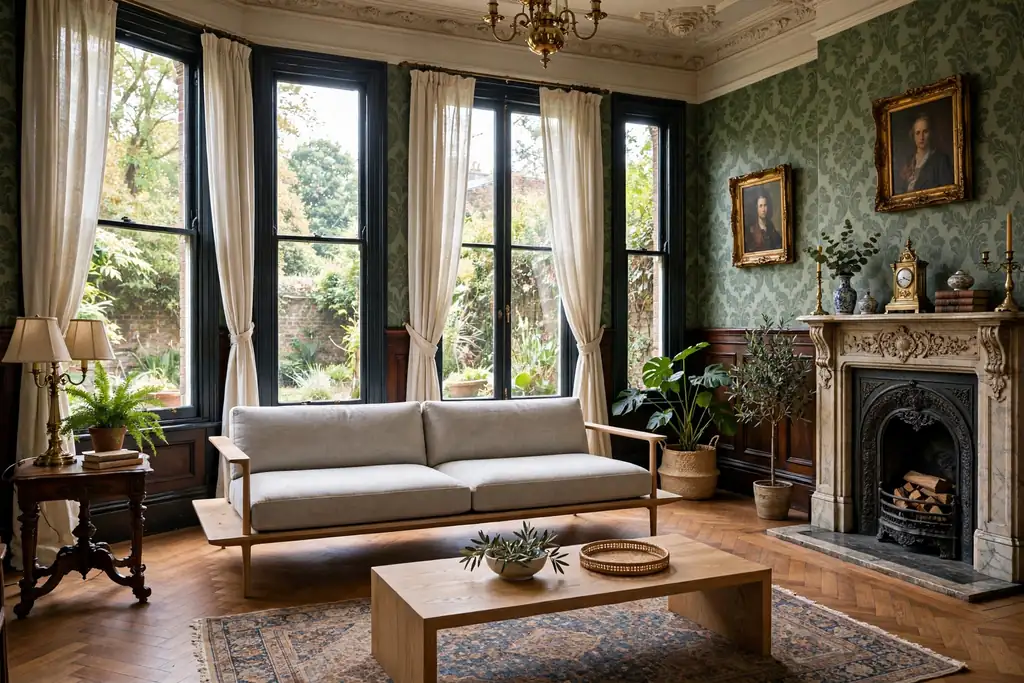
Choose a low modern sofa with slim arms and raised legs, so the seating sits below the dado rail and leaves the wall panelling and windows in view. A low profile stops the sofa from cutting the room in half visually, which matters in a Victorian room where the walls are the main decoration. This suits a room with tall ceilings and ornate walls, where a deep, high-backed sofa would hide too much.
Pick a plain fabric in a calm colour, such as oatmeal, pale grey or soft green, and add texture with cushions rather than with a patterned sofa. Measure the sofa against the fireplace wall first, and leave room to walk past both ends. For more seating guidance in a tight room, see these cozy apartment living room ideas.
6. Pair Curved Lounge Chairs With the Fireplace
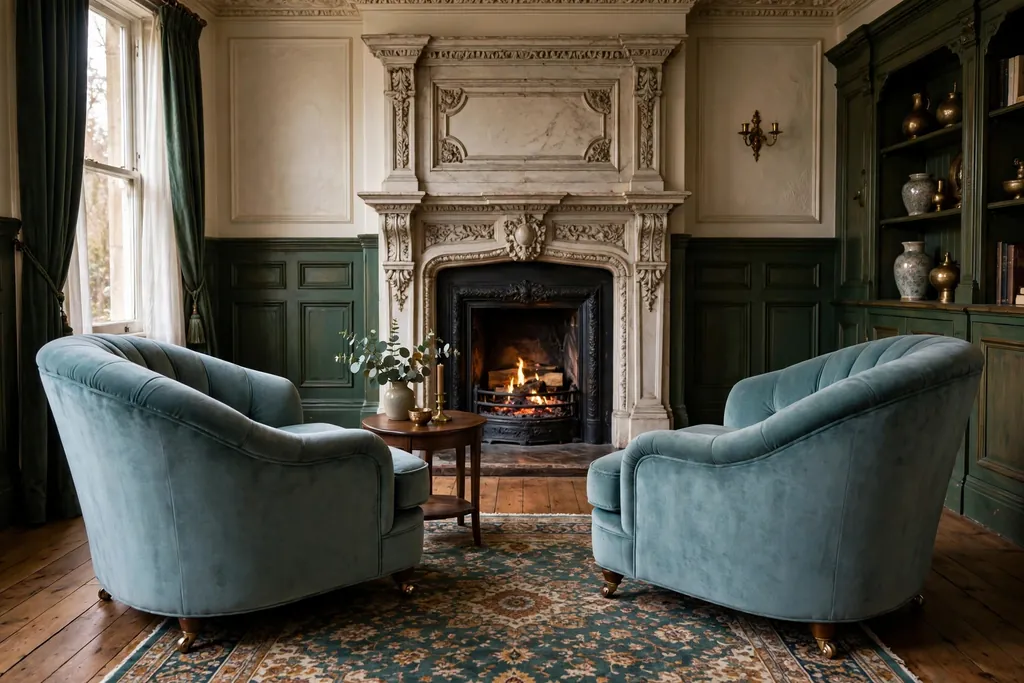
Place two curved lounge chairs opposite the fireplace, angled slightly toward each other, to make a conversation spot that does not need a television to anchor it. Curved chairs soften the straight lines of panelling and bookcases, and their smaller footprint suits a Victorian room better than a second large sofa. This suits a room used for talking, reading and relaxing, rather than as a media room.
Choose chairs with a plain fabric and a slim leg, so they do not compete with the fireplace surround. Leave enough space between the chairs and the hearth for safe use if the fire is lit, and add a small side table between them for drinks. If the room is small, one curved chair plus a footstool gives most of the same comfort with less floor space used.
7. Use a Glass Coffee Table to Show the Floor
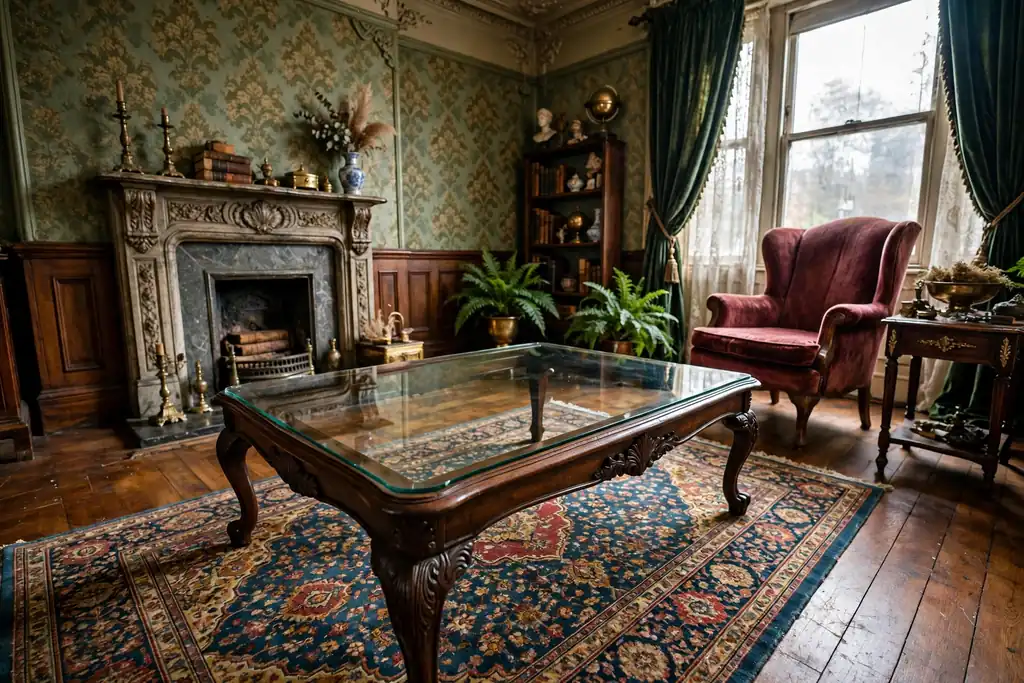
Use a glass-topped coffee table in the center of the seating group, so the rug, the wood floor and the fireplace hearth stay visible through it. Glass keeps the middle of the room feeling open, which helps in a Victorian room where the furniture and the mouldings already add plenty of visual weight. This suits rooms with a patterned rug or a handsome wood floor that a solid wood table would hide.
Choose a table with rounded corners and a slim metal frame, and keep the top to a tray, one book and a small plant, so the glass stays useful rather than cluttered. Check the table height against the sofa seat height, so it is comfortable to reach from a seated position. Wipe the glass weekly, since glass shows dust and fingerprints faster than wood.
8. Build Bookcases Into the Fireplace Alcoves
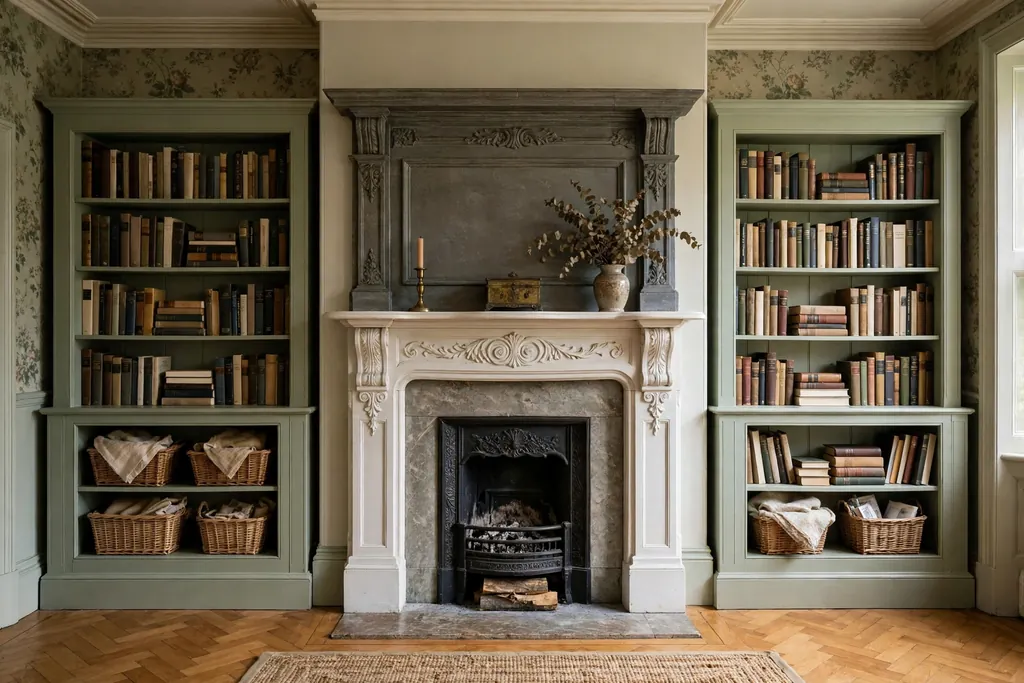
Fit bookcases into the alcoves on either side of the fireplace, painted the same colour as the wall panelling, so storage looks built in rather than added on. Alcove bookcases use wall space that often sits empty, frame the fireplace, and give books, baskets and a few display pieces a home. This suits a room that needs storage but cannot spare floor space for a freestanding bookcase.
Keep heavy books low, everyday items at hand height, and lighter display pieces up high, and leave some open space on each shelf so the wall does not look packed. Use closed baskets on one shelf for remotes, chargers and small items. Anchor tall bookcases to the wall following the maker instructions, especially in a home with children or pets.
9. Hang Modern Art in a Gilt Frame
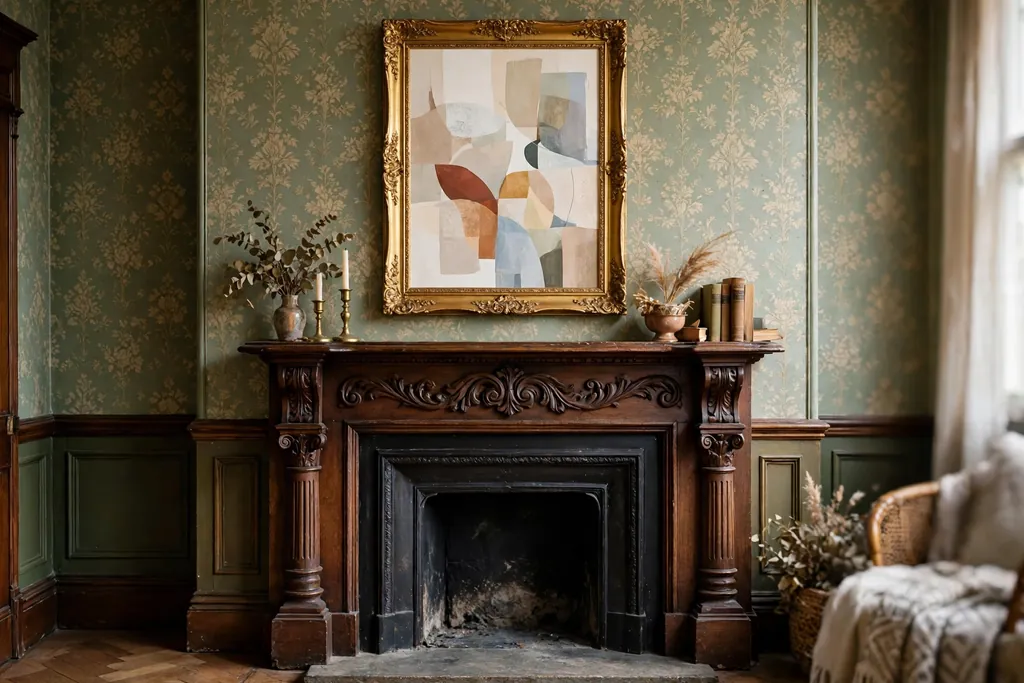
Hang one modern abstract print in a traditional gilt frame above the fireplace or on the main sofa wall, so old and new meet in a single object. The gilt frame links the art to the Victorian room, while the modern print stops the wall from feeling like a period room. This suits a room that feels too formal, or where the owner likes modern art but does not want to strip out the Victorian details.
Hang the center of the frame at eye level when seated or standing, depending on whether it sits above a mantel or on a plain wall. Keep the rest of that wall plain, so the framed print has room to breathe. Use picture hanging fixings rated for the frame weight, and check the art in daylight and lamplight before fixing it in place.
10. Add an Arched Mirror Over a Slim Console
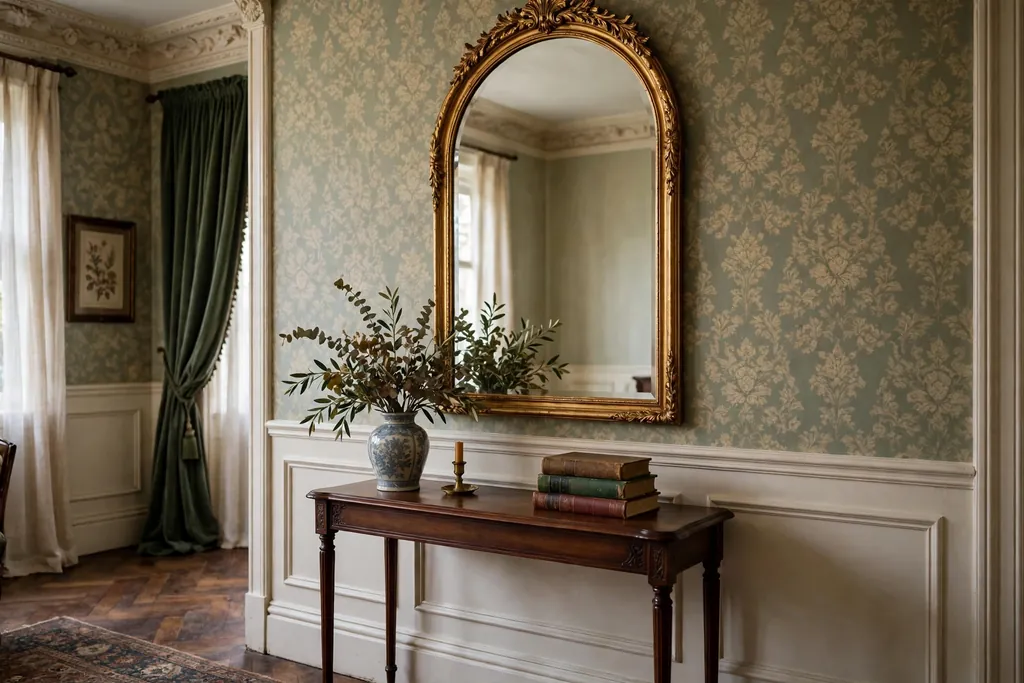
Place an arched mirror over a slim console table on a plain wall, echoing the arch shapes found in Victorian windows and doorways. The arch softens the straight lines of panelling, and the mirror bounces daylight deeper into the room. A slim console keeps the arrangement light, since a deep cabinet would crowd the wall and block the walkway.
Choose a mirror large enough to reflect something pleasant, such as a window or a plant, rather than a blank wall or clutter. Keep the console top to one vase, one stack of books and a small dish for keys, so the mirror stays the focus. Fix the mirror with hardware suited to its weight, and check for glare at different times of day before settling on its position.
11. Lay a Patterned Rug Under Plain Furniture
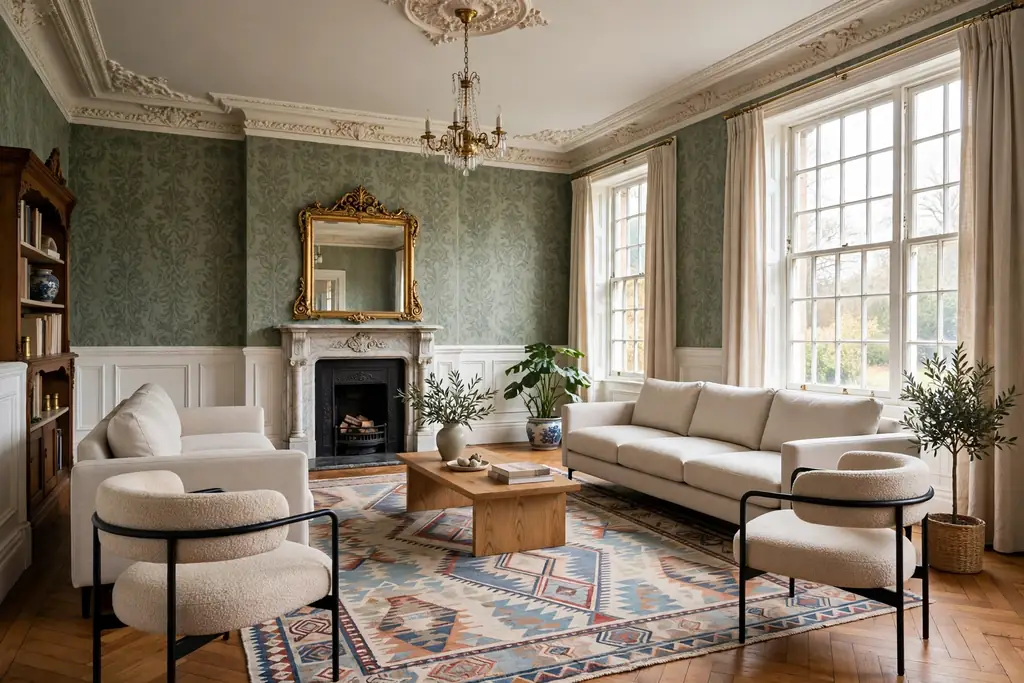
Lay a patterned rug under plain modern furniture, so the pattern sits on the floor where it can be changed, rather than on a sofa that is hard to replace. A traditional pattern, such as a Persian style rug or a simple geometric design, links the room to its Victorian roots, while plain sofas and chairs keep the seating group calm. This suits a room with plain wood floors that need warmth and a clear seating zone.
Choose a rug large enough to sit under the front legs of the sofa and chairs, so the seating group reads as one unit. Use a rug pad underneath to stop sliding and to protect the floor. If the room is small, a rug in muted colours gives the pattern without making the floor feel busy, and the layered rug advice in these aesthetic farmhouse living room ideas works just as well here for texture underfoot.
12. Layer Picture Lights, Floor Lamps and Table Lamps
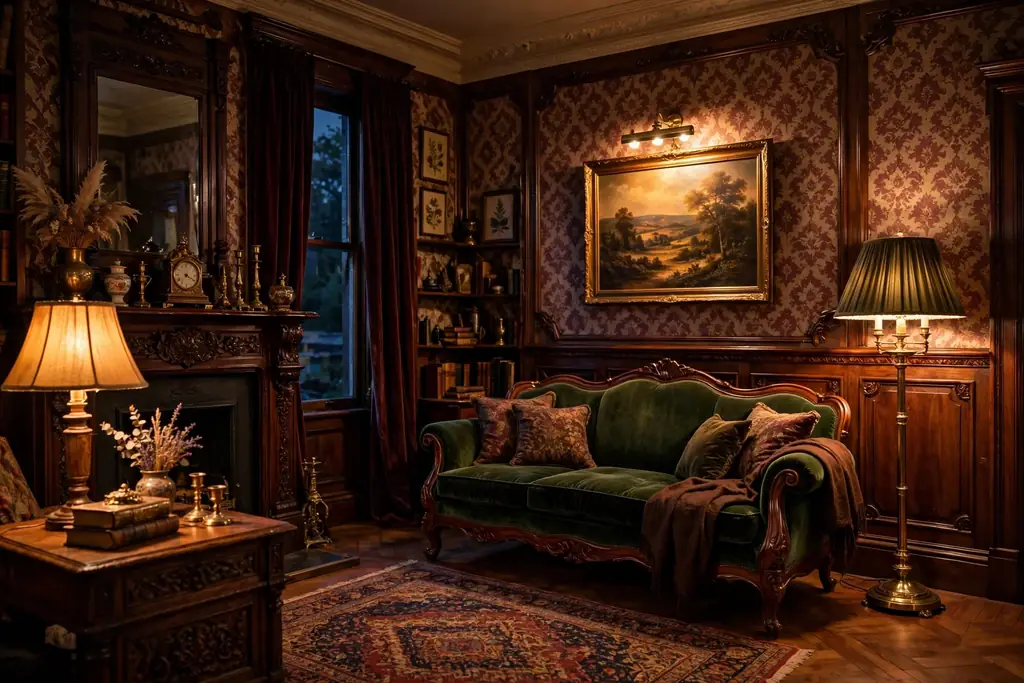
Layer three kinds of light: picture lights over art or the fireplace, a floor lamp beside the main seat, and a table lamp on a console or side table. Victorian rooms were built for layered light, with wall sconces and lamps rather than one harsh ceiling light, and that approach still works with modern fittings. This suits a room used from morning to evening, since each layer can switch on and off as needed.
Put the brightest light where you read, keep the picture lights warm in tone, and use dimmers where you can, so the evening mood stays soft. Keep lamp shades plain in linen or cotton, so the light itself, not the shade pattern, does the work. Avoid relying on a single overhead light after dark, which tends to flatten ornate mouldings instead of showing their shadows.
13. Hang Curtains From Ceiling Height
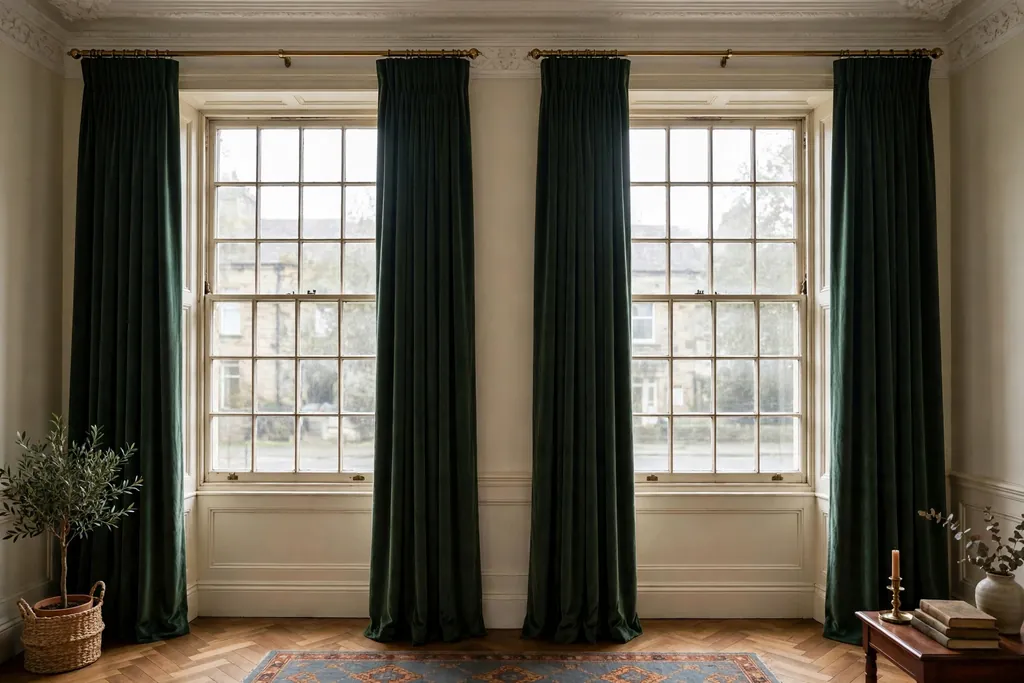
Hang full length curtains from close to the ceiling, even if the window starts lower, so the eye reads the full height of the Victorian room. Tall curtains make the window look larger and the ceiling feel higher, and they frame the sash window rather than cutting it in half. This suits rooms with high ceilings where a short curtain would leave an awkward gap of wall above the window.
Choose a plain fabric in a colour close to the wall, such as warm white, pale grey or soft sage, so the curtains blend in rather than forming a strong band of colour. Let the panels fall to just above the floor, and extend the rod past the frame so the panels stack on the wall when open. Keep the fabric light enough to draw easily each day.
14. Keep the Tiled Hearth and Calm the Rest
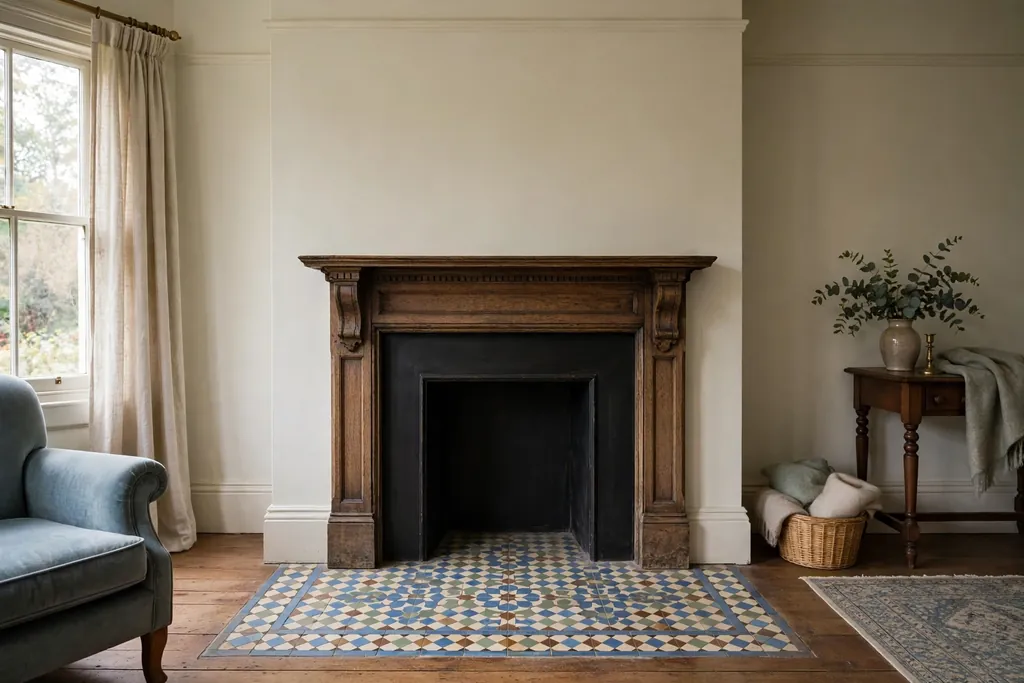
Keep an original tiled fireplace hearth, with its pattern and colour intact, and keep the rest of the fireplace wall calm in a plain paint colour. The hearth becomes a small, honest piece of Victorian pattern at floor level, while plain walls and a simple mantel stop the room from feeling like a museum. This suits rooms where the tiles are in good condition but the rest of the room needs a modern, quieter base.
Clean the tiles with a method suited to their glaze, and repair any loose tiles before they crack further. Keep the hearth clear of rugs and furniture, so the pattern stays visible and the fire area stays safe. If the tile colour is strong, repeat one colour from it in a cushion or a vase elsewhere in the room, so the hearth feels linked to the rest of the space.
15. Arrange Seating Around the Fireplace, Not the Television
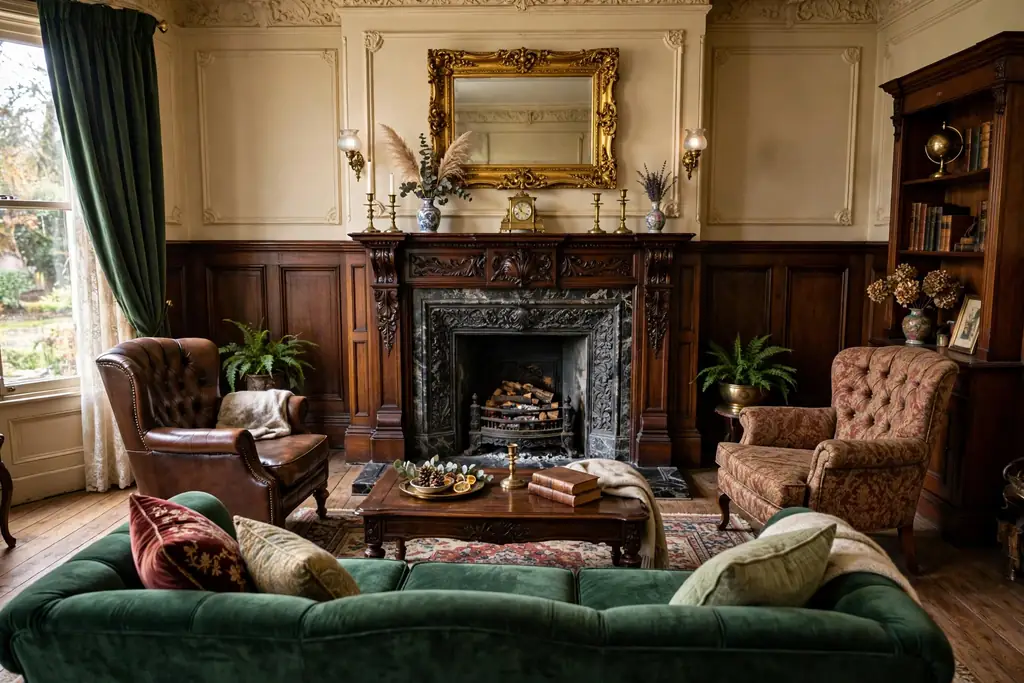
Arrange the main seating to face the fireplace and each other, with the television on a side wall or inside a cabinet, rather than letting the screen dominate the Victorian room. A fireplace facing layout suits conversation and reading, and it keeps the ornate surround as the room’s natural focal point. This suits a home where the living room is used more for talking and relaxing than for long television sessions.
Place the sofa opposite the fireplace, with chairs angled in from the sides, and leave a clear walkway behind the seating. If a television is needed in the room, mount it on a side wall at a comfortable viewing height, or hide it behind panelled doors when not in use. Test the layout for a week before fixing any cables, since moving a sofa is easier than moving a wall socket.
16. Add Brass Accents in Small, Repeated Doses
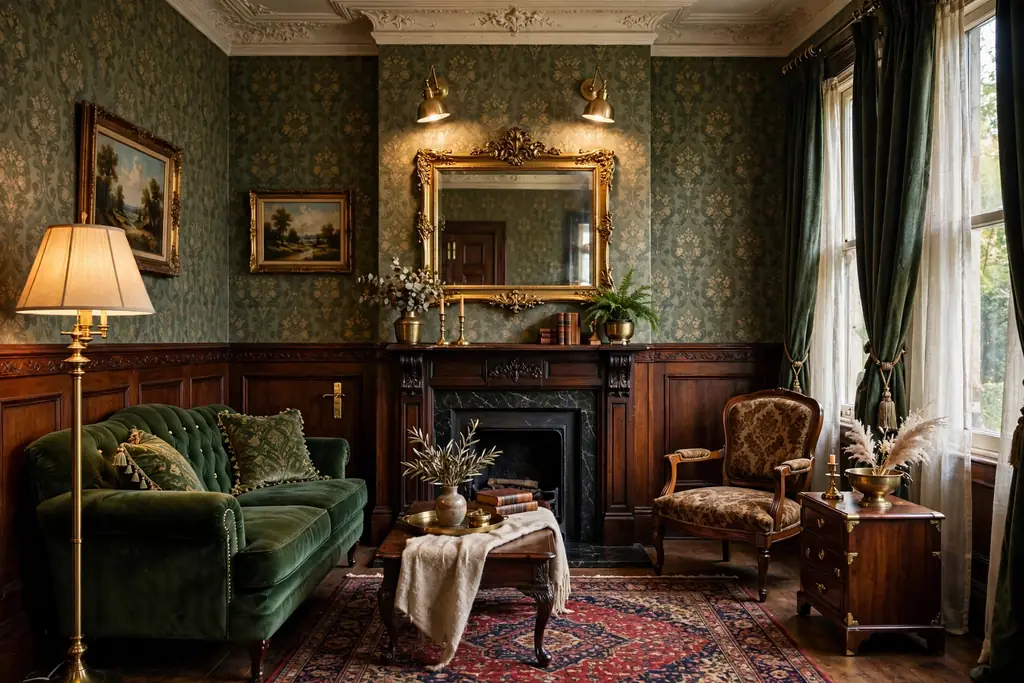
Add brass in small, repeated doses: a brass floor lamp, brass picture light fittings, brass handles on a console, and one brass framed mirror. Brass links modern furniture to Victorian metalwork, such as door handles and fire tools, without needing a brass sofa or a brass table. This suits a room that feels too cool in tone, since warm metal adds warmth without a strong colour.
Keep the brass finish consistent, such as brushed brass throughout, rather than mixing polished, aged and brushed finishes in one room. Limit brass to three or four items, so it reads as a thread through the room rather than as a theme. Wipe brass with a soft cloth as advised by the maker, and avoid harsh cleaners that can strip the finish.
17. Paint One Bookcase Interior a Deep Colour
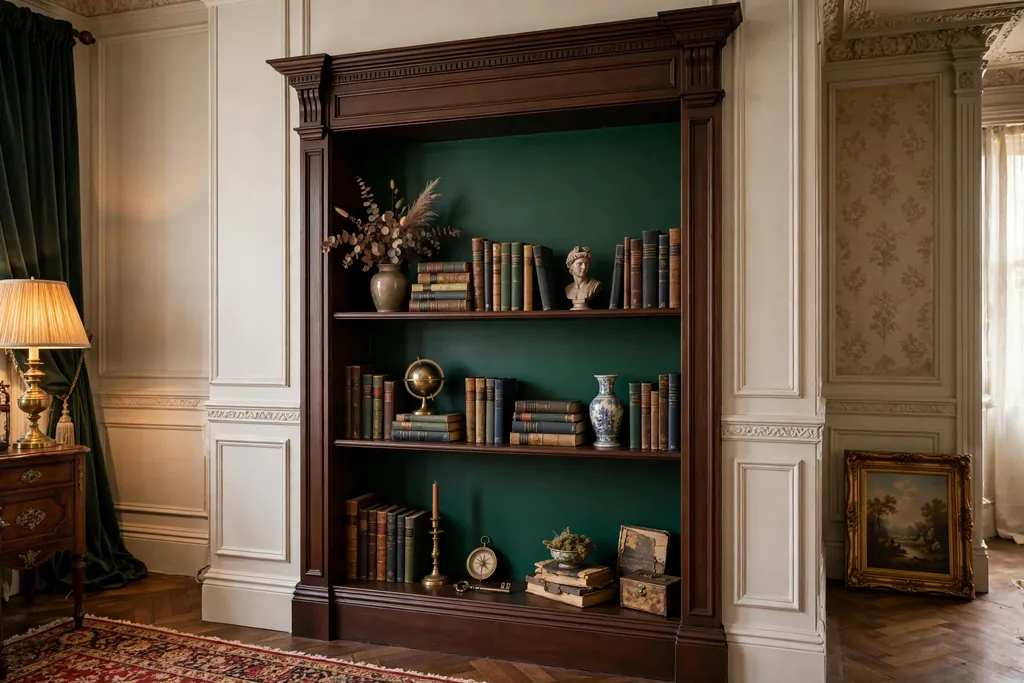
Paint the inside back panel of one alcove bookcase in a deep colour, such as dark green, navy or charcoal, while the rest of the bookcase stays the wall colour. The deep interior gives books and display pieces a dark background that makes them stand out, and it adds Victorian depth without painting a whole wall dark. This suits a room that needs one strong note of colour but would feel closed in with a dark feature wall.
Keep the deep colour to one bookcase, not both alcoves, so the fireplace wall stays balanced. Repeat the same deep colour in one cushion or one throw elsewhere in the room, so the bookcase does not look isolated. Test the colour inside the bookcase in lamplight, since a deep colour looks darker in a recess than it does on a paint chart.
18. Turn the Bay Window Into a Reading Bench
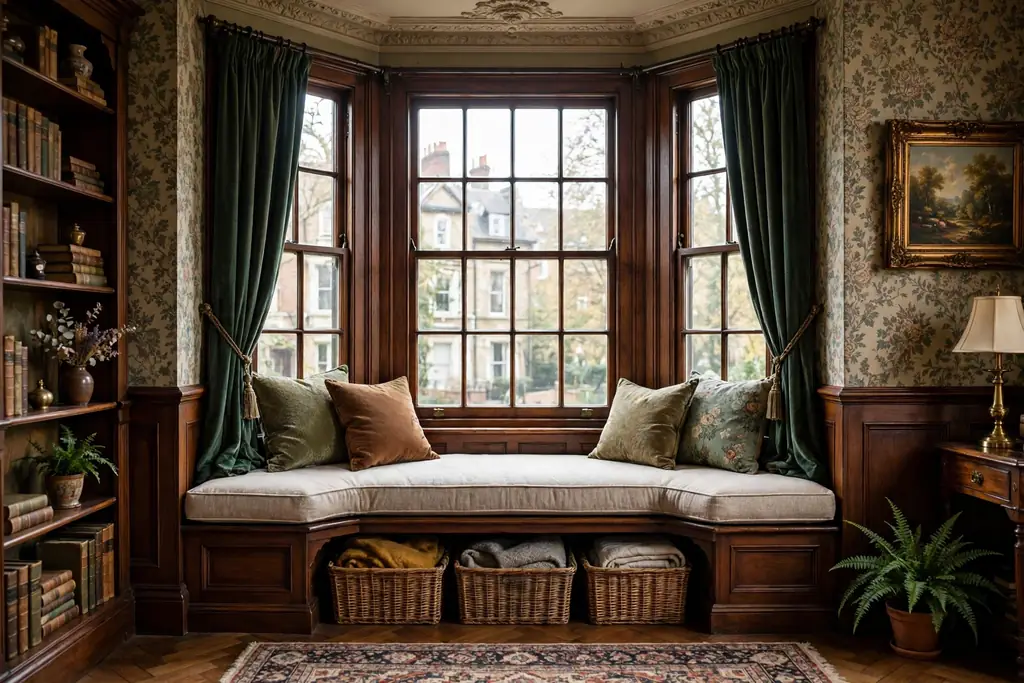
Turn a Victorian bay window into a reading bench with a firm cushion in a washable cover, storage baskets underneath, and a small wall light or a floor lamp beside it. A bay seat uses a stretch of wall that often sits empty, gives the room an extra seat, and makes the most of the best daylight in the room. This suits a living room with a bay that has space below the window, or a room that needs one more seat without another armchair.
Build the bench from a low bench or a pair of sturdy cabinets, rather than a fixed structure, if you rent. Keep the cushion firm enough to sit on for an hour, and keep the baskets for books, throws or shoes, labelled if they hold different items. For zoning and storage ideas that pair well with a window seat, see these studio apartment decorating ideas.
19. Grow Tall Plants Beside the Windows
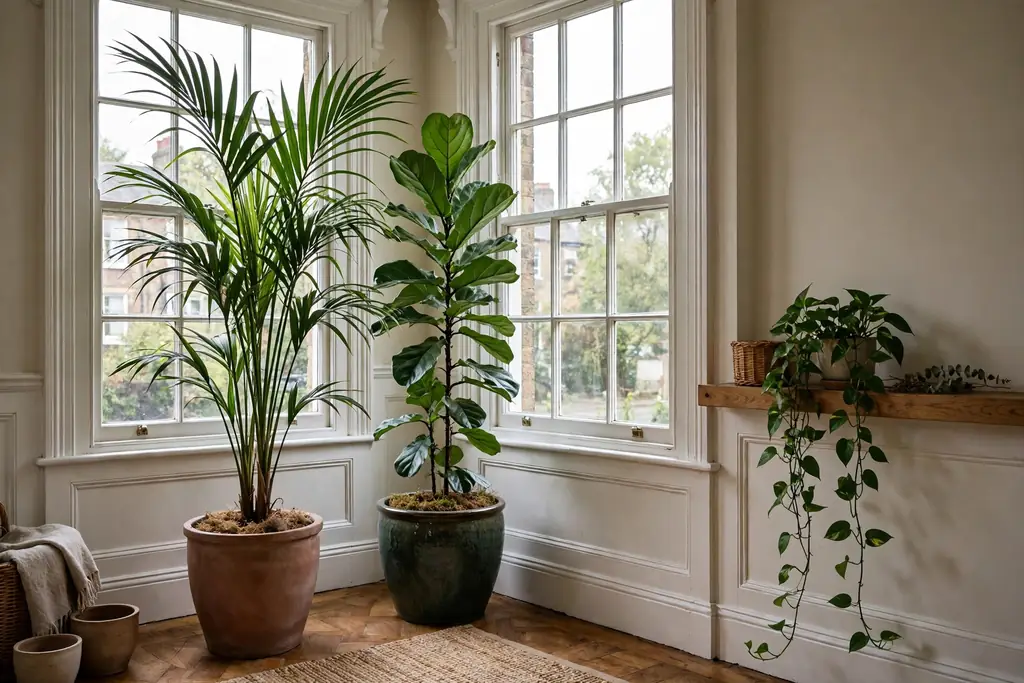
Place tall plants in large pots beside the sash windows, with a trailing plant on a shelf and a small plant on the coffee table, so green sits at three heights in the room. Plants soften hard marble, dark wood and brass, and they suit the tall proportions of a Victorian room better than a row of small pots on one surface. This suits a room that feels too formal, since plants make it feel lived in at once.
Match each plant to the light it will actually get, and use saucers under pots on wood floors. Keep plants clear of the fireplace hearth and the walkway, so leaves do not get knocked or scorched. Start with three or four plants rather than a dozen, so watering stays manageable, and group plants that need similar watering together.
20. Hide Media Behind Panelled Cabinet Doors
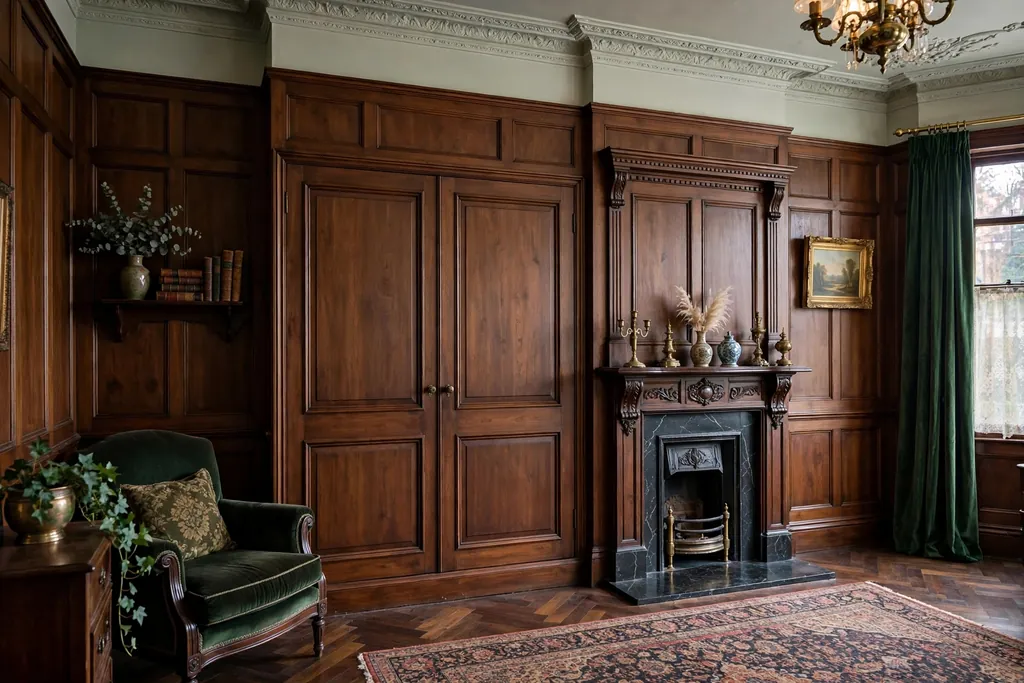
Hide the television and media boxes behind panelled cabinet doors that match the wall panelling, so the media wall reads as architecture when the screen is off. Panelled doors keep the Victorian wall treatment continuous, and they remove the black rectangle of a screen from the room’s main view. This suits a room where a television is wanted but the fireplace should stay the focus.
Choose doors with a simple panel profile that matches the existing panelling, and fit them with soft close hinges so they shut quietly. Keep ventilation holes or a mesh panel at the back of the cabinet, since media boxes need airflow, and run cables through the back rather than across the wall. Test the viewing angle from the main sofa before fixing the cabinet in place.
21. Make a Reading Corner With a Task Lamp
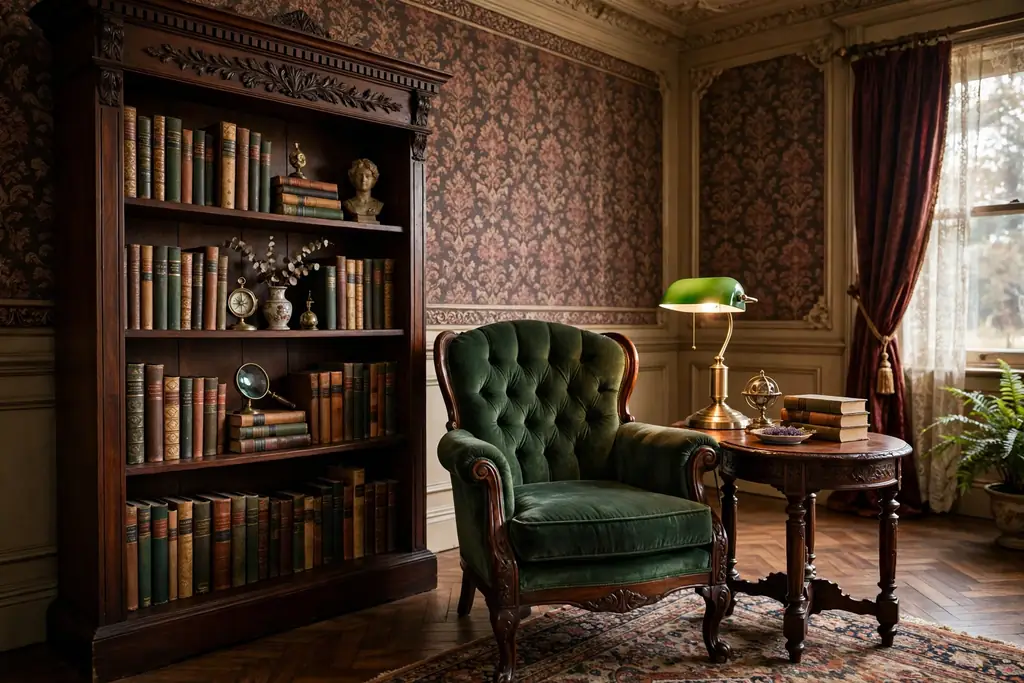
Make a reading corner in one quiet corner of the room, with a comfortable lounge chair, a small side table, and a task lamp aimed at the page. A dedicated reading corner gives the Victorian room a second use beyond the main seating group, and it suits a corner by a window or beside a bookcase. This differs from the bay seat in Idea 18, which is built into the window, since this corner is a freestanding chair and lamp that can move.
Choose a chair with a seat depth that lets you sit upright comfortably, and place the lamp behind the chair shoulder so light falls on the page without glare. Add a basket beside the chair for the current book and a throw, so the corner is ready to use without fetching items from another room. Keep the corner clear of the main walkway, so it feels like a retreat rather than a passage.
22. Use a Storage Ottoman for a Tidy Victorian Room
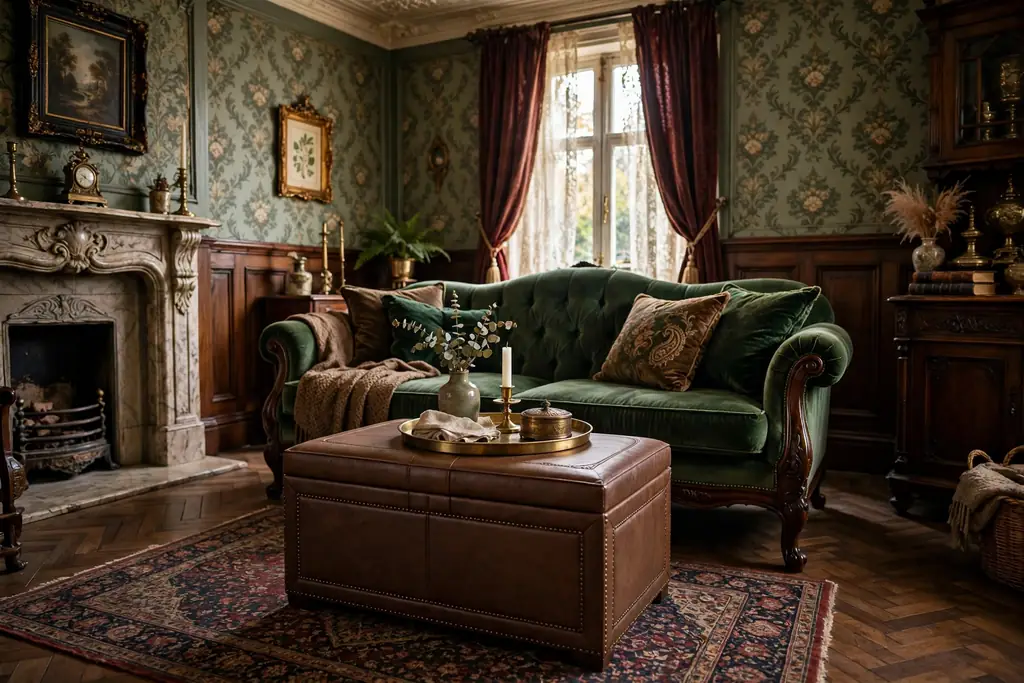
Use a storage ottoman in front of the sofa, with a firm lid that works as a footrest and a tray on top for drinks, to hide throws, magazines and remote controls in one piece. Victorian rooms can look cluttered fast, since mouldings, art and plants already add detail, so closed storage in the seating group keeps the room calm. This suits a small Victorian living room, where a coffee table plus a separate storage box would crowd the floor.
Choose an ottoman in a plain fabric that matches the sofa or the rug, and check that the lid opens without hitting the sofa cushions. Keep only items you reach for often inside it, since a storage seat filled with things you never use becomes a box you never open. If the room is very tight, a smaller ottoman that slides under a console when not in use gives most of the same benefit.
Conclusion
A modern Victorian living room works when the old details and the new furniture each have a clear job. Let the mouldings, the fireplace and the tall windows carry the character, and let low, plain furniture, calm colour and layered light carry the comfort. Start with one wall or one corner, such as painted panelling or a bay seat, live with it for a week, and then add the next layer. The room should still feel Victorian when you walk in, and still feel easy to live in when you sit down. For more small room layout and storage help, the ideas in these cozy apartment living room ideas and studio apartment decorating ideas pair well with the Victorian rooms above.
Keep this list handy for your next free weekend at home, and build the room one layer at a time: panelling and light first, seating second, and brass, plants and art to finish.
FAQs
How do I make a Victorian living room feel modern without removing the mouldings?
Keep the mouldings and paint them in one calm colour, so they read as texture rather than as a busy pattern. Then add low, plain modern furniture, a glass or slim wood coffee table, and plain fabrics, so the ornate walls stay the focus. Modern art in a traditional frame and brass accents in small doses link old and new without stripping the room. Avoid adding ornate furniture on top of ornate walls, since that combination is what makes a Victorian room feel dated rather than current.
What sofa works best in a modern Victorian living room?
A low sofa with slim arms, raised legs and a plain fabric works best, since it sits below the dado rail and leaves the wall panelling and windows in view. Choose a calm colour, such as oatmeal, pale grey or soft green, and add texture with cushions rather than with a patterned sofa. Measure the sofa against the fireplace wall first, and leave room to walk past both ends. A deep, high-backed sofa can hide too much of the wall detail and make a tall room feel lower than it is.
Can I put a television in a Victorian living room without ruining the look?
Yes. Arrange the main seating to face the fireplace, and place the television on a side wall or behind panelled cabinet doors that match the wall panelling, so the screen is not the room’s focal point. Keep cables hidden through the cabinet or along the wall in a cover painted to match the wall. Test the viewing angle from the main sofa before fixing anything, and keep the fireplace wall clear, so the room still reads as Victorian when the television is off.
What colours suit a modern Victorian living room?
Start with a calm base, such as warm white, pale greige or soft sage on walls and large furniture, then add depth with one deep colour, such as dark green or navy, in a bookcase interior, a cushion or a throw. Brass, dark wood and marble add warmth without a strong colour, and plants add green at several heights. Keep strong colour to a few items you can move, so the room stays calm and the Victorian details stay visible.
How do I light a Victorian living room with high ceilings?
Layer light at several heights instead of relying on one central light. Keep the ceiling rose with a simple pendant, add picture lights over art or the fireplace, a floor lamp beside the main seat, and a table lamp on a console. Use warm bulbs and dimmers where you can, so the evening mood stays soft and the mouldings show their shadows. Check each lamp position at different times of day, since tall windows change the daylight in the room through the afternoon.
Is a patterned rug right for a modern Victorian living room?
Yes, if the rest of the seating group stays plain. A traditional or simple geometric rug links the room to its Victorian roots and gives the floor warmth and a clear seating zone, while plain sofas and chairs keep the room calm. Choose a rug large enough to sit under the front legs of the sofa and chairs, use a rug pad underneath, and keep strong pattern to the floor, not to the sofa as well. In a small room, a muted version of the pattern gives the same effect without making the floor feel busy.