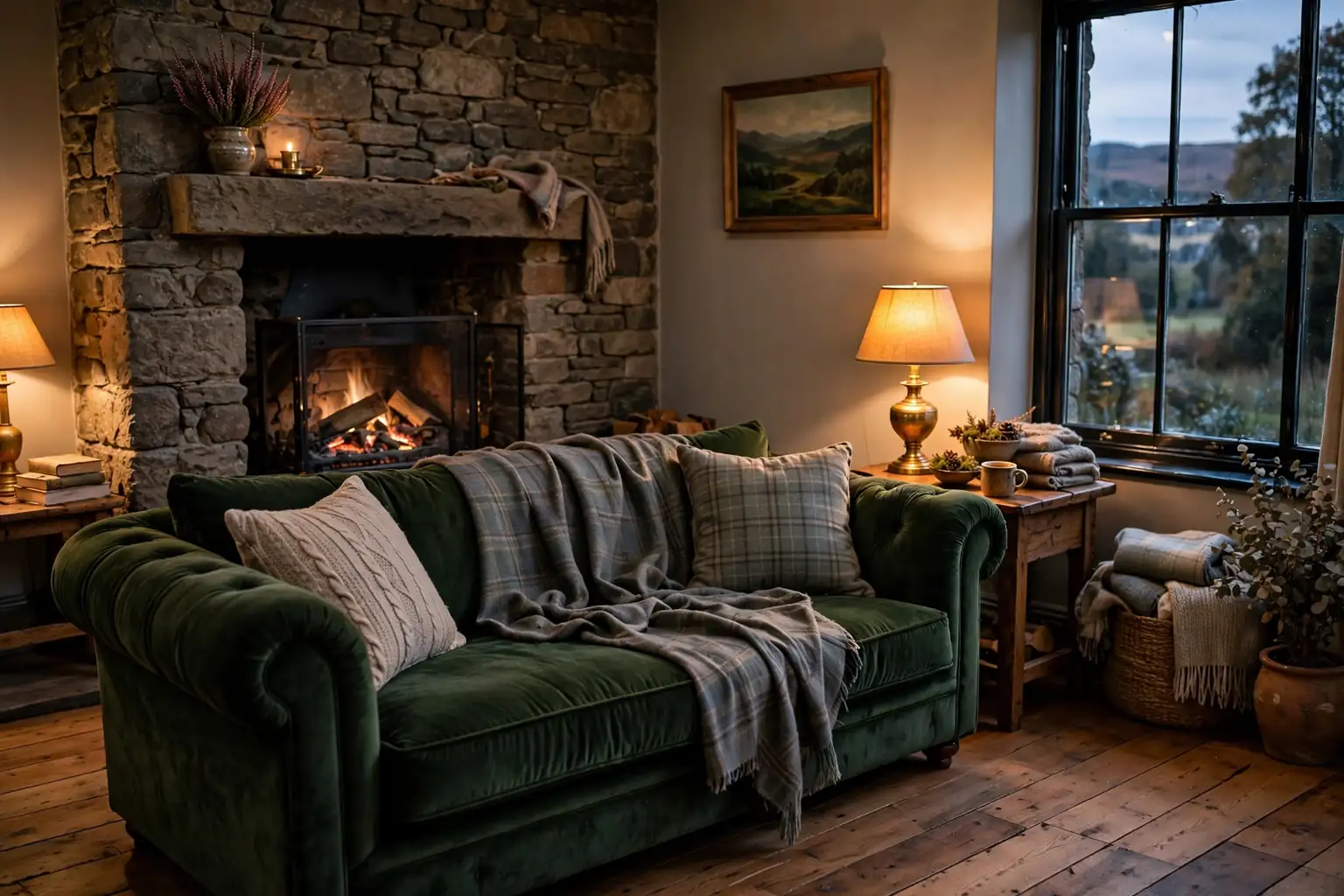
A Scottish living room has a particular kind of comfort: warm light, soft wool, solid wood, and a chair placed where you can watch rain on the window. It does not need a castle or a full tartan scheme to feel Scottish. These 14 Scottish living room ideas take the familiar parts, muted tartan, stone, tweed, and deep green, and pair them with plain sofas, calm walls, and clean lines, so the room feels current as well as cozy. Pick the ideas that suit your room, your light, and the way you actually sit in it. For help sizing the rug that grounds the seating group, see these living room rug ideas.
Key Takeaways
- Keep tartan muted and limited: one throw, one or two cushions, or one chair, with plain fabrics doing the rest of the work.
- Let one strong feature lead, such as a fireplace, a panelled wall, or a deep green sofa, and keep the rest of the room calm.
- Layer wool, tweed, linen, and sheepskin for warmth, rather than relying on one heavy fabric everywhere.
- Use warm, low lighting at more than one height, since Scottish rooms often need to feel welcoming on dark evenings.
- Repeat a small palette of heather, slate, moss, oatmeal, and warm wood so old and new pieces sit together.
- Pair heritage pieces with clean modern lines, so the room reads as current, not as a period set.
1. A Muted Tartan Throw Over a Plain Sofa
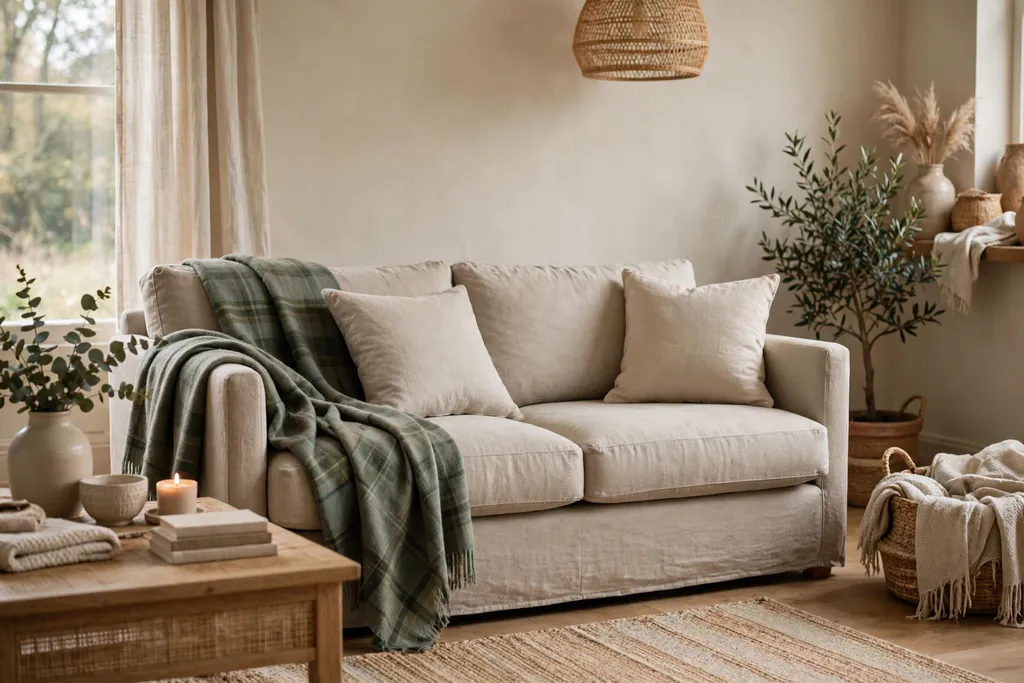
A muted tartan throw is the easiest Scottish detail to live with, because it adds pattern and history without taking over the room. Choose a tartan in softened tones, such as muted green, navy, rust, or grey, and lay it over a plain sofa in cream, oatmeal, or grey. The plain sofa keeps the tartan from competing with other patterns, and the throw can be folded, draped, or removed in seconds.
Keep the rest of the pattern quiet. If the throw is checked, use plain cushions in one color pulled from the tartan, and a plain rug under the coffee table. A bright, large scale tartan on every cushion and curtain can tire quickly, while one well chosen throw keeps the Scottish note clear. Wash or air the throw regularly, since wool throws collect dust and pet hair.
2. A Stone Fireplace as the Room’s Warm Center
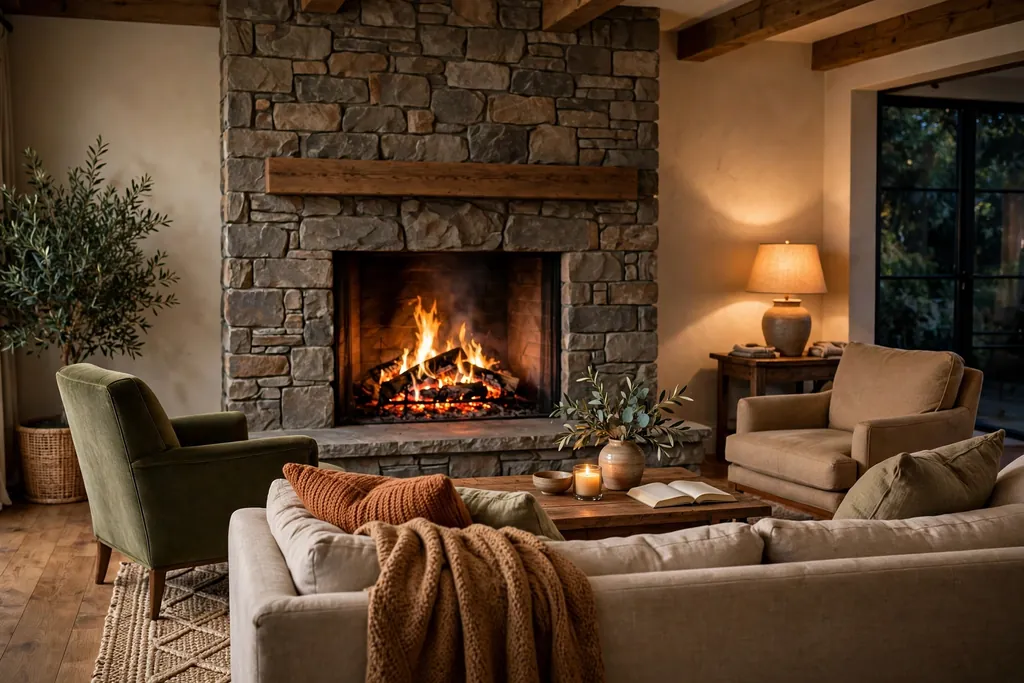
A stone fireplace gives a Scottish living room its natural center, and it suits both a cottage and a modern home. The rough texture of stone contrasts well with soft sofas and wool throws, and a fire, real or electric, draws seating toward it on cold evenings. Arrange the main sofa facing the fireplace, or at a right angle to it, with a coffee table between the two.
Keep the mantel simple: one mirror or one framed print, a pair of candlesticks, and little else. A crowded mantel fights with the stone, while a clear mantel lets the texture speak. Keep throws, cushions, and paper clear of the fire opening, and follow the fire maker’s guidance for safe clearances. In a home without a working fire, a stone surround with a simple electric insert gives a similar focus.
3. A Deep Green or Moss Sofa with Wooden Legs
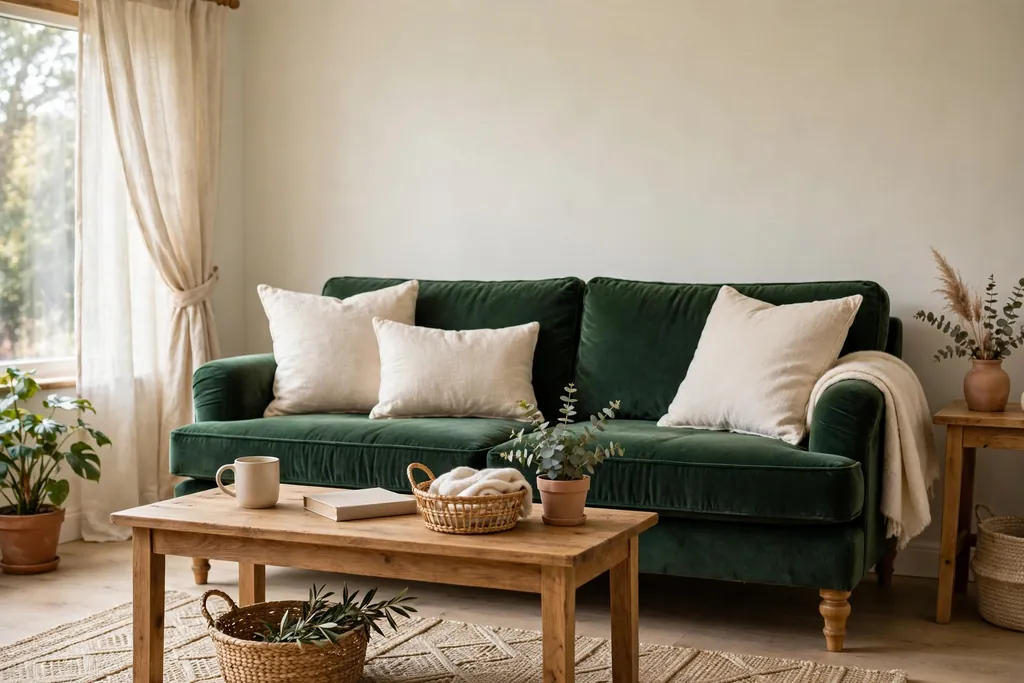
A deep green sofa brings the Scottish hills indoors in a way that still suits a modern room. Moss, forest, or sage green all sit well with warm wood, cream walls, and brass or black metal details. Wooden legs, rather than a skirt to the floor, keep the sofa looking light, and they link it to a wooden coffee table or side table nearby.
Balance the dark sofa with light around it. Pale walls, a light rug, and cream or oatmeal cushions stop the green from making the room feel heavy, especially in a room with limited daylight. Add one warm accent, such as a rust cushion or a wooden lamp base, so the green does not sit alone. A green sofa also hides everyday marks better than a pale sofa, which helps in a room used daily.
4. Wool, Tweed, and Chunky Knit Layers
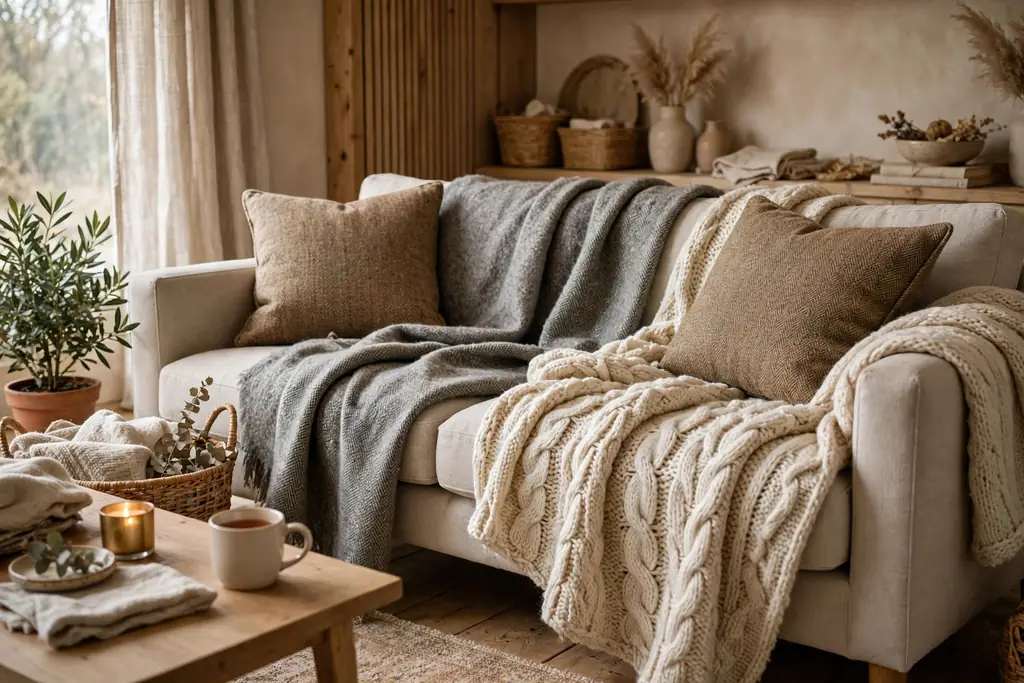
Wool, tweed, and chunky knit are the fabrics that make a Scottish room feel warm before the heating comes on. Use them in layers: a wool throw over the sofa arm, a tweed cushion or two, a chunky knit blanket on a chair, and a thick rug underfoot. Each layer adds texture, so the room feels rich even when the color palette stays calm.
Mix the textures rather than matching them exactly. A smooth wool throw, a nubby tweed cushion, and a soft knit blanket give the eye more to enjoy than three pieces in the same weave. Keep the colors in one family, such as oatmeal, moss, rust, and slate, so the layers look collected rather than random. Store spare throws in a basket by the sofa, so they are easy to reach on a cold evening and easy to put away.
5. Dark Wood Panelling on One Wall
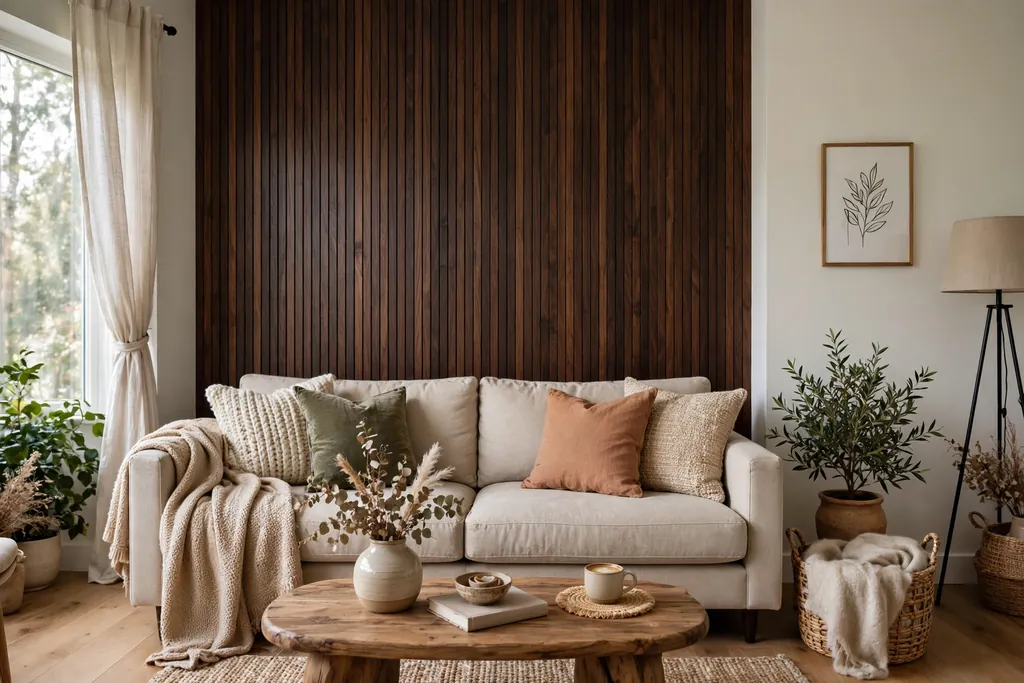
Dark wood panelling on one wall adds depth and a sense of history, without the weight of panelling every wall. Choose the wall behind the sofa or the fireplace wall, and keep the other walls in a pale, warm white. The contrast lets the wood read as a feature, and the pale walls keep the room from feeling dark.
Painted panelling is a softer option than bare dark wood. A deep green, slate, or navy painted panel wall gives the same structure with less heaviness, and it suits a room that already has dark furniture. Keep the panels simple, with clean vertical or square shapes, rather than ornate moulding, so the wall sits well with modern furniture. Hang little on the panelled wall, since the wood itself is the decoration.
6. A Window Seat for Reading and Watching the Weather
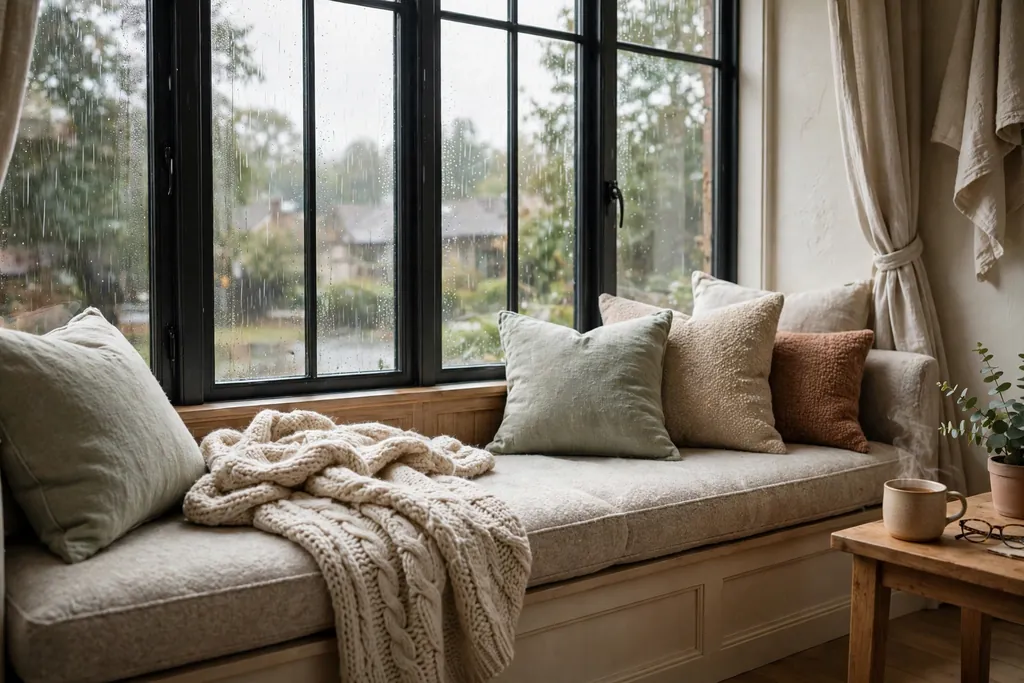
A window seat turns a Scottish view, and Scottish weather, into part of the room. Build or place a low bench under a window, add a thick seat cushion, and pile on a wool throw and two or three cushions. The seat becomes a reading spot, a place for morning coffee, and a perch for watching rain, snow, or low evening light.
Add storage under the seat if you can, for books, board games, or spare blankets, so the window corner stays useful as well as pretty. Keep the cushions in washable covers, since a window seat collects condensation and dust more than a sofa does. If the window is draughty, add a heavy curtain that can be drawn at night, and keep a small lamp or a candle lantern nearby for evening reading.
7. Highland Landscape Prints in Simple Frames
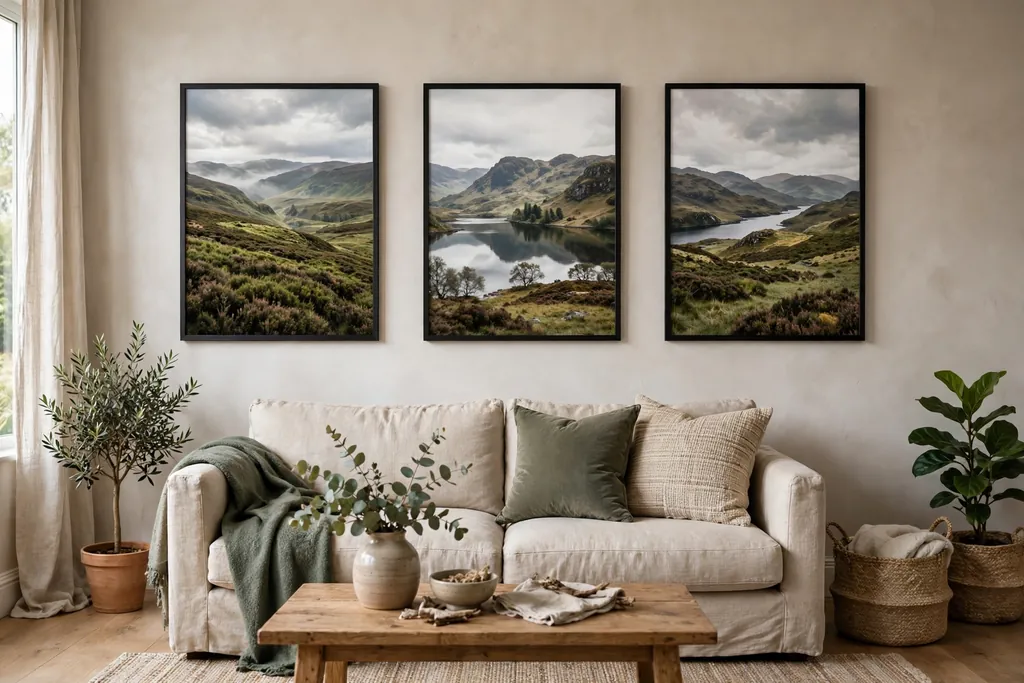
Highland landscape prints bring Scotland into the room without a single tartan cushion. Choose prints of hills, lochs, glens, or coastal scenes in muted tones, and hang them in simple frames, black, dark wood, or plain oak. The simple frames keep the focus on the landscape, and they suit both traditional and modern furniture.
Hang one large print above the sofa or the fireplace, or a small group of two or three prints on one wall, with even spacing and the center at eye level from a standing position. Keep the rest of the wall plain, so the prints have room to breathe. If the room already has a patterned rug or a tartan throw, choose prints in quiet colors, so the walls do not compete with the textiles.
8. Low, Layered Lighting for Long Evenings
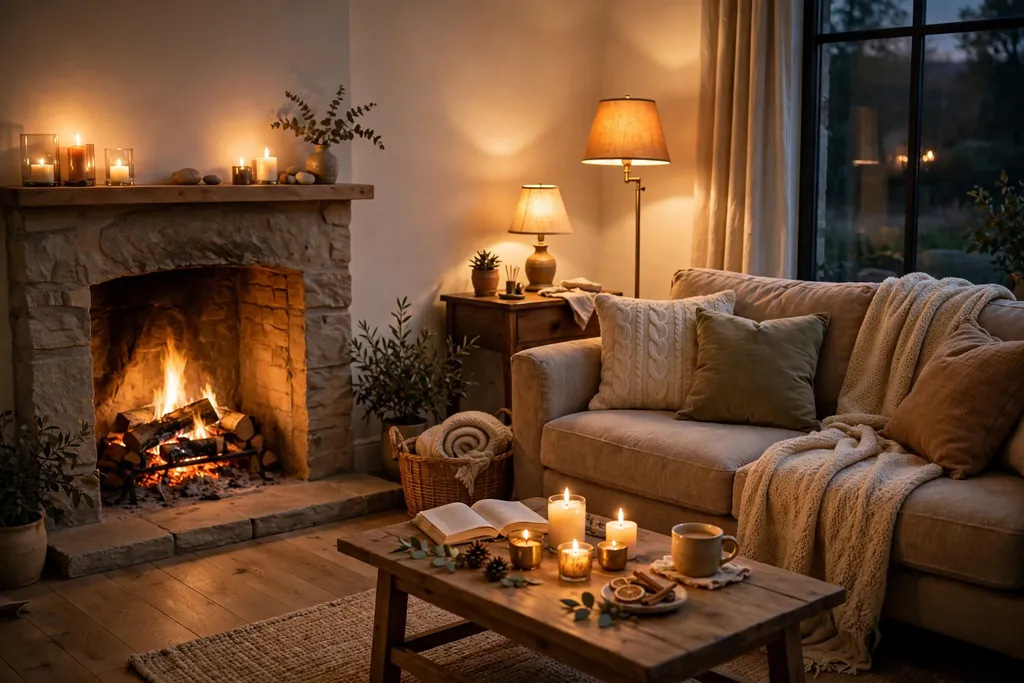
Low, layered lighting matters more in a Scottish living room than in most rooms, because winter evenings are long and daylight can be scarce. Use three levels of light: a floor lamp beside the main chair, a table lamp on a side table or sideboard, and a small lamp or candlelight on the mantel or coffee table. Together they give a warm pool of light where people actually sit.
Choose warm bulbs for every lamp, so the room glows rather than glares, and put the main ceiling light on a dimmer if one is already fitted, so it can stay low in the evening. Keep lamp shades in cream, linen, or pale tones, which soften the light and suit wool and wood nearby. Avoid a single bright ceiling light as the only evening source, since it flattens the textures that make the room feel cozy.
9. Built-In Alcove Shelves for Books and Ceramics
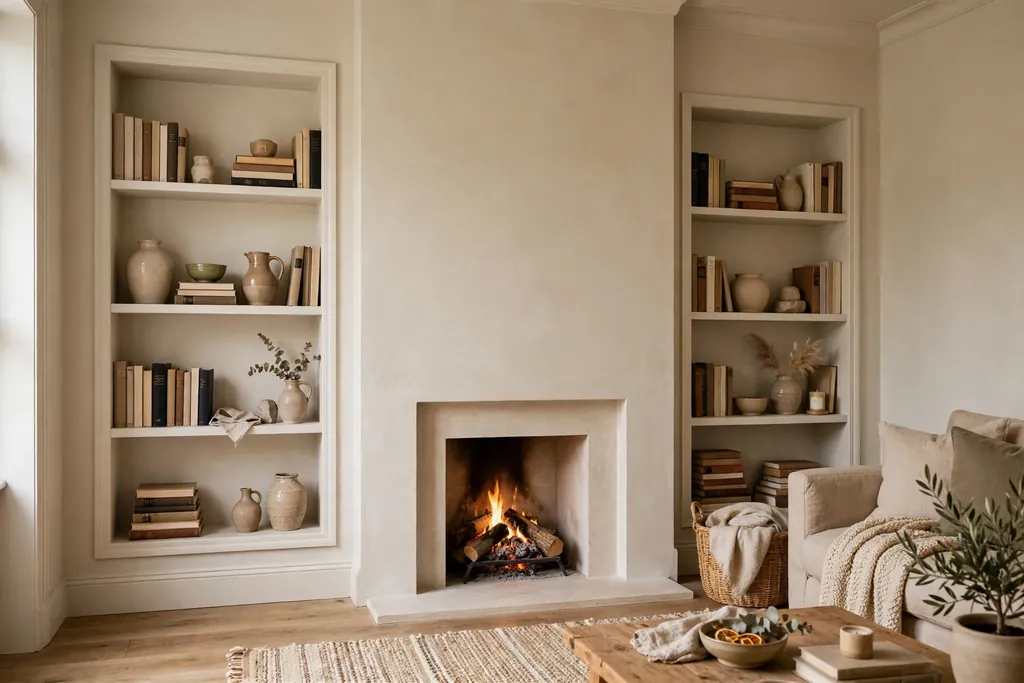
Built-in alcove shelves on either side of a fireplace turn awkward gaps into the most useful part of a Scottish living room. Paint the shelves the same color as the wall, so they read as part of the room, and fill them with books, a few ceramics, and one or two framed photos. The shelves give the fireplace wall a finished, collected look without a large cabinet.
Keep the shelves edited. Group books by height, leave some open space on each shelf, and keep heavy books low, where they are easier to reach. A shelf packed edge to edge looks like storage, while a shelf with breathing room looks like display. If the shelves hold family items you do not want on show, add a basket or a lidded box to one or two shelves, and keep the rest open.
10. Oak, Stone, and Sheepskin in Natural Tones
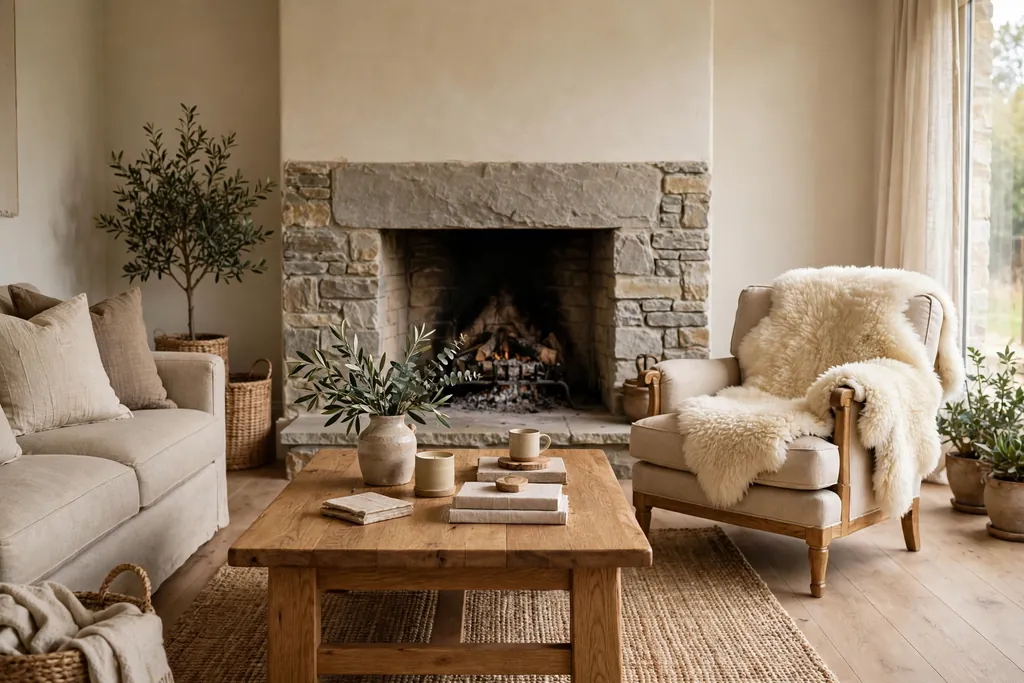
Oak, stone, and sheepskin give a Scottish living room a natural base that never looks themed. An oak coffee table, a stone hearth or windowsill, and a sheepskin draped over a chair arm or a bench add warmth through material, not through pattern. The natural tones, pale oak, grey stone, and cream sheepskin, suit almost any wall color.
Repeat each material once or twice, rather than using it only once. Oak on the coffee table and one side table, stone on the hearth and a small plinth, sheepskin on a chair and folded over a bench, and the room feels planned. Keep the finishes matte or lightly oiled, since high gloss fights with the soft, lived in feel of wool and linen. Brush sheepskin now and then, and keep it out of strong direct sun, so it stays soft.
11. A Fireside Armchair with a Footstool
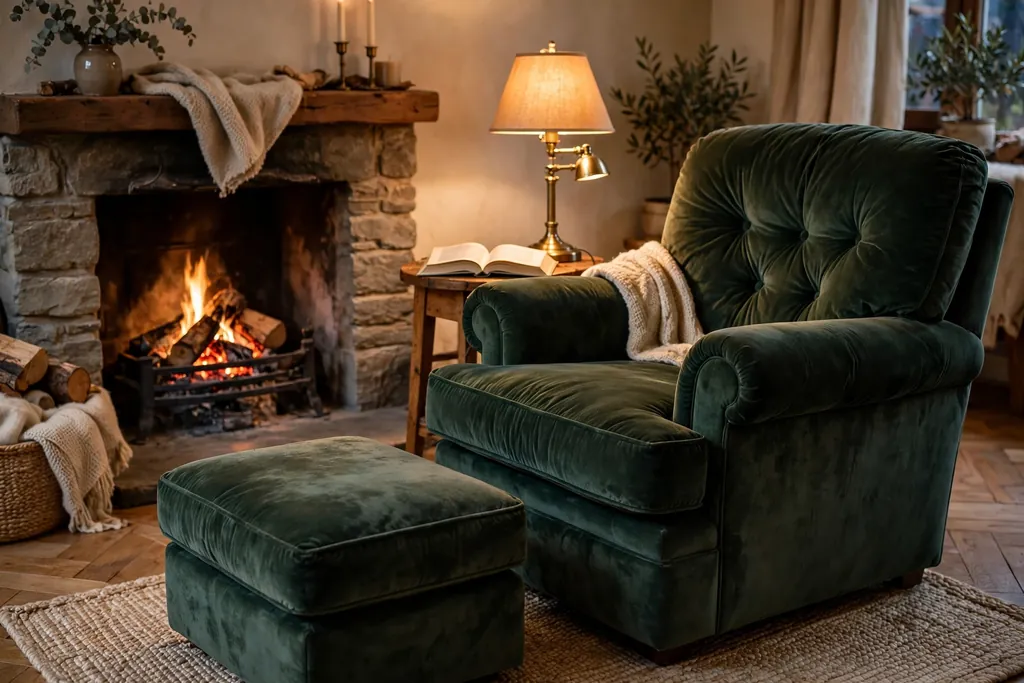
A fireside armchair with a footstool is the Scottish living room at its most inviting: one deep chair, angled toward the fire or the window, with a place to put your feet up. Choose a chair with a high back and deep seat, in tweed, wool, or leather, and add a footstool in the same fabric or a plain ottoman that can also hold a tray. The pair creates a reading corner inside the larger room.
Place a small side table beside the chair for a book, a mug, and a lamp, so the corner works on its own without a trip across the room. Keep the chair away from draughts where possible, and angle it slightly, rather than square to the wall, so it feels placed for sitting, not for display. A footstool that doubles as extra seating earns its floor space when guests arrive.
12. A Heather, Slate, and Oatmeal Palette
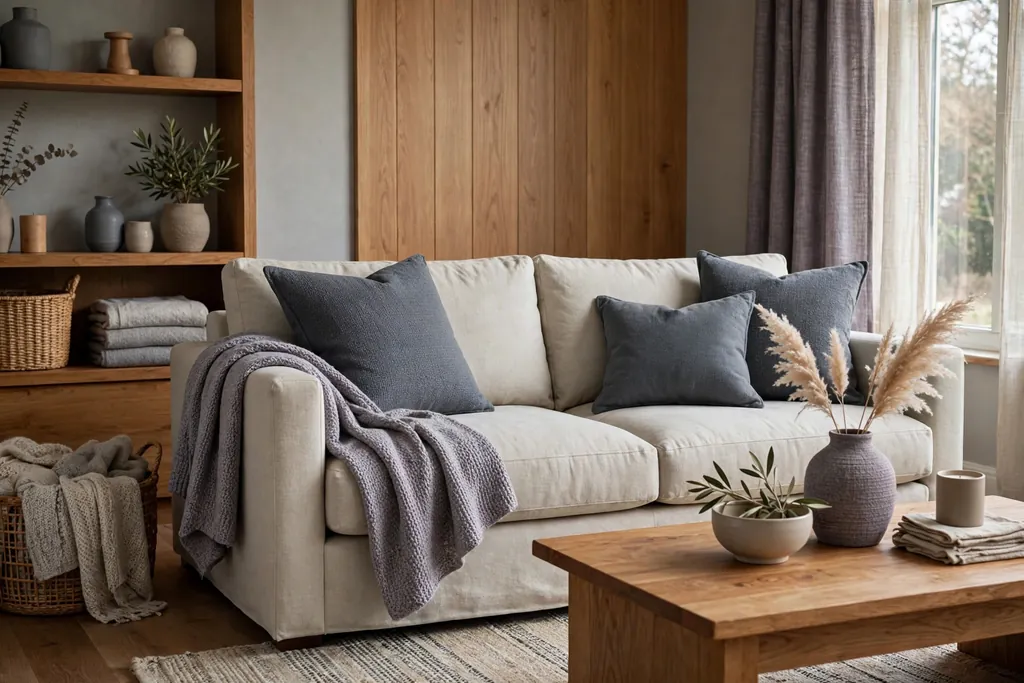
A palette of heather, slate, and oatmeal gives a Scottish room color without loudness. Heather brings a soft purple grey, slate adds a cool blue grey, and oatmeal warms both with a pale neutral. Use oatmeal on the largest pieces, such as the sofa and curtains, slate on a rug or a chair, and heather on cushions, a throw, or a vase.
Test the colors in your own light before committing to a large piece. Heather can look pink in warm lamplight and grey in daylight, and slate can turn cold in a north facing room. Add warm wood and warm white lamps to balance the cool tones, and keep one metal finish, such as brass or black, repeated on lamps and frames. The palette works in both a cottage and a flat, since it relies on tone rather than on period details.
13. A Patterned Wool Rug Over a Wooden Floor
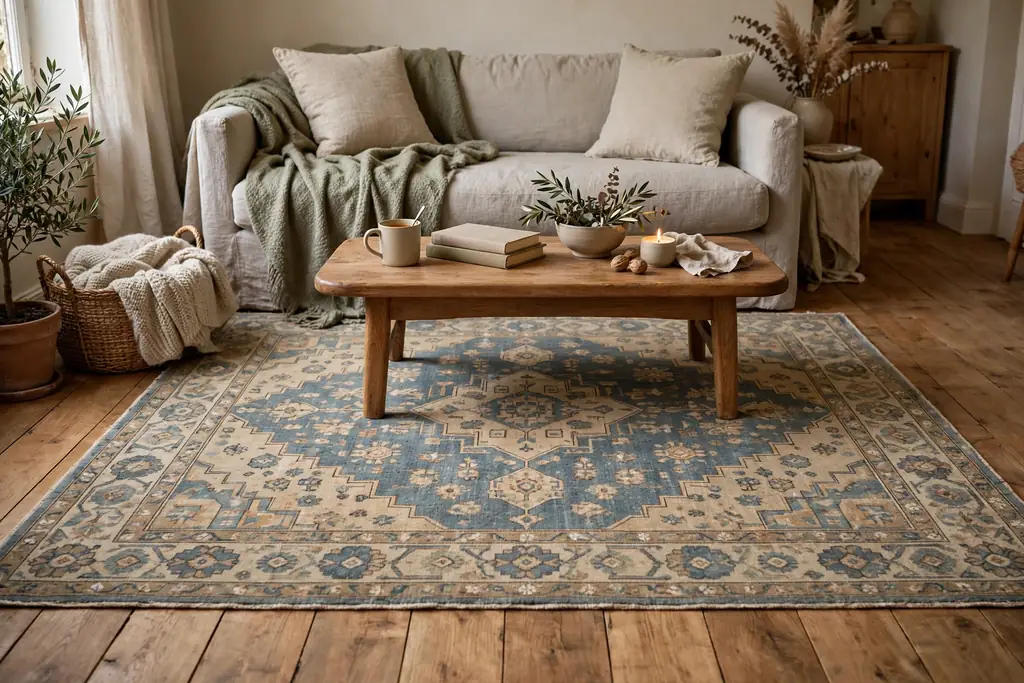
A patterned wool rug over a wooden floor is a classic Scottish combination, and it works because the two materials balance each other. The wood gives a hard, warm base, while the wool rug adds pattern, color, and softness underfoot. Choose a rug with a traditional pattern in muted tones, such as a faded Persian style, a simple geometric, or a tartan inspired check, and keep the rest of the pattern in the room quiet. For more rug sizing and placement ideas, see these living room rug ideas.
Size the rug to the seating group, so the front legs of the sofa and chairs rest on it, and leave a border of bare wood around the edges. A rug that is too small floats in the middle of the room, while a rug that covers the whole floor hides the wood entirely. Use a rug pad underneath, so the rug stays in place on a smooth floor, and vacuum it regularly, since wool rugs hold dust.
14. Heritage Pieces Paired with Clean Modern Lines
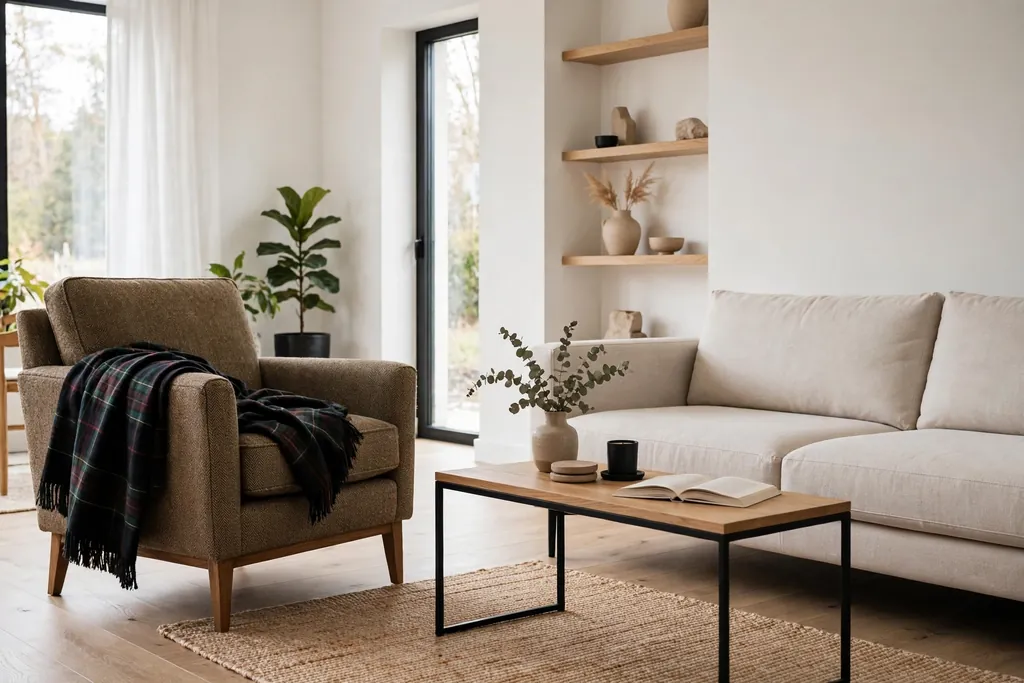
The current half of this list comes from pairing heritage pieces with clean modern lines. Keep the Scottish pieces you love, a tartan throw, a tweed chair, a stone fireplace, or a wooden dresser, and set them beside a plain sofa, a slim coffee table, and simple curtains. The modern pieces give the heritage pieces room to stand out, and the heritage pieces stop the modern room from feeling bare.
Limit the heritage count in any one view. One tartan throw, one tweed chair, and one landscape print are enough for a single seating group, with plain fabrics and simple shapes doing the rest. Repeat one color or one wood tone across old and new, so the pairing looks deliberate rather than accidental. This approach suits a small flat as well as a cottage, and it suits an open plan room, where the living area must sit beside a dining table without clashing, as shown in these small living room dining room combo ideas.
Conclusion
A Scottish living room that feels both cozy and current comes down to restraint: one tartan, one strong feature, a small palette, and warm light. Start with the piece that matters most to you, whether that is a fireplace, a deep green sofa, or a window seat, and build the rest of the room around it in plain fabrics and natural materials. Small moves, a wool throw, a layered lamp, a patterned rug, let you test the look before a larger change, such as panelling or a new sofa. For a softer sofa color to pair with the deep greens and slate tones here, see these grey couch living room ideas.
Save this list for your next free hour in the living room, and work through it in order: palette and sofa first, then fireplace and rug, then lighting and shelves, and finally the throw, cushions, and prints that finish the room. Pin the ideas you like best, so you can find them again when you are ready to shop, paint, or rearrange.
FAQs
What colors make a Scottish living room feel cozy without looking dark?
Use a pale base, such as oatmeal or warm white, on the sofa and walls, then add deep color in smaller amounts: moss green, slate, heather, or muted rust on cushions, a throw, or one chair. Warm wood and warm lamplight balance the cooler tones, and a light rug keeps the floor from feeling heavy. The room feels cozy from texture and light, not from painting every wall dark.
How do I use tartan without making the room look themed?
Limit tartan to one or two pieces, such as a throw and one cushion, in muted tones, and keep the sofa, curtains, and rug plain. A large scale, bright tartan on every surface reads as a theme, while one softened check reads as a nod to Scotland. If you already own a strong tartan piece, pair it with plain oatmeal or grey, and keep other patterns out of the same view.
Can a Scottish living room work in a modern flat with no fireplace?
Yes. The look comes from palette, texture, and lighting as much as from a fireplace. Use a deep green or grey sofa, wool and tweed layers, a patterned rug, and layered warm lamps, and add one heritage piece, such as a tartan throw or a landscape print. A simple electric fire or a candle group on a low console can give a focal point without a chimney.
Which fabrics suit a Scottish living room best?
Wool, tweed, linen, and sheepskin suit the look and the climate, since they add warmth and texture. Use wool for throws and rugs, tweed for a chair or cushions, linen for curtains and lighter cushions, and sheepskin as a single accent on a chair or bench. Choose washable covers for cushions in a room used daily, and keep one fabric plain for every patterned one.
How do I keep a Scottish living room light in winter?
Keep walls pale, use mirrors opposite a window where one fits, and dress windows with sheer panels under heavier curtains, so daylight reaches the room by day and the curtains close at night. Add lamps at more than one height with warm bulbs, and keep the rug and sofa in light or mid tones, saving deep color for cushions and one chair. Clear surfaces also help, since clutter absorbs light.
Should I mix Scottish style with other styles in the same room?
Yes, if you link the pieces with color and material. A Scottish throw or tweed chair sits well beside Scandinavian style pale wood, a modern plain sofa, or a farmhouse style wooden table, as long as one palette and one wood tone run through the room. Keep the heritage pieces to a few, and let plain, modern pieces carry the larger shapes, so the mix looks planned rather than crowded.