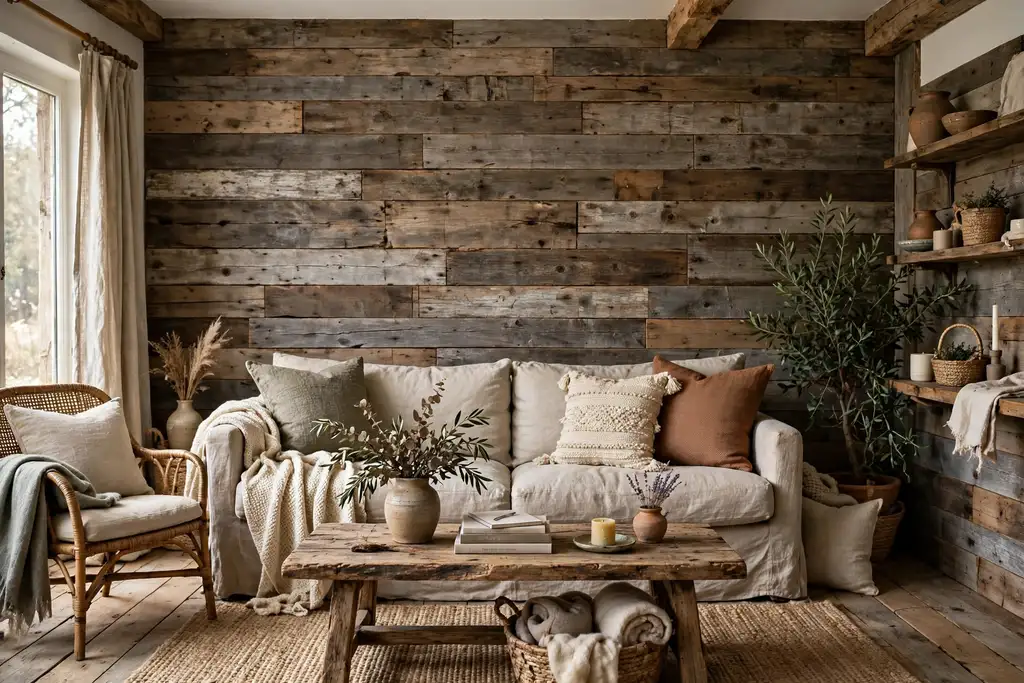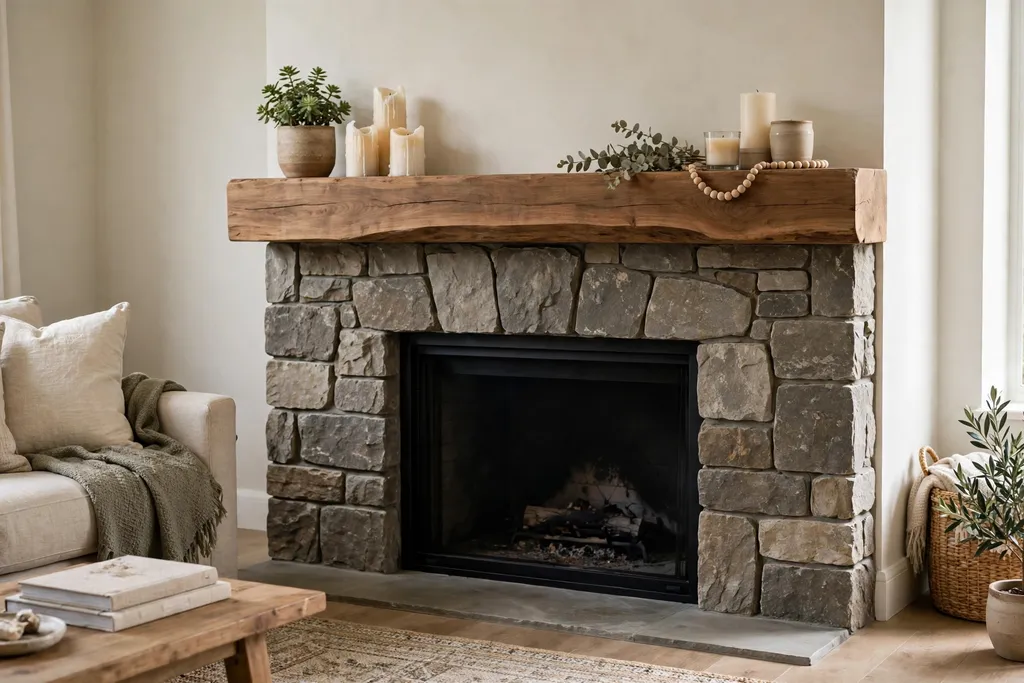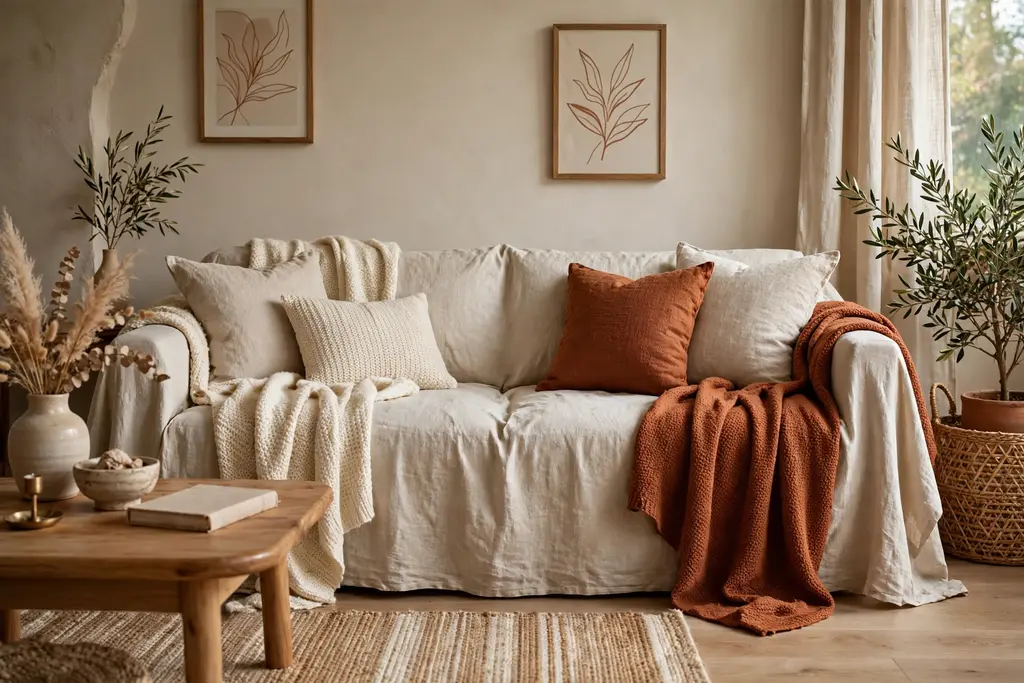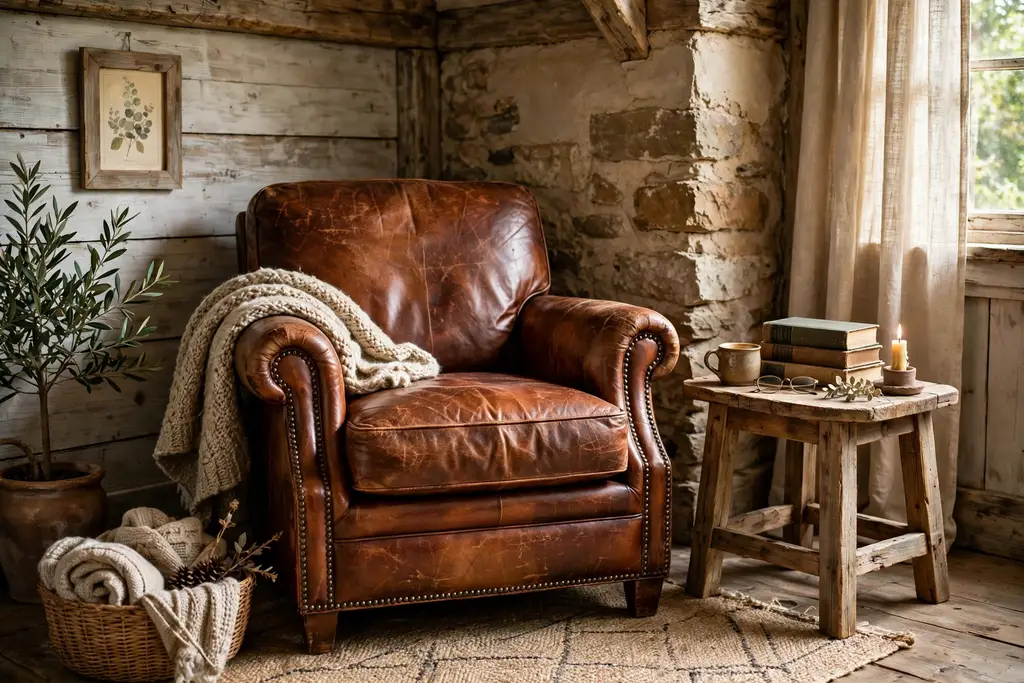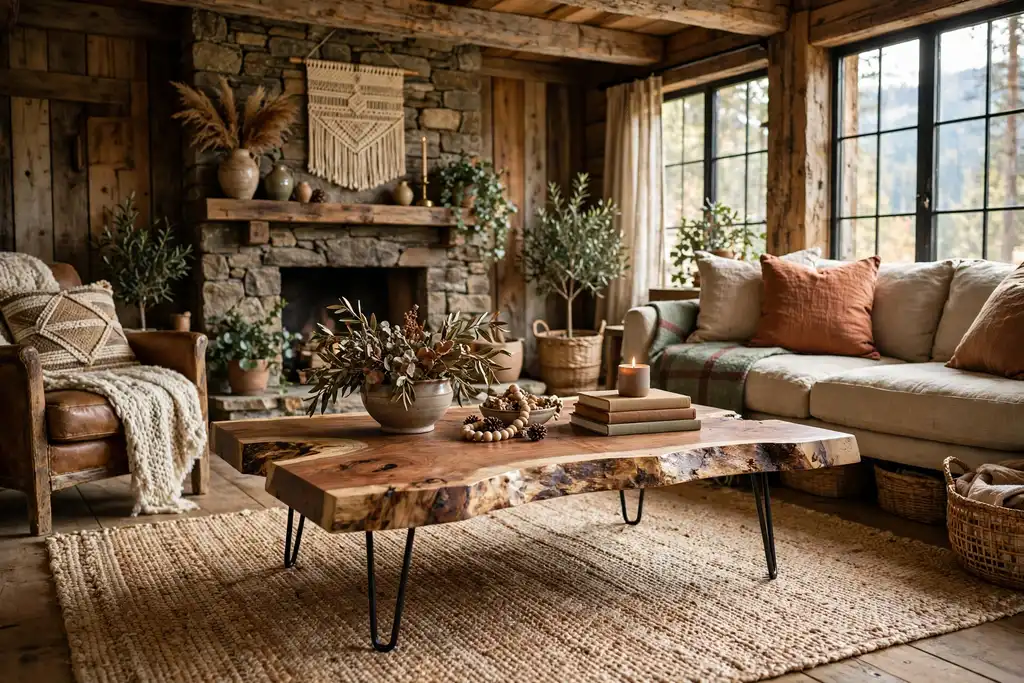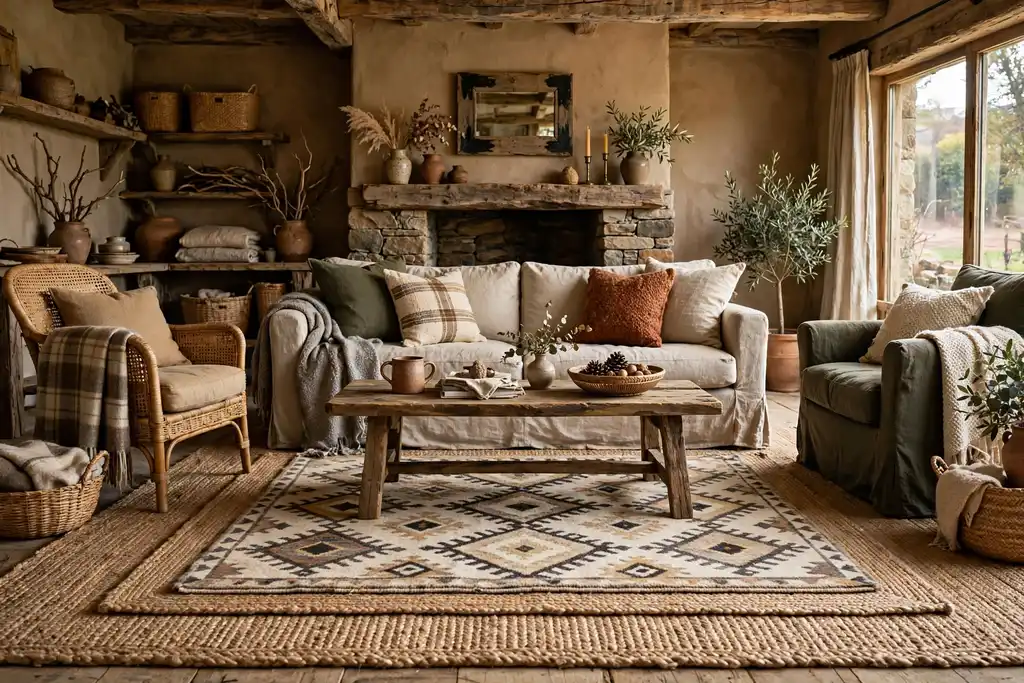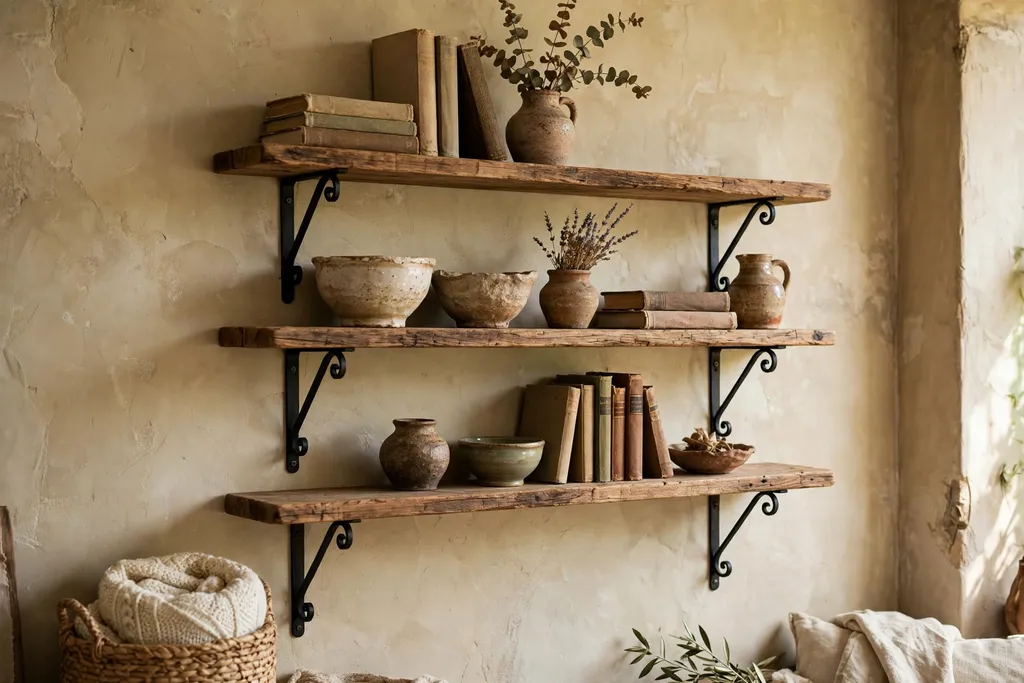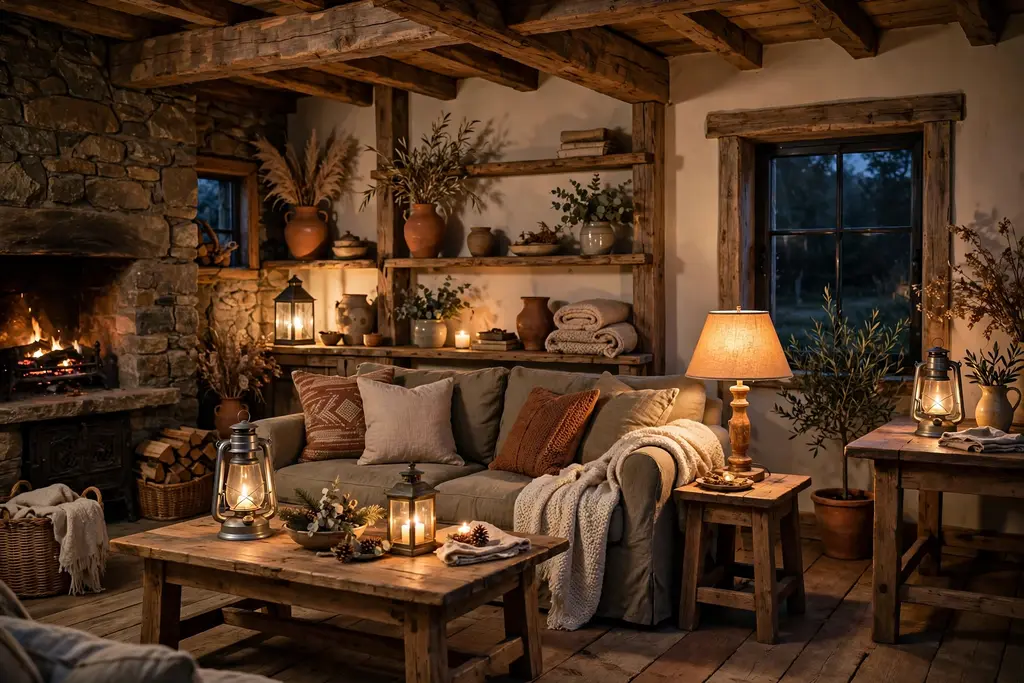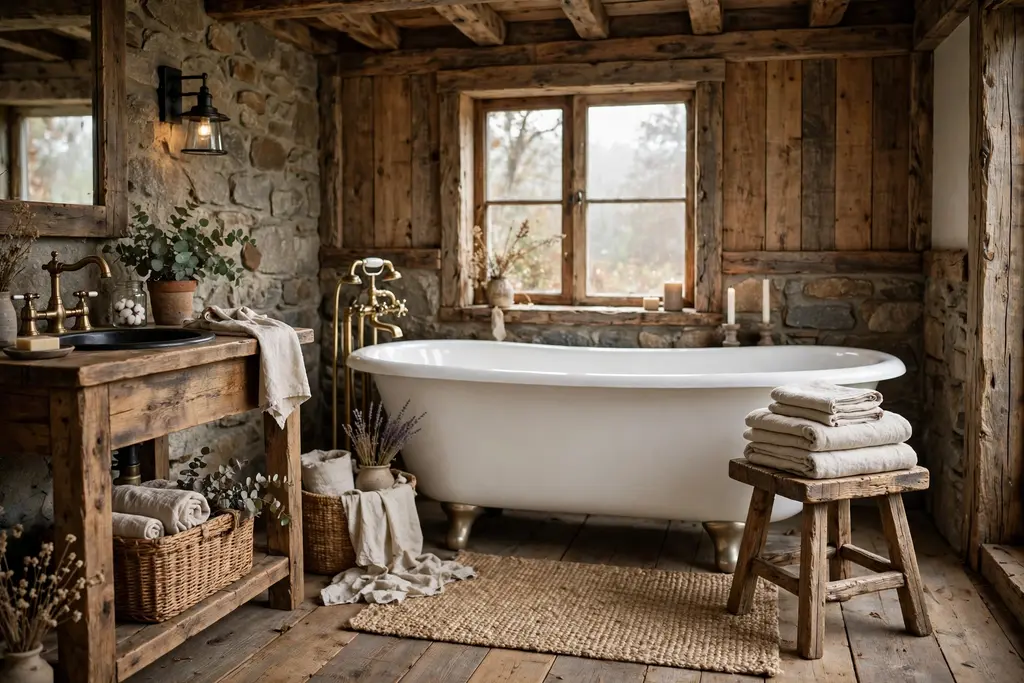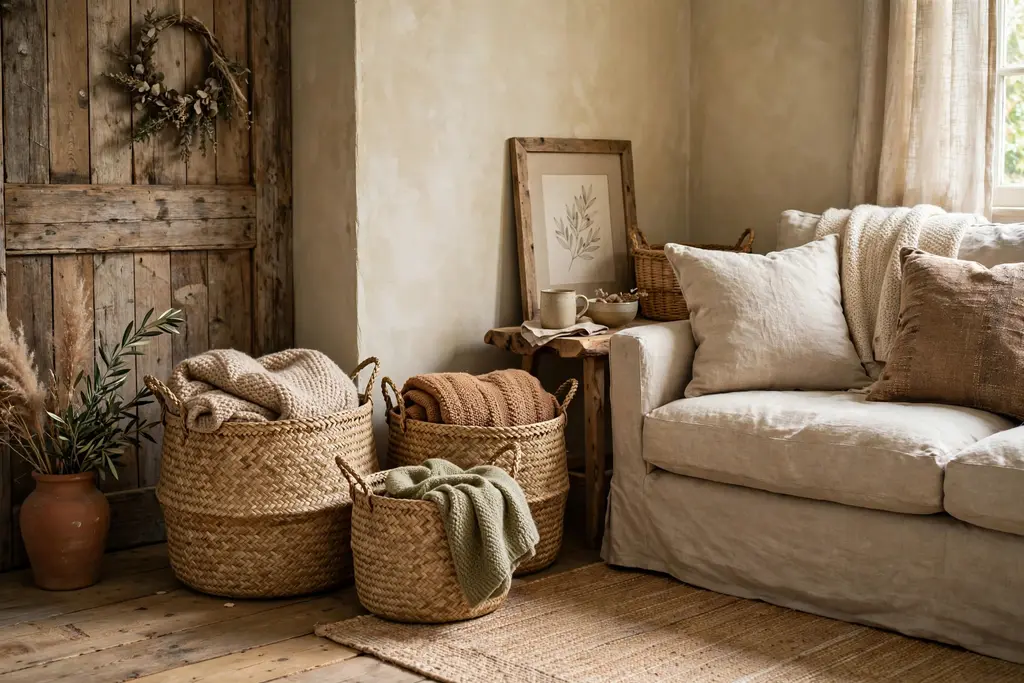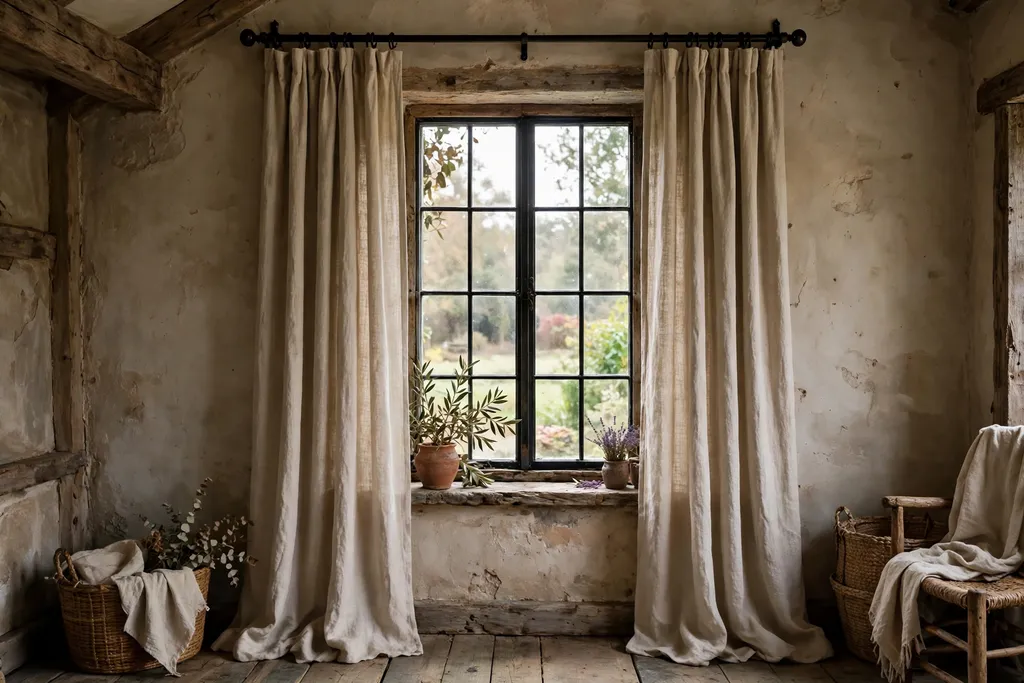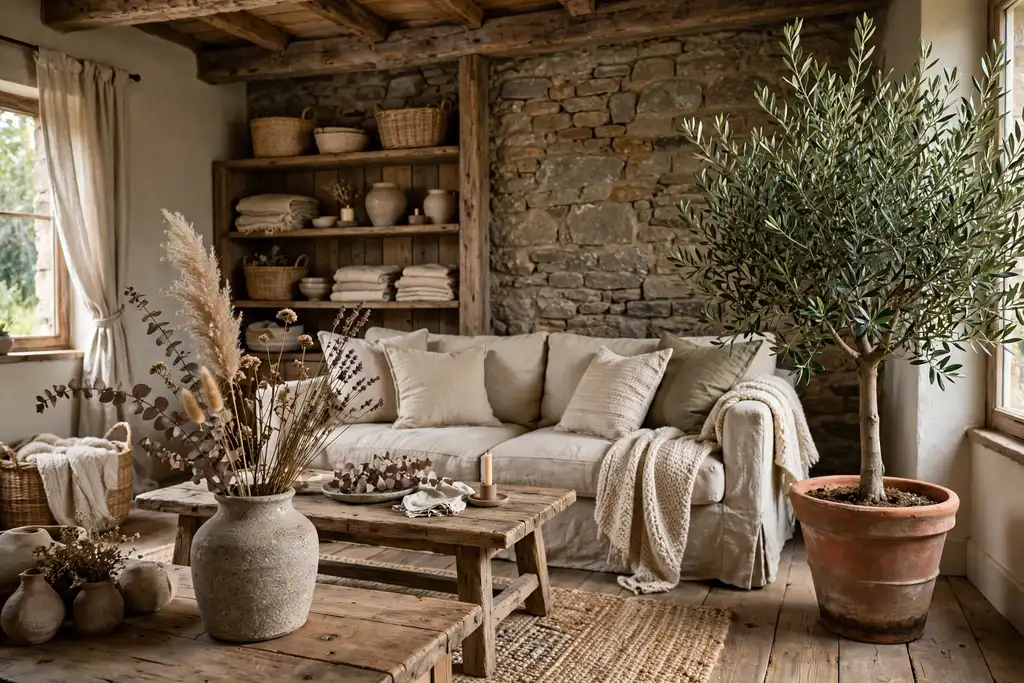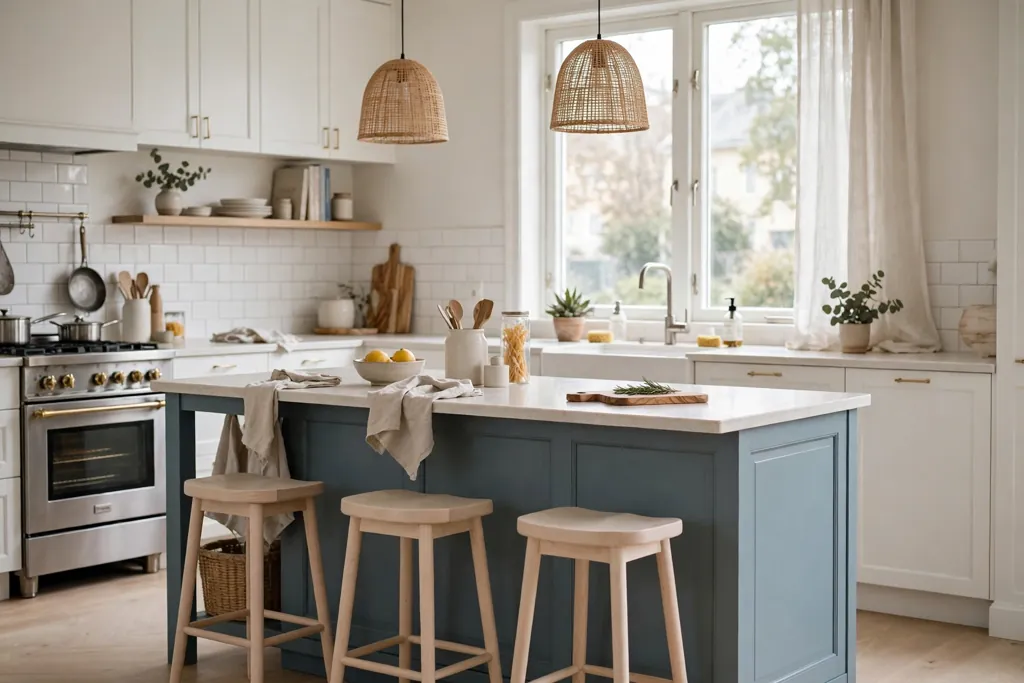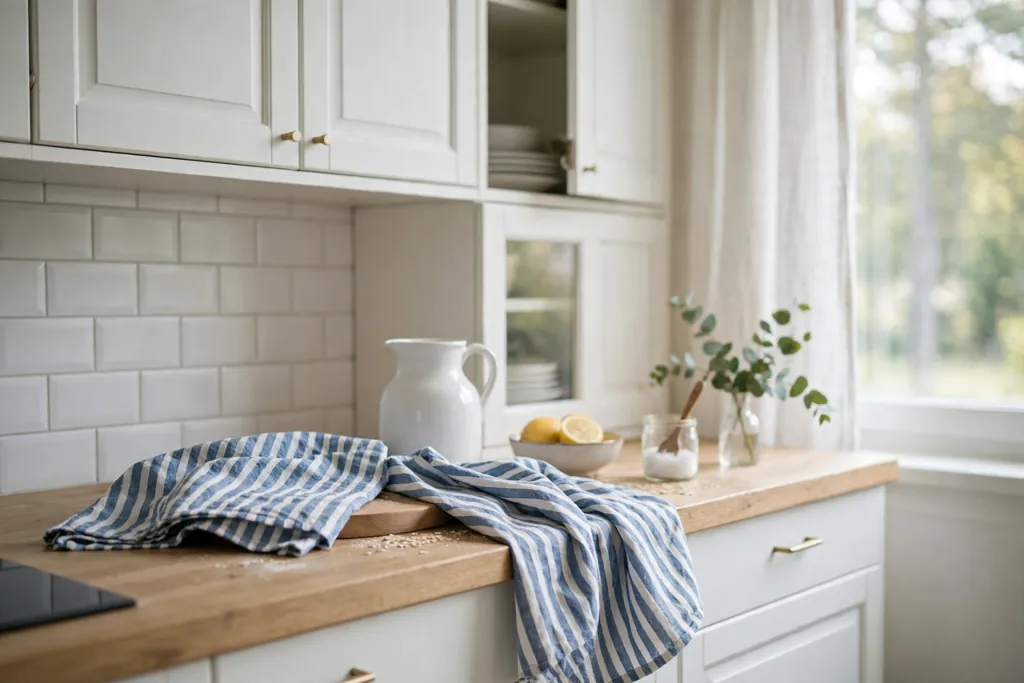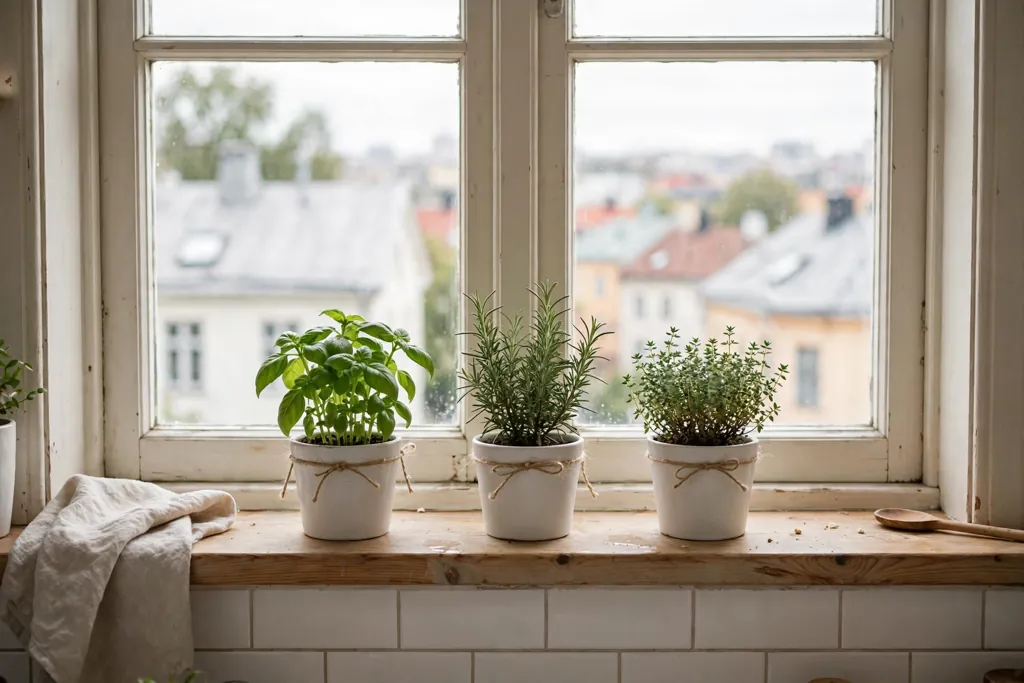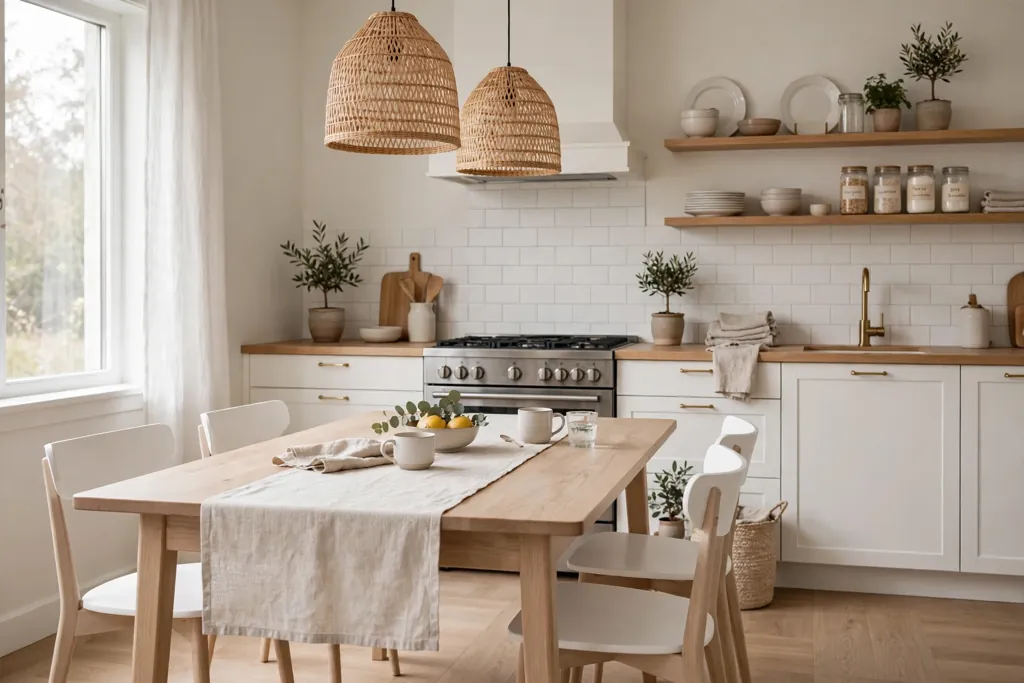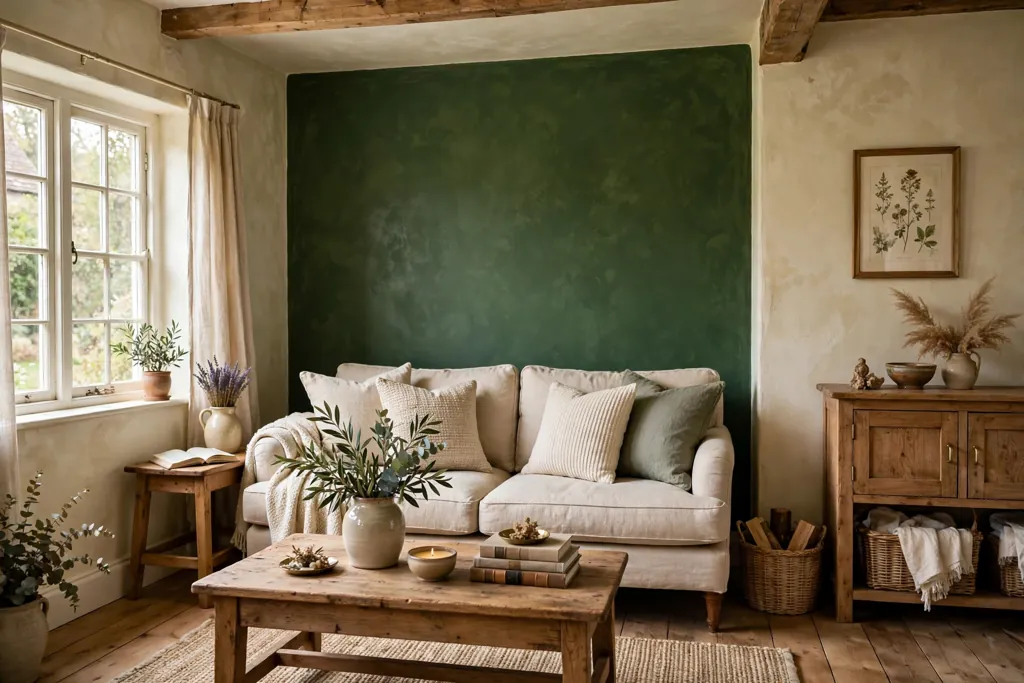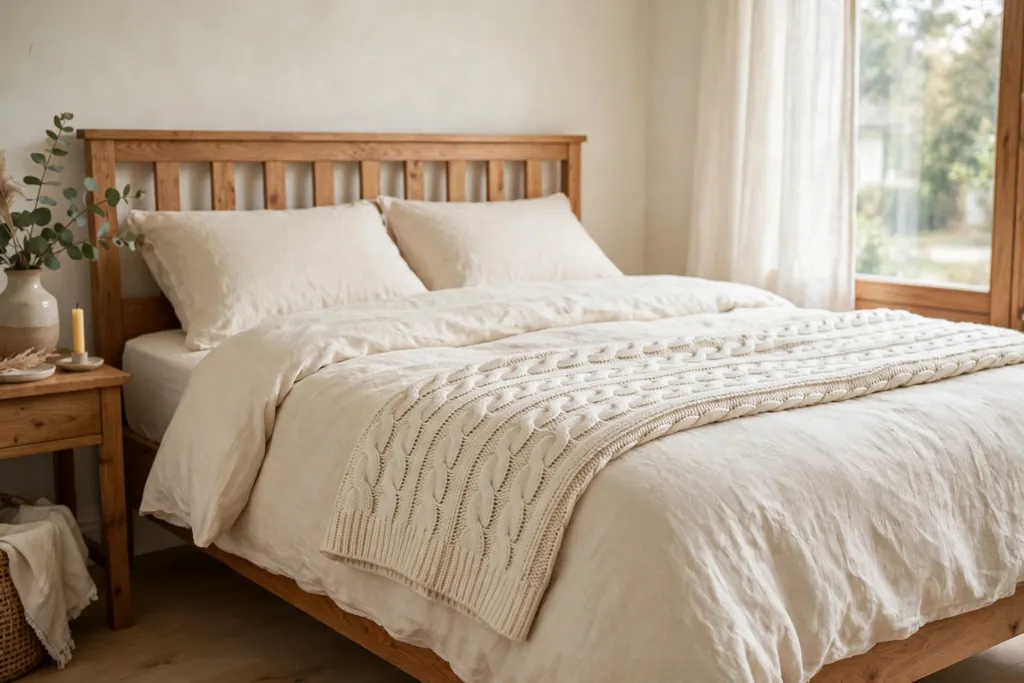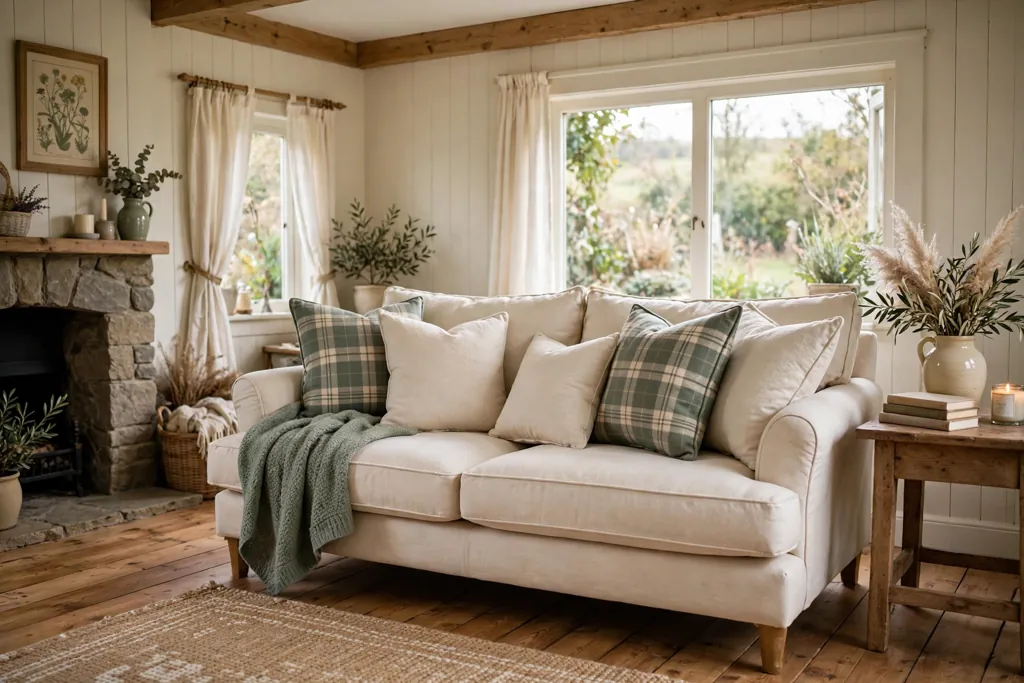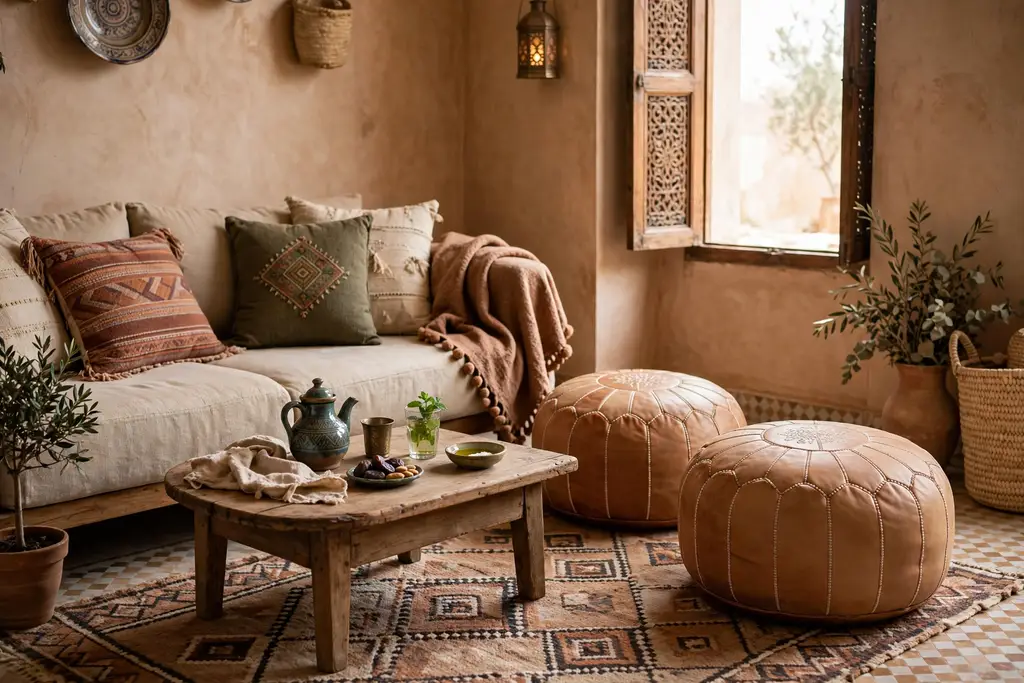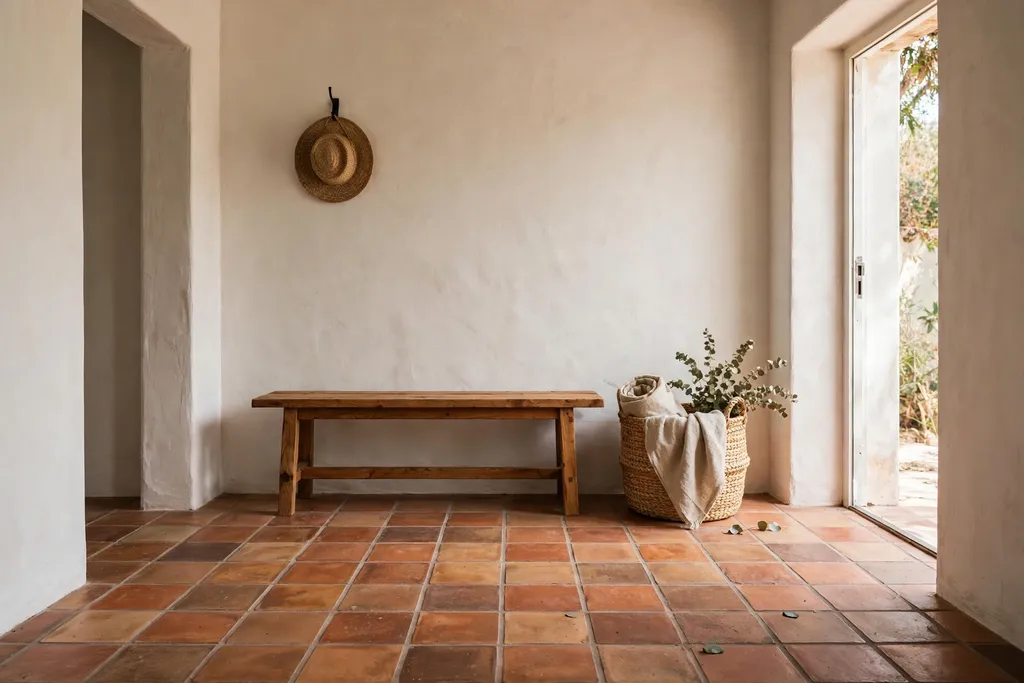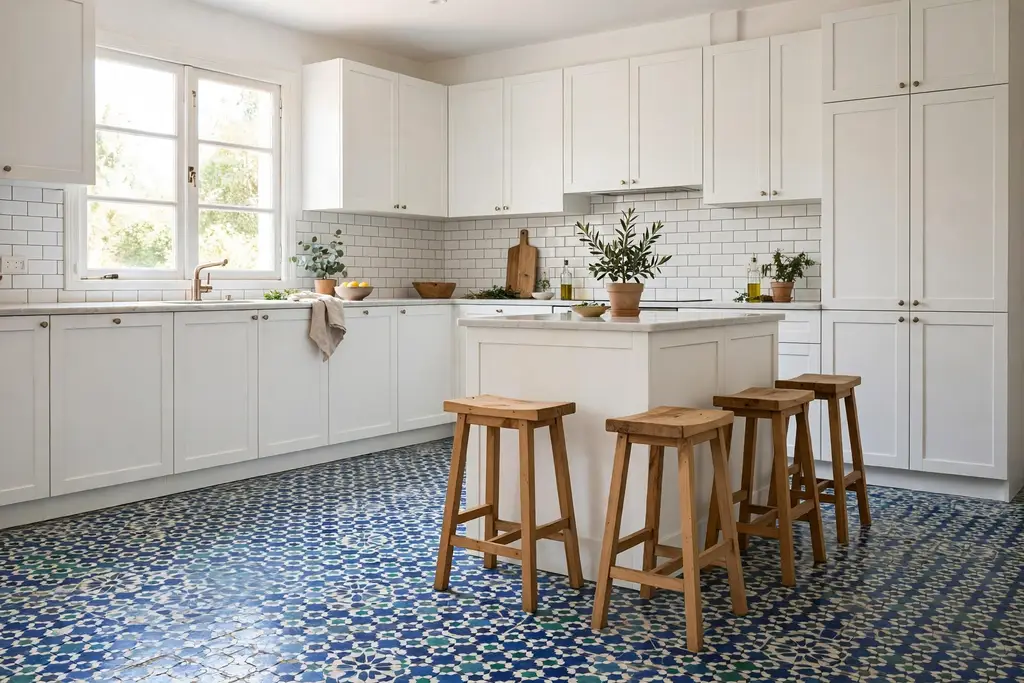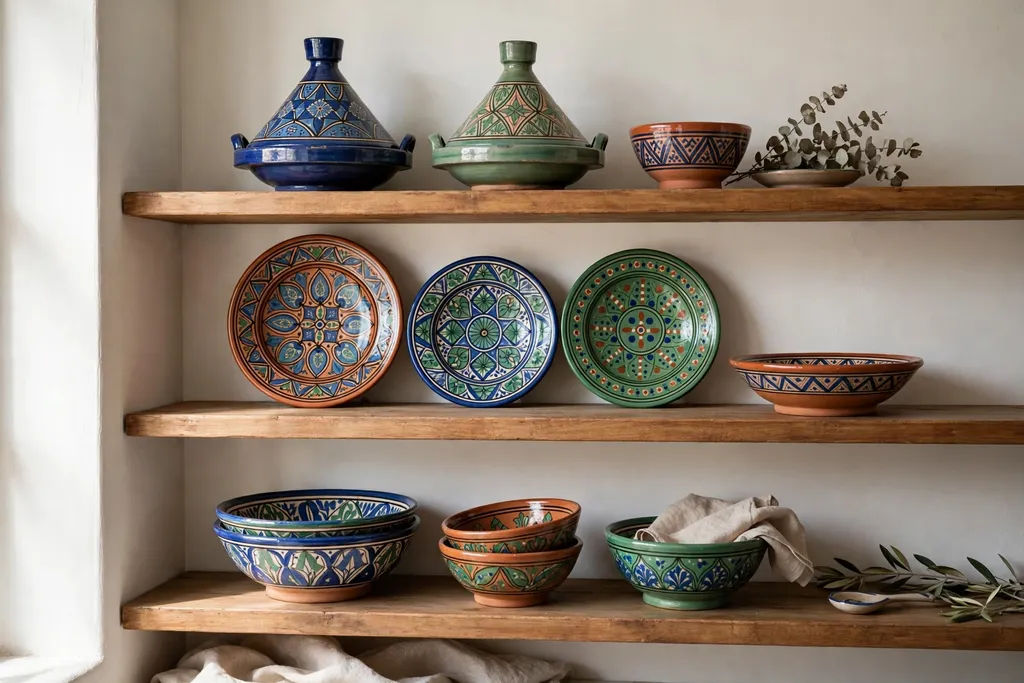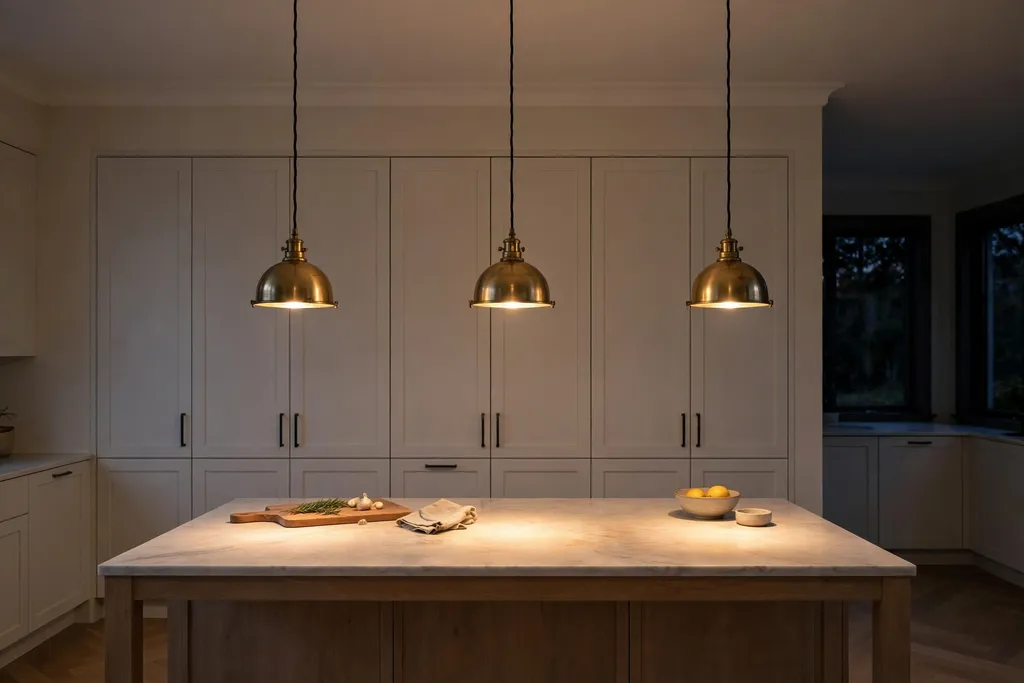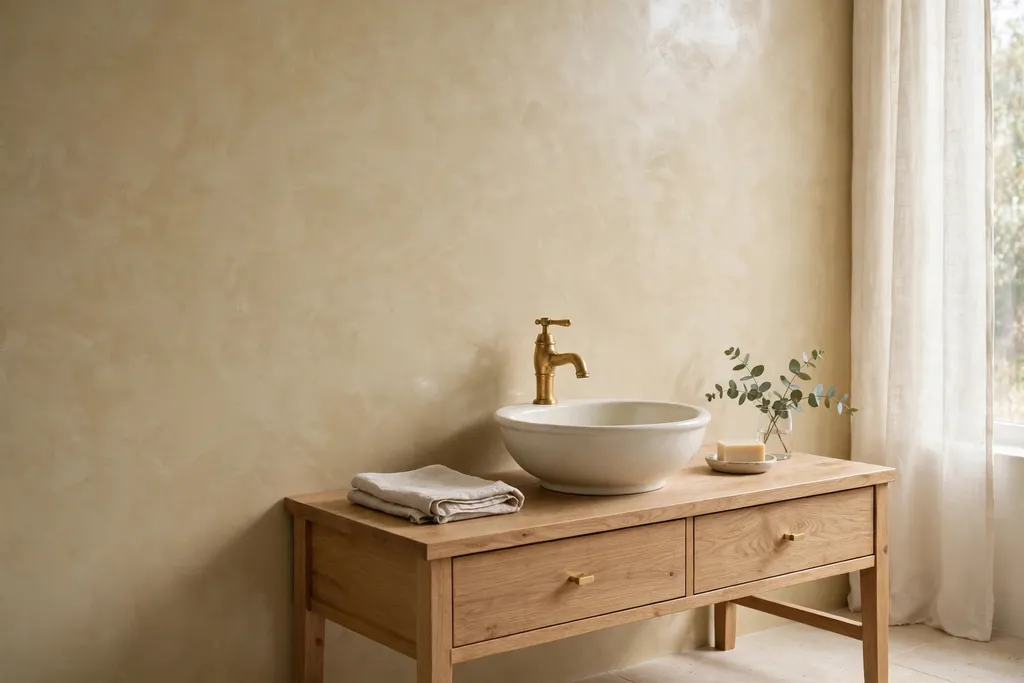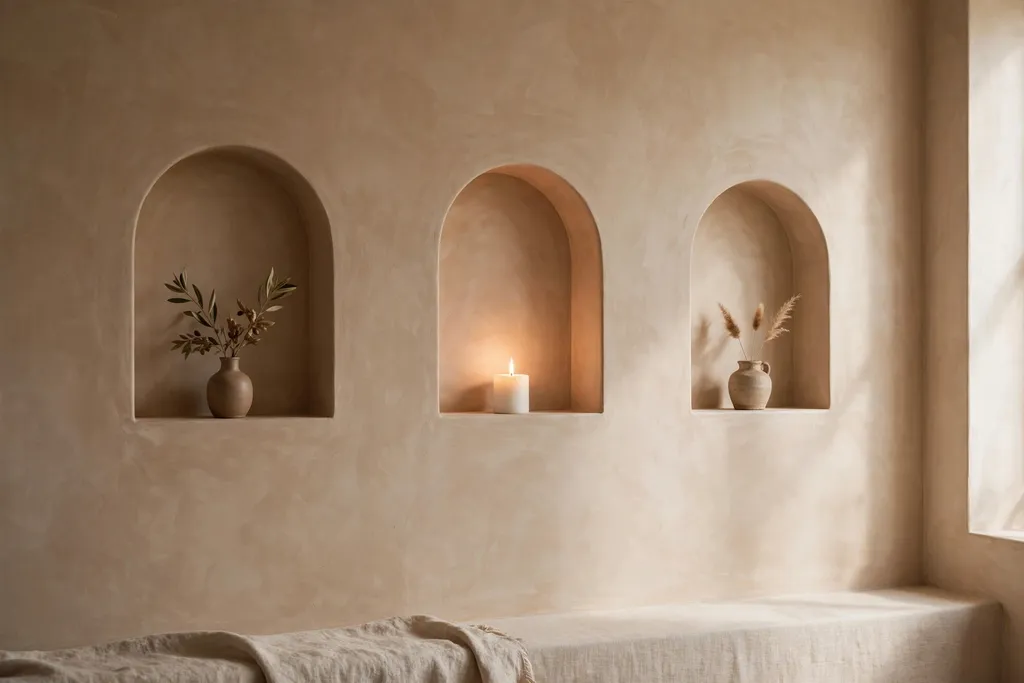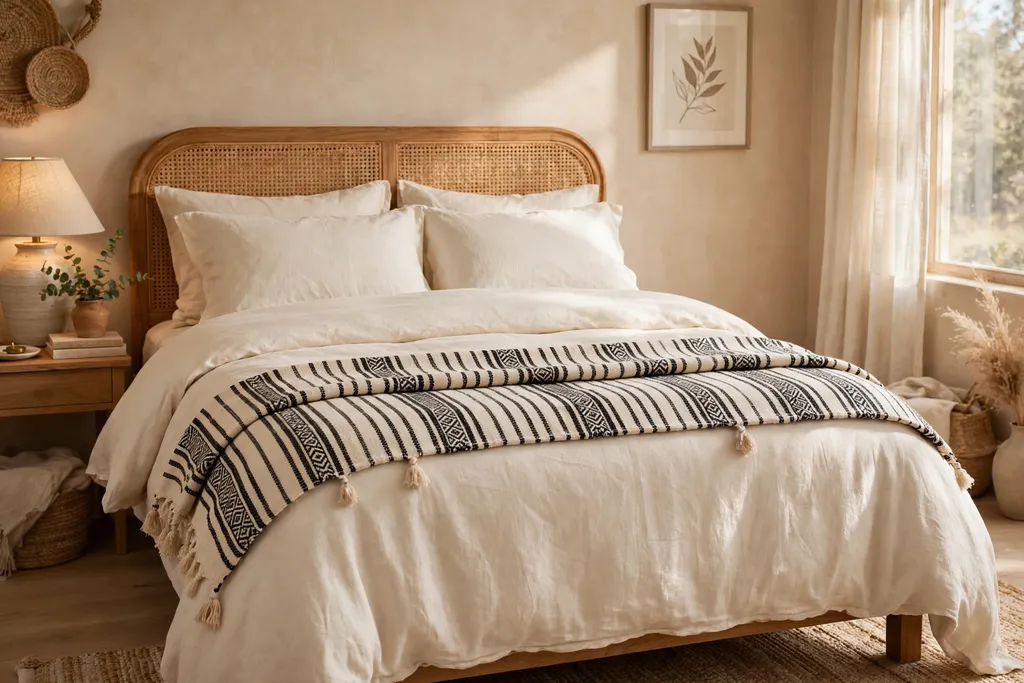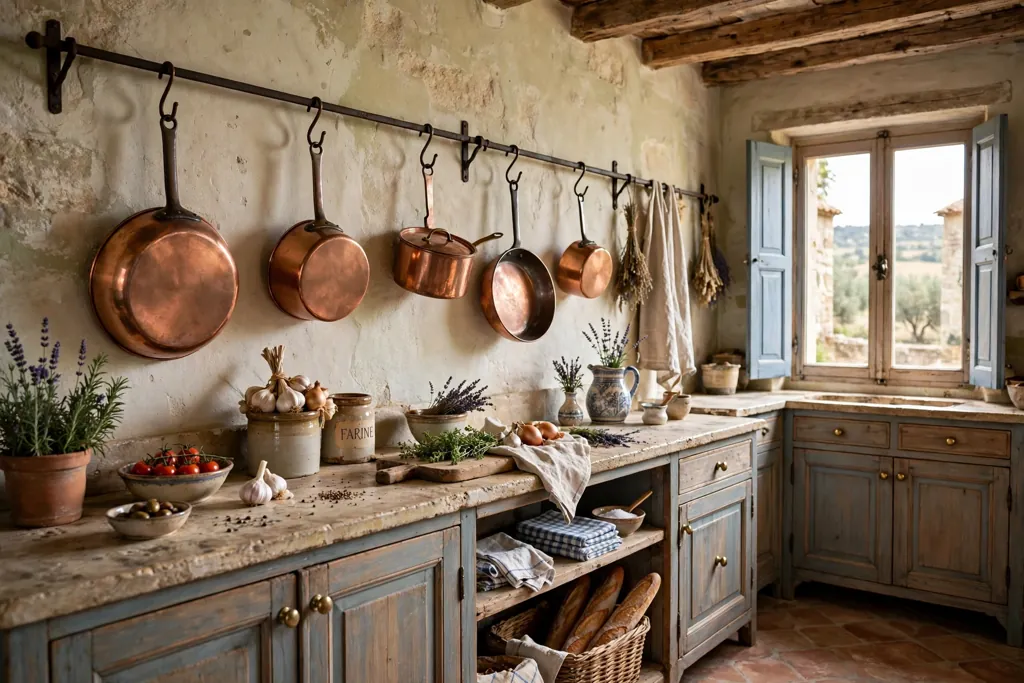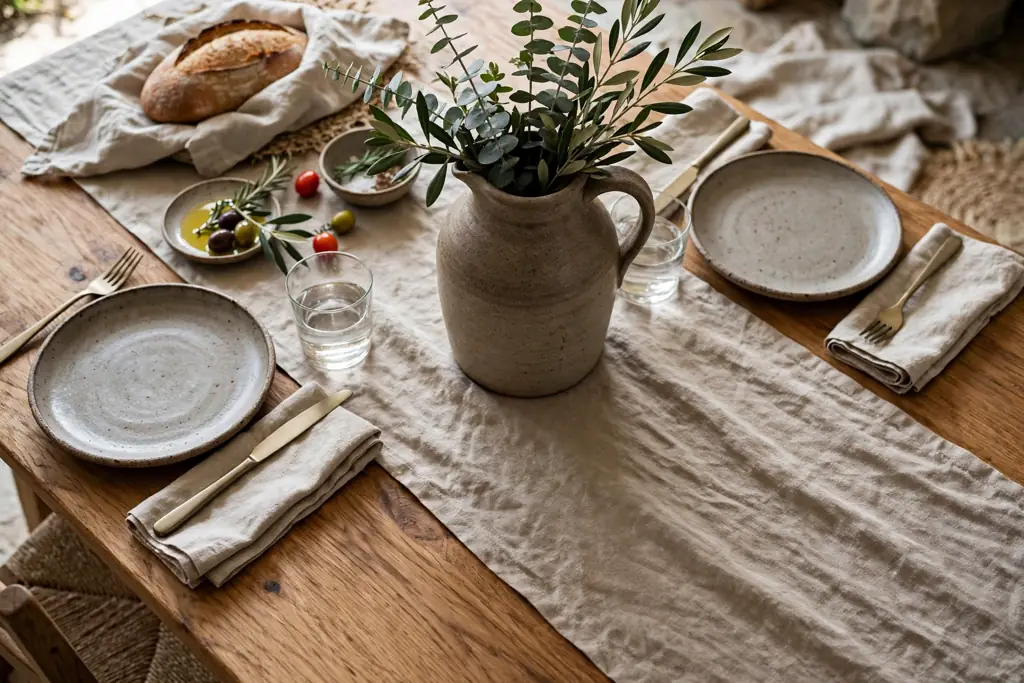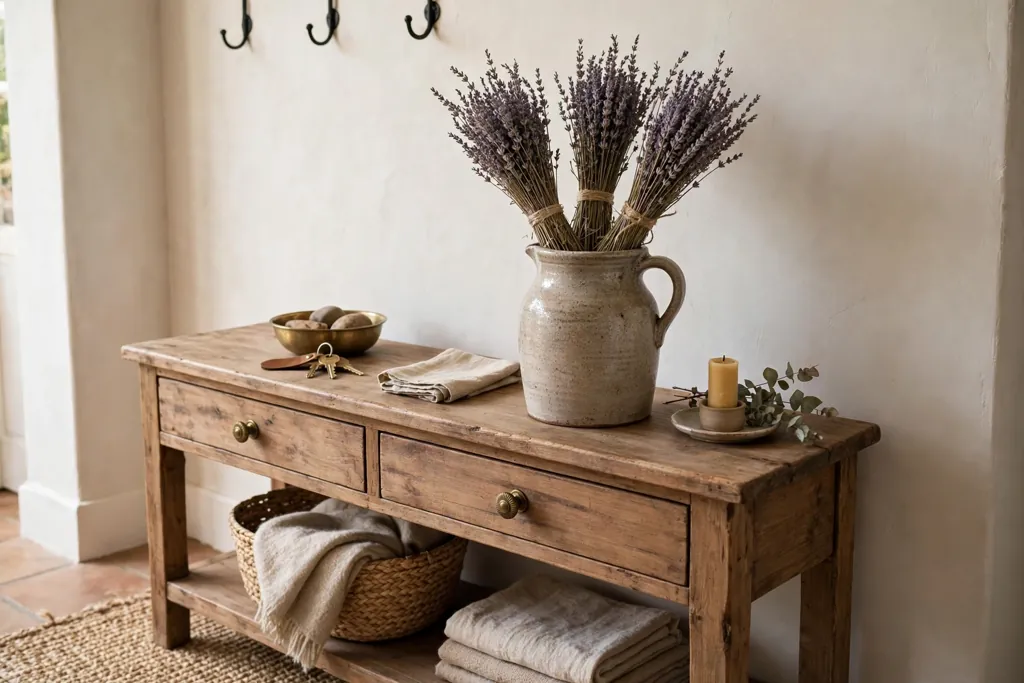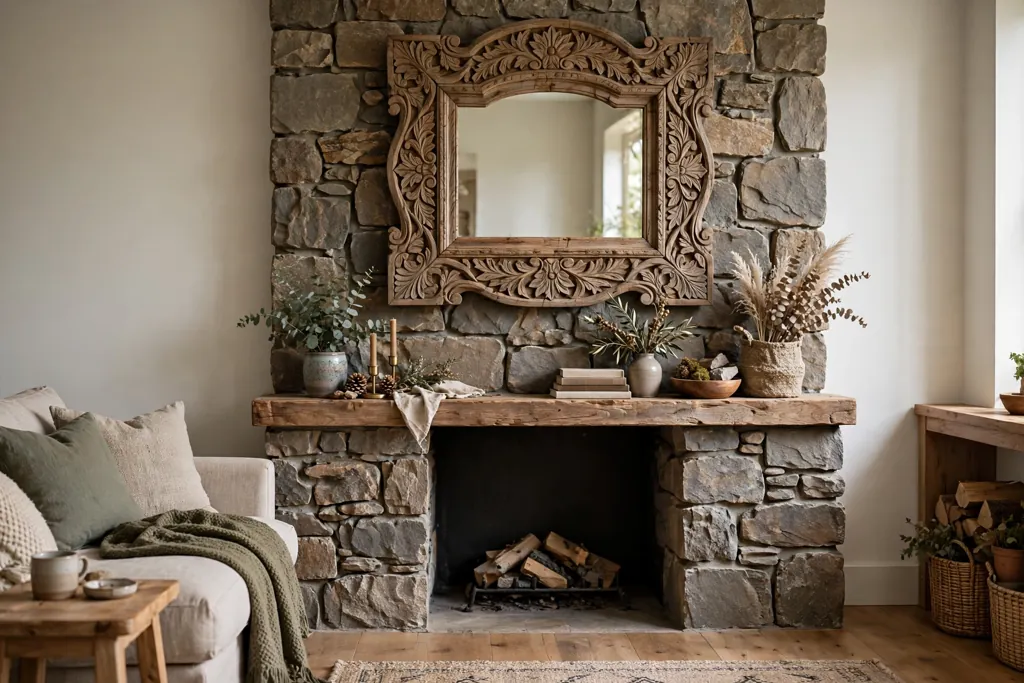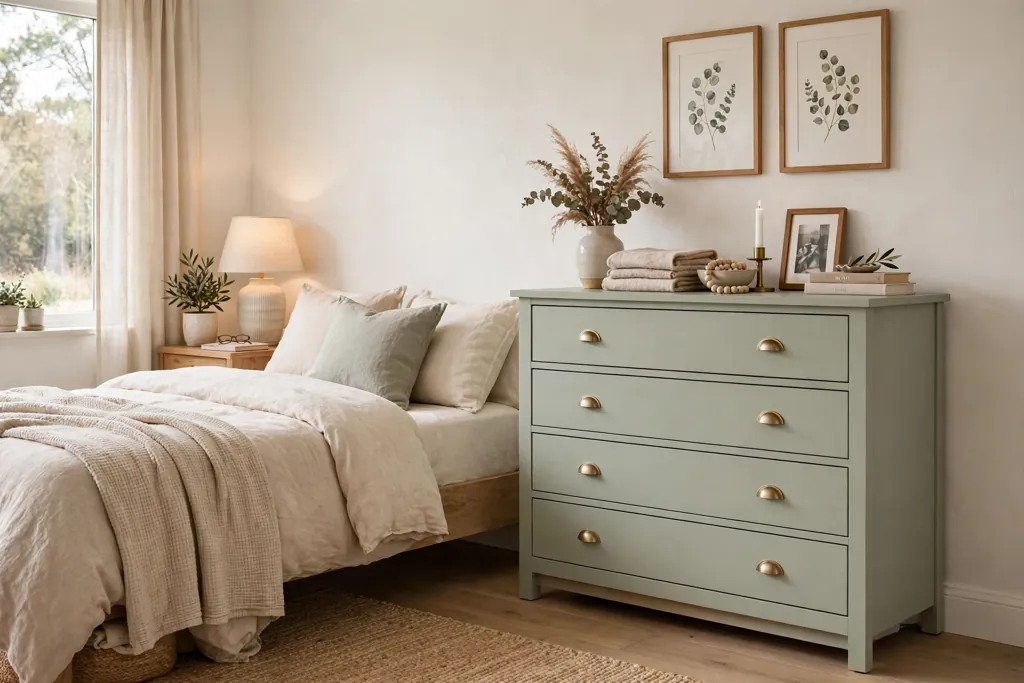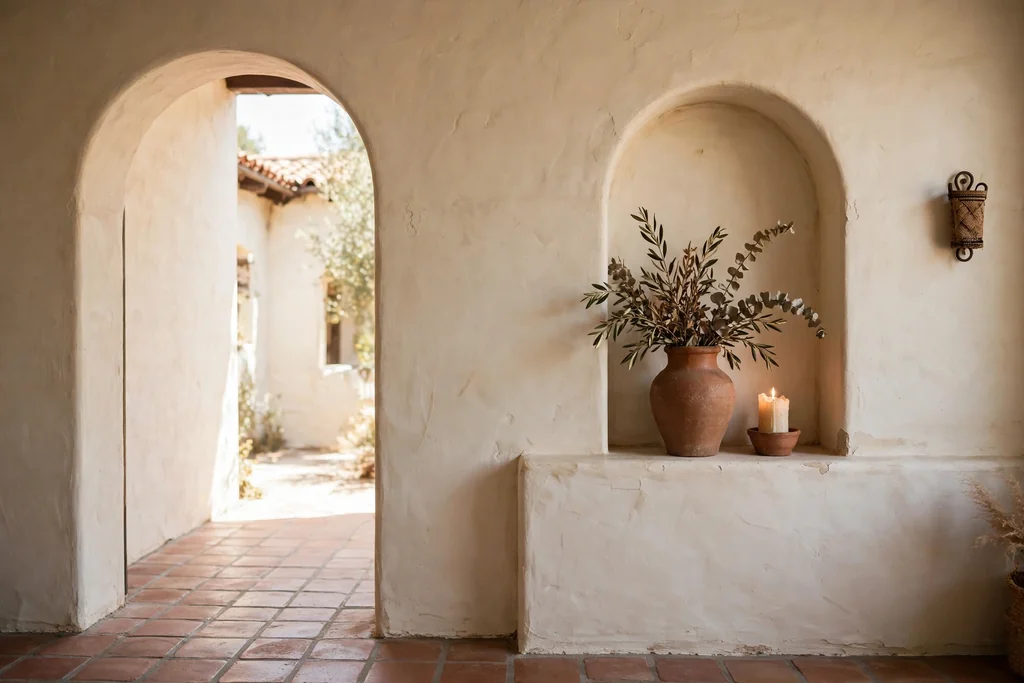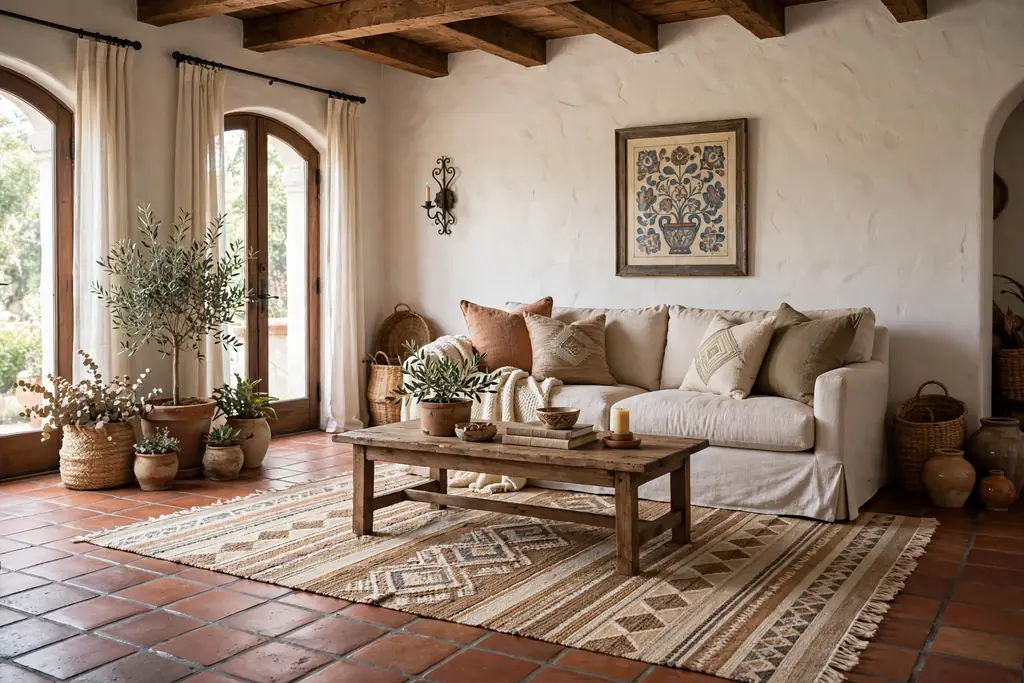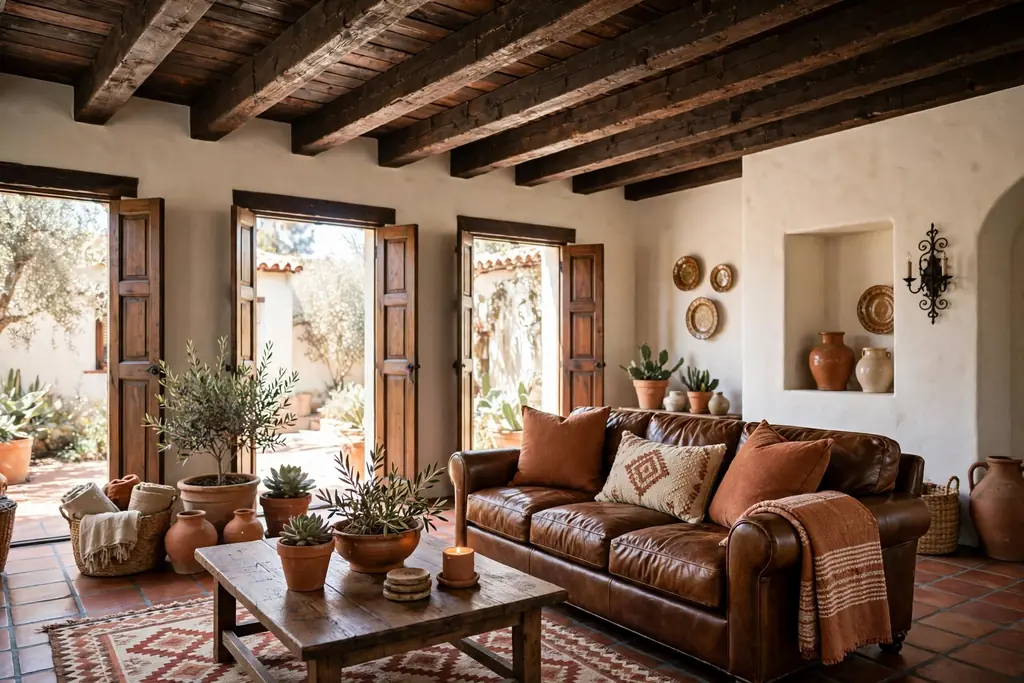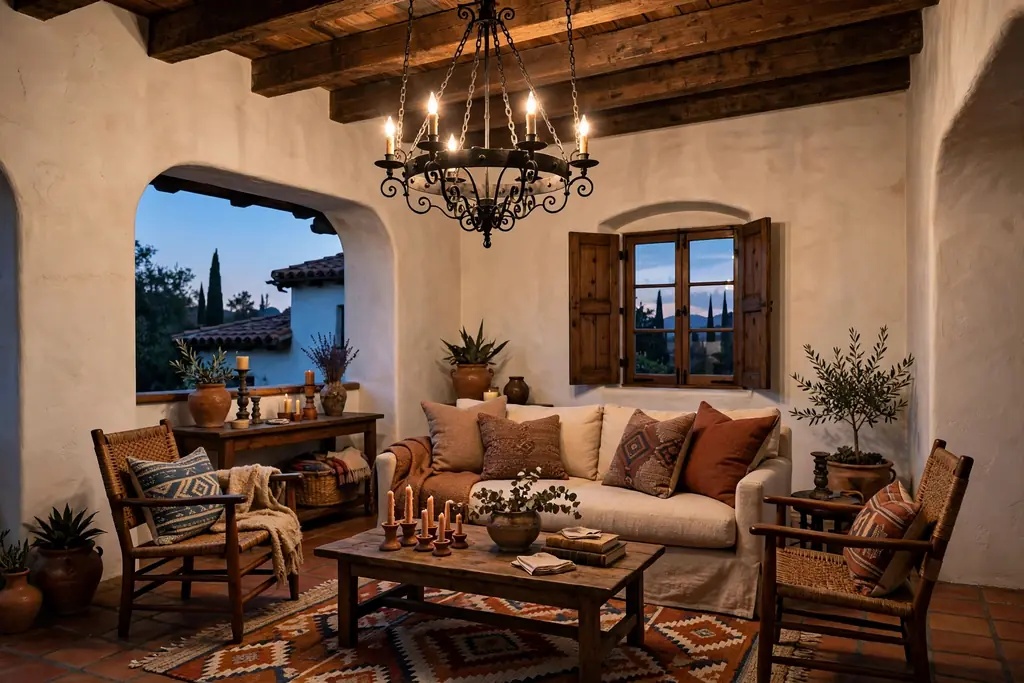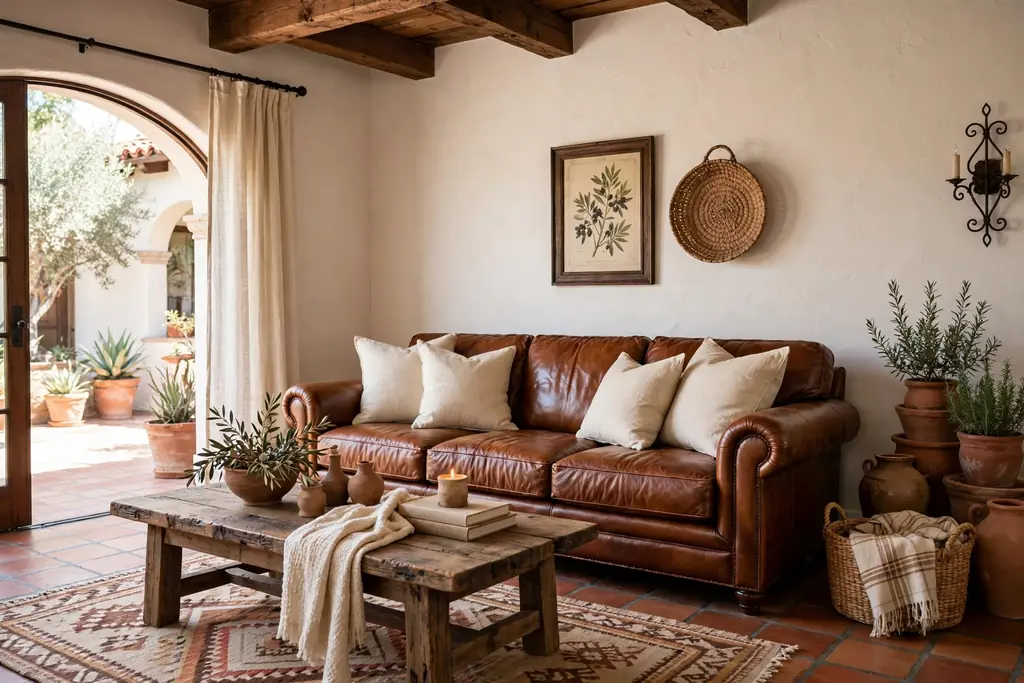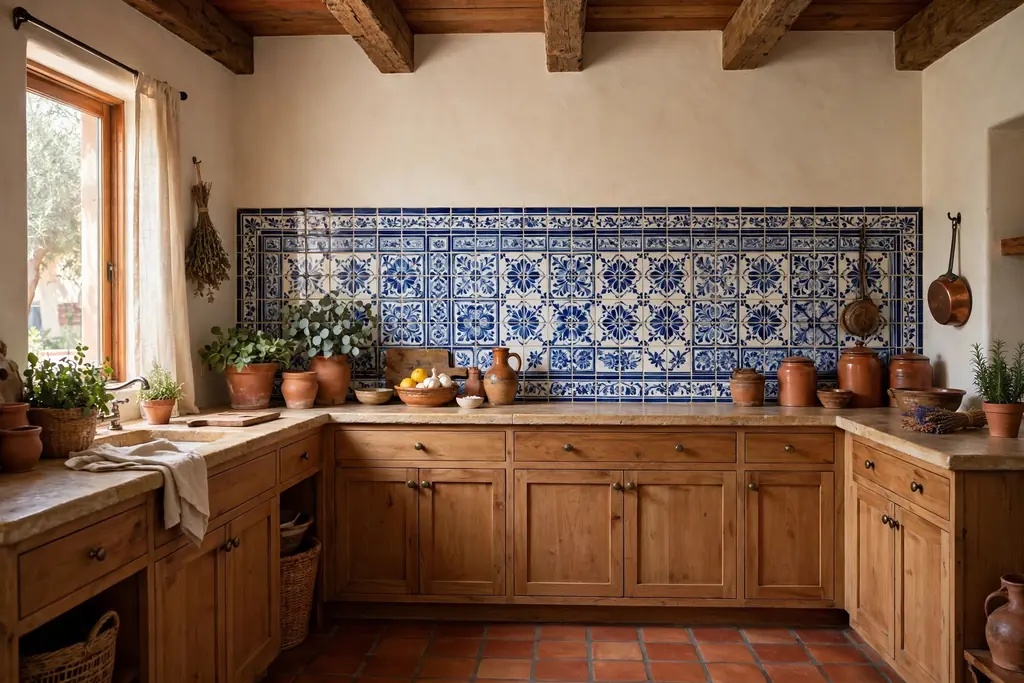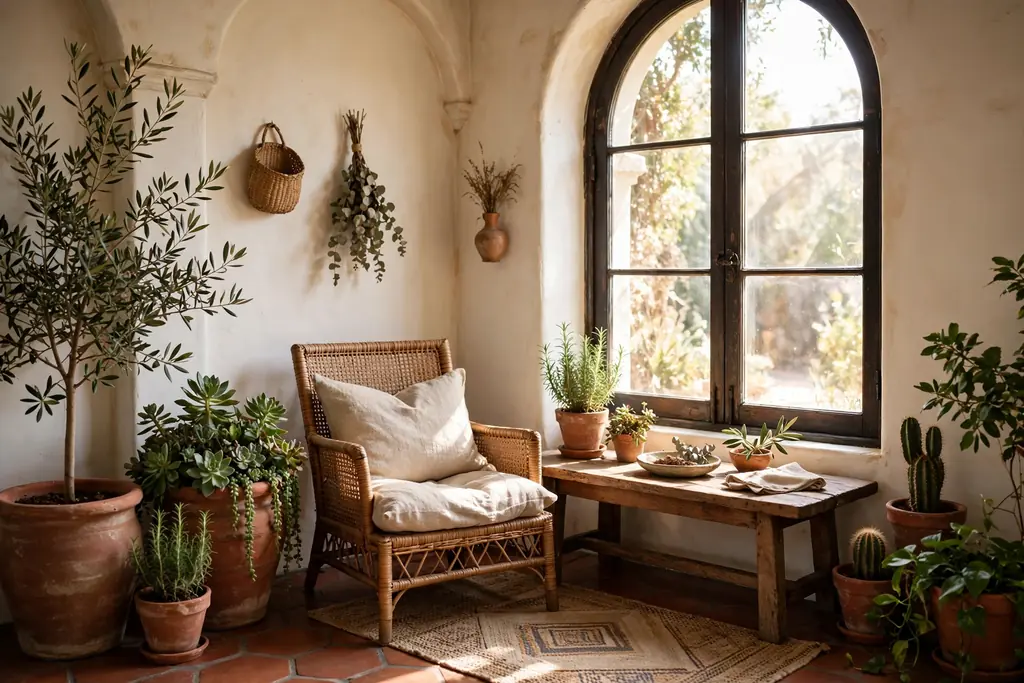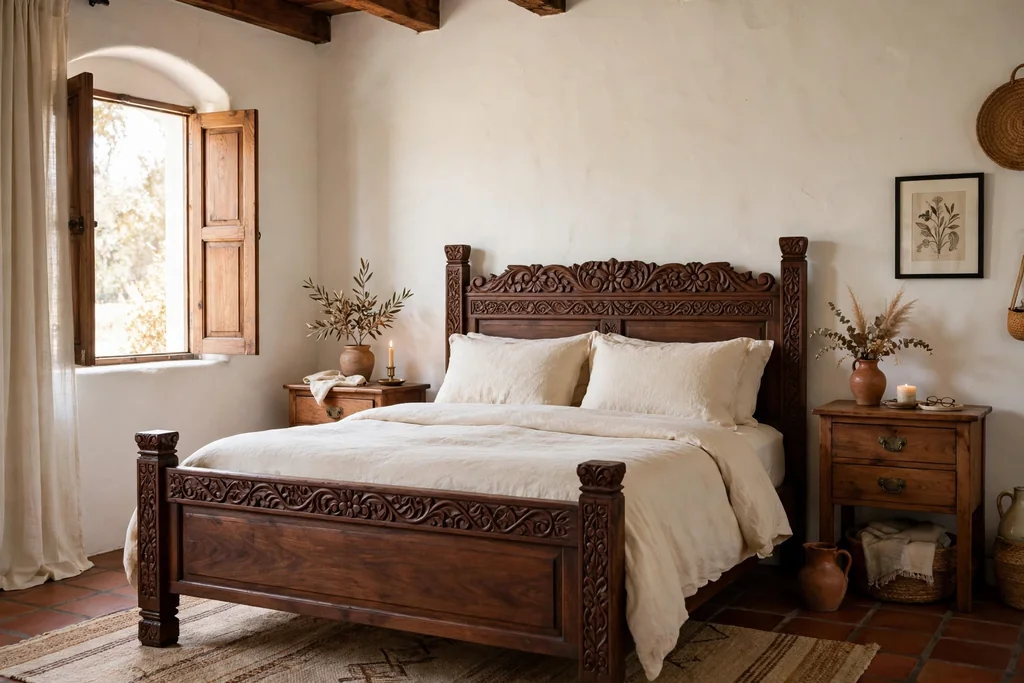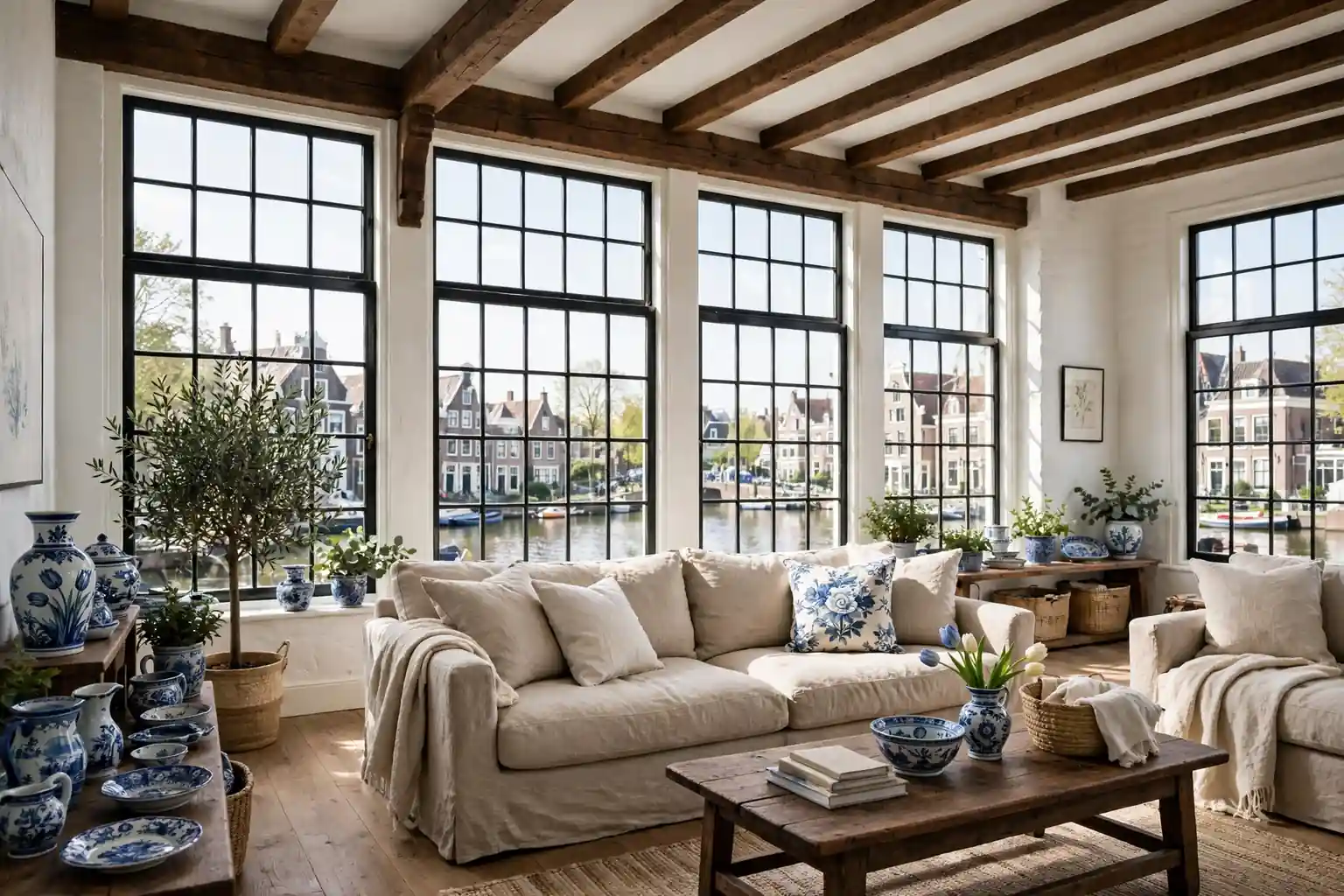
Dutch homes are known for tall windows, white walls, dark wood, and blue and white pottery, and for rooms that feel bright, practical, and easy to spend time in. The Dutch word gezelligheid, which means a warm, sociable coziness, sits at the heart of the style: a reading chair by the window, a long table for shared meals, and light that is allowed to pour in. These 22 Dutch home decor ideas cover living rooms, bedrooms, kitchens, entries, and small canal house rooms, so you can add one Delft blue note at a time or plan a whole room refresh. Start with light and one strong color, then add wood, linen, and pottery in small doses.
Key Takeaways
- Let white, cream, and daylight lead, with Delft blue as the main accent, so rooms feel bright rather than busy.
- Repeat blue and white at least twice in a room, for example in tiles and a vase, so the Dutch look feels planned rather than random.
- Pair dark wood or dark green with pale walls, so tall rooms keep their height and small rooms still feel open.
- Keep pattern to one strong print at a time, such as Delft tiles or a blue stripe, and keep the rest of the room plain.
- Use natural materials at eye level, including linen, wood, wool, and stoneware, since they soften the crisp white and blue palette.
- Start with curtains, pottery, bedding, and a vase of tulips for a no-paint refresh, and save tile, painted cabinets, and split doors for a weekend project.
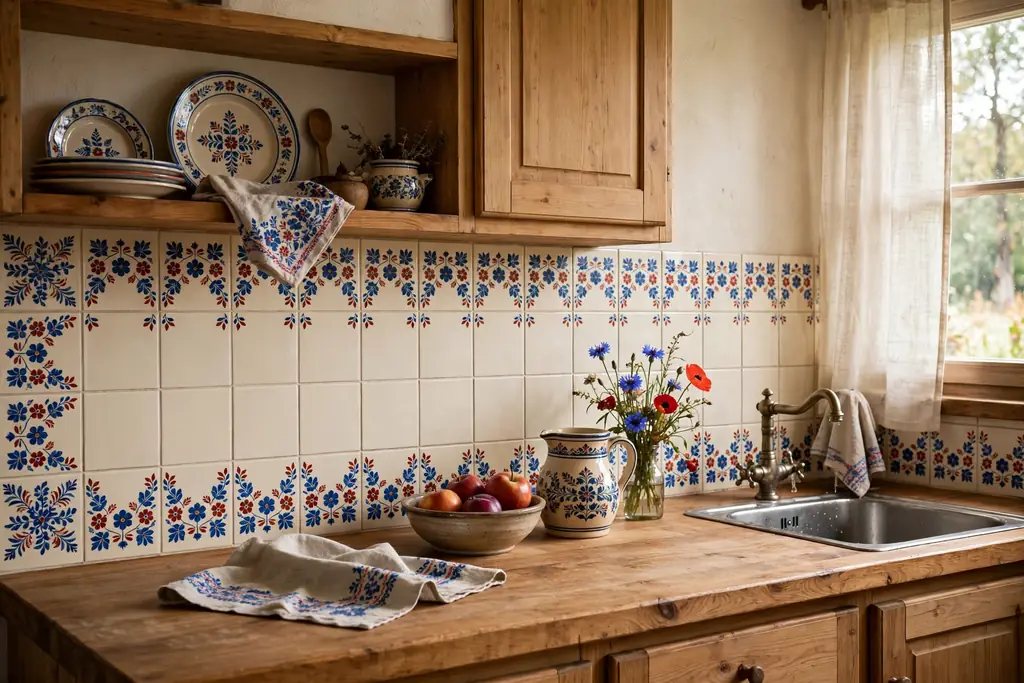
1. Lay a Delft Blue Tile Backsplash in the Kitchen
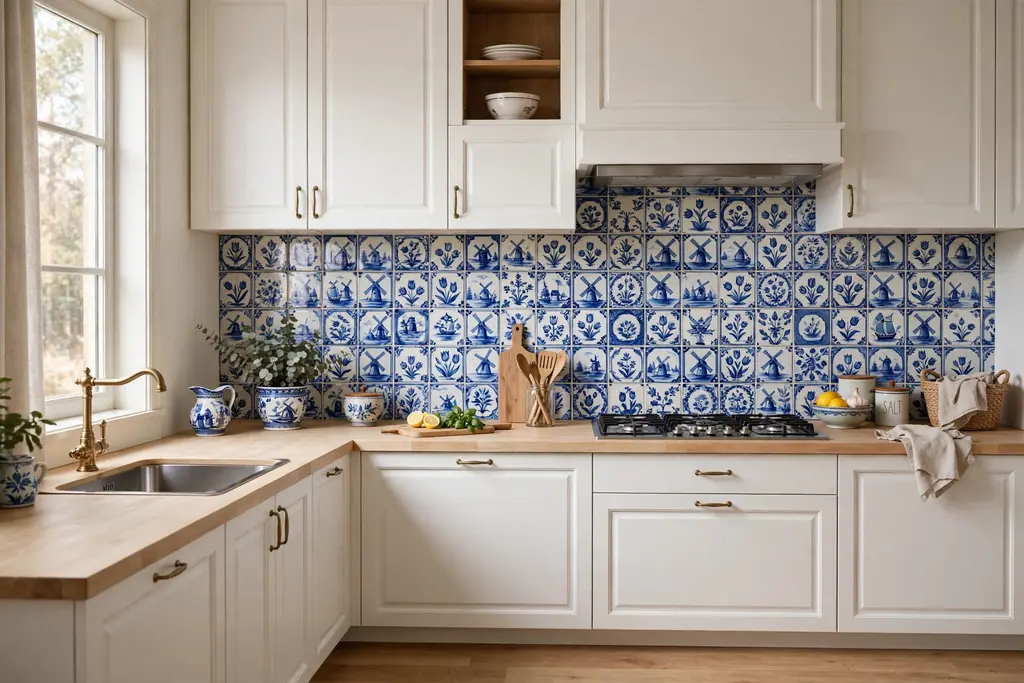
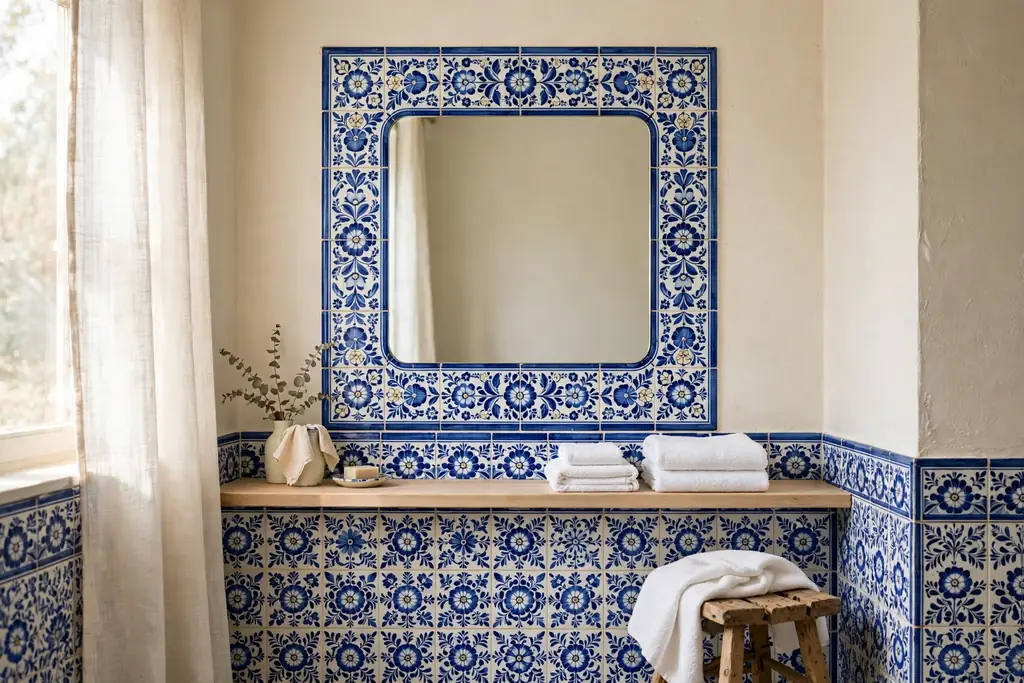
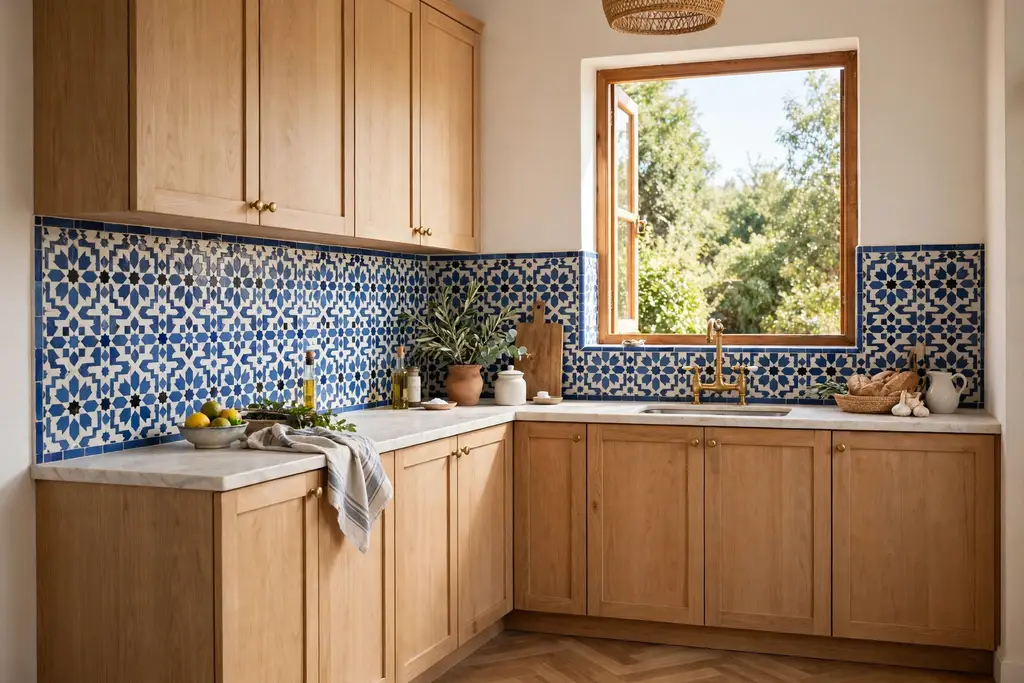
A Delft blue tile backsplash gives a kitchen an instant Dutch focal point, with hand painted style scenes, windmills, flowers, or simple blue borders on white tile. The blue and white pattern suits cream walls, pale wood counters, and dark green cabinets, and it adds interest without a new wall color. This suits a kitchen with a plain backsplash, where one patterned strip can carry the whole room.
Use the patterned tile in one band, such as behind the stove or along the sink wall, and keep the rest of the backsplash plain white, so the pattern reads clearly. Choose a grout in soft white or pale grey, and seal it as advised by the maker, since kitchen splashes show fast on light grout. Wipe tiles with a soft cloth and a gentle cleaner, and keep the counter in front mostly clear, so the tile work stays easy to see.
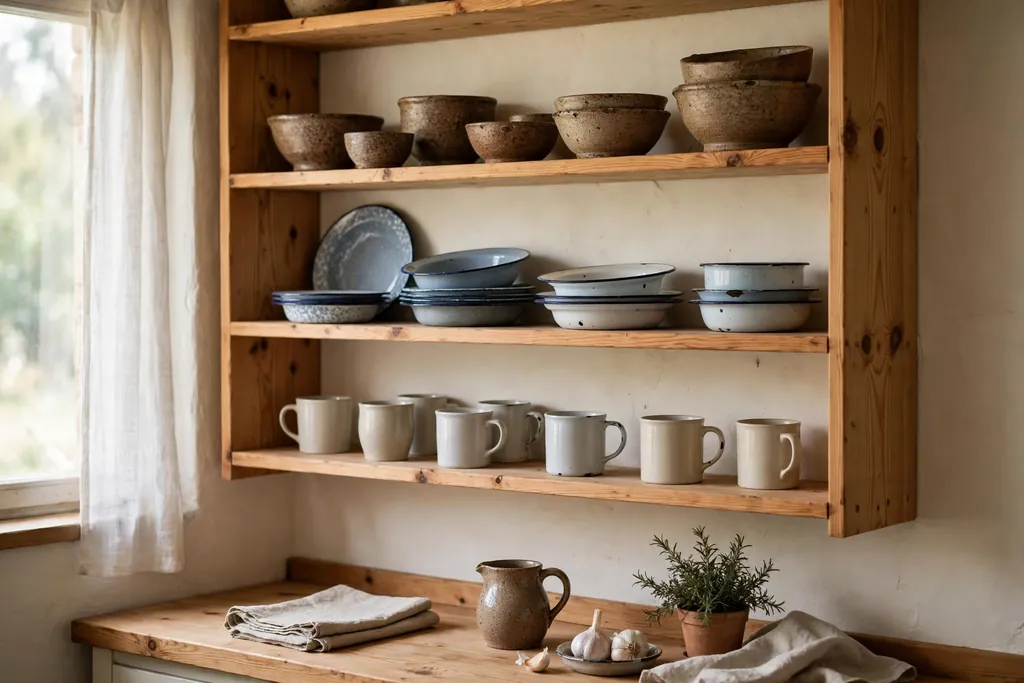
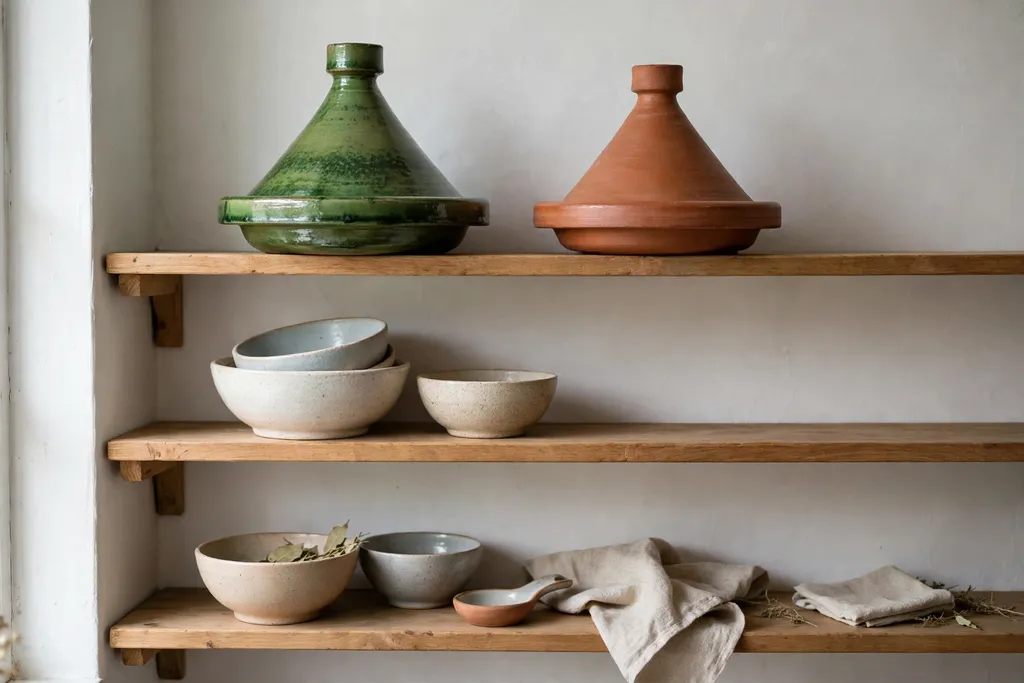
2. Display Blue and White Pottery on Open Shelves
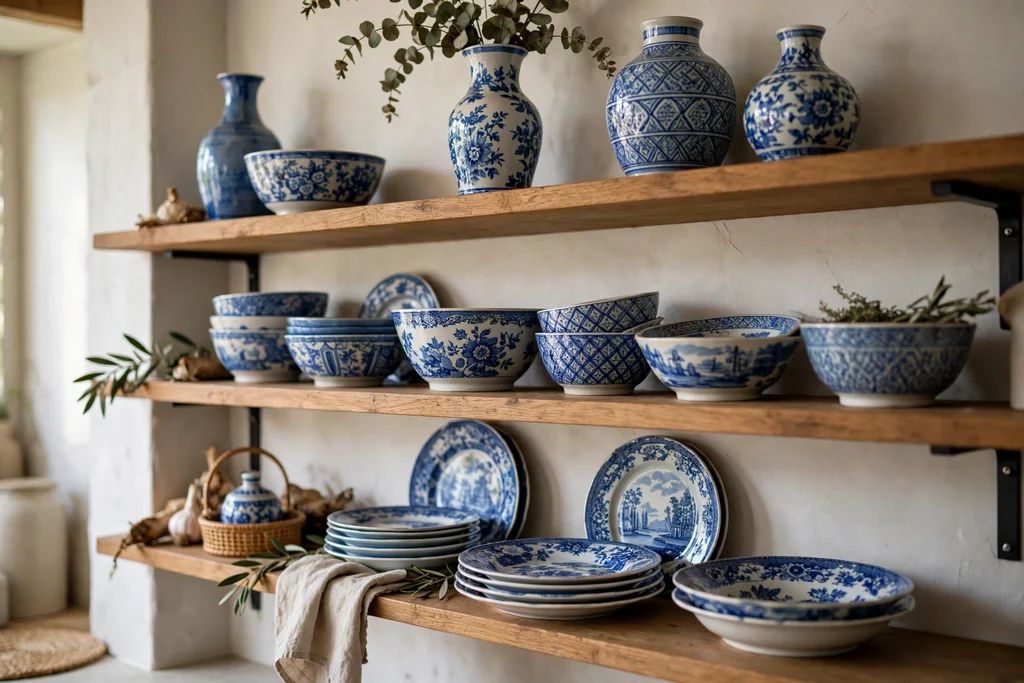
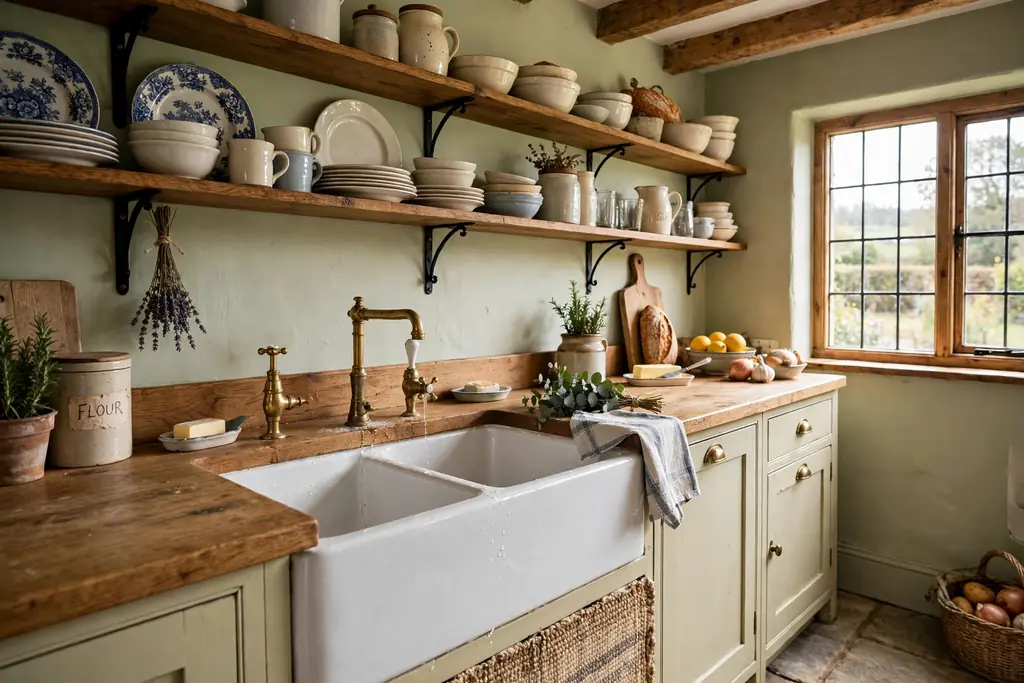
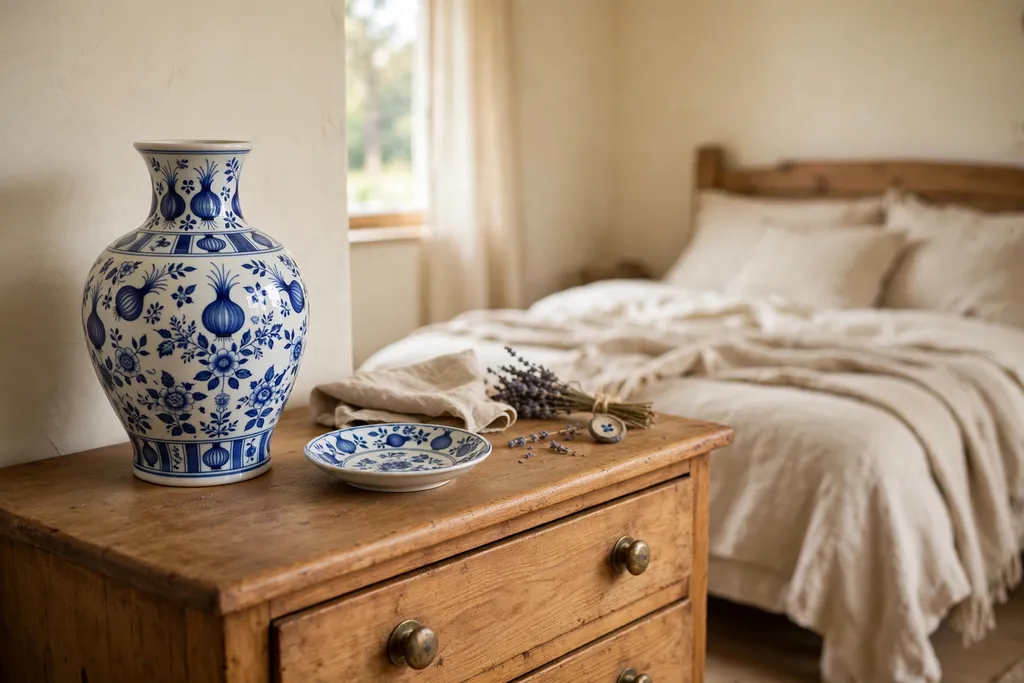
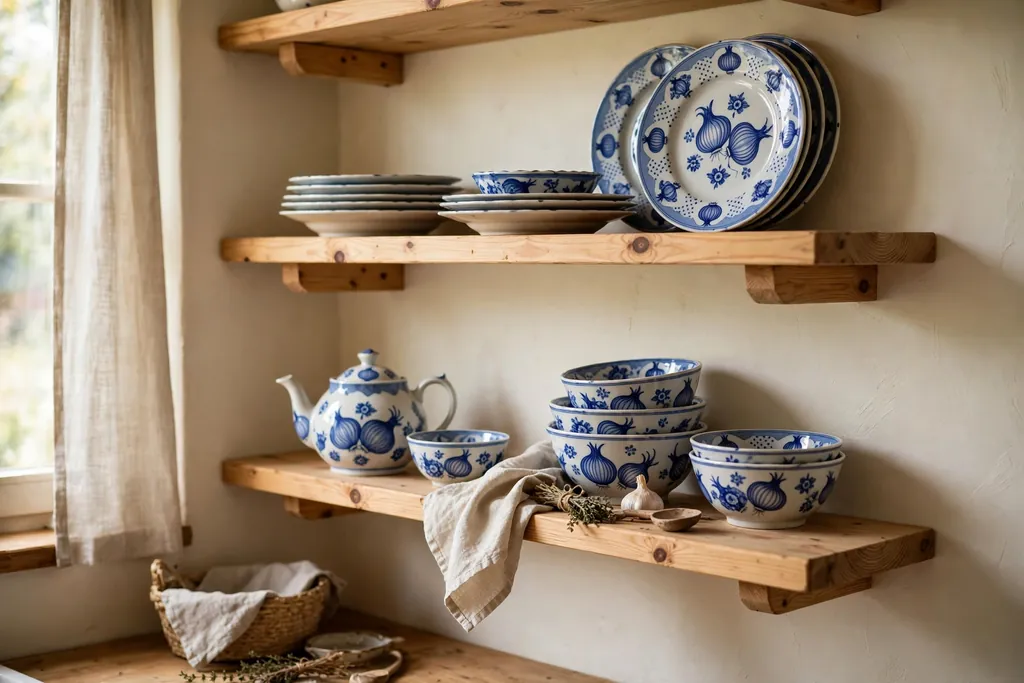
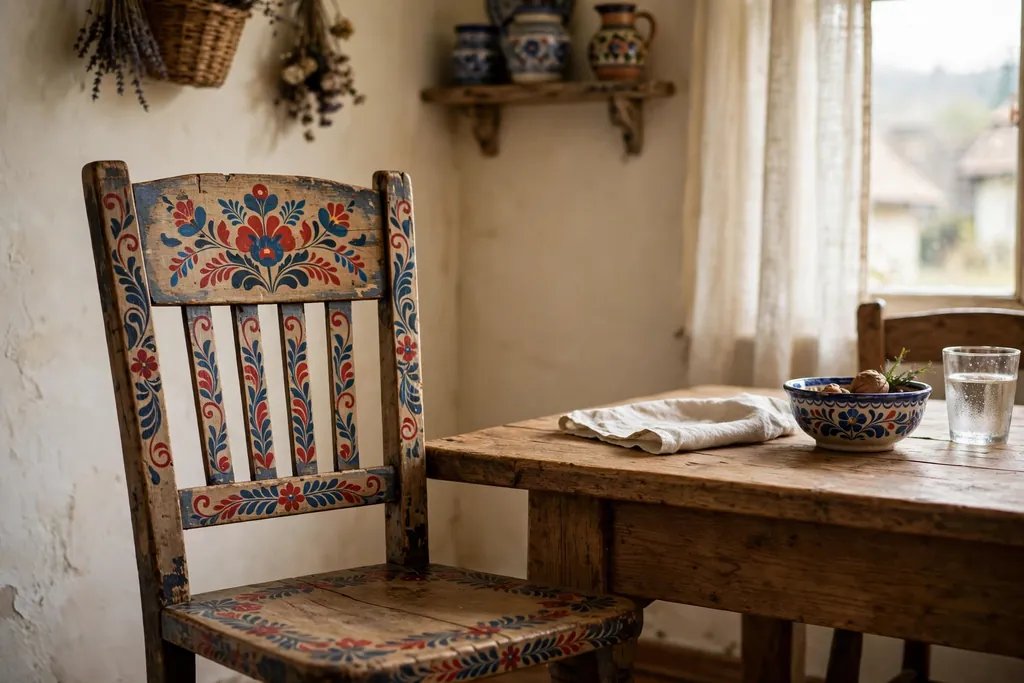
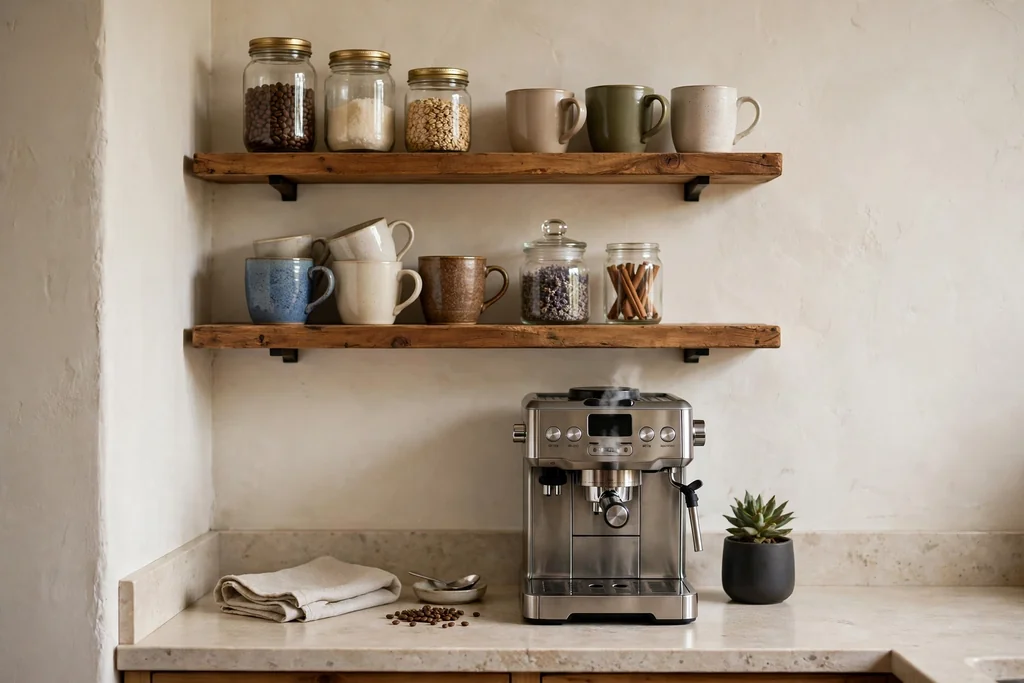
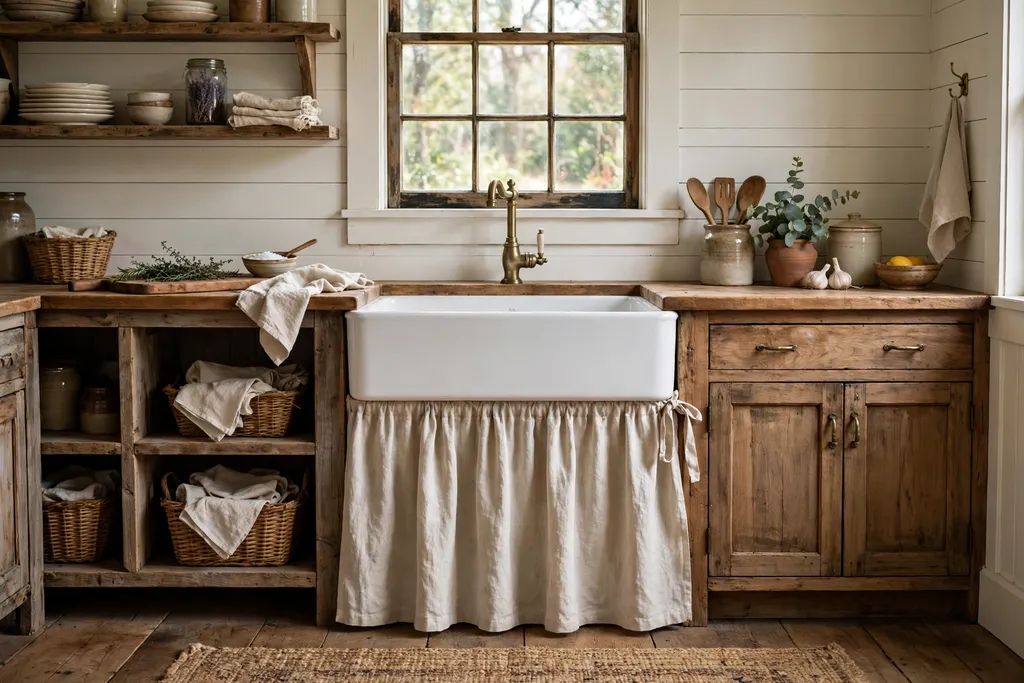
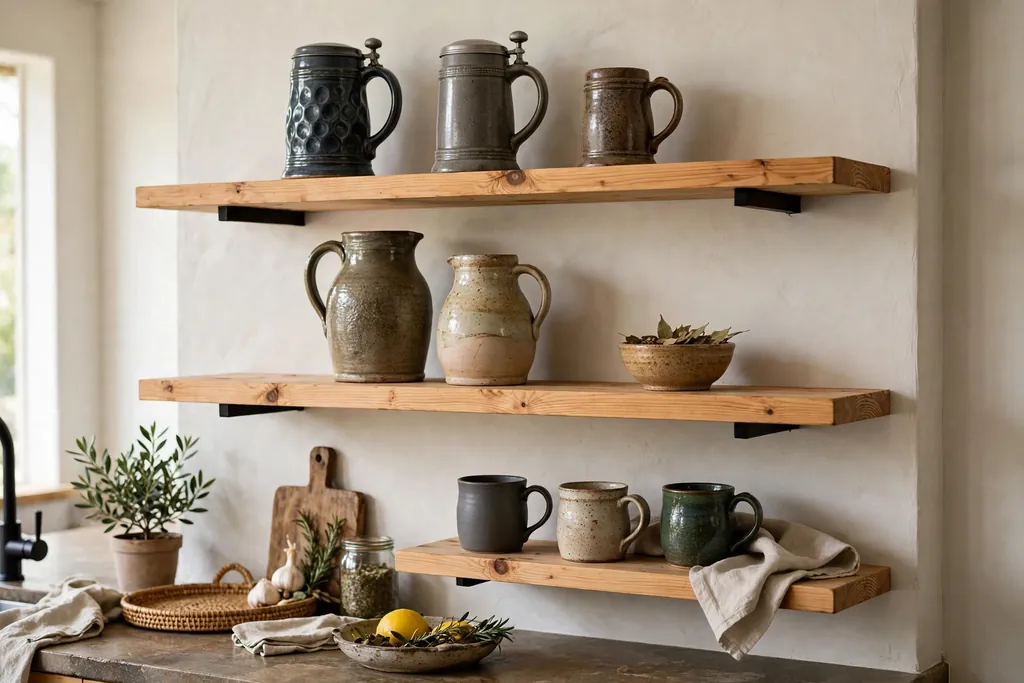
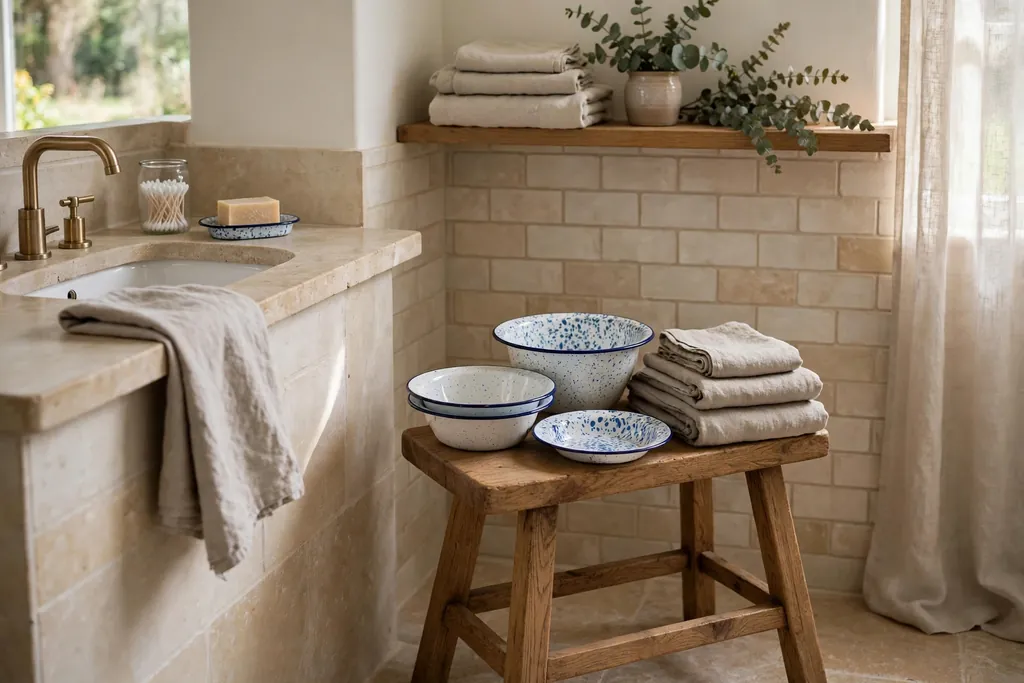
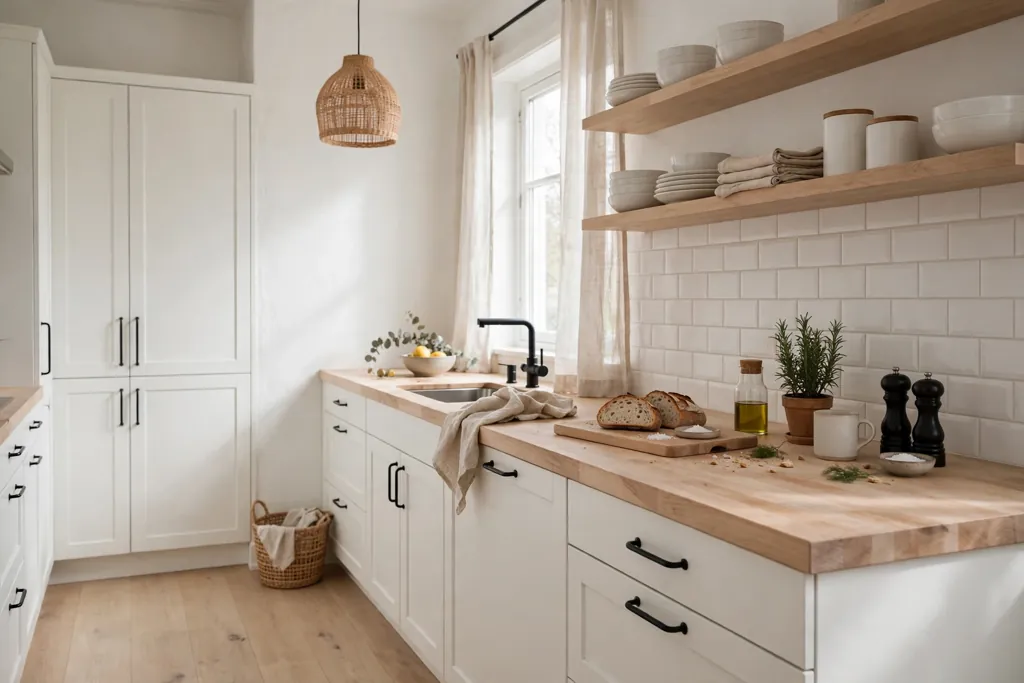
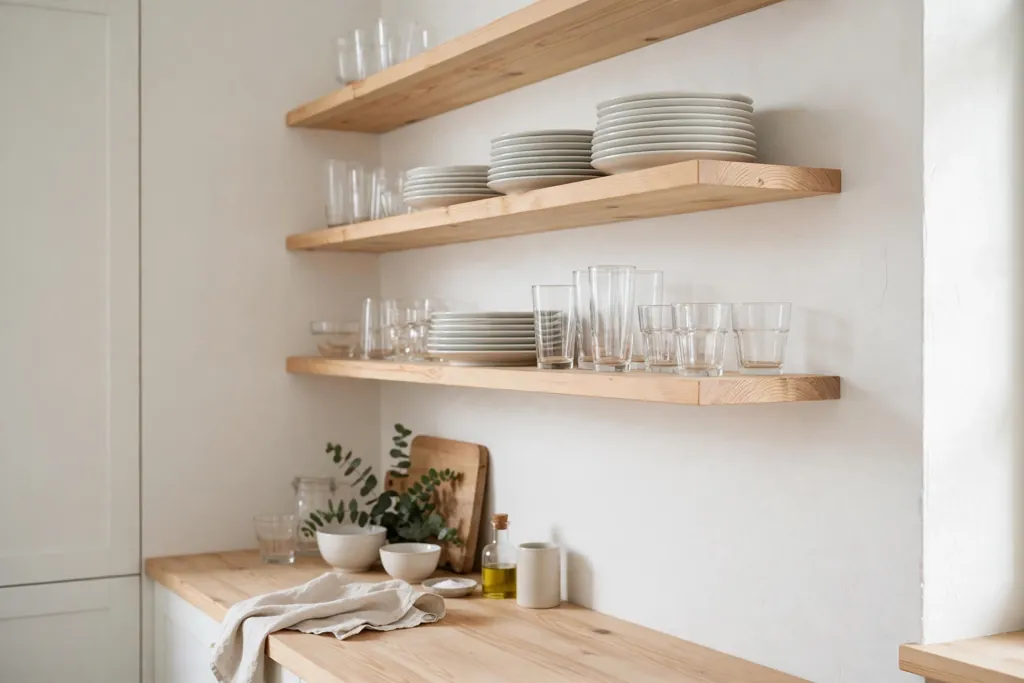
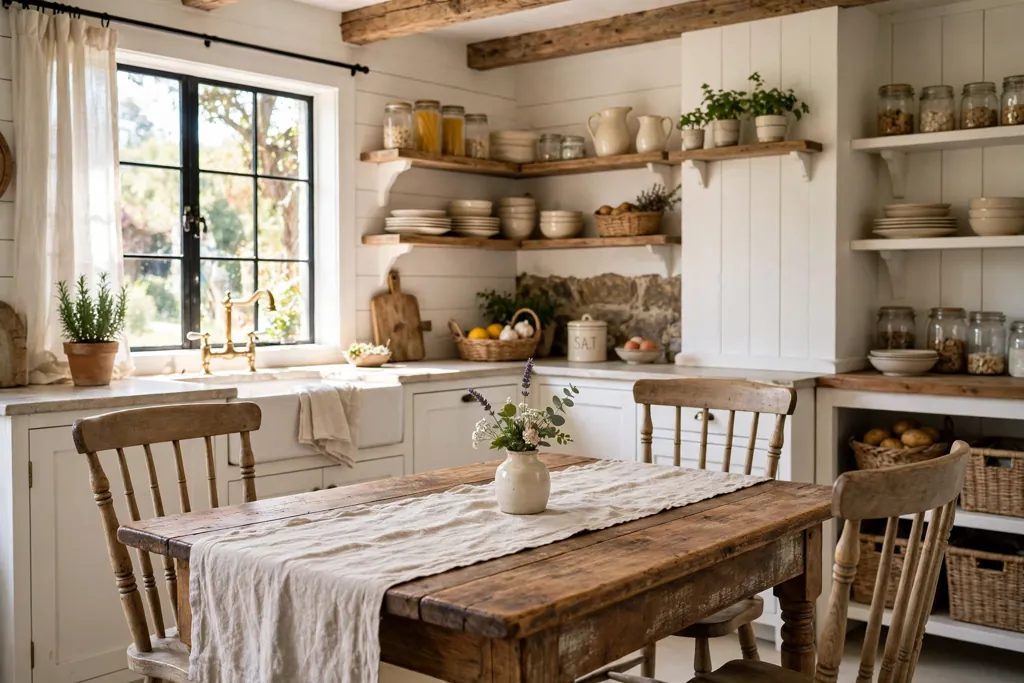
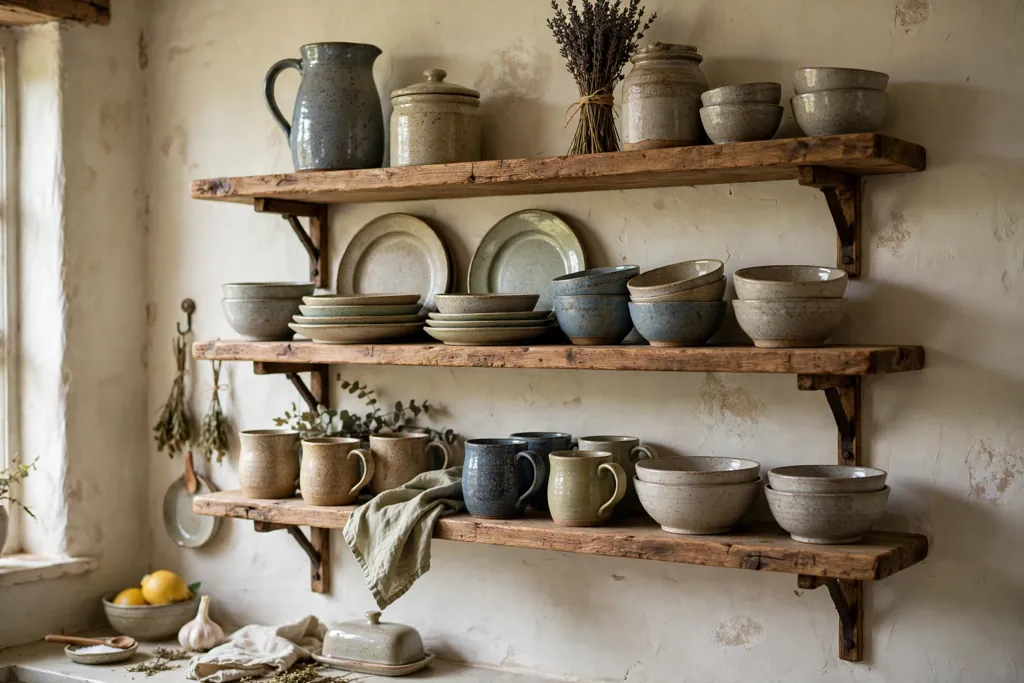
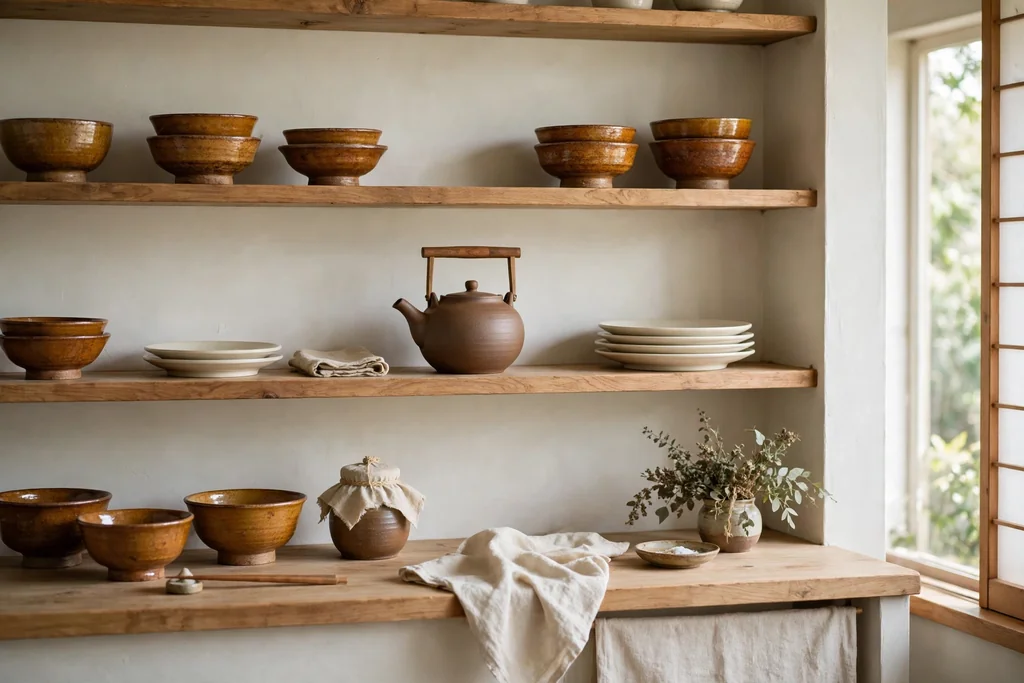
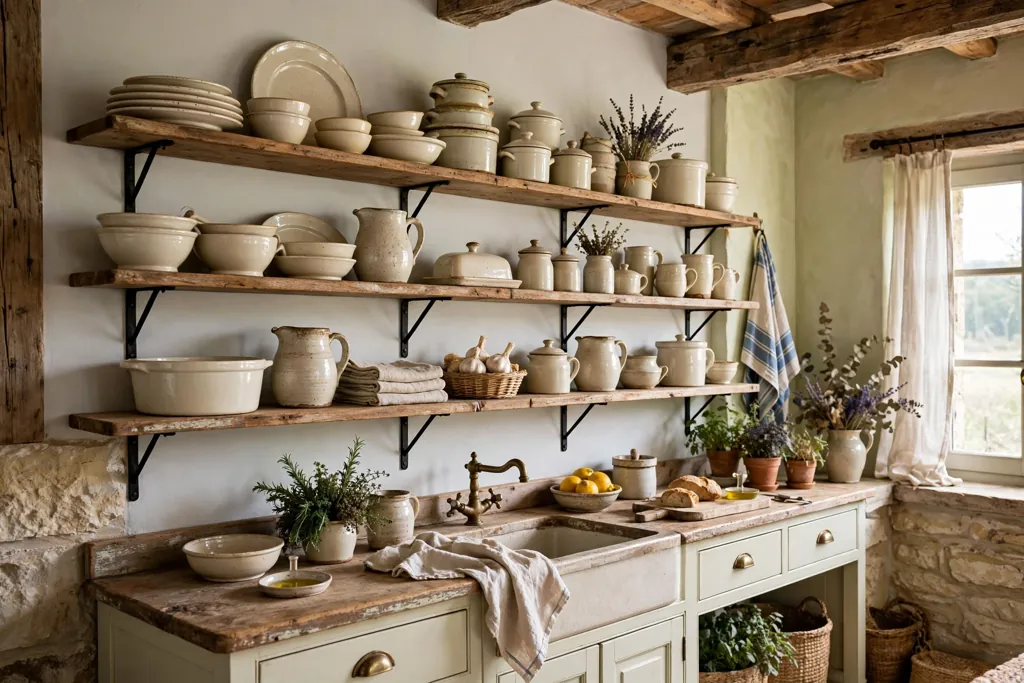
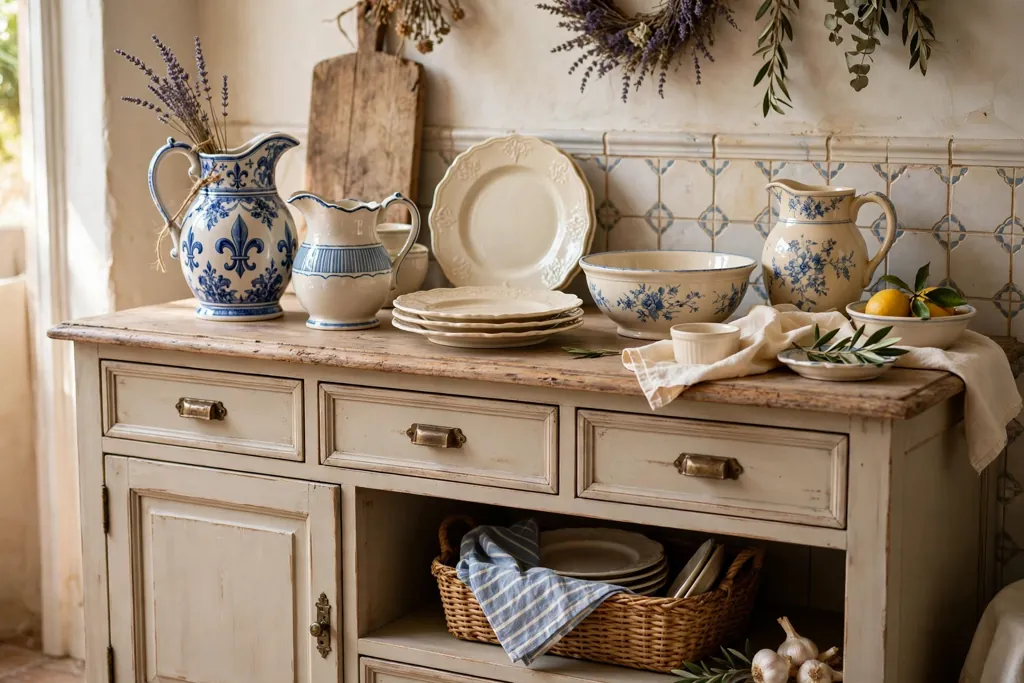
A collection of blue and white pottery on open shelves, including plates, vases, jars, and bowls, gives a kitchen or dining room a Dutch display that is also useful storage. The shared blue and white palette links pieces of different shapes, so the shelf looks collected but calm, and the pottery repeats the colors used in tiles and textiles elsewhere. This suits a kitchen with one clear wall, where closed cabinets make the room feel boxed in.
Group pottery by use, with daily bowls low, plates upright in a rack, and taller vases at the ends, and leave some empty space on each shelf. Keep the shelf count to two or three rows, and store only pieces you like to look at, so the display stays tidy. Dust pottery often, since open shelves collect cooking dust, and wash pieces you use for food before each use.
3. Pair White Plaster Walls With Dark Wood Beams
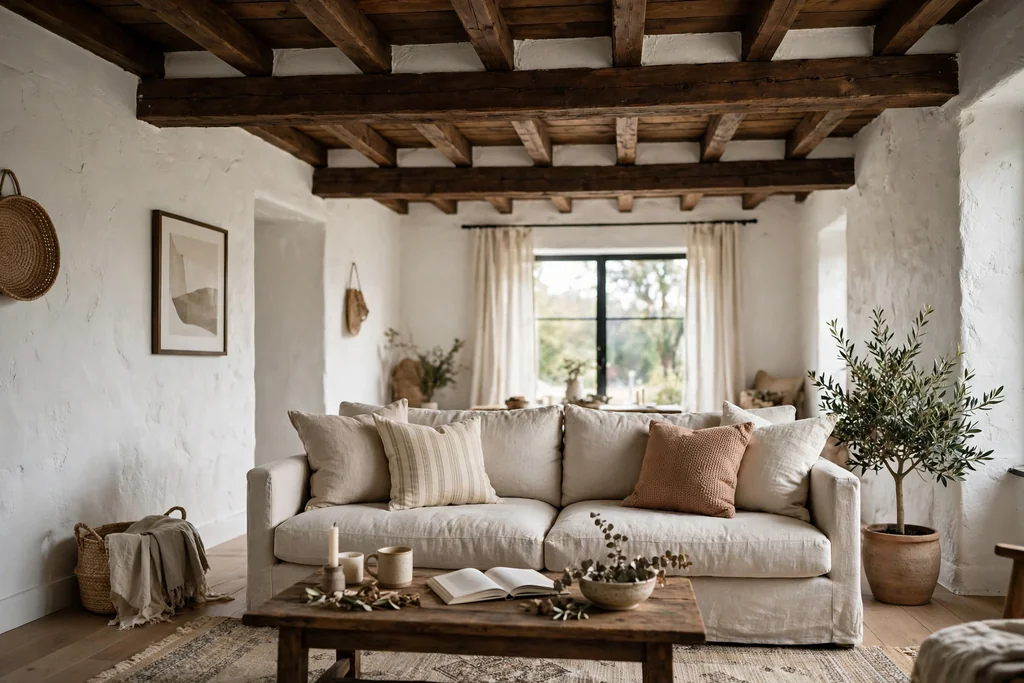
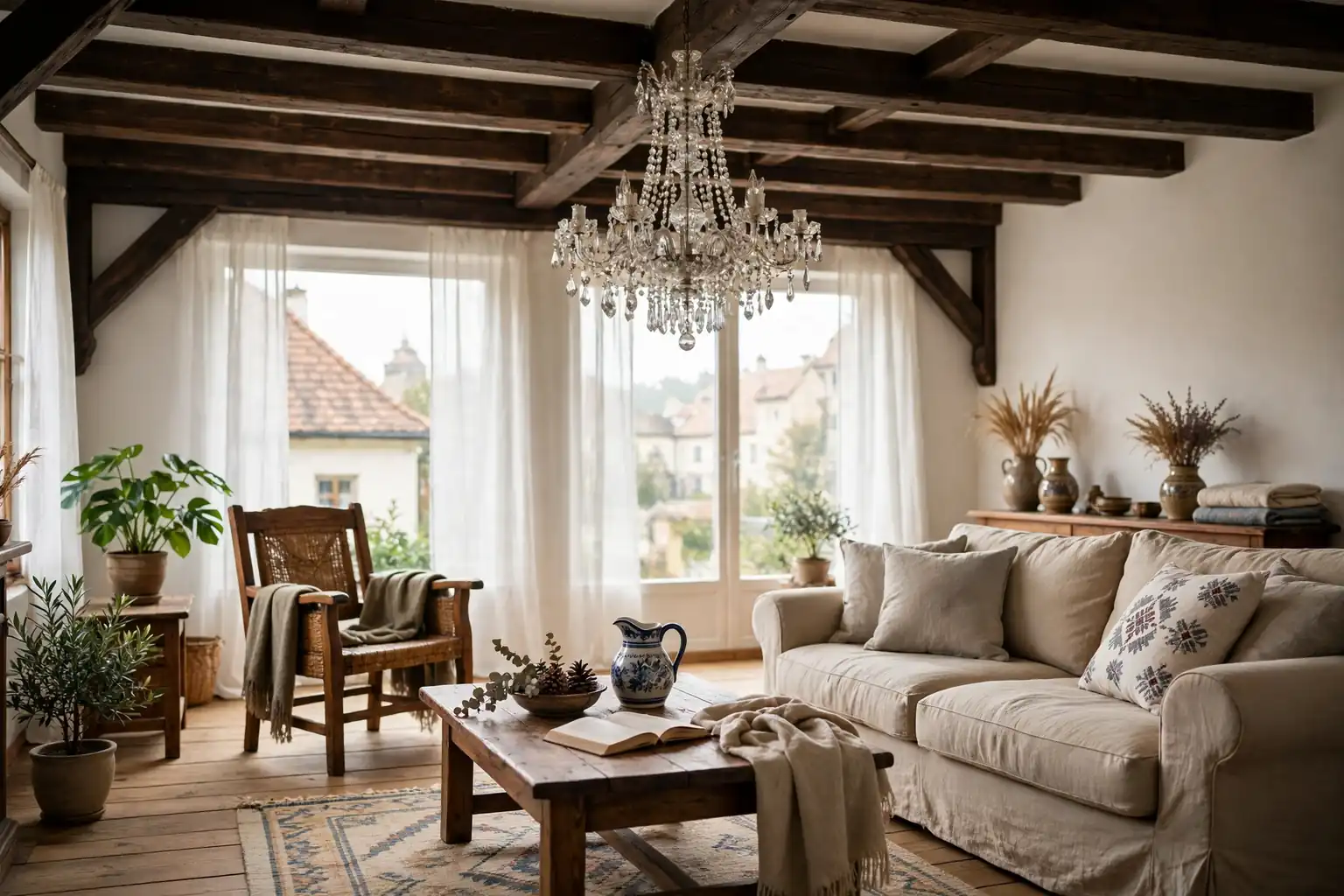
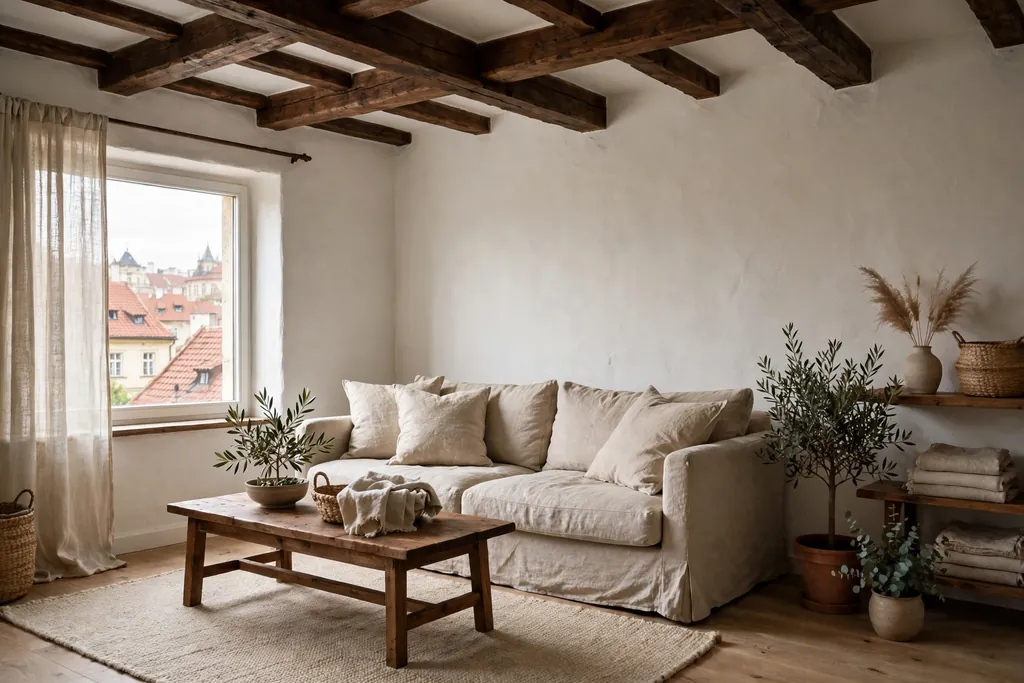
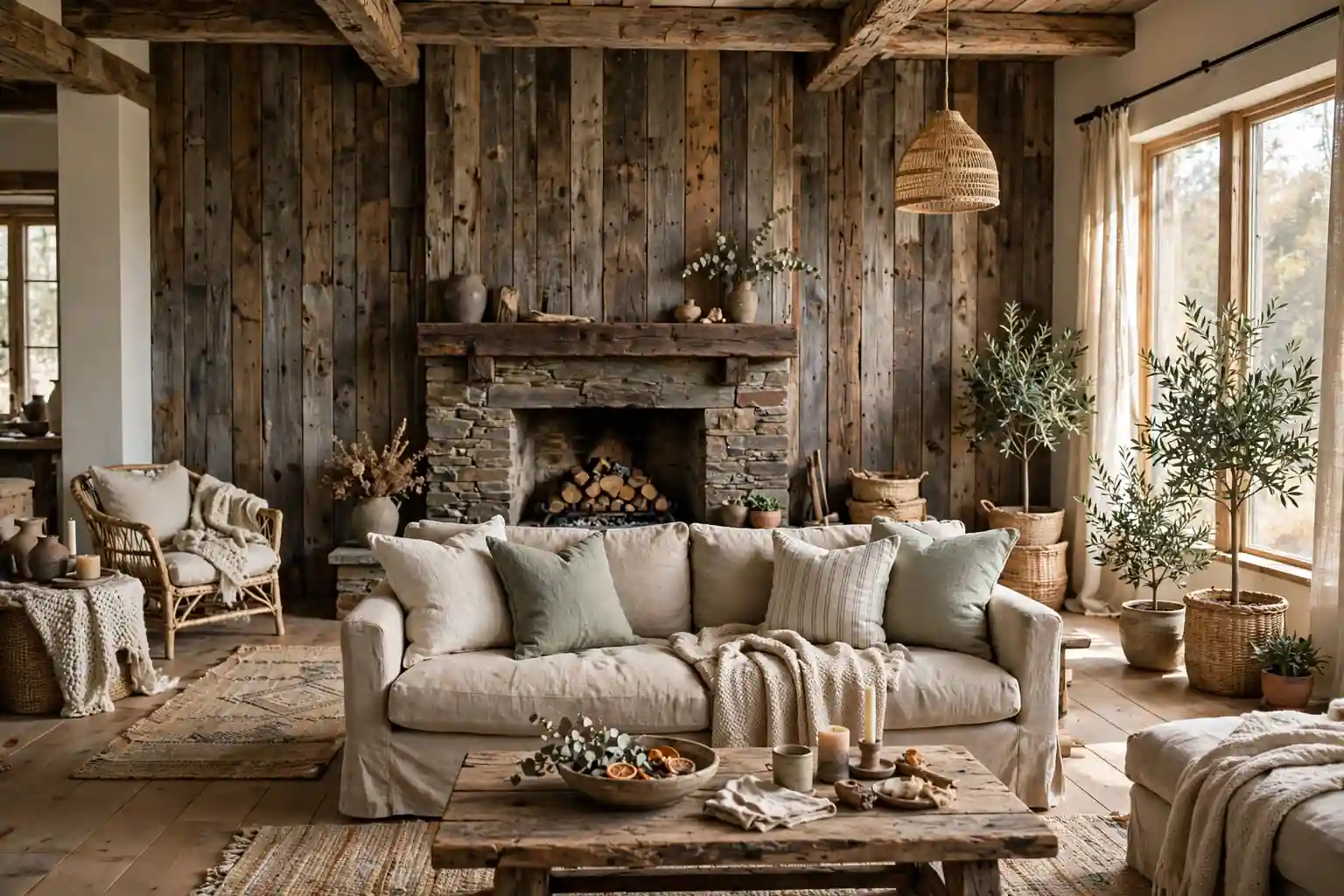
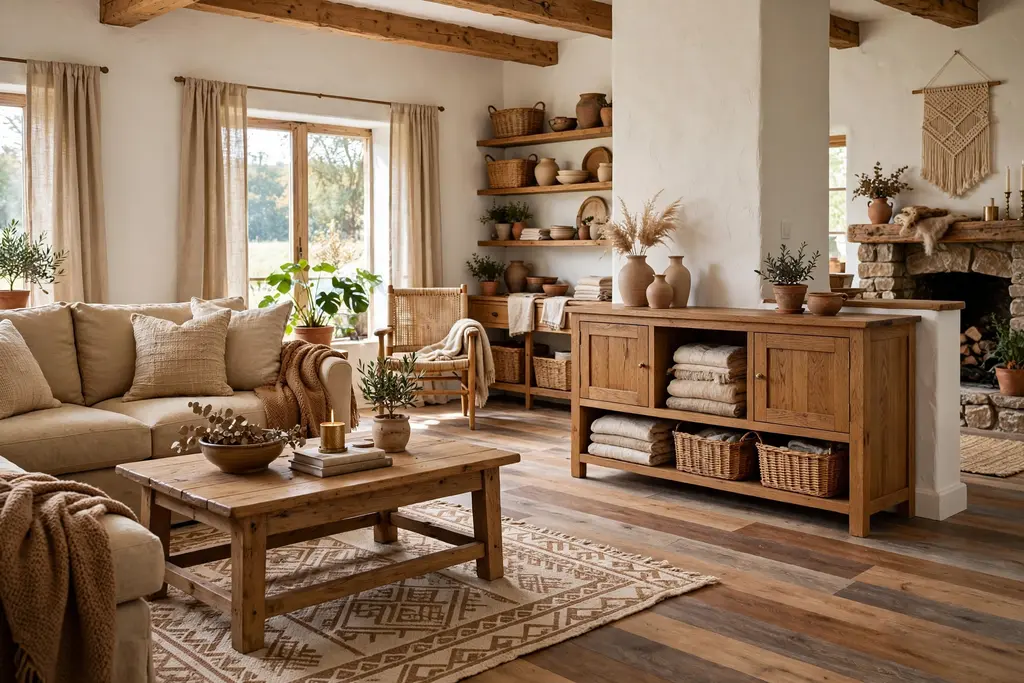
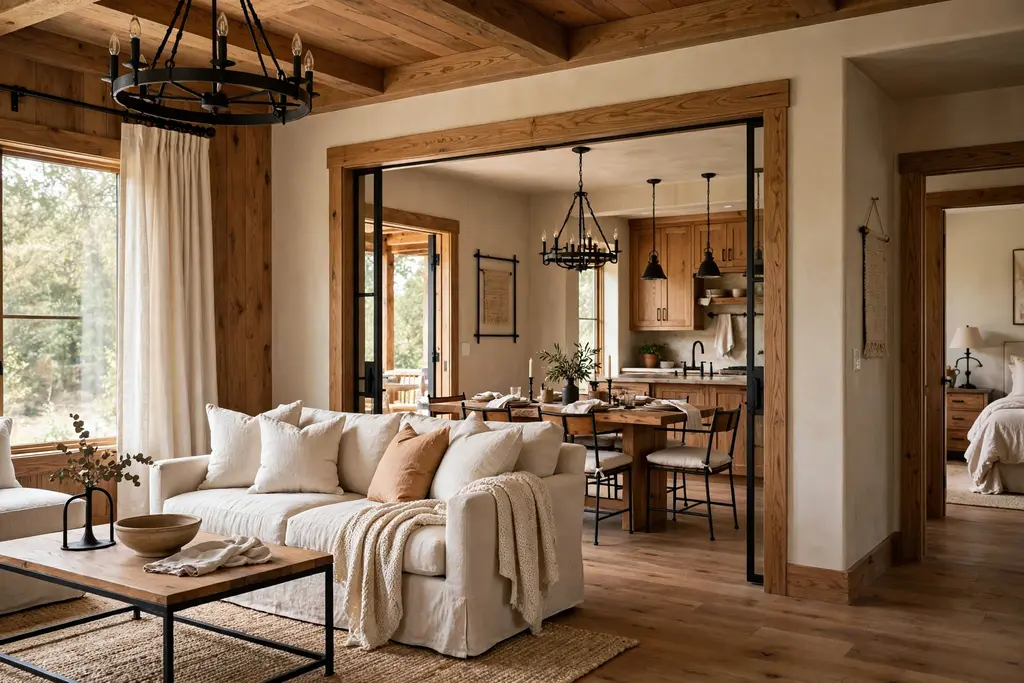
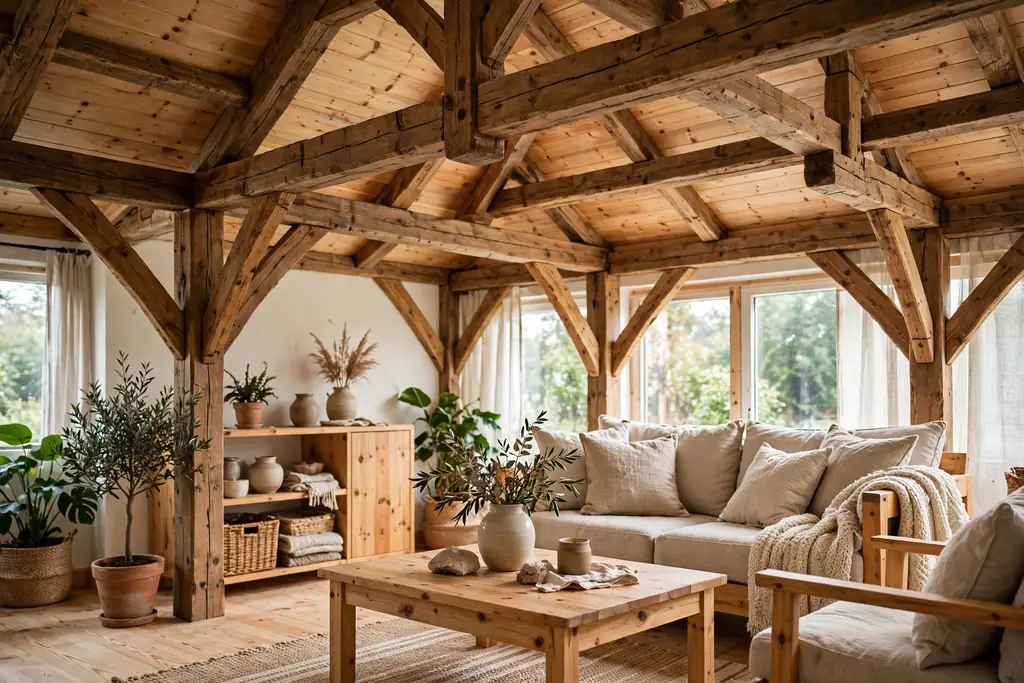
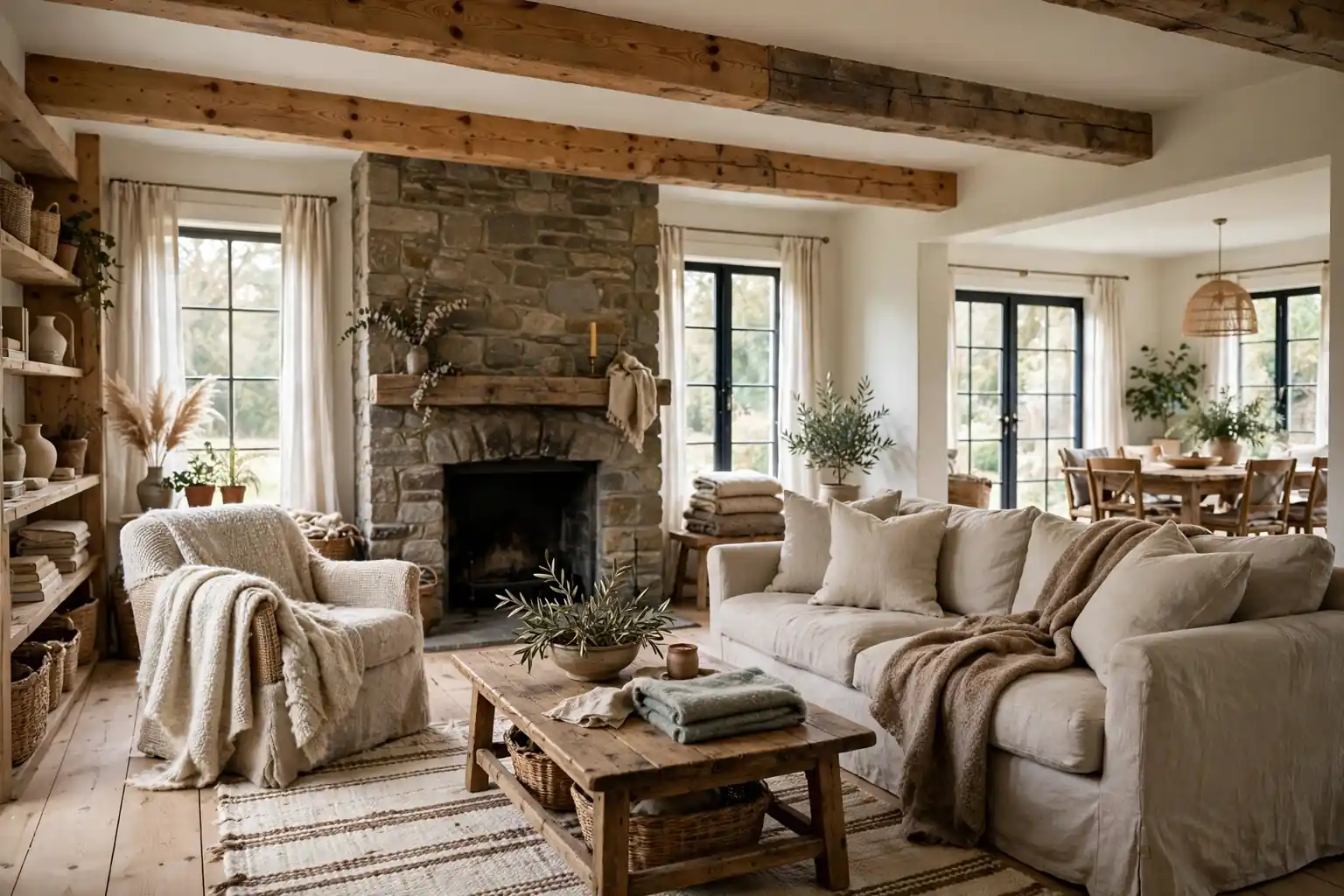
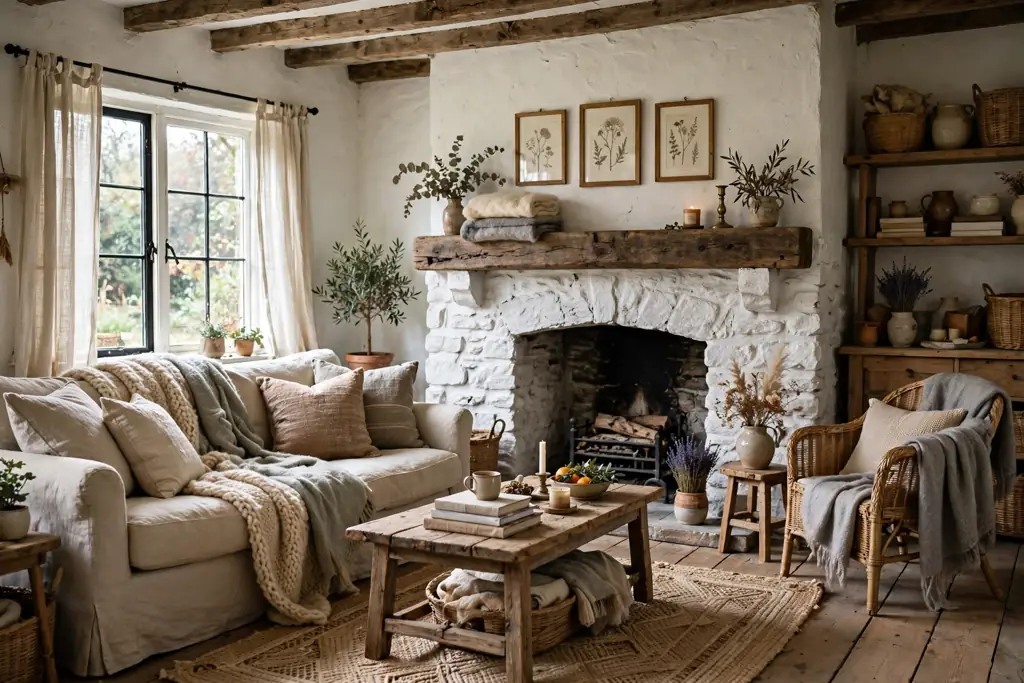
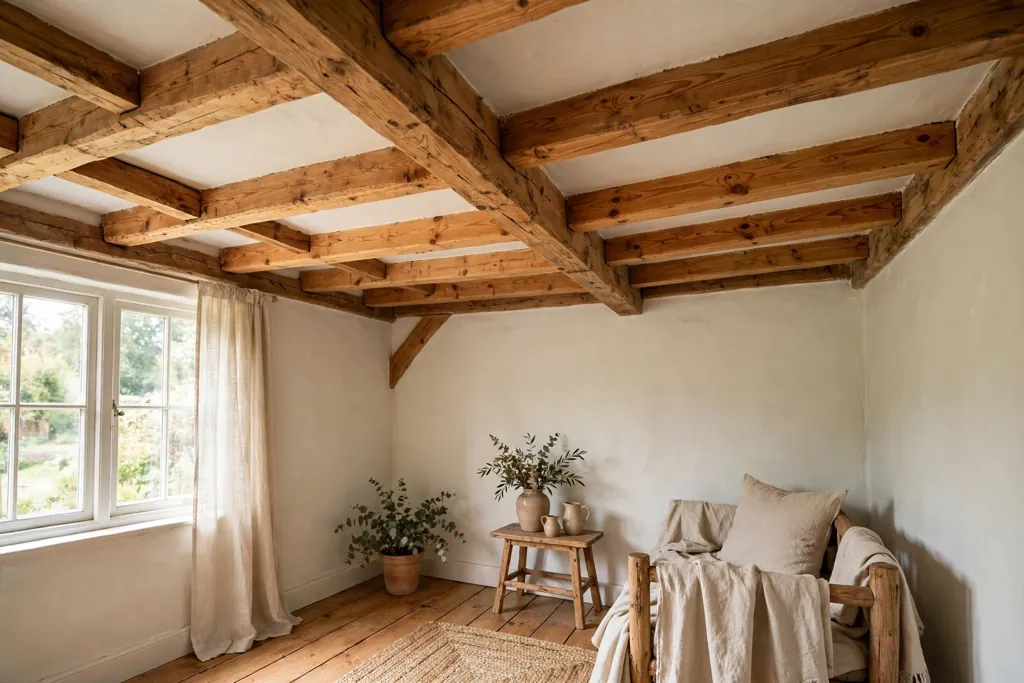
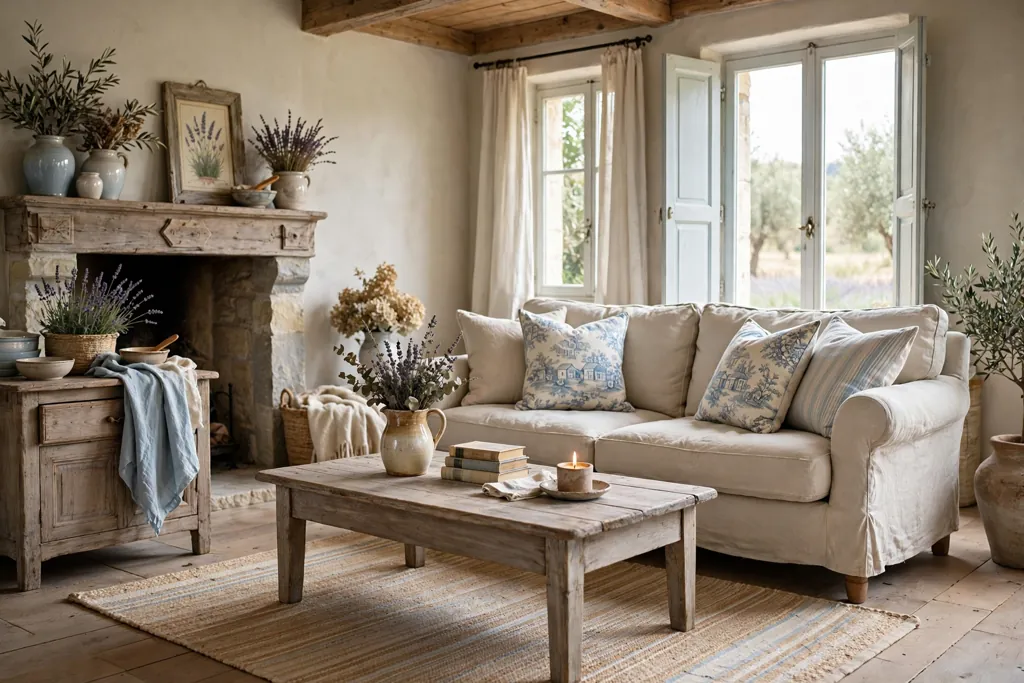
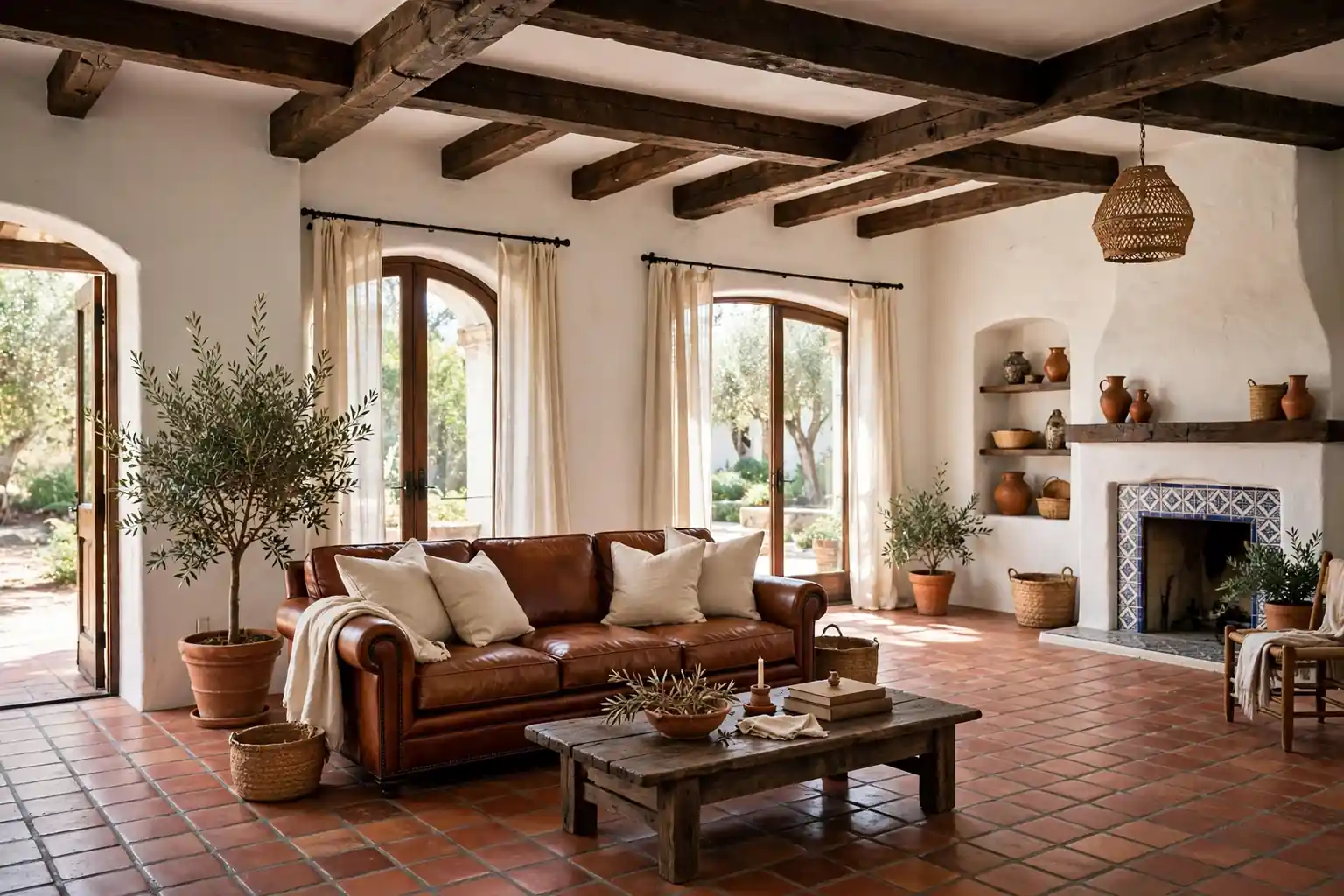
White plaster walls with dark stained wood beams give a living room a Dutch farmhouse base that feels bright at the top and grounded below. The white walls bounce daylight around the room, while the dark beams add structure and age, and the pairing suits linen sofas, wool throws, and blue and white pottery. This suits a living room with a plain ceiling, where the ceiling needs a clear feature.
If real beams are not possible, use slim wood battens in a dark stain on a white ceiling, spaced evenly, so the effect reads as structure rather than decoration. Keep walls plain white or warm cream, and repeat the dark wood once more, for example in a coffee table or a mirror frame. Dust beams with a soft cloth, and check the fixing suits the ceiling before you hang any beam weight.
4. Fit Tall Narrow Shelving for Canal House Rooms
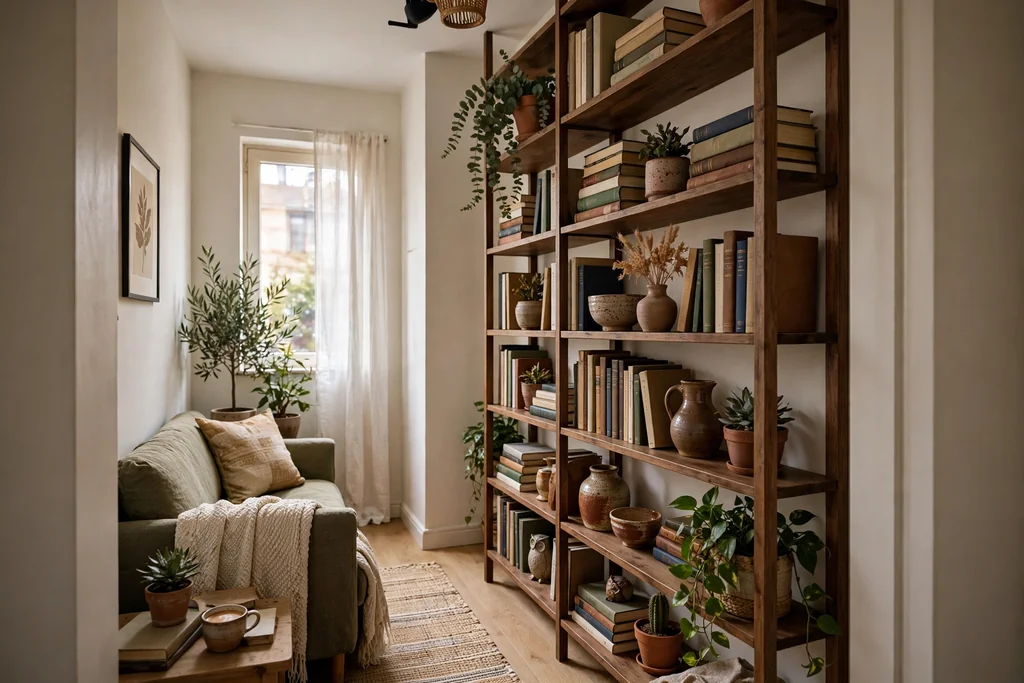
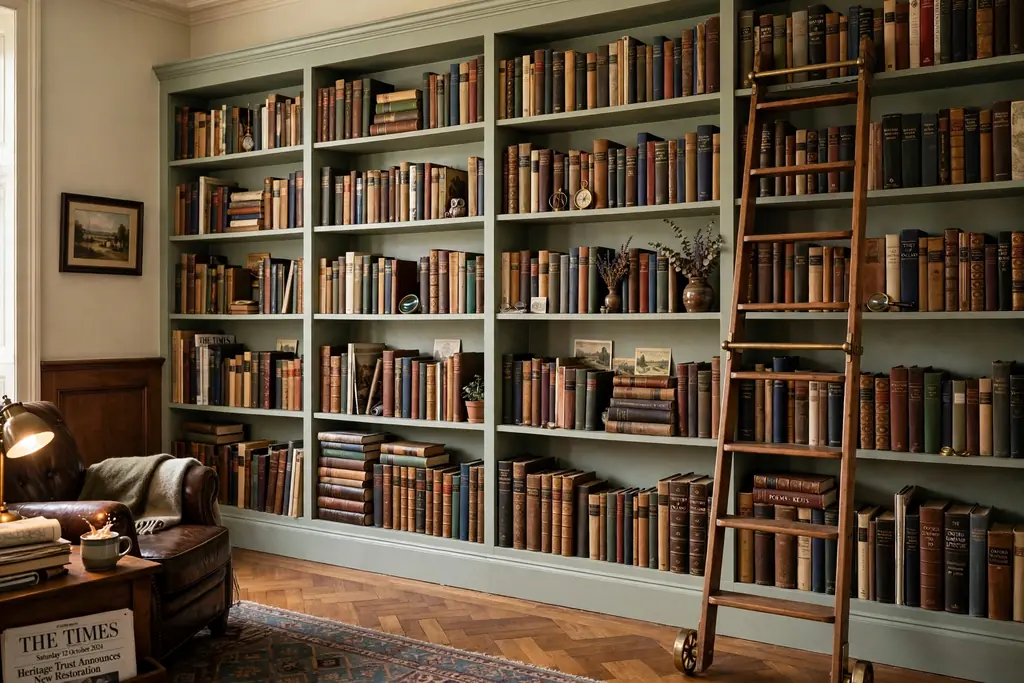
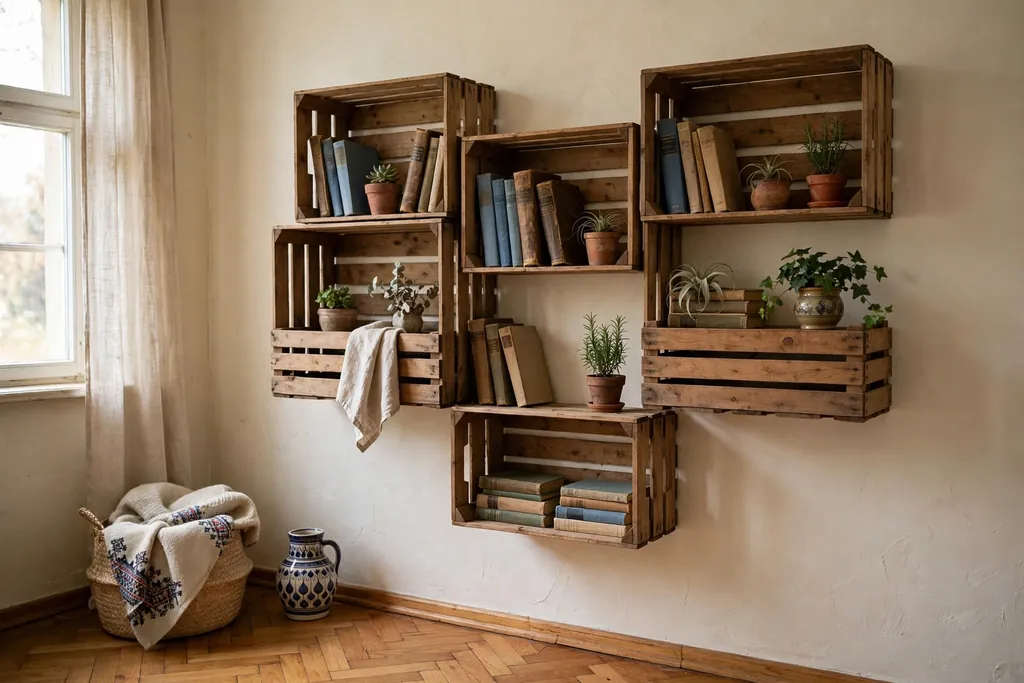
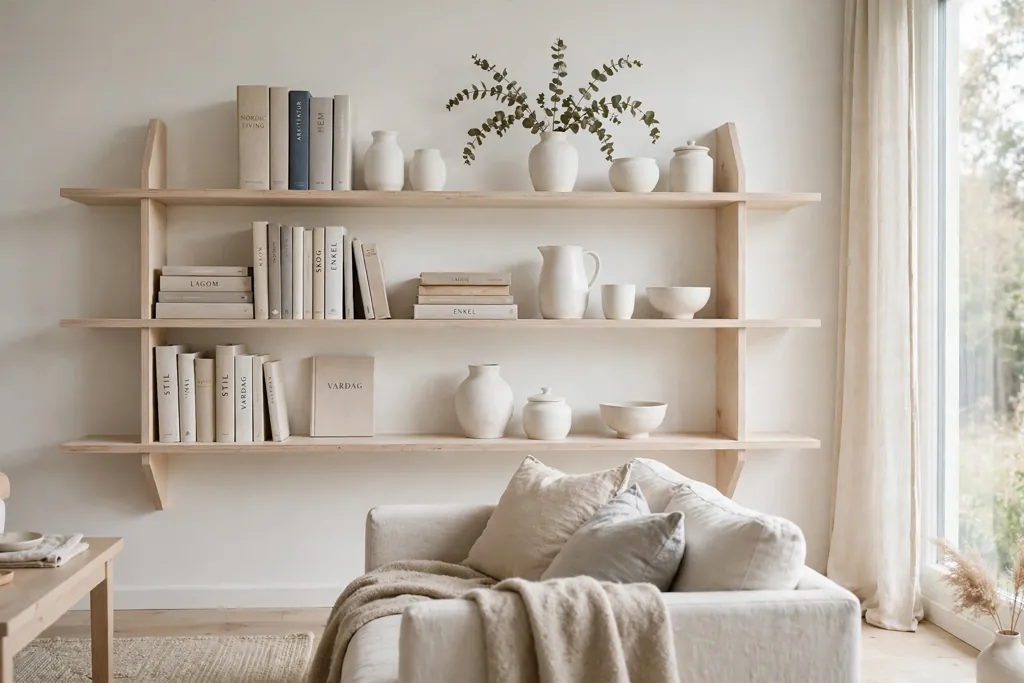
Tall, narrow shelving suits the tall, thin rooms found in Dutch canal houses, where floor space is tight but wall height is generous. A slim bookcase or a row of narrow shelves uses the full wall height for books, pottery, and plants, while leaving the floor clear for walking. This suits a narrow living room, a hallway, or a stair wall, where a wide bookcase would crowd the room.
Choose a shelf unit close to the wall width you have, and anchor it to the wall for safety, since tall units can tip. Put heavy books low, lighter pottery and plants higher, and leave one shelf partly empty, so the unit does not look packed. Keep the shelf color pale wood or white, so it blends with the wall, and repeat the blue accent once on the shelves, such as one Delft vase.
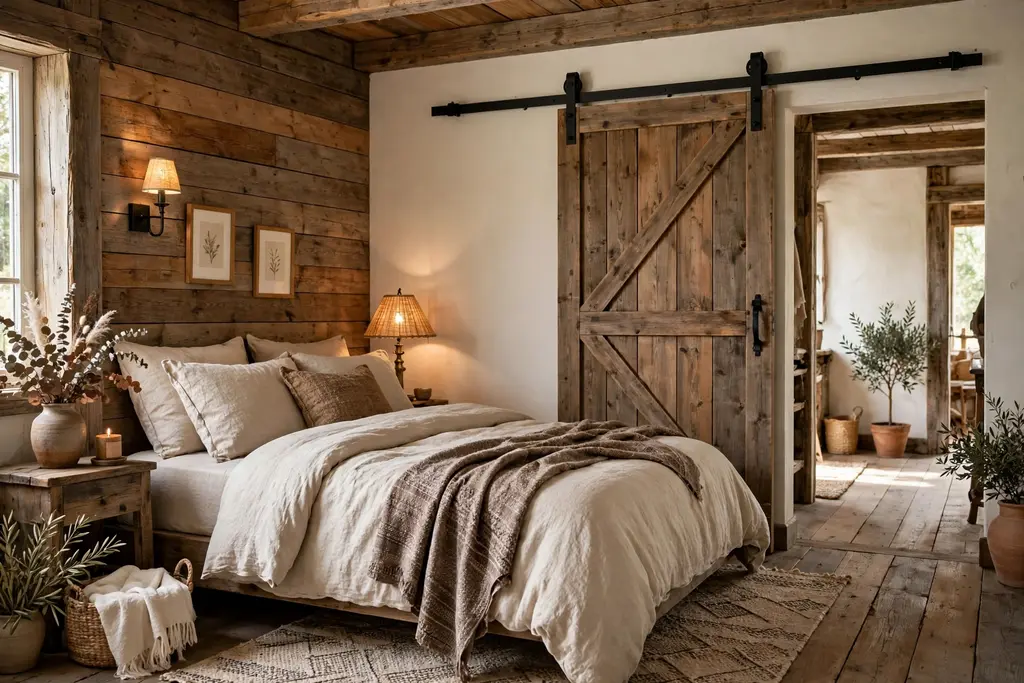
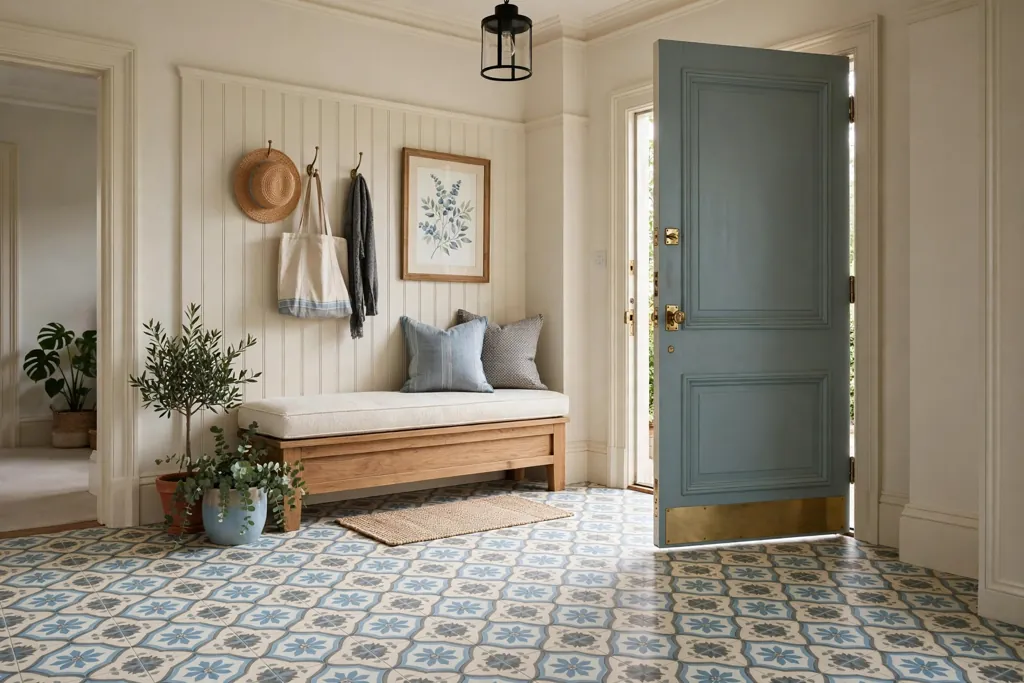
5. Fit a Split Dutch Door at the Entry
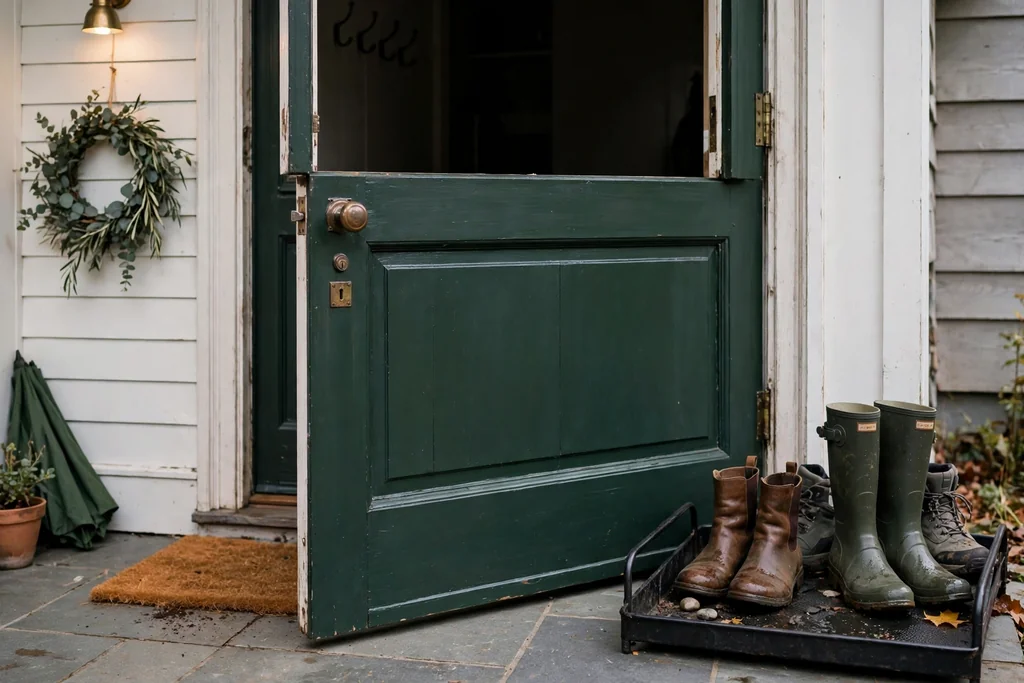
A split Dutch door, which opens in two halves so the top can stay open while the bottom stays shut, is one of the most recognizable Dutch features, and it is practical too. The open top lets in light and air and lets you talk to a visitor, while the shut bottom keeps pets and small children inside. This suits a front or back entry with a porch or a garden path, where fresh air matters more than a full open door.
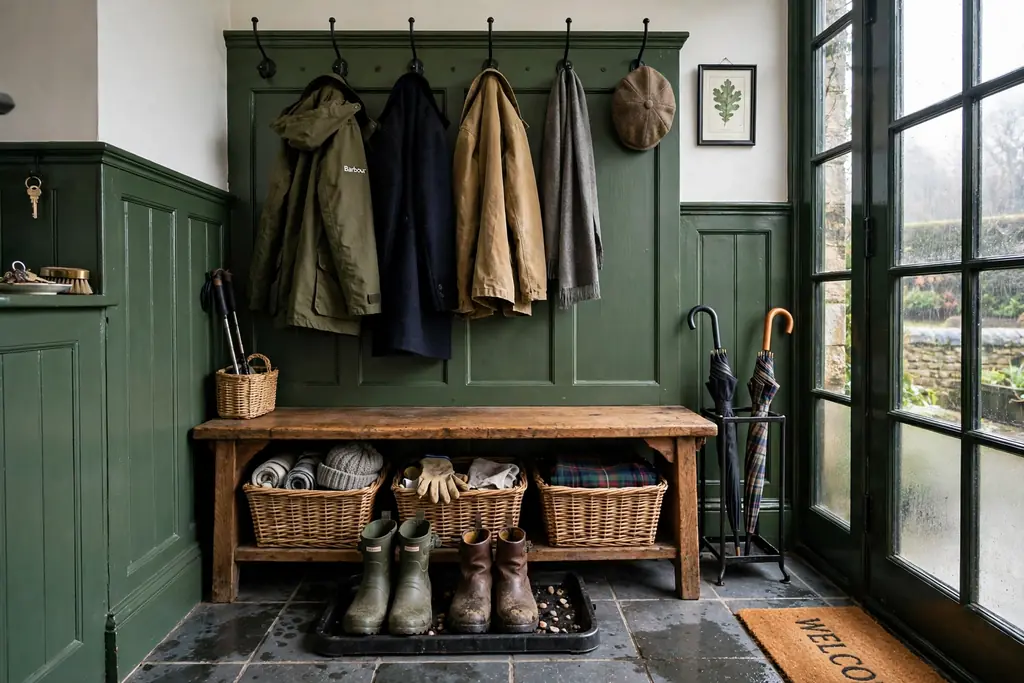
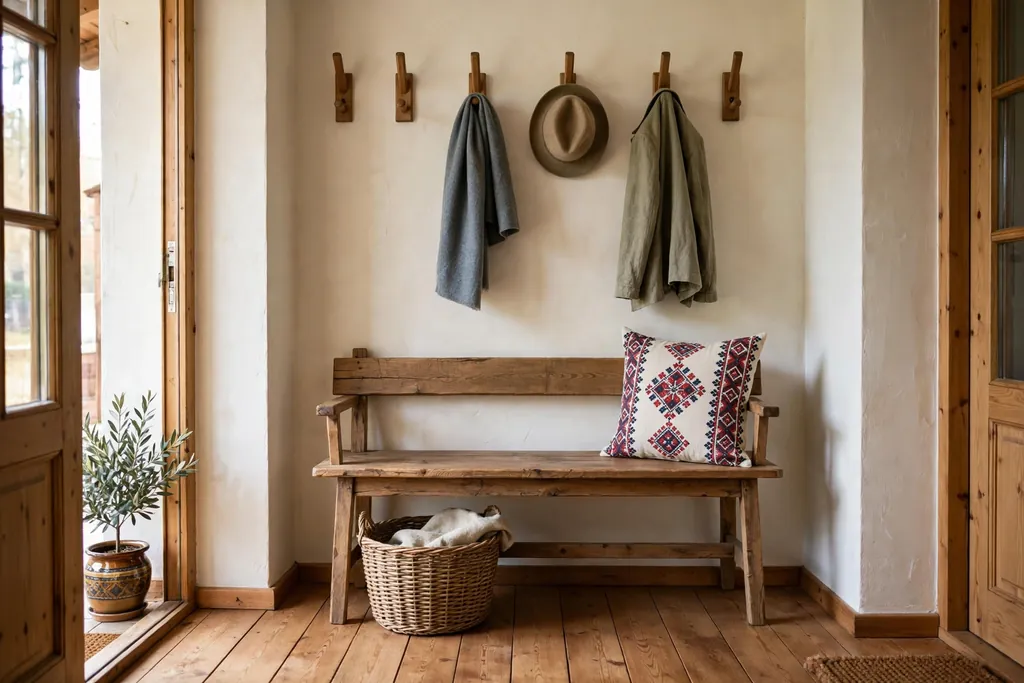
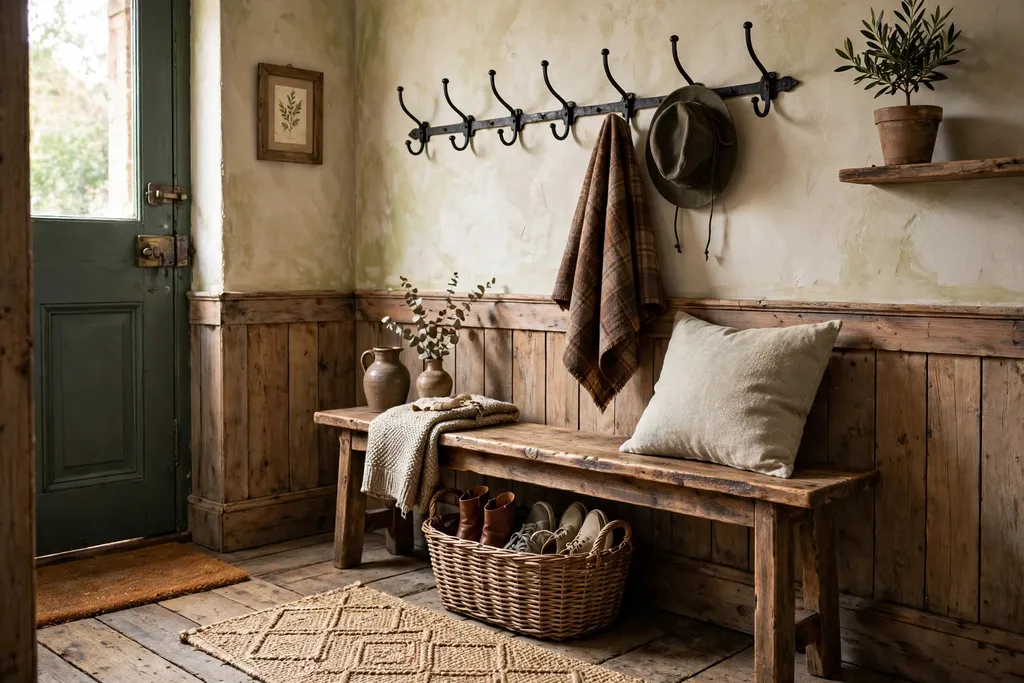
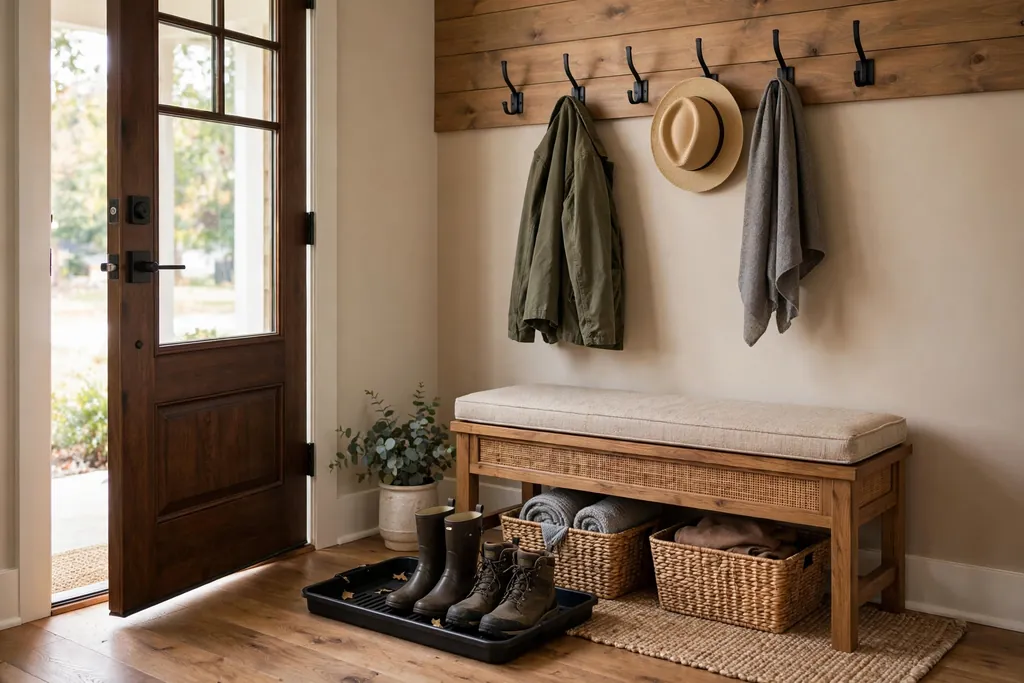
Paint the door in a Dutch color, such as dark green, navy, or warm white, and add simple iron or brass hardware that matches the rest of the entry. Check the door frame and hinges suit a split door before you buy, since the two halves need separate latches and a level frame. Keep the step outside clear, and add a mat and a boot tray beside the door, so the entry stays tidy when the top half stands open.
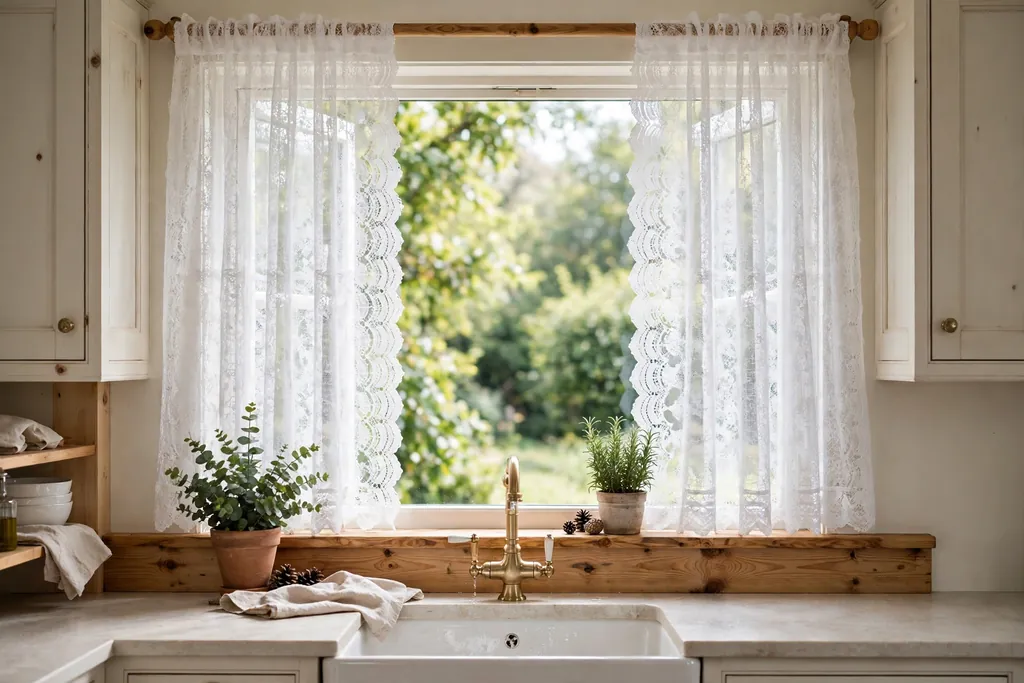
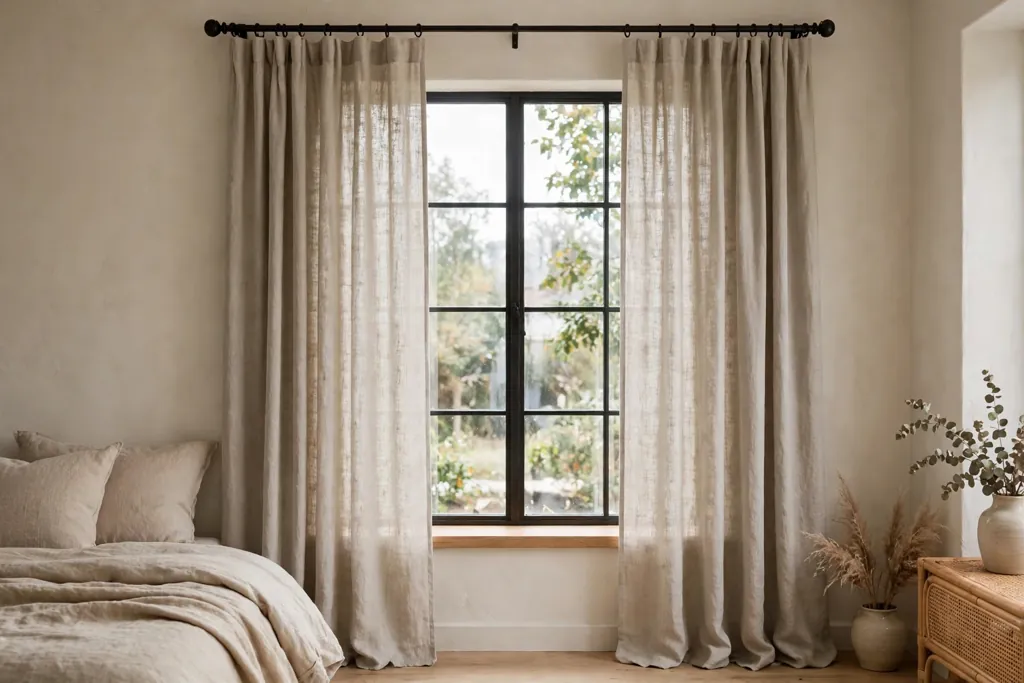
6. Dress Tall Windows With Sheer White Curtains
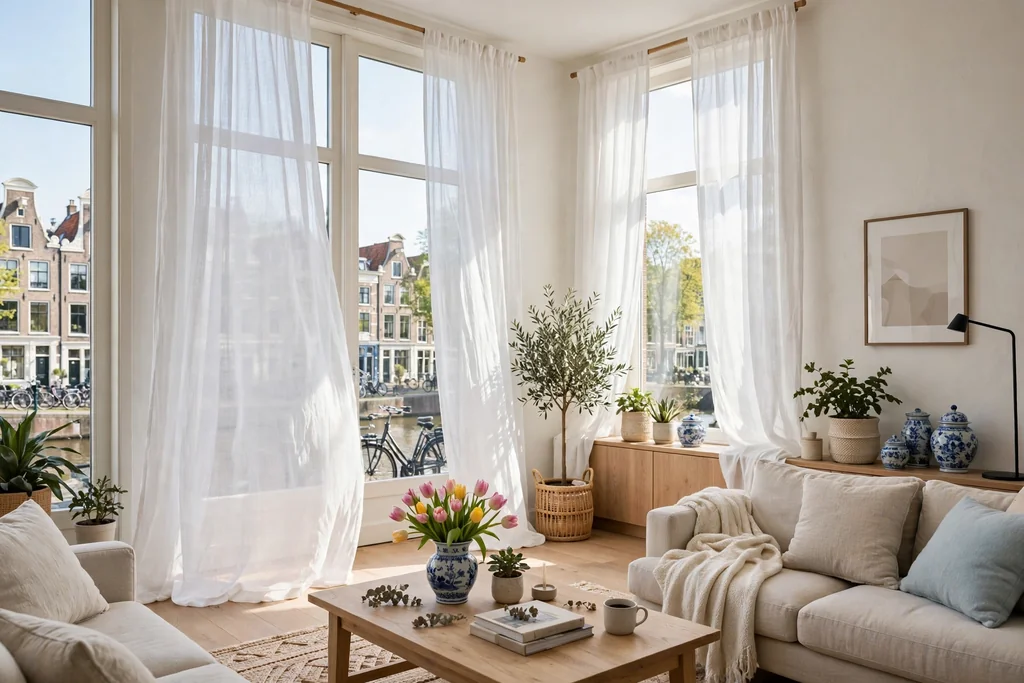
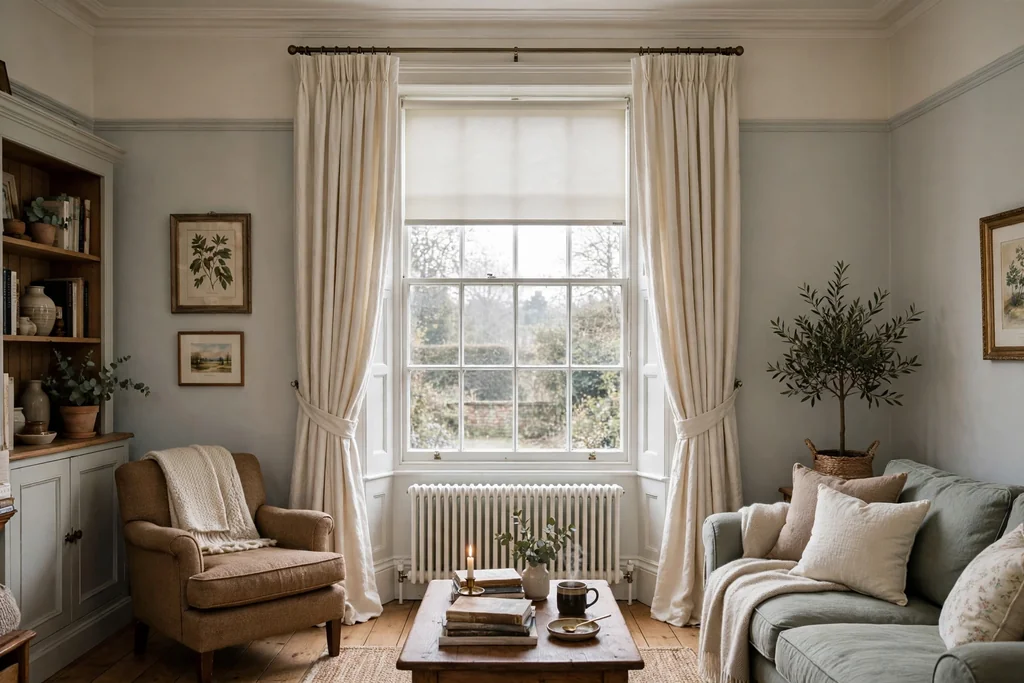
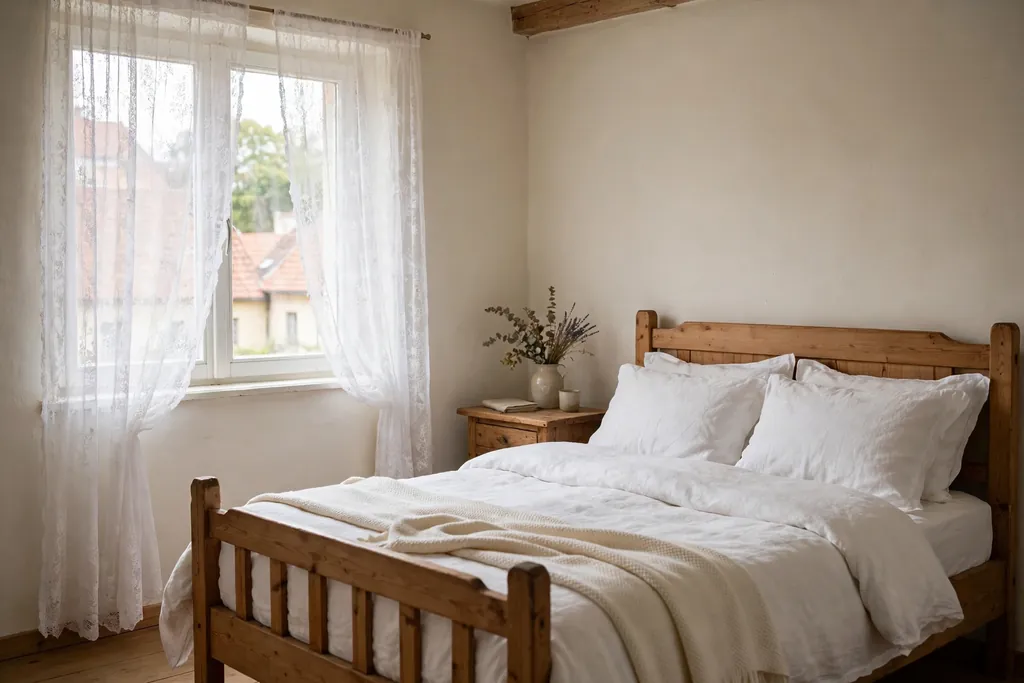
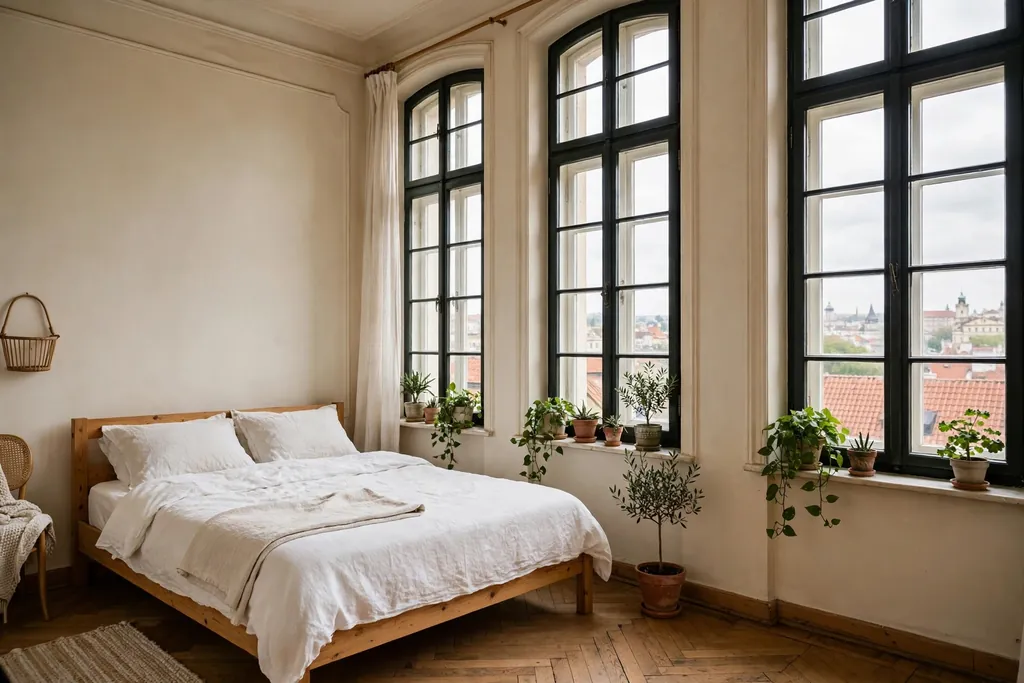
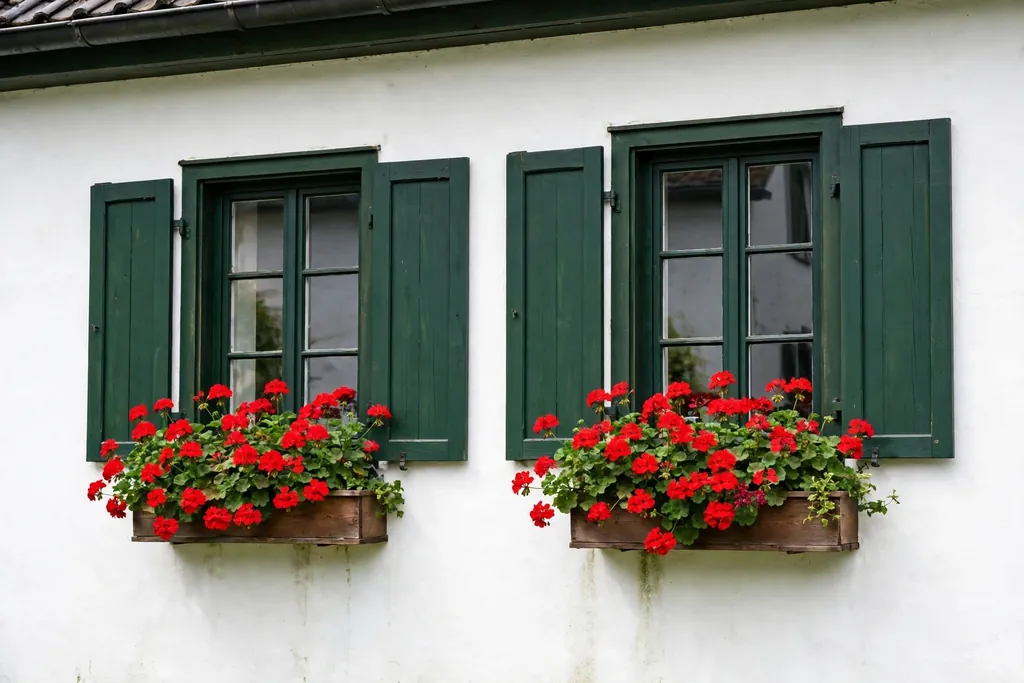
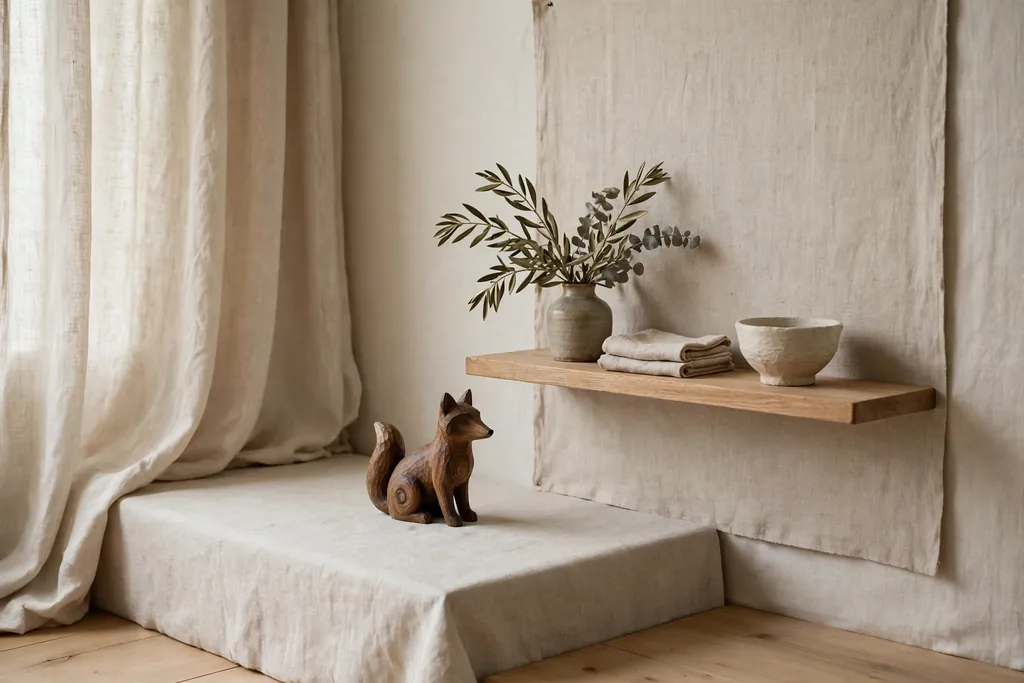
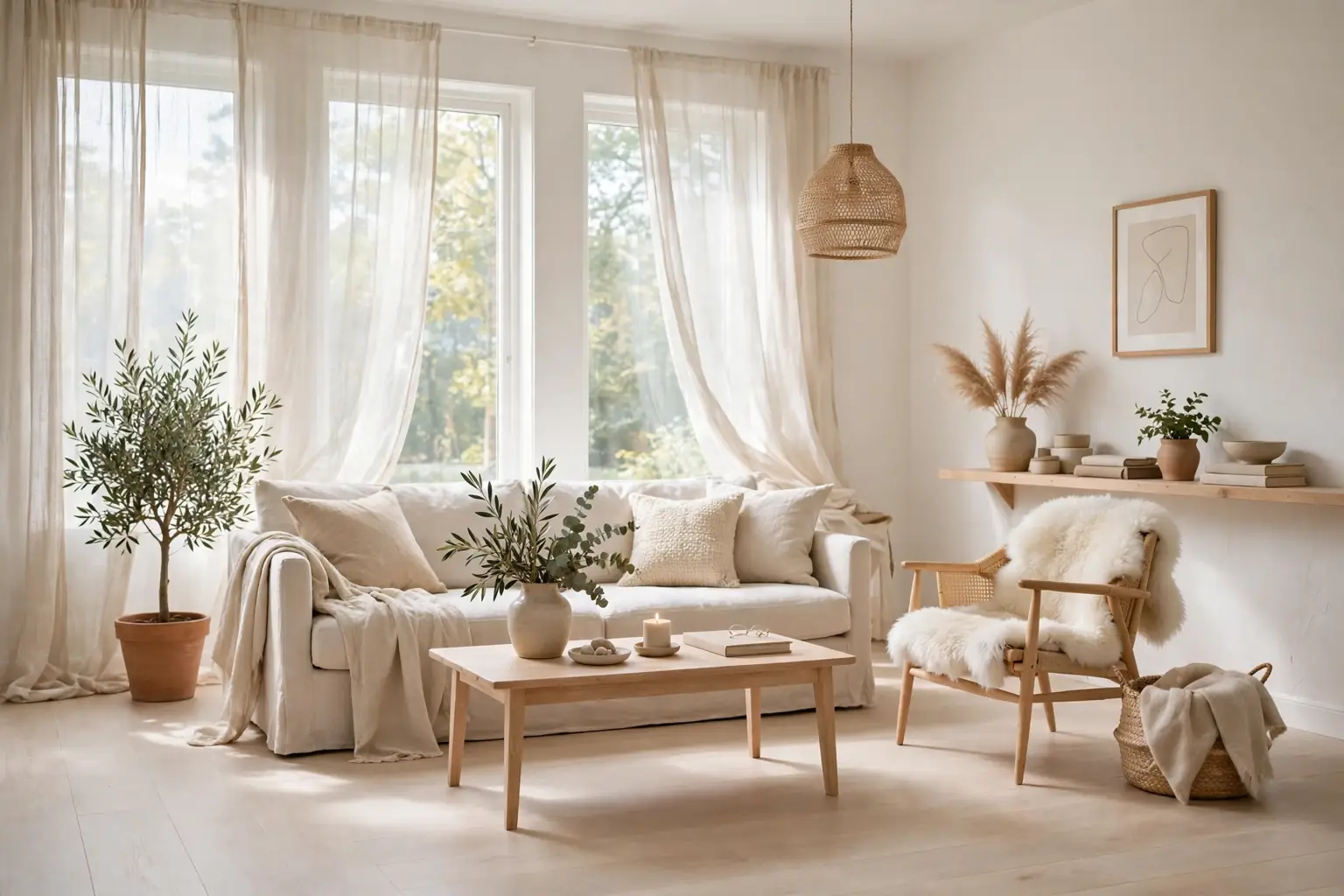
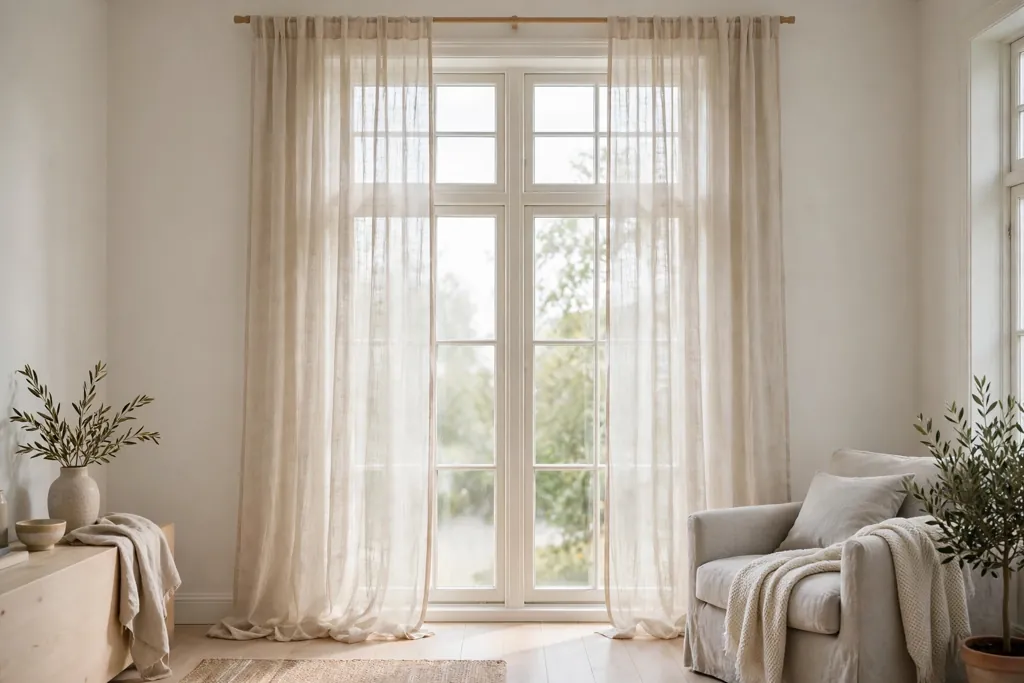
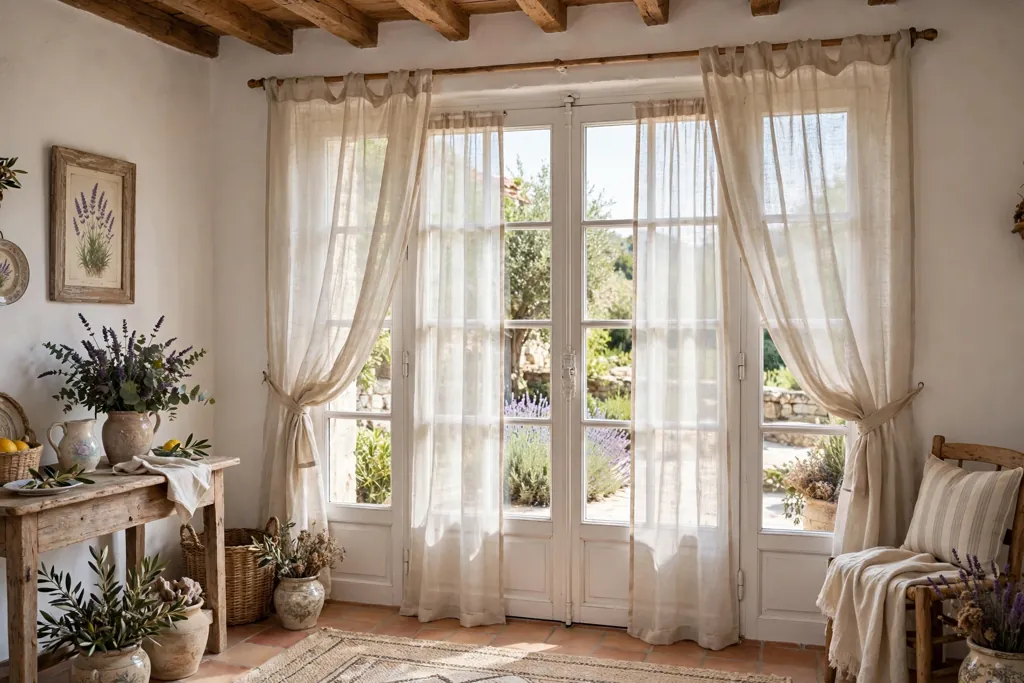
Tall windows are a hallmark of Dutch homes, and sheer white curtains let daylight pour in while still giving daytime privacy. The light fabric softens the window frame without blocking the view, which suits a living room or bedroom that faces a street or a canal. This suits rooms where heavy drapes would darken the space and hide the window shape.
Hang a slim rod above the frame, and let the panels fall to just above the floor, so the full window height shows. Keep the sheer in warm white, so it matches the walls and does not add a new color, and choose a washable linen or cotton, since sheers show dust. For fabric, length, and lining choices that suit different windows, see these bedroom curtain ideas.
7. Paint Window Frames Black for a Canal House Look
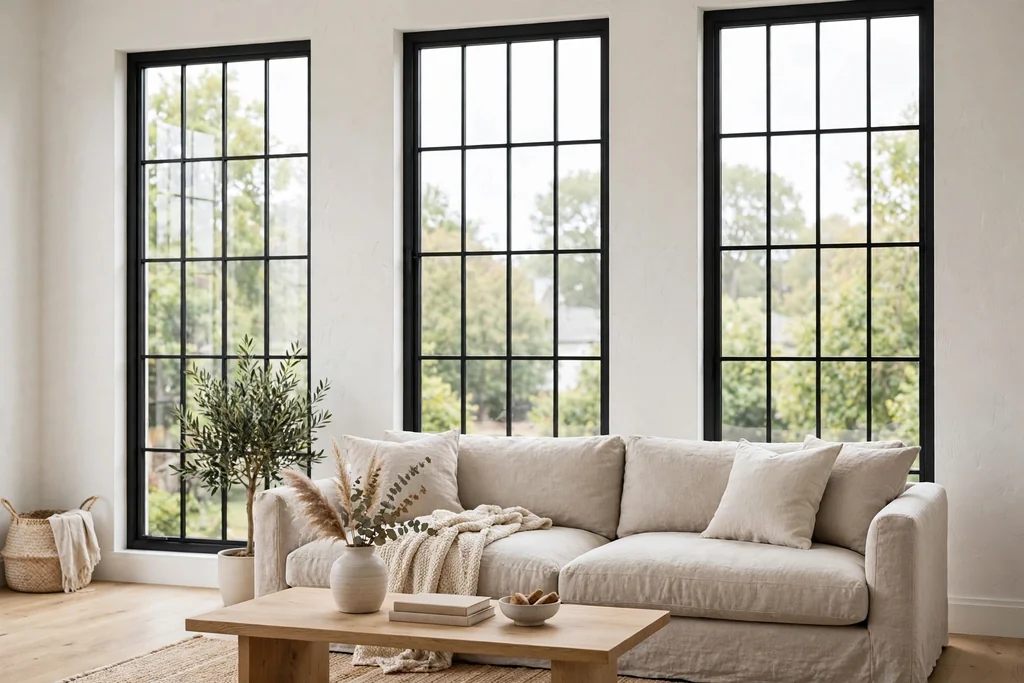
Black window frames give a white Dutch facade and a white interior a crisp outline, and they make tall windows read as a clear feature rather than a hole in the wall. The dark frames contrast well with white walls, linen curtains, and wood floors, and they suit both modern and farmhouse rooms. This suits a room with large windows and plain walls, where the window wall needs structure.
Paint frames in a matte or satin black made for the frame material, and test the finish on one frame first, since black shows dust and marks. Keep the rest of the trim white, so the black frames stay the focus, and repeat black once more in the room, such as a lamp base or a mirror frame. Clean frames with a soft cloth, and touch up chips promptly, since black chips show fast on a white wall.
8. Lay a Black and White Checkerboard Floor in the Entry
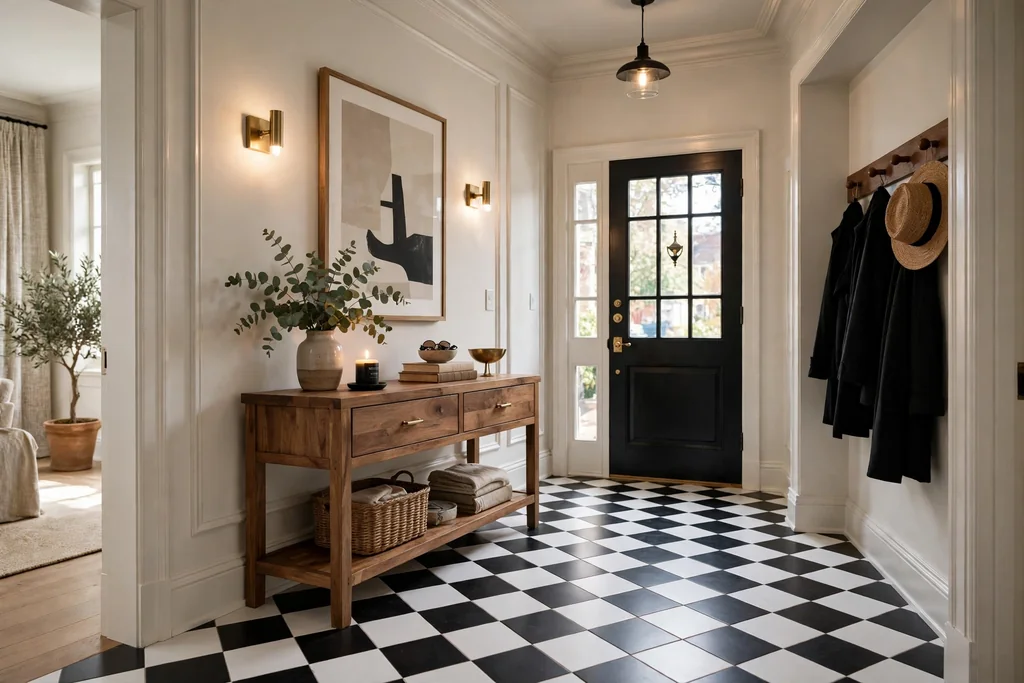
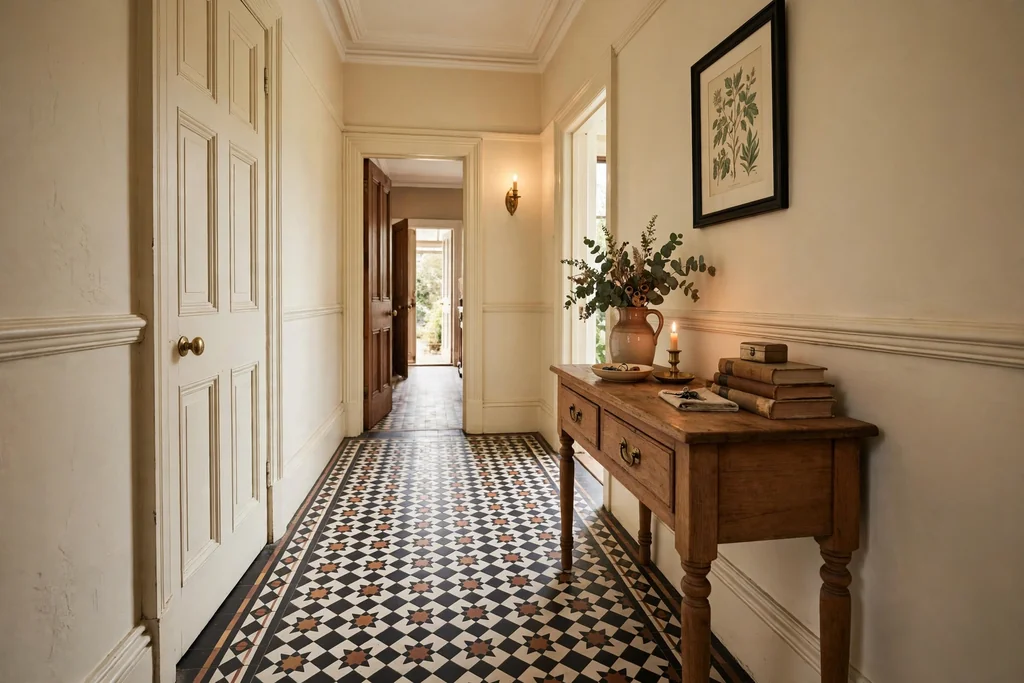
A black and white checkerboard tile floor gives an entry a Dutch farmhouse floor that is bold at floor level and easy to clean. The pattern adds interest as soon as you walk in, so walls and furniture can stay plain, and tile suits a hard working entry better than wood. This suits an entry with a plain floor, or a hallway where a rug would stain.
Choose a tile size that suits the entry, with larger squares for a wide hall and smaller squares for a narrow one, and keep grout in a mid grey, so it does not show every mark. Lay the pattern in a single area, such as the entry floor, rather than through the whole home, and seal the grout as advised by the maker. Mop tile often in an entry, since outdoor dirt shows fast on pale tile.
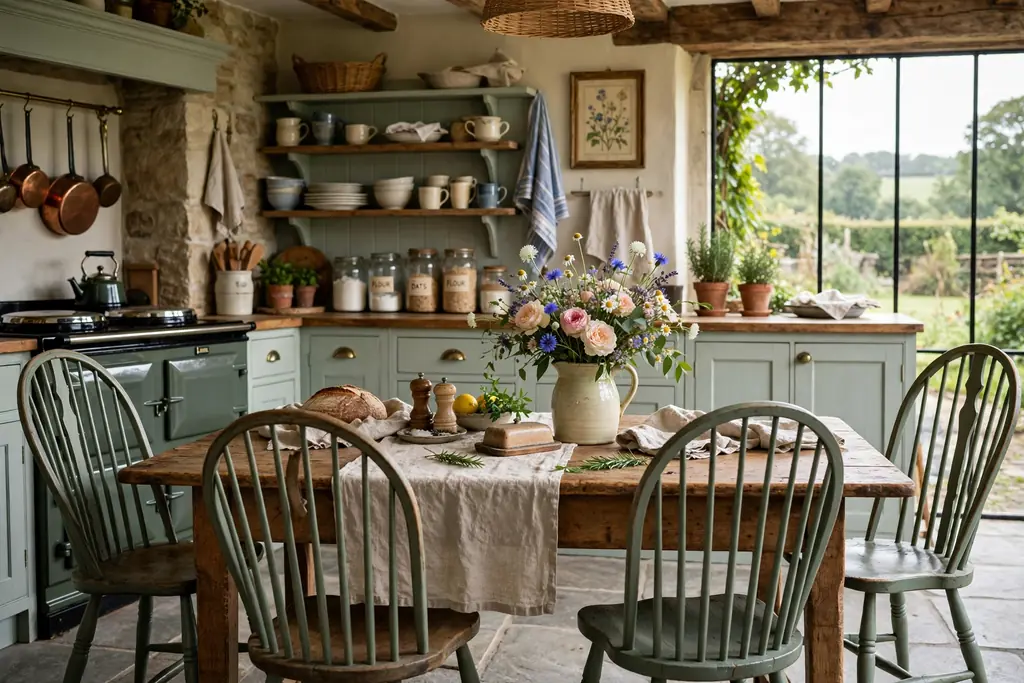
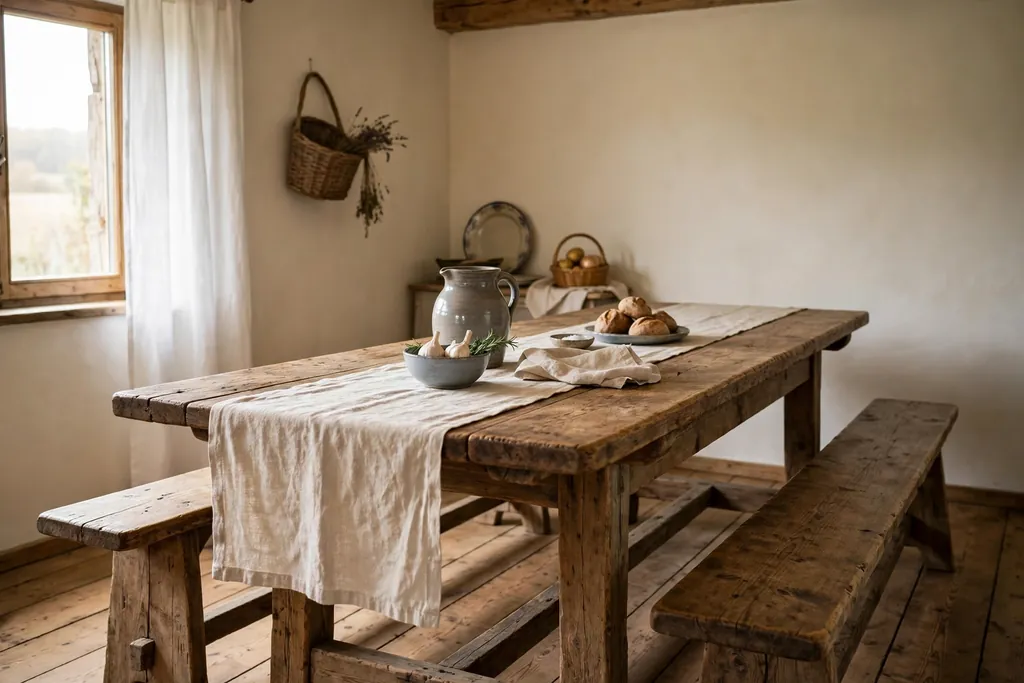
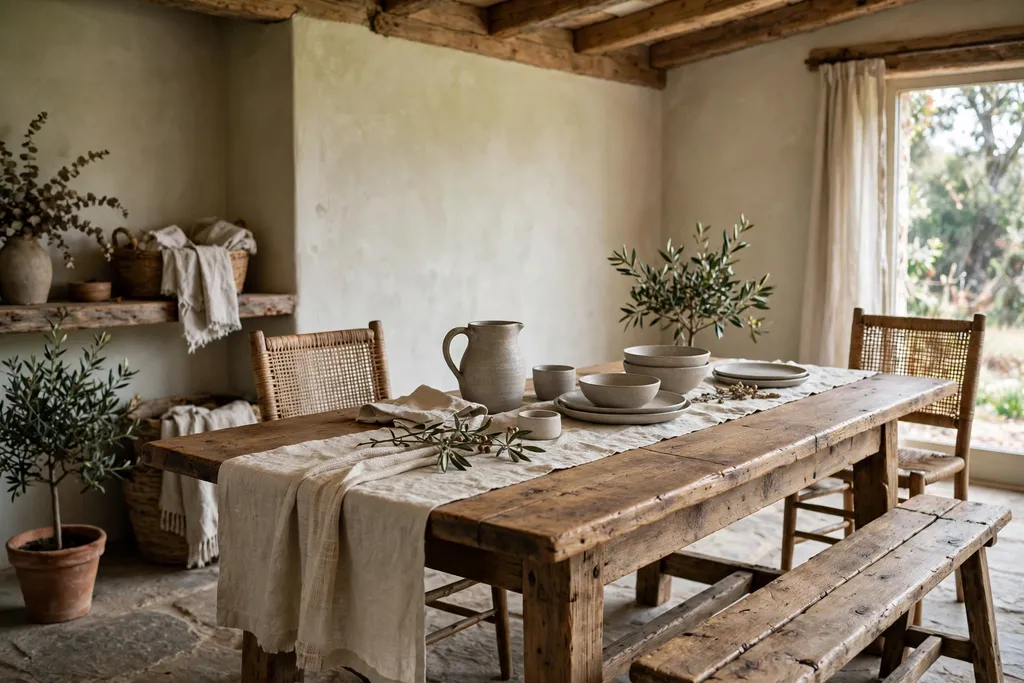
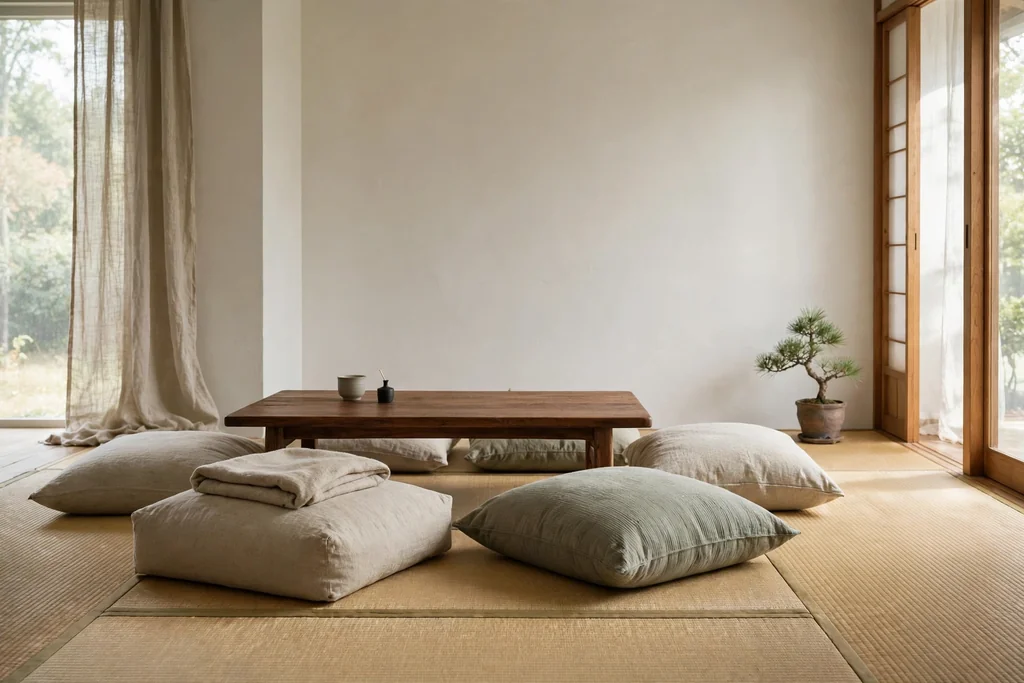
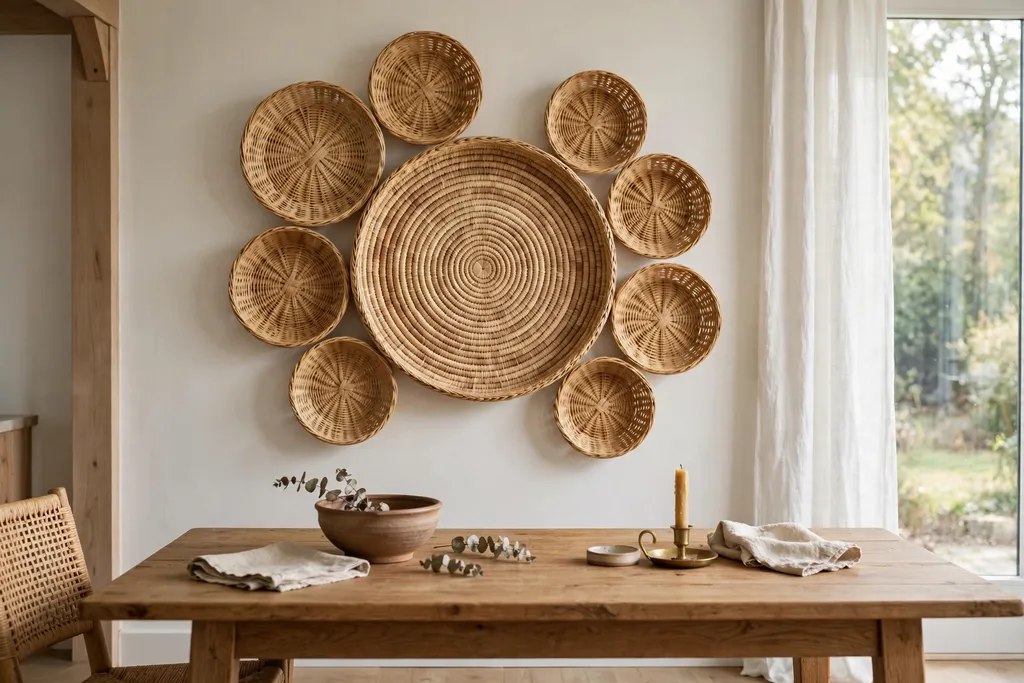
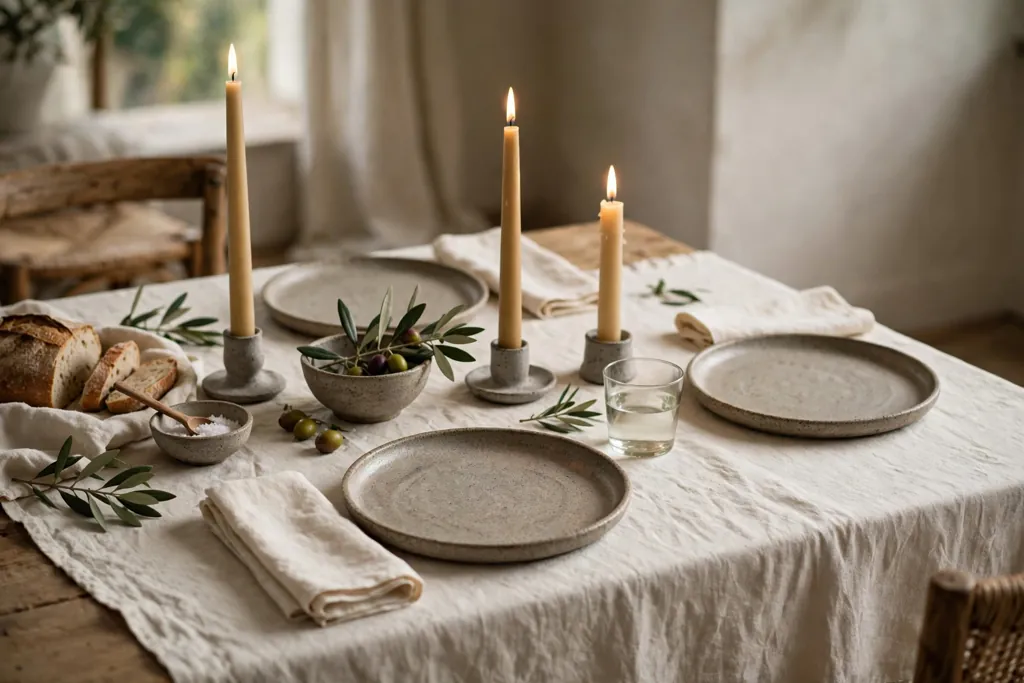
9. Set a Long Farmhouse Table for Shared Meals
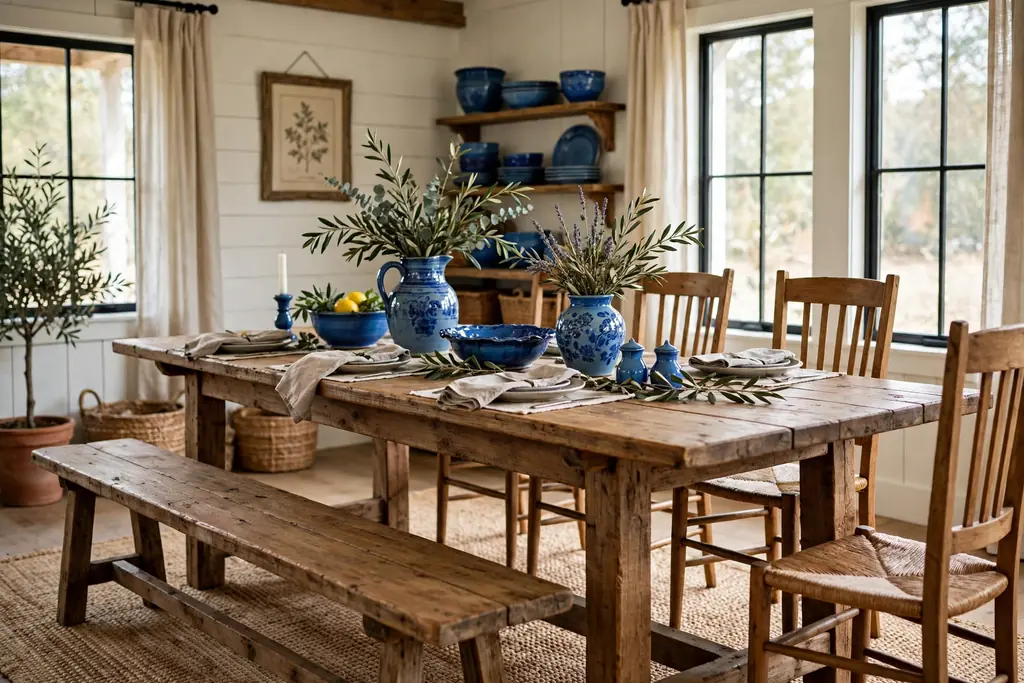
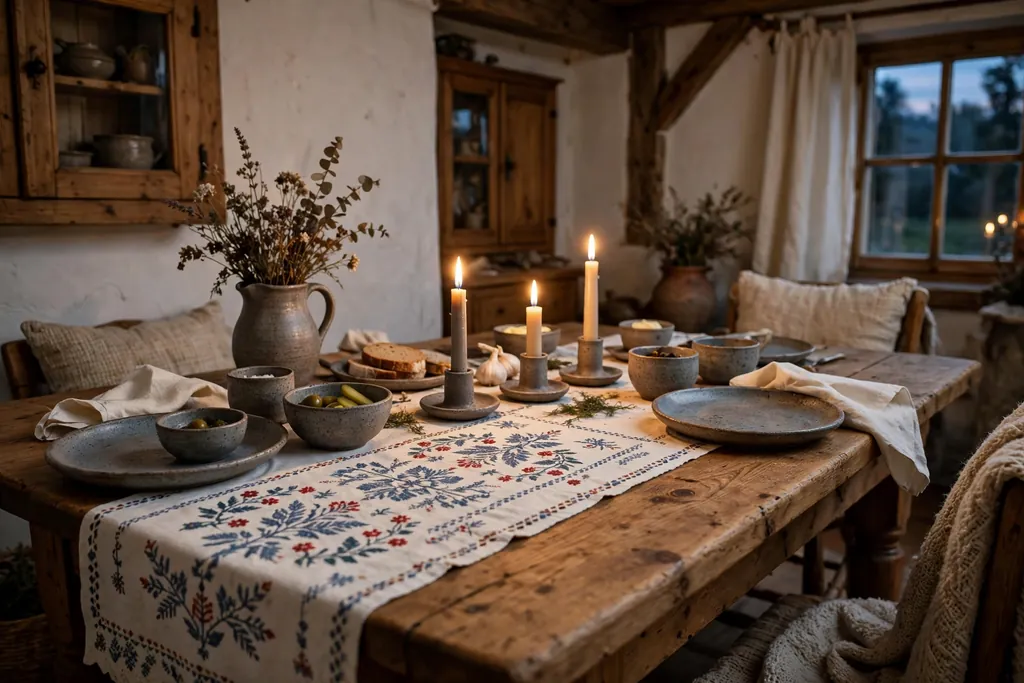
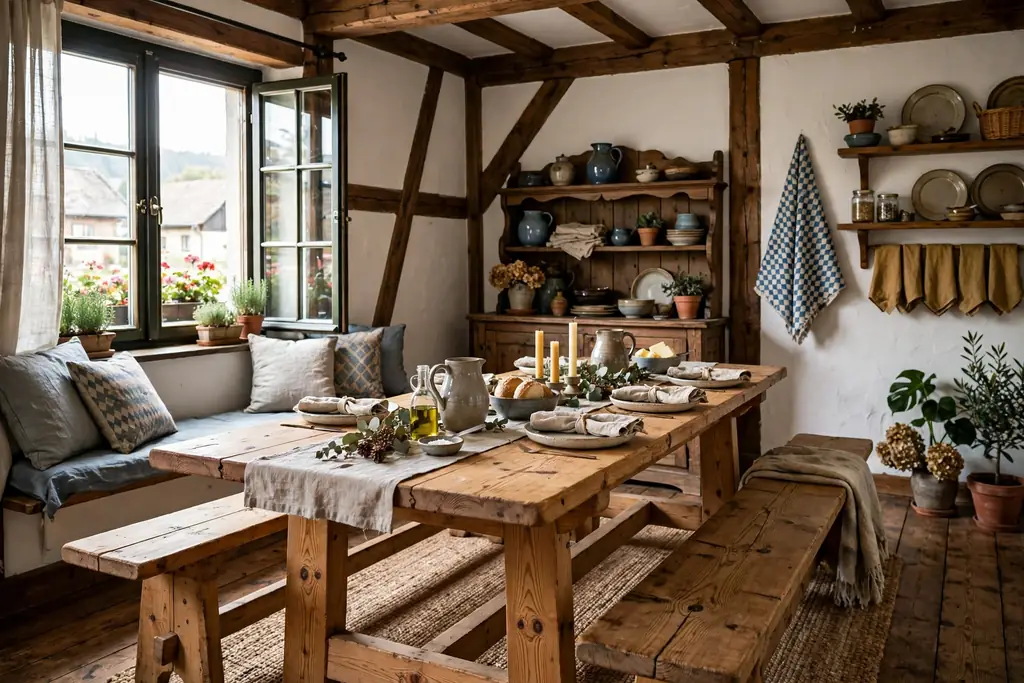
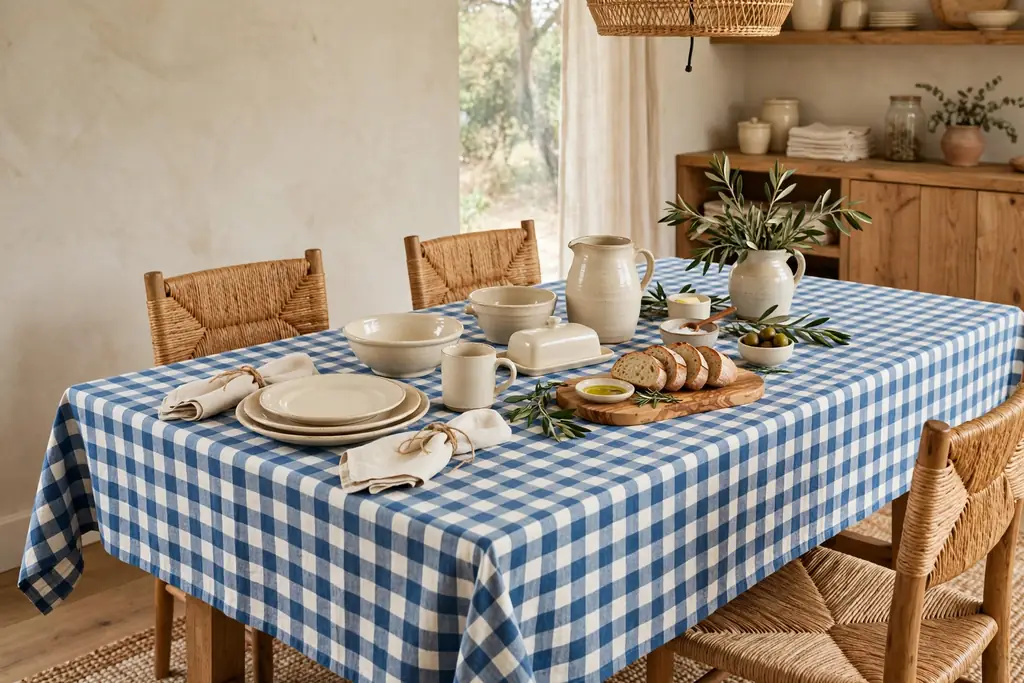
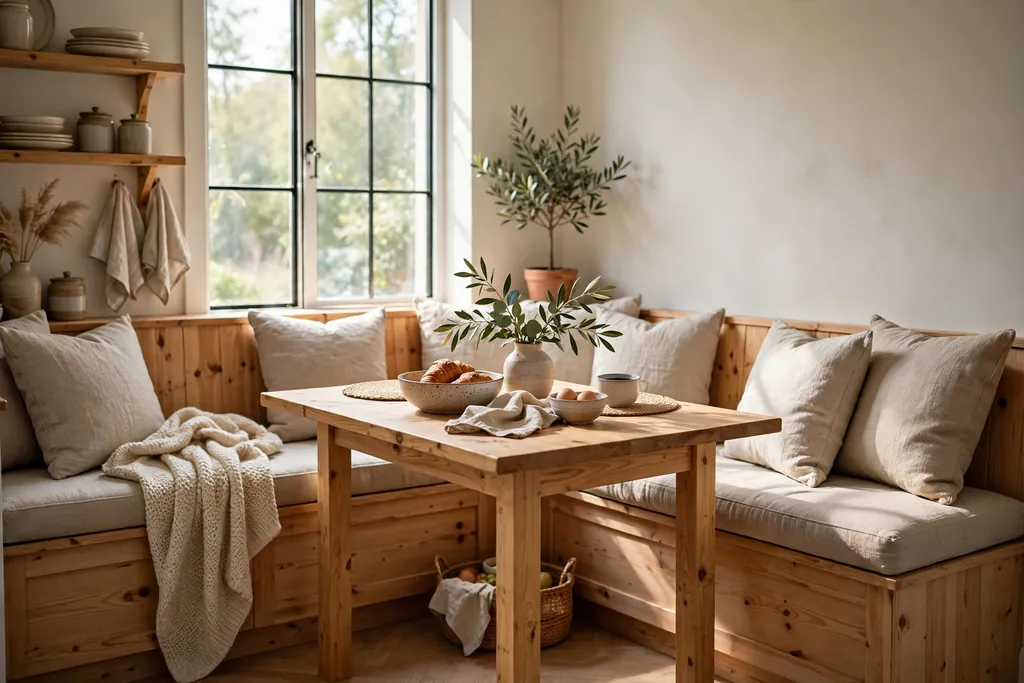
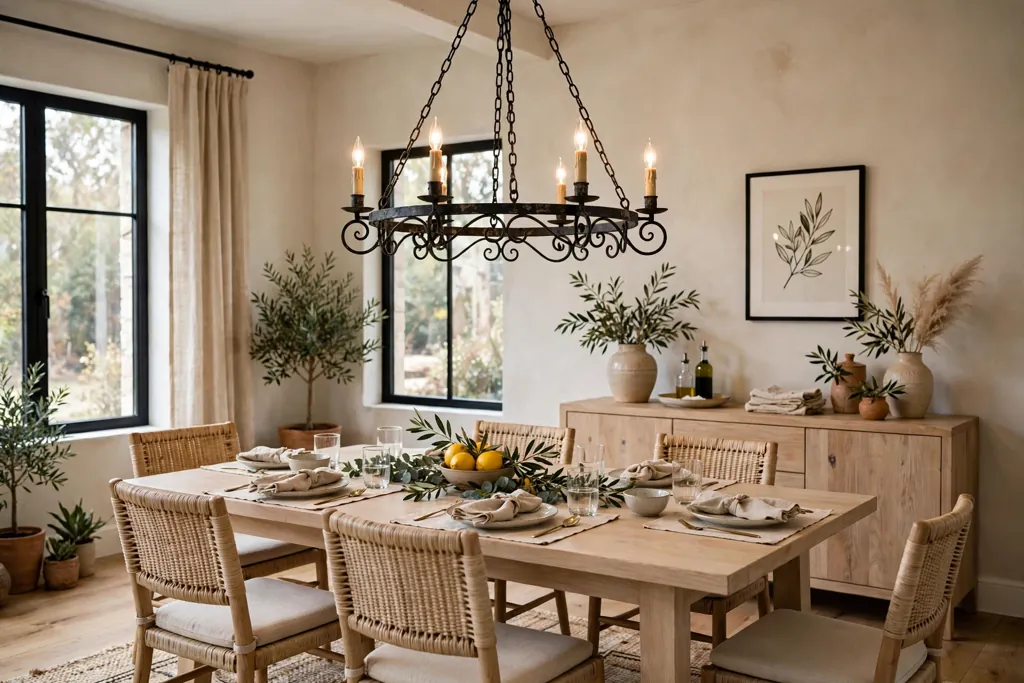
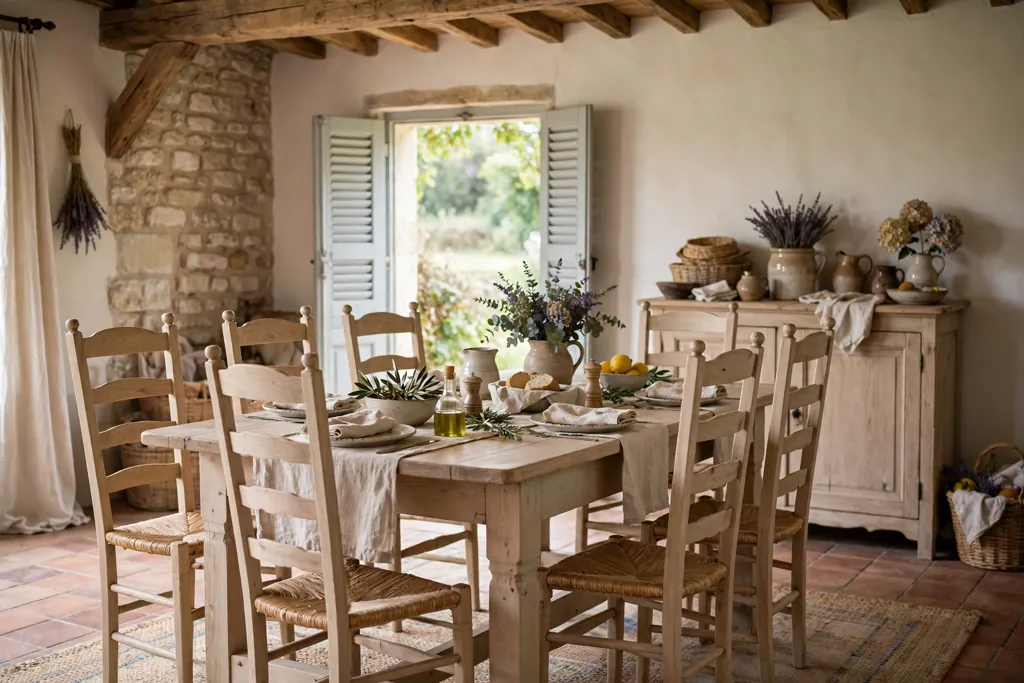
A long wood dining table in pale oak or dark stained pine gives a dining room a Dutch farmhouse base built for shared meals, which is central to gezelligheid. The long top suits a bench on one side and chairs on the other, and the wood grain adds warmth against white walls and blue pottery. This suits a dining room with room for a longer table, and it works well in a kitchen dining space with a plain floor.
Keep the table mostly clear between meals, with a linen runner and one stoneware vase, so the wood stays visible. Protect the top with placemats at meals, since pale wood marks more easily than dark wood, and wipe spills promptly. Pair the table with simple chairs in wood or black, so the table, not the chairs, carries the room.
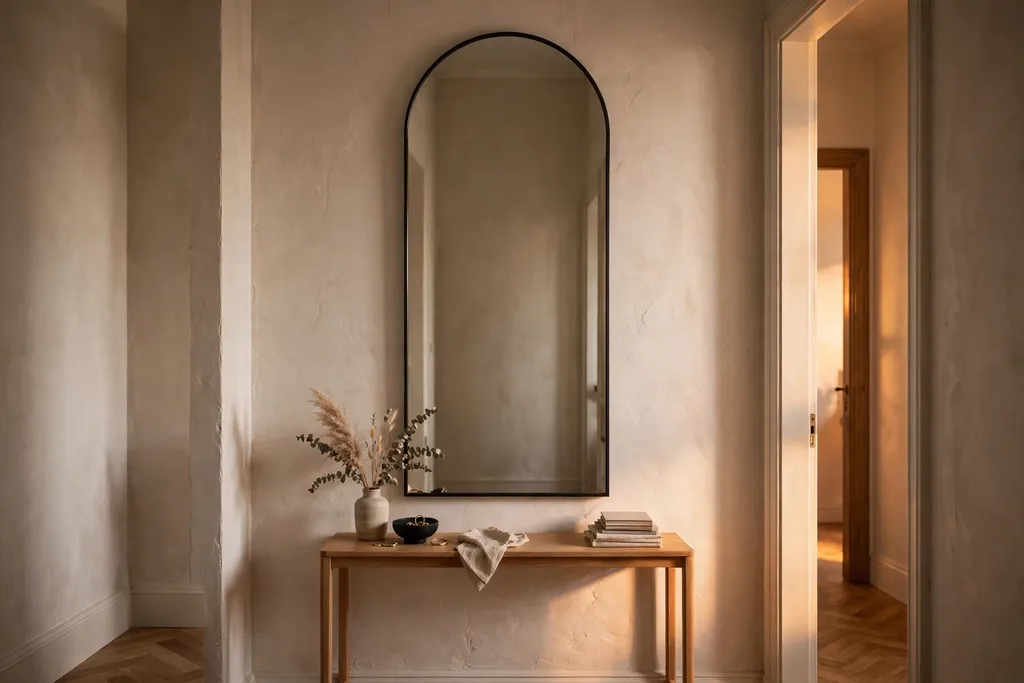
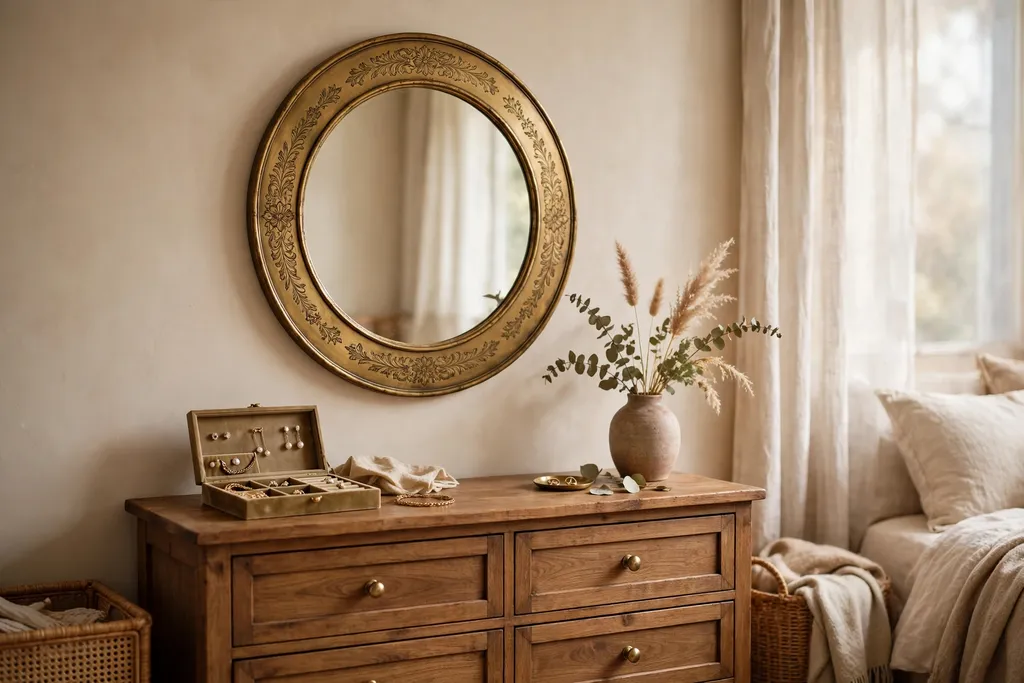
10. Hang a Stepped Gable Shaped Mirror
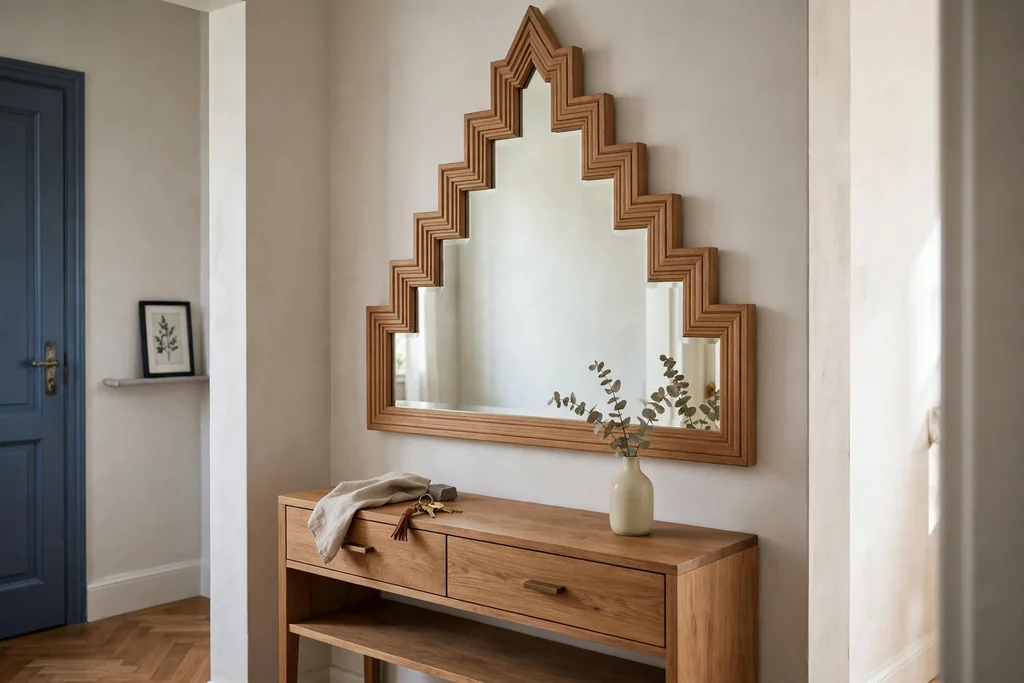
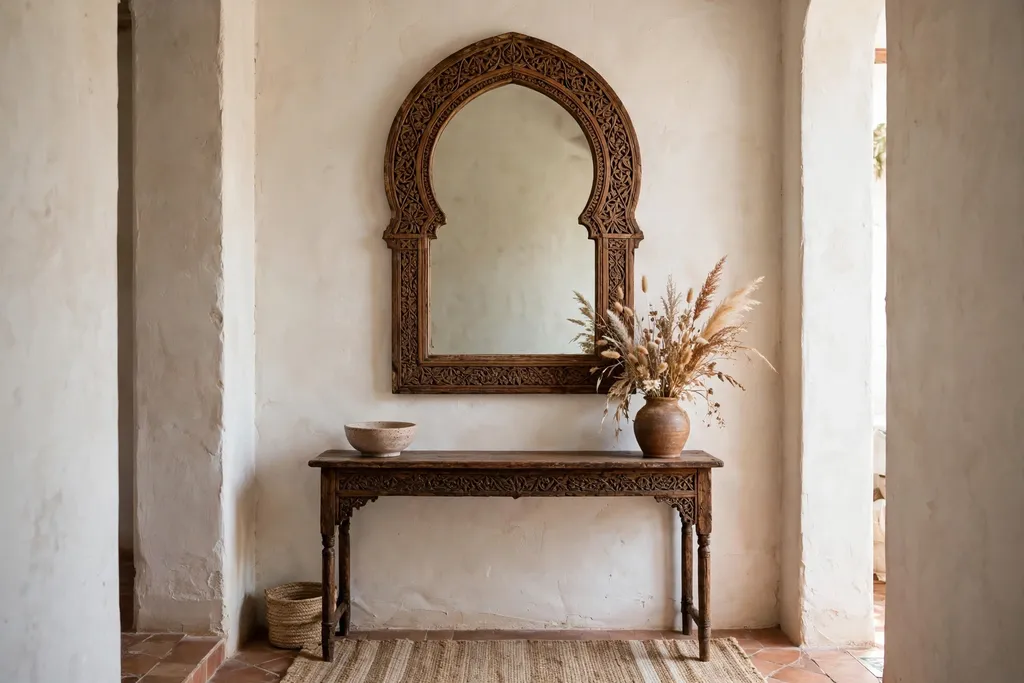
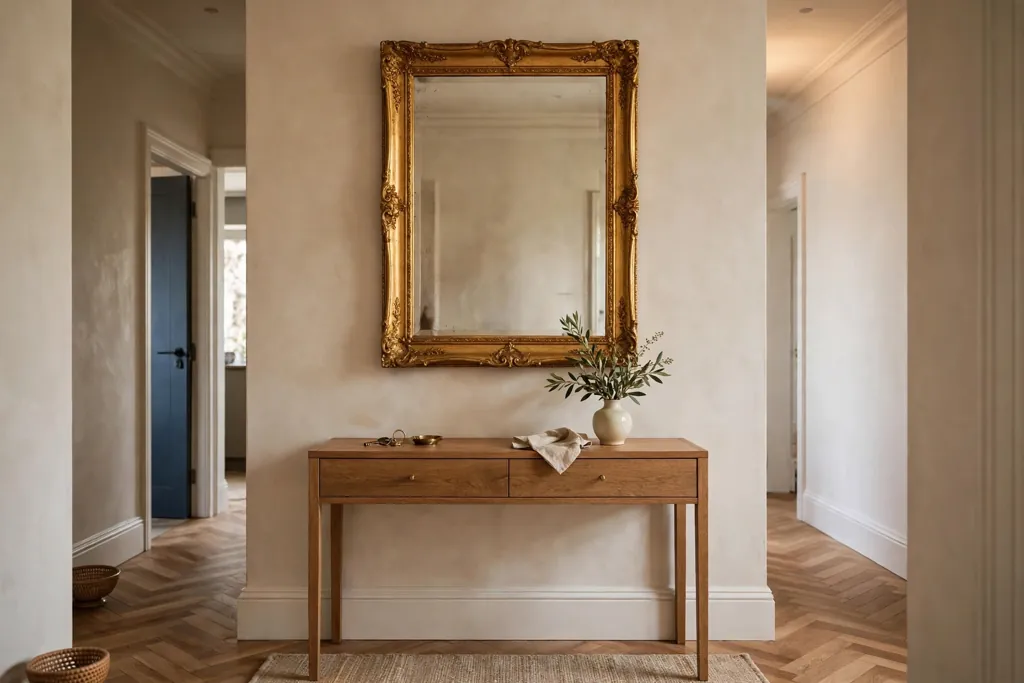
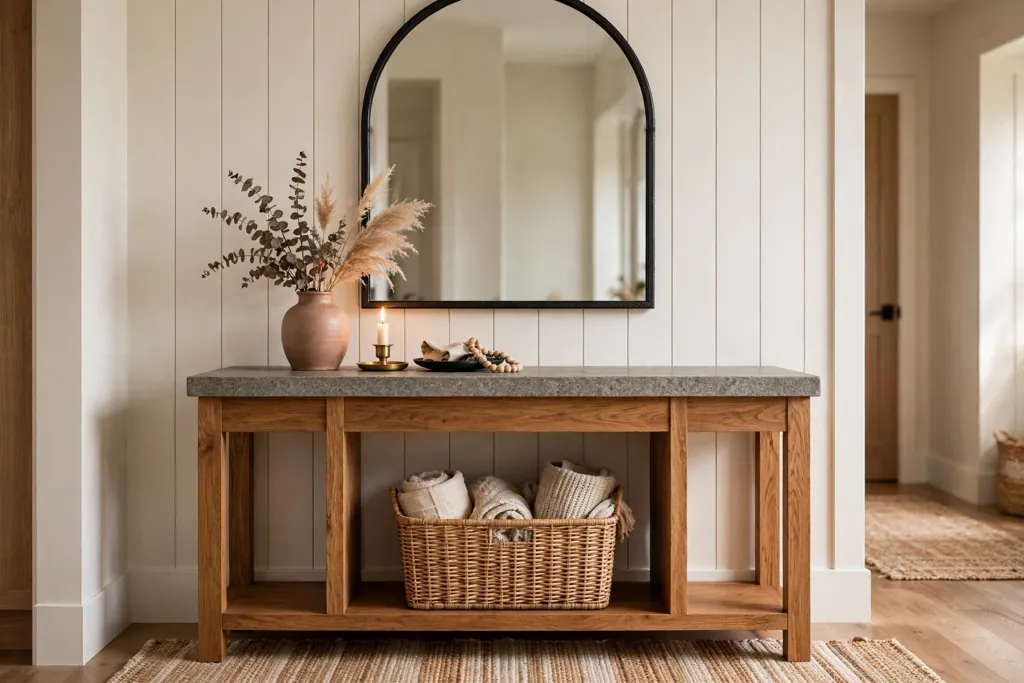
Dutch canal houses are known for stepped and bell shaped gables, and a mirror in a stepped gable shape brings that outline indoors in a small, usable dose. The stepped top adds architectural interest above a console or a fireplace, while the mirror itself reflects light into the room. This suits a hallway, an entry, or a living room with a plain wall that needs a quiet focal point.
Choose a mirror roughly two thirds of the console or mantel width, and hang it centered, so it does not crowd the ends. Keep styling beneath it simple, with one vase and one small tray, so the stepped shape stays easy to see. Check what the mirror reflects before you fix it, since a view of a window or a plant looks good, while a view of clutter does not.
11. Fill Glass Vases With Fresh Tulips
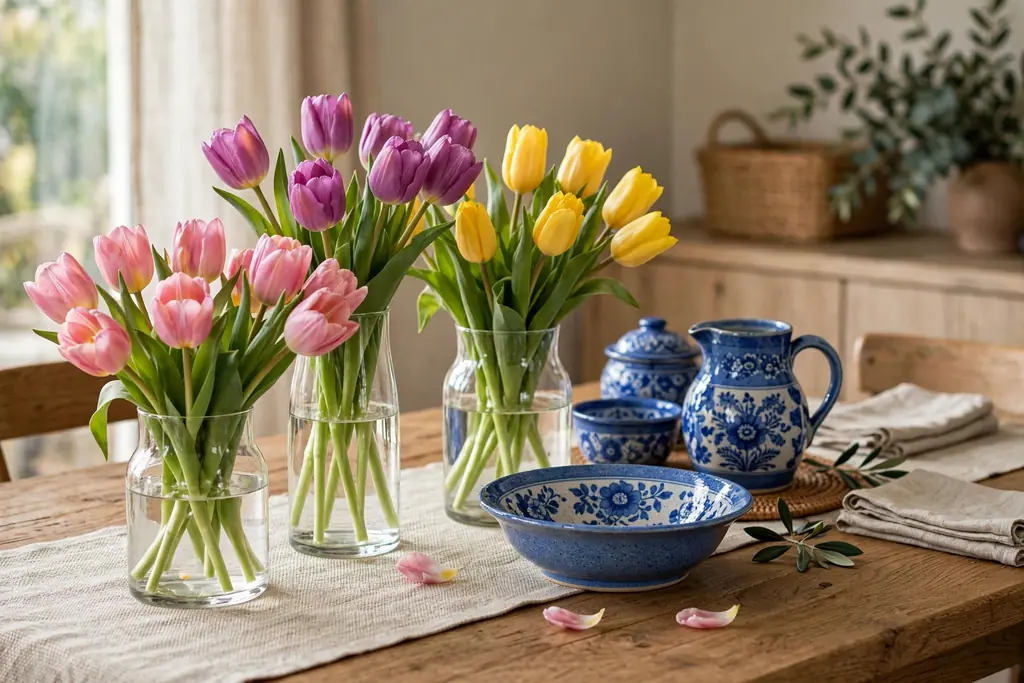
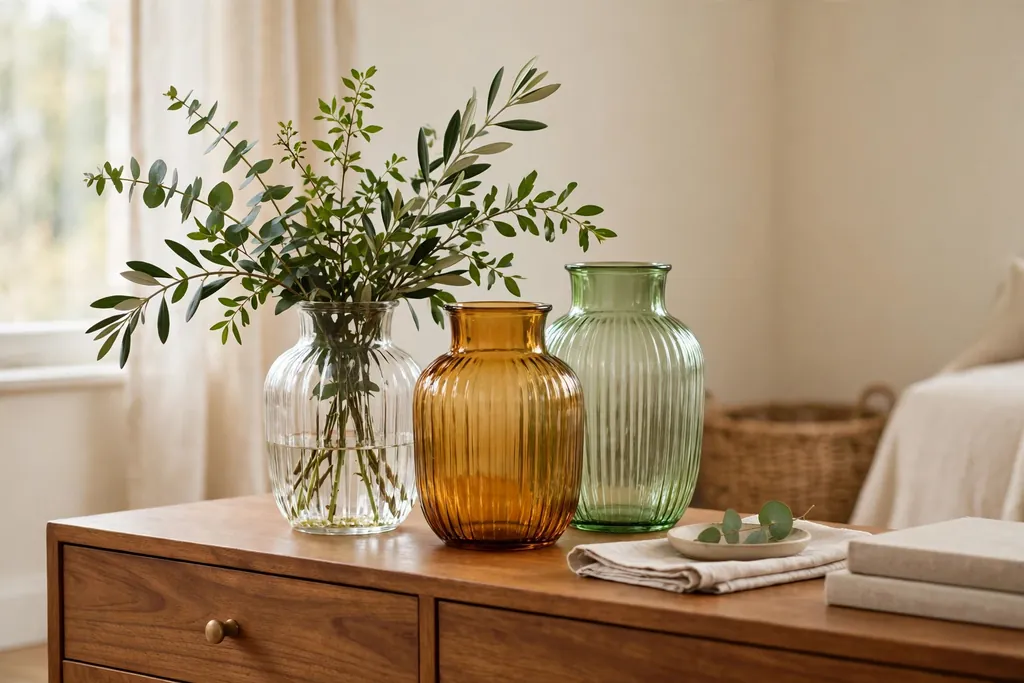
Fresh tulips in clear glass vases are the simplest Dutch decor idea, and they add living color in a small, changeable dose. Tulips in red, yellow, pink, or white suit a white room with blue pottery, and a glass vase keeps the focus on the stems and blooms. This suits a dining table, a console, or a kitchen counter, where a tall arrangement would block sight lines.
Trim stems at an angle, and change the water every two days, so tulips last longer and the water stays clear. Keep the vase simple, with no painted pattern, so the flowers stay the focus, and place tulips away from fruit bowls, since ripening fruit can shorten bloom life. When tulips fade, replace them with a new bunch in a different color for a fresh note.
12. Line the Mantel With Miniature Canal Houses
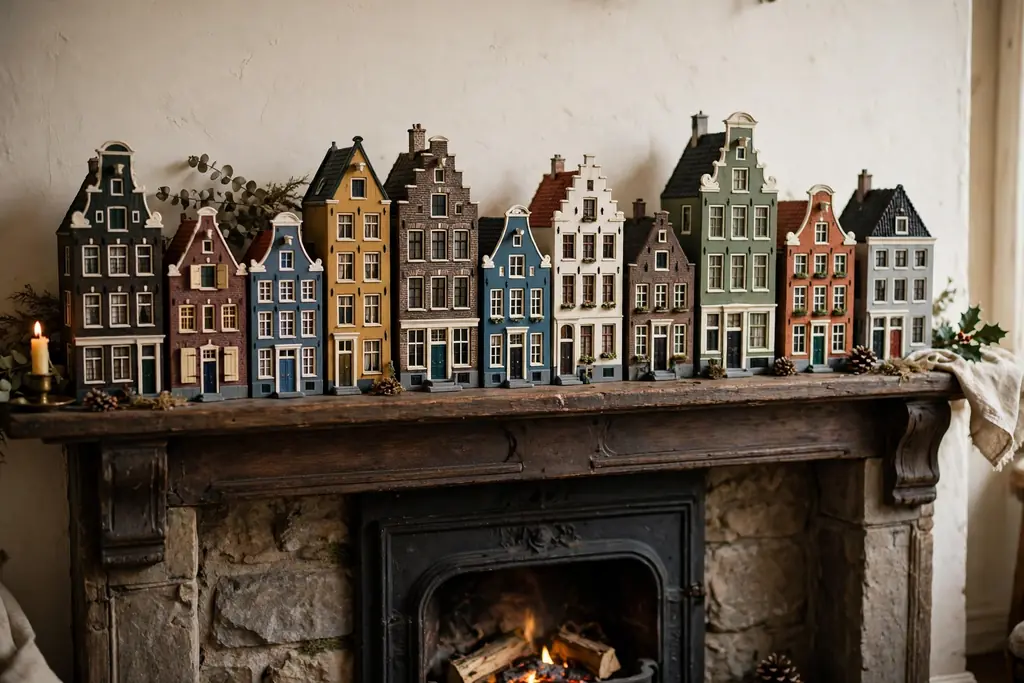
A row of miniature Dutch canal houses on a mantel, a shelf, or a windowsill gives a living room a Dutch display with charm and a clear story. The small gabled houses, in varied heights and colors, repeat the canal house outline at a small scale, and they suit a mantel with plain walls behind it. This suits a living room with a mantel or a long shelf, where a full row of art would feel heavy.
Line the houses in a single row, with taller houses at the ends or in the center, and leave space between them, so each gable reads clearly. Keep the mantel behind them plain, and add one small plant or one candle at one end only, so the houses stay the focus. Dust the miniatures with a soft brush, since small details collect dust fast.
13. Frame a Fireplace With Delft Tile and Brick
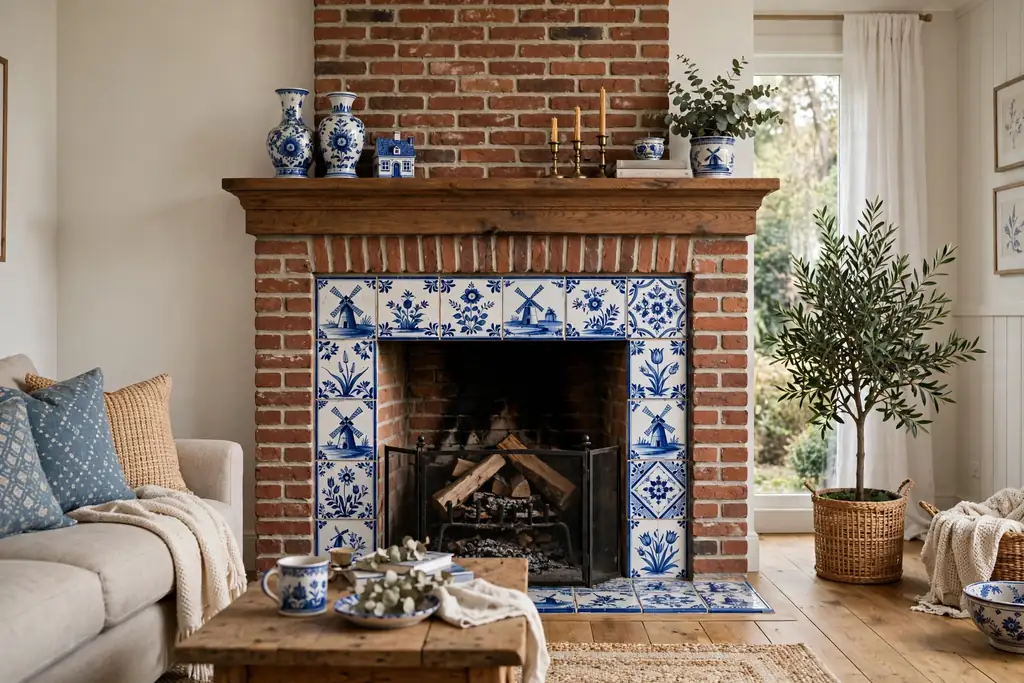
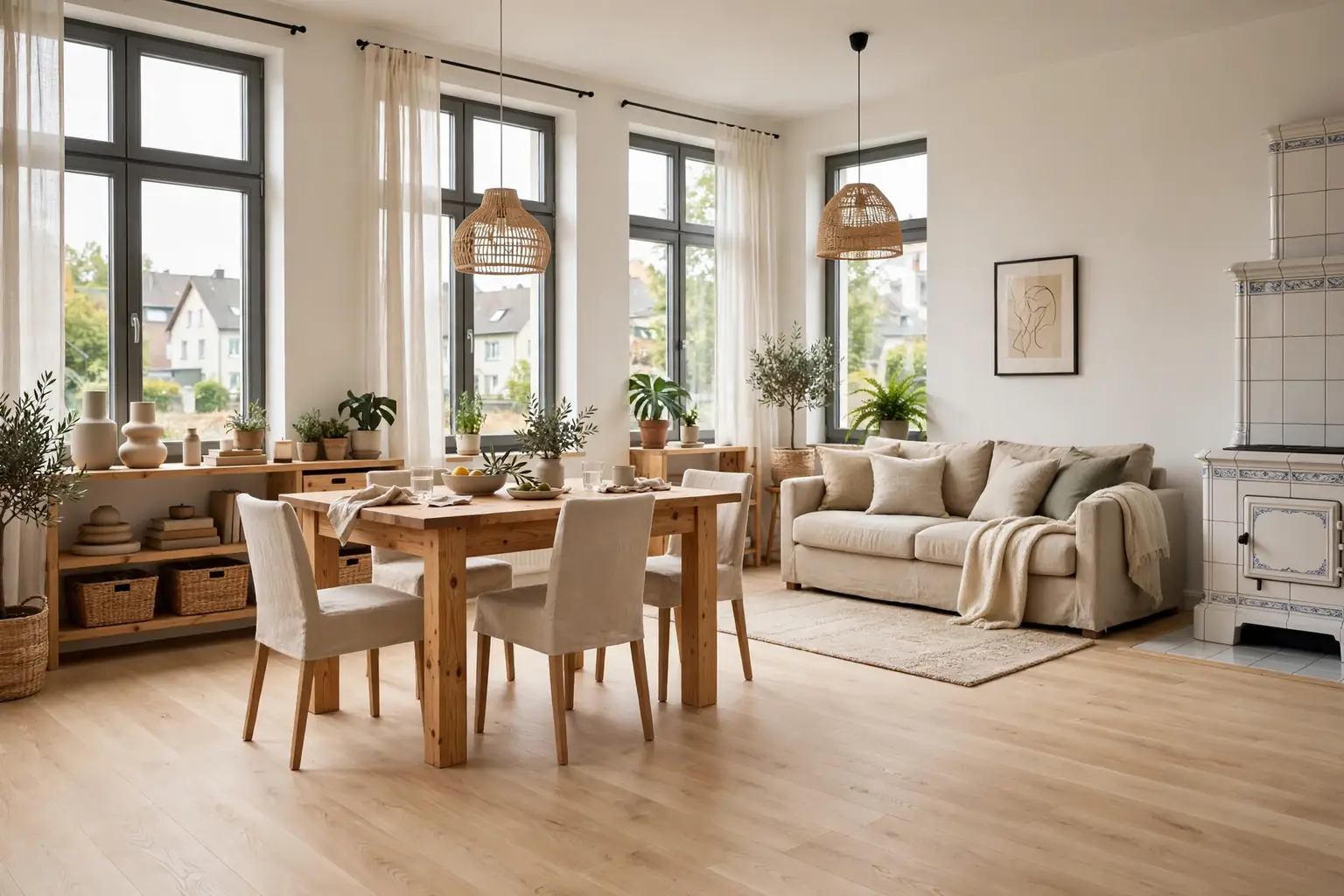
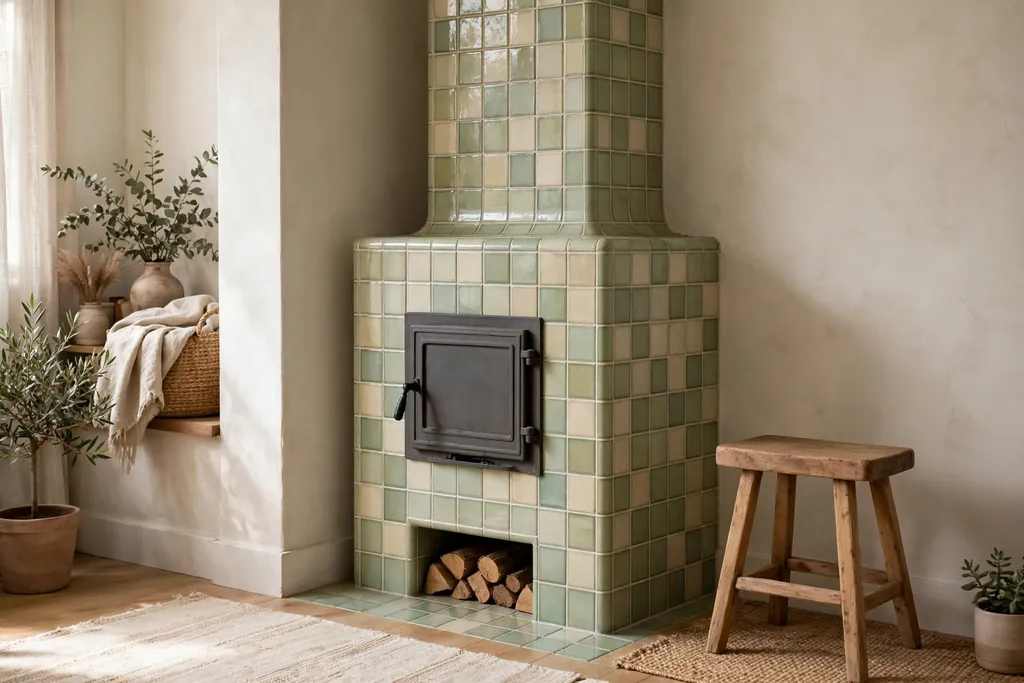
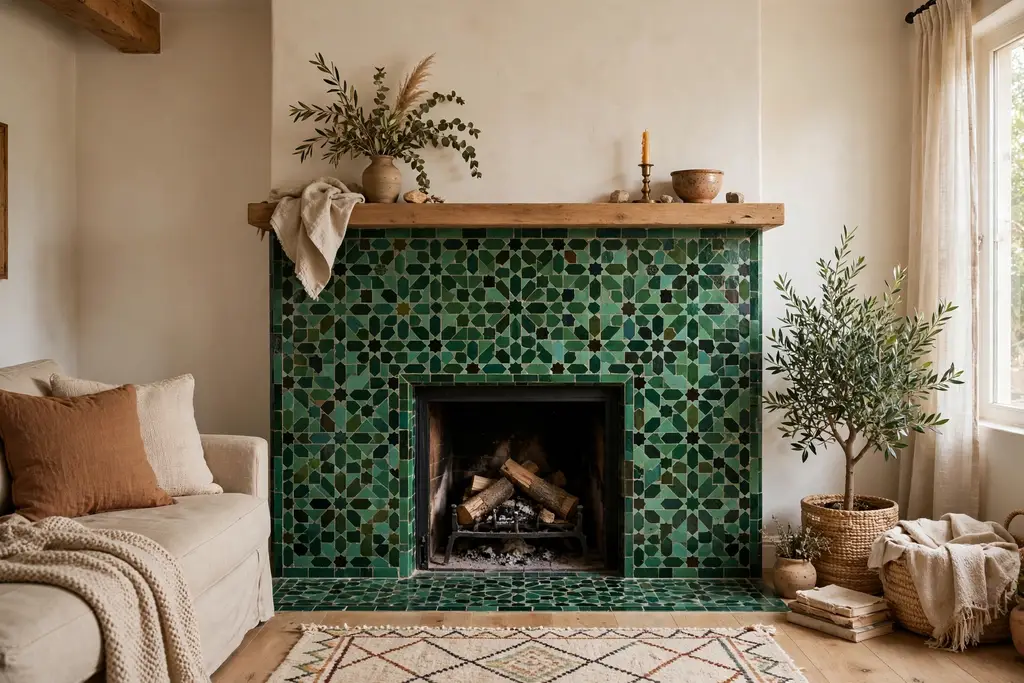
A brick fireplace framed with Delft blue tiles gives a living room a Dutch hearth that feels warm, traditional, and easy to style. The brick adds rough texture, while the blue tiles add a patterned border at eye level, and the pairing suits wood floors, linen sofas, and cream walls. This suits a living room with a plain fireplace, where the surround needs a clear feature.
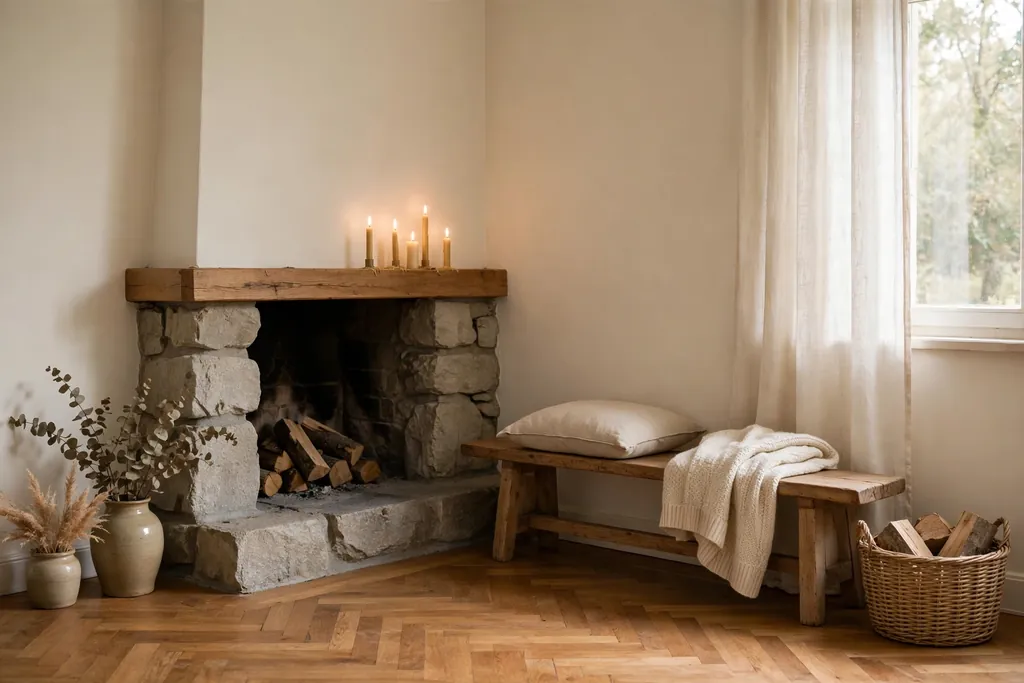
Use Delft style tiles as a border or a single panel beside the fire opening, and keep the rest of the surround plain brick or plaster, so the tiles read clearly. Check that the tiles and adhesive suit heat near a working fireplace before you fit them, and keep mantel styling simple, with two candlesticks and one vase. Clean tiles with a soft cloth, and keep the hearth clear of clutter, so the fireplace stays safe and easy to use.
14. Paint Kitchen Cabinets Dark Dutch Green
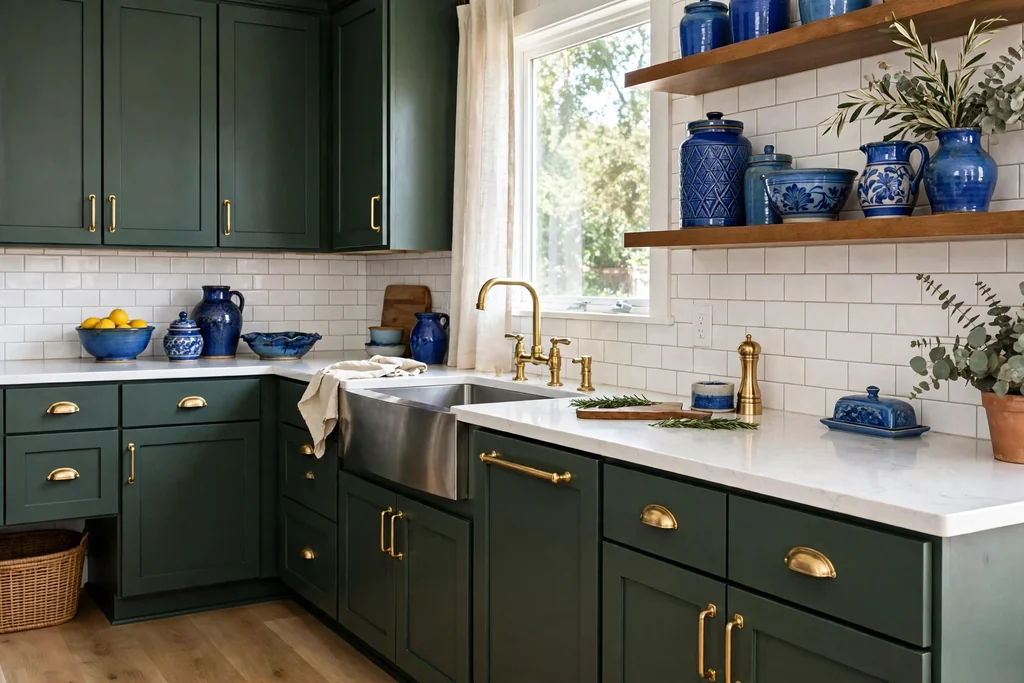
Dark green kitchen cabinets, in a deep, muted green, give a kitchen a Dutch farmhouse base that pairs well with white walls, brass handles, and blue and white pottery. The dark cabinets ground the room, while white counters and open shelves keep it bright, and the green reads as traditional without feeling cold. This suits a kitchen with good daylight, where dark cabinets still feel lively rather than gloomy.
Paint cabinets in a finish made for kitchen use, and test the green on one door first, since dark colors shift a lot with light. Keep walls and counters pale, and add brass or wood handles for warmth, so the green does not feel flat. Clean cabinet fronts with a soft cloth and a gentle cleaner, since dark finishes show fingerprints and splashes.
15. Add Dutch Orange in Small, Warm Doses
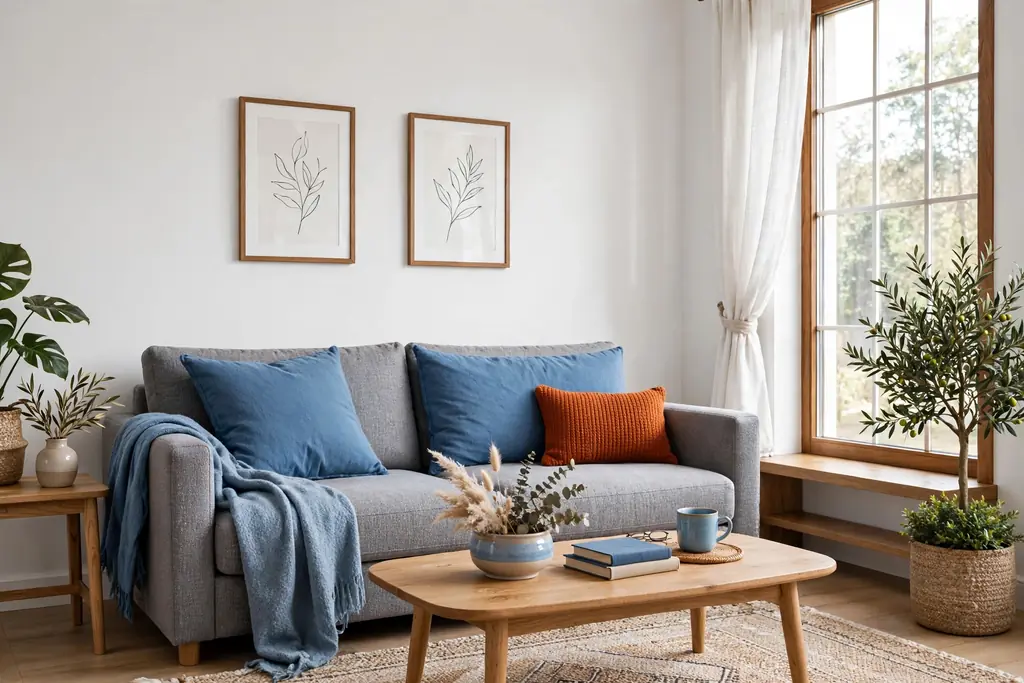
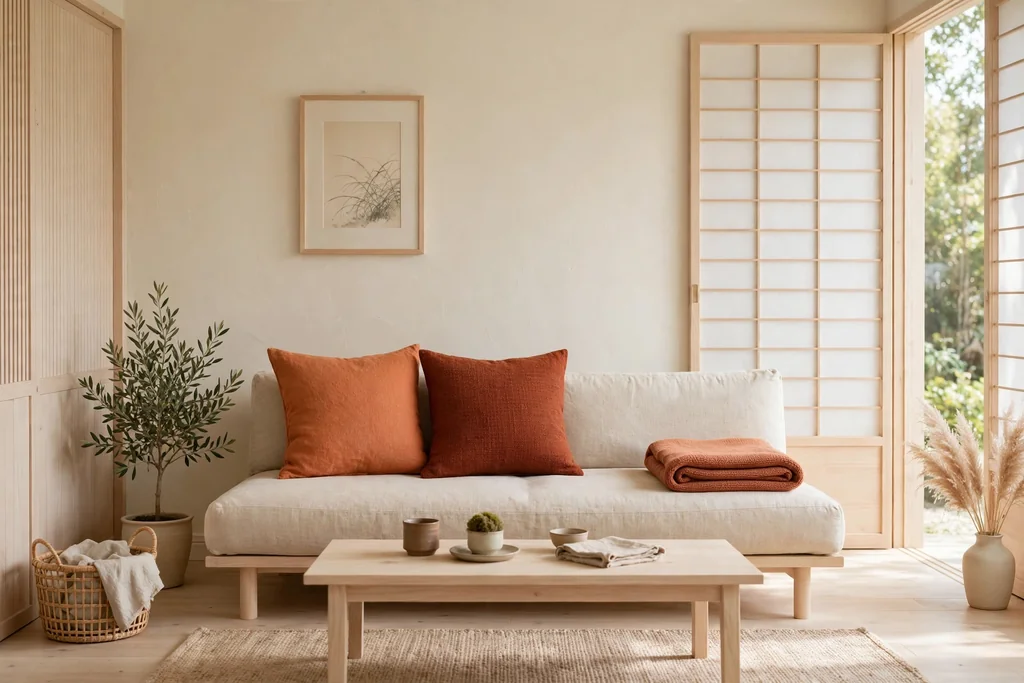
Dutch orange, used in small doses, adds a warm, lively note to a white and blue Dutch room without taking over the palette. Orange appears in one cushion, one vase of tulips, one framed print, or one throw, while white, blue, and wood carry the rest of the room. This suits a living room or bedroom that feels too cool, where one warm color can lift the whole space.
Repeat the orange at least twice, for example in a cushion and a small vase, so it looks planned rather than random, and keep the orange muted, such as burnt orange or terracotta, rather than bright neon. If the room starts to feel loud, remove one orange piece, since a single strong accent often does more work than three. Keep orange out of large surfaces, such as walls or sofas, so the Dutch palette stays calm.
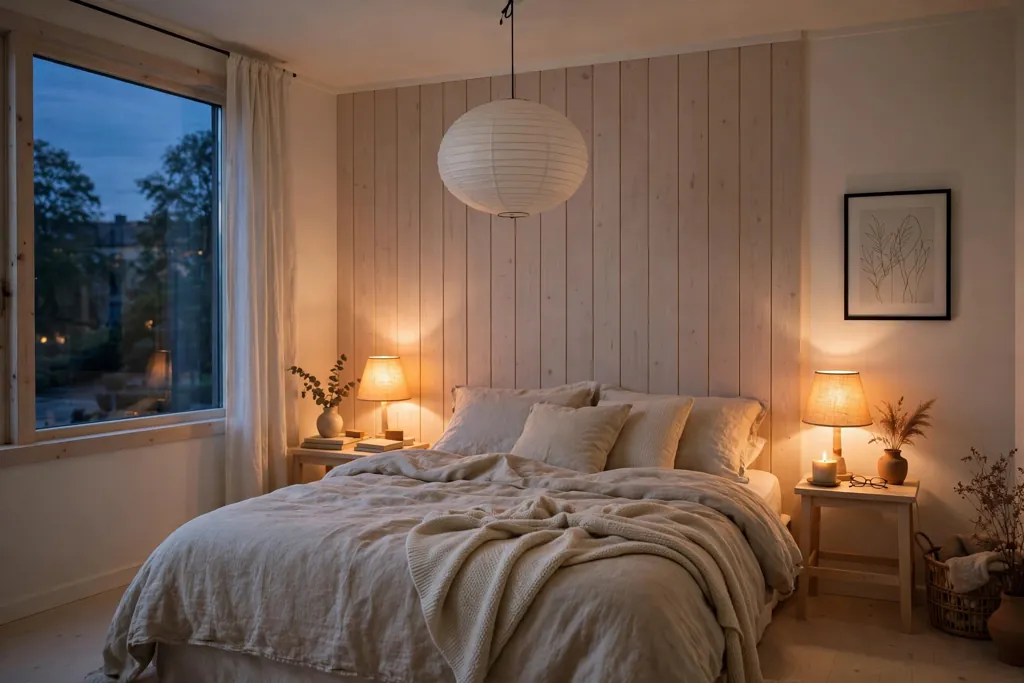
16. Build a Gezelligheid Reading Corner by the Window
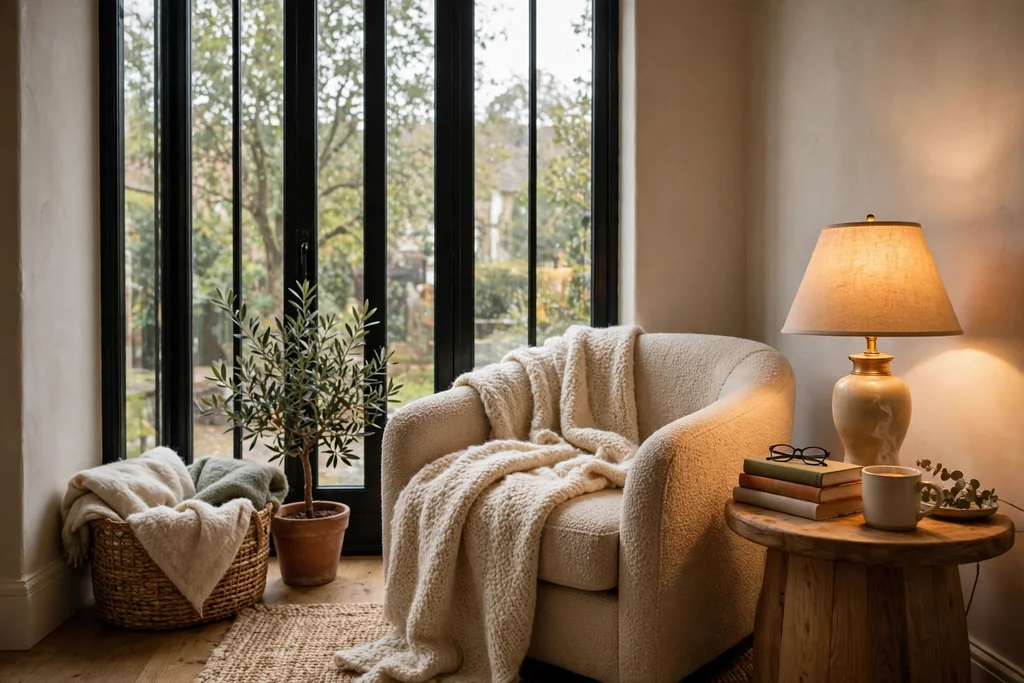
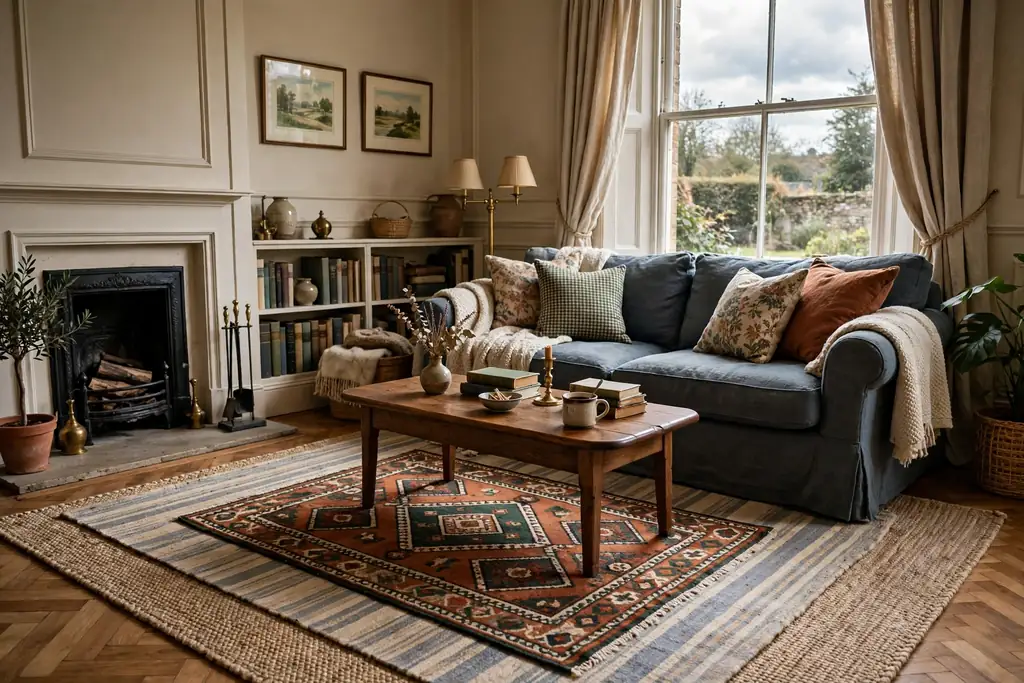
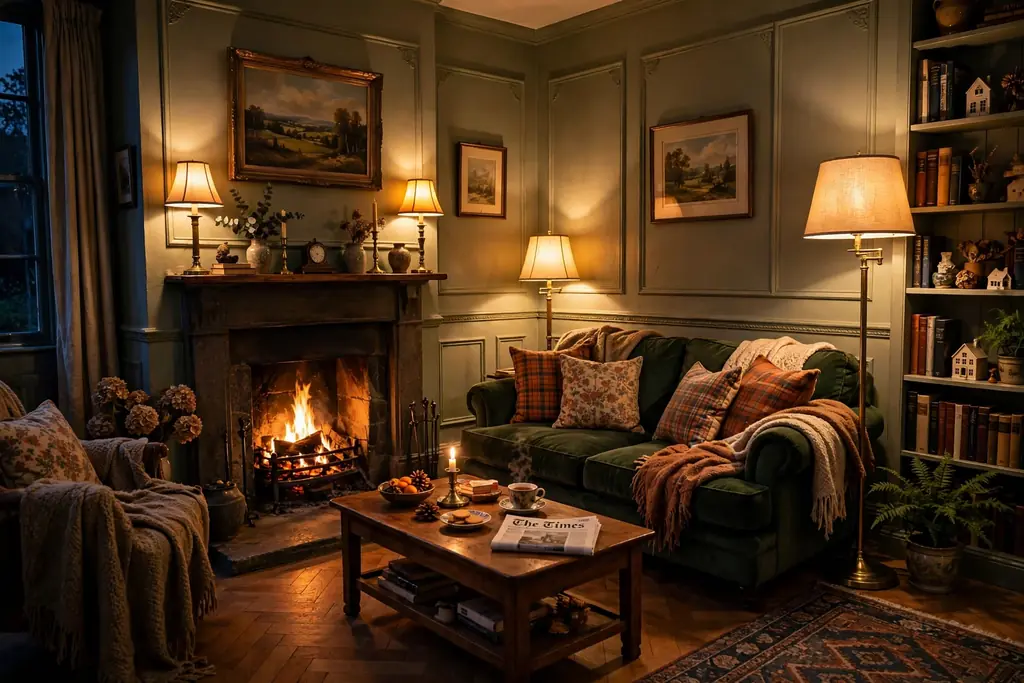
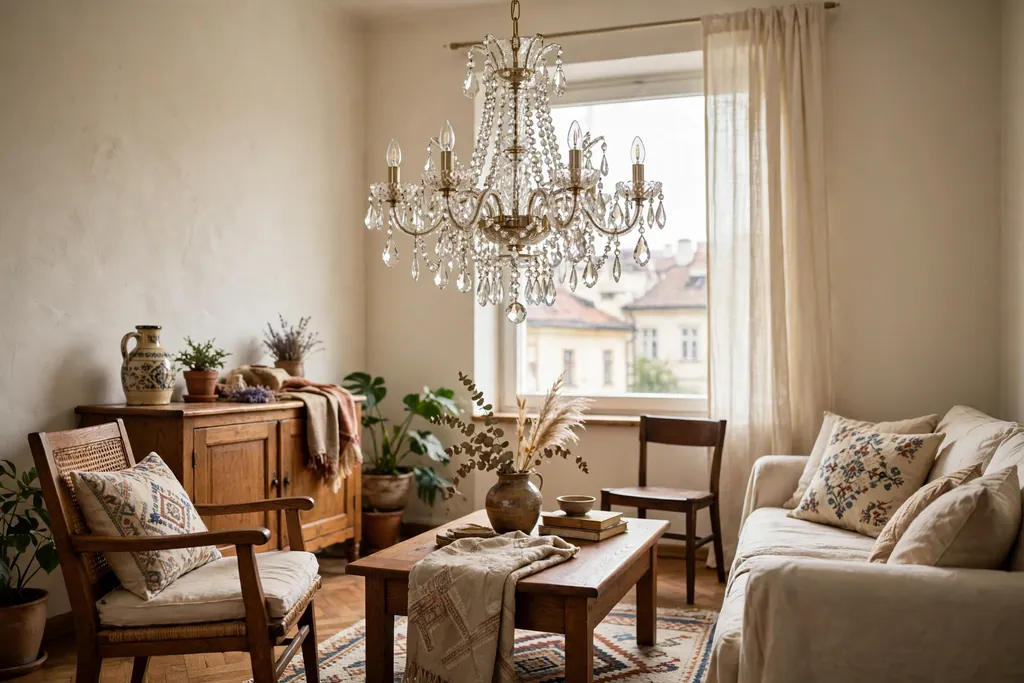
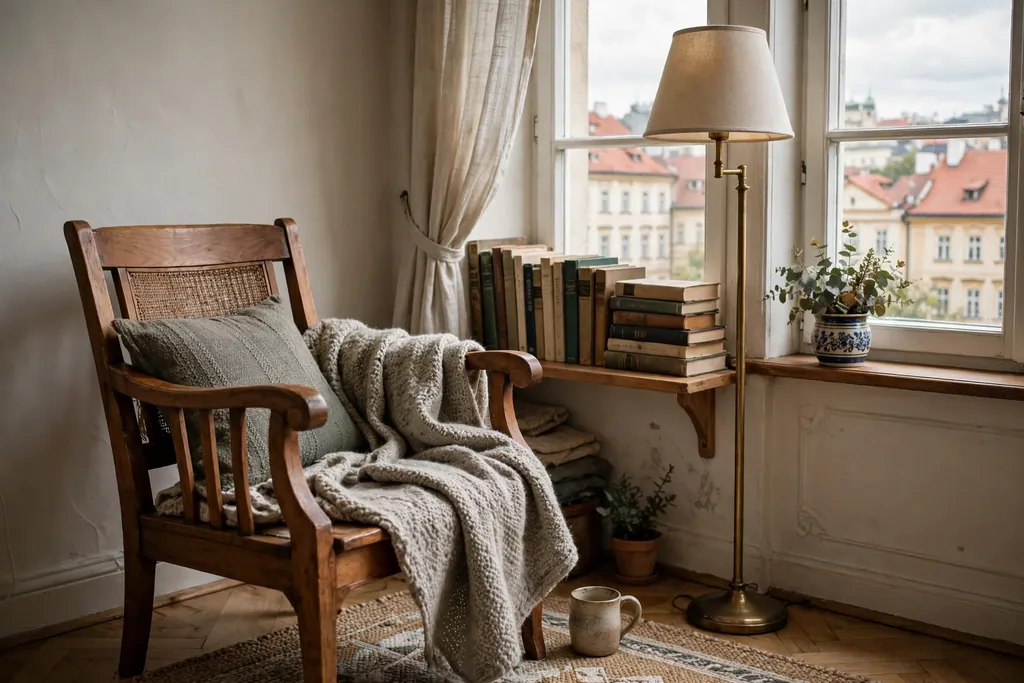
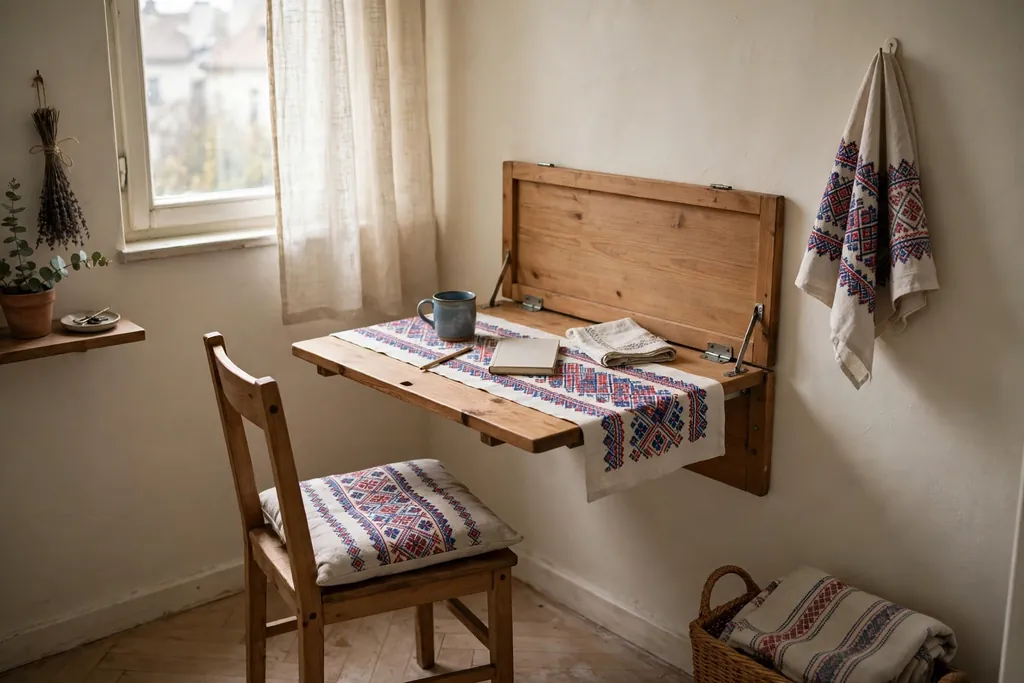
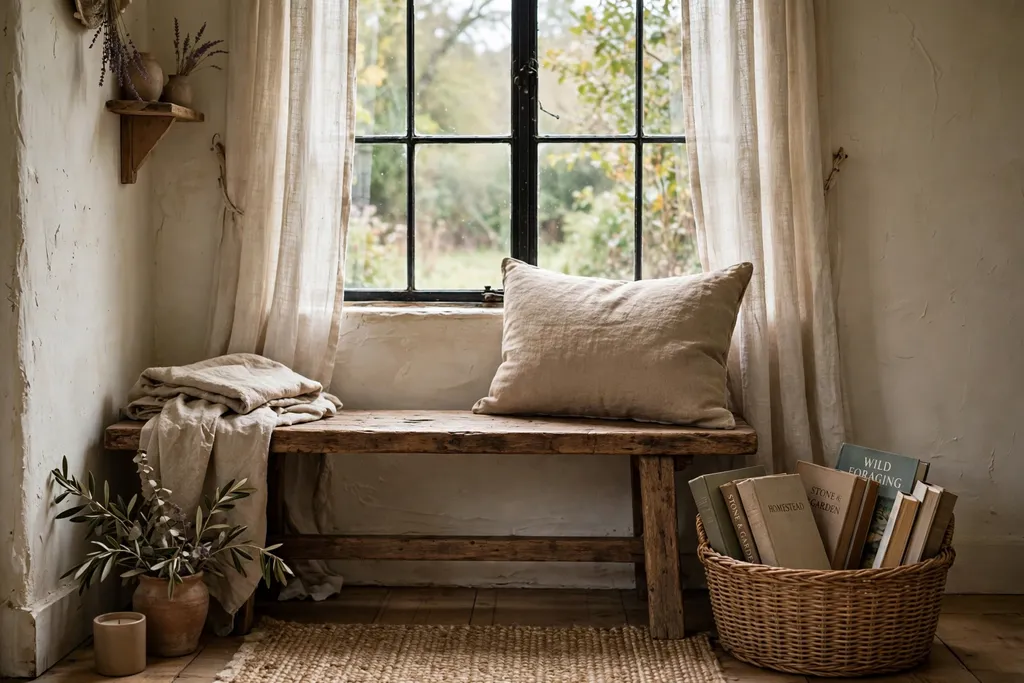
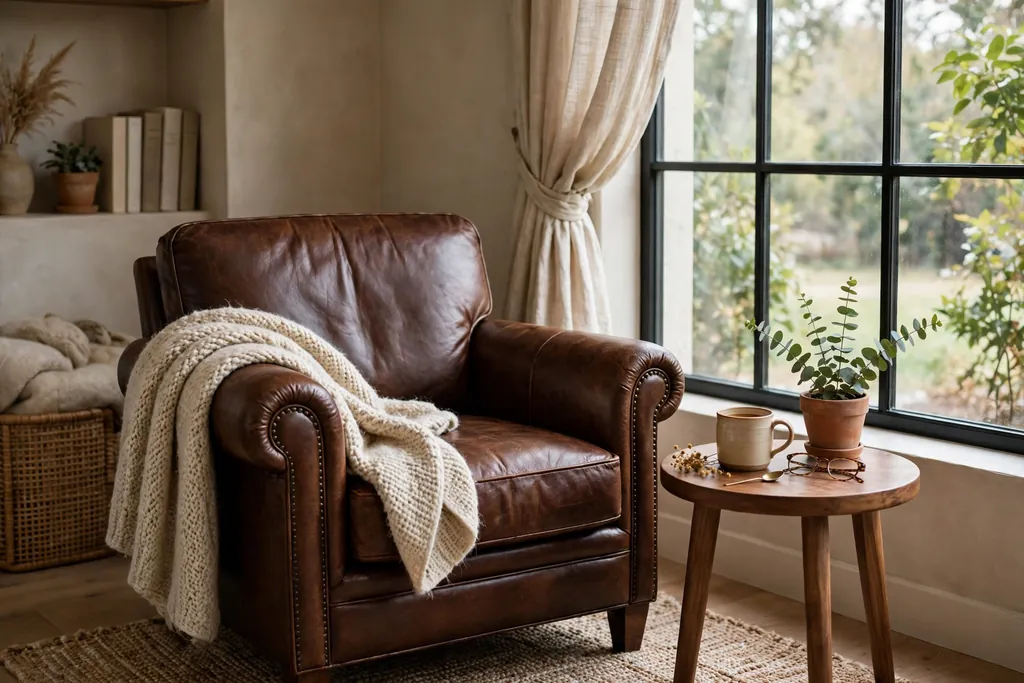
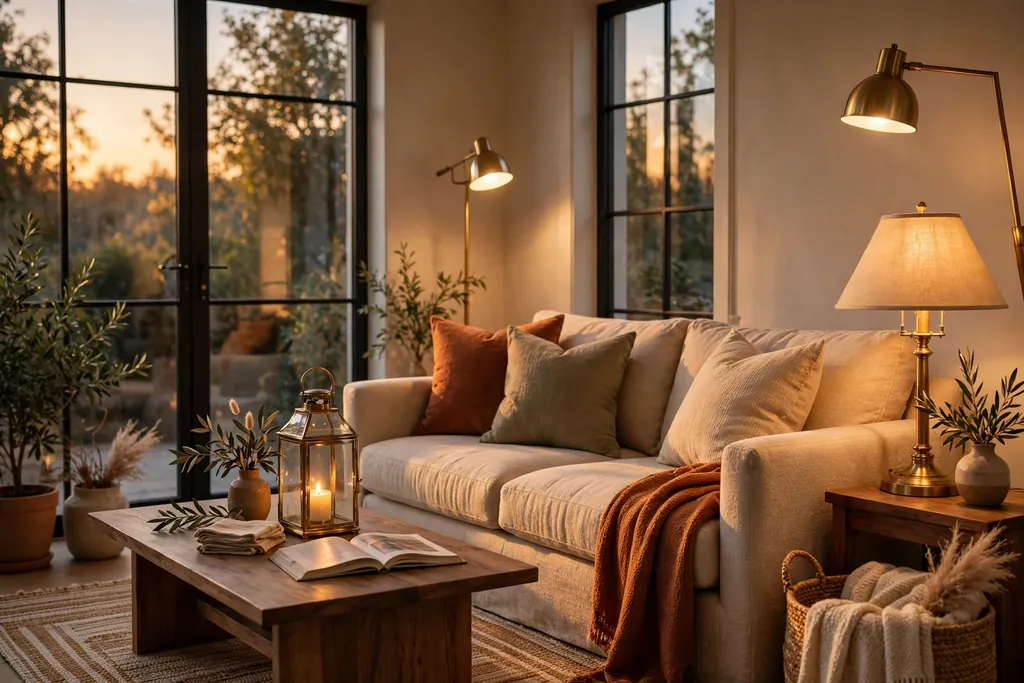
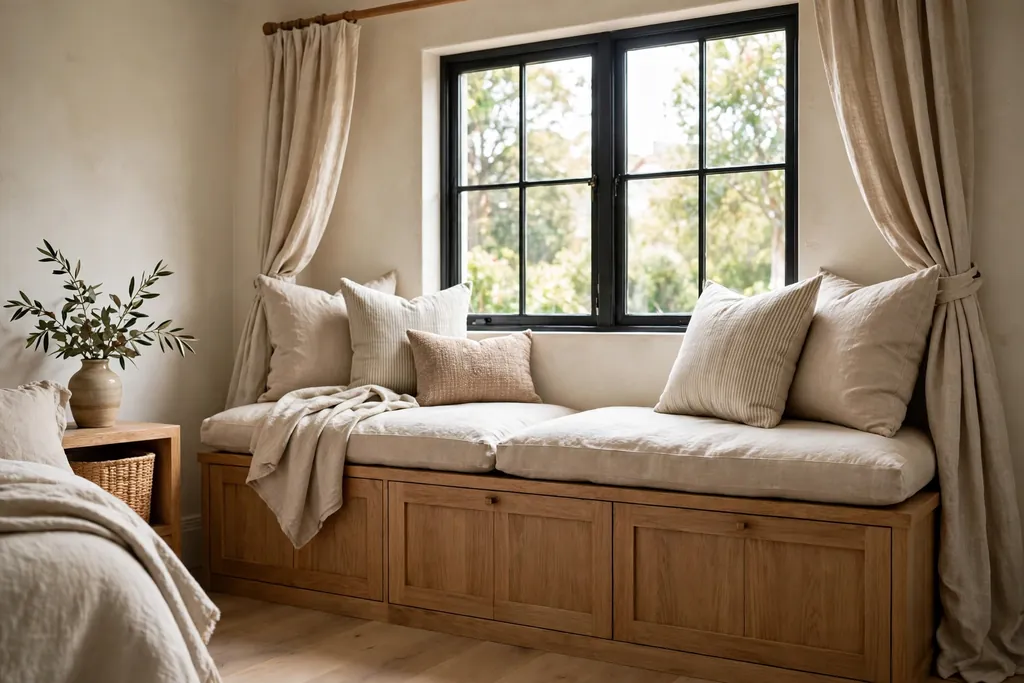
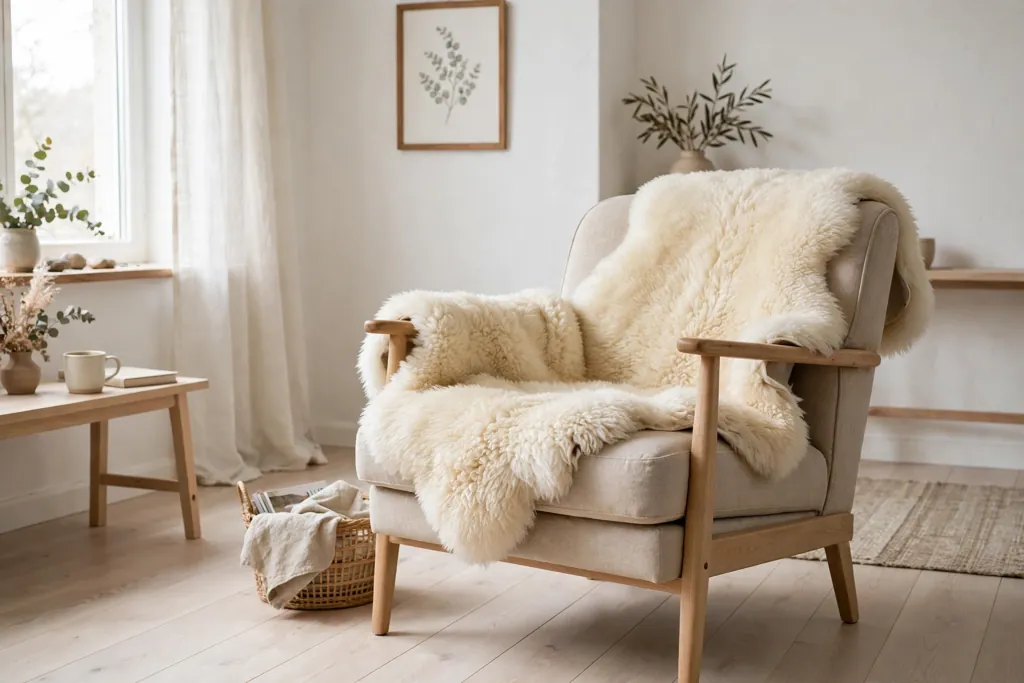
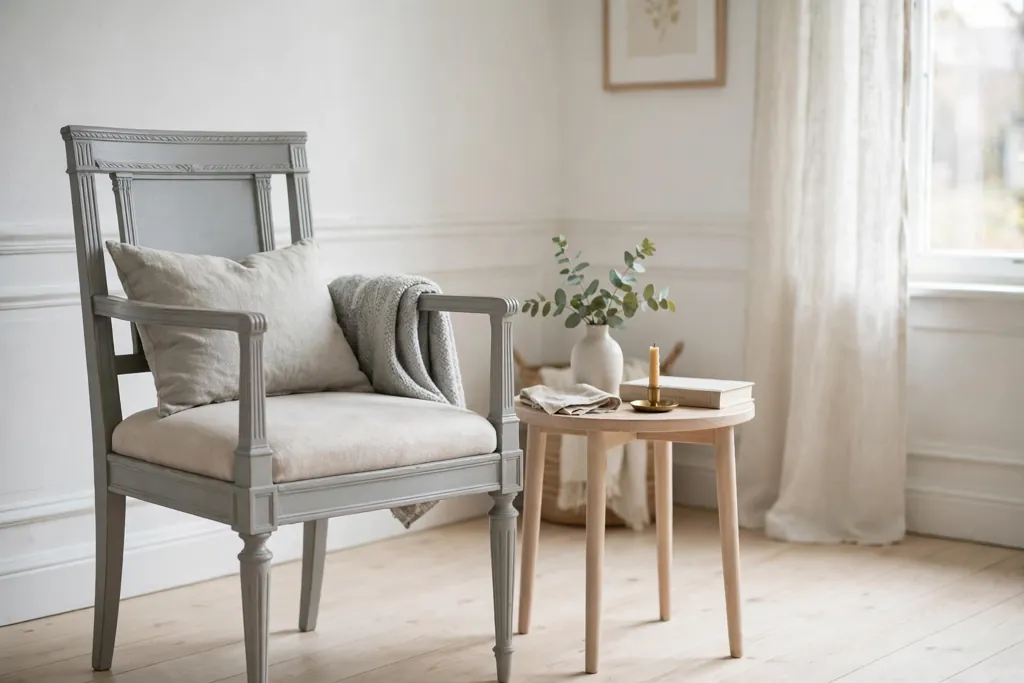
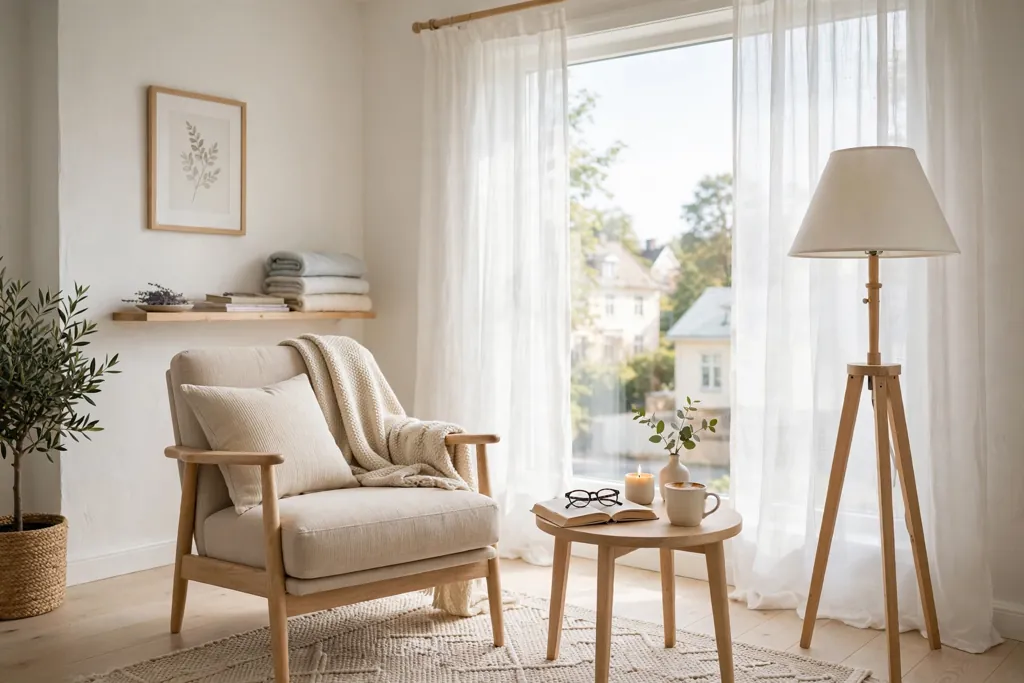
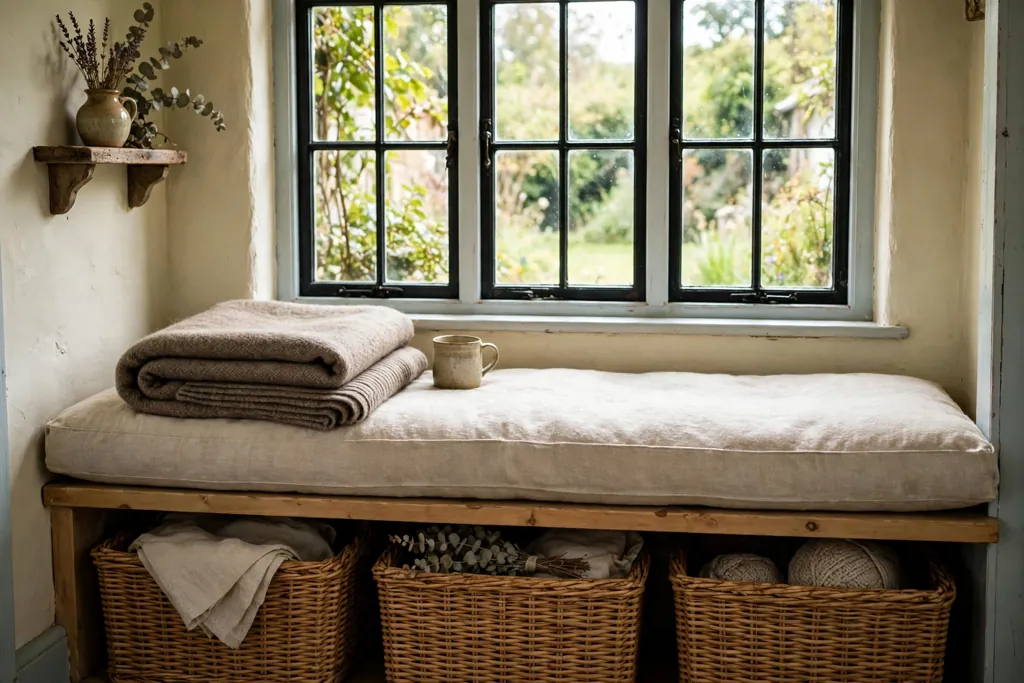
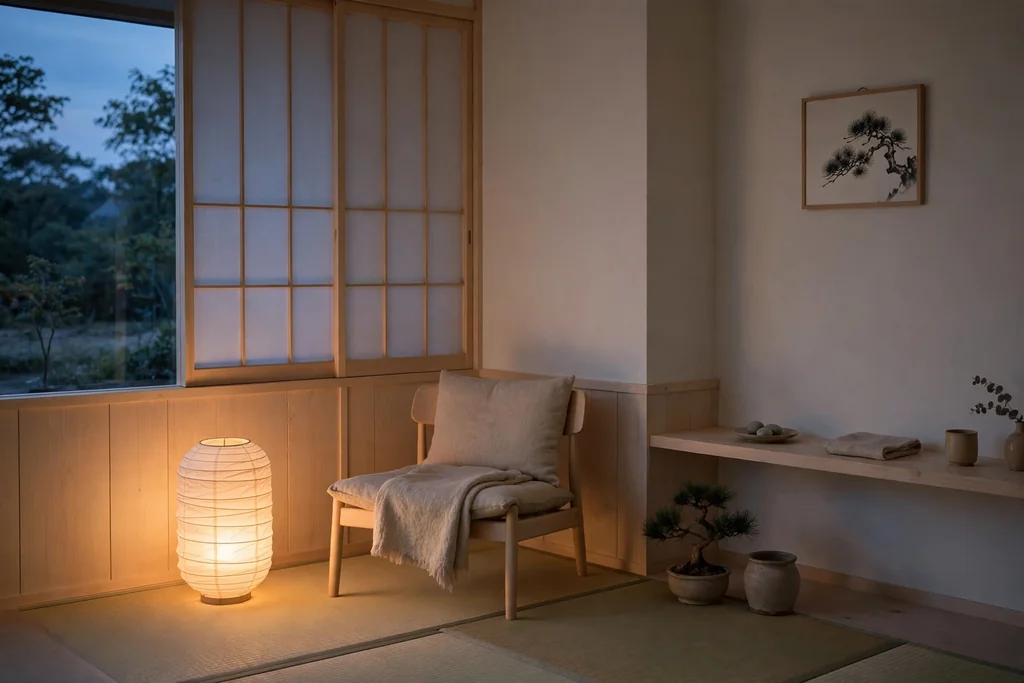
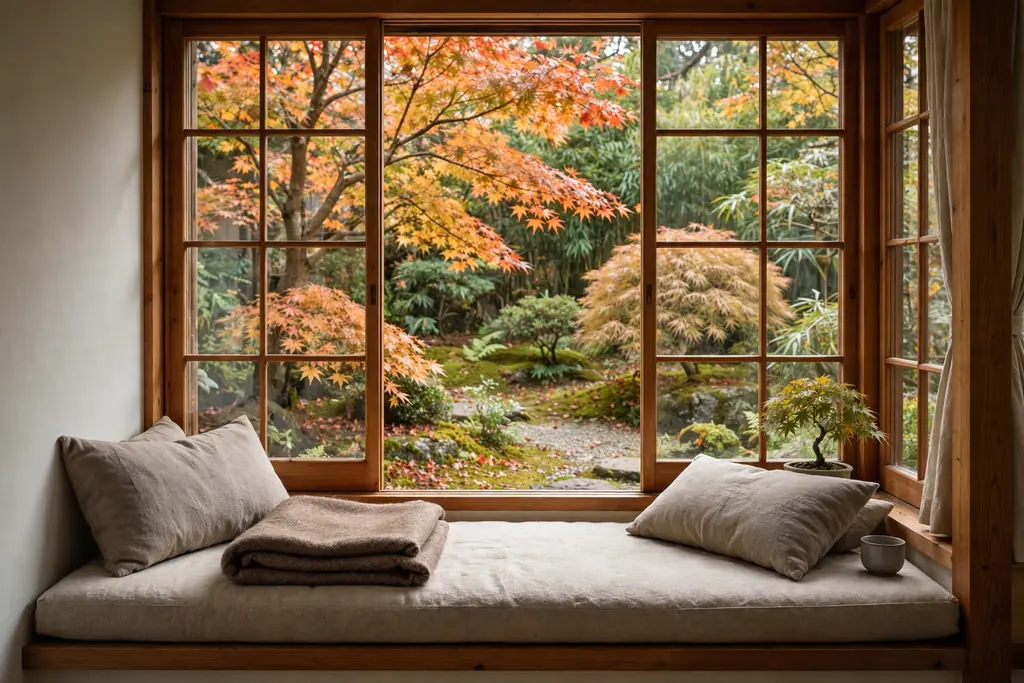
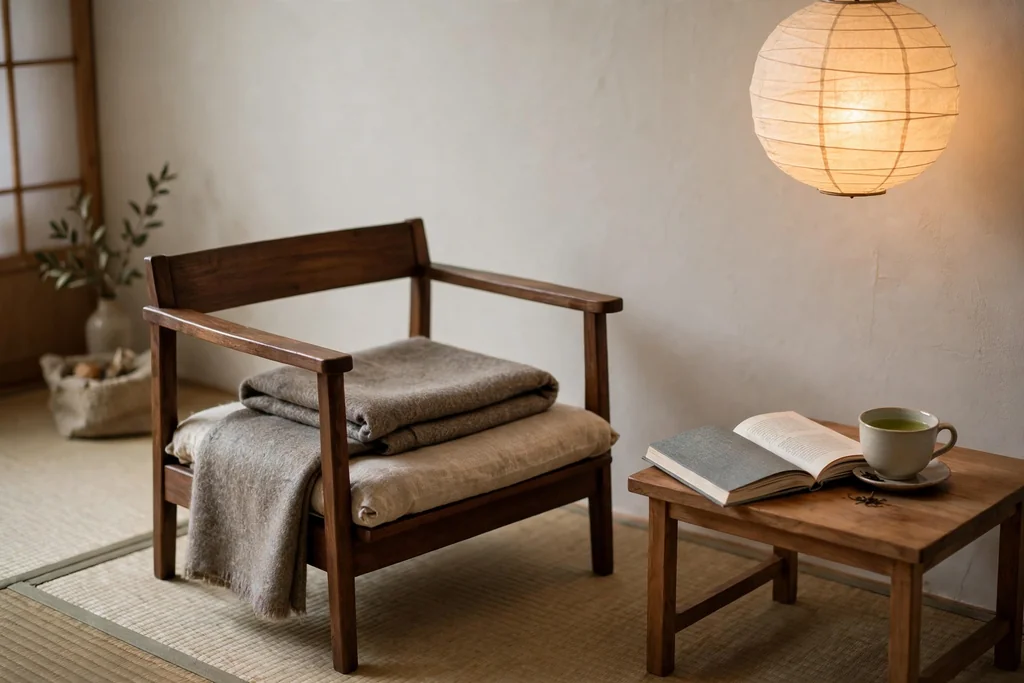
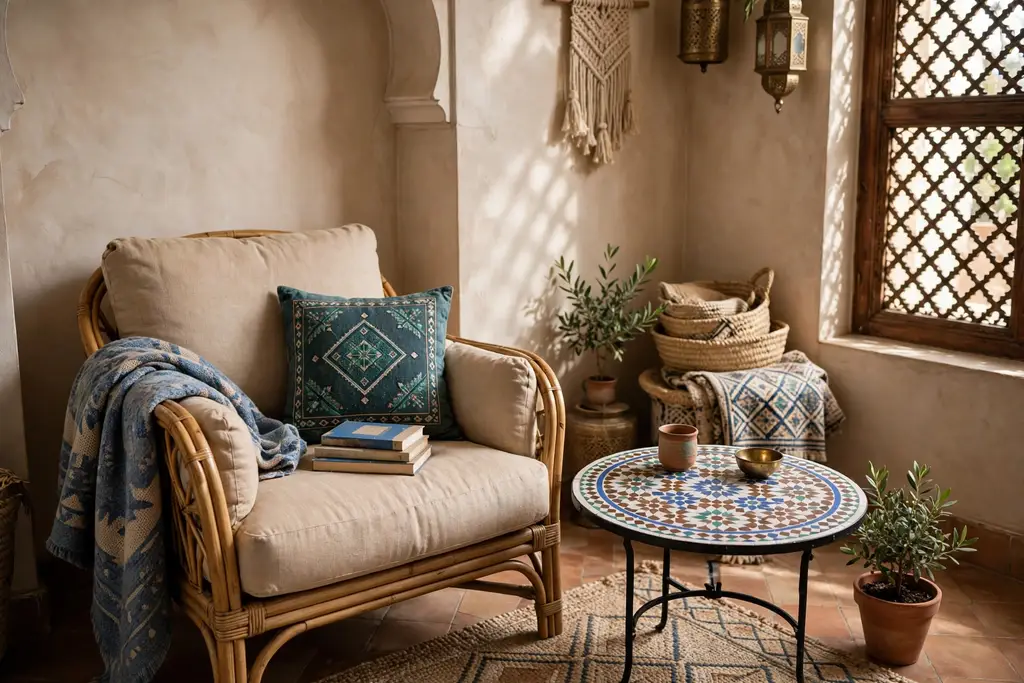
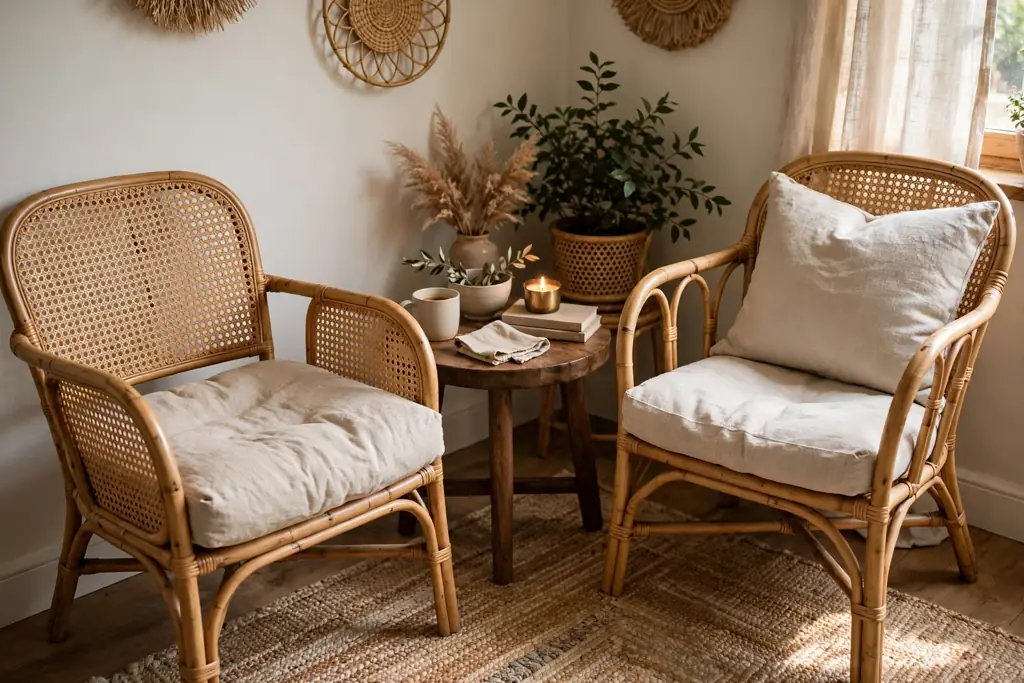
A gezelligheid reading corner by the window, with a comfortable chair, a wool throw, a small side table, and warm lamplight, gives a Dutch home its most sociable spot. The corner suits slow evenings, coffee with a friend, or a quiet hour with a book, and it uses the tall window light that Dutch rooms are known for. This suits a living room corner, a bedroom corner, or a bay window, where a chair can sit close to daylight.
Place the chair at an angle to the window, so light falls over a book without glare, and add a small table for a cup and a book. Keep the corner to one chair, one throw, and one lamp, so it stays inviting rather than crowded, and choose warm white bulbs for evening light. Add a basket beside the chair for books and a throw, so the corner stays tidy between uses.
17. Place Wooden Shoe Planters by the Entry Door
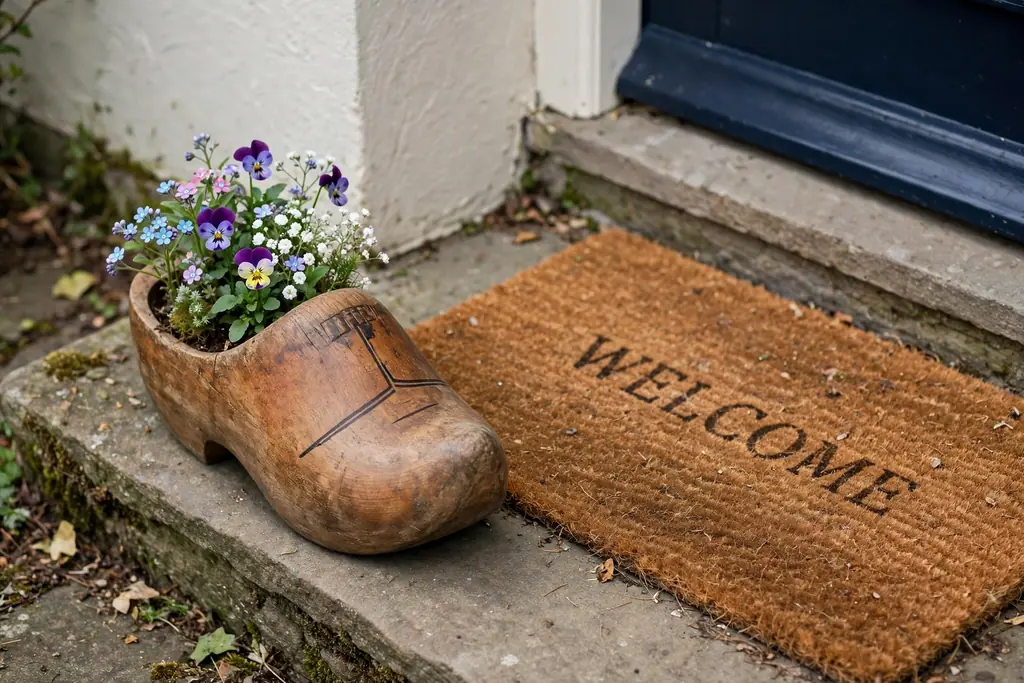
Wooden shoe planters, shaped like traditional Dutch clogs, give an entry or a porch a playful Dutch note in a small, useful dose. Used as planters for herbs, small flowers, or succulents, they suit a front step, a porch shelf, or an entry console, where a full garden would not fit. This suits a home with a porch or a bright entry, where a quirky planter can greet visitors.
Plant only in a lined planter with drainage, so wood does not rot, and keep the planter out of standing water. Choose one pair, or one single shoe, rather than a row of them, so the note stays charming rather than crowded, and pair it with a plain pot or a boot tray nearby. Water plants as advised for the species, and bring wood planters indoors in hard frost, since wet wood can crack.
18. Hang a Bike Neatly on the Entry Wall

Wall mounted bike storage gives a Dutch entry a practical feature, since cycling is part of daily Dutch life, and a bike hung well can look like part of the room. A wall hook or a vertical rack keeps the bike off the floor, frees the hallway, and suits an entry with a plain wall and a clear walkway. This suits a small home or apartment, where floor space matters and a bike would otherwise block the hall.
Fix the rack to a stud or a solid wall, and check it suits the bike weight before you hang it, since a falling bike can damage walls and floors. Keep the wall behind the bike plain, and add a small tray below for a helmet and keys, so the entry stays useful. Wipe tires before you bring a bike indoors in wet weather, and keep the walkway clear, so the hung bike does not block the door.
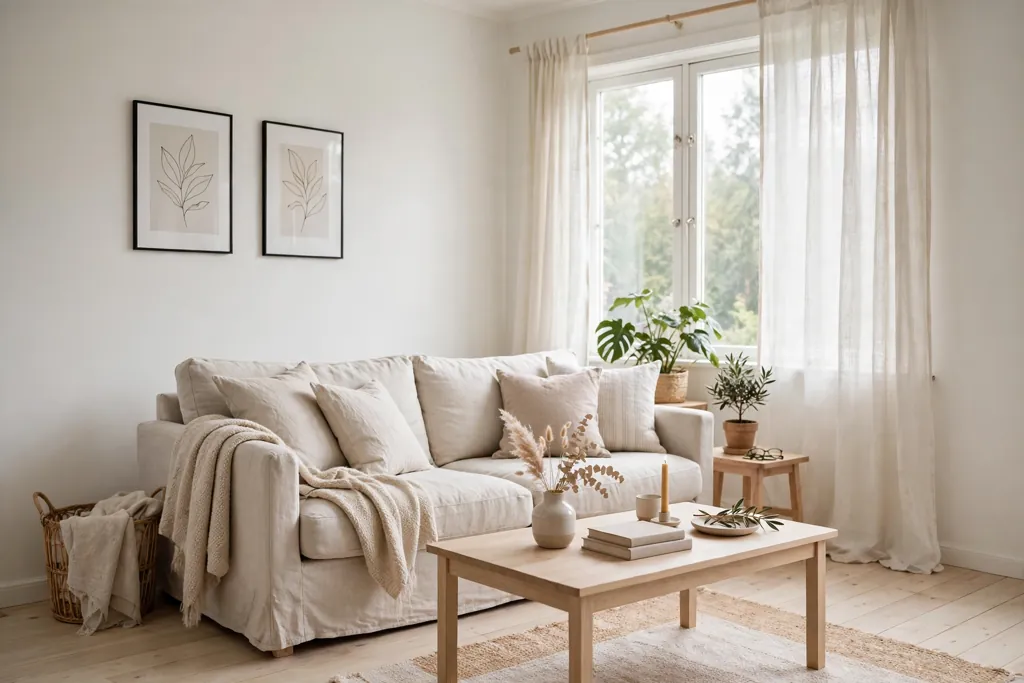
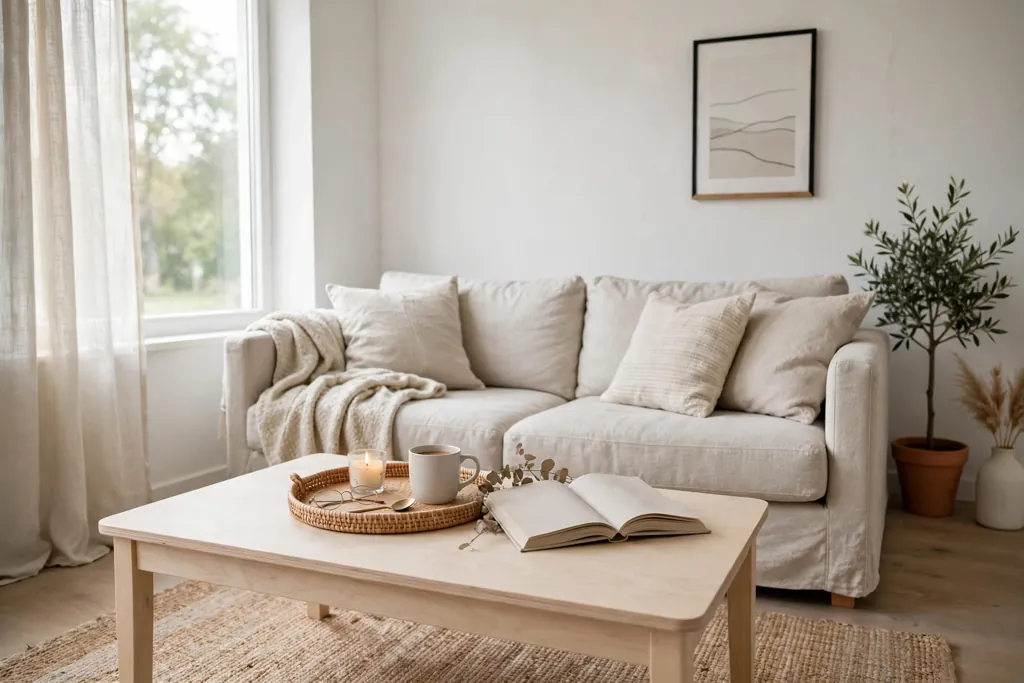
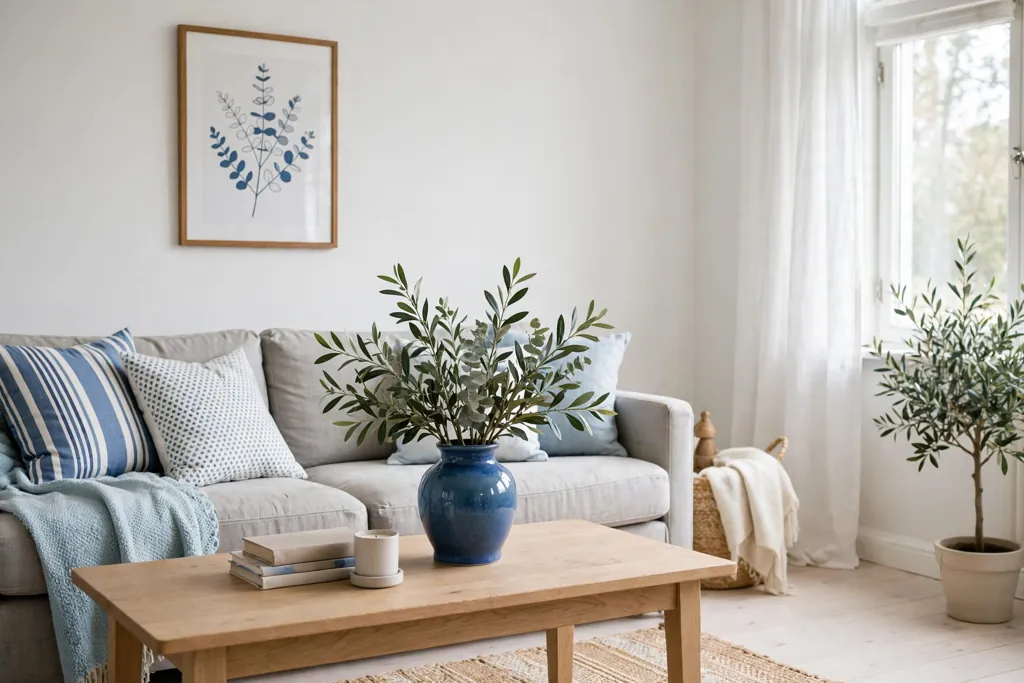
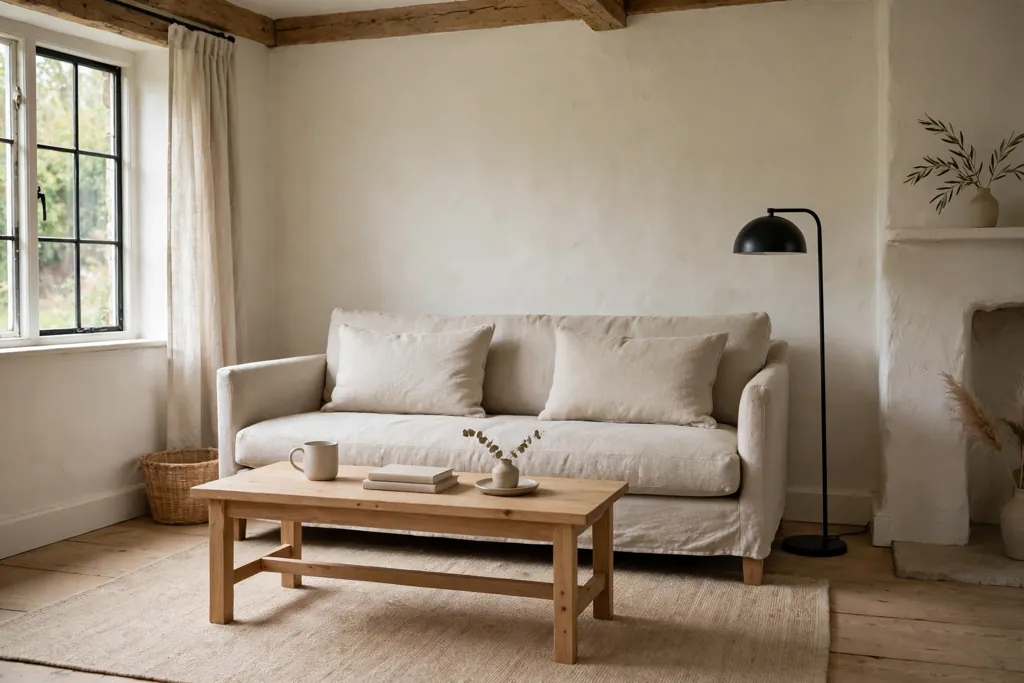
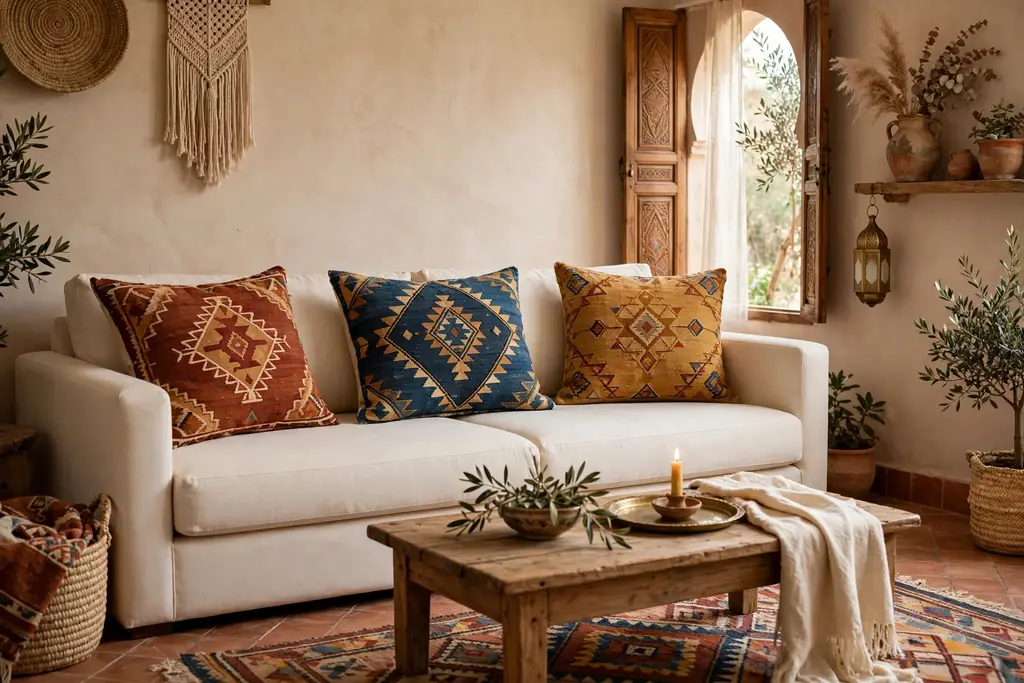
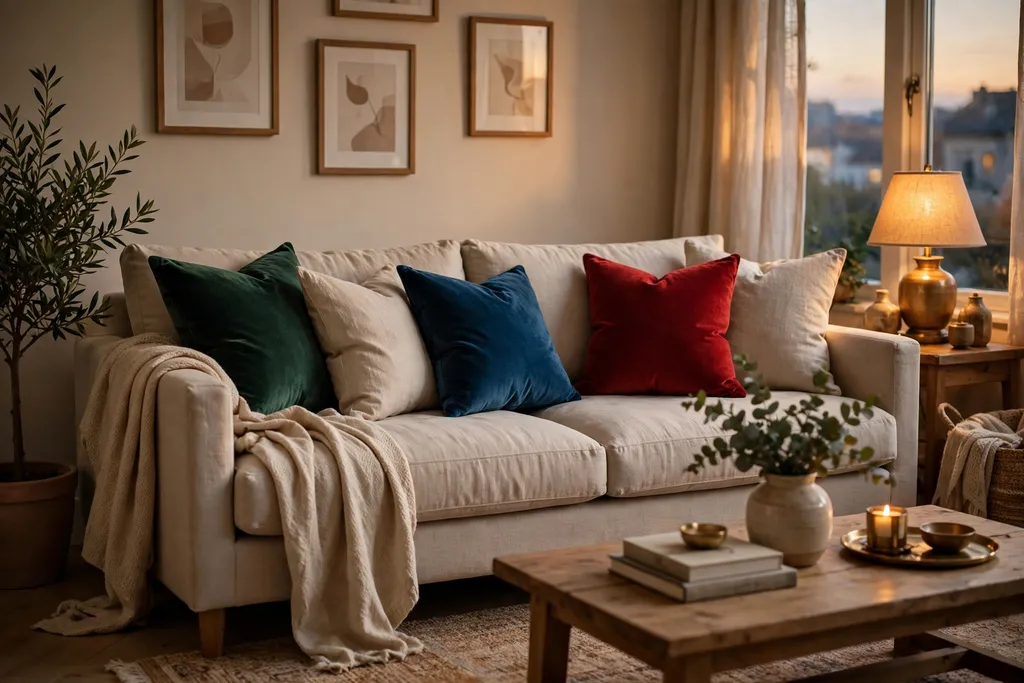
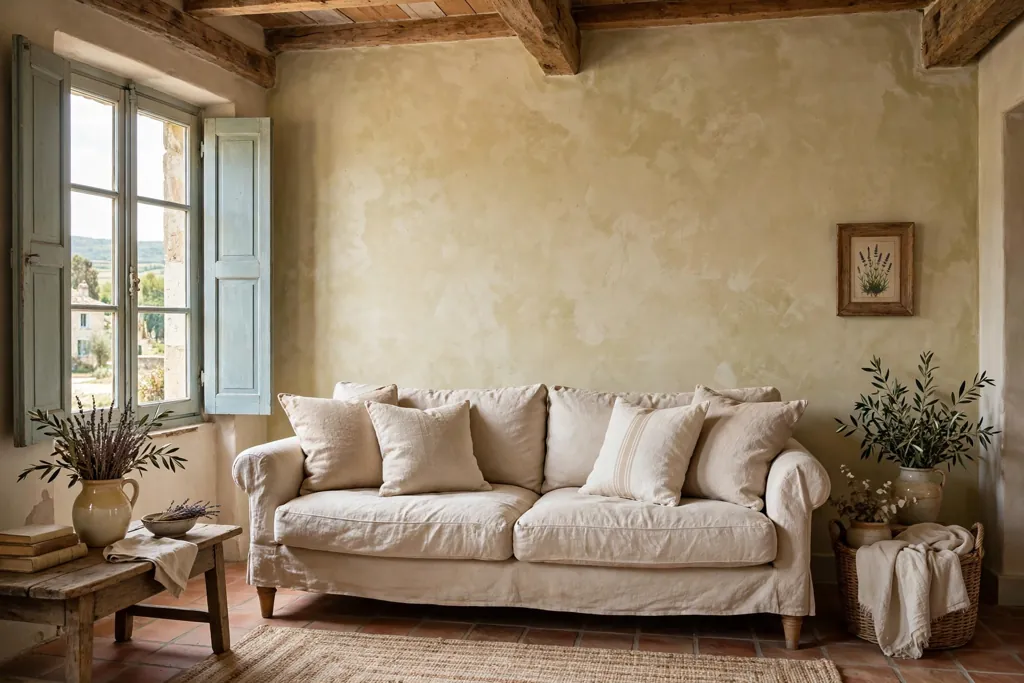
19. Dress a Sofa With Natural Linen and Blue Cushions
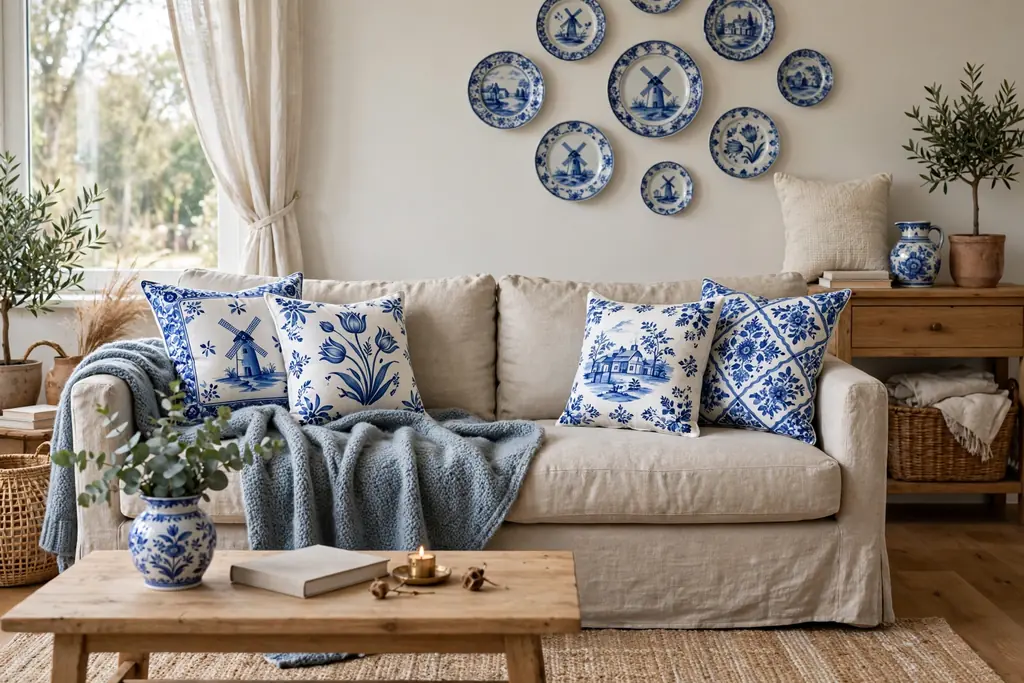
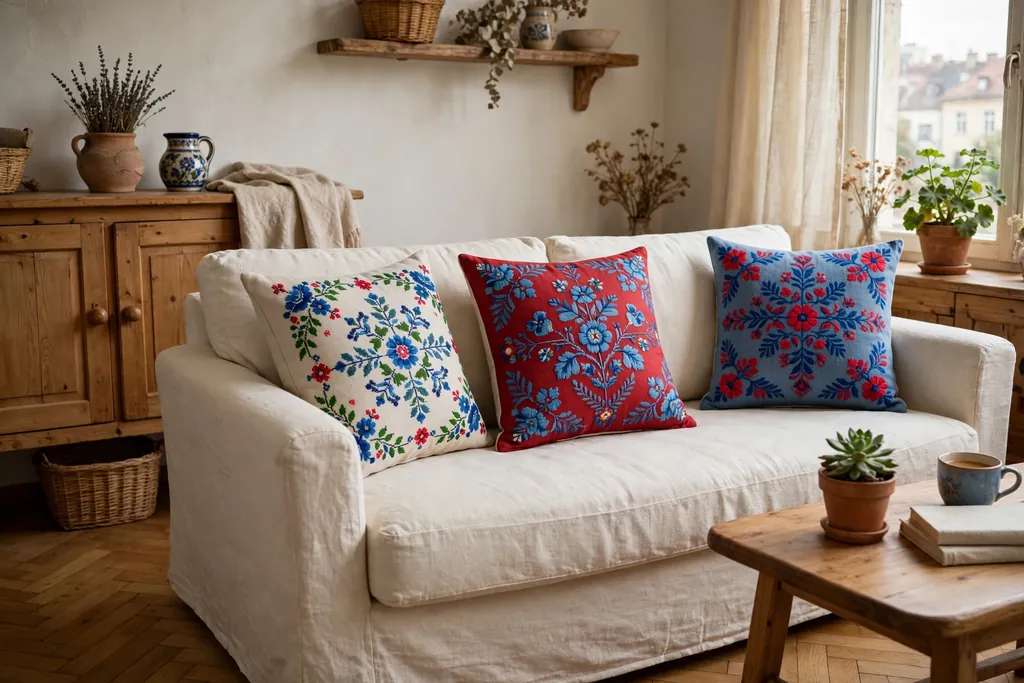
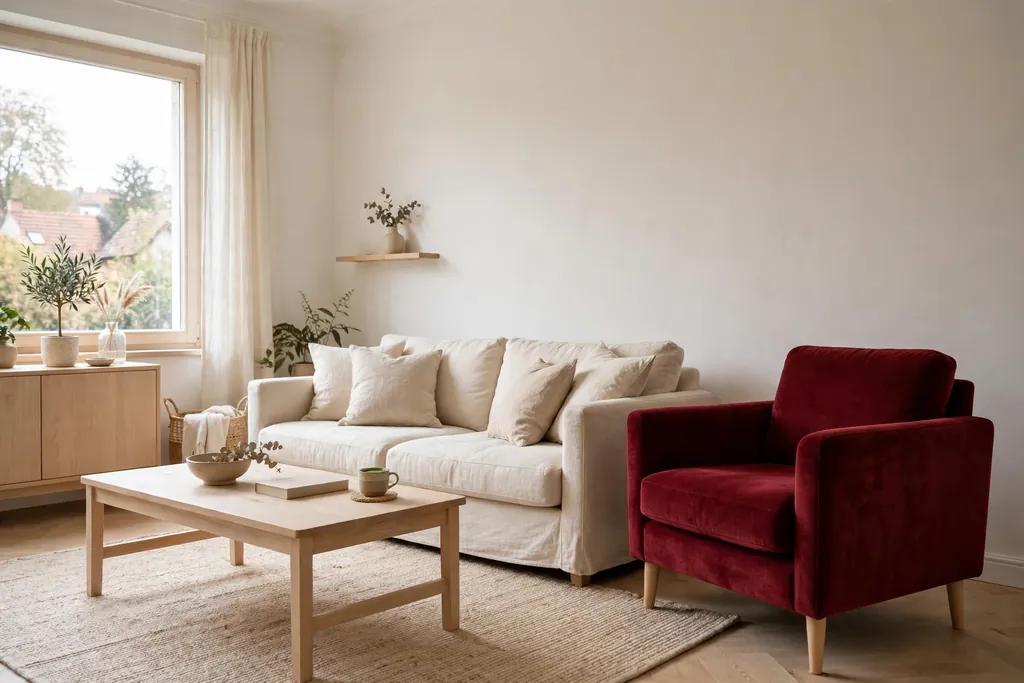
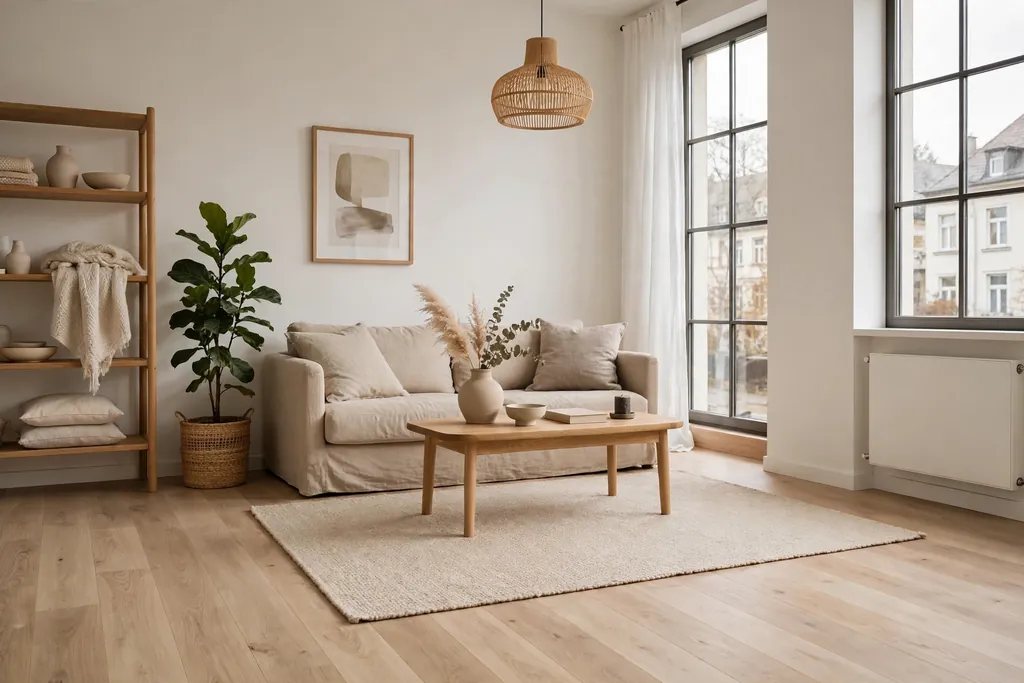
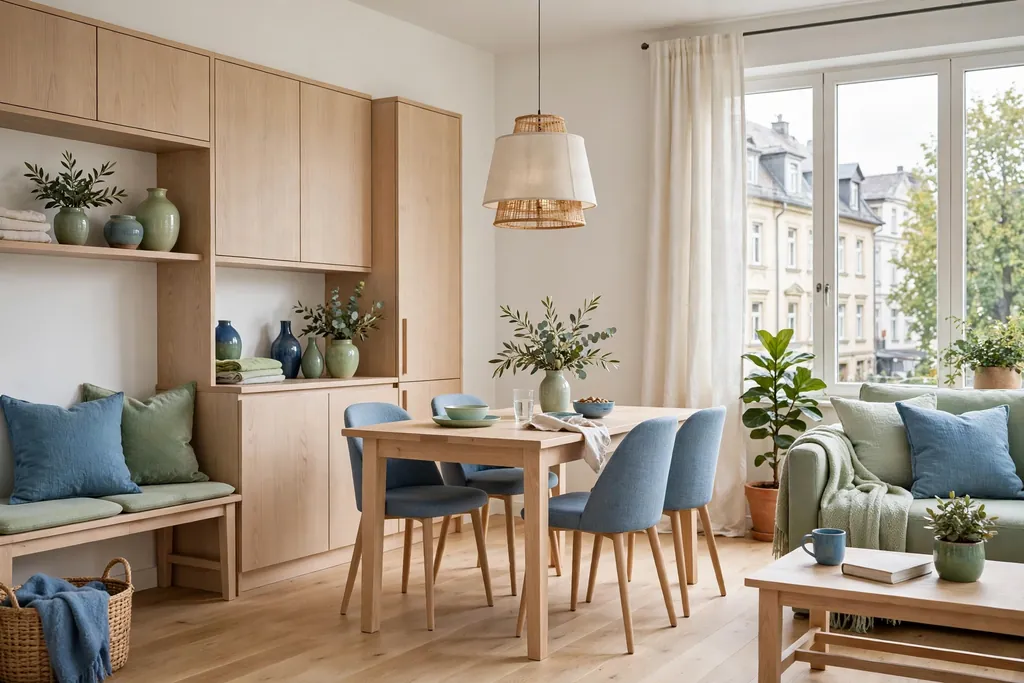
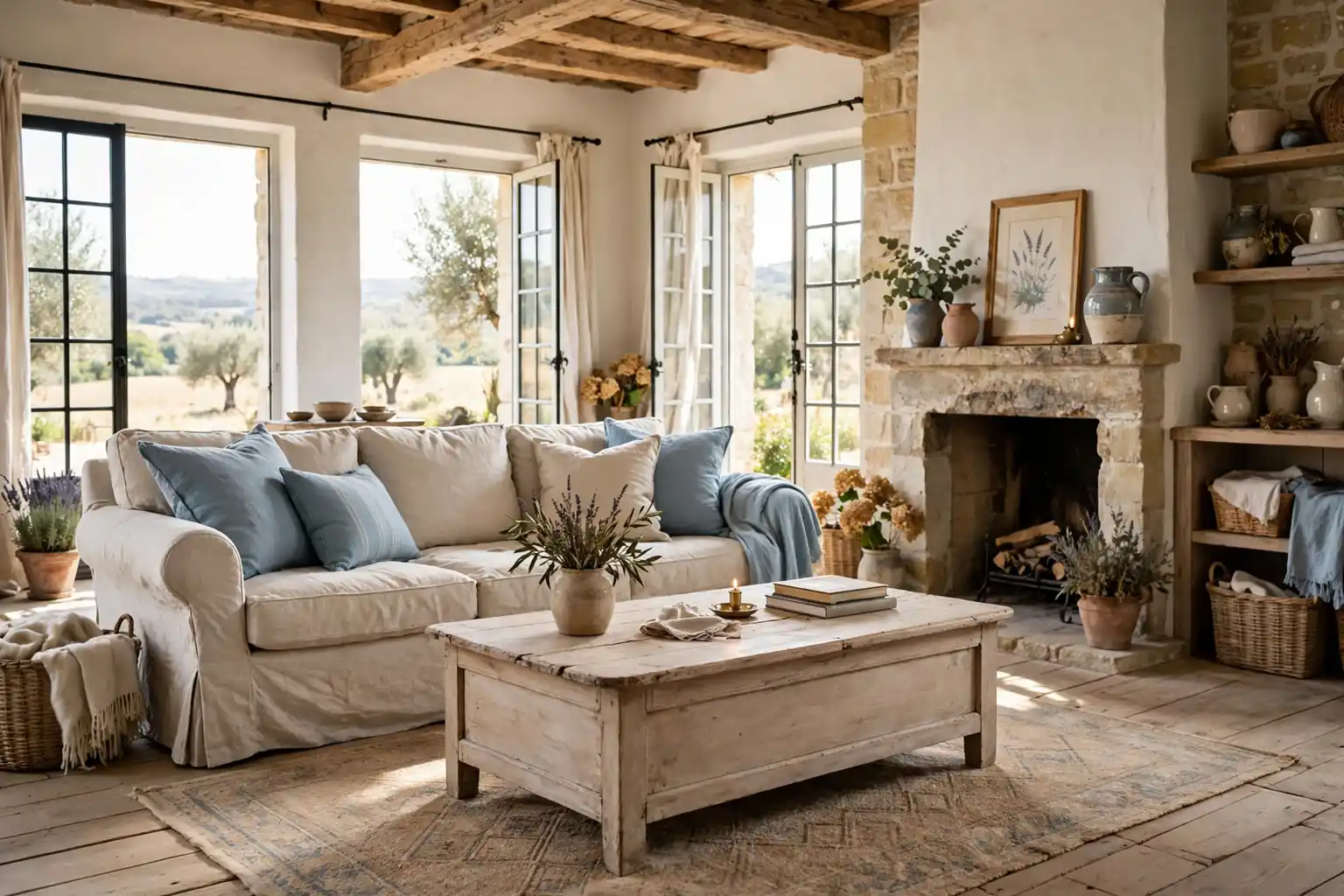
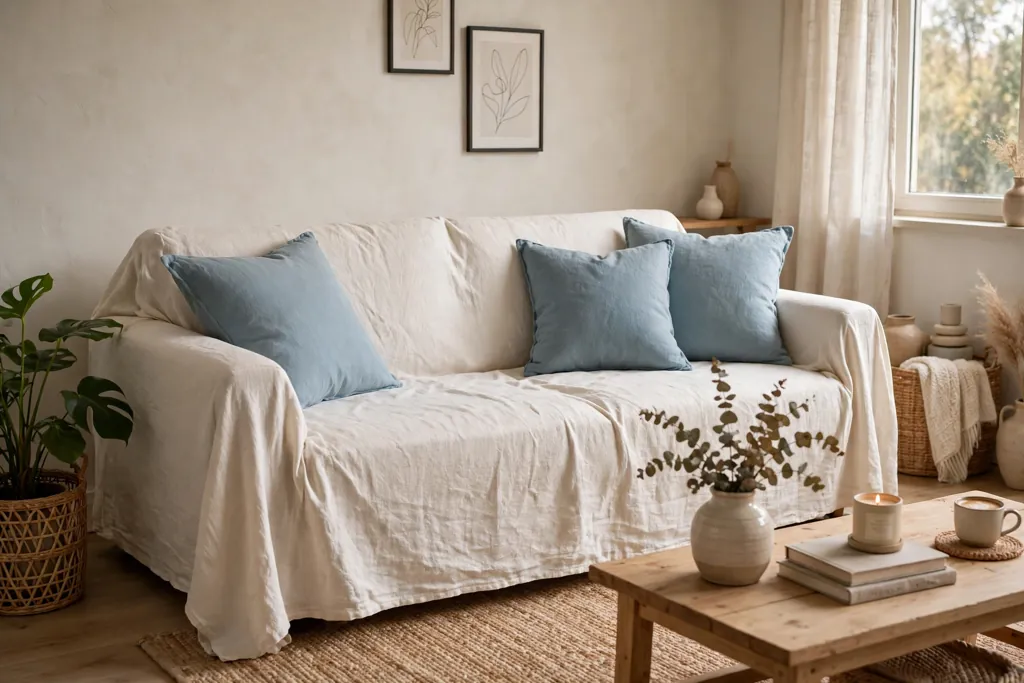
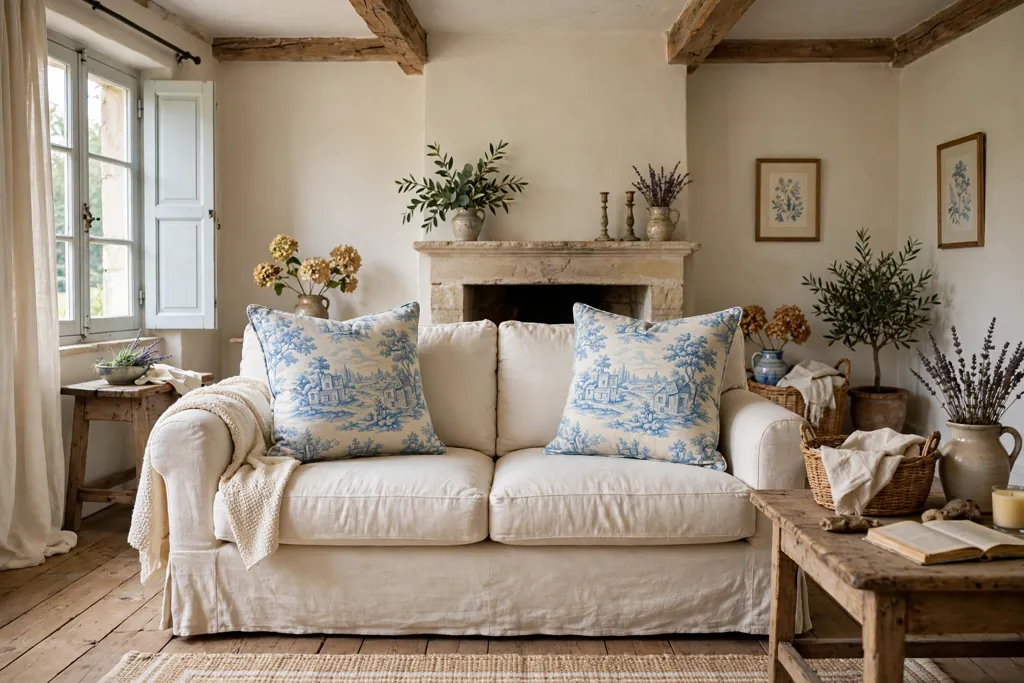
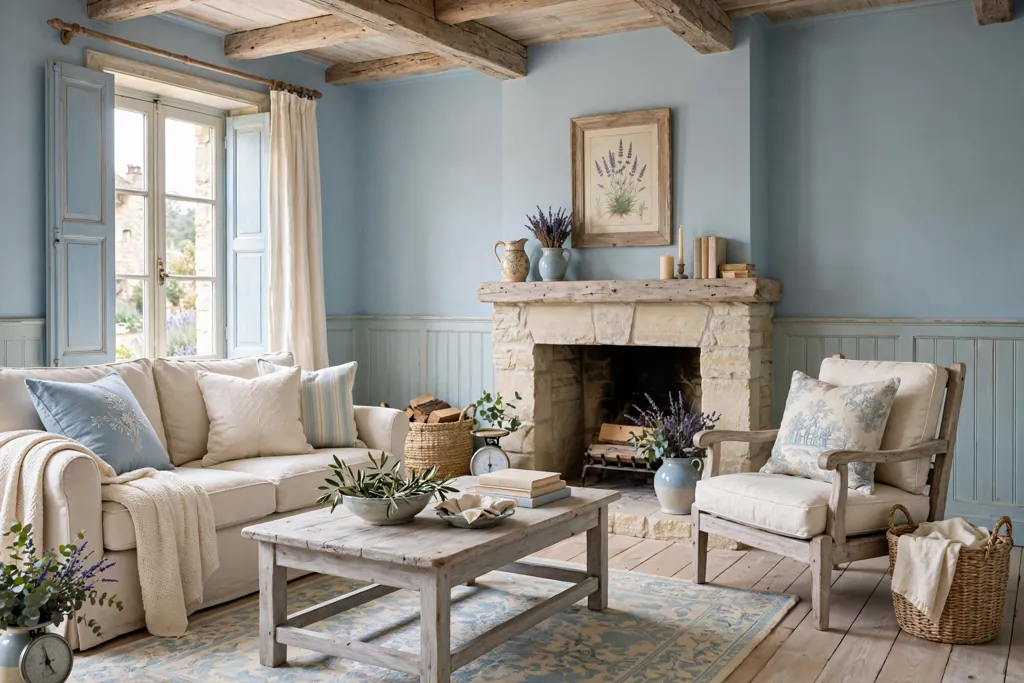
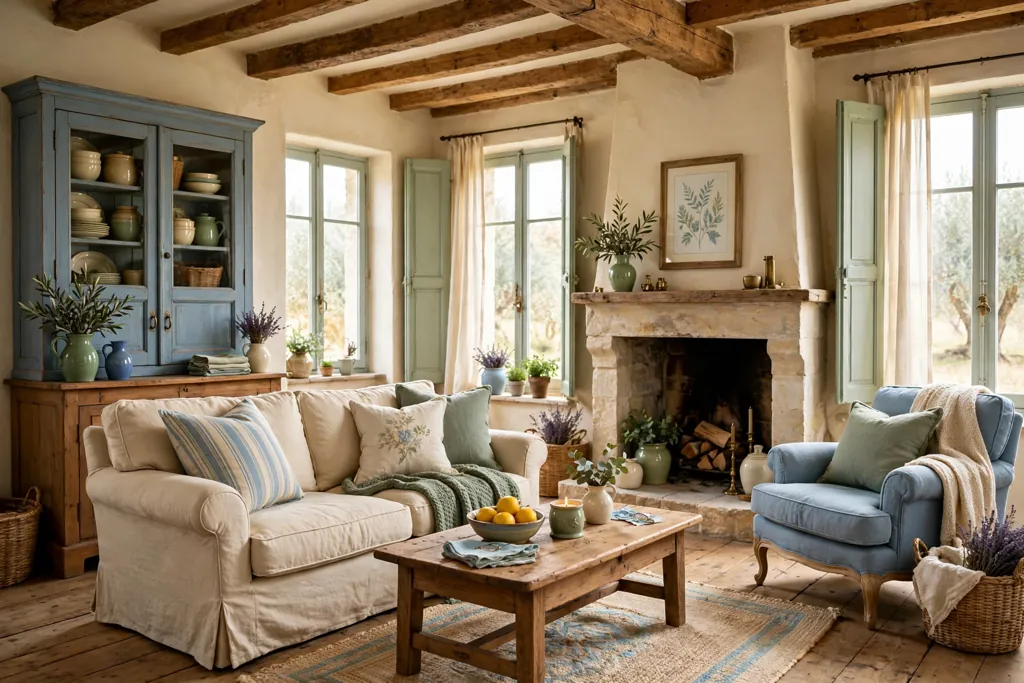
A natural linen sofa, in warm white or soft flax, dressed with Delft blue cushions, gives a Dutch living room a relaxed base with a clear color story. The linen softens dark wood and black frames, while the blue cushions link the sofa to tiles and pottery elsewhere in the home. This suits a living room where a patterned sofa would feel too heavy, and where plain linen needs one strong accent.
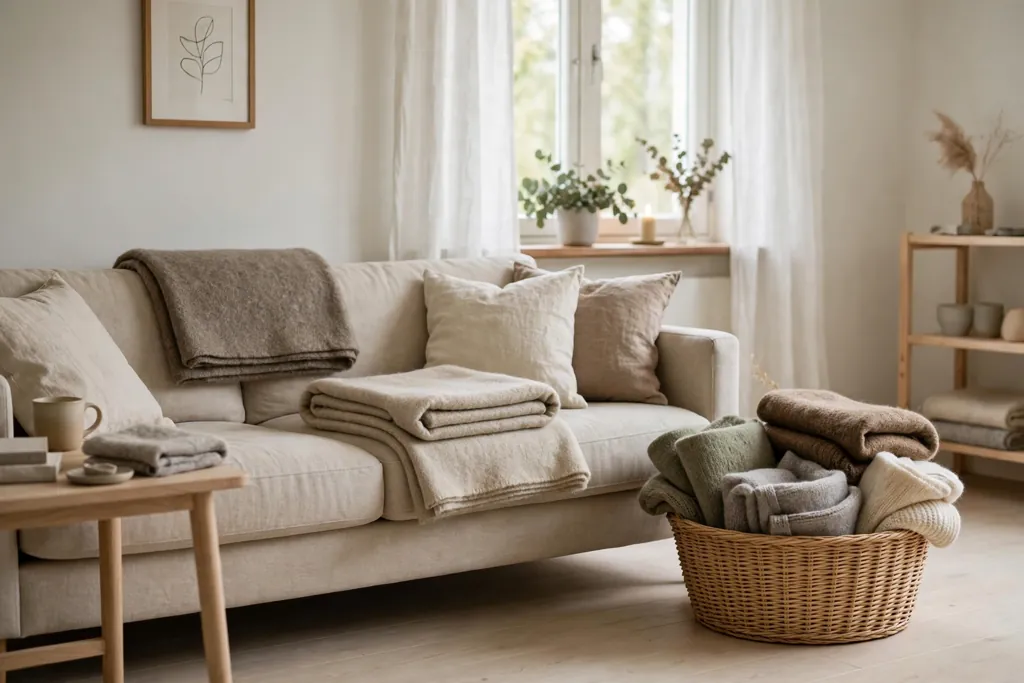
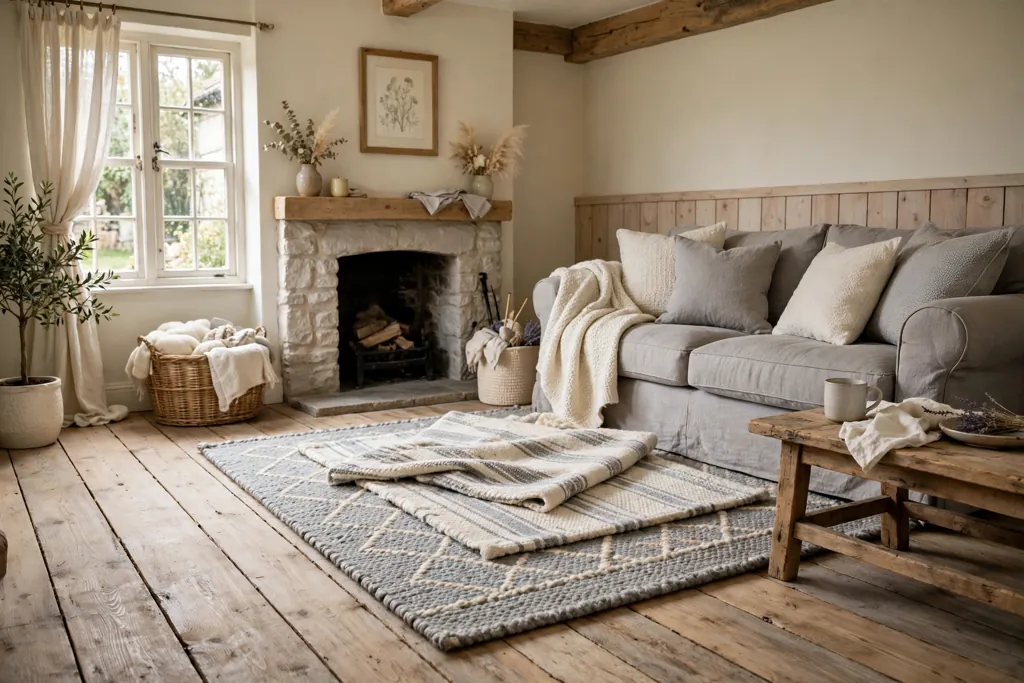
Keep cushions to two patterns at most, such as one Delft style print and one plain blue, and keep the rest plain in cream or flax. Choose removable cushion covers, since light linen shows marks, and keep the sofa out of strong direct sun, so the fabric fades evenly, if at all. Add a wool throw in cream or soft blue for cooler evenings, and fold it over one arm, so the sofa looks ready rather than staged.
20. Grow a Windowsill Herb Garden in the Kitchen
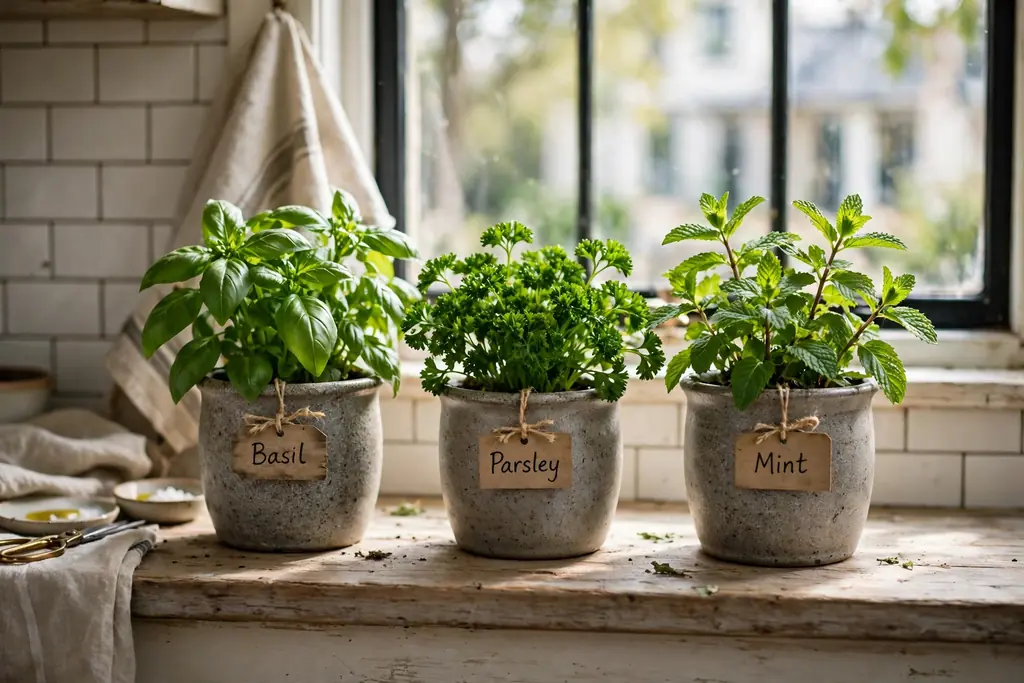
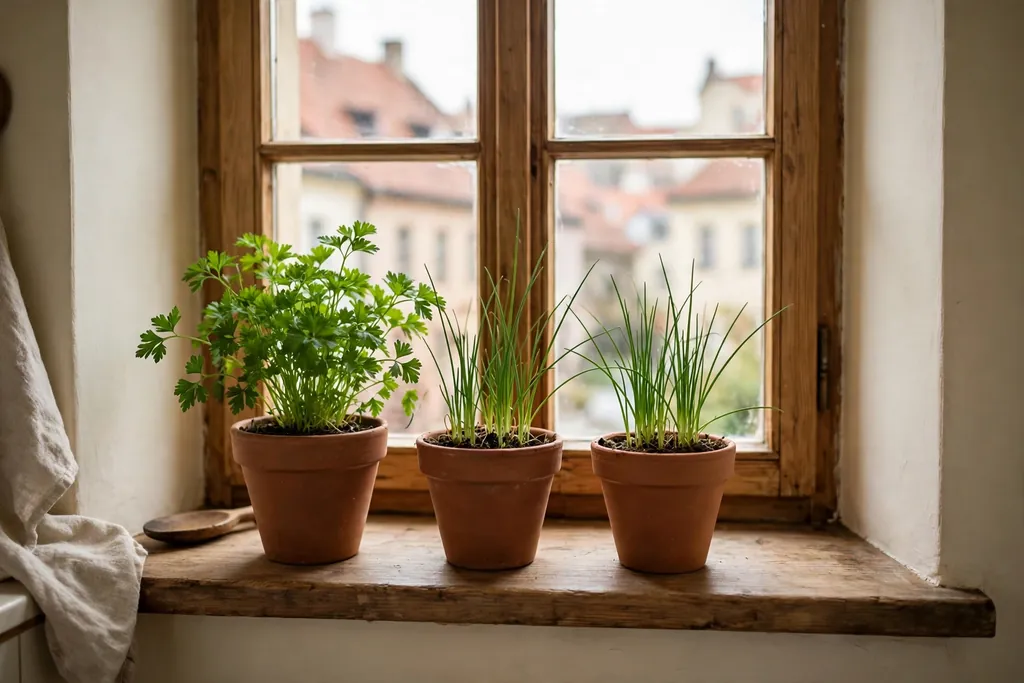
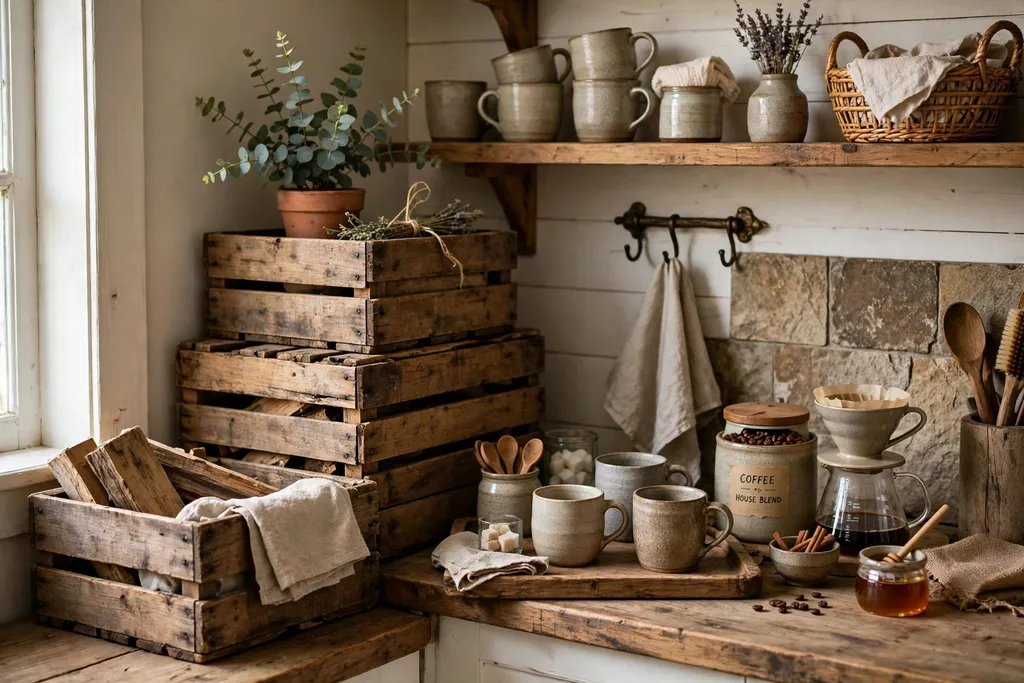
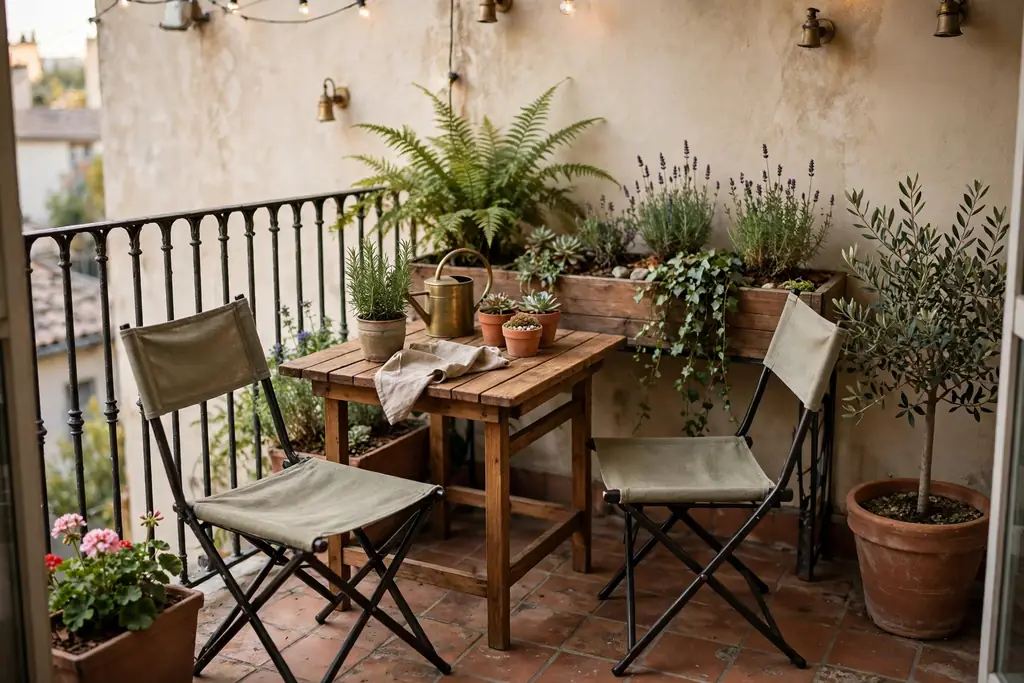
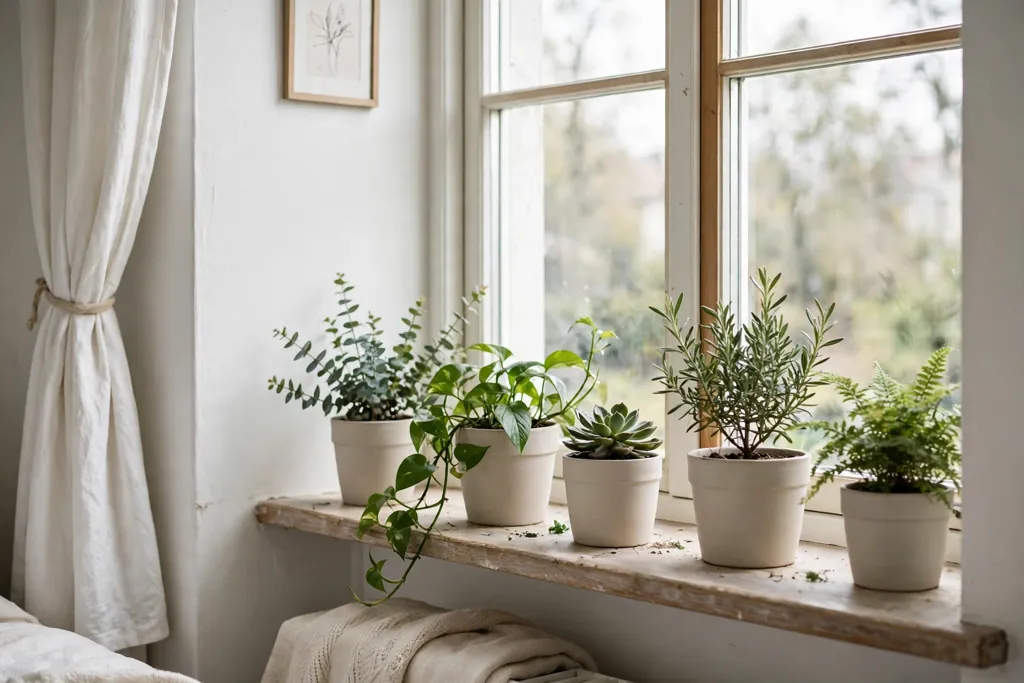
A windowsill herb garden in the kitchen, with pots of basil, parsley, chives, and mint, gives a Dutch kitchen living green, fresh flavor, and a useful windowsill display. The pots suit a bright kitchen window, where herbs get daylight, and they repeat the green used in cabinets and plants elsewhere. This suits a kitchen with a wide, bright sill, where a full garden would not fit.
Use matching pots in stoneware or terracotta, and label each herb, so cooking stays easy. Water herbs as advised for each species, and trim them often, since regular picking keeps plants bushy. Keep the sill clear of clutter, so pots get light and air, and rotate pots weekly, so plants grow evenly rather than leaning toward the glass.
21. Store Throws and Books in Woven Baskets
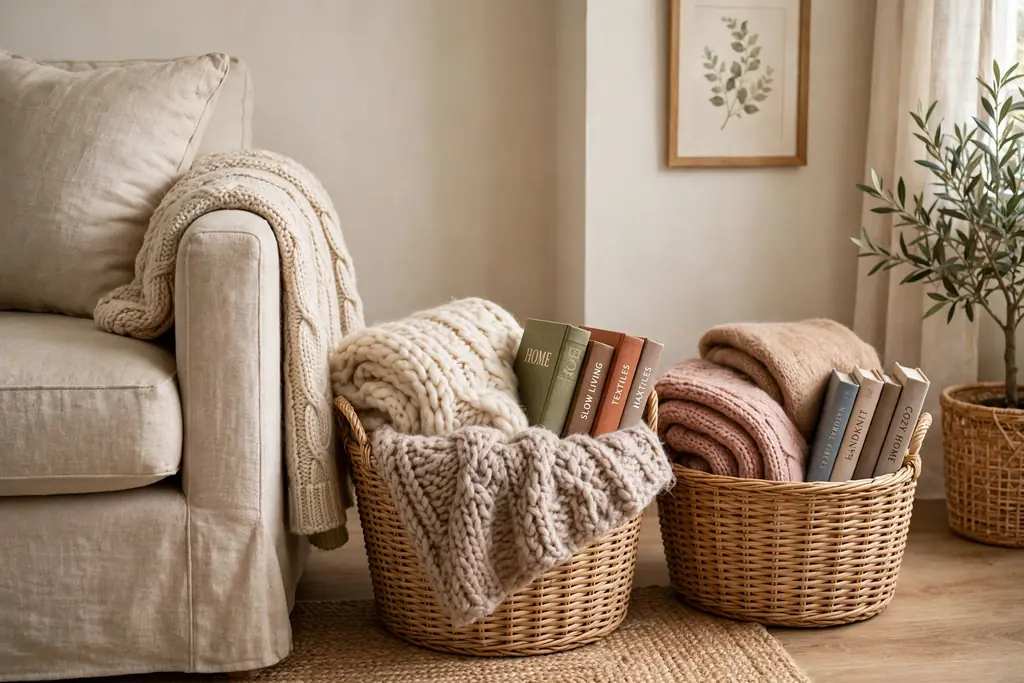
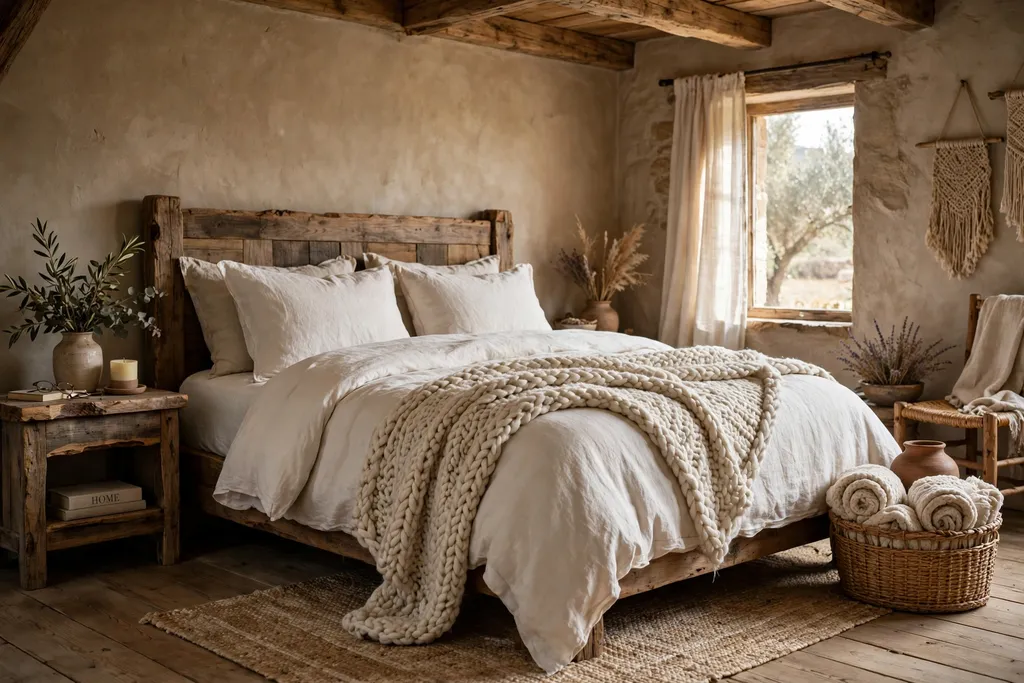
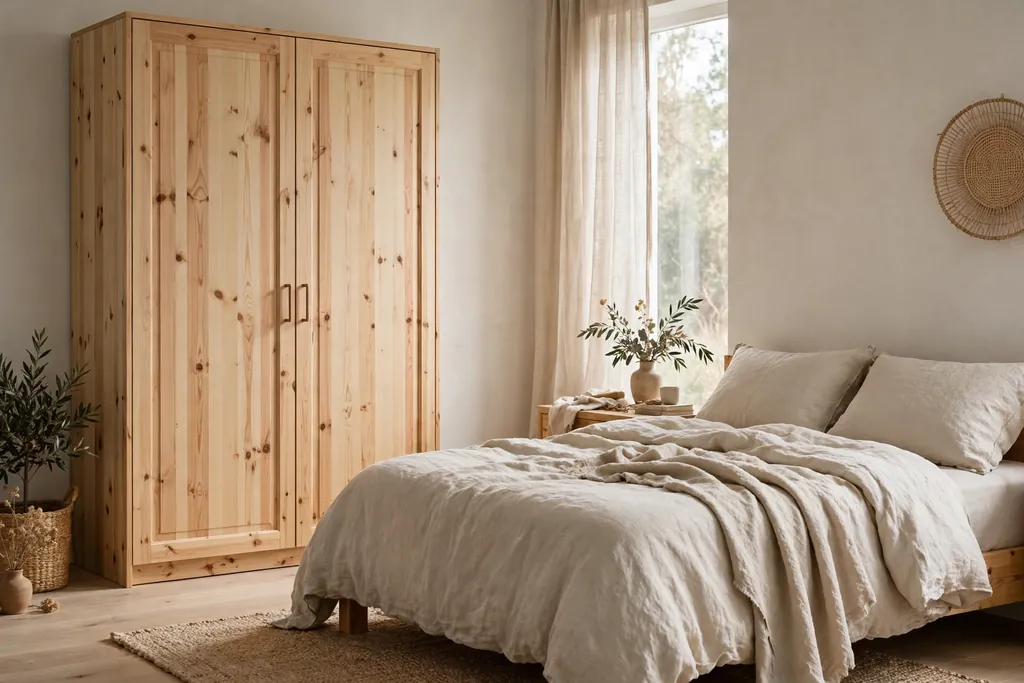
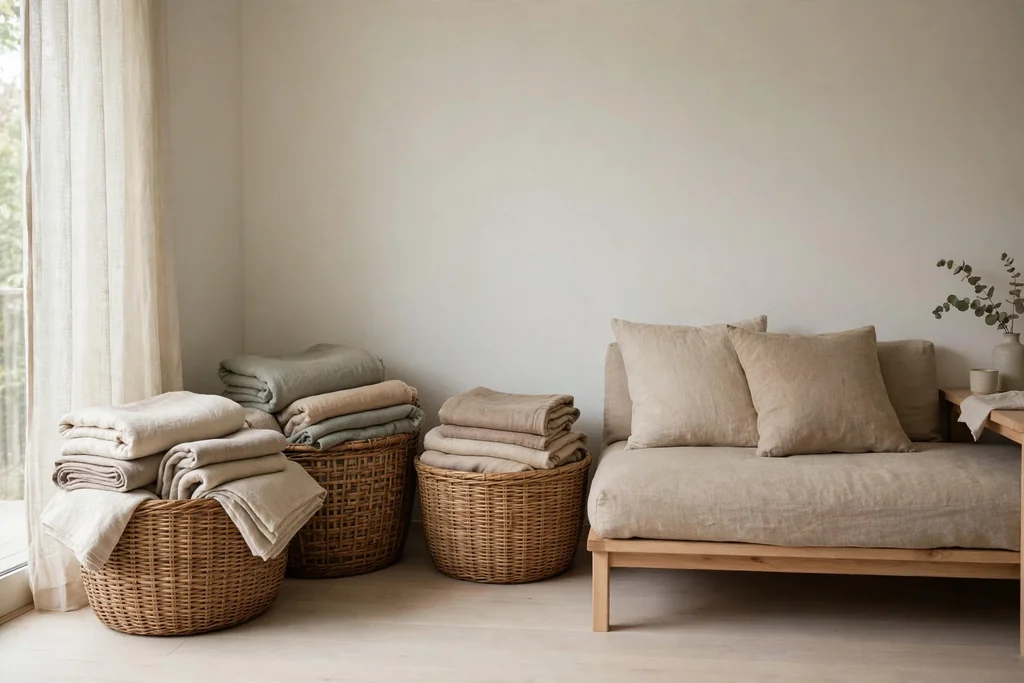
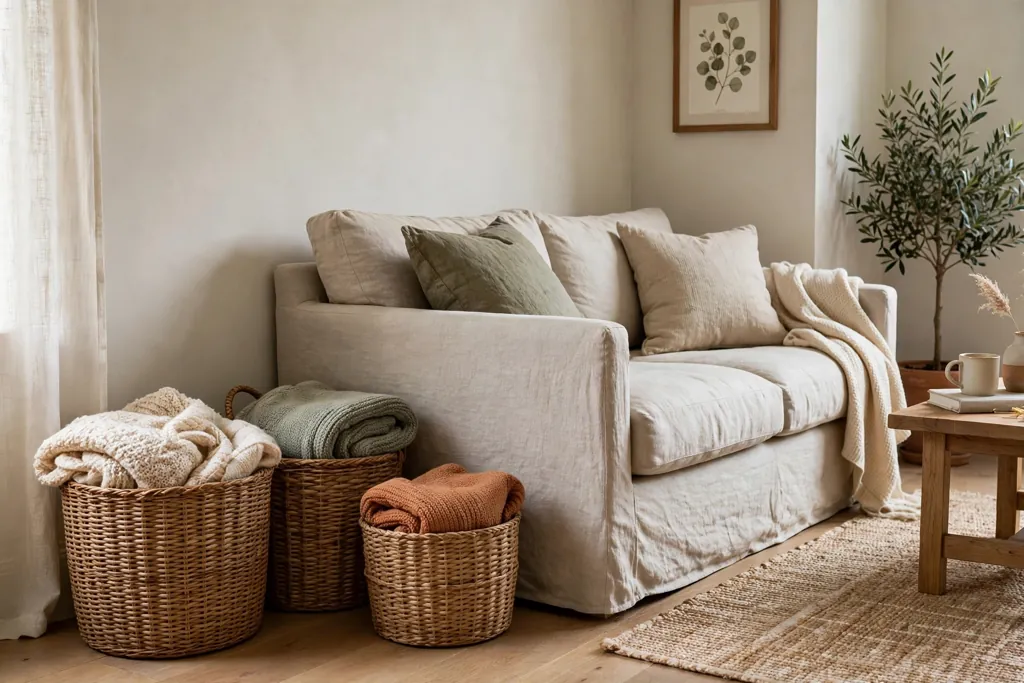
Large woven baskets in seagrass or willow give a living room or bedroom storage that looks like part of the decor, and they suit Dutch linen, wood, and wool. Baskets hold throws, books, and toys, and they move easily when you clean or rearrange, which suits a sociable room that changes use through the day. This suits a room with little closet space, or a family room where throws need a quick tidy at the end of the day.
Choose baskets with lids for items you want hidden, and open baskets for throws you reach for often. Keep basket sizes to two or three, in a similar tone, so the group looks planned rather than random. Empty and shake baskets outside now and then, since woven fibers collect dust, and keep baskets off damp floors, so the base does not mark.
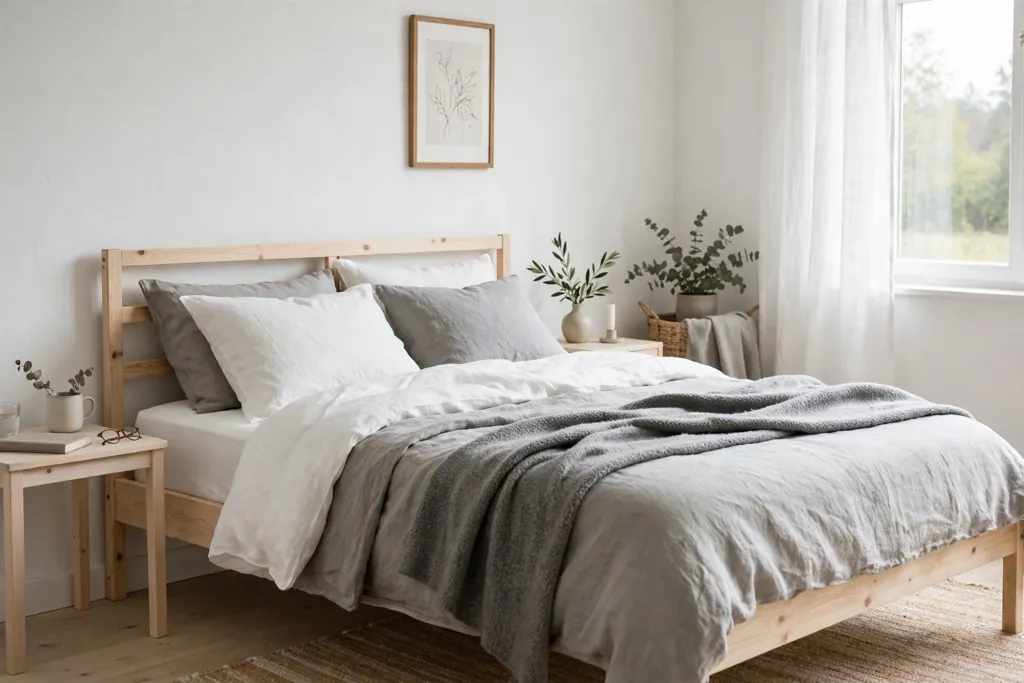
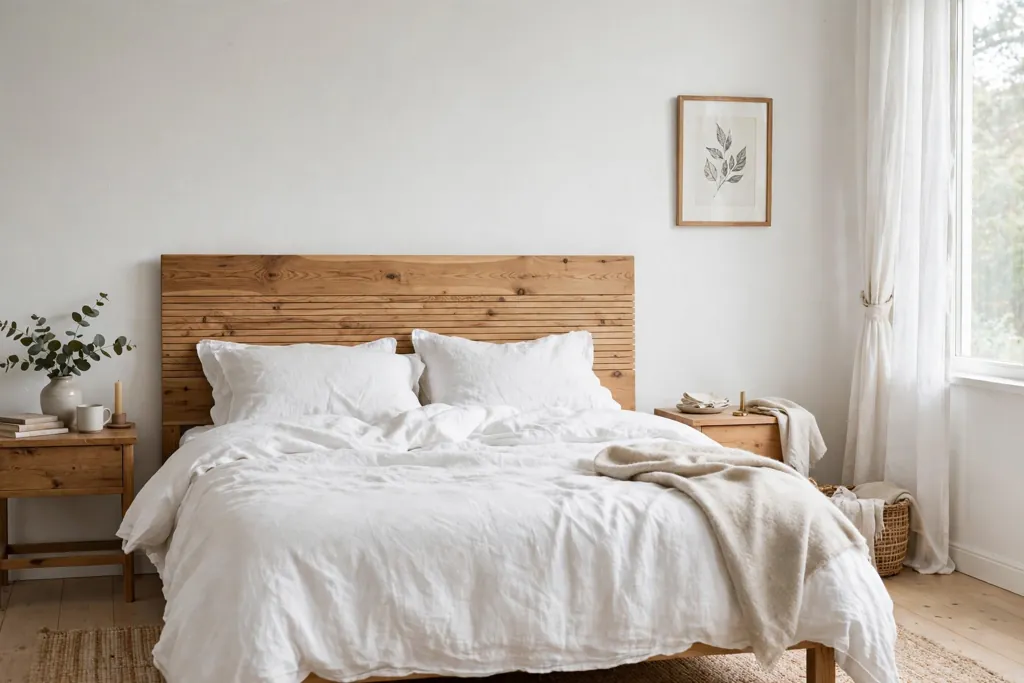
22. Layer Blue and White Striped Bedding in the Bedroom
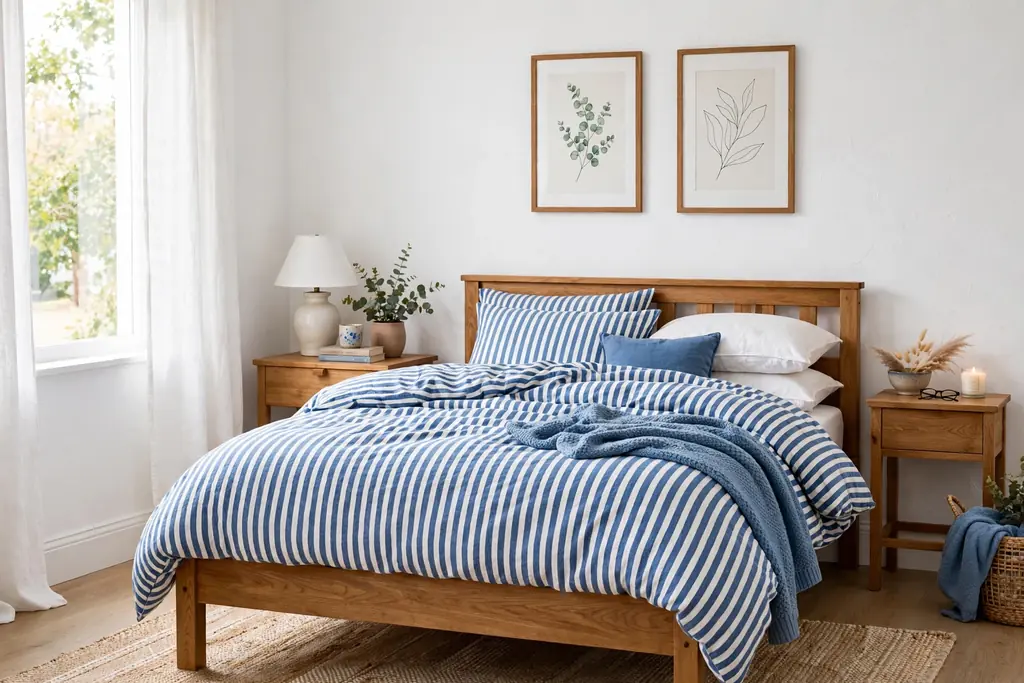
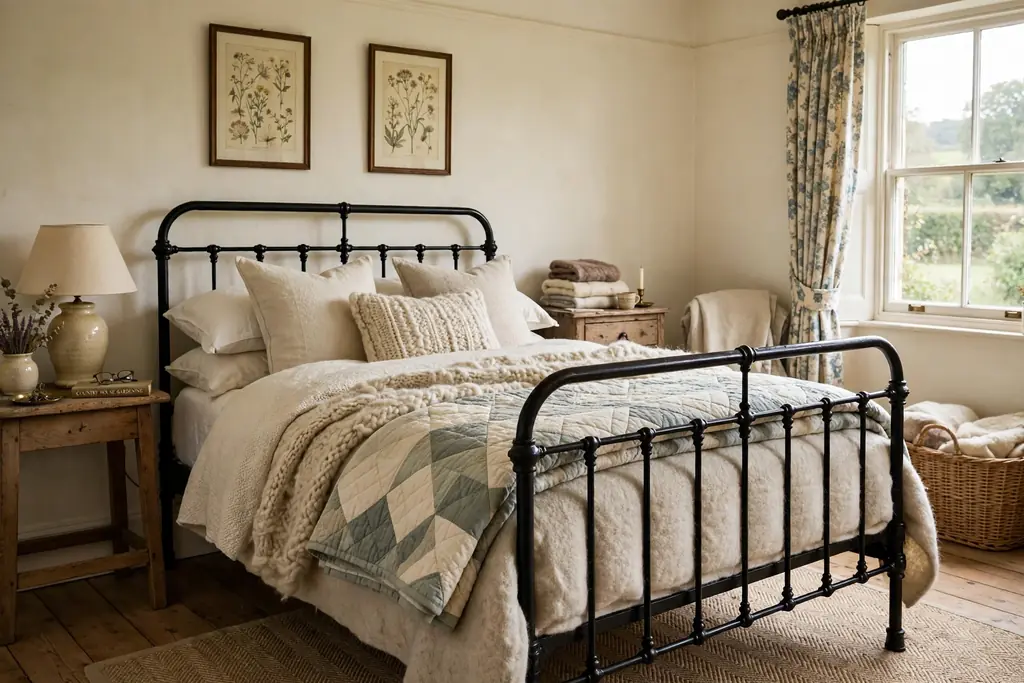
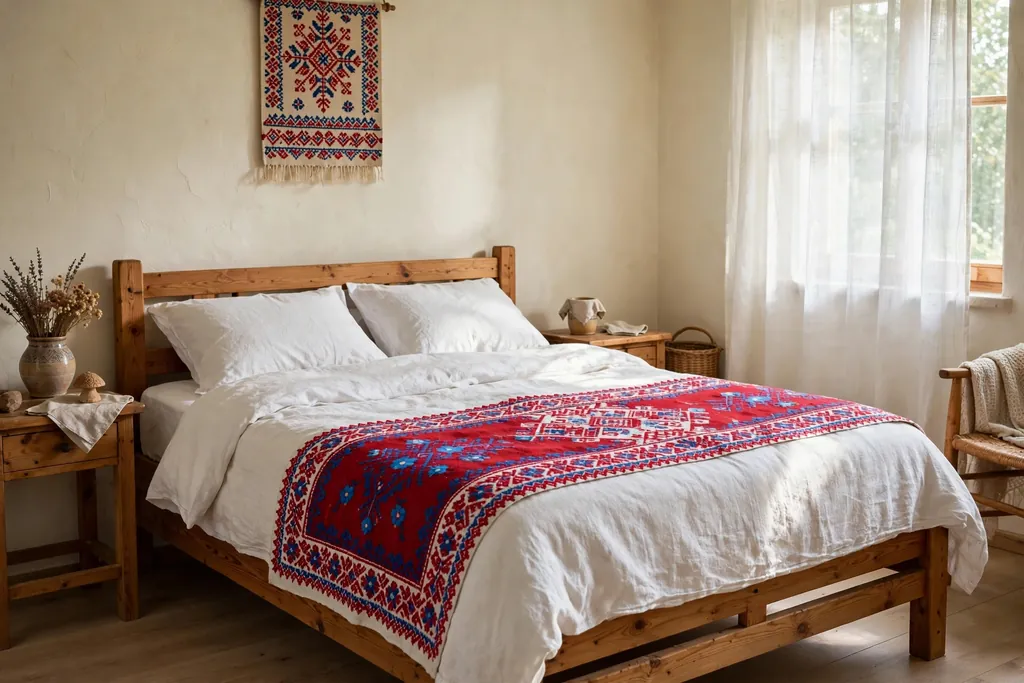
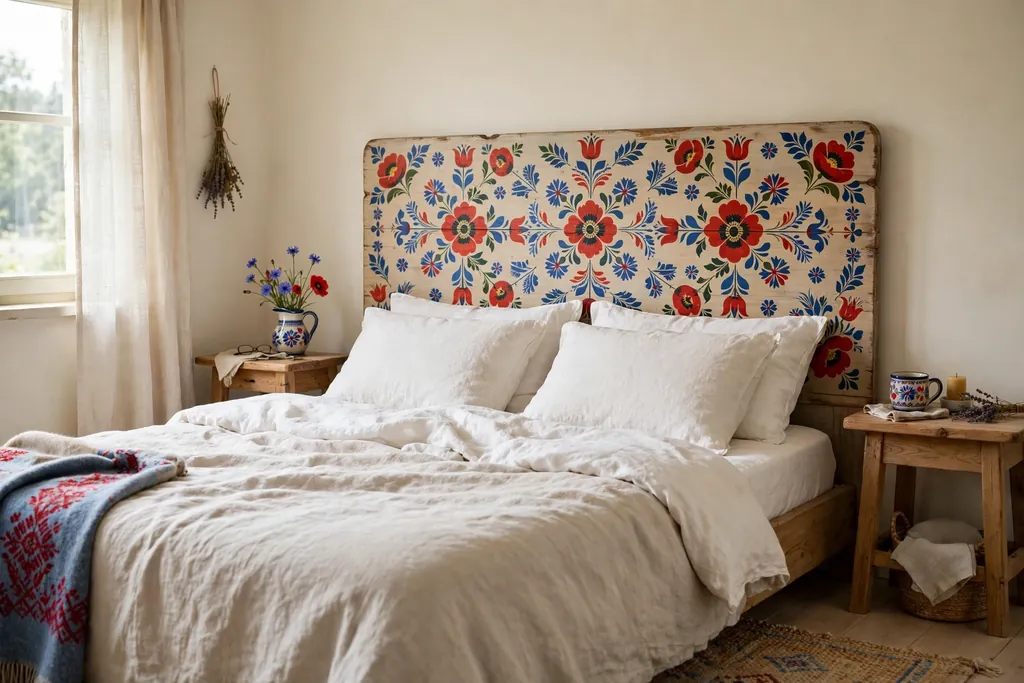
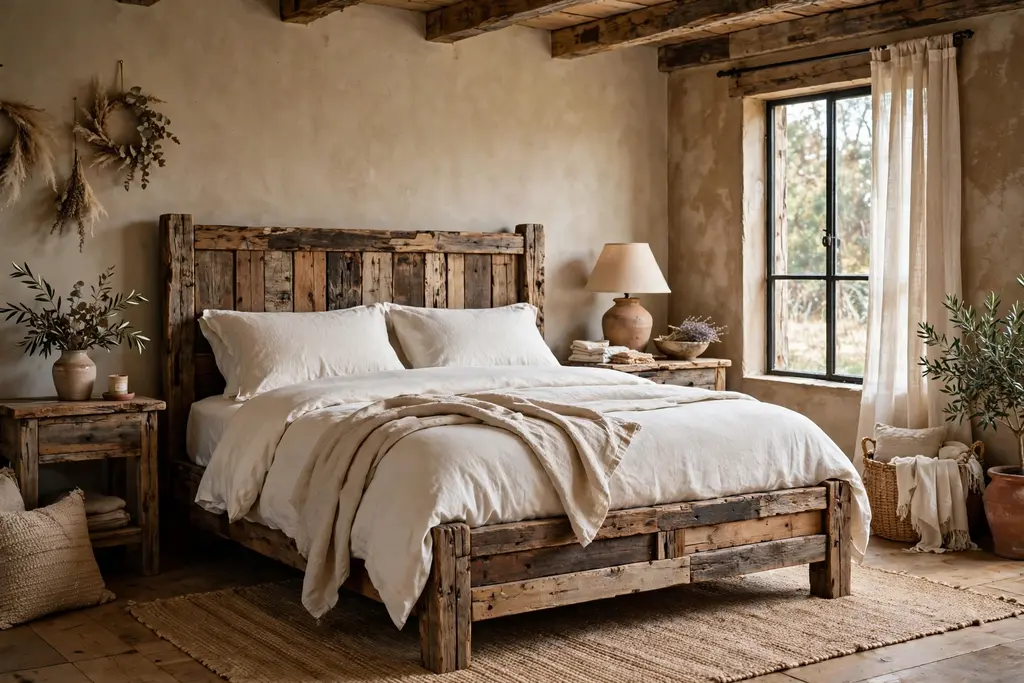
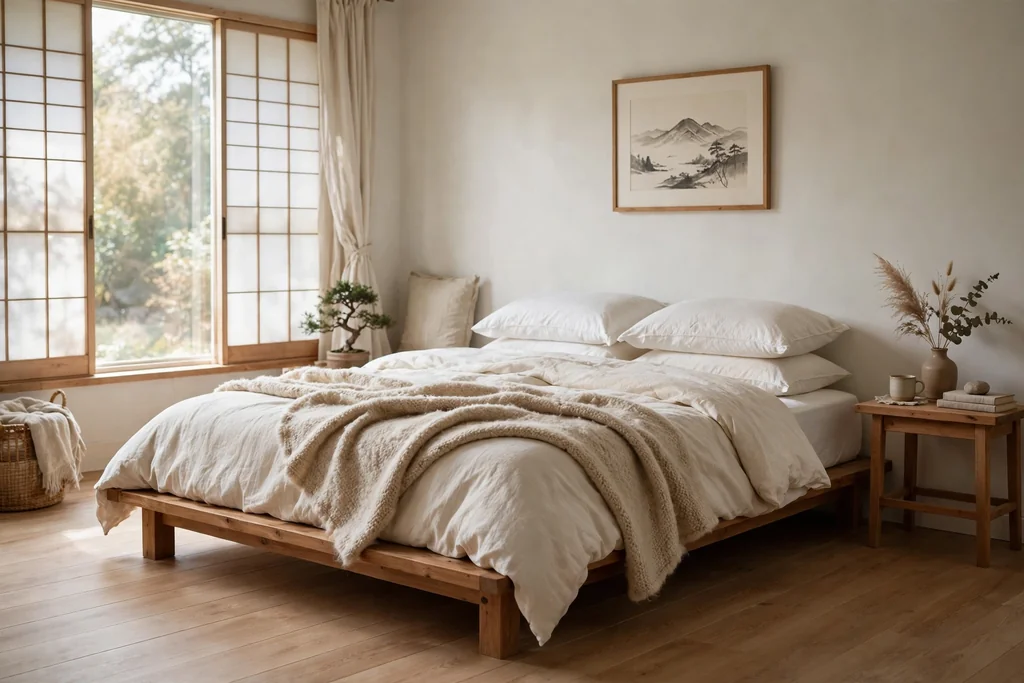
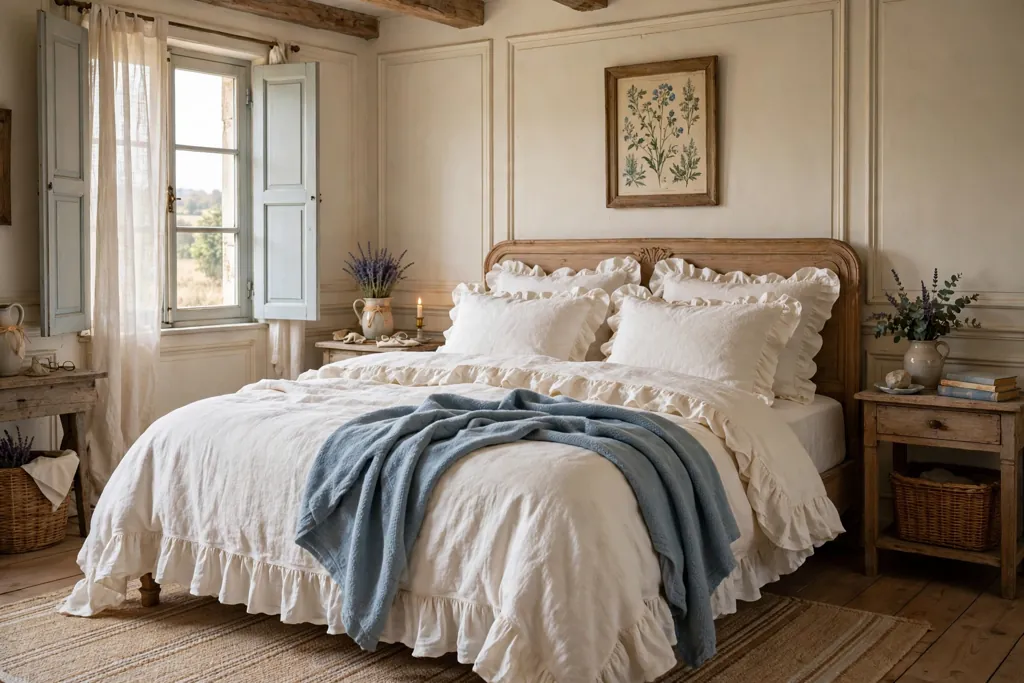
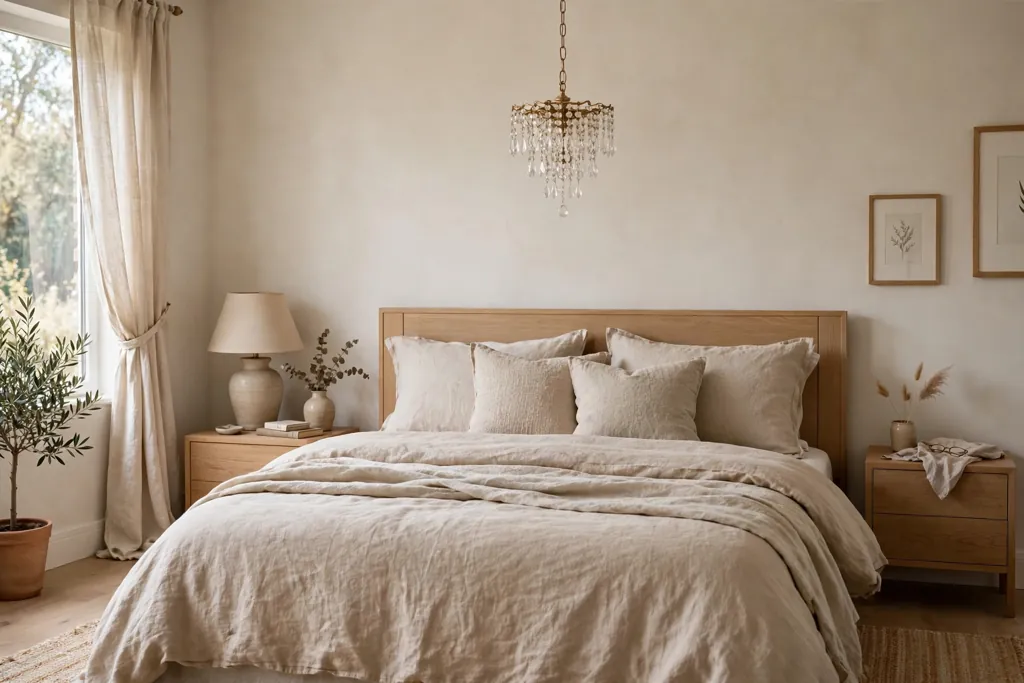
Blue and white striped bedding gives a Dutch bedroom a crisp, classic bed that links to Delft tiles and pottery without a second strong print. Stripes read as orderly and fresh, which suits a bedroom with white walls and wood furniture, and the cream in the stripe keeps the pattern light. This suits a main bedroom or a guest room, where bedding can carry the color story.
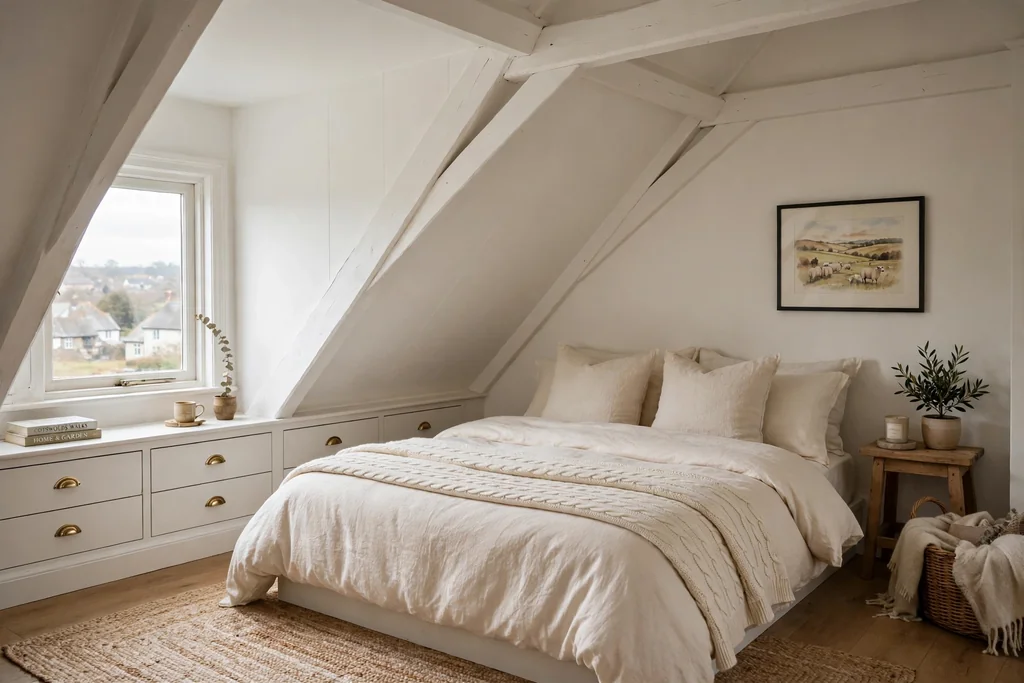
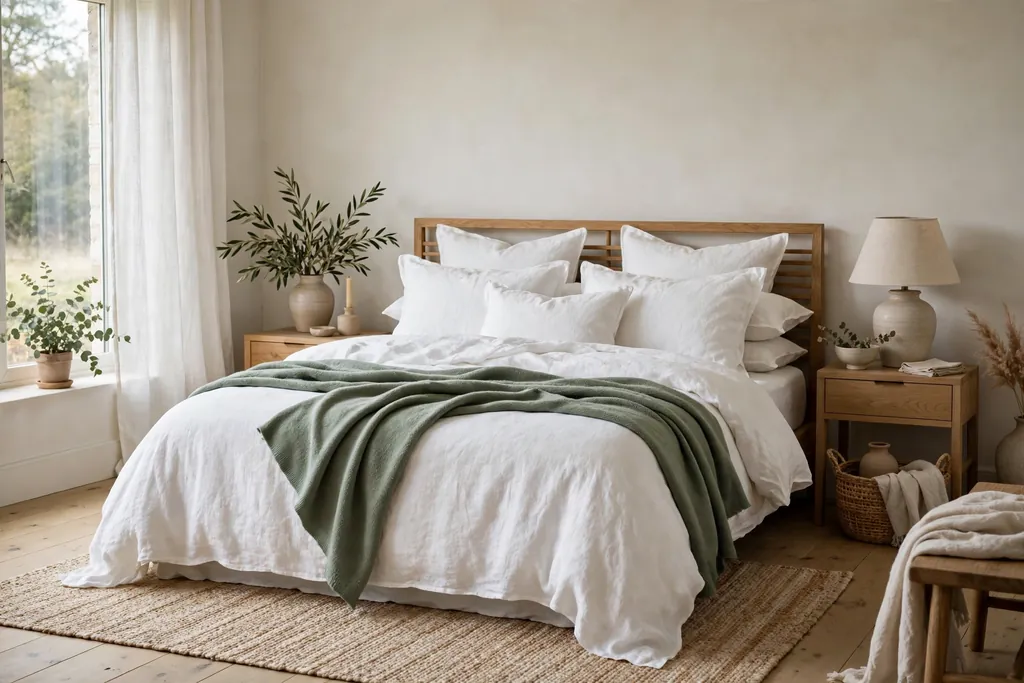
Start with white sheets, add a blue and white striped duvet, then fold a plain cream throw across the foot of the bed. Keep the rest of the bedding plain, with one blue cushion, and repeat the blue once more in a small item, such as a vase or a framed print. For more ways to use blue and cream in a bedroom, from headboards to rugs, see these blue and cream bedroom ideas.
Conclusion
A Dutch home feels bright, practical, and sociable when white and daylight lead, blue and white repeat in small doses, and dark wood or dark green grounds the room. Choose one strong Dutch note first, such as Delft tiles, a split door, or dark green cabinets, then add linen, pottery, and plants around it, so the room grows in layers rather than all at once. Start with curtains, pottery, bedding, and tulips for a quick refresh, and save tile, painted cabinets, and doors for a weekend project, when you can test colors in daylight and lamplight first.
If you found an idea here that suits your home, save this post on Pinterest so you can find it again when you are ready to start. Pin the look you like most, whether it is a Delft tile backsplash, a split Dutch door, or a gezelligheid corner by the window, and use it as a guide for your next room refresh.
FAQs
What colors define Dutch home decor?
White, cream, Delft blue, dark wood tones, and dark green define Dutch home decor, with small doses of orange for warmth. Use white and cream for walls and large linen pieces, Delft blue for tiles, pottery, and cushions, and dark wood or dark green for beams, frames, or cabinets, so rooms stay bright with a clear color story.
What is gezelligheid in home decor?
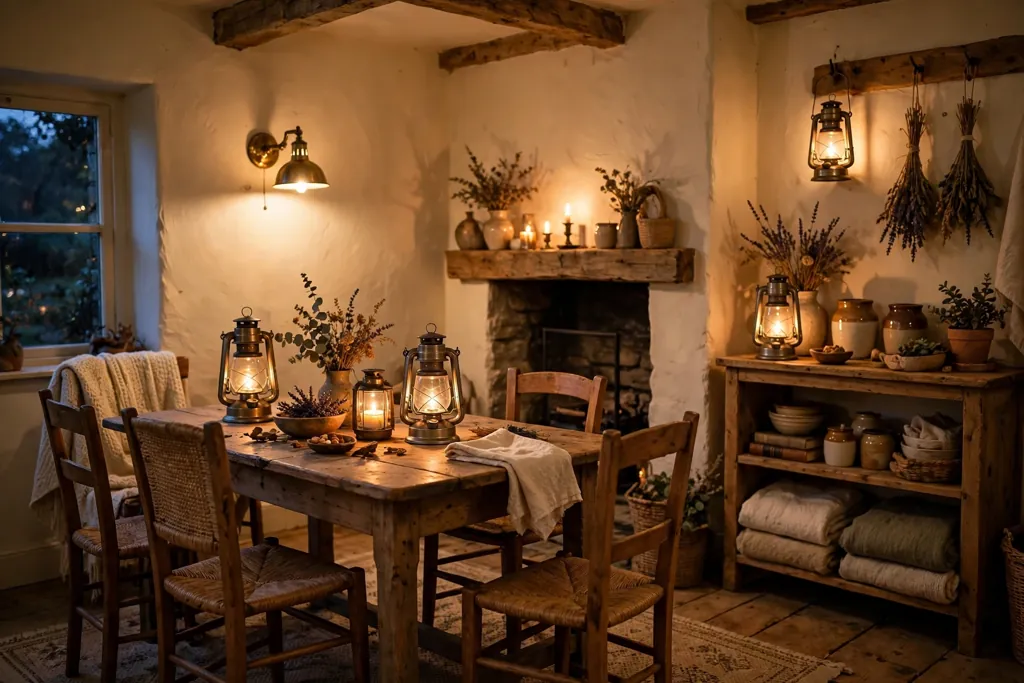
Gezelligheid means a warm, sociable coziness, and in decor it shows up as a comfortable chair by the window, a long table for shared meals, warm lamplight, and soft throws within reach. It is less about one style of furniture and more about rooms that invite people to sit, talk, and stay a while, with light, warmth, and easy seating.
Can Dutch decor work in a small apartment?
Yes, if the layers stay light and limited. Use white walls, sheer curtains, one Delft blue accent, and one dark wood feature, such as a mirror frame or a small table, rather than a full tile wall and dark cabinets together. Keep floors clear and surfaces mostly tidy, and use tall narrow shelving, so small rooms still feel open.
How do I use Delft blue without making a room feel cold?
Warm the scheme with wood, wool, and warm white lamps. A wood table, a wool throw, and lamps with cream shades add warmth that blue and white alone cannot give. Keep at least one warm material in the room, choose warm white bulbs for the evening, and use blue in two or three spots, rather than on every surface.
What is a Dutch door, and is it practical?
A Dutch door is a door split into two halves, so the top can open while the bottom stays shut. It is practical for letting in light and air while keeping pets and small children inside, and for talking to a visitor without opening the full door. Check the frame and hinges suit a split door before you buy, since the two halves need separate latches.
How do I keep blue and white decor from looking themed or kitschy?
Let one Dutch note lead, and keep the rest of the room plain. For example, pair a Delft tile backsplash with plain cabinets and plain linen, or pair blue striped bedding with white walls and wood furniture, rather than using tiles, pottery, clogs, windmills, and tulips all in one room. One or two Dutch details, repeated calmly, read as style, while a room full of motifs reads as a theme.