Category: Living Room

Comfortable seating, thoughtful layouts, and finishing touches for a living room that feels like home.

  • Great Room vs. Living Room: How to Plan and Decorate Each Space

    Great Room vs. Living Room: How to Plan and Decorate Each Space

    A great room is a large, tall, open space that joins living, dining, and often kitchen areas into one room, while a living room is a smaller, separate room with a standard ceiling, used mainly for sitting and conversation. Choose a great room for open gathering, and a living room for a quieter, easier to furnish retreat.

    The two rooms often get mixed up because both hold sofas, chairs, and a television or fireplace. The real difference is scale and connection. A great room is built to gather a household in one shared space, with high ceilings and sight lines across zones. A living room is built to hold one activity well, with walls that frame the seating and keep sound and heat inside. Once you know which room you have, the choices for layout, furniture size, lighting, and decorating become much clearer. For warm, wood based styling that suits either room, see these farmhouse decor ideas, and for seasonal layers in a standard living room, see these living room Christmas decor ideas.

    Key Takeaways

    • A great room is large, tall, and open to other areas, while a living room is smaller, separate, and has a standard ceiling height.
    • Great rooms need zones, large scale furniture, and layered lighting to avoid feeling empty or noisy.
    • Living rooms suit smaller furniture, one clear focal point, and a tighter, cozier arrangement.
    • Use rugs, lighting, and furniture placement to mark zones in a great room, since walls will not do that work for you.
    • Tall ceilings need tall art, long curtains, and light at more than one height, or the room can feel bare above eye level.
    • Sound, heating, and cooling behave differently in open, tall rooms, so plan soft surfaces, window coverings, and air circulation early.
    • Choose the room that fits how your household actually gathers, not the room that looks largest on a floor plan.

    Great Room vs Living Room at a Glance

    Feature Great Room Living Room
    Size Large, often the biggest room in the home Moderate, sized for one seating group
    Ceiling Tall, vaulted, or two story Standard height, usually flat
    Connection Open to kitchen and dining areas Separate room with walls and a door or opening
    Main use Gathering, dining, and everyday living in one space Sitting, reading, and conversation
    Furniture scale Large sectionals, tall bookcases, long tables Sofas, loveseats, and chairs sized to the walls
    Lighting Layered light at several heights One or two layers, often centered on seating
    Sound Travels and echoes more easily Stays contained by walls and soft furnishings
    Heating and cooling feel Harder to keep even, warm air rises Easier to keep even in a smaller volume

    1. What Defines a Great Room

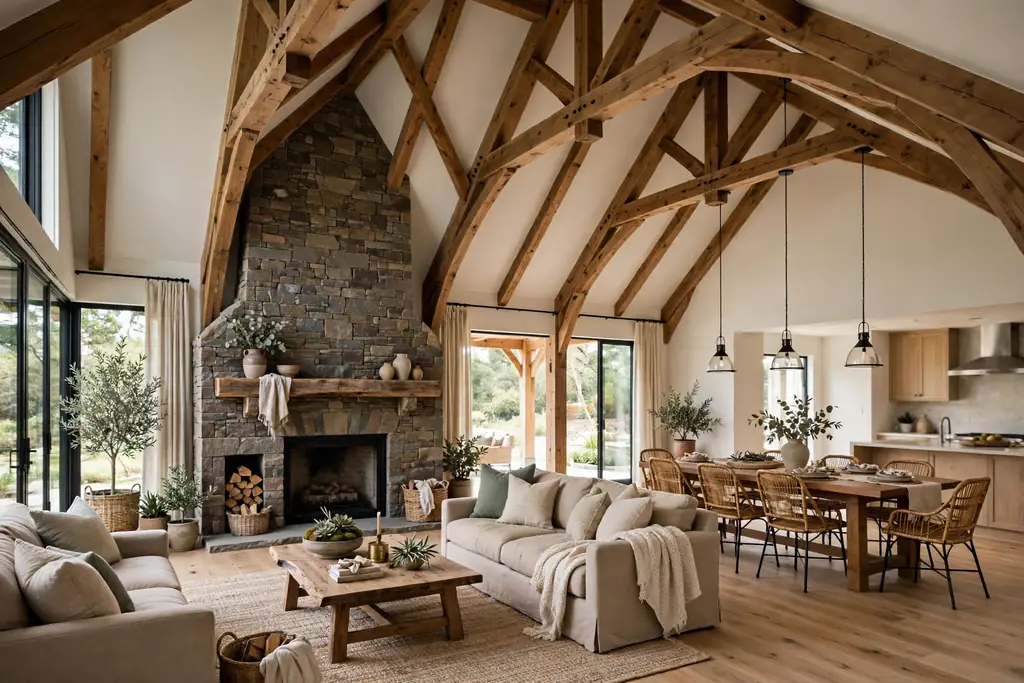
    Open great room with a tall vaulted ceiling, a stone fireplace, and seating and dining zones on one open floor.

    A great room is a large living space with a tall ceiling that is open to adjoining areas, most often the kitchen and dining space. The name points to size and height rather than to a particular style. A great room may hold a fireplace, a seating group, a dining table, and a view into the kitchen, all without walls between them. The room is meant to be the shared center of the home, where cooking, eating, talking, and relaxing happen within sight of each other.

    Because the space is open, a great room needs a clear structure of its own. Without walls, the edges of the room come from furniture placement, rugs, lighting, and changes in flooring or ceiling detail. A seating group on one rug, a dining table on another surface, and a kitchen counter at the far end each read as their own zone. If those zones are not marked, the room can feel like one large empty floor instead of a set of useful places.

    2. What Defines a Living Room
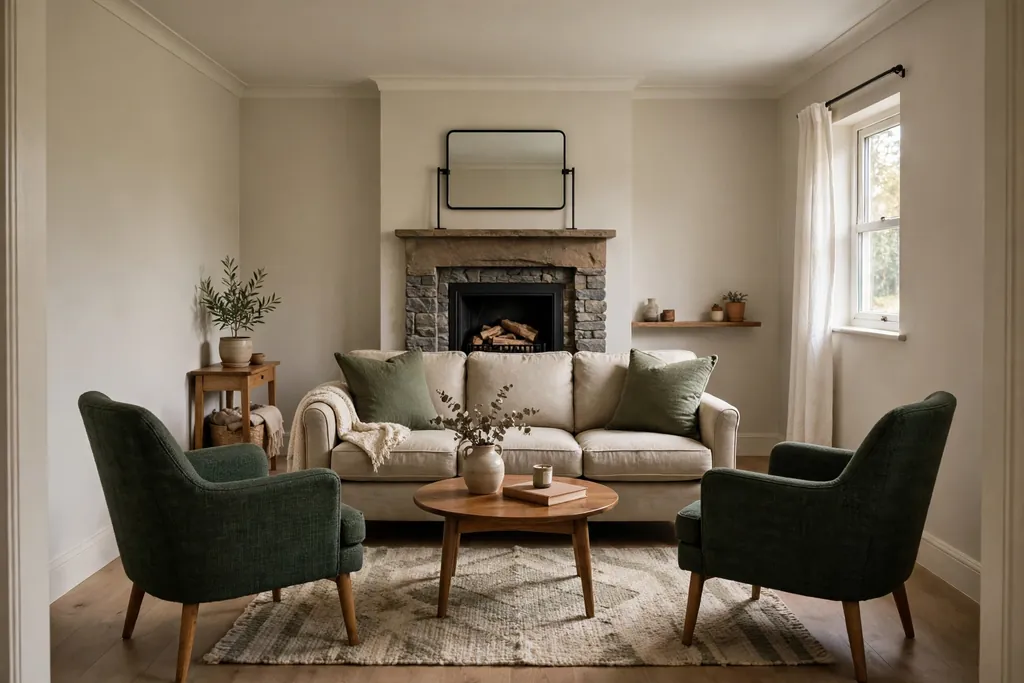
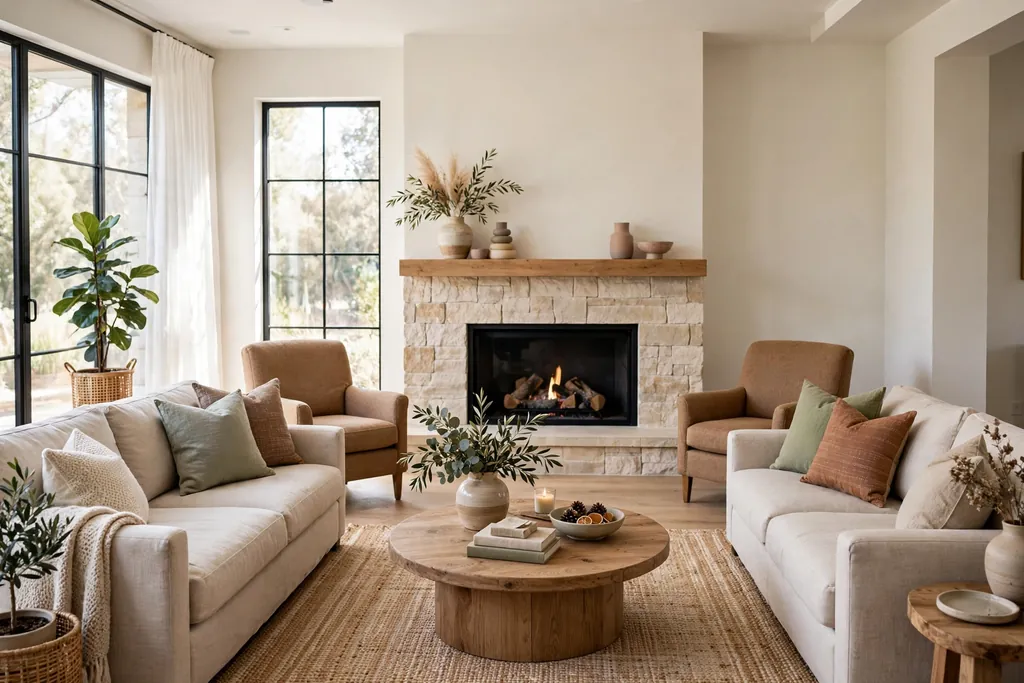
    Smaller separate living room with a standard ceiling, a sofa facing a fireplace, and two chairs for conversation.

    A living room is a separate room set aside mainly for sitting, talking, reading, and watching television. It usually has a standard ceiling, four walls, and one or two clear focal points, such as a fireplace, a window, or a media wall. Doors or cased openings may connect it to a hall or dining room, but the room itself stays distinct, and its size suits one seating group rather than several activity zones.

    That separation is the living room’s main strength. Walls contain sound, hold heat, and give furniture a clear place to sit against. A sofa can anchor to one wall, chairs can face it, and the arrangement reads at once. A living room is easier to furnish on a modest budget, easier to keep tidy, and easier to close off when someone wants quiet. Its limits are real too: a small living room cannot host a large gathering and a dining table at the same time, and a closed room can feel cut off from the kitchen during a party.

    3. Size and Ceiling Height Compared
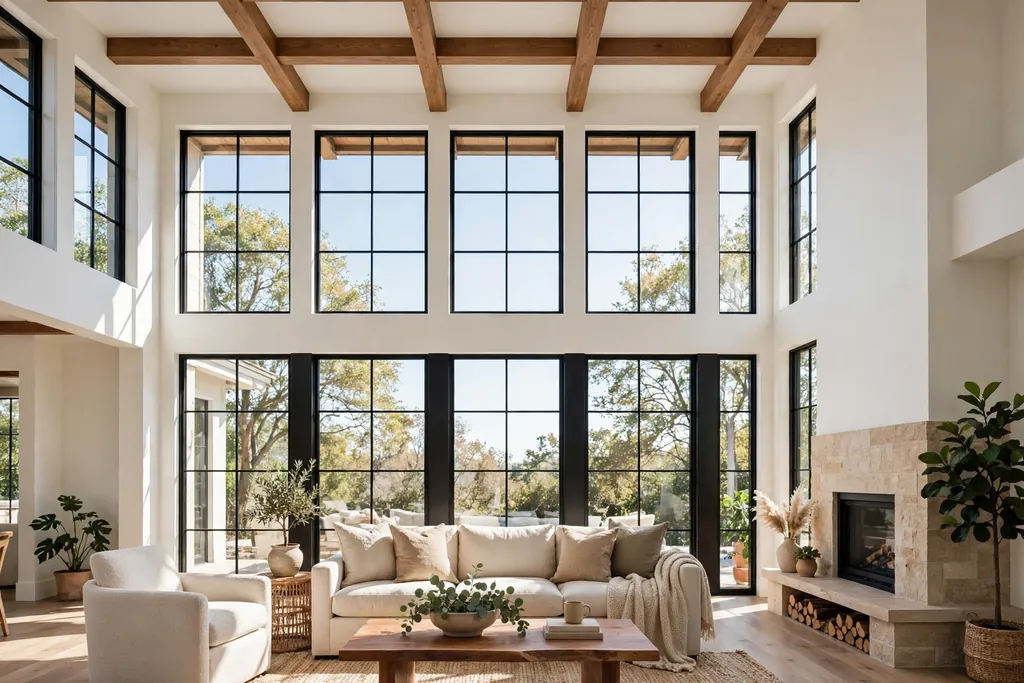
    Great room wall with tall two story windows showing high ceilings above a seating area.

    Size and ceiling height are the two clearest differences between these rooms. A great room is commonly much larger than a standard living room, with floor space that holds several furniture groups and a ceiling that rises well above standard height, sometimes to a second story. Tall windows often follow the tall wall, which brings in daylight and a view but also adds glass that needs covering and cleaning.

    A living room works at a more ordinary scale. Its ceiling is usually flat and standard in height, which keeps the room feeling close and easy to light. Furniture, art, and curtains can all be standard sizes, and one rug can ground the whole seating group. When you compare rooms in a home you are buying or building, measure both the floor area and the ceiling height. A room that looks generous on a plan can feel cramped if the ceiling is low, and a tall room can feel cold if the floor area is too small for the height.

    4. Open Plan vs Separate Rooms
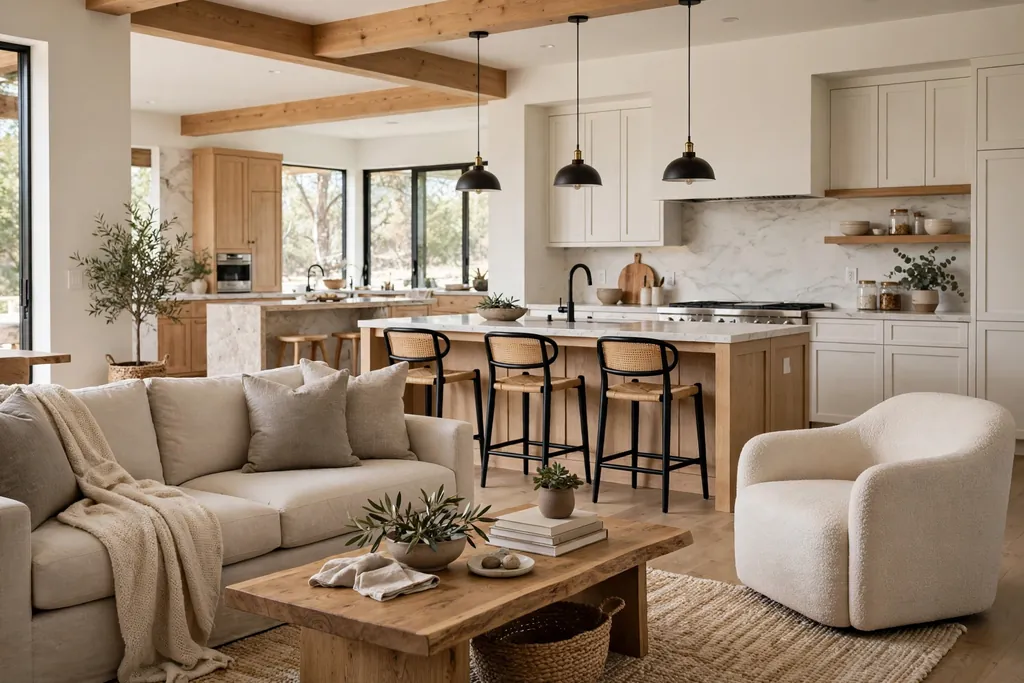
    Open plan great room flowing into a kitchen, with seating in the foreground and a kitchen island beyond.

    A great room is an open plan room by definition, while a living room is a separate room by definition. Open plan living suits households that like to stay together while doing different things: one person cooks, another reads, and children play, all within earshot and sight. It also suits entertaining, since guests can move between food, drink, and seating without passing through doors.

    Separate rooms suit households that value quiet, privacy, and contained mess. A living room with walls keeps television sound out of bedrooms, keeps cooking smells out of seating, and lets one person read while another watches a film elsewhere. The trade off is connection: a cook in a closed kitchen is cut off from guests, and a small living room can feel isolated during a gathering. When you plan, think about a normal weekday evening, not only a party. The layout that serves daily life best is usually the right choice.

    5. Layout and Zones in a Great Room
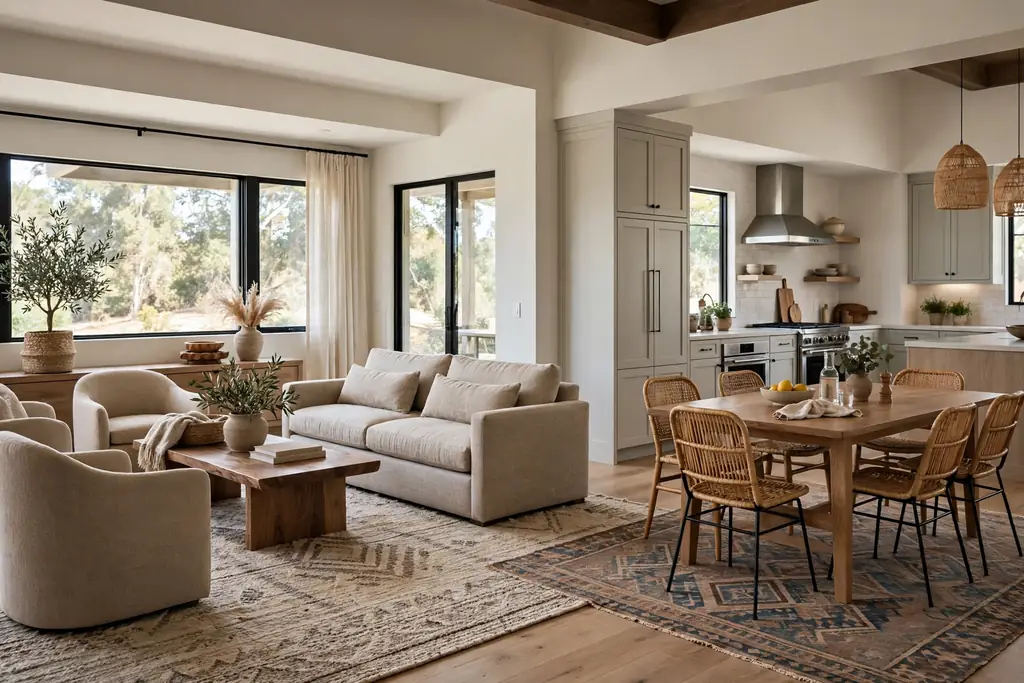
    Great room with zones marked by rugs, a seating group on one rug and a dining table on another rug.

    A great room needs zones, because one open floor must do the work of several rooms. Start by placing the seating group first, since it is usually the largest zone. Anchor it with a rug, face the main seating toward the fireplace or the view, and leave clear walkways around it of at least 30 inches. Then place the dining zone near the kitchen, with enough room to pull out chairs, and keep a path between the kitchen and the table clear for carrying food.

    Use changes in the room to mark each zone without building walls. A rug under the seating, a pendant light over the dining table, a console behind the sofa, and a different floor finish at the kitchen edge all signal where one zone ends and the next begins. Keep sight lines open across the room, but give each zone its own light source and its own storage, such as a sideboard near dining and a basket near seating. Test the layout by walking the daily routes: front door to kitchen, kitchen to table, and seating to the nearest bathroom. If any route crosses through a seating group, move the group.

    6. Layout in a Standard Living Room
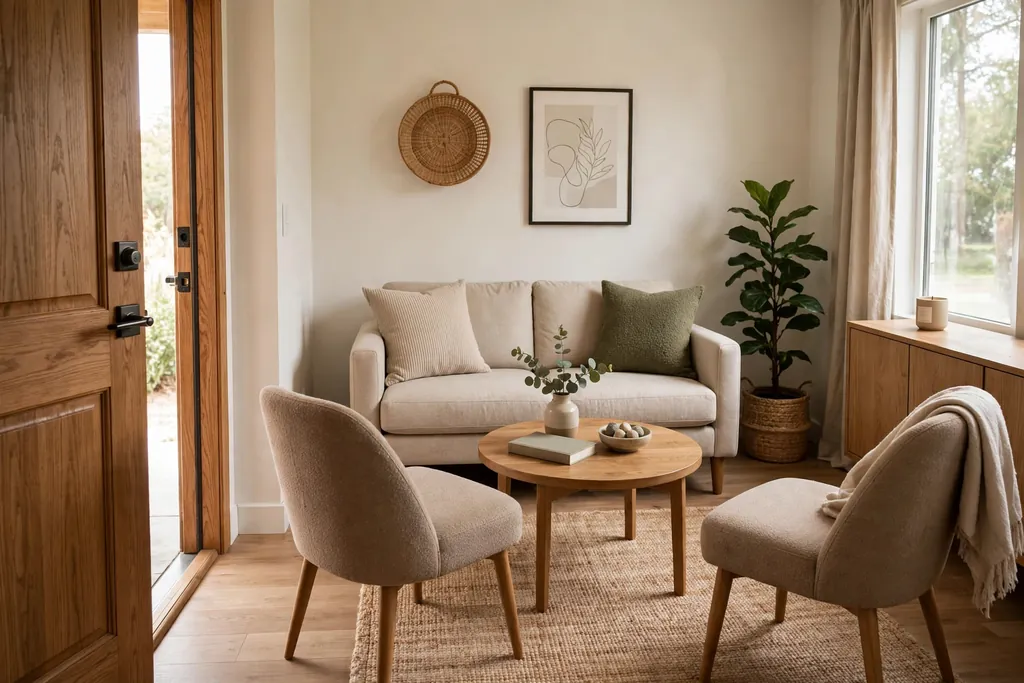
    Compact living room layout with a sofa, two chairs, a coffee table, and a clear walkway from the door.

    A standard living room layout starts with the focal point. In most living rooms that is the fireplace, the largest window, or the television wall. Place the sofa facing or angled toward that focal point, add two chairs opposite or beside it, and set a coffee table in the middle, within easy reach of every seat. Leave a clear path from the door to the far side of the room, and keep the walkway out of the middle of the seating group when you can.

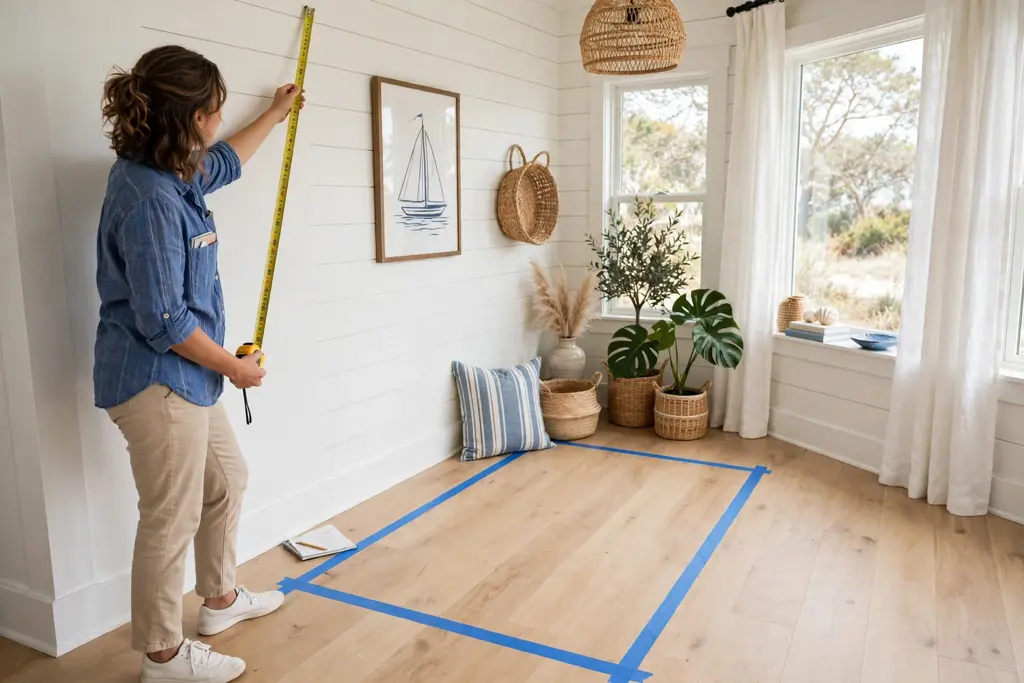
    Because the walls frame the room, you can use them well. A console or bookcase on the wall behind the sofa gives storage and a place for lamps. A chair in a corner with a floor lamp makes a reading spot without taking floor from the main group. Measure before you buy, and mark large pieces on the floor with painter’s tape. In a small living room, a loveseat and two chairs often seat as many people as a large sofa, and they leave more room to move. Avoid pushing every piece against the walls: pulling the sofa a few inches out and adding a narrow console behind it can make the room feel planned rather than crowded.

    7. Furniture Scale for a Great Room
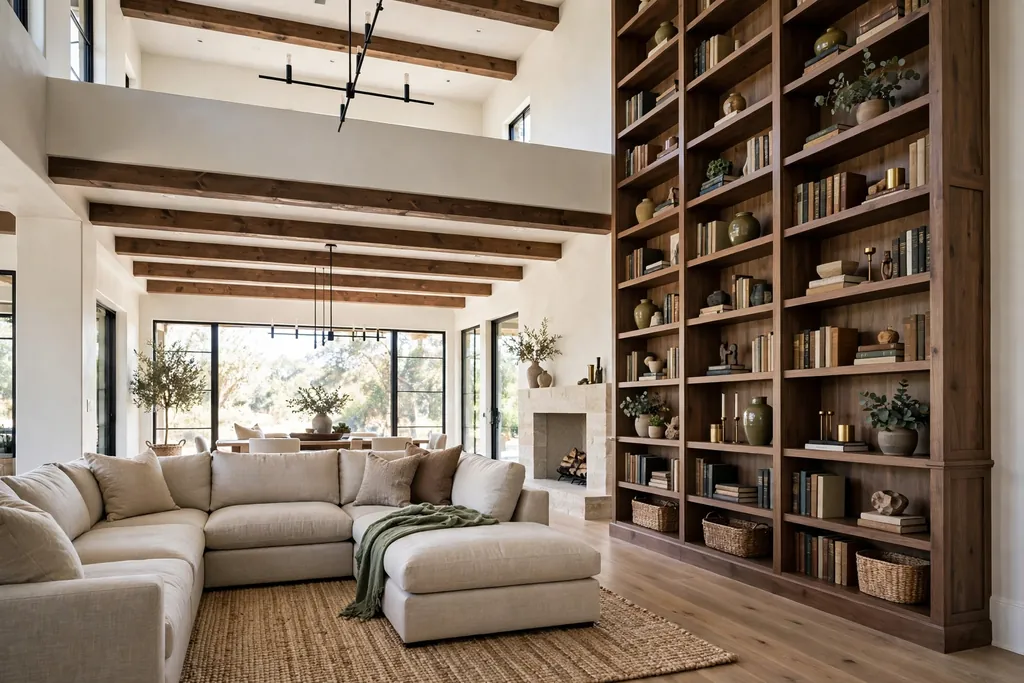
    Large sectional sofa and tall bookcase in a great room with a high ceiling.

    Furniture in a great room must match the height and floor area, or it will look lost. A standard sofa and a small rug can disappear in a tall, open room, leaving the space feeling empty even when it is full of pieces. Choose a larger seating group, such as a sectional or a sofa with two generous chairs, and pair it with a substantial coffee table and a rug large enough that the front legs of all seating sit on it. Tall bookcases, a large fireplace surround, and long curtains help fill the vertical space.

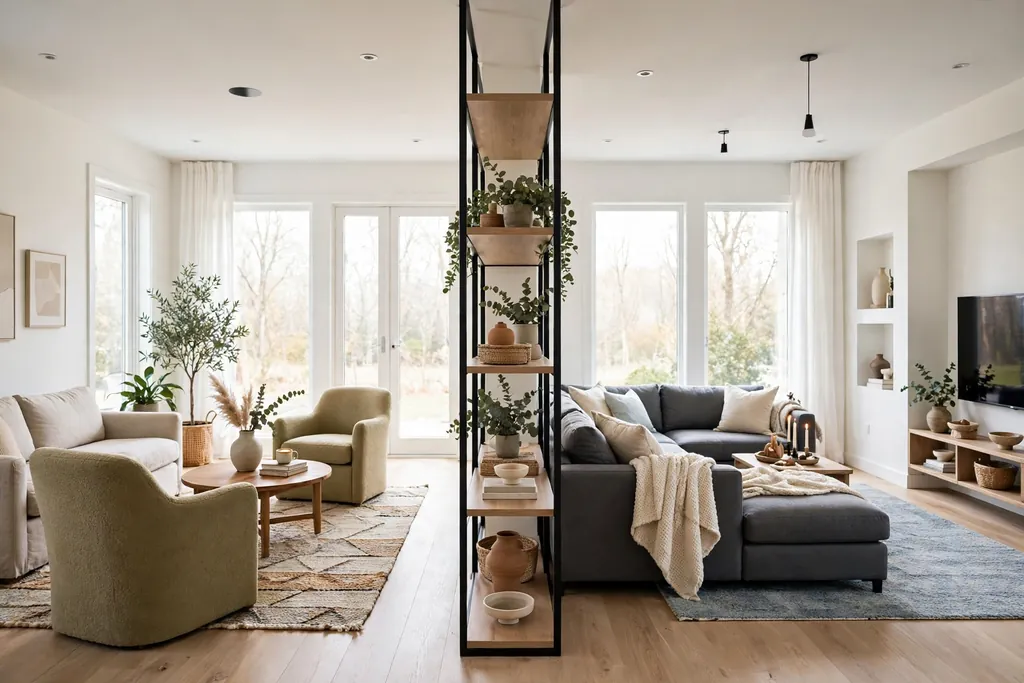
    Scale up in proportion, not in every piece at once. One oversized sofa plus oversized chairs plus an oversized table can crowd the floor, even in a large room. Balance large seating with open legged side tables and a few lighter pieces, so the room still has air around the furniture. Check the depth and height of seating against the people who will use it: deep seats suit lounging, while shallower seats suit upright conversation. In a great room, furniture also acts as a room divider, so the back of a sofa or a console table should look finished from the kitchen and dining zones, not only from the front.

    8. Furniture Scale for a Living Room
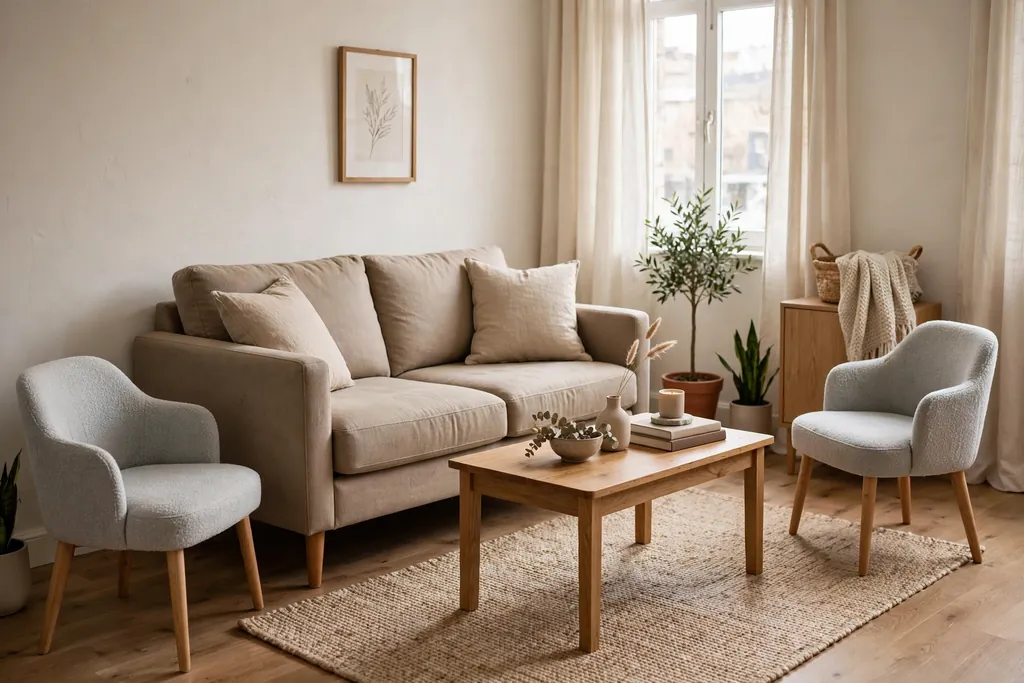
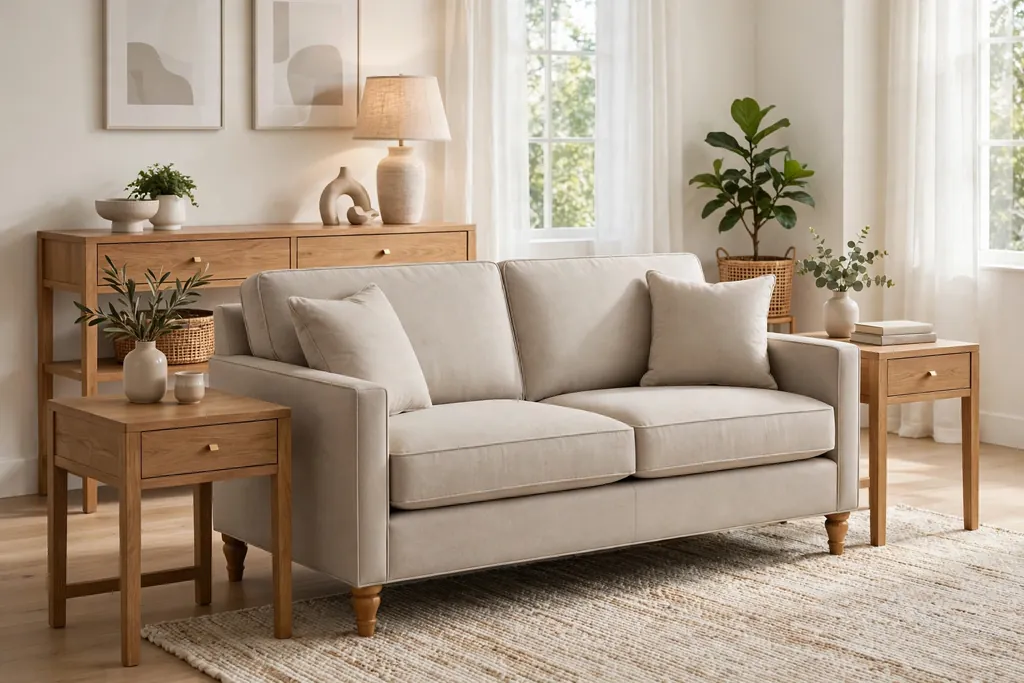
    Apartment scale sofa and small chairs in a standard living room with a coffee table sized to the sofa.

    Furniture in a standard living room should fit the walls and leave room to move. Measure the longest wall first, then choose a sofa that leaves space at each end for a side table or a lamp. A sofa that runs wall to wall leaves no room for end tables and makes the room feel packed. Choose chairs with a smaller footprint than the sofa, and pick a coffee table that is about two thirds the length of the sofa and low enough to see over from a seated position.

    Small and mid sized rooms reward lighter shapes. Sofas with visible legs, open armed chairs, and glass or slim legged tables take up less visual weight than heavy, floor hugging pieces. Use one larger piece as an anchor, such as the sofa, and keep the rest of the group lighter. If the room must seat many people, add a pair of occasional chairs that can move to the dining area or the porch when they are not needed, rather than buying a second sofa that fills the room every day. Leave at least 18 inches between the coffee table and seating, so legs have room and cups are still within reach.

    9. Decorating a Great Room Without Losing Warmth
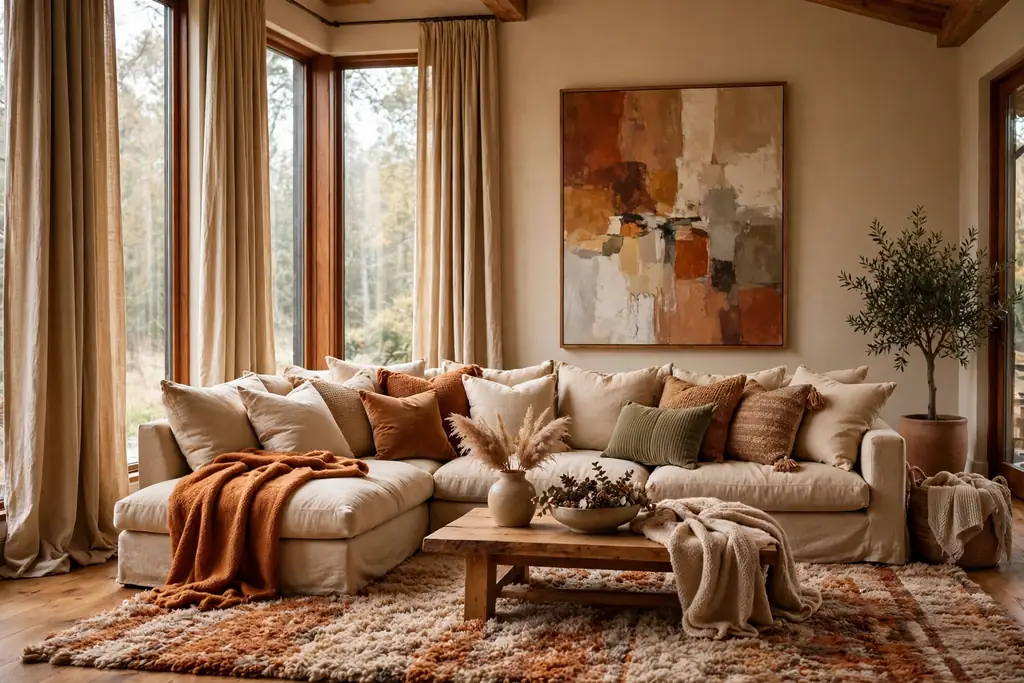
    Great room decorated for warmth with long curtains on tall windows, large art, and a thick rug.

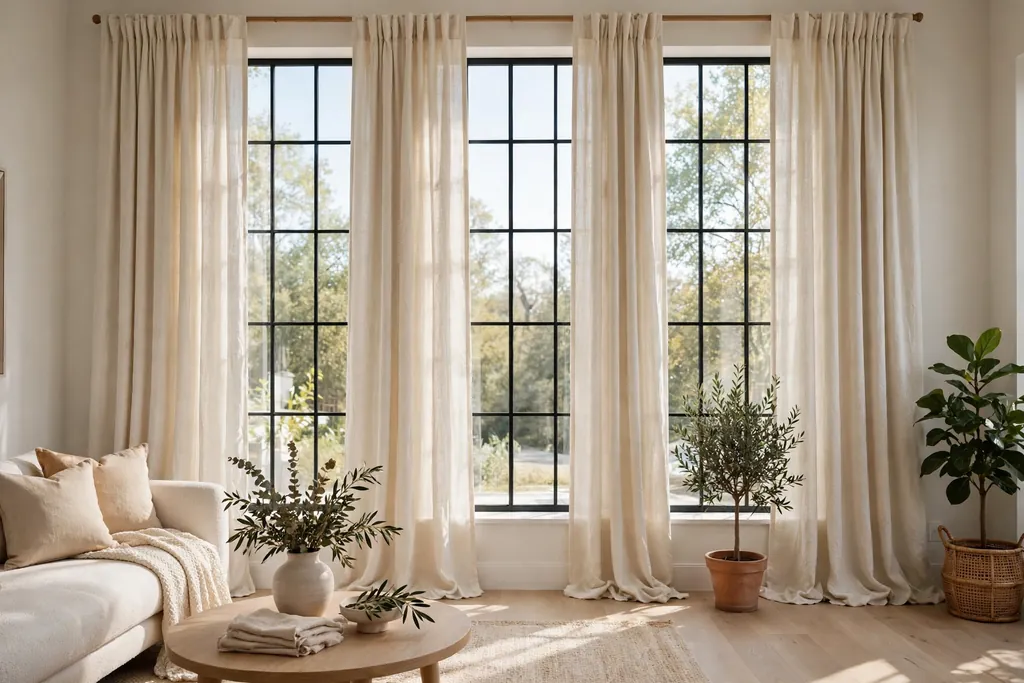
    A great room can feel grand but cold if the upper walls stay bare and the floor stays hard. Warm it by working at every height. Hang art large enough to read from across the room, and hang it at eye level from the seating, not near the ceiling. Use long curtains that run from near the ceiling to the floor on tall windows, which softens the glass and draws the eye down to the living zone. Add texture at floor level with a thick rug, woven baskets, and upholstered seating.

    Repeat one or two materials through the zones so the open space reads as one room. A wood tone that appears in the kitchen, the dining table, and a living room console links the zones, and one metal finish on lights and hardware does the same. Add plants at different heights, including one tall plant in a corner, to break up large walls. Keep the palette calm, with deeper color on cushions, throws, and art that can change, rather than on large fixed surfaces. A great room looks best when the decorating effort goes into the zone where people actually sit, and the rest of the room supports it quietly.

    10. Decorating a Living Room for Comfort and Focus
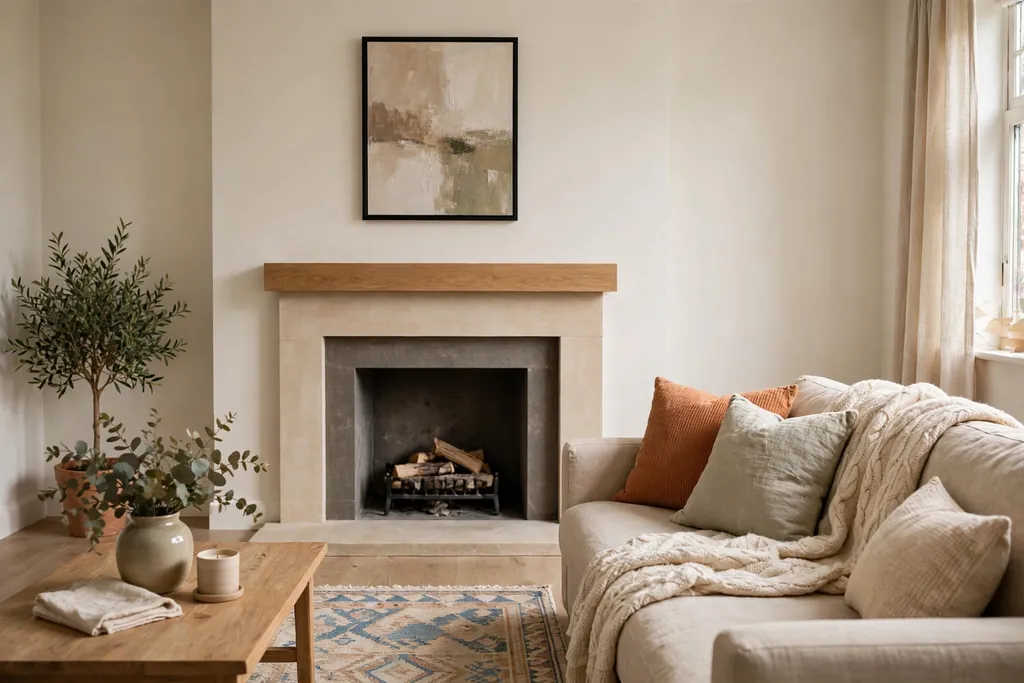
    Living room with a simple fireplace mantel, art above it, a rug, cushions, and a throw on the sofa.

    A living room is easier to decorate because the walls set the frame. Pick one focal point and let the rest of the room support it. If the fireplace is the focus, keep the mantel simple, hang one piece of art or a mirror above it, and arrange seating toward it. If the window is the focus, keep curtains light, place seating to catch the view, and keep the window wall free of tall furniture that blocks light.

    Layer textiles for comfort: a rug that fits the seating group, cushions in mixed sizes, and a throw within reach of the main seat. Use color in a controlled way, with a base of two or three colors and one accent repeated in cushions, art, and a small decor piece. In a small living room, keep large patterns to one item, such as one patterned cushion or one rug, and keep the rest plain so the room stays calm. Leave some empty wall and empty surface in every living room. A room that is full at every edge feels smaller, while a room with a little breathing space feels cared for.

    11. Lighting for High Ceilings and Open Plans
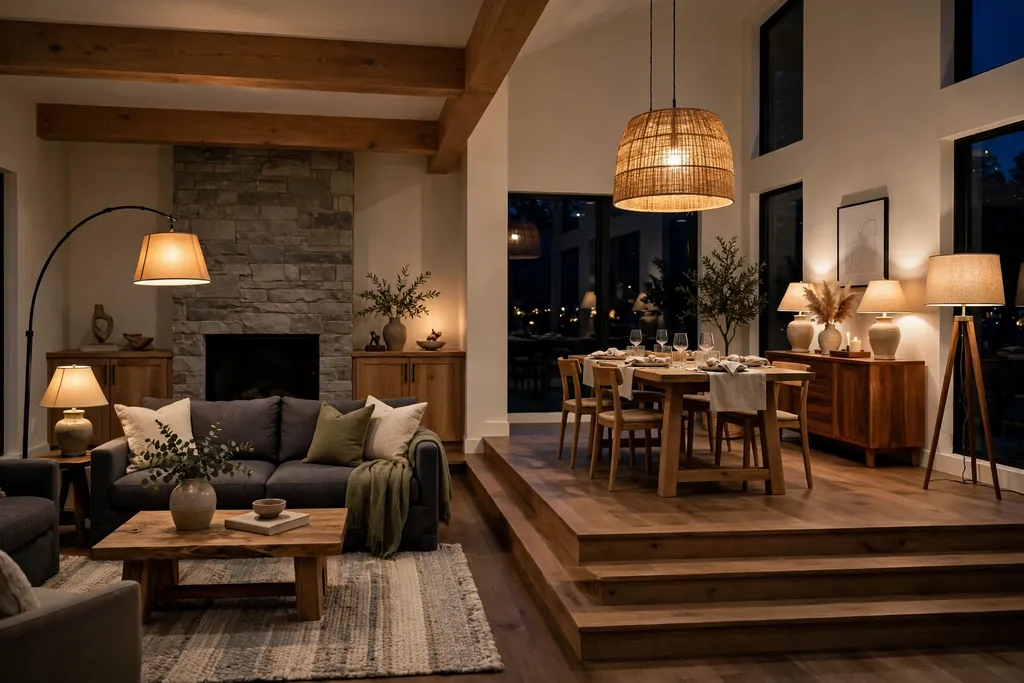
    Great room in the evening with pendant light, table lamps, and floor lamps lighting seating and dining zones.

    Lighting a great room needs more than one central fixture, since a single ceiling light cannot reach every zone and cannot flatter a tall space. Plan light in layers: overhead light for general use, such as recessed lights or a large pendant over the seating or dining zone; task light for reading and cooking, such as table lamps, floor lamps, and under cabinet lights; and accent light for art, bookcases, and the fireplace wall. Put different zones on separate switches or dimmers, so the dining zone can glow while the seating zone stays soft.

    Mind the height. Pendants over a dining table should hang low enough to light the table and the faces around it, but high enough to see across. A chandelier in a two story space should hang where it can be seen from below and from any upper landing, and it should be sized to the room, not to a standard living room. Use warm white bulbs through the room for a consistent evening feel, and check glare from tall windows during the day. Lamps at seating height matter most in a great room: they bring light down to where people sit and keep the tall ceiling from feeling like a dark void at night.

    12. Lighting for a Standard Living Room
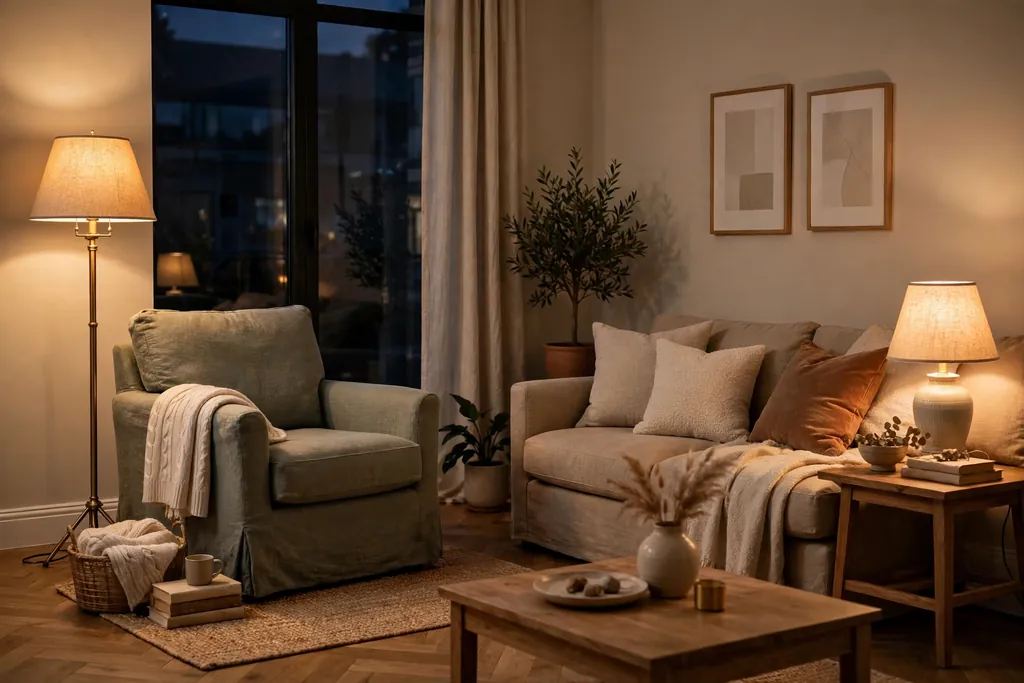
    Standard living room in the evening with a floor lamp beside a reading chair and a table lamp beside the sofa.

    A standard living room is easier to light well, because the ceiling is close and the seating group is compact. Aim for three light sources in the room: one overhead or central light, one floor or table lamp beside the main seating, and one smaller lamp or wall light for balance. That mix lets you light the whole room for cleaning, light one corner for reading, and set a soft evening level without relying on a single bright fixture.

    Place lamps where they serve a seat, not just where they fill a corner. A floor lamp behind a reading chair, a table lamp on a side table beside the sofa, and a small lamp on a console give light at hand height, which flatters faces and makes the room feel welcoming. Use dimmers where you can, and keep bulb color consistent through the room, since mixed warm and cool bulbs make a small room feel unsettled. If the television is in the room, avoid placing a bright lamp directly behind or opposite the screen, where it causes glare, and add a soft lamp to one side instead.

    13. Sound, Heating, and Cooling Feel
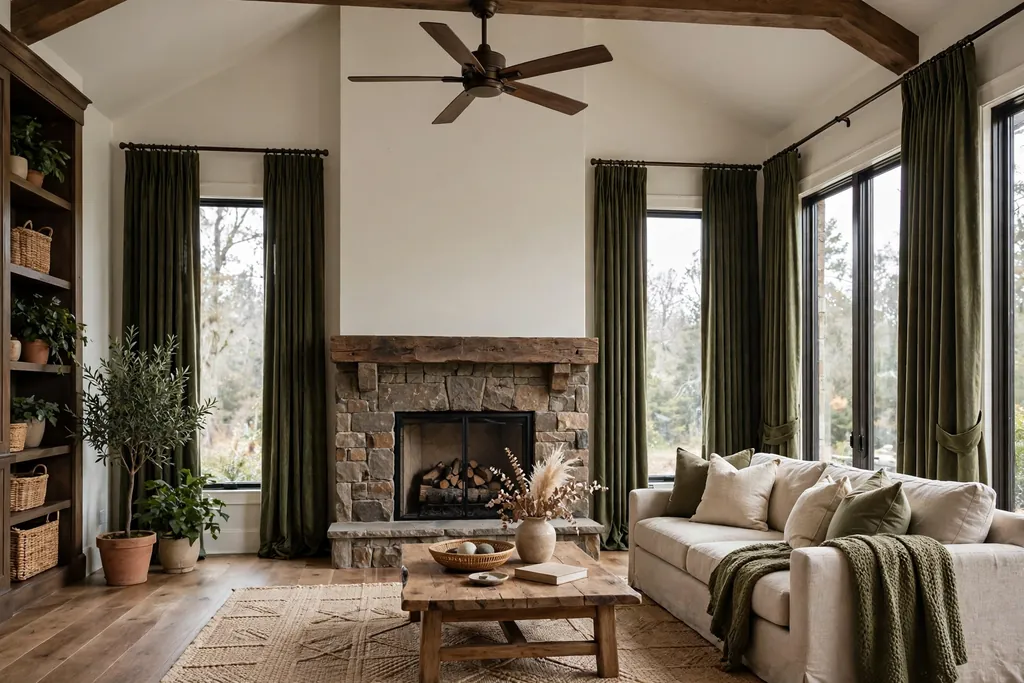
    Great room with a ceiling fan, a fireplace, and heavy curtains on tall windows.

    Sound, heating, and cooling behave differently in the two rooms, and this difference affects daily comfort more than style does. In a great room, sound travels across the open floor and bounces off tall walls and hard floors, so conversation, television, and kitchen noise mix. Soft surfaces help: a thick rug, upholstered seating, curtains on tall windows, and fabric panels or bookcases on large walls all absorb sound. A separate rug in each zone also cuts echo, since bare floor between zones carries sound.

    Warm air rises, so a great room with a tall ceiling can feel warm near the ceiling and cool at seating level in winter, and hard to cool evenly in summer. A ceiling fan set to push air down in winter and circulate it in summer helps, as do window coverings that block summer sun on tall glass and hold warmth on cold nights. A fireplace warms the seating zone near it, but it will not heat the whole open space evenly. In a standard living room, walls and a lower ceiling keep sound and heat contained, so the room warms up faster, stays even, and keeps television sound from reaching the rest of the house. That contained feel is one reason many people prefer a living room for reading, homework, and quiet evenings.

    14. How to Choose and Plan Each Space

    Person measuring a living room wall with a tape measure beside a sketched floor plan with marked zones.

    Choose between a great room and a living room by looking at how your household lives on an ordinary day. If most evenings find the household in one shared space, with cooking, homework, and conversation overlapping, a great room supports that pattern. If different people need quiet at the same time, or if the household values a room that can close off, a separate living room serves better. Also weigh upkeep: a great room has more floor, more glass, and taller surfaces to clean and light, while a living room costs less time and money to furnish, heat, and keep tidy.

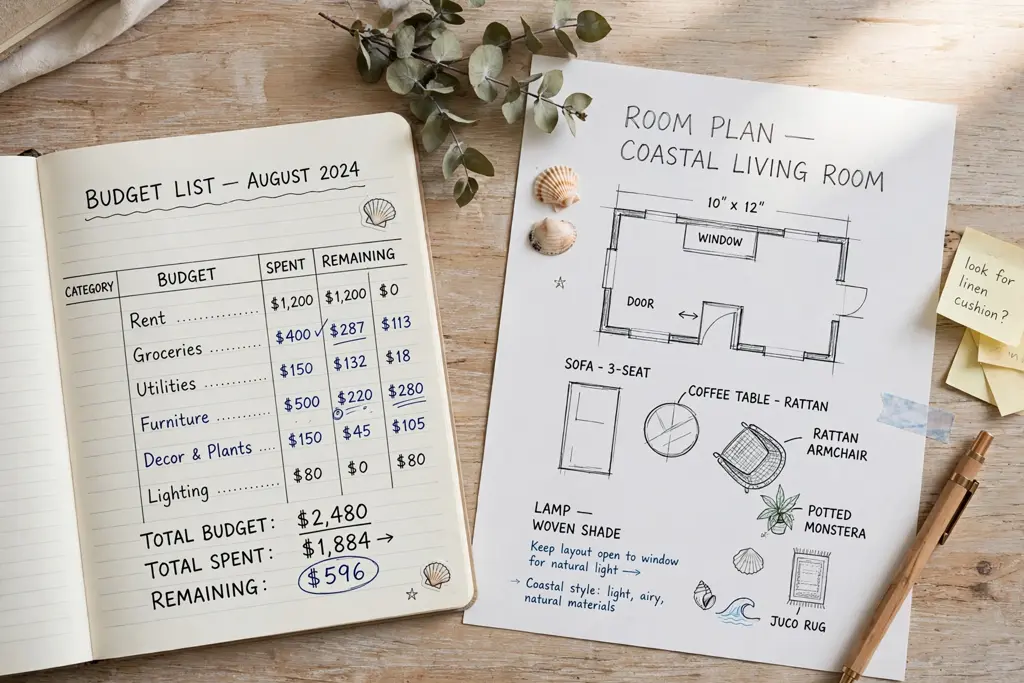
    When you plan either room, start with measurements, not furniture shopping. Measure the floor, the ceiling height, the window sizes, and the doorways, and sketch the zones on paper before you buy. In a great room, mark zones with tape on the floor and walk the daily routes before you commit to large pieces. In a living room, mark the sofa footprint and the walkways the same way. In both rooms, buy the largest pieces first, live with them for a few weeks, and then add lighting, art, and textiles once you know how the room is actually used. A room planned around real routines will feel right long after the first decorating choices fade into the background.

    Conclusion

    A great room and a living room are not two names for the same space. A great room is large, tall, and open, built for shared life across zones, while a living room is smaller, separate, and easier to furnish, heat, and keep quiet. Each room asks for different furniture scale, lighting layers, and decorating choices, and each one suits a different way of living. Measure your space, watch how your household uses it on a normal day, and plan zones, light, and sound before you buy. With those choices made early, either room can become the comfortable center of the home.

    Frequently Asked Questions

    What is the main difference between a great room and a living room?

    A great room is a large, tall, open space joined to the kitchen and dining areas, while a living room is a smaller, separate room with a standard ceiling used mainly for sitting and conversation. The difference is scale and connection, not style: great rooms gather several activities in one open space, and living rooms hold one seating group within walls.

    Is a great room the same as a family room?

    No, a great room and a family room are not the same, though the terms are sometimes used loosely. A great room is defined by its large size and tall ceiling and is usually open to the kitchen and dining space, while a family room is usually a casual, separate room near the kitchen used for television and everyday relaxing, often with a standard ceiling. A home can have both, or one room that serves both roles.

    Can a small home have a great room?

    A small home can have a great room only if it has the floor area and ceiling height to support one, since the term describes a large, tall, open space. In a small home, an open plan living and dining area can feel similar, but it will not have the scale of a true great room. In that case, treat it as an open plan living space: use rugs and lighting to mark zones, and choose furniture sized to the actual floor, not to the great room label.

    What furniture works best in a great room?

    Large scale seating works best in a great room, such as a sectional or a sofa with two generous chairs, paired with a substantial coffee table and a rug large enough for the front legs of all seating. Tall bookcases, long curtains, and large art help fill the vertical space. Balance large pieces with lighter side tables and open legged shapes, so the floor still has air around the furniture.

    How do you make a great room feel cozy?

    Use rugs, layered lighting, and soft surfaces to make a great room feel cozy. Anchor the seating group on a thick rug, add table and floor lamps at seating height, hang long curtains on tall windows, and add cushions, throws, and plants at different heights. Repeat one wood tone and one metal finish through the zones, and put decorating effort into the seating zone where people actually sit.

    Is a living room or a great room better for resale?

    Neither room type is better in every home, since buyers weigh layout, size, and daily use differently. A great room appeals to buyers who want open gathering space and a clear view across the main floor, while a separate living room appeals to buyers who want quiet, privacy, and rooms that are easy to heat and furnish. The stronger choice is the layout that fits the home’s size and the way its rooms connect, kept in good condition with clear zones and good lighting.
  • Living Room vs. Family Room: Layout, Furniture, and Decorating Differences

    Living Room vs. Family Room: Layout, Furniture, and Decorating Differences

    A living room is usually the more formal front room for greeting guests and quiet conversation, while a family room is the casual everyday space for relaxing, watching television, and spending time together. Living rooms tend to sit near the entry with tidier furniture, and family rooms sit near the kitchen with softer, hardwearing seating built for daily use.

    The names get mixed up often, because many homes use one room for both jobs, and open floor plans blur the line further. The difference is less about the label on a floor plan and more about how the room is used, where it sits in the home, and how formal it feels. This guide compares the two room types side by side so you can name what you have, plan what you need, and decorate each room to fit its real job.

    Key Takeaways

    • A living room is typically the formal front room near the entry, used for guests, conversation, and quieter activities.
    • A family room is typically the casual everyday room near the kitchen, used for television, play, homework, and relaxed gathering.
    • Living room layouts often center on conversation and a fireplace or view, while family room layouts often center on a television and flexible seating.
    • Living room furniture tends to look tidier and more structured, while family room furniture tends to be softer, deeper, and easier to clean.
    • Homes with only one gathering room can blend both roles with zoned seating, layered lighting, and storage that hides everyday clutter.
    • Choose based on how your household actually lives, not on the room name printed on a floor plan.

    1. What a Living Room Is

    Tidy formal living room near a front entry with a tailored sofa and matching chairs.

    A living room is the room most homes place near the front door, and it is usually the first gathering space a guest sees. It is meant for conversation, reading, music, and receiving visitors, so it often looks more put together than the rest of the house. In older floor plans, the living room sits at the front of the home, separate from the kitchen and the bedrooms, with a clear doorway rather than an open connection to the cooking area.

    Because guests see it first, a living room often carries the home’s more polished pieces: a sofa with a tailored shape, matching chairs, a coffee table kept fairly clear, and decor chosen for looks as much as use. That does not mean the room must be off limits. Many households use the living room daily for reading or quiet evenings, but the room still keeps a tidier standard, with toys, work papers, and everyday clutter stored elsewhere.

    2. What a Family Room Is

    Casual family room near a kitchen with a deep sectional sofa and a television.

    A family room is the casual gathering room where a household spends most of its relaxed time together. It usually sits toward the back of the home, near or open to the kitchen, so meals, homework, television, and conversation can flow between rooms. In many floor plans it is also called a den, a great room, or a rec room, depending on the region and the size of the home.

    The family room is built for daily use rather than display. Seating is often deeper and softer, surfaces are chosen to stand up to snacks, pets, and board games, and storage is part of the design rather than an afterthought. A television is common here, along with game storage, blankets, and chargers, because the room is where the household actually unwinds at the end of the day.

    3. Living Room vs Family Room at a Glance

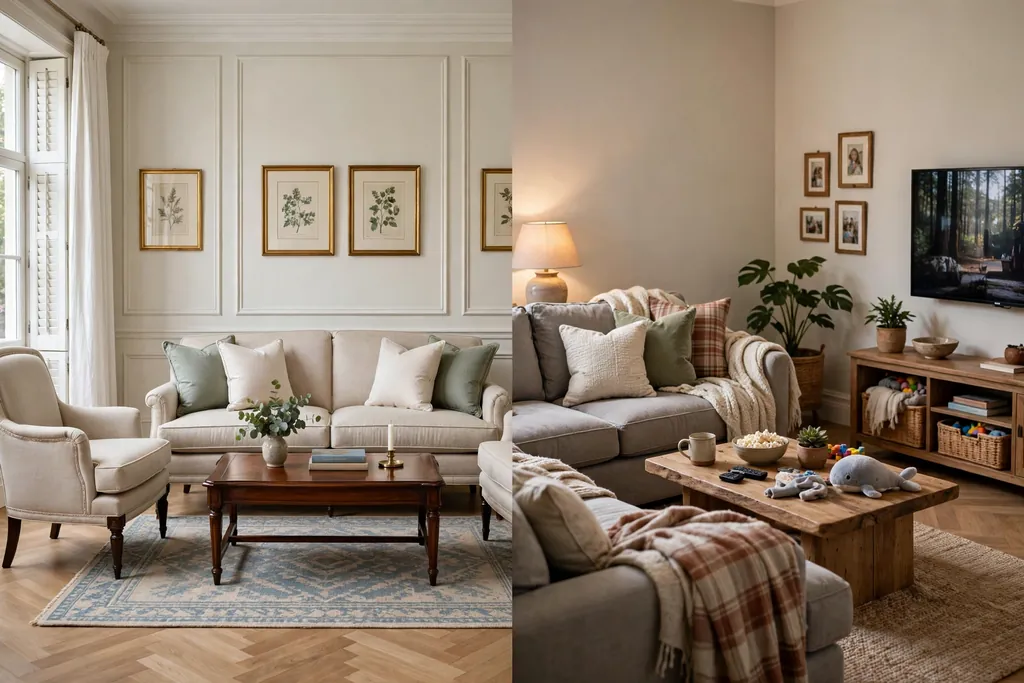
    Side by side comparison of a tidy formal seating area and a relaxed family seating area.

    This short comparison sums up the usual differences. Individual homes vary, and a room can borrow traits from both columns, but the pattern below is a useful starting point for planning.

    Feature Living Room Family Room
    Usual location Near the front entry Near or open to the kitchen
    Main purpose Guests, conversation, quiet activities Daily relaxing, television, play
    Formality More formal and polished Casual and relaxed
    Layout focus Conversation and a fireplace or view Television and flexible seating
    Furniture Structured, tailored, tidier Soft, deep, hardwearing
    Lighting Layered lamps and a central fixture Bright, flexible, screen friendly
    Storage Display pieces and closed cabinets Baskets, bins, and media storage
    Everyday clutter Kept out of sight Managed in the open with storage

    If your home has both rooms, use this table to check which job each room is actually doing. If the “formal” room holds the television and the toy bins, it may be acting as the family room whatever the floor plan calls it.

    4. How the Layout Differs

    Living room layout with chairs facing each other around a coffee table near a fireplace.

    Living room layouts usually center on conversation. Sofas and chairs face each other, or face a fireplace or a window view, with a coffee table between them and clear paths around the group. The television, if there is one, is often secondary or hidden, because the arrangement is designed so people face each other rather than a screen.

    Family room layouts usually center on the television and on flexible seating. A large sofa or sectional often faces the screen, with extra chairs or floor cushions that can move for movie nights or game nights. Because the room also connects to the kitchen, the layout needs open paths for carrying food and drinks, and seating that can turn toward the kitchen for conversation during meal prep.

    5. How the Furniture Differs

    Structured living room furniture with a tailored sofa and matching side tables.

    Living room furniture tends to have a structured shape and a tailored finish. Sofas often have upright backs, neat arms, and legs that show, and chairs are chosen to match or coordinate closely. Side tables, a console, and a bookshelf complete the room, and each piece has a fixed place that does not move often.

    Family room furniture tends to be larger, softer, and more forgiving. Sectionals, recliners, and deep lounge chairs are common, and ottomans often serve as extra seats, footrests, and coffee tables in one piece. Pieces move more often in a family room, pulled closer for a movie or pushed aside for a game, so lighter frames, washable covers, and sturdy joints matter more than a perfectly matched set.

    6. Seating Comfort and Everyday Use

    Deep soft family room sectional with plump cushions throws and pillows.

    In a living room, seating is chosen for a mix of comfort and appearance, and it often stays neat between uses. Cushions are firmer and hold their shape, upholstery may be a lighter color or a finer fabric, and throw pillows are arranged rather than piled. The room invites guests to sit and talk, but it is not usually where the household sprawls for hours.

    In a family room, seating is chosen for long, relaxed use first. Deep seats, soft cushions, and washable fabrics suit naps, reading, and movie nights, and blankets and extra pillows are part of the room rather than decoration. If your household has children or pets, this is the room where durable fabric, removable covers, and stain friendly colors pay off, because the seating gets used hard every day.

    7. Decorating Style and Formality

    Polished living room with a balanced color palette framed art and a clear coffee table.

    Living room decorating often leans more formal, with a clear color palette, matched frames, and decor arranged in balanced groups. Art, mirrors, and lamps are chosen to suit the room as a whole, and surfaces are kept fairly clear so the room looks calm and finished. Formal does not have to mean stiff, but the room usually has a sense of order that guests notice at once.

    Family room decorating is usually looser and more personal. Family photos, collections, game shelves, and children’s art can all belong here, and the palette often includes warmer, darker, or bolder colors that hide wear. The room should still look cared for, but the standard is comfort and personality over polish, and a little lived-in texture is part of the charm.

    8. Lighting in Each Room

    Living room at dusk lit by table lamps and a ceiling fixture.

    Living rooms often use layered lighting: a central ceiling fixture or chandelier for general light, table lamps beside seating for reading, and accent light for art or a fireplace. Dimmers help, because the same room may need bright light for a gathering and soft light for a quiet evening. Lamps with warm bulbs suit conversation, since the light falls at seated eye level rather than from above.

    Family rooms need flexible lighting that works with a screen. Overhead light should be bright enough for homework and games but easy to dim or switch off for television, and lamps near reading chairs keep one person from needing full room light. Avoid placing a bright light directly opposite the television, where glare lands on the screen, and keep a small lamp or strip light behind or beside the screen for evening viewing comfort.

    9. Storage and Organization

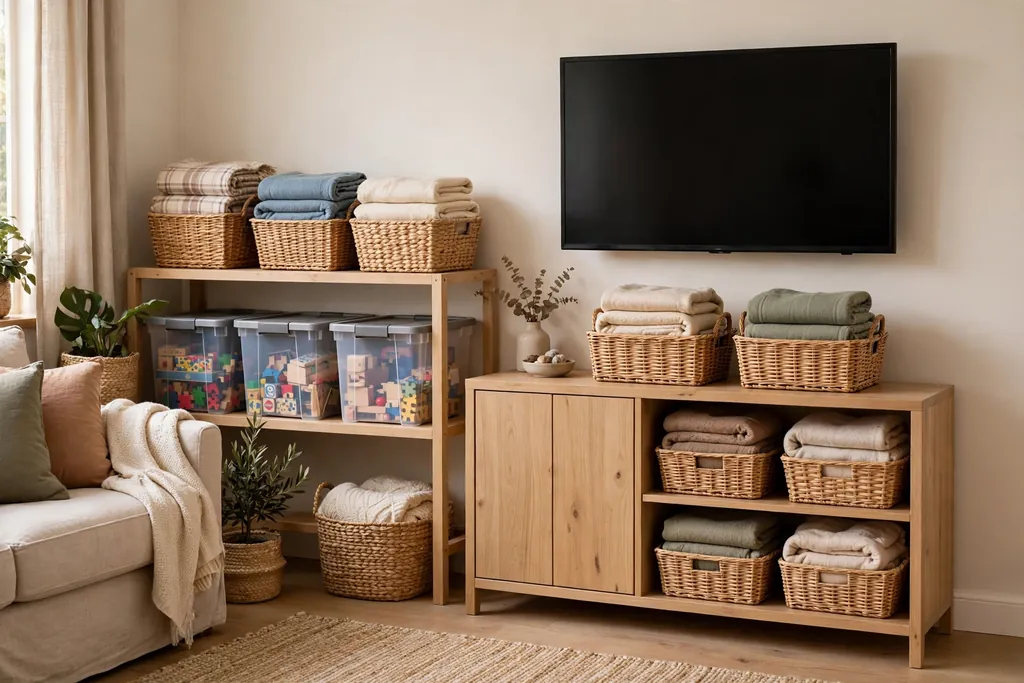
    Family room storage with baskets for blankets bins for games and a media unit.

    Living room storage is often built to look like furniture: closed cabinets, a console with doors, and bookshelves with a mix of books and display pieces. The goal is to keep everyday items out of sight so the room stays tidy for guests. A single basket for throws or magazines is usually enough, because bulkier household storage lives in other rooms.

    Family room storage has to work harder and hold more. Media units, baskets for blankets, bins for games and toys, and shelves for books and chargers all belong here, and open storage works well when bins are labeled and easy to reach. Plan one closed spot for clutter that needs to vanish fast, such as a cabinet or a large lidded basket, so the room can be tidied quickly before guests arrive.

    10. Traffic Flow and Where Each Room Sits

    Clear walkway from a front entry into a living room with seating set back.

    A living room near the entry handles a different kind of traffic from a family room near the kitchen. Guests arrive, remove coats, and sit down, so the living room needs a clear path from the door to the seating and a place for coats and bags that does not block the walkway. Paths should be wide enough for two people to pass, and furniture should not force visitors to squeeze behind a sofa.

    A family room handles daily household traffic, including trips between the kitchen, the back door, and the stairs. Keep the main path through the room clear of ottomans, toy bins, and trailing cables, and arrange seating so people can cross the room without walking in front of the television. If the family room opens to the kitchen, leave a clear serving path between the two spaces so food and drinks move safely.

    11. Who Uses Each Room and When

    Family room in the evening with people relaxing reading and watching television together.

    Living rooms are most often used by guests and by adults for quieter moments: a visit with friends, a phone call, reading, or an evening drink. They also suit activities that need calm and order, such as homework interviews, small celebrations, and holiday gatherings where the room is dressed up for the occasion.

    Family rooms are used by the whole household, often at the same time and for different activities: one person watches television while another reads, children play on the floor, and someone works on a laptop at the table. Evenings and weekends are peak times, and the room often stays busy from after school until bedtime. When you plan either room, list who uses it and when, because that list decides seating count, storage, and lighting better than any floor plan label.

    12. How to Choose the Right Room for Your Home

    Homeowner comparing two room layouts on a floor plan sketch at a table.

    If your home has both a living room and a family room, assign each room by use rather than by name. Give the television, the games, and the daily lounging to the room near the kitchen, and keep the front room for guests, conversation, and quieter activities. This split keeps noise and clutter away from the entry and gives each room a clear job.

    If your home has only one gathering room, choose the role that fits your household best, or blend both roles on purpose (see section 13). A household that rarely hosts guests may prefer a casual family room setup, while a household that entertains often may prefer a tidier living room with a television kept secondary. There is no wrong choice, but a room with no clear job tends to collect clutter from every other room, so name its main purpose and decorate to support it.

    13. How to Blend Both Rooms in One Home

    Large room zoned into a conversation area and a television lounge area with rugs.

    Many homes need one room to do both jobs, and zoning is the simplest way to blend them. Arrange a conversation group of sofa and chairs around a coffee table for guests, and place a separate lounge chair or chaise near the television for daily relaxing. A rug under each group marks the zones, and a console or open shelf between them can divide the space without blocking light or conversation.

    Keep the shared room tidy with family room storage hidden inside living room furniture: a storage ottoman for blankets, a closed cabinet for games, and baskets that match the room palette. Choose seating fabric that looks tailored but cleans easily, and use layered lighting so the room can shift from bright family time to softer guest evenings. The blend works when each zone has its own purpose, even if both zones share one room.

    14. Mistakes to Avoid When Planning Either Room

    Tape measure and furniture layout notes on a living room floor next to a sofa.

    One common mistake is buying furniture before measuring the room and the walkways. A sectional that blocks the path to the kitchen, or a sofa that crowds the front door, causes daily friction whatever the room is called. Measure the seating wall, the walkways, and the door swings first, and leave clear paths before you choose large pieces.

    Another mistake is giving the television the best wall in a living room meant for conversation, or placing formal, light colored seating in a family room used by children and pets. Match the room’s main job to its layout and materials, keep one room’s clutter from spilling into the other, and revisit the plan once a season: rooms change as households grow, and a small rearrangement can restore a room’s purpose without new furniture.

    Conclusion

    A living room and a family room differ mainly in purpose, place, and formality: the living room is the formal front room for guests and conversation, and the family room is the casual back room for daily relaxing near the kitchen. Layout, furniture, lighting, and storage all follow from that difference, so start with how your household actually lives and let each room’s job guide its design. Whether you have both rooms or one room doing double duty, a clear purpose, measured furniture, and storage for everyday clutter will keep the space comfortable for guests and family alike. For more ideas from Dwell Ovell, browse the home page for room guides and decorating ideas.

    FAQs

    What is the main difference between a living room and a family room?

    The main difference is purpose and formality: a living room is usually the formal front room for guests and conversation, while a family room is the casual everyday room for relaxing, television, and family time. Living rooms tend to sit near the entry, and family rooms tend to sit near the kitchen, but how each room is used matters more than its name.

    Is a family room the same as a den?

    A family room and a den are similar but not always the same. A den is often a smaller, cozier room used as a study, library, or quiet retreat, while a family room is usually larger and built for group relaxing and television. In some homes the terms overlap, and the room’s actual use decides which label fits better.

    Do new homes still have both a living room and a family room?

    Some new homes have both rooms, but many newer floor plans combine them into one open great room near the kitchen. In an open plan home, the living and family roles are usually handled by zones within one large space, with a conversation group in one area and a television lounge in another.

    Which room should have the television?

    The television usually belongs in the family room, where daily viewing, games, and relaxed seating are expected. If a home has only a living room, the television can still work there, but place it so it does not dominate the conversation group, and keep seating arranged so guests can talk without facing the screen.

    Can a small home have both a living room and a family room?

    A small home can have both roles even without two separate rooms, by zoning one gathering room into a conversation area and a lounge area. Use rugs, lighting, and furniture placement to mark each zone, and choose storage that hides everyday clutter so the room can shift from family time to guest ready quickly.

    Should a living room be formal even if guests rarely visit?

    No, a living room does not have to stay formal if guests rarely visit. If the household uses the front room daily, decorate it for that real use, with comfortable seating, good reading light, and storage for the items that actually live there, and keep only as much formality as suits the household’s habits.

  • 25 Cozy Room Decorating Ideas Using Color, Texture, and Lighting

    25 Cozy Room Decorating Ideas Using Color, Texture, and Lighting

    Cozy room decorating ideas work best when warm color, soft texture, and layered lighting are used together: paint or furnishings in warm tones, tactile layers such as wool, velvet, and wood, and lamps at several heights instead of one bright overhead light. The 25 ideas below show how to combine those three elements in living rooms, bedrooms, and small spaces.

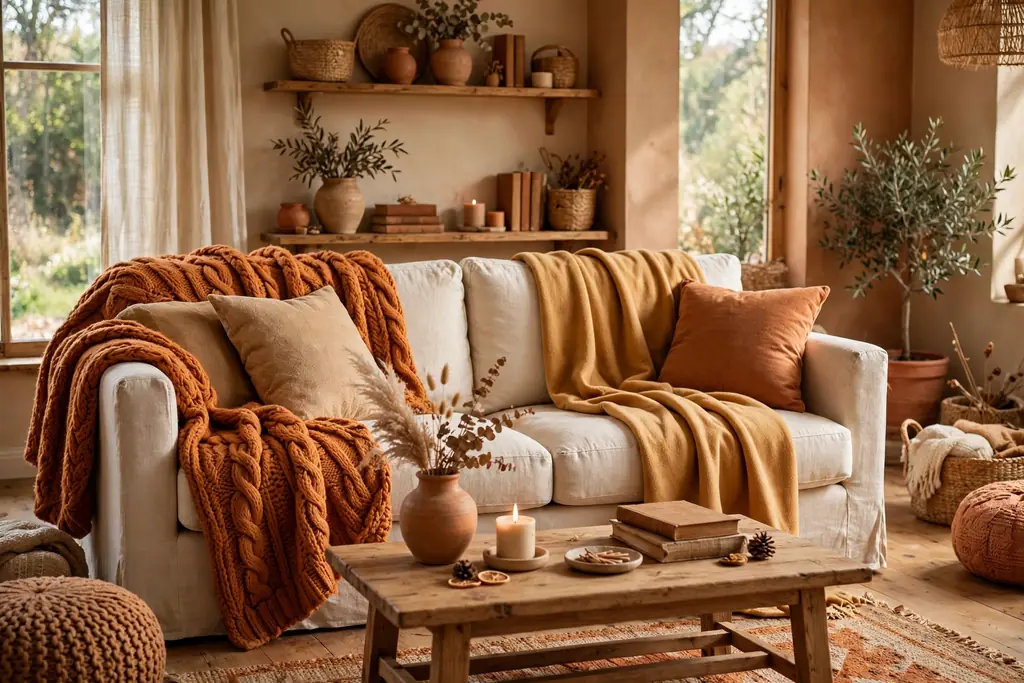
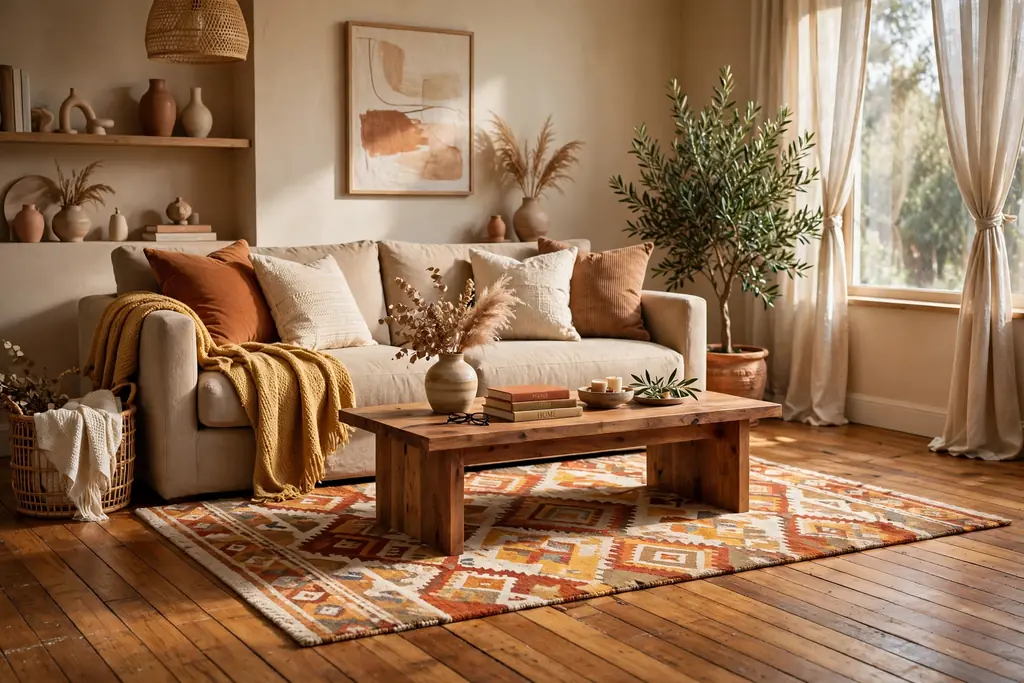
    Start with the room you use most in the evening, since that is where warm light and soft layers pay off first. Pick two or three warm colors, such as cream, terracotta, and soft brown, and repeat each one at least twice, in a throw, a cushion, and a rug, so the room looks planned. Then add light at seating height, keep one surface clear for daily use, and work through the list one idea at a time. For seasonal ways to layer the same warm palette, see fall living room decor ideas.

    Key Takeaways

    • Combine all three cozy elements: warm color, soft texture, and layered light, rather than relying on color alone.
    • Hold the palette to two or three warm colors plus natural wood, and repeat each color at least twice in the room.
    • Mix textures that invite touch: knit, wool, velvet, linen, wood, and woven fiber, with one smooth surface left clear for balance.
    • Light the room at several heights: a floor lamp, a table lamp, and candles or a small glow source, with the overhead light off in the evening.
    • Keep seating and walkways usable: throws within reach, rugs flat and secure, and decor low enough to see across.
    • Start small: one warm wall or one lamp change can shift a room, and later ideas can build on that base.

    1. Warm Paint Color on One Accent Wall

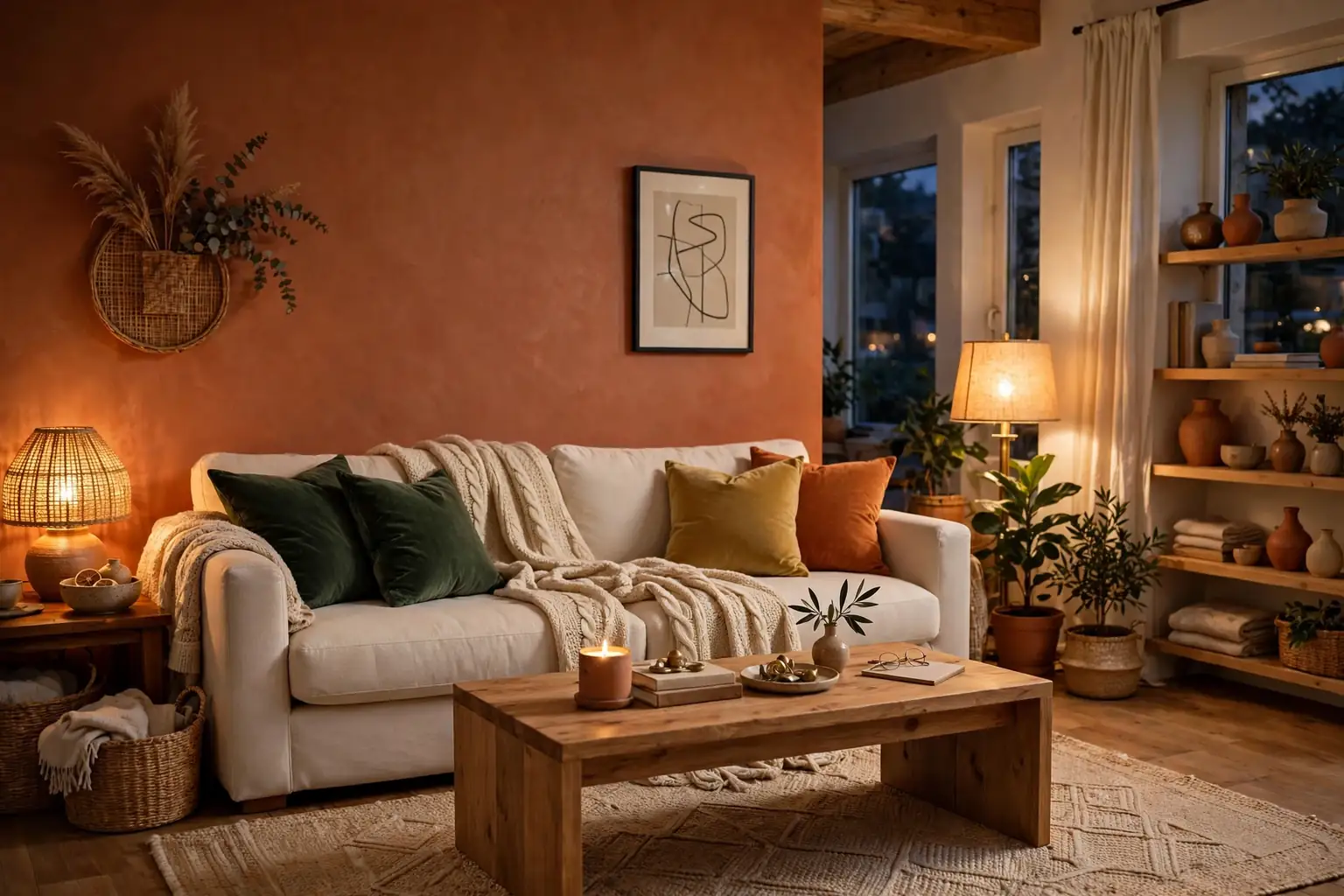
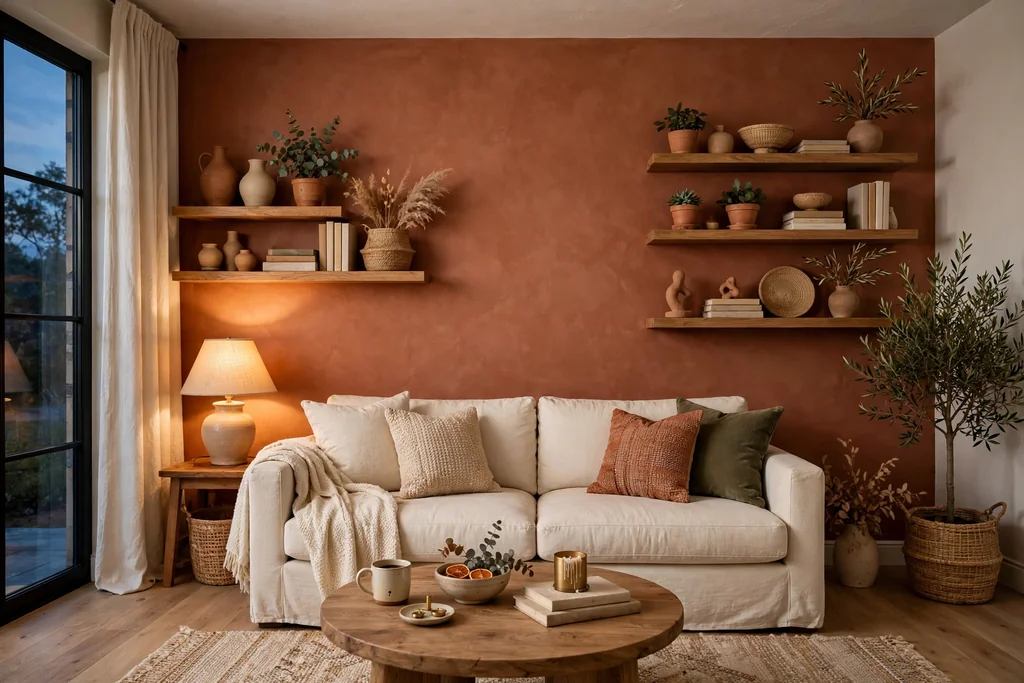
    Living room with one warm terracotta accent wall behind a cream sofa, wood shelves, and soft evening lamplight.

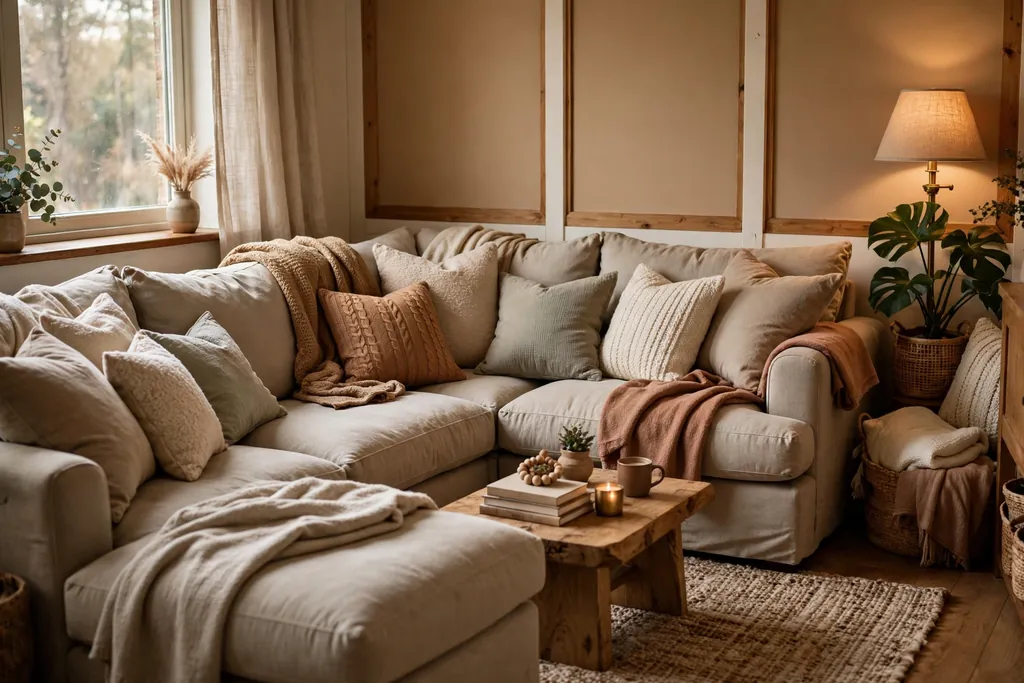
    Paint one wall in a warm tone, such as soft terracotta, warm taupe, or muted clay, and keep the other walls in cream or warm white. One warm wall gives the room a clear cozy anchor without making a small room feel dark, and it makes wood, linen, and brass nearby look richer. Choose the wall behind the sofa or the bed, so the color frames the main seating rather than competing with it.

    Test the color on a large card in daylight and in evening lamplight before painting, since warm tones shift a lot under different bulbs. Paint two coats, let the wall dry fully, and hang art or a mirror against it only after the paint has cured. If painting is not possible, a large warm toned fabric panel or a set of framed prints in warm colors gives a similar focal wall without paint.

    2. Layered Throws in Mixed Textures

    Cream sofa with a chunky knit throw and a smooth fleece throw draped over the arm and back in warm tones.

    Drape two throws over the sofa in different textures, such as a chunky knit and a smooth fleece, in colors from the same warm palette. Mixed textures make the seating look soft even before anyone sits down, and two throws let people choose a light or heavy layer. Fold one throw in thirds across the sofa back and drape the other over one arm, so both stay within reach.

    Keep throw colors close to the cushion colors, with one plain and one lightly patterned piece, so the sofa stays calm. Wash throws before first use and shake them out weekly, since throws used daily gather dust and pet hair. Store a spare throw in a basket nearby, so the sofa never ends up bare when one throw is in the wash.

    3. A Soft Rug That Warms the Floor

    Cozy seating area with a soft warm patterned rug under a sofa and wood coffee table on a hard floor.

    Lay a soft rug under the seating area, large enough that front chair and sofa legs sit on it, with a non slip pad beneath. A rug in a warm neutral, a muted pattern, or a soft pile warms the floor at once, quiets footsteps, and links the sofa, chairs, and coffee table into one group. In a room with hard floors, the rug is often the single change that makes the space feel cozy underfoot.

    Choose a flat weave or low pile rug where chairs move often, and a plusher pile beside a bed or reading chair, where feet land first. Center the rug under the main seating, not just under the room, and vacuum it weekly, blotting spills at once. For a small room, one rug is enough; layering a second rug works best in larger rooms where both edges can show.

    4. Lamps at Three Heights Instead of One Overhead Light

    Living room in the evening lit by a floor lamp, a table lamp, and candles, with the overhead light off.

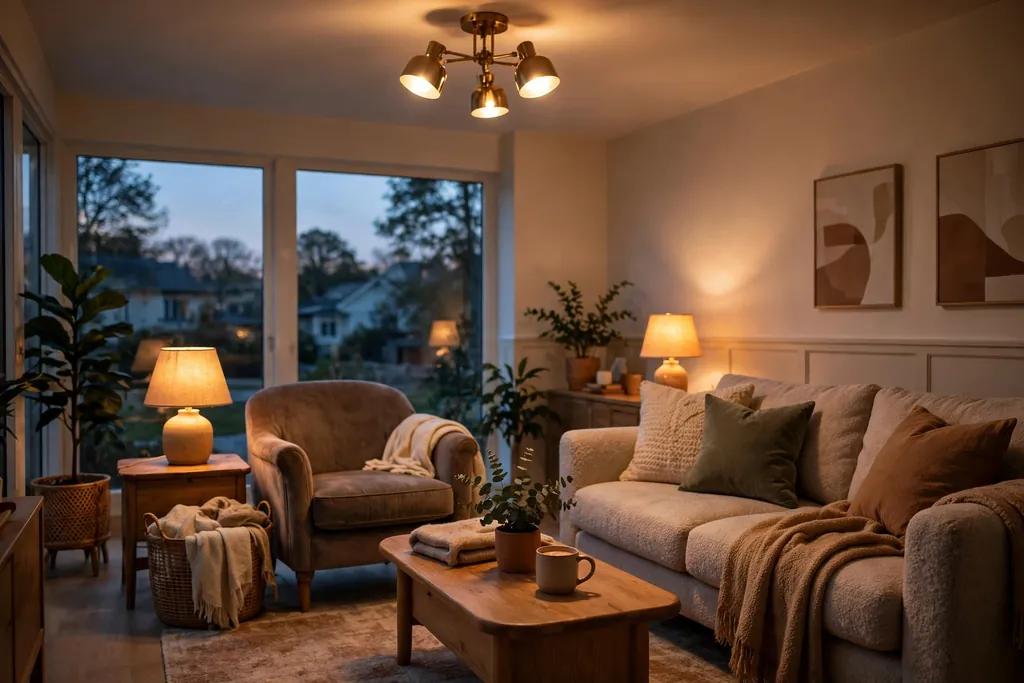
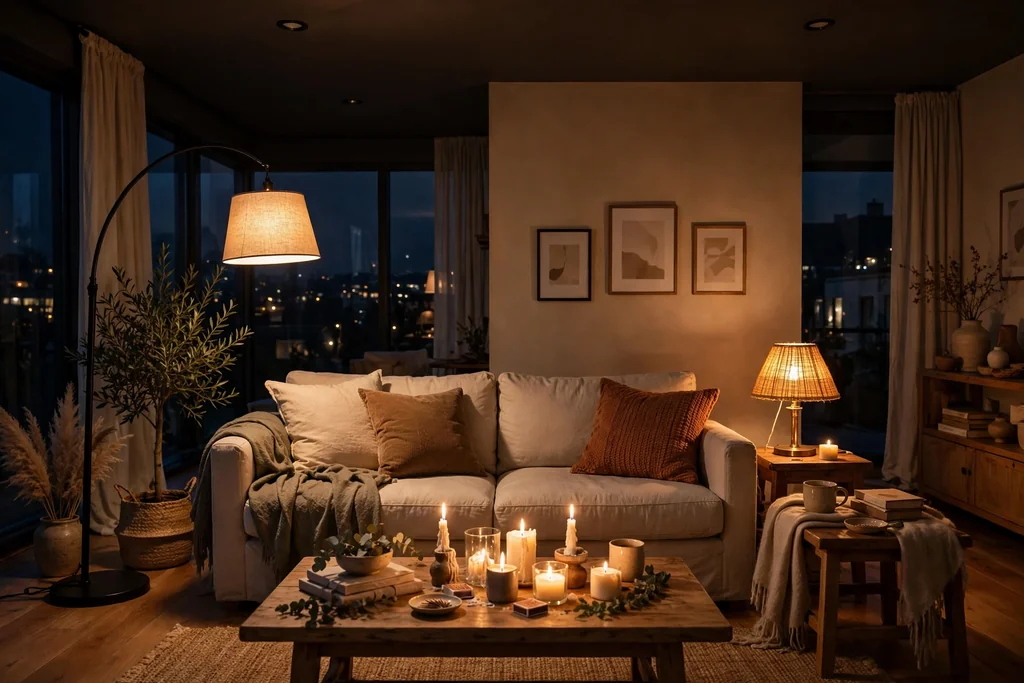
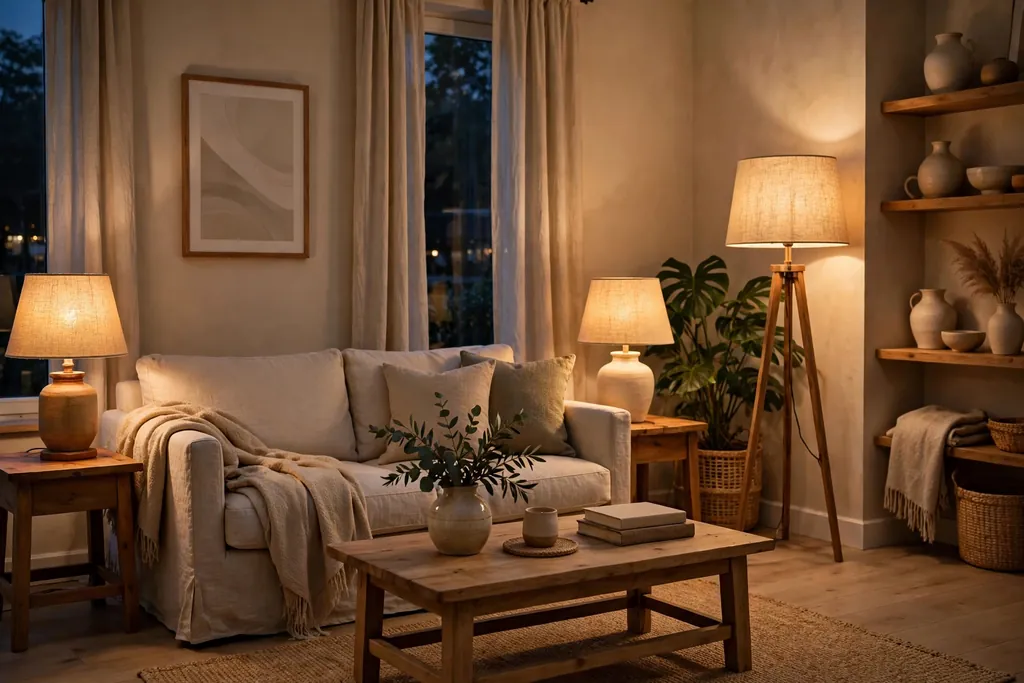
    Place lamps at three heights in the evening: a floor lamp beside the sofa, a table lamp on a side table or console, and a small glow source such as a candle on a tray. Light at several heights makes the room feel settled after dark, since no one sits in a pool of harsh overhead light or in shadow. Warm white bulbs suit cream, wood, and terracotta tones far better than cool white bulbs in a cozy room.

    Put the main lamp switch within reach of the main seat, and use a dimmer or a low watt bulb where possible, so the same lamps work for reading and for quiet evenings. Keep lamp shades in cream or linen, and keep lamp bases clear of throw ends and curtain fabric. For a wider warm lighting plan in a living room, see fall living room decor ideas.

    5. Sheer Curtains Layered with Heavier Drapes

    Living room window with sheer curtains and heavier cream linen drapes beside a cozy sofa.

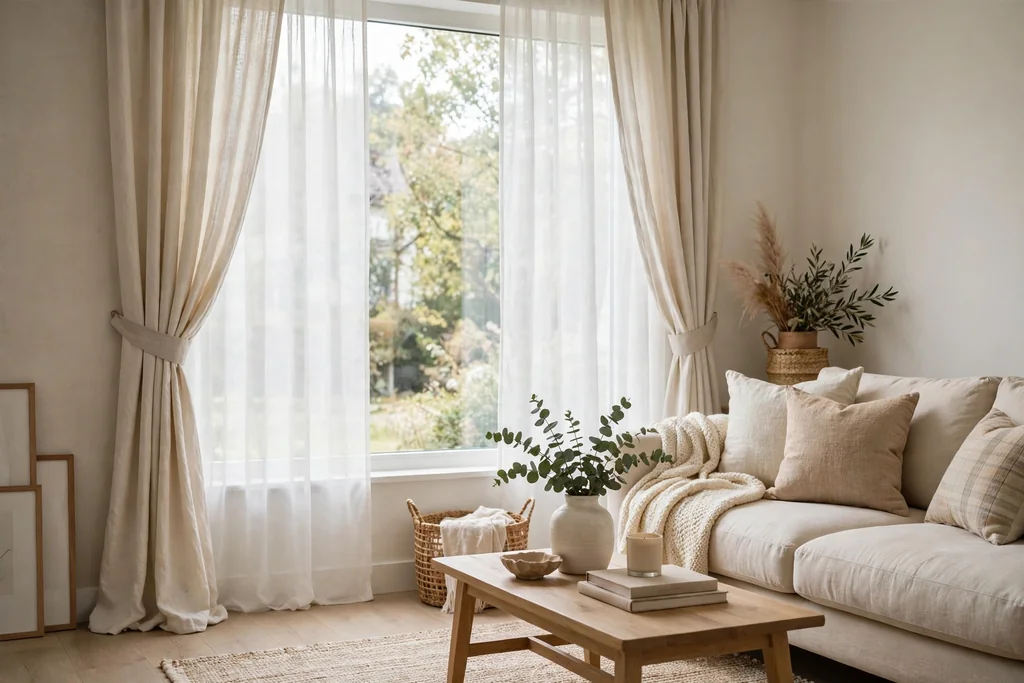
    Hang sheer curtains next to the glass for daytime privacy and soft light, then add heavier drapes in linen or cotton on the outside, so the window looks finished day and night. Sheers soften bright light and keep the room from feeling bare, while drapes frame the window and add warmth in the evening when drawn. Choose drapes in cream, warm white, or a quiet warm stripe that tones with the sofa fabric.

    Hang the rod high and wide, so the window looks larger and the drapes clear the glass when open. Tie drapes back during the day for light, and draw them in the evening for warmth and privacy. Keep drape fabric clear of candles, radiators, and heaters, and brush or wash the panels before the cold season, since dust shows more on light fabric in daylight.

    6. Chunky Knit and Velvet Cushions Together

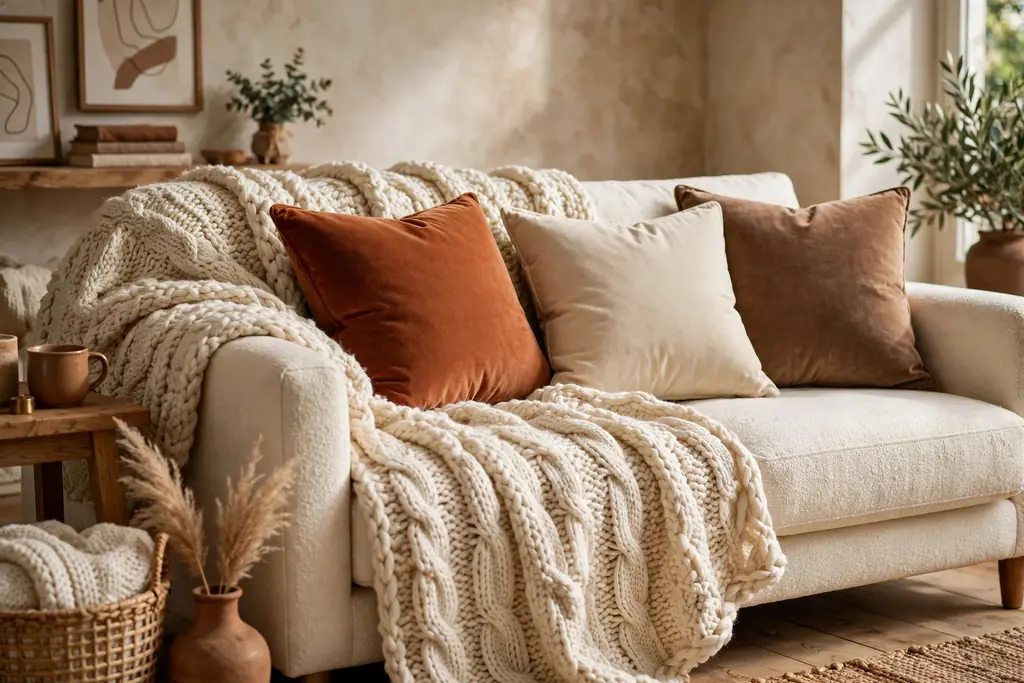
    Sofa with chunky knit and velvet cushions in cream, rust, and soft brown.

    Mix chunky knit cushion covers with velvet cushion covers on the same sofa, in two or three warm colors, with plain covers between patterned ones. Knit adds a chunky, handmade texture, while velvet adds a soft sheen, and the contrast keeps the sofa from looking flat. Use one knit texture and one velvet texture only, so the mix reads as planned rather than busy.

    Place larger cushions at the sofa corners and smaller ones in front, and keep the total count to what fits without a pile on the floor when someone sits down. Choose zip covers so you can wash them and swap them by season, and keep velvet covers out of strong direct sun, which can fade the pile unevenly. For farmhouse rooms that use the same soft layering, see farmhouse living room decor.

    7. Warm Wood Through a Coffee Table or Shelves

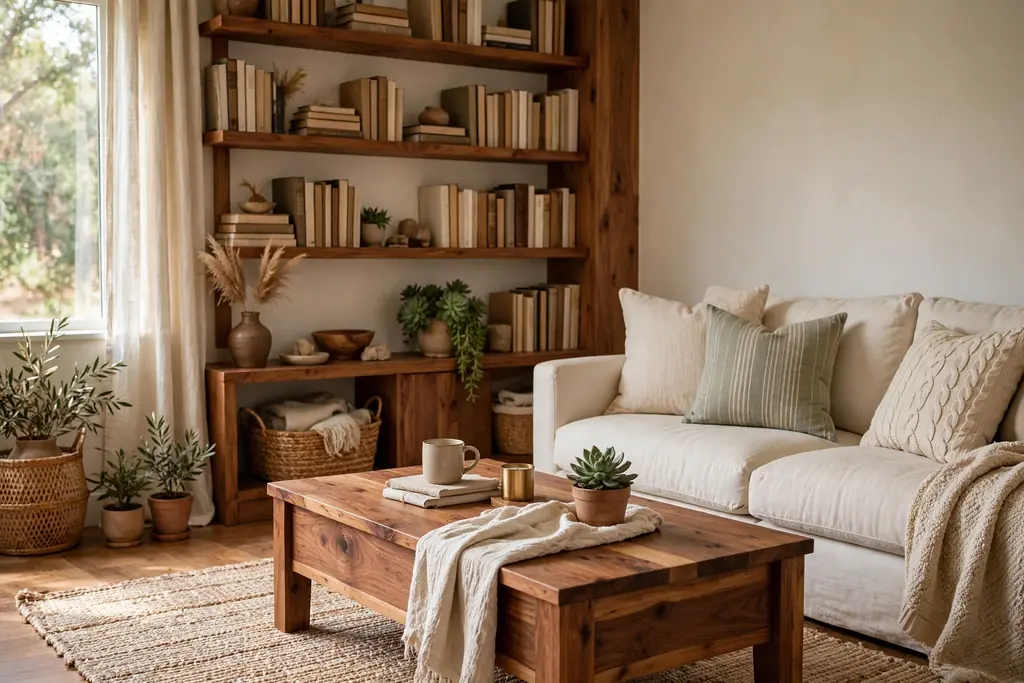
    Cozy living room anchored by a warm wood coffee table and wood shelves with books and a small plant.

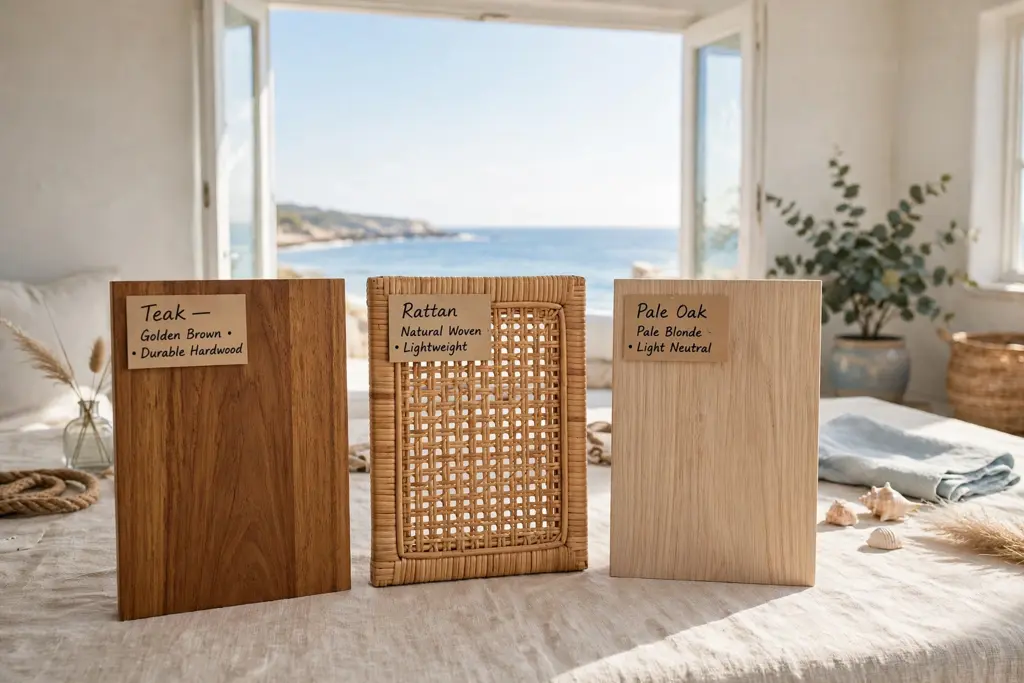
    Anchor the room with one warm wood piece, such as a coffee table, a set of shelves, or a console, in oak, walnut, or a warm worn tone. Wood adds a natural, warm material that softens plain walls and pale sofas, and it gives textiles and metal accents a solid base to sit against. Keep other wood tones in the room close to this anchor tone, so the wood reads as one family rather than a set of unrelated pieces.

    Style the wood surface with restraint: a tray, a short stack of books, and one small plant or candle, with clear space left for cups. Wipe wood with a dry cloth for dust and a damp cloth for spills, and use coasters under hot drinks so the finish stays even. If a new wood piece is not in the budget, sand and oil a secondhand table top, or add wood frames and a wood tray to bring the same warm tone into the room.

    8. Candlelight in Clusters on a Tray

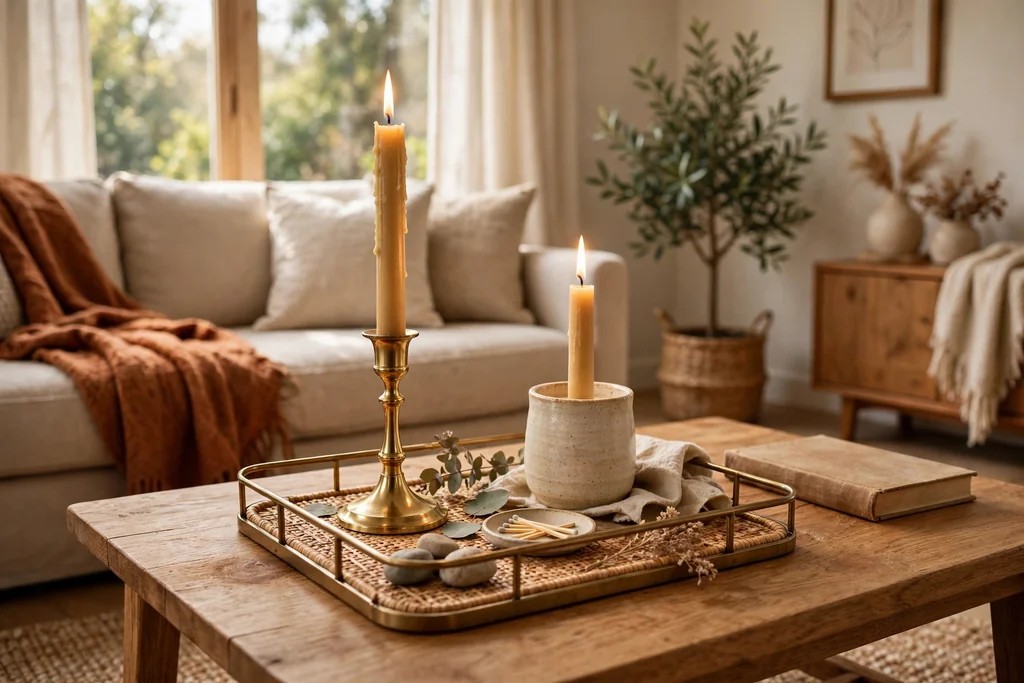
    Tray on a coffee table holding candles of two heights in brass and ceramic holders.

    Group three or four candles of two heights on a tray on the coffee table or sideboard, with holders in brass, ceramic, or glass. A candle cluster gives a low, warm glow that lamps alone cannot match, and the tray keeps the group together so it lifts off in one move when the table is needed. Keep the tray small enough that cups and books still fit beside it on the table.

    Use battery candles near fabric, paper, and dried stems, and keep real flames clear of throws, curtains, and garlands, never leaving them burning unattended. Trim wicks before lighting real candles, and set holders on a stable base so they do not tip. Change candle batteries together in a battery set, so the glow stays even across the group.

    9. A Reading Corner with an Armchair and a Lamp

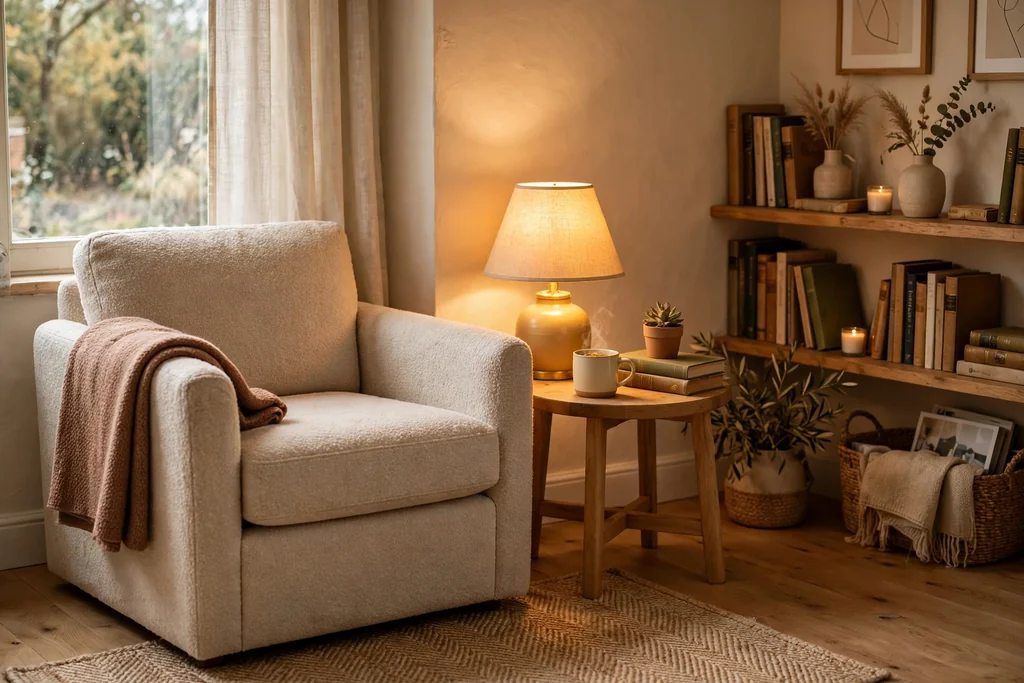
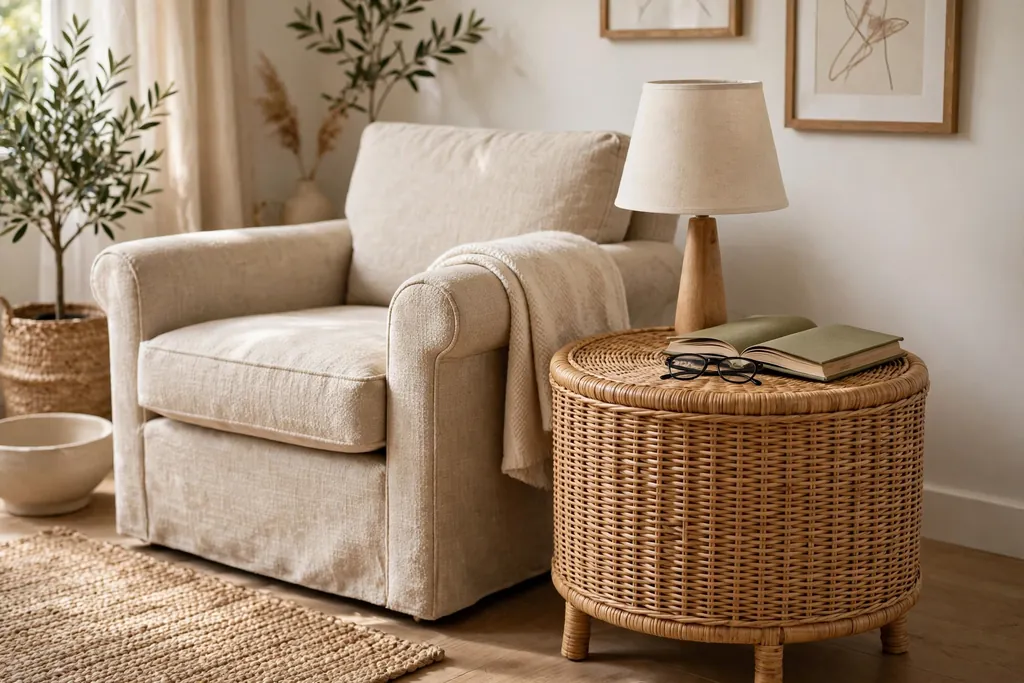
    Reading corner with a comfortable armchair, a warm table lamp, a small side table, and a folded throw.

    Set one comfortable armchair in a quiet corner, with a cushion, a small side table, and a lamp with a warm bulb at chair height. A reading corner gives one seat a clear purpose on dark evenings, and the lamp light adds a second warm layer beside the main sofa lighting. Choose a chair with a seat deep enough to sit in for an hour, and a side table just large enough for a book and a cup.

    Place the lamp so light falls on a book, not straight into the eyes of the person sitting down, and keep the chair clear of clutter so it stays an invitation rather than a storage spot. Add a small basket for books or a folded throw beside the chair, and keep the corner in the same warm palette as the rest of the room, so it feels like part of the room rather than a separate display.

    10. A Gallery Wall in Warm Frames

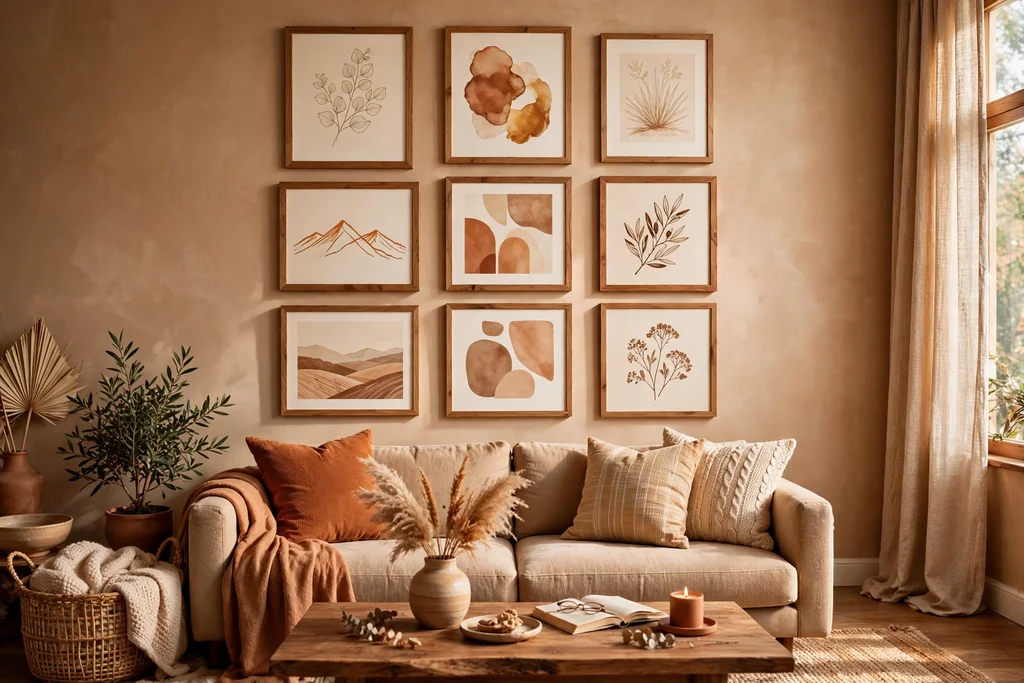
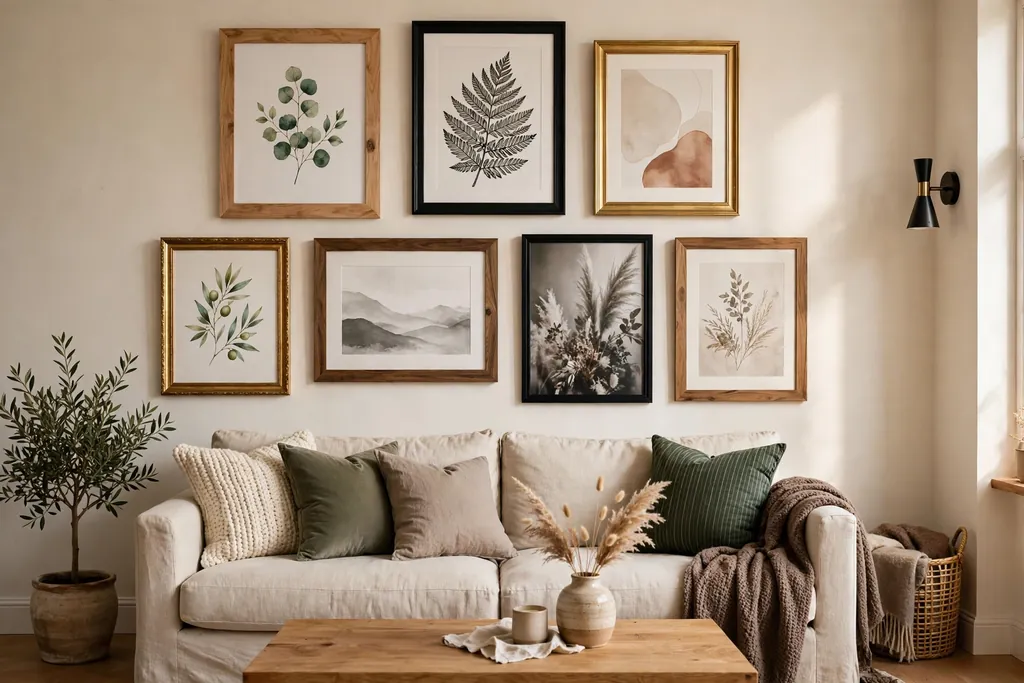
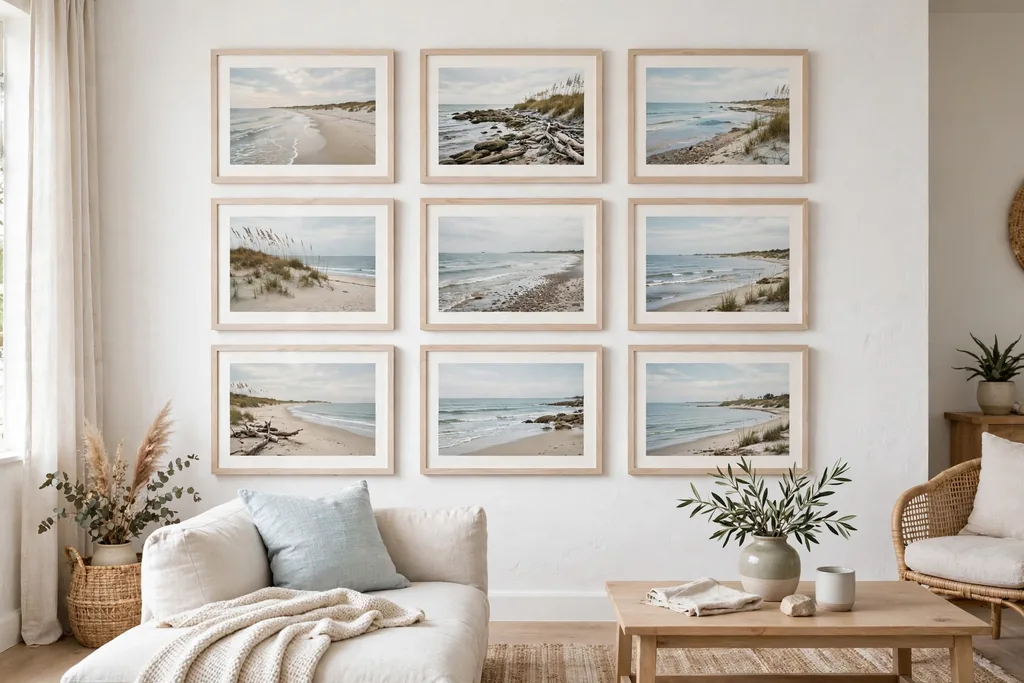
    Gallery wall of framed prints in warm wood frames above a sofa in a cozy living room.

    Group framed prints, photos, and small art in warm wood or brass frames on one wall, with even spacing between frames and one larger piece as the anchor. A gallery wall adds warm color and personal detail at eye level, and it fills a bare wall without a large, costly piece. Choose prints in warm tones, such as landscapes, botanical studies, or simple line art, so the group suits the room palette.

    Hang the group centered over the sofa or console, at seated eye level where possible, and check the layout on the floor first, so spacing stays even on the wall. Keep frames in one or two finishes only, and use secure fixings rated for the weight, especially above seating. Dust frames before a gathering, since dust shows more in warm lamplight.

    11. A Woven Basket for Throws and Blankets

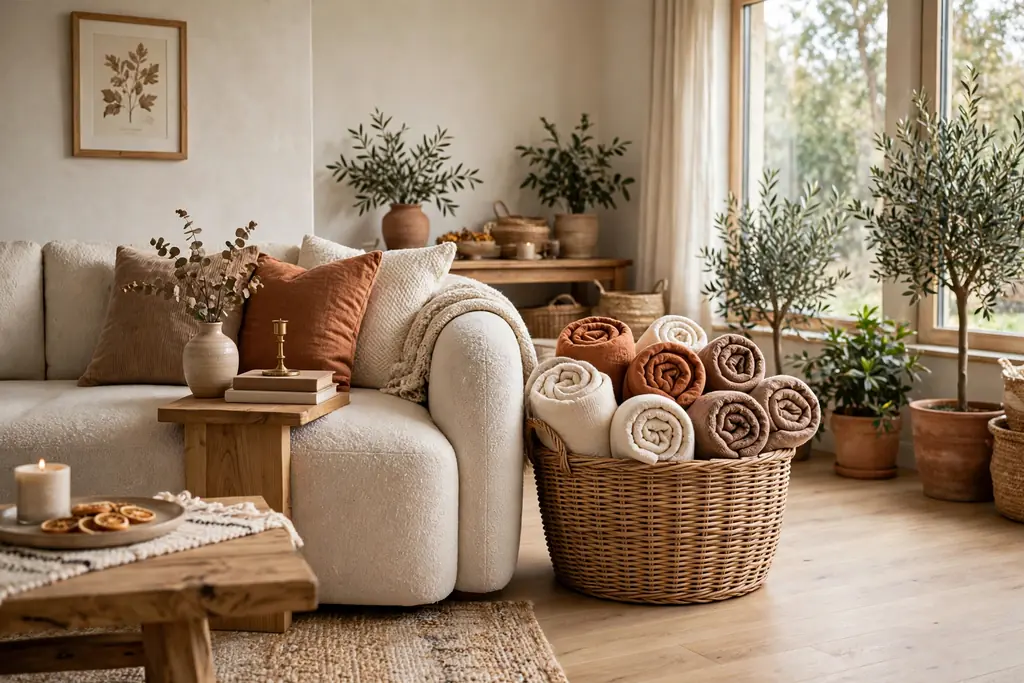
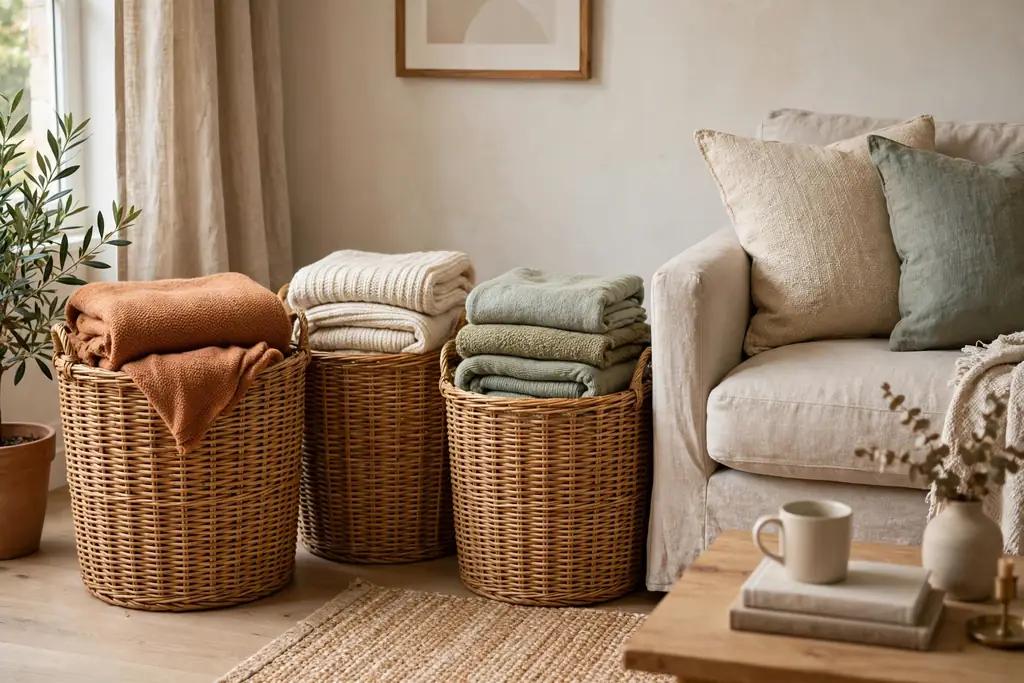
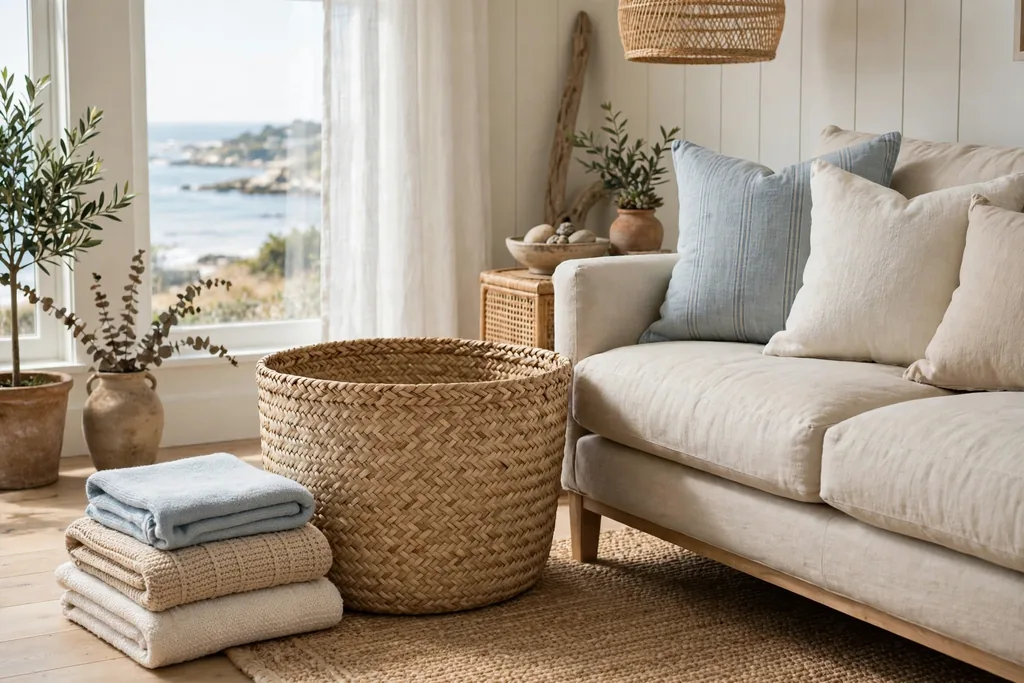
    Large woven basket beside a sofa filled with rolled throws in cream, rust, and soft brown.

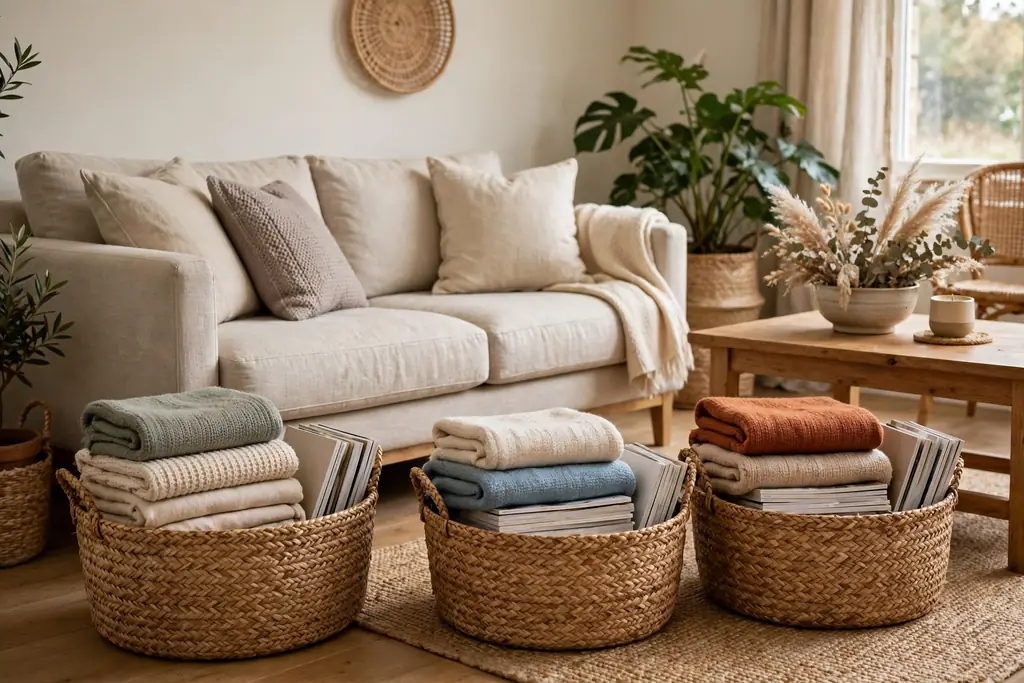
    Stand a large woven basket beside the sofa, filled with two or three rolled or folded throws in cream, rust, and soft brown. Rolled throws are easy to grab and easy to put back, and the basket itself adds a warm woven texture to the room. This idea suits households where people reach for a throw most evenings, since the basket keeps blankets tidy without a cupboard.

    Roll throws to a similar size so the basket looks tidy, and keep the basket clear of walkways so it is not knocked over. Shake the basket outside now and then, since dust settles in the weave, and avoid damp spots near the basket, which can mark natural fibers. If floor space is tight, a smaller basket on a shelf or a ladder for throws gives the same tidy storage in less room.

    12. A Styled Mantel or Shelf Ledge

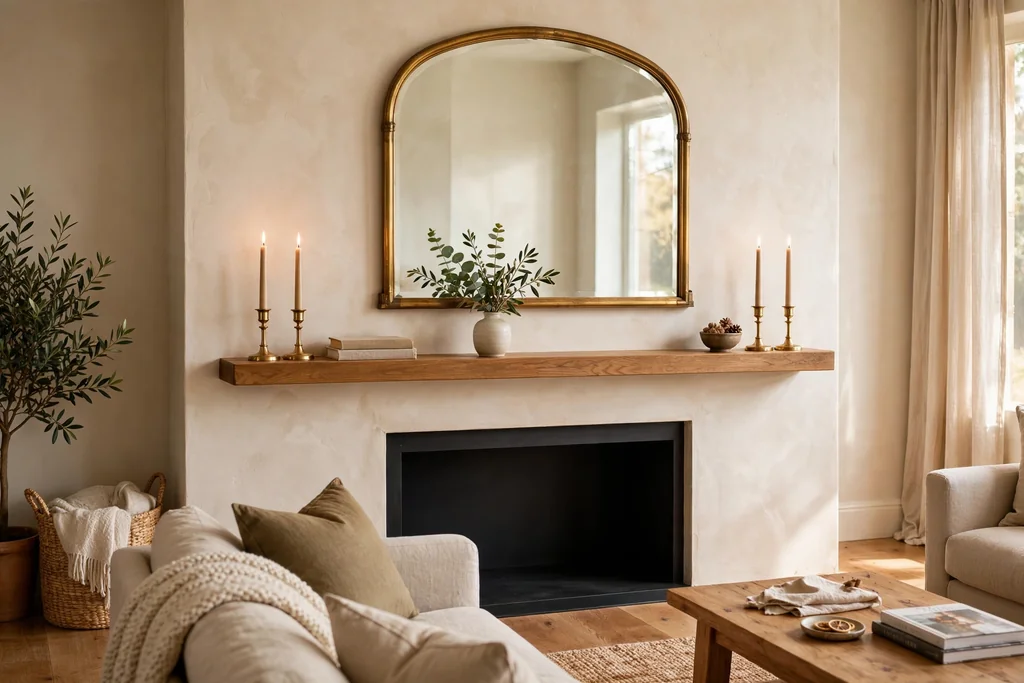
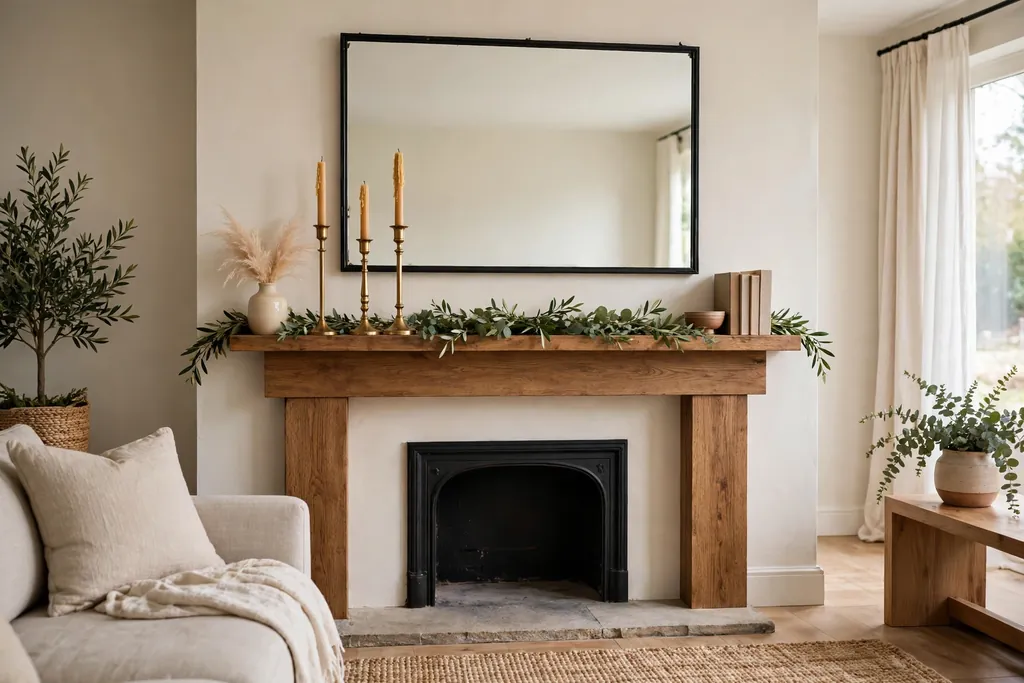
    Styled mantel shelf with a mirror above, brass candleholders at the ends, and a small vase of stems.

    Style a mantel or a single shelf ledge with a few warm pieces: a mirror or framed print above, a pair of candleholders at the ends, and one low group in the middle, such as a small vase of stems or a stack of books. A styled ledge gives the room a focal point at eye level, and the wood or painted shelf itself carries much of the interest, so the objects on it can stay few and quiet.

    If the room has no fireplace, a wood shelf mounted at mantel height on a plain wall gives the same ledge for seasonal styling. Keep anything flammable clear of a firebox opening, and check that candleholders sit on stable bases away from curtains. Change one item by season, such as stems in spring or pine in winter, so the ledge feels fresh without a full restyle.

    13. Brass and Warm Metal Accents

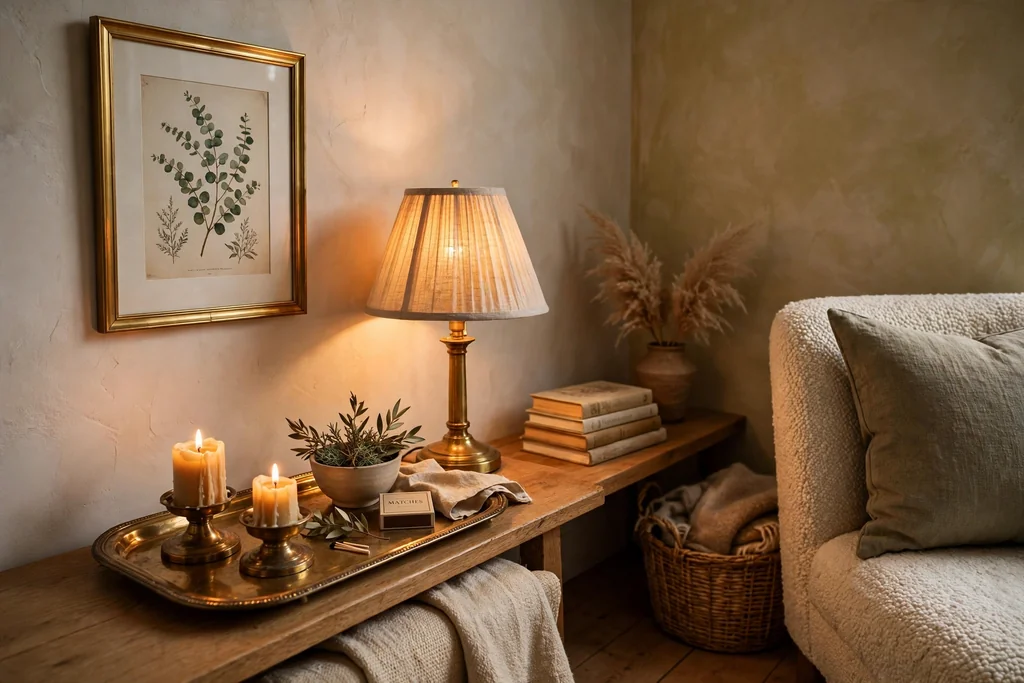
    Cozy room corner with brass candleholders, a brass tray, and a brass framed print in warm lamplight.

    Add three or four brass accents across the room, such as candleholders, a small tray, a picture frame, and a lamp base, keeping the finish consistent. Brass adds a warm metallic note that suits fall and winter light, and it links seating, shelves, and windows when the same finish repeats in more than one spot. Limit the metal to one warm finish, so it reads as a thread rather than a collection of unrelated pieces.

    Place one metallic piece near the seating area, one on the mantel or shelves, and one near the window, so the finish repeats without crowding any single surface. Wipe metal pieces clean before the season starts, and keep them away from damp spots where they can mark wood. If the room already has chrome or black fixtures, use brass sparingly, in one or two spots only, so the finishes do not compete.

    14. Greenery and Branches for Softness

    Living room corner with a tall potted plant and branches in a terracotta pot beside a bookcase.

    Stand a tall vase of branches, a potted plant, or a trailing plant on a shelf, so the room gains a soft, natural shape beside straight furniture lines. Greenery softens hard corners, adds a living color that suits warm wood and cream, and fills vertical space without taking up floor room. Choose plants that suit the room light, and keep the pot in a warm ceramic, terracotta, or woven cover that tones with the room.

    Place a tall plant in a bare corner or beside a bookcase, and a trailing plant on a high shelf where stems can hang clear of walkways. Water plants on a set day each week, wipe leaves now and then, and move pots on a tray or mat if the floor or shelf marks easily. If live plants are hard to keep, use one good quality faux stem in the same vase, wiped clean, rather than several poor ones.

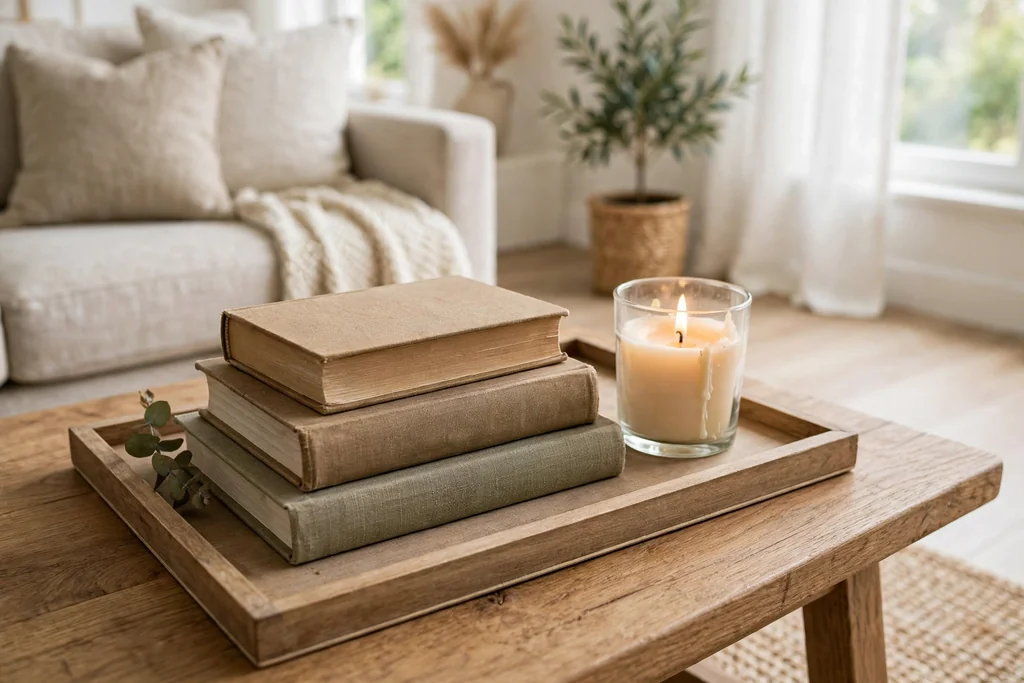
    15. A Coffee Table Tray with Books and a Candle

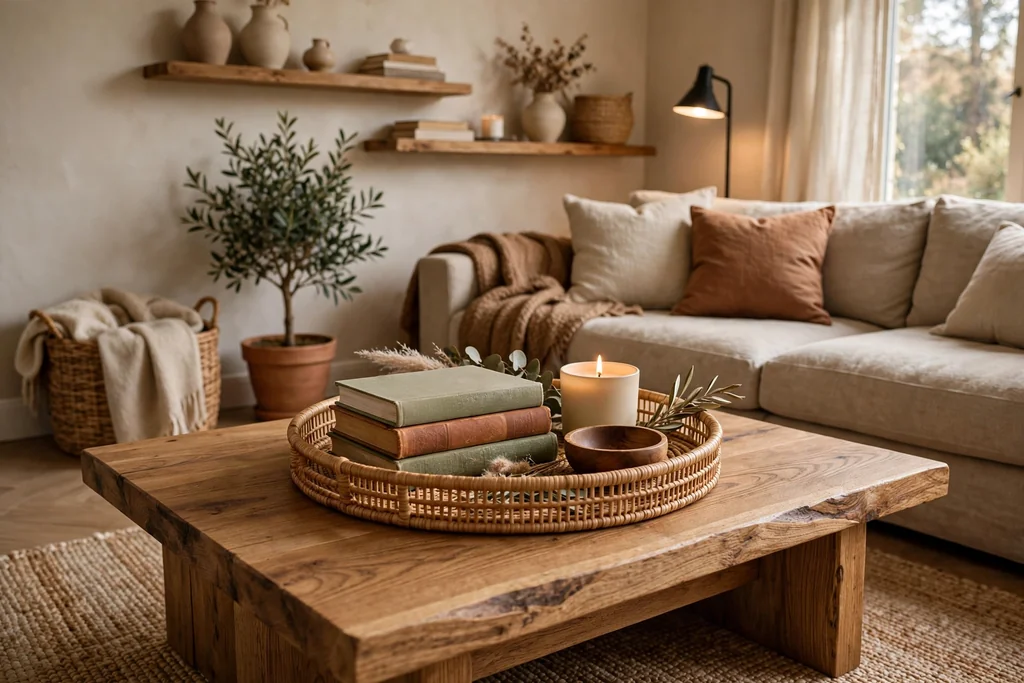
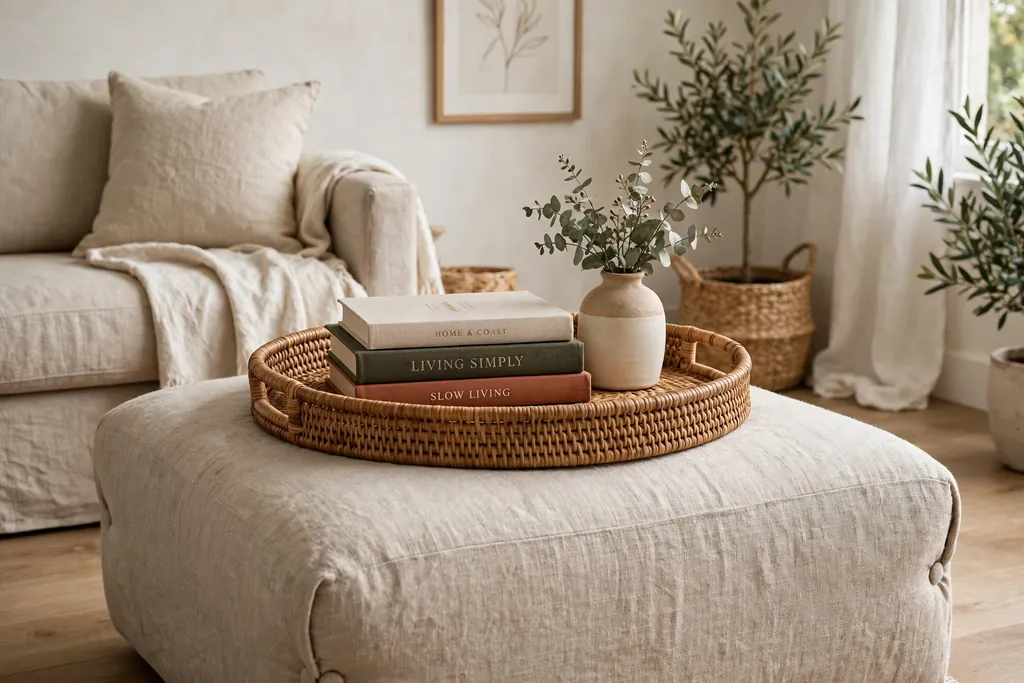
    Wood coffee table with a tray holding a stack of books, a candle, and a small wooden bowl.

    Set a low tray in the center of the coffee table, with a short stack of books, a candle in a holder, and one small natural piece, such as a smooth stone or a small wooden bowl. A tray gives table decor a defined home and keeps the rest of the table free for cups, so the table stays useful as well as styled. Choose a tray in wood, rattan, or brass that tones with the room, and keep the group low enough to see across.

    Leave clear space on the table beside the tray for drinks, and lift the whole tray aside in one move when the table is needed for a meal or a game. Keep the book stack to two or three books with spines in warm colors, and keep the candle clear of book pages and throw ends. One tray, done well, reads more clearly than small items spread across the whole table.

    16. Swap to Warm White Bulbs and Add a Dimmer

    Living room lit by warm white lamps in the evening, with a dimmer switch detail near the sofa.

    Swap cool white bulbs for warm white bulbs in lamps and ceiling fittings, and add a dimmer to the main light where the wiring allows it. Warm white bulbs make cream, wood, and terracotta tones look richer, and a dimmer lets the same light work for a bright family evening and a quiet night in. This is a low cost change, since it needs no new furniture and takes minutes per lamp.

    Check the bulb base and wattage for each fitting before buying, and keep a spare warm bulb in the house so a blown bulb does not leave the room in cool light. Put the dimmer within reach of the main seat where possible, and keep the overhead light off in the evening once lamps are lit, so the room keeps its low, warm glow. Test the new bulbs at night, since daylight hides the difference warm bulbs make.

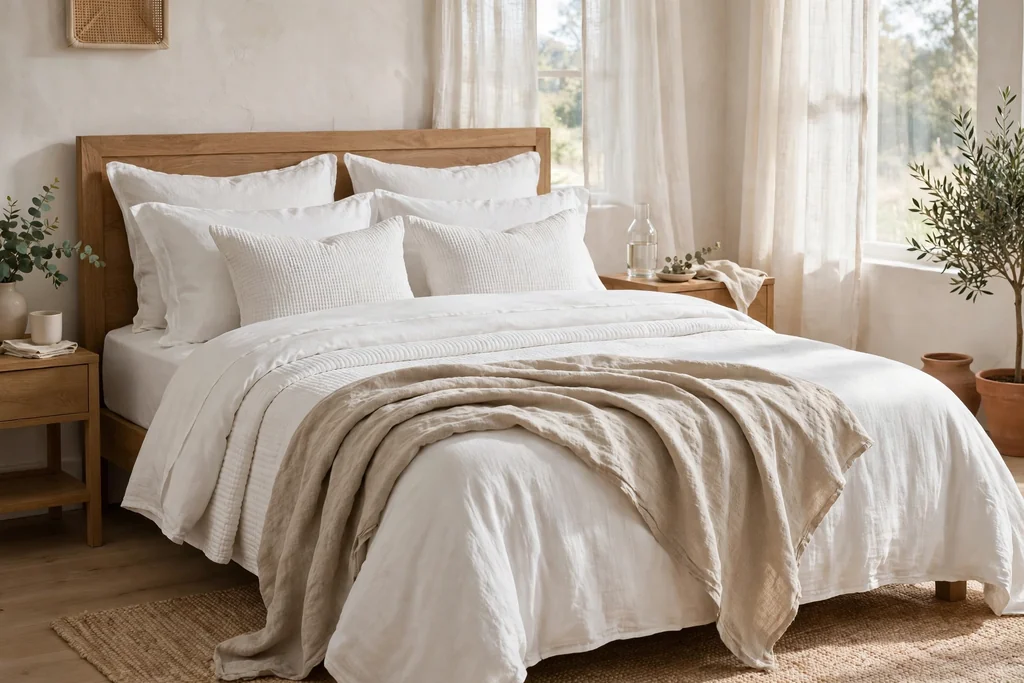
    17. Layered Bedding for a Cozy Bedroom Corner

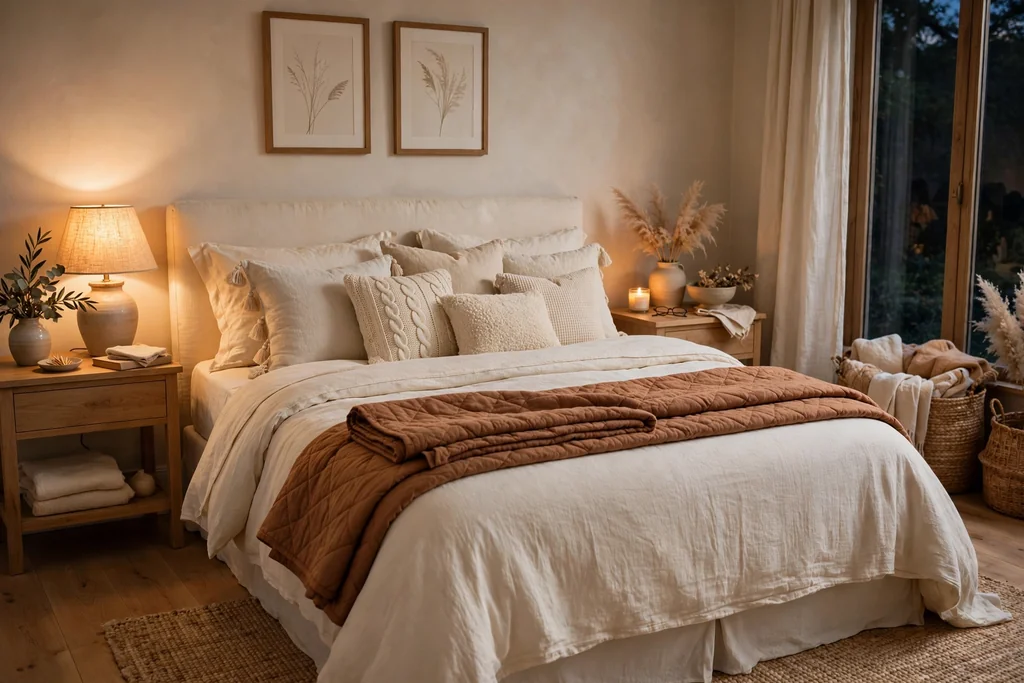
    Cozy bedroom bed layered with cream bedding, a warm quilt, and a folded throw across the foot.

    Layer a bedroom bed with a fitted sheet, a flat sheet or light cover, a warm duvet or quilt, and a folded throw across the foot, in cream, soft brown, and one warm accent color. Layered bedding makes a bedroom feel cozy at once, since the bed is the largest soft surface in the room, and layers let sleepers adjust warmth through the night without remaking the bed. Add two sleeping pillows plus one or two soft cushions, and no more, so the bed stays easy to make each morning.

    Choose bedding in natural fibers, such as cotton and linen, that wash well, and keep the throw within the room palette so the bed links to curtains and rugs. Shake out the duvet each morning, fold the throw neatly at the foot, and wash bedding on a regular cycle so layers stay fresh. For a bedroom that stays cozy past the holidays, keep the same layering and swap only the accent color by season.

    18. A Mirror That Bounces Warm Light

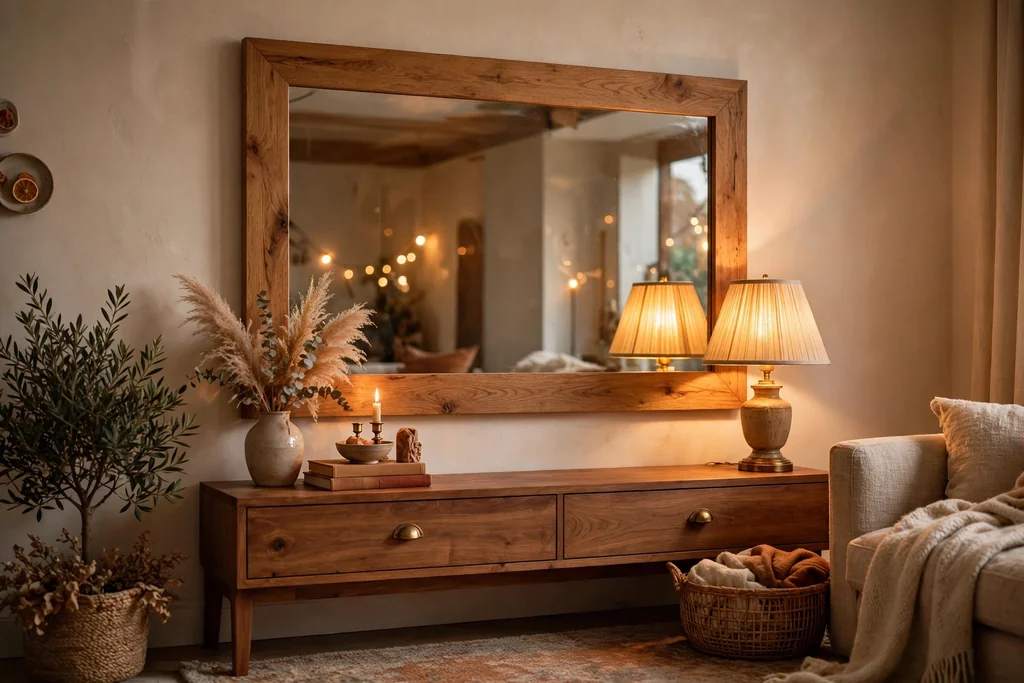
    Mirror in a warm wood frame above a console, reflecting warm lamplight in a cozy room.

    Hang a mirror opposite or beside a lamp or window, so it bounces warm light deeper into the room and makes a small room feel larger. A mirror doubles lamplight in the evening, and a warm wood or brass frame adds a cozy detail even when the lamp is off. Choose a mirror sized to the wall, large enough to reflect light, but not so large that it crowds nearby frames or furniture.

    Hang the mirror centered over a console or sideboard, with its bottom edge clear of items on the top, and check the reflection from the main seat, since that is where it will be seen most. Keep the mirror glass clean, since smudges show more in warm lamplight, and avoid hanging a mirror where it reflects clutter or a bright bare bulb. In a small room, one mirror is enough; a second mirror works best on a different wall, not beside the first.

    19. A Woven Wall Hanging or Textured Panel

    Plain wall with a woven wall hanging in warm neutral tones above a console in a cozy room.

    Hang a woven wall hanging, a macrame piece, or a fabric panel in warm neutral tones on a plain wall, to add texture at eye level without paint or new furniture. Woven fiber adds a soft, handmade texture that paint alone cannot give, and it suits rooms with wood, linen, and rattan already in them. Choose a piece sized to the wall, so it fills the space without crowding nearby art or a mirror.

    Hang the piece from a single secure hook or a wood dowel rod, and check that it hangs level and clear of radiators and heaters. Brush or shake the piece outside now and then, since woven fiber gathers dust, and keep it out of strong direct sun, which can fade natural fibers unevenly. If a large woven piece feels too much, a small woven panel above a console gives the same soft texture in a smaller dose.

    20. Seasonal Textile Swaps for Autumn and Winter

    Sofa styled for autumn and winter with rust and mustard cushion covers and a warm throw.

    Swap cushion covers, throws, and a table runner to deeper warm tones for autumn and winter, such as rust, mustard, and deep brown, then swap back to lighter warm neutrals in spring. Seasonal textile swaps change the room in minutes and cost far less than new furniture, since covers and throws store flat when the season ends. Keep the swap to two or three pieces per room, so the change reads as cozy rather than themed.

    Choose zip cushion covers and washable throws, so the swap takes one laundry cycle and one short styling pass. Store out of season textiles washed and folded in a labeled basket or bag, so the next swap takes minutes. For seasonal living room layers that pair with this idea, see cozy Christmas living room ideas.

    21. Framed Photos and Personal Pieces on Display

    Console styled with framed photos in matching warm frames and one small keepsake.

    Group framed photos and one or two personal pieces, such as a small keepsake or a handmade item, on a console, shelf, or gallery wall, in matching warm frames. Personal pieces make a cozy room feel lived in, since they show who uses the room, and they suit a warm palette better than a row of identical store bought objects. Keep the group small, with space between frames, so each piece can be seen.

    Use the same frame finish across the group, and vary photo sizes only slightly, so the display reads as planned. Keep fragile keepsakes behind glass or away from walkway edges, and dust frames weekly, since a dusty personal display loses its warmth fast. If the group starts to grow, rotate pieces by season, keeping the current favorites out and storing the rest, so the display stays calm.

    22. Floor Cushions and a Pouf for Soft Extra Seating

    Living room corner with large floor cushions in knit and cotton and a woven pouf.

    Add two or three large floor cushions and one woven or fabric pouf in knit, cotton, or wool, stacked in a corner when not in use and set out for evening seating. Floor cushions add soft seating without new furniture, and they work well for family evenings, games, and film nights, especially in rooms where a second sofa would crowd the floor. Keep cushion colors inside the room palette, in cream, rust, or soft brown.

    Store floor cushions stacked, not in walkways, when they are not in use, and shake and air them regularly, washing covers on a gentle cycle where the care label allows. Check that floor cushions do not block a fireplace, a heater, or a walkway when set out, and keep the pouf as a footrest or a side table with a tray on top, so it earns its floor space daily.

    23. A Window Seat with Thick Cushions

    Window seat with a thick washable cushion, soft back cushions, and a basket of books beside it.

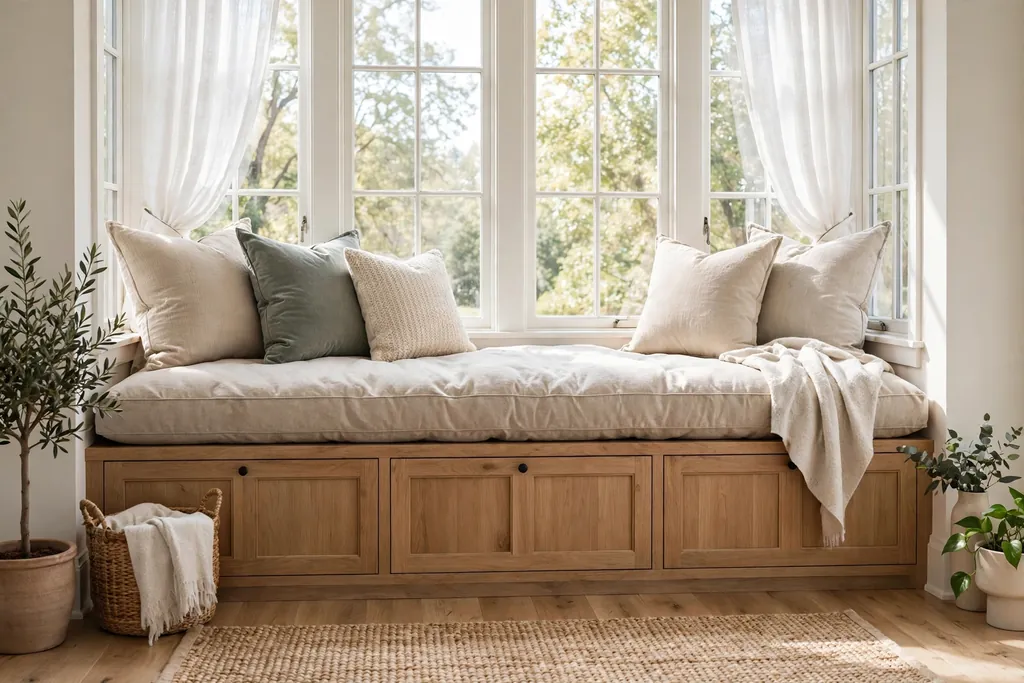
    Build a window seat from a wide sill, a bench, or a low storage unit under a window, topped with a thick cushion in a washable fabric, plus one or two soft back cushions. A window seat turns an unused window wall into the coziest seat in the room, with daylight by day and lamplight in the evening, and storage below keeps throws and books close. Choose a cushion thick enough to sit on for an hour, and a fabric that wipes clean.

    Keep the window seat clear of clutter, so it stays an invitation, and add a small basket beside it for a book and a throw. In a room without a built in seat, a low bench with the same thick cushion gives a similar seat in front of a window. Keep cushion fabric clear of radiators below the window, and air the cushions now and then, since a seat by glass gathers dust and damp in cold weather.

    24. Fairy Lights Along a Shelf or in a Glass Jar

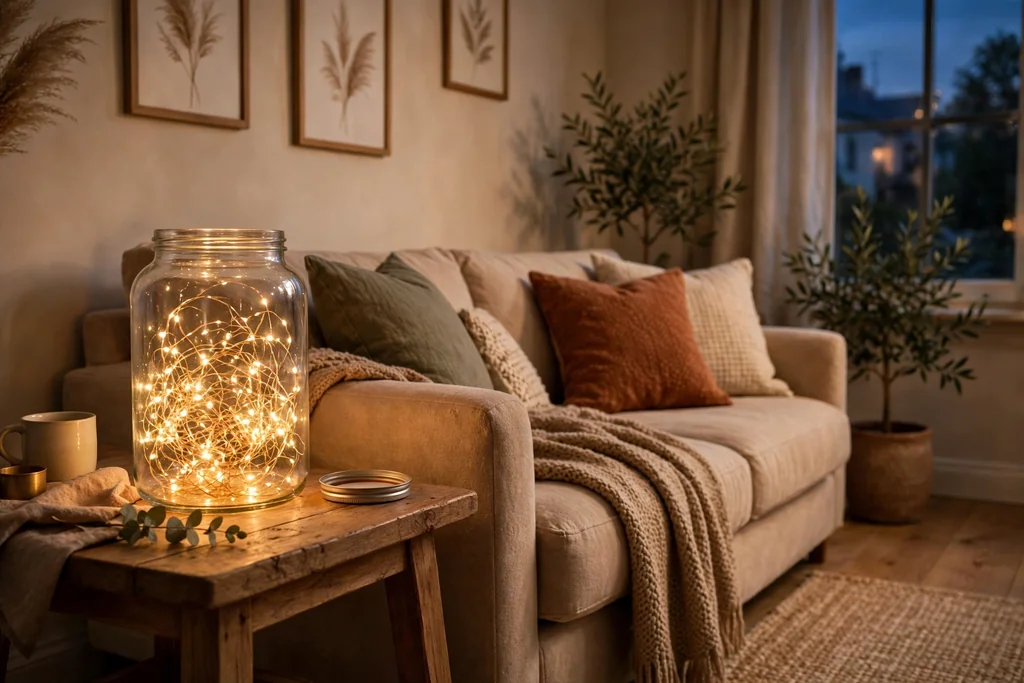
    Glass jar with warm fairy lights glowing on a side table beside a cozy sofa in the evening.

    Run a short string of warm white fairy lights along a shelf edge, or place a small string inside a clear glass jar on a side table, with the battery pack hidden behind the jar. A lit jar or a lit shelf edge gives a soft, contained glow that suits a side table, a shelf, or a windowsill, and it adds cozy light without another strand across the room. One jar or one shelf run is enough in a small room.

    Use battery lights with a timer where available, so the lights come on at the same time each evening, and keep lights clear of curtain edges and throw ends. Wipe the jar glass before first use so the light shows clearly, and turn the lights off at night, keeping spare batteries with the other household lights. Keep fairy lights out of reach of small children, and check cords for damage before each season of use.

    25. A Warm Welcome Corner by the Door

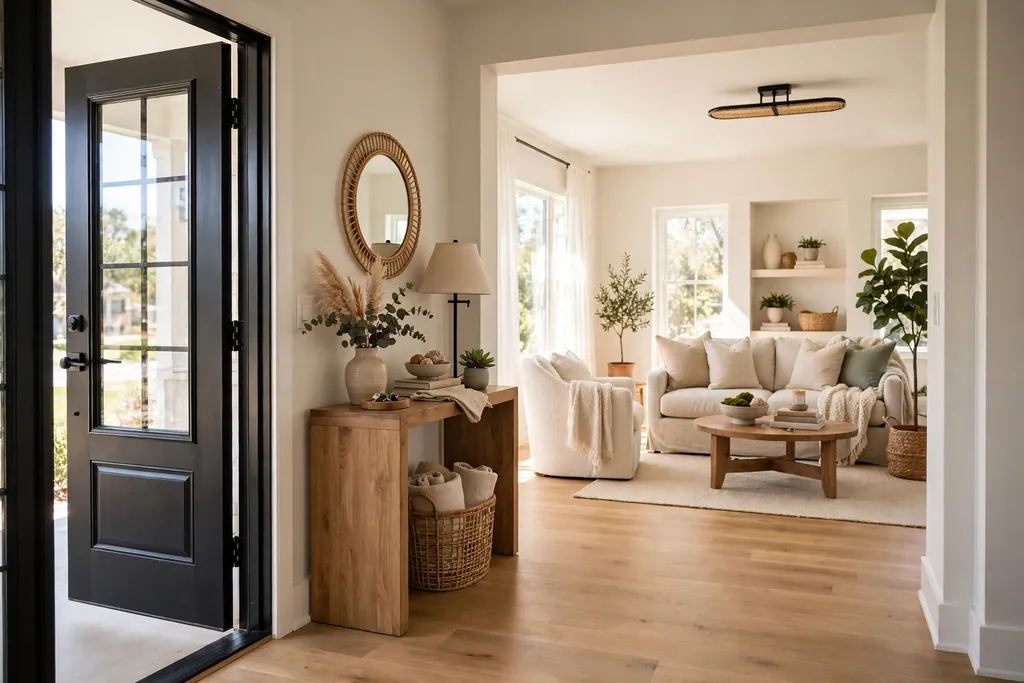
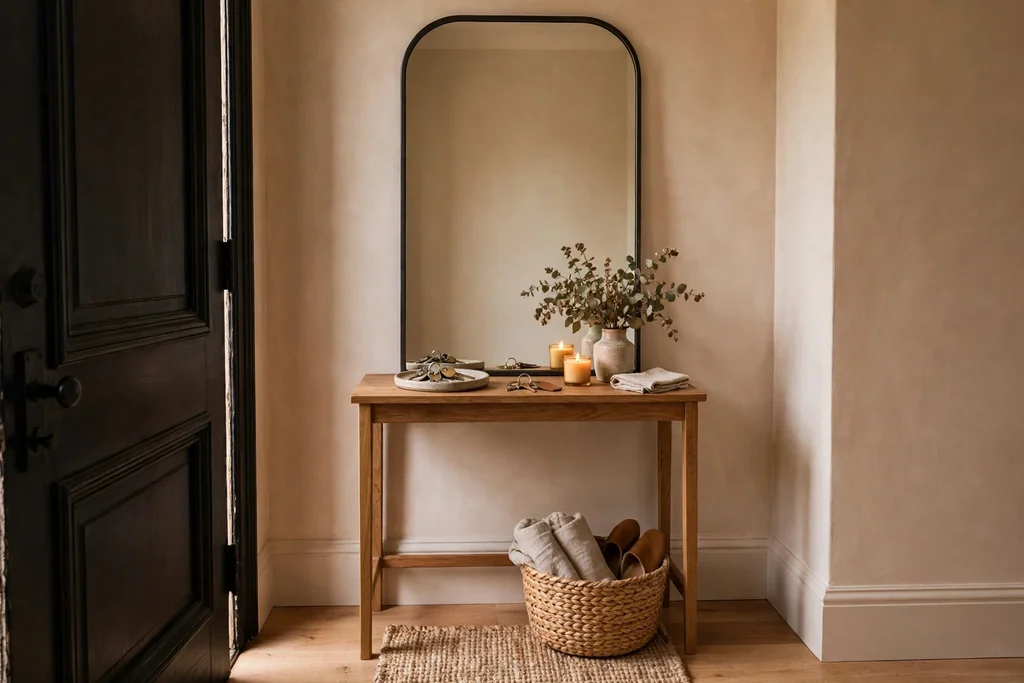
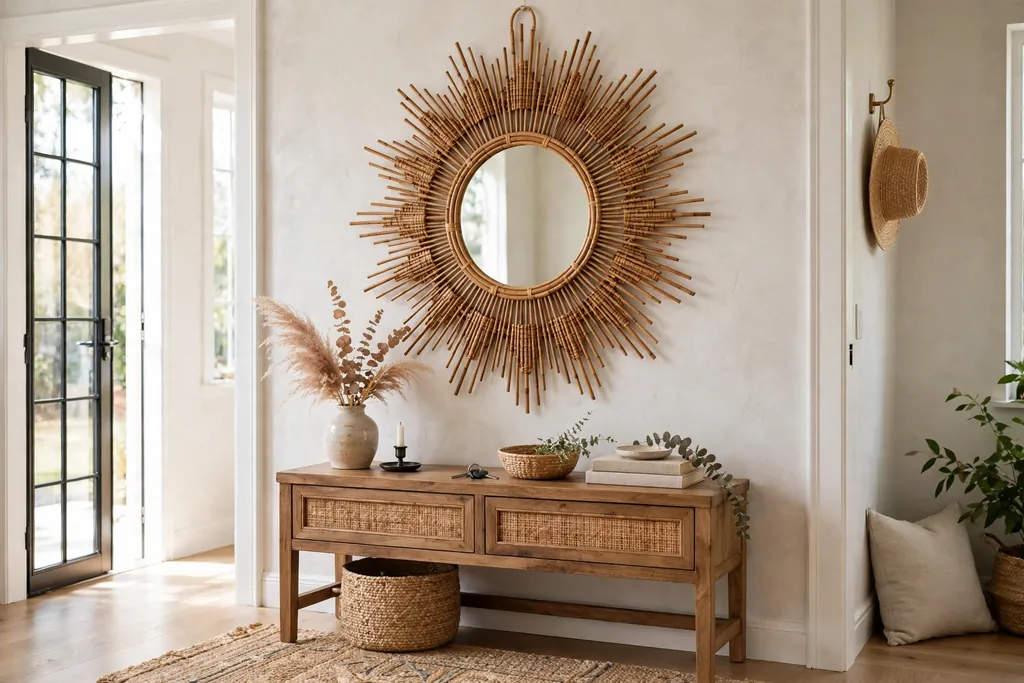
    Entry corner inside a door with a narrow wood console, a mirror above, a tray for keys, and a basket below.

    Style the wall just inside the door as a warm welcome corner: a small console or bench, a mirror or framed print above, a tray for keys, and a basket for shoes or bags. A welcome corner makes the whole home feel cozy from the first step inside, since guests see warm wood, soft texture, and low light at once, and it keeps daily clutter in one place. Choose a console narrow enough to leave the walkway clear, and a mirror that reflects lamp light into the hall.

    Keep the top calm: one tray, one small plant or vase, and one candle or lamp, with the basket below for shoes. Empty the tray weekly, so keys and mail do not pile up, and wipe the console top after wet weather, since coats and bags bring in damp. For a farmhouse room that uses the same warm entry styling, see farmhouse living room decor.

    Conclusion

    A cozy room works when warm color, soft texture, and layered lighting are planned together, not added one at a time without a link between them. Start with a warm palette of two or three colors, add soft layers you can touch, such as throws, rugs, and cushions, then light the room at several heights with warm bulbs. Keep seating usable, walkways clear, and one surface in each room free for daily life.

    Work through this list one idea at a time, starting with light and textiles, since those two changes shift a room fastest. For seasonal layers in the same warm palette, see fall living room decor ideas, and for holiday warmth in a living room, see cozy Christmas living room ideas. Save this list on Pinterest for your next room refresh, and begin with the room you use most in the evening.

    FAQs

    What are the three main elements of cozy room decorating?

    The three main elements are warm color, soft texture, and layered lighting. Warm color sets the mood, soft texture such as wool, velvet, and wood invites touch, and layered lighting at several heights keeps the room soft in the evening instead of harsh under one overhead light.
    What colors make a room feel cozy?

    Warm colors make a room feel cozy, such as cream, warm white, terracotta, soft brown, rust, and muted gold, used in a palette of two or three colors plus natural wood. Repeat each color at least twice, in a throw, a cushion, and a rug, so the room looks planned, and keep one quiet pattern at most so the palette stays calm.

    How do I make a room cozy without painting or buying furniture?

    Start with textiles and light, since those two changes shift a room fastest without paint or new furniture. Add a soft rug, two throws in mixed textures, and lamps with warm white bulbs at seating height, then style one tray or shelf with books and a candle. Work through one layer at a time, and keep pieces you use daily within reach.

    How many lamps does a cozy room need?

    A cozy room needs light at two or three heights, not a set number of lamps: a floor lamp beside the sofa, a table lamp on a side table or console, and a small glow source such as candles or fairy lights. That spread keeps no one in shadow and lets you switch the overhead light off in the evening, which is the change that most often makes a room feel cozy.

    What textures work best for a cozy room?

    Knit, wool, velvet, linen, cotton, wood, and woven fiber work best together, because each adds a different kind of softness to the room. Mix one chunky texture, such as knit, with one smooth texture, such as velvet, and one natural texture, such as wood or rattan, and leave one smooth surface clear, such as a wood table top, so the room stays balanced.

    How do I keep a cozy room from looking cluttered?

    Keep one surface in each room clear for daily use, group decor in small sets on trays, and store throws and cushions in baskets when they are not in use. Limit decor to three or four pieces per surface, repeat the same warm colors across the room, and remove one item whenever a new piece is added, so the cozy layers stay soft rather than crowded.


  • 23 Living Room Color Schemes for a Fresh and Balanced Space

    23 Living Room Color Schemes for a Fresh and Balanced Space

    The best living room color schemes pair a calm wall color with one accent and one supporting tone, then repeat each color at least twice across cushions, art, and rugs. Start with how much daylight the room gets, test paint swatches in daylight and evening light, and keep wood, metal, and fabric tones in the same warm or cool family.

    A scheme works when the largest surfaces stay calm and the stronger colors sit where they are easy to change, such as cushions, throws, art, and one chair. Before you paint, paint two large swatches on different walls, live with them for a few days, and check them beside your sofa fabric, rug, and wood tones. The 23 schemes below cover bright rooms, dark rooms, small rooms, and open plan spaces, so pick the one that fits your light and your furniture, not just the one you like in a photo. For a warm, wood based room to compare against these palettes, see farmhouse living room ideas, and for a seasonal take on warm color, see fall living room decor.

    Key Takeaways

    • Use three colors at most in the main scheme: a wall color, a main accent, and a supporting tone, plus wood and one metal finish.
    • Repeat each accent color at least twice, such as a cushion and a piece of art, so the palette looks planned rather than random.
    • Test large paint swatches on two walls in daylight and evening light before you commit to a full room.
    • Keep strong color on pieces you can change, such as cushions and throws, and keep walls, sofas, and rugs calmer.
    • Match undertones: warm whites with warm wood and brass, cool greys with cool metals and crisp white.
    • In a small or dark room, keep the walls light, use one darker accent, and let mirrors and lamps do the extra work.

    1. Warm White Walls with Natural Wood

    Living room with warm white walls, natural wood coffee table, cream linen sofa, and a green plant.

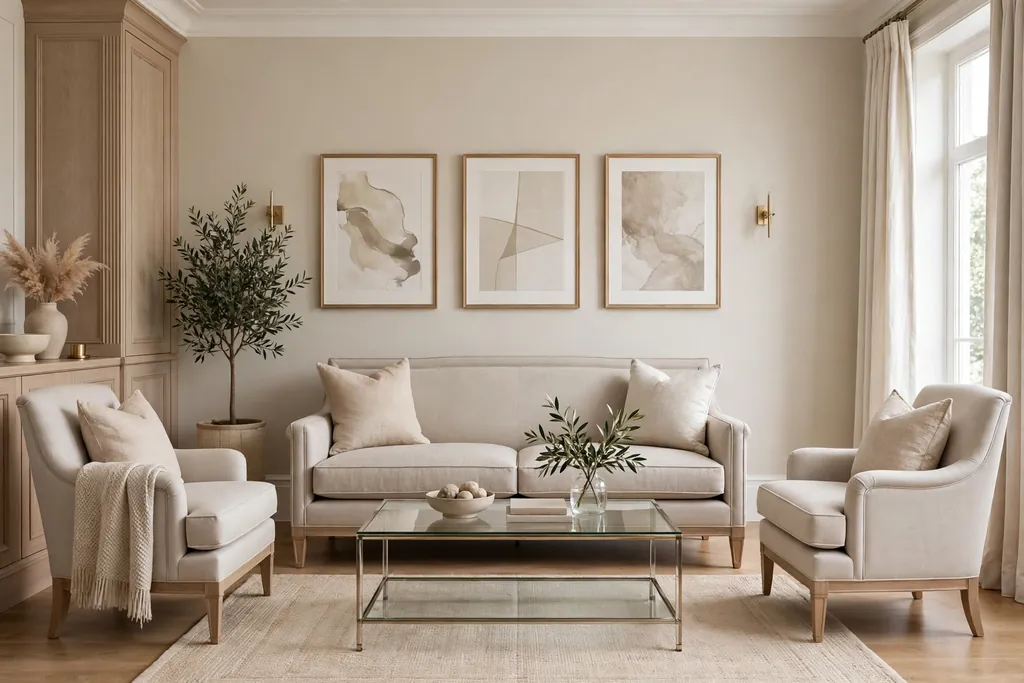
    Paint the walls warm white and let natural wood carry the warmth, through a wood coffee table, wood frames, and a wood mantel or shelf. A warm white, rather than a stark white, keeps the room soft in the evening and suits cream linen, oatmeal wool, and light oak. Add one green note, such as a plant or a sage cushion, so the room does not read as flat.

    Keep the wood tones close to each other, within one light to mid oak family, so the room stays calm. Use black or aged bronze only in small doses, such as a lamp base or a frame, and keep rugs in cream, jute, or a soft natural pattern. This scheme suits a family room that gets mixed light, since warm white holds up in both sun and lamplight.

    2. Soft Sage Green with Cream

    Living room with soft sage green walls, cream sofa, cream curtains, and light wood furniture.

    Use soft sage green on the walls with cream sofas, cream curtains, and light wood, for a calm room that links to garden views. Sage reads as a color without shouting, and it suits rooms with plants, rattan, and linen, since the green already appears in leaves and woven texture. Keep the sage muted, not bright, so it stays restful at large scale.

    Repeat the sage in cushions, one throw, and one piece of art, and keep the rest cream, oatmeal, and light wood. A cream rug with a subtle pattern keeps the floor light, and brass or wood lamp bases add a small warm note. This scheme suits a reading corner or a quiet living room used mainly in the evening.

    3. Navy Blue with Warm White

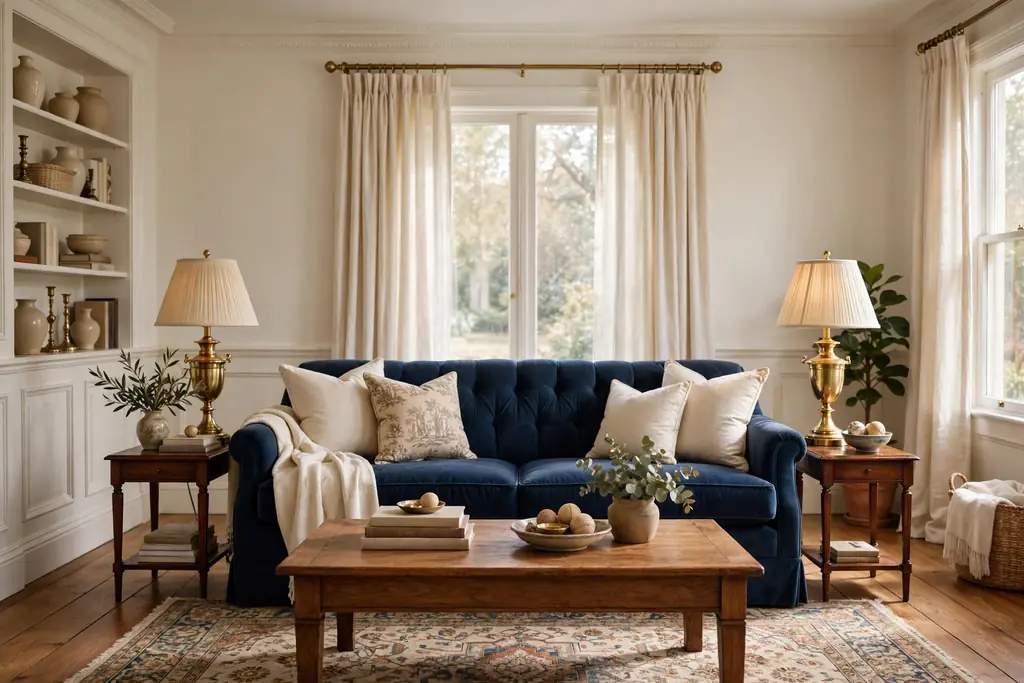
    Living room with a navy sofa, warm white walls, cream curtains, and brass lamps.

    Pair navy blue walls or a navy sofa with warm white walls, cream curtains, and brass details, for a classic room with clear contrast. Navy gives the room depth and a firm anchor, while warm white keeps it from feeling dark, especially when the navy sits on one feature wall or on the sofa rather than on all four walls.

    Use navy in two or three places, such as the sofa and one cushion or a rug stripe, and keep wood mid toned rather than very dark. Brass lamp bases, a brass frame, or a brass tray repeat the warm metal and stop the navy from reading cold. This scheme suits a living room with good daylight and a fireplace or a large window as a focal point.

    4. Charcoal Grey with Mustard Accents

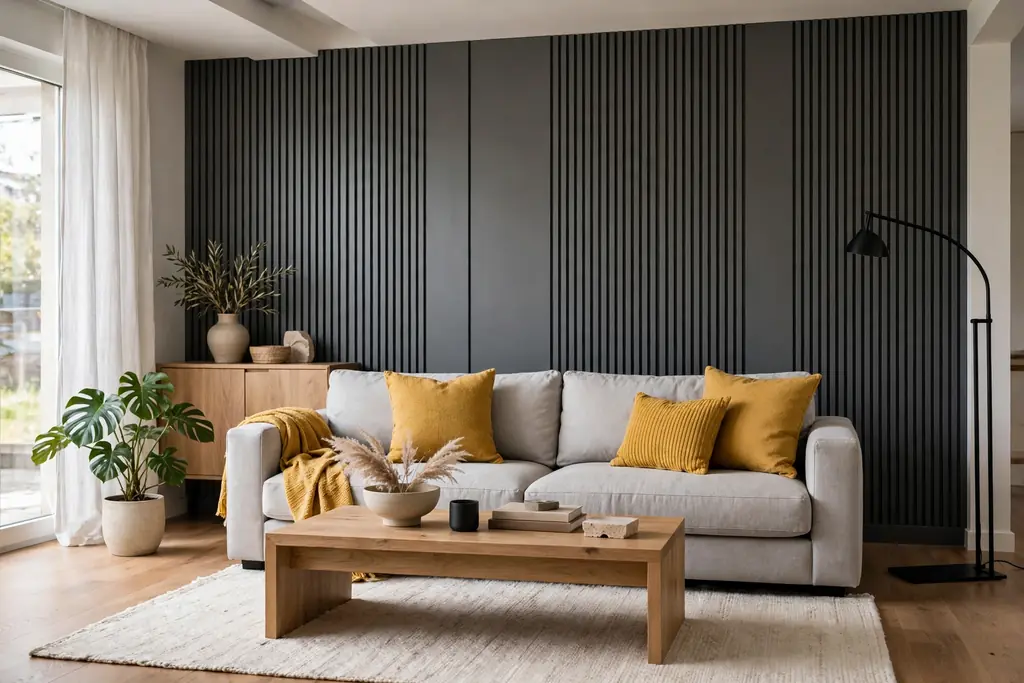
    Living room with a charcoal feature wall, light grey sofa, mustard cushions, and a wood coffee table.

    Use charcoal grey on one feature wall or on a sofa, with light grey walls elsewhere, and add mustard in cushions, art, and one throw. Charcoal gives a modern, grounded feel, and mustard adds warmth and a clear focal color without needing a second strong hue. Keep the mustard to small pieces, since a little of it goes a long way against grey.

    Balance the dark tone with a light rug, pale curtains, and a wood coffee table, so the room does not feel heavy. Black metal lamp bases or frames suit this scheme, and a plant adds a fresh green break. This scheme suits an open plan living area where the charcoal wall can mark the seating zone.

    5. Blush Pink with Warm Grey

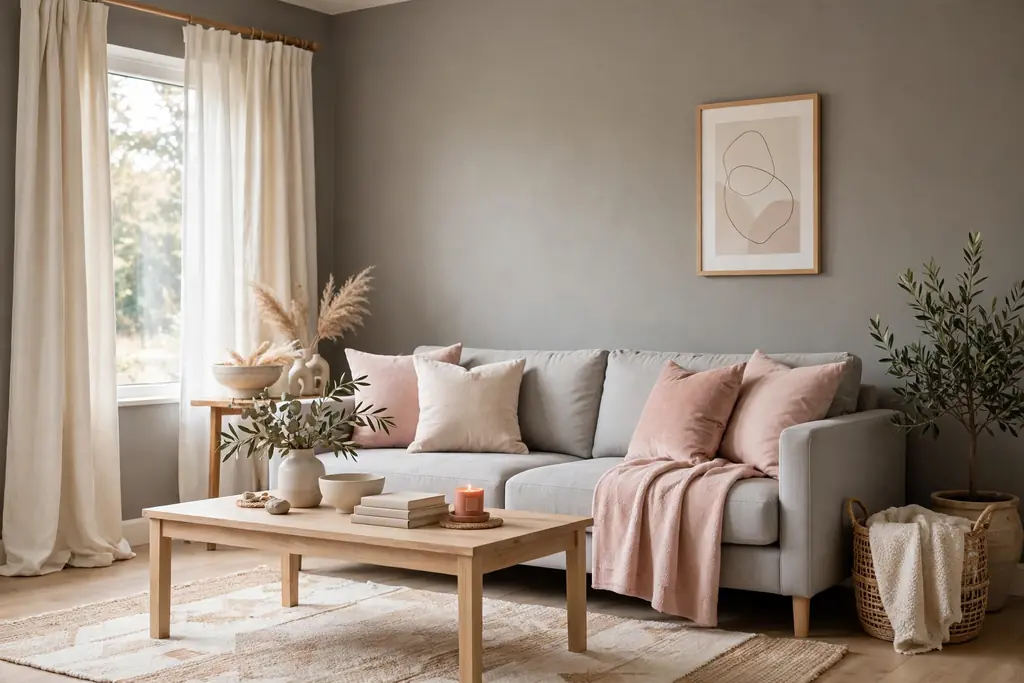
    Living room with warm grey walls, light grey sofa, blush pink cushions and throw, and cream curtains.

    Pair blush pink cushions, a blush throw, and one blush art print with warm grey walls, a light grey sofa, and cream curtains. Blush works as a soft accent here, not as a wall color, so the room stays grown up and calm, with the pink reading as warmth rather than as a theme. Warm grey keeps the base soft and suits both daylight and lamplight.

    Repeat the blush in exactly two or three spots, and keep the rest of the palette to warm grey, cream, and light wood. A cream rug and a wood coffee table ground the soft colors, and a small brass or gold frame adds a quiet lift. This scheme suits a light, contemporary living room where the furniture is already grey or cream.

    6. Terracotta with Cream and Olive

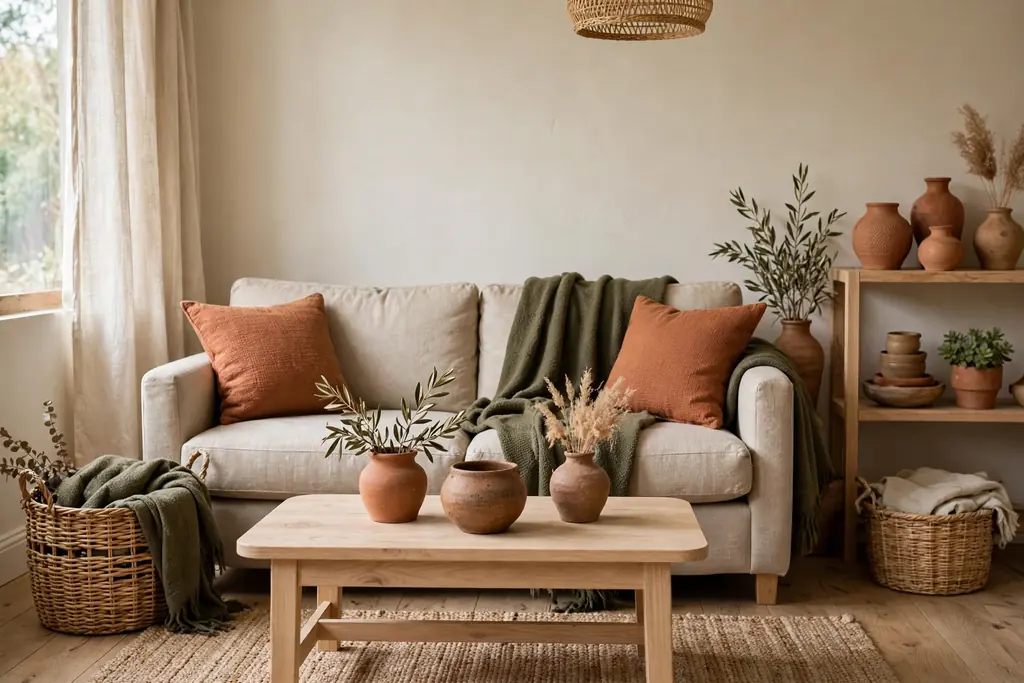
    Living room with cream walls, oatmeal sofa, terracotta cushions and pottery, and an olive throw.

    Use terracotta in cushions, pottery, and one art print, with cream walls, a cream or oatmeal sofa, and olive in a throw or a plant pot. Terracotta brings an earthy, sun warmed note, and olive keeps it from reading as purely autumnal, since the two sit well together all year. Cream walls keep the room bright and let the warm accent stand out.

    Keep the terracotta to textiles and pottery, not to large furniture, so the scheme is easy to soften in summer by swapping one cushion. Light wood, woven baskets, and a jute rug suit this palette, and black metal details should stay minimal. This scheme suits a living room with warm wood floors and a sunny window.

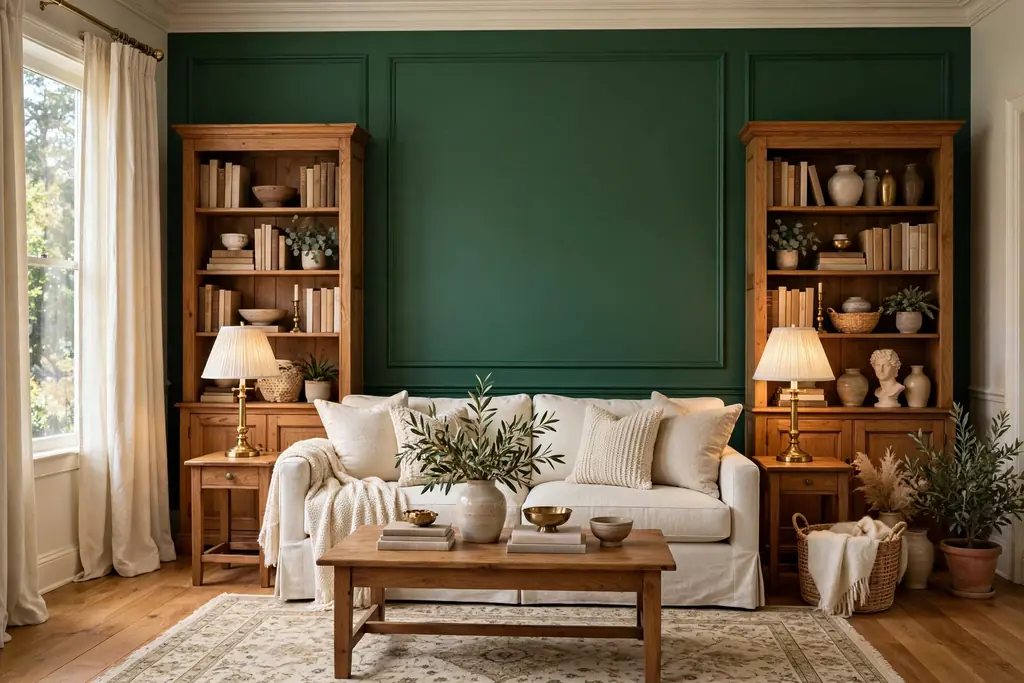
    7. Forest Green with Brass and Cream

    Living room with a forest green feature wall, cream curtains, brass lamps, and wood bookcases.

    Paint one wall forest green, or use a forest green sofa, with cream walls elsewhere, cream curtains, and brass lamp bases and frames. Forest green gives a library like depth, and brass warms it, while cream keeps the room from going dark. This combination suits wood bookcases, leather chairs, and framed prints, since the palette already feels collected.

    Keep the green to one large surface or one large piece, and repeat it in a cushion or a plant pot so it links across the room. A cream or patterned rug in cream and green ties the floor to the walls, and warm wood tones suit the scheme better than pale wood. This scheme suits a living room used for reading and evening conversation.

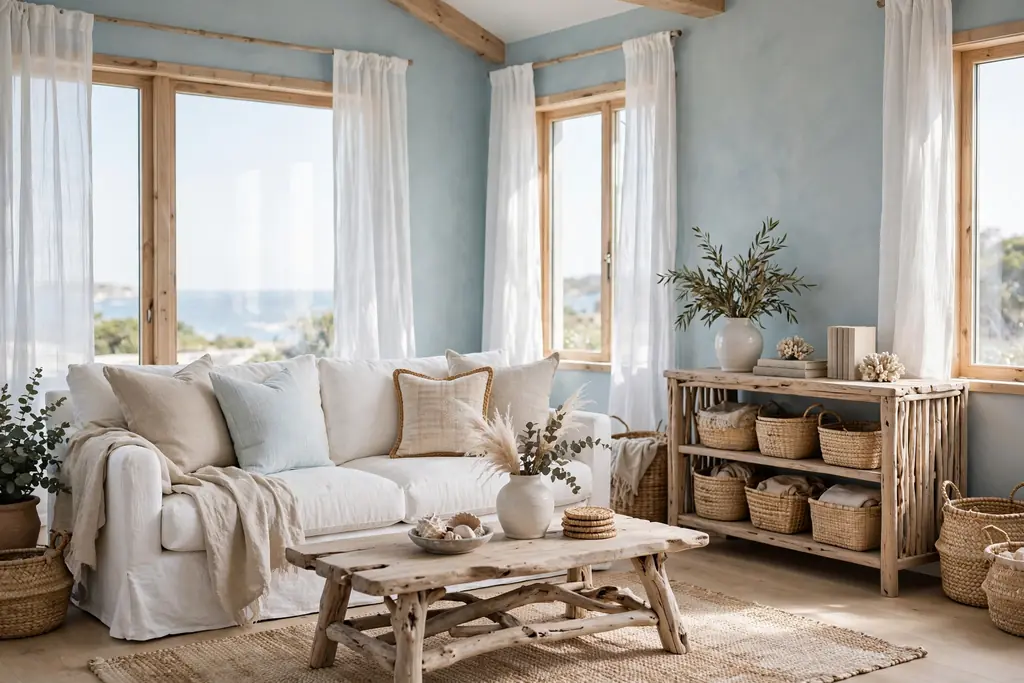
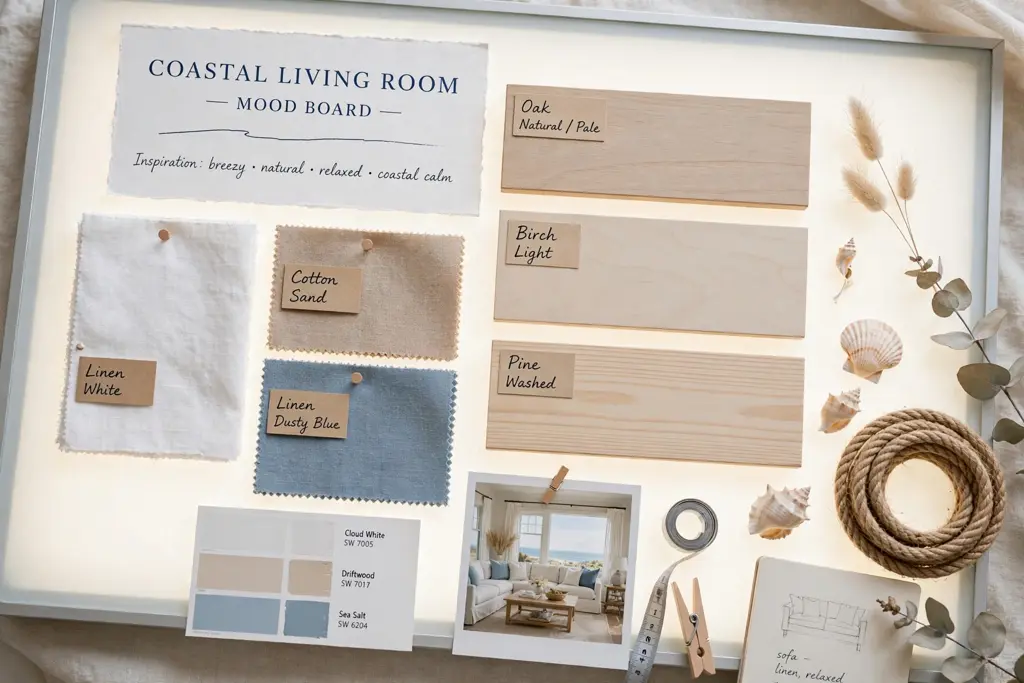
    8. Pale Blue with Crisp White for a Coastal Room

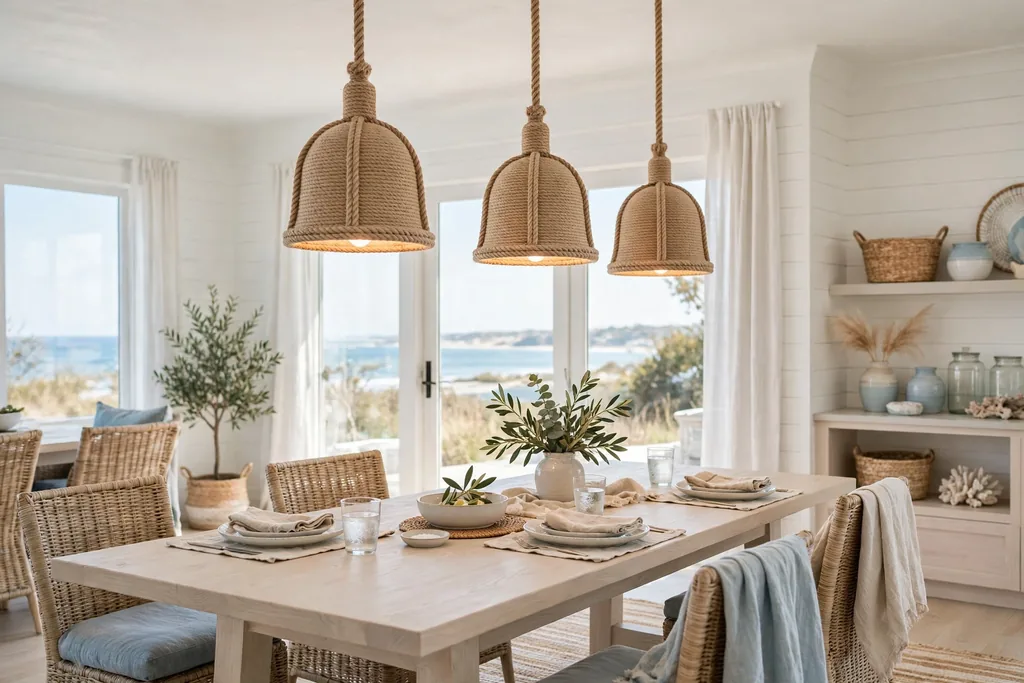
    Bright coastal living room with pale blue walls, white linen sofa, light wood, and woven baskets.

    Use pale blue walls or pale blue cushions with crisp white walls, a white or natural linen sofa, and light wood or driftwood tones. Pale blue reads as fresh and airy, and crisp white keeps it bright, while natural textures such as linen, cotton, and woven baskets stop it from feeling cold. Keep the blue pale, not icy, so it works in the evening too.

    Repeat the blue in cushions, one throw, and a vase or a print, and keep the floor light with a natural rug. White curtains that filter light suit this scheme, and silver or pale wood details suit it better than dark brass. This scheme suits a bright living room, a room with a sea view, or a home where the living room opens to a light hallway.

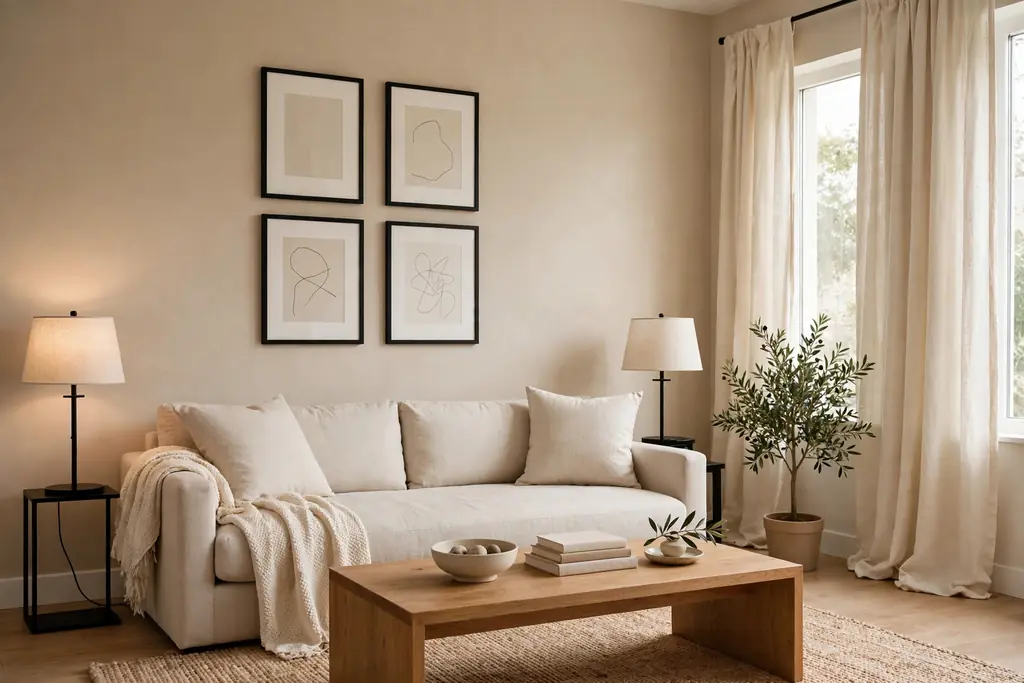
    9. Greige with Black Accents for a Minimal Room

    Minimal living room with greige walls, light greige sofa, black lamp bases and frames, and a wood coffee table.

    Use greige, a warm grey beige mix, on the walls, with a light greige sofa, cream curtains, and black in lamp bases, frames, and one chair leg or tray. Greige gives a minimal room warmth that plain grey can lack, and black gives it a clean edge without adding a second color. The result stays calm and easy to live with.

    Keep textures varied, since a near neutral palette needs them: linen cushions, a wool throw, a wood coffee table, and a woven rug. Repeat the black in three small spots only, so it reads as a thread, not as a theme. This scheme suits an open plan living room where the same palette can run into the dining area.

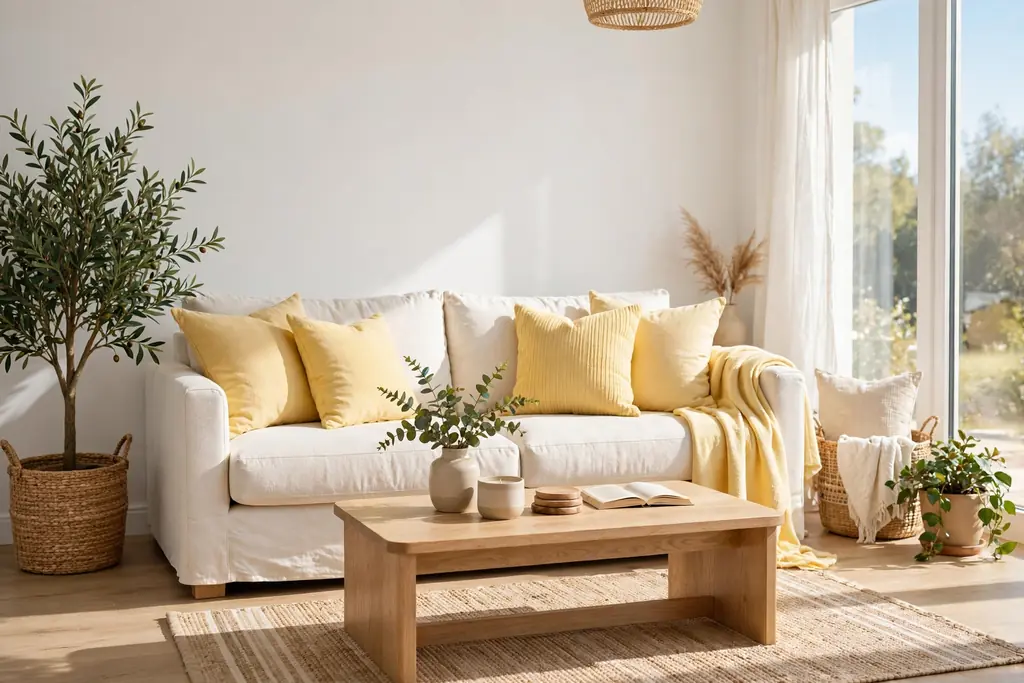
    10. Butter Yellow with White for a Sunny Room

    Sunny living room with white walls, cream sofa, butter yellow cushions and throw, and light wood.

    Use butter yellow in cushions, a throw, and one art print, with white or warm white walls and a cream sofa. Butter yellow adds sun to a room without the glare of a bright yellow, and it suits white woodwork, light wood, and cream linen. Keep the yellow soft and to textiles and small pieces, not to full walls, unless the room gets strong daylight.

    Repeat the yellow in two or three spots, and add one green plant or one sage cushion to stop the palette from reading as flat. A cream rug and a light wood coffee table keep the floor calm, and brass or light wood lamp bases suit the scheme. This scheme suits a north facing room that needs warmth, or a cottage style living room.

    11. Dusty Teal with Warm Wood and Cream

    Living room with a dusty teal feature wall, warm wood furniture, cream sofa, and cream curtains.

    Use dusty teal on a feature wall or on a velvet chair, with cream walls elsewhere, warm wood furniture, and cream linen. Dusty teal is a muted blue green, so it adds color without competing with wood grain, and warm wood stops it from reading cold. Cream curtains and a cream rug keep the room light around the teal.

    Repeat the teal in a cushion and one print or vase, and keep other colors to cream, wood, and one warm metal. A patterned rug with cream and teal ties the scheme together at floor level. This scheme suits an eclectic living room with mixed furniture, since teal links wood, linen, and brass in one palette.

    12. Burgundy with Cream and Brass for a Traditional Room

    Traditional living room with cream walls, burgundy cushions and curtains, brass lamps, and dark wood furniture.

    Use burgundy in a sofa cushion set, curtains, or one armchair, with cream walls, a cream or oatmeal sofa, and brass lamp bases and frames. Burgundy gives a traditional room richness without dark walls, and cream keeps it light enough for daily use. Brass is the metal that suits this palette best, since it warms both the red and the cream.

    Keep the burgundy to two or three pieces and use a cream rug with a subtle pattern to ground the seating area. Dark wood furniture suits this scheme, and a wood coffee table with a brass tray repeats both warm notes. This scheme suits a formal living room or a room with a fireplace and classic furniture.

    13. Layered Warm Neutrals with Texture as the Color

    Calm living room in warm neutrals with an oatmeal sofa, cream curtains, beige rug, linen and wool textures, and light wood.

    Build the room from warm neutrals only: warm white walls, an oatmeal sofa, cream curtains, a beige rug, and light to mid wood. With no strong accent color, texture does the work: linen, wool, boucle, woven baskets, wood grain, and a plaster or ceramic vase. This scheme feels calm and layered, and it lets art or a view become the focal point.

    Vary the neutrals by a shade or two, rather than matching them exactly, so the room does not look flat. Add one dark note, such as a black frame or a dark wood tray, to give the eye a resting point. This scheme suits a small living room, since a single neutral family makes the space read as one calm whole, and it suits rented homes where wall color cannot change much.

    14. Black, White, and Wood for a Graphic Room

    Graphic living room with white walls, black framed prints, black coffee table, and warm wood shelving.

    Use a black and white base, such as white walls, a black framed print set, and a black coffee table or lamp, softened by one warm wood tone in the floor, a coffee table, or shelving. The contrast gives the room a graphic, modern feel, and the wood stops it from reading as stark. Keep the black to frames, one furniture piece, and small details, not to large upholstery.

    Repeat the wood in at least two spots, such as the coffee table and a shelf, so it reads as part of the scheme rather than as a leftover. A cream or natural rug softens the floor, and plain linen cushions in white or cream keep the sofa calm. This scheme suits a small apartment living room, where a clear two color base plus wood keeps the space tidy.

    15. Rust with Navy and Cream for Bold Contrast

    Living room with a navy sofa, rust cushions and throw, cream walls, and a wood coffee table.

    Pair rust cushions and a rust throw with a navy sofa or navy curtains, cream walls, and light wood. Rust and navy sit opposite each other in warmth, so the contrast feels bold but settled, and cream walls keep the room from closing in. This scheme suits a room with strong daylight, where both colors hold their depth.

    Keep the rust and navy in balance: if the sofa is navy, use rust in cushions and art; if the sofa is cream, use one navy chair and rust cushions. A cream rug and a wood coffee table ground the contrast, and brass or copper details add a small warm metal note. For more seasonal rust and cream ideas, see fall living room decor.

    16. Lavender Grey with Silver and White

    Serene living room with light grey walls, light grey sofa, lavender grey cushions and throw, and silver lamp bases.

    Use lavender grey in cushions, a throw, and one art print, with cool white or light grey walls, a light grey sofa, and silver or chrome details. Lavender grey is a soft purple grey, so it adds a cool, serene note without turning the room purple. Keep it to textiles and art, and let the walls stay a plain cool neutral.

    Repeat the lavender grey in two or three spots and keep wood pale or whitewashed, so the cool palette stays consistent. A light grey rug and sheer white curtains suit this scheme, and a glass or silver lamp base repeats the cool metal. This scheme suits a bedroom style living room used for quiet evenings, or a bright room where a cool palette feels restful.

    17. Chocolate Brown with Camel and Cream

    Warm family living room with cream walls, chocolate brown leather chair, camel cushions and throw, and a wood coffee table.

    Use chocolate brown in a leather chair or a wood coffee table, camel in cushions and a throw, and cream walls and curtains. Chocolate and camel give a warm, grounded family room, and cream keeps it light enough for daily use. This palette suits leather, dark wood, and woven texture, and it hides everyday wear better than a pale scheme.

    Repeat the camel in cushions, a throw, and one art frame mat, and keep the chocolate to one or two large pieces so the room does not go dark. A cream or beige rug with a subtle pattern grounds the seating area, and brass lamp bases add a warm lift. This scheme suits a family room with pets or children, where durable, warm tones matter.

    18. Emerald Green with Cream and Gold

    Living room with an emerald green velvet sofa, cream walls, cream curtains, and gold lamps and frames.

    Use emerald green in a velvet sofa or a velvet chair, with cream walls, cream curtains, and gold lamp bases and frames. Emerald gives a rich, jewel toned focal point, and gold warms it, while cream keeps the room bright around the strong color. Keep the emerald to one large piece, so the room reads as rich rather than heavy.

    Repeat the emerald in one cushion or one plant pot on a cream sofa, if the sofa itself is cream, and keep the rug cream with a subtle pattern. Warm wood or gold details suit this scheme, and a marble or wood coffee table adds a calm surface. This scheme suits a living room used for entertaining, where one strong color gives guests a clear focal point.

    19. Sky Blue with Butter and White for a Fresh Spring Room

    Fresh living room with white walls, cream sofa, sky blue cushions, butter yellow cushion, and light wood.

    Use sky blue in cushions and one throw, butter yellow in a second cushion or a vase of flowers, and white or warm white walls with a cream sofa. Sky blue and butter together read as fresh and light, and white walls keep the combination bright. Keep both colors soft, so the room feels like spring without turning pastel all over.

    Repeat each color twice, such as a sky cushion with a sky print, and a butter cushion with a butter throw edge, and keep wood light. A cream rug and white curtains suit this scheme, and a glass vase or a light wood tray keeps surfaces calm. This scheme suits a bright living room that gets morning sun.

    20. Olive Walls with Leather and Black Metal

    Rustic living room with olive walls, brown leather chair, black metal lamps, and cream curtains.

    Paint the walls olive, or use an olive sofa, with a brown leather chair, black metal lamp bases, and cream curtains. Olive gives a rustic, grounded room, and leather and black metal add a sturdy, lived in feel, while cream curtains keep the window light. This combination suits wood floors, stone or wood fireplaces, and shelves of books.

    Repeat the olive in a cushion or a plant pot, and keep the leather to one or two chairs so the room does not feel heavy. A beige or natural rug grounds the seating area, and a wood coffee table links the leather to the floor. This scheme suits a living room with a fireplace or a cabin style home.

    21. Peach with Sage and Cream for a Soft Vintage Room

    Soft vintage living room with cream walls, peach cushions and throw, sage cushion, and light wood furniture.

    Use peach in cushions, a throw, and one art print, with sage in a second cushion or a plant pot, cream walls, and light wood. Peach and sage together give a soft, vintage feel, since both are muted and warm, and cream walls keep the room bright. Keep both colors to textiles and small pieces, so the palette stays easy to change.

    Repeat the peach in two spots and the sage in two spots, and keep the rug cream with a subtle floral or stripe pattern. Light wood furniture and brass or gold frames suit this scheme, and white curtains keep the window light. This scheme suits a living room with vintage furniture or floral prints.

    22. Slate Blue with Warm Grey for a North Facing Room

    Living room with slate blue walls, warm grey curtains and rug, light wood furniture, and a cream throw.

    Use slate blue on the walls or on a sofa, with warm grey curtains, a warm grey rug, and light wood furniture, in a room that gets little direct sun. Slate blue is a muted blue grey, so it works in cool light without turning cold, and warm grey stops the room from feeling chilly. Light wood and cream cushions add the warmth the light does not supply.

    Repeat the slate blue in cushions and one print, and keep lamps warm white, not cool white, so the room glows in the evening. A cream throw on the sofa adds a light note against the blue, and a mirror opposite the window bounces what daylight there is. This scheme suits a north facing living room, a basement level room, or a small room with one window.

    23. Two Tone Walls in Deep Green and Warm White

    Living room with two tone walls, deep green below and warm white above a chair rail, cream sofa, and mid wood furniture.

    Paint the lower wall deep green and the upper wall warm white, divided by a chair rail or a clean painted line, with cream curtains and mid wood furniture. Two tone walls give a room structure and a clear focal line, and the deep green below keeps the seating area grounded while the white above keeps the ceiling feeling high. This is a paint technique scheme, not just a palette, so it suits rooms where the wall treatment itself is the feature.

    Keep furniture and textiles calm: a cream or oatmeal sofa, a wood coffee table, and cushions in cream and one green tone. Repeat the deep green in a cushion and a plant pot, so the lower wall links to the seating area. A cream rug keeps the floor light, and brass picture lights or lamp bases warm the green. This scheme suits a living room with a chair rail, a hallway opening, or a dining end that needs a visual boundary.

    Conclusion

    Living room color schemes work when the walls stay calm, one accent leads, and each color repeats at least twice across the room. Start with your light, test large swatches in daylight and evening light, and put strong color on pieces you can change, such as cushions and throws. Then build the rest of the room from wood, one metal, and textures that suit the palette.

    Pick one scheme from this list that fits your room size, your light, and the furniture you already own, and try it in textiles first before you paint a full wall. For a small room version of a calm palette, see small living room Christmas decorations for space saving ideas, and for a warm, layered room to compare, see cozy Christmas living room. Save this list on Pinterest, and work through one scheme at a time, starting with wall color and light before you add accent pieces.

    FAQs

    What is the easiest living room color scheme to get right?

    A warm white wall color with a cream sofa, light wood, and one accent color in cushions and art is the easiest scheme to get right. It works in most light, it suits most furniture, and the accent can change with cushions alone. Test the white beside your sofa fabric first, since warm whites and cool whites look very different in evening light.

    How many colors should a living room color scheme have?

    Use three colors at most in the main scheme, plus wood and one metal finish. A wall color, a main accent, and a supporting tone give enough interest without crowding the room. Repeat each accent at least twice, such as a cushion and a print, so the palette looks planned.

    What living room color scheme works best in a small room?

    A light wall color with one darker accent works best in a small room, such as warm white walls with a navy or forest green cushion set and a cream rug. Keep large furniture light, use one mirror opposite the window, and keep strong color on cushions and art rather than on all four walls. A single neutral family, as in idea 13, also makes a small room read as one calm space.

    What living room color scheme works best in a dark or north facing room?

    Warm whites, butter yellow accents, and warm wood work best in a dark room, since they add warmth the light does not supply. If you want a color wall, choose a muted tone with warm undertones, such as slate blue with warm grey, as in idea 22, and use warm white bulbs in lamps. Avoid cool greys and stark white in a dark room, since they can read as cold.

    How do I test a living room paint color before painting the whole room?

    Paint two large swatches on different walls, one near the window and one in a darker corner, and live with them for a few days. Check them in daylight and evening light, beside your sofa fabric, rug, and wood tones, and against a white sheet of paper for a true read. If the color shifts too much between morning and evening, choose a more muted version of the same hue.

    Can I mix warm and cool colors in one living room?

    You can mix warm and cool colors if one family leads and the other appears only in small doses, such as warm wood and brass with a cool slate blue wall. Keep the wall color and the largest furniture in the same family, and use the opposite family only in cushions or art. If the room starts to feel unsettled, remove the smaller family first and check the room again before adding anything new.


  • 19 Serena and Lily Inspired Living Room Ideas on a Budget

    19 Serena and Lily Inspired Living Room Ideas on a Budget

    A Serena and Lily inspired living room on a budget starts with a white slipcovered sofa, natural textures such as rattan and jute, and blue and white accents, plus light linen curtains and simple greenery. The 19 ideas below show low-cost swaps, secondhand finds, and styling steps that build the relaxed coastal feel without a full room of new furniture.

    Start with the largest surfaces first: the sofa cover, the rug, and the curtains. Those three set the palette, and every later layer, from pillows to ceramics, should repeat white, sand, wood, or soft blue. Shop secondhand for rattan and wood pieces, change covers rather than furniture where you can, and keep one clear focal point, usually the sofa wall or the fireplace. For a related warm room built on the same neutral base, see farmhouse decor ideas for living room.

    Key Takeaways

    • Start with a white or cream slipcover, a jute rug, and sheer linen curtains to set the coastal base.
    • Repeat white, sand, natural wood, and soft blue through every layer, and keep other colors out of the room.
    • Buy rattan, wood, and ceramic pieces secondhand where possible, and change covers instead of replacing furniture.
    • Mix textures, such as linen, rattan, jute, and woven baskets, so a simple palette still feels layered.
    • Keep surfaces calm: one styled tray, one vase of stems, and one group of ceramics per surface.
    • Work in budget order: covers and paint first, then the rug, then lighting, then small decor last.

    1. White Slipcovered Sofa in Washable Cotton

    Living room with a white slipcovered sofa in washable cotton, wood legs, and soft cream pillows.

    A white slipcovered sofa is the clearest starting point for this style, because it gives the room its light base and its relaxed shape at once. If a new sofa is out of budget, a washable slipcover over an existing sofa gives the same look for far less, and a spare cover means the seat can be washed when life happens. Choose cotton or a cotton blend in white or warm cream, with a skirt that just brushes the floor.

    Keep the cover fresh by washing it on a gentle cycle and putting it back on slightly damp, so creases settle as it dries. If pure white feels risky, choose warm cream or light oatmeal, and keep a folded throw over the seat for everyday use. Pair the sofa with wood legs or a low wood frame showing below the skirt, so the soft cover has a solid base.

    2. Blue and White Striped Pillow Covers

    Sofa with blue and white striped pillow covers mixed with plain cream linen pillows.

    Blue and white striped pillow covers are one of the lowest cost ways to bring the coastal note into the room, since covers cost less than new pillows and can be swapped by season. Mix one wide stripe, one narrow stripe, and one plain white or cream linen cover, all in the same soft blue, and keep the count to what fits without a pile on the floor when someone sits down. The stripe reads as coastal at once, without a loud pattern elsewhere.

    Use zip covers so they can be washed, and fluff inserts daily, since linen covers show dents more than firmer fabrics. Repeat the same blue in one other place, such as a throw or a ceramic jar, so the pillows link to the rest of the room. If the sofa already has a pattern, use plain blue and white covers in one stripe scale only, so the room stays calm.

    3. Natural Jute Rug Under the Seating Area

    Natural jute rug under a sofa and chairs in a bright coastal living room.

    A natural jute rug under the sofa and chairs grounds the room in the same way a wood floor does, with texture that suits bare feet and the coastal palette. Choose a rug large enough for the front legs of the sofa and chairs to sit on it, in a natural tan tone with a simple woven border. The plain weave keeps the room calm, and it lets striped pillows and blue ceramics stand out against it.

    Use a rug pad below so the jute does not slide on a smooth floor, and vacuum weekly so dirt does not build up in the weave. Shake the rug outside now and then, and blot spills at once, since jute marks if liquid soaks in. In a small room, one jute rug alone is enough, since layering a second rug over it needs floor space to show both edges.

    4. Secondhand Rattan Armchair by the Sofa

    Rattan armchair with a cream cushion and striped pillow beside a white sofa.

    A rattan armchair beside the sofa adds the woven texture this style depends on, and secondhand chairs are often the best value way to get it. Look for a chair with a firm frame, tight weaving, and no broken strands, and check that it sits level on your floor before buying. One chair is enough to set the note; a pair works when the room has space for a conversation layout.

    Add a plain cream cushion and one striped pillow, so the chair links to the sofa rather than standing apart. Wipe rattan with a dry cloth, and keep it out of strong direct sun, which can dry the weave over time. If a full rattan chair is hard to find, a rattan side table or a woven stool beside the sofa gives the same texture in a smaller piece.

    5. Driftwood Finish Coffee Table

    Driftwood finish coffee table with a woven tray, books, and a small vase in a coastal living room.

    A coffee table in a driftwood finish, with pale weathered wood and visible grain, anchors the seating area without darkening the room. Look for a simple rectangular or round top with a lower shelf, so books and baskets have a home below and the top stays clear for cups. The pale wood tone sets the guide for other wood in the room, so keep side tables and frames within a close family of light tones.

    Style the top with restraint: a woven tray, a stack of two books, and one small vase, leaving at least half the top clear. Wipe the top with a dry cloth for dust and a damp cloth for spills, and use coasters under hot drinks so the finish stays even. If a new table is out of budget, sanding and whitewashing an existing wood table gives a similar pale finish with paint and a brush.

    6. Sheer White Linen Curtains

    Tall living room windows with sheer white linen curtains and daylight.

    Sheer white linen curtains soften tall windows and let daylight fill the room, which is what keeps this pale palette from feeling flat. Hang the rod close to the ceiling and wider than the window frame, so the window looks taller and the curtains can stack clear of the glass. Choose natural white or cream linen, and let the panels fall to the floor with a small break rather than pooling, so they stay clean and easy to vacuum around.

    Use rings with clips for a relaxed gathered look, and keep the curtain color close to the sofa so the window treatment links to the seating area. Wash linen curtains on a gentle cycle and hang them damp to reduce creases, and open them fully during the day, since this style depends on daylight to show the linen weave. For a related room on the same neutral base, see farmhouse decor ideas.

    7. Seagrass Baskets for Throws and Everyday Storage

    Seagrass baskets beside a sofa holding folded throws and magazines.

    Seagrass baskets beside the sofa hold throws, magazines, and everyday clutter while adding the woven texture the room needs. Use a large basket for throws, a medium basket for magazines or toys, and a small basket on a shelf for remotes and chargers. The natural color works with almost any calm palette, and the baskets keep the room tidy without closed cabinets.

    Place baskets where the clutter actually happens: beside the sofa for throws, near the television for remotes, and by the door for shoes or bags. Choose baskets with handles for pieces that move often, and line baskets used for plants or damp items. Shake baskets outside monthly, since woven fibers gather dust and crumbs, and replace a basket when the weave starts to fray at the rim.

    8. Coastal Gallery Wall with Simple Framed Prints

    Coastal gallery wall with framed shoreline and botanical prints in white frames above a sofa.

    A gallery wall of coastal prints in simple white or light wood frames gives one wall a clear focal point for very little money, especially when prints are bought as plain art prints and framed at home. Start with one larger piece at eye level from the sofa, such as a shoreline or botanical print, then build around it with smaller prints, keeping a similar gap between frames. The calm palette matters more than matching sizes.

    Lay the arrangement on the floor first, and take a photo before hanging, so the spacing stays even once frames go up. Keep the wall around the gallery simple, with no competing shelf or large mirror beside it, and check that heavy frames have secure fixings. If the wall is small, a group of three or five frames gives the same coastal note without crowding the room.

    9. Blue and White Ceramic Jars on a Console

    Blue and white ceramic jars and bowls grouped on a light wood console with books.

    Blue and white ceramic jars, from ginger jars to simple bowls and vases, give a calm living room a classic accent that links to the blue in pillows and art. Group two or three pieces on one console or shelf, with books beside them, rather than spreading single pieces across every surface. Thrift shops and secondhand markets are a good source for these, since the shapes are simple and small chips on the base do not show.

    Keep the group to one surface, and vary heights, with one taller jar and one or two smaller bowls, so the group has a clear shape. Dust ceramics weekly, since open shelves gather dust, and keep them clear of walkways and chair backs where they could be knocked. If blue feels strong, use it only in ceramics and one pillow, and keep the rest of the room in cream, white, and wood.

    10. Woven Pendant Light Over the Seating Area

    Woven rattan pendant light hanging over a coastal seating area with a white sofa.

    A woven pendant light, in rattan or a similar natural fiber, brings the room’s light down to eye level and adds texture overhead for less than a full fixture change. Choose a shade large enough to read from the sofa, with an open weave that lets light through, and hang it high enough to see across the room but low enough to feel close to the seating below. One strong pendant beats three small ones competing for attention.

    Use a warm white bulb so linen, wood, and skin tones read warm rather than cold, and put the main light on a dimmer if your wiring allows it. Dust the weave with a dry cloth, since woven shades gather dust in their gaps. If rewiring is out of budget, a woven shade fitted over an existing pendant cord gives the same look without an electrician.

    11. Light Wood Console Behind the Sofa

    Light wood console behind a sofa styled with a lamp, stacked books, and a small vase.

    A light wood console behind the sofa gives the room a work surface and a display ledge in a spot that often stays empty. Choose a console close to sofa height in pale oak or whitewashed wood, and style the top with a lamp at one end for evening light, a stack of books in the middle, and a small vase or bowl at the other end. The table also marks the edge of the seating area in an open plan room, without a wall or a screen.

    Keep the tabletop mostly clear, with one lamp, one book stack, and one small object, so it does not become a shelf for mail and chargers. Slide a basket or two below for throws or games, and measure the depth first, since a table that sticks too far into a walkway will get bumped daily. Place the lamp so its light falls over the sofa for reading, and keep cords tucked behind the table, out of the walkway.

    12. Woven Tray Styling on the Coffee Table

    Woven seagrass tray on a coffee table holding a book, a small vase, and a candle holder.

    A woven tray on the coffee table groups small items into one neat unit and adds another layer of natural texture for very little money. Set a round or rectangular tray in seagrass or rattan in the center of the table, with a book, a small vase, and a candle holder inside it, and leave the rest of the top clear for cups. The tray also makes clearing the table fast, since the whole group lifts off in one move.

    Keep the tray contents to three or four items, and match the tray tone to the rug or baskets so the textures link across the room. Wipe the tray with a dry cloth, and keep candles on stable holders away from curtains and dried stems. If the coffee table is small, a single woven placemat under a vase and a book gives the same grouped look in less space.

    13. Soft Blue Knit Throw on the Sofa Arm

    Soft blue knit throw folded over the arm of a white slipcovered sofa.

    A soft blue knit throw folded over one sofa arm adds color and warmth without a new piece of furniture, and it is the easiest layer to swap by season. Choose a knit or cotton throw in a muted blue that matches the striped pillows, and fold it to a neat width so it reads as planned rather than tossed. The throw also protects the sofa arm in the spot that gets the most use.

    Wash the throw on a gentle cycle and fold it the same way each time, so the sofa keeps a tidy shape between uses. Keep one throw per seating area, not one per seat, since several throws on one sofa crowd the cushions. In warm months, swap the knit for a light cotton throw in the same blue, so the color thread stays while the weight changes.

    14. Olive Branches in a Tall Glass Vase

    Tall glass vase with olive branches on a console in a bright coastal living room.

    Olive branches in a tall glass vase give the room fresh greenery with a coastal feel, and a few stems cost far less than a large arrangement. Choose a clear glass or white ceramic vase tall enough to hold the stems upright, trim the stems at an angle, and set the vase on a console, a side table, or the floor beside the fireplace where it can be seen from the sofa. The grey green leaves suit the soft blue and cream palette without adding a new color.

    Change the water every day or two, remove any stem that wilts, and keep the arrangement clear of direct heat and strong sun. Fresh stems last longer in a cool spot, and dried olive branches work as a longer lasting swap when fresh stems are hard to find. Keep the vase low on side tables, so it does not block conversation or the view across the room.

    15. Whitewashed Mantel Shelf Styling

    Whitewashed mantel styled with a mirror above, candlesticks, and a low row of greenery.

    A whitewashed mantel, whether a thick beam or a painted shelf, gives the room a pale focal point even when the fireplace is rarely lit. Keep the styling simple: a large mirror or framed print above, a pair of candlesticks or vases at the ends, and one low row of greenery in the middle. The pale wood itself carries most of the interest, so the objects on it can stay few and quiet.

    Keep anything flammable clear of the firebox, and set candles on stable holders away from curtains and dried stems. Change one item by season, such as a vase of fresh stems in spring or pine in winter, so the mantel feels fresh without a full restyle. If the room has no fireplace, a whitewashed shelf mounted at mantel height on a plain wall gives the same ledge for seasonal styling, and a coat of whitewash paint over an existing dark shelf is a low-cost way to get there.

    16. Rattan Mirror Above the Console

    Round rattan mirror hanging above a light wood console in a coastal living room.

    A round rattan mirror above the console or sofa adds a woven frame that echoes the rattan chair and the woven pendant, while bouncing daylight around the room. Choose a mirror large enough to read from across the room, with a simple rattan or woven frame, and hang it at eye level from the sofa, centered over the console below. The mirror works best on a plain wall, where its frame can be seen clearly.

    Check the hanging wire and wall fixing before hanging, since round mirrors with thick frames can be heavier than they look. Keep the wall around the mirror simple, with no competing art beside it, and wipe the glass with a dry cloth so dust does not dull the reflection. If a rattan mirror is out of budget, a plain round mirror with a woven wreath hung beside it gives a similar natural frame note.

    17. Open Wood Shelves with Ceramics and Books

    Open pale wood shelves holding blue and white ceramics, books, and a small plant.

    Open wood shelves on one living room wall give the room a place to show ceramics, books, and small plants without a full cabinet build. Use two or three thick shelves in pale wood on simple brackets, and keep the wall to one run so the display stays calm. This idea works best when the shelves hold items you use and enjoy, such as bowls, vases, and well loved books, rather than a full collection.

    Style each shelf with a mix of heights: a stack of books lying flat, a tall vase, and a small plant, with clear space between groups so the shelf reads as tidy. Keep the palette to cream, wood, soft blue, and green from plants, and leave one shelf partly empty so the display can change. Dust open shelves weekly, since open storage gathers dust faster than closed cabinets.

    18. Linen Shade Table Lamps for Evening Light

    Living room in the evening lit by table lamps with linen shades and warm light.

    Soft evening light comes from lamps at seating height, not from one bright overhead fixture. Use table lamps on side tables at both ends of the sofa, with linen or cotton shades and warm white bulbs, plus one small lamp on the console as a third layer. The layers together make cream, wood, and rattan look warmer after dark, and they let one person read while another watches television without harsh light.

    Put lamps on dimmers where the wiring allows it, and keep switches within reach of the sofa so no one crosses a dark room. Use shades in white or cream, which soften the bulb, and keep lamp bases clear of throws and paper. Choose lamp bases in wood, ceramic, or woven finishes that repeat a material already in the room, so the lamps link to the rest of the decor.

    19. Three Low-Cost Swaps That Change the Room First

    Bright coastal living room refreshed with a white slipcover, sheer curtains, and a jute rug, showing the low-cost base layers.

    When the budget is tight, start with three swaps that change the room most for the least money: paint or whitewash one dark wood piece, change the sofa and pillow covers, and swap the curtains for sheer white linen. Those three set the palette, and everything after them, from baskets to ceramics, simply repeats it. Buy the rest secondhand, one piece at a time, and live with each piece for a few weeks before adding the next.

    Set a simple order and stick to it: covers and paint first, then the rug, then lighting, then small decor last. Keep a short list of pieces you still need, with the size and tone for each, so secondhand shopping stays focused instead of filling the room with near matches. Skip anything that does not repeat white, sand, wood, or soft blue, since one off-palette piece can pull the whole room away from the calm coastal feel.

    Conclusion

    A Serena and Lily inspired living room on a budget does not need a full room of new furniture. A white slipcover, a jute rug, sheer linen curtains, and a few secondhand rattan and wood pieces will carry most rooms, and the blue and white accents, from striped pillows to ceramic jars, give the room its coastal character. Start with covers, paint, and curtains, add the rug and lighting, and finish with baskets, ceramics, and greenery.

    For a related warm room on the same neutral base, see farmhouse decor ideas for living room, and for the wider farmhouse version of the same palette, see farmhouse decor ideas. Keep what you use often, store the rest together, and let the room return to a simple, usable base between seasons. Work through this list one idea at a time, and keep the palette calm, so each new layer adds warmth without crowding the room.

    FAQs

    What is a Serena and Lily inspired living room?

    A Serena and Lily inspired living room is a relaxed coastal room built on white linen, natural textures such as rattan and jute, light wood, and blue and white accents. The style uses a calm palette of white, cream, sand, and soft blue, with woven baskets, striped pillows, and simple greenery. This post uses “inspired” to describe the styling direction only, and it does not claim affiliation with or endorsement by any brand.

    How do I get the Serena and Lily look on a budget?

    Start with the three lowest cost swaps: a washable slipcover over your existing sofa, blue and white striped pillow covers, and sheer white linen curtains. Then add a jute rug, shop secondhand for rattan and wood pieces, and finish with baskets, ceramics, and greenery one piece at a time. Changing covers and paint costs far less than replacing furniture, and it sets the palette for every later layer.

    What colors work best in a Serena and Lily inspired living room?

    White, cream, sand, natural wood tones, and soft blue work best together, because they suit linen, rattan, jute, and daylight in a bright room. Repeat soft blue in at least two places, such as a pillow and a ceramic jar, and keep other colors to wood and green from plants. Avoid adding a second strong color in the same room, since the calm palette is what keeps the layered coastal look from feeling busy.

    What sofa works best for this style on a budget?

    A slipcovered sofa in white, cream, or light oatmeal cotton works best, because it looks soft from day one and the cover can be washed when life happens. If a new sofa is out of budget, a washable slipcover over an existing sofa gives the same look, with a deep seat and a skirt that just brushes the floor. Keep cushions plump by flipping them weekly, and add striped and plain linen pillows in the same soft blue and white palette.

    How do I keep a white living room practical with children or pets?

    Choose washable slipcovers and pillow covers, a jute rug with a pad below, and a coffee table with a woven tray that lifts off in one move for quick clearing. Keep a basket of throws by the sofa for everyday use, use cream or oatmeal rather than pure white where marks show most, and keep ceramics and mirrors clear of walkways and chair backs. Washable covers and wipe clean wood mean the room can stay pale without staying off limits.

    Where should I spend first, and where can I save?

    Spend first on the sofa cover, the rug, and the curtains, since those large surfaces set the palette for the whole room. Save on rattan chairs, wood tables, mirrors, and ceramics by shopping secondhand, and save on decor by changing covers instead of replacing furniture. Leave lighting and small decor until last, so every small piece you buy repeats a color or material already in the room.


  • 17 Nancy Meyers Inspired Dining Room Ideas for Warm Gatherings

    17 Nancy Meyers Inspired Dining Room Ideas for Warm Gatherings

    A Nancy Meyers dining room is a warm, collected room built around a wood table, soft linen, white dishes, and candlelight, where guests linger over a long meal. Start with a sturdy table, comfortable chairs, one low centerpiece, and layered light, then keep place settings simple. The 17 ideas below build that look for everyday dinners and larger gatherings.

    Start with the pieces you already own: a wood table, plain white plates, clear glasses, and cloth napkins in white or cream. Then add one warm layer at a time, such as a linen cloth, brass candlesticks, or a bowl of lemons on the sideboard. Keep the centerpiece low enough to see across, leave room for serving dishes, and choose pieces that can stay out for daily use rather than pieces saved only for formal meals. For seasonal table layers that pair with this room, see fall table decor ideas, and for room ideas beyond the table, see fall living room decor.

    Key Takeaways

    • Anchor the room with a warm wood table and chairs guests can sit in for a long meal, not chairs chosen only for looks.
    • Keep the palette calm: warm white, cream, soft blue, natural wood, and brass, with one quiet pattern repeated at least twice.
    • Use layered light: a chandelier or pendant on a dimmer, plus sconces or lamps, so evenings glow without harsh overhead light.
    • Keep the centerpiece low and simple, and move taller pieces to the sideboard, windowsill, or wall.
    • Mix old and new pieces, such as a worn wood table with plain white dishes, so the room looks collected over time.
    • Set the table for real use: space for plates, glasses, serving dishes, and elbows, with cloth napkins and a carafe of water within reach.

    1. A Long Warm Wood Table as the Room Anchor

    Long warm wood dining table set with white plates, linen napkins, and a low candle centerpiece in a bright dining room.

    Choose a long wood table in a warm, worn tone, such as aged oak or mahogany, and let it set the scale for the whole room. The table should seat the household plus a few guests without crowding, with room at each end for a serving dish or a carafe. A wood top with visible grain suits white dishes, linen, brass, and glass, and it looks better with use than a glossy top that shows every mark.

    Leave the wood bare for everyday meals, or cover it with a linen cloth for gatherings, and wipe it after meals so spills do not mark the grain. Use placemats under plates if the wood marks easily, and keep the centerpiece to one low group so the wood still shows. A long table also suits family style serving, since platters can sit down the middle and guests can pass food without standing.

    2. Mixed Chairs with Upholstered Armchairs at the Heads

    Dining table with Windsor side chairs and upholstered linen armchairs at the heads, set with white dishes.

    Mix side chairs with two upholstered armchairs at the heads of the table, so the ends feel like host seats and the room looks gathered over time rather than bought as one set. Use Windsor or ladder back chairs along the sides for a light, classic shape, and choose armchairs with a simple linen or cotton cover in cream, soft blue, or a quiet stripe. The mix keeps the table from looking too formal while still giving guests a comfortable seat.

    Keep seat heights close, so the table line stays even, and test that armchairs slide under the table without catching the cloth. Use the same cushion fabric or the same wood tone on both armchairs, so the pair reads as planned. If chairs wobble, tighten joints and add felt pads, since a steady chair matters more at a long meal than a matched set.

    3. A Round Pedestal Table for a Small Dining Nook

    Small round pedestal wood table in a dining nook with four chairs, white plates, and a low vase of flowers.

    Use a round pedestal table in a small dining nook or a corner of the kitchen, where a long table would block the walkway. A single center leg leaves room for chair legs and feet, and a round top lets every guest see each other, which suits conversation at a small gathering. Choose a wood top in a warm tone, with four or five chairs that tuck in close when the table is not in use.

    Keep the setting simple on a round table: one low centerpiece, plain white plates, and cloth napkins, with no runner that needs centering. A round table also works well for breakfast and homework, since it clears fast and needs only one cloth or a set of placemats. Measure the room before buying, and leave at least enough space behind each chair to pull out and stand up with ease.

    4. White Dishes Layered with Blue and White Accent Plates

    Place setting with plain white dinner plates layered with blue and white accent plates, clear glasses, and cream napkins.

    Set plain white dinner plates as the base, then layer one blue and white accent plate or salad plate on top at each place for a classic, collected look. The white base keeps the table calm and lets the pattern show without needing a patterned cloth or colored glasses. Repeat the blue at least twice, such as accent plates with a blue napkin or a blue and white bowl at the center, so the color looks planned.

    Use the same accent plate at every place for a gathering, and keep the rest of the setting plain: clear glasses, simple cutlery, and a cream napkin. White dishes also mix well with wood, brass, and linen, and they suit everyday meals as well as guests. Wash patterned plates by hand if the maker advises it, and stack them with care so rims do not chip.

    5. A Relaxed Linen Tablecloth for Gatherings

    Dining table covered with a relaxed cream linen tablecloth, white plates, and brass candlesticks.

    Lay a linen tablecloth in white, cream, or soft natural flax over the table for gatherings, and let it hang evenly at both ends without ironing out every crease. Linen wrinkles are part of the look here, and a relaxed cloth suits a wood table far better than a stiff, shiny cloth. Choose a cloth long enough to cover the top with a drop at each end, but short enough that it does not catch on chair legs.

    Wash the cloth before a gathering and fold it flat for storage, so it stays soft and ready to use. For everyday meals, skip the cloth and use placemats instead, so the table clears fast. If the cloth is light, set a thin pad or a second cloth underneath to guard the wood from heat and damp, and keep hot dishes on trivets.

    6. Brass Taper Candles Down the Center

    Brass candlesticks of two heights with cream taper candles down the center of a wood dining table.

    Set brass candlesticks of two heights down the center of the table, with cream taper candles in each, and keep the rest of the centerpiece simple. Brass adds a warm metal note that suits wood, linen, and white dishes, and candlelight gives evening meals a soft glow that overhead light cannot match. Space the candlesticks evenly, with room between them for serving dishes.

    Check that candlesticks sit level and that tapers fit snugly, so candles do not lean or drip onto the table. Use a tray or small plates under the candlesticks if wax drips are a concern, and trim wicks before lighting. For a table with children, use flameless tapers in the same brass holders for the same look without a flame, and never leave real candles burning unattended.
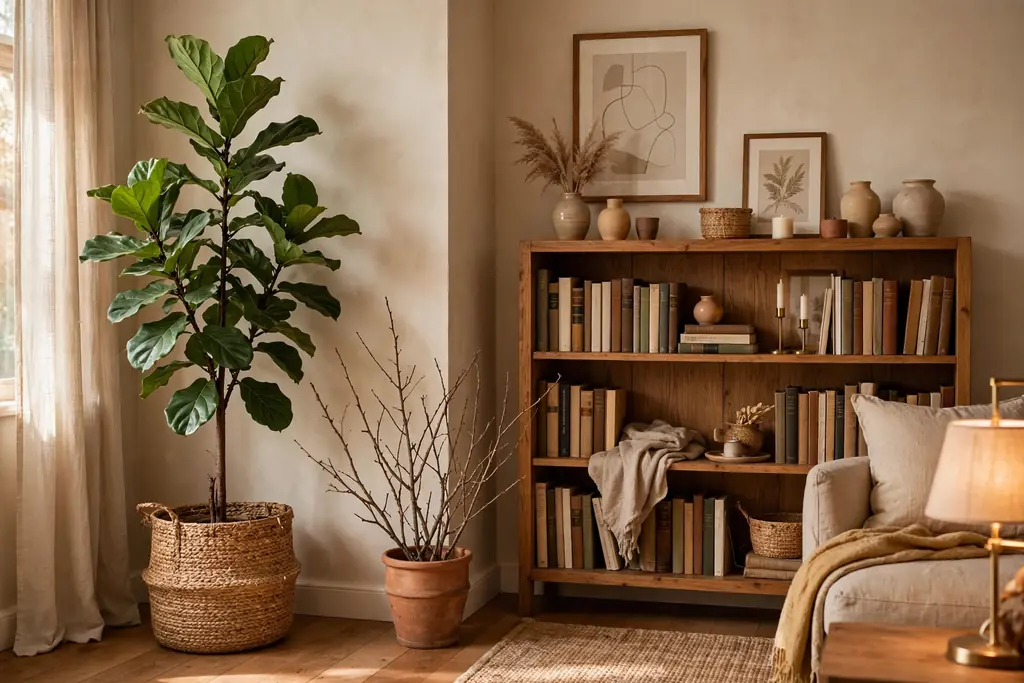
    7. A Sideboard Styled as a Serving Station

    Wood sideboard in a dining room styled as a serving station with a carafe, extra plates, a vase of flowers, and candlesticks.

    Use a wood sideboard against the main wall as a serving station, not just a display shelf, with space on top for a carafe, extra plates, and a platter waiting its turn. A sideboard keeps the table clear for guests, since serving dishes, drinks, and dessert plates can wait there instead of crowding the center. Choose a sideboard in a warm wood tone that matches or tones with the table, with drawers for napkins, candles, and place cards.

    Keep the top calm: one low vase of flowers, a pair of candlesticks, and one clear stretch for serving. Inside, group like items together, such as table linens in one drawer and candles in another, so setting the table takes minutes. Wipe the top after meals, and return serving pieces to the sideboard at once, so the room stays ready for the next meal.

    8. Layered Window Treatments with Sheers and Drapes

    Dining room window with sheer curtains and full linen drapes beside a wood table set for dinner.

    Hang sheer curtains next to the glass for daytime privacy and soft light, then add full drapes in linen or cotton on the outside, so the window looks finished day and night. Sheers soften bright light and keep the room from feeling bare, while drapes frame the window and add warmth in the evening when they are drawn. Choose drapes in cream, soft white, or a quiet stripe that tones with the table linen.

    Hang the rod high and wide, so the window looks larger and the drapes clear the glass when open. Tie drapes back during the day for light, and draw them in the evening for warmth and privacy. Keep drape fabric clear of candles, radiators, and heaters, and wash or brush the panels before the season, since dust shows more on light fabric in daylight.

    9. A Warm Chandelier Hung Low Over the Table

    Warm brass chandelier hung low over a wood dining table set with white dishes and linen napkins in the evening.

    Hang a chandelier or a large pendant over the center of the table, with the bottom of the fitting low enough to pool light on the table but high enough to see across. A brass, aged metal, or wood and glass fitting suits this room better than a sleek chrome fitting, and warm bulbs keep wood, linen, and skin tones looking soft. Put the fitting on a dimmer, so the same light works for a bright family dinner and a quiet evening meal.

    Measure before hanging: center the fitting over the table, not just over the room, and check the height from seated eye level. If the table moves for a large gathering, center the fitting over the usual table spot and use candles to fill the ends. Dust the fitting before a gathering, since dust shows in warm light, and keep the fitting clear of tall centerpieces and hanging greenery.

    10. Sconces and Table Lamps for Layered Evening Light

    Dining room in the evening lit by wall sconces and a small table lamp on a sideboard beside a set table.

    Add wall sconces on the main wall or a small table lamp on the sideboard, so the room does not rely on the chandelier alone in the evening. Low, warm light at two heights makes the room feel settled after dark, and it lets guests see each other without a bright overhead glare. Choose sconces or lamps with warm bulbs and simple shades in cream or linen, and keep the finish consistent with the chandelier, such as aged brass.

    Place one lamp or one pair of sconces where they will not block art or a mirror, and keep cords tidy behind the sideboard. Use a dimmer or a low watt bulb for the lamp, so it glows rather than glares. In the daytime, the lamp and sconces act as quiet decor, so choose shapes that suit the room even when switched off.

    11. A Built In Banquette for Casual Family Meals

    Banquette bench with cream cushions along a dining room wall, with a wood table and chairs set for a family meal.

    Build or place a banquette bench along one wall, with a wood or upholstered base and loose cushions in a washable fabric, so everyday family meals feel relaxed and the room seats more people in less space. A banquette suits a nook or a long wall, since guests slide in and the table can sit close to the wall without a row of chairs behind it. Add a cushion in cream or a quiet stripe, with one or two back pillows for comfort.

    Keep the table at a height that lets guests slide in with ease, and choose a bench depth that supports sitting without feeling like a sofa. Use washable cushion covers, since a banquette gets daily use, and keep the area under the bench clear or fitted with drawers for table linens. For a gathering, the banquette seats children well, while adults take the chairs on the open side.

    12. A Glass Front Hutch for Everyday Dishes on Display

    Glass front wood hutch in a dining room displaying white dishes, blue and white bowls, and clear glasses.

    Use a glass front hutch or a pair of open shelves to display everyday dishes, bowls, and glasses, so the room looks lived in and setting the table takes only a few steps. White dishes, blue and white bowls, and clear glasses look calm behind glass, and they are easy to reach for daily meals. Choose a hutch in a warm wood tone, with shelves spaced for plates, bowls, and a few serving pieces.

    Keep the display light: group dishes by type, leave space between groups, and put the most used pieces at hand height. Dust the shelves before a gathering, and keep fragile pieces behind glass rather than on open shelves near a walkway. If the hutch doors stick, adjust hinges and add felt pads, since doors used daily should open with one hand.

    13. A Patterned Rug That Grounds the Table Group

    Patterned rug in soft blue and cream under a wood dining table with chairs pulled out in a warm dining room.

    Lay a patterned rug under the dining table, large enough that chairs stay on it when pulled out, with a non slip pad beneath. A rug in a muted pattern, such as a soft blue and cream floral, a quiet stripe, or a traditional medallion in warm tones, grounds the table group and adds warmth at floor level. The rug also softens sound in the room, which helps conversation at a long meal.

    Choose a flat weave or a low pile rug, so chairs move with ease and crumbs shake out. Measure the table plus chair pull out space before buying, and center the rug under the table, not just under the room. Vacuum the rug weekly and blot spills at once, since food and drink reach a dining rug often, and use a washable rug in a home with young children or pets.

    14. A Gallery Wall and Mirror Above the Sideboard

    Mirror above a wood sideboard with framed botanical prints grouped beside it in a dining room.

    Hang a mirror above the sideboard to reflect light and make the room feel larger, then group framed prints beside it, such as botanical studies, landscapes, or simple line art in plain frames. A mirror doubles candlelight in the evening, and a small gallery gives the wall a collected feel without needing a large, costly piece. Keep frames in one or two finishes, such as wood and brass, so the group reads as one display.

    Hang the mirror centered over the sideboard, with its bottom edge clear of items on the top, and hang prints at seated eye level where possible. Leave space between frames, and check the group from the table seats, since that is where it will be seen most. Dust frames before a gathering, and keep the mirror glass clean, since smudges show more in candlelight.

    15. Family Style Serving at the Center of the Table

    Wood dining table set family style with white platters, a soup tureen, a bread board, and a salad bowl down the center.

    Serve meals family style, with platters, a soup tureen, a bread board, and a salad bowl down the center of the table, so guests pass food and help themselves. Family style serving suits this room, since it keeps the meal relaxed and the table becomes the center of the gathering rather than a formal stage. Use platters in white or cream, with one wood board for bread, so the serving pieces tone with the place settings.

    Leave room at each place for a plate, a glass, and elbows, and set serving spoons with each dish before guests sit down. Keep hot dishes on trivets, and refill platters from the sideboard rather than crowding the table with spares. At the end of the meal, clear serving pieces to the sideboard in one pass, so the table can stay set for dessert and coffee.

    16. A Low Centerpiece That Changes with the Season

    Low centerpiece of fresh garden flowers in a small vase on a wood dining table with white plates and linen napkins.

    Use one low centerpiece that changes with the season, such as fresh garden flowers in spring, a bowl of lemons in summer, greenery in winter, or a small vase of dried stems in fall. A single changing piece keeps the table fresh without a new table setting each season, and it suits a room that already has wood, linen, and brass as its base. Keep the piece low and narrow, so guests can see across, and set it on a tray or a wood board so it lifts off in one move.

    Change the water for fresh flowers every day or two, and remove any stem that wilts, since one cloudy vase can spoil the group. For fruit, check pieces every few days and move any soft piece to the kitchen. Keep the centerpiece clear of candles and serving paths, and move taller seasonal pieces to the sideboard, where they can be seen without blocking conversation.

    17. Host Ready Details for a Relaxed Gathering

    Dining table place setting with a folded cloth napkin, a place card, a water carafe, and brass candlesticks.

    Add small host details that help guests settle in: cloth napkins folded in a simple rectangle, a water carafe and glasses within reach, a place card or a short menu card at each place, and a candle lit before guests arrive. These details take minutes, yet they make a gathering feel planned without making it feel formal. Use the same napkin fold and the same card style at every place, so the table looks matched from the end of the room.

    Write place cards in clear, large lettering, and keep the note short, since a long note will be read once and then set aside. Set the carafe where guests can reach it without standing, and keep a spare napkin and a cloth nearby for spills. For a larger gathering, add a drink station on the sideboard, so guests can help themselves without leaving the room, and keep the table clear for food and conversation.

    Conclusion

    A Nancy Meyers dining room works when the table is sturdy, the chairs are comfortable, the light is soft, and the setting stays simple enough for daily use. Start with a warm wood table, white dishes, linen, and brass candles, then add one collected layer at a time, such as a sideboard, layered curtains, or a rug under the table. Keep the centerpiece low, leave room for serving dishes, and let the room look lived in rather than staged.

    For table ideas in a seasonal palette, see fall table decor ideas, for a holiday table to pair with this room, see Christmas table setting ideas, and for room ideas beyond the table, see Christmas decor in the dining room. Save this list on Pinterest for your next gathering, and work through it one idea at a time, starting with light and seating before adding decor.

    FAQs

    What is a Nancy Meyers dining room?

    A Nancy Meyers dining room is a warm, collected dining room built around a wood table, soft linen, white dishes, and candlelight, where the room feels lived in and comfortable for long meals. It favors classic pieces, natural materials, and layered light over sleek finishes or formal, matched sets.

    What colors work best in a Nancy Meyers dining room?

    Warm white, cream, soft blue, natural wood, and brass work best together, because they suit wood tables, white dishes, and linen in both daylight and candlelight. Repeat each color at least twice, such as blue accent plates with a blue napkin, so the room looks planned. Keep one quiet pattern, such as blue and white, and let the rest stay plain.

    How do I make a dining room feel warm without a full renovation?

    Start with layered light, a linen cloth or placemats, and comfortable chairs, since those three changes shift the room more than new wall color alone. Add a rug under the table, sheers and drapes at the window, and brass candlesticks at the center, then keep the palette to warm white, cream, wood, and brass. Work through one layer at a time, and keep pieces you use daily within reach.

    What kind of table suits a Nancy Meyers dining room?

    A warm wood table suits this room best, such as a long aged oak or mahogany table for gatherings, or a round pedestal table for a small nook. Choose a table that seats the household plus a few guests, with room for serving dishes down the center, and a top that can be wiped after meals. A worn wood top suits this look better than a glossy top that shows every mark.

    How do I mix dining chairs without the room looking mismatched?

    Mix chairs by keeping one thread consistent, such as the same wood tone, the same seat height, or the same cushion fabric, while letting chair shapes differ. Use Windsor or ladder back chairs along the sides and upholstered armchairs at the heads, so the mix looks gathered over time. Test that every chair slides under the table and sits steady, since comfort matters more than a matched set.

    How do I set a Nancy Meyers table for everyday meals?

    Start with plain white plates, clear glasses, and cloth napkins, then add one low centerpiece, such as brass candles or a small vase of flowers, and leave room for serving dishes. Use placemats instead of a full cloth for daily meals, so the table clears fast, and keep a water carafe within reach. Save the linen cloth, accent plates, and place cards for gatherings, so everyday settings stay quick to lay out and clear away.


  • 19 Nancy Meyers Inspired Living Room Ideas for a Collected Look

    19 Nancy Meyers Inspired Living Room Ideas for a Collected Look

    A Nancy Meyers living room feels collected and easy to live in. It pairs a slipcovered sofa with wood, linen, books, and soft lamp light, in a calm palette of cream, white, and pale blue. The 19 ideas below show how to layer seating, storage, art, and light so the room looks gathered over time, not bought in one trip.

    Start with the largest pieces first: the sofa, the rug, and the main seating layout. Then add layers that make the room feel used, such as books on the coffee table, a lamp that is switched on in the evening, and a basket of throws by the sofa. Keep the palette calm, repeat wood and linen in several places, and leave clear space for walking, sitting, and setting down a cup. For a related warm room built on the same base, see farmhouse decor ideas for living room.

    Key Takeaways

    • Start with a slipcovered sofa, a warm wood piece, and a calm cream, white, and pale blue palette.
    • Build the room in layers: seating, rugs, curtains, lighting, storage, art, and fresh greenery, in that order.
    • Mix new and older pieces so the room reads as collected over time, not matched in one shopping trip.
    • Repeat each material at least twice, such as linen on the sofa and curtains, or wood on the coffee table and mantel.
    • Keep one clear focal point, usually the fireplace or the main sofa wall, and keep other surfaces calmer.
    • Leave room for everyday life: clear seats, clear walkways, and a coffee table that still holds cups and books.

    1. Slipcovered Sofa in Washed White Linen

    Living room with a slipcovered sofa in washed white linen, wood legs, and soft cream pillows.

    A slipcovered sofa in washed white or cream linen sets the tone for the whole room, because it looks soft from day one and invites people to sit down. Choose a loose cover with a skirt that just brushes the floor, and let the relaxed wrinkles stay, since a perfectly pressed slipcover can look stiff beside wood and books. The pale sofa also gives every other layer, from pillows to art, a calm base to sit against.

    Keep the sofa cushions plump by flipping and rotating them each week, and wash the cover on a gentle cycle when it needs it. If white feels risky in a busy house, choose a warm cream or light oatmeal cover instead, and keep a spare throw over the seat for everyday use. Pair the sofa with wood legs or a low wood frame showing below the skirt, so the soft linen has a solid base.

    2. Paired Armchairs Facing the Fireplace

    Two linen armchairs facing each other beside a fireplace with a wood mantel.

    Two armchairs facing each other across a fireplace, or angled toward it, give a living room a clear conversation layout. Choose chairs with rolled arms and linen or cotton covers in cream or a soft stripe, and leave enough space between them for a small table or an ottoman. The pair reads as planned and balanced, even when the rest of the room mixes older and newer pieces.

    Set the chairs far enough from the firebox to be safe and comfortable, and close enough that people can talk without raising their voices. Add a small side table between a chair and the sofa for a cup and a book, and keep the chair seats clear, so the pair stays an invitation rather than a place for folded laundry. If the room has no fireplace, face the pair across a coffee table toward the sofa instead.

    3. Reading Chaise by a Bright Window

    Reading chaise by a bright window with a floor lamp, side table, and folded throw.

    A chaise or a deep lounge chair by a bright window gives the room a quiet corner for reading, with daylight during the day and a floor lamp after dark. Choose a chair deep enough to tuck your feet up, with a firm seat cushion and a small pillow for lower back support. Place a small side table beside it for a book, a cup, and reading glasses, so the corner works without a trip across the room.

    Keep the window dressing light at this spot, such as a sheer panel or a linen curtain pulled to one side, so daylight still reaches the chair. Add a throw folded over the chaise arm for cool evenings, and a small basket below the side table for the current book and a magazine. If floor space is tight, a single armchair with an ottoman gives the same long sit in a smaller footprint.

    4. Built-In Bookcases Around the Fireplace

    White built-in bookcases on either side of a fireplace filled with books and vases.

    Built-in bookcases on either side of a fireplace give a living room its collected backbone, because books, art, and a few objects fill the wall in a way that looks gathered over years. Use painted wood shelves in white or cream, and mix upright books with short stacks laid flat, leaving some open space on each shelf. The fireplace stays the center, while the shelves frame it without competing.
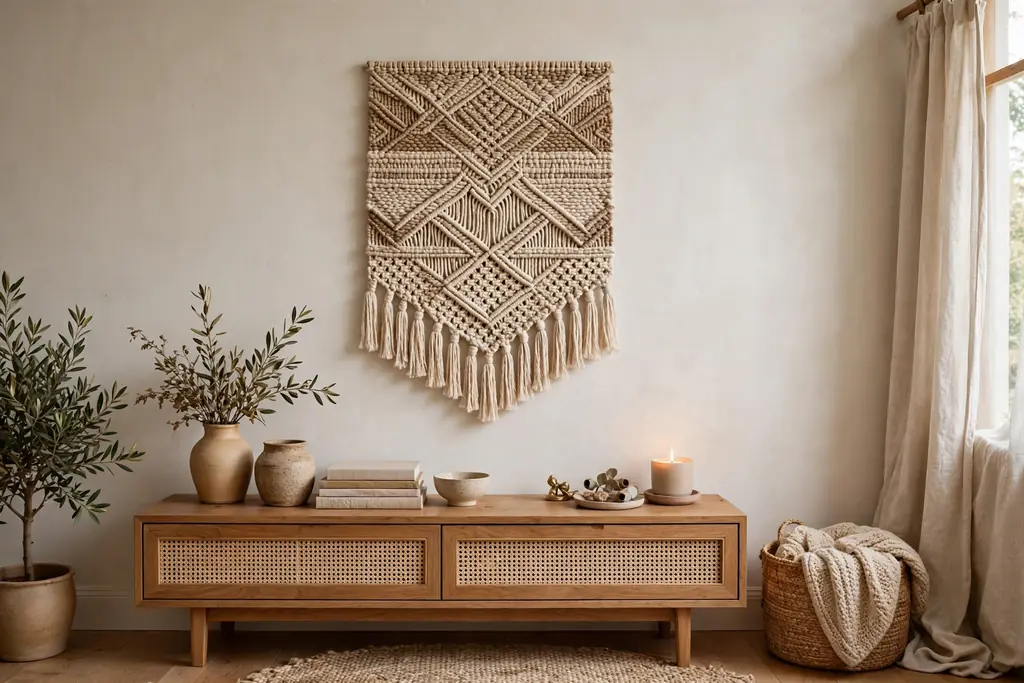
    Style each shelf with a mix of heights: a tall vase or candlestick, a stack of books, and one smaller object, with clear space between groups. Keep the palette close to the room, with cream spines, wood, and one soft blue or green accent, and leave one shelf partly empty so the display can change. If full built-ins are not possible, two tall bookcases in the same finish, placed tight to the fireplace wall, give a similar framed look.

    5. Round Coffee Table with Books and a Low Bowl

    Round wood coffee table with stacked books and a low bowl in a bright living room.

    A round coffee table suits a Nancy Meyers living room because its soft shape keeps walkways easy and its top stays simple to style. Choose wood or a wood top with a simple base, large enough to hold books and cups but small enough to walk around without turning sideways. A round table also links a sofa and two chairs without sharp corners in a busy family room.

    Style the top with restraint: a stack of two or three large books, a low bowl or tray for remotes, and one small vase of fresh stems. Leave at least half the top clear, so cups, a plate, and a book can all fit at once. Wipe wood tops with a dry cloth for dust and a damp cloth for spills, and use coasters under hot drinks so the finish stays even over time.

    6. Layered Jute and Wool Rugs

    Wool rug layered over a larger jute rug under a coffee table in a neutral living room.

    Layering a smaller wool rug over a larger jute or sisal rug warms the floor and marks the seating area without a loud pattern. Center the base rug under the sofa and chairs, with the front legs of the seating on it, then center the top rug under the coffee table, leaving an even border of the base rug showing. The natural fiber base adds texture, while the wool top adds softness underfoot.
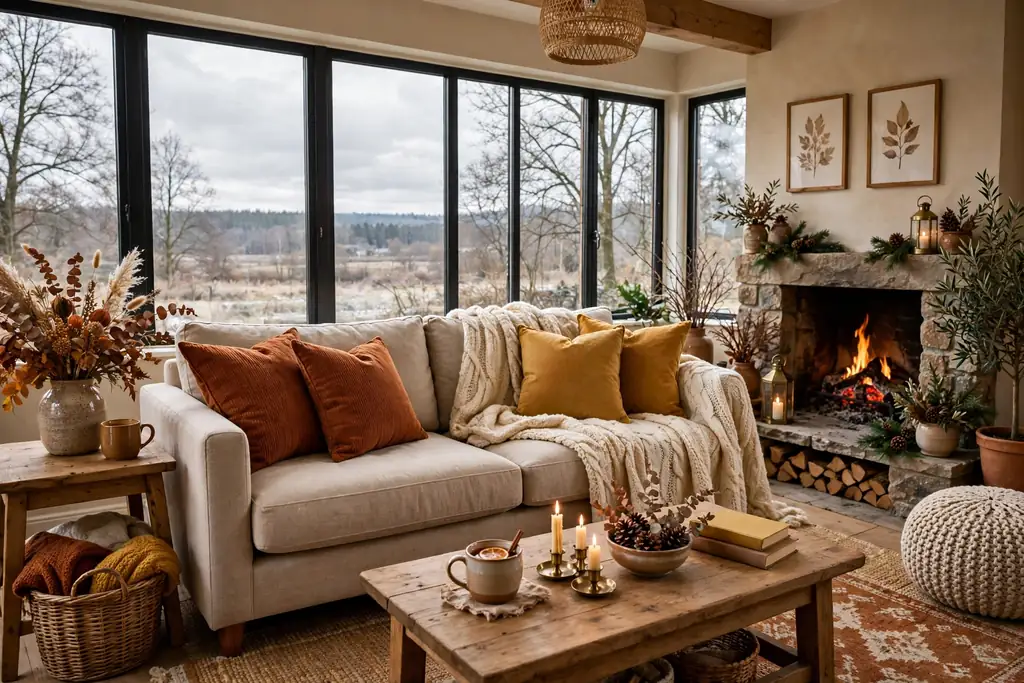
    Use a rug pad between the layers if they slide, and vacuum both layers weekly so dirt does not build up between them. Choose a top rug in cream, soft blue, or a quiet stripe that repeats a color already in the pillows or art, and keep the pattern scale simple, since two strong patterns on the floor can crowd the room. In a small room, one wool rug alone is enough, since two layers need room to show their edges.

    7. Floor-Length Linen Drapes

    Tall living room windows with floor-length cream linen drapes and daylight.

    Floor-length linen drapes soften tall windows and make a living room feel finished, even when the rest of the room stays simple. Hang the rod close to the ceiling and wider than the window frame, so the window looks taller and the drapes can stack clear of the glass. Choose natural white, cream, or pale blue linen, and let the panels fall to the floor with a small break rather than pooling, so they stay clean and easy to vacuum around.

    Use rings with clips for a relaxed gathered look, and keep the drape color close to the sofa or rug so the window treatment links to the seating area. Wash linen drapes on a gentle cycle and hang them damp to reduce creases, and open them fully during the day, since this style depends on daylight to show the linen weave. For a related seasonal take on the same window, see fall living room decor.

    8. Collected Gallery Wall in Mixed Frames

    Collected gallery wall in mixed wood, gold, and black frames above a living room sofa.

    A gallery wall of art collected over time, in mixed wood, gold, and black frames, is the clearest way to get the collected look on one wall. Start with one larger piece at eye level from the sofa, then build around it with smaller landscapes, prints, and family photos, keeping a similar gap between frames. The mix of frames matters more than matching sizes, since varied frames read as gathered rather than bought as a set.

    Lay the arrangement on the floor first, and take a photo before hanging, so the spacing stays even once frames go up. Keep the wall around the gallery simple, with no competing shelf or large mirror beside it, and check that heavy frames have secure fixings. If the wall is small, a group of three or five frames gives the same collected note without crowding the room.

    9. Styled Wood Mantel with Candles and Greenery

    Wood mantel styled with candlesticks, a mirror above, and a low row of greenery.

    A wood mantel, whether a thick beam or a painted shelf, gives a living room a natural focal point even when the fireplace is rarely lit. Keep the styling simple: a large mirror or framed print above, a pair of candlesticks or vases at the ends, and one low row of greenery or a small garland in the middle. The wood itself carries most of the interest, so the objects on it can stay few and quiet.

    Keep anything flammable clear of the firebox, and set candles on stable holders away from curtains and dried stems. Change one item by season, such as a vase of fresh stems in spring or pine in winter, so the mantel feels fresh without a full restyle. If the room has no fireplace, a wood shelf mounted at mantel height on a plain wall gives the same ledge for seasonal styling.
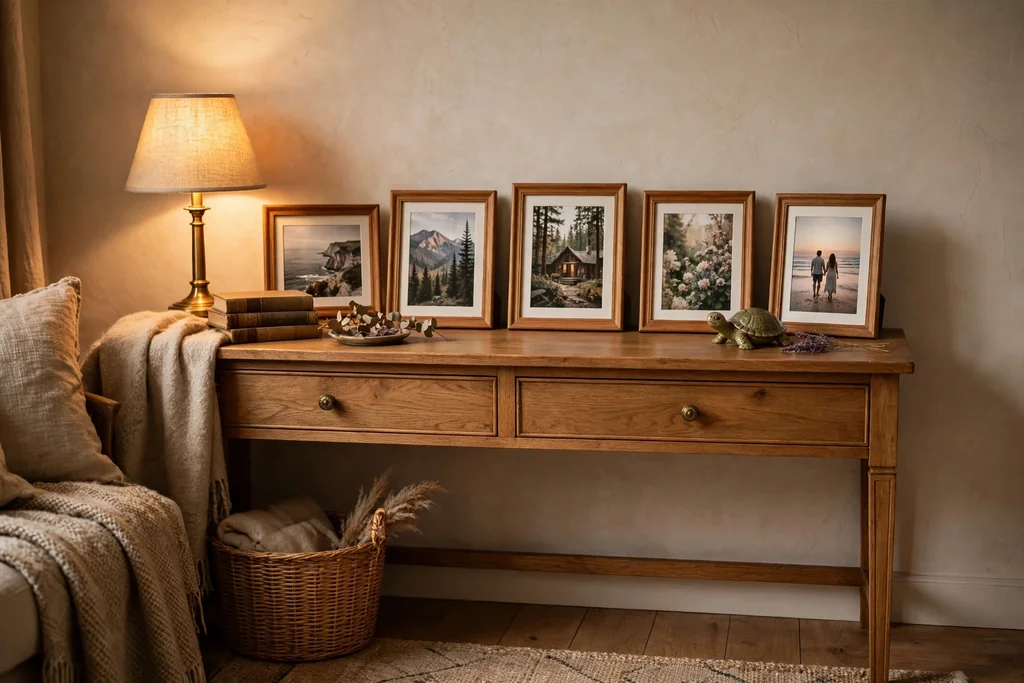
    10. Large Upholstered Ottoman as a Coffee Table

    Large upholstered linen ottoman with a wood tray, books, and a small vase in a living room.

    A large upholstered ottoman in place of a coffee table gives a living room a soft center that also works as extra seating. Choose a square or rectangular ottoman in linen or a quiet stripe, firm enough to hold a tray, and large enough to anchor the sofa without blocking walkways. The soft top suits a family room, since there are no hard corners, and a tray on top turns it into a stable surface for cups and books.
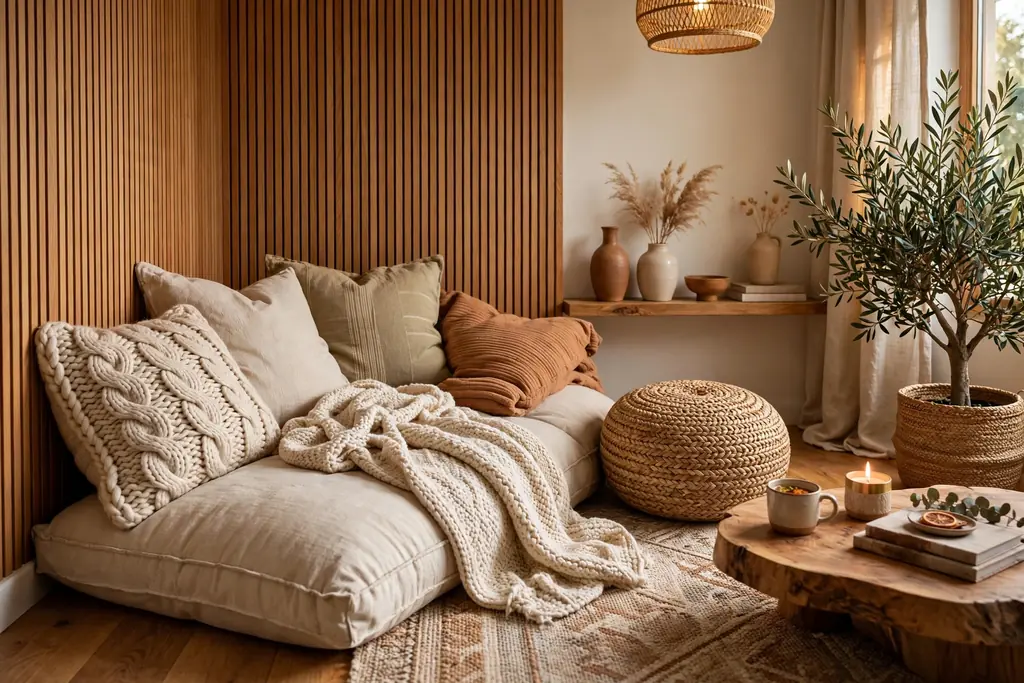
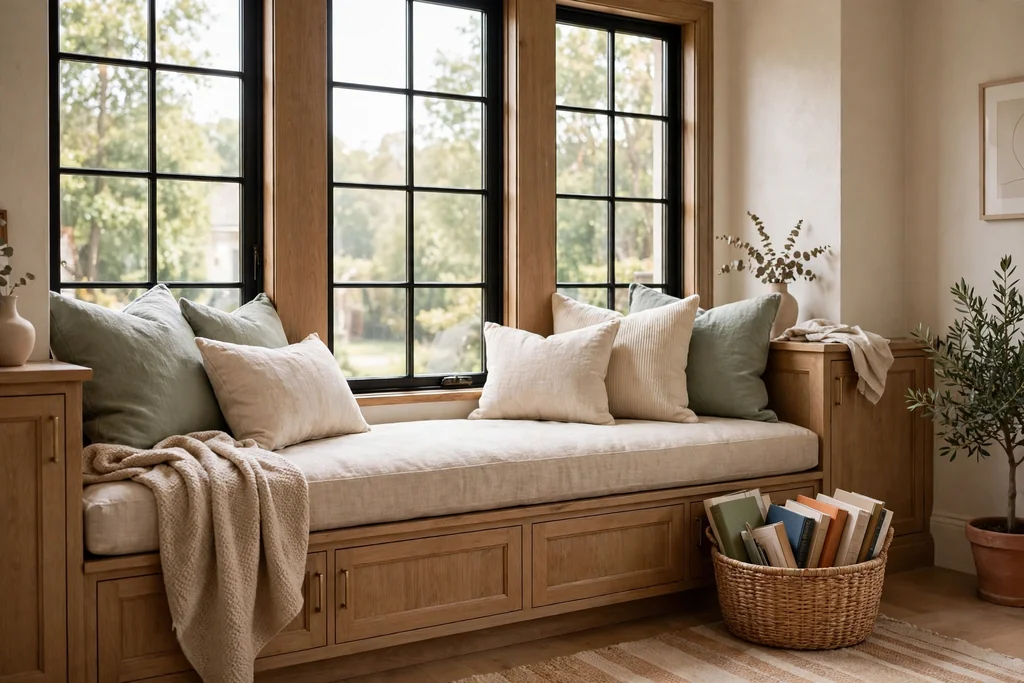
    Set a wood or woven tray in the center of the ottoman, with a book and a small vase, and leave the rest of the top clear for feet at the end of the day. Keep the ottoman cover washable where possible, and vacuum it weekly, since a fabric top gathers dust faster than wood. If the room already has a wood coffee table, use a smaller ottoman at one end of the sofa instead, as a footrest and spare seat.

    11. Woven Baskets for Throws and Everyday Storage

    Woven seagrass baskets beside a sofa holding folded throws and magazines.

    Woven baskets are the quiet storage hero of a collected living room, because they hold real clutter and still look like decor. Use a large seagrass basket for throws beside the sofa, a medium basket for magazines or toys, and a small basket on a shelf for remotes and chargers. The woven texture adds warmth beside wood and linen, and the natural color works with almost any calm palette.

    Place baskets where the clutter actually happens: beside the sofa for throws, near the television for remotes, and by the door for shoes or bags. Choose baskets with handles for pieces that move often, and line baskets used for plants or damp items. Shake baskets outside monthly, since woven fibers gather dust and crumbs, and replace a basket when the weave starts to fray at the rim.

    12. Blue and White Ceramics on Open Shelves

    Blue and white ceramic jars and bowls grouped on white open shelves with books.

    Blue and white ceramics, from ginger jars to simple bowls and vases, give a calm living room a classic accent that links to the pale blue in pillows and art. Group two or three pieces on one open shelf or on the mantel, with books beside them, rather than spreading single pieces across every surface. The blue reads clearly against white shelves and cream walls, without needing a bright color elsewhere.

    Keep the group to one shelf or one surface, and vary heights, with one taller jar and one or two smaller bowls, so the group has a clear shape. Dust ceramics weekly, since open shelves gather dust, and keep them clear of walkways and chair backs where they could be knocked. If blue feels strong, use it only in ceramics and one pillow, and keep the rest of the room in cream, white, and wood.

    13. Layered Lamps for Soft Evening Light

    Living room in the evening lit by table lamps and a floor lamp with warm light and linen shades.

    Soft evening light comes from lamps at seating height, not from one bright overhead fixture. Use a floor lamp beside a reading chair, table lamps on side tables at both ends of the sofa, and one small lamp on a console or shelf, all with warm white bulbs. The layers together make cream, wood, and linen look warmer after dark, and they let one person read while another watches television without harsh light.

    Put lamps on dimmers where the wiring allows it, and keep switches within reach of the sofa so no one crosses a dark room. Use linen or cotton shades, which soften the bulb, and keep lamp bases clear of throws and paper. For a related warm evening room, see cozy Christmas living room ideas for how the same lamp layers work with seasonal greenery and candles kept clear of fabric.

    14. Window Seat with Cushions and Hidden Storage

    Window seat with a deep cushion, back pillows, and storage bench below in a bright living room.

    A window seat turns a wide window into a useful living room feature, with a deep cushion, back pillows, and storage below for books, games, or throws. Build or buy a low bench that fits the window width, add a firm cushion in a washable fabric, and layer two or three pillows against the window frame for back support. The seat gives the room a second place to sit, apart from the sofa, and it makes daylight the main feature of that corner.

    Use hinged lids or drawers below the seat for storage, and keep the items inside in groups, such as books in one section and throws in another, so the seat stays easy to open. Keep the cushion color close to the sofa, and add a small side table at one end for a cup and a book. If a built seat is not possible, a low bench with baskets below, placed under a window, gives the same sit and storage in a simpler form.

    15. Antique Wood Trunk as a Side Table

    Antique wood trunk beside a sofa used as a side table with a lamp and a book.

    An antique or vintage style wood trunk beside a sofa or chair gives a living room a piece with age, storage, and a solid surface in one object. Choose a trunk with a flat lid, so it can hold a lamp, a book, and a cup, and check that the lid stays open safely and the hinges hold. The worn wood and old hardware add the sense of history that new pieces alone cannot copy, and they pair well with new linen because the contrast keeps the room from feeling like a showroom.

    Keep the trunk top mostly clear, with a lamp at one end and one book or tray, and use the inside for throws, photo albums, or games. Wipe the wood with a dry cloth, and check older trunks for secure corners and handles before placing a heavy lamp on top. If a full trunk feels large, a smaller wood chest or a vintage suitcase stack beside a chair gives the same aged note in less floor space.

    16. Fresh Flowers and Potted Greens on Side Tables

    Side table with a vase of fresh flowers and a potted green plant beside a sofa.

    Fresh flowers in a simple vase and one or two potted greens on side tables make a collected living room feel alive without a large arrangement. Use a glass or white ceramic vase with short stems, such as roses, peonies in season, or garden greens, and set it on a side table where it can be seen from the sofa. A potted plant beside it, in a terracotta or cream pot, adds green that lasts far longer than cut stems.

    Change the water every day or two, trim stems at an angle, and remove any stem that wilts, since one cloudy vase can spoil the group. Water potted plants before they dry out fully, and set each pot on a saucer so the table stays dry. Keep arrangements low on side tables, so they do not block conversation or the view across the room, and keep flowers clear of direct heat and strong sun.

    17. Linen and Ticking Stripe Pillows in a Soft Palette

    Sofa with linen and ticking stripe pillows in cream, white, and pale blue.

    Pillows in linen and ticking stripe, in cream, white, pale blue, and soft grey, finish a slipcovered sofa without adding a loud pattern. Mix one plain linen, one ticking stripe, and one quiet check or floral, all in the same soft palette, and keep the count to what fits without a pile on the floor when someone sits down. The mix of textures matters more than bright color, since linen, cotton, and a light knit together read as layered and lived in.

    Repeat one pillow color elsewhere in the room, such as a throw or a piece of art, so the sofa links to the rest of the space. Use zip covers so pillows can be washed, and fluff inserts daily, since linen covers show dents more than firmer fabrics. If the sofa already has a pattern, use plain linen pillows in one soft color only, so the room stays calm.

    18. White Paneled Walls with Warm Wood Trim

    Living room with white paneled walls, warm wood trim, and a cream sofa.

    White paneled walls, from simple beadboard to wider planks, give a living room texture without a strong color or pattern, and they suit both older and newer houses. Paint the panels white or cream, and pair them with warm wood trim on doors, windows, or a mantel, so the white does not read as cold. The panels work best on one or two walls, such as the fireplace wall or the sofa wall, so the room keeps a calm balance.

    Keep furniture and art simple against paneled walls, since the lines themselves add interest, and avoid hanging a large patterned piece directly over busy paneling. Dust panel grooves with a dry cloth, and touch up paint at scuffs near seating, where chairs and bags mark the wall. If full paneling is not possible, a single framed panel section behind the sofa gives a similar textured backdrop without a full wall build.

    19. Console Table Behind the Sofa with Lamps and Books

    Wood console table behind a sofa styled with a lamp, stacked books, and a small vase.

    A console table behind a sofa gives a living room a work surface and a display ledge in a spot that often stays empty. Choose a wood console close to sofa height, and style the top with a lamp at one end for evening light, a stack of books in the middle, and a small vase or bowl at the other end. The table also marks the edge of the seating area in an open plan room, without a wall or a screen.

    Keep the tabletop mostly clear, with one lamp, one book stack, and one small object, so it does not become a shelf for mail and chargers. Slide a basket or two below for throws or games, and measure the depth first, since a table that sticks too far into a walkway will get bumped daily. Place the lamp so its light falls over the sofa for reading, and keep cords tucked behind the table, out of the walkway.

    Conclusion

    A Nancy Meyers living room does not need a large budget or a full remodel to feel collected. A slipcovered sofa, warm wood, layered rugs, linen drapes, books, and soft lamp light will carry most rooms, and the older pieces, such as a trunk, a gallery wall, or blue and white ceramics, give the room its gathered character over time. Start with seating and the rug, add light and storage, and finish with art and fresh greenery.

    For a related warm room on the same base, see farmhouse decor ideas for living room, and for a seasonal shift using the same lamp layers, see cozy Christmas living room ideas. Keep what you use often, store the rest together, and let the room return to a simple, usable base between seasons. Work through this list one idea at a time, and keep the palette calm, so each new layer adds warmth without crowding the room.

    FAQs

    What defines a Nancy Meyers living room?

    A Nancy Meyers living room is defined by a slipcovered sofa, warm wood, linen, books, and soft lamp light in a calm cream, white, and pale blue palette. The room feels collected rather than matched, with older pieces, art, and everyday objects mixed with new furniture. Seating stays deep and usable, surfaces hold books and flowers, and the overall feel is warm, bright, and easy to live in.

    How do I get the collected look without buying everything new?

    Start with the pieces you already own, and add one older or secondhand piece at a time, such as a wood trunk, a framed print, or a ceramic jar. Mix new linen with older wood, keep the palette to cream, white, pale blue, and wood tones, and repeat each material in at least two places. Living with one new piece for a few weeks before adding the next keeps the room from looking bought in one trip.

    What colors work best in a Nancy Meyers living room?

    Cream, white, soft grey, pale blue, and warm wood tones work best together, because they suit linen, wood floors, and daylight in a bright room. Repeat pale blue in at least two places, such as a pillow and a ceramic jar, and keep other colors to wood, green from plants, and one muted accent. Avoid adding a second strong color in the same room, since the calm palette is what keeps the layered look from feeling busy.

    What sofa works best for this style?

    A slipcovered sofa in washed white, cream, or light oatmeal linen works best, because it looks soft from day one and can be washed when life happens. Choose a deep seat, rolled or straight arms, and a skirt that just brushes the floor, with wood legs or a low wood frame below. Keep cushions plump by flipping them weekly, and add linen and ticking stripe pillows in the same soft palette.

    How do I light a Nancy Meyers living room in the evening?

    Use lamps at seating height rather than one bright overhead light, with a floor lamp by a reading chair and table lamps at both ends of the sofa. Choose warm white bulbs and linen shades, and put lamps on dimmers where possible, so the room can shift from bright daytime use to soft evening light. Keep one small lamp on a console or shelf as a third layer, and keep all lamps clear of throws and paper.

    How do I keep a white living room practical with children or pets?

    Choose washable slipcovers, a rug that can be cleaned, and an ottoman or coffee table with a tray that lifts off in one move for quick clearing. Keep a basket of throws by the sofa for everyday use, use cream or oatmeal rather than pure white where marks show most, and keep ceramics and art clear of walkways and chair backs. Washable covers and wipe clean wood mean the room can stay pale without staying off limits.


  • 21 Nancy Meyers Inspired Home Decor Ideas for Comfortable Rooms

    21 Nancy Meyers Inspired Home Decor Ideas for Comfortable Rooms

    Nancy Meyers home decor means bright, comfortable rooms with white walls, natural wood, linen slipcovers, and fresh flowers. It pairs a relaxed coastal or country kitchen with a soft living room, layered textiles, and warm lamps, so every space feels lived in, welcoming, and easy to use every day.

    The 21 ideas below cover kitchens, living rooms, dining rooms, bedrooms, and sunrooms, so you can borrow one idea or build the whole look room by room. Start with light walls and wood floors, add soft seating and linen, then finish with flowers, candles, and books. For more living room styling in the same relaxed spirit, see Fall Living Room Decor and Farmhouse Decor Ideas for Living Room, and visit the Dwell Ovell home page for more room ideas.

    Key Takeaways

    • Keep the base light: white or cream walls, warm wood floors, and natural fiber rugs let the room feel bright all day.
    • Choose soft, washable seating in linen or cotton, so sofas and chairs invite daily use rather than careful sitting.
    • Layer textiles in cream, sand, pale blue, and soft green, and repeat one accent color in at least two places per room.
    • Use fresh flowers, candles, and stacks of books as the main decor, and keep surfaces mostly clear around them.
    • Warm the room in the evening with table lamps and floor lamps at seating height, rather than relying on overhead light alone.
    • Style rooms for real life first: clear paths, reachable seats, and a table that can hold a meal, a book, and a cup of coffee.

    1. White Slipcovered Sofa in Washed Linen

    A white slipcovered sofa in washed linen with cream pillows in a bright living room.

    A white slipcovered sofa in washed linen is the anchor of a Nancy Meyers living room, because it looks soft from the first day and can be washed when daily life leaves a mark. Choose a natural white or cream cover, let the relaxed wrinkles stay part of the look, and pair the sofa with wood legs or a low wood frame showing below the skirt.

    Keep the cushions plump by flipping and rotating them each week, and add pillows in linen, cotton, and one quiet stripe. If a full slipcover feels like too much, a washable throw over the seat and back gives a similar soft layer on a sofa you already own.

    2. Bright Kitchen with White Cabinets and Marble Counters

    A bright kitchen with white cabinets, marble counters, and warm wood floors.

    A bright kitchen with white cabinets and marble counters sets the tone for the whole house in this style, because the kitchen is where family and friends gather. Keep cabinet fronts plain with simple knobs, let daylight reach the counters, and leave one stretch of counter clear for cooking, coffee, and conversation.

    Pair the white cabinets with warm wood floors and a pale backsplash, so the room stays bright without feeling cold. Wipe marble counters promptly after spills, use boards for prep work, and keep everyday dishes within easy reach of the sink and stove.

    3. Open Shelving with White Dishes and Glassware

    Open kitchen shelves holding white dishes, bowls, and glassware.

    Open shelving with white dishes and glassware brings a kitchen wall to life without a full cabinet build, and it keeps the pieces you use every day close at hand. Use two or three wood or painted shelves on one wall, stack white plates and bowls in neat piles, and group glasses by size so the shelves read as calm.

    Style each shelf with a mix of heights, such as a stack of bowls, a tall pitcher, and a small plant, with clear space between groups. Dust open shelves weekly, since open storage gathers dust faster than closed cabinets, and keep the palette to white, cream, and wood.

    4. Large Kitchen Island with Wood Stools

    A large kitchen island with wood stools and a bowl of fruit on top.

    A large kitchen island with wood stools gives the kitchen a natural gathering spot for breakfast, homework, and long talks over coffee. Choose an island with a plain wood or marble top, add three or four backless or low back stools that tuck under the edge, and keep the top clear except for a bowl of fruit or a vase of flowers.

    Leave enough room to walk around the island on all sides, and place stools on one side only so the cook still has a clear work zone. Wipe the top after each meal, and keep a basket or drawer nearby for napkins and placemats.

    5. Hydrangeas in Clear Glass Vases

    White hydrangeas in a clear glass vase on a kitchen island.

    Hydrangeas in clear glass vases are the signature flower of this style, because their full heads fill a room with soft color at once. Cut stems to suit the vase, strip leaves that would sit below the water line, and place one large arrangement on a kitchen island or one smaller vase on a side table.

    White, cream, pale blue, and soft pink hydrangeas all suit the palette, so pick the color that repeats elsewhere in the room. Change the water every two days, trim stems at an angle, and keep arrangements out of direct sun so the blooms last longer.

    6. Sheer White Curtains at Tall Windows

    Tall windows dressed with sheer white curtains in a bright living room.

    Sheer white curtains at tall windows soften daylight and keep a room feeling open, which is central to this look. Hang the rod close to the ceiling and wider than the window frame, so the window looks taller and the curtains can stack clear of the glass when open.

    Use a light linen or cotton voile that filters light gently, and let the panels fall to the floor with a small break rather than pooling, so they stay clean. Wash sheer curtains on a gentle cycle and hang them damp to reduce creases.

    7. Warm Wood Floors with a Natural Fiber Rug

    Warm wood floors with a natural fiber rug under a sofa and coffee table.

    Warm wood floors with a natural fiber rug give a bright room its grounding layer, because wood adds warmth while jute or sisal adds texture underfoot. Choose a rug large enough to sit under the front legs of the sofa and chairs, and use a rug pad beneath it so the layers do not slide.

    Keep the rug color close to sand or oatmeal, so it links to linen seating and wood furniture without adding a strong pattern. Vacuum both the rug and the floor beneath it weekly, and shake the rug outside when it needs a refresh.

    8. Fireplace Mantel with Candles and Stacked Books

    A fireplace mantel styled with candles and stacked books.

    A fireplace mantel styled with candles and stacked books gives a living room a calm focal point, even when the fire is not lit. Place a pair of candle holders at the ends, lay two or three books flat in the middle, and add one small vase of greenery, so the mantel reads as collected rather than crowded.

    Keep anything flammable clear of the firebox, and use battery candles if the mantel sits near curtains or dried stems. Change one item by season, such as fresh stems in spring or pine in winter, so the mantel feels fresh without a full restyle.

    9. Reading Nook with an Armchair and a Knit Throw

    A reading nook with an armchair, a knit throw, and a small side table near a window.

    A reading nook with an armchair and a knit throw gives a bright room a defined place to sit that is not the sofa. Set one comfortable chair in a corner near a window, add a small side table and a lamp at chair height, and fold a knit throw over the arm so it is ready on cool evenings.

    Keep the chair clear so it stays an invitation rather than a pile for clothes or bags. A small basket beside the chair can hold the throw and a current book, and the same palette as the rest of the room keeps the corner feeling part of the living room.

    10. Dining Table Set with White Linen and Taper Candles

    A dining table set with white linen, plain plates, and taper candles.

    A dining table set with white linen and taper candles suits long, relaxed meals, because the table looks dressed without feeling formal. Lay a white or cream cloth or runner, add plain white plates and simple glasses, and place taper candles in holders down the center at a low height.

    Keep the centerpiece low so guests can talk across the table, and leave room for serving dishes by keeping the candle line narrow. Choose a washable cloth if the table hosts family meals often, and fold cloth napkins in a simple rectangle for a neat finish.

    11. Garden Roses on the Coffee Table

    Garden roses in a low bowl on a wood coffee table.

    Garden roses on the coffee table add scent and soft color to the seating area, in a smaller, more casual arrangement than a large hydrangea display. Use a low bowl or a short vase, trim stems so the blooms sit just above the rim, and mix garden roses with a few sprigs of greenery.

    Place the arrangement to one side of the coffee table, so the rest of the surface stays free for books and cups. Change the water daily, remove fading blooms promptly, and keep the vase on a coaster or tray to protect the table surface.

    12. Built-In Bookcases with Books and Blue Ceramics

    Built-in bookcases filled with books and blue and white ceramics.

    Built-in bookcases filled with books and a few blue and white ceramics give a living room or study a collected, lived in feel. Arrange books in upright rows with a few stacks laid flat, then add one ceramic vase or bowl per shelf as a color accent, with clear space around each piece.

    Keep the palette to cream, wood, and blue, so the shelves link to the rest of the room. Dust shelves regularly, and leave one shelf partly empty so the display can change without a full clear out.

    13. Breakfast Nook with a Window Bench

    A breakfast nook with a window bench, cushions, and a small table.

    A breakfast nook with a window bench turns a sunny corner into the most used seat in the house. Build or place a bench under a window, add seat cushions in a washable fabric, pile on two or three pillows, and set a small round or rectangular table in front of it.

    Keep the table size modest so people can slide in and out of the bench with ease, and add a pendant or a small lamp above the table for morning light. A basket under the bench can hold placemats or children’s books, so the nook stays tidy between meals.

    14. French Doors Opening to the Garden

    French doors opening from a bright living room to a garden.

    French doors opening to the garden blur the line between indoors and outdoors, which is a hallmark of this style. Choose doors with clear glass panes, keep the view through them mostly unblocked, and place a chair or a small table near the doors so the garden feels like an extension of the room.

    Keep curtains on French doors light and simple, such as sheer panels that can be drawn back fully during the day. Wipe the glass often, since doors at eye level show marks quickly, and keep the path to the doors clear of furniture and clutter.

    15. Blue and White Ceramics on a Sideboard

    Blue and white ceramics grouped on a dining room sideboard.

    Blue and white ceramics on a sideboard give a dining room a classic accent without changing the furniture. Group three or five pieces, such as vases, ginger jars, or serving bowls, on one end of the sideboard, and keep the other end clear for serving dishes or a lamp.

    Mix heights so the group looks collected, with the tallest piece at the back and smaller pieces in front. Wipe ceramics with a dry cloth, and keep them away from table edges where they could be knocked during serving.
    16. Bedroom with Layered White Bedding

    A bedroom with layered white bedding and a linen throw at the foot of the bed.

    A bedroom with layered white bedding feels fresh, calm, and easy to live with, because white sheets, a duvet, and extra blankets can be washed and swapped with ease. Start with white cotton sheets, add a white or cream duvet, then fold a linen throw or a light quilt across the foot of the bed.

    Add pillows in layers, with sleeping pillows at the back and two or three Euro or standard pillows in front, all in white or cream covers. Keep the bedside tables simple, with a lamp and a small vase, so the bed stays the clear focus of the room.

    17. Sunroom with Rattan Chairs and Linen Cushions

    A sunroom with rattan chairs, linen cushions, and a woven rug.

    A sunroom with rattan chairs and linen cushions gives a bright house a relaxed second living space for mornings and warm afternoons. Choose rattan or wicker chairs with thick seat cushions in cream or sand, add a small side table between them, and keep the floor clear for easy movement.

    Add a woven rug under the chairs and one potted plant nearby, so the room feels like a garden room rather than a storage space. Bring cushions inside during rain if the sunroom is not fully sealed, and wipe rattan frames with a dry cloth to remove dust.

    18. Copper Pots on a Kitchen Rail

    Copper pots hanging on a rail in a bright white kitchen.

    Copper pots on a kitchen rail add warmth and a working kitchen feel to a bright white kitchen, because the pots are both useful and good to look at. Hang a rail or a row of hooks on one wall or above the island, and hang the pots you use most often, with lids stored nearby in a drawer.

    Keep the rail at a height you can reach without a step stool, and polish copper only as often as you like the shine, since a soft patina also suits the look. Wipe pots dry after washing before hanging them, so water marks do not build up.

    19. Coffee Table Tray with Books and a Candle

    A wood coffee table tray holding books and a candle.

    A coffee table tray with books and a candle gives the seating area a defined center that can be lifted away in one move. Set a wood or woven tray in the middle of the table, stack two or three books inside it, add a candle in a holder, and leave the rest of the tray empty.

    Keep the tray small enough that cups still fit on the table beside it, and use a battery candle if the tray sits near a throw or a stack of magazines. Swap the top book often, so the tray reflects what someone in the house is actually reading.
    20. Beadboard Walls in a Bathroom or Mudroom

    A bathroom with white beadboard walls, a plain mirror, and folded towels.

    Beadboard walls in a bathroom or mudroom add texture and a cottage feel to small rooms that often get plain finishes. Paint the beadboard white or cream, run it to chair rail height or full height on one wall, and pair it with simple hooks, a wood bench, or a plain mirror.

    Choose a paint finish that can be wiped clean, since mudrooms and bathrooms see splashes and damp hands. Keep the rest of the room simple, with plain towels and one small plant, so the beadboard stays the main feature.

    21. Warm Lamp Light for Evening Gatherings

    A living room in warm lamp light in the evening with a sofa and books.

    Warm lamp light for evening gatherings is what makes a bright daytime room feel cozy after dark. Turn off the overhead light after dinner, and use table lamps and floor lamps with warm bulbs at seating height, one at each end of the sofa and one near a reading chair.

    Put lamps on dimmers or use lower wattage warm bulbs, so the light stays soft rather than harsh. Keep lamp shades in cream or linen, dust them regularly, and place lamps where cords do not cross walkways.

    Conclusion

    Nancy Meyers home decor works because it starts with light, comfort, and rooms made for real life. White walls and wood floors, soft linen seating, fresh flowers, and warm lamp light do most of the work, and the details, from blue ceramics to copper pots, simply repeat that calm story. Pick the ideas that fit your rooms and your routine, start with one room or one corner, and let the look grow over time. Save this list and return to it when a room needs a refresh, so each change stays simple, comfortable, and easy to live with.

    FAQs

    What is Nancy Meyers home decor?

    Nancy Meyers home decor is a bright, comfortable decorating style inspired by the light filled kitchens and living rooms in Nancy Meyers films. It uses white walls, warm wood, linen slipcovers, fresh flowers, and layered textiles, so rooms feel welcoming, relaxed, and made for everyday living rather than display alone.

    What colors define Nancy Meyers style?

    White, cream, sand, pale blue, and soft green define Nancy Meyers style, with warm wood tones and touches of blue and white ceramics as accents. Keep most of the room in the light neutrals, repeat one accent color in at least two places, and avoid strong, dark colors on large surfaces so the room stays bright.

    How do I get a Nancy Meyers kitchen on a budget?

    Start with the changes that cost least and show most, such as clearing counters, adding open shelving for white dishes, hanging a rail for pots you already own, and placing hydrangeas in a glass vase. Keep cabinets and counters as they are, add linen stool cushions or a runner in cream, and build the look over time rather than replacing the whole kitchen at once.

    What furniture suits a Nancy Meyers living room?

    A slipcovered sofa in washed linen, a wood coffee table, comfortable armchairs, and built-in or freestanding bookcases suit a Nancy Meyers living room. Choose pieces with soft lines and natural materials, keep seating deep enough for long sits, and pair each large piece with a lamp, a throw, and a stack of books so the room feels used.

    Can Nancy Meyers decor work in a small home?

    Yes, Nancy Meyers decor can work in a small home if you keep the palette light, choose one soft seating piece, and use mirrors, sheer curtains, and clear paths to keep rooms feeling open. Style one focal point per room, such as a window bench or a styled mantel, use furniture that serves two uses, and keep surfaces mostly clear so small rooms do not feel crowded.

    How do I keep white sofas and bedding looking fresh?

    Wash slipcovers and white bedding on a regular cycle, treat marks promptly with a gentle stain remover, and keep a spare set of covers so one set can be washed while the other is in use. Choose washable linen or cotton, rotate cushions weekly, keep throws within reach for daily use, and store spare covers folded in a dry place.


  • 19 Rattan Decor Ideas to Add Natural Texture to Your Home

    19 Rattan Decor Ideas to Add Natural Texture to Your Home

    Rattan decor adds natural texture to a home through woven chairs, lights, baskets, and furniture that bring warmth without heavy color or pattern. Use one or two rattan pieces per room, pair them with linen, wood, and plants, and keep the palette pale so the weave stays the focus.

    Start with the piece that will be used most, such as a chair, a light, or a storage basket, then add a smaller rattan accent only if the room still needs texture. Rattan suits living rooms, bedrooms, dining areas, entries, and porches, and it works best against plain walls, light wood, and soft textiles. For a warm wood and woven base in a living room, see the farmhouse decor ideas on Dwell Ovell, for a light coastal base that pairs well with rattan, see the coastal fall decor guide, and for living room styling order, see the fall living room decor guide.

    Key Takeaways

    • Use one or two rattan pieces per room, so the weave reads as texture rather than a theme.
    • Pair rattan with linen, light wood, cotton, and plants, and keep most of the room in white, cream, sand, or soft green.
    • Choose the most used piece first, such as a chair, a pendant light, or a storage basket, then add a smaller accent.
    • Mix one open weave with one tighter weave for contrast, and keep other patterns plain.
    • Keep rattan out of damp spots and direct rain, and dust the weave regularly so it stays clean.
    • Repeat the same rattan tone in two rooms to link the home, rather than matching every piece exactly.

    1. Rattan Accent Chair in the Living Room

    Rattan accent chair with a cream linen cushion beside a window and a small side table in a living room.

    Place a rattan accent chair near a window or beside a sofa, with a plain linen cushion and a small side table. The open weave gives the chair a light look, even though the frame is sturdy, and it adds texture without a strong color. A single chair works well in a small room, while a pair suits a larger living room with space between the chairs.

    Keep the cushion in cream, sand, or pale sage, and add a folded throw only in cooler months. Check that the chair sits at a comfortable height for the side table beside it, and leave clear floor space in front so the chair stays easy to get in and out of.

    2. Rattan Pendant Lights Over a Dining Table

    Three rattan pendant lights hanging over a wood dining table with plain place settings.

    Hang two or three rattan pendant lights over a dining table, spaced evenly along the length of the table. The woven shades soften the light and cast a gentle pattern, while the open weave keeps the fixtures from looking heavy above the table. This idea works best over a plain wood or white table, where the shades can be the main feature.

    Hang the shades high enough to see across the table, and use warm white bulbs for evening meals. If the dining area is small, one larger rattan pendant can give the same woven effect without crowding the ceiling.
    3. Rattan Headboard in the Bedroom
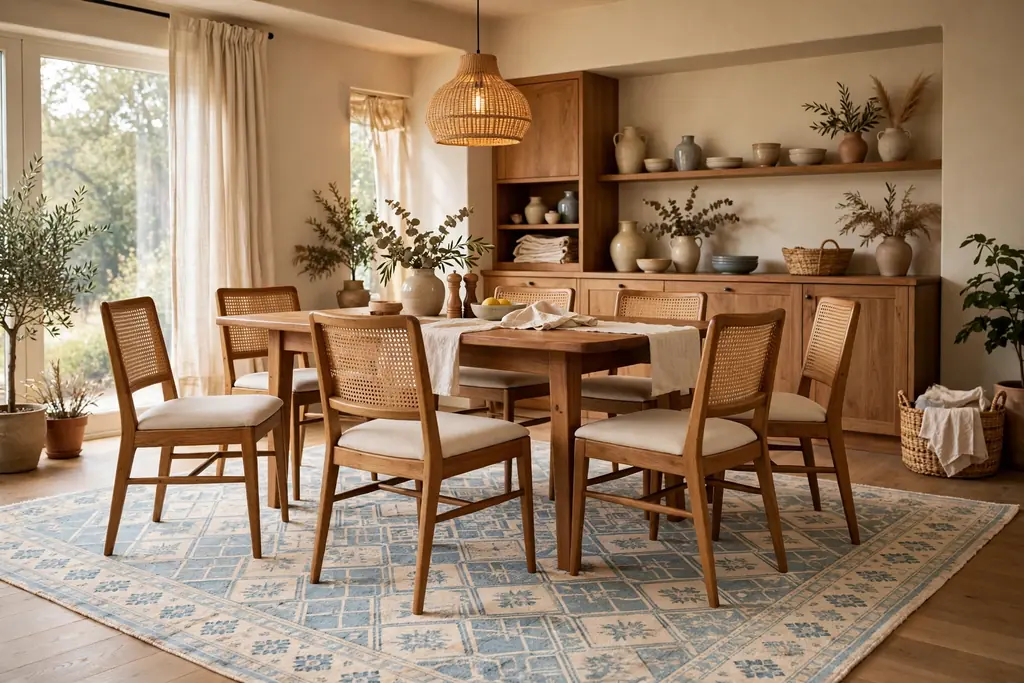
    Bedroom with a woven rattan headboard, white bedding, and light wood nightstands.

    Use a rattan headboard, either a full woven panel or a rattan insert in a wood frame, to add texture behind the bed. The weave softens a plain bedroom wall and pairs well with white or cream bedding, light wood nightstands, and a simple lamp. A headboard also frames the bed without paint or wallpaper.

    Choose a headboard that is wide enough to sit behind both pillows, and keep wall art above it simple or leave the wall bare. Dust the weave with a dry cloth, and avoid placing the headboard where it will be brushed by a door or a closet.

    4. Rattan Coffee Table in the Living Room

    Round rattan coffee table with a small vase and books in front of a linen sofa.

    Set a rattan coffee table in front of the sofa, with a glass top if you want a flat surface for cups and books, or a solid woven top for a softer look. The table adds natural texture at the center of the room, and its light frame keeps the seating area from feeling crowded. A round rattan table suits a small room, since it has no corners to walk around.

    Style the top with only two or three items, such as a small vase, a stack of books, and a candle in a glass holder. Keep the table height near the sofa seat height, so reaching for a cup feels natural.

    5. Rattan Dining Chairs Around the Table

    Wood dining table surrounded by rattan dining chairs with plain seat cushions.

    Use rattan dining chairs around a wood or white dining table, with plain seat cushions tied on if the seats need softening. Woven chair backs add texture at every place setting, and the chairs are light enough to move for guests or cleaning. This idea suits a dining room, a kitchen nook, or a covered porch used for meals.

    Keep the table setting plain, with simple plates and linen napkins, so the chairs carry the texture. Check that chairs slide under the table easily, and wipe the weave after meals, since food and dust settle in the open pattern.

    6. Rattan Room Divider in an Open Space

    Three panel rattan room divider marking a reading corner in an open living area.

    Stand a rattan room divider in an open living area to mark a reading corner, a work zone, or a sleeping area without building a wall. The woven panels give privacy while still letting light pass through, so the divided space does not feel closed off. A three panel divider folds flat for storage, which suits a rented home or a room that changes use.

    Place the divider where it will not block a walkway or a heater, and anchor it with a heavy plant or a small table at one end if it wobbles. Keep the panels in a pale rattan tone, so the divider reads as a light screen rather than a dark barrier.

    7. Rattan Sunburst Mirror in the Entry

    Rattan sunburst mirror hanging above a console in a bright entry.

    Hang a rattan sunburst mirror in an entry, a hallway, or above a console, where it can catch light and add a woven frame to a plain wall. The radiating rattan spokes give the mirror a clear shape, and the round mirror itself helps a small entry feel wider. This is a good first rattan piece, since it needs no floor space.

    Hang the mirror at eye level, centered over the console or bench below it. Keep the surface below the mirror clear except for a small dish for keys, so the mirror and its frame stay the focus.

    8. Rattan Storage Baskets for Daily Clutter

    Large rattan storage baskets holding folded throws beside a sofa.

    Set large rattan baskets beside the sofa, by the door, and in bedrooms for throws, toys, magazines, and shoes. Baskets hide daily clutter while adding woven texture at floor level, and lidded baskets keep the contents out of sight in a bedroom or bathroom. Choose baskets with handles, so they are easy to move for cleaning.

    Give each basket one job, such as throws only or shoes only, rather than filling one large basket with mixed items. Empty each basket once a week, so it does not slowly fill with things that belong elsewhere, and keep baskets out of damp spots.

    9. Rattan Serving Tray on an Ottoman

    Rattan serving tray with a vase and books on a linen ottoman in a living room.

    Place a rattan serving tray on an ottoman or a large coffee table to hold a vase, a candle, and a small stack of books. The tray defines one display area, keeps small items from sliding, and adds a woven layer over plain upholstery or wood. A tray with raised edges works best, since it holds items in place when the ottoman is used.

    Use the tray in the living room for daily drinks and books, or carry it to the porch for outdoor serving. Lift the whole tray aside in one move when the ottoman is needed as a footrest, and wipe the tray clean after use.

    10. Rattan Side Table Beside a Chair or Bed

    Small round rattan side table with a lamp and a book beside an armchair.

    Add a small rattan side table beside an armchair or a bed, in place of a solid wood table. The woven table is light to move, adds texture at seating height, and pairs well with a lamp, a book, and a small vase. A round top suits a tight corner, while a square top gives more room for a lamp and a drink together.

    Keep the tabletop to two items at most, so the table stays useful rather than crowded. If the table will hold a lamp, check that the base sits flat on the woven top, and use a lamp with a plain linen shade.

    11. Rattan Front Credenza in the Living Room

    Living room sideboard with rattan front doors, a lamp, and a small vase on top.

    Use a sideboard or credenza with rattan front doors in a living room or dining room, to store books, games, table linens, or media items. The woven doors hide storage while adding a large area of natural texture, and the piece can anchor a wall that would otherwise hold only a plain console. Pair it with a mirror or plain art above, so the doors stay the feature.

    Keep the top of the credenza simple, with a lamp at one end and a small vase at the other. Open the doors fully before loading the shelves, and keep heavy items low, so the piece stays stable.

    12. Rattan Hanging Planters for Greenery

    Rattan hanging planters with trailing green plants near a bright window.

    Hang rattan planters from ceiling hooks or wall brackets, with trailing plants such as pothos or ivy, to add greenery at eye level and above. The woven planters soften a plain wall or a window corner, and hanging plants free up floor and table space. This idea works well in a kitchen, a living room, or a covered porch with good light.

    Use a lined inner pot, so water does not drip through the weave onto floors or furniture. Hang planters where they will not be brushed by doors, and check the hooks regularly, since a watered plant is heavier than a dry one.

    13. Rattan Lounge Chairs on the Porch

    Rattan lounge chairs with pale cushions on a covered porch with plants.

    Set rattan lounge chairs with weather resistant cushions on a covered porch or patio, with a small side table between them. Rattan suits outdoor living because it looks natural beside plants and wood decking, and lounge chairs give the porch a clear use for reading and evening drinks. Keep the set under cover, since rattan should not sit in direct rain.

    Choose cushions in a pale, washable fabric, and store them indoors during heavy rain or winter. Brush the weave after dusty weather, and check the chair frames at the start of each season for loose joints.

    14. Rattan Entry Bench with Storage Below

    Rattan entry bench with baskets for shoes below, beside a front door.

    Place a rattan bench by the front door, with an open shelf or baskets below for shoes, bags, and hats. The bench gives a place to sit while putting on shoes, and the woven seat and storage add texture to an entry that often holds only a plain console. A bench with a cushion in cream or sand is more comfortable for daily use.

    Keep the bench top clear except for a small dish for keys, and keep one basket per person below, so shoes do not pile up. Measure the entry first, so the bench leaves a clear path to the door.

    15. Rattan Open Bookshelf in a Study or Living Room

    Open rattan bookshelf with books and plants in a bright study corner.

    Use an open rattan bookshelf, with woven side panels or a rattan back, to hold books, plants, and a few decorative pieces. The open frame keeps the shelf from looking like a heavy bookcase, while the weave adds texture behind the books. This idea suits a study corner, a living room wall, or a bedroom used for reading.

    Group books by size, leave breathing room between groups, and place plants on the top shelf where they get light. Keep heavy books on the lowest shelf, so the unit stays stable, and dust the woven panels with a dry cloth.

    16. Rattan Floor Lamp with a Woven Shade

    Floor lamp with a woven rattan shade beside an armchair in the evening.

    Place a floor lamp with a rattan shade beside an armchair or a sofa, to give warm light through a woven pattern in the evening. The shade softens the bulb and adds texture at standing height, while the lamp itself takes little floor space. This idea works well in a reading corner, where a table lamp would crowd a small side table.

    Use a warm white bulb, and keep the shade clear of curtains and throws. If the lamp will be used for reading, choose a shade that lets enough light fall on the book, and place the lamp slightly behind the chair.

    17. Rattan Wall Panels as Woven Art

    Flat woven rattan wall panels hung as a group on a plain living room wall.

    Hang flat woven rattan panels, or a set of three small rattan wall hangings, on a plain living room or bedroom wall. The panels add large scale texture without paint or a framed print, and they suit a wall that already holds a sofa or a bed, where a picture frame might compete with furniture below. Keep the panels in one rattan tone for a calm group.

    Lay the panels on the floor first to plan spacing, then hang the largest panel slightly off center to anchor the group. Leave even gaps between panels, and keep other wall decor on that wall to a minimum, so the weave stays the feature.

    18. Rattan Hanging Swing Chair in a Corner

    Rattan hanging swing chair with a cream cushion in a bright living room corner.

    Hang a rattan swing chair from a sturdy ceiling joist or a freestanding frame, in a living room corner, a bedroom, or a covered porch. The hanging chair adds a playful seat and a strong woven shape, and it gives a corner a clear purpose beyond a plant or a floor lamp. Add a plain cushion and a small throw for comfort.

    Check the ceiling fixing or frame rating before hanging the chair, and leave clear space around it so it can move without hitting walls or furniture. Keep the chair away from doors and high traffic paths, and test the height so feet touch the floor when seated.

    19. Rattan Placemats and Chargers at the Table

    Dining table set with rattan placemats, plain plates, and linen napkins.

    Set rattan placemats and chargers under each place setting, instead of a full tablecloth, to add woven texture to a dining table. Each mat defines a place, protects the table, and pairs well with plain plates, linen napkins, and simple glassware. This is a low cost way to try rattan, since mats store flat when not in use.

    Wipe mats clean after meals, and store them flat so they do not curl at the edges. For a special meal, add a small rattan napkin ring at each place, but keep the rest of the table plain, so the woven mats stay the focus.

    Conclusion

    Rattan decor works best when the weave is allowed to do the work: one or two pieces per room, pale colors, plain textiles, and light wood let the natural texture show without crowding the space. Start with the piece you will use most, such as a chair, a light, or a basket, then add a smaller accent only where the room still needs warmth. Pick the ideas that fit your rooms, your budget, and your daily routine, and repeat one rattan tone through the home to link the rooms. With simple care, dusting, and protection from damp, rattan pieces will stay useful and good looking for years.

    FAQs

    What is rattan decor?

    Rattan decor is decorating with furniture and accents made from rattan, a natural woven material used for chairs, lights, baskets, headboards, and storage. It adds warm, open texture to a room, suits pale and coastal styles, and works best in small doses, with one or two pieces per room paired with linen, wood, and plants.

    How much rattan should I use in one room?

    Use one or two rattan pieces in one room, such as a chair and a basket, or a pendant light and a tray, so the weave reads as texture rather than a theme. If the room already has rattan furniture, keep other woven accents small, and let plain textiles and light wood balance the look.

    Does rattan work in a modern home?

    Rattan works in a modern home when the shapes are simple and the palette stays pale, such as a rattan pendant light over a plain table, or a rattan front credenza against a white wall. Keep other patterns plain, use one rattan tone, and pair the weave with clean lines, light wood, and neutral textiles.

    How do I clean rattan furniture?

    Clean rattan furniture by dusting the weave with a dry cloth, then wiping it with a lightly damp cloth and letting it dry fully in fresh air. Avoid soaking rattan or using harsh cleaners, keep pieces out of damp spots, and check joints now and then, since dry rattan can loosen if it is left in very dry heat.

    Can rattan be used outdoors?

    Rattan can be used outdoors on a covered porch or patio, with weather resistant cushions, but it should not sit in direct rain for long periods. Natural rattan lasts longer under cover, so store cushions indoors during heavy rain, brush the weave after dusty weather, and check frames at the start of each season.

    What colors pair best with rattan decor?

    White, cream, sand, pale sage, soft green, and light wood pair best with rattan decor, because pale tones let the warm weave stand out without competing with it. Add one muted accent, such as olive cushions or a terracotta pot, in small doses, and keep most of the room plain so the texture stays the focus.


  • 21 Coquette Bedroom Ideas with Soft Colors and Romantic Details

    21 Coquette Bedroom Ideas with Soft Colors and Romantic Details

    A coquette bedroom blends soft blush, cream, and rose tones with bows, ruffles, lace, and vintage pieces, kept light so the room feels romantic rather than crowded. Start with pale bedding, one ornate focal piece, and gentle lighting, then add small romantic details in two or three spots only.

    The 21 ideas below cover the bed, the windows, the vanity, the walls, the lighting, and the small corners that give a bedroom its charm, so you can refresh one spot or style the whole room. Pick blush as the main color, cream as the calm base, and rose as the deeper accent, and repeat each color at least twice so the room looks planned. For soft pink pairing ideas in another room, see Pink Christmas Decor, and for the home page overview, visit the Dwell Ovell home page.

    Key Takeaways

    • Start with a pale base of cream and white, then add blush as the main color and rose as a deeper accent in a few places only.
    • Choose one ornate focal piece, such as a vintage bed frame, a crystal chandelier, or a floral accent wall, and keep the rest of the room calm.
    • Use bows, ruffles, and lace as small repeats, on bedding, curtains, mirrors, and shelves, rather than on every surface at once.
    • Keep lighting soft and low in the evening, with warm lamps, candles in safe holders, and shades that glow gently.
    • Mix materials for depth: velvet, satin, lace, ceramic, glass, and fresh or faux roses.
    • Leave walking paths, the bedside, and the top of the dresser partly clear, so the room stays easy to live in and easy to clean.

    1. Ruffled Blush Bedding in Layers

    A bed dressed with ruffled blush pink bedding, layered pillows in cream and rose, and a soft folded throw.

    Dress the bed with a blush duvet or coverlet, add a ruffled pillow sham in cream, and finish with two or three sleeping pillows in soft pink and white. A ruffled edge gives the bed a romantic shape at once, while pale colors keep the look light and restful.

    Layer a thin white blanket under the blush cover so the bed looks full without feeling heavy. Fold the top of the duvet back by a hand width to show the layers, and keep the number of decorative pillows low enough that making the bed each morning stays quick.

    2. A Vintage Ornate Bed Frame in Cream

    A vintage ornate cream painted metal bed frame with curved details in a soft pink bedroom.

    Choose a vintage style metal or wood bed frame in cream, with curved details at the headboard and footboard, as the main furniture piece in the room. The frame gives the room its romantic character, so the rest of the furniture can stay simple and pale.

    Check that the frame fits the mattress and sits level before adding bedding, since an ornate frame draws the eye and any tilt will show. Pair it with plain cream nightstands and a soft rug, so the frame stays the focus rather than competing with patterned furniture.

    3. Sheer Curtains Tied with Satin Bows

    A bedroom window with sheer white curtains tied back with pale pink satin bows in soft daylight.

    Hang sheer white curtains at the bedroom window and tie each panel back with a wide satin bow in pale pink. The sheers soften daylight and keep the room private, while the bows add a clear coquette note at the window.

    Tie the bows at the same height on both sides and check them from inside the room, since uneven ties are easy to spot. Use washable satin so the bows can be cleaned, and keep curtain fabric clear of lamps and candles.

    4. A Sheer Tulle Canopy over the Bed

    A bed with a sheer white tulle canopy draped from the ceiling over the headboard, with blush bedding.

    Drape sheer white tulle from a ceiling hook or a simple canopy frame over the headboard, letting it fall softly on both sides of the bed. The canopy gives the bed a dreamy shape and softens the whole room, without blocking light during the day.

    Gather the tulle loosely rather than pulling it tight, and keep it clear of the floor so it does not catch on feet or collect dust. Wash the tulle now and then, and take it down if it starts to snag on the headboard or the bedding.

    5. A Dressing Table Vanity with a Ruffled Skirt

    A vintage dressing table vanity with a ruffled skirt, an oval mirror, perfume bottles, and a small stool.

    Set a small dressing table in a corner or beside the window, add a ruffled skirt under the tabletop, and place an oval mirror above it with a small stool tucked under. The skirt hides storage under the table and gives the vanity a soft, vintage feel.

    Keep only daily items on the vanity top, such as a brush, a small tray, and one vase, and store the rest in a drawer or a box under the skirt. Sit at the vanity in daylight to check that the mirror height works, and keep the stool clear so the corner stays inviting.

    6. A Gilt Gallery Wall of Romantic Prints

    A bedroom wall gallery of small gilt framed romantic floral and landscape prints arranged above a dresser.

    Hang a group of small gilt framed prints above a dresser or along one wall, choosing romantic subjects such as roses, soft landscapes, and vintage portraits in blush and cream tones. The gold frames add warmth, while the small size keeps the wall from feeling formal.

    Plan the layout on the floor first, with the largest print near the center and smaller prints around it, then hang the group at eye level. Use picture hooks rated for each frame, and leave a little space between frames so each print can be seen on its own.

    7. A Small Crystal Chandelier over the Bed

    A small crystal chandelier hanging over a bed in a blush pink bedroom, with a soft warm glow.

    Hang a small crystal chandelier over the center of the bed or in the middle of the room, with warm bulbs that glow softly in the evening. The crystals catch the light and give the room a gentle sparkle, while the small size keeps the fixture in scale with a bedroom.

    Check the ceiling height before hanging, so the chandelier clears the bed and no one can bump it when standing. Use a dimmer if one is available, so the light can stay bright for getting dressed and soft for winding down at night.

    8. An Arched Floor Mirror with a Satin Bow

    A tall arched floor mirror in a bedroom corner decorated with a large pale pink satin bow at the top.

    Lean a tall arched mirror against a bedroom wall, in a corner near the window or beside the wardrobe, and tie a large pale pink satin bow at the top of the frame. The arch softens the room shape, the mirror bounces daylight around, and the bow ties the mirror to the rest of the room.

    Fix the mirror to the wall with a proper bracket or anti tip strap, since a tall mirror can fall if it is only leaned. Check the reflection from the bed and the door, and move the mirror if it reflects clutter or a bright light straight into the bed.

    9. Fresh Roses in Vintage Ceramic Vases

    Fresh pink roses in vintage ceramic vases arranged on a white bedroom dresser beside a small candle.

    Place fresh or good quality faux roses in vintage ceramic vases on the dresser, choosing blush and cream roses with a few rose toned blooms for depth. Ceramic vases suit a coquette bedroom because they feel handmade and soft, unlike plain glass.

    Use two or three vases of different heights rather than one large bunch, and trim fresh stems every few days so the roses last longer. Keep vases on a small tray to protect the dresser top from water marks, and change the water daily in warm weather.

    10. A Velvet Reading Chair with a Lace Pillow

    A velvet blush reading chair in a bedroom corner with a lace edged cushion and a small side table with a book.

    Set a small velvet chair in blush or cream in a bedroom corner, add a lace edged cushion, and place a small side table beside it with a book and a candle in a holder. The chair gives the room a quiet place to sit, and the lace pillow links it to the bedding.

    Keep the chair near the window or a lamp so it is easy to read in, and leave the seat clear rather than piling it with clothes. Choose a washable cushion cover, since a chair cushion gets daily use, and fold a small throw over one arm for cool evenings.

    11. A Nightstand with a Pearl Lamp and Candles

    A bedroom nightstand styled with a pearl base lamp, a small candle, and a tiny vase of roses in soft evening light.

    Style the nightstand with a lamp that has a pearl or beaded base, a small candle in a glass holder, and a tiny vase with one or two roses. The nightstand is the last thing seen at night, so soft light and one small floral note here set the mood for the whole room.

    Keep the nightstand surface mostly clear, with room for a glass of water and a book, and use a battery candle if the candle sits near bedding or curtains. Check that the lamp switch is easy to reach from the bed, so the light can be turned off without getting up.

    12. A Scalloped Velvet Headboard in Blush

    A bed with a scalloped blush velvet upholstered headboard, cream bedding, and rose pillows.

    Choose a scalloped upholstered headboard in blush velvet, sized to match the bed width, and pair it with cream bedding and rose pillows. The scalloped edge gives the bed a soft, vintage outline, while velvet adds a plush texture that suits evening light.

    Vacuum the headboard now and then with a soft brush attachment, and keep it clear of damp items such as wet hair or drinks. If the headboard is a separate panel, fix it firmly to the bed frame or the wall so it does not shift when pillows are leaned against it.

    13. A Floral Wallpaper Accent Wall

    A bedroom accent wall behind a bed covered in pale pink floral wallpaper, with cream furniture.

    Paper the wall behind the bed in a pale pink floral wallpaper, with small roses or trailing blooms on a cream ground, and keep the other walls plain cream or white. One patterned wall gives the room its romantic base, while plain side walls keep the pattern from feeling busy.

    Check a large sample in daylight and in evening light before papering, since pink tones can look stronger under warm bulbs. Hang art and mirrors sparingly on the patterned wall, and keep bedding pale so the wallpaper stays the main pattern in the room.

    14. A Vintage Wardrobe with Bow Handles

    A vintage white wardrobe with mirrored doors, satin bows on the handles, and blush bedding nearby.

    Use a vintage style white wardrobe with mirrored doors, and tie small satin bows on the handles or hang a bow on each door pull. The wardrobe gives the room storage and a vintage shape, while the mirrored doors bounce light and the bows add a playful coquette detail.

    Check that the wardrobe doors open fully without hitting the bed or a chair, and fix the wardrobe to the wall if it is tall. Keep the bows light and small so they do not catch on clothes, and replace them if the satin starts to fray.

    15. A Plush Rose Rug Beside the Bed

    A plush pale rose rug beside a bed in a soft pink bedroom, with cream bedding and a small nightstand.

    Lay a plush rug in pale rose beside the bed, large enough to step onto from both sides, with a soft pile that feels warm underfoot in the morning. The rug adds a block of blush color at floor level and links the bed to the rest of the room.

    Choose a rug with a non slip pad under it, and vacuum it weekly so the pile stays soft. If the rug sits on a hard floor, check that it does not slide when stepping out of bed, and keep it clear of the wardrobe doors so they can open fully.

    16. A Floating Shelf of Teacups and Perfume Bottles

    A white floating shelf in a bedroom displaying vintage teacups, perfume bottles, small framed photos, and a bow.

    Fix a white floating shelf on a bedroom wall and style it with vintage teacups, small perfume bottles, a tiny framed photo, and one small satin bow. The shelf turns small pretty objects into a display, without taking up floor or dresser space.

    Keep the shelf light, with only a few pieces, and fix it with wall anchors rated for the weight, since teacups and glass bottles can break if the shelf fails. Dust the shelf weekly, and keep it away from the bed edge so nothing can be knocked off in the dark.

    17. A Window Seat with Bow Pillows

    A bedroom window seat with cream cushions, blush bow pillows, a folded throw, and a small stack of books.

    Build or style a window seat with cream seat cushions, blush pillows tied with small bows, a folded throw, and a small stack of books at one end. The window seat gives the bedroom a second place to sit and enjoy daylight, and the bow pillows tie it to the curtains.

    Keep the seat cushions in washable covers, since a window seat gets sun and daily use, and leave one end clear for sitting down easily. Check that pillows do not block the window handle, and keep the throw folded so the seat stays tidy.

    18. A Dried Rose Wreath on the Bedroom Door

    A bedroom door decorated with a small dried rose wreath tied with a pale pink ribbon bow.

    Hang a small wreath of dried roses and greenery on the inside of the bedroom door, tied with a pale pink ribbon bow at the top. The wreath greets anyone entering the room with a romantic note, and it uses a spot that often stays bare.

    Hang the wreath with an over door hook or a small adhesive hook rated for the weight, and check that it clears the door frame when the door opens. Keep the wreath away from direct sun if the roses are real, since strong sun can fade dried blooms quickly.

    19. A Bookshelf Styled with Novels and Bows

    A bedroom bookshelf styled with romance novels, a small candle, a tiny vase of roses, and a satin bow.

    Style one bedroom bookshelf with romance novels, a small candle in a glass holder, a tiny vase of roses, and a satin bow tied on one shelf edge. The shelf then reads as part of the room decor, rather than only as storage for books.

    Group books by height or color in short rows, and leave some shelf space empty so the display does not look crowded. Keep candles in glass holders and away from book spines and paper, and use a battery candle if the shelf sits near curtains.

    20. A Satin Throw with Rose Embroidery at the Foot of the Bed

    A bed in a blush bedroom with a satin throw blanket embroidered with roses folded neatly at the foot of the bed.

    Fold a satin throw embroidered with small roses neatly across the foot of the bed, over the blush duvet, with the embroidered edge showing. The throw adds a smooth shine that contrasts with ruffled bedding, and the rose embroidery repeats the floral theme of the room.

    Fold the throw in thirds so it sits flat and does not slide off, and keep it as a decorative layer that can be lifted off at night. Wash satin gently by hand or on a gentle cycle, and store it folded rather than hung, so the embroidery keeps its shape.

    21. Pink Glass Wall Sconces Flanking the Bed

    Two pink glass wall sconces with soft shades flanking a bed headboard in a romantic blush bedroom, with a warm glow.

    Fix two pink glass wall sconces, one on each side of the headboard, with soft shades that glow warmly in the evening. Sconces free up nightstand space, give even light on both sides of the bed, and add a pair of romantic glass details at eye level.

    Have sconces wired or fixed by someone with the right skills if they need mains wiring, and use plug in or battery sconces if wiring is not practical. Check that both shades sit at the same height, and use warm bulbs so the pink glass glows softly rather than looking harsh.

    Conclusion

    A coquette bedroom works best when soft colors, one ornate piece, and gentle light do most of the work, with bows, ruffles, and roses added in small repeats. Start with pale bedding and a calm base, add one focal piece such as a vintage frame or a crystal chandelier, then choose two or three ideas from this list that suit your room and your budget.

    Keep the room easy to live in by leaving paths clear, choosing washable covers for pillows and throws, and using battery candles near fabric and bedding. For living room styling that follows a similar calm palette approach, see Fall Living Room Decor. Revisit the room after a week, remove anything that feels crowded, and keep only the details you notice and enjoy each day.

    FAQs

    What is a coquette bedroom?

    A coquette bedroom is a romantic bedroom style that uses soft blush, cream, and rose colors with bows, ruffles, lace, and vintage pieces, kept light so the room feels pretty rather than crowded.

    What colors work best in a coquette bedroom?

    Blush, cream, white, and soft rose work best, with one deeper rose or gold accent for warmth, and pale colors kept as the main base so the room stays calm.

    How do I keep a coquette bedroom from looking too busy?

    Keep one ornate focal piece, repeat bows and ruffles in only two or three spots, leave surfaces partly clear, and use plain cream bedding or walls to balance any patterned pieces.

    Can a coquette bedroom work in a small room?

    Yes, a small coquette bedroom works well when you choose small scale pieces, such as a ruffled duvet, bow tied curtains, and one mirror, and keep the floor and nightstand clear.

    What bedding suits a coquette bedroom?

    Ruffled or lace edged bedding in blush or cream suits a coquette bedroom best, layered with a white blanket and two or three pillows in soft pink and white, with a satin throw at the foot of the bed.

    Are bows and ruffles hard to keep clean in a bedroom?

    No, bows and ruffles are easy to keep clean when you choose washable satin and cotton, remove them for washing now and then, and keep them away from damp spots and open flames.


  • How to Choose Beach House Furniture for a Comfortable Coastal Home

    How to Choose Beach House Furniture for a Comfortable Coastal Home

    Choose beach house furniture by starting with light, durable materials that handle humidity and salt air, such as teak, rattan, and washable linen. Pick comfortable seating sized to your rooms, keep the palette pale and natural, and add storage for beach gear. Test every piece for comfort before you buy.

    A beach house asks more of furniture than a typical home does. Sand comes in on shoes, damp air settles into fabric, and bright light shows every mark on a dark finish. The pieces that work best are the ones you can clean easily, move without a struggle, and sit on for a long evening without thinking about them. For more coastal styling ideas, see these coastal fall decor ideas and these fall living room decor ideas.

    Key Takeaways

    • Start with materials that handle humidity, salt air, and sand, and check care needs before you fall for a look.
    • Measure every room, doorway, and stair turn before you order, since coastal homes often have tight halls and small bedrooms.
    • Choose seating for comfort first: seat depth, back height, and cushion firmness matter more than a pretty silhouette.
    • Use washable slipcovers and removable cushion covers wherever you can, so sand and spills do not become permanent.
    • Keep the palette pale and natural, and repeat one or two wood tones through the house for a calm, linked feel.
    • Plan storage for beach towels, shoes, and outdoor gear near the door, so clutter does not spread into living rooms.
    • Sit in every seat, open every drawer, and test the layout in the room before you commit.

    Materials and Supplies

    • A tape measure, a notebook, and painter’s tape for marking furniture footprints on the floor
    • A list of room dimensions, doorway widths, and stair turns for each room you plan to furnish
    • Fabric swatches in the colors you plan to use, to test against your light and wood tones
    • A short list of pieces you already own and plan to keep, with their measurements
    • Cleaning supplies suited to your chosen materials, such as a soft cloth, mild soap, and a vacuum with an upholstery head
    • Felt pads for chair and table legs, to protect wood and tile floors from sand grit
    • Storage baskets or lidded boxes for beach towels, shoes, and outdoor gear
    • A budget list by room, so one statement piece does not use up the whole furnishing plan

    1. Define Your Coastal Style and Palette

    Coastal mood board with white, sand, and dusty blue fabric swatches beside pale wood samples.

    Start by naming the coastal look you want, since “beach house” covers a wide range. A classic coastal room uses white walls, pale wood, linen, and blue accents. A relaxed surf style leans on rattan, jute, and weathered finishes. A modern coastal room keeps clean lines, light oak, and a quiet palette with one soft blue or green accent.

    Pick a palette of three or four colors and use it through the house. White, sand, pale gray, and driftwood tones make a calm base, and one accent color, such as sea glass green or dusty blue, gives rooms a link to each other. Write the palette down and carry the swatches when you shop, so a piece that looks right alone does not clash once it is home.

    Look at your light before you lock in colors. A room with strong south light can take slightly deeper tones, while a north facing room needs paler finishes to stay bright. If the house is a rental or a shared family home, favor neutral main pieces and add color through cushions and throws, which are easy to change.

    2. Measure Rooms, Doorways, and Traffic Paths

    Person measuring a coastal living room wall with painter's tape marking a sofa footprint on the floor.

    Measure each room wall to wall, and note window heights, radiator positions, and any built in features that limit placement. Measure doorways, hall widths, and stair turns too, since a sofa that fits the living room is no good if it cannot reach it. Sketch a simple floor plan for each room, even a rough one on paper, and mark the doors and walkways.

    Use painter’s tape to mark the footprint of each large piece on the floor. A taped outline shows at once whether a sofa blocks a path to the kitchen or a dining table leaves too little room to pull out chairs. Leave at least 30 inches for main walkways and about 24 inches to pull out a dining chair comfortably.

    Measure ceiling height as well, especially for tall bookcases, canopy beds, and pendant lights. In rooms with low ceilings, low profile seating and horizontal storage keep the room feeling open. Keep your measurements in one notebook or phone note, so you can check them in a shop without guessing.

    3. Set a Budget and a Room by Room Priority List

    Notebook budget list beside a room plan with coastal furniture sketches on a light wood table.

    Work out a total budget first, then split it by room based on how much each room will be used. Living rooms and main bedrooms usually deserve the largest share, since seating and beds get daily use. Guest rooms and hallways can often wait or use simpler pieces.

    List the pieces each room needs in order of importance. A bed, a sofa, and a dining table usually come first, while accent chairs, side tables, and extra storage can follow. This order stops you from spending the budget on small decorative pieces before the basics are covered.

    Allow a small reserve for delivery, assembly, and care supplies, such as felt pads and fabric protector. If you are furnishing in stages, buy the main pieces first and live with them for a few weeks before choosing accents. You will see the light, the traffic flow, and the storage gaps much more clearly once the big pieces are in place.

    4. Choose Frames and Materials Built for Humidity and Salt Air

    Teak, rattan, and pale oak furniture samples beside a window with sea light.

    Coastal air is damp and salty, so material choice matters more here than in a dry inland home. Teak, cedar, and properly sealed oak handle moisture better than raw softwood. Rattan and wicker suit covered porches and bright living rooms, but need protection from constant direct rain. Powder coated metal frames resist rust better than bare steel, so check the finish on any metal piece.

    Avoid materials that swell, peel, or rust quickly in damp air. Unsealed particleboard, thin veneers over damp prone cores, and uncoated iron frames tend to show damage early near the coast. Ask how a piece is sealed and whether the maker rates it for humid or covered outdoor use, and read the care directions before you buy.

    Check joints and construction as well as the surface. Solid joints, screwed and glued frames, and removable cushions usually last longer than stapled frames with fixed covers. A well built frame in a plain fabric is a better buy than a striking piece with a weak frame, since re-covering a good frame is possible and rebuilding a weak one is not.

    5. Pick Seating Depth, Height, and Comfort First

    Person sitting on a white slipcovered sofa in a bright coastal living room testing comfort.

    Sit in a sofa or chair before you buy it, and sit the way you actually sit at home, not perched on the edge. Check seat depth: a deep seat suits lounging with feet up, while a shallower seat suits upright sitting and smaller rooms. Check seat height too, since a seat that is too low is hard to get out of, and one that is too high leaves feet dangling.

    Test the back height and arm height as well. A low back keeps a room open and suits a view, while a higher back gives more support for reading and long evenings. Arms should support your elbows without pushing your shoulders up. If more than one person will use the seat, have each person test it, since comfort varies with height.

    Check cushion firmness and filling. Foam wrapped in fiber gives a tidy look and firm support, while feather wrapped cushions feel softer but need regular plumping. Removable cushion covers make cleaning far easier, so favor them in a beach house. Ask whether replacement cushions or covers are available, since that extends the life of a good frame.

    6. Choose Slipcovers and Washable Fabrics

    Washable white linen slipcover being removed from a sofa cushion in a coastal living room.

    Slipcovers are one of the most useful choices in a beach house. A washable linen or cotton slipcover lets you remove sand, sunscreen, and spills in a normal wash cycle, and a second set of covers lets you rotate while one set is in the wash. Choose a fit that suits you: a relaxed, slightly loose slipcover hides wrinkles, while a tailored fit looks neater but shows creases more.

    When you compare fabrics, check the cleaning code and wash directions, not just the color. Performance fabrics and treated cotton blends resist stains better than untreated velvet or silk, which are harder to clean after beach use. Order swatches and test them at home: rub in a little sand, spill a drop of water, and see how the fabric cleans and dries.

    Keep dark colors off main seating if the house gets strong sun, since dark fabric shows sand and fades faster in bright light. Pale, mid tone fabrics hide sand better and keep rooms bright. If you love a bold color, use it on cushions and throws that can be swapped, rather than on the whole sofa.

    7. Select Tables in Pale Wood, Rattan, or Weathered Finishes

    Pale wood dining table with rattan chairs in a bright coastal dining room near a window.

    Choose tables that suit how you eat, work, and gather. A round dining table fits small coastal dining rooms well, since it has no sharp corners and seats people evenly. A rectangular table suits larger rooms and longer gatherings. Check that the table height matches your chairs, with about 12 inches between the seat and the underside of the table.

    Pale wood, whitewashed finishes, and rattan keep a coastal room light, and they show fewer marks than high gloss dark finishes. A sealed top matters in a beach house, since wet glasses, sunscreen, and sandy hands reach tables quickly. Ask whether the top is sealed and how to re-seal it, and use coasters and placemats for daily meals.

    For coffee and side tables, favor pieces you can move easily. A light side table can shift beside a reading chair or a sun lounger, and a nesting pair gives extra surface only when guests arrive. Check that table legs sit stable on your floors, and add felt pads so sand grit does not scratch wood or tile when tables move.

    8. Add Storage That Hides Beach Gear and Clutter

    Coastal entryway storage bench with lidded baskets holding beach towels and shoes beside a front door.

    Beach houses collect gear: towels, shoes, buckets, bags, and outdoor toys. Without planned storage, that gear spreads across living rooms and hallways. Place a storage bench or a set of lidded baskets near the door guests use from the beach, so towels and shoes have a home before anyone reaches the sofa.

    In living rooms, choose storage that looks like furniture: a coffee table with a shelf below, a console with doors, or an ottoman that opens. Closed storage hides clutter better than open shelves in a busy beach house, though one or two open baskets for throws keep the room inviting. Label baskets in a shared house so everyone knows where things belong.

    In bedrooms, favor wardrobes and chests with doors over open rails, since damp air and sand settle on open clothes. A lidded laundry basket per bedroom keeps sandy clothes separate from clean ones. Check that storage pieces are easy to wipe down, since beach storage gets sandy hands and wet towels more often than indoor storage.

    9. Layer Lighting for Bright Days and Soft Evenings

    Coastal living room in the evening with warm table lamps, a rattan floor lamp, and soft light over seating.

    Coastal rooms are bright by day, so plan lighting for evenings and cloudy days as well. Start with one overhead light or a set of recessed lights for general light, then add table lamps at seating height and a floor lamp near a reading chair. Lamps at different heights make a room feel settled after dark, while a single overhead light alone can feel harsh.

    Choose lamp bases in natural materials, such as ceramic, pale wood, or rattan, to keep the coastal palette going. Use warm white bulbs in living areas and bedrooms, since cool white light can make pale rooms feel clinical. Put lamps on separate switches or dimmers where you can, so you can lower the light for an evening without losing it altogether.

    Check that reading light reaches chairs and beds without glare on screens. A lamp beside, rather than behind, a reading chair works best. In dining areas, hang a pendant low enough to light the table, but high enough that seated guests can see each other across it. Keep spare bulbs in the house, since coastal shops may not be close by.

    10. Choose Rugs, Cushions, and Throws That Stand Up to Sand

    Flatweave jute rug under a coastal sofa with washable cushions and a folded cotton throw.

    Rugs in a beach house should be easy to clean and hard to damage. Flatweave cotton, jute, sisal, and indoor outdoor rugs shake out well and handle sand better than deep pile wool. Choose a rug large enough to anchor the seating area, with front legs of sofas and chairs on the rug, so the group reads as one space.

    Cushions and throws add color and comfort, and they are the easiest pieces to change with the season. Use removable, washable covers on cushions, and keep a spare set for guest turnovers. Throws in cotton or light wool wash well and dry fast, while heavy throws can feel too warm in a coastal summer.

    Shake rugs outside often, and vacuum with a head suited to your rug type. Sand sinks into pile and wears fibers from below, so regular shaking matters more than it does inland. Keep a small brush and dustpan near the main door, so sand gets swept up before it travels through the house.

    11. Test the Layout, Sit in Every Seat, and Check the Flow

    Coastal living room layout with chairs arranged for conversation and a clear walkway to the door.

    Once the main pieces arrive, live with the layout for a few days before you fix anything in place. Walk every path you use daily: from the door to the kitchen, from the sofa to the bathroom, and from the bedroom to the porch. Move any piece that forces a detour or blocks a door, even if it looked right on paper.

    Sit in every seat at different times of day. Check the view from each chair, the light on a reading spot, and whether a seat faces the television, the fireplace, or the window as you intended. Check conversation distances too: seats about 8 feet apart or less talk easily, while seats much farther apart feel disconnected.

    Test the room with guests in mind. Pull out extra chairs, set the dining table for a full meal, and open sofa beds or guest beds. If the room only works when it is empty, adjust the layout now. Small changes, such as turning a rug, swapping two side tables, or moving a lamp, often fix flow problems without new purchases.

    12. Protect, Clean, and Care for Pieces Through the Seasons

    Hands wiping a pale wood table with a soft cloth in a bright coastal room, with cleaning supplies nearby.

    Set a simple care routine and keep it short, so it actually happens. Shake rugs and cushion covers weekly in the beach season, wipe wood tops with a soft damp cloth, and vacuum upholstery with an upholstery head. Wipe metal frames dry after damp weather, and check rattan for dust in its weave.

    Protect pieces from the strongest sun. Move light sensitive fabrics out of direct midday sun where you can, or use sheer curtains to soften the light. Rotate cushions so one side does not fade faster than the other, and store spare covers out of sunlight. Re-seal wood tops when water stops beading on the surface, following the sealer directions.

    At the end of the season, clean each piece before you cover or store it. Wash slipcovers, shake rugs, and wipe frames, so sand and salt do not sit on surfaces through the winter. Check joints, screws, and fabric for wear, and repair small problems now. A short seasonal check keeps beach house furniture comfortable for years, and it makes the next season start with a clean, ready home.

    Conclusion

    Choosing beach house furniture comes down to a few steady choices: materials that handle damp and salt, seating tested for real comfort, washable covers, pale natural colors, and storage near the door. Measure first, set a budget by room, and test the layout once pieces arrive. With those steps done, the house stays light, easy to clean, and comfortable for long stays, guests, and sandy days alike.

    Frequently Asked Questions

    What is the best material for beach house furniture?

    Teak, sealed oak, rattan, and powder coated metal frames are strong choices for beach houses, since they handle humidity and salt air better than unsealed softwood or bare steel. The best choice depends on the room: teak and sealed wood suit living and dining rooms, rattan suits bright sitting areas, and powder coated metal suits covered porches.

    Should I choose a slipcovered sofa for a beach house?

    Yes, in most beach houses a slipcovered sofa is a practical choice. Washable slipcovers let you remove sand, sunscreen, and spills in a normal wash, and a second set of covers lets you rotate while one set is in the wash. Choose a fabric with clear wash directions and test a swatch at home before you commit.

    How do I keep sand out of beach house furniture?

    Place storage for shoes and towels near the beach door, shake rugs outside often, and use washable cushion covers and flatweave rugs that release sand easily. Keep a brush and dustpan by the main door, vacuum upholstery weekly in the beach season, and wipe wood and metal surfaces so sand grit does not scratch finishes.

    What colors work best for beach house furniture?

    White, sand, pale gray, driftwood, and light oak make a calm base that keeps coastal rooms bright, with sea glass green or dusty blue as an accent. Pale and mid tone fabrics hide sand better than very dark colors, and they fade less obviously in strong light. Use bold color on cushions and throws that can be swapped easily.

    How do I size a sofa for a small beach house living room?

    Measure the wall it will sit against, then choose a sofa that leaves at least 30 inches for main walkways and room to open nearby doors. In small rooms, a loveseat or an apartment sized sofa often fits better than a full three seat sofa, and low profile arms keep the room feeling open. Mark the footprint with painter’s tape on the floor before you order.

    Is rattan furniture durable enough for everyday use in a beach house?

    Yes, well made rattan with a solid frame and tight weave holds up well for everyday sitting in living rooms and covered porches. It suits dry indoor use best, so keep it out of constant direct rain and wipe it dry after damp weather. Check the frame joints and the weave before you buy, since a weak frame matters more than the rattan finish alone.


  • 25 Beach House Decor Ideas for Relaxed Coastal Rooms

    25 Beach House Decor Ideas for Relaxed Coastal Rooms

    Beach house decor works best with a light base, natural texture, and a restrained coastal palette. Start with white walls, pale wood, and linen, then add rattan, driftwood, seagrass, and sea glass accents in blue, sand, and white. Keep rooms bright, leave open floor space, and repeat one or two coastal materials so each room feels relaxed rather than themed.

    The 25 ideas below cover living rooms, dining rooms, kitchens, bedrooms, bathrooms, entries, and porches, so you can style one corner or plan a whole house. Start with the largest pieces, such as the sofa, the rug, and the dining table, then add smaller coastal details in the same palette. For more coastal styling in a seasonal palette, see Coastal Fall Decor, and browse the full range of room ideas from the Dwell Ovell home page.

    Key Takeaways

    • Keep the base light: white or pale walls, pale wood floors, and linen in white, sand, or soft blue.
    • Repeat two or three natural materials, such as rattan, driftwood, seagrass, and linen, through the house for a calm, collected look.
    • Use blue, sand, and white as the core palette, and let one of the three lead in each room.
    • Choose washable slipcovers and outdoor rated fabrics for seats that get daily or porch use.
    • Leave open floor space and clear walkways, since a relaxed coastal room needs breathing room.
    • Add coastal detail in small doses, such as shells, sea glass, or rope, rather than in every corner.

    1. White Slipcovered Sofa as the Room Base

    A white slipcovered sofa with blue and sand throw pillows in a bright coastal living room.

    Start with a white or off white slipcovered sofa, since it sets the light base for the whole living room and suits a coastal palette. Slipcovers also make sense in a beach house, because they can be removed and washed after sandy feet, wet towels, and summer guests.

    Keep the sofa shape simple, with straight arms and plain cushions, so the room stays calm. Add color through two or three throw pillows in blue, sand, or soft stripe, and keep the rest of the seating in pale wood or rattan.

    2. Driftwood Coffee Table in the Living Room

    A driftwood coffee table with a stack of books and a glass candle holder in a coastal living room.

    Place a driftwood coffee table, or a pale wood table with a weathered finish, in front of the sofa as the main living room surface. The rough, bleached wood gives the room a shore reference without needing themed accessories on top of it.

    Style the table lightly, with one stack of books, a small bowl, and a candle in a glass holder. Leave most of the surface clear, so the table stays useful for cups, games, and feet up at the end of the day.

    3. Rattan Lounge Chairs by the Window

    A pair of rattan lounge chairs with pale cushions beside a bright window.

    Add a pair of rattan lounge chairs near a window or facing the sofa, with pale cushions in white or sand. Rattan keeps the seating light in both weight and color, and it pairs well with linen, wood, and woven rugs.

    Place a small side table between the chairs for books and drinks, and add one floor lamp with a linen shade for evening reading. If floor space is tight, use one chair instead of a pair and keep the window area clear.

    4. Sheer Linen Curtain Panels on the Windows

    Sheer white linen curtain panels on tall living room windows in soft daylight.

    Hang sheer linen curtain panels in white or soft sand on the living room windows, so daylight filters through while the room keeps some privacy. Linen moves gently in a breeze, which suits a beach house better than heavy drapes or dark fabric.

    Hang the panels high and wide, so the windows look larger and the light reaches further into the room. Keep the hardware simple, in pale wood or brushed metal, and skip valances or heavy tiebacks.

    5. Whitewashed Plank Accent Wall

    A whitewashed plank accent wall behind a sofa with one large framed shore print.

    Add a whitewashed plank wall behind the sofa or the bed, using horizontal boards in a pale, washed finish. The planks add texture and a beach cottage feel, while the whitewash keeps the wall bright and easy to pair with other colors.

    Keep the rest of the walls plain white, so the plank wall reads as one clear feature. Hang one large piece of art or a mirror on the planks, and leave the surrounding wall space empty.

    6. Seagrass Area Rug Under the Seating Group

    A seagrass area rug under a sofa and coffee table in a bright coastal living room.

    Lay a seagrass or sisal area rug under the sofa and coffee table, large enough that the front legs of the sofa and chairs sit on the rug. The woven texture grounds the seating group and adds a natural layer that suits bare feet in summer.

    Choose a rug in a natural sand tone with a simple border, and keep the pattern quiet so pillows and art can carry the color. Shake the rug out often, and blot spills quickly, since natural fiber rugs stain more easily than synthetic ones.

    7. Rope Pendant Lights Over the Dining Table

    Rope wrapped pendant lights hanging over a pale wood dining table.

    Hang two or three rope wrapped pendant lights over the dining table, spaced evenly along its length. The rope adds a nautical detail at eye level, while the warm bulbs keep the table inviting in the evening.

    Hang the pendants low enough to light the table, but high enough that seated guests can see across it, usually about 30 to 36 inches above the tabletop. Use dimmable bulbs, so the same lights work for a bright family meal and a quiet dinner.

    8. Framed Shore Print Gallery Wall

    A gallery wall of framed shore prints in pale wood frames on a white wall.

    Build a small gallery wall with framed shore prints, such as beach scenes, dune grass, boats, and simple sea charts, in matching pale wood or white frames. Keep the prints in a limited palette of blue, sand, and white, so the wall looks calm rather than busy.

    Lay the frames on the floor first, and plan even gaps before hanging anything. Hang the largest print slightly off center to anchor the group, and keep the gallery to one wall, so the rest of the room stays quiet.

    9. Woven Basket Storage Beside the Sofa

    A large woven seagrass basket with folded throws beside a coastal sofa.

    Set a large woven basket beside the sofa for throws, magazines, and beach gear, so everyday items have a home and the room stays tidy. Baskets in seagrass, rattan, or rope add texture at floor level, where a room often needs warmth.

    Choose one large basket rather than several small ones, and keep the contents to items used often. A basket with handles is easy to carry to the porch or the car, and a lid helps when the basket holds items you want out of sight.

    10. Weathered Wood Dining Table for Gatherings

    A weathered wood dining table set with white plates and linen napkins in a bright dining room.

    Choose a weathered or pale wood dining table with a simple plank top for the beach house dining room. The worn finish suits a relaxed house, hides small marks from daily use, and pairs with white chairs, rattan chairs, or a bench on one side.

    Keep the table setting simple, with white plates, clear glasses, and linen napkins in sand or soft blue. A bench on one side seats extra guests and slides under the table when not in use, which helps in a smaller dining room.

    11. Glass Hurricane Lanterns on the Mantel

    Glass hurricane lanterns with candles and sea glass on a white mantel.

    Group two or three glass hurricane lanterns on the mantel, in different heights, with candles inside and a few pieces of sea glass at the base. The glass softens the candlelight and gives the mantel a coastal detail without a large display.

    Use battery candles in homes with children or pets, or where the mantel sits near curtains. Keep the lanterns away from the mantel edge, and leave the center of the mantel low, so a mirror or art above it stays visible.

    12. Open Kitchen Shelving with White Ceramics

    Open kitchen shelving with white ceramics, clear glasses, and wooden boards.

    Replace one run of upper kitchen cabinets with open shelving, and display white ceramics, clear glasses, and a few wooden boards on the shelves. The open shelves make a small beach house kitchen feel larger, and white dishes keep the look calm.

    Keep each shelf to one row of items, with space between groups, so the shelves read as storage rather than clutter. Place daily dishes on the lowest shelf for easy reach, and keep lesser used pieces higher up.

    13. Striped Cushions on Porch Rocking Chairs

    Porch rocking chairs with blue and white striped cushions and a small side table.

    Add blue and white striped cushions to porch rocking chairs, with one plain sand cushion on each chair for balance. The stripes read as coastal from the street, while the plain cushions keep the chairs comfortable for long sits.

    Use outdoor rated fabric for chairs that stay outside, and bring cushions in during heavy rain. A small side table between the chairs holds drinks and books, and a folded throw on one chair covers cool evenings.

    14. Striped Linen Bedding in the Main Bedroom

    A bed with blue and white striped linen bedding and plain white pillows in a bright bedroom.

    Dress the main bed with striped linen bedding in blue and white, layered over plain white sheets. The stripes carry the coastal theme in the bedroom, while the white sheets and plain walls keep the room restful for sleep.

    Fold a light throw in sand or soft blue across the foot of the bed, and use plain pillowcases in white behind the striped shams. Choose breathable linen or cotton for warm nights, and keep bedside tables clear except for a lamp and a small vase.

    15. Driftwood Framed Mirror and Sand Towels in the Bathroom

    A bathroom with a driftwood framed mirror, rolled sand towels on a wooden tray, and white walls.

    Hang a mirror with a driftwood or pale wood frame in the bathroom, and roll sand and white towels on a wooden tray or open shelf. The mirror becomes the coastal focal point, while the towels add soft color without a full bathroom makeover.

    Keep the counter clear apart from the tray, a soap dish, and one small plant or bundle of dried stems. Use a glass holder for a candle only if it sits well away from towels and curtains, and choose towels that match the wall tiles.

    16. Built-In Window Seat with Linen Cushions

    A built-in window seat with a thick linen cushion and blue striped pillows beside a bright window.

    Build or style a window seat with a thick linen cushion in white or sand, plus two or three pillows in blue and soft stripe. A window seat turns an unused stretch of wall into a reading spot, a guest seat, and storage in one piece.

    Add drawers or baskets under the seat for blankets, games, and beach towels, so the seat stays useful year round. Keep the window clear of heavy curtains, and use a sheer panel on each side if privacy is needed.

    17. Entryway Bench with Hooks and Baskets

    An entryway bench with wall hooks, woven baskets below, and a flat weave rug.

    Place a pale wood bench in the entryway, with wall hooks above it for hats and beach bags and woven baskets below for shoes and sandals. The bench gives everyone a place to sit and change shoes, which matters in a house where sand comes in daily.

    Keep one hook per person where possible, and label baskets by use, such as beach gear, dog gear, and everyday shoes. A small tray on the bench holds keys and sunglasses, and a flat weave rug under the bench catches sand.

    18. Hall Console Vignette with Ceramic Coral and Books

    A hall console styled with a ceramic coral replica, stacked books, and a small vase of dried stems.

    Style a hall console with a ceramic coral replica, a stack of two or three books, and a small vase of dried stems. The vignette gives a plain hallway a coastal focal point, and the console itself stays useful as a drop spot for keys and mail.

    Keep the display to one end of the console if the other end holds a lamp, and repeat one color from a nearby room, such as sand or soft blue, to link the spaces. Use a replica coral rather than real coral, and keep the surface clear of small daily clutter.

    19. Rattan Bar Stools at the Kitchen Island

    Rattan bar stools with pale cushions at a white kitchen island.

    Set rattan bar stools with pale cushions at the kitchen island, choosing a backless or low back style so the stools slide under the counter. Rattan stools warm up a white kitchen and give guests a casual seat while meals are prepared.

    Measure the counter height before buying, and leave about 10 to 12 inches between the seat and the countertop for leg room. Space the stools evenly, with room to pull each one out, and wipe the rattan often in a kitchen where steam and spills occur.

    20. Sunroom Daybed with White Linen

    A sunroom daybed with white linen bedding and blue and sand cushions in bright daylight.

    Place a daybed in the sunroom with white linen bedding, a bolster pillow, and two or three cushions in blue and sand. The daybed works as a sofa by day and a guest bed at night, which suits a beach house with flexible sleeping needs.

    Use a light throw in a woven texture for cool mornings, and keep a small side table nearby for books and drinks. Sheer panels on the sunroom windows soften bright sun while keeping the view, which is the main reason to sit in the room.

    21. Wooden Tray Centerpiece with Shells and Candles

    A long wooden tray centerpiece with shells, sea glass, and glass candle holders on a dining table.

    Build a low dining centerpiece on a long wooden tray, with a few shells, a small pile of sea glass, and candles in glass holders along its length. The tray keeps the display contained, so the table still has room for plates and serving dishes.

    Keep the centerpiece low, so guests can talk across the table, and lift the whole tray off in one piece when the table needs to be cleared. Use battery candles if the table sits near linen napkins or dried stems, and vary shell sizes rather than lining up matching pieces.

    22. Pale Wood Desk Nook in a Quiet Corner

    A pale wood desk nook with a simple chair, a small lamp, and a framed shore print in a bright corner.

    Set a pale wood desk in a quiet corner, with a simple chair, a small lamp, and one shelf for books and supplies. A desk nook gives a beach house a work spot without taking over a bedroom or a living room, and pale wood keeps the corner bright.

    Keep the desk surface clear apart from a laptop, a notebook, and a small plant, and use a basket under the desk for cords and papers. Hang one framed shore print above the desk, and place the desk near a window for daylight when possible.

    23. Porch Swing with Striped Cushions and a Throw

    A porch swing with blue and white striped cushions and a folded throw in daylight.

    Hang a porch swing with a wooden or painted frame, striped cushions in blue and white, and a folded throw for cool evenings. A swing turns a porch into a destination, and the gentle motion suits a relaxed beach house better than a fixed bench.

    Check the porch ceiling supports before hanging the swing, and use rated hardware with chains or rope sized for the swing and its users. Keep the swing clear of railings and walls, and bring cushions inside during storms.

    24. Deck Dining Set Under a Canvas Umbrella

    An outdoor dining table and chairs on a deck under a large white canvas umbrella.

    Set an outdoor dining table and chairs on the deck, shaded by a large canvas umbrella in white or sand stripe. Deck dining makes the most of a beach house in warm weather, and the umbrella keeps the table usable through the middle of the day.

    Choose outdoor rated chairs with cushions that dry quickly, and keep a small storage box nearby for cushions during rain. Leave a clear path from the kitchen door to the table, so serving food stays easy, and anchor the umbrella base firmly on windy days.

    25. Whitewashed Brick Fireplace Surround

    A living room with a whitewashed brick fireplace surround, linen seating, and a light mantel display.

    Whitewash a brick fireplace surround to lighten a living room focal point and tie it to the rest of the coastal palette. The washed brick keeps its texture, which adds warmth, while the pale finish stops a dark fireplace from dominating a bright room.

    Style the mantel lightly, with lanterns or a small vase, and keep the hearth clear of extra pieces. Pair the whitewashed brick with pale wood floors and linen seating, so the fireplace feels part of the room rather than a separate feature.

    Conclusion

    Beach house decor does not need a full room makeover or a house full of themed pieces. A white slipcovered sofa, pale wood, linen, and a few natural textures can change how a home feels, and the same palette works across living rooms, bedrooms, kitchens, and porches. Pick the ideas that fit your rooms and your routine, repeat rattan, driftwood, and seagrass in two or three spots, and leave the rest of the house calm. Save this list and revisit it when a room needs a refresh, since a light base makes small changes easy to try.

    FAQs

    What is beach house decor?

    Beach house decor is a relaxed coastal style built on a light base of white walls, pale wood, and linen, with natural textures such as rattan, driftwood, and seagrass and a palette of blue, sand, and white. It favors bright rooms, open floor space, and simple furniture over themed accessories, so the house feels calm and lived in rather than staged.

    What colors work best for beach house decor?

    White, sand, soft blue, and pale wood tones work best as the base for beach house decor, with navy or sea glass used as accents in pillows, art, and bedding. Keep bright color to small doses, and let one color lead in each room, so the house stays calm from room to room.

    How do I decorate a beach house on a small budget?

    Start with paint, linen curtains, a seagrass rug, and washable slipcovers, since these large pieces set the coastal base for less than new furniture. Add thrifted pale wood pieces, woven baskets, and shells or sea glass you already own, and change one room at a time, beginning with the living room where guests spend the most time.

    How do I keep a beach house from looking themed?

    Use coastal materials rather than coastal motifs, choosing rattan, linen, driftwood, and woven textures over repeated anchors, shells, or signs. Limit themed pieces to one or two per room, keep the palette to blue, sand, and white, and leave plenty of plain wall and floor space, so the room reads as relaxed rather than decorated for a single idea.

    What furniture suits a beach house living room?

    A white slipcovered sofa, rattan lounge chairs, a pale wood or driftwood coffee table, and a seagrass rug suit a beach house living room, since they are light in color, natural in texture, and easy to clean. Choose simple shapes, washable fabrics, and pieces that can move to the porch in summer, and keep the seating group open rather than crowded.

    How do I style a small beach house?

    Choose light colors, sheer curtains, and low furniture, and use pieces that serve two purposes, such as a window seat with storage, a daybed that sleeps guests, and baskets that hide beach gear. Keep one focal point per room, leave walkways clear, and use mirrors and open shelving to make small rooms feel larger without adding more furniture.