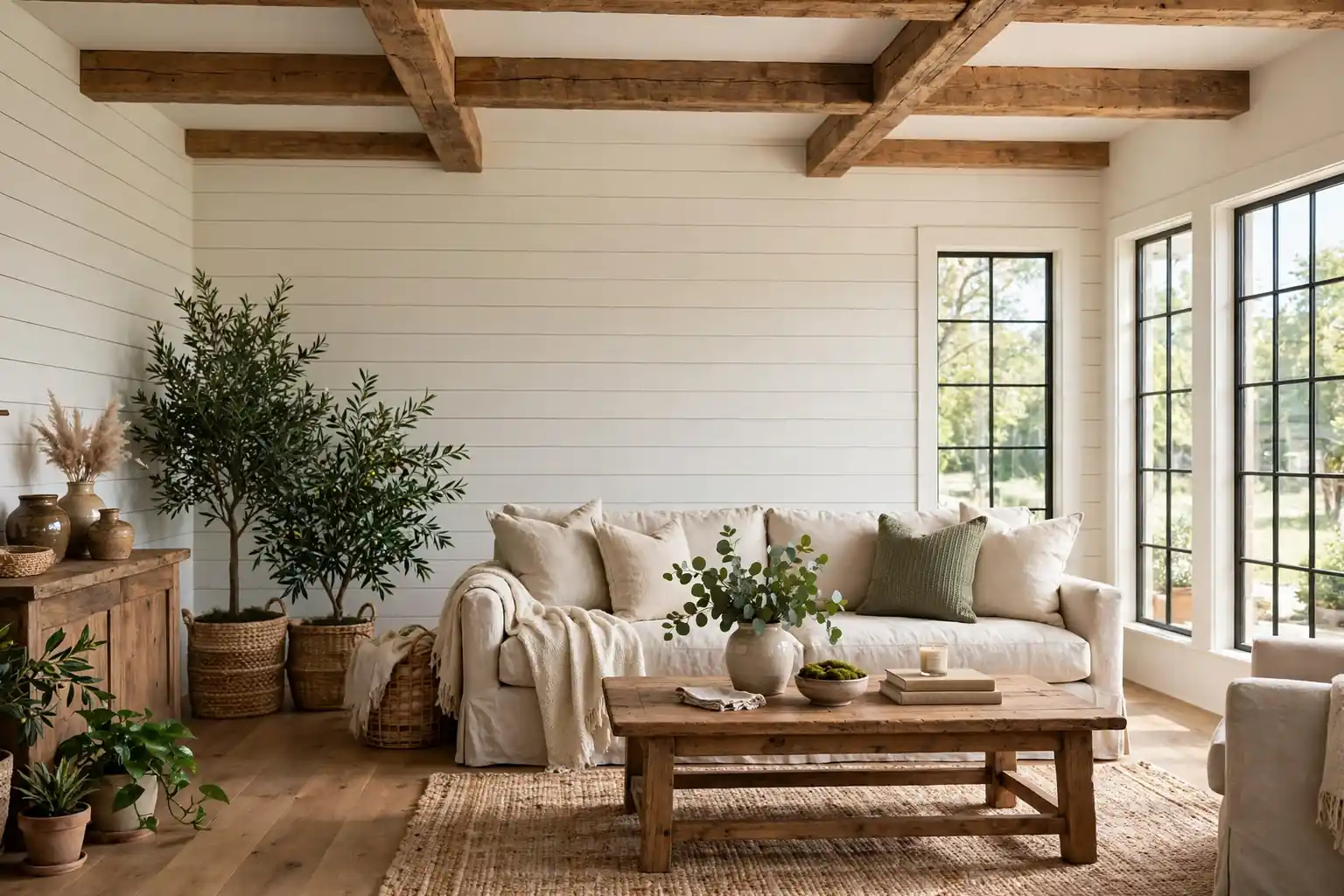
Farmhouse decor pairs natural wood, neutral colors, and practical vintage-inspired pieces to make a home feel warm and welcoming. Start with a neutral base, add wood and woven textures, then layer soft textiles and simple greenery in each room. The 21 ideas below show how to use those elements in living rooms, kitchens, bedrooms, and entryways without a full renovation.
Use this guide room by room, or pick one idea at a time. A single change, such as a wood accent wall or a linen sofa cover, can shift the feel of a room, and small pieces such as baskets, wreaths, and vintage finds let you test the style before committing to larger furniture.
Key Takeaways
- Start with a neutral base of warm white, cream, beige, or soft grey, then add wood, linen, cotton, and woven textures.
- Repeat one wood tone and one metal finish through a room so the mix of old and new pieces feels settled rather than random.
- Choose practical pieces first: storage baskets, a sturdy dining table, a comfortable sofa, and good lighting, then add decor on top.
- Use greenery in small doses, such as a wreath, a potted herb, or eucalyptus stems, to soften wood and neutral colors.
- Mix one or two vintage or antique-inspired pieces with simple modern pieces to keep the room from feeling like a set.
- Change textiles and greenery with the seasons for a fresh look without replacing furniture.
1. Shiplap Accent Wall in a Living Room
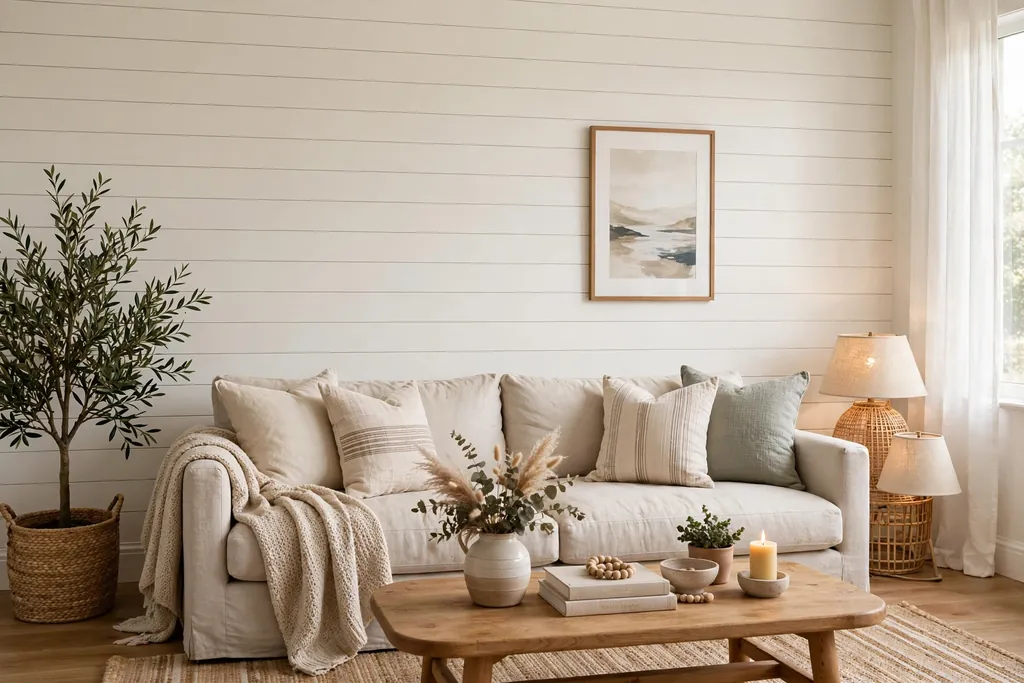
A shiplap accent wall adds texture and a clear farmhouse reference to a living room, especially behind a sofa or a fireplace. Paint it warm white or cream so it reads as texture rather than a bold color, and let the horizontal lines draw the eye across the room. Shiplap suits rooms with simple furniture, since the wall itself supplies the pattern.
Keep the rest of the wall color quiet and hang art or a mirror with a plain wood frame. In a small room, use shiplap on one wall only, so the room still feels open. Wipe the grooves now and then, since dust settles in the joints, and touch up paint chips at the corners where furniture rubs.
2. Exposed Reclaimed Wood Ceiling Beams
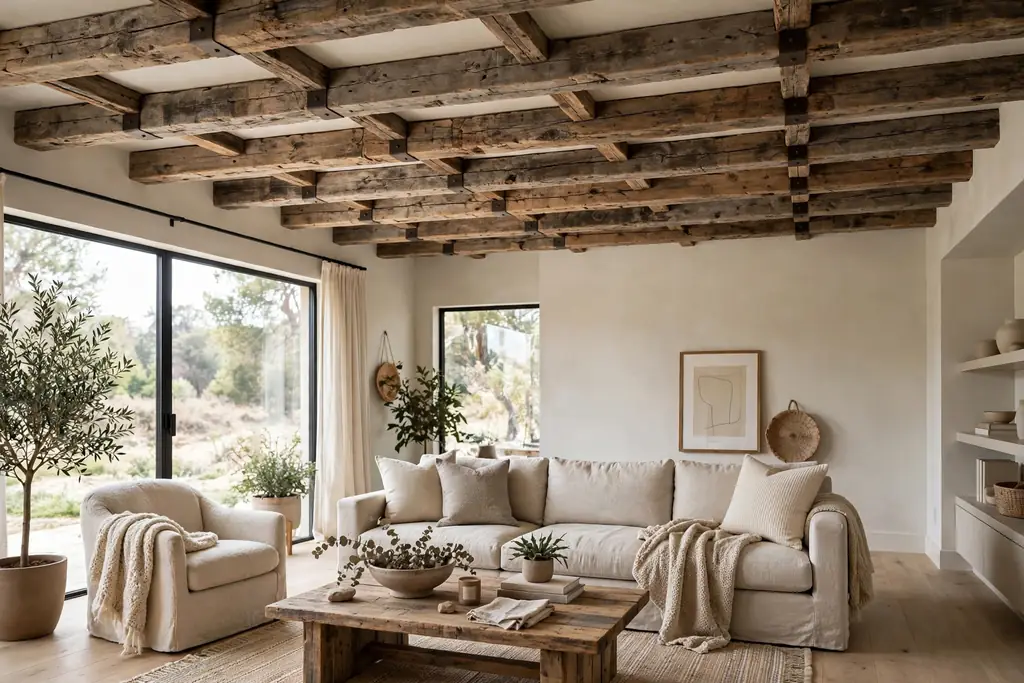
Exposed wood beams give a ceiling warmth and structure, and they suit living rooms, kitchens, and bedrooms with enough ceiling height. Reclaimed wood brings varied grain and tone, which helps a new room feel collected over time. Pair beams with white or cream ceilings so the wood stands out without darkening the room.
If real reclaimed beams are not practical, wood-look beam covers offer a similar line at the ceiling with less weight. Keep beams in proportion to the room: slim beams for low ceilings, chunkier beams for tall rooms. Balance the wood with soft lighting and light walls, so the ceiling feels warm rather than heavy.
3. Sliding Barn Door Between Rooms
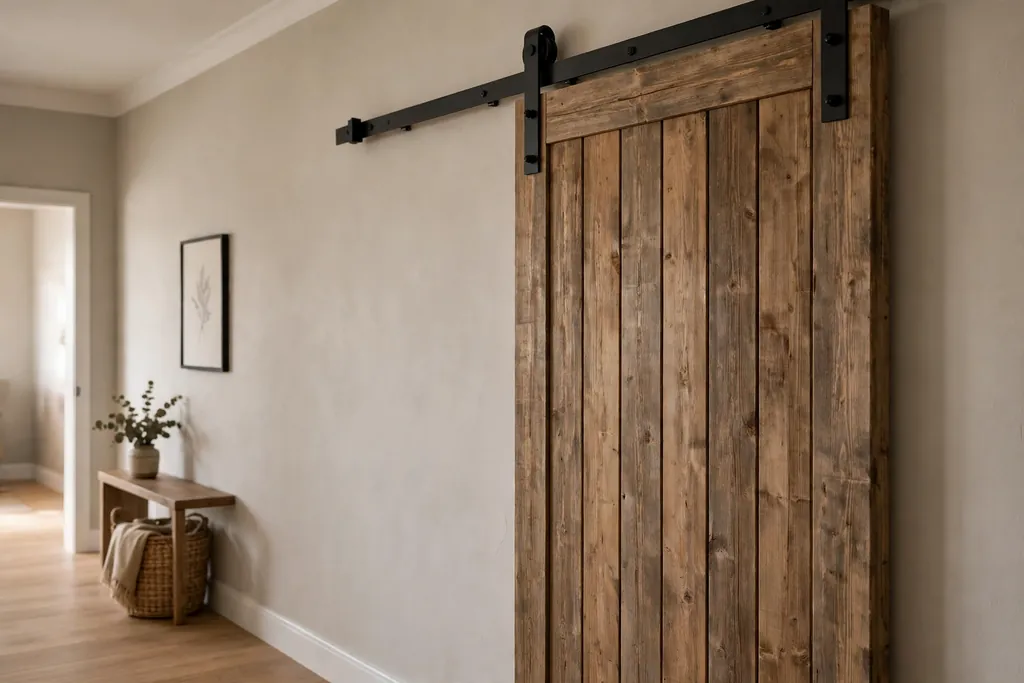
A sliding barn door adds farmhouse character and saves floor space, since it slides along the wall instead of swinging into a room. It works well for a pantry, a laundry room, a home office, or a bedroom, where a standard door would crowd furniture. Choose a wood door with simple planks and black metal hardware for a classic farmhouse look.
Check the wall beside the opening first: it must stay clear of light switches, art, and furniture for the door to slide fully open. Fit a soft-close guide if the household includes children, so the door does not slam. A barn door does not block sound as fully as a solid hinged door, so it suits spaces where privacy is a light need rather than a strict one.
4. Apron-Front Farmhouse Sink in the Kitchen
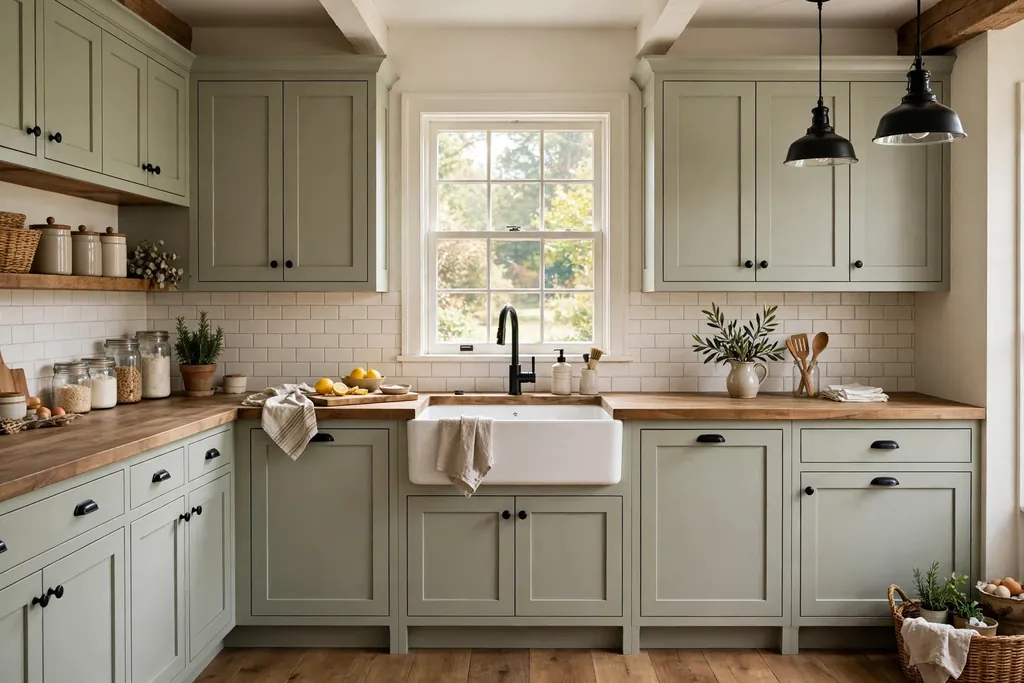
An apron-front sink, with its exposed front panel, is a signature farmhouse kitchen feature and a practical one. The deep basin holds large pots and baking trays, and the front edge lets you stand closer to the sink, which eases strain during long prep sessions. White fireclay and porcelain are the most common finishes, and both sit well with wood counters and Shaker cabinets.
Pair the sink with a simple bridge tap or a single lever tap in brushed nickel, oil-rubbed bronze, or matte black. Keep the cabinet below plain, so the apron front stays the focus, and wipe the front panel after use to prevent water marks. An apron-front sink usually needs a cabinet sized for it, so measure the base cabinet before ordering.
5. Open Wood Shelving in the Kitchen
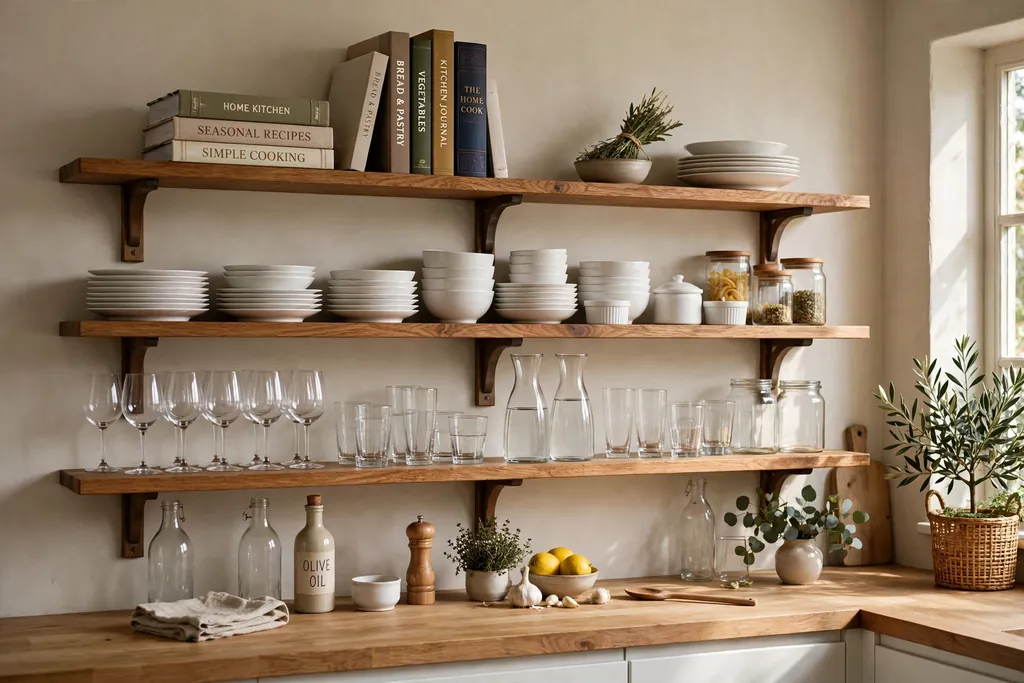
Open wood shelves in a kitchen show off white dishes, glassware, and a few cookbooks, and they make everyday items easy to reach. Thick wood shelves with simple brackets suit farmhouse kitchens, especially on a wall beside a window or above a coffee station. Limit each shelf to items you use often, so the display stays useful rather than dusty.
Group dishes by color, keep glassware in a row, and leave some empty space at the ends of each shelf. Dust shelves weekly in a kitchen, since cooking grease settles on open surfaces, and wash display dishes before use if they have sat for a while. If open shelves feel too exposed for the whole kitchen, try one run of shelves and keep the rest of the storage closed.
6. Farmhouse Dining Table with Bench Seating
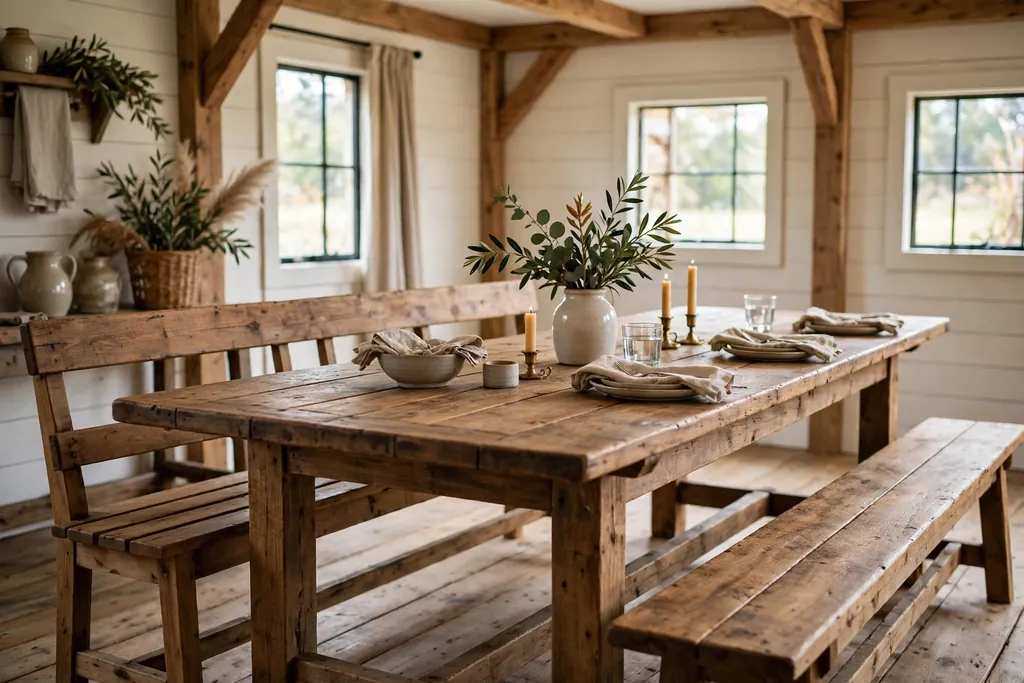
A long wood dining table with bench seating suits family meals and gatherings, since benches seat more people than chairs in the same length. Choose a table with a sturdy top in oak, pine, or reclaimed wood, and legs that leave room for benches to slide under. Benches also tuck away neatly, which helps in a kitchen dining area with limited floor space.
Pair one bench with chairs on the other side if you want back support at every seat, or use two benches for a casual look. Add a washable cushion or a folded throw on the bench for comfort during long meals. Wipe the table after meals and use placemats under hot dishes, since wood tops mark more easily than stone.
7. Distressed Wood Coffee Table in the Living Room
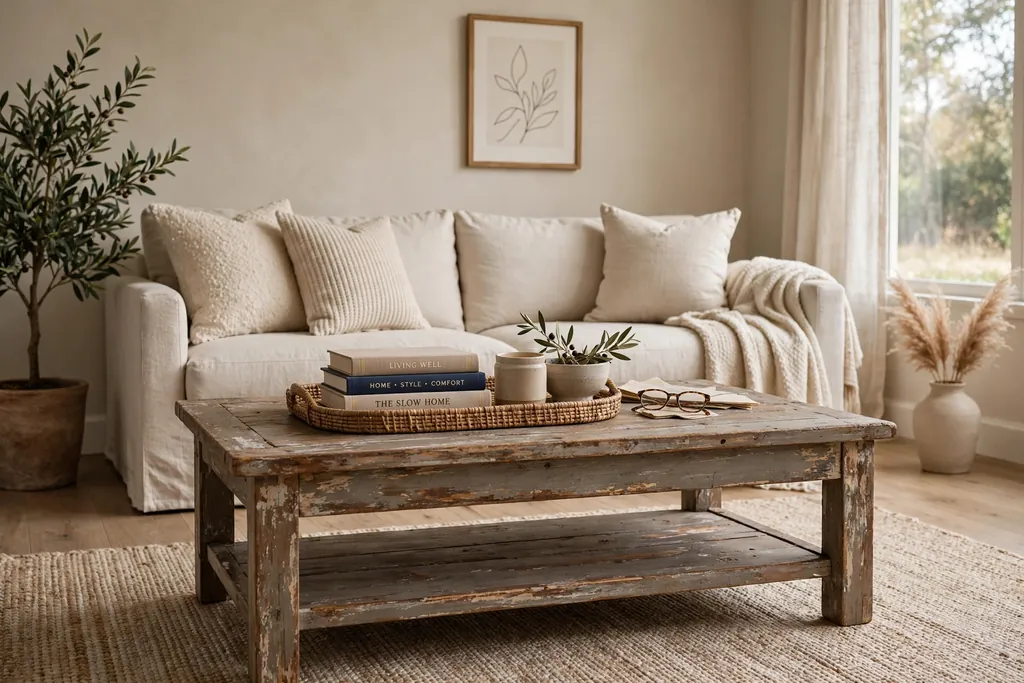
A distressed wood coffee table anchors a farmhouse living room with a relaxed, lived-in feel. Look for a table with visible grain, softened edges, and a simple shape, such as a rectangular top with a lower shelf. The lower shelf is useful for baskets, books, and throws, which keeps the tabletop clear for drinks and trays.
Style the top with a small tray, a candle, and one stack of books, and leave room for daily use. A distressed finish hides small marks better than a high-gloss finish, which suits households with children or pets. Check that the table height sits near the sofa seat height, so reaching for a cup feels natural.
8. Slipcovered Linen Sofa in Neutral Tones
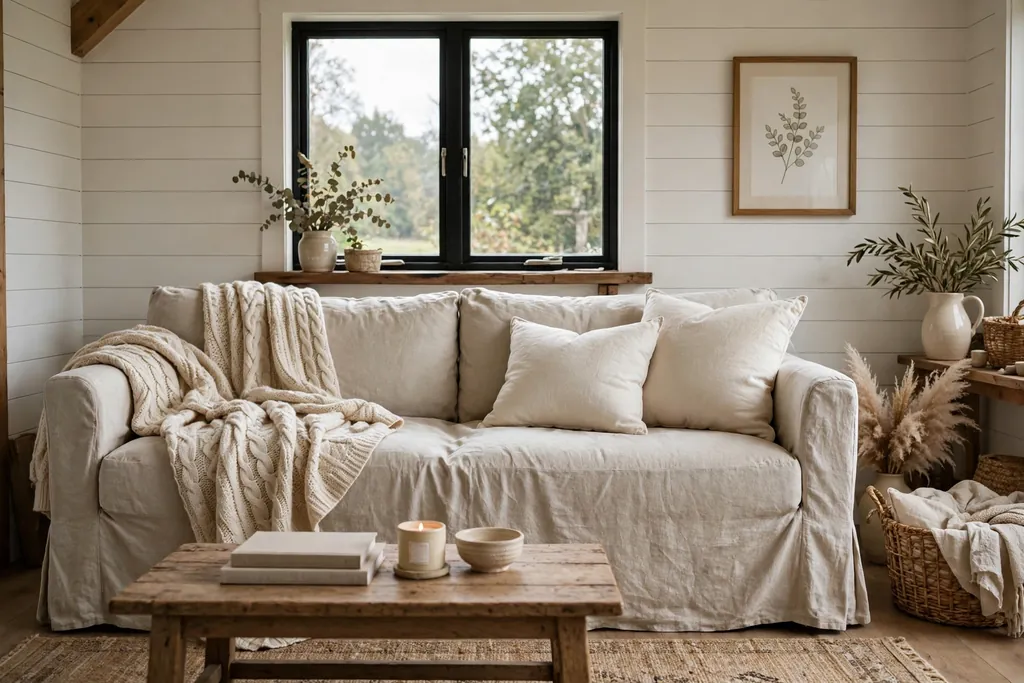
A slipcovered linen sofa in cream, oatmeal, or soft grey gives a farmhouse living room a relaxed shape and an easy care routine. The loose cover softens the lines of the sofa and can be removed for washing, which is a real benefit in a busy home. Linen wrinkles naturally, and that texture is part of the farmhouse look, not a flaw to hide.
Layer the sofa with cotton and knit cushions in muted checks, stripes, or plain tones, and add a throw over one arm. Keep the frame simple, with turned wood feet or a plain skirt, so the cover stays the focus. If the room gets strong sun, rotate cushions regularly, since linen fades unevenly in direct light.
9. Woven Basket Storage in Every Room
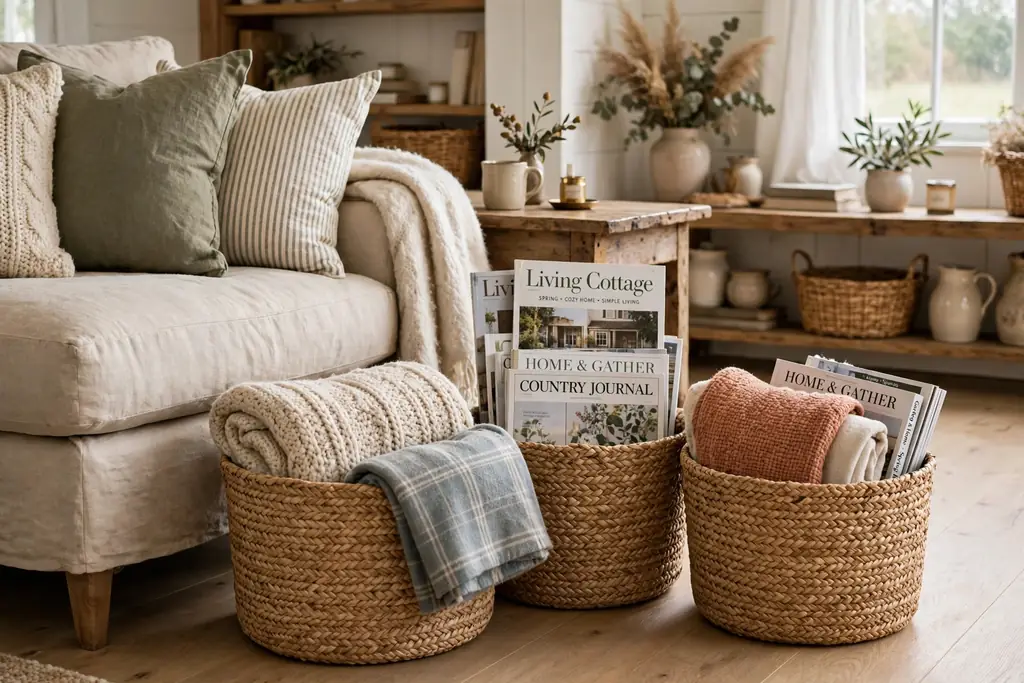
Woven baskets are the workhorse of farmhouse storage: they hold throws, toys, magazines, firewood, and laundry, while adding natural texture. Use large seagrass baskets beside a sofa, smaller baskets on shelves, and lidded baskets in a bedroom or bathroom for items you want out of sight. The woven surface warms a room in the same way wood does, but with a softer feel.
Label lidded baskets or keep a simple system, such as one basket per person or per use, so storage stays tidy. Shake baskets outside now and then, since dust collects in the weave, and avoid damp spots, which can mark natural fibers. A basket tray on a coffee table or ottoman also corrals small items into one neat group.
10. Mason Jar Pendant Lights Over a Table or Island
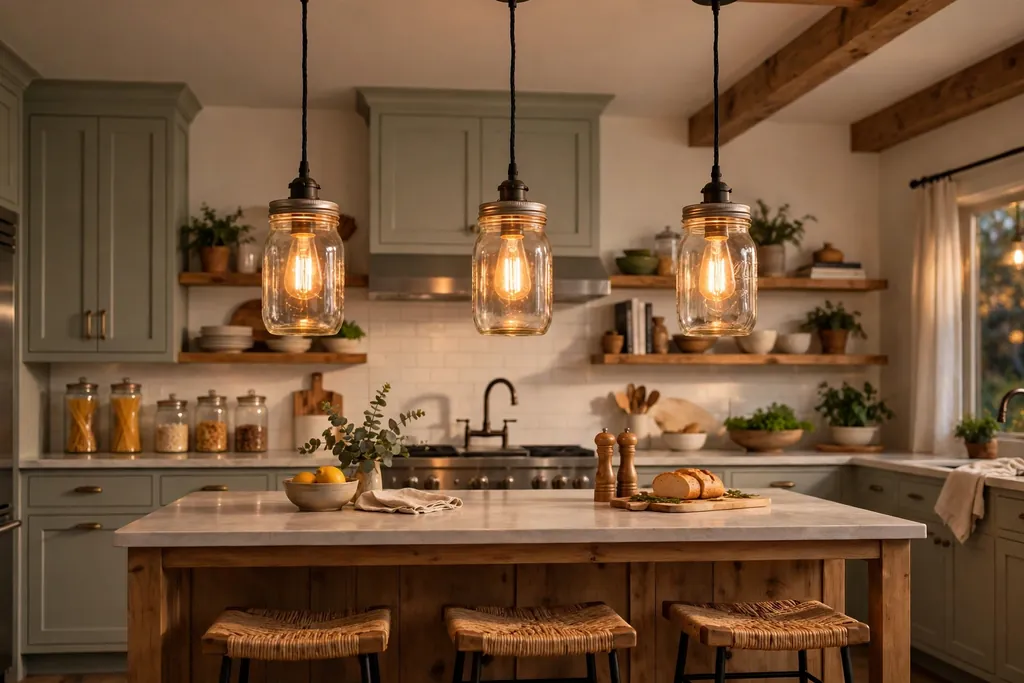
Mason jar pendant lights bring a farmhouse touch to a kitchen island, a dining table, or a porch, with a warm glow through clear or seeded glass. Hang two or three in a row over an island, spaced evenly, or use a single jar pendant over a small breakfast table. Pair the glass with black or bronze metal fittings and warm white bulbs for a soft evening light.
Hang pendants high enough to see across the table, and clear of steam from a hob. Dust the jars regularly, since kitchen grease films glass over time, and keep spare bulbs on hand in the same warm tone. If the glass feels too rustic for the room, try one jar pendant mixed with plain metal pendants rather than a full row.
11. Vintage Ladder for Blankets and Throws
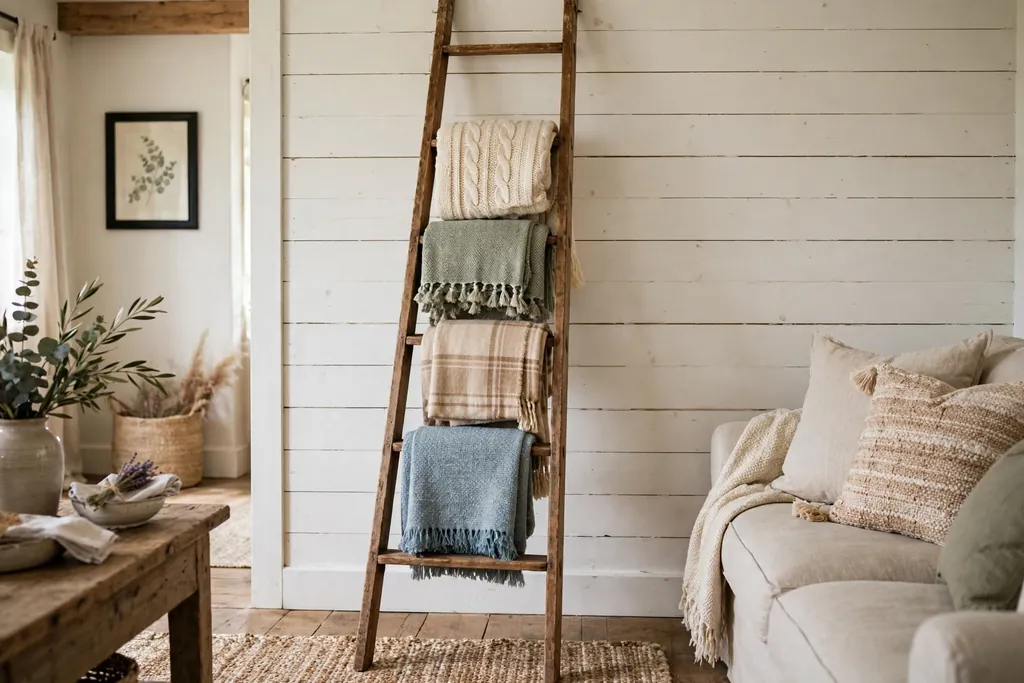
A vintage-style wood ladder leaning against a wall gives blankets and throws a home and a display in one piece. It suits a living room corner, a bedroom wall, or a bathroom, where it can hold towels. Choose a ladder with wide, flat rungs so throws hang without slipping, and lean it at a safe angle with the feet on a rug or a non-slip pad.
Drape one or two throws per rung, folded to a similar width, so the display looks tidy. Keep the ladder away from high-traffic paths where it could be knocked, and do not hang heavy items on it. A ladder is also an easy seasonal swap: light cotton throws in summer, wool and knit throws in colder months.
12. Galvanized Metal Planters and Accents
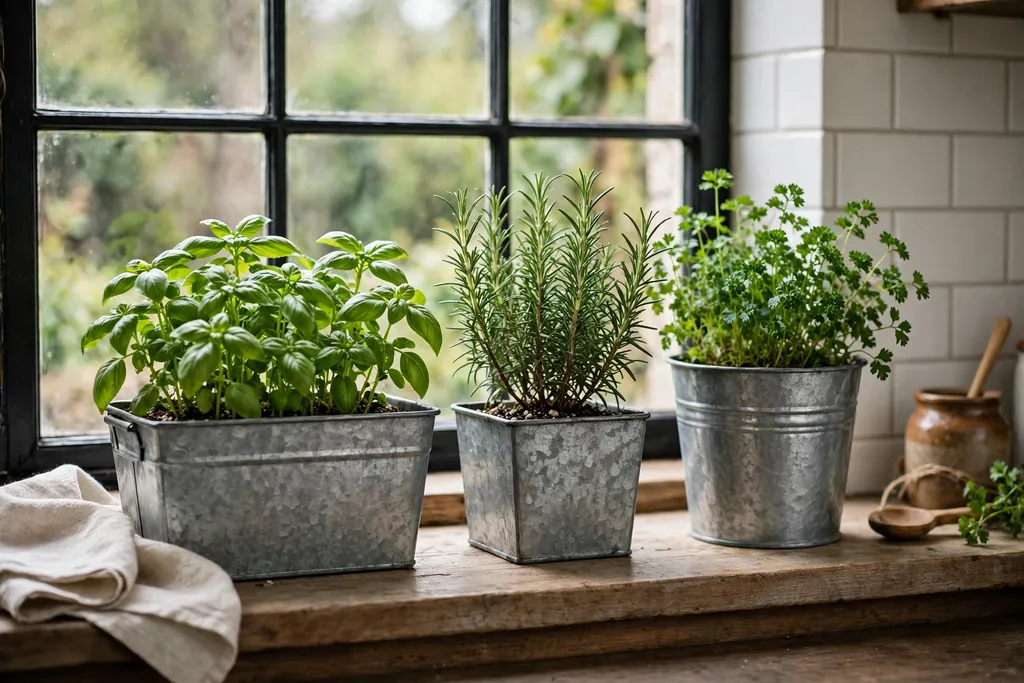
Galvanized metal brings a farm and garden note indoors, through planters, buckets, trays, and wall pockets. Use a galvanized planter for herbs on a kitchen windowsill, a larger bucket for a potted olive tree or fiddle leaf by a door, or a metal tray to group candles on a table. The soft grey metal sits well with wood, linen, and greenery.
Line planters used indoors so water does not reach floors or wood surfaces, and wipe the metal dry after watering. Mix galvanized pieces sparingly, one or two per room, so the metal reads as an accent rather than a theme. Pair galvanized metal with warm wood to keep the room from feeling cold or industrial.
13. Entryway Bench with Hooks and Baskets
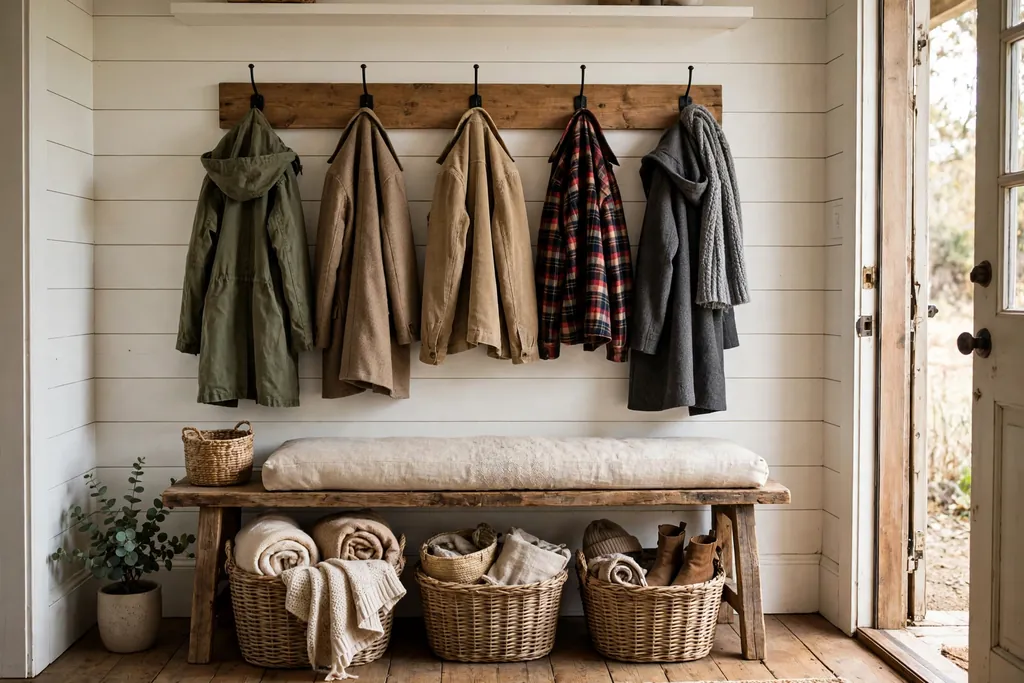
An entryway bench with wall hooks and baskets below solves the daily pile of coats, shoes, and bags at the front door. Choose a wood bench with a simple slatted or solid top, sturdy hooks at adult and child height, and one basket per person below for shoes and small gear. The setup keeps the entry clear and gives guests an obvious place to sit and set things down.
Add a small tray on the bench for keys and a mirror above the hooks to check your coat before leaving. Keep the wall color light and the hooks spaced wide enough for bulky winter coats. Wipe the bench top weekly, since entry furniture collects dust and dirt from outdoors, and empty the baskets regularly so they do not overflow.
14. Layered Plaid and Gingham Textiles
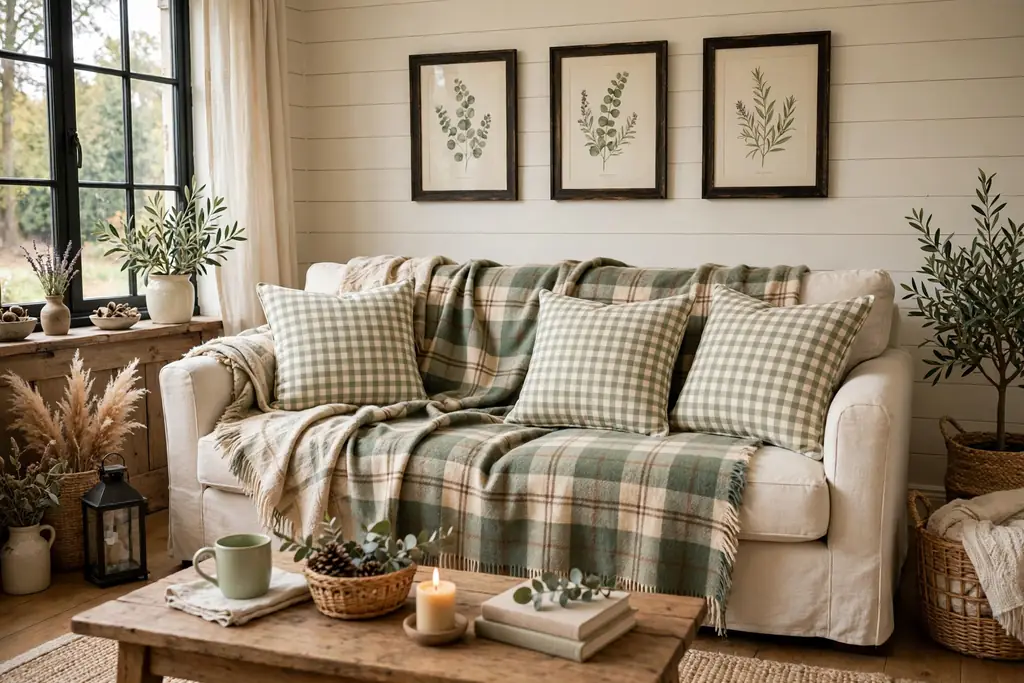
Plaid and gingham textiles are a quick way to add farmhouse pattern without repainting a room. Use a plaid throw on a sofa, gingham cushions on a dining bench, a checked table runner, or gingham curtains in a kitchen. Keep the pattern scale mixed: one large check with one small check, so the two do not compete.
Hold the palette to two or three colors, such as cream and sage, cream and navy, or cream and muted red, and let the rest of the room stay plain. Wash textiles before first use to soften the fabric and check for color transfer, and store spare seasonal checks folded in a basket. Patterned textiles are also the easiest seasonal change: swap a throw and a few cushion covers and the room feels new.
15. Antique Wooden Crates as Display and Storage
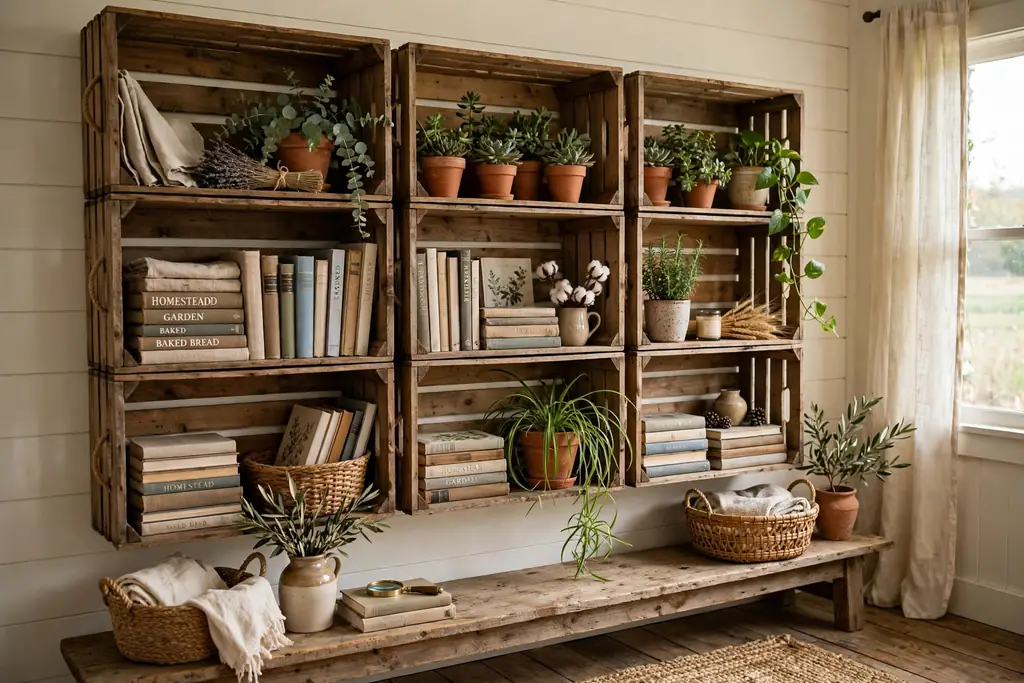
Antique-style wooden crates work as open storage and display in a farmhouse home, on a wall, under a console, or beside a sofa. Use a crate on its side as a small bookshelf, stack two crates as a bedside table, or line crates on a wall shelf for plants and books. The worn wood and simple slats add age and texture without a large piece of furniture.
Check old crates for splinters, nails, and odors before bringing them indoors, and sand rough spots smooth. Line a crate used for plants or food items, and keep heavy books in the lowest crate so a stack stays stable. If genuine antique crates are hard to find, new crates in reclaimed-look wood give the same shape with a cleaner finish.
16. Iron Bed Frame with Layered Quilts in the Bedroom
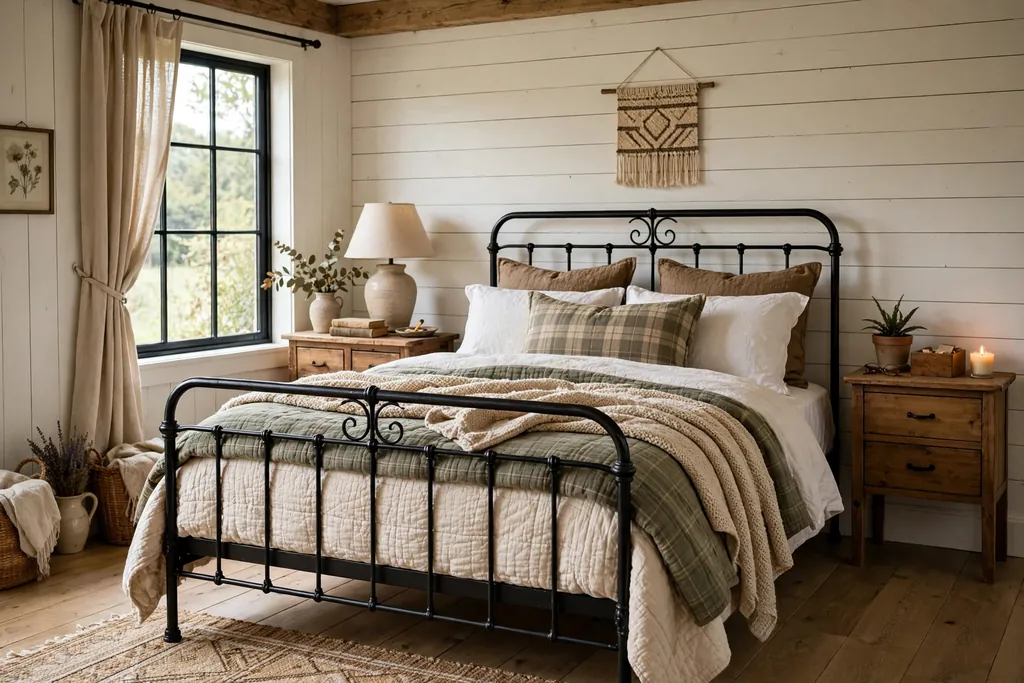
An iron bed frame with layered quilts gives a farmhouse bedroom a classic shape and a comfortable, gathered look. Choose a simple black or white metal frame with a curved or straight headboard, and layer a cotton quilt over a plain duvet, plus a folded throw at the foot of the bed. The layers add warmth and let you adjust bedding through the seasons.
Keep bedroom walls in warm white or soft sage, and add wood bedside tables for contrast with the metal frame. Use cotton and linen pillowcases in cream or muted checks, and limit the cushion count so making the bed stays quick. Wash quilts on a gentle cycle and line dry when possible, since frequent hot washes wear cotton quilting faster.
17. Stone Fireplace Mantel Styling
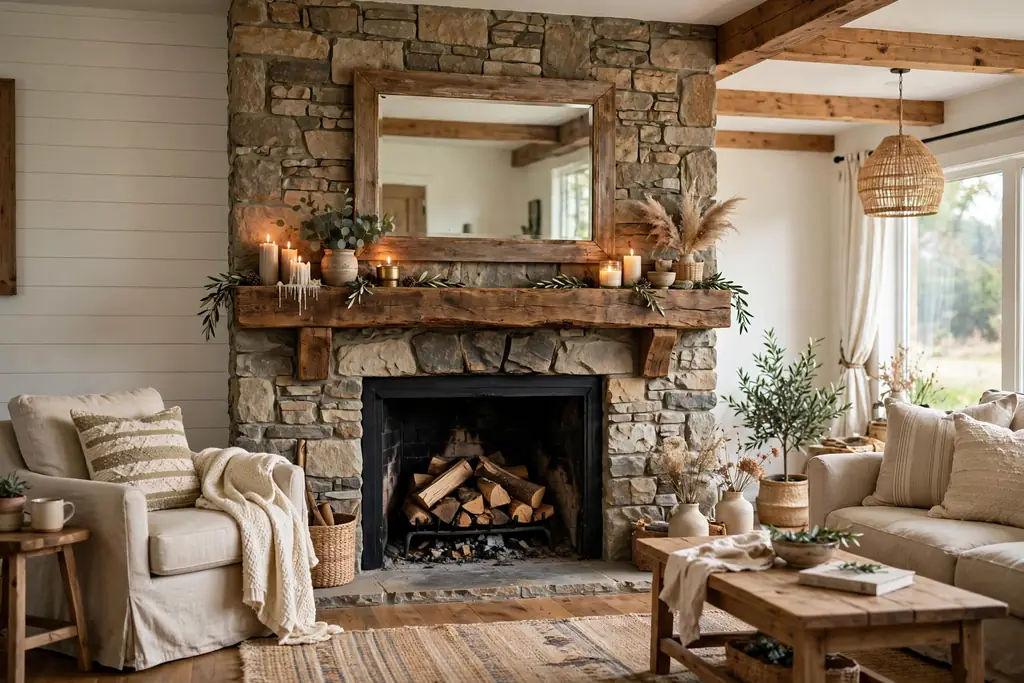
A stone fireplace with a wood mantel is a natural focal point in a farmhouse living room, and simple styling keeps it warm rather than cluttered. Place a large mirror or a framed print above the mantel, flank it with candlesticks or small potted greenery, and keep the mantel itself mostly clear. A chunky wood beam mantel warms stone and gives a shelf for seasonal pieces.
Change the mantel display with the seasons: greenery and candles in winter, a vase of stems in spring, and a simple bowl or lantern in summer. Keep items away from the fire opening and check that nothing hangs over the hearth where it could catch heat. Dust stone regularly, since soot and dust settle on rough surfaces, and wipe the mantel beam after fires.
18. Wood and Chalkboard Signage with Simple Words
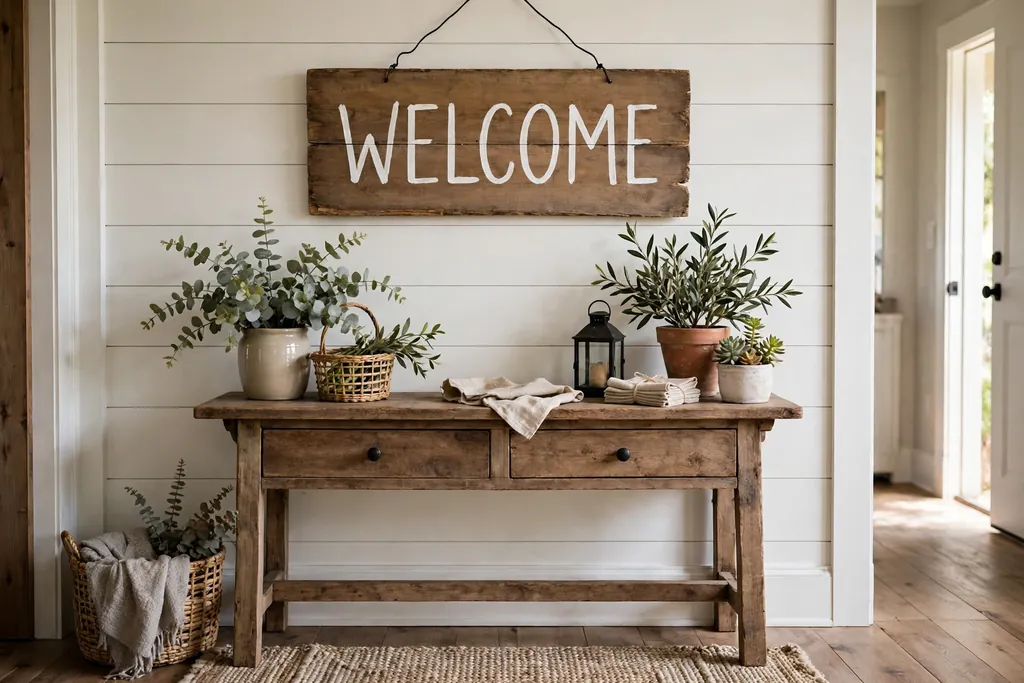
Wood signs with simple words, such as “Home,” “Gather,” or “Welcome,” add a personal farmhouse note to a kitchen, entryway, or porch. Choose a sign in reclaimed-look wood with painted or carved lettering, and hang it where it can be read at a glance, above a door, over a console, or on a gallery wall. A chalkboard sign adds a changeable option for menus, notes, or seasonal greetings.
Use one or two signs per room, so the words stay a warm accent rather than a wall of text. Pair a sign with a wreath, a plant, or a framed print, rather than hanging signs in a row. Dust painted signs gently, and rewrite chalkboard signs with chalk markers for a clean line that still wipes off.
19. Greenery Wreaths and Eucalyptus Stems
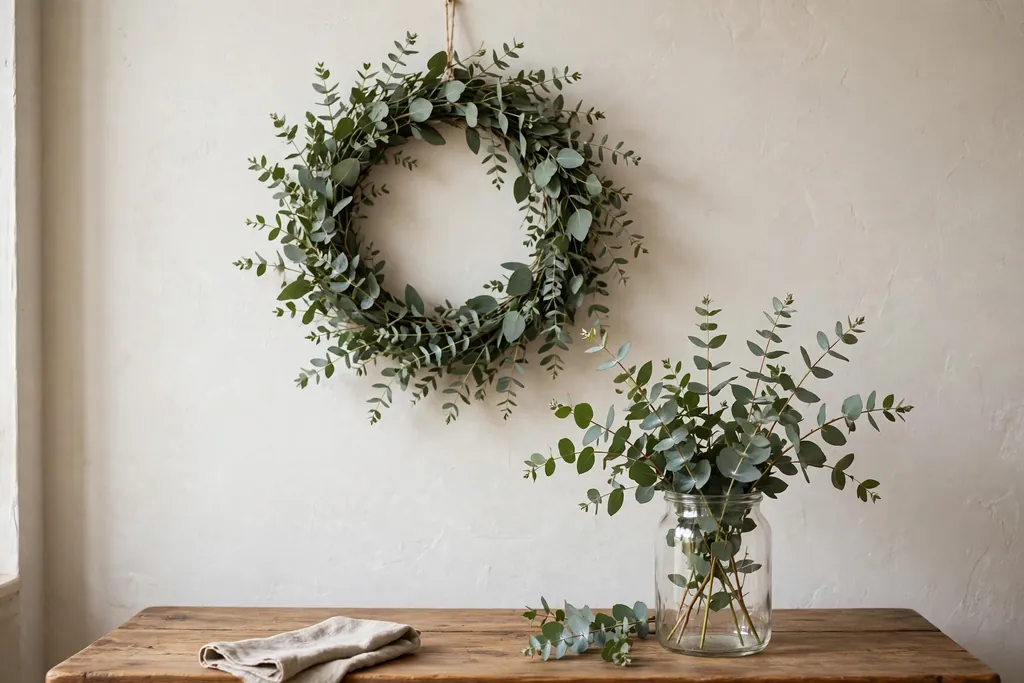
Greenery wreaths and eucalyptus stems soften wood, stone, and neutral walls with very little effort. Hang a simple eucalyptus or boxwood wreath on a front door, above a mantel, or on a bedroom wall, and place eucalyptus stems in a glass jar or a galvanized bucket on a table. The muted green suits every season and pairs with both wood and metal accents.
Choose preserved or faux greenery for a door in strong sun or a high mantel, since fresh stems dry out there, and use fresh stems where you can enjoy the scent, such as a kitchen or bathroom. Shake wreaths outside now and then to clear dust, and replace stems when they fade. A wreath also makes an easy seasonal swap: add pinecones in winter or dried flowers in autumn.
20. Front Porch Rocking Chairs and a Simple Welcome
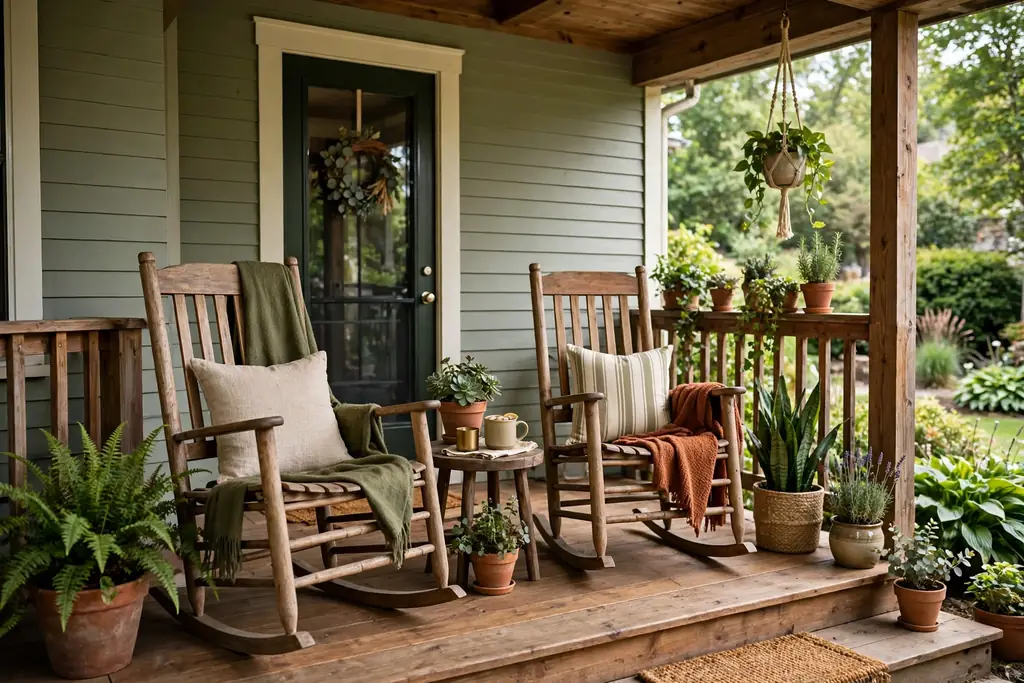
Rocking chairs on a front porch extend farmhouse warmth outside the front door and invite slow sitting. Choose wood rocking chairs with a simple slatted back, add a plain cushion in outdoor fabric, and place a small side table between them for drinks. A doormat, a potted plant by the door, and a lantern complete the welcome without crowding the porch.
Check that chairs rock freely without hitting rails or walls, and leave a clear path to the door. Bring cushions indoors during heavy rain, and oil wood chairs once a season if they sit in sun and weather. A porch that is easy to sit on gets used more, and it sets a warm tone before guests step inside.
21. Vintage Finds as Kitchen and Shelf Displays
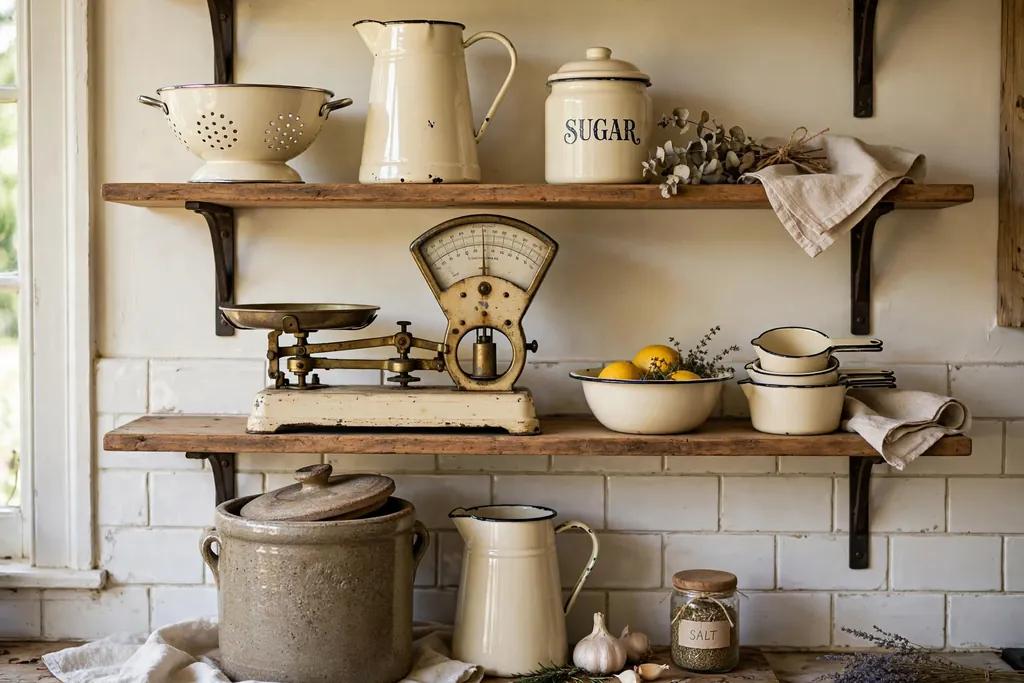
Vintage finds, such as enamelware pitchers, old scales, crocks, and tin boxes, give farmhouse shelves and kitchen counters a collected feel. Group two or three pieces by material or color, such as cream enamelware together, and leave space around each group so the display reads clearly. A vintage scale on a counter or a crock holding wooden spoons by the hob is both decor and daily use.
Shop for pieces with a sound finish, no chips that could cut, and no strong odors, and wash enamelware and crocks before kitchen use. Do not use old tins or painted items for food unless you know the finish is food safe; use them for dry storage or display only. Rotate finds between rooms now and then, so the same pieces feel fresh in a new spot.
Conclusion
Farmhouse decor works best when it stays practical: a neutral base, honest materials such as wood, linen, and stone, and pieces that earn their place by being useful or well loved. Start with one room and one idea from this list, live with it for a few weeks, and then add the next piece that solves a real need, whether that is storage, seating, or light. That slow, room by room approach builds a home that feels warm and welcoming because it fits daily life, not because it follows a rigid formula. For more home decor ideas, visit the Dwell Ovell home page.
FAQs
What is farmhouse decor?
Farmhouse decor is a relaxed style that uses natural wood, neutral colors, linen and cotton textiles, and vintage-inspired pieces to create a warm and welcoming home. It favors practical furniture, simple shapes, and textures such as shiplap, woven baskets, and galvanized metal over formal or glossy finishes.
What colors work best for farmhouse decor?
Warm white, cream, beige, soft grey, and muted sage form the best base for farmhouse decor, since they keep rooms light and let wood and textiles add warmth. Add depth with one muted accent, such as navy, dusty green, or soft terracotta, in cushions, throws, or art, rather than painting whole rooms in a strong color.
How can I add farmhouse decor on a small budget?
You can add farmhouse decor on a small budget by starting with textiles and small pieces, such as a plaid throw, woven baskets, a wreath, and a wood tray, which change a room without new furniture. Paint an accent wall, swap cushion covers, and use secondhand wood crates or a vintage ladder, which cost less than large furniture and still shift the style clearly.
Is farmhouse decor the same as modern farmhouse decor?
No, farmhouse decor and modern farmhouse decor are related but not identical: traditional farmhouse leans rustic, with distressed wood and vintage pieces, while modern farmhouse pairs those warm materials with cleaner lines, less clutter, and more white and black contrast. Both use neutral colors and natural textures, so you can mix them by keeping the palette calm and choosing simple shapes.
How do I keep farmhouse decor from looking cluttered?
You keep farmhouse decor from looking cluttered by giving every display a limit: one focal wall, one or two signs per room, and grouped displays with space around them, rather than filling every surface. Use closed storage for daily clutter, keep counters mostly clear, and rotate seasonal pieces in and out, so the room shows a few chosen items at a time.
Which rooms suit farmhouse decor best?
Farmhouse decor suits living rooms, kitchens, bedrooms, entryways, and porches best, since those rooms benefit most from warm wood, soft textiles, and practical storage. It also works in bathrooms and dining rooms with the right pieces, such as a wood mirror frame, woven baskets, and a simple linen shower curtain, as long as materials can handle moisture in wet rooms.