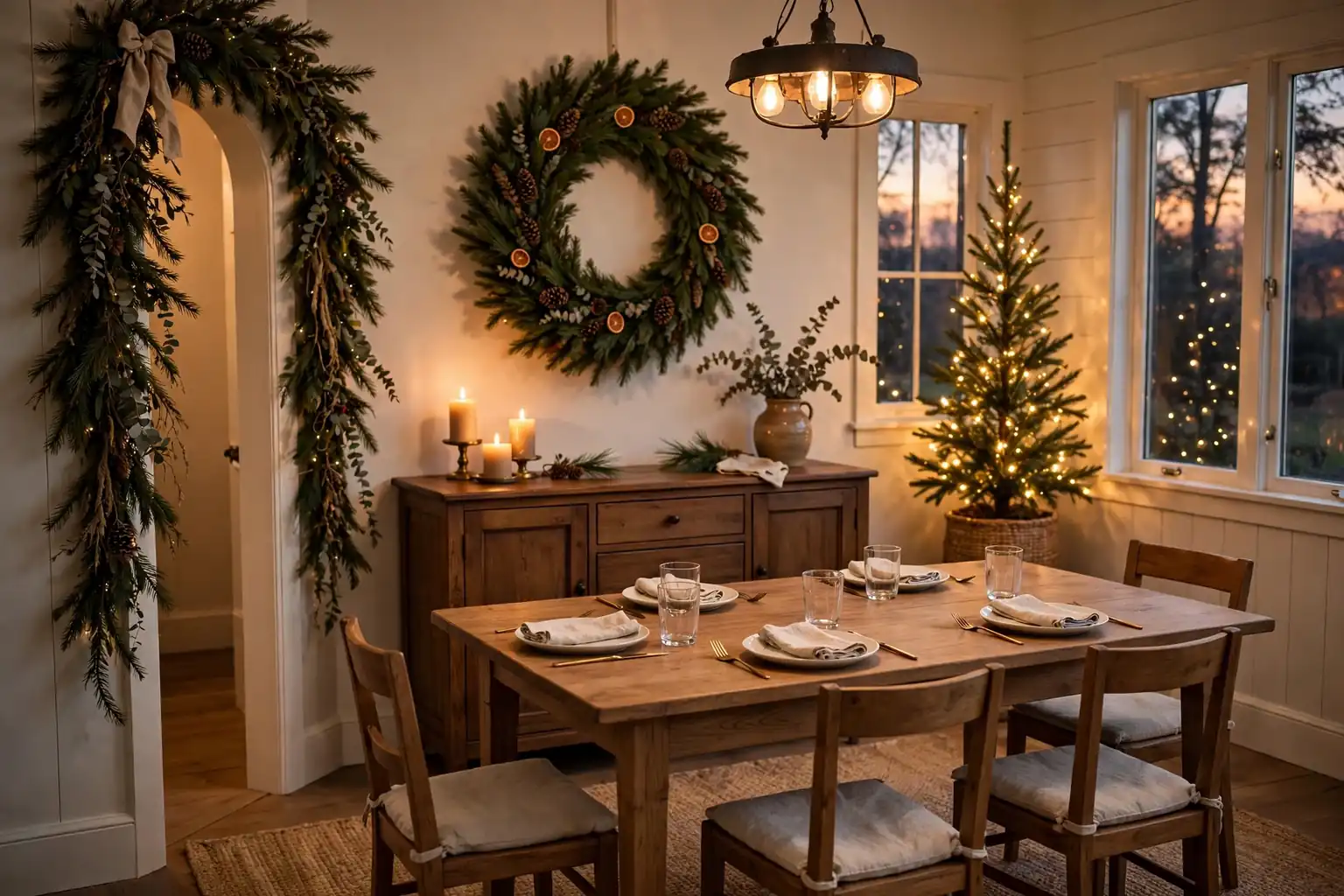
Christmas decor in dining room works best when it dresses the walls, windows, chairs, and sideboard, not just the table. Use garlands on doorways and mirrors, wreaths on walls and chair backs, lanterns on windowsills, and one slim tree in a corner, so the room feels festive from every seat while the table stays clear for plates and serving dishes.
Start with one large anchor, such as a wreath above the sideboard or a garland around the window, then add smaller touches in the same palette and greenery. Keep sightlines open across the table, keep flames clear of fabric and dried greenery, and use battery lights where real candles would sit near curtains or low branches. For table ideas to pair with these room ideas, see the fall table decor guide, and for a rustic room behind the seasonal layers, browse the farmhouse decor guide.
Key Takeaways
- Dress the room first and the table second, so the table stays usable for meals.
- Pick one anchor, such as a sideboard wreath or a window garland, then repeat its greenery and colors in smaller touches.
- Keep centerpieces, garlands, and hanging decor clear of sightlines and flames.
- Repeat one palette through walls, chairs, and the sideboard, rather than adding a new color at each spot.
- Use battery lights near curtains, dried greenery, and low branches.
- Choose one tree or one large wreath per room, so the room feels festive rather than crowded.
1. A Pine Garland Framing the Doorway
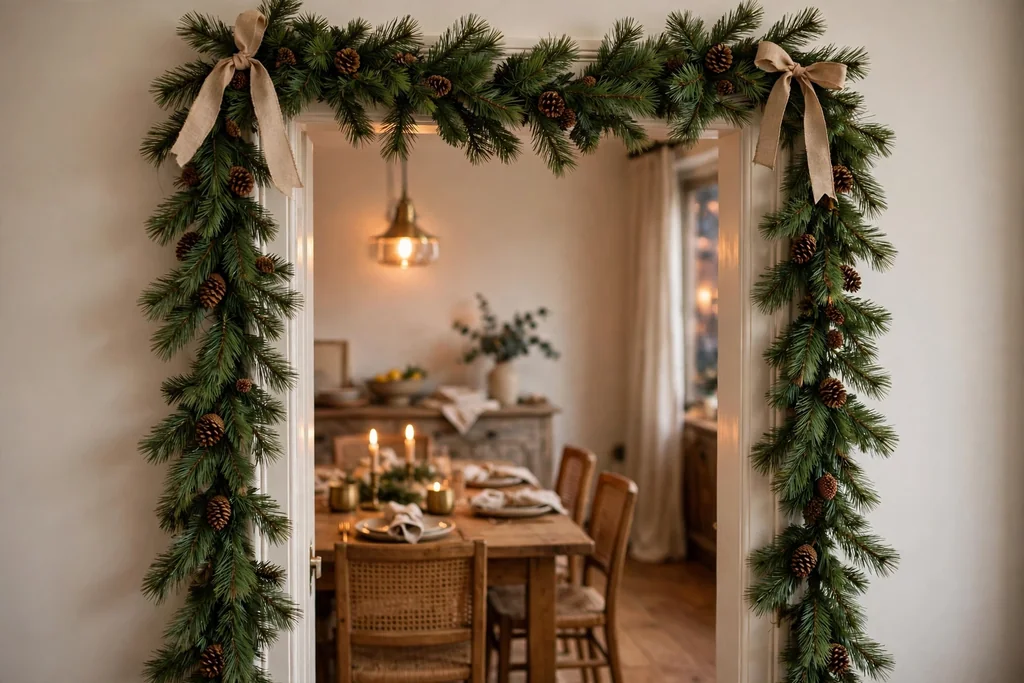
Fix a full pine garland around the dining room doorway, with the ends hanging a little lower than the top corners so the frame looks soft rather than stiff. A doorway garland marks the entry to the room and sets the festive tone before guests reach the table, and it works in rooms with no mantel or spare wall. Add small pinecones and a simple ribbon at the top corners, and keep the garland clear of the door swing.
Use hooks or removable clips on the frame rather than nails, so the paint stays marked free, and check that the garland does not catch on coats or sleeves as people pass. If the doorway is narrow, use a slim garland and keep the hanging ends short. Shake a fresh garland outdoors first, and dust a faux garland before hanging, so loose needles do not land on the floor at every entry.
2. An Oversized Wreath Above the Sideboard
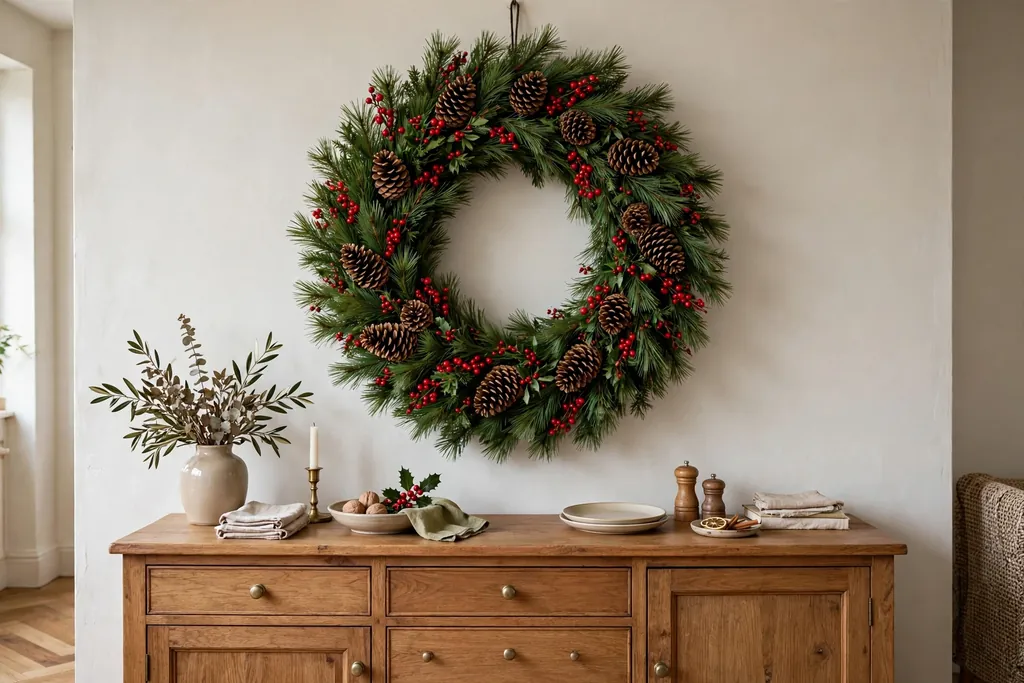
Hang one oversized wreath above the sideboard, centered on the wall, with its bottom edge clear of the items on the sideboard top. A large wreath gives the room a clear focal point and suits a dining room where the table already carries a centerpiece, since it draws the eye upward and away from the table. Choose plain pine, or pine with a few pinecones and red berries, and match its size to the sideboard width, roughly two thirds of the sideboard length.
Fix the wreath to a sturdy hook rated for its weight, and check it from the table seats, since that is where it will be seen most. Keep the wreath clear of candles on the sideboard below, and use a battery light strand woven through the wreath if you want it to glow in the evening. Store the wreath flat or hung in a bag, so its shape holds for another year.
3. A Garland and Pillar Candle Line on the Sideboard
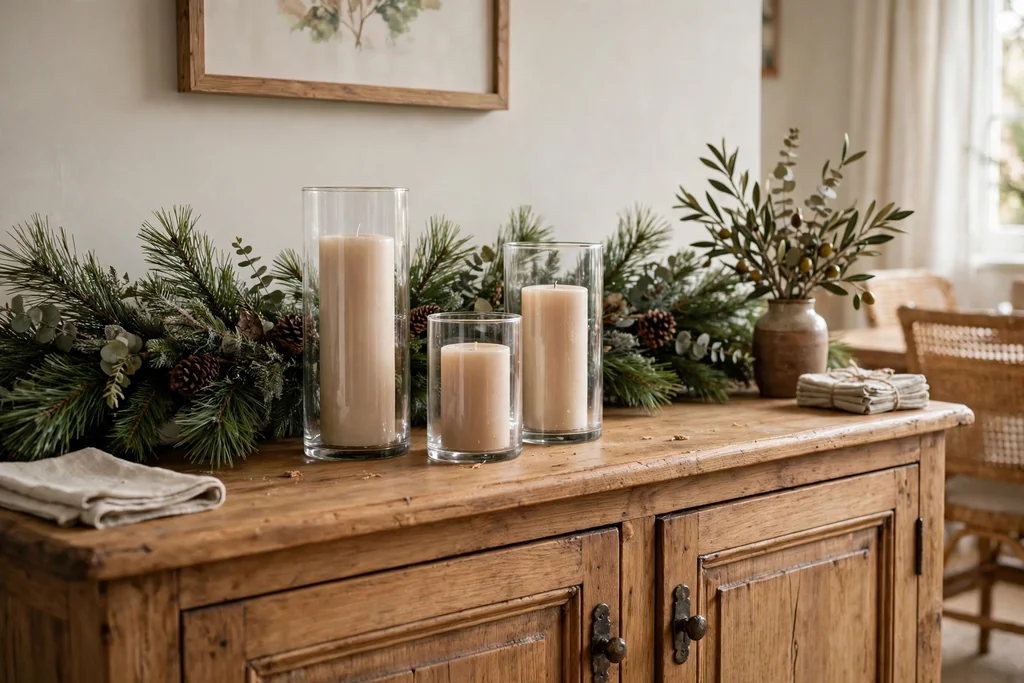
Lay a pine garland along the back edge of the sideboard, then set pillar candles in glass holders in front of it at uneven heights. The garland gives the sideboard a festive back line, while the candles add warm light at serving height, and the group stays clear of the table. Keep the garland narrow so it does not push serving dishes forward, and leave one clear stretch of sideboard for plates and glasses during a meal.
Use battery pillar candles if the garland is dried or if children will pass the sideboard, and keep real flames in glass holders, clear of the greenery. Trim candle wicks before lighting, and wipe wax from holders after use. At the end of the season, fold a faux garland loosely for storage, and compost a fresh garland once it sheds heavily.
4. Mini Wreaths on Chair Backs
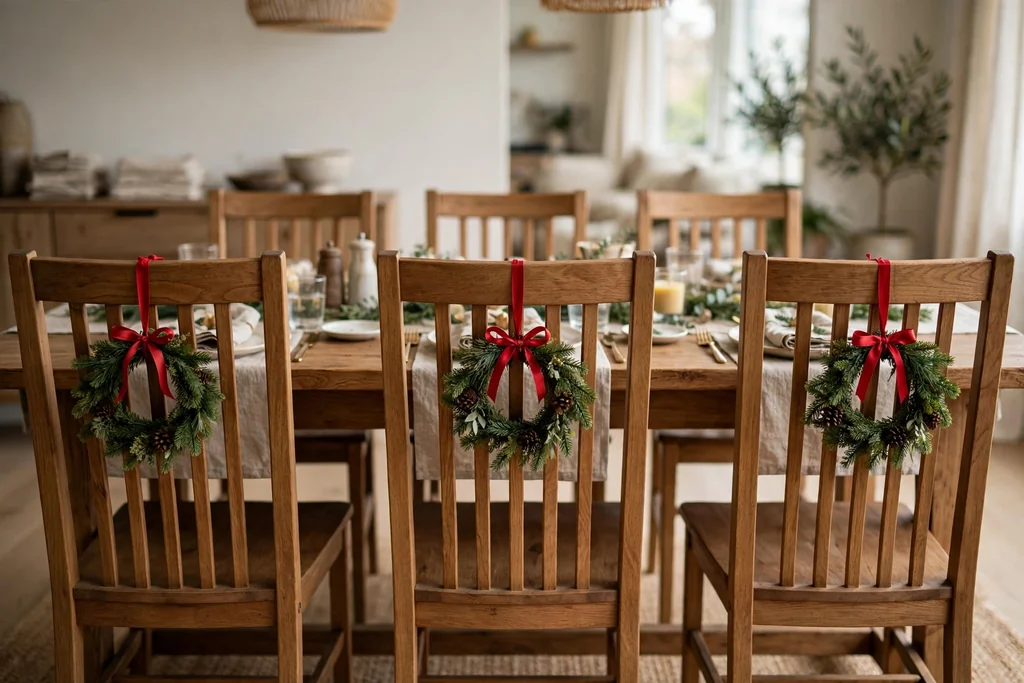
Tie one small wreath to the back of each dining chair with a length of ribbon, centered on the top rail so it sits flat and does not swing. Chair back wreaths dress the room from every angle, since guests see the backs of chairs as they enter, and they add festive detail without taking table space. Use the same wreath size and ribbon color on every chair, so the set looks matched rather than mixed.
Tie the ribbon firmly and trim the ends to the same length, and check that wreaths do not catch on clothing when chairs are pulled out. If chairs have open slats, thread the ribbon through a slat rather than around the rail, so the wreath stays centered. Remove wreaths before stacking or folding chairs, and store them hung in a row so they keep their round shape.
5. Plaid and Velvet Chair Cushions
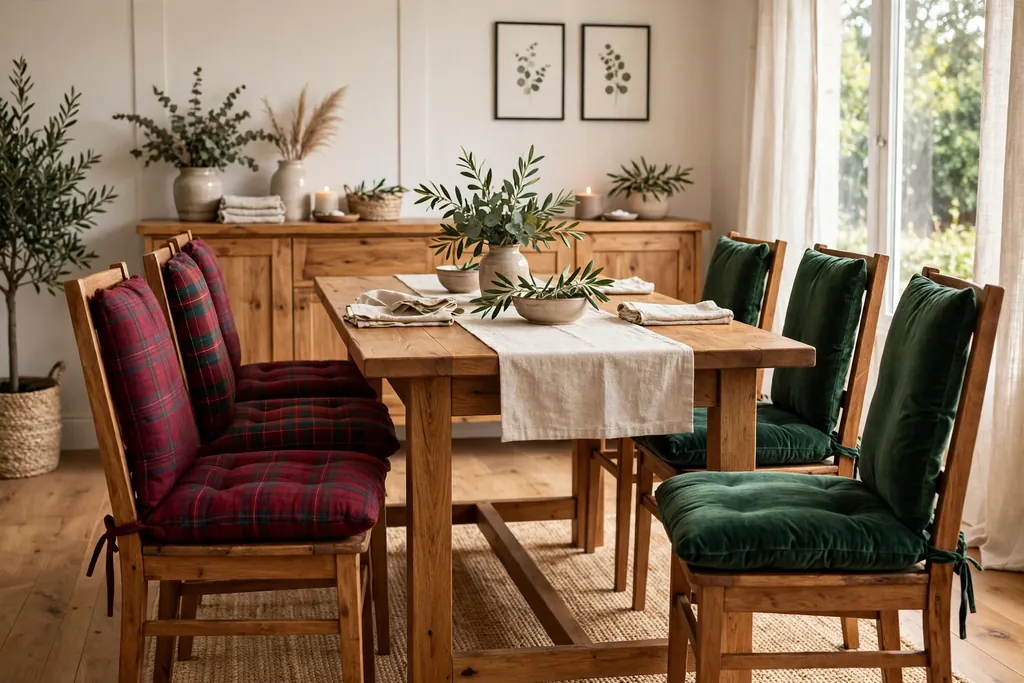
Swap everyday chair cushions for plaid or velvet cushions in the room palette, such as deep red plaid with cream velvet, or green velvet with a muted gold check. Seasonal cushions add color at seat level, where plain chair backs and wood can look bare, and they make long meals more comfortable. Choose cushions with ties or a non slip base, so they stay in place when chairs move.
Keep the cushion pattern scale small enough to read as texture rather than a bold print, and use the same cushion on every chair for a settled look. Wash or brush cushions before the season, and keep spare covers ready for spills. If the dining chairs are upholstered already, use a folded plaid throw over the chair back instead, so the seat fabric stays clear.
6. Pine and Baubles Hung from the Chandelier
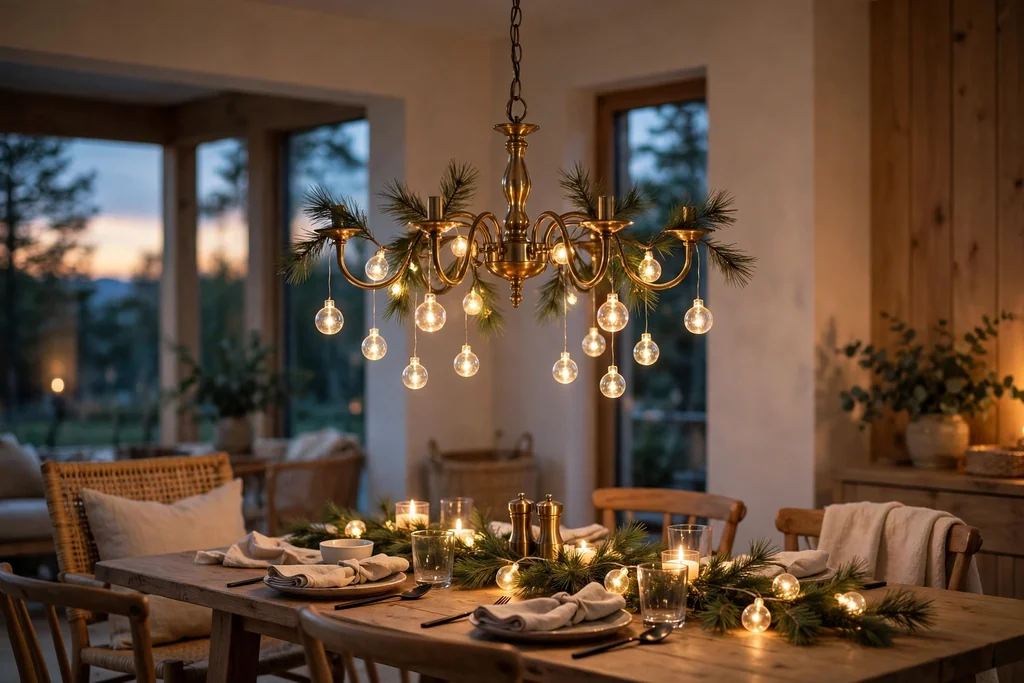
Hang short lengths of pine and a few light baubles from the chandelier arms, using thin wire or twine, with the drops kept short and even. A dressed chandelier adds festive detail above the table without adding anything to the table surface, and the baubles catch light in the evening. Use light ornaments only, and keep the total added weight low, so the fitting stays balanced.
Keep every drop well clear of candle flames and well above head height when guests stand, and check the drops from the seats, since uneven lengths show from below. Use battery fairy lights woven through the pine if the chandelier bulbs run hot, and remove the dressing before cleaning the fitting. Store baubles wrapped in tissue, since chandelier ornaments are often small and easy to chip.
7. Garlands and Fairy Lights Around the Windows
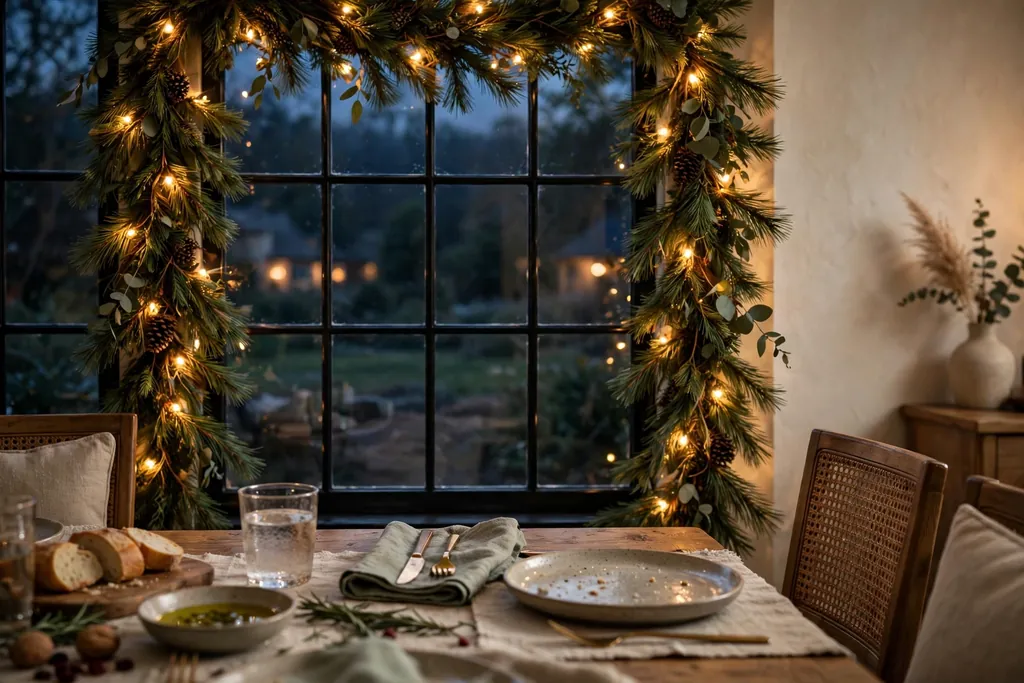
Run a pine garland around the dining room window frame, then weave a battery fairy light strand through it, with the plug or battery pack hidden behind a curtain edge. A window garland frames the view and glows in the evening, which suits dining rooms used most after dark, and it adds festive detail without touching the table. Keep the garland slim on small windows, so it does not block daylight.
Fix the garland with removable clips on the frame, and keep lights clear of curtain fabric, especially if the curtains are sheer or dried out from sun. Use a timer on the battery pack so the lights switch off after the meal, and check the strand for broken bulbs before hanging. Take the garland down before washing the window glass, so the frame stays clean through the season.
8. Lanterns and Pinecones Along the Windowsill
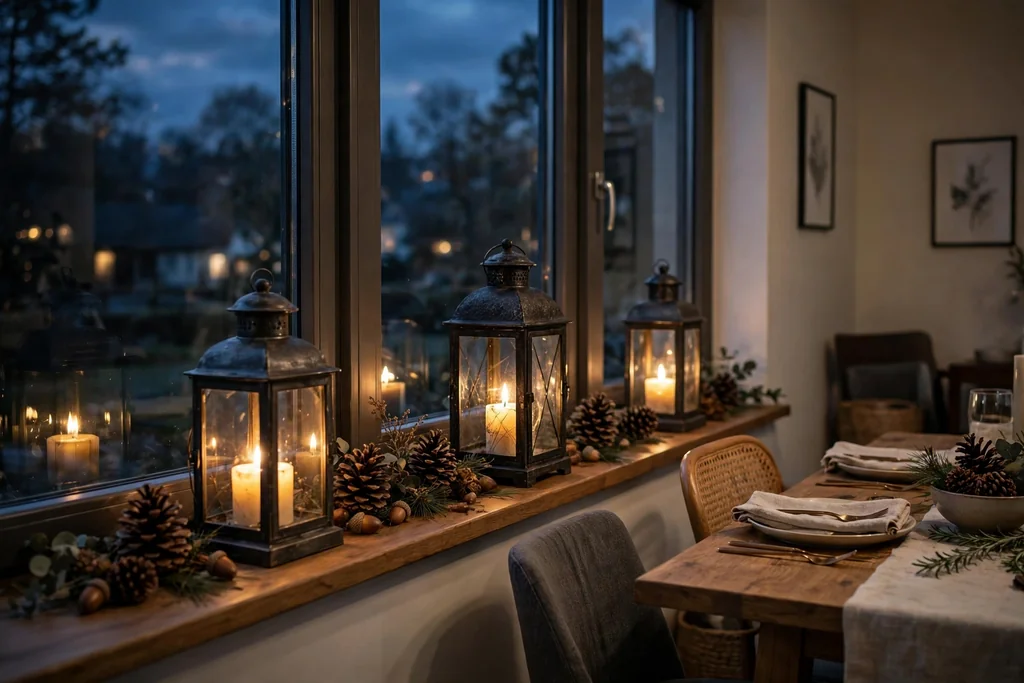
Set a row of lanterns along the dining room windowsill, with a few pinecones and short pine sprigs between them, spaced so each lantern stands on its own. Windowsill lanterns give soft evening light at the edge of the room and suit rooms where wall space is already used by art or a mirror. Use battery candles inside the lanterns, since windowsills sit near curtains and cold drafts can bend real flames.
Choose lanterns sized to the sill depth, with room to spare at the front edge, so they cannot be knocked off when curtains move. Keep pinecones clear of the lantern glass, so heat does not build up, and dust the sill before setting the group out. If the windowsill is narrow, use two lanterns at the ends and a short sprig line between them, rather than crowding the full length.
9. Festive Prints in the Wall Gallery
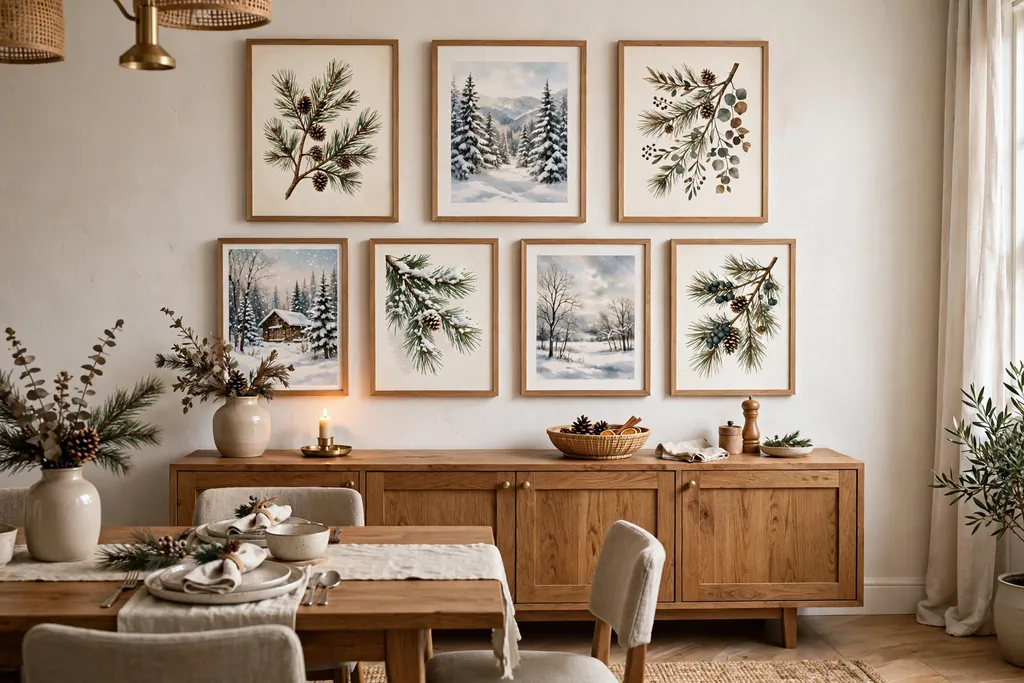
Swap two or three prints in the dining room gallery wall for festive prints, such as pine branch studies, winter landscape prints, or simple star and tree shapes in the room palette. A print swap changes the room for the season without new furniture or wall fixings, since the frames stay in place, and it suits rooms where a wreath would crowd the sideboard wall. Choose prints that share one background tone, so the wall still reads as one group.
Hang the festive prints at the same height as the prints they replace, and keep the rest of the gallery unchanged, so the swap looks planned. If the gallery uses matching frames, keep them, and change only the art inside. Store the swapped prints flat with tissue between them, and note which frame each one came from, so the room returns to normal in January without guesswork.
10. A Garland Swag on the Dining Room Mirror
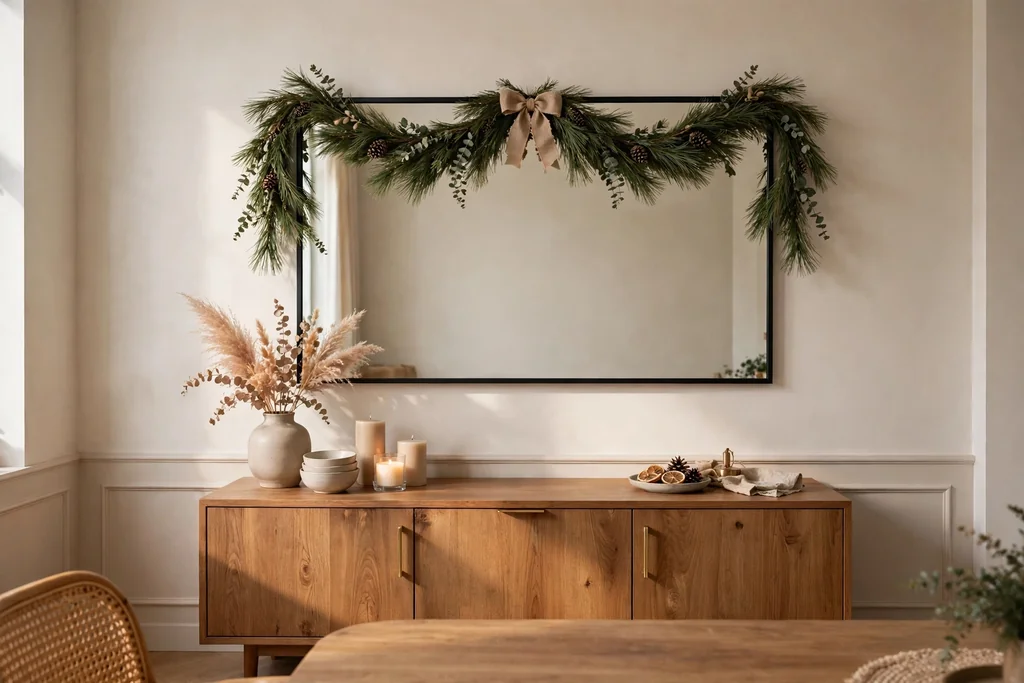
Drape a pine garland swag across the top of the dining room mirror, with the ends hanging down the sides a short way, and add a small bow at the center top. A mirror swag doubles the greenery in reflection and suits a dining room where the mirror already hangs above the sideboard or on a main wall. Keep the swag slim, so it does not cover the mirror glass, and keep the hanging ends clear of candles below.
Fix the swag with removable clips on the frame, not on the glass, so the mirror surface stays clean and unmarked. Check the swag from the table, since the reflection will show its back side to seated guests, and trim any loose stems that stick out. Dust the mirror before hanging, and wipe the glass after the season, since pine resin and dust can leave a film near the frame.
11. A Slim Tree in the Dining Room Corner
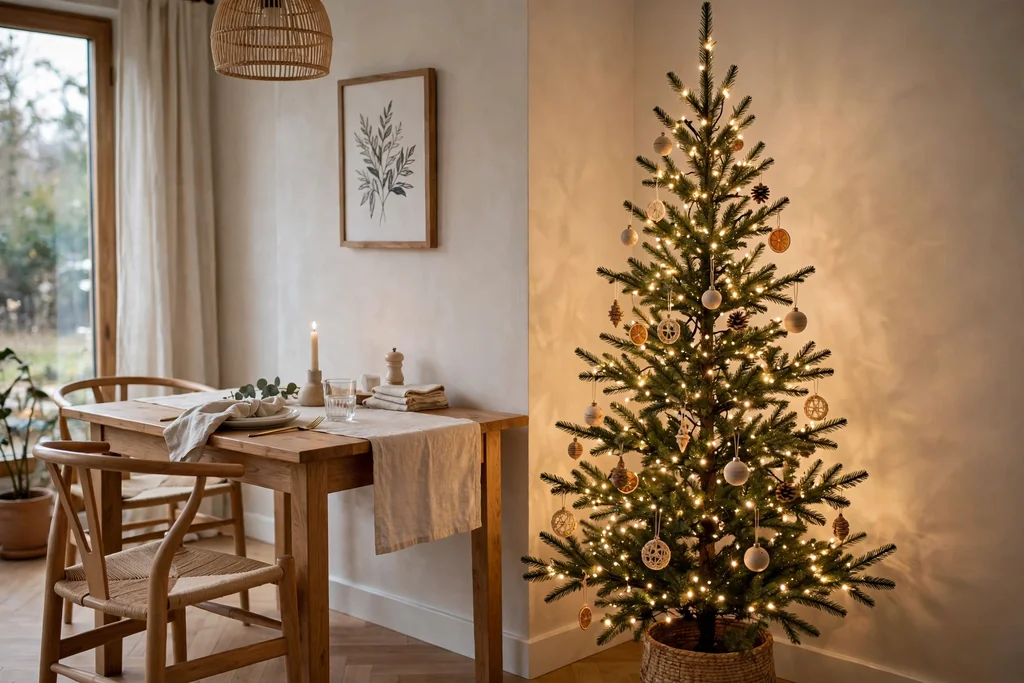
Place a slim Christmas tree in a dining room corner, clear of the table chairs and the walkway to the kitchen, with a small base that fits the corner. A slim tree gives the dining room its own tree without crowding the table or blocking a doorway, and it suits rooms where the main tree stands elsewhere in the home. Dress it simply, with warm lights, one garland, and a small set of ornaments in the room palette.
Keep the tree clear of curtains, radiators, and serving paths, and use battery lights if the corner sits near fabric or paper decor. Water a fresh tree away from the table, on a tray that catches spills, and check the stand daily. At the end of the season, remove ornaments before moving the tree, and store the slim tree in its bag, upright, so its branches keep their shape.
12. A Festive Drinks Station on the Bar Cart
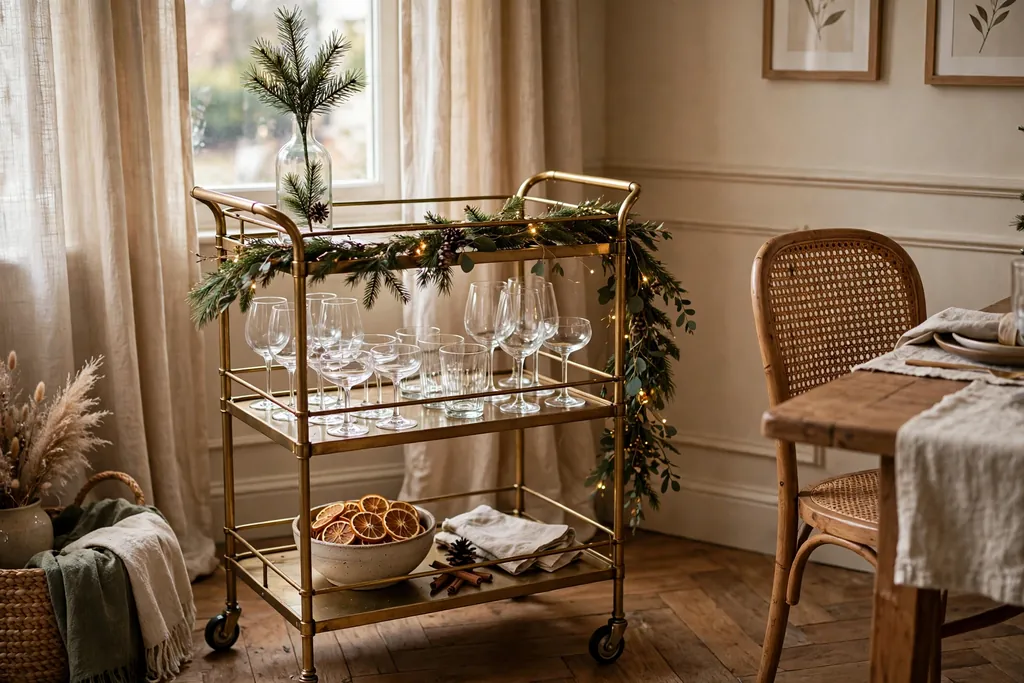
Dress the bar cart as a festive drinks station, with a small pine sprig in a bottle, a bowl of dried orange slices, and glasses grouped by type on the tiers. A drinks station moves festive detail off the table and gives guests a clear place to help themselves, which suits gatherings where the table is already full. Keep the cart against a wall, clear of the main walkway, and keep heavy bottles on the lowest tier.
Wipe the cart tiers before setting it out, and keep the top tier to drinks and glasses only, so the cart stays usable. Use a small tray to group garnishes and napkins, and keep the pine sprig clear of open bottles. Roll the cart back to its usual spot after the gathering, and wash glasses before returning them to the cupboard, so the cart is ready for daily use.
13. Hutch Shelves Styled with Greenery and Ornaments

Style the hutch shelves with short pine sprigs laid along the shelf edges, a few baubles grouped in twos, and one small candle holder per shelf, leaving room between groups. Hutch shelves add festive detail at eye level without touching the table, and they suit dining rooms where dishes already live behind glass. Keep the styling light, so plates and glasses stay easy to reach, and keep ornaments clear of shelf edges.
Dust the shelves before styling, and place greenery behind the shelf front edge, so stems do not fall when doors open. Use battery candles on hutch shelves, since the space is enclosed and near wood, and keep real flames out of the hutch. After the season, return dishes to their usual spots first, then remove the greenery, so the hutch stays tidy through the changeover.
14. Ribbon and Pine Curtain Tiebacks
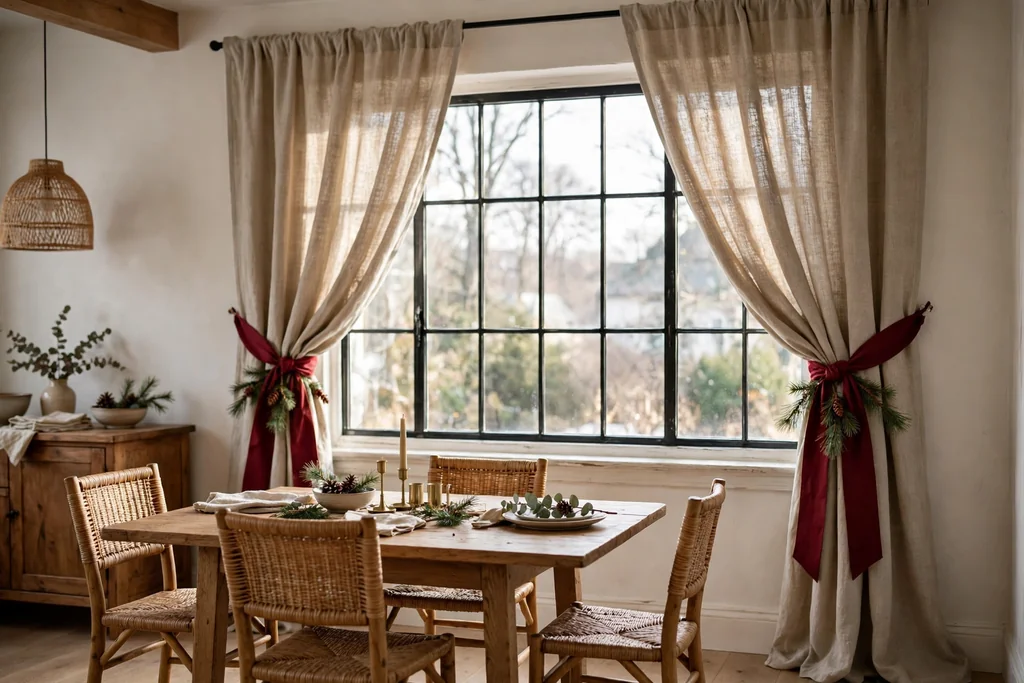
Replace everyday curtain tiebacks with wide ribbon tiebacks in the room palette, with a short pine sprig tucked under each knot. Ribbon tiebacks add a small festive note at window height and suit dining rooms where the windows already carry garlands, since they repeat the same materials at a smaller scale. Choose ribbon wide enough to hold the curtain weight, and tie it in a simple bow or knot that can be undone for washing.
Keep the pine sprigs short, so they do not brush the glass or catch on the curtain hem, and use faux sprigs if fresh pine sheds onto light curtains. Tie both sides to the same length, so the curtains hang evenly, and check the tiebacks after the curtains are drawn, since a loose knot can slip. Store the ribbons rolled, not folded, so they do not crease before next year.
15. A Layered Rug Under the Dining Table
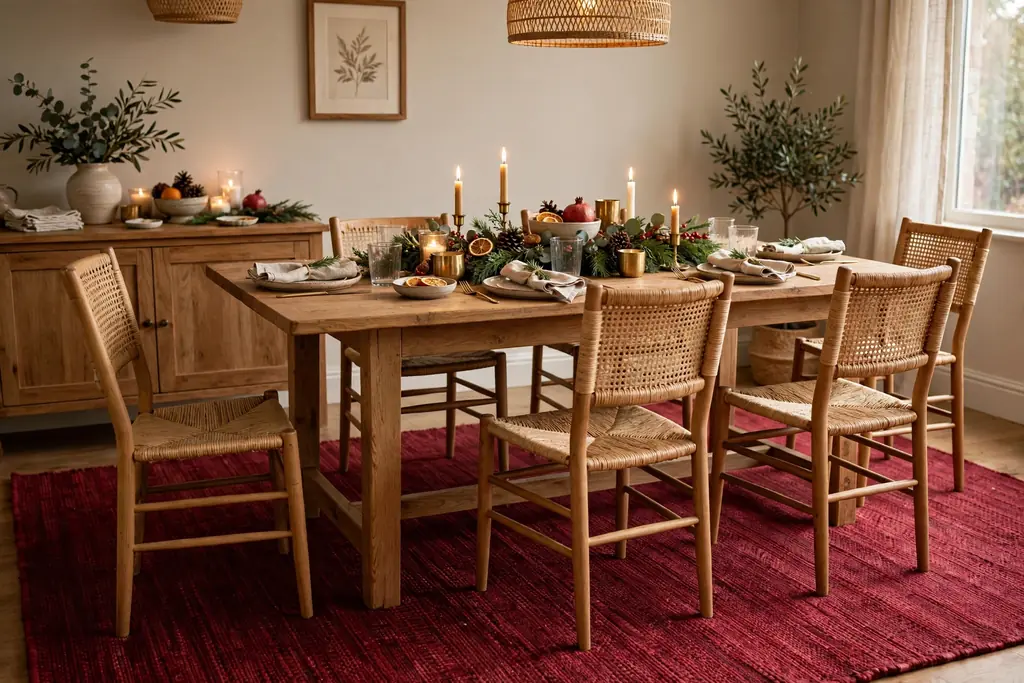
Layer a flat weave rug in a festive tone, such as deep red or muted green, under the dining table, over the everyday rug or floor, with the edges clear of chair legs. A layered rug grounds the table group and adds seasonal color at floor level, which suits rooms where wall space is already full. Choose a rug large enough that chairs stay on it when pulled out, and use a non slip pad beneath it.
Vacuum the rug before the season, and keep it clear of food spills by wiping marks at once, since dining rugs see daily use. If the rug is light in color, use it only for gatherings and return to the everyday rug for daily meals. Roll the rug for storage, rather than folding it, so the weave does not crease unevenly.
16. Candle Sconces Dressed with Pine on the Walls
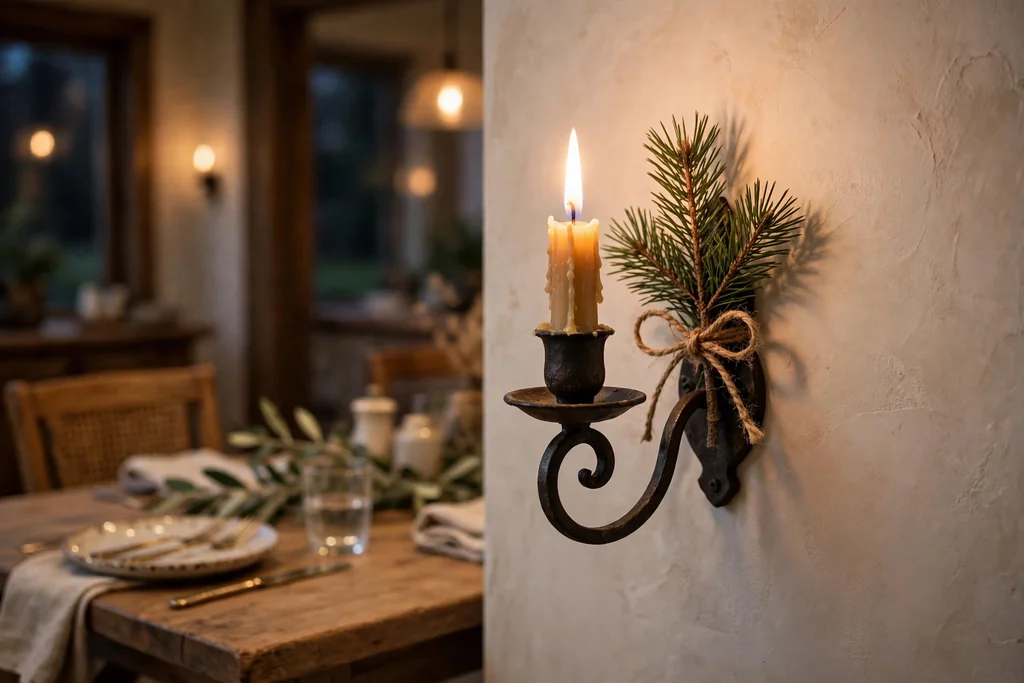
Dress wall candle sconces with a short pine sprig tucked behind each holder, tied with twine, so the wall gains festive detail at light height. Sconce dressing suits dining rooms with bare wall stretches between windows or art, and it adds warm light without a new fitting. Use battery candles in the sconces, since pine sits close to the flame position, and keep the sprigs short and clear of the candle cup.
Check each sconce from the table, since the sprigs will be seen from below, and trim any stem that sticks out sideways. Replace fresh sprigs when they dry and shed, and dust faux sprigs before hanging. Keep the sconce dressing the same on both sides of the room, so the walls look balanced rather than one sided.
17. A Swag Garland Along the Picture Rail
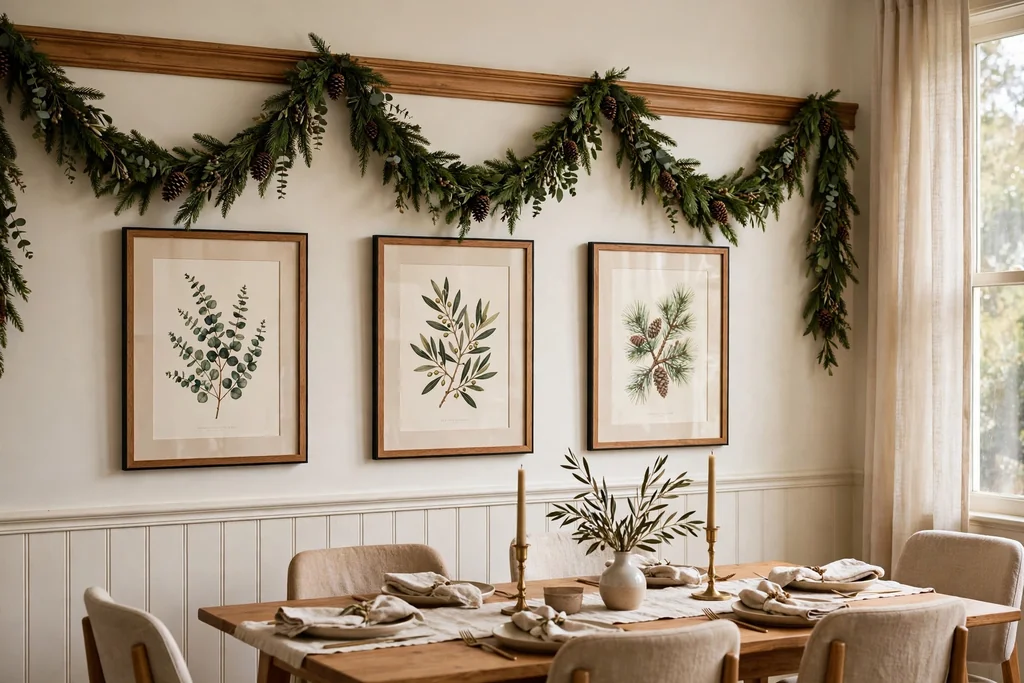
Hang a swag garland along the dining room picture rail, with the garland dipping gently between hooks and small pinecones tucked into the dips. A picture rail swag adds festive detail high on the wall, clear of the table and chairs, and it suits rooms with a rail already in place. Keep the swags even in depth, so the line reads as one calm curve rather than a series of uneven loops.
Fix the garland to the rail with clips or twine, not nails, and check that it does not pull pictures out of line. Keep the garland clear of ceiling lights and curtain tops, and use a light garland, since a heavy one can strain the rail fixings. At the end of the season, lift the garland off in one piece where possible, so the rail and pictures stay undisturbed.
18. A Festive Throw on the Dining Bench
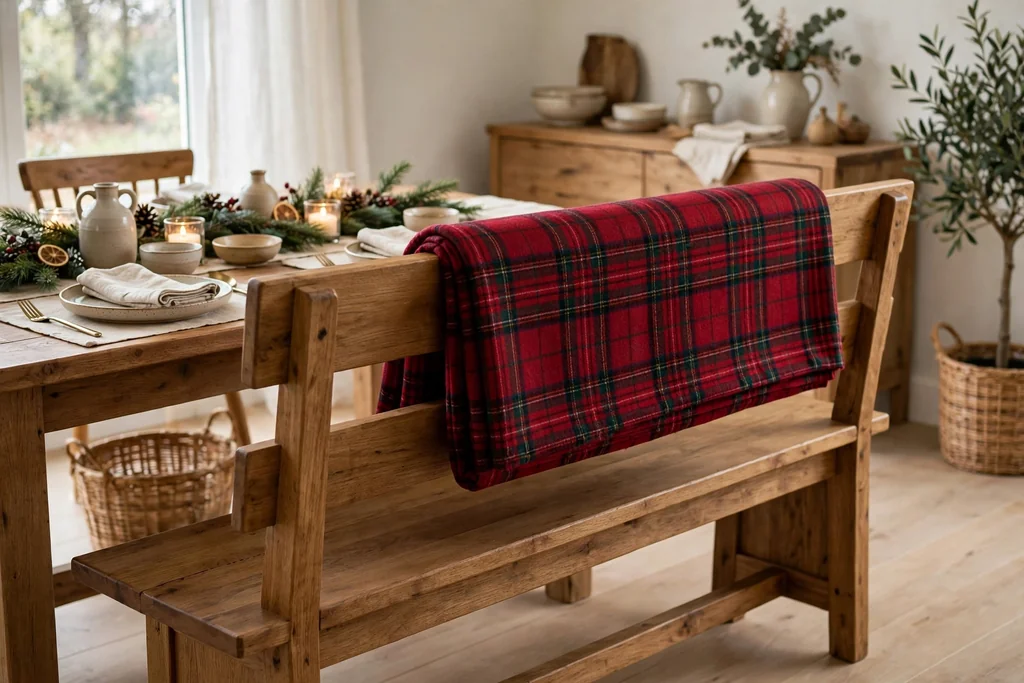
Drape a festive throw over the back of the dining bench, folded to a neat width, in plaid or deep red wool, with the ends hanging evenly. A bench throw adds color and warmth at seat level and suits dining rooms with bench seating, where chair back wreaths do not fit. Keep the throw folded, not bunched, so the bench stays usable, and choose a washable fabric, since bench throws see daily contact.
Shake the throw outdoors before draping it, and wash it before the season, so it smells fresh for guests. If the bench sits near a radiator, keep the throw clear of the heat, and fold it away during meals if it slips onto plates. Store the throw washed and folded in a dry box after the season, so it is ready for the next year.
19. Stockings on a Wall Peg Rail

Hang stockings on a wall peg rail in the dining room, spaced evenly, with one small pine sprig tucked behind each cuff. A peg rail gives stockings a home in a dining room with no mantel, and it turns a plain wall into a festive display that guests see as they sit down. Use stockings in the room palette, and keep the rail fixings rated for the weight, since filled stockings grow heavy.
Hang the stockings at a height clear of chair backs and serving paths, so they do not snag clothing or block movement. Keep the stockings clear of candles and radiators, and use light fillers until the main celebration, so the rail stays secure. Take stockings down by the cuff, not by the toe, to avoid stretching the knit, and store them flat after the season.
20. A Hanging Advent Calendar on the Wall
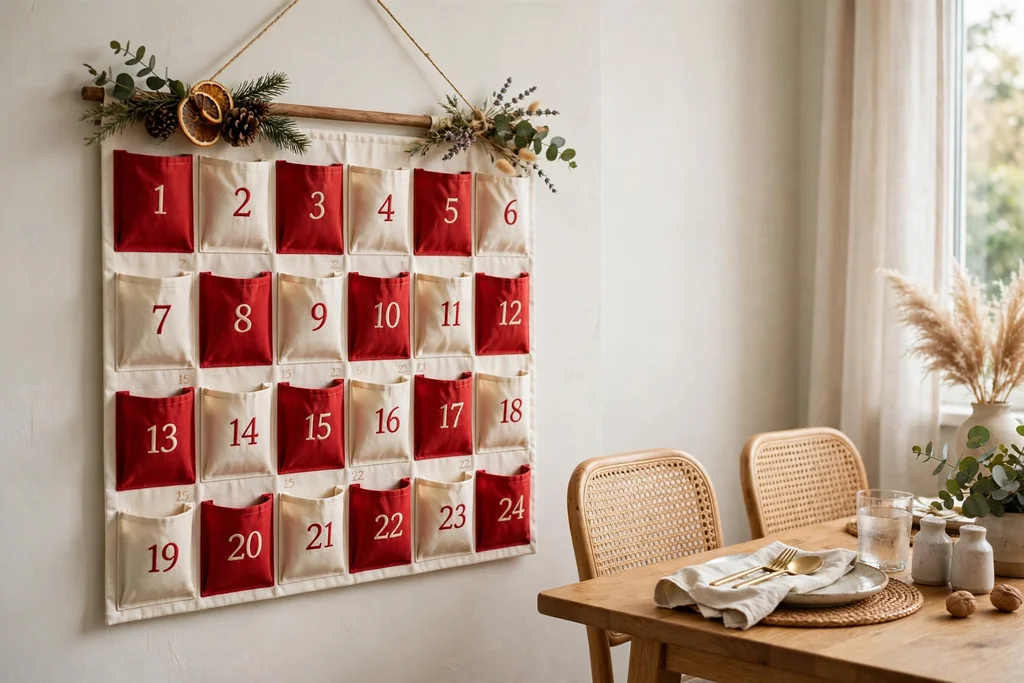
Hang a fabric advent calendar on a dining room wall, with pockets or small pouches in the room palette, and a simple hook or rail at the top. An advent calendar adds a daily festive note through December and suits a dining room used every day, since guests and family see it at meals. Fill the pockets with small notes, dried fruit, or tiny ornaments, and keep the calendar clear of candles and steam from the kitchen.
Hang the calendar flat against the wall, with the bottom edge clear of chair backs, so pockets open without catching. Check the fixings, since a full calendar weighs more than an empty one, and refill the pockets in the evening, so each morning starts with a fresh pocket. Fold the calendar flat for storage, with the pockets empty and clean, so it holds its shape for another year.
21. Tall Floor Lanterns Flanking the Sideboard
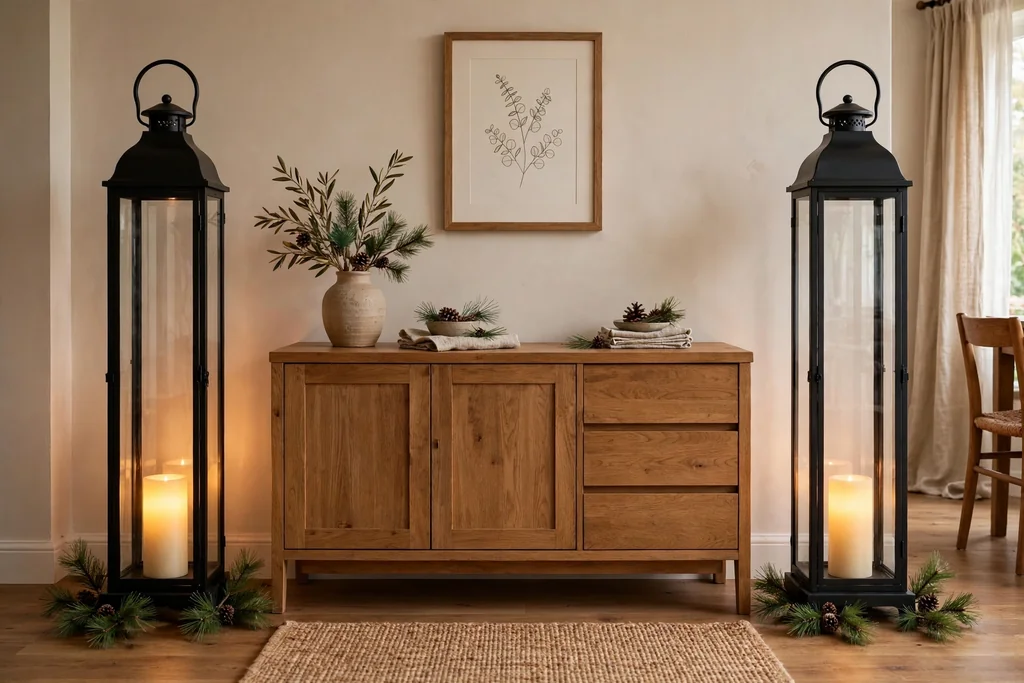
Set two tall floor lanterns on either side of the sideboard, with battery candles inside and a short pine sprig at the base of each. Floor lanterns frame the sideboard and add warm light at floor level, which suits dining rooms where the sideboard wall already carries a wreath. Keep the lanterns clear of chair paths and serving routes, so they cannot be knocked, and keep the glass clean, so the light shows clearly.
Choose lanterns of equal height and finish, so the pair reads as one frame, and set them on a stable floor, clear of rug edges that could tip them. Use battery candles with a timer, so the lanterns glow through the meal and switch off after. Wipe the glass after the season, and store the lanterns upright with the candles removed, so the battery packs do not leak in storage.
Conclusion
Christmas decor in dining room spaces works best when the whole room carries the season, not just the table. Start with one anchor, such as a sideboard wreath or a window garland, then add chair, wall, and floor touches in the same palette and greenery. Keep the table clear for meals, keep flames away from fabric and dried greenery, and step back from the doorway to check the room as guests will see it. Choose the ideas that fit your room and your routine, and leave the rest for another year.
FAQs
What is Christmas decor in dining room styling beyond the table?
Christmas decor in dining room styling beyond the table means decorating the walls, windows, chairs, sideboard, lighting, and corners, so the room feels festive while the table stays clear for meals. It covers garlands, wreaths, lanterns, chair dressing, and sideboard styling, rather than a single table centerpiece.
How do I decorate a dining room for Christmas without crowding the table?
Start with one wall or window anchor, such as a wreath above the sideboard or a garland around the window, then add small touches on chairs, sills, and the sideboard. Keep the table to a low centerpiece or a simple runner, and leave room at each place for plates, glasses, and serving dishes.
Where should a wreath go in a dining room?
A wreath works above the sideboard, on a main wall, or on the inside of the dining room door, centered and clear of candles and chair backs. Above the sideboard is the most common spot, since it gives the room a focal point that guests see from the table.
How do I hang a garland in a dining room without damaging walls?
Use removable clips, rail hooks, or twine tied to existing fixings, such as a picture rail or curtain rod, rather than nails in plaster. Check the weight rating of each clip, keep the garland clear of door swings and curtain fabric, and remove clips slowly at the end of the season to protect paint.
Are battery candles safe near pine garlands and curtains?
Battery candles are the safer choice near pine garlands, curtains, and dried greenery, since they give warm light without a flame. Keep real candles in glass holders, clear of fabric and greenery, and never leave them burning unattended, especially in a room used in the evening.
How do I keep dining room Christmas decor from clashing with everyday furniture?
Hold the palette to two or three colors that already suit the room, repeat the same greenery through walls, chairs, and the sideboard, and change only one layer at a time, such as cushions, prints, or tiebacks. Step back from the doorway after each change, and remove one item from any spot that looks full before adding another.