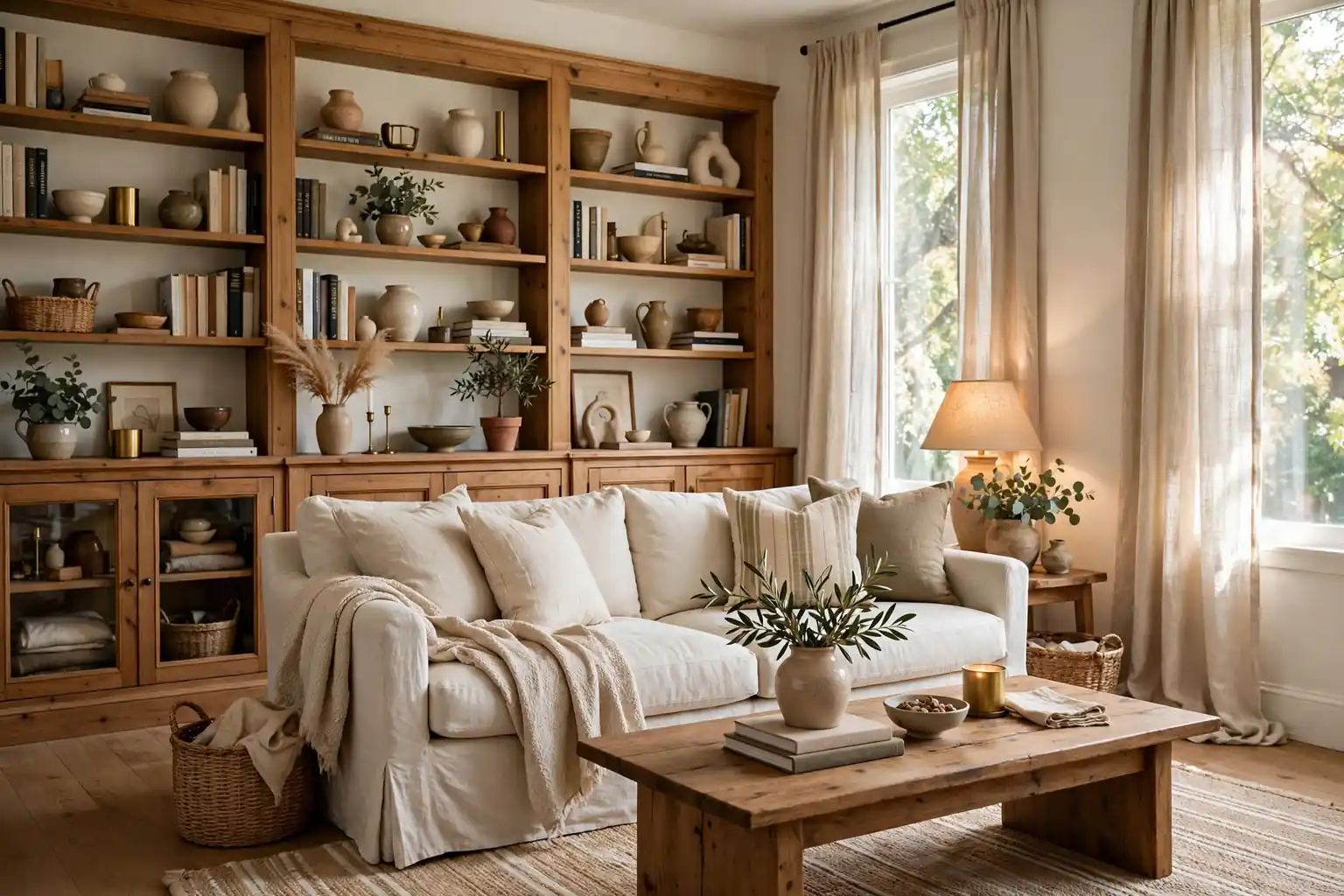
A Nancy Meyers living room feels collected and easy to live in. It pairs a slipcovered sofa with wood, linen, books, and soft lamp light, in a calm palette of cream, white, and pale blue. The 19 ideas below show how to layer seating, storage, art, and light so the room looks gathered over time, not bought in one trip.
Start with the largest pieces first: the sofa, the rug, and the main seating layout. Then add layers that make the room feel used, such as books on the coffee table, a lamp that is switched on in the evening, and a basket of throws by the sofa. Keep the palette calm, repeat wood and linen in several places, and leave clear space for walking, sitting, and setting down a cup. For a related warm room built on the same base, see farmhouse decor ideas for living room.
Key Takeaways
- Start with a slipcovered sofa, a warm wood piece, and a calm cream, white, and pale blue palette.
- Build the room in layers: seating, rugs, curtains, lighting, storage, art, and fresh greenery, in that order.
- Mix new and older pieces so the room reads as collected over time, not matched in one shopping trip.
- Repeat each material at least twice, such as linen on the sofa and curtains, or wood on the coffee table and mantel.
- Keep one clear focal point, usually the fireplace or the main sofa wall, and keep other surfaces calmer.
- Leave room for everyday life: clear seats, clear walkways, and a coffee table that still holds cups and books.
1. Slipcovered Sofa in Washed White Linen
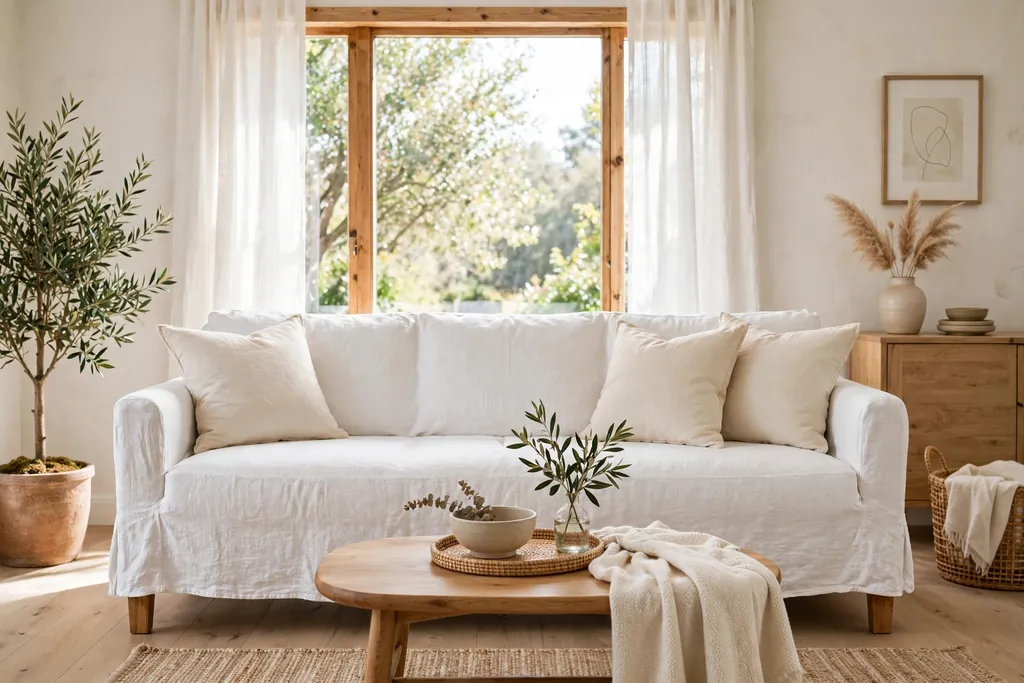
A slipcovered sofa in washed white or cream linen sets the tone for the whole room, because it looks soft from day one and invites people to sit down. Choose a loose cover with a skirt that just brushes the floor, and let the relaxed wrinkles stay, since a perfectly pressed slipcover can look stiff beside wood and books. The pale sofa also gives every other layer, from pillows to art, a calm base to sit against.
Keep the sofa cushions plump by flipping and rotating them each week, and wash the cover on a gentle cycle when it needs it. If white feels risky in a busy house, choose a warm cream or light oatmeal cover instead, and keep a spare throw over the seat for everyday use. Pair the sofa with wood legs or a low wood frame showing below the skirt, so the soft linen has a solid base.
2. Paired Armchairs Facing the Fireplace
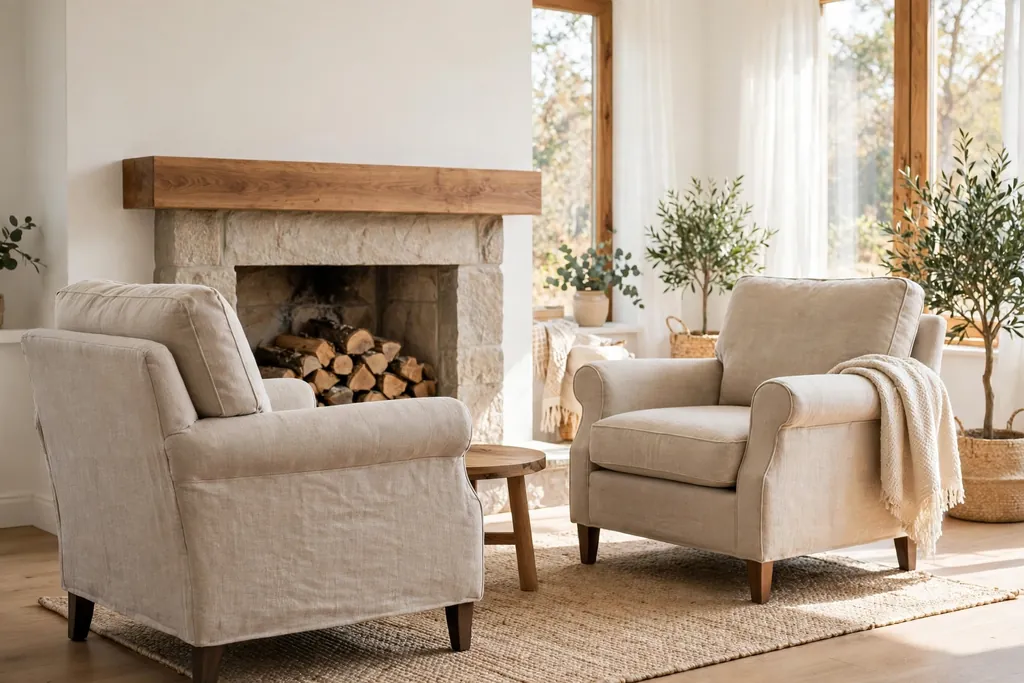
Two armchairs facing each other across a fireplace, or angled toward it, give a living room a clear conversation layout. Choose chairs with rolled arms and linen or cotton covers in cream or a soft stripe, and leave enough space between them for a small table or an ottoman. The pair reads as planned and balanced, even when the rest of the room mixes older and newer pieces.
Set the chairs far enough from the firebox to be safe and comfortable, and close enough that people can talk without raising their voices. Add a small side table between a chair and the sofa for a cup and a book, and keep the chair seats clear, so the pair stays an invitation rather than a place for folded laundry. If the room has no fireplace, face the pair across a coffee table toward the sofa instead.
3. Reading Chaise by a Bright Window
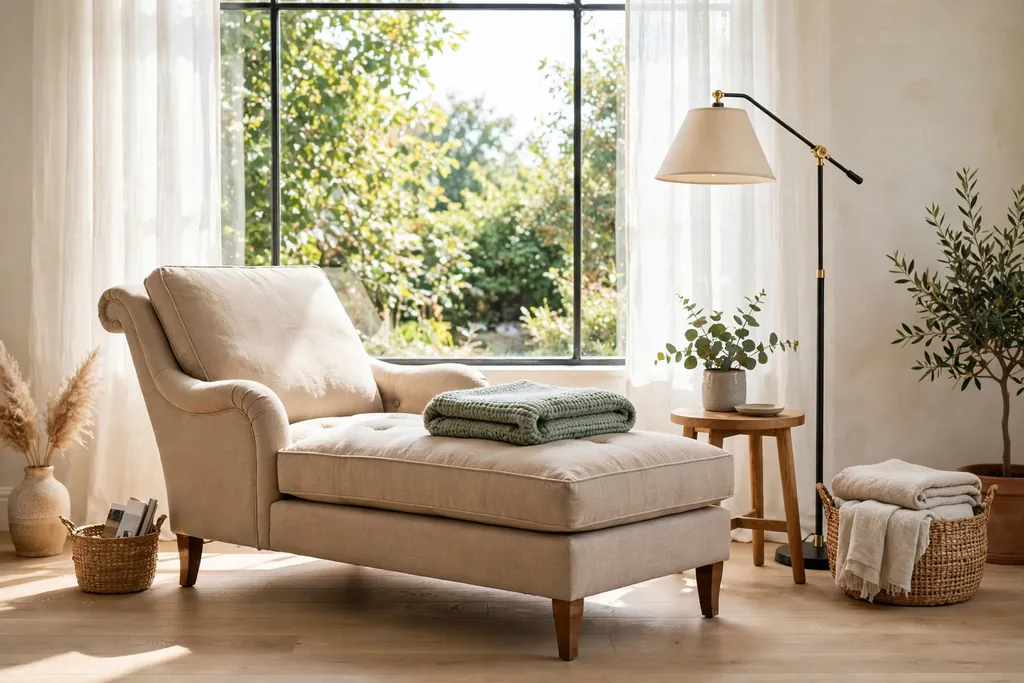
A chaise or a deep lounge chair by a bright window gives the room a quiet corner for reading, with daylight during the day and a floor lamp after dark. Choose a chair deep enough to tuck your feet up, with a firm seat cushion and a small pillow for lower back support. Place a small side table beside it for a book, a cup, and reading glasses, so the corner works without a trip across the room.
Keep the window dressing light at this spot, such as a sheer panel or a linen curtain pulled to one side, so daylight still reaches the chair. Add a throw folded over the chaise arm for cool evenings, and a small basket below the side table for the current book and a magazine. If floor space is tight, a single armchair with an ottoman gives the same long sit in a smaller footprint.
4. Built-In Bookcases Around the Fireplace
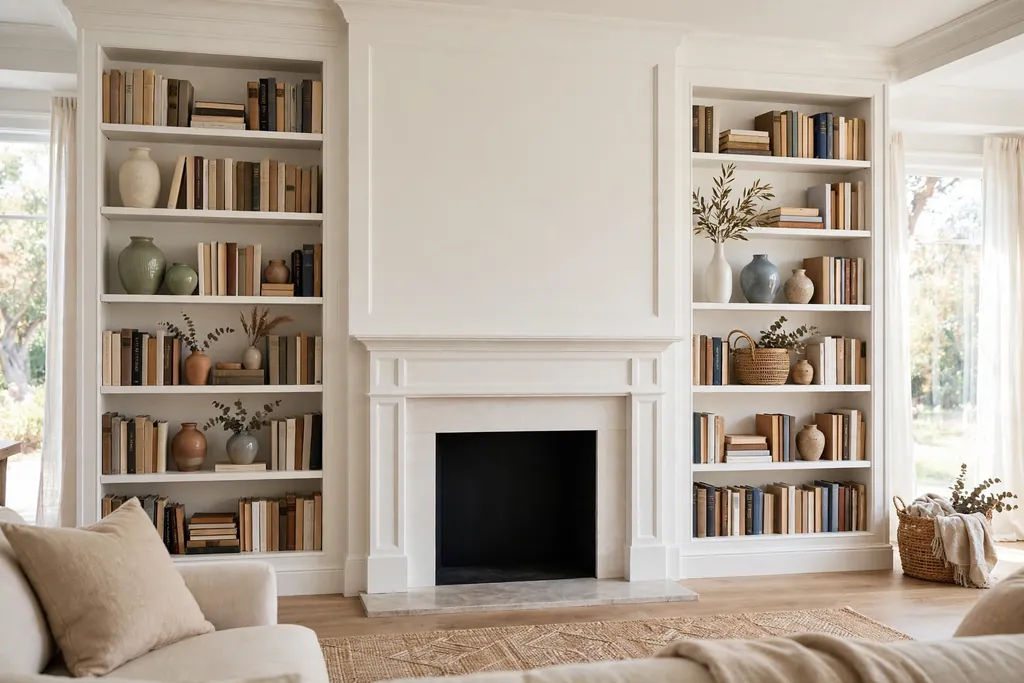
Built-in bookcases on either side of a fireplace give a living room its collected backbone, because books, art, and a few objects fill the wall in a way that looks gathered over years. Use painted wood shelves in white or cream, and mix upright books with short stacks laid flat, leaving some open space on each shelf. The fireplace stays the center, while the shelves frame it without competing.
Style each shelf with a mix of heights: a tall vase or candlestick, a stack of books, and one smaller object, with clear space between groups. Keep the palette close to the room, with cream spines, wood, and one soft blue or green accent, and leave one shelf partly empty so the display can change. If full built-ins are not possible, two tall bookcases in the same finish, placed tight to the fireplace wall, give a similar framed look.
5. Round Coffee Table with Books and a Low Bowl
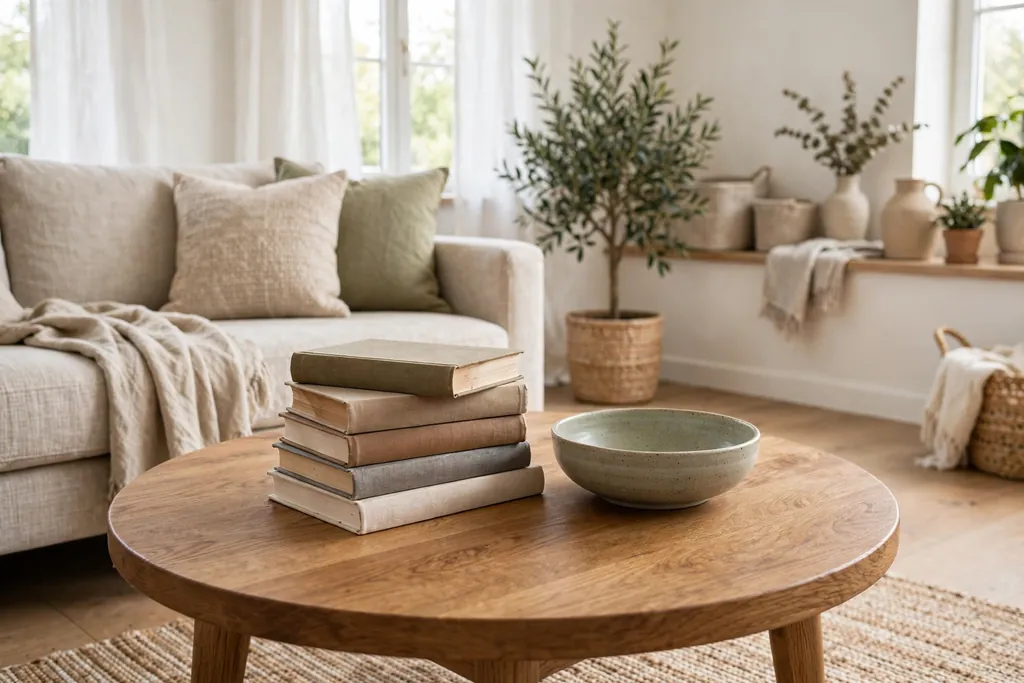
A round coffee table suits a Nancy Meyers living room because its soft shape keeps walkways easy and its top stays simple to style. Choose wood or a wood top with a simple base, large enough to hold books and cups but small enough to walk around without turning sideways. A round table also links a sofa and two chairs without sharp corners in a busy family room.
Style the top with restraint: a stack of two or three large books, a low bowl or tray for remotes, and one small vase of fresh stems. Leave at least half the top clear, so cups, a plate, and a book can all fit at once. Wipe wood tops with a dry cloth for dust and a damp cloth for spills, and use coasters under hot drinks so the finish stays even over time.
6. Layered Jute and Wool Rugs
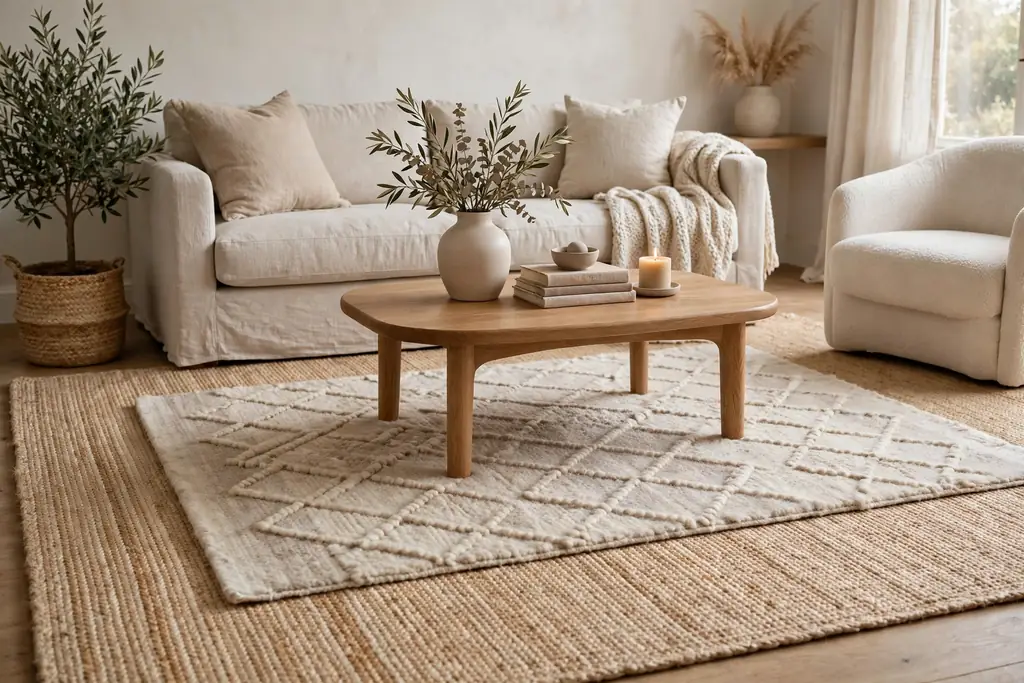
Layering a smaller wool rug over a larger jute or sisal rug warms the floor and marks the seating area without a loud pattern. Center the base rug under the sofa and chairs, with the front legs of the seating on it, then center the top rug under the coffee table, leaving an even border of the base rug showing. The natural fiber base adds texture, while the wool top adds softness underfoot.
Use a rug pad between the layers if they slide, and vacuum both layers weekly so dirt does not build up between them. Choose a top rug in cream, soft blue, or a quiet stripe that repeats a color already in the pillows or art, and keep the pattern scale simple, since two strong patterns on the floor can crowd the room. In a small room, one wool rug alone is enough, since two layers need room to show their edges.
7. Floor-Length Linen Drapes
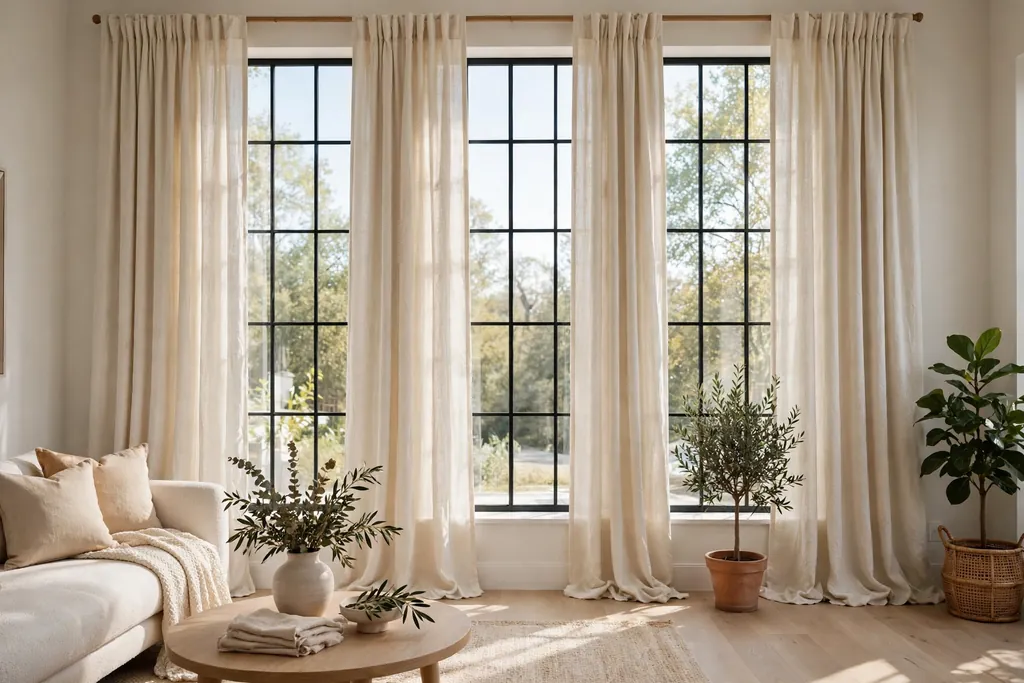
Floor-length linen drapes soften tall windows and make a living room feel finished, even when the rest of the room stays simple. Hang the rod close to the ceiling and wider than the window frame, so the window looks taller and the drapes can stack clear of the glass. Choose natural white, cream, or pale blue linen, and let the panels fall to the floor with a small break rather than pooling, so they stay clean and easy to vacuum around.
Use rings with clips for a relaxed gathered look, and keep the drape color close to the sofa or rug so the window treatment links to the seating area. Wash linen drapes on a gentle cycle and hang them damp to reduce creases, and open them fully during the day, since this style depends on daylight to show the linen weave. For a related seasonal take on the same window, see fall living room decor.
8. Collected Gallery Wall in Mixed Frames
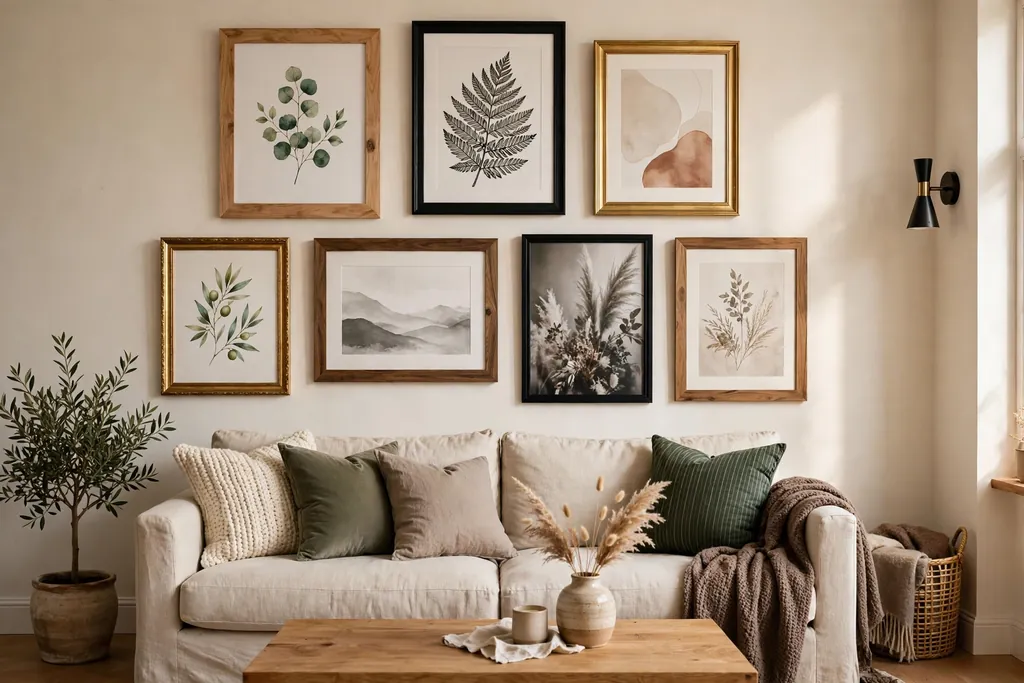
A gallery wall of art collected over time, in mixed wood, gold, and black frames, is the clearest way to get the collected look on one wall. Start with one larger piece at eye level from the sofa, then build around it with smaller landscapes, prints, and family photos, keeping a similar gap between frames. The mix of frames matters more than matching sizes, since varied frames read as gathered rather than bought as a set.
Lay the arrangement on the floor first, and take a photo before hanging, so the spacing stays even once frames go up. Keep the wall around the gallery simple, with no competing shelf or large mirror beside it, and check that heavy frames have secure fixings. If the wall is small, a group of three or five frames gives the same collected note without crowding the room.
9. Styled Wood Mantel with Candles and Greenery
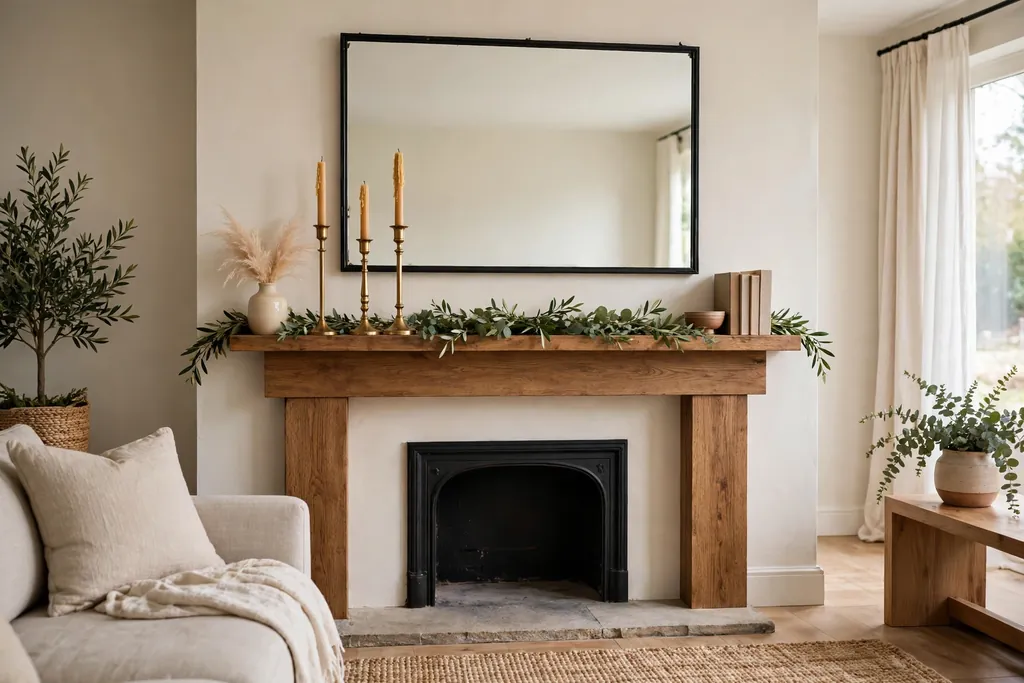
A wood mantel, whether a thick beam or a painted shelf, gives a living room a natural focal point even when the fireplace is rarely lit. Keep the styling simple: a large mirror or framed print above, a pair of candlesticks or vases at the ends, and one low row of greenery or a small garland in the middle. The wood itself carries most of the interest, so the objects on it can stay few and quiet.
Keep anything flammable clear of the firebox, and set candles on stable holders away from curtains and dried stems. Change one item by season, such as a vase of fresh stems in spring or pine in winter, so the mantel feels fresh without a full restyle. If the room has no fireplace, a wood shelf mounted at mantel height on a plain wall gives the same ledge for seasonal styling.
10. Large Upholstered Ottoman as a Coffee Table
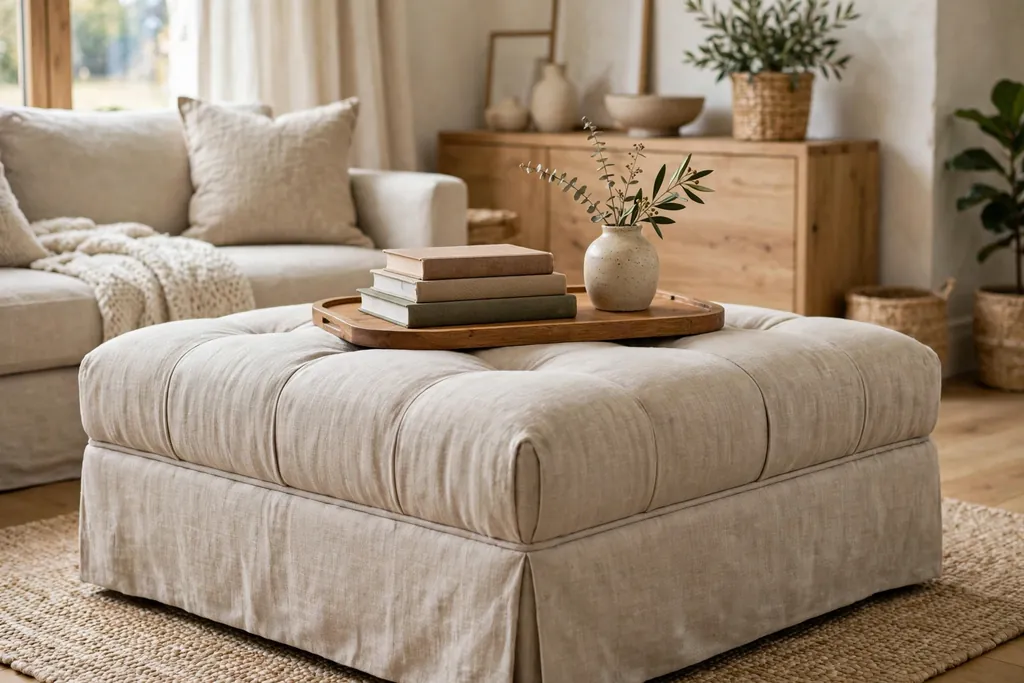
A large upholstered ottoman in place of a coffee table gives a living room a soft center that also works as extra seating. Choose a square or rectangular ottoman in linen or a quiet stripe, firm enough to hold a tray, and large enough to anchor the sofa without blocking walkways. The soft top suits a family room, since there are no hard corners, and a tray on top turns it into a stable surface for cups and books.
Set a wood or woven tray in the center of the ottoman, with a book and a small vase, and leave the rest of the top clear for feet at the end of the day. Keep the ottoman cover washable where possible, and vacuum it weekly, since a fabric top gathers dust faster than wood. If the room already has a wood coffee table, use a smaller ottoman at one end of the sofa instead, as a footrest and spare seat.
11. Woven Baskets for Throws and Everyday Storage
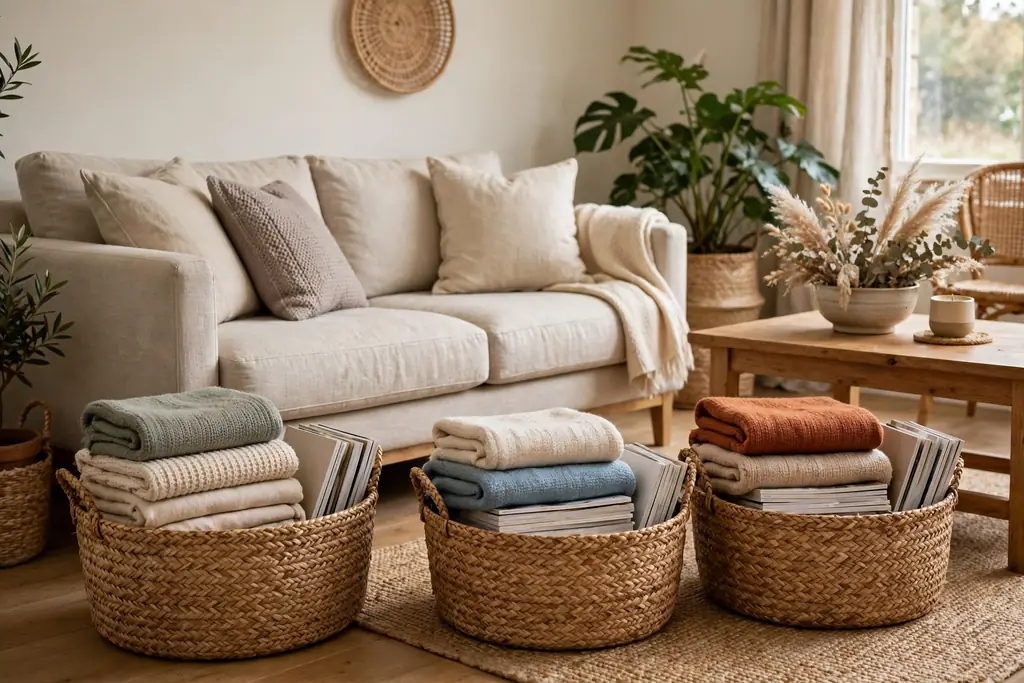
Woven baskets are the quiet storage hero of a collected living room, because they hold real clutter and still look like decor. Use a large seagrass basket for throws beside the sofa, a medium basket for magazines or toys, and a small basket on a shelf for remotes and chargers. The woven texture adds warmth beside wood and linen, and the natural color works with almost any calm palette.
Place baskets where the clutter actually happens: beside the sofa for throws, near the television for remotes, and by the door for shoes or bags. Choose baskets with handles for pieces that move often, and line baskets used for plants or damp items. Shake baskets outside monthly, since woven fibers gather dust and crumbs, and replace a basket when the weave starts to fray at the rim.
12. Blue and White Ceramics on Open Shelves
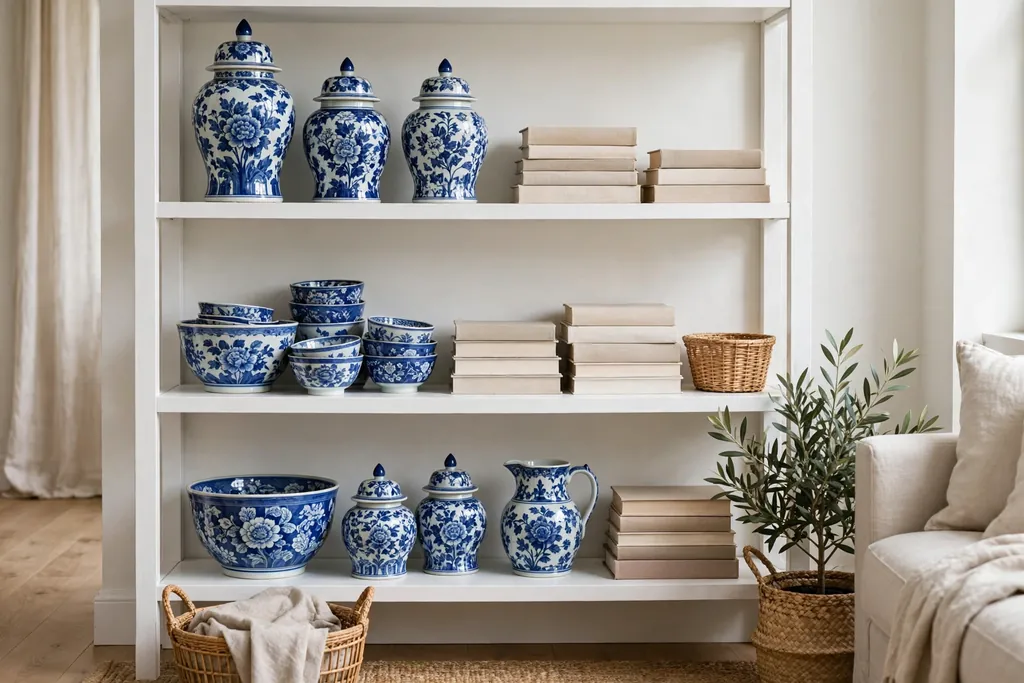
Blue and white ceramics, from ginger jars to simple bowls and vases, give a calm living room a classic accent that links to the pale blue in pillows and art. Group two or three pieces on one open shelf or on the mantel, with books beside them, rather than spreading single pieces across every surface. The blue reads clearly against white shelves and cream walls, without needing a bright color elsewhere.
Keep the group to one shelf or one surface, and vary heights, with one taller jar and one or two smaller bowls, so the group has a clear shape. Dust ceramics weekly, since open shelves gather dust, and keep them clear of walkways and chair backs where they could be knocked. If blue feels strong, use it only in ceramics and one pillow, and keep the rest of the room in cream, white, and wood.
13. Layered Lamps for Soft Evening Light
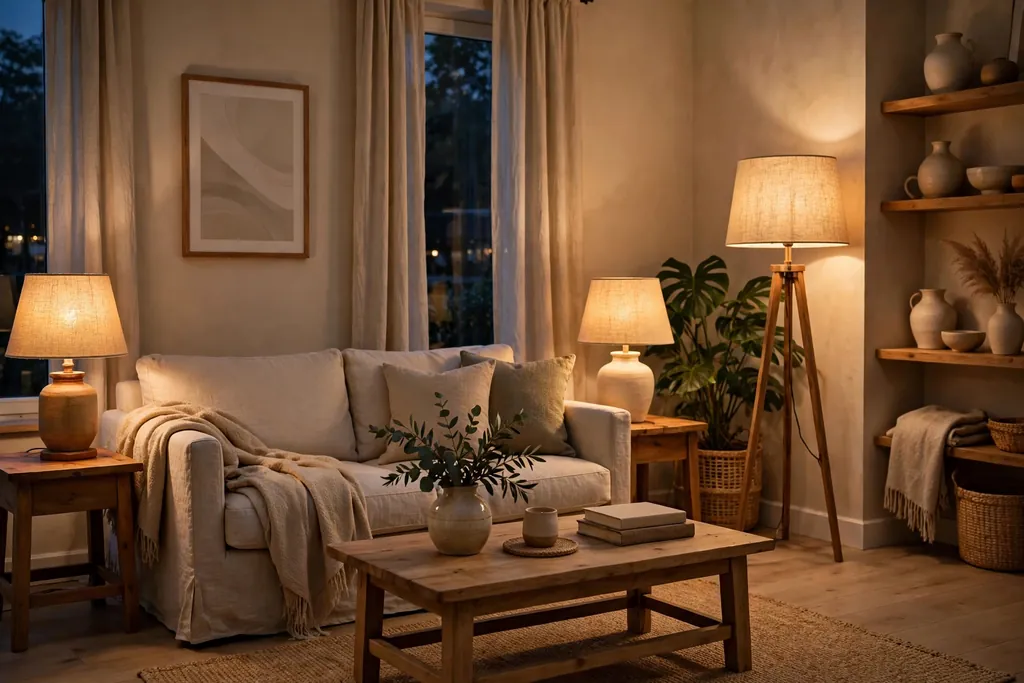
Soft evening light comes from lamps at seating height, not from one bright overhead fixture. Use a floor lamp beside a reading chair, table lamps on side tables at both ends of the sofa, and one small lamp on a console or shelf, all with warm white bulbs. The layers together make cream, wood, and linen look warmer after dark, and they let one person read while another watches television without harsh light.
Put lamps on dimmers where the wiring allows it, and keep switches within reach of the sofa so no one crosses a dark room. Use linen or cotton shades, which soften the bulb, and keep lamp bases clear of throws and paper. For a related warm evening room, see cozy Christmas living room ideas for how the same lamp layers work with seasonal greenery and candles kept clear of fabric.
14. Window Seat with Cushions and Hidden Storage
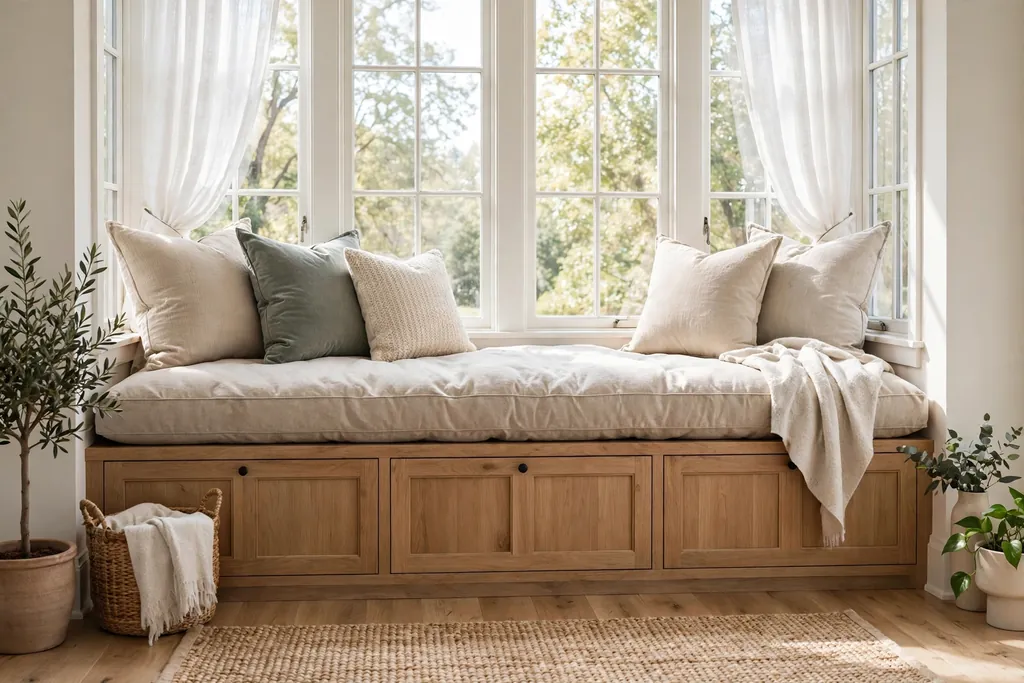
A window seat turns a wide window into a useful living room feature, with a deep cushion, back pillows, and storage below for books, games, or throws. Build or buy a low bench that fits the window width, add a firm cushion in a washable fabric, and layer two or three pillows against the window frame for back support. The seat gives the room a second place to sit, apart from the sofa, and it makes daylight the main feature of that corner.
Use hinged lids or drawers below the seat for storage, and keep the items inside in groups, such as books in one section and throws in another, so the seat stays easy to open. Keep the cushion color close to the sofa, and add a small side table at one end for a cup and a book. If a built seat is not possible, a low bench with baskets below, placed under a window, gives the same sit and storage in a simpler form.
15. Antique Wood Trunk as a Side Table
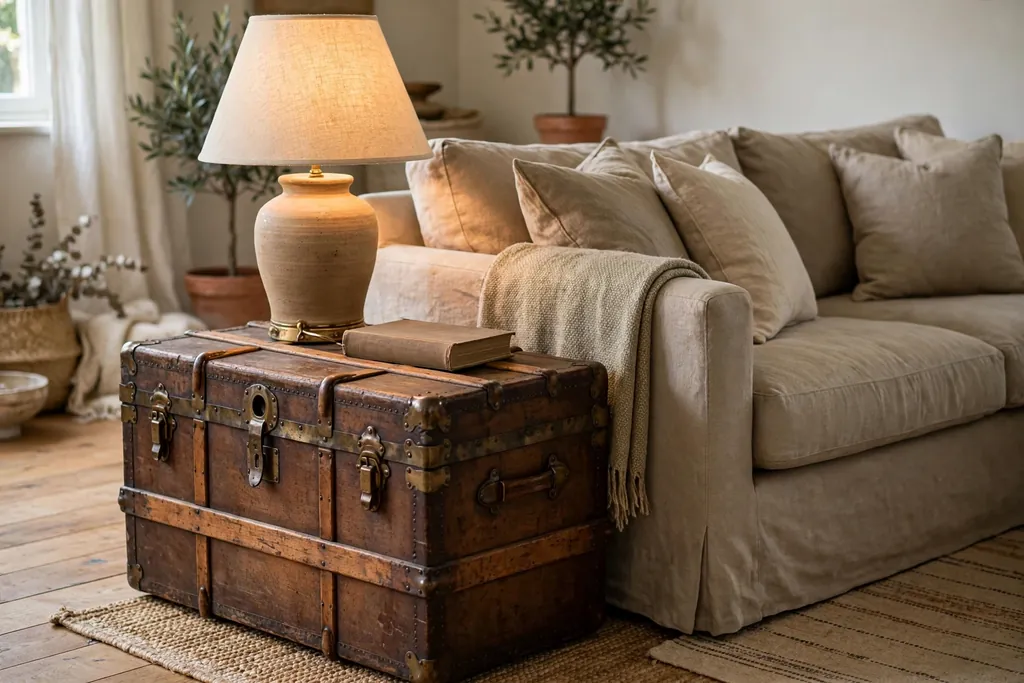
An antique or vintage style wood trunk beside a sofa or chair gives a living room a piece with age, storage, and a solid surface in one object. Choose a trunk with a flat lid, so it can hold a lamp, a book, and a cup, and check that the lid stays open safely and the hinges hold. The worn wood and old hardware add the sense of history that new pieces alone cannot copy, and they pair well with new linen because the contrast keeps the room from feeling like a showroom.
Keep the trunk top mostly clear, with a lamp at one end and one book or tray, and use the inside for throws, photo albums, or games. Wipe the wood with a dry cloth, and check older trunks for secure corners and handles before placing a heavy lamp on top. If a full trunk feels large, a smaller wood chest or a vintage suitcase stack beside a chair gives the same aged note in less floor space.
16. Fresh Flowers and Potted Greens on Side Tables
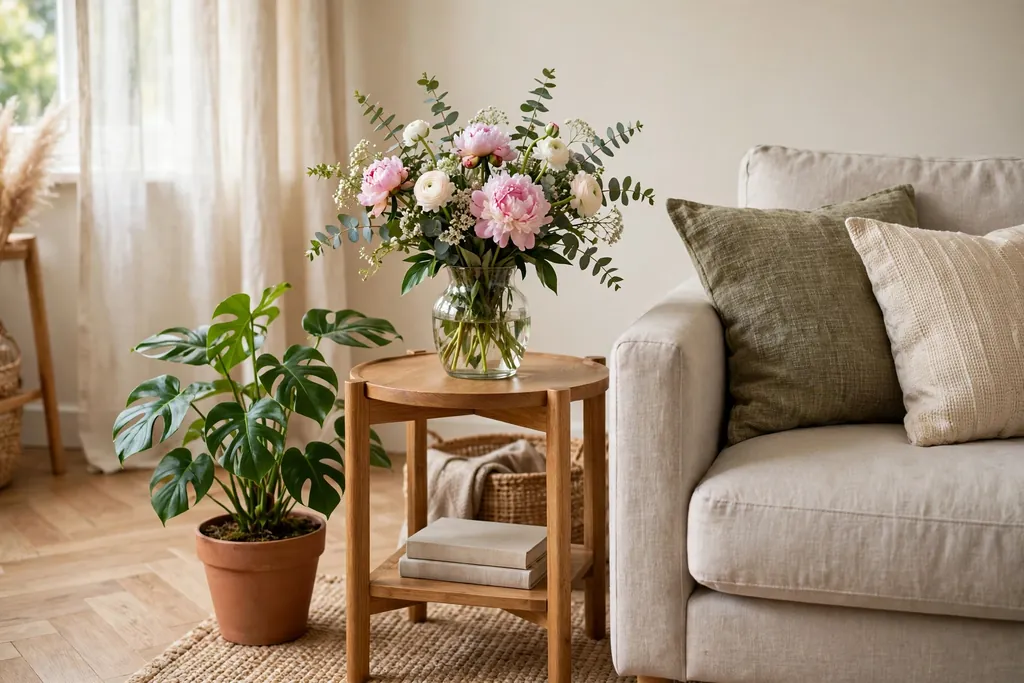
Fresh flowers in a simple vase and one or two potted greens on side tables make a collected living room feel alive without a large arrangement. Use a glass or white ceramic vase with short stems, such as roses, peonies in season, or garden greens, and set it on a side table where it can be seen from the sofa. A potted plant beside it, in a terracotta or cream pot, adds green that lasts far longer than cut stems.
Change the water every day or two, trim stems at an angle, and remove any stem that wilts, since one cloudy vase can spoil the group. Water potted plants before they dry out fully, and set each pot on a saucer so the table stays dry. Keep arrangements low on side tables, so they do not block conversation or the view across the room, and keep flowers clear of direct heat and strong sun.
17. Linen and Ticking Stripe Pillows in a Soft Palette
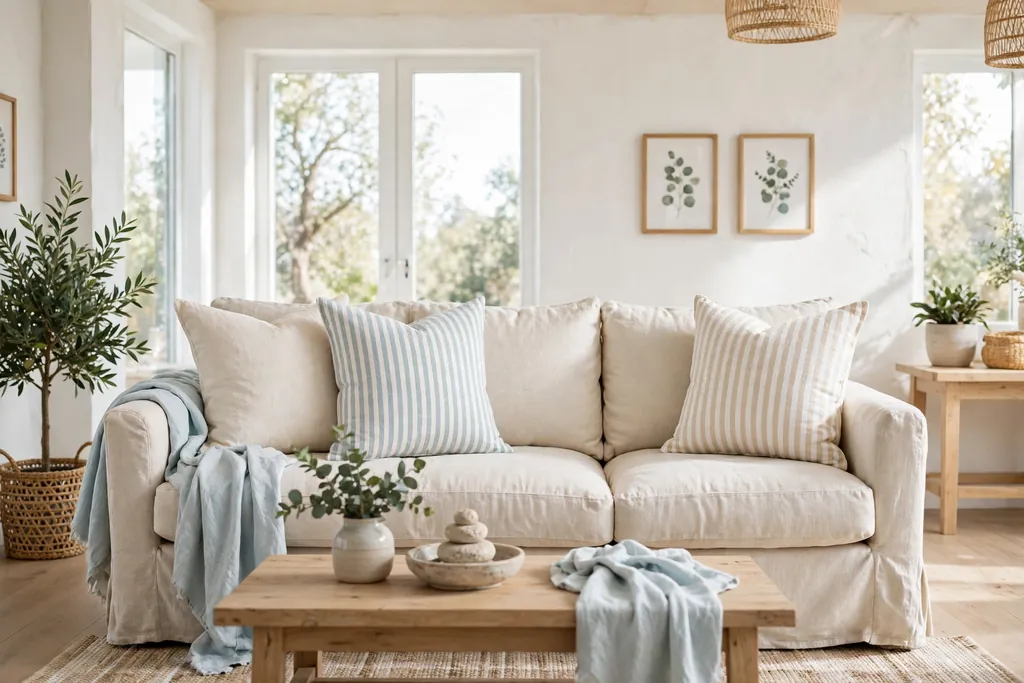
Pillows in linen and ticking stripe, in cream, white, pale blue, and soft grey, finish a slipcovered sofa without adding a loud pattern. Mix one plain linen, one ticking stripe, and one quiet check or floral, all in the same soft palette, and keep the count to what fits without a pile on the floor when someone sits down. The mix of textures matters more than bright color, since linen, cotton, and a light knit together read as layered and lived in.
Repeat one pillow color elsewhere in the room, such as a throw or a piece of art, so the sofa links to the rest of the space. Use zip covers so pillows can be washed, and fluff inserts daily, since linen covers show dents more than firmer fabrics. If the sofa already has a pattern, use plain linen pillows in one soft color only, so the room stays calm.
18. White Paneled Walls with Warm Wood Trim
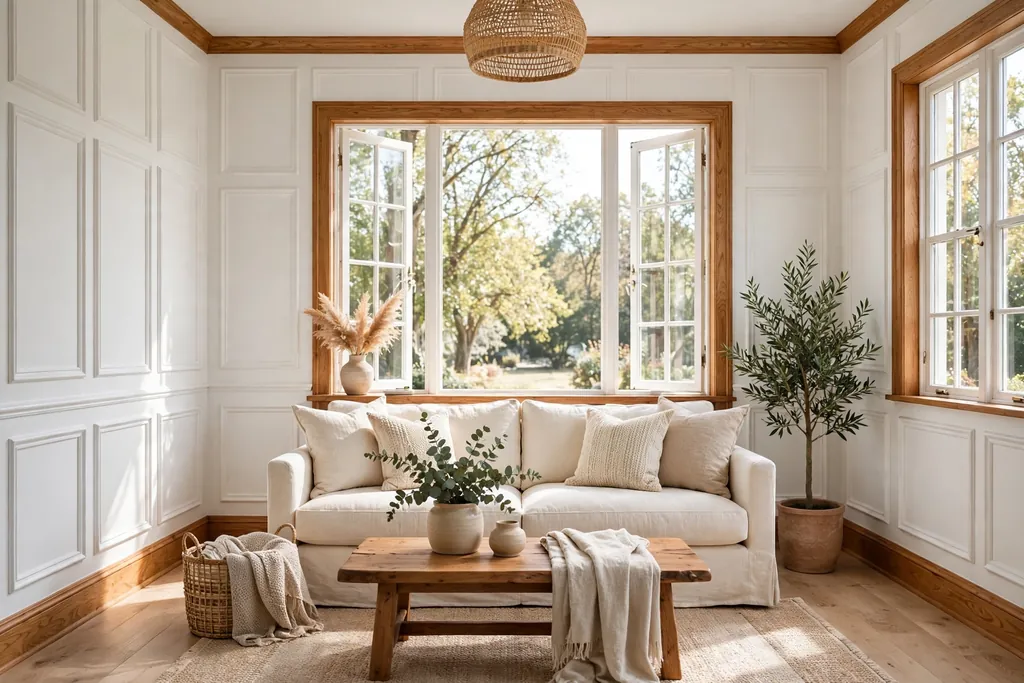
White paneled walls, from simple beadboard to wider planks, give a living room texture without a strong color or pattern, and they suit both older and newer houses. Paint the panels white or cream, and pair them with warm wood trim on doors, windows, or a mantel, so the white does not read as cold. The panels work best on one or two walls, such as the fireplace wall or the sofa wall, so the room keeps a calm balance.
Keep furniture and art simple against paneled walls, since the lines themselves add interest, and avoid hanging a large patterned piece directly over busy paneling. Dust panel grooves with a dry cloth, and touch up paint at scuffs near seating, where chairs and bags mark the wall. If full paneling is not possible, a single framed panel section behind the sofa gives a similar textured backdrop without a full wall build.
19. Console Table Behind the Sofa with Lamps and Books
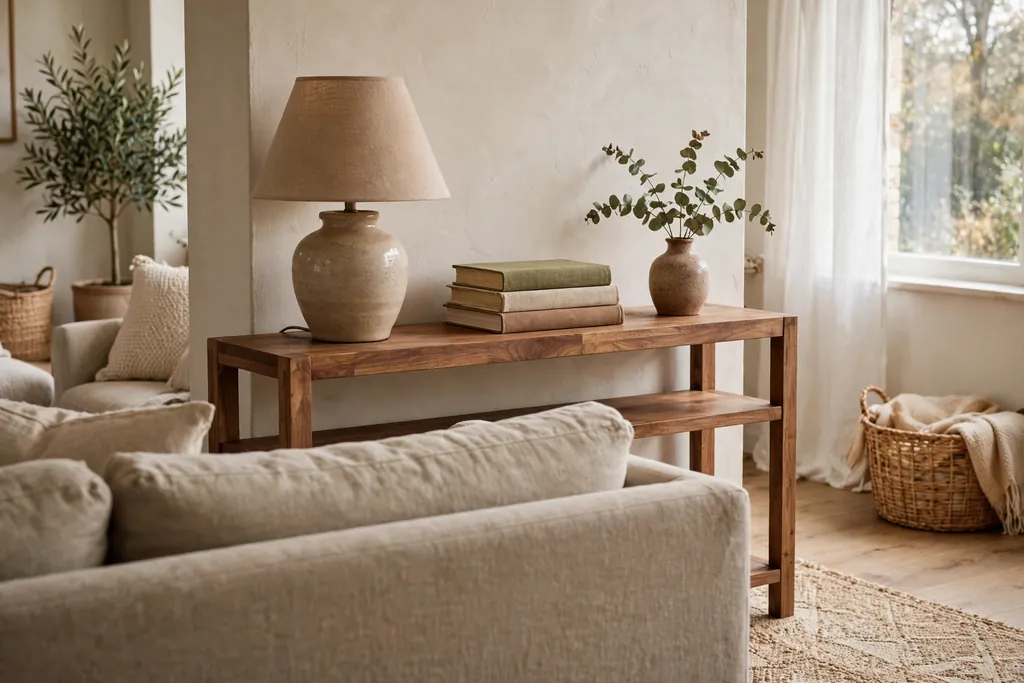
A console table behind a sofa gives a living room a work surface and a display ledge in a spot that often stays empty. Choose a wood console close to sofa height, and style the top with a lamp at one end for evening light, a stack of books in the middle, and a small vase or bowl at the other end. The table also marks the edge of the seating area in an open plan room, without a wall or a screen.
Keep the tabletop mostly clear, with one lamp, one book stack, and one small object, so it does not become a shelf for mail and chargers. Slide a basket or two below for throws or games, and measure the depth first, since a table that sticks too far into a walkway will get bumped daily. Place the lamp so its light falls over the sofa for reading, and keep cords tucked behind the table, out of the walkway.
Conclusion
A Nancy Meyers living room does not need a large budget or a full remodel to feel collected. A slipcovered sofa, warm wood, layered rugs, linen drapes, books, and soft lamp light will carry most rooms, and the older pieces, such as a trunk, a gallery wall, or blue and white ceramics, give the room its gathered character over time. Start with seating and the rug, add light and storage, and finish with art and fresh greenery.
For a related warm room on the same base, see farmhouse decor ideas for living room, and for a seasonal shift using the same lamp layers, see cozy Christmas living room ideas. Keep what you use often, store the rest together, and let the room return to a simple, usable base between seasons. Work through this list one idea at a time, and keep the palette calm, so each new layer adds warmth without crowding the room.
FAQs
What defines a Nancy Meyers living room?
A Nancy Meyers living room is defined by a slipcovered sofa, warm wood, linen, books, and soft lamp light in a calm cream, white, and pale blue palette. The room feels collected rather than matched, with older pieces, art, and everyday objects mixed with new furniture. Seating stays deep and usable, surfaces hold books and flowers, and the overall feel is warm, bright, and easy to live in.
How do I get the collected look without buying everything new?
Start with the pieces you already own, and add one older or secondhand piece at a time, such as a wood trunk, a framed print, or a ceramic jar. Mix new linen with older wood, keep the palette to cream, white, pale blue, and wood tones, and repeat each material in at least two places. Living with one new piece for a few weeks before adding the next keeps the room from looking bought in one trip.
What colors work best in a Nancy Meyers living room?
Cream, white, soft grey, pale blue, and warm wood tones work best together, because they suit linen, wood floors, and daylight in a bright room. Repeat pale blue in at least two places, such as a pillow and a ceramic jar, and keep other colors to wood, green from plants, and one muted accent. Avoid adding a second strong color in the same room, since the calm palette is what keeps the layered look from feeling busy.
What sofa works best for this style?
A slipcovered sofa in washed white, cream, or light oatmeal linen works best, because it looks soft from day one and can be washed when life happens. Choose a deep seat, rolled or straight arms, and a skirt that just brushes the floor, with wood legs or a low wood frame below. Keep cushions plump by flipping them weekly, and add linen and ticking stripe pillows in the same soft palette.
How do I light a Nancy Meyers living room in the evening?
Use lamps at seating height rather than one bright overhead light, with a floor lamp by a reading chair and table lamps at both ends of the sofa. Choose warm white bulbs and linen shades, and put lamps on dimmers where possible, so the room can shift from bright daytime use to soft evening light. Keep one small lamp on a console or shelf as a third layer, and keep all lamps clear of throws and paper.
How do I keep a white living room practical with children or pets?
Choose washable slipcovers, a rug that can be cleaned, and an ottoman or coffee table with a tray that lifts off in one move for quick clearing. Keep a basket of throws by the sofa for everyday use, use cream or oatmeal rather than pure white where marks show most, and keep ceramics and art clear of walkways and chair backs. Washable covers and wipe clean wood mean the room can stay pale without staying off limits.