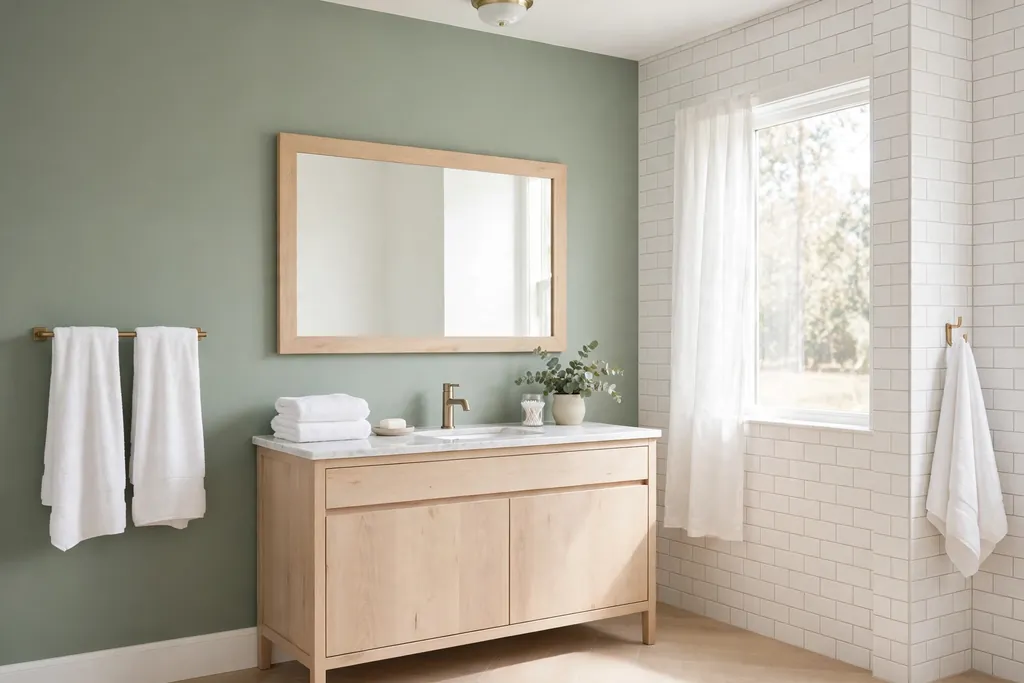
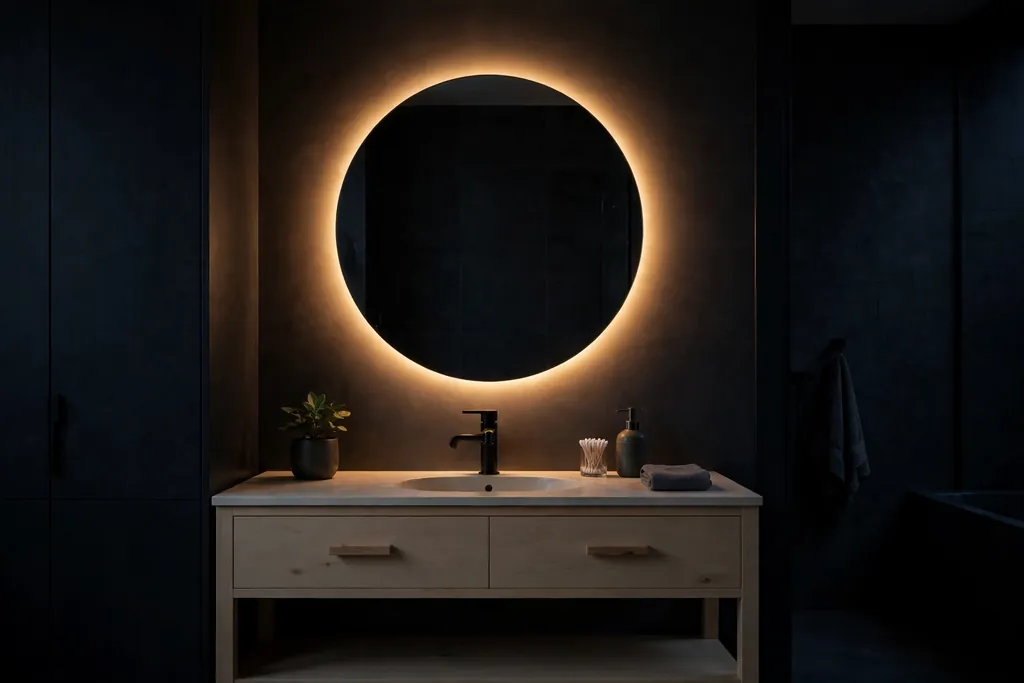
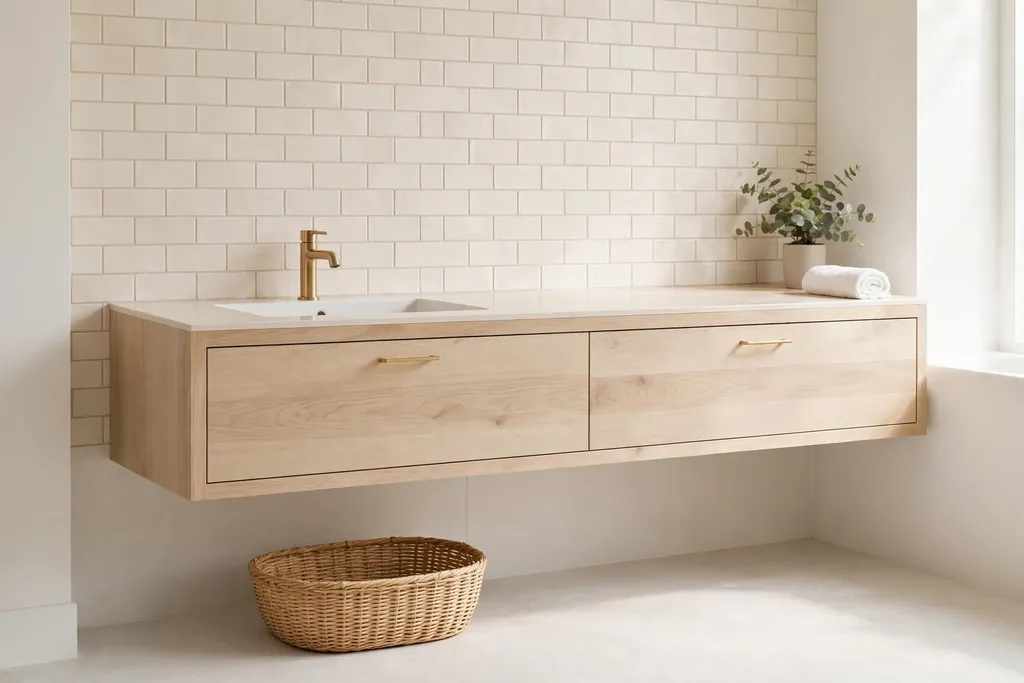
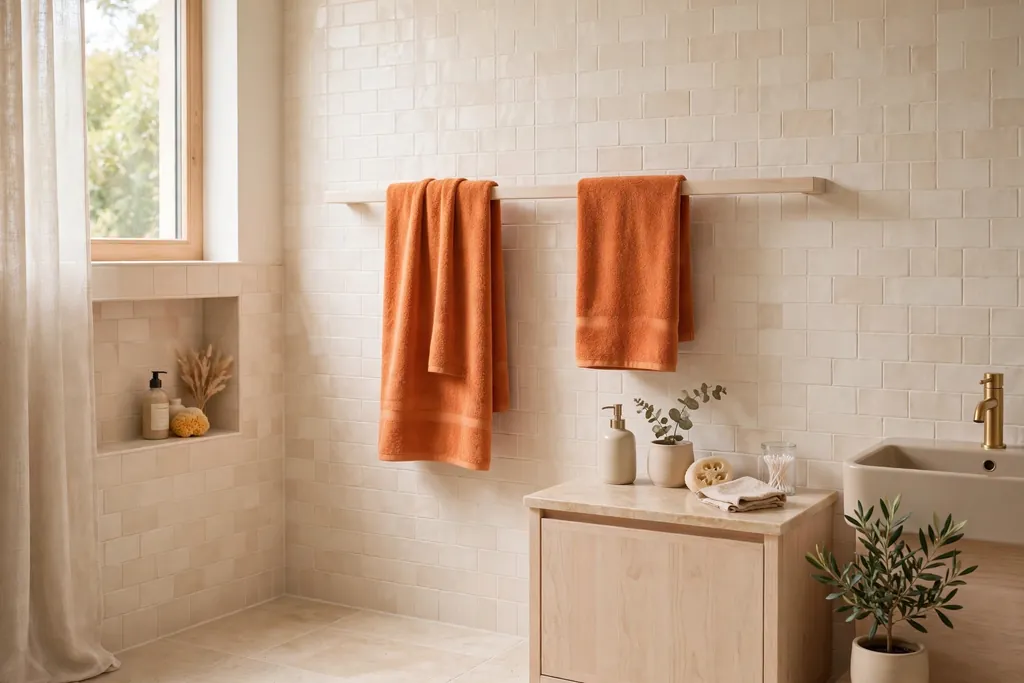
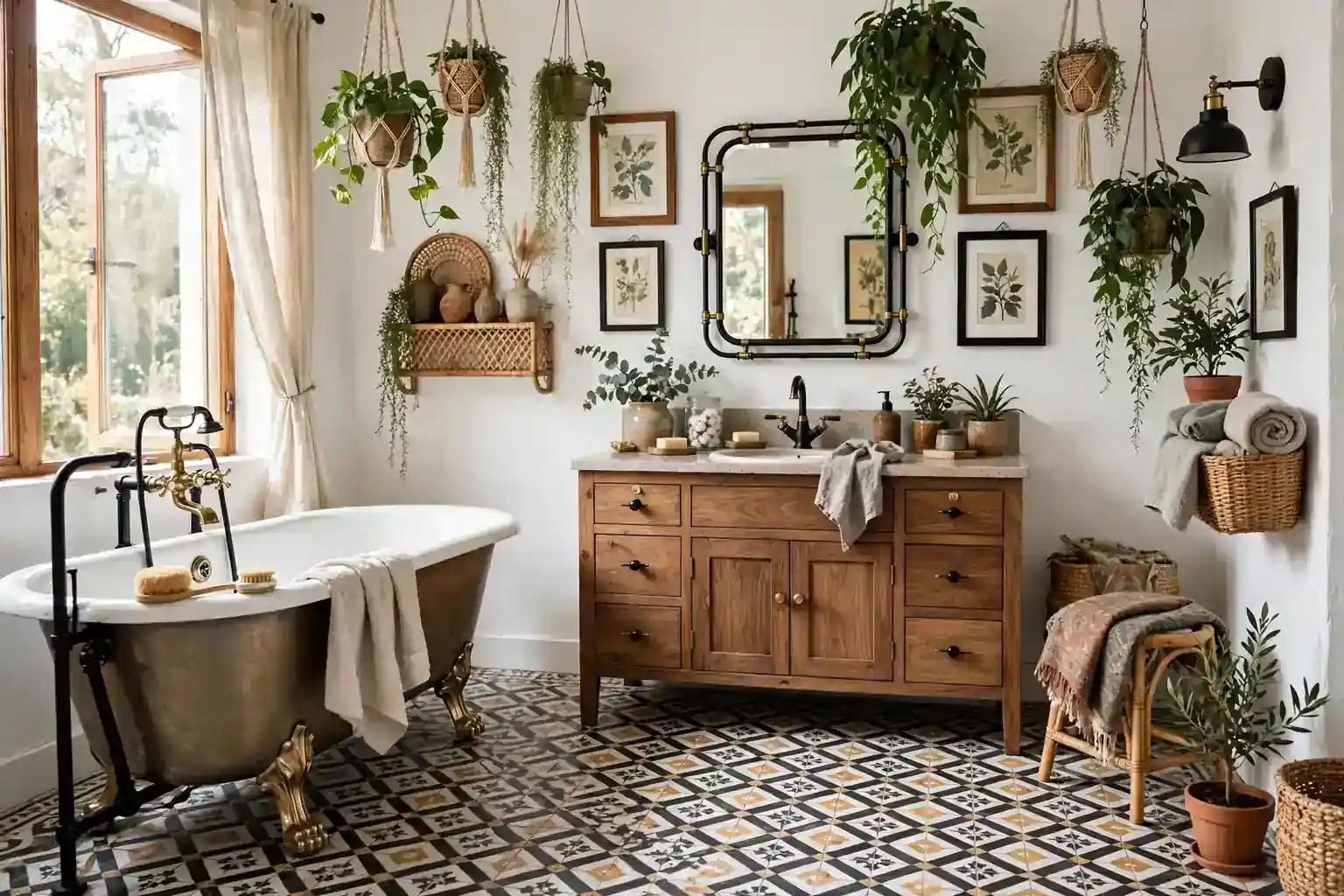
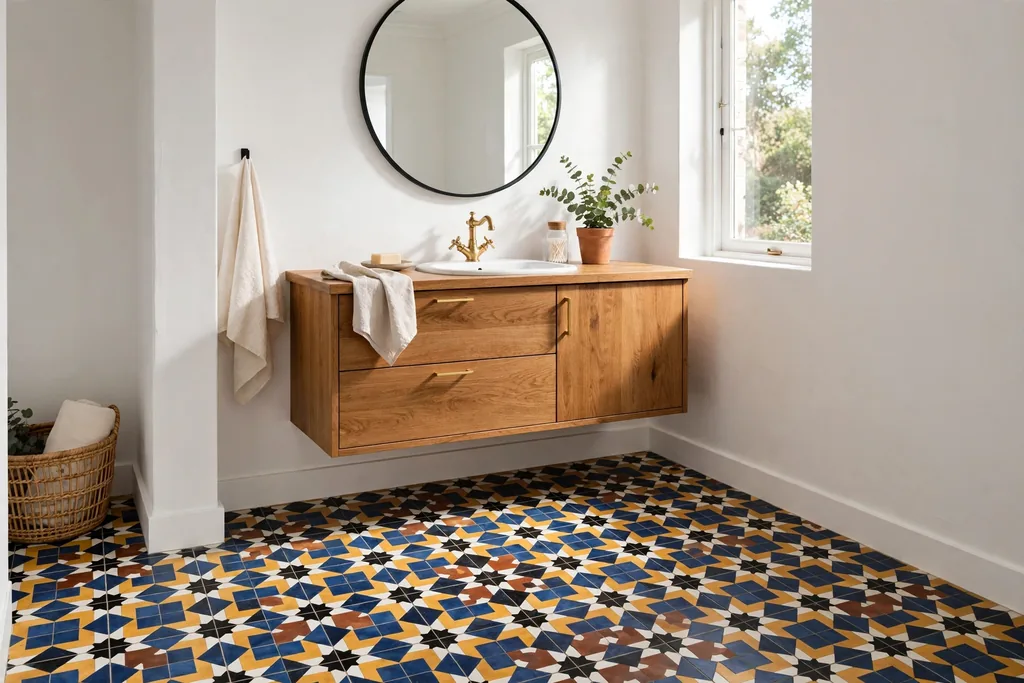
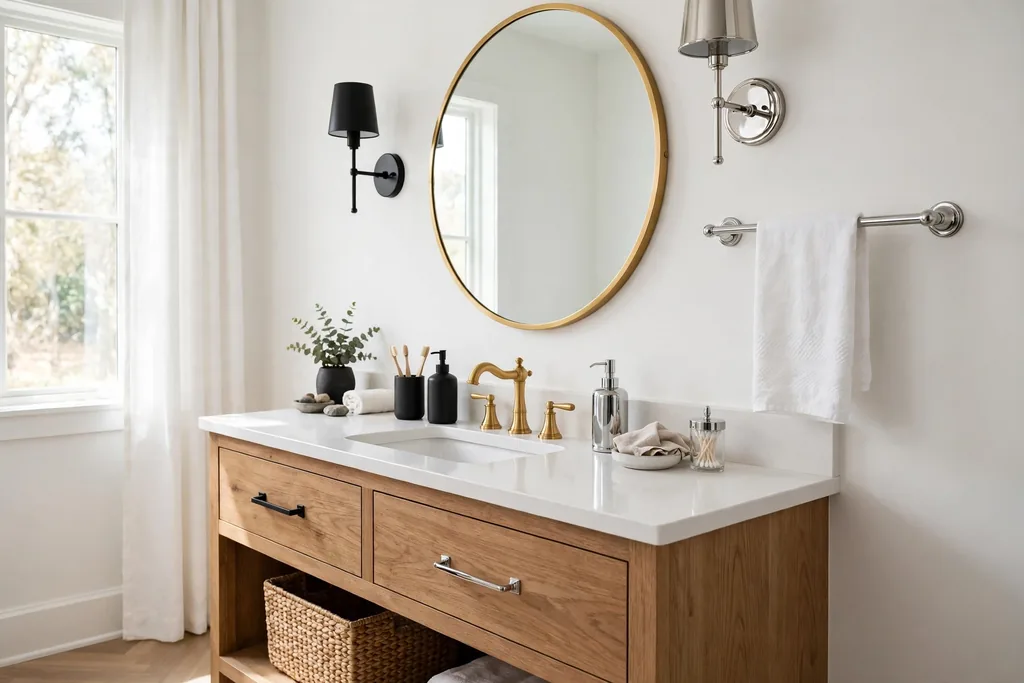
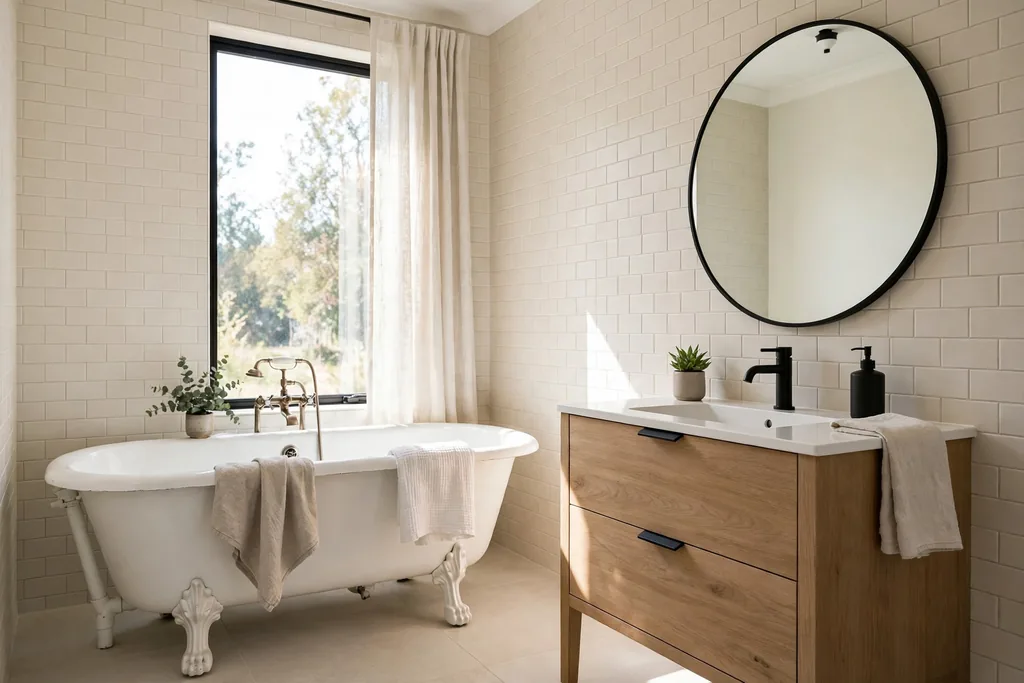
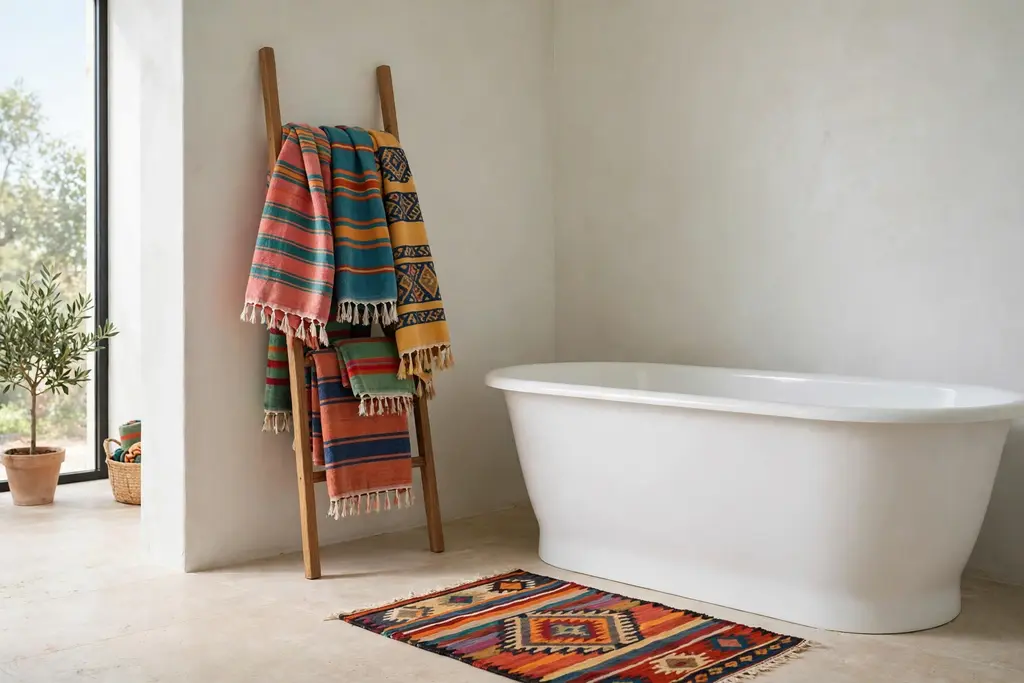
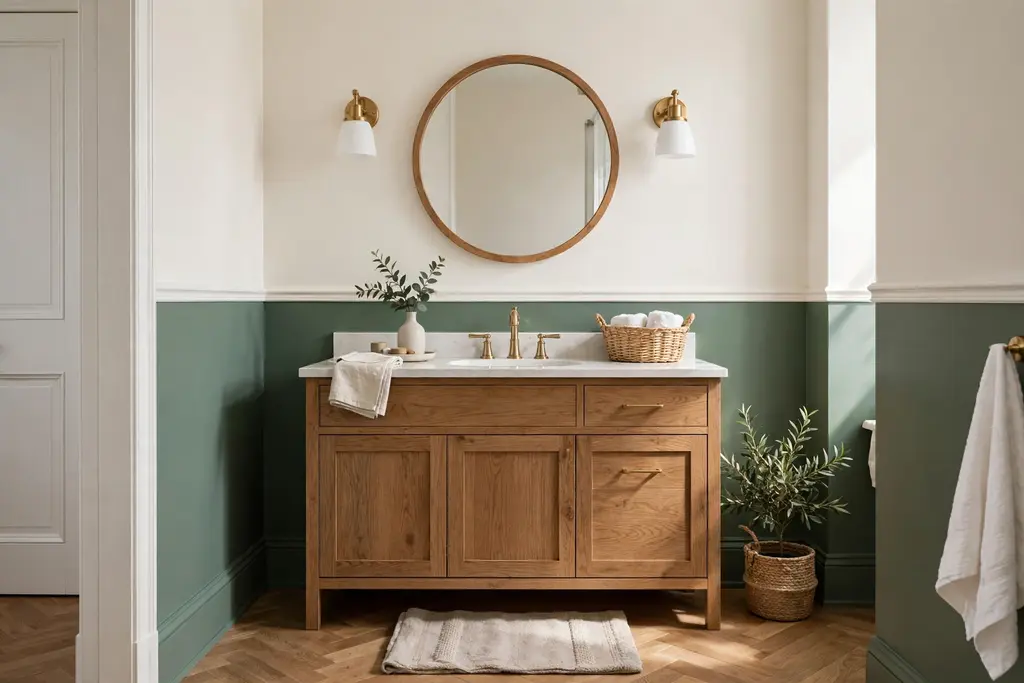
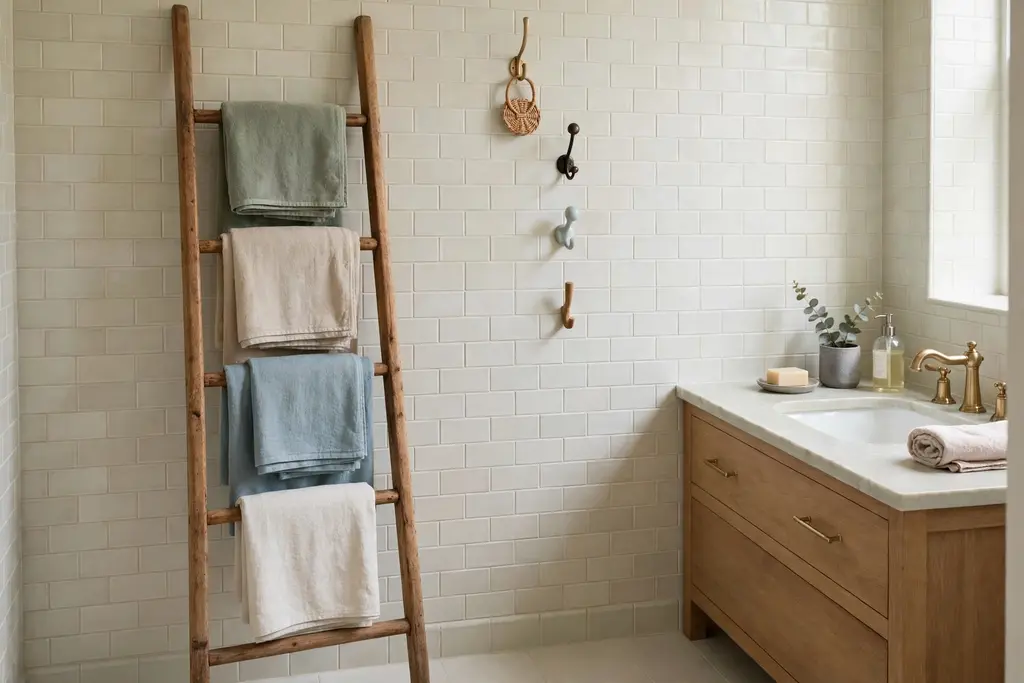
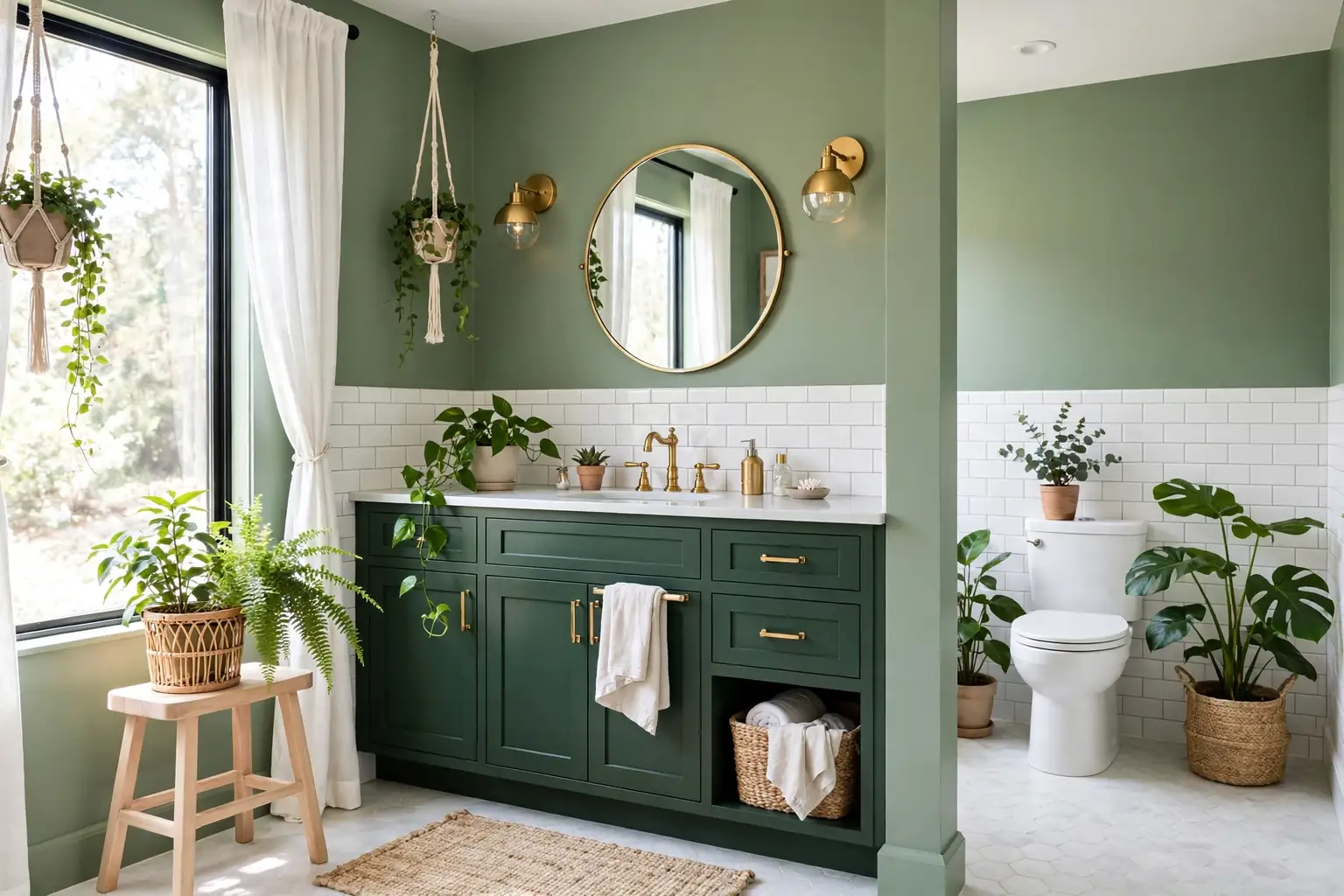
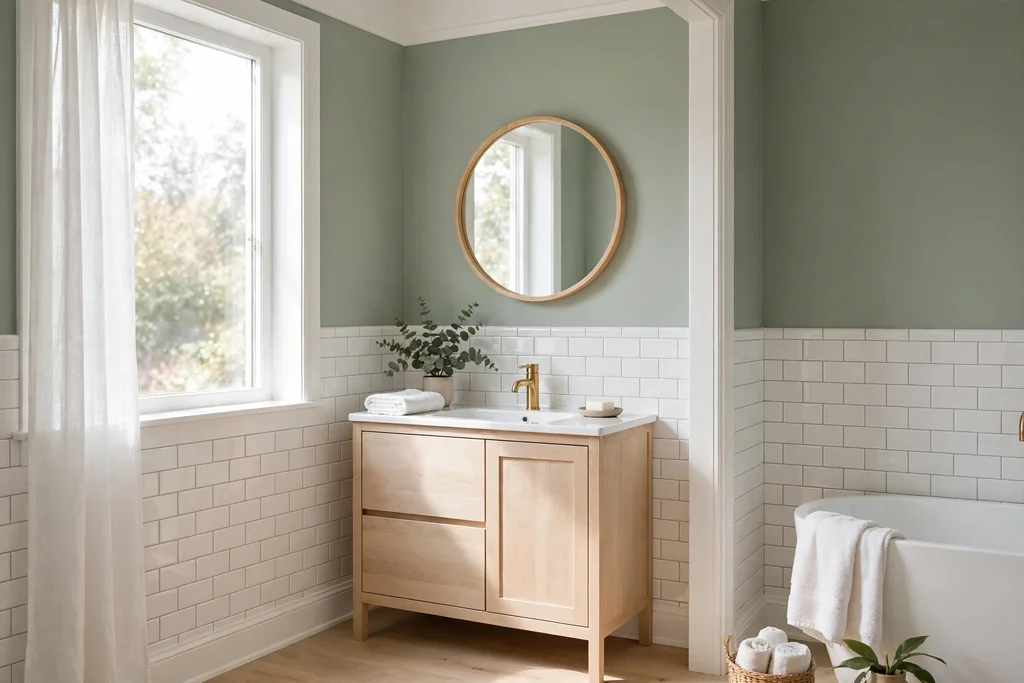
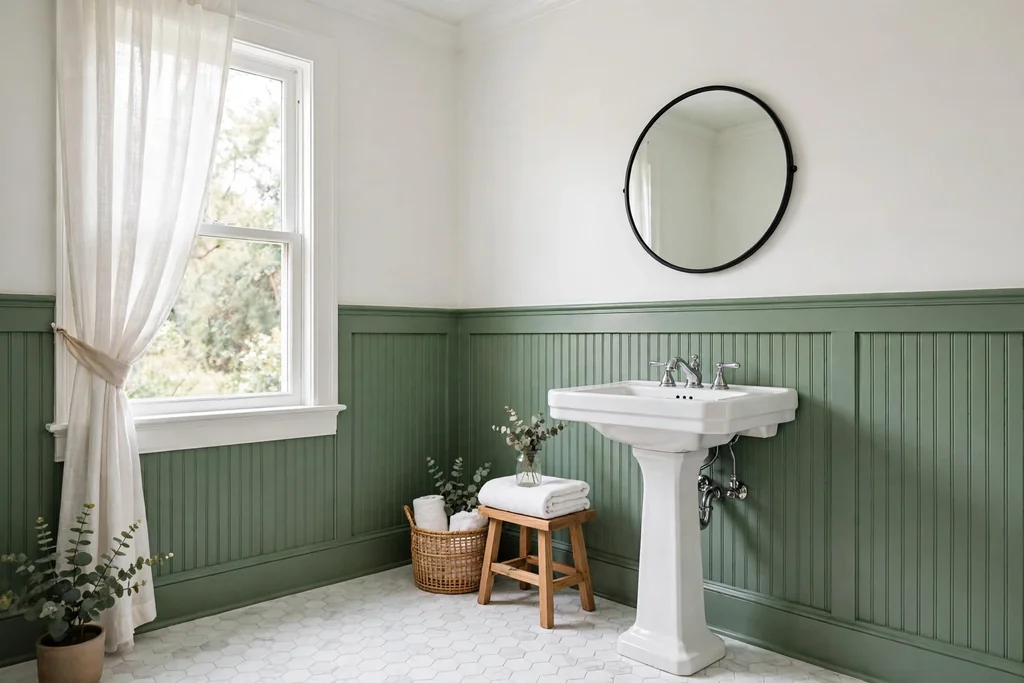
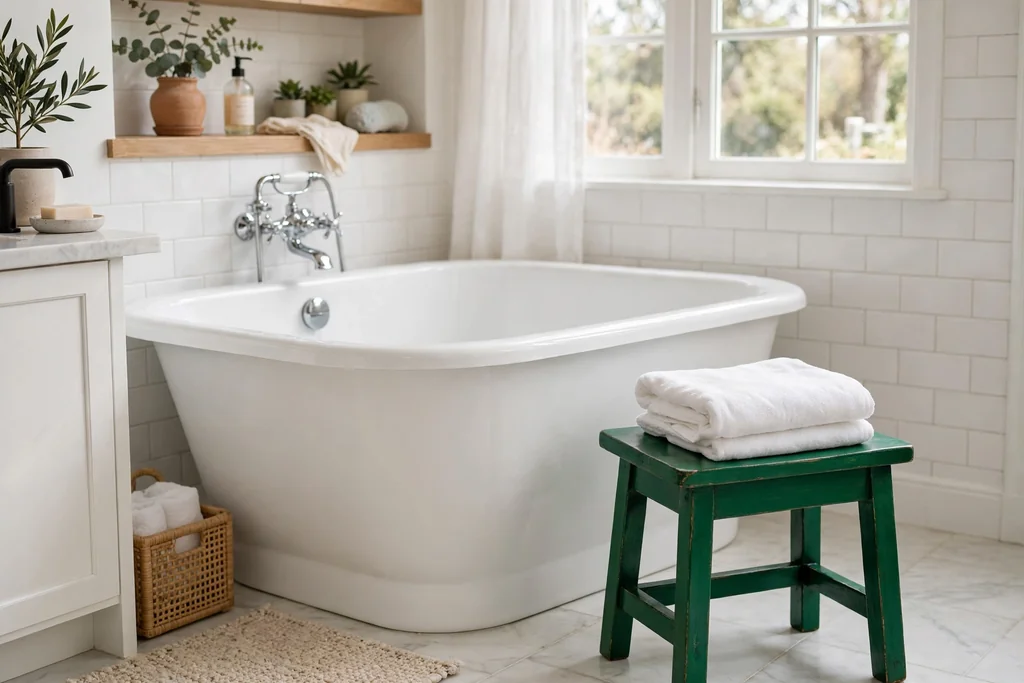
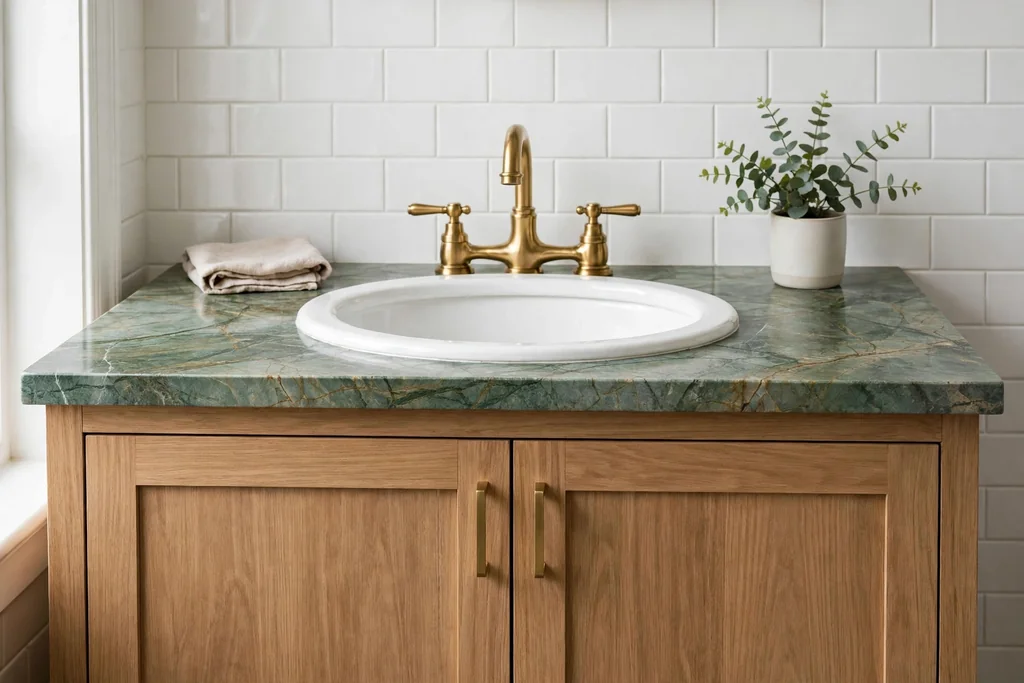
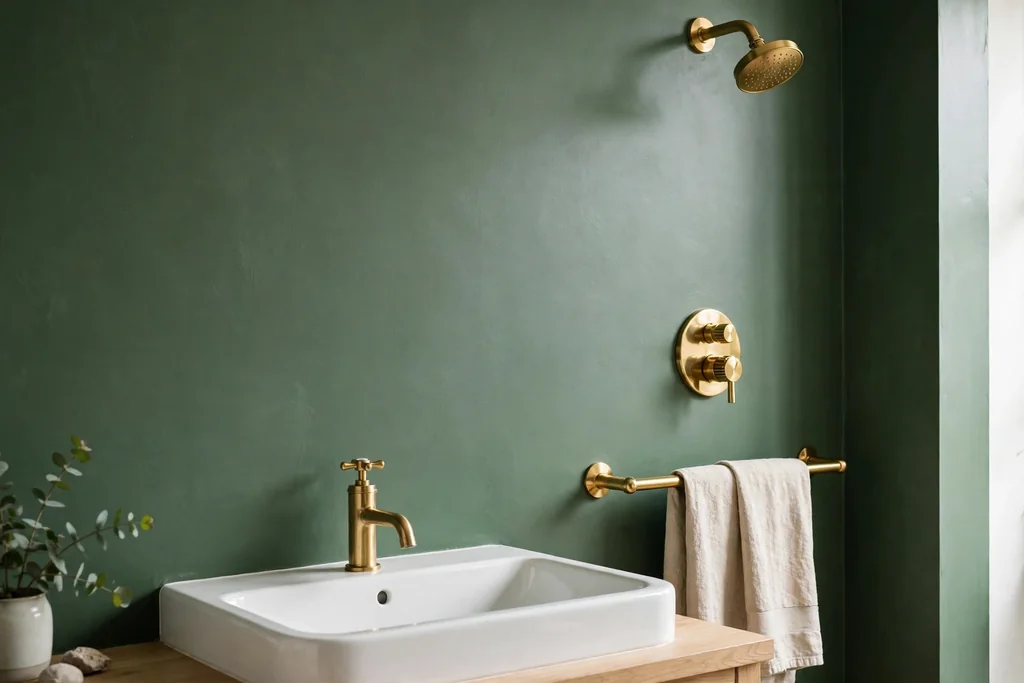
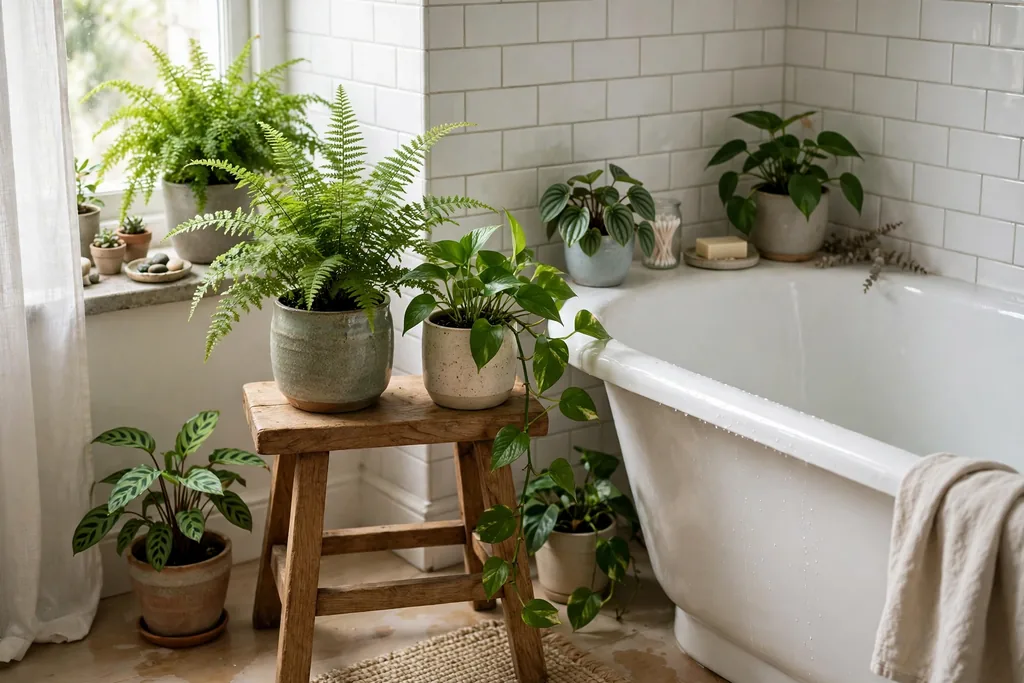
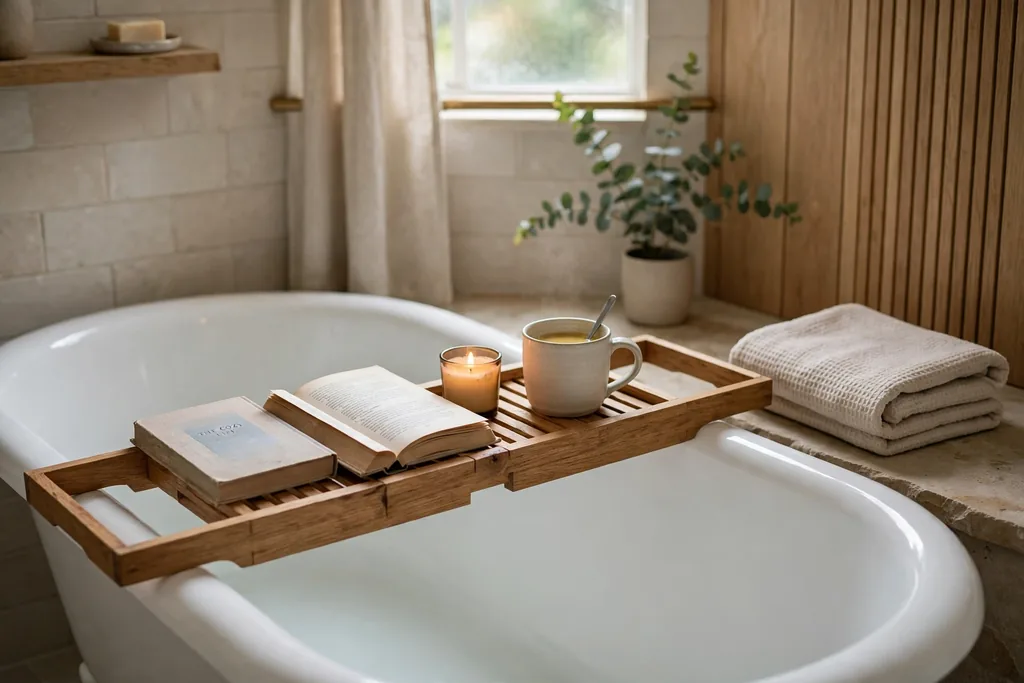
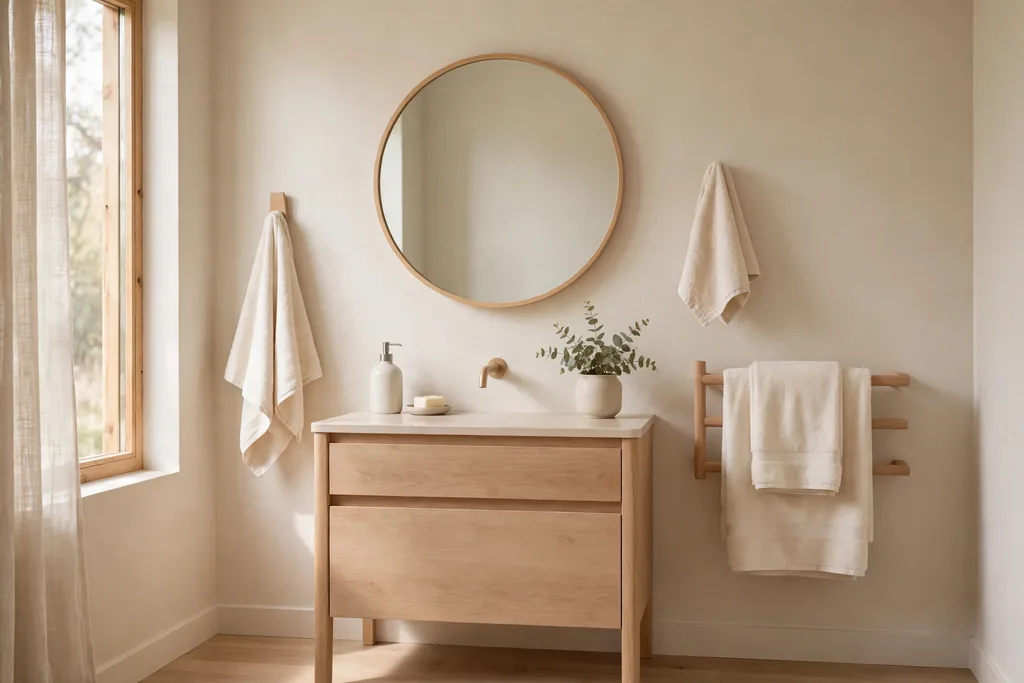
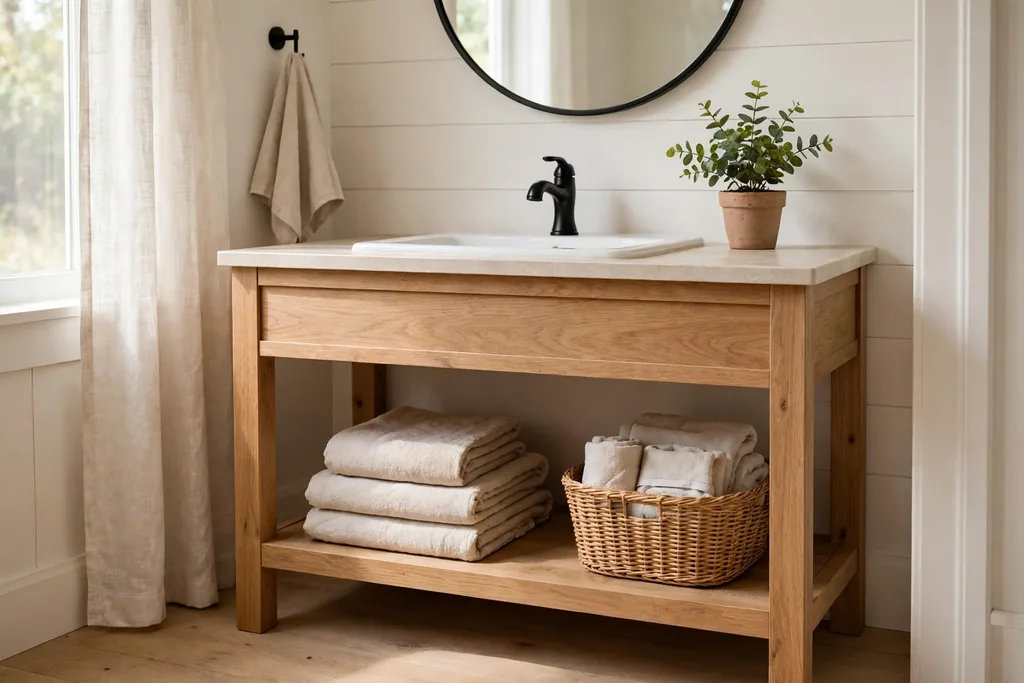
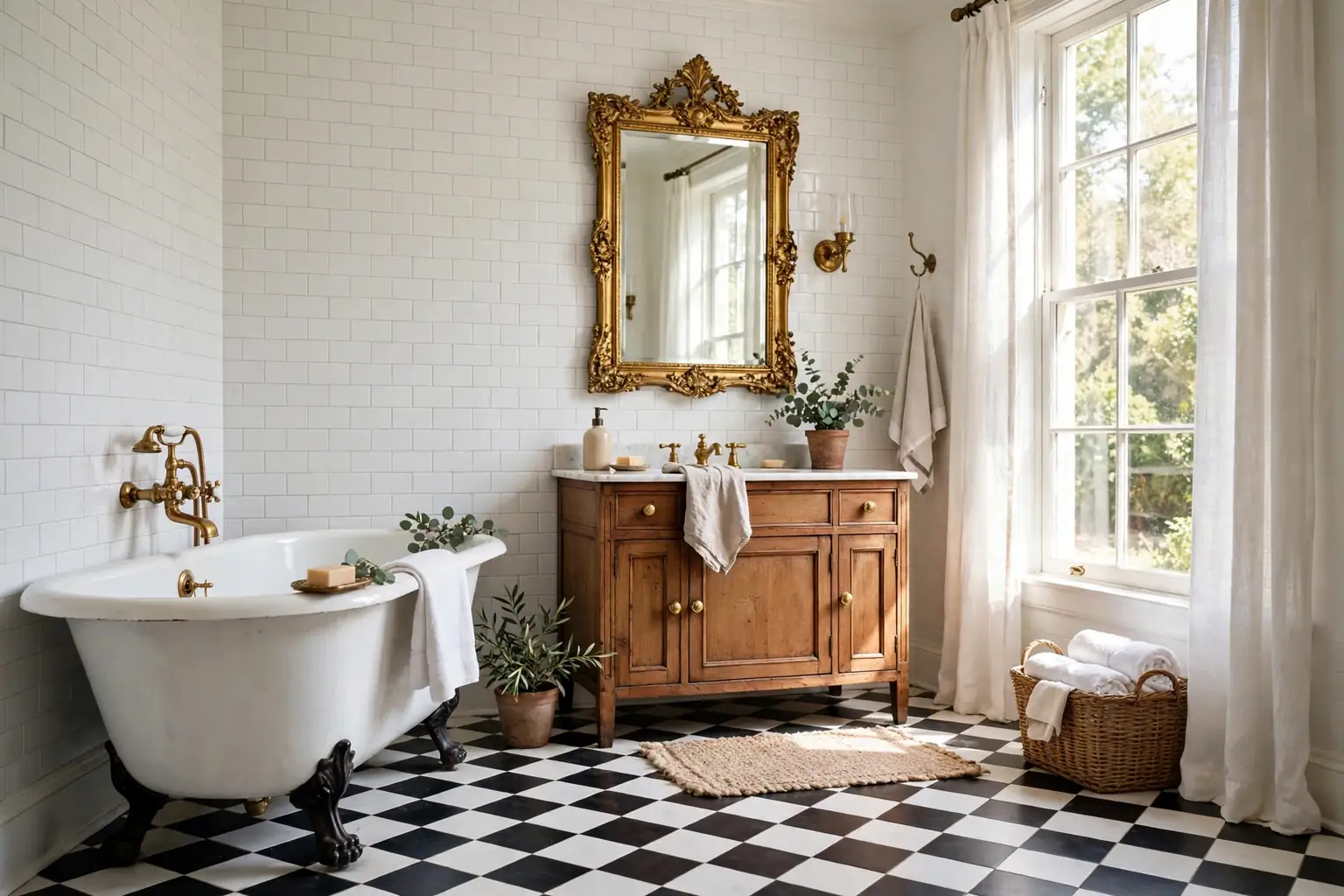
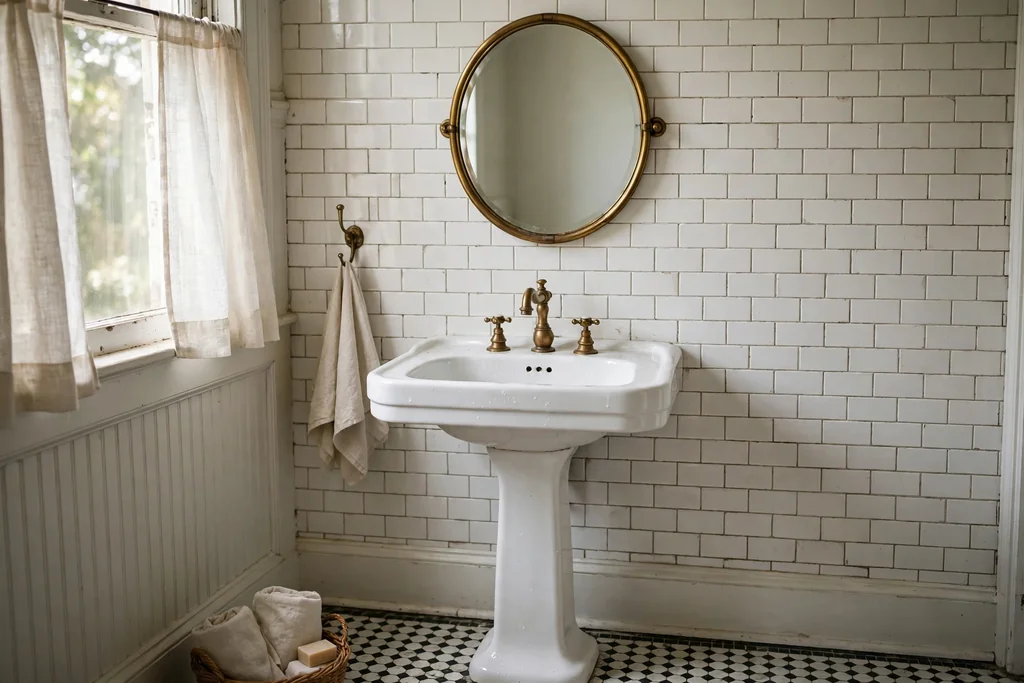
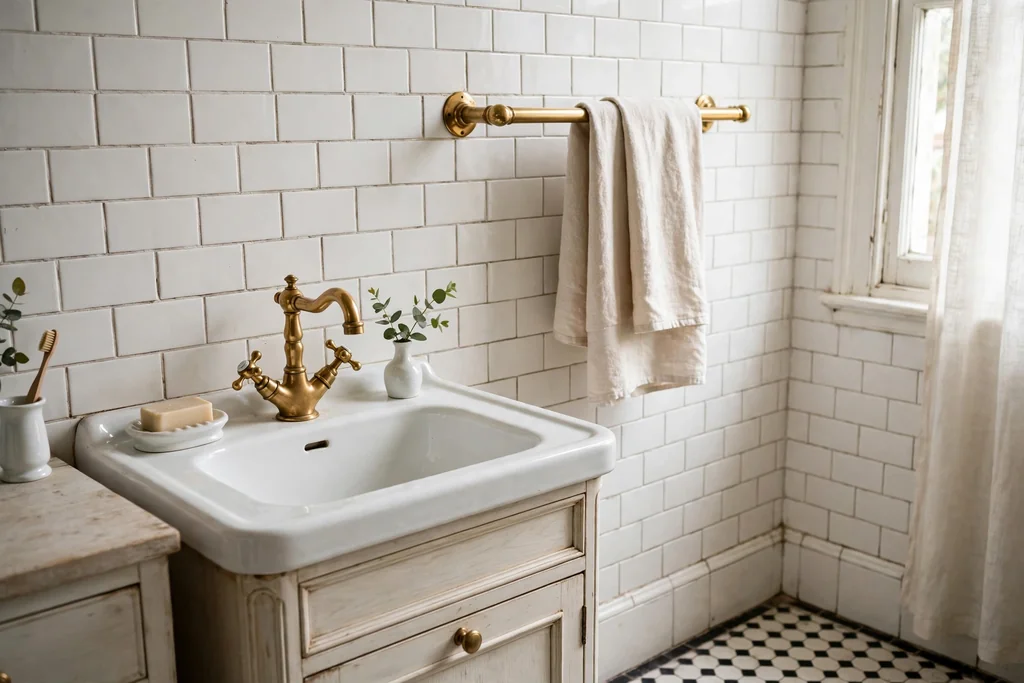
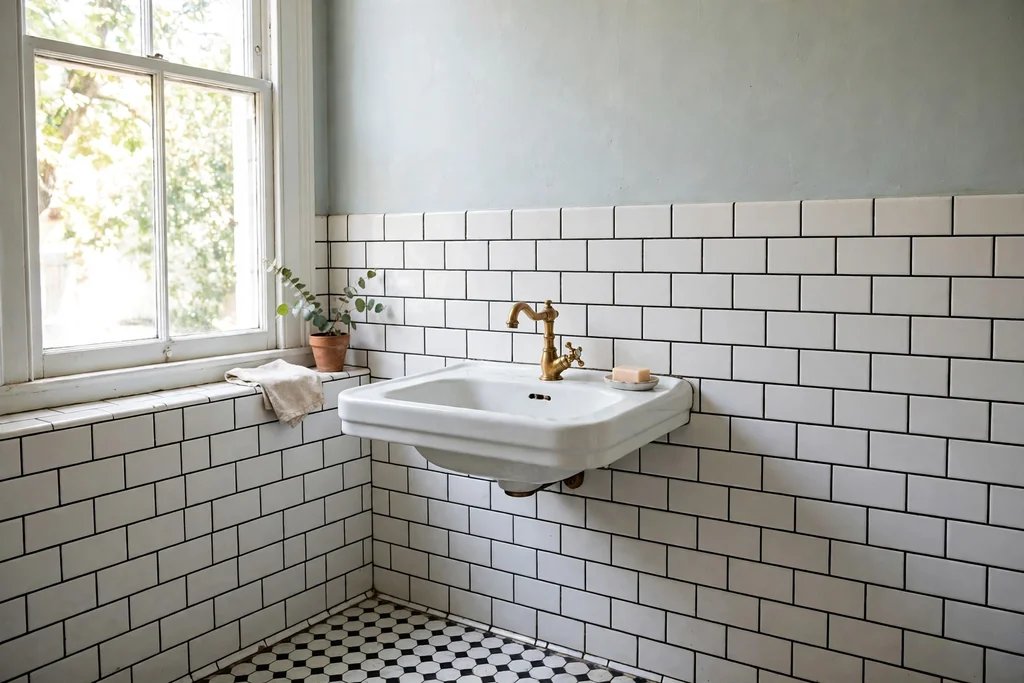
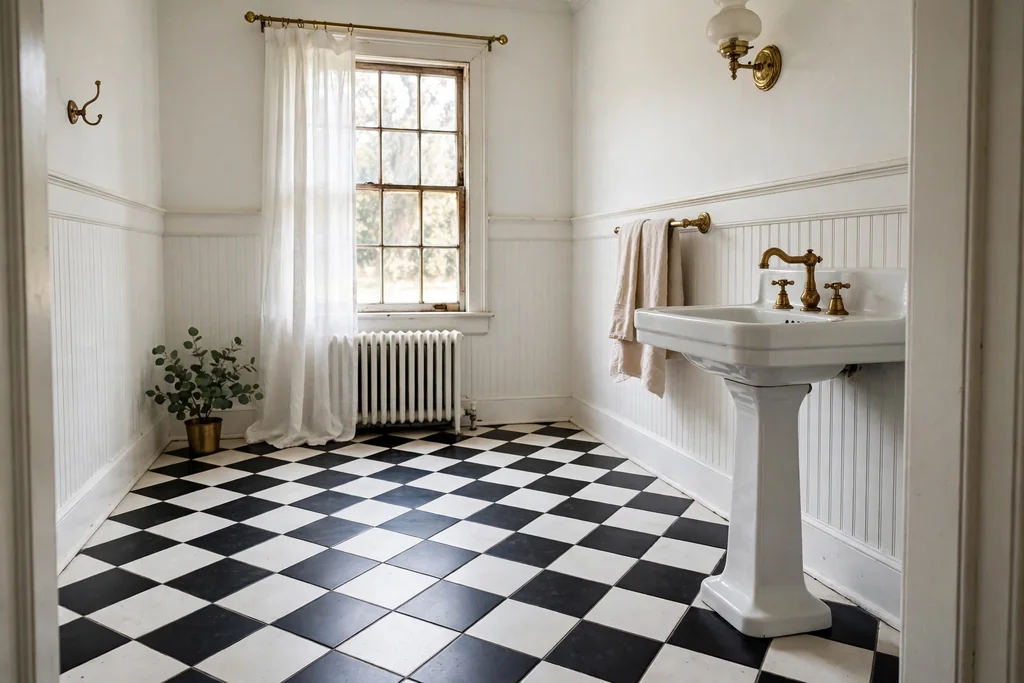
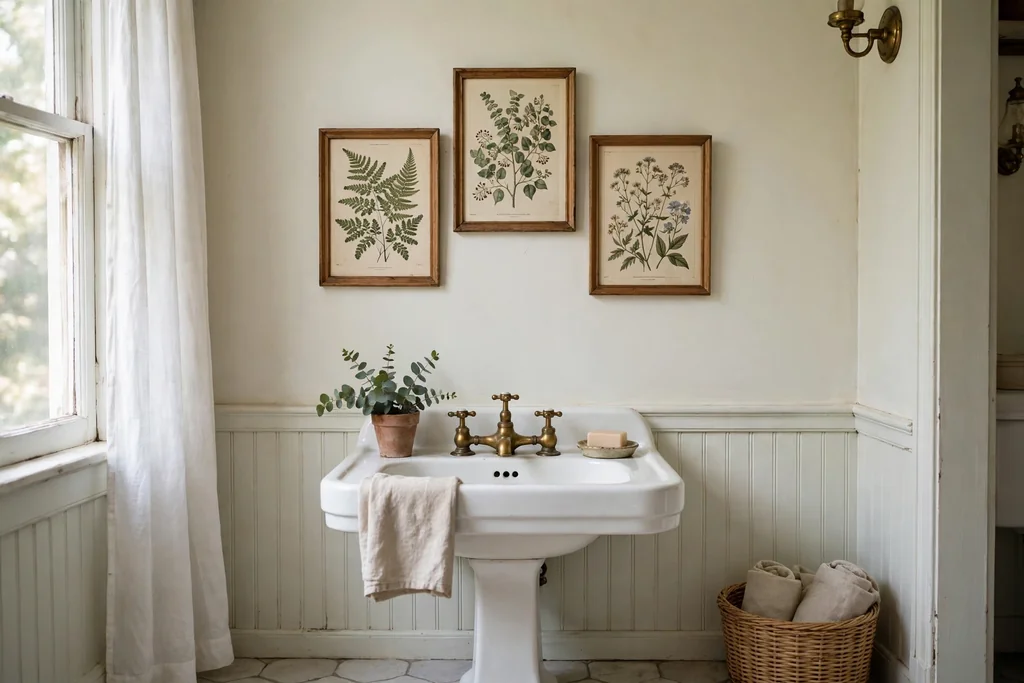
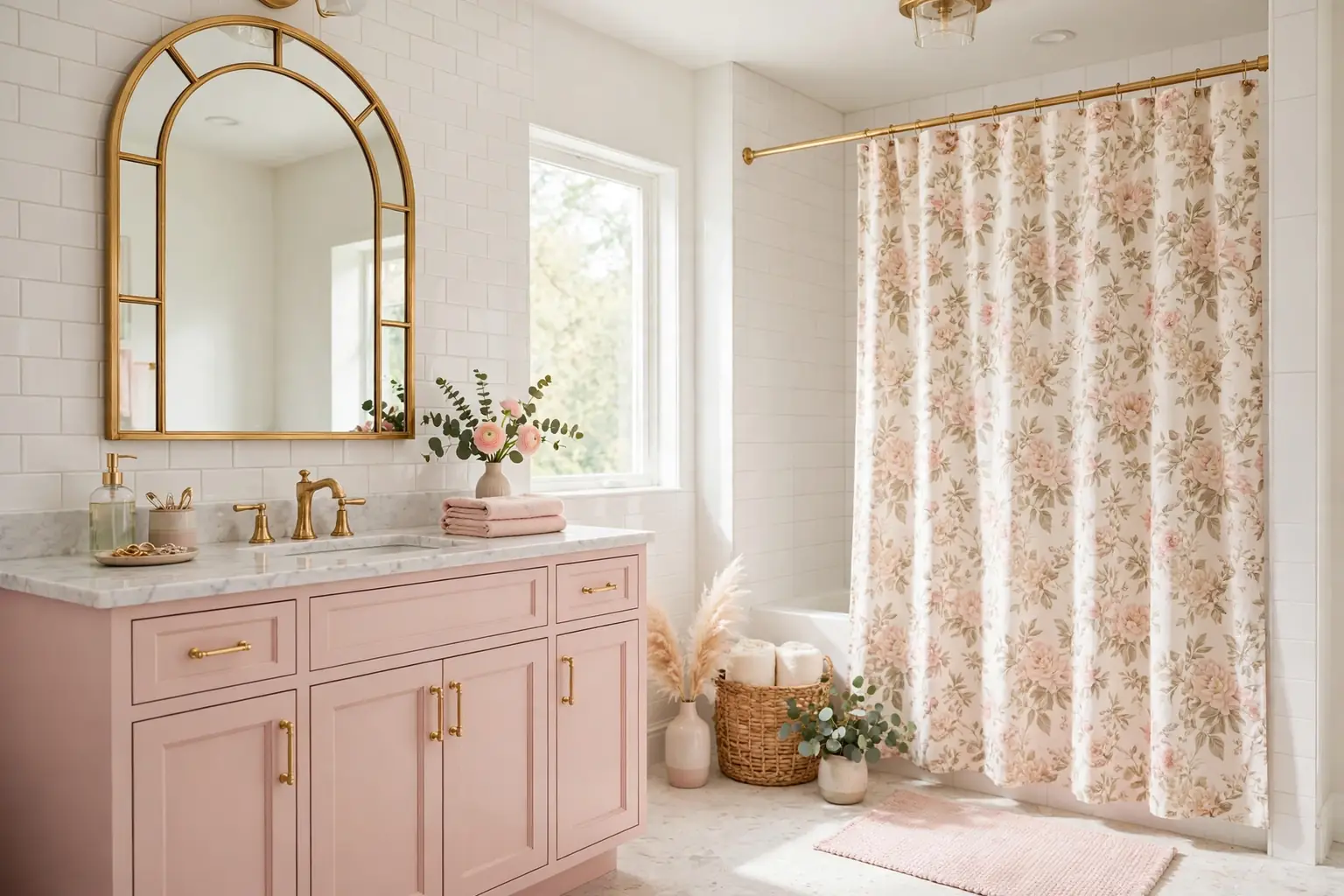
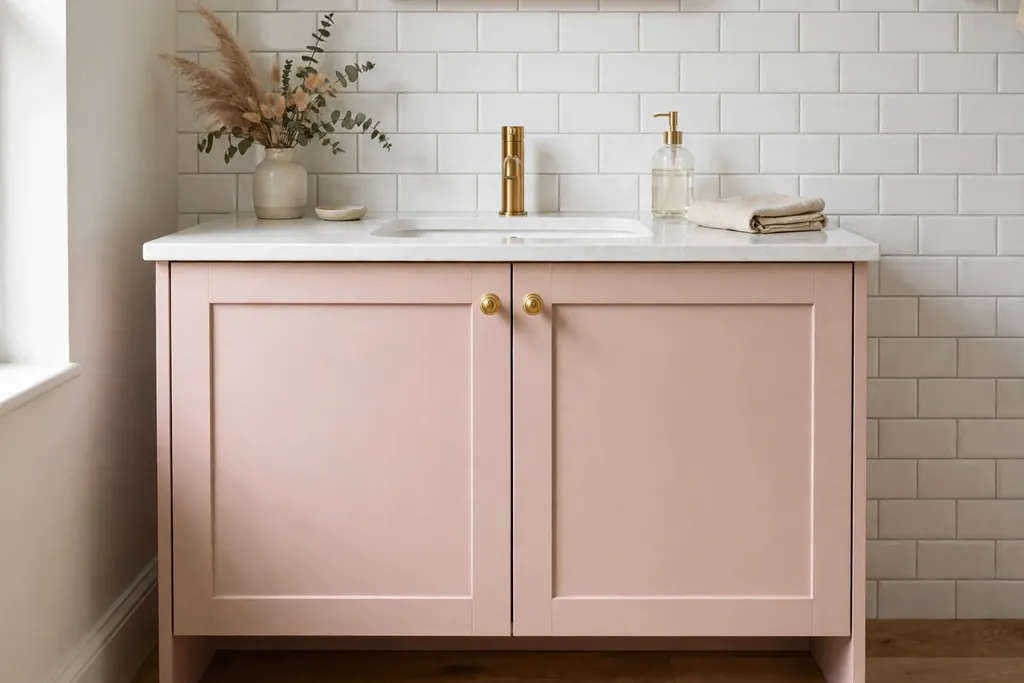
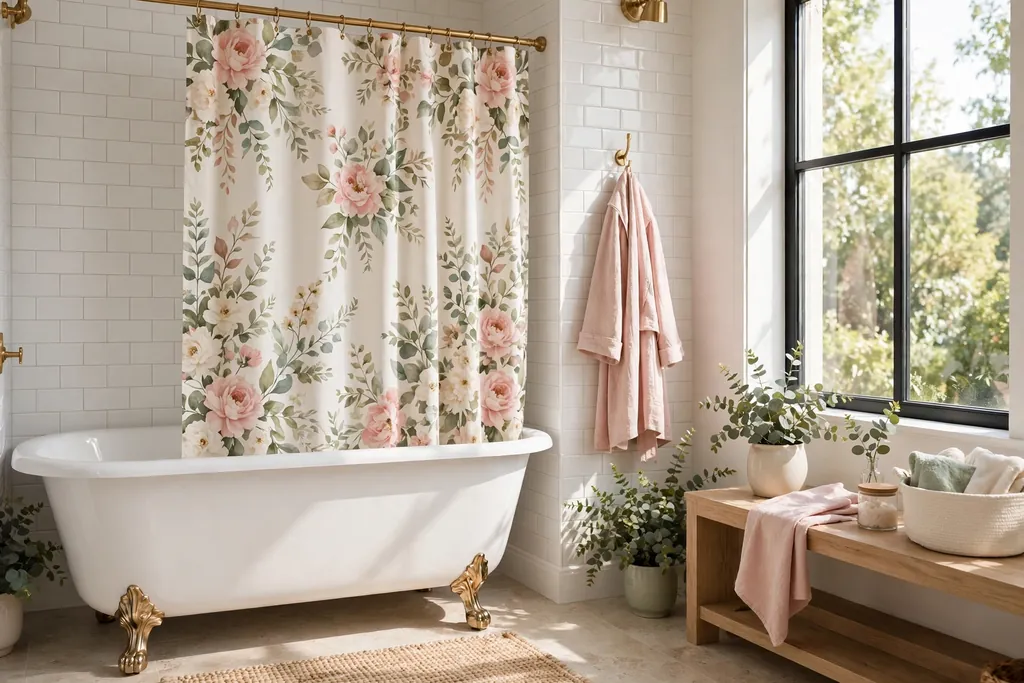
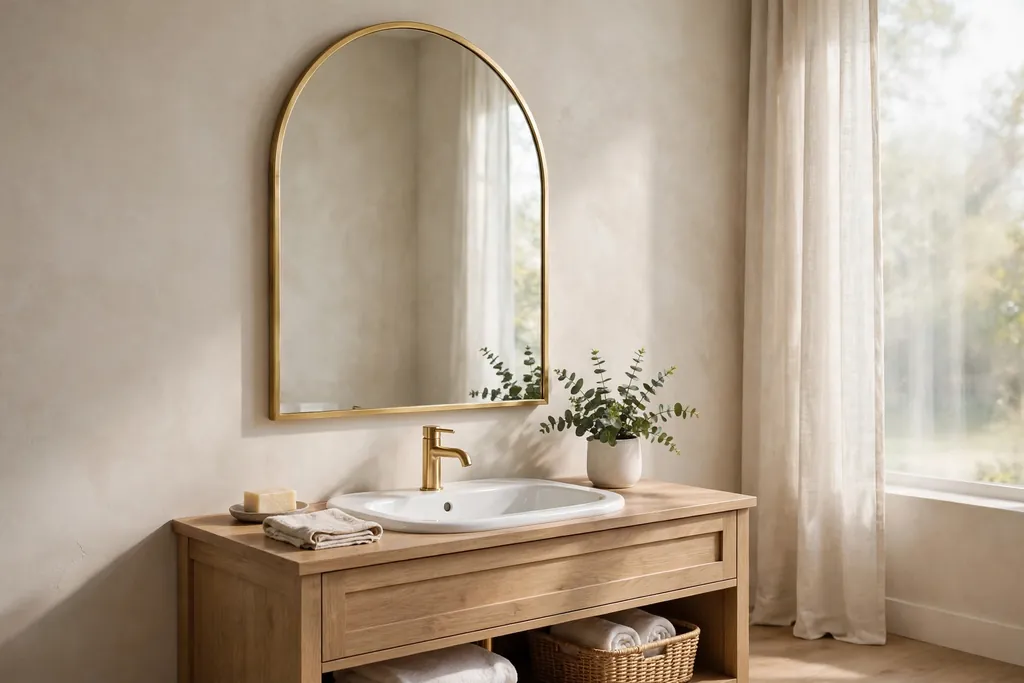
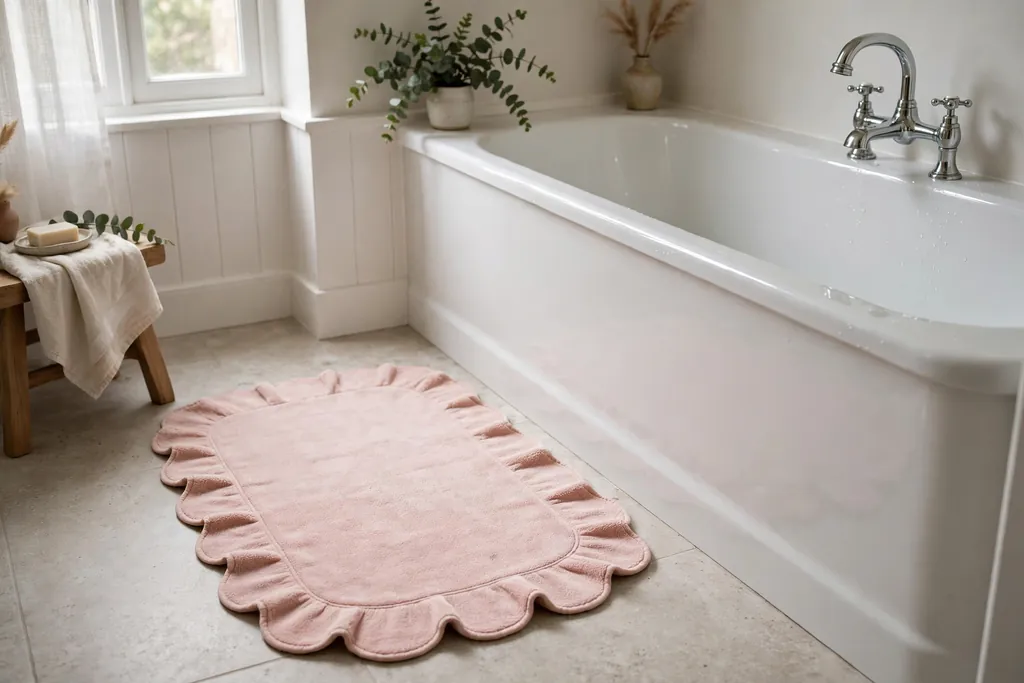
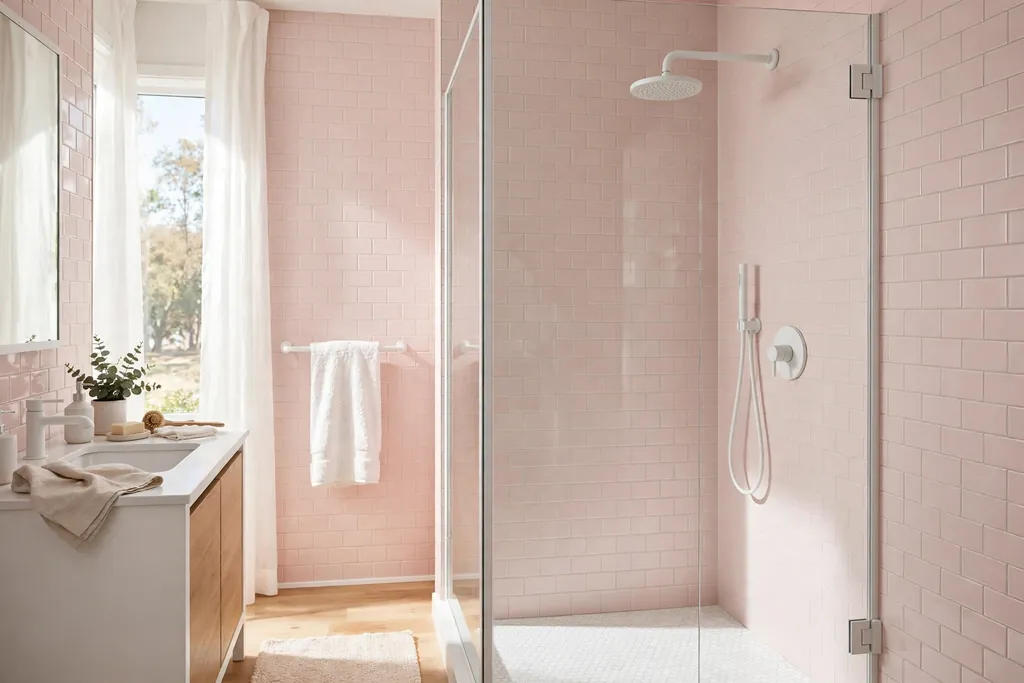
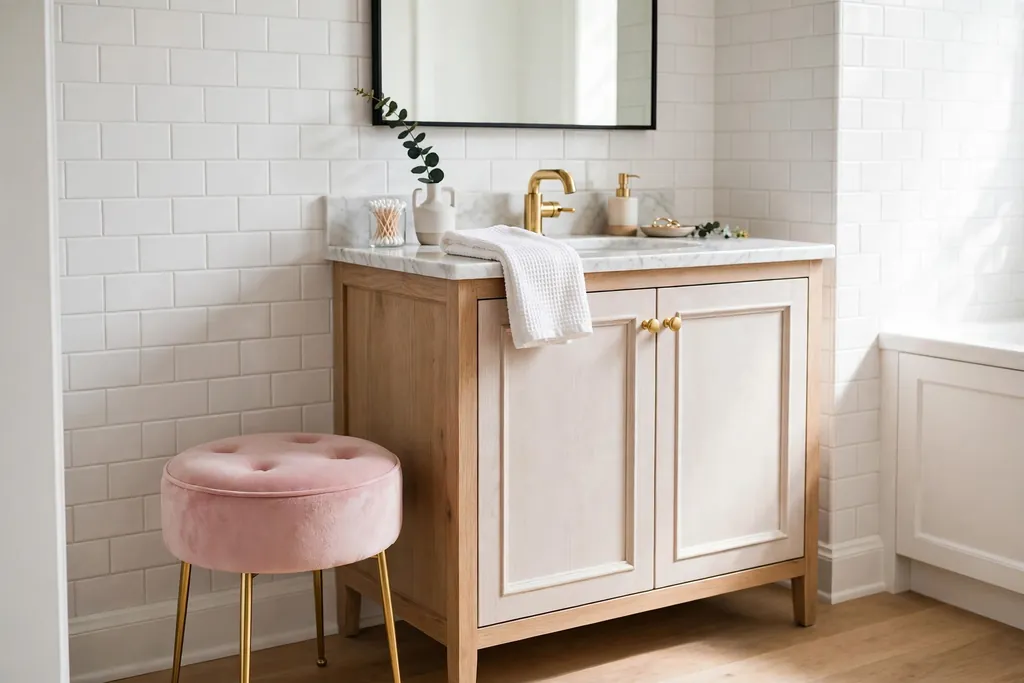
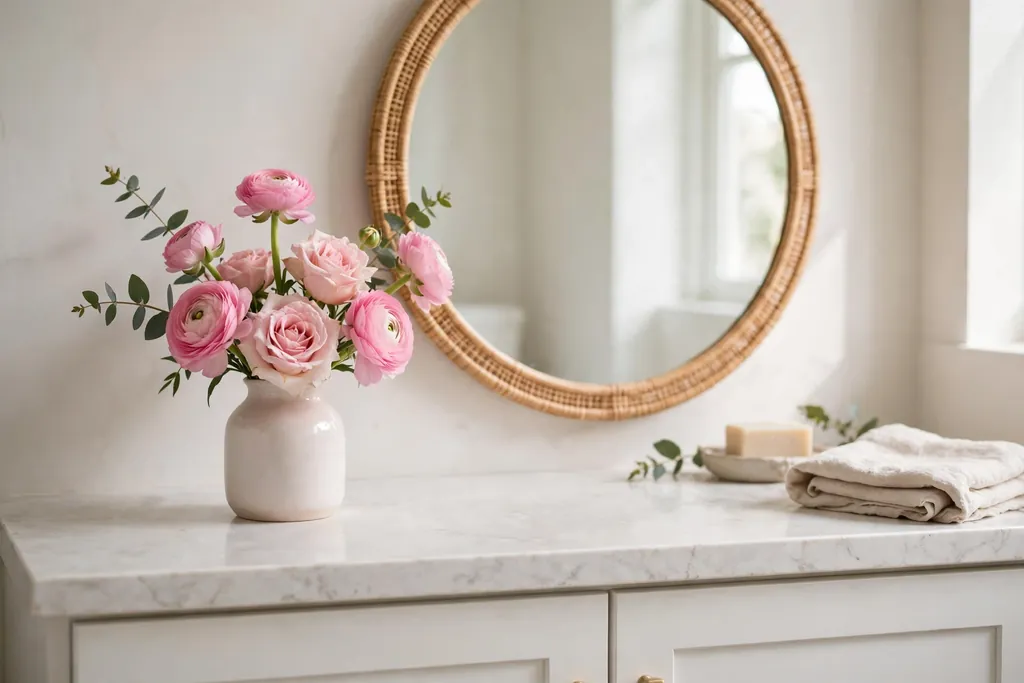
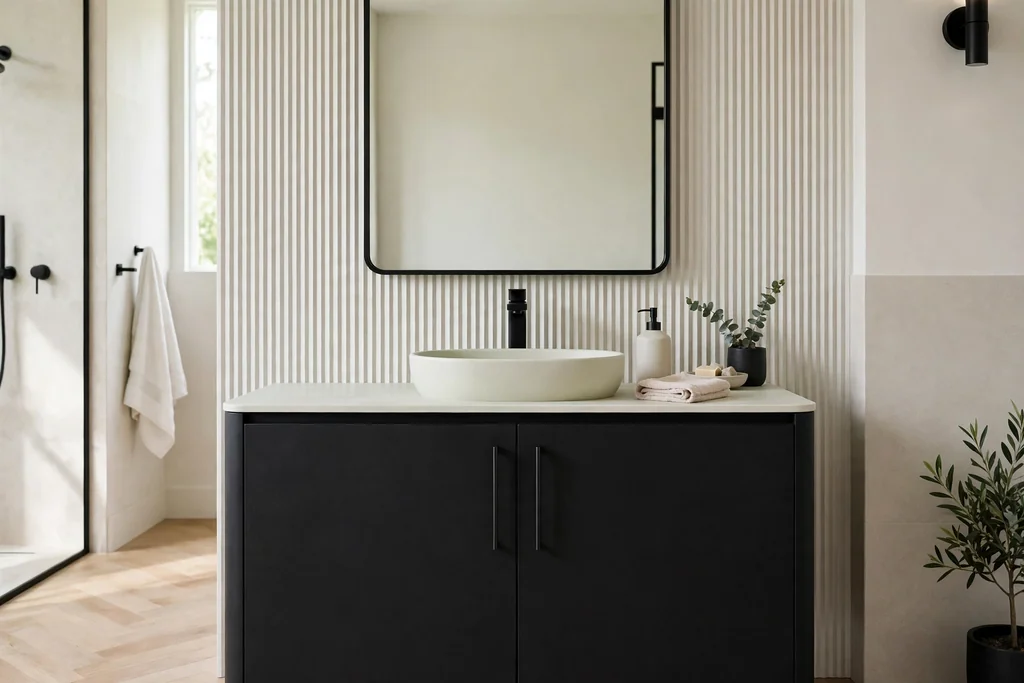
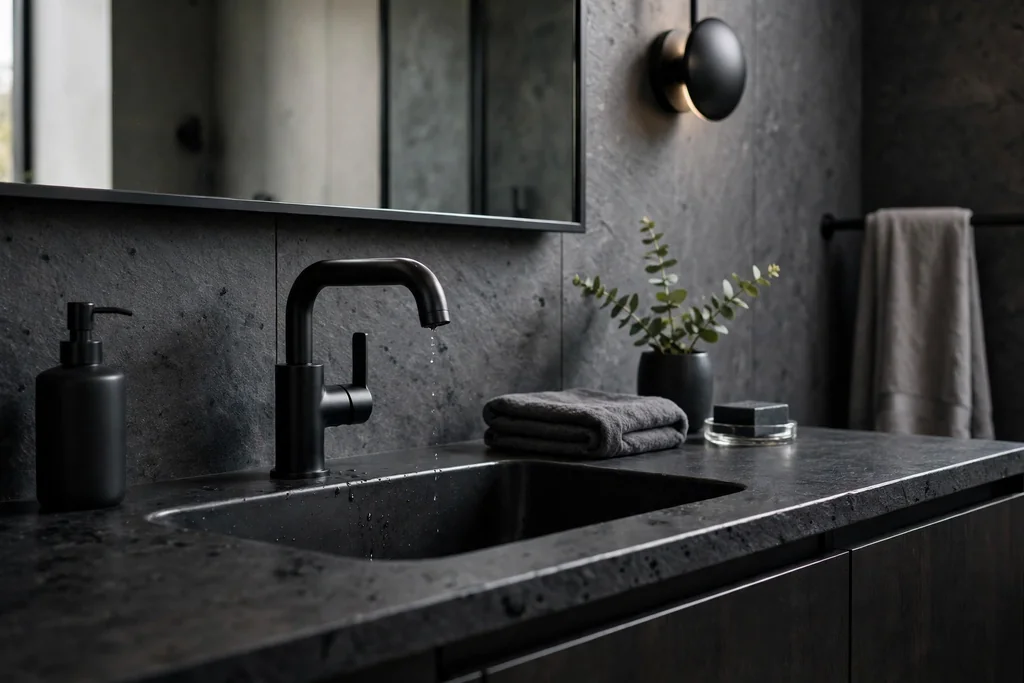
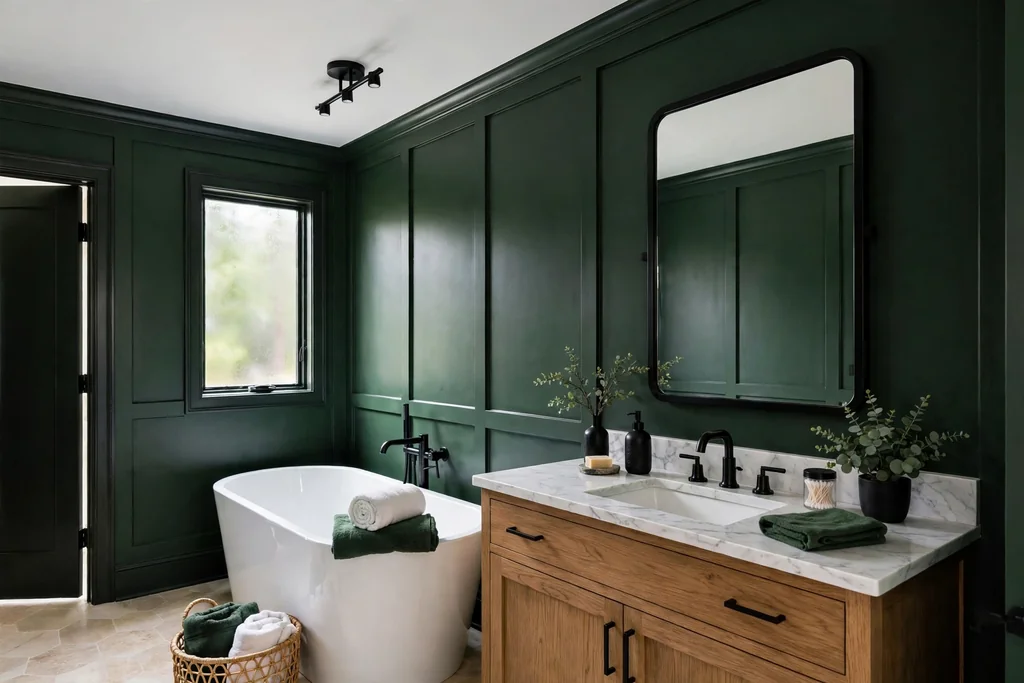
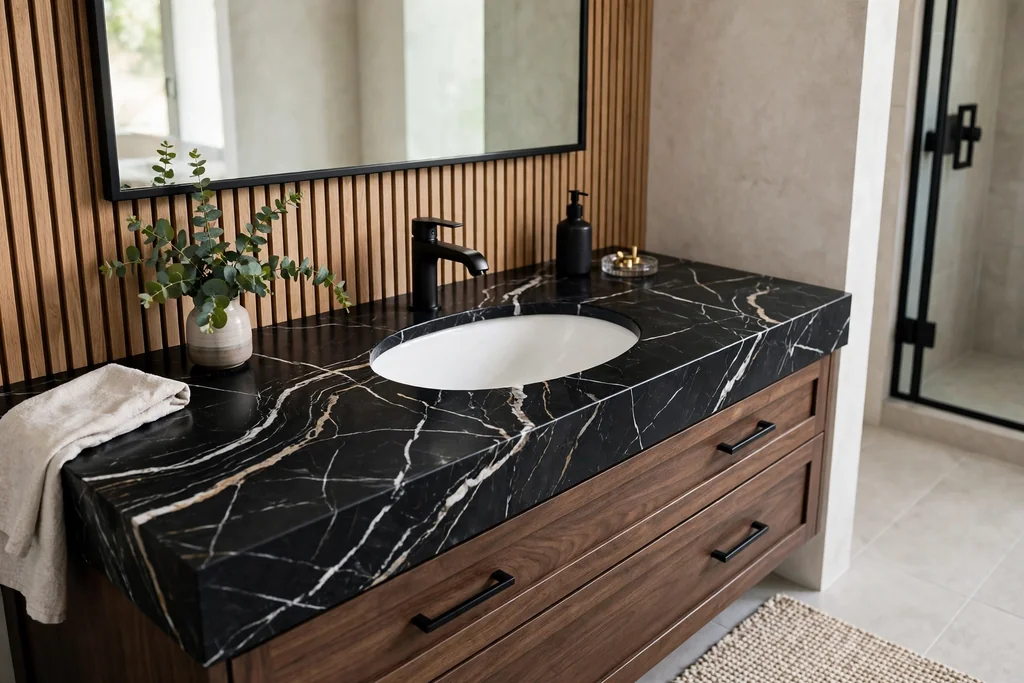
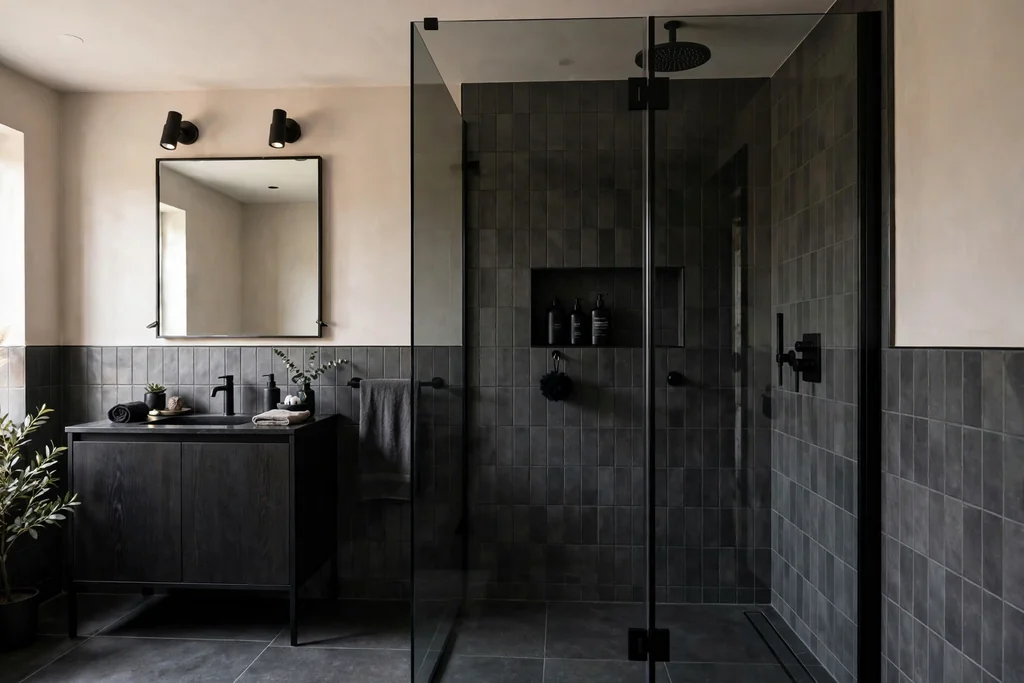
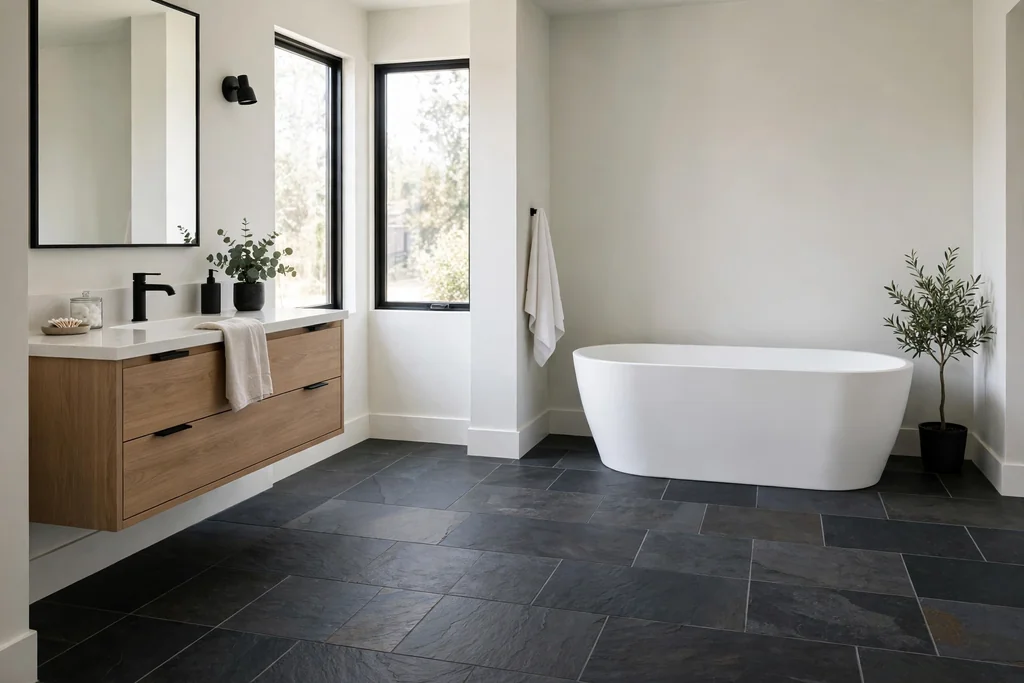
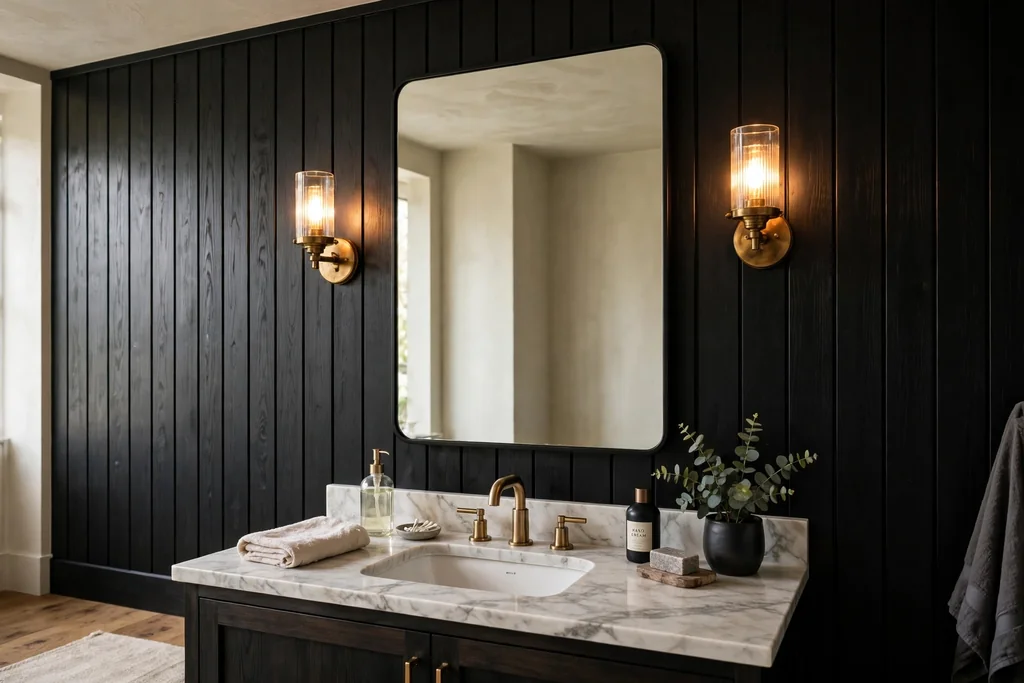
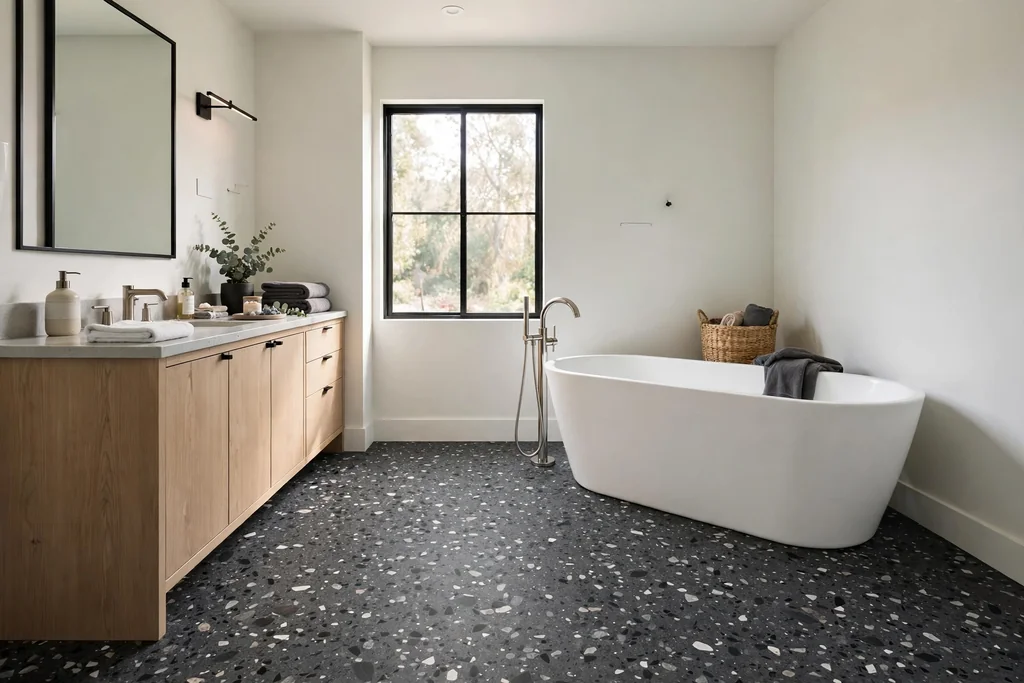
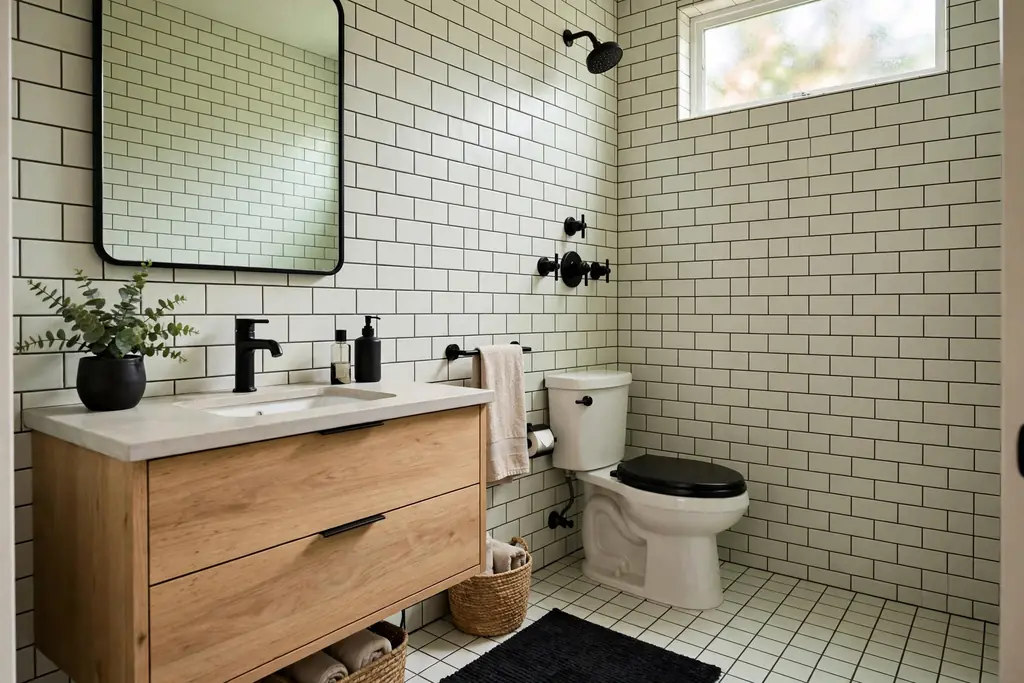
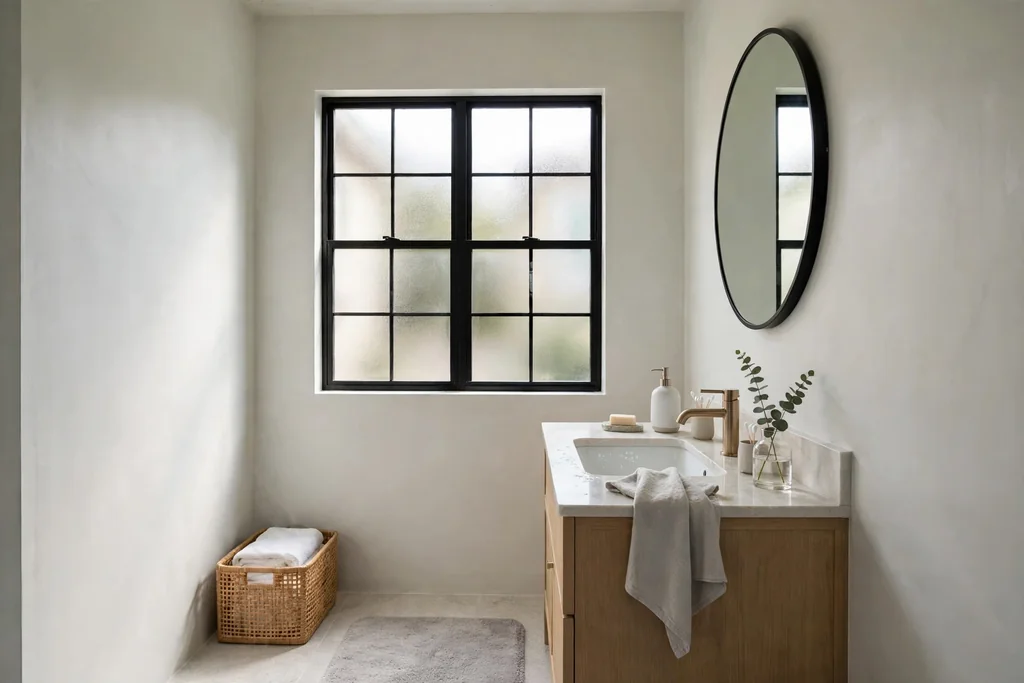
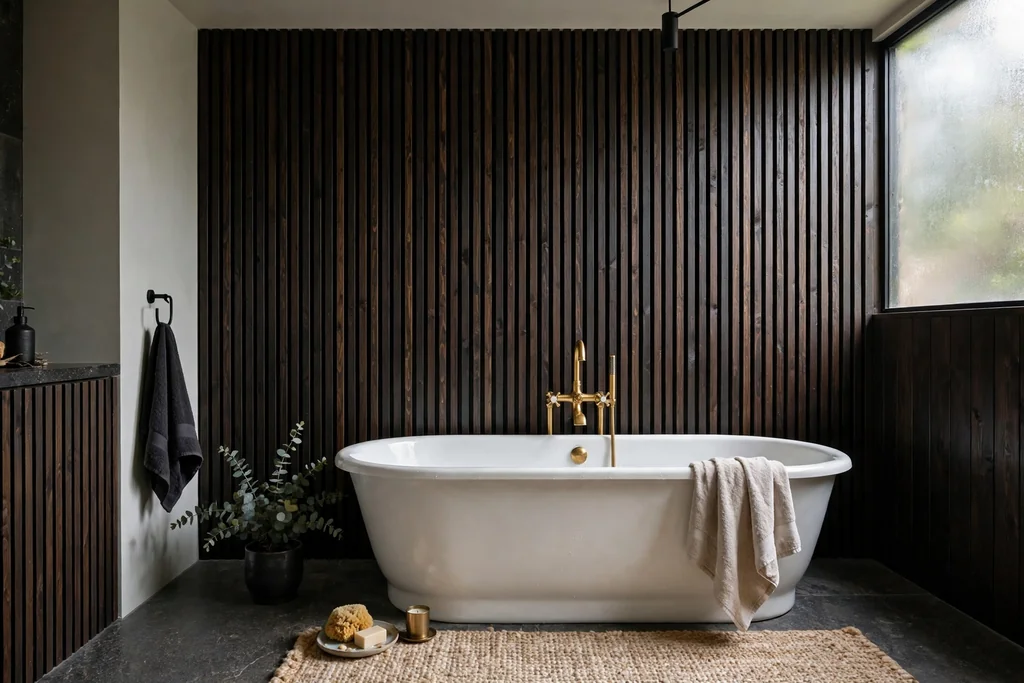
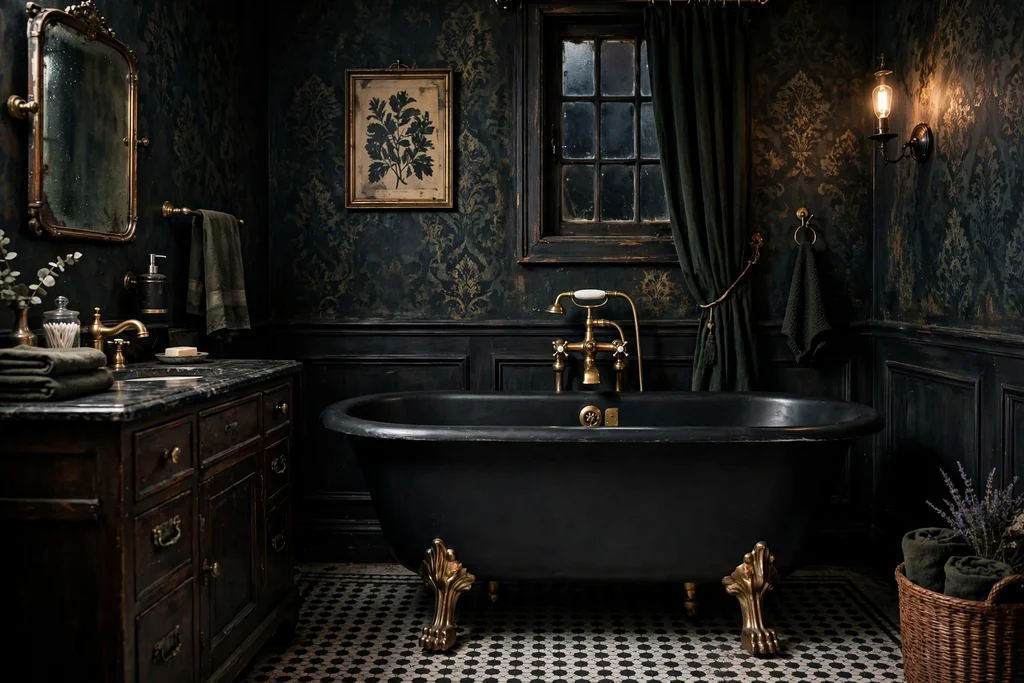
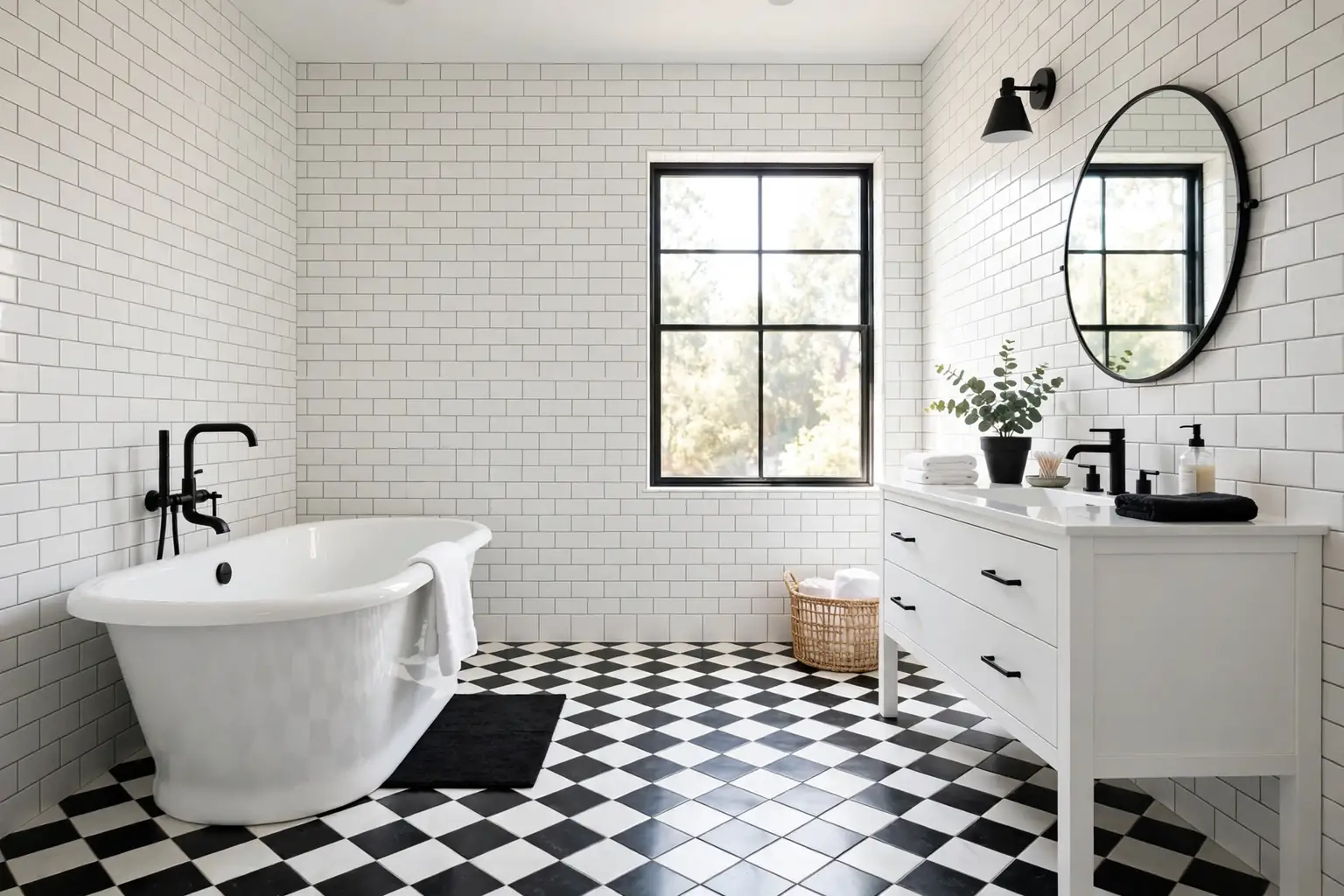
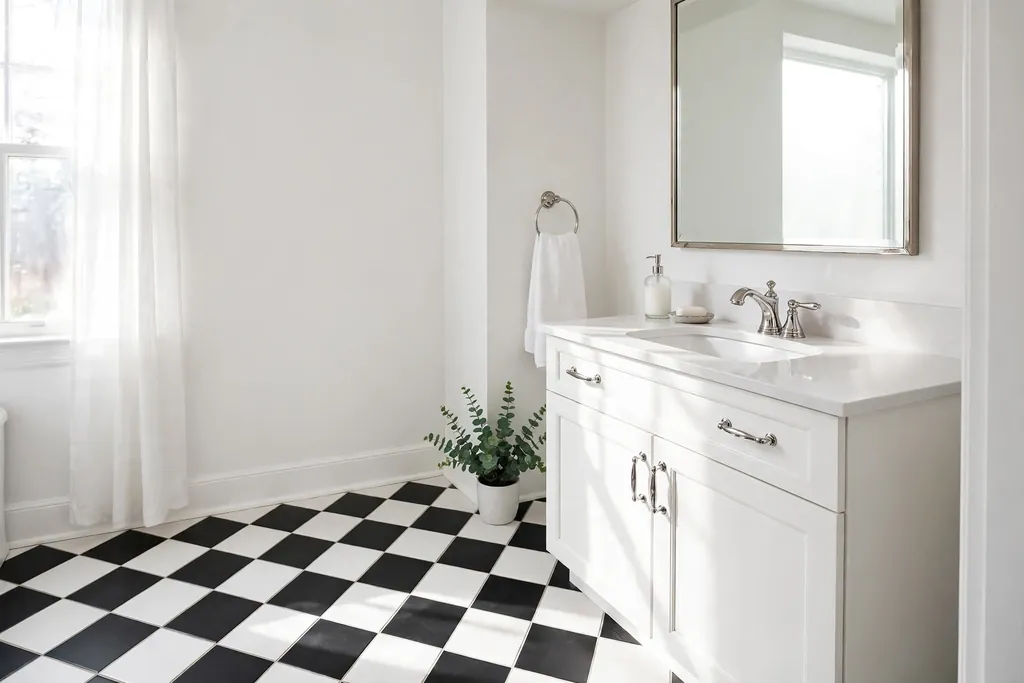
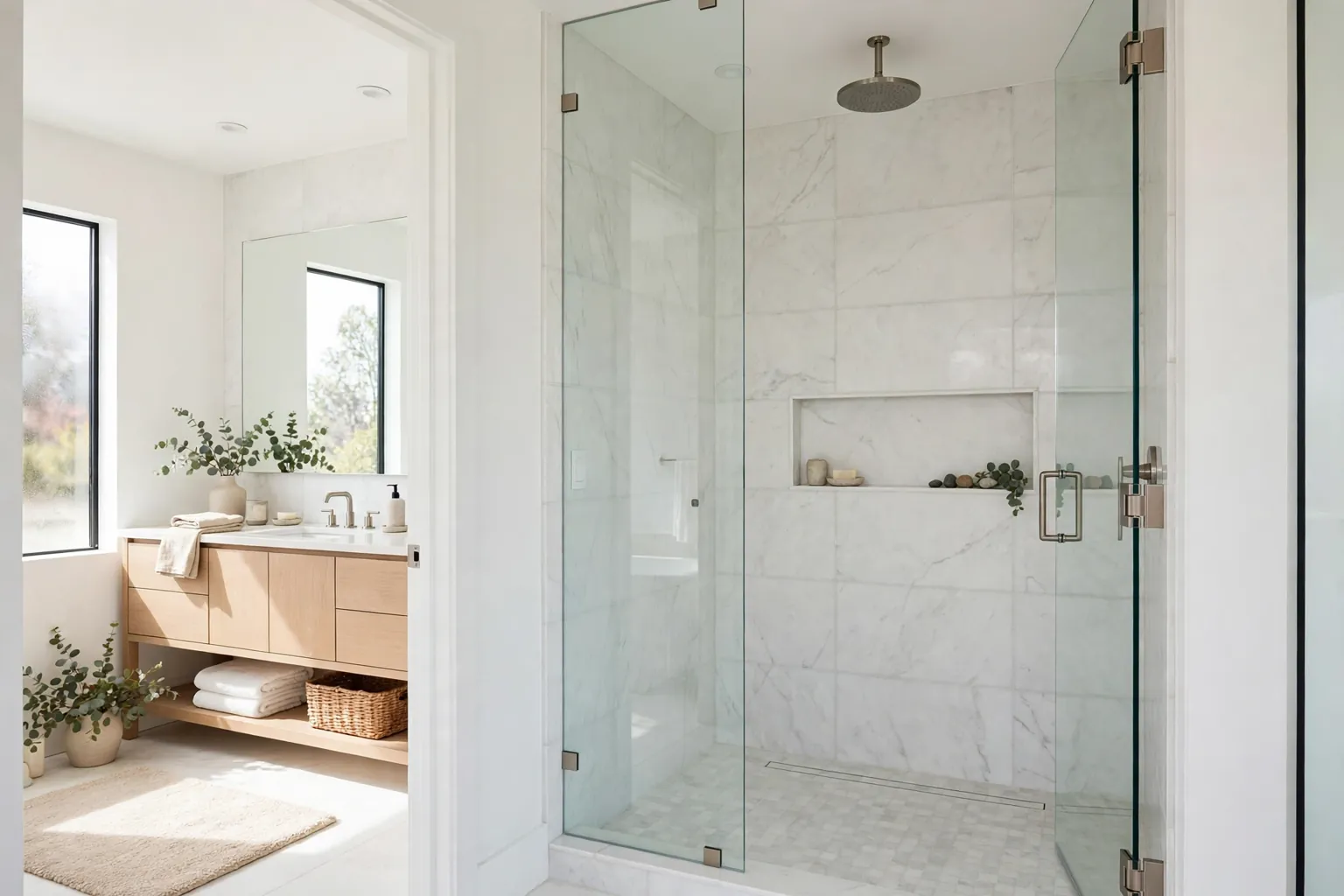
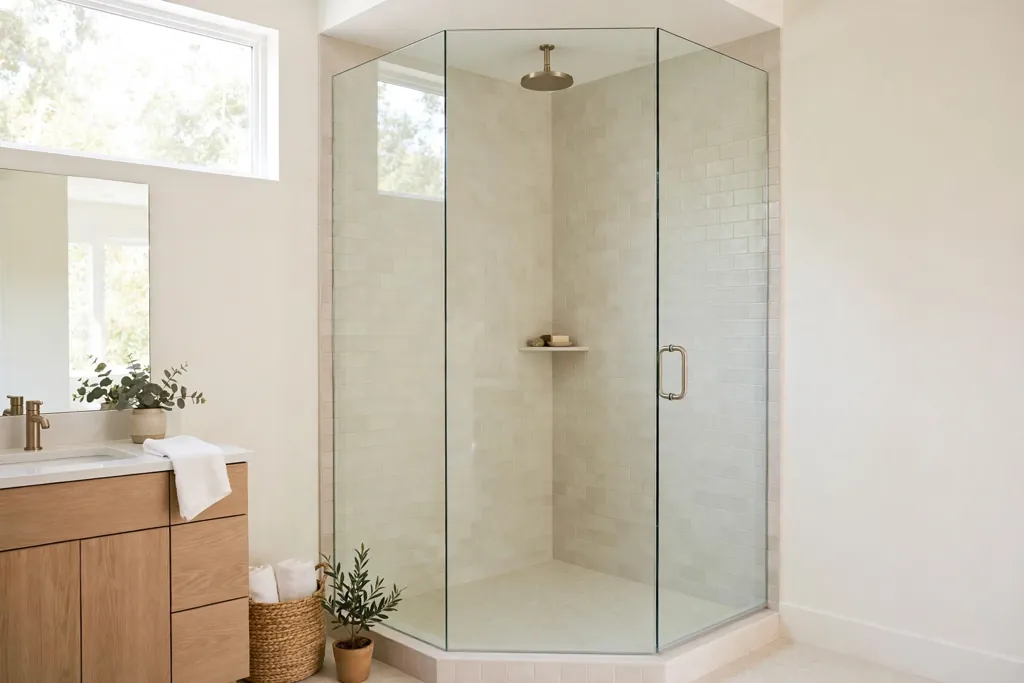
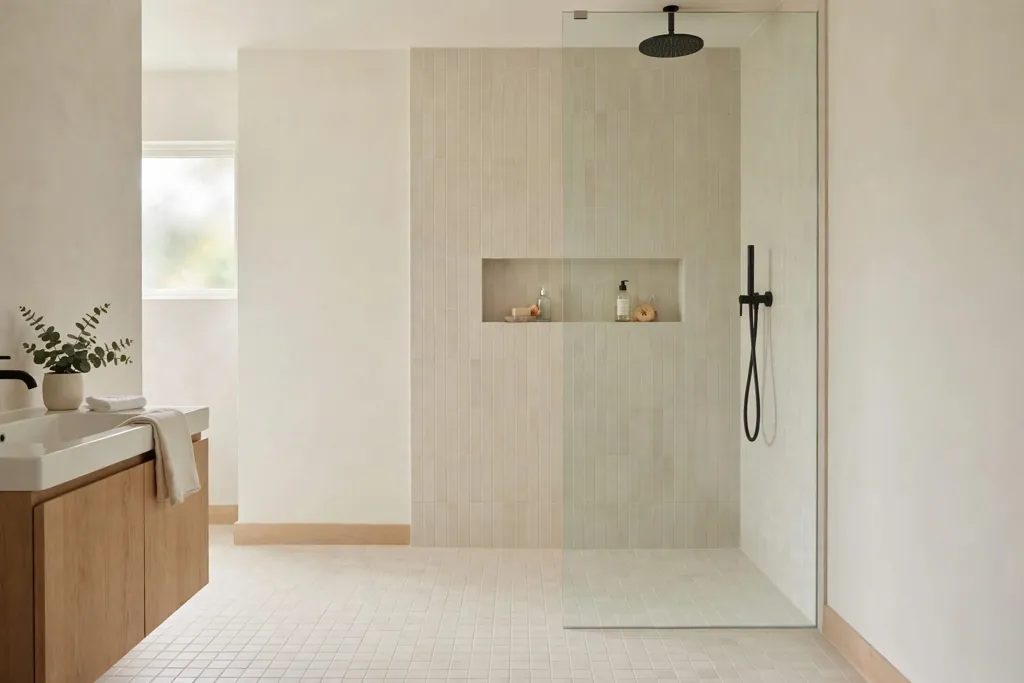
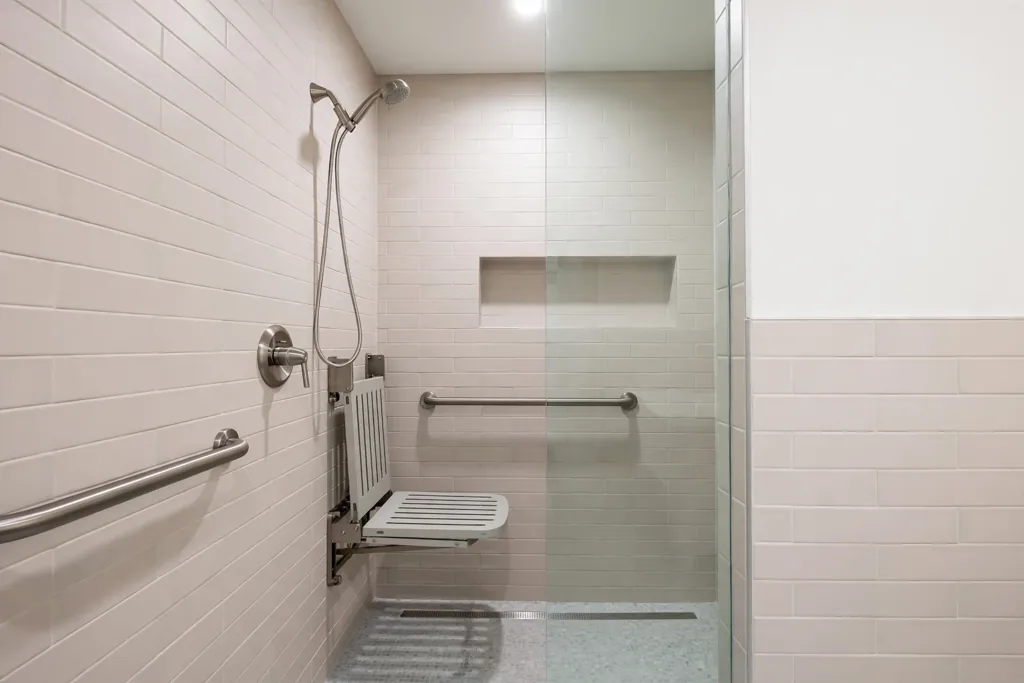
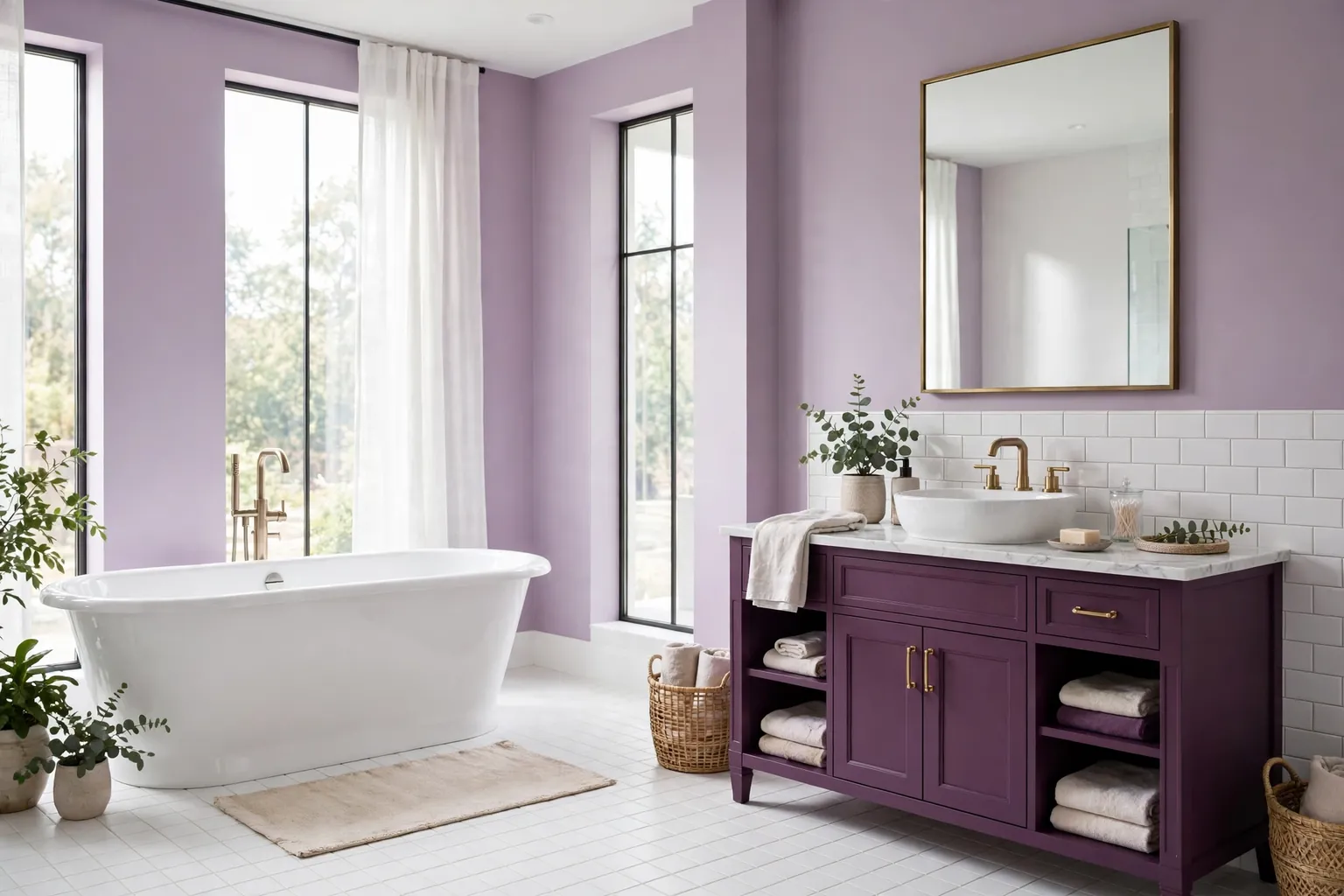
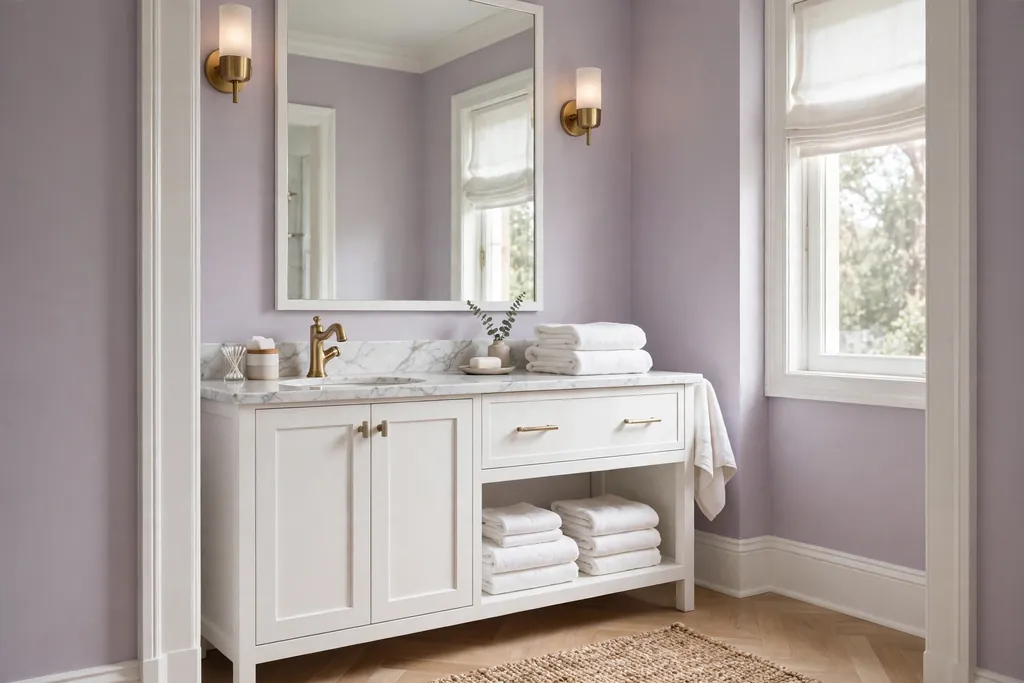
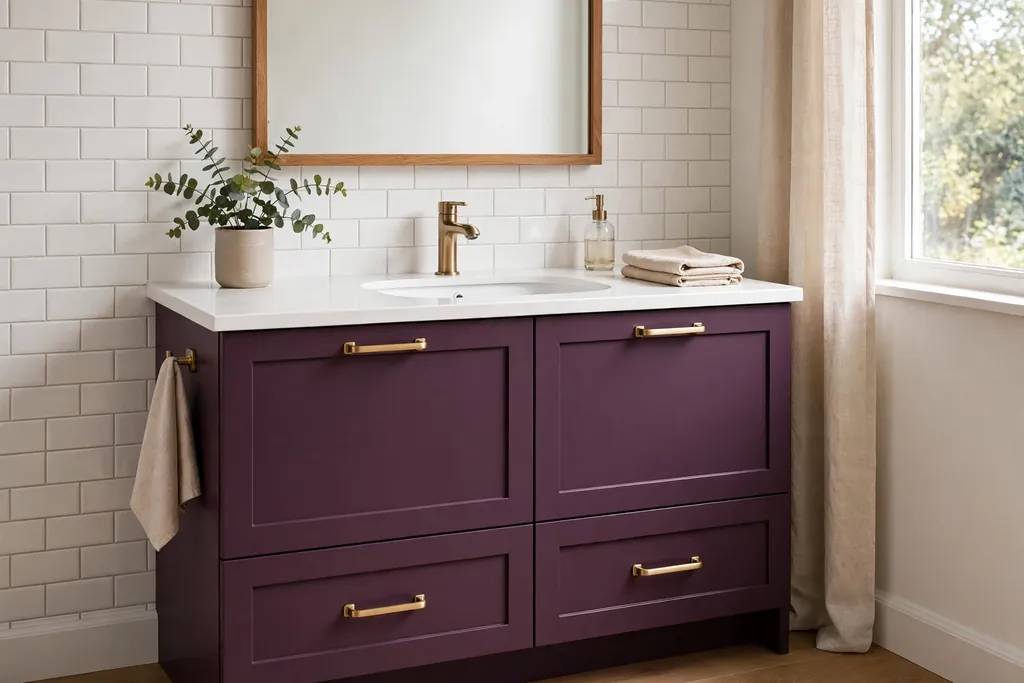
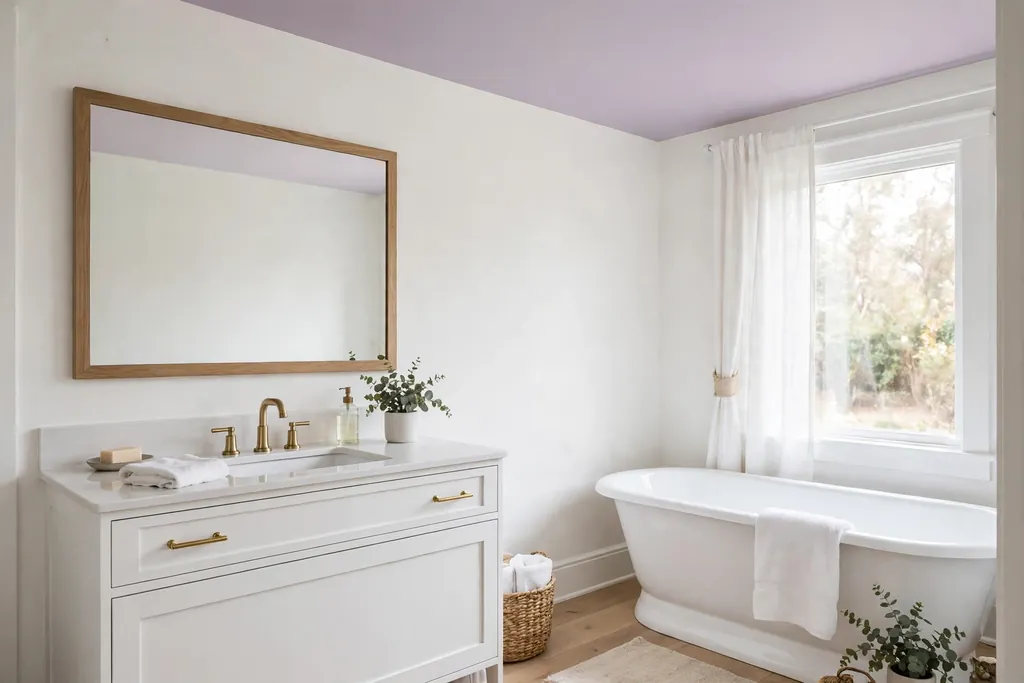
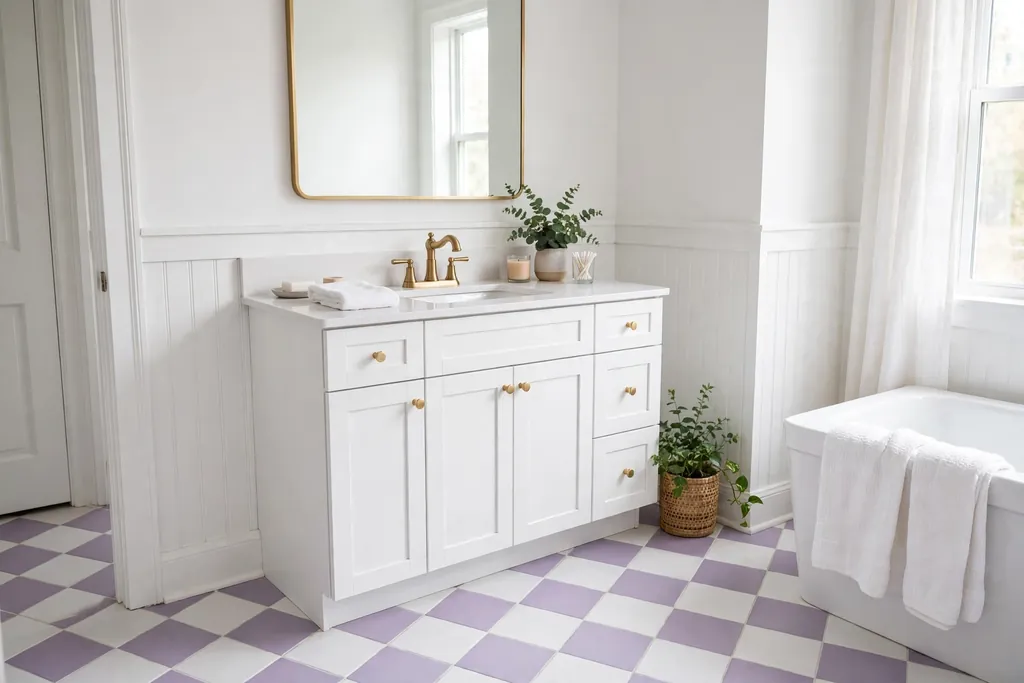
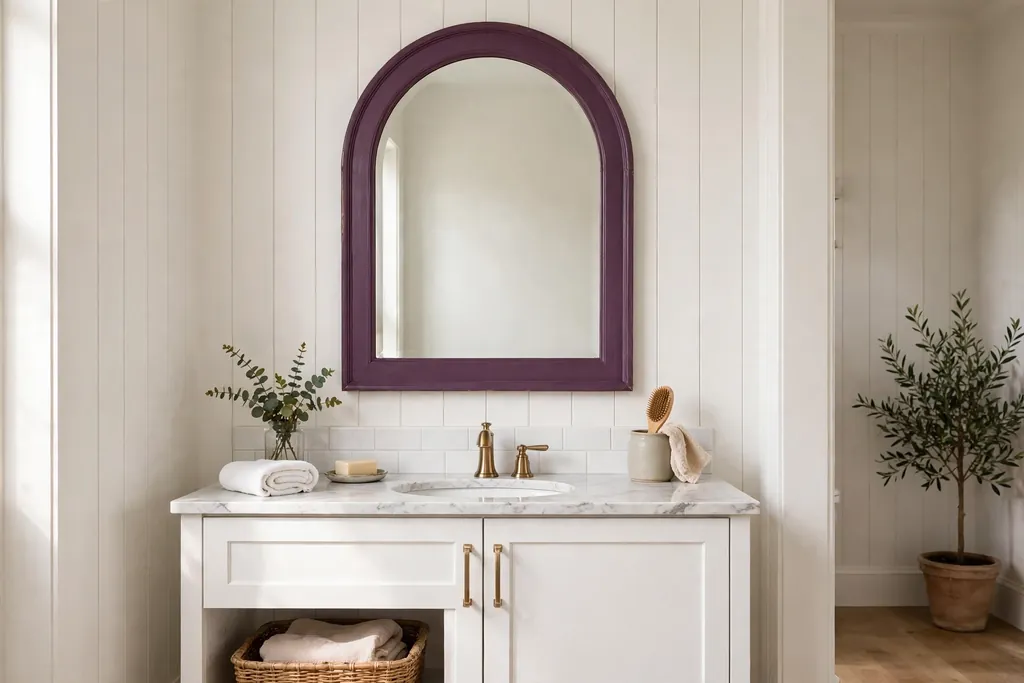
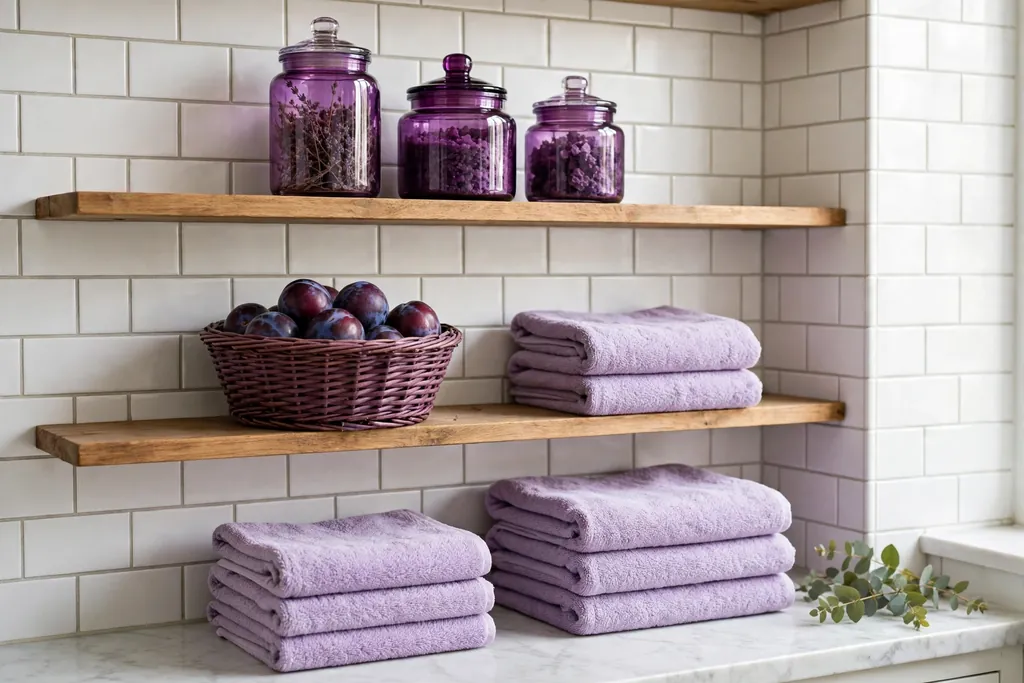
An elegant bathroom does not need marble on every surface or a hotel lobby look. It needs a calm palette, one or two well chosen focal points, and soft details that make the room pleasant at 7 in the morning and again in the evening. These 12 elegant bathroom decor ideas balance warmth and polish: wood to soften tile, linen to soften porcelain, and light that flatters rather than glares. Start with the change that fixes your biggest annoyance, whether that is harsh light, a bare wall, or a cold floor, then add the smaller comforts around it. For small room planning in general, these apartment bathroom ideas show how one wall or one storage fix can change a compact bathroom.
Key Takeaways
Pick one focal point, such as the tub, the mirror, or the vanity, and keep the rest of the room quieter so that piece can stand out.
Repeat one warm material and one metal finish in three or four places, so the room reads as planned rather than patched together.
Layer light: bright light for grooming, plus a softer lamp or candle glow for baths and evenings.
Use washable linen, wood, and baskets to soften tile and porcelain, and keep daily items grouped on a tray or shelf.
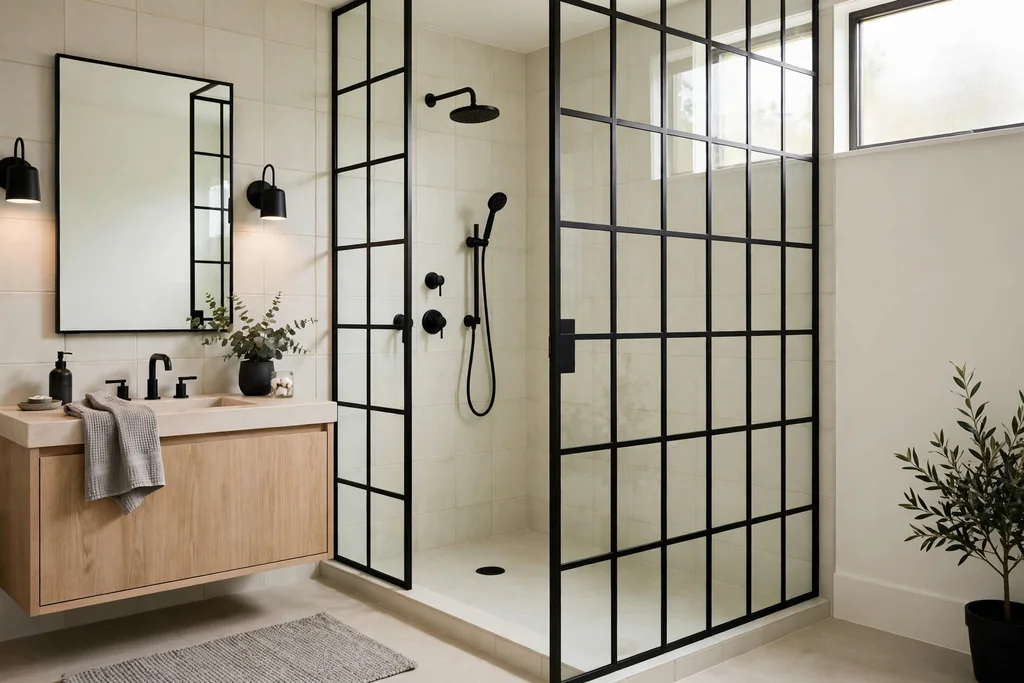
Choose finishes that cope with steam, such as sealed wood, coated metal, and washable cotton, and wipe them dry after showers.
Leave the walkway and the counter edges clear, since an elegant room still has to work for daily routines.
1. Soft White Palette with a Warm Wood Vanity
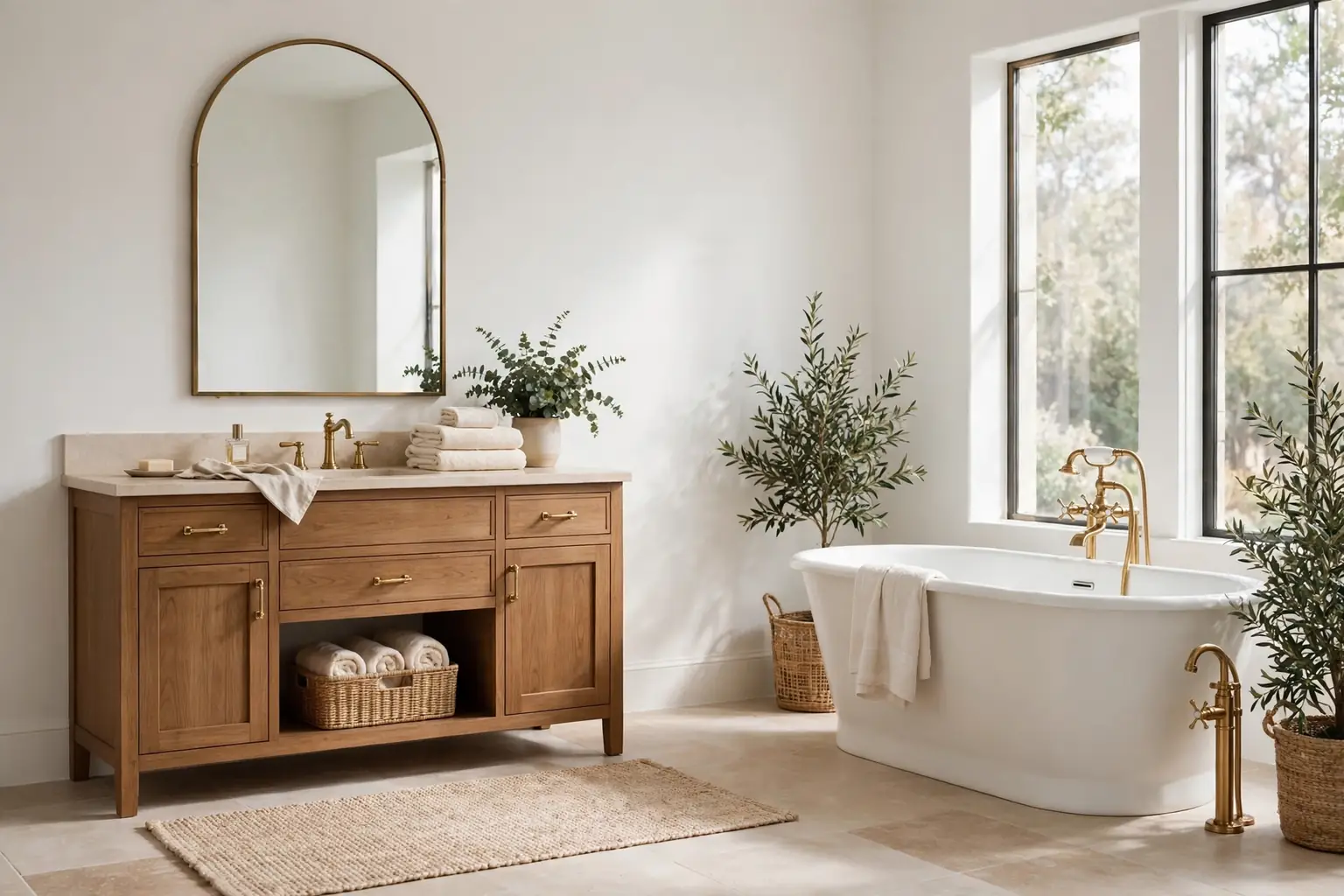
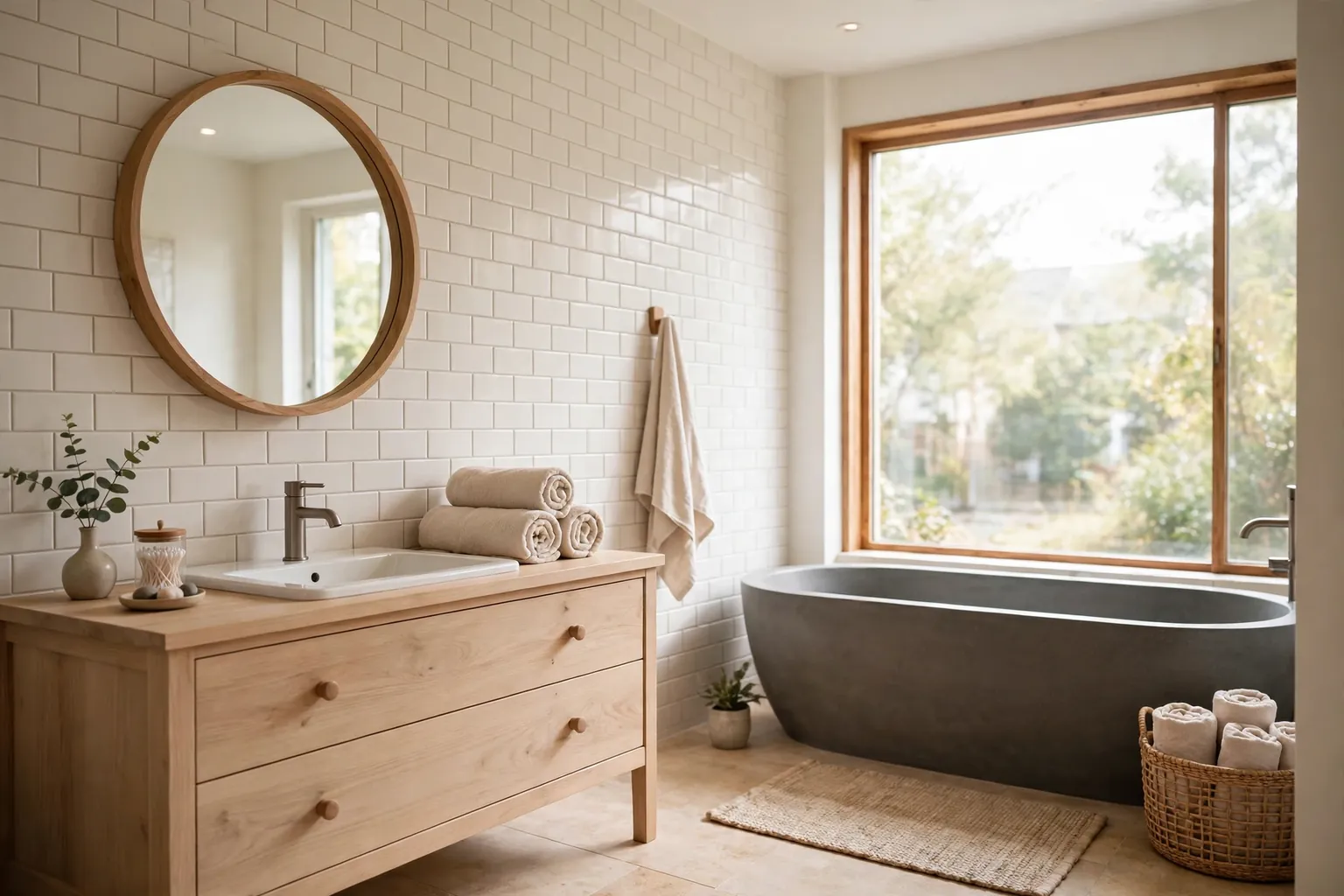
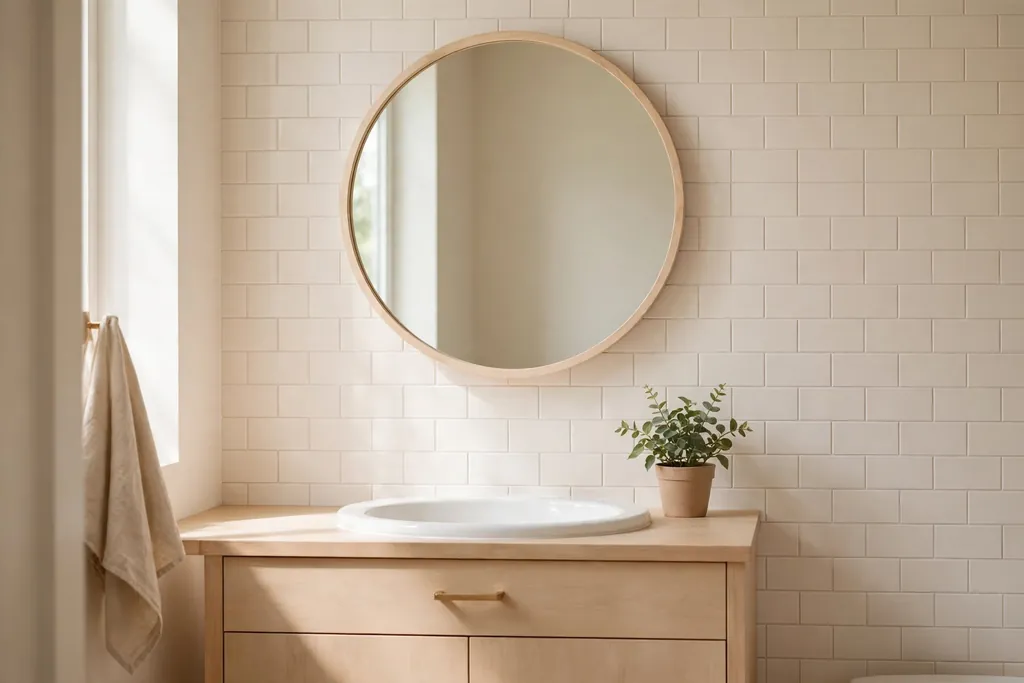
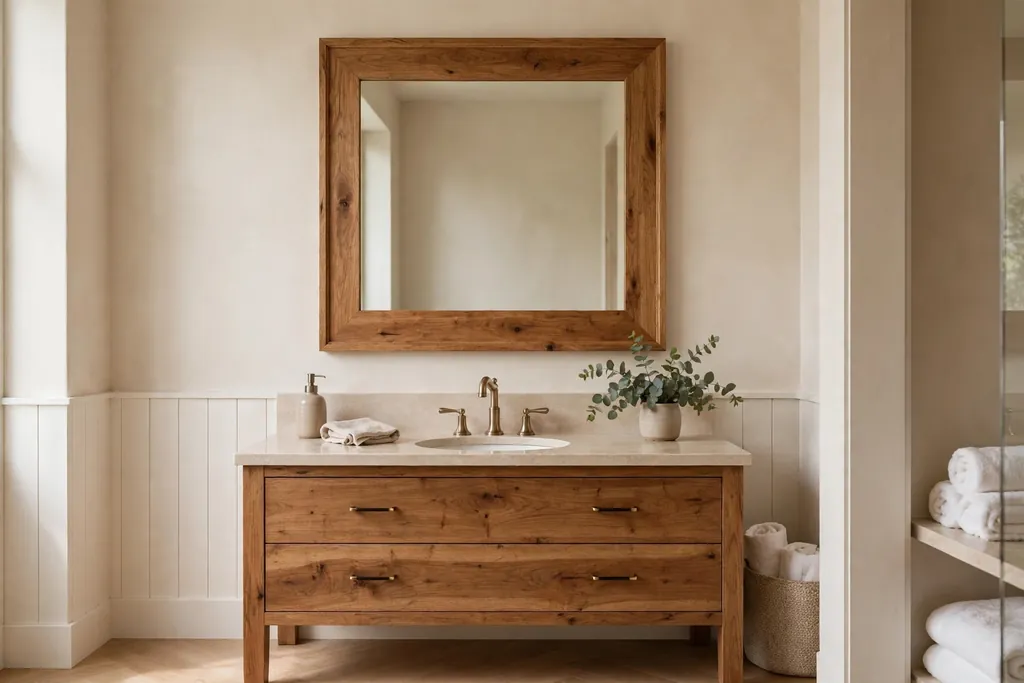
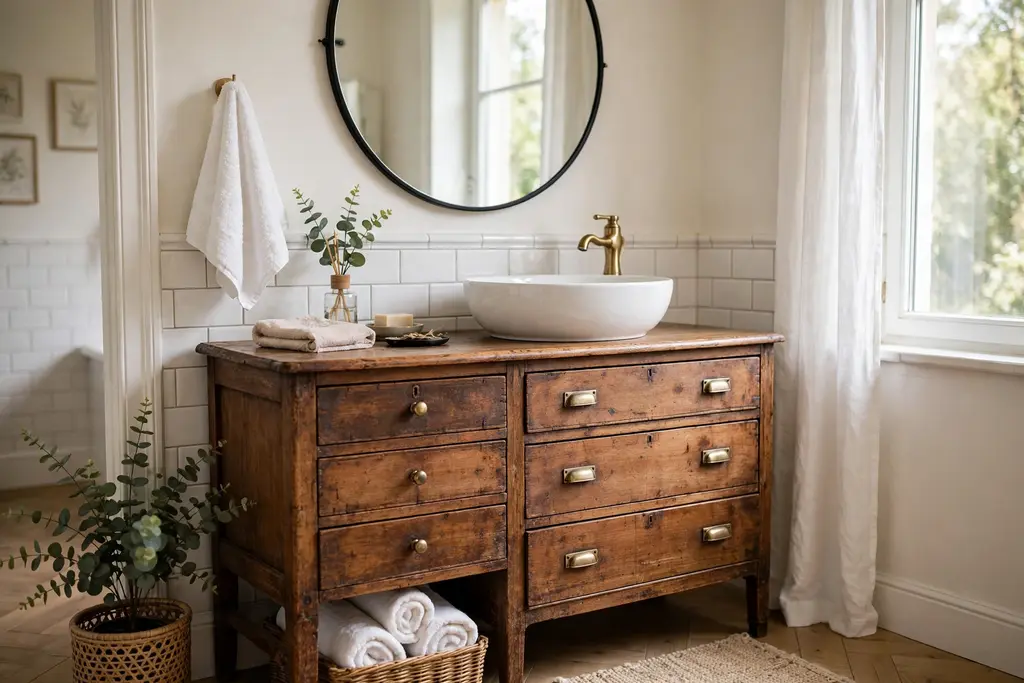
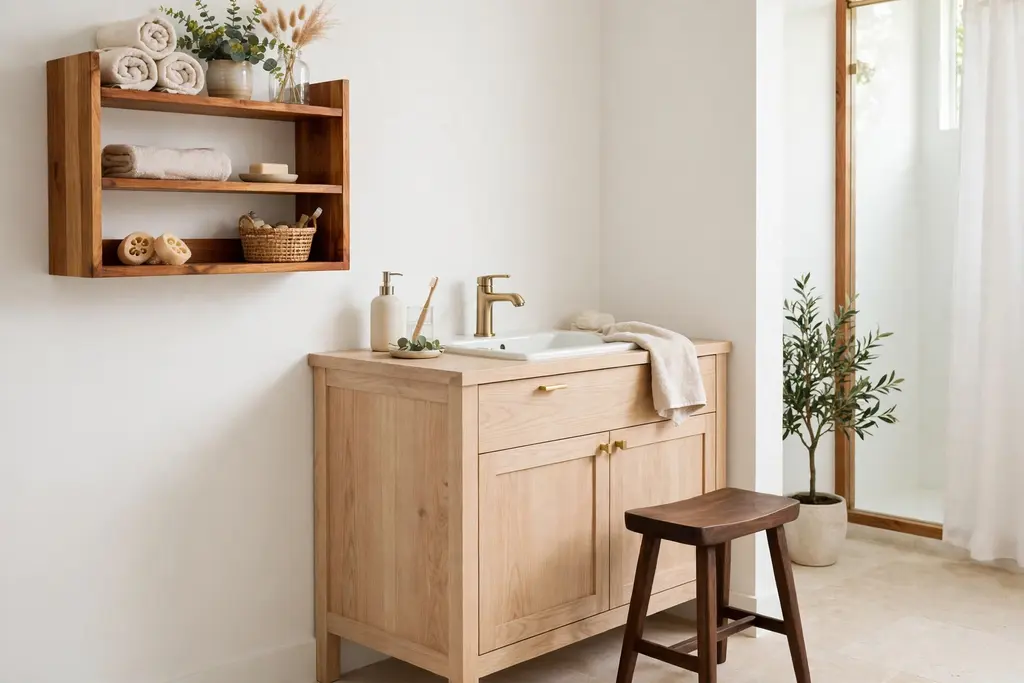
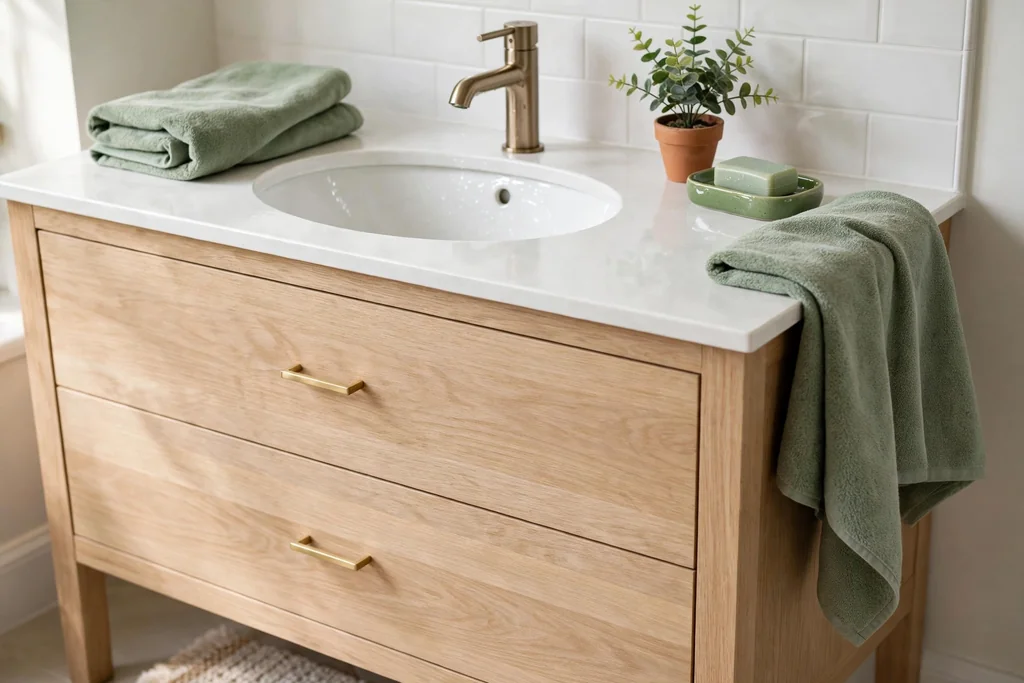
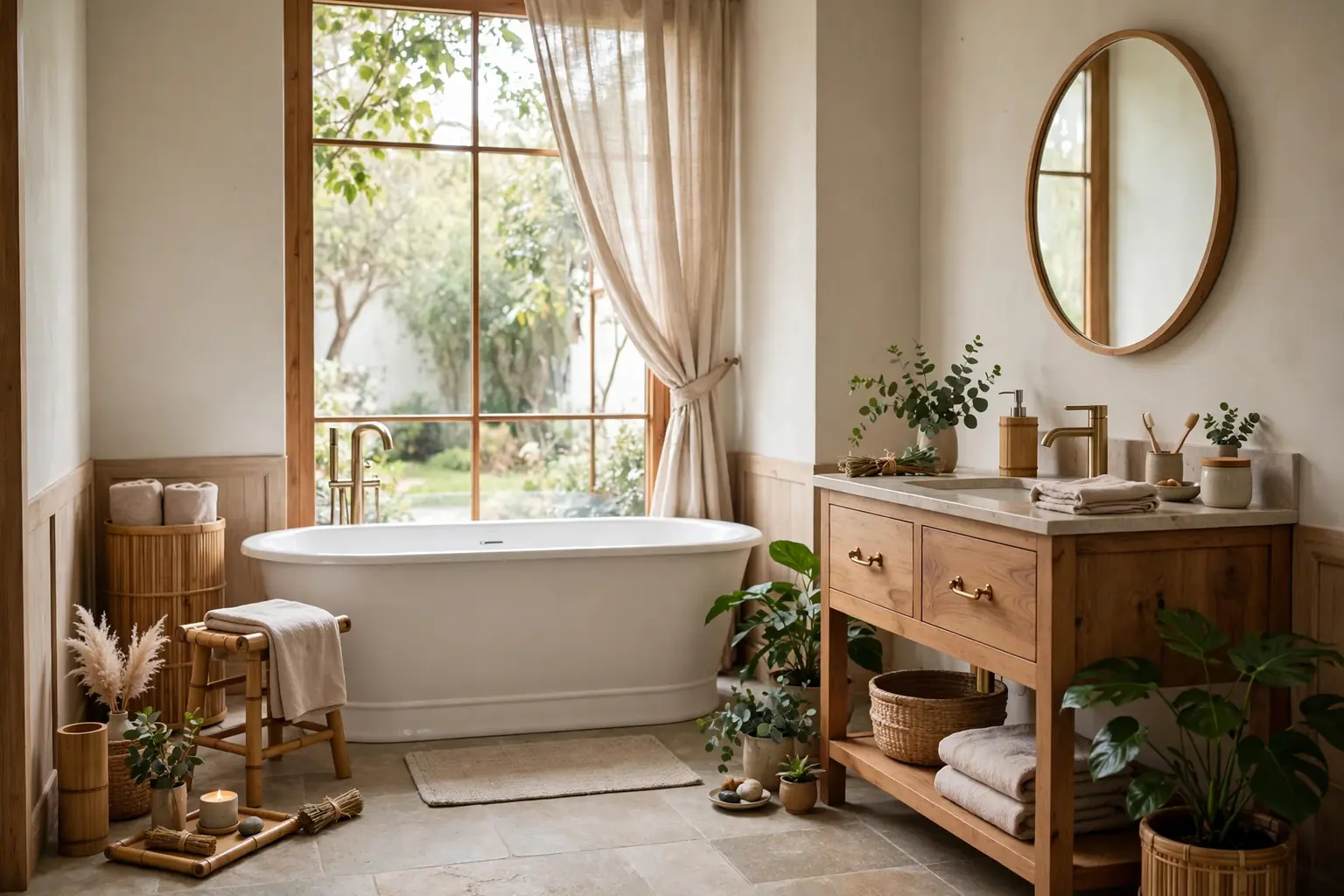
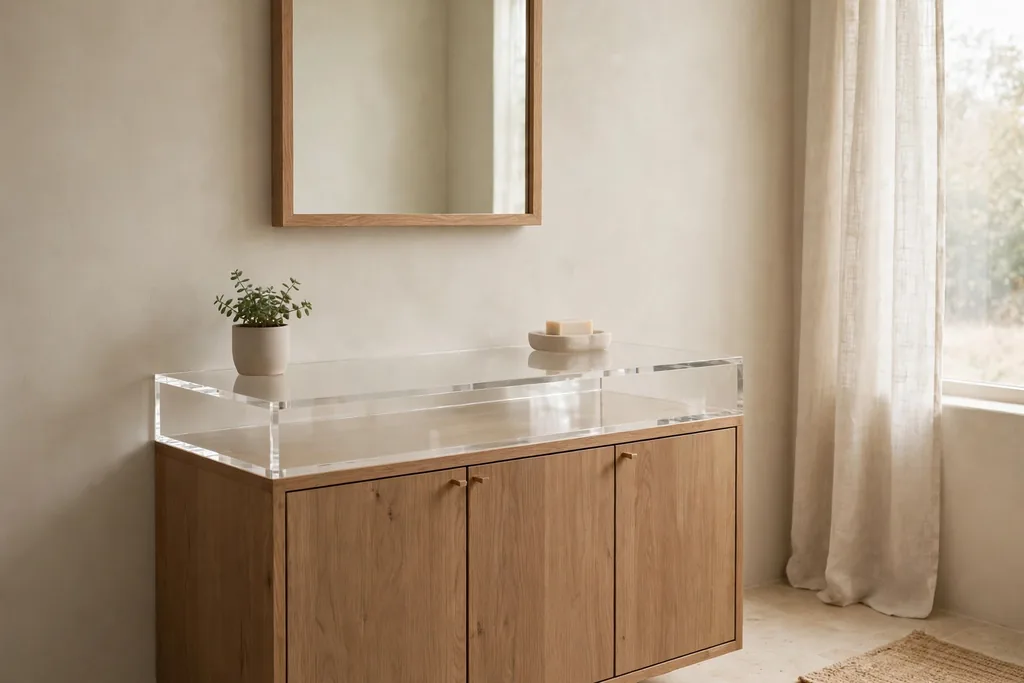
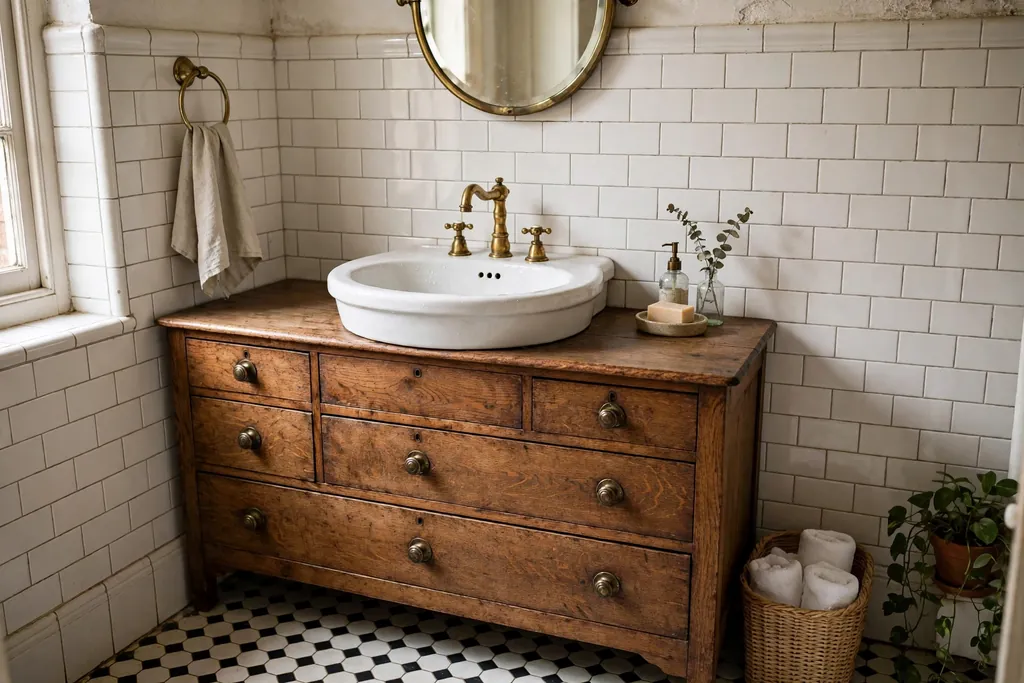
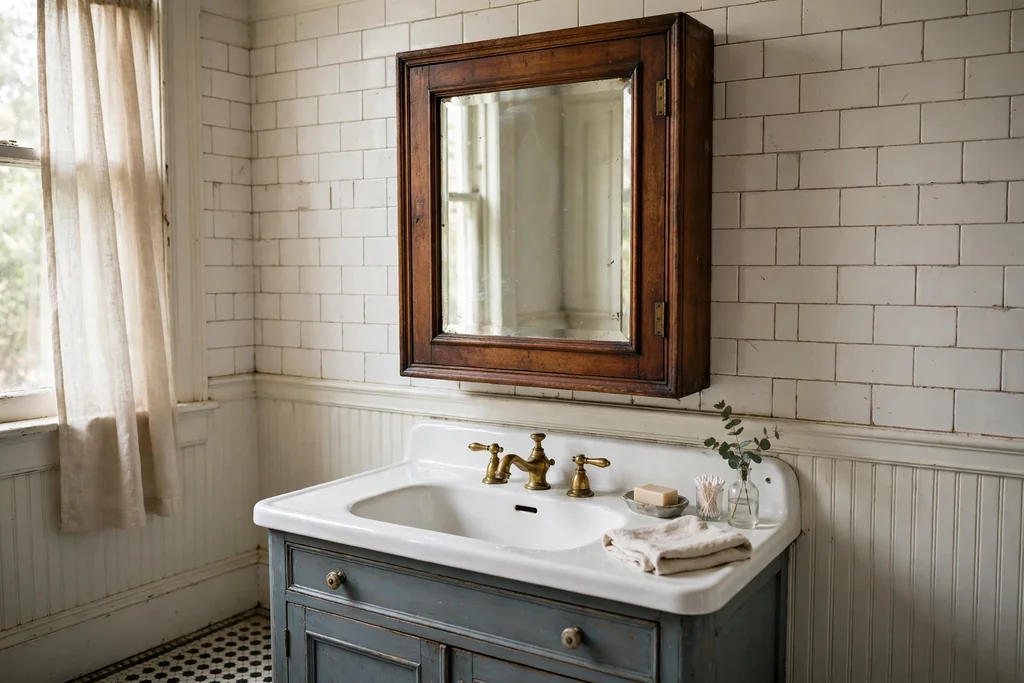
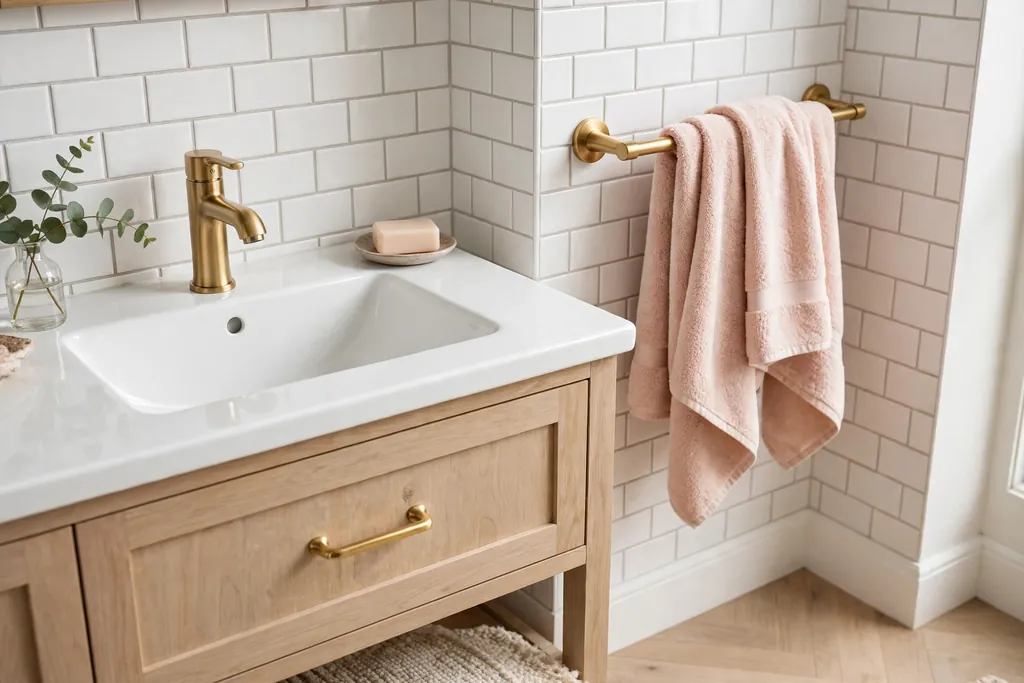
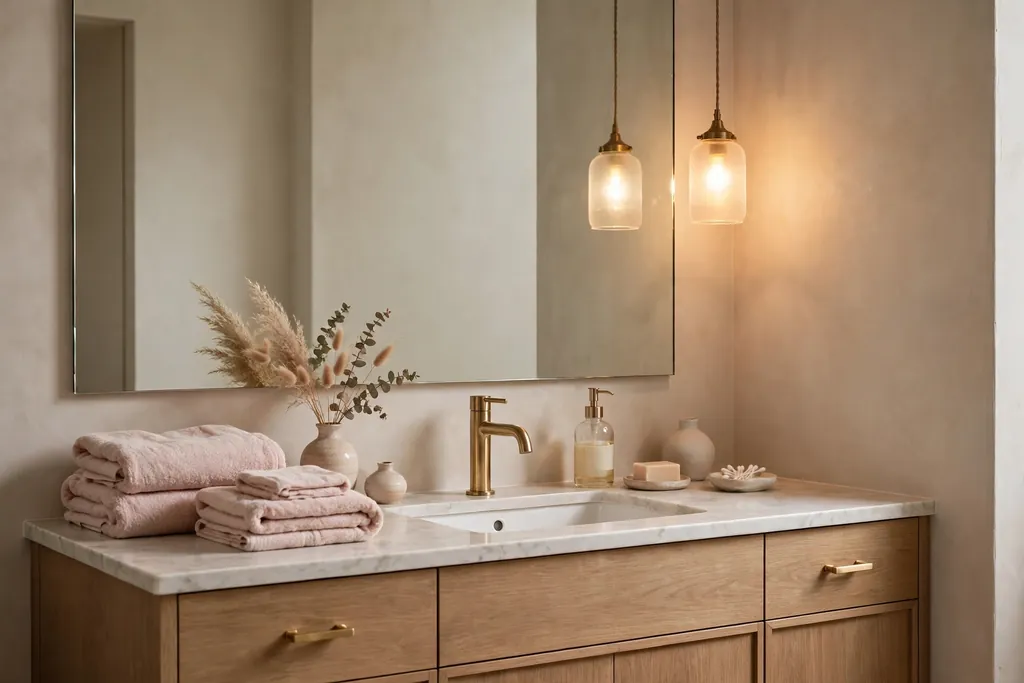
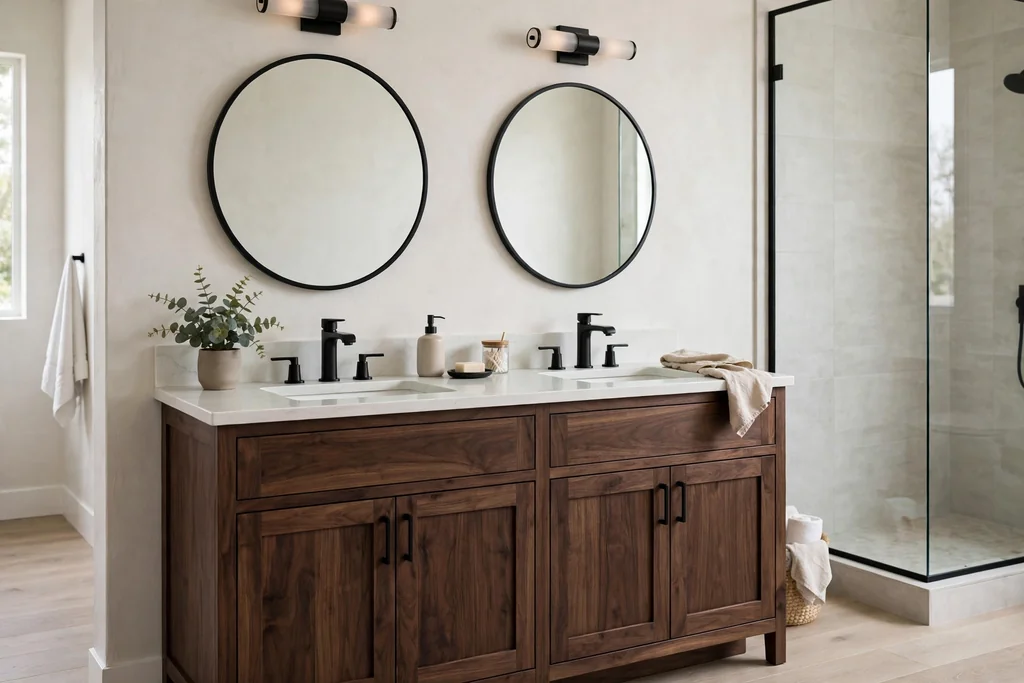
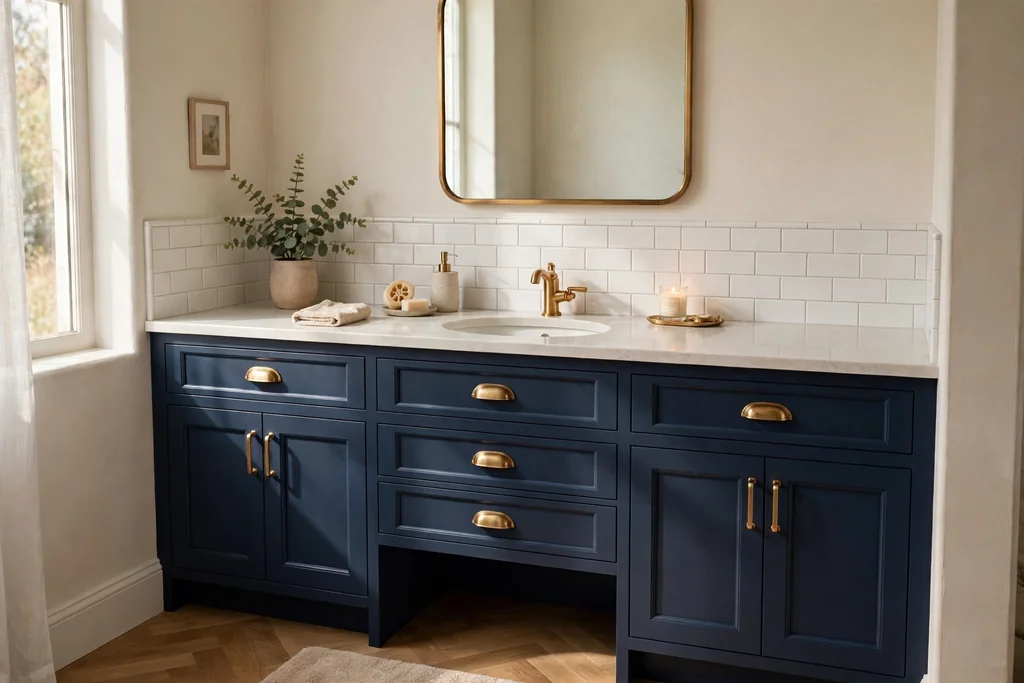
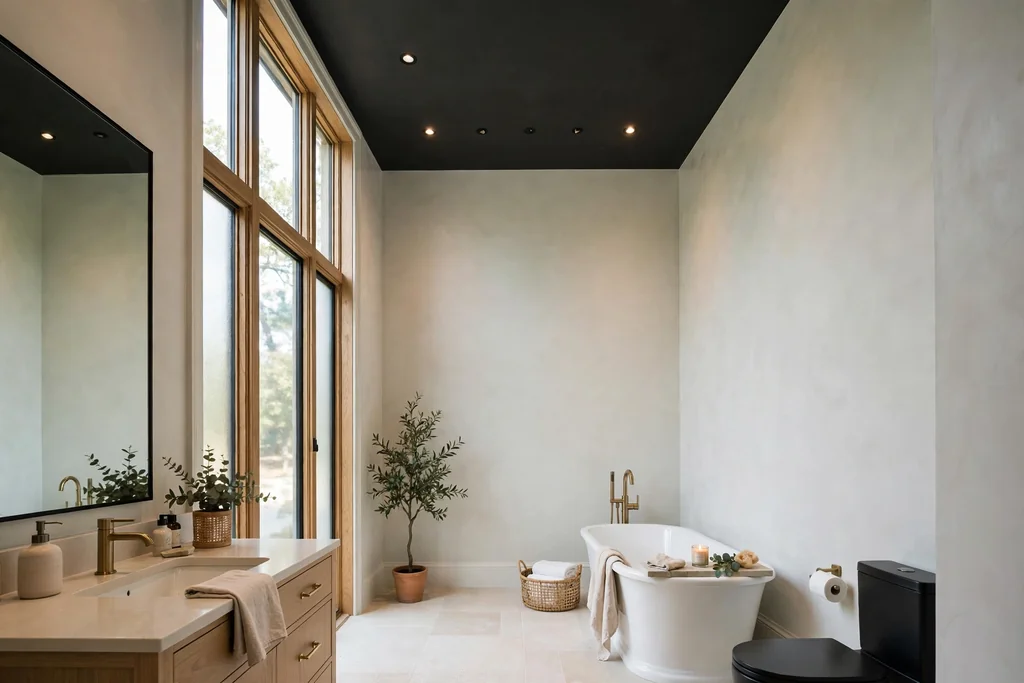
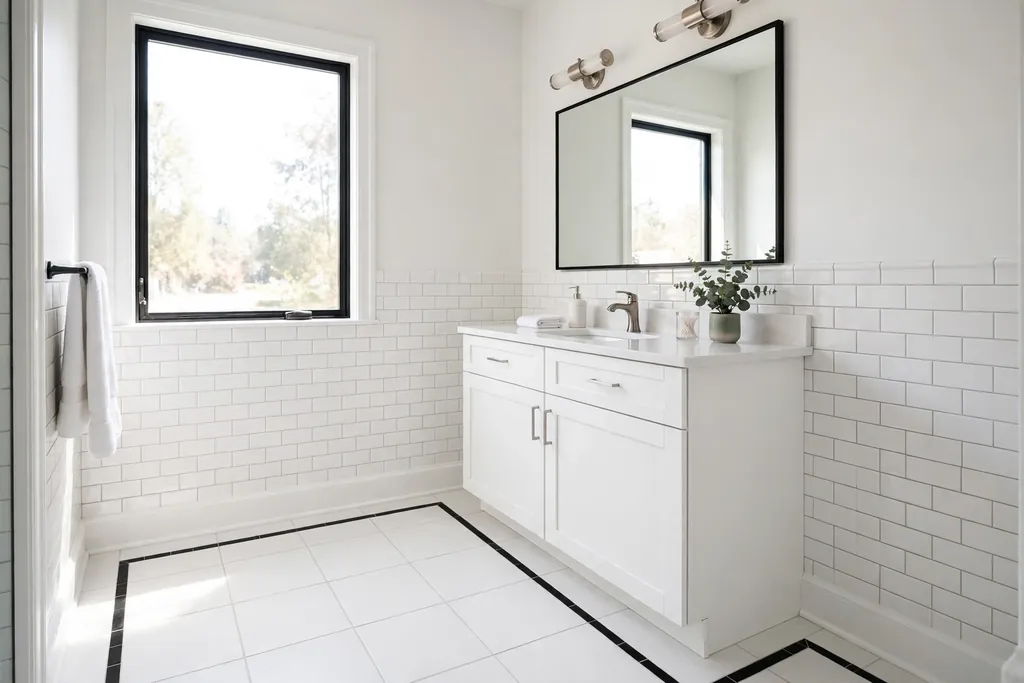
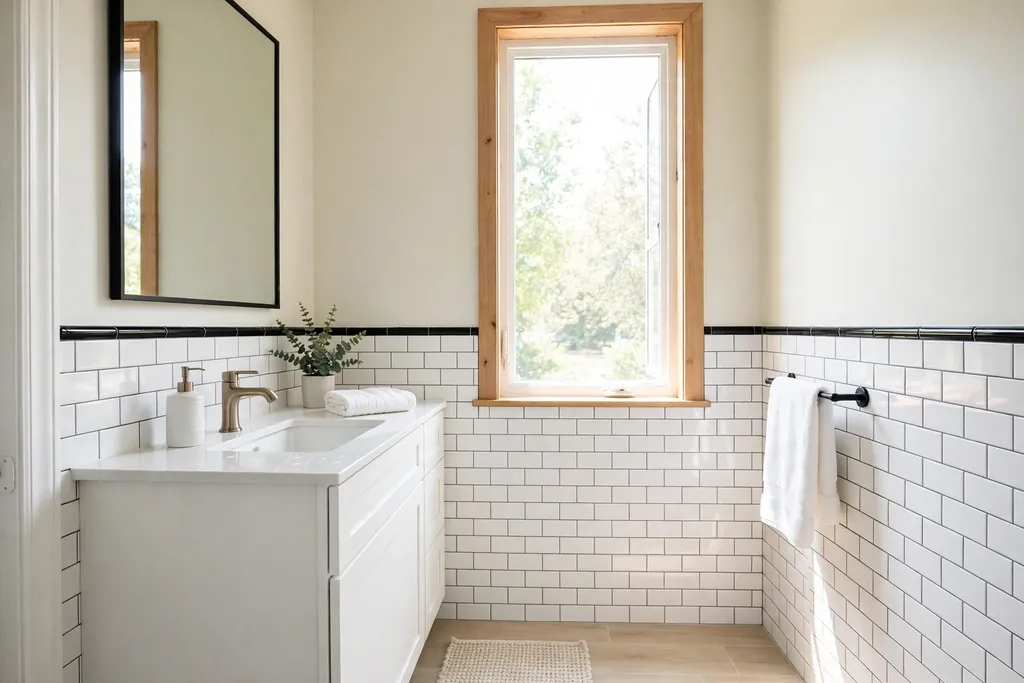
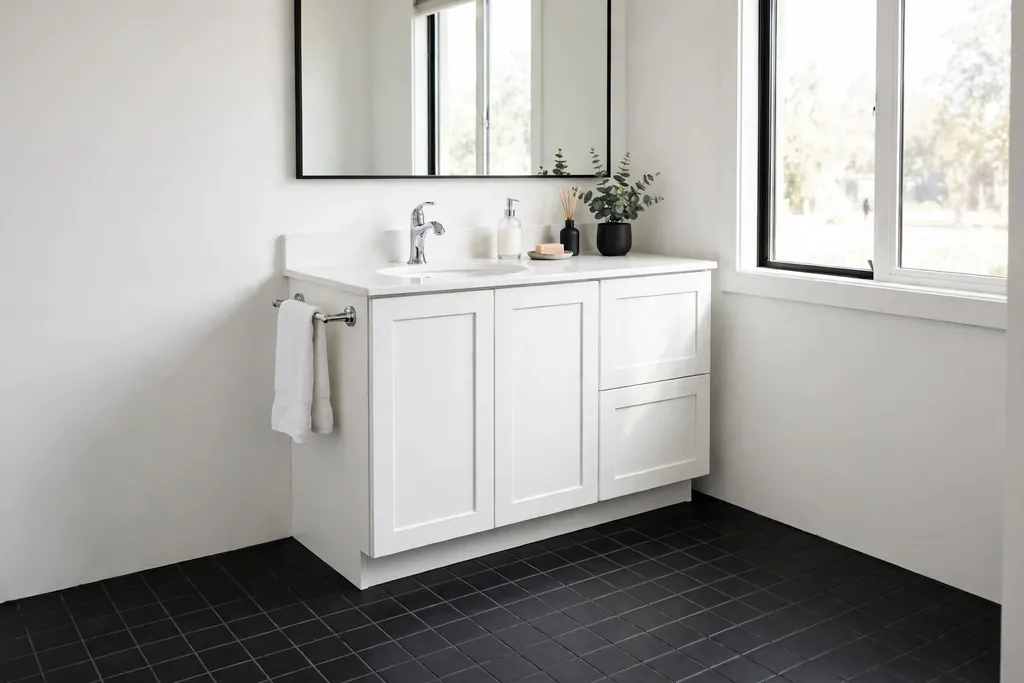
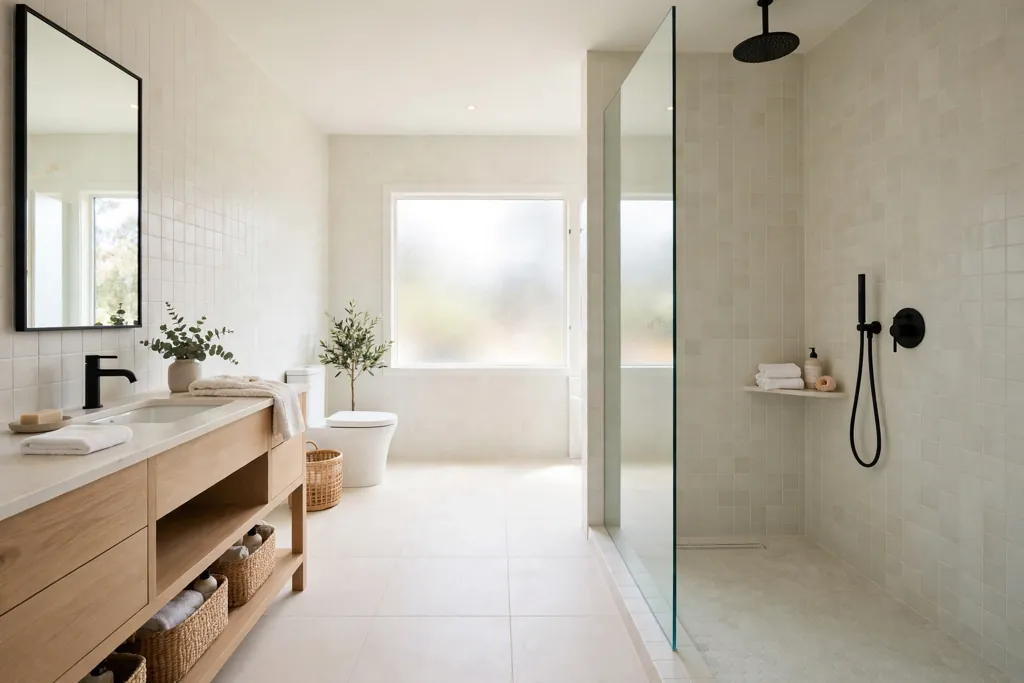
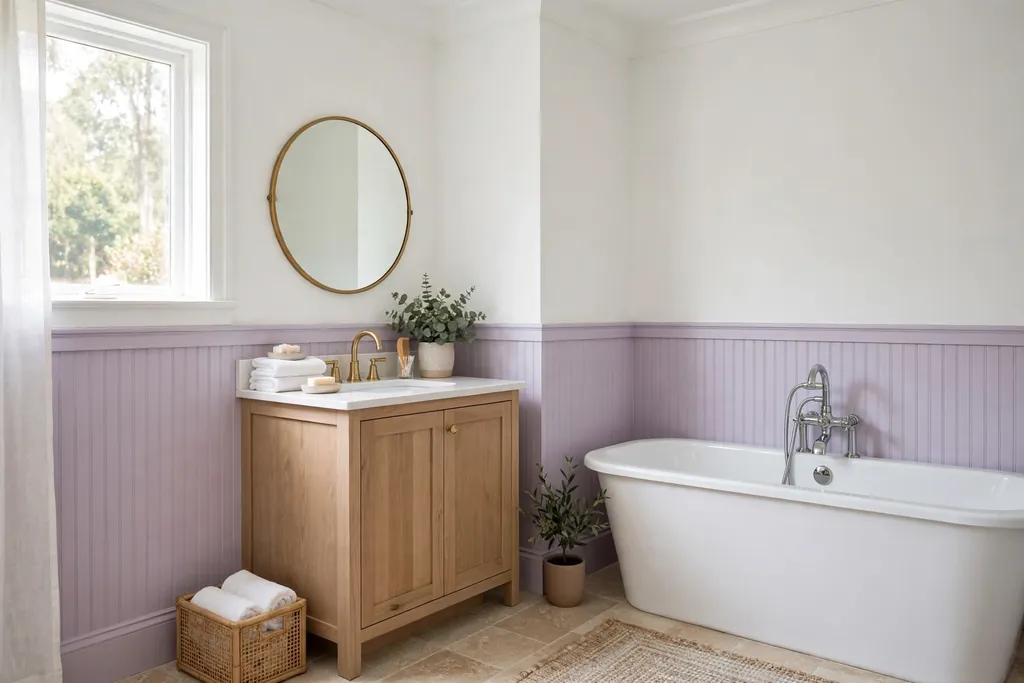
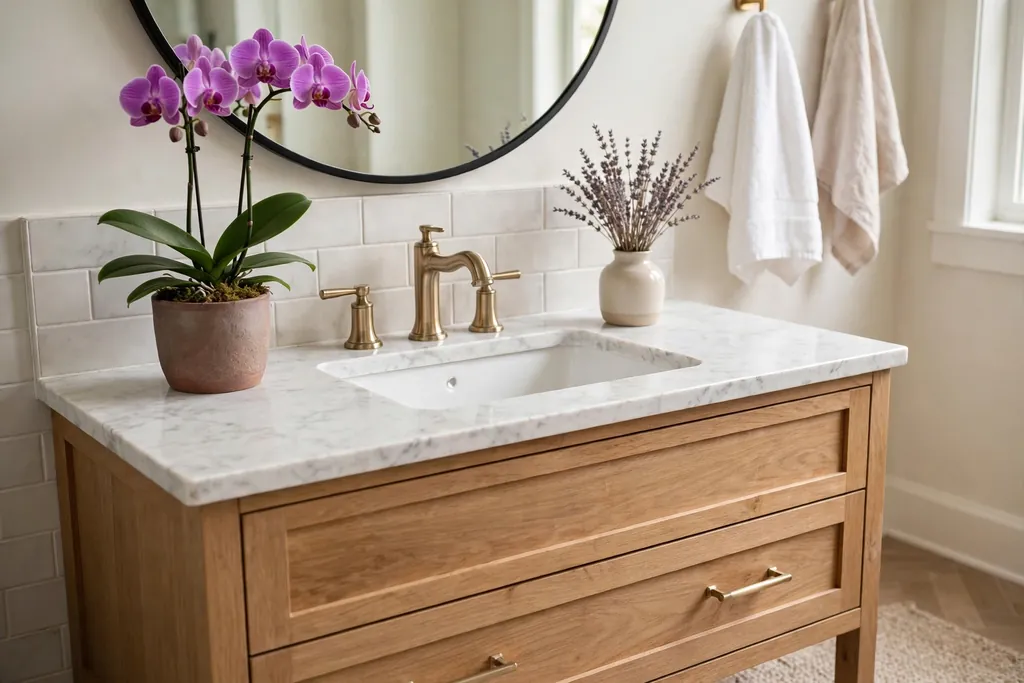
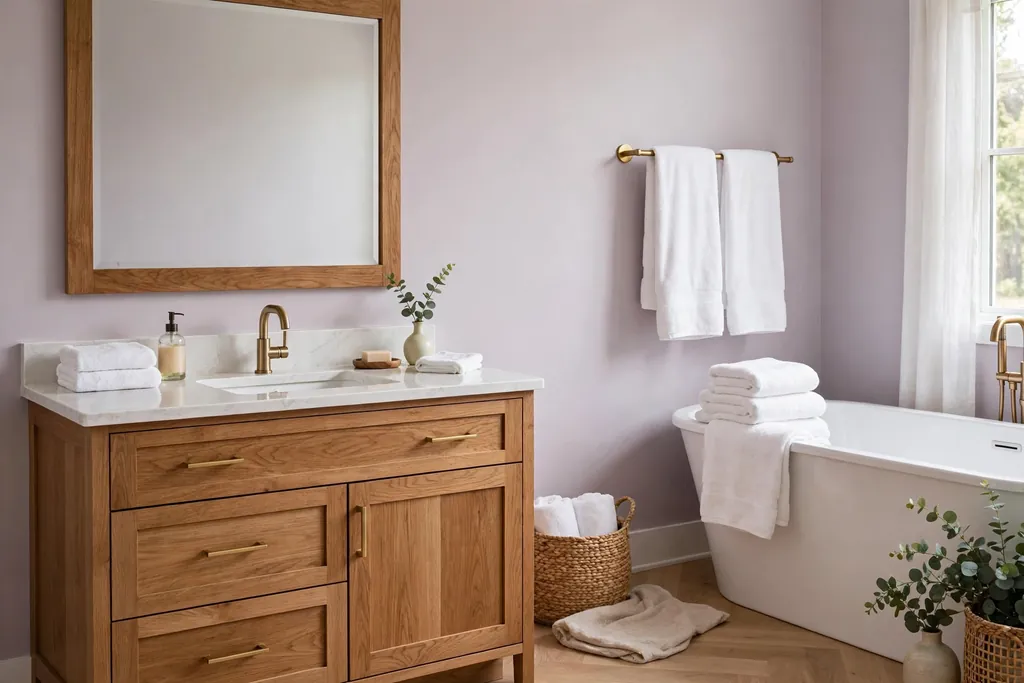
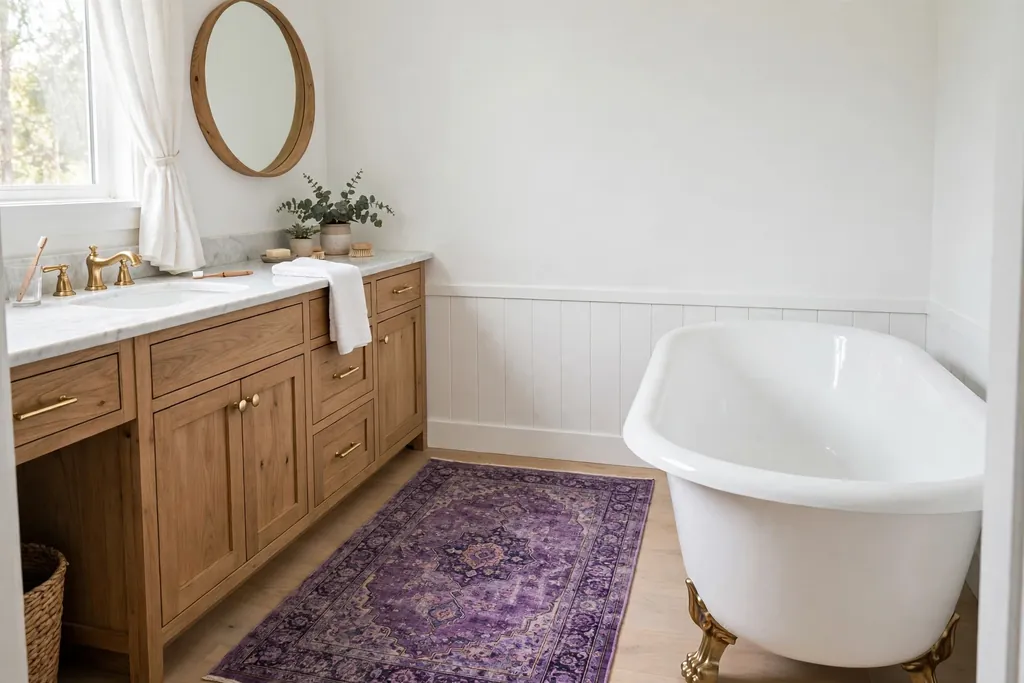
Pair soft white walls and tile with a warm wood vanity, and the room gains warmth at once without losing its clean feel. Oak, walnut, or a warm stained pine vanity softens white porcelain and chrome, and it gives the eye a natural texture to rest on. Keep the wall color a warm white rather than a stark white, so the wood and the tile sit together instead of fighting each other.
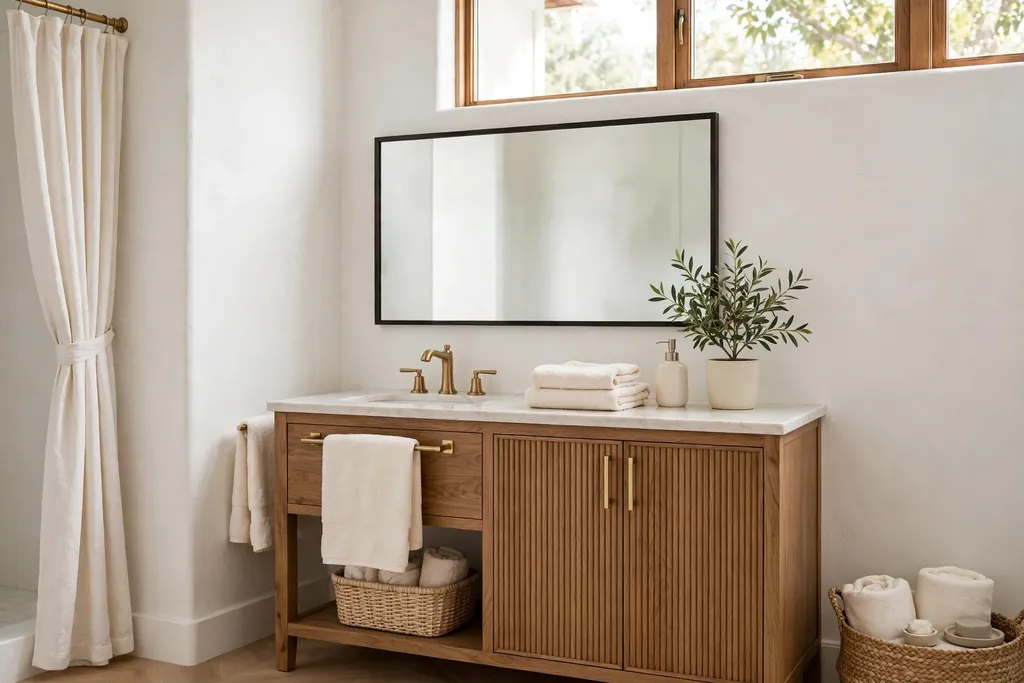
Choose a vanity with closed storage for cleaning supplies and open space only where you need it, such as a towel shelf below. Add cream towels and a small plant on the counter, and keep the top mostly clear. If a new vanity is not in the budget, a wood stool, a wood framed mirror, or a wood tray can bring the same warmth in miniature.
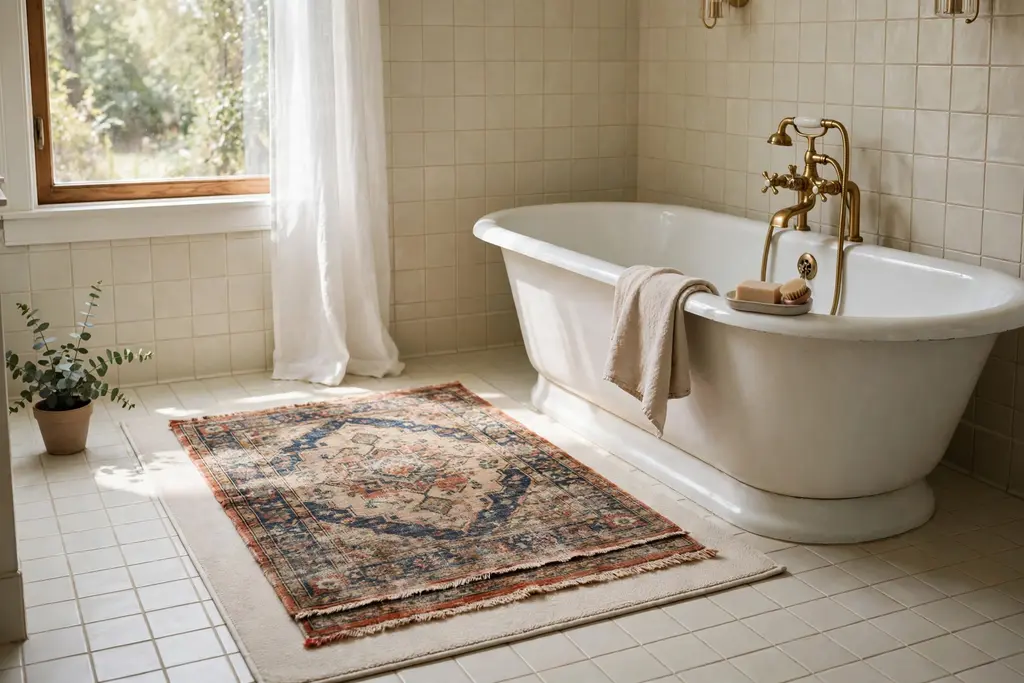
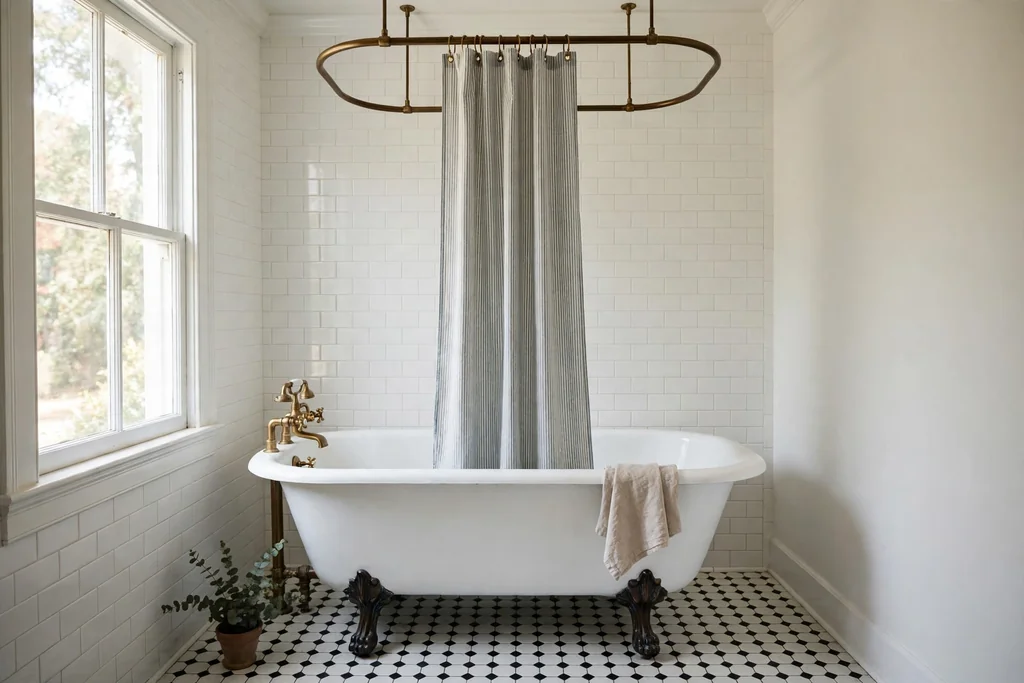
2. Freestanding Tub as the Room Focal Point
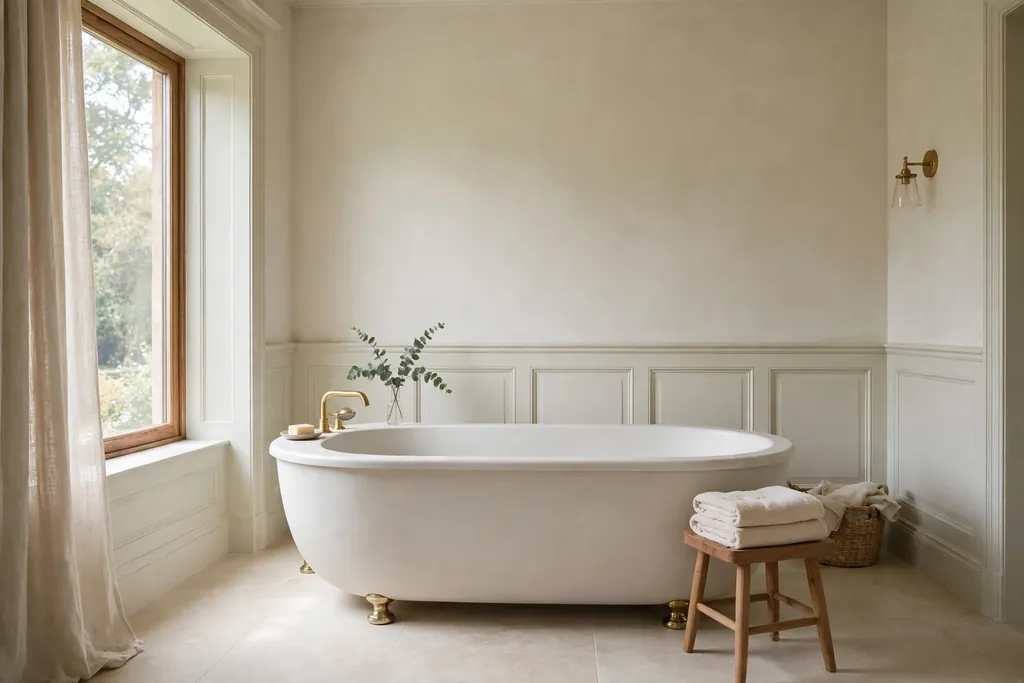
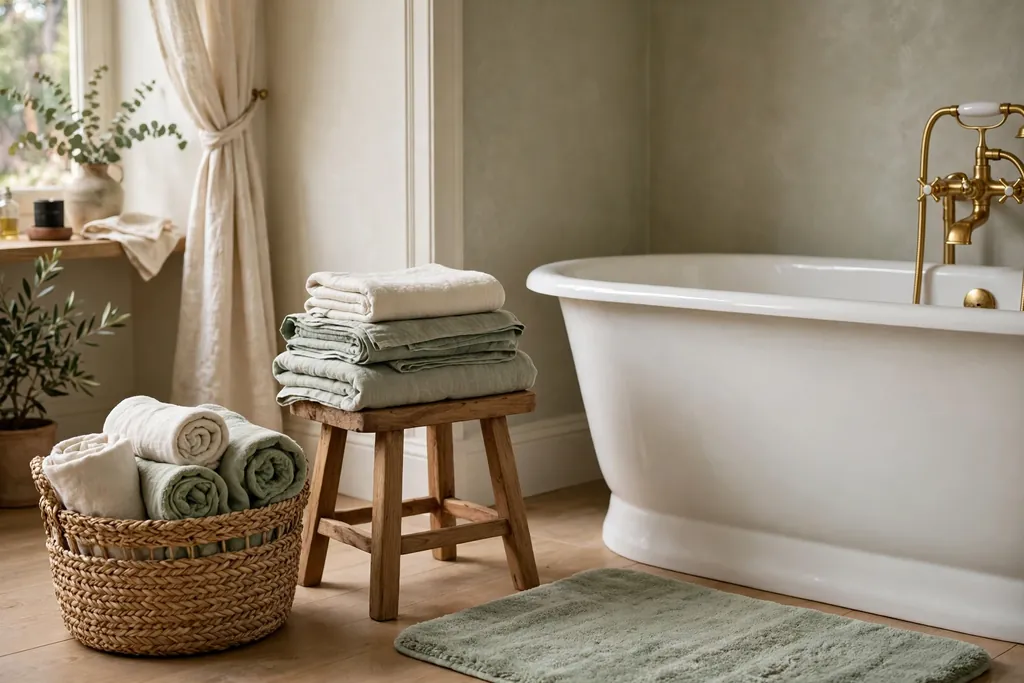
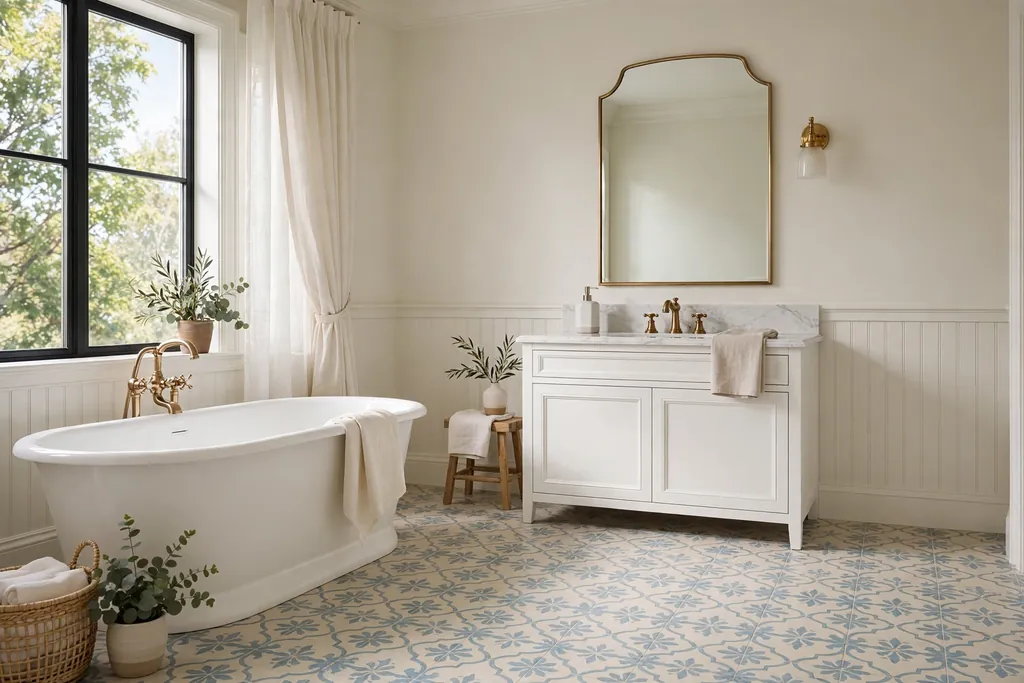
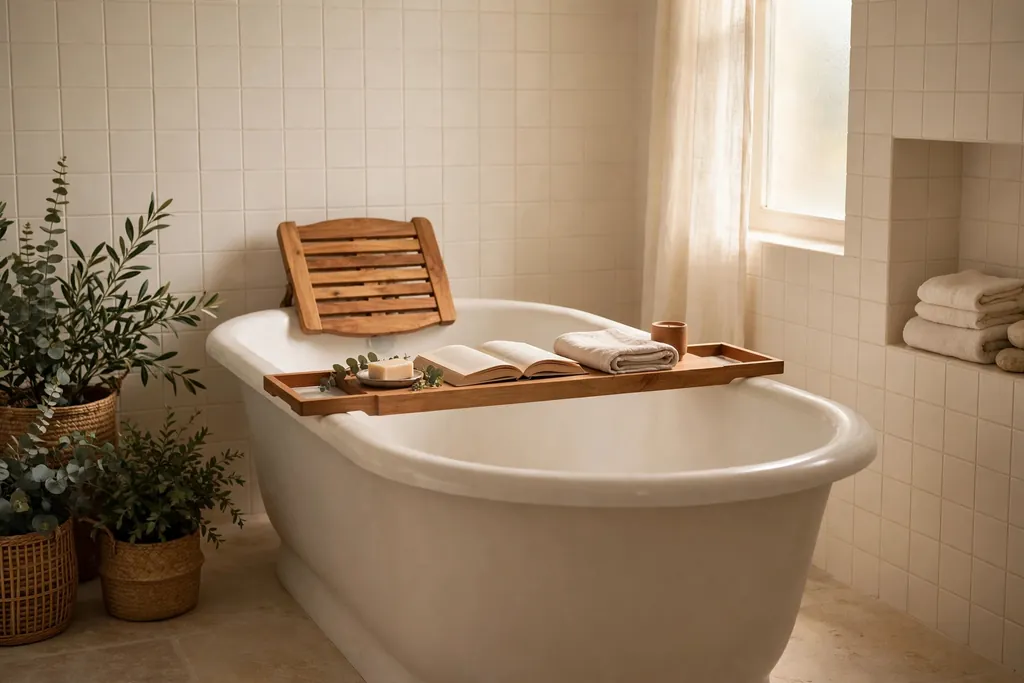
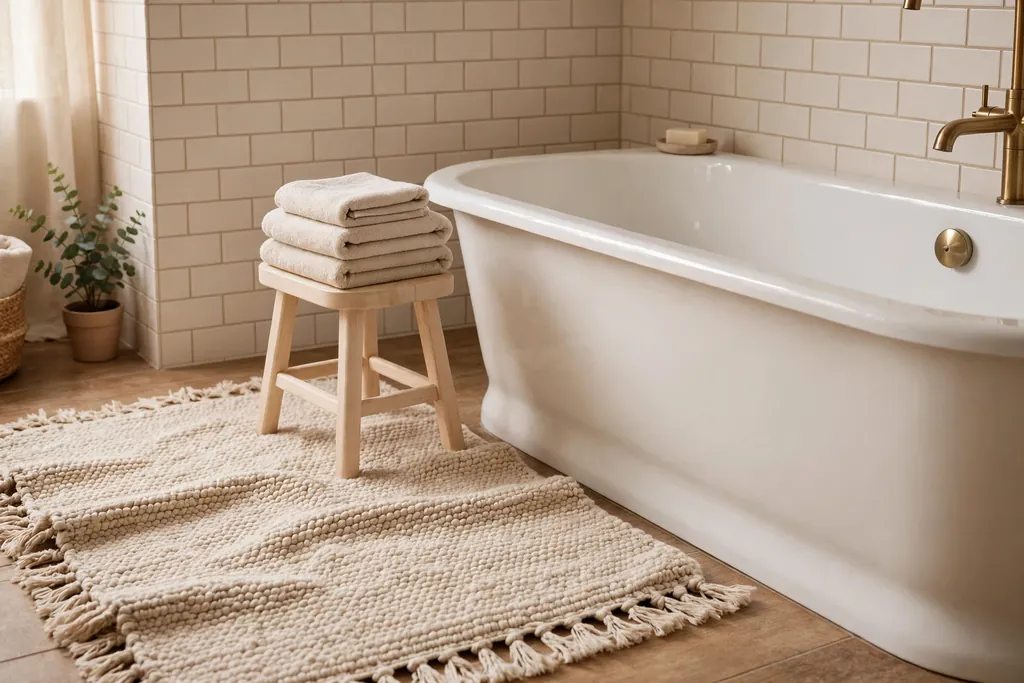
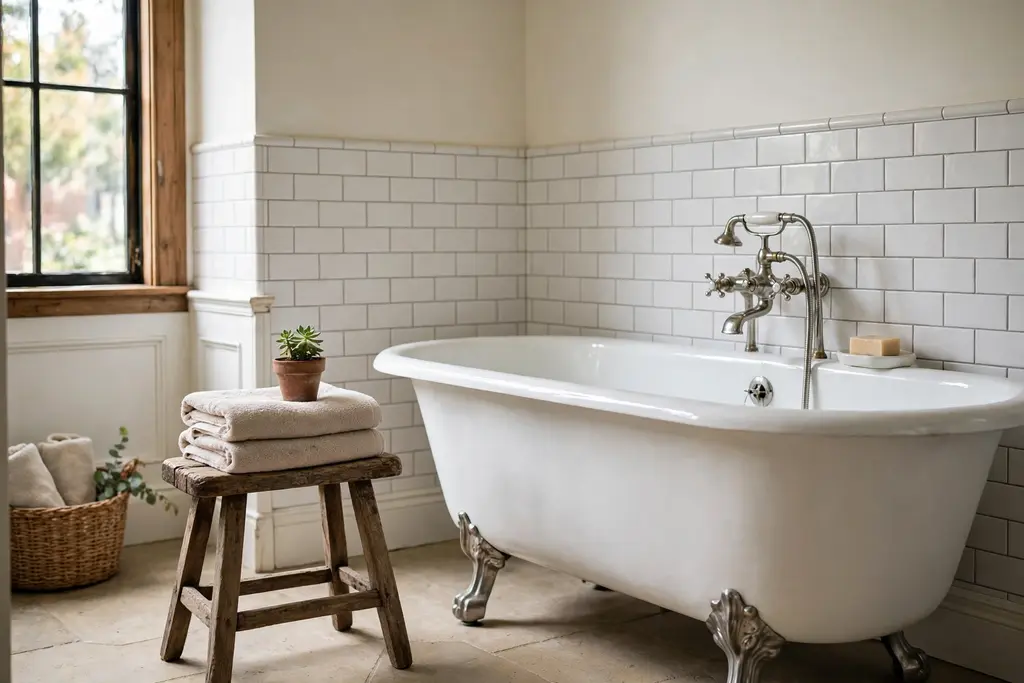
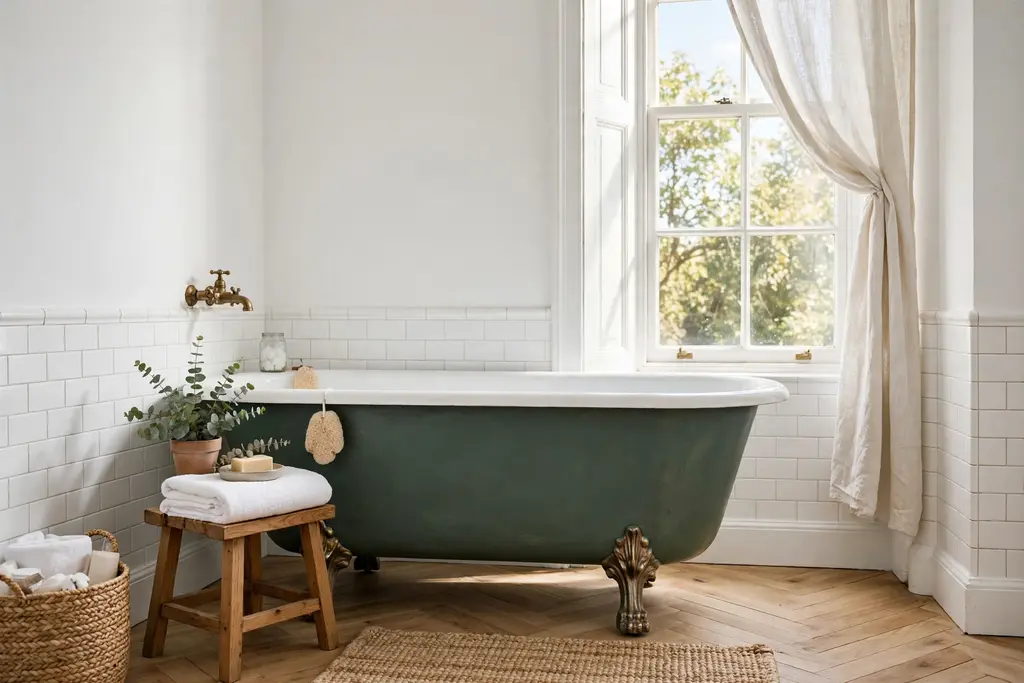
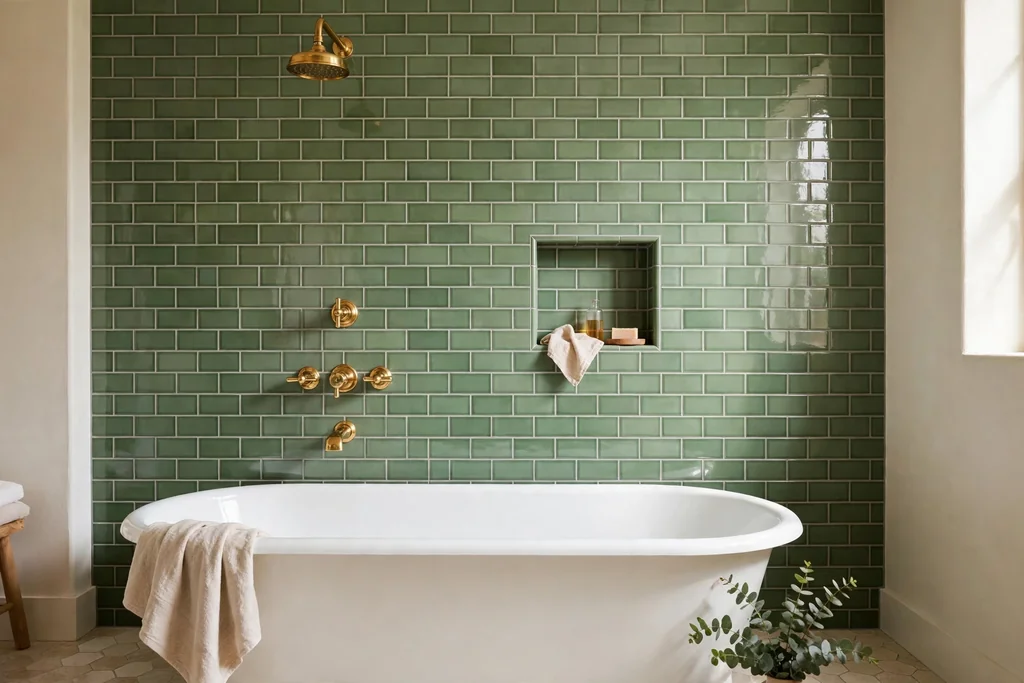
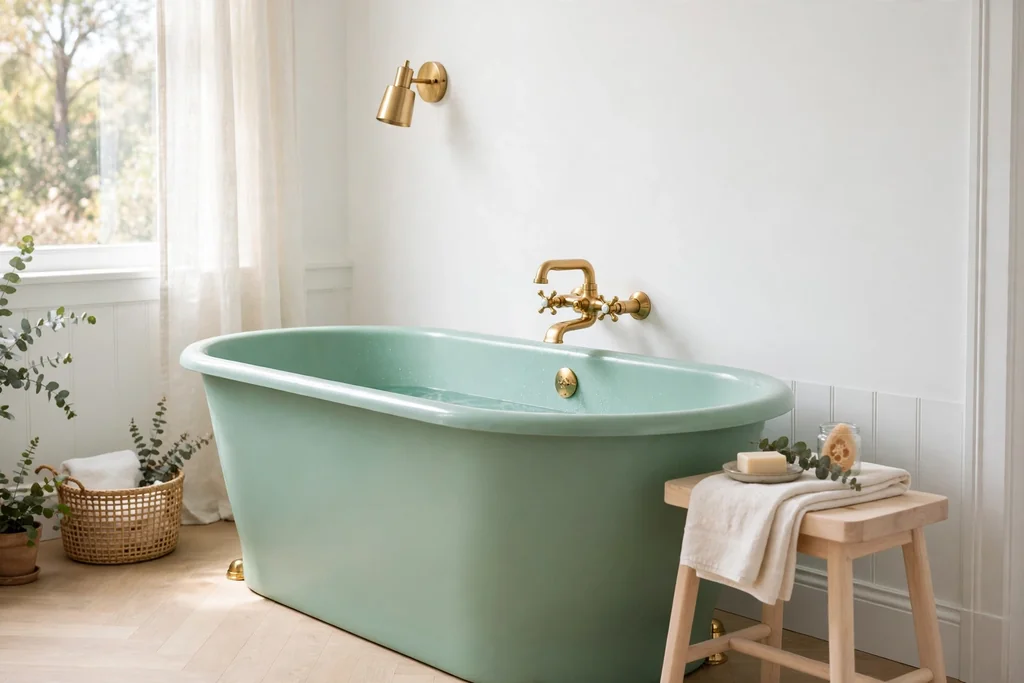
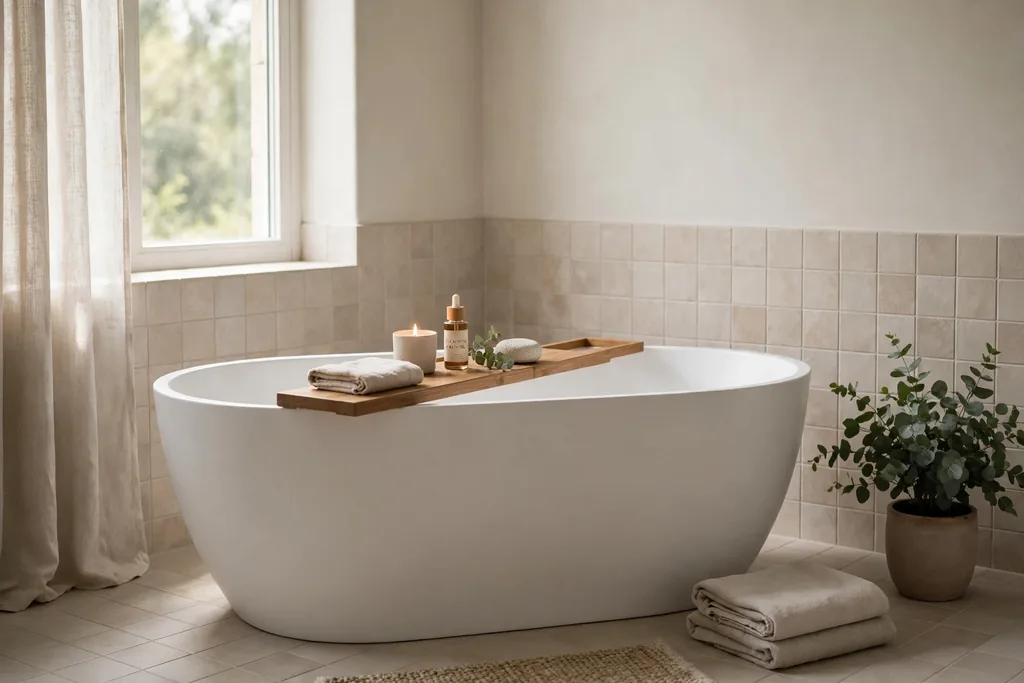
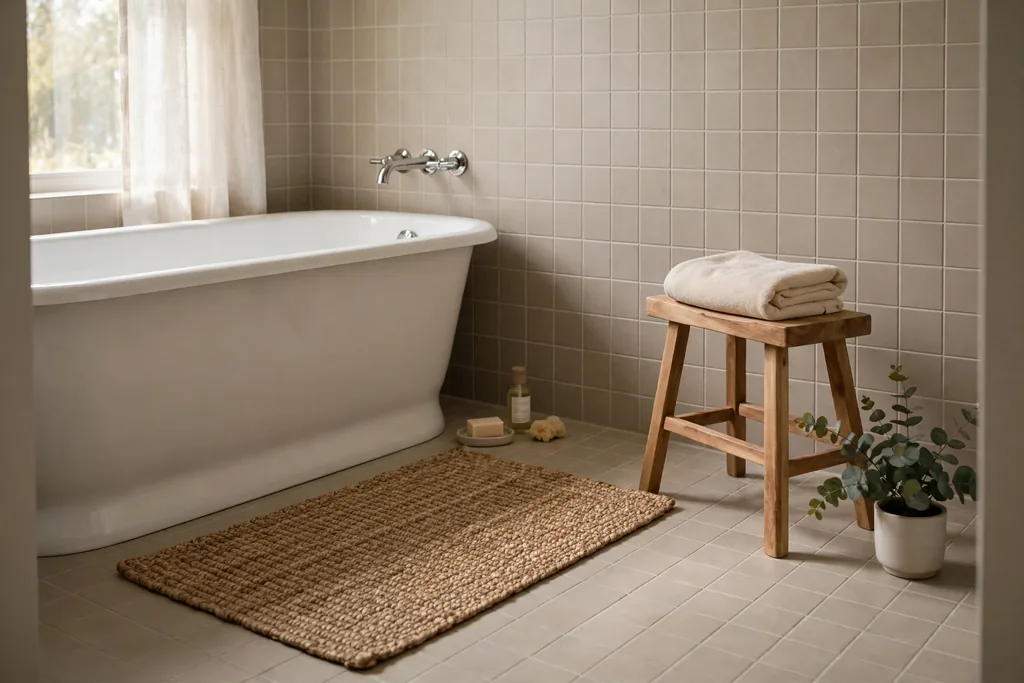
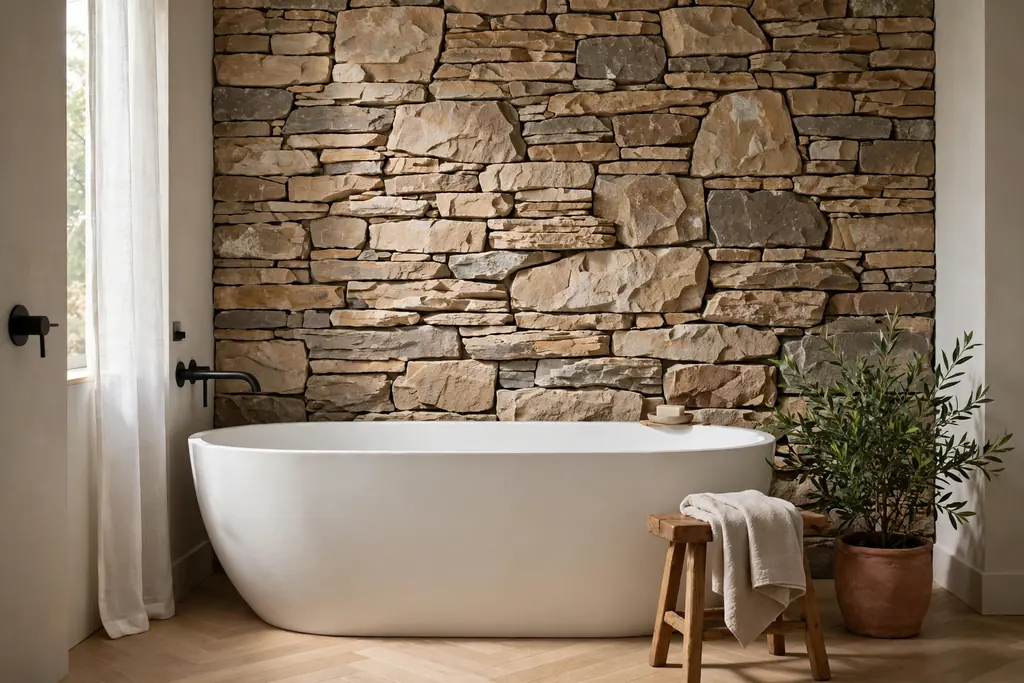
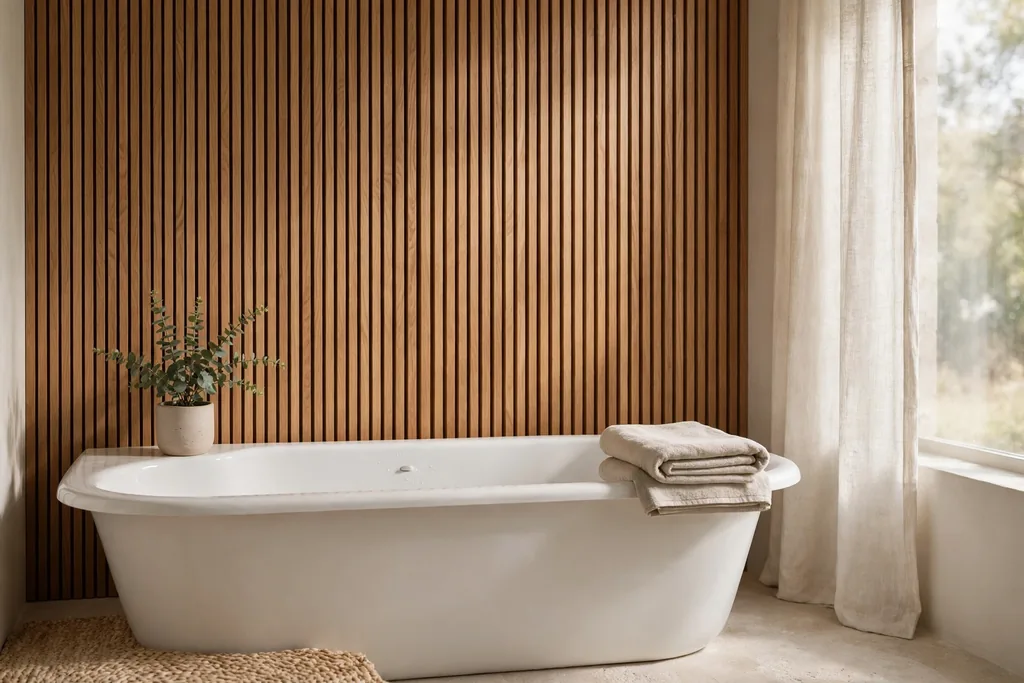
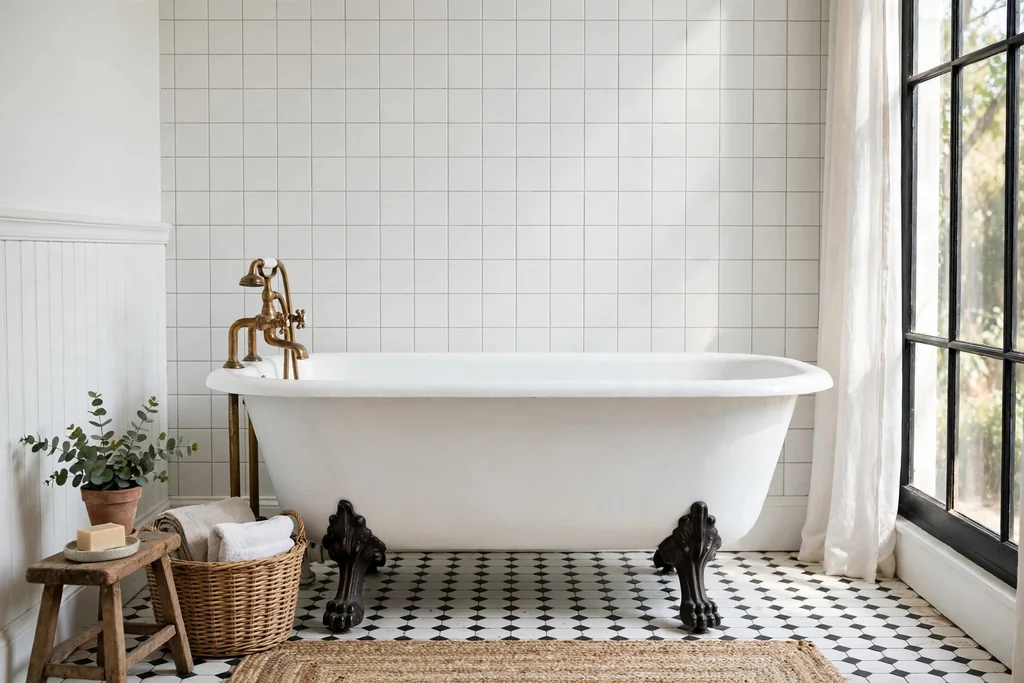
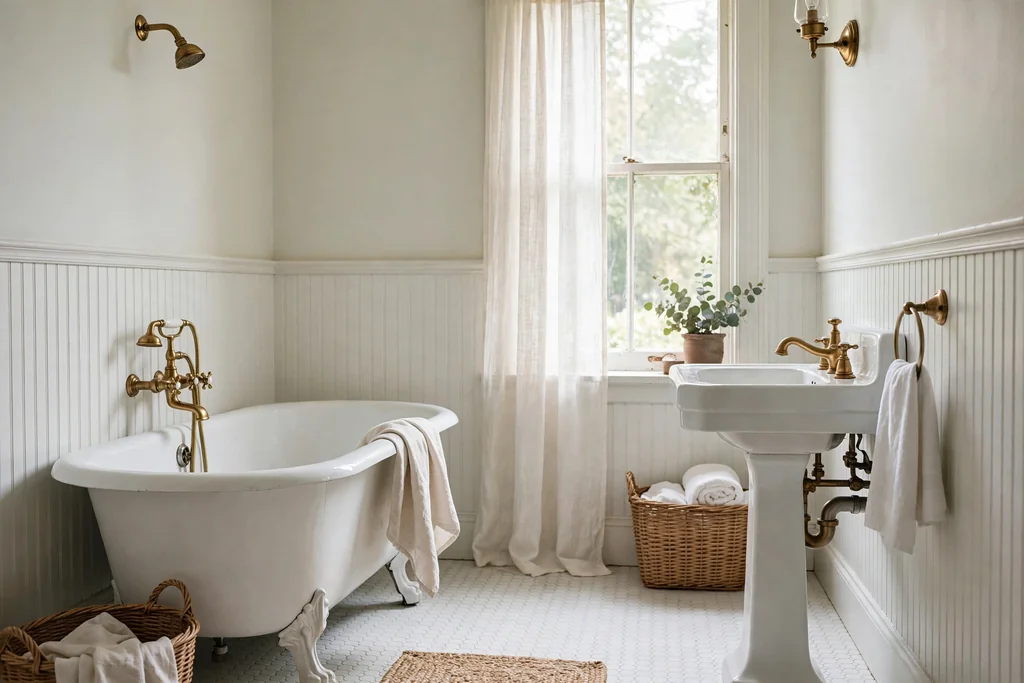
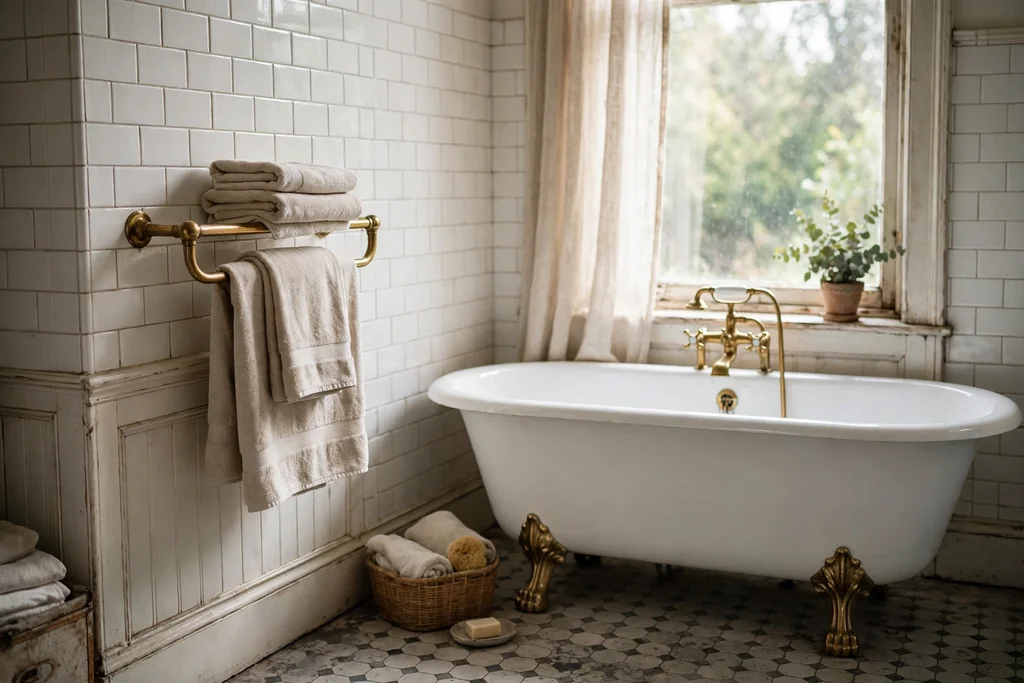
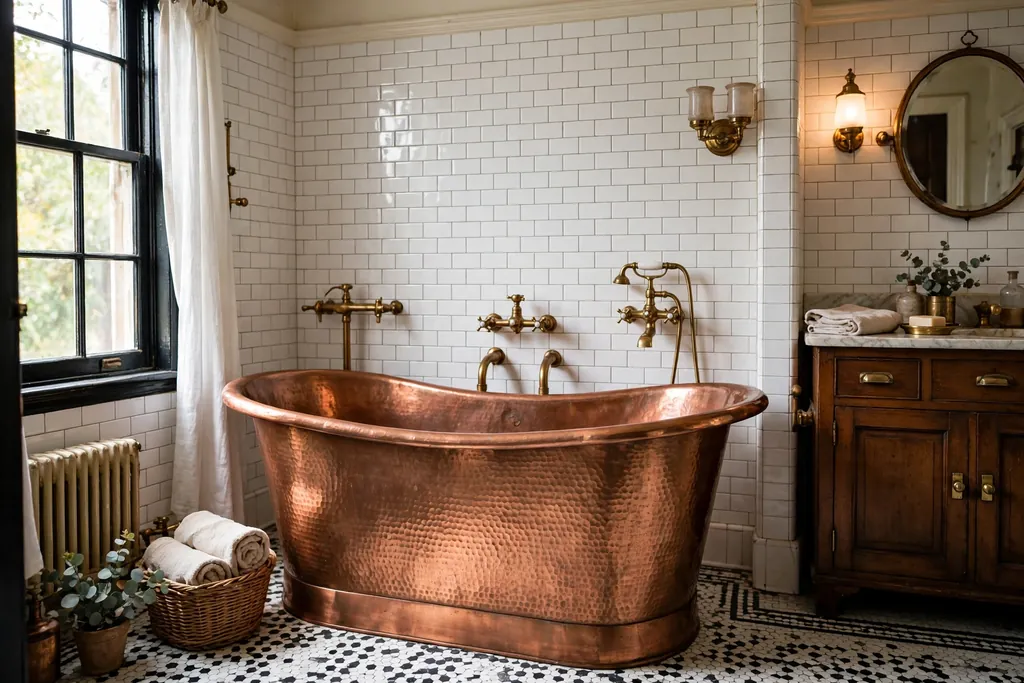
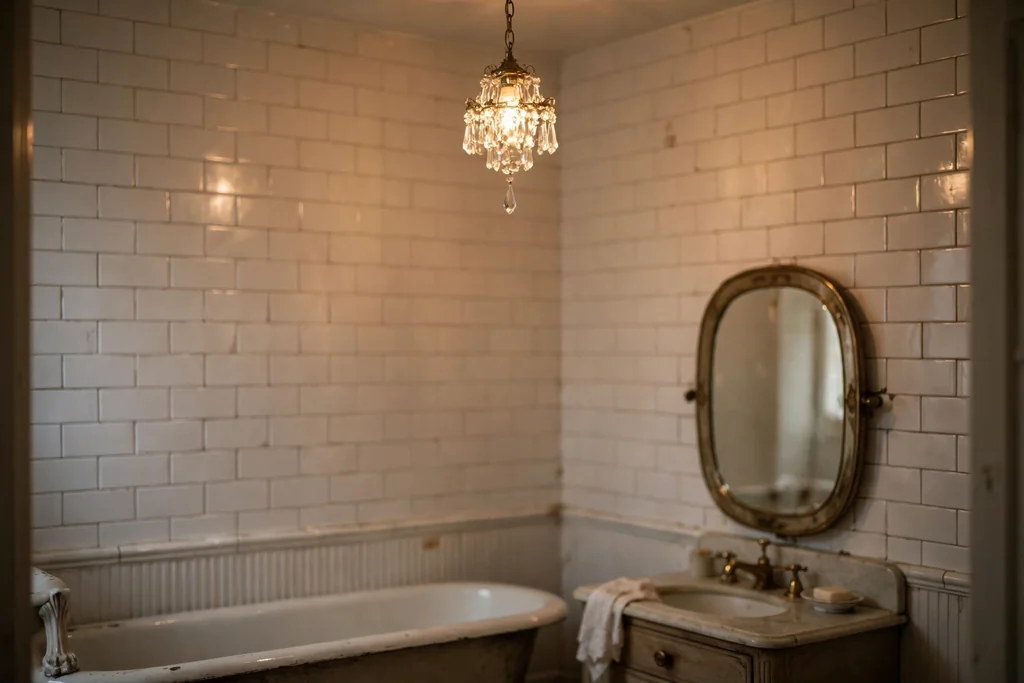
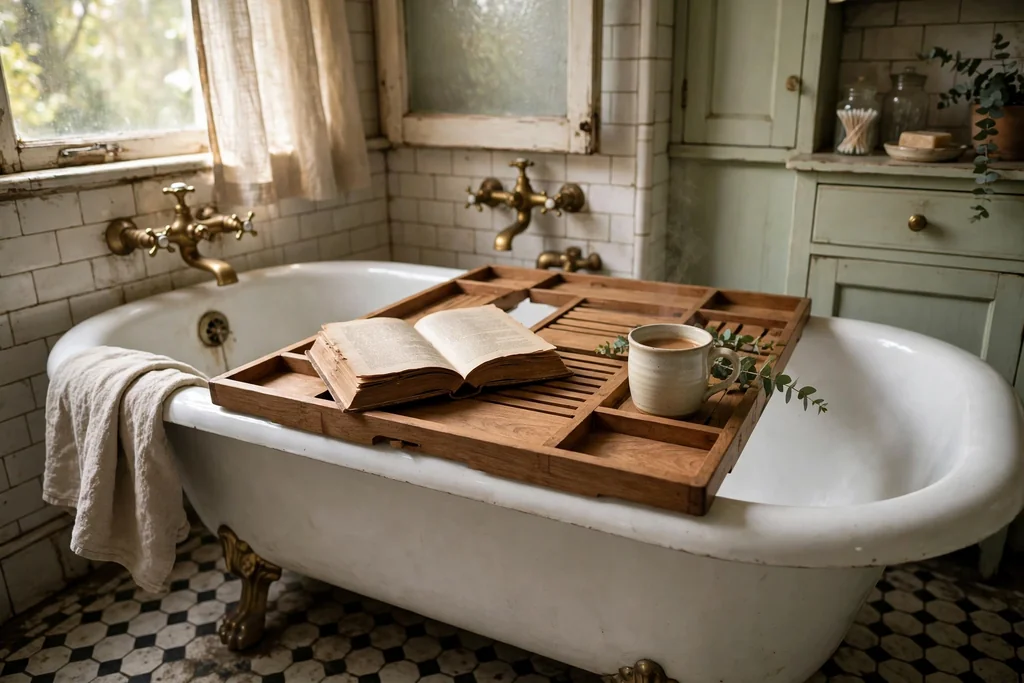
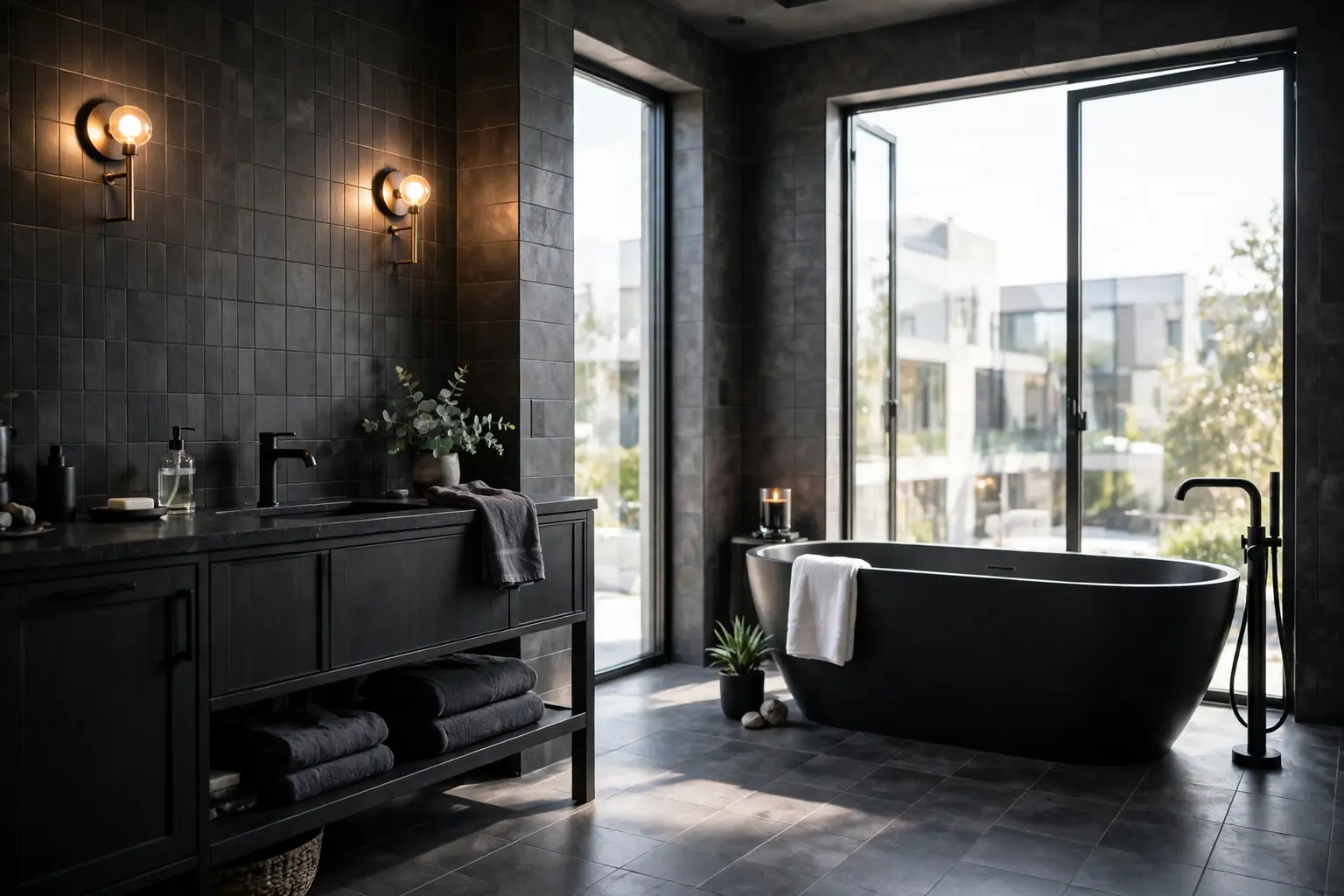
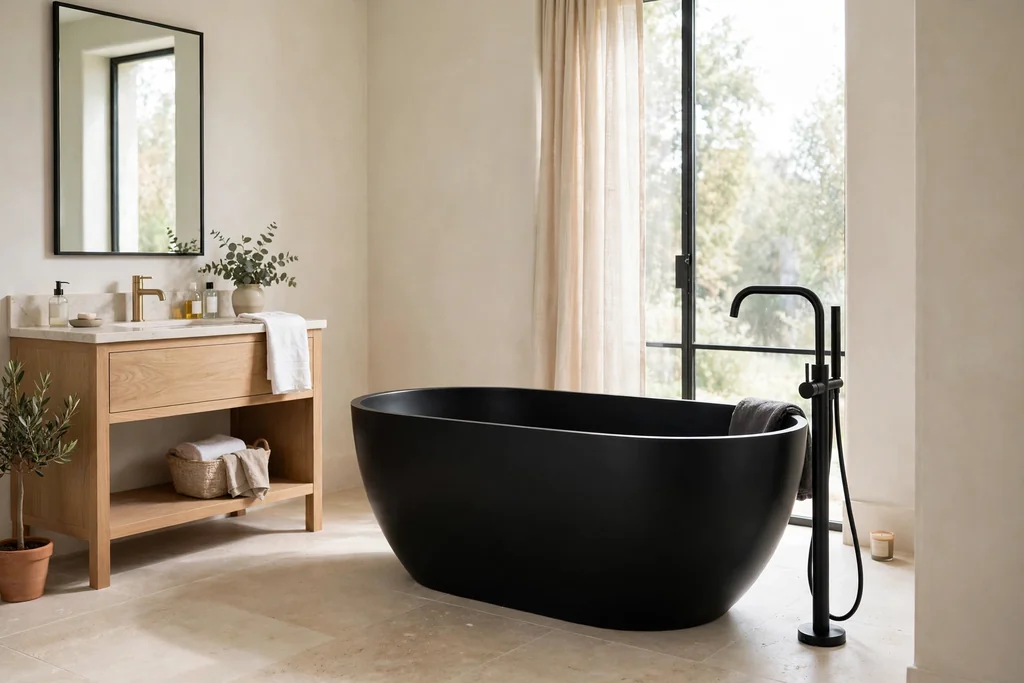
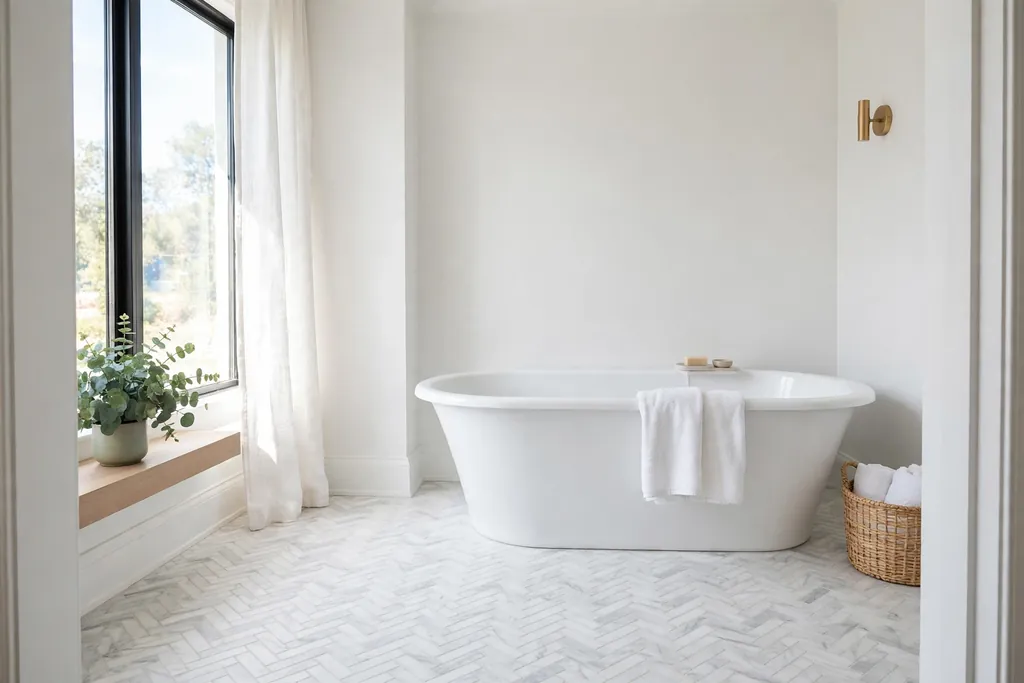
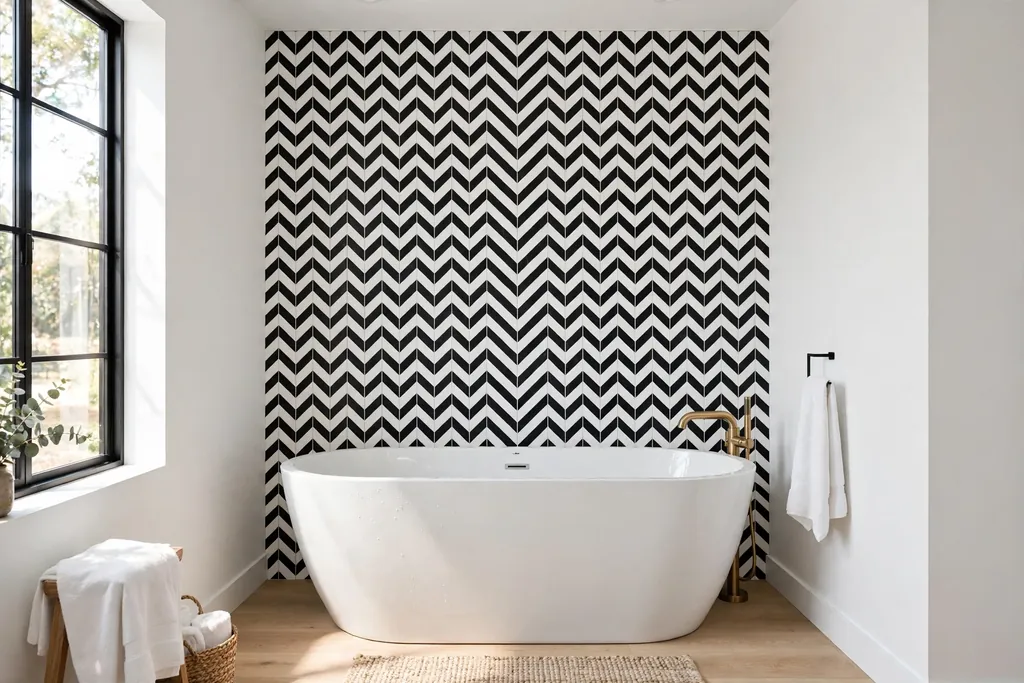
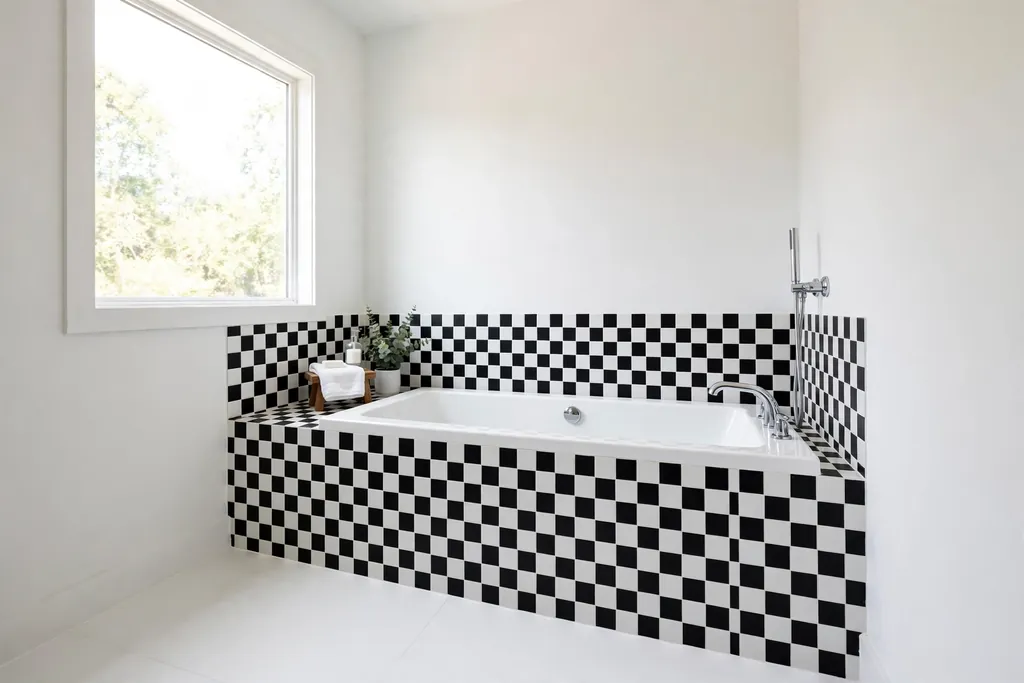
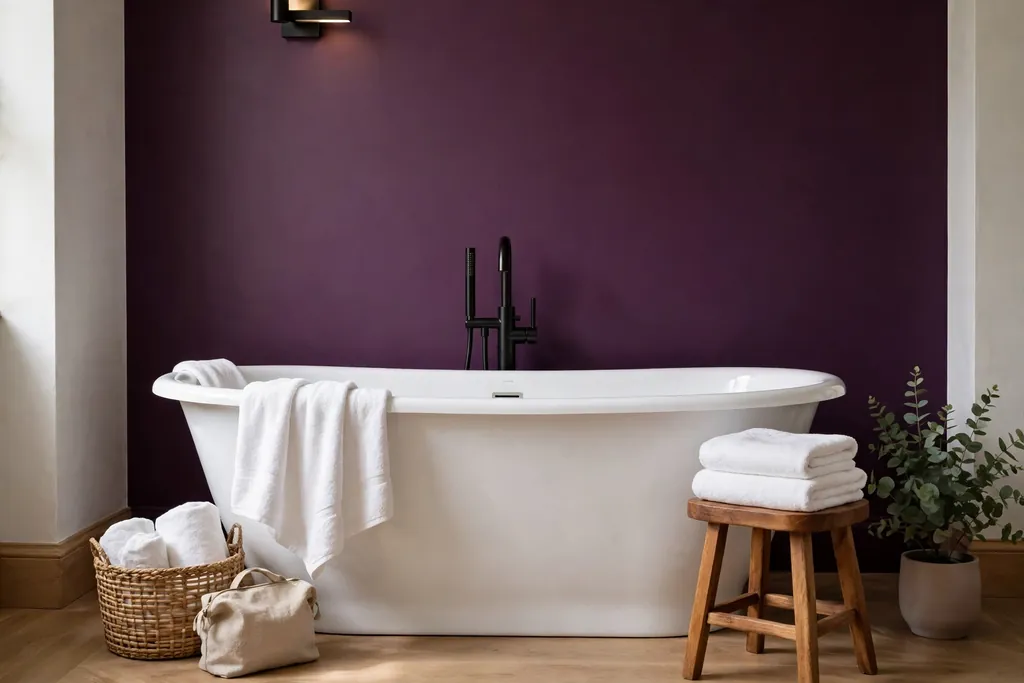
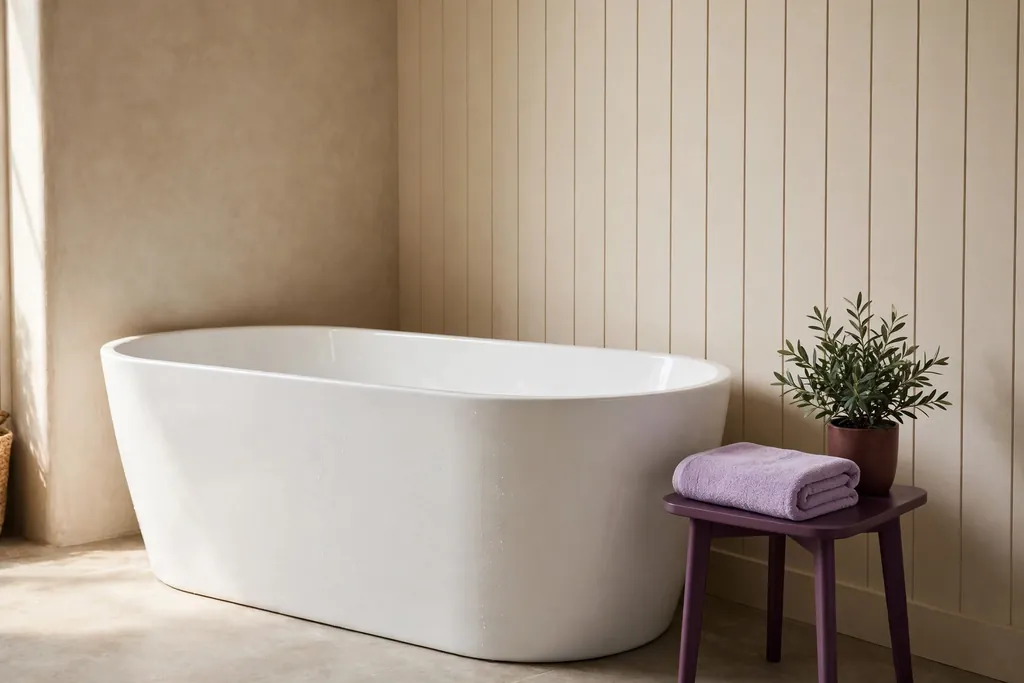
Give a freestanding tub the clearest spot in the room, and it becomes the focal point that sets the tone for everything else. An oval tub with a simple shape suits most bathrooms, and it looks best with space around it, a small stool beside it, and a towel within reach. Keep the wall behind it calm, with plain tile or a soft paint color, so the tub shape stays visible.
Place the tub where you can see it from the doorway, but not where it blocks the path to the sink or shower. A floor mounted faucet in the same finish as the sink faucet ties the two zones together. If your bathroom is small, a shorter freestanding tub or a tub against one wall can give the same relaxed shape without taking the whole floor.
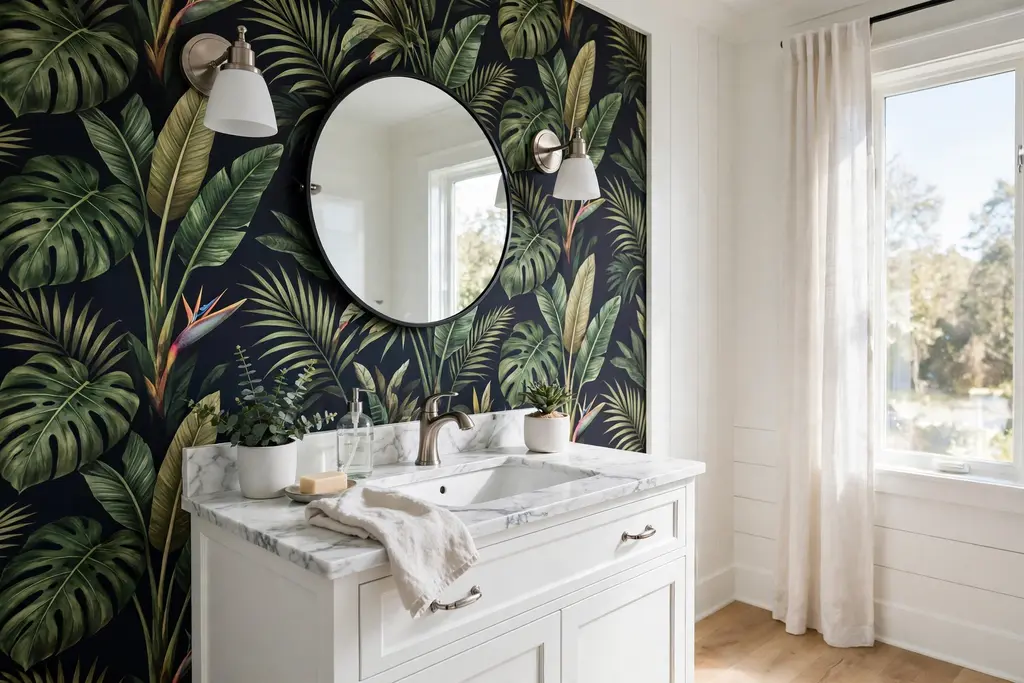
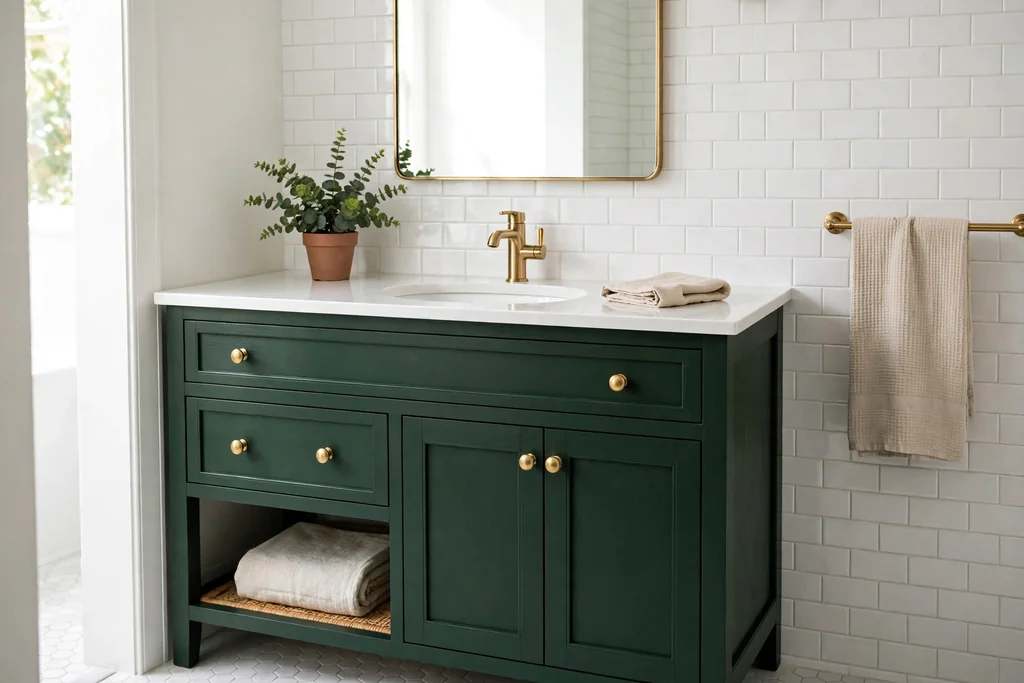
3. Marble Look Vanity Top with Brass Fixtures
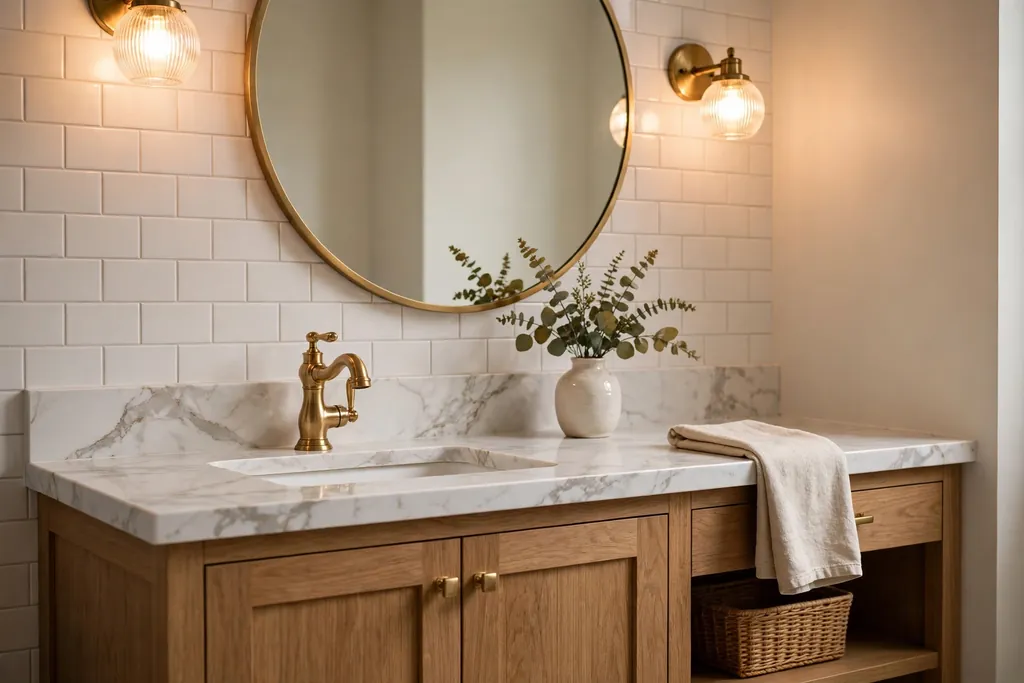
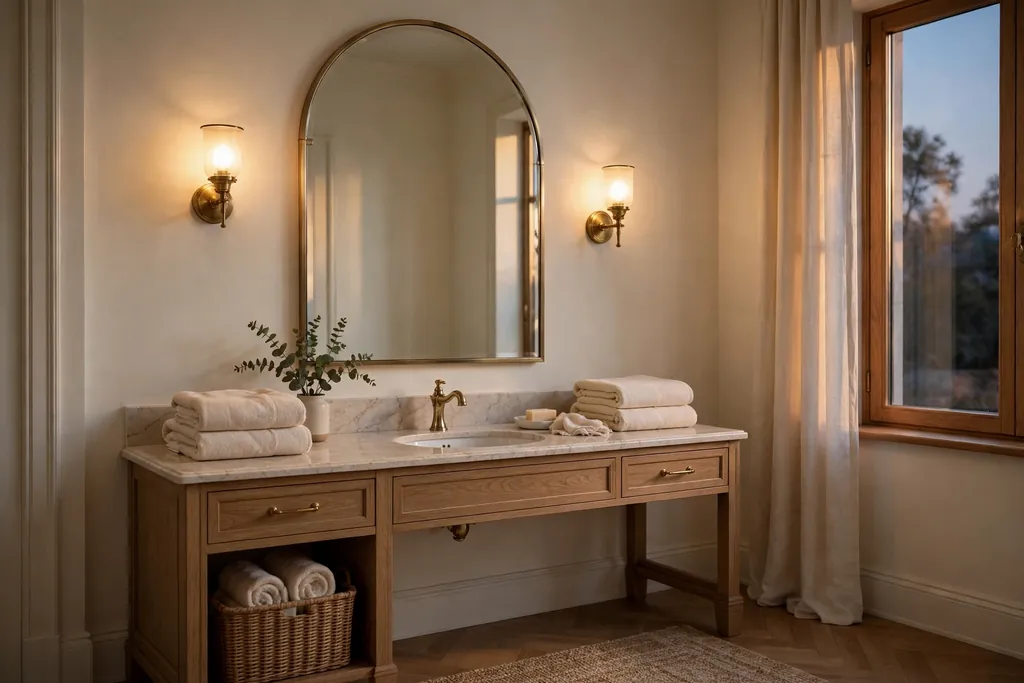
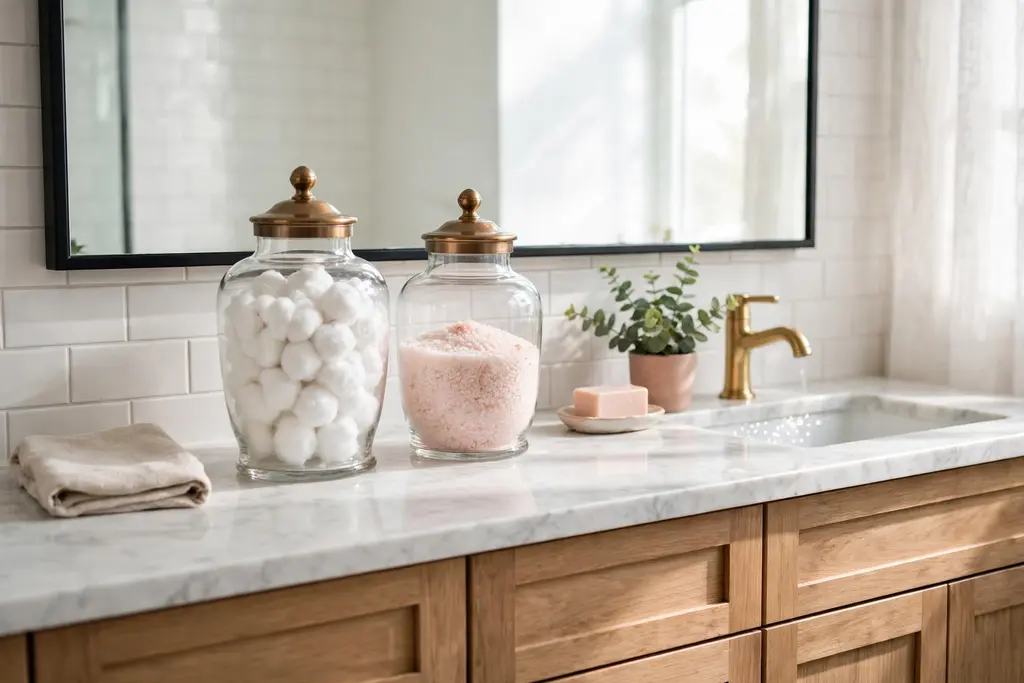
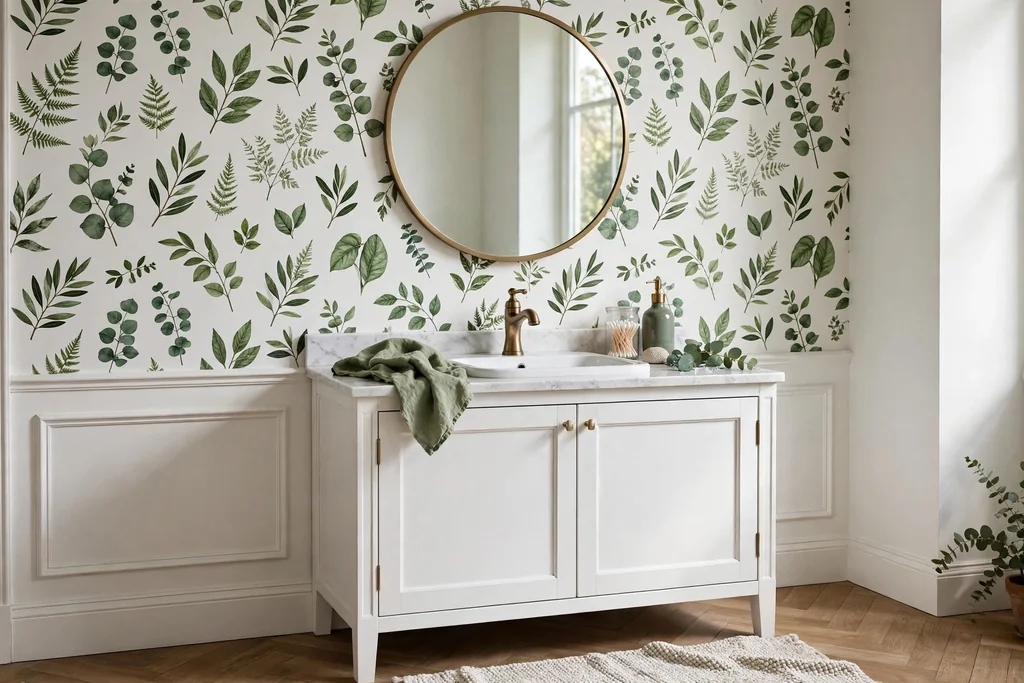
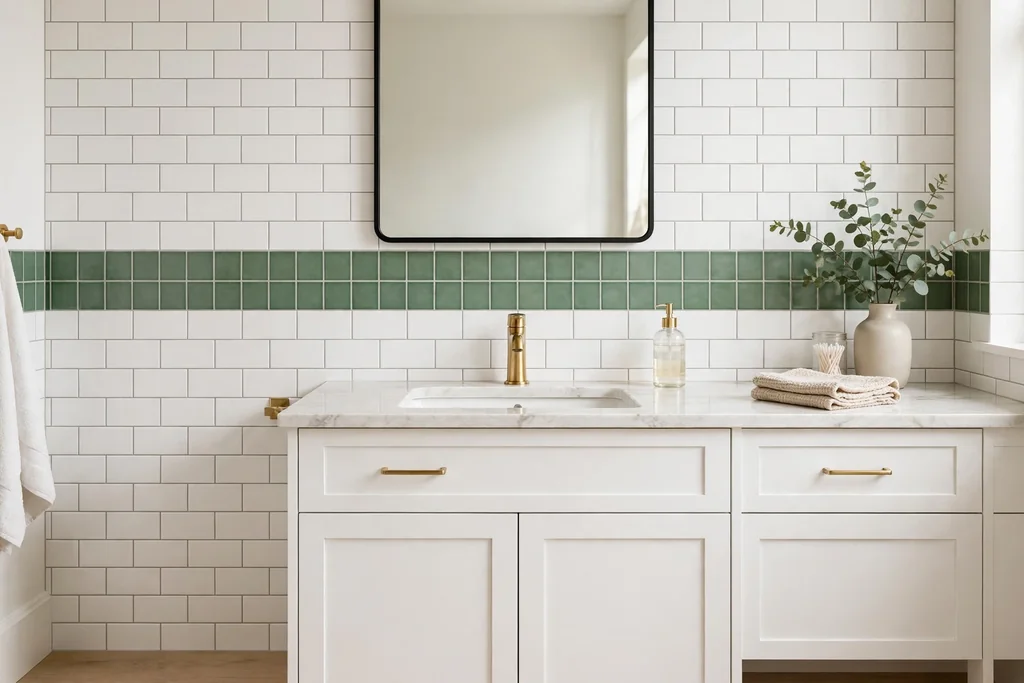
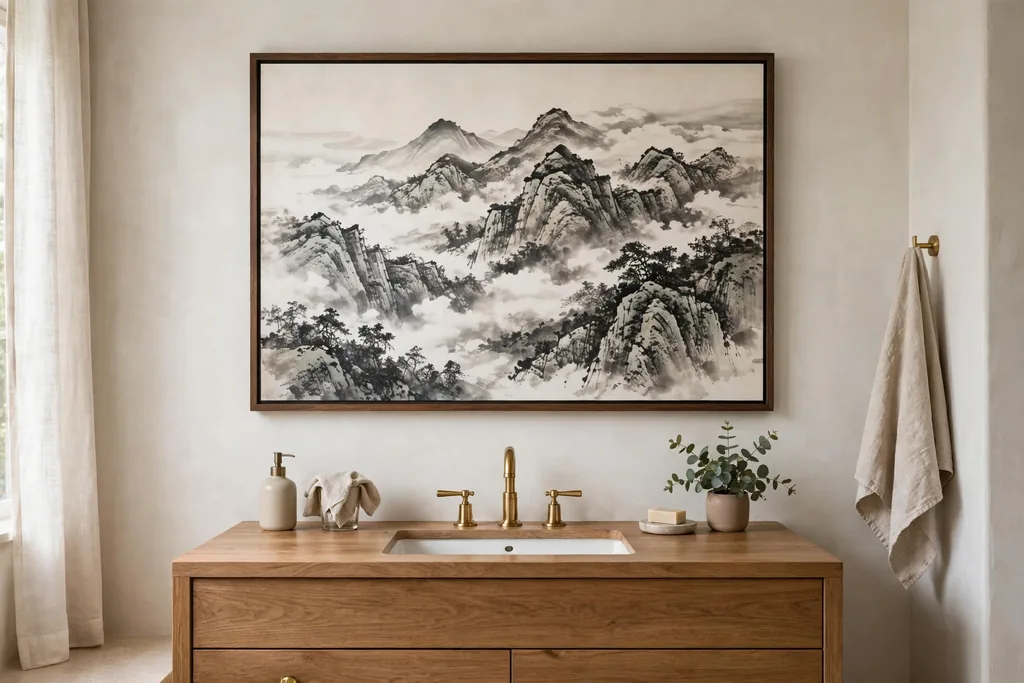
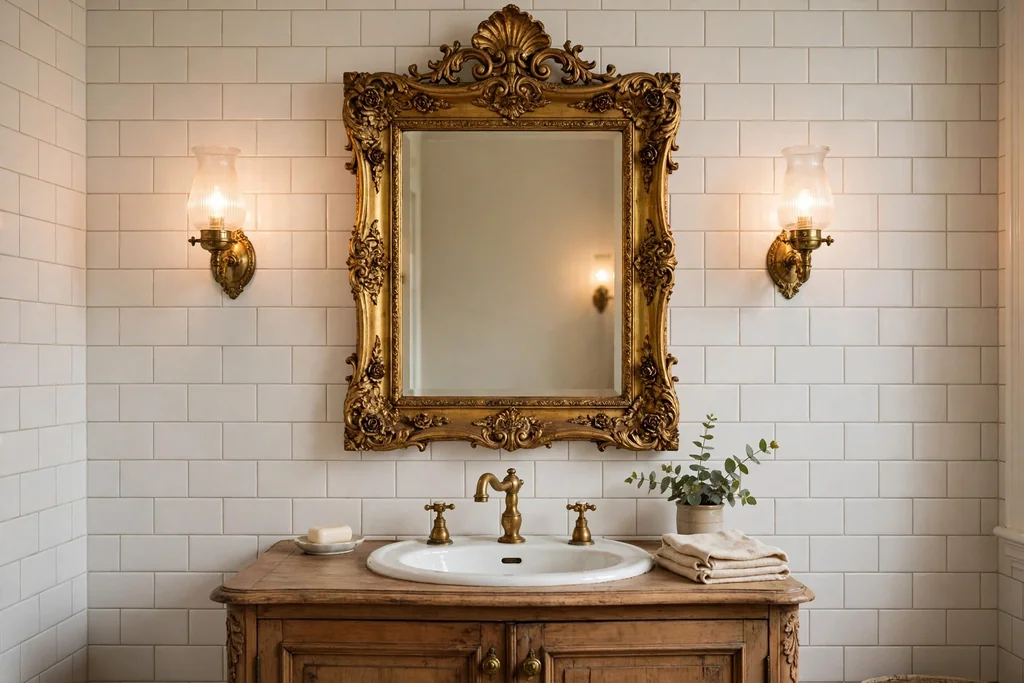
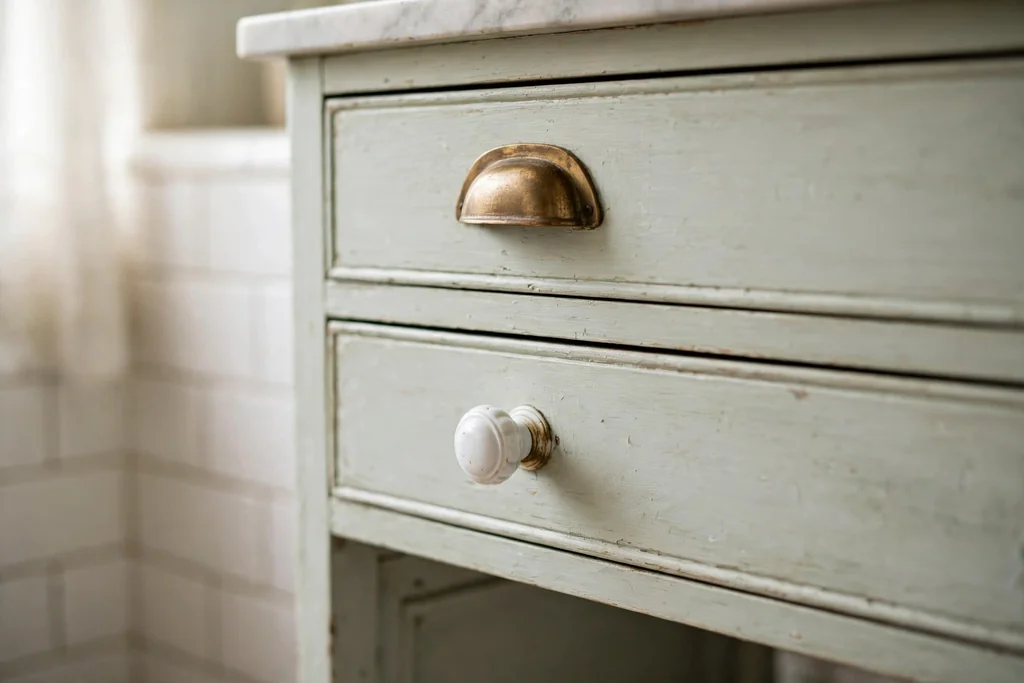
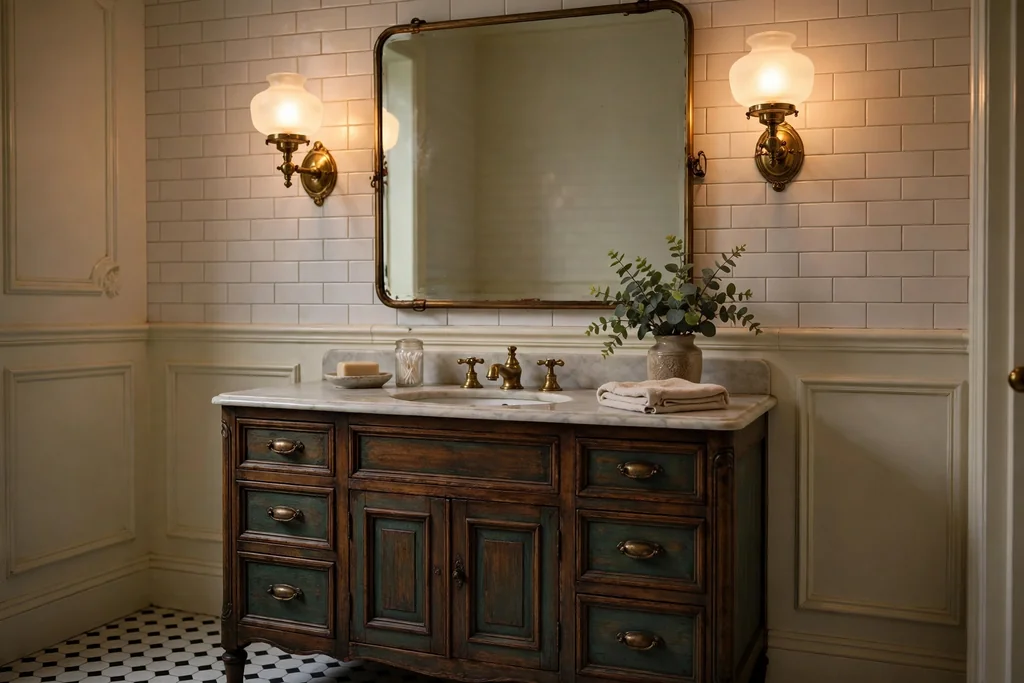
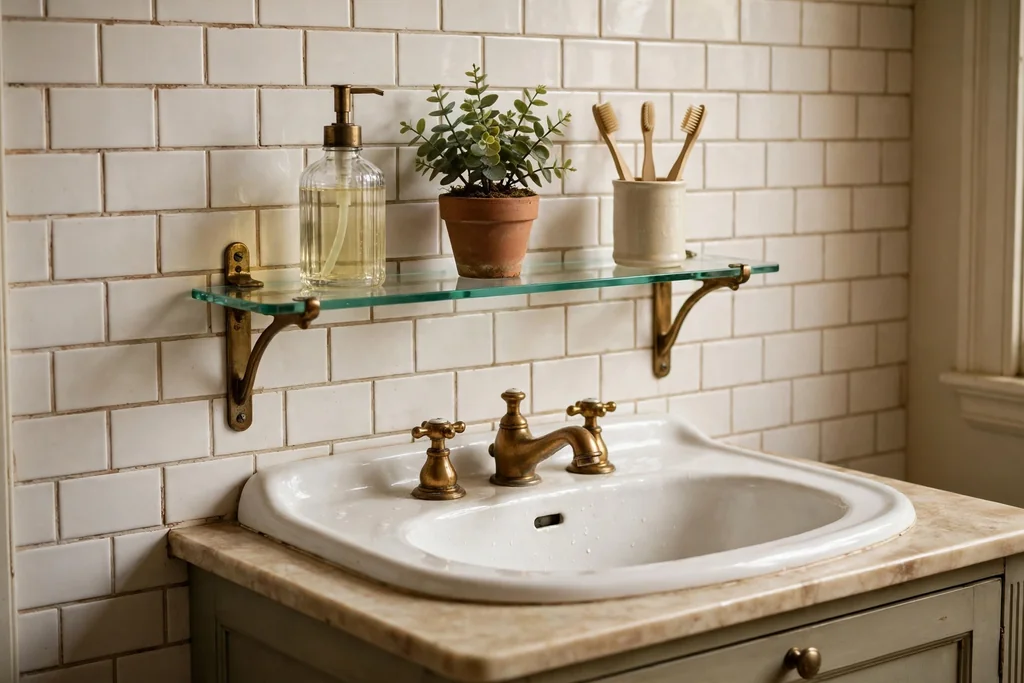
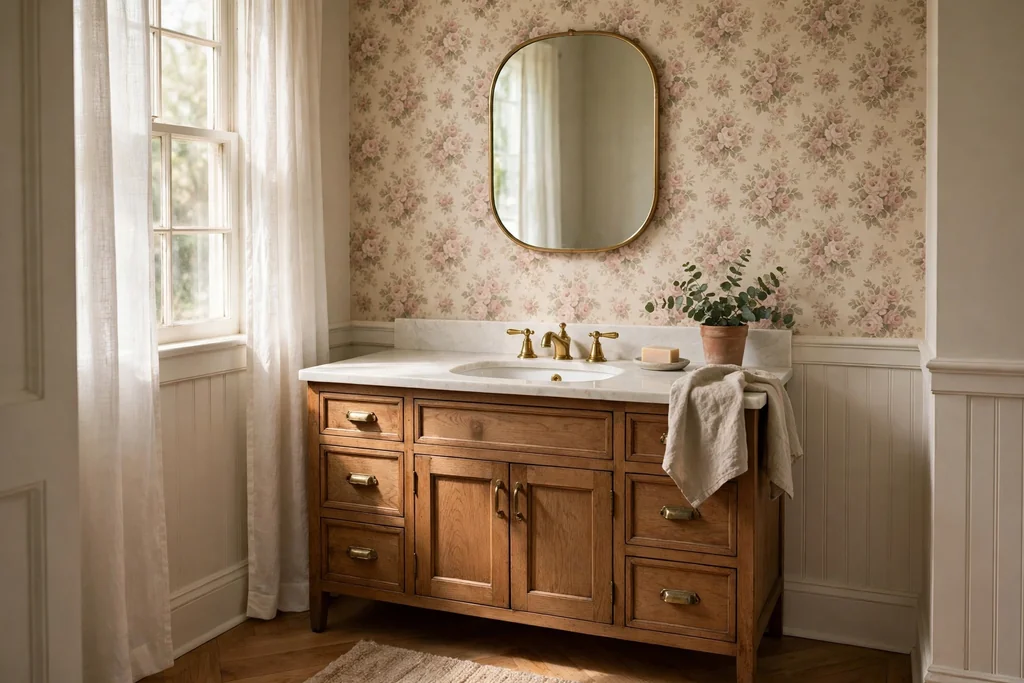
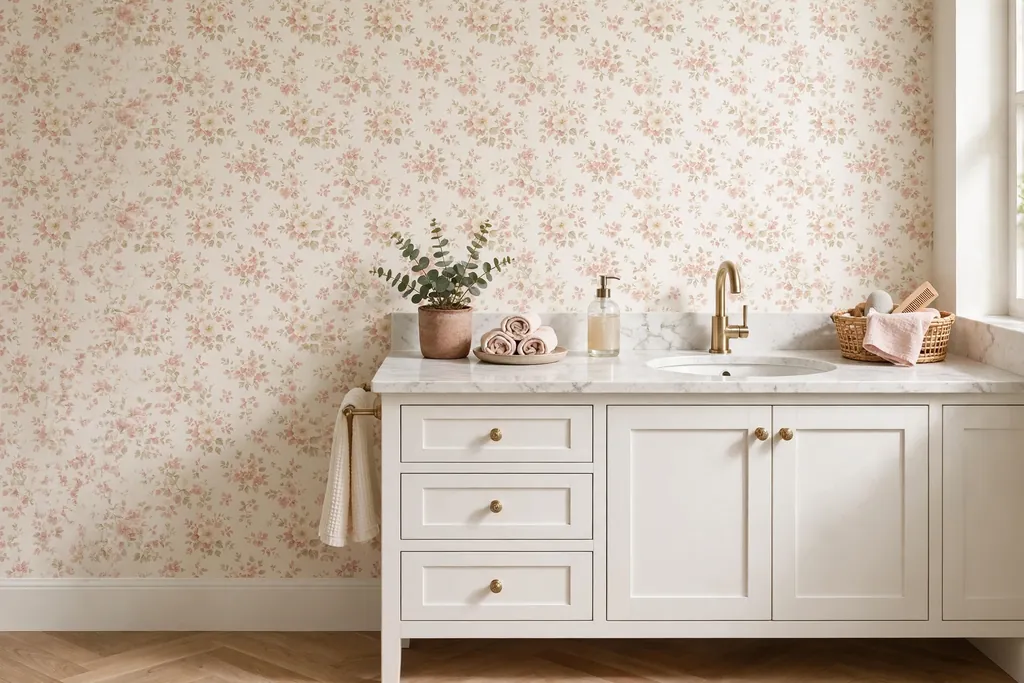
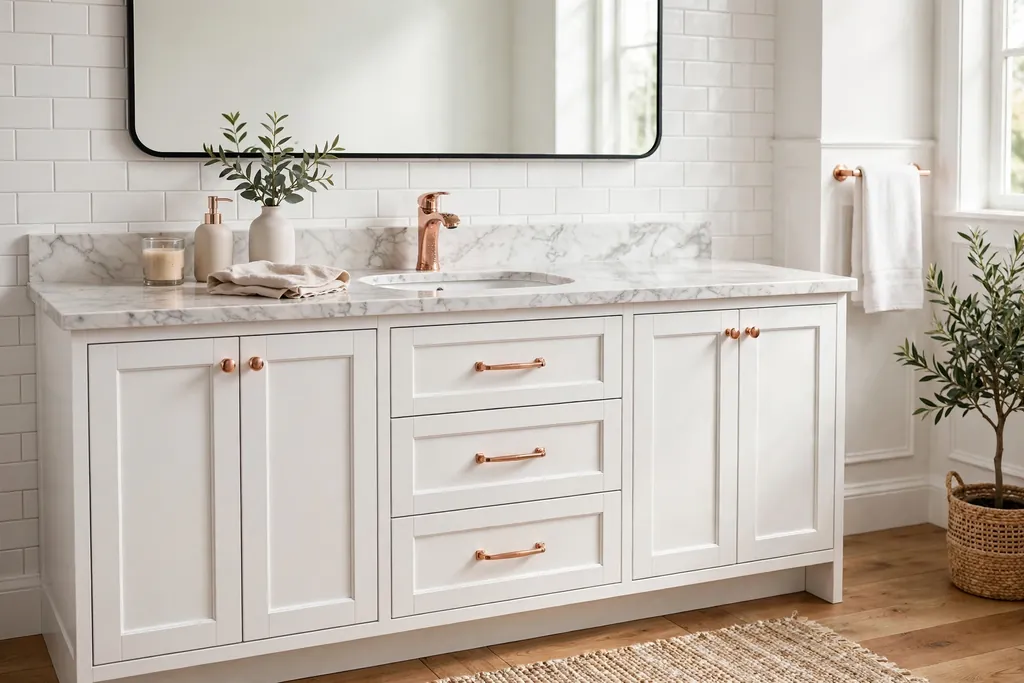
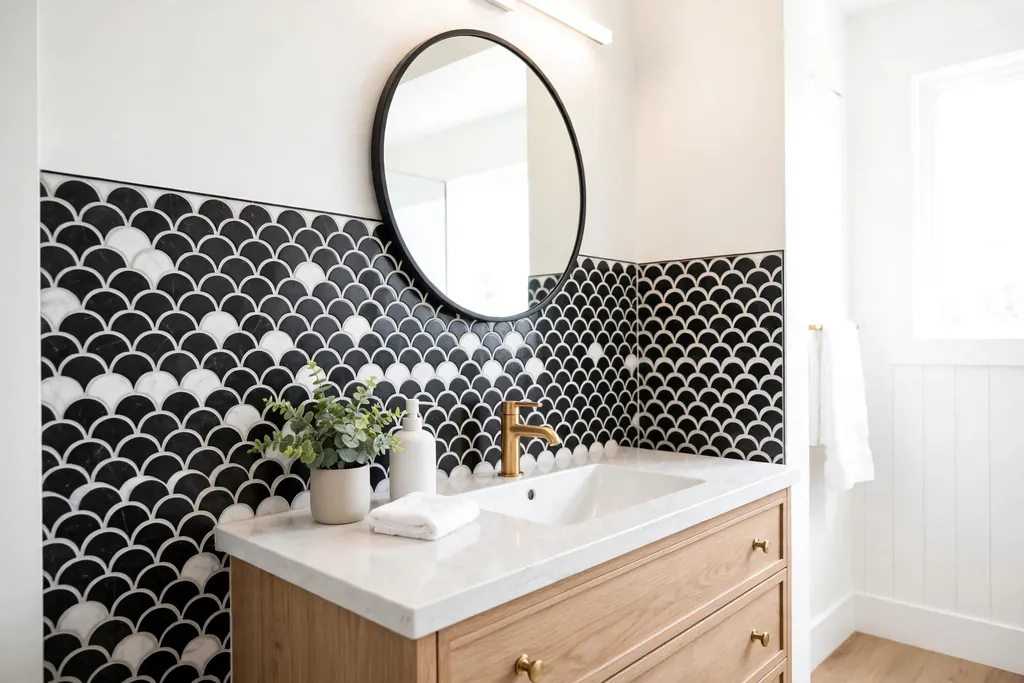
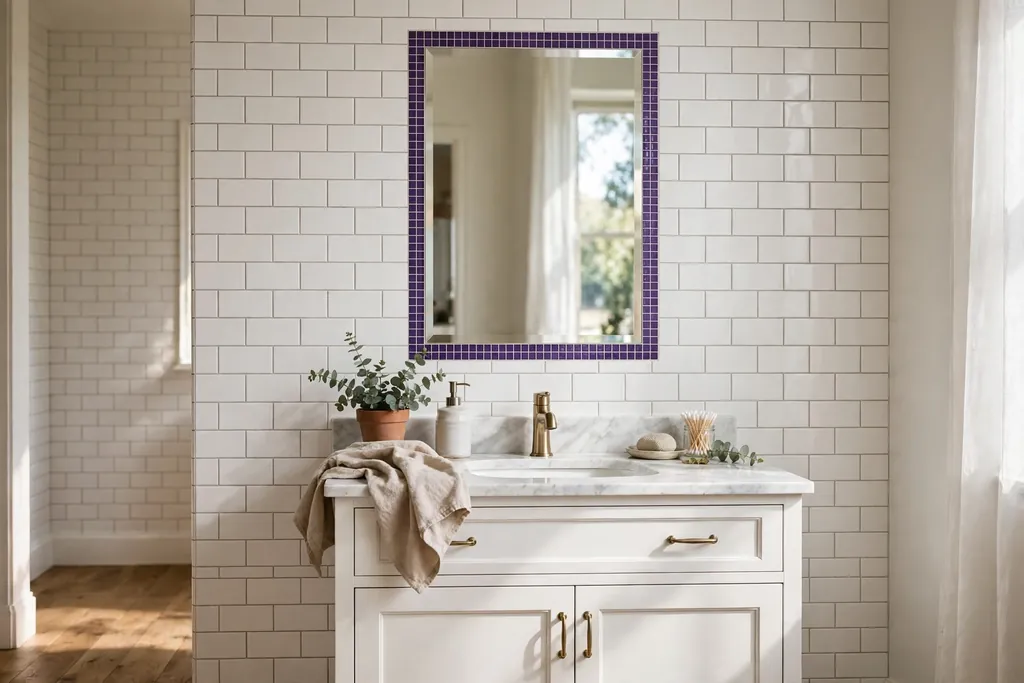
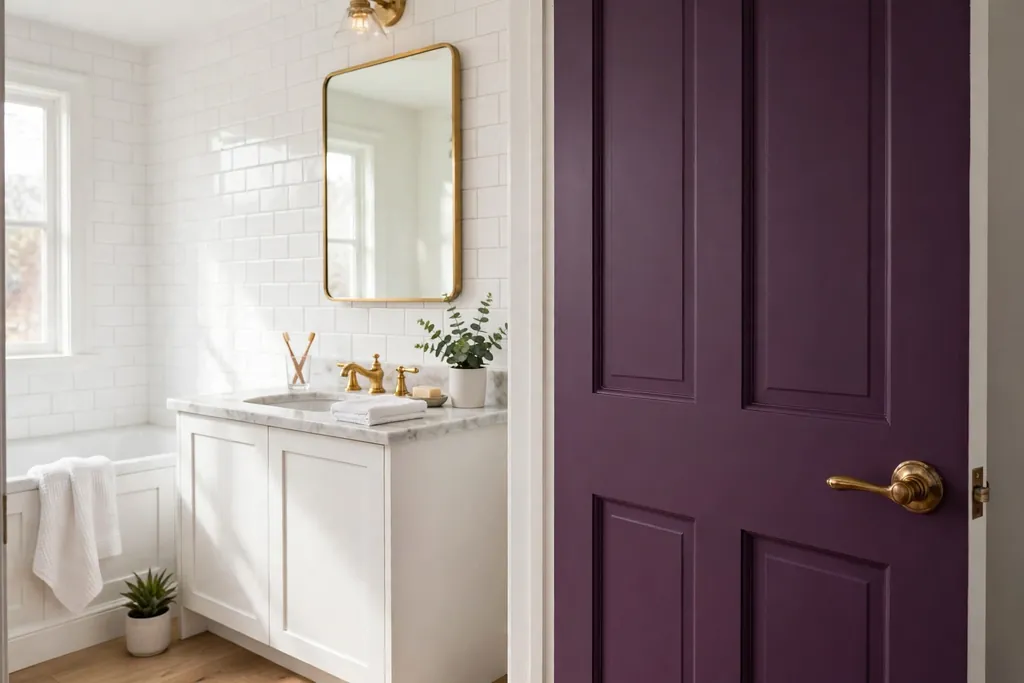
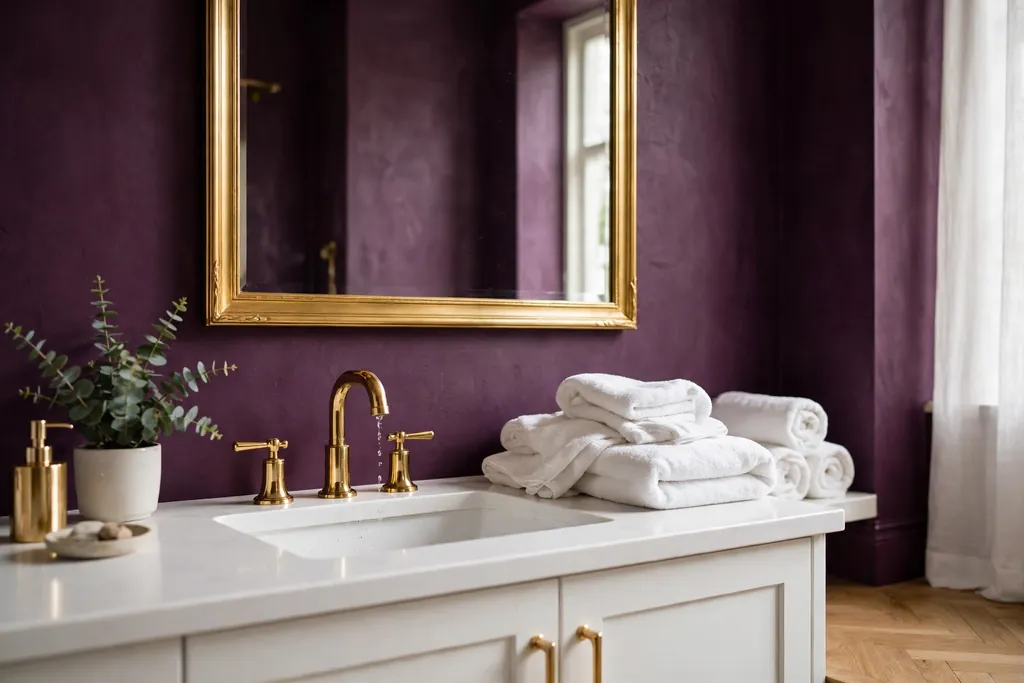
Use a white marble look vanity top with brass fixtures for a classic pairing that still feels current. The soft veining in the top adds pattern without color, and brass adds warmth that chrome alone cannot give. Keep the rest of the vanity simple, with a plain cabinet front and a round or arched mirror, so the top and the fixtures do the work.
Wipe the top after use, since soap and colored products can mark light surfaces if left sitting. Match the faucet, the towel ring, and the cabinet knobs in the same brass tone, and avoid mixing in a third metal. If brass feels too bold for your room, brushed gold or a warm bronze gives a similar effect with a softer shine.
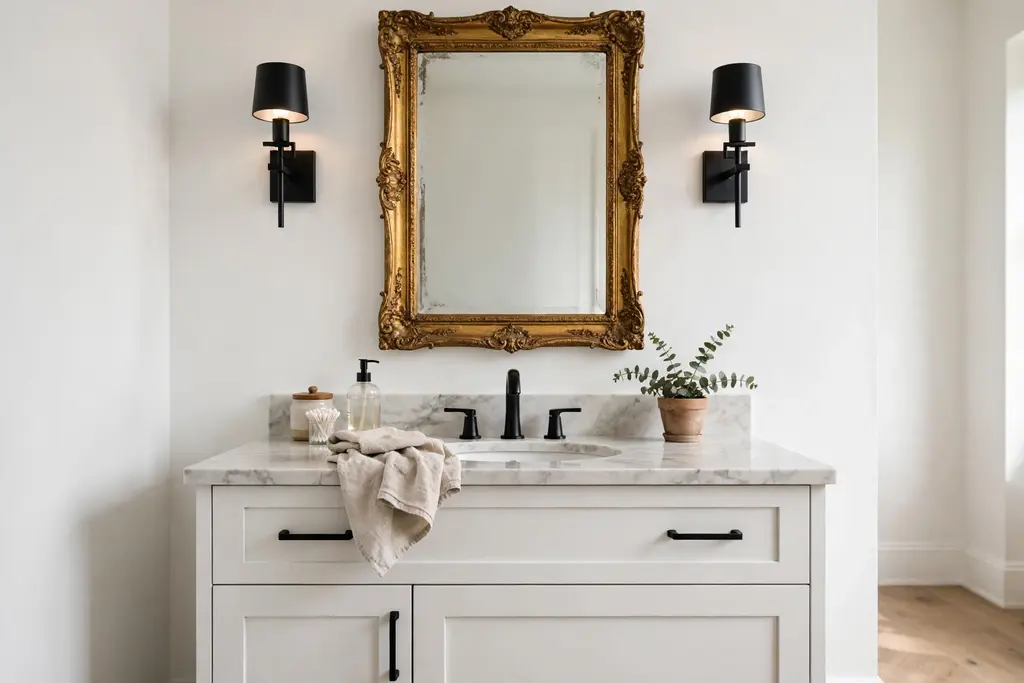
4. Arched Mirror with Sconces on Either Side
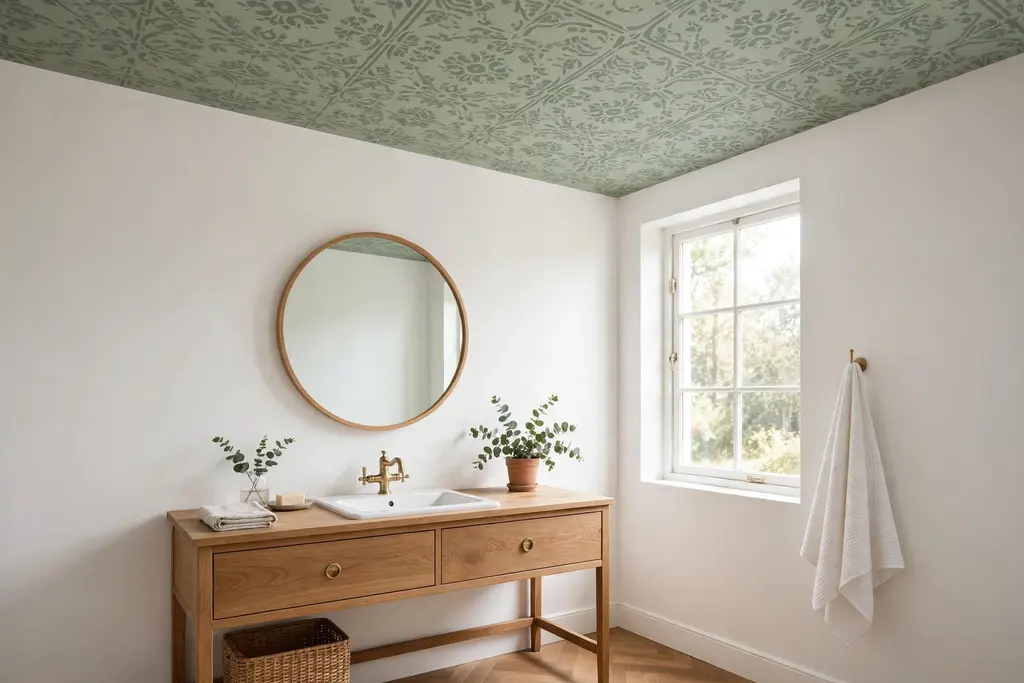
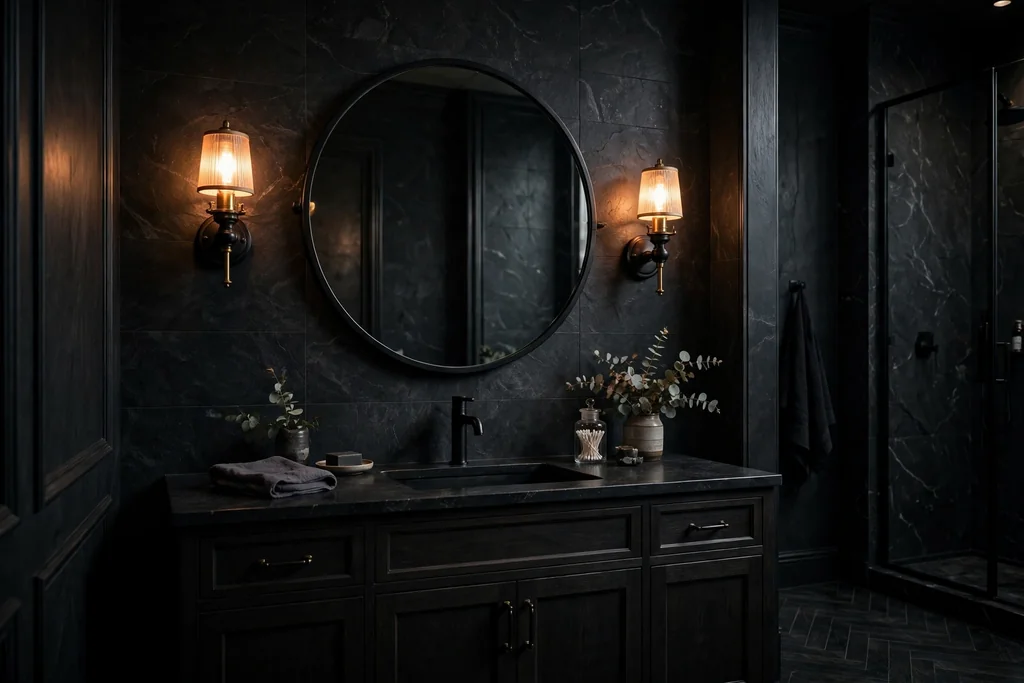
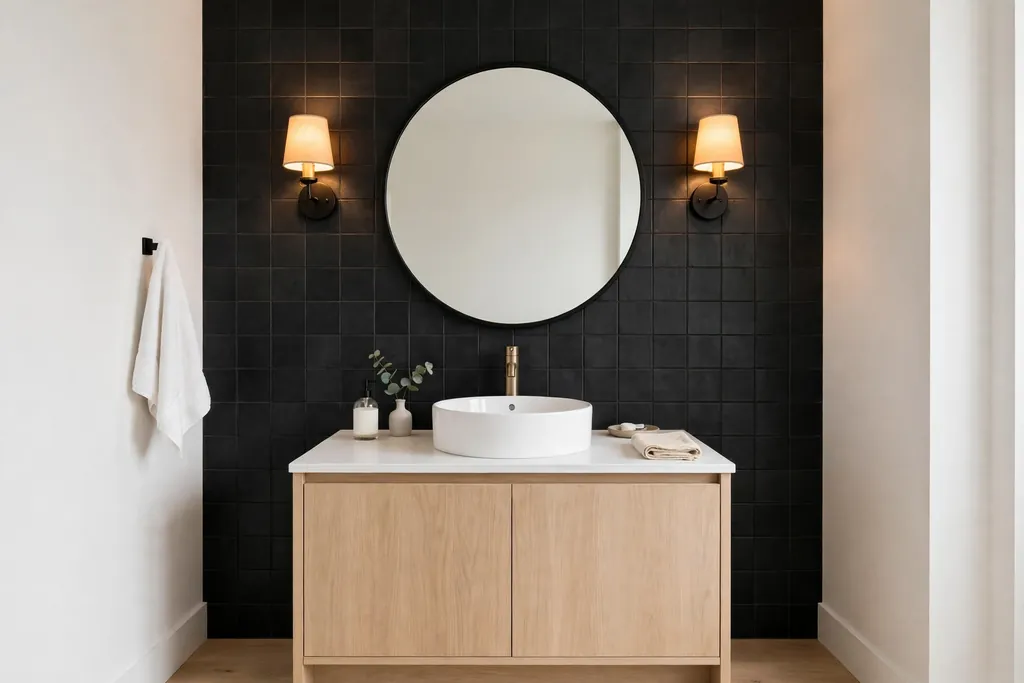
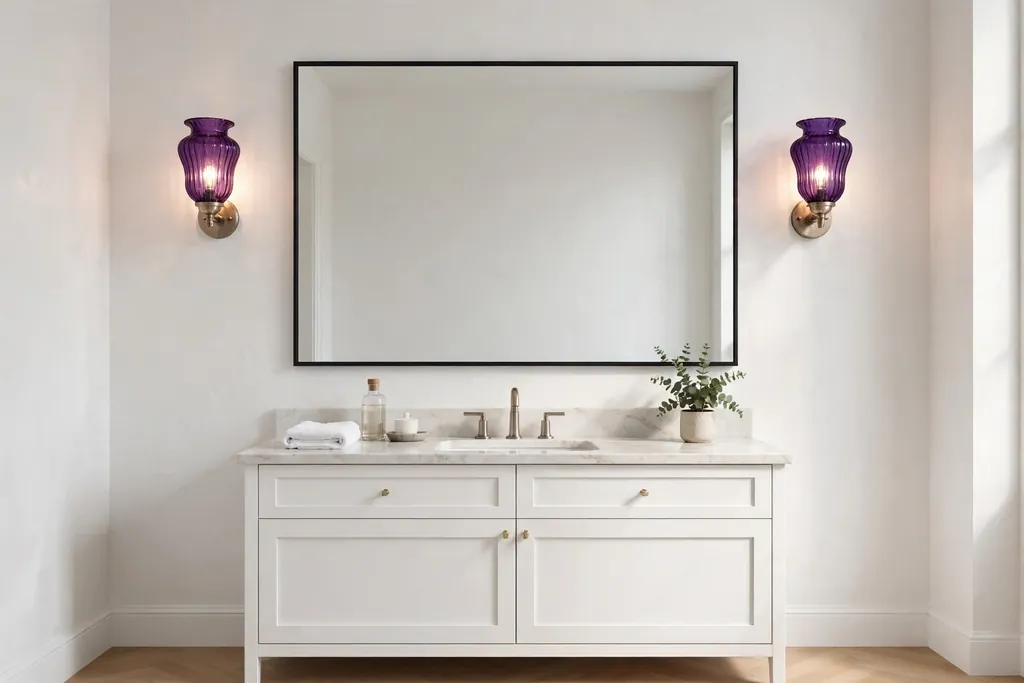
Hang an arched mirror above the vanity, with a sconce on either side at eye level, for light that flatters and a shape that softens hard tile lines. The arch draws the eye upward and breaks the rectangle of the vanity and the mirror wall, while side sconces give even light for grooming without the harsh shadows of a single overhead light. Center the mirror over the sink and keep its width a little narrower than the vanity.
Choose warm white bulbs and a dimmer if your wiring allows it, so the same sconces can give bright morning light and a softer evening glow. Keep the mirror frame in the same finish as the faucet, and store the original builder mirror if you plan to move. In a room with no room for two sconces, one overhead light plus a small plug-in lamp on a shelf gives a similar layered effect.
5. Layered Linen in Cream and Sage
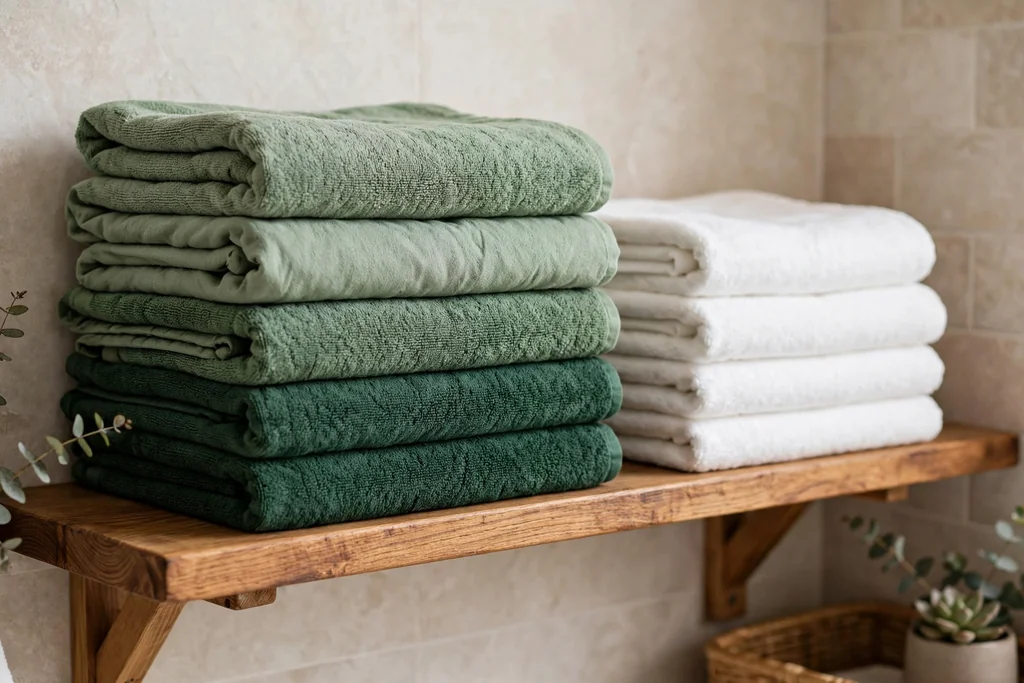
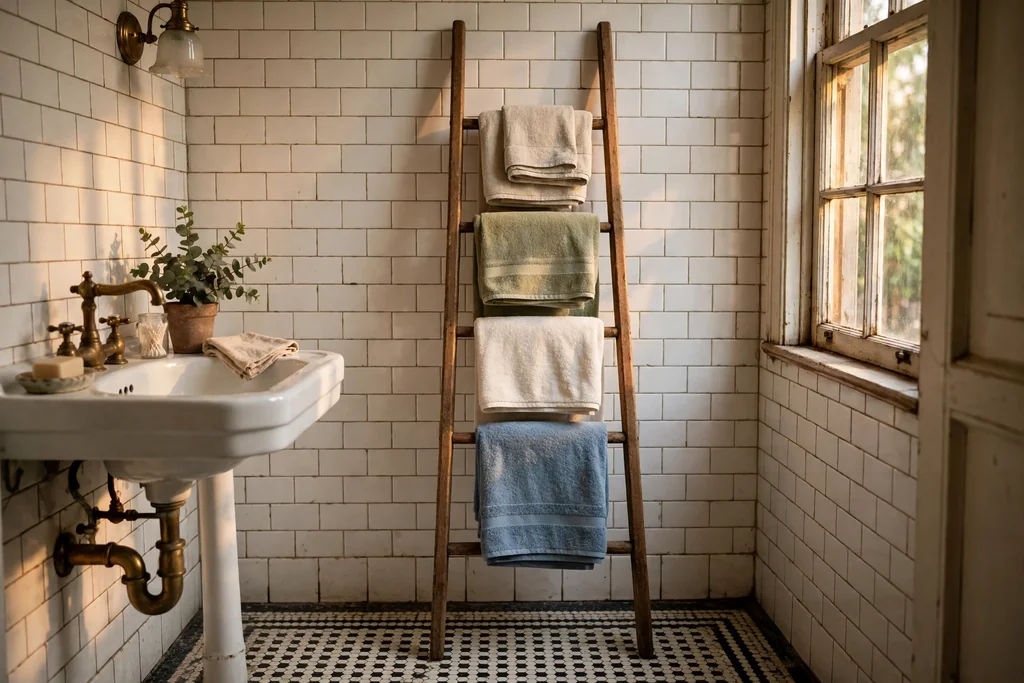
Layer linen towels in cream and sage, with a woven basket and a soft bath mat, to make the room feel cared for rather than bare. Linen and cotton towels in two calm colors, folded or rolled where they show, add texture that tile and porcelain lack. A basket for spare towels keeps the set together and hides the extras you do not need every day.
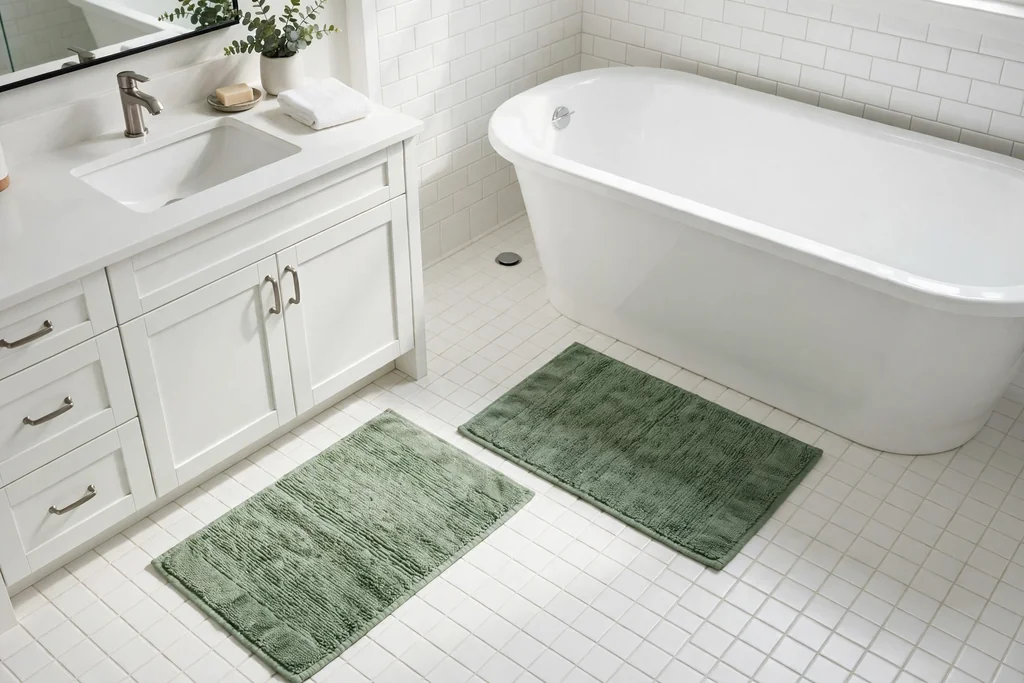
Rotate two sets of towels so one is always in the laundry and the other is on display, and wash bath mats with the towels for a consistent feel. Keep the palette to two colors plus white, so the linen reads as a set. If sage does not suit your room, dusty blue, warm grey, or a soft terracotta gives the same calm layering with a different accent.
6. Glass Shower with a Patterned Tile Accent
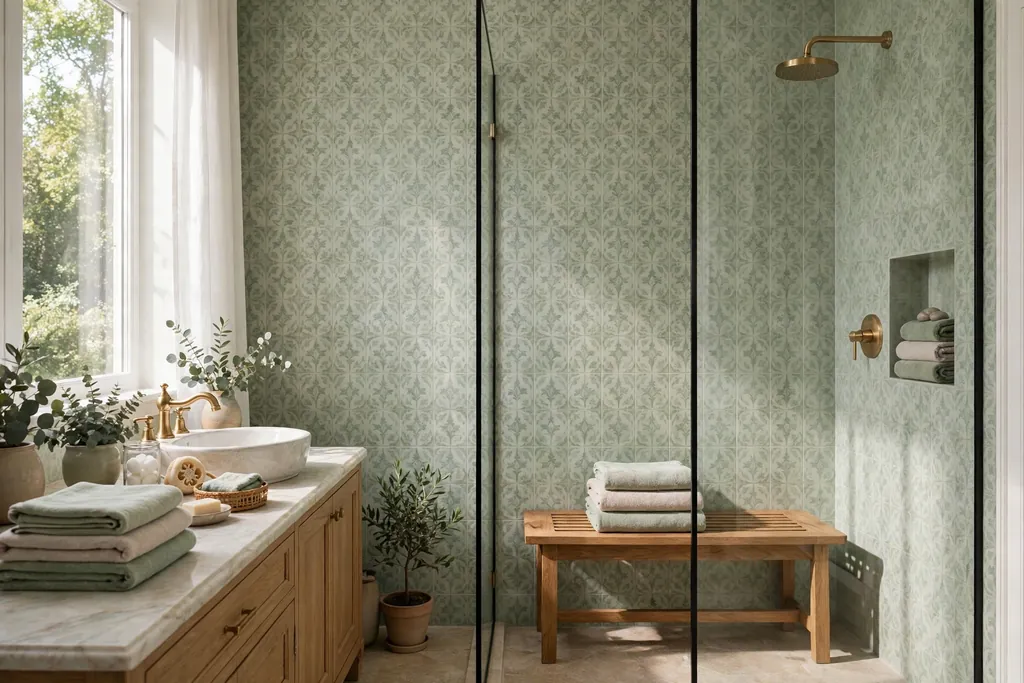
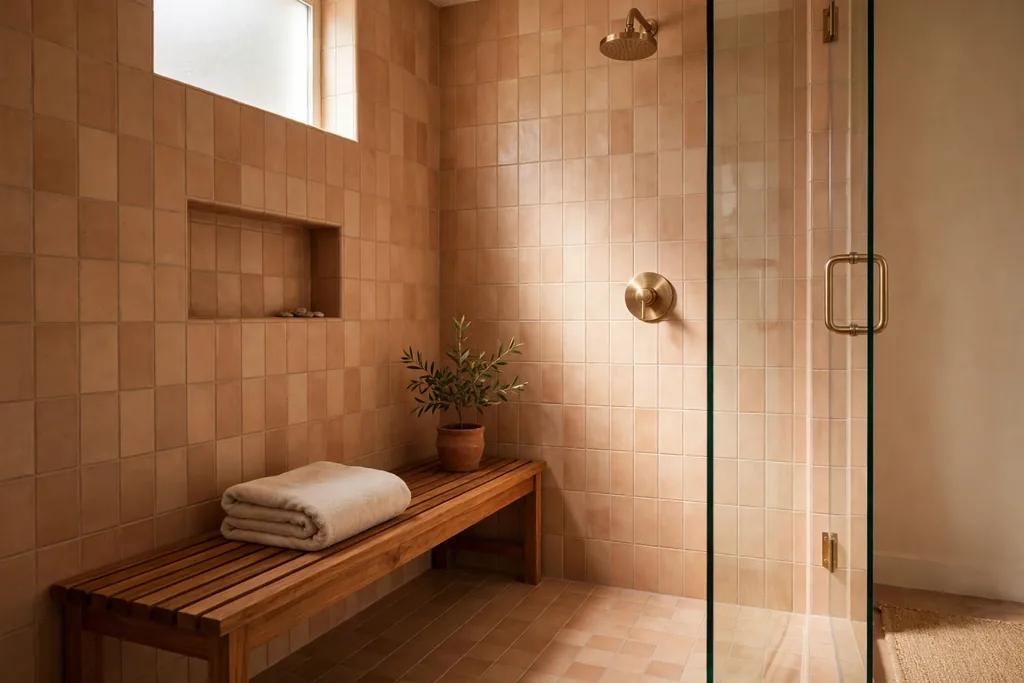
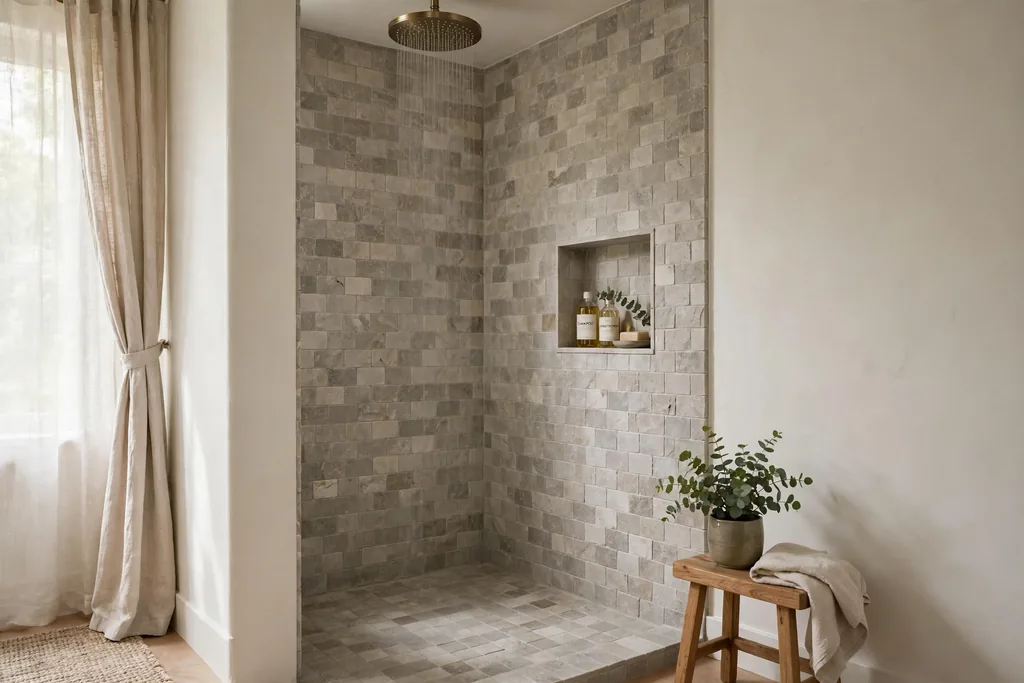
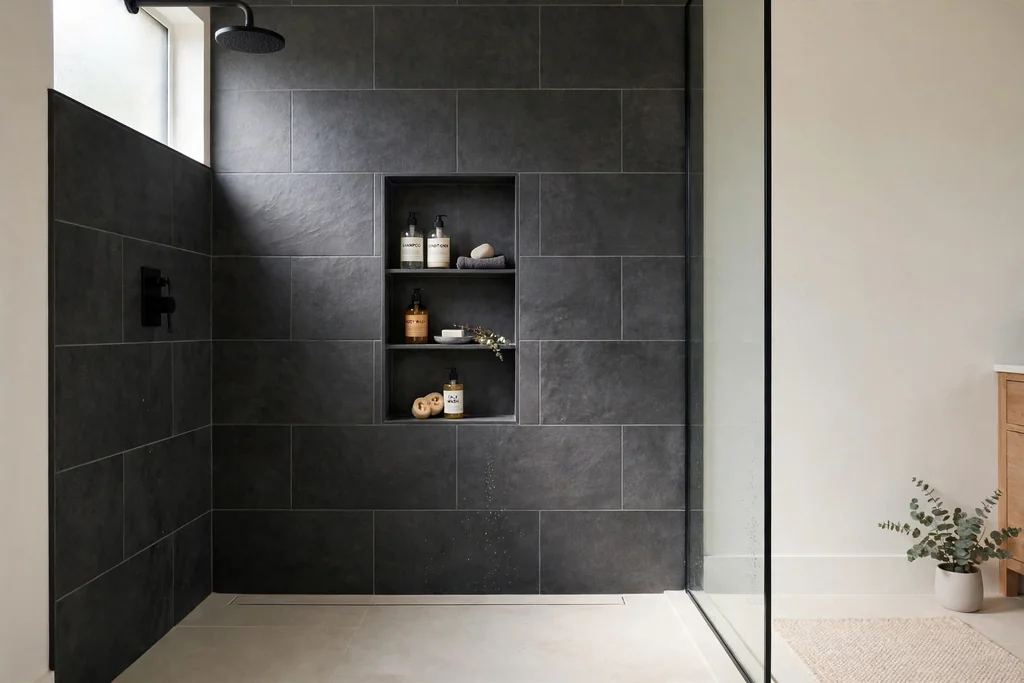
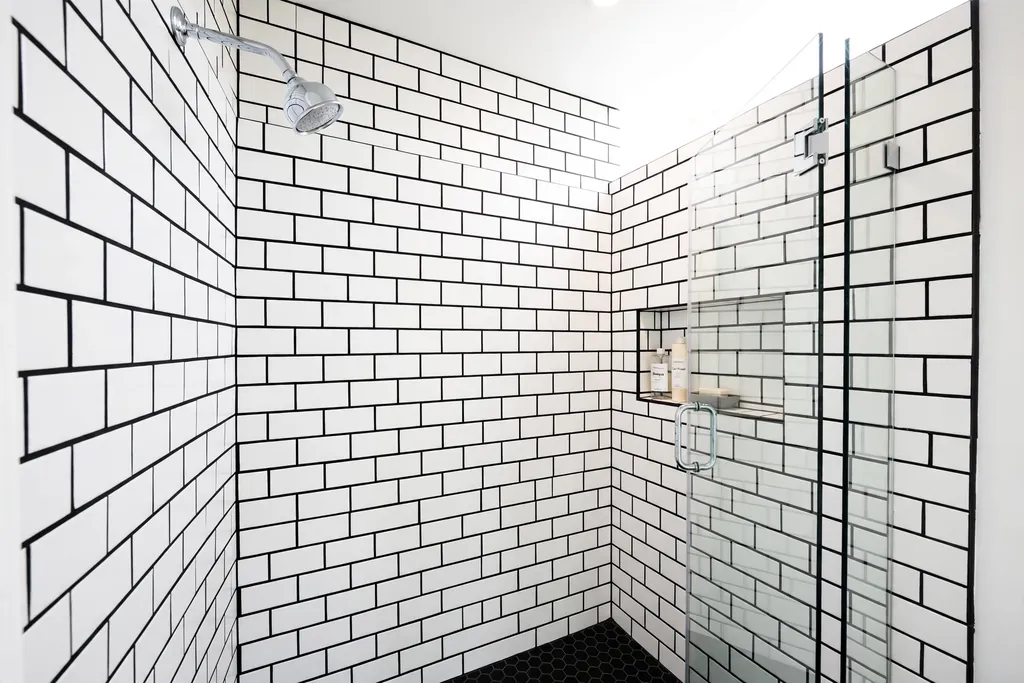
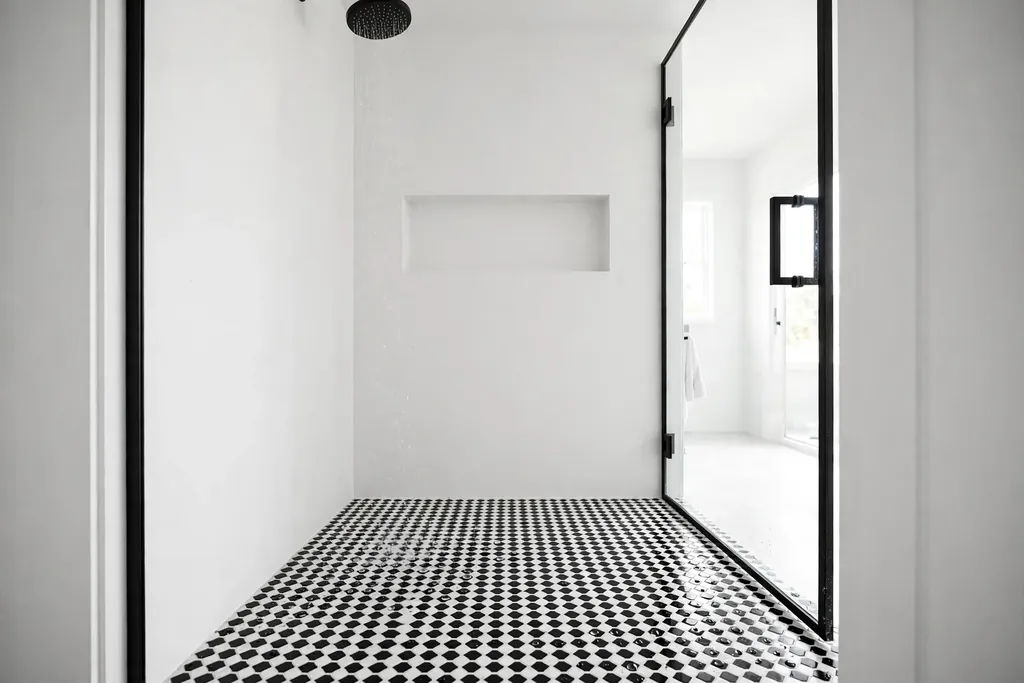
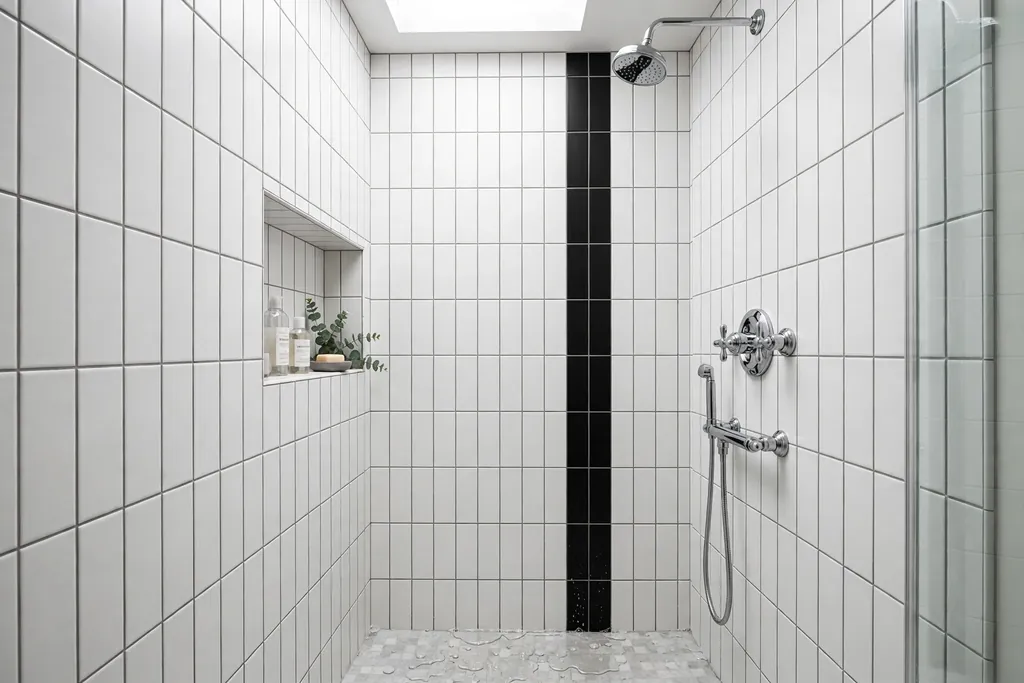
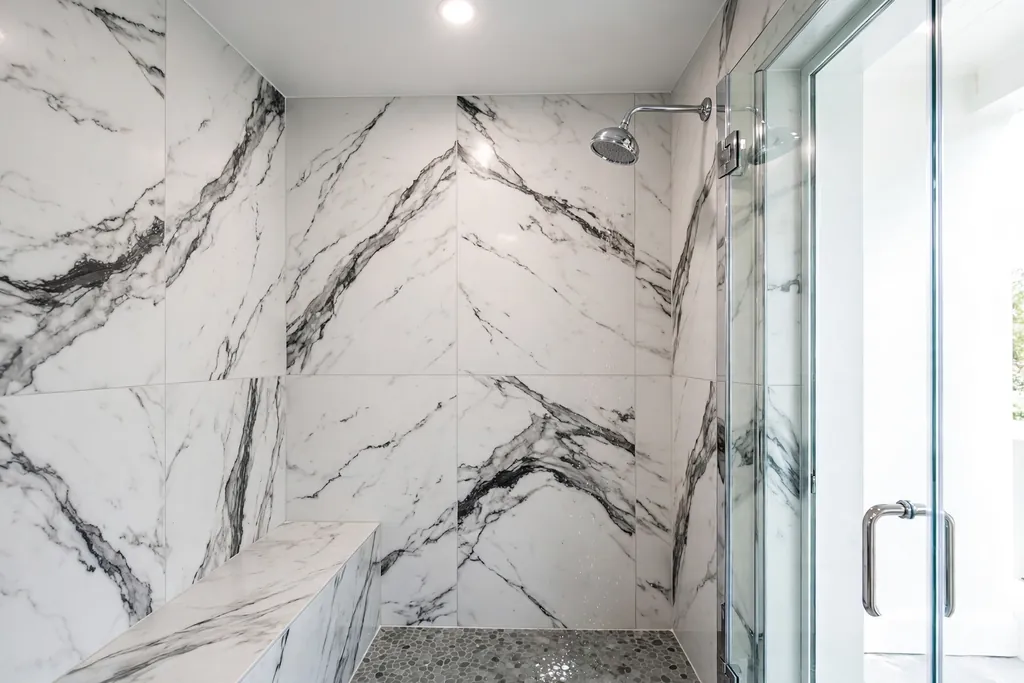
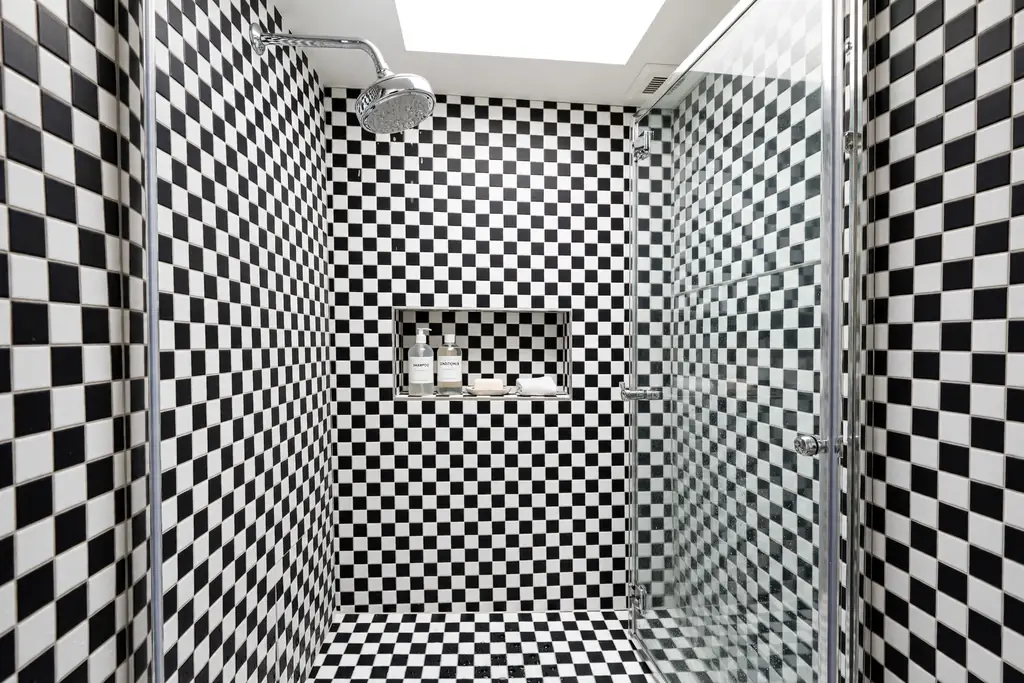
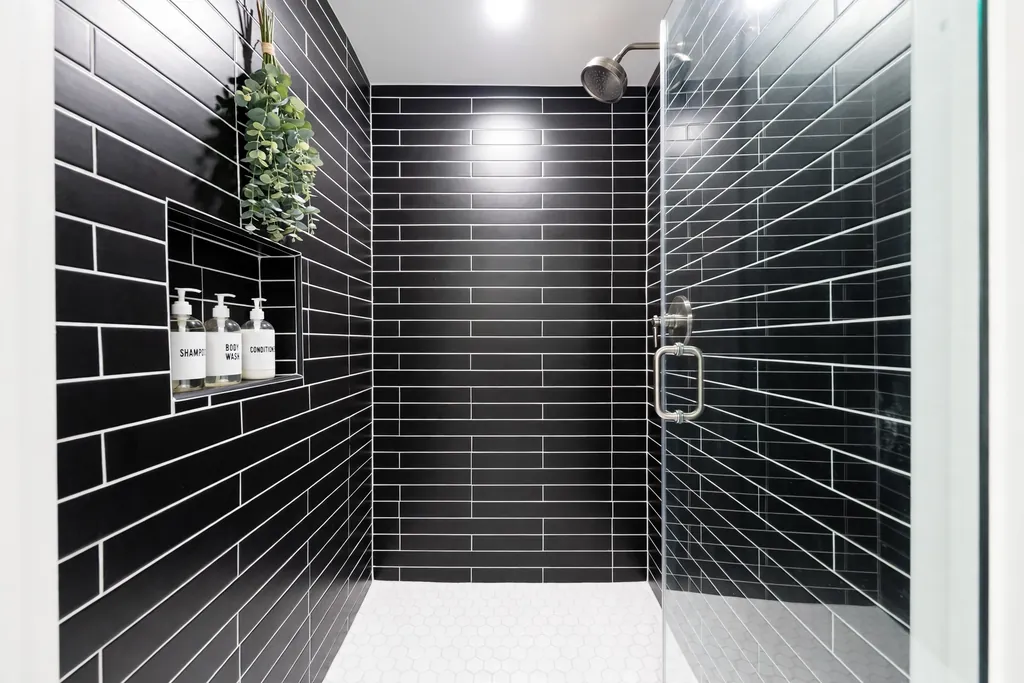
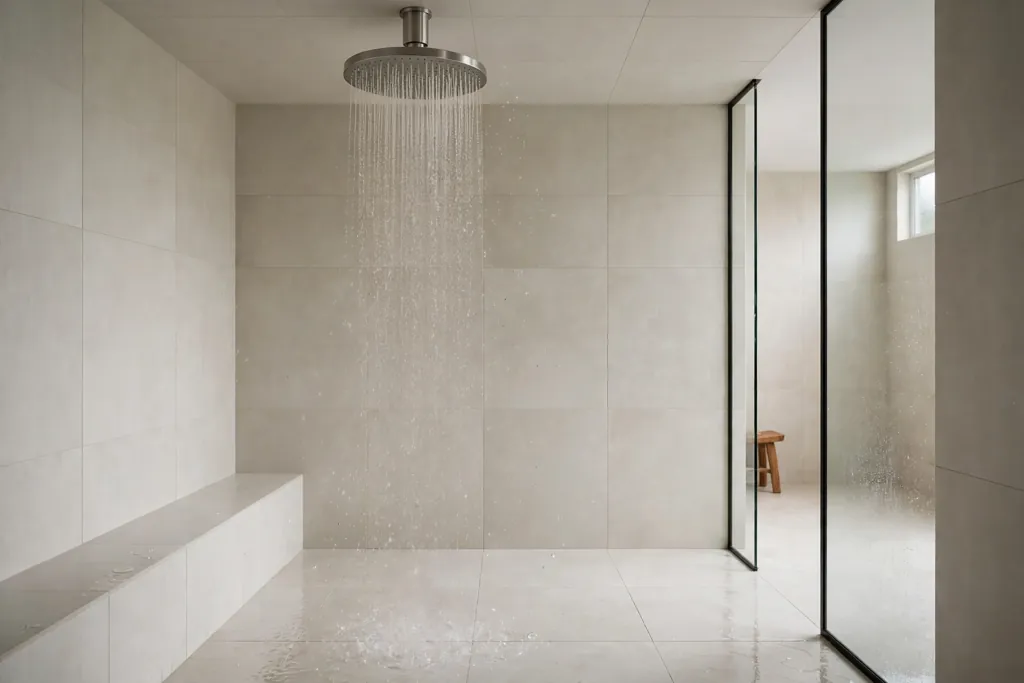
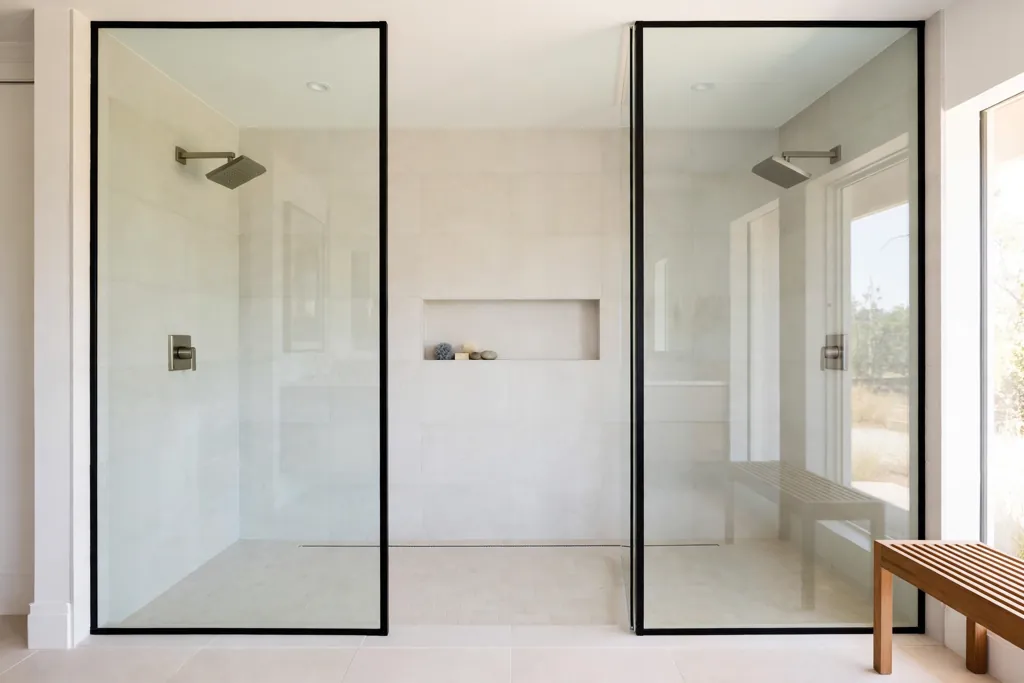
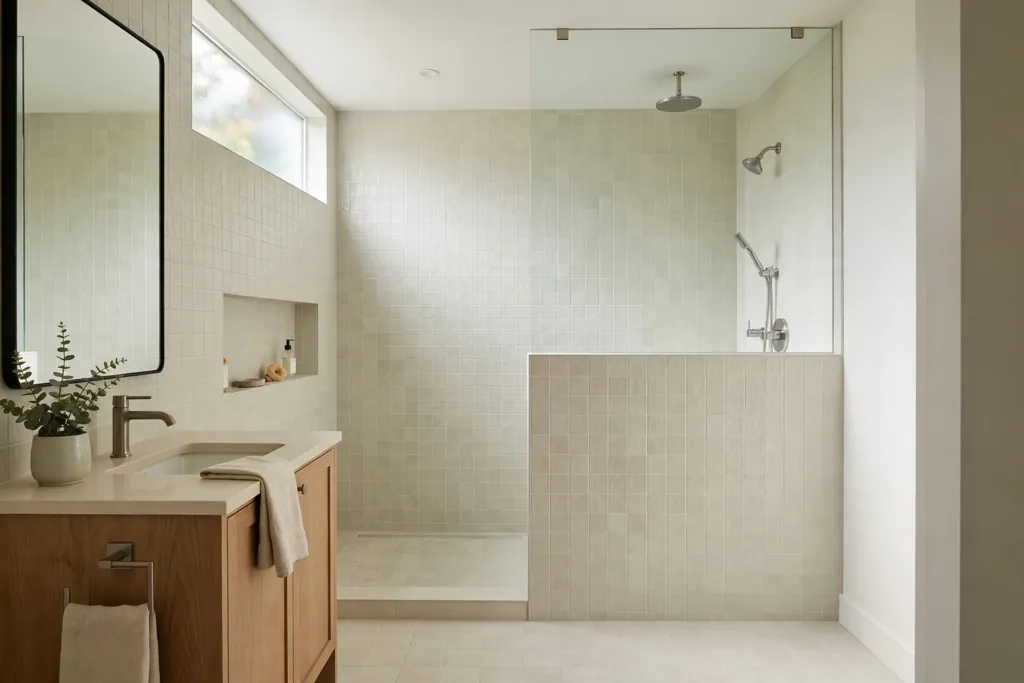
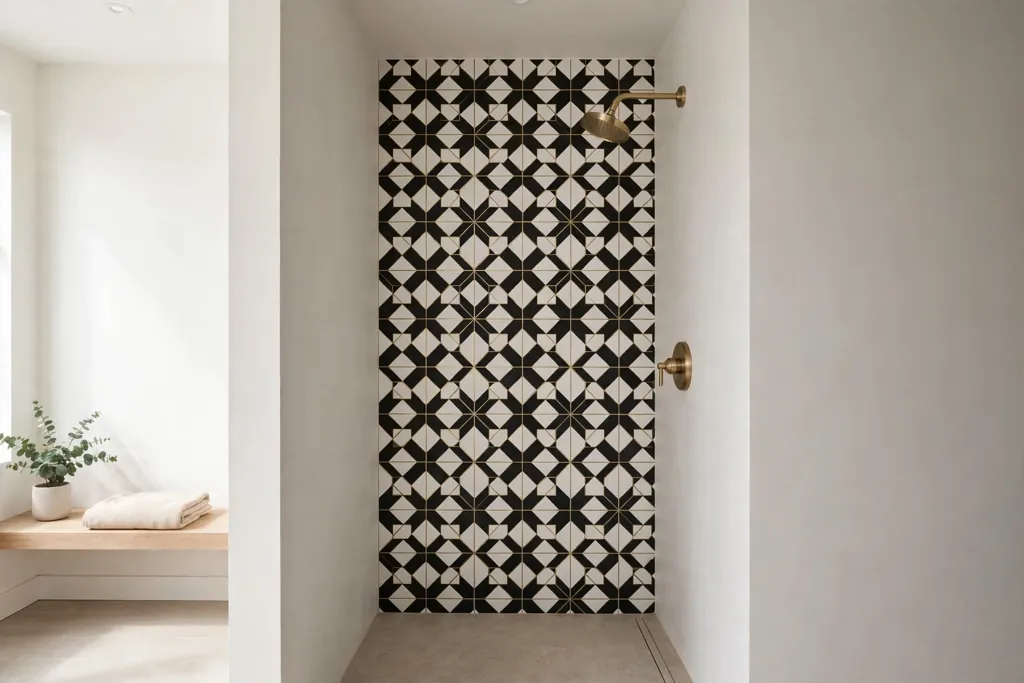
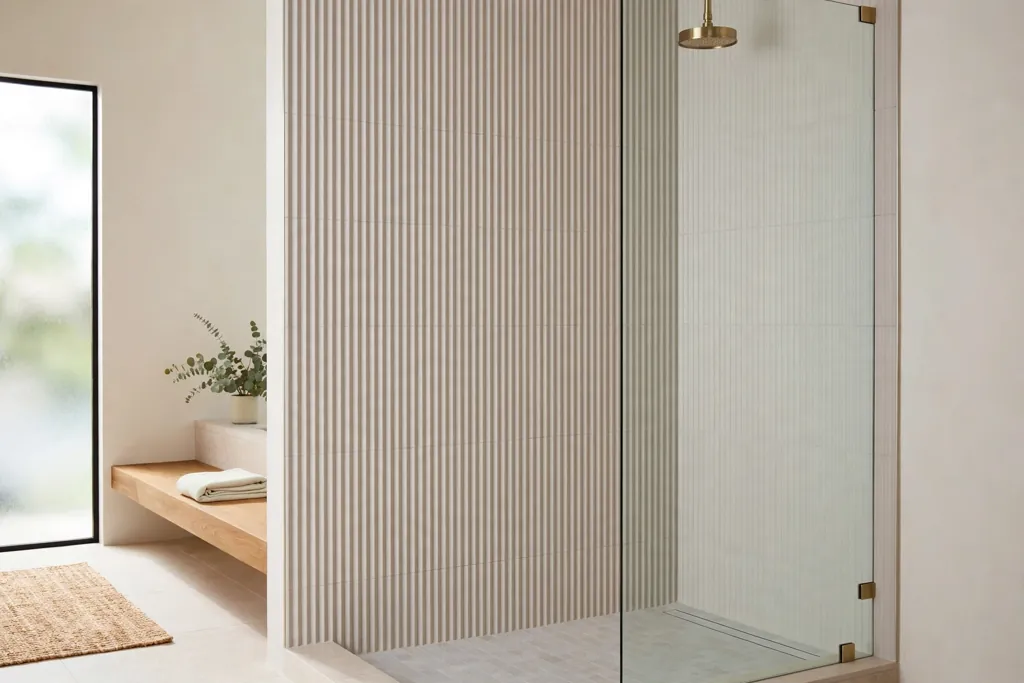
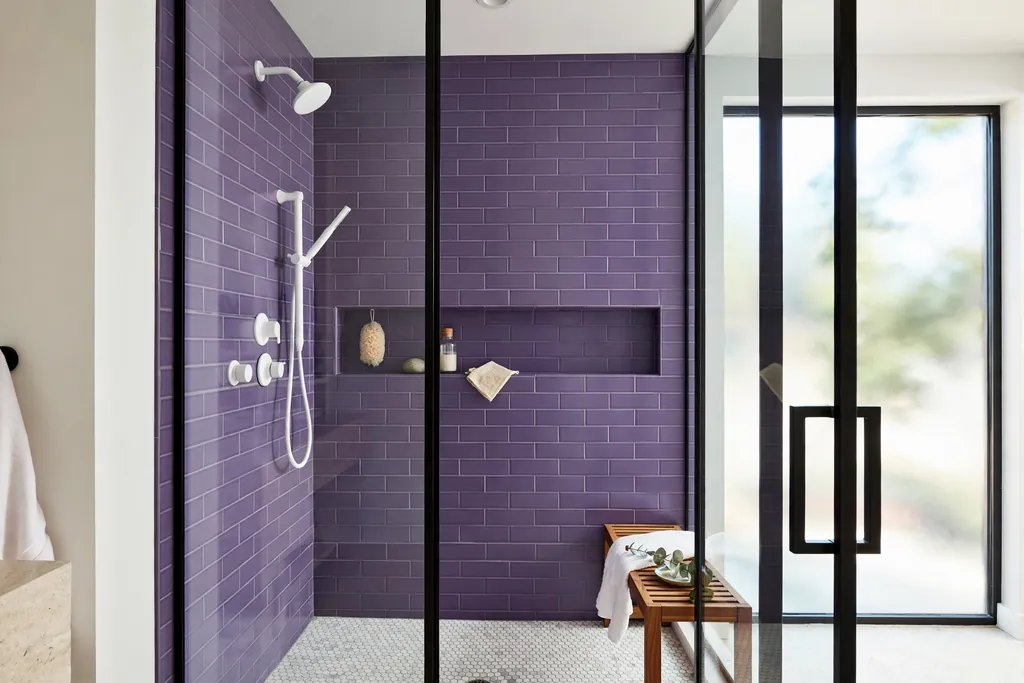
Fit a glass walk-in shower with one patterned tile accent wall, and the shower becomes a feature rather than a wet corner. Glass keeps the room open and lets light reach the tile, while a soft pattern in sage, cream, or muted blue adds interest without shouting. Use the pattern on one wall only, and keep the other shower walls plain, so the accent stays calm.
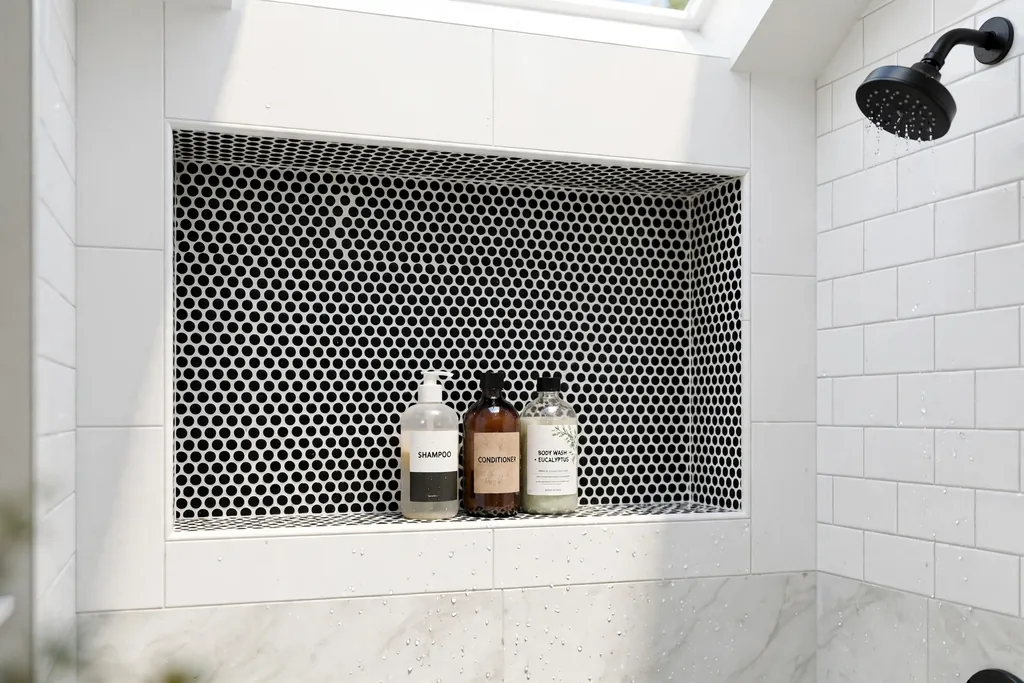
Add a wooden bench or a teak stool inside the shower for sitting and for setting down soap, and keep the niche tidy with two or three bottles at most. Choose a tile with a matte finish if you want a softer look, since gloss tile can glare under bright light. Seal the grout as the tile maker advises, and squeegee the glass after showers to keep it clear.
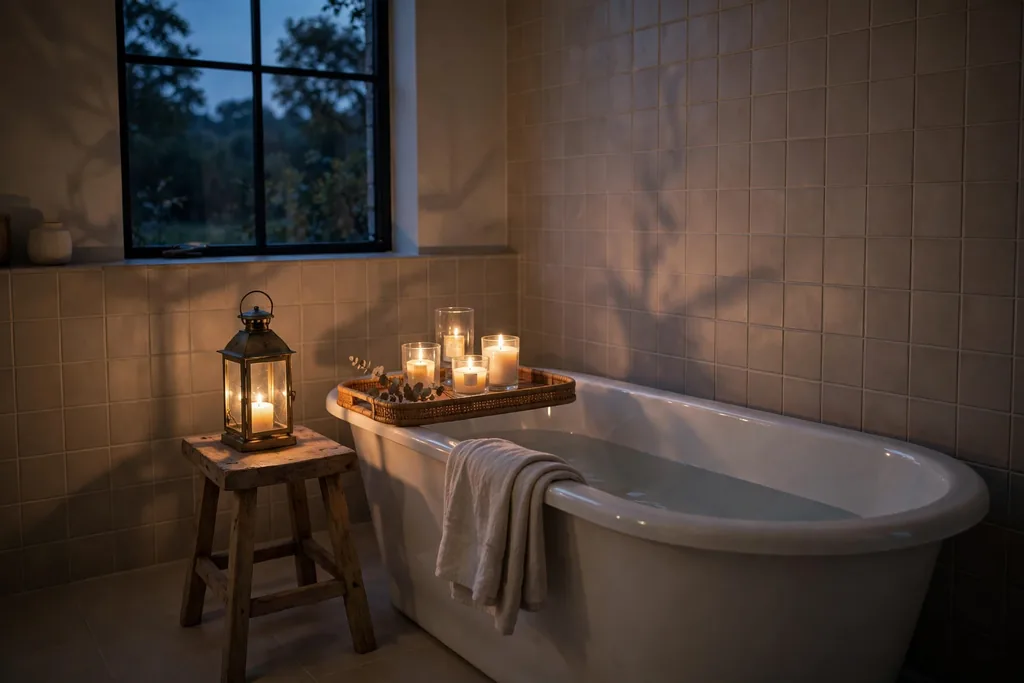
7. Warm Evening Light with Lanterns by the Tub
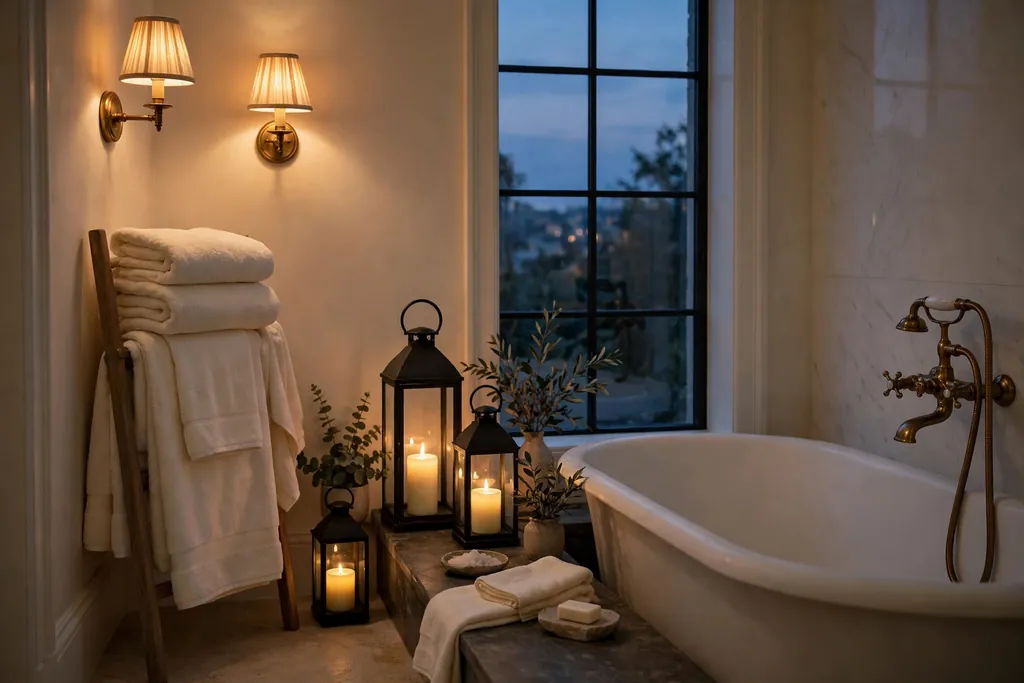
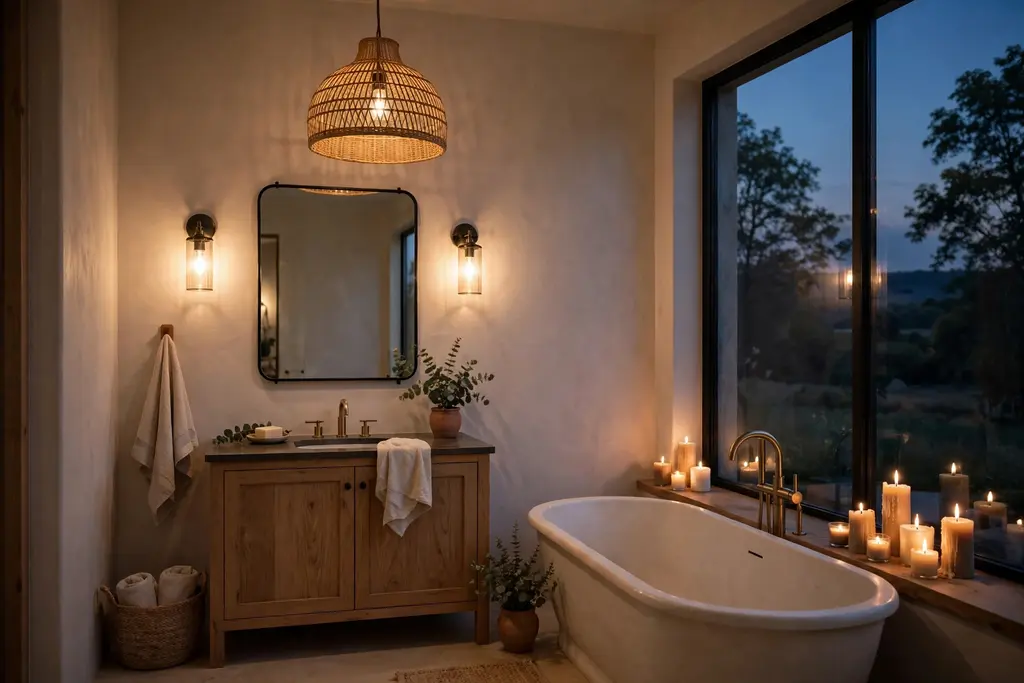
Set warm evening light beside the tub, with lanterns holding flameless candles, for a bath corner that invites you to slow down. Lanterns give a soft glow without a cord across the floor, and they look at home beside a freestanding tub or on a small stool. Use a timer on the candles so the light switches itself off, and keep the lanterns clear of towels and the direct splash zone.
Pair the lantern glow with a dimmed main light, rather than full overhead light, so the room shifts from daytime to evening in one move. Metal, wood, or rattan lanterns each suit a different bathroom, so match the finish to your faucet or mirror frame. This same lantern idea works in seasonal rooms too, as shown in these Christmas bathroom decor ideas, where lanterns beside a tub give a calm seasonal glow.
8. Humidity Loving Plants on a High Shelf
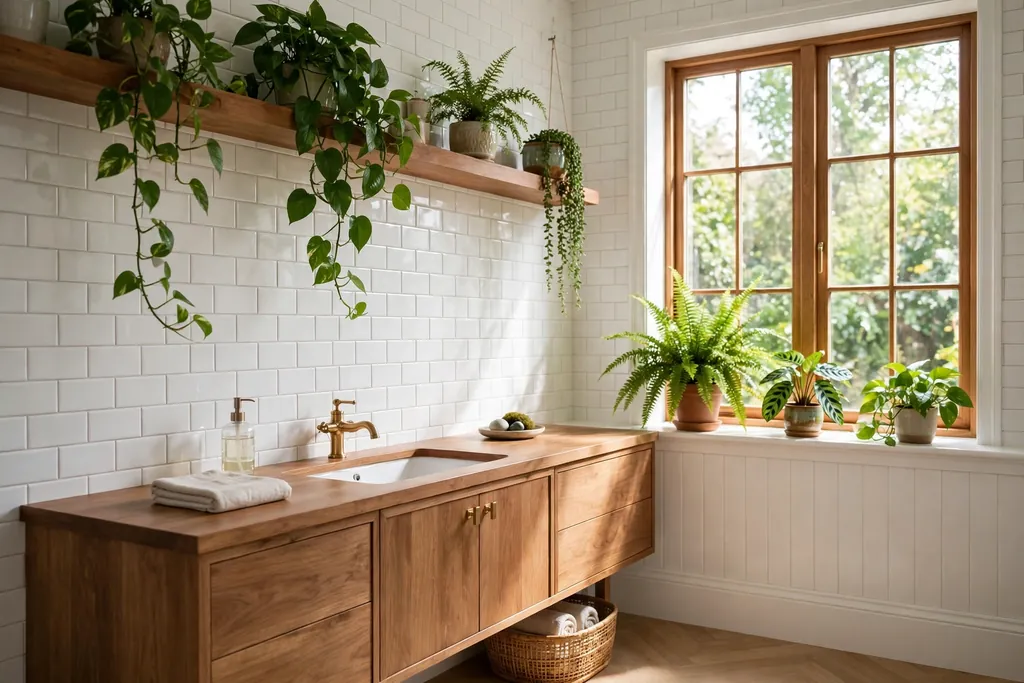
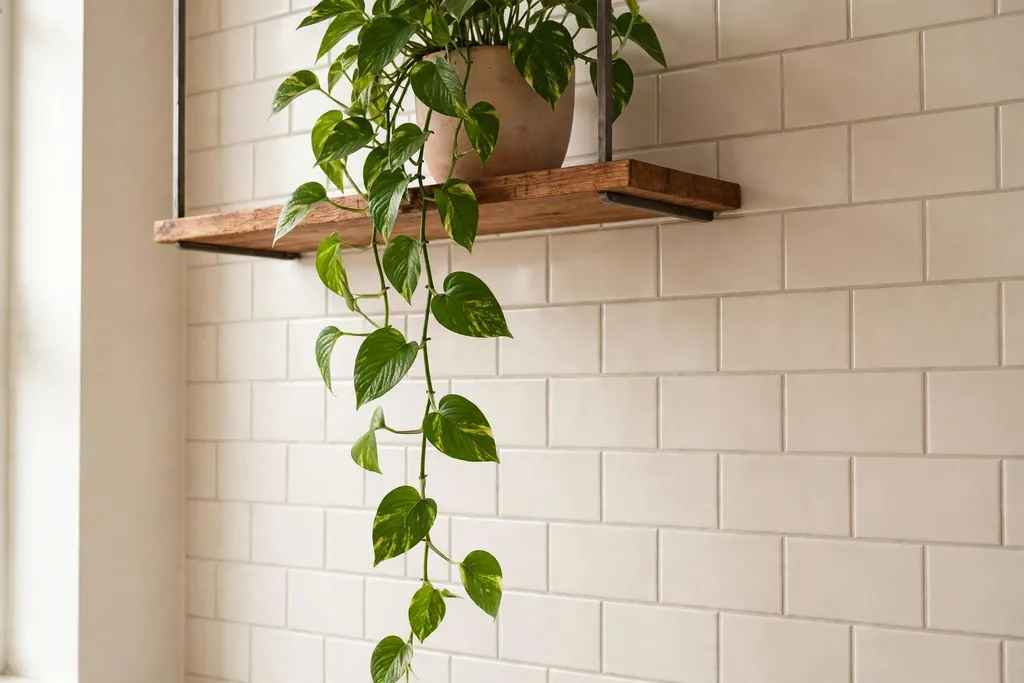
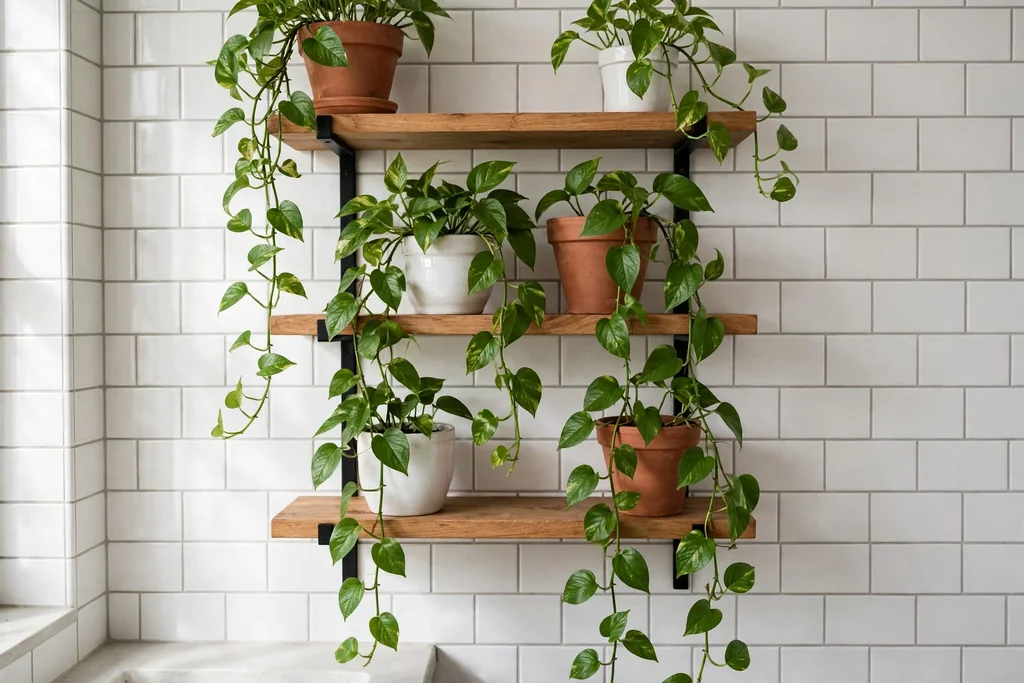
Grow humidity loving plants on a high shelf or windowsill, where they soften tile and add life without taking counter space. Pothos, ferns, and philodendron enjoy bathroom air and indirect light, and a trailing plant lets vines fall down the wall for a gentle, lived-in look. Use pots with drainage holes and saucers, and check the soil before watering, since bathroom air already adds moisture.
Keep the plant away from direct shower spray, and rotate it to a brighter room for a few days each week if your bathroom has no window. One trailing plant usually looks better than a crowded collection in a small room. If you travel often, choose a faux plant in a real pot for the same green accent with no watering routine.
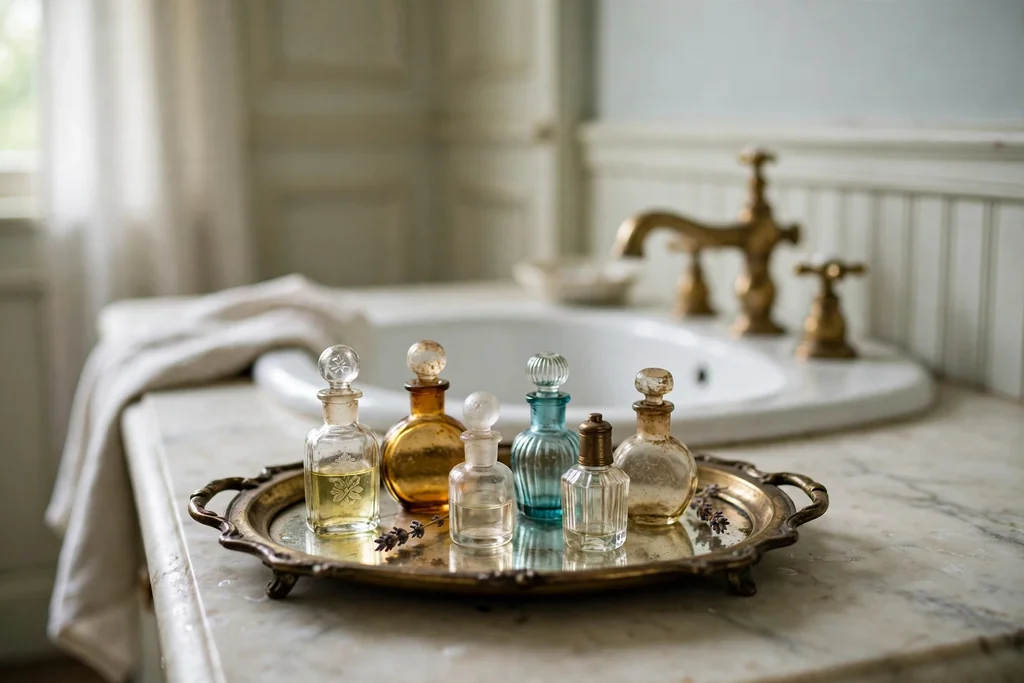
9. Curated Vanity Tray for Daily Items
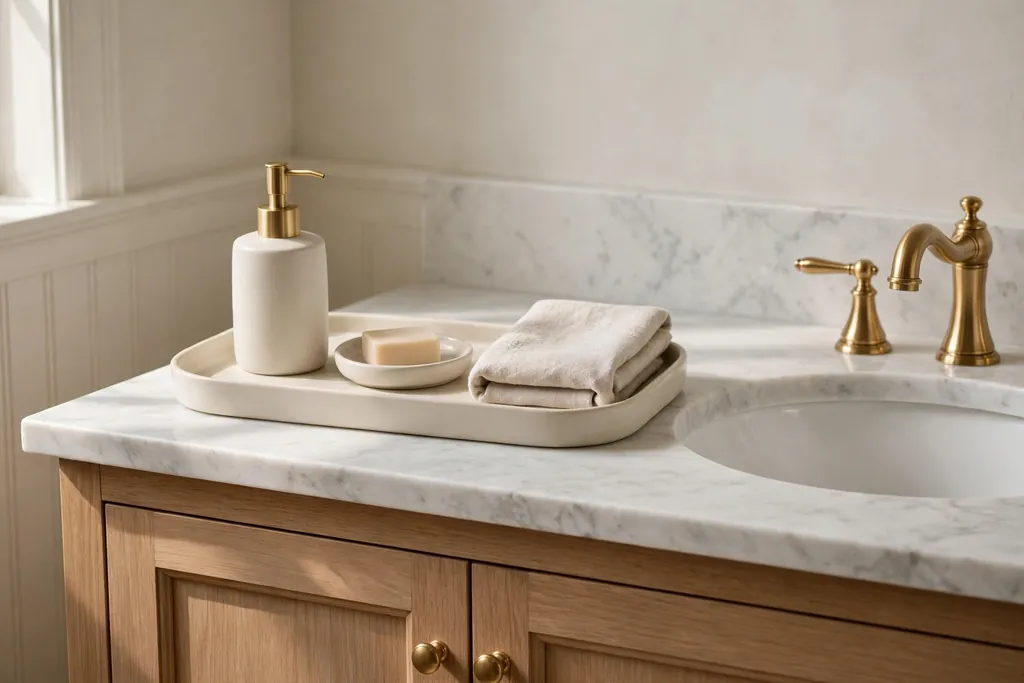
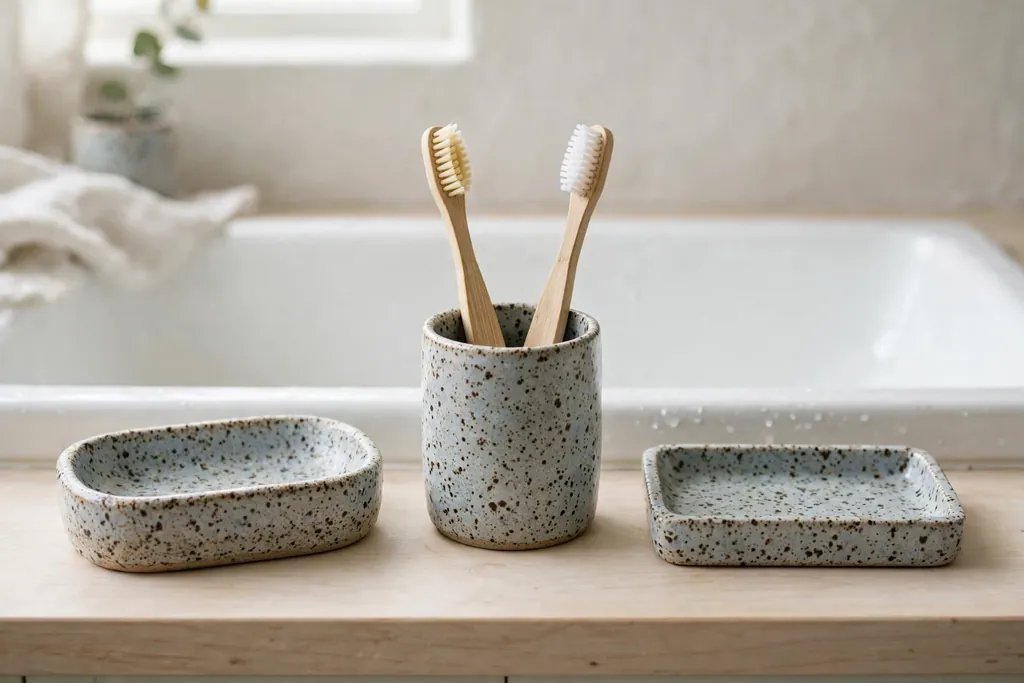
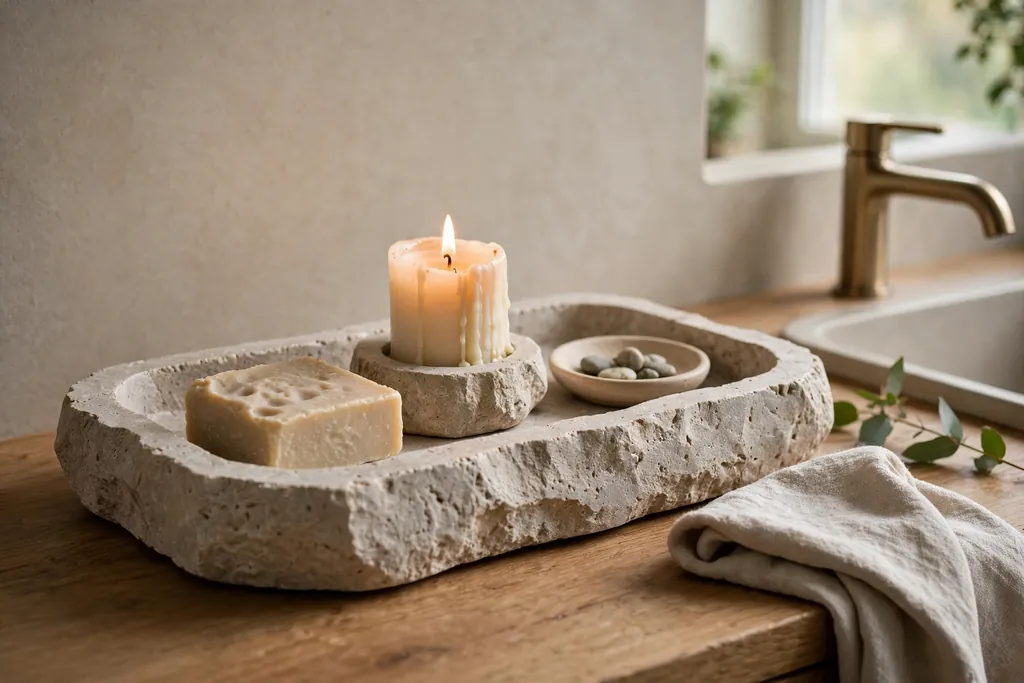
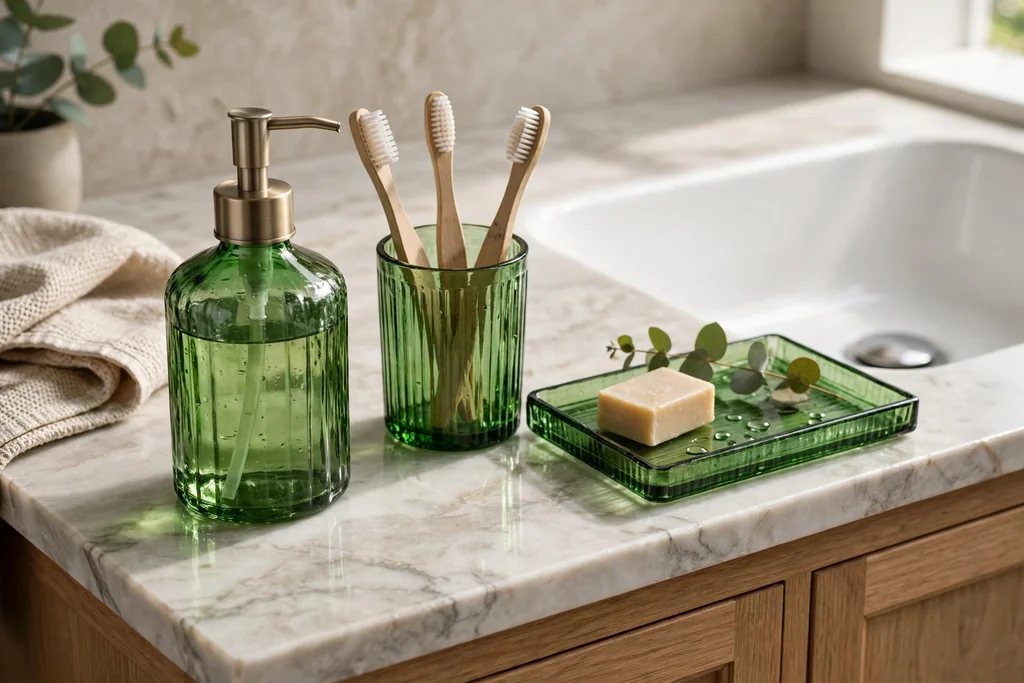
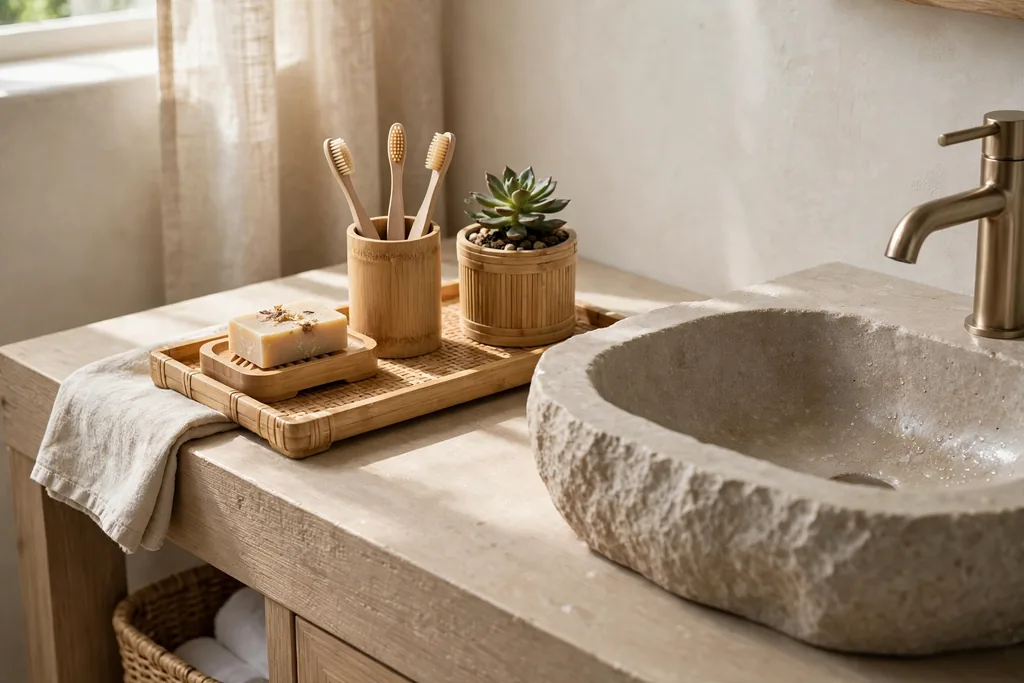
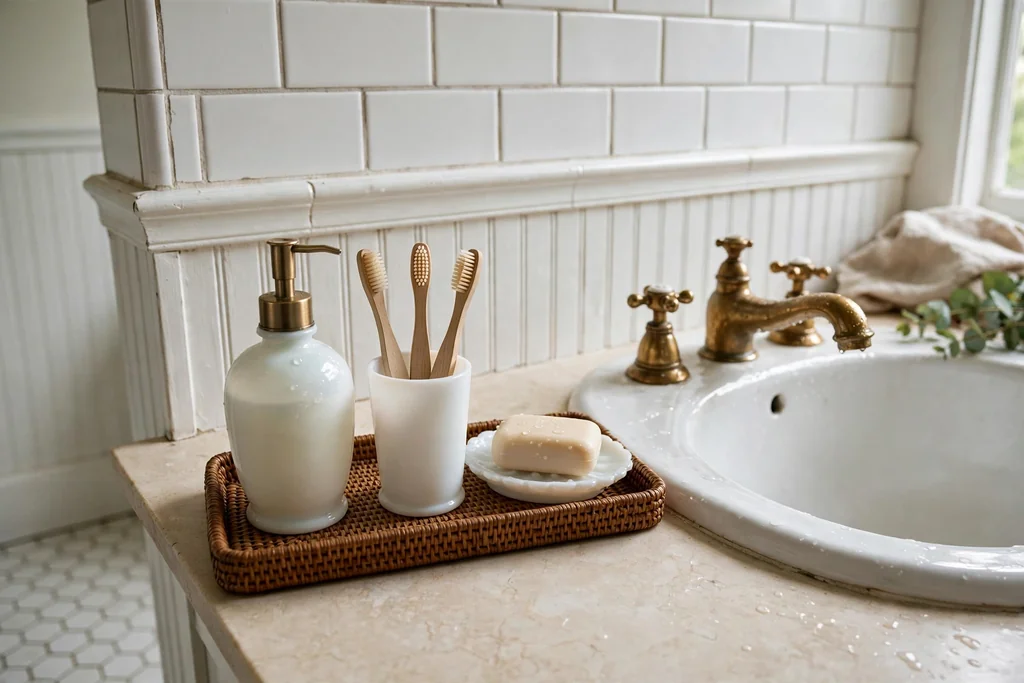
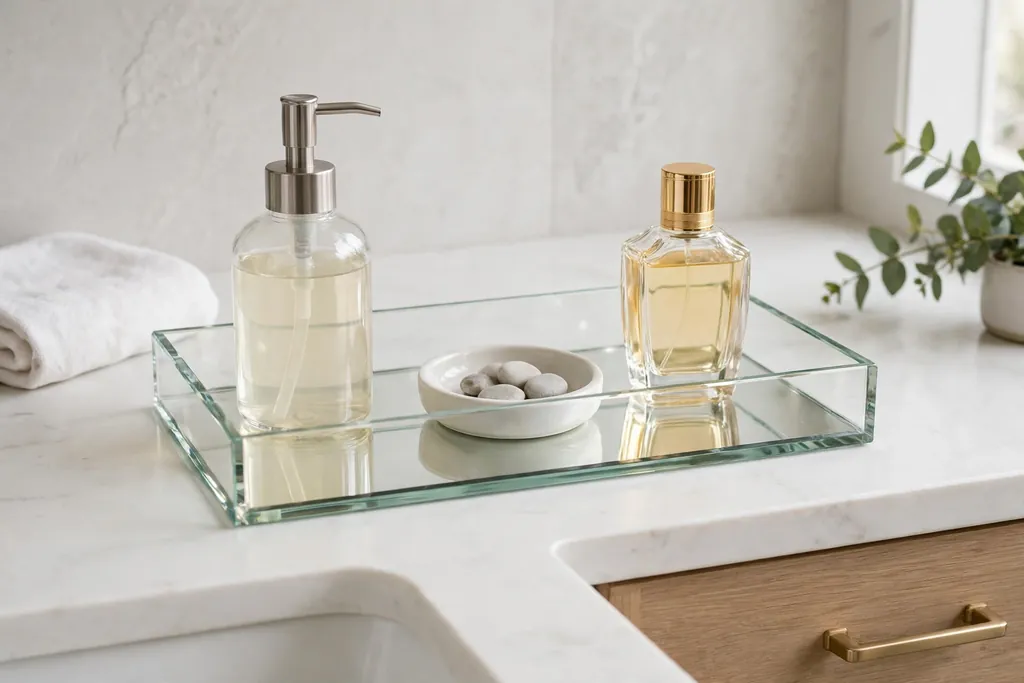
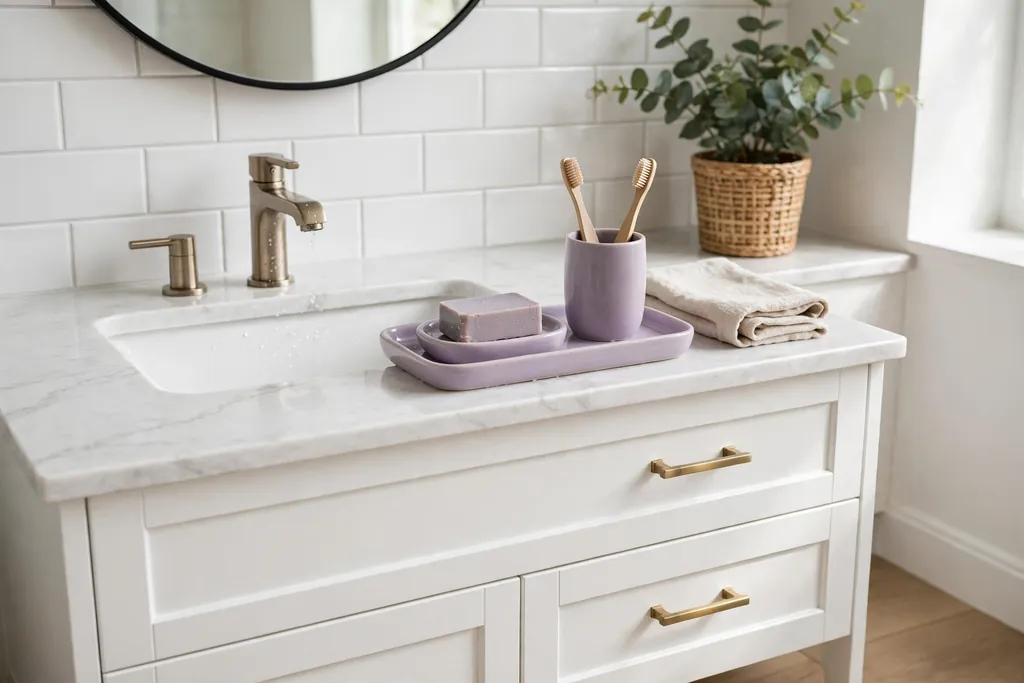
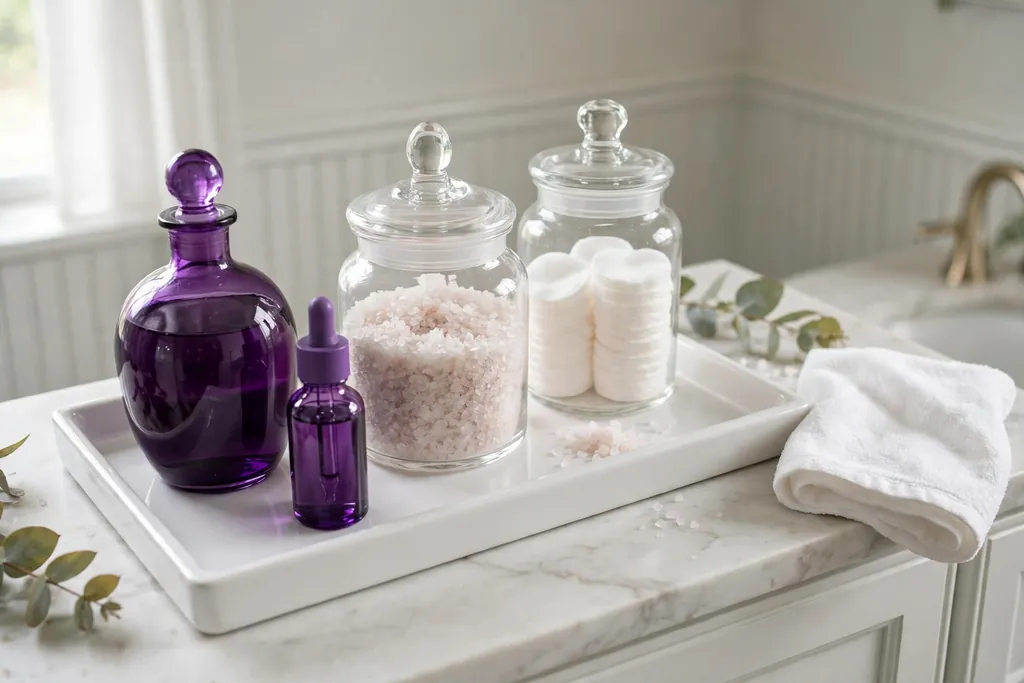
Group daily items on a ceramic tray beside the sink, so soap, a small dish, and a hand towel look arranged rather than scattered. A tray holds the set together, protects the counter from soap drips, and lifts off in one move for cleaning. Choose a tray with raised edges and a finish that copes with water, such as ceramic, coated wood, or metal.
Keep the tray to three or four pieces: a refillable soap dispenser, a small dish for rings or a hair tie, a folded hand towel, and one small plant or candle. Leave the rest of the counter clear for use, and wipe the tray weekly, since soap and water marks build up fast near a sink. If your counter is narrow, a small rectangular tray fits beside the faucet better than a round one.
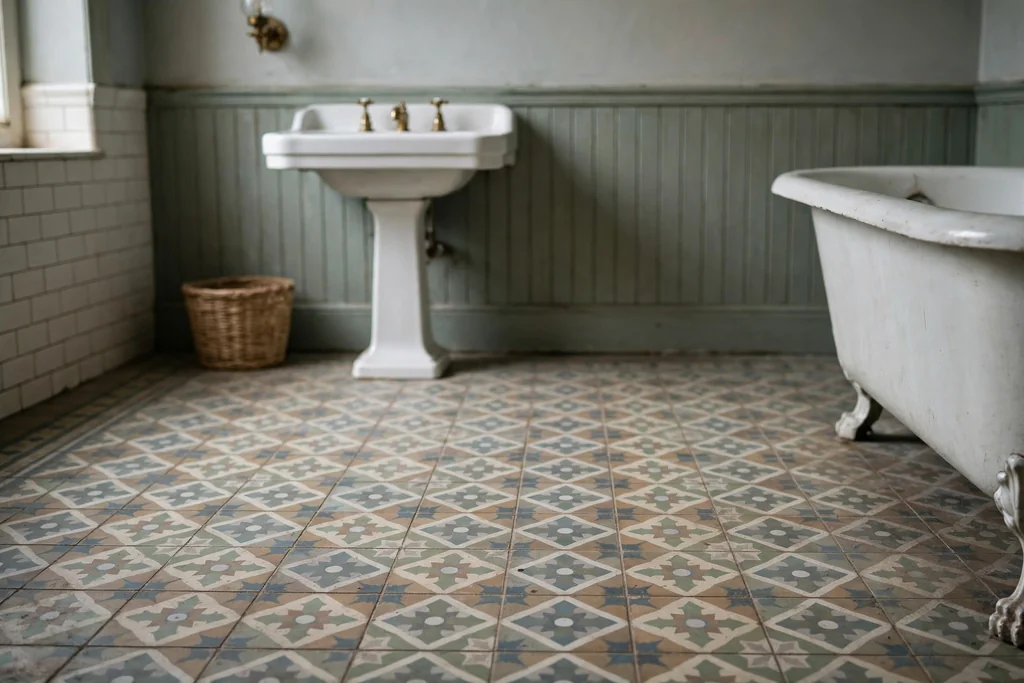
10. Soft Patterned Floor Tile in Muted Tones
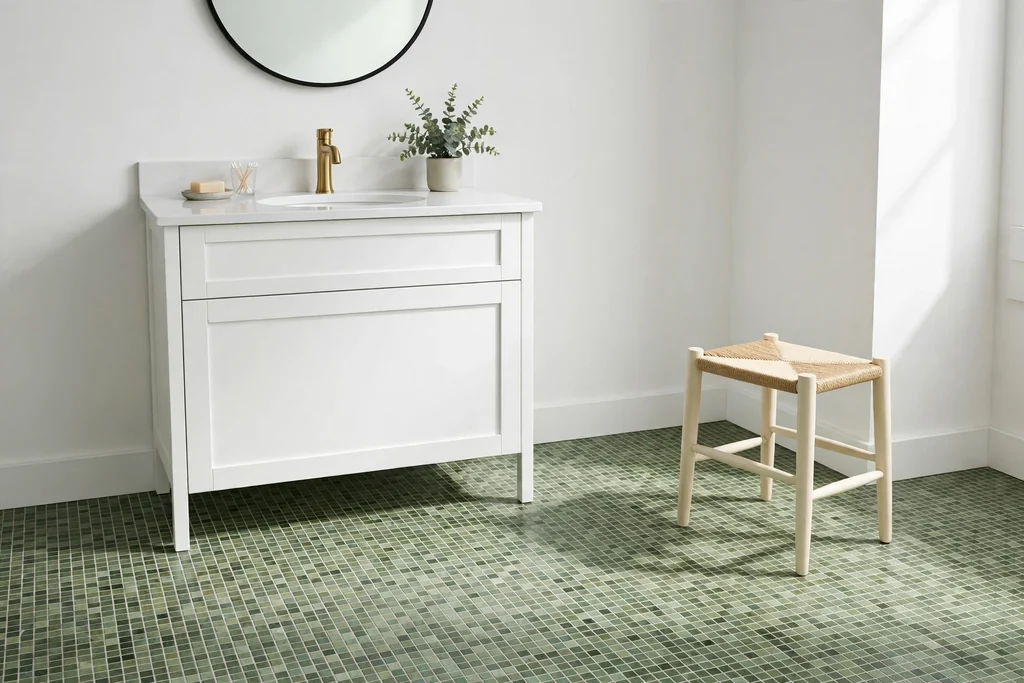
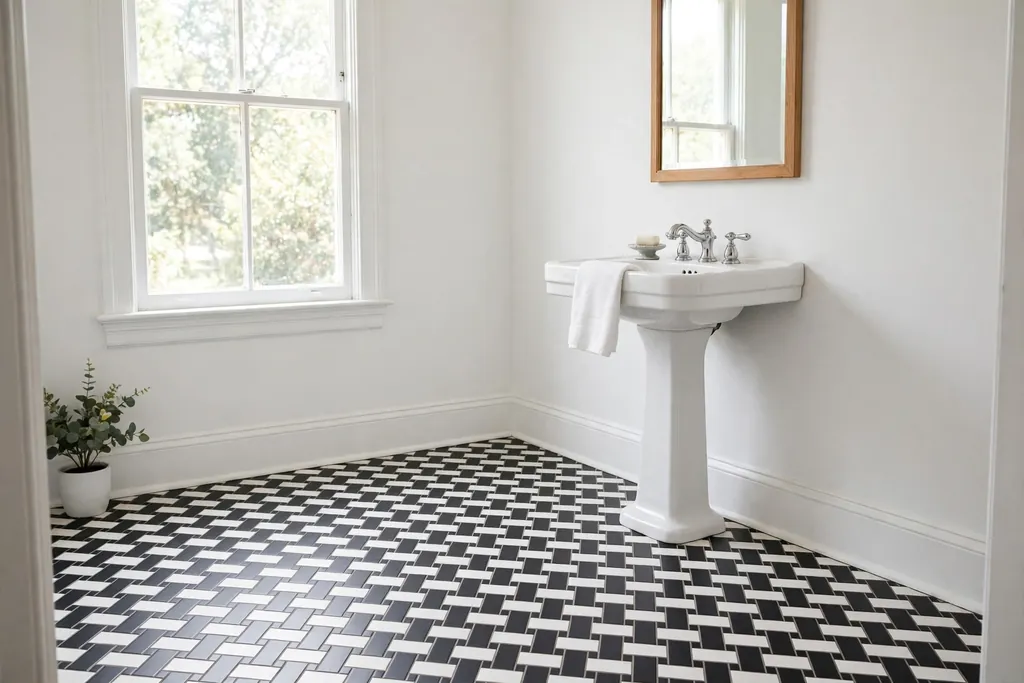
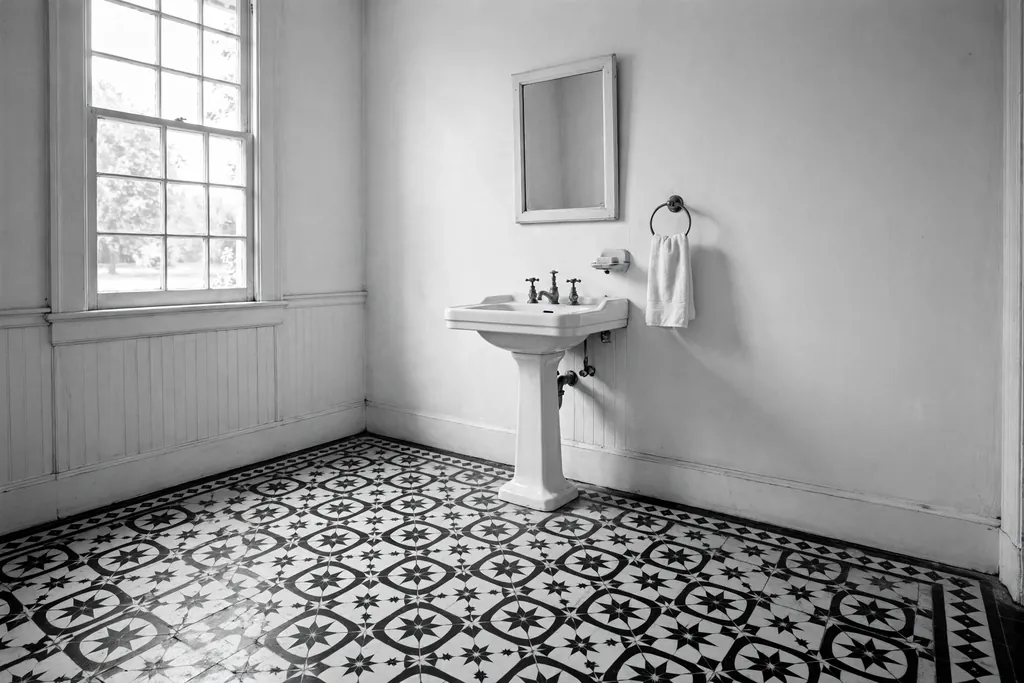
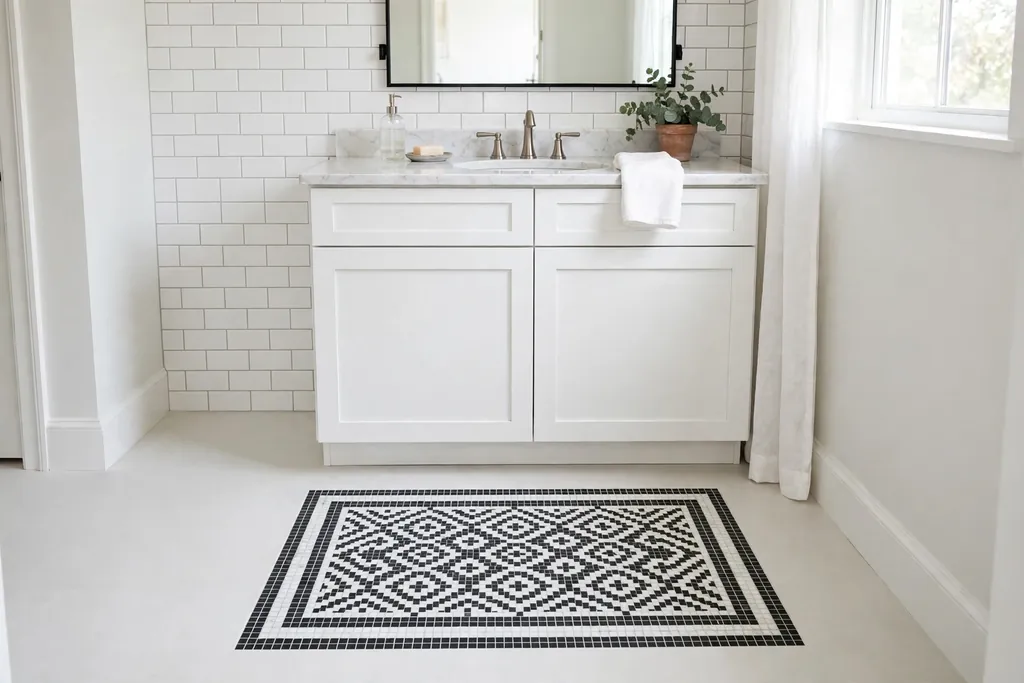
Lay a soft patterned floor tile in muted tones, such as cream and dusty blue, to give the room pattern underfoot without a loud print. A floor pattern anchors the vanity and the tub, and it makes plain walls and a plain ceiling feel deliberate. Choose a pattern with a small repeat for a small bathroom, so it reads well from the doorway and does not crowd the room.
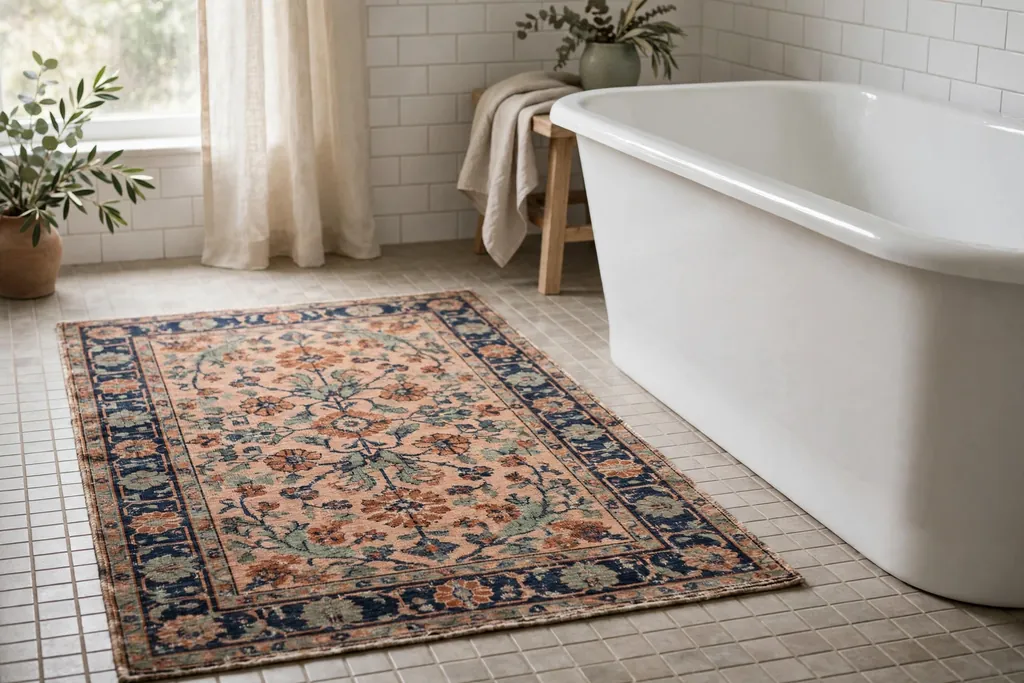
Keep the walls plain when the floor has a pattern, and pick towels in one color from the tile to link the floor to the rest of the room. Use a grout color close to the tile background, so the pattern stays soft rather than grid-like. If replacing the floor is not possible, a large patterned bath rug over a plain floor gives a similar anchor for far less work.
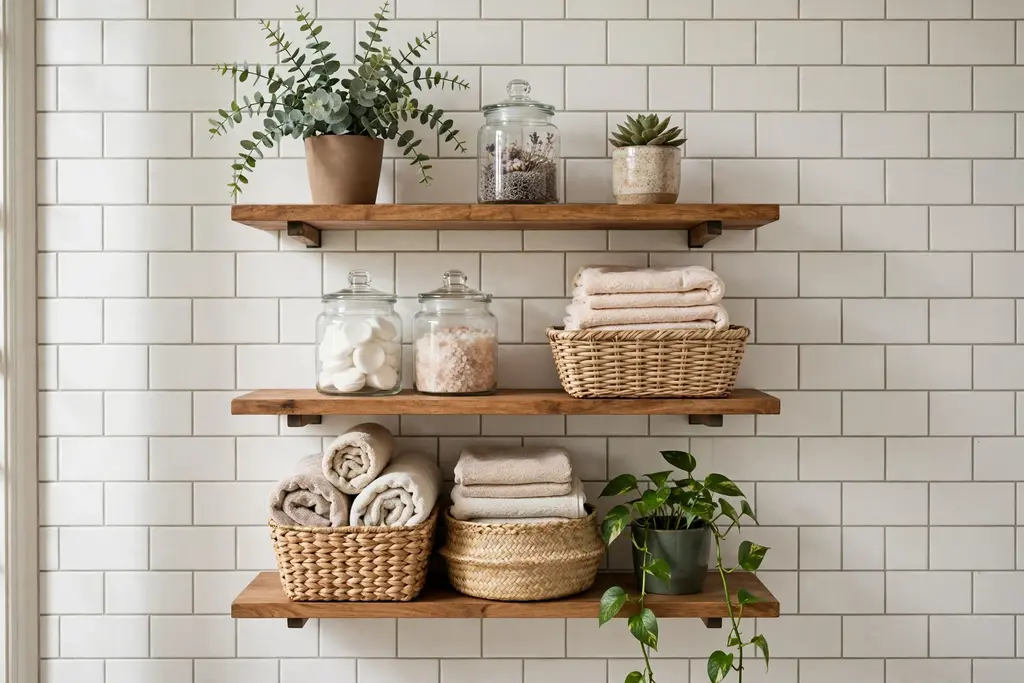
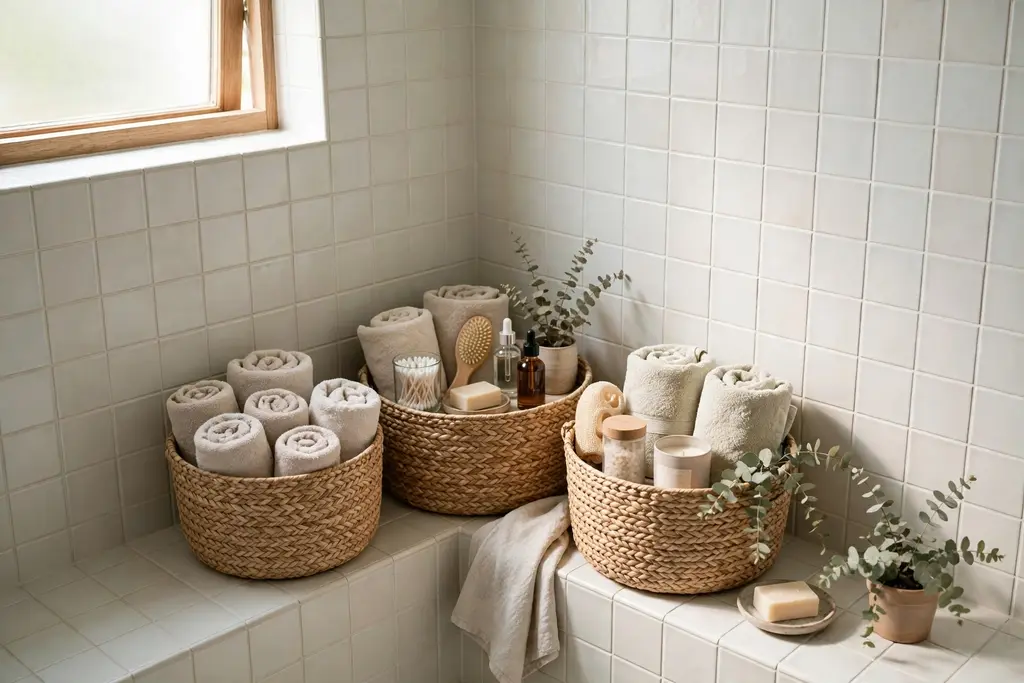
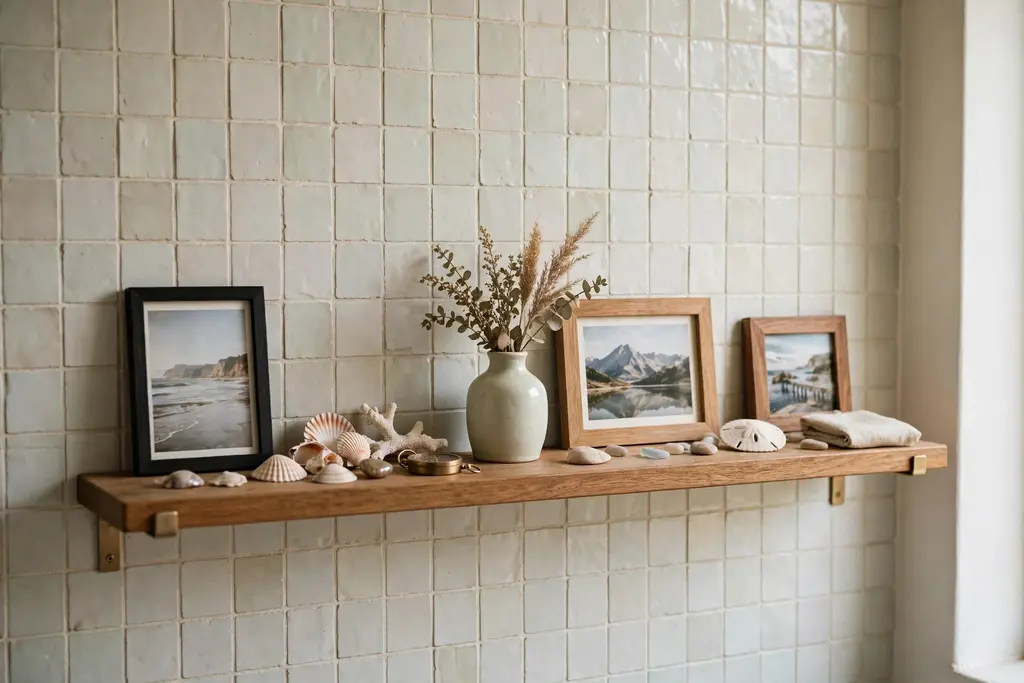
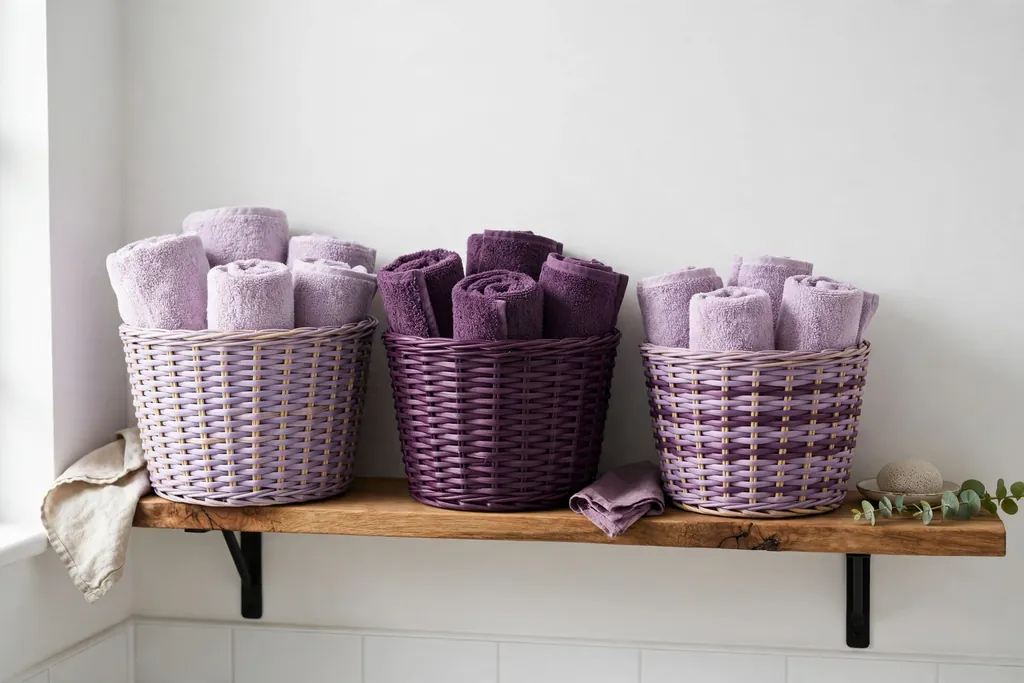
11. Open Wood Shelving with Baskets and Towels
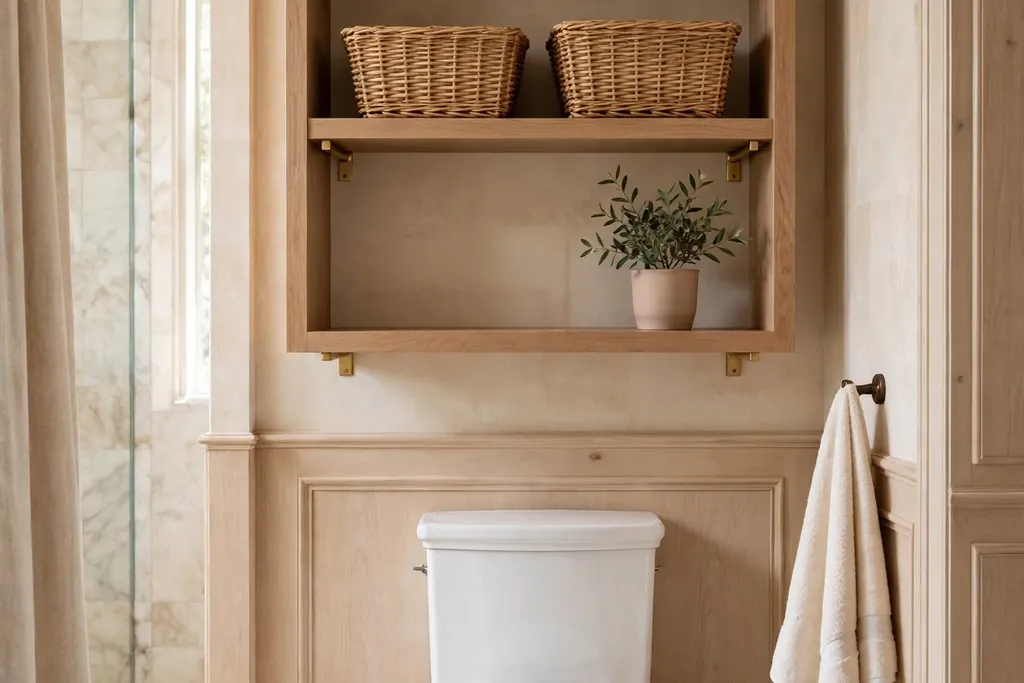
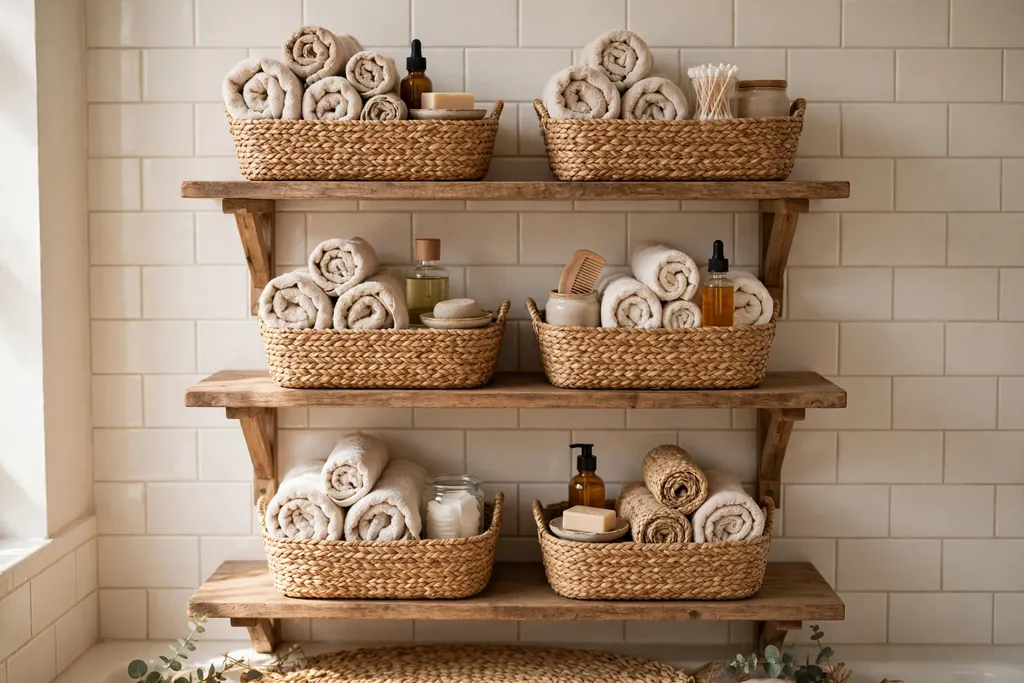
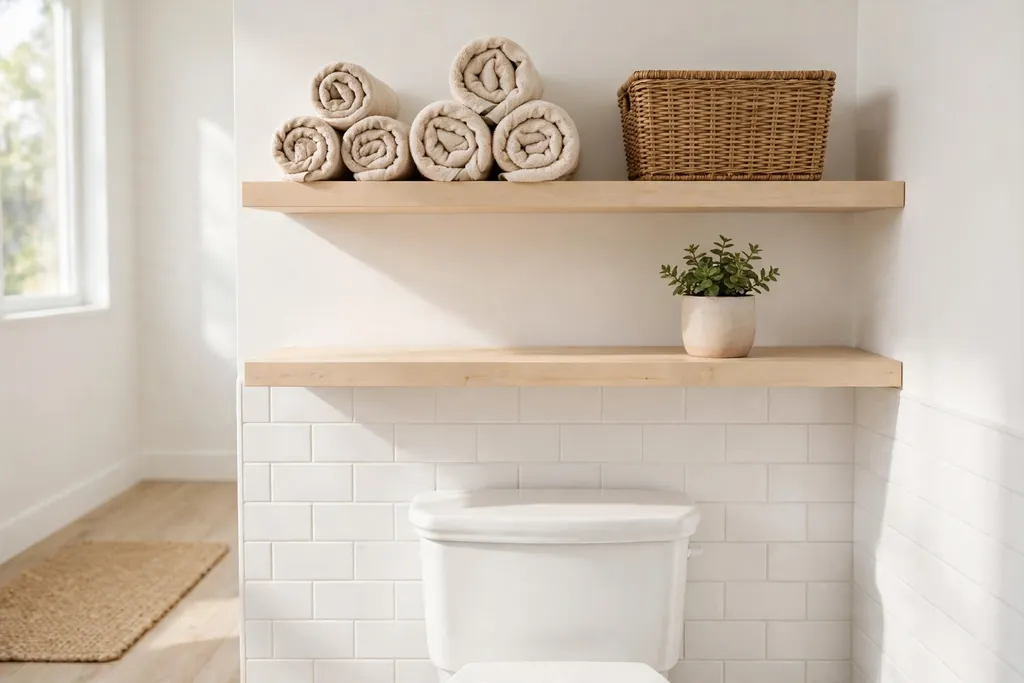
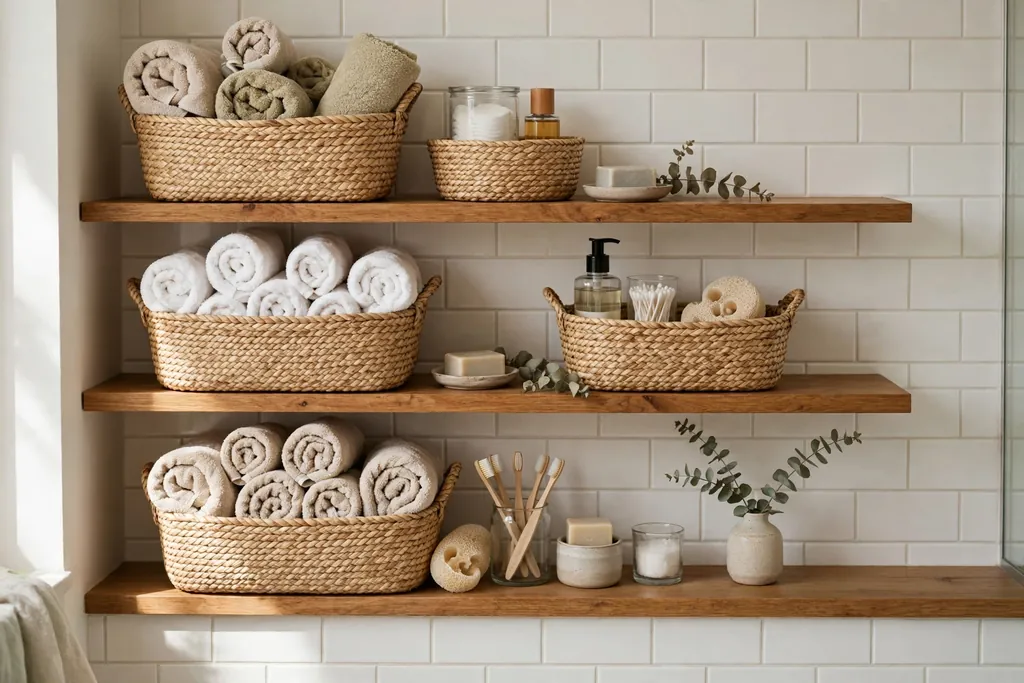
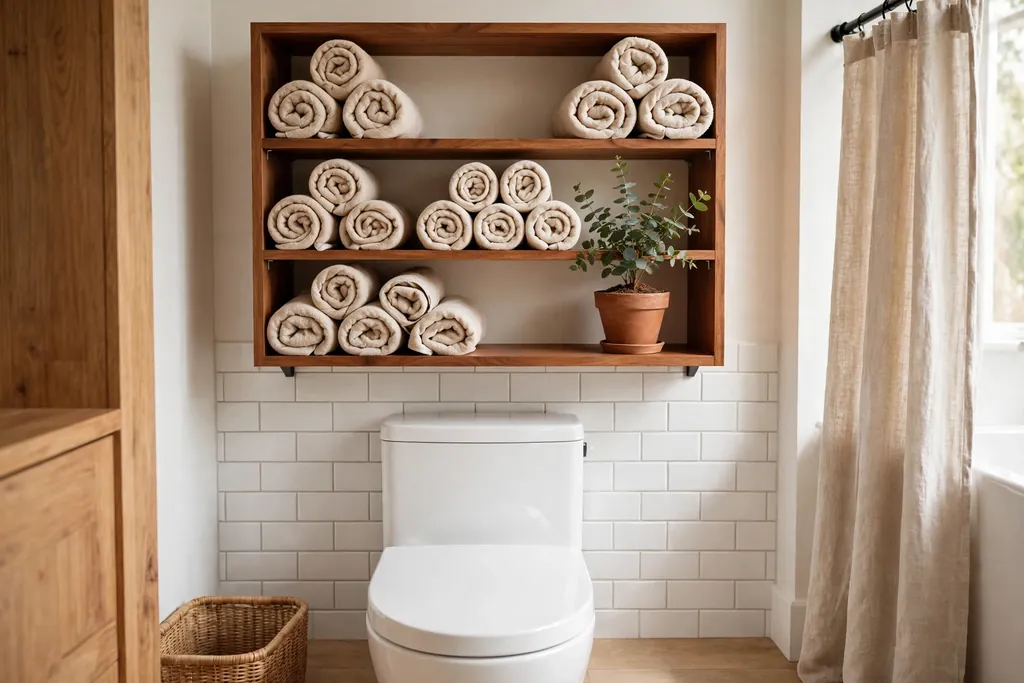
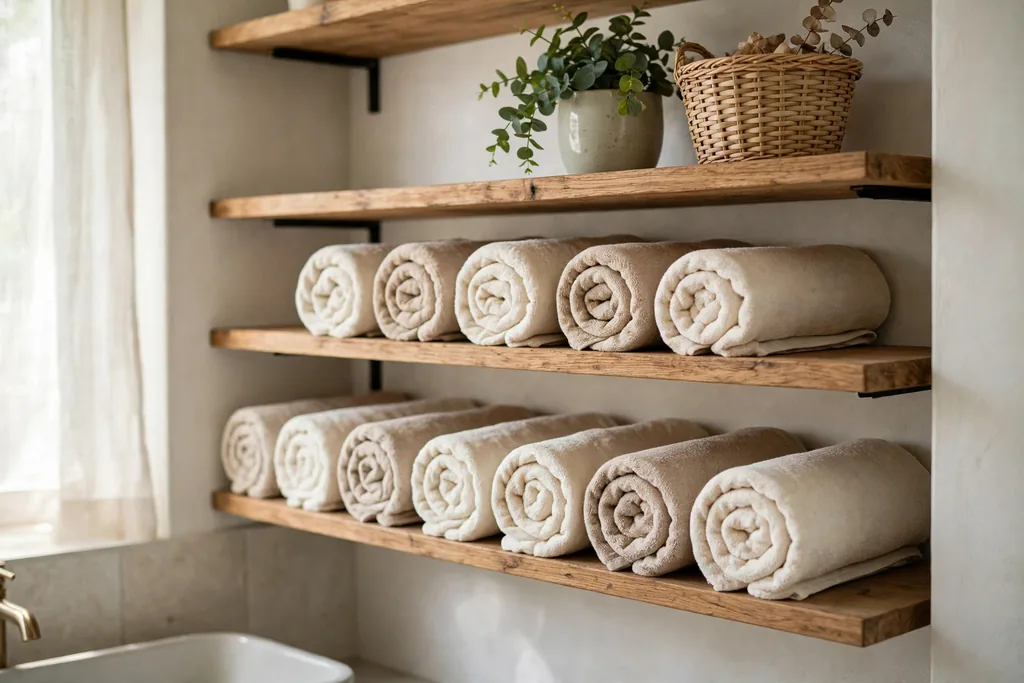
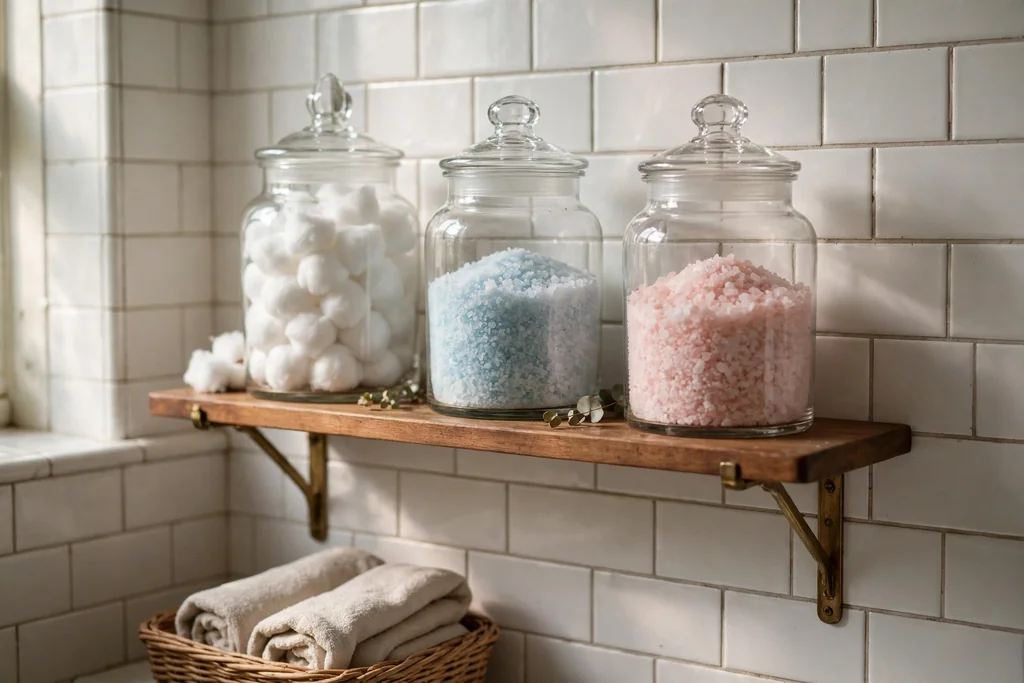
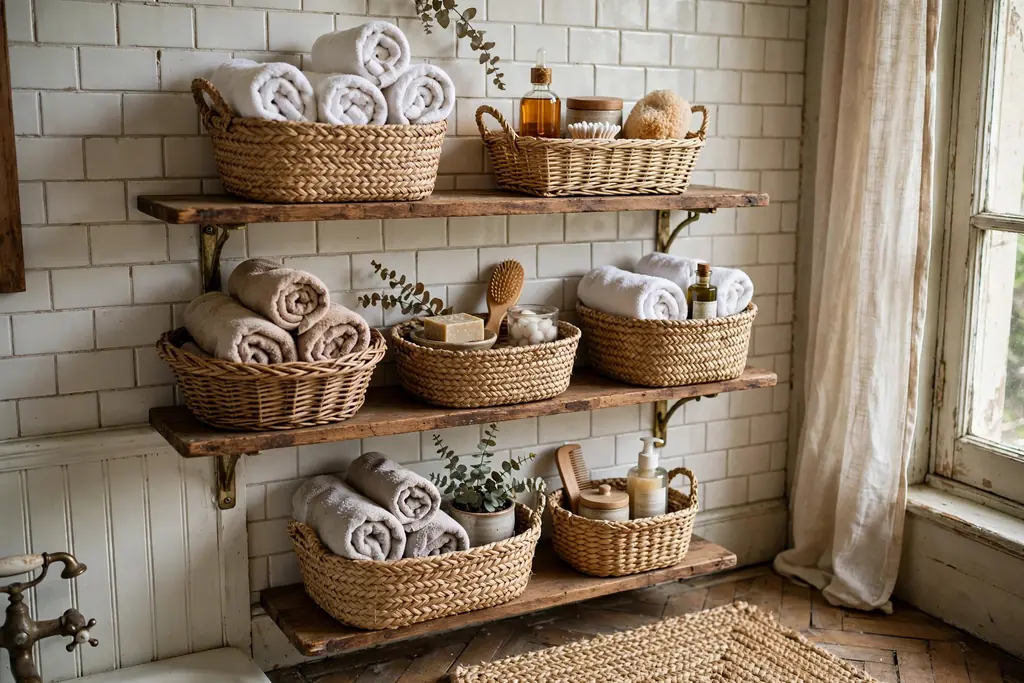
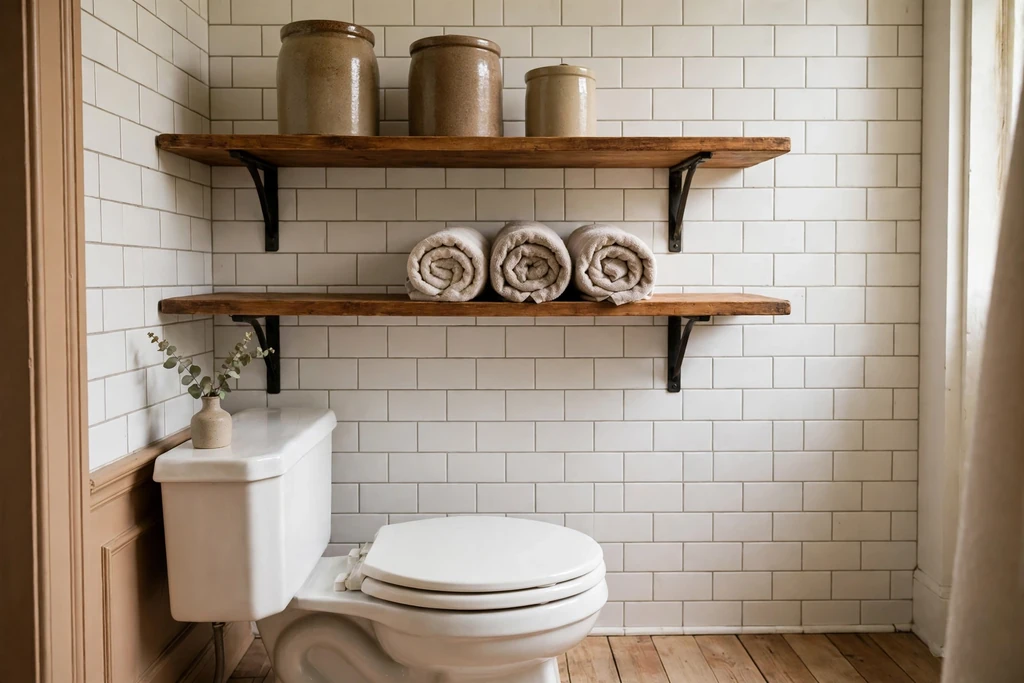
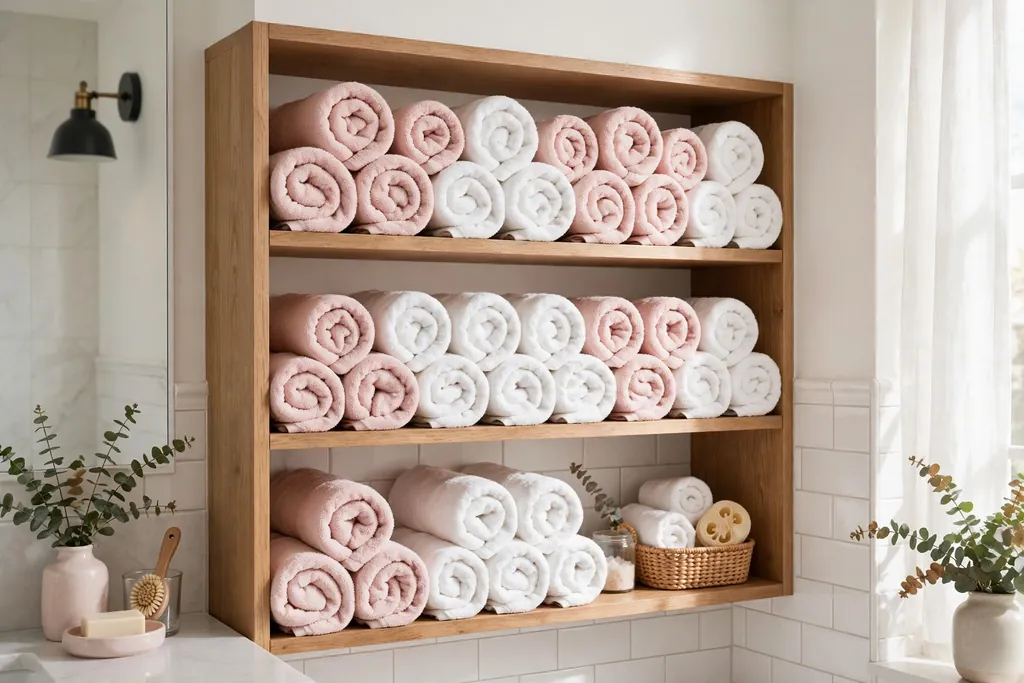
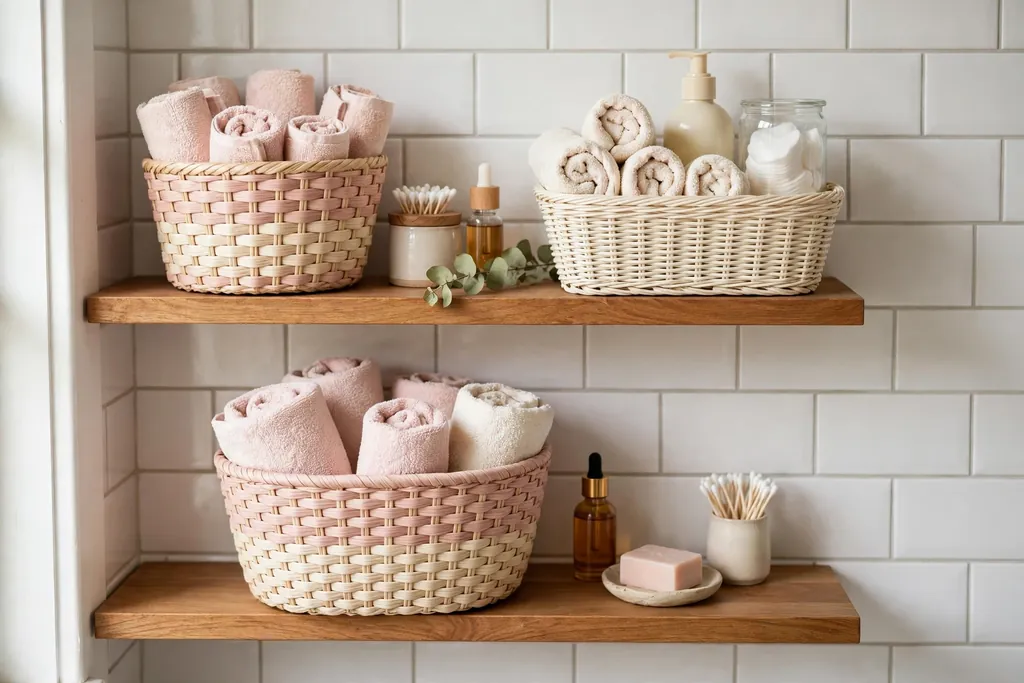
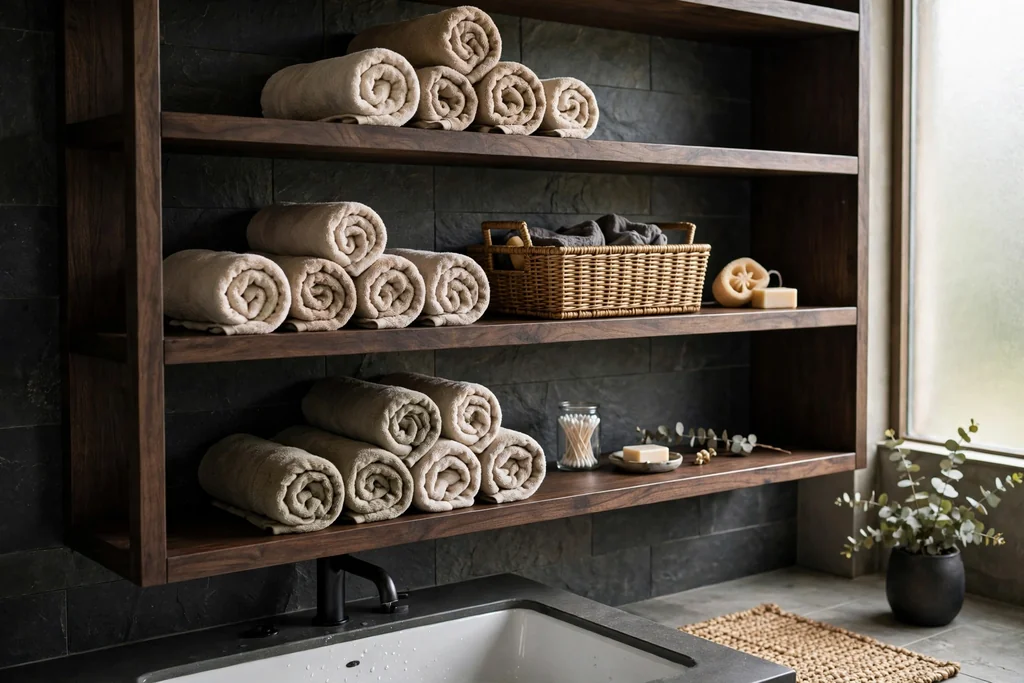
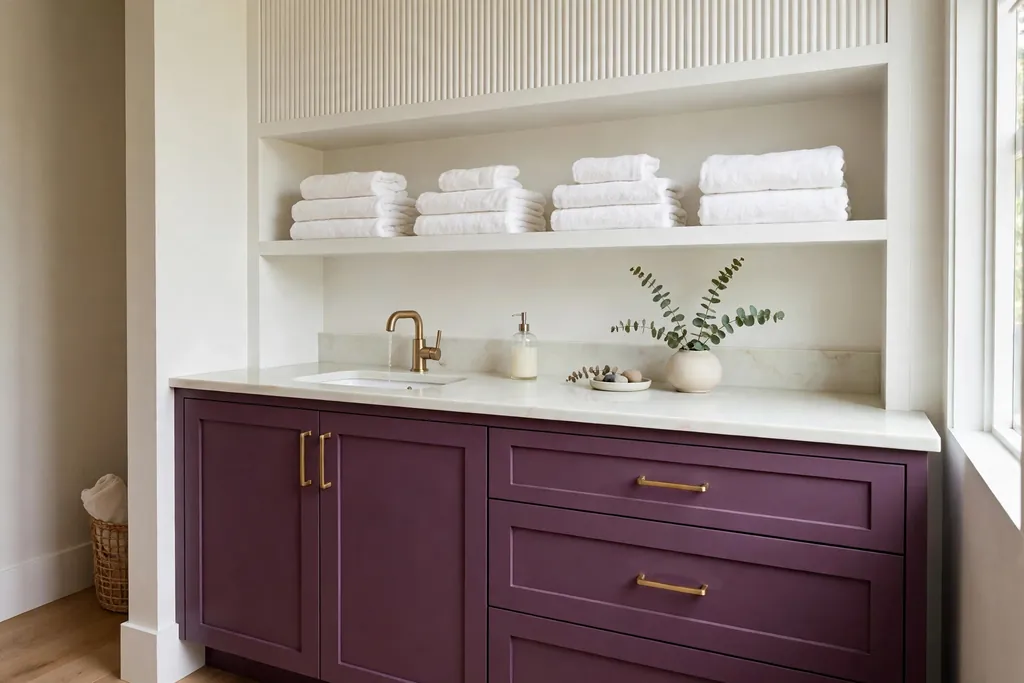
Fit open wood shelves above the toilet or on a spare wall, with baskets for small items and rolled towels on display, for storage that also warms the room. Wood shelves soften tile, and baskets hide the visual noise of bottles and tubes while keeping them within reach. Mount the shelves high enough that no one bumps their head, and keep the lowest shelf for items you reach for daily.
Assign one basket per job, such as hair care, skin care, and cleaning, and label the base if the baskets look alike. Keep one shelf mostly clear, with a plant or a single print, so the shelving does not look like a shop display. Seagrass and cotton rope baskets cope well with bathroom humidity if they sit on a shelf rather than a wet floor.
12. Cozy Bath Nook with a Stool, Robe, and Book
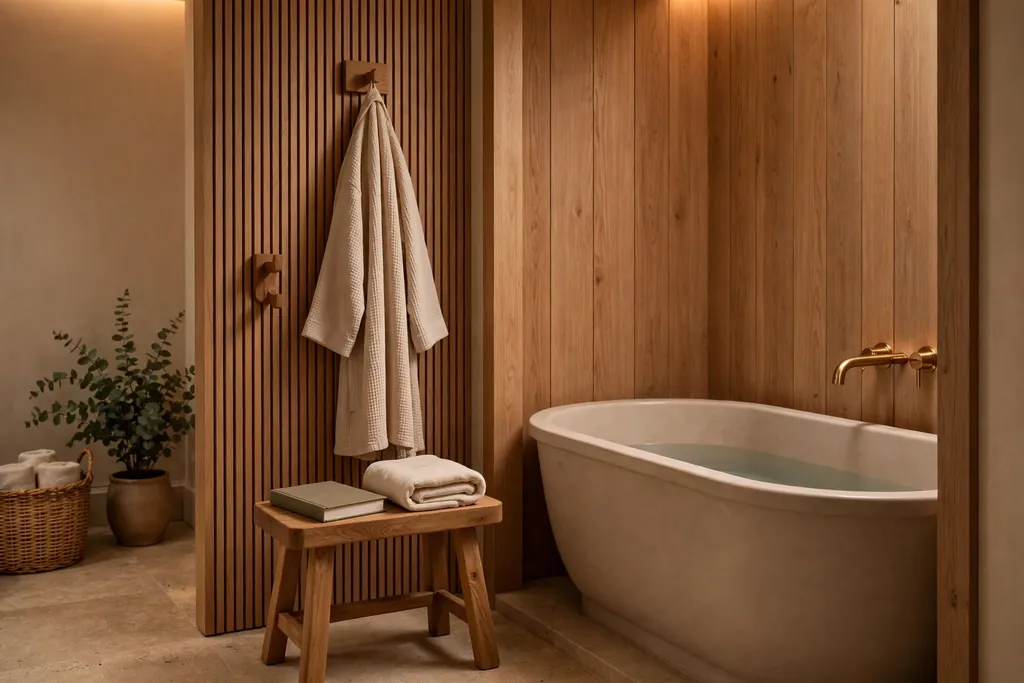
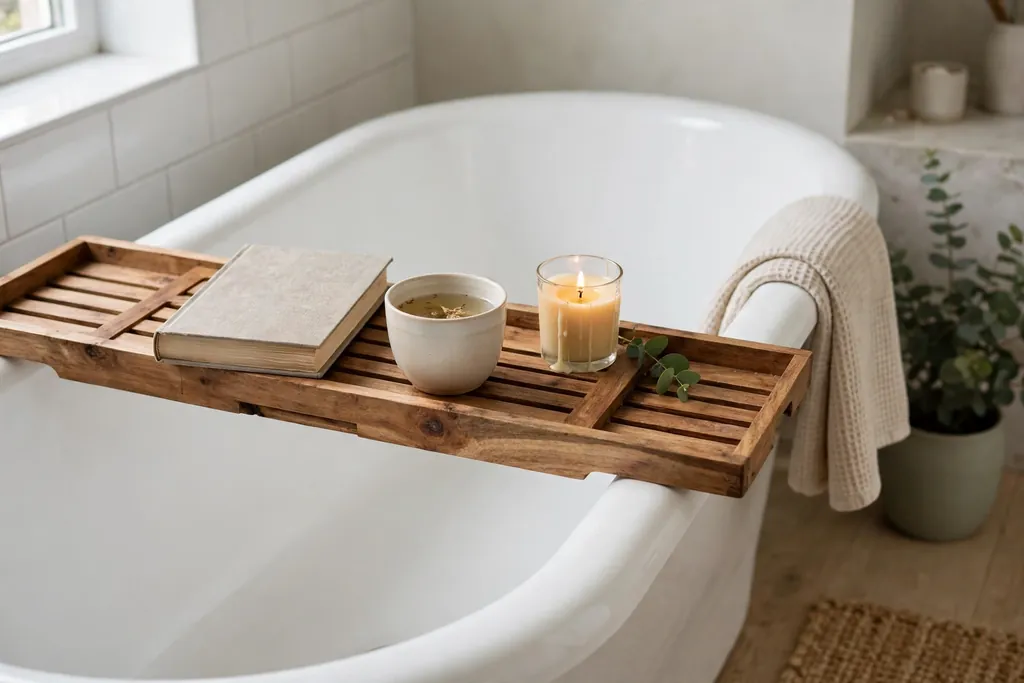
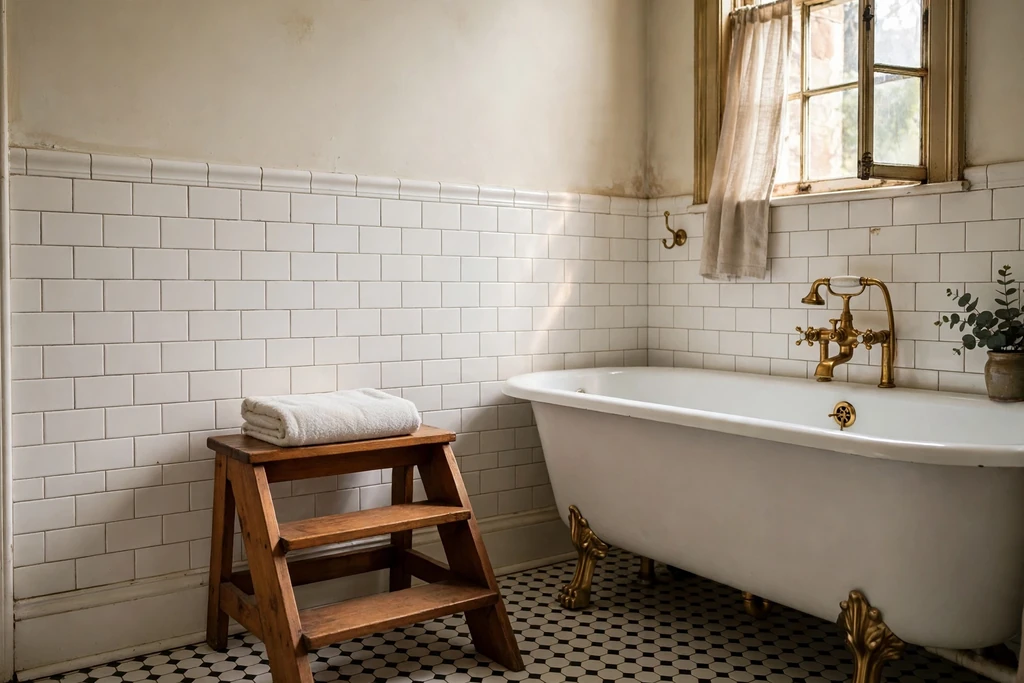
Build a cozy bath nook with a wooden stool, a robe on a hook, and a book or magazine beside the tub, so bath time feels like a pause rather than a chore. A stool holds a towel, a cup, or a candle within reach, and a robe hook on the wall keeps the robe off the floor and ready after the bath. Keep the nook to one corner, so the rest of the room stays clear and easy to clean.
Choose a stool that copes with steam, such as teak or coated wood, and dry it after baths to keep it in good shape. Hang the robe hook where it does not block the door, and keep the book on the stool rather than the tub edge, where it can fall in. A folded towel on the stool, in the same color as your linen set, ties the nook to the rest of the room.
Conclusion
An elegant bathroom that also feels cozy comes from a few calm choices made well: a warm material, a clear focal point, layered light, and soft linen you actually use. You do not need to change everything at once. Start with the mirror and light, or the vanity top and fixtures, then add the plant, the tray, and the bath nook as the room settles. Keep one finish and one accent color running through the room, keep the counters clear, and let the tub or the mirror carry the look. Save this guide on Pinterest for your next bathroom update, and pick one idea to try this weekend.
FAQs
What makes a bathroom look elegant without looking cold?
Use warm materials next to hard surfaces: wood, linen, and brass soften tile and porcelain. Keep the palette calm, with warm white walls and one accent color, and add layered light so the room can shift from bright grooming light to a softer evening glow.
How can I make a small bathroom feel elegant?
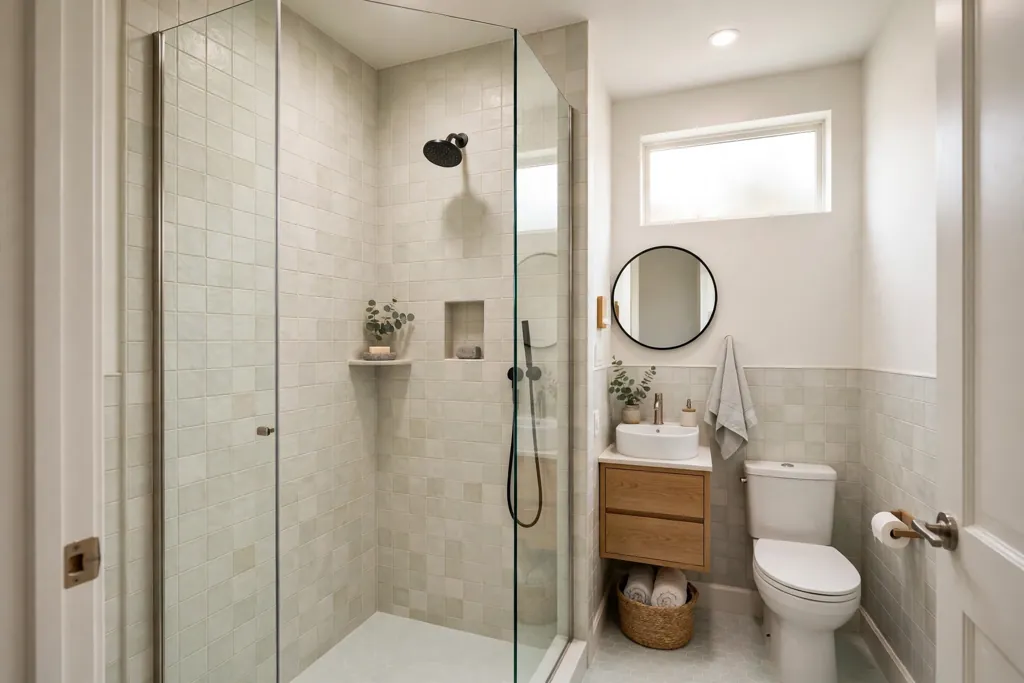
Pick one focal point, such as an arched mirror or a patterned floor, and keep everything else plain. Use a glass shower or a clear counter to keep sight lines open, store small items in baskets on a shelf, and repeat one metal finish so the small room reads as planned.
What colors work best for an elegant and cozy bathroom?
Warm white, cream, sage, dusty blue, and soft grey all work well, paired with wood and brass. Keep the main palette to two or three colors, and bring in the accent through towels, a mat, and a plant, rather than through a new wall color in every corner.
Is a freestanding tub worth it in a small bathroom?
It can be, if you choose a shorter tub and give it clear space on at least two sides. A freestanding tub adds a relaxed shape that a built-in tub cannot match, but it needs room for cleaning around it and a faucet that suits the tub height, so measure the floor before you buy.
How do I keep an elegant bathroom easy to clean?
Group daily items on a tray, keep bottles in baskets, and choose washable cotton towels and a washable bath mat. Wipe the vanity top and the mirror after use, squeegee glass after showers, and keep a weekly ten minute reset for shelves and trays, so the room stays tidy with little effort.
Can I get an elegant look without a remodel?
Yes. Swap the mirror, change the faucet finish, add sconces or lanterns, lay a patterned rug, and group items on a tray. Those five changes alone can shift a plain bathroom toward an elegant, cozy look, and they all come off or move with you if you rent.
Korean bathrooms feel calm because they keep things simple: pale wood, warm white tile, soft light, and only the items you use every day left in view. The style borrows from Korean homes and bathhouses, where washing is a slow routine, not a rush, and natural materials do most of the decorating. These 27 Korean bathroom decor ideas cover vanities, tubs, showers, storage, lighting, and small finishing touches. Start with a light palette and one wood accent, then add the practical pieces that suit your daily routine. If you are working with a small rented room, the renter friendly storage and lighting tips in these apartment bathroom ideas pair well with the Korean details below.
Key Takeaways
Build the look on light first: warm white walls, a clear window, and soft bulbs beat a long list of accessories.
Use pale wood in two or three places, such as the vanity, a stool, and a mirror frame, so the room reads as planned.
Keep counters mostly clear and store daily items in baskets or closed cabinets, since calm is the whole point of the style.
Add one warm accent, such as a persimmon towel, a sage wall, or a stone basin, for character without clutter.
Choose water tolerant materials near the tub and shower, and save untreated wood and paper for drier walls.
Finish with soft light, scent, and a place to sit, since a Korean bathroom is built around a slow, comfortable routine.
1. Pale Wood Vanity with an Open Shelf
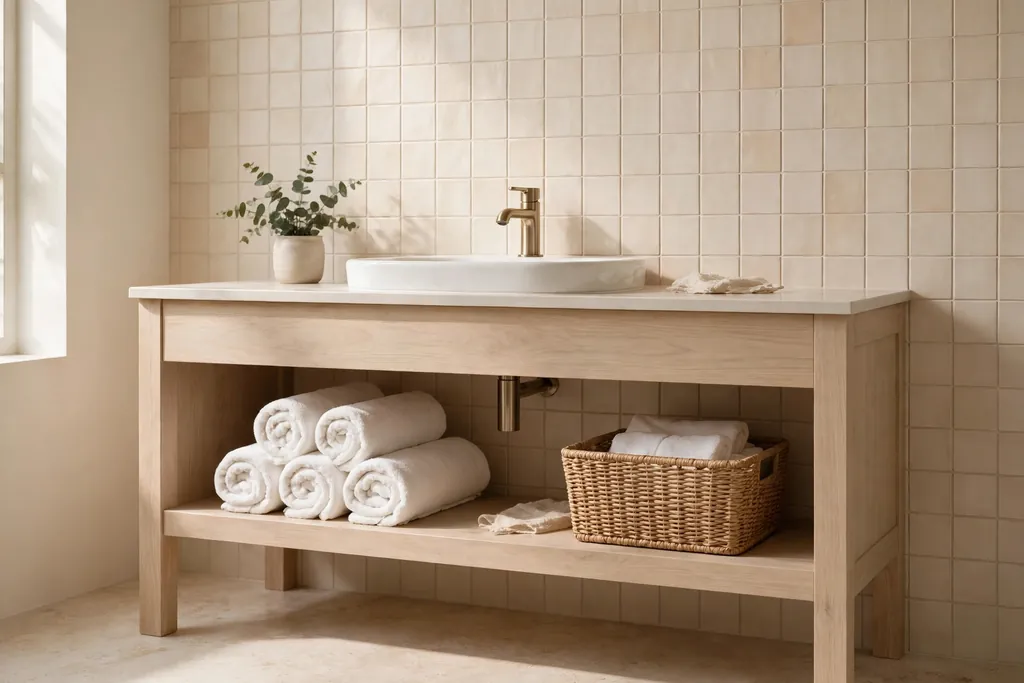
Choose a pale wood vanity, in light oak or ash, with an open shelf below for rolled towels and a basket. The open shelf keeps the vanity from looking like a heavy box, and the light wood warms up white tile without darkening the room. This suits a family bathroom too, since towels stay within reach and the wood brings a calm, natural note to the busiest corner of the room.
Keep the counter clear apart from a soap dispenser and a small dish, and put the rest behind a closed drawer or in the basket. Pair the vanity with a simple white basin and a plain wall mounted faucet so the wood stays the focus. Seal the wood top with a water resistant finish and wipe splashes promptly, since pale wood shows water marks more than darker finishes.
2. Warm White Subway Tile Walls
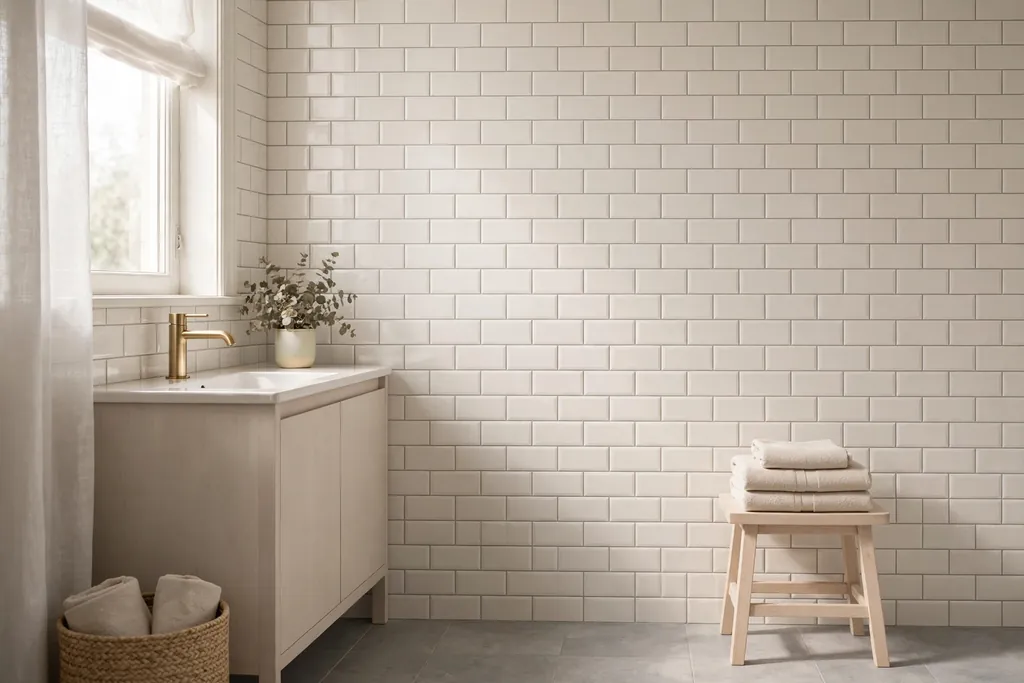
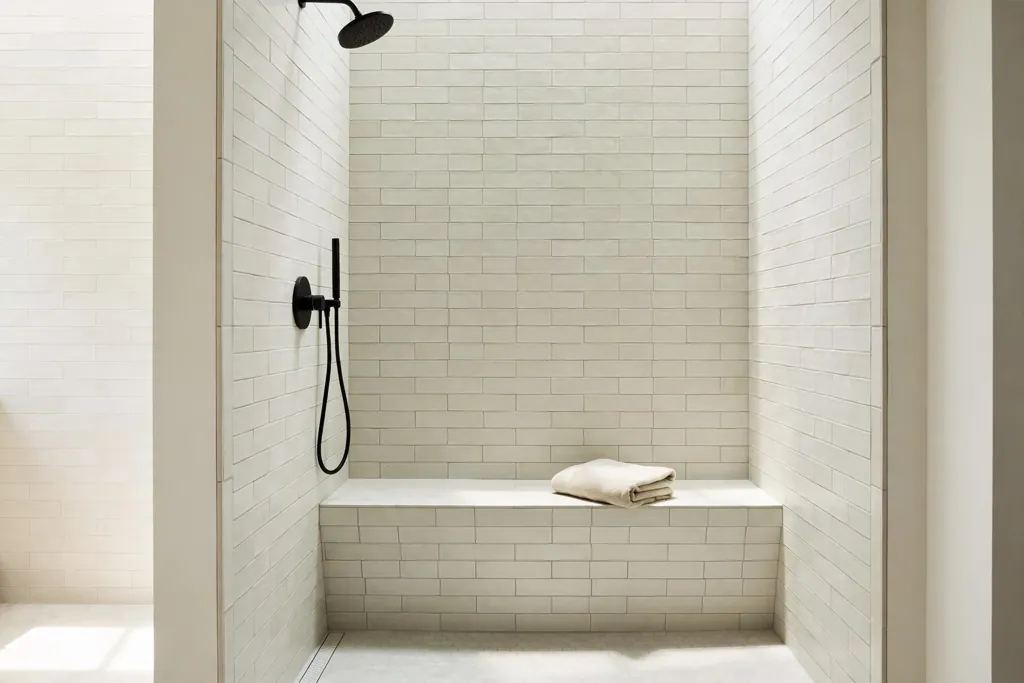
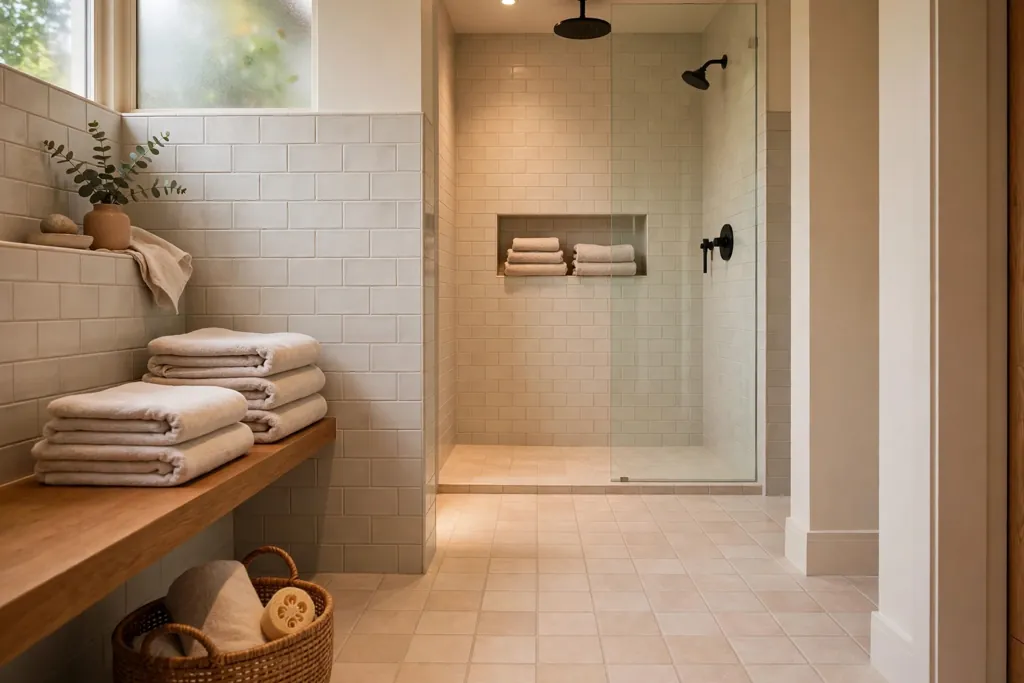
Cover the walls with warm white subway tiles laid in a straight stack or a running bond, with a grout color close to the tile so the wall reads as one calm surface. Warm white tile suits Korean bathrooms because it bounces light around the room while still feeling soft, unlike a cold blue white that can look clinical. The simple rectangle shape keeps the room quiet, which lets wood and stone details stand out.
Use a slip resistant floor tile in a soft grey or beige to ground the walls, and carry the wall tile into the shower so the room feels like one space. Seal the grout at install and reseal now and then in wet zones, since pale grout shows soap marks. If a full retile is out of reach, one tiled feature wall behind the vanity gives much of the same effect.
3. Round Mirror with a Slim Wood Frame
Hang a round mirror with a slim pale wood frame above the vanity to soften all the straight tile lines. The circle draws the eye up and makes a small bathroom feel less boxy, and the wood frame ties the mirror to the vanity and stool. A round mirror suits a single sink best, where it can sit centered with room to breathe on each side.
Hang it at eye level, with the center roughly at the eye height of the main user, and keep sconces or a pendant on either side if the room allows. If you need storage, pair the round mirror with a shallow wall cabinet to one side rather than replacing it with a mirrored box. Wipe the wood frame dry so steam does not darken it over time.
4. Low Wooden Bath Stool and Basin Set
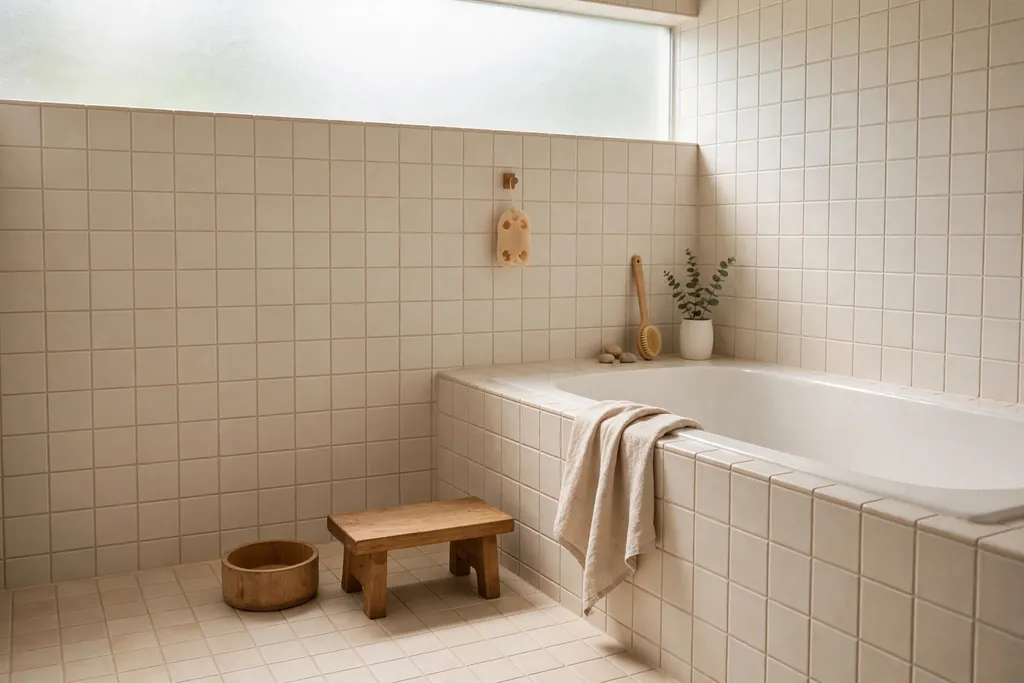
Add a low wooden bath stool and a small basin, the pair used in Korean bathhouses for washing before a soak. Sit on the stool to wash, rinse with the basin, and only then step into the tub, which turns bathing into a slow ritual instead of a quick shower. The stool also gives you a place to sit while you wait for a hair treatment or a face mask to work.
Choose a water tolerant wood, such as hinoki cypress or teak, and leave the stool where it can drain and dry between uses. Keep the basin on a small shelf or hung on a hook beside the tub, and pick a stool height that lets your feet rest flat on the floor. This idea suits even a small bathroom, since the stool tucks under a shelf or beside the tub when not in use.
5. Deep Soaking Tub with a Wooden Headrest
Place a deep soaking tub, freestanding or built in, with a small wooden headrest and a bath tray for a book and a cup. A deep tub suits the Korean habit of soaking to unwind, and the wood headrest keeps the setup comfortable without adding clutter. This works best in a room with space to walk around at least one side of the tub, so cleaning and stepping in stay easy.
Add a small stool beside the tub for a towel and a candle kept at a safe distance from fabric, and a waterproof rug under the tub to catch splashes. If a full size soaking tub does not fit, a deep Japanese style tub or a tub with a higher water line gives a similar soak in a smaller footprint. Keep the tub surround in the same tile as the walls so the tub reads as part of the room.
6. Rain Shower Over a Pebble Stone Floor
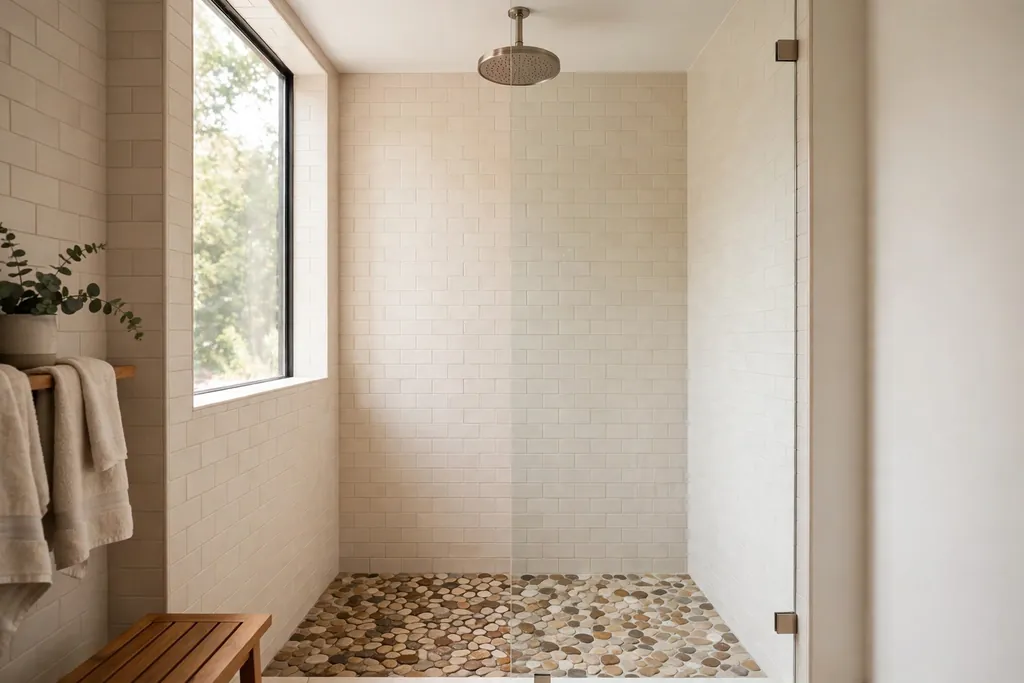
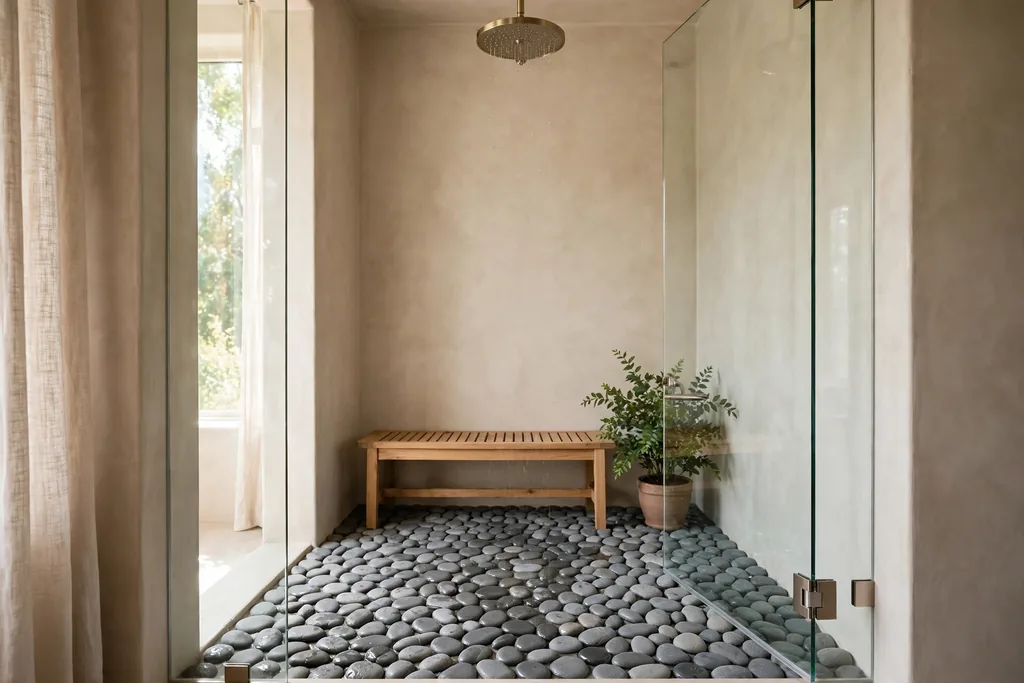
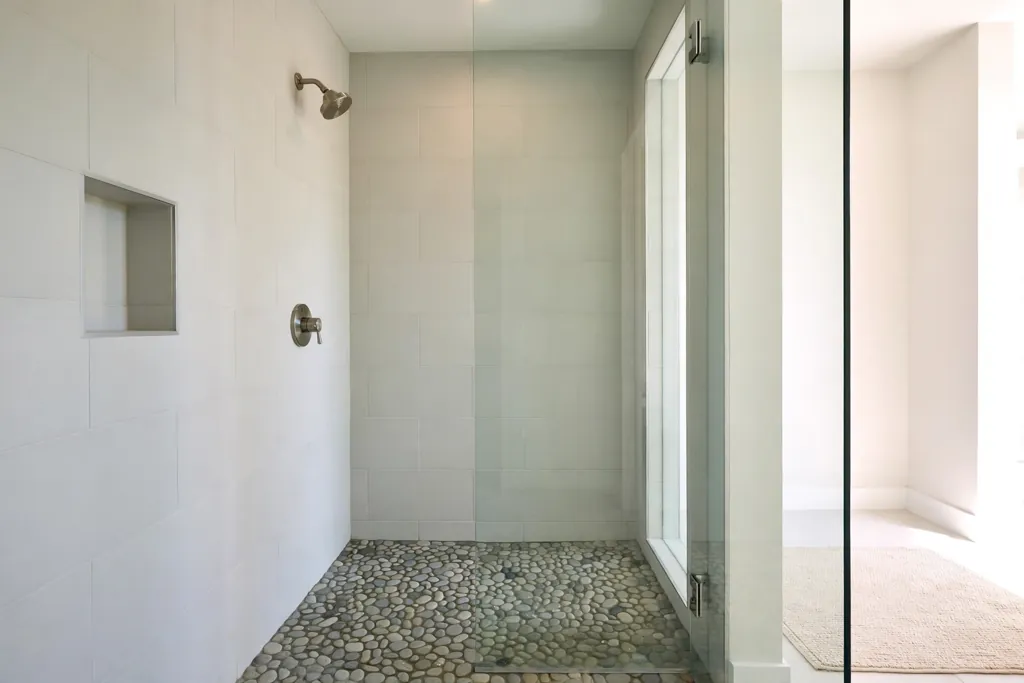
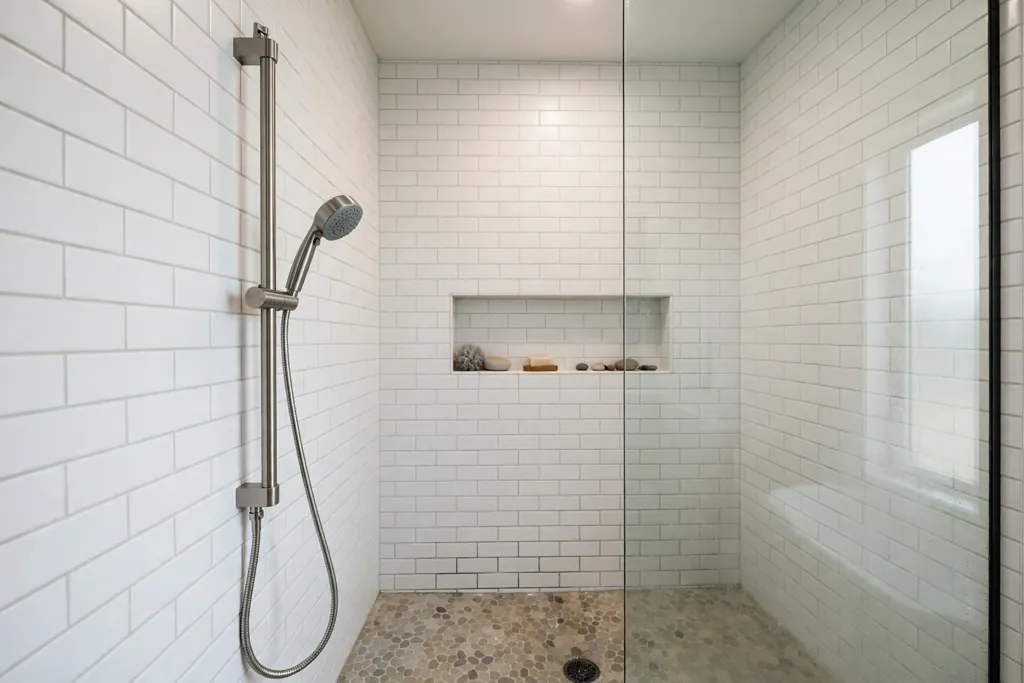
Build a walk in shower with a rain showerhead and a pebble stone floor, so the shower feels like a small spa corner. The pebbles give gentle grip underfoot and a natural texture that plain tile cannot, while the rain head spreads water evenly for a slow, warm shower. A single glass panel keeps the shower open to the room, which suits the calm, uncluttered Korean look.
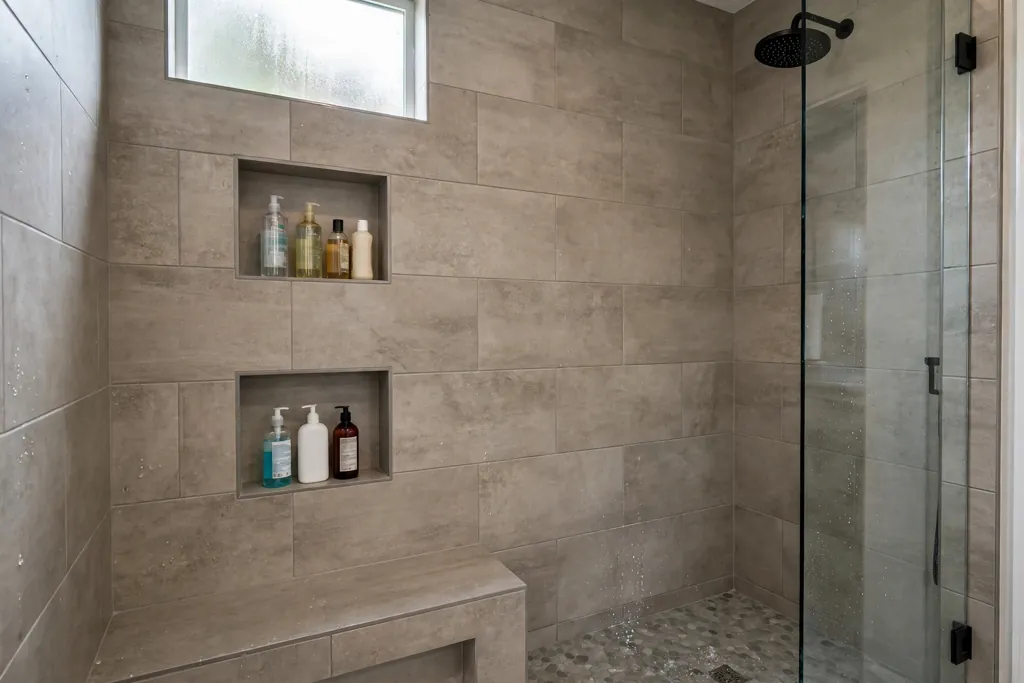
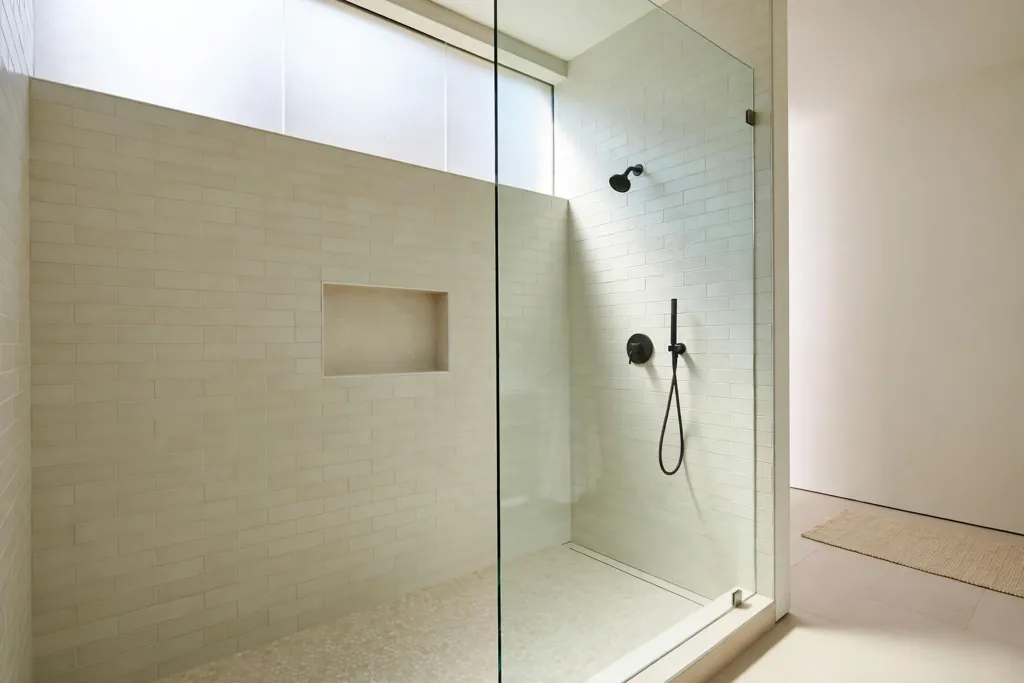
Keep the glass panel fixed rather than hinged if the room allows it, since fewer moving parts means less cleaning. Add a small recessed niche in the tiled wall for shampoo and soap, so bottles do not crowd the floor, and a handheld shower on a sliding rail for rinsing and cleaning. Seal the pebble floor well at install, since grout lines between stones need protection from soap buildup.
7. Hanji Paper Pendant Lamp
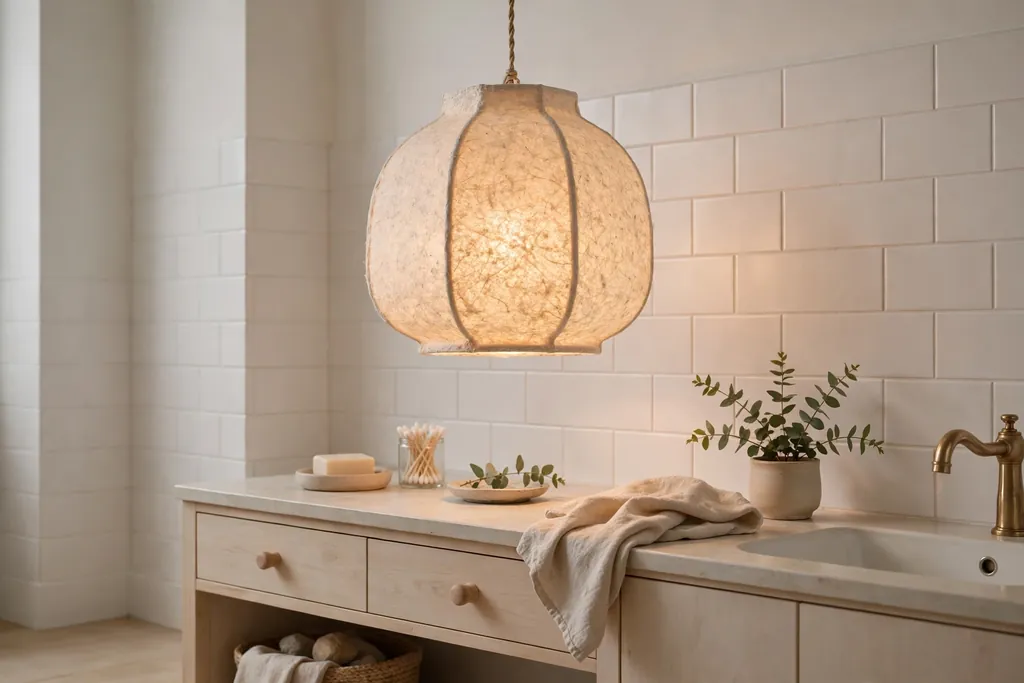
Hang a hanji paper pendant lamp, with its soft, slightly textured shade, over the vanity or in the center of the room for a warm, diffused glow. Hanji is traditional Korean paper, and a paper shade spreads light gently instead of throwing hard shadows, which flatters faces and calms the room in the evening. The lamp becomes a quiet focal point without adding color or pattern.
Keep the lamp away from direct shower spray and choose a bulb with a warm color temperature, so the light stays gentle rather than glaring. Hang it high enough that no one bumps their head, and pair it with a dimmer if your wiring allows it, so morning light can be bright and evening light can stay soft. If a pendant does not suit your ceiling, a paper shaded wall sconce gives a similar glow.
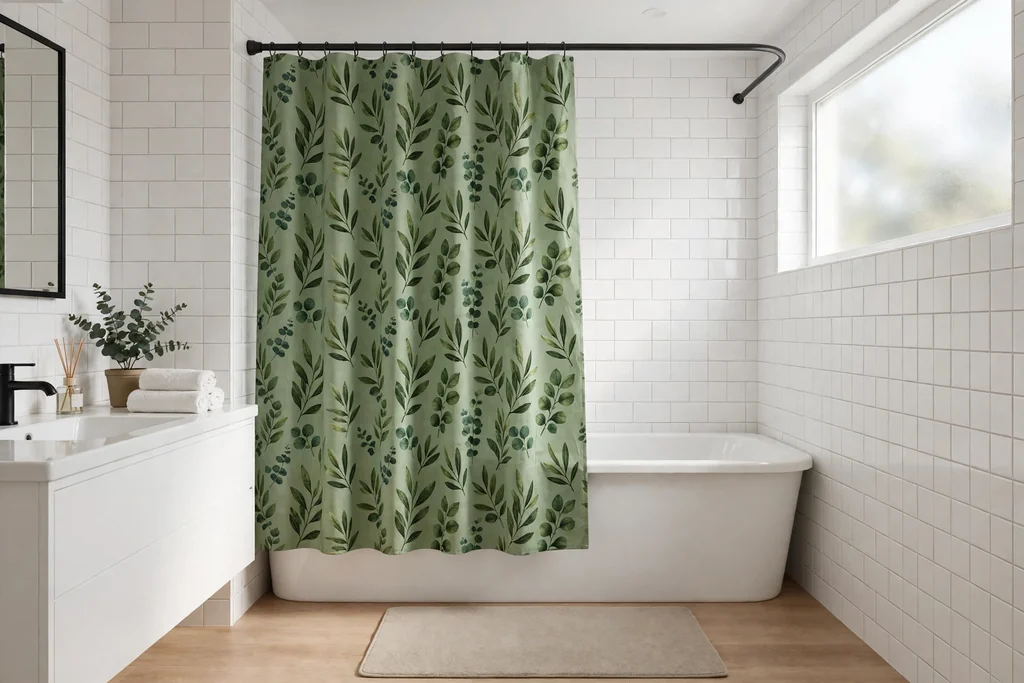
8. Linen Shower Curtain with a Separate Liner
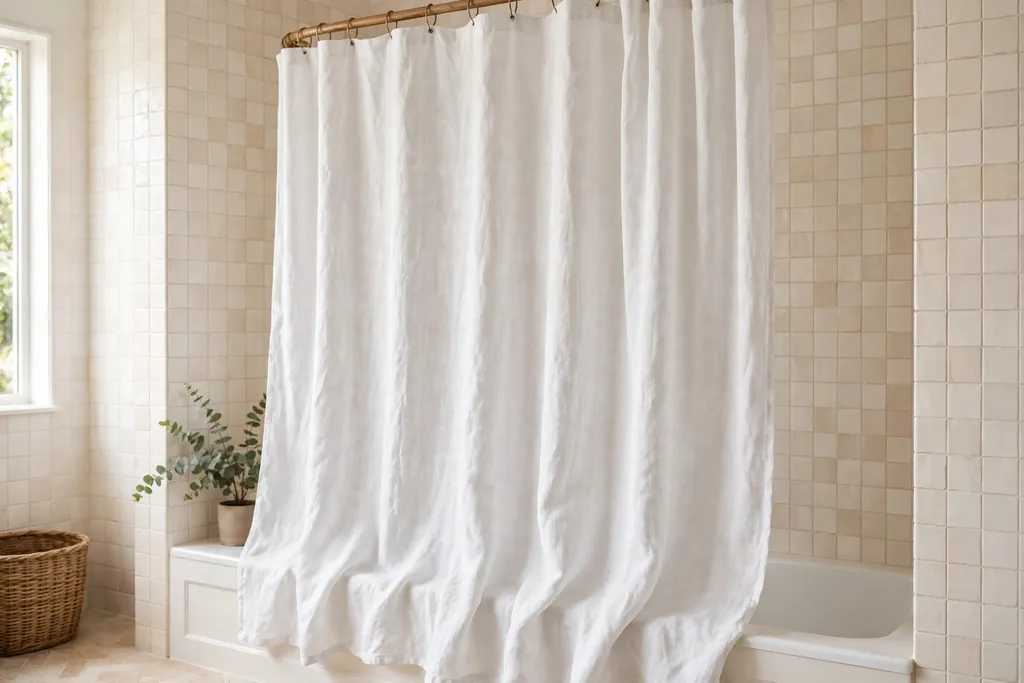
Swap a plastic shower curtain for a natural linen look curtain in white or undyed cotton, with a separate waterproof liner behind it. The fabric hangs in soft folds that suit the Korean love of textiles, and the liner does the waterproof work out of sight. This one swap can change a bathroom from clinical to homely in minutes, and it costs far less than a glass door.
Choose a machine washable outer curtain and wash it regularly, since bathroom humidity breeds mildew on fabric. Hang the curtain high and let it fall to just above the floor or tub edge, so the room feels taller. Keep the liner inside the tub and the outer curtain outside, so the fabric stays dry between showers.
9. Woven Baskets for Towels and Toiletries
Use woven baskets on shelves and under the vanity for toiletries, spare toilet paper, and hair tools. Seagrass, cotton rope, and willow baskets soften hard tile and porcelain, and they hide the visual noise of bottles without needing a cabinet door. Give each basket one job, such as hair care or skin care, so nothing drifts into a mixed pile.
Set baskets on shelves or stools rather than on wet floors, and empty them once a month to remove empty bottles. Label the base if several baskets look alike, and keep one basket per person in a shared bathroom. A basket with a lid suits items you would rather not see, such as cleaning sprays, while open baskets suit rolled towels you reach for daily.
10. Sliding Lattice Door Inspired by Hanok Homes
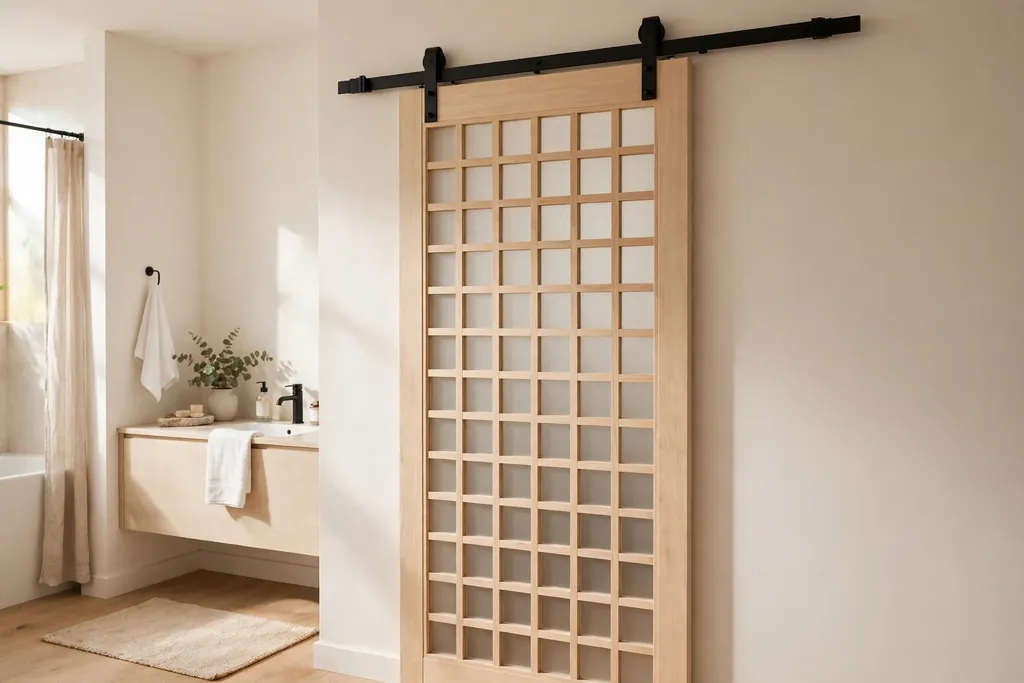
Fit a sliding door with a simple lattice pattern, inspired by the wooden doors of traditional hanok homes, in place of a plain hollow door. The lattice adds a quiet Korean character to the room, and a sliding door saves the swing space a hinged door needs, which matters in a small bathroom. Frosted or translucent panels behind the lattice keep privacy while letting light pass between rooms.
Choose a lattice pattern with wide, simple openings rather than a fussy design, so the door reads as calm, not busy. If replacing the door is not possible, a lattice style privacy film on a glass door, or a lattice framed mirror on the wall, gives a similar note. Keep the wood tone matched to the vanity or stool so the room stays coordinated.
11. Open Wood Shelves Above the Toilet
Mount two open wood shelves above the toilet for rolled towels, a basket, and a small plant, using the one wall that is often free in a small bathroom. Open shelves keep daily items within reach without taking floor space, and pale wood shelves warm up a white tiled wall. This suits renters too if you use strong adhesive brackets or a freestanding shelf unit that stands over the toilet.
Mount the shelves high enough that no one bumps their head, and keep the lowest shelf for items you reach for daily. Use closed baskets on one shelf for anything you would rather not see, and leave breathing room between groups so the shelves look calm instead of crowded. The shelf styling tips in these Swedish bathroom ideas also work here, since both styles favor wood, baskets, and clear surfaces.
12. Muted Sage Green Painted Wall
Paint one wall, or the lower half of the walls, in a muted sage green for a soft natural accent that suits the Korean palette. Sage sits quietly beside pale wood and warm white tile, and it brings a hint of the outdoors into a windowless room without shouting. This is one of the cheapest ways to change the feel of a bathroom, since one wall of paint needs no plumbing or tile work.
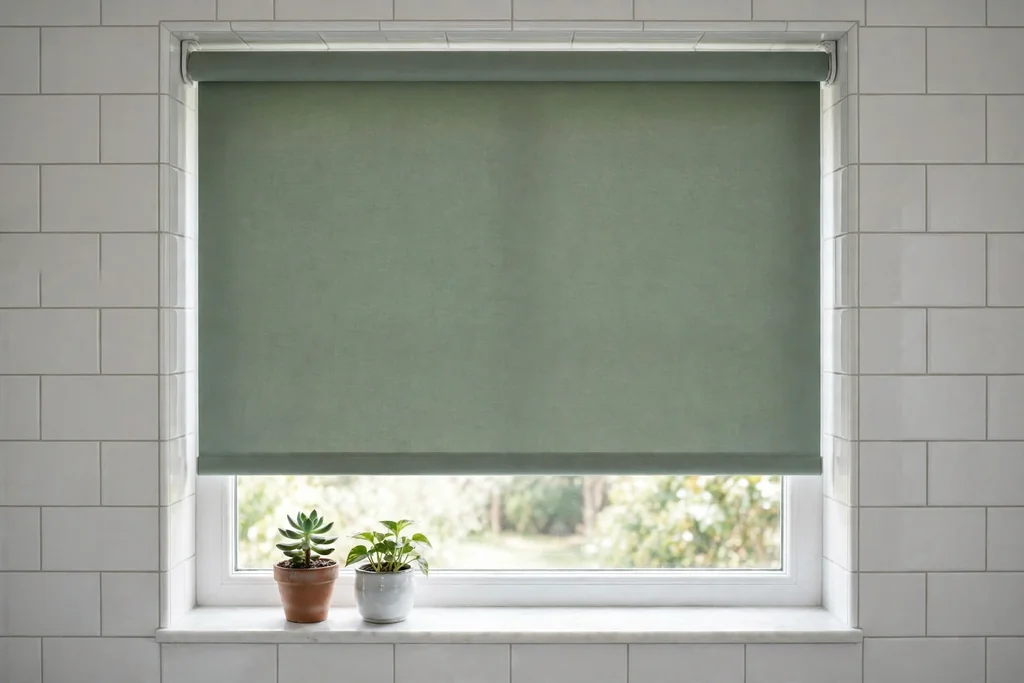
Use a moisture resistant bathroom paint, and keep the sage to one wall if the room is small, so the space stays bright. Pair it with white towels and a wood stool so the green reads as a deliberate accent, not a leftover color. If paint is not allowed, a sage shower curtain and matching towels give a similar accent with no permanent change.
13. Onggi Style Pottery Accessories
Choose soap dishes, a toothbrush cup, and a small tray with the look of onggi, traditional Korean earthenware, with speckled glazes and slightly uneven shapes. Handmade looking pottery brings warmth and character to the sink area, and each piece feels chosen rather than bought as a set. This is character in miniature, and it suits the Korean respect for craft and everyday objects.
Repeat one material, such as speckled stoneware, in two or three pieces so the sink still looks calm. Keep the soap dish drained and the tray dry between uses, since standing water stains both ceramic and stone over time. A single stone tray can corral the soap, a candle, and a small dish into one tidy group.
14. Warm Floor and a Thick Cotton Rug
Lay a thick cotton rug over a heated floor, or over a warm toned tile, so stepping out of the tub feels soft and warm rather than cold. Korean homes value warm floors, and a bathroom floor that feels warm underfoot changes the whole routine, especially on winter mornings. A cotton rug also absorbs splashes and dries faster than a thick pile rug.
Choose a washable cotton rug in white or beige, and keep a second rug in rotation so the bathroom never sits bare on wash day. If underfloor heating is not an option, a small heated mat under the rug near the tub gives a similar comfort in one spot. Keep the rug clear of the toilet base and door swing, and hang it to dry if it gets soaked.
15. Potted Greenery on a High Shelf
Grow humidity loving plants, such as pothos, ferns, or philodendron, on a high shelf where they stay away from splashes while vines trail down the wall. Bathrooms suit plants that enjoy humidity and indirect light, and one trailing plant usually looks better than a crowded collection in a small room. The green softens tile and brings a living note into the calm palette.
Use pots with drainage holes and saucers, and check the soil before watering, since bathroom air already adds moisture. If your bathroom has no window, rotate the plant to a brighter room for a few days each week or choose a low light tolerant variety. Keep the plant clear of the shower spray and away from the mirror, so leaves do not block light.
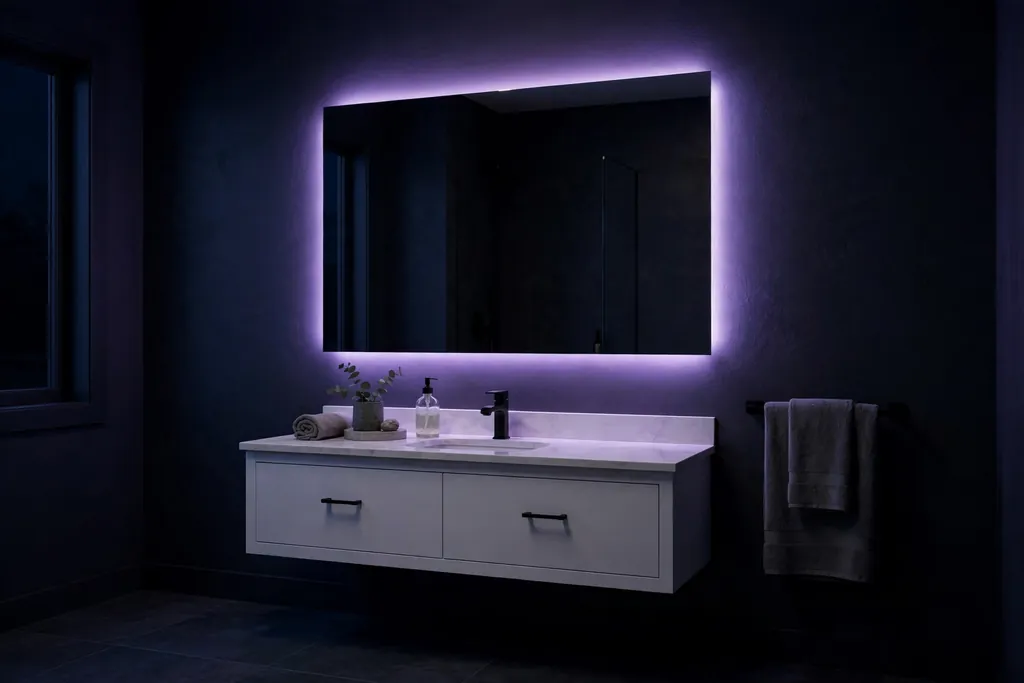
16. Backlit Mirror with a Warm LED Glow
Fit a warm LED strip behind a wall mounted mirror for a soft halo glow that flatters faces and makes night trips to the bathroom easier without switching on the main light. Battery operated strips with a remote suit renters, while plug in versions give steadier brightness. The warm glow suits the Korean evening bath, when bright overhead light feels too harsh.
Stick the strip to the back of the mirror frame, not to the wall, so you can take it with you, and hide the battery pack behind the frame edge. Choose a warm color temperature and a dimmable strip so the glow stays gentle rather than glaring. Keep all plug in lights away from direct water spray, and follow the maker guidance on distance from water.
17. Floating Vanity with a Clear Floor
Mount a floating vanity so the floor runs clear beneath it and the room feels larger. Seeing more floor tricks the eye into reading the room as bigger, and cleaning underneath takes seconds rather than a crawl. This pairing suits small Korean bathrooms especially well, where every inch of visible floor counts and a calm, open floor is part of the look.
Check that your wall can carry the fixings and that the plumbing fits inside a shallow box, since floating vanities need the pipes hidden neatly. Keep the pipe box painted the wall color so it disappears, and add a low basket below for spare towels. Pair the floating vanity with a round wood framed mirror to keep the soft Korean lines.
18. Stone Vessel Basin Sink
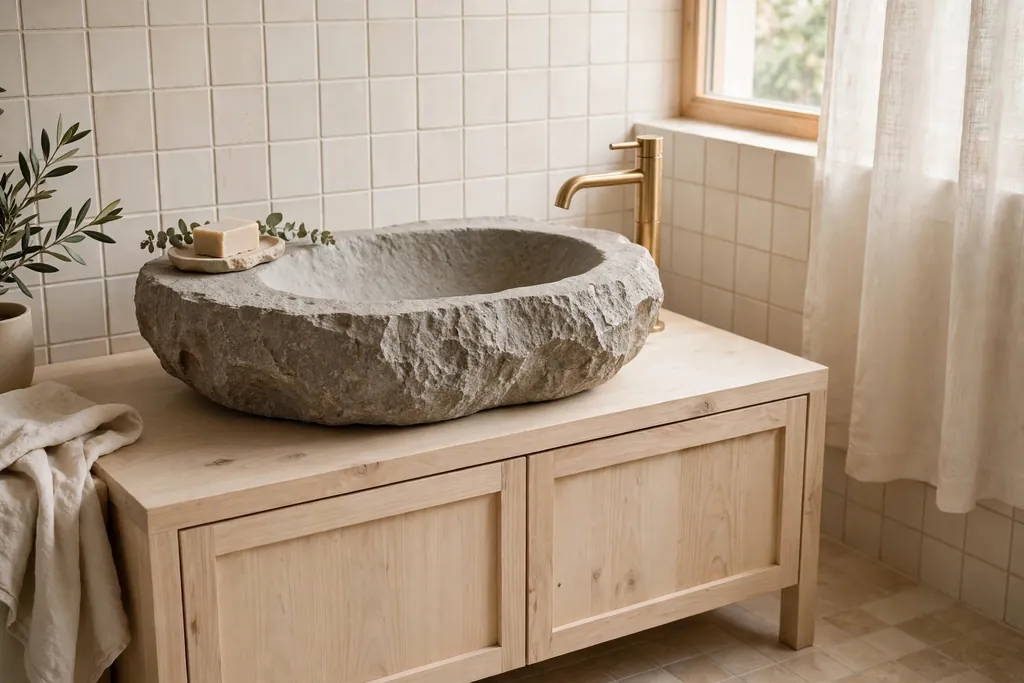
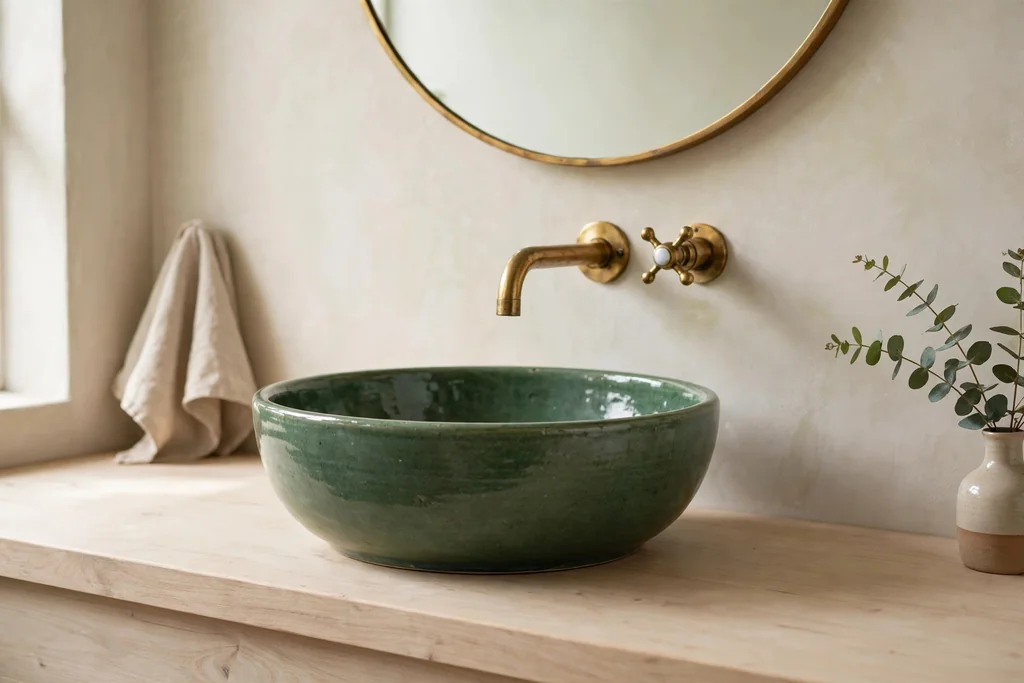
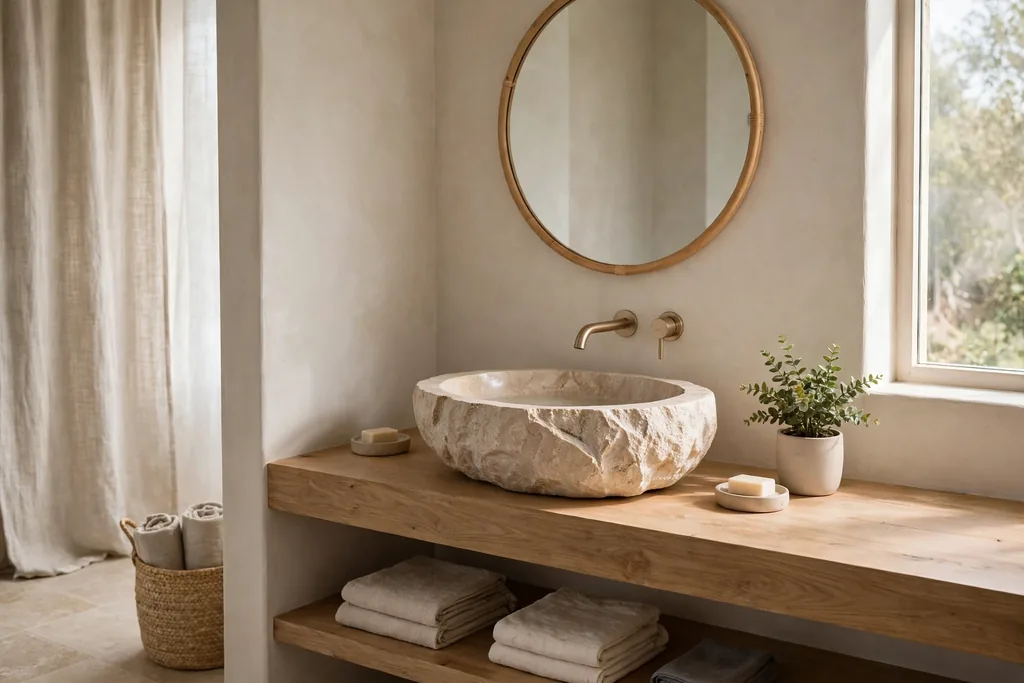
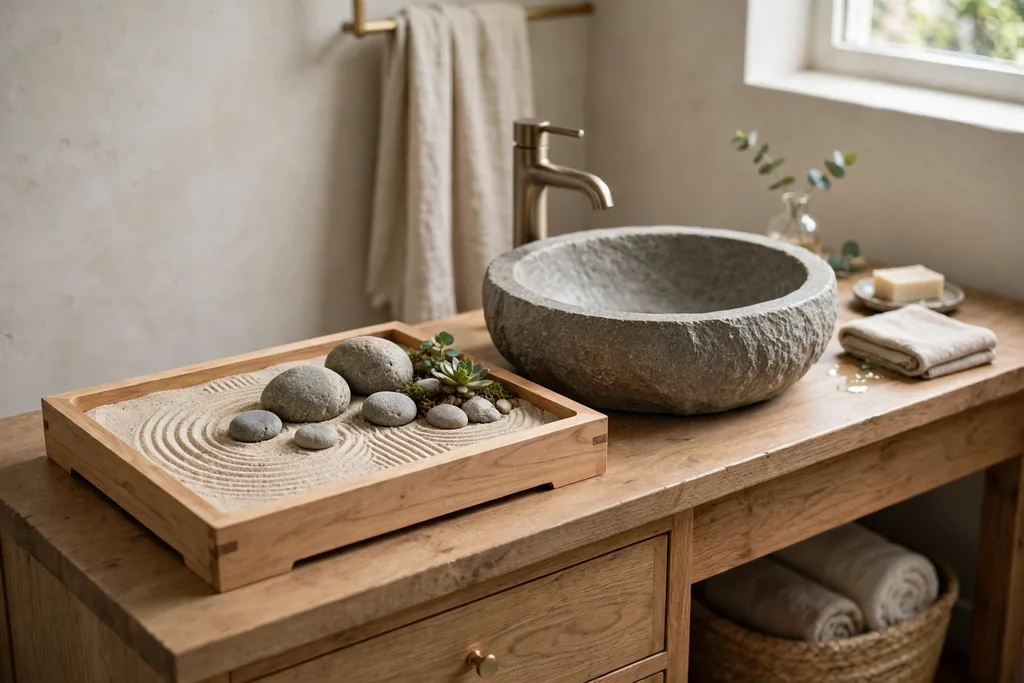
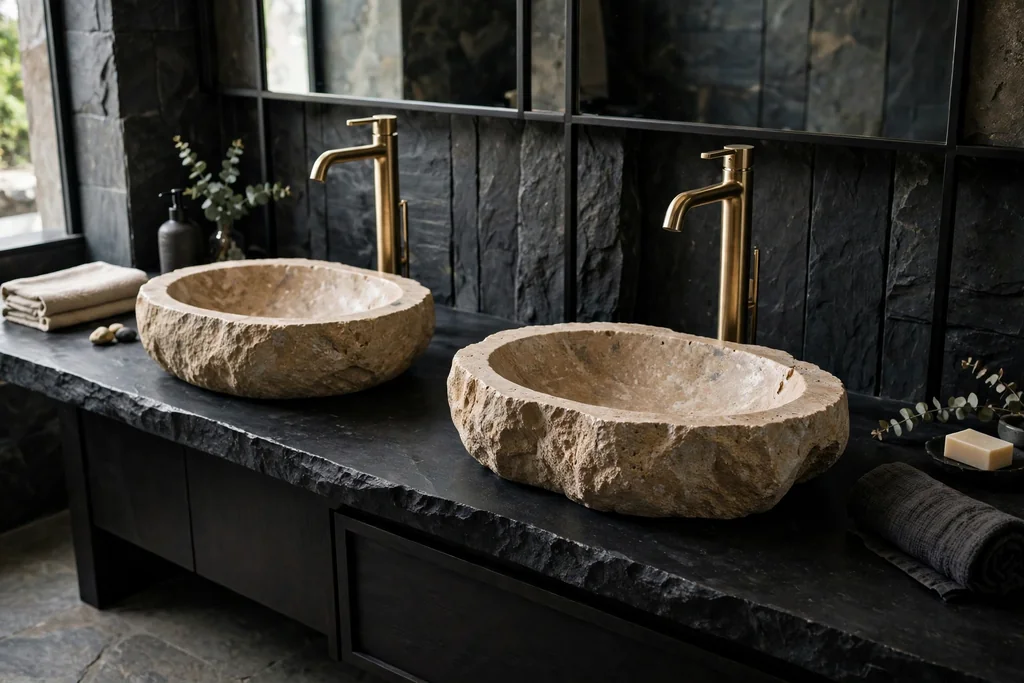
Set a stone vessel basin on the vanity, in a rough hewn or honed finish, for a sink that feels carved rather than manufactured. A stone basin brings a natural, spa like weight to the room and pairs well with pale wood and warm white tile. This suits a main bathroom best, where the basin can be the one bold piece in an otherwise quiet room.
Check the height carefully, since a vessel basin sits on top of the counter and raises the rim, and pair it with a taller faucet that clears the rim. Seal the stone at install and reseal now and then, since natural stone stains if soap and toothpaste sit on it. Keep the counter around the basin clear, so the stone stays the focus.
19. Beige Palette with Persimmon Accent Towels
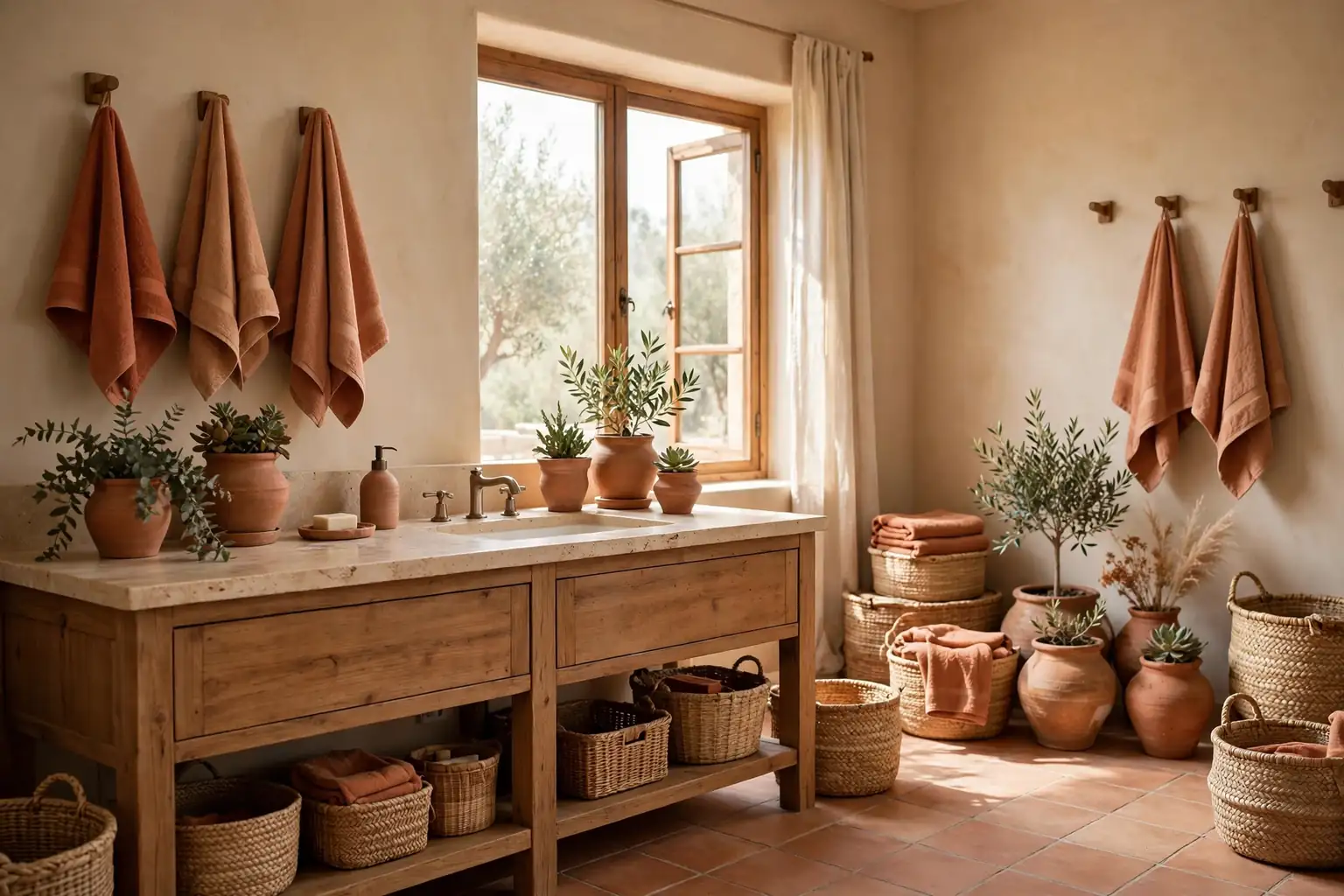
Build the room on a beige palette, warm white walls, pale wood, and a beige rug, then add one warm accent: persimmon or muted terracotta towels. The single accent color keeps the room calm while giving it a clear Korean warmth, since persimmon is a familiar color in Korean food, art, and autumn. Repeating the accent in just two places, towels and a small soap dish, is enough to make the room feel planned.
Keep the rest of the room quiet when the towels are bold: plain mats, a simple curtain, and one matching accessory are enough. Choose washable cotton towels in a mid tone rather than a bright orange, so the accent stays soft against beige. Swap the accent towels with the seasons if you like, sage in spring and persimmon in autumn, without changing anything else.
20. Hotel Style Rolled Towel Display
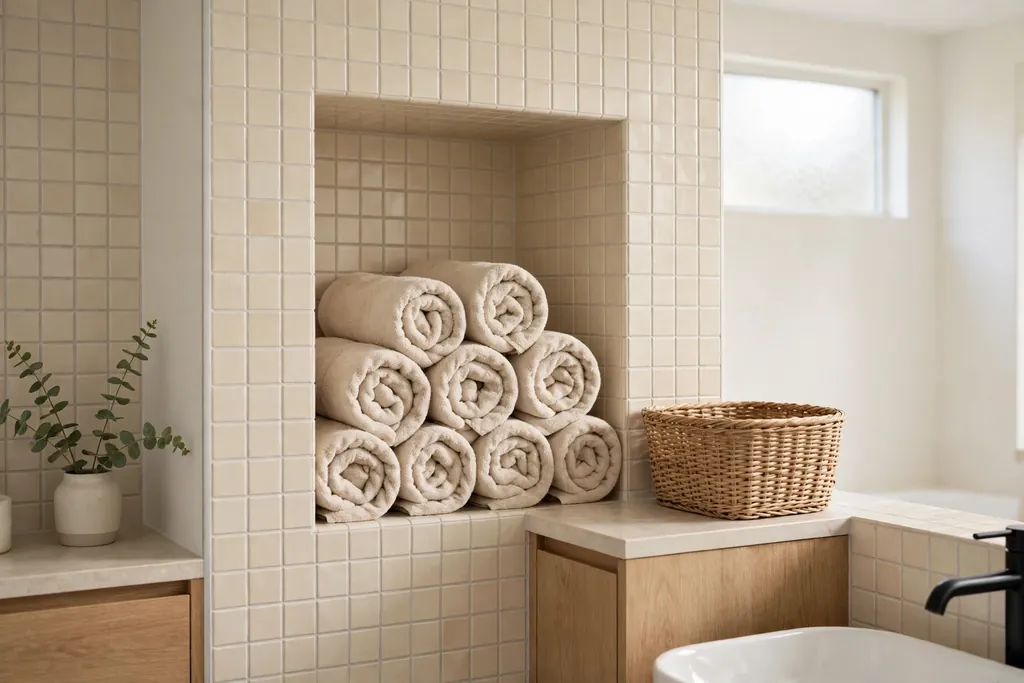
Roll towels tightly and stack them in an open niche, on a shelf, or in a basket, for a display that looks cared for and makes grabbing a towel easy. Rolled towels take less shelf depth than folded stacks, they show their color and texture, and they suit the tidy, welcoming feel of a Korean bathroom. This works in a main bathroom and a guest bathroom alike.
Roll towels of one color together and keep the display to one shelf or basket, so it reads as intentional rather than crowded. Wash and reroll towels after guests use them, and keep a spare set in a closed basket for busy mornings. If shelf space is tight, a tall narrow basket beside the vanity holds rolled towels in the footprint of a stool.
21. Wooden Ladder Towel Rail
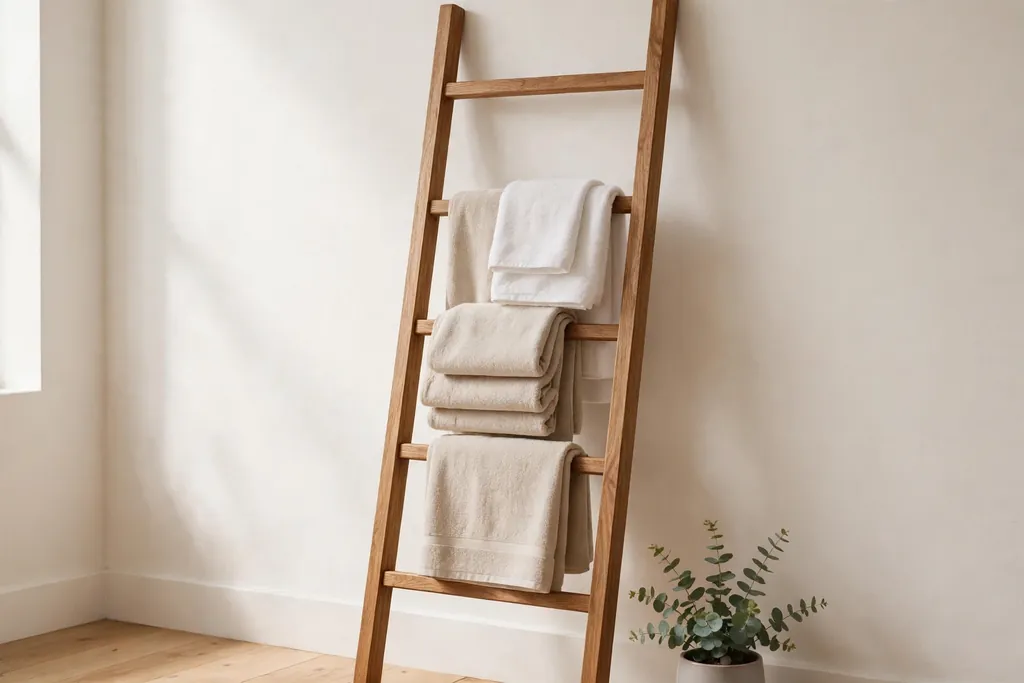
Lean a wooden ladder rail against a spare wall for towels, a robe, and a hanging wash bag. The ladder needs no drilling, gives four or five rungs in the footprint of a towel bar, and suits a narrow wall beside the door or at the end of the tub. Pale wood keeps it in line with the rest of the Korean scheme, and the ladder doubles as a drying rack for hand washed items.
Put heavier towels on the lower rungs and lighter items higher up, and add small adhesive pads under the feet so it does not slide on tile. Check that the top cannot tip forward if a child or pet pulls on it, and anchor it if your household needs that safety. A ladder rail also gives a small bathroom a vertical accent without a cabinet.
22. Scent Corner with a Diffuser and Candle
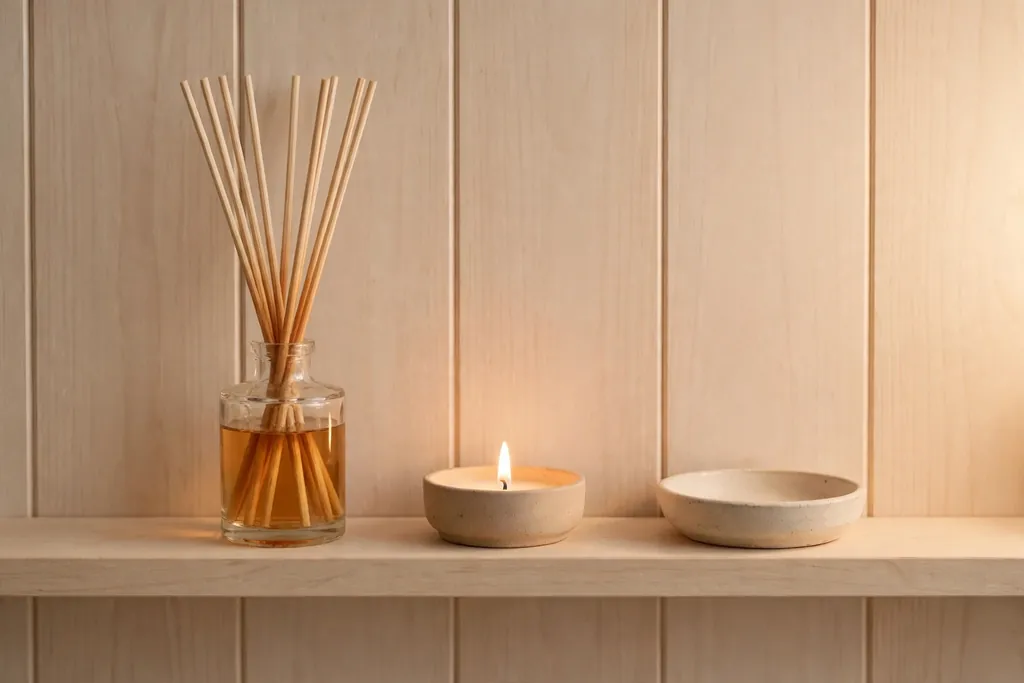
Set a scent corner on a shelf or stool with a reed diffuser, a candle kept safely away from fabric, and a small dish for matches. Scent is part of the Korean bath routine, where a calm smell helps the room feel like a place to slow down rather than a place to rush through. Choose a soft scent, such as hinoki, yuzu, or plain cedar, rather than a strong floral that fights with skin care products.
Keep the diffuser on a tray so oil drips do not stain wood or stone, and never leave a candle burning unattended. Place the scent corner on the driest wall, away from the shower spray, and refresh the reeds every few weeks when the scent fades. If anyone in the household is sensitive to strong scents, use a smaller diffuser or skip it and keep a potted plant on the sill instead.
23. Laundry Nook Beside the Washer
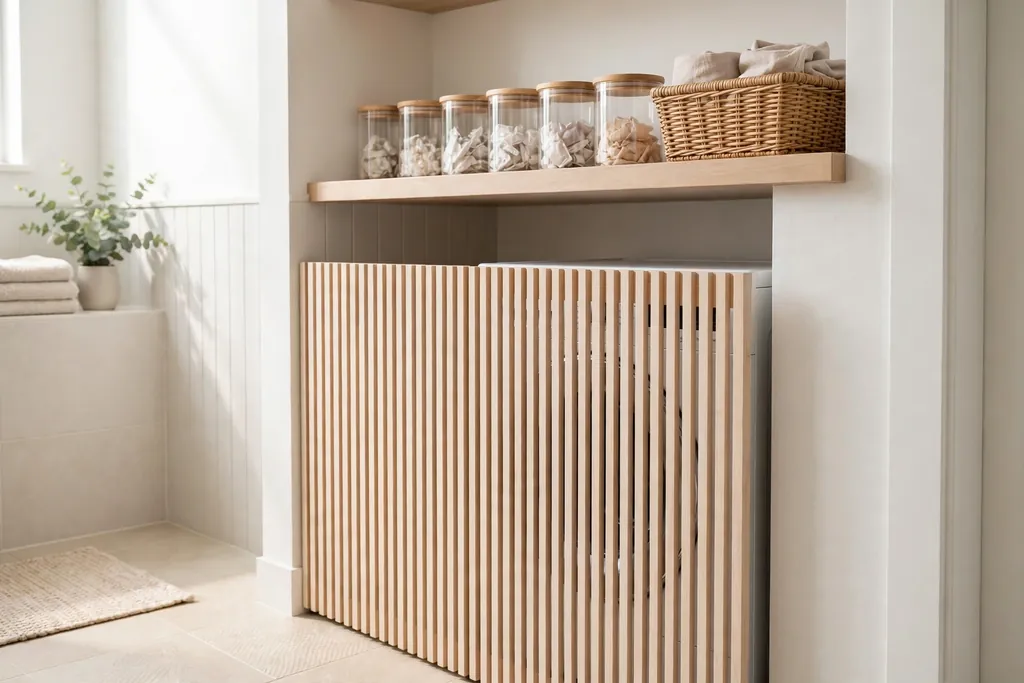
Give the laundry corner its own tidy nook, with a washer covered by a wood slatted panel or a linen curtain, a shelf above for detergent in matching jars, and a basket for dirty clothes. Many Korean homes place the washer in or near the bathroom, and a calm nook keeps that practical corner from spoiling the room. The curtain or panel hides the machine while keeping it easy to reach.
Keep detergent in closed jars or bottles on one shelf, and label them if several look alike. Add a small folding stool nearby for reaching the shelf, and a wall hook for a drying bag. If space is tight, a single shelf and a curtain over the machine give most of the benefit without a built in unit.
24. K-Beauty Skincare Shelf with Glass Jars
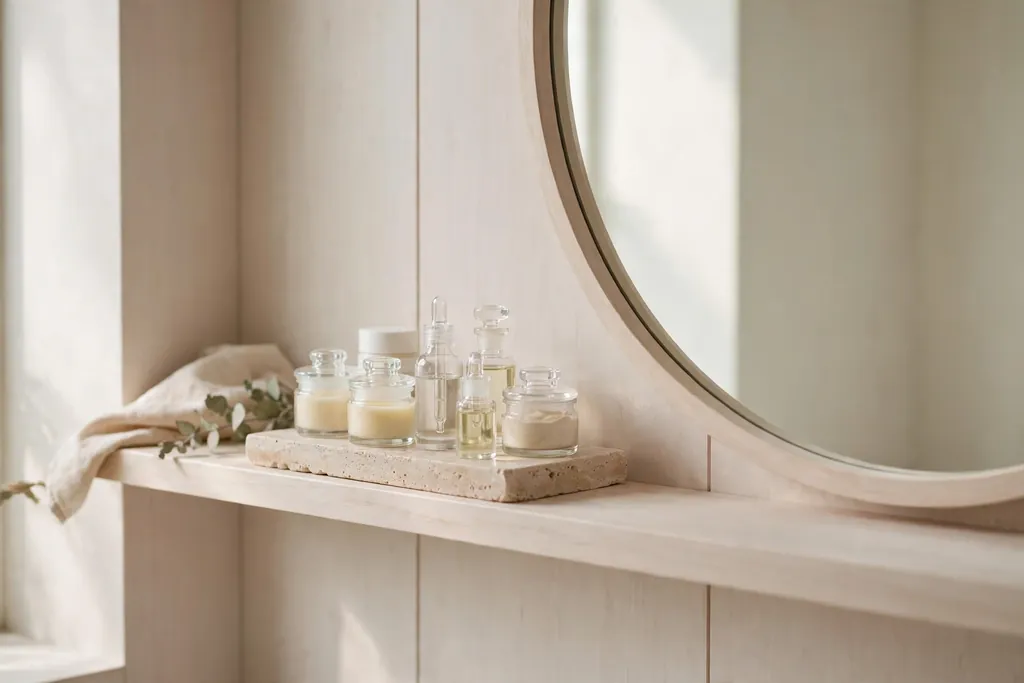
Dedicate one shelf to your skin care routine, with glass jars and small bottles grouped by step, cleanser, toner, serum, and cream, on a stone or wood tray. Korean skin care routines use several steps, and a dedicated shelf keeps the routine pleasant instead of a hunt through a crowded cabinet. Glass jars also show what you have, so you use products before they expire.
Keep the shelf near the mirror but clear of direct shower spray, and wipe the tray weekly since skin care drips build up fast. Store products that need cool, dark storage in a closed cabinet and keep only daily items on the open shelf. A small hand mirror on the tray helps with close work and keeps the main mirror free for the rest of the room.
25. Daily Routine Tray on the Vanity
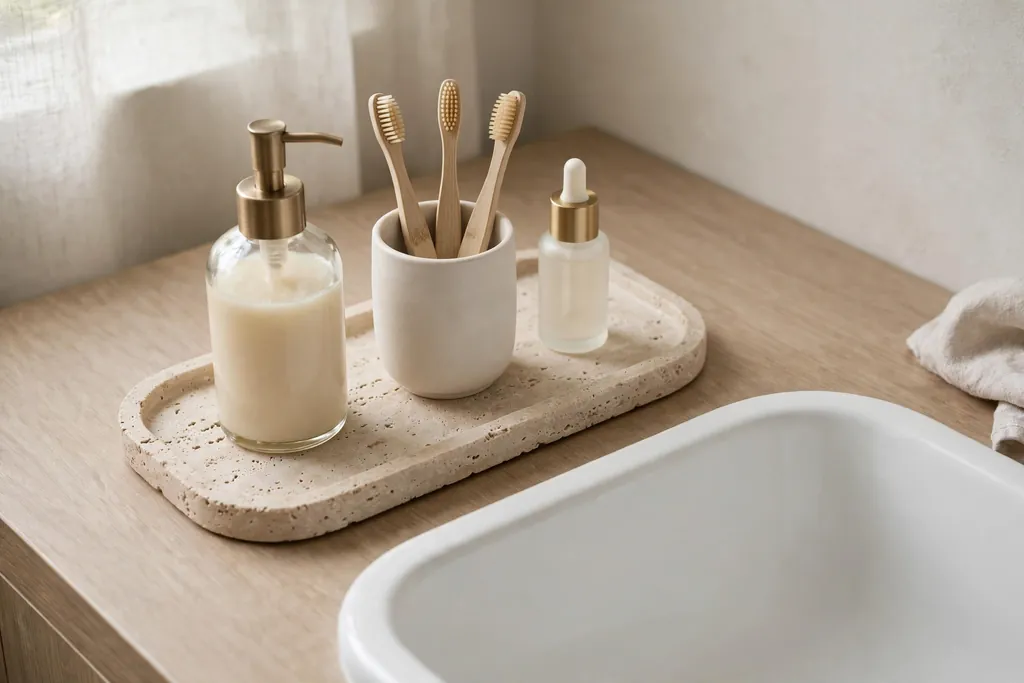
Set a single tray on the vanity for the few items you use every morning: soap, a toothbrush cup, a small dish, and one skin care bottle. A tray turns a scattered counter into one tidy group, and it makes cleaning the counter a one lift job. This suits a shared bathroom too, since each person can have a small tray that moves to a shelf when guests visit.
Choose a tray in stone, ceramic, or sealed wood that matches the basin or the pottery accessories, and keep it small enough that the counter still has clear space beside it. Empty the tray once a week and return only what you actually used, since vanity trays quietly collect empty bottles. If the counter is very small, a wall mounted shelf at hand height gives the same grouping without taking counter space.
26. Frosted Lattice Window Film
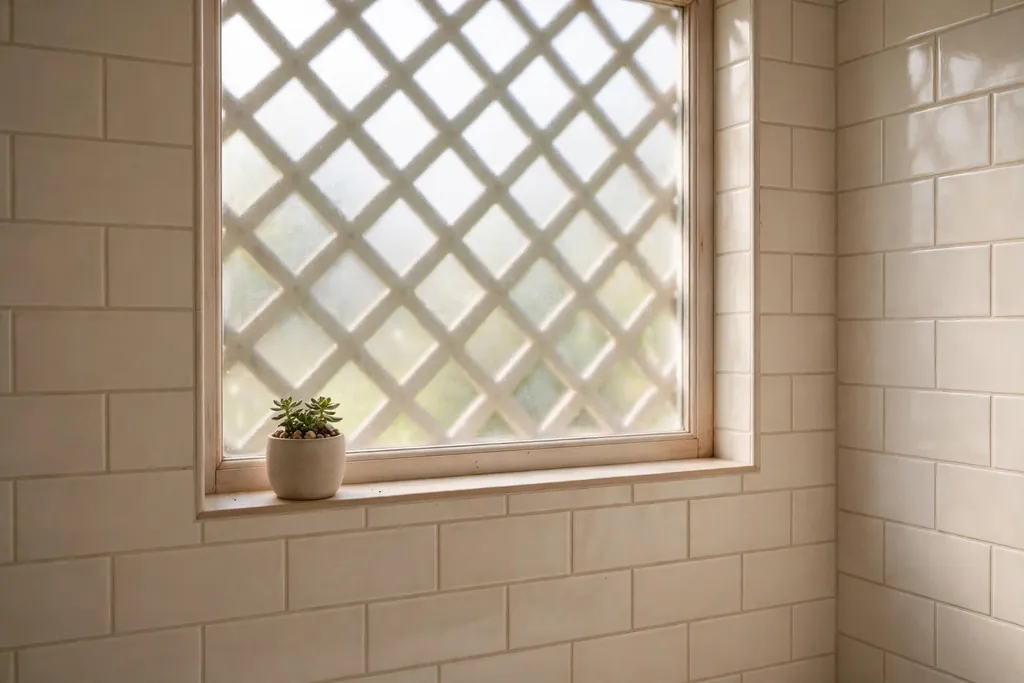
Fit frosted window film with a simple lattice pattern on the bathroom window, so daylight floods in without giving neighbors a view. The lattice pattern nods to hanok doors while the frosted finish keeps privacy, and the film costs far less than new glass. This suits a bathroom with a street facing window, where an uncovered window wastes the best light in the room.
Apply the film to clean, dry glass and smooth each strip from the center outward to push out air. Frost the lower half only if you want a clear view of the sky above, and keep the window frame painted white and the sill clear apart from one plant. Open the window briefly each day, or fit a trickle vent, so steam escapes and the room stays fresh.
27. Slipper Station by the Door
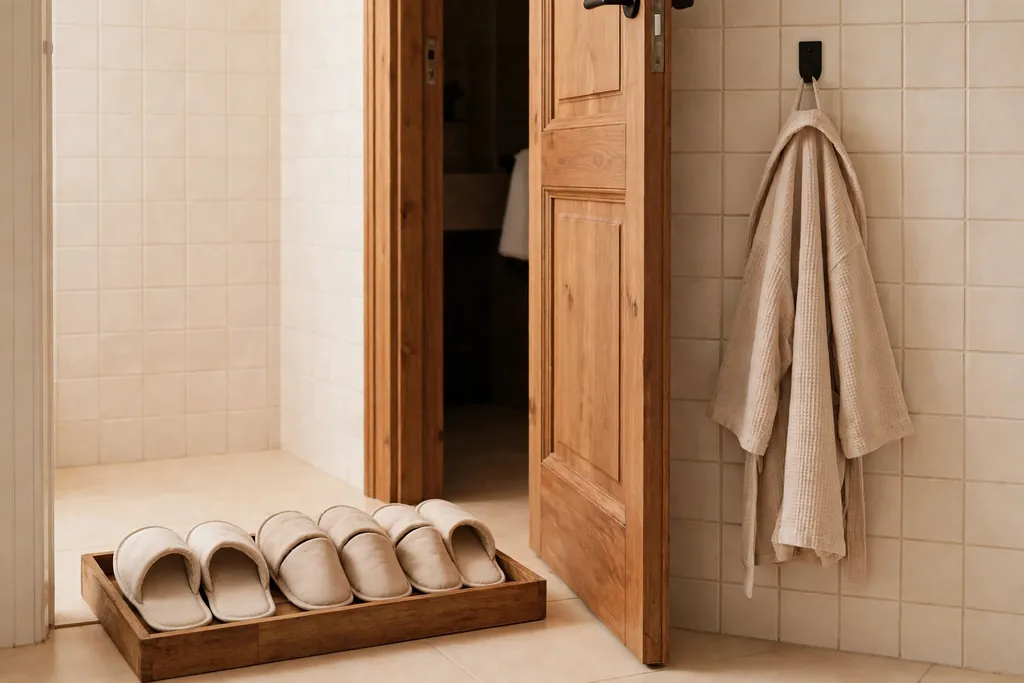
Place a small slipper station by the bathroom door: a low tray or basket holding clean indoor slippers, with a hook for a robe above. Korean homes keep indoor slippers by the door, and a bathroom slipper station keeps wet feet off cold tile while marking the room as a place to slow down. This small habit also keeps outdoor dirt out of the bathroom, so the floor stays cleaner between mops.
Choose slippers in a washable cotton or quick dry material, and keep a spare pair for guests in the basket. Keep the tray on a dry patch of floor near the door, not beside the tub, and wash the tray weekly. If floor space is tight, a single wall hook and a narrow basket by the door give the same welcome in a smaller footprint.
Conclusion
A welcoming Korean bathroom is not about owning the most accessories. It is about light first, pale wood in a few places, clear counters, and warm touches that make a daily routine feel slow and pleasant. Start with a warm white palette and one wood accent, add storage that hides the visual noise, and finish with soft light, scent, and a place to sit. Work through this list in order: walls and light first, then the vanity and tub, then storage, then comfort, and adjust after a week of real use. For small rooms, the renter friendly storage and lighting tips in these apartment bathroom ideas and the calm wood and basket details in these Swedish bathroom ideas pair well with the Korean details above.
Keep this list handy for your next free hour at home, and build your bathroom one corner at a time: a wood stool today, a linen curtain this weekend, and a paper lamp and a scent corner to finish the room.
FAQs
What defines a Korean bathroom style?
A Korean bathroom style is built on pale wood, warm white tile, soft light, and clear surfaces, with natural materials such as stone, cotton, and pottery doing most of the decorating. It borrows from Korean homes and bathhouses, where washing is a slow routine with a low stool, a basin, and a deep soak. The look stays calm by limiting color to one warm accent and keeping daily items in baskets or closed storage.
How can I make a small bathroom look Korean without a remodel?
Start with the pieces that need no plumbing or tile work: a linen shower curtain, a pale wood stool, a round wood framed mirror, woven baskets, and one warm accent towel color. Add a paper shaded lamp or a warm LED strip behind the mirror for soft light, and a scent diffuser on a dry shelf. These swaps change the feel of the room in a weekend and suit renters, since most of them move with you.
What colors work best for a Korean bathroom?
Warm white, beige, pale grey, and soft sage form the base, with pale wood adding warmth and one accent such as persimmon, muted terracotta, or sage giving character. Keep the palette to three or four colors in total, and repeat the accent in two or three places, such as towels and a soap dish, so the room reads as planned. Avoid bright, clashing colors, since the Korean look depends on a calm, unified palette.
Is a soaking tub necessary for a Korean style bathroom?
A soaking tub helps, since soaking is central to the Korean bath routine, but it is not required. A deep tub, a rain shower over a pebble floor, or a low stool and basin set all bring the same slow ritual into the room. If your bathroom has only a shower, focus on warm light, a wood stool, a stone tray, and a scent corner, which give the spa feeling without moving plumbing.
How do I keep a Korean bathroom tidy with a multi step skin care routine?
Give the routine one dedicated shelf or tray, grouped by step, and keep only daily items on it, with the rest in a closed cabinet. Use glass jars and a stone tray so the shelf looks intentional, and empty the tray once a week to remove empty bottles. A small basket per person in a shared bathroom stops routines from mixing, and a single tray on the vanity keeps the counter clear.
What materials suit a Korean bathroom best?
Pale wood, natural stone, cotton, linen, ceramic, and glass suit the style, since they age well and feel warm against tile. Use water tolerant woods, such as hinoki or teak, near the tub and shower, and save untreated wood and paper shades for drier walls. Seal stone and grout at install, choose washable cotton for rugs and curtains, and keep paper and fabric away from direct spray so they last.
An earthy bathroom starts with materials you can feel: warm clay, pale or dark wood, rough stone, soft linen, and woven fiber. Those materials add warmth without a loud color or a full remodel, and they suit autumn well, when a bathroom should feel calm at the start and end of the day. These 22 earthy accent bathroom ideas cover towels, trays, storage, light, scent, and small wall details, so you can start with one swap and add more only where the room still feels cold or plain. Pick the idea that fixes your biggest daily annoyance first, whether that is cold floors, cluttered counters, or harsh light.
Key Takeaways
Start with one warm material, such as terracotta, wood, or stone, and repeat it in two or three places so the room reads as planned.
Keep hard finishes calm and pale, then make seasonal changes with towels, scent, plants, and small decor that are easy to swap.
Choose bathroom safe materials near the tub and shower, such as sealed stone, treated wood, and washable linen, and save untreated wood and paper for drier walls.
Use baskets, trays, and shelves to group small items, since an earthy room still needs clear counters to feel calm.
Layer light with warm bulbs, candles kept safely away from fabric, and a dimmer where wiring allows, and keep bright overhead light for morning tasks only.
Work in small steps: one towel swap, one tray, and one plant can change the feel of a bathroom before you spend on tile or fixtures.
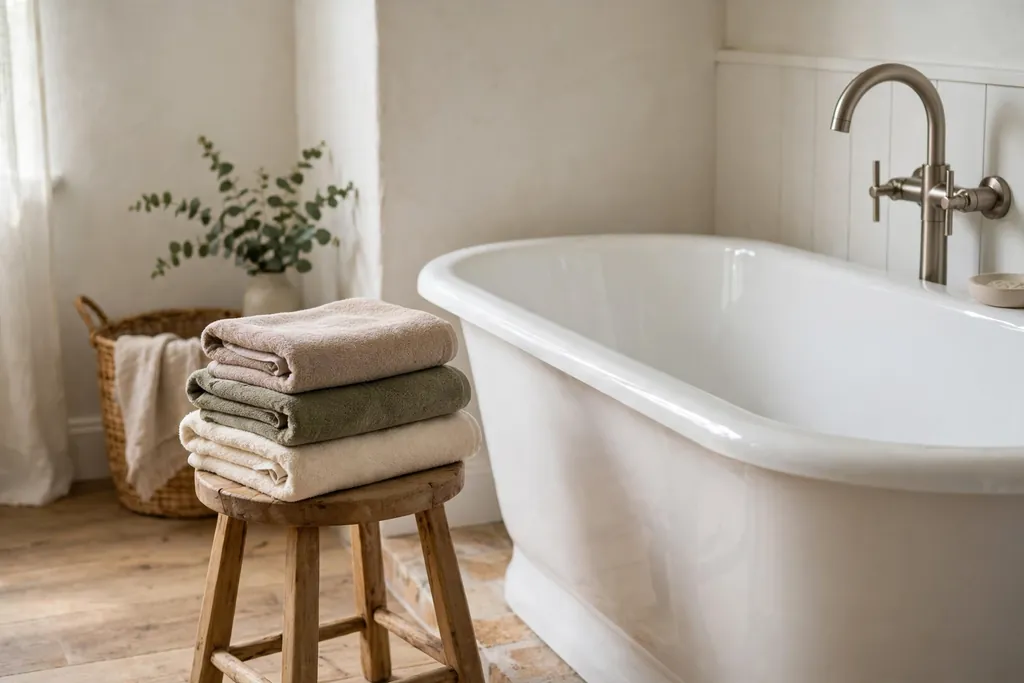
1. Terracotta Towels in a Folded Stack
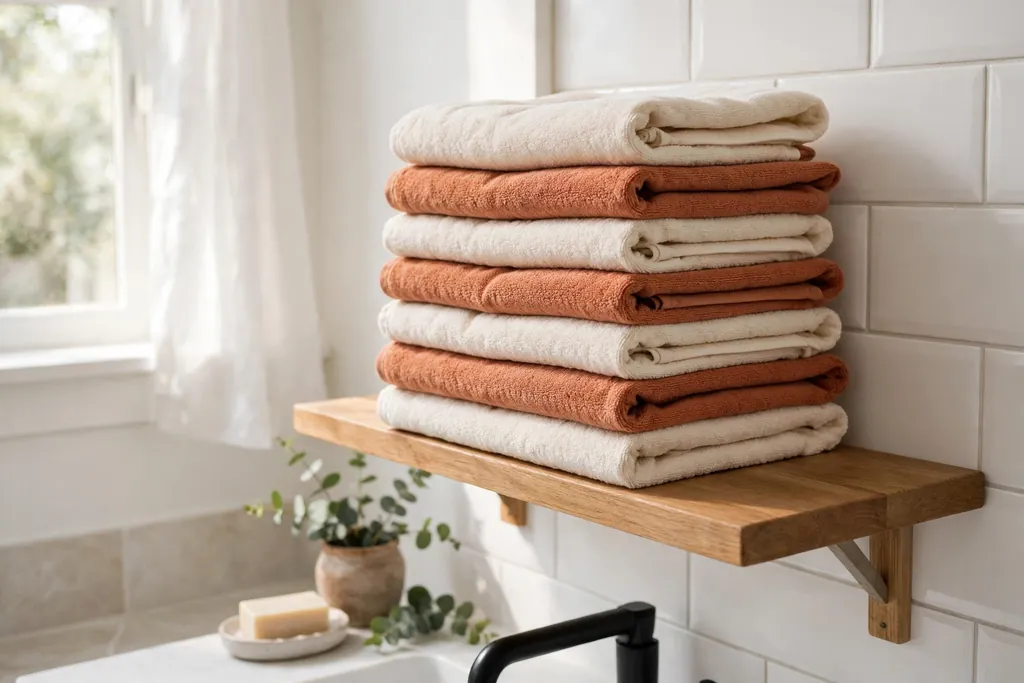
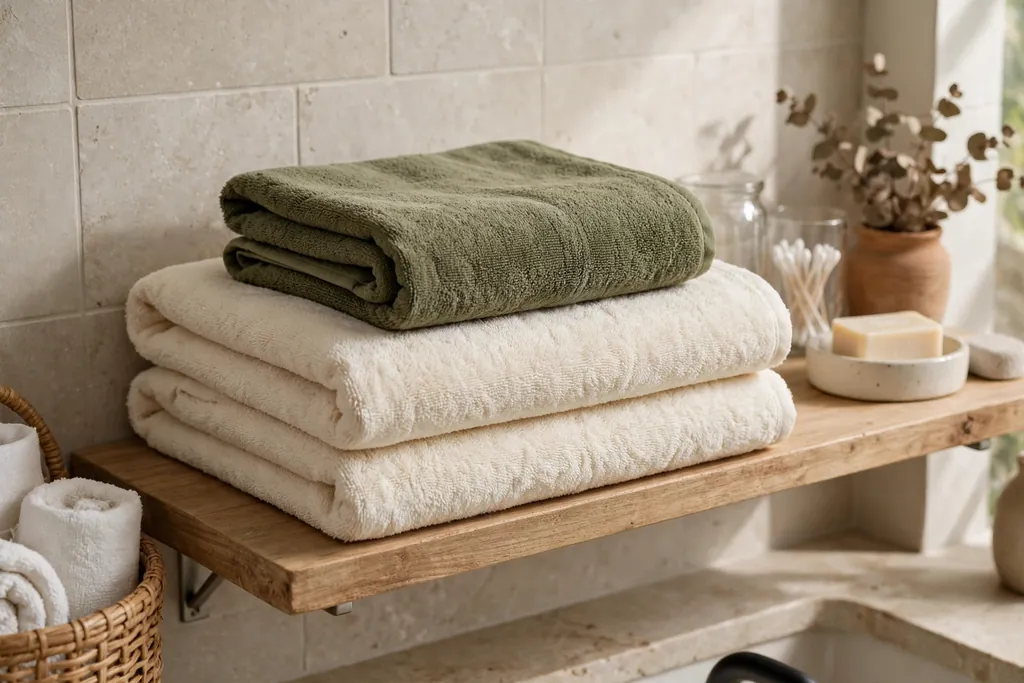
A stack of terracotta towels gives a plain bathroom a warm accent in one laundry friendly swap. Fold bath towels, hand towels, and washcloths the same way, and stack them on an open shelf, a stool, or a basket, with cream towels below and terracotta towels on top for color. The warm clay tone suits white tile, pale wood, and cream walls, and it reads as seasonal without a patterned towel set.
Keep the stack to one shelf or one basket so the bathroom stays tidy, and keep a spare set folded nearby so a fresh stack is a quick swap rather than a chore. Wash towels in matching sets, and rotate the terracotta towels with cream or oat towels when you want a quieter look. For the same warm palette carried across floors and walls, these Italian bathroom ideas show how terracotta, cream, and wood repeat through a room.
2. A Stoneware Soap Dish and Tray Set
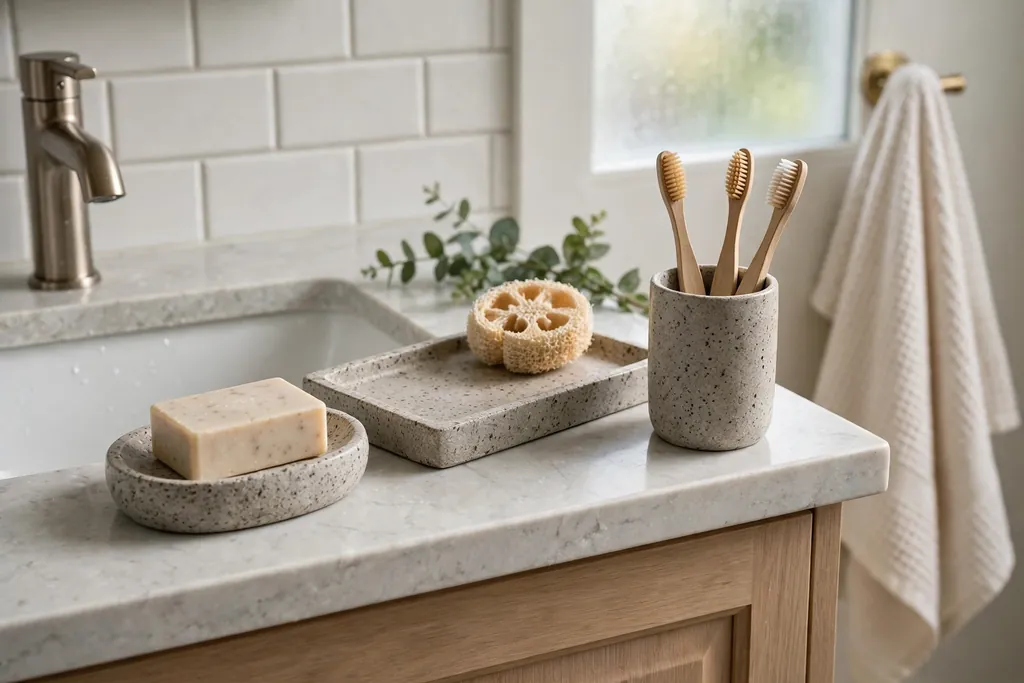
A stoneware soap dish, a small tray, and a matching toothbrush cup bring an earthy, handmade note to the sink in miniature. Choose speckled or matte stoneware in cream, clay, or soft brown, and keep the pieces in one material family so the sink still looks calm. The slightly uneven glaze of handmade looking pieces adds warmth that matched plastic sets do not.
Keep the soap dish drained and the tray dry between uses, since standing water stains both ceramic and stone over time. Limit the set to three pieces at most, so the counter keeps room for daily items. A single stone tray can also group the soap, a small candle, and a dish into one tidy group that is easy to lift and wipe under.
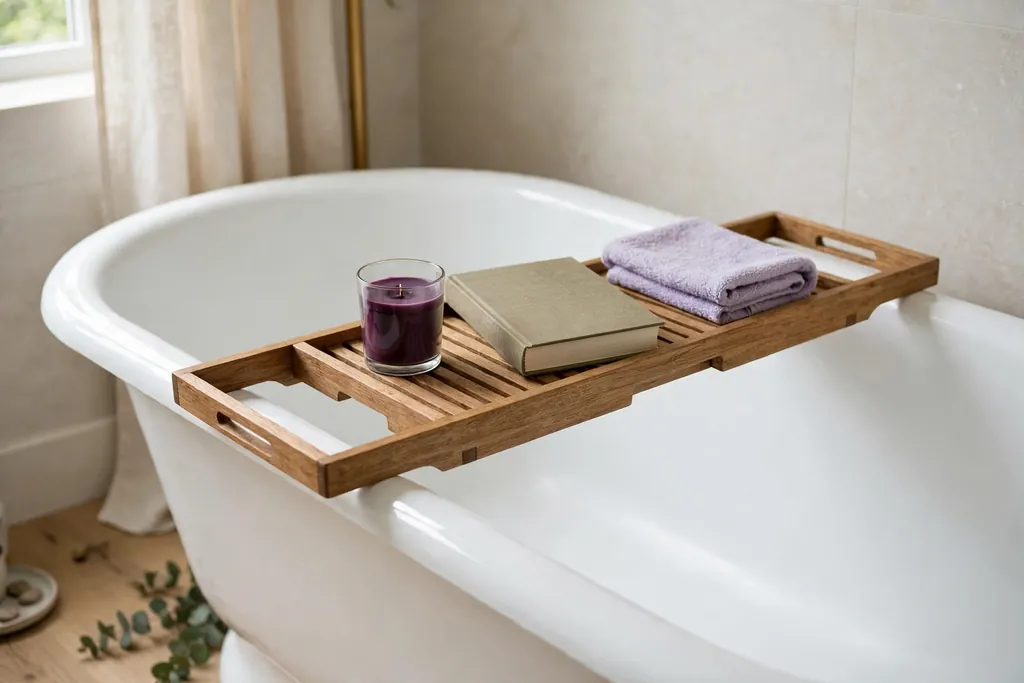
3. A Wooden Bath Tray Across the Tub
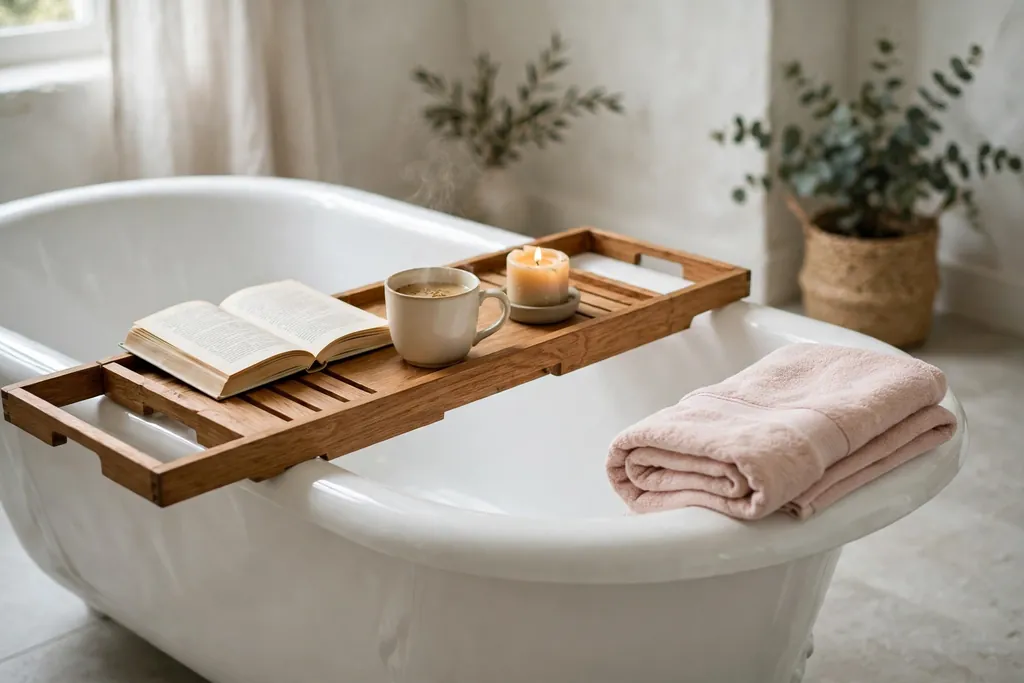
A wooden bath tray turns a plain tub into a place to slow down, with room for a book, a cup, and a candle kept safely away from the water. Choose a tray that spans your tub width with extendable sides, and look for a model with a phone ledge that keeps electronics out of splash range. Warm wood against white porcelain is one of the simplest earthy contrasts in a bathroom.
Wood trays need drying after each use to avoid warping, while bamboo and coated wood versions cope better with steam. Store the tray upright behind the door when it is not in use so it does not become a permanent clutter spot. Check that the tray sits level and cannot slide before you set a cup on it, and keep candles on the far end, clear of towels and curtains.
4. Seagrass Baskets for Open Storage
Seagrass baskets soften hard tile and porcelain while hiding the visual noise of bottles and tubes. Assign one basket per person or per job, such as hair care, skin care, and cleaning, and label the base if the baskets look alike. Set baskets on a shelf or a stool rather than on a wet floor, so the fiber stays dry and keeps its shape.
Once a month, empty each basket and return only what you actually used, since bathroom baskets quietly collect empty bottles. A basket with a lid suits items you would rather not see, such as cleaning sprays, while an open basket suits rolled towels and spare toilet paper. Keep the basket count low: two or three well used baskets look calmer than a shelf full of small ones.
5. A Jute Bath Rug by the Sink and Tub
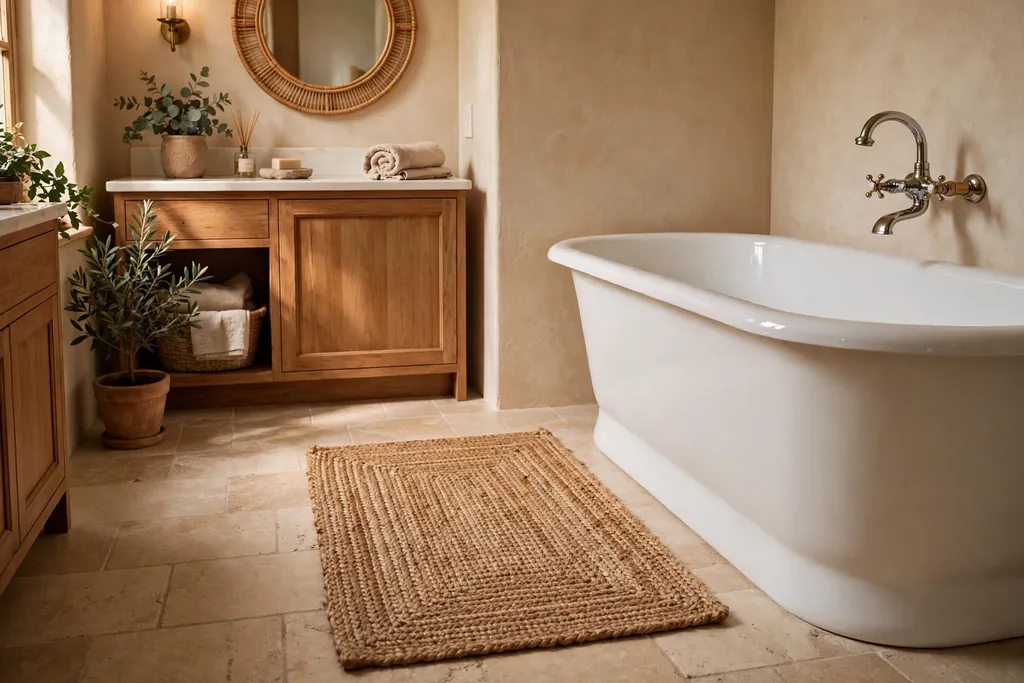
A jute or woven cotton rug warms a cold tile floor and adds natural texture underfoot in one step. Choose a flat weave rug in a natural tan or oat tone, sized to fit the main walking line without bunching at the door or the tub edge. The woven texture suits wood, stone, and clay accents, and it looks less clinical than a plain white mat.
Keep a second rug in rotation so the bathroom never sits bare on wash day, and wash the rug on the schedule the maker gives. A washable cotton rug dries faster than a thick pile rug and can go in the laundry with the towels. If the rug sits near the shower, add a non slip pad under it and hang it to dry after heavy splashes.
6. Terracotta Pots With a Trailing Plant
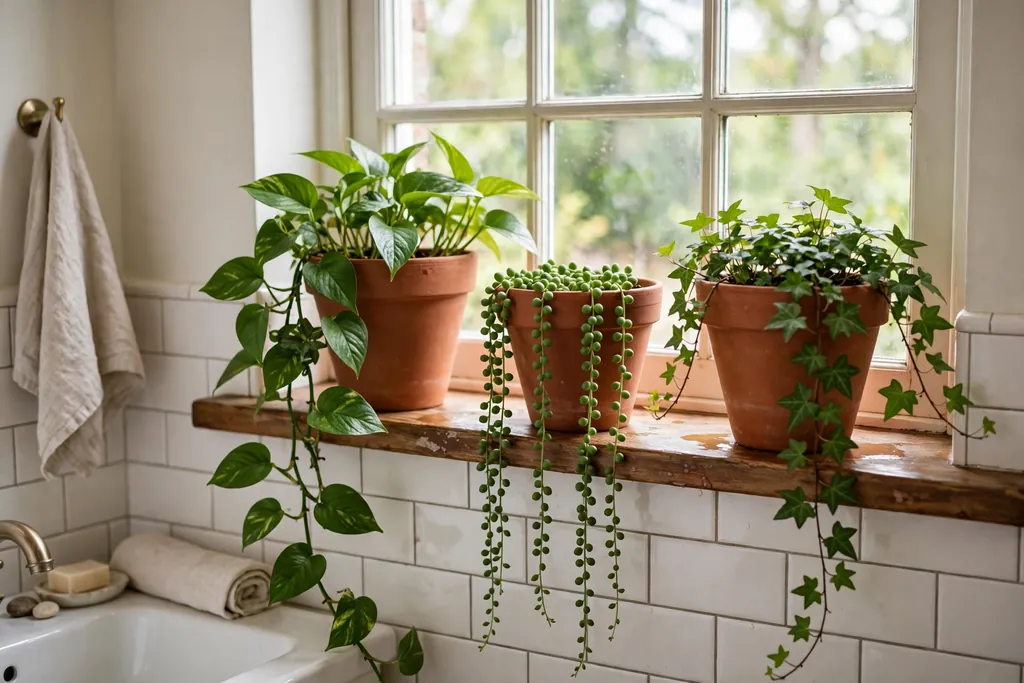
Terracotta pots with a trailing plant bring warm clay and living green to a bathroom shelf or windowsill. Use one or two pots in different heights, planted with pothos, ivy, or a fern that enjoys humidity and indirect light, and set each pot on a small saucer to protect the shelf. The clay warms the look and suits a wood shelf, a tiled wall, or a plain white sill just as well.
Check the soil before watering, since bathroom air already adds moisture, and rotate the plant to a brighter room for a few days each week if your bathroom has no window. One trailing plant usually looks better than a crowded collection in a small room. Keep trailing stems clear of the sink and the mirror so they do not drip onto counters.
7. A Warm Wood Mirror Frame
A warm wood mirror frame softens all the straight tile lines in a bathroom and ties the mirror to the vanity and stool. Choose a slim frame in oak, walnut, or teak, and hang the mirror centered over the sink at eye level, with the width a little narrower than the vanity so the edges do not crowd the light fixtures. The wood reads as an earthy accent even in a mostly white room.
Wipe the wood frame dry so steam does not darken it over time, and keep sconces or a pendant on either side if the room allows. If drilling is not allowed, a leaning wood framed floor mirror beside the vanity gives a similar warm shape with no holes. For more pale wood ideas that suit this calm, natural look, see these Swedish bathroom ideas.
8. A Clay Vase With Dried Grasses
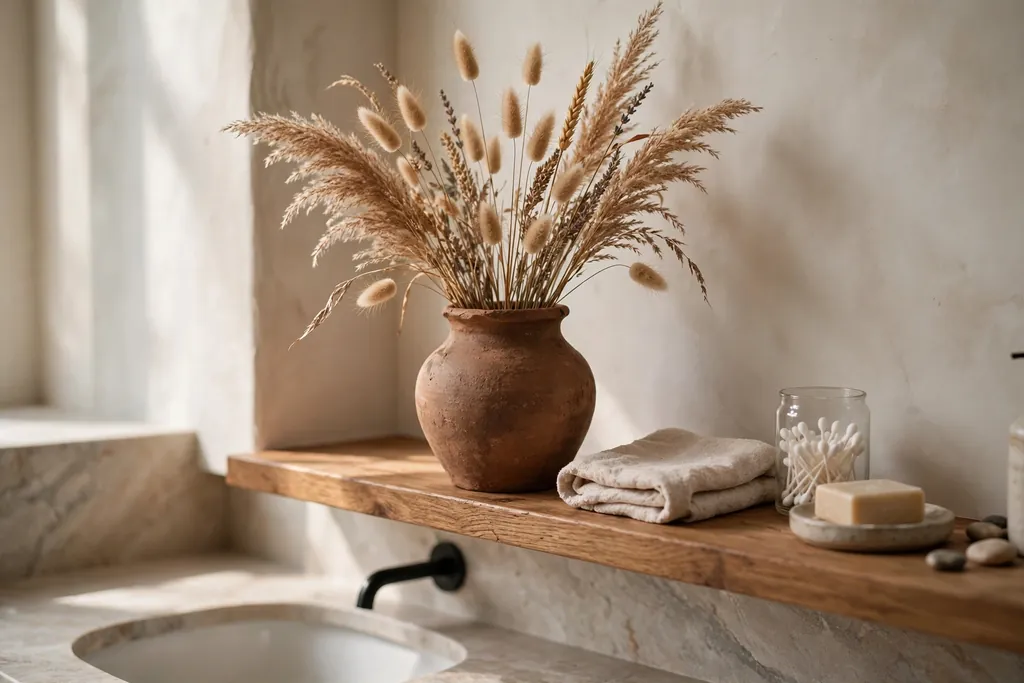
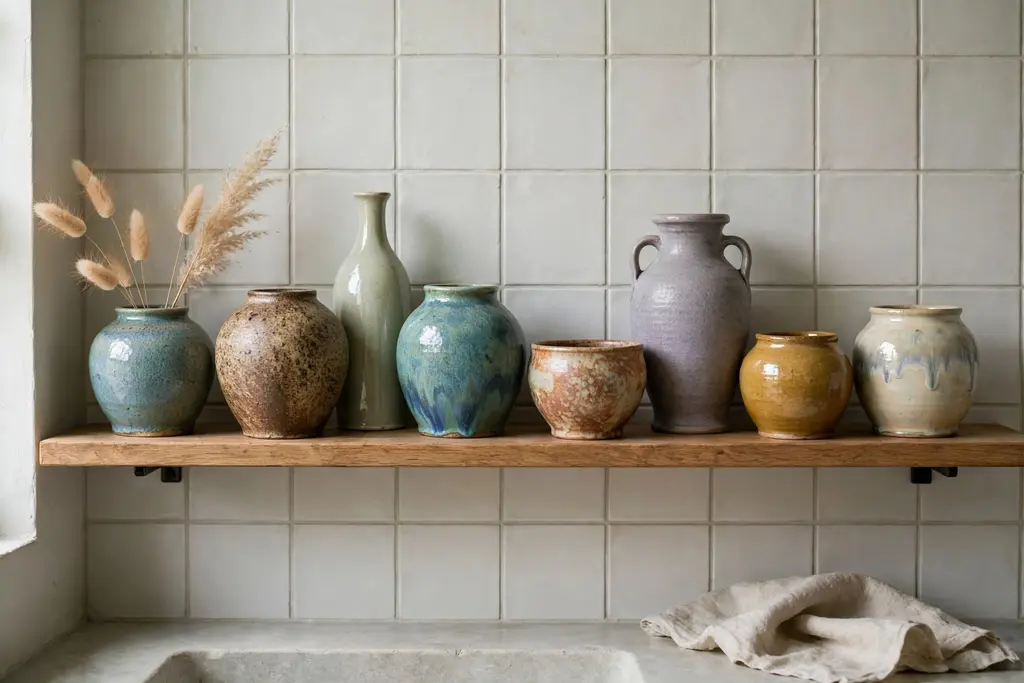
A clay vase with dried grasses adds height and a soft, natural shape to a vanity or shelf without needing water or daily care. Choose a vase tall and narrow for a vanity, or short and wide for a shelf, and trim the stems to a height that clears any mirror or shelf above. Pampas, wheat stems, or dried lavender all suit an earthy palette, and one vase reads as calm while small items spread across every surface can make a small room feel cluttered.
Keep the vase away from the sink edge, where it could be knocked during handwashing, and dust the stems now and then with a soft cloth. Dried grasses suit a dry wall best, so keep the vase off the shower wall where steam can soften the stems. If you prefer fresh stems, a small bunch of eucalyptus in the same vase gives scent as well as shape.
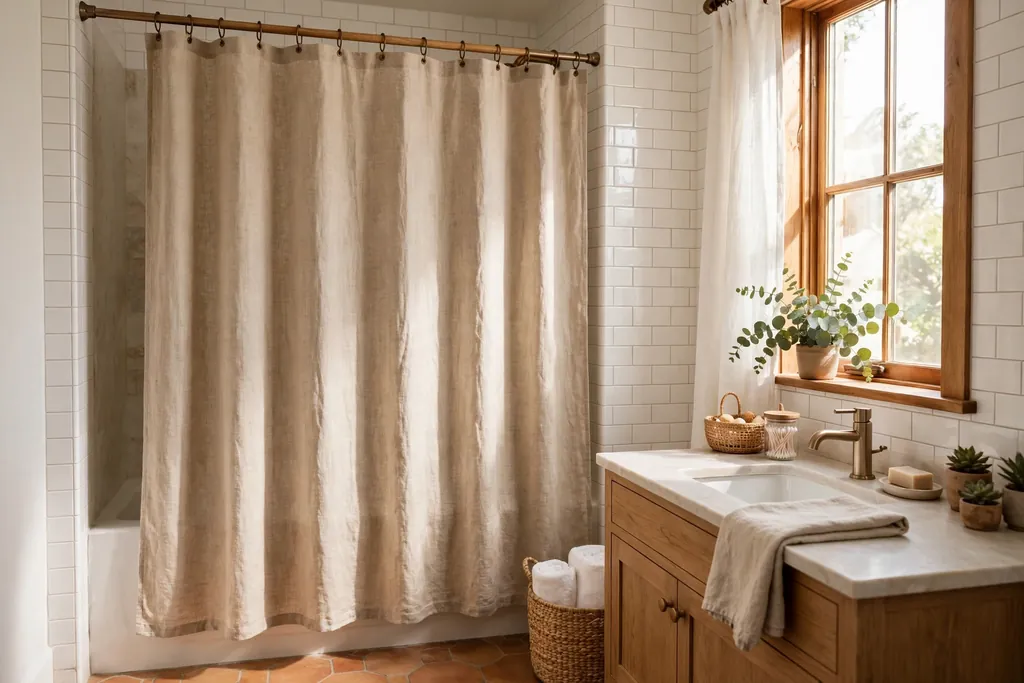
9. An Oat Linen Shower Curtain
An oat linen look shower curtain softens a tiled shower and adds the relaxed texture of a country home. A fabric outer curtain hangs better than a thin plastic curtain on its own, and a separate washable liner keeps water where it belongs. This suits a bathroom where the shower curtain is the largest single surface, since the curtain sets the tone for towels and rugs in one move.
Keep the rest of the room quiet when the curtain has texture: plain towels, a simple mat, and one matching accessory are enough. Wash the liner on the schedule the maker gives, and let the outer curtain dry fully between showers to avoid mildew. Hang the curtain a little higher than usual with a longer liner, so water still falls inside the tub or tray.
10. A Stone Pebble Bath Mat
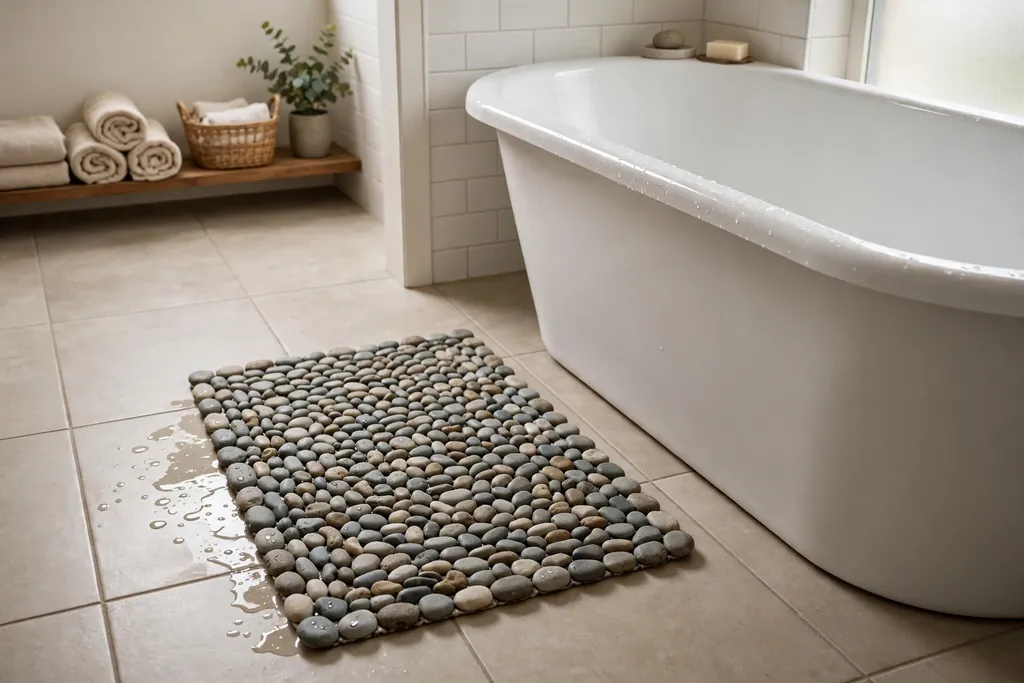
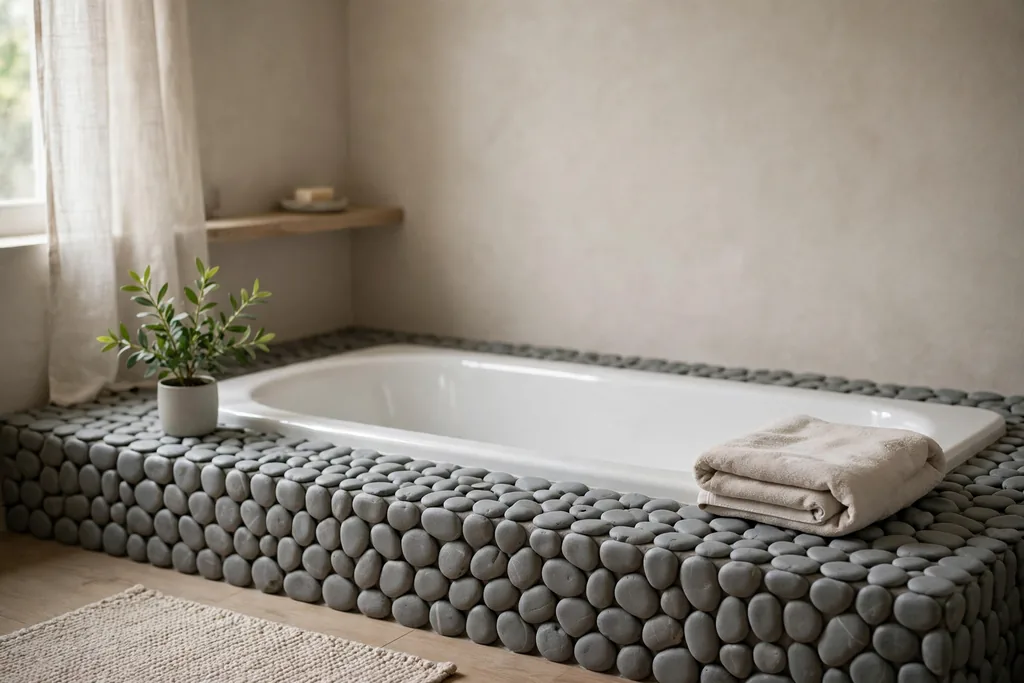
A stone pebble mat gives the shower or tub area a natural, spa like floor that feels warm under bare feet compared with cold tile. Choose a mat made from smooth, sealed pebbles set on a backing that drains well, and size it to fit the tub exit or the shower floor without bunching. The grey and tan tones of natural stone suit clay, wood, and cream walls.
Rinse the mat after use and let it drain fully between showers, since standing water can dull the finish and leave soap marks. Check that the backing grips the floor and does not slide on wet tile, and lift the mat to clean under it each week. If a full pebble mat feels too rough, a small pebble tray beside the tub gives the same stone note at a smaller scale.
11. An Aged Brass Towel Ring
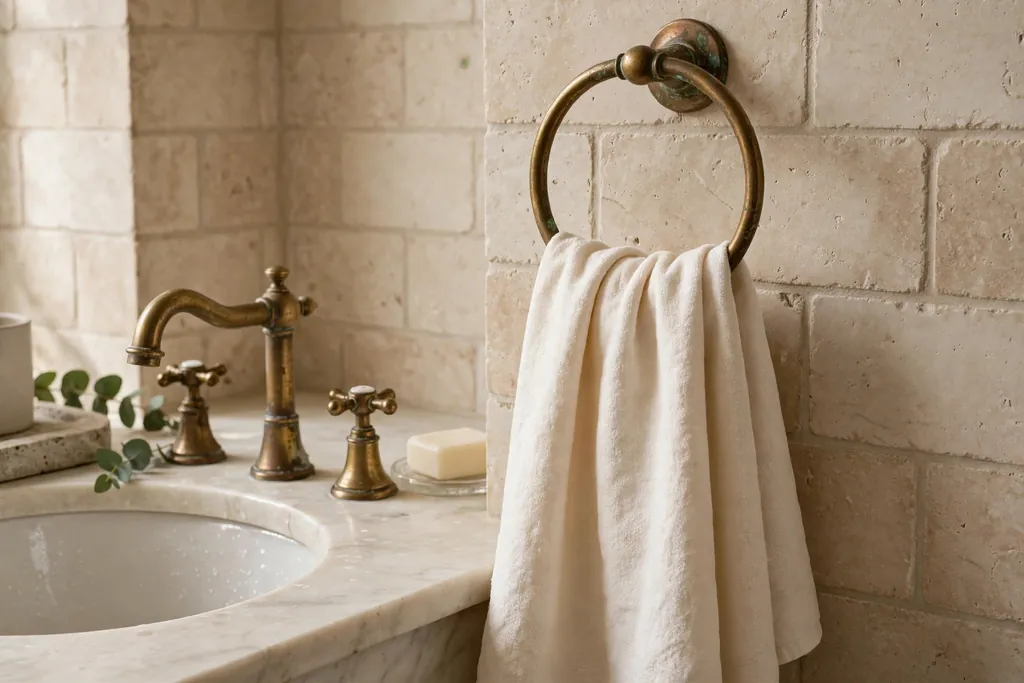
An aged brass towel ring warms a plain wall in one small, coordinated move. Brass suits terracotta, cream, marble, and walnut, and it reads as old, settled hardware rather than a bright new fitting. Mount the ring beside the sink or near the shower at a height that keeps the towel clear of the floor and the counter.
Keep the finish consistent across the pieces you change, such as the towel ring, a hook, and a cabinet knob, so the room looks planned. Clean brass gently with a soft dry cloth, and avoid harsh cleaners that can strip the finish. Save every original screw and fixture in a bag inside the vanity if you rent, so you can restore the room later.
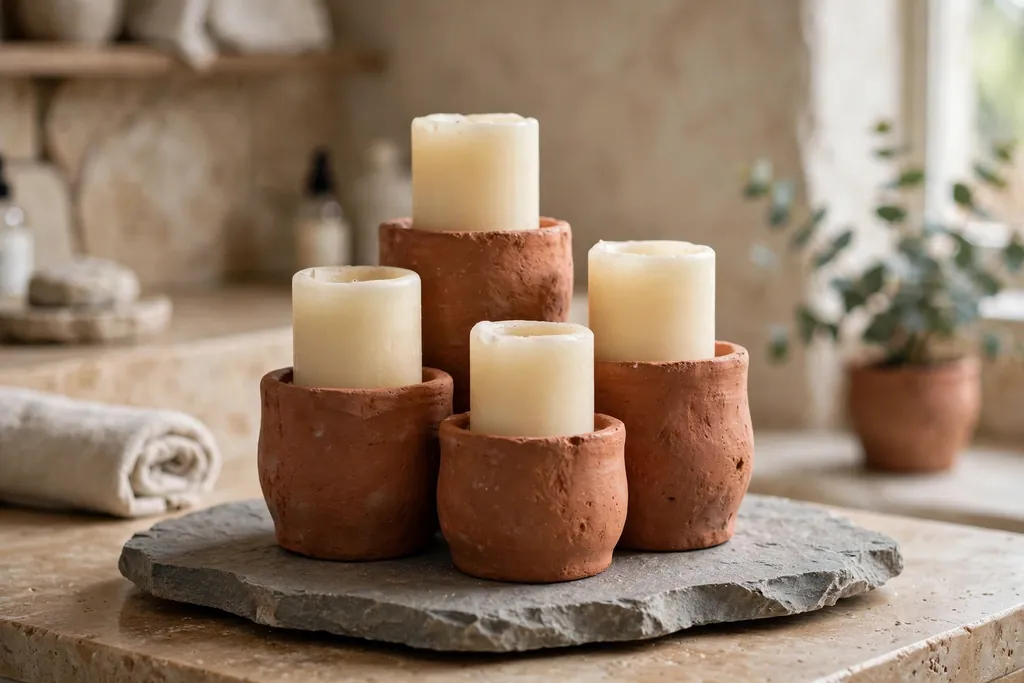
12. Terracotta Candle Holders in a Cluster
A cluster of terracotta candle holders gives evening baths a warm glow and a clear earthy accent on a shelf or a stool. Group three holders of different heights together, with plain cream or beeswax candles, and keep the cluster on a stone tray so wax and heat stay contained. The clay tone repeats the towel and pot palette without adding a new color.
Keep candles clear of towels, curtains, and dried grasses, and never leave a lit candle unattended. Battery candles suit this idea well if you worry about open flames near fabric or if children use the room. Put the cluster where it will not be knocked, such as a wide shelf or a stool beside the tub, rather than on a narrow sink edge.
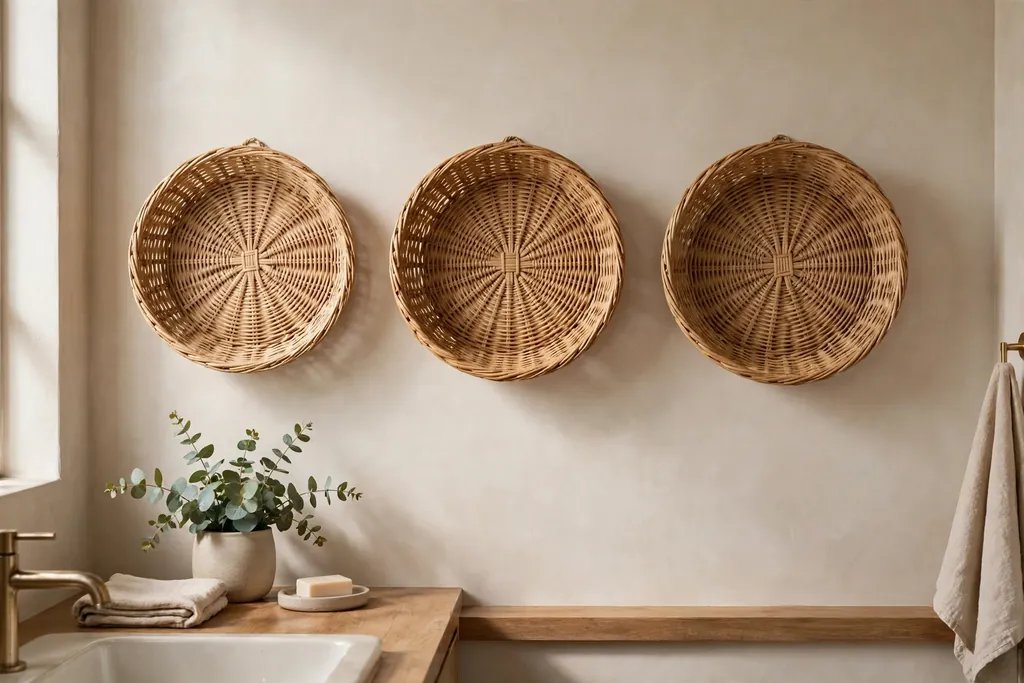
13. A Trio of Woven Wall Baskets
A trio of woven wall baskets adds texture to a plain wall without taking any counter or floor space. Hang three baskets in different sizes on the driest wall of the bathroom, spaced evenly so the group reads as one arrangement, and keep the weave in a natural tan or seagrass tone. The woven texture suits wood, clay, and stone accents, and it gives a flat wall a clear focal point.
Use baskets with a flat back or a shallow depth so they sit close to the wall, and use wall anchors rated for tile if you drill, or strong adhesive hooks if your lease forbids holes. Keep the baskets empty or use one for a small dried stem, since a basket full of small items can look cluttered from the door. Dust the weave now and then so it keeps its natural color.
14. A Wood Stool Beside the Tub
A small wood stool beside the tub gives you a place to sit, stack towels, or rest a candle kept at a safe distance from fabric. Choose a stool in teak, oak, or bamboo that copes well with humidity, and size it to fit the gap beside the tub without blocking the walkway. Warm wood underfoot and at sitting height is a core earthy comfort, and a stool also works as a plant stand or a towel station.
Oil the stool now and then with a wood oil suited to wet rooms, and wipe splashes promptly so standing water does not mark the wood. Put heavier towels on the seat and lighter items on a lower rung if the stool has one, and add small adhesive pads under the feet so it does not slide on tile. Keep the stool away from direct shower spray so it dries fully between uses.
15. Olive Green Hand Towels as an Accent
Olive green hand towels give a cream bathroom a muted, earthy accent without repainting a wall. Fold one olive hand towel on top of a stack of cream bath towels, or hang one olive towel on a ring beside a cream towel, so the green reads as a deliberate accent rather than a mismatch. Olive suits terracotta, wood, brass, and stone, and it brings a garden note indoors.
Keep the accent to towels in one or two places, such as the hand towel ring and the shelf stack, so the room stays calm. Wash towels in matching sets and keep a spare olive towel folded nearby, so a fresh accent is a quick swap. If olive feels too dark in a small room, use sage towels instead for a lighter version of the same earthy note.
16. A Clay Tile Accent Strip Behind the Sink
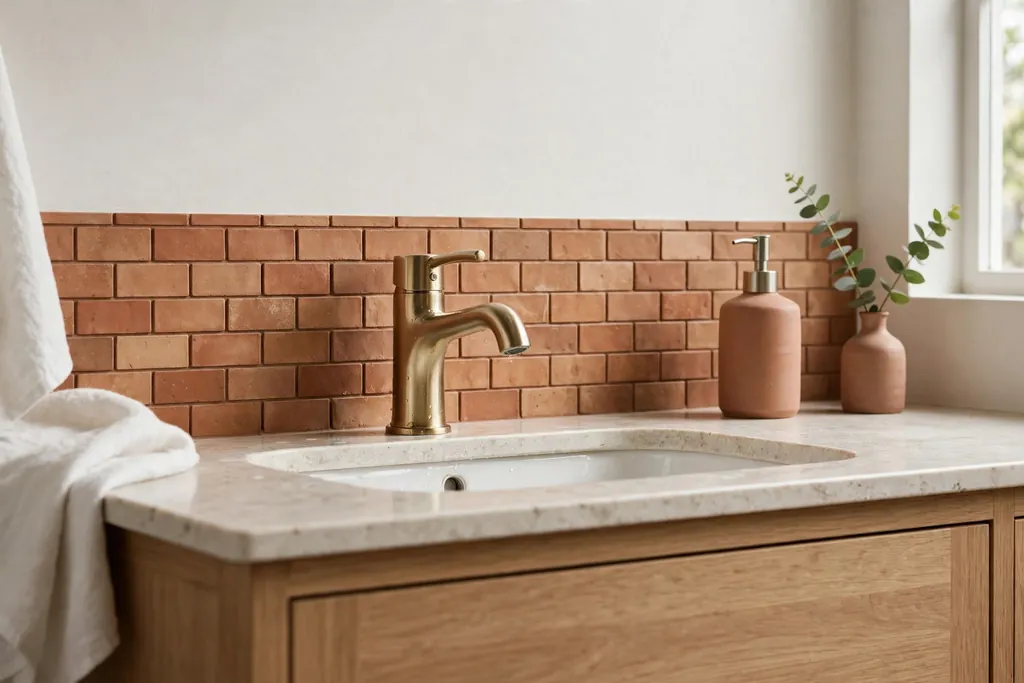
A narrow band of clay colored tile behind the sink gives a plain vanity wall a clear earthy accent in one controlled place. Lay the band in terracotta, warm brown, or a muted clay tone, with plain tile or plaster on the rest of the wall, so the pattern reads as a feature rather than clutter. This suits a white or cream bathroom that needs color in one place, and it works as a single row, a framed panel, or a border above plain tiles.
Measure the mirror and faucet positions first, so the tile panel centers on the sink rather than on the wall, and seal the grout in the splash zone. Keep the tile tone in the room palette, with one strong clay color and cream grout, so it links to towels and pots. If full tile feels like too much, a single row of clay border tiles above plain tiles gives the same note at a smaller scale.
17. Bamboo Accessories on the Counter
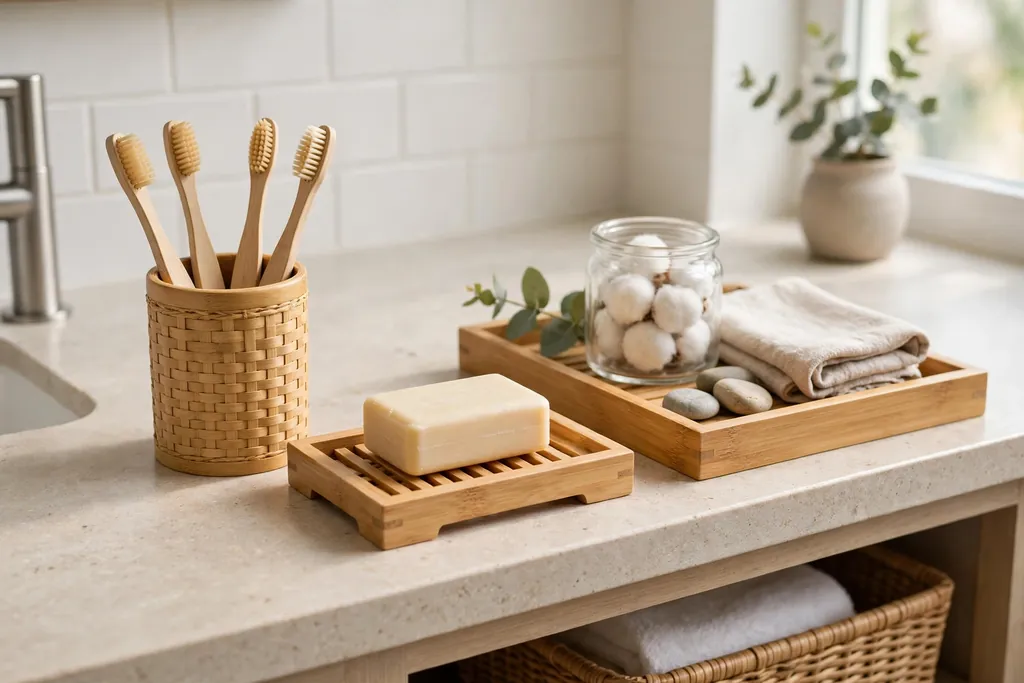
Bamboo accessories, such as a toothbrush holder, a soap dish, and a small tray, warm a counter full of tile and porcelain in one material family. Bamboo copes well with humidity when it is sealed and dried between uses, and its pale tan tone suits cream walls, terracotta pots, and wood shelves. Keep the set to three pieces at most so the counter keeps room for daily items.
Wipe bamboo dry after splashes, and lift the tray to clean under it each week, since standing water can mark wood over time. Pair the bamboo set with one stone or clay piece, such as a stoneware soap dish, so the counter does not read as all one material. If bamboo feels too light beside dark wood, use a walnut tray instead for a deeper version of the same warm note.
18. A Dried Eucalyptus Bundle in the Shower
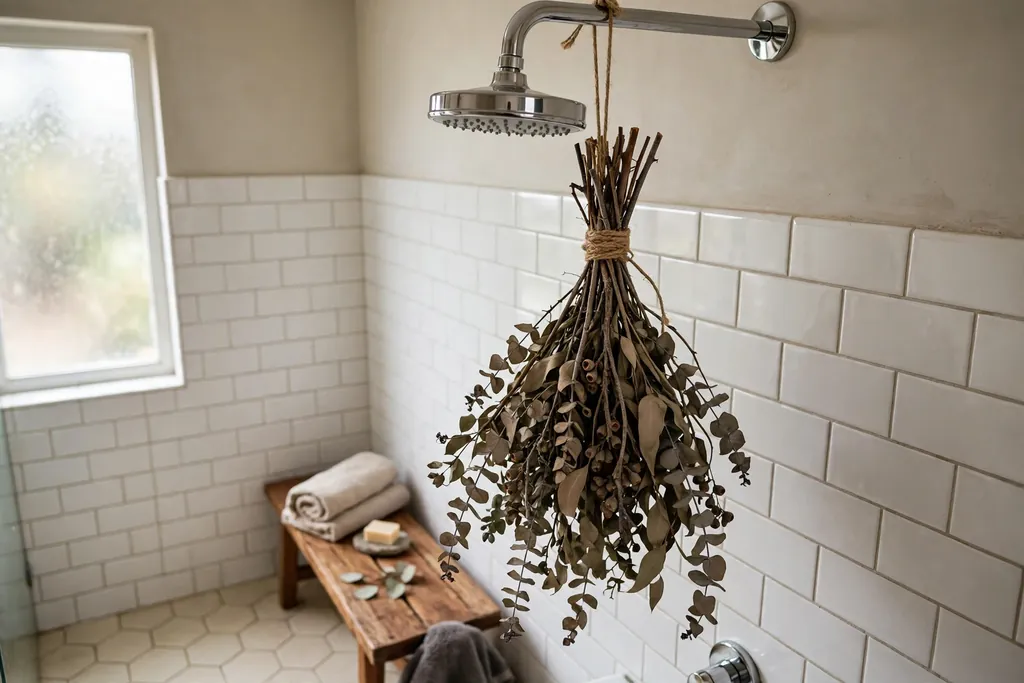
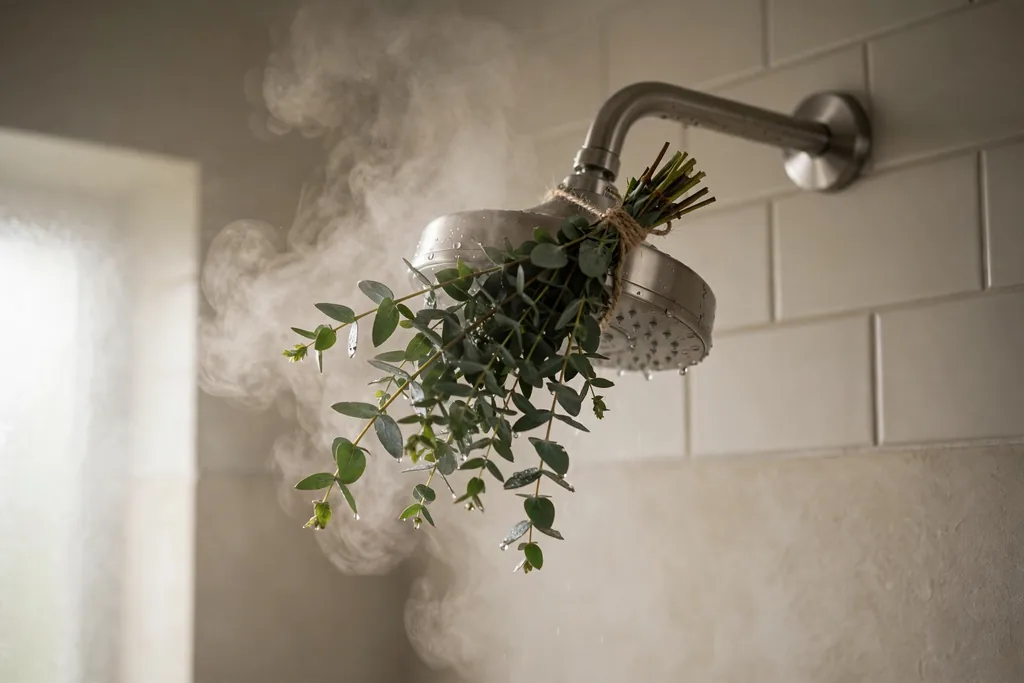
A small bundle of dried eucalyptus tied with cotton string and hung from the showerhead gives steam a gentle scent each morning and a soft green note in the shower. The bundle also adds a natural shape to a tiled shower without taking shelf space. Tie the stems with string, keep the bundle small, and hang it where it catches steam but stays out of the direct water stream so it lasts longer.
Replace the bundle every few weeks, or when the scent fades, and dry the string between showers so it does not go musty. If anyone in the household is sensitive to strong scents, use a smaller bundle or skip it and keep a potted plant on the sill instead. Keep the bundle clear of candles and plug-in lights, and remove it promptly if stems start to shed heavily.
19. A Stone Tray for the Vanity
A stone tray on the vanity groups soap, a candle, and a small dish into one tidy, earthy base that is easy to lift and wipe under. Choose a tray in travertine, slate, or a pale stone look, sized to fit the counter without crowding the sink, and keep the items on it to three at most. The stone weight and texture ground a counter that otherwise holds only light plastic bottles.
Seal the stone as the supplier advises, since stone can stain from toothpaste, soap dyes, and hard water, and wipe the tray dry between uses. Keep the tray mostly clear, with only a soap dish and one small item, so the sink stays the focus. A stone tray also suits a stool or a shelf, where it can hold a candle and a small plant as a calm corner group.
20. A Warm Wood Open Shelf Above the Toilet
A warm wood open shelf above the toilet uses the one free wall in a small bathroom for towels, spare toilet paper, and a plant without taking floor space. Mount one or two shelves high enough that no one bumps their head, and keep the lowest shelf for items you reach for daily. Wood shelves warm a tiled wall, and a rolled terracotta towel on the shelf repeats the towel palette at eye level.
Keep each shelf to one group of items, such as towels on one shelf and a basket on the other, so the shelves look calm instead of crowded. Use closed baskets on one shelf for anything you would rather not see, such as cleaning supplies. For more renter friendly wall and storage swaps that suit a small room, see these apartment bathroom ideas.
21. An Earthy Shower Curtain in Clay Tones
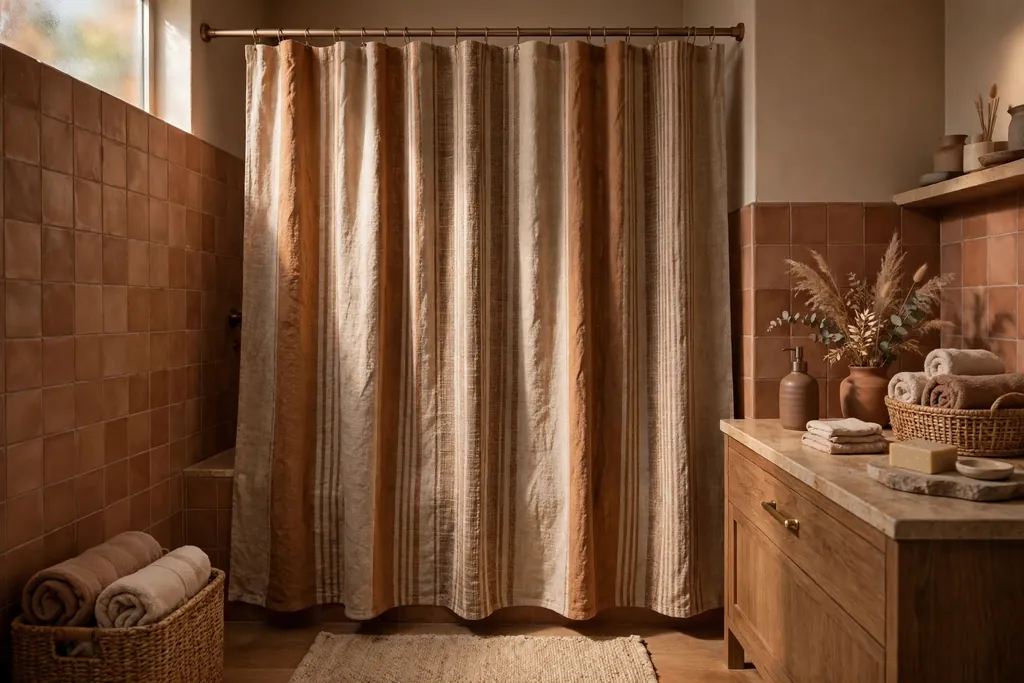
An earthy shower curtain in clay, sand, and soft brown tones sets the color palette for towels and rugs in one move, since the curtain is the largest single surface in a small bathroom. Choose a curtain with a simple pattern, such as a stripe, a small botanical print, or a plain clay tone, so it reads well in a tight space and does not fight with tile or towels.
Keep the rest of the room quiet when the curtain has pattern: plain towels, a simple mat, and one matching accessory are enough. A fabric outer curtain with a separate washable liner lasts longer and hangs better than a thin plastic curtain on its own. Hang the curtain high and let it fall to just above the floor or tub edge, so the room feels taller and the clay tone shows fully.
22. A Cedar and Herb Scent Tray for Autumn
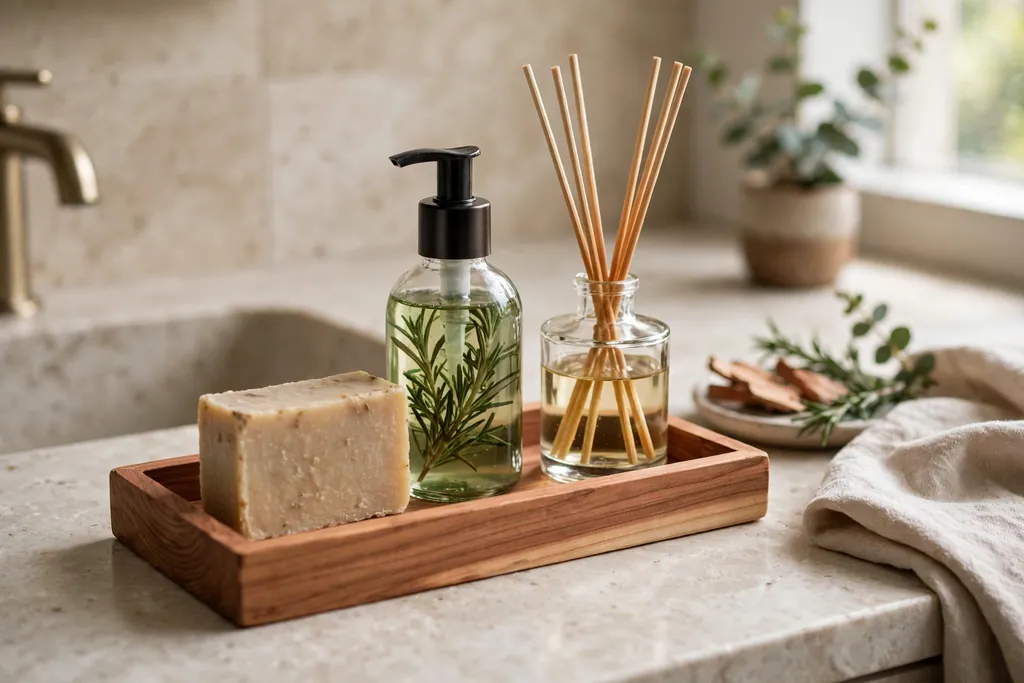
A cedar and herb scent tray gives a bathroom a warm seasonal scent without a large diffuser or a new set of bottles. Set a small wood tray on the vanity with a cedar soap, a rosemary hand wash, and one room diffuser in a plain glass bottle, and keep the station to three items at most so the tray never fills with half empty containers. Cedar and herb scents suit an earthy bathroom better than heavy floral scents, and a small station keeps bottles grouped rather than scattered across the counter.
Refill from larger bottles stored elsewhere, and change the scent for the season by swapping one item only, while keeping the same tray and bottles so the change costs little. Keep the tray clear of the sink edge, where it could be knocked during handwashing, and wipe the tray dry after splashes. A small tray like this also makes a calm gift group, since the soap, wash, and tray already read as one set.
Conclusion
An earthy bathroom does not need a large budget or a new set of fixtures. It needs one warm material repeated in a few places, such as terracotta towels, a wood tray, and a stone tray, plus a few small details that repeat that material across the room. Keep the palette calm, keep counters mostly clear, and leave room for daily routines. Start with the idea that fits your bathroom today, whether that is a towel swap for a small room or a wood shelf for a plain wall, and build from there next season.
Save this list on Pinterest before your next bathroom refresh, and work through it one area at a time: towels first, then the counter, then light and scent.
FAQs
How do I add earthy accents to a bathroom without painting?
Start with towels, trays, baskets, and plants, since those swaps need no paint and can move with you. A terracotta towel stack, a wood bath tray, a seagrass basket, and a clay vase give a room a warm palette in one afternoon, and you can add a tile strip or a wood mirror frame later if you want a larger change.
What colors count as earthy for a bathroom?
Earthy colors are the muted tones of clay, stone, wood, and plants: terracotta, warm brown, sand, oat, cream, olive, sage, and soft grey. Keep the palette to three tones at most, such as cream walls, terracotta towels, and wood accents, so the room reads as calm rather than busy.
How do I keep wood and baskets safe in a damp bathroom?
Choose sealed or water tolerant wood, such as teak or bamboo, wipe splashes promptly, and let wood and baskets dry fully between showers. Keep baskets and untreated wood on shelves or stools rather than on wet floors, and keep them away from direct shower spray, since constant damp can warp wood and soften fiber over time.
Can earthy accents work in a small bathroom?
Yes. In a small bathroom, use one warm material in a few small places, such as an olive hand towel, a stone tray, and a wood shelf above the toilet, rather than large furniture. Keep counters mostly clear, use wall space for storage, and repeat one accent color in two or three places so the small room reads as planned.
How do I make an earthy bathroom feel seasonal for autumn?
Swap towels to terracotta or olive, change the scent tray to cedar or rosemary, and add a dried grass vase or a candle cluster in clay holders. Keep hard finishes calm and pale, so seasonal changes stay cheap and easy: towels, scent, and small decor swap in minutes, while tile and fixtures stay the same all year.
How do I keep an earthy bathroom from looking cluttered?
Group small items on trays and in baskets, limit each surface to three items at most, and repeat one material and one accent color. Clear counters, one plant, and one wall accent usually look calmer than a shelf full of small decor, and a monthly clear out of baskets keeps empty bottles and unused items from building up.
An eclectic bathroom does not follow one style, and that is the point. It pairs a vintage tub with a plain modern vanity, patterned tile with quiet white walls, and a collected shelf with a simple mirror. The mix works when each piece has a clear job and one or two colors repeat through the room, so the result feels gathered over time rather than thrown together. These 29 eclectic bathroom decor ideas cover floors, walls, tile, storage, light, and small details, so you can pick the pieces that suit your room, your budget, and the fixtures you already own. Start with one bold move, then add smaller layers only where the room still feels plain.
Key Takeaways
Pick one bold move per room, such as patterned floor tile or bold wallpaper, and keep the surfaces around it calmer so the mix reads as planned.
Repeat one color and one metal finish in three or four places to tie vintage, modern, and natural pieces together.
Mix no more than three wood tones and two metal finishes, and let white, cream, or pale tile act as the quiet base between them.
Use washable, moisture tolerant materials near the tub and shower, and keep paper art, books, and dry textiles away from direct steam and splashes.
Layer storage that is open and closed: open shelves for pretty, everyday items and baskets or cabinets for bottles and cleaning supplies.
Start with changes you can reverse, such as a shower curtain, rugs, art, and towels, before committing to tile, paint, or a new vanity.
1. A Bold Patterned Tile Floor
A bold patterned floor tile, such as encaustic style cement tile or a Moroccan inspired print, gives an eclectic bathroom its anchor in one move. The pattern works best when the walls stay plain, in white, cream, or pale grey, so the floor can carry the color. Choose a tile with two or three colors you can repeat elsewhere, in towels, art, or a painted vanity, and keep the grout in a mid tone so the pattern stays clear without shouting.
This suits a small bathroom well, because the floor is one continuous surface and a strong pattern makes the room feel finished rather than plain. Seal cement style tiles as the maker advises, and use a non slip finish in wet areas. If a full floor feels like a big step, use the same tile in a smaller area, such as a shower floor or a strip in front of the vanity, and keep the rest of the floor in a plain matching tone.
2. Mixed Metals, Used on Purpose
Mixed metals suit an eclectic bathroom when the mix looks chosen rather than accidental. Pair warm brass taps with matte black cabinet pulls, or chrome shower fittings with a brass framed mirror, and repeat each finish at least twice so neither looks like a mistake. Two finishes are usually enough, and a third works only when it appears in small, repeated details such as hooks or a soap dish.
This idea suits a bathroom where you do not want to replace every fitting at once. Start with the pieces you touch daily, such as taps and towel rails, and keep the shower fittings in the finish you already have if replacing them would mean plumbing work. Clean mixed metals with a soft cloth and a mild cleaner, since harsh cleaners can dull brass and black finishes at different rates.
3. A Vintage Clawfoot Tub Beside a Modern Vanity
A vintage clawfoot tub beside a simple modern vanity is the classic eclectic pairing: one old, curved shape against one clean, straight shape. The tub brings character and a focal point, while a plain vanity in white, pale wood, or a soft color keeps the room from feeling like a period set. Keep the floor and walls quiet, in pale tile and white paint, so the tub stays the star.
Check the practical points before you commit. A clawfoot tub is heavy when full, so the floor must support it, and a freestanding filler tap needs plumbing in the floor or the wall behind it. If a full tub swap is too much, the same contrast works on a smaller scale: a vintage style stool or mirror beside a modern vanity gives a similar old and new balance for far less work.
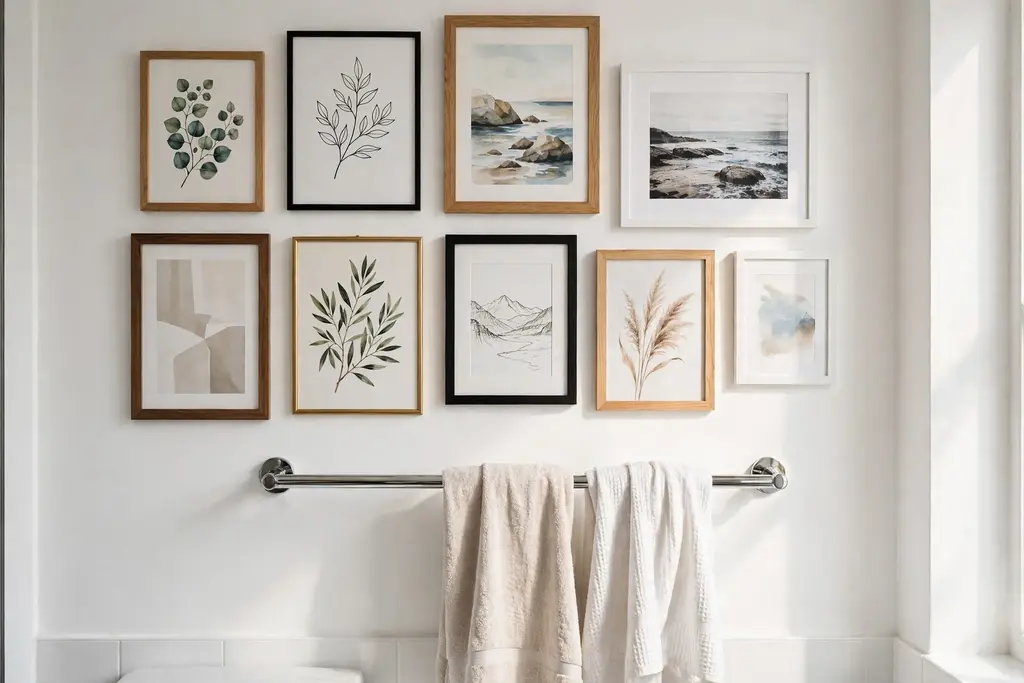
4. A Gallery Wall of Mismatched Frames
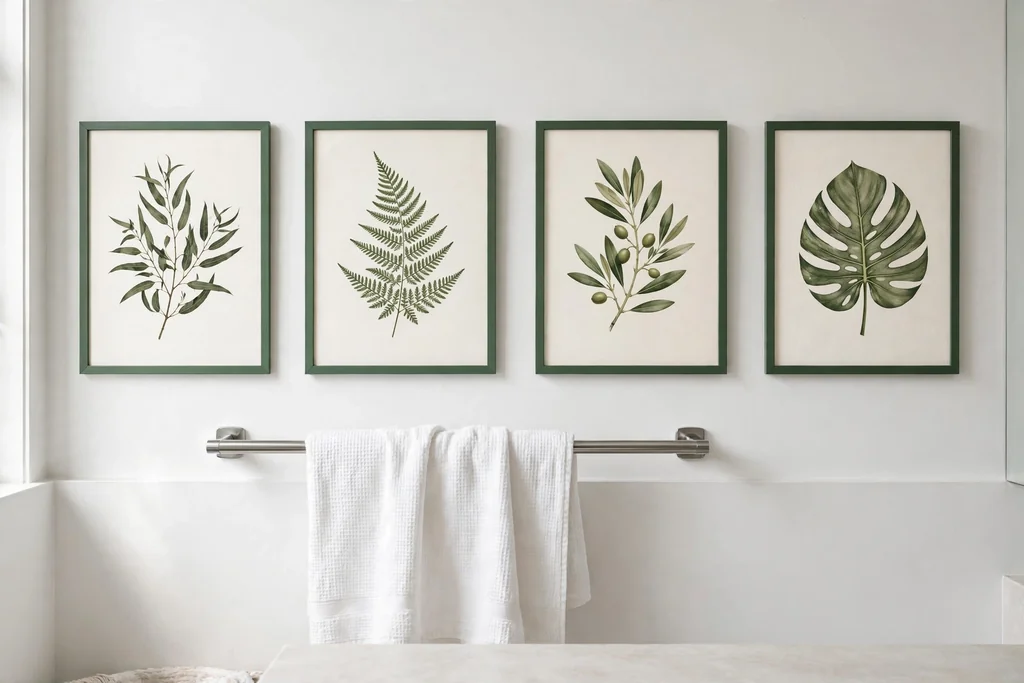
A gallery wall of mismatched frames suits an eclectic bathroom because the frames themselves become part of the mix. Combine wood, black metal, brass, and painted frames in different sizes, and keep the art inside them linked by one theme, such as botanical prints, line drawings, or travel photos, so the wall reads as one arrangement. Hang the group above a towel rail or beside the mirror, where it does not sit in direct shower steam.
Use frames with sealed backs or acrylic covers, and avoid unprotected paper directly beside the shower, where steam can cockle it over time. Lay the arrangement on the floor first, spacing the frames a few inches apart, then hang from the center outward. In a rented room, adhesive picture strips hold light frames well on tile and painted walls and remove cleanly when you move out.
5. Layered Rugs Over a Plain Bath Mat
Layering a vintage style rug over a plain bath mat adds pattern, warmth, and color to a bathroom floor without changing any fixtures. Use a flat weave rug, such as a small kilim style rug, over a thin, washable bath mat that grips the floor, and keep the rug clear of the shower splash zone so it stays dry. The plain mat underneath gives grip and absorbs water, while the rug on top gives the pattern.
This suits a bathroom with plain tile, where the floor needs interest but a full tile change is not planned. Choose a rug you can wash or air out easily, and shake it out weekly so dust and damp do not build up underneath. If the rug slides, add a non slip rug pad cut to size, and keep a second plain mat in rotation so the floor is never bare on wash day.
6. Open Shelves Filled With Collected Pieces
Open shelves filled with collected pieces, such as plants, glass jars, woven baskets, and folded towels, give an eclectic bathroom a lived in feel that a closed cabinet cannot match. Use wood shelves in a warm tone, keep the heaviest items low, and leave some empty space on each shelf so the display reads as calm rather than crowded. Group items in odd numbers, and repeat one color or material across the shelves to tie the mix together.
This works best on a wall that stays dry, such as above the toilet or beside the vanity, rather than inside the shower splash zone. For more ways to make open shelves look calm instead of crowded, see these apartment bathroom ideas. Use closed baskets on one shelf for anything you would rather not see, such as cleaning supplies, and empty each basket once a month, returning only what you actually used.
7. Bold Botanical Wallpaper on One Wall
Bold botanical wallpaper on one wall, behind the vanity or on the wall facing the door, gives an eclectic bathroom a clear focal point in a single weekend project. Choose a large scale leaf or floral print with a color you can repeat in towels or art, and keep the other walls in a plain color pulled from the paper, such as cream or pale green. A large print suits a small room better than a tiny busy pattern, which can feel fussy at close range.
Keep wallpaper off the wall directly inside the shower, where constant steam can loosen the edges, and use a moisture resistant paper or a peel and stick version if your bathroom stays steamy. In a rented room, peel and stick paper removes cleanly and lets you test a bold print without paste. Order one extra roll for matching the pattern at the seams, and smooth each strip from the center outward to push out air.
8. A Repurposed Dresser as a Vanity
A repurposed wooden dresser used as a vanity brings instant eclectic character, because no two dressers look alike. Choose a solid wood dresser at a comfortable sink height, seal the top against water, and fit a vessel sink on top with taps mounted on the wall or on a small backsplash. Keep the drawers you can still use, and cut or shorten only the drawer that sits behind the plumbing, leaving the front in place so the dresser still looks complete.
This suits a bathroom where a standard vanity feels too plain, and it gives storage that a pedestal sink cannot match. Check the dresser depth against the room, since a deep dresser can block the walkway in a narrow bathroom, and keep the plumbing accessible behind a removable panel. Seal the wood top with a water resistant finish and wipe up splashes promptly, since standing water will mark even sealed wood over time.
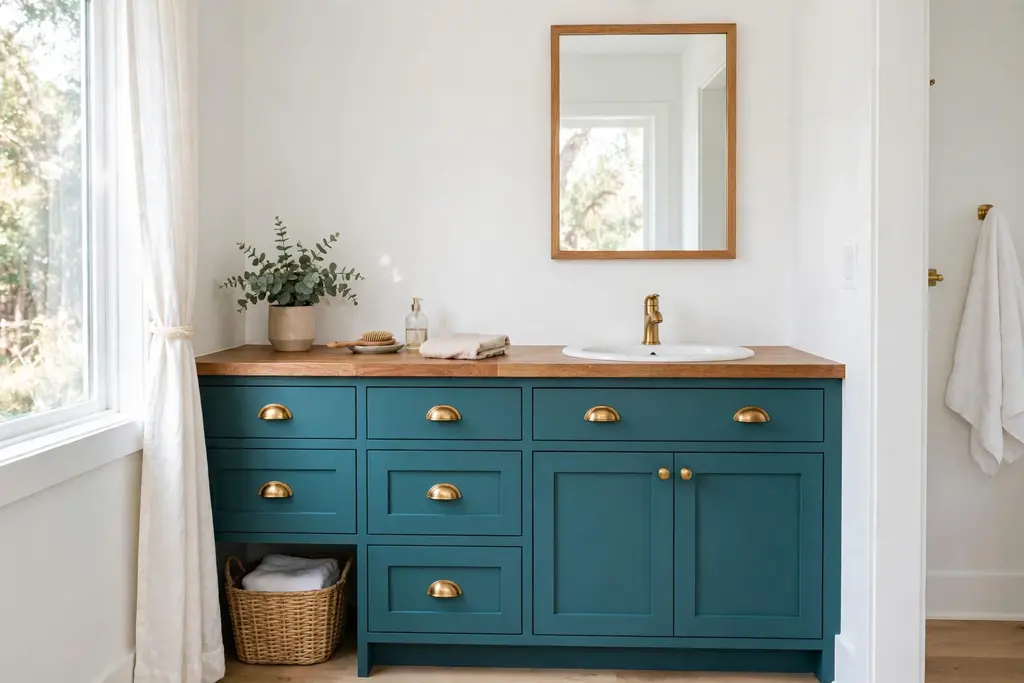
9. A Colored Vanity With a Wood Top
A colored vanity with a wood top, such as teal paint with a warm oak top, adds one strong color note without repainting the whole room. The wood top softens the painted base and links the vanity to other wood details, such as a stool, a shelf, or a framed mirror. Keep the walls pale and the countertop accessories simple, in white, brass, or black, so the vanity color stays the main note.
Remove the doors and hardware, clean off soap residue, sand lightly, and use a primer made for slick cabinet surfaces before two thin coats of a moisture resistant paint. If painting feels like a big step, test the color on one drawer front first, or buy a colored vanity secondhand and refinish only the top. Pair the vanity color once more in the room, in towels or a small piece of art, so it looks planned rather than isolated.
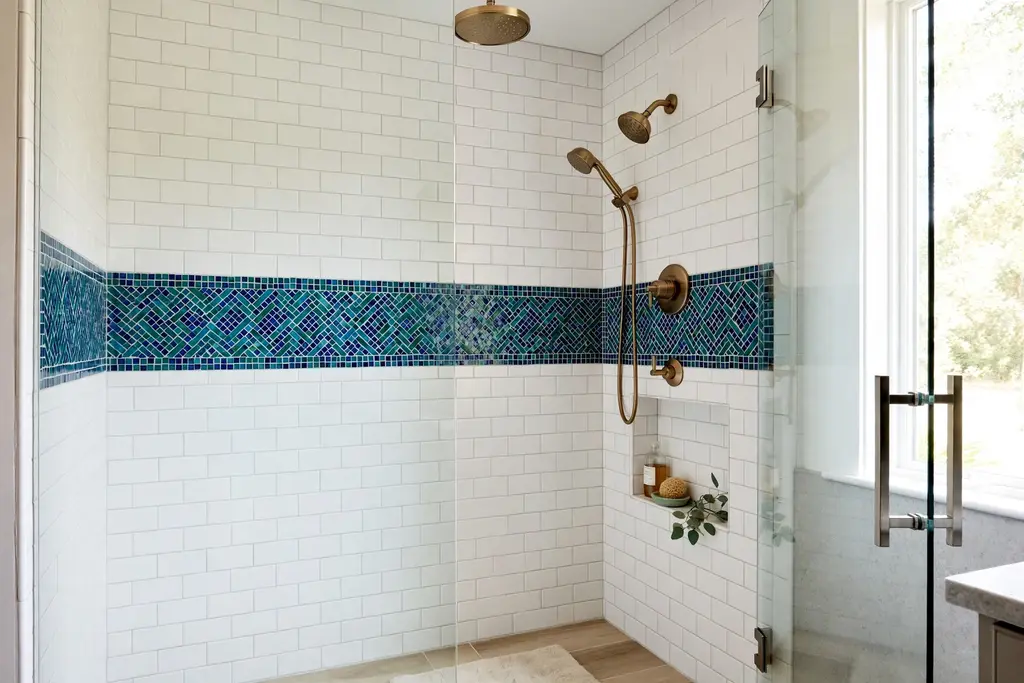
10. Plain Subway Tile With a Bold Mosaic Strip
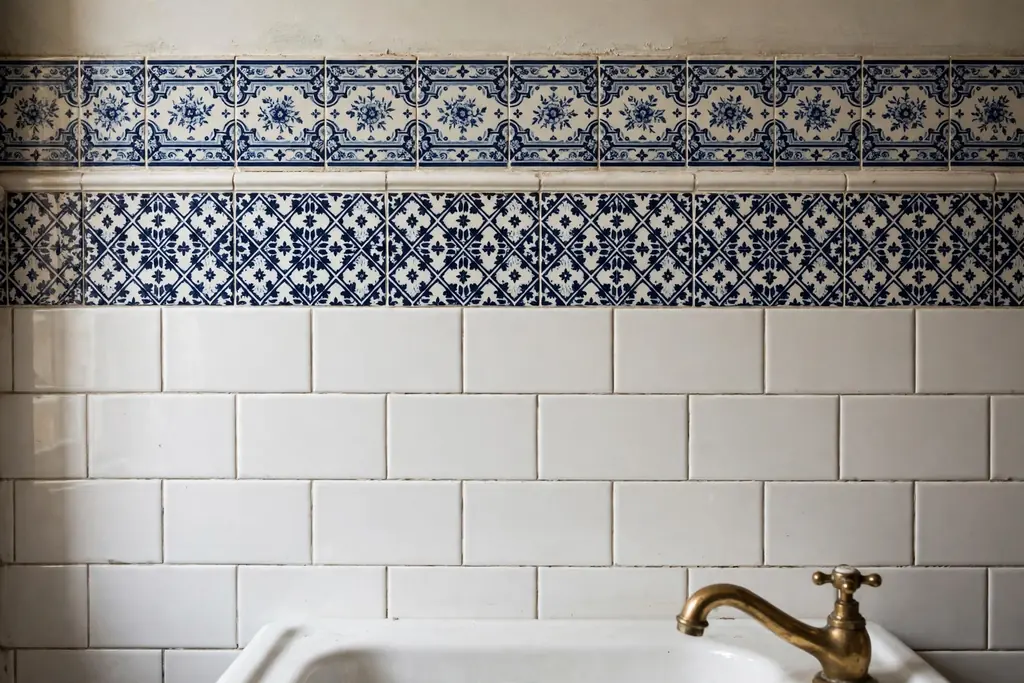
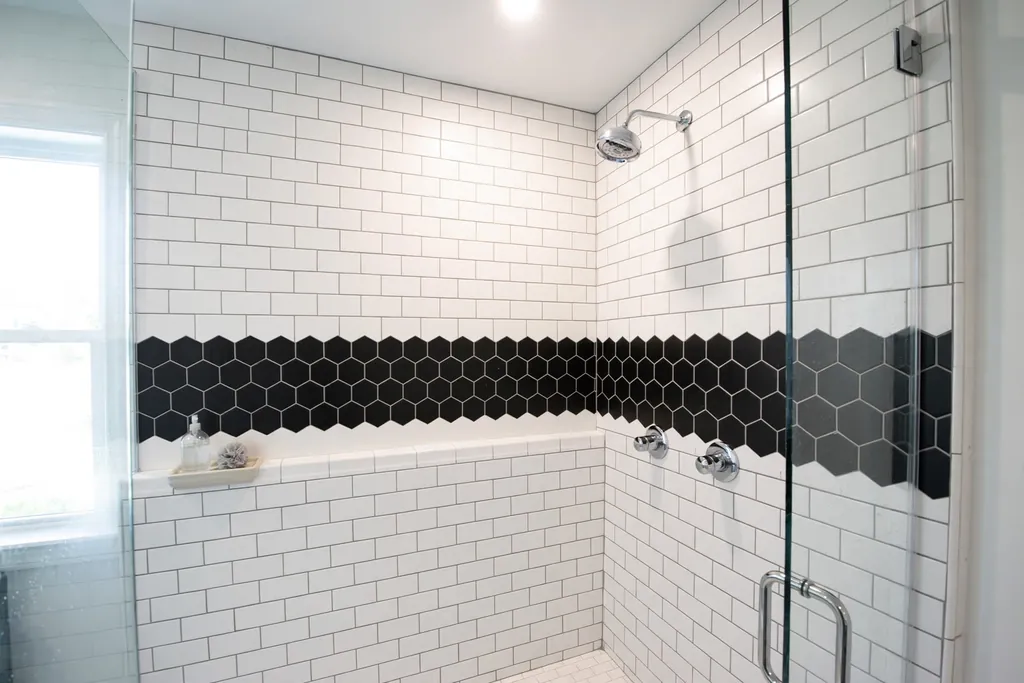
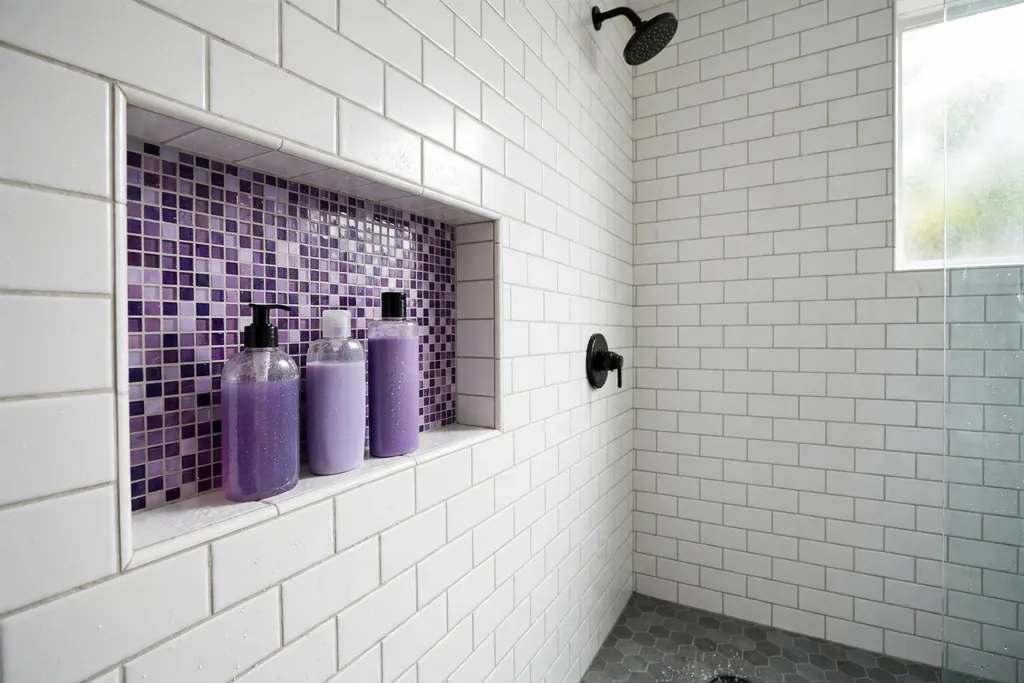
Plain subway tile with a bold mosaic accent strip gives a shower or backsplash an eclectic twist without committing the whole wall to pattern. Run the mosaic strip horizontally at eye level, vertically beside the shower controls, or as a border around a niche, and keep the rest of the tile in plain white, cream, or pale grey. The strip works like a belt of color: it draws the eye, then lets the plain tile rest around it.
Choose a mosaic with colors that appear elsewhere in the room, such as a patterned floor tile or a colored vanity, so the strip ties the room together. Seal natural stone mosaic as the maker advises, and use a grout color close to the plain tile so the strip stands out by color, not by grout lines. In a small shower, one strip is usually enough, since two or three strips can make the walls feel busy at close range.
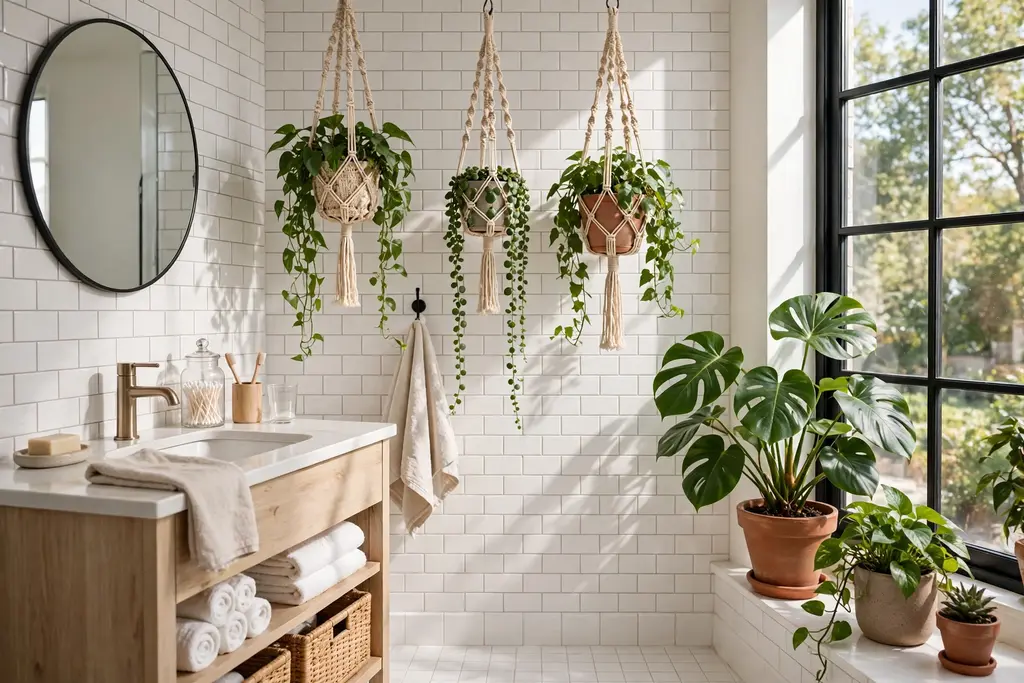
11. Hanging and Potted Plants Together
Hanging and potted plants together bring soft, living texture to a bathroom full of hard tile and porcelain. Combine one trailing plant in a hanging planter, such as pothos, with one or two potted plants on a shelf or stool, such as a fern or a philodendron, and keep the pots in mixed materials, such as terracotta, ceramic, and woven baskets. Bathrooms suit plants that enjoy humidity and indirect light, so choose varieties that cope with steamy air and modest daylight.
Use pots with drainage holes and saucers, and check the soil before watering, since bathroom air already adds moisture. Keep plants clear of direct shower spray, and hang trailing plants high enough that vines do not brush the tap or the mirror. If your bathroom has no window, rotate the plants to a brighter room for a few days each week, or choose a low light tolerant variety and keep the collection small, since one healthy plant looks better than a crowded group of struggling ones.
12. Woven Baskets for Towels and Toiletries
Woven baskets soften hard tile and porcelain while hiding the visual noise of bottles and tubes, which makes them a natural fit for an eclectic bathroom. Assign one basket per job, such as hair care, skin care, or spare towels, and mix basket materials, such as seagrass, cotton rope, and rattan, in a similar natural tone so the group reads as a set. Set baskets on a shelf, a stool, or a bench rather than on a wet floor, where they can trap damp.
Seagrass and cotton rope baskets cope well with bathroom humidity if they are kept off wet floors and aired out regularly. Label the base of each basket if the baskets look alike, and empty each one once a month, returning only what you actually used, since bathroom baskets quietly collect empty bottles. A large basket beside the tub holds rolled towels and doubles as a laundry hamper, which suits a small bathroom where floor space is tight.
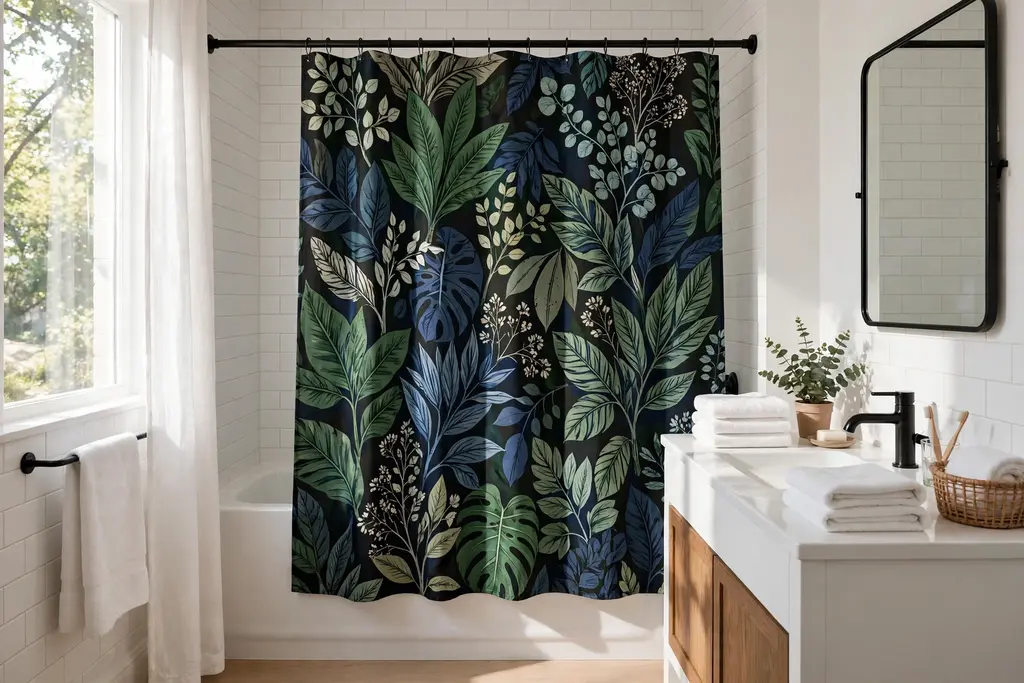
13. A Shower Curtain Treated as Art
In an eclectic bathroom the shower curtain is the largest single surface, so treat it like a piece of art rather than an afterthought. Choose a large scale print, such as a botanical scene, a bold stripe, or a vintage style landscape, and let it set the color palette for towels and rugs in one move. Keep the rest of the room quiet when the curtain is loud: plain towels, a simple mat, and one matching accessory are enough.
A fabric outer curtain with a separate washable liner lasts longer and hangs better than a thin plastic curtain on its own, and it gives the print a softer drape. Hang the curtain a little higher than usual and use a longer liner so water still falls inside the tub. If you tire of the print, a curtain is one of the easiest eclectic pieces to swap, which makes it a good place to test a bold pattern before committing to wallpaper or tile.
14. An Antique Mirror With Modern Sconces
An antique framed mirror with modern wall sconces pairs old and new in the smallest possible space, right above the sink. Choose a mirror with an aged wood or gilt frame and a simple shape, such as an arch or an oval, and flank it with plain modern sconces in matte black or brushed brass at eye level. The modern light keeps the antique frame from feeling like a museum piece, while the frame stops the modern sconces from feeling cold.
Hang the mirror centered over the sink at eye level, and keep its width a little narrower than the vanity so the edges do not crowd the sconces. Keep all plug in or wired lights away from direct water spray, and choose warm white bulbs so the light flatters faces rather than casting harsh shadows. If the antique frame is fragile, hang it on a dry wall beside the mirror rather than directly above the sink, where splashes can reach it.
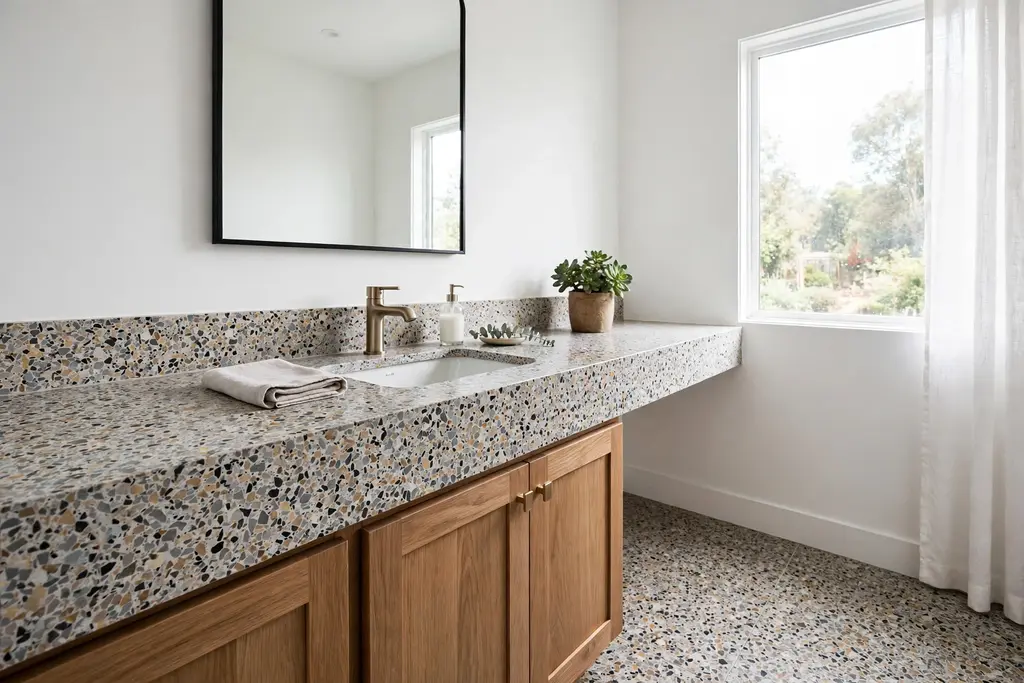
15. Terrazzo on Counters and Floors
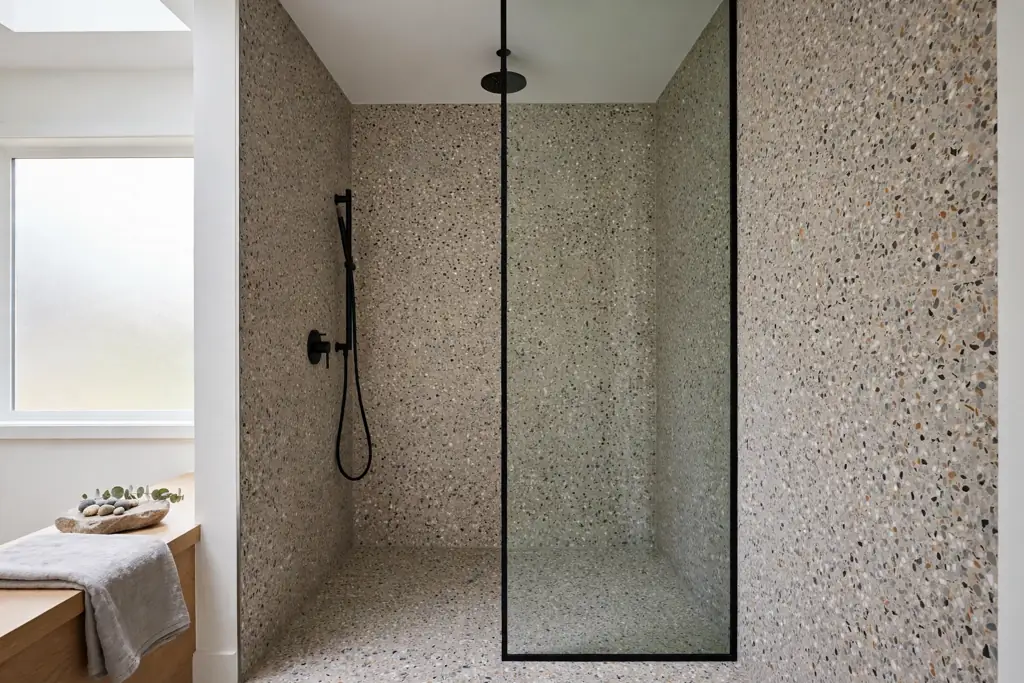
Terrazzo, with its speckled chips of stone set in a plain base, suits an eclectic bathroom because it already mixes colors and materials in one surface. Use it on a vanity countertop, a shower floor, or a small backsplash, and keep the walls and cabinets plain, in white, cream, or pale wood, so the speckle can show. A terrazzo with a pale base and a few colored chips links easily to towels, art, and tile elsewhere in the room.
Seal terrazzo as the maker advises, and clean it with a mild, pH neutral cleaner, since harsh cleaners can dull the surface over time. A small terrazzo tray or soap dish gives the same speckled note for very little cost if a full countertop is not planned, and it pairs well with plain white ceramics. In a small bathroom, use terrazzo in one place only, such as the countertop, so the speckle does not compete with a patterned floor tile.
16. Global Textiles: Turkish Towels and a Kilim Rug
Global textiles, such as Turkish towels and a small kilim style rug, add pattern and softness to an eclectic bathroom without any building work. Turkish towels are thin, quick drying, and easy to layer in mixed colors, while a flat weave kilim rug beside the tub or vanity brings a woven pattern that plain tile cannot match. Keep the textile colors linked by one shared tone, such as rust, indigo, or sage, so the mix feels collected rather than random.
Hang Turkish towels on a ladder rail or varied hooks where their fringed ends can show, and fold a second set on an open shelf for guests. Choose a rug you can wash or air out easily, and keep it clear of the shower splash zone so it stays dry between uses. If a full kilim rug feels like a big step, start with one patterned hand towel and a small woven mat, then add more textiles only if the room still feels plain.
17. Color Blocked Walls in Two Tones
Color blocked walls, with one color on the lower half and another on the upper half, give an eclectic bathroom structure that a single bold color cannot match. Split the walls at chair rail height or at a clean horizontal line: a deeper tone below, such as sage, teal, or dusty blue, and a pale tone above, such as warm white or cream, with white trim between them. The split gives depth at floor level and lightness at eye level, which suits a bathroom where the lower walls take scuffs.
Keep furniture and art above the split simple, and choose a pale rug so the deeper color does not darken the floor area. For help choosing pairs that sit well together, see these wall color combinations. Use a washable finish on the lower section, since that is the part hands, bags, and splashes reach most, and test both colors in morning light and evening lamplight before painting, since bathroom light changes color a lot through the day.
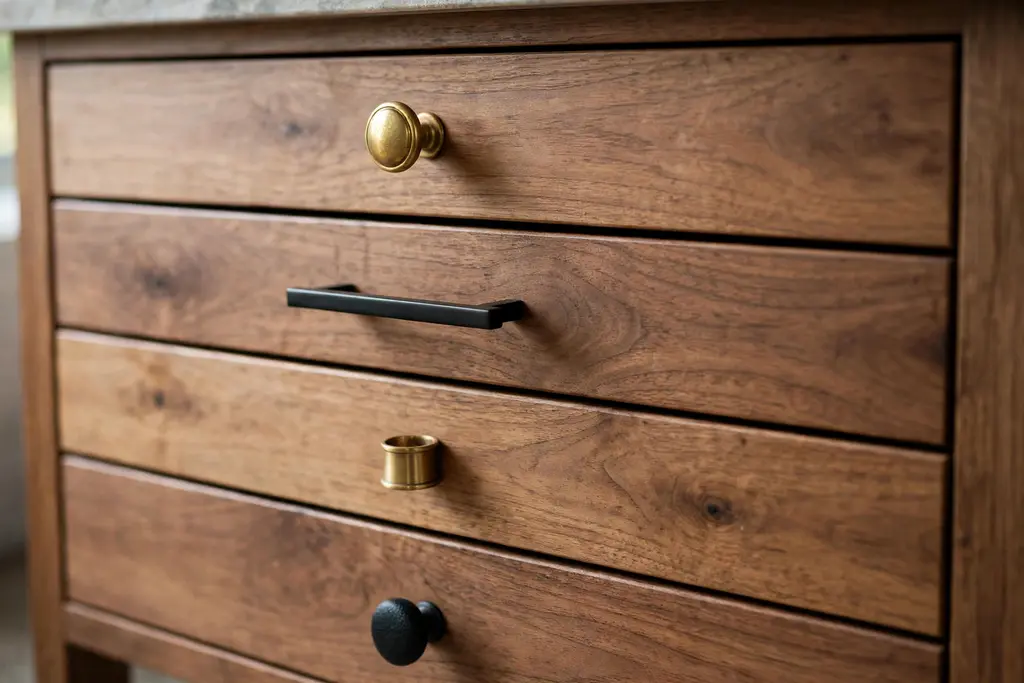
18. Varied Hardware in Two Finishes
Varied hardware, such as different knobs and pulls in brass and black, adds a collected, eclectic detail to a plain vanity or cabinet. Use one finish for the main drawers and a second finish for a smaller set of doors, or mix knob shapes, such as round, bar, and cup pulls, in the same two finishes, so the variation looks deliberate. Keep the finishes to two, and repeat each one at least twice, so no single pull looks like a leftover.
This suits a bathroom where a full vanity change is not planned, since swapping hardware takes an hour and a screwdriver. Save every original screw and pull in a bag taped inside the vanity, so you can restore the original look if you move out or change your mind. Check that new pulls fit the existing holes, or fill and drill carefully, and test the grip with wet hands, since bathroom hardware is used with damp fingers daily.
19. One Large Piece of Art Above the Tub
One large piece of art above the tub gives an eclectic bathroom a gallery feel in a single move, and it suits a wall that would otherwise stay blank. Choose a large abstract painting, a framed textile, or a bold print in colors that repeat elsewhere in the room, and hang it centered above the tub at a height where it clears the showerhead and any shelf. A single large piece reads as calmer than many small frames in the same spot, which matters in a room full of pattern.
Use a frame with a sealed back or an acrylic cover, and avoid unprotected paper directly beside the shower, where steam can cockle it over time. If the wall above the tub gets regular splashes, hang the art on the facing wall instead, or choose a framed textile or a sealed print that copes better with damp air. Keep the tub surround plain, in white or pale tile, so the art stays the focus rather than competing with patterned tile.
20. A Ladder Rail With Varied Wall Hooks
A ladder towel rail paired with varied wall hooks gives an eclectic bathroom flexible hanging space that a single towel bar cannot match. Lean a wooden ladder against a spare wall beside the door or at the end of the tub, and hang towels over its rungs, then add two or three wall hooks in different shapes, such as brass, wood, and black metal, for robes, wash bags, and hand towels. The ladder needs no drilling, while the hooks take the items you reach for daily.
Put heavier towels on the lower rungs and lighter items higher up, and add small adhesive pads under the ladder feet so it does not slide on tile. Check that the top of the ladder cannot tip forward if a child or pet pulls on it, and anchor it if your household needs that extra safety. Keep the ladder clear of the shower splash zone, and air towels out between uses so the wood stays dry.
21. A Vintage Stool Beside the Tub
A vintage wooden stool beside the tub acts as a side table, a towel holder, and a plant stand in one small piece, which makes it ideal for an eclectic bathroom. Choose a stool with a worn wood finish, a woven seat, or a painted base, and use it to hold a folded towel, a candle kept safely away from the water, or a small potted plant. The stool adds an old, handmade note beside the clean lines of a modern tub or vanity.
Keep the stool clear of direct shower spray, and wipe it dry after baths so the wood does not stay damp. A stool with a lower shelf holds a second towel or a basket of bath salts, which suits a small bathroom where a full side table would block the walkway. If the stool wobbles on tile, add felt pads to the feet, and test it with a full towel and a plant before trusting it with anything breakable.
22. A Painted or Patterned Ceiling
A painted or patterned ceiling gives an eclectic bathroom a surprise detail that guests notice without it crowding the walls. Paint the ceiling in a soft color pulled from the room, such as pale sage, dusty blue, or warm terracotta, or use a simple stencil pattern in one color over white, and keep the walls pale so the ceiling can lead. This works best in a bathroom with a plain floor and plain walls, where the ceiling is the one bold surface.
Use a moisture resistant ceiling paint, and check the color in daylight and lamplight, since ceilings sit in shadow for much of the day. Keep the trim and the top edge of the walls in clean white, so the ceiling color reads as a deliberate panel rather than a spill. If a full ceiling color feels like a big step, paint a small ceiling panel above the tub or vanity first, and extend it later only if the room still feels plain.
23. Mixed Wood Tones, Kept to Three
Mixed wood tones suit an eclectic bathroom when the mix is limited to three tones or fewer, such as pale oak, mid walnut, and dark teak. Use one tone for the vanity, a second for a stool or shelf, and a third for a small detail, such as a soap dish, a tray, or a framed mirror, and keep the tile and walls pale so the woods can show. The limit matters: four or five wood tones in a small room can look scattered, while three read as collected.
Teak and other water tolerant woods cope better with wet conditions than most woods, but still benefit from being left to drain and dry between showers. Seal wood tops with a water resistant finish, and wipe up splashes promptly. If your existing vanity is one wood tone, add the second and third tones in small, movable pieces, such as a stool and a tray, so you can test the mix before committing to a new shelf or vanity.
24. A Display of Collected Ceramics
A display of collected ceramics, such as handmade pots, vases, and soap dishes in mixed glazes, gives an eclectic bathroom a personal, gathered feel. Group three to five pieces on one open shelf or on the vanity, in varied heights and shapes, and link them by one shared tone, such as cream, sage, or speckled stone, so the group reads as a collection. Use the pieces daily where you can: a vase for a single stem, a dish for soap, a pot for a small plant.
Keep ceramics clear of the tub edge, where they can be knocked into the water, and use a non slip mat under a display on a smooth vanity top. Handmade ceramics vary in glaze and finish, so clean them with a soft cloth and a mild cleaner, and avoid harsh scrubbing that can dull a matte glaze. If shelf space is tight, one striking vase beside the mirror gives the same collected note as a full shelf, and it leaves room for everyday items.
25. A Painted Clawfoot Tub Exterior
A clawfoot tub with a painted exterior in a deep color, such as sage, navy, or charcoal, turns the tub itself into the room’s bold piece. Keep the inside of the tub white and the walls pale, so the painted outside stands out cleanly, and repeat the tub color once more in the room, in towels, art, or a painted stool, so it looks planned. The feet can stay in their original metal finish, or match the paint in a second finish, such as brass or black.
Use a paint made for metal and moisture, and prepare the surface well, since a tub exterior faces steam, splashes, and cleaning. If painting a tub feels like a big step, test the color on a small area first, or use a removable tub cover in the same color to test the effect. A painted tub suits a bathroom where the tub is freestanding and visible from the door, since a tub pushed against a wall hides the painted side.
26. Layered Lighting: Pendant, Sconces, and Candles
Layered lighting, with a pendant over the tub or vanity, sconces beside the mirror, and candles for baths, gives an eclectic bathroom warmth that a single overhead light cannot match. Use the pendant as the room’s decorative piece, in rattan, glass, or brass, and keep the sconces plain and at eye level for even light on faces. Candles, kept safely away from towels, curtains, and water, add a low, warm glow for evening baths.
Put the main light on a dimmer where the wiring allows, so the room can shift from bright morning light to soft evening light. Renters who cannot change wiring can still layer light with a plug in wall sconce, a battery operated picture light above the mirror, or a small rechargeable lamp on a shelf. Keep all plug in lights away from direct water spray, and choose warm white bulbs so the room feels calm rather than clinical.
27. Glass Apothecary Jars for Everyday Items
Glass apothecary jars for everyday items, such as cotton balls, bath salts, and hair ties, turn plain supplies into a collected display on the vanity or an open shelf. Use jars in varied heights with simple lids, in glass, wood, or brass, and keep the contents visible and tidy, since the jars themselves are the decoration. Label the lids or bases only if the jars look alike, and keep one jar for each item rather than mixing small supplies together.
This suits a bathroom where a medicine cabinet feels too hidden and a drawer feels too messy, since jars keep daily items in sight and within reach. Clean the jars monthly, since bathroom steam can leave a film on glass, and keep them clear of the sink splash zone so water does not spot the lids. If glass feels risky in a busy family bathroom, use the same idea in sturdy ceramic or metal canisters, which give a similar collected look with less breakage risk.
28. Black and White With One Strong Accent
Black and white with one strong accent, such as mustard yellow, rust, or deep red, gives an eclectic bathroom a clear base and a single bold note. Keep the base simple: white tile, black fixtures or frames, and pale walls, then add the accent in three or four places, such as towels, a piece of art, a rug, and a soap dish. The accent works because it is the only strong color in the room, so the eye finds it fast and the room still feels calm.
This suits a bathroom where patterned tile or wallpaper feels like too much, since the accent can be swapped with towels and small accessories when you want a change. Keep the accent to one color family, such as warm yellows and rusts, rather than mixing two strong colors, which can make the room feel busy. A black framed mirror and black hardware tie the base together, while white towels keep the accent from taking over the room.
29. A Shelf of Travel Finds and Personal Pieces
A shelf of travel finds and personal pieces, such as small shells, framed photos, a favorite vase, and a souvenir tile, gives an eclectic bathroom the one thing a shop bought set cannot: a personal history. Choose three to five small pieces that mean something to you, group them on one shelf away from direct shower steam, and link them by scale rather than by color, since travel pieces rarely match. Keep the shelf itself simple, in wood or white, so the pieces lead.
Use sealed frames or acrylic covers for photos and paper items, and avoid hanging unprotected paper directly beside the shower, where steam will damage it over time. Dust the shelf weekly, since bathroom shelves collect dust and steam film fast, and rotate the pieces seasonally, so the shelf stays fresh without growing crowded. If a piece is fragile or valuable, keep it on a higher shelf, out of reach of splashes and small hands, and enjoy it from a safe distance.
Conclusion
An eclectic bathroom works when the mix has a plan behind it: one bold move, one repeated color, and one or two finishes that tie old and new pieces together. Start with the idea that suits your room today, whether that is a patterned floor tile, a vintage tub beside a modern vanity, or a shelf of collected ceramics, and add smaller layers only where the room still feels plain. Keep wet areas practical, with washable materials and safe lighting, and let the personal pieces, the art, the textiles, and the plants, carry the character. Save this list on Pinterest before your next bathroom refresh, and work through it one area at a time: floor first, then walls, then storage, then light.
FAQs
How do I mix styles in a bathroom without it looking messy?
Pick one bold move, such as patterned tile or bold wallpaper, and keep the surfaces around it calmer. Repeat one color and one metal finish in three or four places, limit wood tones to three or fewer, and leave some empty space on shelves and walls. The mix reads as planned when each piece shares a color, a finish, or a material with at least one other piece in the room.
What is the easiest eclectic change for a rented bathroom?
Start with changes you can reverse: a bold shower curtain, layered rugs, Turkish towels, art in adhesive hung frames, woven baskets, and varied hooks. These pieces change the look fast, cost little, and remove cleanly when you move out. Save tile, paint, and vanity changes for rooms you own, or ask a landlord first and keep the original fixtures to reinstall later.
How many colors should an eclectic bathroom have?
Use one pale base, such as white, cream, or pale grey, plus one main color and one accent color at most. A patterned floor tile or wallpaper can carry several colors, but pick one color from that pattern to repeat in towels and art, and keep the rest of the room in the pale base. More than three strong colors in a small bathroom usually feels busy rather than collected.
Can I mix metals in a bathroom, or should fixtures match?
You can mix metals when the mix looks chosen. Use two finishes, such as brass and matte black, and repeat each finish at least twice, in taps, towel rails, mirror frames, or cabinet pulls. Keep the shower fittings in one finish if replacing them would mean plumbing work, and clean mixed metals with a mild cleaner, since harsh cleaners can dull brass and black finishes at different rates.
How do I protect art and textiles in a steamy bathroom?
Hang art with sealed backs or acrylic covers, and keep paper, books, and dry textiles away from direct shower steam and splashes. Use moisture resistant wallpaper or peel and stick paper off the shower wall, wash rugs and towels regularly, and air the room out after showers where you can. Keep plants in pots with drainage, and wipe wood and ceramic displays dry after baths so damp does not build up.
How do I start an eclectic bathroom on a small budget?
Start with the largest surface you can change cheaply: a shower curtain, a rug, or a set of towels in one strong color or pattern. Add one collected piece, such as a vintage stool, a secondhand mirror, or a basket, and swap cabinet hardware for a new finish. One strong idea usually matters more than many small decorations bought at once, and you can add tile, paint, or a new vanity later if the mix still feels plain.
Green suits a bathroom better than almost any other room, because it already feels linked to water, leaves, and fresh air. A soft sage wall can calm a busy morning routine, while a deep forest vanity gives a plain white bathroom a clear focal point. Green also pairs well with the materials bathrooms already use: white tile, pale wood, brass, stone, and glass. These 22 green bathroom decor ideas cover walls, tile, vanities, plants, textiles, and small accessories, so you can start with one towel change or plan a full room update. Test a strong green beside your floor and tile in daylight and evening light, and repeat it in at least two places so the room reads as planned.
Key Takeaways
Pick one main green and repeat it in at least two places, such as the vanity and the towels, so the room reads as planned rather than patched together.
Pair green with white, pale wood, brass, or stone, and keep other strong colors to a minimum so the green stays the clear lead.
Test a green paint or tile sample beside your floor, counter, and cabinet color in daylight and evening light before a large change.
Put green where it earns its place: walls, tile, the vanity, or the shower curtain, rather than on every surface at once.
Choose water tolerant finishes near the tub and shower, and save untreated wood and unprotected paper for drier walls.
Small changes like towels, a shower curtain, plants, and a tray let renters try green with no fixed work.
1. Sage Green Painted Walls
Paint the walls soft sage green for a bathroom that feels calm from the first morning use. Sage sits between green and grey, so it reads as a color in daylight and as a soft neutral in the evening. It suits white tile, a pale wood vanity, and cream towels, and it works in a small room because it does not darken the walls the way a deep green can.
Use a bathroom rated paint with a washable finish, and keep the ceiling and trim white or cream so the sage stays clear. If you worry about commitment, paint one wall first, such as the wall behind the vanity, and live with it for a week before painting the rest. For help pairing green with a second color, see these ideas for wall color combinations.
2. Deep Forest Green Vanity
Paint a vanity cabinet deep forest green for a strong focal point that still feels natural. The dark green grounds white tile and a pale counter, and it makes brass knobs and a simple mirror stand out. This suits a bathroom with good daylight, where the deep tone stays green rather than reading as near black.
Remove the doors and hardware before painting, clean off soap residue, and use a primer made for slick cabinet surfaces, followed by two thin coats of moisture resistant paint. Keep the counter plain and the wall color pale, so the vanity carries the color. Wipe the doors near the sink each week, since dark paint shows water marks and toothpaste splashes.
3. Green Subway Tile Shower Wall
Lay green subway tile on the shower wall for a classic shape in a fresh color. A soft green tile with a matching grout feels gentle, while a deeper green tile feels bolder and suits a white tub and brass fittings. Subway tiles suit most showers because the shape is familiar and the size works around niches, windows, and fixtures.
Pair green shower tile with white floor tile and a plain counter, so the shower wall is the main color note. Order a few spare tiles for future repairs, and seal grout in the splash zone. Check a tile sample under bathroom lights at night as well as in daylight, since green tile shifts a lot between lights.
4. Botanical Wallpaper Accent Wall
Hang botanical wallpaper on one accent wall, such as the wall behind the vanity, for a leafy focal point without paint. A large leaf or fern print sets the palette for towels and rugs in one move, and it suits a bathroom with one clear, dry wall. Keep the paper off the wall directly inside the shower, where constant steam can loosen the edges.
Choose a vinyl or bathroom rated paper that wipes clean, and keep the other walls plain white or pale sage so the print can lead. Repeat one green from the paper in a towel or a plant pot, so the wall looks tied to the room. Peel a corner test patch first if your walls are freshly painted.
5. Trailing Plants on Open Shelves
Place trailing plants on open shelves for living green that softens hard tile and porcelain. Pothos, philodendron, and ferns enjoy bathroom humidity and indirect light, and a high shelf keeps them away from splashes while vines trail down the wall. One or two plants usually look better than a crowded collection in a small room.
Use pots with drainage holes and saucers, and check the soil before watering, since bathroom air already adds moisture. If your bathroom has no window, rotate the plant to a brighter room for a few days each week. Keep plants out of the direct shower spray, and wipe leaves now and then so dust does not dull them.
6. Green Mosaic Floor Tile
Lay green mosaic floor tile for color underfoot that still feels practical. Small mosaic tiles suit a small bathroom floor, since the grout lines add grip and the small scale fits around the toilet base and vanity feet. A mid green mosaic pairs well with white wall tile and a wood vanity.
Choose a slip resistant finish rated for wet rooms, and a grout color close to the tile so the floor reads as one surface. Seal the grout at install and reseal now and then in wet zones. Keep the walls plain if the floor is patterned, so the room does not feel busy from two directions at once.
7. Green Painted Beadboard Wainscot
Fit green painted beadboard on the lower half of the walls for texture that flat paint cannot give. The vertical boards add a cottage feel, protect the lower wall from splashes, and let you use a deeper green low down while the upper wall stays white and bright. This suits a bathroom with a tub or a pedestal sink, where the lower wall takes the most wear.
Use moisture resistant boards or a bathroom rated paint, and seal the joints near the shower so steam cannot creep behind them. Cap the beadboard with a simple chair rail painted white or cream, so the split looks deliberate. Wipe the lower boards with a washable finish, since hands, bags, and pets reach that part of the wall most.
8. Emerald Green Stool Beside the Tub
Add a small stool in emerald green beside the tub for seating, towel storage, and a color note at a useful height. A painted wood or metal stool holds a folded towel, a book, or a candle kept at a safe distance from fabric, and it can move to the vanity when you need it there. This is a good first green step, since the stool is easy to repaint or move.
Choose a stool that fits the gap beside the tub without blocking the walkway, and add felt pads under the feet so it does not scratch tile. Keep the stool top clear apart from one or two items, so it stays useful rather than becoming a clutter spot. If the stool is the only green in the room, add one small match, such as a green soap dish, so it does not look isolated.
9. Green Marble Vanity Top
Fit a green marble look vanity top for stone pattern and color in one surface. Green marble, with its soft veining, suits a white or pale wood vanity and brass fittings, and it makes a plain basin area feel finished. A marble look top also hides water marks better than a plain white top, which helps in a busy family bathroom.
Keep the rest of the vanity area plain, with a simple mirror and one or two accessories, so the stone pattern can lead. Seal natural stone at install and reseal as the maker advises, and wipe splashes promptly, since stone can stain. If real marble is more than you want to spend, a marble look surface gives a similar pattern with simpler care.
10. Brass Fixtures Against Green Walls
Pair brass faucets, shower fittings, and towel rails with green walls for a warm metal contrast. Brass warms up sage and forest green alike, and it reads as a planned finish when it repeats across the tap, the showerhead, and a mirror frame. This pairing suits both soft sage rooms and deep green rooms, since brass sits well beside either depth.
Keep the brass finish consistent across the pieces you change, and save the original fittings in a labeled bag if you rent. Wipe brass dry after use in hard water areas, since limescale shows more on metal finishes. If you change only the tap, add one small brass match, such as a tray or a towel ring, so the tap does not look alone.
11. Layered Green Towels and Linens
Layer green towels in two depths, such as sage hand towels over forest bath towels, for color you can change with the laundry. Towels are the easiest green change in a bathroom, since they need no tools and no permission in a rented home. They also let you test a green before painting, since you see it against your tile and floor every day.
Keep the towel stack to one green family, and pair it with white or cream washcloths so the stack does not look muddy. Hang the darkest towel where it dries fastest, and keep a spare set in rotation so the bathroom never sits bare on wash day. Wash new towels separately first, since deep green dye can transfer to pale laundry.
12. Green Patterned Shower Curtain
Hang a green patterned shower curtain for the largest single color surface in a small bathroom. A leaf print, a stripe, or a simple geometric pattern in green and white sets the palette for towels and rugs in one move. A fabric outer curtain with a separate washable liner hangs better and lasts longer than a thin plastic curtain on its own.
Keep the rest of the room quiet when the curtain is patterned: plain towels, a simple mat, and one matching accessory are enough. Hang the curtain high and let it fall to just above the floor or tub edge, so the room feels taller. Wash the outer curtain regularly, since bathroom humidity breeds mildew on fabric.
13. Botanical Prints in Green Frames
Hang botanical prints in green frames on the driest wall of the bathroom for art that echoes the plant theme. Simple line drawings of ferns, leaves, or grasses in slim green frames bring nature indoors in a quiet way, and a small group of three reads as one arrangement. This suits a plain wall above a towel rail or beside the mirror.
Use frames with sealed backs or acrylic covers, and avoid hanging unprotected paper directly beside the shower, where steam will cockle it over time. Keep the spacing even and the theme consistent, and use adhesive strips on tile if drilling is not allowed. If you already have plants in the room, match one leaf shape in the prints to a plant you own, so art and plants feel linked.
14. Green Glass Accessories on the Vanity
Group green glass accessories on the vanity, such as a soap dispenser, a toothbrush cup, and a small tray, for color at hand height. Green glass catches light and suits a white or pale wood vanity, and it is easy to move when you clean the counter. A small group reads as one tidy set, while single pieces scattered across the counter can look random.
Repeat the same green glass tone in all three pieces, and keep the tray as the base that corrals them into one group. Keep the soap dispenser drained and the tray dry between uses, since standing water leaves marks on glass and stone. If the counter is small, pick two pieces only, and store the rest behind a cabinet door.
15. Pale Wood Vanity with Green Accents
Pair a pale wood vanity with green accents for a natural room where wood warms the green and green cools the wood. Light oak or birch suits sage walls, green tile, and cream counters, and it keeps a deep green room from feeling heavy. Use green in the towels, a plant pot, and a soap dish, rather than painting the vanity itself, so the wood stays the lead material.
Seal the wood top with a water resistant finish and wipe splashes promptly, since wood near a sink takes daily water. Keep the counter clear apart from a soap dispenser and a small dish, and put the rest behind a closed drawer. If you like this pairing, these Swedish bathroom ideas show pale wood with soft green paneling and linen in the same calm way.
16. Green Painted Bathroom Door
Paint the bathroom door green for a color note you see from the hall as well as inside the room. A sage door suits a white hall, while a deep forest door suits a hall with wood floors and brass handles. The door is a small surface, so it is a low risk place to try a green you are unsure about, and it is easy to repaint.
Paint both faces of the door the same green, and keep the frame white or cream so the door reads as a clear panel. Match the door handle to the bathroom fittings, such as brass or matte black, so the hall and bathroom finishes feel linked. Remove the handle before painting, and paint in thin coats so the door still closes cleanly.
17. Green Tile Border on White Walls
Add a green tile border as a horizontal stripe across white wall tile for a classic detail with a small amount of color. A single row of green tile at mirror height, or a green border around a white shower niche, gives the room a finished edge without tiling a whole wall. This suits a bathroom that already has white tile in good shape, since the border works with what is there.
Keep the border at one height through the room, and use the same green tile in the niche or the shower floor edge, so the stripe looks planned. Match the grout to the white tile, not to the green, so the border line stays crisp. If you rent, a green tile look border in a removable form gives a similar line with no grout work.
18. Mint Green Freestanding Tub
Choose a mint green freestanding tub for a soft color statement at the center of the room. Mint reads as pale and fresh, and it suits white walls, pale wood, and brass fittings, where a deep green tub might feel heavy. A freestanding tub also leaves floor visible around it, which helps a mint tub feel light rather than bulky.
Place the tub where you can walk around at least two sides, and keep the floor around it plain so the tub color leads. Add a wooden bath tray and a small stool, and keep towels in white or cream so the mint stays clear. Check that your floor can carry a filled freestanding tub, and fit a floor drain or a waterproof rug under it to catch splashes.
19. Green Bath Mats and Rugs
Lay green bath mats in a washable cotton or wood look for warmth underfoot and color at floor level. A deep green mat beside the tub and a sage mat by the vanity give two green notes without painting, and both can go in the laundry when they need a wash. A washable cotton mat dries faster than a thick pile rug, which helps in a damp room.
Pick a mat that echoes one green already in the room, such as the towels or the shower curtain, rather than adding a third unrelated green. Keep a second mat in rotation so the bathroom never sits bare on wash day, and use a non slip backing on tile. If you use a wood look mat, leave it to drain and dry between showers.
20. Green Window Blind with Plants on the Sill
Fit a green window blind and place plants on the sill for a window that gives both privacy and living color. A sage or leaf green blind filters light without darkening the room, and sill plants enjoy the light and humidity beside the window. This pairing suits a bathroom with a window over the tub or beside the vanity, where the window is already a focal point.
Use a moisture tolerant blind material, such as faux wood or vinyl, rather than untreated fabric, since window condensation and steam wear fabric down. Keep the sill clear apart from one or two pots, so the window still opens for steam to escape. Open the window briefly each day, or fit a trickle vent, so the room stays fresh and the plants stay healthy.
21. Green Vessel Sink on a Wood Counter
Fit a green vessel sink on a wood counter for a basin that acts as a decor piece as well as a working sink. A green ceramic or glass vessel suits a pale wood counter and a wall mounted tap, and it raises the basin to a height that is easy to use. This pairing works best in a bathroom with a clear counter run, where the vessel has room to breathe.
Seal the wood counter with a water resistant finish, and wipe splashes promptly, since water sits around a vessel base. Pair the vessel with a simple mirror and plain wall tile, so the sink color leads. Check the vessel height against the tap height before you buy, since a tall vessel with a short tap splashes.
22. Deep Green Tall Storage Cabinet
Fit a deep green tall storage cabinet for closed storage that also carries the room color. A tall cabinet beside the vanity or on a spare wall holds towels, spare toilet paper, and cleaning supplies behind closed doors, which keeps the room calm. Painted deep green, it reads as furniture rather than a plain white box, and it ties to a forest vanity or green tile elsewhere in the room.
Keep the cabinet doors in the same green and finish as the vanity if you have one, and use matching knobs so the two pieces feel like a set. Put daily items at hand height and spare stock higher up, and keep the top clear apart from one plant or a folded towel. If floor space is tight, a shallow tall cabinet gives the same storage with less depth, and it suits a narrow wall beside the door.
Conclusion
A green bathroom works when one green leads and the rest of the room supports it. Start with the largest surface you are ready to change, whether that is a wall, the vanity, or the shower tile, then repeat that green once more in towels, plants, or accessories. Test samples in your own light, choose water tolerant finishes near the tub and shower, and leave white, wood, or brass to give the green room to breathe. Save this list on Pinterest for your next bathroom update, and work through it in order: pick your green first, test it second, then change the biggest surface before adding small accessories, so you can stop and adjust if the balance feels off.
FAQs
What green suits a small bathroom best?
Soft sage, mint, and pale leaf greens suit a small bathroom best, because they add color without darkening the walls. Use a deep forest green on one surface only, such as the vanity or a single accent wall, and keep the other walls white or pale. A pale floor and a clear mirror also help a small green bathroom feel open.
Does green work with white tile and chrome fittings?
Yes. Green pairs well with white tile, and chrome keeps the room feeling fresh and clean. If you want a warmer room, swap one chrome piece, such as the mirror frame or towel ring, for brass, and keep the rest chrome. The key is to repeat one metal finish in at least two places, so the room does not look patched together.
How do I keep a green bathroom from feeling too dark?
Keep the ceiling and trim white, use a pale floor, and put the deepest green on one surface only. Add a mirror opposite the window to bounce light deeper into the room, and use warm white bulbs in the evening so green reads warm rather than cold. If the room has no window, a pale sage is safer than a deep forest green.
Can renters use green bathroom decor ideas?
Yes. Towels, a shower curtain, plants, a stool, a tray, and green glass accessories need no tools and no permission in most rented homes. Removable wallpaper and a green bath mat also work well for renters. Keep the original fittings and fixtures in a labeled bag, so you can put the room back at move-out day. For more renter friendly storage and lighting tips, see these apartment bathroom ideas.
What colors go with a green bathroom?
White, cream, pale wood, brass, stone, and soft grey go well with green. White and cream keep green fresh, wood warms it, brass adds a warm metal note, and grey softens a deep green. Keep other strong colors to a minimum, and repeat one accent color once more in towels or art, so the room reads as planned.
How do I care for plants in a green bathroom?
Choose plants that enjoy humidity and indirect light, such as pothos, ferns, and philodendron, and use pots with drainage holes and saucers. Check the soil before watering, since bathroom air already adds moisture, and rotate plants to a brighter room for a few days each week if your bathroom has no window. Keep plants out of direct shower spray, and wipe leaves now and then so dust does not dull them.
A zen bathroom is less about a theme and more about a feeling: warm water, soft light, natural materials, and enough clear space to breathe. You do not need a large room or a new suite to get there. A bamboo tray, a plant that likes steam, a warmer bulb, or a calmer color on the walls can change how the room feels each morning. These 24 zen bathroom decor ideas cover tubs, showers, vanities, storage, light, and small rituals, so you can pick the pieces that suit your room, your budget, and the way you actually bathe. Start with one idea, live with it for a week, and add more only where the room still feels busy or cold.
Key Takeaways
Start with light, color, and clear surfaces before buying decor, since a calm base makes every natural detail read better.
Repeat two or three natural materials, such as bamboo, wood, and stone, rather than mixing many finishes at once.
Choose plants and materials that cope with steam, and keep untreated wood, paper, and fabric away from direct shower spray.
Give every daily item a home, so counters stay clear and the room feels restful even on busy mornings.
Keep candles and lanterns clear of towels, curtains, and fabric, and never leave an open flame unattended.
Add scent, warmth, and texture in small doses, since zen rooms work through restraint, not through a long list of accessories.
1. A Matching Set of Bamboo Accessories
A matching set of bamboo accessories gives a bathroom a warm, natural starting point for very little work. Choose a soap dish, a toothbrush holder, a small tray, and a tumbler in the same bamboo tone, and group them on one side of the sink. The shared material ties the sink area together, while the pale wood softens white tile and chrome.
Keep the rest of the counter clear apart from soap and one small plant, so the bamboo set stays the focus. Wipe bamboo dry after splashes and let pieces drain, since standing water can darken the wood over time. If bamboo does not suit your room, the same idea works in light oak or a pale ceramic, as long as all the pieces share one finish.
2. A Freestanding Soaking Tub as the Focal Point
A freestanding soaking tub makes the whole room feel slower and calmer, because it reads as a place to rest rather than a place to rush. Choose a simple oval shape in white, and leave space to walk around at least two sides where the room allows it. The tub becomes the center of the room, so keep the area around it mostly clear.
Add a folded linen towel on a stool nearby and a small plant on the sill, and skip a busy shower curtain or a tall storage unit beside the tub. If a freestanding tub is not possible, a deep standard tub with a wooden tray and a soft mat gives a similar feeling for a smaller budget. Check the floor can carry the weight when the tub is full, and keep a waterproof mat underfoot for splashes.
3. A Pebble Stone Shower Floor
A pebble stone shower floor brings a natural, spa like texture underfoot and turns an ordinary shower into a quiet ritual. Smooth river pebbles in soft grey or warm beige sit well with white tile and wood, and the uneven surface feels pleasant on bare feet. The floor also hides water marks better than a plain white tray.
Choose pebbles rated for wet rooms and a grout color close to the stones, so the floor reads as one surface. Seal the grout at install and reseal now and then in wet zones, and rinse the floor after showers so soap does not build up between stones. If a full pebble floor feels like too much, use pebbles as a border strip along one shower wall instead.
4. A Corner of Humidity Loving Plants
A corner of humidity loving plants is the fastest way to make a bathroom feel alive and calm. Ferns, pothos, and philodendron enjoy steam and indirect light, and their green softens hard tile and porcelain. Group three plants at different heights, one on the floor, one on a stool, and one trailing from a shelf, so the corner reads as a small indoor garden.
Use pots with drainage holes and saucers, and check the soil before watering, since bathroom air already adds moisture. If your bathroom has no window, rotate plants to a brighter room for a few days each week or choose a variety that copes with low light. One healthy group usually looks better than a crowded collection spread across every surface.
5. A Wooden Bath Caddy Across the Tub
A wooden bath caddy across the tub turns a bath into a slow ritual, with a place for a book, a cup, and a candle kept safely away from the water. Choose a caddy that spans your tub width with extendable sides, and look for a ledge that keeps a phone or a book out of splash range. Wood adds warmth that plastic trays cannot match.
Dry the caddy after each bath so it does not warp, and store it upright behind the door when it is not in use, so it does not become a permanent clutter spot. Bamboo and coated wood cope better with steam than untreated wood. Keep any candle on the caddy in a holder, clear of towels and fabric, and never leave it burning unattended.
6. A Warm Neutral Palette on the Walls
A warm neutral palette on the walls gives a zen bathroom its calm base. Warm white, soft beige, and pale stone let wood, plants, and stone stand out, while cool white alone can feel clinical. Paint the walls in one warm neutral, then repeat the tone in towels and a rug so the room reads as planned.
Test a paint sample in morning and evening light before committing, since bathroom light changes a color through the day. Use a bathroom rated paint that copes with steam, and keep the ceiling a shade lighter so a small room feels taller. If you want a little more color, add it in one place, such as sage towels or a wooden stool, rather than painting each wall a different shade.
7. A Natural Wood Vanity With an Open Shelf
A natural wood vanity with an open shelf warms up a bathroom full of tile and porcelain. Light oak or a similar pale wood suits the zen look, and an open shelf below holds rolled towels and a basket within reach. The wood becomes the warm note in the room, so keep the basin and faucet simple and plain.
Seal the wood top with a water resistant finish and wipe splashes promptly, since standing water stains wood over time. Keep the counter clear apart from soap and a small dish, and put the rest in a drawer or a basket. For more pale wood and calm bathroom ideas, see these Swedish bathroom ideas.
8. A Carved Stone Vessel Basin
A carved stone vessel basin makes the sink area feel like a natural feature rather than a fixture. A basin in travertine, river stone, or a stone look ceramic sits on a wooden counter, and its rough or honed surface contrasts nicely with smooth tile. The basin becomes a small focal point, so the rest of the vanity can stay plain.
Pair the basin with a simple wall mounted or tall faucet, so water falls cleanly into the bowl without splashing the counter. Seal natural stone as the maker advises, and wipe it dry after use in hard water areas, since limescale shows more on stone. If a stone basin is more than you want to spend, a chunky ceramic bowl in a warm off white gives a similar solid, handmade feeling.
9. A Teak Bench in the Shower
A teak bench in the shower gives you a place to sit, rest a foot while shaving, or set a towel within reach. Teak copes with wet conditions better than most woods, and its warm tone softens tile and glass. A bench also makes a walk in shower feel more like a spa corner than a wash station.
Choose a bench with gaps or slats so water drains and air moves, and leave it to dry fully between showers. Keep the bench away from direct spray where you can, so it dries faster and lasts longer. Oil the bench now and then with a wood oil suited to wet rooms, and check the feet have grips so it does not slide on a wet floor.
10. Rolled Linen Towels on Open Shelving
Rolled linen towels on open shelving make a bathroom feel like a small spa, while keeping towels easy to grab. Roll towels in cream, beige, and soft grey, and stack them on wooden shelves above the toilet or beside the vanity. The rolled shape looks tidy even when towels are not perfectly matched, and the linen texture adds warmth.
Keep the shelves for towels and one or two baskets, not for every bottle in the house, so the display stays calm. Wash and refold towels when you change them, and keep a spare set in a closed cabinet for guests. If open shelves collect dust in your home, use the same rolled towels behind a glass fronted cabinet for a similar look with less dusting.
11. A Eucalyptus Bundle on the Showerhead
A small bundle of fresh eucalyptus tied to the showerhead releases a gentle scent in steam each morning, and adds a soft green note to the shower. Tie the stems with cotton string, hang the bundle to one side of the head, and keep the stems out of the direct water stream so they last longer. This spa detail costs little and takes a minute to set up.
Replace the bundle every two to three weeks, or when the scent fades, and dry the string between showers so it does not go musty. If anyone in the household is sensitive to strong scents, use a smaller bundle or skip it and keep a potted plant on the sill instead. Dried eucalyptus keeps its shape longer but gives a softer scent than fresh stems.
12. Lantern Light for Evening Baths
Lantern light gives an evening bath a warm, low glow that overhead lights cannot match. Set one or two lanterns on a stool or a shelf, well clear of towels, curtains, and fabric, and use candles in glass holders inside them. The flicker softens tile and makes the room feel quiet and private.
Use battery lanterns if you worry about open flames near fabric, or keep real candles only for baths when you stay in the room. Put the main light on a dimmer where wiring allows, so you can lower it without a separate lamp. Keep lanterns off the floor in a small bathroom, where they can be kicked, and store matches away from damp.
13. Hidden Storage for Clear Counters
Hidden storage is what keeps a zen bathroom calm on ordinary days, not just on photo days. Use closed cabinets, drawers with dividers, and lidded baskets for bottles, hair tools, and cleaning items, so only soap, a plant, and a towel stay on view. A clear counter makes even a small room feel larger and quieter.
Give each drawer or basket one job, such as hair care or skin care, and empty each one once a month to remove empty bottles. If your bathroom is small and rented, over door organizers and inside cabinet racks add hidden space without drilling. For renter friendly storage and lighting tips that suit a small zen room, see these apartment bathroom ideas.
14. A Rain Showerhead for a Softer Shower
A rain showerhead changes a daily shower into a calmer ritual, with water falling straight down rather than spraying from an angle. A wide, flat head in a plain finish suits the zen look, and it pairs well with stone tile and a wooden bench. The falling water also feels gentler on shoulders after a long day.
Check your water pressure first, since a very wide head can feel weak on a low pressure line. A model with a flow setting or a smaller face plate suits homes with modest pressure. Keep the original head in a labeled bag if you rent, so you can refit it when you move out, and replace a worn washer so the new head does not drip.
15. A Bamboo Blind for Soft, Private Light
A bamboo blind on the bathroom window filters daylight into soft, warm stripes while keeping the room private. Natural bamboo suits wood, stone, and plants, and it looks calmer than a bright plastic blind. The filtered light also flatters the room in the morning, when harsh sun can make tile glare.
Choose a blind that can be raised fully for cleaning, and wipe it dry after steamy showers so the bamboo does not stay damp. Pair it with frosted glass on the lower pane if the window faces neighbors, so you keep both light and privacy. Keep the sill clear apart from one plant or a small candle holder kept away from fabric.
16. A Mini Zen Garden Tray on the Vanity
A mini zen garden tray on the vanity brings a quiet, hands on ritual into the bathroom. A shallow wooden tray with raked sand, a few smooth stones, and a tiny plant or a small rake gives you a calm focal point beside the sink. The tray also corrals small items, such as a soap dish or a ring holder, into one tidy group.
Keep the tray on the driest part of the vanity, away from the tap, so sand stays dry and does not spread. Rake the sand when you want a minute of calm, and replace any stone that chips. If sand feels impractical in your bathroom, use the same tray with pebbles and a plant only, for a similar look with no loose sand to clean up.
17. A Woven Rug Beside the Tub
A woven rug beside the tub warms up cold tile and adds a natural texture underfoot. Choose a flat weave rug in jute, cotton, or a washable natural look fiber, in a soft beige or pale grey that matches your towels. The woven texture suits wood and stone, and it makes stepping out of the bath feel softer.
Pick a rug with a non slip backing, or add a grip pad underneath, so it does not slide on wet tile. Wash or air the rug regularly, since bathroom humidity can make thick rugs smell damp, and keep a second rug in rotation so the floor never sits bare on wash day. If your bathroom stays very damp, use a smaller woven mat that dries quickly rather than a large rug.
18. A Pebble Edge Around the Tub
A pebble edge around the tub repeats the natural stone theme from the shower in a smaller, easier dose. A border of smooth pebbles set along the tub surround, or a pebble tray under a plant beside the tub, adds texture without a full floor change. The stones also catch drips and give the tub area a finished, spa like edge.
Use pebbles in one tone, such as soft grey, so the edge reads as calm rather than busy, and seal the grout or tray so water does not sit underneath. Rinse the pebbles now and then to stop soap buildup, and keep the edge low and smooth so it does not catch towels or bare feet. If you rent, a loose pebble tray gives the same look with no fixing at all.
19. One Large Calming Artwork
One large calming artwork anchors a bathroom wall better than a cluster of small prints. Choose a single ink painting of mountains and mist, a simple botanical line drawing, or a soft abstract in neutral tones, and hang it on the driest wall of the room. One piece gives the eye a place to rest, which is the heart of the zen look.
Use a frame with a sealed back or an acrylic cover, and avoid hanging unprotected paper directly beside the shower, where steam will cockle it over time. Hang the artwork at eye level, centered over the vanity or the tub where the wall allows it. If drilling is not allowed, a leaning framed print on a shelf gives a similar focal point without holes.
20. A Bath Ritual Shelf With Salts and Tea
A bath ritual shelf with salts, tea, and a folded towel turns bath time into a small ceremony. Set a wooden shelf or a tray near the tub with glass jars of bath salts, a small teapot or cup, and a candle in a holder kept clear of fabric. Having everything in one place means you actually use it, rather than hunting for items each time.
Keep the shelf for ritual items only, not for daily toiletries, so it stays inviting rather than cluttered. Label jars simply, and keep salts dry by closing lids after each bath, since bathroom steam can clump open salts. If you share the bathroom, give each person a small basket on the shelf so personal items stay separate and tidy.
21. A Textured Stone Tile Feature Wall
A textured stone tile feature wall gives a zen bathroom depth without color or pattern noise. Choose one wall, usually behind the tub or the vanity, and cover it in natural stone look tiles in a soft grey or warm beige. The texture catches light through the day, so the wall changes subtly from morning to evening.
Keep the other walls plain and pale, so the feature wall stays the focus, and use a grout color close to the tile so the wall reads as one surface. Choose a slip resistant finish for any stone tile that reaches the floor, and seal the grout at install. If a full wall feels like too much, use stone tile as a splashback behind the basin for a smaller version of the same idea.
22. A Water Bowl With Floating Petals
A water bowl with floating petals is a small, quiet centerpiece for a bathroom counter or a shelf. Fill a wide, shallow ceramic bowl with clean water, float two or three petals or a single bloom, and set a smooth stone beside it. The still water and soft color give the room a calm, spa like note for very little cost.
Change the water daily and rinse the bowl, so it stays fresh and does not leave marks on wood counters. Keep the bowl away from the tap and from items that fall easily, and use petals from flowers you already have rather than buying blooms just for the bowl. If open water worries you in a busy family bathroom, use the same bowl with dry pebbles and one bloom laid on top.
23. A Low Wooden Stool Beside the Tub
A low wooden stool beside the tub is a small piece that earns its place every day. It holds a folded towel, a book, or a candle in a holder, and it gives you a place to sit while drying feet or putting on socks. A round or square stool in light wood suits the zen look, and it moves easily when you clean the floor.
Choose a stool with a flat, stable base and feet that grip tile, so it does not slide on a wet floor. Keep it clear of direct shower spray, and dry it after splashes so the wood does not darken. If floor space is tight, a wall mounted fold down seat gives a similar perch with no footprint at all, though it needs solid fixings.
24. A Warm Wood Slat Wall Behind the Tub
A warm wood slat wall behind the tub adds vertical warmth and rhythm to a bathroom without paint or pattern. Vertical wood slats in a pale or mid oak tone draw the eye up, make a small room feel taller, and pair naturally with stone, plants, and linen. The slatted surface also breaks up a large plain wall in a calm, even way.
Use wood rated for humid rooms, or a wood look panel made for bathrooms, and seal the joints near the tub so steam cannot creep behind them. Keep the slats clear of direct shower spray, and wipe them dry after steamy baths. If a full slat wall feels like too much, use slats on one narrow section, such as the wall beside the vanity, for a smaller version of the same warmth.
Conclusion
A zen bathroom does not come from one large purchase. It comes from a calm base, a few natural materials repeated with care, clear counters, soft light, and one or two rituals you actually enjoy. Pick the idea that fixes the biggest irritation in your room first, whether that is harsh light, cold tile, or a crowded counter, then add the next idea only when the room still needs it. Saved on Pinterest, this list can grow with you: return to it when a season changes, a plant outgrows its pot, or a small corner starts to feel busy again, and let the room stay as calm as the day you first styled it.
FAQs
What is the simplest way to make a bathroom feel more zen?
Start with clear counters, a warm neutral towel set, and one natural detail, such as a bamboo tray or a plant. These three changes cost little and change the feeling of the room before you consider paint, tile, or new fixtures.
Which plants work best in a zen bathroom?
Ferns, pothos, and philodendron cope well with steam and indirect light, which suits most bathrooms. Use pots with drainage holes, check the soil before watering, and rotate plants to a brighter room if your bathroom has no window.
Can I get a zen look in a small bathroom?
Yes. A small bathroom suits the zen look well, because restraint is the point. Choose one wood tone, one stone or pebble detail, clear counters, and soft light, and skip large furniture or a cluster of small accessories that crowd the room.
Is a pebble shower floor hard to clean?
A pebble floor needs regular rinsing so soap does not build up between stones, and grout should be sealed at install and resealed now and then. A grout color close to the stones helps the floor read as one surface and hides water marks better than plain white.
How do I keep wood safe in a humid bathroom?
Choose wood rated for wet rooms, such as teak or bamboo, seal surfaces as the maker advises, and wipe splashes dry. Keep untreated wood, paper, and fabric away from direct shower spray, and let wooden pieces dry fully between uses.
What colors suit a zen bathroom best?
Warm white, soft beige, pale stone, and muted sage suit a zen bathroom, because they let wood, plants, and stone stand out. Keep the base palette pale and add color in one place, such as towels or a single artwork, rather than painting each wall a different shade.
A vintage bathroom does not need to look like a museum. It needs a few pieces with age and weight: a tub with feet, a mirror with a real frame, tile with a pattern you can picture in an old house, and brass that has warmed with use. The best vintage rooms mix those older pieces with plain, practical surfaces, so the room still works for busy mornings. These 34 vintage bathroom decor ideas cover tubs, sinks, tile, floors, walls, storage, light, and small finishing touches. Pick one anchor piece first, then add the smaller details that suit your room, your budget, and the plumbing you already have.
Key Takeaways
Start with one anchor, such as a clawfoot tub, a pedestal sink, or a checkerboard floor, and keep the rest of the room quieter so the anchor can carry the look.
Repeat one metal finish, such as brass or aged nickel, in three or four places, including the faucet, mirror frame, and towel rail, for a planned feel.
Pair vintage pieces with plain surfaces, such as white subway tile or pale painted walls, so the room reads as lived in rather than crowded.
Choose water tolerant materials near the tub and shower, and save untreated wood, paper, and fabric for drier walls and corners.
In a rented room, favor swaps that reverse cleanly: mirrors, hardware, shower curtains, rugs, baskets, and freestanding storage.
Measure doorways, tub width, and vanity height before buying any large vintage piece, since older pieces often run larger than modern ones.
1. A Clawfoot Tub as the Centerpiece
A clawfoot tub gives a vintage bathroom an instant center, because its feet, curved sides, and freestanding shape read as old house character at a glance. Place it where you can walk around at least one long side, and keep the wall behind it plain, in white tile or pale paint, so the tub shape stays the focus. A white tub with dark feet suits most rooms, while a painted exterior in deep green or navy can anchor a larger room.
Check the floor before you commit, since a filled cast iron tub is heavy, and confirm that your drain and supply lines can reach a freestanding position. Add a wooden bath tray and a small stool for a towel, and keep candles clear of fabric and water. If a full clawfoot tub is not practical, a freestanding oval tub with vintage style feet gives much of the same shape with simpler plumbing.
2. A Classic Pedestal Sink
A pedestal sink suits a vintage bathroom because it shows its shape: a basin on a slim column, with no cabinet to hide it. It works well in a small room, where a vanity would crowd the floor, and it pairs naturally with a round or oval mirror and wall sconces. Choose a white porcelain basin with a simple rim, and keep the faucet in the same finish as the rest of the room.
The trade off is storage, since a pedestal sink offers no drawer. Solve that with a wall cabinet, a shelf above the toilet, or a small stool with a basket below. Check the plumbing, since the trap and supply lines stay visible, and choose neat, matching pipes or a simple cover. Wipe the base regularly, since dust and splashes collect where the column meets the floor.
3. Brass Fixtures Throughout the Room
Brass fixtures, in faucets, shower fittings, towel rails, and cabinet knobs, warm up white tile and porcelain in a way chrome cannot. Use one brass tone across the room, such as unlacquered brass that ages, or a brushed brass that stays even, so the pieces read as a set rather than a mix. Start with the faucet and the towel rail, the two pieces you touch and see most.
Brass suits both pale rooms and dark painted rooms, and it pairs well with wood, marble look counters, and patterned tile. Wipe fittings dry after use in hard water areas, since water spots show more on warm metal. If you rent, keep the original fittings in a labeled bag, and swap only the pieces that unscrew cleanly, such as a showerhead or cabinet knobs.
4. An Ornate Gilt Mirror Over the Vanity
An ornate gilt mirror over the vanity brings vintage drama to a bathroom in a single piece. Look for a frame with carved or molded detail, in gold or aged gold, sized a little narrower than the vanity so it does not crowd the light fixtures. The mirror itself does the work of brightening the room, while the frame supplies the old house character.
Hang it centered over the sink at eye level, and keep sconces on either side if the room allows, since side light flatters faces better than a single overhead light. Seal or wipe the frame dry now and then, since steam can dull gilding over time, and avoid hanging a heavy gilt frame with adhesive strips alone. If gilt feels too formal, an aged gold frame with worn edges reads softer and suits a cottage style room.
5. White Subway Tile With Dark Grout
White subway tile with dark grout is a classic vintage bathroom wall, because the brick pattern is old, plain, and easy to live with. The dark grout lines make the pattern visible, so the wall reads as designed rather than blank, and they hide the daily marks that show on white grout. Run the tile to the ceiling in a shower, or to chair rail height with paint above in a drier part of the room.
Use a staggered brick layout for the most traditional look, and keep the tile size modest, since very large tiles lose the vintage scale. Seal the grout at install and reseal now and then in wet zones, and wipe splashes promptly near the sink. If dark grout feels too strong for a small room, use it on one wall only, and keep the other walls in plain white tile or pale paint.
6. A Black and White Checkerboard Floor
A black and white checkerboard floor is one of the clearest vintage bathroom signals, and it works in rooms of almost any size. Small squares suit a small room, while larger squares suit a larger room, and the pattern pairs with white walls, a pedestal sink, and brass fixtures without competing with them. Keep the walls plain when the floor is this bold, so the room stays calm.
Choose a slip resistant finish rated for wet rooms, and a grout color close to black or white depending on which tone you want to lead. Lay the pattern from the center of the room so cut tiles land evenly at the edges, and check the pattern at the doorway, since that is where the eye first lands. A checkerboard floor also suits a rented room in peel and stick form, as long as the old floor is clean, dry, and sound.
7. A Repurposed Dresser as a Vanity
A repurposed dresser turned into a vanity gives a vintage bathroom furniture character that a standard cabinet cannot match. Look for a solid wood dresser with drawers you can adapt around the plumbing, and top it with a basin and a stone or wood counter. The drawers give real storage, and the furniture shape softens a room full of tile and porcelain.
Measure carefully, since dresser height and depth vary, and confirm that the basin and faucet sit at a comfortable height for daily use. Seal the wood top with a water resistant finish, and wipe splashes promptly, since standing water stains wood over time. Keep one drawer false or shortened around the trap, and leave the rest for towels and toiletries. For more small room storage ideas that pair with a furniture vanity, see these apartment bathroom ideas.
8. Glass Apothecary Jars for Storage
Glass apothecary jars on a shelf or a vanity tray turn everyday items into vintage style display. Use lidded jars for cotton balls, bath salts, hair pins, and small soaps, and group two or three jars of different heights rather than a long row of identical ones. Clear glass suits any color scheme, while amber or green glass adds a pharmacy feel.
Keep jars off wet counters where possible, and set them on a tray so they can be lifted as a group for cleaning. Label the base if several jars look alike, and keep heavy jars low so they cannot fall onto porcelain. This idea suits a bathroom with open shelving best, since closed cabinets hide the jars, and it costs little, since jars can be found secondhand and filled with items you already own.
9. A Wooden Ladder Towel Rack
A wooden ladder rack leaning against a spare wall gives a vintage bathroom towel storage with no drilling and a small footprint. It suits a narrow wall beside the door or at the end of the tub, and it holds several towels on its rungs while taking up little floor space. Choose a wood tone that matches the vanity or mirror frame, so the ladder reads as part of the room.
Put heavier towels on the lower rungs and lighter items higher up, and add small pads under the feet so the ladder does not slide on tile. Check that the top cannot tip forward if a child or pet pulls on it, and anchor it if your household needs that safety. A ladder rack also works as a drying rack for hand washed items, and it suits a rented room since it leaves no holes behind.
10. Framed Vintage Botanical Prints
Framed vintage botanical prints on the driest wall of the bathroom bring old book character indoors without a remodel. Choose two or three prints with a shared theme, such as ferns, herbs, or wildflowers, in simple wood or dark frames, and hang them as a small group with even spacing. A small group reads as one arrangement, while a single large print can anchor a plain wall.
Use frames with sealed backs or acrylic covers, and avoid hanging unprotected paper directly beside the shower, where steam will cockle it over time. Adhesive strips hold light frames well on tile and painted walls and remove cleanly at move out, which suits renters. Keep the print theme consistent, and repeat one color from the prints in a towel or rug so the wall feels connected to the rest of the room.
11. A Milk Glass Soap Dispenser Set
A milk glass soap dispenser, toothbrush cup, and soap dish set gives a vintage bathroom a matched sink group in soft white glass. Milk glass suits white tile, brass fixtures, and wood vanities, and its opaque surface hides soap residue better than clear glass. Choose a set with a simple shape, such as a ribbed or plain cylinder, rather than a heavily patterned one, so it stays calm beside daily items.
Keep the set on a small tray so drips stay contained, and rinse the soap dish regularly, since standing water clouds glass over time. If a full set is hard to find, a single milk glass dispenser beside a plain ceramic dish gives the same note for less. This is a good starting piece for a vintage look, since it changes the sink area in minutes with no tools.
12. Wicker Baskets for Towels and Toiletries
Wicker baskets soften hard tile and porcelain while hiding the visual noise of bottles and tubes. Assign one basket per job, such as towels, hair care, or cleaning, and set baskets on shelves, stools, or under a vanity rather than on wet floors. Seagrass, willow, and cotton rope baskets all suit a vintage room, and a basket with a lid suits items you would rather not see.
Empty each basket once a month and return only what you actually used, since bathroom baskets quietly collect empty bottles. Label the base if several baskets look alike, and keep one basket per person in a shared bathroom. If a basket sits near the tub, choose one with a wipe clean liner, and let it dry fully between uses so damp towels do not leave a musty smell.
13. A Vintage Patterned Rug Beside the Tub
A vintage patterned rug beside the tub warms a tile floor and adds color in one move. Look for a low pile rug in a faded Persian or floral pattern, in tones that echo the room, such as rust, navy, or sage, and size it so it sits clear of the tub edge and the door swing. A rug with a flat weave dries faster than a thick pile rug, which matters in a bathroom.
Use a non slip pad under the rug, and hang the rug to dry after heavy splashes, since a damp rug on tile can trap moisture. Wash it on a gentle cycle when the maker allows, or shake it out and spot clean it between washes. If a full rug feels too much for a small room, a small vintage style runner in front of the vanity gives the same pattern in a smaller dose.
14. Beadboard Wainscoting on the Walls
Beadboard wainscoting, vertical boards run to chair rail height with paint above, gives a vintage bathroom a cottage or farmhouse wall in a weekend. Paint the boards white or a soft sage, and keep the upper wall pale so the room stays bright. The vertical lines add texture that flat paint cannot, and they make a plain bathroom feel finished even before you add decor.
Use moisture resistant boards or a bathroom rated paint, and seal the joints near the shower so steam cannot creep behind them. Run the boards to the ceiling in a very small room to draw the eye up, or stop at chair rail height for a calmer finish. Add a simple cap rail on top of the boards, since that shelf line can hold a small plant or a candle kept clear of fabric.
15. An Antique Mirrored Medicine Cabinet
An antique mirrored medicine cabinet over the sink gives a vintage bathroom storage and a mirror in one piece. Look for a cabinet with a wood or brass frame, a beveled mirror front, and shelves deep enough for daily items, and hang it centered over the basin. The mirrored front keeps the wall light, while the frame supplies the vintage detail.
Check the depth before buying, since older cabinets can sit proud of the wall and crowd a small room, and confirm that the door opens fully without hitting a light fixture. Keep the most used items at eye level, and store less used items higher up. If a true antique is hard to find, a new cabinet with a vintage style frame and beveled glass gives the same look with simpler fixings.
16. Vintage Drawer Pulls and Knobs
Swapping plain cabinet knobs for vintage drawer pulls and knobs is a small change with a large effect in a vintage bathroom. Choose one style, such as brass bin pulls, porcelain knobs, or aged bronze rings, and repeat it across the vanity and any wall cabinets so the room reads as planned. The hardware should match the faucet finish loosely, not necessarily exactly, as long as the tones sit in the same warm family.
Remove one old knob first and measure the screw spacing, since older pulls use different centers than modern ones, and fill or cover old holes if the new hardware does not match. Keep the original hardware in a labeled bag if you rent, so you can restore the room at move out. This swap takes under an hour for a single vanity, and it pairs well with a painted cabinet for a fuller vintage change.
17. A Wall Mounted Vintage Towel Rail
A wall mounted towel rail in brass or aged nickel gives a vintage bathroom a fixed, old house detail that a freestanding rack cannot match. Mount it on the wall beside the tub or near the door, at a height where towels hang clear of the floor and the toilet, and keep the finish consistent with the faucet and mirror frame. A single rail suits a small room, while a double rail suits a shared bathroom.
Use wall anchors rated for tile if you drill, and test the rail with a wet towel before trusting it with heavier items. Keep the rail clear of long curtains and laundry piles for safety, and wipe it dry after use in hard water areas. In a rented room, a rail that mounts with strong adhesive or over a door gives a similar look with no holes, though it will hold less weight.
18. Vintage Wall Sconces Beside the Mirror
Vintage wall sconces beside the mirror give a bathroom softer, more flattering light than a single overhead fitting. Choose sconces with brass arms and frosted or opal glass shades, mounted at eye level on either side of the mirror, so light falls evenly on faces. This layout suits a single sink best, where each sconce can sit centered on its side of the mirror.
Check the wiring before you buy, since sconces need a wall point on each side, and choose warm white bulbs so the room feels calm rather than clinical. Renters who cannot change wiring can still layer light with a plug-in sconce or a battery picture light above the mirror, kept clear of direct water spray. Keep sconce shades clear of curtains and towels, and wipe glass shades now and then, since steam leaves a film.
19. Patterned Encaustic Look Floor Tiles
Patterned encaustic look floor tiles give a vintage bathroom a decorated floor with more color than a checkerboard. Choose a pattern with a small repeat, such as a star, a flower, or a geometric motif, in two or three muted tones, so the floor reads as vintage rather than loud. The pattern suits a room with plain walls and a simple tub, since the floor becomes the main decoration.
Use a slip resistant finish rated for wet rooms, and lay the pattern from the center of the room so cut tiles land evenly at the edges. Keep towels and rugs in plain tones that echo one color from the tile, rather than adding a second pattern. Seal the tiles and grout at install if the maker advises it, and mop with a gentle cleaner, since harsh cleaners can dull a patterned surface over time.
20. A Ring Shower Curtain for a Clawfoot Tub
A ring shower curtain hung from a ceiling mounted oval or rectangular ring turns a clawfoot tub into a proper shower. The ring follows the tub shape, and a fabric outer curtain with a separate waterproof liner gives a softer look than a plain plastic curtain alone. Hang the ring high enough that the curtain falls just inside the tub edge, so water stays in the tub.
Choose a curtain in a plain or small vintage print, such as a ticking stripe or a small floral, and keep the rest of the room quiet when the curtain is patterned. Use a liner that can be washed or replaced, and let the curtain dry fully between showers so it does not hold damp. This idea suits a bathroom with a high ceiling best, since the ring and curtain need clear height above the tub.
21. A Salvaged Window Frame as Wall Decor
A salvaged window frame hung on a plain bathroom wall adds vintage architecture with no plumbing and no tile work. Look for a frame with its original panes or with the glass removed, in painted wood that suits the room, and hang it on the driest wall, away from direct shower spray. The frame shape breaks up a flat wall and echoes the room’s real window.
Check that the frame is clean, dry, and free of flaking paint before hanging it, and seal the wood if it will sit in a humid room. Hang it with fixings rated for its weight, since old wood and glass are heavier than they look, and keep the panes clear or fit a mirror behind them for extra light. If a full frame is too large, a single salvaged sash hung above a towel rail gives the same note in a smaller room.
22. A Vintage Perfume Tray on the Vanity
A vintage perfume tray on the vanity corrals small bottles, a candle, and a jewelry dish into one tidy group. Choose a tray in brass, silver plate, or mirrored glass, sized to fit the vanity without crowding the basin, and group three to five items on it rather than filling it edge to edge. The tray makes daily items look chosen, and it protects the counter from drips and rings.
Keep the tray on the drier side of the vanity, away from the faucet splash zone, and wipe it dry after use, since water spots show on metal and mirrored surfaces. If perfume bottles are not your style, the same tray can hold a soap dispenser, a small plant, and a hand towel ring. This is a renter friendly idea, since it needs no fixings and moves with you.
23. Cafe Curtains on the Lower Window
Cafe curtains hung on the lower half of a bathroom window give privacy while keeping daylight on the upper glass. Choose a simple fabric, such as white linen look cotton or a small gingham, on a tension rod or a short brass rod, so the curtain can be removed for washing. The half height keeps the room bright, which matters in a small bathroom with one window.
Hang the rod at the midpoint of the window, or just below eye level from outside, and let the curtain fall to the sill. Wash the curtain regularly, since bathroom humidity breeds mildew on fabric, and keep it clear of any nearby candle or heater. For a bathroom with a frosted window already, a cafe curtain still adds softness and a vintage note, and it suits a rented room since a tension rod leaves no holes.
24. A Wooden Step Stool Beside the Tub
A wooden step stool beside the tub gives a vintage bathroom a practical perch for a towel, a book, or a foot while dressing. Choose a sturdy stool in a wood tone that matches the vanity or ladder rack, with a flat top wide enough for a folded towel. The stool also helps shorter users step into a tall clawfoot tub safely, as long as it sits on a non slip surface.
Check that the stool is stable on tile, and add non slip pads under its feet, since a wobbling stool beside a wet tub is a hazard. Keep the stool clear of the door swing, and wipe it dry after splashes, since standing water stains wood over time. A stool with a lower shelf gives extra storage for a spare towel or a basket, and it moves easily to another room if the bathroom layout changes.
25. A Hammered Copper Soaking Tub
A hammered copper soaking tub gives a vintage bathroom a warm metal centerpiece that differs from a white clawfoot tub. The hammered surface catches light and hides water marks better than a smooth finish, and the copper tone pairs well with dark wood, white tile, and brass fixtures. Place the tub where it can be seen from the door, and keep the surrounding walls plain so the metal stays the focus.
Copper tubs are heavy and need a floor that can carry them, so check the structure before ordering, and confirm the drain position, since freestanding tubs need plumbing in the floor. Clean copper with a gentle cleaner made for the finish, and avoid harsh abrasives that can dull the hammering. If a full copper tub is beyond budget, a copper basin or a copper framed mirror brings the same warm metal into the room for less.
26. A Salvaged Wood Towel Hook Board
A salvaged wood towel hook board on a spare wall gives a vintage bathroom hanging storage with visible old wood character. Look for a board with knots, nail marks, or a weathered finish, fitted with three to five brass or iron hooks, and mount it at a height where towels hang clear of the floor. The board suits a wall beside the door or above a low bench, where a rail would not fit.
Use wall anchors rated for tile if you drill, and test each hook with a wet towel, since wet towels are heavier than dry ones. Keep the board on a drier wall, away from direct shower spray, so the wood does not stay damp. If salvaged wood is hard to find, a new board stained and lightly distressed gives a similar look, though it will lack the marks that make old wood convincing.
27. Open Shelving With Vintage Crocks
Open shelving with vintage crocks above the toilet or beside the vanity gives a vintage bathroom storage that also acts as display. Use two wooden shelves, in a tone that matches the vanity, and set stoneware crocks, small jars, and rolled towels on them, leaving breathing room between groups so the shelves look calm rather than crowded. Crocks suit cotton balls, hair tools, and spare toilet paper, since their wide mouths make items easy to reach.
Mount shelves high enough that no one bumps their head, and keep the lowest shelf for items you reach for daily. Use closed baskets on one shelf for anything you would rather not see, such as cleaning supplies. For ideas on grouping shelf items and leaving space, the open shelf approach in these Swedish bathroom ideas shows how pale wood shelves stay calm in a small room.
28. A Vintage Glass Shelf Above the Sink
A vintage glass shelf above the sink, held by brass brackets, gives a bathroom a light display ledge for a soap dispenser, a small plant, and a toothbrush cup. The glass keeps the wall feeling open, while the brass brackets supply the vintage detail, and the shelf keeps daily items within reach without crowding the counter. Choose a shelf a little narrower than the vanity so drips fall into the basin, not onto the floor.
Use wall anchors rated for tile, and test the shelf with a full water glass before trusting it with anything breakable. Keep the shelf to three or four items, since a crowded glass shelf looks messy fast, and wipe the glass now and then, since steam leaves a film. This shelf suits a pedestal sink especially well, since it replaces the storage a vanity would have given.
29. A Decorative Tile Border Trim
A decorative tile border trim, a single row of patterned or colored tile at chair rail height or above a plain tile field, gives a vintage bathroom a finished edge. Choose a border in a tone from the room, such as navy, sage, or a small floral pattern, and run it around the room at one consistent height, or around the shower only. The border breaks up a large plain tile wall without a full retiling job.
Keep the border at one height throughout the room, since a wandering border looks accidental, and match the grout to the main tile field so the border reads as a detail, not a patch. If retiling is not possible, a painted border or a tile look adhesive trim gives a similar line for a rented room, as long as it sits clear of constant water. Seal the border grout in wet zones, as with the main tile.
30. A Small Crystal Pendant Light
A small crystal pendant light hung over a vanity or in the center of a vintage bathroom adds sparkle without the weight of a full chandelier. Choose a pendant with a short drop, so it hangs clear of heads and mirrors, and a warm bulb, so the crystals cast a soft glow rather than a harsh one. The pendant suits a room with a high ceiling best, where it can hang low enough to be seen.
Check the ceiling fixing before buying, since older ceilings vary, and keep the pendant clear of shower spray and curtains. Wipe the crystals now and then, since steam leaves a film that dulls sparkle. If wiring a pendant is not possible, a plug-in or battery pendant style light near the mirror gives a similar glow, though it will not carry the same vintage weight as a wired fitting.
31. A Pitcher and Basin Washstand Set
A pitcher and basin washstand set on a small table or a wall mounted stand gives a vintage bathroom a decorative nod to life before indoor plumbing. Choose a white or blue patterned porcelain set, with a pitcher tall enough to read from across the room, and set it on a dry corner table, a stool, or a dedicated washstand, not beside the shower. The set works as decor, not as a daily sink, so keep it out of the splash zone.
Dust the set regularly, and keep it clear of the door swing, since porcelain breaks easily if knocked. If you want the set to be useful, keep the basin for holding hand towels or small soaps, and keep the pitcher empty, so it does not become a source of standing water. This piece suits a larger bathroom or a guest bathroom best, where a corner can be spared for display.
32. An Antique Wooden Chair in the Corner
An antique wooden chair in a bathroom corner gives a vintage room a place to sit, stack towels, or lay out clothes while dressing. Choose a chair with a solid frame and a seat that can cope with humidity, such as a wood seat or a cane seat kept clear of direct spray, and place it on the driest corner, away from the shower. The chair shape softens a room full of hard surfaces, and it adds furniture character at low cost.
Check that the chair is stable on tile, and add pads under its feet so it does not slide or scratch the floor. Keep the chair for towels and clothes, not for wet items, and wipe it dry after splashes. If floor space is tight, a small stool or a folding chair that can be stored flat gives the same perch with less footprint, and it suits a rented room since it needs no fixings.
33. Vintage Floral Wallpaper on One Wall
Vintage floral wallpaper on one wall, behind the vanity or on the wall opposite the mirror, gives a bathroom a patterned focal point without covering the whole room. Choose a pattern with a small repeat and muted tones, such as a damask or a small rose print, so it reads well in a tight space, and keep the other walls plain in a tone pulled from the paper. One wall keeps the pattern from overwhelming a small room.
Use a bathroom rated paper or a paste that copes with humidity, and keep the paper off the wall directly inside the shower, where constant steam can loosen the edges. Peel and stick wallpaper suits a rented room, since it removes cleanly, and it lets you test a bold pattern before committing to paste. Measure the wall, order one extra roll for matching, and smooth each strip from the center outward to push out air.
34. A Wooden Bath Caddy Tray Across the Tub
A wooden bath caddy tray across the tub turns a plain bath into a place to slow down, with slots for a book, a cup, and a candle kept safely away from the water. Choose a tray that spans your tub width with extendable sides, and look for a tray with a phone ledge that keeps electronics out of splash range. Wood trays need drying after each use to avoid warping, while bamboo and coated metal versions cope better with steam.
Store the tray upright behind the door when it is not in use, so it does not become a permanent clutter spot, and keep candles on the tray clear of towels and curtains. Measure the tub width before buying, since trays vary, and test the tray empty first, so you know it sits level before you trust it with a cup. This small piece pairs naturally with a clawfoot tub, and it suits any vintage bathroom, since it needs no fixings at all.
Conclusion
A vintage bathroom comes together one anchor at a time: a tub with feet, a floor with a pattern, a mirror with a frame, and brass that repeats across the room. Start with the piece that suits your plumbing and your budget, then add the smaller details, jars, baskets, hooks, and prints, only where the room still feels unfinished. Keep plain surfaces in the mix, protect wood and paper from constant water, and favor swaps you can reverse in a rented room. Save this list on Pinterest before your next bathroom change, and work through it one area at a time: tub first, then walls and floor, then storage and light.
FAQs
Can I get a vintage bathroom look without replacing the tub or toilet?
Yes. Swap the mirror, hardware, and light fixtures, add a patterned rug, a shower curtain in a vintage print, and wicker baskets, and the room will read as vintage even with modern plumbing. Keep one metal finish consistent across the new pieces, and keep the walls plain, so the small changes feel planned rather than patched.
What is the easiest vintage change for a rented bathroom?
Start with pieces that need no drilling: a leaning ladder rack, a freestanding stool, wicker baskets, a vintage rug, a cafe curtain on a tension rod, and a tray of apothecary jars. Keep the original mirror, hardware, and fixtures in labeled bags, so you can restore the room at move out, and check your lease before any change that needs a drill.
Does a clawfoot tub work in a small bathroom?
It can, if you measure first. A clawfoot tub needs room to walk around at least one long side, and a floor that can carry its filled weight, plus plumbing that can reach a freestanding position. In a very small room, a shorter freestanding tub, or a vintage style skirted tub against the wall, gives much of the same look with simpler plumbing and less floor space.
How do I keep brass fixtures looking good in a hard water area?
Wipe brass fittings dry after use, since water spots show more on warm metal than on chrome, and clean them with a gentle cleaner made for the finish. Avoid harsh abrasives, which can wear the finish, and keep one brass tone across the room, so any aging looks even rather than patchy. Unlacquered brass will age and darken over time, which many vintage rooms welcome.
Is wallpaper safe in a bathroom?
Wallpaper suits a bathroom if you keep it on drier walls, away from direct shower spray, and use a paper and paste rated for humidity, with good ventilation in the room. Peel and stick paper is a safer test in a rented room, since it removes cleanly. Avoid hanging unprotected paper inside the shower, where constant steam can loosen edges and cockle the surface.
How do I mix vintage pieces without the room looking cluttered?
Pick one anchor, such as the tub, floor, or mirror, and keep the rest of the room quieter, with plain walls and a limited palette. Repeat one metal finish and one accent color in three or four places, and leave breathing room on shelves and counters. If a new piece does not echo an existing color, material, or finish, it is a good candidate to leave out.
A girly bathroom does not need pink on every surface. It needs one soft color, repeated with care, plus a few pretty details that still stand up to steam, splashes, and daily use. These 16 girly bathroom decor ideas cover paint, tile, mirrors, lighting, towels, and storage, so you can pick a single weekend change or build a full scheme room by room. Start with the largest plain surface, then add smaller touches in the same blush, floral, or gold family. If you rent or work with a very small room, the renter friendly storage and lighting tips in these apartment bathroom ideas pair well with the girly details below.
Key Takeaways
Pick one main soft color, such as blush pink, and repeat it in three or four places, such as the towels, the curtain, and one wall or vanity, so the room reads as planned.
Keep the largest surfaces calm in white, cream, or pale grey, and let the girly details come from the mirror, fixtures, prints, and textiles.
Choose washable, wipeable, and moisture tolerant finishes near the shower, sink, and tub, since bathroom decor faces steam and splashes every day.
Mix one metallic finish, such as brushed gold or rose gold, and keep it consistent across the faucet, mirror frame, and hardware.
Use removable options first in rented rooms, such as a shower curtain, towels, baskets, and adhesive hooks, before any paint or tile change.
Add one living detail, such as fresh flowers or a small plant, to keep a pink and gold scheme feeling fresh rather than flat.
1. Blush Pink Painted Vanity
Paint the vanity cabinet in a soft blush pink for a girly focal point that still suits a family bathroom. Blush reads as warm and gentle beside white tile, a pale counter, and a wood or white framed mirror, and it avoids the bright bubblegum tone that can date fast. This suits a bathroom with good daylight, where the pink stays soft through the day.
Use a moisture resistant cabinet paint, and keep the counter and walls plain so the vanity carries the color. Pair it with simple knobs in gold or white, and keep the top clear apart from a soap dispenser and a small tray. Wipe the doors near the sink each week, since pale pink shows water marks and toothpaste splashes more than a dark finish.
2. Floral Shower Curtain as the Focal Point
Hang a floral shower curtain in blush, cream, and soft green for the fastest girly change in any bathroom. In a small room the curtain is the largest single surface, so one clear floral print can set the palette for towels, a mat, and a vase in one move. Choose a fabric outer curtain with a separate washable liner, so the print hangs in soft folds and the liner does the waterproof work.
Keep the rest of the room quiet when the curtain is loud: plain towels, a simple mat, and one matching accessory are enough. Hang the curtain high and let it fall just above the tub edge, so the room feels taller. Wash the outer curtain on a regular cycle, since bathroom humidity can leave mildew on fabric left damp for weeks.
3. Gold Framed Arched Mirror
Hang an arched mirror with a slim gold frame above the vanity to soften straight tile lines and add a dressy note. The arch draws the eye upward, which helps a small bathroom feel less boxy, and the gold frame ties the mirror to the faucet and cabinet knobs. This suits a single sink best, where the mirror can sit centered with room to breathe.
Hang it at eye level, and keep the width a little narrower than the vanity so the edges do not crowd the light fixtures. If you need storage, pair the arched mirror with a shallow wall cabinet to one side rather than replacing it with a mirrored box. Wipe the frame dry after steamy showers, since moisture can dull a gold finish over time.
4. Layered Blush and White Towels
Layer blush and white towels on a rail, a ladder, or open shelves for soft color that you can change with the laundry. Start with white bath towels as the base, then fold one blush hand towel on top of each stack, and finish with a small cream washcloth rolled at the front. The layers give the room a dressed feel with no fixed change at all.
Keep two sets in rotation, so a wet or stained set never stays on display, and wash towels in a load without fabric softener if they start to feel less absorbent. Roll rather than fold towels on open shelves, since rolled towels show the blush color from the front and stay tidy when someone pulls one out. In a shared bathroom, give each person one blush towel so the scheme still feels personal.
5. Floral Wallpaper on One Wall
Paper one wall, usually the wall behind the vanity or the driest wall opposite the shower, in a small floral print on a cream or blush background. A small repeat feels fresh in a tight room, while a larger rose print suits a bigger wall and a freestanding tub. One wall keeps the scheme clear and makes future changes simple, since only that wall needs new paper.
Keep the other walls plain, and repeat the floral color once in a towel or a curtain so the wall does not look isolated. Choose a wipeable or washable paper made for bathrooms, and keep paper clear of the shower splash zone and the sink. If you rent, use a peel and stick paper made for damp rooms, and test a corner first on your wall finish.
6. Brushed Gold Faucet and Fixtures
Swap the faucet, towel bar, and toilet paper holder for brushed gold versions for a warm, dressy finish across the room. Gold sits well beside blush pink, white tile, and marble look counters, and it reads as softer than chrome in a girly scheme. This is a good middle step if you like the look but are not ready to paint or retile.
Keep the gold finish consistent across every piece you change, and save the original fittings in a labelled bag for move out day if you rent. Wipe gold fittings dry after use in hard water areas, since limescale shows more on warm metallic finishes. If a full faucet swap is more than you want to take on, start with the towel bar and cabinet knobs, and add the faucet later.
7. Glass Vanity Tray for Daily Pieces
Set a clear or gold rimmed glass tray on the vanity to group the pieces you reach for every morning: a soap dispenser, a small dish for rings, a candle, and one perfume bottle. The tray turns a scattered counter into one tidy group, and it protects the counter from soap rings and drips. This suits a single sink best, where counter space is tight and every item needs a clear home.
Keep the tray to four or five pieces, and remove anything you have not used in a week, so the group stays calm rather than crowded. Wipe the tray each week, since soap and water spots show fast on glass. If the tray slides on a slick counter, add two small clear adhesive pads underneath, out of sight at the back corners.
8. Scalloped Bath Mat and Rug Pair
Lay a scalloped edge bath mat by the tub, and pair it with a plain blush or cream rug by the vanity, for a soft, feminine floor in two spots. The scalloped edge gives the girly detail, while the plain second rug keeps the floor from feeling busy. Choose a low pile you can shake out daily and wash when spills build up, and use a thin rug pad on smooth tile to stop slipping.
Measure both spots first, and leave space for the door swing and the toilet base, so neither rug bunches under a door. Keep a second mat in rotation, so the bathroom never sits bare on wash day. If the room is very small, skip the second rug and let one scalloped mat by the tub carry the whole floor detail.
9. Pink and White Tile in the Shower
Lay pink and white tile in the shower for a girly wash of color that stays practical under daily water use. A pale pink subway tile with white grout feels soft, while a pink mosaic in the shower niche adds a pretty detail without covering the whole wall. This suits a bathroom where the shower is in view from the door, since the tile becomes part of the room, not a hidden corner.
Pair pink tile with white fixtures and a plain floor, so the tile is the main color note. Order a few spare tiles for future repairs, and seal grout in the splash zone behind the showerhead. Check a tile sample under bathroom lights at night as well as in daylight, since pink glazes shift a lot between warm and cool bulbs.
10. Small Vanity Stool for a Dressing Corner
Place a small upholstered stool beside the vanity or in a spare corner to make a dressing spot for hair and makeup. A stool with blush velvet or cream boucle fabric, plus slim gold legs, adds a bedroom feel to the bathroom, and it gives you a place to sit while you dry your hair or put on shoes. This suits a bathroom with a spare corner near an outlet, where a stool does not block the walkway.
Choose a stool with a wipeable fabric or a removable cover, since bathroom air carries moisture and hair products. Keep a small basket beside the stool for a hair dryer and brushes, so the corner stays tidy between uses. If floor space is tight, use a folding stool that tucks under the vanity, and pull it out only when you need it.
11. Fresh Flowers in a Small Vase
Set a small vase of fresh flowers on the vanity, the windowsill, or a shelf for living color that you can change with the seasons. Roses, peonies in season, ranunculus, or a few stems from the garden all suit a girly bathroom, and one small vase is enough in a room this size. Keep the vase short and stable, so it cannot tip into the sink.
Change the water every two or three days, trim the stems at an angle, and remove any faded stems at once, since warm bathroom air shortens flower life. If fresh flowers are hard to keep up with, use one high quality faux stem in the same vase, and dust it weekly. Keep flowers clear of the shower spray, and move the vase off the counter when you clean, so it does not sit in a puddle.
12. Rose Gold Cabinet Hardware
Swap cabinet knobs and drawer pulls for rose gold versions for a pink metallic note that suits blush paint, white cabinets, and pale wood alike. Rose gold is softer than yellow gold and cooler than copper, so it bridges a pink scheme and a neutral one. This is a good weekend job, and it costs far less than a new vanity.
Keep all the hardware in the same style and finish, so the change looks planned, and check that new knobs match your existing screw spacing before you buy. Save the old hardware in a labelled bag in case you want to swap it back. Wipe rose gold knobs often near the sink, since soap and water spots dull a metallic finish over time.
13. Pretty Baskets for Open Storage
Use blush, cream, or woven baskets on shelves and under the vanity for toiletries, spare toilet paper, and hair tools. Baskets soften hard tile and porcelain, and they hide the visual noise of bottles without needing a cabinet door. Give each basket one job, such as hair care or cleaning, so nothing drifts between baskets.
Set baskets on shelves or stools rather than on wet floors, and empty them once a month to remove empty bottles. Label the base if several baskets look alike, and keep one basket per person in a shared bathroom. A basket with a lid suits items you would rather not see, such as cleaning sprays, while open baskets suit rolled towels and washcloths.
14. Framed Floral Prints on the Wall
Hang two or three framed floral prints on the driest wall of the bathroom, above a towel rail or beside the mirror. Small botanical prints, rose line drawings, or pressed flower art in slim gold or white frames bring a gallery feel to the room without taking any counter or floor space. A small group reads as one arrangement, while a single large print can anchor a plain wall.
Use frames with sealed backs or acrylic covers, and avoid hanging unprotected paper directly beside the shower, where steam will cockle it over time. Keep the spacing even and the theme consistent, and use adhesive strips on tile if drilling is not allowed. Three small prints above a towel rail is an easy starting layout, and you can add a fourth print later if the wall still feels bare.
15. Bath Tray and Candle Spa Corner
Rest a wooden or bamboo bath tray across the tub, and add a candle kept safely away from curtains and towels, for a spa corner that makes an ordinary bath feel special. A tray with slots for a book and a cup keeps those items out of splash range, and a small plant or a folded towel beside the tub finishes the corner. This suits an evening bath routine, when soft light matters more than bright task light.
Dry a wood tray after each use to avoid warping, and store it upright behind the door when it is not in use, so it does not become a permanent clutter spot. Never leave a lit candle unattended, and keep the flame clear of the tray, towels, and the shower curtain. If an open flame does not suit your household, use a battery candle in a frosted holder for the same soft glow.
16. Soft Pendant Light Over the Vanity
Hang a small pendant light, such as a frosted glass globe or a crystal look drop, over the vanity or to each side of the mirror, for a dressy glow that flatters faces. A pendant at eye level gives softer light than a single overhead fitting alone, and the glass or crystal detail adds a girly note even when the light is off. This suits a bathroom with a high enough ceiling for a short drop that clears heads.
Choose warm white bulbs, and put the main light on a dimmer if your wiring allows, so evening baths feel calm rather than clinical. Keep all lights and cords clear of direct water spray, and follow the maker guidance on distance from the shower and tub. If you cannot change wiring, a plug in wall sconce or a small rechargeable lamp on a shelf gives a similar soft layer with no fixed work.
Conclusion
A girly bathroom works best when soft color has a calm background and a clear job. Start with the vanity, the shower curtain, or the tile, since those are the pieces you see most, then repeat the same blush in towels, prints, or a stool. White, cream, and pale grey keep blush pink fresh rather than loud, and one consistent gold or rose gold finish keeps the room feeling planned. Small changes like hardware, baskets, a tray, and fresh flowers let you test the scheme before a larger change, and they suit renters as well as owners. For a calmer base to pair with these girly details, see these Swedish bathroom ideas for pale wood, white walls, and soft linen that sit well beside blush and gold.
Save this list on Pinterest for your next free hour at home, and work through it in order: vanity or tile first, then the mirror and fixtures, then textiles and walls, and finally the small tray, print, and flower touches.
FAQs
How do I make a girly bathroom look grown up rather than childish?
Use blush pink as a planned accent, not as a print on every surface. Keep walls, counters, and floors in white, cream, pale grey, or warm wood in most of the room, and let the girly notes appear in the vanity or tile, plus one or two smaller spots such as towels or prints. Repeat the same blush at least twice, so it reads as a plan rather than a single novelty object. If the room starts to feel too playful, swap one printed piece for a plain blush or white piece, and leave the floral shape to the curtain, prints, or vase.
What colors pair best with blush pink in a bathroom?
White, cream, warm wood, pale grey, soft green, and brushed gold pair best with blush pink, because they let the soft color stand out without competing with it. Avoid adding a second strong color in large amounts, such as bright red or bold blue on every surface, since two strong colors can fight each other. Use one other accent only in small amounts, such as green from plants or leaves in a floral print, and keep the main palette to three colors plus the blush.
Can renters add girly decor to a bathroom without fixed changes?
Yes. Renters can cover most of this list with no permanent work at all. A shower curtain hangs on the existing rod, towels and baskets sit on existing surfaces, hardware swaps back, peel and stick paper peels off, and a tray, stool, and vase move with you. Check your lease before fixing any shelf or paper, and keep the old hardware in a labelled bag, so the bathroom returns to its original state at the end of the tenancy.
Does girly decor suit a small bathroom?
Yes, if you keep it to a few well placed pieces. In a small bathroom, change the hardware, add one floral curtain or a set of layered towels, and style one spot only, such as the vanity tray or a shelf. Skip a full pink tile wall and a large print wall if the room is dark, and let a towel or a mat carry the blush tone instead. A short list keeps the room easy to use, and each girly piece you do use gets noticed instead of competing with five others.
Is pink tile or pink paint hard to keep clean in a bathroom?
Pink surfaces need the same care as other bathroom colors, with a little extra care for pale water marks and soap spots. Wipe the vanity, knobs, and tile with a soft damp cloth each week, dry them at once if your water leaves marks, and avoid harsh pads that can scratch paint or glaze. Near the shower, wipe grout and tile often, since soap film dulls pink glazes over time. Choose washable fabrics for curtains, towels, and mats, so the scheme stays fresh with routine laundry.
How do I test a blush pink paint or tile before committing?
Order or borrow a sample in the exact shade you plan to use, and place it beside your floor, counter, and tile color in the bathroom itself. Check it in morning daylight, afternoon light, and evening light under your usual bulbs, since pink shades shift a lot between lights. Live with the sample for a few days, and check it beside the towels and hardware you already own. If the sample looks too bright in one light and too washed out in another, choose a deeper, muted blush pink, which tends to read more evenly through the day.
A dark bathroom can feel calm, grounded, and quietly bold when the dark surfaces are balanced with warm light, pale towels, and one or two natural materials. The trick is to choose where the darkness goes: one strong wall, a dark vanity, or a charcoal floor, rather than darkening every surface at once. These 28 modern dark bathroom ideas cover vanities, tile, tubs, showers, fixtures, lighting, and storage, plus small room and rental friendly options. Start with the surface you see first when you walk in, then add light and texture until the room feels deep rather than dim.
Key Takeaways
Put darkness on one or two anchor surfaces, such as the vanity or one wall, and keep the rest lighter for balance.
Layer light: bright task light at the mirror, soft ambient light for baths, and a dimmer where wiring allows.
Repeat one metal finish in three or four places so black, brass, or chrome reads as planned.
Warm the room with wood, woven baskets, and plants, since dark tile and porcelain alone can feel cold.
Use large tiles and dark grout in wet zones to cut visual clutter and make cleaning simpler.
In a small or windowless bathroom, keep the ceiling and mirror zone pale and add a lit mirror.
1. Matte Black Single Vanity
Start with a matte black single vanity if you want a clear dark anchor without repainting the whole room. A flat front vanity with slim handles keeps the look modern, and a pale stone or white basin on top stops the unit from reading as one solid block. This suits a main bathroom or an ensuite where the vanity is the first thing you see.
Keep the wall behind it pale or tiled in a soft grey so the black cabinet stands out cleanly. Store daily items inside drawers and leave the counter to a soap dispenser, a small tray, and one plant. If the room is small, choose a wall hung vanity so you can see floor beneath it, which helps the room feel less crowded.
2. Charcoal Large Format Tiles on the Shower Wall
Cover one shower wall in large format charcoal tiles for a dark backdrop that needs few grout lines. Large tiles make a small shower feel calmer, since the eye is not broken up by a grid, and a matte finish hides water marks better than a high gloss tile. Pair them with a pale floor so the shower zone still reads clearly.
Run the tiles from floor to ceiling on that one wall, and keep the other shower walls in a lighter tone. A niche in the same charcoal tile holds bottles without adding a shelf that breaks the surface. Seal the grout as the tile maker advises, and wipe the wall down after steamy showers to keep the matte surface even.
3. Black Freestanding Tub as the Focal Point
Place a black freestanding tub where it can be seen from the door, and let it carry the whole room. A smooth oval tub in matte black reads modern rather than heavy, especially with a floor mounted filler in a matching black finish. Leave clear space around the tub so it looks placed on purpose, not squeezed against a wall.
Soften the scene with a pale bath mat, a wood bath tray, and a plant on a stool nearby. If the room is narrow, center the tub under a window or on the longest wall, and keep the surrounding walls pale. Check the floor load and the tub weight before you commit, since stone and cast tubs are far heavier than acrylic ones.
4. Dark Walnut Double Vanity
Choose a dark walnut double vanity for a shared bathroom that needs warmth as well as darkness. The wood grain keeps the dark tone from feeling flat, and two basins with a shared mirror zone give each person a clear side. A light countertop, such as pale quartz look stone, lifts the top edge and makes morning routines easier to see.
Give each basin its own drawer stack where the layout allows, and keep shared items, such as hand soap, in the middle. Add warm brass or black handles to match the tapware, and keep the mirror lighting even across both basins. If one person needs more storage, a tall walnut tower at one end can hold towels without a second cabinet.
5. Matte Black Tapware Set
Swap the tapware to a matte black set for a fast dark update that touches the basin, shower, and bath in one move. Matching the basin mixer, shower mixer, and bath filler in the same finish ties the room together, even if the tiles and vanity stay pale. Matte black also pairs well with wood, brass, and stone, so it rarely fights the rest of the room.
Buy the full set from one range where you can, since black finishes vary between makers and a mismatch shows up close. Keep one other black detail nearby, such as a towel rail or mirror frame, so the taps do not look isolated. Clean matte taps with a soft cloth and mild soap, and avoid abrasive pads that can wear the coating.
6. Deep Forest Green Walls with Black Trim
Paint the walls a deep forest green and add black trim for a dark bathroom that still has color in it. Green reads softer than pure black in daylight, and black door frames, skirting, and mirror frames give the room a crisp edge. This suits a bathroom with a window, since daylight keeps the green lively rather than muddy.
Keep the ceiling white or very pale, and use pale towels and a pale bath mat to break up the wall color. Test a large painted sample on the wall and look at it in morning and evening light before painting the whole room, since deep greens shift a lot with light. A moisture resistant paint made for bathrooms will hold up better in steamy conditions.
7. Black Marble Look Vanity Top
Top a pale or wood vanity with a black marble look countertop for dark drama exactly where you look down each morning. The veining gives the surface movement, so it avoids the flat look of a plain black slab, and it pairs neatly with a white undermount basin. This works well when you like dark surfaces but do not want dark walls.
Keep the splashback low or in the same material, and choose tapware in brass or matte black to echo the veins. Wipe spills promptly and use a tray under bottles, since dark tops show soap and toothpaste marks clearly. If you prefer a lower care surface, a dark quartz look top gives a similar read with simpler daily upkeep.
8. Smoked Glass Shower Screen
Fit a smoked glass shower screen for a dark shower zone that still lets light pass through. Smoked glass softens the view into the shower without closing the room off the way a solid wall would, and it pairs well with charcoal tile and black fittings. A fixed panel with a small return suits a walk in shower best.
Keep the glass clean with a squeegee after showers, since water marks show more on tinted glass than on clear glass. Pair the screen with a black shower frame or black hinges so the edge reads as part of the design. In a small bathroom, a single fixed panel keeps the floor plan open, while a hinged door needs swing space to plan around.
9. Dark Slate Look Floor Tiles
Lay dark slate look floor tiles to ground a bathroom that otherwise feels too pale or too busy. A dark floor pulls the eye down and makes a white tub, pale walls, and wood details stand out, and a textured finish gives grip under wet feet. Large square or rectangular tiles keep the floor calm in a small room.
Use a grout color close to the tile so the floor reads as one surface, and add a pale rug or bath mat beside the tub for a soft landing. Mop the floor regularly, since dark floors show dust and limescale marks more than pale ones. If the bathroom is cold underfoot, a rug and warm socks matter more than a full refit, unless underfloor heating is already planned.
10. Black Panelled Feature Wall Behind the Mirror
Add black panelling to the wall behind the mirror for a dark focal point that frames the vanity zone. Vertical panels draw the eye up and give a plain wall depth, while the mirror and sconces break up the dark surface so it does not feel like a solid block. This suits a bathroom where the vanity wall is the main view from the door.
Paint the panels in a moisture resistant finish and seal the joints, since bathroom steam finds gaps fast. Keep the panels to one wall, and let the side walls stay pale. A round or arched mirror softens the straight panel lines, and warm sconces on either side keep faces well lit against the dark background.
11. Navy Cabinetry with Warm Brass
Choose navy cabinetry with warm brass handles for a dark bathroom that leans classic rather than stark. Navy reads as a dark tone in a dim room and as a rich color in daylight, which gives the room more life than flat black. Brass handles, a brass mirror frame, and a brass tap add warmth that keeps the navy from feeling cold.
Keep the countertop pale and the walls a soft white or pale grey so the cabinets stay the star. Repeat brass in three places, such as handles, mirror, and light fittings, and keep other metals out of the room where you can. If brass feels too warm, a brushed gold tone gives a similar effect with a softer shine.
12. Stone Vessel Basins on a Dark Counter
Set stone vessel basins on a dark counter for a bathroom that feels crafted rather than fitted. A rough or honed stone basin adds texture against a smooth dark top, and the raised shape turns the basin into a feature instead of a hole in the counter. This suits a guest bathroom or an ensuite where the basin gets noticed.
Raise the mirror and the tap height to suit a vessel basin, since a standard tap can sit too low and splash. Keep the counter clear apart from a soap dish and a small tray, so the stone shape stays visible. Seal natural stone as the supplier advises, and wipe it dry after use, since standing water can mark some stones over time.
13. Black Framed Mirror with Warm Sconces
Hang a black framed mirror with warm sconces on either side to anchor a dark bathroom and fix its lighting at the same time. The black frame ties in with dark tiles or a dark vanity, while sconces at face height give even light for shaving and makeup, which a single ceiling light rarely does. A round frame softens a room full of rectangles.
Set the sconces at eye level and a little wider than the mirror so light falls on the face, not just the wall. Choose warm white bulbs so skin tones look natural against the dark frame. If wiring changes are not possible, plug in or battery sconces near the mirror can add a similar glow, kept clear of direct water spray.
14. Dark Wood Open Shelving for Towels
Add dark wood open shelving for towels and daily items, and let the wood warm up the dark tile around it. Open shelves suit the wall beside the vanity or above the toilet, where closed cabinets can feel heavy. Rolled dark towels, a basket, and one plant make the shelves look styled without much effort.
Keep the shelves to two or three, and leave one shelf partly empty so the display breathes. Store spare toilet paper and cleaning items in a closed basket on the lowest shelf, and keep daily towels at hand height. For small bathroom storage ideas that use vertical space, the approach in these apartment bathroom ideas pairs well with this dark wood finish.
15. Black Wet Room Shower
Build a black wet room shower with a level floor and a linear drain for a dark bathroom that feels open and modern. Without a tray edge or a curtain, the shower zone flows into the rest of the room, and charcoal tiles plus black fittings make the zone read as one planned area. A glass panel keeps spray contained while keeping the view open.
Plan drainage and waterproofing carefully, since a wet room depends on correct falls to the drain and full tanking behind the tiles. Keep a pale bath mat just outside the shower zone for a dry step out, and use a squeegee on the floor after use. This layout suits a larger bathroom best, since a very small room can feel wet all over.
16. Dark Powder Room with Bold Wallpaper
Use a bold dark wallpaper in a powder room, where a small space can carry a strong pattern that might overwhelm a large bathroom. A dark botanical or geometric print on all four walls makes a tiny room feel like a destination, and a pale basin and mirror keep it from feeling closed in. This is a good place to try darkness without committing a main bathroom to it.
Choose a wallpaper made for humid rooms or a paste the paper route that suits bathroom use, and keep it off the wall directly inside a shower. Add a small mirror with a light frame and a pale hand towel so guests can find the basin easily. If the powder room has no window, add a bright ceiling light plus a small wall light to keep the pattern readable.
17. Dark Ceiling in a Tall Bathroom
Paint the ceiling a dark charcoal in a tall bathroom to bring the height down and make the room feel more intimate. A dark ceiling works best when the walls stay pale, since the contrast keeps the room from feeling like a box. It also hides ceiling marks and gives pendant lights a strong backdrop.
Keep the ceiling paint matte to avoid glare from overhead lights, and use a pale cornice or a clean edge where the ceiling meets the walls. Add a pendant or a pair of small ceiling lights that hang low enough to light faces, not just the floor. In a low ceiling room, skip this idea, since a dark ceiling there can make the room feel cramped.
18. Black Heated Towel Rail
Fit a black heated towel rail for dark detail that also dries towels and warms the room. A black rail reads as part of the design rather than an add on, and it gives towels a dedicated home instead of a hook behind the door. Place it near the shower or tub so a warm towel is within reach after bathing.
Choose a rail size that suits the wall and the towel count, since an oversized rail can dominate a small room. Keep the rail clear of the shower spray zone where the fitting type requires it, and follow the maker guidance for electrical safety. In a small room, a tall narrow rail uses vertical wall space and leaves floor space free.
19. Charcoal Terrazzo Look Floor
Lay a charcoal terrazzo look floor for a dark bathroom floor with speckled interest. The flecks of pale stone in a dark base stop the floor from looking flat, and they tie in with pale walls, a white tub, and wood details. Terrazzo look porcelain tiles give this read with simpler care than poured terrazzo.
Use large tiles and a grout close to the base color, and keep the rest of the floor plan simple so the speckle can show. A pale bath mat beside the tub gives contrast underfoot and protects the floor from drips. Sweep and mop regularly, since dark floors show dust, and use a mat at the door if shoes come into the bathroom.
20. Pale Tiles with Dark Grout
Flip the usual dark tile idea and use pale tiles with dark grout for a bathroom that feels light but still has dark graphic detail. Dark grout lines define each tile, hide stains better than white grout, and echo black fittings elsewhere in the room. This suits a bathroom where full dark walls would feel too heavy.
Keep the tile shape simple, such as a square or a subway tile, so the grout pattern stays calm. Seal the grout after fitting, and clean it with a grout safe cleaner to keep the lines even. Repeat the dark grout tone in a black mirror frame or black tapware so the room reads as one scheme rather than two separate ideas.
21. Black Window Frame and Privacy Glass
Paint or choose a black window frame to turn a bathroom window into a dark feature that frames daylight. A black frame stands out against pale walls and ties in with black taps and a black mirror, while privacy glass or a simple blind keeps the room private. This works well in a bathroom where the window is the main light source.
Keep the window reveal pale so daylight bounces in, and avoid heavy curtains that block light and hold moisture. A slim roller blind or frosted film gives privacy without darkening the room further. Clean the frame and glass regularly, since steam marks show clearly on black frames.
22. Dark Timber Slat Wall
Clad one wall in dark stained timber slats for a bathroom with warmth and texture that paint alone cannot give. Vertical slats draw the eye up, add shadow lines, and pair well with a stone basin and black fittings for a calm, spa like feel. This suits the wall behind a freestanding tub or beside the vanity.
Use timber rated for humid rooms or a sealed finish made for bathrooms, and keep slats off the floor inside a wet zone so they do not sit in standing water. Leave small gaps between slats for airflow, and wipe them down when steam settles. A pale ceiling and pale towels keep the slatted wall from making the room feel closed in.
23. Layered Lighting with a Skylight
Layer lighting around a skylight so a dark bathroom still feels bright during the day and calm at night. A skylight brings daylight from above, which suits dark walls better than a small side window, since the light falls evenly across the room. Add dimmable ceiling lights and a lit mirror for evenings when the skylight gives no light.
Keep the skylight reveal pale to bounce light down, and choose a skylight with a blind if summer sun overheats the room. At night, use warm sconces and a low lamp style light on a shelf for bath time, rather than one harsh ceiling light. If a skylight is not possible, a large lit mirror plus two light sources gives a similar layered effect.
24. Statement Black Toilet
Choose a statement black toilet for a bathroom where every other fixture is already dark and a white toilet would break the scheme. A black toilet with a matching black seat reads as a deliberate part of the design, especially beside a black vanity or charcoal tiles. Keep the wall behind it pale or panelled so the shape stays clear.
Check cleaning and availability before you commit, since black porcelain shows limescale and dust more than white, and matching seats can be harder to replace. Pair it with black flush controls and a black toilet roll holder so the zone looks complete. If a full black toilet feels too bold, a black seat on a white pan gives a hint of the same idea.
25. Dark Linen, Towels, and Woven Baskets
Style a dark bathroom with dark linen, charcoal towels, and woven baskets for a low cost update that needs no fitting work. Dark towels against pale walls change the room in minutes, and baskets in seagrass or cotton rope add texture that softens tile and porcelain. This is the easiest dark idea to try first and reverse later.
Keep towels in one dark tone, such as charcoal, rather than mixing several dark shades that can look muddy. Store spare towels rolled in a basket on the floor or on a shelf, and keep one pale hand towel out for contrast. Wash dark towels separately at first, since new dark cotton can shed lint and color onto pale items.
26. Humidity Loving Plants Against Dark Walls
Add humidity loving plants against dark walls for living green that pops against charcoal and black. Pothos, ferns, and philodendron cope with bathroom humidity and indirect light, and trailing vines soften hard tile lines. A plant on a high shelf or a stool beside the tub gives the room a fresh note without new fittings.
Use pots with drainage holes and saucers, and check the soil before watering, since bathroom air already adds moisture. Keep plants away from direct shower spray, and rotate a plant to a brighter room for a few days each week if the bathroom has no window. One or two plants usually look better than a crowded collection in a dark room.
27. Black Grid Shower Partition
Fit a black grid shower partition, with thin metal bars in a grid pattern, for a dark shower screen with an industrial edge. The grid frames the shower zone like a window, and it pairs well with pale tiles, since the black lines stand out cleanly. A fixed grid panel suits a walk in shower, while a grid door suits a larger enclosure.
Keep the grid lines slim so the screen does not block light, and clean the bars with a soft cloth to stop soap buildup in the corners. Match the grid finish to the shower mixer and towel rail for a coherent metal scheme. In a small bathroom, a single grid panel keeps the plan open, while a full grid enclosure needs room for the door swing.
28. Vintage Dark Bathroom with a Black Clawfoot Tub
Finish with a vintage dark bathroom built around a black clawfoot tub, brass feet details, and deep wall color. Unlike a smooth modern freestanding tub, a clawfoot tub brings rolled edges and raised feet, which suit a room with classic mouldings, an antique style mirror, and warm brass taps. The vintage shape keeps the dark scheme from feeling too stark.
Keep the floor in pale tile or wood look tile so the black tub shape stands out, and add a small stool and a vintage style stool or chair for towels. Use a freestanding tap that suits the tub height, and check the floor and plumbing routes before fitting a heavy cast tub. A pale ceiling and warm light keep this classic dark room welcoming rather than gloomy.
Conclusion
A modern dark bathroom works when darkness is placed with intent and light is layered around it. Pick one anchor, such as a black vanity, a charcoal shower wall, or a freestanding tub, then repeat one metal finish, add wood or woven texture, and keep the mirror zone bright. Small rooms can carry darkness too, through towels, a black mirror frame, or a single panelled wall, without a full remodel. Save the ideas that fit your room size, window, and budget, and start with the change you will notice every morning. For more small room storage ideas that pair with a dark finish, see these apartment bathroom ideas.
FAQs
How do I keep a dark bathroom from feeling gloomy?
Balance dark surfaces with light and warmth. Keep the ceiling pale, add layered light at the mirror and in the shower zone, and bring in wood, woven baskets, and pale towels. Put darkness on one or two surfaces rather than every wall, and make sure the mirror area is the brightest spot in the room.
What is the best dark color for a small bathroom?
Charcoal, deep green, and navy all work in a small bathroom when they are kept to one wall or to the vanity. Pair the dark tone with pale tiles, a large mirror, and bright task lighting, and avoid darkening the ceiling in a low room. Dark towels and a black mirror frame give the same feel with less commitment.
Does matte black tapware show water marks?
Matte black tapware can show water spots and soap marks more than chrome, especially in hard water areas. Wipe taps dry after use with a soft cloth, clean them with mild soap, and avoid abrasive pads that wear the coating. Keeping a small cloth by the basin makes this a quick daily habit rather than a deep clean job.
Can I use dark tile in a windowless bathroom?
Yes, if the lighting is planned well. Use a lit mirror, bright ceiling lights, and pale grout or pale walls beside the dark tile so the room does not close in. Large format dark tiles on one wall, rather than all four walls, keep the room grounded while the pale surfaces bounce light around.
Is a black toilet hard to keep clean?
A black toilet shows limescale, dust, and water marks more clearly than a white one, so it needs wiping more often. Regular cleaning with a bathroom safe cleaner and a soft cloth keeps it looking sharp. If you are unsure about the upkeep, try a black seat on a white pan first to test whether the look suits your routine.
How do I mix black and brass in a dark bathroom?
Repeat each finish in three or four places so neither looks accidental. Use brass for handles, a mirror frame, and light fittings, and black for taps, a towel rail, and a mirror frame edge or shower frame. Keep other metals, such as chrome, out of the room where you can, so the two finishes read as a planned pair.
Black and white tile is one of the few bathroom choices that suits both old houses and new builds, because the contrast does the decorating while the fixtures stay simple. A checkerboard floor reads classic, a white subway wall with dark grout reads crisp, and a black hexagon floor reads bold without needing a third color. These 22 black and white bathroom tile ideas cover floors, shower walls, vanity walls, tub surrounds, and small accents. Renters should start with low commitment options first, as shown in these apartment bathroom ideas, and save full retiling for a room they own.
Key Takeaways
Pick one hero pattern per bathroom, such as a checkerboard floor or a patterned shower wall, and keep the other tile plain so the room stays calm.
Put the darker tile low or on the floor in most rooms, and keep walls mostly white, so a small bathroom still feels bright.
Test large black and white samples beside your vanity, towels, and lighting before ordering, since black reads very differently in daylight and warm bulb light.
Choose slip resistant finishes for shower and bathroom floors, and check grout color and sealing needs before you commit.
Repeat the minority color once more, in fixtures, a mirror frame, or towels, so the tile pattern looks planned rather than isolated.
Order spare tiles, at least 10 percent extra for cuts and breakage, and keep a few spares for future repairs.
1. Classic Checkerboard Floor
Lay black and white square tiles in a checkerboard pattern across the bathroom floor for the most recognizable look in this list. Equal squares, usually in a medium size, keep the pattern calm, while larger squares suit a bigger room and smaller squares suit a powder room. Start the layout from the center of the room so cut tiles land evenly at the edges, and keep the grout a mid tone so neither color dominates.
Pair the floor with plain white walls and simple chrome or black fixtures, and let the floor carry the pattern. A checkerboard floor also hides minor dirt better than a plain white floor, though black tiles show dust and hair, so plan on a quick sweep. Seal the grout if the tile maker advises it, and keep spare tiles for chips near the door.
2. White Subway Walls with Black Grout
Cover the shower or vanity wall in white subway tiles and use black grout to outline every brick. The dark lines give plain white tile a graphic, structured look without adding a second tile shape. Keep the subway pattern in a simple running bond, with each row offset by half a tile, and keep the grout lines even and narrow for a tidy finish.
This look suits renters who can retile one wall, and owners who want a strong wall without a bold color. Wipe the grout regularly, since black grout shows soap residue in a shower, and choose a grout made for wet areas. Pair it with a plain floor, so the wall pattern stays the focus of the room.
3. Herringbone Marble-Look Floor
Lay marble-look tiles in a herringbone pattern on the floor, with white tiles veined in soft grey and black tiles used sparingly as accents, or with a mix of black and white rectangles. Herringbone adds movement to a plain rectangular room and draws the eye along the length of the floor. It needs more cuts than a grid layout, so order extra tiles and ask the tiler to plan the pattern from the most visible corner.
Keep the walls plain white so the floor pattern reads clearly, and use a simple vanity and mirror. Herringbone suits medium and large bathrooms best, since the zigzag can feel busy in a very small room. Check that the floor finish is rated for wet bare feet before you order.
4. Hexagon Mosaic Shower Floor
Use small black and white hexagon tiles on the shower floor for a mosaic that grips well underfoot and suits curved or awkward shower shapes. The many grout lines give traction, and the honeycomb pattern softens the hard lines of a shower tray. Mix the two colors in a random scatter, or use white hexagons with a black hexagon border, for a calmer version.
Slope the shower floor correctly toward the drain, and use a grout that suits constant wet use. Small mosaics need careful cleaning, since grout lines collect soap, so a weekly rinse and a soft brush keep the pattern clear. Pair the floor with plain white shower walls so the mosaic stays the detail.
5. Vertical Stacked Subway in the Shower
Stack white subway tiles vertically, one directly above the next, on the shower walls for a taller, more modern read than the usual horizontal brick pattern. Vertical lines draw the eye upward, which helps a shower with a low ceiling feel taller. Add a single vertical stripe of black subway tiles, or a black tile border at the top, to give the white wall a clear stopping point.
Keep the shower floor simple, in plain white or a small hexagon, so the wall lines stay clean. Vertical stacking shows uneven tiles more than a running bond does, so check that your tiles are flat and well made before you commit. Use a grout color that matches the white tiles if you want the lines to feel quiet, or black grout if you want the grid to show.
6. Basketweave Floor in Black and White
Lay a basketweave floor, where pairs of rectangular tiles weave over and under each other, in black and white for a woven look that suits classic and vintage bathrooms. The pattern reads as texture from across the room and as a clear weave up close, which gives a small floor more interest than a plain grid. Basketweave works well in a medium tile size, and it suits a bathroom with a freestanding tub or a pedestal sink.
Keep the walls plain and the fixtures simple, since the floor already has plenty of pattern. The many grout joints need regular cleaning, so seal the grout if advised and keep a grout brush handy. Plan the layout from the doorway, so the weave reads correctly as you enter the room.
7. Black Feature Wall Behind the Vanity
Tile the wall behind the vanity in matte black tiles and keep the rest of the bathroom white for a bold focal point that frames the mirror. A black vanity wall makes a white basin and a round or arched mirror stand out, and it hides splashes better than a pale wall. Use large format black tiles to keep grout lines few, or black subway tiles for more texture.
Balance the dark wall with good lighting, either sconces on either side of the mirror or a bright overhead light, so faces stay well lit. Keep towels and accessories pale, so the black wall does not close the room in. For a calmer room around the same idea, see these cozy spa bathroom ideas, which show how plain surfaces and soft textiles settle a strong feature.
8. White Tile with a Black Border Trim
Run a single row of black tiles as a border around white wall tiles, along the top edge, around a mirror, or framing the shower. A border gives plain white tile a finished edge and a tailored look, without the cost of retiling the whole wall. Pencil tiles, small black squares, or a slim black subway row all work, depending on how bold you want the line to read.
Keep the border level and continuous, and plan corners carefully so the line does not break awkwardly. This detail suits a bathroom where the existing white tile is sound but plain, since you may only need to add the border row. Repeat the black once more, in a towel rail or a mirror frame, so the border looks intentional.
9. Penny Round Mosaic in the Shower Niche
Line a shower niche with black and white penny round mosaic tiles for a small detail that rewards a closer look. The tiny circles suit the small size of a niche, and a simple mix, such as white rounds with a black round scattered through, gives the shelf a finished look. Penny rounds also curve neatly around niche corners, where larger tiles need awkward cuts.
Use a grout that suits wet niches, and keep the niche shelves sloped slightly so water drains out. Limit the mosaic to the niche and perhaps one matching band, so the small pattern does not compete with the main shower wall. Keep bottles few, so the mosaic stays visible rather than hidden behind clutter.
10. Chevron Accent Wall
Tile one wall in a chevron pattern, where rectangular tiles meet at a point to form a continuous zigzag, in black and white for a sharp accent behind the tub or vanity. Chevron reads more formal than herringbone, since the points line up in straight rows, and it suits a wall you see as soon as you enter the room. Use white tiles with black chevron stripes, or alternate black and white tiles, depending on how strong you want the wall to read.
Chevron needs precise cuts at the edges, so ask the tiler to plan the layout from the center of the wall outward. Keep the other walls plain white and the floor quiet, since a chevron wall already holds attention. This pattern suits a larger wall best, where the zigzag has room to repeat.
11. Large White Floor with a Black Inlay Strip
Lay large white floor tiles and set a single black tile strip, or a thin black border, into the floor around the edge of the room or along the walkway. The strip frames the floor like a rug border and adds contrast without covering the whole floor in pattern. It also helps define zones, such as the area in front of the vanity or around a freestanding tub.
Plan the strip before laying the field tiles, so the black tiles sit flush and the cuts stay even. Keep the strip width consistent, and use the same black tile for a matching threshold or skirting detail if you want the line to continue. A pale floor with a dark border stays bright, while still giving the room a clear outline.
12. Half-Wall Tile Wainscot
Tile the lower half of the bathroom walls in white subway or square tiles, cap the top with a black trim tile, and paint the upper wall a soft white or pale grey. A half-wall wainscot protects the lower wall from splashes, gives a classic bathroom shape, and costs less than full height tiling. The black cap line ties the room together and echoes dark fixtures or a black mirror frame.
Keep the cap line at one consistent height around the room, usually just above the vanity splash height, and plan around doors and windows so the line does not jump. Use a gloss white tile below the cap for easy wiping, and a washable paint above it. This look suits older homes and small bathrooms, where full height tile can feel heavy.
13. Geometric Encaustic-Look Floor
Choose black and white geometric tiles, with star, cross, or diamond motifs, for a patterned floor that reads like encaustic cement tile without the upkeep of real cement. A repeating geometric pattern gives a plain bathroom a strong floor in one move, and it suits entry style bathrooms, powder rooms, and vintage renovations. Keep the pattern scale in proportion to the room, with smaller repeats for small rooms.
Pair a busy geometric floor with plain white walls and a simple vanity, so the floor stays the single pattern in the room. Check whether the tile needs sealing, since some patterned tiles do, and test cleaning on a spare tile first. Order extra tiles, since patterned floors show a wrong tile more than plain floors do.
14. Marble-Look Veined Wall Tiles
Cover the shower or tub wall in large white tiles with grey and black veining, for a marble look that stays within a black and white palette. Large tiles mean fewer grout lines, which suits a modern bathroom and makes cleaning easier. Book match the veining across two tiles if the range allows it, so the pattern flows rather than stopping at each joint.
Keep the floor in a plain black or white tile, and keep fixtures simple, so the veined wall reads as the feature. Real marble needs sealing and care with acidic cleaners, while marble-look porcelain is easier to maintain, so weigh upkeep against the look you want. Test a full size sample in your bathroom light, since veining can read much stronger on a whole wall than on a small chip.
15. Small Checkerboard Shower Walls
Use small black and white checkerboard tiles on the shower walls, in a smaller square than a floor checkerboard, for a vintage shower that feels enclosed and detailed. Small squares suit a shower enclosure, where a large pattern would be cut awkwardly around fittings, and the many grout lines suit the wet zone. Keep the shower floor in the same small checkerboard, or in plain white, for a coordinated enclosure.
Clean the grout regularly, since a shower wall shows soap film quickly, and choose a grout color that you are happy to maintain. Pair the shower with plain walls outside it, so the patterned enclosure reads as a room within a room. A glass shower door, rather than a curtain, keeps the pattern visible.
16. Black Hexagon Accent Band
Run a horizontal band of black hexagon tiles across white shower or vanity walls, at eye level or just above the vanity splash, for a stripe of pattern that breaks up a plain wall. The hexagon shape softens the straight lines of subway or square tiles, and a single band is cheaper and quicker than retiling a whole wall. Keep the band one or two tiles high, and level, so it reads as a deliberate stripe.
Match the band height to a natural break in the room, such as the top of a mirror or the edge of a window, rather than stopping it at random. Repeat black once more in the room, in fixtures or a towel, so the band ties into the whole bathroom. Use a grout that suits the band tiles and the surrounding tiles alike.
17. Matte Black Floor with White Walls
Lay matte black floor tiles across the bathroom and keep the walls white for a grounded room that still feels bright. Matte black hides water marks better than gloss black, and it gives the room a calm base that makes white sanitaryware stand out. Use large format matte tiles to keep grout lines few, and choose a slip resistant finish for safety.
Balance the dark floor with pale towels, a light bath mat, and good lighting, so the room does not feel dark at night. Sweep or mop often, since dust shows on black, and keep a spare tile for chips near the door. This pairing also works well beyond the bathroom, as shown in these black and white kitchen cabinet ideas, where dark low surfaces and pale uppers keep a room balanced.
18. Scallop Mosaic Vanity Backsplash
Tile the vanity backsplash in black and white scallop, or fish scale, mosaic tiles for a soft, curved pattern behind the sink. The scallop edge suits a vanity wall, where the pattern sits at eye level and catches light, and the small scale suits the narrow height of a backsplash. Use white scallops with black grout, or alternate black and white scallops, for a gentle version of the contrast.
Seal the grout behind the sink, since this strip gets regular splashes, and wipe it after use to stop soap marks building up. Keep the mirror simple, so the scallop edge stays visible, and keep the counter clear of tall bottles that would hide the pattern. A scallop backsplash also suits a powder room, where one small wall can carry the whole design.
19. Diagonal Diamond Floor
Lay square black and white tiles on the diagonal, so each tile reads as a diamond, for a floor that feels more dynamic than a straight grid. Diagonal laying suits a square bathroom well, since the diamonds lead the eye across the room, and it can make a small room feel wider. It needs more cuts at the edges than a straight layout, so order extra tiles and plan the center line from the doorway.
Keep the walls plain white, and use simple fixtures, so the diamond floor stays the pattern in the room. Check the tile size against the room size first, since very large diamonds can feel sparse in a small bathroom, while very small diamonds can feel busy. A mid tone grout keeps the diamonds readable without harsh lines.
20. Mosaic Tile Rug Inlay
Set a rectangular mosaic inlay into the bathroom floor, like a rug made of tile, in front of the vanity or under a freestanding tub. Use a black border with a white center pattern, or a simple geometric motif, and surround it with plain floor tiles. A tile rug defines a zone without adding fabric to a wet room, and it gives a large plain floor a clear focal point.
Plan the inlay size against the furniture above it, so the rug reads as intentional rather than random, and keep the border width even on all sides. Use small mosaic tiles for the inlay, since they handle the detailed pattern better than large tiles, and seal the grout if advised. Keep the rest of the floor quiet, so the inlay stays the feature.
21. Checkerboard Tub Surround
Tile the tub surround, including the front panel and the wall behind the tub, in a black and white checkerboard for a vintage bathing spot that reads as one designed unit. A checkerboard surround suits a freestanding or alcove tub with a plain bathroom around it, since the tub becomes the focal point. Use a medium square size, so the pattern repeats cleanly across the surround without too many cuts.
Keep the bathroom floor plain, in white or a simple black tile, so the surround does not compete with another pattern. Use a grout suited to constant wet use, and seal it if the tile maker advises it. Add a plain bath mat and pale towels, so the surround stays the strongest pattern in the room.
22. Black Subway Tiles with White Grout
Flip the usual pairing and tile the shower in black subway tiles with white grout, for a dark shower enclosure that still shows every brick line. Black subway suits a shower with strong light, either a window or bright overhead lighting, since the dark tiles need light to show their shape. Keep the shower floor in white hexagon or plain white tile, so the dark walls have a pale base.
Wipe black gloss tiles after showers to stop water marks showing, and choose a grout that stays white in wet use, with regular cleaning. Pair the dark shower with pale walls outside it, so the enclosure reads as a bold inset rather than a dark room. A glass door keeps the black tile visible from the rest of the bathroom.
Frequently Asked Questions
What is the easiest black and white bathroom tile pattern for a first project?
A checkerboard floor or a white subway wall with black grout is usually the easiest starting point, since both use simple square or rectangular tiles and a repeating layout. Start with one surface, such as the floor, and keep the other surfaces plain until you know how the contrast feels in your room.
Does black tile make a small bathroom feel smaller?
Black tile can close a room in if it covers every wall, but a black floor with white walls, or a single black accent wall with good lighting, usually keeps a small bathroom feeling balanced. Keep most wall area white, use a mirror to bounce light, and test dark samples in your room before ordering.
Which grout color works best with black and white tile?
Mid grey grout is a safe choice for a checkerboard floor, since it does not fight either color, while black grout outlines white subway tiles and white grout outlines black subway tiles. Choose a grout made for wet areas in showers, and check how it cleans before you commit to a whole room.
Are black and white tiles hard to keep clean?
White tiles show grime and grout stains, while black tiles show dust, hair, and water marks, so each color shows a different kind of dirt. Regular sweeping, wiping after showers, and sealing grout where advised keep both colors readable, and a quick weekly clean usually matters more than the tile color itself.
Can I use black and white tile in a rental bathroom?
Yes, if you keep the change removable or limited, such as peel-and-stick checkerboard floor tiles, a tiled backsplash panel, or a single accent wall you can restore. Check your lease first, keep the original tiles or fixtures if you remove them, and avoid full retiling in a room you do not own.
What fixtures suit a black and white tiled bathroom?
Chrome, matte black, and brushed nickel fixtures all suit black and white tile, as long as you keep one finish consistent across taps, towel rails, and cabinet hardware. Pair dark fixtures with pale towels and a simple mirror, so the tile pattern stays the main feature of the room.
Conclusion
Black and white bathroom tile works because the contrast is clear, the palette is forgiving, and one strong pattern is usually enough. Start with the surface you notice first, whether that is the floor, the shower wall, or the wall behind the vanity, and keep the rest of the room quiet so the pattern can carry the design. Test samples in your own light, check slip and sealing needs for wet areas, and order spares before the tiler starts. Save the ideas that fit your room size, your light, and your cleaning routine, and add more pattern only once the first change feels right.
A walk in shower removes the high tub edge and the curtain that closes a bathroom in, which is why it suits both small rooms and generous main bathrooms. With no door to swing and no step to climb, the shower becomes part of the room, and the tile, glass, and fixtures you choose set the tone for everything around it. These 23 walk in shower ideas cover layouts for tight corners, curbless entries, rainfall and handheld fixtures, benches and niches, and finishes from marble look porcelain to warm wood look tile. Pick the layout first, then the tile and glass, and finally the small details that make daily use easier.
Key Takeaways
Choose the layout before the finishes: the entry point, drain position, and glass panels decide how the shower feels to use every day.
A curbless or low threshold entry suits step free access, but it needs careful floor slope and waterproofing, so plan the drain early.
One tiled bench or niche often does more for daily comfort than a shelf of accessories, because both keep essentials within reach.
Repeat one metal finish and one tile tone across the shower, vanity, and mirror so the room reads as planned.
Keep at least one handheld showerhead in the plan, even in a rainfall design, for rinsing the shower, washing pets, and cleaning tile.
1. Use Frameless Glass for an Open Corner Shower
A frameless glass corner shower uses two clear panels meeting at a corner, with minimal hardware, so the tile work stays visible and the room feels wider. Measure the opening carefully and leave a gap for the entry that suits the person using it most, usually wide enough to step in without turning sideways. Keep the glass free of heavy framing near eye level, and use a simple handle that is easy to grip with wet hands. A clear panel also lets light from the bathroom window reach the shower, which helps a small bathroom feel less boxed in.
2. Go Curbless for a Level, Step Free Entry
A curbless shower has no raised lip at the entry, so the bathroom floor flows straight into the shower floor. This layout suits step free access and a clean, continuous look, but it depends on a gentle slope toward the drain and a waterproof membrane under the tile. Plan the drain position before the tile is ordered, and keep the shower floor slightly lower than the room floor if your structure allows it. A single glass panel at the far side can contain spray while keeping the entry open and easy to walk through.
3. Add a Ceiling Mounted Rainfall Head
A ceiling mounted rainfall head drops water straight down over the center of the shower, which gives a calm, even wash without a strong side spray. It works best over a shower that is at least wide enough to stand under without bumping the walls, and it pairs well with a second handheld head for rinsing. Check ceiling height and pipe routing first, since the head needs a fixed drop from above, and choose a face size that matches your water pressure so the flow still feels full. Keep the controls on a side wall, within reach from the entry, so you can set the temperature before stepping under the spray.
4. Pair Two Showerheads on Opposite Walls
Two showerheads on opposite walls suit a wide walk in shower shared by two people, or one person who likes a head at each end for rinsing. Put each control on its own wall near the entry side of that head, so neither user has to cross the spray to adjust temperature. A rainfall head on one side and a standard wall head on the other gives two different feels without two full systems. This layout needs enough width to keep both sprays inside the shower zone, so map the spray pattern on the floor with tape before the tile goes in.
5. Build a Tiled Bench Along the Back Wall
A tiled bench along the back wall gives a place to sit, shave legs, or set a towel, and it turns a plain shower wall into a useful ledge. Build it at a height that lets feet rest flat on the floor when seated, and slope the top slightly toward the drain so water does not pool. Use the same tile as the shower floor or a close match, and keep the bench depth shallow enough that it does not crowd the standing area. A bench also gives a safe resting spot for anyone who tires easily, which makes the shower more comfortable for a wider range of users.
6. Recess Niches at Two Heights for Storage
Recessed niches set into the shower wall keep shampoo, conditioner, and soap off the floor and out of the spray path. Place one niche at shoulder height for standing users and a lower one within reach of a seated user or a child, rather than stacking everything at one level. Line the niche with the same tile as the wall or a small accent tile, and slope the base slightly forward so water drains out. Our guide to how to style open shelves shows the same grouping idea for open storage: leave breathing room around each item so the niche looks calm instead of crowded.
7. Use a Linear Drain With Large Format Tile
A linear drain is a long, narrow channel set along one edge of the shower floor, which lets large format tiles run in a single slope instead of being cut into small pieces around a center drain. This gives a smoother floor with fewer grout lines and a cleaner look underfoot. Place the drain along the wall farthest from the entry, and slope the whole floor gently toward it. Large tiles also make the shower floor easier to wipe down, since there are fewer joints for soap scum to collect in, and the single slope helps water clear faster after each shower.
8. Cover the Walls in Marble Look Porcelain Slabs
Marble look porcelain slabs give the veined, pale look of marble on shower walls with a surface that copes better with daily water and cleaning. Use large slabs to reduce grout lines, and book match the veining across the main wall if you want a deliberate, symmetrical effect. Keep the grout color close to the slab background so the joints fade, and seal the joints as your tile maker advises. Because slabs are heavy and need precise cutting around niches and fixtures, this is a job to plan with an experienced tiler rather than a first weekend project.
9. Warm the Shower With Wood Look Tile
Wood look porcelain tile brings a warm, planked feel to a walk in shower without the upkeep that real wood needs in constant water. Run the planks in the same direction as the longest wall to stretch the room visually, and choose a tone that is a little darker than the bathroom floor so the shower reads as its own zone. Pair it with a simple white or pale wall tile so the wood tone stays the focus, and use a matte finish for grip underfoot. This finish suits a bathroom that already has wood on the vanity or floor, since it ties the wet zone to the rest of the room.
10. Frame the Glass in Black for a Grid Look
Black framed glass with thin grid bars gives a walk in shower a defined, architectural edge, especially in a bathroom with dark hardware or a black vanity. The grid breaks a large glass panel into smaller panes, which can make a wide opening feel more structured and less like a blank sheet. Keep the frame color matched to the shower fixtures and the mirror frame so the black reads as one finish, not three. Because the bars show water spots more than clear glass, plan a quick squeegee pass after showers, and keep the glass panels as simple as possible around the grid.
11. Lay a Pebble Floor for Grip and Texture
A pebble floor, made from small rounded stones set in grout, gives natural grip underfoot and a textured feel that flat tile cannot match. It suits a shower where slip resistance matters, and it pairs well with plain wall tile so the floor stays the feature. Check that the stones sit level and that the grout fills the gaps evenly, since uneven stones can feel uncomfortable to stand on. In a small bathroom, our apartment bathroom ideas show how one strong floor can carry a plain room, and the same rule applies here: keep walls quiet when the floor is busy.
12. Top a Half Wall With Glass for Privacy and Light
A half wall, also called a pony wall, topped with a glass panel gives privacy at body level while letting light pass over the top. Build the wall to about waist height, tile it to match the shower, and set a clear glass panel above it to contain spray. The top of the half wall also works as a shelf for soap and shampoo within easy reach. This layout suits a shower that sits beside a vanity or a toilet, since the solid lower half blocks the view while the glass keeps the room from feeling closed off.
13. Leave the Entry Open With No Door at All
An open entry walk in shower has no door, only a fixed glass panel that shields the rest of the bathroom from spray. This suits a larger bathroom where the shower can sit at the far end, with enough floor length for spray to fall short of the entry. Angle the showerhead away from the opening, and use a glass panel that extends far enough to catch the main spray zone. The open entry also removes a door track to clean, and it keeps the shower accessible for anyone who finds a door awkward to open with wet hands.
14. Add a Steam Function for a Spa Style Shower
A steam shower adds a sealed glass enclosure and a steam generator to a walk in shower, which turns the space into a warm, enclosed retreat. It needs a fully sealed glass setup, a sloped ceiling or a ceiling that sheds condensation, and a bench for comfortable sitting. Plan the generator location and the control panel outside the direct spray, and make sure the room has ventilation for after the steam session. Because steam adds moisture to the whole bathroom, this idea suits a well ventilated main bathroom more than a small room with no fan.
15. Mount a Handheld Head on a Slide Bar
A handheld showerhead on a vertical slide bar adjusts to any height, which makes one shower work for adults, children, and seated users alike. Mount the bar on a wall within reach of the entry, and choose a hose long enough to reach the bench and the far corner for cleaning. A handheld head also makes it easier to rinse the shower walls and floor after use, which helps keep grout cleaner over time. Keep the holder at a height that is easy to grab without reaching over the main spray, and test the slide action before the tile is finished.
16. Fit an L Shaped Layout Into a Small Bathroom
An L shaped walk in shower turns a corner into the shower zone, with the entry on one leg of the L and the showerhead on the other. This layout uses a corner that a tub or a vanity might waste, and it leaves the rest of the bathroom free for a toilet and sink. Keep the entry leg clear of the vanity door swing, and put the niche on the wall you face when you step in, so essentials are visible at once. A single glass panel on the entry leg contains spray while keeping the corner open, and pale tile helps the L shape feel like one room rather than a tight box.
17. Make One Wall a Bold Patterned Tile Feature
A bold patterned tile wall, such as a geometric, floral, or encaustic look pattern, gives a walk in shower a clear focal point without changing the layout. Tile only the wall behind the showerhead in the pattern, and keep the other walls in a plain tile pulled from one color in the pattern. This keeps the feature strong without overwhelming a small room, and it gives the glass panel something to frame. Choose a pattern scale that fits the wall: large repeats suit a wide shower, while small repeats read better in a narrow one.
18. Use Terrazzo for a Speckled, Durable Finish
Terrazzo, with its speckled mix of stone chips in a cement or resin base, gives shower walls and floors a durable surface with a soft, confetti like character. It suits a bathroom that needs a hard wearing finish but still wants visual interest, and it works on both floors and bench tops so the shower reads as one material. Keep the surrounding finishes simple, such as plain white walls and one metal finish, so the speckle stays the feature. Terrazzo needs sealing as your supplier advises, and it should be installed by someone used to its weight and cutting requirements.
19. Run Fluted Tile Vertically for Height
Fluted tile, with narrow vertical ridges, draws the eye upward and makes a shower wall feel taller. Run the flutes vertically on the main shower wall, and keep the grout color close to the tile so the ridges read as texture rather than a grid. This finish suits a shower with a low ceiling or a short wall, since the vertical lines add height without a new layout. Pair it with a plain floor tile, because a busy floor plus fluted walls can make a small shower feel crowded, and keep the niche lined in the same fluted tile for a finished edge.
20. Add a Window or Skylight Over the Shower
A window or skylight over the shower brings daylight into the wet zone and makes tile and glass look better without extra lighting. Use frosted or textured glass for privacy, and place the window high on the wall or in the ceiling so it stays out of the direct spray. If the window opens, it also gives steam a direct exit, which helps the room dry faster. Keep the window frame in a material that copes with moisture, and slope the sill toward the shower so water drains back inside rather than pooling on the frame.
21. Put Heated Flooring Under the Shower and Bathroom Floor
Heated flooring under the shower floor and the main bathroom floor keeps tile warm underfoot and helps the floor dry faster after showers. It works best when planned before the tile is laid, with the heating mat set in a layer that suits wet zones, and it pairs well with a timer so the floor is warm for morning showers. Keep the heating zone out of the area directly under a fixed bench or vanity, where heat is wasted, and follow the maker guidance for wet room use. Warm floors also make a curbless shower more comfortable in colder months, since there is no cold threshold to step over.
22. Match Matte Black Fixtures Across the Whole Shower
Matte black fixtures, from the showerhead and controls to the drain cover and towel hooks, give a walk in shower a coordinated, current look. Use the same black finish for every metal part in the shower, and repeat it once or twice outside the shower, such as on the mirror frame or vanity handles, so the finish feels planned. Matte black shows soap and water marks more than chrome, so keep a soft cloth nearby for a quick wipe, and avoid abrasive cleaners that can dull the coating. This finish pairs well with pale tile, wood look tile, and concrete look tile alike.
23. Add Grab Bars and a Fold Down Seat for Safe Access
Grab bars and a fold down seat make a walk in shower safer and more comfortable without changing its look, if they are planned as part of the design. Mount grab bars on solid blocking inside the wall, at heights that suit both standing and seated use, and choose a finish that matches the other fixtures so they read as hardware, not an add on. A fold down seat gives a resting spot that folds flat against the wall when not needed, which keeps the shower open for standing users. This combination suits a household with older adults, anyone recovering from injury, and anyone who simply prefers to sit while showering.
Conclusion
A good walk in shower starts with a layout that fits the room and the people who use it, then adds tile, glass, and fixtures that support that layout. Curbless entries, benches, niches, and handheld heads are not extras for their own sake: each one solves a daily need, from step free access to easier cleaning. Before you commit, tape the footprint on the floor, stand in it, and check the entry width, the reach to the controls, and the place for a towel. That short test will show which of these 23 ideas suit your room, and which ones to leave for another bathroom.
Save this list on Pinterest before you talk to a tiler or plumber, and work through it in order: layout first, then drain and waterproofing, then tile and glass, then fixtures and storage.
FAQs
What is the smallest size that works for a walk in shower?
A shower around 900 mm by 900 mm can work for a single user, but a more comfortable size is about 1200 mm by 900 mm, with a clear entry that does not force you to turn sideways. In a very small bathroom, an L shaped layout or a corner layout uses the room better than a square shower placed in the middle of a wall. Always check the entry width, the spray zone, and the space for a towel within reach before fixing the size.
Is a curbless walk in shower hard to keep dry outside the shower?
A curbless shower stays dry outside the shower zone when the floor slopes correctly toward the drain and the glass panel is long enough to catch the main spray. The drain position, the showerhead angle, and the floor slope all matter more than the absence of a curb. If your floor structure cannot be lowered, a very low threshold of a few millimeters can give a similar look while still containing water.
Do walk in showers need a door?
No, many walk in showers use a single fixed glass panel and an open entry, especially in larger bathrooms where the spray falls short of the opening. A door becomes useful in a smaller shower, where spray is more likely to reach the entry, or where steam control matters for a steam function. If you skip the door, angle the showerhead away from the entry and extend the glass panel past the spray zone.
What tile is best for a walk in shower floor?
Porcelain tile with a matte or textured finish is a practical choice, since it copes with constant water and gives better grip than a polished surface. Smaller tiles or mosaic tiles also give more grout lines, which add grip underfoot. Whatever tile you choose, keep the grout color close to the tile so the floor looks calm, and make sure the tile maker rates it for wet floors before you order.
How do I add storage to a walk in shower without clutter?
Recessed niches are the cleanest option, since they sit inside the wall and do not take floor space or catch spray like a hanging caddy. Place niches at heights that suit standing and seated users, and keep only daily items in them, moving spare bottles to a cabinet outside the shower. A bench top or a half wall ledge can hold a second set of items, but keep both surfaces mostly clear so water drains and the shower stays easy to clean.
Can a walk in shower work in a rental or a small apartment?
Yes, if the changes are limited to fixtures and fittings rather than structure. A handheld head on a slide bar, a tension corner shelf, a better shower curtain setup for a tub shower, and a teak mat can improve daily use without moving drains or walls. For a full walk in conversion, check your lease and ask the landlord first, since drain, waterproofing, and tile work are structural changes that usually need written permission.
Purple can make a bathroom feel calm, soft, or rich, depending on how much of it you use and what you pair it with. A pale lilac keeps a small room light, while a deep plum adds warmth to a larger room with white tile and warm wood. These 33 stylish purple bathroom ideas cover walls, tile, vanities, towels, lighting, and small accessories, so you can start with one change or build a full scheme. Pick a purple depth first, then repeat it in two or three places and keep the rest of the room quiet. For small rooms, the renter friendly storage and surface ideas in these apartment bathroom ideas pair well with the color ideas below.
Key Takeaways
Choose one purple depth as the lead: lilac for light rooms, violet for a clear color note, or plum for a rich, cozy feel.
Repeat the lead purple in two or three places, such as walls and towels, and keep counters, ceilings, and trim in white or pale wood.
Put the deepest purple on one surface, like the vanity or one wall, and keep the other surfaces lighter so the room does not feel closed in.
Pair purple with warm wood, brass or gold, matte black, or soft grey, and avoid adding a second strong color at the same time.
Test a large paint or tile sample in morning light and evening lamplight before committing, since purple shifts a lot between light sources.
Start small if you are unsure: towels, a shower curtain, and a rug can set the scheme before you paint or retile anything.
1. Soft Lavender Walls With White Trim
Paint the walls a soft lavender and keep the trim, ceiling, and door in clean white. Lavender reads as color in daylight and as a gentle neutral in the evening, which makes it a safe first step into purple. It suits small bathrooms well, because the pale tone does not shrink the room the way a deep plum can.
Use a washable, moisture resistant paint finish, and test a large sample beside your tile and floor before buying a full can. Keep towels in white with one lavender towel for accent, and use chrome or brushed nickel fixtures so the room stays fresh. For help pairing a strong color with a calmer one, see these wall color combinations.
2. Plum Vanity Cabinet With Brass Pulls
Paint or choose a vanity cabinet in deep plum and finish it with brass pulls and a brass faucet. The dark cabinet grounds the room and makes white tile and a pale countertop look deliberate. Brass warms the plum, while chrome would keep the same scheme cooler and more modern.
Remove the doors and hardware before painting, clean off soap residue, sand lightly, and use a primer made for slick cabinet surfaces. Keep the walls pale so the plum stays the focal point, and add a small brass framed mirror to repeat the metal once more. A plum vanity also hides everyday marks better than a white one.
3. Violet Subway Tile in the Shower
Line the shower walls with violet subway tile in a simple running bond pattern. Subway tile is easy to clean, and the violet gives a plain shower a clear color identity without a busy pattern. A pale grout keeps the tile fresh, while a mid grey grout makes each tile edge stand out more.
Run the tile to the ceiling in a small shower so the eye travels upward, and keep the rest of the bathroom walls plain white. Use a matching violet tile on the shower floor in a smaller size for grip, or keep the floor white and let the walls carry the color. Seal the grout as the tile maker advises.
4. Lilac Beadboard Wainscot
Fit lilac beadboard on the lower half of the walls and paint the upper walls white or very pale lilac. Beadboard adds texture and a cottage feel, and it protects the lower walls from splashes near the tub and sink. The horizontal rail between the two colors gives the scheme a finished edge.
Use moisture resistant beadboard boards and seal the joints well, especially near the tub. Keep the floor in pale wood or white tile, and use a white toilet and tub so the lilac stays the main color note. A small wooden stool beside the tub suits this look and adds a warm material.
5. Purple Mosaic Tile Niche
Build a shower niche lined with small purple mosaic tiles in mixed lilac, violet, and plum tones. The niche becomes a jewel like detail inside a plain white shower, and it gives shampoo bottles a tidy home. Mosaic tiles suit a small niche because their small size fits curves and corners without awkward cuts.
Keep the surrounding shower tile white so the niche stands out, and use a grout color close to the mosaic tones so the pattern reads as one panel. Put the niche at a height you can reach without stretching, and keep only daily bottles in it so it stays neat. A niche also works beside a tub for soap and a candle.
6. Aubergine Accent Wall Behind the Tub
Paint the wall behind a freestanding tub a deep aubergine, a dark purple with a warm brown base, and keep the other walls white. The dark wall frames the tub like a backdrop, and the white tub stands out clearly against it. This works best in a bathroom with good light or a large mirror to bounce light back.
Add warm wood in a bath tray or stool, and use soft white towels so the dark wall does not feel heavy. Keep art on the dark wall simple and large, such as one framed botanical print, rather than a busy gallery. If the room is dim, use aubergine on one wall only and keep the ceiling white.
7. Patterned Purple Shower Curtain as the Focal Point
Let a patterned purple shower curtain carry the color for the whole room. In a small bathroom the curtain is the largest single surface, so a lilac floral, a violet stripe, or a plum geometric print can set the palette in one move. Keep towels, mats, and walls plain when the curtain is bold.
Use a fabric outer curtain with a separate washable liner, since it hangs better and lasts longer than a thin plastic curtain alone. Pick one color from the curtain for the bath mat and one small accessory, and leave the rest white. Change the curtain with the seasons if you like, since it is an easy swap.
8. Layered Purple and White Towels
Layer towels in two purples, such as lilac and plum, over a base of white towels. Fold the white towels on the shelf, hang a lilac hand towel on the rail, and keep one plum towel rolled in a basket for a deeper note. The layering looks planned, and it lets you change the balance by swapping one towel.
Keep towel quality consistent, since mixed weights look untidy on an open shelf. Wash new purple towels separately first, so dye does not transfer to white towels. A heated towel rail, if you have one, keeps the display towels dry and ready, and it adds warmth on cold mornings.
9. Violet Glass Sconces Beside the Mirror
Hang violet glass sconces on either side of the mirror for softer, more even light than a single overhead fitting. The colored glass casts a gentle purple glow in the evening, while the bulbs still give clear light for morning routines. Eye level placement avoids harsh shadows on faces.
Choose sconces rated for bathroom use and keep them clear of direct shower spray. Pair them with a plain mirror and white walls so the glass color stands out, and use warm white bulbs so the violet does not turn cold. If wiring changes are not possible, a plug in wall light in a similar tone can give a related effect.
10. Lavender Bath Rug and Runner Pair
Use a lavender bath rug beside the tub and a matching runner in front of the vanity. Repeating the same rug color in two places ties the room together, and the soft pile feels warm underfoot on cold tile. A washable cotton rug dries faster than a thick pile rug and can go in the laundry with the towels.
Keep a second set in rotation so the bathroom never sits bare on wash day. Choose rugs with a non slip backing, and lift them to dry the floor after showers so damp does not sit under the rug. If the room is small, use one rug only and repeat the lavender in a towel instead.
11. Lilac Ceiling With White Walls
Paint the ceiling a soft lilac and keep the walls white for a gentle surprise overhead. The ceiling color is visible from the tub and the doorway, but it does not crowd the eye level surfaces where mirrors and storage sit. This suits a bathroom with a white vanity and pale floor, where a lilac ceiling adds color without a full repaint.
Use a flat ceiling paint in a moisture resistant formula, and keep the trim white so the lilac edge looks clean. Add one lilac towel or rug to echo the ceiling at eye level, so the color feels connected rather than random. In a low ceiling room, keep the lilac very pale.
12. Lilac and White Checkerboard Floor Tile
Lay lilac and white checkerboard floor tile for a classic pattern with a purple twist. The checkerboard suits a vanity area and a hallway style bathroom, and it pairs well with white walls and a simple vanity. Small squares suit a small room, while larger squares suit a larger floor.
Keep the wall tile plain white so the floor pattern leads, and use a grout that matches the white squares for a clean look. Seal the tile as advised, and use a pale rug in front of the tub to soften the hard pattern underfoot. A checkerboard floor also hides dust better than a plain pale floor.
13. Plum Arched Mirror Frame
Hang an arched mirror with a plum painted frame above the vanity. The arch breaks up the rectangles of tile and cabinetry, draws the eye upward, and softens the hard lines of the room. A plum frame gives the mirror presence without needing a large size.
Center the mirror over the sink at eye level, and keep its width a little narrower than the vanity so the edges do not crowd the light fixtures. If painting a frame, use a moisture resistant paint and seal it well. Pair the plum frame with one plum towel nearby so the color repeats once more.
14. Open Shelves With Purple Jars and Baskets
Put two open shelves above the toilet or beside the vanity, and use purple glass jars, a plum basket, and folded lilac towels on them. The shelves hold daily items in view, while the purple containers hide small clutter and set the color scheme. Open shelves suit a bathroom with limited cabinet space.
Mount the shelves high enough that no one bumps their head, and keep the lowest shelf for daily items. Use closed baskets for anything you would rather not see, such as cleaning supplies, and keep one shelf partly empty so the display looks calm. Check wall fixings for tile before drilling.
15. Floral Purple Wallpaper on One Wall
Apply floral purple wallpaper to one wall, such as the wall behind the vanity, and keep the other walls plain. A floral print in lilac and plum on a white or cream ground adds pattern and color in one step, and it suits a bathroom with plain tile and a simple vanity. One wall keeps the pattern from overwhelming a small room.
Use a moisture resistant wallpaper or a peel and stick paper, and keep it off the wall directly inside the shower, where constant steam can loosen the edges. Test a corner patch first if your walls are freshly painted. Repeat one purple from the paper in a towel or rug, and keep the rest of the room quiet.
16. Plum Roman Blind at the Window
Hang a plum Roman blind at the bathroom window for color and privacy in one fitting. The blind folds neatly when raised, so it does not block light the way a long curtain can, and the plum fabric warms a room full of white tile. A blind also suits a window close to a tub or vanity.
Choose a fabric that copes with humidity, and keep the blind clear of direct shower spray. Pair it with white walls and a pale floor, and repeat the plum once in a towel or a small stool cushion. If the window is small, a blind in lilac rather than plum keeps the room lighter.
17. Lilac Upholstered Vanity Stool
Place a small lilac upholstered stool at a vanity or dressing table in the bathroom. The stool gives a place to sit for hair and makeup routines, and the soft fabric adds a gentle color note beside hard tile and porcelain. A stool also suits a larger bathroom with a corner that otherwise stays empty.
Choose a stool with legs that cope with damp floors, and keep the fabric away from direct splashes. Use a stool with a small storage space under the seat if you need extra room for hair tools. Pair the lilac stool with white towels and a wood tray so the seating area feels like part of the room.
18. Purple Gallery Art Above the Towel Rail
Hang a small gallery of three to five purple themed prints above the towel rail or beside the mirror. Botanical prints, abstract washes, and line drawings in lilac and plum give the bathroom personality without taking counter or floor space. A gallery suits a plain white bathroom that needs color but not a repaint.
Use frames with sealed backs or acrylic covers, and avoid hanging unprotected paper directly beside the shower, where steam can damage it over time. Keep the spacing even and the theme consistent so the group reads as one arrangement. Adhesive picture strips hold light frames well on tile and painted walls.
19. Matching Lavender Soap Tray Set
Set a matching lavender soap dish, toothbrush cup, and tray on the vanity. A small set in one color makes a plain counter look coordinated, and it keeps soap, brushes, and a small plant together in one tidy group. Ceramic or stone sets cope well with daily splashes and wipe clean easily.
Keep the set to three or four pieces so the counter does not crowd, and choose a tray that catches drips from the soap dish. Pair the lavender set with white towels and a clear glass jar for cotton pads. Replace the soap dish if it chips, since a chipped dish collects water and looks untidy fast.
20. Potted Orchid and Lavender Sprigs
Place a potted purple orchid on the vanity and a small vase of dried lavender sprigs on a shelf. Plants add a living purple note that changes with the seasons, and they soften hard tile without paint or tile work. Orchids suit a bathroom with indirect light and humidity, while dried lavender needs no watering at all.
Use pots with drainage holes and saucers, and check the soil before watering, since bathroom air already adds moisture. If your bathroom has no window, move the orchid to a brighter room for a few days each week. One orchid and one small vase usually look better than a crowded collection in a small room.
21. Two Tone Plum and White Vanity
Use a two tone vanity with plum lower cabinets and a white upper cabinet or white open shelves above. The plum grounds the lower half, while the white upper half keeps the room light at eye level. This split suits a bathroom where a full plum vanity would feel too dark.
Keep the countertop pale and the faucet in brass or chrome to match the rest of the room. Use the white upper shelves for folded white towels, and keep the plum cabinets for cleaning supplies and spare toiletries. A two tone vanity also works well in a bathroom shared by two people, since each side can hold its own items.
22. Violet Tile Border Around the Mirror
Run a border of violet tile around the mirror or along the top of the wall tile. A narrow border adds color without covering a whole wall, and it frames the mirror like a picture frame. This suits a bathroom with white wall tile that needs one clear purple note.
Use a border tile in a single violet tone for a calm look, or a mixed mosaic border for more pattern. Keep the border level and the grout lines even, since a border draws the eye and uneven lines show. Repeat the violet once in a towel or rug so the border feels part of a scheme rather than an afterthought.
23. Violet Glow LED Strip Behind the Mirror
Fix a dimmable LED strip behind a wall mounted mirror for a soft violet tinted halo in the evening. The glow flatters faces, makes night trips to the bathroom easier without switching on the main light, and gives a modern feel to a plain mirror. A strip with a color setting lets you switch between violet and warm white.
Stick the strip to the back of the mirror frame, not to the wall, so you can take it with you if you move. Hide the battery pack or driver behind the frame edge, and keep all wiring clear of direct water spray. Use the violet setting only in the evening, and keep the main light white for morning routines.
24. Painted Plum Interior Door
Paint the bathroom door plum on the inside face for a bold color note that costs little and changes no tile or plumbing. The door is a large surface, so a plum door reads clearly from the hallway and from inside the room. This suits a white bathroom where you want one strong purple move without painting walls.
Use a moisture resistant paint and seal the edges well, since bathroom doors face steam daily. Keep the door hardware in brass or matte black to match the scheme, and repeat the plum once inside the room in a towel or rug. If you rent, check with your landlord first and keep the original paint color noted for move out day.
25. Woven Purple Storage Baskets
Sort toiletries and spare towels into woven baskets in lilac and plum tones. Baskets soften hard tile and porcelain while hiding the visual noise of bottles and tubes. Assign one basket per person or per job, such as hair care, skin care, and cleaning, and label the base if the baskets look alike.
Keep baskets off wet floors, setting them on a shelf or a stool rather than beside the tub, so they stay dry. Seagrass and cotton rope baskets cope well with bathroom humidity when they can dry between uses. Once a month, empty each basket and return only what you actually used, since bathroom baskets quietly collect empty bottles.
26. Purple Bath Tray for a Slow Bath
Rest a bath tray across the tub with a plum candle, a small book, and a folded lilac washcloth. A tray turns a plain tub into a place to slow down, and the purple accessories set the color scheme for the bath corner. Choose a tray that spans your tub width with extendable sides.
Keep the candle safely away from the water and never leave it burning unattended. Wood trays need drying after each use to avoid warping, while bamboo and coated metal versions cope better with steam. Store the tray upright behind the door when it is not in use so it does not become a permanent clutter spot.
27. Warm Wood Vanity With Lavender Walls
Pair a warm wood vanity with soft lavender walls for a scheme that feels natural and calm. Wood warms the cool side of lavender, while lavender keeps the wood from looking heavy. This pairing suits a bathroom with a pale floor, a white tub, and plants, where the room should feel relaxed rather than formal.
Use wood in a mid oak or walnut tone for the vanity, a stool, and a tray, and keep the other wood tones close so they read as one material. Add white towels and one plum towel for depth, and use brass or brushed nickel fixtures to match the warmth of the wood. Keep the wood sealed against splashes near the sink.
28. Gold Fixtures With Deep Plum Walls
Pair gold faucets, a gold framed mirror, and gold cabinet pulls with deep plum walls for a rich, warm scheme. Gold lights up plum in a way chrome does not, and the pairing suits a larger bathroom or a guest bathroom where you want a dressed up feel. Keep the ceiling and countertop white so the dark walls stay balanced.
Repeat gold in three places, such as the faucet, mirror frame, and towel rail, and keep the rest of the metals consistent. Use warm white bulbs so the gold reads warm rather than yellow, and add soft white towels to soften the dark walls. If gold feels like a big step, start with gold pulls on a plum vanity first.
29. Matte Black Fixtures With Lilac Grey
Combine matte black faucets, towel rails, and cabinet knobs with lilac grey walls for a modern, calm scheme. Lilac grey, a pale purple with a grey cast, reads as lavender in daylight and as soft grey in the evening, while black fixtures give it a crisp edge. This pairing suits a bathroom with white tile and a simple vanity.
Keep the black finish consistent across all the pieces you change, and save every original screw and fixture if you rent. Use a pale rug and white towels so the black does not darken the room, and add one deeper plum towel for a color note. Matte black also hides water marks better than polished chrome in hard water areas.
30. One Surface Rule for a Small Purple Bathroom
In a small bathroom, put purple on one surface only, such as the shower curtain, one wall, or the towels, and keep everything else white or pale wood. One surface gives a clear color identity without shrinking the room, and it leaves the budget for one good change rather than many small ones. This rule suits renters and first time purple users.
Choose the surface that is largest or most visible: the shower curtain in a tub bathroom, the vanity in a powder room, or the towels in a bathroom you cannot paint. Repeat the same purple once in a small accessory, then stop. If the room still feels plain, add a plant rather than a second purple surface.
31. Vintage Style Purple Rug
Lay a vintage style rug with a purple pattern in front of the vanity or beside the tub. A patterned rug in plum, lilac, and cream adds age and softness to a room full of new tile, and it feels warm underfoot. A low pile rug is easier to clean and safer in a bathroom than a thick pile rug.
Choose a washable rug if possible, and lift it to dry the floor after showers. Keep the walls plain when the rug is patterned, and pick one purple from the rug for a towel so the scheme connects. A vintage rug also suits a bathroom with a wood vanity and brass fixtures, where the pattern feels at home.
32. Purple Glass Bottles on a Vanity Tray
Group purple glass bottles and apothecary jars on a small tray on the vanity for a collected, old fashioned look. Tinted glass in lilac and violet holds bath salts, cotton pads, and hair ties in view while keeping them tidy. A tray keeps the group together and catches drips from wet hands.
Use bottles with lids or stoppers for anything that should stay dry, and keep the tray away from the sink edge so drips fall into the basin. Pair the purple glass with white towels and a clear soap dispenser so the tray does not crowd the counter. Refill the bottles from larger containers stored in a cabinet.
33. Freestanding Tub Styling Corner
Style the corner beside a freestanding tub with a small plum side table, a folded lilac towel, and a potted plant. The side table holds a candle, a book, and a cup within reach of the tub, while the towel and plant soften the corner. This corner turns a plain tub area into a place to slow down without changing any plumbing.
Choose a side table with a sealed top that copes with splashes, and keep the plant in a pot with a saucer so water does not mark the table. Use a stool instead of a table if floor space is tight, and keep the walkway to the tub clear. A plum table with white towels repeats the scheme from the rest of the room in miniature.
Conclusion
Purple works in a bathroom when you give it a clear job and a calm supporting cast. Start with one depth you like, put the deepest tone on one surface, and repeat it in two or three places with white, wood, gold, or black beside it. Small changes such as towels, a shower curtain, and a rug can set the scheme before you paint or retile, and they are easy to change if your taste shifts. Save this list on Pinterest, pick the idea that fits your room and budget first, and add more purple only where the room still feels unfinished.
FAQs
What is the best purple shade for a small bathroom?
A soft lilac or lilac grey works best in a small bathroom, since pale purples keep the room light and do not shrink the space visually. Put the purple on one surface, such as the shower curtain or one wall, and keep the ceiling, trim, and other walls white. Add one deeper plum towel for contrast, rather than painting every wall dark.
Does purple go with white tile in a bathroom?
Yes, purple pairs well with white tile, because white gives purple a clean background and keeps the room fresh. Lilac walls with white tile feel soft, plum vanities with white tile feel rich, and violet shower tile with white wall tile feels crisp. Keep the grout pale for a fresh look, or mid grey if you want each tile edge to stand out.
What colors go with a purple bathroom?
White, pale wood, brass or gold, matte black, and soft grey all pair well with purple. Warm wood softens lavender, gold warms deep plum, matte black gives lilac grey a modern edge, and white keeps every purple depth fresh. Avoid adding a second strong color, such as bright yellow or red, at the same time, since two strong colors can fight for attention.
How can I add purple to a bathroom without painting?
Use a patterned purple shower curtain, layered purple towels, a lavender bath rug, purple jars or baskets, and a potted orchid. These swaps set the scheme without paint or tile work, and they are easy to change later. Start with the shower curtain or towels, since they are the largest soft surfaces, then add one small accessory to repeat the color.
Is a plum vanity too dark for a bathroom?
A plum vanity works well when the walls, countertop, and ceiling stay pale, since the light surfaces balance the dark cabinet. It suits a bathroom with good light or a large mirror, and brass pulls warm the plum further. If the room is small or dim, use plum on a smaller vanity only, or use lilac for the cabinet and plum for towels instead.
How do I keep a purple bathroom from looking dated?
Keep the shapes simple and the purple tones limited to one or two depths, and pair them with current finishes such as matte black, brass, or warm wood. Avoid covering every surface in the same purple, and leave plenty of white space on walls, ceilings, and countertops. Update towels and a shower curtain when they fade, since faded purple is the detail that most often makes a scheme look tired.