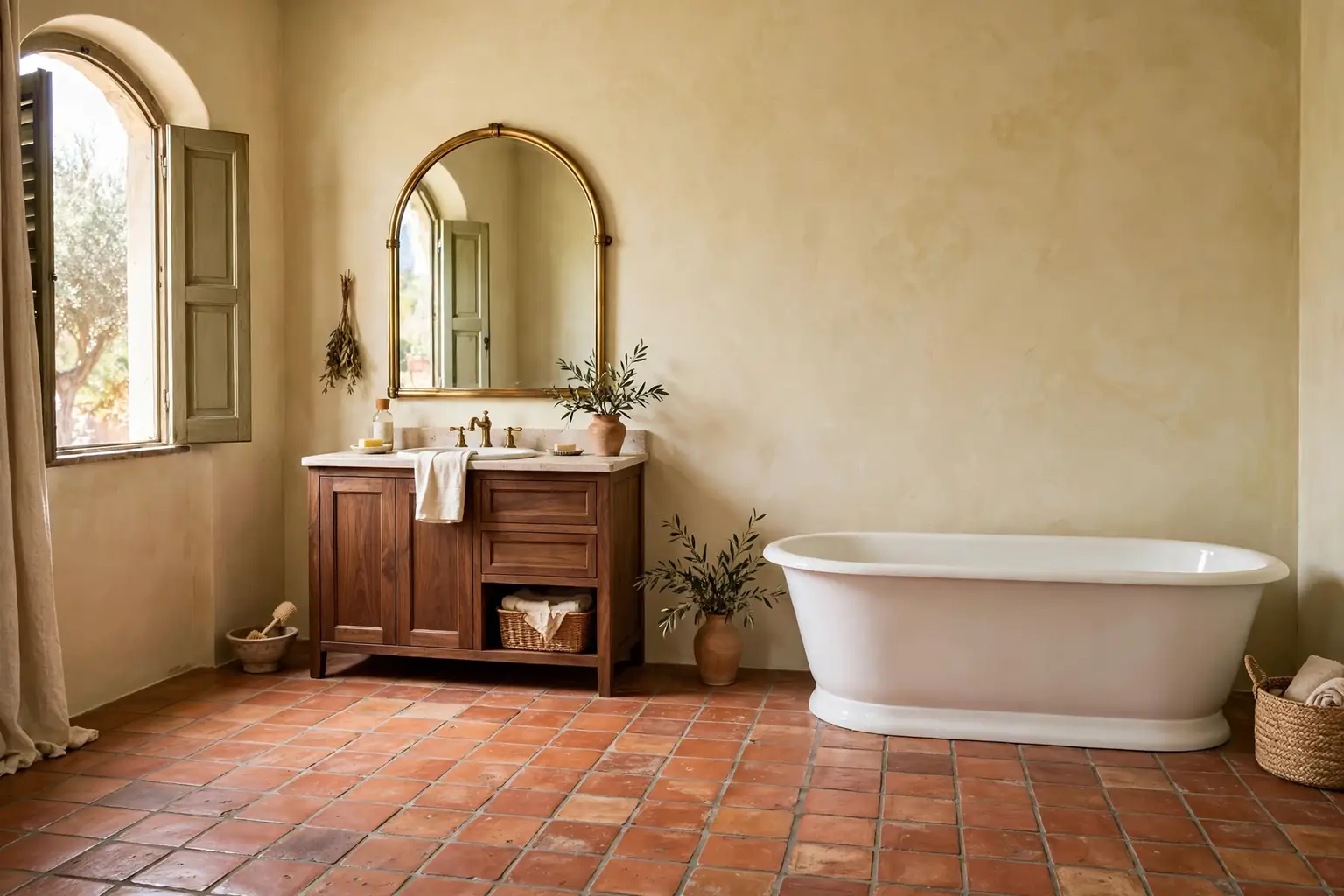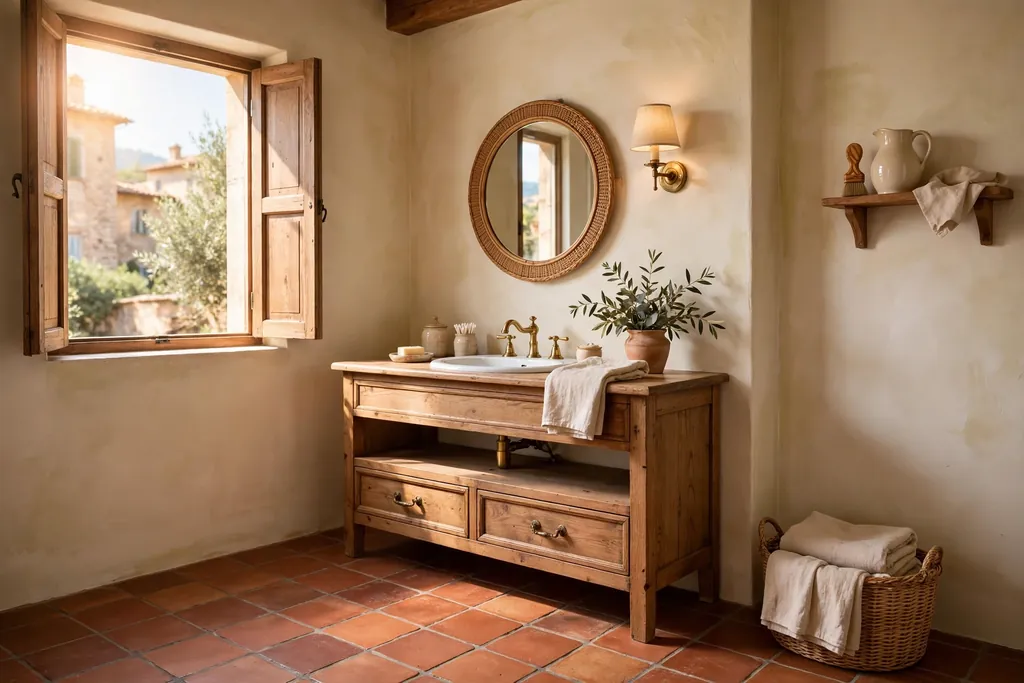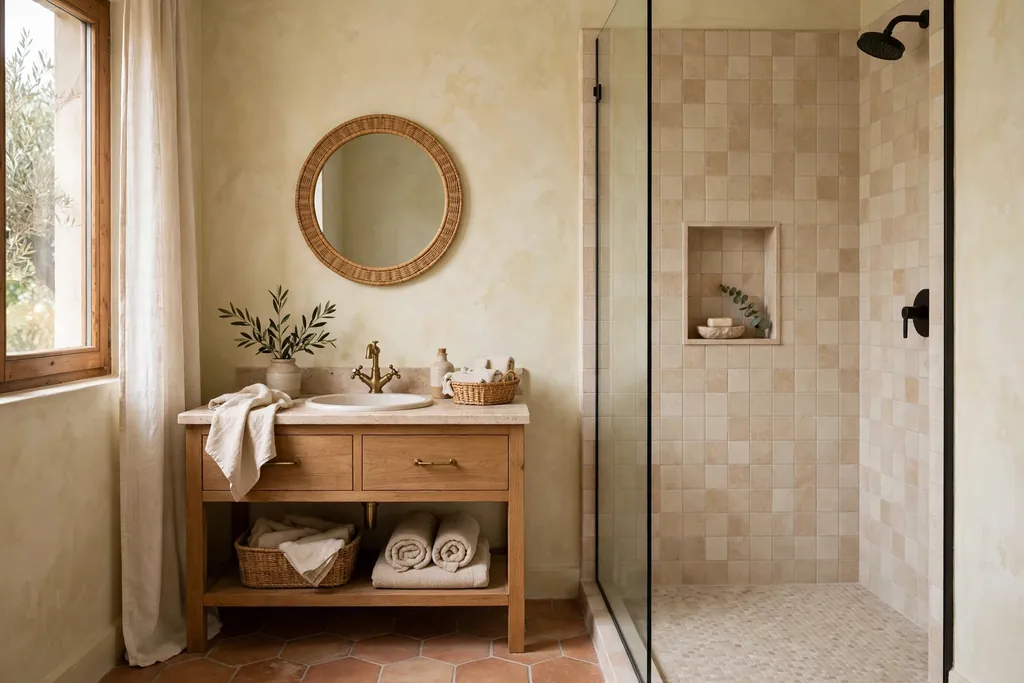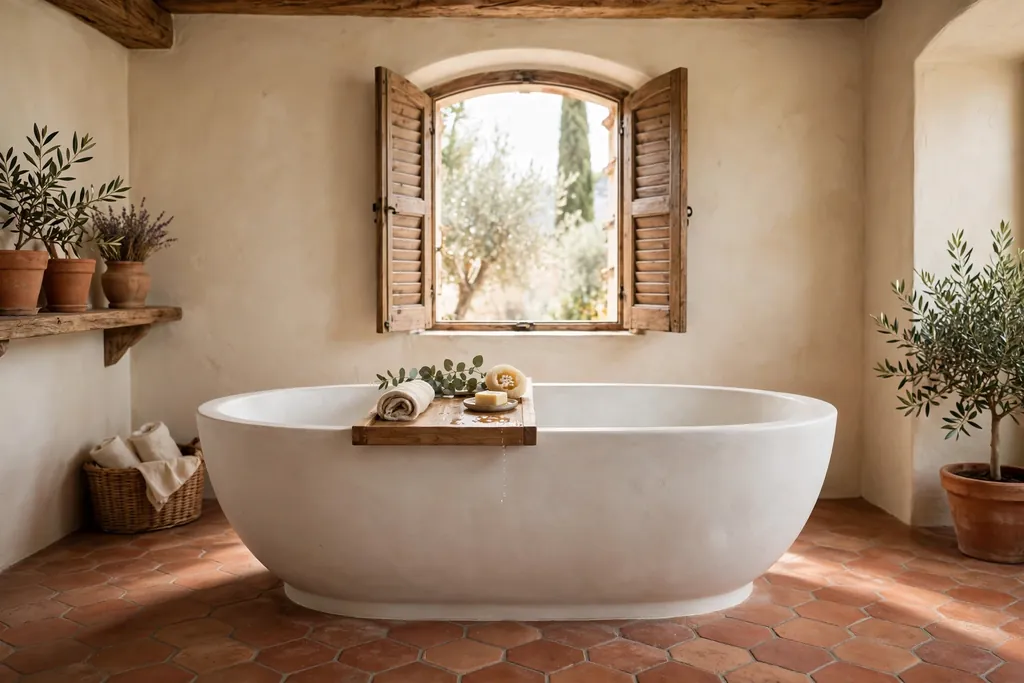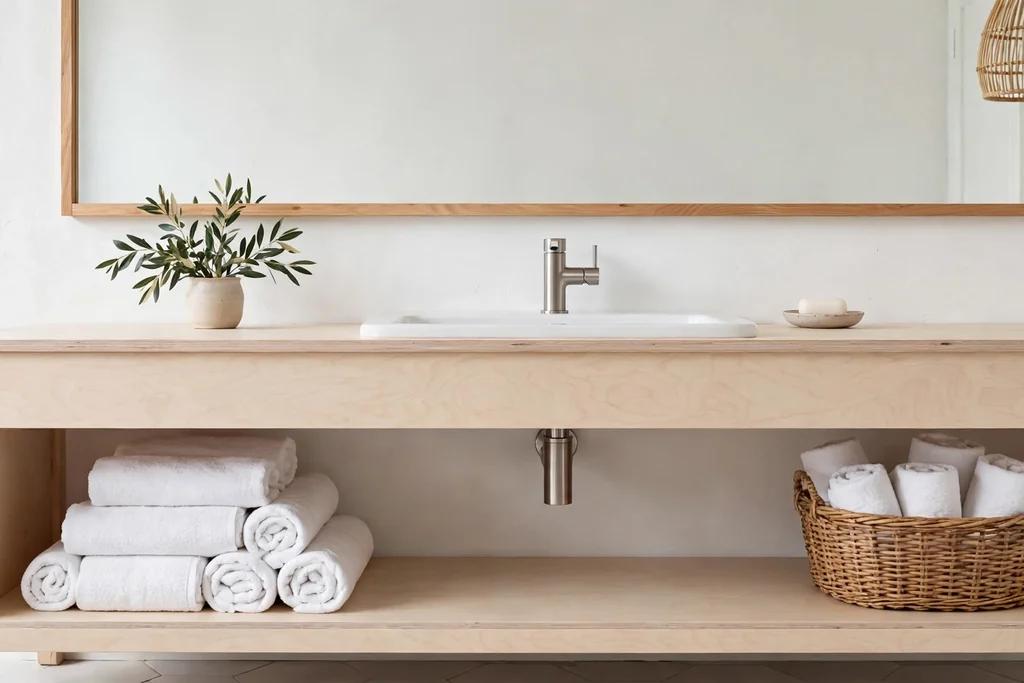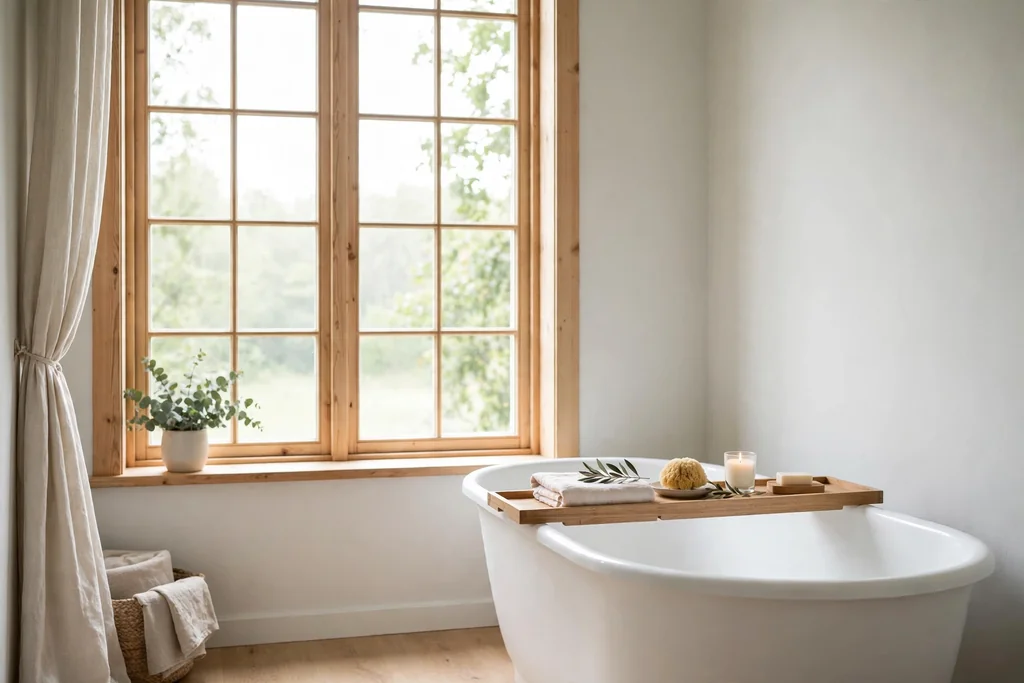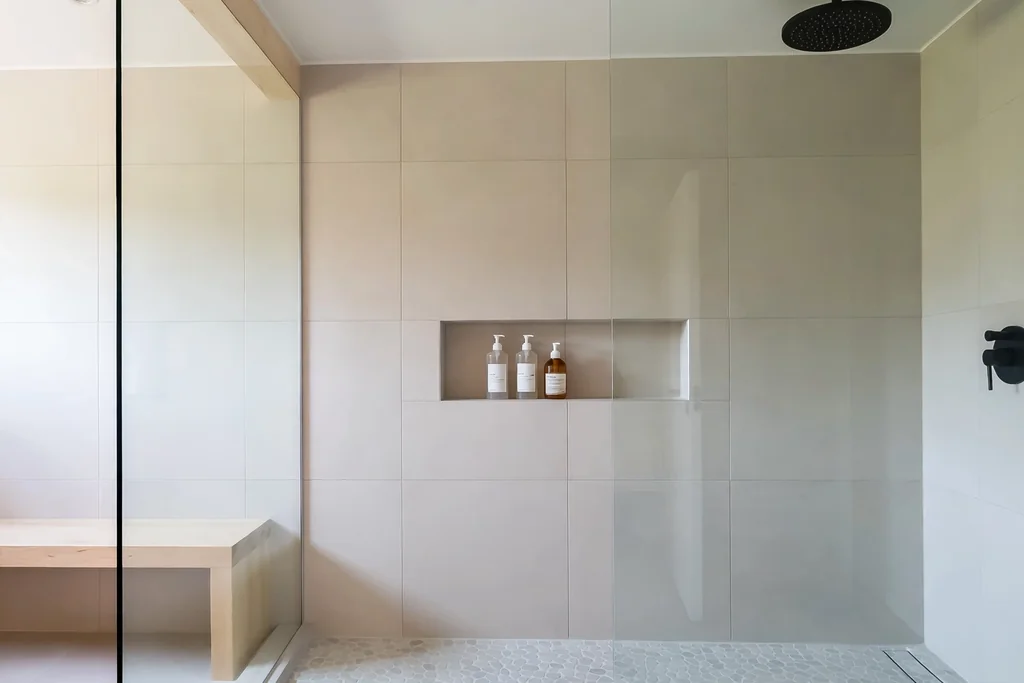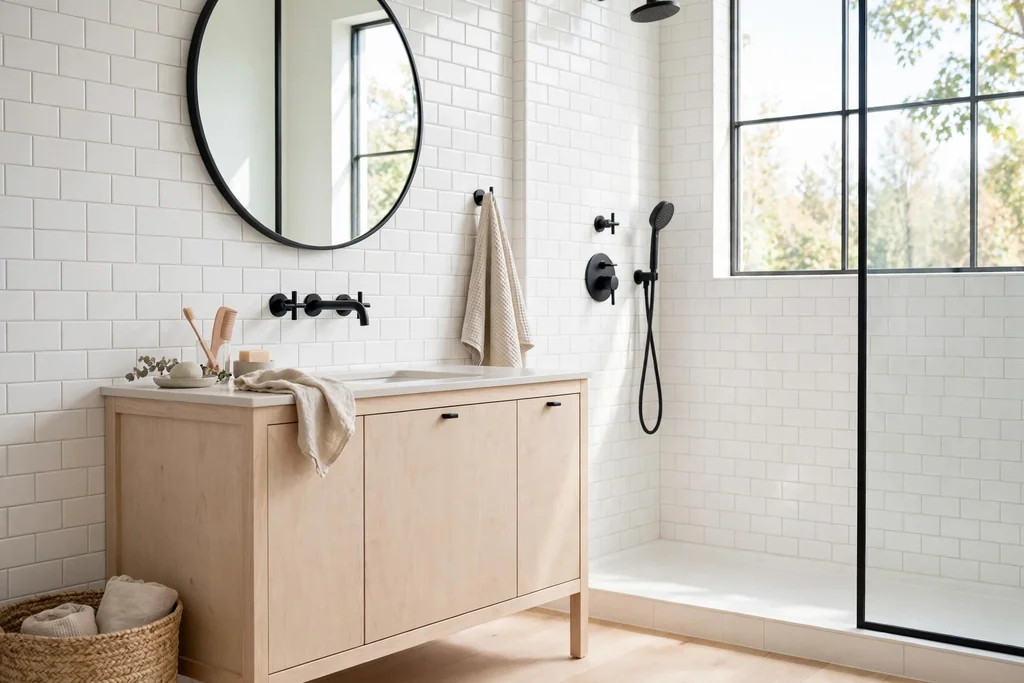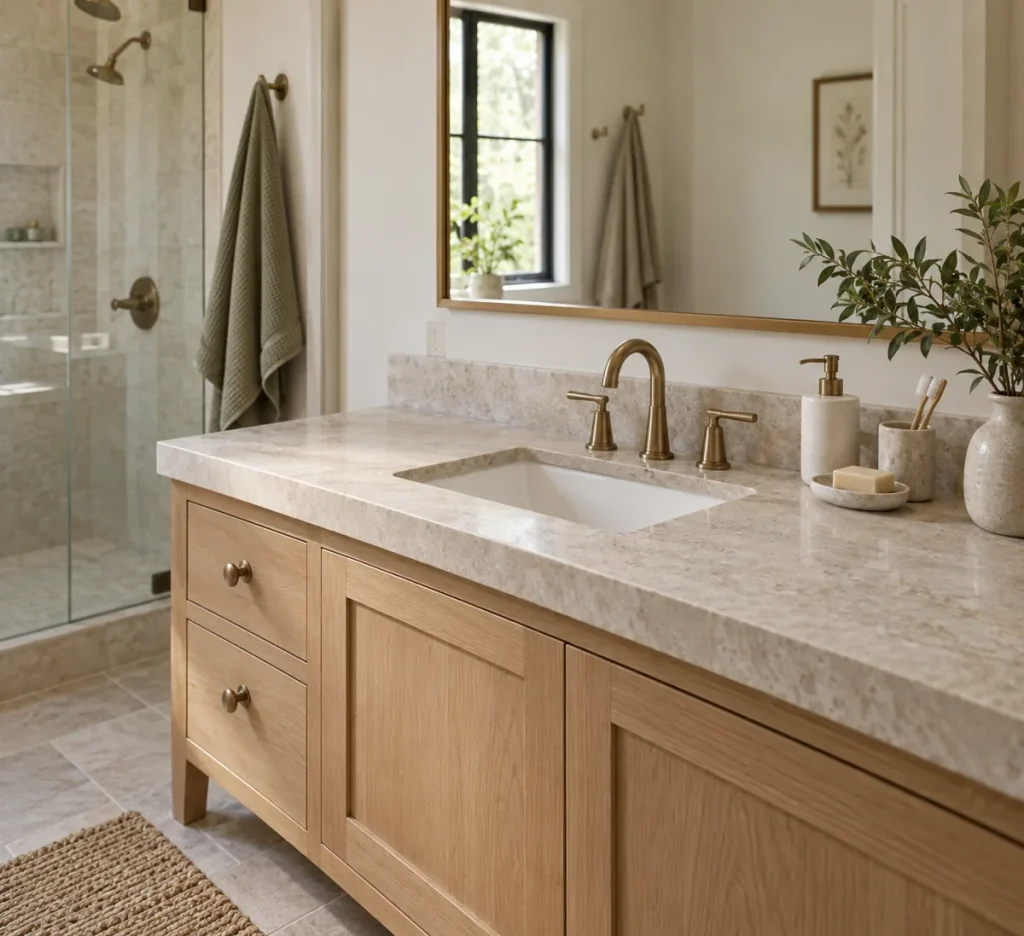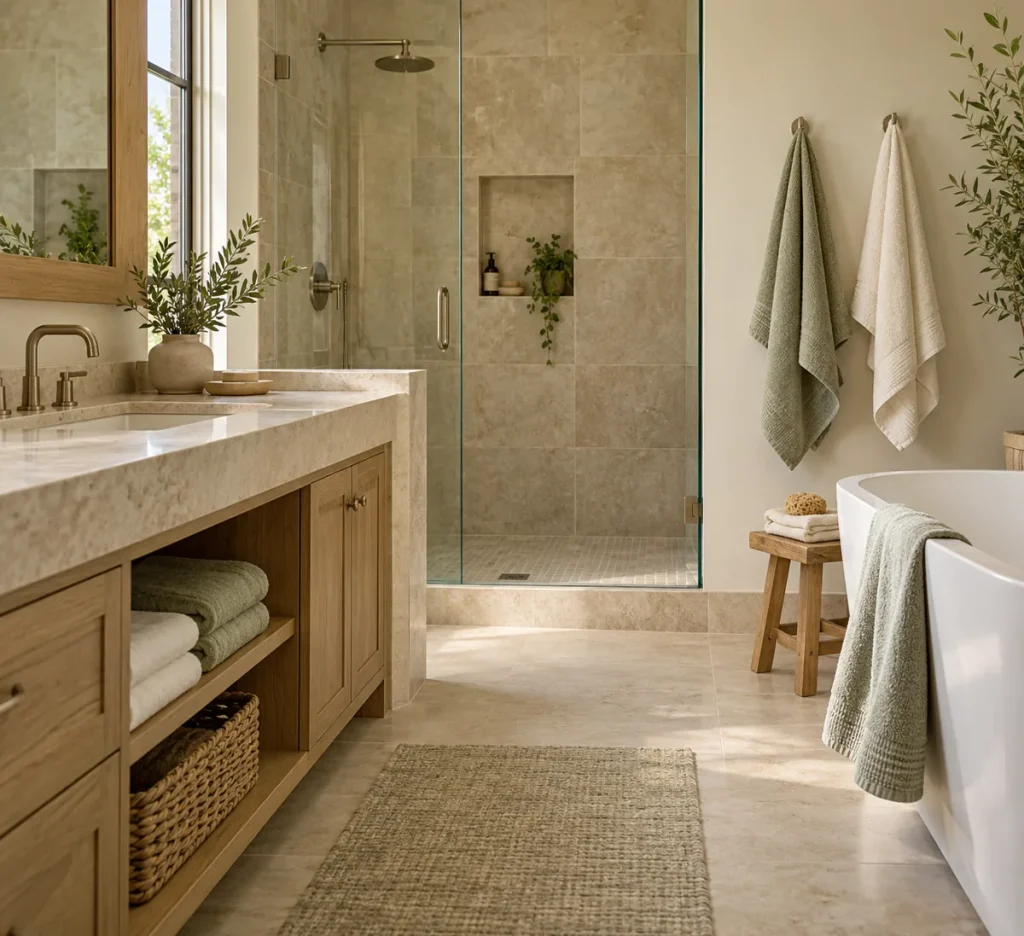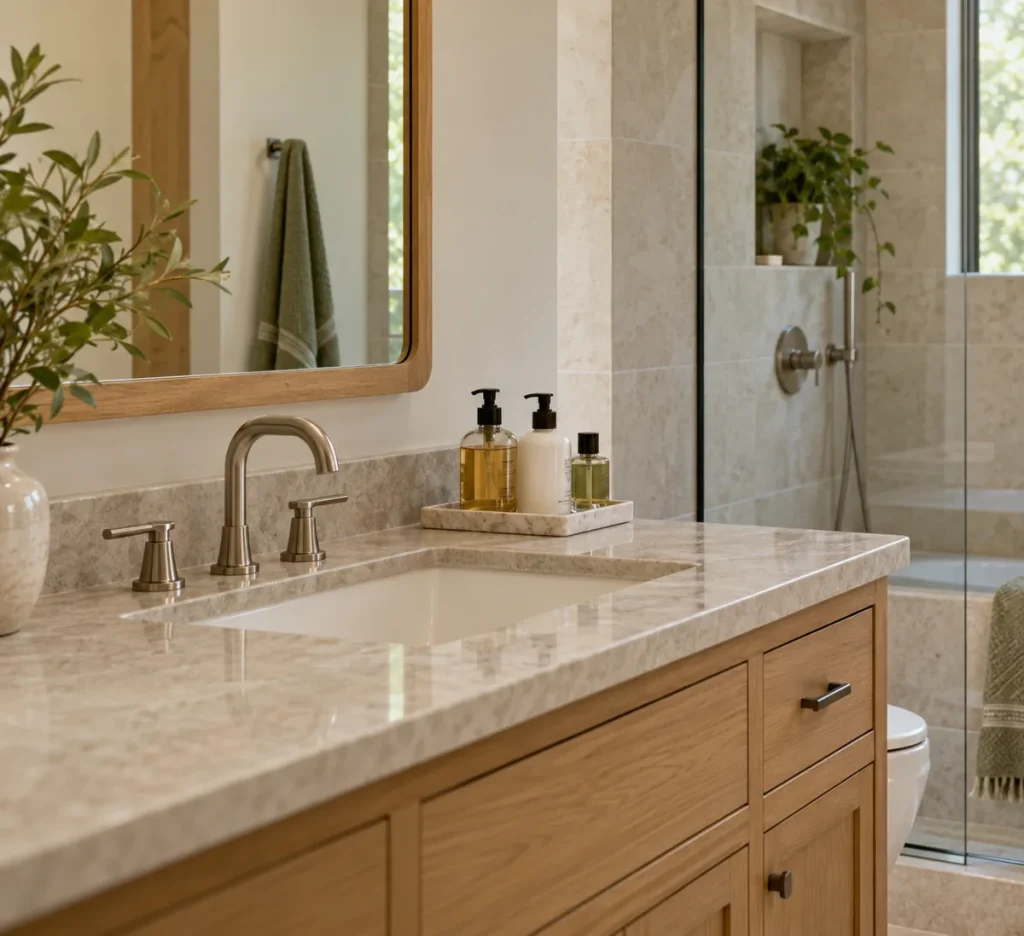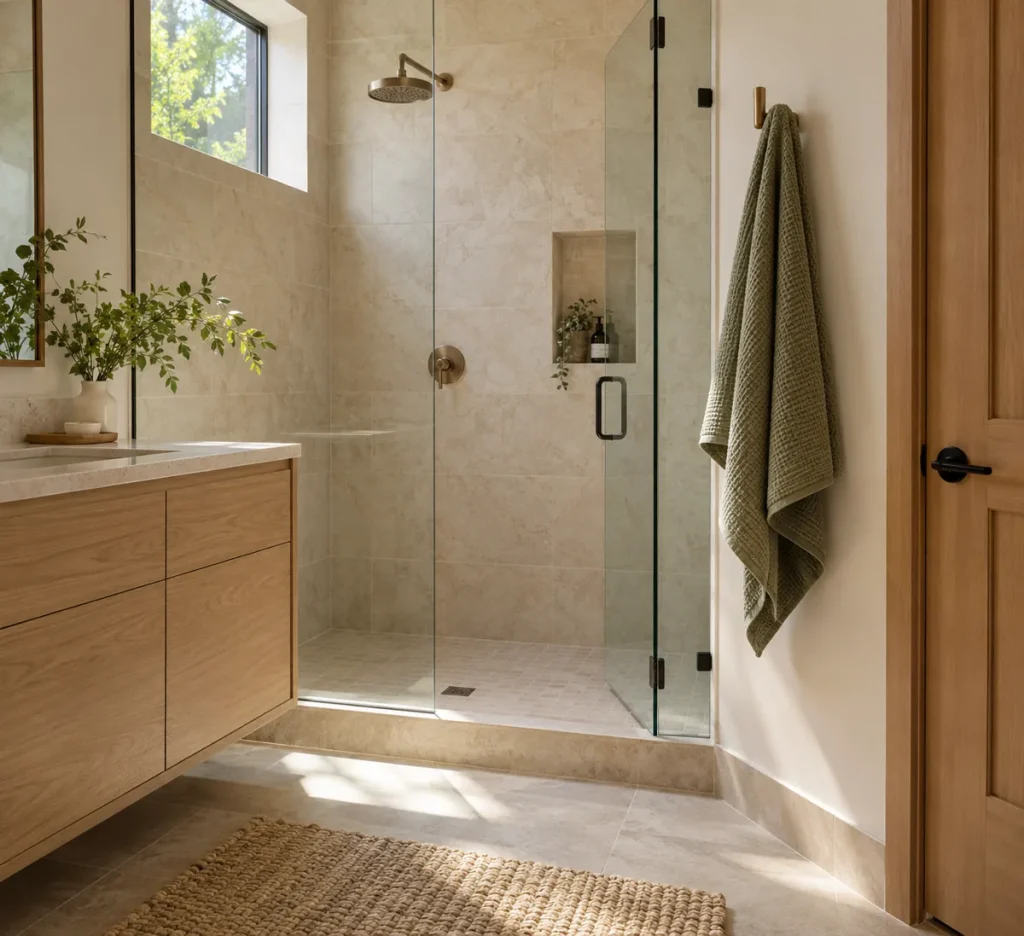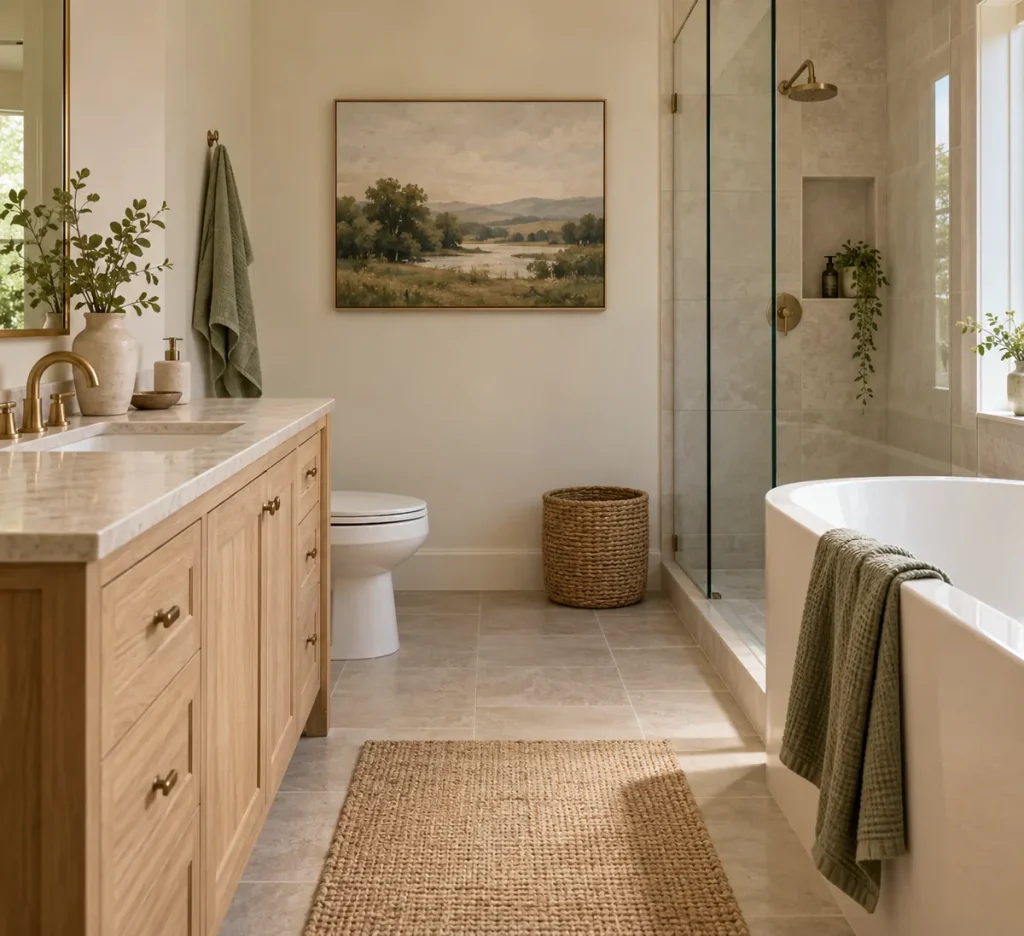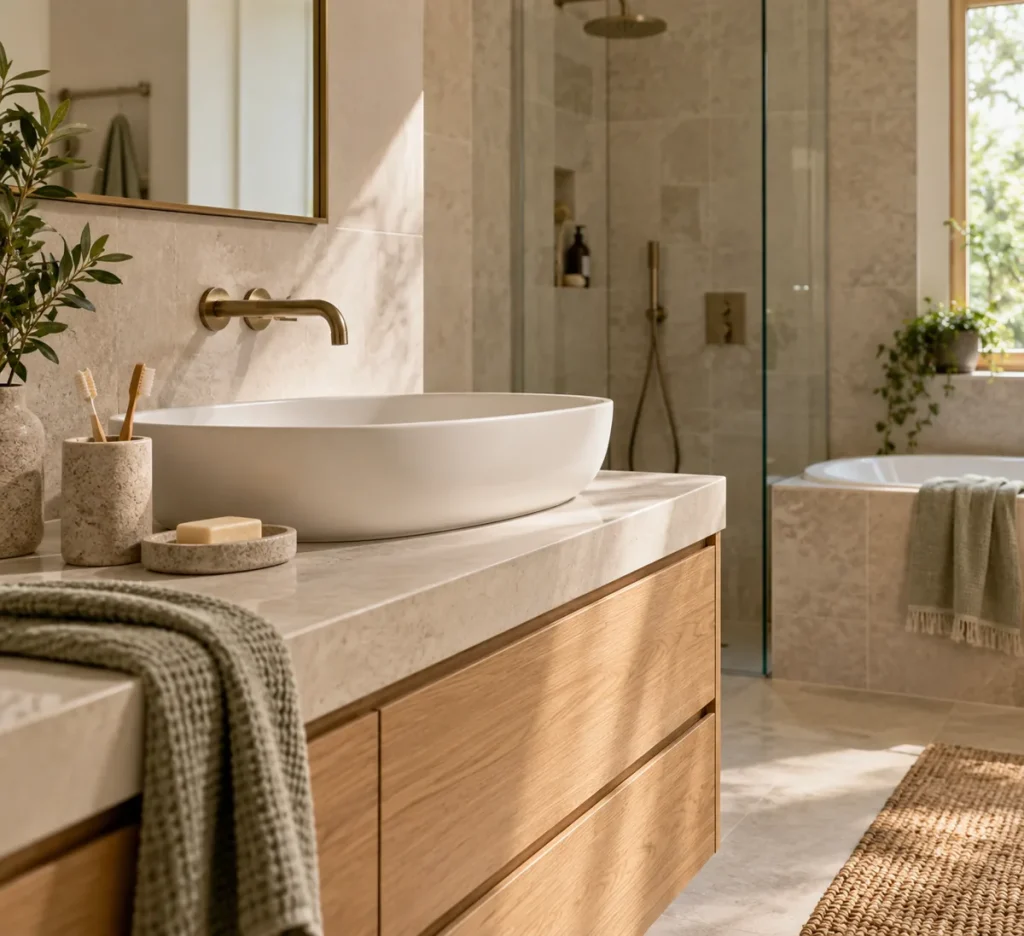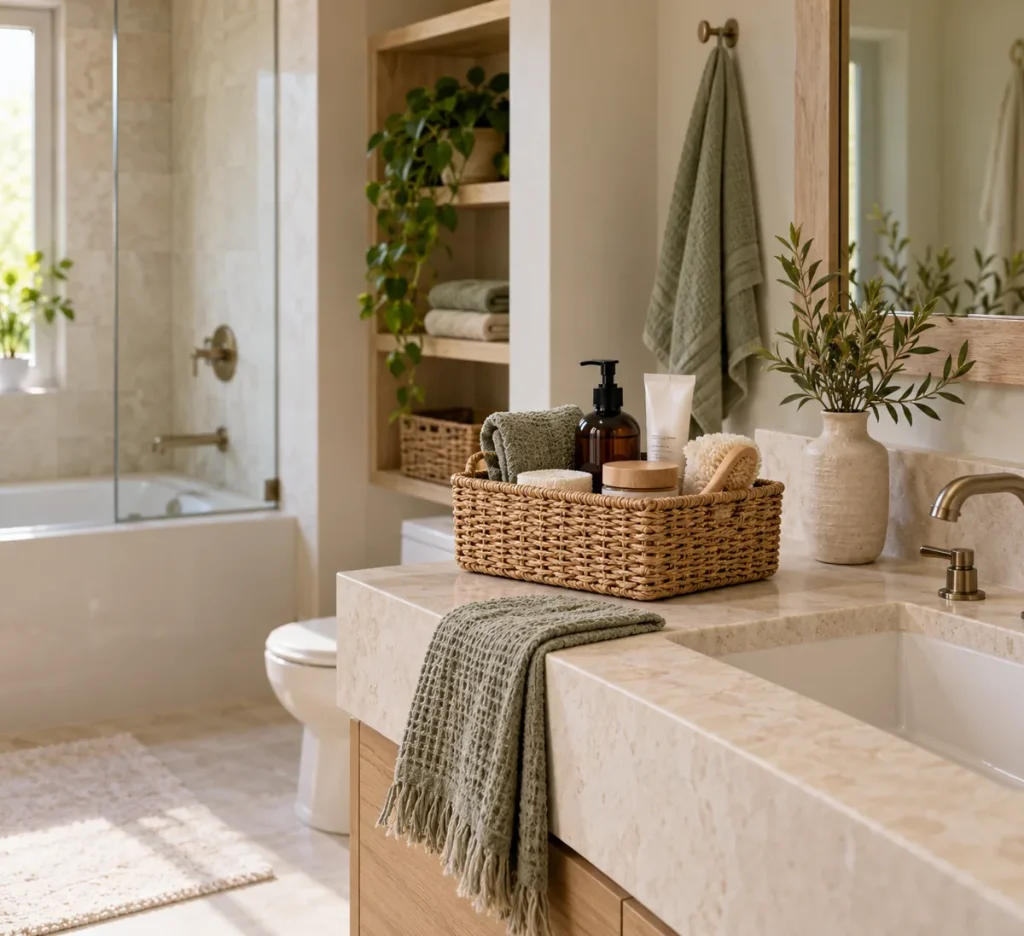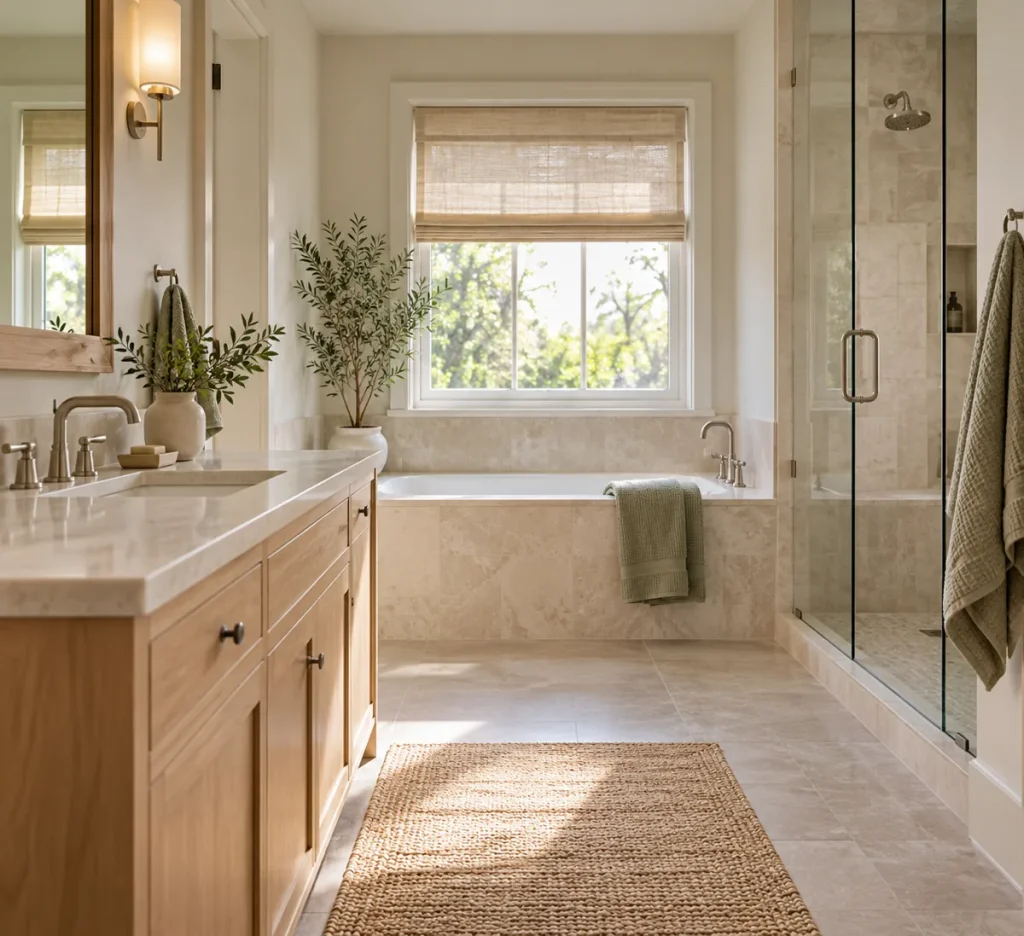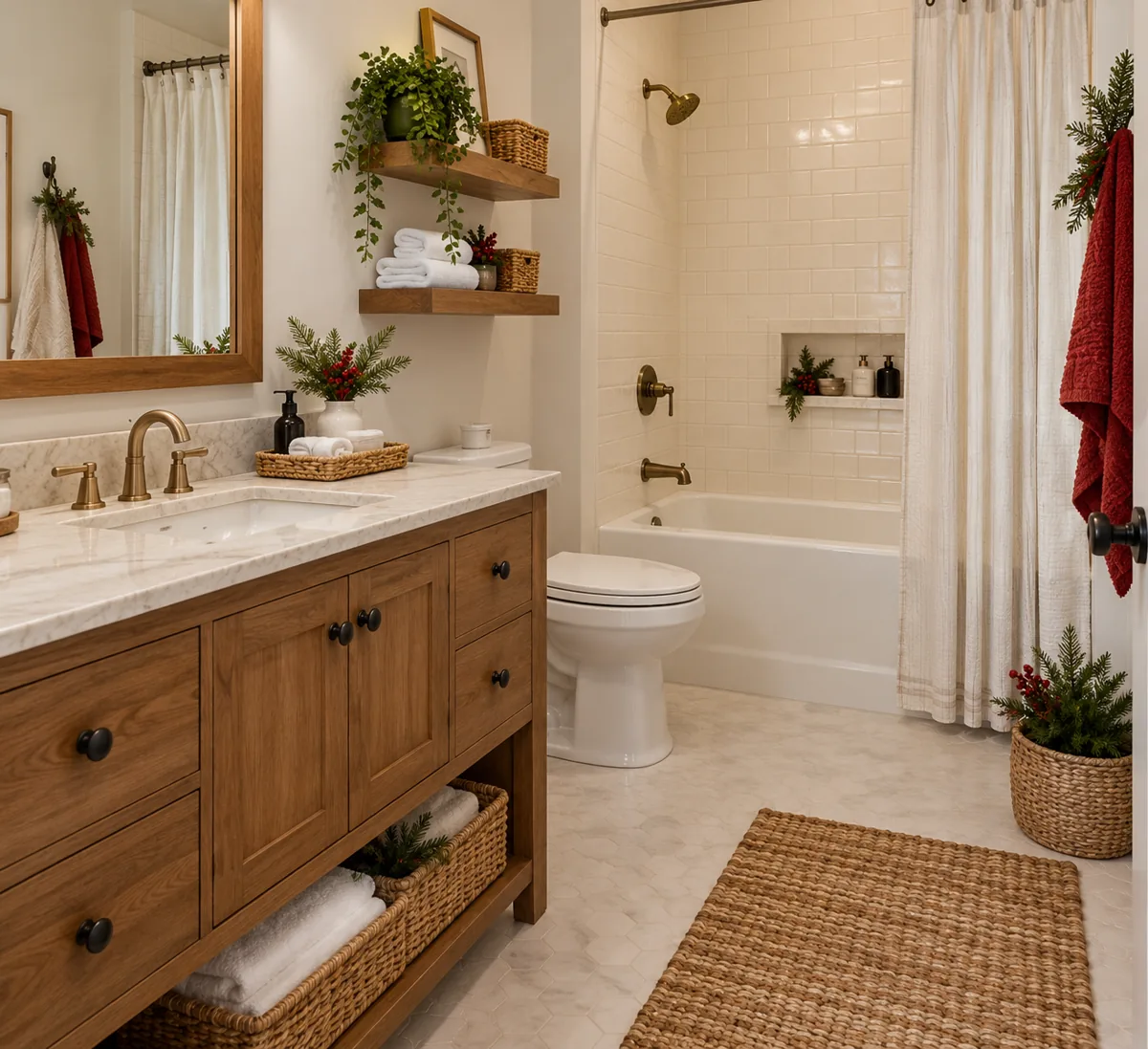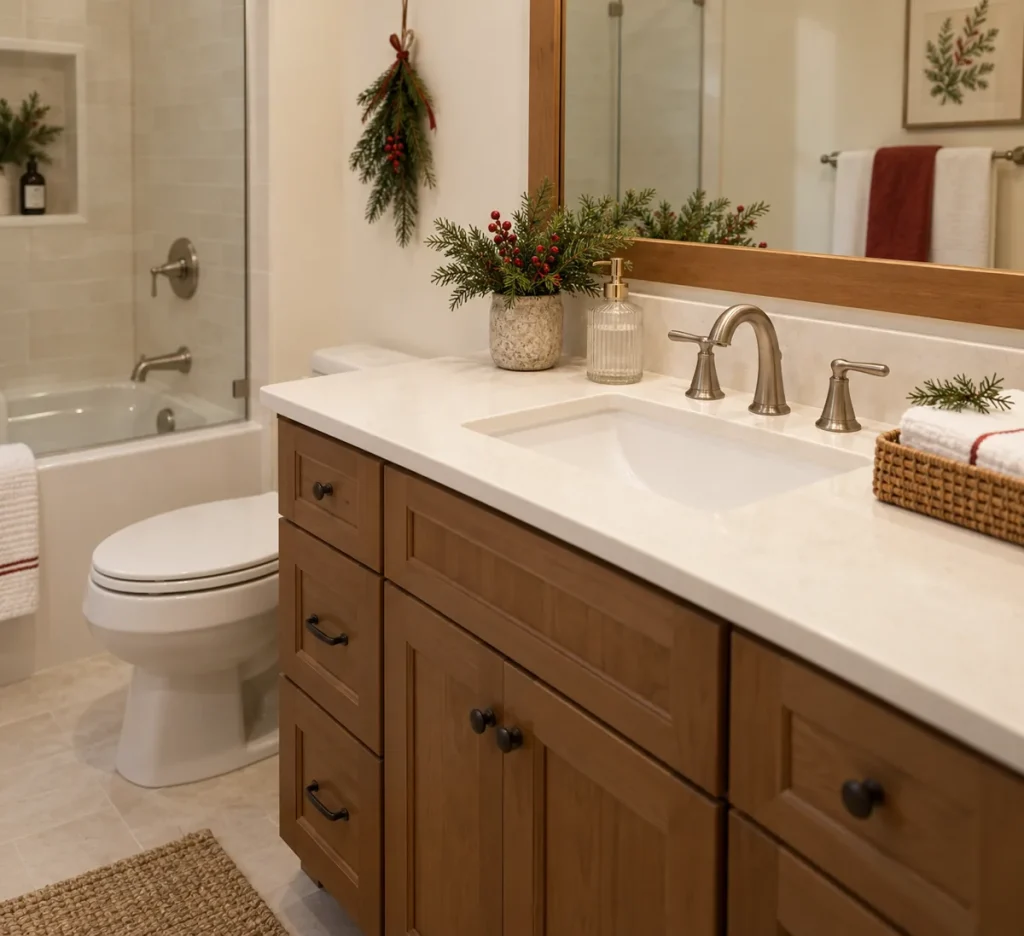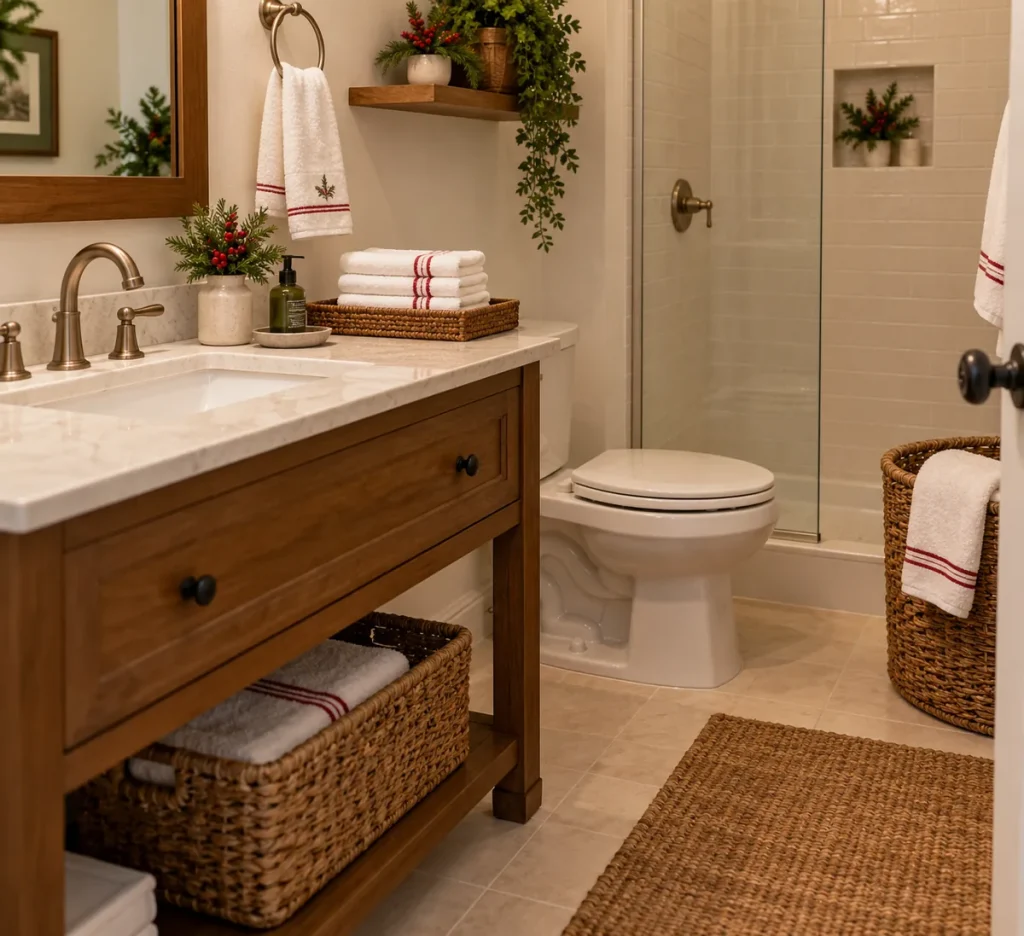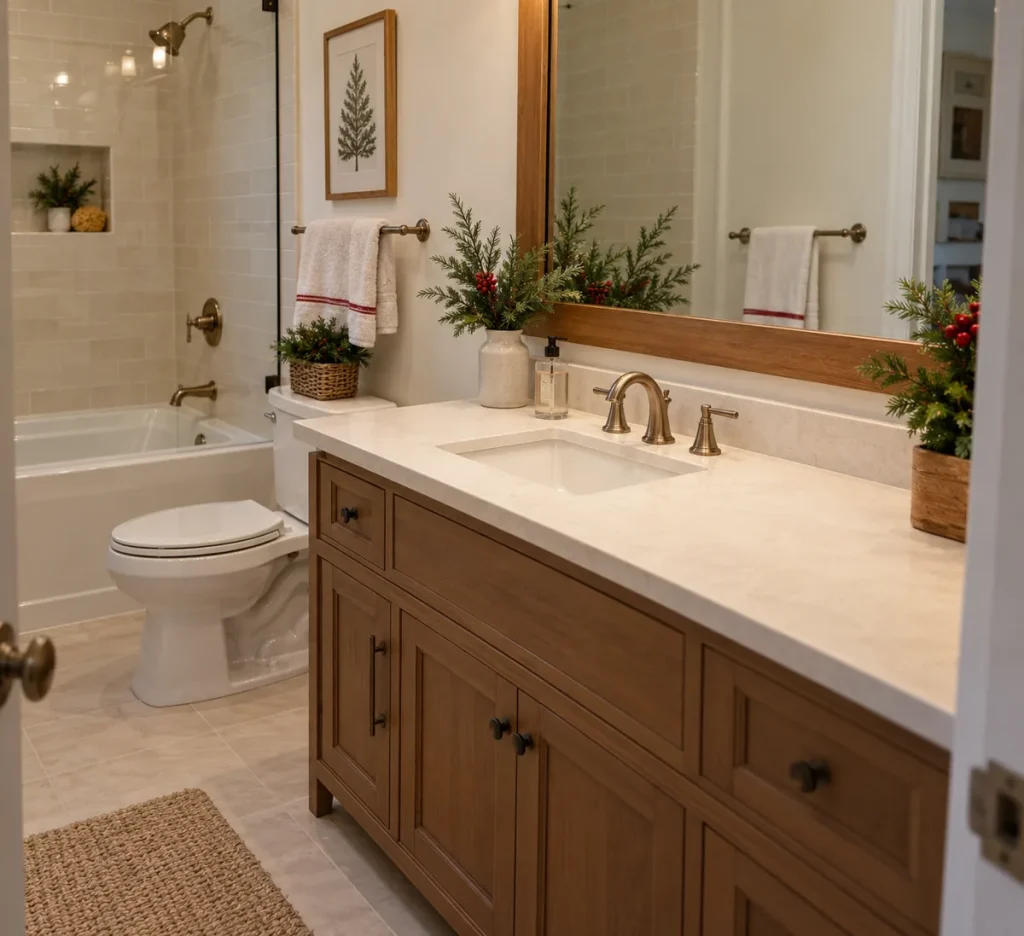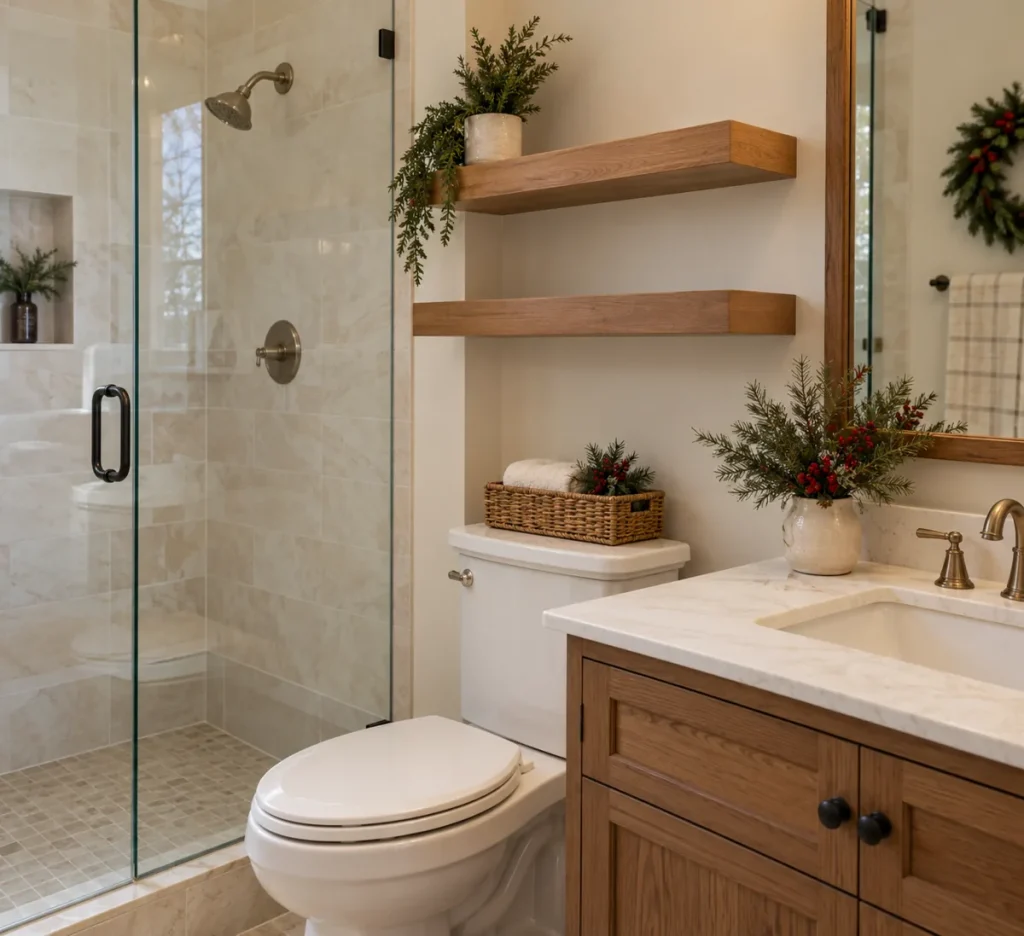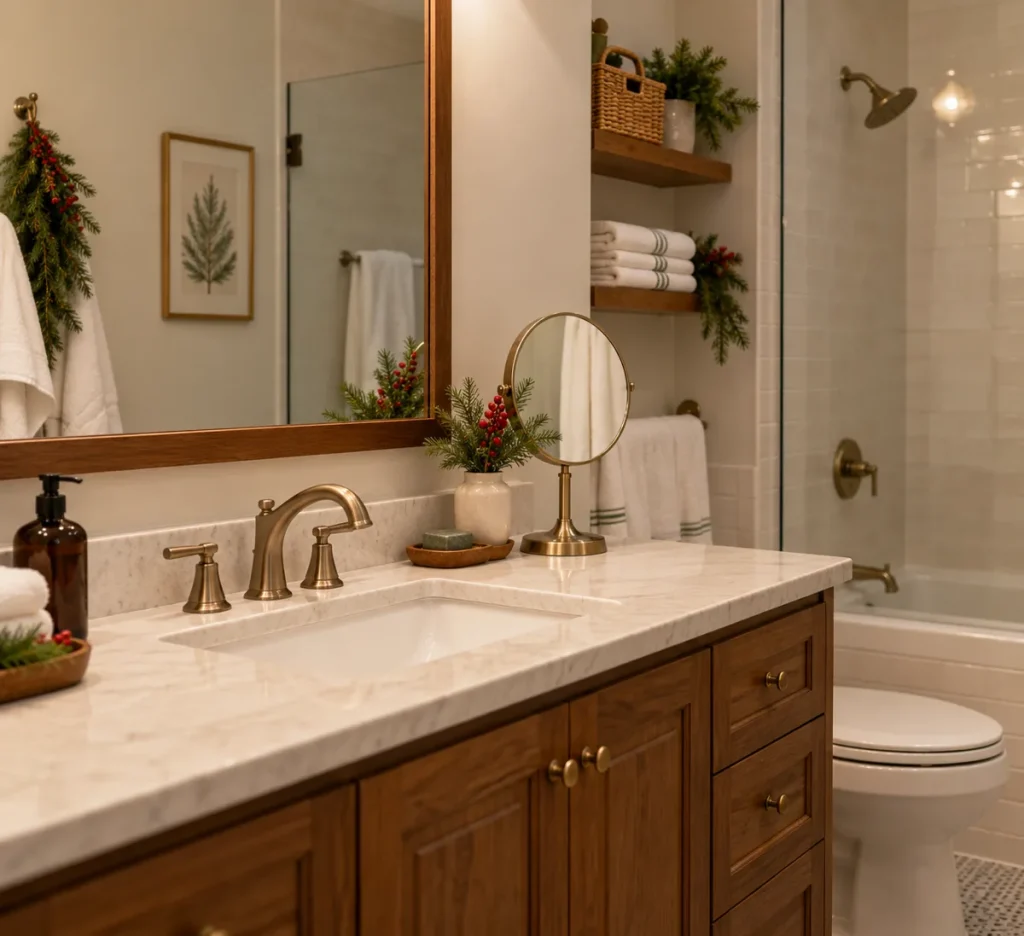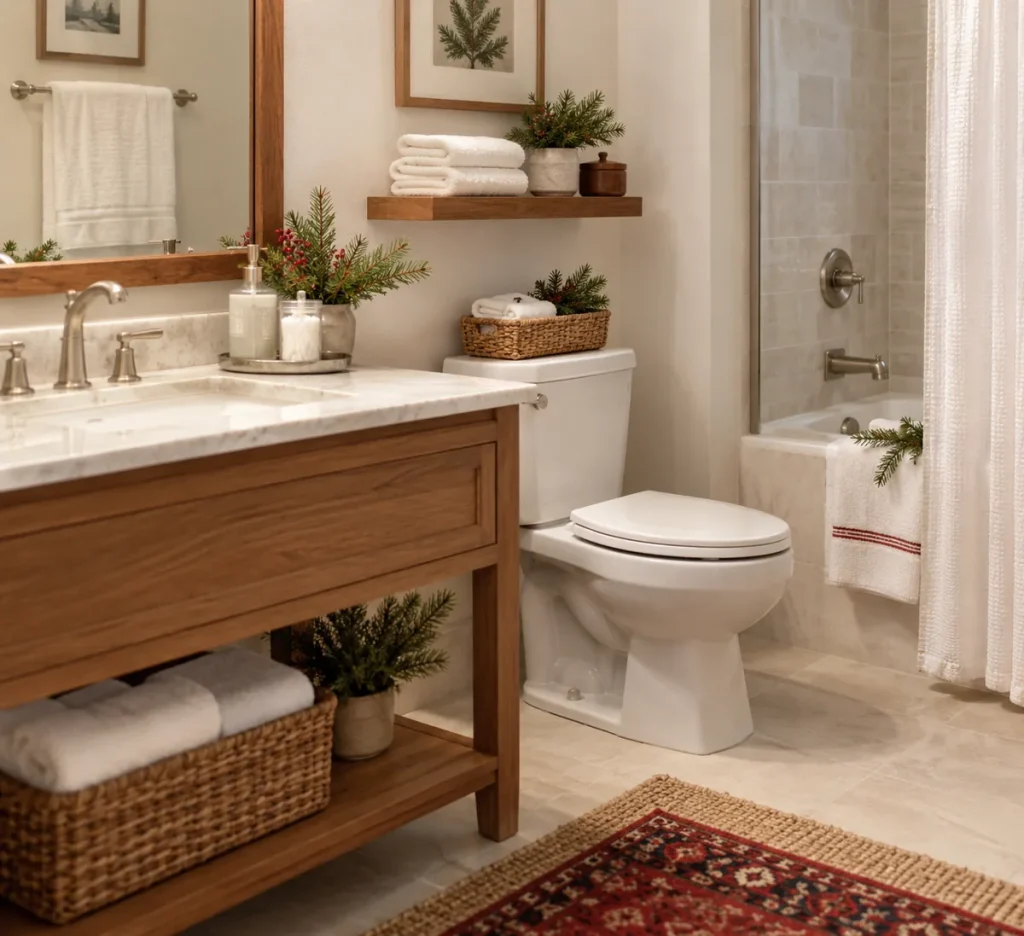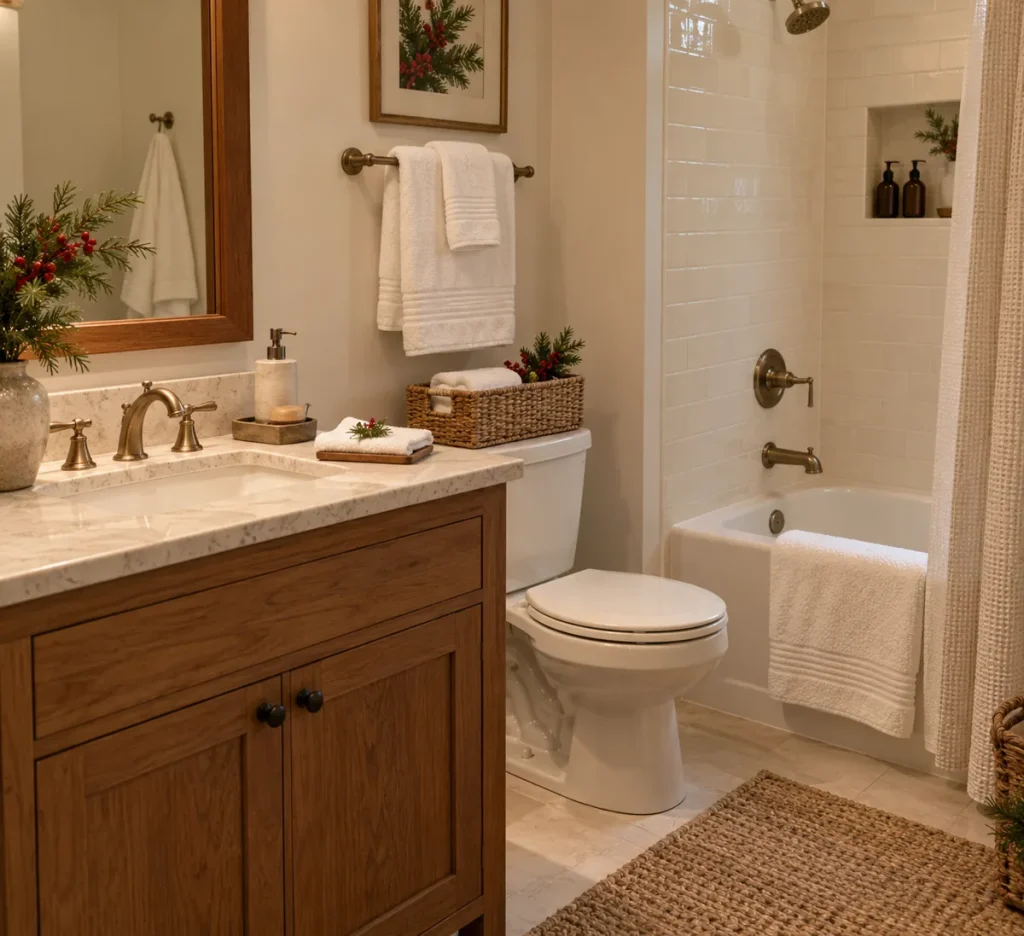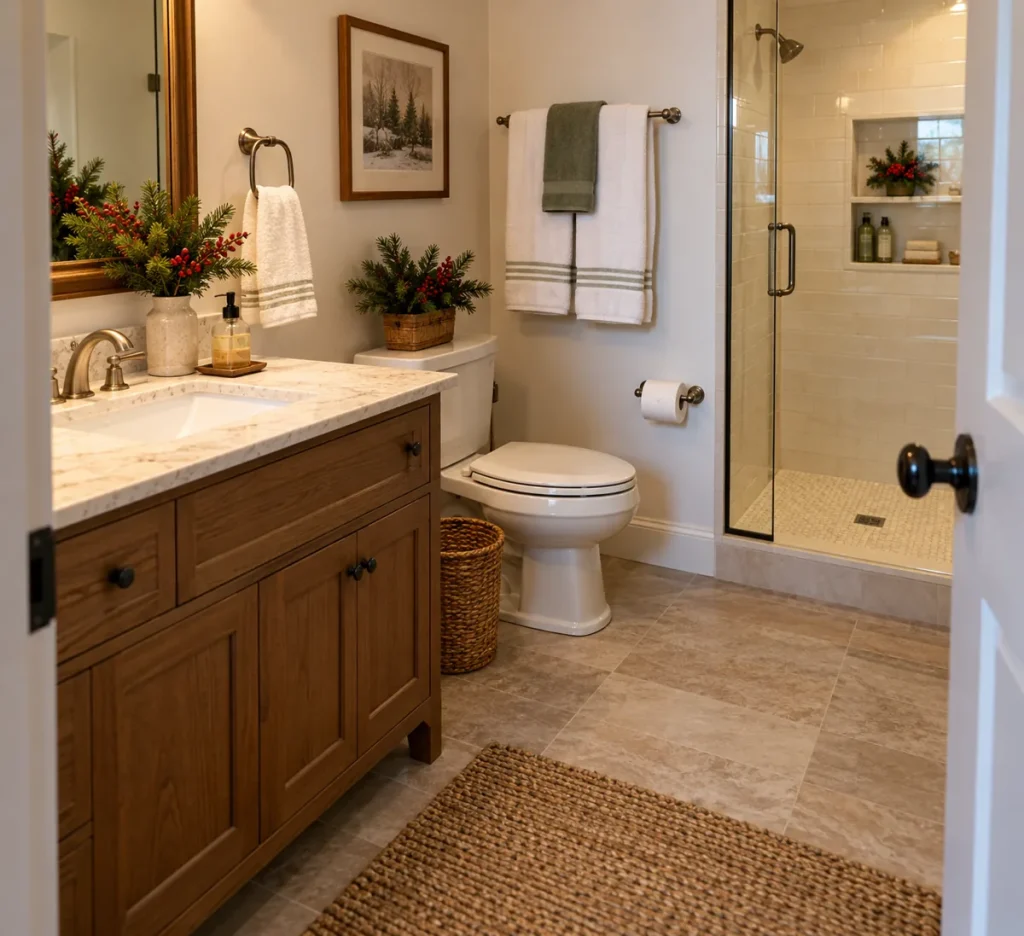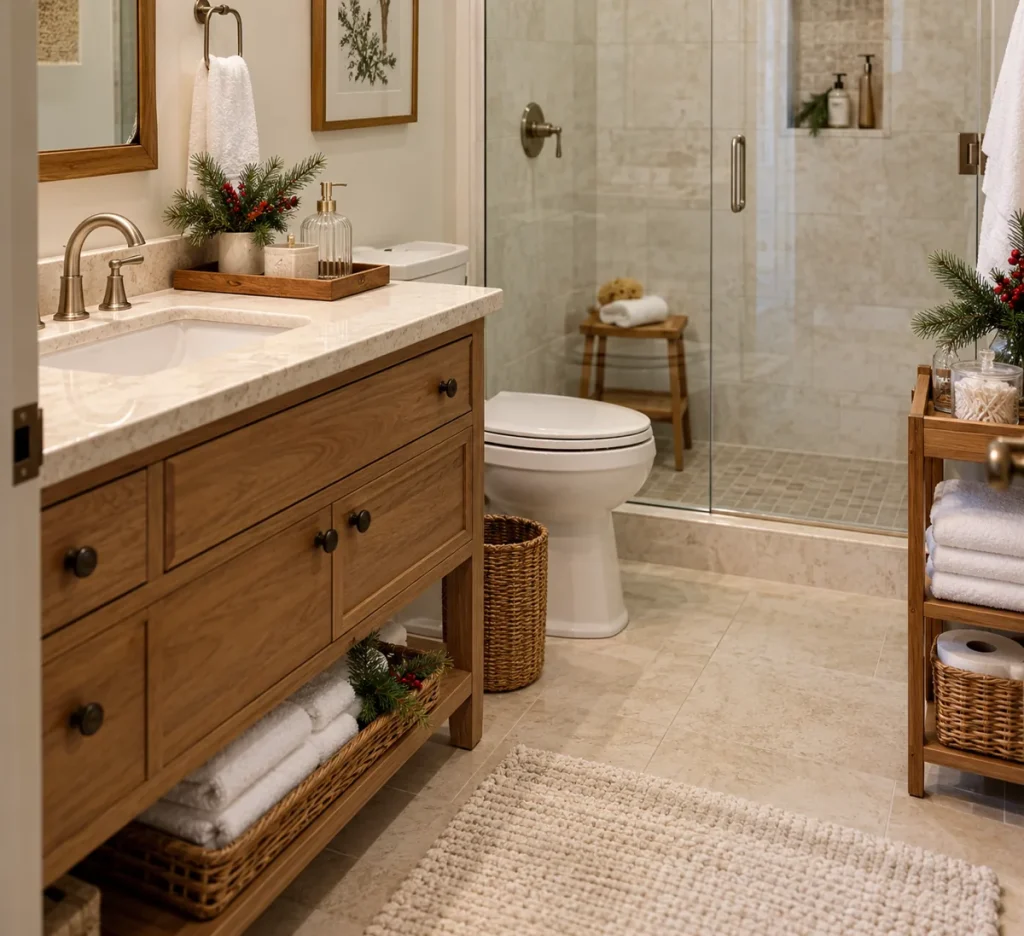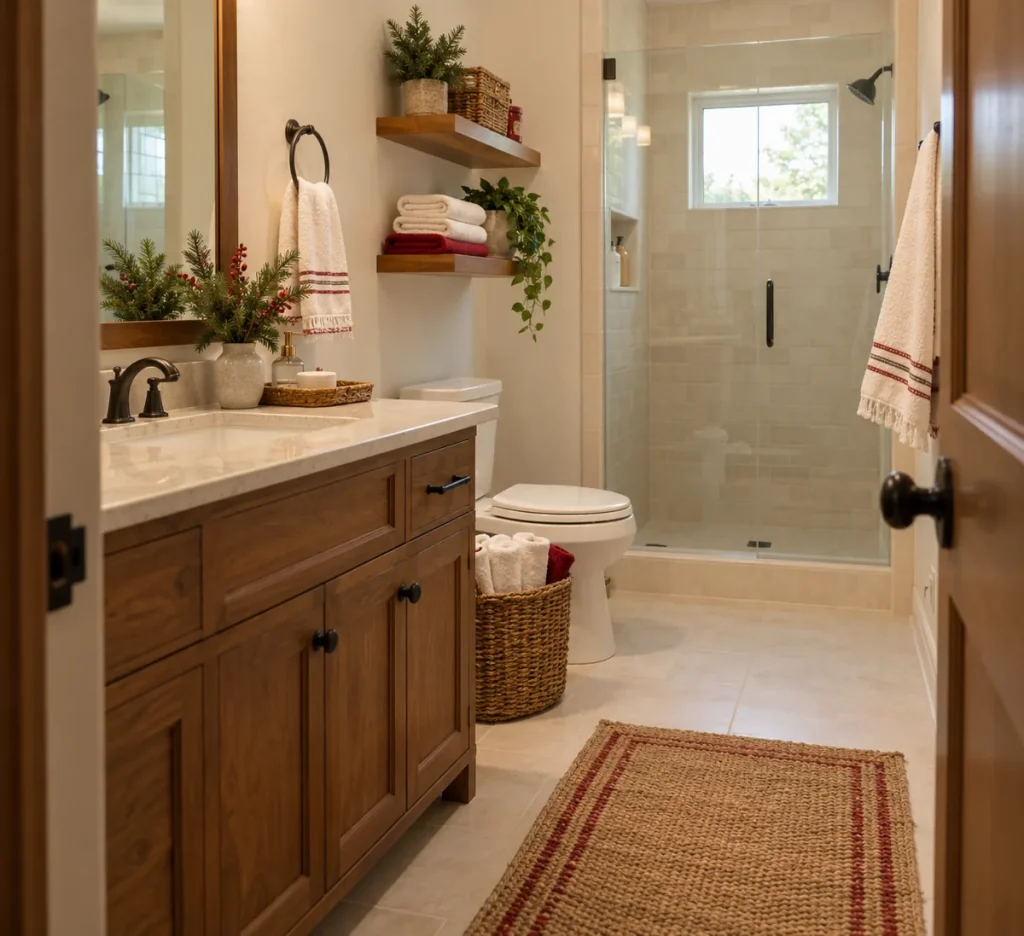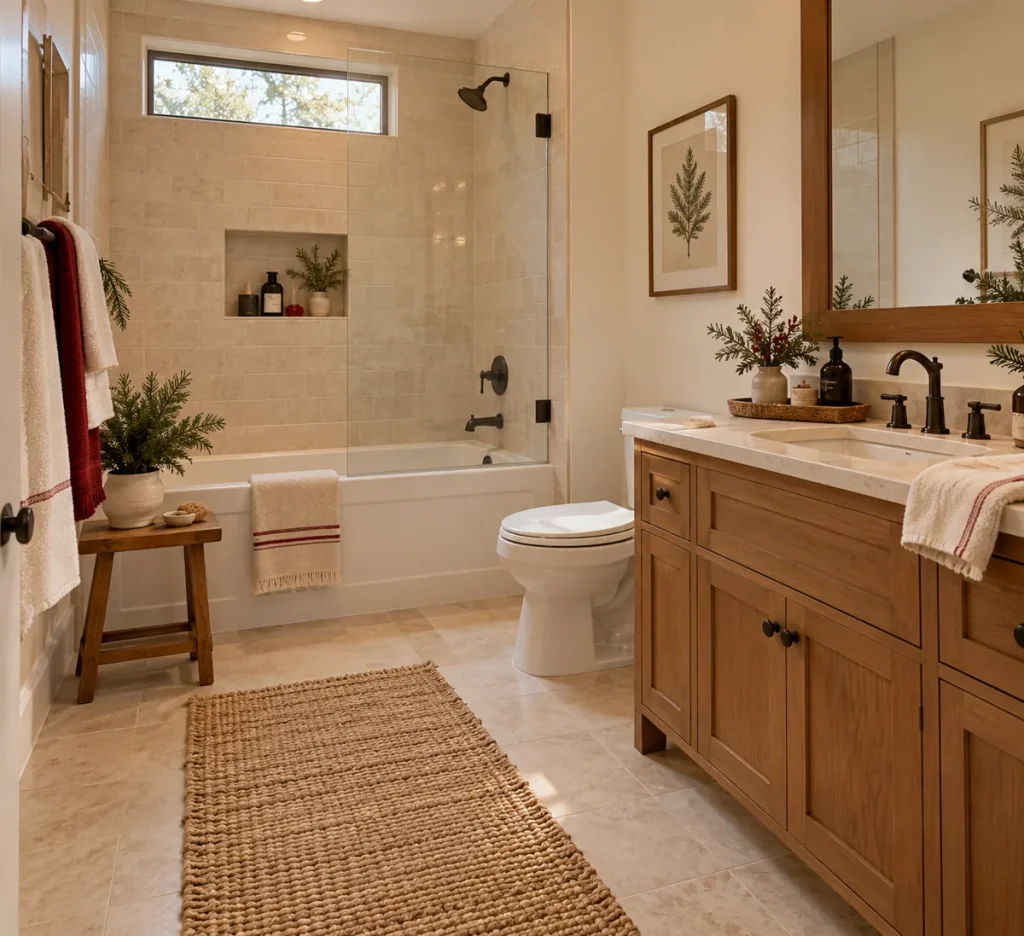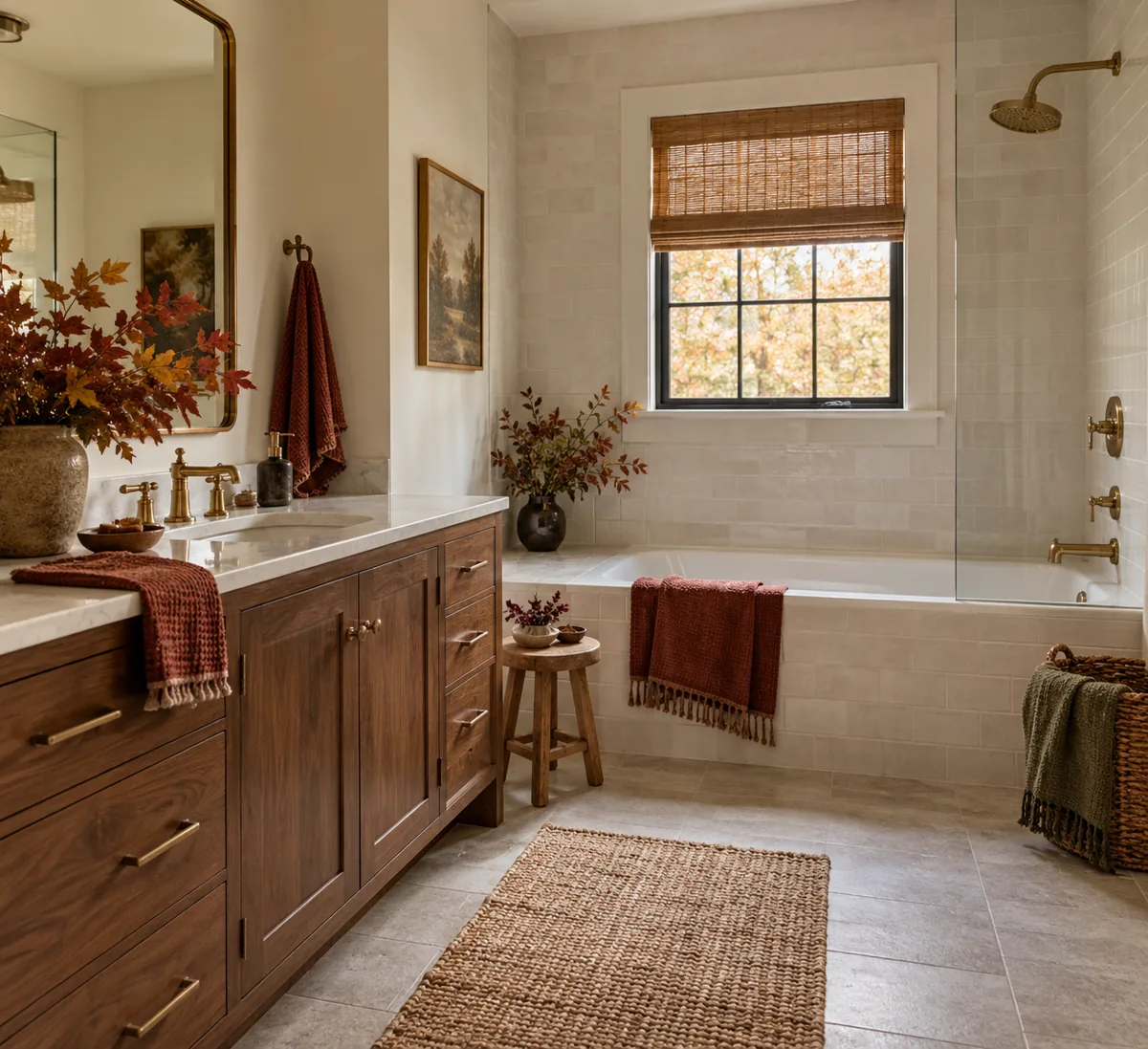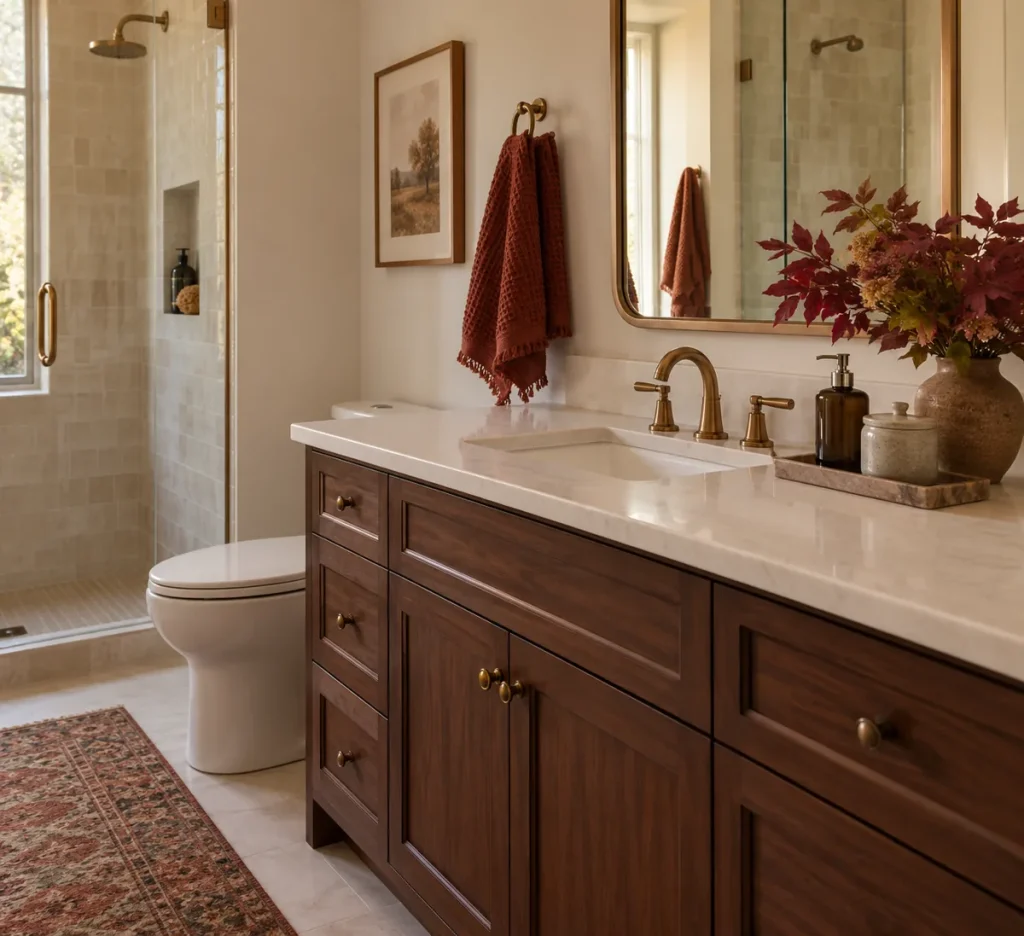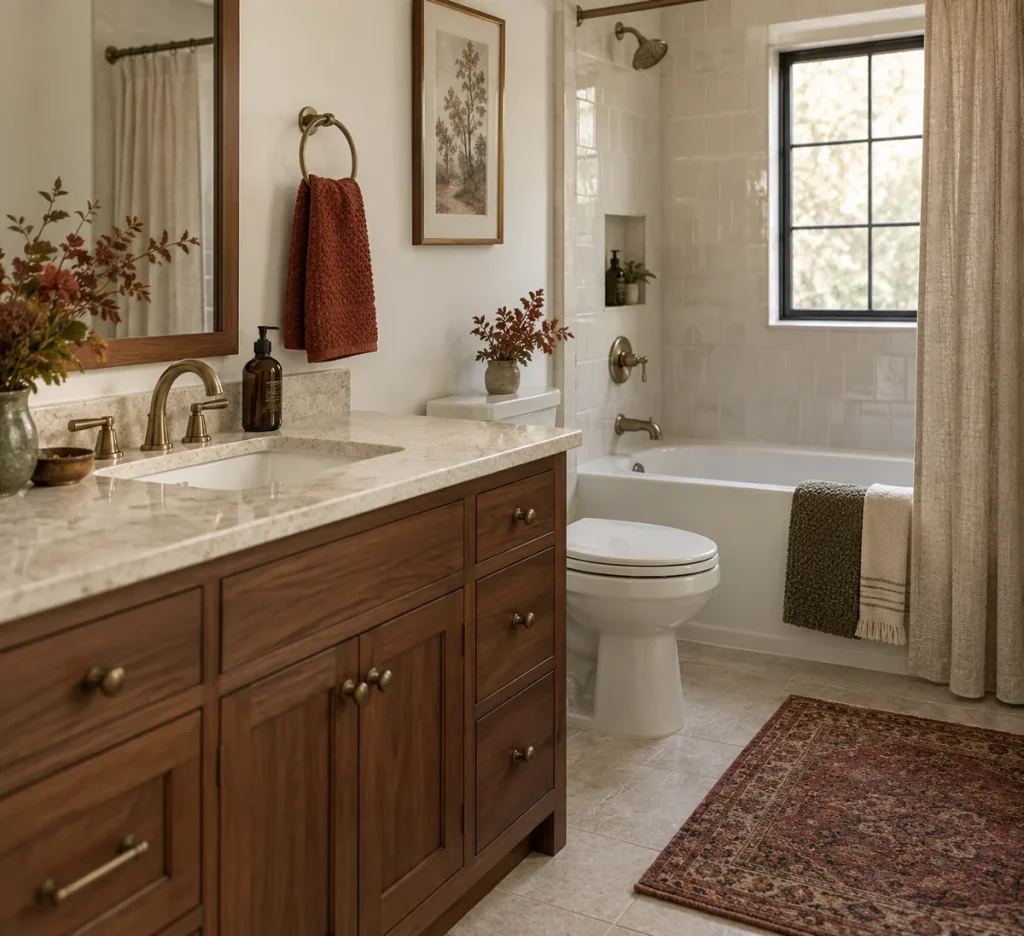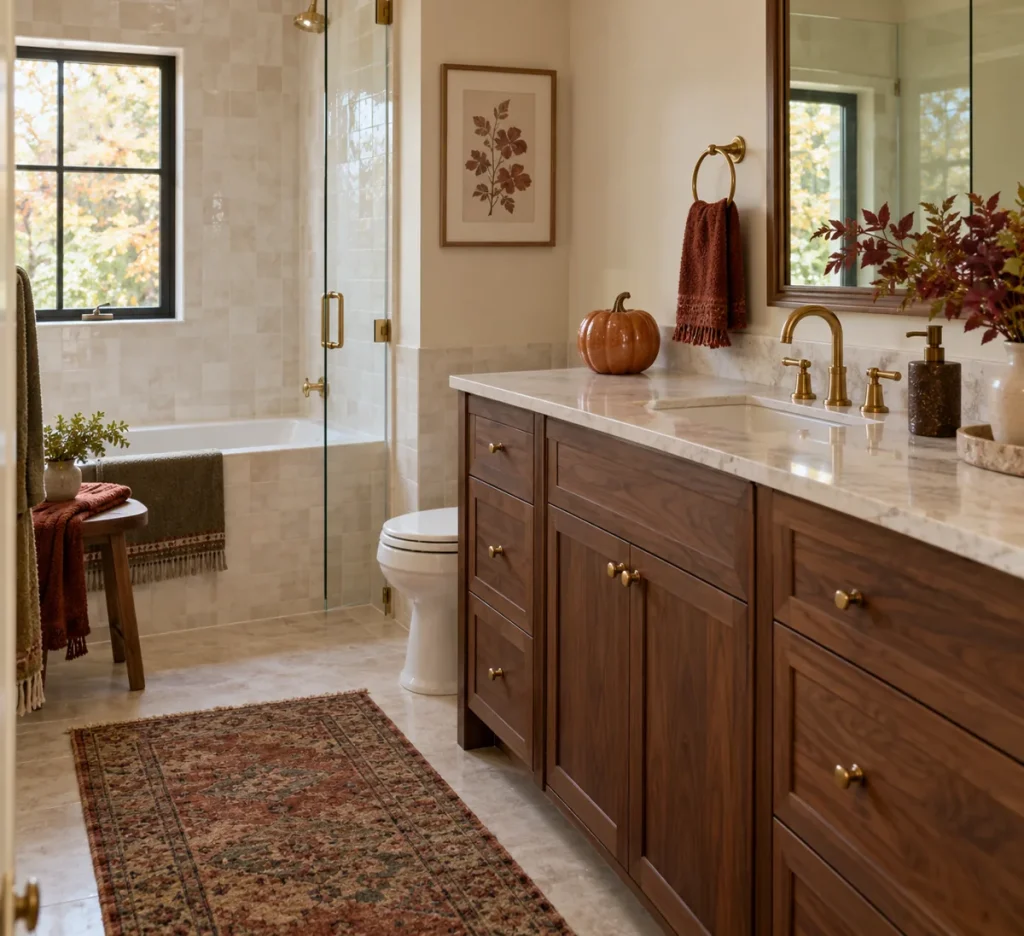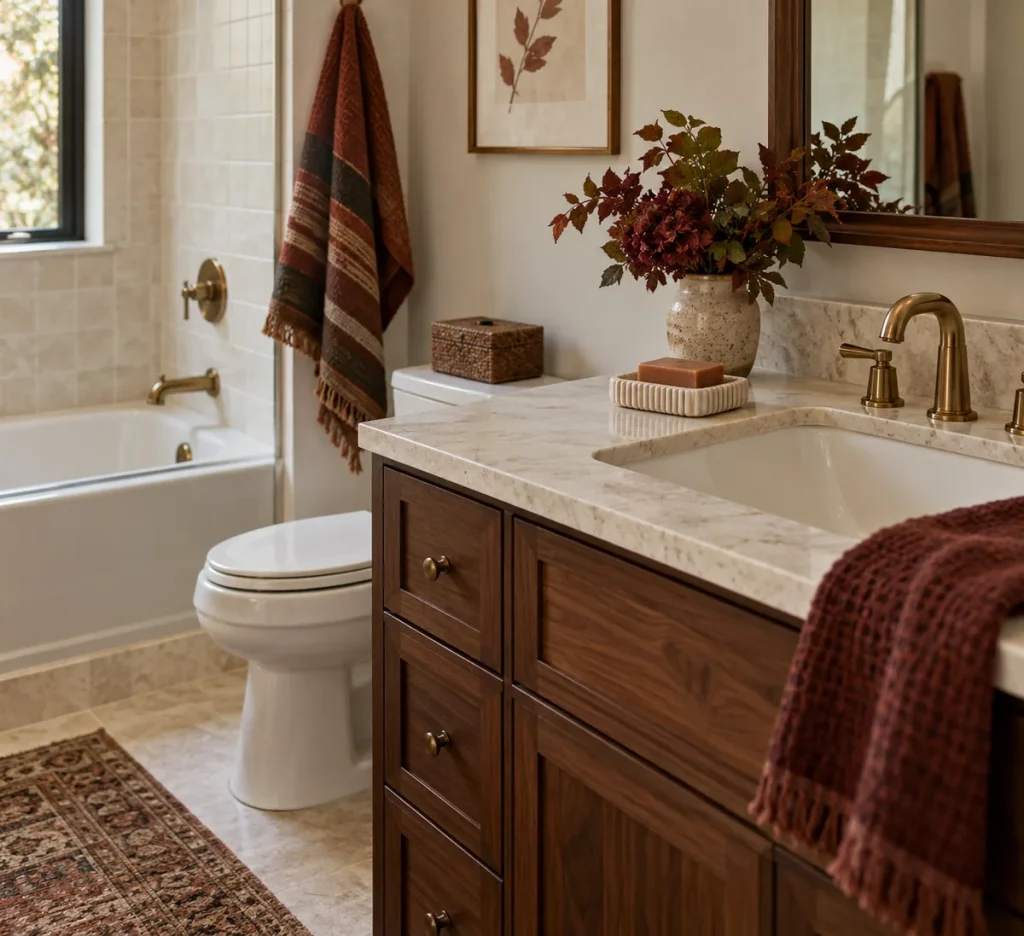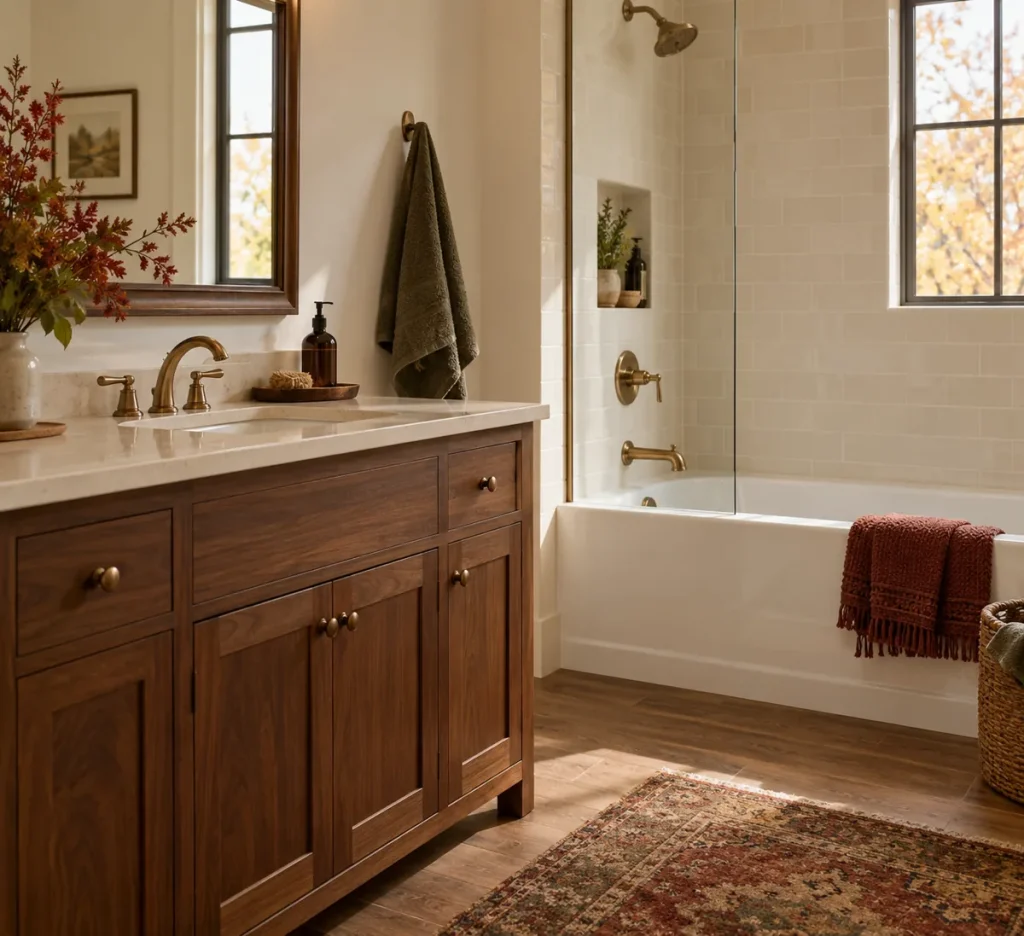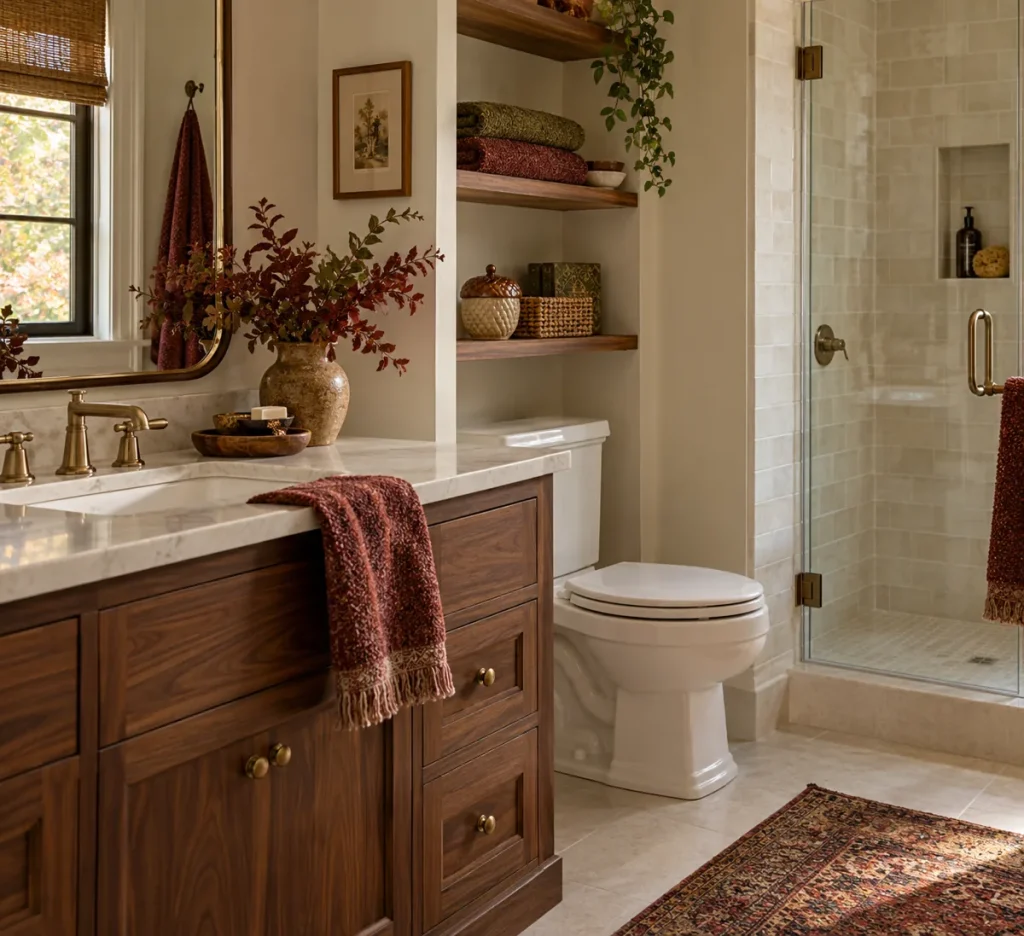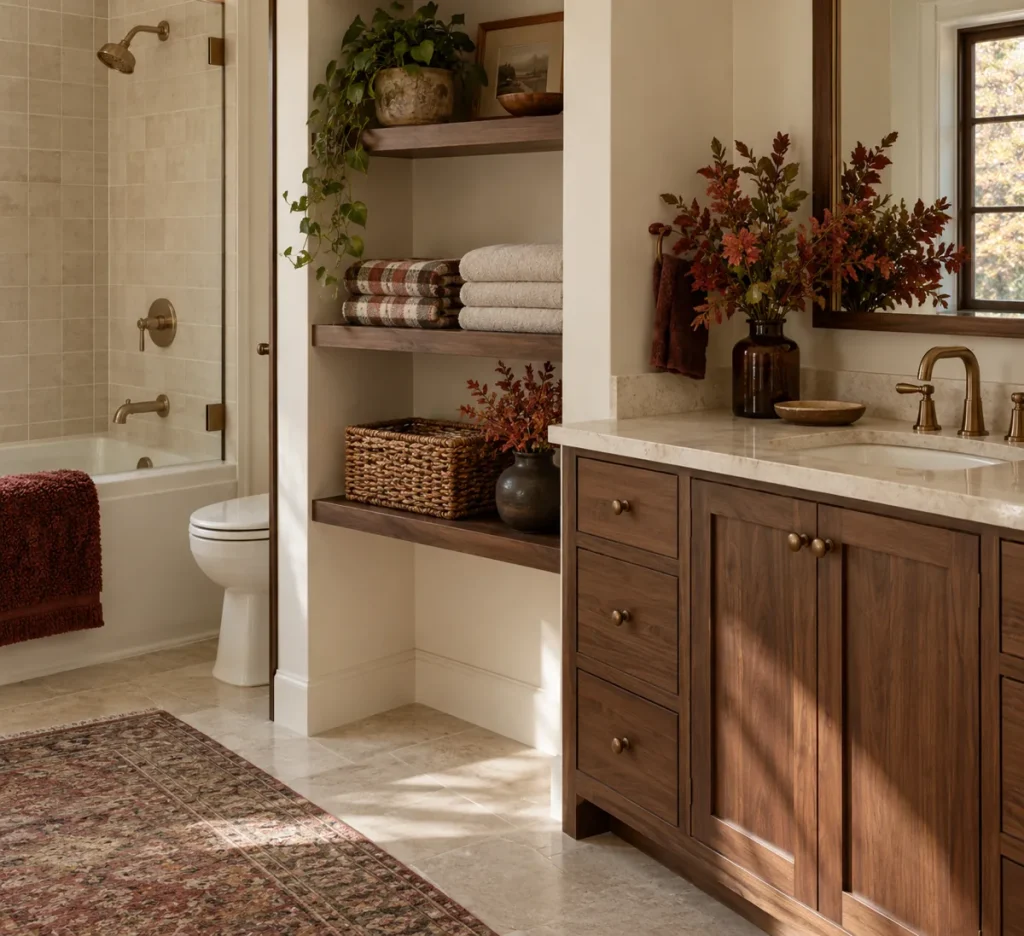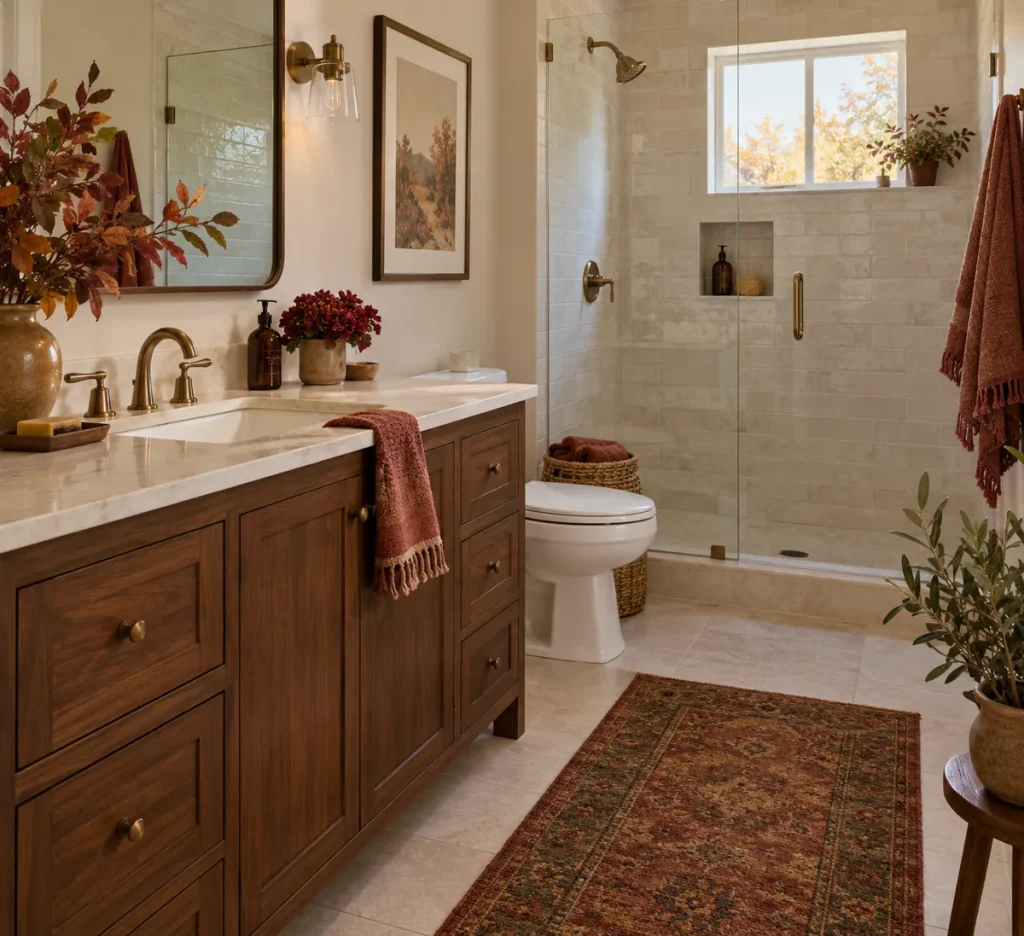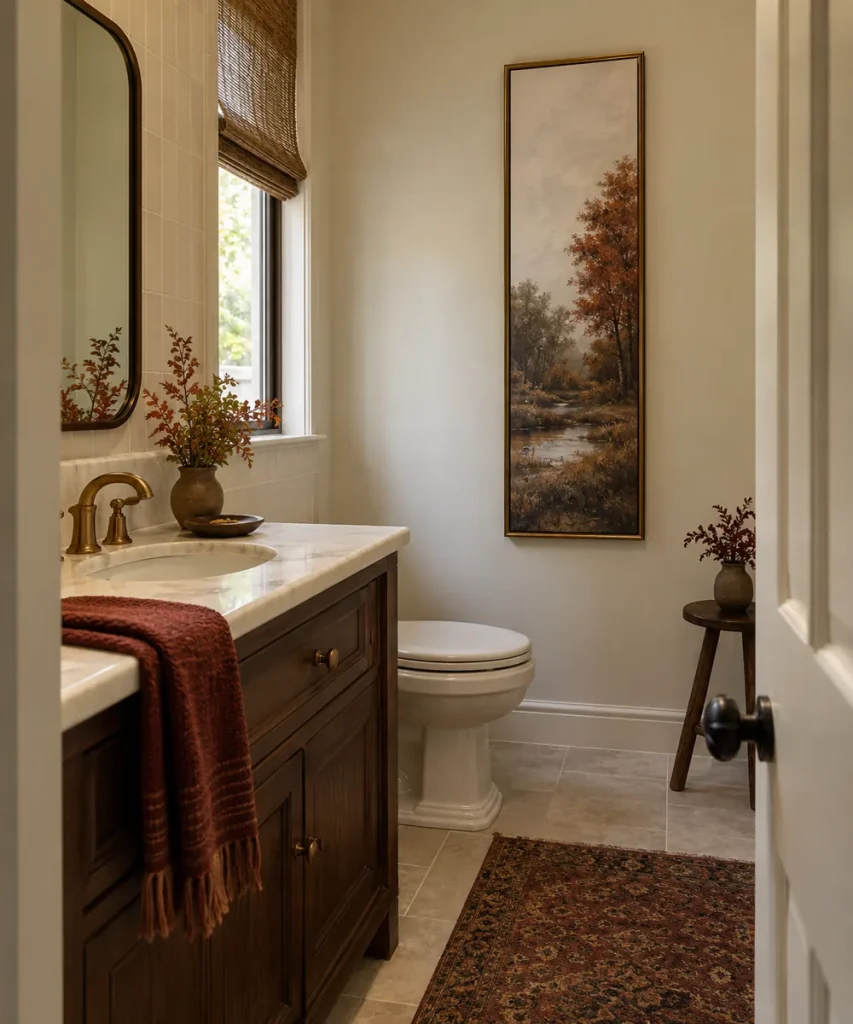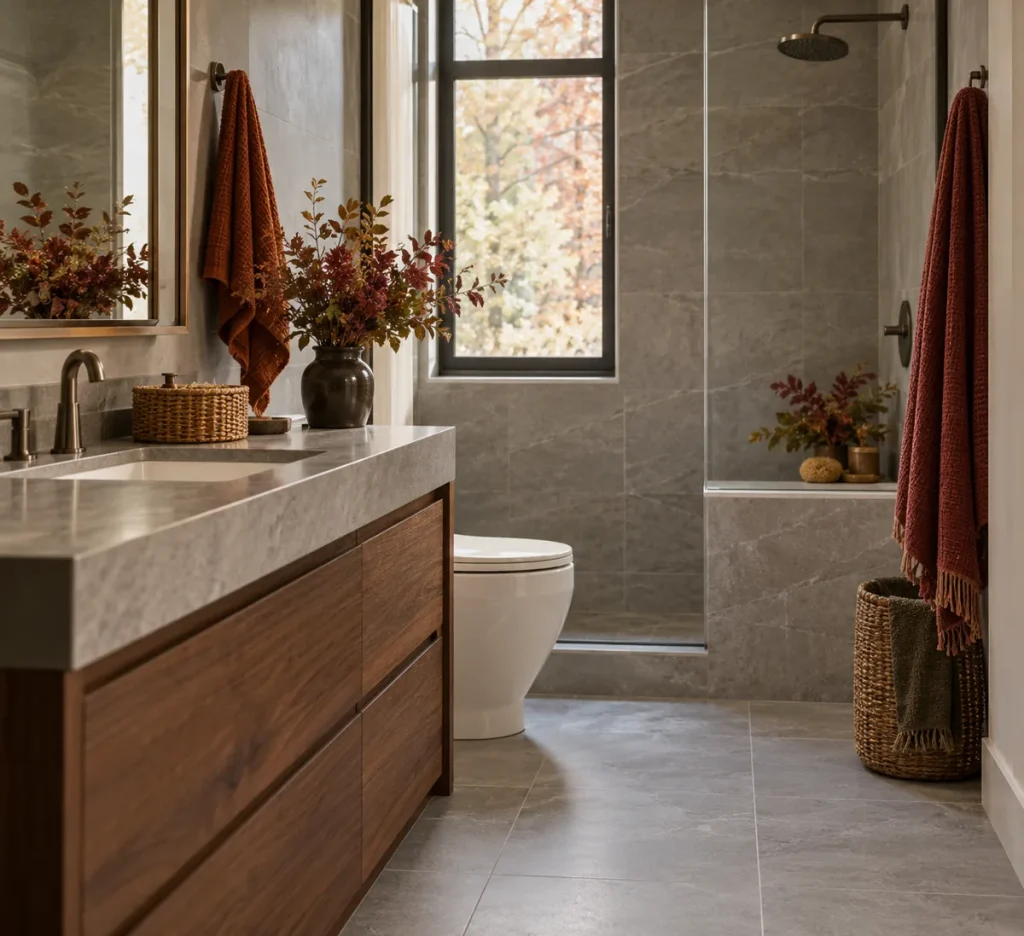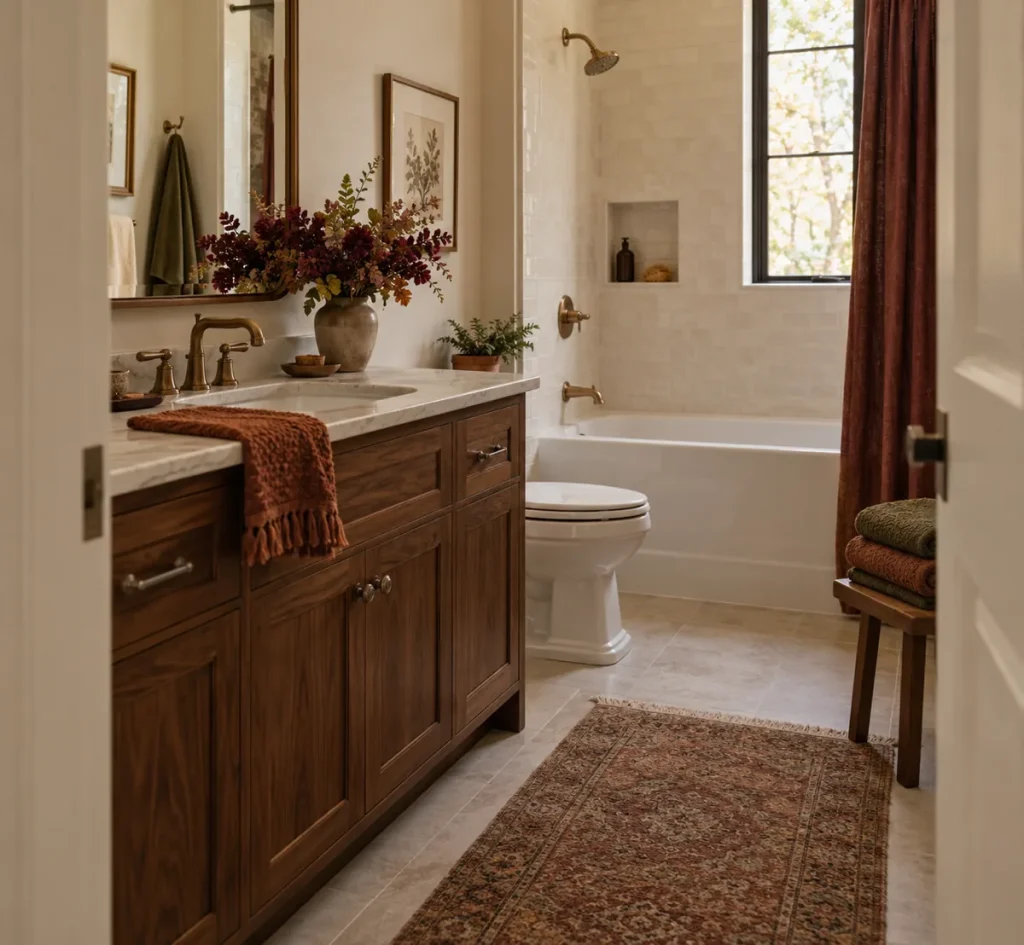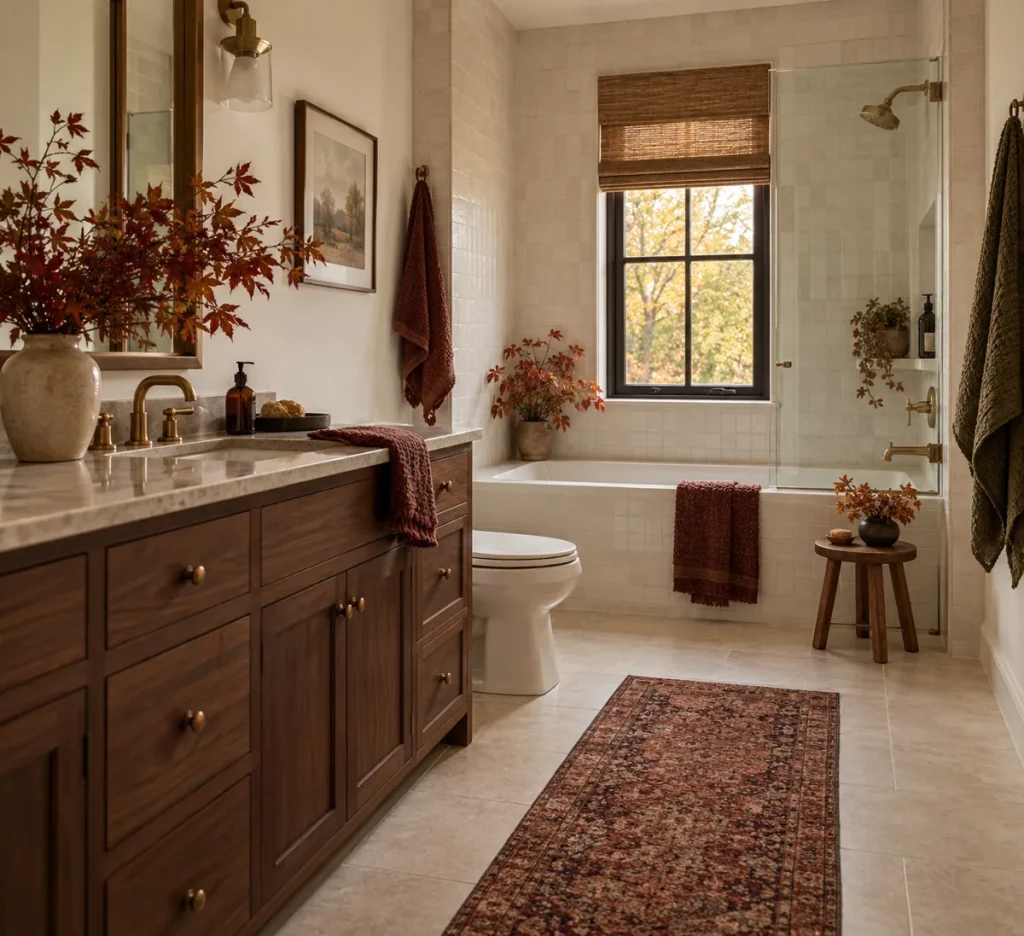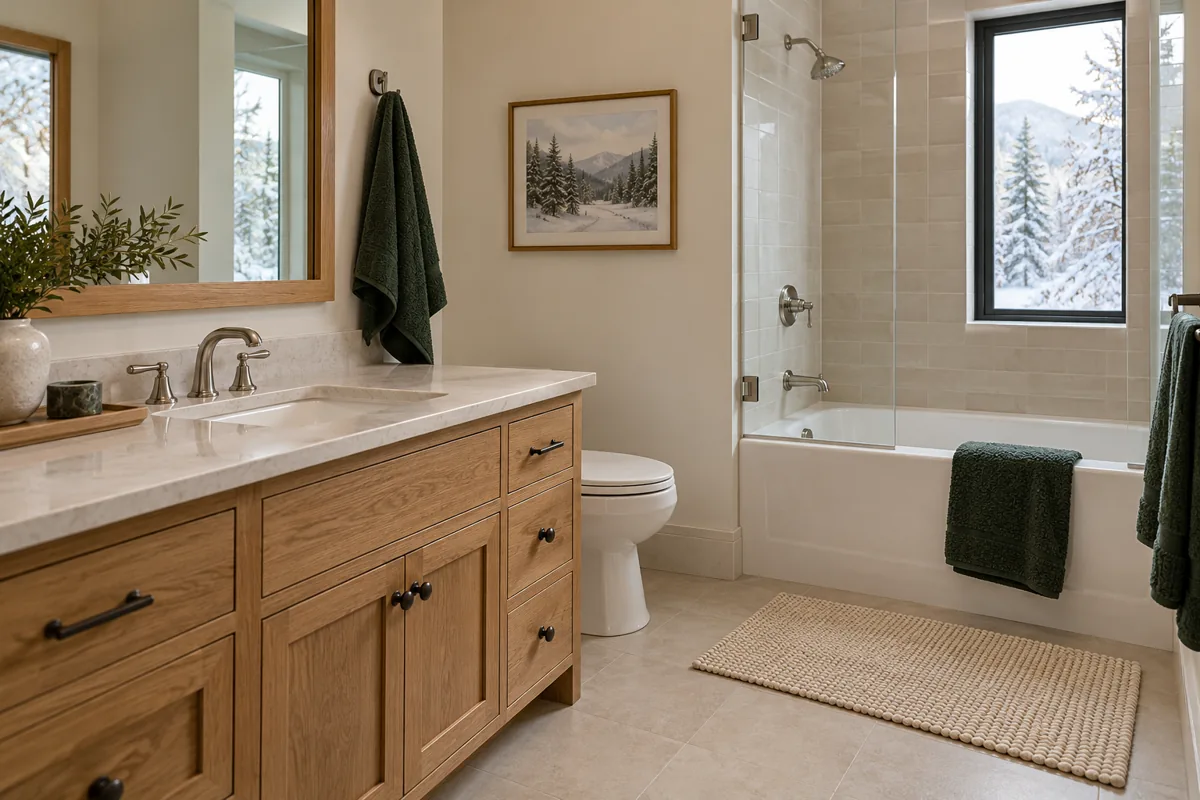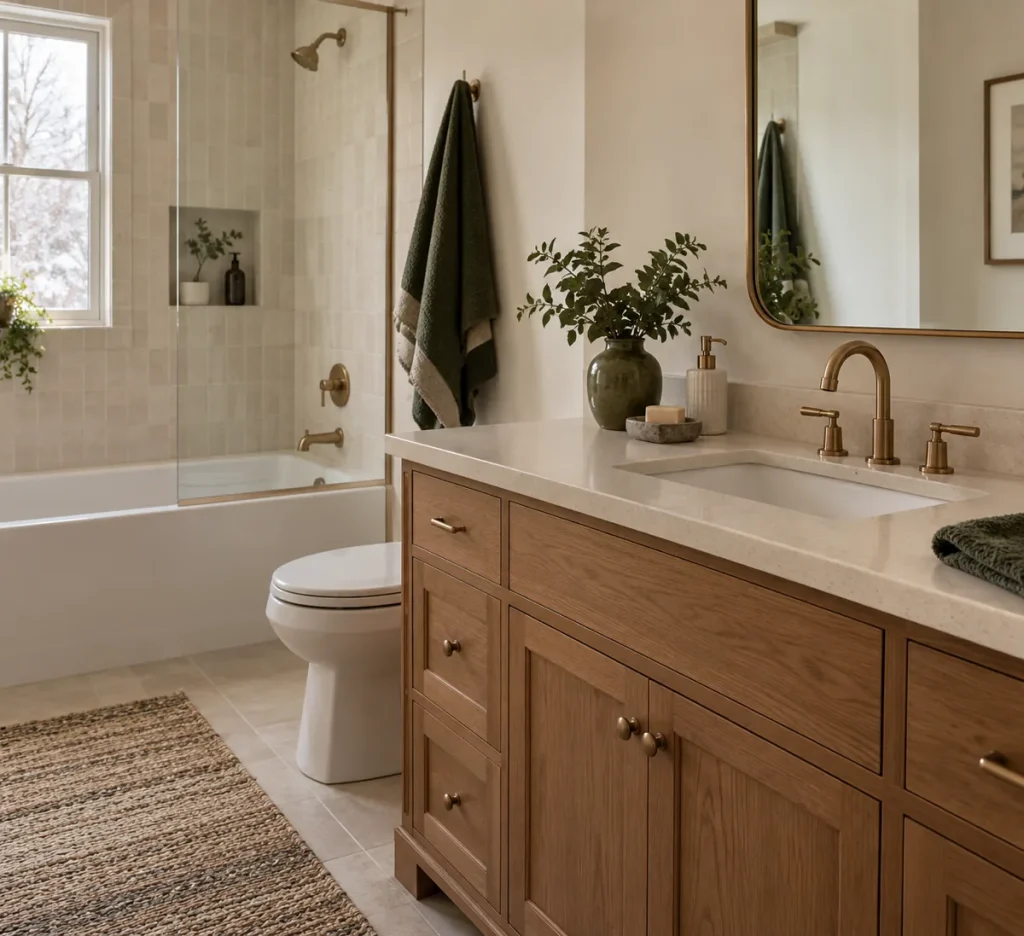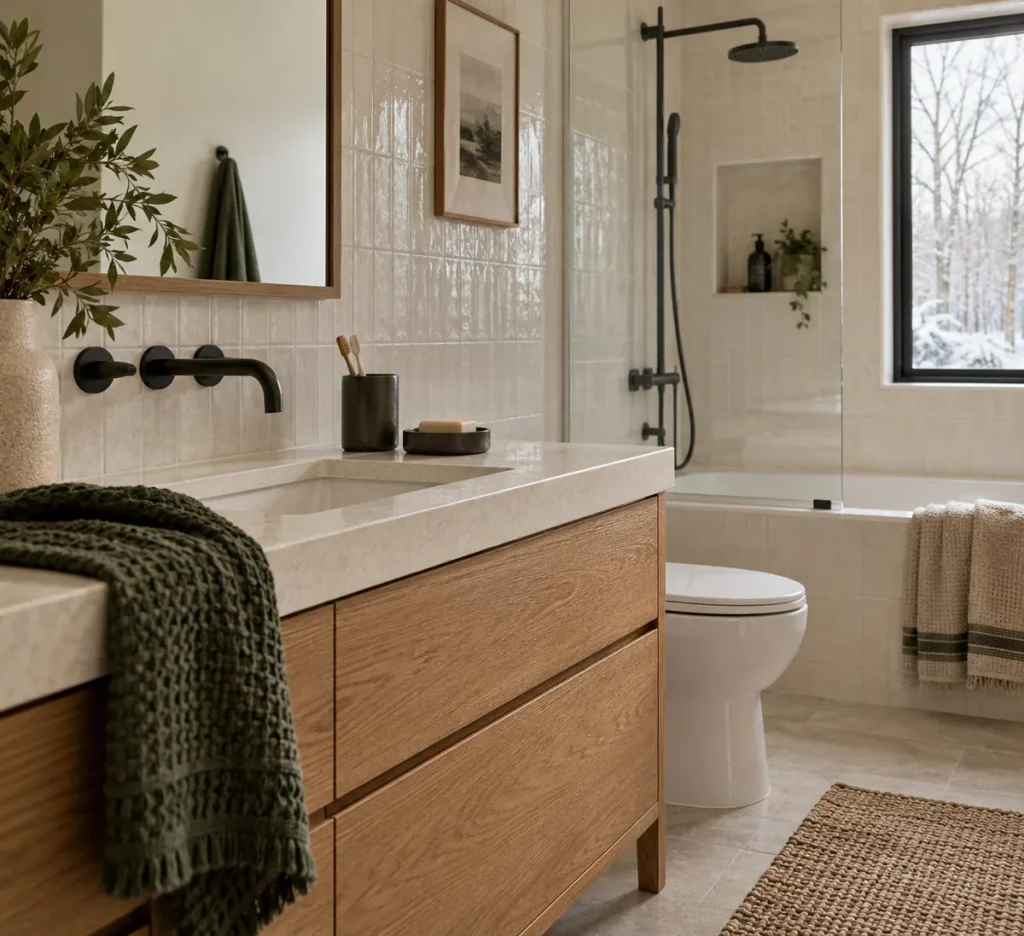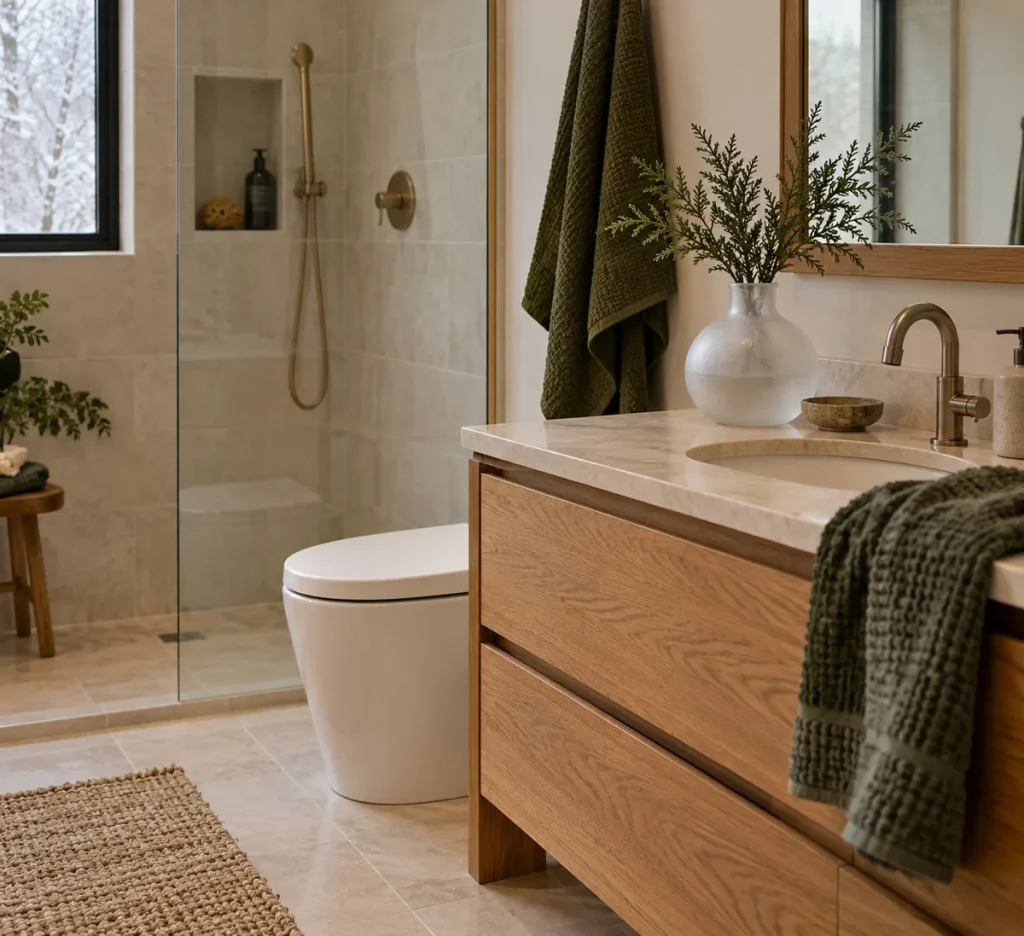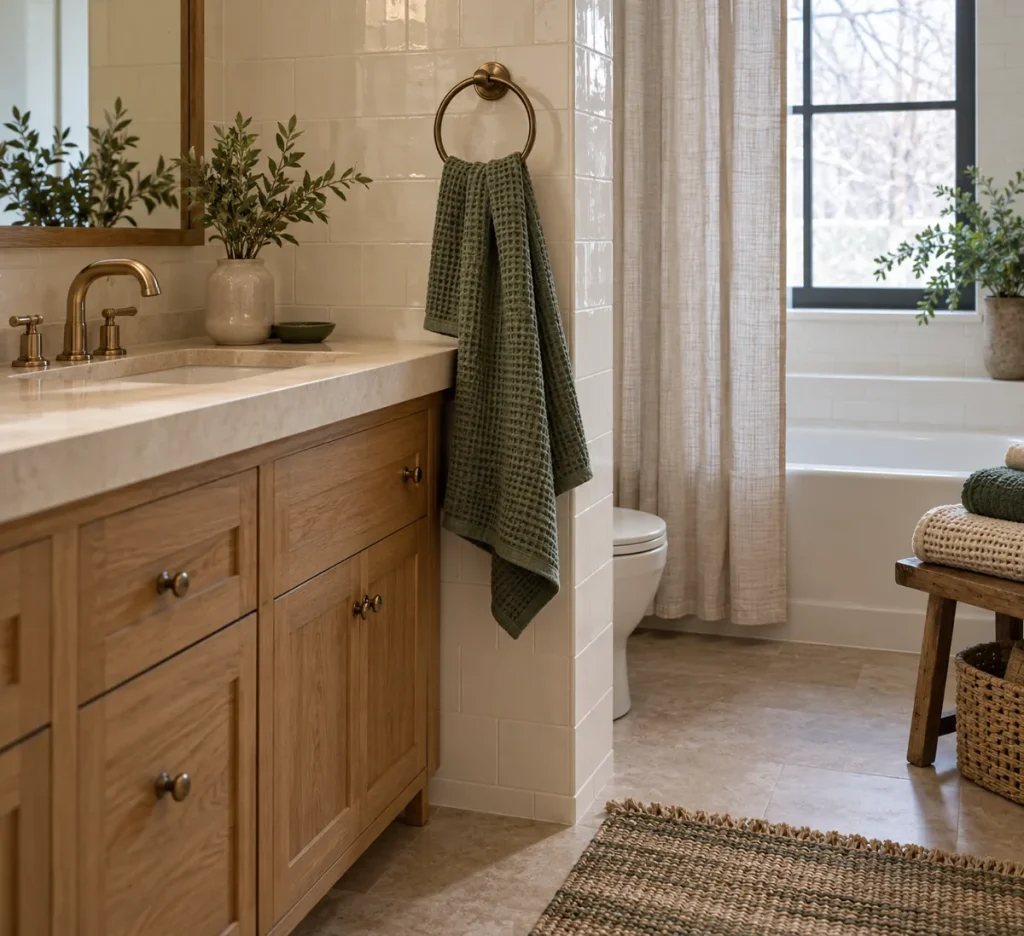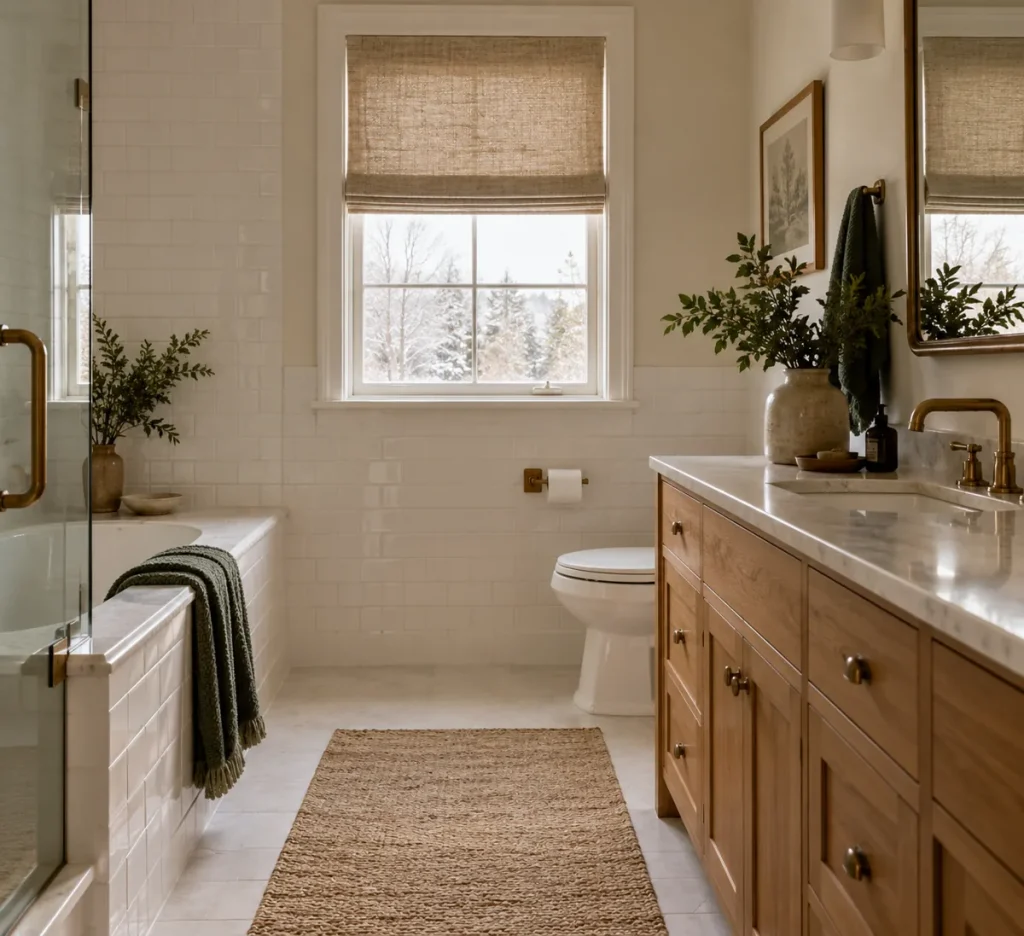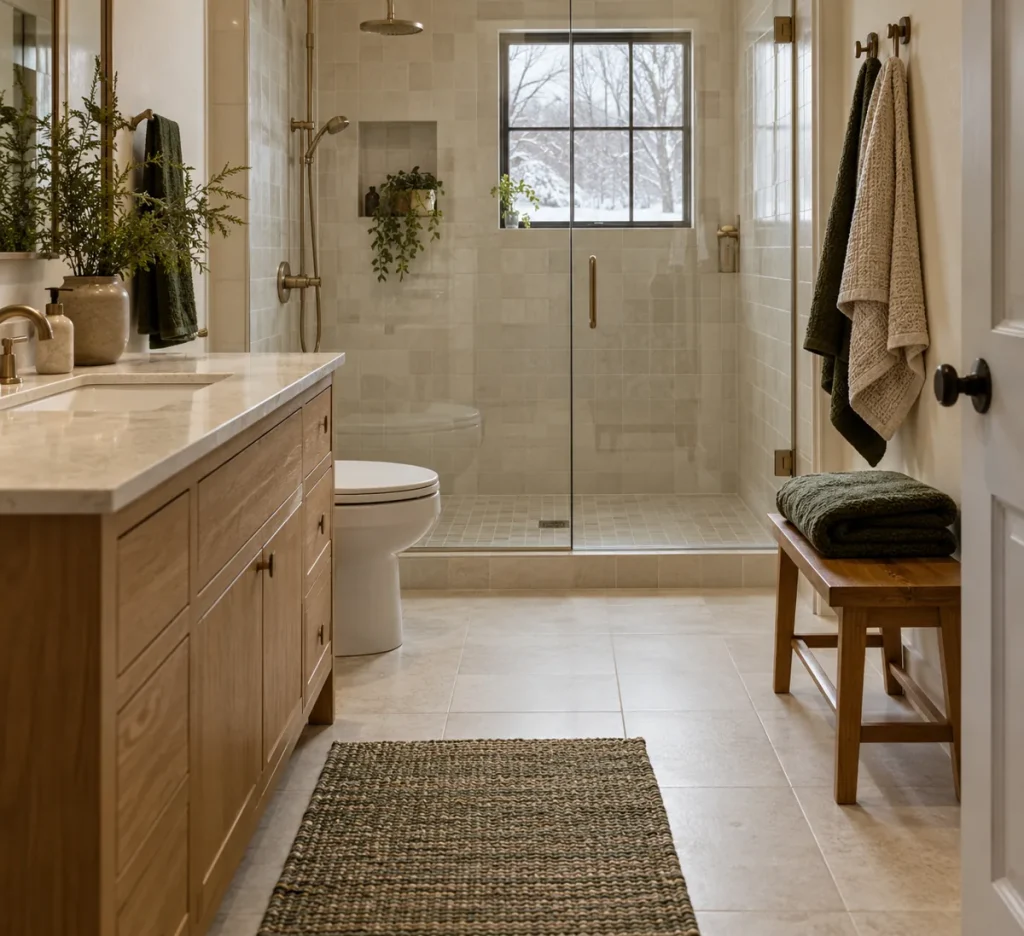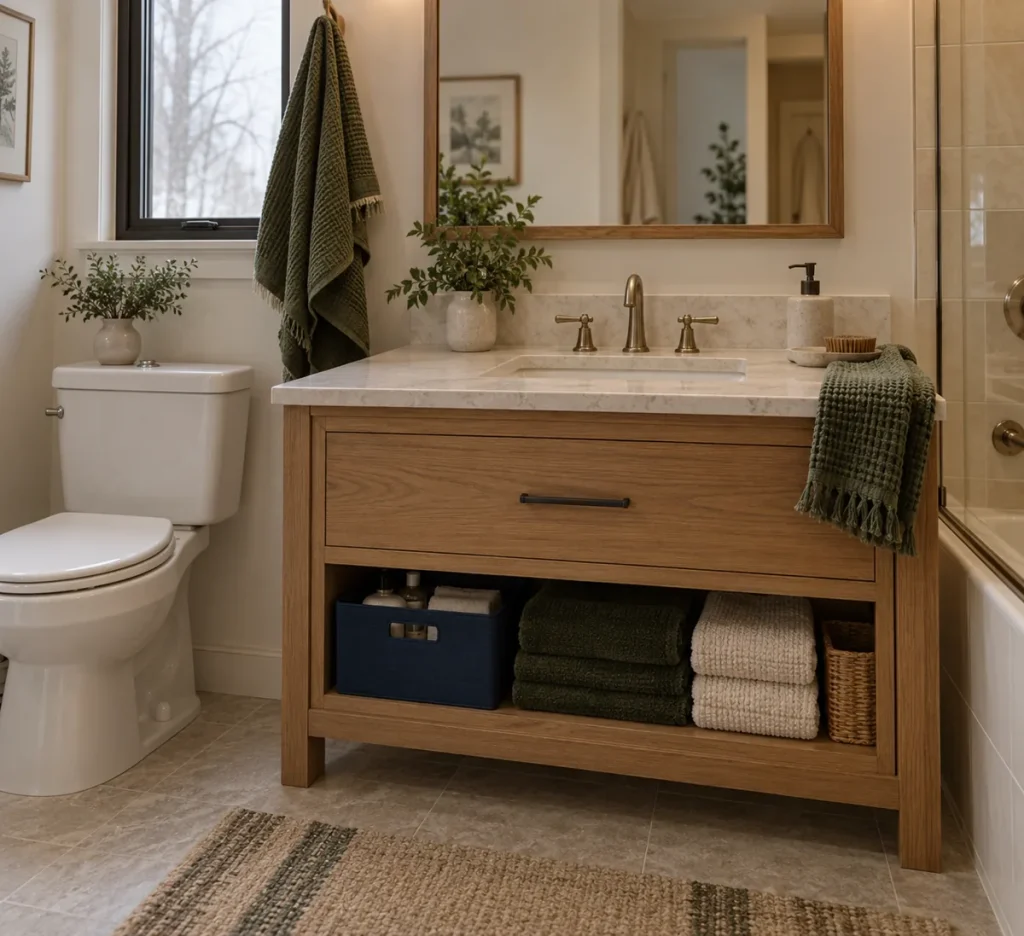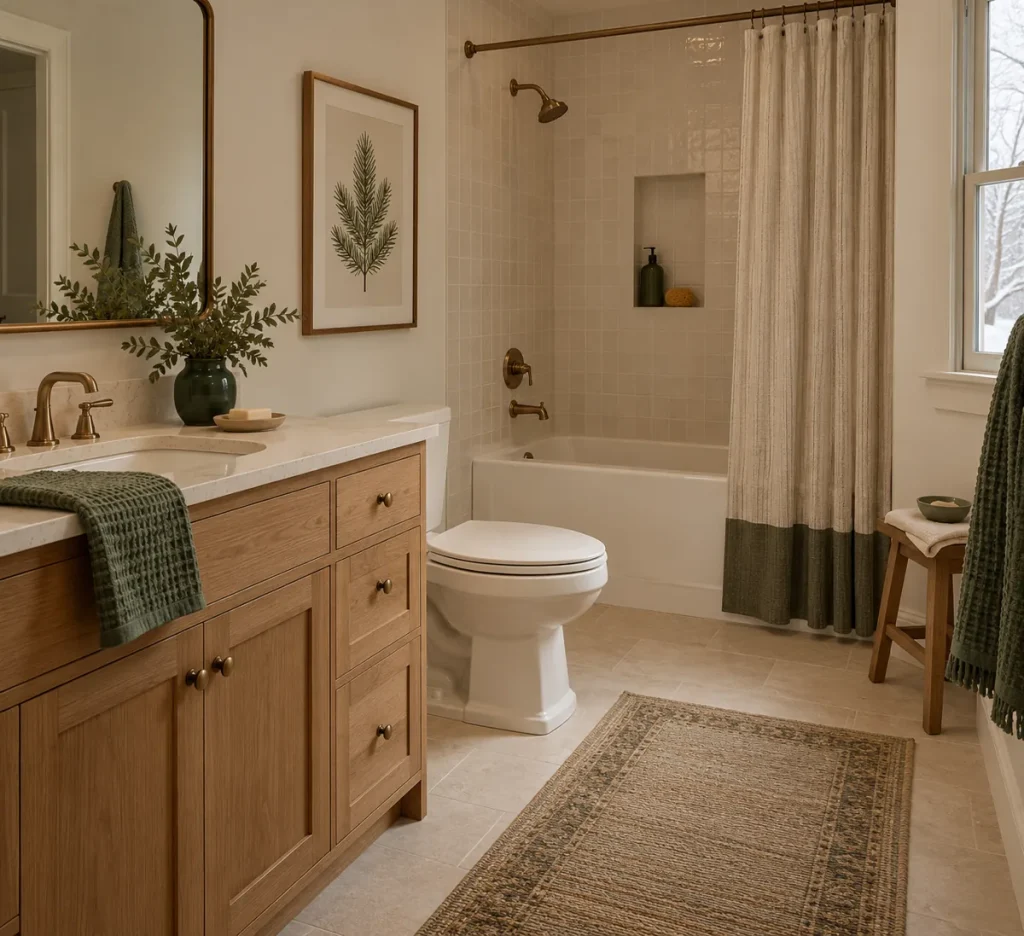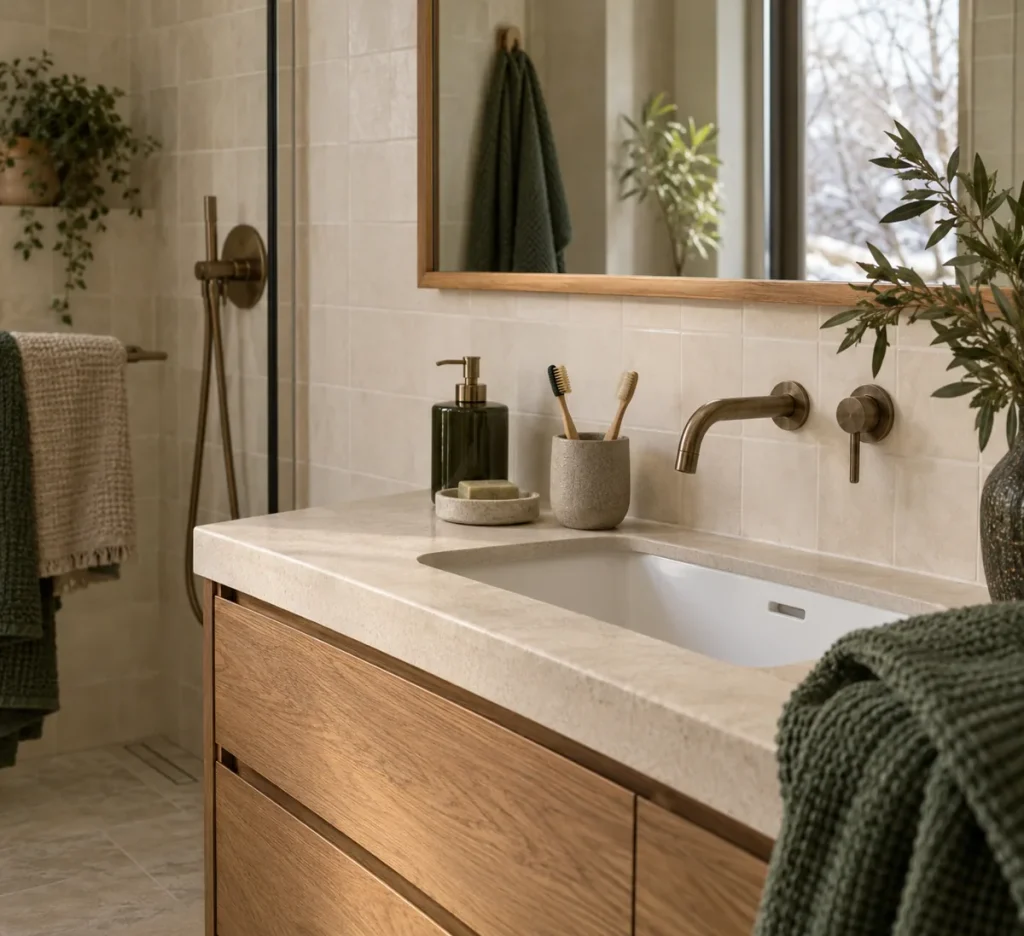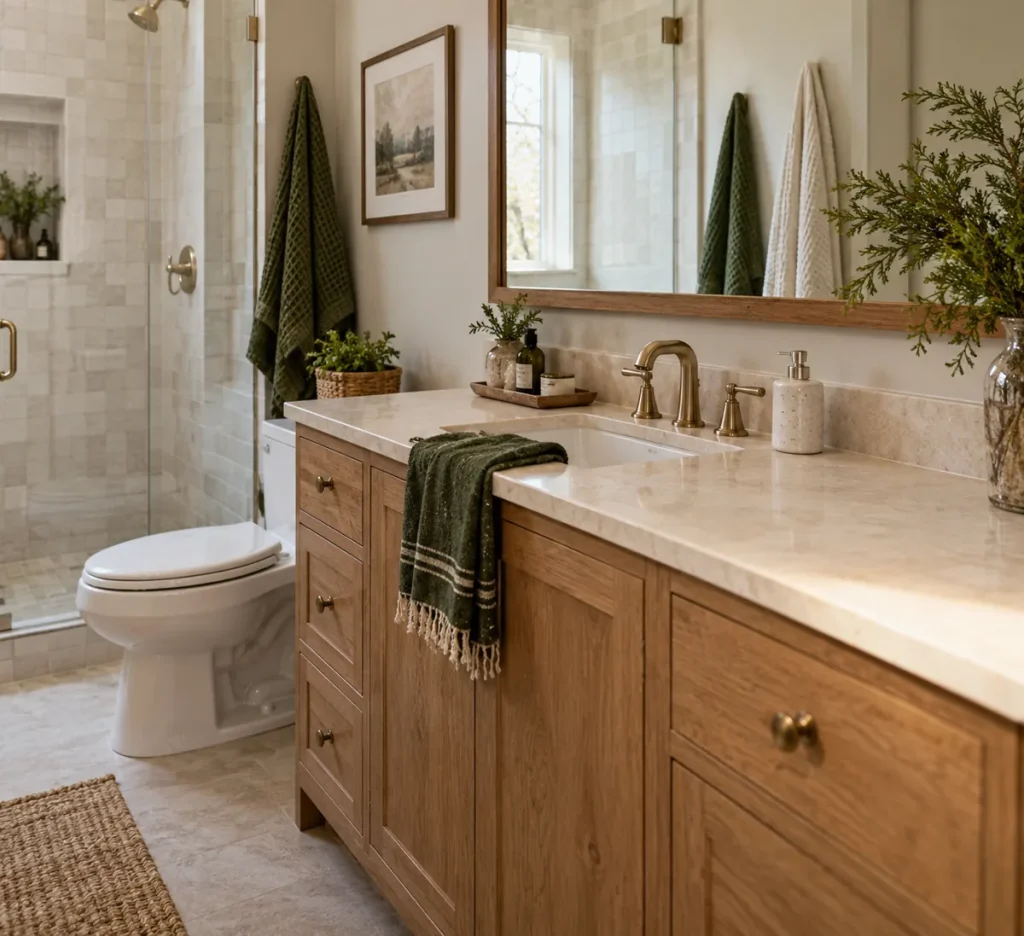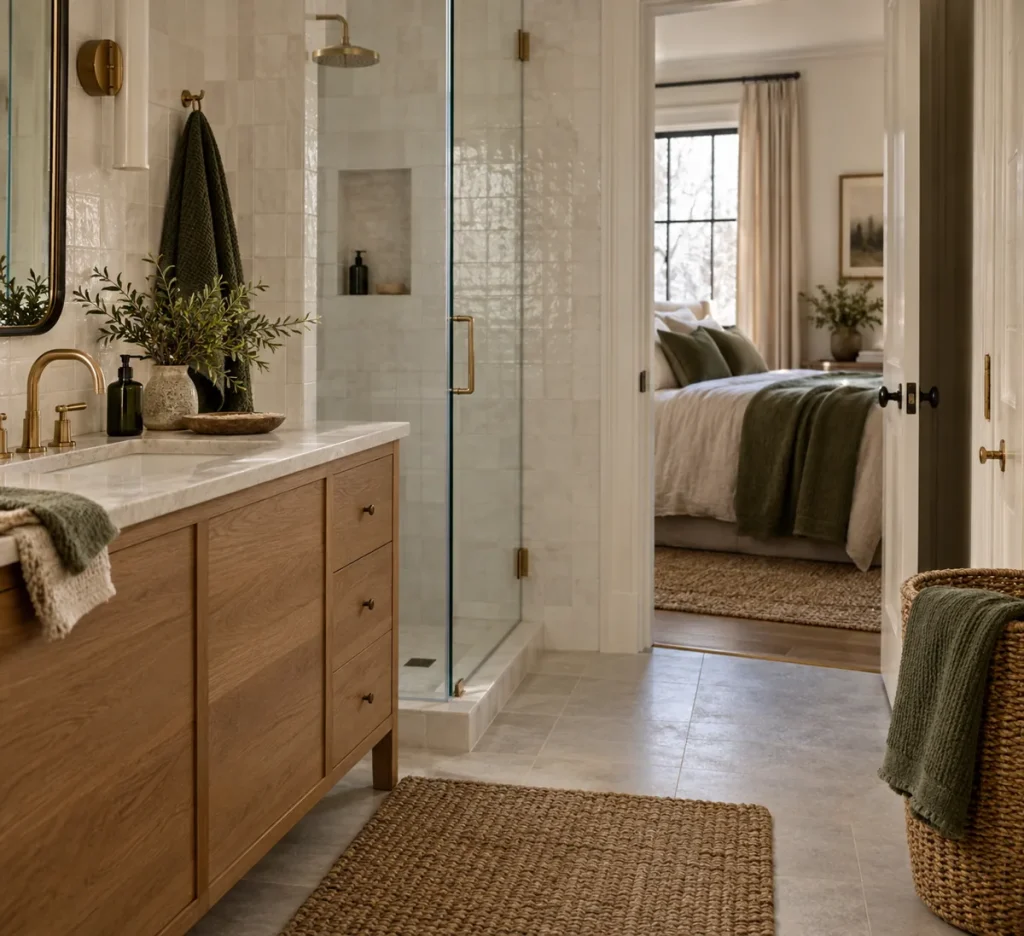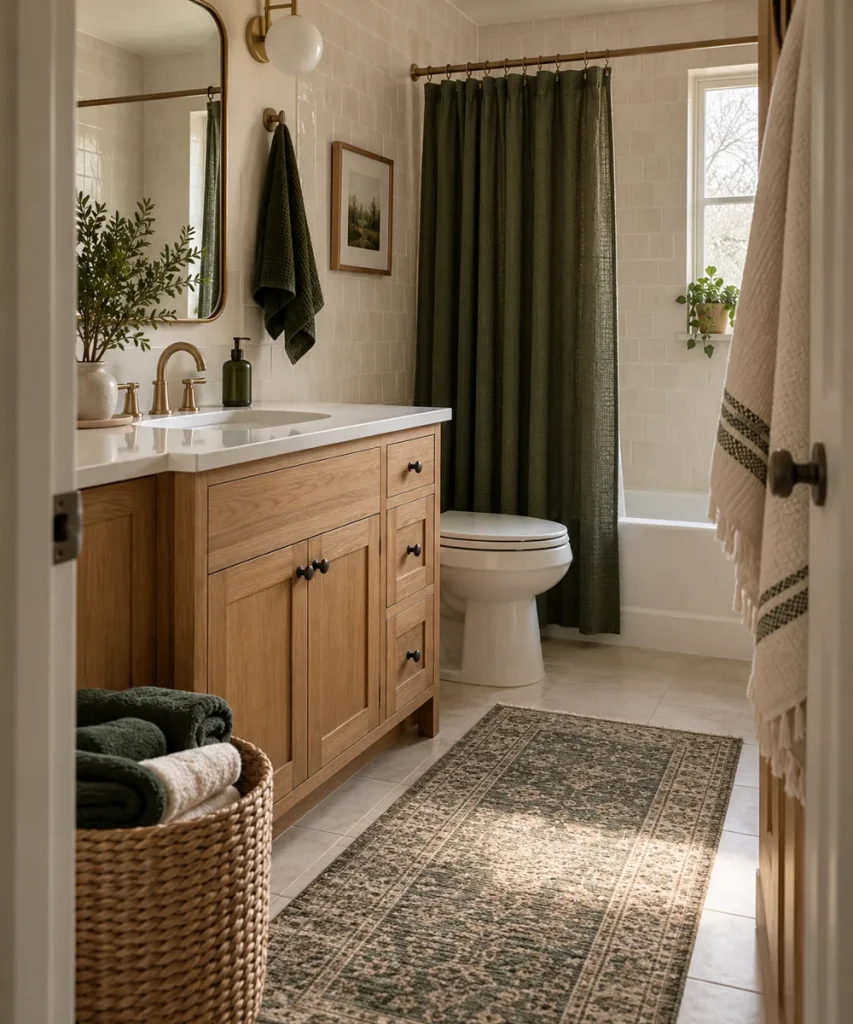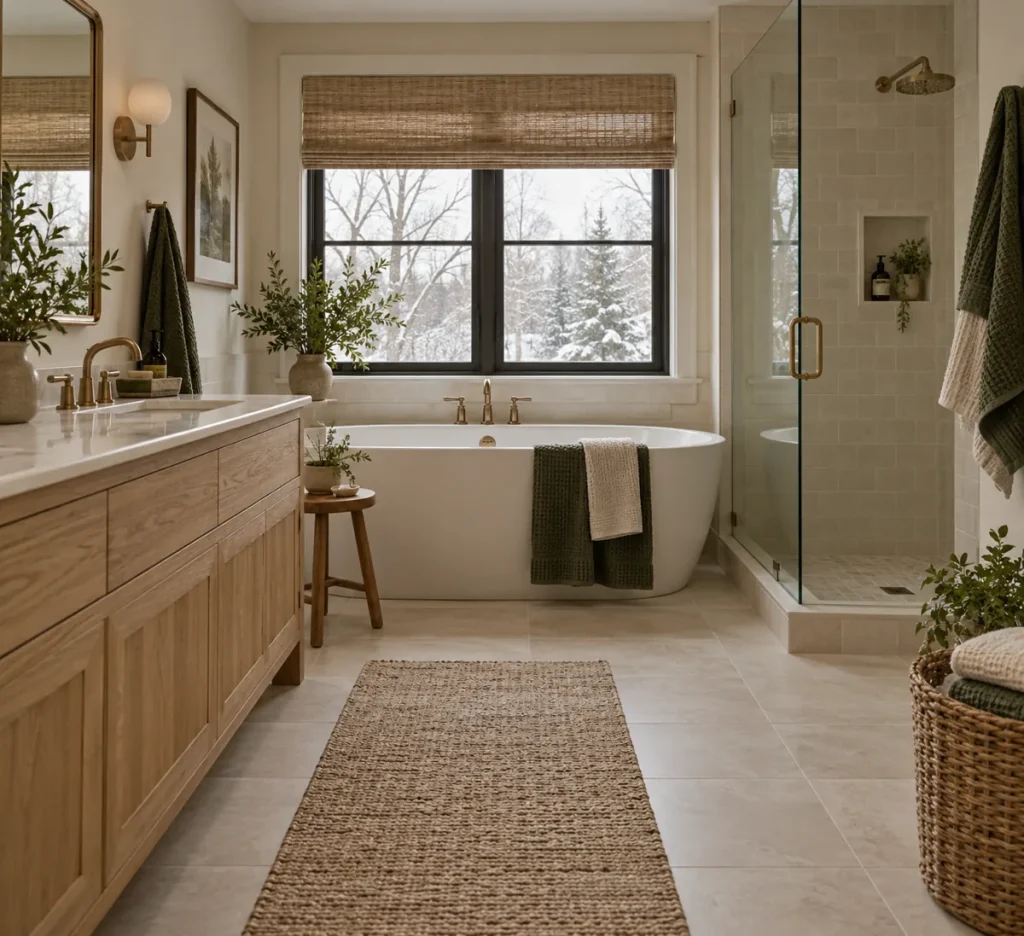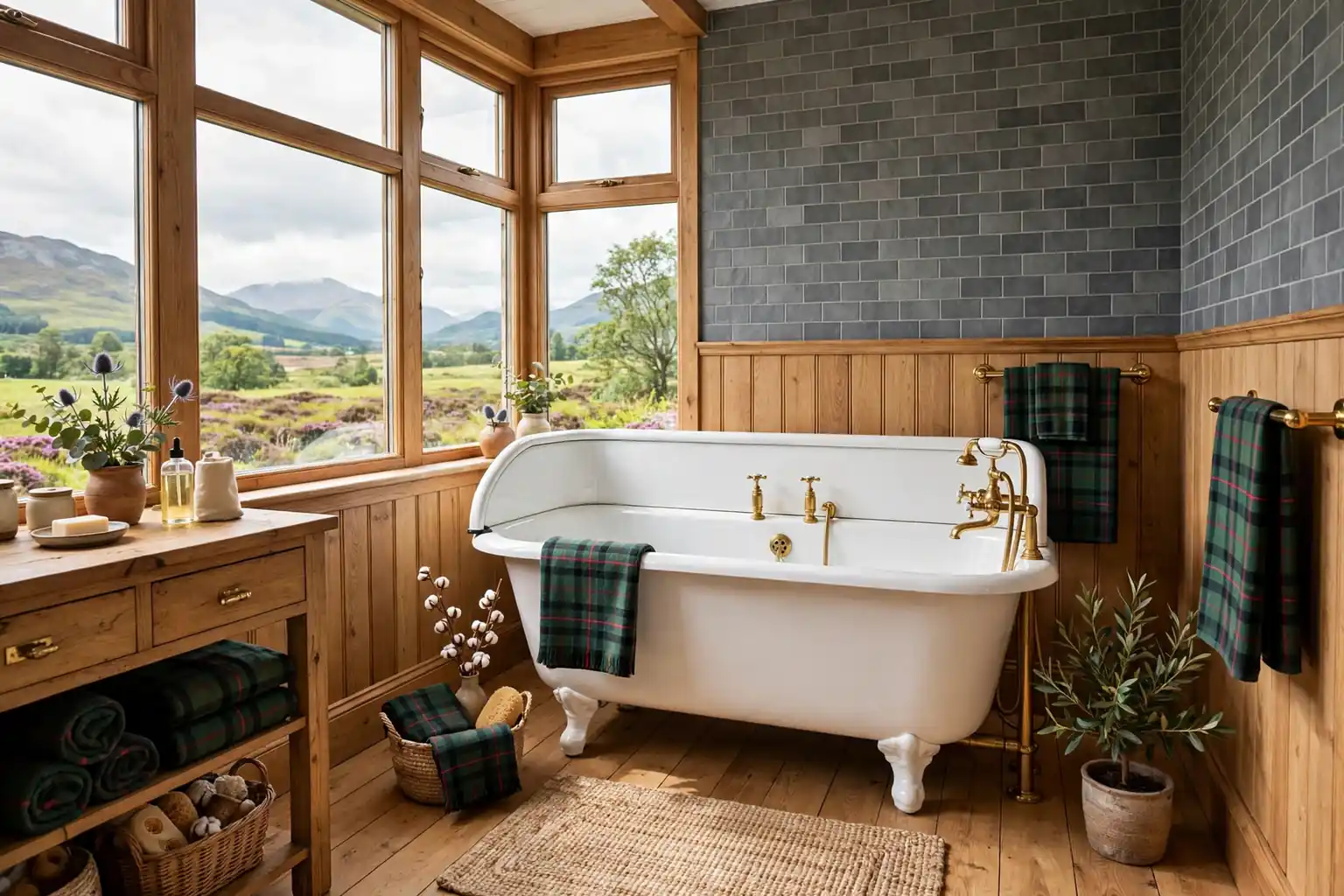
A Scottish bathroom works best when honest materials do the talking. Wool, wood, slate, and stone give the room a Highland feel, while tartan and thistle add pattern in small, controlled doses. The trick is to keep the base calm: pale walls, plain tiles, and one or two strong colours, so the room feels settled rather than themed. These 23 Scottish bathroom ideas cover colour, tile, baths, storage, lighting, and small rooms, so you can start with towels and prints or plan a full refit. Begin with the bath and the vanity, since those set the scale, then add one storage fix and one soft layer. For the same palette in a bedroom, see these Scottish bedroom ideas.
Key Takeaways
- Start with one main Scottish note, usually tartan towels or a roll-top bath, and build plain surfaces around it.
- Keep the palette small: slate grey, loch blue, heather purple, and forest tones, with cream, oat, and warm wood as the base.
- Use stone, slate, and wood for texture, and keep bright pattern to towels, a blind, or one print group.
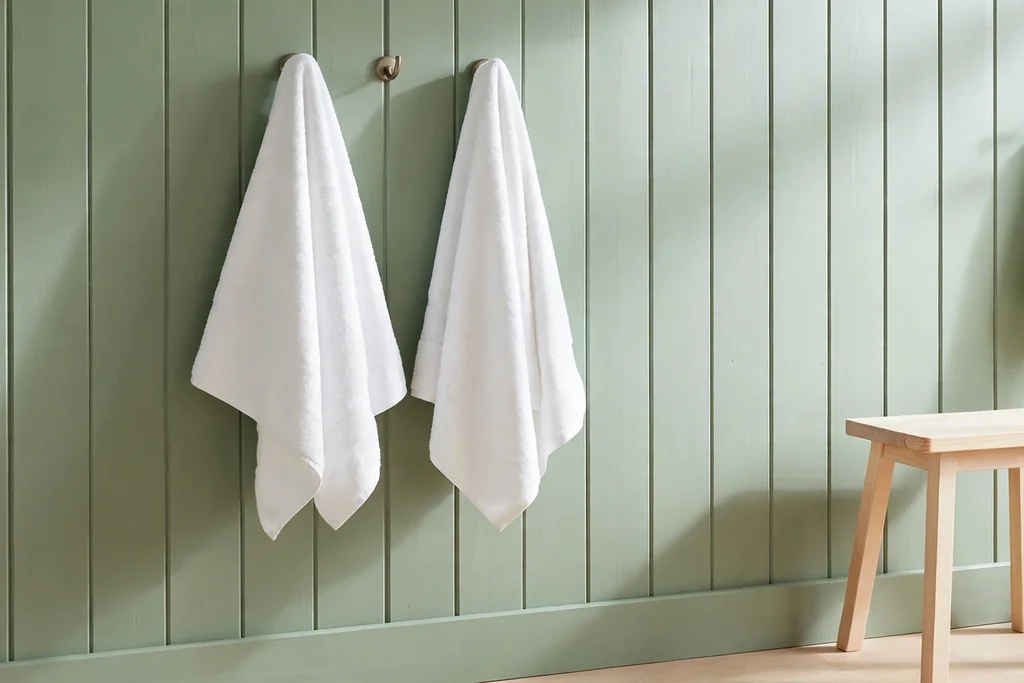
- Free floor space first with wall hung fittings, recessed niches, and ladder shelves, before adding freestanding furniture.
- Put storage where it is used: niches in the shower, baskets near the bath, and shelves above the toilet or beside the vanity.
- Choose moisture tolerant finishes near the shower and sink, and keep wool, tweed, and untreated wood clear of direct spray.
1. Tartan Towels and a Tartan Blind for Instant Character
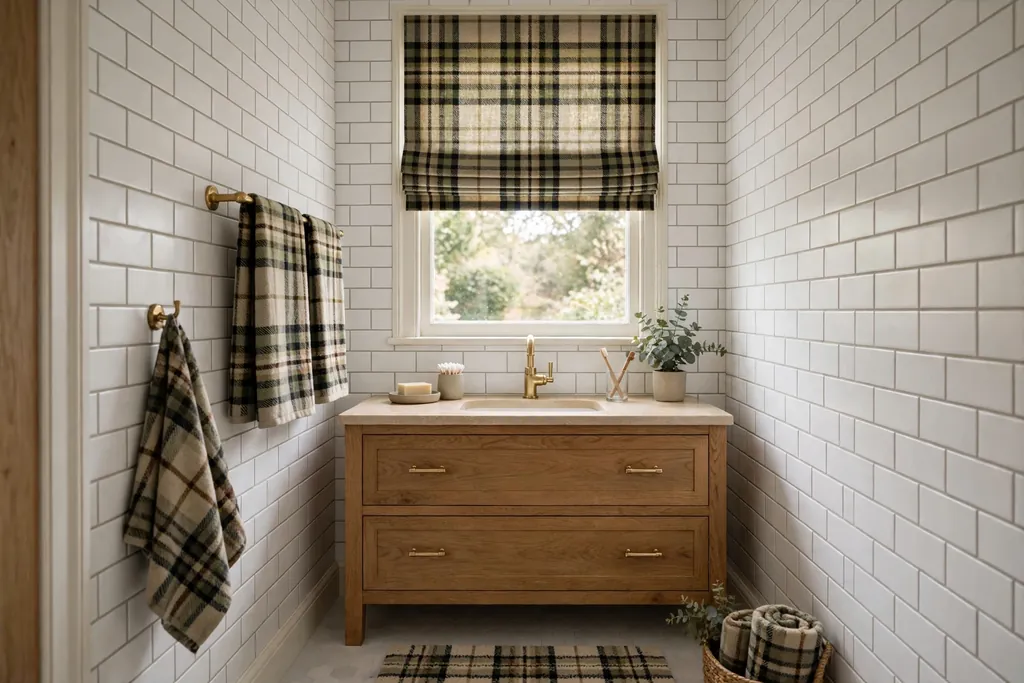
Swap in tartan towels and a tartan Roman blind for the fastest Scottish change in a bathroom, with no paint and no building work. A muted green, navy, or red check on towels and one blind gives the room a clear identity, while white tiles and a plain vanity keep the pattern from taking over. This suits a rented bathroom or a plain white room that needs warmth, since both pieces can move with you.
Keep the rest of the textiles solid in cream or oat, so the check reads as one planned accent rather than a collection of prints. Wash the towels separately first, since strong checks can shed dye, and choose a blind fabric that copes with steam, or hang the blind on a window clear of the shower. If tartan towels feel too bold, start with one tartan hand towel and a plain bath mat, then add the blind later.
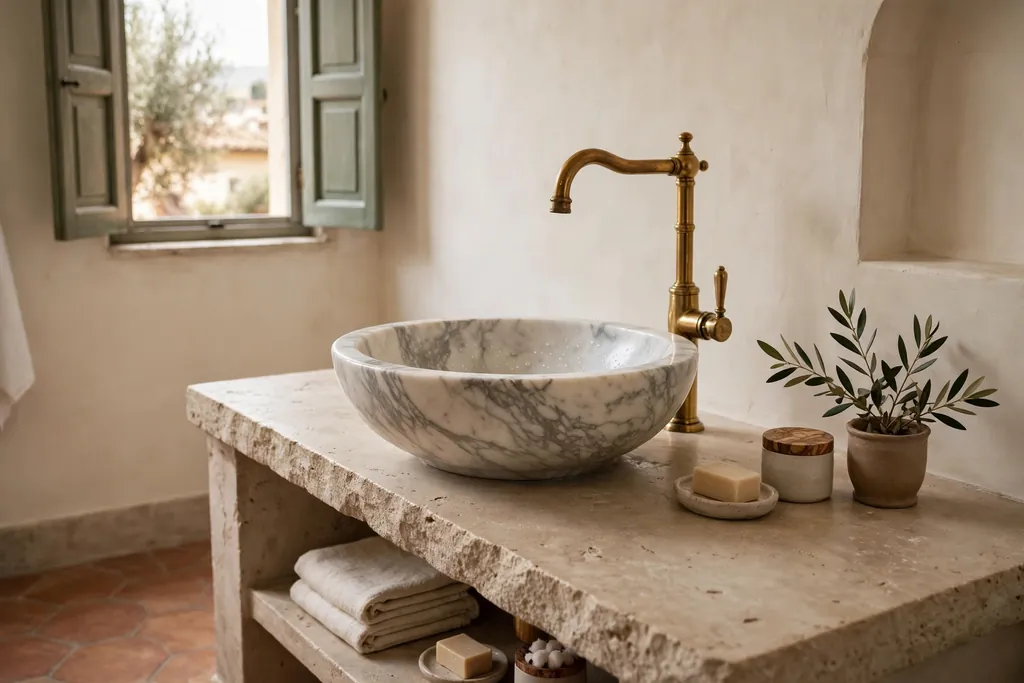
2. Slate Grey Tiles with a Stone Vessel Basin
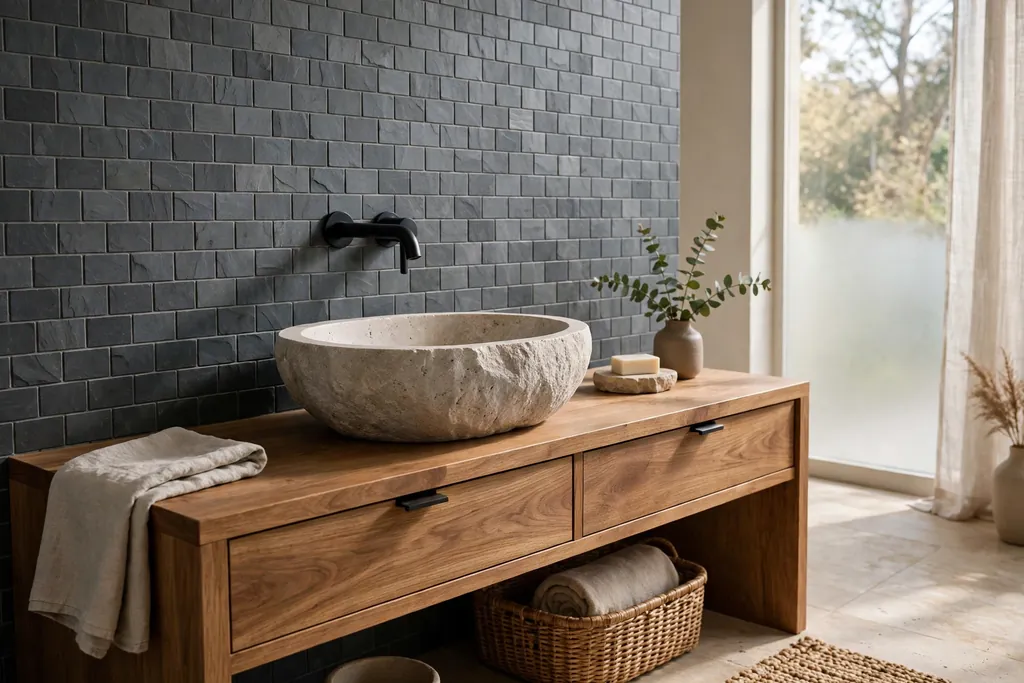
Pair slate grey wall tiles with a natural stone vessel basin for a bathroom that nods to Highland rock without looking cold. The grey tiles give a calm, even background, while the stone basin adds a rough, natural edge that suits a wood vanity and matte taps. This combination works well in a medium bathroom, where the basin can sit proud of the vanity and be seen from the door.
Keep the grout a mid grey so the tiles read as one surface, and seal the stone basin as the maker advises, since natural stone can mark from soap and toothpaste. Pair the basin with a simple round or rectangular mirror, and keep the counter mostly clear, so the stone stays the focus. If a stone basin is too large a step, use slate grey tiles with a plain white basin and a stone soap dish for a smaller version of the same palette.
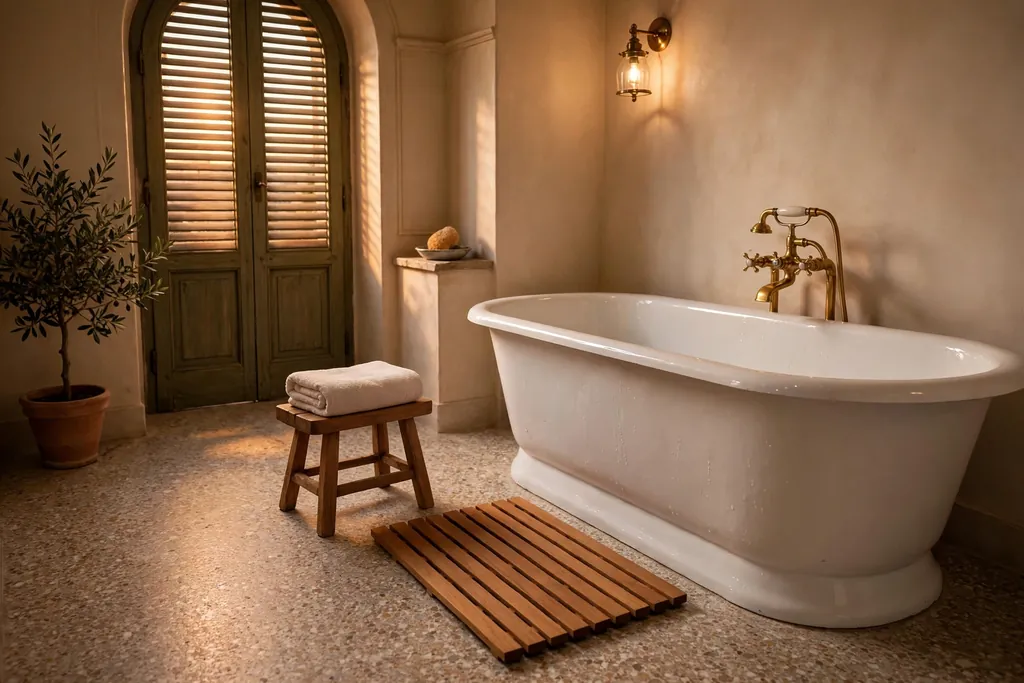
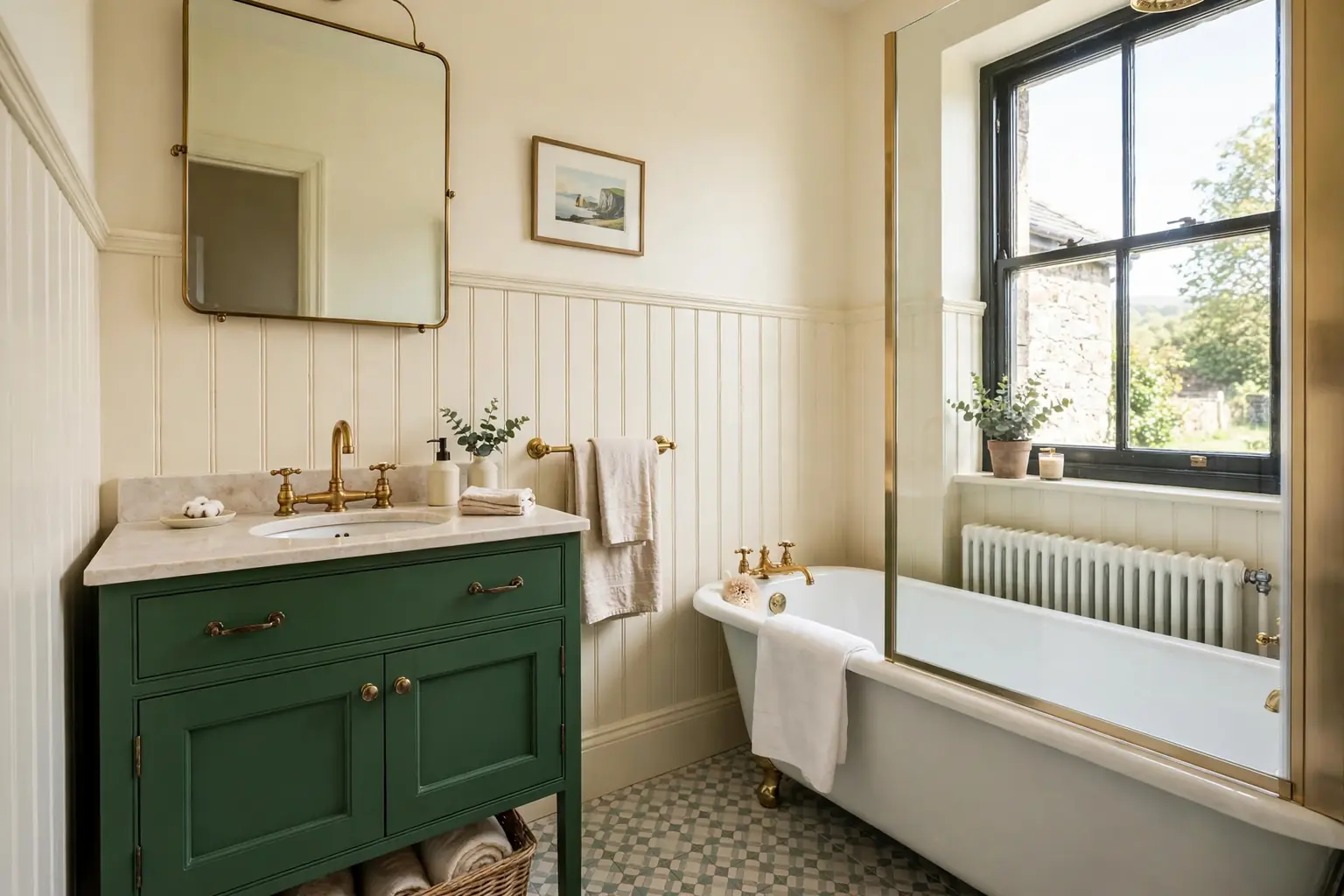
3. A Freestanding Roll-Top Bath with Claw Feet
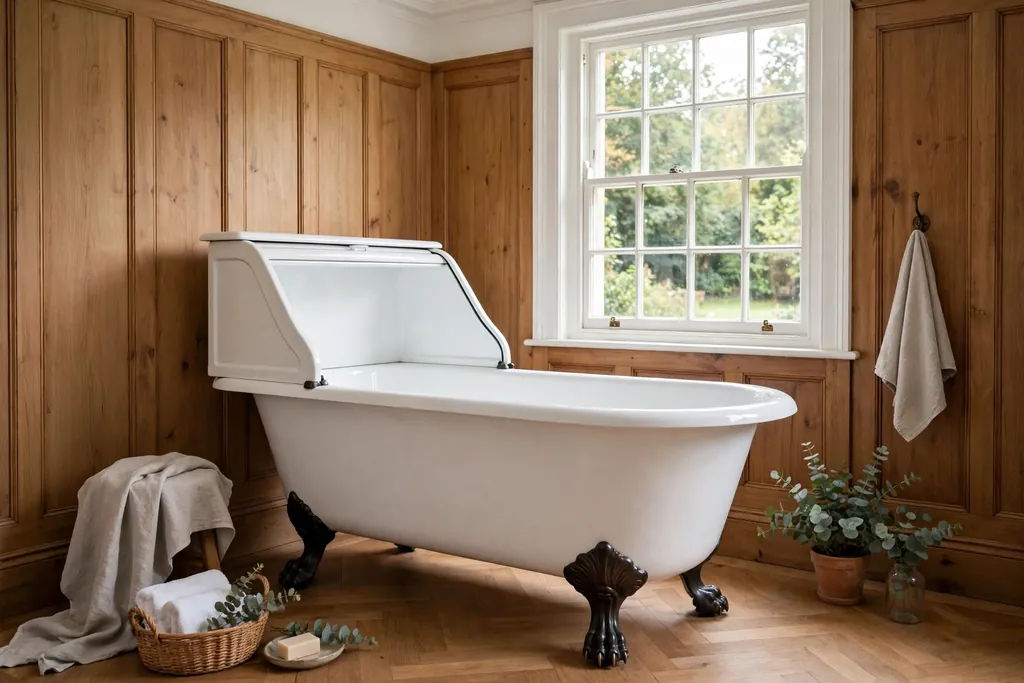
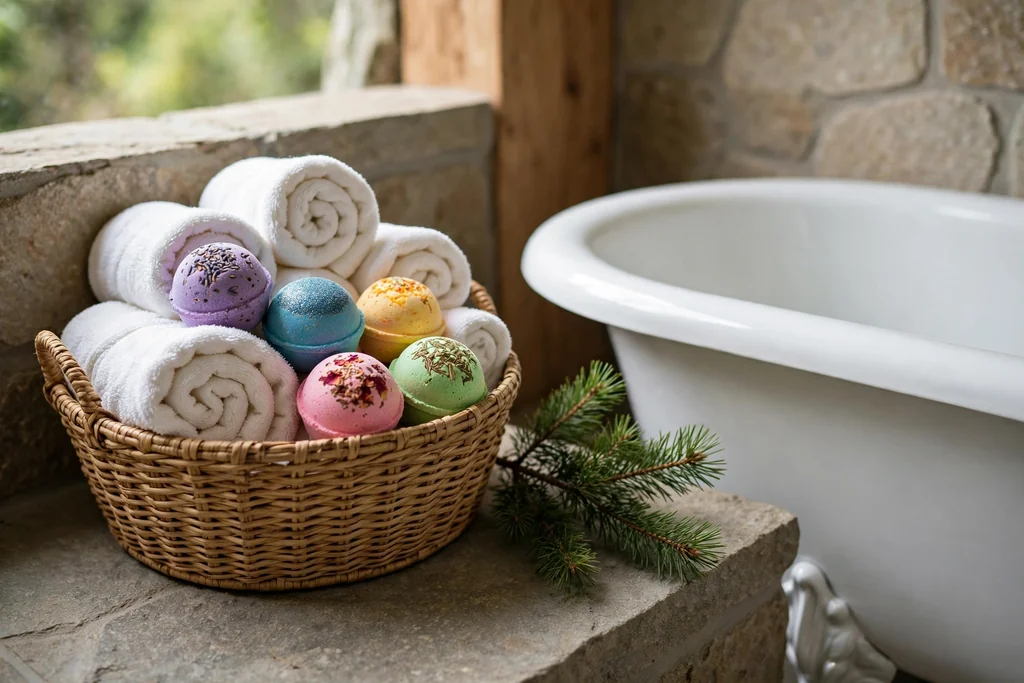
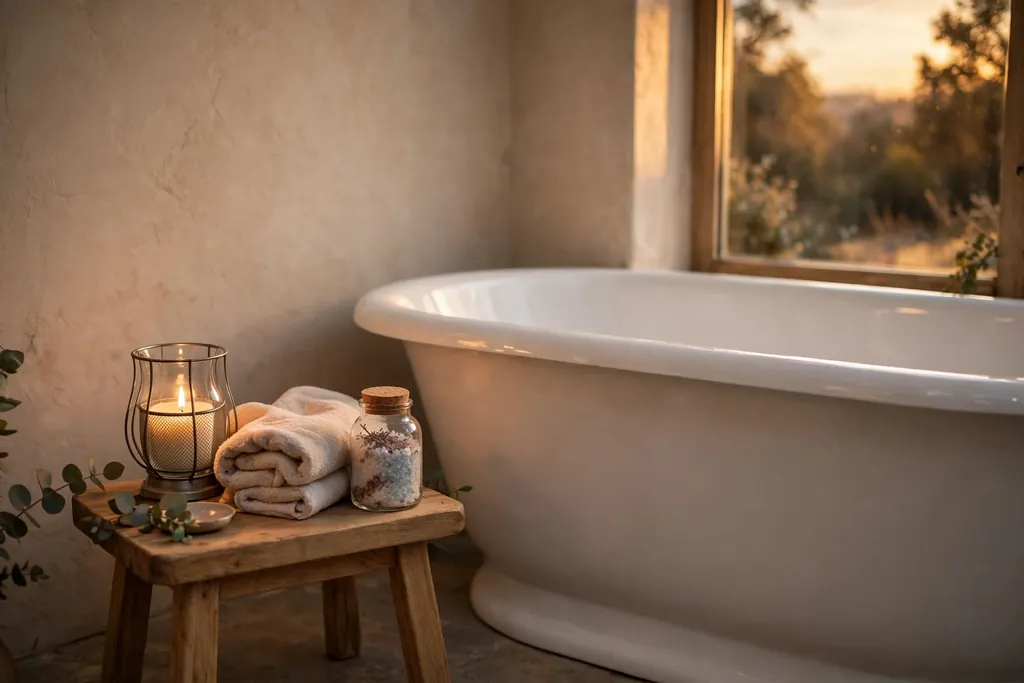
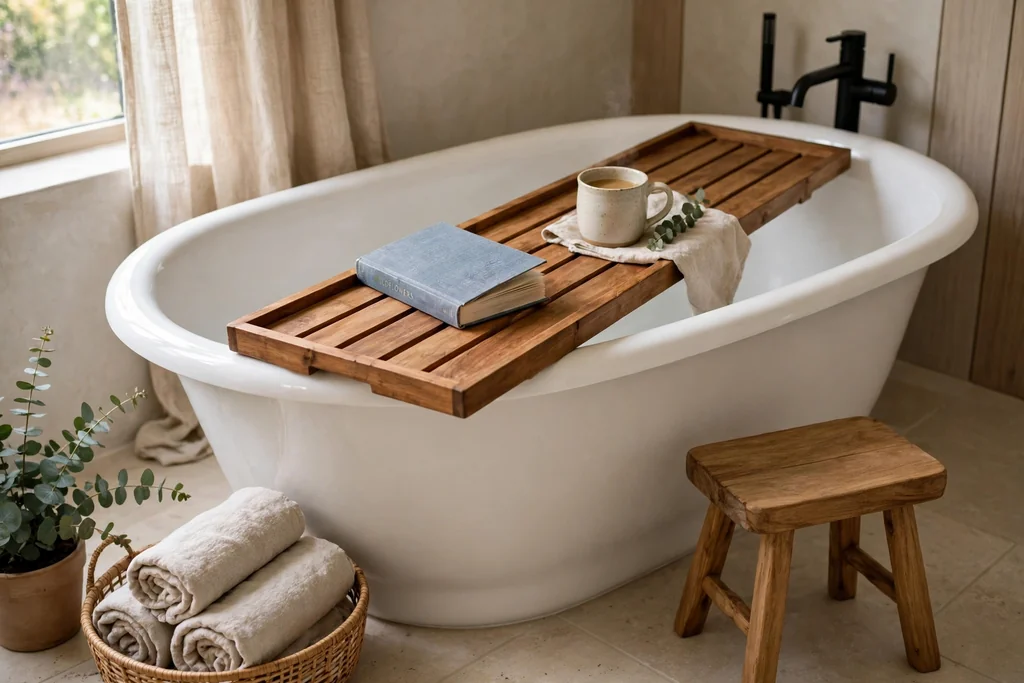
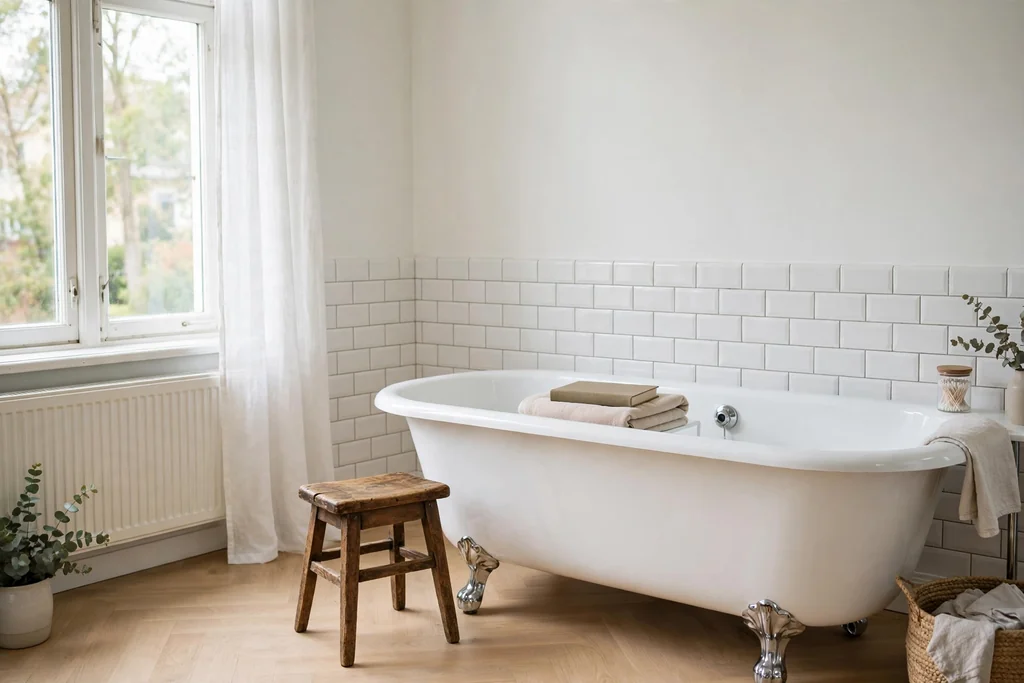
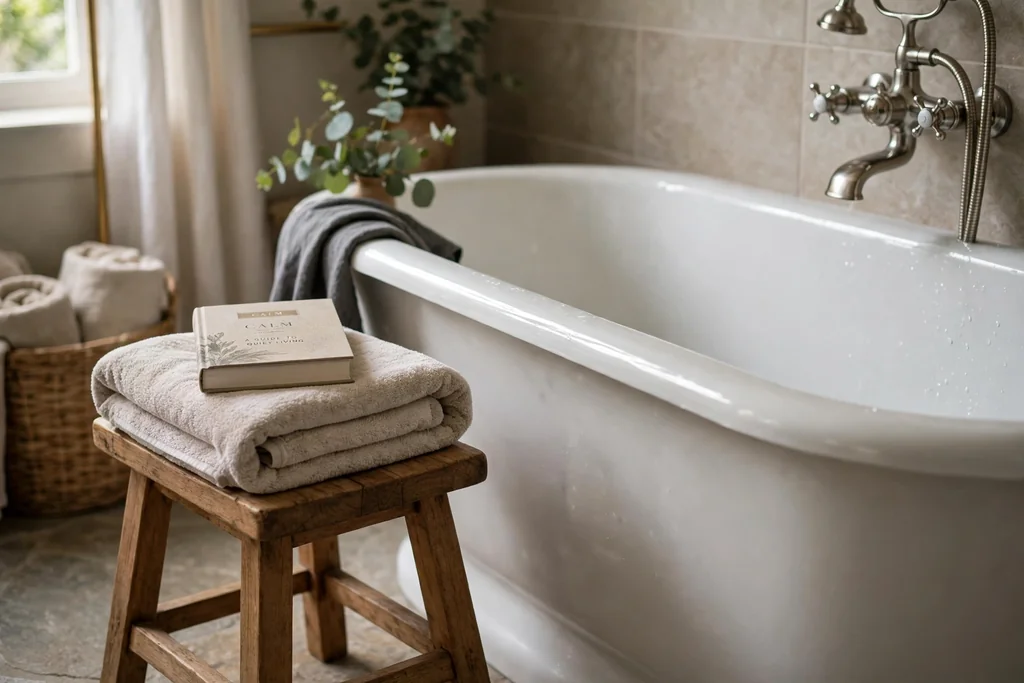
Set a freestanding roll-top bath with claw feet as the centre of a Scottish bathroom, for a traditional look that suits both cottages and older townhouses. The curved rim softens straight tile lines, and dark painted or metal feet ground the tub in the room. It suits a bathroom with enough floor space to walk around at least two sides of the bath, so cleaning and drying the floor stay easy.
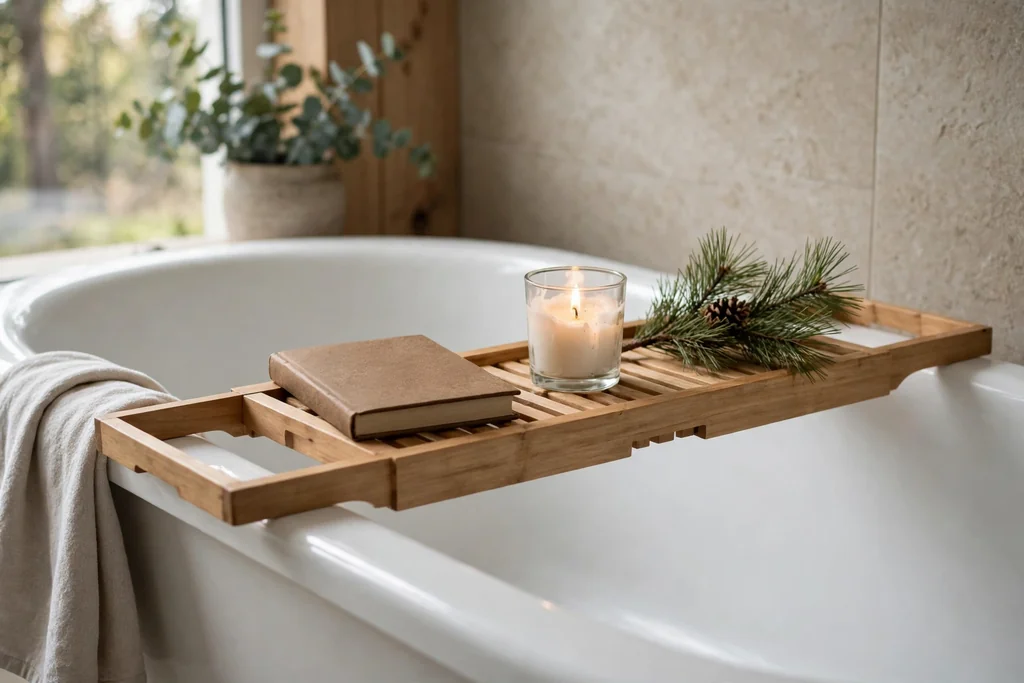
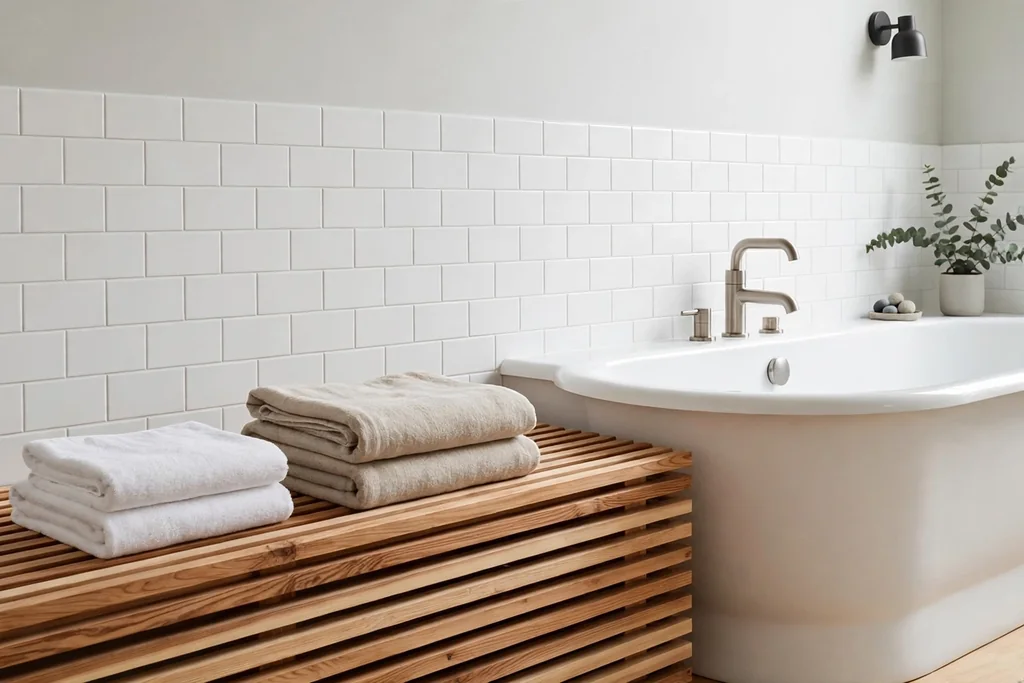
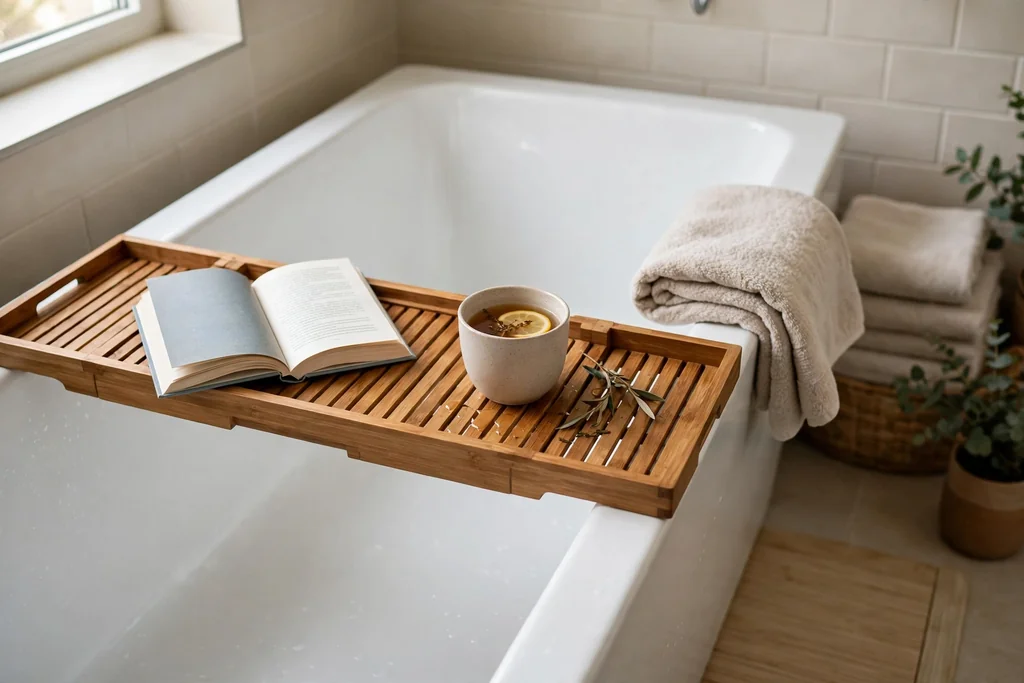
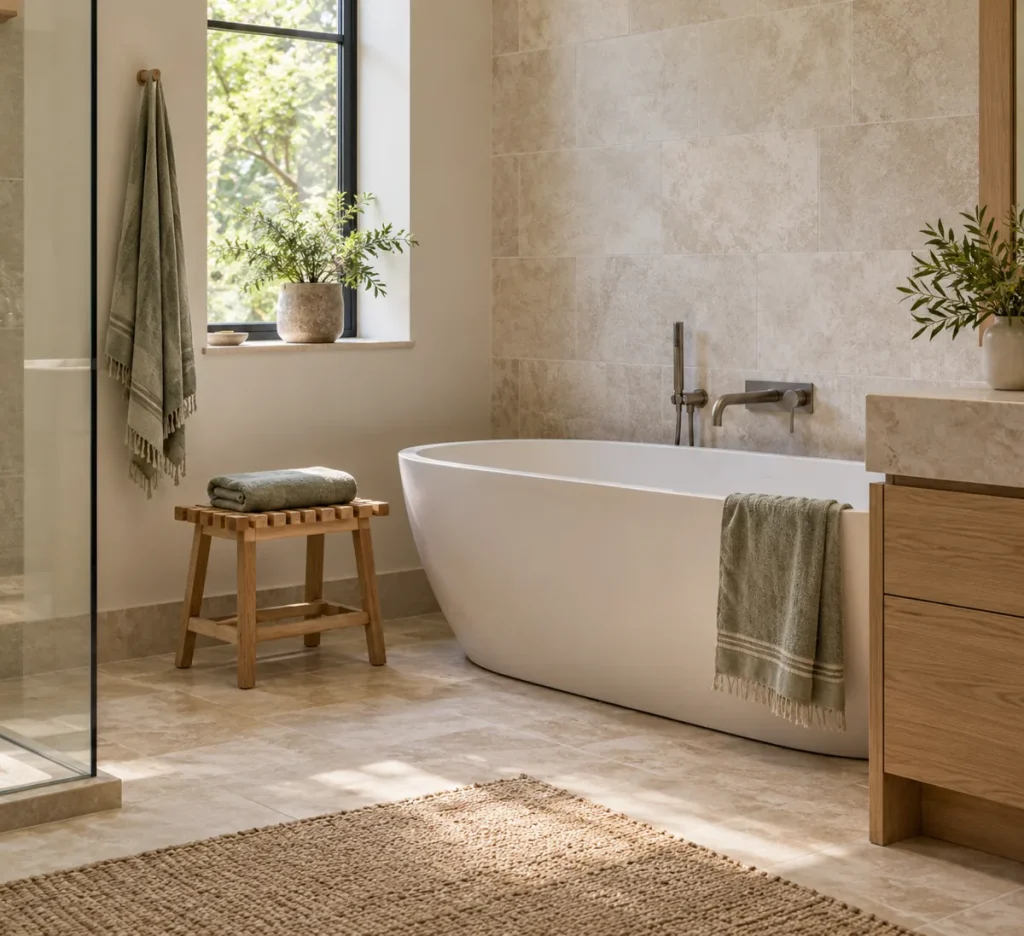
Check the floor can carry a full bath, and leave room for the taps, which often stand on the floor or mount on the rim. A simple wood bath tray and a folded towel on a stool complete the look without clutter. If a full roll-top does not fit, a back-to-wall freestanding tub in a similar shape gives much of the same presence with a smaller footprint and easier plumbing.
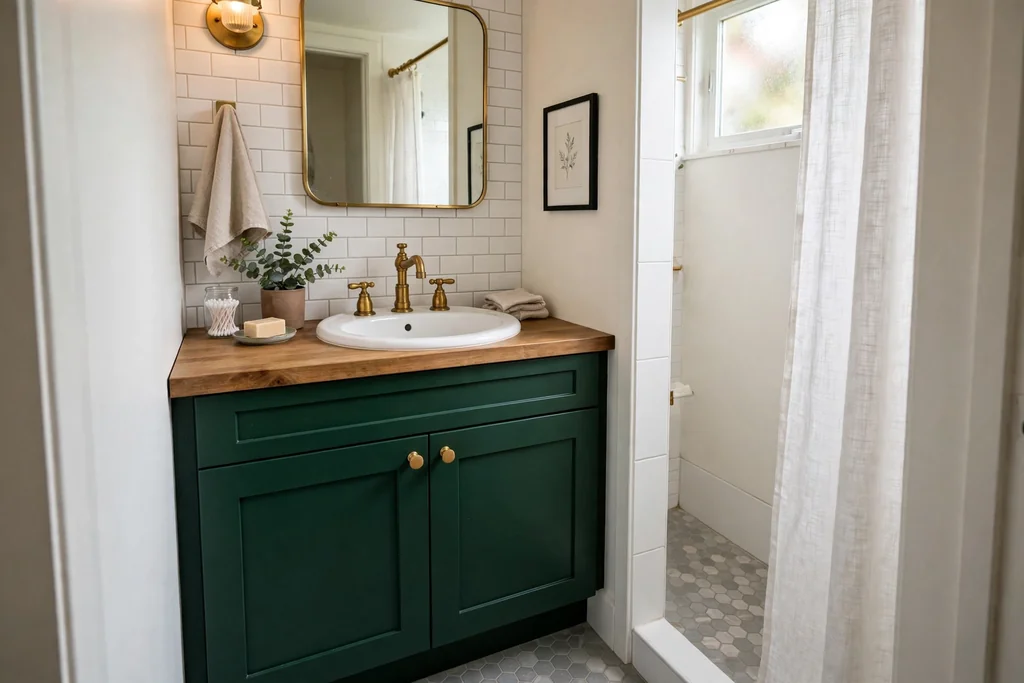
4. A Heather Painted Vanity
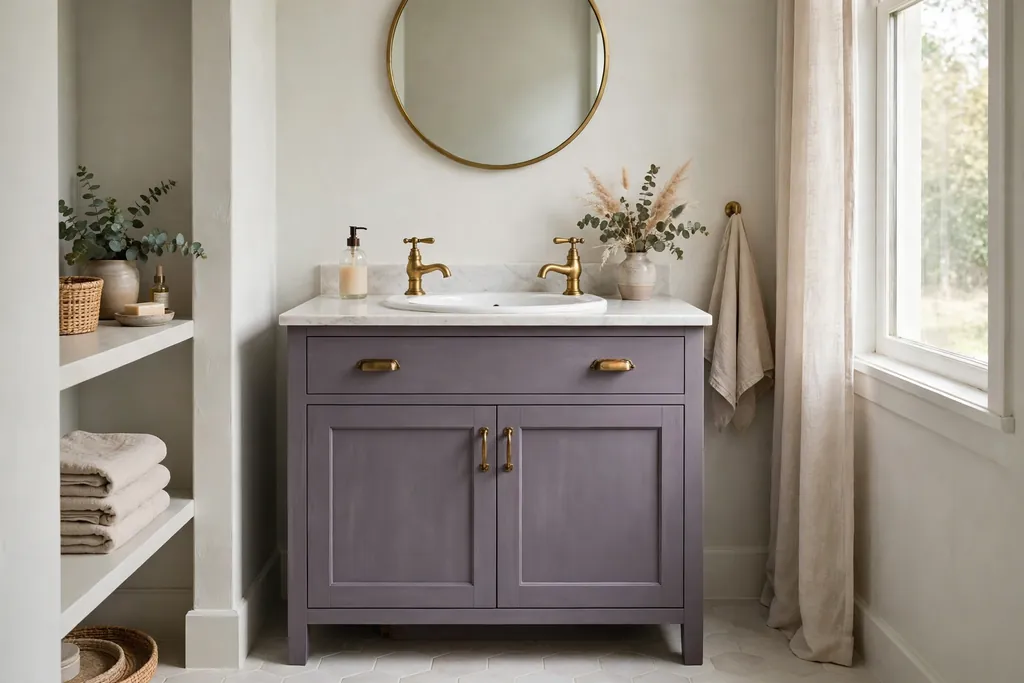
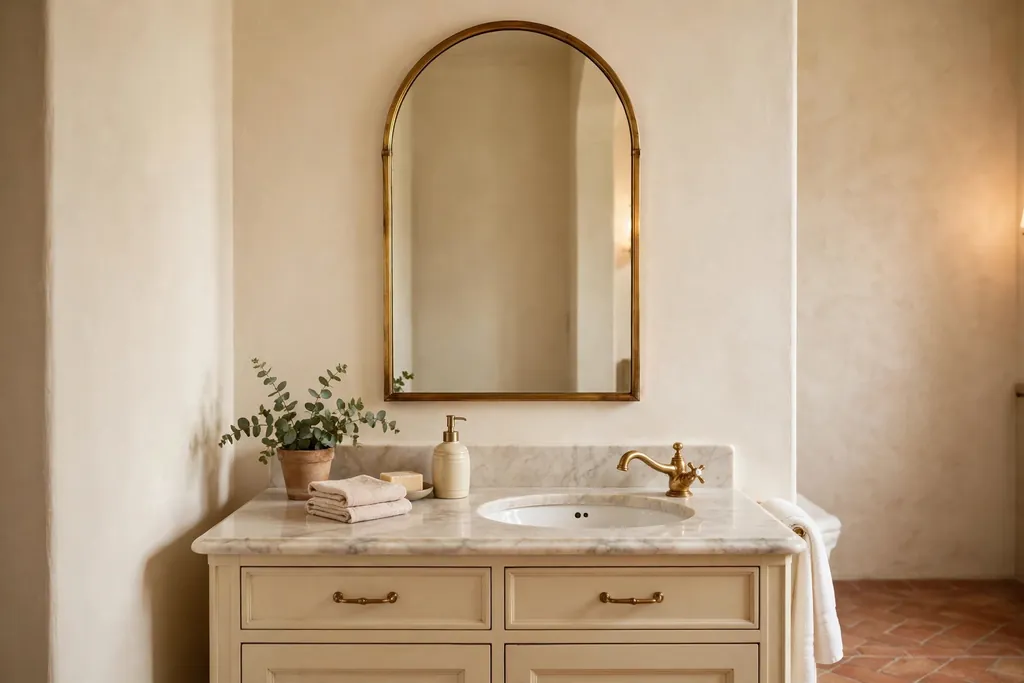
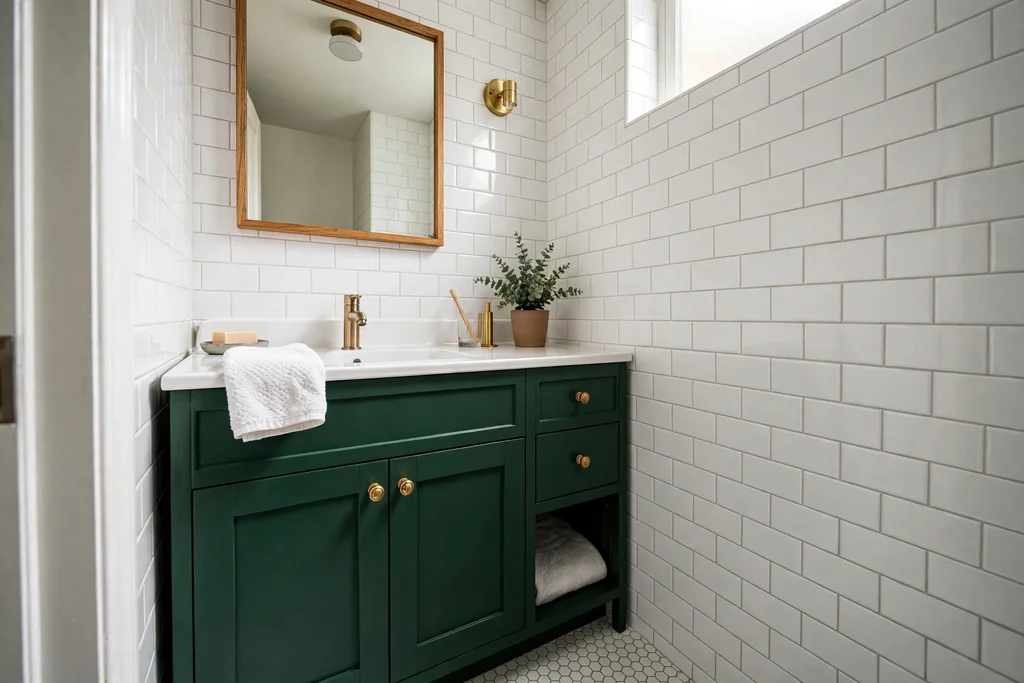
Paint a vanity in muted heather purple for a Scottish colour that feels softer than a deep green or navy, and pairs well with cream walls and brass or copper taps. Heather works as a moorland colour without needing tartan nearby, and it suits a vanity with panelled doors, where the paint can settle into the detail. Keep the basin white and the counter pale, so the purple reads as a single furniture colour.
Sand and prime the vanity first, and use a moisture resistant paint made for cabinetry, so the finish lasts near a sink. Test the shade in daylight and evening light, since purple can shift under warm bulbs. If painting the vanity is not possible, a heather bath mat, towels, and a small vase of dried stems give the same colour note with no permanent change.
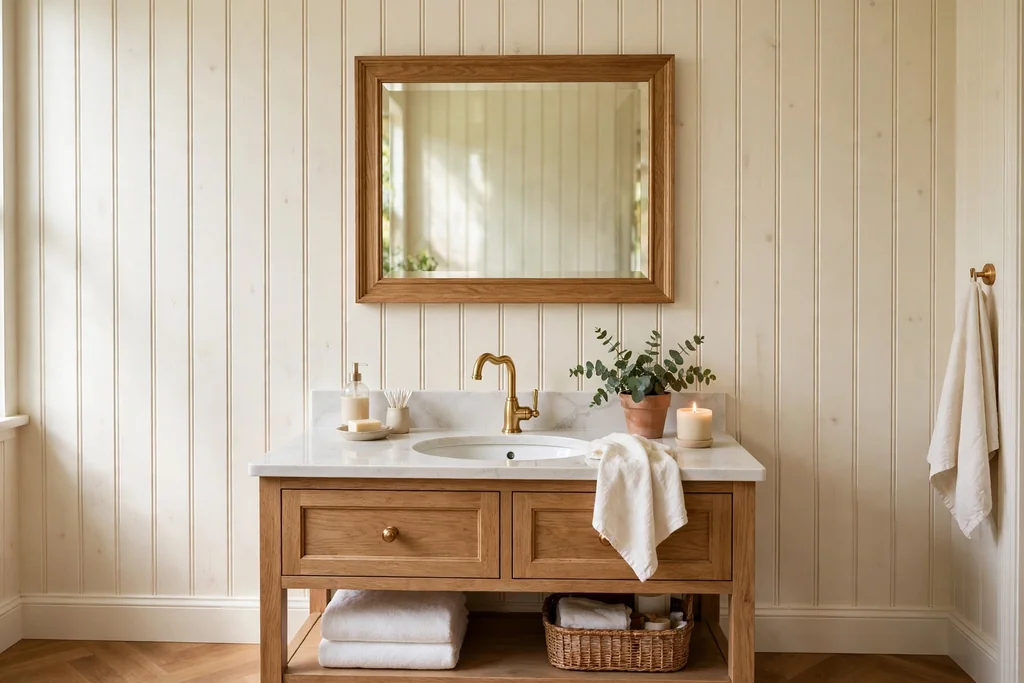
5. Soft Grey Green Wood Panelling Behind the Vanity
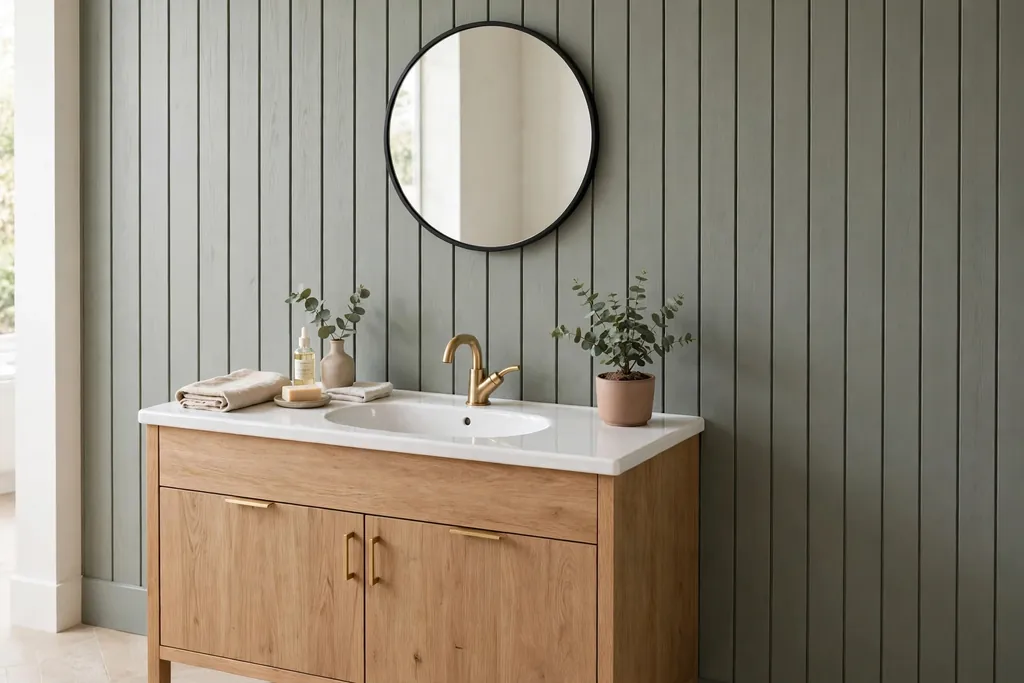
Fit vertical wood panelling painted soft grey green behind the vanity for structure that paint alone cannot give, with a colour borrowed from hills and moss. The boards add texture at eye level, and the muted green keeps a small room bright, which matters when the window is small or faces north. Panelling works best on one feature wall, with plain plaster above, so the room does not feel boxed in.
Seal the boards with a moisture resistant paint, and keep the lowest boards clear of direct shower spray. Pair the panelling with a round mirror and a plain white basin, so the boards stay the main wall detail. If full panelling is too large a job, a single panelled section behind the vanity, fixed to battens, gives a similar effect in a weekend.
6. Loch Blue Glazed Tiles in the Shower
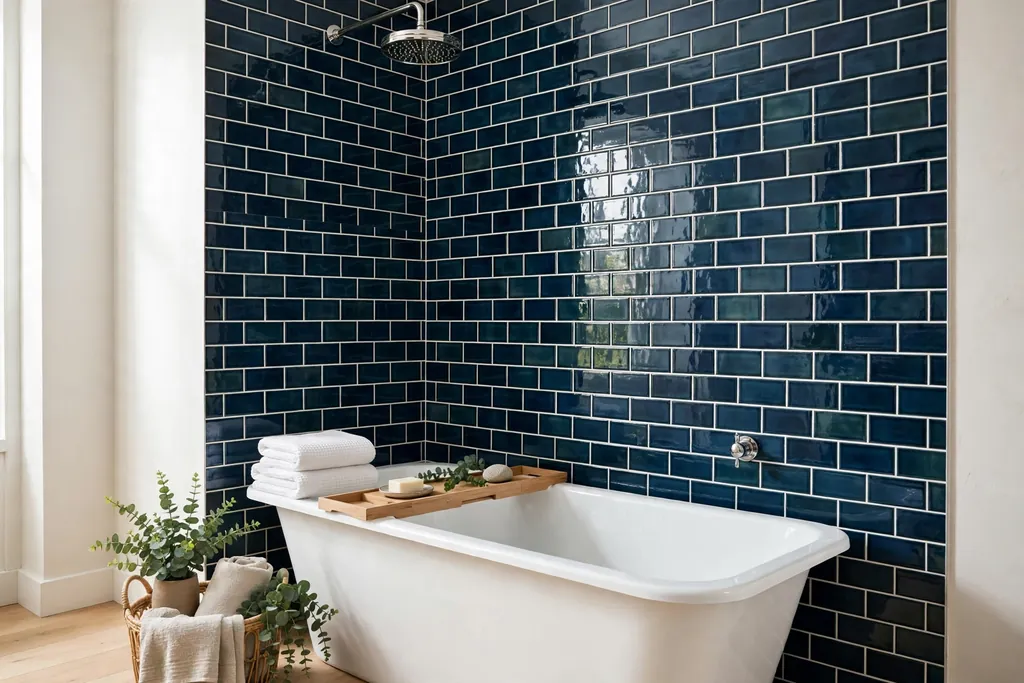
Tile the shower wall in deep loch blue glazed tiles for a colour that feels Scottish and still reads as a classic bathroom choice. The glaze catches light and keeps the shower bright, while the blue pairs well with white grout, a white bath, and wood or brass fittings. Use the blue on one shower wall or inside a niche, and keep the rest of the room pale, so the colour stays a feature rather than a full room scheme.
Choose a tile size that suits the wall, since very small tiles add many grout lines in a wet area, and very large tiles need careful cutting around fittings. Wipe the tiles after steamy showers to stop water marks dulling the glaze. If deep blue feels too strong, use it as a single band of tiles at eye level, with pale tiles above and below.
7. Reclaimed Barrel Wood Shelves for Towels
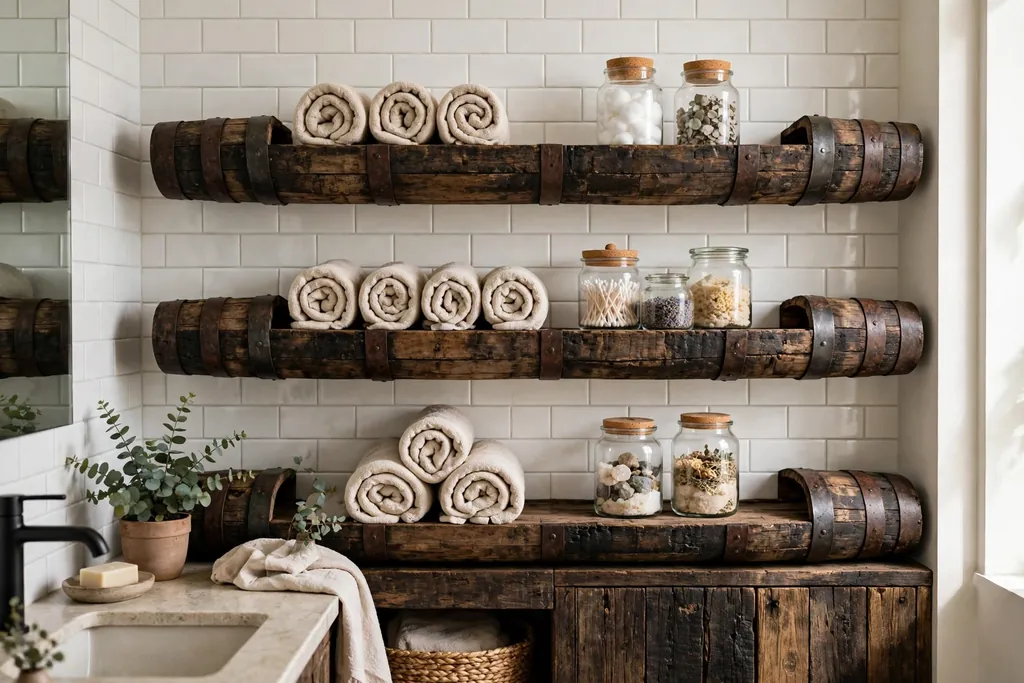
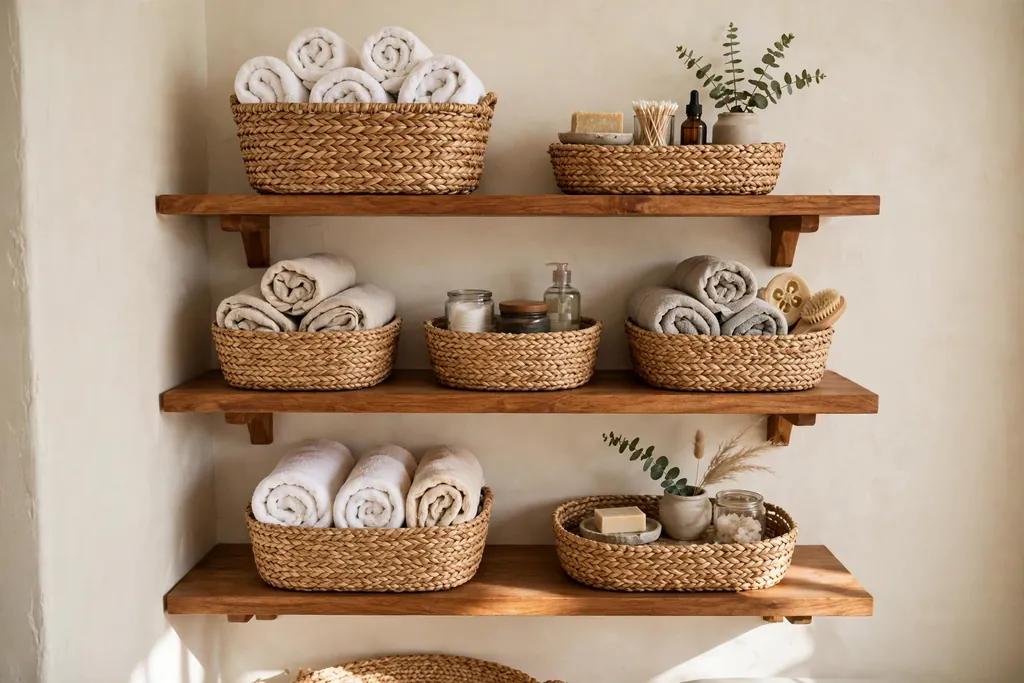
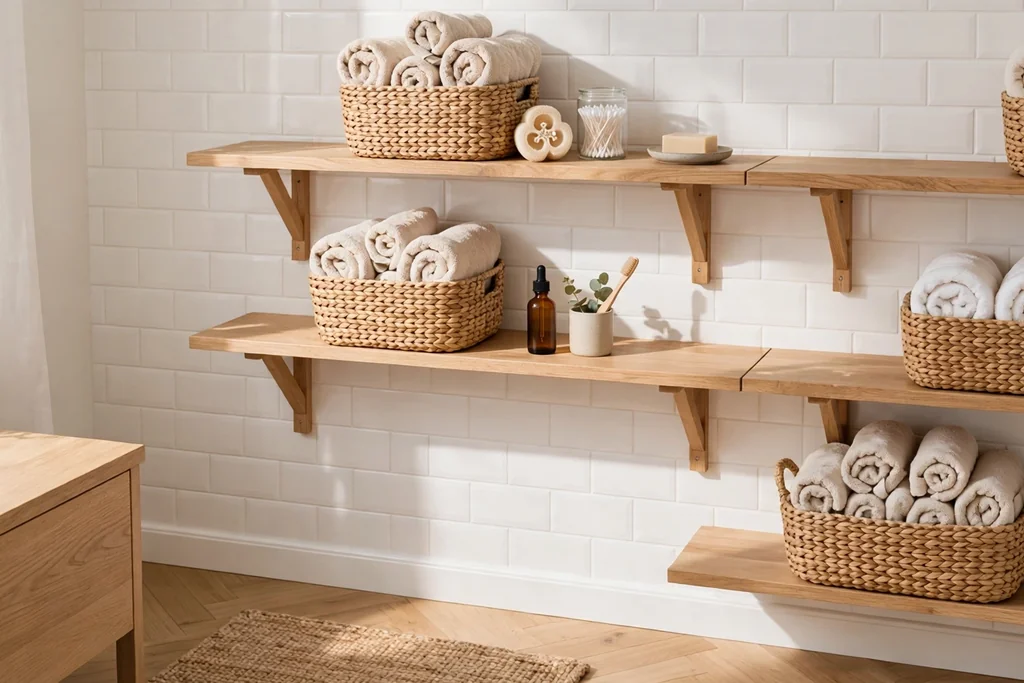
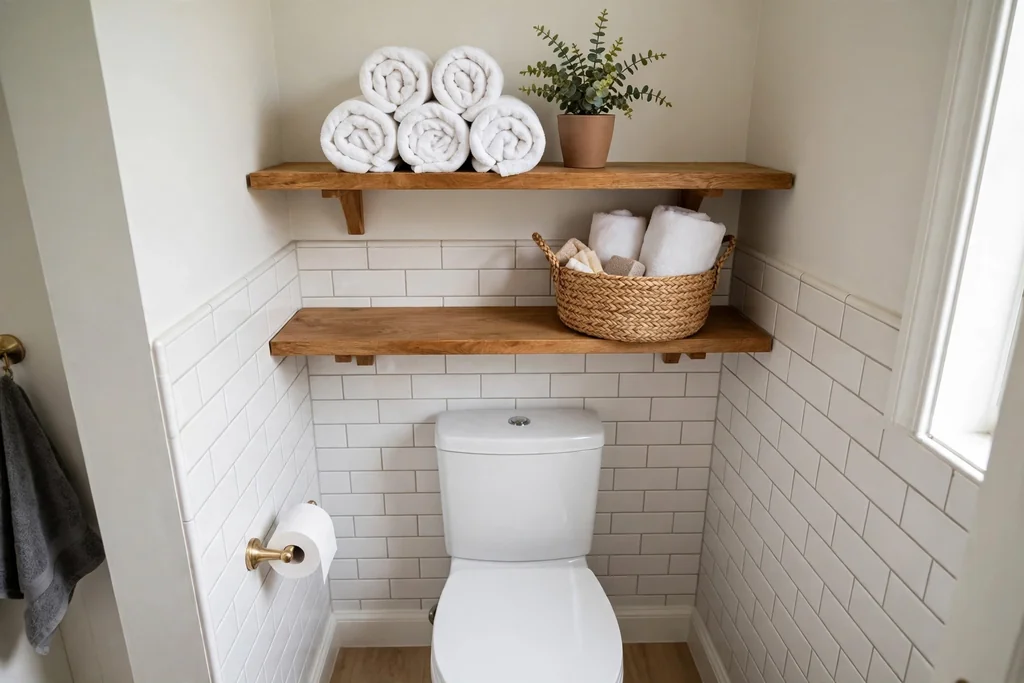
Fix open shelves in dark reclaimed barrel wood above the toilet or beside the vanity for storage with a whisky country character. The dark, worn wood suits white tiles and cream towels, and two shelves hold rolled towels, jars, and a plant without a tall cabinet. This suits a bathroom with a free wall run, where open shelves stay clear of the shower spray.
Mount the shelves into studs or use fixings rated for tile, and keep heavier items low, with lighter jars and a plant higher up. Leave one shelf partly empty, so the display reads as calm rather than crowded. If reclaimed wood is hard to source, dark stained oak shelves in the same sizes give a similar tone, and a single shelf above the toilet is enough to start.
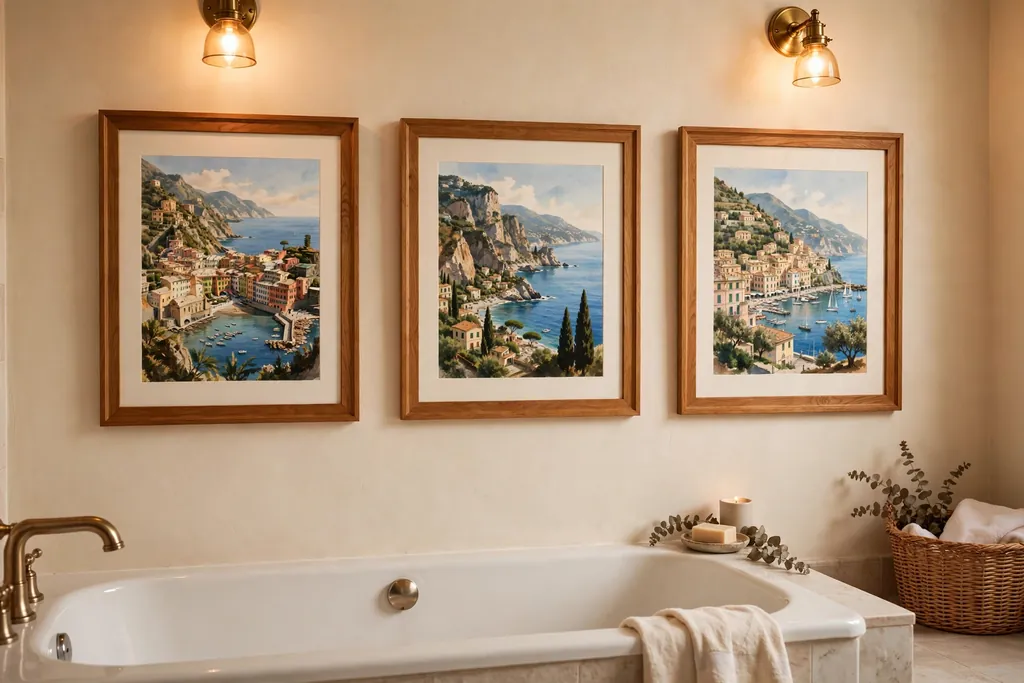
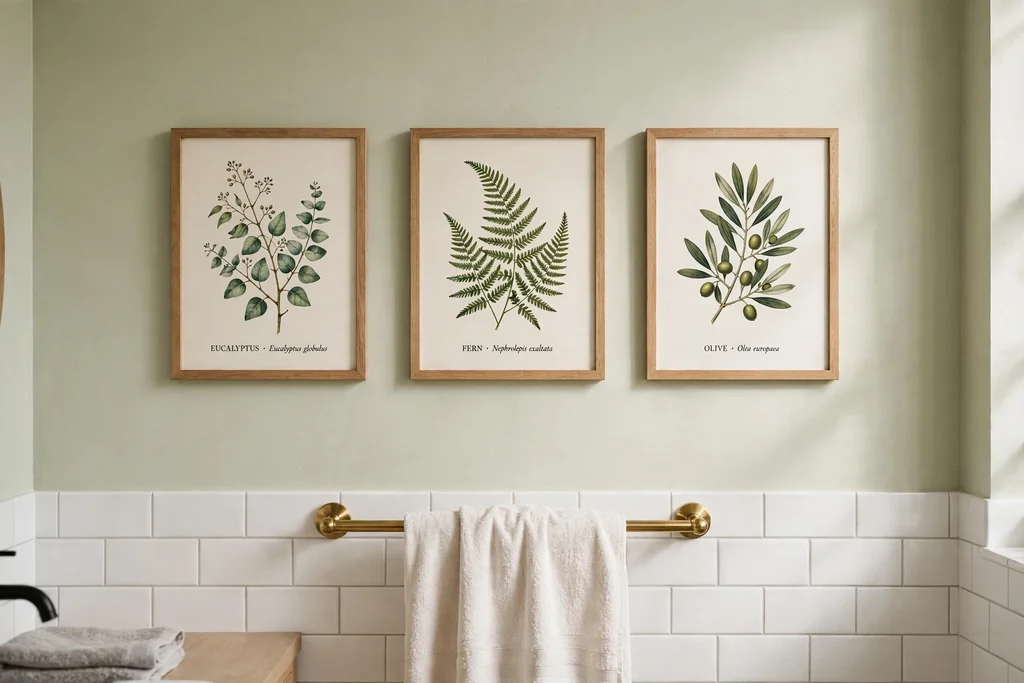
8. Thistle Prints in Black Frames
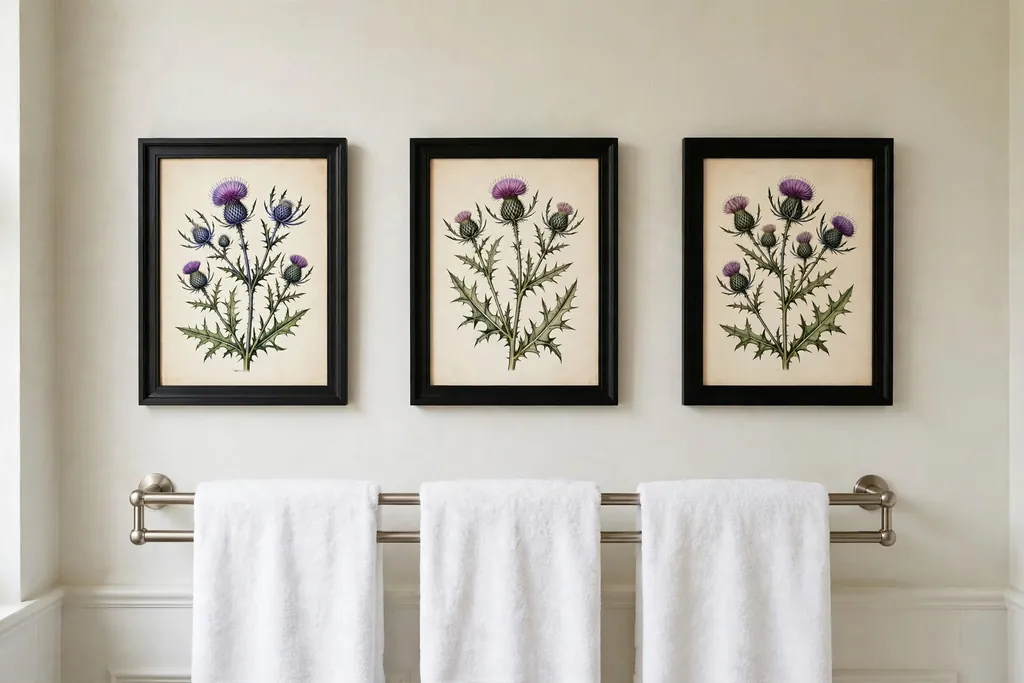
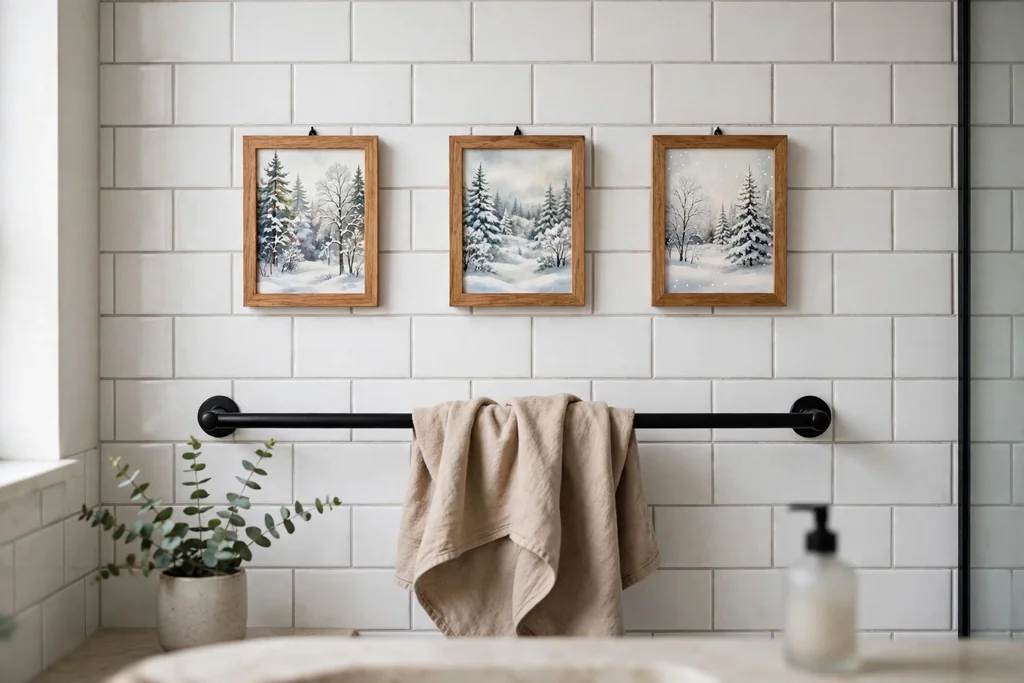
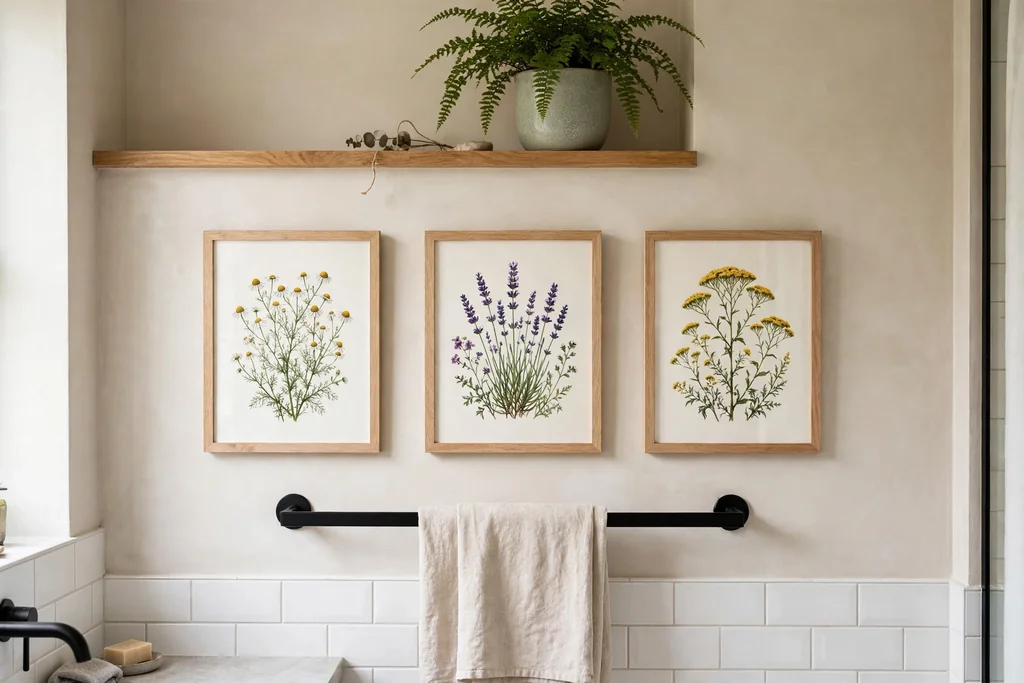
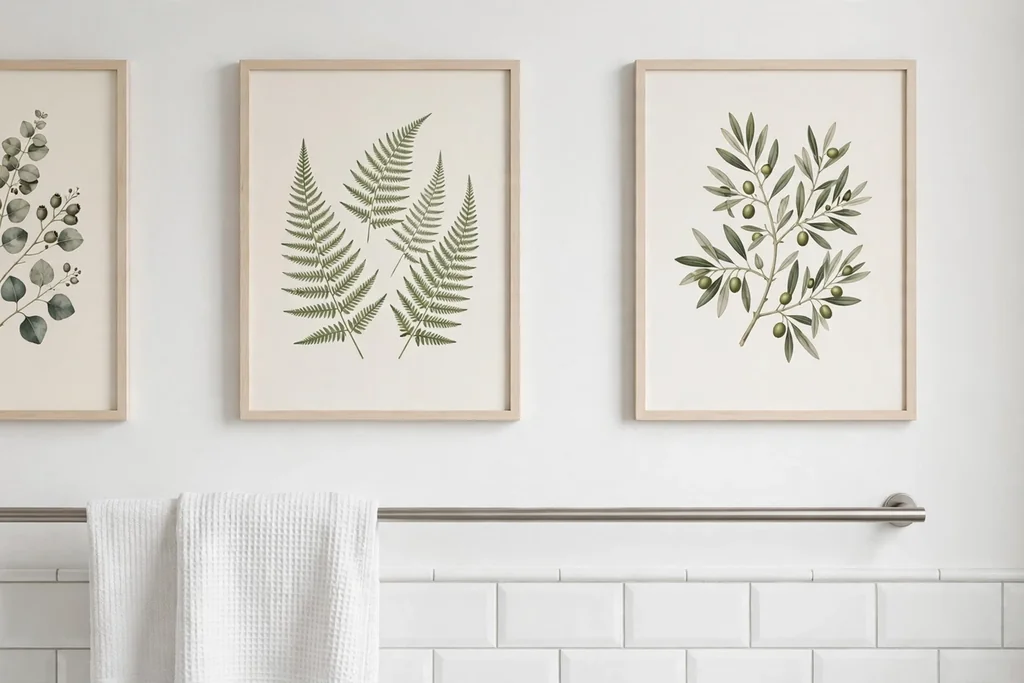
Hang thistle botanical prints in simple black frames above the towel rail for a clear Scottish note that takes no floor or counter space. A line drawing or a muted botanical print suits cream walls and wood frames, while a larger coloured print suits a plain room that needs one focal point. Keep the group to three or four small frames with even spacing, so the wall reads as one arrangement.
Use frames with sealed backs or acrylic covers, and avoid hanging unprotected paper directly beside the shower, where steam will cockle it over time. Hang the prints at eye level when standing, and repeat the thistle colour once more, in a towel or a bath mat, so the wall does not look isolated. If you rent, adhesive picture strips hold light frames well on tile and painted walls and remove cleanly.
9. Natural Stone Flag Floor Tiles
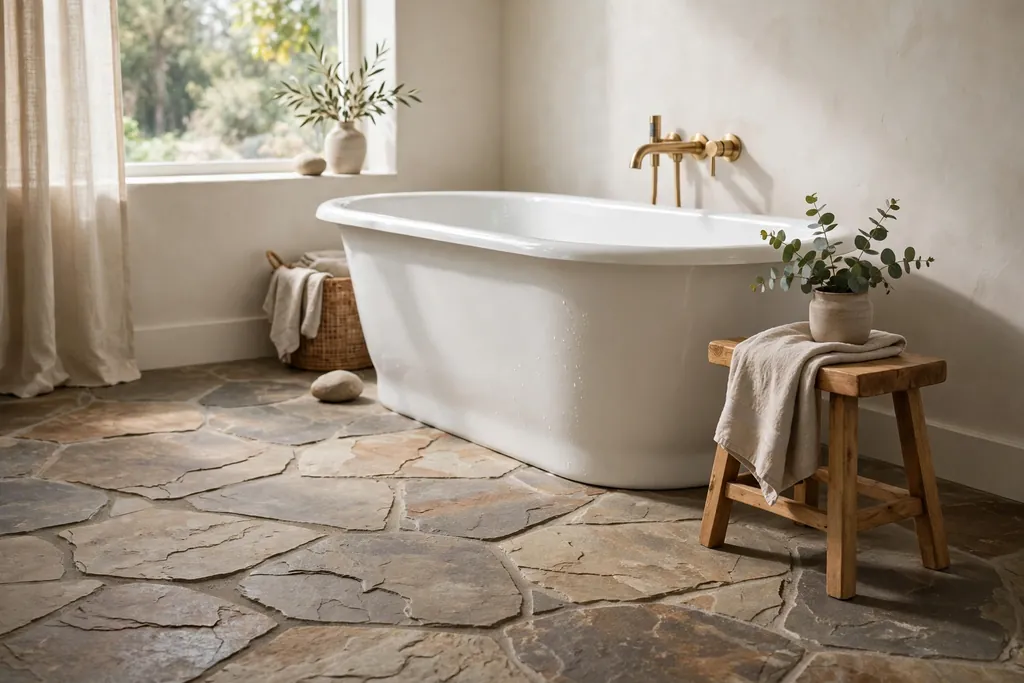
Lay natural stone flag floor tiles for a Highland cottage floor that feels solid underfoot and suits both roll-top baths and wood vanities. The varied grey and warm tones of flagstone hide water marks better than a single pale tile, and the texture gives grip in a wet room. This suits a bathroom with good daylight, where the stone tones stay visible rather than reading as dark.
Seal the stone before grouting and again after, as the maker advises, since unsealed stone can stain from soap and bath oils. Pair the floor with pale walls and a simple rug or mat by the bath, so the stone does not make the room feel heavy. If real flagstone is too thick for the door clearance, stone look porcelain tiles in large formats give a similar pattern with a thinner profile.
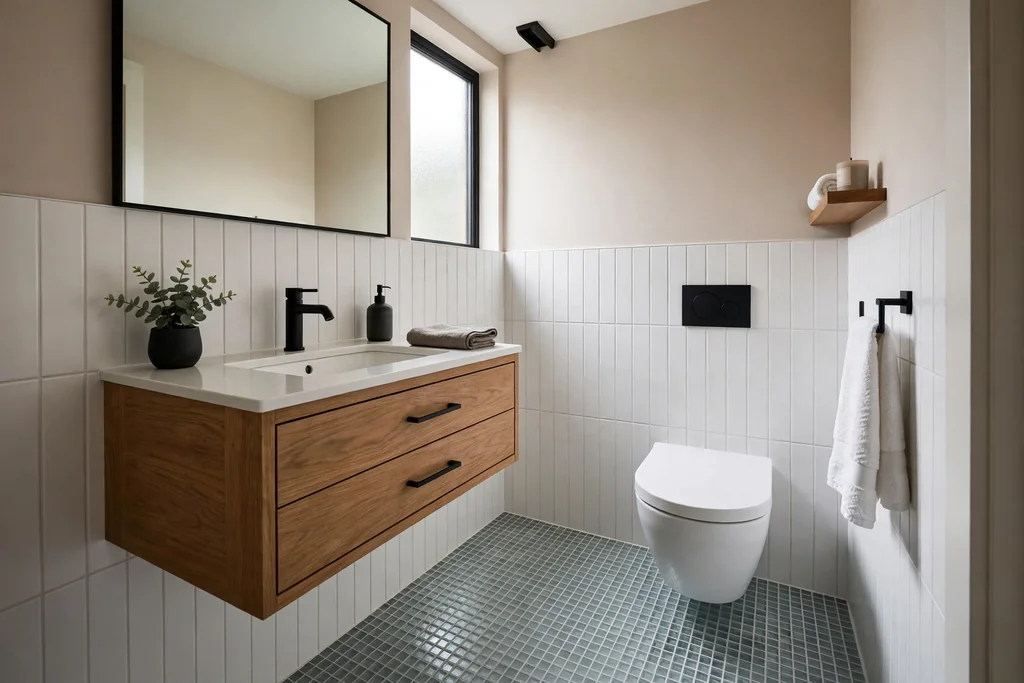
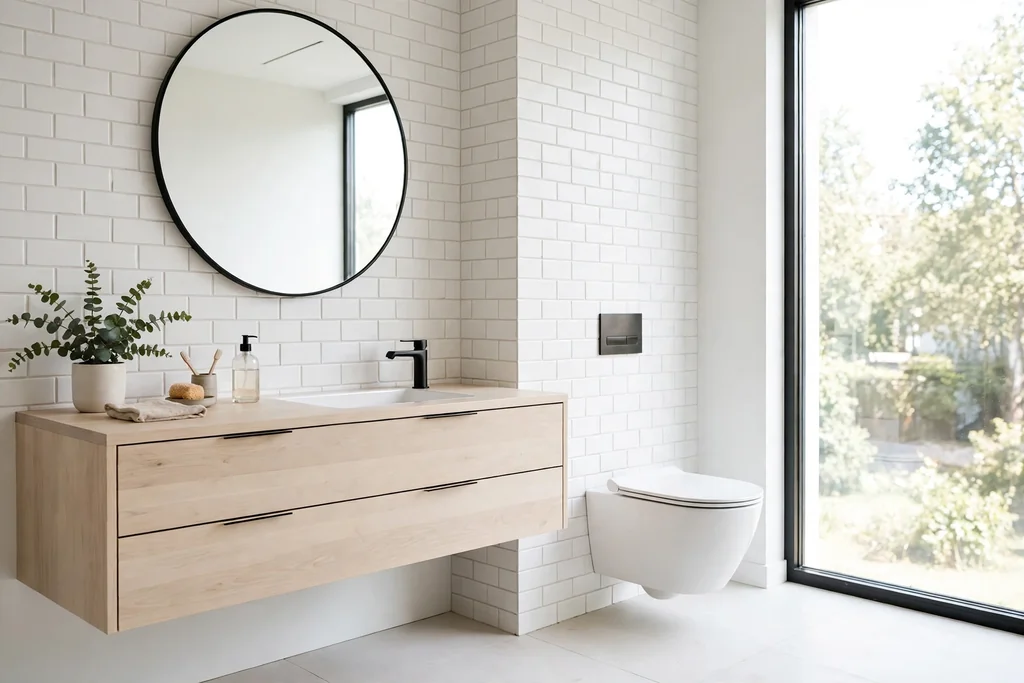
10. Wall Hung Fittings for a Small Tenement Bathroom
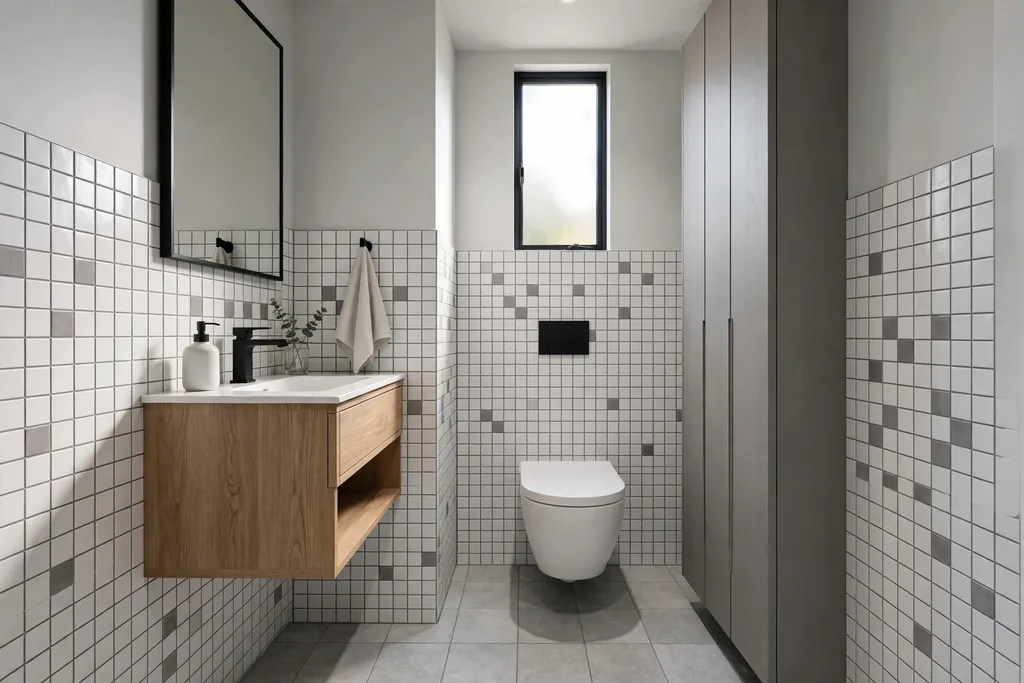
Hang the vanity and the toilet on the wall in a small tenement bathroom, so the floor runs clear beneath them and the room looks larger and easier to clean. The open floor shows more tile, and a mop can reach under both fittings without moving furniture. This suits a bathroom with a short wall run, where a floor standing vanity would crowd the door swing. For more renter friendly small room storage, see these apartment bathroom ideas.
Check that the wall can carry the load, and use a frame rated for a wall hung toilet before any tiling starts. Keep the pipework boxed in neatly behind the vanity, and choose a vanity depth that still leaves a clear walkway to the shower. If a full refit is not planned, a wall hung shelf above the existing toilet gives part of the same open feeling with far less work.
11. A Victorian Black and White Checkerboard Floor
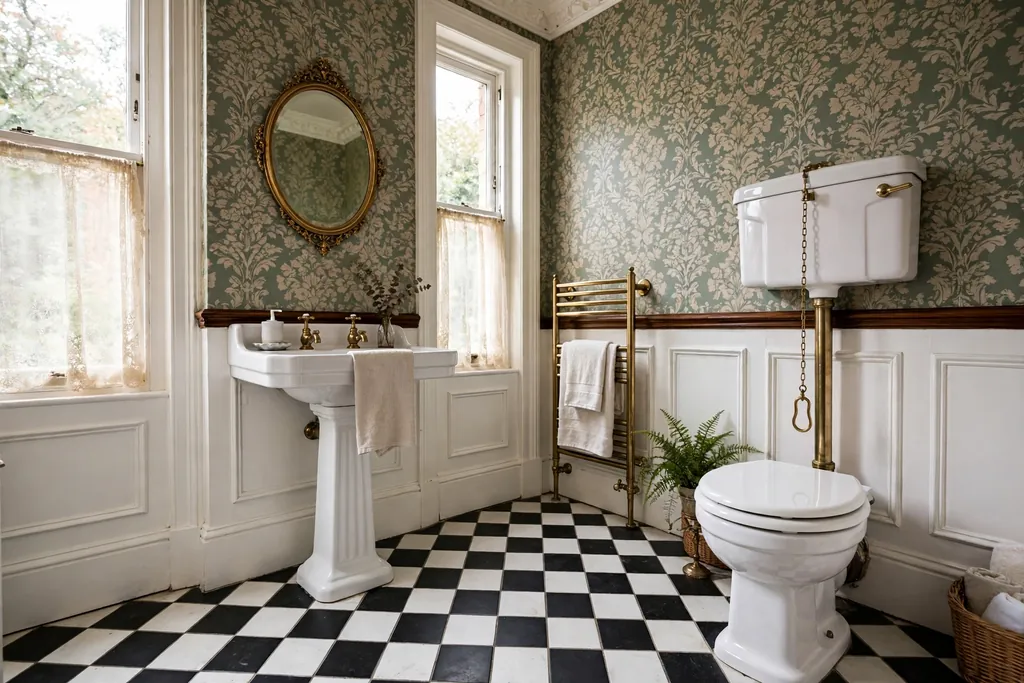
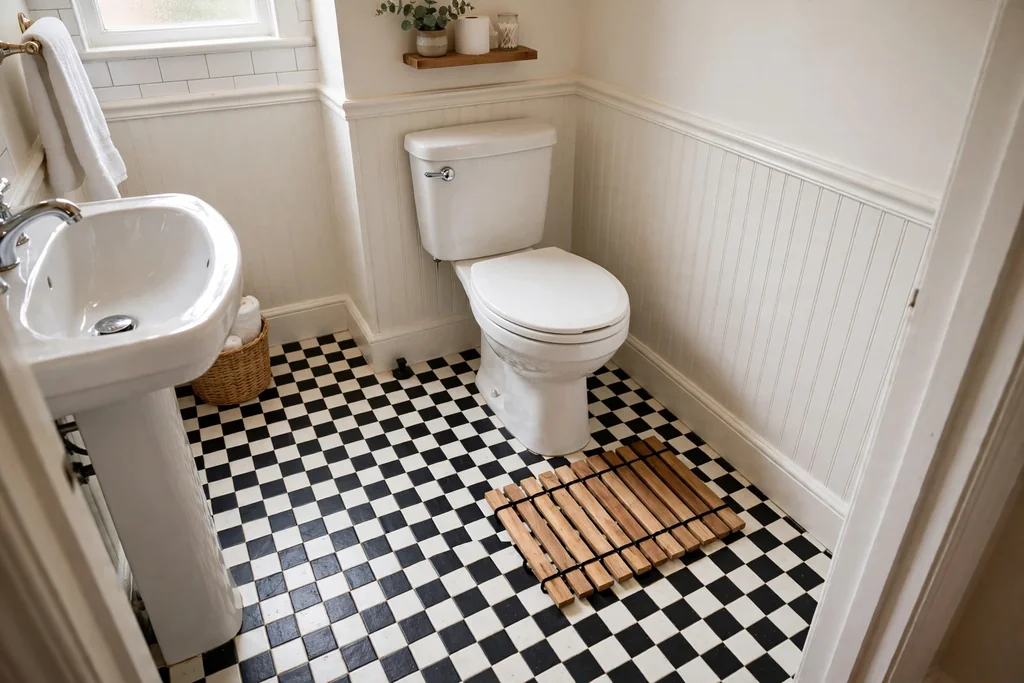
Lay a black and white checkerboard floor for a Victorian Scottish bathroom, the kind found in older Edinburgh and Glasgow townhouses. The strong pattern grounds a white pedestal basin and a high cistern toilet, and it pairs well with plain white wall tiles and a single dark accent, such as black taps. This suits a bathroom where the floor is the main pattern, and the walls stay quiet.
Start the pattern from the centre of the room, so cut tiles land evenly at the edges, and use a grout colour close to the tile tones to keep the grid crisp. A checkerboard floor shows dust and hair, so a quick sweep each day keeps it looking sharp. If a full checkerboard feels too bold, use it in a small cloakroom or as a border around a plain centre panel.
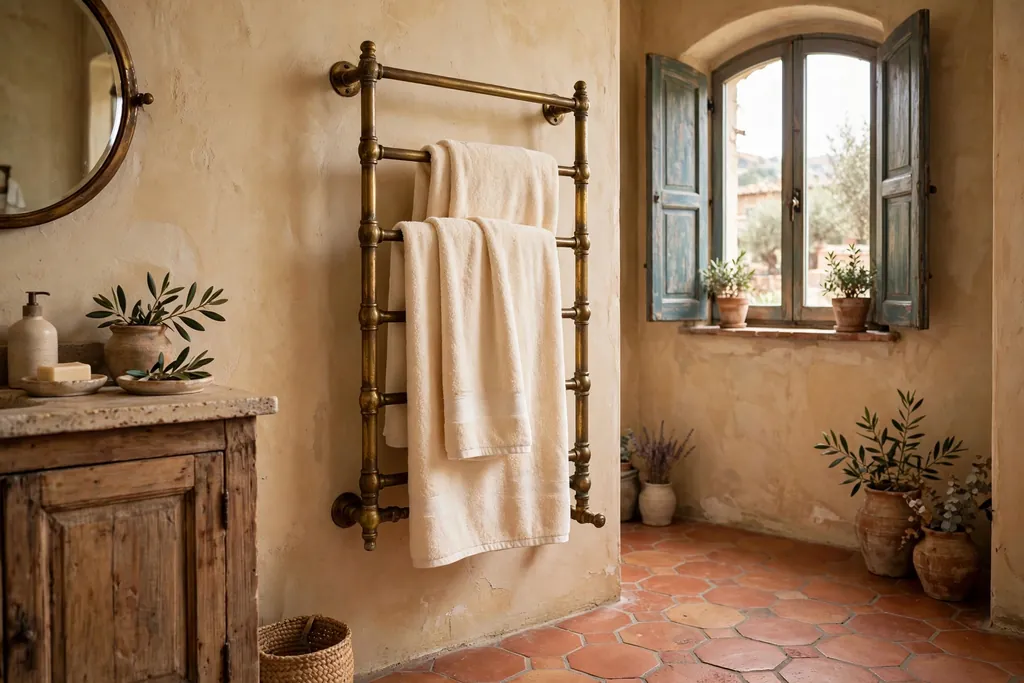
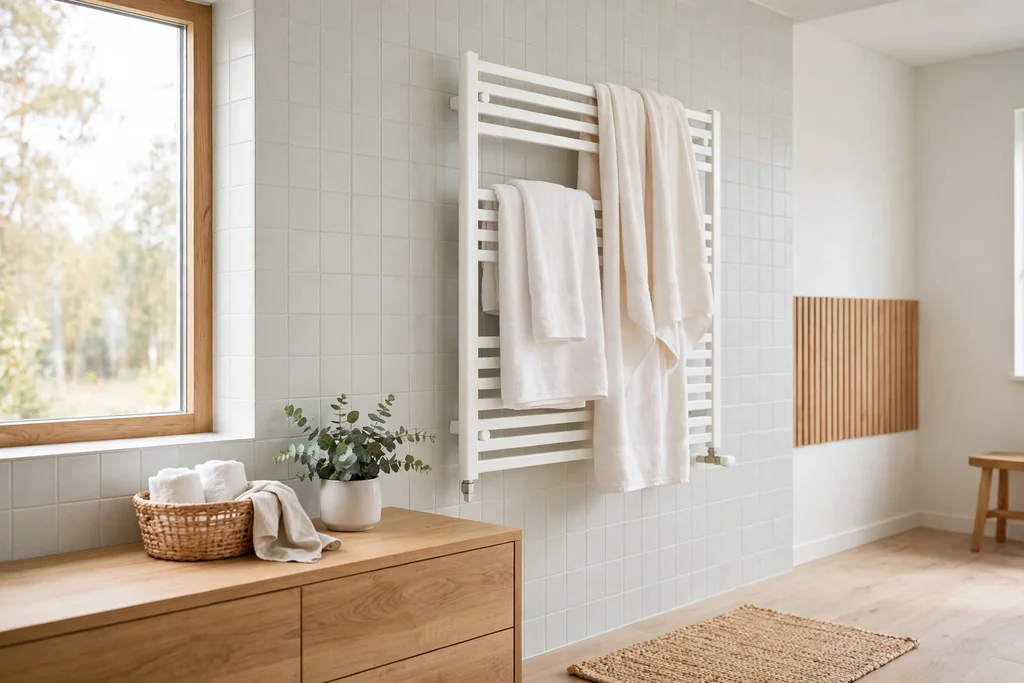
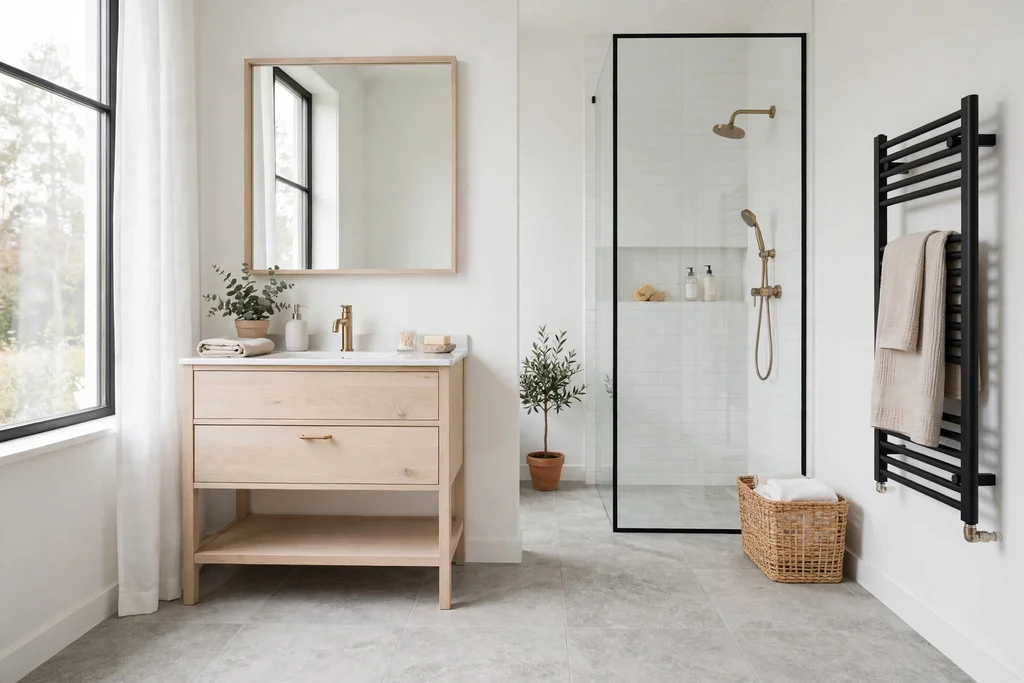
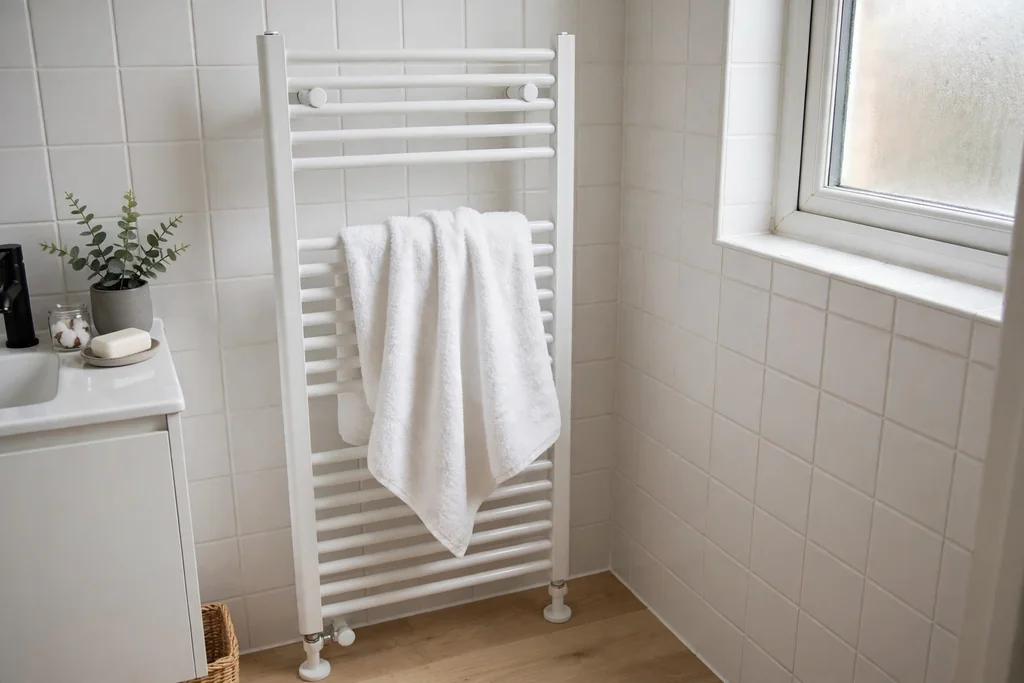
12. A Matte Black Heated Towel Rail
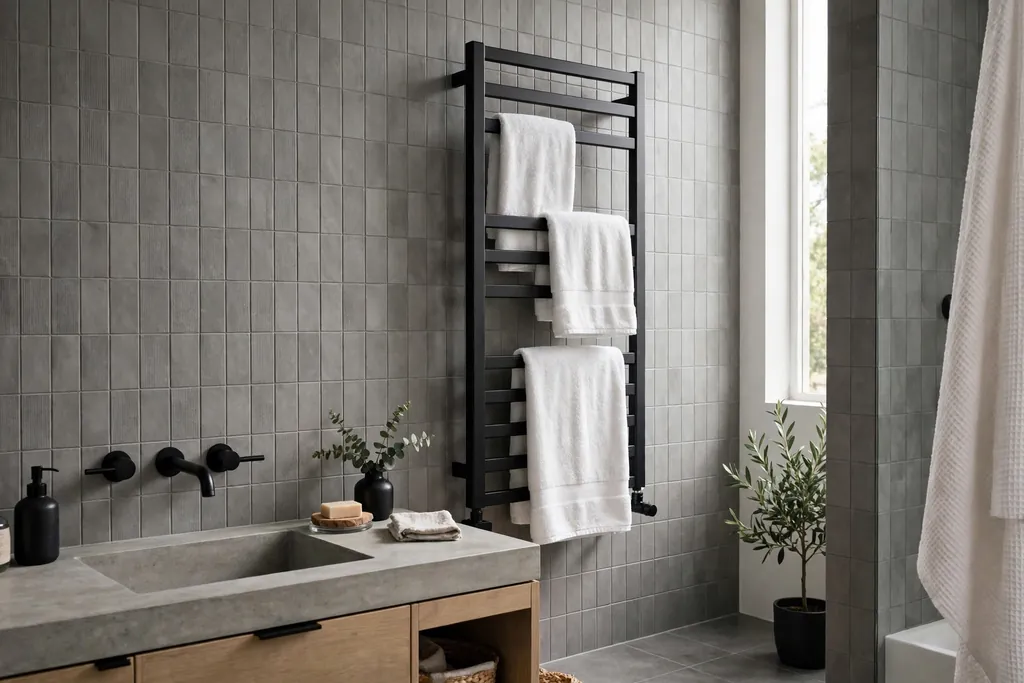
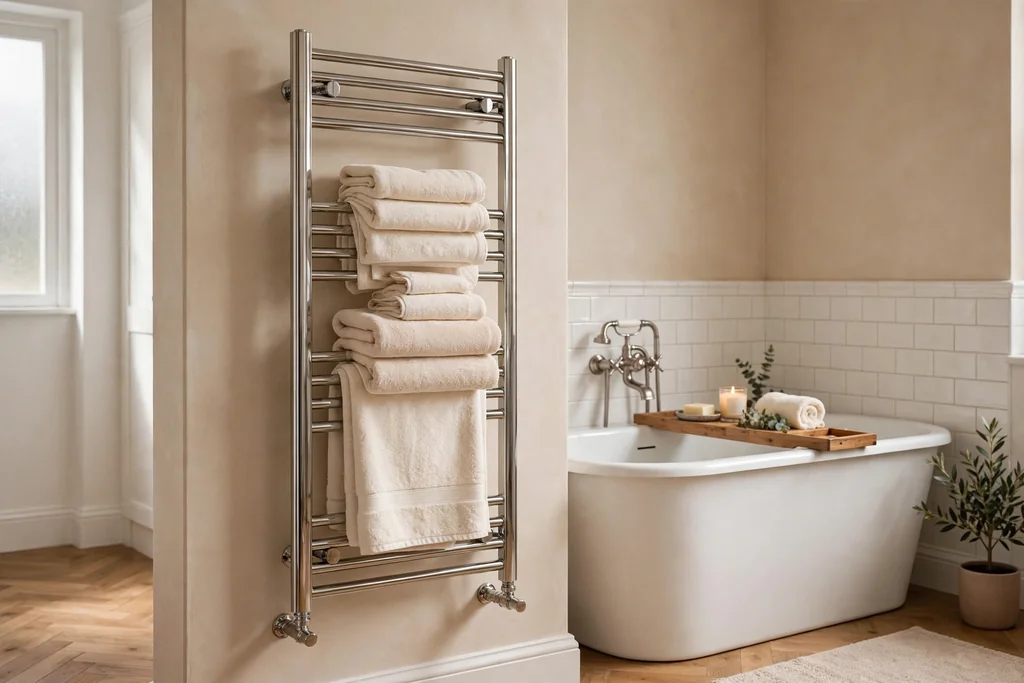
Fit a matte black heated ladder towel rail on the warmest free wall to dry towels, warm the room, and replace a separate towel ring and radiator in one fitting. A ladder rail holds two or three towels at once, and the heat helps damp towels dry between uses, which matters in a small room with little airflow. Choose a slim rail that fits the wall beside the bath or near the door, and keep the lowest bar clear of the floor so towels hang freely.
Match the finish to the taps, such as matte black, so the rail reads as part of the plan. In a rented home, a freestanding heated rail or a plug in ladder rail gives much of the same benefit with no plumbing change. Keep towels folded over two bars rather than bunched on one, so air can move around the fabric.
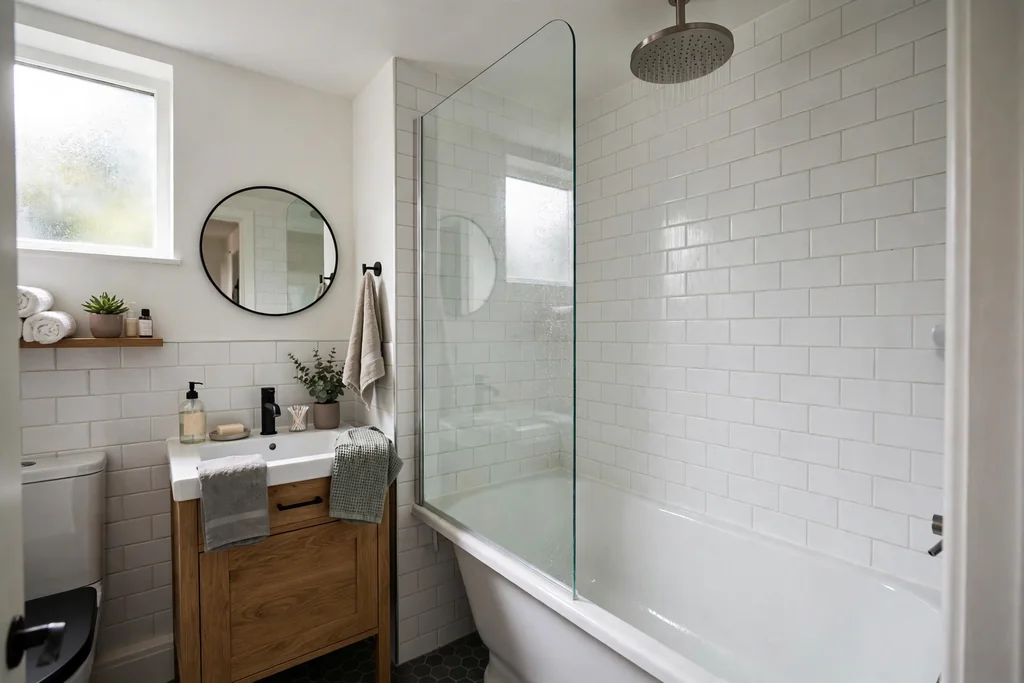
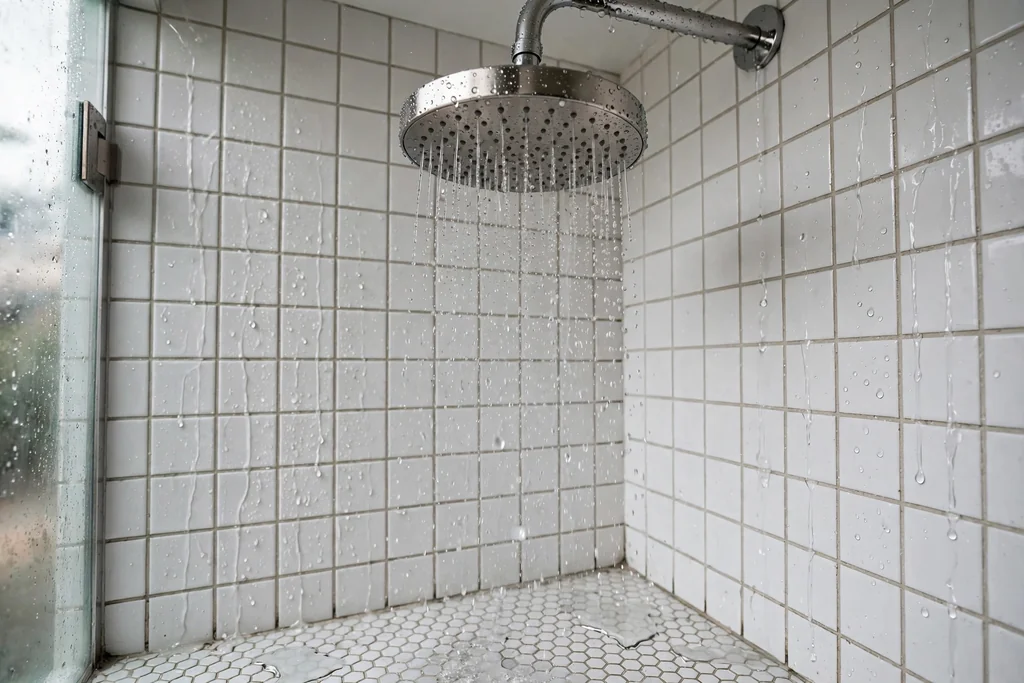
13. A Rainfall Shower Over the Bath with a Glass Screen
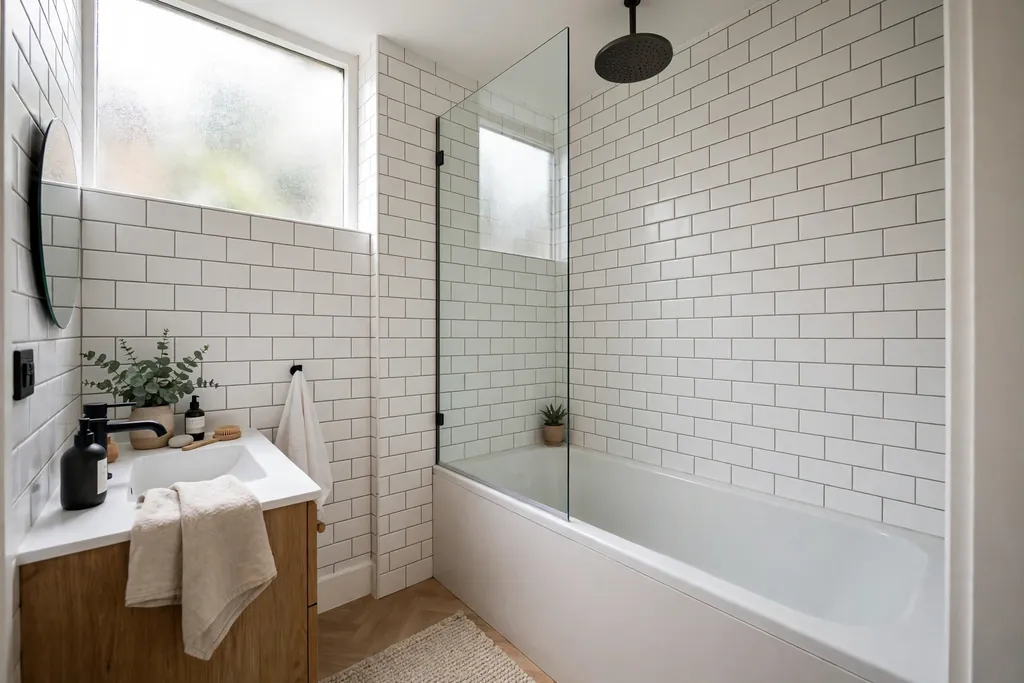
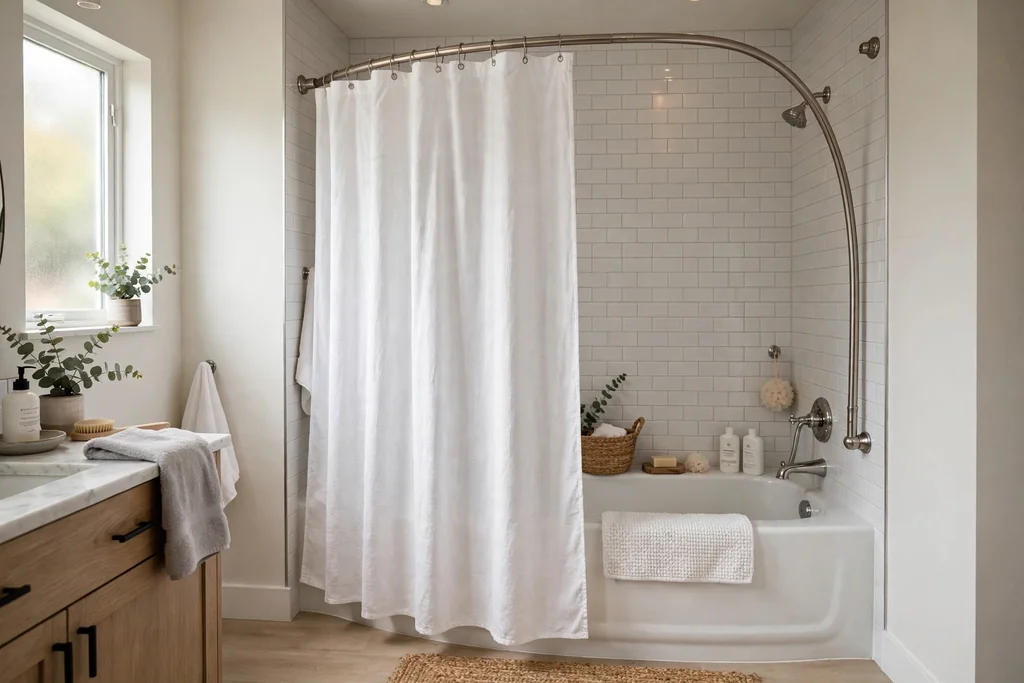
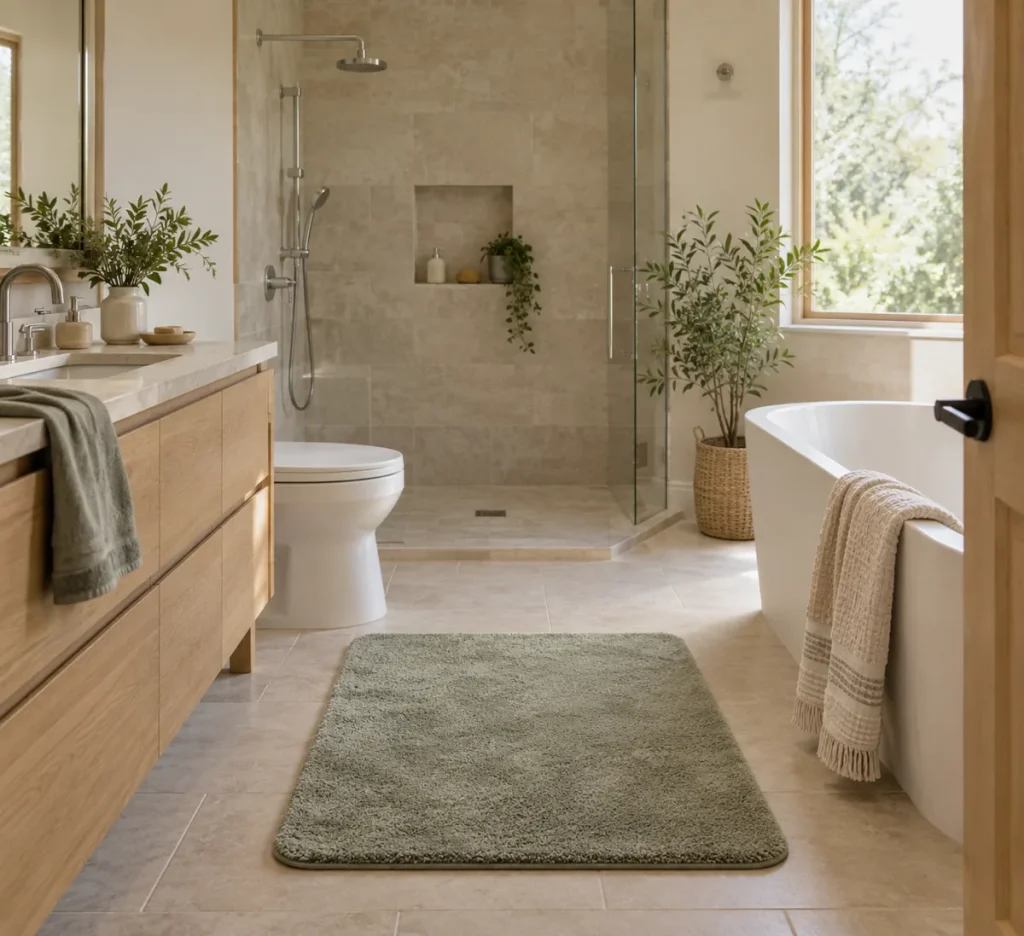
Fit a rainfall shower over the bath and a single glass screen, so one tub serves both quick showers and long soaks without a separate shower tray. The glass screen keeps water in the bath while leaving the room open, which suits a small bathroom far better than a shower curtain that closes the space in. A rainfall head gives a calm, even spray, and a hand shower on a rail adds a practical rinse for the tub and for hair washing.
Keep the screen fixed at the shower end, and hang it high enough that tall users stay under cover. Choose a thermostatic mixer so the temperature stays steady, and check water pressure before choosing a wide rainfall head, since a very wide head can feel weak on a low pressure line. Wipe the glass weekly to stop limescale marks building up.
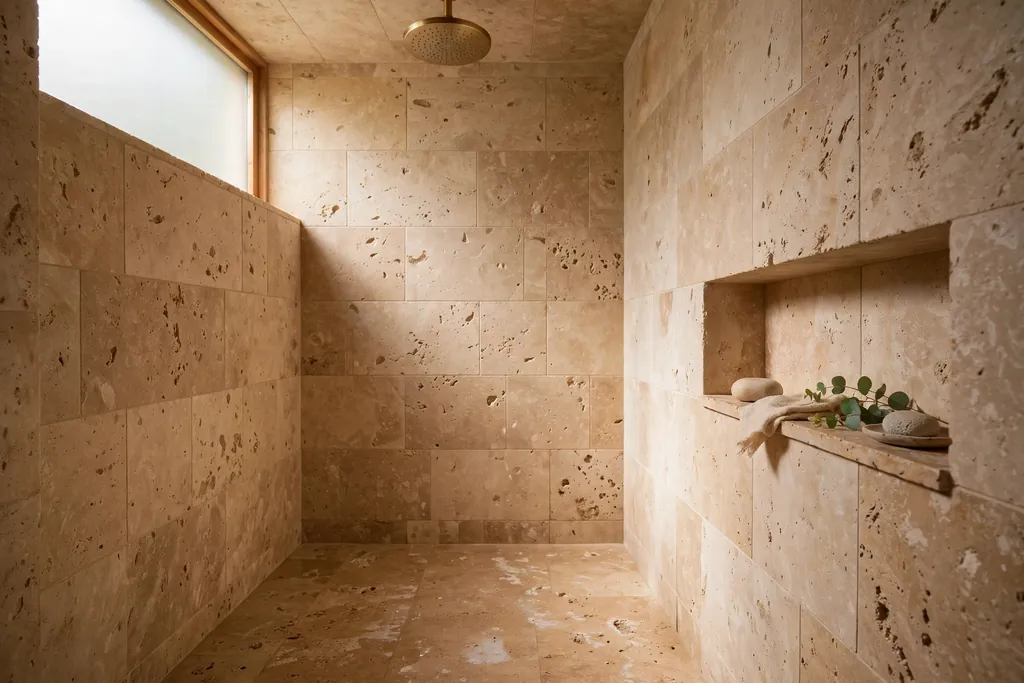
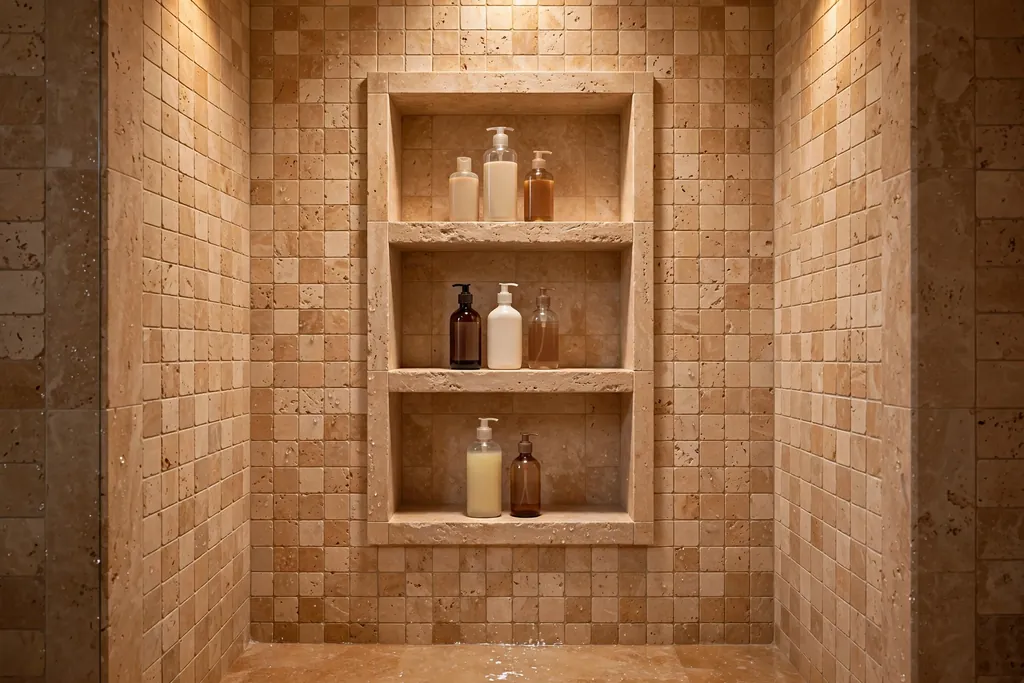
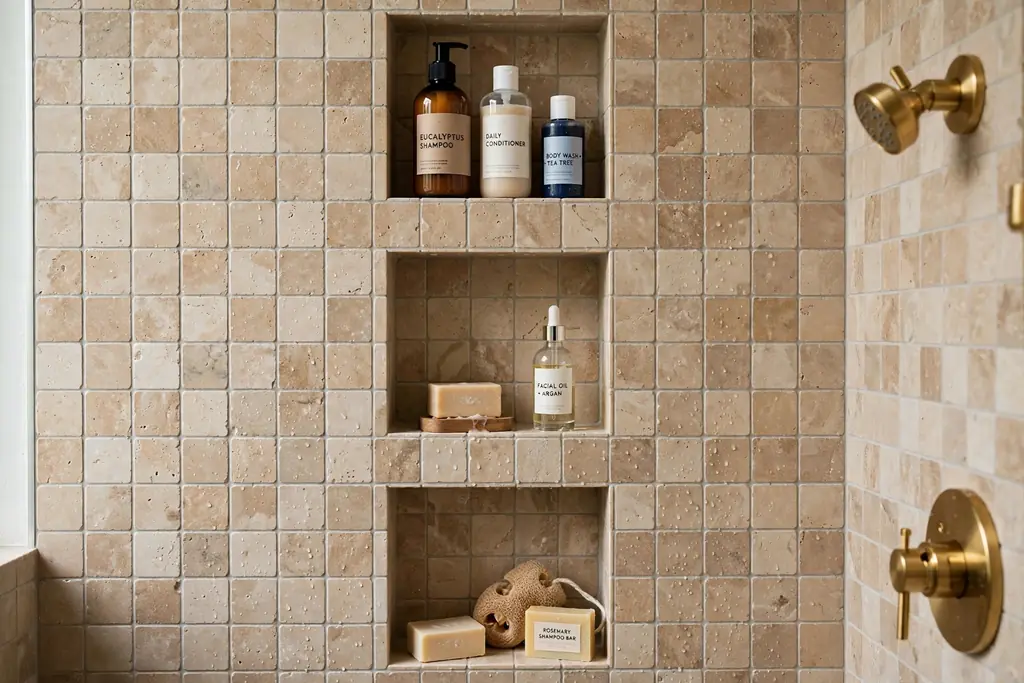
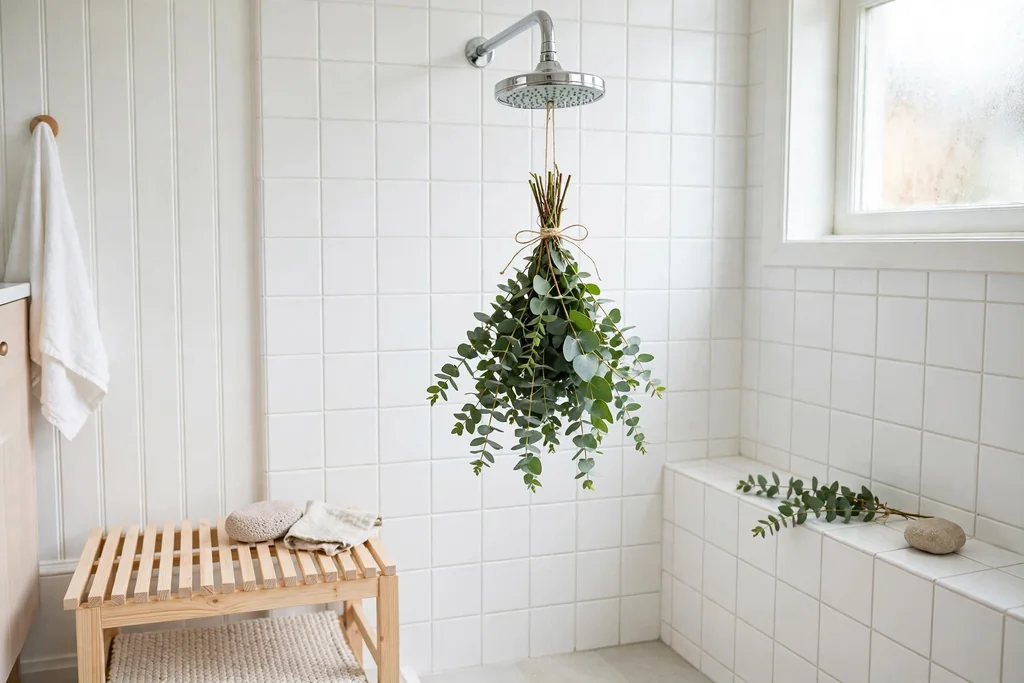
14. A Recessed Arched Niche in the Shower Wall
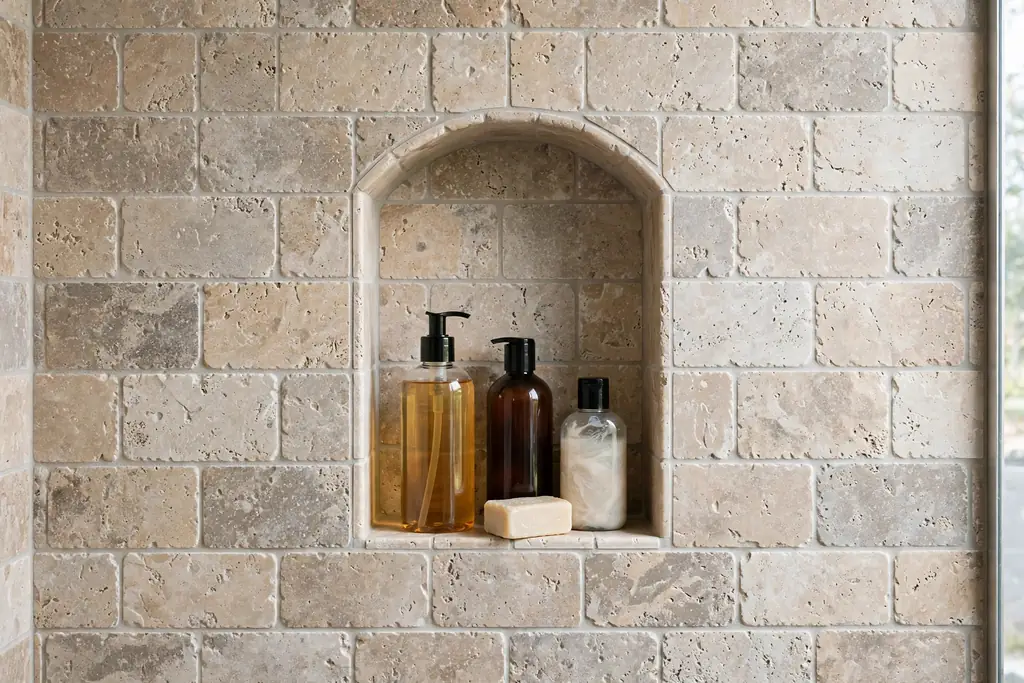
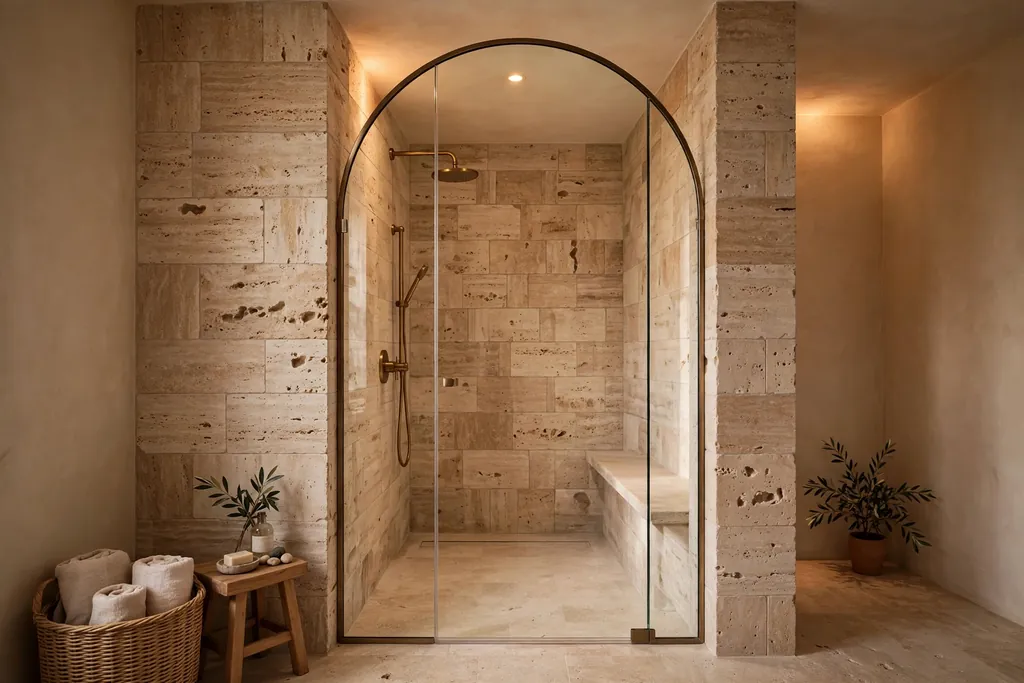
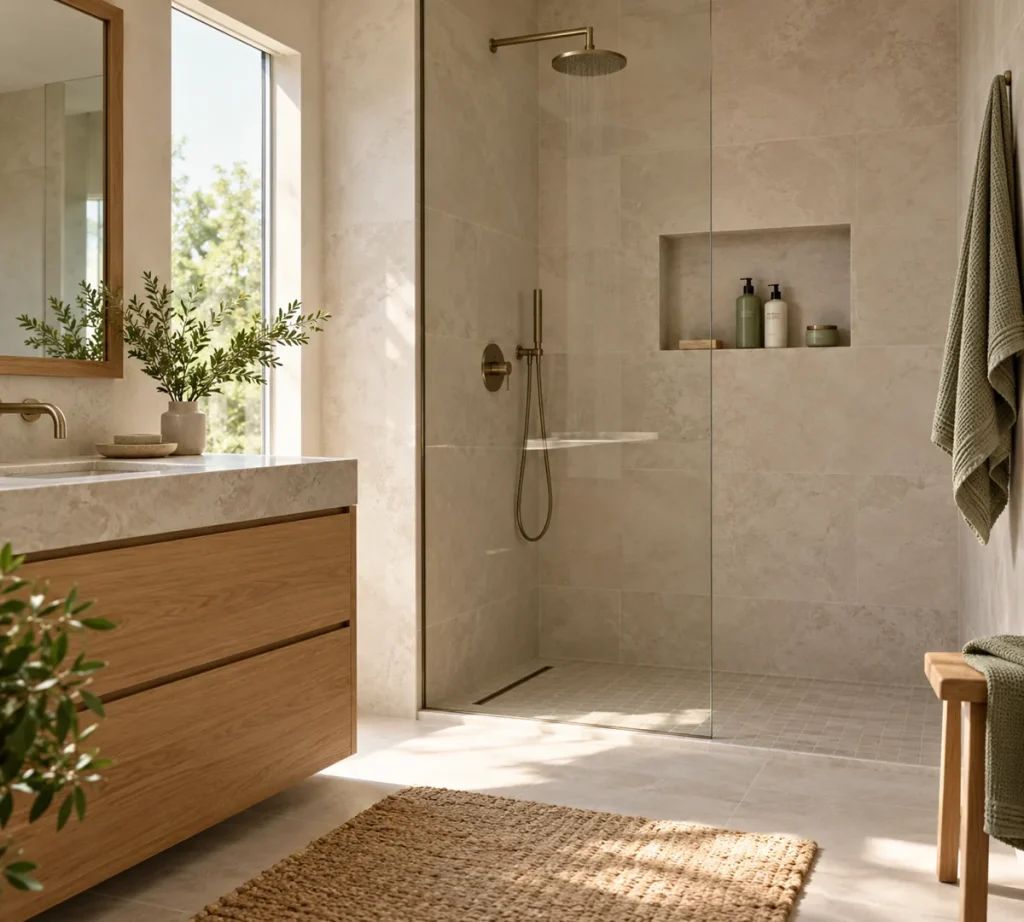
Cut a recessed arched niche into the shower wall for shampoo, soap, and razors, so bottles leave the tub edge and the shower floor stays clear. A niche uses the depth of the wall, which means storage appears without a shelf sticking into the shower. The arch shape echoes older Scottish architecture, and tiling the niche in the same tile as the shower keeps it reading as part of the wall rather than an add on.
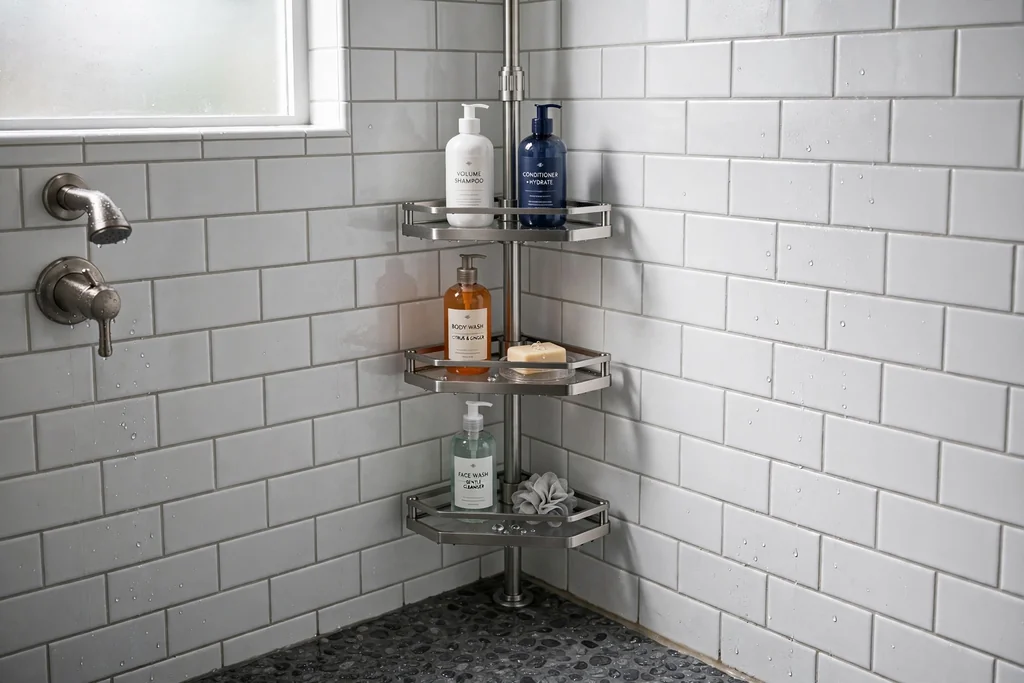
Place the niche at shoulder height for daily bottles, and keep it clear of the direct shower spray line where possible. Slope the niche base slightly toward the shower so water drains out. If cutting into the wall is not possible, a slim tension pole with corner shelves gives a similar tidy result with no building work.
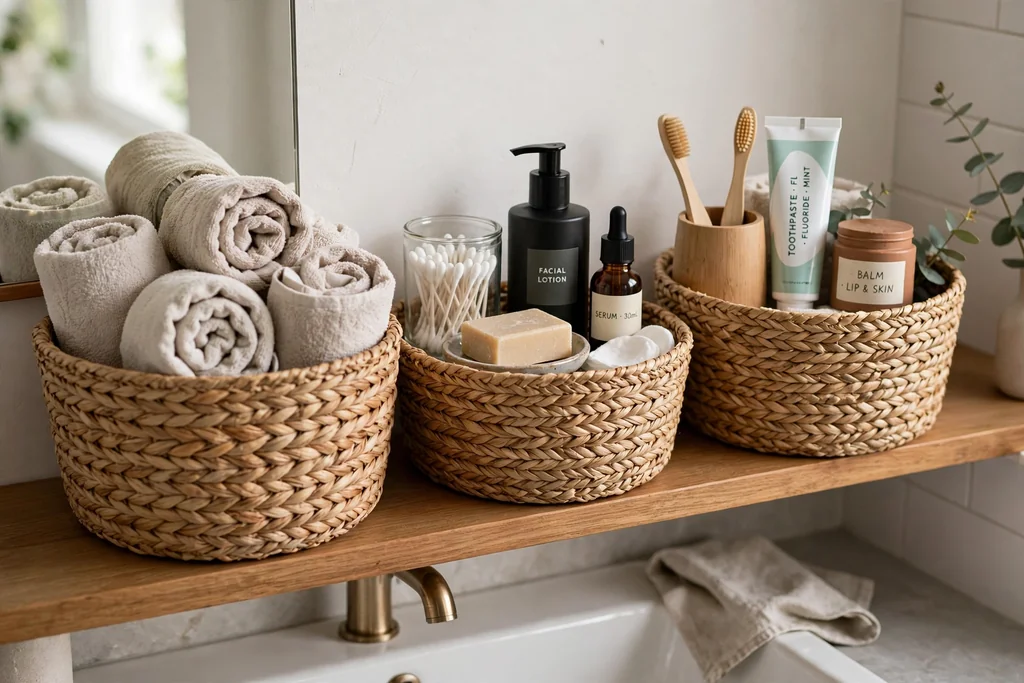
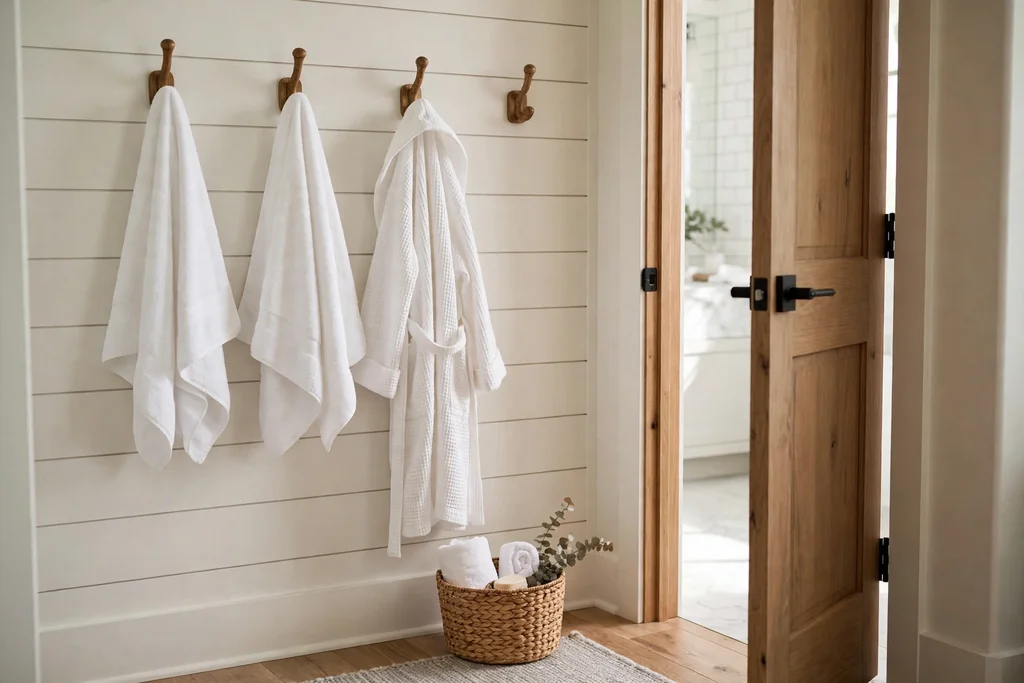
15. A Tweed Cushioned Stool and a Woven Basket
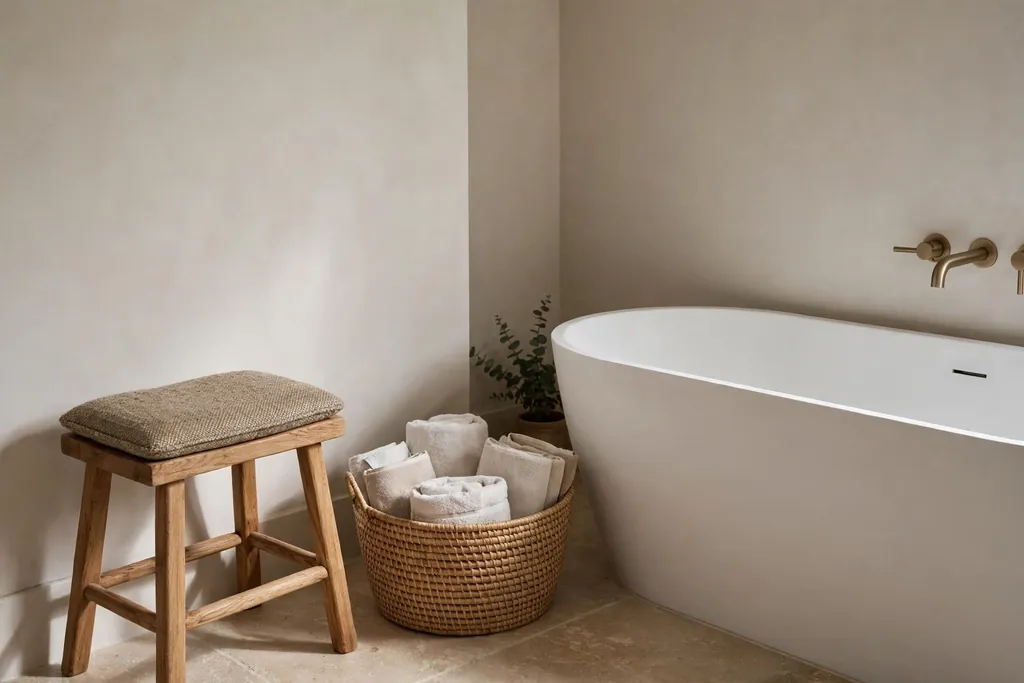
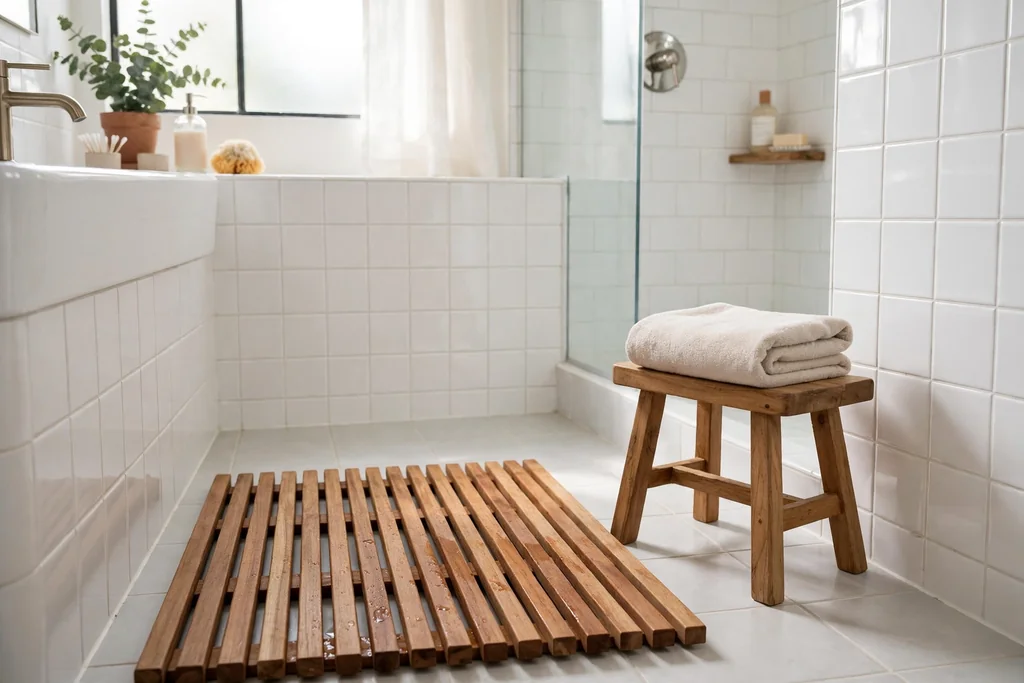
Set a wooden stool with a tweed cushion beside the bath, with a woven basket of towels at its foot, for seating and storage that suit a Scottish bathroom without a cabinet. The stool holds a folded towel and a change of clothes within reach, while the basket keeps spare towels grouped and off the floor. Choose teak or another water tolerant wood for the stool, so it can sit near steam without warping.
Keep the basket on a shelf or inside the vanity rather than beside the tub, since seagrass and cotton rope cope with humidity but not standing water. Empty the basket once a month, returning only what you actually used. If floor space is tight, a wall hung hook for the towel and a single basket on a shelf give the same pairing in a smaller footprint.
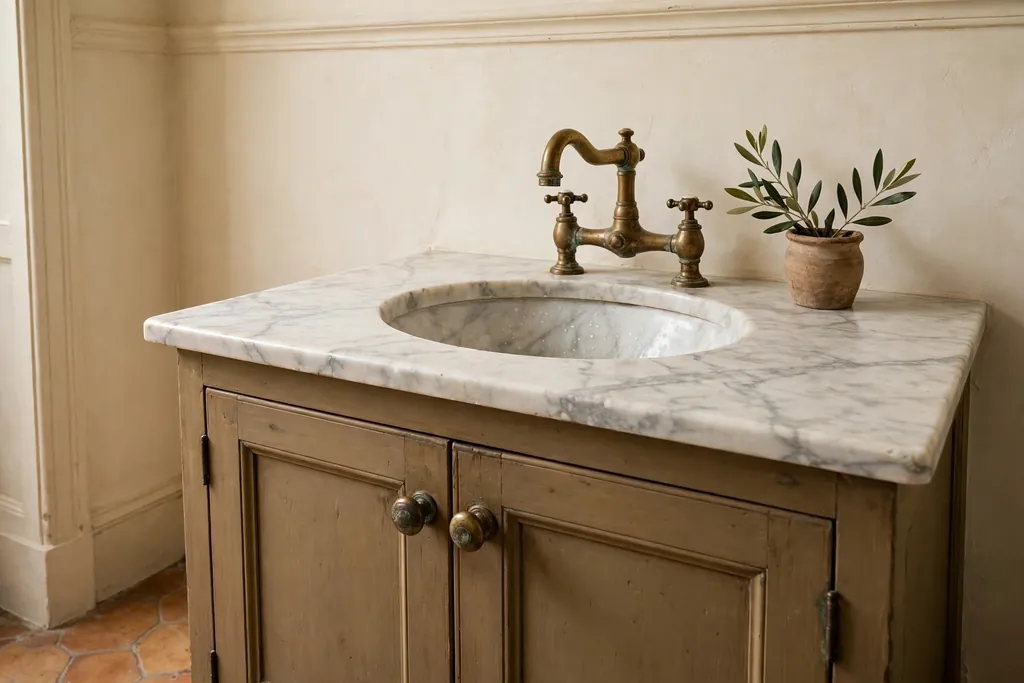
16. Brushed Copper Taps with White Subway Tile
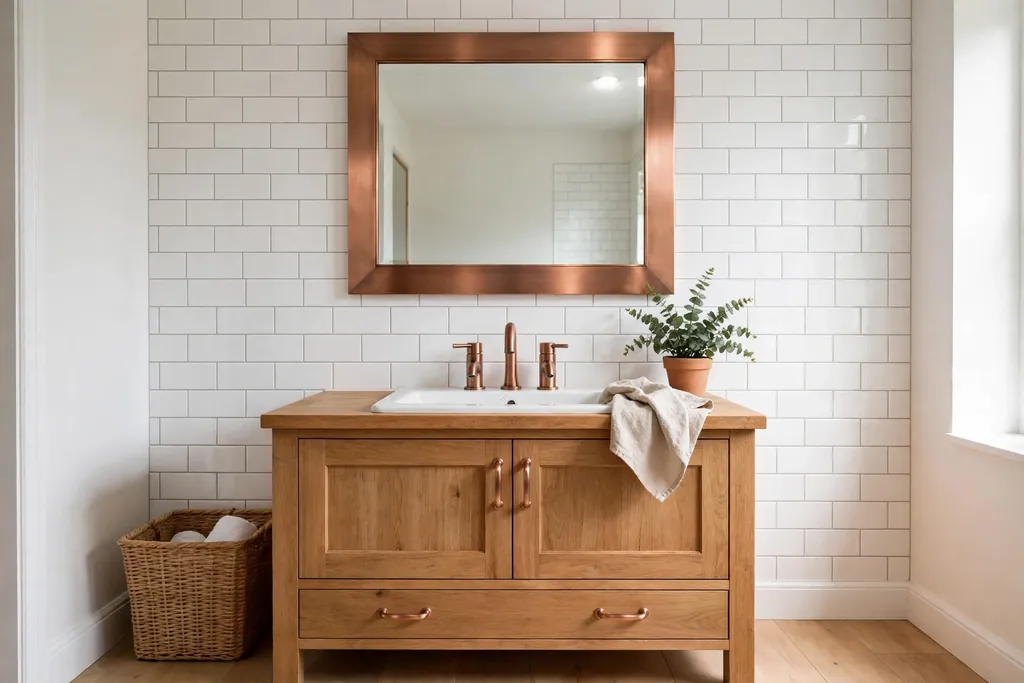
Pair brushed copper taps with white subway tiles for a warm metal that suits both traditional and current Scottish bathrooms. Copper reads warmer than chrome against white tile, and it links well with wood vanities, brass mirrors, and tartan towels in muted tones. This suits a bathroom where the fittings are the main warm accent, and the walls and floor stay pale.
Keep the copper finish consistent across the basin taps, the bath filler, and the towel rail, so the metal reads as one plan. Clean copper with a soft cloth and a cleaner suited to the finish, since harsh pads can dull the brushing. If copper taps are too large a change, start with a copper framed mirror and copper cabinet knobs, and keep the existing taps until the next refit.
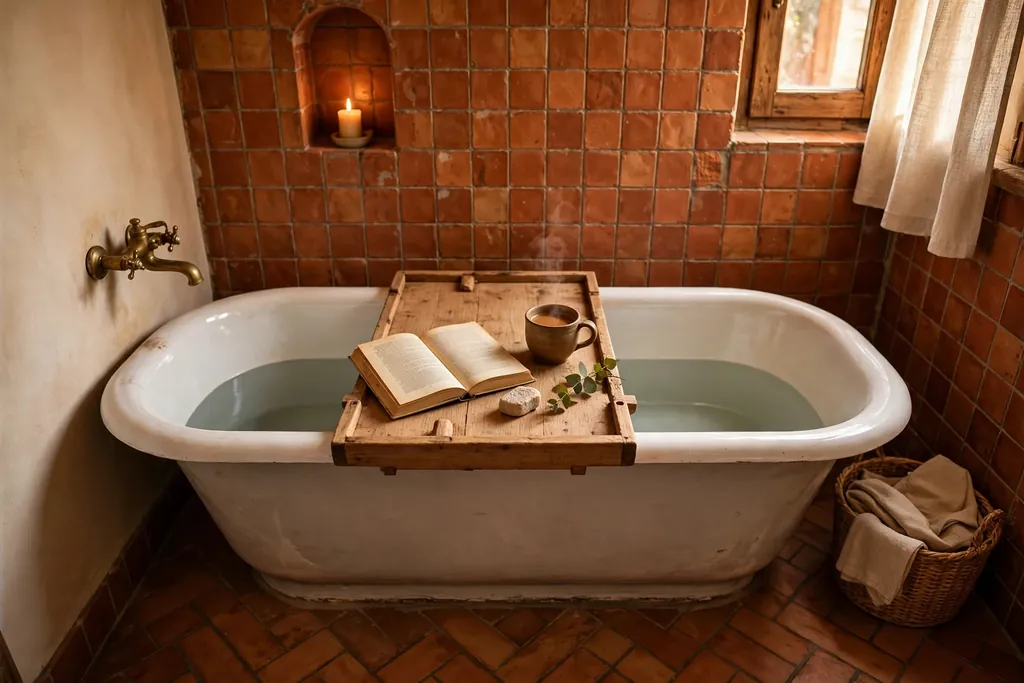
17. A Corner Soaking Tub for a Tight Room
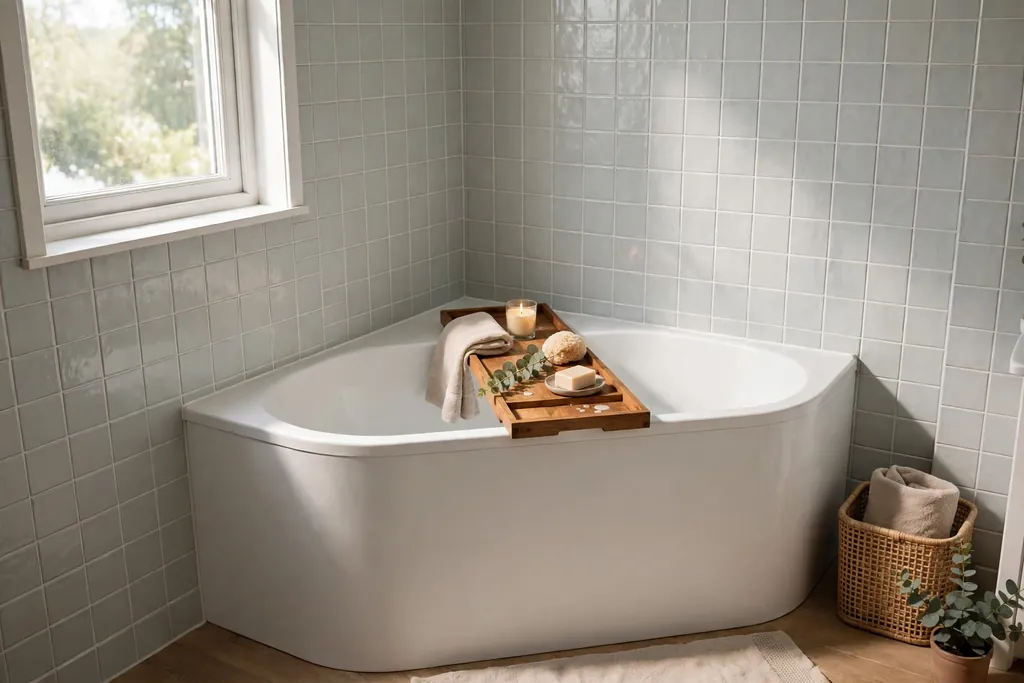
Fit a corner soaking tub into a tight bathroom to gain a proper soak where a straight bath would block the door or the basin. A corner tub uses two walls at once, which frees the centre of the room for a vanity and a clear walkway. Choose a model with a flat rim on one side, so a wood bath tray can sit safely across it, and keep the taps on the wall or the rim where they stay clear of the bather.
Check the door swing and the toilet position before ordering, since a corner tub changes the whole layout, not just the bath position. Pair the tub with pale tiles and a single strong accent, such as a tartan towel or a thistle print, so the unusual shape does not need more pattern to feel planned. If a corner tub still crowds the room, a deep Japanese style soaking tub in a short straight run is another compact option.
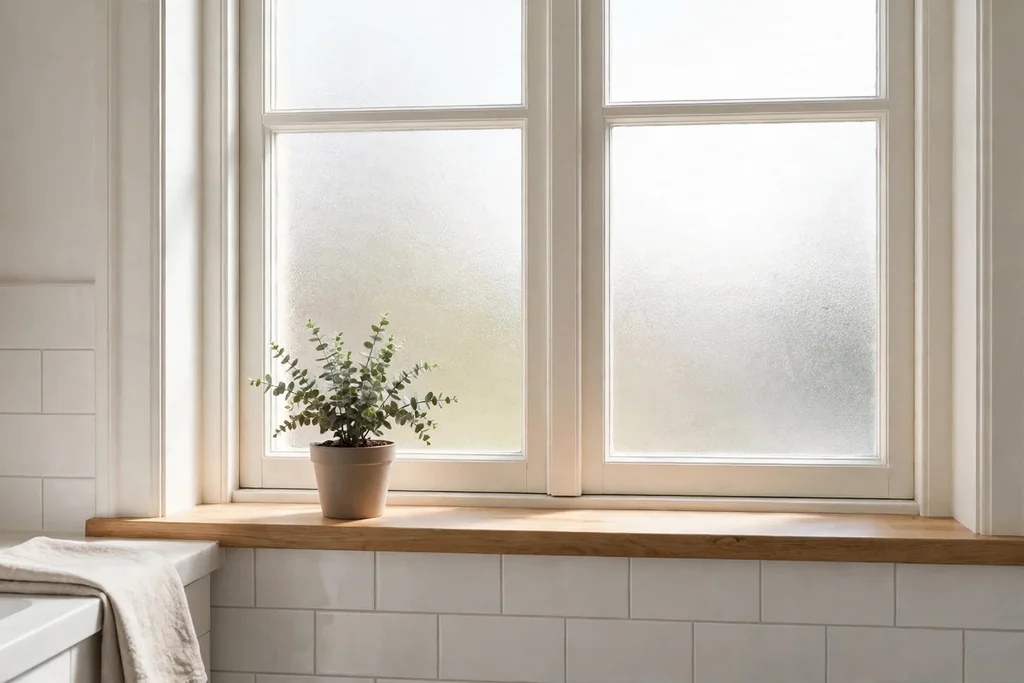
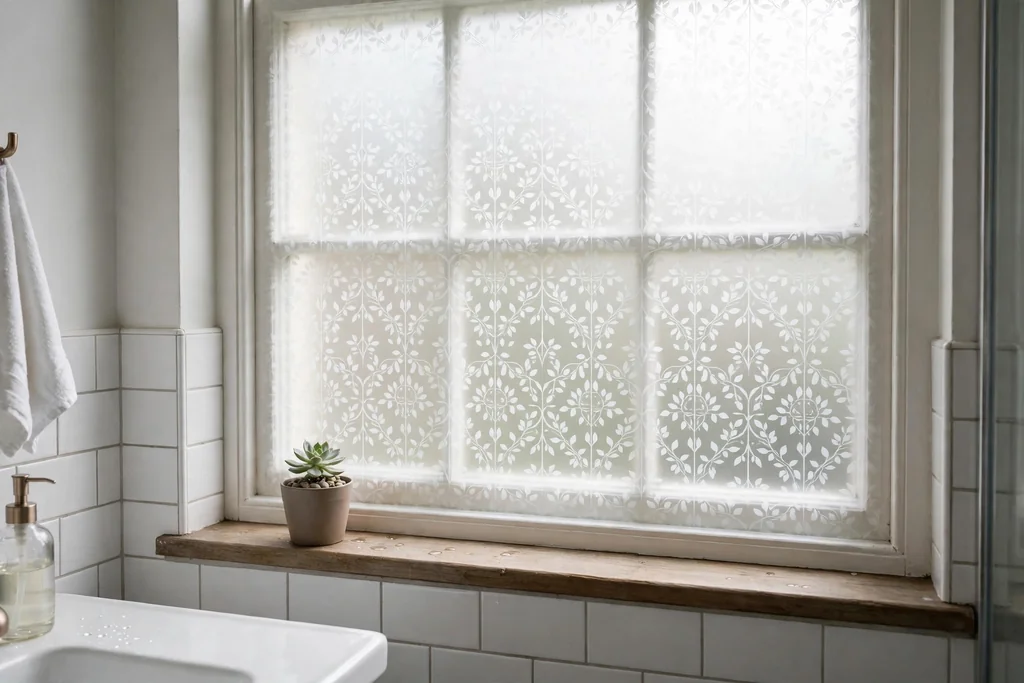
18. A Linen Cafe Curtain on a Tall Sash Window
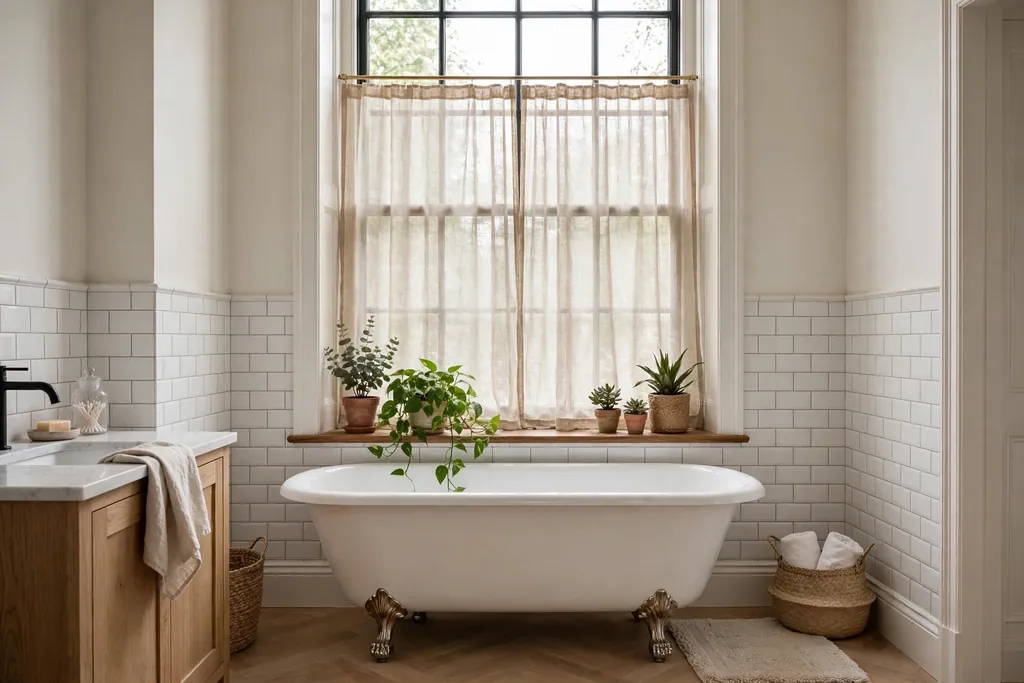
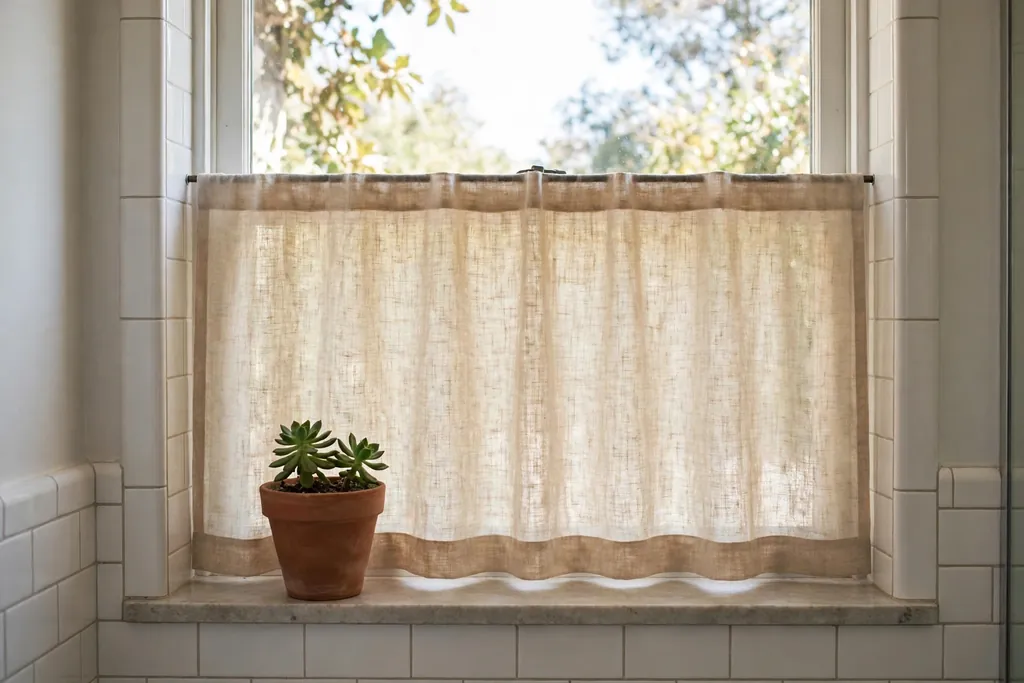
Hang a sheer linen cafe curtain on a tall sash window for privacy that still lets daylight into the bathroom. The curtain covers the lower half of the glass, so the upper panes stay clear for light, and the linen falls in soft folds that suit a cottage or tenement bathroom. This suits a bathroom with a window facing a street or a neighbour, where full privacy film would block too much light.
Hang the curtain on a tension rod inside the frame, so no drilling is needed, and choose a washable linen blend, since bathroom steam and dust collect on window fabric. Keep the curtain clear of radiators and the bath edge, and wash it now and then so it stays pale. If the window sits directly above the bath, a frosted film on the lower panes gives the same privacy with no fabric near the water.
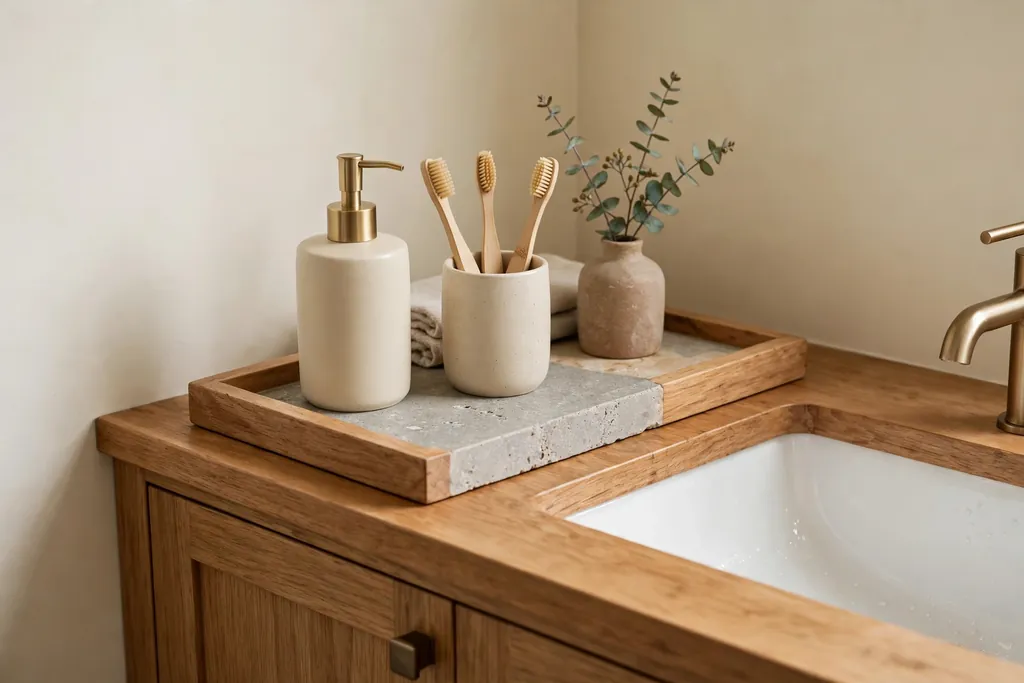
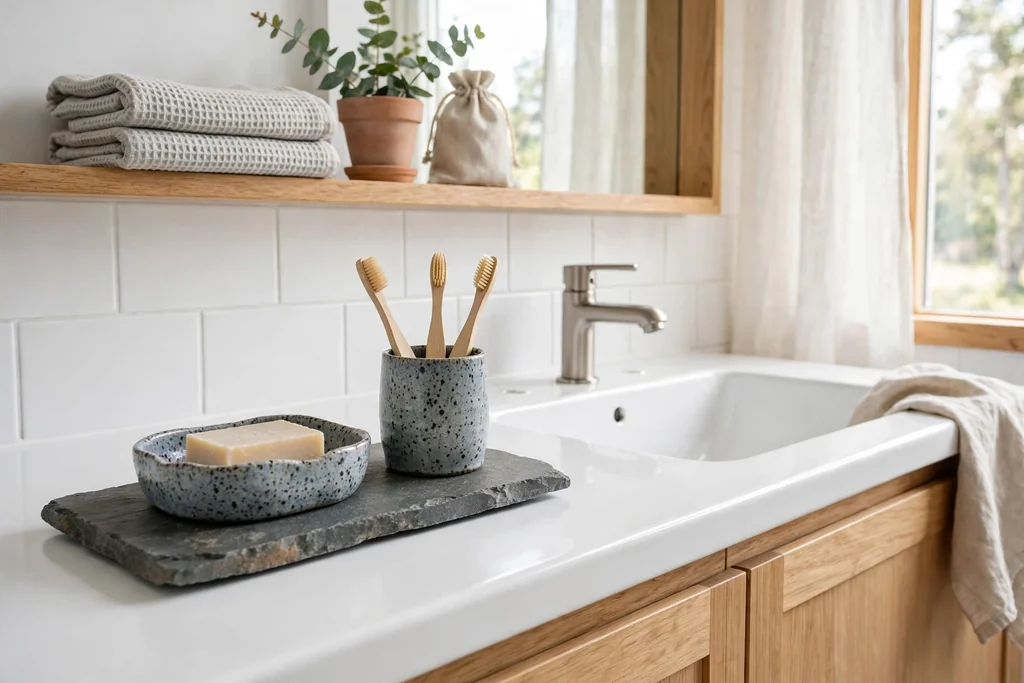
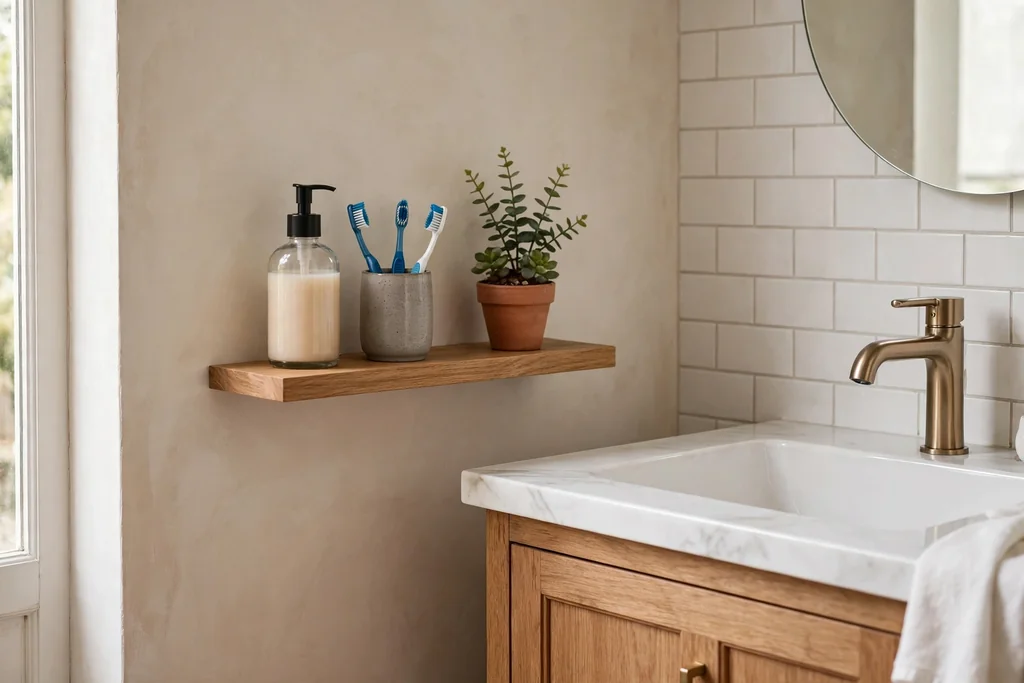
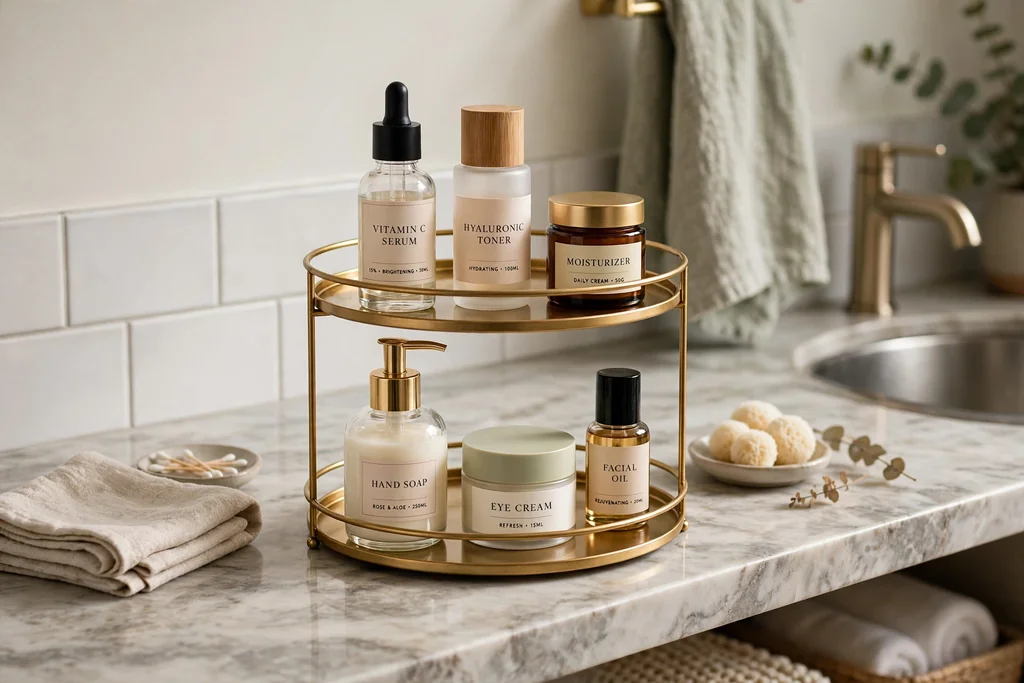
19. Stoneware Accessories Grouped on an Oak Tray
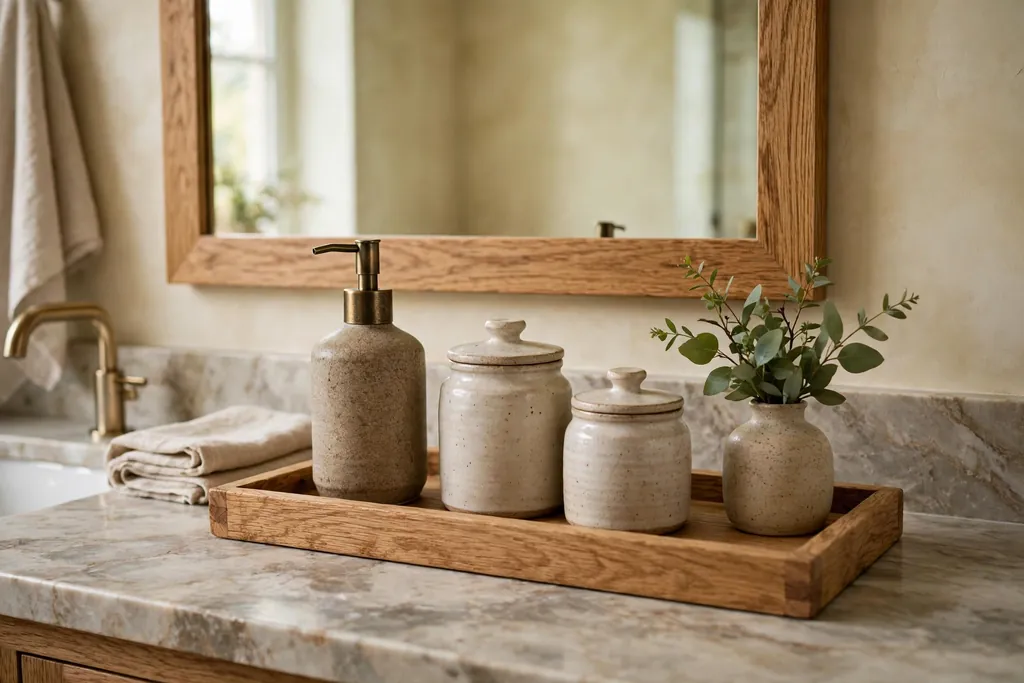
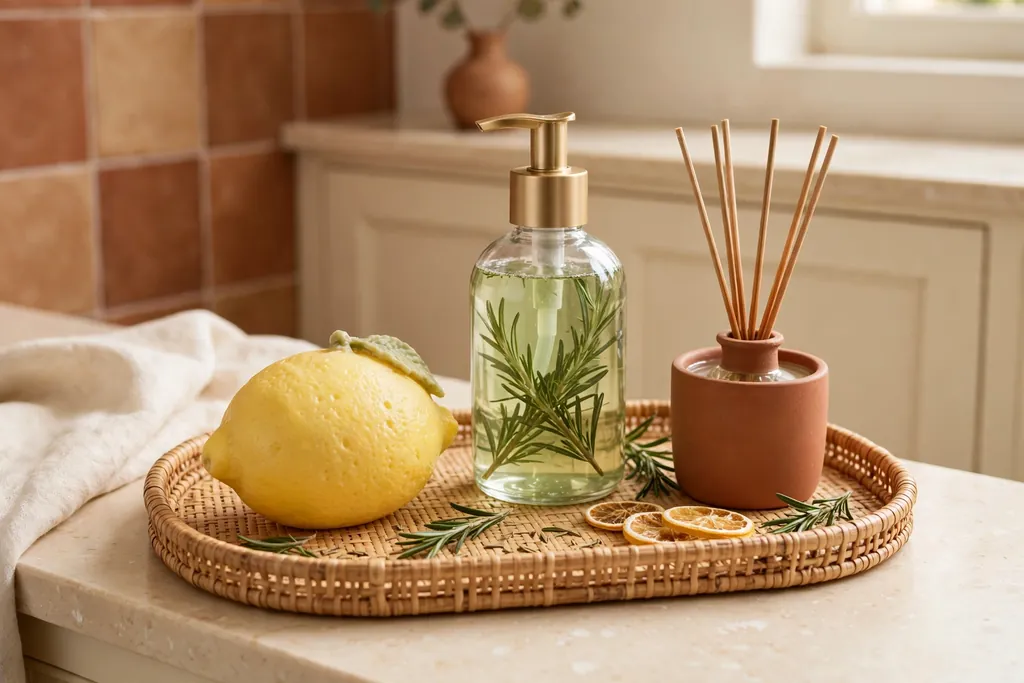
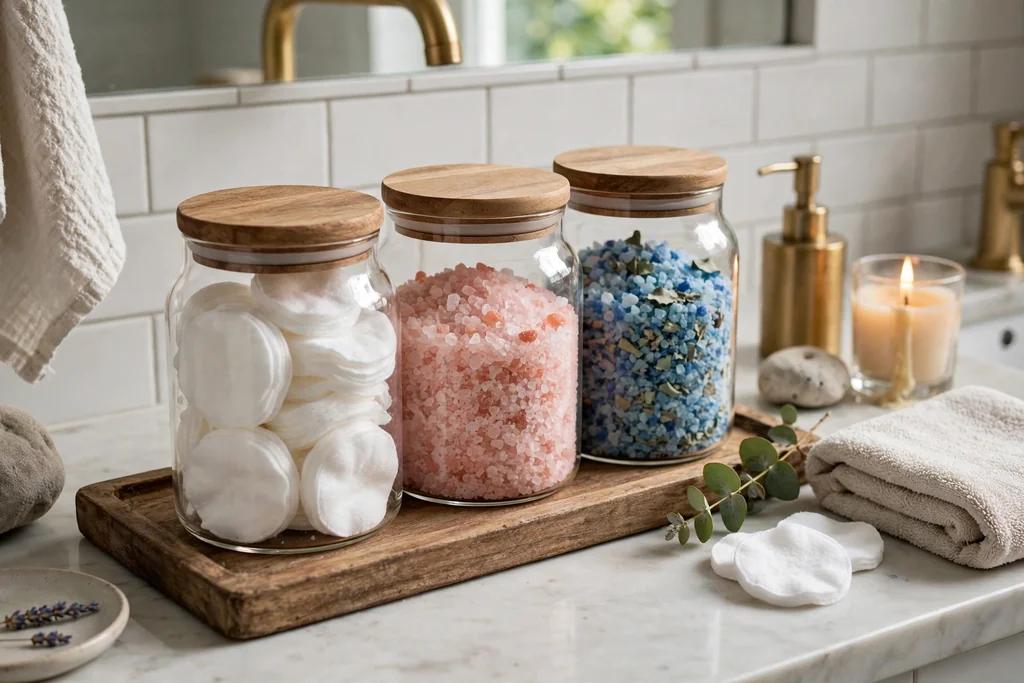
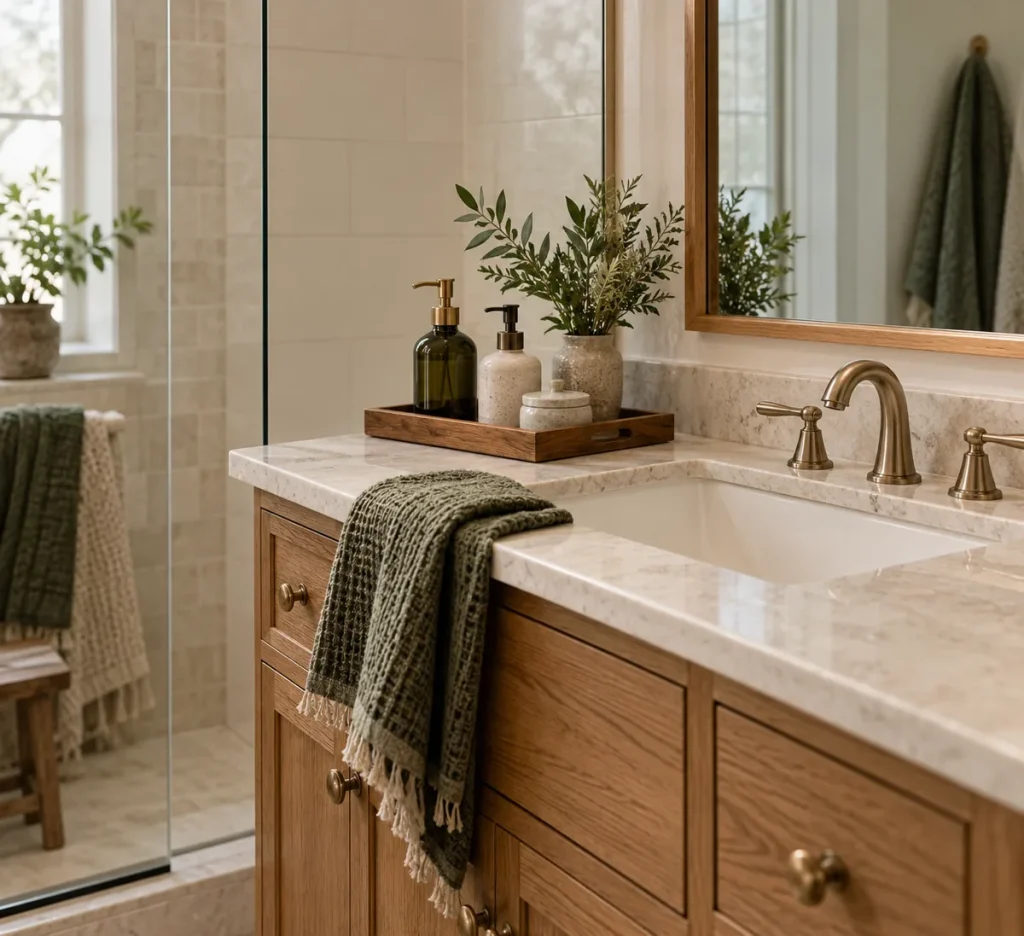
Group stoneware soap dispensers, ceramic jars, and a small vase on an oak tray on the vanity, so daily items stay together and the counter stays clear. A tray turns a spread of bottles into one display, and stoneware in cream, grey, or muted blue suits a Scottish palette without adding a new pattern. Keep the tray to three or four pieces, with one plant or vase for height, so the group reads as calm rather than crowded.
Choose a tray with low sides, so bottles stay put but remain easy to lift, and wipe the tray weekly, since soap and water collect under dispensers. Keep the tray clear of the basin edge, so drips fall into the sink rather than onto the wood. If counter space is very tight, a single stoneware dispenser and a small dish for rings give the same grouped effect in a smaller footprint.
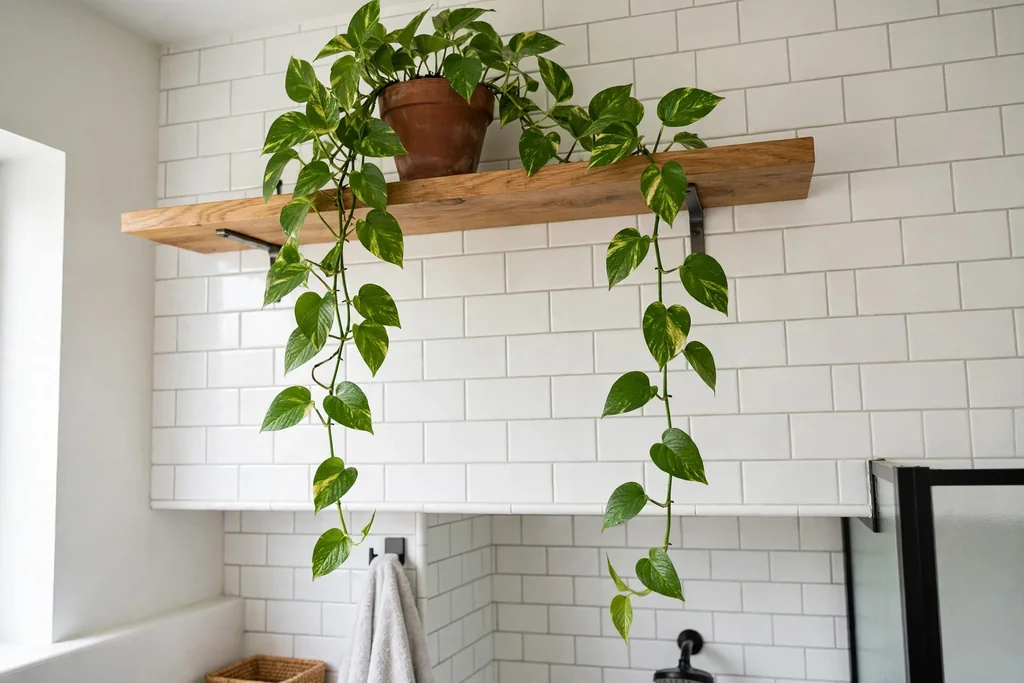
20. A Highland Fern on a High Shelf
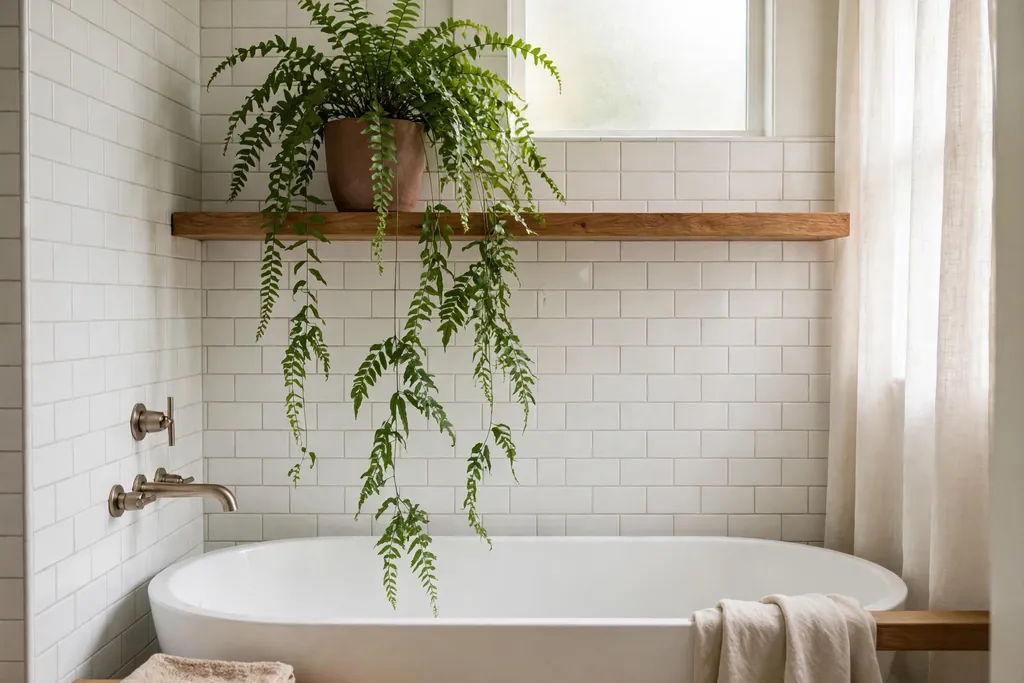
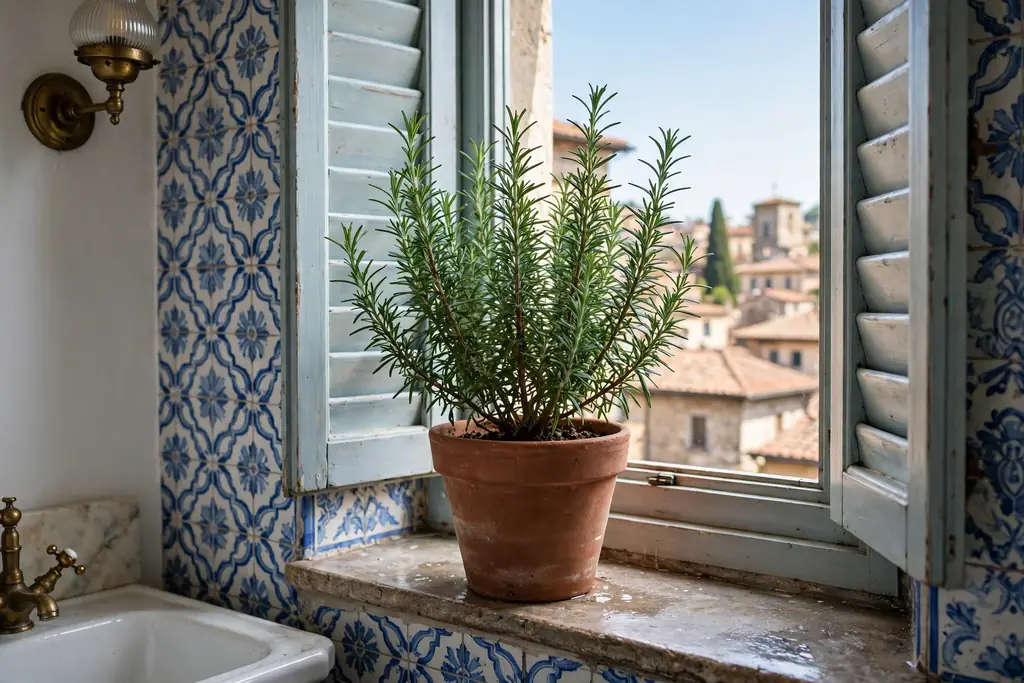
Set a potted fern on a high shelf above the bath or beside the window for green that suits bathroom humidity and indirect light. A fern brings a Highland plant note into the room without taking floor space, and trailing fronds soften hard tile lines. Choose a shelf clear of direct shower spray, and use a pot with drainage holes and a saucer, so water does not drip onto towels below.
Check the soil before watering, since bathroom air already adds moisture, and rotate the plant to a brighter room for a few days each week if the bathroom has no window. One fern usually looks better than a crowded collection in a small room. If a live plant is too much upkeep, a single stem of dried heather in a stoneware vase gives a similar colour note with no watering.
21. A Leaning Oak Ladder Shelf for Towels
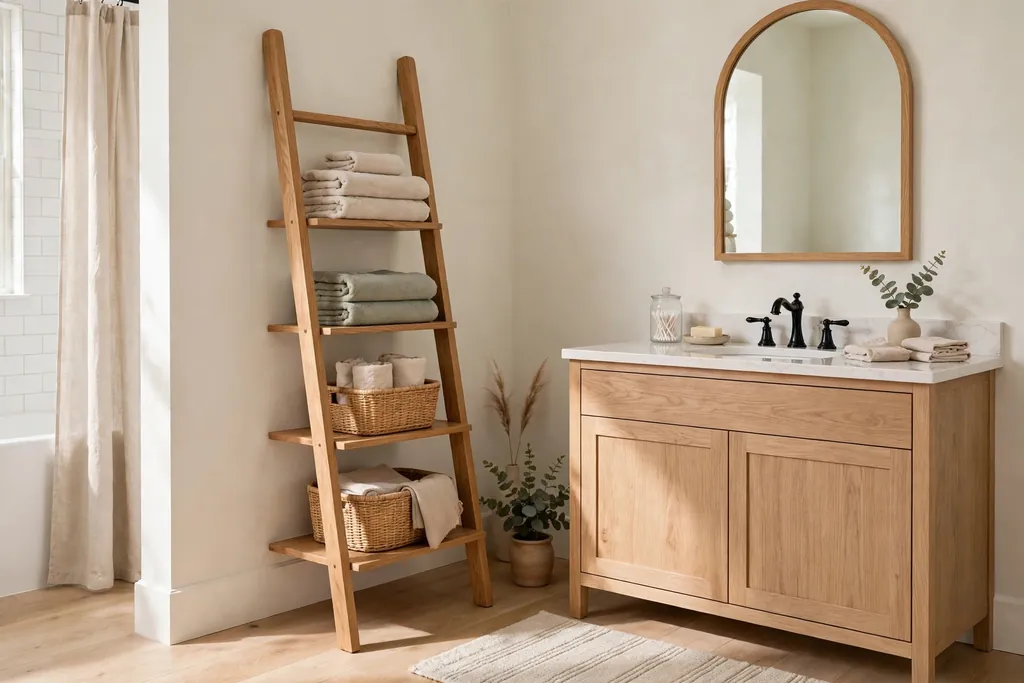
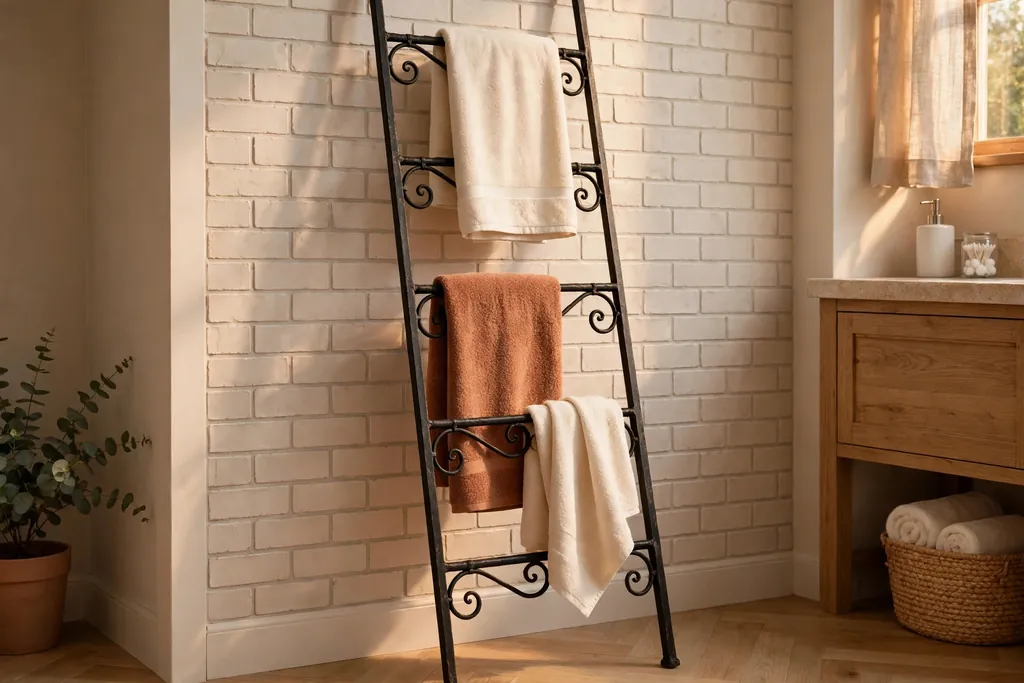
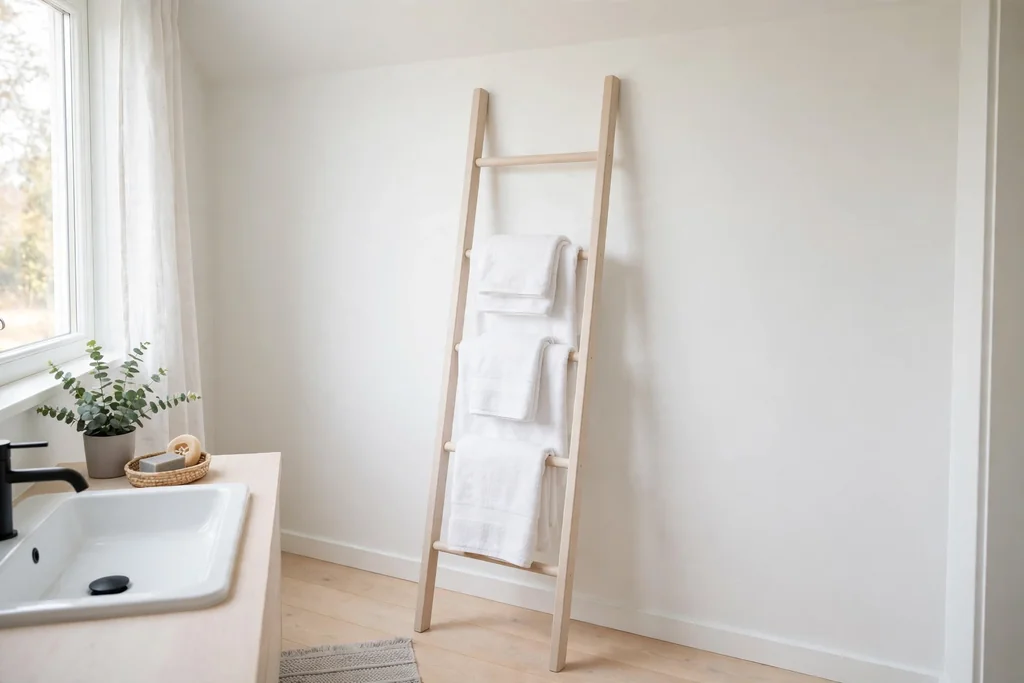
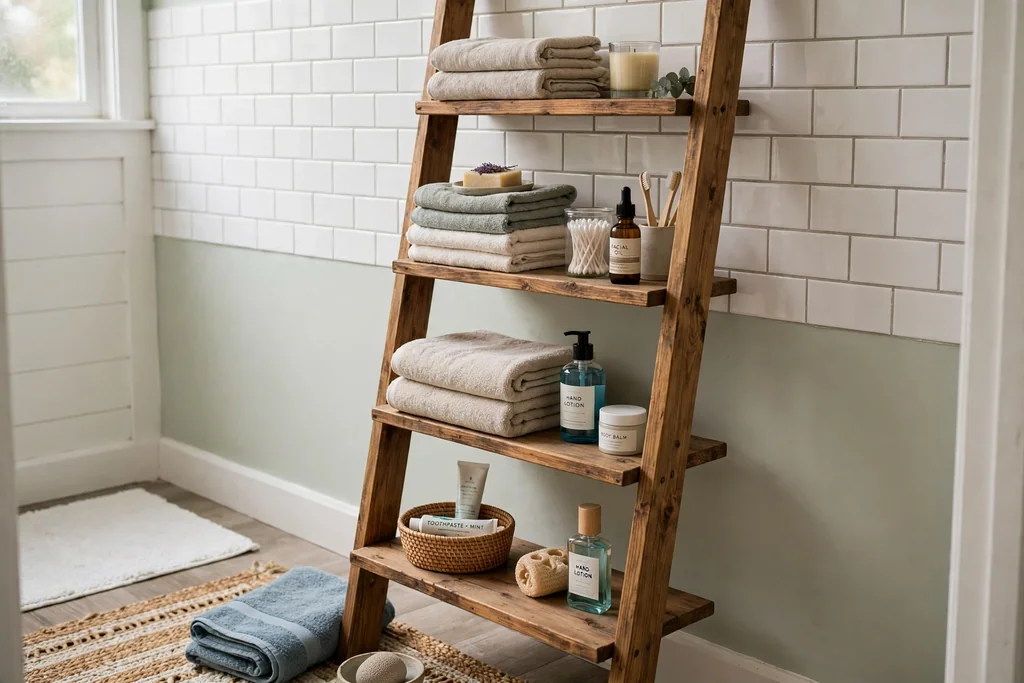
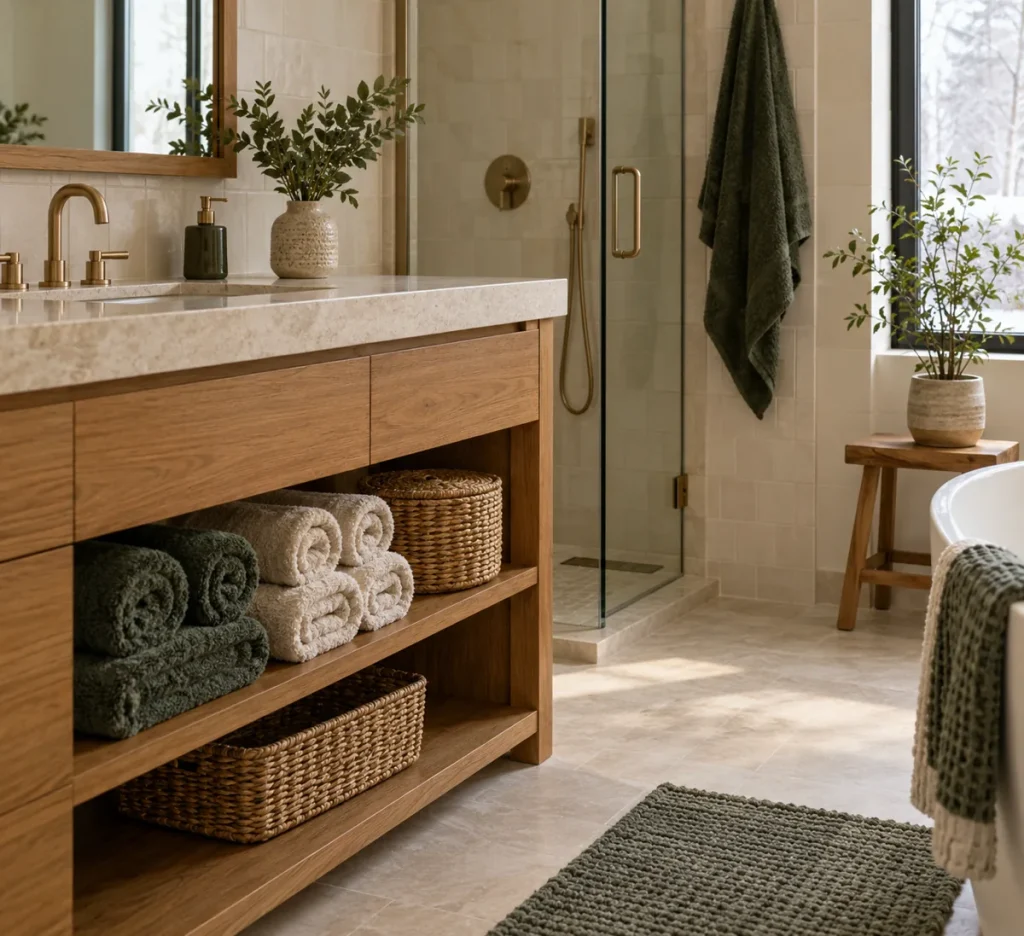
Lean an oak ladder shelf against a spare wall for four or five shallow shelves in the footprint of a towel rail, with no drilling needed. It suits a narrow wall beside the door or at the end of the tub, where a deep cabinet would block the walkway. Put heavier items, such as folded towels, on the lower rungs and lighter decor higher up, and add small adhesive pads under the feet so it does not slide on tile.
Check that the top of the ladder cannot tip forward if a child or pet pulls on it, and anchor it if your household needs that extra safety. Keep the shelf to towels, baskets, and one plant, so it reads as storage rather than a display case. If floor space is very tight, a wall hung version of the same ladder shelf gives the same rungs with no floor footprint at all.
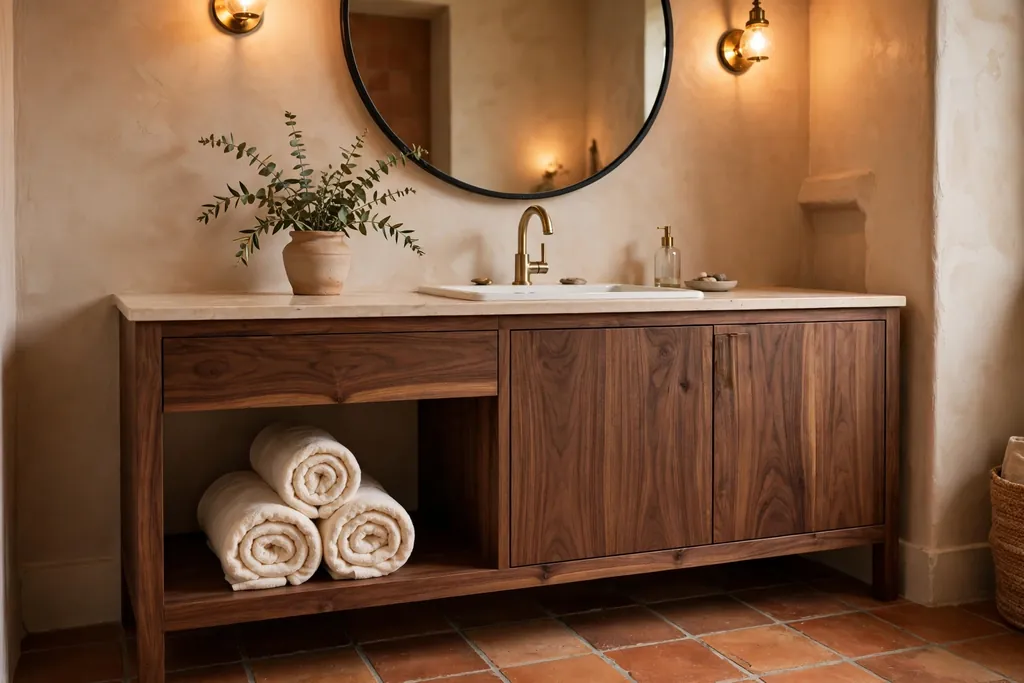
22. A Round Mirror with Warm Sconces
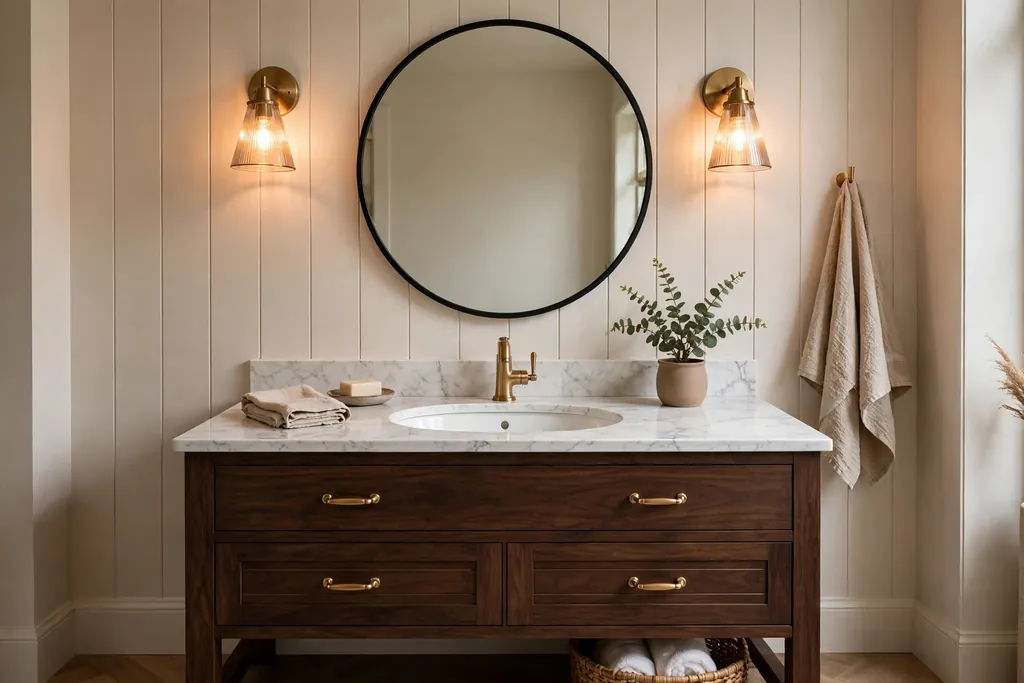
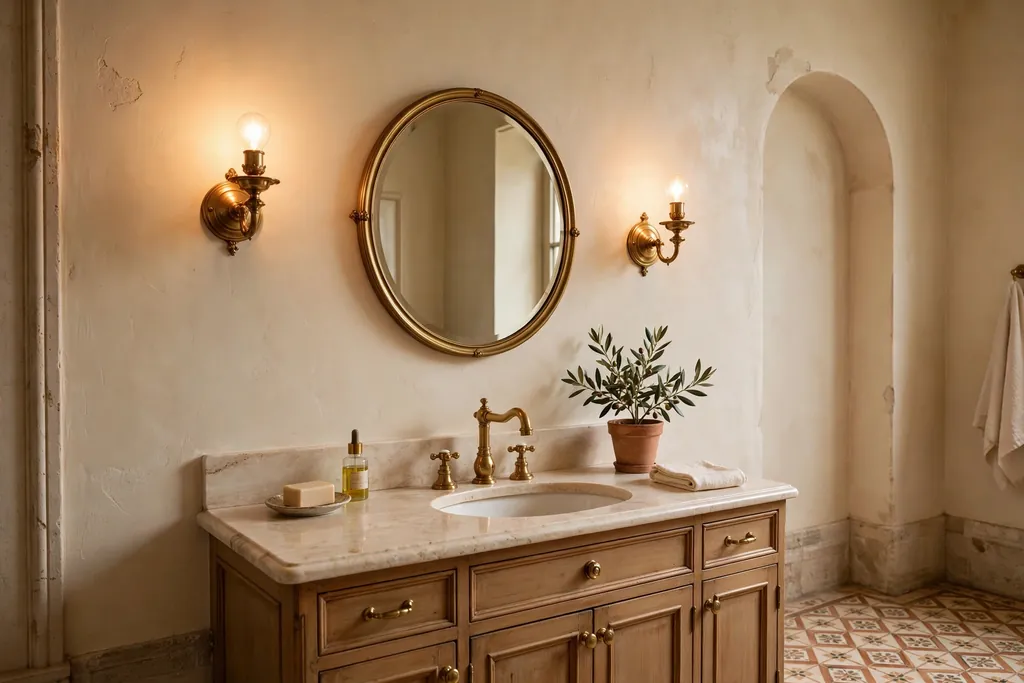
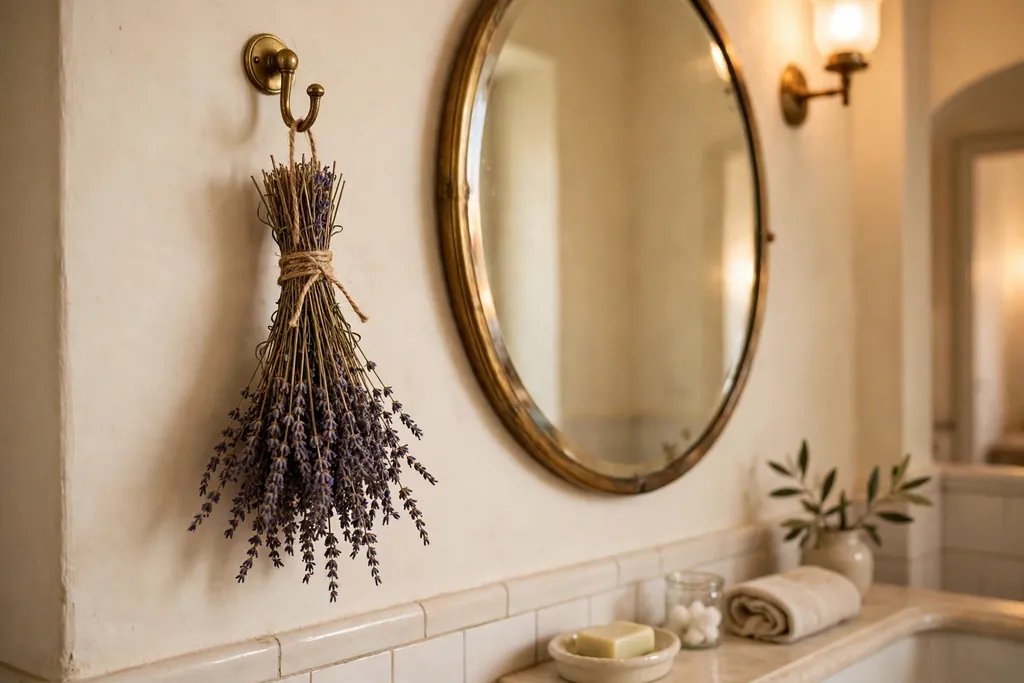
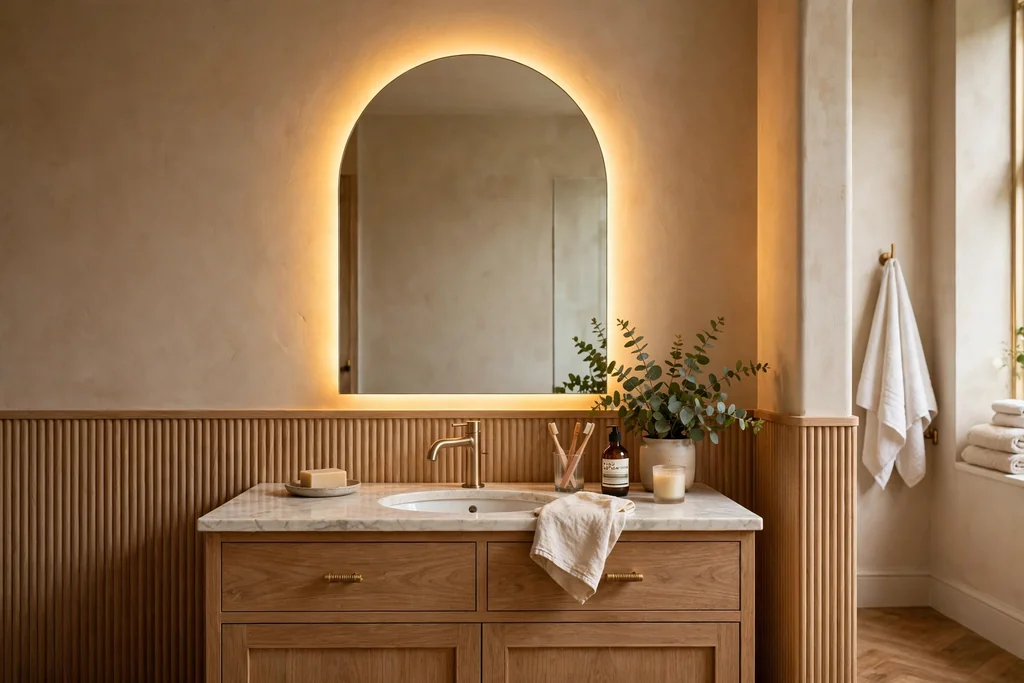
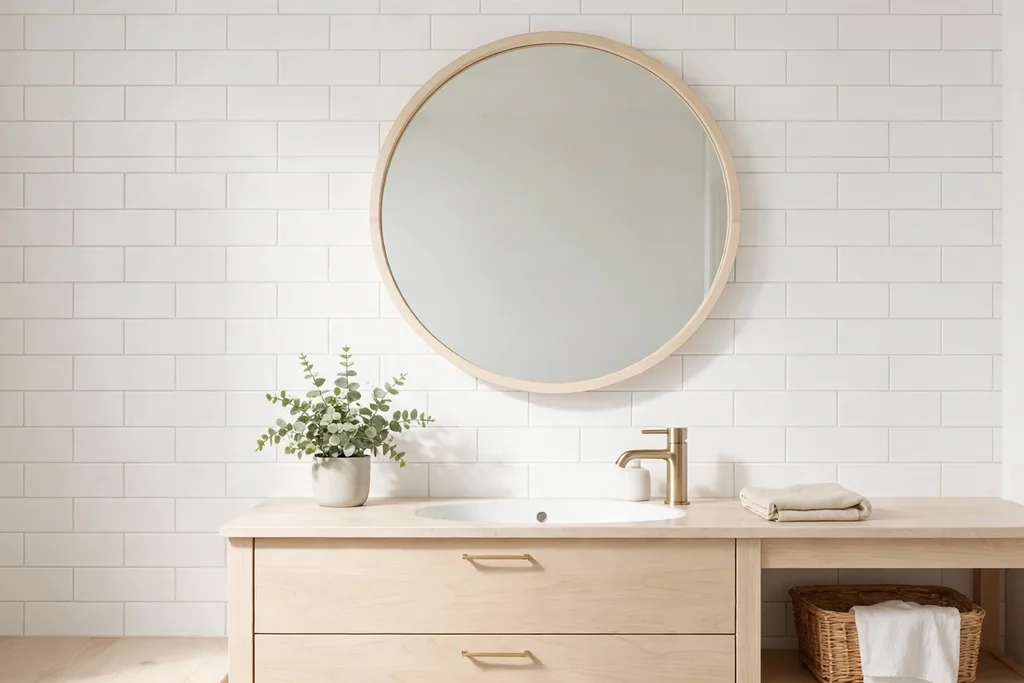
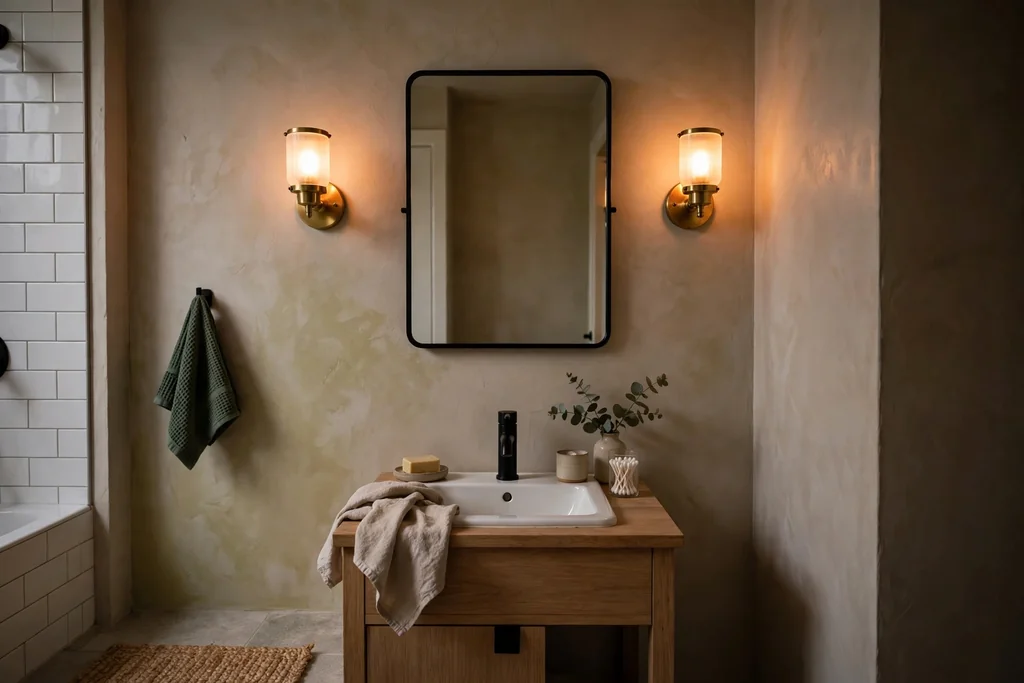
Hang a round mirror with a warm sconce on each side above the vanity for light that flatters faces and softens a room full of straight tile lines. The round shape breaks the rectangle of the vanity, while sconces at eye level give softer, more even light than a single overhead fitting. Hang the mirror centred over the basin, a little narrower than the vanity, so the edges do not crowd the lights.
Choose warm white bulbs, and a dimmable fitting if you want a low glow for evening baths. Battery or plug in sconces suit renters, while wired sconces give steadier brightness, and both should sit clear of direct shower spray. Keep the mirror clear of clutter below it, with one tray or soap dish only, so the mirror and lights stay the focus.
23. A Pale Coastal Scheme with a Driftwood Mirror
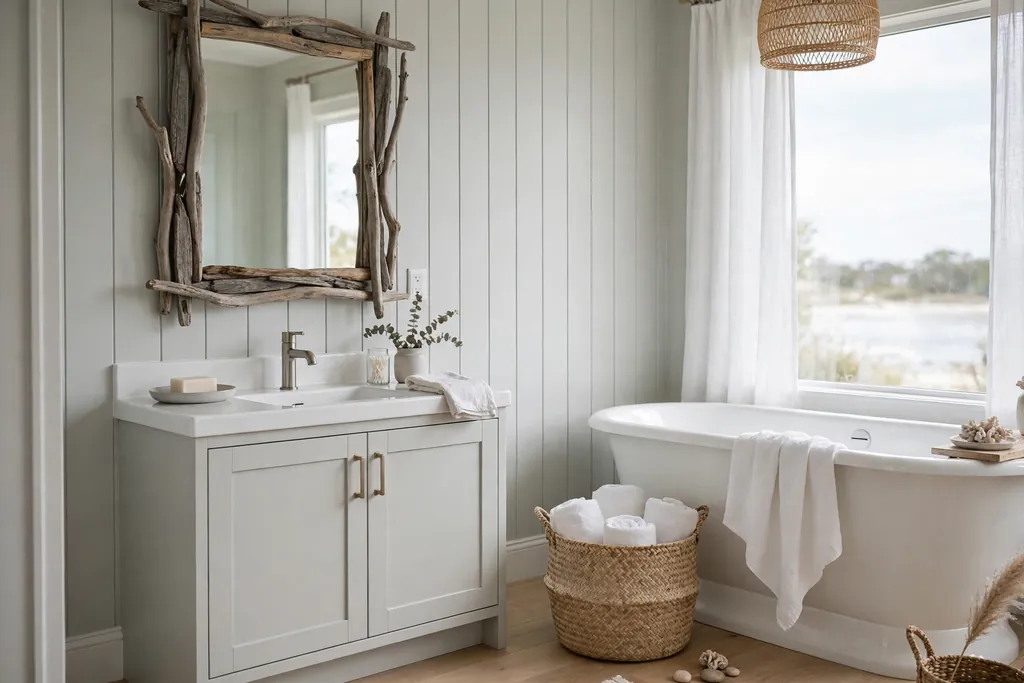
Finish with a pale coastal scheme inspired by the Isle of Skye: grey white walls, a white bath, a driftwood framed mirror, and a seagrass basket for towels. The pale palette keeps a small bathroom bright, while the driftwood frame and natural basket add a coastal Scottish note without tartan or strong colour. This suits a bathroom with good daylight, where pale grey and white stay fresh rather than flat.
Repeat the driftwood tone once more, in a stool or a tray, so the mirror does not look isolated, and add one soft blue accent, such as a towel or a vase, to link the room to the sea. Keep the floor in a warm pale tile, and use washable cotton towels, since a pale room shows marks quickly. If driftwood is hard to source, a weathered oak frame in a similar grey tone gives the same coastal feel.
Conclusion
A Scottish bathroom does not need a castle theme, it needs honest materials, one or two strong colours, and storage placed where it is used. Start with the bath and the vanity, since those set the scale and the palette, then free floor space with wall hung fittings, niches, and ladder shelves. Tartan towels, thistle prints, slate, and stone add character in small doses, while wool, tweed, and wood add warmth that suits cold mornings. Test paint and tile samples in daylight and evening light, keep wool and untreated wood clear of direct spray, and add one change at a time, checking that the door, the tub, and the basin still have a clear path. For the same warm, practical approach in a rented room, see these apartment bathroom ideas for storage and lighting that needs no remodel.
FAQs
How do I add Scottish character to a bathroom without a themed look?
Use materials and plants rather than novelty items: tartan towels, slate tiles, wood panelling, thistle prints, a fern, and wool towels. One or two heritage details, such as a tweed cushion or a stoneware vase, are enough, and plain tiles and towels keep the room calm.
What colours work best in a Scottish bathroom?
Slate grey, loch blue, heather purple, and forest green form a calm base, with cream, oat, and warm wood to keep dark colours cosy. Keep bright colour to towels, a blind, or one print group, so the room feels planned rather than busy, and test deep colours in daylight and evening light before painting a large area.
Can I use tartan in a small bathroom?
Yes, if you keep it to one or two places. A tartan blind and matching towels give a clear Scottish note without covering every surface, and muted checks suit small rooms better than bold red ones. Keep the rest of the textiles solid, so the check stays the single pattern in the room.
What is the best storage for a small Scottish bathroom?
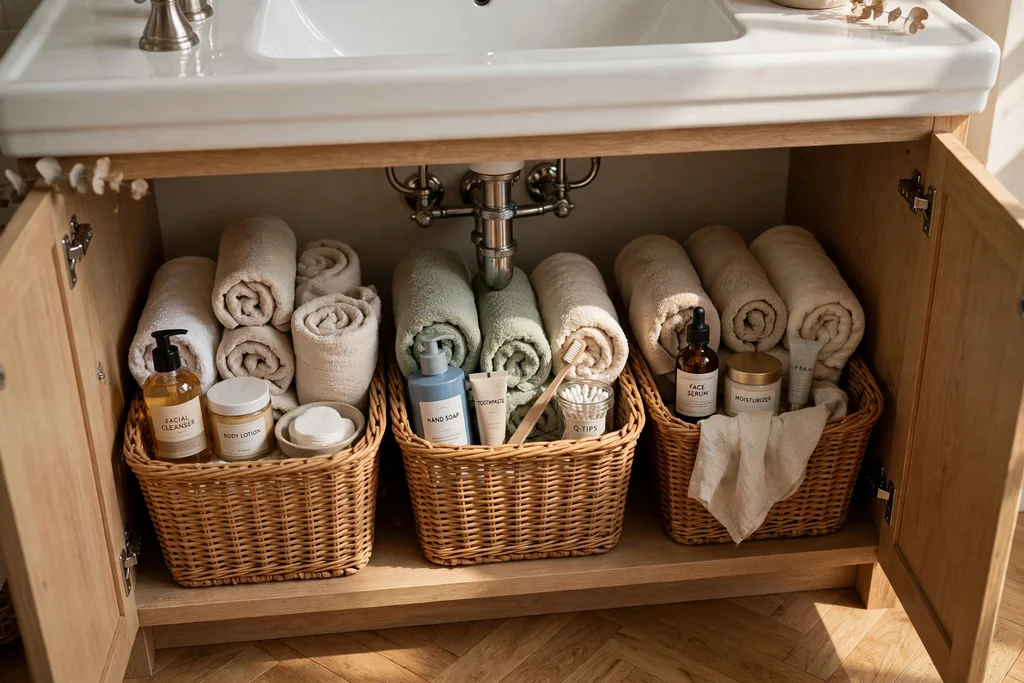
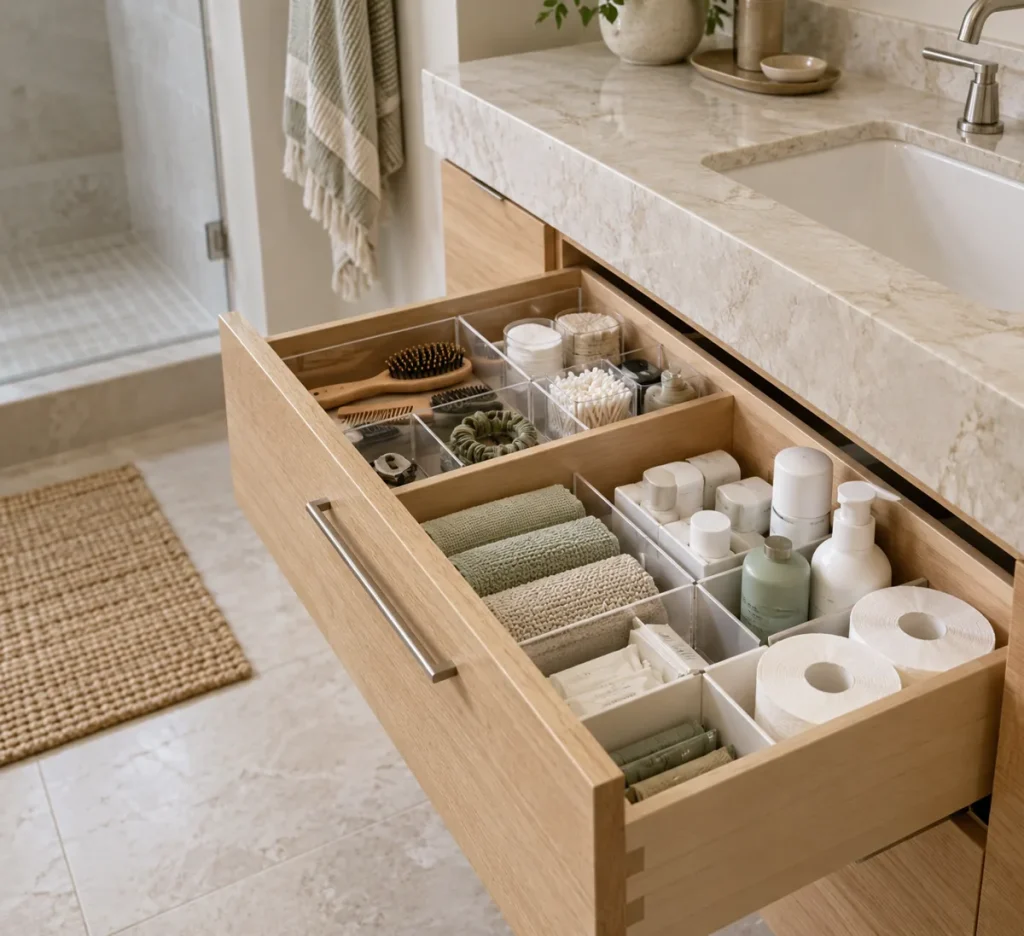
Use the walls first: recessed shower niches, barrel wood shelves, a ladder shelf, and baskets under the sink or on a shelf. One basket per job keeps bottles grouped, and a small tray on the counter holds only daily items, so the basin stays clear.
Is a roll-top bath practical in a small bathroom?
A roll-top bath needs floor space to walk around at least two sides, so it suits a medium or large room better than a tight one. In a small bathroom, a corner soaking tub or a back-to-wall freestanding tub gives a similar presence with a smaller footprint, and a rainfall shower over the bath adds a second use to the same tub.
How do I keep wood and wool safe in a damp bathroom?
Choose water tolerant woods such as teak for stools and trays, seal painted panelling with moisture resistant paint, and keep wool towels and tweed cushions on a heated rail or a shelf, clear of direct shower spray. Dry wood trays after use, and wash towels often so damp fabric does not stay in the room.