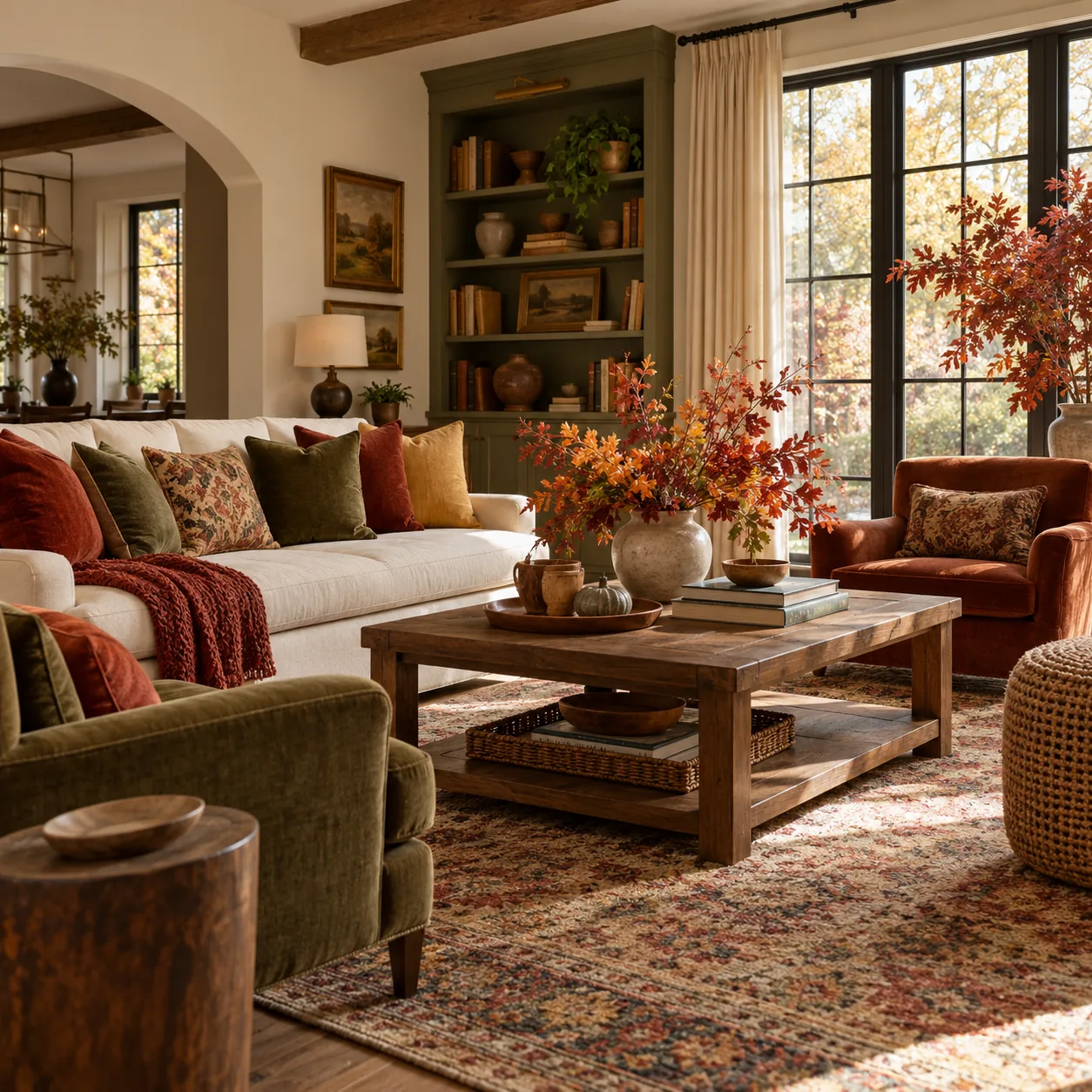
Fall living room decor ideas can start with the furniture and colors already in your home. A textured throw, a different picture, or one low display may be enough to make the room feel ready for cooler afternoons. These 22 ideas focus on autumn color, useful textiles, natural-looking details, and arrangements that are easy to pack away. Choose one seating change and one display area to begin with. You can keep the look quiet, skip orange entirely, or add a few recognizable seasonal shapes without filling every surface.
Key Takeaways
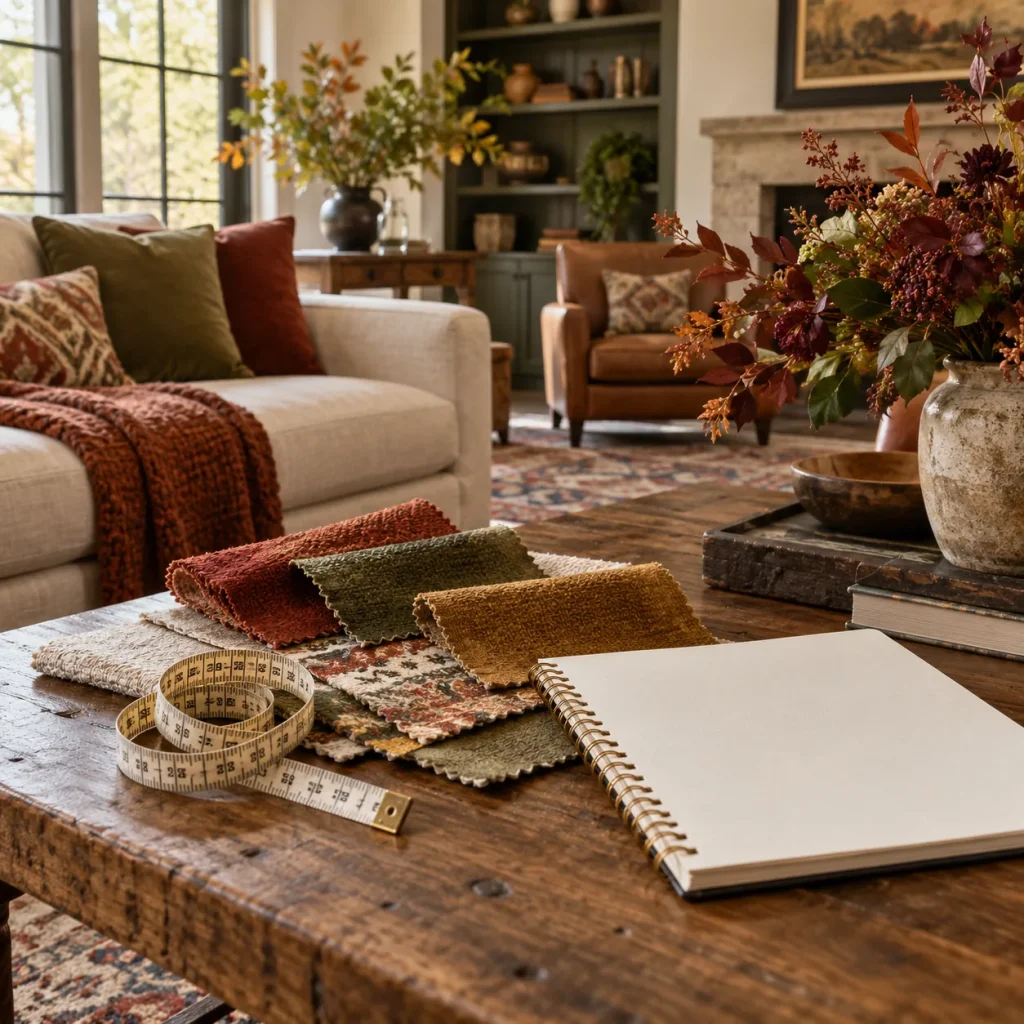
- Repeat a color already in the room so autumn additions connect with the existing furniture.
- Swap useful textiles before adding small ornaments that need storage and dusting.
- Choose one main seasonal display and keep everyday table space available.
- Plan how decor will be cleaned, stored, and kept clear of heat before bringing it home.
Keep textiles, dried stems, faux foliage, and other combustible decorations away from heat. The U.S. Fire Administration’s heating guidance calls for at least three feet between things that can burn and heat sources, with appliance instructions taking priority where more clearance is required. An unheated shelf or sideboard is a simpler place for foliage than an active fireplace.
1. Borrow One Autumn Color From Your Rug
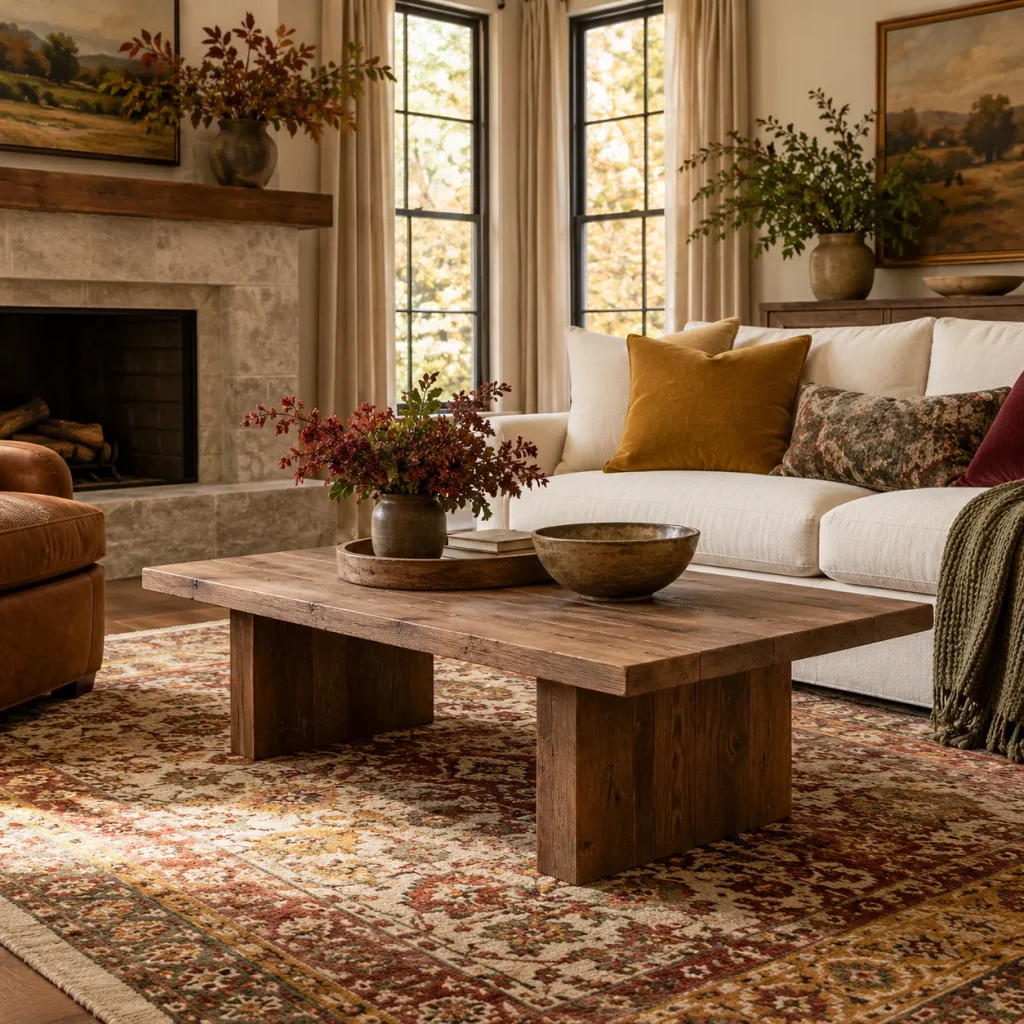
Choose an autumn shade that already appears in the room, such as a little ochre in the rug or brown in a painting. Repeat it in one cushion or small accessory before buying a full seasonal set. This gives the new detail something to relate to. Check the color beside your sofa in daylight, since the same fabric can look very different against cream, gray, or dark upholstery.
2. Swap Lightweight Throws for Textured Layers
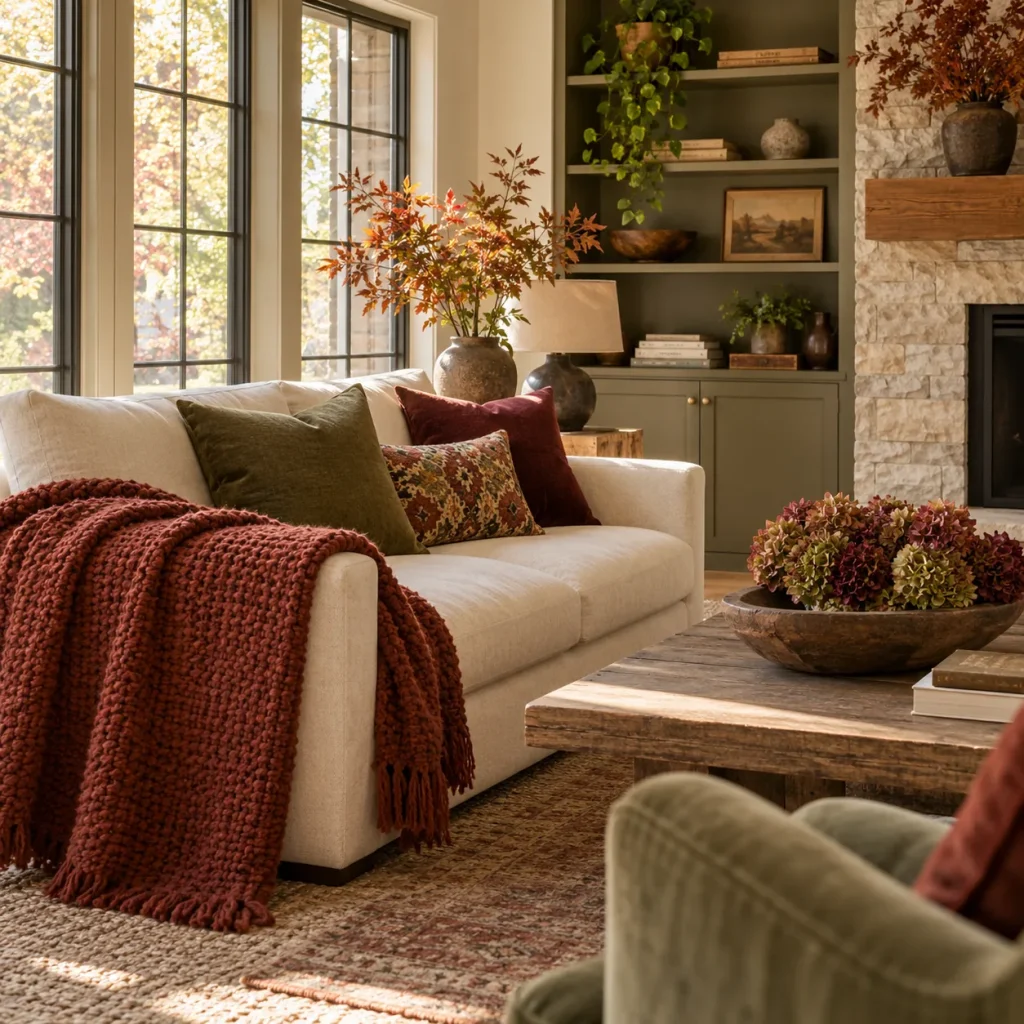
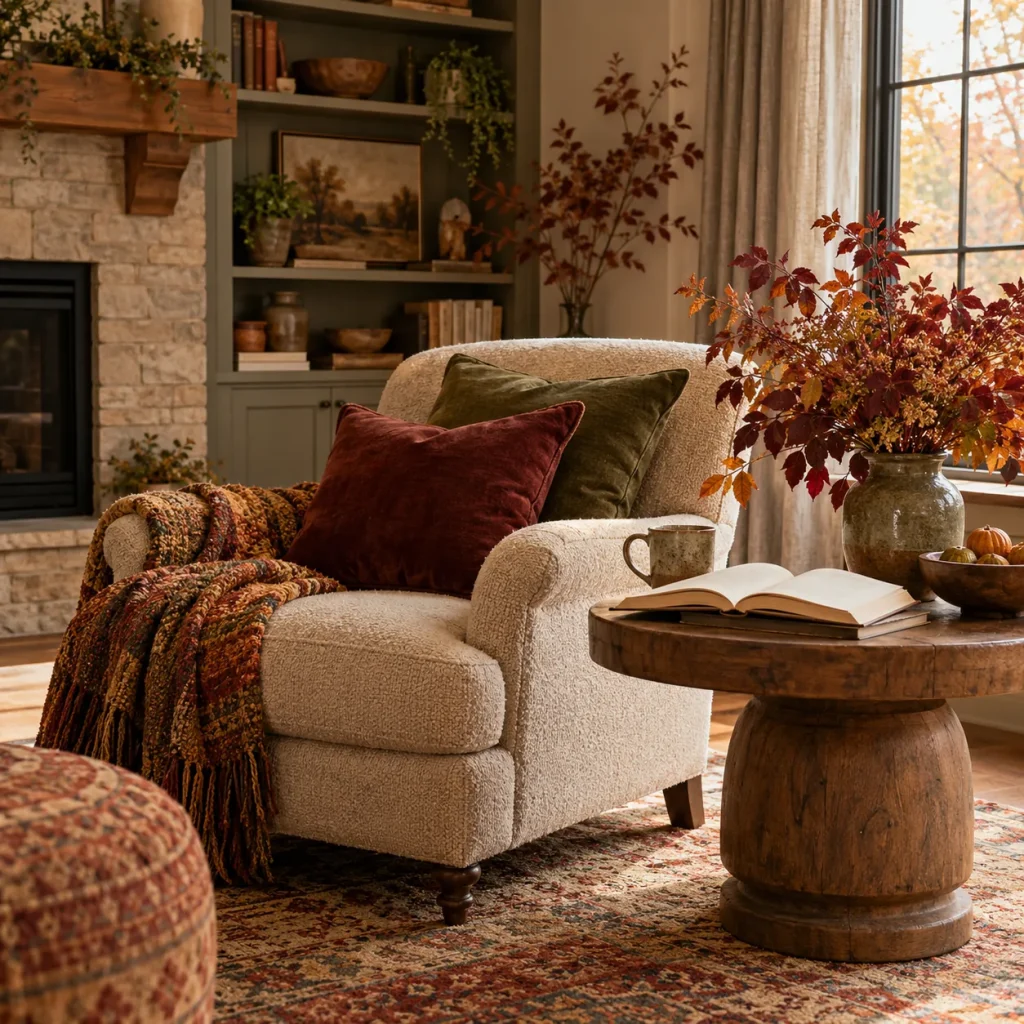
A textured throw can mark the change of season while still earning its place on the sofa. Look for a weight and fabric that people will enjoy using, with a care routine that suits your household. Fold it over one arm or along the seat back. Keep the ends clear of the floor, and store a lighter summer throw rather than simply adding another layer to the pile.
3. Use Velvet Cushion Covers for a Softer Finish
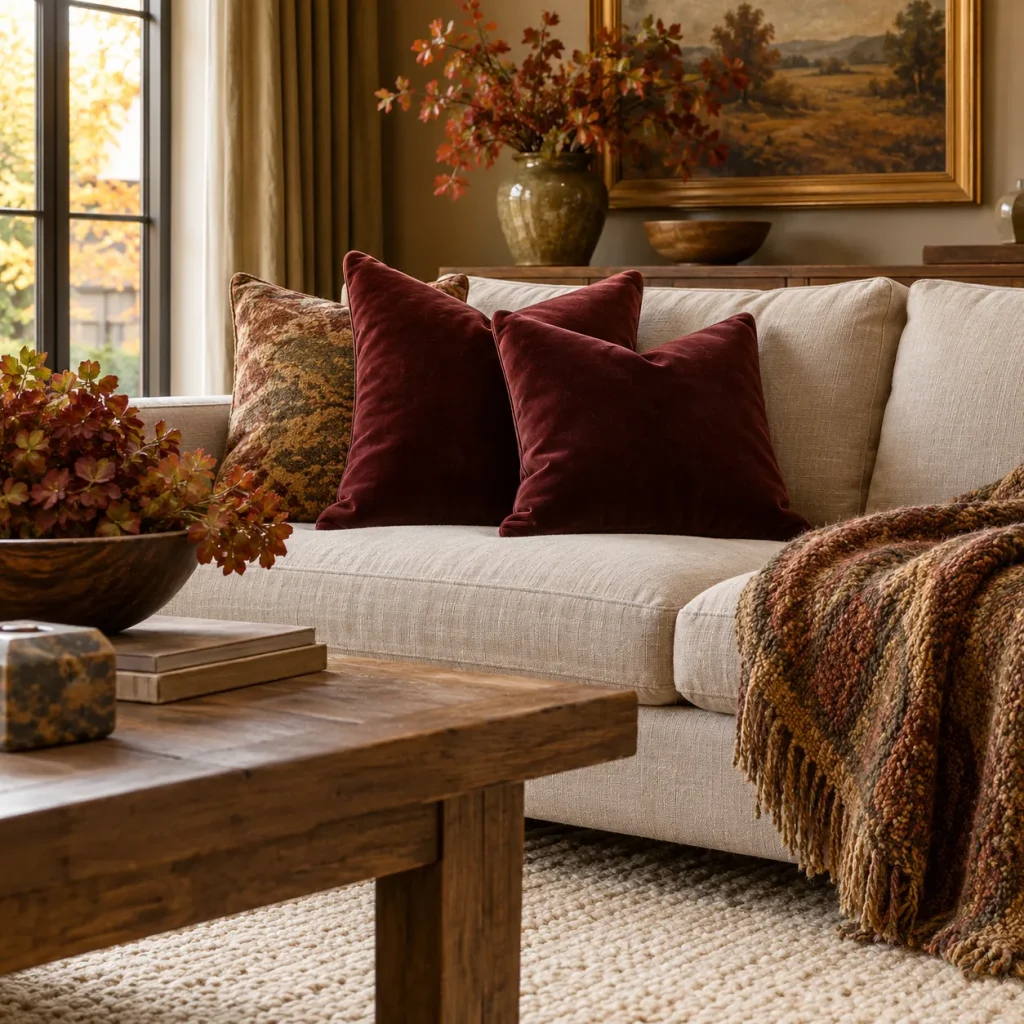
Velvet cushion covers can add a softer surface without requiring more cushions. Replace a pair of existing covers in a color such as burgundy, olive, or warm brown. Check the pile direction and care label before choosing them for a busy family seat. Mix the smooth finish with one simpler woven cover so the sofa has some variation without becoming a display people must dismantle to sit down.
4. Add One Plaid Accent to a Reading Chair
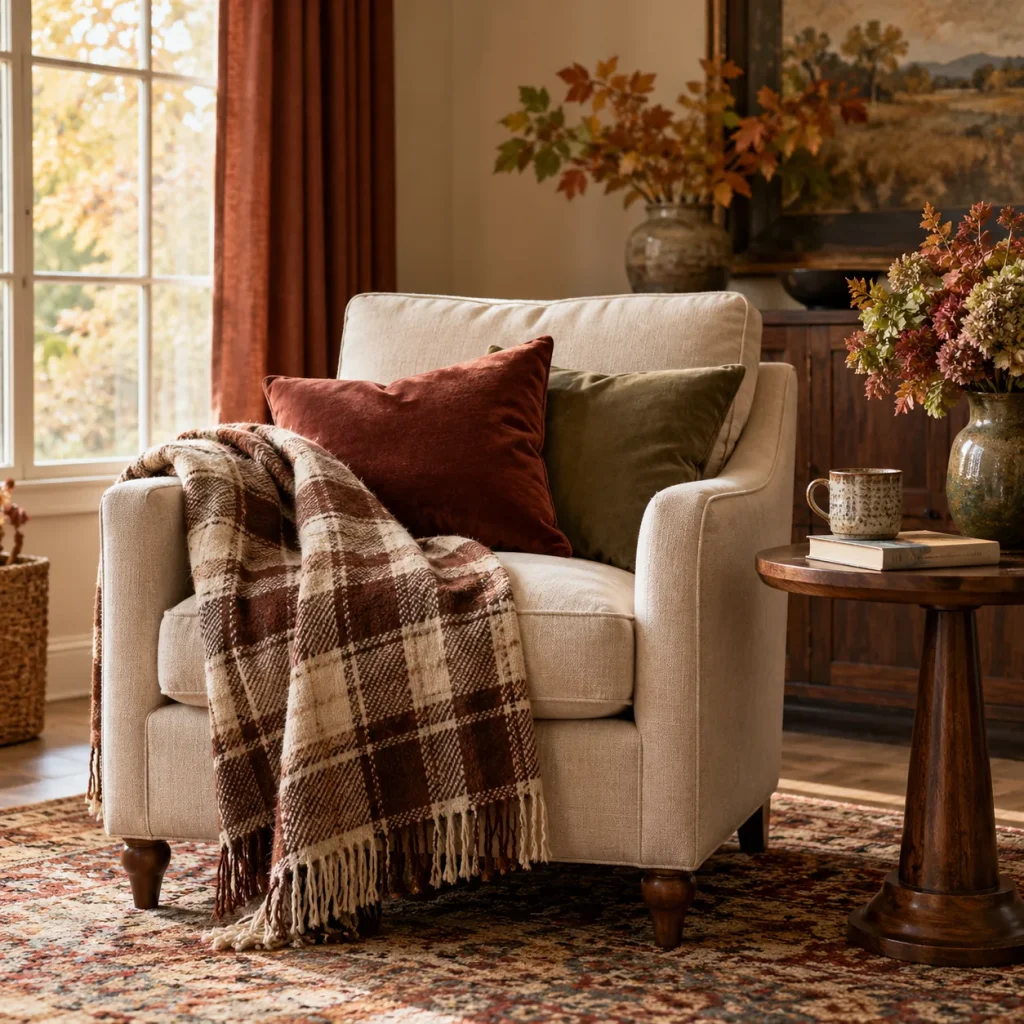
One plaid blanket can bring a clear autumn pattern to a reading chair. Choose a scale that differs from other patterns nearby, and borrow at least one of its colors from the room. Fold it neatly so the chair remains available. A single plaid detail is often enough; matching the curtains, cushions, and rug can make a small space feel busier than you intended.
5. Arrange a Low Bowl of Decorative Gourds
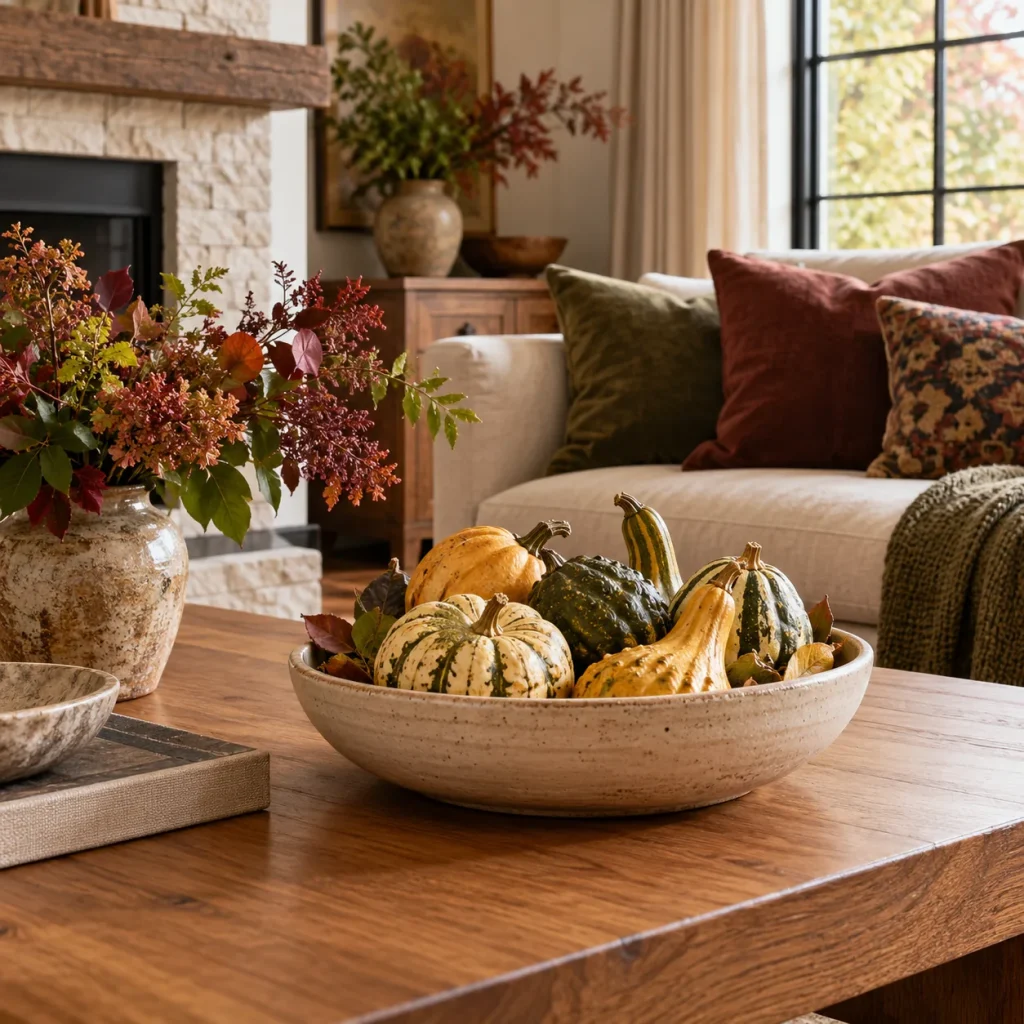
A low bowl of gourds can give a coffee table a seasonal center without blocking people’s view. Pick a few different shapes and leave some of the bowl visible. Faux gourds are easy to store, while real ones need checking for damage or softening. Protect the table surface and keep small pieces away from children who might treat them as toys or food.
6. Make a Branch Arrangement the Main Display
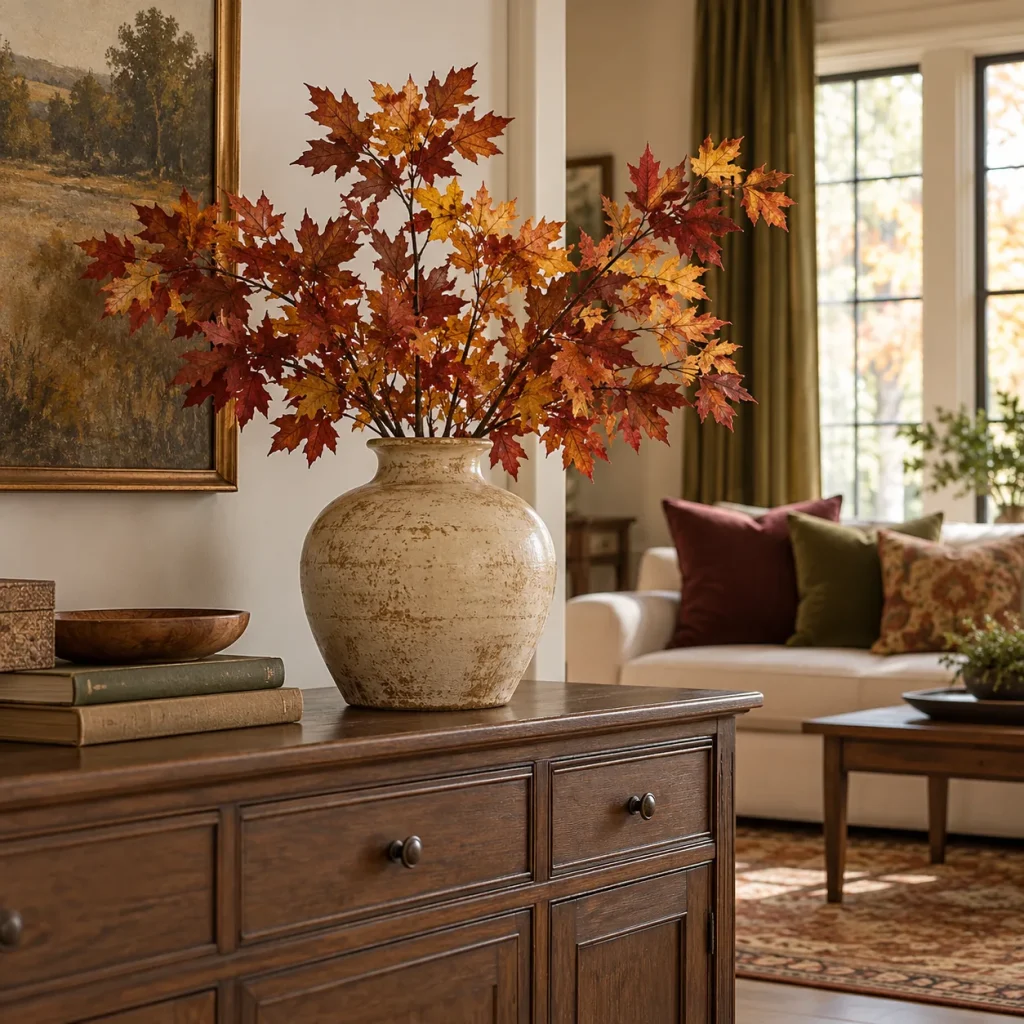
A few autumn branches can provide one strong seasonal feature on a sideboard. Choose a stable vase with enough weight for the stems and trim the arrangement so it does not catch people passing by. Faux branches are useful when natural leaves would shed. Keep branches clear of lamps and heat sources, and avoid adding several smaller arrangements that compete for attention around the same room.
7. Style a Tray With Wood and Amber Glass
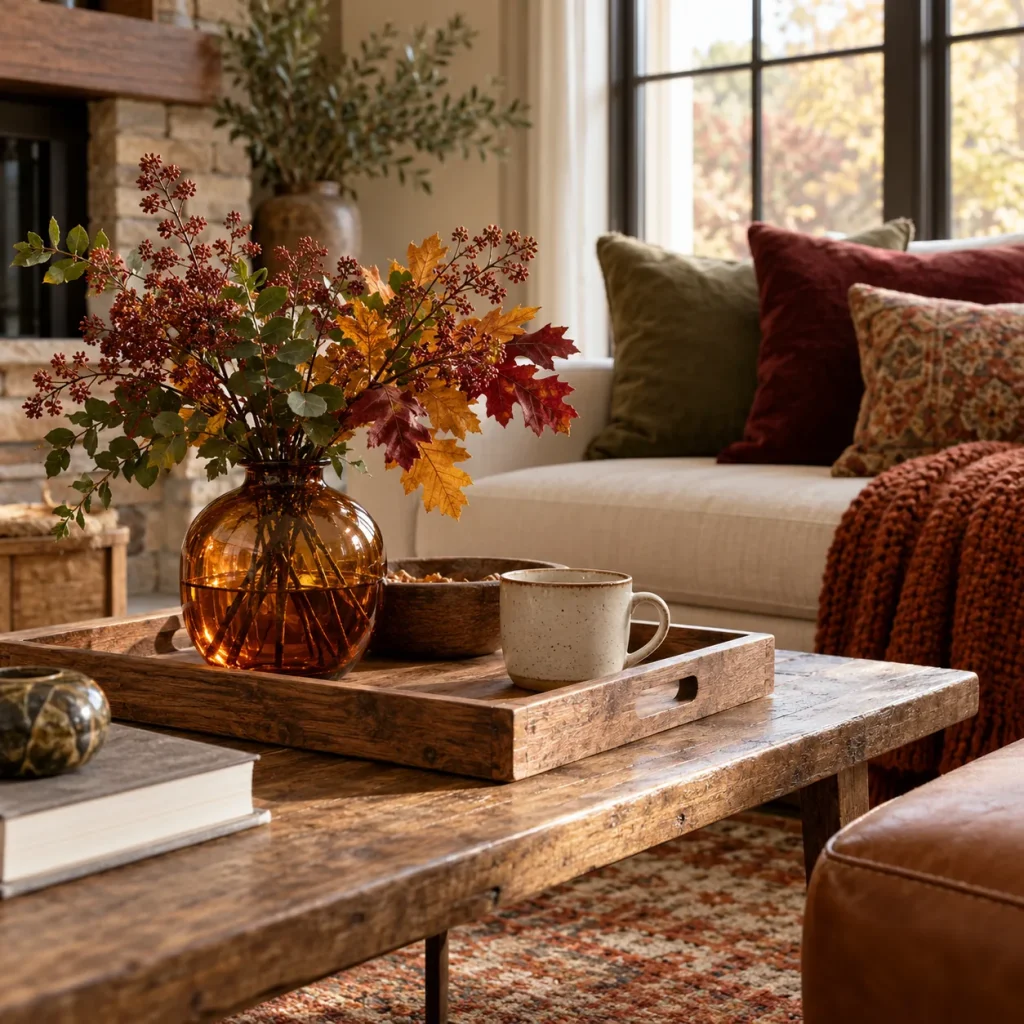
A wood tray and amber glass can make a coffee table feel autumnal without using a seasonal motif. Try one vase and a practical item, such as a cup or coasters, then leave part of the tray open. Check the glass is steady and the tray does not scratch the table. Keep daily-use space beside it rather than covering the whole surface with decorative layers.
8. Switch to a Landscape Print With Autumn Color
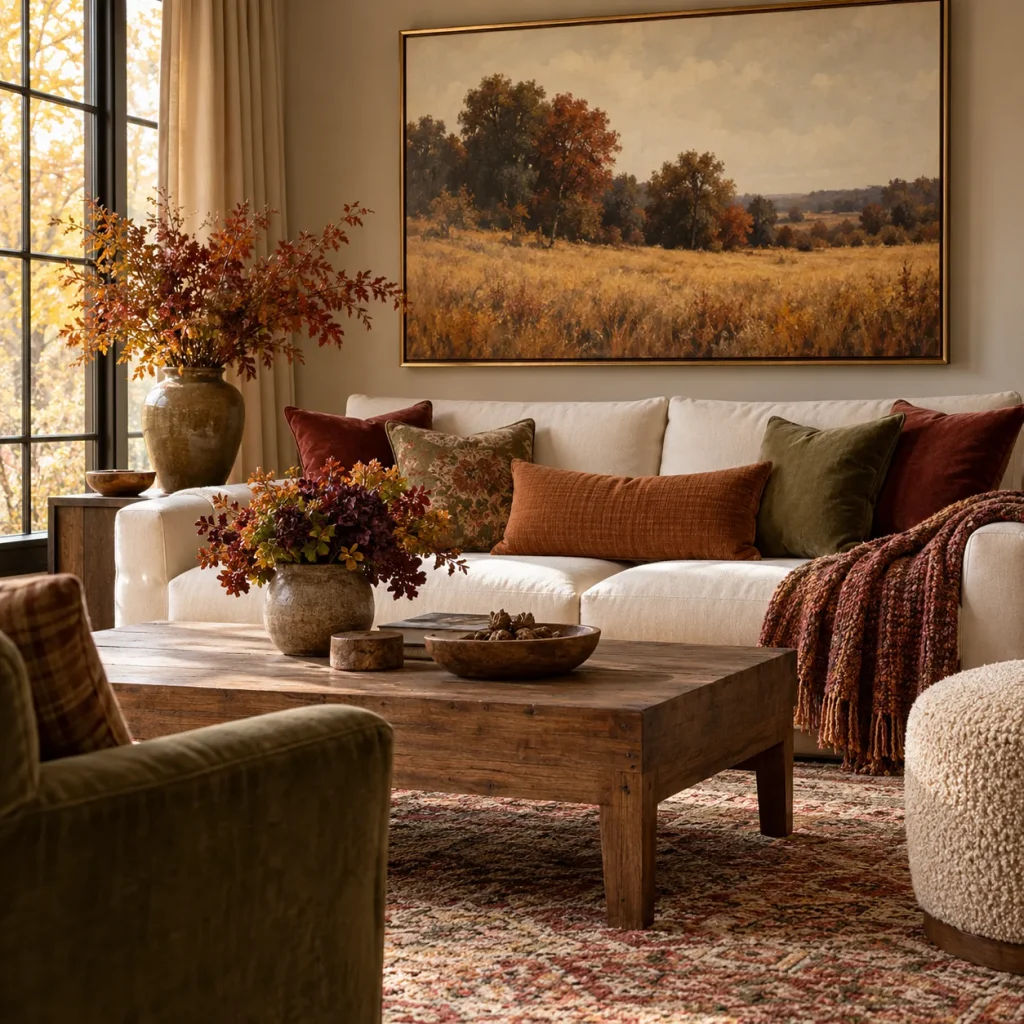
An autumn landscape offers color without requiring a pumpkin display. Use artwork you already own or have permission to print, and choose a frame that suits the existing room. A field, woodland edge, or abstract earth-toned image can stay up beyond one season. Hang it using suitable hardware rather than leaning a large frame where someone could knock it from the cabinet.
9. Use a Leaf Garland on an Unheated Shelf
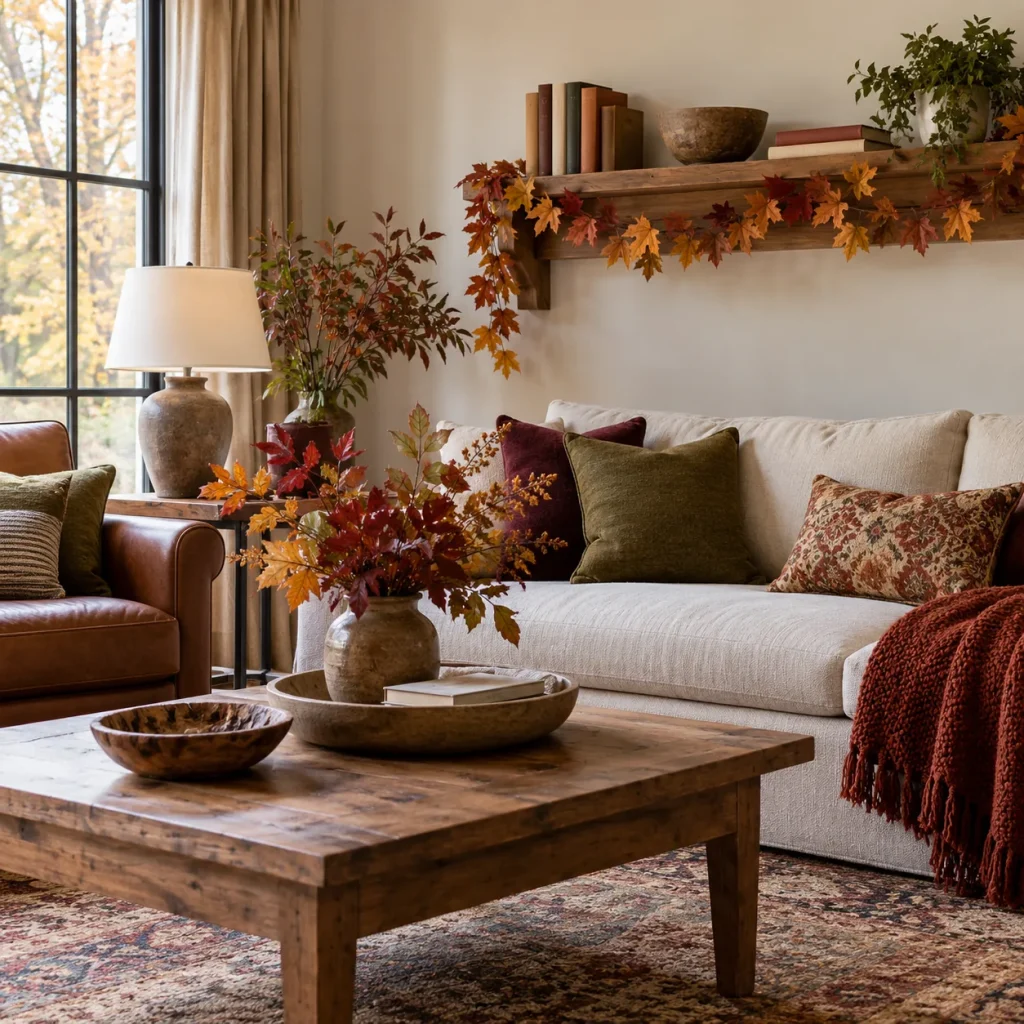
A leaf garland can soften the line of a shelf while keeping the floor clear. Choose a short length that fits the shelf instead of letting long ends hang over books or drawers. Secure it using a method suitable for the shelf finish and load. Use an unheated location away from lamps, candles, and appliances. A little visible wood keeps the garland from looking like a solid cover.
10. Keep Pumpkins Together in One Place
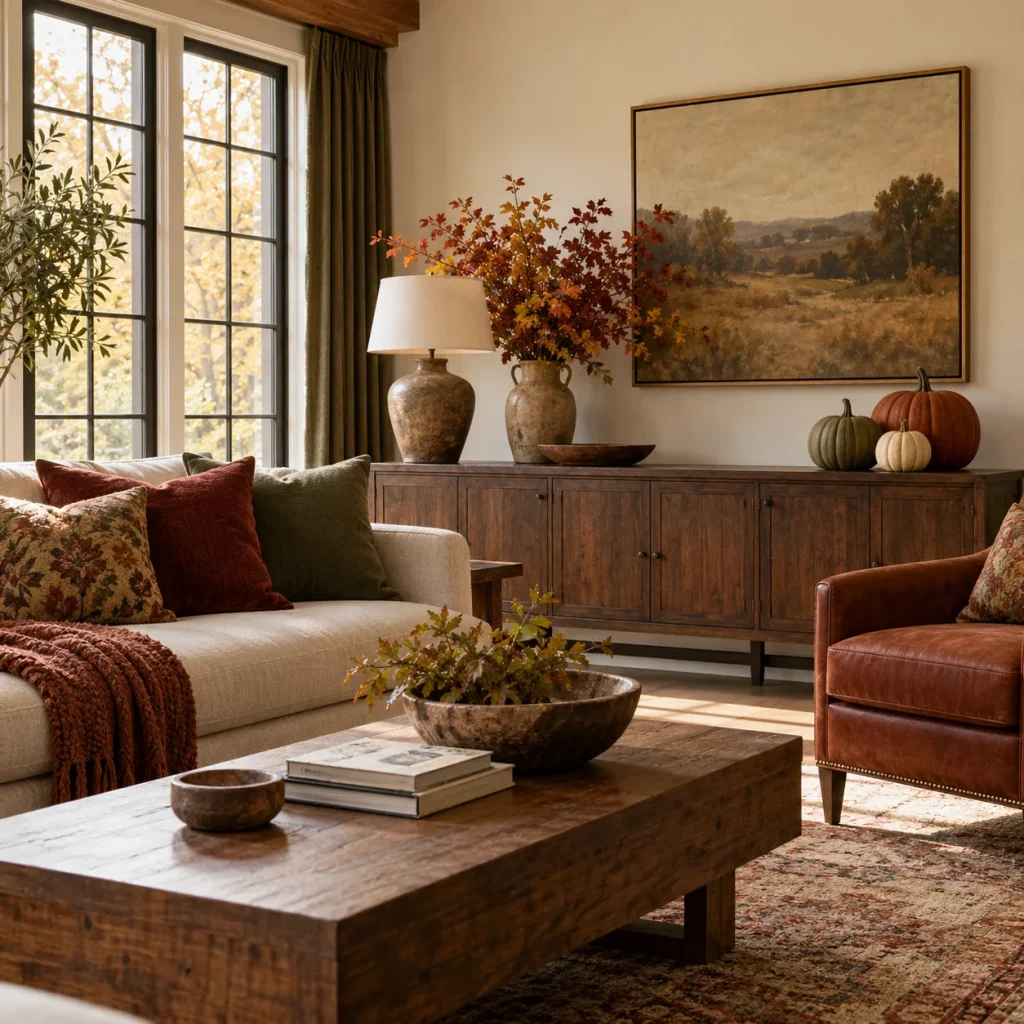
Grouping pumpkins in one place gives the room a clearer seasonal focal point. Use a console end or tray where the group can stay out of daily activity. Vary size more than color, and leave a little space between the pieces. Keeping the rest of the room mostly pumpkin-free allows your textiles, lighting, and furniture to remain the main part of the design.
11. Bring Warm Metals Into a Small Vignette
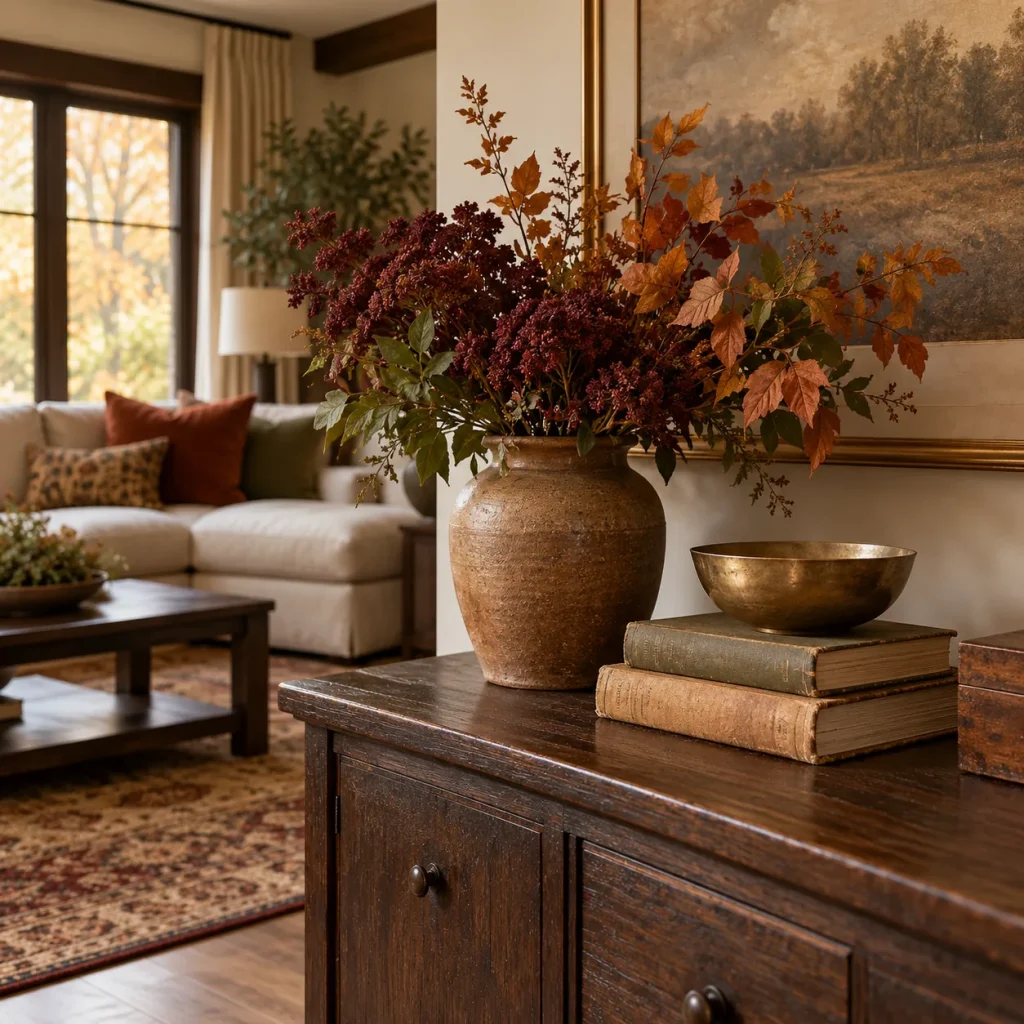
A small warm-metal detail can add contrast to matte pottery and woven fabric. Try a brass-toned bowl or frame beside objects you already use rather than replacing every metal finish in the room. Check the finish’s cleaning instructions before polishing it. Repeat the warm tone once elsewhere only if it helps connect the room; a single intentional piece can also be enough.
12. Layer a Flat Rug Under the Seating Group
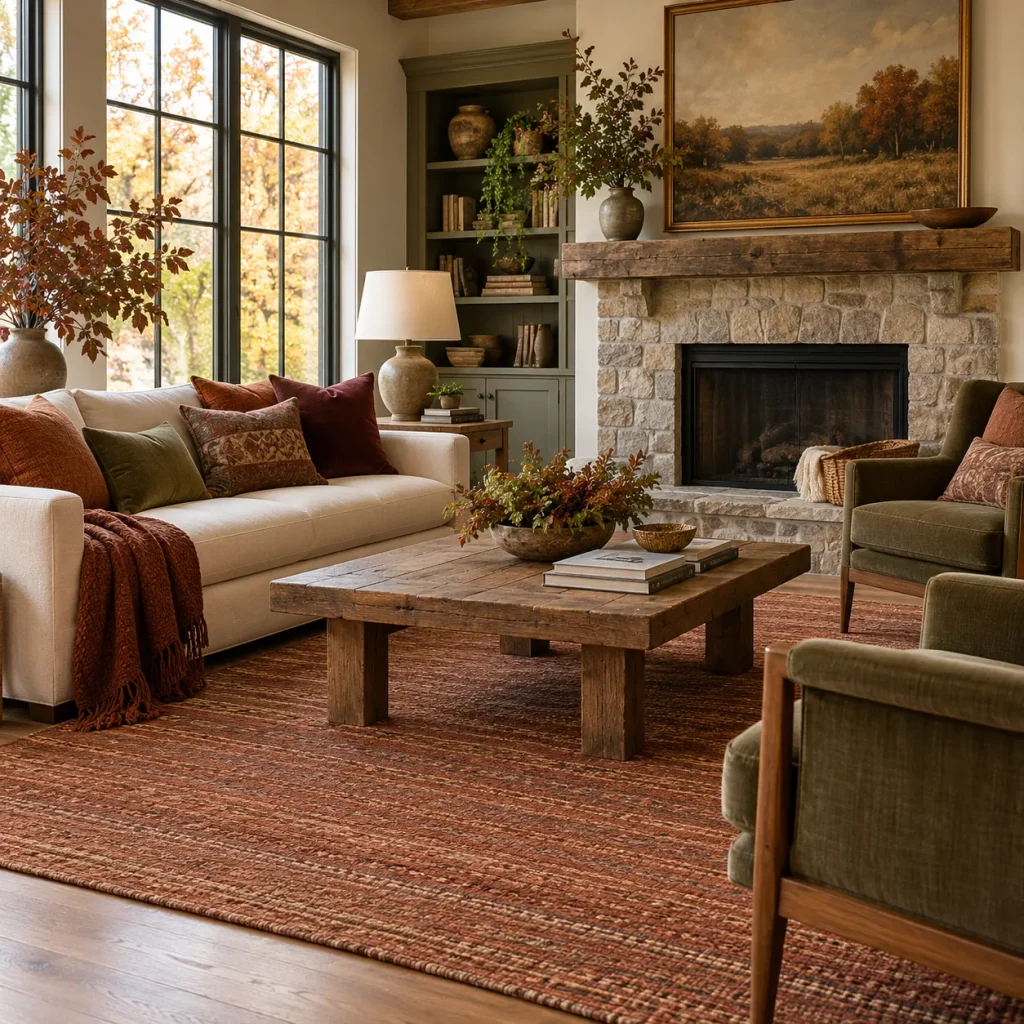
A flatweave rug can bring an autumn color beneath the furniture while remaining relatively easy to move when the season changes. Measure the seating group and compare the rug with door swings and floor vents. Use the recommended nonslip support and check that the edges lie flat. If the existing rug works well, try a smaller fabric change before committing to another large item.
13. Put a Basket Beside the Favorite Seat
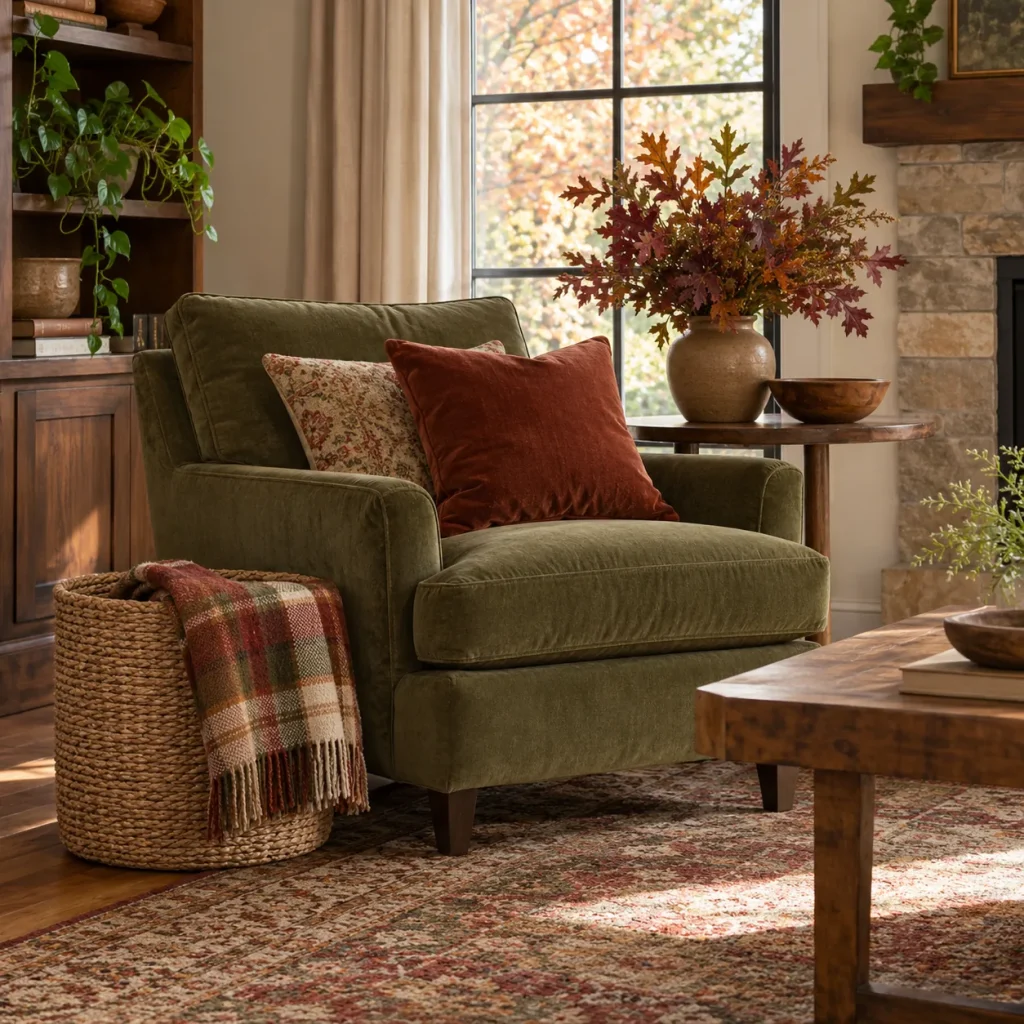
A basket beside the favorite chair gives a blanket a useful home. Choose a basket with a smooth interior that will not catch knitted fabric, and keep its handles from jutting into the walkway. Store only the throw used there most often. The texture becomes part of the room, while the basket solves a real storage need instead of acting as another container for miscellaneous clutter.
14. Change the Lampshade Before the Whole Lamp
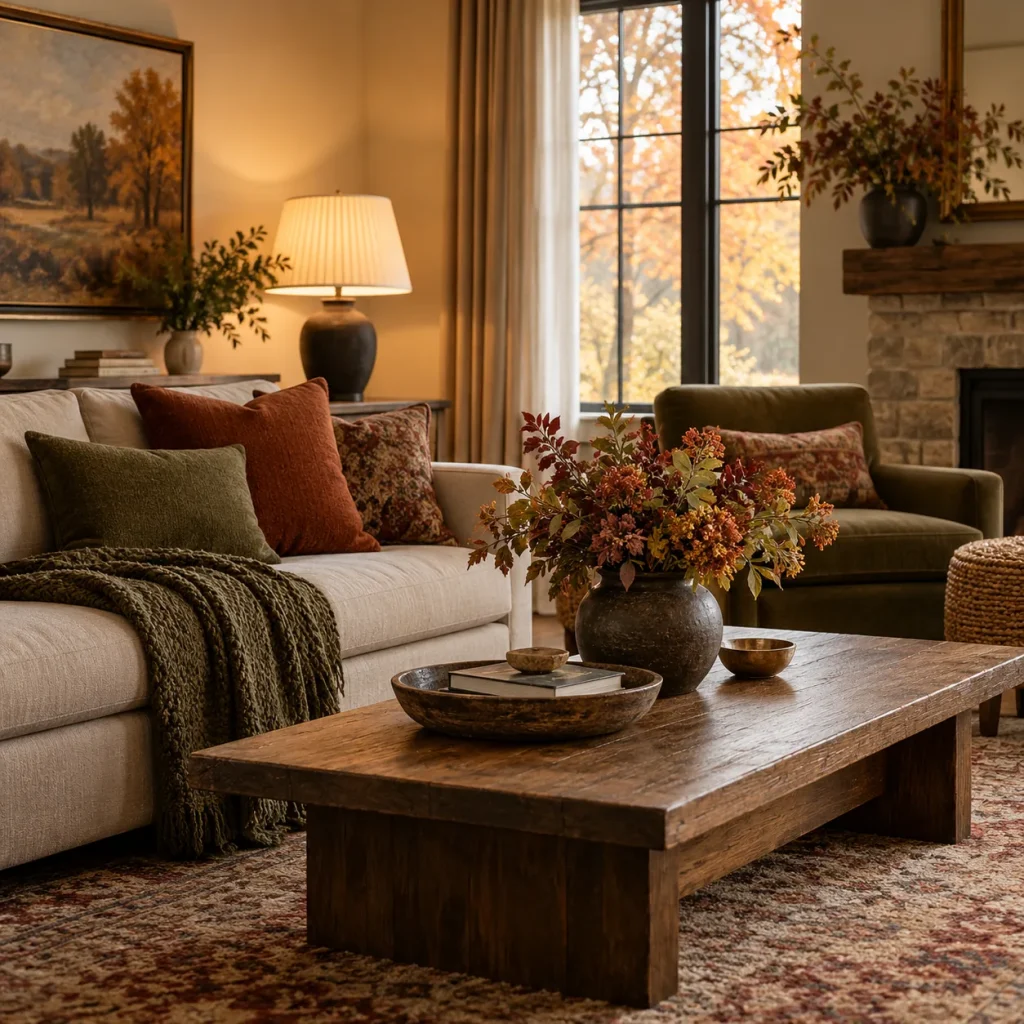
A new shade can change the look of an existing lamp for autumn. Compare the fitting, dimensions, bulb clearance, and permitted materials with the lamp’s instructions. A warm cream or lightly textured shade can work beside rust and olive fabrics. Test it after dark before changing the rest of the lighting, and keep the shade and bulb clear of decorative branches or hanging fabric.
15. Create a Book-and-Tea Coffee Table Corner
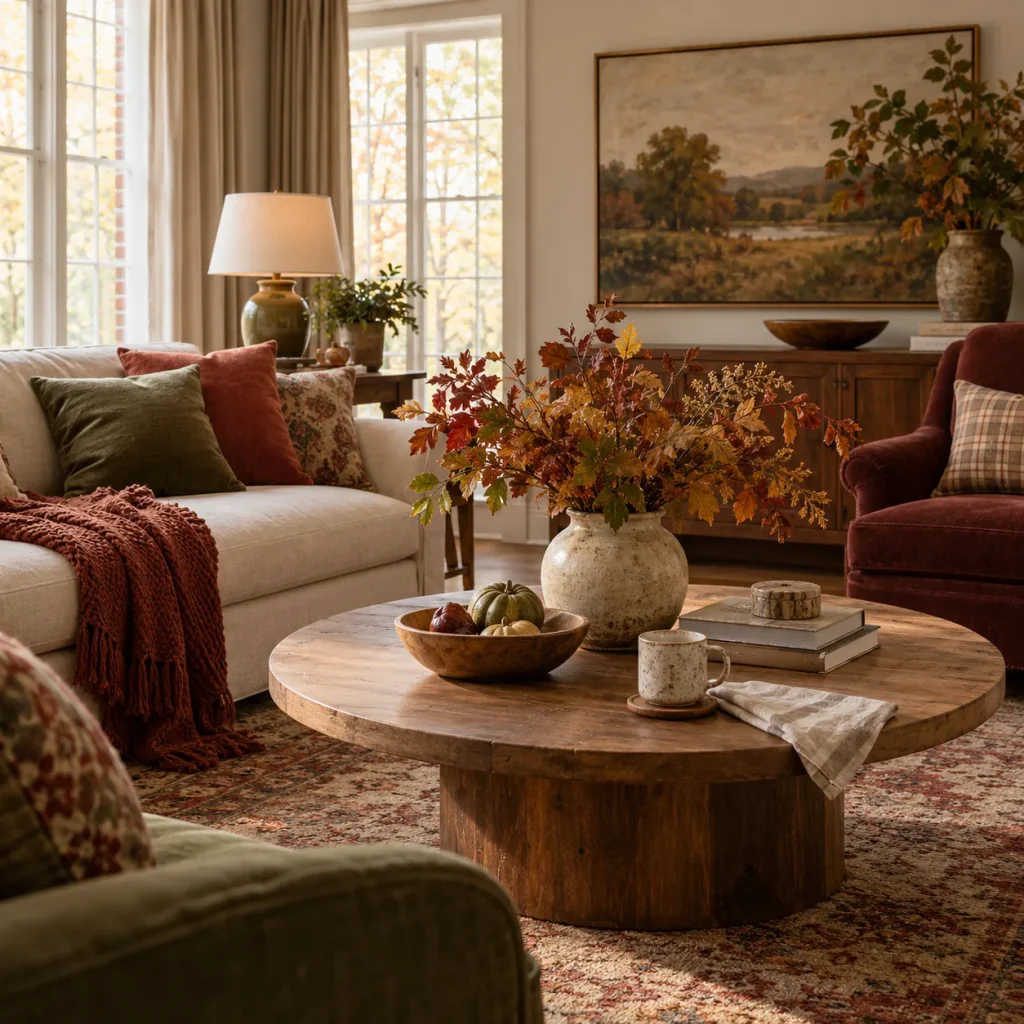
A book-and-tea corner needs only a small part of the coffee table. Stack a few books you use, add a coaster, and leave room to set down a cup safely. Keep decorative objects low enough that people can still talk across the table. Our everyday table styling guide offers more ways to balance a display with a surface’s actual job.
16. Refresh a Console With a Fabric Runner
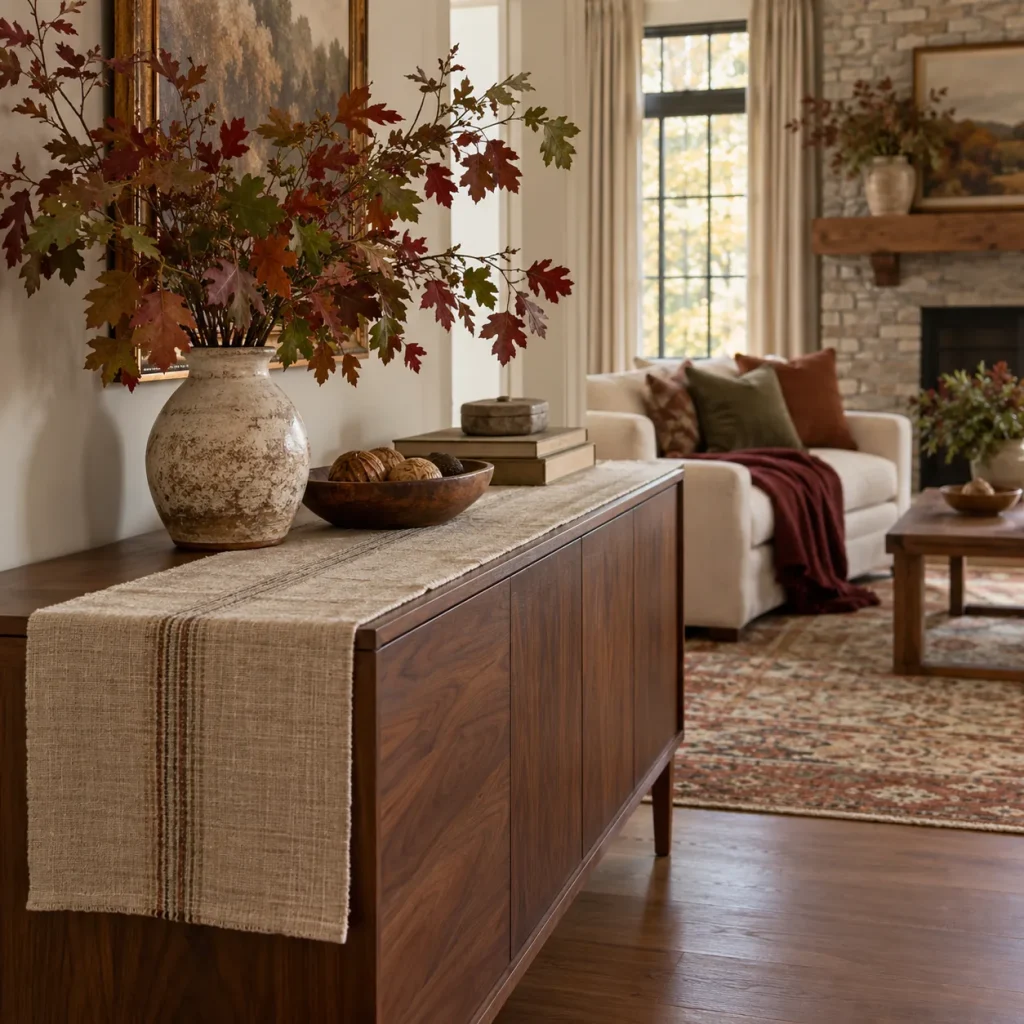
A fabric runner can introduce a seasonal texture while leaving most of a console visible. Choose a size that will not interfere with handles or drawers and check that the fabric will not transfer color onto the finish. Add one larger object rather than many small pieces. Fold the runner to suit the furniture if a long overhang would be awkward in the room’s walking route.
17. Style a Small Living Room Vertically
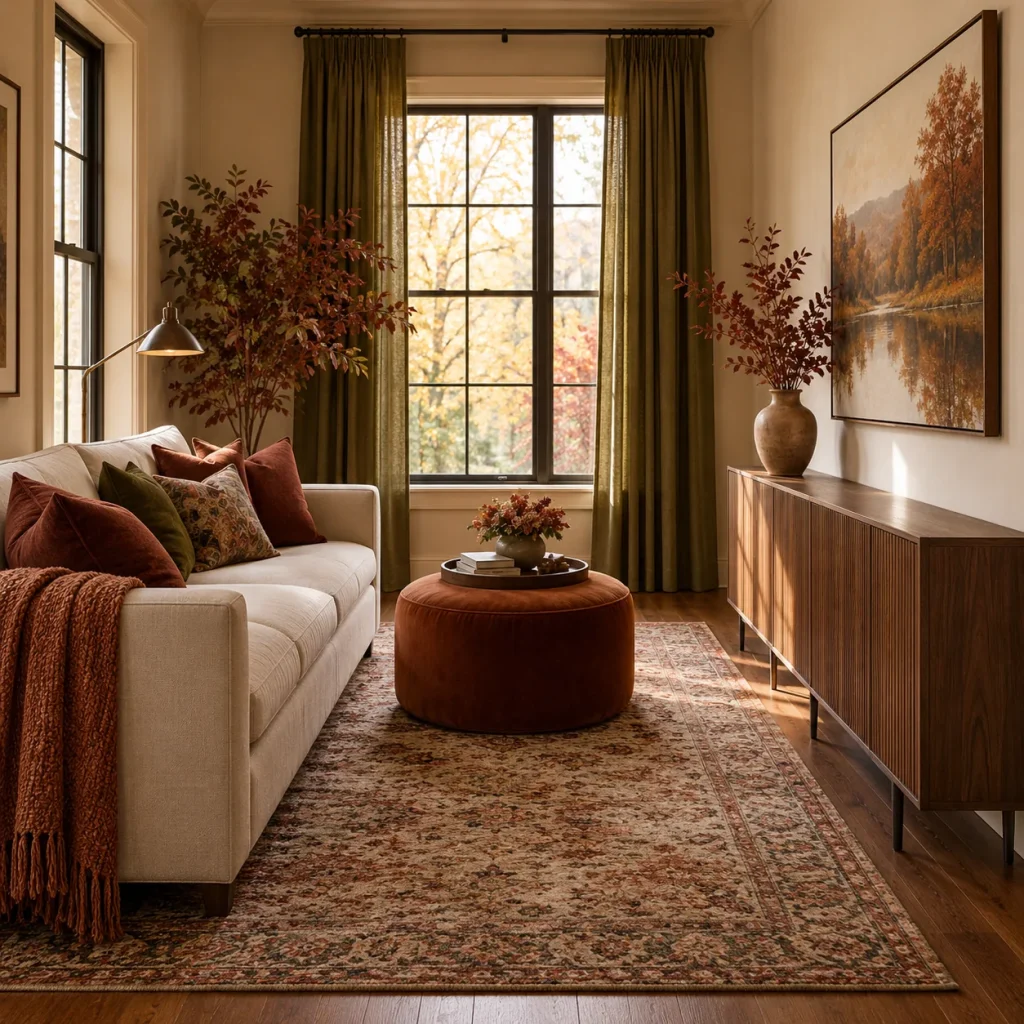
In a small living room, one autumn picture and a single vase can do more than several floor decorations. Use a wall or narrow cabinet that already exists, then leave the floor for moving around. Check the wall fixings and avoid overloading shelves. For the surrounding furniture, our small living room layout ideas can help you preserve the routes that make the room comfortable.
18. Try a Quiet Fall Palette Without Orange
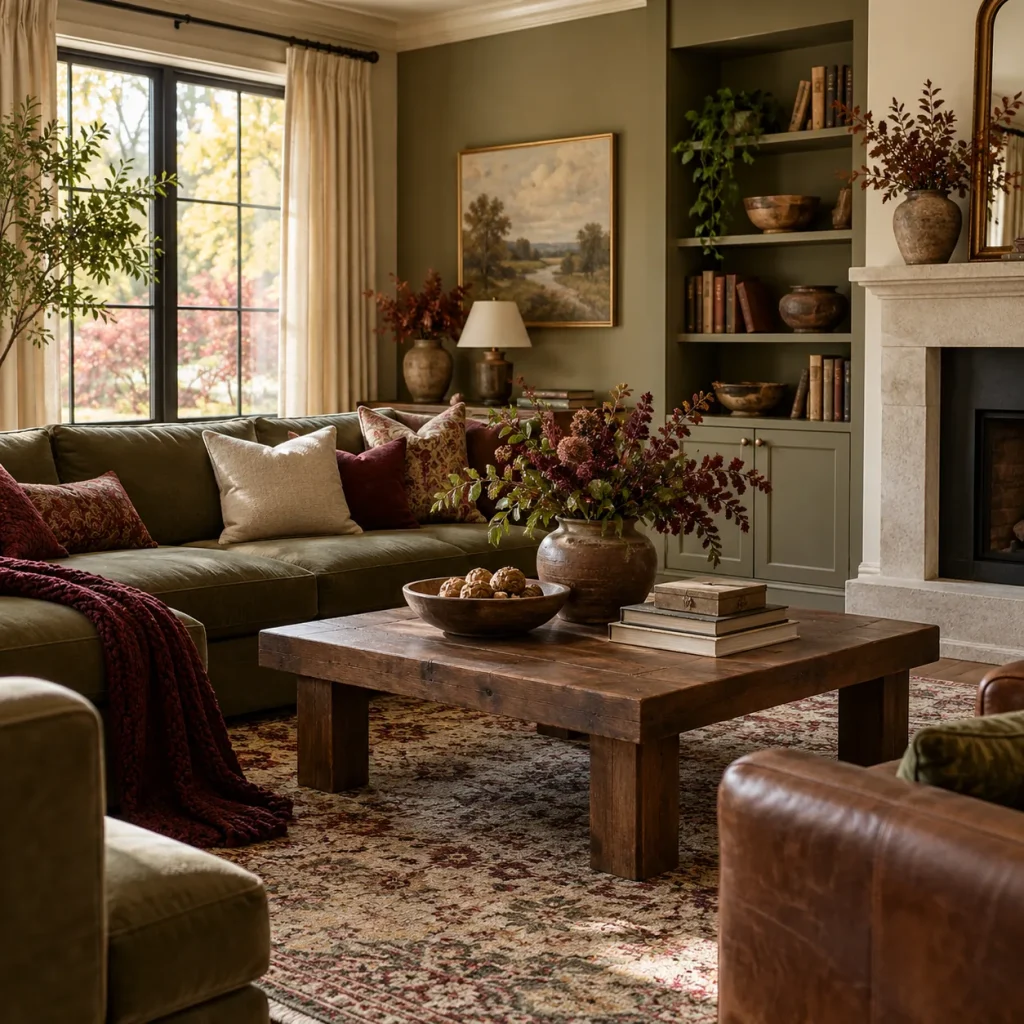
Autumn can work through olive, cream, chocolate brown, and burgundy without orange. Choose two or three of these around the colors already in the room, then vary texture to keep the palette from feeling flat. A wool throw, smooth bowl, and simple branch arrangement can carry the season. Avoid replacing everything at once; one visible area is enough to test whether you enjoy the combination.
19. Make a Loose Dried-Stem Arrangement
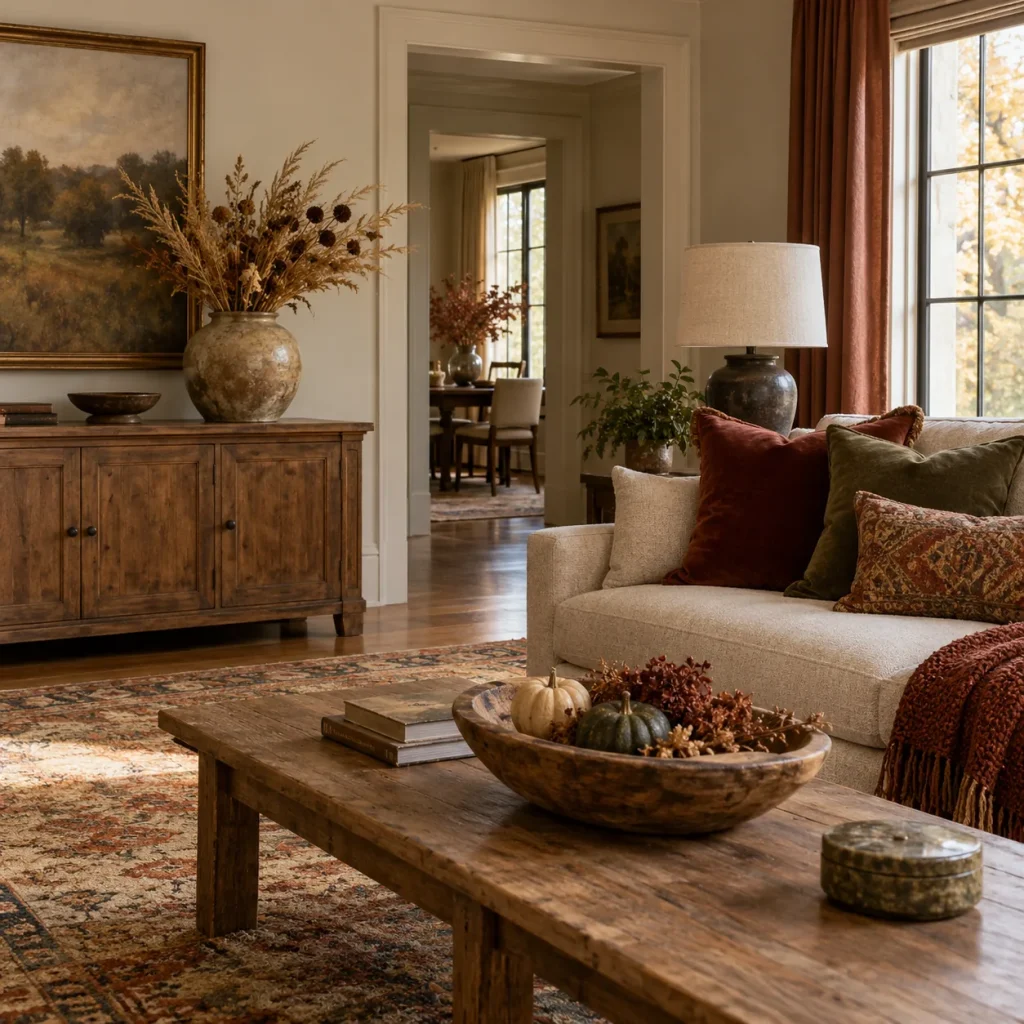
A loose dried-stem arrangement can add autumn texture with fewer pieces than a large bouquet. Use a broad stable vase and keep fragile stems out of the room’s busiest route. Dried material is combustible, so choose a place away from candles, fireplaces, and heaters. If shedding or allergies make the arrangement difficult to live with, use a modest reusable imitation with a similar shape.
20. Set Up a Window Seat for Cool Afternoons
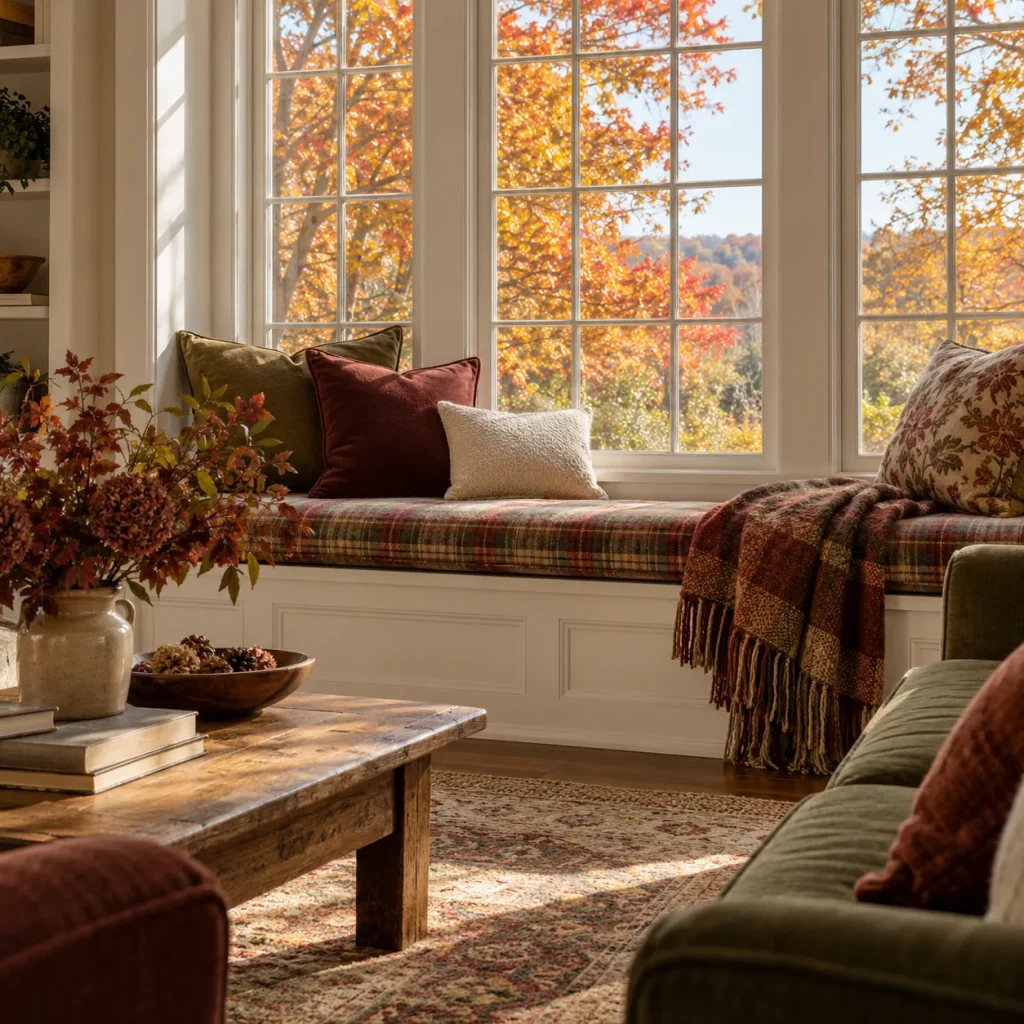
A window seat can become a comfortable autumn pause spot with a cushion and a reachable throw. Check the seat’s support and keep any opening hardware accessible. Add a small nearby surface for a book rather than filling the bench with decorative objects. Keep textiles clear of heating equipment, and choose washable covers if the spot is also used by children or pets.
21. Use Washable Textiles in a Family Room
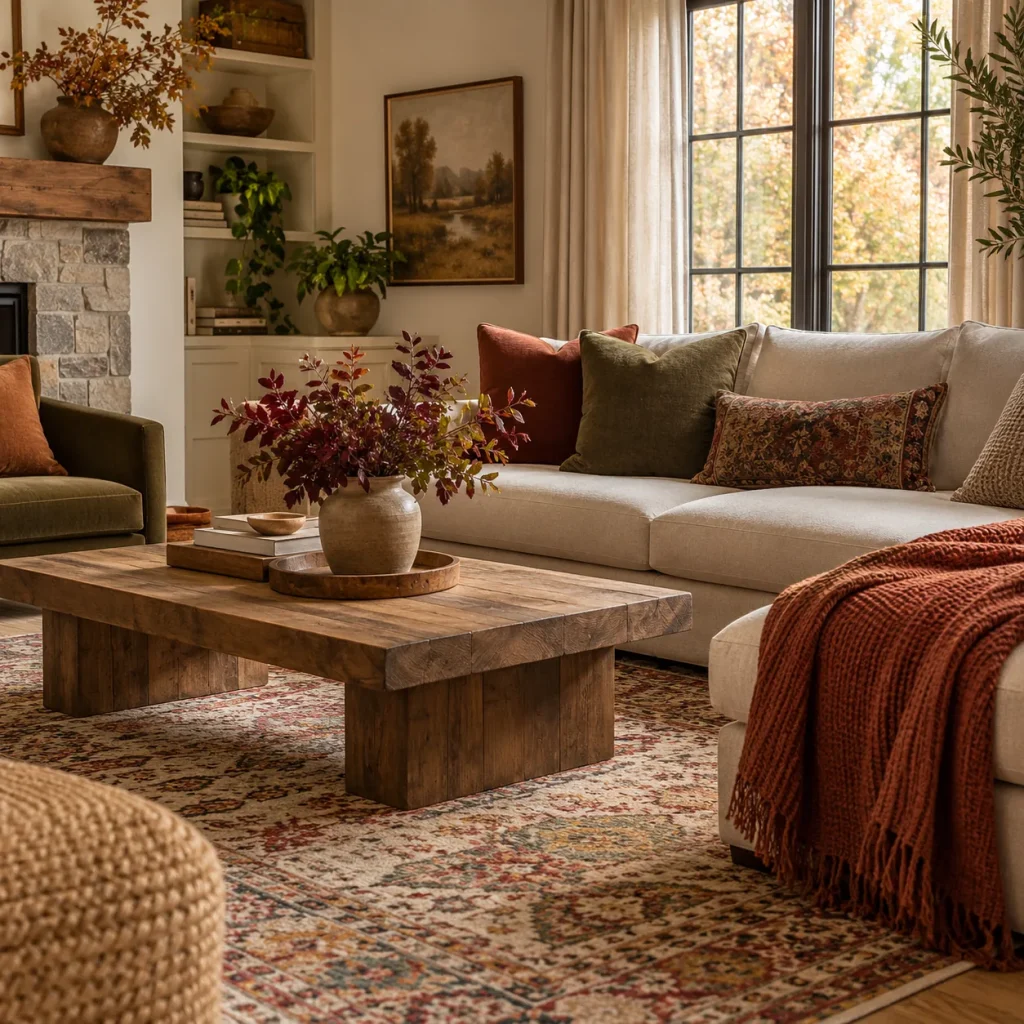
Washable textiles make a family-room refresh easier to keep in use. Read the care label before choosing the throw or covers, and check whether the fabric suits the way the sofa is used. A low-pile patterned rug may also suit the household, depending on its material and maintenance needs. Choose useful pieces first, then bring in autumn color through those pieces instead of adding fragile accessories.
22. Build a Fall Display That Stores in One Bin
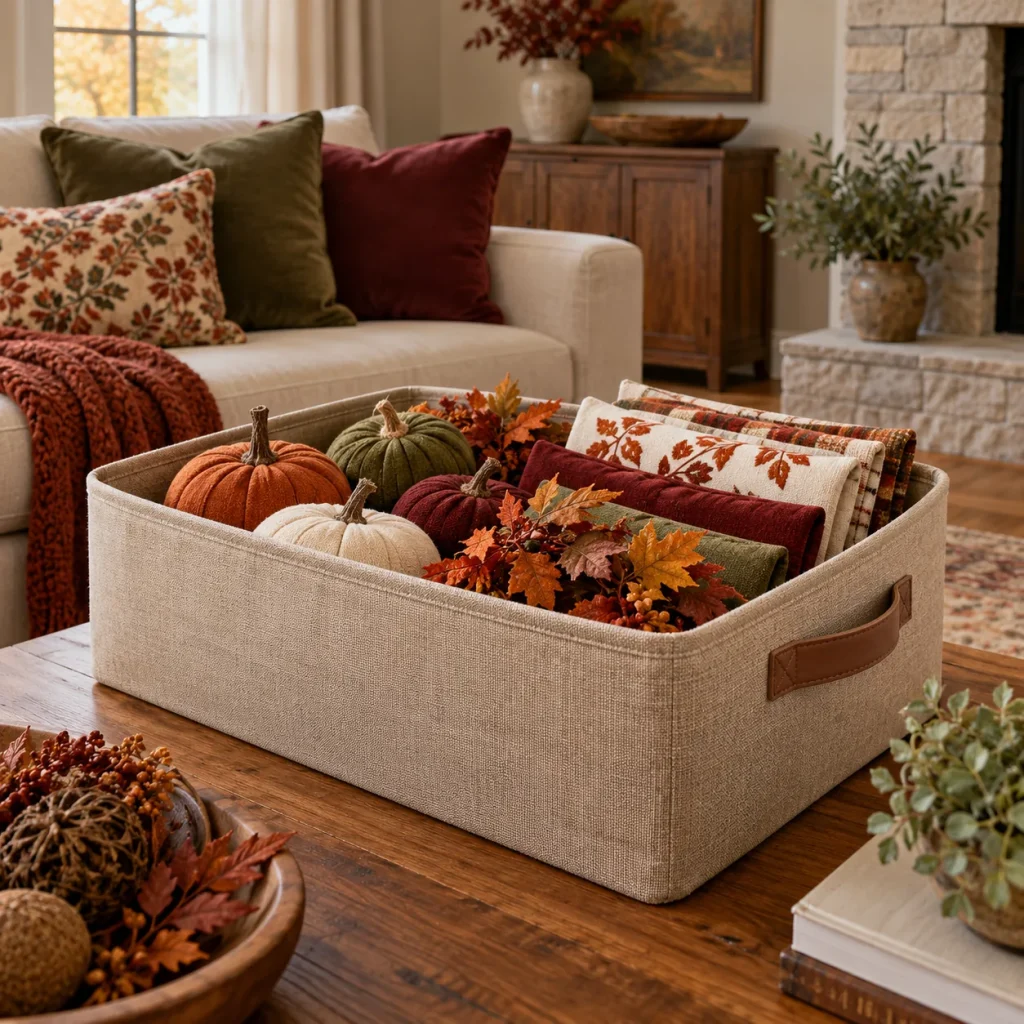
A one-bin limit can keep autumn decorating manageable from one year to the next. Choose foldable pillow covers, a short garland, and a small group of sturdy objects, then check they fit before adding more. Store everything clean and dry according to its material. For ideas that also work beyond the living room, see our simple reusable fall decor guide.
Frequently Asked Questions
When should I put up fall living room decor?
Choose the timing around your climate and how you use the room. You can begin with a warmer throw or earth-toned cushion when the evenings change, then bring out pumpkins or other seasonal objects later. There is no single required date. Gradual changes are often easier to enjoy and store than replacing the whole room at once.
Can fall decor work without orange?
Yes. Olive, burgundy, cream, warm brown, and muted gold can suggest autumn through color and texture. Choose a palette that relates to your sofa, rug, or artwork. A branch arrangement, a plaid throw, or a warm-toned print can carry the seasonal mood without adding orange objects or obvious holiday motifs.
How many pumpkins should I put in a living room?
Use the number that fits one clear display area without crowding daily activity. A small group with different sizes may be enough on a console or tray. The point is to create a focal area, not to fill the room. Leave space for drinks, books, and the objects people actually reach for.
Is real or faux foliage better indoors?
It depends on maintenance, storage, and the household. Real material can shed or need water and checking; good reusable faux stems need cleaning and a place to store them. Consider plant suitability around pets and children as well. Keep either type away from heat, and choose a stable container that suits the arrangement’s height.
How can I keep fall decorating from looking cluttered?
Take away an everyday object when adding a seasonal one, and concentrate the display on a single surface. Leave gaps between pieces so their shapes are easy to see. Keep useful table space open, and set a storage limit for the season. If an item has no clear place to live afterward, reconsider adding it.
Conclusion
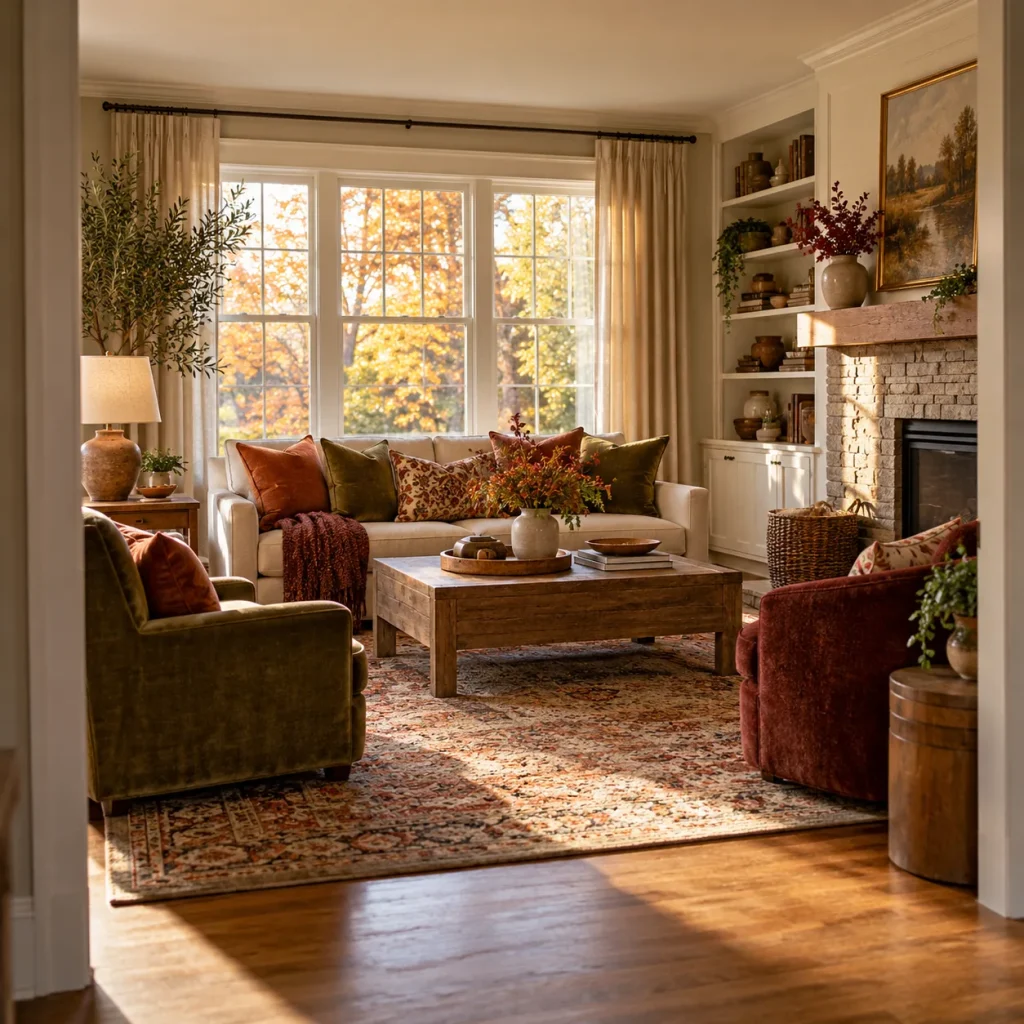
A relaxed fall living room grows from a few choices that belong in your home. Borrow one color, add a textile you will use, and give the seasonal display a clear boundary. Keep routes and everyday surfaces open, then enjoy the room before adding more. Save the combinations you like and store the reusable pieces together so the next autumn refresh is easier to plan.
As the season changes, reuse the useful layers with our winter living room ideas.