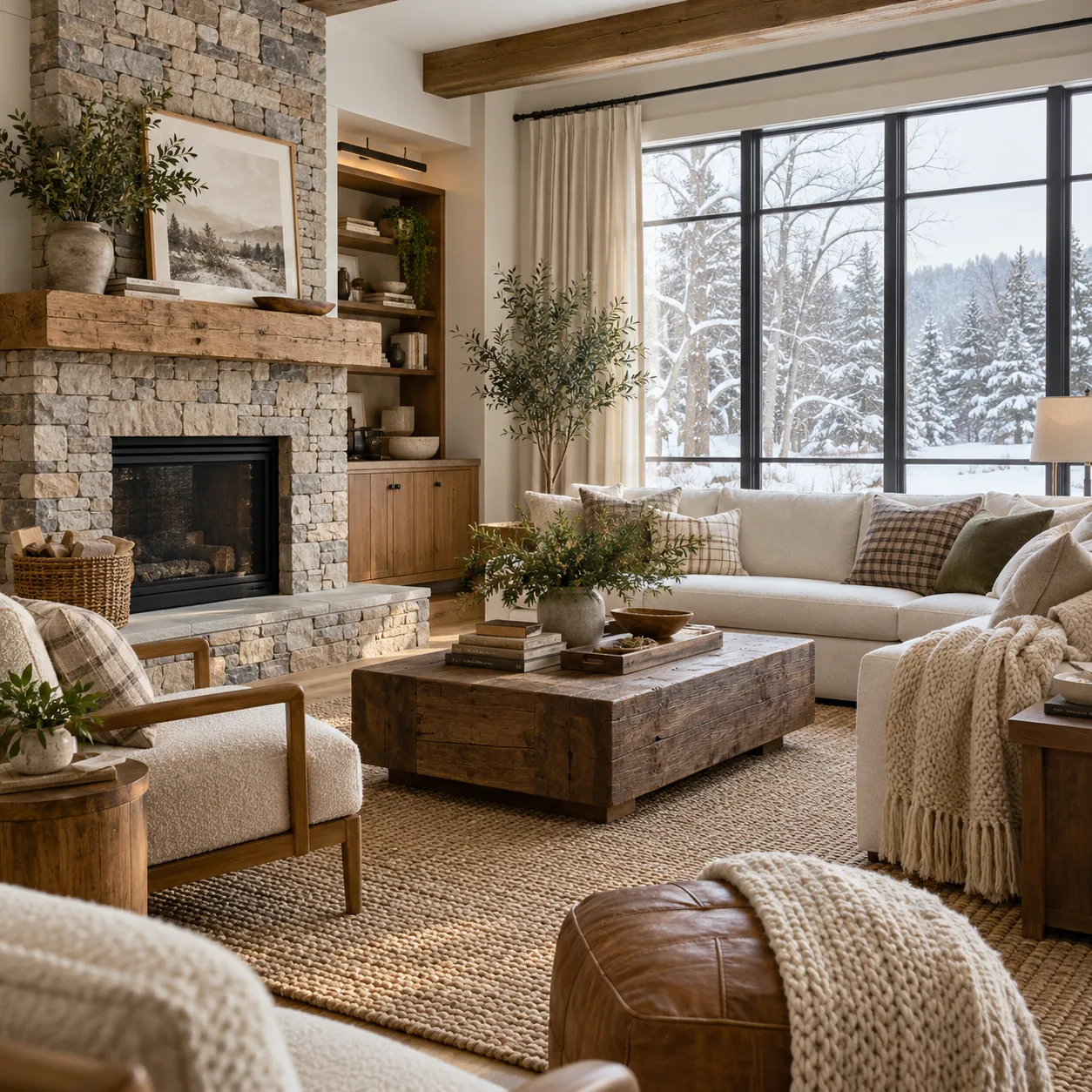
Winter living room ideas are most useful when they make ordinary evenings more comfortable. A better reading light, a reachable blanket, or a clear place for work supplies may matter more than another seasonal ornament. These 30 ideas focus on texture, lighting, windows, seating, and storage after the Christmas decorations come down. Choose the changes that solve a problem in your room, whether that is a dark chair, a cluttered table, or a drafty corner. Keep what already works and build the warmer feeling around it.
Key Takeaways
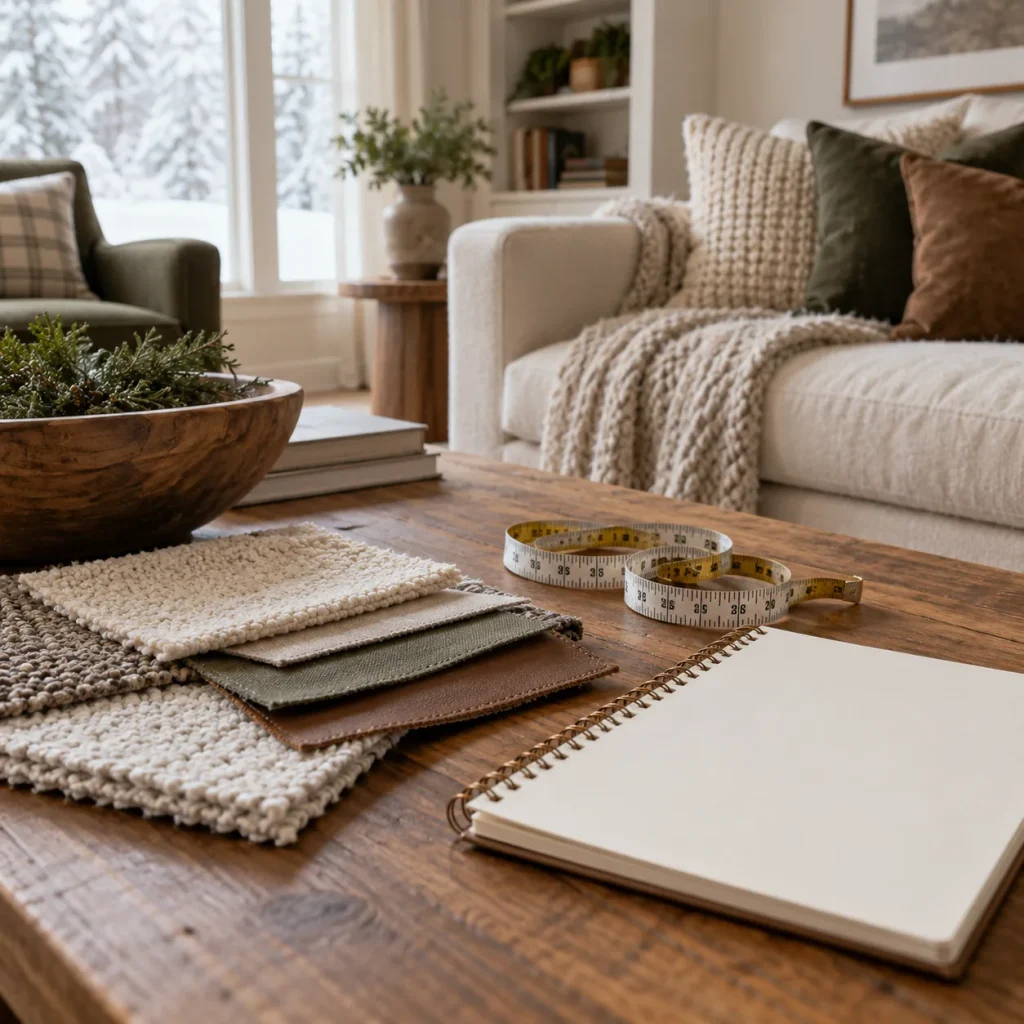
- Start with the seat, light, and blanket you use most often before adding decorative objects.
- Choose washable or easy-care textures that suit the household’s normal routine.
- Keep heating outlets, appliance clearances, doors, and walking routes open when moving furniture.
- Separate everyday winter styling from holiday decor so the room works well beyond December.
When using a fireplace, stove, or space heater, follow the appliance instructions and the U.S. Fire Administration’s heating advice. Keep combustible furniture and textiles at least three feet from heat sources, or farther where required. A decorative change should not interfere with heating equipment, ventilation, or exits.
1. Layer a Washable Rug Over a Larger Flatweave
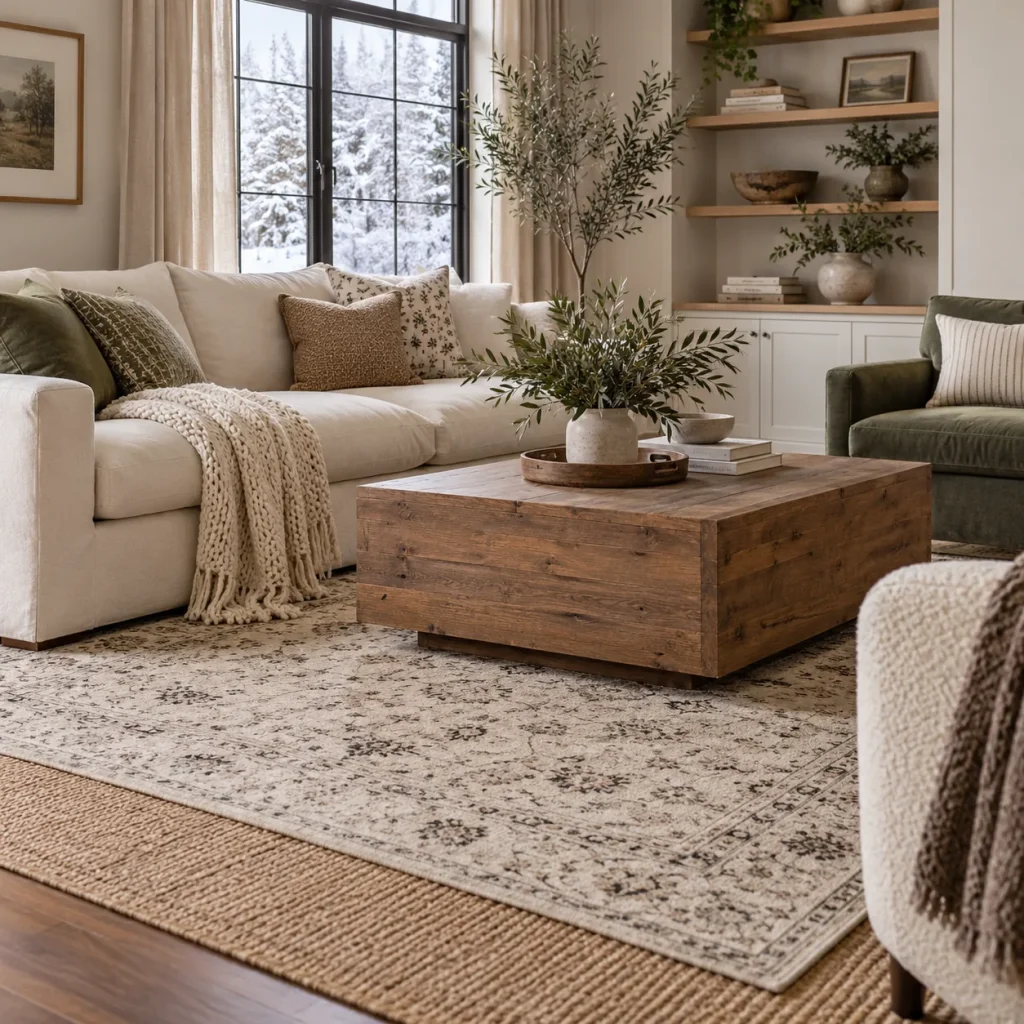
A smaller washable rug over a larger flatweave can add softness where feet land while keeping a generous outline around the seating. Check both rugs sit flat and use suitable nonslip support for the floor and materials. Avoid stacking thick edges where people walk. Choose this idea only if the layers remain steady in daily use; one well-sized rug is better than two that keep shifting.
2. Choose a Wool Throw for the Main Seat
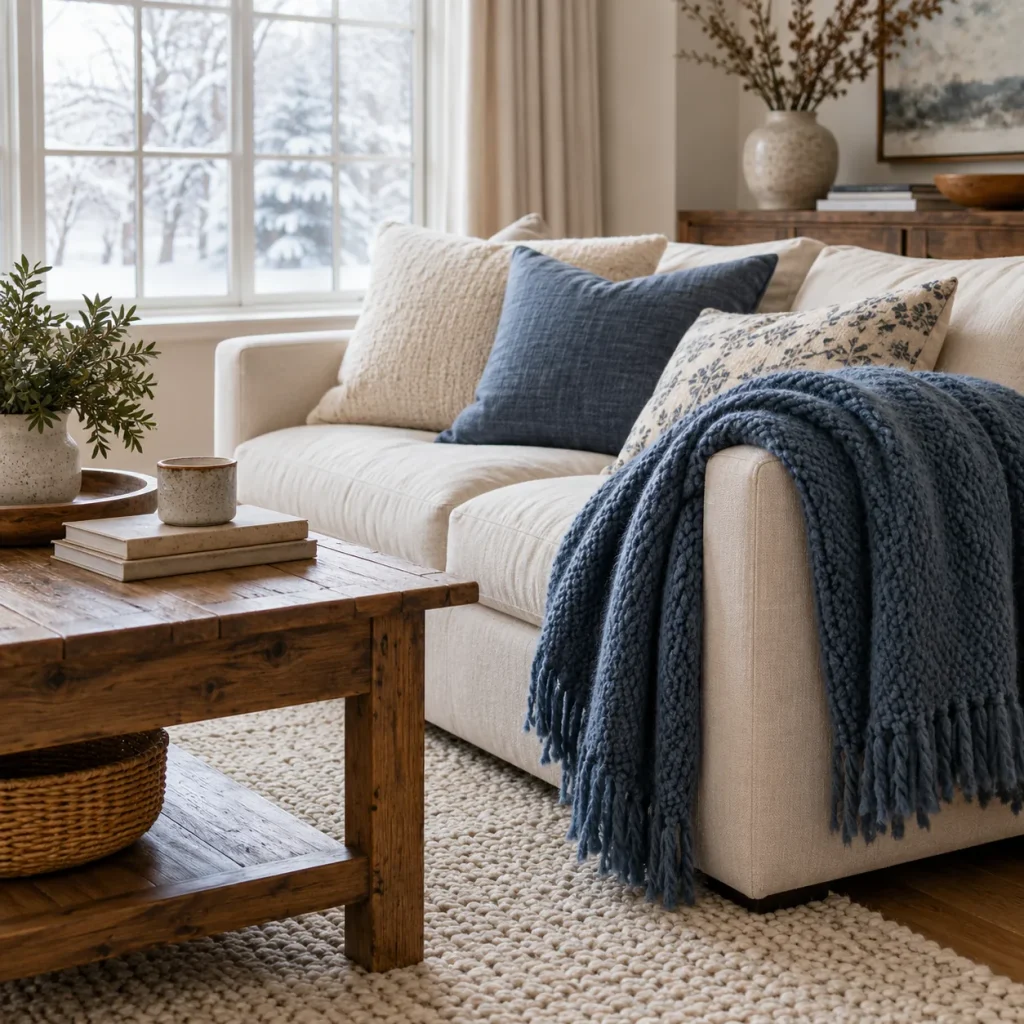
A wool or wool-blend throw makes a useful addition to the seat you actually use each evening. Check the fiber and care instructions, particularly if the fabric will touch bare skin. Fold it over an arm so it can be reached without standing up. If wool feels scratchy or is awkward to wash, choose a softer washable alternative rather than buying it only for the look.
3. Mix Cushion Fabrics Instead of Adding More
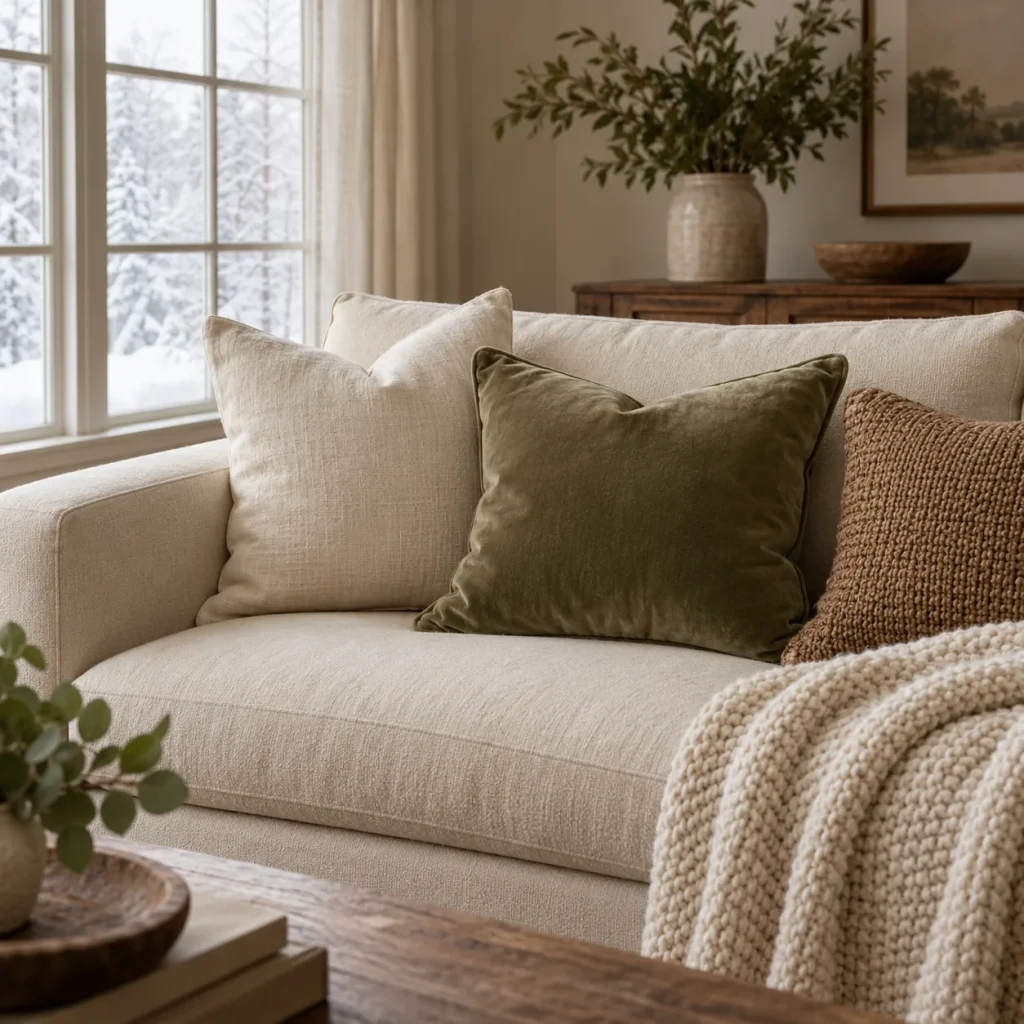
Texture can make a winter sofa feel richer without increasing the cushion count. Keep the inserts you have and combine a smooth cover, a small knit, and a soft woven fabric. Use colors that share a similar depth so the mix feels connected. Leave enough clear seat for daily use, and choose removable covers when drinks, pets, or frequent washing are part of household life.
4. Move a Reading Lamp Beside the Chair
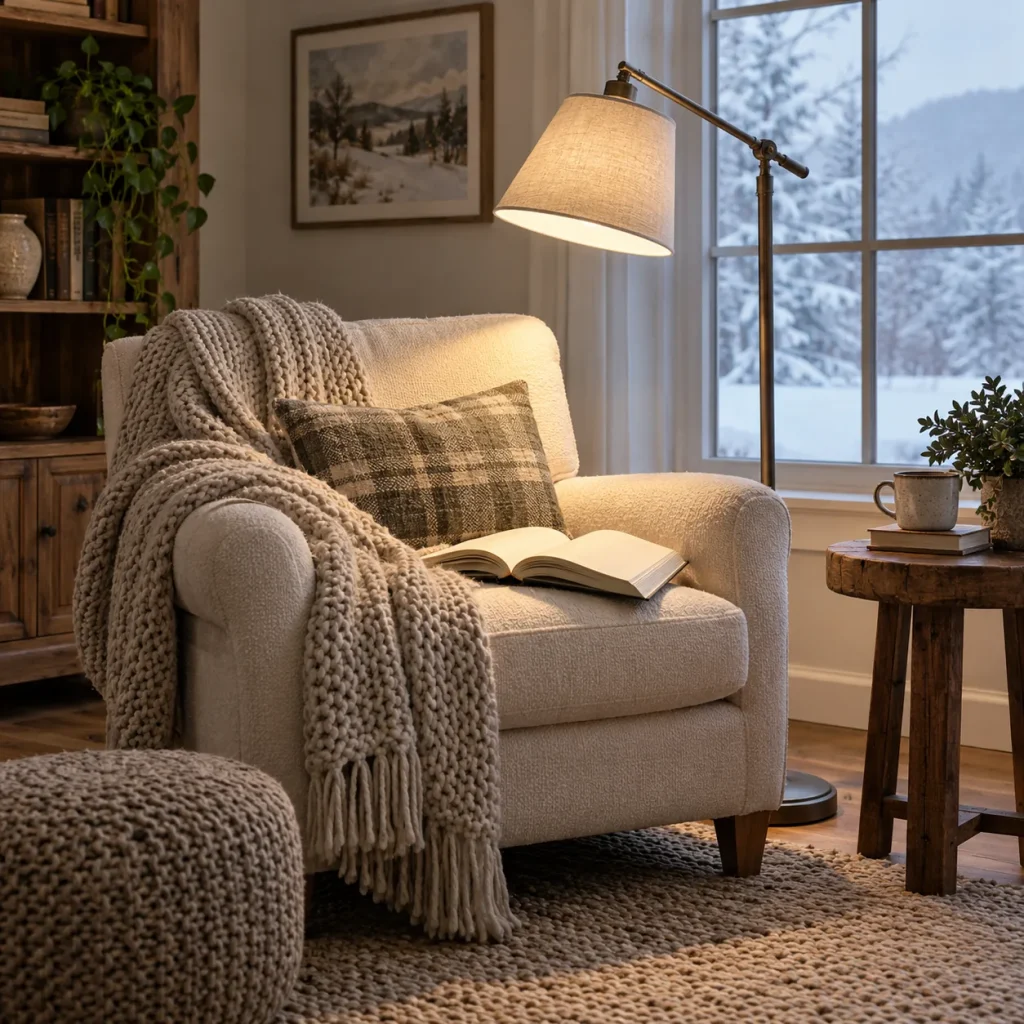
A reading lamp should light the page rather than simply make the corner glow. Sit in the chair and adjust the shade until you can read without glare or your head casting a large shadow. Keep the base steady and route the cable away from feet. Check the lamp’s permitted bulb type and wattage before changing it. The chair will be more useful once daylight fades.
5. Use Two Small Lamps Across the Room
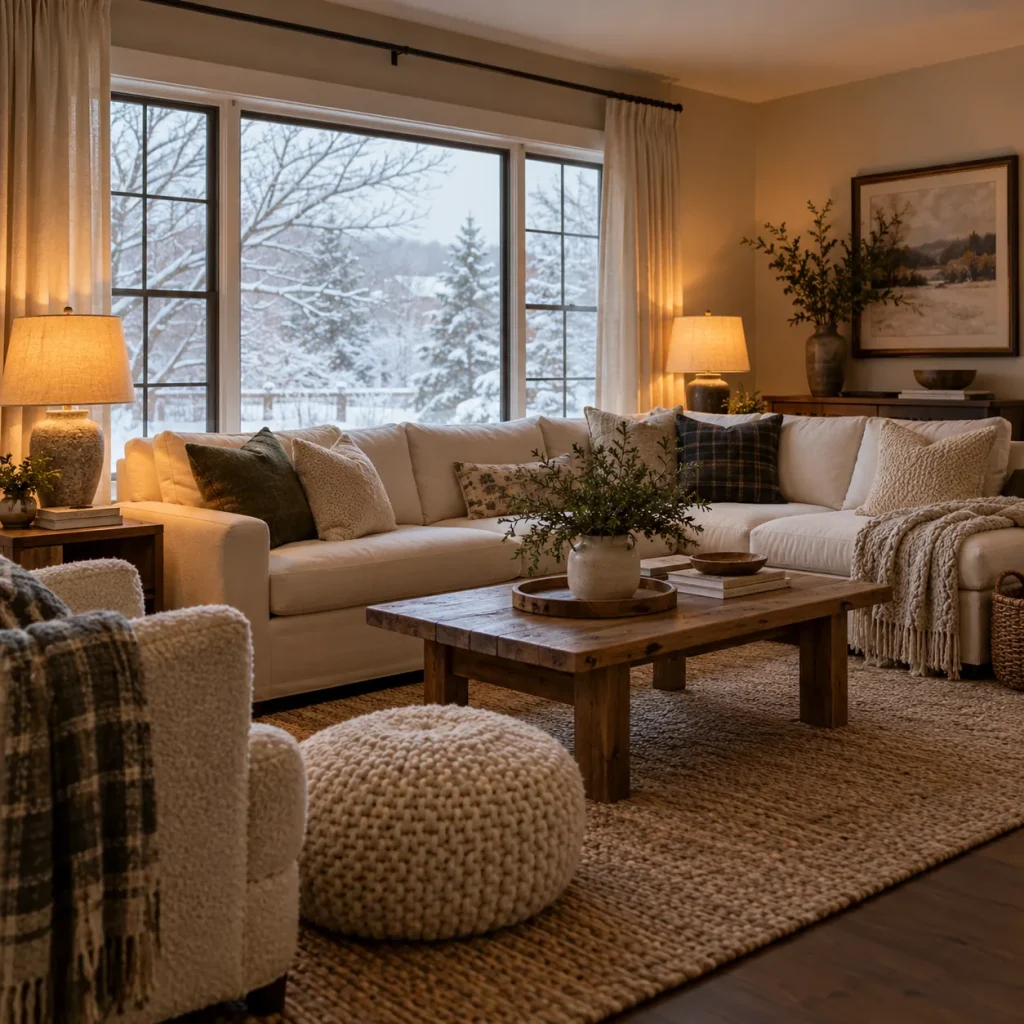
Two smaller lamps placed in different parts of the room can make evening light feel more balanced. Put one near the main sofa and another near a chair or cabinet, rather than concentrating every light on the same wall. Check the room still has enough light for moving around. Use accessible switches so the everyday routine does not require reaching behind furniture or crawling under tables.
6. Choose a Warm-Toned Lampshade
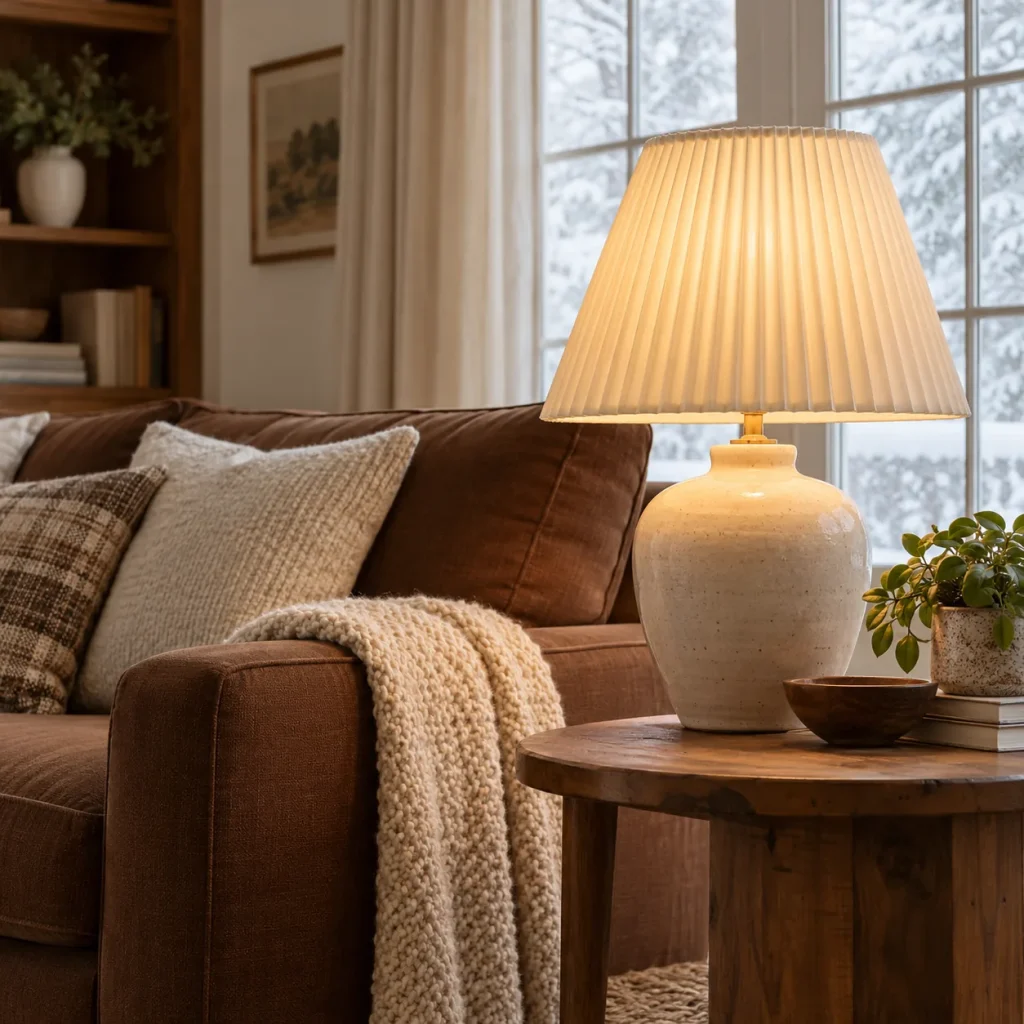
A warm-toned shade can soften the appearance of a lamp you already own. Check the fitting, clearance around the bulb, and recommended bulb type before swapping shades. A cream fabric shade and a warm light source can suit wood furniture, but do not assume that any decorative shade will fit safely. Judge it in the evening as well as in daylight before replacing more lamps.
7. Hang Lined Curtains That Clear the Floor
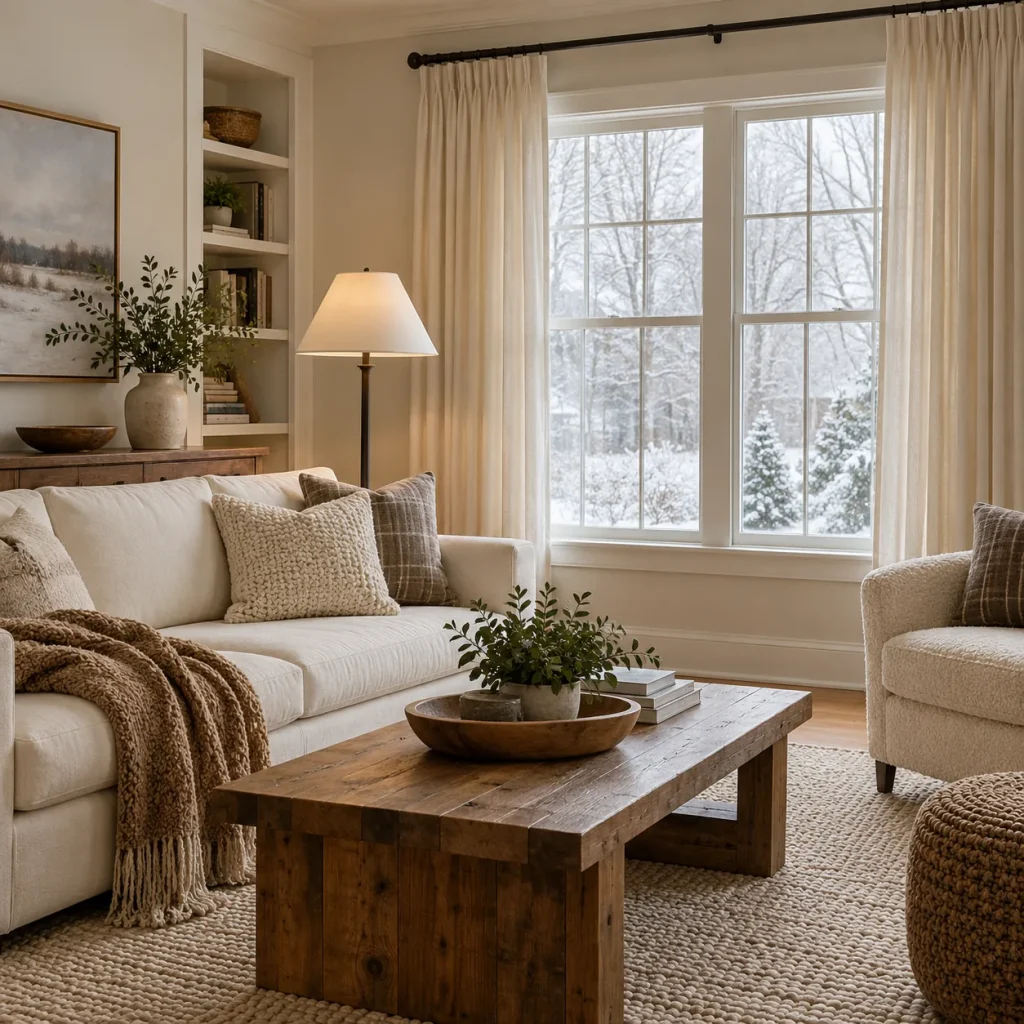
Lined curtains can change the feel of a bare window and help with winter comfort. Measure for normal opening and closing, keeping fabric clear of radiators, heaters, and floor vents. The Department of Energy’s home energy checklist suggests opening south-facing curtains for winter sunshine and closing them at night. Choose hardware suitable for the curtain weight rather than forcing heavier fabric onto a light rod.
8. Add a Fabric Draft Stopper at a Drafty Door
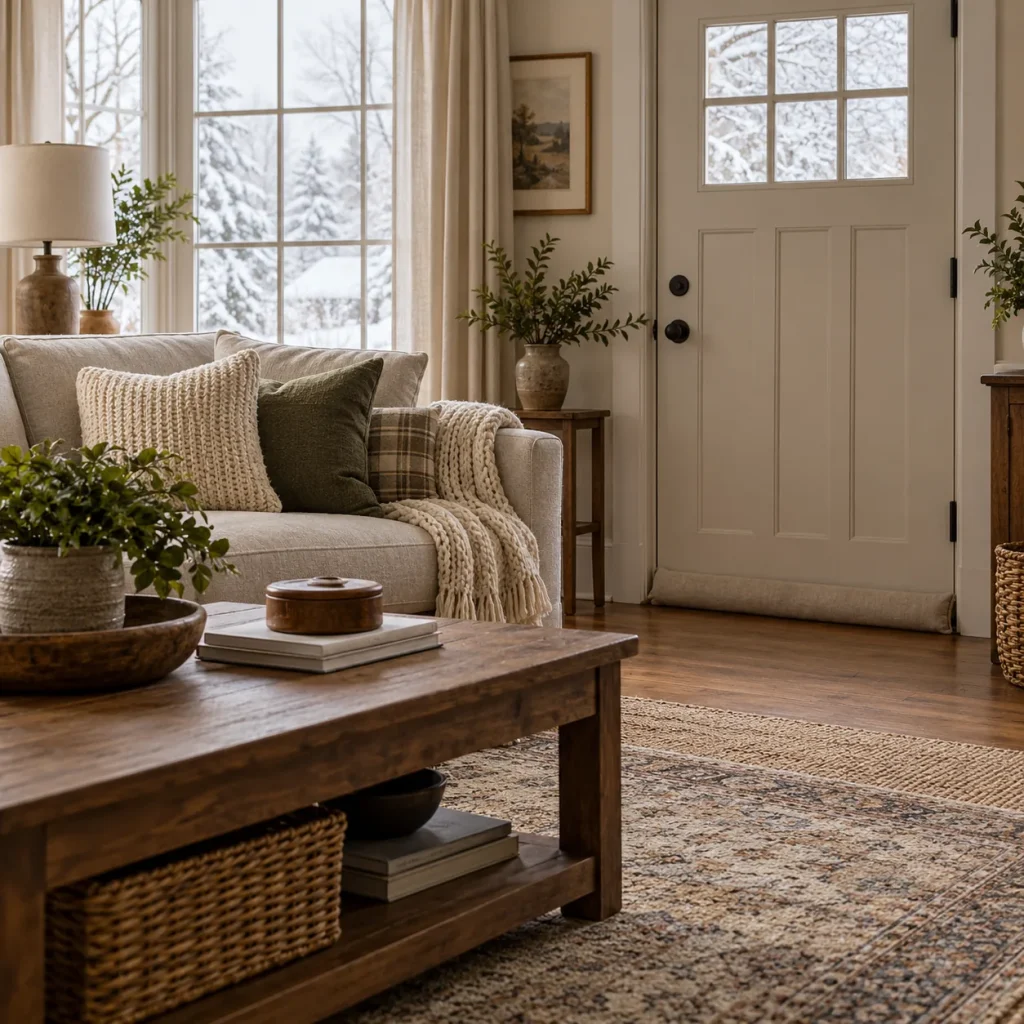
A removable draft stopper can be useful at a drafty door, but it should not interfere with the door’s operation or block required ventilation. Check where the draft comes from before buying one. Keep the stopper easy to move so it does not become a trip point. If the gap needs repair or weatherstripping, treat the fabric roll as a temporary comfort measure rather than a permanent fix.
9. Keep Heating Vents Free of Furniture
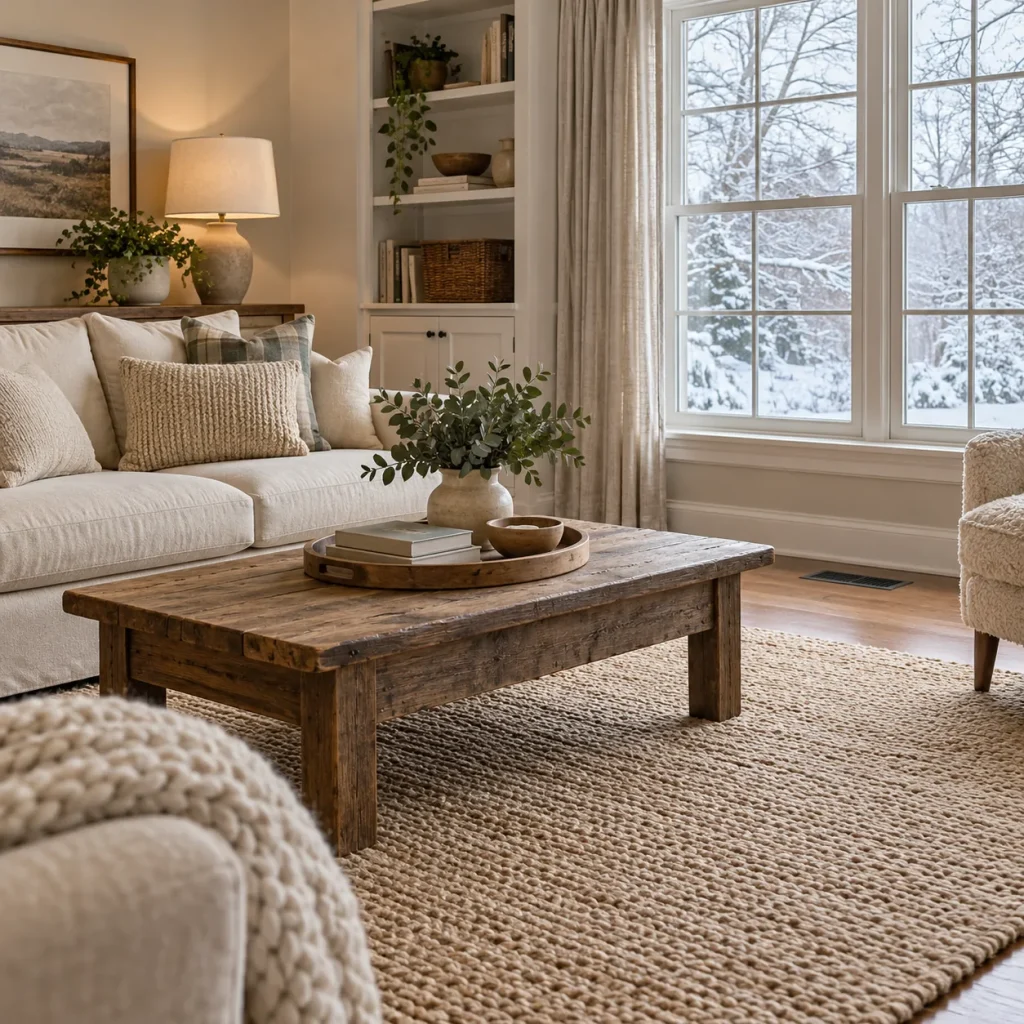
A sofa pushed over a heating register can get in the way of the room’s heating system. Before shifting furniture for winter, locate the supply and return openings and keep them clear according to the system’s instructions. Do not conceal them with baskets or rugs. For fireplaces, stoves, and portable heaters, use the relevant safety clearances as well; an open register is not the same situation as a hot appliance.
10. Pull Seating Into a Conversation Group
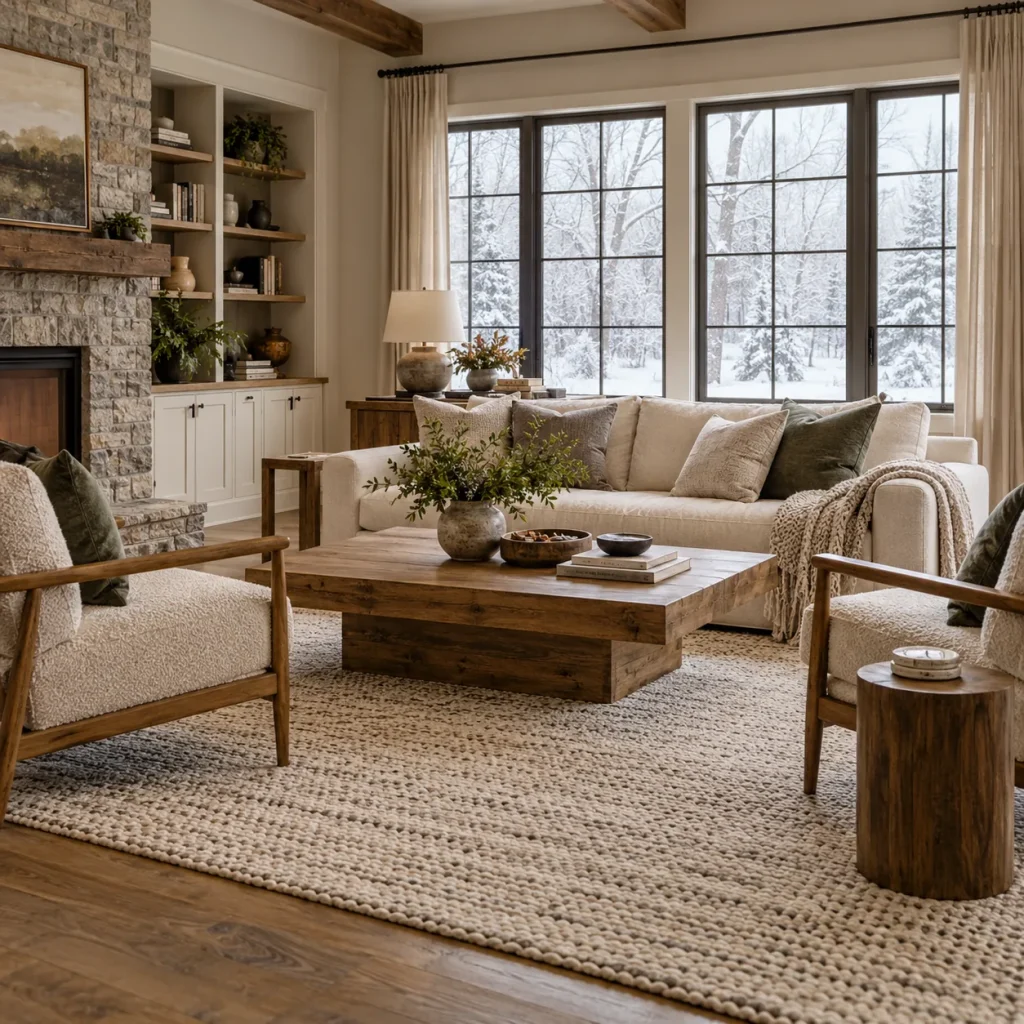
Bringing chairs closer to the sofa can make conversation easier on long indoor evenings. Start with the people who use the room most and place their seats within comfortable talking distance. Keep a clear route around the group, then fit the table into the space that remains. Our living room layout guide explains how to test the arrangement with floor markings.
11. Make a Window Reading Spot
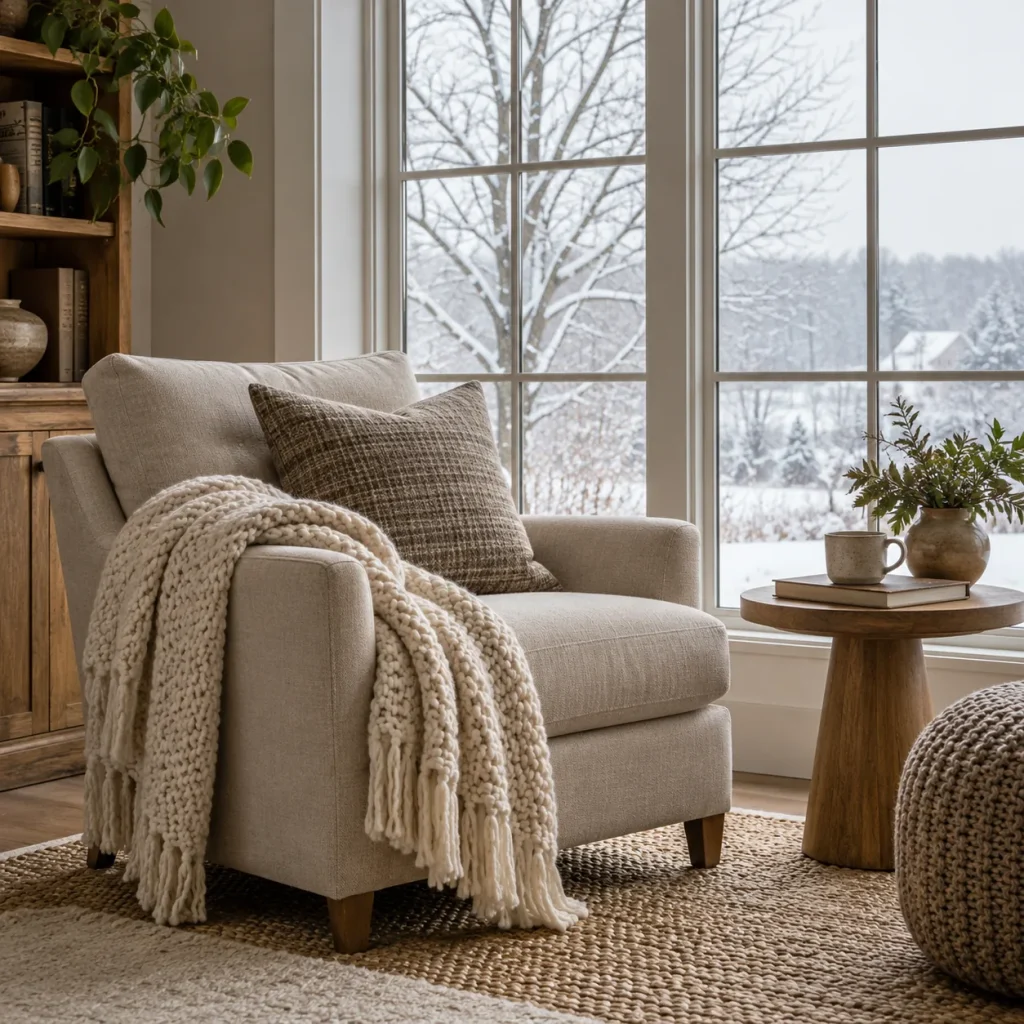
A chair near a window gives you somewhere to enjoy the short daylight hours. Angle it for a useful view without placing the seat directly against cold glass or a draft. Add a small surface for a book and a lamp for later. Test the corner at the time you expect to use it, because a bright morning spot may be less comfortable in the afternoon.
12. Put Throws in a Reachable Basket
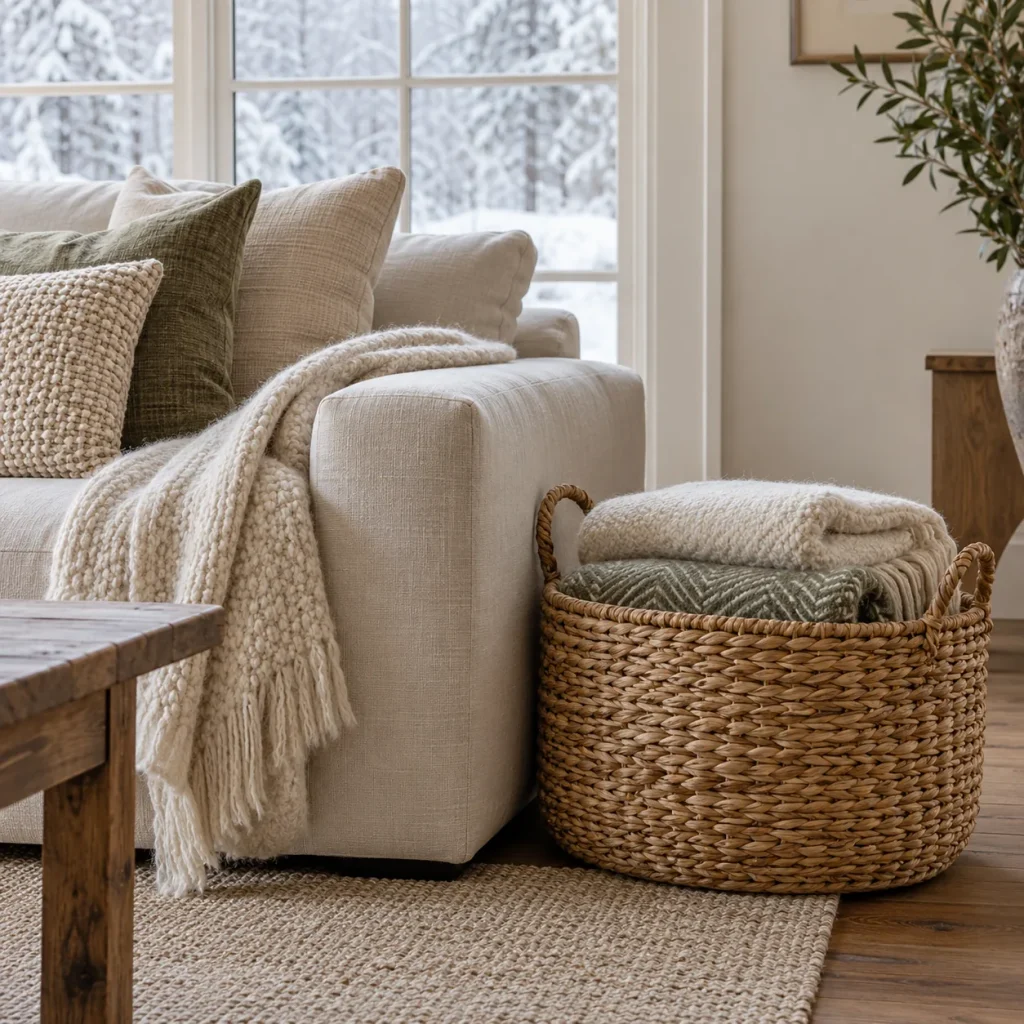
A basket makes the extra blanket easier to use and put away. Choose one that fits beside the sofa without narrowing the walking route, and check the inside will not snag the fabric. Fold or loosely roll only the throws used in that room. An overfilled basket quickly becomes a pile, so store spare seasonal textiles elsewhere instead of keeping every blanket on display.
13. Store Seasonal Covers in a Closed Ottoman
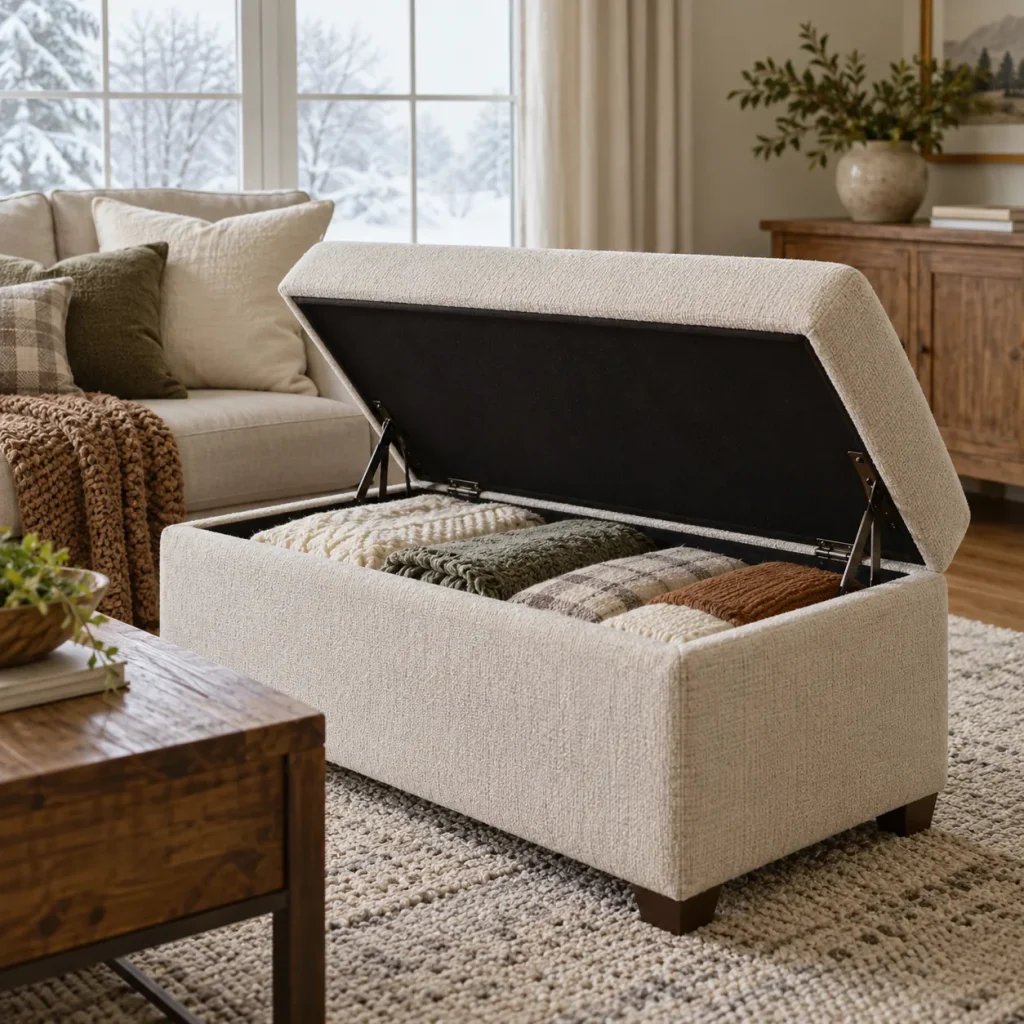
A storage ottoman can hold spare covers or light throws while providing a place to rest your feet. Check its seating capacity if you also expect guests to sit on it. Follow the instructions for the lid and hinges, and keep the opening path clear. Choose a size that leaves room to walk around it; storage is less useful when it makes the seating group difficult to enter.
14. Bring in a Solid Wood Coffee Table

A solid wood coffee table introduces a warm-looking material without adding another decorative object. Choose the proportions around the sofa and room, with attention to edges, stability, and the finish’s care requirements. Keep one part of the surface available for everyday use. If your existing table already works, a small wooden tray can bring some of the same texture without replacing furniture.
15. Add a Soft Footstool to a Reading Chair
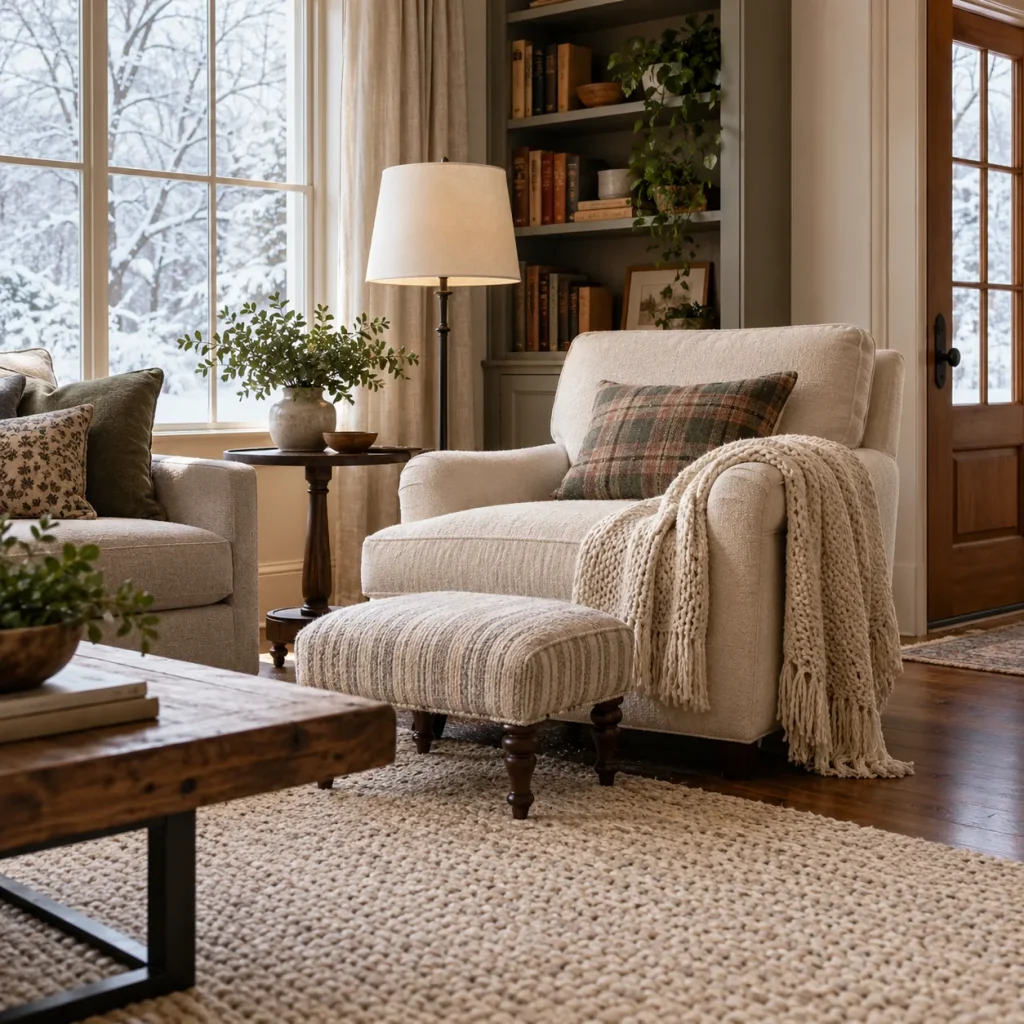
A footstool can make a reading chair more comfortable when its height suits the seat. Try the two pieces together if possible, and check the stool does not push the chair too far into the room. It needs a stable position on the floor or rug. Keep it outside the normal route so someone crossing the room does not have to step over it.
16. Replace Busy Displays With One Large Bowl
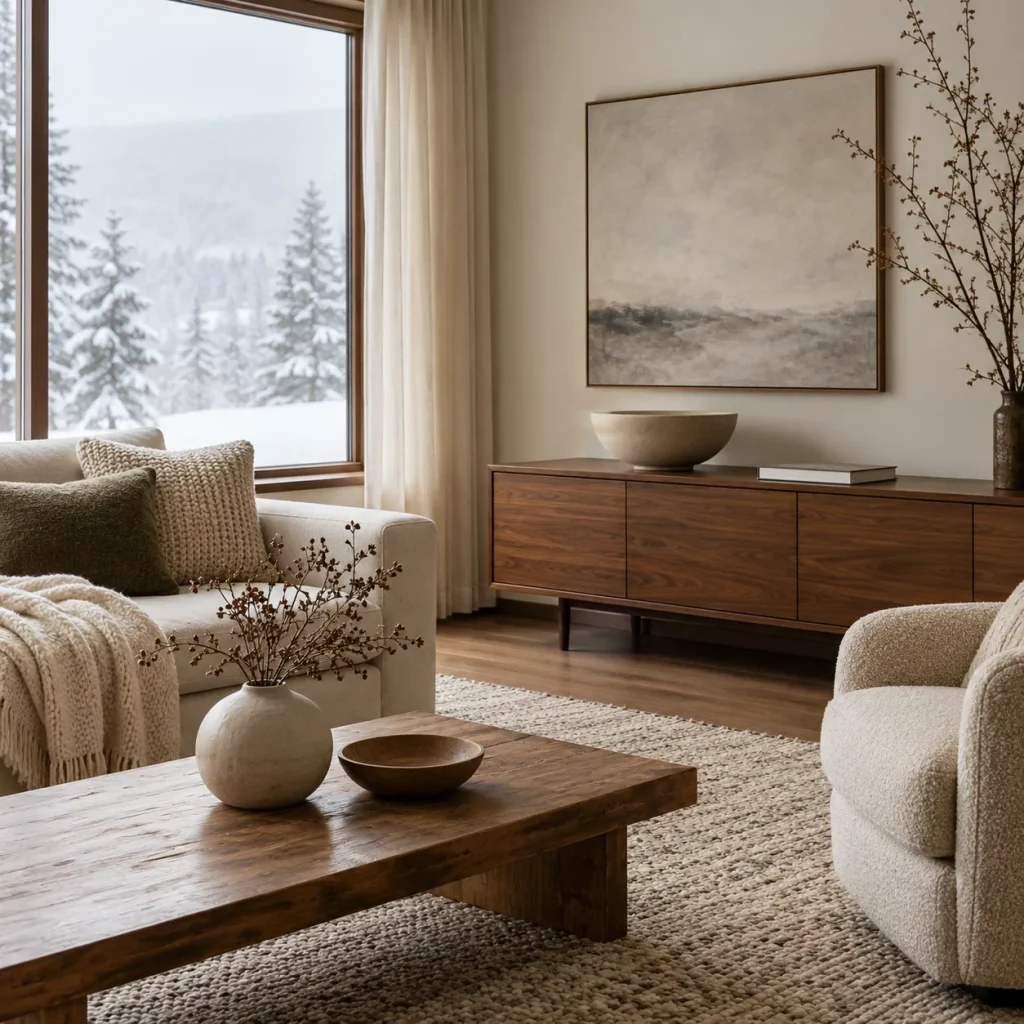
One generous bowl can replace a group of small objects that makes a console difficult to dust. Choose a shape with enough presence for the surface, then leave space around it. It can hold a useful item, such as coasters, if that fits the material. Avoid filling it simply to hide the empty space; a quieter surface can be part of the winter room’s appeal.
17. Use a Mirror to Share Window Light
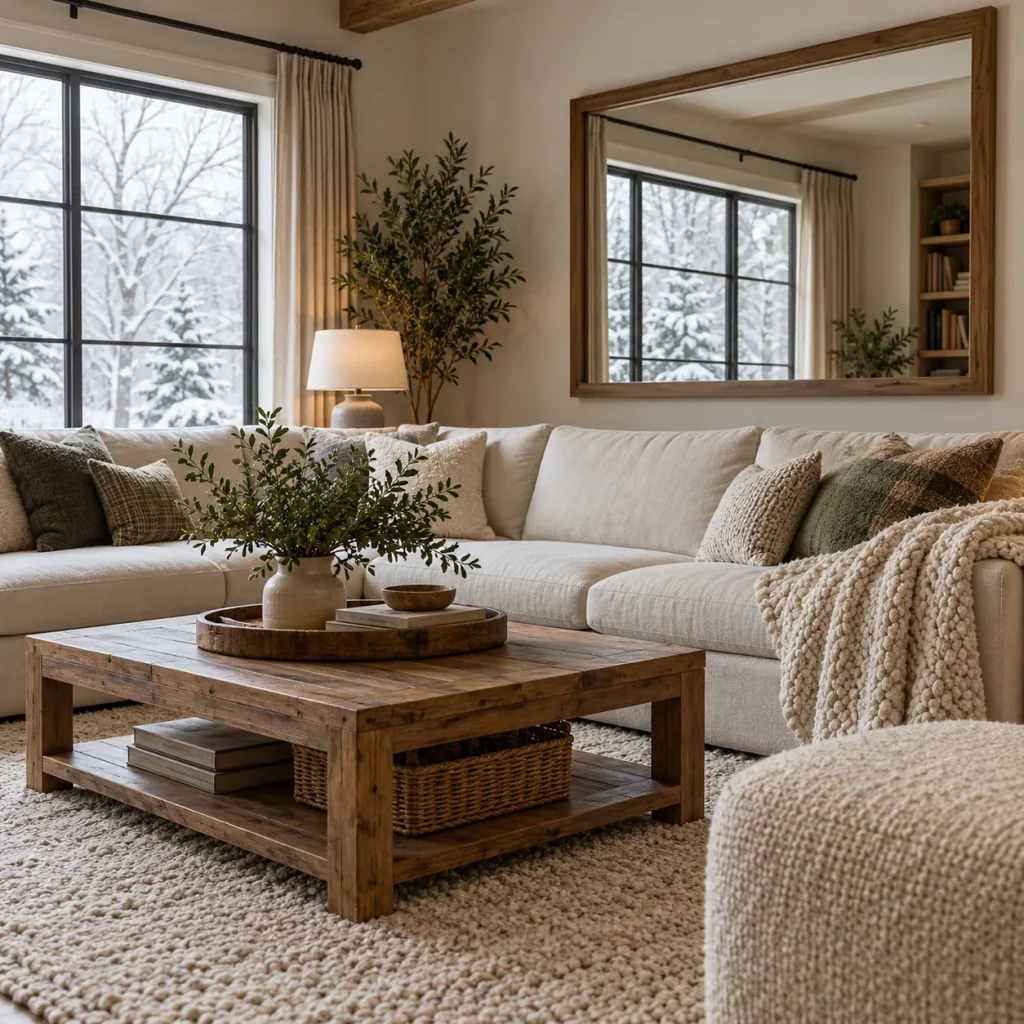
A wall mirror can share the view of a bright window with another part of the room. Check the reflection from seated eye level before marking the wall, so you do not create glare or reflect a cluttered passage. Use fixings appropriate to the mirror and wall. A mirror changes how light is seen; it does not replace task lighting for reading or working.
18. Refresh Art With Quiet Winter Landscapes
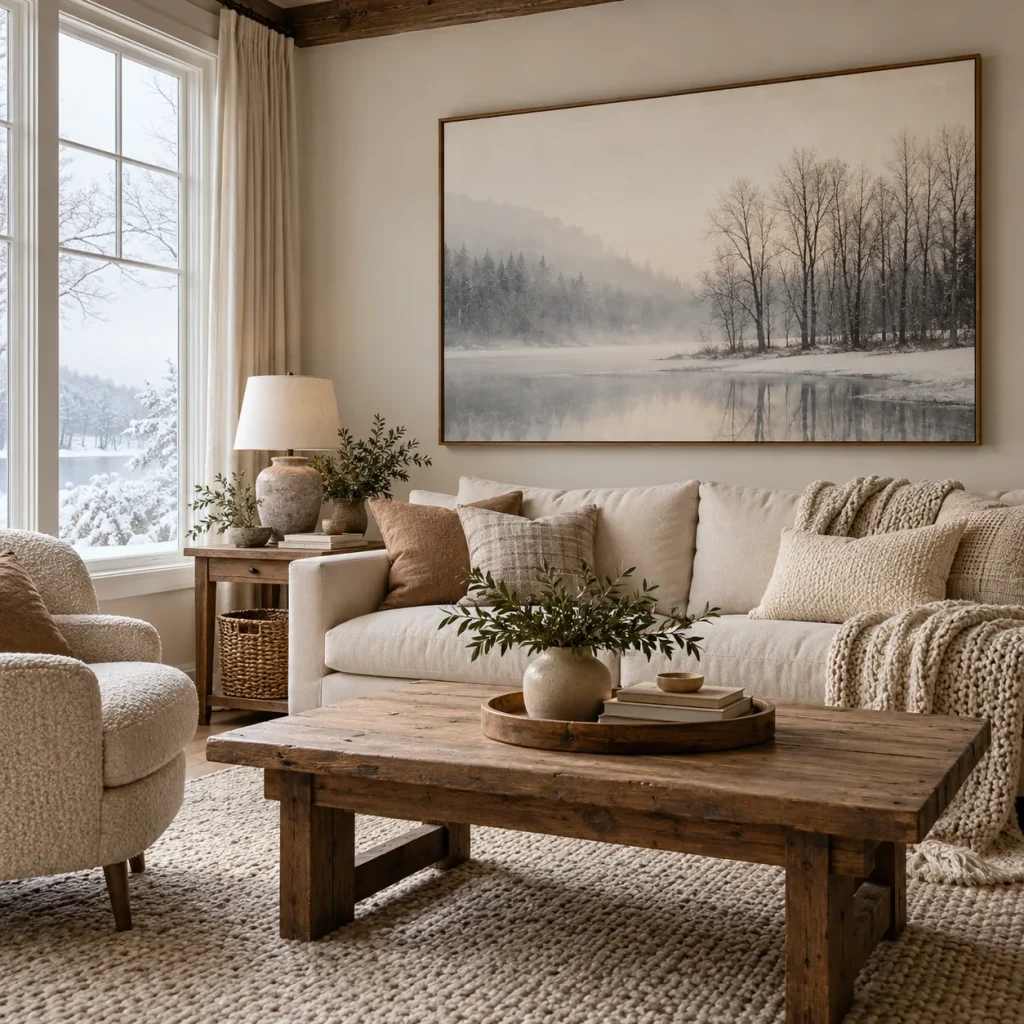
A quiet landscape can help the room move away from Christmas without leaving it bare. Use a print you own or have permission to reproduce, with colors that already appear in the furniture. A misty field or bare-tree scene can stay in place beyond the holidays. Check the frame’s hanging hardware and wall support rather than resting a heavy frame where it could slide.
19. Display Evergreen Cuttings in Water
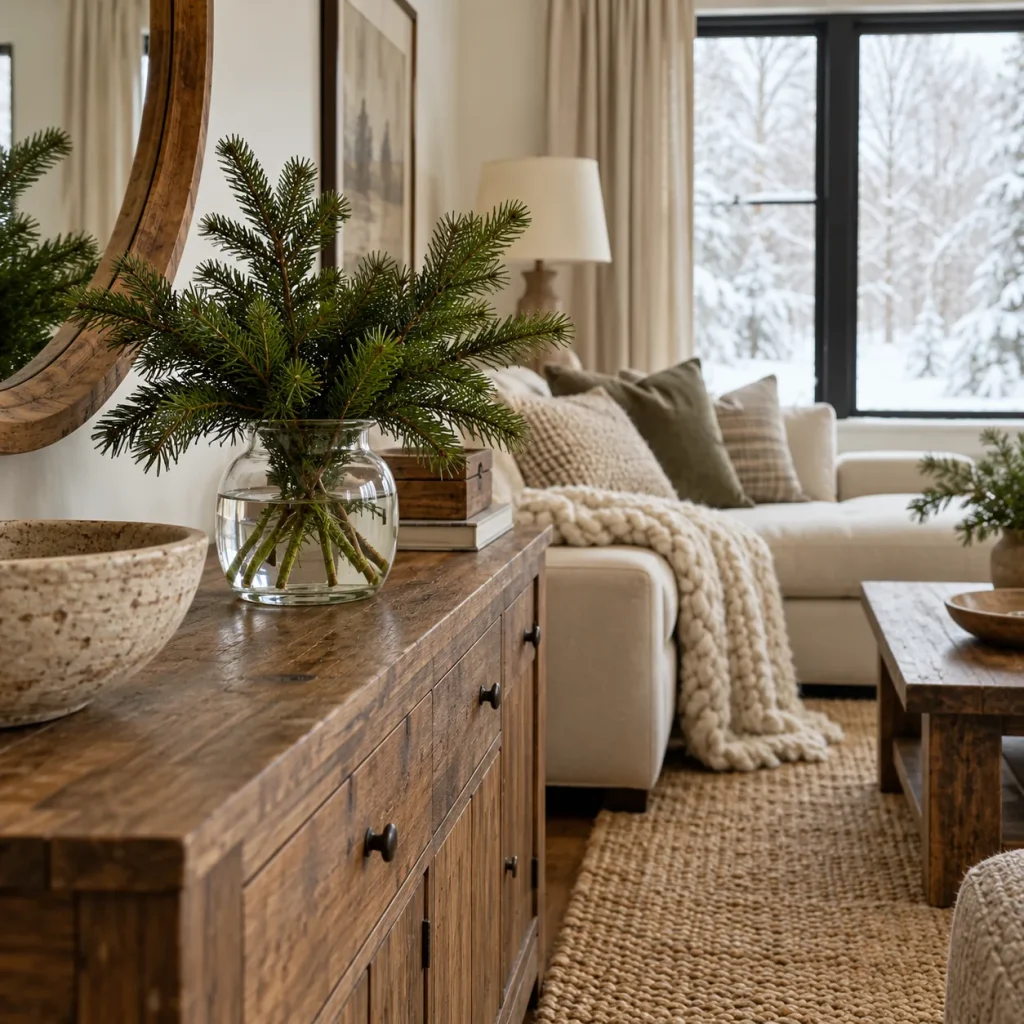
A few evergreen cuttings can add winter texture after the festive decorations are stored. Use a clean stable vase, keep the arrangement away from heat, and check it regularly for drying or dropped needles. Make sure any plant material suits your household, including pets. Choose reusable faux branches if fresh cuttings would be difficult to maintain, and avoid putting water-filled containers beside electrical equipment.
20. Use Bare Branches for Height
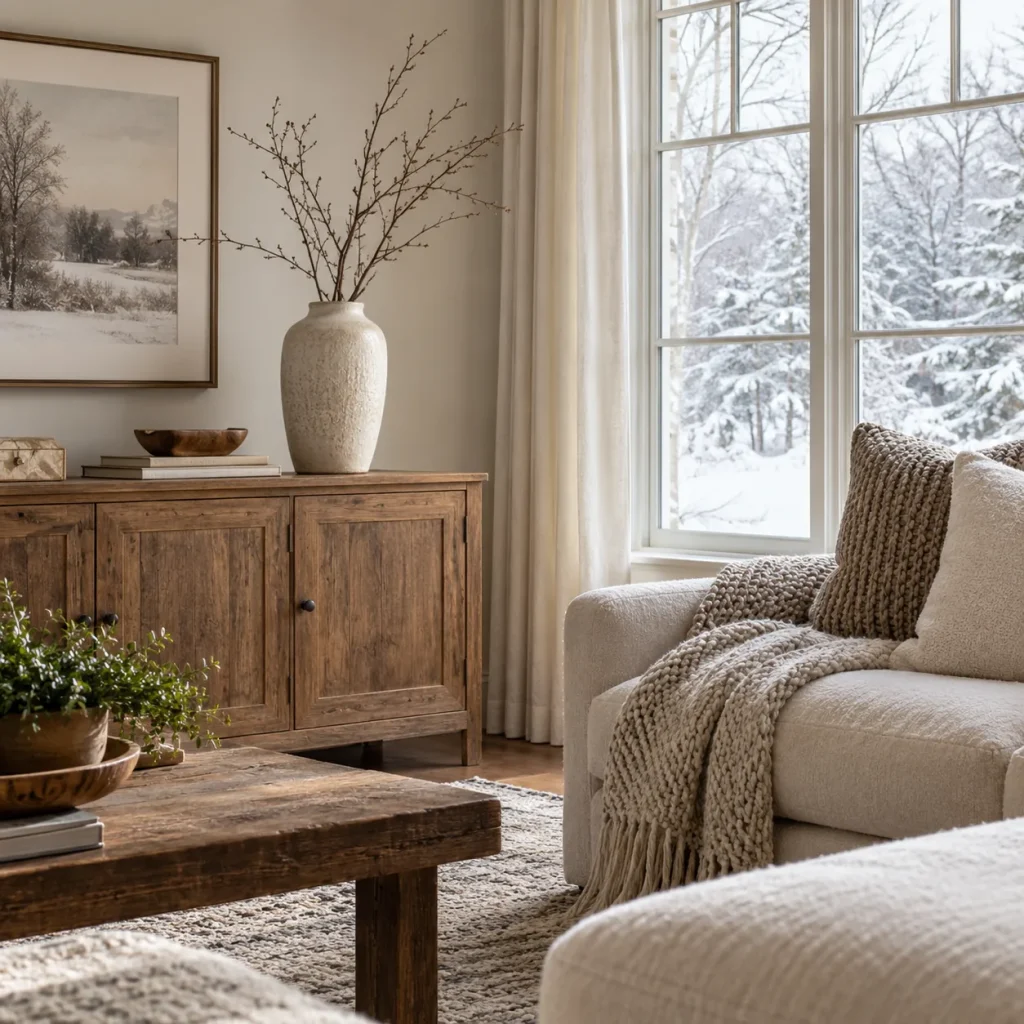
Bare branches can give a low cabinet some height without a dense arrangement. Use a heavy stable vase and a small number of clean branches whose spread stays out of the route past the furniture. Check for sharp ends and loose bark before bringing natural material indoors. An artificial branch is a practical alternative where shedding or maintenance would become a nuisance.
21. Set Up a Small Tea Tray
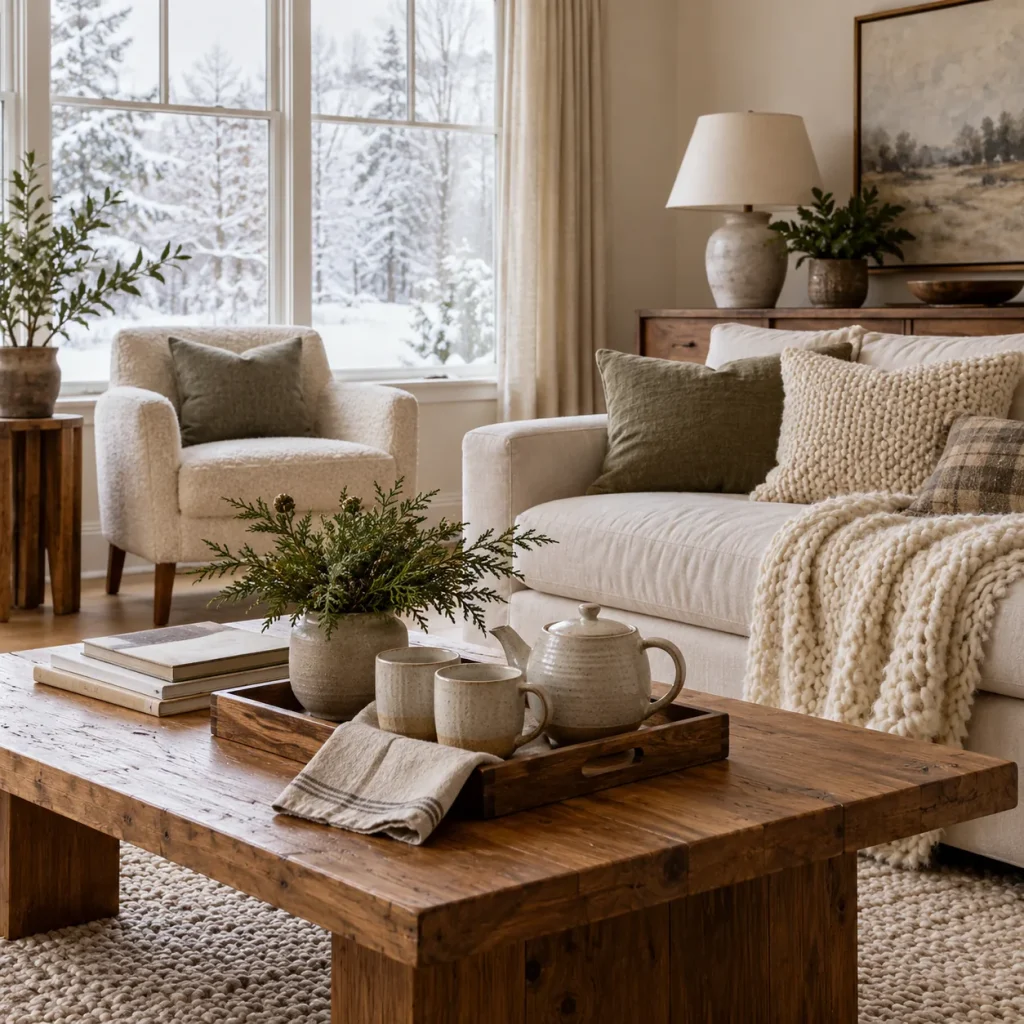
A small tea tray turns an ordinary table into a useful place for a short break. Choose a tray that sits flat and still leaves room for someone else’s drink. Keep hot items on a suitable stable surface with protection for the finish. Store extra cups elsewhere so the tray remains light enough to move. A simple setup is easier to use than a crowded decorative arrangement.
22. Create a Board-Game Storage Shelf
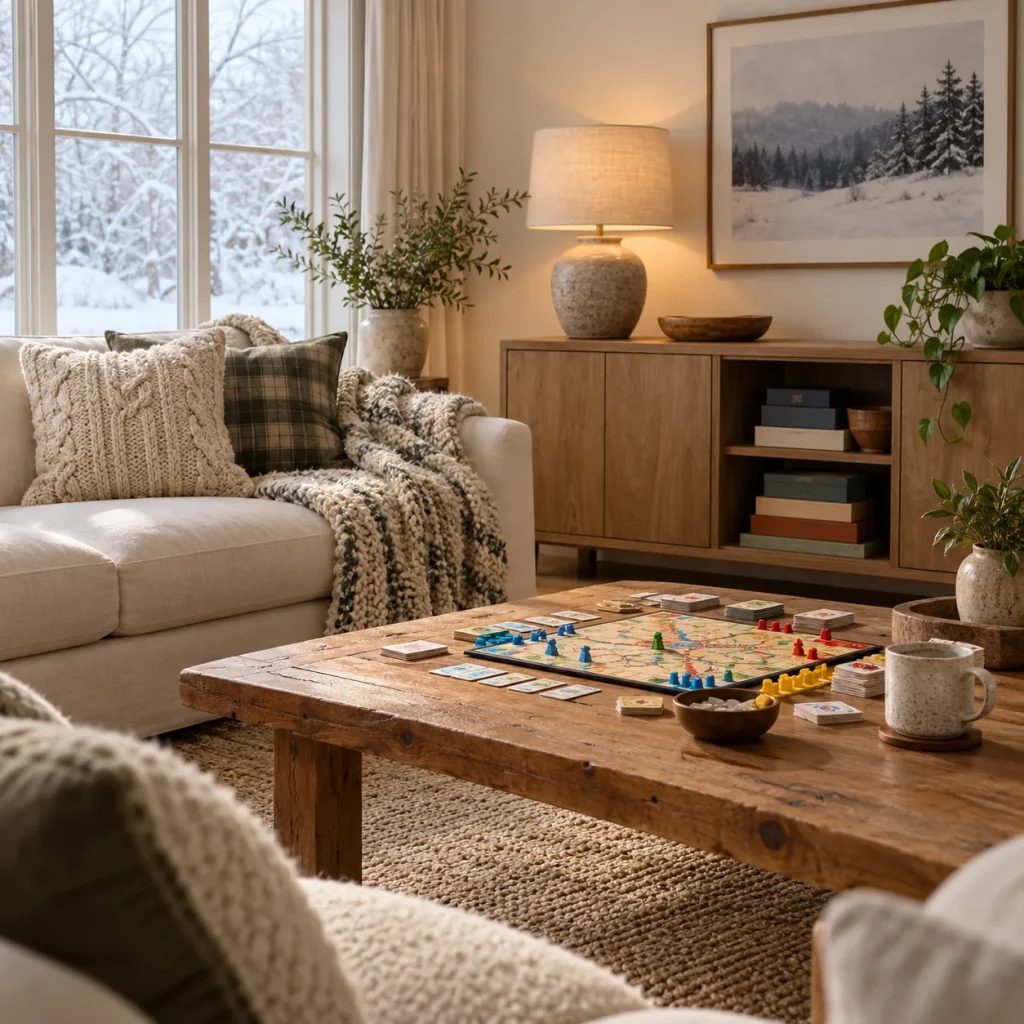
Give board games one shelf or cabinet section near the seats where people play. Keep pieces in secure containers and separate small components from young children’s reach. Choose the games you actually use, then store the rest elsewhere. A table that clears easily will be more useful than a permanent display, especially when the living room also has to handle meals, work, or guests.
23. Give Work Supplies a Closing-Time Home
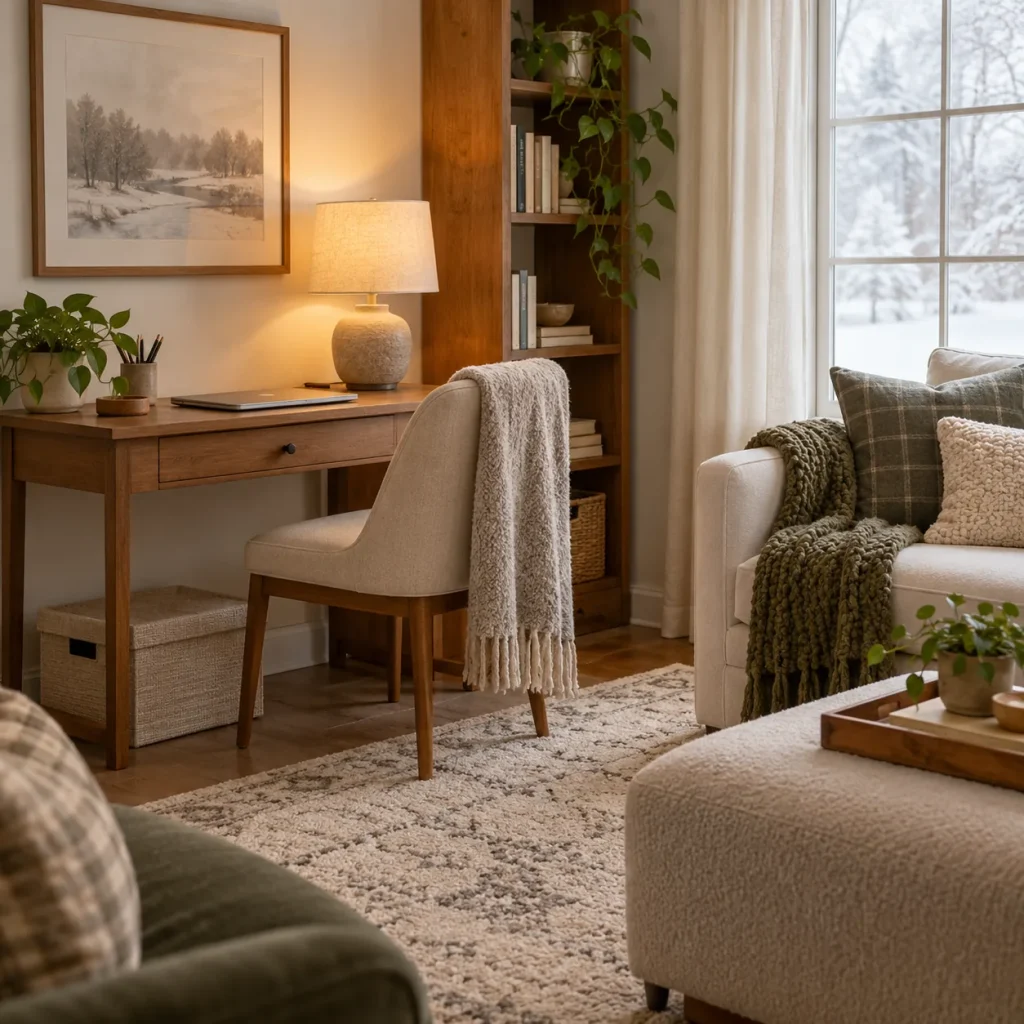
A lidded box or drawer can give work supplies somewhere to go when the day ends. Choose a location close to the desk so putting things away takes little effort. Leave chargers and electrical equipment ventilated as directed instead of stuffing them under textiles. The aim is to make the living room available for its evening use without having to reorganize the whole space.
24. Define a Quiet Screen-Free Seat
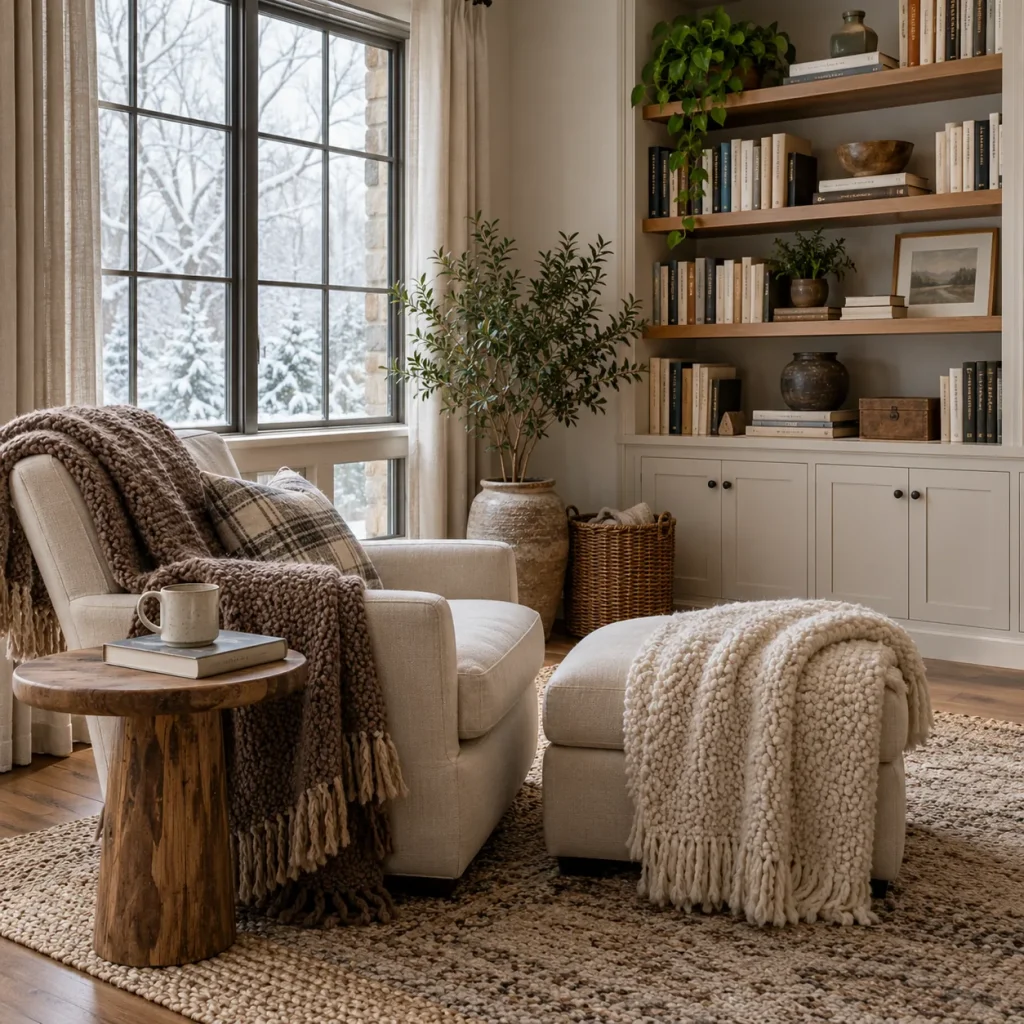
One screen-free seat can support reading, knitting, or a conversation while someone else uses the TV. Turn it toward a shelf, window, or another chair and give it its own light. Keep the seat connected to the room rather than hiding it behind large furniture. A small side table helps it function independently without needing a second coffee table or a large additional zone.
25. Use a Slipcover for an Easier Seasonal Change
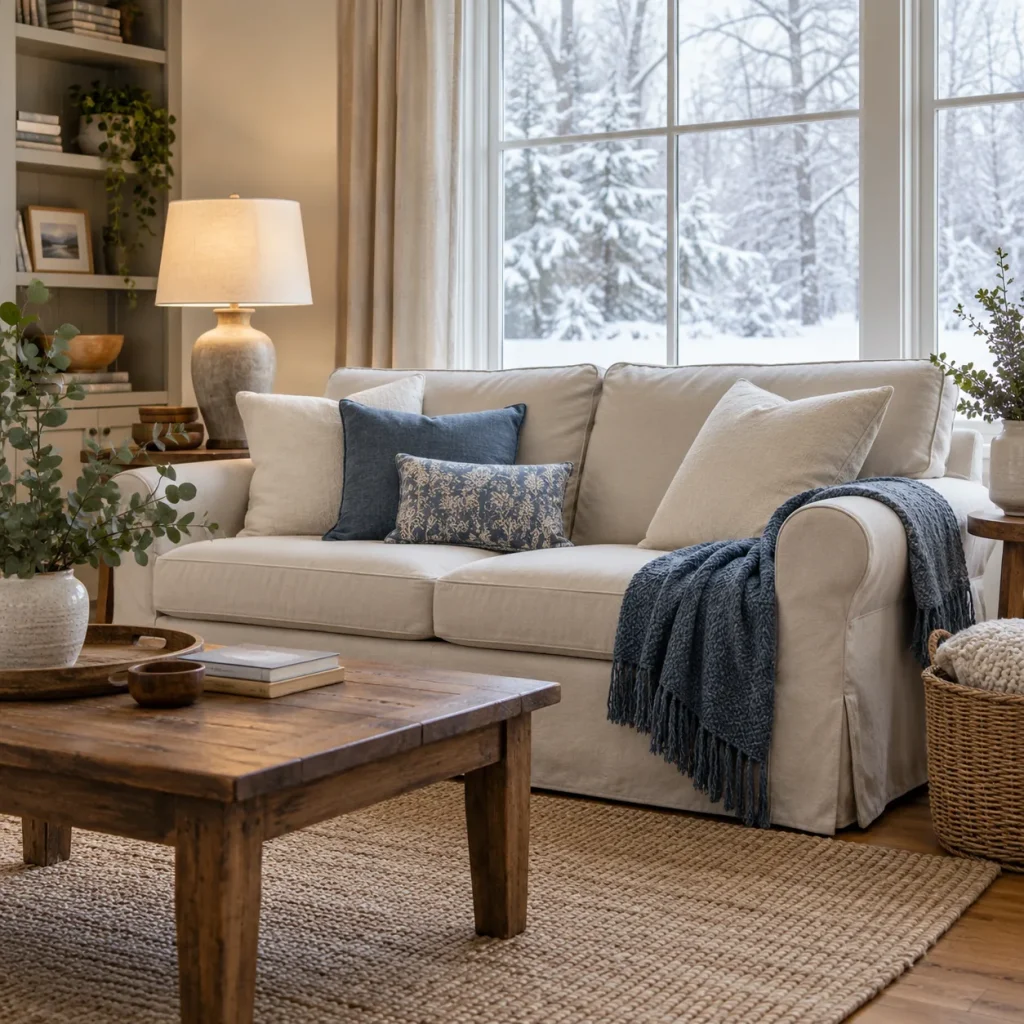
A slipcover can change the texture of a sofa while protecting the upholstery underneath. Check the model’s fit, care label, and whether it can be used over your particular sofa. A loose fit should still allow normal use of cushions and moving parts. Try a washable throw first if a full cover would need constant adjustment or interfere with a reclining mechanism.
26. Add a Small Pattern Underfoot
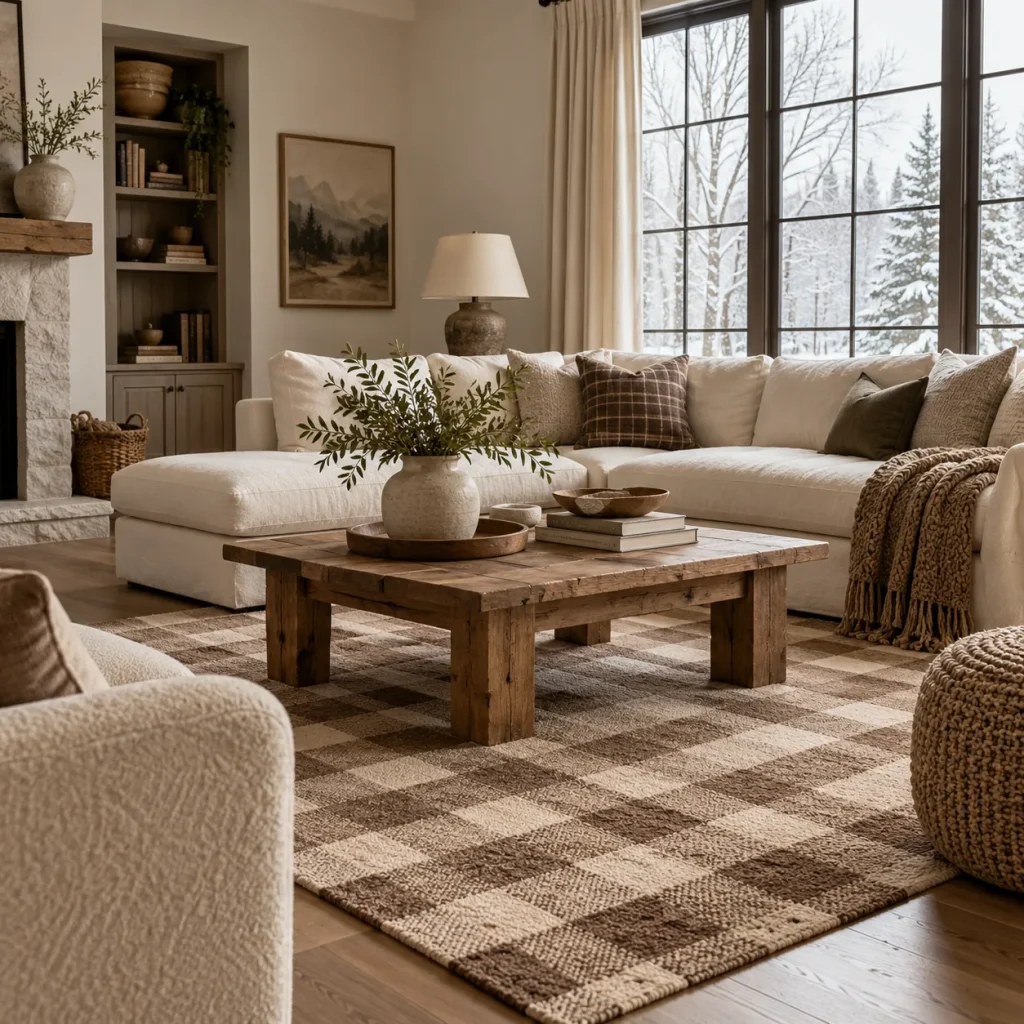
A small-scale rug pattern can add interest to a quiet winter room while keeping the color scheme simple. Compare the pattern with any striped or checked cushions so they do not compete at the same scale. Check the rug’s pile, edge, and support suit the floor. Sample the colors in the room’s daylight if possible, because warm brown can look quite different under an evening lamp.
27. Bring a Houseplant Toward Suitable Light
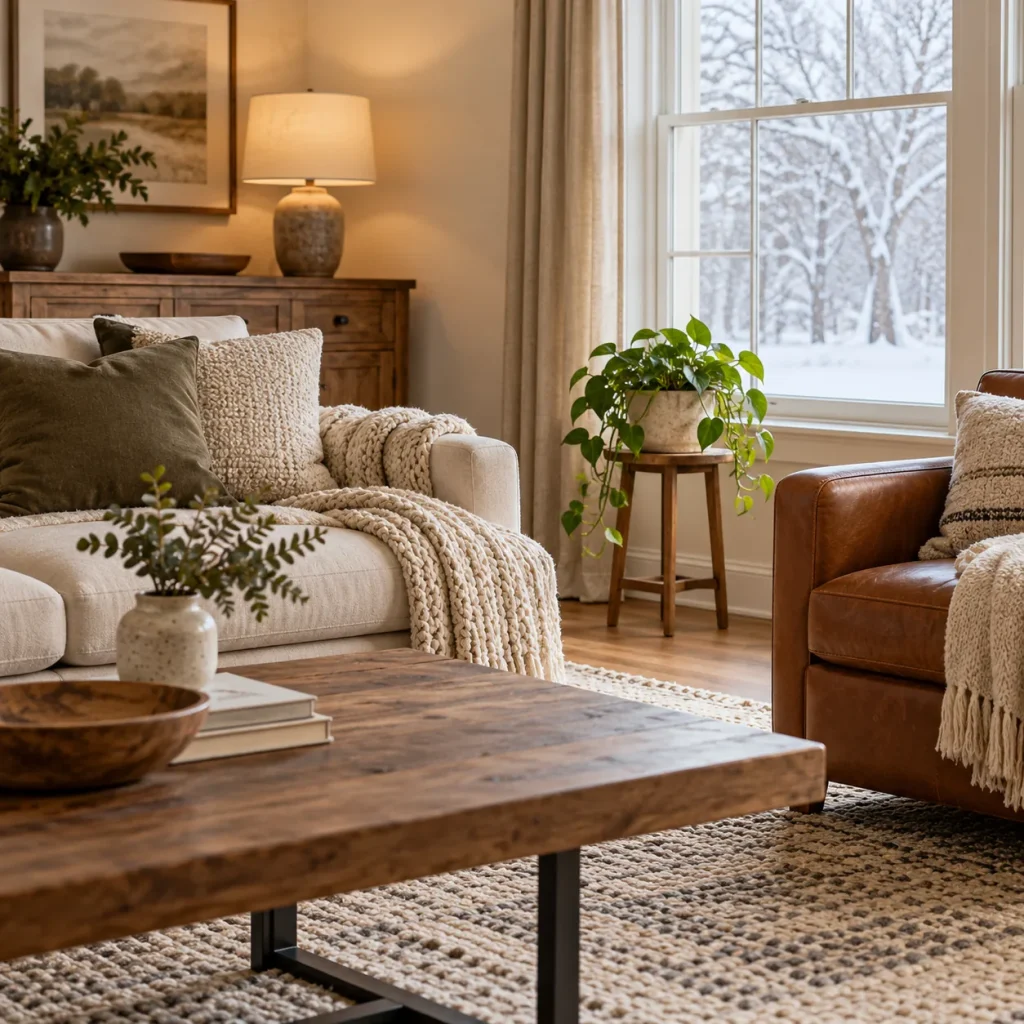
A houseplant may need a different spot when winter light changes, but choose the position around the plant’s needs rather than the empty corner. Check species-specific light and temperature guidance and keep leaves away from cold glass and heat outlets. Move a manageable plant stand instead of dragging a heavy pot across the floor. Use a waterproof tray and check that watering does not leave standing water on furniture.
28. Make a Landing Spot for Winter Extras
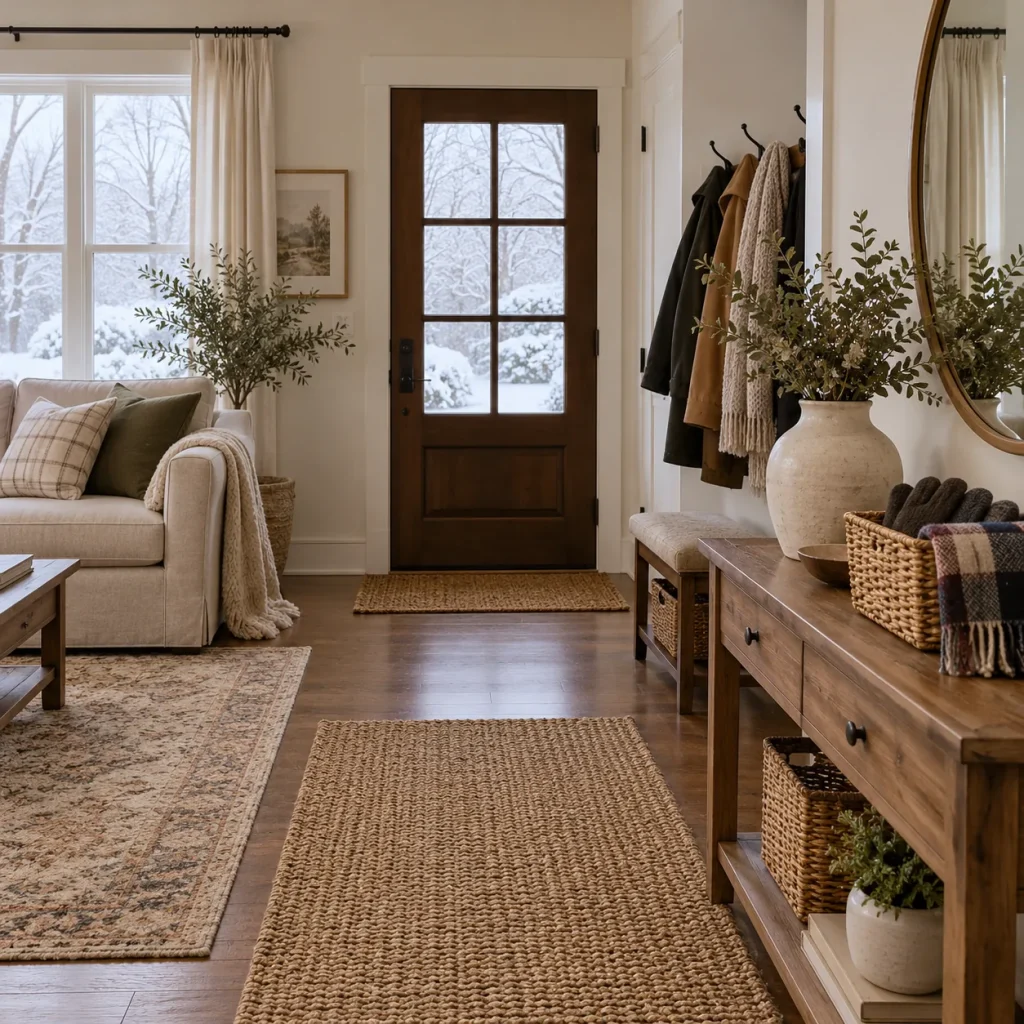
A small landing basket can keep gloves and scarves from spreading across the sofa. Put it near the entrance people actually use, leaving the door and walking route clear. Let damp items dry appropriately before storing them in a closed container. If the living room has no entry corner, a nearby hook or shelf outside the room may work better than adding another cabinet.
29. Keep a Folding Tray Table Ready
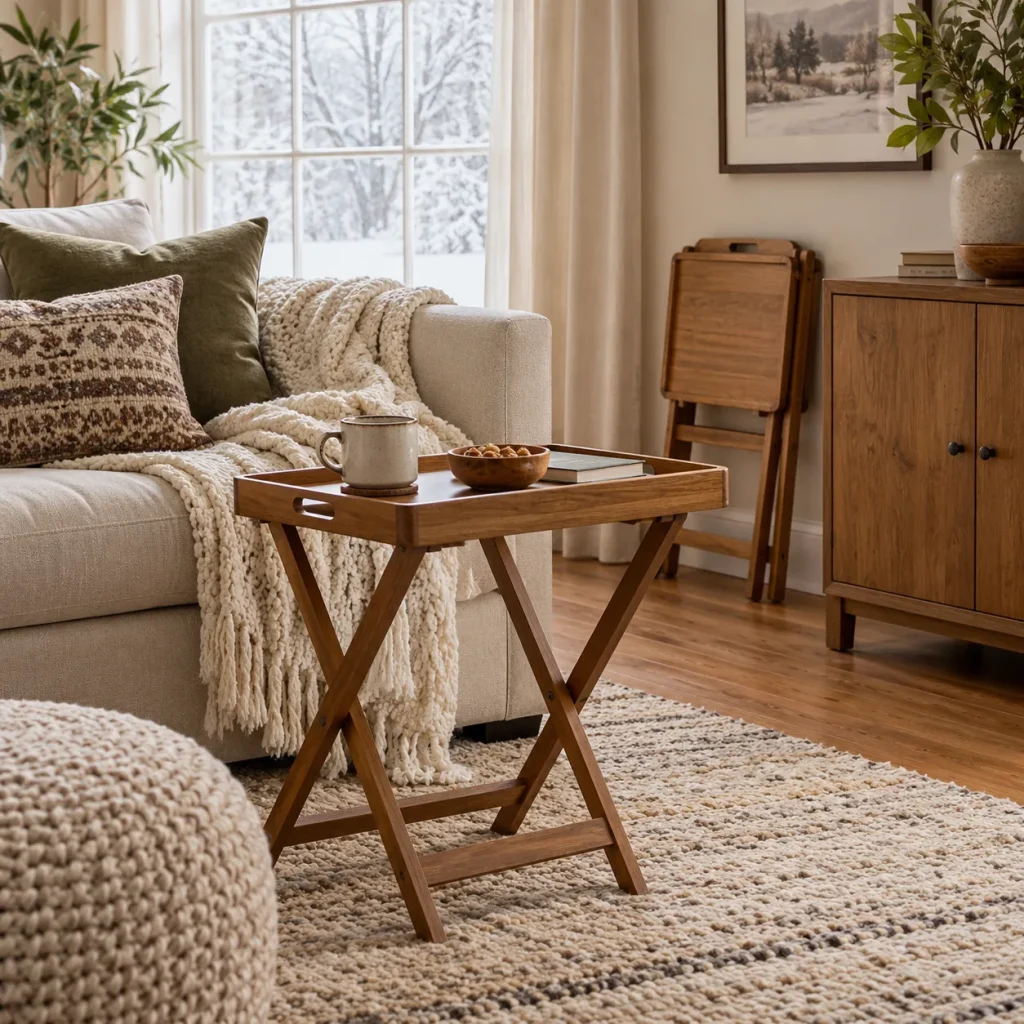
A folding tray table can support a puzzle, a notebook, or an occasional drink without becoming permanent furniture in the middle of the room. Check that it locks securely when opened and sits steadily on the floor. Store it where it will not fall into a route. Keep hot drinks away from unstable or easily knocked surfaces, particularly around children or pets.
30. Finish With a Simple Evening Reset
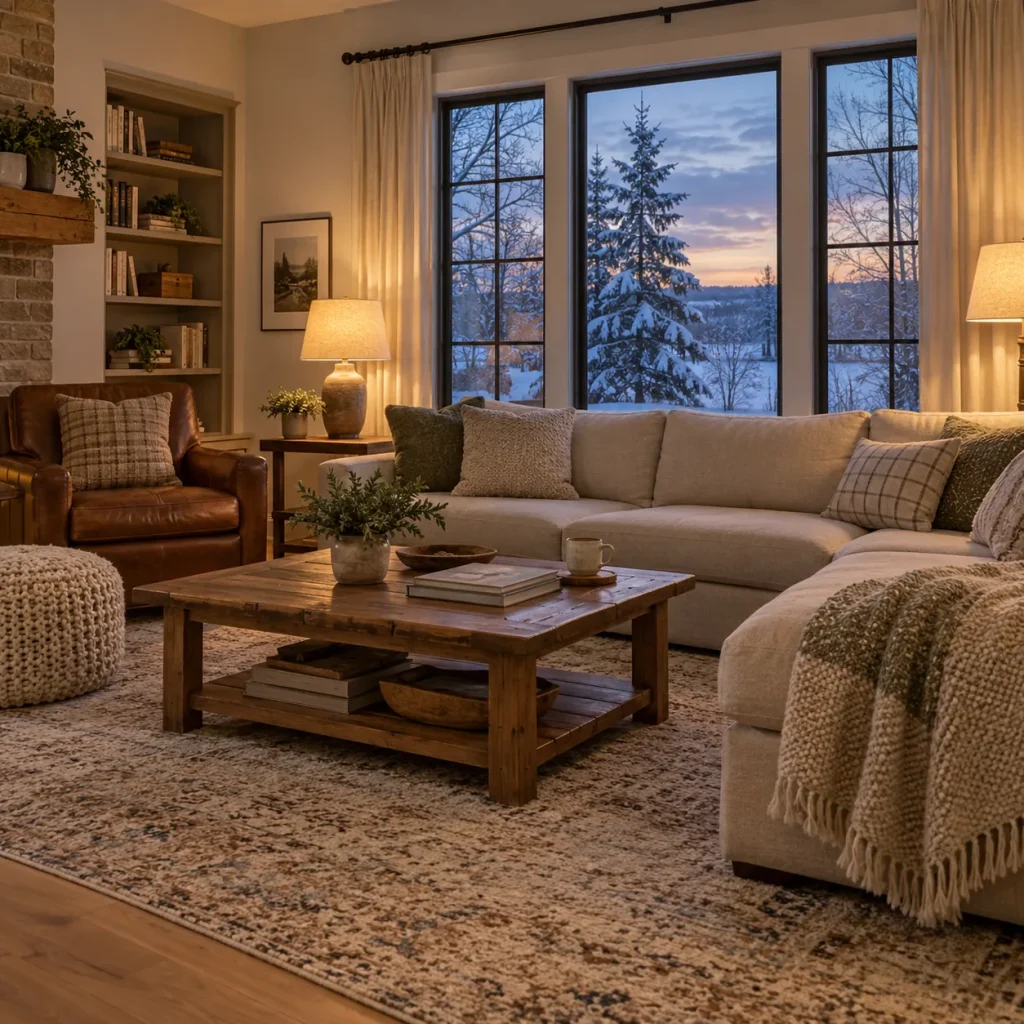
An evening reset can make the room easier to enjoy without buying anything new. Clear the main table, fold the throw, return work items to their home, and switch on the lights needed for the next activity. Leave the seat and floor clear rather than arranging everything for a photograph. Start with a routine that takes only a few actions so it remains useful through the whole winter.
Frequently Asked Questions
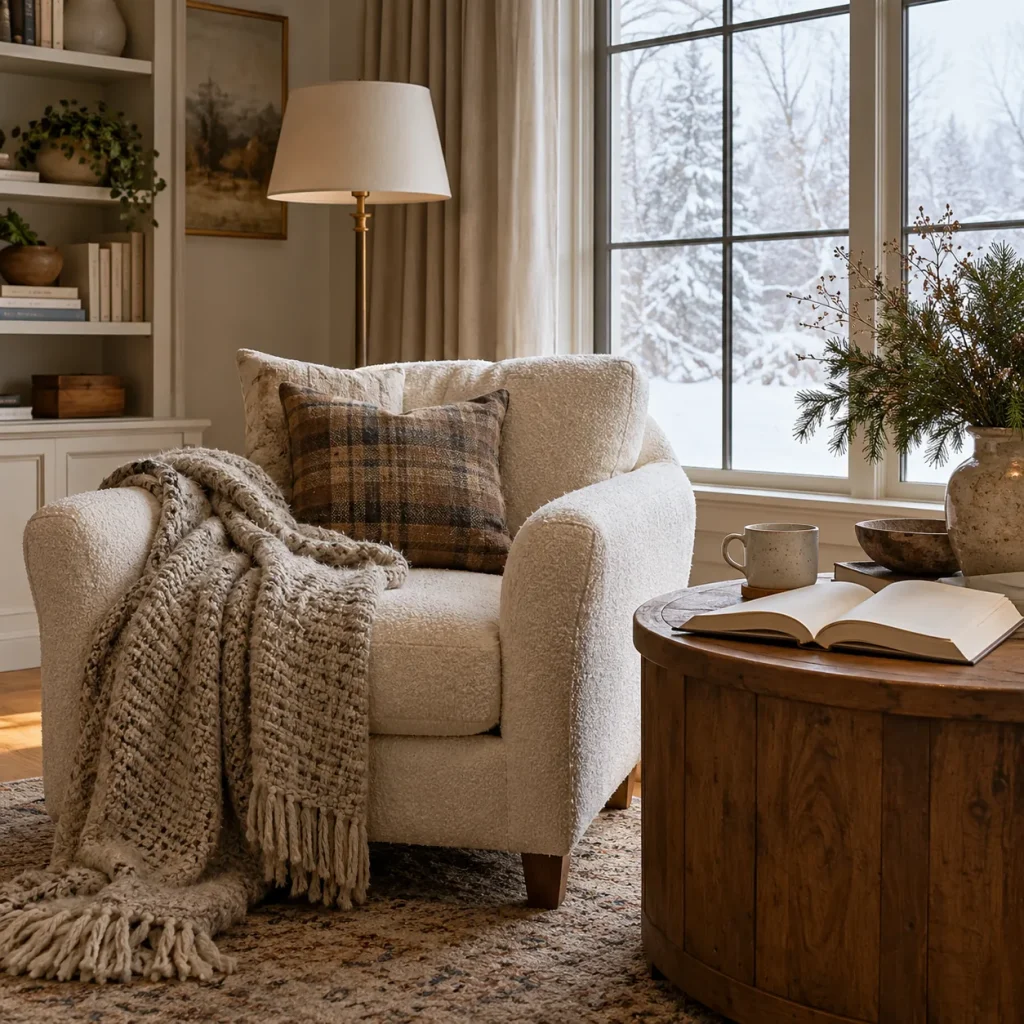
How do I make a living room feel cozy after Christmas?
Remove the clearly festive pieces, then keep useful winter textures such as throws, simple woven covers, and a rug that suits the room. Bring back everyday artwork and leave a little empty space on shelves. Comfortable reading light and a tidy place for blankets can make the room feel welcoming without replacing holiday ornaments with more clutter.
What colors work for a winter living room?
Cream, warm gray, muted blue, olive, brown, and burgundy can all work, depending on the furniture and daylight. Start with the room’s existing colors and add one or two accents rather than a completely new scheme. Material and lighting affect how a color feels, so compare fabrics in both daytime and evening conditions.
Should I move the sofa closer to a heater?
Keep furniture outside the appliance’s required clearances and do not block heating outlets or returns. Moving closer is not a substitute for checking a draft or an underperforming system. Use the manufacturer’s guidance and get suitable help if the room is not heating normally. Decorative layouts should follow the heating system’s needs.
How can I improve winter lighting without changing wiring?
Move a suitable reading lamp beside the seat where it is needed, and use lamps in more than one part of the room. Check bulb compatibility and shade clearance before making changes. Keep cords out of routes and avoid overloading outlets. Portable lighting can improve a dark corner, but some electrical problems need professional attention.
How can I refresh the room on a small budget?
Rearrange what you own first. Clear an overcrowded surface, move a lamp to a more useful place, bring out a stored throw, and create a home for daily clutter. If you buy something, choose a piece that addresses a repeated inconvenience. One useful cover or stable side table can matter more than a set of seasonal accessories.
Conclusion
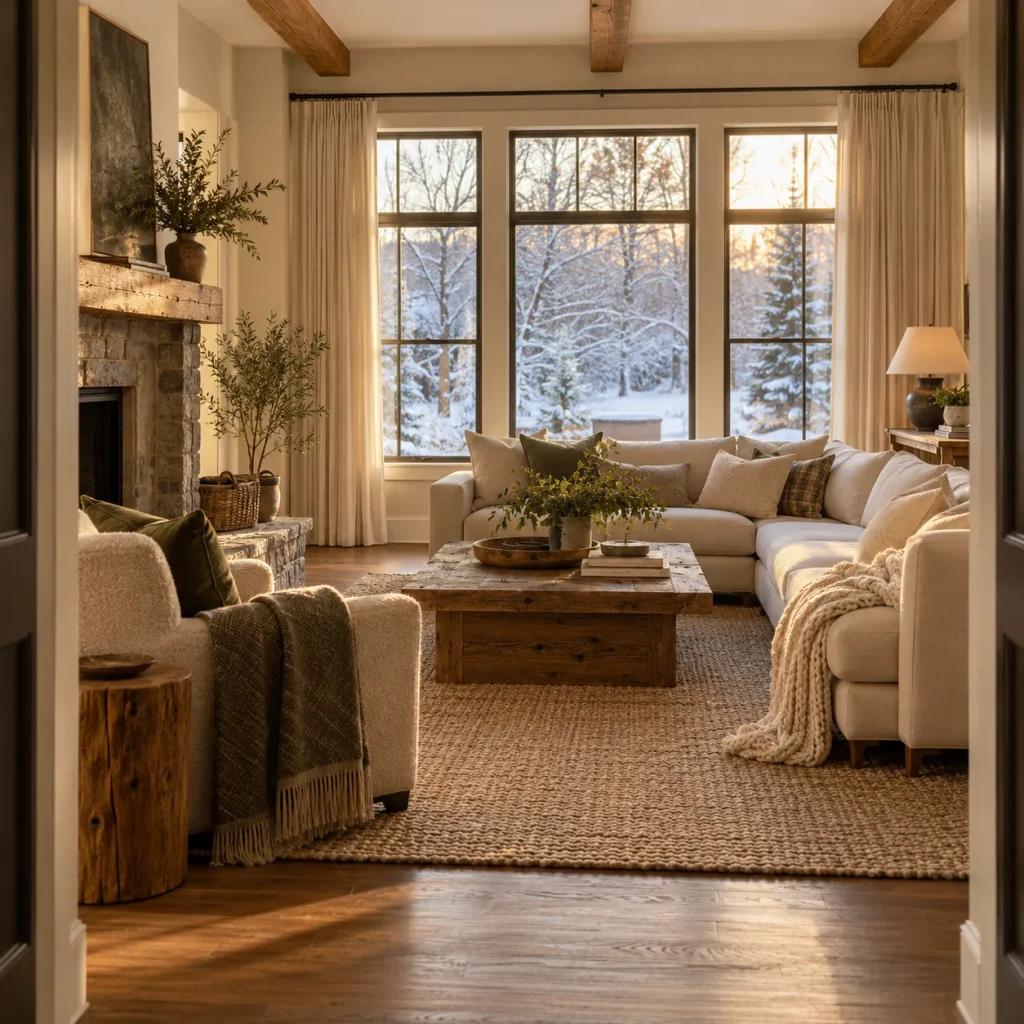
A comfortable winter room does not need all 30 changes. Begin with one daily inconvenience, improve that spot, and use the room for a few evenings before doing more. Useful light, comfortable fabric, clear routes, and easy storage create a room that works after the holidays and through the quieter months. Save your favorite ideas as a short list of changes to test, with the measurements or care details you need before buying.
If the room centers on a hearth, compare our fireplace seating ideas before moving the main seats.