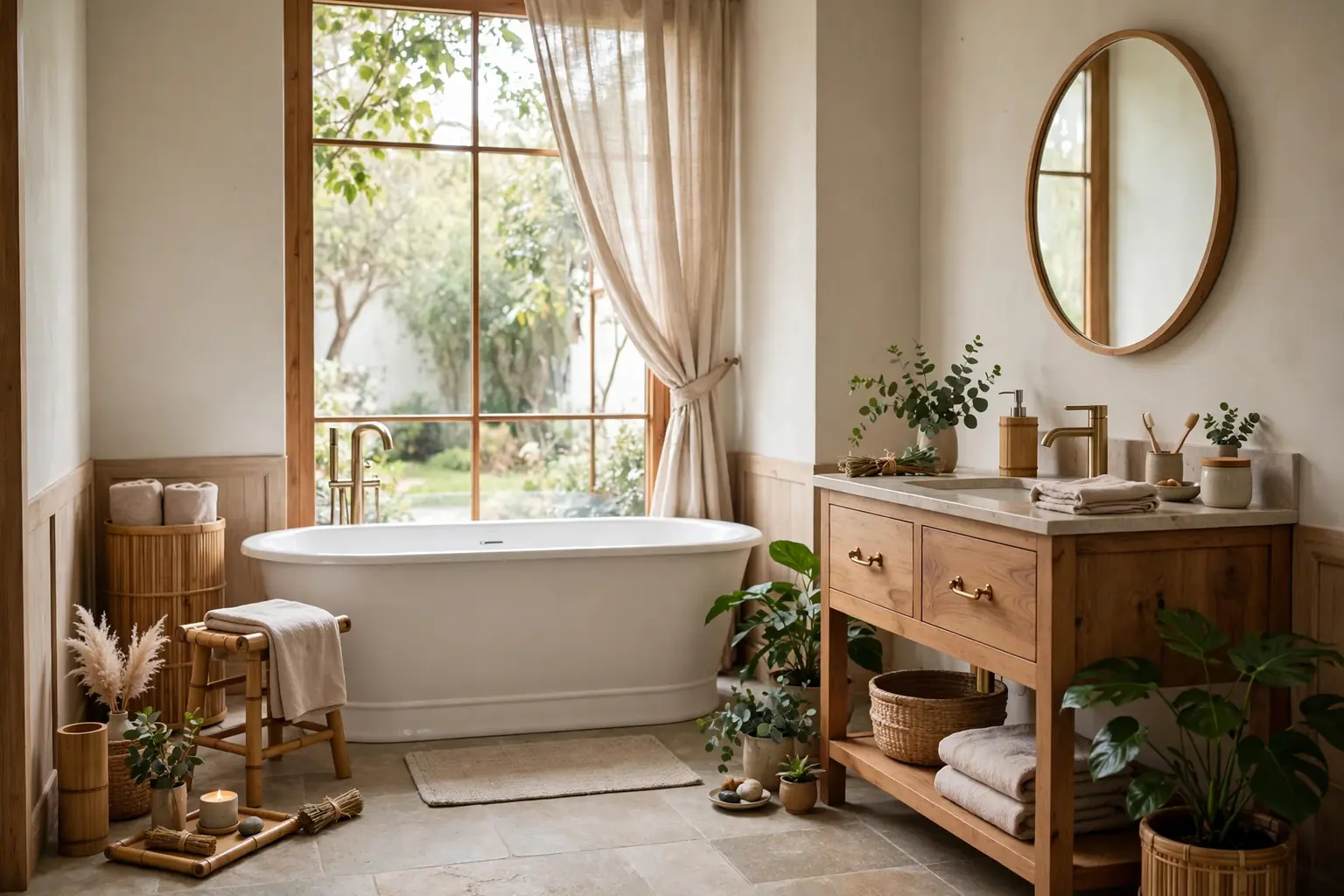
A zen bathroom is less about a theme and more about a feeling: warm water, soft light, natural materials, and enough clear space to breathe. You do not need a large room or a new suite to get there. A bamboo tray, a plant that likes steam, a warmer bulb, or a calmer color on the walls can change how the room feels each morning. These 24 zen bathroom decor ideas cover tubs, showers, vanities, storage, light, and small rituals, so you can pick the pieces that suit your room, your budget, and the way you actually bathe. Start with one idea, live with it for a week, and add more only where the room still feels busy or cold.
Key Takeaways
- Start with light, color, and clear surfaces before buying decor, since a calm base makes every natural detail read better.
- Repeat two or three natural materials, such as bamboo, wood, and stone, rather than mixing many finishes at once.
- Choose plants and materials that cope with steam, and keep untreated wood, paper, and fabric away from direct shower spray.
- Give every daily item a home, so counters stay clear and the room feels restful even on busy mornings.
- Keep candles and lanterns clear of towels, curtains, and fabric, and never leave an open flame unattended.
- Add scent, warmth, and texture in small doses, since zen rooms work through restraint, not through a long list of accessories.
1. A Matching Set of Bamboo Accessories
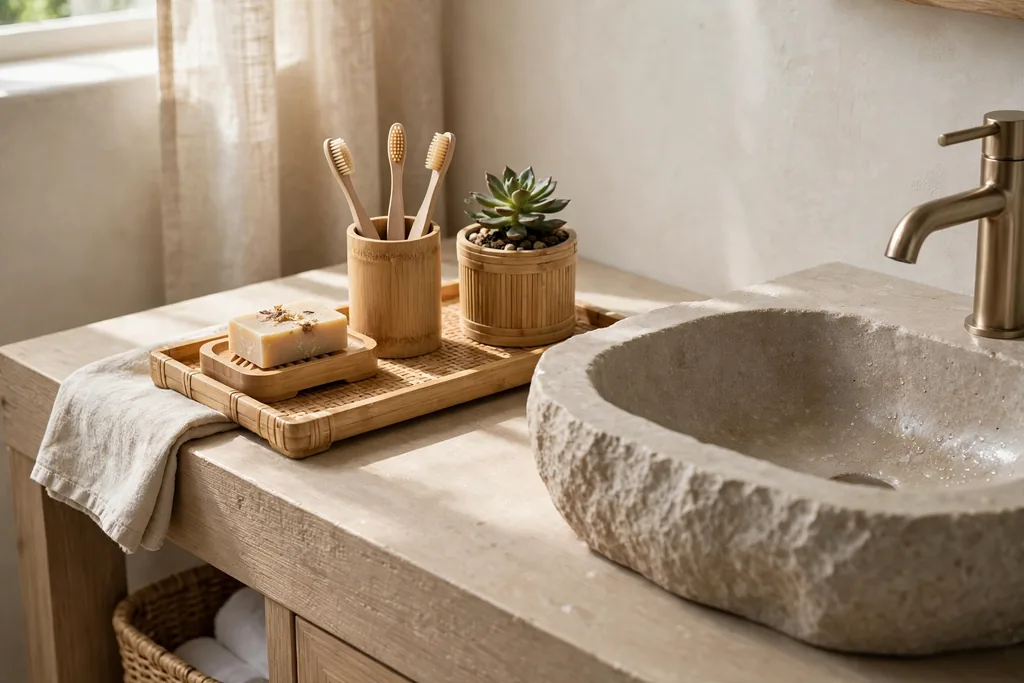
A matching set of bamboo accessories gives a bathroom a warm, natural starting point for very little work. Choose a soap dish, a toothbrush holder, a small tray, and a tumbler in the same bamboo tone, and group them on one side of the sink. The shared material ties the sink area together, while the pale wood softens white tile and chrome.
Keep the rest of the counter clear apart from soap and one small plant, so the bamboo set stays the focus. Wipe bamboo dry after splashes and let pieces drain, since standing water can darken the wood over time. If bamboo does not suit your room, the same idea works in light oak or a pale ceramic, as long as all the pieces share one finish.
2. A Freestanding Soaking Tub as the Focal Point
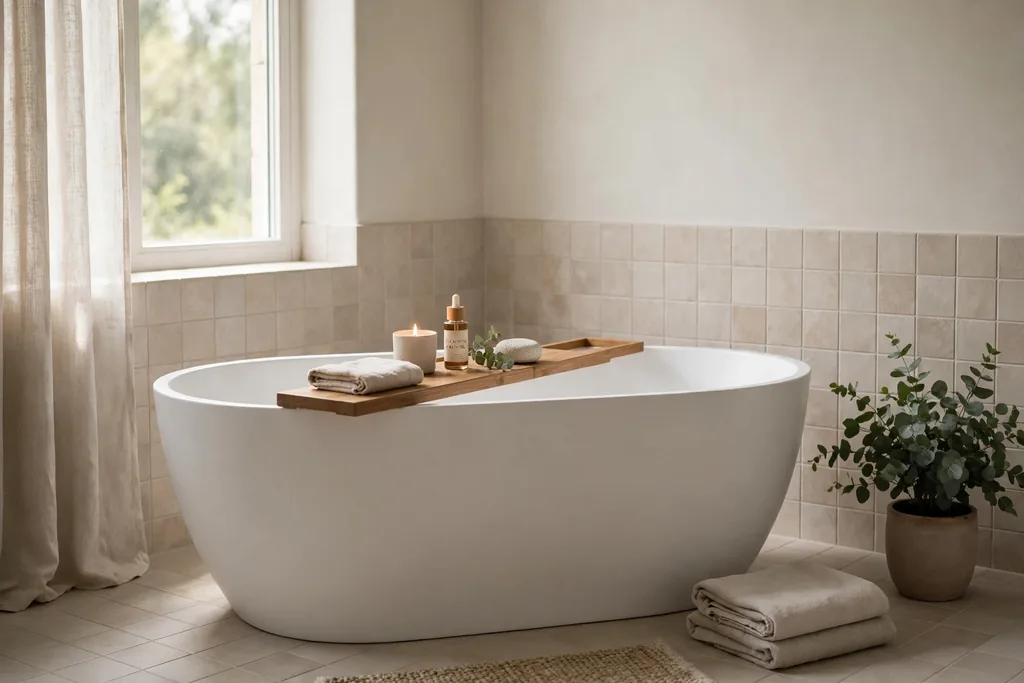
A freestanding soaking tub makes the whole room feel slower and calmer, because it reads as a place to rest rather than a place to rush. Choose a simple oval shape in white, and leave space to walk around at least two sides where the room allows it. The tub becomes the center of the room, so keep the area around it mostly clear.
Add a folded linen towel on a stool nearby and a small plant on the sill, and skip a busy shower curtain or a tall storage unit beside the tub. If a freestanding tub is not possible, a deep standard tub with a wooden tray and a soft mat gives a similar feeling for a smaller budget. Check the floor can carry the weight when the tub is full, and keep a waterproof mat underfoot for splashes.
3. A Pebble Stone Shower Floor
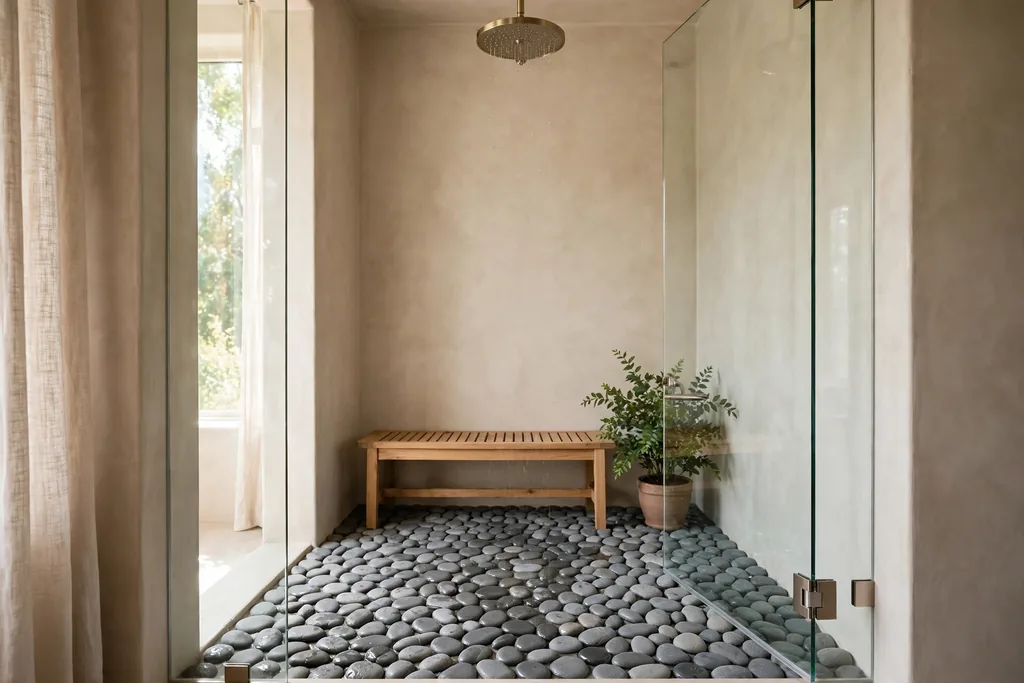
A pebble stone shower floor brings a natural, spa like texture underfoot and turns an ordinary shower into a quiet ritual. Smooth river pebbles in soft grey or warm beige sit well with white tile and wood, and the uneven surface feels pleasant on bare feet. The floor also hides water marks better than a plain white tray.
Choose pebbles rated for wet rooms and a grout color close to the stones, so the floor reads as one surface. Seal the grout at install and reseal now and then in wet zones, and rinse the floor after showers so soap does not build up between stones. If a full pebble floor feels like too much, use pebbles as a border strip along one shower wall instead.
4. A Corner of Humidity Loving Plants
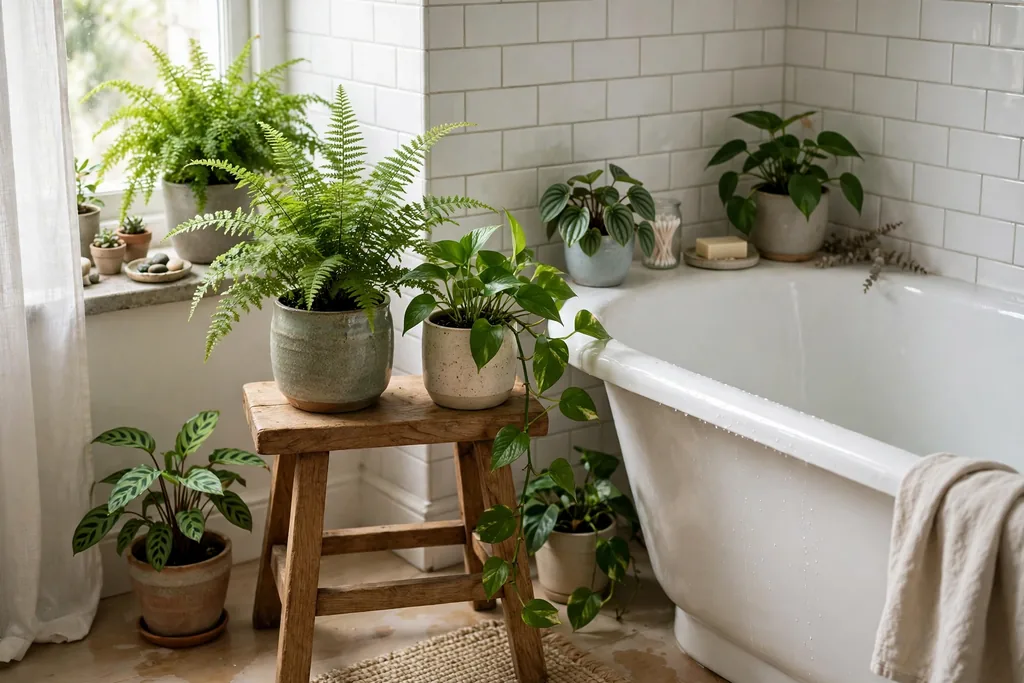
A corner of humidity loving plants is the fastest way to make a bathroom feel alive and calm. Ferns, pothos, and philodendron enjoy steam and indirect light, and their green softens hard tile and porcelain. Group three plants at different heights, one on the floor, one on a stool, and one trailing from a shelf, so the corner reads as a small indoor garden.
Use pots with drainage holes and saucers, and check the soil before watering, since bathroom air already adds moisture. If your bathroom has no window, rotate plants to a brighter room for a few days each week or choose a variety that copes with low light. One healthy group usually looks better than a crowded collection spread across every surface.
5. A Wooden Bath Caddy Across the Tub
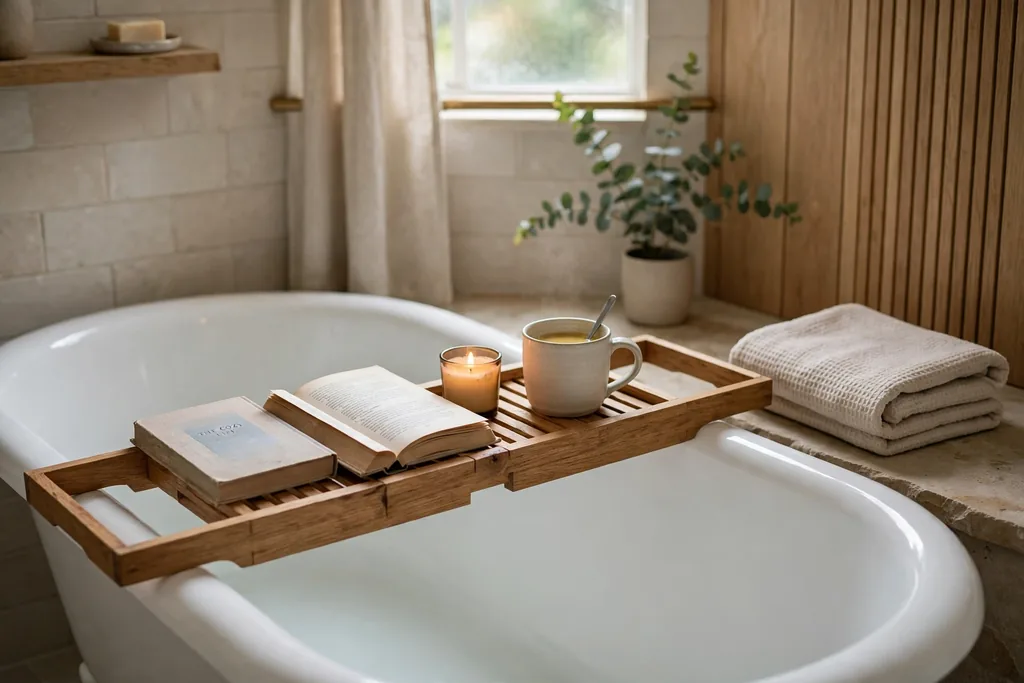
A wooden bath caddy across the tub turns a bath into a slow ritual, with a place for a book, a cup, and a candle kept safely away from the water. Choose a caddy that spans your tub width with extendable sides, and look for a ledge that keeps a phone or a book out of splash range. Wood adds warmth that plastic trays cannot match.
Dry the caddy after each bath so it does not warp, and store it upright behind the door when it is not in use, so it does not become a permanent clutter spot. Bamboo and coated wood cope better with steam than untreated wood. Keep any candle on the caddy in a holder, clear of towels and fabric, and never leave it burning unattended.
6. A Warm Neutral Palette on the Walls
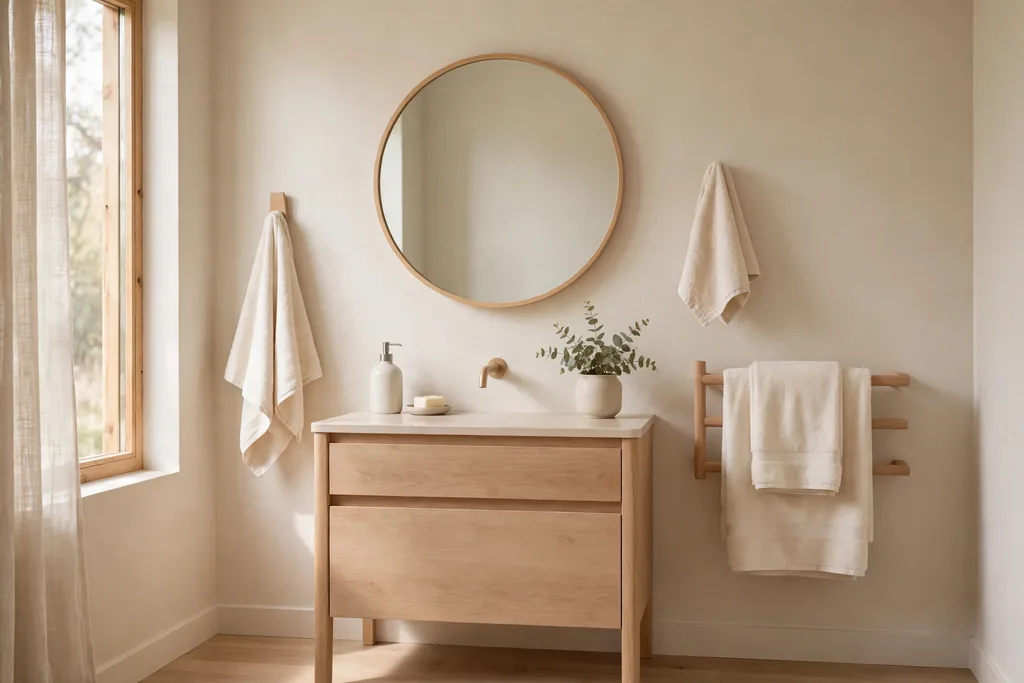
A warm neutral palette on the walls gives a zen bathroom its calm base. Warm white, soft beige, and pale stone let wood, plants, and stone stand out, while cool white alone can feel clinical. Paint the walls in one warm neutral, then repeat the tone in towels and a rug so the room reads as planned.
Test a paint sample in morning and evening light before committing, since bathroom light changes a color through the day. Use a bathroom rated paint that copes with steam, and keep the ceiling a shade lighter so a small room feels taller. If you want a little more color, add it in one place, such as sage towels or a wooden stool, rather than painting each wall a different shade.
7. A Natural Wood Vanity With an Open Shelf
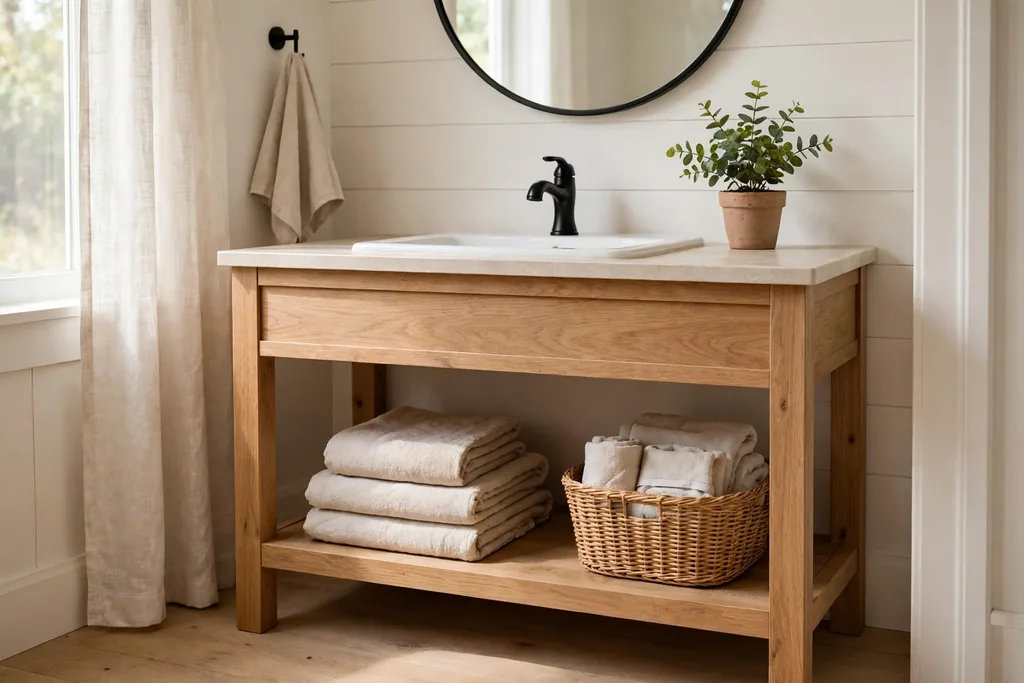
A natural wood vanity with an open shelf warms up a bathroom full of tile and porcelain. Light oak or a similar pale wood suits the zen look, and an open shelf below holds rolled towels and a basket within reach. The wood becomes the warm note in the room, so keep the basin and faucet simple and plain.
Seal the wood top with a water resistant finish and wipe splashes promptly, since standing water stains wood over time. Keep the counter clear apart from soap and a small dish, and put the rest in a drawer or a basket. For more pale wood and calm bathroom ideas, see these Swedish bathroom ideas.
8. A Carved Stone Vessel Basin
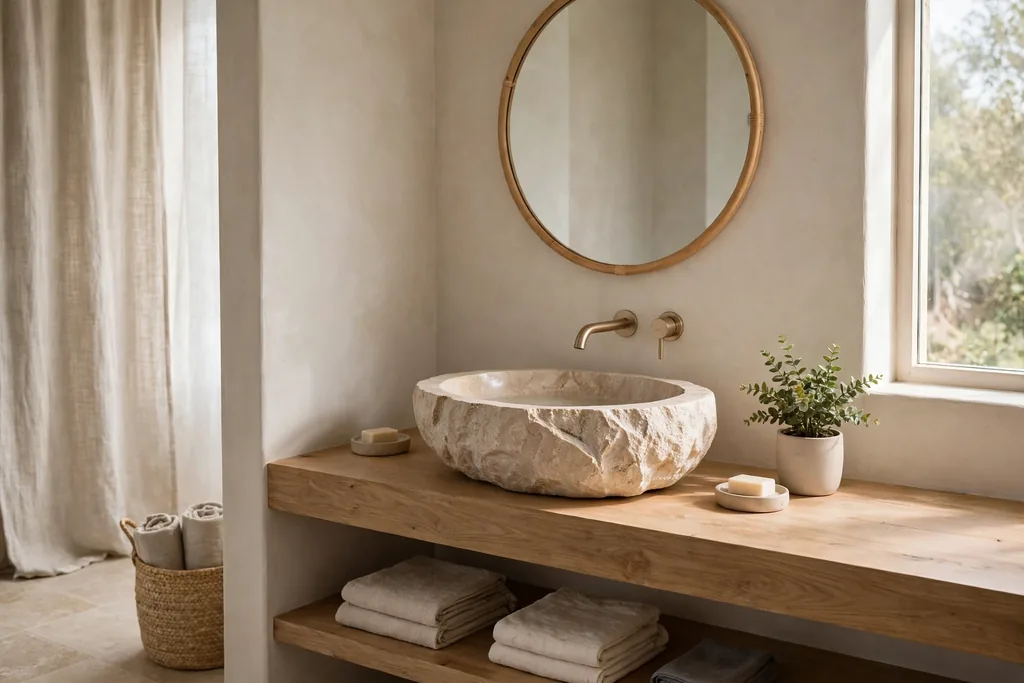
A carved stone vessel basin makes the sink area feel like a natural feature rather than a fixture. A basin in travertine, river stone, or a stone look ceramic sits on a wooden counter, and its rough or honed surface contrasts nicely with smooth tile. The basin becomes a small focal point, so the rest of the vanity can stay plain.
Pair the basin with a simple wall mounted or tall faucet, so water falls cleanly into the bowl without splashing the counter. Seal natural stone as the maker advises, and wipe it dry after use in hard water areas, since limescale shows more on stone. If a stone basin is more than you want to spend, a chunky ceramic bowl in a warm off white gives a similar solid, handmade feeling.
9. A Teak Bench in the Shower
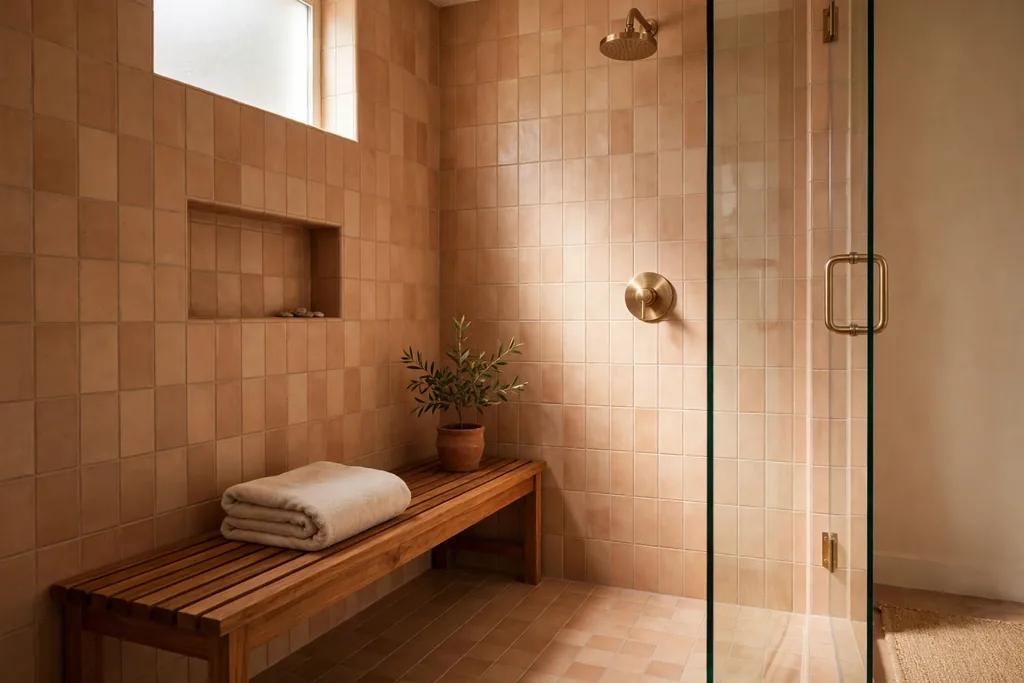
A teak bench in the shower gives you a place to sit, rest a foot while shaving, or set a towel within reach. Teak copes with wet conditions better than most woods, and its warm tone softens tile and glass. A bench also makes a walk in shower feel more like a spa corner than a wash station.
Choose a bench with gaps or slats so water drains and air moves, and leave it to dry fully between showers. Keep the bench away from direct spray where you can, so it dries faster and lasts longer. Oil the bench now and then with a wood oil suited to wet rooms, and check the feet have grips so it does not slide on a wet floor.
10. Rolled Linen Towels on Open Shelving
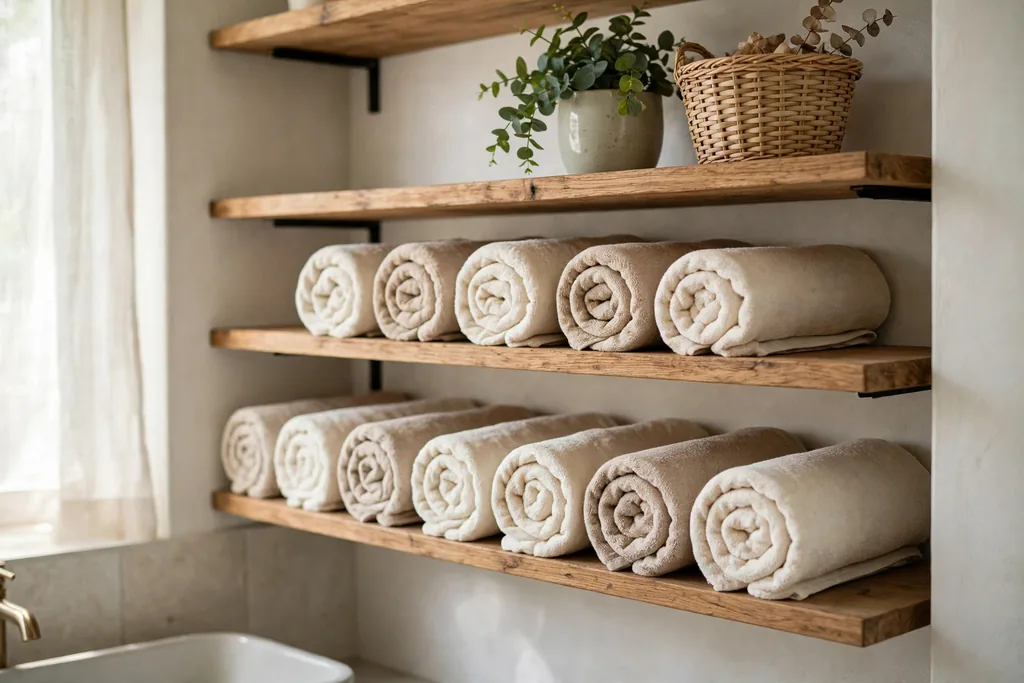
Rolled linen towels on open shelving make a bathroom feel like a small spa, while keeping towels easy to grab. Roll towels in cream, beige, and soft grey, and stack them on wooden shelves above the toilet or beside the vanity. The rolled shape looks tidy even when towels are not perfectly matched, and the linen texture adds warmth.
Keep the shelves for towels and one or two baskets, not for every bottle in the house, so the display stays calm. Wash and refold towels when you change them, and keep a spare set in a closed cabinet for guests. If open shelves collect dust in your home, use the same rolled towels behind a glass fronted cabinet for a similar look with less dusting.
11. A Eucalyptus Bundle on the Showerhead
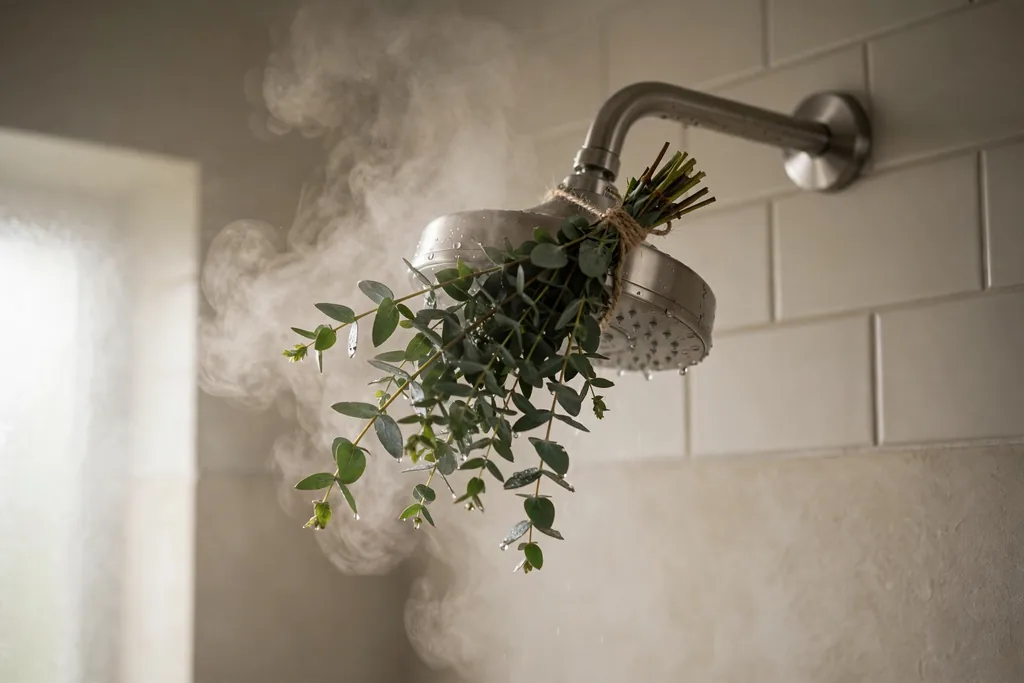
A small bundle of fresh eucalyptus tied to the showerhead releases a gentle scent in steam each morning, and adds a soft green note to the shower. Tie the stems with cotton string, hang the bundle to one side of the head, and keep the stems out of the direct water stream so they last longer. This spa detail costs little and takes a minute to set up.
Replace the bundle every two to three weeks, or when the scent fades, and dry the string between showers so it does not go musty. If anyone in the household is sensitive to strong scents, use a smaller bundle or skip it and keep a potted plant on the sill instead. Dried eucalyptus keeps its shape longer but gives a softer scent than fresh stems.
12. Lantern Light for Evening Baths
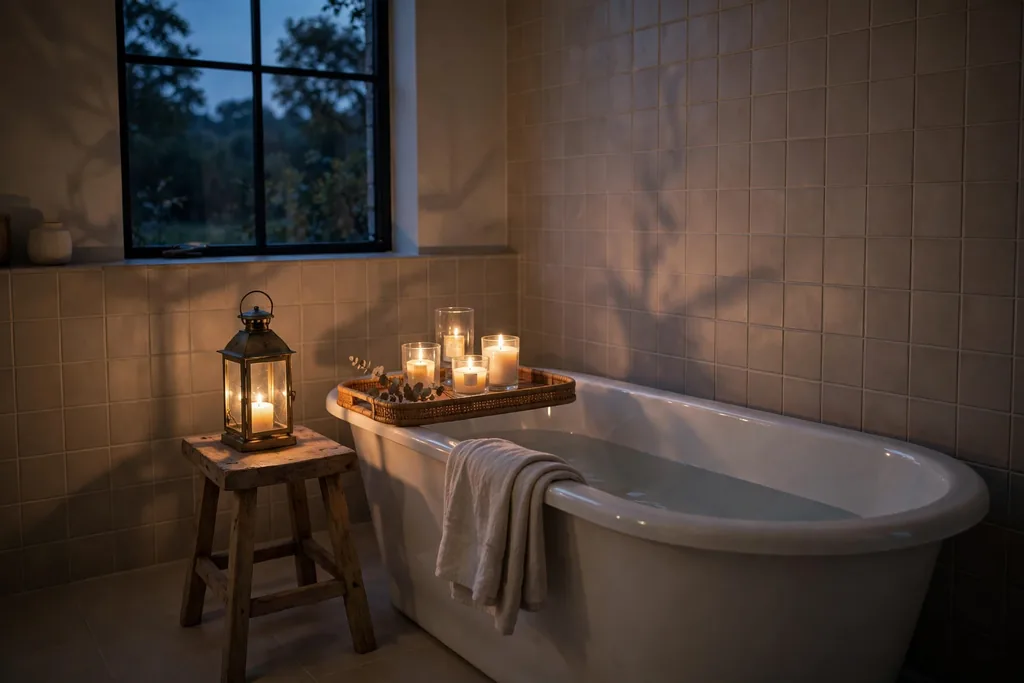
Lantern light gives an evening bath a warm, low glow that overhead lights cannot match. Set one or two lanterns on a stool or a shelf, well clear of towels, curtains, and fabric, and use candles in glass holders inside them. The flicker softens tile and makes the room feel quiet and private.
Use battery lanterns if you worry about open flames near fabric, or keep real candles only for baths when you stay in the room. Put the main light on a dimmer where wiring allows, so you can lower it without a separate lamp. Keep lanterns off the floor in a small bathroom, where they can be kicked, and store matches away from damp.
13. Hidden Storage for Clear Counters
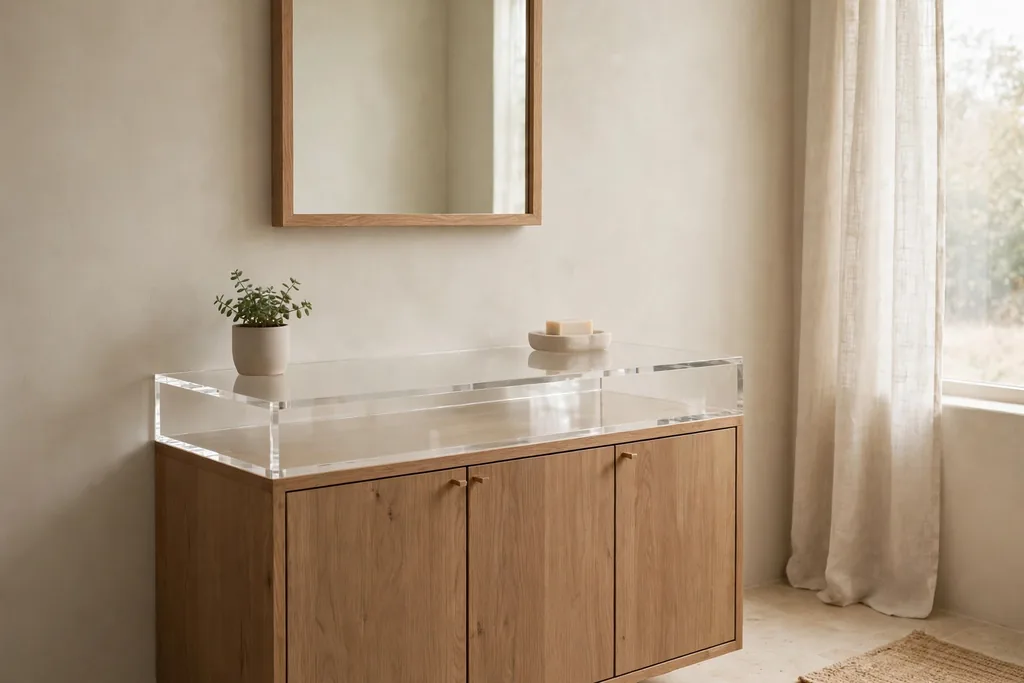
Hidden storage is what keeps a zen bathroom calm on ordinary days, not just on photo days. Use closed cabinets, drawers with dividers, and lidded baskets for bottles, hair tools, and cleaning items, so only soap, a plant, and a towel stay on view. A clear counter makes even a small room feel larger and quieter.
Give each drawer or basket one job, such as hair care or skin care, and empty each one once a month to remove empty bottles. If your bathroom is small and rented, over door organizers and inside cabinet racks add hidden space without drilling. For renter friendly storage and lighting tips that suit a small zen room, see these apartment bathroom ideas.
14. A Rain Showerhead for a Softer Shower
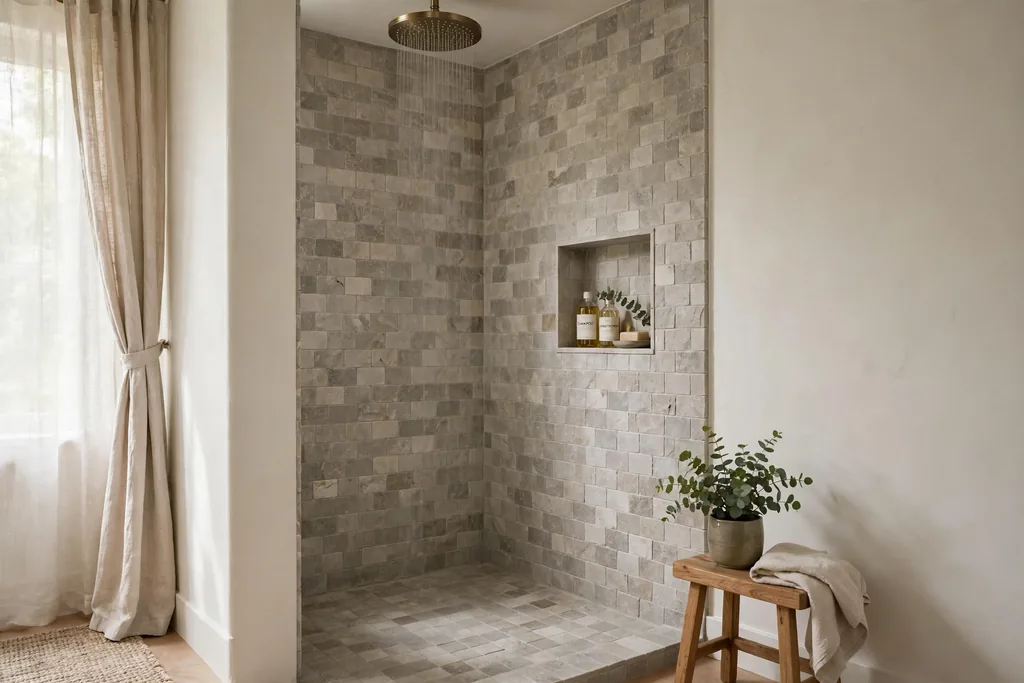
A rain showerhead changes a daily shower into a calmer ritual, with water falling straight down rather than spraying from an angle. A wide, flat head in a plain finish suits the zen look, and it pairs well with stone tile and a wooden bench. The falling water also feels gentler on shoulders after a long day.
Check your water pressure first, since a very wide head can feel weak on a low pressure line. A model with a flow setting or a smaller face plate suits homes with modest pressure. Keep the original head in a labeled bag if you rent, so you can refit it when you move out, and replace a worn washer so the new head does not drip.
15. A Bamboo Blind for Soft, Private Light
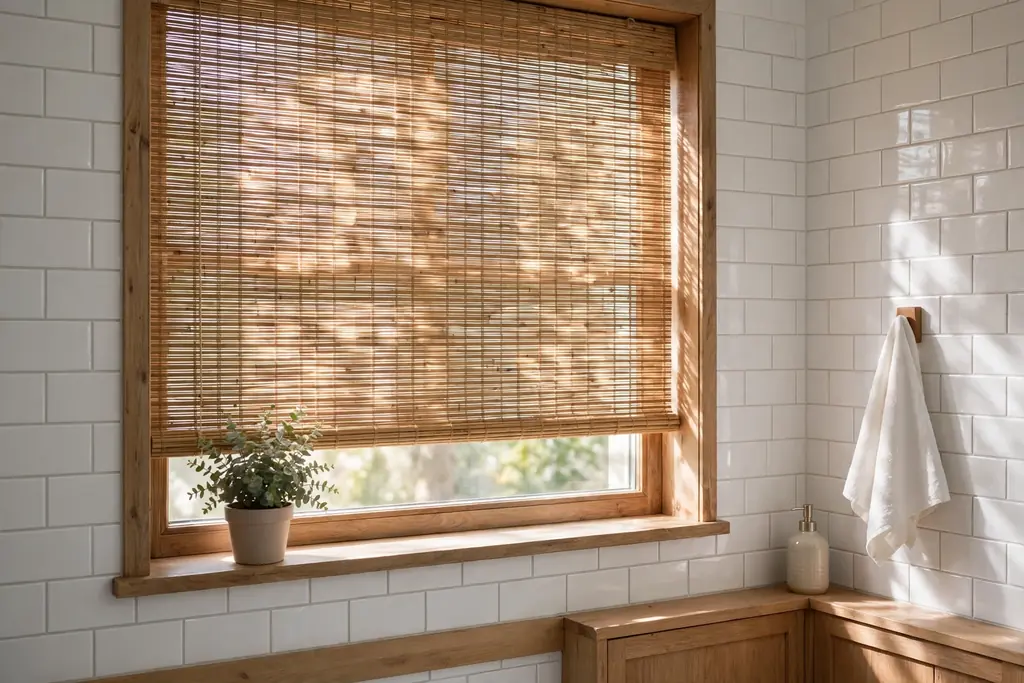
A bamboo blind on the bathroom window filters daylight into soft, warm stripes while keeping the room private. Natural bamboo suits wood, stone, and plants, and it looks calmer than a bright plastic blind. The filtered light also flatters the room in the morning, when harsh sun can make tile glare.
Choose a blind that can be raised fully for cleaning, and wipe it dry after steamy showers so the bamboo does not stay damp. Pair it with frosted glass on the lower pane if the window faces neighbors, so you keep both light and privacy. Keep the sill clear apart from one plant or a small candle holder kept away from fabric.
16. A Mini Zen Garden Tray on the Vanity
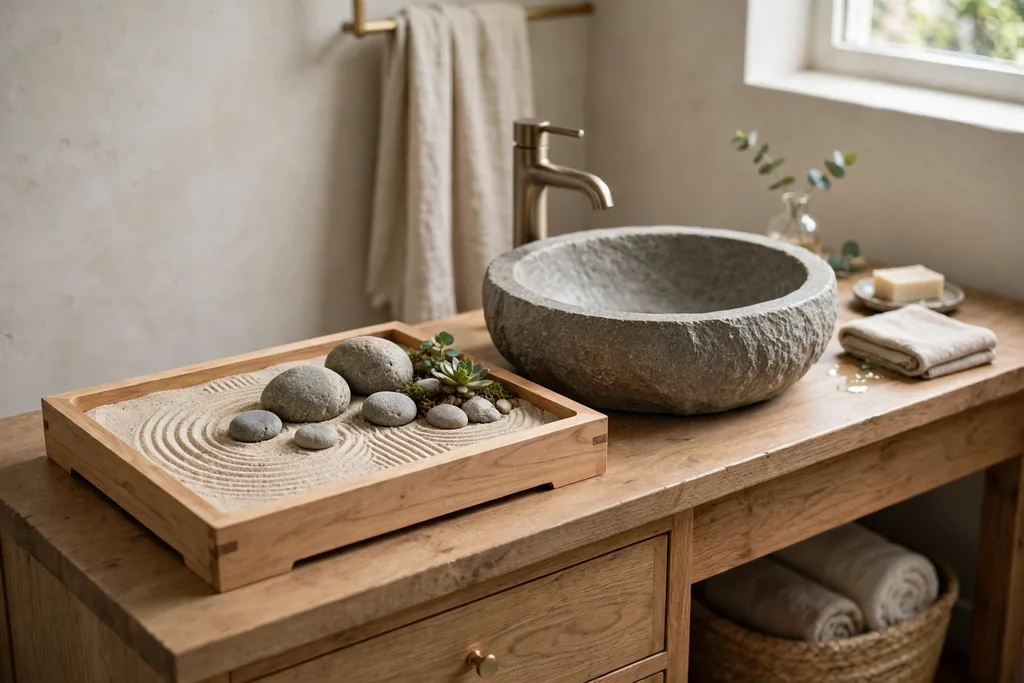
A mini zen garden tray on the vanity brings a quiet, hands on ritual into the bathroom. A shallow wooden tray with raked sand, a few smooth stones, and a tiny plant or a small rake gives you a calm focal point beside the sink. The tray also corrals small items, such as a soap dish or a ring holder, into one tidy group.
Keep the tray on the driest part of the vanity, away from the tap, so sand stays dry and does not spread. Rake the sand when you want a minute of calm, and replace any stone that chips. If sand feels impractical in your bathroom, use the same tray with pebbles and a plant only, for a similar look with no loose sand to clean up.
17. A Woven Rug Beside the Tub
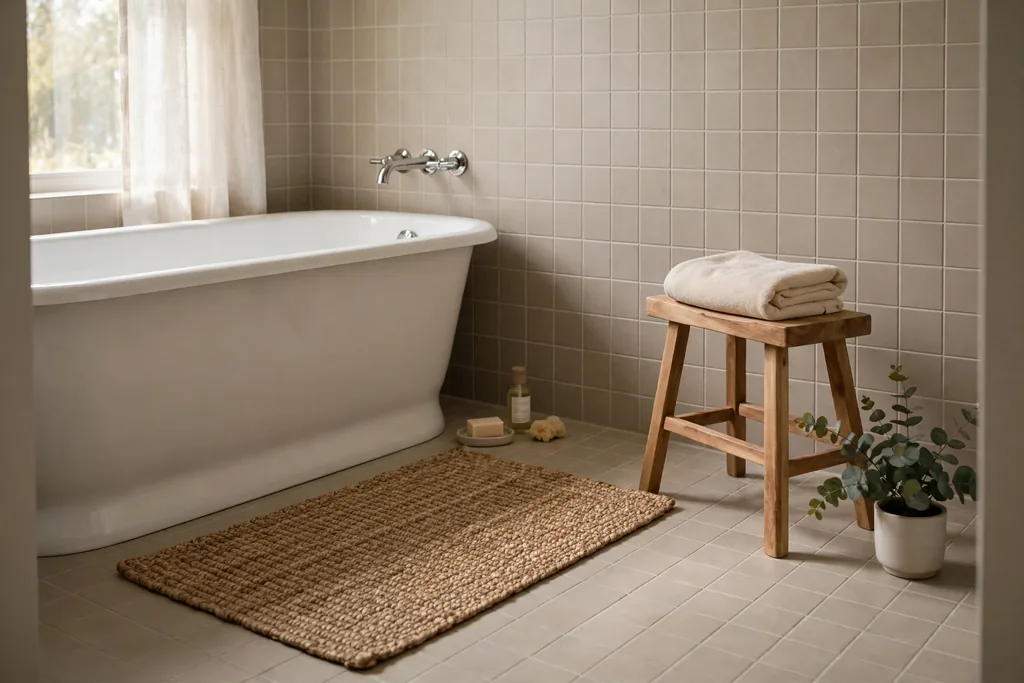
A woven rug beside the tub warms up cold tile and adds a natural texture underfoot. Choose a flat weave rug in jute, cotton, or a washable natural look fiber, in a soft beige or pale grey that matches your towels. The woven texture suits wood and stone, and it makes stepping out of the bath feel softer.
Pick a rug with a non slip backing, or add a grip pad underneath, so it does not slide on wet tile. Wash or air the rug regularly, since bathroom humidity can make thick rugs smell damp, and keep a second rug in rotation so the floor never sits bare on wash day. If your bathroom stays very damp, use a smaller woven mat that dries quickly rather than a large rug.
18. A Pebble Edge Around the Tub
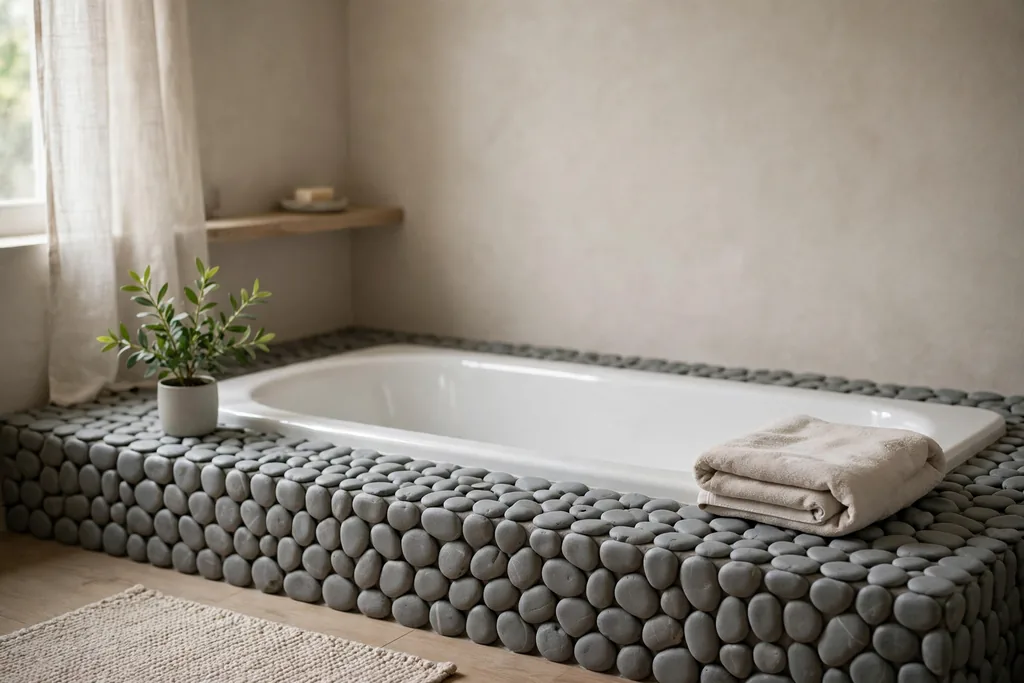
A pebble edge around the tub repeats the natural stone theme from the shower in a smaller, easier dose. A border of smooth pebbles set along the tub surround, or a pebble tray under a plant beside the tub, adds texture without a full floor change. The stones also catch drips and give the tub area a finished, spa like edge.
Use pebbles in one tone, such as soft grey, so the edge reads as calm rather than busy, and seal the grout or tray so water does not sit underneath. Rinse the pebbles now and then to stop soap buildup, and keep the edge low and smooth so it does not catch towels or bare feet. If you rent, a loose pebble tray gives the same look with no fixing at all.
19. One Large Calming Artwork
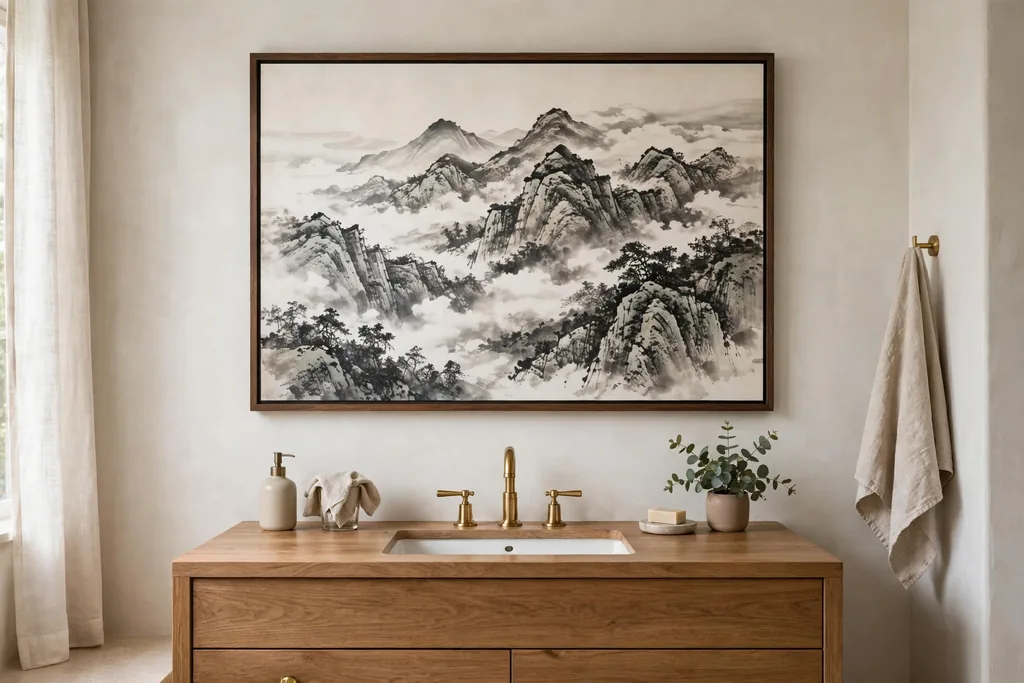
One large calming artwork anchors a bathroom wall better than a cluster of small prints. Choose a single ink painting of mountains and mist, a simple botanical line drawing, or a soft abstract in neutral tones, and hang it on the driest wall of the room. One piece gives the eye a place to rest, which is the heart of the zen look.
Use a frame with a sealed back or an acrylic cover, and avoid hanging unprotected paper directly beside the shower, where steam will cockle it over time. Hang the artwork at eye level, centered over the vanity or the tub where the wall allows it. If drilling is not allowed, a leaning framed print on a shelf gives a similar focal point without holes.
20. A Bath Ritual Shelf With Salts and Tea
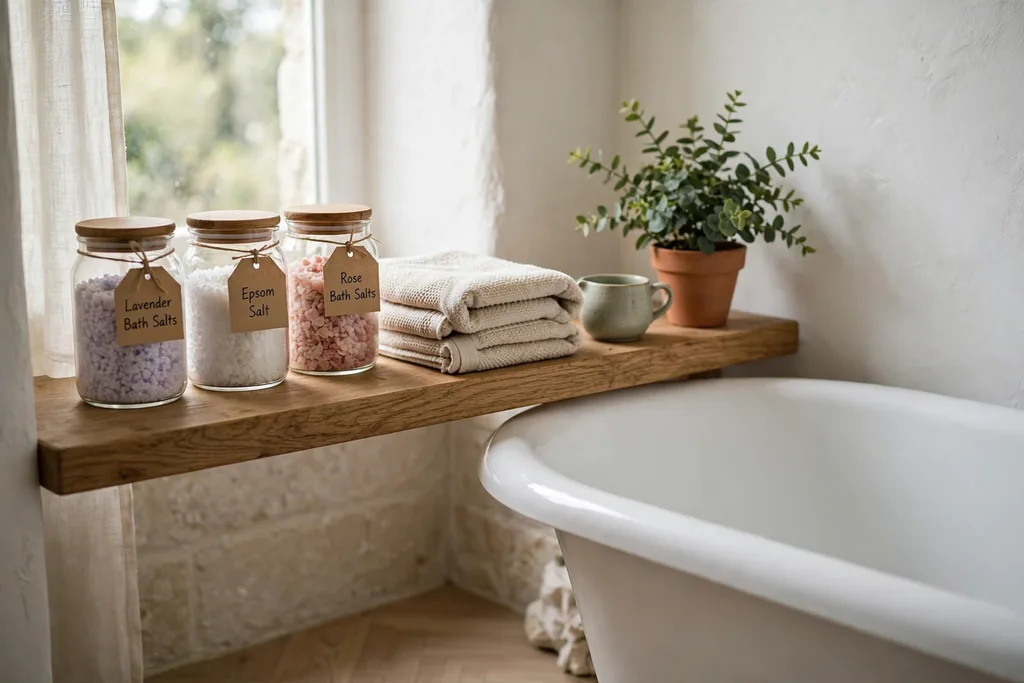
A bath ritual shelf with salts, tea, and a folded towel turns bath time into a small ceremony. Set a wooden shelf or a tray near the tub with glass jars of bath salts, a small teapot or cup, and a candle in a holder kept clear of fabric. Having everything in one place means you actually use it, rather than hunting for items each time.
Keep the shelf for ritual items only, not for daily toiletries, so it stays inviting rather than cluttered. Label jars simply, and keep salts dry by closing lids after each bath, since bathroom steam can clump open salts. If you share the bathroom, give each person a small basket on the shelf so personal items stay separate and tidy.
21. A Textured Stone Tile Feature Wall
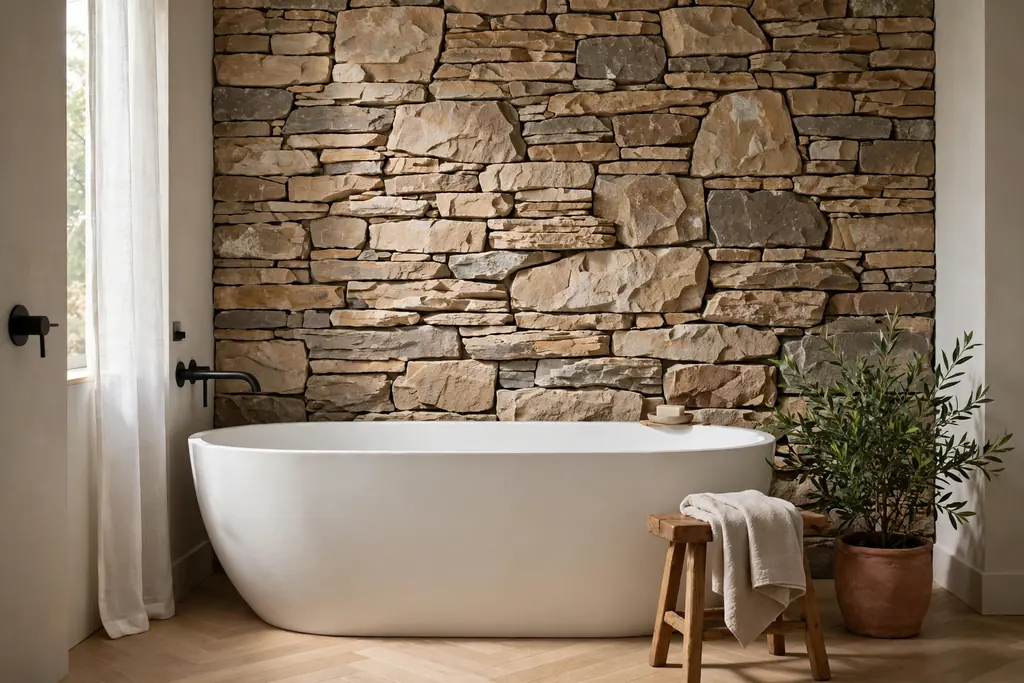
A textured stone tile feature wall gives a zen bathroom depth without color or pattern noise. Choose one wall, usually behind the tub or the vanity, and cover it in natural stone look tiles in a soft grey or warm beige. The texture catches light through the day, so the wall changes subtly from morning to evening.
Keep the other walls plain and pale, so the feature wall stays the focus, and use a grout color close to the tile so the wall reads as one surface. Choose a slip resistant finish for any stone tile that reaches the floor, and seal the grout at install. If a full wall feels like too much, use stone tile as a splashback behind the basin for a smaller version of the same idea.
22. A Water Bowl With Floating Petals
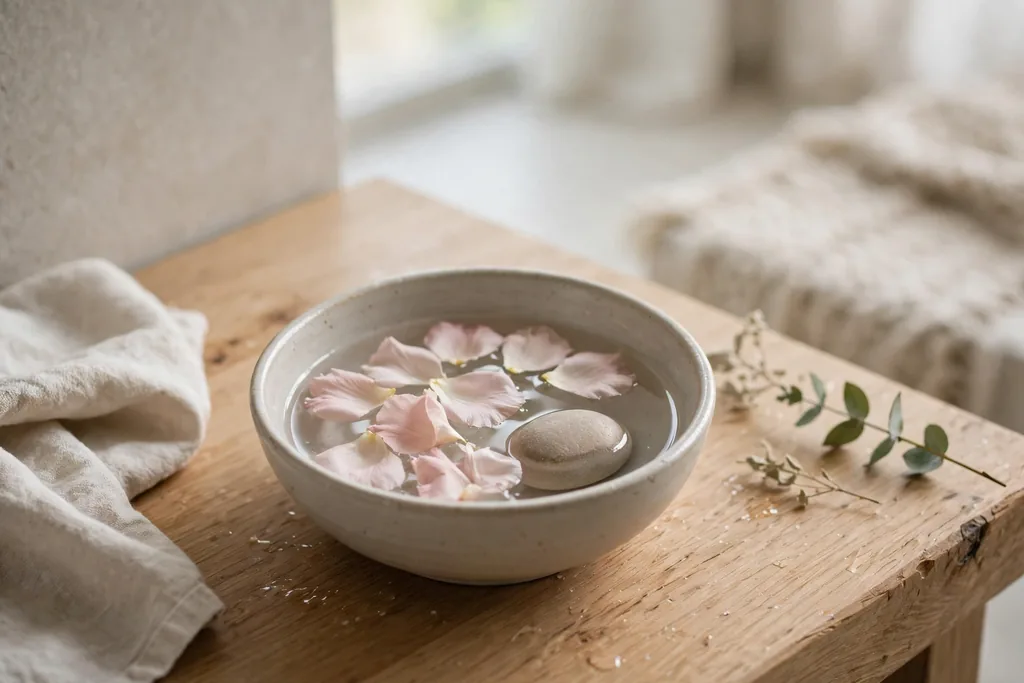
A water bowl with floating petals is a small, quiet centerpiece for a bathroom counter or a shelf. Fill a wide, shallow ceramic bowl with clean water, float two or three petals or a single bloom, and set a smooth stone beside it. The still water and soft color give the room a calm, spa like note for very little cost.
Change the water daily and rinse the bowl, so it stays fresh and does not leave marks on wood counters. Keep the bowl away from the tap and from items that fall easily, and use petals from flowers you already have rather than buying blooms just for the bowl. If open water worries you in a busy family bathroom, use the same bowl with dry pebbles and one bloom laid on top.
23. A Low Wooden Stool Beside the Tub
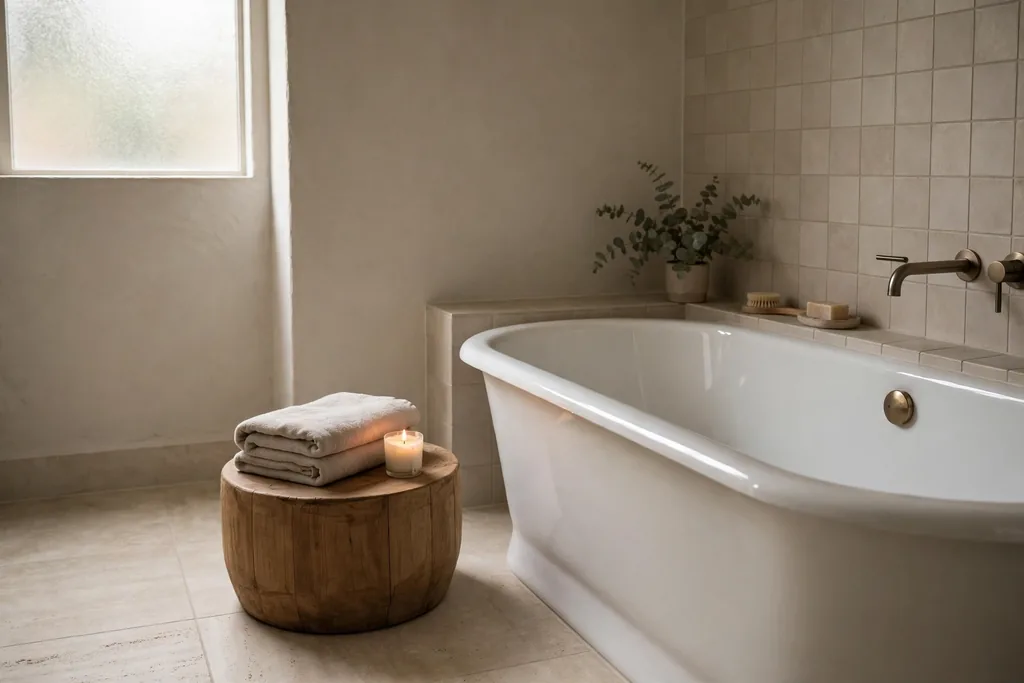
A low wooden stool beside the tub is a small piece that earns its place every day. It holds a folded towel, a book, or a candle in a holder, and it gives you a place to sit while drying feet or putting on socks. A round or square stool in light wood suits the zen look, and it moves easily when you clean the floor.
Choose a stool with a flat, stable base and feet that grip tile, so it does not slide on a wet floor. Keep it clear of direct shower spray, and dry it after splashes so the wood does not darken. If floor space is tight, a wall mounted fold down seat gives a similar perch with no footprint at all, though it needs solid fixings.
24. A Warm Wood Slat Wall Behind the Tub
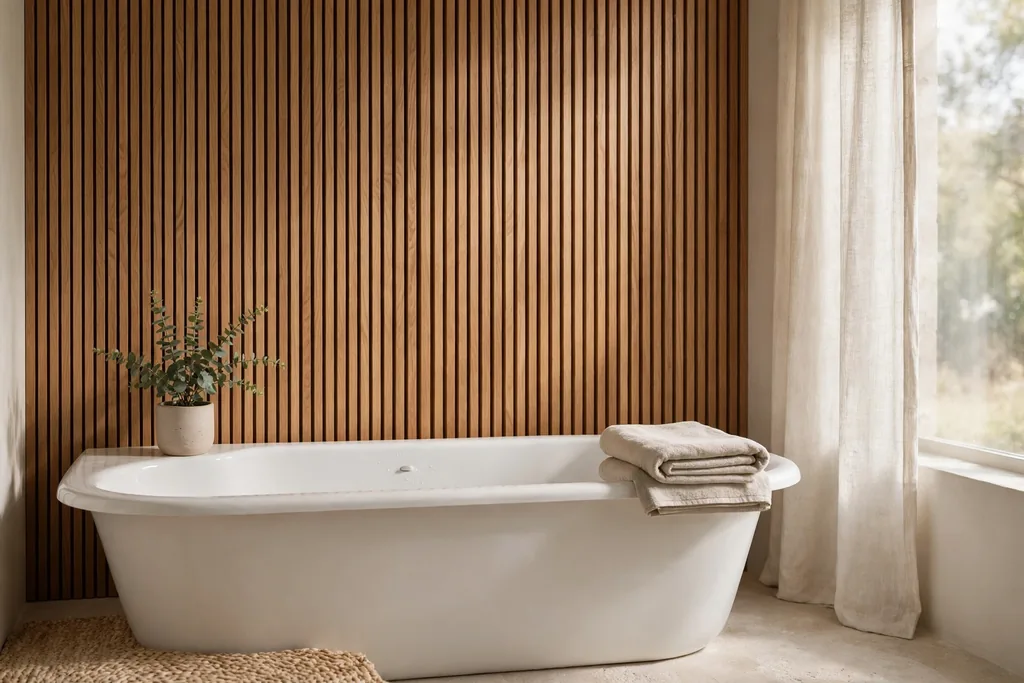
A warm wood slat wall behind the tub adds vertical warmth and rhythm to a bathroom without paint or pattern. Vertical wood slats in a pale or mid oak tone draw the eye up, make a small room feel taller, and pair naturally with stone, plants, and linen. The slatted surface also breaks up a large plain wall in a calm, even way.
Use wood rated for humid rooms, or a wood look panel made for bathrooms, and seal the joints near the tub so steam cannot creep behind them. Keep the slats clear of direct shower spray, and wipe them dry after steamy baths. If a full slat wall feels like too much, use slats on one narrow section, such as the wall beside the vanity, for a smaller version of the same warmth.
Conclusion
A zen bathroom does not come from one large purchase. It comes from a calm base, a few natural materials repeated with care, clear counters, soft light, and one or two rituals you actually enjoy. Pick the idea that fixes the biggest irritation in your room first, whether that is harsh light, cold tile, or a crowded counter, then add the next idea only when the room still needs it. Saved on Pinterest, this list can grow with you: return to it when a season changes, a plant outgrows its pot, or a small corner starts to feel busy again, and let the room stay as calm as the day you first styled it.
FAQs
What is the simplest way to make a bathroom feel more zen?
Start with clear counters, a warm neutral towel set, and one natural detail, such as a bamboo tray or a plant. These three changes cost little and change the feeling of the room before you consider paint, tile, or new fixtures.
Which plants work best in a zen bathroom?
Ferns, pothos, and philodendron cope well with steam and indirect light, which suits most bathrooms. Use pots with drainage holes, check the soil before watering, and rotate plants to a brighter room if your bathroom has no window.
Can I get a zen look in a small bathroom?
Yes. A small bathroom suits the zen look well, because restraint is the point. Choose one wood tone, one stone or pebble detail, clear counters, and soft light, and skip large furniture or a cluster of small accessories that crowd the room.
Is a pebble shower floor hard to clean?
A pebble floor needs regular rinsing so soap does not build up between stones, and grout should be sealed at install and resealed now and then. A grout color close to the stones helps the floor read as one surface and hides water marks better than plain white.
How do I keep wood safe in a humid bathroom?
Choose wood rated for wet rooms, such as teak or bamboo, seal surfaces as the maker advises, and wipe splashes dry. Keep untreated wood, paper, and fabric away from direct shower spray, and let wooden pieces dry fully between uses.
What colors suit a zen bathroom best?
Warm white, soft beige, pale stone, and muted sage suit a zen bathroom, because they let wood, plants, and stone stand out. Keep the base palette pale and add color in one place, such as towels or a single artwork, rather than painting each wall a different shade.