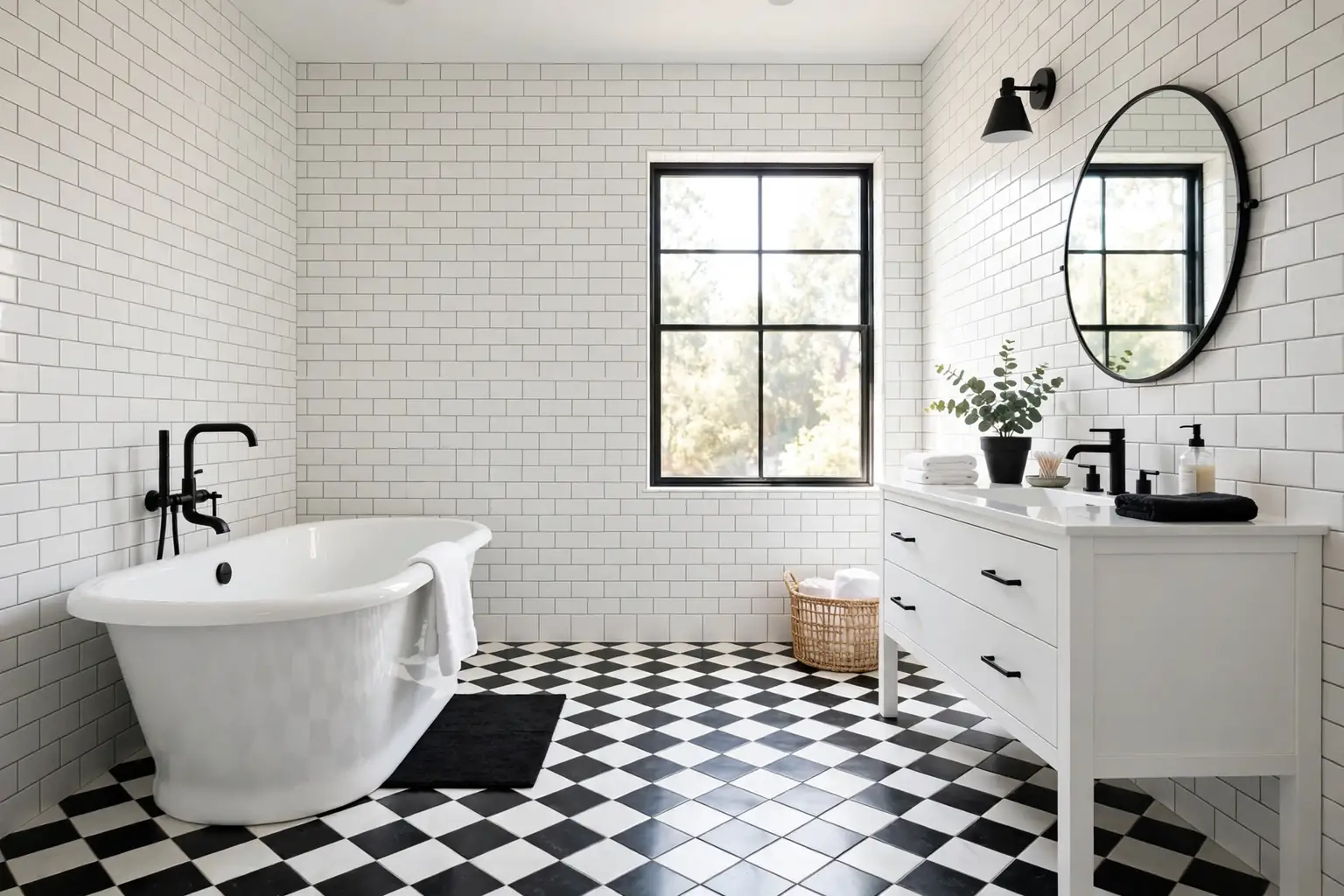
Black and white tile is one of the few bathroom choices that suits both old houses and new builds, because the contrast does the decorating while the fixtures stay simple. A checkerboard floor reads classic, a white subway wall with dark grout reads crisp, and a black hexagon floor reads bold without needing a third color. These 22 black and white bathroom tile ideas cover floors, shower walls, vanity walls, tub surrounds, and small accents. Renters should start with low commitment options first, as shown in these apartment bathroom ideas, and save full retiling for a room they own.
Key Takeaways
- Pick one hero pattern per bathroom, such as a checkerboard floor or a patterned shower wall, and keep the other tile plain so the room stays calm.
- Put the darker tile low or on the floor in most rooms, and keep walls mostly white, so a small bathroom still feels bright.
- Test large black and white samples beside your vanity, towels, and lighting before ordering, since black reads very differently in daylight and warm bulb light.
- Choose slip resistant finishes for shower and bathroom floors, and check grout color and sealing needs before you commit.
- Repeat the minority color once more, in fixtures, a mirror frame, or towels, so the tile pattern looks planned rather than isolated.
- Order spare tiles, at least 10 percent extra for cuts and breakage, and keep a few spares for future repairs.
1. Classic Checkerboard Floor
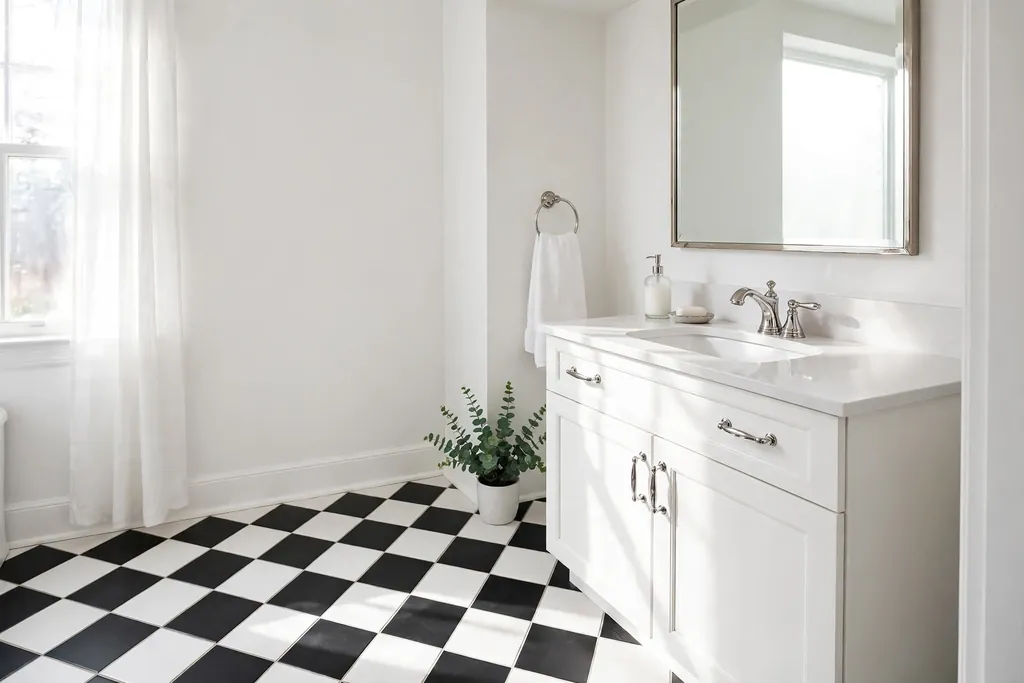
Lay black and white square tiles in a checkerboard pattern across the bathroom floor for the most recognizable look in this list. Equal squares, usually in a medium size, keep the pattern calm, while larger squares suit a bigger room and smaller squares suit a powder room. Start the layout from the center of the room so cut tiles land evenly at the edges, and keep the grout a mid tone so neither color dominates.
Pair the floor with plain white walls and simple chrome or black fixtures, and let the floor carry the pattern. A checkerboard floor also hides minor dirt better than a plain white floor, though black tiles show dust and hair, so plan on a quick sweep. Seal the grout if the tile maker advises it, and keep spare tiles for chips near the door.
2. White Subway Walls with Black Grout
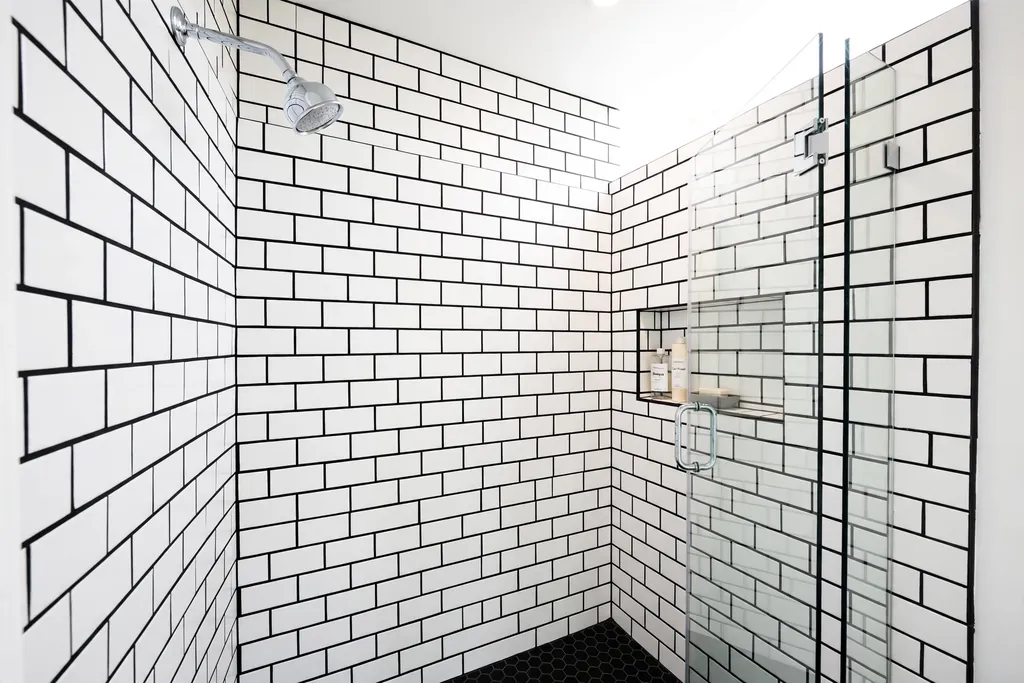
Cover the shower or vanity wall in white subway tiles and use black grout to outline every brick. The dark lines give plain white tile a graphic, structured look without adding a second tile shape. Keep the subway pattern in a simple running bond, with each row offset by half a tile, and keep the grout lines even and narrow for a tidy finish.
This look suits renters who can retile one wall, and owners who want a strong wall without a bold color. Wipe the grout regularly, since black grout shows soap residue in a shower, and choose a grout made for wet areas. Pair it with a plain floor, so the wall pattern stays the focus of the room.
3. Herringbone Marble-Look Floor
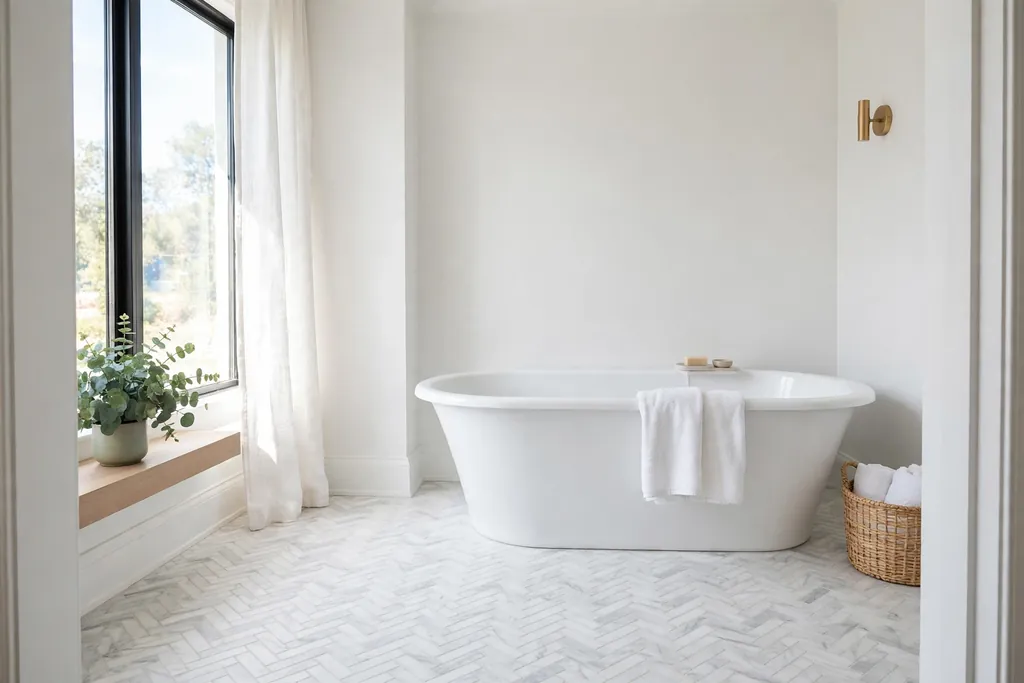
Lay marble-look tiles in a herringbone pattern on the floor, with white tiles veined in soft grey and black tiles used sparingly as accents, or with a mix of black and white rectangles. Herringbone adds movement to a plain rectangular room and draws the eye along the length of the floor. It needs more cuts than a grid layout, so order extra tiles and ask the tiler to plan the pattern from the most visible corner.
Keep the walls plain white so the floor pattern reads clearly, and use a simple vanity and mirror. Herringbone suits medium and large bathrooms best, since the zigzag can feel busy in a very small room. Check that the floor finish is rated for wet bare feet before you order.
4. Hexagon Mosaic Shower Floor
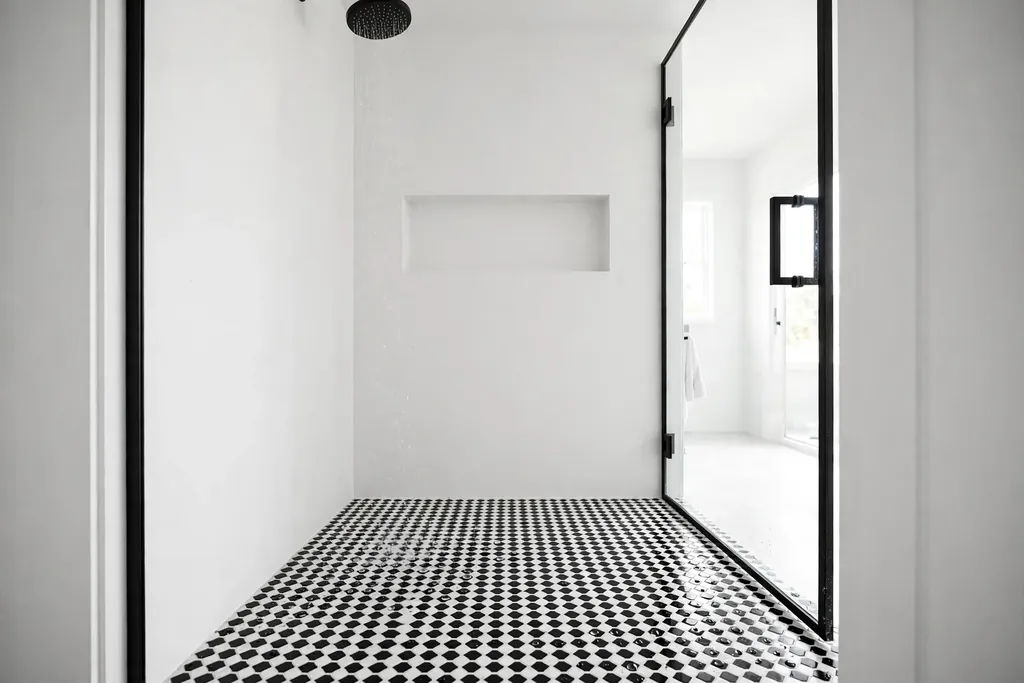
Use small black and white hexagon tiles on the shower floor for a mosaic that grips well underfoot and suits curved or awkward shower shapes. The many grout lines give traction, and the honeycomb pattern softens the hard lines of a shower tray. Mix the two colors in a random scatter, or use white hexagons with a black hexagon border, for a calmer version.
Slope the shower floor correctly toward the drain, and use a grout that suits constant wet use. Small mosaics need careful cleaning, since grout lines collect soap, so a weekly rinse and a soft brush keep the pattern clear. Pair the floor with plain white shower walls so the mosaic stays the detail.
5. Vertical Stacked Subway in the Shower
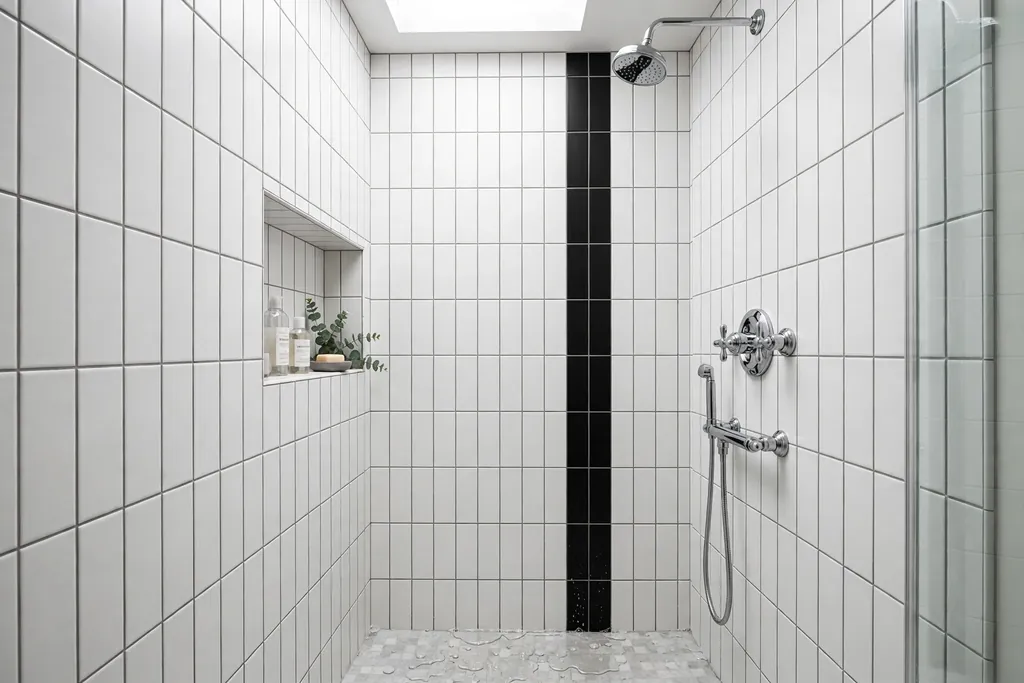
Stack white subway tiles vertically, one directly above the next, on the shower walls for a taller, more modern read than the usual horizontal brick pattern. Vertical lines draw the eye upward, which helps a shower with a low ceiling feel taller. Add a single vertical stripe of black subway tiles, or a black tile border at the top, to give the white wall a clear stopping point.
Keep the shower floor simple, in plain white or a small hexagon, so the wall lines stay clean. Vertical stacking shows uneven tiles more than a running bond does, so check that your tiles are flat and well made before you commit. Use a grout color that matches the white tiles if you want the lines to feel quiet, or black grout if you want the grid to show.
6. Basketweave Floor in Black and White
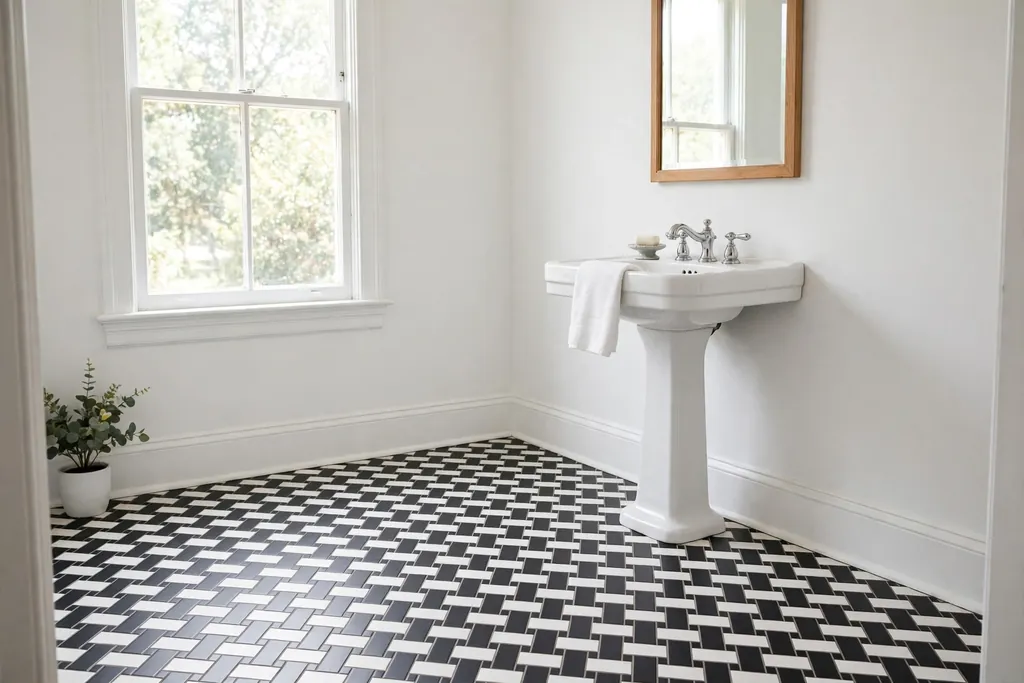
Lay a basketweave floor, where pairs of rectangular tiles weave over and under each other, in black and white for a woven look that suits classic and vintage bathrooms. The pattern reads as texture from across the room and as a clear weave up close, which gives a small floor more interest than a plain grid. Basketweave works well in a medium tile size, and it suits a bathroom with a freestanding tub or a pedestal sink.
Keep the walls plain and the fixtures simple, since the floor already has plenty of pattern. The many grout joints need regular cleaning, so seal the grout if advised and keep a grout brush handy. Plan the layout from the doorway, so the weave reads correctly as you enter the room.
7. Black Feature Wall Behind the Vanity
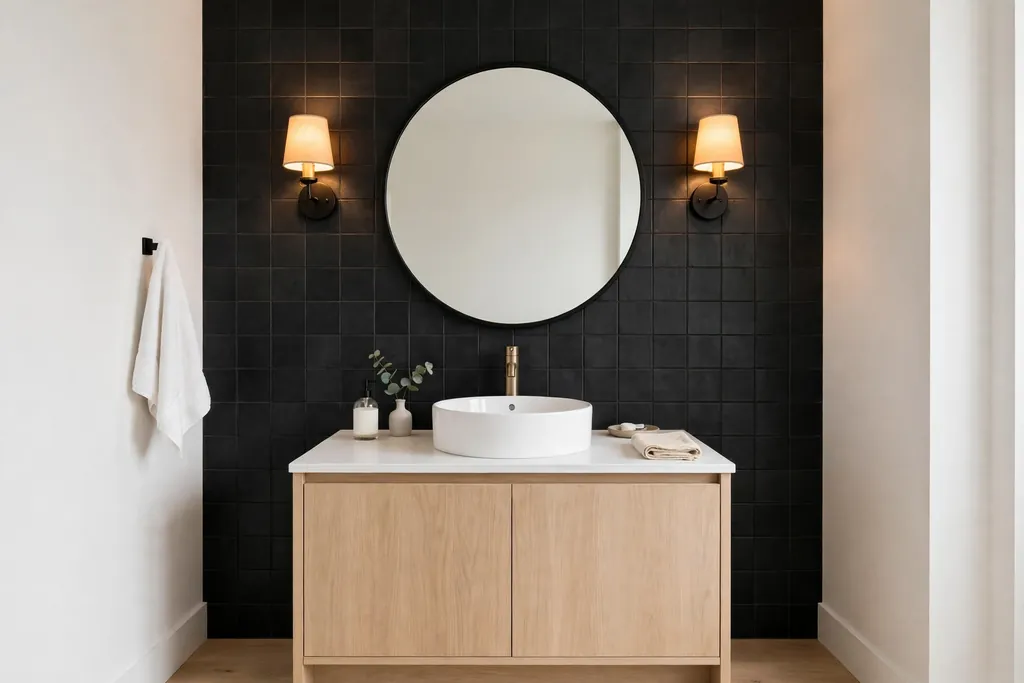
Tile the wall behind the vanity in matte black tiles and keep the rest of the bathroom white for a bold focal point that frames the mirror. A black vanity wall makes a white basin and a round or arched mirror stand out, and it hides splashes better than a pale wall. Use large format black tiles to keep grout lines few, or black subway tiles for more texture.
Balance the dark wall with good lighting, either sconces on either side of the mirror or a bright overhead light, so faces stay well lit. Keep towels and accessories pale, so the black wall does not close the room in. For a calmer room around the same idea, see these cozy spa bathroom ideas, which show how plain surfaces and soft textiles settle a strong feature.
8. White Tile with a Black Border Trim
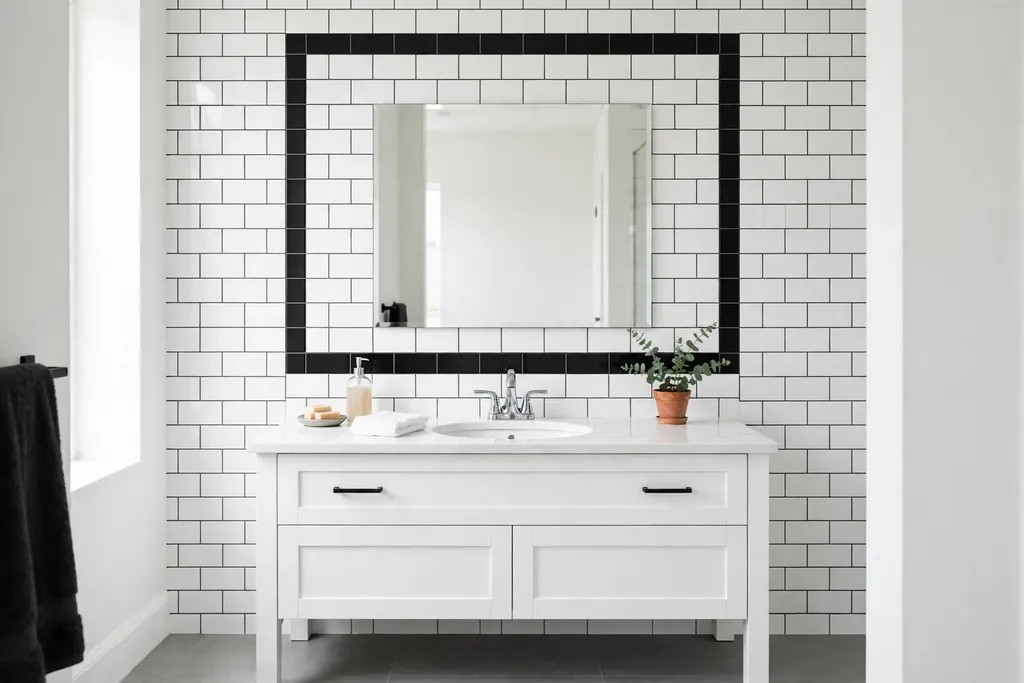
Run a single row of black tiles as a border around white wall tiles, along the top edge, around a mirror, or framing the shower. A border gives plain white tile a finished edge and a tailored look, without the cost of retiling the whole wall. Pencil tiles, small black squares, or a slim black subway row all work, depending on how bold you want the line to read.
Keep the border level and continuous, and plan corners carefully so the line does not break awkwardly. This detail suits a bathroom where the existing white tile is sound but plain, since you may only need to add the border row. Repeat the black once more, in a towel rail or a mirror frame, so the border looks intentional.
9. Penny Round Mosaic in the Shower Niche
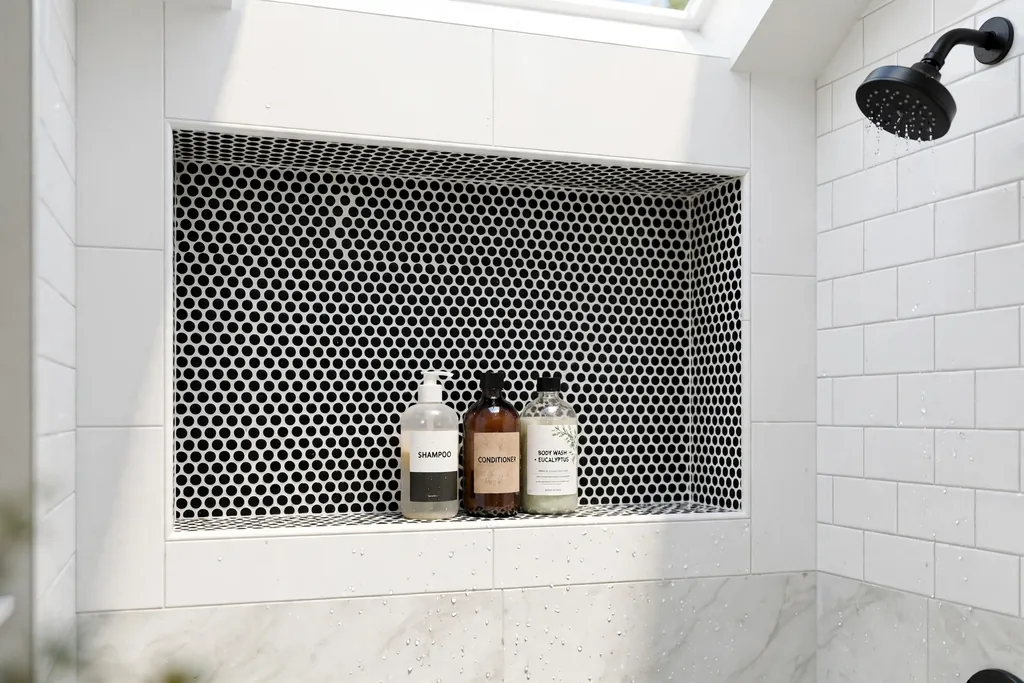
Line a shower niche with black and white penny round mosaic tiles for a small detail that rewards a closer look. The tiny circles suit the small size of a niche, and a simple mix, such as white rounds with a black round scattered through, gives the shelf a finished look. Penny rounds also curve neatly around niche corners, where larger tiles need awkward cuts.
Use a grout that suits wet niches, and keep the niche shelves sloped slightly so water drains out. Limit the mosaic to the niche and perhaps one matching band, so the small pattern does not compete with the main shower wall. Keep bottles few, so the mosaic stays visible rather than hidden behind clutter.
10. Chevron Accent Wall
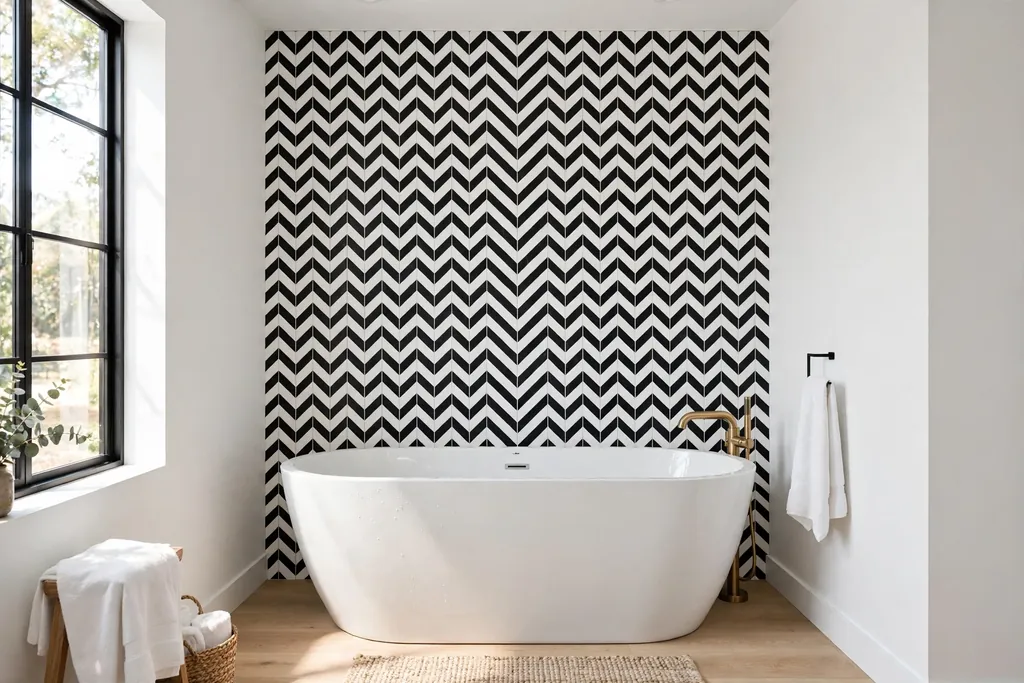
Tile one wall in a chevron pattern, where rectangular tiles meet at a point to form a continuous zigzag, in black and white for a sharp accent behind the tub or vanity. Chevron reads more formal than herringbone, since the points line up in straight rows, and it suits a wall you see as soon as you enter the room. Use white tiles with black chevron stripes, or alternate black and white tiles, depending on how strong you want the wall to read.
Chevron needs precise cuts at the edges, so ask the tiler to plan the layout from the center of the wall outward. Keep the other walls plain white and the floor quiet, since a chevron wall already holds attention. This pattern suits a larger wall best, where the zigzag has room to repeat.
11. Large White Floor with a Black Inlay Strip
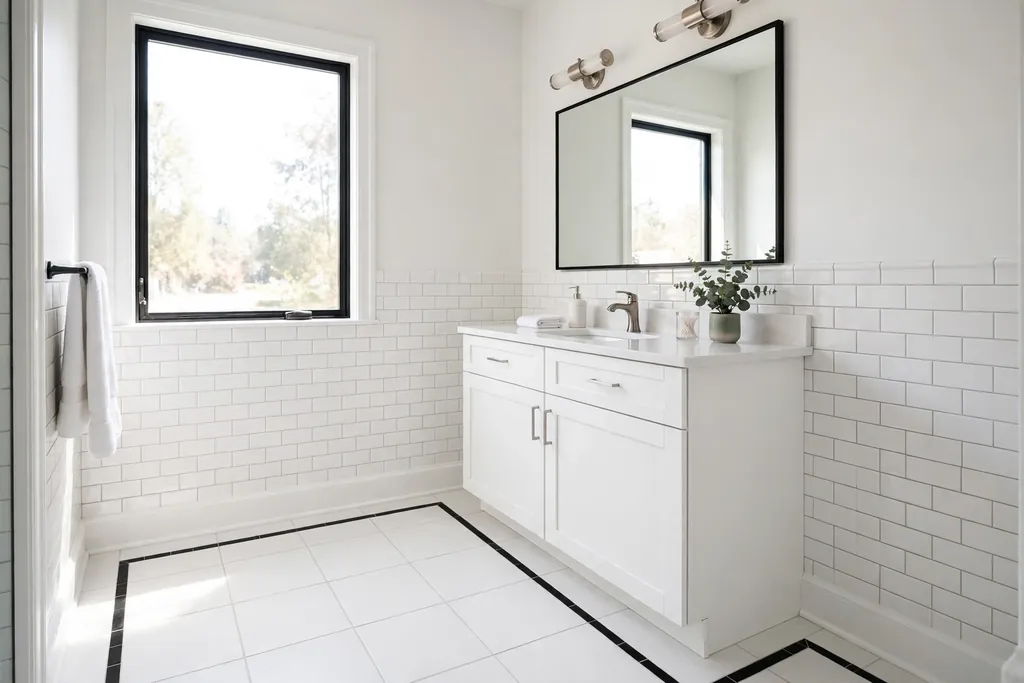
Lay large white floor tiles and set a single black tile strip, or a thin black border, into the floor around the edge of the room or along the walkway. The strip frames the floor like a rug border and adds contrast without covering the whole floor in pattern. It also helps define zones, such as the area in front of the vanity or around a freestanding tub.
Plan the strip before laying the field tiles, so the black tiles sit flush and the cuts stay even. Keep the strip width consistent, and use the same black tile for a matching threshold or skirting detail if you want the line to continue. A pale floor with a dark border stays bright, while still giving the room a clear outline.
12. Half-Wall Tile Wainscot
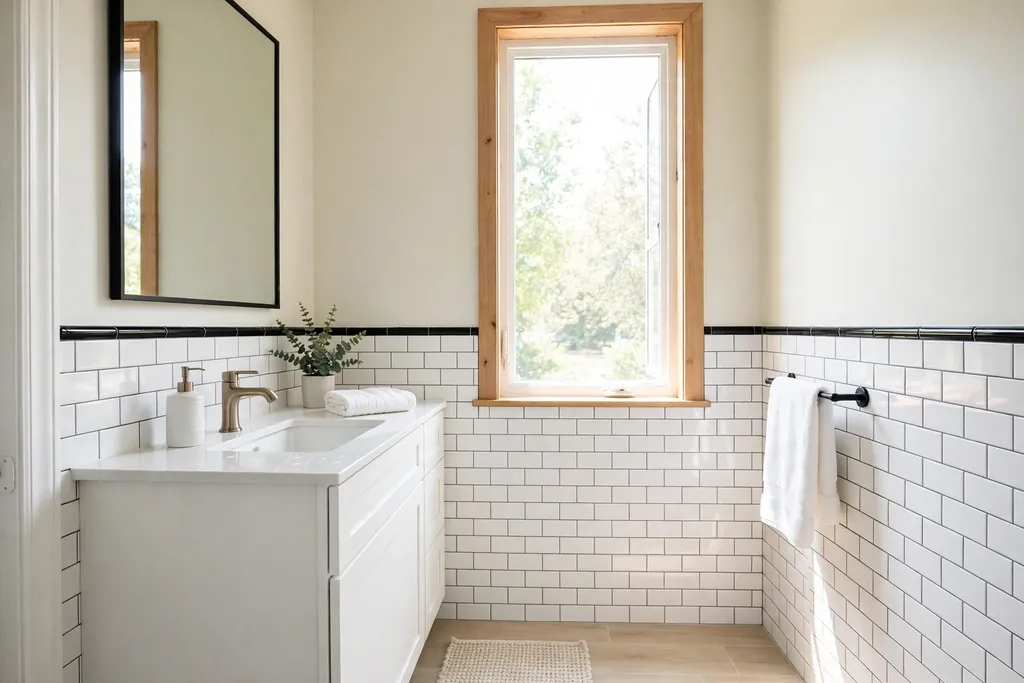
Tile the lower half of the bathroom walls in white subway or square tiles, cap the top with a black trim tile, and paint the upper wall a soft white or pale grey. A half-wall wainscot protects the lower wall from splashes, gives a classic bathroom shape, and costs less than full height tiling. The black cap line ties the room together and echoes dark fixtures or a black mirror frame.
Keep the cap line at one consistent height around the room, usually just above the vanity splash height, and plan around doors and windows so the line does not jump. Use a gloss white tile below the cap for easy wiping, and a washable paint above it. This look suits older homes and small bathrooms, where full height tile can feel heavy.
13. Geometric Encaustic-Look Floor
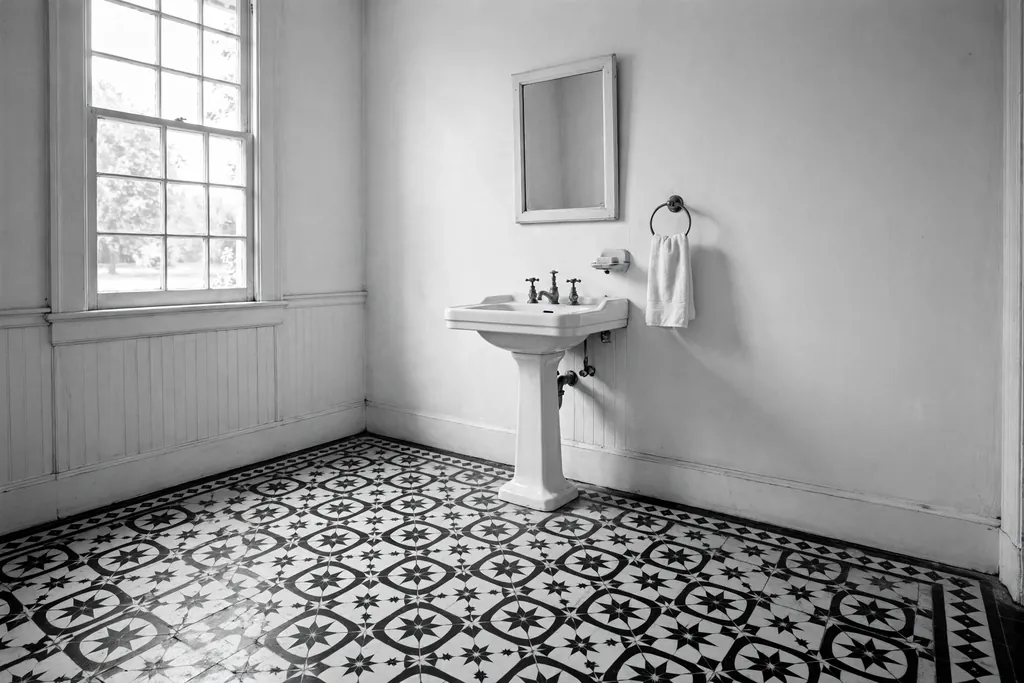
Choose black and white geometric tiles, with star, cross, or diamond motifs, for a patterned floor that reads like encaustic cement tile without the upkeep of real cement. A repeating geometric pattern gives a plain bathroom a strong floor in one move, and it suits entry style bathrooms, powder rooms, and vintage renovations. Keep the pattern scale in proportion to the room, with smaller repeats for small rooms.
Pair a busy geometric floor with plain white walls and a simple vanity, so the floor stays the single pattern in the room. Check whether the tile needs sealing, since some patterned tiles do, and test cleaning on a spare tile first. Order extra tiles, since patterned floors show a wrong tile more than plain floors do.
14. Marble-Look Veined Wall Tiles
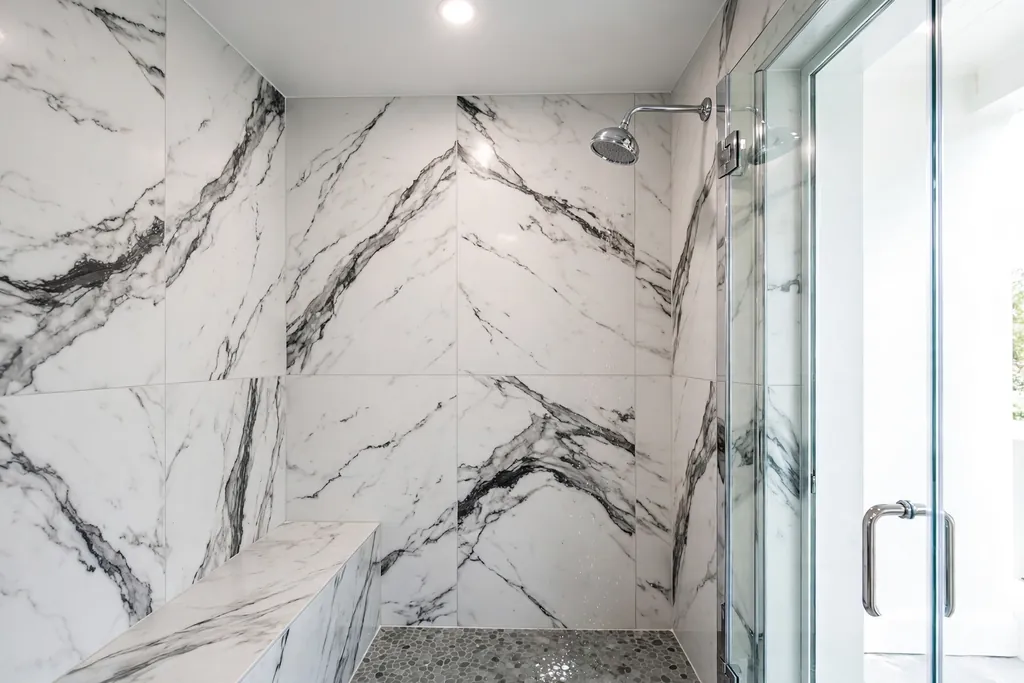
Cover the shower or tub wall in large white tiles with grey and black veining, for a marble look that stays within a black and white palette. Large tiles mean fewer grout lines, which suits a modern bathroom and makes cleaning easier. Book match the veining across two tiles if the range allows it, so the pattern flows rather than stopping at each joint.
Keep the floor in a plain black or white tile, and keep fixtures simple, so the veined wall reads as the feature. Real marble needs sealing and care with acidic cleaners, while marble-look porcelain is easier to maintain, so weigh upkeep against the look you want. Test a full size sample in your bathroom light, since veining can read much stronger on a whole wall than on a small chip.
15. Small Checkerboard Shower Walls
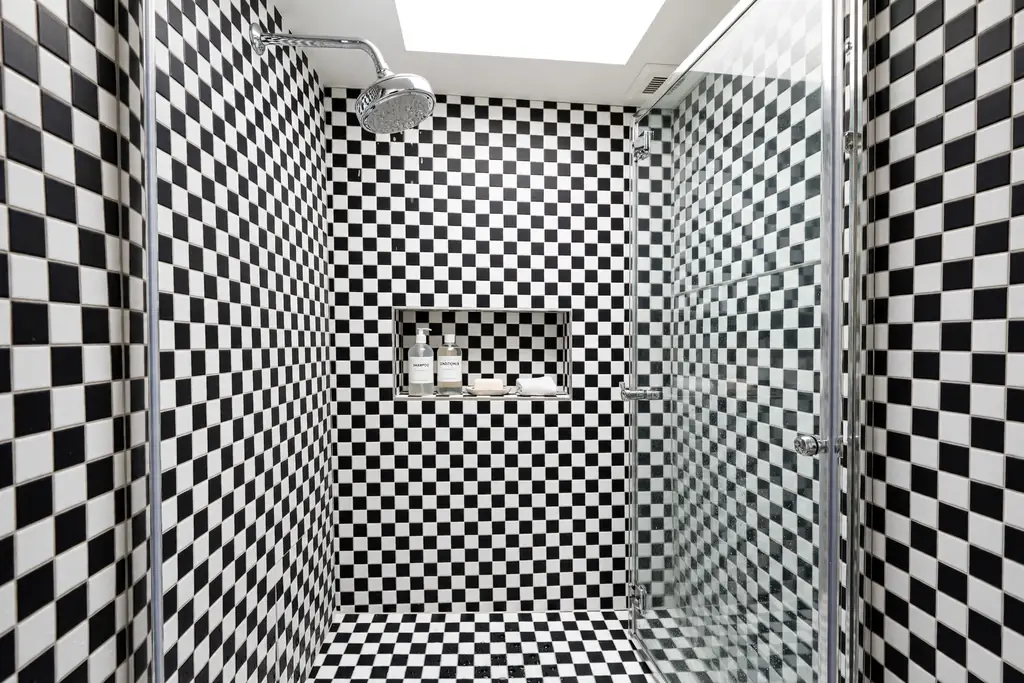
Use small black and white checkerboard tiles on the shower walls, in a smaller square than a floor checkerboard, for a vintage shower that feels enclosed and detailed. Small squares suit a shower enclosure, where a large pattern would be cut awkwardly around fittings, and the many grout lines suit the wet zone. Keep the shower floor in the same small checkerboard, or in plain white, for a coordinated enclosure.
Clean the grout regularly, since a shower wall shows soap film quickly, and choose a grout color that you are happy to maintain. Pair the shower with plain walls outside it, so the patterned enclosure reads as a room within a room. A glass shower door, rather than a curtain, keeps the pattern visible.
16. Black Hexagon Accent Band
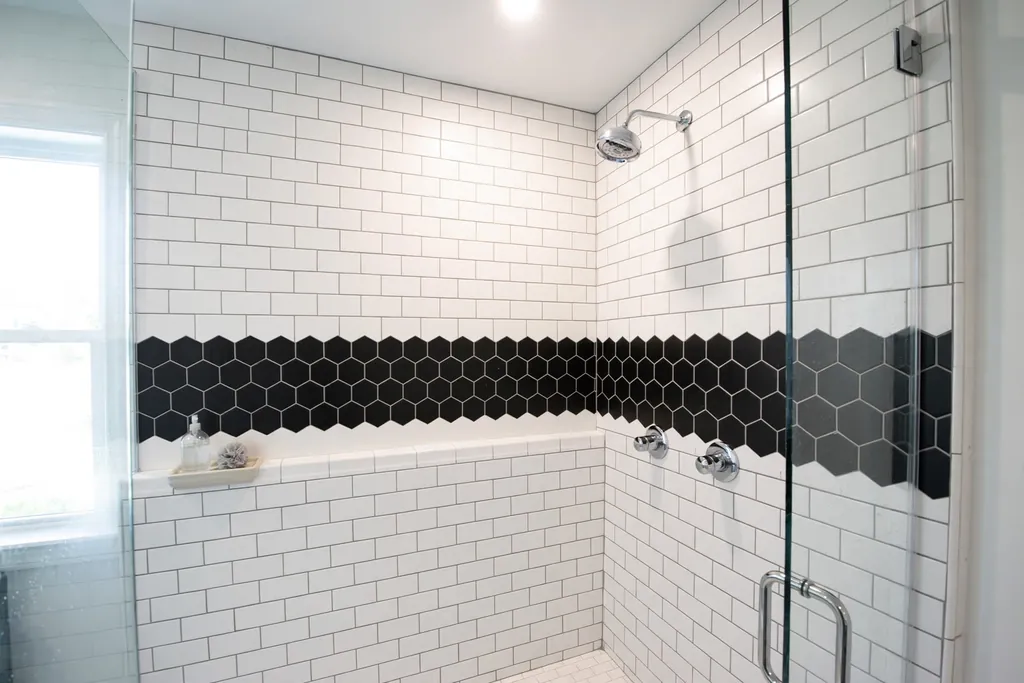
Run a horizontal band of black hexagon tiles across white shower or vanity walls, at eye level or just above the vanity splash, for a stripe of pattern that breaks up a plain wall. The hexagon shape softens the straight lines of subway or square tiles, and a single band is cheaper and quicker than retiling a whole wall. Keep the band one or two tiles high, and level, so it reads as a deliberate stripe.
Match the band height to a natural break in the room, such as the top of a mirror or the edge of a window, rather than stopping it at random. Repeat black once more in the room, in fixtures or a towel, so the band ties into the whole bathroom. Use a grout that suits the band tiles and the surrounding tiles alike.
17. Matte Black Floor with White Walls
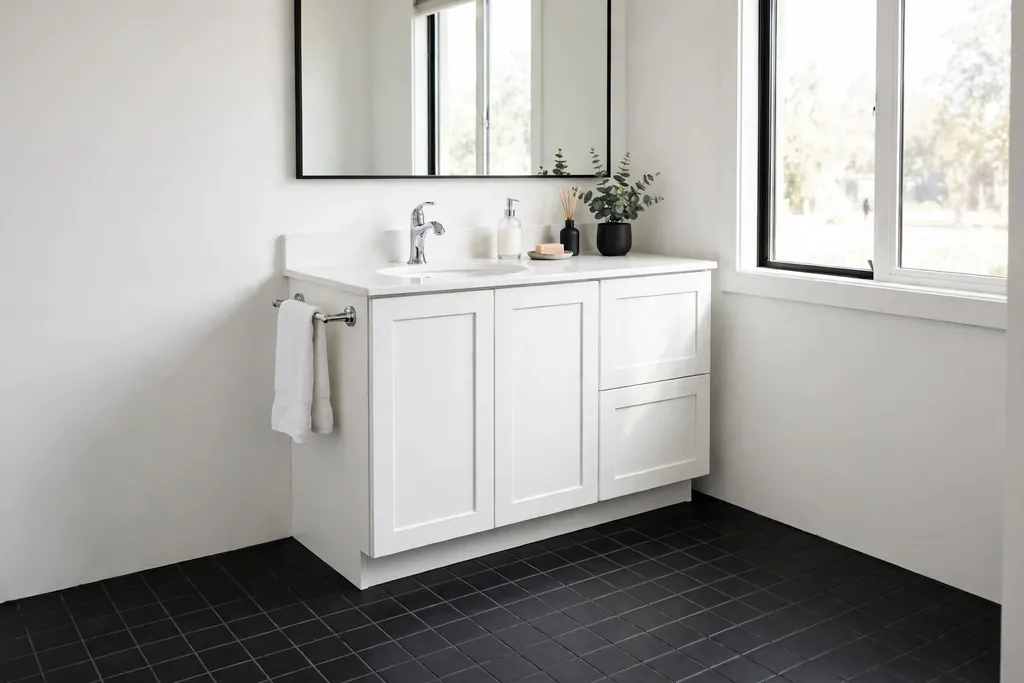
Lay matte black floor tiles across the bathroom and keep the walls white for a grounded room that still feels bright. Matte black hides water marks better than gloss black, and it gives the room a calm base that makes white sanitaryware stand out. Use large format matte tiles to keep grout lines few, and choose a slip resistant finish for safety.
Balance the dark floor with pale towels, a light bath mat, and good lighting, so the room does not feel dark at night. Sweep or mop often, since dust shows on black, and keep a spare tile for chips near the door. This pairing also works well beyond the bathroom, as shown in these black and white kitchen cabinet ideas, where dark low surfaces and pale uppers keep a room balanced.
18. Scallop Mosaic Vanity Backsplash
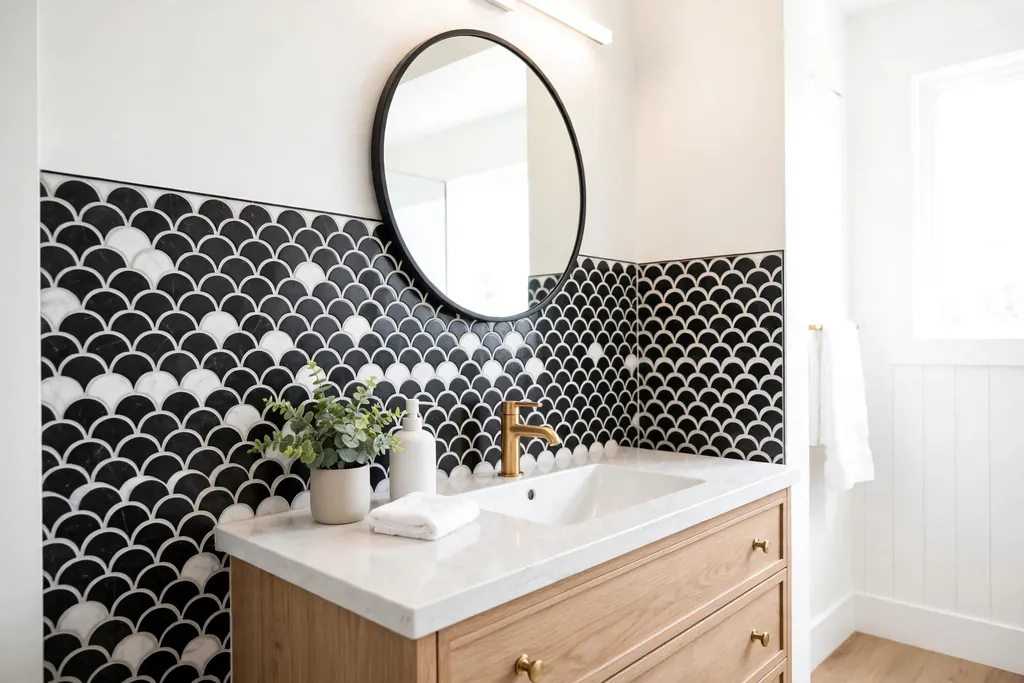
Tile the vanity backsplash in black and white scallop, or fish scale, mosaic tiles for a soft, curved pattern behind the sink. The scallop edge suits a vanity wall, where the pattern sits at eye level and catches light, and the small scale suits the narrow height of a backsplash. Use white scallops with black grout, or alternate black and white scallops, for a gentle version of the contrast.
Seal the grout behind the sink, since this strip gets regular splashes, and wipe it after use to stop soap marks building up. Keep the mirror simple, so the scallop edge stays visible, and keep the counter clear of tall bottles that would hide the pattern. A scallop backsplash also suits a powder room, where one small wall can carry the whole design.
19. Diagonal Diamond Floor
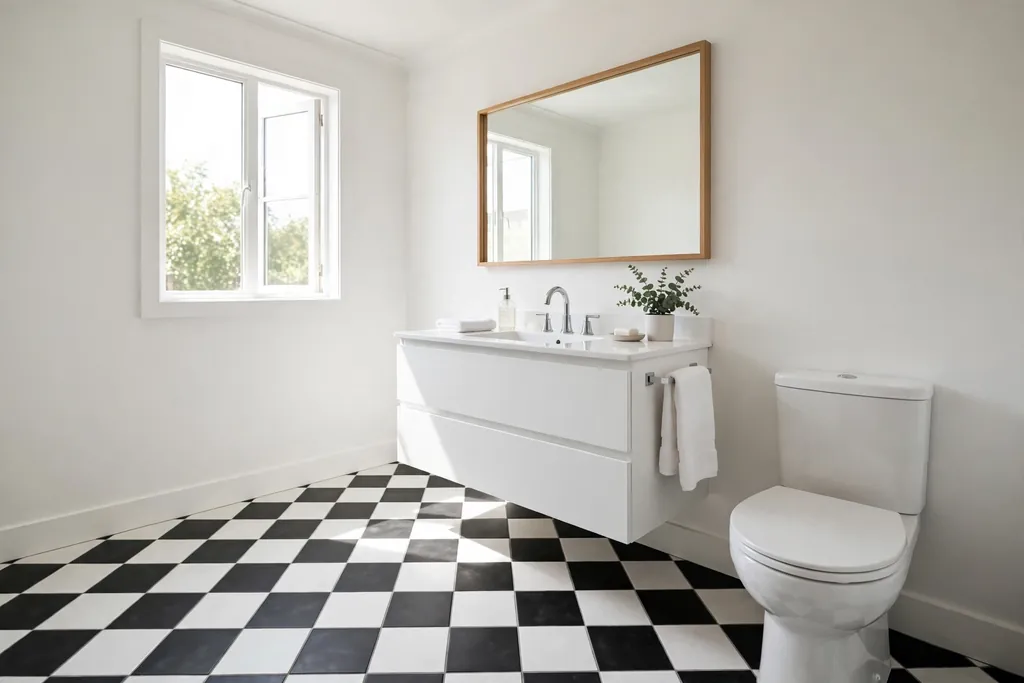
Lay square black and white tiles on the diagonal, so each tile reads as a diamond, for a floor that feels more dynamic than a straight grid. Diagonal laying suits a square bathroom well, since the diamonds lead the eye across the room, and it can make a small room feel wider. It needs more cuts at the edges than a straight layout, so order extra tiles and plan the center line from the doorway.
Keep the walls plain white, and use simple fixtures, so the diamond floor stays the pattern in the room. Check the tile size against the room size first, since very large diamonds can feel sparse in a small bathroom, while very small diamonds can feel busy. A mid tone grout keeps the diamonds readable without harsh lines.
20. Mosaic Tile Rug Inlay
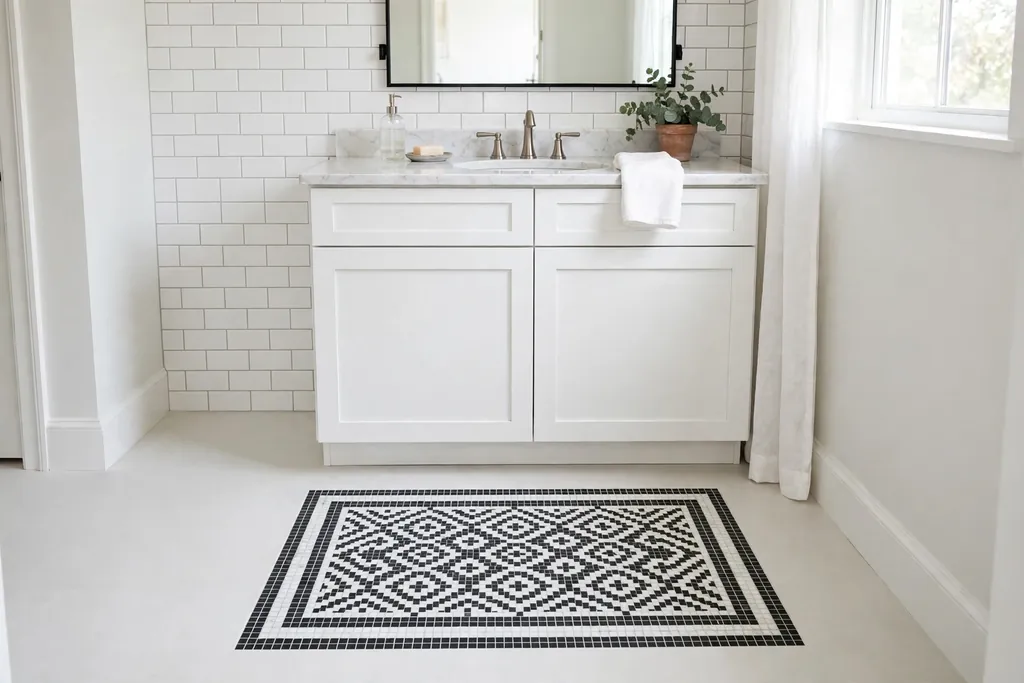
Set a rectangular mosaic inlay into the bathroom floor, like a rug made of tile, in front of the vanity or under a freestanding tub. Use a black border with a white center pattern, or a simple geometric motif, and surround it with plain floor tiles. A tile rug defines a zone without adding fabric to a wet room, and it gives a large plain floor a clear focal point.
Plan the inlay size against the furniture above it, so the rug reads as intentional rather than random, and keep the border width even on all sides. Use small mosaic tiles for the inlay, since they handle the detailed pattern better than large tiles, and seal the grout if advised. Keep the rest of the floor quiet, so the inlay stays the feature.
21. Checkerboard Tub Surround
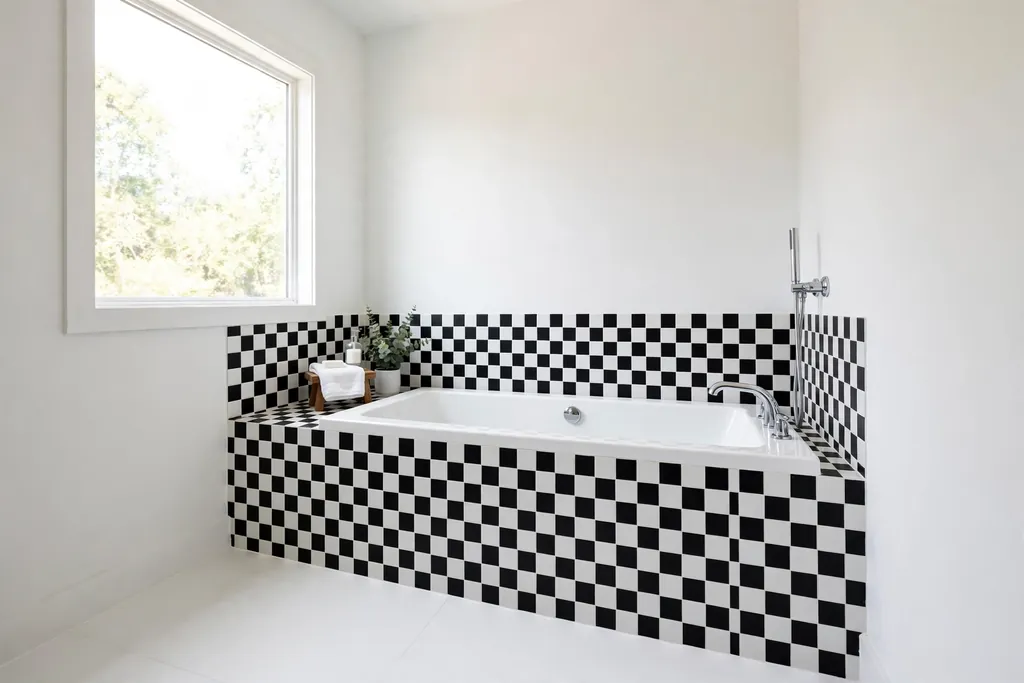
Tile the tub surround, including the front panel and the wall behind the tub, in a black and white checkerboard for a vintage bathing spot that reads as one designed unit. A checkerboard surround suits a freestanding or alcove tub with a plain bathroom around it, since the tub becomes the focal point. Use a medium square size, so the pattern repeats cleanly across the surround without too many cuts.
Keep the bathroom floor plain, in white or a simple black tile, so the surround does not compete with another pattern. Use a grout suited to constant wet use, and seal it if the tile maker advises it. Add a plain bath mat and pale towels, so the surround stays the strongest pattern in the room.
22. Black Subway Tiles with White Grout
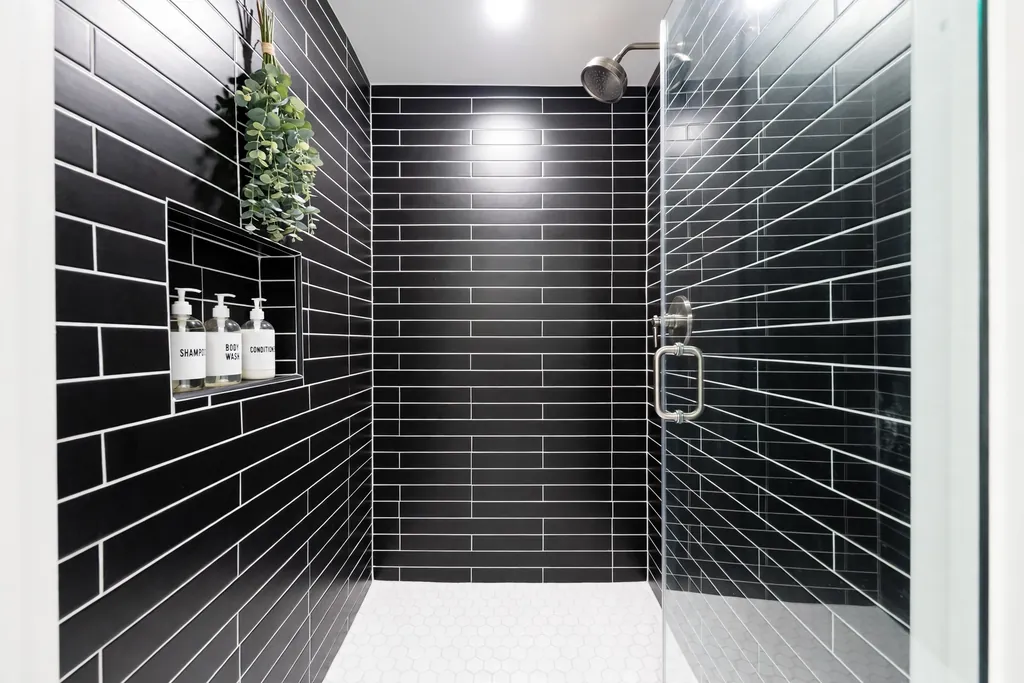
Flip the usual pairing and tile the shower in black subway tiles with white grout, for a dark shower enclosure that still shows every brick line. Black subway suits a shower with strong light, either a window or bright overhead lighting, since the dark tiles need light to show their shape. Keep the shower floor in white hexagon or plain white tile, so the dark walls have a pale base.
Wipe black gloss tiles after showers to stop water marks showing, and choose a grout that stays white in wet use, with regular cleaning. Pair the dark shower with pale walls outside it, so the enclosure reads as a bold inset rather than a dark room. A glass door keeps the black tile visible from the rest of the bathroom.
Frequently Asked Questions
What is the easiest black and white bathroom tile pattern for a first project?
A checkerboard floor or a white subway wall with black grout is usually the easiest starting point, since both use simple square or rectangular tiles and a repeating layout. Start with one surface, such as the floor, and keep the other surfaces plain until you know how the contrast feels in your room.
Does black tile make a small bathroom feel smaller?
Black tile can close a room in if it covers every wall, but a black floor with white walls, or a single black accent wall with good lighting, usually keeps a small bathroom feeling balanced. Keep most wall area white, use a mirror to bounce light, and test dark samples in your room before ordering.
Which grout color works best with black and white tile?
Mid grey grout is a safe choice for a checkerboard floor, since it does not fight either color, while black grout outlines white subway tiles and white grout outlines black subway tiles. Choose a grout made for wet areas in showers, and check how it cleans before you commit to a whole room.
Are black and white tiles hard to keep clean?
White tiles show grime and grout stains, while black tiles show dust, hair, and water marks, so each color shows a different kind of dirt. Regular sweeping, wiping after showers, and sealing grout where advised keep both colors readable, and a quick weekly clean usually matters more than the tile color itself.
Can I use black and white tile in a rental bathroom?
Yes, if you keep the change removable or limited, such as peel-and-stick checkerboard floor tiles, a tiled backsplash panel, or a single accent wall you can restore. Check your lease first, keep the original tiles or fixtures if you remove them, and avoid full retiling in a room you do not own.
What fixtures suit a black and white tiled bathroom?
Chrome, matte black, and brushed nickel fixtures all suit black and white tile, as long as you keep one finish consistent across taps, towel rails, and cabinet hardware. Pair dark fixtures with pale towels and a simple mirror, so the tile pattern stays the main feature of the room.
Conclusion
Black and white bathroom tile works because the contrast is clear, the palette is forgiving, and one strong pattern is usually enough. Start with the surface you notice first, whether that is the floor, the shower wall, or the wall behind the vanity, and keep the rest of the room quiet so the pattern can carry the design. Test samples in your own light, check slip and sealing needs for wet areas, and order spares before the tiler starts. Save the ideas that fit your room size, your light, and your cleaning routine, and add more pattern only once the first change feels right.