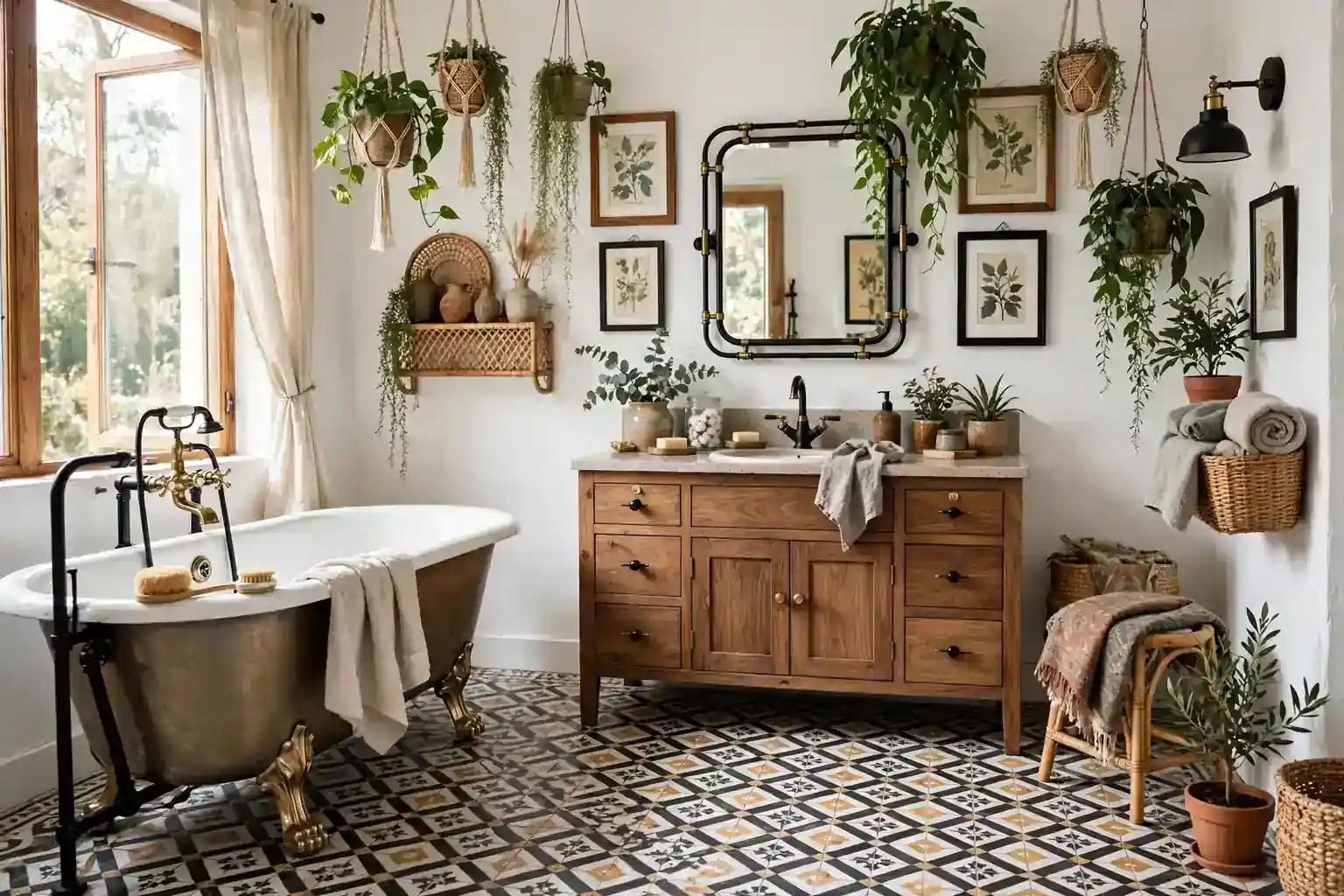
An eclectic bathroom does not follow one style, and that is the point. It pairs a vintage tub with a plain modern vanity, patterned tile with quiet white walls, and a collected shelf with a simple mirror. The mix works when each piece has a clear job and one or two colors repeat through the room, so the result feels gathered over time rather than thrown together. These 29 eclectic bathroom decor ideas cover floors, walls, tile, storage, light, and small details, so you can pick the pieces that suit your room, your budget, and the fixtures you already own. Start with one bold move, then add smaller layers only where the room still feels plain.
Key Takeaways
- Pick one bold move per room, such as patterned floor tile or bold wallpaper, and keep the surfaces around it calmer so the mix reads as planned.
- Repeat one color and one metal finish in three or four places to tie vintage, modern, and natural pieces together.
- Mix no more than three wood tones and two metal finishes, and let white, cream, or pale tile act as the quiet base between them.
- Use washable, moisture tolerant materials near the tub and shower, and keep paper art, books, and dry textiles away from direct steam and splashes.
- Layer storage that is open and closed: open shelves for pretty, everyday items and baskets or cabinets for bottles and cleaning supplies.
- Start with changes you can reverse, such as a shower curtain, rugs, art, and towels, before committing to tile, paint, or a new vanity.
1. A Bold Patterned Tile Floor
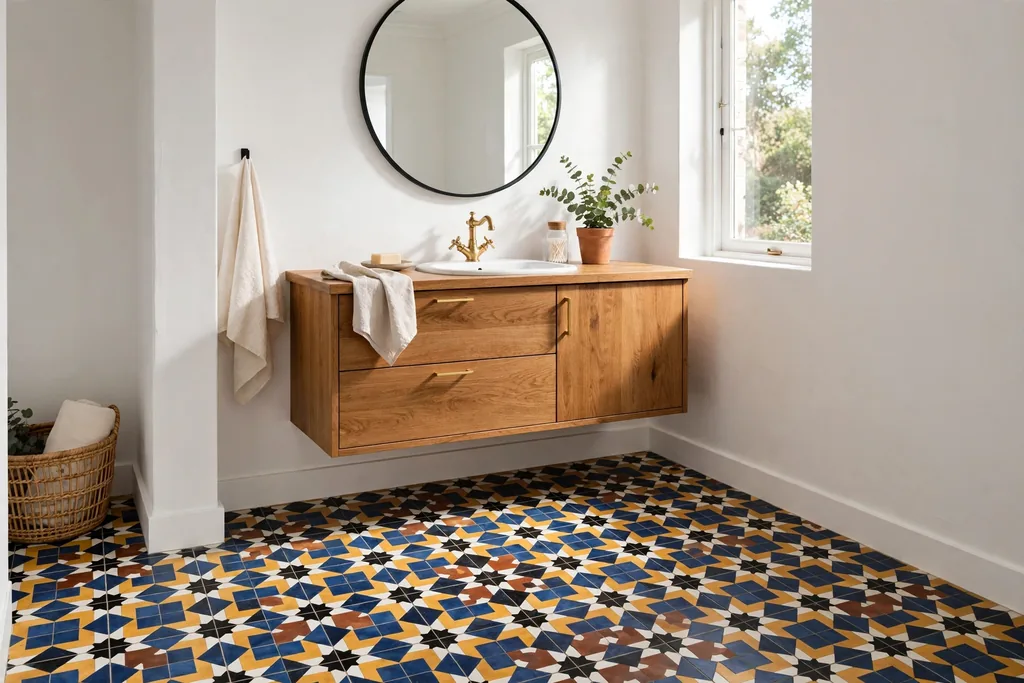
A bold patterned floor tile, such as encaustic style cement tile or a Moroccan inspired print, gives an eclectic bathroom its anchor in one move. The pattern works best when the walls stay plain, in white, cream, or pale grey, so the floor can carry the color. Choose a tile with two or three colors you can repeat elsewhere, in towels, art, or a painted vanity, and keep the grout in a mid tone so the pattern stays clear without shouting.
This suits a small bathroom well, because the floor is one continuous surface and a strong pattern makes the room feel finished rather than plain. Seal cement style tiles as the maker advises, and use a non slip finish in wet areas. If a full floor feels like a big step, use the same tile in a smaller area, such as a shower floor or a strip in front of the vanity, and keep the rest of the floor in a plain matching tone.
2. Mixed Metals, Used on Purpose
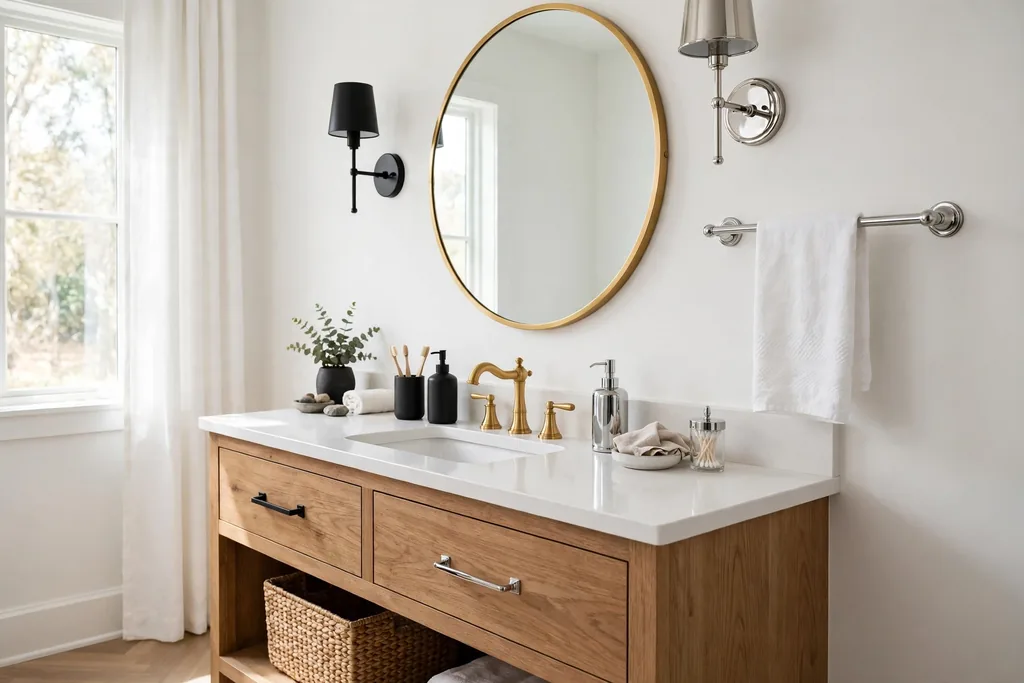
Mixed metals suit an eclectic bathroom when the mix looks chosen rather than accidental. Pair warm brass taps with matte black cabinet pulls, or chrome shower fittings with a brass framed mirror, and repeat each finish at least twice so neither looks like a mistake. Two finishes are usually enough, and a third works only when it appears in small, repeated details such as hooks or a soap dish.
This idea suits a bathroom where you do not want to replace every fitting at once. Start with the pieces you touch daily, such as taps and towel rails, and keep the shower fittings in the finish you already have if replacing them would mean plumbing work. Clean mixed metals with a soft cloth and a mild cleaner, since harsh cleaners can dull brass and black finishes at different rates.
3. A Vintage Clawfoot Tub Beside a Modern Vanity
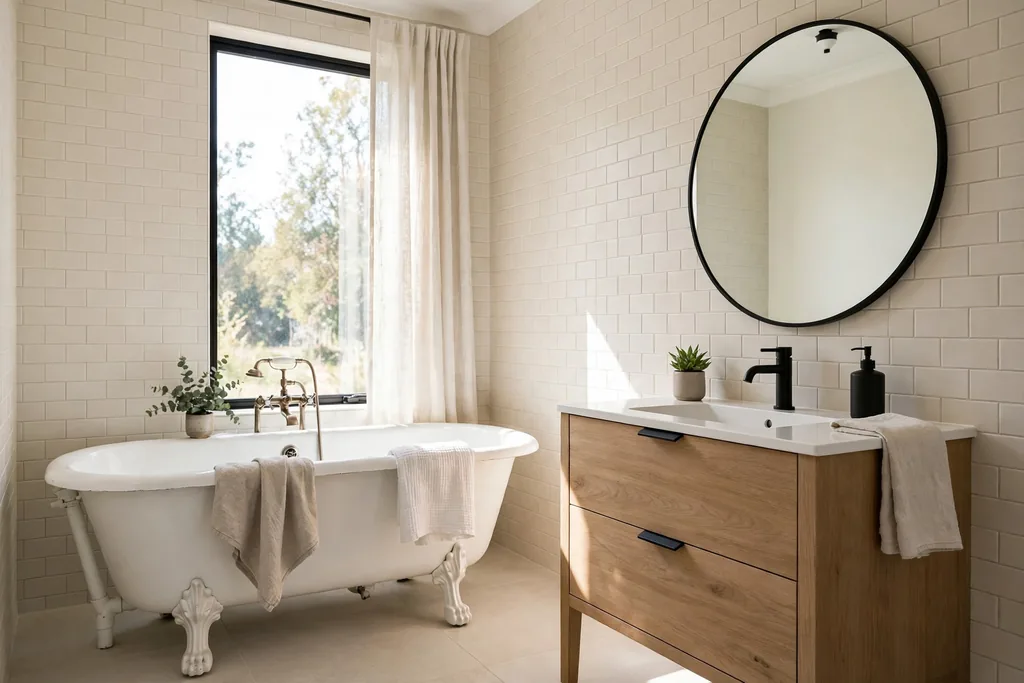
A vintage clawfoot tub beside a simple modern vanity is the classic eclectic pairing: one old, curved shape against one clean, straight shape. The tub brings character and a focal point, while a plain vanity in white, pale wood, or a soft color keeps the room from feeling like a period set. Keep the floor and walls quiet, in pale tile and white paint, so the tub stays the star.
Check the practical points before you commit. A clawfoot tub is heavy when full, so the floor must support it, and a freestanding filler tap needs plumbing in the floor or the wall behind it. If a full tub swap is too much, the same contrast works on a smaller scale: a vintage style stool or mirror beside a modern vanity gives a similar old and new balance for far less work.
4. A Gallery Wall of Mismatched Frames
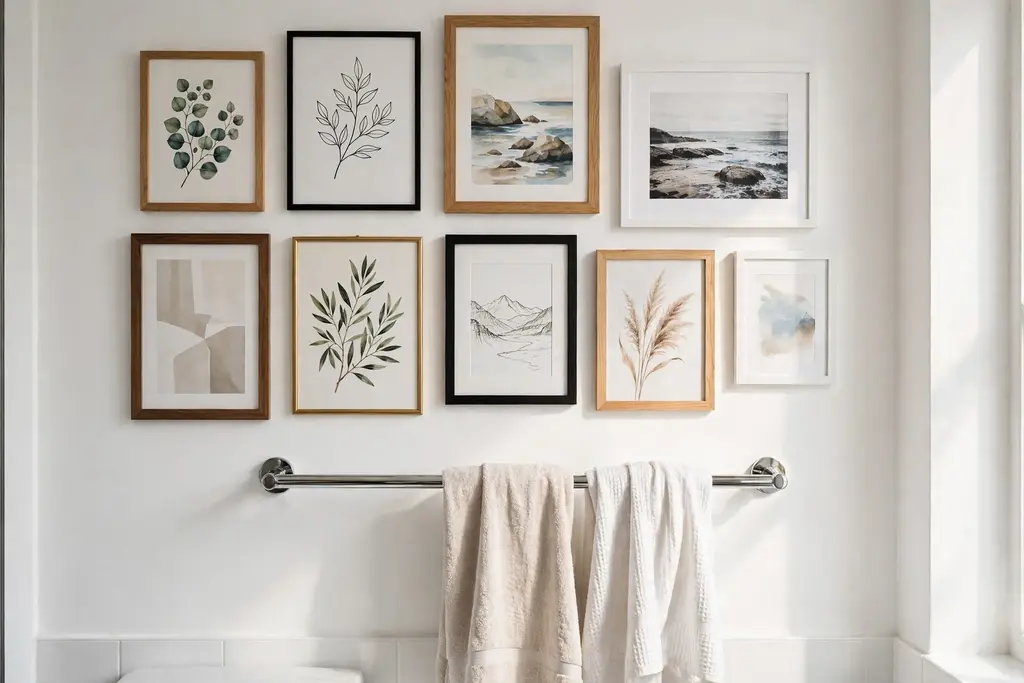
A gallery wall of mismatched frames suits an eclectic bathroom because the frames themselves become part of the mix. Combine wood, black metal, brass, and painted frames in different sizes, and keep the art inside them linked by one theme, such as botanical prints, line drawings, or travel photos, so the wall reads as one arrangement. Hang the group above a towel rail or beside the mirror, where it does not sit in direct shower steam.
Use frames with sealed backs or acrylic covers, and avoid unprotected paper directly beside the shower, where steam can cockle it over time. Lay the arrangement on the floor first, spacing the frames a few inches apart, then hang from the center outward. In a rented room, adhesive picture strips hold light frames well on tile and painted walls and remove cleanly when you move out.
5. Layered Rugs Over a Plain Bath Mat
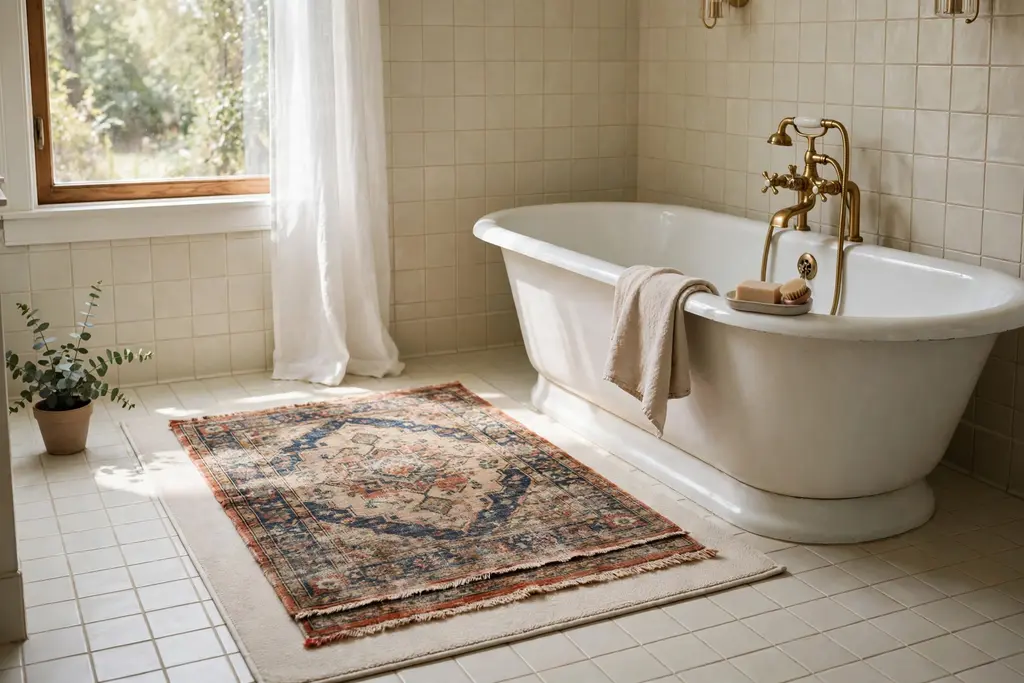
Layering a vintage style rug over a plain bath mat adds pattern, warmth, and color to a bathroom floor without changing any fixtures. Use a flat weave rug, such as a small kilim style rug, over a thin, washable bath mat that grips the floor, and keep the rug clear of the shower splash zone so it stays dry. The plain mat underneath gives grip and absorbs water, while the rug on top gives the pattern.
This suits a bathroom with plain tile, where the floor needs interest but a full tile change is not planned. Choose a rug you can wash or air out easily, and shake it out weekly so dust and damp do not build up underneath. If the rug slides, add a non slip rug pad cut to size, and keep a second plain mat in rotation so the floor is never bare on wash day.
6. Open Shelves Filled With Collected Pieces
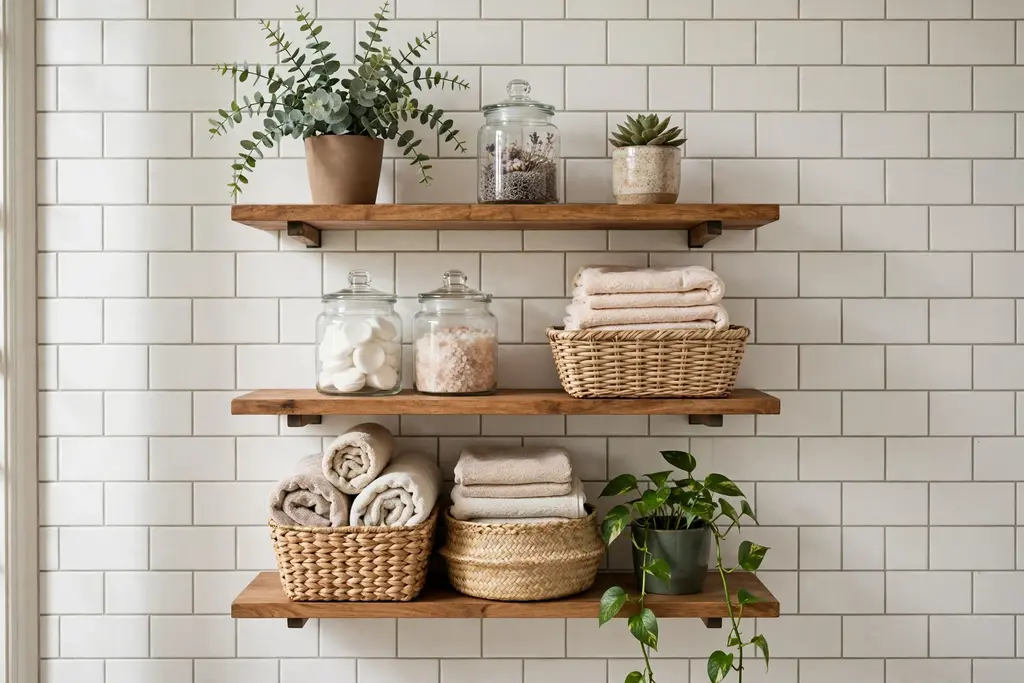
Open shelves filled with collected pieces, such as plants, glass jars, woven baskets, and folded towels, give an eclectic bathroom a lived in feel that a closed cabinet cannot match. Use wood shelves in a warm tone, keep the heaviest items low, and leave some empty space on each shelf so the display reads as calm rather than crowded. Group items in odd numbers, and repeat one color or material across the shelves to tie the mix together.
This works best on a wall that stays dry, such as above the toilet or beside the vanity, rather than inside the shower splash zone. For more ways to make open shelves look calm instead of crowded, see these apartment bathroom ideas. Use closed baskets on one shelf for anything you would rather not see, such as cleaning supplies, and empty each basket once a month, returning only what you actually used.
7. Bold Botanical Wallpaper on One Wall
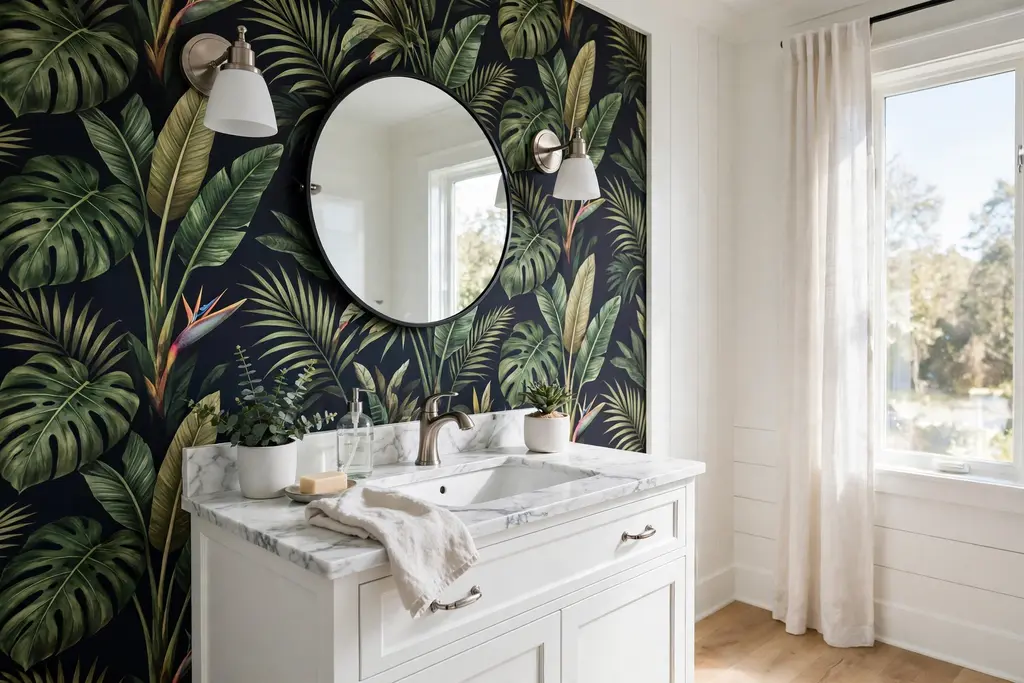
Bold botanical wallpaper on one wall, behind the vanity or on the wall facing the door, gives an eclectic bathroom a clear focal point in a single weekend project. Choose a large scale leaf or floral print with a color you can repeat in towels or art, and keep the other walls in a plain color pulled from the paper, such as cream or pale green. A large print suits a small room better than a tiny busy pattern, which can feel fussy at close range.
Keep wallpaper off the wall directly inside the shower, where constant steam can loosen the edges, and use a moisture resistant paper or a peel and stick version if your bathroom stays steamy. In a rented room, peel and stick paper removes cleanly and lets you test a bold print without paste. Order one extra roll for matching the pattern at the seams, and smooth each strip from the center outward to push out air.
8. A Repurposed Dresser as a Vanity
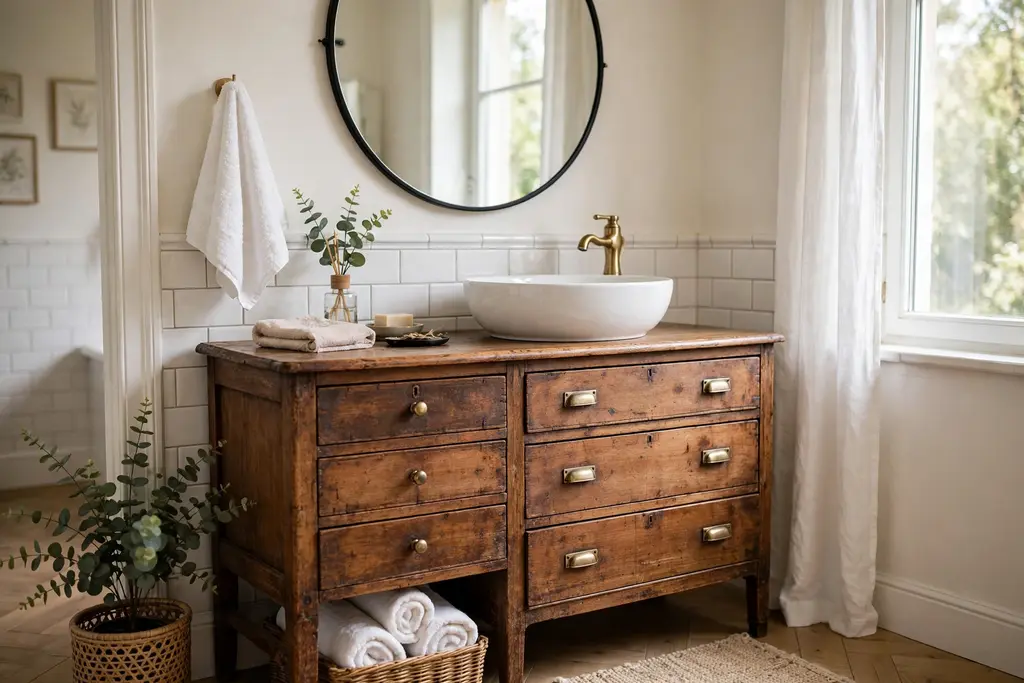
A repurposed wooden dresser used as a vanity brings instant eclectic character, because no two dressers look alike. Choose a solid wood dresser at a comfortable sink height, seal the top against water, and fit a vessel sink on top with taps mounted on the wall or on a small backsplash. Keep the drawers you can still use, and cut or shorten only the drawer that sits behind the plumbing, leaving the front in place so the dresser still looks complete.
This suits a bathroom where a standard vanity feels too plain, and it gives storage that a pedestal sink cannot match. Check the dresser depth against the room, since a deep dresser can block the walkway in a narrow bathroom, and keep the plumbing accessible behind a removable panel. Seal the wood top with a water resistant finish and wipe up splashes promptly, since standing water will mark even sealed wood over time.
9. A Colored Vanity With a Wood Top
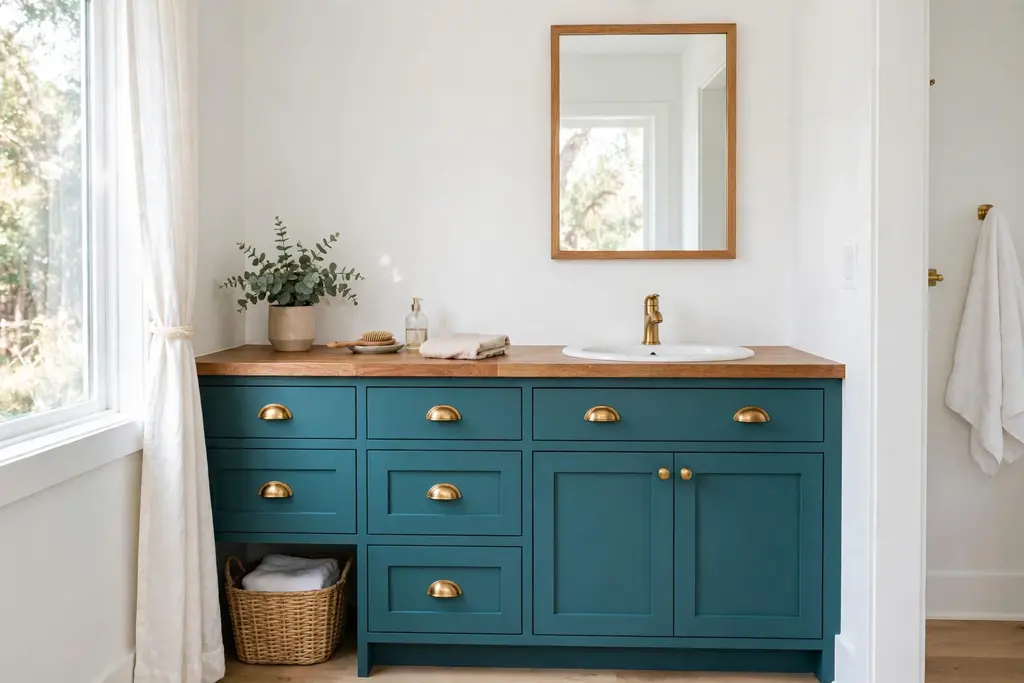
A colored vanity with a wood top, such as teal paint with a warm oak top, adds one strong color note without repainting the whole room. The wood top softens the painted base and links the vanity to other wood details, such as a stool, a shelf, or a framed mirror. Keep the walls pale and the countertop accessories simple, in white, brass, or black, so the vanity color stays the main note.
Remove the doors and hardware, clean off soap residue, sand lightly, and use a primer made for slick cabinet surfaces before two thin coats of a moisture resistant paint. If painting feels like a big step, test the color on one drawer front first, or buy a colored vanity secondhand and refinish only the top. Pair the vanity color once more in the room, in towels or a small piece of art, so it looks planned rather than isolated.
10. Plain Subway Tile With a Bold Mosaic Strip
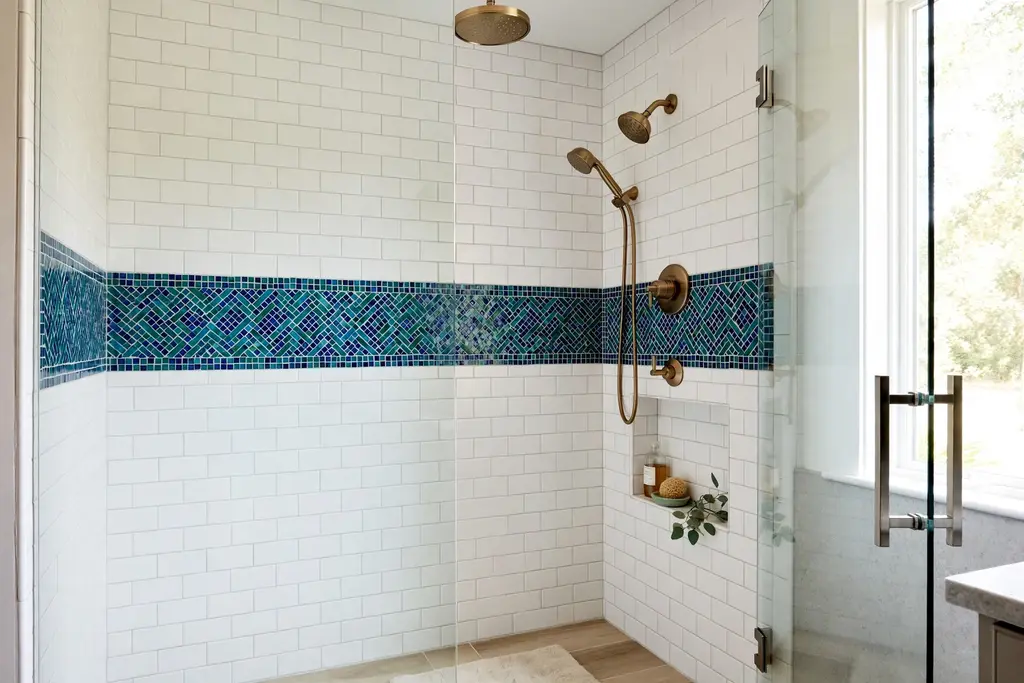
Plain subway tile with a bold mosaic accent strip gives a shower or backsplash an eclectic twist without committing the whole wall to pattern. Run the mosaic strip horizontally at eye level, vertically beside the shower controls, or as a border around a niche, and keep the rest of the tile in plain white, cream, or pale grey. The strip works like a belt of color: it draws the eye, then lets the plain tile rest around it.
Choose a mosaic with colors that appear elsewhere in the room, such as a patterned floor tile or a colored vanity, so the strip ties the room together. Seal natural stone mosaic as the maker advises, and use a grout color close to the plain tile so the strip stands out by color, not by grout lines. In a small shower, one strip is usually enough, since two or three strips can make the walls feel busy at close range.
11. Hanging and Potted Plants Together
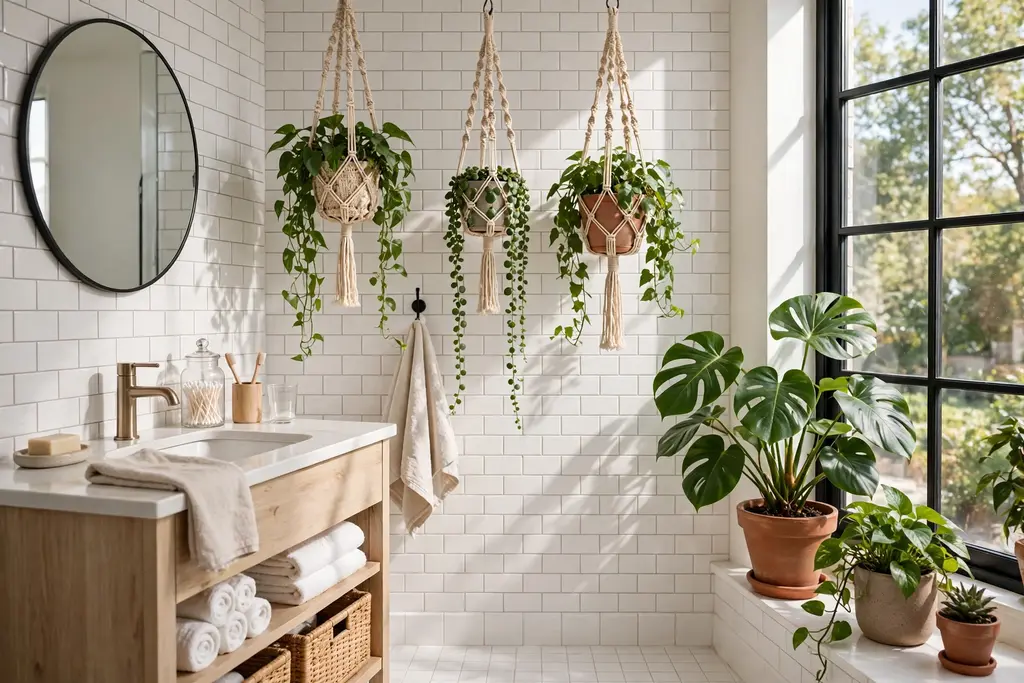
Hanging and potted plants together bring soft, living texture to a bathroom full of hard tile and porcelain. Combine one trailing plant in a hanging planter, such as pothos, with one or two potted plants on a shelf or stool, such as a fern or a philodendron, and keep the pots in mixed materials, such as terracotta, ceramic, and woven baskets. Bathrooms suit plants that enjoy humidity and indirect light, so choose varieties that cope with steamy air and modest daylight.
Use pots with drainage holes and saucers, and check the soil before watering, since bathroom air already adds moisture. Keep plants clear of direct shower spray, and hang trailing plants high enough that vines do not brush the tap or the mirror. If your bathroom has no window, rotate the plants to a brighter room for a few days each week, or choose a low light tolerant variety and keep the collection small, since one healthy plant looks better than a crowded group of struggling ones.
12. Woven Baskets for Towels and Toiletries
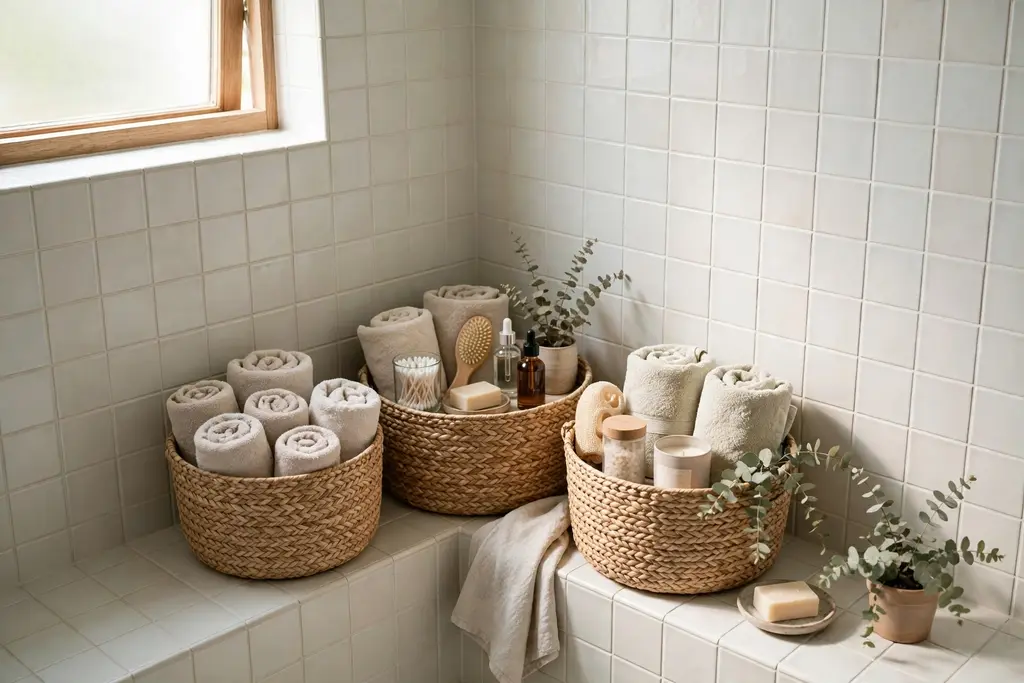
Woven baskets soften hard tile and porcelain while hiding the visual noise of bottles and tubes, which makes them a natural fit for an eclectic bathroom. Assign one basket per job, such as hair care, skin care, or spare towels, and mix basket materials, such as seagrass, cotton rope, and rattan, in a similar natural tone so the group reads as a set. Set baskets on a shelf, a stool, or a bench rather than on a wet floor, where they can trap damp.
Seagrass and cotton rope baskets cope well with bathroom humidity if they are kept off wet floors and aired out regularly. Label the base of each basket if the baskets look alike, and empty each one once a month, returning only what you actually used, since bathroom baskets quietly collect empty bottles. A large basket beside the tub holds rolled towels and doubles as a laundry hamper, which suits a small bathroom where floor space is tight.
13. A Shower Curtain Treated as Art
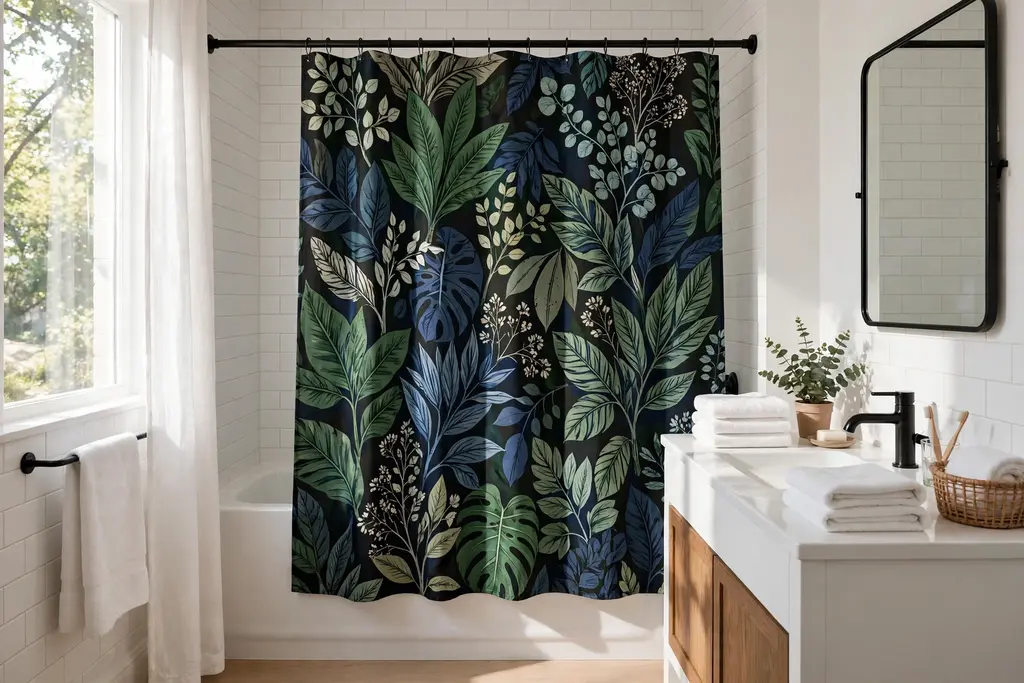
In an eclectic bathroom the shower curtain is the largest single surface, so treat it like a piece of art rather than an afterthought. Choose a large scale print, such as a botanical scene, a bold stripe, or a vintage style landscape, and let it set the color palette for towels and rugs in one move. Keep the rest of the room quiet when the curtain is loud: plain towels, a simple mat, and one matching accessory are enough.
A fabric outer curtain with a separate washable liner lasts longer and hangs better than a thin plastic curtain on its own, and it gives the print a softer drape. Hang the curtain a little higher than usual and use a longer liner so water still falls inside the tub. If you tire of the print, a curtain is one of the easiest eclectic pieces to swap, which makes it a good place to test a bold pattern before committing to wallpaper or tile.
14. An Antique Mirror With Modern Sconces
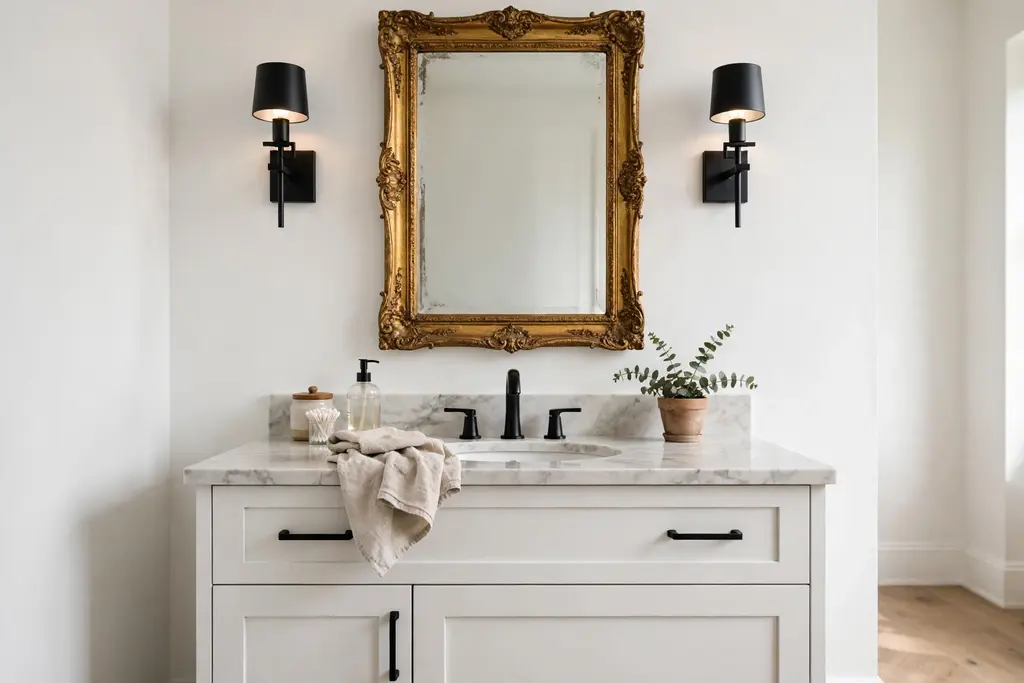
An antique framed mirror with modern wall sconces pairs old and new in the smallest possible space, right above the sink. Choose a mirror with an aged wood or gilt frame and a simple shape, such as an arch or an oval, and flank it with plain modern sconces in matte black or brushed brass at eye level. The modern light keeps the antique frame from feeling like a museum piece, while the frame stops the modern sconces from feeling cold.
Hang the mirror centered over the sink at eye level, and keep its width a little narrower than the vanity so the edges do not crowd the sconces. Keep all plug in or wired lights away from direct water spray, and choose warm white bulbs so the light flatters faces rather than casting harsh shadows. If the antique frame is fragile, hang it on a dry wall beside the mirror rather than directly above the sink, where splashes can reach it.
15. Terrazzo on Counters and Floors
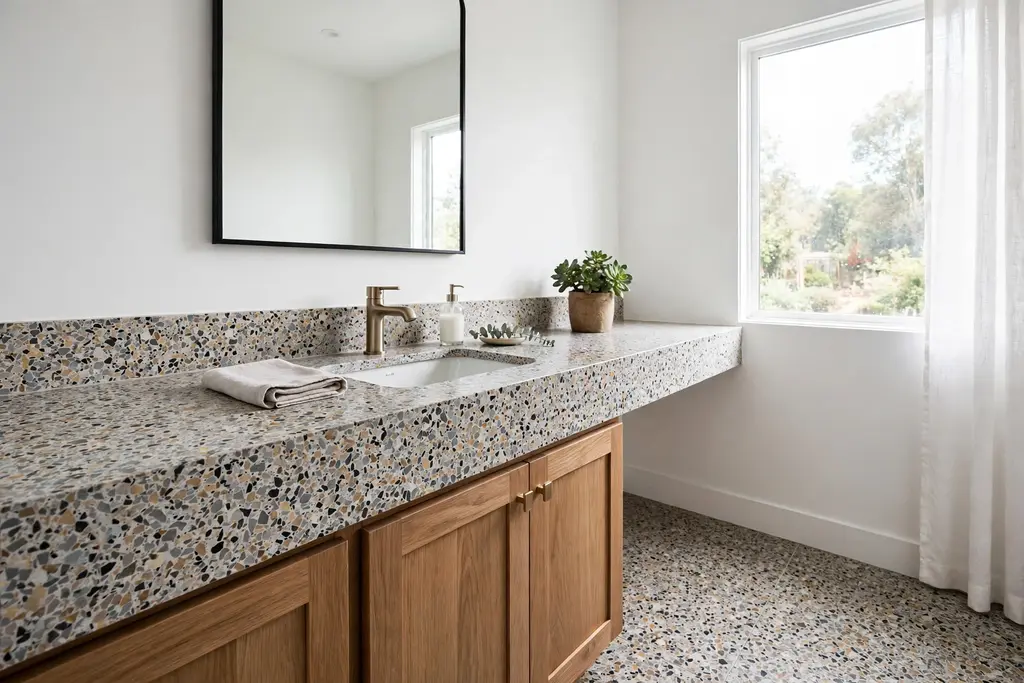
Terrazzo, with its speckled chips of stone set in a plain base, suits an eclectic bathroom because it already mixes colors and materials in one surface. Use it on a vanity countertop, a shower floor, or a small backsplash, and keep the walls and cabinets plain, in white, cream, or pale wood, so the speckle can show. A terrazzo with a pale base and a few colored chips links easily to towels, art, and tile elsewhere in the room.
Seal terrazzo as the maker advises, and clean it with a mild, pH neutral cleaner, since harsh cleaners can dull the surface over time. A small terrazzo tray or soap dish gives the same speckled note for very little cost if a full countertop is not planned, and it pairs well with plain white ceramics. In a small bathroom, use terrazzo in one place only, such as the countertop, so the speckle does not compete with a patterned floor tile.
16. Global Textiles: Turkish Towels and a Kilim Rug
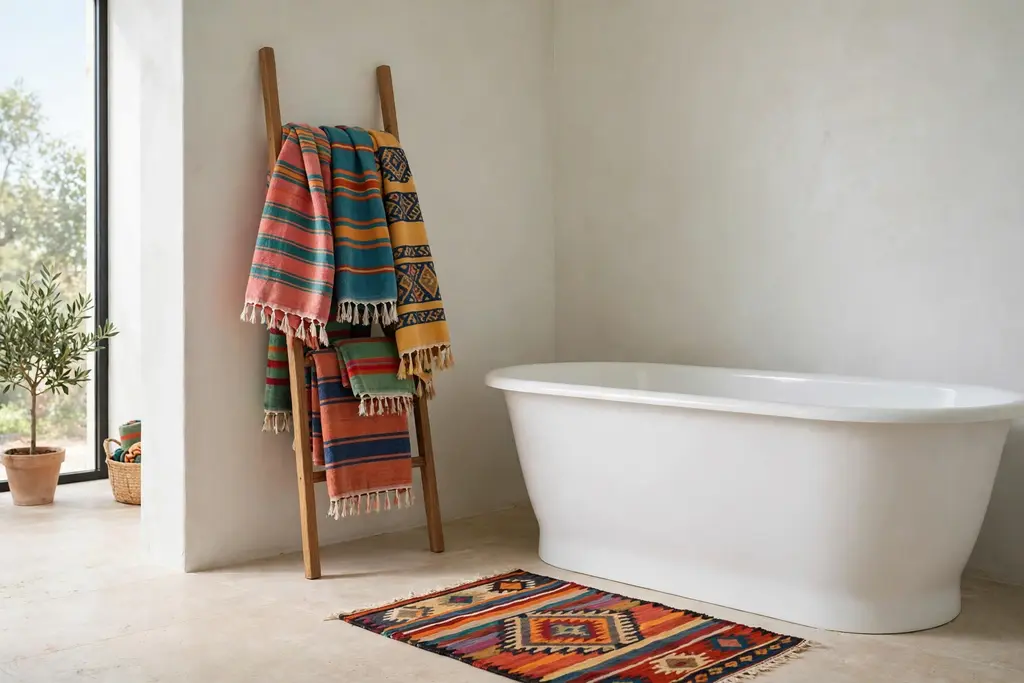
Global textiles, such as Turkish towels and a small kilim style rug, add pattern and softness to an eclectic bathroom without any building work. Turkish towels are thin, quick drying, and easy to layer in mixed colors, while a flat weave kilim rug beside the tub or vanity brings a woven pattern that plain tile cannot match. Keep the textile colors linked by one shared tone, such as rust, indigo, or sage, so the mix feels collected rather than random.
Hang Turkish towels on a ladder rail or varied hooks where their fringed ends can show, and fold a second set on an open shelf for guests. Choose a rug you can wash or air out easily, and keep it clear of the shower splash zone so it stays dry between uses. If a full kilim rug feels like a big step, start with one patterned hand towel and a small woven mat, then add more textiles only if the room still feels plain.
17. Color Blocked Walls in Two Tones
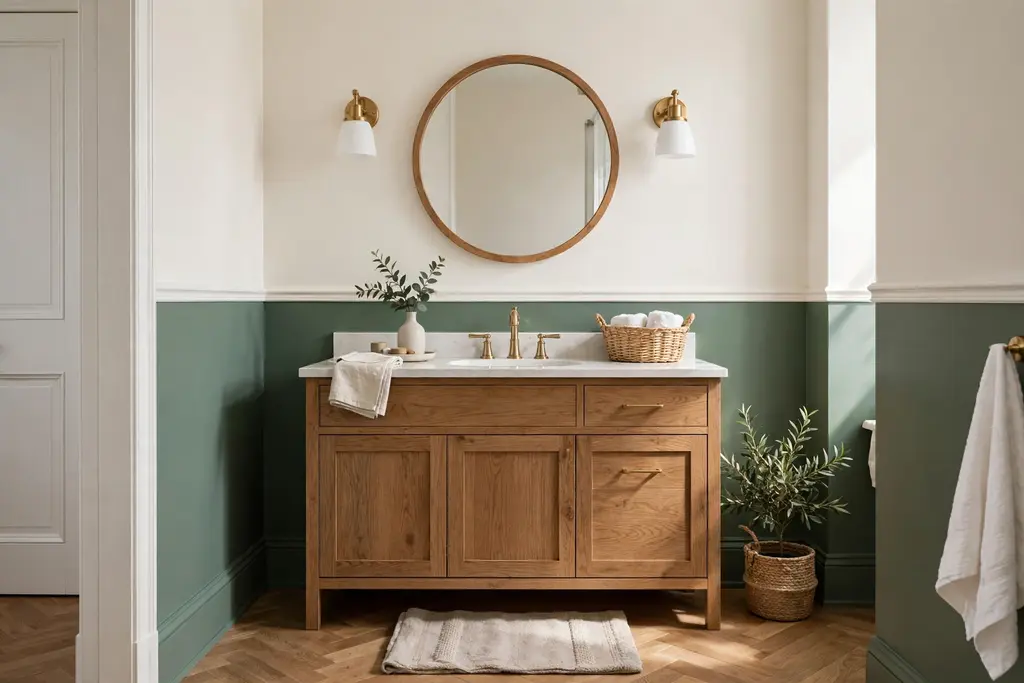
Color blocked walls, with one color on the lower half and another on the upper half, give an eclectic bathroom structure that a single bold color cannot match. Split the walls at chair rail height or at a clean horizontal line: a deeper tone below, such as sage, teal, or dusty blue, and a pale tone above, such as warm white or cream, with white trim between them. The split gives depth at floor level and lightness at eye level, which suits a bathroom where the lower walls take scuffs.
Keep furniture and art above the split simple, and choose a pale rug so the deeper color does not darken the floor area. For help choosing pairs that sit well together, see these wall color combinations. Use a washable finish on the lower section, since that is the part hands, bags, and splashes reach most, and test both colors in morning light and evening lamplight before painting, since bathroom light changes color a lot through the day.
18. Varied Hardware in Two Finishes
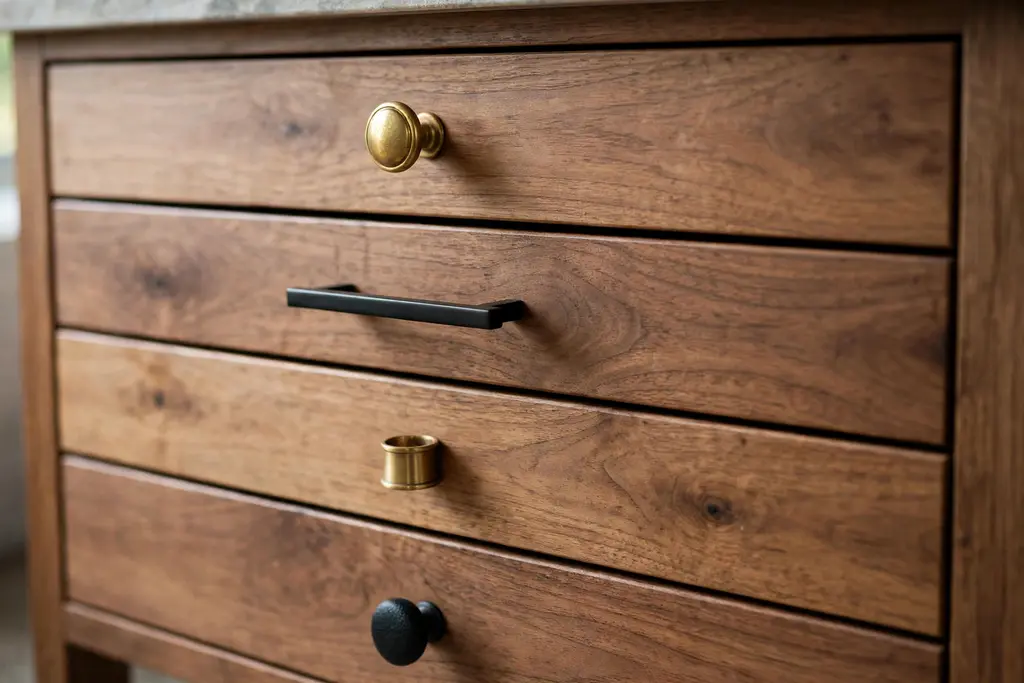
Varied hardware, such as different knobs and pulls in brass and black, adds a collected, eclectic detail to a plain vanity or cabinet. Use one finish for the main drawers and a second finish for a smaller set of doors, or mix knob shapes, such as round, bar, and cup pulls, in the same two finishes, so the variation looks deliberate. Keep the finishes to two, and repeat each one at least twice, so no single pull looks like a leftover.
This suits a bathroom where a full vanity change is not planned, since swapping hardware takes an hour and a screwdriver. Save every original screw and pull in a bag taped inside the vanity, so you can restore the original look if you move out or change your mind. Check that new pulls fit the existing holes, or fill and drill carefully, and test the grip with wet hands, since bathroom hardware is used with damp fingers daily.
19. One Large Piece of Art Above the Tub
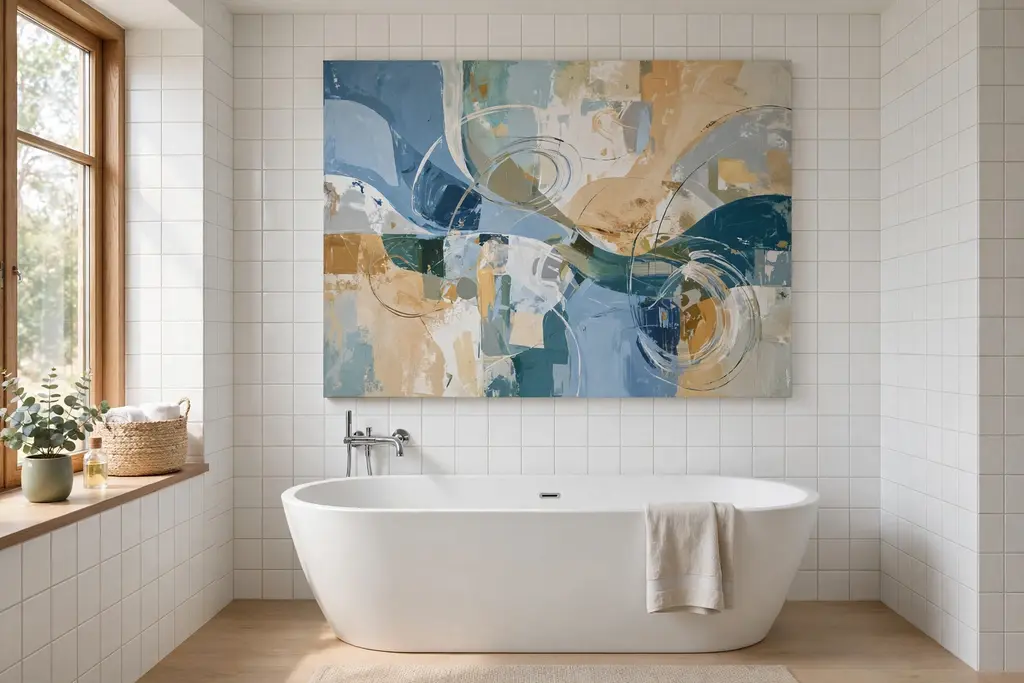
One large piece of art above the tub gives an eclectic bathroom a gallery feel in a single move, and it suits a wall that would otherwise stay blank. Choose a large abstract painting, a framed textile, or a bold print in colors that repeat elsewhere in the room, and hang it centered above the tub at a height where it clears the showerhead and any shelf. A single large piece reads as calmer than many small frames in the same spot, which matters in a room full of pattern.
Use a frame with a sealed back or an acrylic cover, and avoid unprotected paper directly beside the shower, where steam can cockle it over time. If the wall above the tub gets regular splashes, hang the art on the facing wall instead, or choose a framed textile or a sealed print that copes better with damp air. Keep the tub surround plain, in white or pale tile, so the art stays the focus rather than competing with patterned tile.
20. A Ladder Rail With Varied Wall Hooks
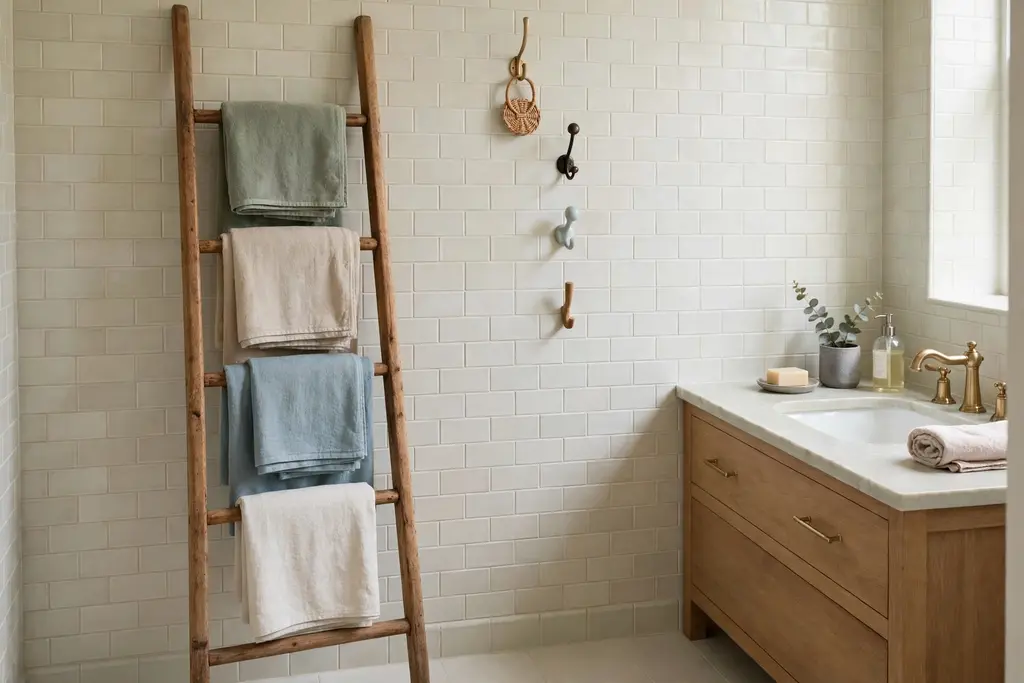
A ladder towel rail paired with varied wall hooks gives an eclectic bathroom flexible hanging space that a single towel bar cannot match. Lean a wooden ladder against a spare wall beside the door or at the end of the tub, and hang towels over its rungs, then add two or three wall hooks in different shapes, such as brass, wood, and black metal, for robes, wash bags, and hand towels. The ladder needs no drilling, while the hooks take the items you reach for daily.
Put heavier towels on the lower rungs and lighter items higher up, and add small adhesive pads under the ladder feet so it does not slide on tile. Check that the top of the ladder cannot tip forward if a child or pet pulls on it, and anchor it if your household needs that extra safety. Keep the ladder clear of the shower splash zone, and air towels out between uses so the wood stays dry.
21. A Vintage Stool Beside the Tub
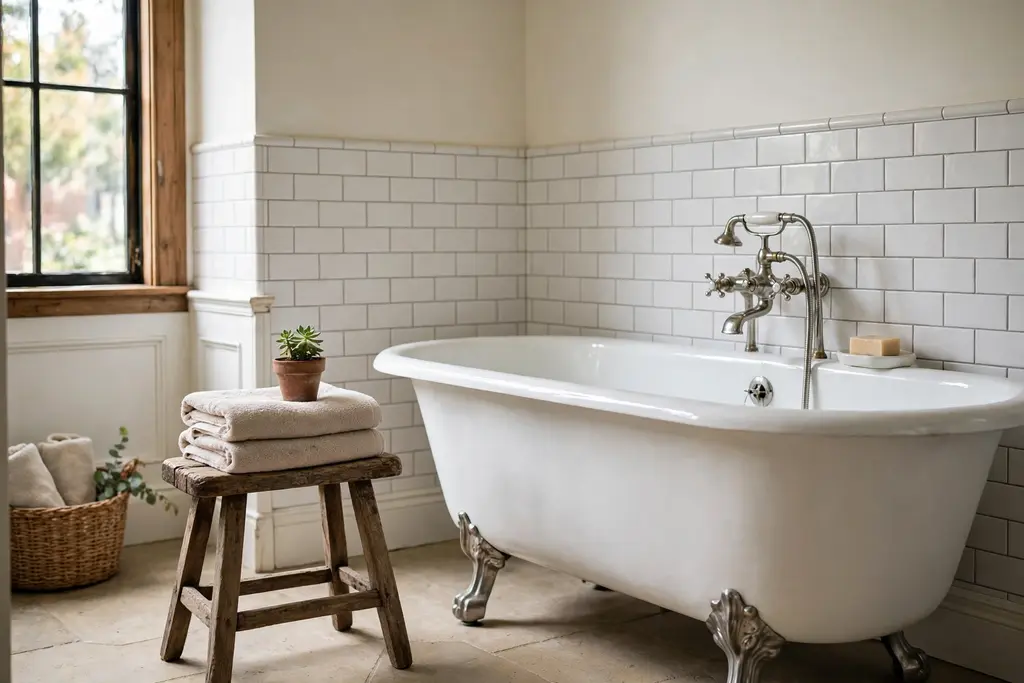
A vintage wooden stool beside the tub acts as a side table, a towel holder, and a plant stand in one small piece, which makes it ideal for an eclectic bathroom. Choose a stool with a worn wood finish, a woven seat, or a painted base, and use it to hold a folded towel, a candle kept safely away from the water, or a small potted plant. The stool adds an old, handmade note beside the clean lines of a modern tub or vanity.
Keep the stool clear of direct shower spray, and wipe it dry after baths so the wood does not stay damp. A stool with a lower shelf holds a second towel or a basket of bath salts, which suits a small bathroom where a full side table would block the walkway. If the stool wobbles on tile, add felt pads to the feet, and test it with a full towel and a plant before trusting it with anything breakable.
22. A Painted or Patterned Ceiling
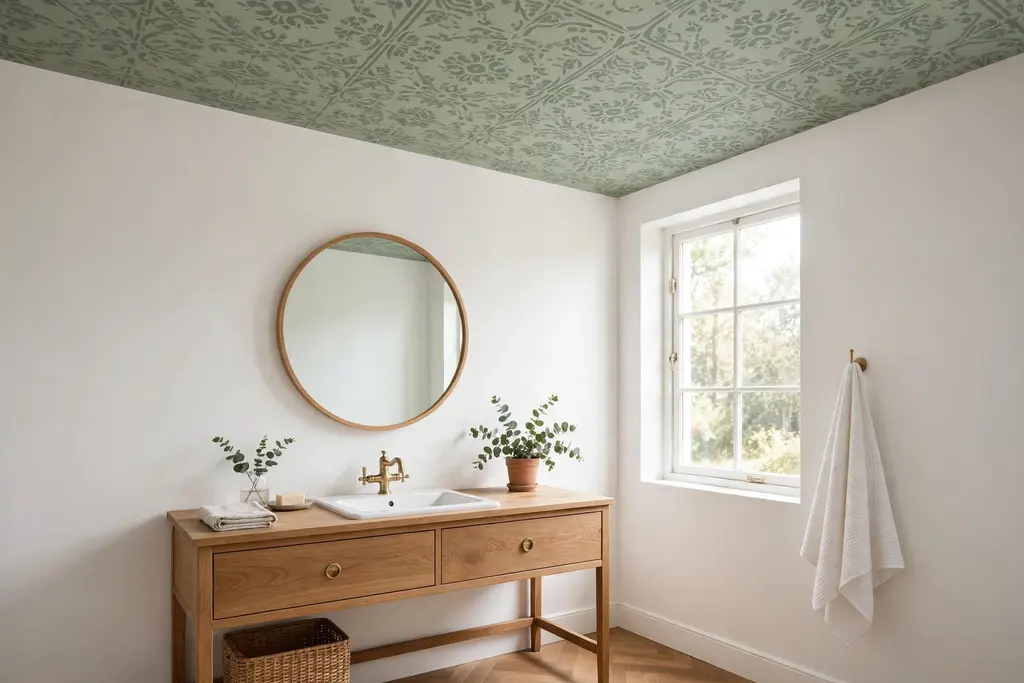
A painted or patterned ceiling gives an eclectic bathroom a surprise detail that guests notice without it crowding the walls. Paint the ceiling in a soft color pulled from the room, such as pale sage, dusty blue, or warm terracotta, or use a simple stencil pattern in one color over white, and keep the walls pale so the ceiling can lead. This works best in a bathroom with a plain floor and plain walls, where the ceiling is the one bold surface.
Use a moisture resistant ceiling paint, and check the color in daylight and lamplight, since ceilings sit in shadow for much of the day. Keep the trim and the top edge of the walls in clean white, so the ceiling color reads as a deliberate panel rather than a spill. If a full ceiling color feels like a big step, paint a small ceiling panel above the tub or vanity first, and extend it later only if the room still feels plain.
23. Mixed Wood Tones, Kept to Three
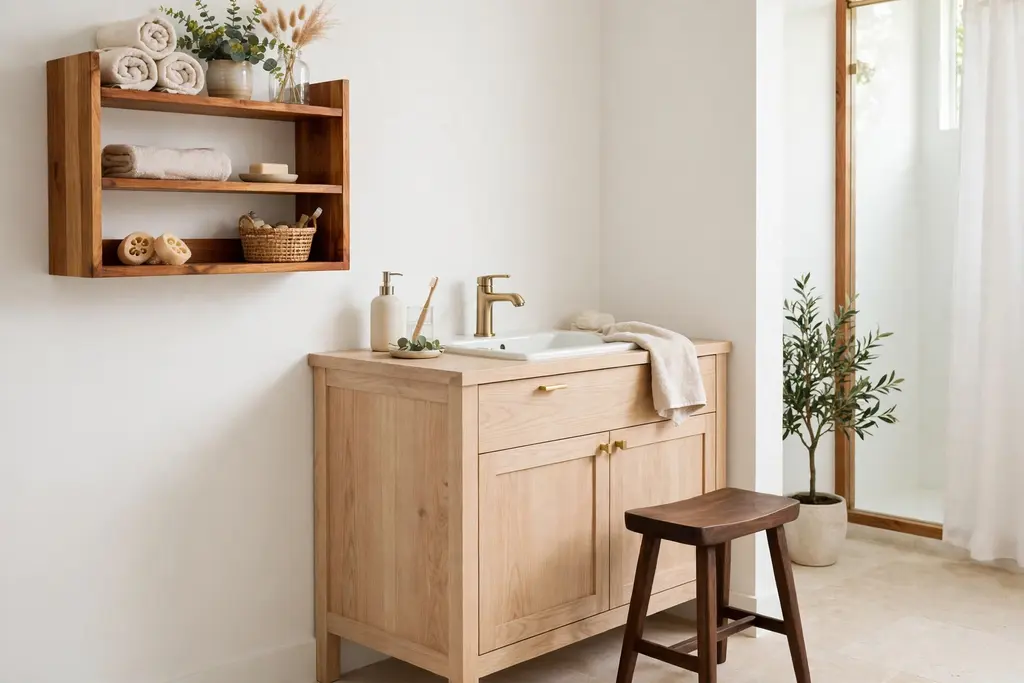
Mixed wood tones suit an eclectic bathroom when the mix is limited to three tones or fewer, such as pale oak, mid walnut, and dark teak. Use one tone for the vanity, a second for a stool or shelf, and a third for a small detail, such as a soap dish, a tray, or a framed mirror, and keep the tile and walls pale so the woods can show. The limit matters: four or five wood tones in a small room can look scattered, while three read as collected.
Teak and other water tolerant woods cope better with wet conditions than most woods, but still benefit from being left to drain and dry between showers. Seal wood tops with a water resistant finish, and wipe up splashes promptly. If your existing vanity is one wood tone, add the second and third tones in small, movable pieces, such as a stool and a tray, so you can test the mix before committing to a new shelf or vanity.
24. A Display of Collected Ceramics
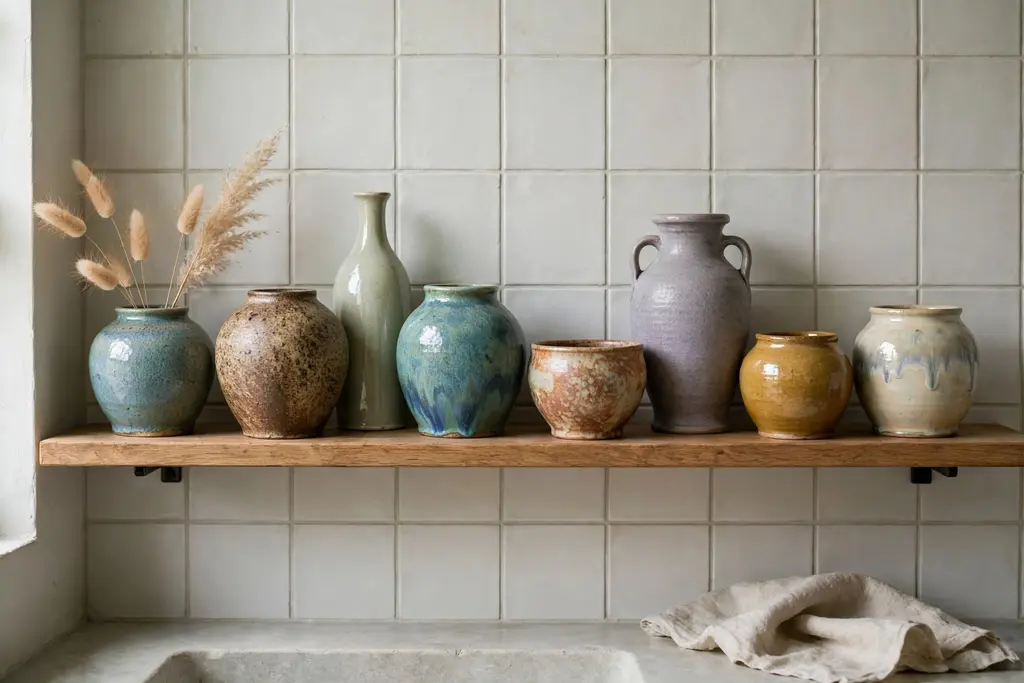
A display of collected ceramics, such as handmade pots, vases, and soap dishes in mixed glazes, gives an eclectic bathroom a personal, gathered feel. Group three to five pieces on one open shelf or on the vanity, in varied heights and shapes, and link them by one shared tone, such as cream, sage, or speckled stone, so the group reads as a collection. Use the pieces daily where you can: a vase for a single stem, a dish for soap, a pot for a small plant.
Keep ceramics clear of the tub edge, where they can be knocked into the water, and use a non slip mat under a display on a smooth vanity top. Handmade ceramics vary in glaze and finish, so clean them with a soft cloth and a mild cleaner, and avoid harsh scrubbing that can dull a matte glaze. If shelf space is tight, one striking vase beside the mirror gives the same collected note as a full shelf, and it leaves room for everyday items.
25. A Painted Clawfoot Tub Exterior
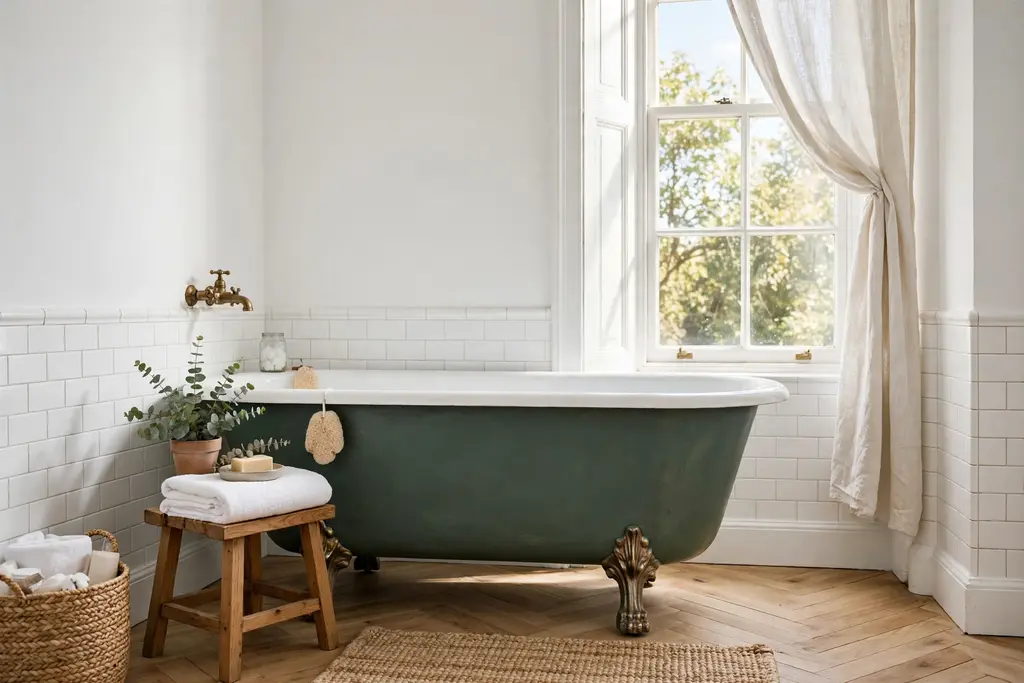
A clawfoot tub with a painted exterior in a deep color, such as sage, navy, or charcoal, turns the tub itself into the room’s bold piece. Keep the inside of the tub white and the walls pale, so the painted outside stands out cleanly, and repeat the tub color once more in the room, in towels, art, or a painted stool, so it looks planned. The feet can stay in their original metal finish, or match the paint in a second finish, such as brass or black.
Use a paint made for metal and moisture, and prepare the surface well, since a tub exterior faces steam, splashes, and cleaning. If painting a tub feels like a big step, test the color on a small area first, or use a removable tub cover in the same color to test the effect. A painted tub suits a bathroom where the tub is freestanding and visible from the door, since a tub pushed against a wall hides the painted side.
26. Layered Lighting: Pendant, Sconces, and Candles
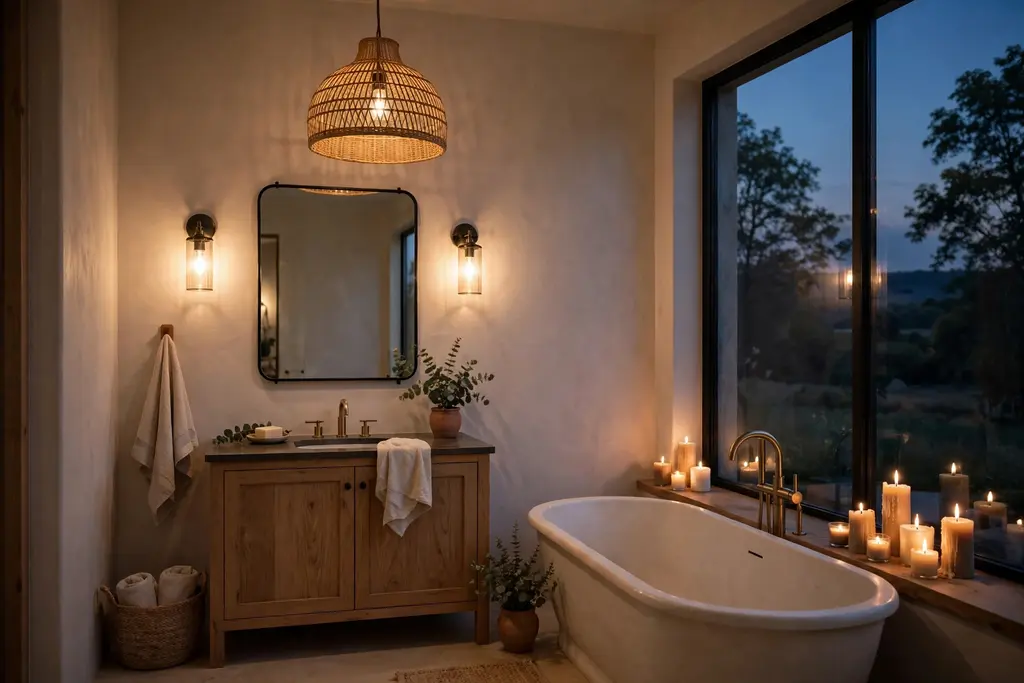
Layered lighting, with a pendant over the tub or vanity, sconces beside the mirror, and candles for baths, gives an eclectic bathroom warmth that a single overhead light cannot match. Use the pendant as the room’s decorative piece, in rattan, glass, or brass, and keep the sconces plain and at eye level for even light on faces. Candles, kept safely away from towels, curtains, and water, add a low, warm glow for evening baths.
Put the main light on a dimmer where the wiring allows, so the room can shift from bright morning light to soft evening light. Renters who cannot change wiring can still layer light with a plug in wall sconce, a battery operated picture light above the mirror, or a small rechargeable lamp on a shelf. Keep all plug in lights away from direct water spray, and choose warm white bulbs so the room feels calm rather than clinical.
27. Glass Apothecary Jars for Everyday Items
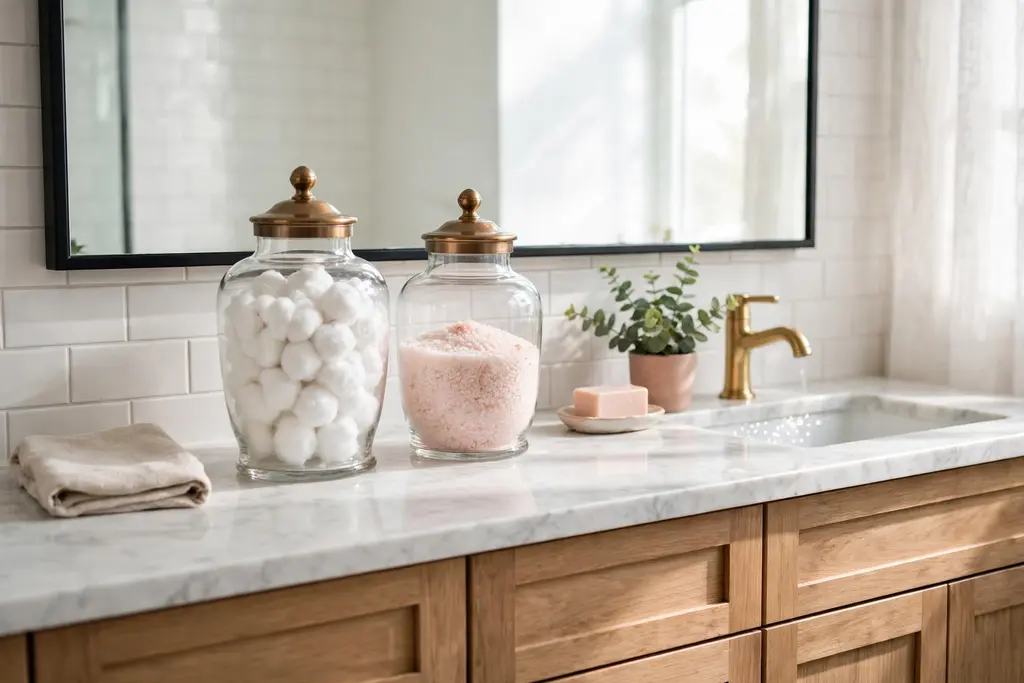
Glass apothecary jars for everyday items, such as cotton balls, bath salts, and hair ties, turn plain supplies into a collected display on the vanity or an open shelf. Use jars in varied heights with simple lids, in glass, wood, or brass, and keep the contents visible and tidy, since the jars themselves are the decoration. Label the lids or bases only if the jars look alike, and keep one jar for each item rather than mixing small supplies together.
This suits a bathroom where a medicine cabinet feels too hidden and a drawer feels too messy, since jars keep daily items in sight and within reach. Clean the jars monthly, since bathroom steam can leave a film on glass, and keep them clear of the sink splash zone so water does not spot the lids. If glass feels risky in a busy family bathroom, use the same idea in sturdy ceramic or metal canisters, which give a similar collected look with less breakage risk.
28. Black and White With One Strong Accent
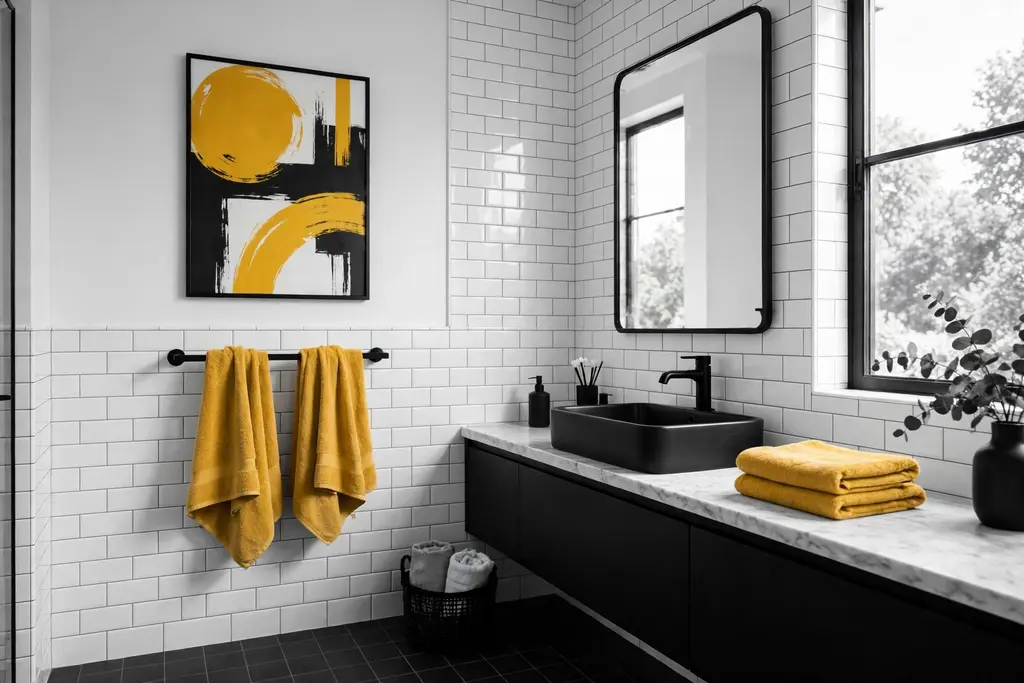
Black and white with one strong accent, such as mustard yellow, rust, or deep red, gives an eclectic bathroom a clear base and a single bold note. Keep the base simple: white tile, black fixtures or frames, and pale walls, then add the accent in three or four places, such as towels, a piece of art, a rug, and a soap dish. The accent works because it is the only strong color in the room, so the eye finds it fast and the room still feels calm.
This suits a bathroom where patterned tile or wallpaper feels like too much, since the accent can be swapped with towels and small accessories when you want a change. Keep the accent to one color family, such as warm yellows and rusts, rather than mixing two strong colors, which can make the room feel busy. A black framed mirror and black hardware tie the base together, while white towels keep the accent from taking over the room.
29. A Shelf of Travel Finds and Personal Pieces
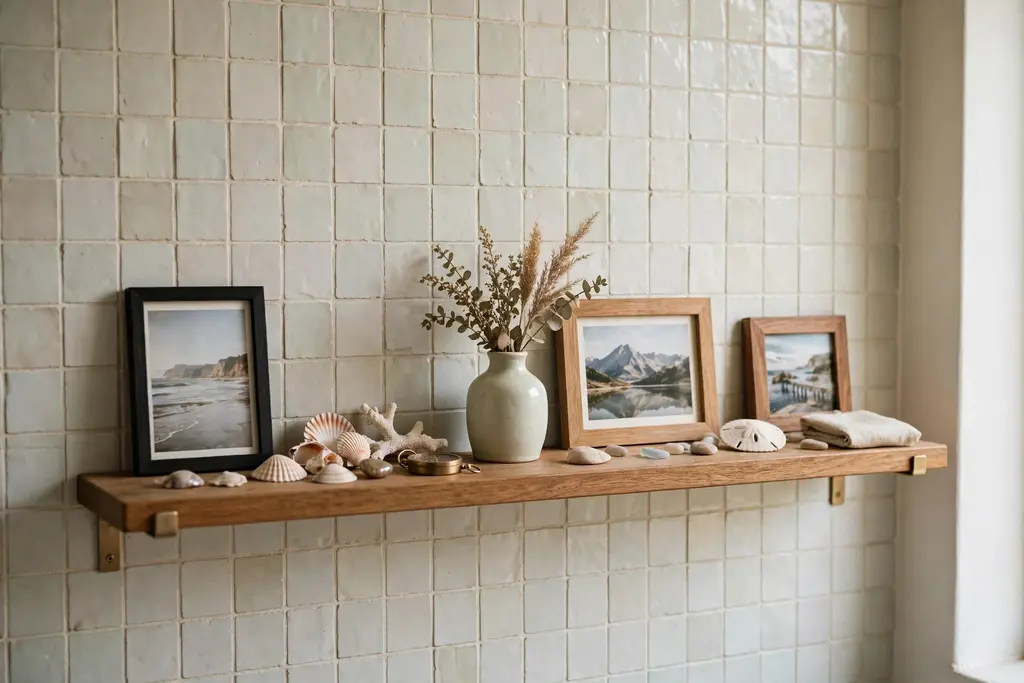
A shelf of travel finds and personal pieces, such as small shells, framed photos, a favorite vase, and a souvenir tile, gives an eclectic bathroom the one thing a shop bought set cannot: a personal history. Choose three to five small pieces that mean something to you, group them on one shelf away from direct shower steam, and link them by scale rather than by color, since travel pieces rarely match. Keep the shelf itself simple, in wood or white, so the pieces lead.
Use sealed frames or acrylic covers for photos and paper items, and avoid hanging unprotected paper directly beside the shower, where steam will damage it over time. Dust the shelf weekly, since bathroom shelves collect dust and steam film fast, and rotate the pieces seasonally, so the shelf stays fresh without growing crowded. If a piece is fragile or valuable, keep it on a higher shelf, out of reach of splashes and small hands, and enjoy it from a safe distance.
Conclusion
An eclectic bathroom works when the mix has a plan behind it: one bold move, one repeated color, and one or two finishes that tie old and new pieces together. Start with the idea that suits your room today, whether that is a patterned floor tile, a vintage tub beside a modern vanity, or a shelf of collected ceramics, and add smaller layers only where the room still feels plain. Keep wet areas practical, with washable materials and safe lighting, and let the personal pieces, the art, the textiles, and the plants, carry the character. Save this list on Pinterest before your next bathroom refresh, and work through it one area at a time: floor first, then walls, then storage, then light.
FAQs
How do I mix styles in a bathroom without it looking messy?
Pick one bold move, such as patterned tile or bold wallpaper, and keep the surfaces around it calmer. Repeat one color and one metal finish in three or four places, limit wood tones to three or fewer, and leave some empty space on shelves and walls. The mix reads as planned when each piece shares a color, a finish, or a material with at least one other piece in the room.
What is the easiest eclectic change for a rented bathroom?
Start with changes you can reverse: a bold shower curtain, layered rugs, Turkish towels, art in adhesive hung frames, woven baskets, and varied hooks. These pieces change the look fast, cost little, and remove cleanly when you move out. Save tile, paint, and vanity changes for rooms you own, or ask a landlord first and keep the original fixtures to reinstall later.
How many colors should an eclectic bathroom have?
Use one pale base, such as white, cream, or pale grey, plus one main color and one accent color at most. A patterned floor tile or wallpaper can carry several colors, but pick one color from that pattern to repeat in towels and art, and keep the rest of the room in the pale base. More than three strong colors in a small bathroom usually feels busy rather than collected.
Can I mix metals in a bathroom, or should fixtures match?
You can mix metals when the mix looks chosen. Use two finishes, such as brass and matte black, and repeat each finish at least twice, in taps, towel rails, mirror frames, or cabinet pulls. Keep the shower fittings in one finish if replacing them would mean plumbing work, and clean mixed metals with a mild cleaner, since harsh cleaners can dull brass and black finishes at different rates.
How do I protect art and textiles in a steamy bathroom?
Hang art with sealed backs or acrylic covers, and keep paper, books, and dry textiles away from direct shower steam and splashes. Use moisture resistant wallpaper or peel and stick paper off the shower wall, wash rugs and towels regularly, and air the room out after showers where you can. Keep plants in pots with drainage, and wipe wood and ceramic displays dry after baths so damp does not build up.
How do I start an eclectic bathroom on a small budget?
Start with the largest surface you can change cheaply: a shower curtain, a rug, or a set of towels in one strong color or pattern. Add one collected piece, such as a vintage stool, a secondhand mirror, or a basket, and swap cabinet hardware for a new finish. One strong idea usually matters more than many small decorations bought at once, and you can add tile, paint, or a new vanity later if the mix still feels plain.