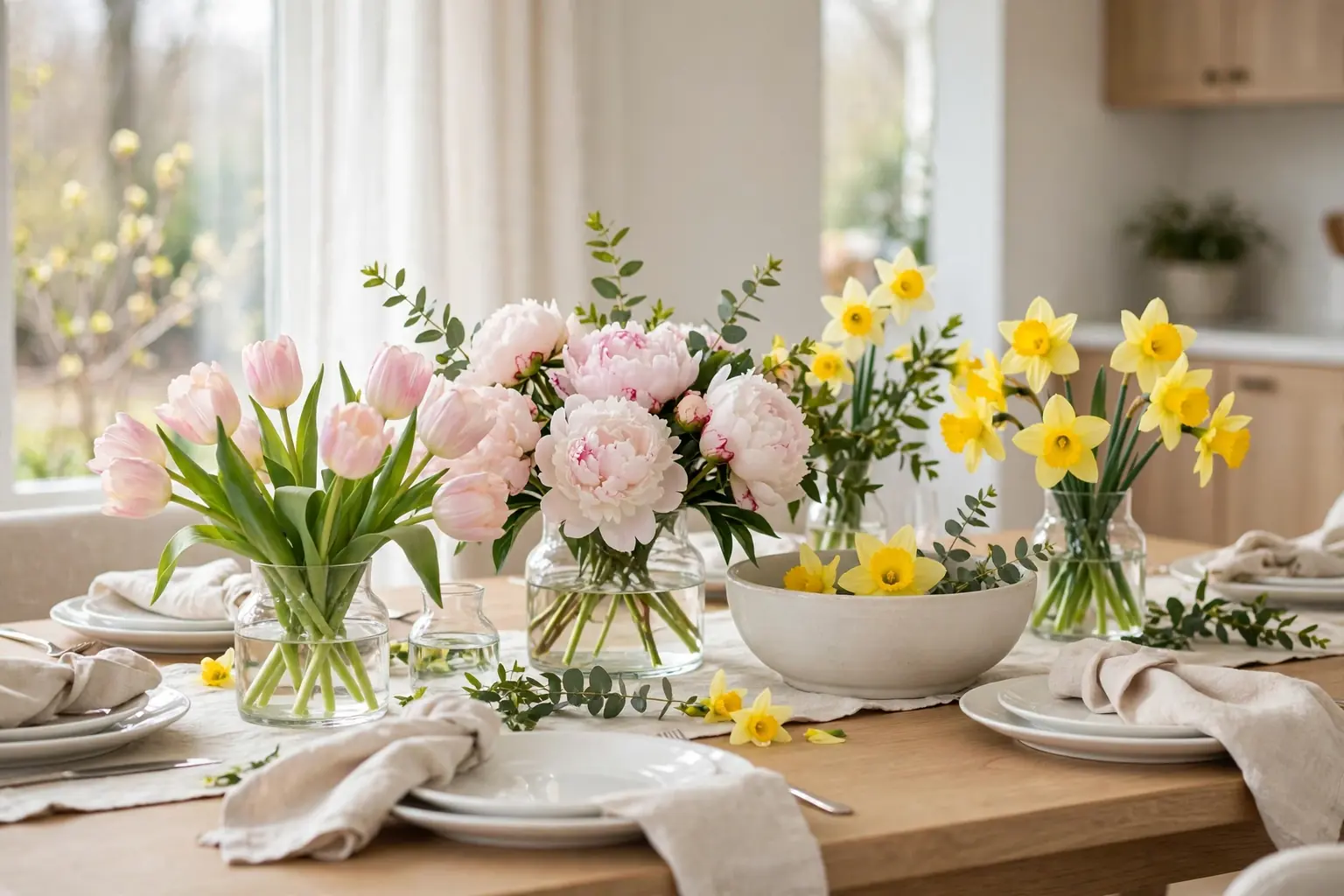
A spring floral centerpiece should bring the season to the table without getting in the way of the meal. Fresh tulips, peonies, daffodils, and blossom branches do most of the work on their own, so the arrangement around them can stay simple. A row of small jars, a low bowl, or a tray of potted bulbs is often enough. These 14 spring floral centerpiece ideas cover jars, bowls, pitchers, baskets, and trays, so you can pick the one that suits your table size, your flowers, and the way you actually use the room. Start with one idea, check how it looks from a seated chair, and change only what needs changing.
Key Takeaways
- Keep the centerpiece low on a dining table, so guests can see each other across it, and save tall branches for the end of the table or a sideboard.
- Pick one flower or one color to repeat, such as tulips, lemons, or soft pink, so the table reads as planned rather than crowded.
- Use glass, ceramic, terracotta, wood, and woven baskets for warmth, and keep the base palette pale so spring color can stand out.
- Choose flowers you can find locally in spring, and swap cut stems for potted bulbs or herbs if you want a centerpiece that lasts longer than a weekend.
- Keep candles clear of flowers, moss, and fabric, and use holders or hurricanes where a flame sits near dry material.
- Set the centerpiece a day ahead when you can, then add fresh stems and check water levels on the day itself.
1. Tulips in a Row of Small Glass Jars
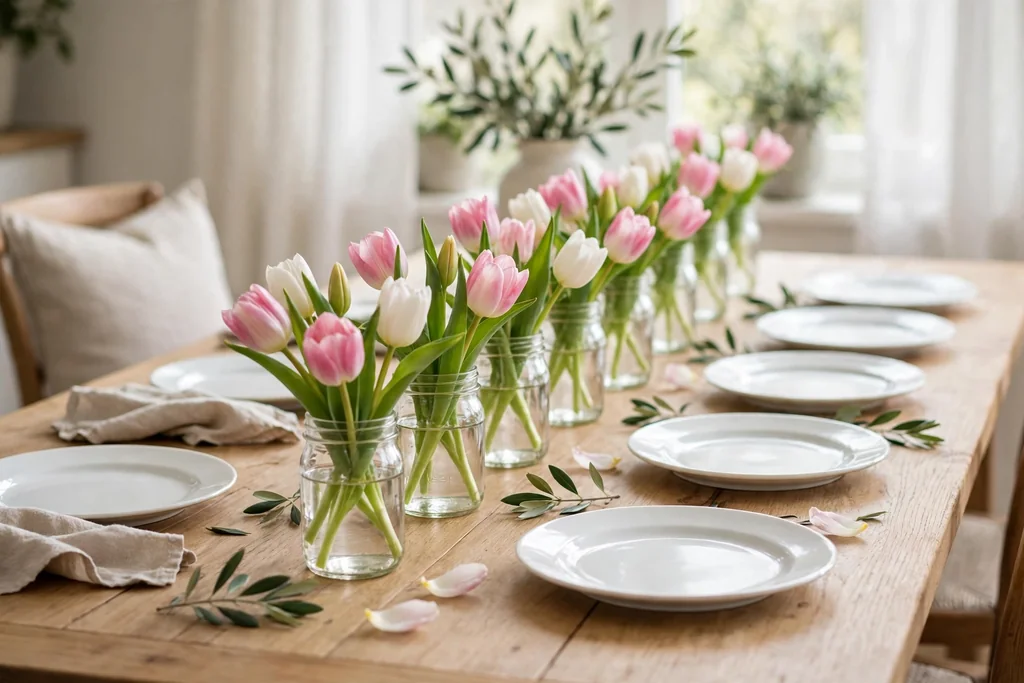
A row of small glass jars, each holding a few tulips, gives a spring table a fresh, collected feel with very little arranging. Use five to seven jars in a similar size, spaced evenly down the center of the table, and put three to five tulips in each jar. One color in every jar, such as pink, white, or coral, keeps the row looking planned, while mixed jars in the same color family look relaxed and easy.
This idea suits a narrow table well, since a row of small jars takes up less room than one wide arrangement. Keep each stem below eye level, trim the ends at an angle, and change the water every two days. Tulips keep growing after they are cut and bend toward the light, so the row will change shape slightly over a few days. For a small room where the table must also serve a living area, see these small living room dining room combo ideas.
2. A Loose Wildflower Runner Down the Center
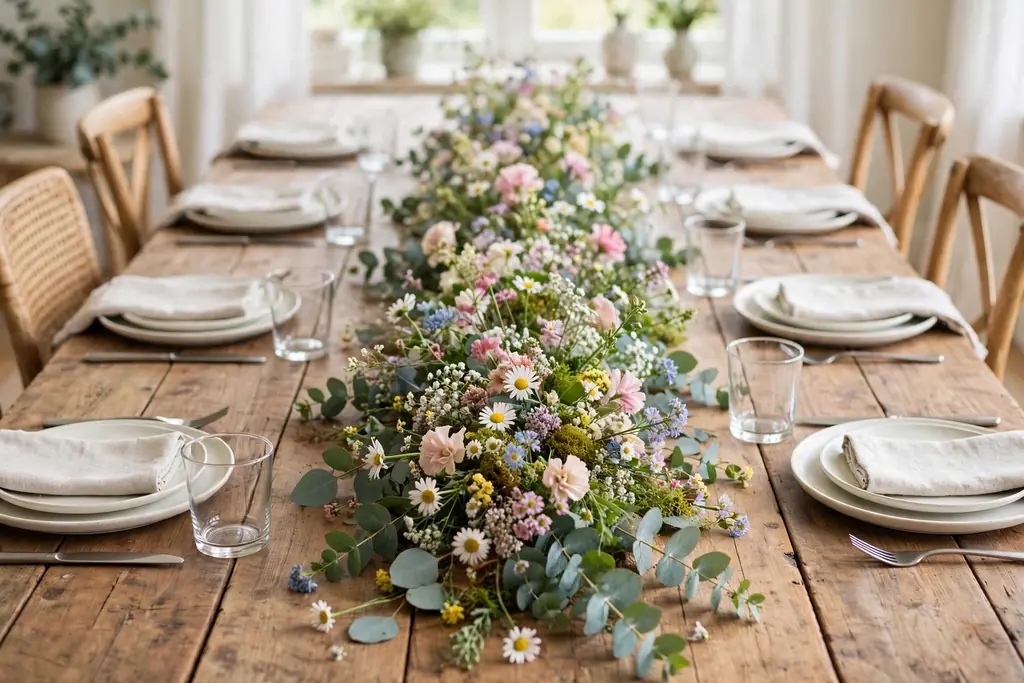
A loose runner of wildflowers and greenery down the center of the table needs no vase and no arranging skill. Lay a length of greenery, such as eucalyptus or ivy, along the middle of the table, then tuck in short stems of daisies, ranunculus, or whatever is in season near you. Keep the runner narrow, about the width of a dinner plate, so plates and glasses still have room.
This suits a long table best, where the runner can run the full length without crowding the ends. If your table is round, make a small wreath shape of greenery in the center instead. Mist the stems lightly before guests arrive, and lay a thin cloth or a strip of kraft paper under the greenery to protect the table from damp stems. Clear the runner before serving hot dishes, since a long runner can get in the way of passing platters. For an outdoor version of this table, these garden party ideas show how to carry flowers through seating, light, and food.
3. Peonies in a Low Wide Bowl
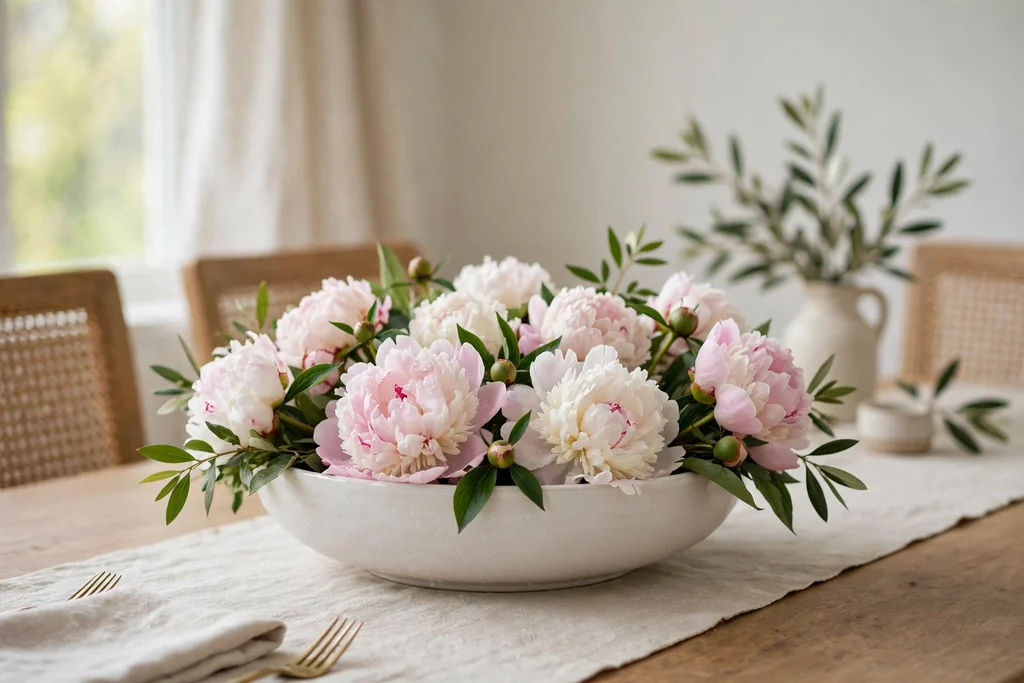
Peonies in a low wide bowl make a full, soft centerpiece that still leaves sight lines open across the table. Choose a shallow ceramic, glass, or stoneware bowl, fill it with water, and set peonies in it with their stems cut short, so the blooms sit just above the rim. Add a few leaves for fullness, but keep the bowl low enough that guests can talk over it without leaning around flowers.
This idea suits a round table or a table set for a special meal, where one generous arrangement matters more than a long row of small ones. Peonies open over a few days, so buy them slightly closed if you want them at their best on the day of a gathering. Change the water daily, remove any leaves that sit below the water line, and keep the bowl away from direct sun and fruit, which can shorten the life of cut flowers.
4. Potted Daffodils and Hyacinths in Terracotta
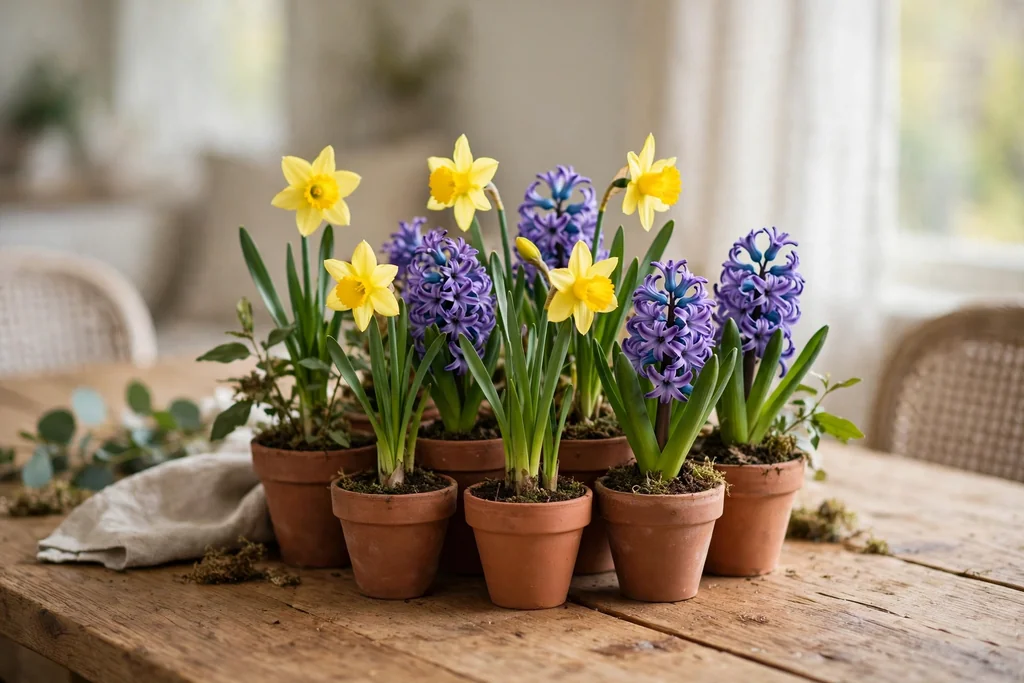
Potted daffodils and hyacinths in terracotta pots make a spring centerpiece that lasts longer than cut stems and can move outdoors later. Group three to five pots of different heights in the center of the table, with yellow daffodils, purple or pink hyacinths, and plenty of green leaves. The terracotta warms the look and suits a wood table, a kitchen table, or a windowsill just as well.
Water the pots the morning of the meal and set each pot on a small saucer to protect the table. Hyacinths carry a strong scent, so use one or two hyacinth pots rather than five if the table sits in a small room. Once the blooms fade, keep the pots in a bright spot and plant the bulbs out when the leaves have died back, so the same bulbs can return another year.
5. Cherry Blossom Branches in a Tall Vase
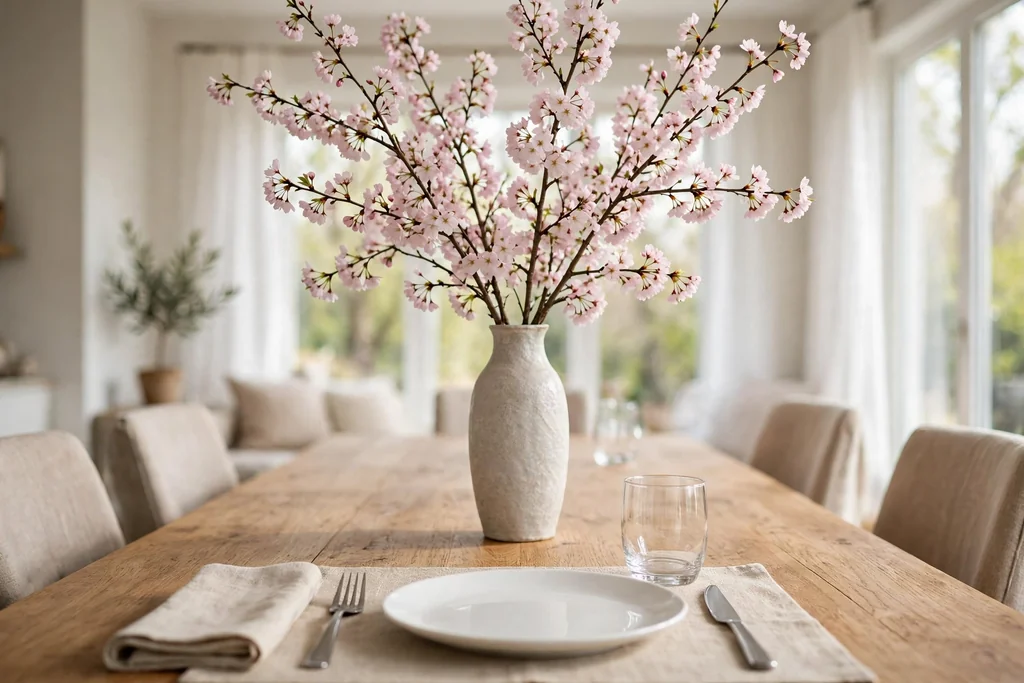
Cherry blossom branches in a tall vase bring spring height to a room without blocking conversation, because the branches are airy and the blooms sit above eye level. Use a tall ceramic vase, a stoneware pitcher, or a large glass vase, and place three to five branches in it, trimming the ends at an angle. The bare branches with soft pink or white blossom read as spring even before any other decoration goes on the table.
Place the vase at the end of the table or on a nearby sideboard if the table is small, and keep the branches clear of pendant lights and ceiling fixtures. Real branches last about a week in water, while good quality faux branches can stay out all season if you prefer a no care option. Pair the vase with plain white plates and a pale runner, so the blossom stays the focus.
6. Potted Herbs You Can Snip and Use
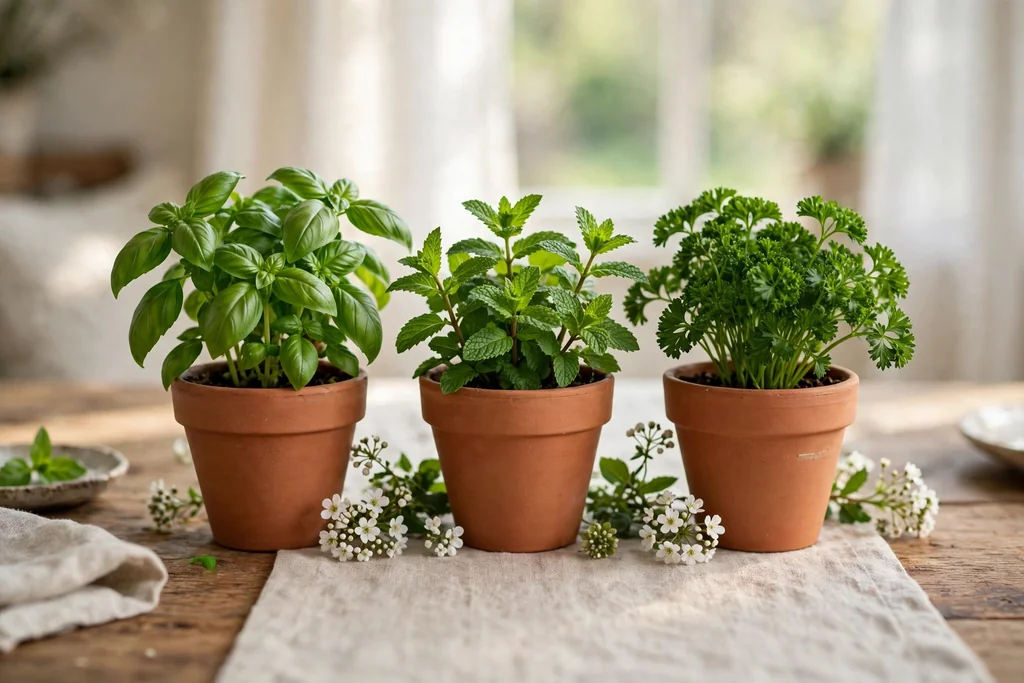
A row of small potted herbs down the center of the table works as a centerpiece, a kitchen supply, and a favor guests can take home. Use terracotta or plain ceramic pots planted with basil, mint, parsley, or chives, and set three to five pots along the table. Tuck a few tiny white spring flowers between the pots for color, and keep the green itself as the main feature.
Water the herbs the morning of the meal and set each pot on a small saucer to protect the table. Label each pot with a small wooden marker or a tied tag, so guests know what they are taking home. This idea suits a table where you want a centerpiece that lasts, since potted herbs keep growing on a windowsill while cut flowers fade in a week. For a cozy eating corner that suits this kind of small table dressing, see these kitchen nook ideas.
7. Lemons and Spring Flowers on a Low Tray
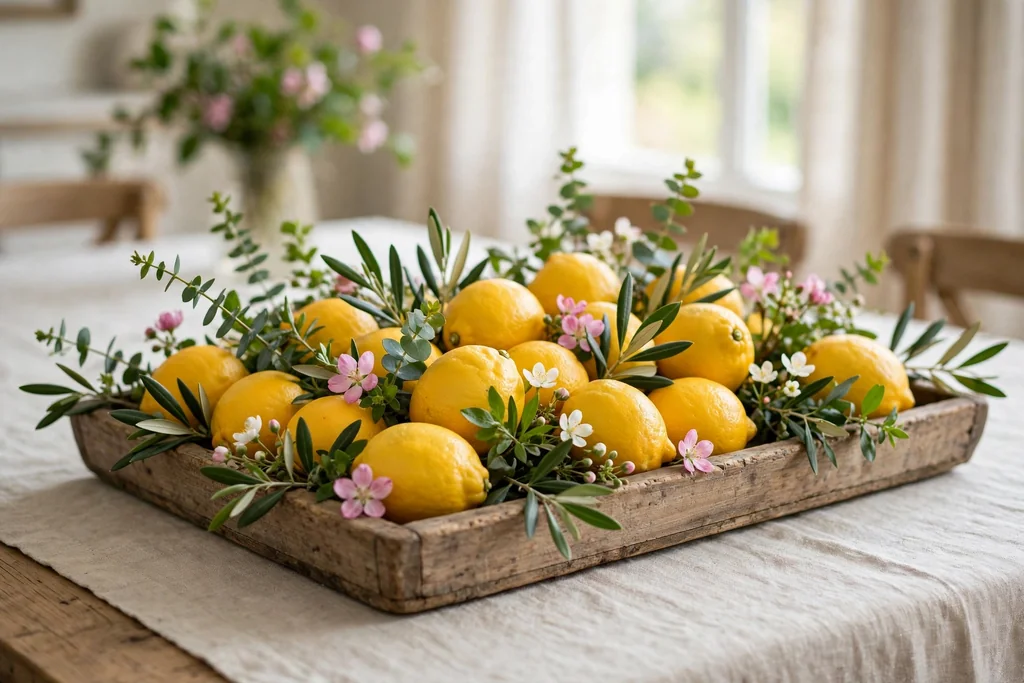
Lemons and spring flowers on a low tray make a bright, low cost centerpiece that doubles as a kitchen staple. Fill a low wooden tray or a shallow bowl with whole lemons, then tuck sprigs of greenery and small pink and white flowers between them. The yellow against green is fresh without being loud, and the scent of citrus suits a table set for lunch or brunch.
This idea suits a kitchen table or a breakfast table especially well, since the lemons can go back to the kitchen after the meal. Replace any lemon that softens, and keep the tray away from direct sun so the fruit lasts longer. If you want a taller version, stack lemons in a glass cylinder vase with a few stems in the center, and keep the top open so the arrangement stays airy.
8. Small Blooms Floating in Shallow Water Bowls
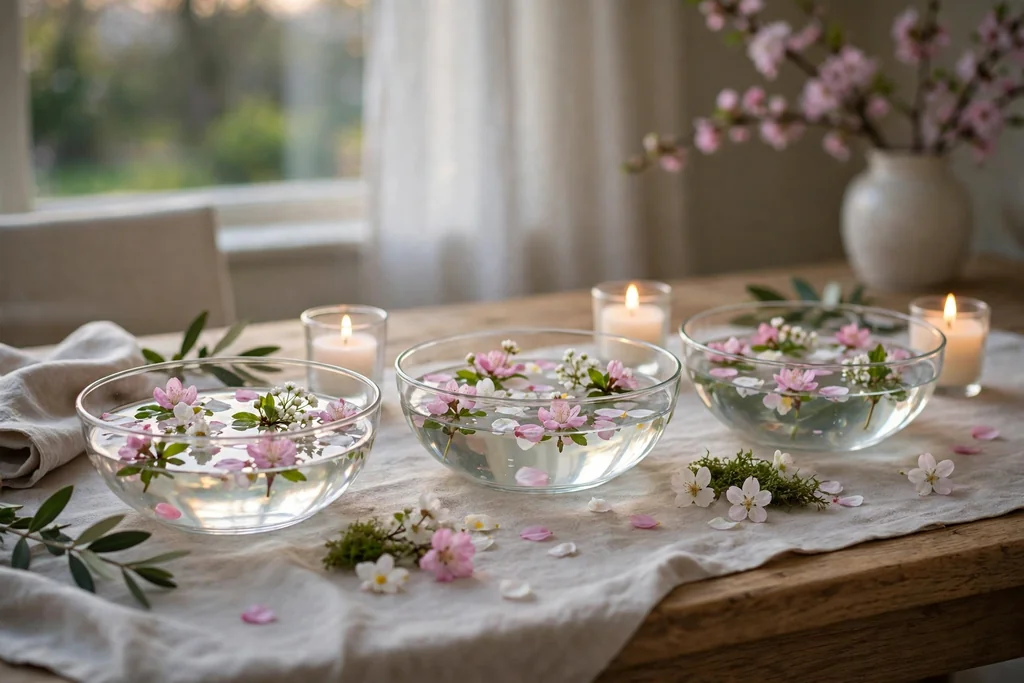
Small blooms floating in shallow water bowls give a spring table a calm, unusual centerpiece with very little arranging. Fill two or three shallow glass bowls with cool water, and float a few small flowers, such as ranunculus heads, daisy heads, or small rose blooms, on the surface. Add a small candle beside each bowl, clear of the flowers, for evening light.
This idea suits a table where you want color at table level without height, and it works well on a round table with one bowl in the center. Use fresh blooms on the day itself, since floating flowers wilt faster than stems in a vase, and change the water if it clouds. Keep the bowls on a tray or a cloth, so a spill does not reach the table, and lift the flowers out before clearing plates.
9. Spring Flowers in a Vintage Teapot
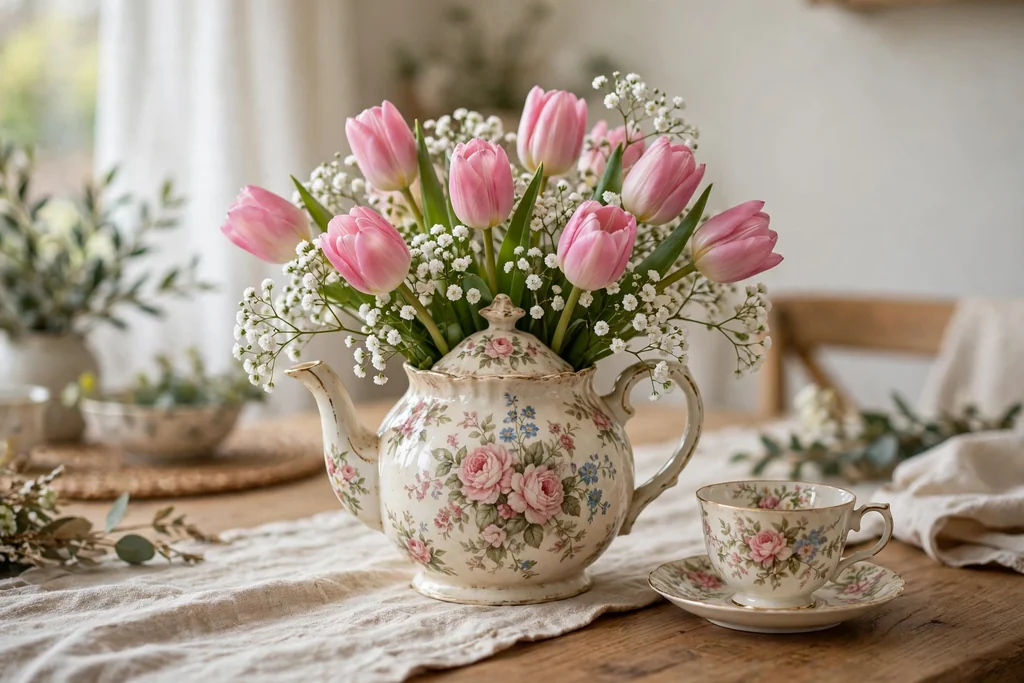
Spring flowers in a vintage teapot turn an ordinary object into a centerpiece with a story. Choose a teapot with a wide opening, fill it with water, and arrange tulips, daffodils, or small mixed spring stems so they spill gently from the spout side and the top. Set a matching teacup beside it with one or two stems, and keep the rest of the table plain so the teapot leads.
This idea suits a spring brunch, a tea table, or a table for friends, where a relaxed, collected look feels welcoming rather than formal. Check that the teapot does not leak before setting it on the table, and set it on a small plate or saucer as a safeguard. If the teapot is a family piece you do not want to fill with water, set a small jar inside it and arrange the stems in the jar instead.
10. Ranunculus and Anemones in a Ceramic Pitcher
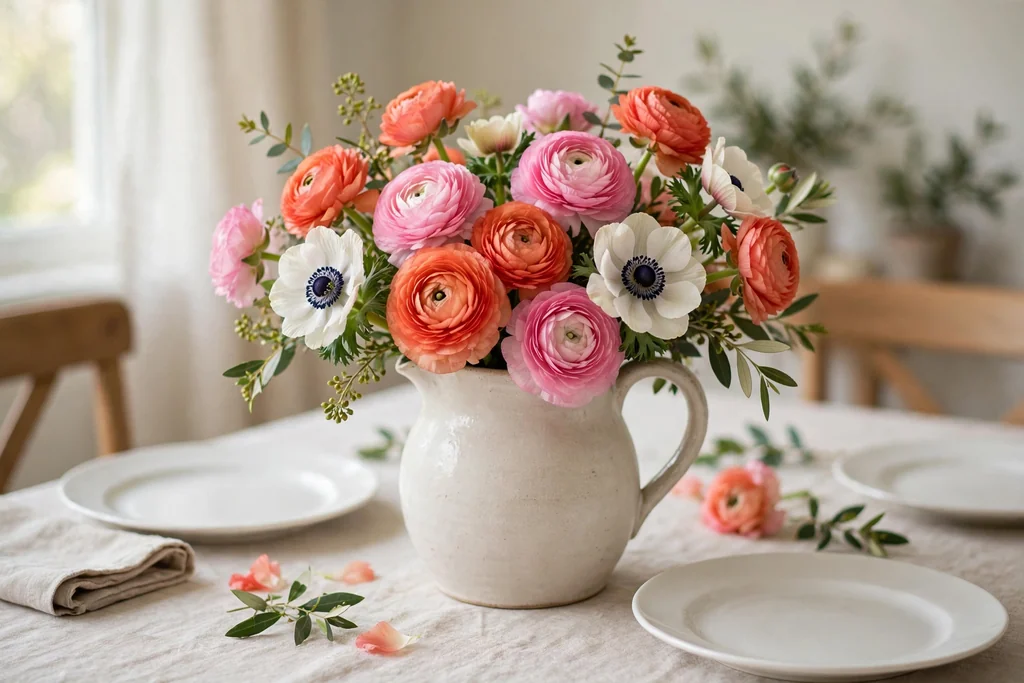
Ranunculus and anemones in a ceramic pitcher make a spring centerpiece with layered color and a soft, garden gathered shape. Choose a pitcher in white, cream, or a soft pastel, and fill it with ranunculus in coral, pink, and white, plus a few dark centered anemones for contrast. Keep the stems at mixed heights, with the tallest near the center, so the arrangement looks full without becoming a wall.
This idea suits a table that already owns plain white plates, since the pitcher and the flowers carry the color. Trim the stems at an angle, change the water every two days, and remove any stem that softens, since one fading stem can cloud the water for the rest. If ranunculus are hard to find near you, the same pitcher works with tulips, daffodils, or mixed garden stems in the same soft palette.
11. A Moss Tray With Ferns and Tiny Spring Flowers
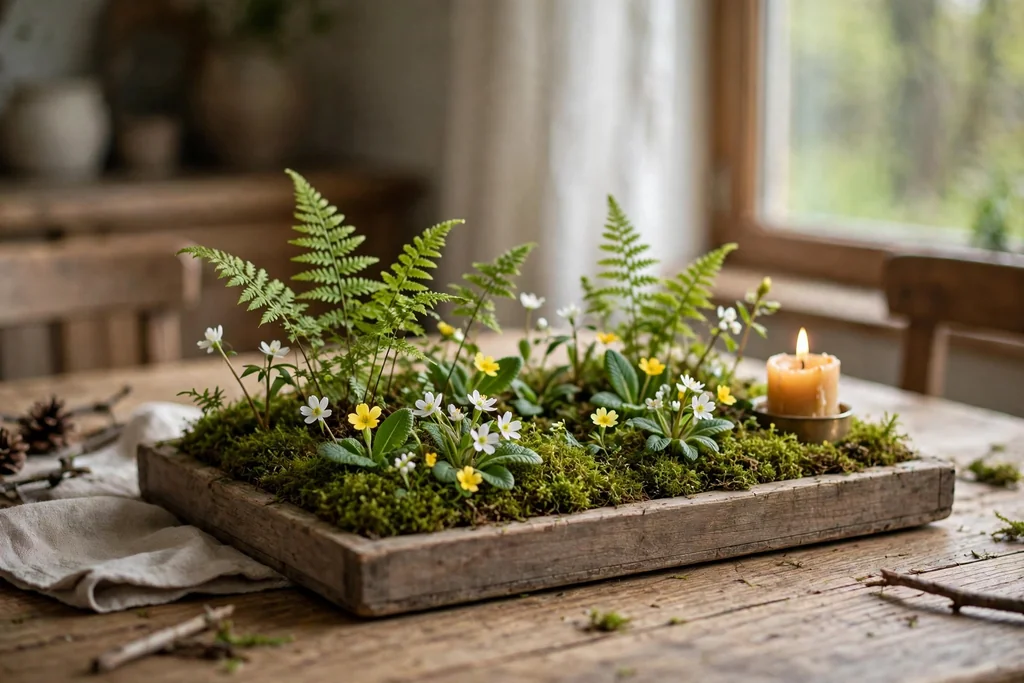
A shallow tray lined with moss, ferns, and tiny spring flowers makes a centerpiece that feels like a small piece of garden brought indoors. Choose a wood, metal, or ceramic tray, cover the base with sheet moss or preserved moss, and set small ferns and tiny white and yellow flowers into it. Add a small candle in a holder for evening, kept clear of the moss edges.
Keep the tray where it will not be knocked, since moss and small plants shift easily, and mist live moss lightly if it dries out. Battery candles suit this idea well if you worry about open flames near dry moss. This centerpiece suits a table that stays set between meals, since moss needs no daily arranging, and it can stay in place for the whole season with a change of flowers now and then.
12. Pastel Spring Flowers in a Woven Basket
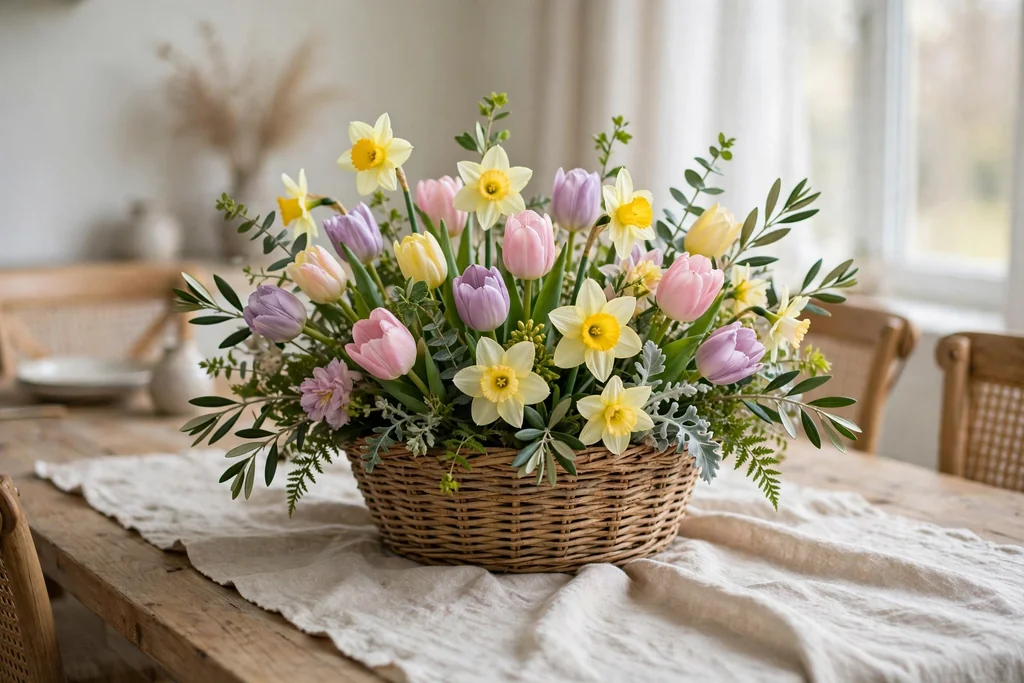
Pastel spring flowers in a woven basket give a table a warm, natural texture that suits both indoor and outdoor meals. Choose a low, wide basket, line it with a waterproof layer or a small container inside, and fill it with tulips, daffodils, and greenery in soft pink, yellow, and white. Set the basket in the center of the table on a linen cloth, so the weave shows against the cloth.
This idea suits a casual spring table, a brunch, or a table on a porch or patio. Wipe the basket after meals if water spills, and store it dry so the weave keeps its shape. If your table is small, use a small basket with short stems rather than a large one, since a wide basket can crowd plates. Swap the flowers weekly to keep the basket fresh, and reuse the basket with greenery once spring blooms fade.
13. Tiny Posies in Pastel Egg Cups
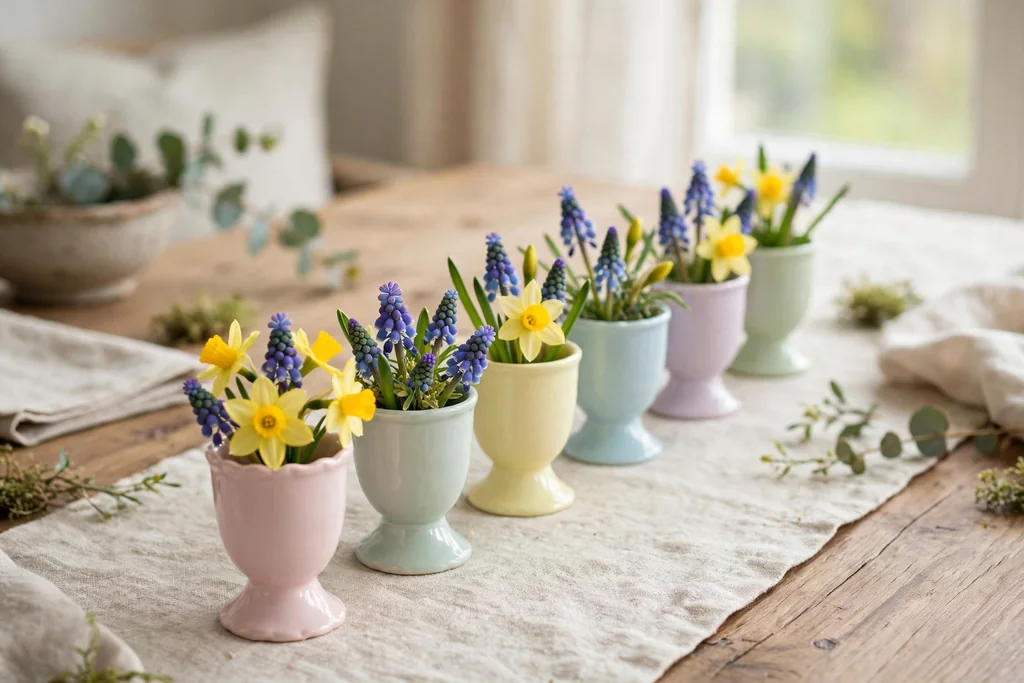
Tiny posies in pastel egg cups make a spring centerpiece that works stem by stem down a small table. Use five to seven egg cups in soft pastel colors, and put a tiny posy of two or three short stems in each one, such as daffodils, grape hyacinths, or small tulips. Line the cups down the center of the table, or set one at each place setting as a small favor.
This idea suits a small table where a wide centerpiece would crowd the plates, and it suits an Easter table especially well. Keep each posy short, no longer than a hand span, so it does not crowd the plate or the coffee cup. If you have no egg cups, small shot glasses, tiny jars, or spice jars work just as well, and mismatched cups still look planned when the flowers share one color family.
14. A Flat Spring Wreath Ring Around Candles
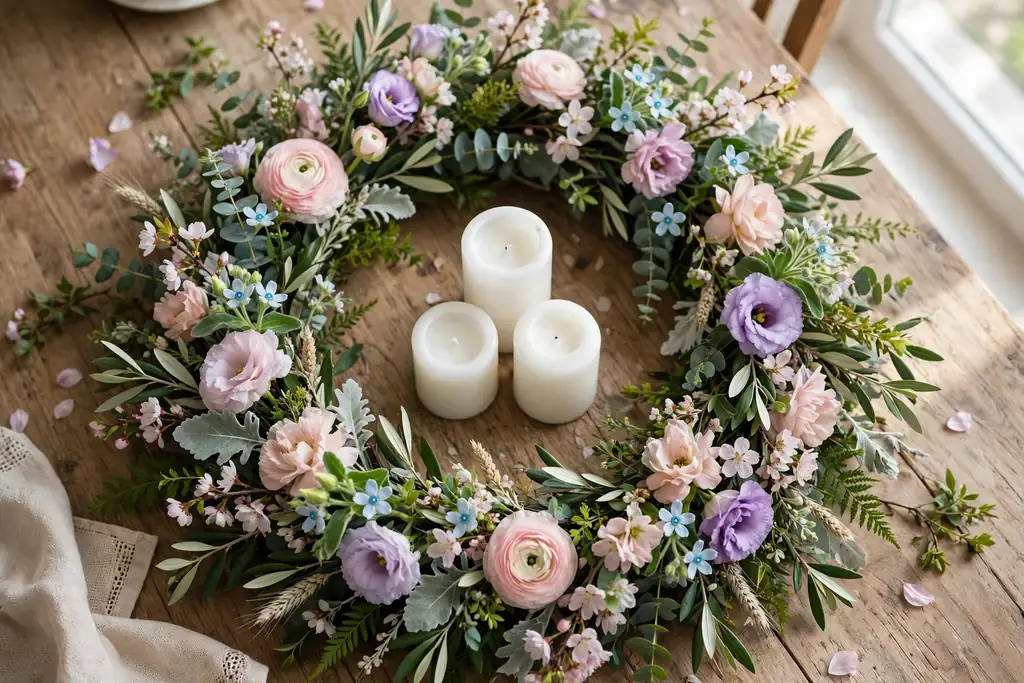
A flat spring wreath laid on the table as a ring, with candles in the middle, turns a wall decoration into a table centerpiece. Lay a wreath of greenery and pastel spring blooms flat on the table, and set two or three white pillar candles in holders in the center of the ring. The ring frames the candles, and the candles give the wreath a purpose at the table beyond decoration alone.
Keep the candles in holders, clear of the wreath foliage, and use battery candles if the wreath is dry or if children sit nearby. Keep the ring low and simple: greenery, a few blooms, and candles are enough, while a crowded ring looks cluttered from a seated chair. This idea suits a sideboard or a console table as well as a dining table, and it works as a spring display that stays set for weeks, with fresh blooms swapped in as needed.
Conclusion
A fresh spring floral centerpiece does not need a large budget or a new set of dishes. It needs one clear idea, such as tulips in small jars, peonies in a low bowl, or blossom branches in a tall vase, plus a few small details that repeat that idea across the table. Keep the centerpiece low, keep the palette soft, and leave room for plates, glasses, and conversation. Start with the idea that fits your table today, whether that is a wildflower runner for a long table or tiny posies in egg cups for a small one, and build from there next spring.
Save this list on Pinterest before your next spring gathering, and work through it one area at a time: centerpiece first, then place settings, then light.
FAQs
How long will a fresh spring floral centerpiece last?
Most cut spring flowers, such as tulips, daffodils, and ranunculus, last five to seven days in fresh water if you trim the stems and change the water every two days. Potted bulbs and potted herbs last longer still, since they keep growing, and they make a good choice for a table that stays set for more than a weekend.
How do I keep a spring centerpiece low enough for conversation?
Keep flowers and candles below the eye line of seated guests, and save tall arrangements for a sideboard or the end of a long table. A low bowl of peonies, a row of small jars, or a tray of lemons and flowers all keep the center open so guests can see and hear each other.
Can I use faux flowers for a spring centerpiece instead of fresh ones?
Yes. Good quality faux tulips, peonies, and blossom branches suit a centerpiece that stays set all season, such as a moss tray or a wreath ring. Mix a few fresh stems with faux greenery if you want scent and a fresh look without replacing the whole arrangement every week.
What flowers are in season in spring for a centerpiece?
Tulips, daffodils, hyacinths, peonies, ranunculus, anemones, and cherry blossom branches are all common spring choices, along with daisies and wildflowers where they grow locally. Choose what your local florist or garden has in stock, rather than chasing one specific bloom, since local stems last longer and cost less.
How do I keep cut stems fresh in a centerpiece?
Trim each stem at an angle before placing it in water, remove any leaves that sit below the water line, and change the water every two days. Keep the arrangement away from direct sun, heat, and ripening fruit, and remove any stem that softens promptly, since one fading stem can cloud the water for the rest.
How do I make a spring centerpiece for a small table?
Use one small arrangement rather than a long runner: a low bowl of peonies, a row of tiny posies in egg cups, or a single jar of tulips. Keep the arrangement compact so plates have room, and place one small detail, such as a tied napkin or a single stem, at each setting to carry the theme around the table.