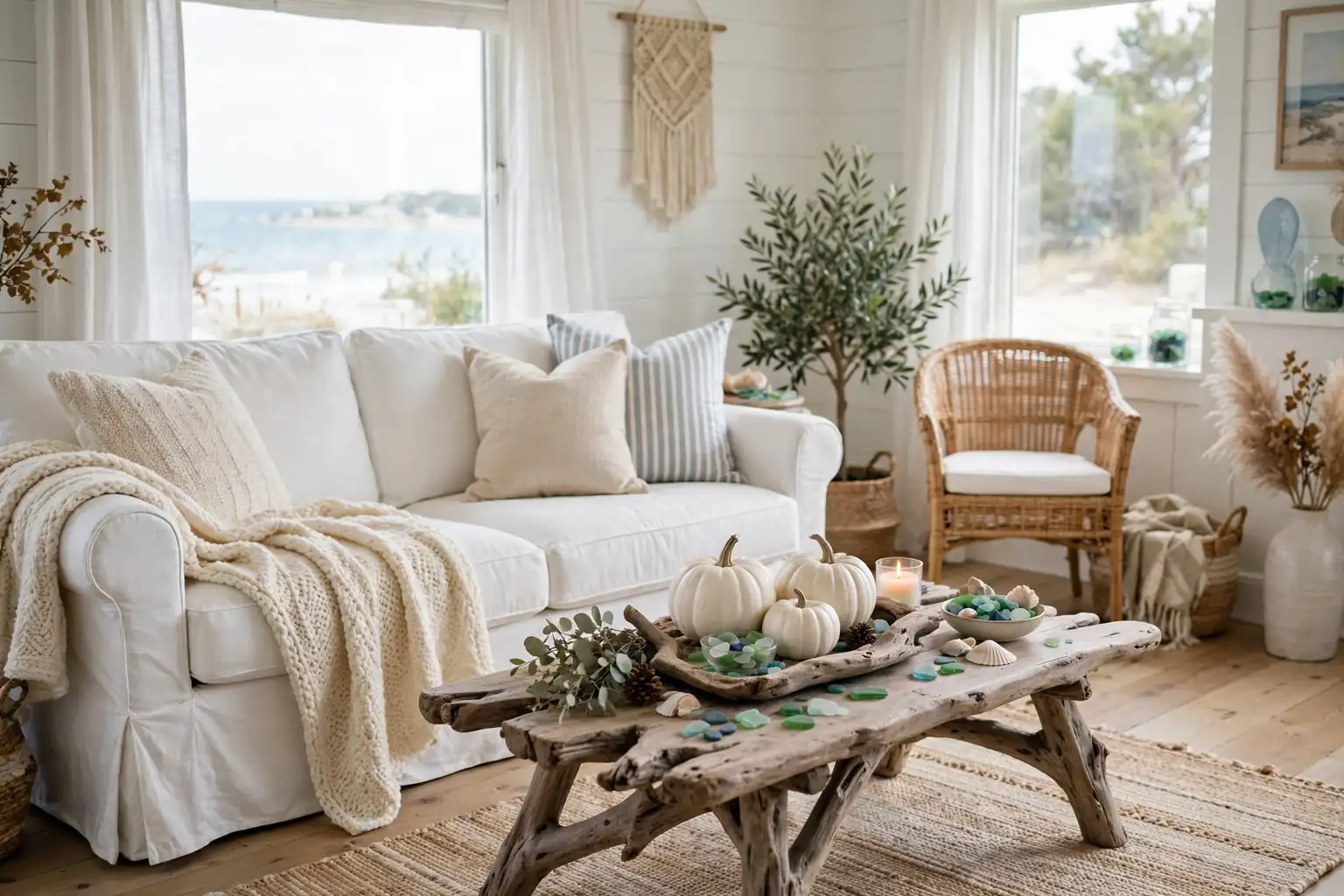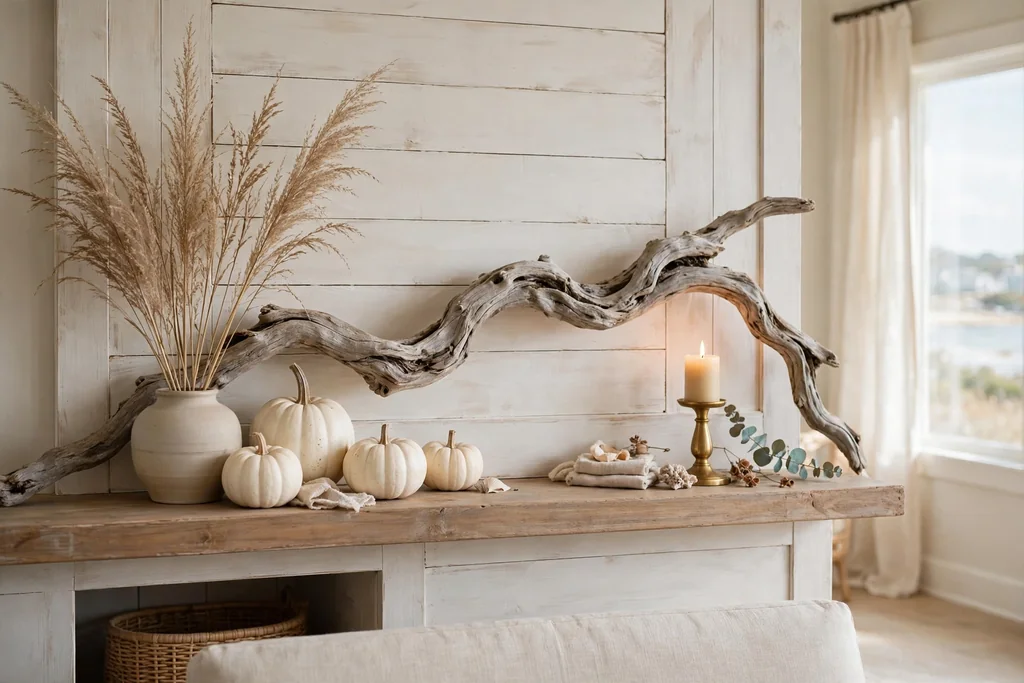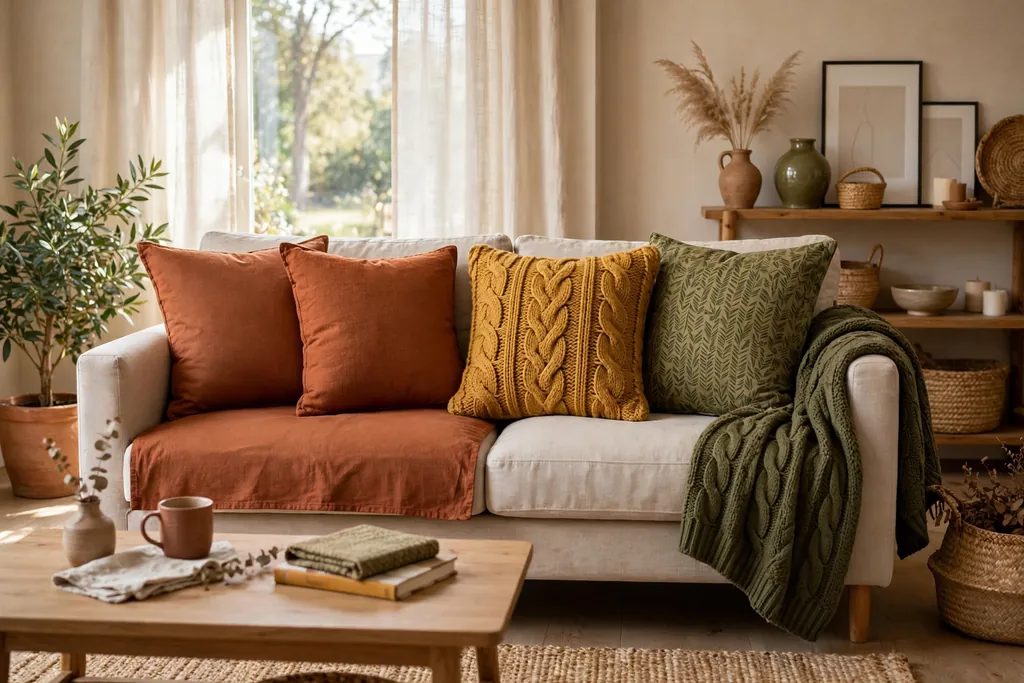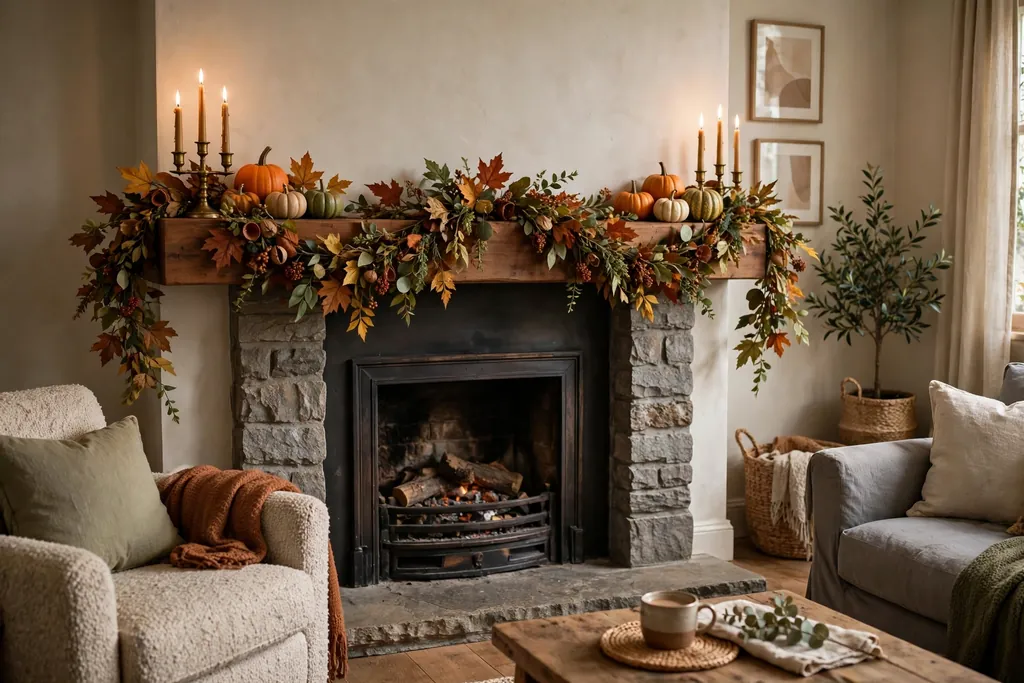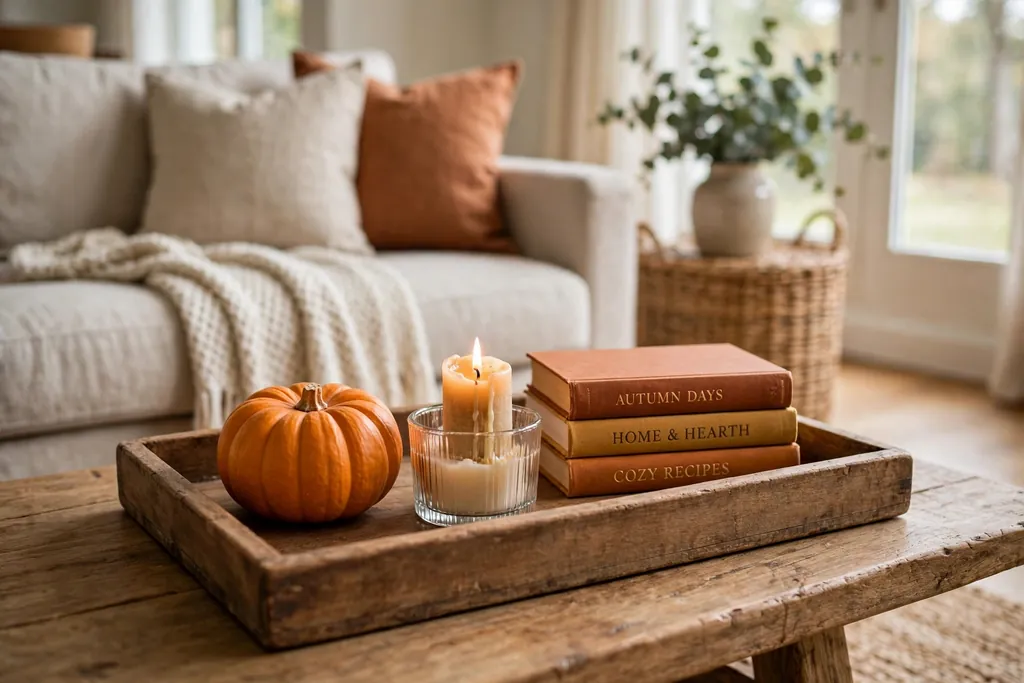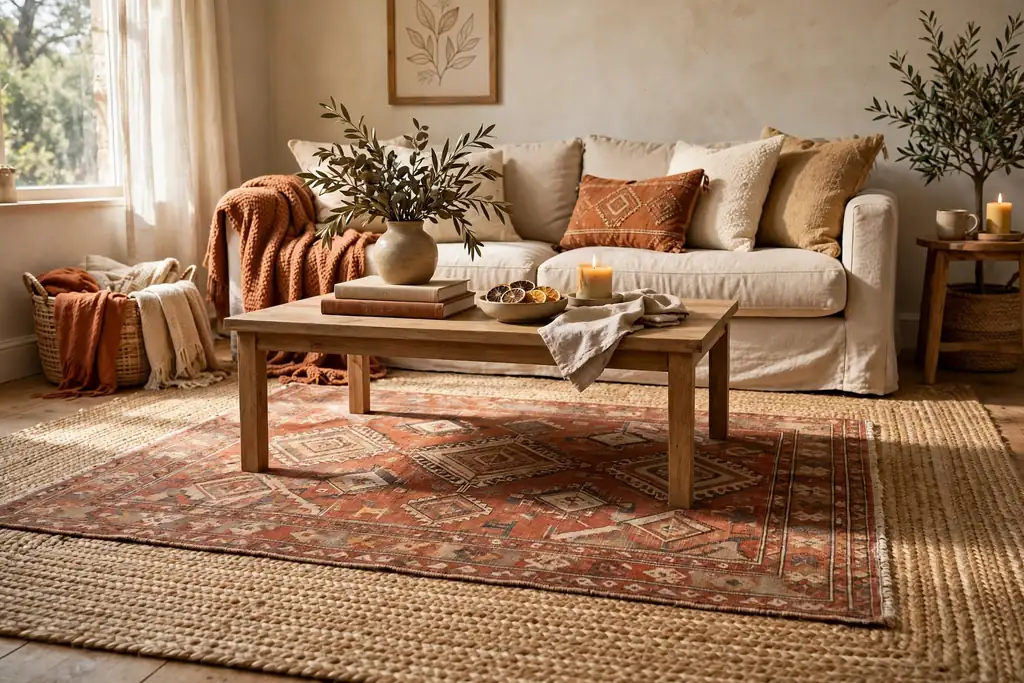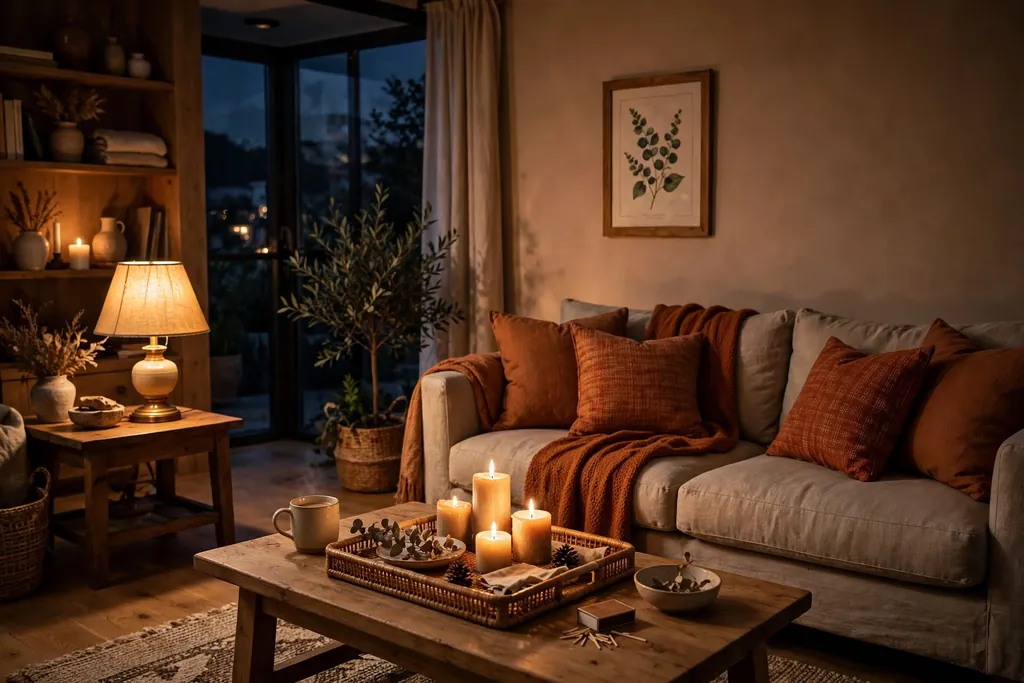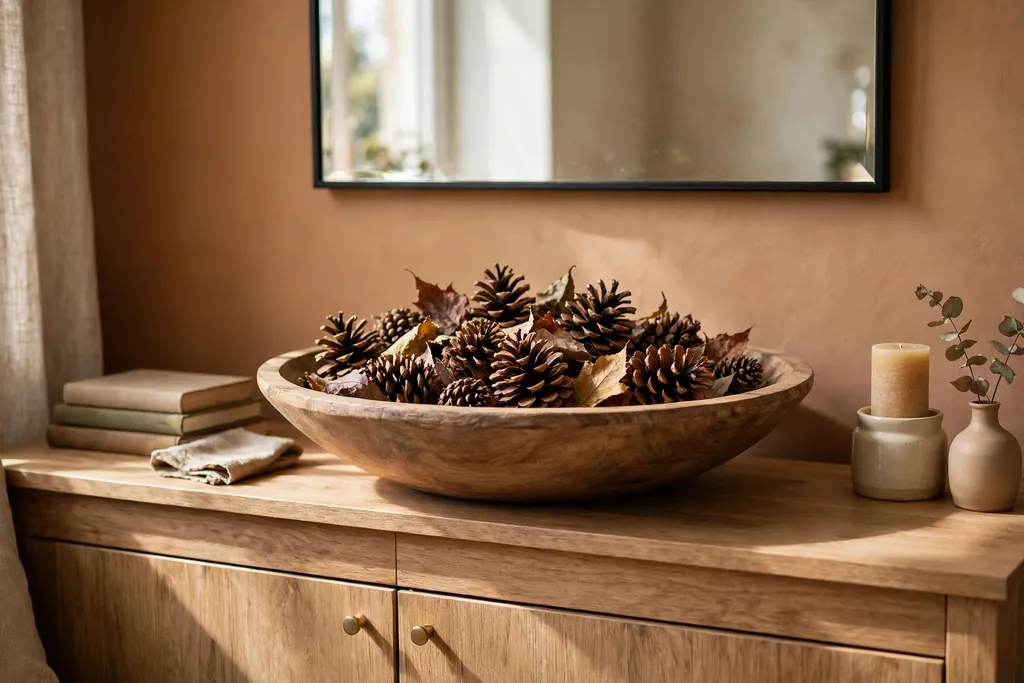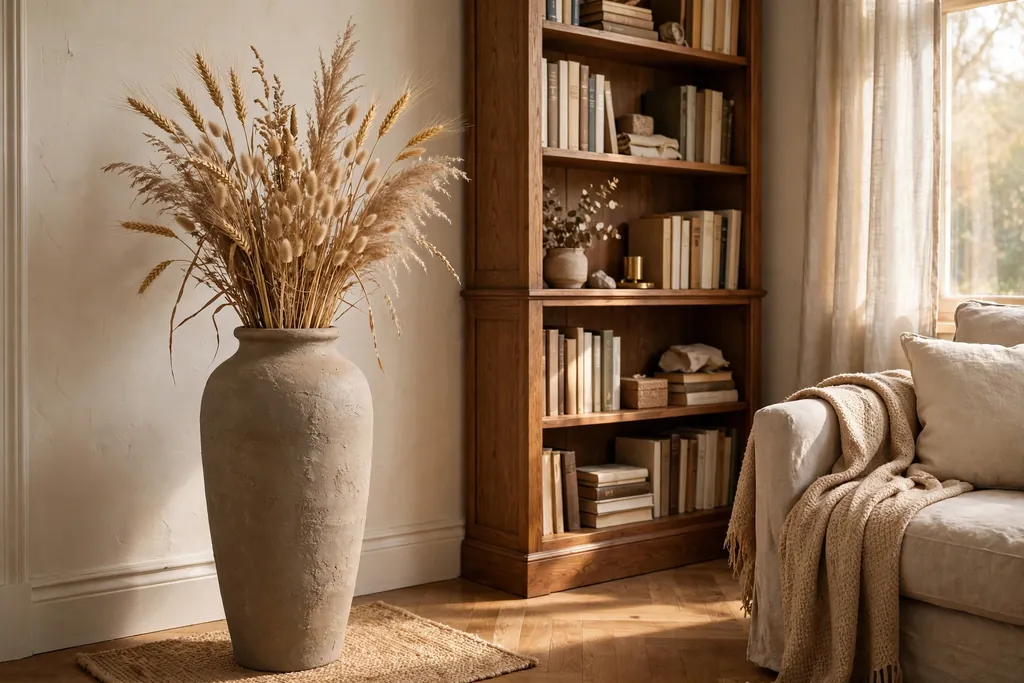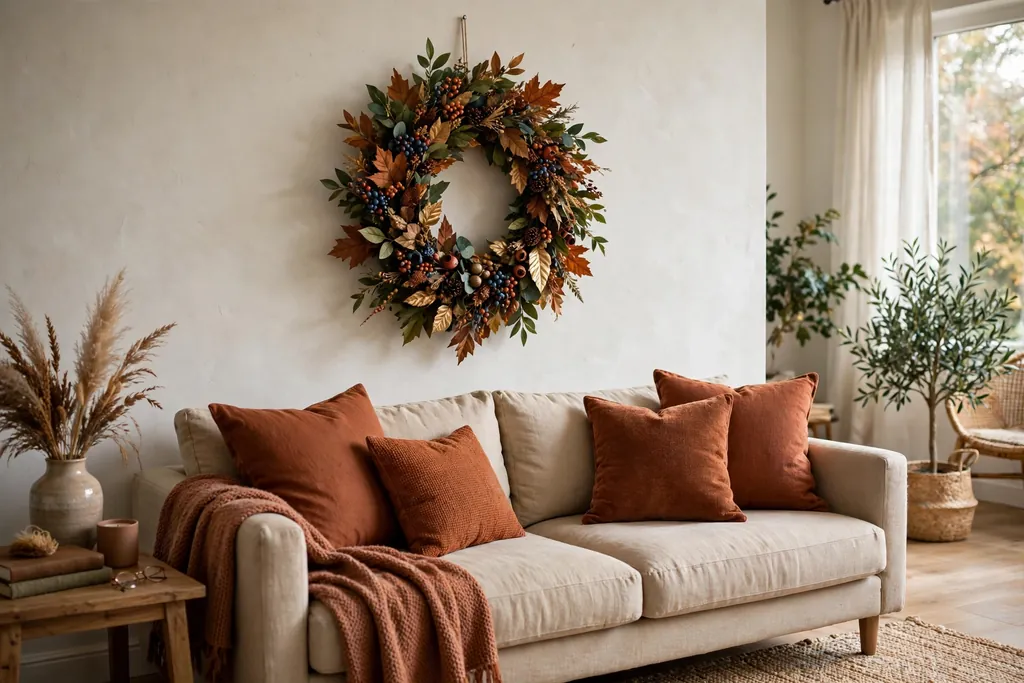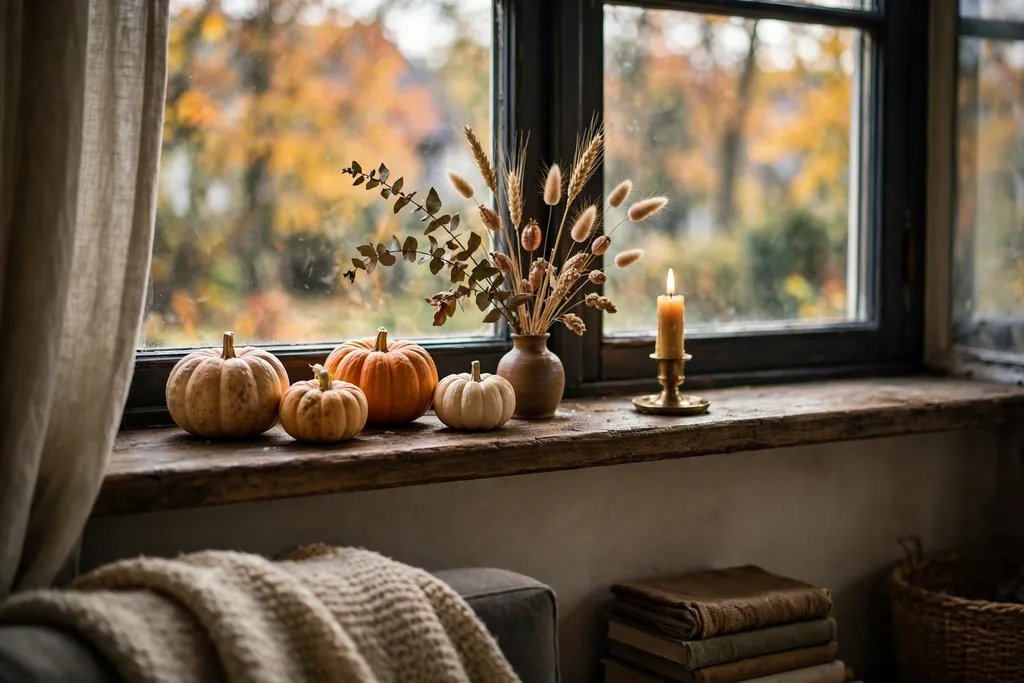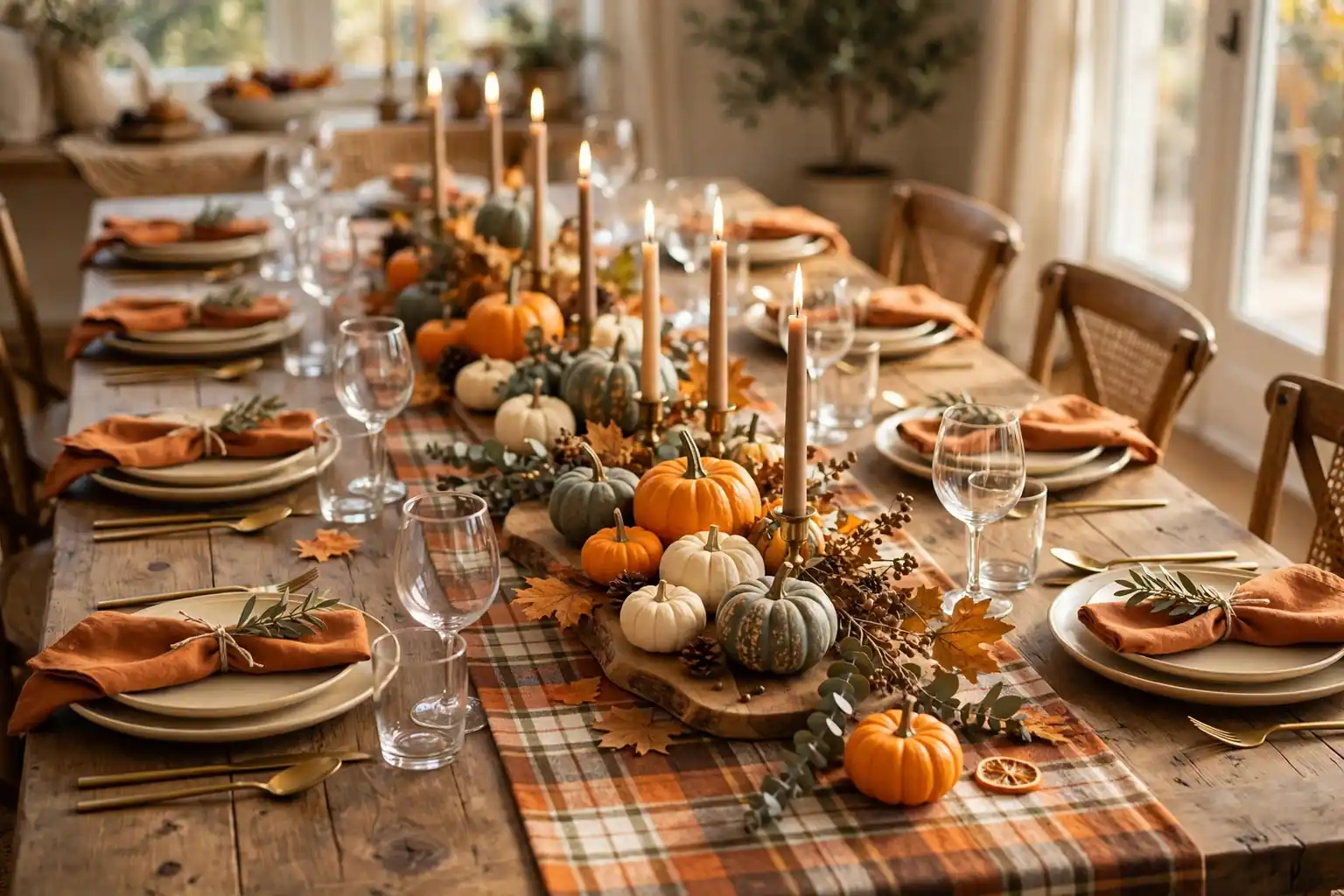
Fall table decor works best when it stays low, warm, and easy to live with. Use a runner, one low centerpiece, and plates, napkins, and candlelight in rust, cream, and warm wood, then add pumpkins or dried leaves. The 23 ideas below cover everyday meals and larger gatherings, so you can pick one change or dress the whole table.
Start with the base you already own: a plain tablecloth or runner, everyday plates, and cloth napkins in a warm neutral. Then add one seasonal layer at a time, such as a pumpkin cluster, a leaf garland, or a set of taper candles. Keep the centerpiece low enough to see across, leave room for serving dishes, and choose pieces you can lift off in one move when the table needs to clear.
Key Takeaways
- Keep the centerpiece low and narrow, so guests can see each other and serving dishes still fit.
- Pick a palette of rust, cream, warm wood, and muted olive, and repeat each color at least twice.
- Start with textiles: a runner, napkins, and placemats carry most of the seasonal color and wash easily.
- Use one main centerpiece per table, not several competing clusters, and leave empty space at each place.
- Choose candlelight with care: keep flames clear of dried leaves, fabric, and paper, and use flameless candles near children or dried material.
- For gatherings, add place cards, a drink station, or a menu card, so the table also helps guests settle in.
1. Pumpkin and Candle Centerpiece on a Wood Board
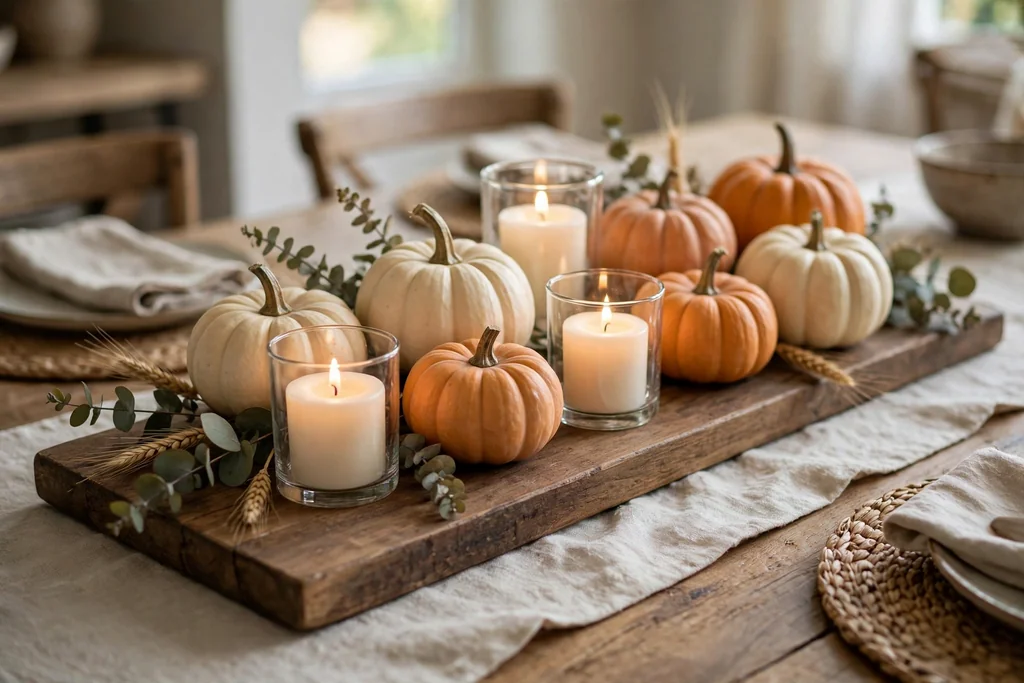
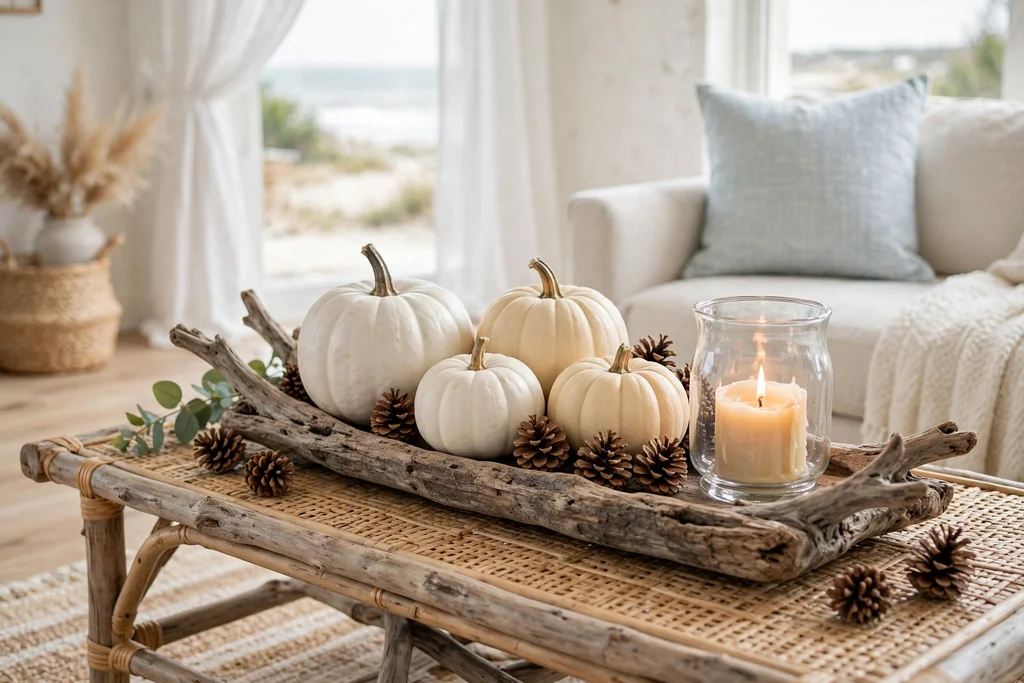
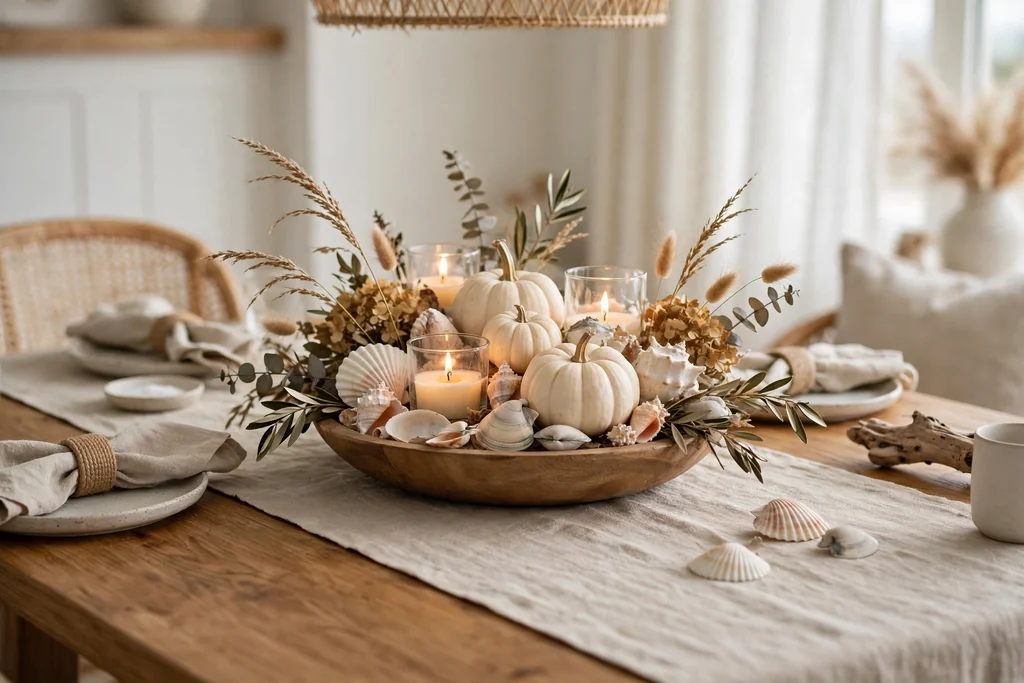
Set a long wood board down the middle of the table, then group three to five small pumpkins in cream, muted orange, and pale green along it, with short pillar candles in glass holders between them. The board keeps the group contained, so it reads as one centerpiece, and it lifts off in one move when you need the full table for serving.
Use battery candles if the board will sit near dried leaves or if children will be at the table. For a real flame, keep candles in holders, clear of pumpkin stems and any fabric, and never leave them burning unattended. Swap one pumpkin for a small vase of dried stems if the group looks too round and flat.
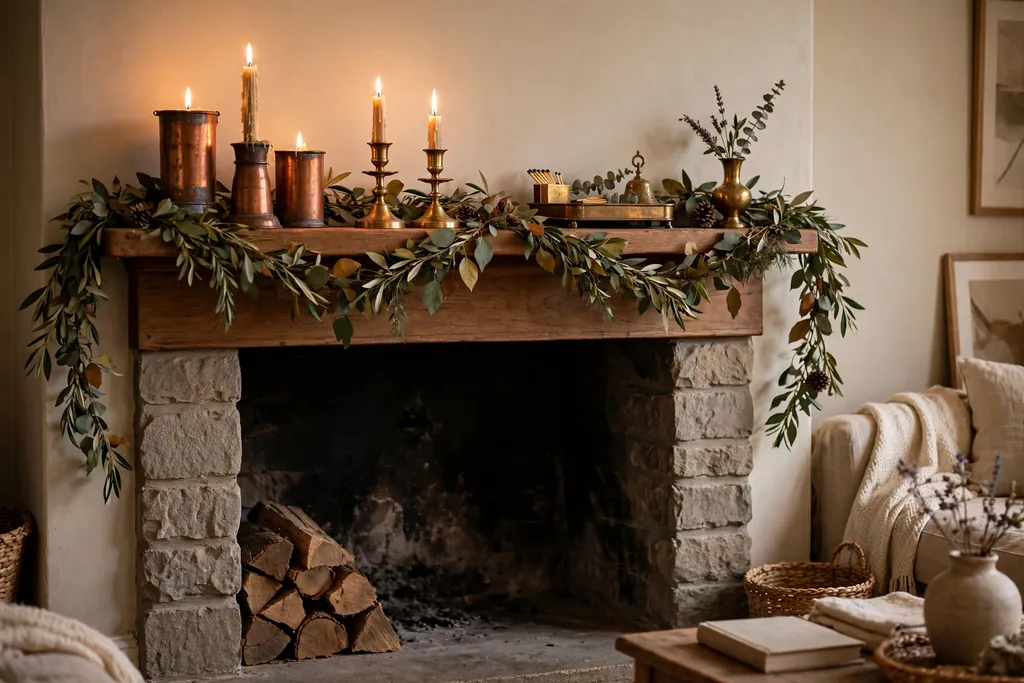
2. Low Eucalyptus Runner with Taper Candles
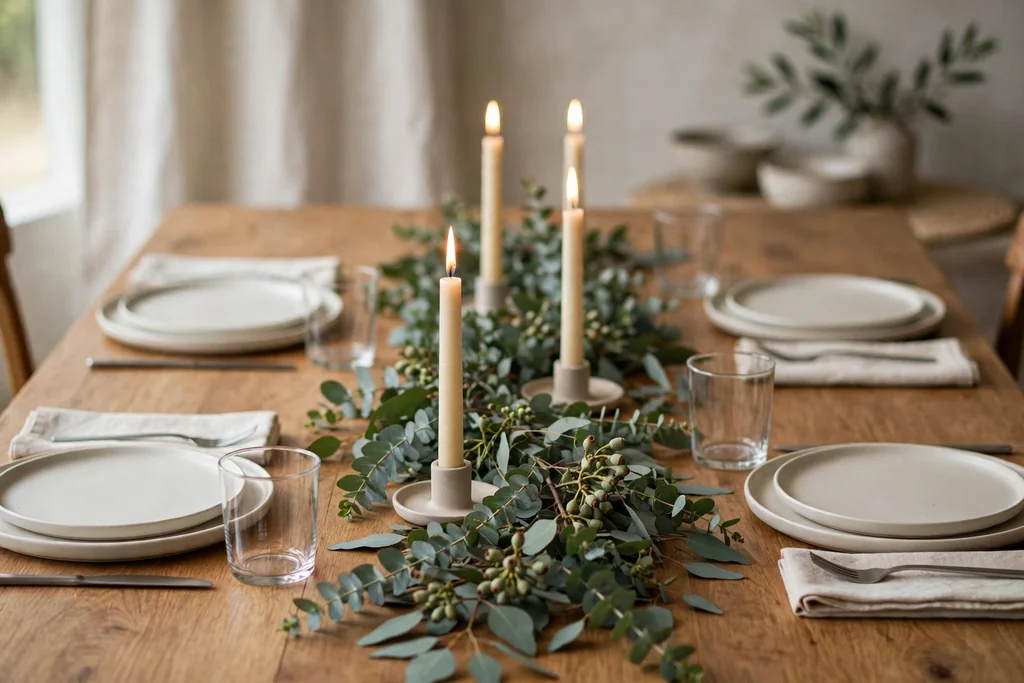
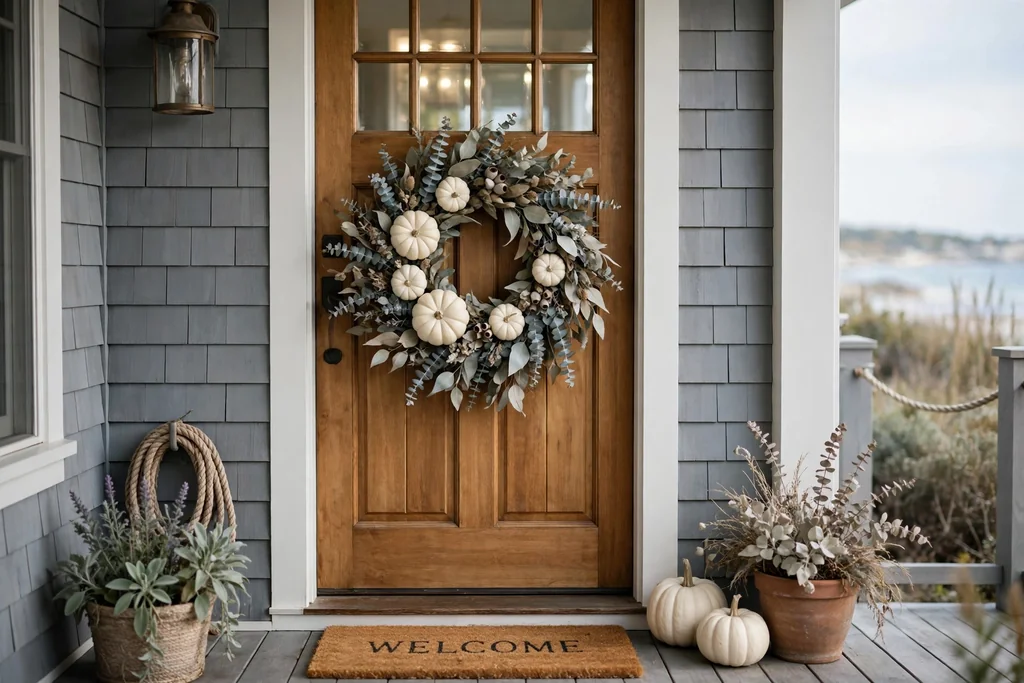
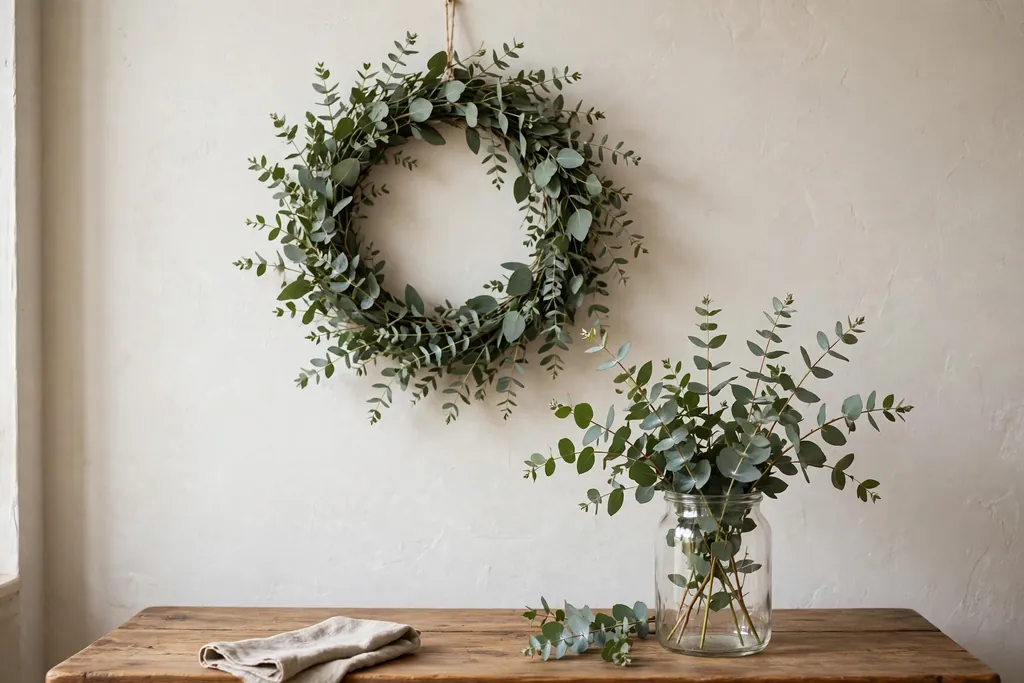
Lay a loose eucalyptus runner down the center of the table, then set taper candles in simple holders along it at uneven intervals. The green-grey leaves soften the table without adding height, and the candles give evening meals a warm glow that overhead light cannot match.
Trim the eucalyptus so it stays inside the table edges and does not brush plates or glasses. If fresh stems dry out and shed, switch to faux eucalyptus you can wipe clean, or use short sprigs tucked into napkin rings instead of a full runner. Keep taper flames clear of the leaves, and use flameless tapers if the runner will sit under a shelf or near curtains.
3. Plaid Runner with Wood Chargers
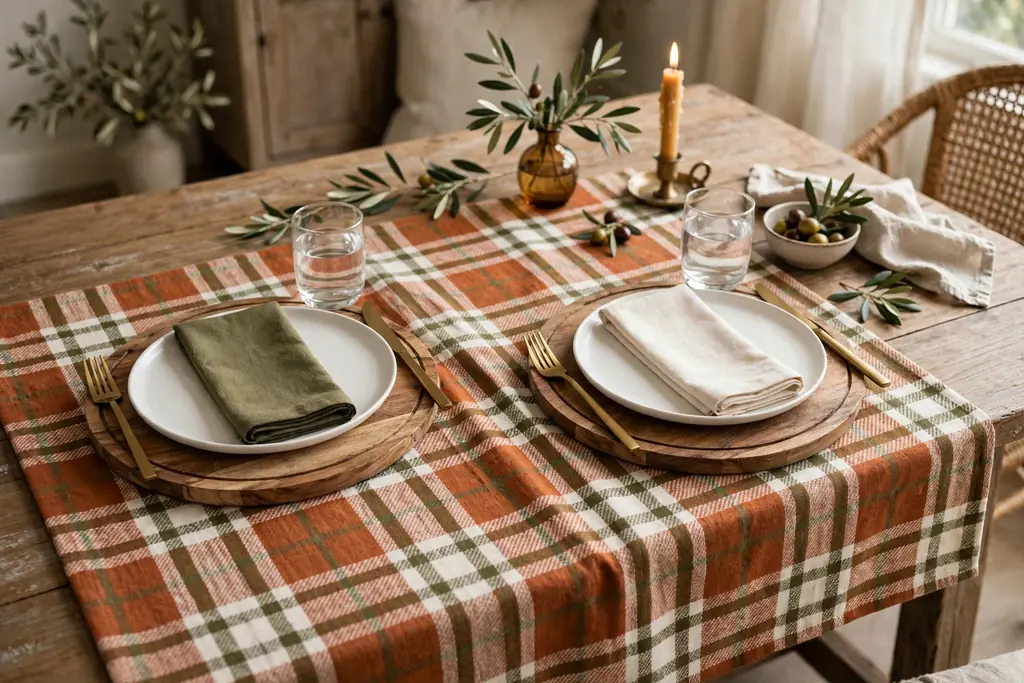
A plaid runner in rust, cream, and muted olive gives a plain table an instant fall base, and round wood chargers under each plate add warmth without a new dinner set. Lay the runner so it hangs evenly at both ends, then center one charger at each place, with the plate on top.
Keep the plaid scale in proportion to the table: a large check suits a long dining table, while a small check suits a round breakfast table. Wipe wood chargers after meals and store them flat, since they can warp if left damp. If the runner is thick, use it alone and skip a tablecloth, so plates sit level.
4. Mini Pumpkin Place Cards
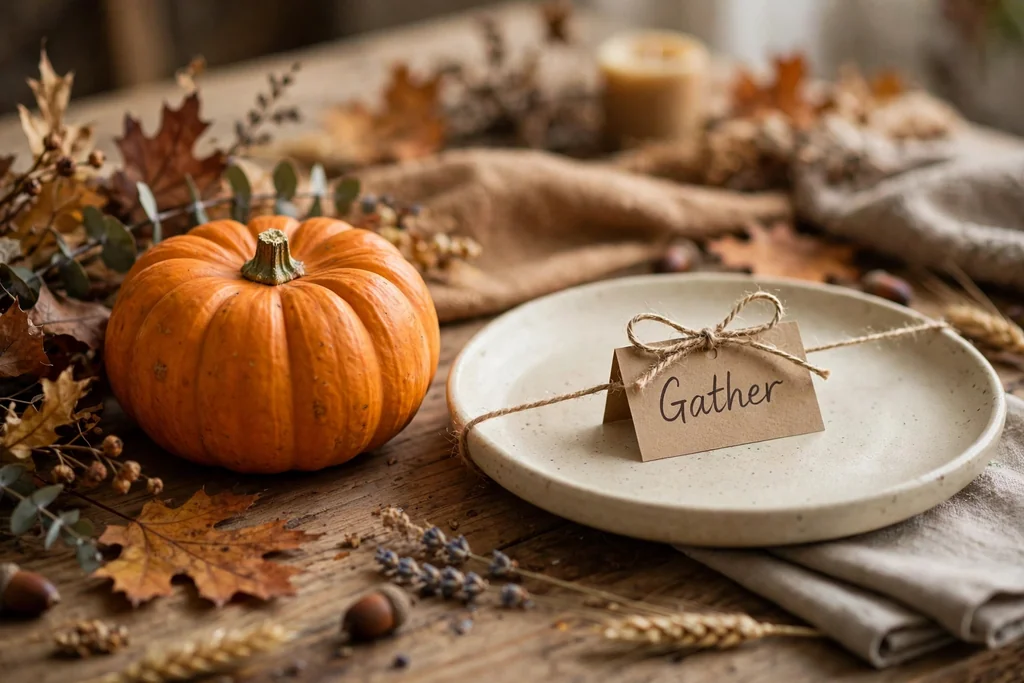
Set one mini pumpkin at each place, with a small card tucked beside it or tied to the stem with twine, showing the guest name or a short welcome note. This idea works for a family dinner as well as a larger gathering, because it marks each seat and doubles as a small take-home piece.
Choose pumpkins small enough to sit beside a plate without crowding the glass. Write names in clear, large lettering, and keep the card short, since a long note will be read once and then set aside. For everyday meals, skip the names and use the mini pumpkins alone as a simple place marker.
5. Harvest Fruit Bowl Centerpiece
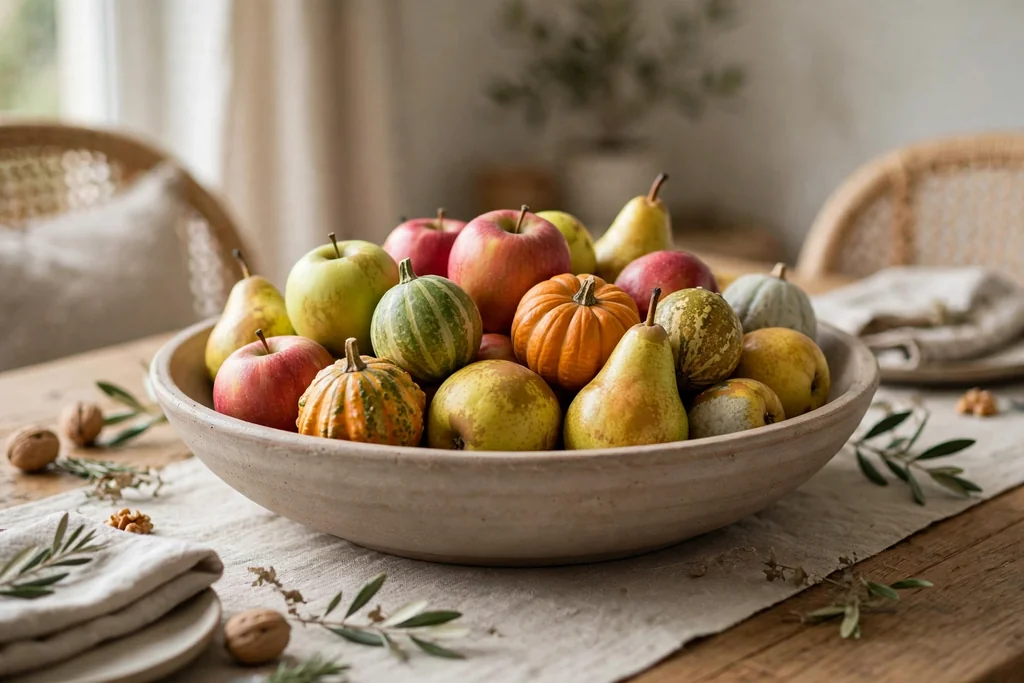
Fill a wide, shallow bowl with apples, pears, and a few small gourds, and set it in the center of the table as a centerpiece you can also eat from. The fruit gives real fall color and shape, and the bowl takes up only one spot, leaving the rest of the table free for plates and serving dishes.
Check the fruit every few days and move any soft piece to the kitchen, since one spoiling apple can mark the rest. Keep the bowl low and wide rather than tall, so it does not block sightlines. At the end of the meal, the bowl can move to the counter, which makes clearing the table a single step.
6. Burlap Runner with Dried Leaf Scatter
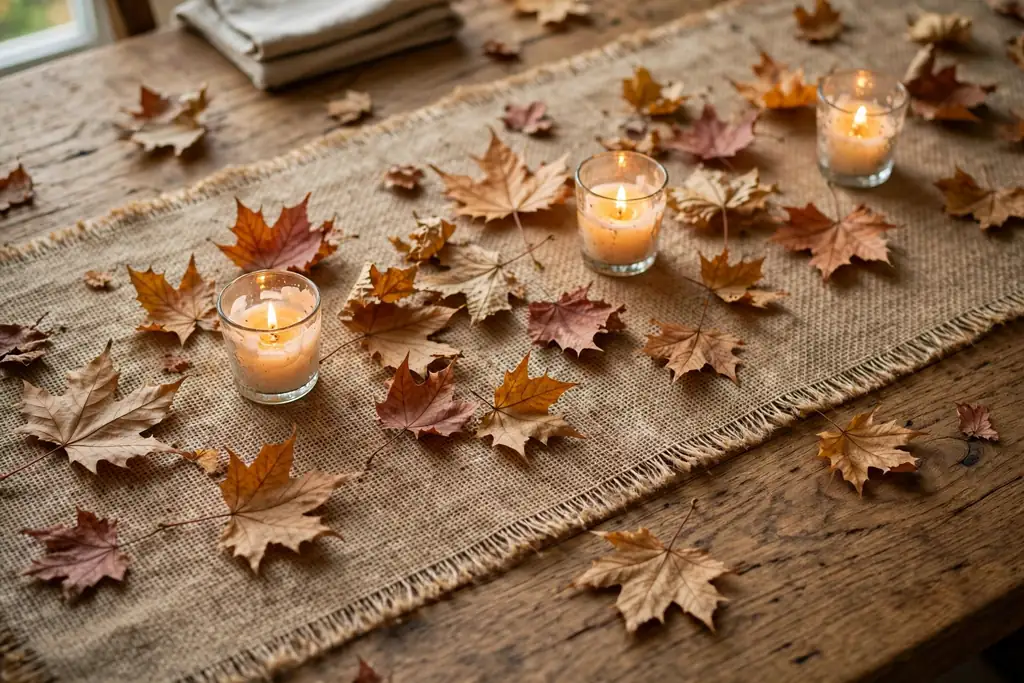
Lay a plain burlap runner down the table, then scatter a small number of dried maple or oak leaves along it, with two or three small candles in holders to anchor the ends. Burlap adds texture without pattern, so it suits tables that already have patterned plates or colored glass.
Use leaves sparingly, about one leaf per place setting length, so the table still looks tidy and leaves do not end up in food. Keep dried leaves well clear of any real flame, and use flameless candles here. Shake the runner outside after the meal, since burlap sheds fibers and dried leaves crumble.
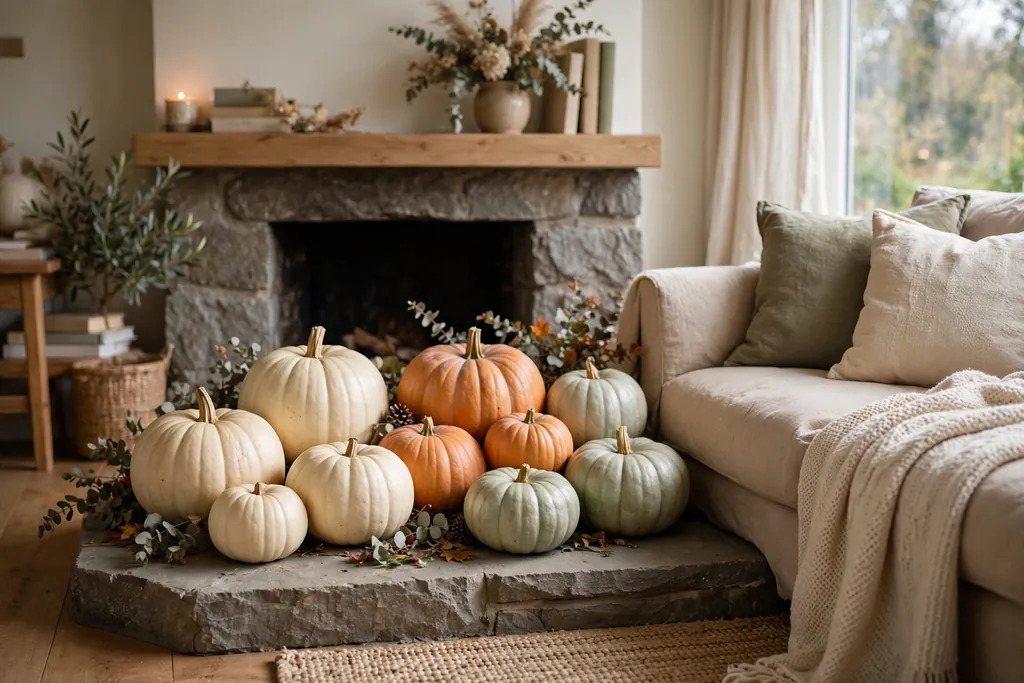
7. White Pumpkins on Cream Linen
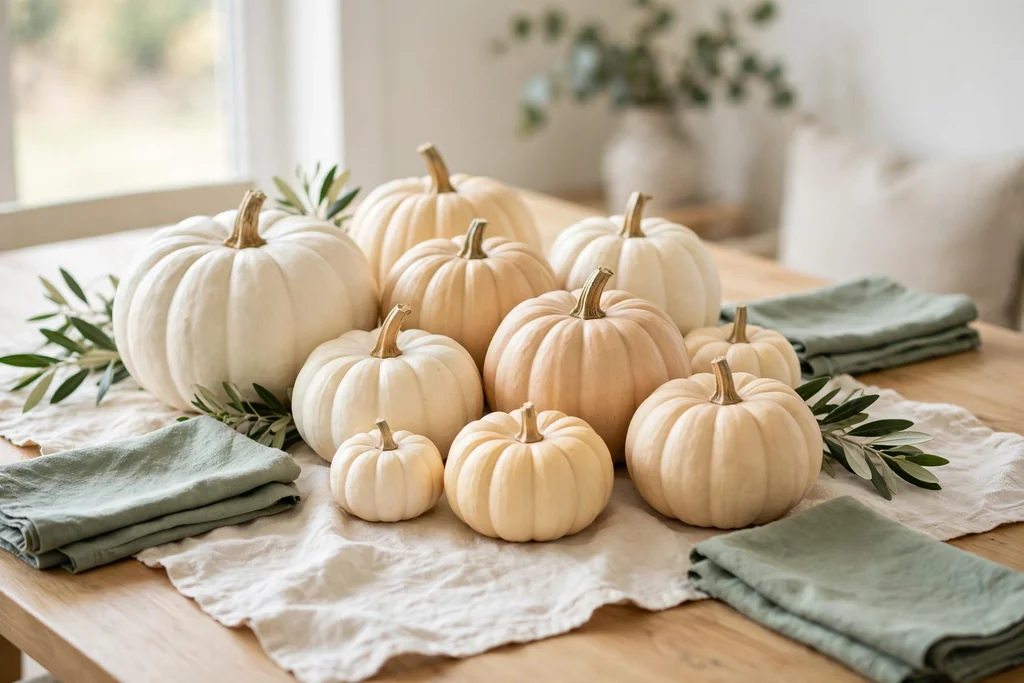
Group white and cream pumpkins on a cream linen tablecloth or runner, and add one soft accent, such as sage green napkins or a single rust candle, so the table stays calm rather than flat. This pale palette suits a bright dining room and works well with wood, brass, and glass.
Vary the pumpkin sizes, with one larger pumpkin in the middle and smaller ones at the sides, and leave space between them so each shape shows. Wipe ceramic pumpkins clean before setting them out, and set real white pumpkins on a small mat if the linen is light, to guard against marks. One accent color is enough; a second bright color will break the quiet look.
8. Mason Jar Lanterns with Autumn Leaves
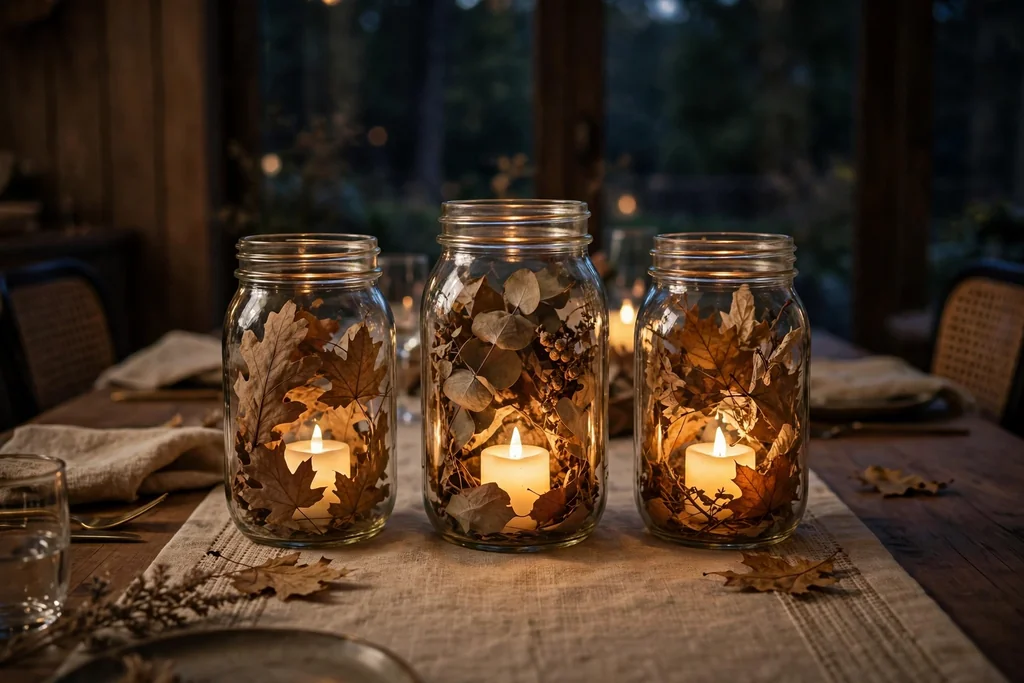
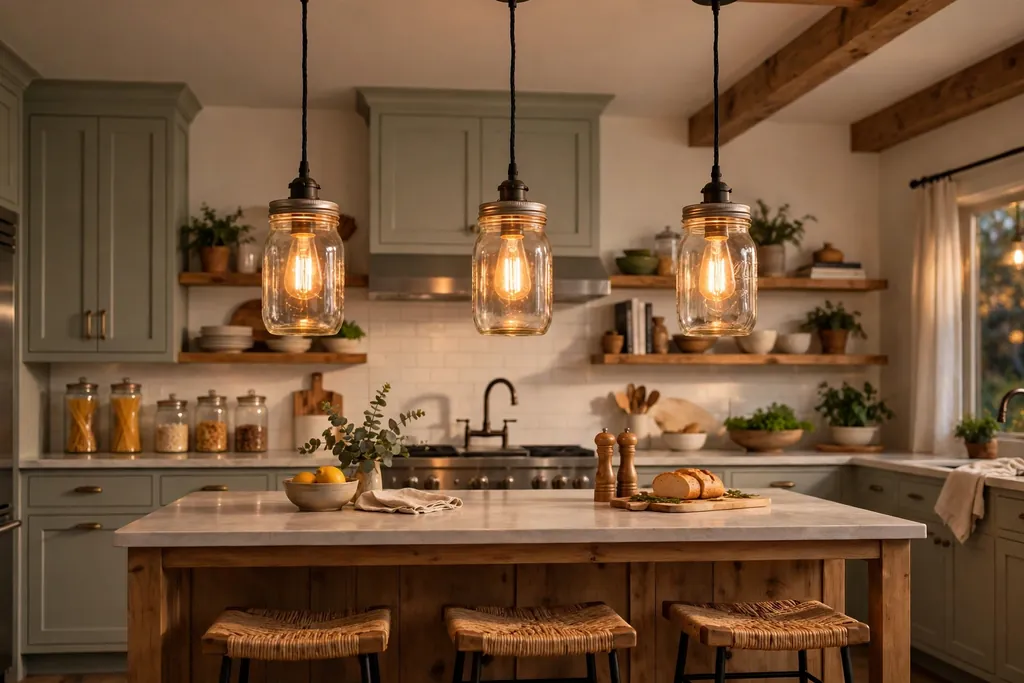
Fill two or three mason jars with a battery candle and a few dried leaves pressed against the inside of the glass, then set the jars down the center of the table. The jars glow softly in the evening, and the leaves show through the glass without shedding onto plates.
Keep the jars short enough to see over, and set them on a small tray or wood board if the table surface marks easily. Use battery candles only inside closed or narrow jars, since a real flame needs air and a safe holder. If leaves block too much light, use fewer leaves and let the candle glow through clear glass instead.
9. Wheat Bundle in a Stoneware Jug
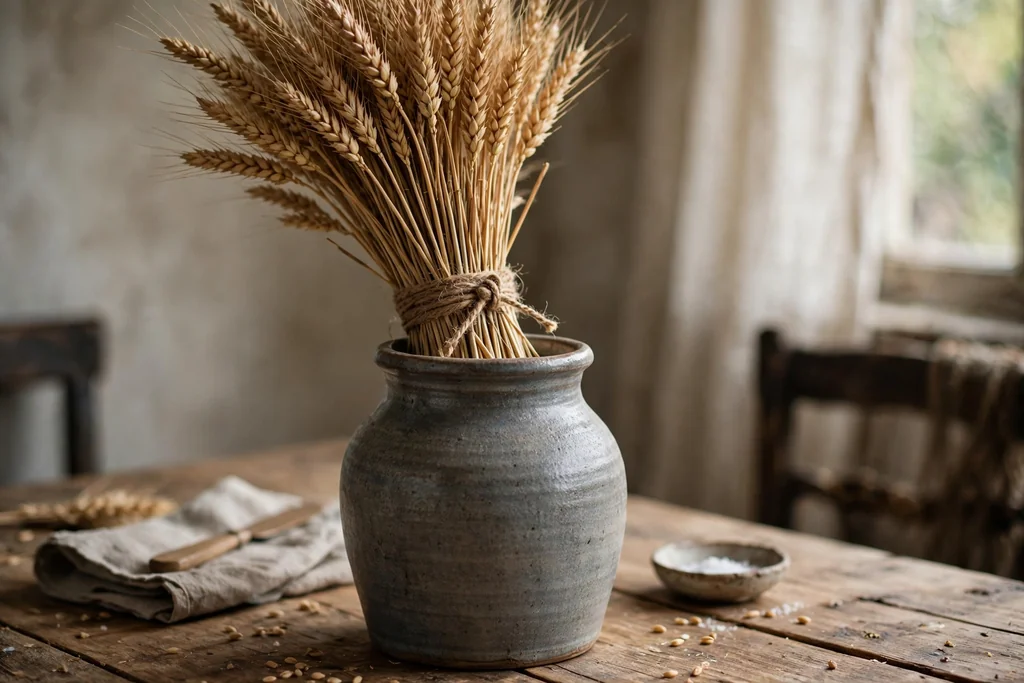
Tie a bundle of dried wheat stems with twine and stand it in a heavy stoneware jug at one end of a long table, or in the center of a round table. The wheat gives height and a clear harvest shape, while the jug keeps the bundle steady and easy to move.
Trim the stems so the heads sit below eye level when guests are seated, and keep the jug clear of elbows and serving dishes. Dried wheat sheds, so shake the bundle outside before bringing it in, and keep it clear of real flames and the stove. If shedding bothers you, use faux wheat stems in the same jug.
10. Wood Slice Chargers under Everyday Plates
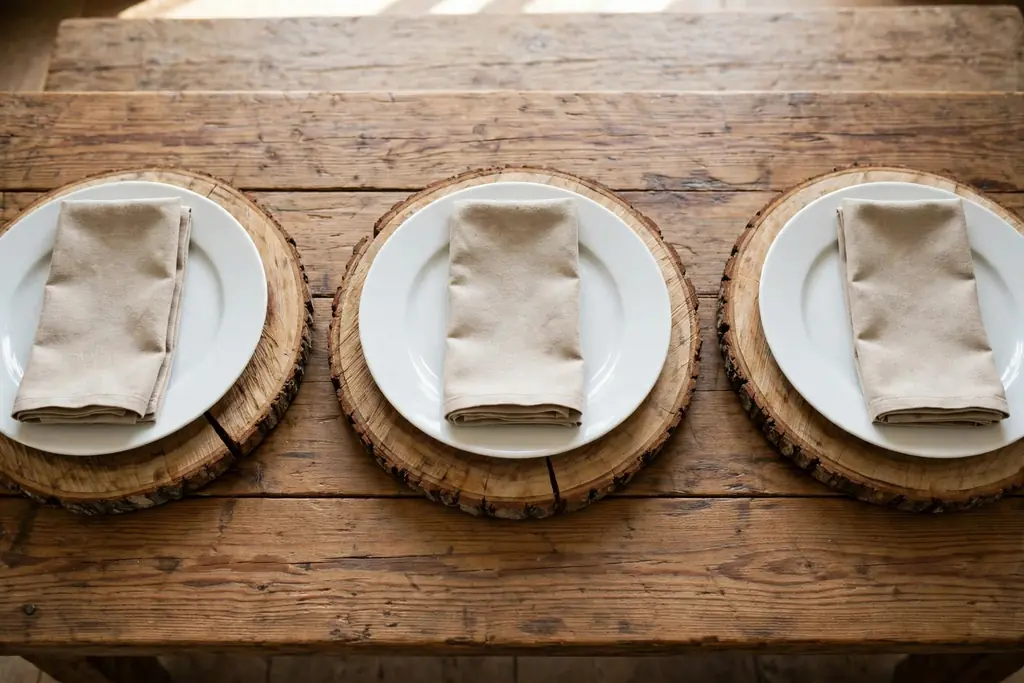
Use round wood slices as chargers under your everyday plates, so a normal weeknight dinner gains a rustic fall layer with no new dishes. Center one slice at each place, set the plate on top, and keep napkins and cutlery in their usual spots, so the table still works for daily use.
Choose slices with a flat, sanded top, so plates sit level and glasses do not wobble. Wipe slices clean after meals and do not soak them, since wood can warp when left damp. If slices vary in size, put the largest ones at the ends of the table, where the difference looks planned rather than uneven.
11. Amber Glass and Warm Candlelight
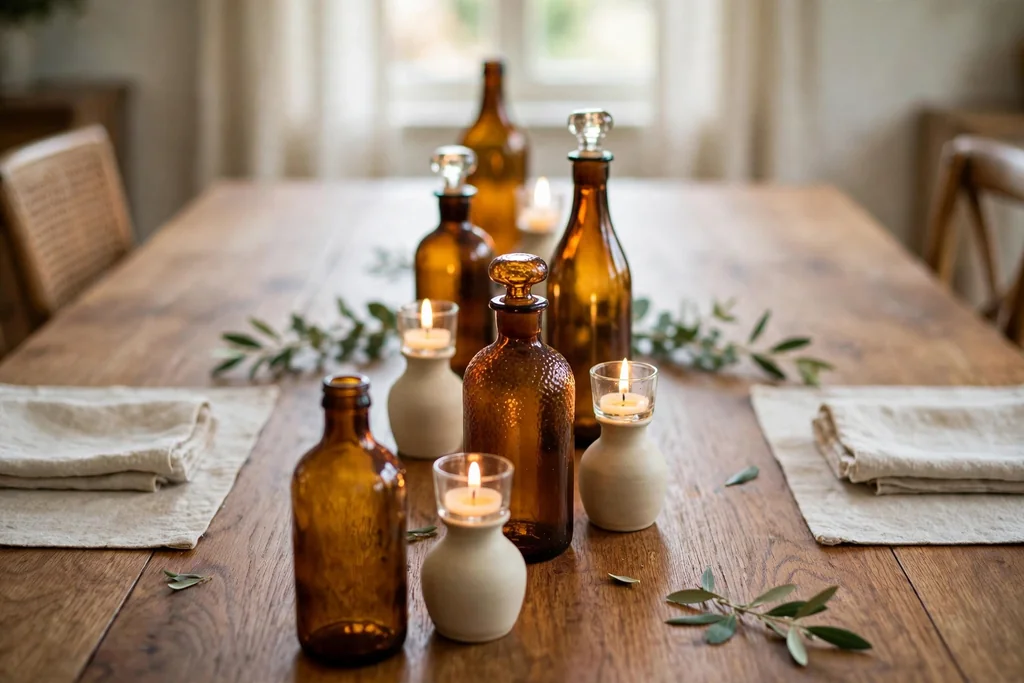
Set amber glass bottles, small vases, or drinking glasses down the center of the table, with short candles in holders between them, so the glass catches the light and warms the whole setting. Amber glass suits rust, cream, and wood palettes, and it works with plain white plates as well as patterned ones.
Mix heights, with one taller bottle and two shorter glasses, but keep the total group low enough to see across. Use battery candles inside narrow bottles, and real candles only in proper holders on a stable surface. Wash amber glass before the meal, since fingerprints show more on colored glass than on clear glass.
12. Twine Napkin Rings with a Dried Sprig
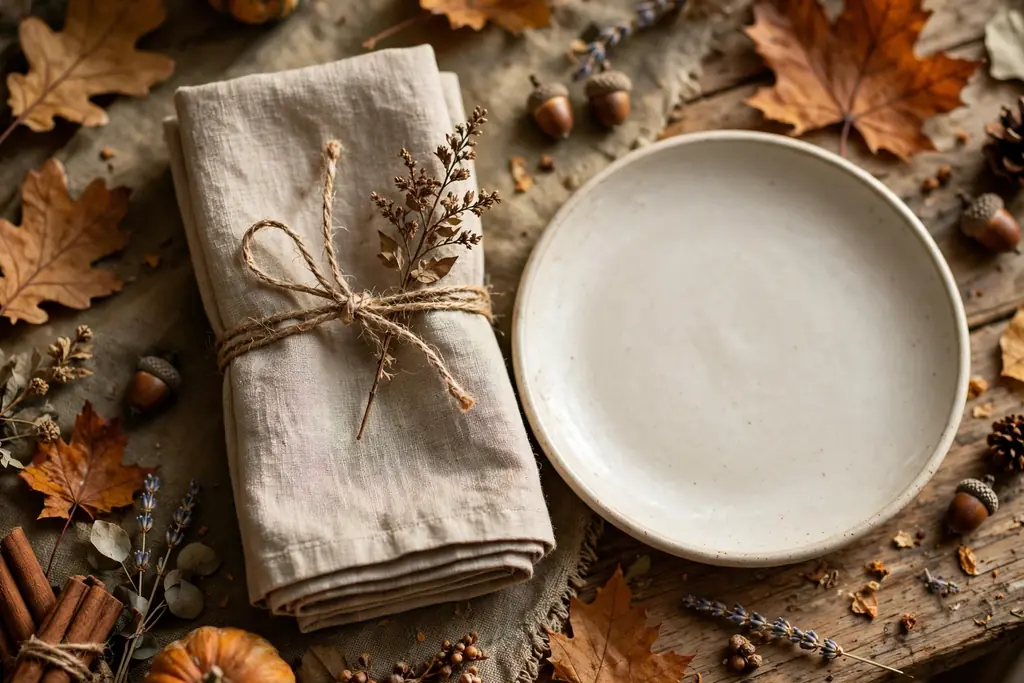
Wrap a length of twine around each folded napkin two or three times, tie it in a simple knot, and tuck a small dried sprig, such as lavender, wheat, or a tiny leaf stem, under the twine. This small detail dresses an everyday place setting in minutes and costs little, since twine and dried stems store well.
Fold napkins in a simple rectangle or roll so the twine sits flat, and keep the sprig short so it does not brush the plate. For a gathering, use the same sprig at every place, so the table looks matched. Remove the sprig before washing napkins, and compost or discard dried stems when they start to shed.
13. Tiered Stand for a Gathering Table
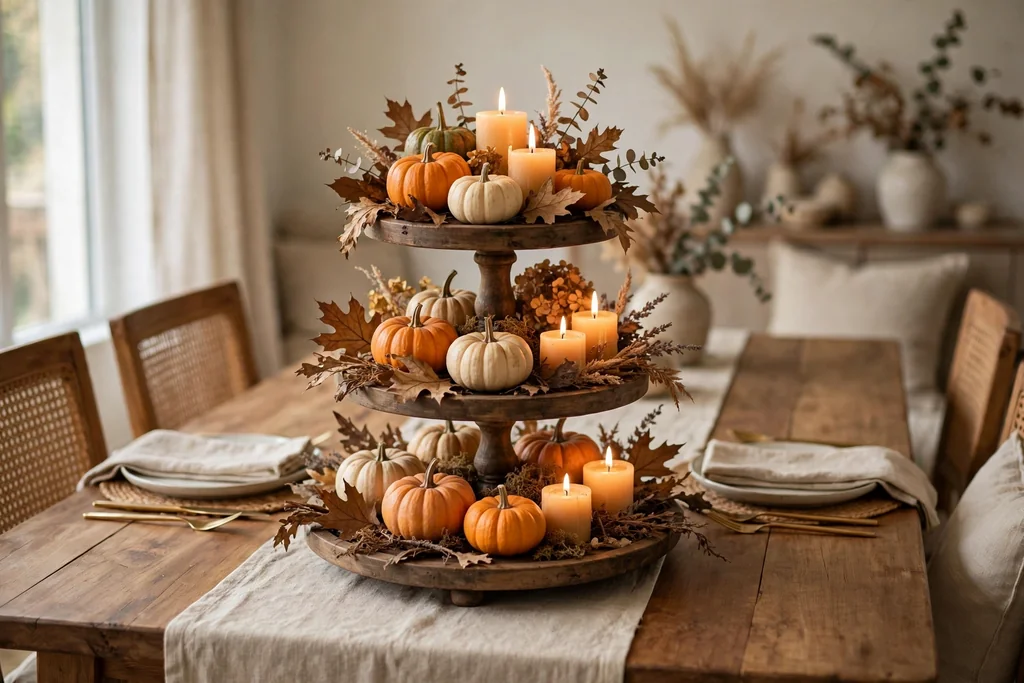
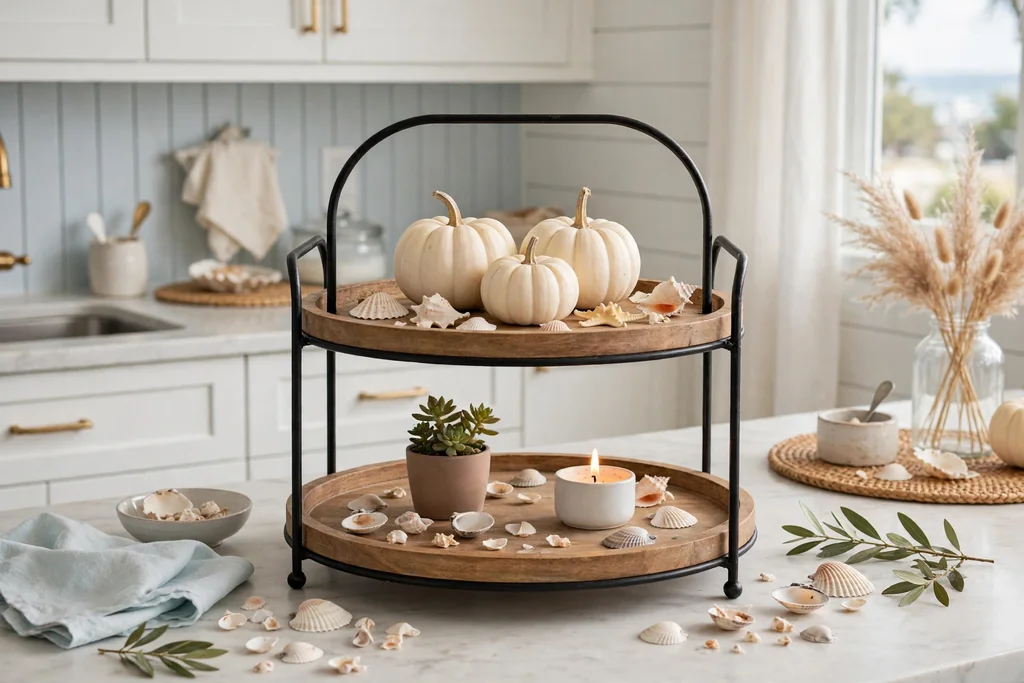
Set a two or three tier stand at one end of the table or on a sideboard, and fill it with small pumpkins, candles in holders, and a few dried leaves, so the gathering table gains height without blocking the center. A tiered stand also works for serving, with bread, fruit, or small bites on the tiers at a buffet style meal.
Keep the stand stable and clear of the main serving path, and put heavier items on the bottom tier. If the stand will hold food, use it for food only, and set the decor version on a separate stand or tray. Wipe the tiers after use, since candle wax and leaf dust collect in the rims.
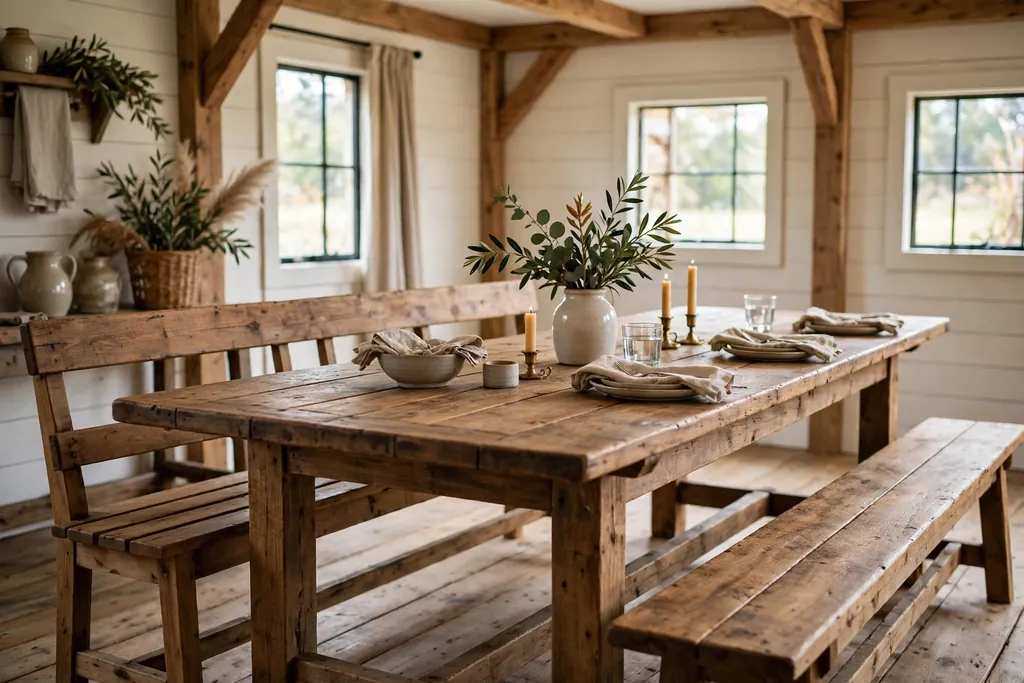
14. Rustic Wood Table with Folded Linen Napkins
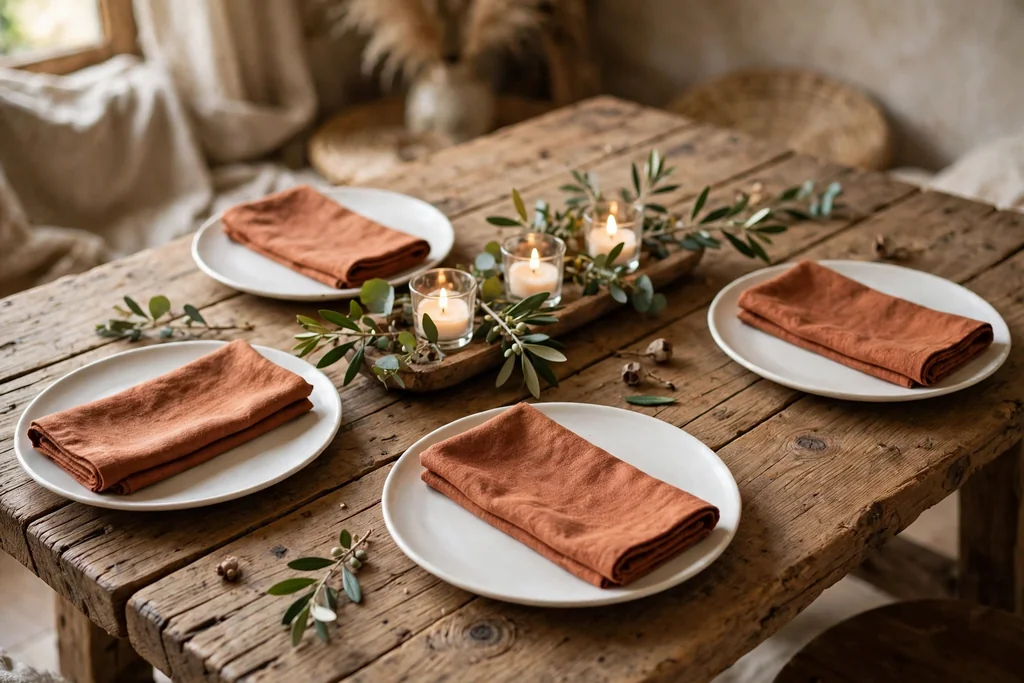
Leave a wood table bare, with no runner or cloth, and let the grain do the work, then set folded linen napkins in rust or cream at each place, with simple cutlery and plain plates. This approach suits a farmhouse or rustic dining room, and it keeps the table easy to wipe after everyday meals.
Use placemats under plates if the wood marks easily, and keep the centerpiece to one low group, such as a wood board with candles, so the wood still shows. Fold napkins the same way at every place for a tidy look, and iron linen napkins before a gathering, since creases show more on bare wood than under a patterned cloth.
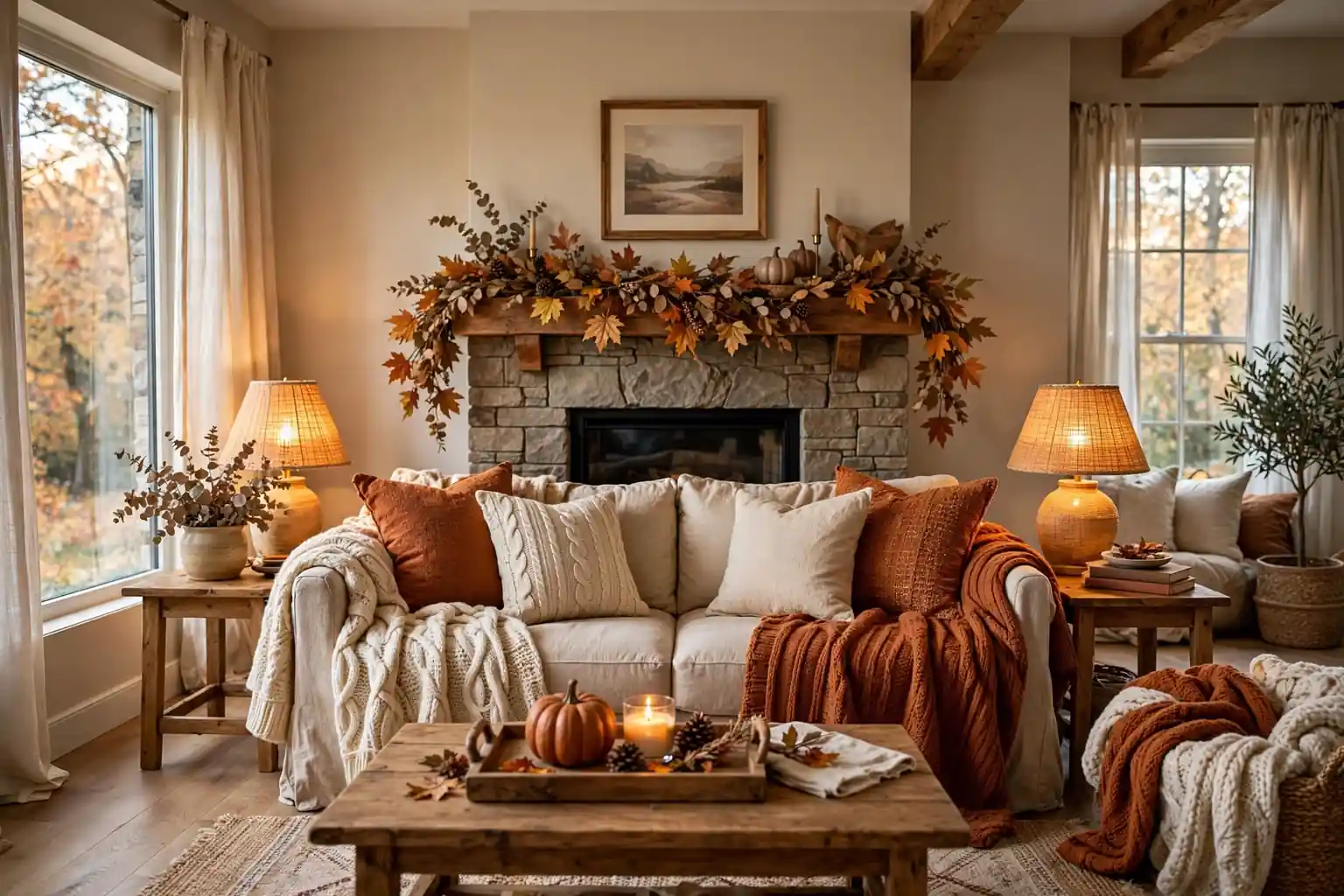
15. Leaf Garland Down the Center
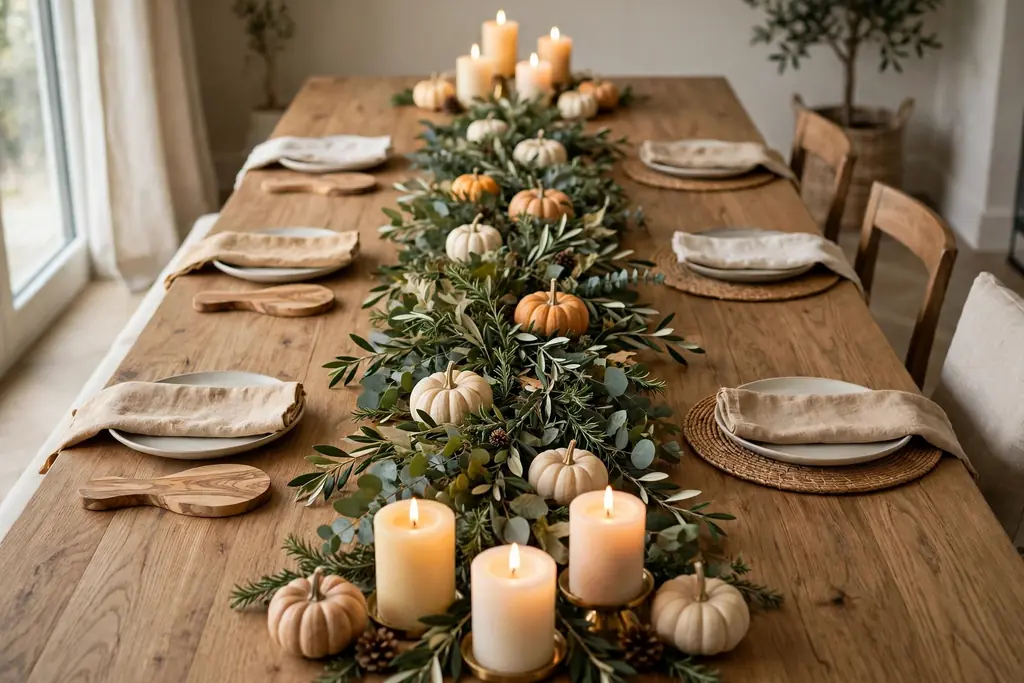
Lay a faux or dried leaf garland down the center of the table, letting it dip slightly at the ends, then tuck in two or three mini pumpkins and one candle in a holder at each end to anchor it. The garland carries fall color along the whole table, which suits a long dining table for a gathering.
Secure the garland so it does not slide when plates are set down, and trim it to fit the table, leaving room at each end for serving dishes. Keep dried garlands clear of real flames, and use flameless candles along the garland. Dust a faux garland before laying it out, and store it flat or rolled loosely so leaves do not crush.
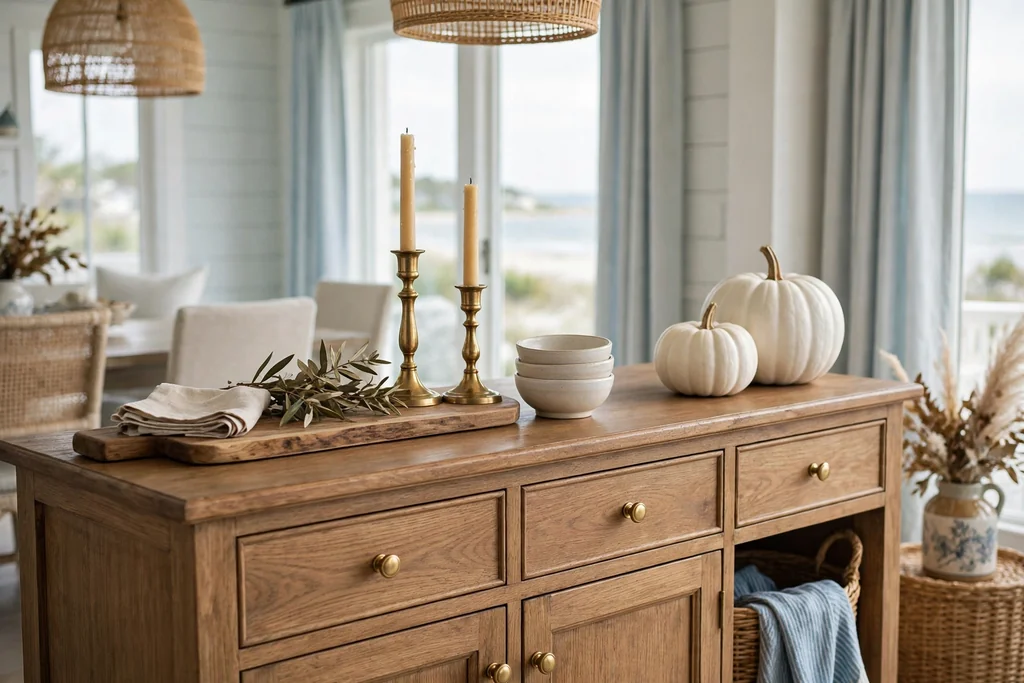
16. Brass Candlesticks with Cream Tapers
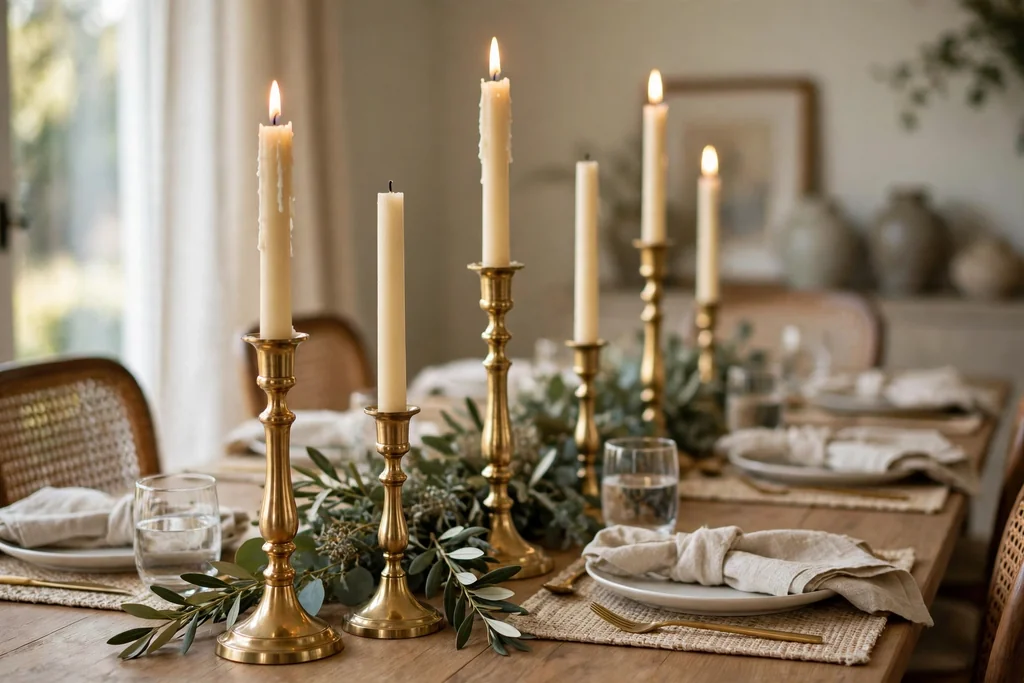
Set brass candlesticks of two heights down the center of the table, with cream taper candles in each, and keep the rest of the centerpiece simple, such as a short leaf runner or a few mini pumpkins at the base. Brass adds a warm metal note that suits both everyday dinners and larger gatherings.
Check that candlesticks sit level and that tapers fit snugly, so candles do not lean or drip onto the table. Use a tray or small plates under the candlesticks if wax drips are a concern, and trim wicks before lighting. For a table with children, use flameless tapers in the same brass holders for the same look without a flame.
17. Acorn and Pinecone Scatter with Pillar Candles
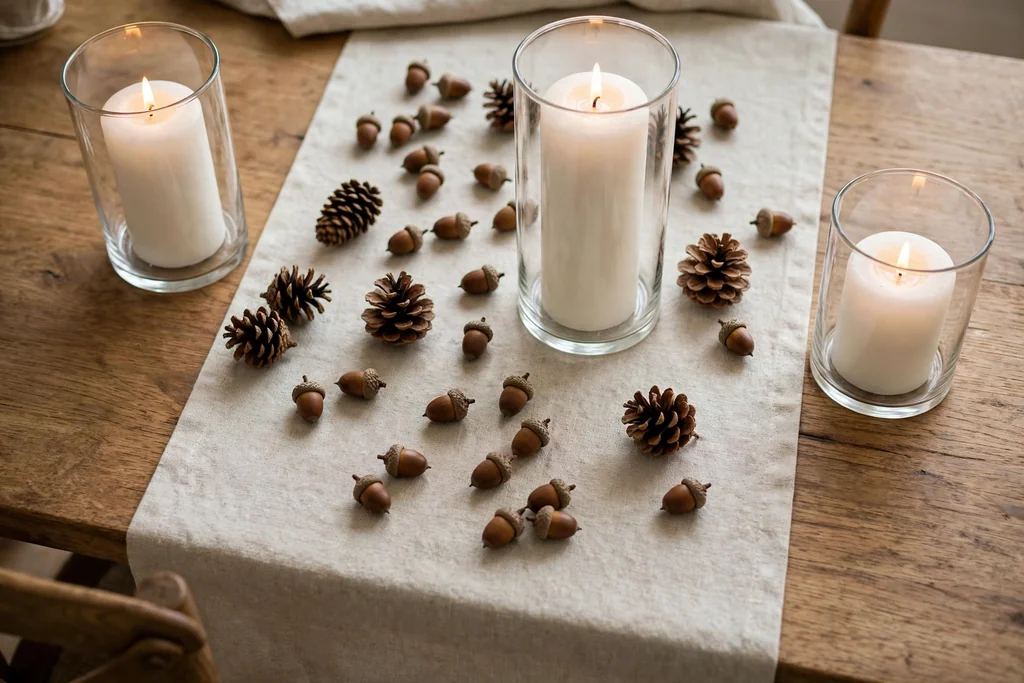
Scatter a small number of acorns and pinecones along a plain runner, then set two or three pillar candles in glass holders among them, so the table gains a woodland fall note without a large arrangement. This idea suits a neutral table, where the natural shapes and candlelight carry the season.
Use acorns and pinecones sparingly, about a handful along a long table, and keep them clear of plates and food. Clean gathered pinecones fully and check them for insects before bringing them inside, and keep them clear of real flames. If small pieces worry you with young children at the table, use larger pinecones only and skip the acorns.
18. Washable Fall Placemats for Everyday Meals
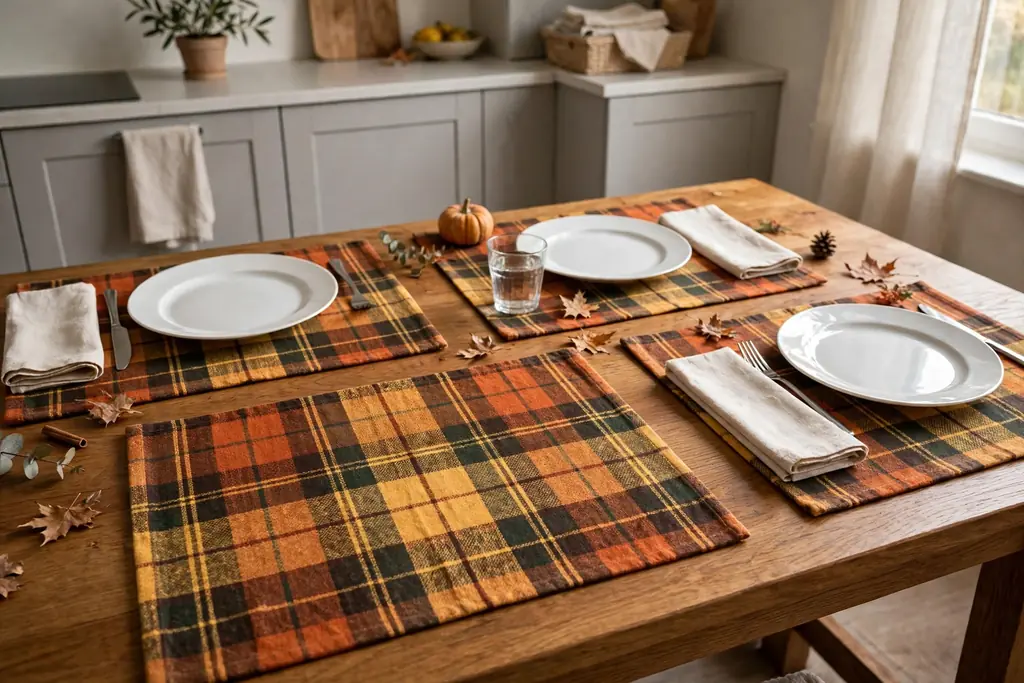
Swap everyday placemats for washable ones in a fall plaid, rust stripe, or muted leaf print, and keep the rest of the table plain, so weeknight meals feel seasonal with one easy change. Placemats protect the table, mark each place, and wash with the regular laundry or wipe clean, depending on the material.
Choose placemats that lie flat and do not curl at the edges, since curled corners catch plates and glasses. Keep the print scale small on a round table and larger on a long table, and repeat one placemat color in the napkins or runner. Store spare placemats folded flat, so they are ready to swap when the season changes.
19. Tall Branch Centerpiece for Large Gatherings
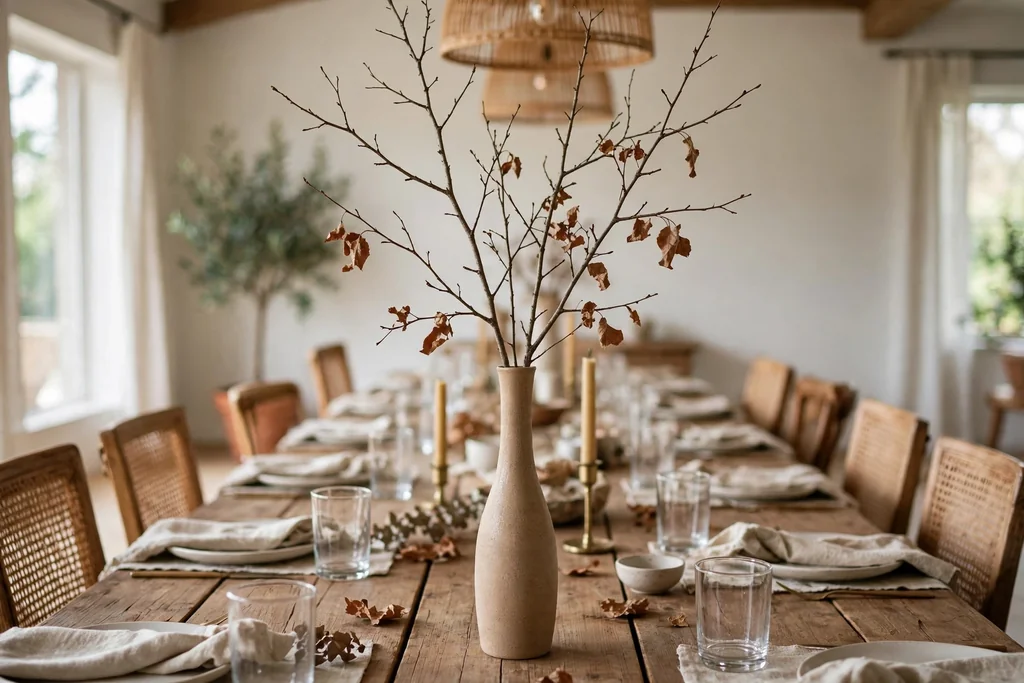
For a large gathering table, set a tall, narrow vase or jug with bare branches or branches with a few dried leaves in the center, so the table gains height without blocking conversation, since guests can see around slim branches. This idea suits a long table where a low centerpiece would get lost among many place settings.
Choose a heavy vase that will not tip, trim branches so they clear light fixtures, and keep the arrangement narrow, not wide. Set the vase where it will not be brushed by serving dishes passing down the table. If branches shed, shake them outside first, and keep dried branches clear of candles and other flames.
20. Cider and Cocoa Station at the Table End
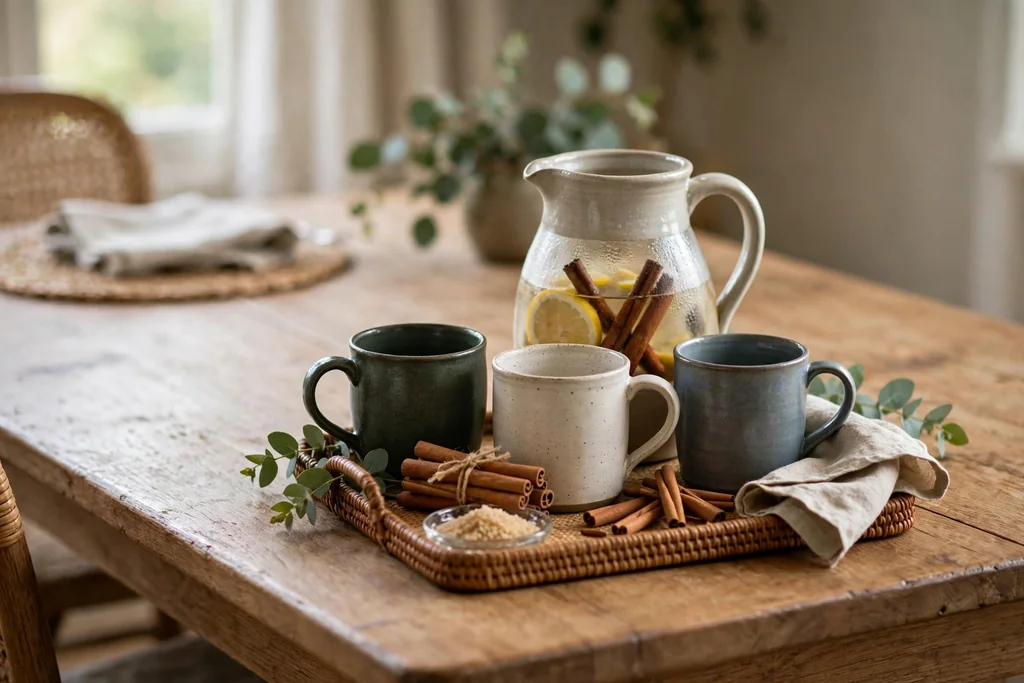
Set a small drink station at one end of the table or on a nearby sideboard, with a tray holding mugs, a jug of cider or a pot of cocoa, and a small bowl of cinnamon sticks or dried orange slices for garnish. Guests can help themselves without leaving the table area, which suits a relaxed gathering.
Keep the station on a tray, so spills stay contained and the whole station lifts away after the meal. Use mugs with handles that hang or stack neatly, and keep hot drinks clear of the table edge where children pass. Wipe the tray after use, since drink stations gather drips faster than other table decor.
21. Handwritten Menu Cards for Guests
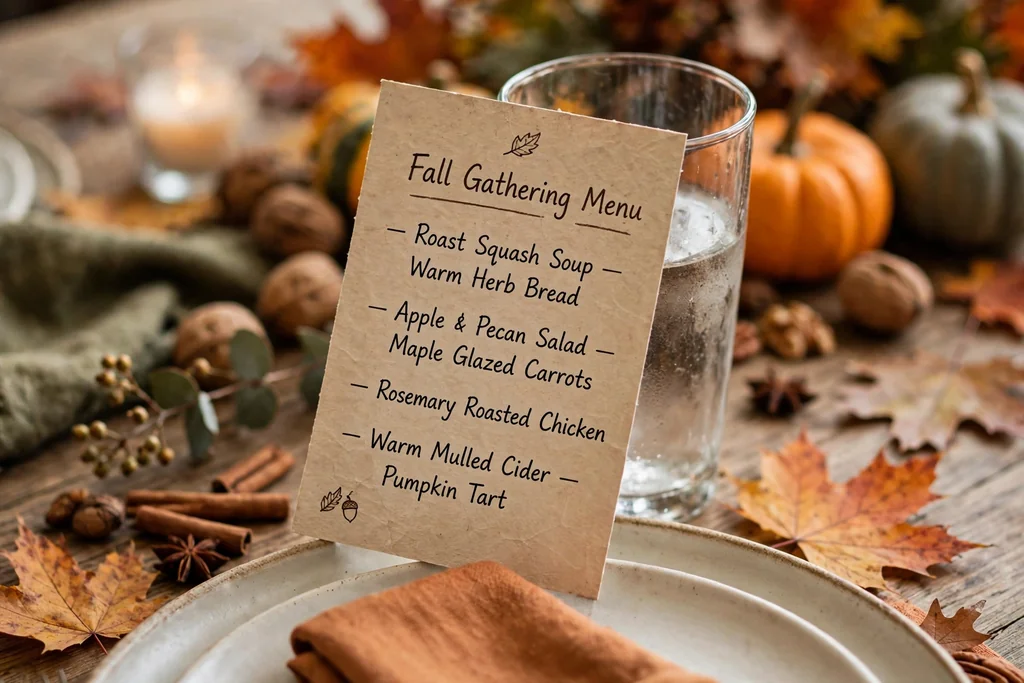
Write the menu by hand on small cards, one per place or one shared card per two guests, and lean each card against a glass or lay it flat above the plate. A menu card helps guests with food choices, marks the meal as a gathering, and doubles as a simple table decoration in itself.
Keep the writing large and clear, list dishes in serving order, and note any main ingredients guests may need to know, without making claims you cannot stand behind. Use plain card and a pen that does not smudge, and keep cards clear of wet glasses. For everyday meals, skip the menu and use a single card with a short note or the date for a special family dinner.
22. Mixed Wood and Ceramic Place Settings
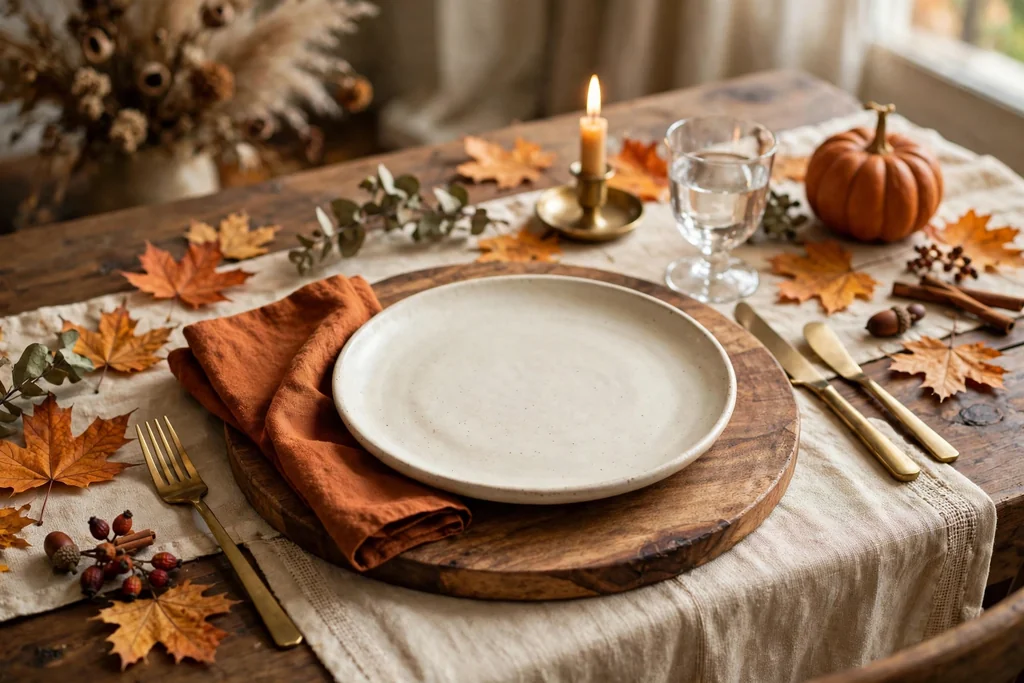
Mix wood chargers or wood handled cutlery with ceramic plates in cream, rust, or sage, so each place setting gains warmth and texture without a matching new set. This mix suits a table that already has plain white plates, since the wood and one colored ceramic piece do the seasonal work.
Repeat the same mix at every place, so the table looks planned rather than random, and keep glassware plain, so the mix does not compete with patterned glasses. Check that wood pieces are food safe and wipe them after meals. If you own only a few wood chargers, use them at the head places and plain settings elsewhere, with the same napkins throughout to tie the table together.
23. Paper Leaf Craft Table for Children
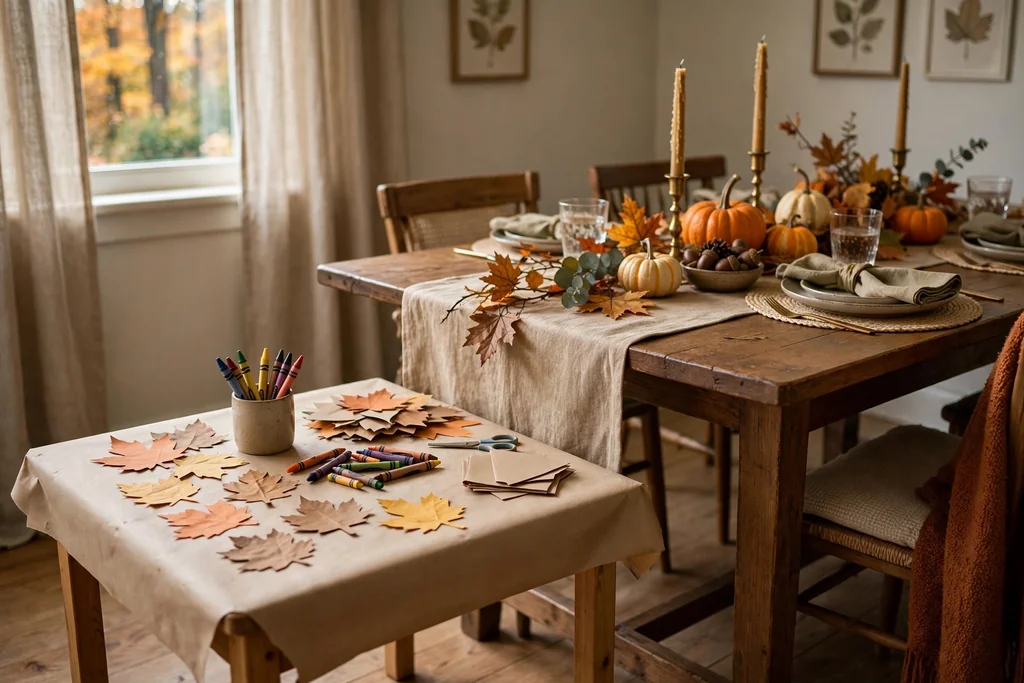
For a family gathering with children, cover one end of the table or a separate small table with plain paper, and set out paper leaves, crayons, and safe scissors, so children can color and cut leaves while adults eat nearby. This idea keeps young guests busy at the table and gives them a fall activity that fits the season.
Use washable crayons and blunt scissors for young children, and keep craft supplies clear of food and drinks. Tape the paper down at the corners, so it does not slide, and set a small bin nearby for scraps. At the end of the meal, the paper leaves can go home with guests or decorate a window, and the paper cover lifts off for a fast cleanup.
Conclusion
Fall table decor does not need a large centerpiece or a new dinner set to work. A low runner, one contained centerpiece, and plates, napkins, and candlelight in rust, cream, and warm wood will carry most tables through everyday meals and larger gatherings. Start with textiles, add one seasonal group at the center, and leave room for serving dishes and conversation.
For more seasonal ideas for the whole house, see 33 fall decor ideas for home, and for the room next door, see fall kitchen decor ideas. Keep what you use often, store the rest together in one box, and let the table return to a simple, usable base when the season ends. Save this list on Pinterest for your next meal, and work through it one idea at a time.
FAQs
How do I decorate a fall table without blocking conversation?
Keep the centerpiece low and narrow, below eye level when guests are seated, and leave the middle of the table partly open. A wood board with small pumpkins, a leaf runner, or a row of short candles all sit low enough to see across. If a tall arrangement is needed for a large table, use slim branches in a narrow vase, so guests can see around them.
What colors work best for fall table decor?
Rust, cream, warm wood, and muted olive work well together, because they suit wood tables, white plates, and brass or amber glass. Repeat each color at least twice, such as rust napkins with a rust candle, or cream linen with cream pumpkins, so the table looks planned. Keep bright orange to one or two small pieces, so the table stays calm enough for everyday meals.
How can I make a fall table safe with candles and dried leaves?
Keep real flames in holders, clear of dried leaves, fabric, paper, and napkins, and never leave candles burning unattended. Use flameless candles near dried garlands, leaf scatters, and children’s places, since dried material catches fire easily. Set candles on a stable surface, trim wicks before lighting, and keep a clear path for serving dishes, so nothing gets knocked toward a flame.
What is the simplest fall table for everyday meals?
Start with a washable runner or placemats in a fall color, cloth napkins in a warm neutral, and one low centerpiece, such as a wood board with two small pumpkins. That set takes minutes to lay out, washes easily, and lifts off in one move when the table is needed for homework or work. Add candles in the evening, and the same base works for a weeknight dinner and a weekend meal.
How do I scale fall table decor up for a gathering?
Add place cards, a drink station at the table end, and a menu card at each place, while keeping the same runner and centerpiece base. Use the same napkin fold and sprig at every place, and add one taller element, such as brass candlesticks or slim branches, only if the table is long enough to keep sightlines open. Keep serving dishes in mind, and leave space at the table ends for platters.
How do I store fall table decor after the season?
Wash runners, napkins, placemats, and tablecloths, dry them fully, and store them folded together in one box. Wrap ceramic pumpkins and brass candlesticks in soft cloth or paper, keep dried stems upright in a tall box so they do not crush, and check real pumpkins and fruit before packing anything away. Storing the set together makes next fall setup a single short job.