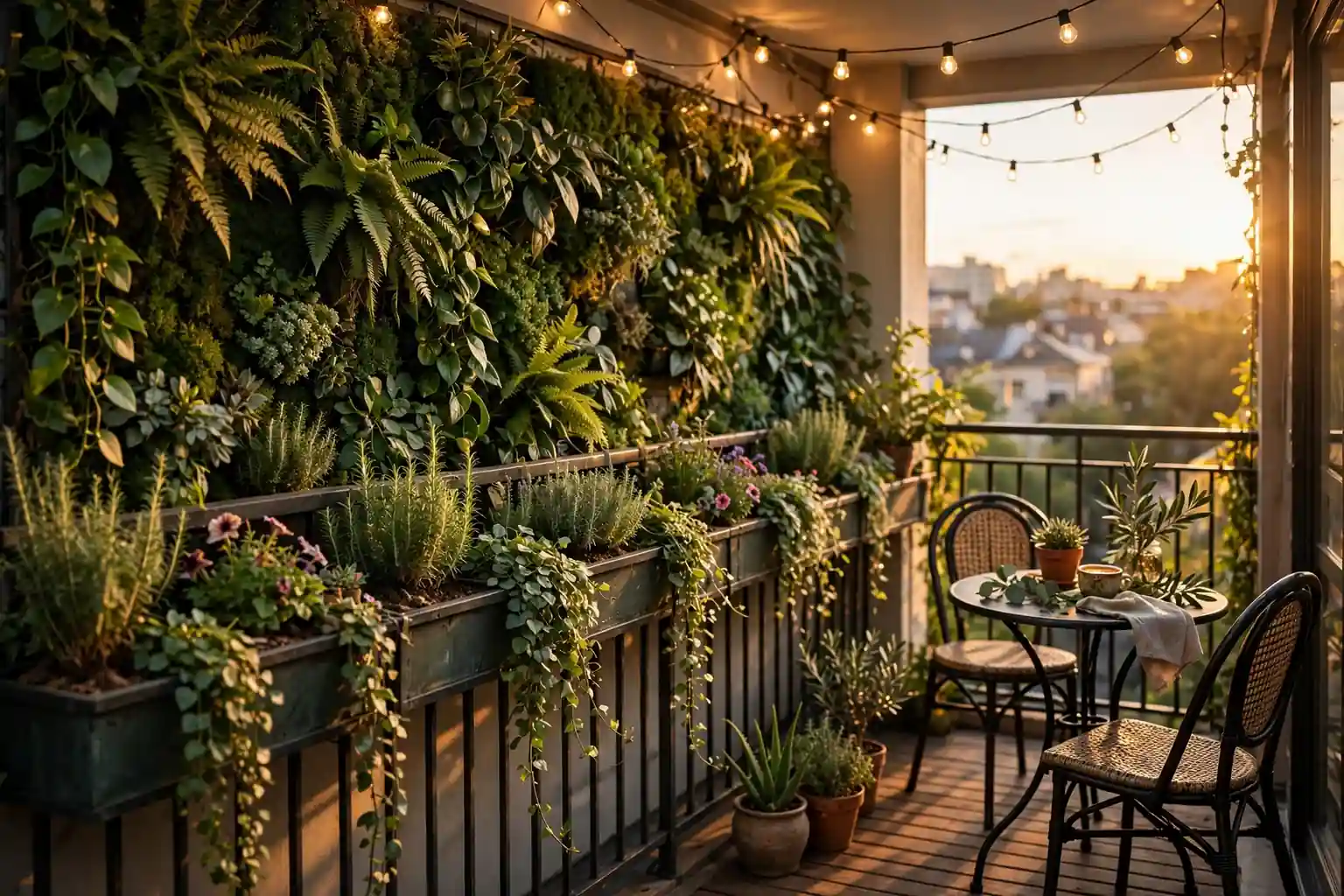
A small balcony can feel like a ledge with a chair, or it can feel like a garden room. The difference is rarely size. It is how the floor, the railing, and the wall each carry part of the work. When planters sit on the rail, herbs grow by the door, and one seat faces the light, even a narrow balcony gains color, scent, and a reason to step outside each day. These 23 small balcony garden ideas cover railing planters, vertical planting, edible pots, privacy screens, seating, and evening light, all chosen for tight spaces and light containers. Start with sun, wind, and one comfortable seat, then add planting around them.
Key Takeaways
- Use the railing, wall, and ceiling as planting space, so the floor stays clear for sitting and moving.
- Choose light containers with drainage, and keep heavy pots low and near the wall, within the balcony weight limit.
- Match plants to sun and wind: sunny balconies suit herbs, tomatoes, and succulents, while shady balconies suit ferns and shade tolerant flowers.
- Give the balcony zones: one for growing, one for sitting, and one small spot for tools and watering, so it feels organized.
- Add a wind screen, warm light, and a soft seat early, since comfort decides whether you use the balcony daily.
- Water little and often in containers, and check soil with a finger before watering, since pots dry out fast in sun and wind.
1. Railing Planters for Instant Color
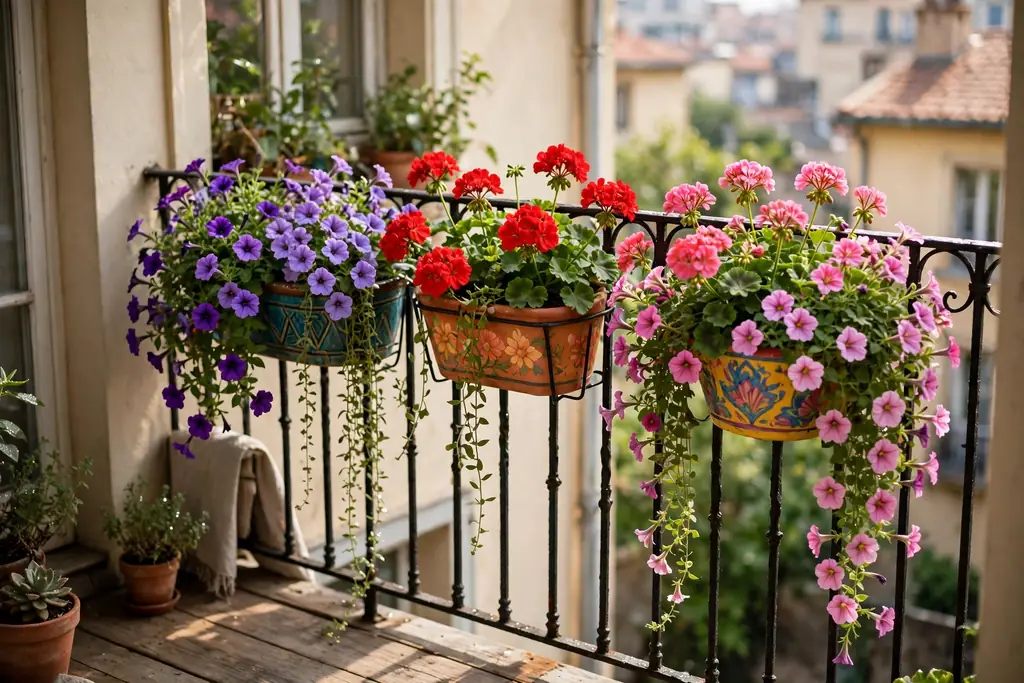
Fix planters along the balcony railing to add color at eye level without using floor space. Railing planters suit narrow balconies because they sit where the rail already is, and they put flowers where you see them from inside as well as outside. Choose planters made to fit your rail width, and secure them with brackets or straps so wind cannot lift them.
Plant trailing petunias, lobelia, or trailing herbs at the front, with upright geraniums or marigolds behind them for shape. Check that the planter has drainage holes, and place a drip tray only if it will not spill onto the balcony below. Water slowly until water runs from the base, since shallow rail planters dry out faster than large pots.
2. Living Wall Pockets on a Blank Wall
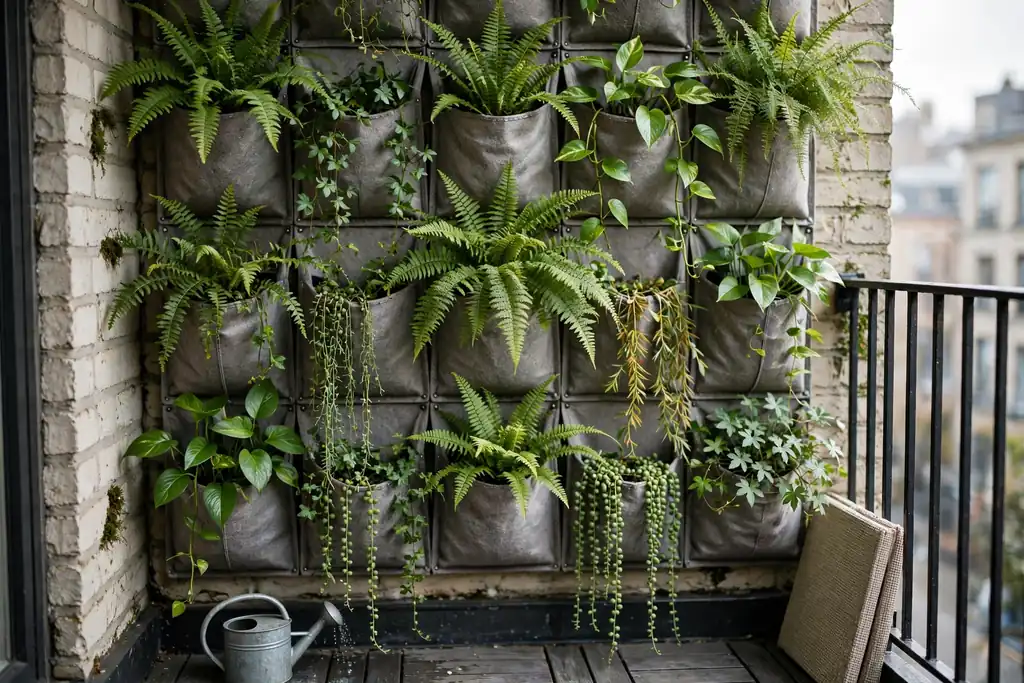
Cover a blank balcony wall with pocket planters to grow a green wall without giving up floor space. Pocket panels suit renters when they hang from hooks or a freestanding frame, and they give a plain wall texture, scent, and color at eye level. Choose panels with separate pockets, so you can replace one plant without disturbing the rest.
Plant ferns, trailing pothos, small herbs, and shade tolerant flowers to suit your light level, and water from the top so each pocket gets moisture. Check the weight of the panel when wet, and keep it away from vents and door hinges. Trim trailing stems often, so the wall stays neat and the walkway stays clear.
3. Tiered Ladder Shelf for Pots of Every Size
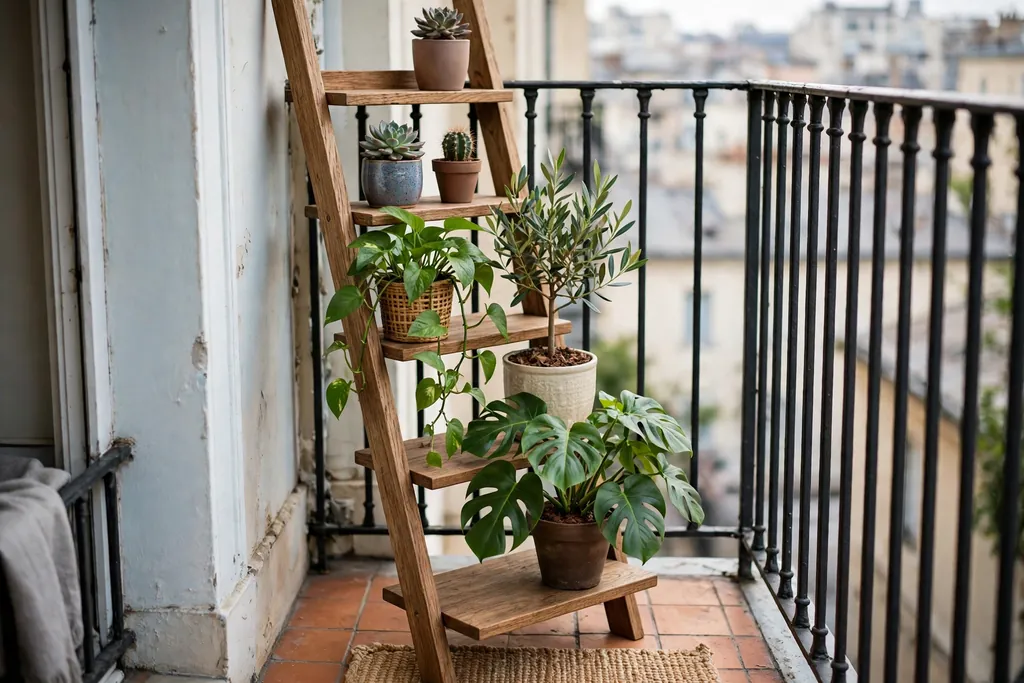
Lean a tiered ladder shelf against the wall to hold pots on several levels in one narrow footprint. A ladder shelf suits small balconies because it uses height, not floor area, and it lets you group sun loving plants at the top and shade tolerant plants lower down. Choose a weather resistant shelf with a stable base, and anchor it to the wall if wind is strong.
Place heavy pots on the lowest shelf and light pots higher up, so the shelf stays steady. Mix one tall plant, a few mid height plants, and trailing plants at the edges for a full look. Leave the bottom shelf for watering cans or a small tool box, so the shelf works as storage as well as display.
4. Hanging Baskets from Hooks and the Ceiling
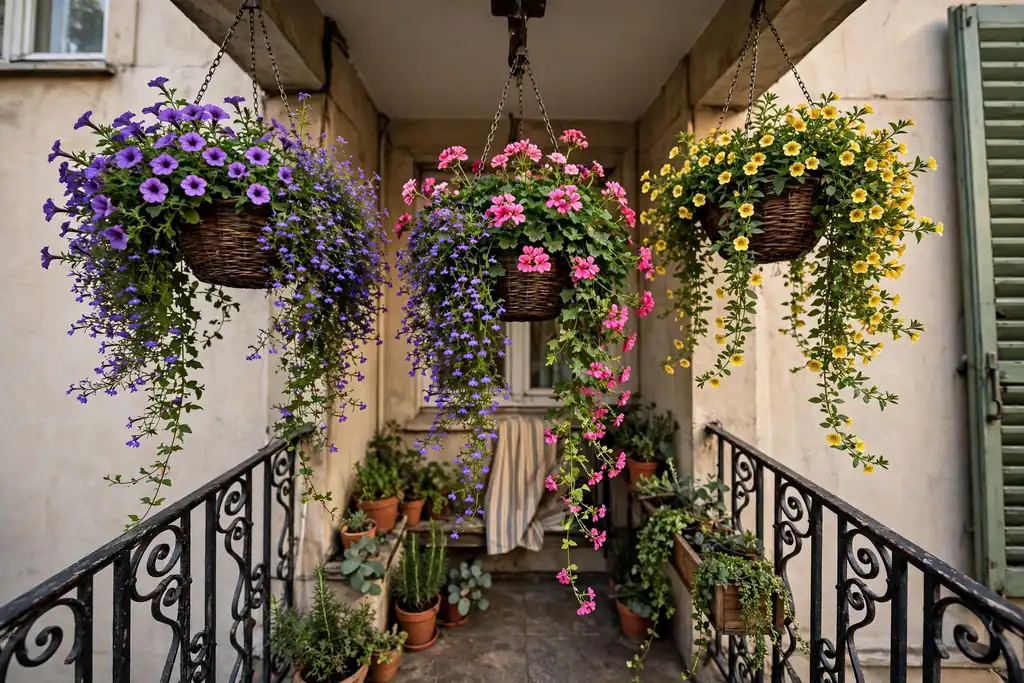
Hang baskets from ceiling hooks or a sturdy overhead rail to add flowers above head height. Hanging baskets suit tiny balconies because they use air space, and they draw the eye upward, which makes the balcony feel taller. Use light baskets with a strong hook rated for a wet basket, and hang them where you will not bump your head.
Plant trailing fuchsia, bacopa, or trailing lobelia in sun or part shade, and line the basket with a liner that holds soil but still drains. Water hanging baskets more often than floor pots, since wind dries them quickly, and turn them weekly so growth stays even on all sides.
5. Herb Rail Box by the Door
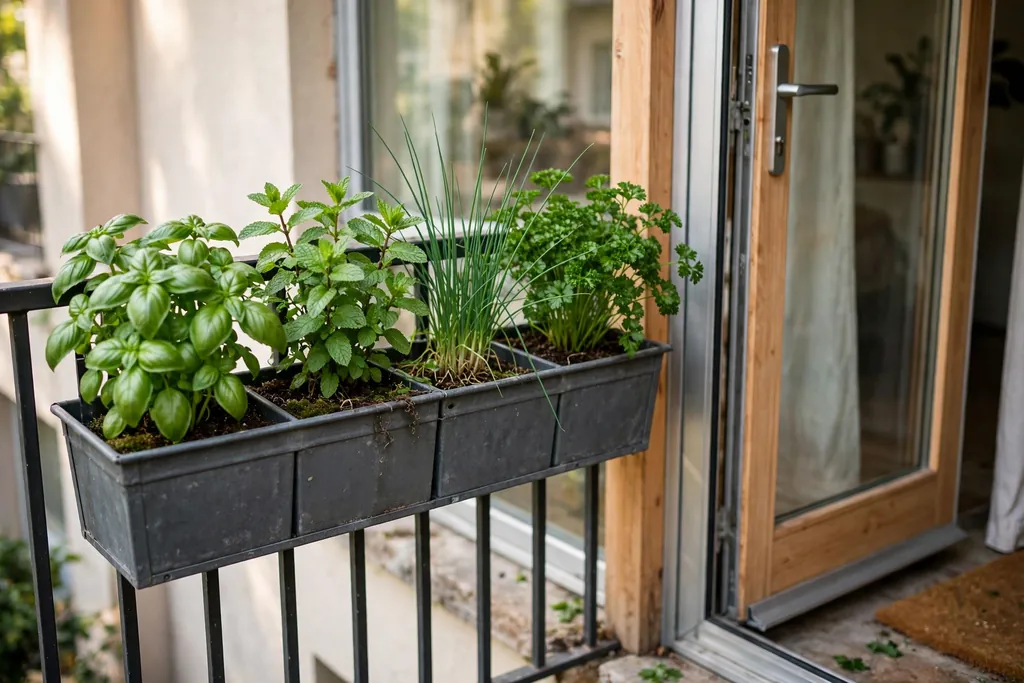
Put a narrow herb box on the railing nearest the door, so cooking herbs are within reach when you cook. A herb rail box suits small balconies because it turns the rail into a kitchen garden, and fresh leaves taste best picked just before use. Plant basil, mint, chives, and parsley in separate sections, since mint spreads fast and can crowd its neighbors.
Give herbs at least four hours of sun where possible, and pinch basil tips often to keep plants bushy. Water when the top inch of soil feels dry, and snip leaves in the morning for the best flavor. Keep a small pair of scissors by the door, so picking herbs becomes part of cooking, not a chore.
6. Cherry Tomato Pots in the Sunniest Corner
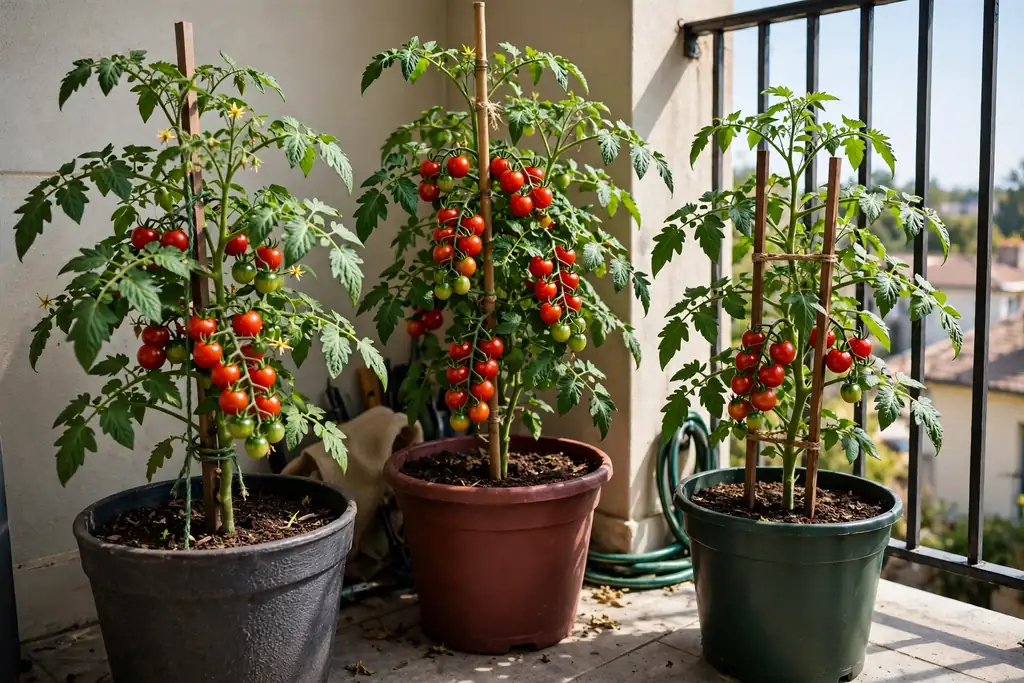
Grow cherry tomatoes in deep pots in the sunniest corner of the balcony for a crop that suits containers well. Cherry types fruit steadily through summer, and a single healthy plant can give salads and snacks for weeks. Choose a pot at least 30 centimeters wide, with drainage holes and a stake or small cage for support.
Plant one tomato per pot in rich potting mix, and water at the base so leaves stay dry. Feed with a balanced liquid feed as the plant label directs once fruit sets. Tie stems loosely to the support as they grow, and pick fruit when fully colored for the sweetest taste.
7. Trellis Privacy Screen with Climbers
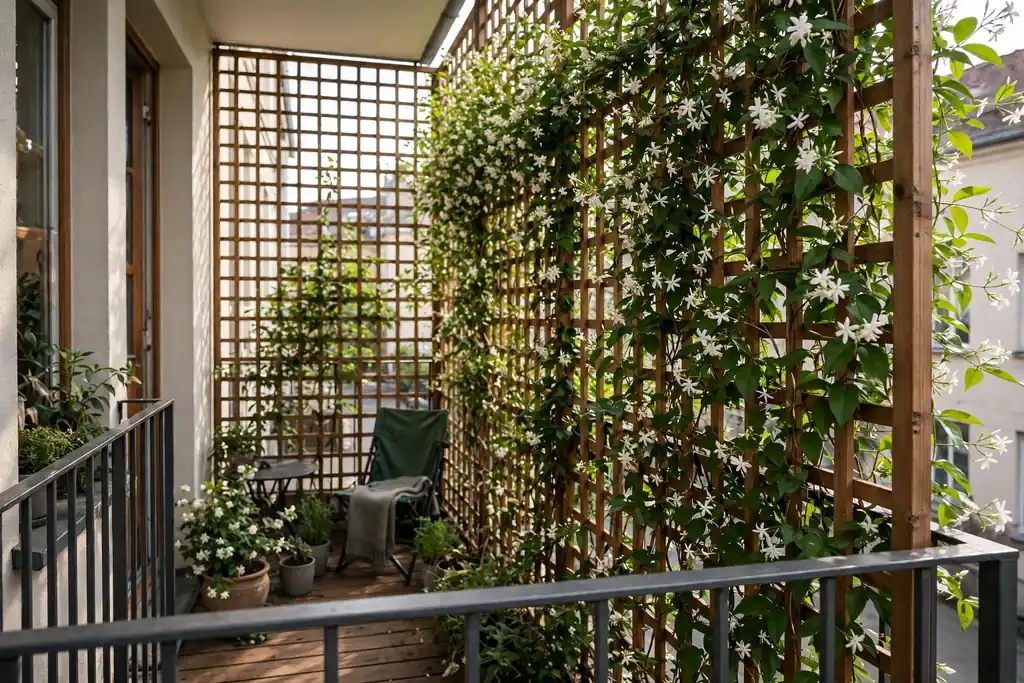
Fix a light trellis to the railing or wall and train climbers over it to soften views and cut wind. A trellis screen suits balconies overlooked by neighbors, since leaves fill the frame through summer while still letting air pass. Choose a trellis that fits the space and can be tied firmly to the rail, so it does not sway in gusts.
Train jasmine, sweet pea, or climbing beans along wires or the trellis bars, and tie stems loosely as they grow. Prune after flowering as the plant type requires, and keep climbers clear of drains and door tracks. A planted screen also gives birds and pollinators a place to visit without taking floor space.
8. Fold-Away Bistro Set for Coffee Mornings
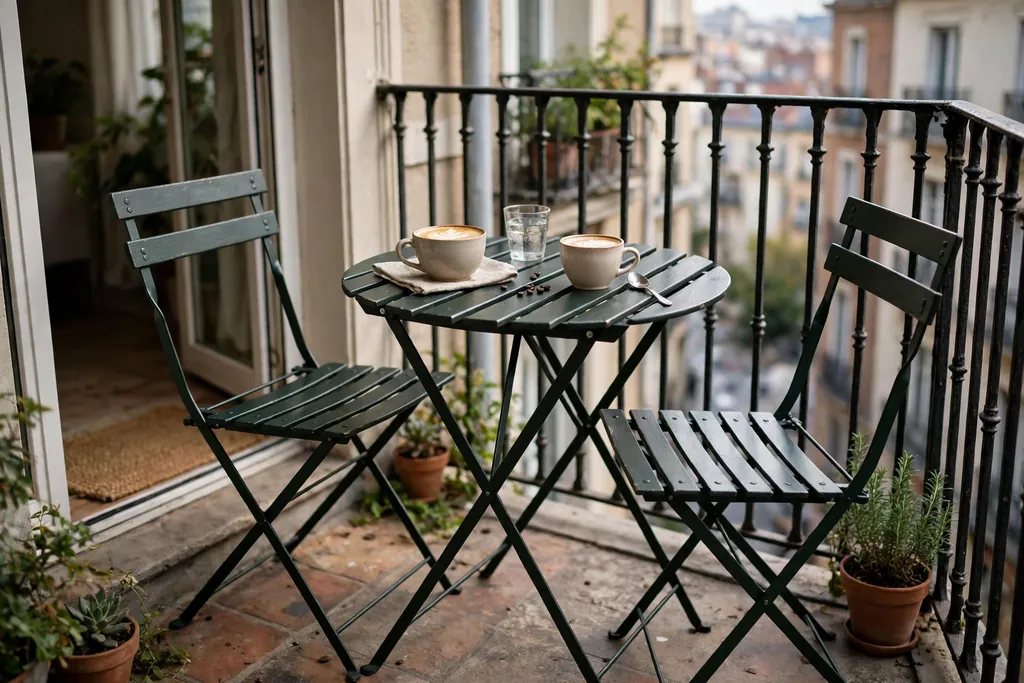
Set a folding bistro table and two chairs in a sunny morning spot for coffee, reading, and quiet starts to the day. A fold-away set suits small balconies because it folds flat against the wall when you need room for watering or cleaning. Choose a stable table that does not wobble on decking tiles, and chairs that fold with one hand.
Add one pot of herbs or flowers beside the table so the nook feels planted, not bare. A light cushion on each chair makes a short sit last longer. Site the set where morning sun reaches it but wind is broken by a wall or screen, and keep the route from the door clear so you can carry cups safely.
9. Floor Cushion Lounge Corner
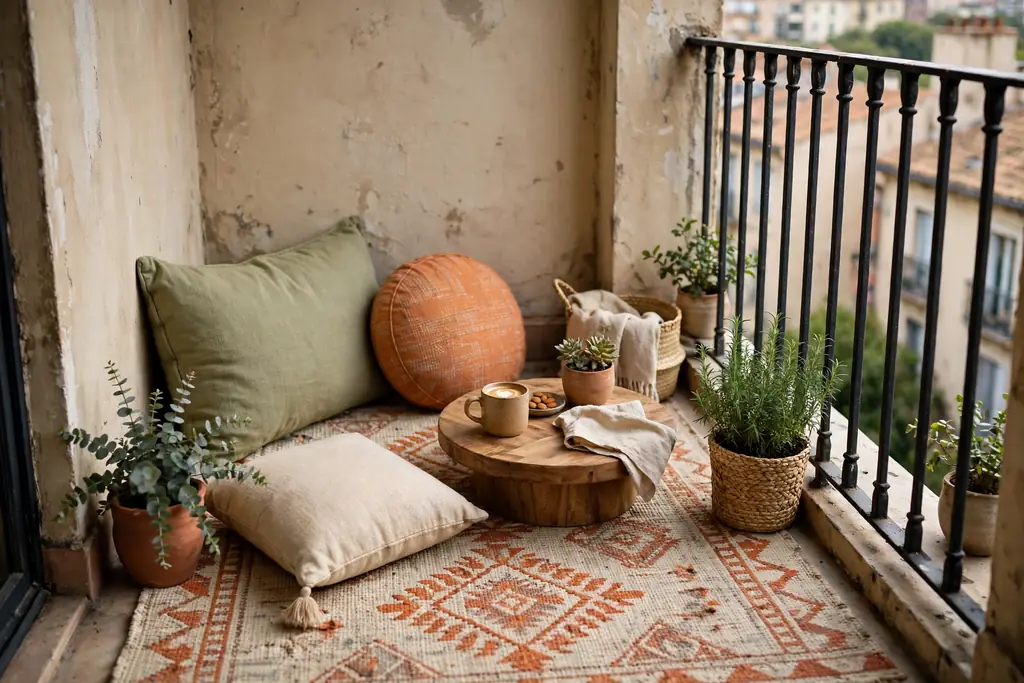
Make a low lounge corner with an outdoor rug, floor cushions, and a small side table for relaxed evenings. Floor cushions suit small balconies because they stack away when not in use, and they sit lower than chairs, which keeps the space feeling open. Choose weather resistant cushions with removable covers, and store them in a dry box when rain is forecast.
Place the rug to define the sitting zone, and add a low table for drinks and a book. Keep the corner away from the railing edge, and leave a clear path to the door. A soft throw over one cushion adds warmth on cool evenings and makes the corner inviting at a glance.
10. String Lights and Lanterns for Warm Evenings
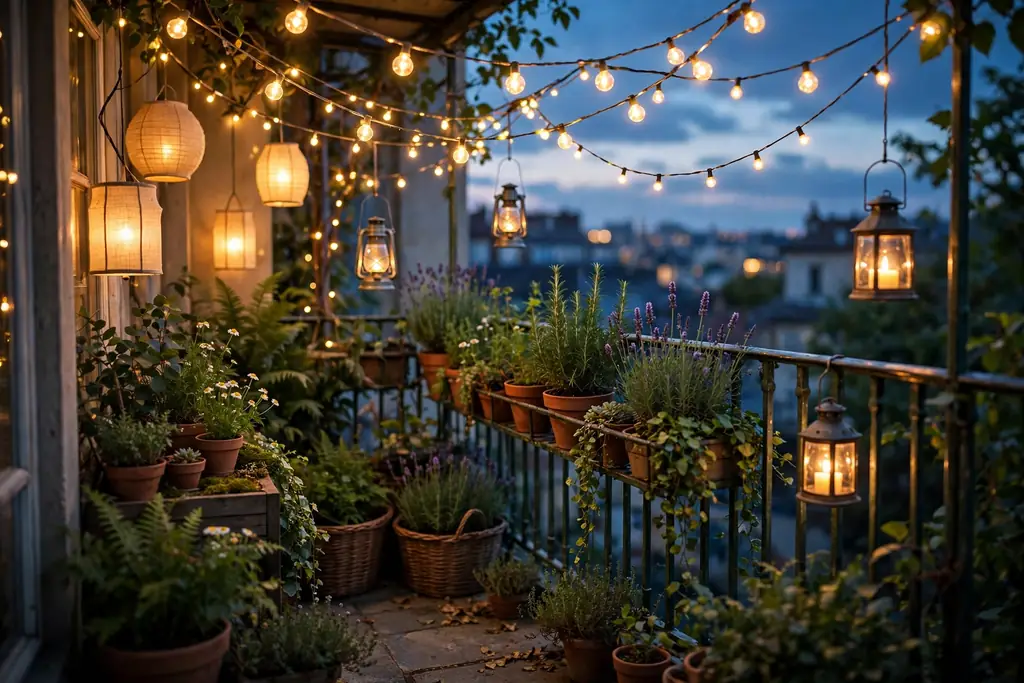
Hang string lights along the railing or wall, and add a lantern or two on the table, to make the balcony usable after dark. Warm light suits small balconies because it softens hard edges and makes plants glow, without needing wiring work. Choose solar or battery lights rated for outdoor use, and hang them where they will not tangle with plants.
Drape lights loosely rather than pulling them tight, so wind does not strain the wire. Add a lantern with a candle style light on the table for a focal glow at sitting height. Switch lights on at dusk and off at bedtime, and store battery packs out of rain between uses.
11. Self-Watering Pots for Busy Weeks
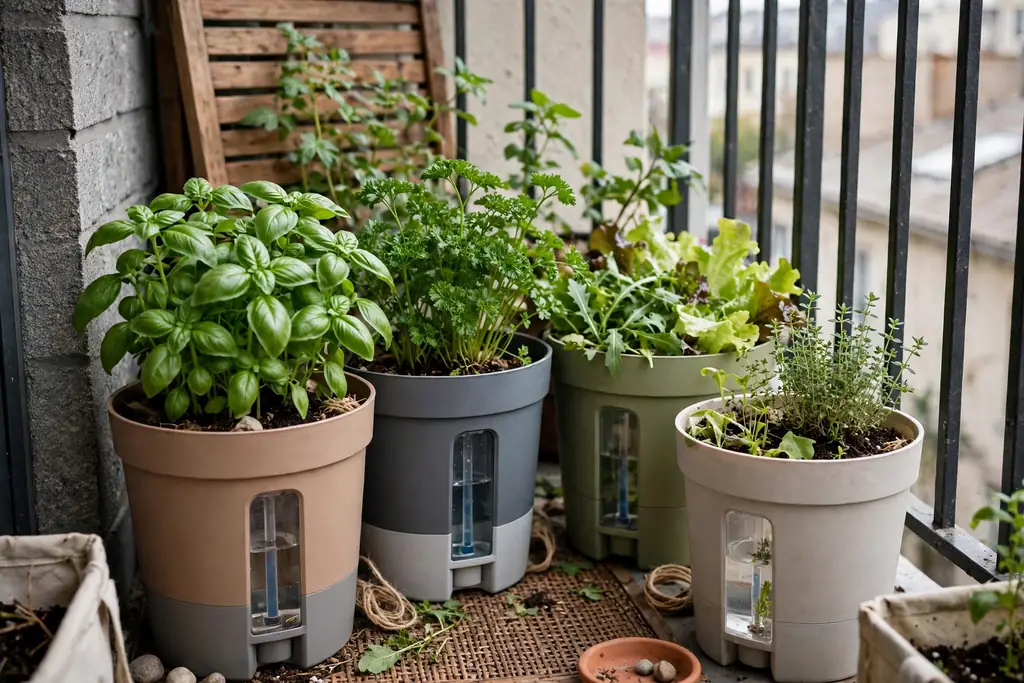
Use self-watering pots for plants that suffer when watering is missed, such as herbs, salad leaves, and flowers in sun. A reservoir at the base lets soil draw up water as it dries, which keeps moisture steadier than a quick daily splash. This suits balconies where the owner travels or works long days.
Fill the reservoir as the pot instructions direct, and still check soil moisture weekly, since a reservoir can run dry in hot wind. Use self-watering pots for thirsty plants first, and keep succulents in plain pots with sharp drainage instead. Clean the reservoir at season end to stop algae and stale water.
12. Sunny Succulent Corner
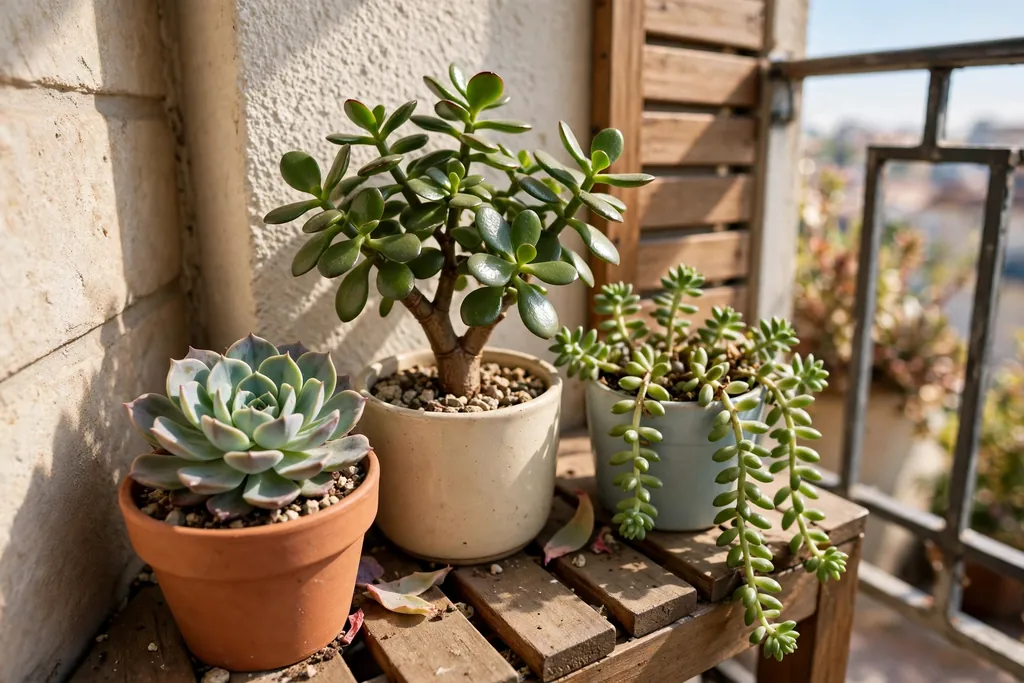
Group succulents and sedums in a sunny, dry corner for planting that needs little water and keeps its shape. Succulents suit hot, windy balconies because their thick leaves store water, and their neat rosettes look tidy in small pots. Use a gritty, free draining mix, and pots with large drainage holes.
Mix echeveria, jade plant, and trailing sedum in shallow bowls and small pots, and raise pots on feet so water drains freely. Water only when soil is dry through, and move tender types indoors or under cover before frost. A gravel top layer keeps soil in place in wind and finishes the corner neatly.
13. Shady Fern Corner for North Facing Balconies
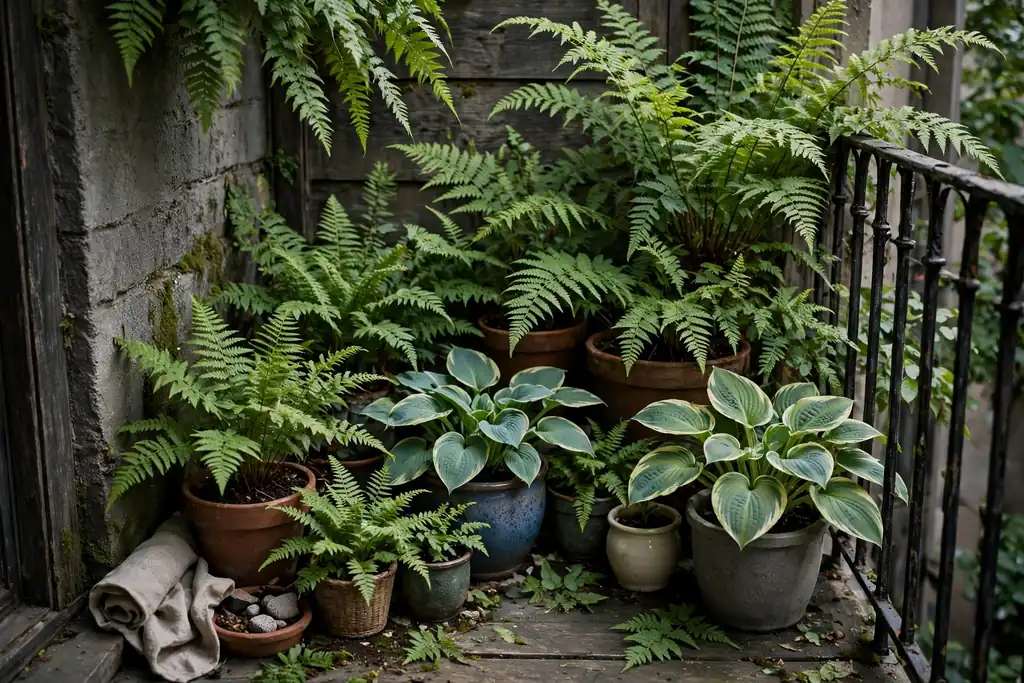
Fill a shady corner with ferns, hostas in pots, and shade tolerant flowers for a lush look where sun is scarce. North facing balconies suit ferns because they prefer cool, damp shade, and their fronds add soft texture against hard walls. Choose pots that hold moisture, and group plants close together to raise humidity around the leaves.
Plant maidenhair fern, Boston fern, and small hostas in rich, moist potting mix, and water before soil dries out fully. Add impatiens or begonias for color in the same shade. Mist leaves on dry days, and trim brown fronds at the base to keep the corner fresh.
14. Pollinator Pots with Lavender and Herbs
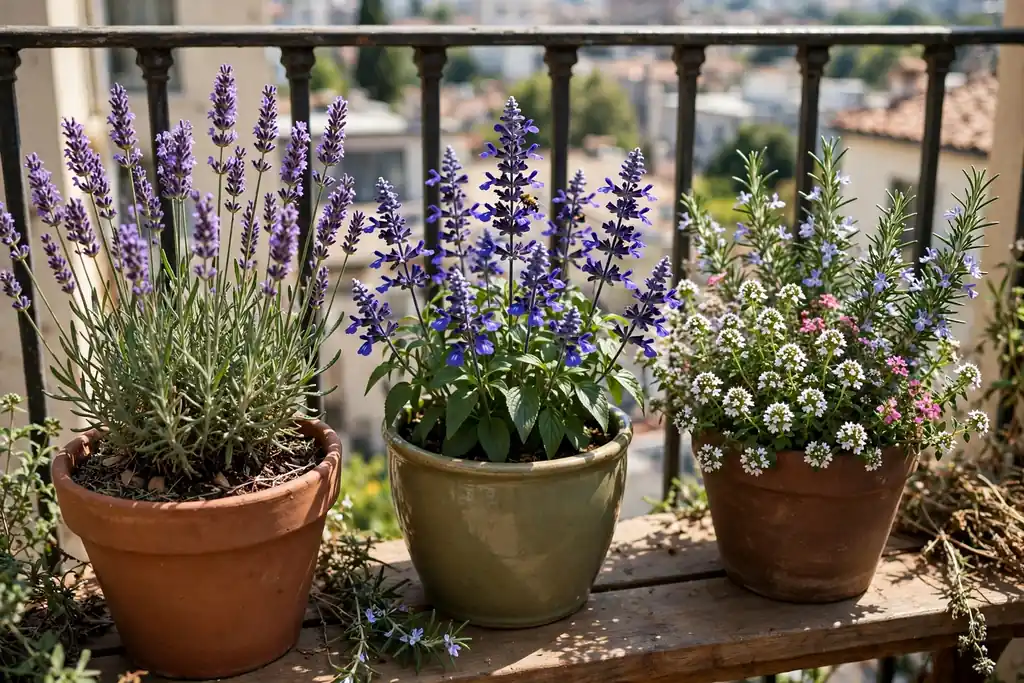
Plant pots of lavender, salvia, and flowering herbs to invite bees and butterflies onto the balcony. Pollinator pots suit small spaces because a few well chosen plants can feed insects all summer, and they also give scent and color for people. Place pots in sun, where flowers open fully and insects can find them easily.
Mix lavender, borage, and chives in separate pots, since each flowers at a slightly different time. Avoid spraying insecticides on these pots, and let some herbs flower rather than cutting every stem. Leave a shallow dish of water with pebbles nearby, so insects can drink without drowning.
15. Salad Trough for Cut and Come Again Leaves
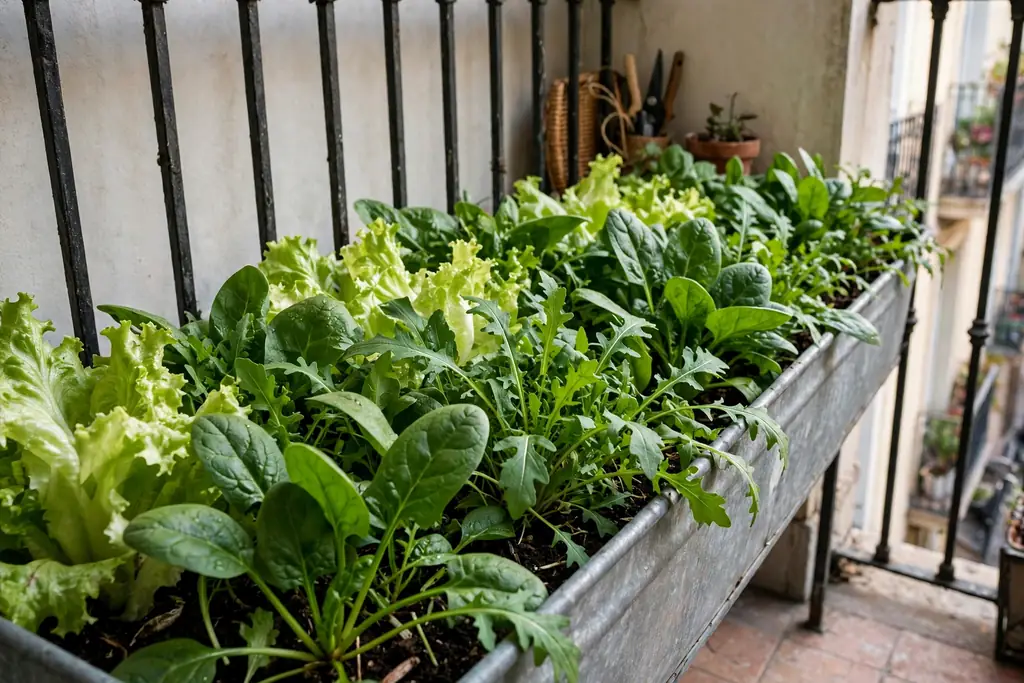
Grow salad leaves in a long, shallow trough for a steady supply of greens steps from the kitchen. A trough suits narrow balconies because it fits along a wall or rail, and cut and come again leaves regrow after picking. Sow lettuce, rocket, spinach, and mixed leaves in rows, and thin seedlings so leaves have room to grow.
Water gently so seeds stay in place, and pick outer leaves first to keep plants producing. Sow a fresh row every two to three weeks through the growing season for a continuous supply. Shade the trough on very hot days, since salad leaves bolt fast in strong heat.
16. Cascading Flower Rail in Summer Color
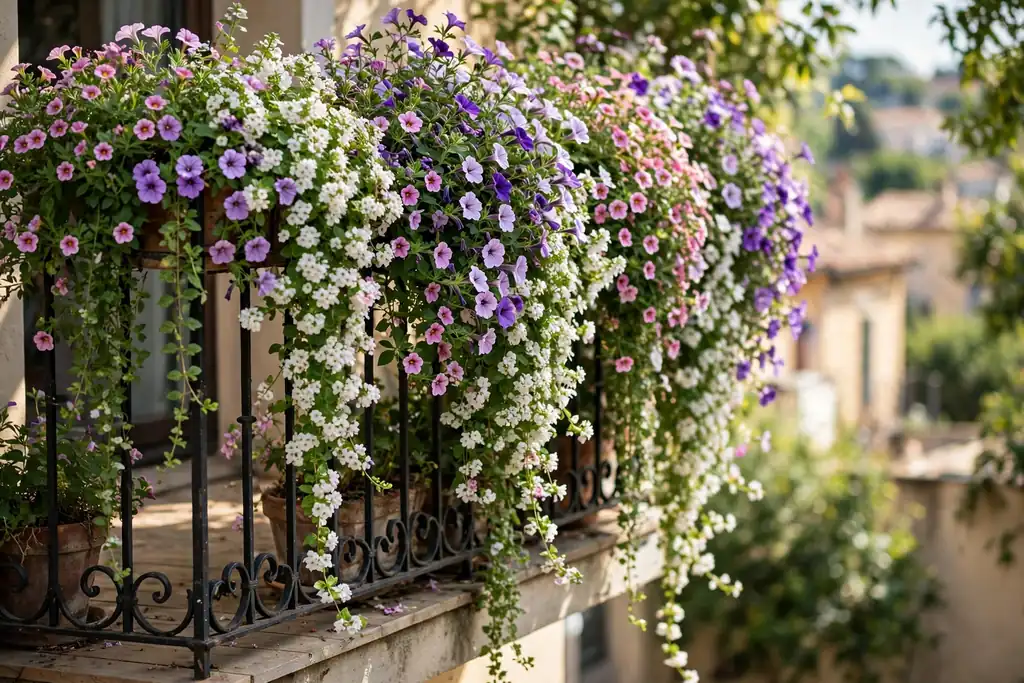
Let trailing flowers cascade over the railing for a curtain of color that softens the balcony edge. Cascading plants suit balconies because they hang outward, so they add drama without taking floor space. Plant trailing geraniums, petunias, or calibrachoa in rail planters, and feed weekly as the plant label directs through summer.
Deadhead faded flowers often to keep new buds coming, and water rail planters daily in hot weather. Mix two colors that sit well together, such as pink and white, rather than many competing shades. At season end, clear spent plants and refresh the soil before replanting.
17. Strawberry Hanging Planters
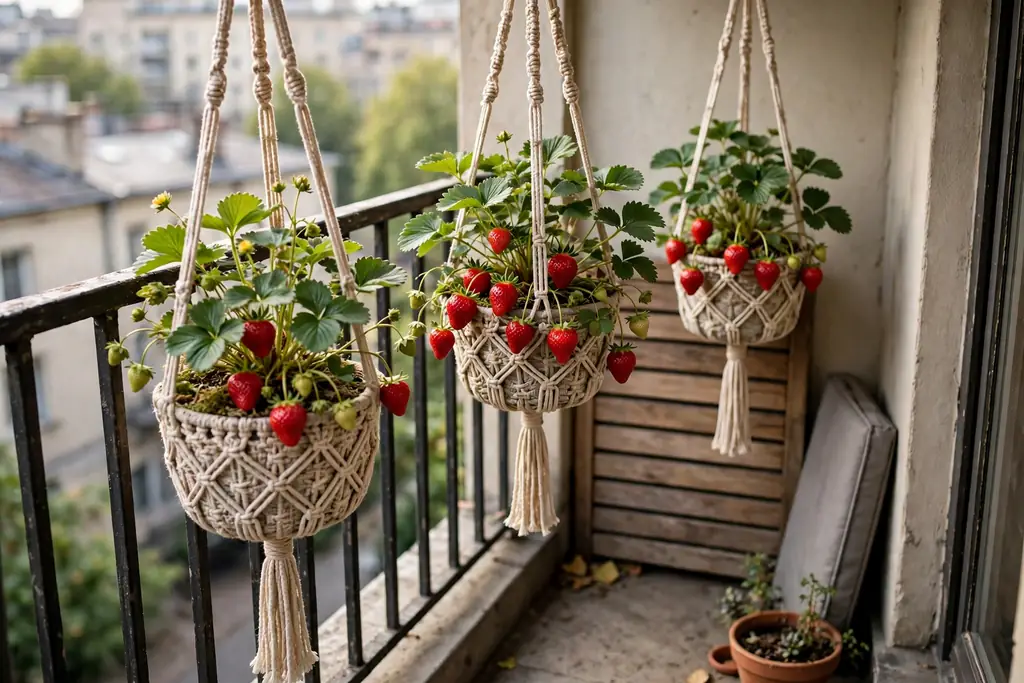
Grow strawberries in hanging planters or stacked strawberry pots for fruit that suits small spaces and small hands. Strawberries fruit well in containers, and their runners trail prettily over pot edges. Choose everbearing types for fruit across the season, and hang planters in sun with good air flow.
Water hanging strawberry pots often, since they dry out fast, and feed with a balanced liquid feed once fruit sets. Pick berries when fully red and soft, and net plants if birds take fruit before you do. After fruiting, trim runners you do not need, and protect pots from hard frost in winter.
18. Storage Bench Seat with Planters on Top
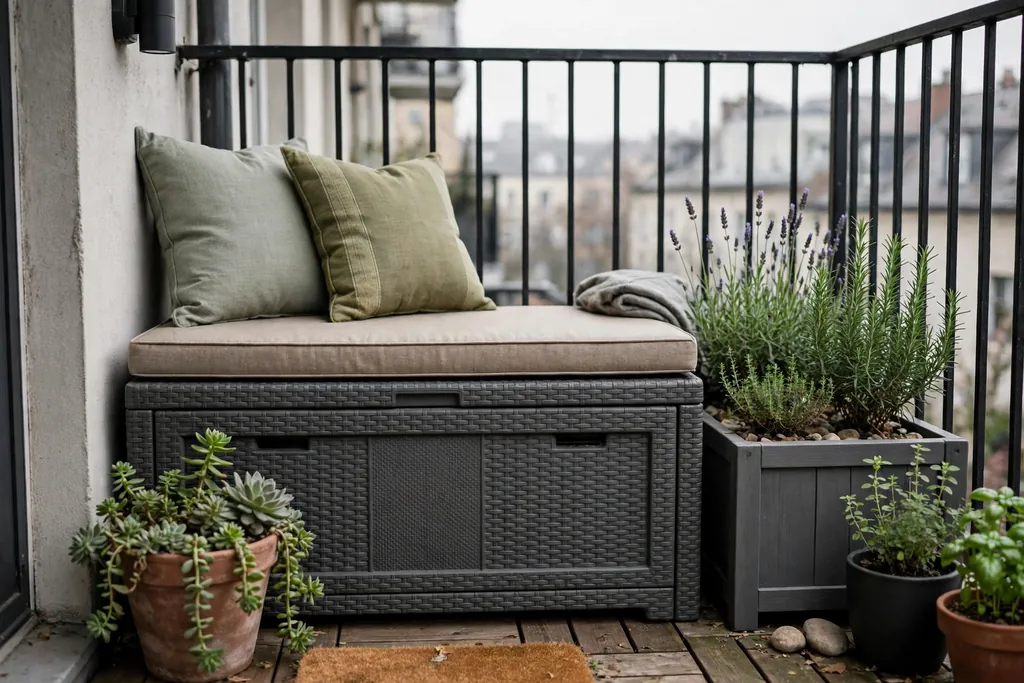
Use a weatherproof storage bench as a seat, with small planters on top or beside it, to solve seating and storage in one piece. A storage bench suits small balconies because it hides cushions, watering cans, and tools, while still giving a place to sit. Choose a bench sized to the wall, with a lid that opens fully without hitting plants.
Keep heavy items low inside the bench, and light cushions on top for easy access. Place a trailing plant at one end of the bench, so it softens the box shape without blocking the lid. Wipe the bench dry after rain, and check hinges yearly so the lid stays safe to open.
19. Slatted Wind Screen with Planters at the Base
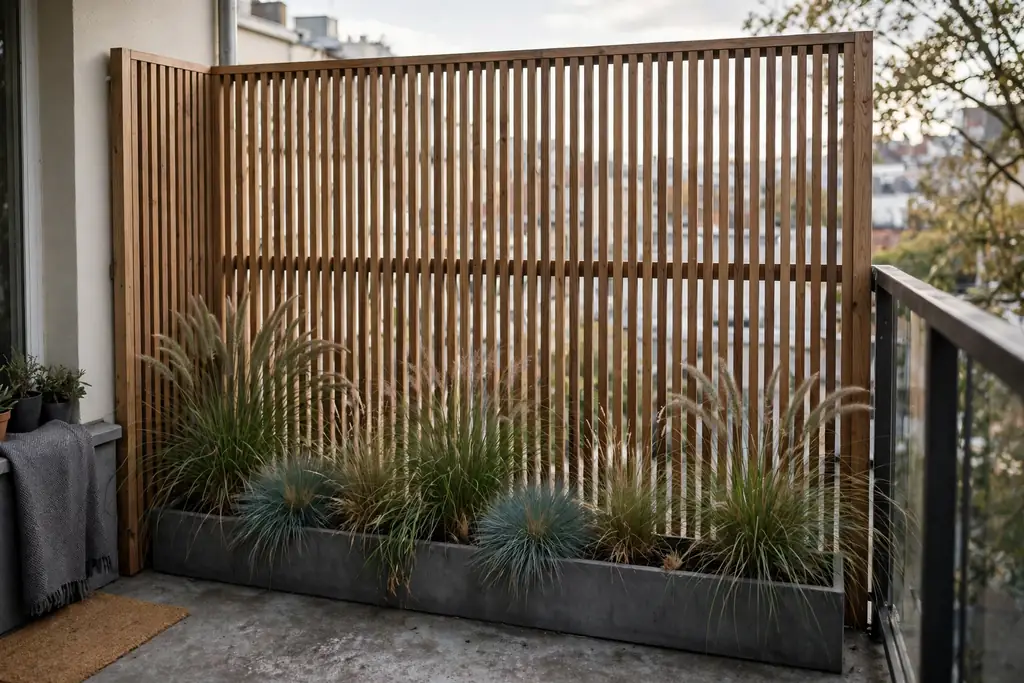
Add a slatted wind screen along the windy side, with planters at its base, to filter wind without blocking light. Slats suit balconies better than solid screens, since they slow wind rather than forcing it over the top in gusts. Fix the screen firmly to the railing or wall, and check building rules before fixing anything to the structure.
Plant wind tolerant grasses, lavender, or small shrubs in pots at the base, so the screen reads as part of the garden. Keep the screen height below the railing line where rules require it, and leave a gap for access to drains. A screen also gives climbers a frame if you add wires later.
20. Mini Greenhouse Shelf for Seedlings and Tender Plants
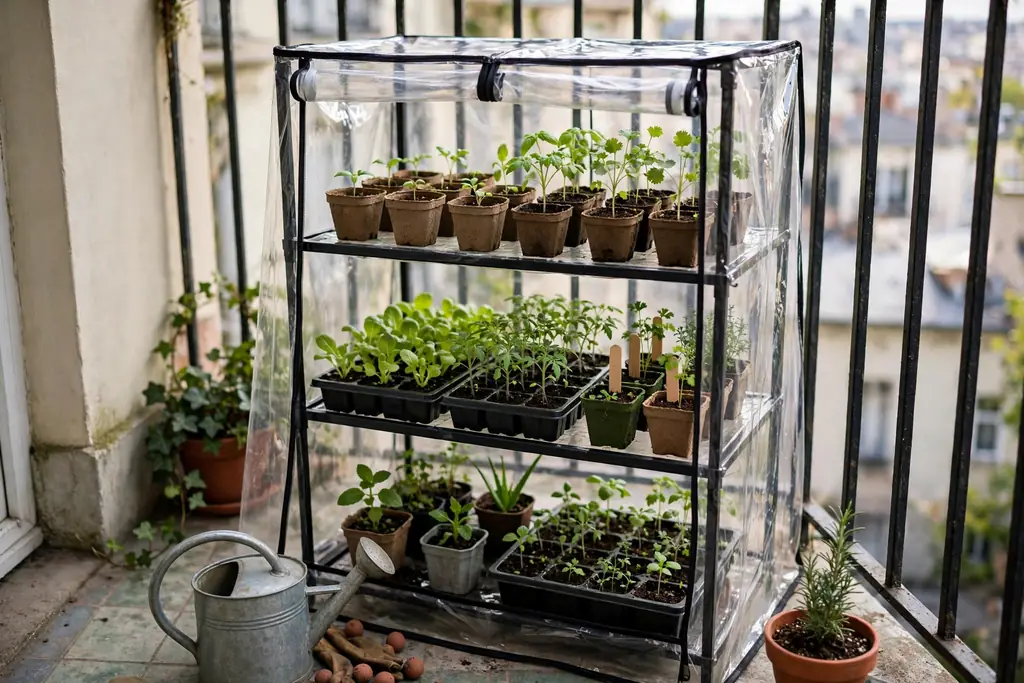
Use a small greenhouse shelf with a clear cover to start seedlings and protect tender plants in spring and autumn. A mini greenhouse suits balconies because it fits against a wall, and it warms seedlings on cool nights without taking a full corner. Choose a shelf with a roll up cover, so you can vent it on warm days.
Place seed trays on upper shelves and tender pots below, and open the cover daily to stop damp and mold. Water seedlings from below where possible, and harden plants off by opening the cover longer each day before moving them outside. Anchor the greenhouse in wind, since a light frame can topple when the cover catches air.
21. Dwarf Citrus or Olive Pot as a Focal Plant
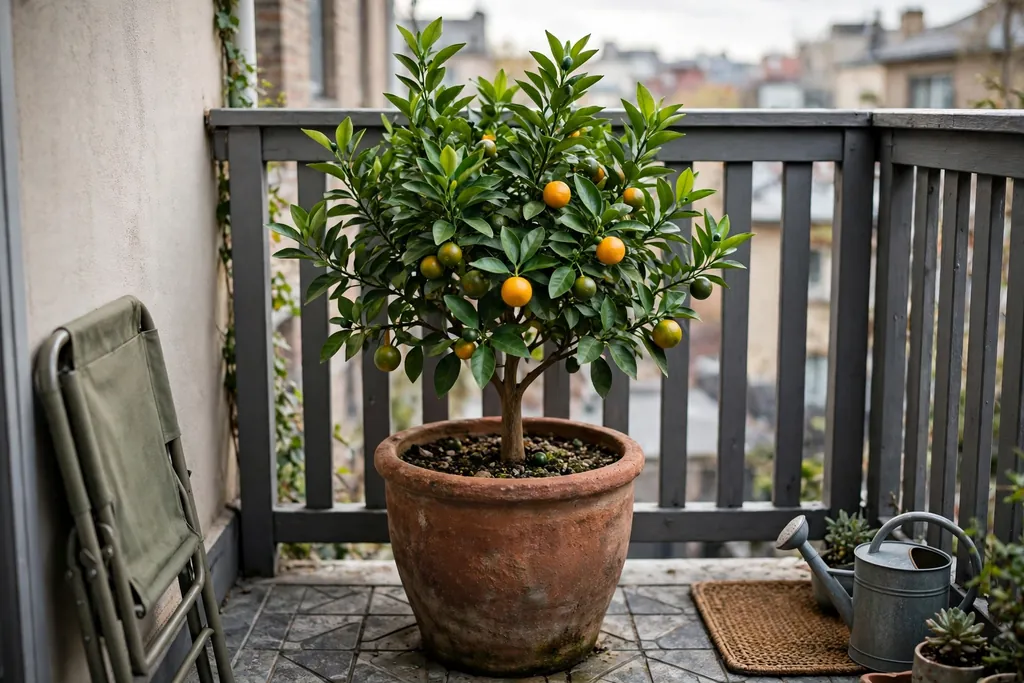
Grow a dwarf citrus tree or a small olive in a large pot as a single focal plant for the balcony. One strong plant suits small spaces because it gives height and structure without a crowd of pots, and its scent or silver leaves add character year round. Choose a pot with drainage and a light, free draining mix, and place it where it gets the most sun.
Water when the top soil feels dry, and feed as the plant label directs in the growing season. Move citrus indoors or under cover before frost, and prune lightly to keep the shape compact. A single focal pot also anchors the seating zone, so the rest of the balcony feels arranged around it.
22. Seasonal Swap Pots for Year Round Color
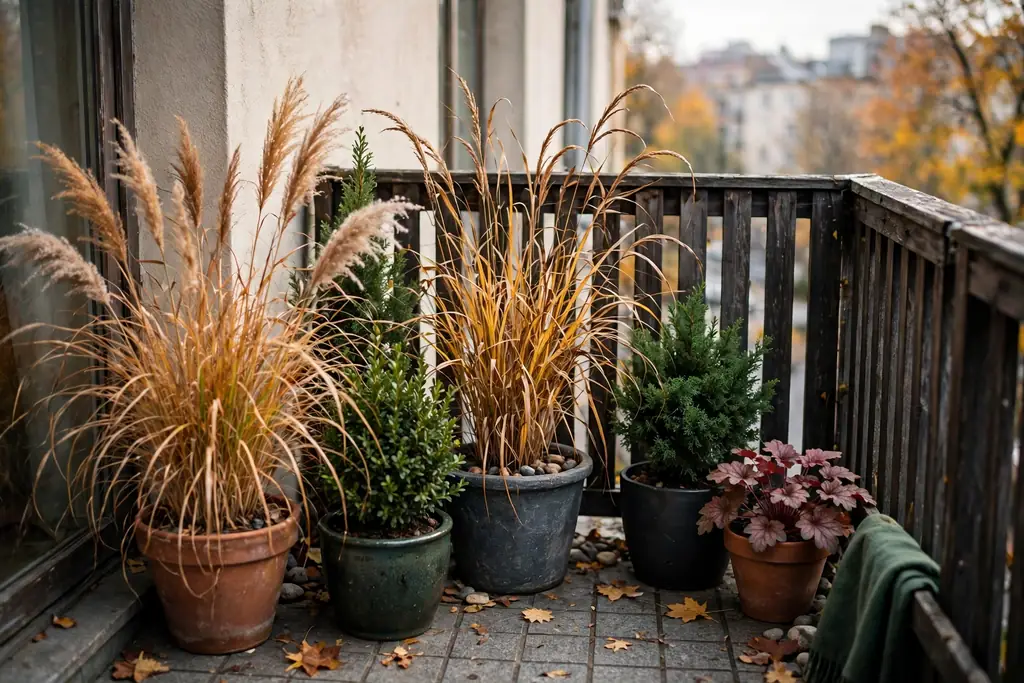
Keep a few swap pots that change with the season, so the balcony never sits bare between plantings. Spring bulbs, summer flowers, autumn grasses, and winter evergreens each take a turn in the same pots, which suits small balconies with little storage. Choose pots you can lift when full, and keep spare plants in a small tray by the door.
Plant bulbs in autumn for spring color, then replace them with summer bedding once flowers fade. Add ornamental grasses and heathers in autumn, and evergreen shrubs with winter berries for the cold months. Refresh the top soil at each swap, and compost spent plants rather than leaving them to crowd the pots.
23. Scented Evening Corner with Night Flowers
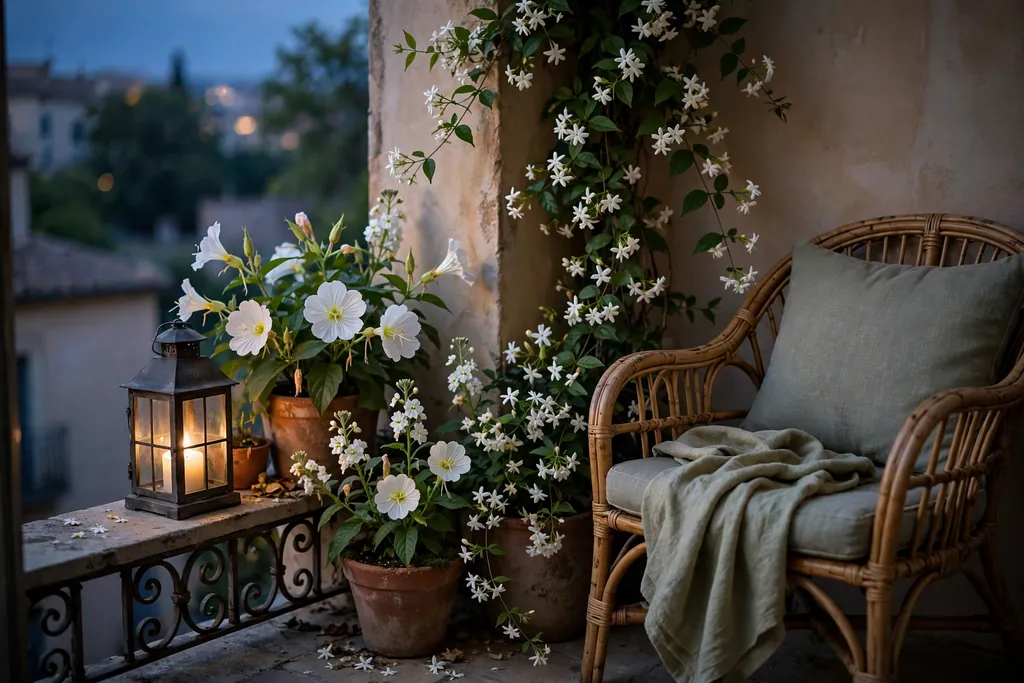
Plant a scented corner near the seat with night scented stock, jasmine, and scented geraniums for evenings outdoors. Scent suits small balconies because fragrance fills a tight space quickly, and evening flowers release their strongest scent after dark. Place scented pots close to the seat and away from strong wind, so fragrance lingers.
Water scented plants well in summer, and deadhead stock often to keep flowers coming. Add a lantern nearby, so the corner feels like a destination at dusk, not just a row of pots. On cool nights, a throw on the seat lets you stay longer and enjoy the scent.
Conclusion
A small balcony garden works best when every surface earns its place. Railing planters add color, wall pockets and shelves add height, edible pots add a daily harvest, and a seat with warm light gives you a reason to use it all. Start with sun, wind, and weight limits, choose plants that suit those conditions, and add one idea at a time rather than filling the balcony in a single weekend. Before long, the narrow space by the door can become the warmest room in the home, one you step into morning and evening. Save the ideas that fit your light and space, and revisit them as the seasons change.
FAQs
How do I start a small balcony garden with no experience?
Start with sun and wind. Note how many hours of direct sun the balcony gets, and whether wind funnels along it. Then choose three or four plants that suit those conditions, in light pots with drainage, plus one seat. Water when the top inch of soil feels dry, and add more pots only once the first plants are growing well.
What plants grow best on a small balcony?
Herbs such as basil, mint, and chives, cherry tomatoes, salad leaves, strawberries, lavender, geraniums, and succulents all suit containers. On shady balconies, choose ferns, hostas, impatiens, and begonias instead. Match the plant to your sun level first, since a sun loving plant in shade will stay weak no matter how often you water it.
How do I keep balcony pots from getting too heavy?
Use light pots made from resin, fiberglass, or light metal, and a light potting mix rather than garden soil. Keep large pots low and near the wall, spread weight across the balcony, and check your building weight limit before adding stone pots or large trees. Raise pots on feet so water drains, and empty saucers after watering.
How often should I water balcony plants?
Check soil with a finger every day or two in summer. Water when the top inch feels dry, and water slowly until water runs from the drainage holes. Hanging baskets and rail planters dry out fastest, while shade pots hold moisture longer. In winter, water far less, and only when soil is dry, since cold, wet soil harms roots.
How can I add privacy to a small balcony garden?
Use a trellis with climbers, a slatted wind screen, or tall pots of grasses and bamboo along the overlooked side. Leaves filter views while letting air pass, which suits balconies better than solid screens that catch wind. Keep screens below any height limit in your building rules, and fix them firmly so they do not sway.
Can I grow vegetables on a tiny balcony?
Yes, if the balcony gets sun. Cherry tomatoes, peppers, salad leaves, herbs, strawberries, and dwarf beans all grow in pots. Choose compact types bred for containers, give each plant its own pot with drainage, and feed once fruit or leaves are growing well. Even a single sunny rail box of herbs counts as a start, and you can add more crops as you learn what grows best.