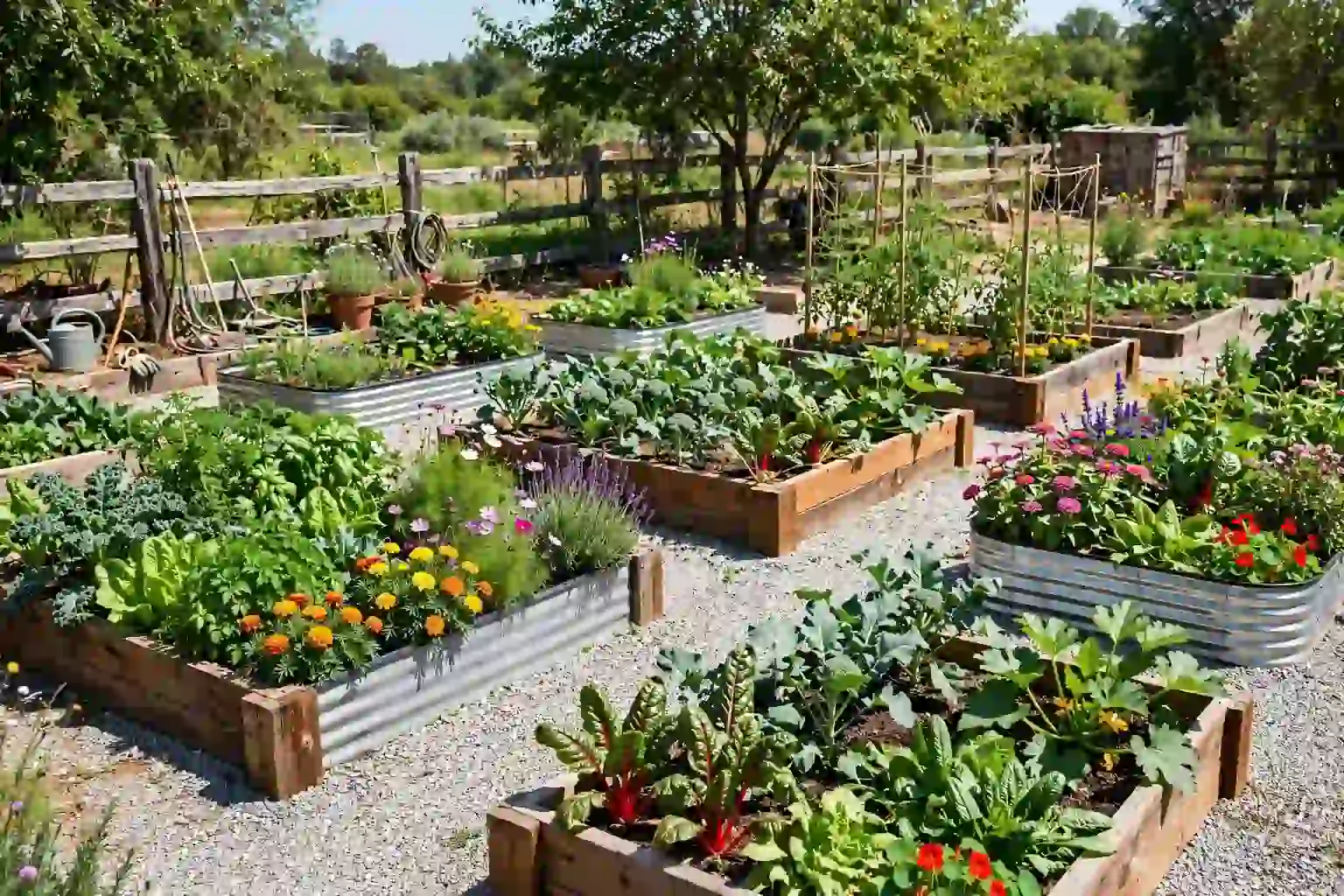
A raised garden bed gives you better soil, clearer edges, and a garden you can work without kneeling on wet ground. It also lets you garden where the soil is poor, the yard slopes, or the only sunny spot is a patio. These 33 raised garden bed ideas cover wood, metal, stone, and block beds, tall and low heights, kitchen gardens, flower beds, and beds built for shade, small spaces, and easy watering. Pick a sunny spot, keep a path beside every bed, and start with one bed you can fill and tend well. For sloping ground, the stepped approach in these tiered garden ideas pairs well with the raised beds below.
Key Takeaways
- Keep beds narrow enough to reach the middle from one side, usually about four feet wide or less.
- Put sun loving vegetables and flowers in the sunniest spot, and leafy greens where light is softer.
- Fill beds with a mix of topsoil and compost, and top up the level each spring as the mix settles.
- Leave a clear path beside every bed for a wheelbarrow, a watering can, and comfortable standing room.
- Match the material to the spot: wood warms a cottage garden, metal suits a neat modern yard, and stone suits a formal edge.
- Plan water before you plant, with mulch, a nearby tap, or a simple drip line for dry spells.
1. Classic Cedar Rectangular Bed
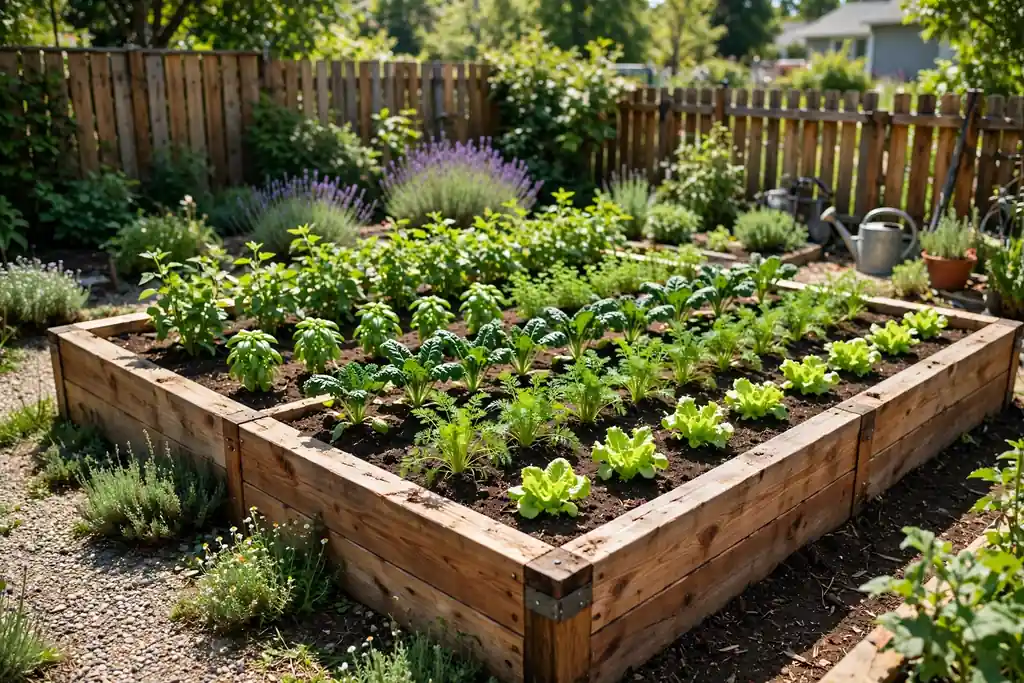
A plain cedar rectangle is the most useful raised bed to start with, and it suits almost any yard. Cedar resists rot better than untreated softwood, and a simple box with corner posts holds its shape for years. Build it about four feet wide so you can reach the middle from either side, and keep the length to what fits your path and your watering routine.
Fill the bed in layers, with coarse material at the base for drainage, then a mix of topsoil and compost. Plant one crop family per row at first, so watering and feeding stay simple. A cedar bed needs little care beyond an occasional check of screws and a top up of compost each spring.
2. Low Wide Bed for Easy Reach
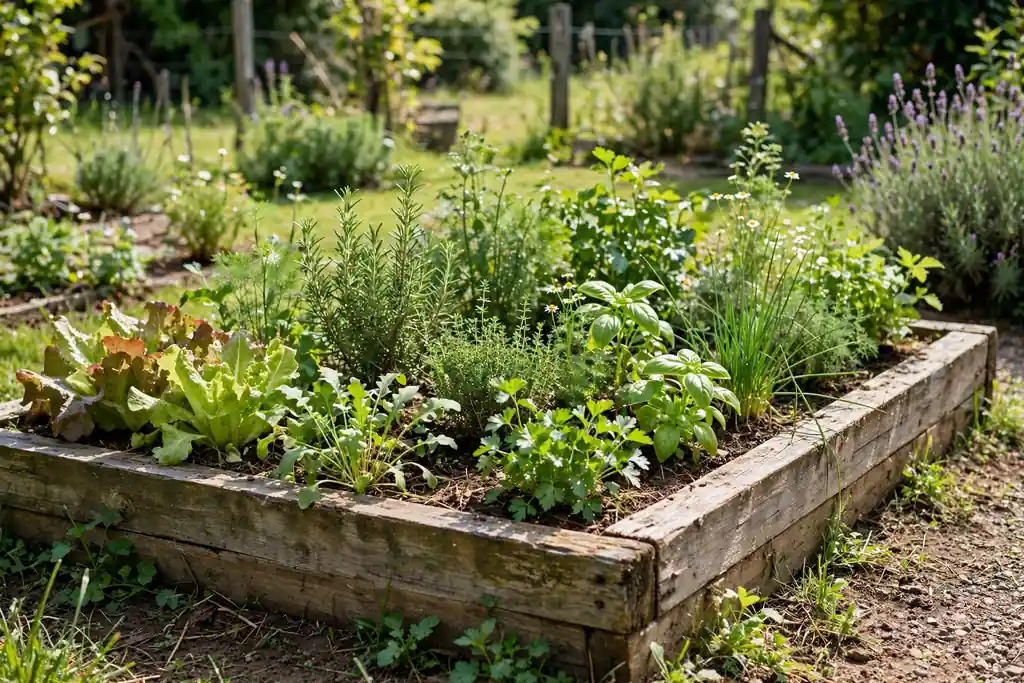
A low bed, about six to eight inches high, gives you the soil benefits of a raised bed without a tall wall to build or fill. It suits flat ground with fair soil already, and it is easy to step over and work from all sides. Keep the edges low and neat with timber, stone, or a simple board, and mark the bed clearly so lawn mowing stays outside it.
Low beds dry out faster than deep beds in hot weather, so mulch the surface well and water at the base. They suit herbs, salads, and shallow rooted flowers, while deep rooted vegetables do better in a taller bed. A low bed is also a gentle first project for a new gardener.
3. Tall Waist High Bed for Comfort
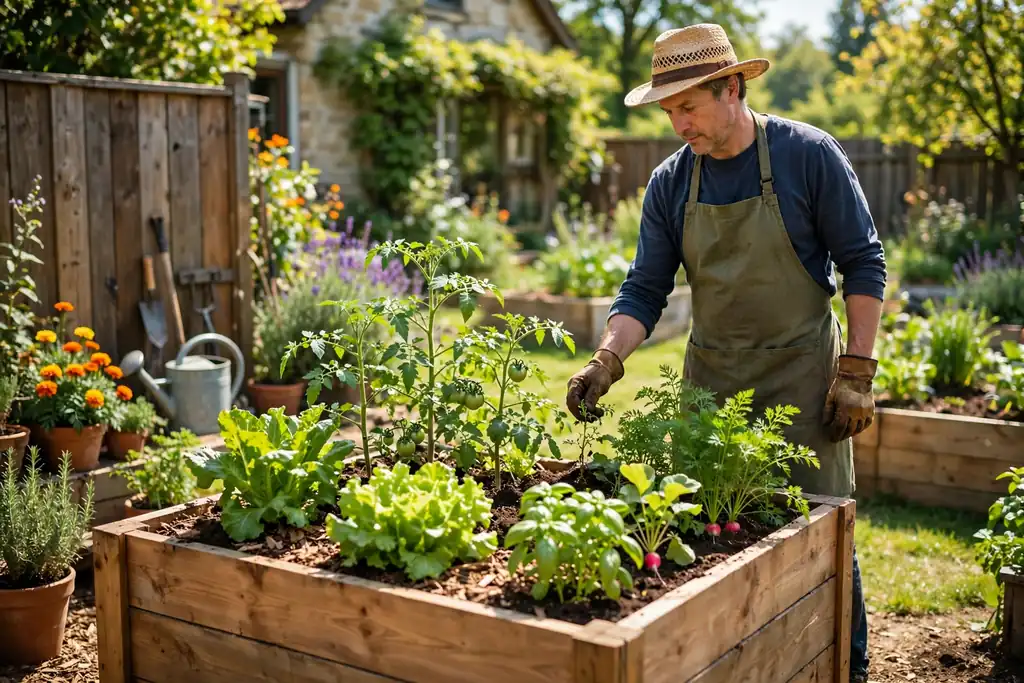
A waist high bed, roughly two to three feet tall, lets you garden standing up, which helps backs, knees, and anyone who finds kneeling hard. The height also keeps soil warmer in spring and keeps many ground pests at a distance. Build the walls strong, with solid corner posts and cross braces, since a tall bed holds a heavy weight of wet soil.
Fill the lower part with coarse, bulky material such as branches or straw, then topsoil and compost on top, so the bed costs less to fill and drains well. Keep a path all the way around, and check that the bed does not shade a smaller bed behind it. Tall beds need more water, so mulch thickly.
4. L Shaped Corner Bed
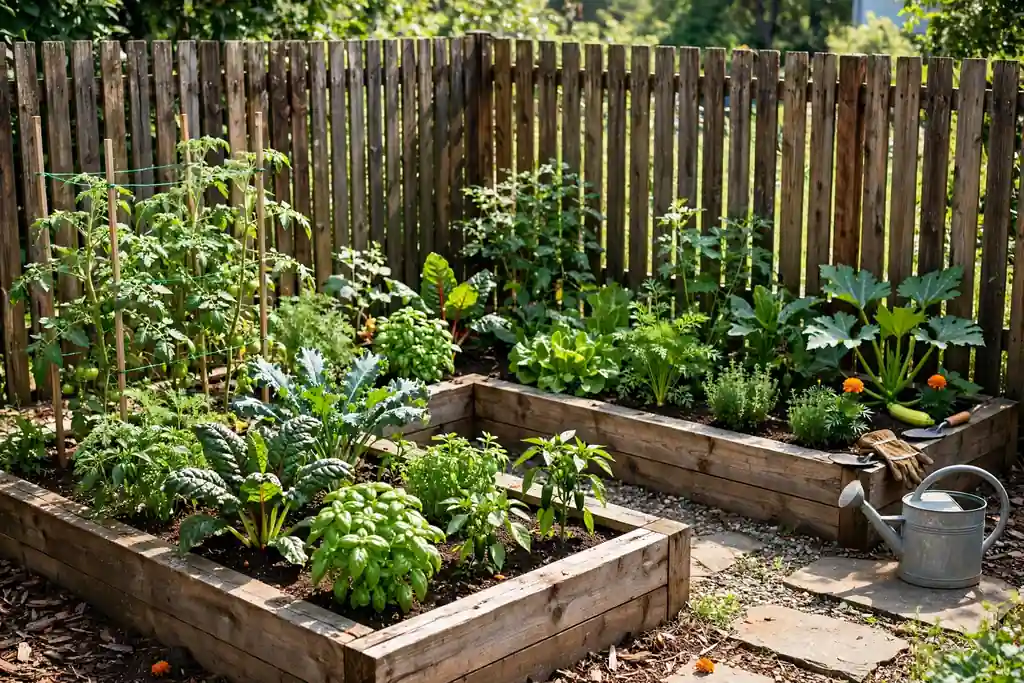
An L shaped bed turns an awkward yard corner into useful growing space, wrapping around a fence, a shed, or a patio edge. The two arms give you more planting room than a single straight bed in the same corner, and the inner corner makes a handy spot for a compost bucket or a watering can. Keep each arm no wider than you can reach, and leave the inside corner open enough to stand in.
Plant taller crops at the back of each arm, where they will not shade the rest, and keep low salads and herbs near the front edge. An L shape also frames a small seating spot in the corner, which makes the garden feel planned rather than filled in.
5. U Shaped Kitchen Garden Bed
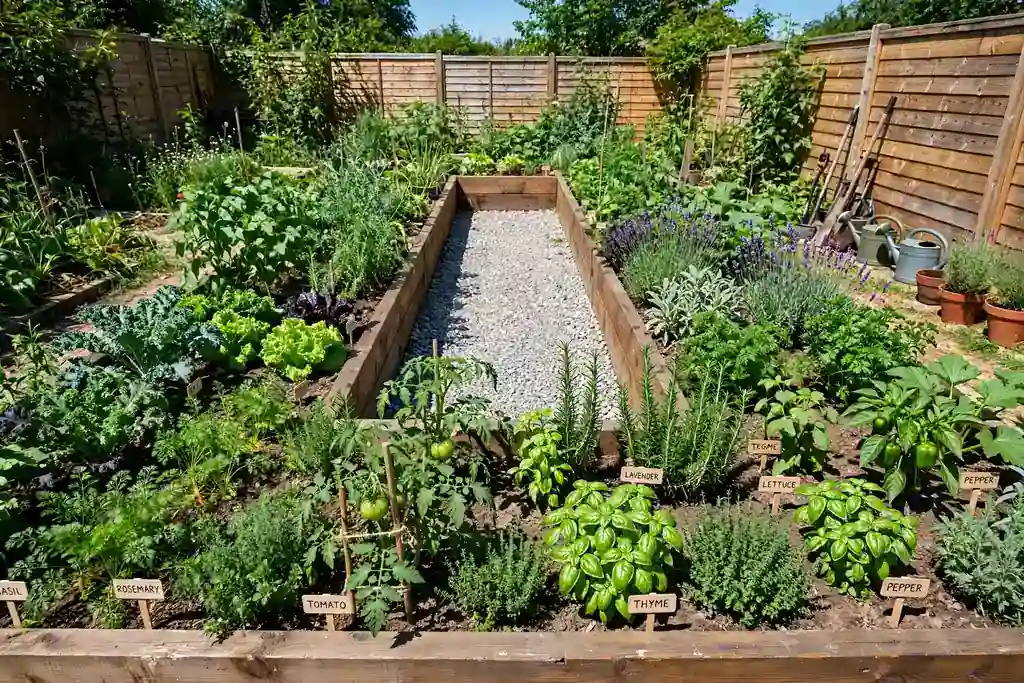
A U shaped bed gives you a large growing area with a path into the middle, so every plant stays within reach. It suits a kitchen garden where you visit daily for salads, herbs, and beans, and it keeps the working area compact. Build the three sides at the same height, and keep the inner path wide enough to kneel or place a small stool.
Use the back of the U for tall crops such as peas or tomatoes, and the front edges for herbs and cut and come again salads. A U shape also suits a family garden, since children can work one arm while an adult works another, without anyone stepping on the soil.
6. Stepped Tiered Beds on a Slope
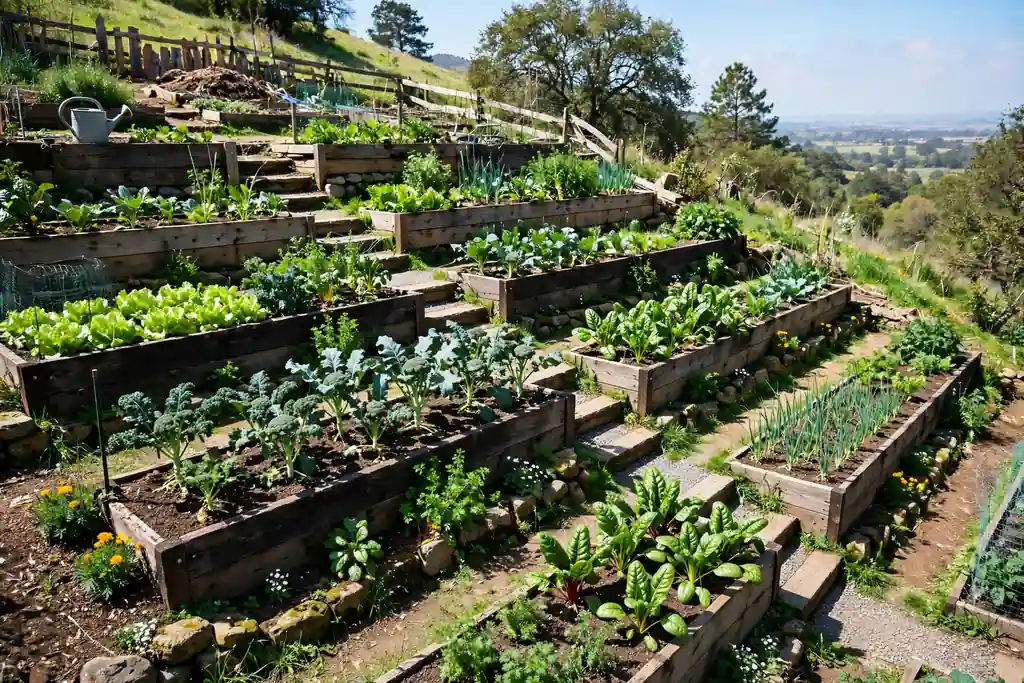
Stepped beds turn a slope into a series of level growing boxes, each with its own flat soil and easy access. Build from the lowest bed upward, so each bed has firm support, and leave a path or grass strip between beds for a wheelbarrow. Each bed stays at a comfortable working height, even though the ground drops away beside it.
Put daily crops such as salads nearest the house, and beds you visit weekly further down the slope. The stepped layout also slows rainwater, since each level holds water instead of letting it run straight downhill. For more slope layouts, see these tiered garden ideas.
7. Keyhole Bed With a Compost Center
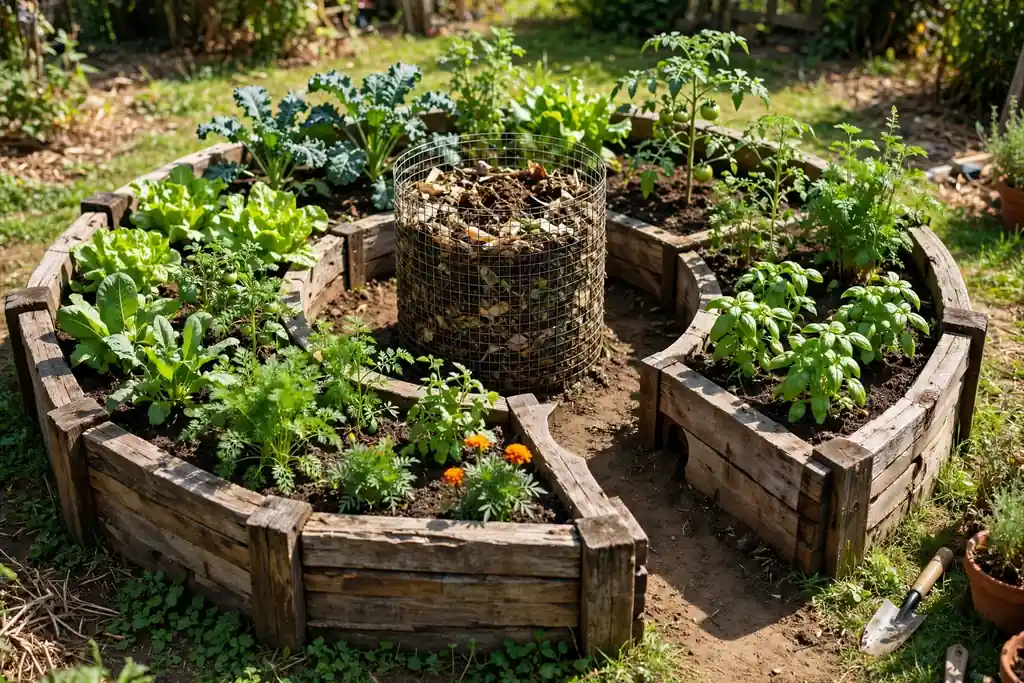
A keyhole bed is a round raised bed with a notch cut into one side, like a keyhole, so you can reach the center from the path. At the center sits an open compost basket, and kitchen scraps and water added there feed the soil around it. The shape suits a small yard, since one round bed holds a surprising amount of planting in a compact footprint.
Build the wall from stone, block, or timber, and keep the notch wide enough to stand in comfortably. Add water through the compost basket, so moisture spreads outward to the roots. Turn the basket contents now and then, and avoid meat or cooked food scraps, which attract pests.
8. Square Foot Grid Bed
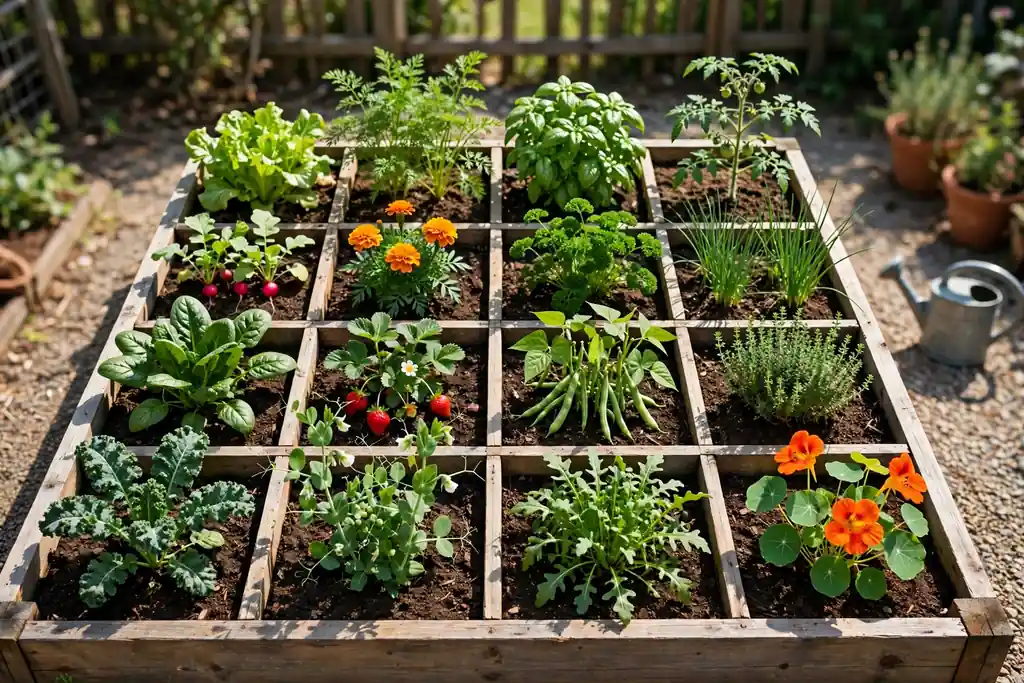
A square foot bed divides a four foot square box into sixteen one foot squares, with one crop type per square, spaced by the plant label. The grid makes planning simple, stops overplanting, and helps a beginner see at a glance what is growing where. Mark the grid with string, thin battens, or a simple frame laid on the soil surface.
Plant fast crops such as radishes and salads in squares you can replant through the season, and give large plants such as tomatoes a full square each. Water the whole bed evenly, and keep a small notebook of what each square holds, so rotation next year is easy. A grid bed is a calm, tidy way to start vegetable growing.
9. Herb Spiral Raised Bed
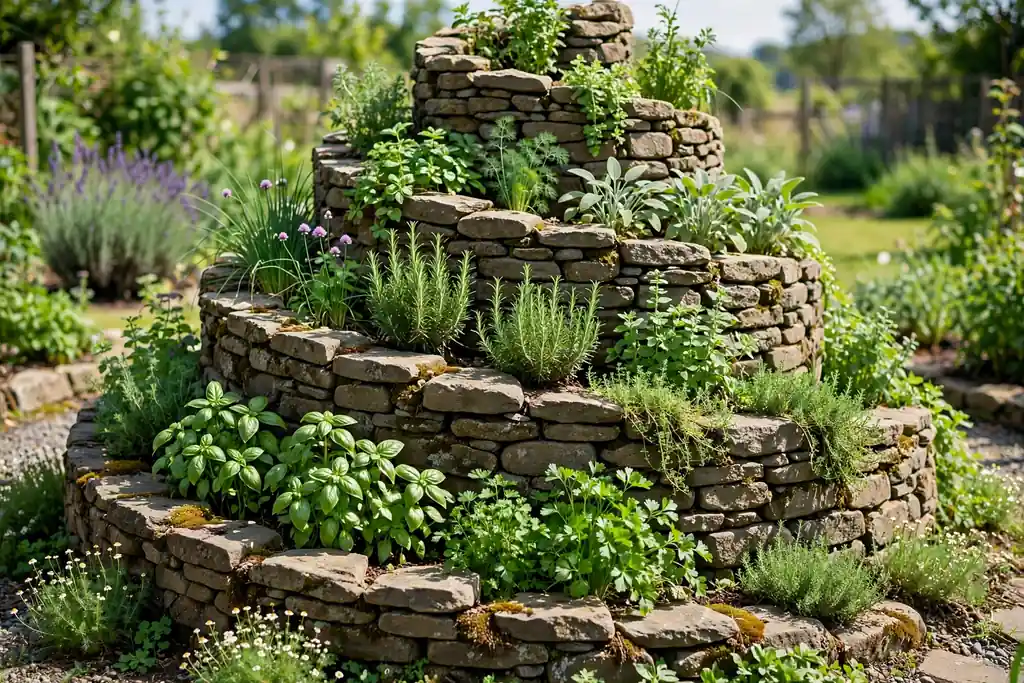
A herb spiral is a raised bed that winds upward in a spiral, giving you dry, sunny soil at the top and moist, shaded soil at the base. That range suits herbs with different needs in one small structure: rosemary and thyme at the sunny top, parsley and chives lower down, and mint in its own pot sunk at the base so it does not spread.
Build the spiral from stone, brick, or timber, and fill it with free draining soil mixed with grit. Place it near the kitchen door, since herbs earn their place by being picked often. Keep the path around the spiral clear, and label young herbs, since many look alike before they flower.
10. Trellis Backed Vegetable Bed
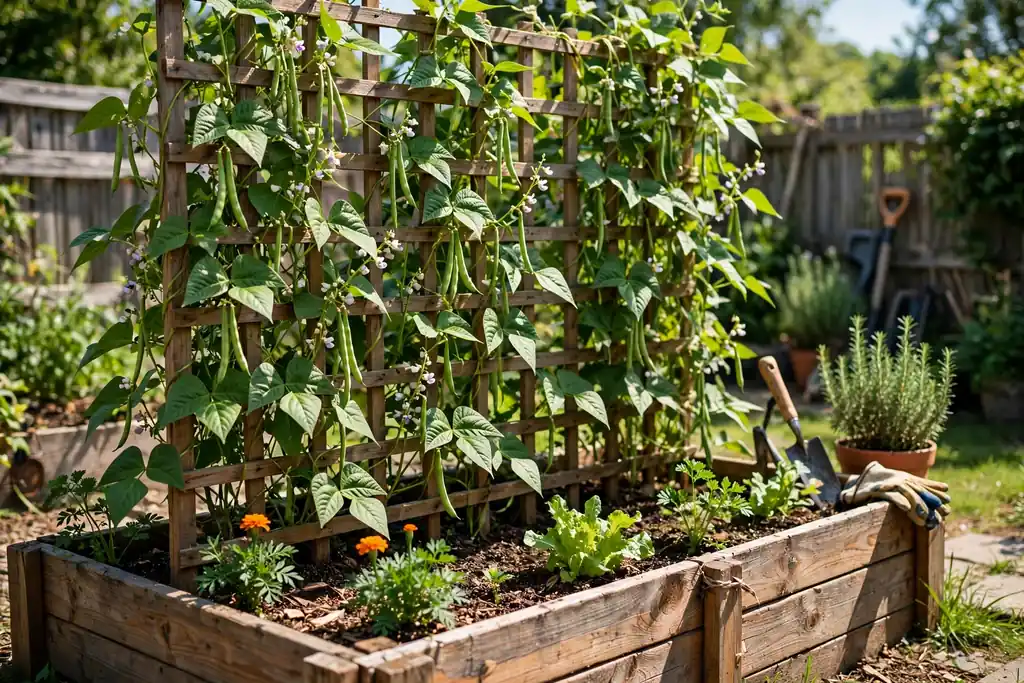
A bed with a trellis fixed along the back edge grows upward as well as outward, which suits peas, beans, cucumbers, and small squash. The trellis keeps fruit off wet soil, improves air flow, and frees bed space for low crops in front. Fix the trellis firmly into the bed frame or into posts behind it, so it does not lean once plants grow heavy.
Face the trellis to catch sun without shading the rest of the bed, and tie stems in loosely as they grow. Keep the front of the bed for salads, carrots, and herbs, which enjoy the light and the shelter the trellis gives on windy days. At season end, clear old stems and check the fixings before replanting.
11. Cutting Flower Bed in Rows
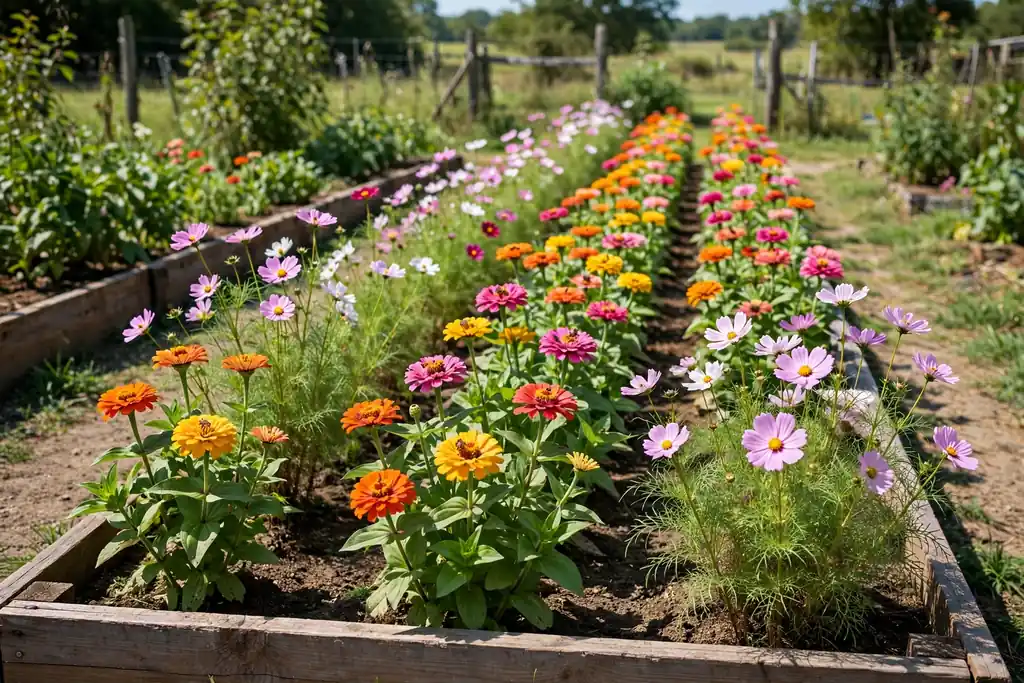
A cutting bed grows flowers for the house in straight rows spaced for picking, rather than for display from a path. Rows of zinnias, cosmos, dahlias, and sweet peas, cut in the morning into a bucket of water, keep display borders tidy and give you fresh stems all summer. Keep the bed near a path and a tap, since you will visit it often with snips and a bucket.
Feed and water a cutting bed more than a display border, and re-sow fast annuals if gaps appear by midsummer. For color planning that carries into the house, the drifts in these pink flower garden ideas show how one color repeated in groups reads clearly. Leave some stems to set seed for next year if you like.
12. Pollinator Bed With Native Flowers
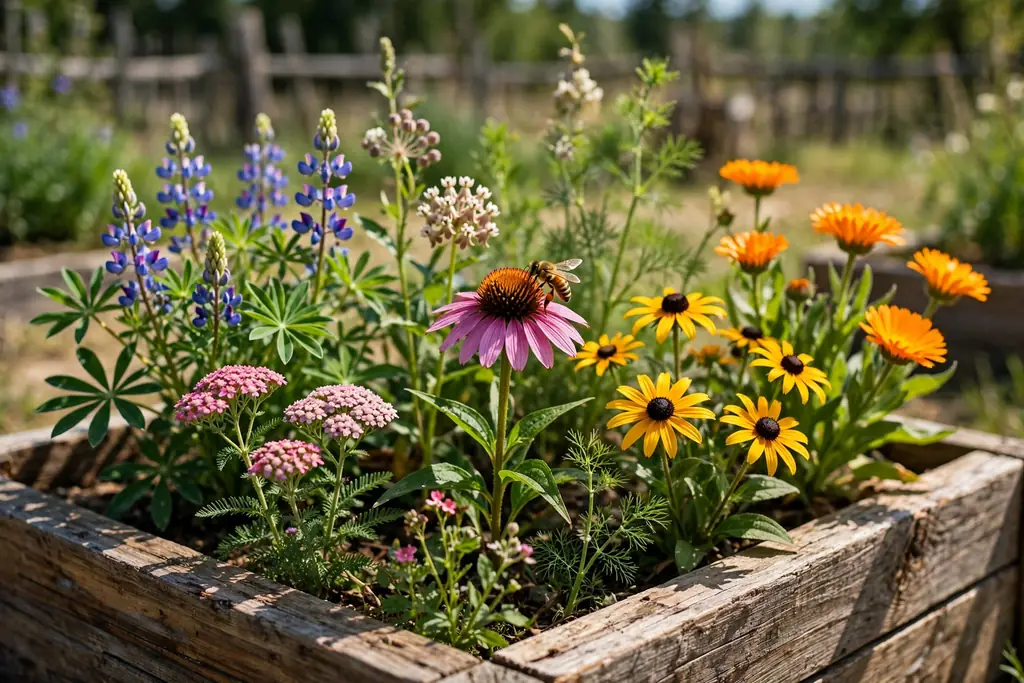
A pollinator bed plants flowers that bees, butterflies, and other helpful insects visit through the season, with blooms from spring to late summer. Choose plants suited to your area and soil, group each type in drifts of three or more, and include some flat topped flowers that insects can land on easily. Avoid spraying the bed, and leave some stems standing over winter for shelter.
Site the bed in sun, near other planting rather than alone in a corner, so insects find it easily. Add a shallow dish of water with pebbles for landing spots, and cut back only in spring, after overwintering insects have moved on. A pollinator bed also brings color and movement close to a seating spot.
13. Strawberry Bed With Side Pockets
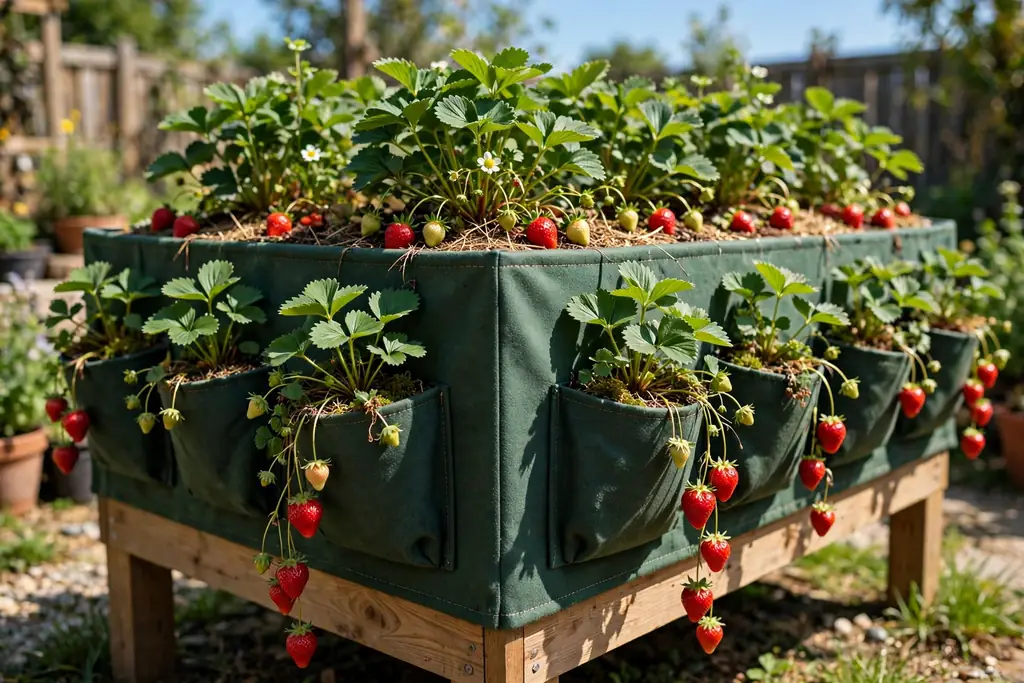
A strawberry bed with planting pockets in its sides grows fruit at several levels, which suits a small yard where ground space is tight. Plants in the pockets trail over the edge, keeping fruit off wet soil, while plants on top fill the center. Build the bed from timber, block, or a stacked planter with firm pockets, and fill it with rich, free draining soil.
Water pockets more often than the top, since they dry out fast in sun and wind. Net the bed when fruit ripens if birds visit, and mulch with straw to keep berries clean. After fruiting, trim old leaves and runners, keeping the strongest runners to fill gaps next year.
14. Galvanized Metal Trough Bed
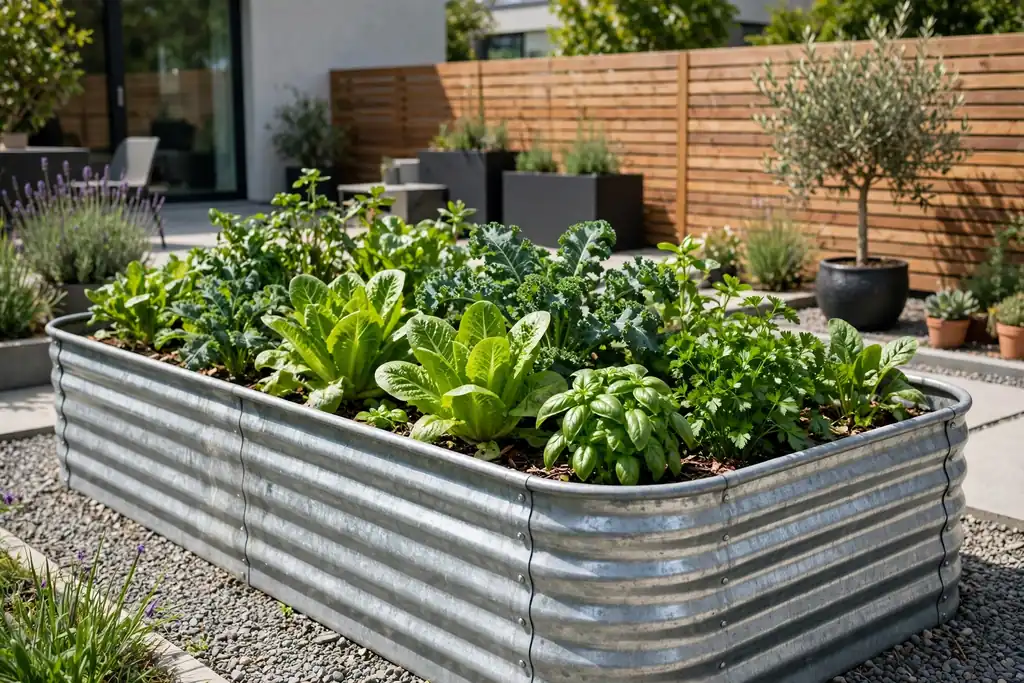
A galvanized metal trough, or a bed built from corrugated metal panels, gives a clean, modern look and lasts for many years without rotting. Metal warms soil early in spring, which suits early salads and herbs, but it can overheat in very hot sun, so mulch well and water deeply. Drill drainage holes in the base if the trough has a solid floor, and raise it slightly on feet or bricks so water can escape.
Metal beds suit a neat yard, a patio edge, or a contemporary front garden. Line the inside with a breathable barrier if you plan to grow edibles and want to limit soil contact with the metal, and check the edges for sharp spots before planting. Keep the bed level, since a tilted trough shows at once.
15. Brick Edged Raised Bed
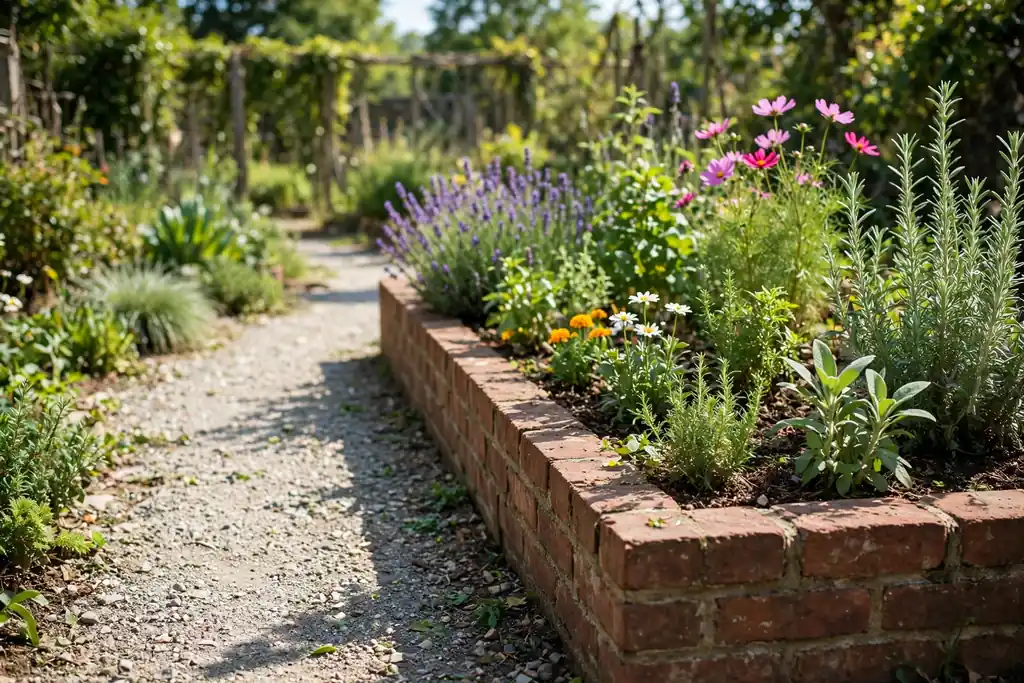
A brick edged bed gives a formal, lasting edge that suits a front garden, a path side, or a house wall. Lay bricks on a shallow footing of compacted gravel or concrete, keep the top level along each run, and leave a drain point at the lowest corner so water does not pool behind the bricks. A single course suits a low bed, while two or three courses hold a deeper bed.
Brick pairs well with gravel paths and clipped hedging, and reclaimed bricks add warmth to a new garden. Plant low edging plants such as lavender or thrift just behind the brick line, so flowers spill slightly over the edge without hiding it. Check the footing after frost, and reset any bricks that lift.
16. Stone Walled Raised Bed
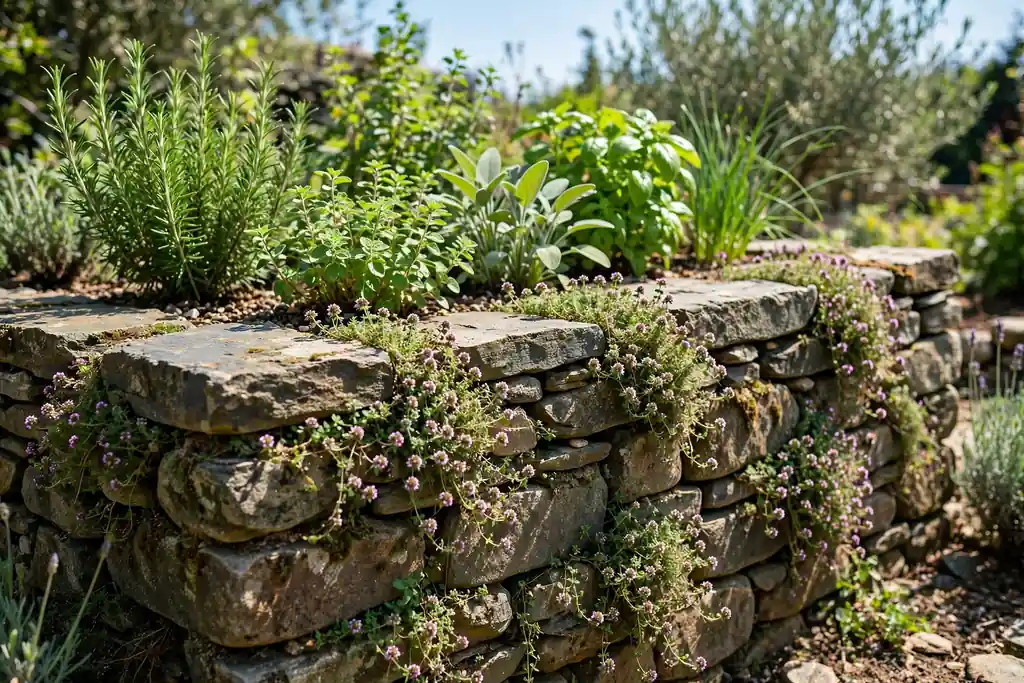
A stone walled bed gives a garden structure that looks good all year, even when planting is bare. Dry stone walls suit informal gardens, while mortared stone suits a formal edge near a house or patio. Build on a firm footing, lean the wall slightly back into the bed, and leave drainage gaps so water can escape instead of building up pressure behind the wall.
Stone also gives planting pockets of its own: low plants such as creeping thyme and small sedums can root in gaps near the top, softening the hard edge. Keep tall stone walls in professional hands, and check local rules before you build, since height and drainage rules vary. A stone bed holds heat, which suits Mediterranean herbs.
17. Cinder Block Bed With Cap Pockets
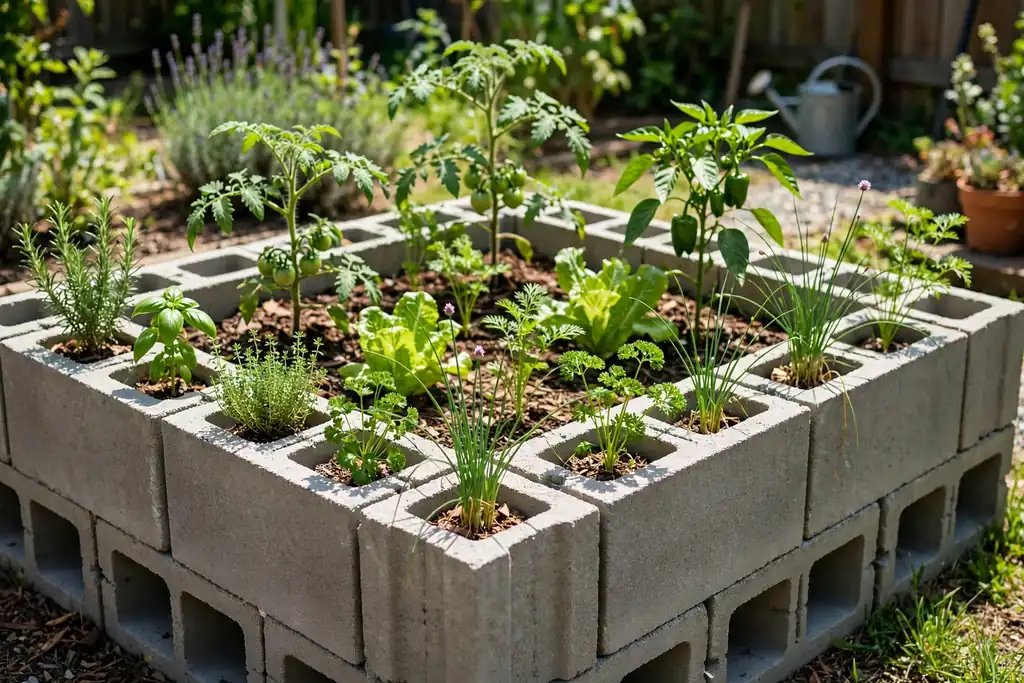
A cinder block bed stacks hollow blocks into a sturdy rectangle, and the hollow cores become small planting pockets along the top edge. The blocks are heavy and stable, need no timber treatment, and suit a long, straight vegetable bed. Lay the first course level on compacted gravel, stack the next course with joints offset, and cap the top with flat pavers if you want a smooth seat or shelf.
Plant herbs, strawberries, or small flowers in the block pockets, and keep the main bed for vegetables. Block beds hold heat, so water well in summer, and check that the blocks are rated for outdoor use. A block bed is a practical choice where timber rots fast in damp ground.
18. Pallet Collar Bed
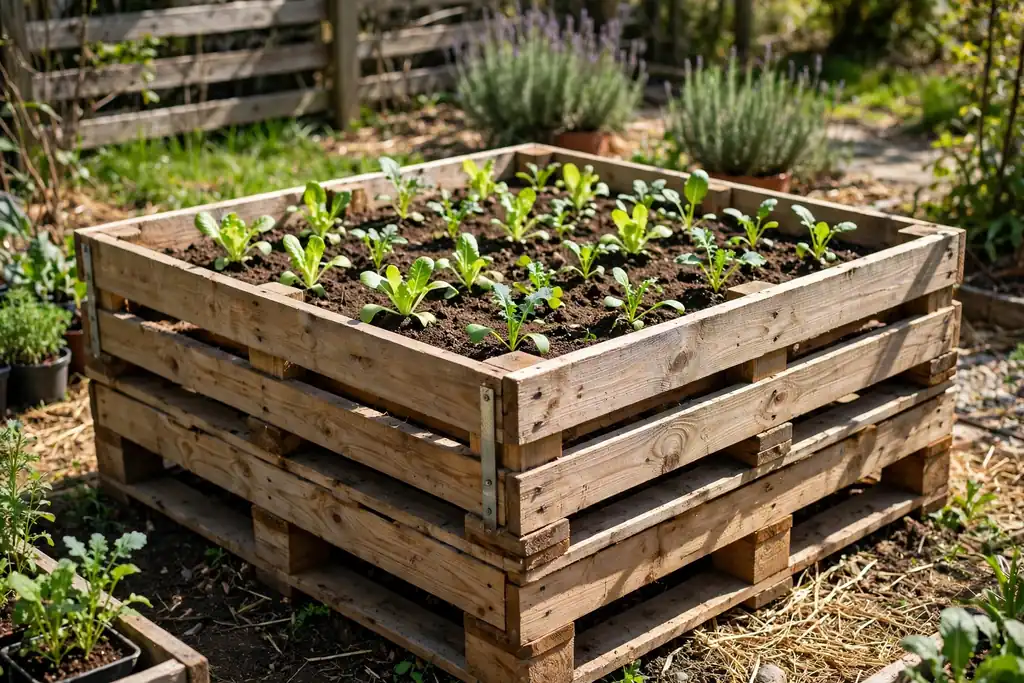
Pallet collars are hinged wooden frames that stack to make a raised bed at whatever height you choose, and they suit renters and trial gardens since they come apart easily. Stack one collar for a low bed, or two or three for a deeper bed, on level ground, and line the inside with a breathable barrier to hold soil. Fill with topsoil and compost, and plant as you would any timber bed.
Check that the collars are clean and untreated with harmful chemicals before growing food in them, and look for a heat treatment mark rather than a chemical one. Pallet collars weather fast, so expect to replace the lowest collar first. Their low cost makes them a good way to test a bed position before building a lasting version.
19. Woven Willow Wattle Bed
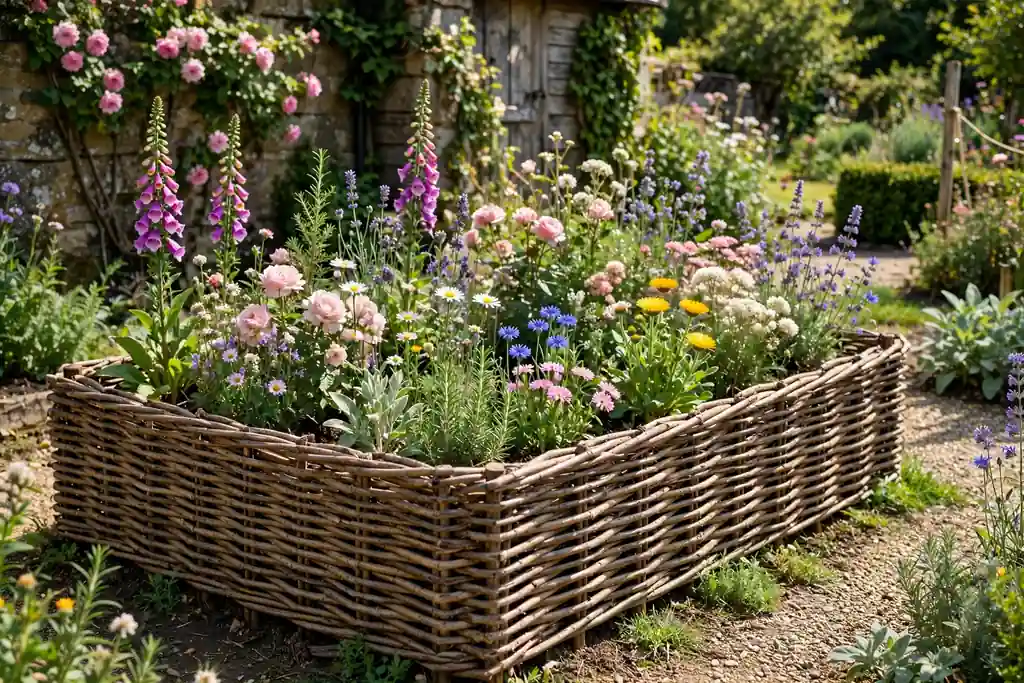
A wattle bed weaves willow or hazel rods between upright stakes to form a low, rounded wall, giving a soft, cottage garden look. The woven wall holds soil, drains freely, and suits flower beds, herb beds, and informal vegetable plots. Drive stakes firmly into the ground, weave rods in and out, and keep the weave tight near the base where soil pressure is greatest.
Wattle beds last a few seasons before the rods weather, so treat them as a living, replaceable edge rather than a permanent wall. Plant trailing flowers at the edge to soften the weave, and keep the bed narrow enough to reach across. A wattle bed suits a garden where a hard timber or metal edge would look too formal.
20. Corrugated Metal Bed With a Timber Frame
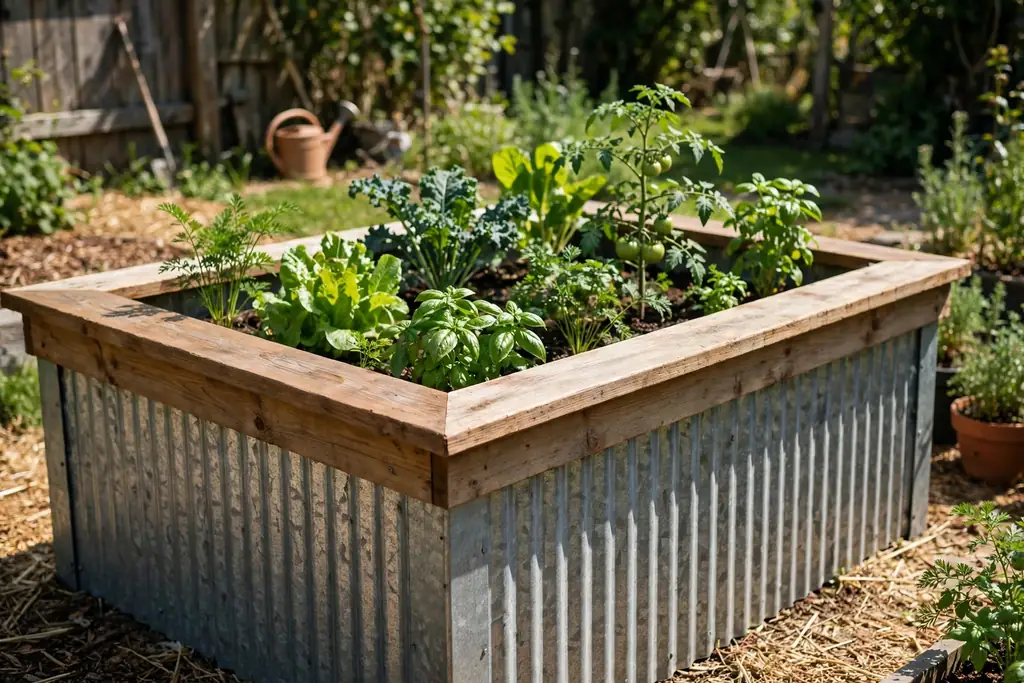
A corrugated metal bed framed with timber combines the clean lines of metal with the warmth and strength of wood. The timber frame holds the panels rigid, caps sharp edges, and gives you a place to sit or set down tools. Build the frame from sturdy corner posts and top rails, fix the panels inside the frame, and keep the bed level on compacted ground.
This bed suits a modern yard that still wants a natural touch, and it lasts longer than an all timber bed. Mulch well, since metal walls warm soil fast, and water deeply in hot spells. The timber top rail also makes a handy shelf for a watering can, snips, and seed packets while you work.
21. Bench Edged Bed With a Wide Cap
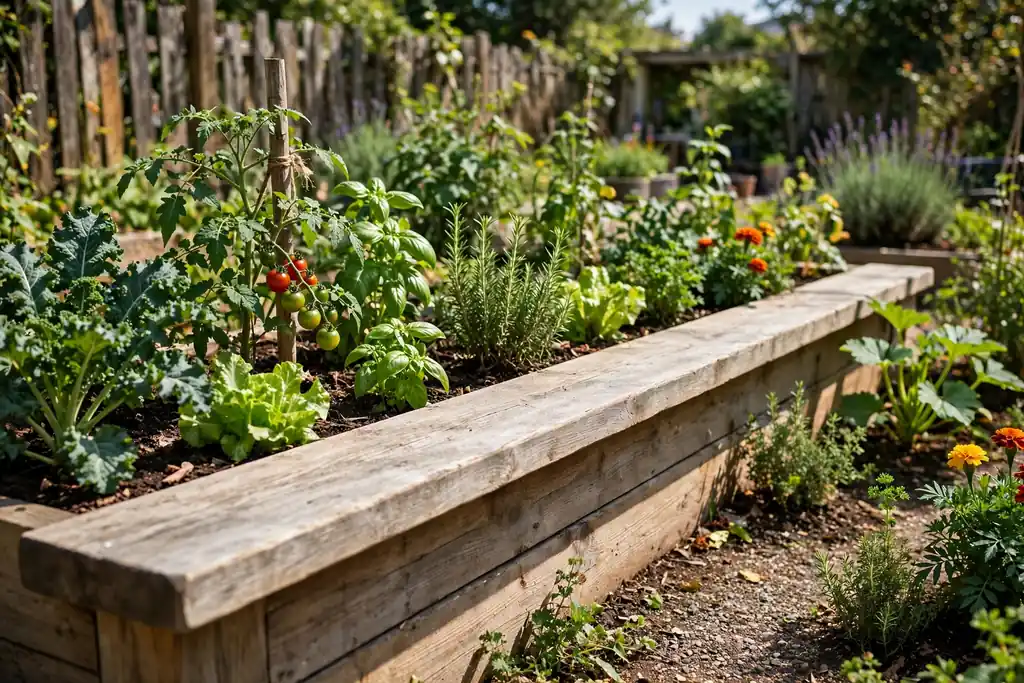
A bed with a wide, flat cap around its top edge doubles as a seat, a shelf, and a working ledge, which makes it one of the most used beds in a garden. The cap, made from timber, stone, or pavers, gives you a place to sit while you weed, set down a basket, or rest a cup of tea. Build the wall strong enough to take sitting weight, and keep the cap wide enough to sit on comfortably.
Place a bench edged bed where you already pause, such as beside a path or near a sunny corner, and keep the planting in front low so the seat stays easy to use. For seating layout ideas that suit a garden corner, see these garden bench ideas. Add a cushion for long sessions, and bring it inside in wet weather.
22. Cold Frame Bed With a Lift Up Lid
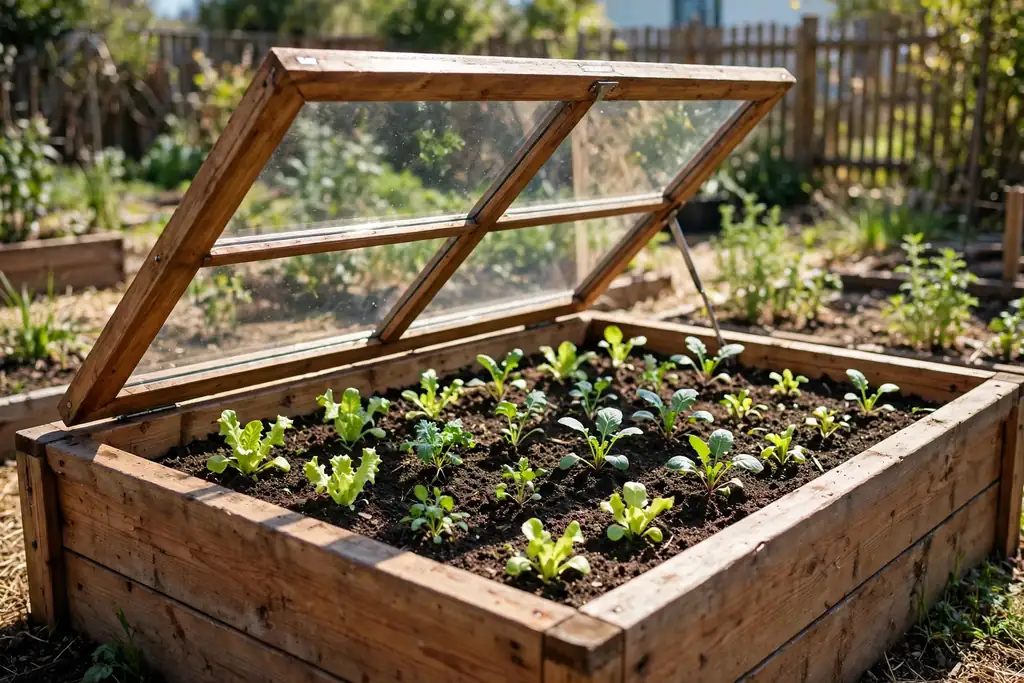
A cold frame bed adds a glazed or clear plastic lid to a low raised bed, warming the soil early and protecting young plants from frost and wind. The lid lifts or slides open on warm days, so plants do not overheat, and closes at night or in a cold snap. Build the bed with a sloping lid facing the sun, and hinge it so one person can open it easily.
Use a cold frame bed for early salads, hardening off seedlings, and overwintering tender plants. Vent daily in mild weather, water sparingly since the lid cuts rain, and prop the lid open a crack on sunny winter days to stop damp building up. A cold frame bed extends your growing season at both ends.
23. Hoop House Bed With a Tunnel Cover
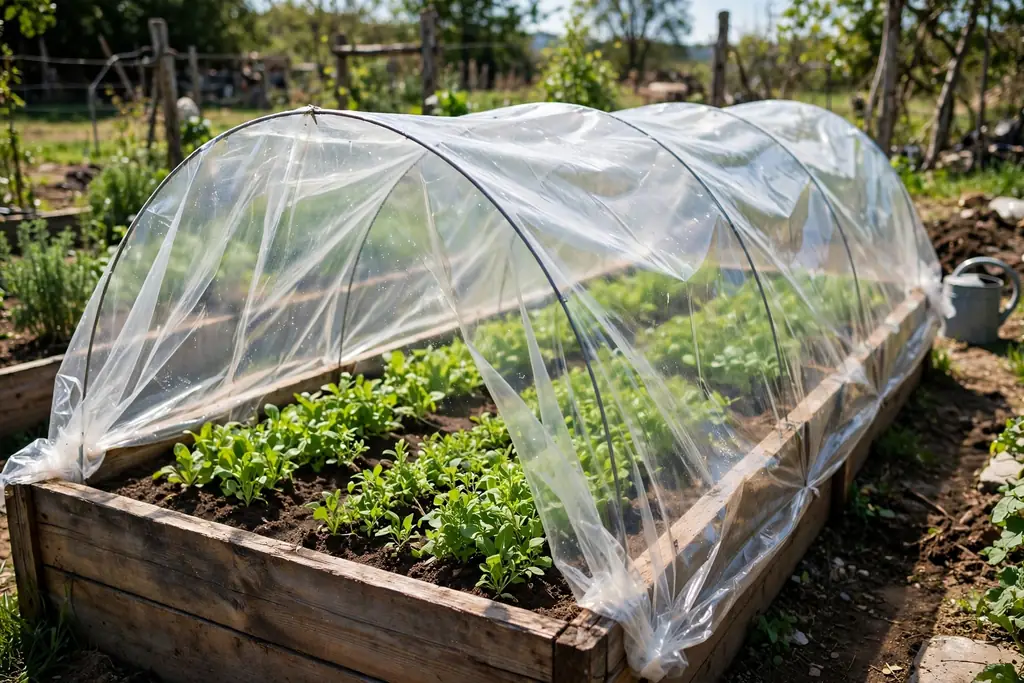
A hoop house bed fits curved hoops over a raised bed, covered with clear plastic or insect netting, to form a low tunnel. The cover warms the soil, keeps out many pests, and shields crops from heavy rain and hail. Fix hoops firmly into the bed frame or into ground sleeves, and weight or clip the cover edges so wind cannot lift it.
Use plastic for warmth early in the season, and swap to netting in summer to keep out cabbage pests while letting rain through. Open the ends on warm days for air flow, and close them at night in a cold snap. A hoop house bed suits salads, brassicas, and any crop that suffers from cold wind or pest damage.
24. Wicking Bed That Waters From Below
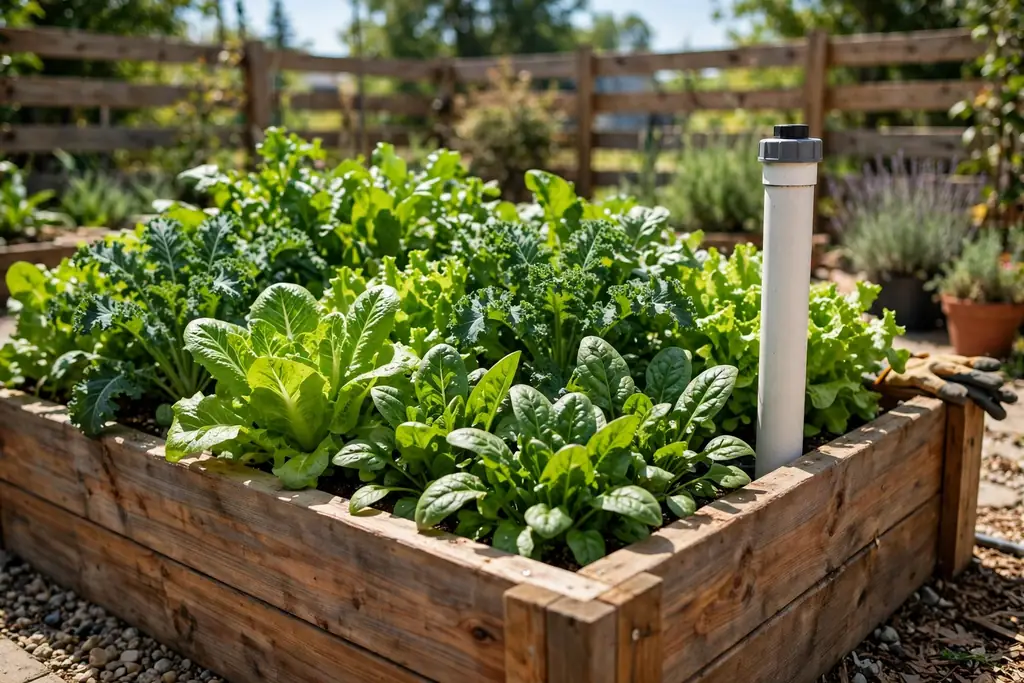
A wicking bed holds a water reservoir under the soil, with a wick or a soil column drawing water upward to the roots. The bed waters itself from below for days at a time, which suits busy gardeners, hot yards, and containers on a patio where daily watering is hard. Build the reservoir from a lined base with an overflow pipe at the right level, so excess water escapes instead of drowning roots.
Fill the bed with a soil mix that wicks well, such as a compost rich mix, and top up the reservoir through a fill pipe. Check the water level weekly, and flush the reservoir now and then to stop salts building up. Wicking beds suit leafy greens, herbs, and tomatoes, and they use less water than surface watering in dry weather.
25. Tabletop Bed on Legs for a Patio
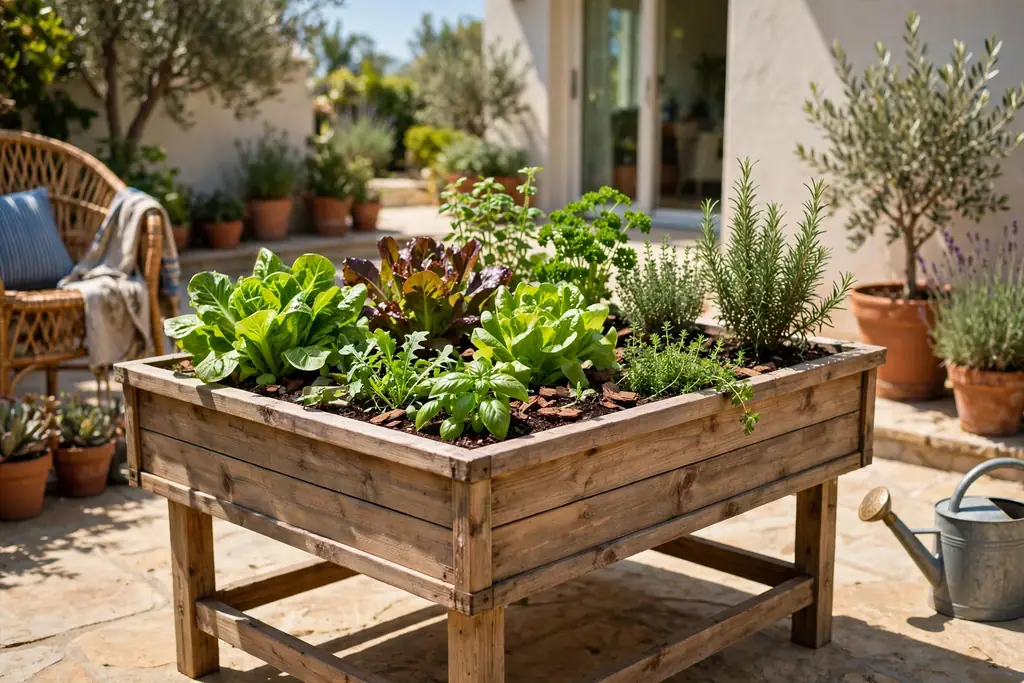
A tabletop bed stands on legs at waist height, with a shallow soil tray on top, and suits a patio, a balcony, or a gardener who cannot bend. The shallow depth suits salads, herbs, radishes, and strawberries, while deep rooted vegetables do better in a ground bed. Build the legs strong and level, add a drainage layer and holes, and place a tray or gravel beneath to catch drips on paving.
Keep a tabletop bed near a tap, since shallow soil dries fast, and mulch the surface to hold moisture. The height also keeps many slugs at bay, though you should still check leaf undersides. A tabletop bed lets you garden in a space with no soil at all, such as a paved yard.
26. Portable Bed on Casters
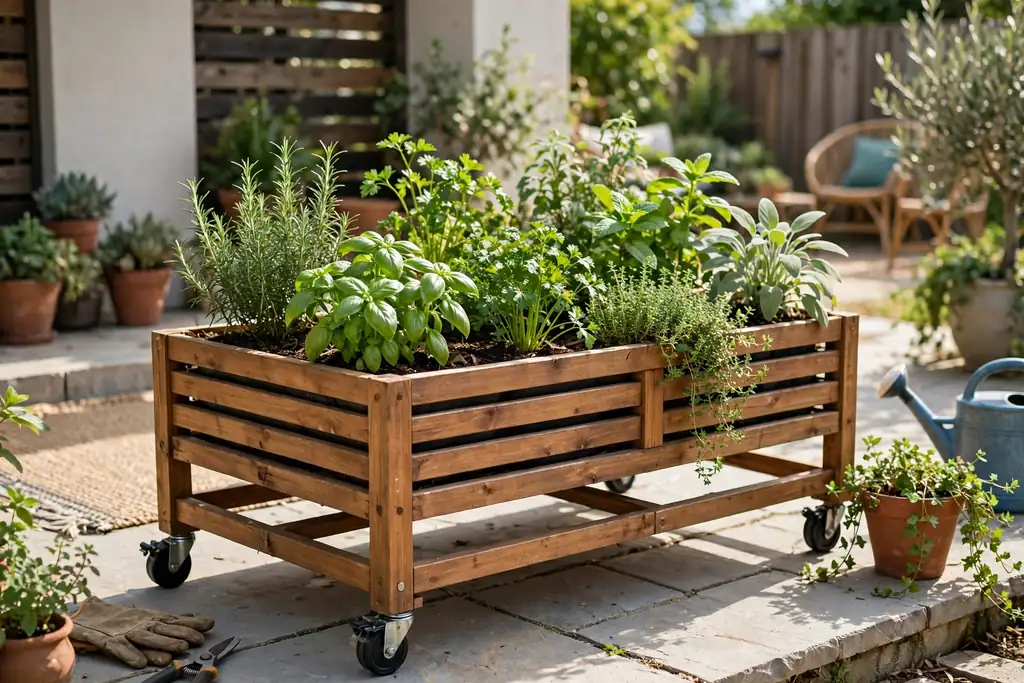
A portable bed on strong casters moves with the sun, the season, or a change of home, which suits renters and small patios. Build a compact bed on a sturdy base, fit locking casters rated for the full weight of wet soil, and keep the bed small enough to move safely on level paving. Lock the casters before you work the bed, and move it slowly with two people if it is heavy.
Use a portable bed for herbs, salads, and flowers you want near the kitchen door in summer and in a sheltered spot in winter. Check the casters each spring, and keep the bed on firm, level ground, since a loaded bed can tip on a slope. A portable bed is a flexible way to test sun and shade before committing to a fixed bed.
27. Tiered Pyramid Stacked Bed
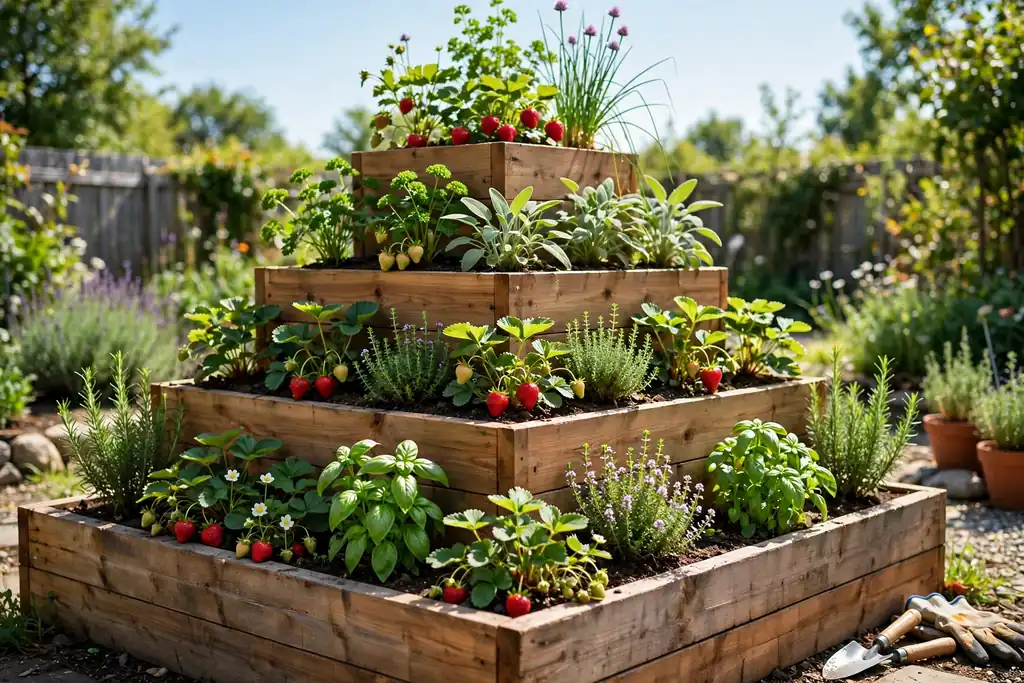
A pyramid bed stacks smaller boxes on top of larger ones, forming steps that catch sun on every level. The shape suits strawberries, herbs, and flowers, and it makes a focal point in a small garden or on a patio. Build the largest box first, fill it, then set the next box centered on top, repeating until the pyramid reaches a comfortable height.
Plant trailing crops at the edges of each level, where they can spill down, and upright crops near the center. Water the top level first, since water runs down to lower levels, and check lower levels for dry spots in hot weather. A pyramid bed uses vertical space well, but keep the top level within easy reach for watering and picking.
28. Circular Round Bed
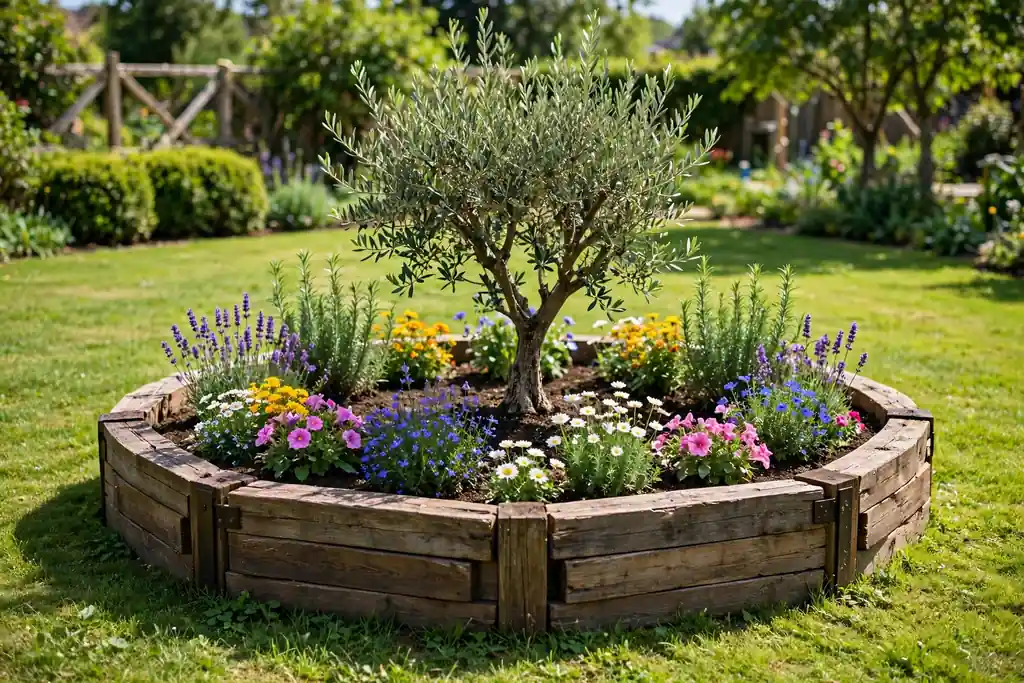
A round bed makes a clear focal point in a lawn or at a path junction, and it suits a single feature plant, a herb collection, or a small flower display. Build the wall from timber segments, stone, or flexible metal edging, and keep the diameter small enough to reach the center from the edge, usually about four feet or less. A round bed with a path around it is easy to work from every side.
Plant tall or upright plants in the center, with lower plants ringing the edge, so the bed reads as a dome of color. A round bed also suits a tree circle, where shade tolerant plants grow under light canopy, though you should keep soil away from the trunk itself. Add a small feature, such as a sundial or a pot, at the center if you like.
29. Narrow Fence Line Bed
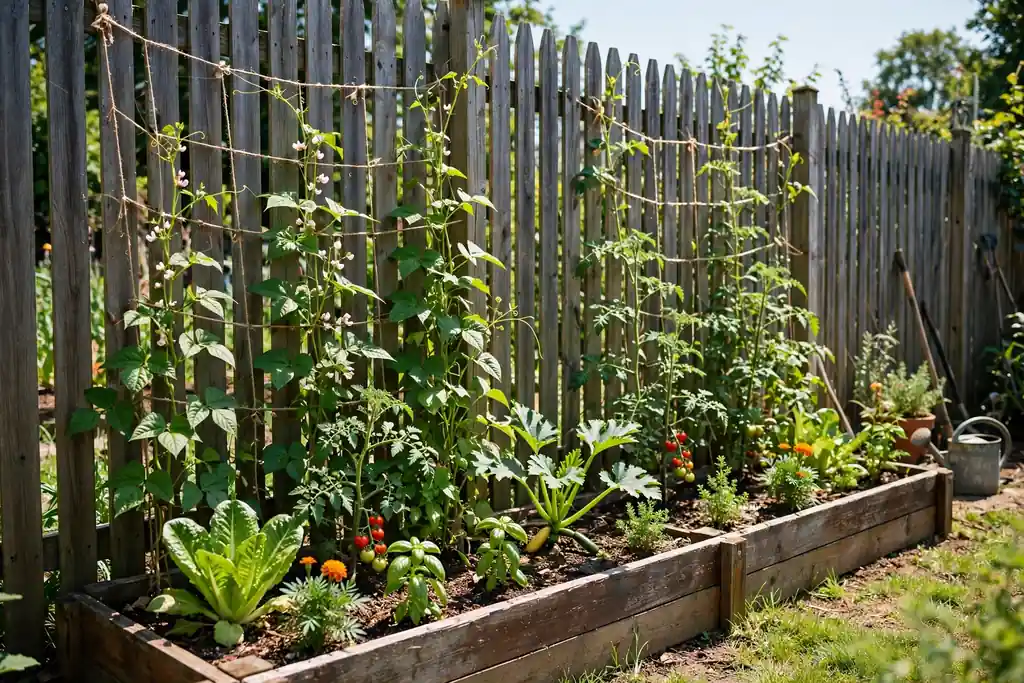
A narrow bed along a fence turns a strip of ground that is often wasted into a productive border. Keep the bed about two feet wide, so you can reach every plant from the path in front, and use the fence itself for climbing plants, hanging pots, or a trellis. A fence line bed suits raspberries, beans, sweet peas, and shade tolerant herbs on a north facing fence.
Check the fence footing before you build, and leave a small gap between the bed wall and the fence so air can move and the fence can dry. Water the bed well, since fences block rain on one side, and mulch to hold moisture. A narrow bed along a fence also screens an unattractive boundary with planting.
30. Arch Bed Pair With a Walk Through Gap
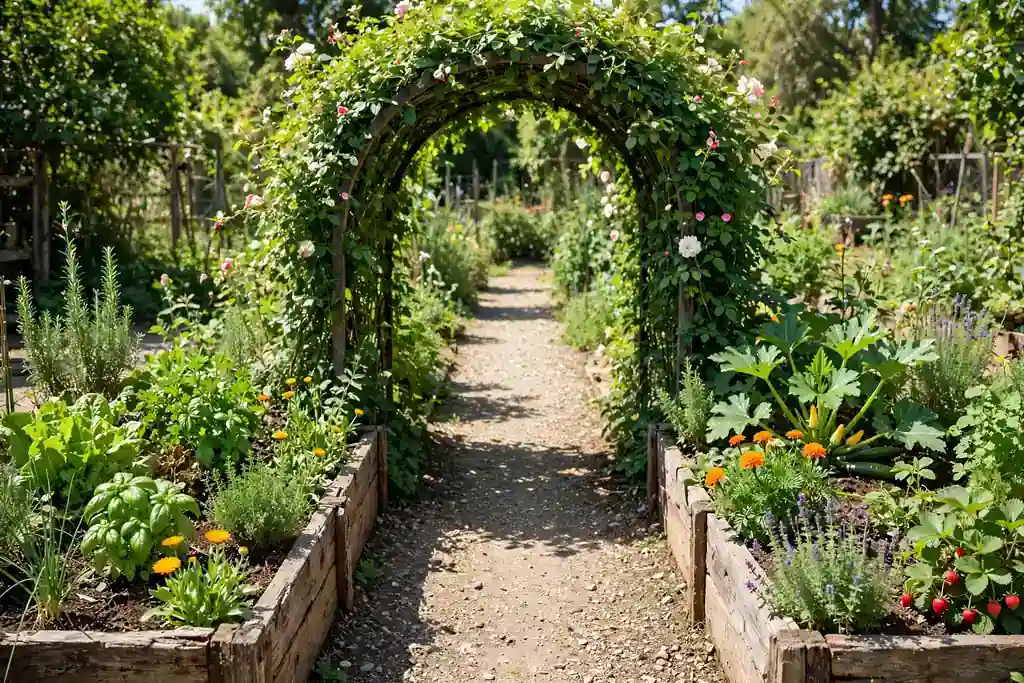
A pair of raised beds with an arch between them creates a walk through feature, with climbing plants overhead and productive beds on either side. Build two matching beds facing each other across a path, fix an arch firmly into the ground or into the bed frames, and train beans, peas, or flowering climbers over it. The arch gives shade, scent, and a clear garden entrance in one structure.
Keep the path between the beds wide enough for a wheelbarrow, and keep the arch high enough to walk under without ducking. Tie climbers in as they grow, and clear the path of fallen leaves so it stays safe. An arch bed pair suits a kitchen garden entrance or a path between two garden rooms.
31. Drip Irrigated Bed for Dry Summers
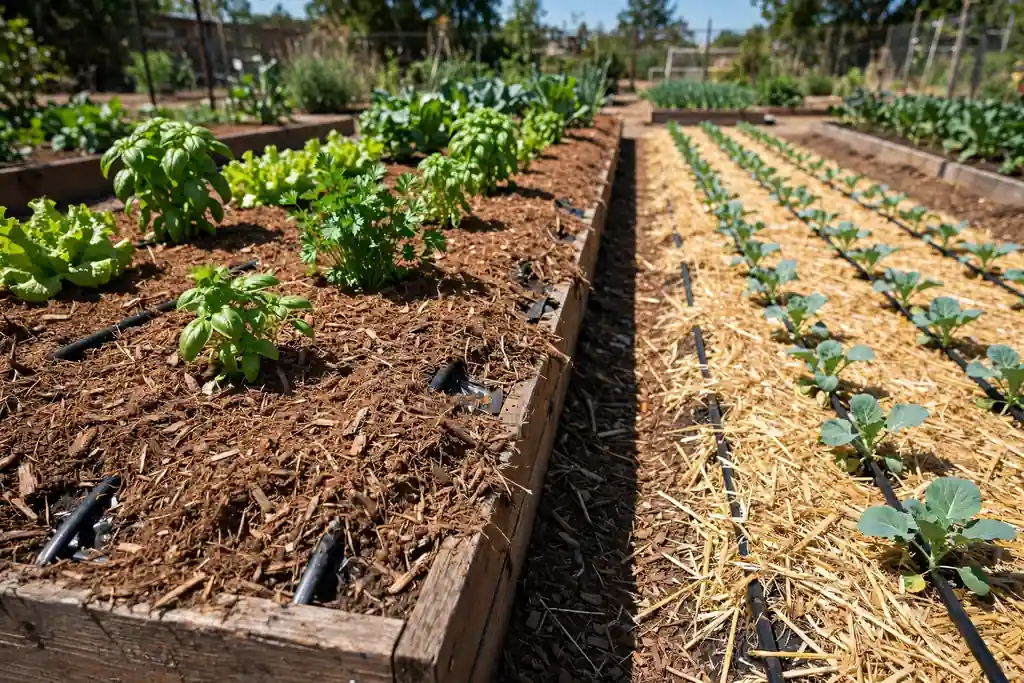
A bed fitted with drip lines or soaker hoses waters slowly at soil level, cutting evaporation and keeping leaves dry, which helps prevent many leaf diseases. Lay the main line along the bed, run drip lines beside each row, and cover them with mulch so they stay cool and hidden. Connect the system to a timer if you travel, and check emitters at the start of each season for blockages.
Drip beds suit vegetables, roses, and any planting that needs steady water in a dry summer. Water early in the morning, and check soil moisture with a finger before adding more, since drip systems can overwater if left running too long. A drip bed also frees you from daily watering, so the garden stays cared for in a heatwave.
32. Shade Cloth Bed for Leafy Greens
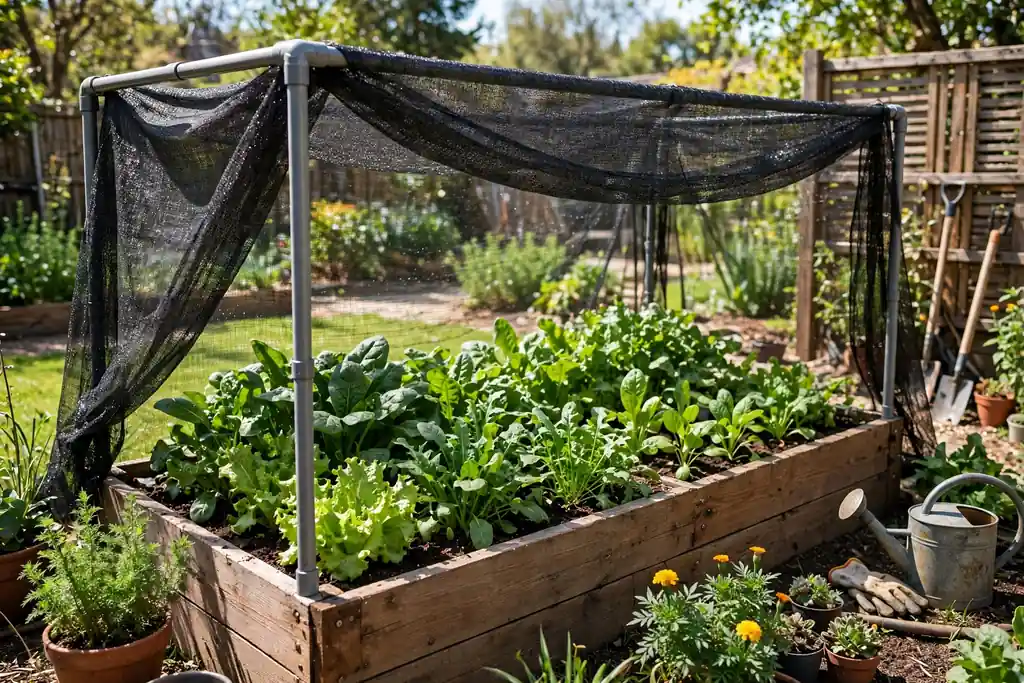
A bed fitted with a simple shade cloth frame gives leafy greens, salads, and herbs relief from harsh midday sun, which stops them bolting and turning bitter. Build a light frame over the bed from timber or pipe, drape shade cloth rated for about 30 to 50 percent shade, and fix it so wind cannot lift it. The frame can also carry insect netting in pest season.
Use a shade bed for lettuce, spinach, chard, and parsley in hot yards, and remove the cloth in cooler months when light is welcome. Water the bed well, since shade cloth cuts rain slightly, and keep air moving under the cloth so damp does not build up. A shade bed extends the salad season through the hottest weeks.
33. Small Starter Bed for Children

A small starter bed, about three feet square and low enough for a child to reach across, gives a young gardener a patch of their own. Let the child choose a few fast, forgiving crops, such as radishes, salads, sunflowers, and strawberries, and keep the bed close to the house so watering and checking become part of the day. Use light tools sized for small hands, and keep the path beside the bed clear.
Plant a few flowers among the vegetables to attract bees and to give quick color while slower crops grow. Label each row with a painted stake, and celebrate the first picking, however small. A starter bed teaches where food comes from, and it often turns a reluctant eater into a keen picker.
Conclusion
A good raised bed starts with the spot, the reach, and the water, not with the material alone. Choose a sunny, level place with a clear path, build a bed you can reach across without stepping on the soil, and fill it with soil you can keep moist and fed. One well placed bed, planted with crops you actually eat or flowers you actually pick, will do more for your garden than several beds scattered where nobody tends them. Pick one idea from this list, build it where you will use it daily, and add a second bed only after the first one feels easy to keep.
Save this list on Pinterest before your next garden trip, and work through it one area at a time: spot first, then height and material, then the planting that suits that bed best.
FAQs
How deep should a raised garden bed be?
Most raised beds work well at 12 to 18 inches deep for vegetables and flowers, with taller beds of 24 to 36 inches suiting gardeners who prefer to work standing up. Shallow beds suit salads and herbs, while carrots, parsnips, and other deep rooted crops need at least 12 inches of loose soil. If the bed sits on poor soil or paving, go deeper, and always leave drainage holes or a free draining base so roots do not sit in water.
What is the best soil mix for a raised bed?
A mix of topsoil and compost, roughly in equal parts, suits most raised beds, with a little grit added for heavy clay areas or for Mediterranean herbs. Fill the bed, water it well, and let it settle for a few days before planting, then top up the level. Feed the bed each spring with fresh compost, and mulch the surface to hold moisture and feed soil life through the season.
Do raised beds need a bottom?
A raised bed on soil usually needs no solid bottom, and an open base lets roots reach deeper soil and worms move in. Line the base with cardboard or newspaper to suppress weeds at first, and add hardware cloth underneath if burrowing pests are a problem in your area. A bed on paving needs a base with drainage holes, a gravel layer, and a tray or gravel beneath to catch drips.
How often should I water a raised bed?
Raised beds dry out faster than ground level beds, so check soil moisture with a finger every day or two in warm weather, and water deeply at the base when the top inch feels dry. Mulch, drip lines, and wicking beds all cut watering frequency, while shallow and metal beds need more frequent checks. Water in the morning where possible, so leaves dry before night and slugs find less damp shelter.
What can I grow in a small raised bed?
A small bed suits salads, herbs, radishes, spring onions, strawberries, and bush beans, all of which crop well in a compact space. Add a trellis for peas or cucumbers to use vertical space, and plant fast crops between slower ones so the bed stays full. Avoid large spreading plants such as pumpkins in a small bed, unless you train them out over a path or a fence.
How do I stop slugs in a raised bed?
Tall, smooth sided beds help, since slugs climb less readily than on ground level beds, but you should still check leaf undersides and bed edges in the evening. Keep the area around the bed clear of debris, water in the morning rather than at night, and use barriers such as copper tape or a gravel strip where they suit your garden. Pick off slugs by hand on damp evenings, and protect young seedlings with covers until they grow tough enough to cope.