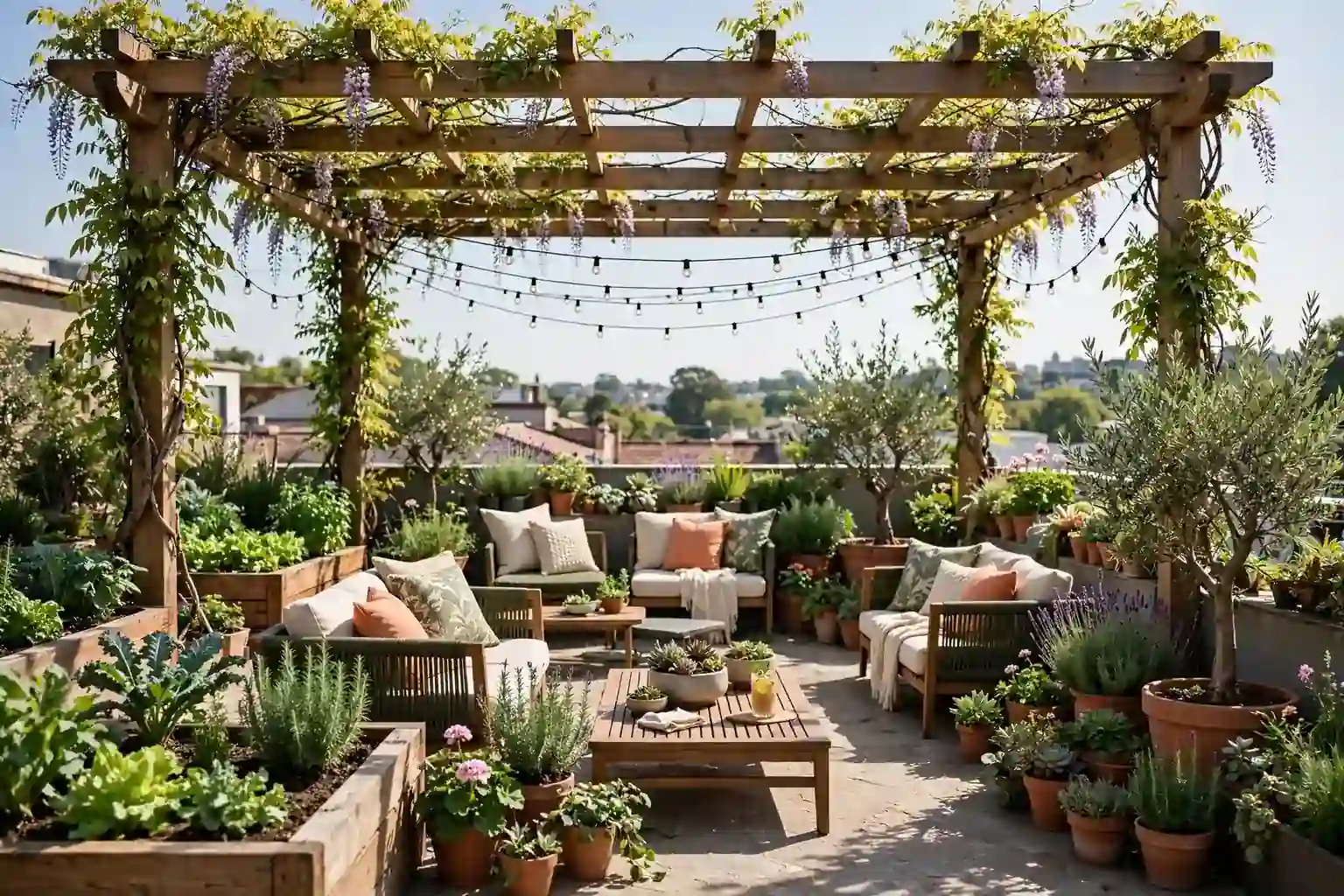
A terrace is often the hardest working outdoor space a home has, yet it is easy to leave it as bare paving and a couple of pots. With planting at different heights, one comfortable seat, and shade for the hottest part of the day, that same terrace can become a place to eat, read, and grow food. These 22 terrace garden ideas cover raised beds, containers, privacy, dining, lighting, and edible growing, chosen for small and large terraces alike. Start with the spot you use most, add one seat and one planted area, then build outward. For homes with a slope to work with, the ideas in these tiered garden ideas show how to give each level a clear job.
Key Takeaways
- Plan zones first: one for sitting, one for growing, and one for storage, so the terrace feels like a garden, not a paved yard with pots.
- Use containers and raised beds to control soil, drainage, and weight, and keep heavy pots near walls or on solid ground where possible.
- Layer planting at three heights, ground level, mid height pots, and climbers or hanging baskets, so even a small terrace looks full.
- Add shade and a wind screen early, since comfort decides whether you actually use the terrace.
- Put herbs and salad leaves near the door, and crops you visit weekly further away.
- Mix evergreen structure with seasonal color, so the terrace looks cared for in every season.
1. Raised Beds Along the Terrace Edge
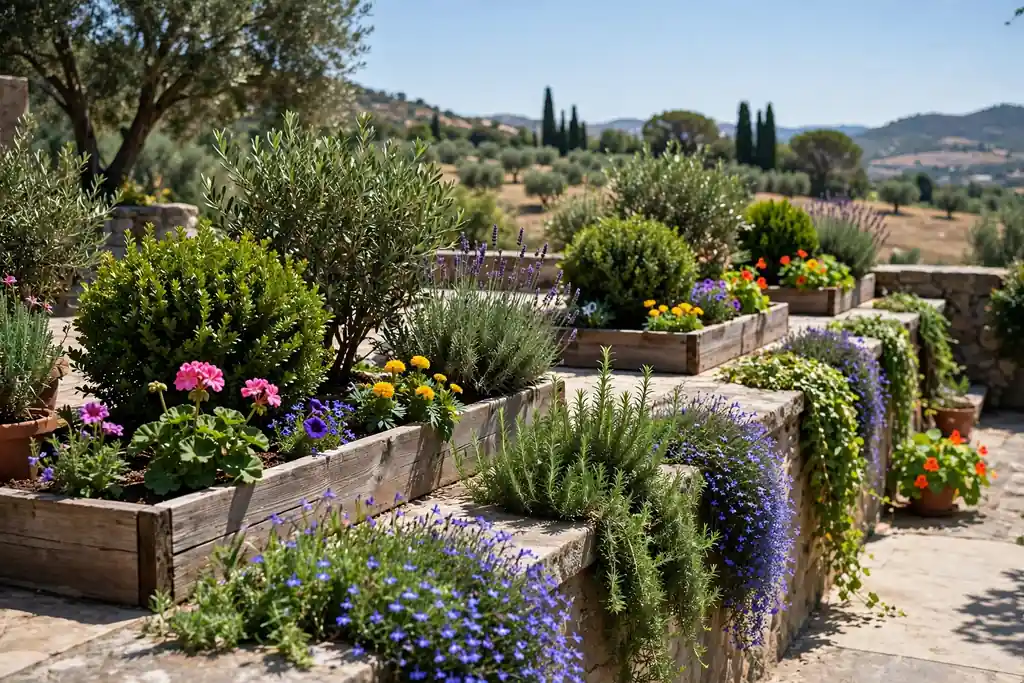
Run low raised beds along the edge of the terrace to give it a planted border and a clear boundary. Low beds keep the planting at a comfortable working height and stop the terrace from feeling like an empty slab. Choose a light frame suited to your terrace, timber or metal, with drainage holes, and fill it with a free draining mix rather than heavy garden soil.
Plant shrubs or grasses at the back, mid height flowers in the middle, and trailing plants at the front so the edge reads as one full border. Leave a gap behind each bed where you need to reach a wall or a drain. Water slowly in hot weather, since raised beds dry out faster than ground beds, and mulch the surface to hold moisture between waterings.
2. Container Clusters in Mixed Sizes
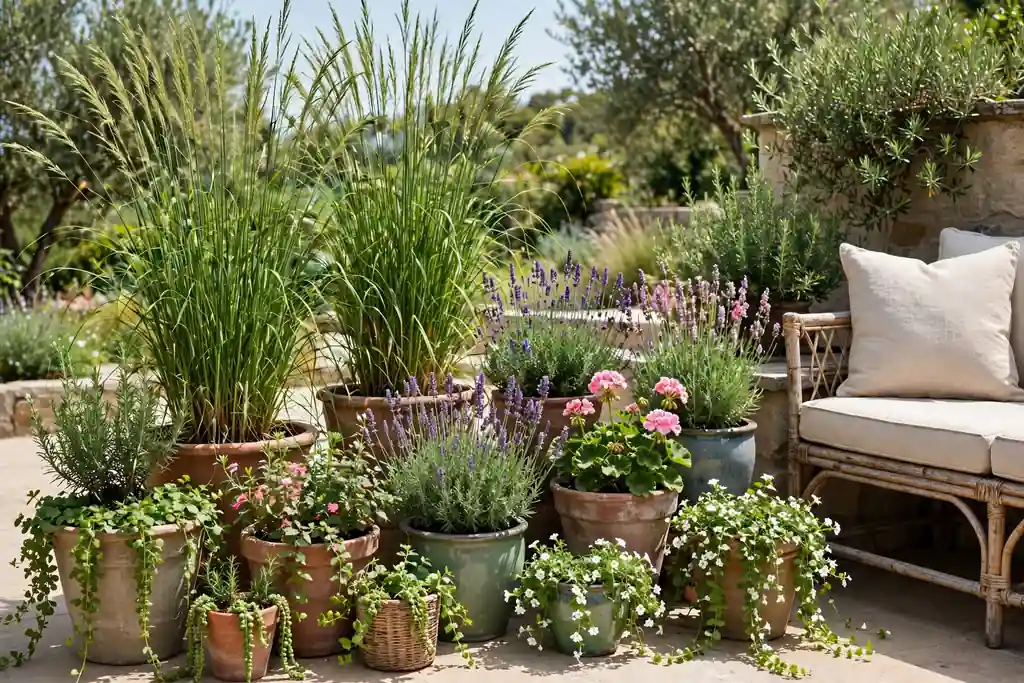
Group containers in clusters of three or five near seats, steps, and doorways to make planting feel deliberate instead of scattered. Containers suit every terrace size, since you can move them, change them with the seasons, and start small. Use pots in different sizes and materials, and raise them on feet so water drains freely and does not stain the paving.
Mix one tall plant, one mid height plant, and one trailing plant in each cluster for a full look. Keep the largest pots near walls or corners where they will not be knocked over in wind, and spread heavy pots across the terrace rather than loading one spot. Check the weight of a watered pot before you place a group on a raised terrace.
3. Vertical Garden Wall on a Sheltered Wall
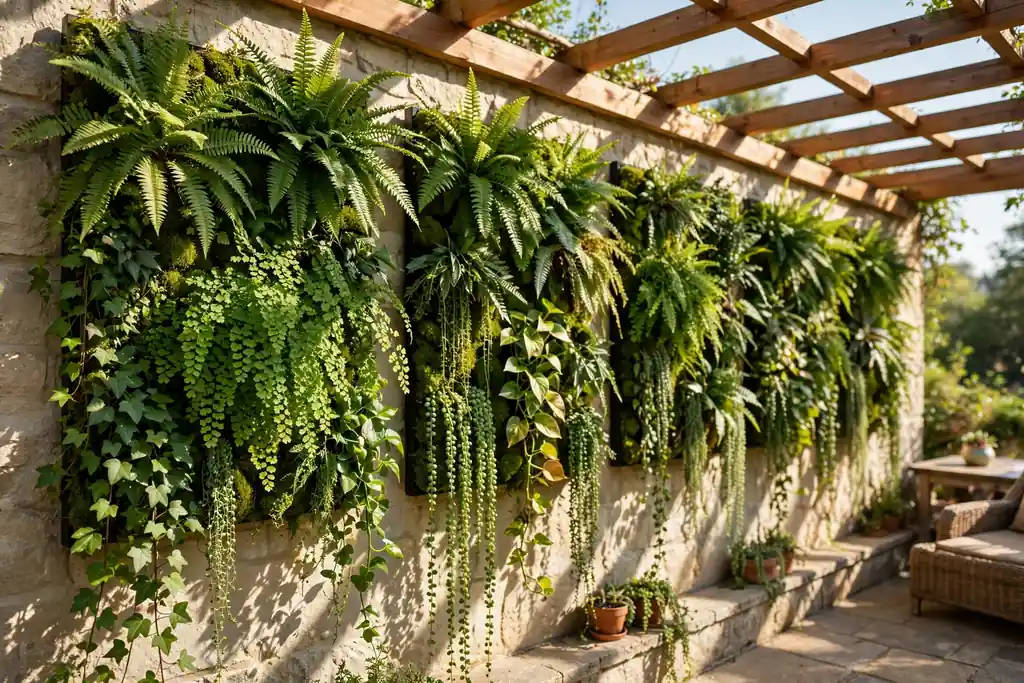
Fix living wall panels or a trellis grid to a sheltered wall to grow upward without using floor space. This suits small terraces where every square foot counts, and it gives a plain wall color, scent, and texture at eye level. Choose panels with individual pockets or trays, so you can replace one plant without disturbing the rest.
Plant ferns and trailing plants for shade, and herbs or small flowers for sun, matching each pocket to the light it gets. Water a living wall little and often, since pockets dry out fast, and check the fixings each season, since a planted wall gets heavier when wet. Keep the wall clear of drains and door frames so maintenance stays easy.
4. Pergola With Climbers for Shade
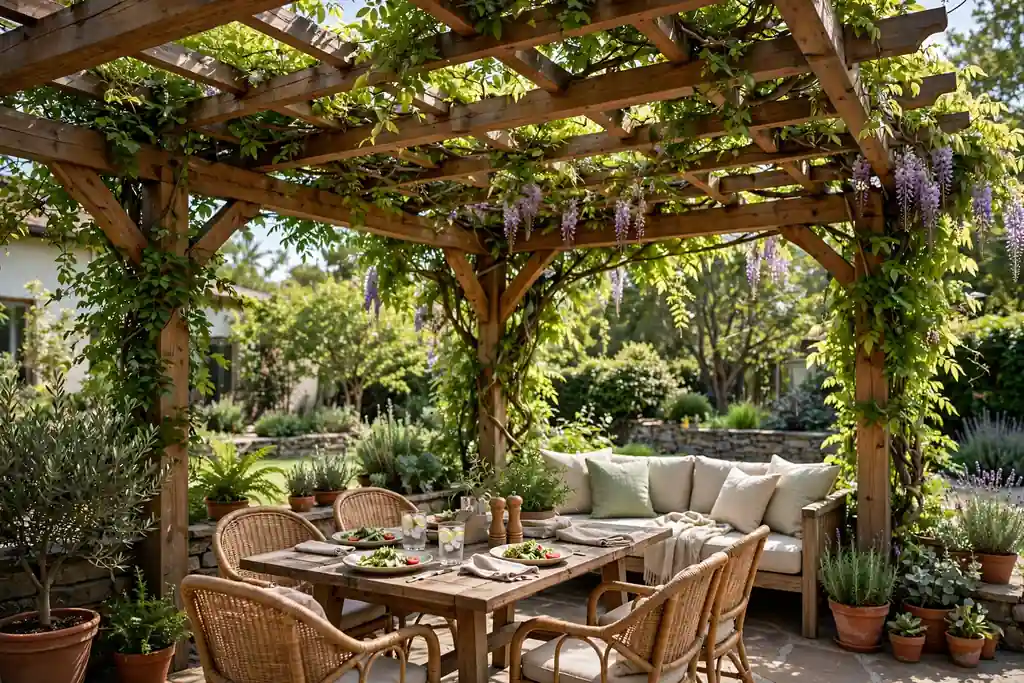
Build or buy a pergola over the seating zone and train climbers over it for shade that grows better each year. A pergola frames the sitting area, marks it as the main outdoor room, and cools the terrace on hot afternoons without blocking all light. Choose a sturdy frame fixed to solid ground or a wall, and plant one or two climbers at its feet.
Jasmine, honeysuckle, and climbing roses suit a sunny pergola, while ivy or Virginia creeper suit shade. Train stems along the beams and tie them in as they grow, pruning after flowering as the plant type requires. Keep climbers trimmed back from gutters and roofs, and add a retractable shade cloth under the beams for the hottest weeks.
5. Outdoor Dining Set for Terrace Meals
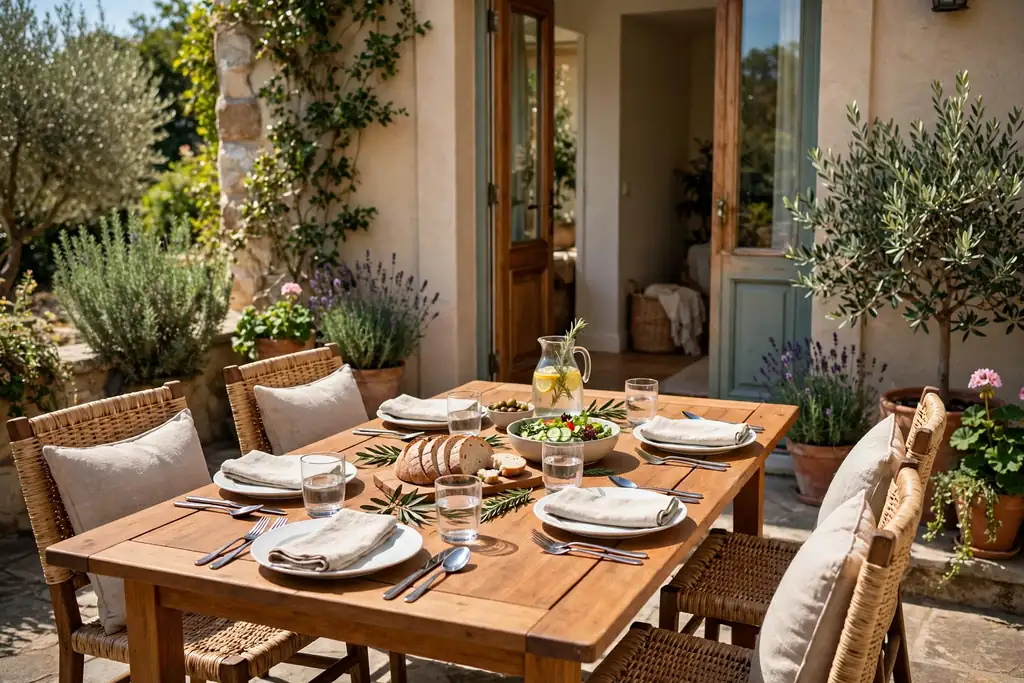
Place a dining table and chairs on the flattest, most sheltered part of the terrace to make outdoor meals a habit rather than an event. A table near the kitchen door keeps carrying food easy, and a spot with evening sun stretches meals into the night. Choose a table size that leaves room to pull chairs out and walk past, and pick chairs that stack or fold if the terrace is small.
Add a washable tablecloth or a set of placemats, a small centerpiece pot, and a light you can use after dark. Store cushions nearby in a dry box so the set is ready without a trip indoors. Sweep the dining zone often, since crumbs and fallen leaves gather fast under a table.
6. Lounge Corner With Weatherproof Seating
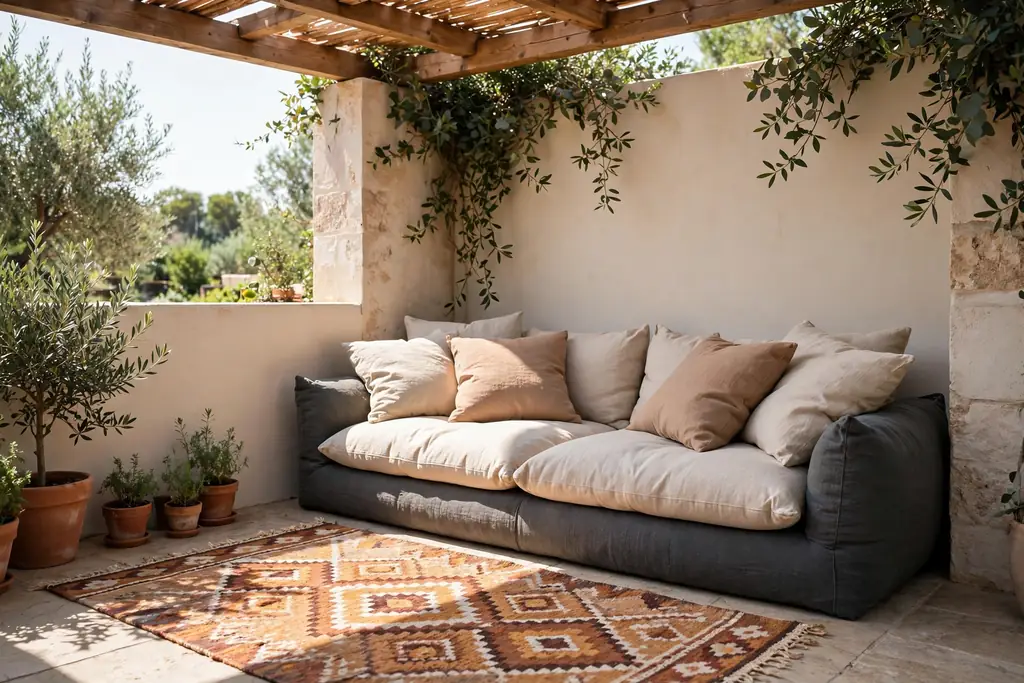
Set a low outdoor sofa or a pair of lounge chairs in a sheltered corner to make the terrace a place for long sits, not just passing through. A lounge corner works best facing the best view or the most planting, with a side table within reach for a drink and a book. Choose weatherproof frames and cushions rated for outdoor use, and bring cushions inside during long wet spells.
Add a rug under the seats to mark the zone and soften the paving, and keep a throw nearby for cool evenings. Leave one open side so people can join without climbing over furniture. For seat ideas that pair well with planting, see these garden bench ideas for wood, stone, and metal options.
7. Herb Garden Near the Door
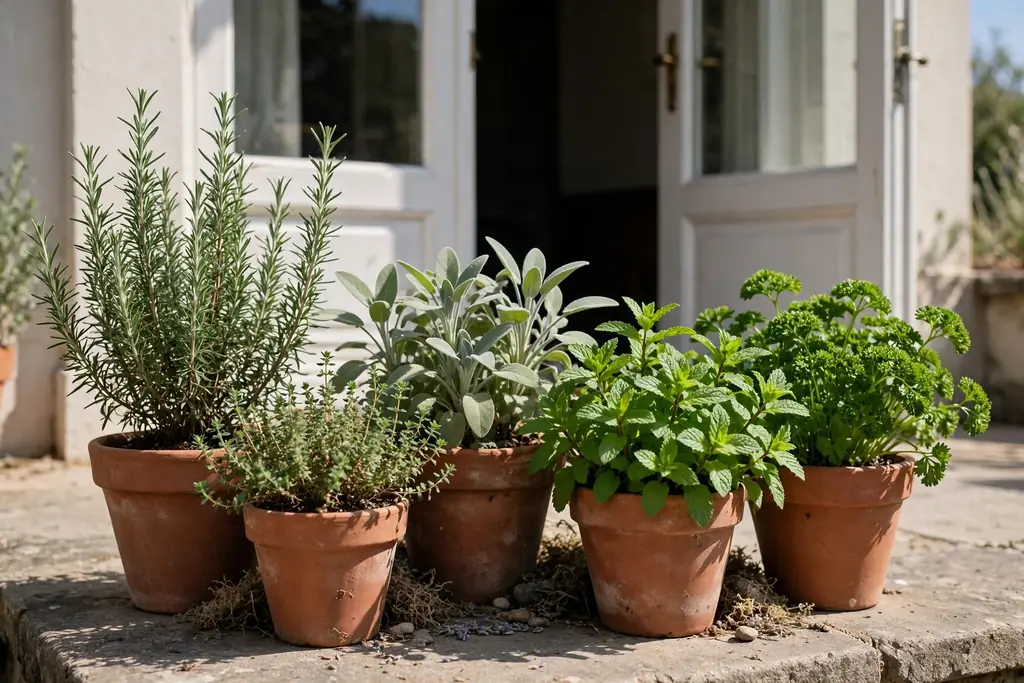
Grow herbs in pots or a small raised bed right by the door you use most, so fresh leaves are a few steps from cooking. Put sun loving herbs such as rosemary, thyme, and sage in the sunniest, best drained pots, and moisture loving herbs such as mint, parsley, and chives where water settles. Grow mint in its own pot so it does not spread into its neighbors.
Label herbs while they are young, since many look alike before they flower. Snip little and often to keep plants bushy, and water pots more often than beds, since containers dry out fast in sun and wind. A small flat stone or paver as a standing spot keeps picking easy after rain.
8. Vegetable Beds in Deep Containers
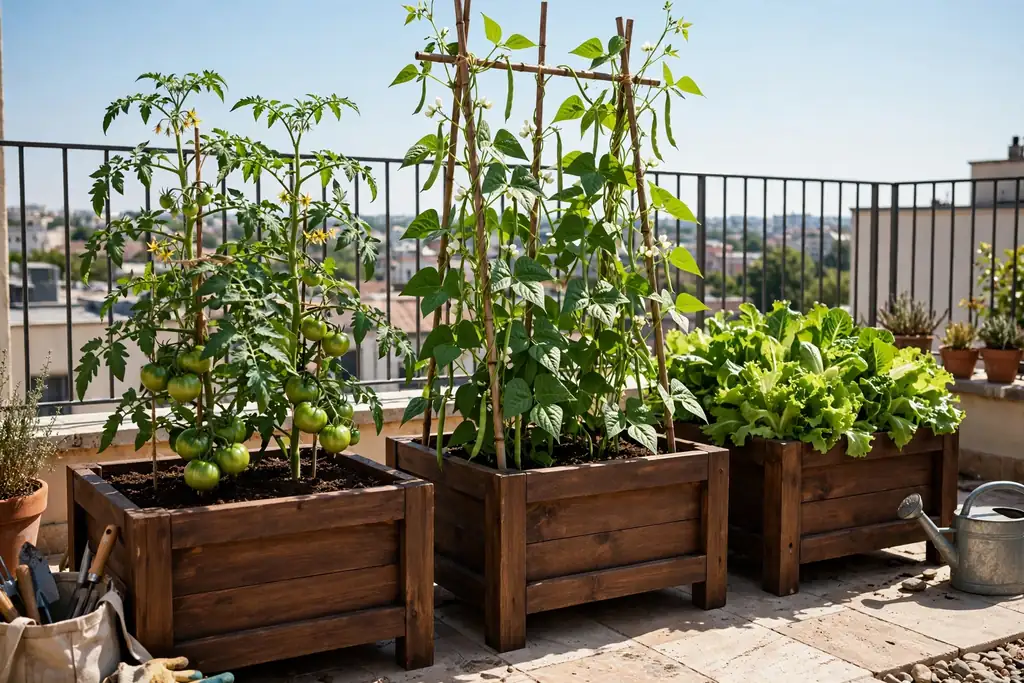
Grow vegetables in deep containers or raised beds on the terrace when ground space is short. Deep pots suit tomatoes, beans, carrots, and salad leaves, and they let you control soil and watering plant by plant. Use containers at least a foot deep for most crops, with drainage holes and a free draining mix.
Put heat loving crops such as tomatoes and peppers in the sunniest spot, and salads and root crops where it is cooler. Feed container crops through the season, since watering washes nutrients out faster than in ground beds. Rotate crops between containers each year so the same family does not grow in the same soil season after season.
9. Privacy Screens With Bamboo and Trellis
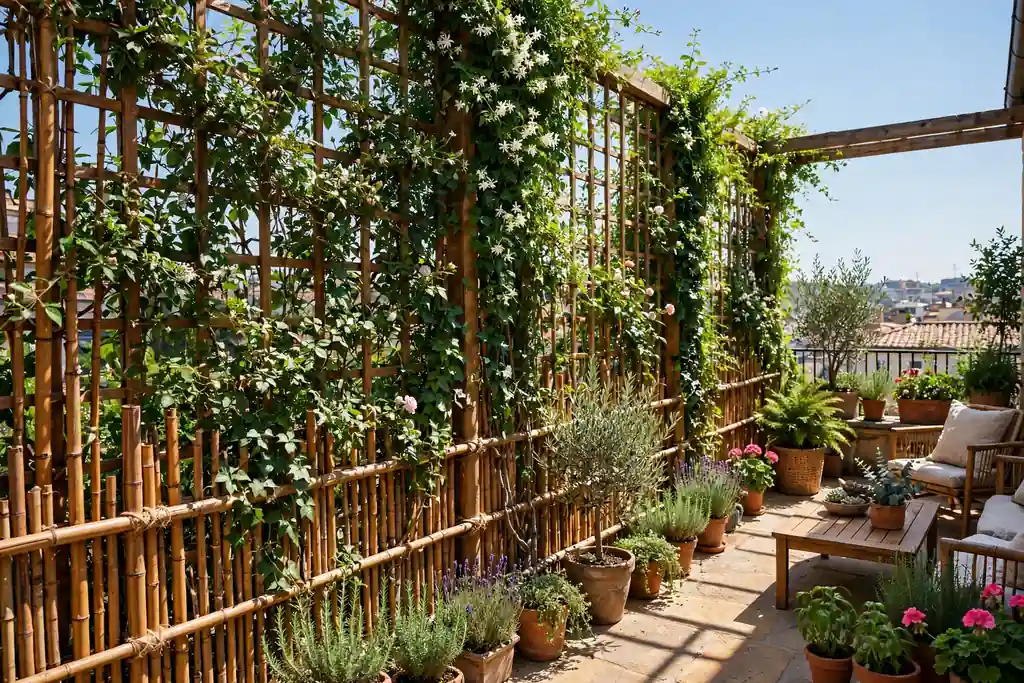
Add bamboo screens or trellis panels along the exposed side of the terrace to cut views and wind without building a wall. Screens give the terrace a room like feel and let you sit out without feeling watched. Fix panels to solid posts or a wall, and leave a gap behind trellis so air can move and the fence can dry.
Grow climbers up the trellis for a living screen, choosing plants that suit the light on that side. Keep screens below any local height limit, and check that they do not shade a neighbor’s garden more than agreed. A screen on just one side is often enough, since it blocks the main view while keeping the terrace open to sun.
10. Shade Sail Over the Seating Zone
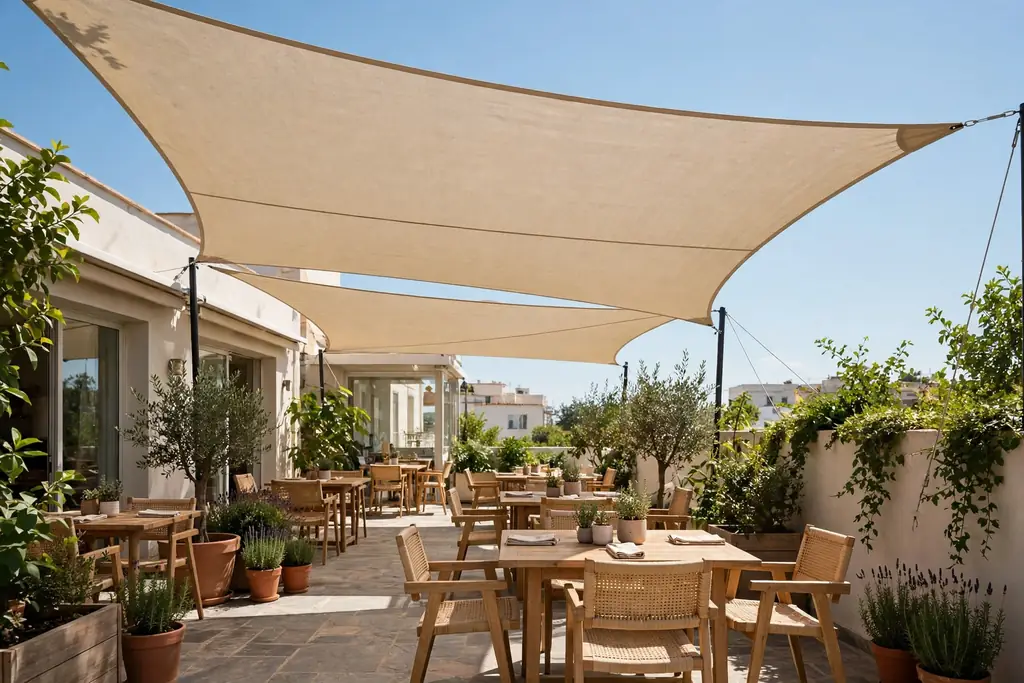
Stretch a shade sail over the seating zone for fast, adjustable shade on a sunny terrace. A sail cools the seats, protects cushions from harsh sun, and suits terraces where a pergola would be too heavy or too costly. Fix each corner to a wall bracket or a sturdy post, and angle the sail so rain runs off one edge rather than pooling in the middle.
Choose a breathable fabric rated for outdoor use, and take the sail down in strong winds or storms. A sail in a light color reflects heat, while a darker color gives deeper shade, so pick the tone that suits how hot your terrace gets. Pair the sail with a wind screen on the breezy side for the most comfortable seat.
11. String Lights and Lanterns for Evenings
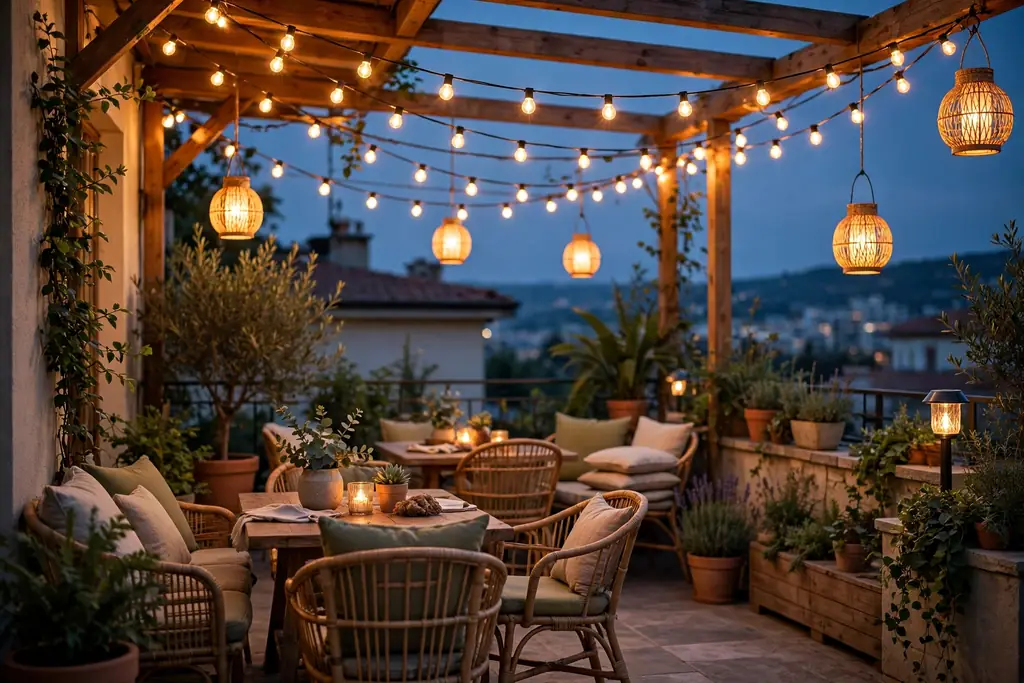
Hang string lights and set out solar lanterns to stretch terrace season into the evening. Warm light makes a small terrace feel welcoming after dark, and it costs little to run. Drape strings along a pergola, a wall, or a wire, keeping them clear of walkways and climbers that need pruning.
Use solar lanterns on tables and steps for light at ground level, and a battery lantern near the seat for reading. Check that lights are rated for outdoor use, and bring delicate lanterns inside in storms. Keep the light soft and low, so the terrace feels calm rather than lit like a work site.
12. Small Water Feature for Sound and Calm
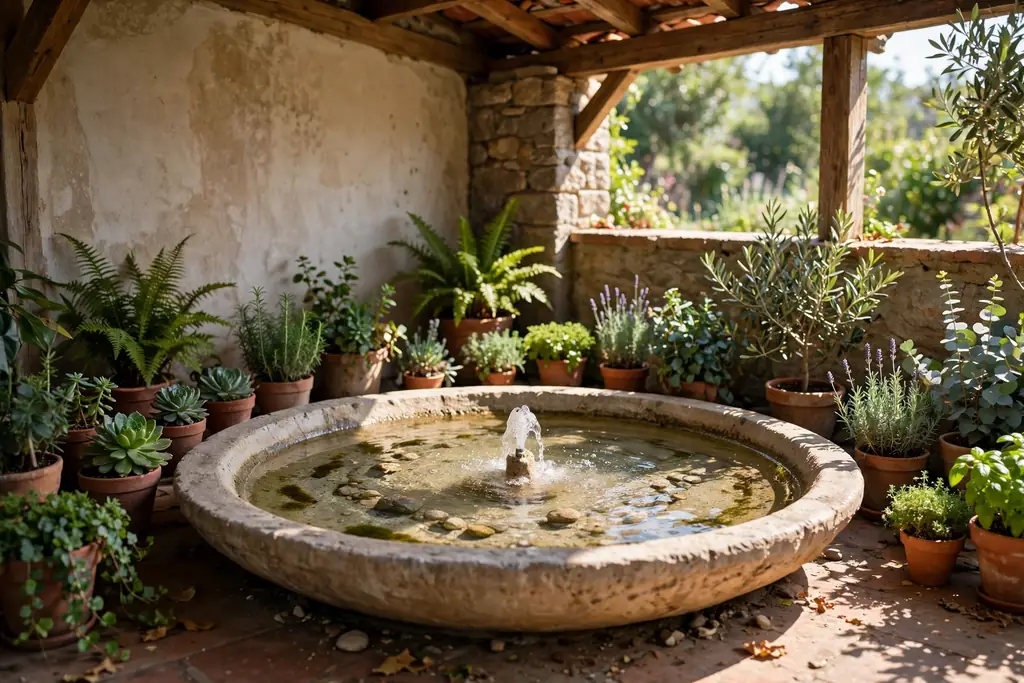
Add a small water feature, such as a shallow bowl with a pump or a wall mounted spout, to bring sound and movement to the terrace. Moving water masks street noise and makes a seating area nearby feel more private. Keep the feature shallow, level, and easy to reach for cleaning leaves and algae.
Site the pump where you can reach it without climbing, and add a simple on and off control near the house so the feature runs when you are there to enjoy it. In a family garden, keep water shallow and edges rounded. Top up in hot weather, since small features lose water fast to evaporation.
13. Pollinator Planting With Flowers
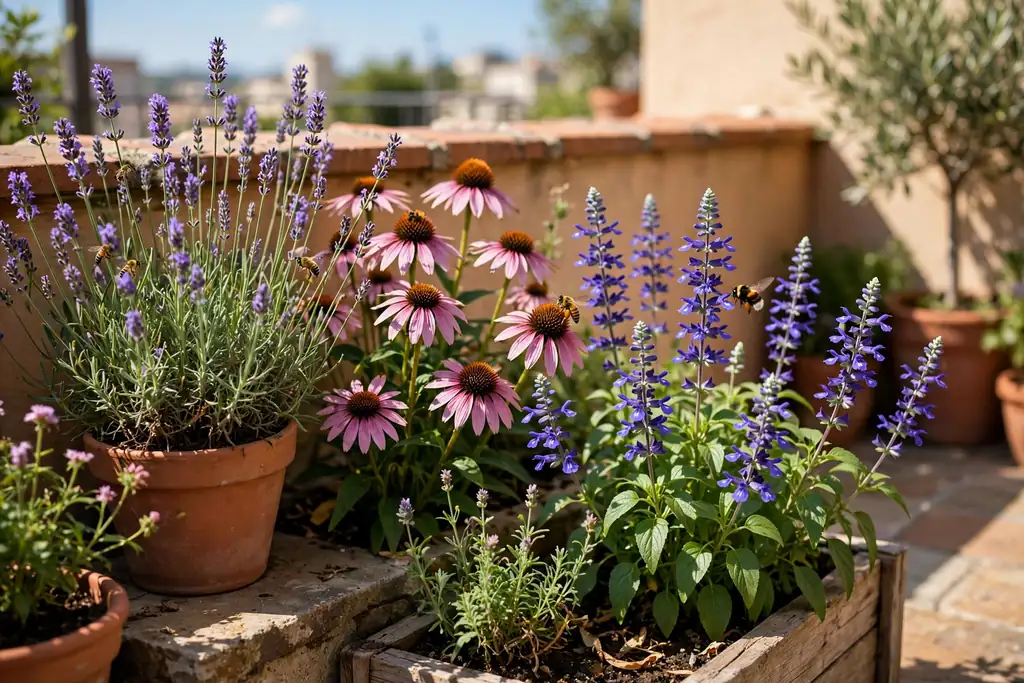
Plant a pollinator corner with flowers that feed bees and butterflies through the seasons. Choose open flowers such as lavender, coneflowers, salvias, and single dahlias, and plant them in drifts rather than single plants so pollinators find them easily. A sunny, sheltered corner near the seating area lets you watch visitors without disturbing them.
Avoid spraying open flowers, and leave some seed heads standing into autumn for birds. Add a shallow dish of water with stones for insects to land on, and keep it topped up in dry weather. A pollinator corner also gives the terrace color from spring to autumn with little extra work.
14. Fruit Trees in Large Pots
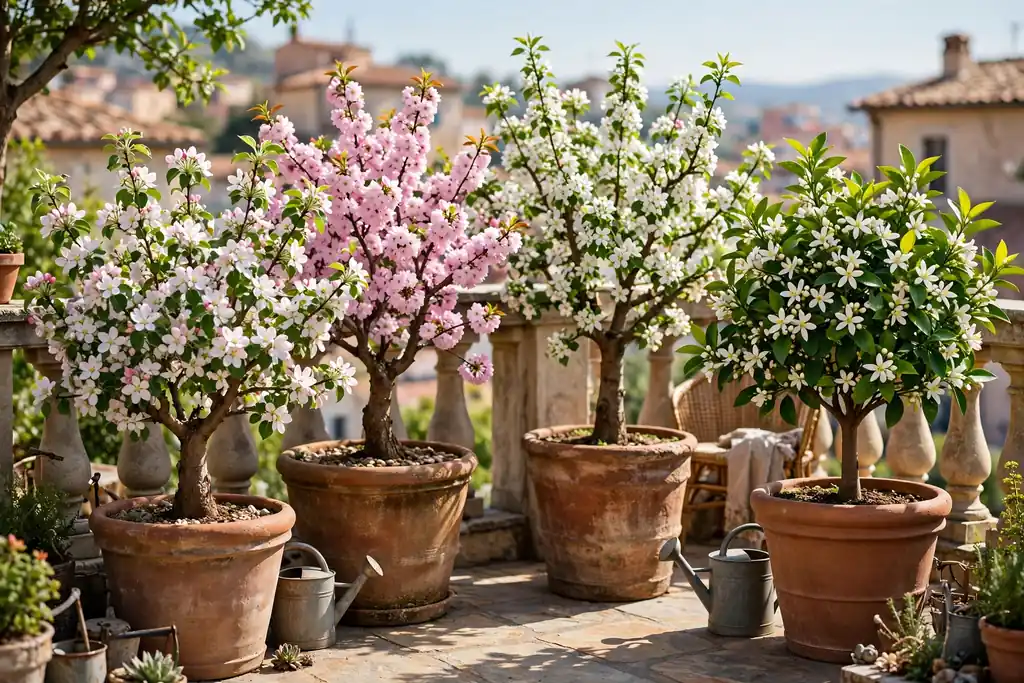
Grow dwarf fruit trees in large pots on the terrace for blossom in spring and fruit in summer without needing an orchard. Apples, pears, figs, and citrus all suit containers when grown on dwarfing rootstocks. Use the largest pot you can manage, with drainage holes and a free draining mix, and stake the tree until it is established.
Water pots deeply and regularly, since container trees dry out fast, and feed through the growing season as the label directs. Prune in the dormant season to keep the tree compact, and move pots to a sheltered spot in hard frost if the variety needs it. One or two trees give a real harvest and a strong focal point.
15. Reading Nook With a Bench and Cushions
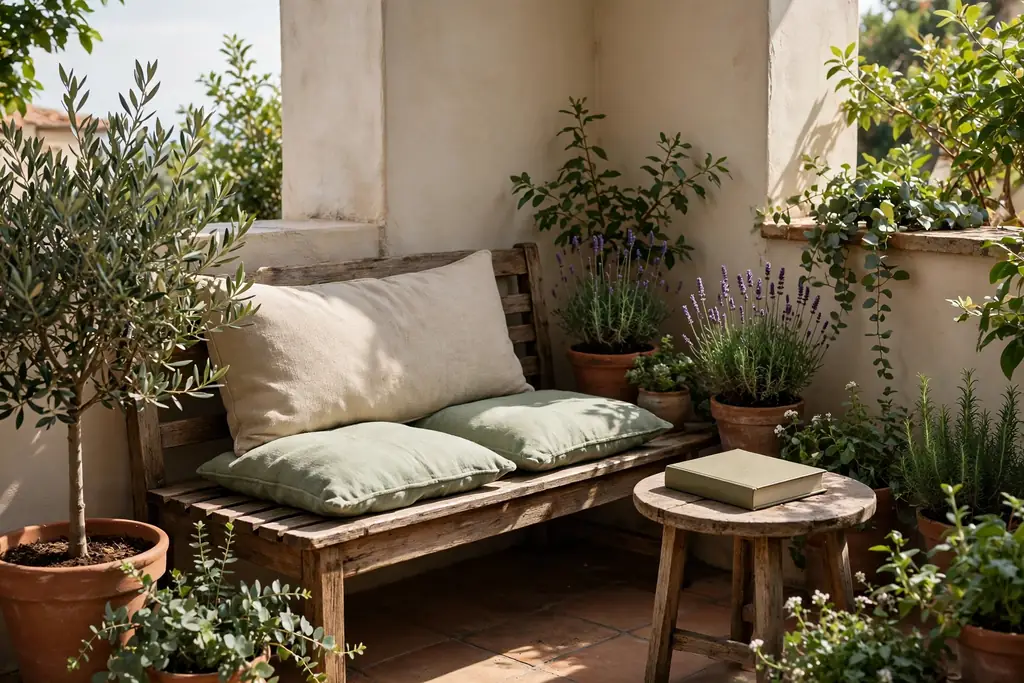
Tuck a bench, a cushion, and a small side table into a quiet corner to make a reading nook on the terrace. A nook works best facing planting rather than the house, with morning or evening light and a screen or tall pots behind it for shelter. Choose a bench with a back rest if you plan long sits, and keep a waterproof cushion box nearby.
Add a hook or a small shelf for a book and glasses, and plant scented flowers nearby so the corner smells as good as it looks. Keep the path to the nook clear and dry, since a seat you have to wade to will go unused. A nook needs little space, which makes it a good fit for a small terrace.
16. Family Planting Patch for Kids
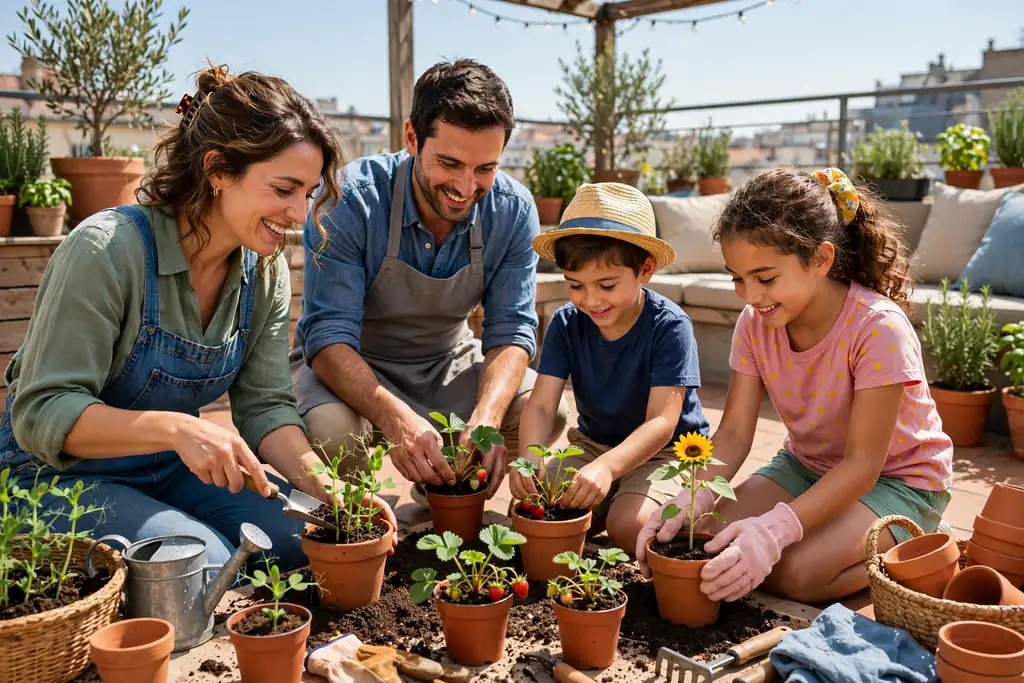
Set aside one bed or a few large pots as a family planting patch where children can sow, water, and pick. Quick crops such as radishes, peas, strawberries, and sunflowers give fast results and keep young gardeners interested. Give each child a small labeled row or pot of their own, and keep tools small and easy to hold.
Keep the patch near the seating area so adults can watch while they sit, and keep paths wide enough for small feet and a watering can. Avoid thorny or toxic plants in this patch, and keep water shallow and safe. A patch that children helped plant is one they will want to visit every day.
17. Storage Bench for Tools and Cushions
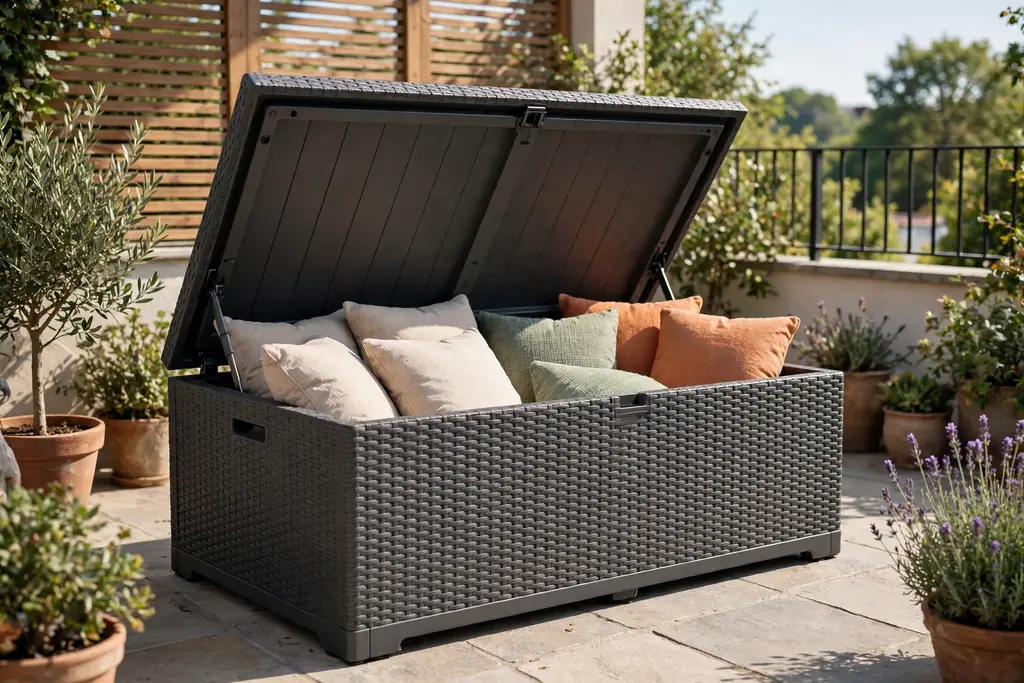
Place a weatherproof storage bench on the terrace to hide the clutter that usually gathers near a back door: cushions, small tools, watering cans, and garden toys. The lift up seat keeps those items dry and close at hand, while the bench itself still works as everyday seating. This is the most practical bench for a small terrace or a busy family garden.
Check the lid action before you buy, since a heavy lid with no stay can be awkward and can pinch fingers. Look for a bench made for outdoor use, with a lid that closes fully to keep rain out, and keep heavy items at the bottom so the box stays stable. Leave clearance behind the bench so the lid can open fully without hitting a wall or fence.
18. Railing Planters and Hanging Baskets
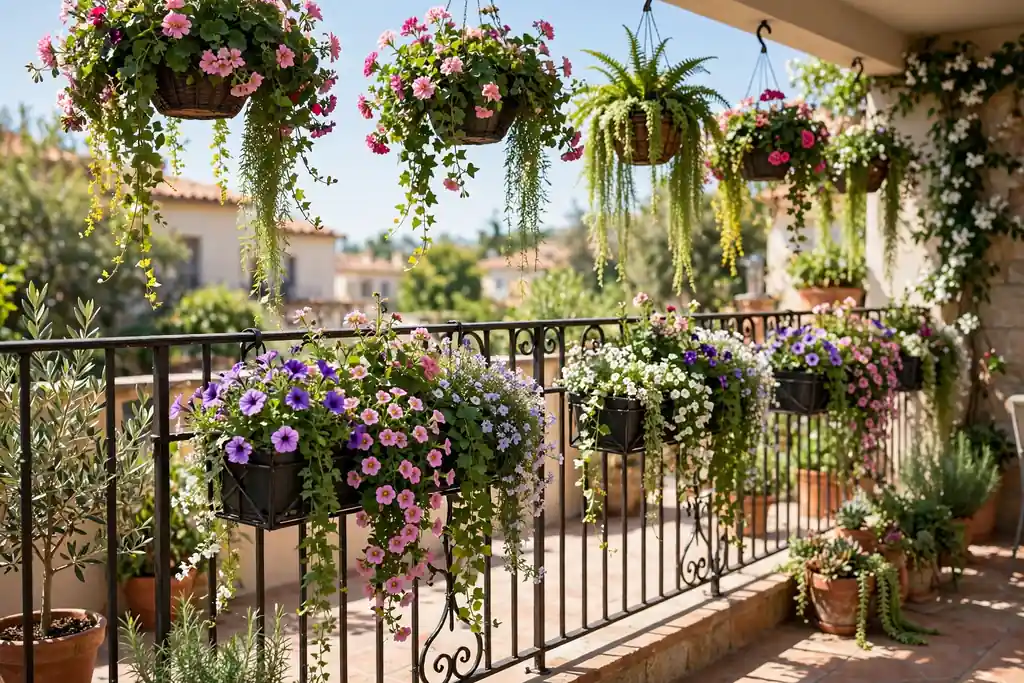
Fix planters to the terrace railing and hang baskets from brackets to add planting without using floor space. Railing planters suit herbs, trailing flowers, and small salads, while hanging baskets suit trailing petunias, fuchsias, and strawberries. Choose planters with secure brackets and drainage, and check the railing can carry the weight of a watered planter.
Water railing planters and baskets more often than ground beds, since they dry out fast in wind and sun. Keep trailing plants trimmed back from walkways and seats, and bring baskets inside in hard frost if the plants are tender. A row of matching planters along a railing gives a tidy, finished edge.
19. Seasonal Color Pots You Rotate
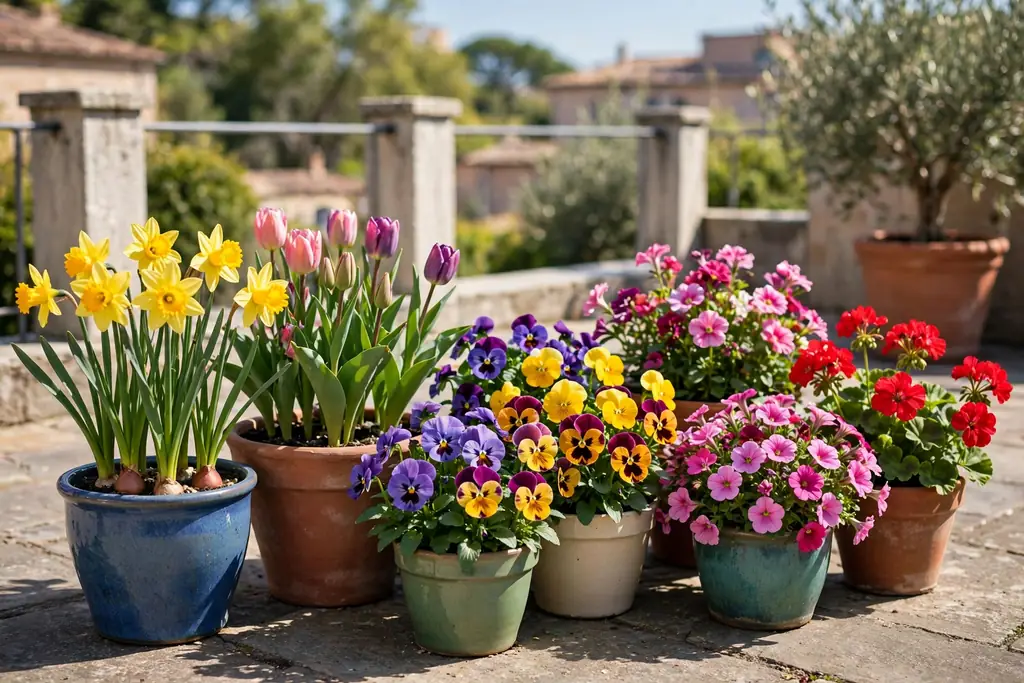
Keep a set of seasonal color pots that you rotate through the year, so the terrace always has something in flower. Plant spring bulbs and primulas for early color, summer bedding and dahlias for high summer, and pansies and ornamental kale for autumn and winter. Swapping pots is easier than replanting beds, and it lets you try new color schemes each season.
Keep a few empty pots ready so the swap takes minutes, and compost spent plants rather than letting them linger. Repeat one or two colors across the pots to tie the display together, and put the brightest pots near the door or the seat where you see them most. A small store of spare pots makes rotation a habit.
20. Fire Bowl Gathering Corner
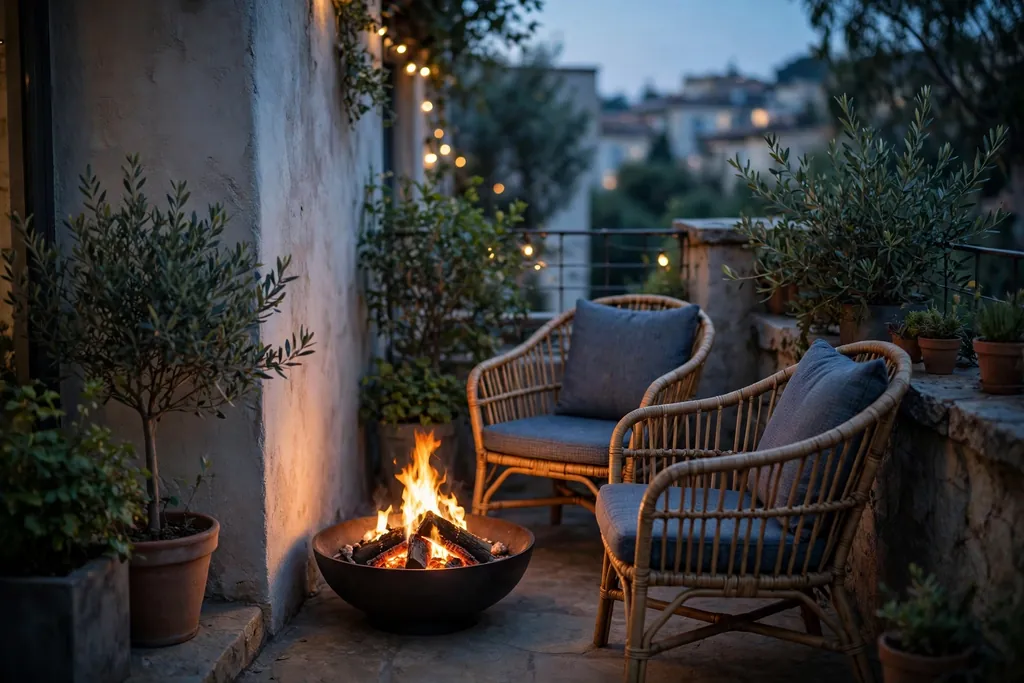
Set a small fire bowl or chiminea in a sheltered corner to make the terrace usable on cool evenings. A fire corner draws people together, gives light and warmth, and stretches terrace season well past summer. Place it on a heatproof surface, clear of climbers, sails, and overhanging branches, and keep a bucket of sand or water nearby.
Check local rules and building rules before you buy, since open flames are restricted on some terraces. Use dry fuel as the maker directs, and never leave a fire unattended. Pair the fire bowl with low, movable seats so the corner can change from a quiet evening for two to a gathering for friends.
21. Morning Coffee Spot With an Outdoor Rug
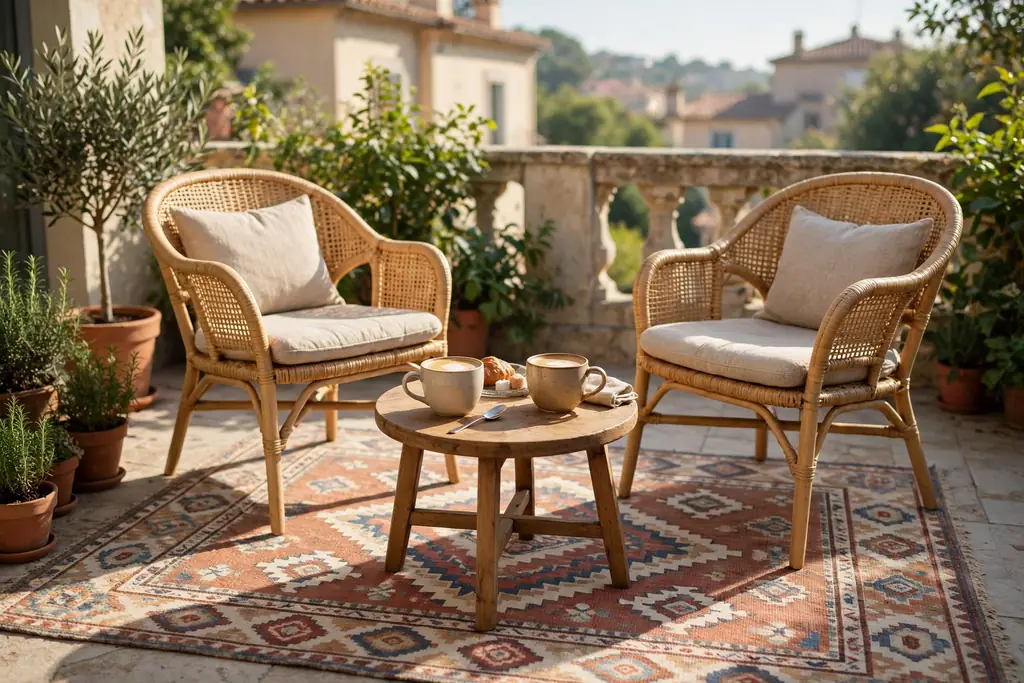
Lay an outdoor rug, add two chairs and a small table, and you have a morning coffee spot that costs little and gets used daily. A rug marks the zone, softens paving underfoot, and makes a bare corner feel like a room. Place the spot where it catches morning sun, and keep the table small enough to leave room to stand and sit comfortably.
Choose a rug rated for outdoor use that dries fast after rain, and shake it out weekly so soil does not build up underneath. Add one pot of scented planting beside the chairs, and keep a hook for a bag or a hat nearby. A coffee spot used every morning will do more for a terrace than a large set used once a month.
22. Watering and Compost Station
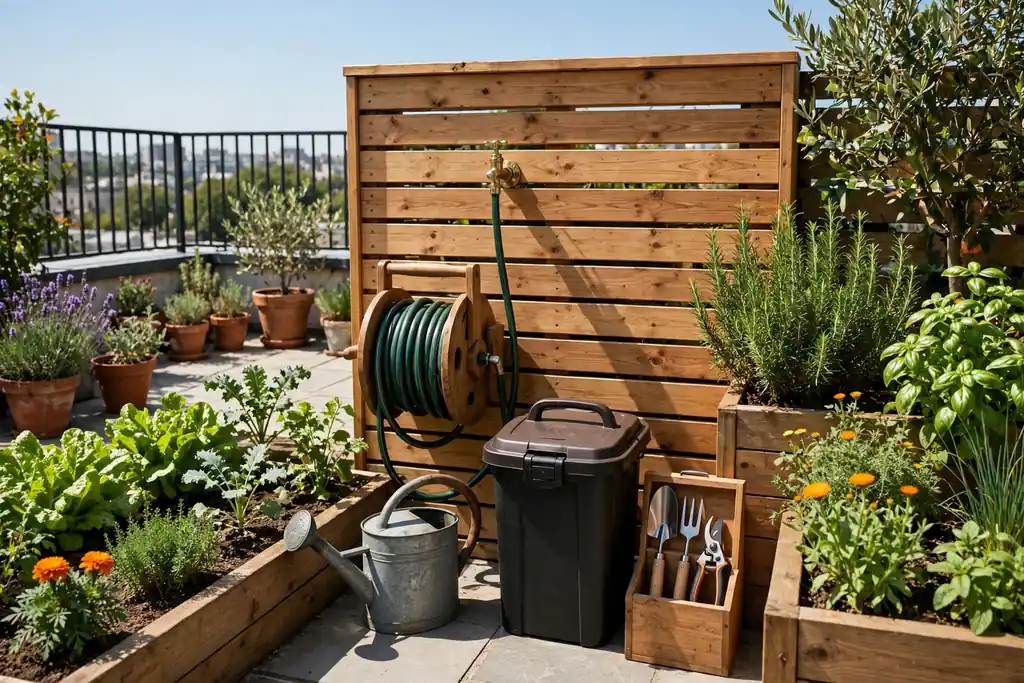
Set up a small watering and compost station on the terrace to make daily plant care easy. A station needs a watering can or a hose point, a small compost caddy for clippings and kitchen peelings, and a tidy store for twine, snips, and gloves. Keeping these together saves trips indoors and means watering actually happens.
Site the station near the beds you water most, but out of the main view, behind a screen or a tall pot group. Keep the compost caddy lidded and emptied often so it does not smell, and rinse watering cans after feeding so residue does not build up. A station that is easy to reach turns plant care from a chore into a quick daily round.
Conclusion
A good terrace garden starts with how you use the space, not with how many pots you can fit on it. Pick the zone you will use most, give it a seat, shade, and planting at more than one height, then add the next idea only when the first one feels right. Small terraces suit containers, walls, and screens, while larger terraces can add beds, a dining set, and a fire corner, but the same rule holds for both: one well used corner beats a terrace full of features nobody visits. Save this list on Pinterest, choose one idea for this weekend, and let the terrace grow around the way you actually live outdoors.
FAQs
What is the cheapest way to start a terrace garden?
Start with container clusters and one seat. Pots in mixed sizes, a bag of free draining mix, and plants suited to your light cost far less than built beds or a pergola, and you can move them as you learn what grows well. Add a trellis screen or a shade sail next, since comfort and privacy make the terrace usable, then build beds or a pergola when you know which zones you use most.
How do I keep terrace pots from drying out?
Water deeply until water runs from the drainage holes, then mulch the surface with bark or gravel to slow evaporation. Group pots together so they shade each other, use larger pots where possible since they hold moisture longer, and check pots daily in hot wind. A watering station near the beds, as in idea 22, makes this daily check a quick habit rather than a chore.
What plants suit a windy terrace?
Choose tough, flexible plants that bend rather than break: ornamental grasses, lavender, rosemary, sedums, and low shrubs cope well with wind. Avoid tall, top heavy pots on exposed edges, and use a trellis screen or bamboo to break the wind before it hits the planting. Keep climbers tied in firmly, and check fixings after storms.
Can I grow vegetables on a small terrace?
Yes, if you pick compact varieties and deep containers. Salad leaves, herbs, radishes, peas, and dwarf tomatoes all suit pots, and a sunny wall can carry beans or cucumbers on a trellis. Start with two or three crops you actually eat, water and feed them regularly, and add more containers only when the first ones are thriving.
How do I add privacy to a terrace without blocking light?
Use trellis panels with climbers, bamboo screens, or tall pots with grasses on the exposed side only. Open trellis blocks views while letting light and air through, and climbers soften the screen without making it solid. Leave the sunny side open, and keep screens below any local height limit so the terrace stays bright.
Do I need permission to build beds or a pergola on a terrace?
Rules vary by home, landlord, and local area, especially for raised terraces, shared buildings, and listed homes. Check weight limits, drainage rules, and any lease or building rules before adding heavy planters, water, or a fire feature. For larger structures such as a pergola or a retaining wall, check local planning rules and ask a professional when the structure carries weight or changes drainage.