Author: Clara Bennett

  • 18 Halloween Living Room Decor Ideas With Cozy Character

    18 Halloween Living Room Decor Ideas With Cozy Character

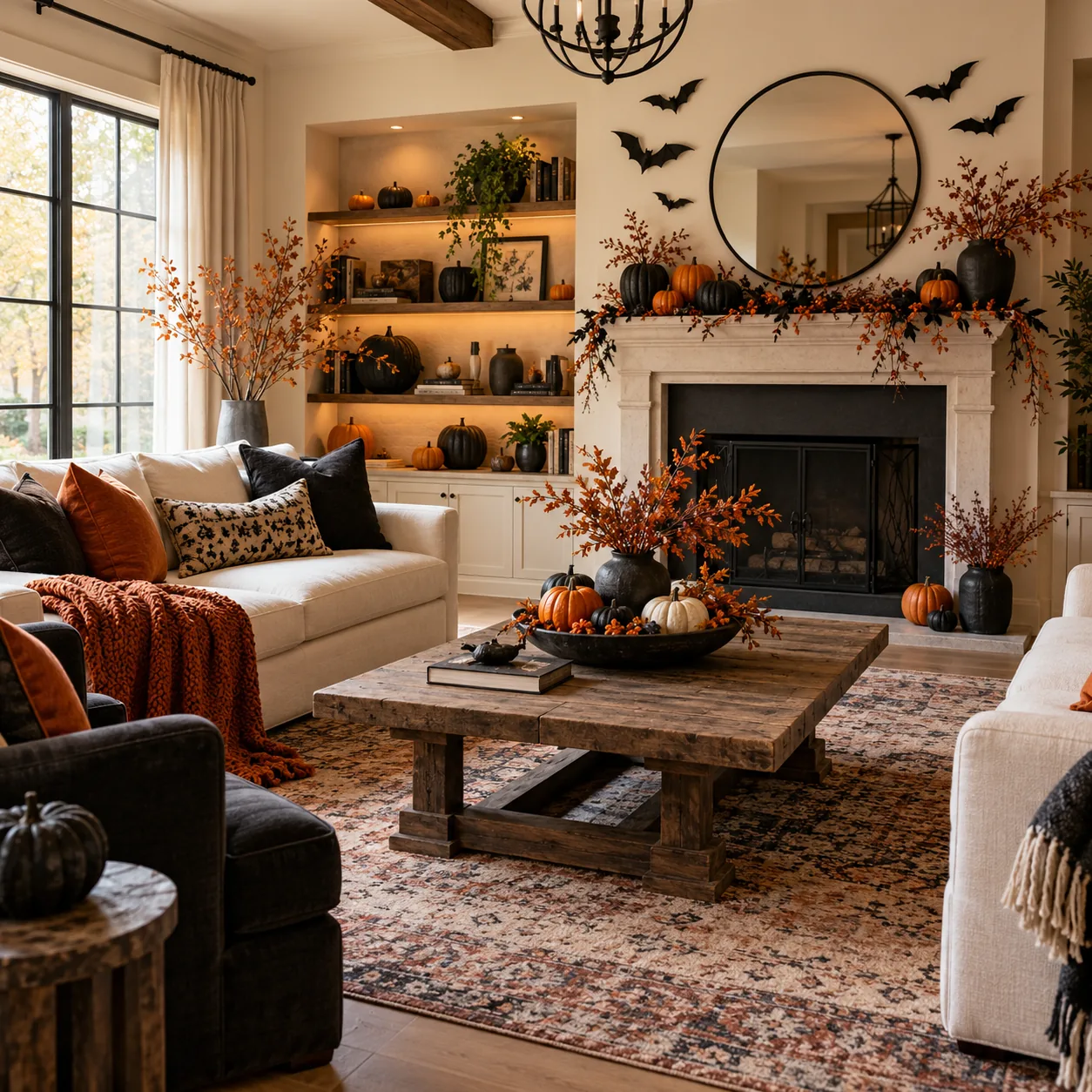
    Halloween living room decor ideas can make the room playful without turning every chair and table into a display. Start with the mood you enjoy: friendly ghosts, dark silhouettes, a quiet black-and-white scheme, or a brighter party corner. These 18 ideas cover walls, windows, shelves, soft furnishings, and small arrangements you can pack away afterward. Choose a few that work together rather than using them all. Keep the seats comfortable, everyday surfaces useful, and the main route clear so the room still works throughout October.

    Key Takeaways
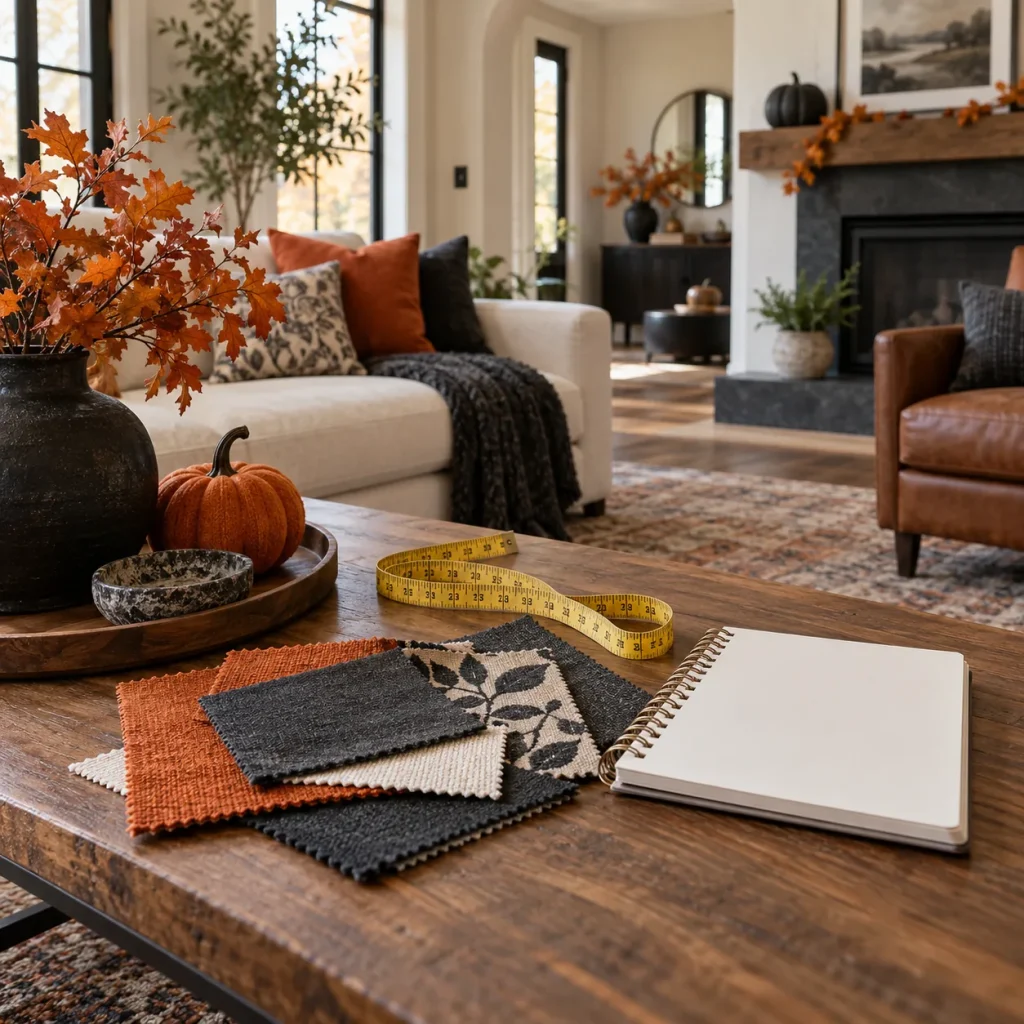
    Measuring tape, fabric swatches, and a blank notebook on a coffee table.
    • Pick one main display area and repeat its colors in one or two smaller details.
    • Use removable textile covers and foldable paper pieces when storage space is limited.
    • Keep windows, exits, lamp clearances, and walking routes free of decorations and trailing cords.
    • Choose suitable battery-operated lighting and secure battery compartments instead of adding flames among paper and fabric.

    The CPSC’s Halloween safety guidance recommends battery-operated lights or glow sticks instead of open-flame candles in jack-o’-lanterns. Check the instructions for decorative lighting and keep flammable materials away from heat. These room ideas use the same practical approach to lighting and clear routes.

    1. Create a Paper Bat Flight Above the Sofa
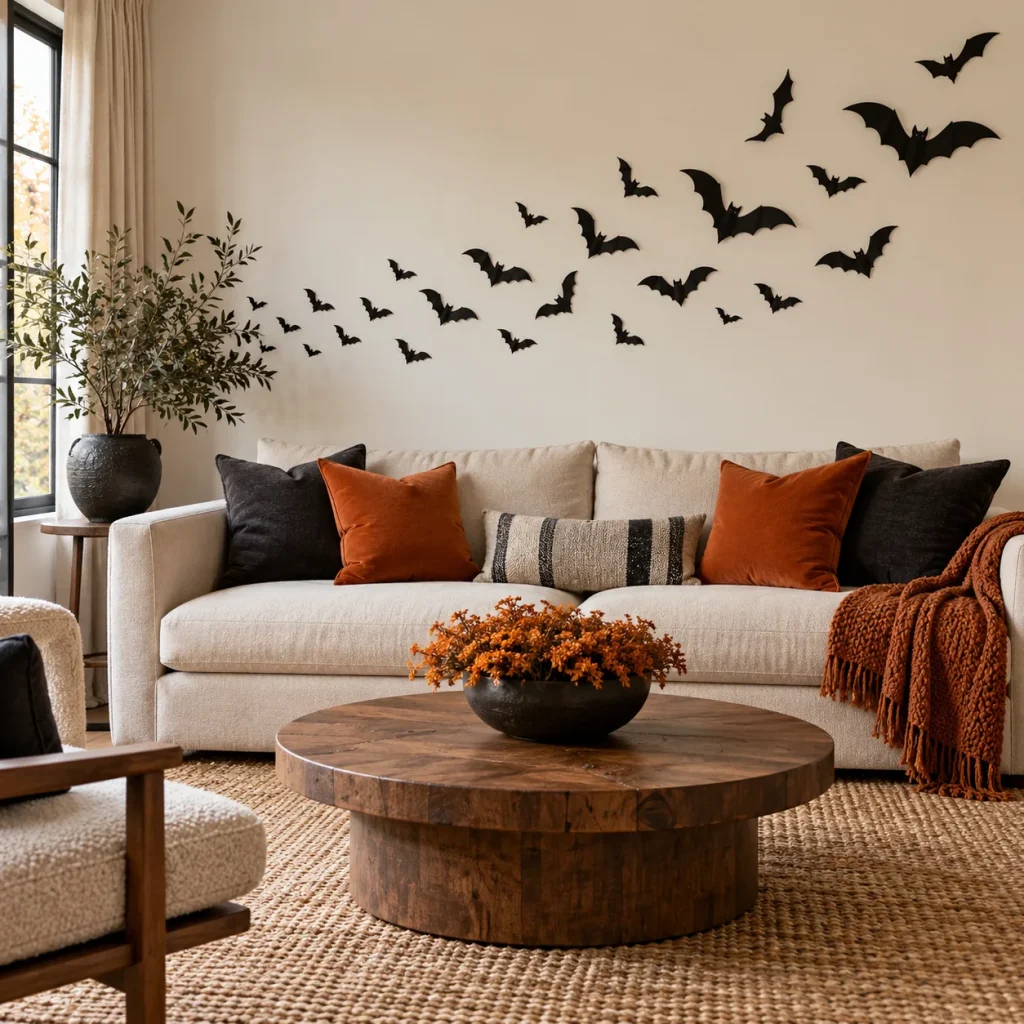
    Black paper bats in a sweeping flight on cream wall above a neutral sofa.

    A flight of paper bats gives a plain wall a clear Halloween feature without covering every surface. Cut several sizes, then arrange them on the floor before mounting them in a loose curve above the sofa. Use a fixing suitable for the wall finish and test it in a hidden place first. Keep the lower bats away from cushions so people do not brush them off while sitting.

    2. Style a Pumpkin Trio on a Tray
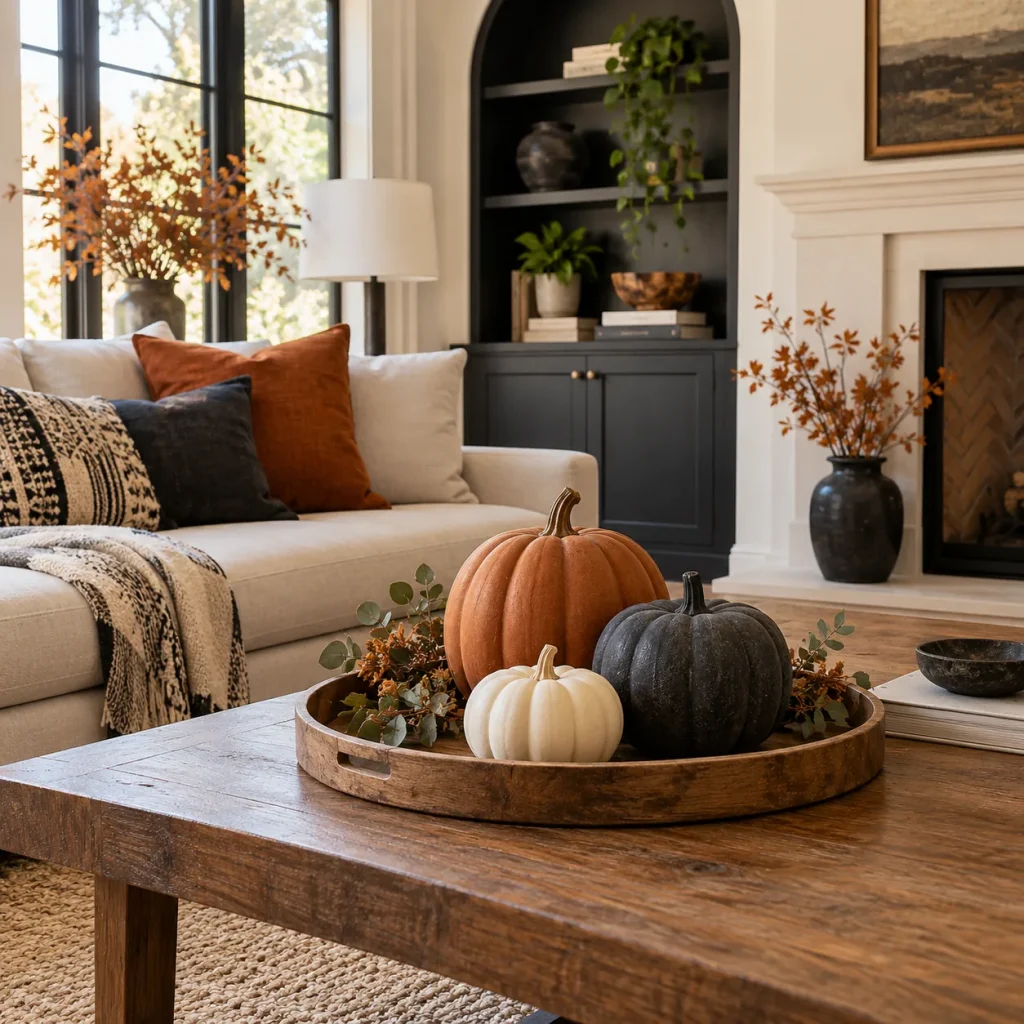
    Three varied matte decorative pumpkins in cream.

    Three decorative pumpkins on a tray create a contained display that can move when you need the table. Mix heights and shapes instead of filling the tray with many small pieces. Leave enough empty space to see the tray itself. Faux pumpkins are useful for reusing next year; if you choose real ones, check them regularly and protect furniture from moisture or soft spots.

    3. Swap in a Pair of Seasonal Pillow Covers
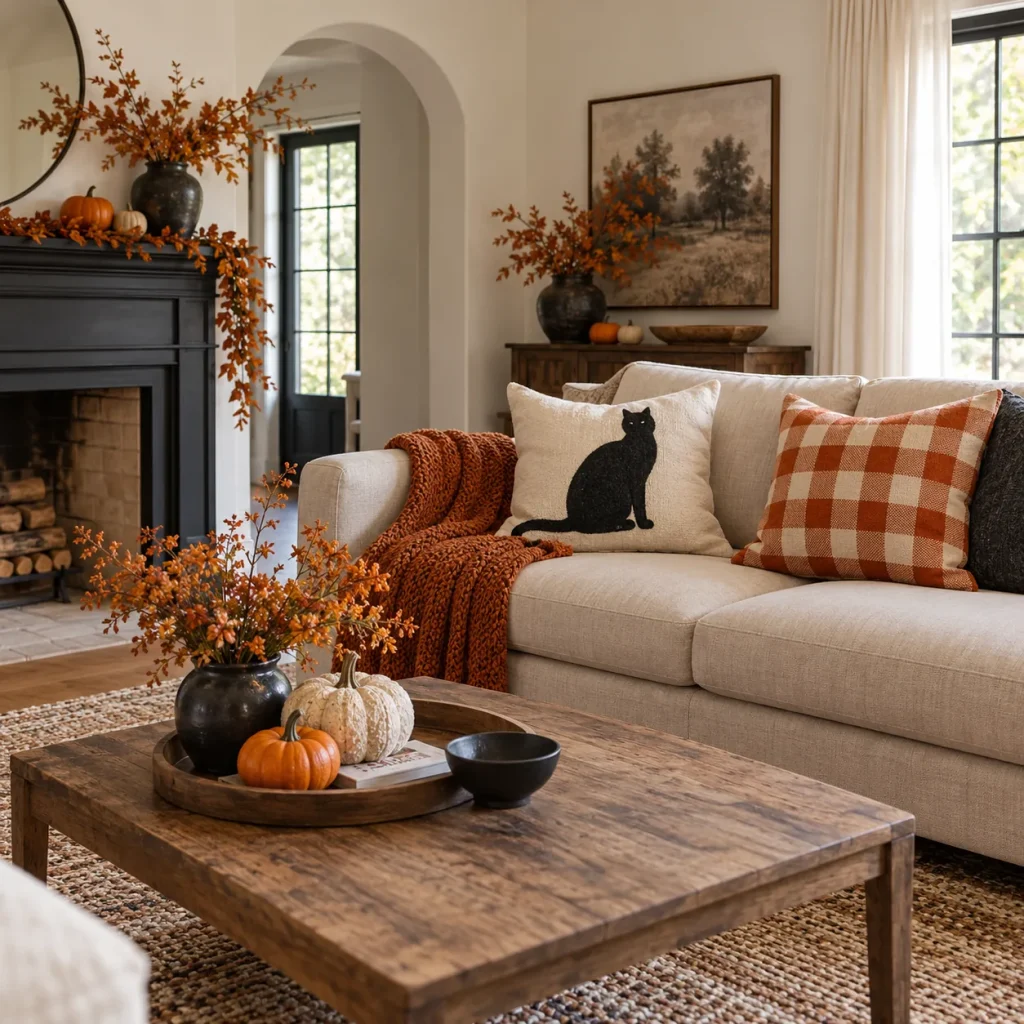
    Neutral sofa with two distinctly patterned Halloween cushion covers.

    Seasonal pillow covers can change the room without adding more cushions to the seats. Replace two existing covers with a simple motif and a coordinating check or stripe. Check the cover dimensions and care label so the swap is easy to reverse. Keep the main sofa fabric visible, especially in a small room where too many cushions can make everyday seating awkward.

    4. Hang a Lightweight Ghost Garland
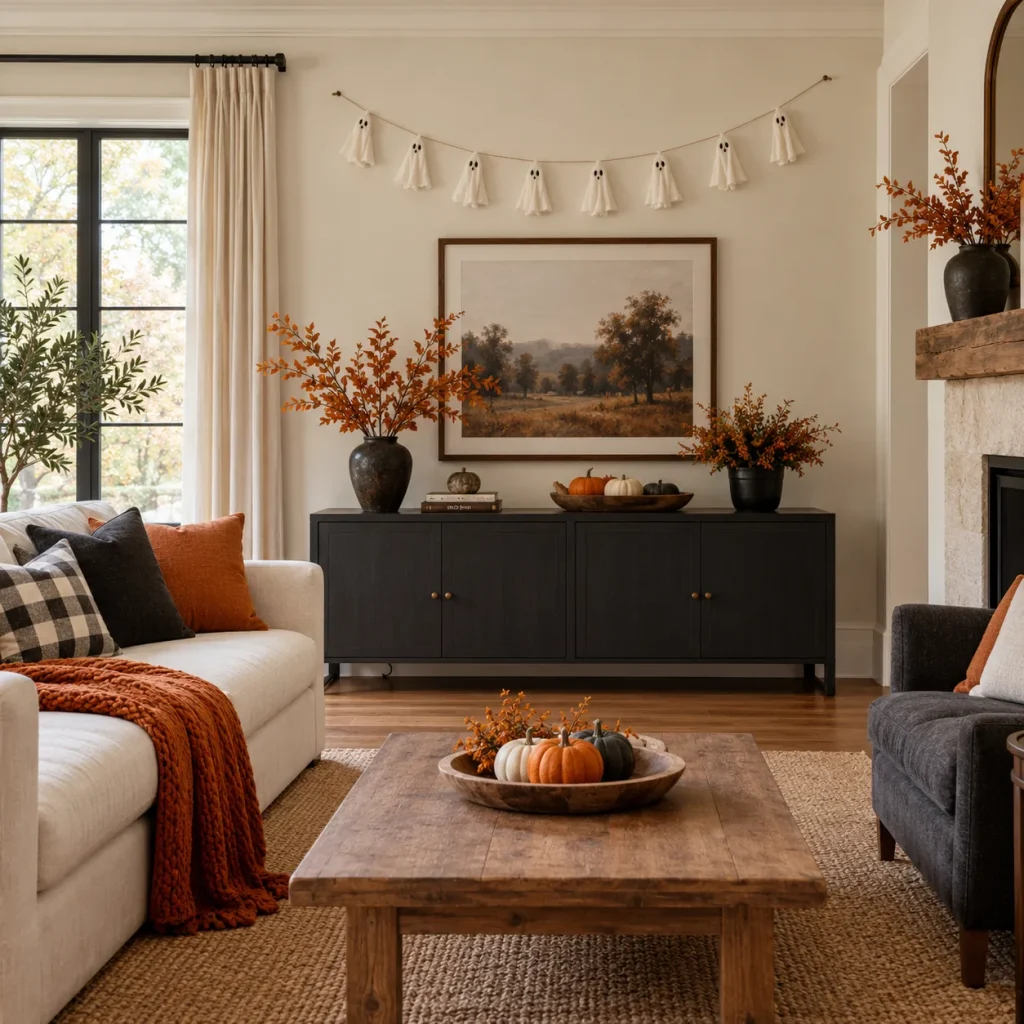
    Small ivory fabric ghost garland hung high on wall above a low cabinet.

    A lightweight ghost garland works well above a sideboard or across a wall where it will stay out of reach. Keep the individual ghosts simple so their shapes remain readable from across the room. Check mounting limits and do not attach the garland to lamps, sprinklers, or electrical fittings. Choose a wall placement if draping it over furniture would leave cords hanging into a route.

    5. Make an LED Lantern Cluster
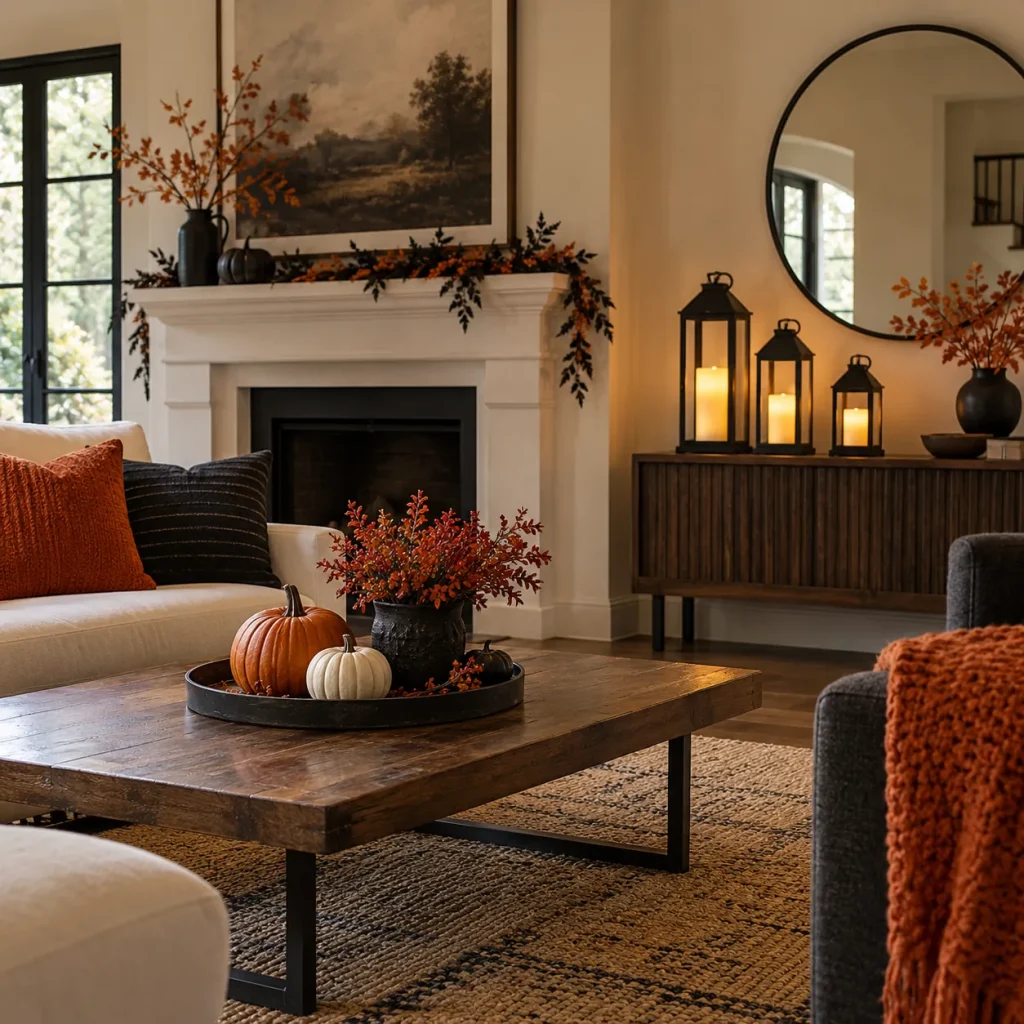
    Three black lanterns with enclosed flameless warm LED pillar lights grouped on low console.

    LED lanterns can provide a Halloween glow without an open flame among paper and fabric decorations. Group a few lanterns of different heights on a broad stable surface and keep their doors closed as directed. Choose products with secure battery compartments, especially around children. Follow the product instructions rather than placing lights inside objects that are not designed for them. Keep switches reachable so the display is easy to turn off.

    6. Frame a Vintage-Inspired Moon Print
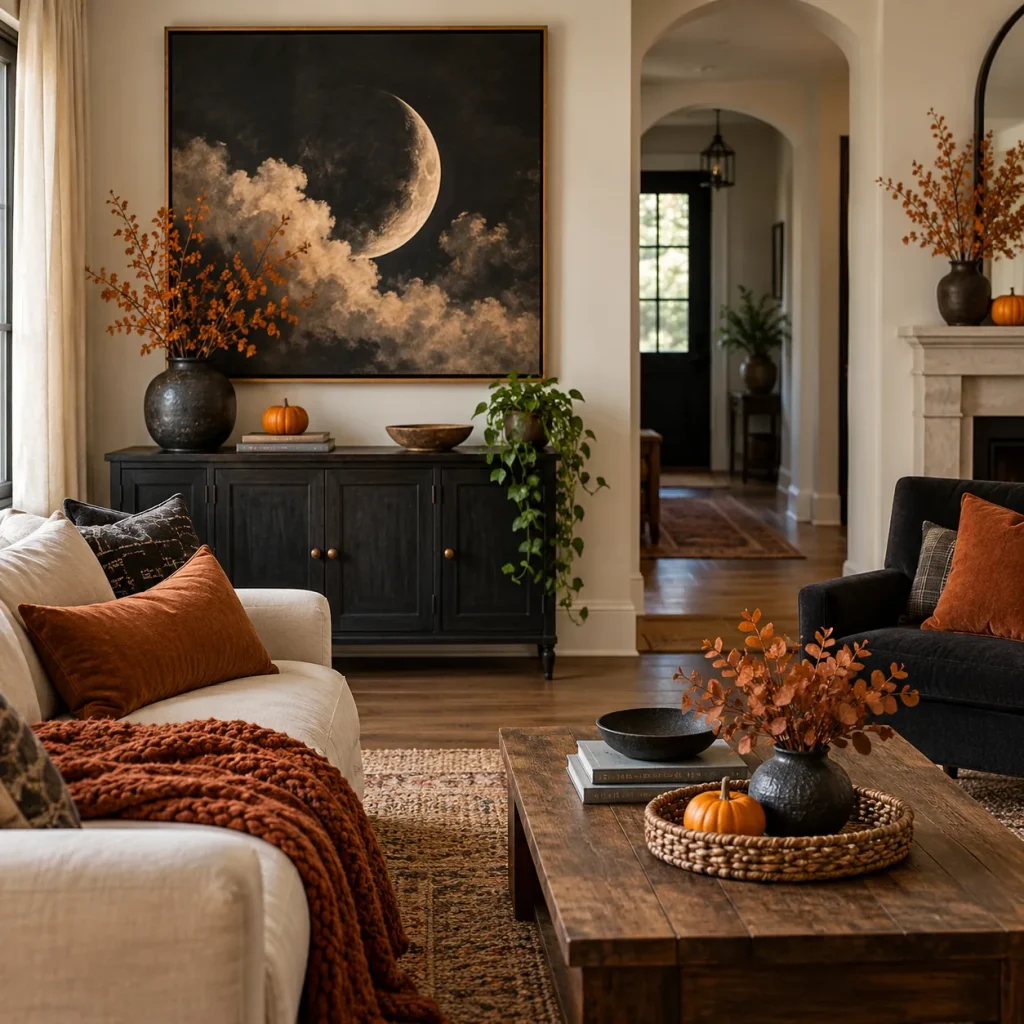
    Large framed decorative art of crescent moon and clouds.

    A moon print gives Halloween decor a quieter, slightly old-fashioned mood. Use artwork you own, created yourself, or have permission to print, then place it in an existing frame. A dark sky with a pale moon can work beside either orange accents or a neutral palette. Keep the print as the main feature rather than surrounding it with several competing signs and ornaments.

    7. Dress a Bookshelf as a Curious Cabinet
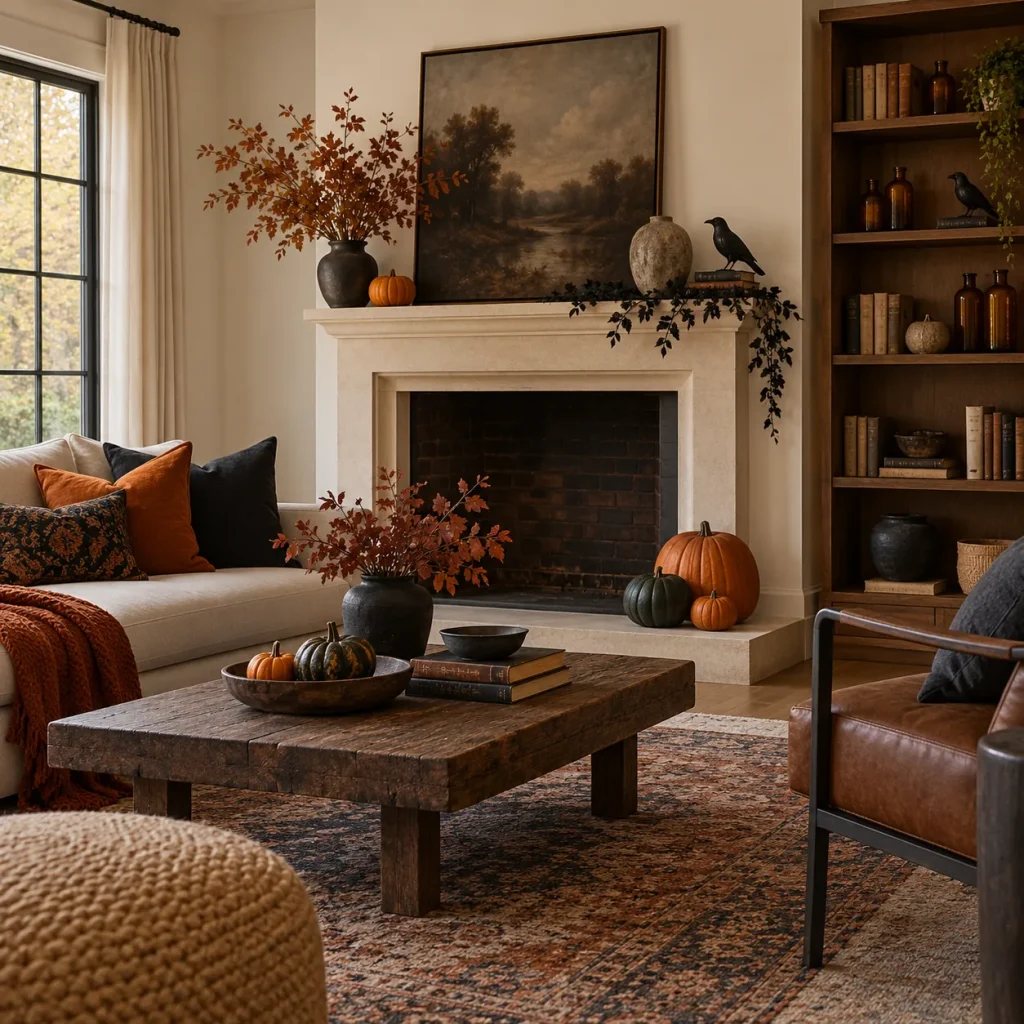
    Wooden bookshelf with old plain books.

    A curious-cabinet bookshelf can suggest a Halloween story through a small group of objects. Try a ceramic raven, a few plain books, and empty amber bottles with their lids secure. Leave open space around the group so the shelf remains readable. Do not use containers that could be mistaken for drinks or medicines. Our open-shelf styling guide can help you edit the arrangement.

    8. Add a Black Lace Runner to a Console
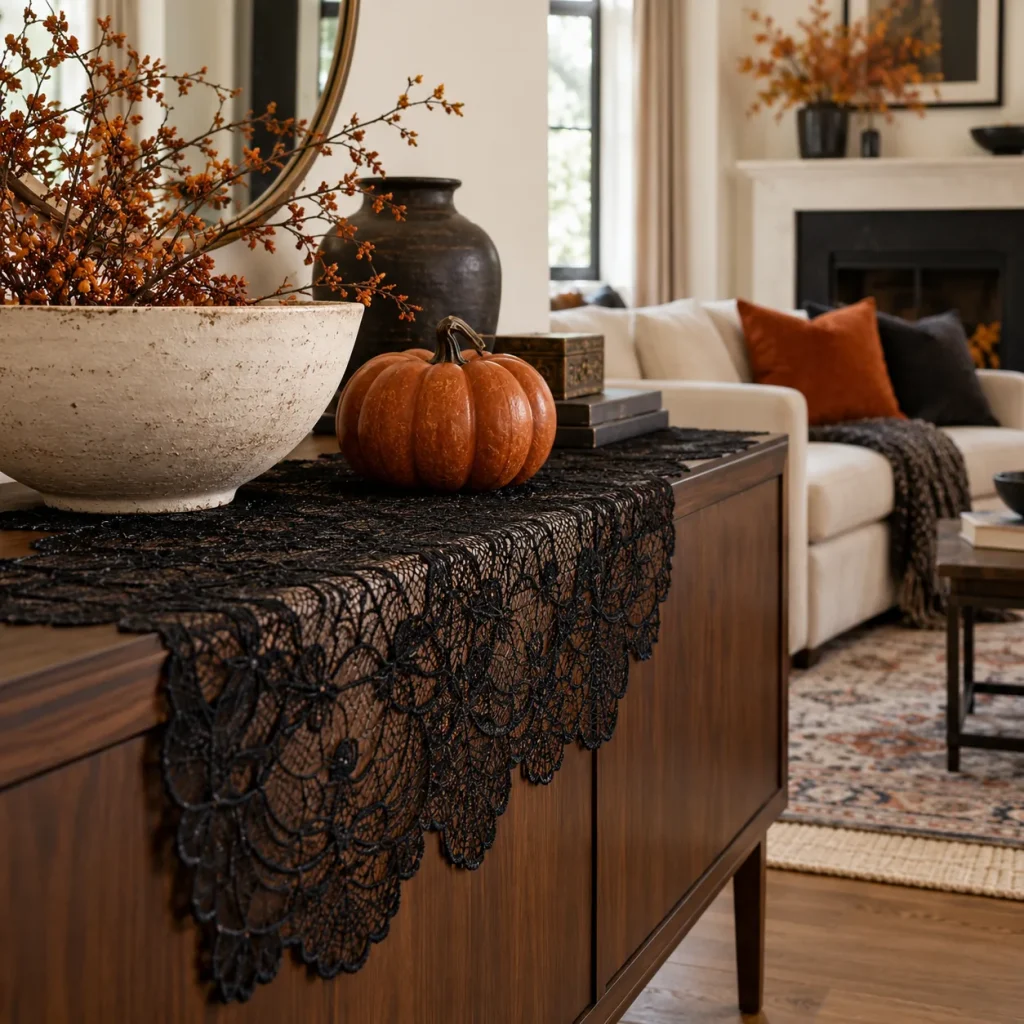
    Black lace runner over walnut console.

    A black lace runner changes the outline and texture of an ordinary console. Lay it over a plain surface and use just one or two larger objects on top, such as a cream bowl and a pumpkin. Check that the fabric will not transfer color onto the furniture. Trim or fold the runner to keep loose ends away from drawers, door handles, and curious hands.

    9. Give the Window a Haunted Silhouette
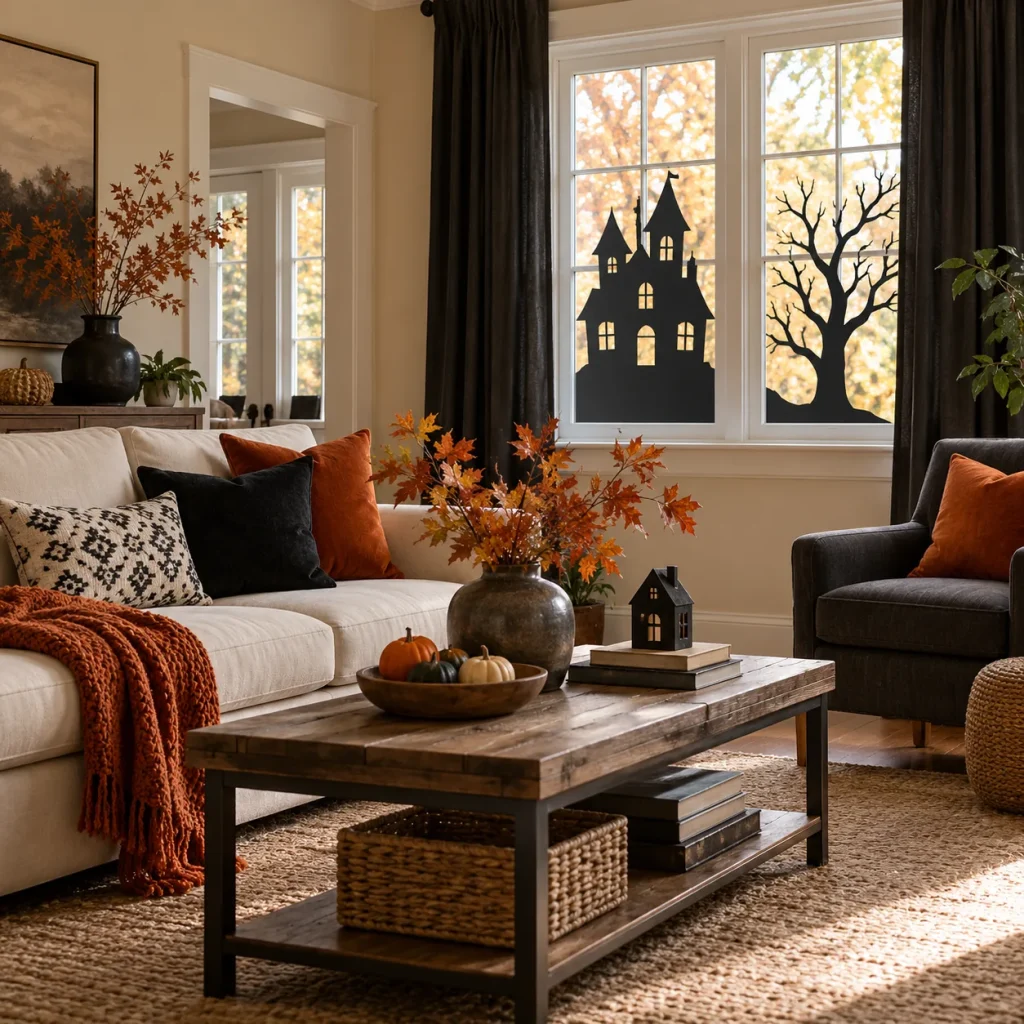
    Paper silhouette of a small haunted house and bare tree on living-room window glass.

    Paper window silhouettes use daylight to make the shapes stand out. Choose one haunted house or a few bare trees, then leave enough clear glass around them to keep the window useful. Use materials and fixings intended for that surface. Keep the handles, opening parts, and any emergency exit route unobstructed. A simple outline is usually easier to read from both indoors and outside than many tiny cutouts.

    10. Decorate a Mirror With a Removable Paper Wreath
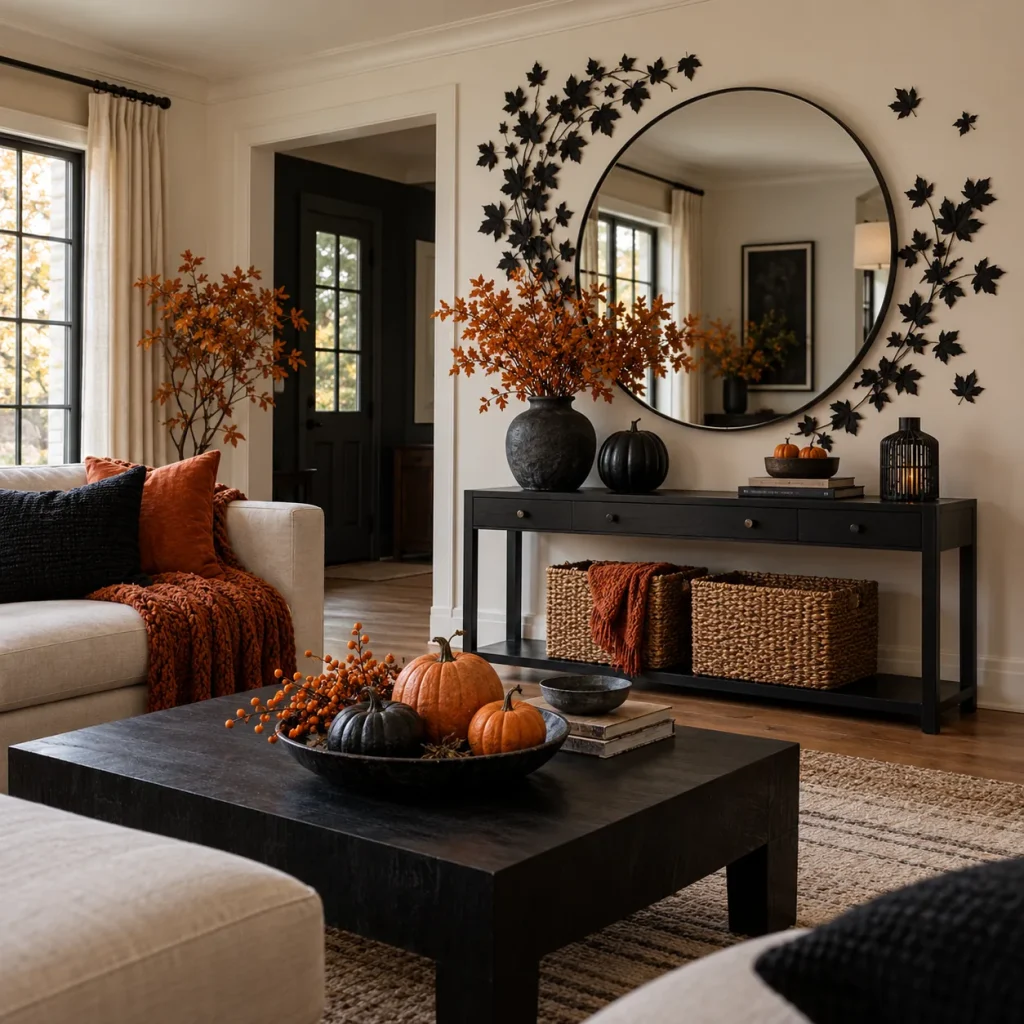
    Round wall mirror surrounded by lightweight black paper leaves.

    A paper-leaf wreath around a mirror adds a dark frame without replacing a large wall feature. Attach the wreath independently when possible, using fixings suitable for the complete weight. Avoid hanging extra decorations from a mirror unless its hardware and frame are designed to carry them. Leave some glass visible so the mirror still brings light into the room instead of becoming a solid dark patch.

    11. Build a Friendly Ghost Reading Corner
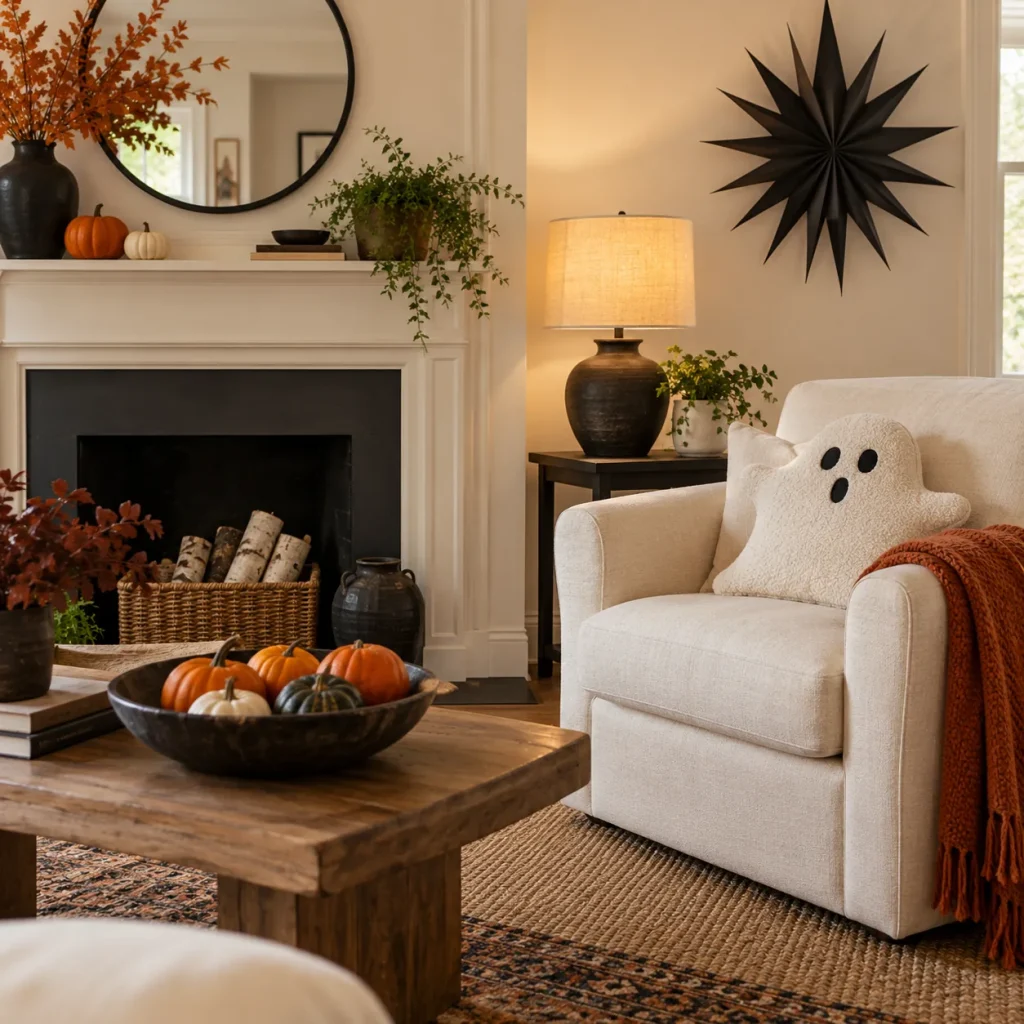
    Cream chair with ghost-shaped cushion.

    A friendly ghost cushion can make a reading corner seasonal without making it frightening. Pair it with a folded orange throw and one small paper decoration on the wall. Keep the lamp shade and bulb clear of fabric. Choose soft, washable pieces if the chair gets daily use, and leave space for a person to sit comfortably without first moving a pile of ornaments.

    12. Group Ceramics Into a Black-and-White Vignette
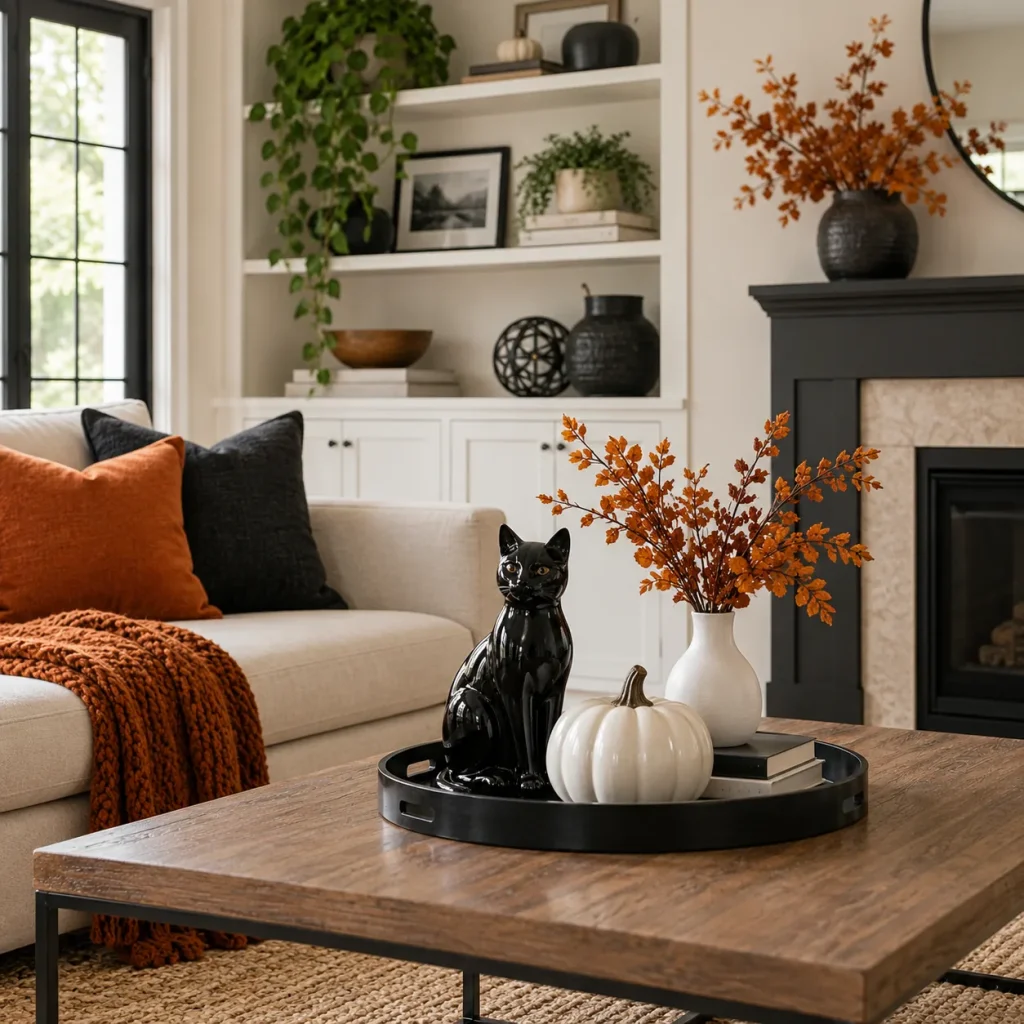
    Black ceramic cat.

    A black-and-white ceramic group can fit a modern living room without a large color change. Put a dark cat, pale pumpkin, and small vase on one tray or shelf. Vary their height, but make sure each piece has a stable base. Keep breakable objects on a suitable surface away from play areas. The limited palette allows the shapes to carry the Halloween theme.

    13. Use a Bare Branch as an Ornament Stand
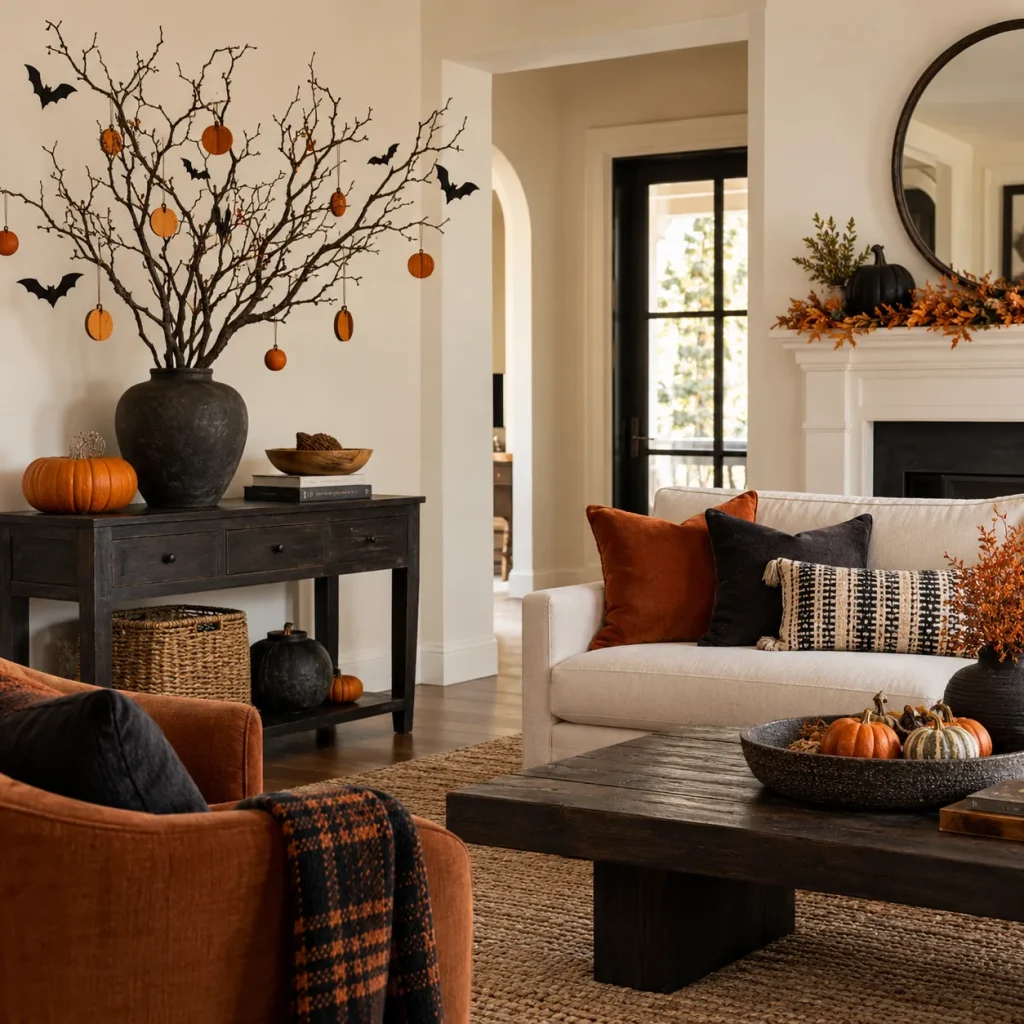
    Sturdy dark decorative branch tree in stable wide pot on console.

    A decorative branch stand gives paper bats or small ornaments a place to hang without using the ceiling. Choose a stable purpose-made base and keep the branches within the console’s footprint. Add only lightweight pieces and stop before branches bend. Keep the stand away from a route where a coat sleeve or bag might catch it, and avoid loose wires stretched between furniture and walls.

    14. Turn a Glass Cloche Into a Tiny Scene
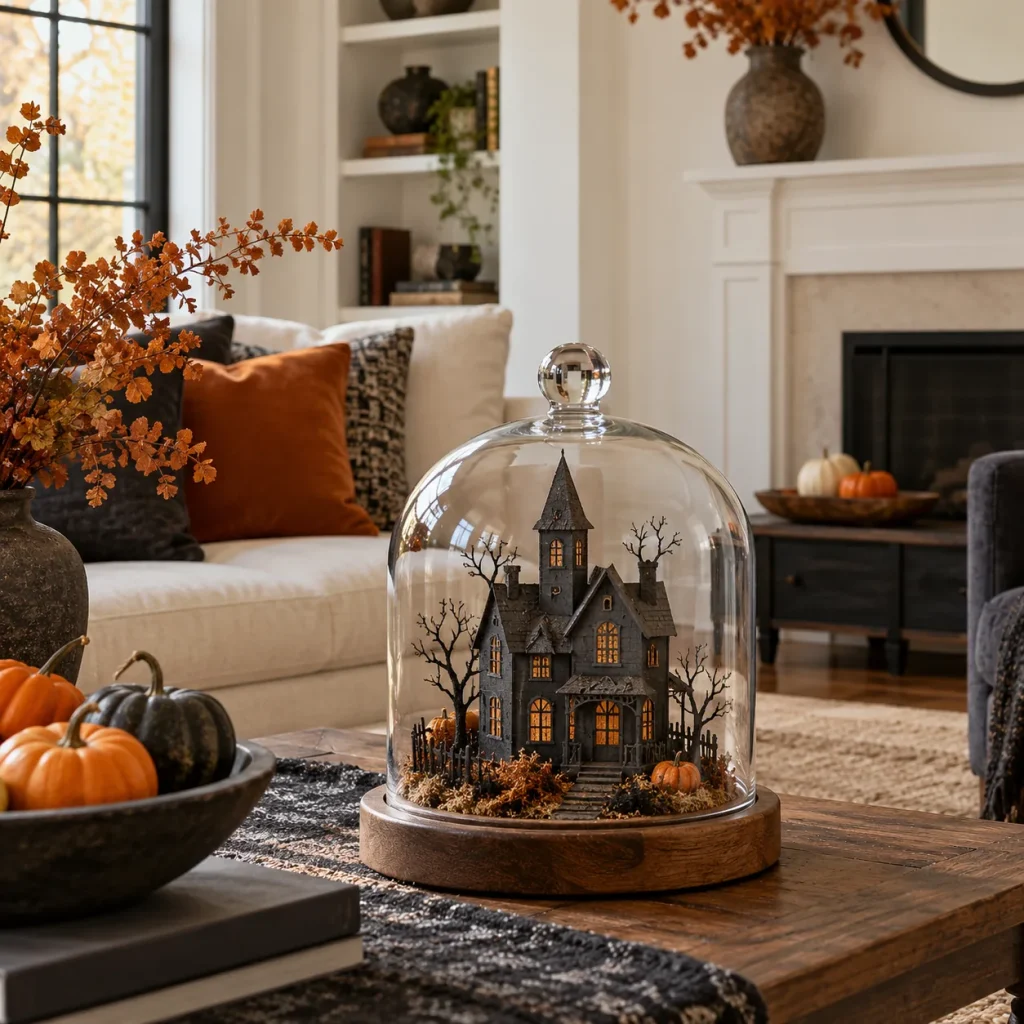
    Clear glass cloche on broad wooden base enclosing miniature paper haunted house.

    A cloche turns a tiny haunted-house scene into one contained display. Set a lightweight paper house on the cloche’s base, then add a small amount of decorative ground texture rather than stuffing the glass. Use no flame inside it. Choose a broad stable surface and keep the cloche away from the table edge. An acrylic cover may suit a busy household better than fragile glass.

    15. Set Up a Compact Halloween Treat Station
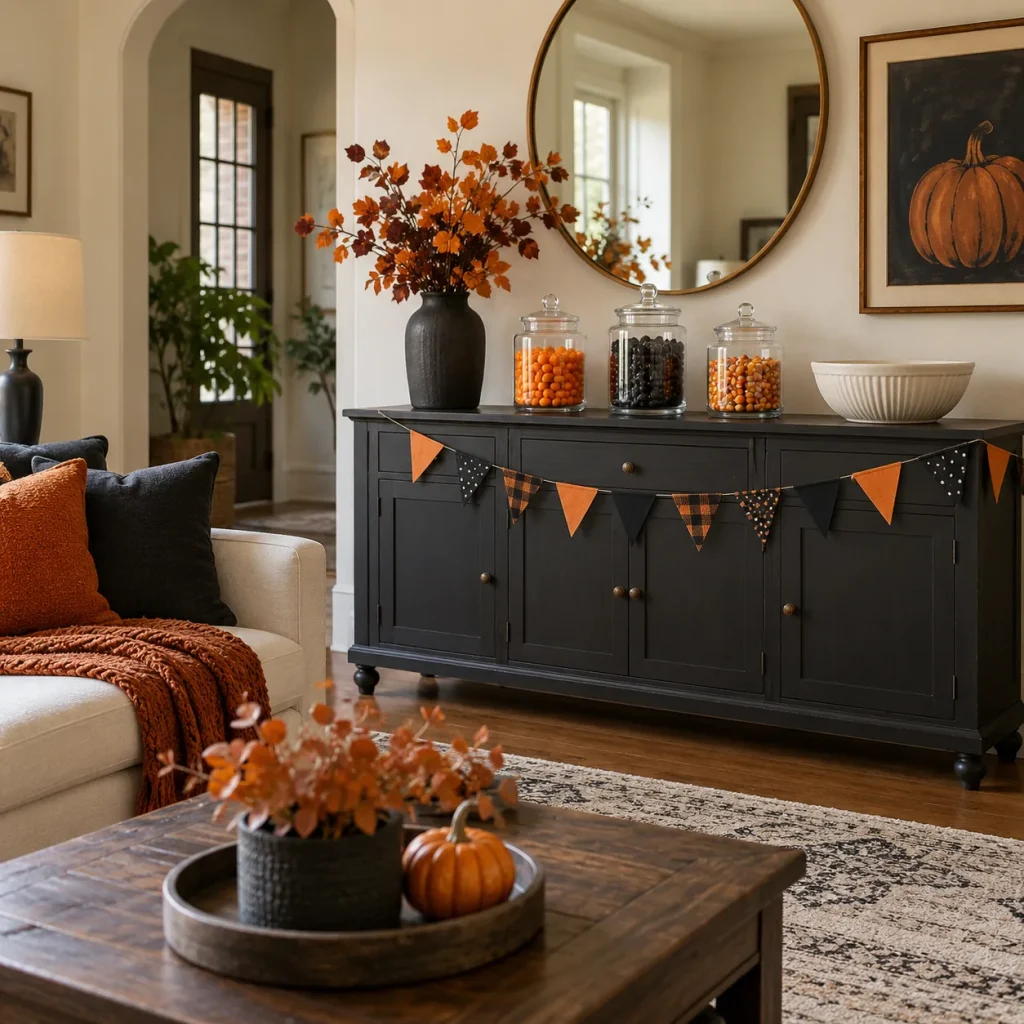
    Living room sideboard with lidded treat jars.

    A compact treat station can keep party supplies together instead of spreading them around the living room. Use a sideboard with room for a bowl, lidded containers, and a small sign or bunting you can remove afterward. Keep food separate from decorative materials and leave product ingredient information available for guests. Put the station outside the main seating route so people can serve themselves without leaning across others.

    16. Add a Washable Halloween Sofa Throw
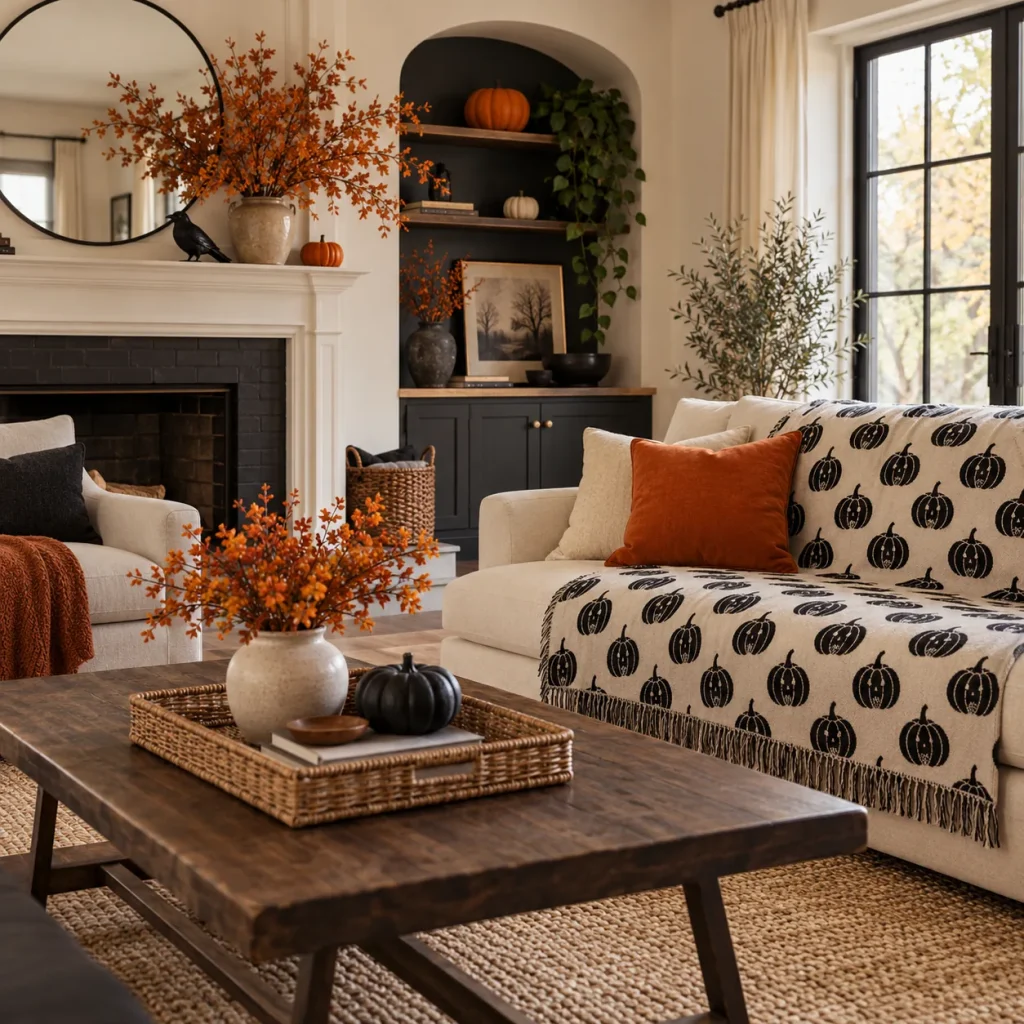
    Cream sofa with black-and-cream small repeating pumpkin-pattern throw neatly spread across seat.

    A washable patterned throw can make the sofa seasonal while still being useful on cool evenings. Choose a small repeating motif that works with the existing cushions, then check the washing instructions before using it over pale upholstery. Keep the fabric clear of lamps and heat sources. Fold it across one seat or the sofa back rather than letting the ends trail across the floor.

    17. Use Purple Accent Light on a Wall
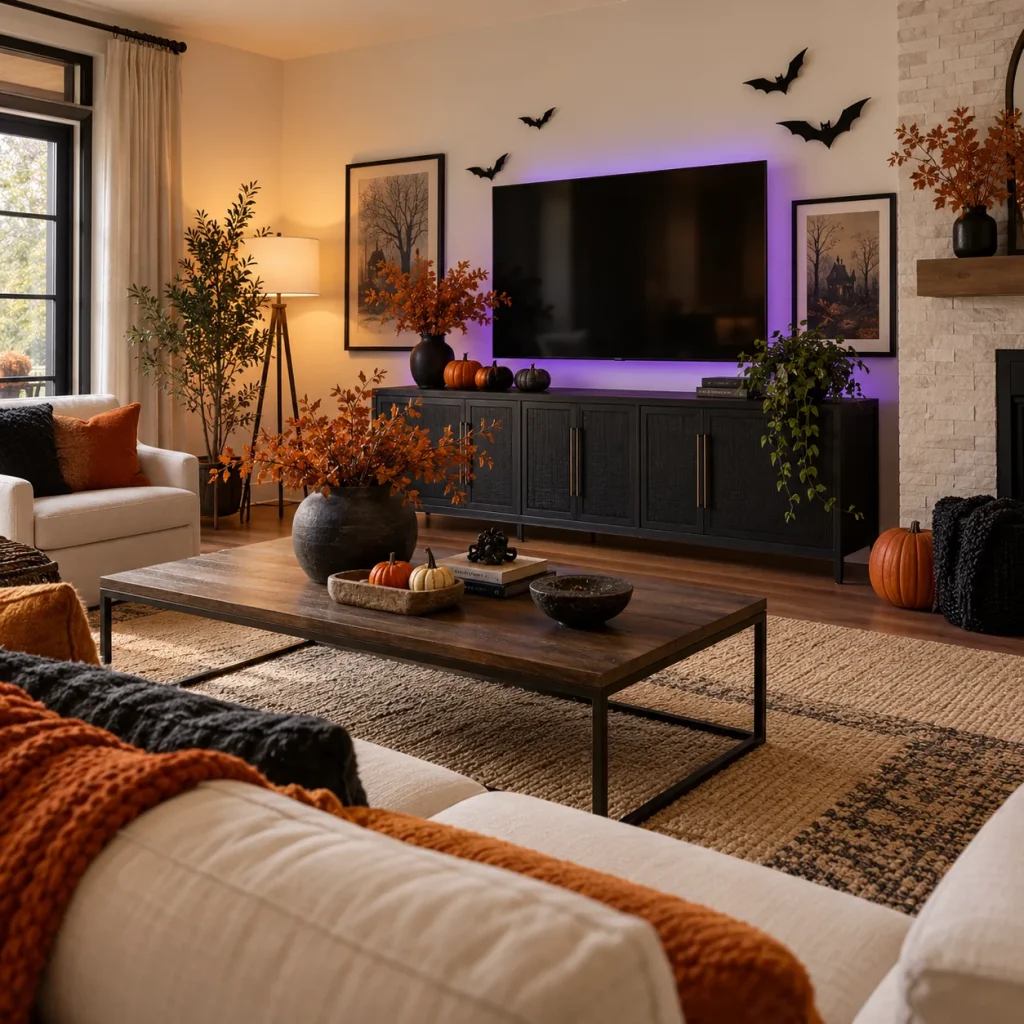
    Soft subtle violet LED wall wash behind TV cabinet.

    A soft purple wall wash creates a different mood from a room full of ornaments. Use a suitable LED accent light placed as its manufacturer directs, and keep enough normal light for people to walk and read comfortably. Avoid aiming a bright source at seated eyes or the TV screen. Check cables and plugs remain accessible, and do not cover lights with fabric to change their color.

    18. Layer Paper Fans Above a Party Console
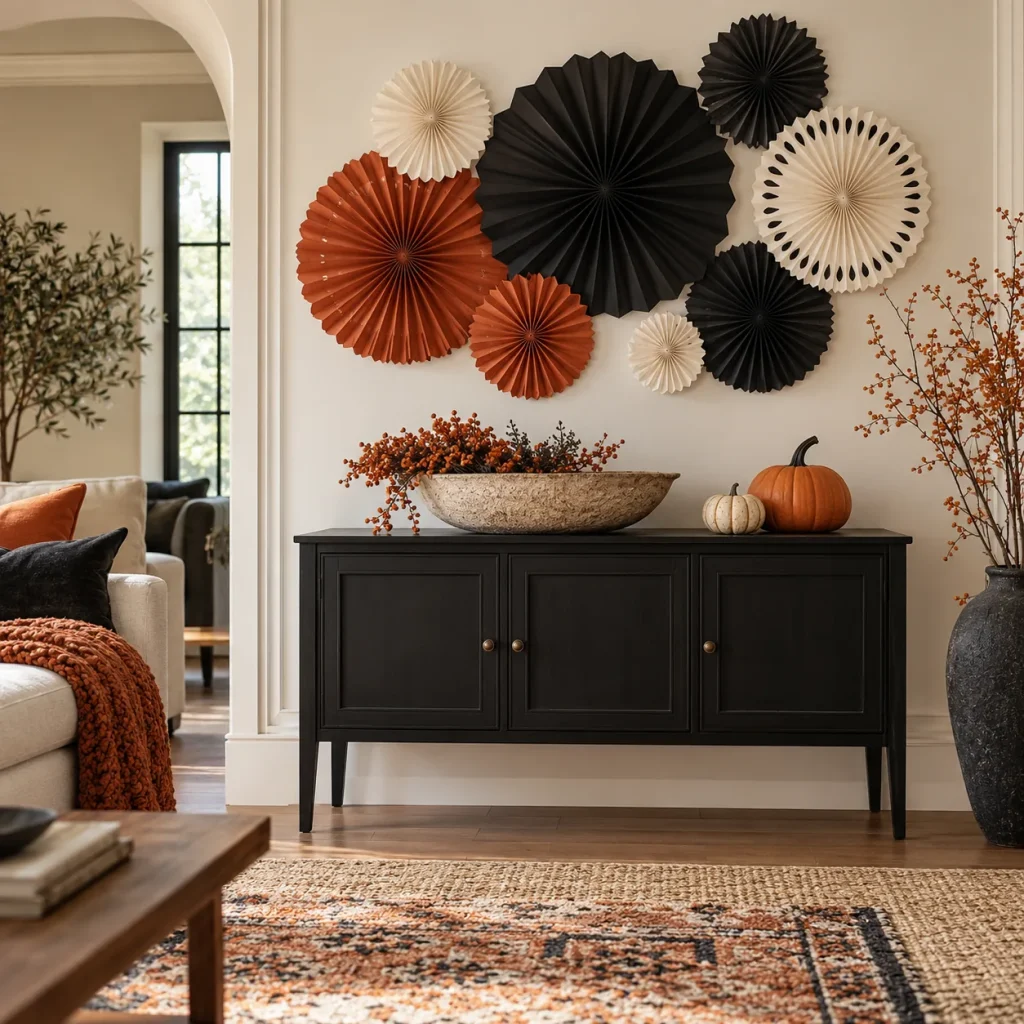
    Black cream and terracotta paper accordion fans mounted above console at varied sizes.

    Paper fans can create a party backdrop above one console while leaving the rest of the room calm. Arrange a few different sizes with gaps between them, using colors already present in your other decorations. Check the wall fixings for the full display and keep it away from heat. After Halloween, fold the fans flat and store them with the pillow covers and small reusable ornaments.

    Frequently Asked Questions
    A comfortable living room reading chair with a side table and an open book.

    How do I decorate a small living room for Halloween?

    Choose one wall or console as the main feature, then swap a couple of existing pillow covers instead of adding more objects. Paper silhouettes and artwork use less floor space than large freestanding props. Keep the coffee table partly clear and measure any display that sits near a door or walking route.

    How can I make Halloween decor cozy rather than scary?

    Use friendly shapes, soft textiles, warm lamps, and a restrained color palette. A ghost cushion, a small pumpkin group, or a moon print can suggest Halloween without gore or startling effects. Keep the decorations consistent with the room’s normal colors so the seasonal pieces feel connected to the furniture.

    What can I use instead of real candles?

    Use suitable battery-operated lanterns, enclosed LED candle products, or decorative lights designed for the location. Follow their instructions and keep battery compartments secure and inaccessible to young children. Do not hide a light under fabric or put it inside a paper decoration unless the product is intended for that use.

    How can I attach paper decorations without damaging walls?

    Check the wall finish, lease restrictions, and the mounting product’s stated surface and weight limits. Test an inconspicuous spot first, and follow both application and removal instructions. Removable does not guarantee damage-free on every surface. A freestanding display or an existing picture ledge may be a better option for delicate finishes.

    Which Halloween decorations are easiest to store?

    Flat paper bats, collapsible fans, pillow covers, and short fabric garlands usually need less room than large props. Keep them clean and dry, separate fragile pieces, and label the container. Remove batteries from lighting products if their instructions recommend it for storage. Set a storage limit before adding another large decoration.

    Conclusion
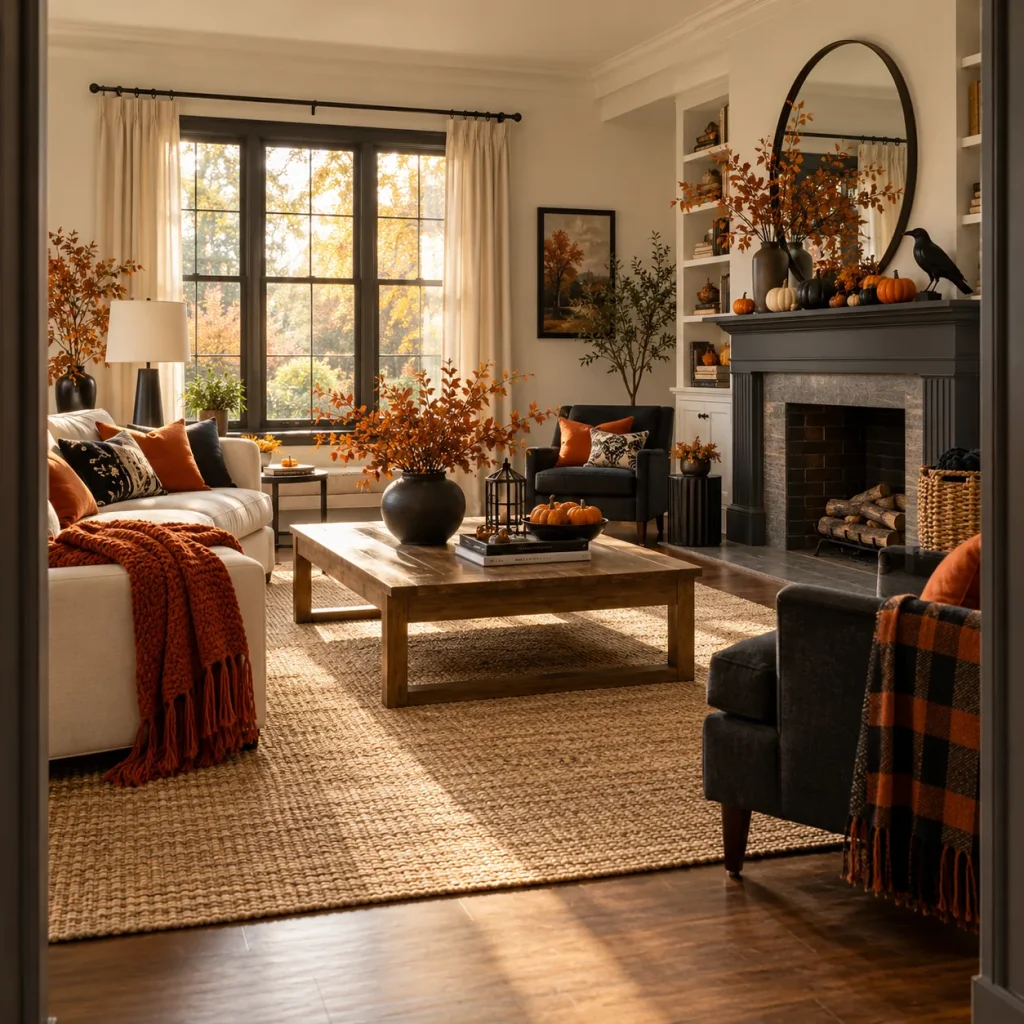
    A furnished living room with a clear route around the seating.

    Choose the Halloween details you will enjoy living with for a few weeks. One wall feature, one useful textile change, and a contained table display can be enough to set the mood. Keep the room easy to sit in and easy to clear after a party. Save the ideas that suit your space, then pack reusable pieces together so next October’s decorating starts with things you already like.

    For an autumn base you can keep after Halloween, try our fall living room decor ideas.
  • 26 Fireplace Seating Ideas for Comfortable Conversation

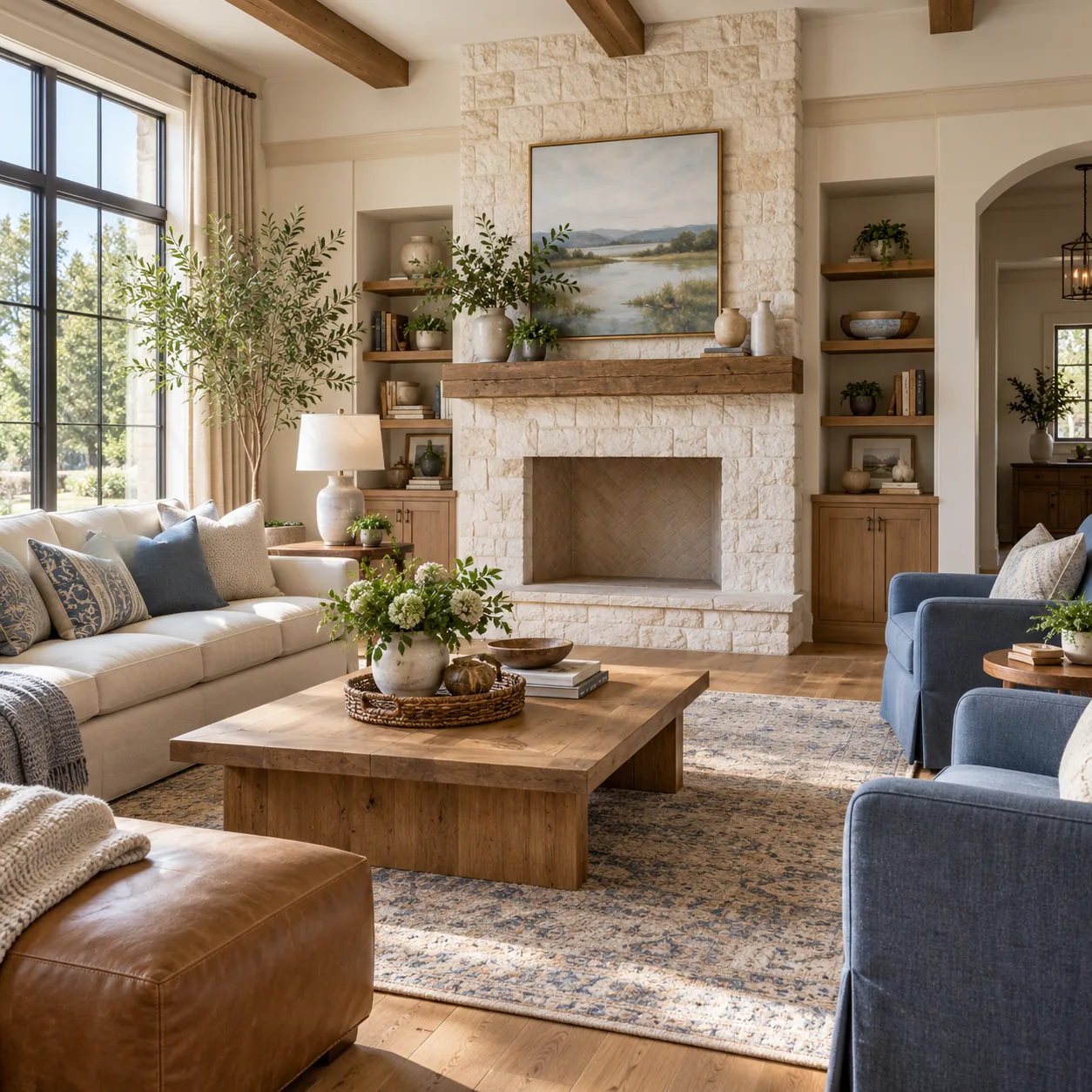
    26 Fireplace Seating Ideas for Comfortable Conversation

    Fireplace seating ideas need to work when people are in the room, not just when the chairs are arranged for a photograph. The right layout leaves room to sit, stand, talk, and pass through without crowding the hearth. These 26 options cover compact rooms, open plans, reading spots, and flexible family seating. Start with the fireplace’s required clearance and the room’s walking routes, then choose one arrangement that suits your household. You can borrow the chair style or table idea from another setup without copying the whole room.

    Key Takeaways

    Measuring tape, fabric swatches, and a blank notebook on a coffee table.
    • Mark door swings, walking routes, and the fireplace’s required clear space before choosing furniture.
    • Measure the full footprint of chairs and moving parts, including extended recliners and swivel clearance.
    • Give each regular seat a useful light or reachable surface instead of filling every gap with furniture.
    • Use benches and poufs for occasional guests while keeping supportive seating for long evenings.

    The U.S. Fire Administration’s heating guidance says to keep anything that can burn at least three feet from heat sources, including fireplaces. Follow the fireplace manufacturer’s instructions and any greater required clearance. Keep the hearth and exits clear; do not judge safe distances from a room image.

    1. Face the Fireplace With a Sofa

    A full three-seat oatmeal sofa facing a stone fireplace across an open rug and low round coffee table.

    A sofa facing the fireplace gives the room a clear center and leaves the side walls available for storage. Start with the position of the sofa, then add a table only if it fits comfortably between the seat and the hearth’s required clear zone. Keep the sofa far enough back to use the fireplace safely. This arrangement suits rooms where conversation matters more than watching a screen.

    2. Angle Two Armchairs Toward Each Other

    Two blue linen armchairs angled gently inward across a small round table.

    Two inward-facing armchairs make it easier to talk without leaning across a large room. Place a small drink table between them and turn each chair slightly toward the other, rather than lining them up like theater seats. Check the arms do not collide when someone sits down. Use the fireplace as the background to the conversation area, with every upholstered piece outside its required clearance.

    3. Use an L-Shaped Sectional to Define the Zone

    Light gray L-shaped sectional with its short return perpendicular to the distant fireplace.

    An L-shaped sectional can mark the edge of a seating area in an open room. Put the shorter return on the side where you want a boundary, leaving the other end open to the main walkway. Measure the full sectional, including projecting arms, before buying. If the return points toward the hearth, stop it well before the fireplace’s required clear space rather than squeezing it closer.

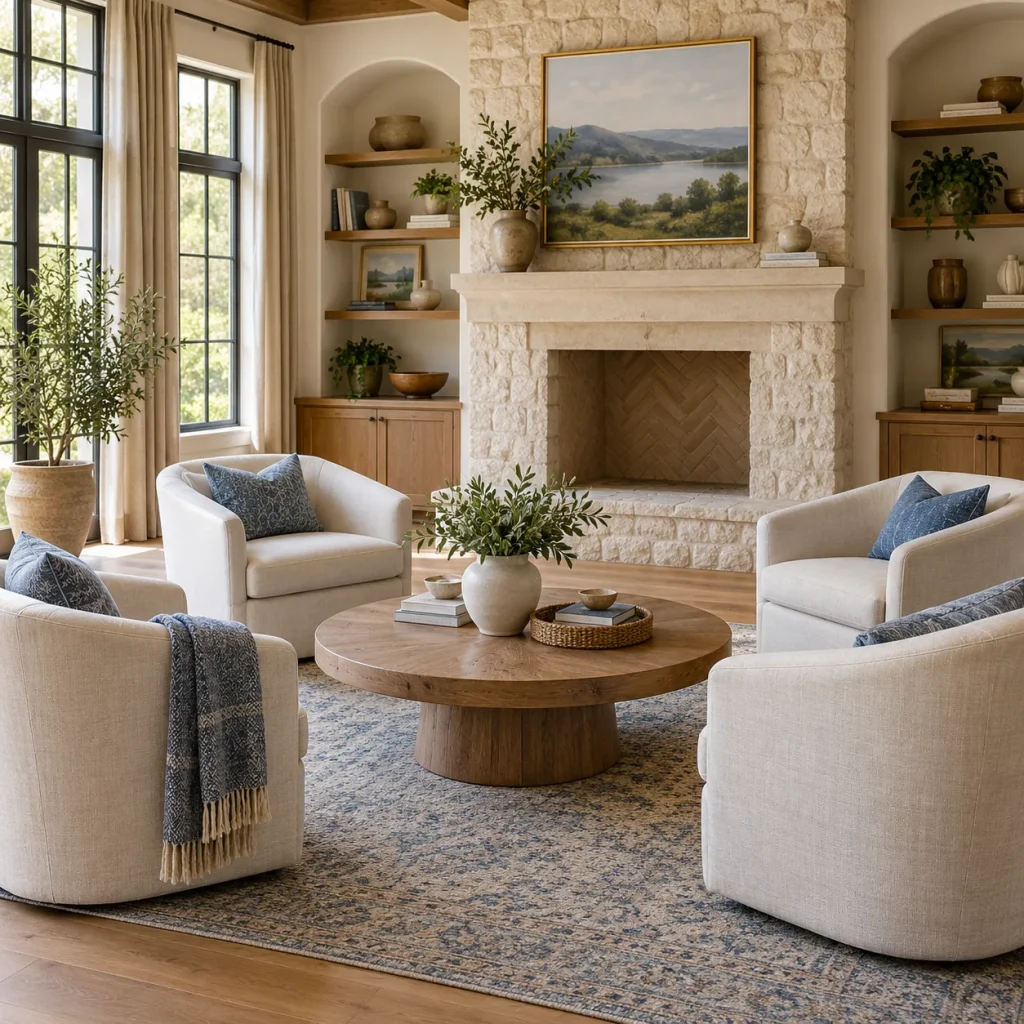
    4. Make a Conversation Circle With Four Chairs

    Four compact upholstered chairs arranged around a large circular table.

    Four chairs around a central table give each person a similar place in the conversation. Choose chairs with a modest footprint so the group does not become a solid block of furniture. Leave clear gaps between seats for entering and leaving. A round table is useful here because it avoids corners pointing into knees, but check that everyone can reach it without dragging a chair forward.

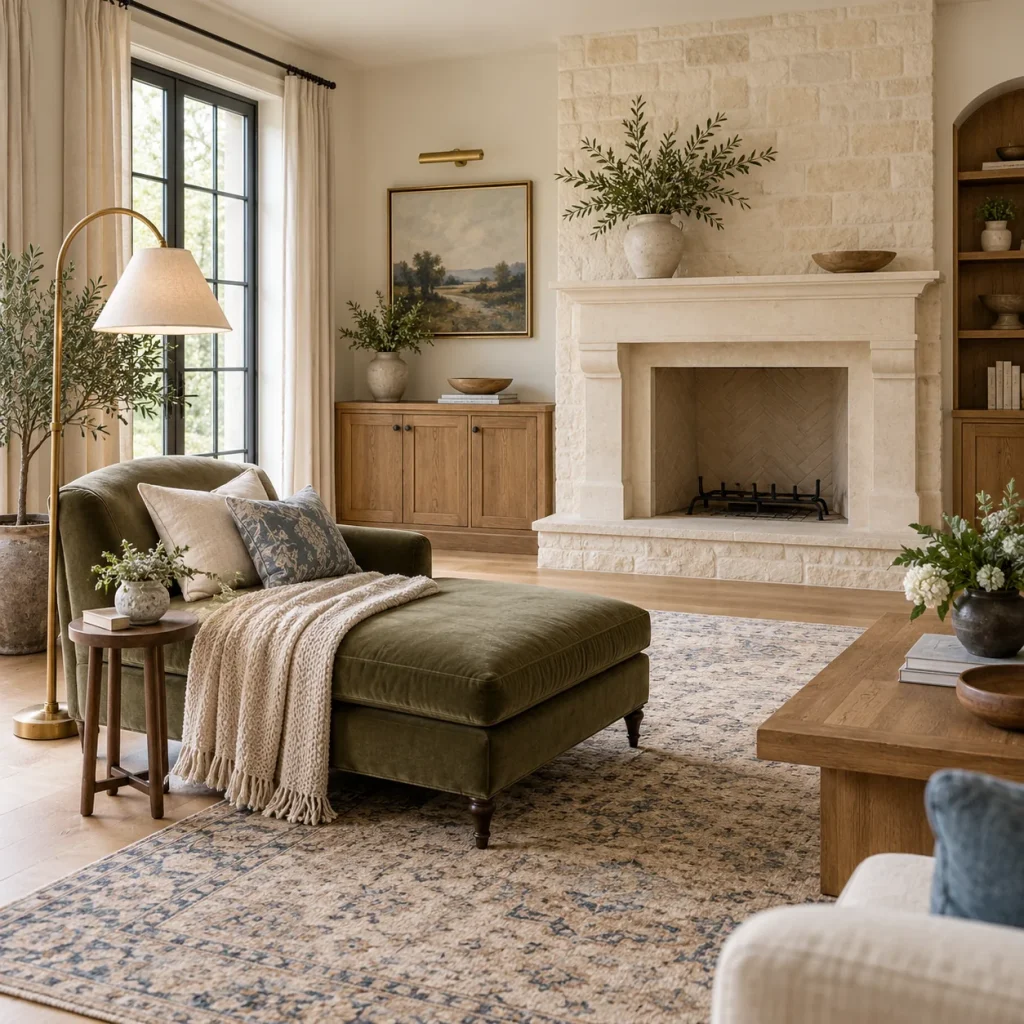
    5. Place a Chaise Sideways to the Hearth

    Single long olive upholstered chaise perpendicular to a distant stone fireplace.

    A chaise placed sideways to the fireplace creates a spot for stretching out while keeping the room visually open. Put the head end near a reading lamp and add a small surface for a drink. Measure the chaise’s full length, not just the width of its cushion. It should sit outside the fireplace’s clearance zone and leave room to walk past the foot end.

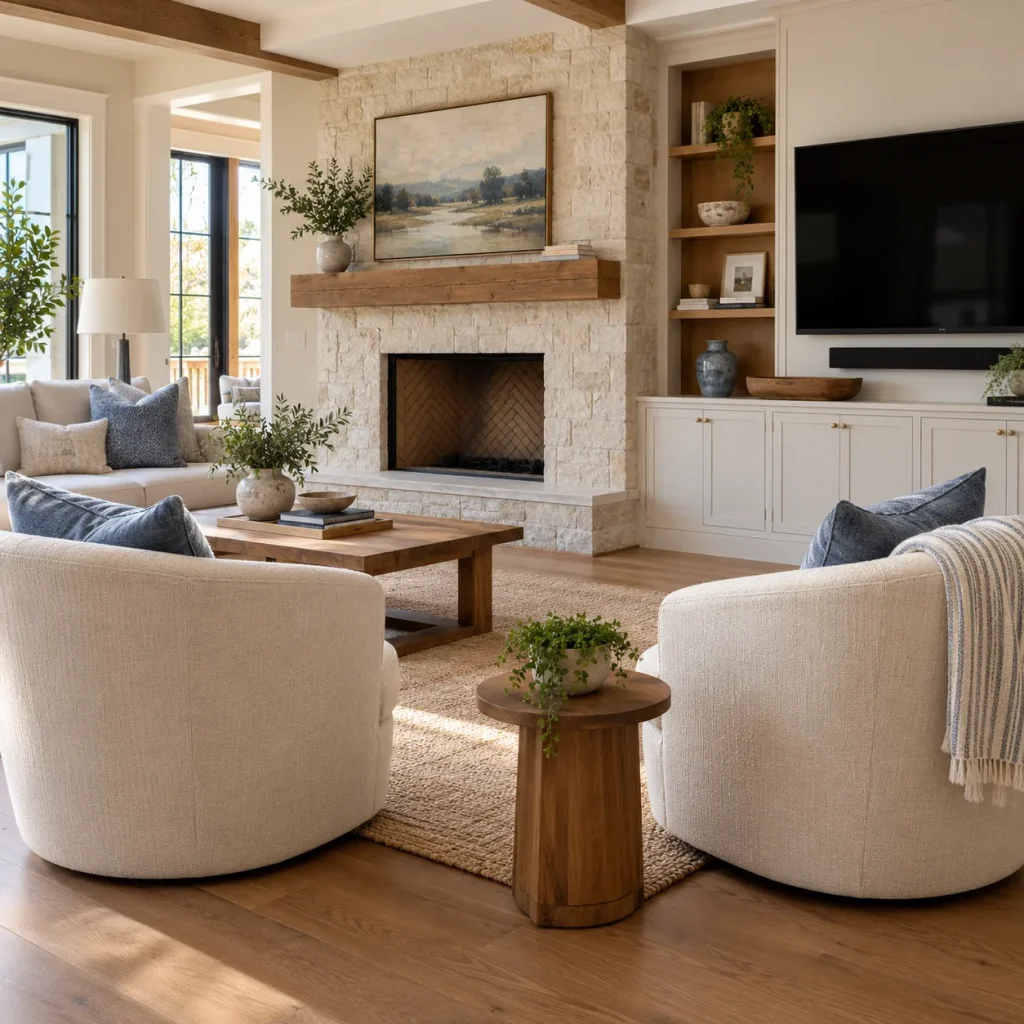
    6. Add Swivel Chairs Between the Fire and TV

    Two cream swivel chairs in the middle of a room with fireplace on one wall and blank television on adjacent wall.

    Swivel chairs help a room serve both conversation and television viewing. Set their bases where the chairs can rotate without brushing a table, sofa, or one another. Test the full turn with the room laid out on the floor before ordering. The fireplace and screen do not have to share one wall; a flexible chair can face whichever activity matters at the moment.

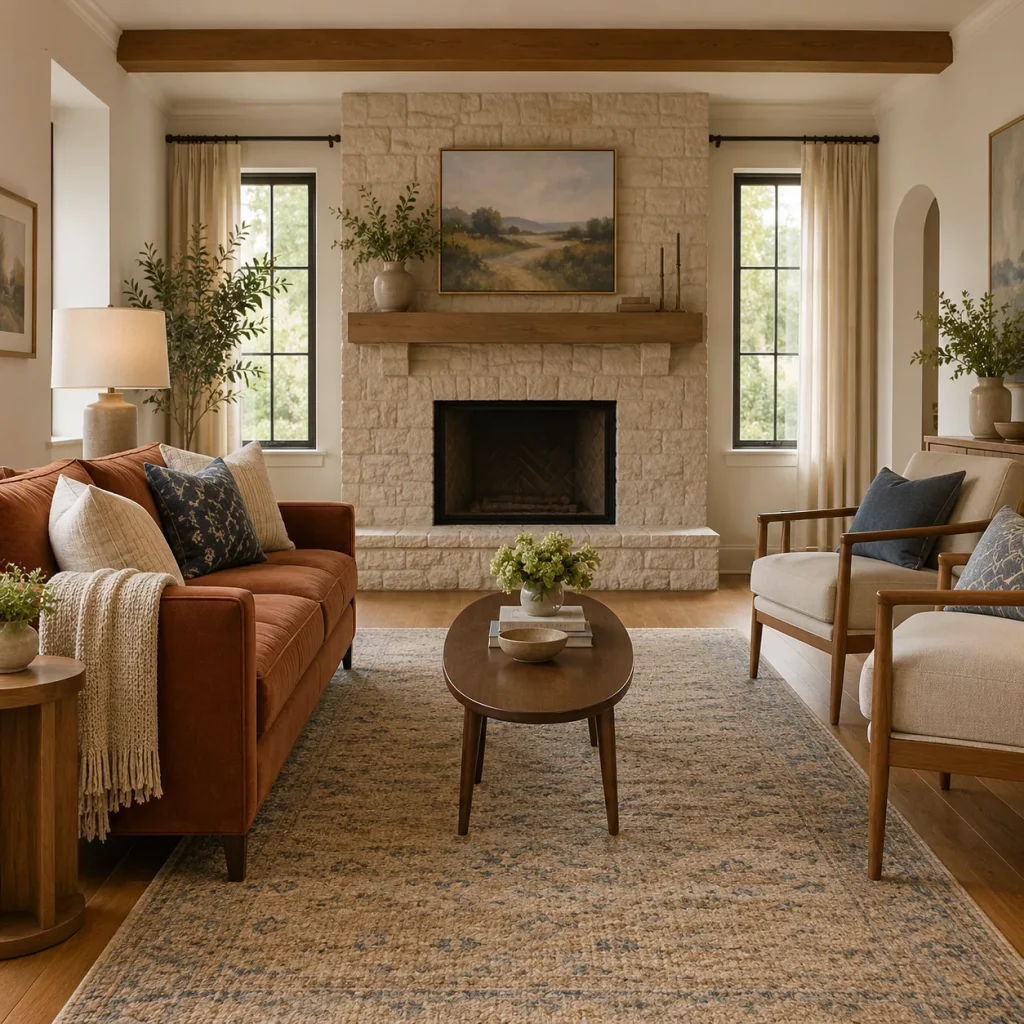
    7. Choose a Loveseat for a Narrow Room

    Small rust loveseat.

    A loveseat can leave more usable floor space than a full sofa in a narrow room. Compare overall width, seat depth, and arm thickness, because a small-looking model may still project too far into the room. Pair it with an oval table or a pair of small side tables. Keep the main route beside the furniture instead of sending people through the gap nearest the hearth.

    8. Use a Freestanding Bench as Occasional Seating

    A low wooden bench with a thin blue cushion at far edge of conversation area.

    A freestanding bench gives guests an occasional place to sit without adding another high back to the room. Position it at the outer edge of the conversation group, well away from the hearth. Choose a bench intended for seating and check its capacity and stability. This is most useful for short visits; use supportive chairs for the seats people will occupy all evening.

    9. Build a Window-Side Reading Seat

    Built-in cushioned window seat along side wall.

    A window seat on a separate wall can add a useful perch without expanding the central furniture group. Keep the cushion clear of window hardware and avoid placing it over a heating outlet. The seat needs suitable support for people, rather than a cabinet top used as an improvised bench. Add a nearby light if it will become a reading spot after daylight fades.

    10. Keep Poufs at the Outer Edge

    Two small woven poufs tucked beside sofa far from hearth.

    Poufs are helpful when guests arrive, provided they have a home before and after the visit. Tuck them beside the sofa or under a suitably tall console, then bring them to the outer edge of the seating group. Check whether the product is designed to support a seated person. Avoid using low, unstable poufs where a supportive chair would be more comfortable.

    11. Arrange Two Sofas Face to Face

    Two matching tan sofas facing each other perpendicular to distant fireplace wall.

    Two sofas facing one another make the fireplace a shared end point instead of a place everyone must face directly. This suits a room with enough width for both sofas and a central table. Leave comfortable routes around the ends, and check door swings before setting the distance. Matching sizes can look orderly, but the sofas do not need identical upholstery to work together.

    12. Pair a Sofa With a Backless Settee

    Cream sofa opposite a low backless upholstered bench-like settee.

    A backless settee can sit opposite a sofa while keeping views across the room open. It is useful where a tall sofa back would interrupt the connection to another space. Choose a seat with a height that works with the other furniture, and allow access from both sides. Keep in mind that a backless piece offers less support for long periods than a conventional sofa.

    13. Tuck a Slipper Chair Into an Open Corner

    Compact armless slipper chair in navy fabric.

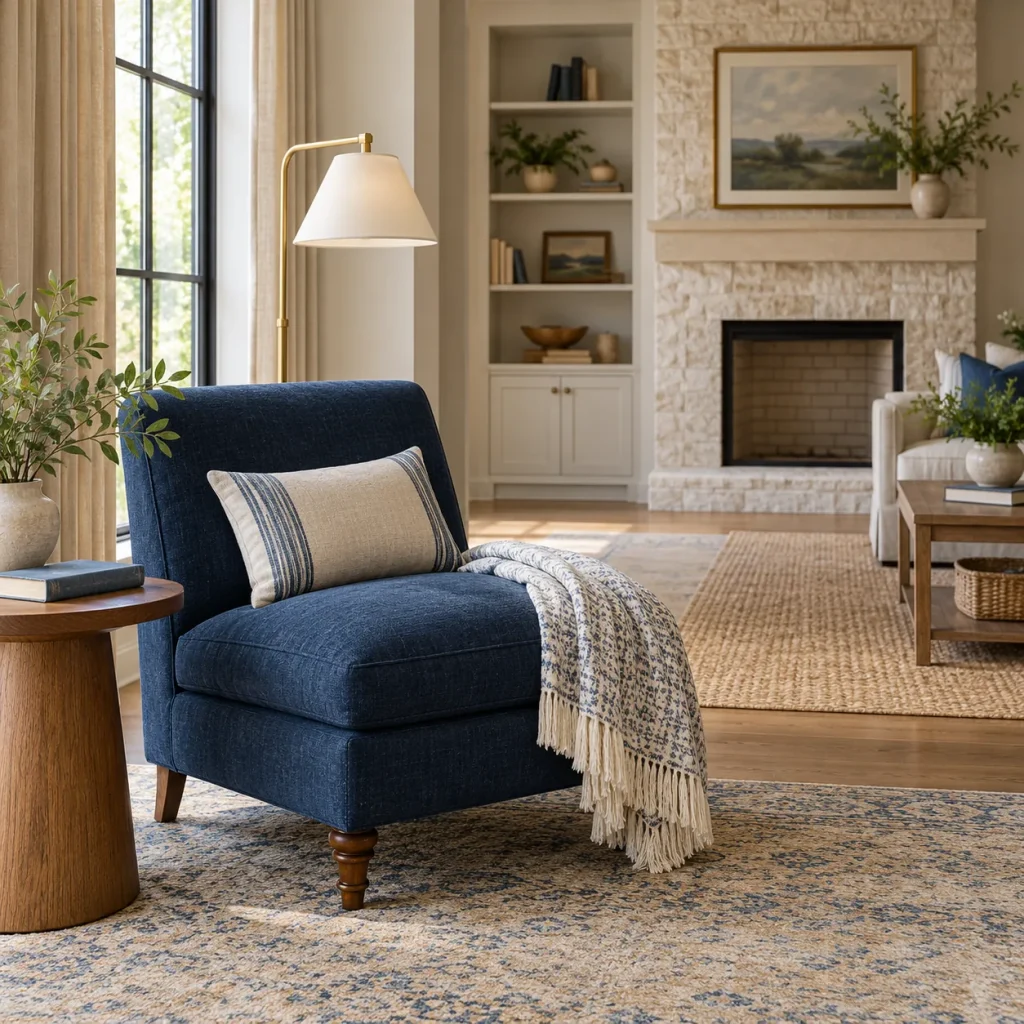
    A slipper chair fits a small open corner without the width of large upholstered arms. Angle it into the conversation area so it feels connected, then give it a reachable side table. Check the actual seat height and depth before buying, especially if people may find low seating difficult. A compact chair should still have room around it for someone to sit and stand comfortably.

    14. Set Armchairs on a Diagonal

    Two high-back green chairs placed diagonally on corners of a square rug.

    Placing two armchairs diagonally on a rug can soften a room full of straight walls and rectangular furniture. Begin with the chairs, then rotate them only enough to encourage conversation. Check the rear corners do not cut into the route behind them. A slightly smaller coffee table may help the angled group fit without forcing any seat into the fireplace’s clear zone.

    15. Try Separate Modular Seating Pieces

    Three low neutral modular chair units in a loose U shape facing unlit fireplace.

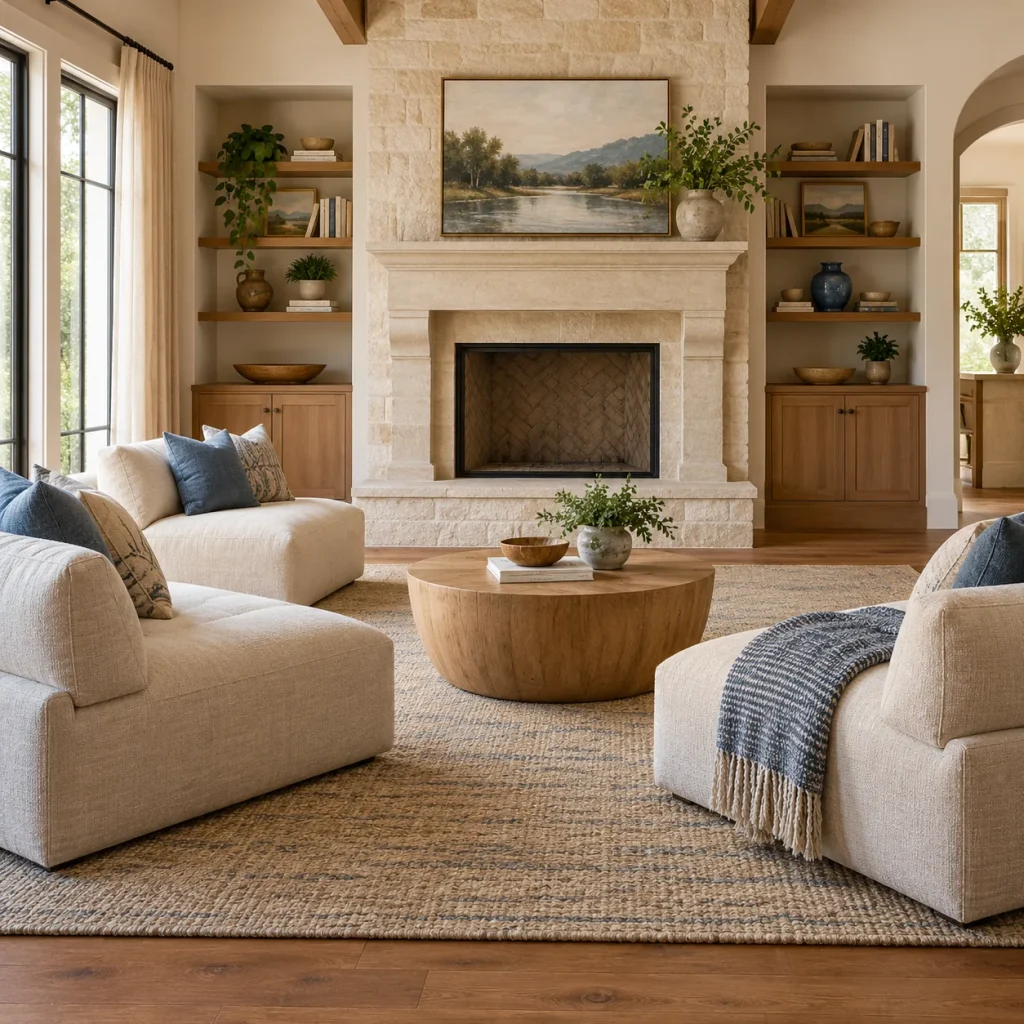
    Separate modular seats let you change the group when the number of people changes. Arrange them as a loose U for conversation, with one opening toward the main route through the room. Confirm how modules connect and whether they are stable as individual chairs. Avoid a layout that relies on moving heavy pieces every day; flexibility is useful only when it is easy to manage.

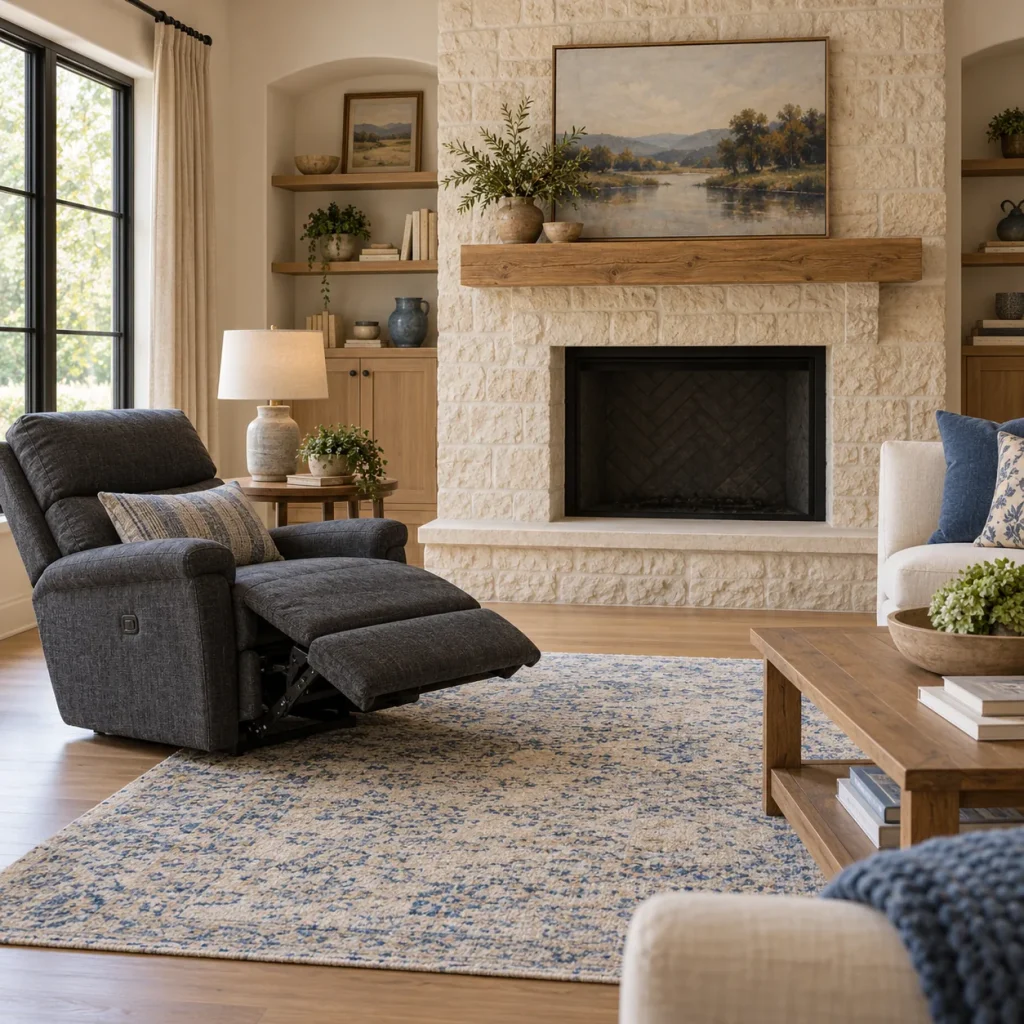
    16. Allow Room for a Fully Extended Recliner

    Single charcoal recliner fully extended well away from fireplace.

    A recliner needs room for its moving parts as well as its upright footprint. Mark the fully extended dimensions and any required space behind the back before choosing its location. Keep the extended footrest out of the walking route and outside the fireplace’s required clearance. Place a side table where it stays reachable when the chair is reclined, rather than directly beside the moving mechanism.

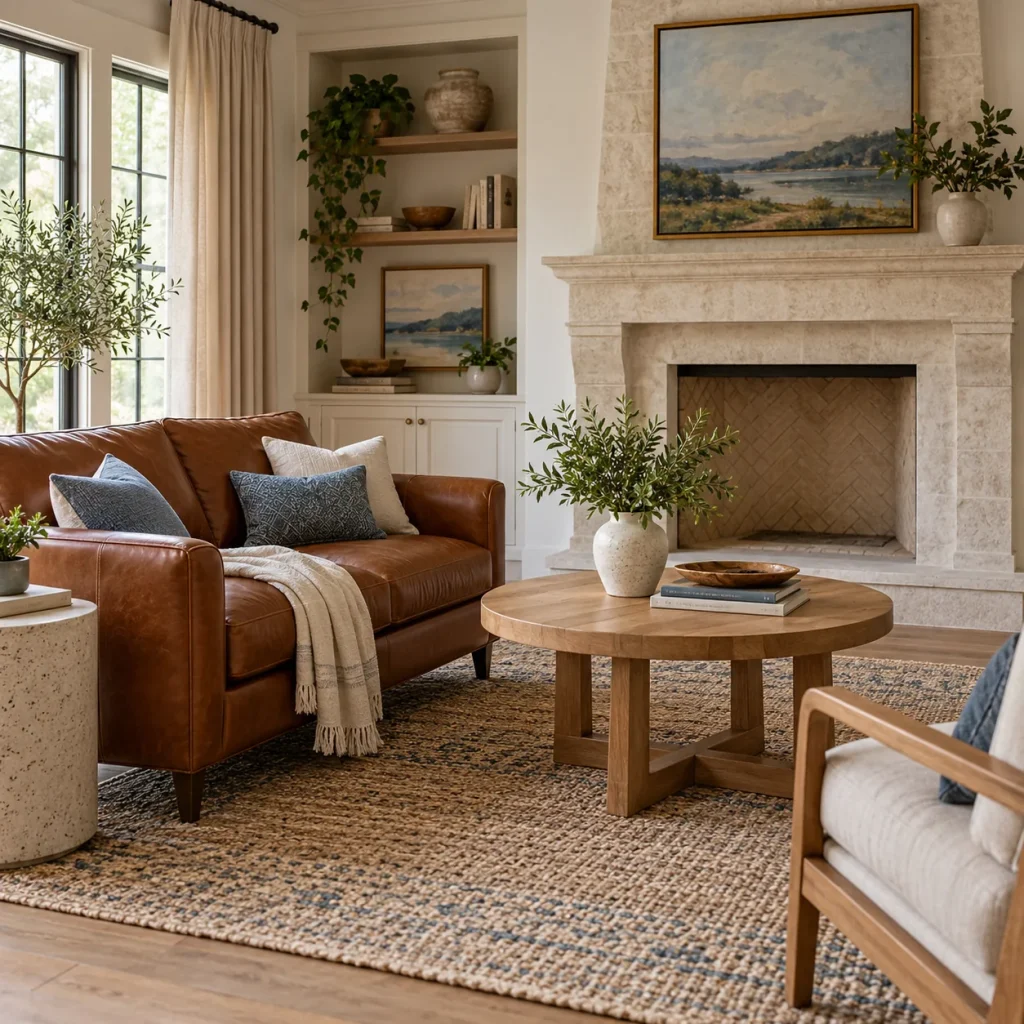
    17. Use a Leather Settee for a Compact Pair

    Two-seat cognac leather settee in a small sitting zone.

    A compact leather settee can introduce a smooth surface among knitted throws and textured rugs. Use it as the smaller partner to a sofa or as the main seat in a little sitting room. Check the care instructions and how the seat feels before choosing it. Leather changes the look of a room, but it does not remove the need for safe separation from heat.

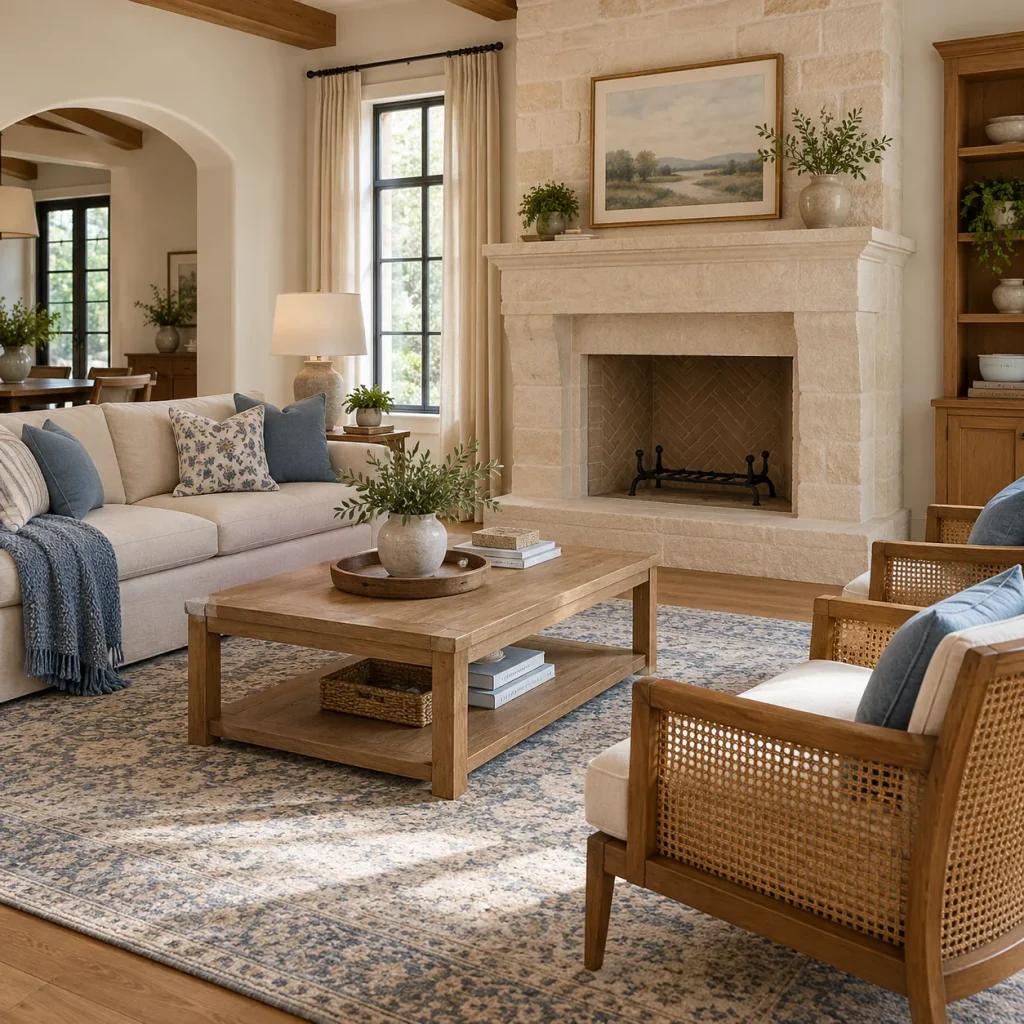
    18. Balance Upholstery With Woven Accent Chairs

    One neutral sofa and two cane-backed wood chairs with cream cushions on opposite side.

    Woven accent chairs can keep a fireplace seating group from looking too heavy. Pair them with a plain sofa and repeat a wood tone in the table or shelving. Check the chair’s support, seat cushion, and intended indoor use before buying. Open backs can make the arrangement look lighter, but the frames still need the same practical space for sitting, standing, and moving around.

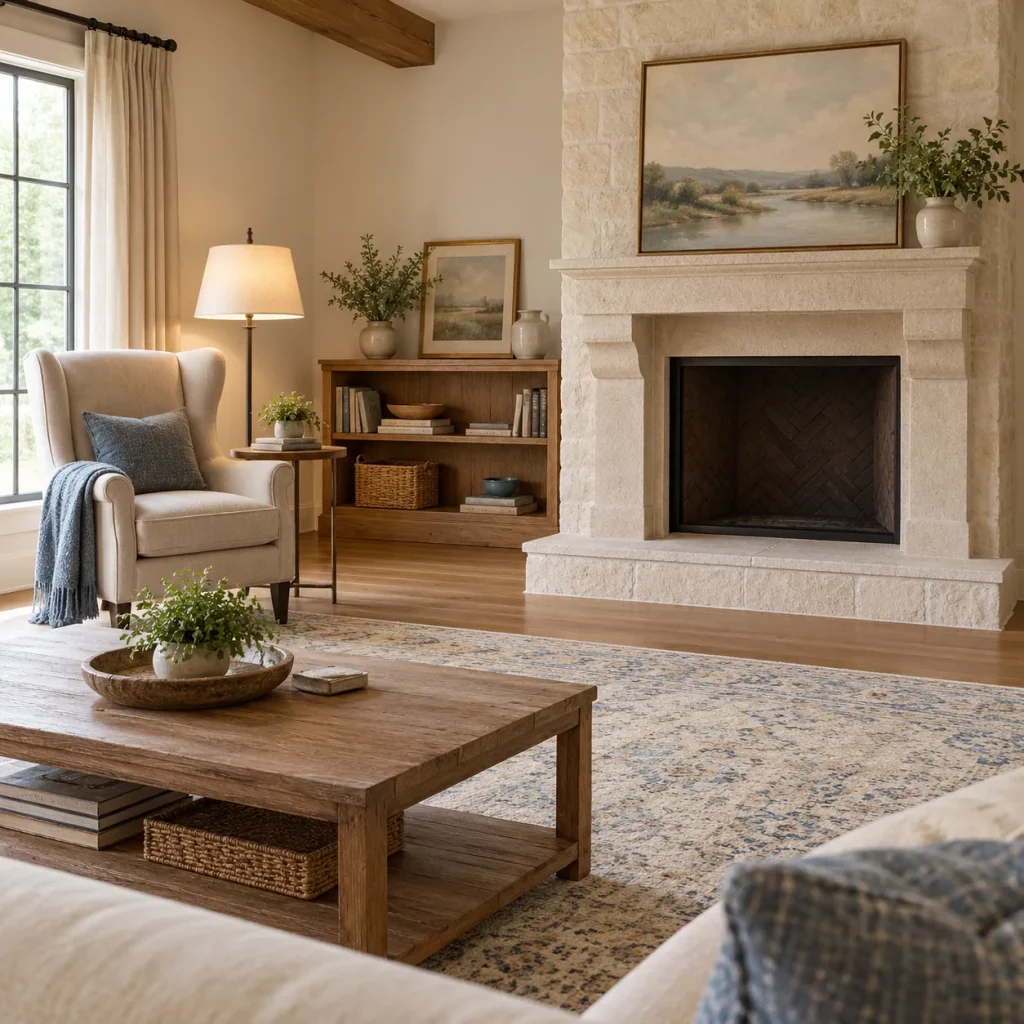
    19. Give One Reader a Complete Nook

    One upholstered wingback chair with shaded floor lamp.

    A complete reading nook needs more than a chair. Add a light aimed at the page, a small stable table, and somewhere to put a book when you stop. Position the nook so it enjoys a view of the fireplace without crowding the hearth. Choose the chair for the person using it most often, including seat support and the ease of getting back up.

    20. Add a Small Games Table Beside the Seating Area

    Round oak game table with two upholstered dining chairs outside central sofa zone.

    A small games table gives the fireplace room another purpose without taking over the main coffee table. Put it beyond the seating group, with enough space to pull chairs out fully. A round or compact square table can work, depending on the games you use. Keep pieces in a nearby drawer so the table can also serve as a writing or puzzle surface.

    21. Separate Fireplace Seating From the Dining Route

    Open-plan room with sofa and two chairs grouped on rug near distant fireplace.

    In an open-plan room, a rug and sofa back can define the fireplace zone while leaving a direct route to the dining area. Draw that route first, then fit the seating around it. Avoid making people step between the fire and the coffee table to cross the room. Our small living room layout guide has more ways to test furniture footprints before moving heavy pieces.

    22. Angle the Sofa Toward a Corner Fireplace

    Corner stone fireplace unlit.

    A corner fireplace can make furniture placement feel awkward if every piece follows the walls. Try turning the sofa a little toward the fireplace, then use the rug to tie the seats together. Check the angle from both the doorway and the seat itself. You may need fewer side tables because the rotated sofa takes more space than it does when placed straight.

    23. Give the TV and Fireplace Different Sightlines

    Sofa faces television on side wall.

    A TV and fireplace on different walls can each have a useful viewing seat. Aim the main sofa at the screen and turn one chair toward the fireplace for quiet evenings. Test sightlines with people seated, rather than judging them only while standing. The goal is to avoid awkward head turns; use a swivel chair or adjust the group if both activities need equal priority.

    24. Leave a Generous Route Beside the Seating

    Light sofa with open end and single chair.

    A generous continuous route beside the seating can make a fireplace room easier to use with a mobility aid, a stroller, or an armful of laundry. Plan that route around the actual household’s needs, including turning space and access to a preferred seat. Keep rugs secured and tables out of the passage. Specific accessibility requirements need measurements and appropriate guidance, rather than assumptions based on a photograph.

    25. Use One Statement Chair Instead of a Matching Pair

    One sculptural burgundy chair opposite neutral sofa.

    One statement chair can give an asymmetrical room a balanced focal point without forcing in a matching partner. Choose its color from something already in the room, such as a rug or artwork. Give the chair the same practical attention as the sofa: a useful light, a reachable surface, and clear space to stand. Let the opposite side stay more open when the floor plan needs it.

    26. Choose Nesting Tables for Flexible Seating

    Small sofa and two different chairs grouped around two nesting round tables.

    Nesting tables give different seats a usable surface without requiring one oversized central table. Keep the smaller table tucked away when the group is quiet, then bring it beside a chair for visitors. Check each piece remains stable when separated. For more finishing details, our cozy living room ideas show ways to combine useful surfaces, lighting, and softer materials.

    Frequently Asked Questions

    A comfortable living room reading chair with a side table and an open book.

    How far should seating be from a fireplace?

    Begin with the fireplace manufacturer’s instructions and keep combustible furniture outside the required clear zone. The U.S. Fire Administration advises at least three feet between things that can burn and heat sources. Some appliances or circumstances require more space. Measure from the relevant heat source and components, rather than assuming the edge of a decorative surround is the correct starting point.

    Does the sofa have to face the fireplace?

    No. A sofa can sit perpendicular to the fireplace, face another sofa, or be angled toward a corner installation. Choose the direction around the room’s main activity and walking routes. You can give one chair a direct fireplace view while the main sofa serves conversation or television viewing.

    What seating works in a small fireplace room?

    A compact loveseat, one supportive chair, and a small table may fit better than a full matching suite. Compare overall furniture dimensions and arm thickness before buying. Keep the fireplace clearance and routes first; if a second chair removes those spaces, use fewer pieces or put occasional seating elsewhere.

    How can I arrange a fireplace and TV in the same room?

    Test the view from each seat before fixing the layout. A swivel chair can face different walls, or a sofa and chair can serve separate focal points. Do not assume the TV must sit above the fireplace. Heat exposure, mounting requirements, and a comfortable screen height need checking for the actual products and room.

    Can I put a bench on the hearth?

    Do not use an active hearth as casual seating or place upholstered furniture within the fireplace’s clearance zone. A freestanding bench can work at the outer edge of the conversation area when it is designed for seating. An unused decorative fireplace still needs confirmation of its condition and purpose before any change of use.

    Conclusion

    A furnished living room with a clear route around the seating.

    A useful fireplace seating arrangement begins with clear space and comfortable seats. Choose one layout that fits your room, mark it on the floor, and test the doors, tables, and sightlines before moving heavy furniture. Add the smaller pieces only after the main seats work. Save the arrangement you want to try, along with your measurements, so the finished room serves conversation and everyday use as well as it looks.

    For seasonal changes around the finished layout, explore our winter living room ideas.
  • 6 Christmas Tree Corner Ideas to Refresh Your Space

    6 Christmas Tree Corner Ideas to Refresh Your Space

    Christmas tree corner ideas work best when the tree fits the way you use the room. A corner beside the sofa needs a different shape from a shallow wall nook, and a bright window calls for different choices from a dark entry. These six setups cover traditional greenery, a tabletop display, and two branch-based alternatives. Pick the one that leaves your favorite seat, cabinet doors, and walking route easy to use, then borrow the colors already in your room.

    Before decorating, measure the corner’s width, depth, and available height, including the topper. Mark the proposed footprint on the floor, then test the room with doors open and chairs pulled out. Our small living room layout guide can help you check the furniture arrangement.

    Keep the tree out of exits and at least three feet from heat sources. Use appropriate tested lights and switch them off before leaving home or going to bed, following the NFPA’s Christmas tree safety guidance. A corner with a radiator may be better left undecorated.

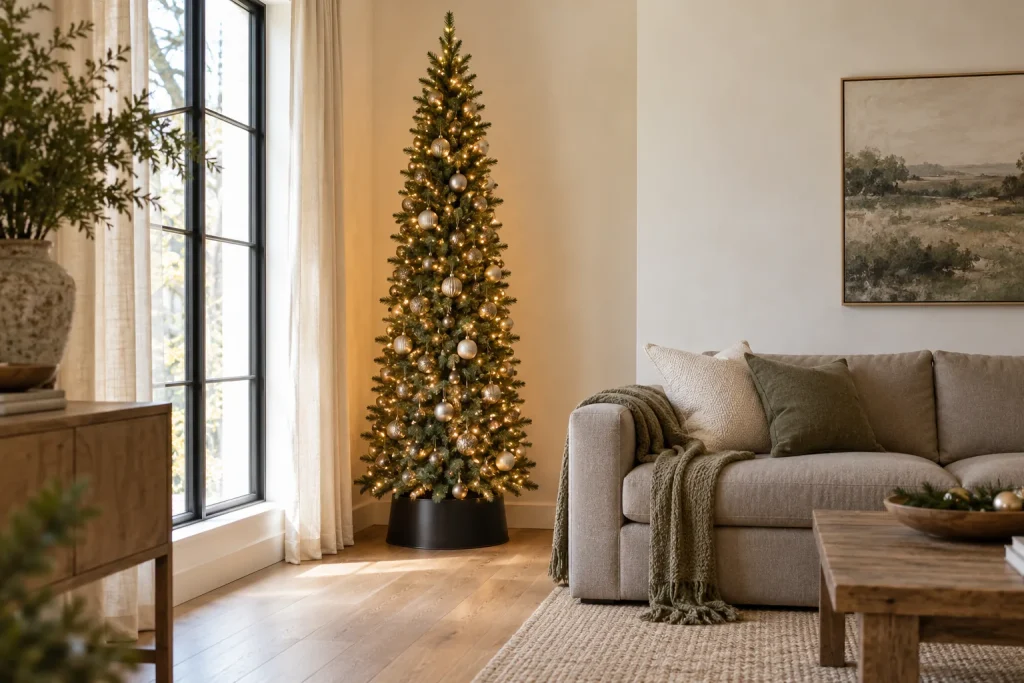
    1. Fit a Pencil Tree Beside the Sofa

    A narrow Christmas tree with champagne ornaments and a black collar beside a taupe sofa.

    A pencil tree gives a narrow sofa-side corner the height of a larger Christmas display without the same spread of branches. The small champagne ornaments and dark collar shown here suit a room with soft upholstery and wood furniture. Repeat one existing accent color rather than introducing a whole new palette.

    Check the tree’s assembled branch width and stand dimensions before choosing it. A narrow tree can still have feet that extend into your route past the sofa. Position the collar around the stand without changing how the stand supports the tree, and keep branches clear of curtains. If the lowest ornaments brush your legs when you pass, choose a smaller tree or a different corner. Leave presents within the tree’s footprint instead of spreading them across the walkway.

    2. Put a Mini Tree on a Low Cabinet

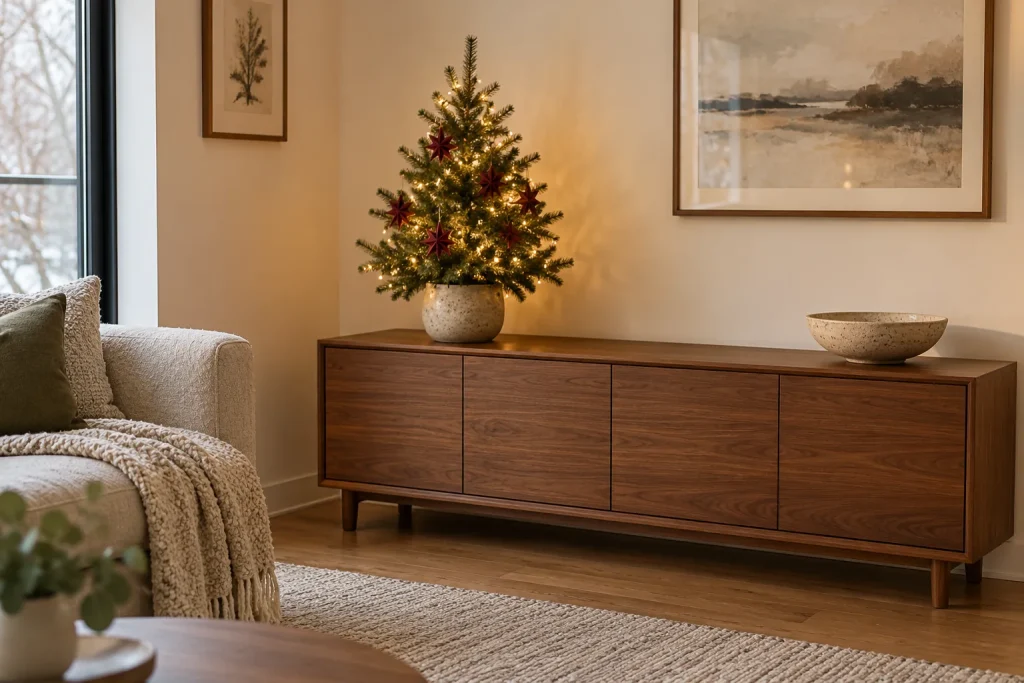
    A small Christmas tree with burgundy stars in a ceramic pot on a walnut cabinet.

    A tabletop tree lets an existing cabinet carry the holiday display, so you do not need another piece of furniture. This setup is useful when the room has no spare floor corner but does have a low cabinet against two joining walls. Burgundy paper stars give the little tree a clear theme without hiding its shape.

    Choose a tree with a stable base that sits fully on the cabinet, with room around every edge. Check the furniture’s load limit, including the pot and decorations, and follow any anchoring instructions. Clear the surface first, then return just one small object, such as a bowl. Avoid balancing a tree on stacked books to gain height. The tree itself should provide the focal point. For more help editing the surrounding display, use our guide to styling shelves without clutter.

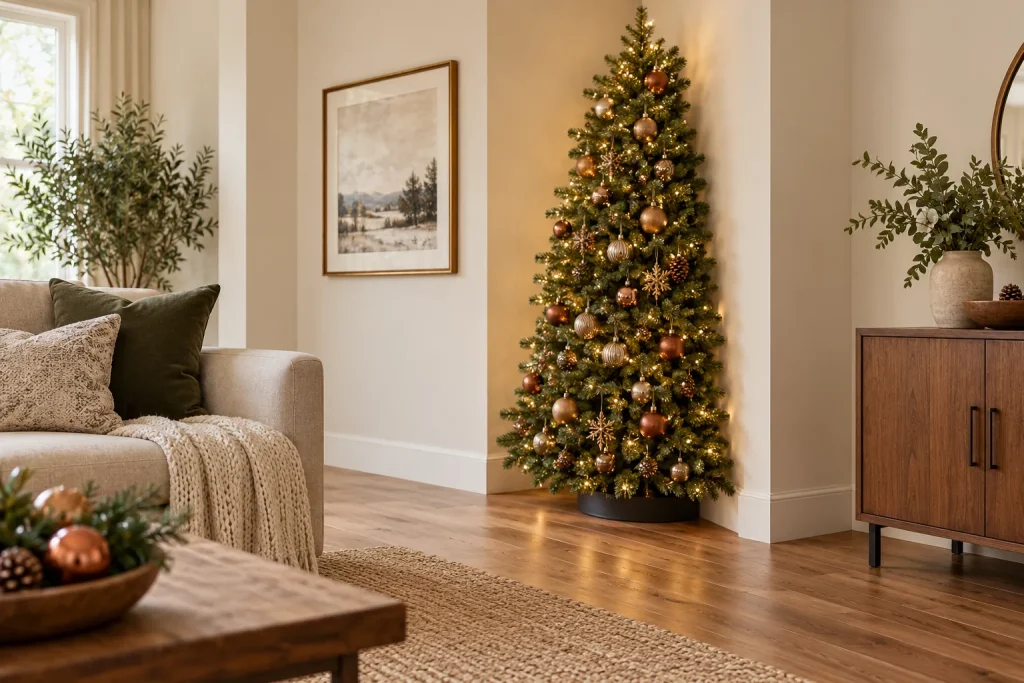
    3. Choose a Flat-Back Tree for a Shallow Nook

    A shallow Christmas tree with copper and gold ornaments in a small wall alcove.

    A flat-back or half-round artificial tree suits a corner where the available width is reasonable but the room cannot spare much depth. Its decorated front gives you a familiar evergreen shape while its rear is designed to sit closer to a wall. Copper ornaments and a few reflective baubles add detail to the front-facing branches.

    Check the actual product shape carefully. Half-round, quarter-round, and pencil trees have different footprints, even when their photographs look similar. Measure the assembled depth from the rear of the stand to the longest front branch, and include any projecting topper. Do not try to make a full tree fit by crushing its rear branches against the wall. Decorate the visible front and sides, then stand in the doorway to check that the tree still looks balanced from the room’s main viewing angle.

    4. Hang a Branch Tree Beside the Corner

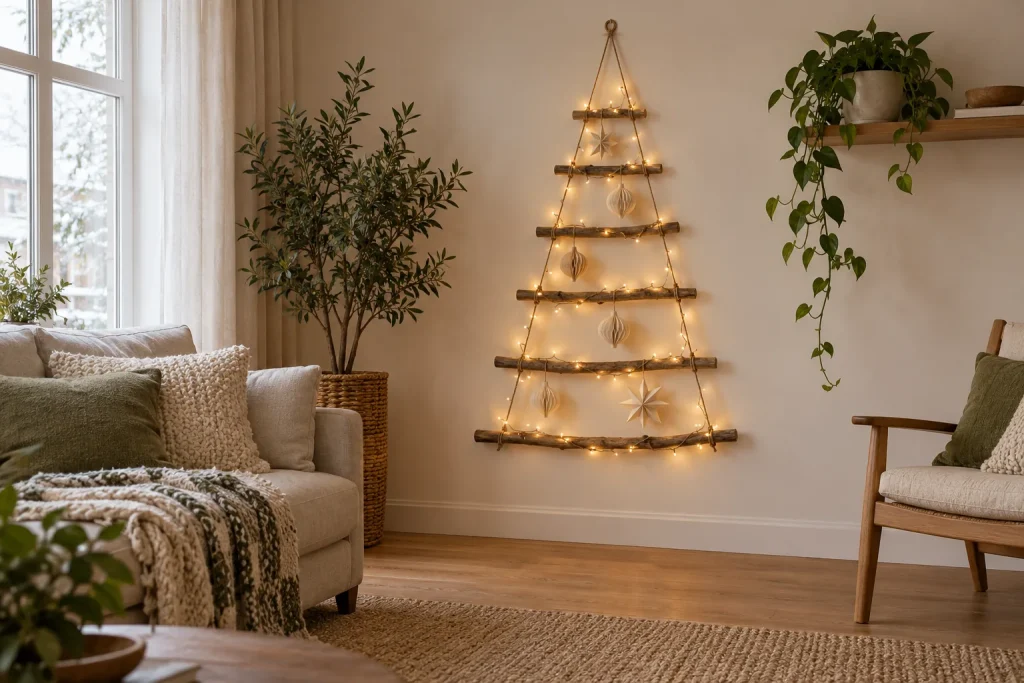
    Six wooden branches form a triangular wall tree with paper ornaments and warm string lights.

    If every floor corner is already occupied, use a clear wall beside one instead. Graduated wooden branches tied into a triangle suggest a Christmas tree without a stand or spreading foliage. The open spaces between the branches keep the wall visible, which suits a simple room with natural wood and linen.

    Lay the branches on the floor from shortest to longest, then connect them with sturdy cord on both sides. Check that the finished hanging stays level before adding lightweight paper ornaments. Use fixings suitable for the wall and the complete display’s weight. In a rental, check your lease and the mounting product’s surface restrictions; removable hooks are not suitable for every finish or load. Battery lights can avoid a trailing power cable, but secure the battery pack and keep it accessible. Choose a ready-made hanging if assembling one would be impractical.

    5. Give a Potted Evergreen a Bright Window Corner

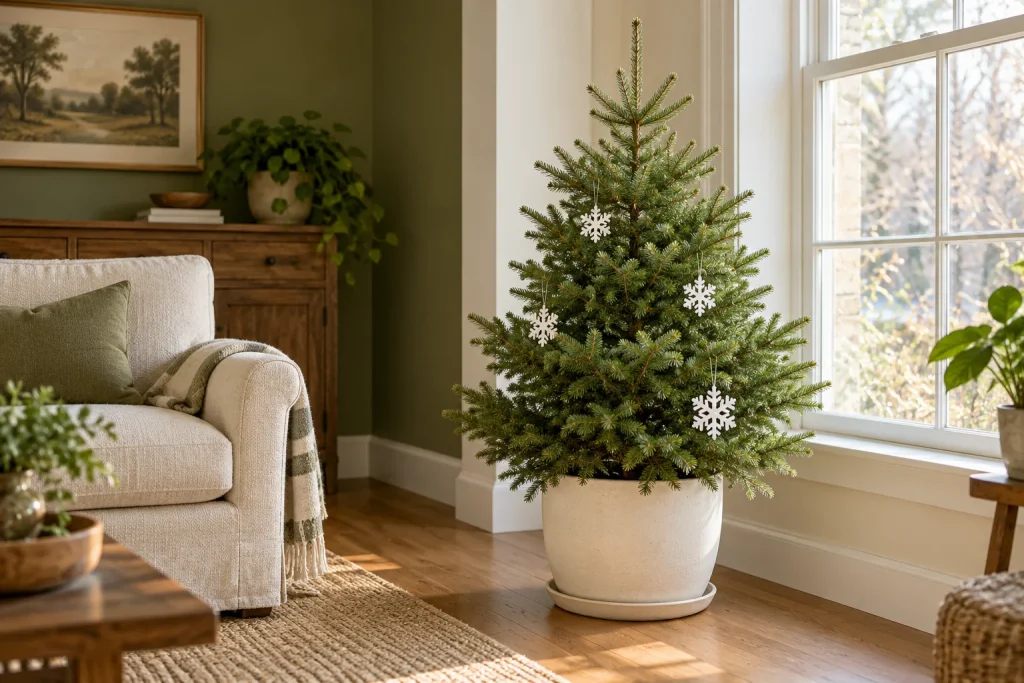
    A small potted evergreen with white snowflake ornaments near a bright living room window.

    A small rooted evergreen brings natural texture to a window corner, with a few paper snowflakes doing most of the decorating. A plain planter keeps the focus on the foliage. This is a short holiday display for an outdoor tree, so choose it only if you can provide suitable care and a plan for the tree afterward.

    Ask the nursery which species suits your climate and how to move it between outdoor and indoor conditions. Keep the nursery pot’s drainage working, protect the floor with a waterproof tray, and empty collected water rather than leaving the roots standing in it. UNH Extension recommends keeping living Christmas trees indoors for only seven to ten days in its living Christmas tree care guide. If you want the look throughout December, use a similar artificial potted tree instead.

    6. Use a Bare Branch Tree for an Airy Display

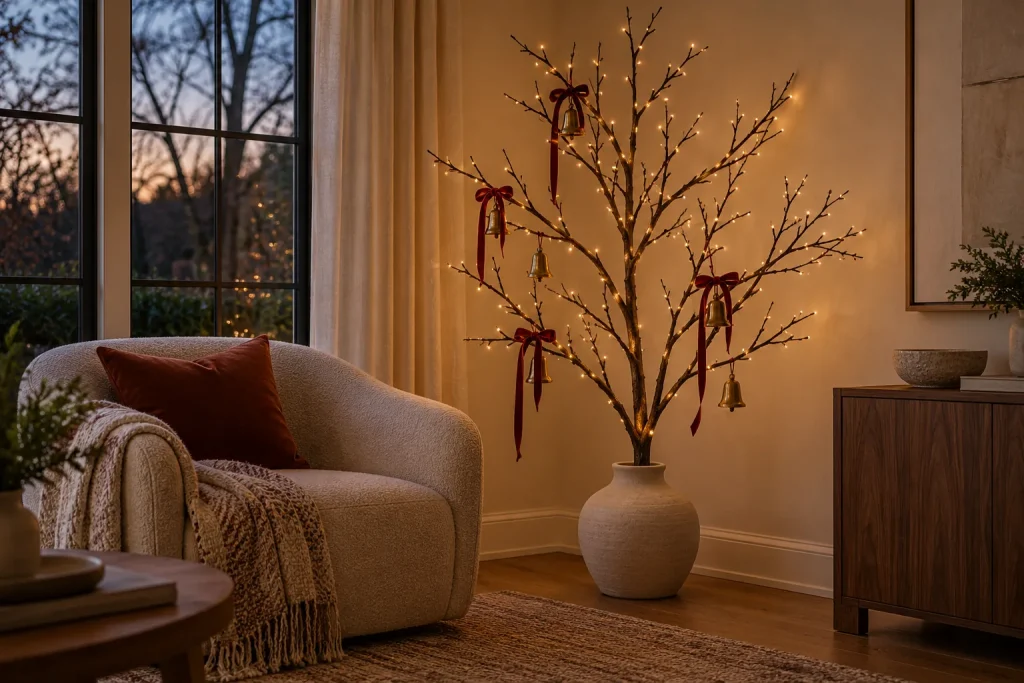
    A bare branch tree with brass bells, burgundy bows, and small lights beside an armchair.

    A branch tree offers a different silhouette from a dense evergreen. The wall remains visible between the limbs, and a handful of bells or ribbon bows can become the main decoration. This works well beside an armchair when you want a seasonal focal point without filling the corner with foliage.

    Choose a purpose-made decorative tree with a stable base, then check its widest branches against the space. Bare branches can reach farther sideways than the trunk suggests. Hang light ornaments close to stronger branch junctions and stop before the limbs bend under their weight. Keep the display away from places where sleeves or bags could catch on it. Use lights only as the tree and light manufacturers allow. Once the holidays finish, remove the bells and bows and decide whether the simple branch shape still suits the room.

    Start with the corner’s limits, then choose the tree shape. A pencil tree needs floor space, a cabinet tree needs a stable surface, and a wall tree needs suitable mounting. You only need one of these Christmas tree corner ideas to make the room feel festive. Save your favorite image to a Christmas decorating board on Pinterest, and keep your measurements with it so you can recreate the look at home.