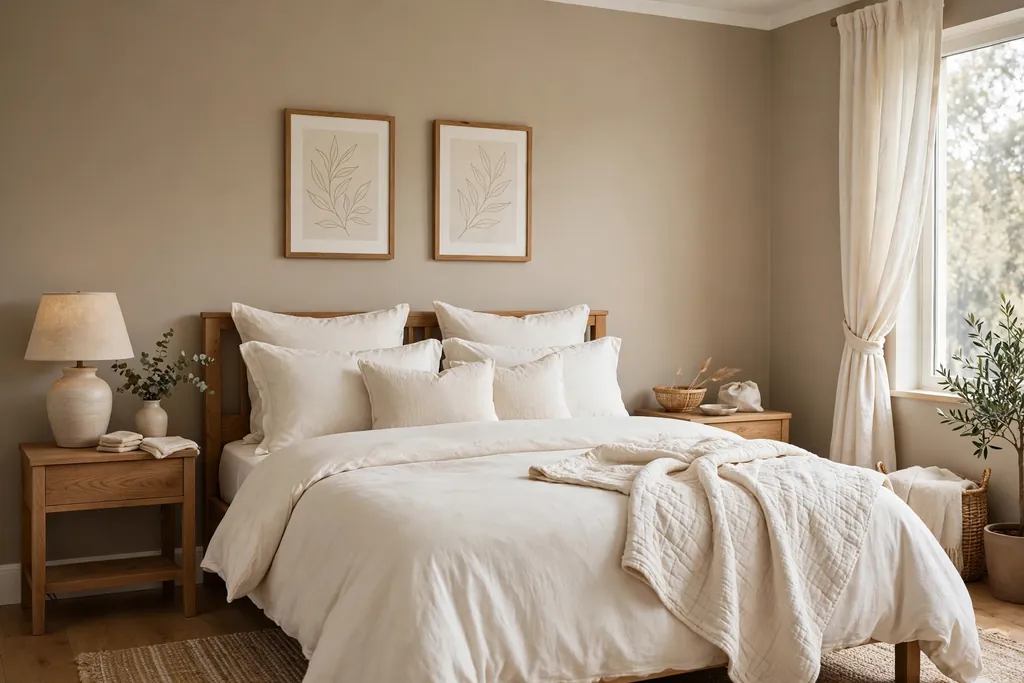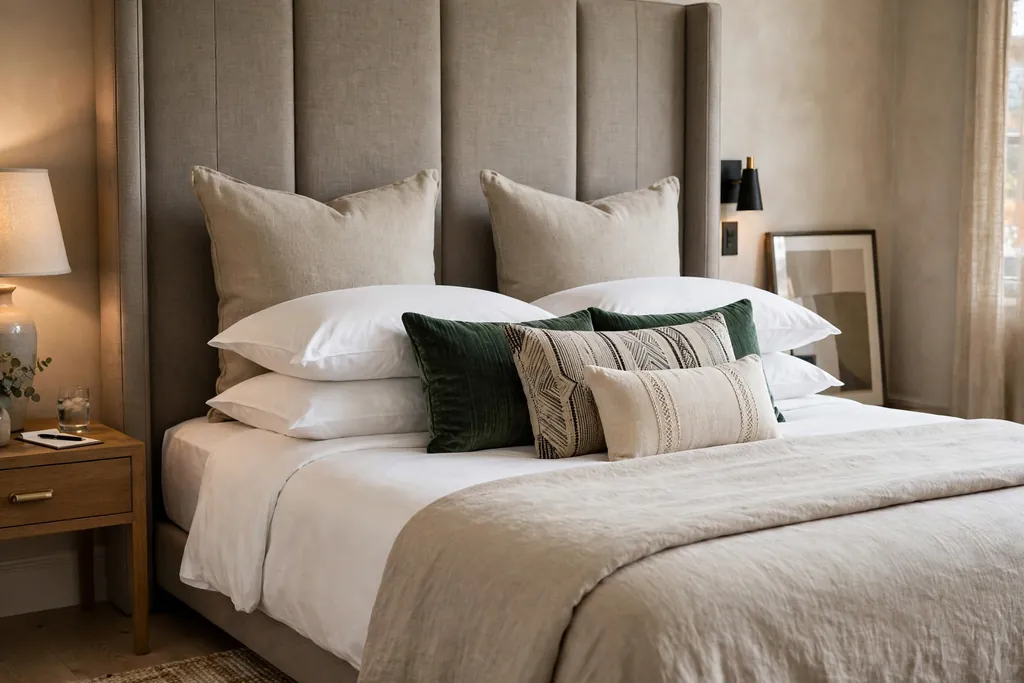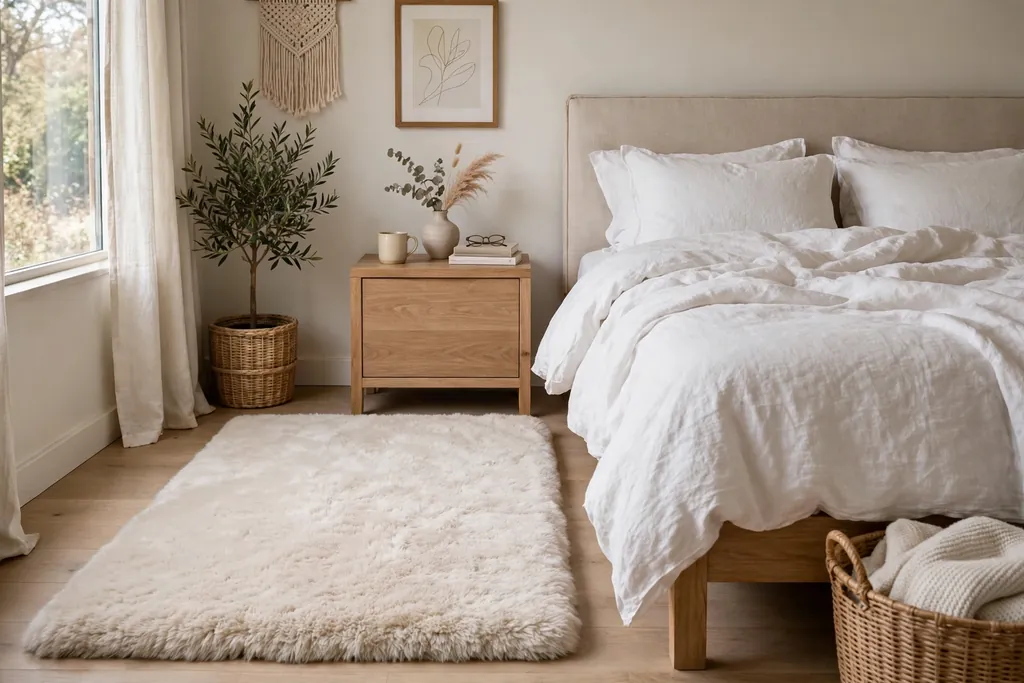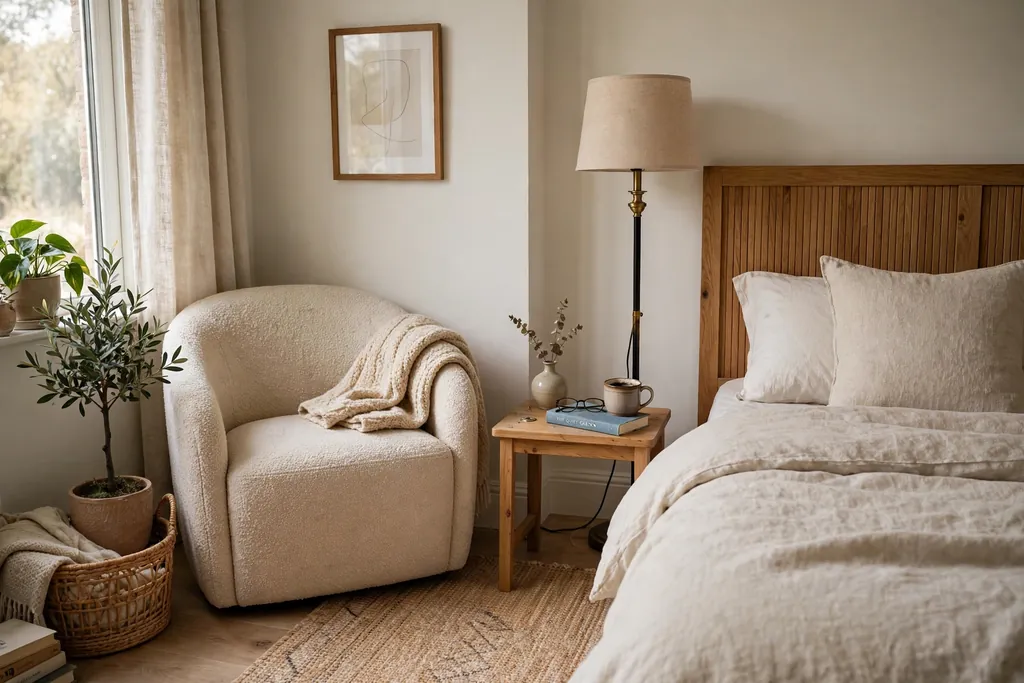
Author: Emma Whitmore

  • 26 Portuguese Home Decor Ideas for a Relaxed, Pulled-Together Home

    26 Portuguese Home Decor Ideas for a Relaxed, Pulled-Together Home

    A Portuguese home feels easy to live in before it feels decorated. Whitewashed walls, warm terracotta, blue and white tiles, natural cork, and worn wood all point to the same idea: a room shaped by sun, sea, and long meals with family. These 26 Portuguese home decor ideas cover walls, floors, seating, kitchens, bedrooms, and small finishing touches, so you can add one relaxed layer or plan a full room refresh. Start with the change that fixes what bothers you most, keep the palette calm, and let one or two handmade materials lead. For a nearby Mediterranean style with the same warm materials, see these Italian home decor ideas.

    Key Takeaways

    • Let two or three materials lead: white plaster, terracotta, wood, and blue and white tile give a Portuguese room a clear, relaxed base.
    • Keep the palette calm: warm white, terracotta, soft blue, olive, and natural wood suit Portuguese tiles better than a long list of competing colors.
    • Repeat each material at least twice, in tiles and a plate wall, or in terracotta pots and a tile floor, so the room looks planned.
    • Mix one patterned surface with plain ones, such as a tile panel beside plain plaster, so the pattern stays a feature rather than clutter.
    • Use warm, low light in the evening, with iron lanterns and candles, since harsh overhead light can make tile and plaster look cold.
    • Start with pottery, textiles, and plants for a no-paint refresh, and save tile panels, plaster walls, and floors for a weekend project.

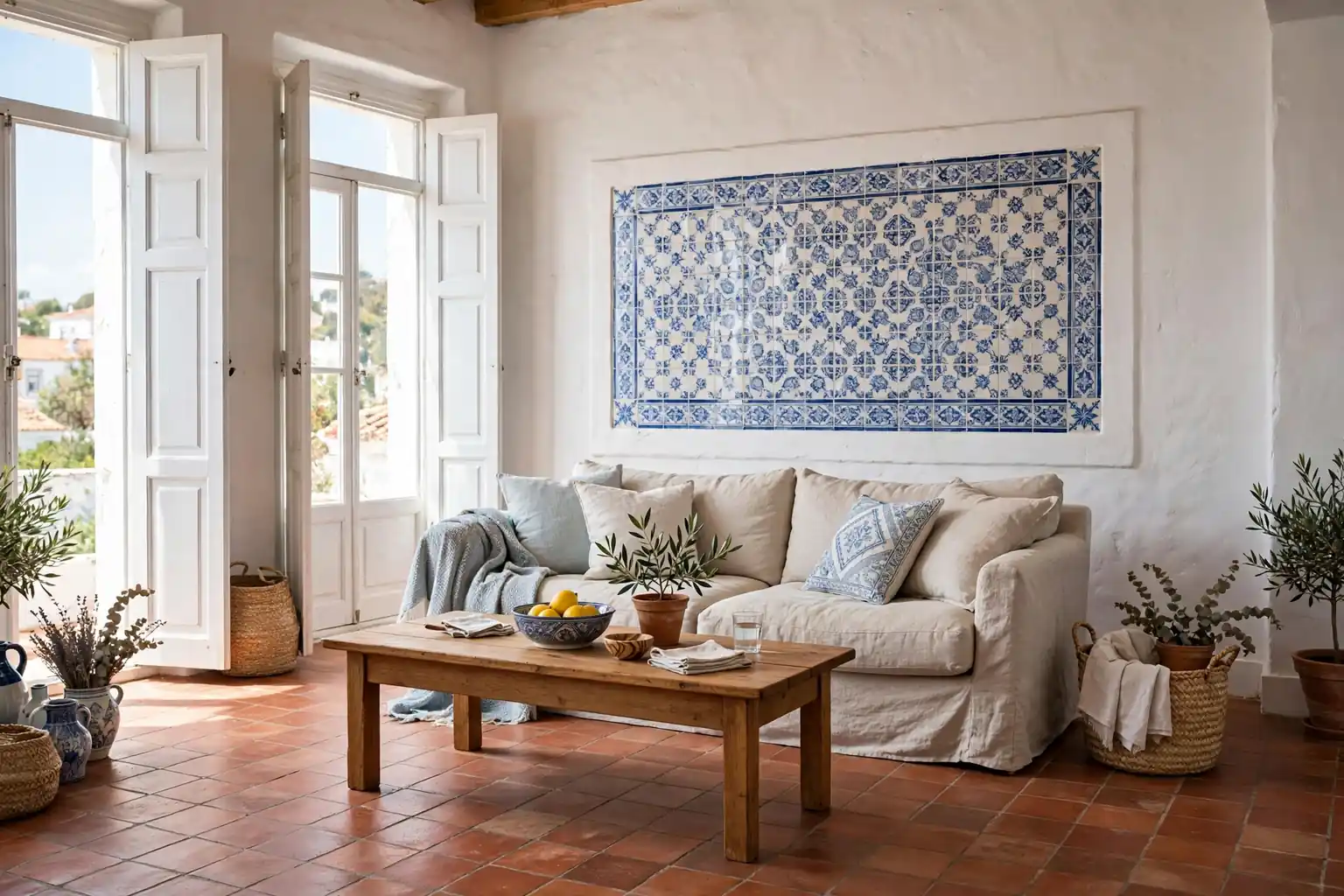
    1. Add a Blue and White Azulejo Tile Feature Wall
    Living room wall with a blue and white azulejo tile panel behind a sofa.

    Cover one wall, or one panel on a wall, with blue and white azulejo style tiles to give the room its clearest Portuguese note. The painted pattern reads as handmade and historic, even in a modern room, and the blue and white pairing keeps the wall fresh rather than heavy. This suits a living room or hallway where one wall feels plain, and it works behind a sofa or a console table where the tiles stay in view.

    Keep the rest of the walls in warm white plaster, and let the tile panel be the only strong pattern in the room. If a full wall feels like too much, frame a smaller panel of tiles, or tile a stair riser, so the pattern appears in a controlled dose. Seal the tiles and grout as the maker directs, and wipe them with a soft cloth, since a feature wall gathers dust near a seating area.

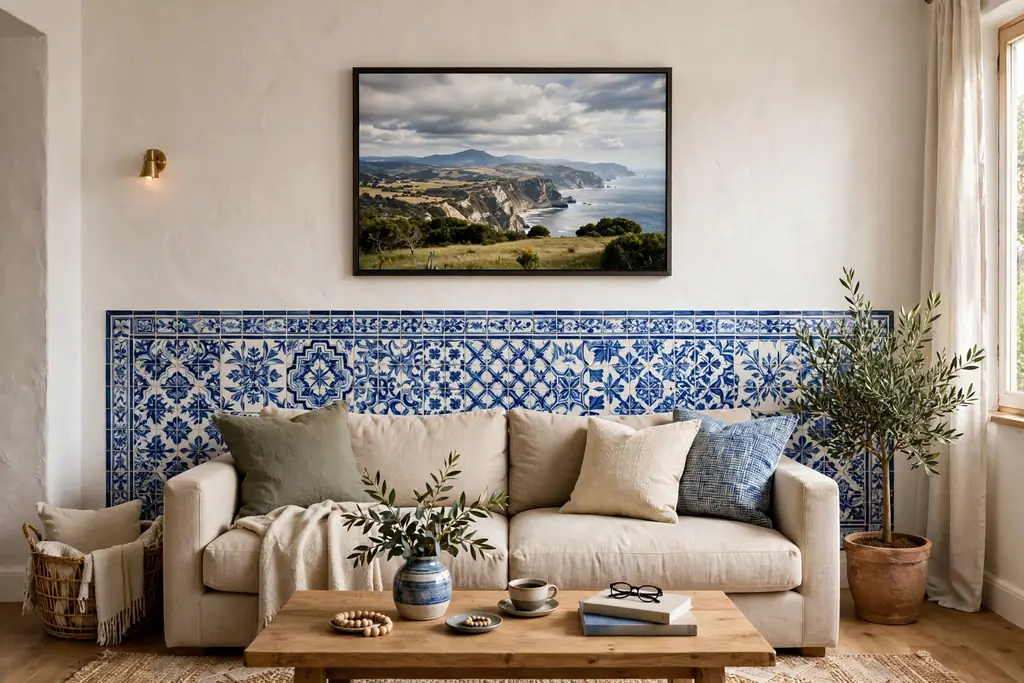
    2. Whitewash the Walls for a Sunlit Base
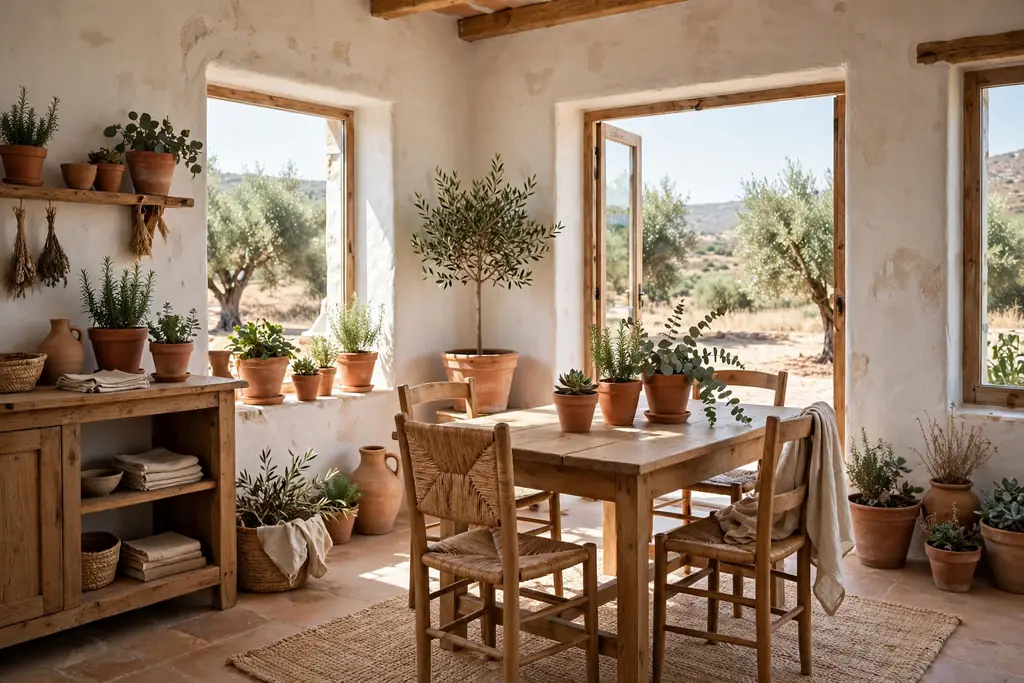
    Room with warm white whitewashed plaster walls and wood furniture.

    Wash the walls in warm white to give the room a sunlit Portuguese base that makes terracotta, wood, and blue tiles stand out. Whitewashed plaster has a soft, slightly uneven finish that plain flat paint rarely gives, and it suits both old houses and newer rooms that feel too dark. This suits a room with limited daylight, where a warm white wall bounces light without looking stark.

    Keep the ceiling and trim in the same warm white family, so the walls read as one calm surface, and let wood beams, terracotta pots, and linen carry the color. If a full room feels like too much work at once, whitewash the main gathering wall first and keep the other walls plain. Test the white beside your floor and furniture in daylight and lamplight, since warm white can look yellow under warm bulbs.

    3. Lay Terracotta Tile Floors With a Wool Rug
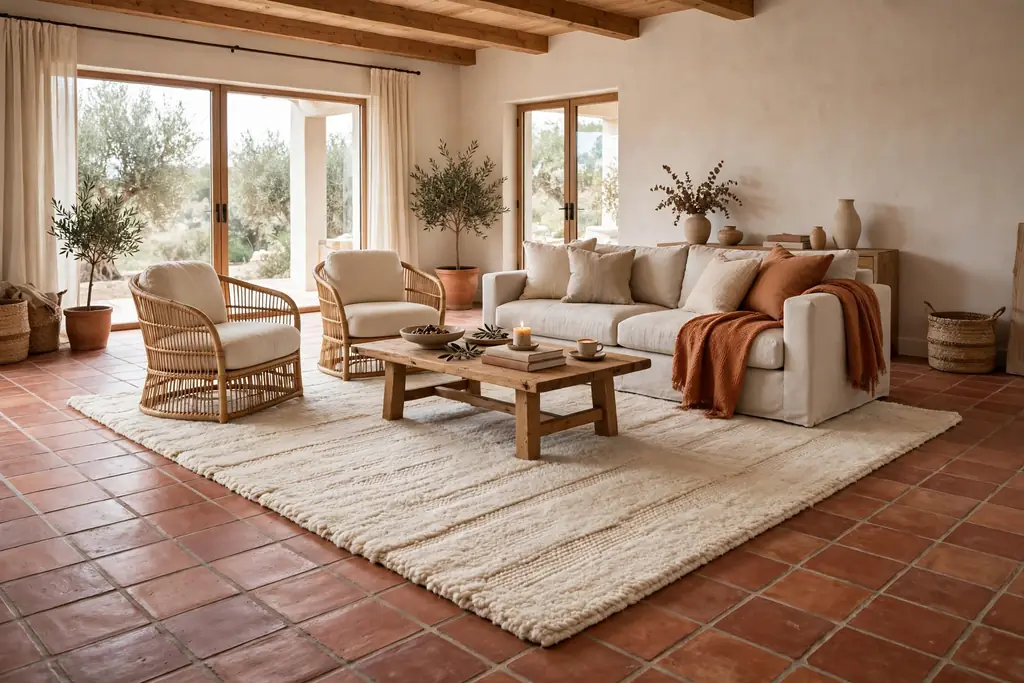
    Room with warm terracotta tile floors and a large cream wool rug.

    Lay terracotta tiles, or choose a terracotta look tile, for a floor that feels warm underfoot and ages well with use. Terracotta suits kitchens, hallways, and living rooms alike, and it pairs naturally with wood furniture, linen upholstery, and blue and white tiles. A large wool rug over the tiles softens the seating area and keeps feet warm in cooler months.

    Size the rug to the seating group, with the front legs of the sofa and chairs resting on it, and keep a border of tile showing around it so the floor still reads as terracotta. Choose a rug in cream, rust, or a muted pattern, and pick a low pile rug for a busy family room, since it is easier to clean and doors clear it more easily. Seal the tile as the maker directs, since terracotta can stain if spills sit on it.

    4. Use a Cork Accent Wall in the Living Room
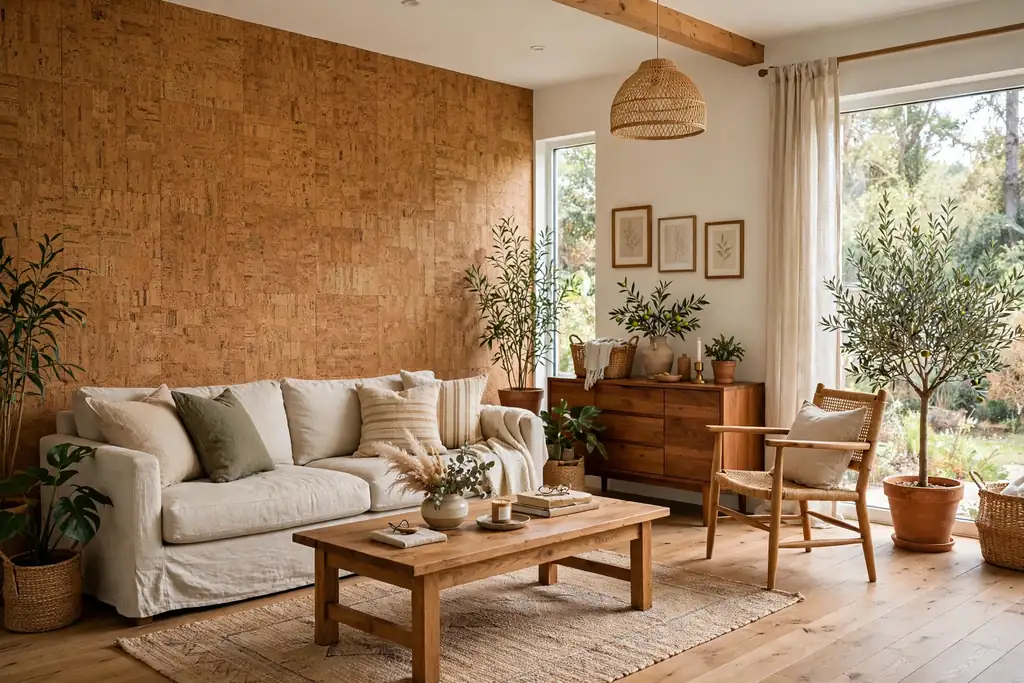
    Living room with a natural honey cork accent wall and linen sofa.

    Fit cork panels on one living room wall for a warm, quiet Portuguese material that is also practical. Cork comes from the bark of the cork oak, a tree long linked with Portugal, and its soft, speckled surface adds texture without a bold pattern. This suits a room that feels echoey or flat, since cork softens sound a little and gives the wall a natural finish.

    Keep the cork to one wall, and pair it with plain warm white walls, wood furniture, and linen cushions, so the texture stays the focus. Choose panels in a natural honey tone rather than a dark stain, so the wall stays light. Dust the panels with a dry cloth, and keep them clear of direct water, since cork suits a living wall far better than a wet bathroom wall.

    5. Hang Hand Painted Ceramic Plates on a Wall
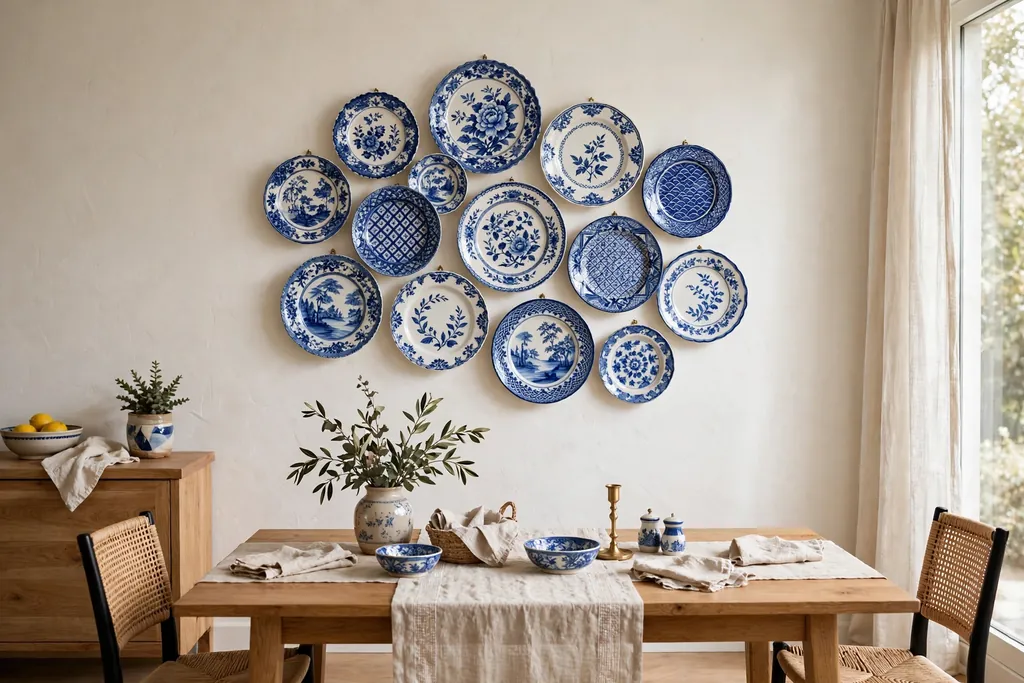
    Dining wall with a cluster of hand painted blue and white ceramic plates.

    Group hand painted ceramic plates on one wall for a Portuguese detail that costs little and needs no building work. Plates in blue and white, or in blue, yellow, and green, recall Portuguese pottery traditions, and a group of plates reads as a collection rather than a single stray dish. This suits a dining area, a hallway, or a kitchen wall where a framed print would feel too formal.

    Hang three, five, or seven plates in a loose cluster, with even gaps, and use plate hangers that grip firmly so the plates stay safe. Mix plate sizes, with the largest near the center, but keep the color family close so the group reads as one. Keep the wall behind the plates plain warm white, and avoid a second strong pattern on the same wall, so the plates stay the feature.

    6. Hang a Wrought Iron Chandelier Over the Seating Area
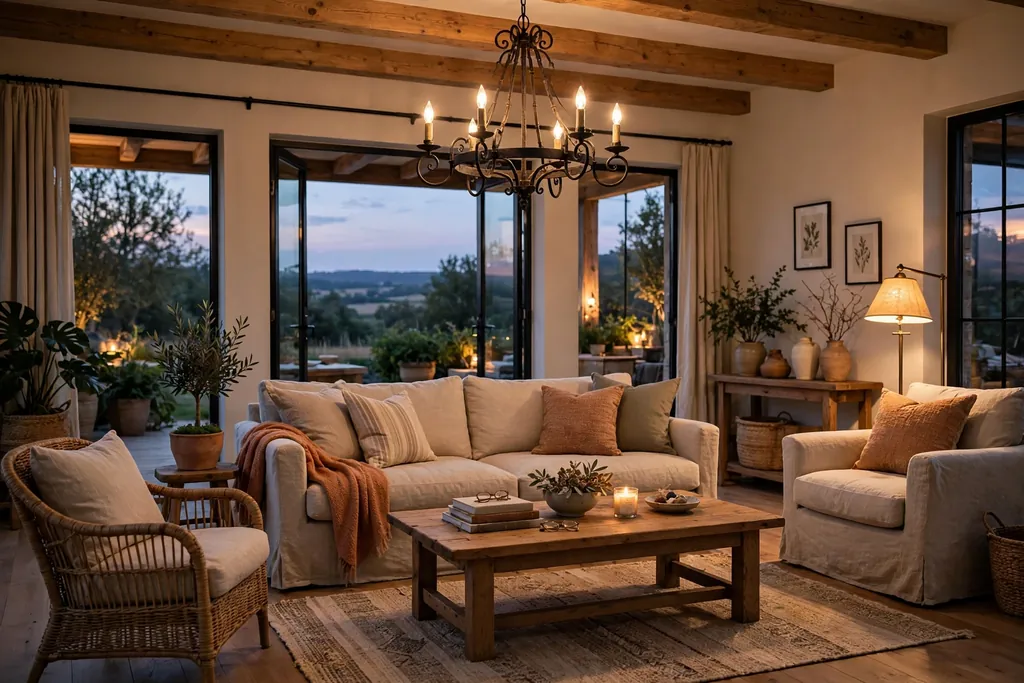
    Living room seating area with a wrought iron chandelier in warm light.

    Hang a wrought iron chandelier over the seating area for a fixture that feels handmade and sturdy. Iron suits a room with wood beams, plaster walls, and terracotta, and a simple ring or candle style chandelier gives warm light without a fussy crystal look. Use warm bulbs and a dimmer, where one is already fitted, so the light can shift from bright to soft in the evening.

    Hang the chandelier high enough to walk under safely, and center it over the coffee table rather than the middle of the room if the seating group sits off center. If the ceiling is low, choose a flush or semi flush iron fixture in the same style, so the room keeps the iron detail without losing headroom. Wipe the iron now and then, since dark metal shows dust in bright daylight.

    7. Choose a Relaxed Linen Slipcovered Sofa
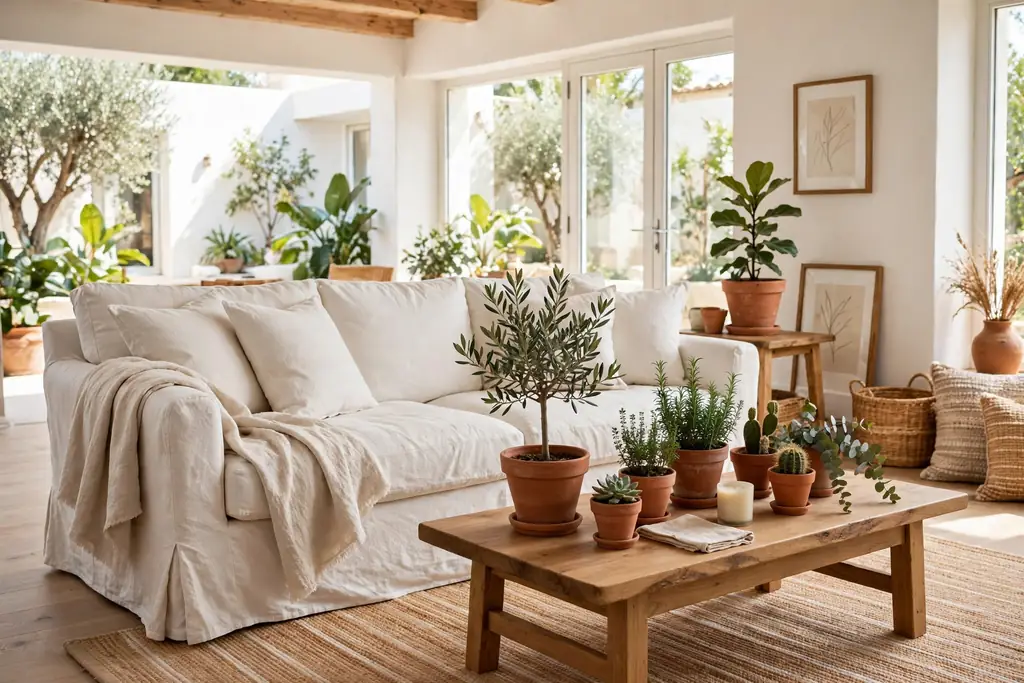
    Relaxed linen slipcovered sofa in warm white in a bright living room.

    Choose a linen slipcovered sofa in warm white for a softer, more casual Portuguese look. Slipcovers can be removed and washed, which makes linen practical for homes with children, pets, or frequent guests. The slightly wrinkled, relaxed drape is part of the appeal, so do not chase a pressed, formal finish.

    Pick a warm white, oatmeal, or pale sage linen, and add cushions in terracotta and soft blue for color. A slipcovered sofa pairs well with a wood coffee table and a wool rug, and it suits a room where comfort matters more than a sharp tailored line. Keep a spare slipcover if the sofa gets daily use, so one can wash while the other is on the sofa.

    8. Center the Dining Area on a Rustic Wood Table
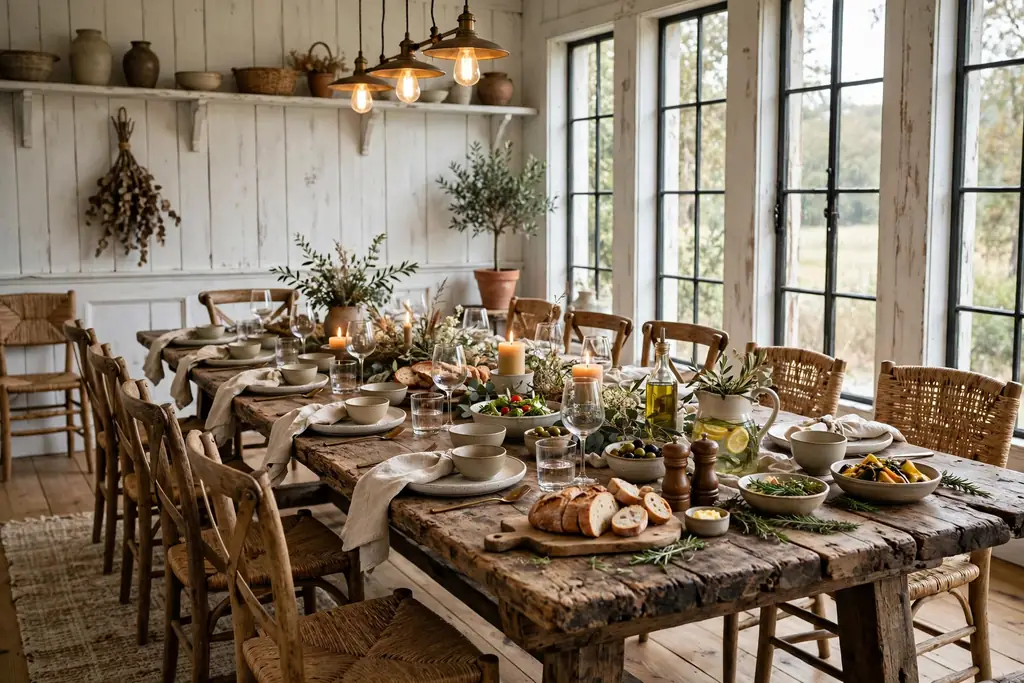
    Long rustic wood dining table set for a family meal.

    Center the dining area on a long, rustic wood table built for slow meals and many guests. A thick wood top with visible grain feels handmade and sturdy, and it gives the room a piece with presence even when it is not set for dinner. This suits a household that eats together often, since the table becomes the room’s gathering point.

    Keep the tabletop mostly clear between meals, with one tray, a candle, and a small vase, so it stays ready for plates and glasses. Choose chairs that are comfortable for a long sit, and leave enough room to pull each chair out fully. If the wood is rough, sand the top smooth and seal it so cups and glasses sit safely and spills wipe off easily.

    9. Hang Open Wood Shelves for Ceramics and Cookbooks
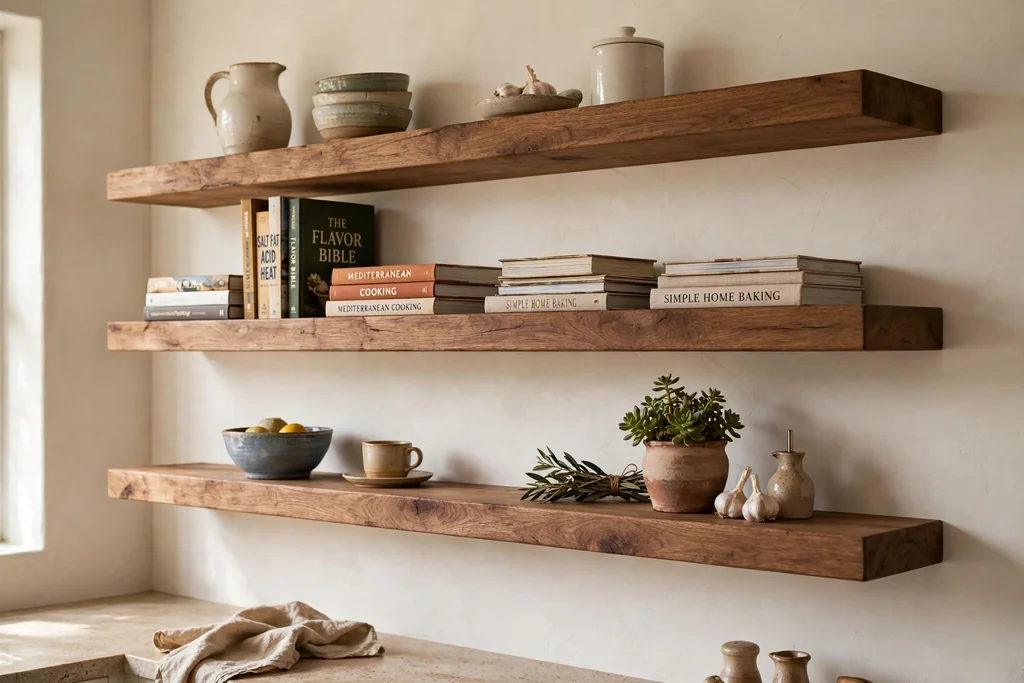
    Open thick wood shelves holding ceramics, cookbooks, and a plant.

    Hang open wood shelves on one kitchen or dining wall for ceramics, cookbooks, and a few plants, and keep the display loose rather than packed. Open shelves suit a Portuguese room because they show the handmade pieces that give the room character, such as bowls, jugs, and old cookbooks with worn covers. Use thick wood shelves with simple brackets in iron or wood.

    Edit the shelves hard: one row of books, a stack of bowls, a plant, and empty space between groups. If the shelves look crowded, remove a third of the objects and see how the wall breathes. Dust open shelves weekly, and keep everyday items low and within reach, with display pieces higher up where they stay safe from daily bumps.

    10. Hang Blue and White Striped Linen Curtains
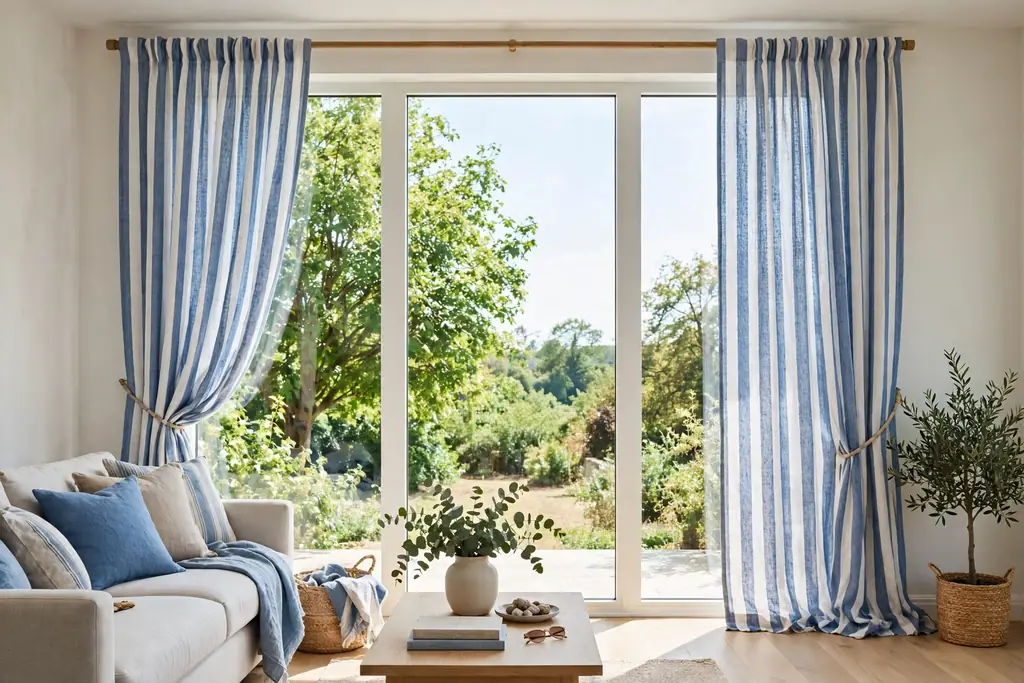
    Tall window with floor length blue and white striped linen curtains.

    Hang floor length striped linen curtains in white and soft blue at tall windows to soften the room and frame the light. Linen falls in soft folds and suits the relaxed feel of the rest of the room, while a quiet stripe adds pattern without competing with tiles or pottery. Hang the panels high, near the ceiling, and wide, beyond the window frame, so the window reads as taller.

    Let the panels just brush the floor, since pooling fabric collects dust and can trip you in a busy room. Open the panels fully during the day so the room gets full daylight, and close them at night for privacy. Choose a stripe close in tone to the wall tiles, so the window treatment links to the room rather than fighting it.

    11. Place a Potted Olive Tree in a Terracotta Pot
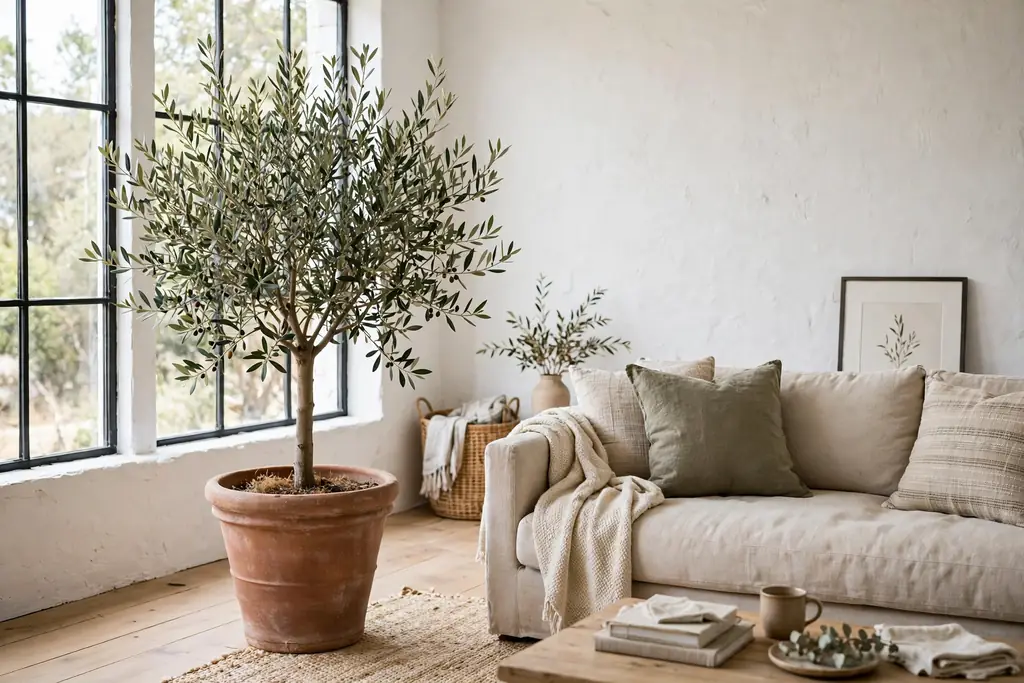
    Potted olive tree in a large terracotta pot beside a sofa.

    Place a potted olive tree in a large terracotta pot near a bright window or beside the sofa for a living Portuguese detail. The silvery green leaves suit the warm palette, and the tree gives a corner height and softness that furniture alone cannot. Choose a pot heavy enough to hold the tree steady, and raise it on feet so water drains freely.

    Give the tree the brightest spot you have, and water only when the top of the soil feels dry, since olive trees dislike wet roots. Turn the pot now and then so growth stays even, and prune lightly to keep the shape open. In a cold climate, keep the tree indoors through winter and move it outside only in warm months.

    12. Bring In Rattan and Woven Chairs
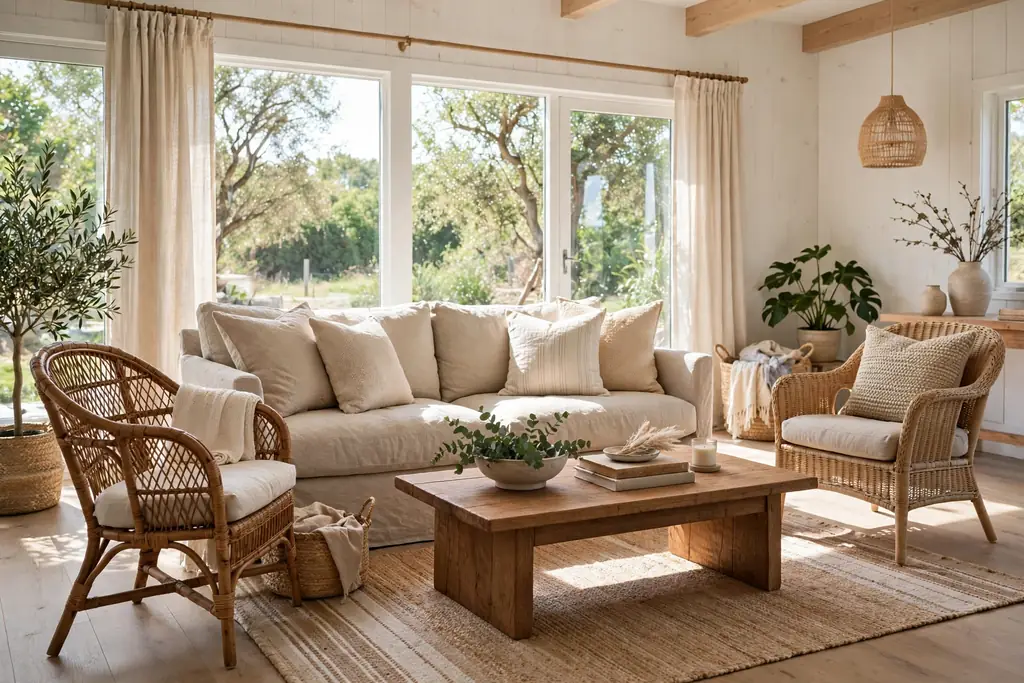
    Seating group with rattan and woven chairs and a linen sofa.

    Bring rattan and woven chairs into the seating group for light, breathable texture that suits a warm climate style. Rattan chairs pair well with a linen sofa and a wood coffee table, and their open weave keeps a small room feeling open. This suits a living room or a dining corner that feels heavy with solid wood, since woven seats lighten the whole group.

    Mix one or two rattan chairs with solid chairs rather than filling the room with woven pieces, so the texture stays a feature. Dust woven seats with a dry cloth or a soft brush, and keep rattan out of damp corners, since it can warp. Add a plain linen cushion to a rattan chair if the seat feels hard, and keep the cushion in the room palette.

    13. Add an Arched Mirror Above a Console
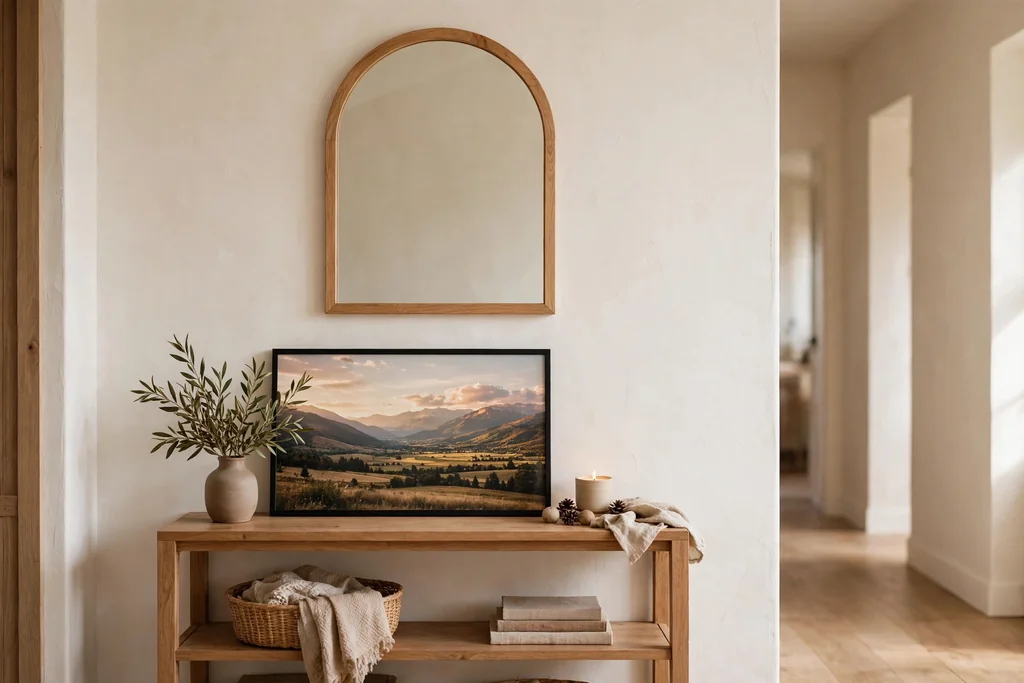
    Hallway console table with an arched mirror above it.

    Hang an arched mirror above a console table to bring a classic Portuguese and Mediterranean shape into a rectangular room. The arch softens hard lines, reflects daylight, and gives a hallway or living wall a clear focal point without a large piece of art. Choose a simple wood or iron frame, so the shape, not the frame, carries the detail.

    Hang the mirror with its center near eye level, and keep the console below mostly clear, with one vase and a small stack of books. If a full arch mirror feels too large, use an arched wall niche or an arched shelf in the same spot. Wipe the glass with a soft cloth, and keep the mirror clear of a busy pattern on the opposite wall, so the reflection stays calm.

    14. Fit a Patterned Tile Backsplash in the Kitchen
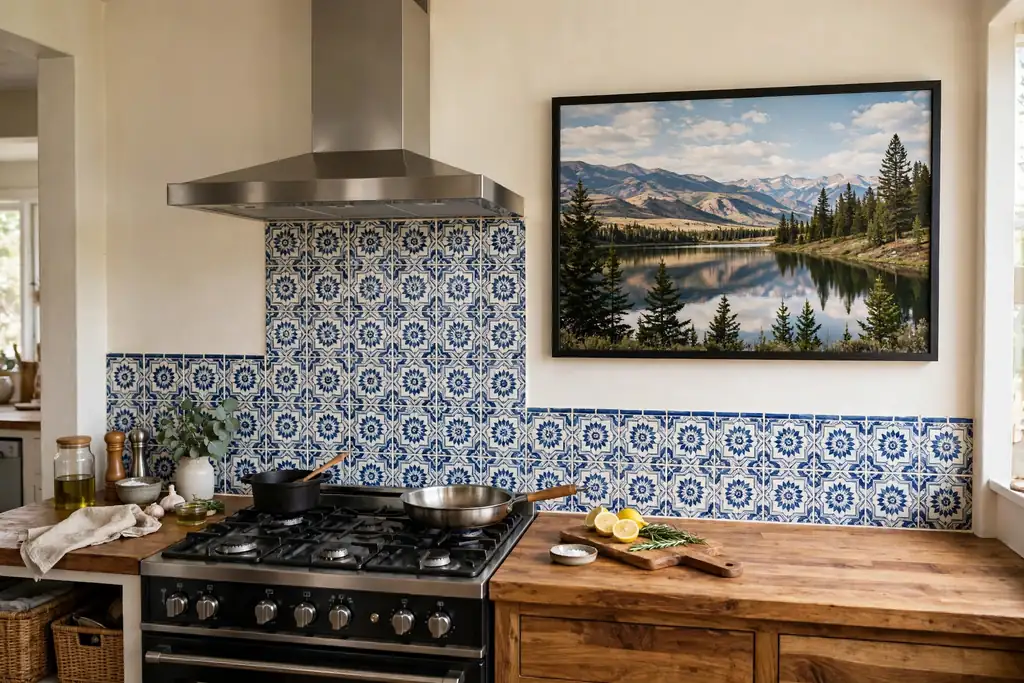
    Kitchen wall with a patterned blue and white tile backsplash above a stove.

    Use a panel of patterned blue and white tiles as a kitchen backsplash above the stove or sink for one clear Portuguese feature in a working room. A tile pattern gives a strong detail without covering a whole room, and it works well where a rug would stain or a wall would stay bare. This suits a kitchen that needs one clear feature above the main work area.

    Keep the pattern simple and even, with the same tile repeated across the panel, and let the surrounding wall stay plain. Seal the tile and grout as the maker directs, since a kitchen backsplash meets steam, splashes, and cooking marks daily. If real tile work is not practical, a printed tile look panel gives a similar effect and can be moved later.

    15. Group Terracotta Pottery by Height

    Group of terracotta pottery vases and jugs in different heights.

    Group terracotta pots, vases, and jugs in different heights on a bench, a sideboard, or a hearth. Terracotta is the fastest Portuguese detail to add, since the warm clay color links the room to the palette of walls and floors without any building work. A group of three or five pieces reads as deliberate, while a single small pot can look lost.

    Mix shapes, such as a tall jug, a round bowl, and a short vase, but keep the color family close so the group reads as one. Leave some pieces empty and put branches or dried stems in one or two only. Wipe the pots now and then, since terracotta shows dust, and use a saucer under any pot that holds a live plant.

    16. Layer Relaxed Linen Bedding in White and Soft Blue
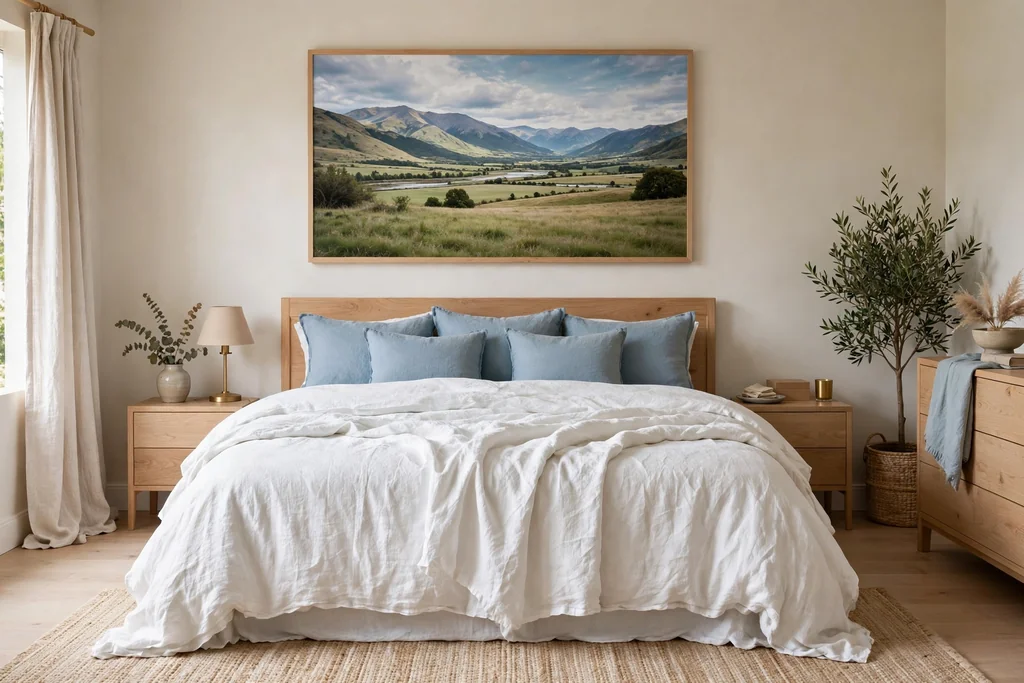
    Bedroom bed with layered white linen bedding and soft blue cushions.

    Layer white linen bedding with soft blue cushions for a Portuguese coastal bedroom that feels calm and easy to sleep in. Linen softens with washing and drapes loosely rather than sitting stiff, and white bedding keeps the bed light against warm walls or wood furniture. This suits a bedroom you want to refresh without paint or new furniture, since bedding covers the largest surface in the room.

    Start with white cotton or linen sheets, add a white duvet or coverlet, then fold a light blue throw across the foot of the bed. Finish with two sleeping pillows and one or two linen cushions in white or soft blue, so the bed looks inviting rather than piled high. For more coastal bedroom pairing ideas, see these coastal bedroom ideas.

    17. Layer Wool Throws and Cushions in Clay, Olive, and Cream
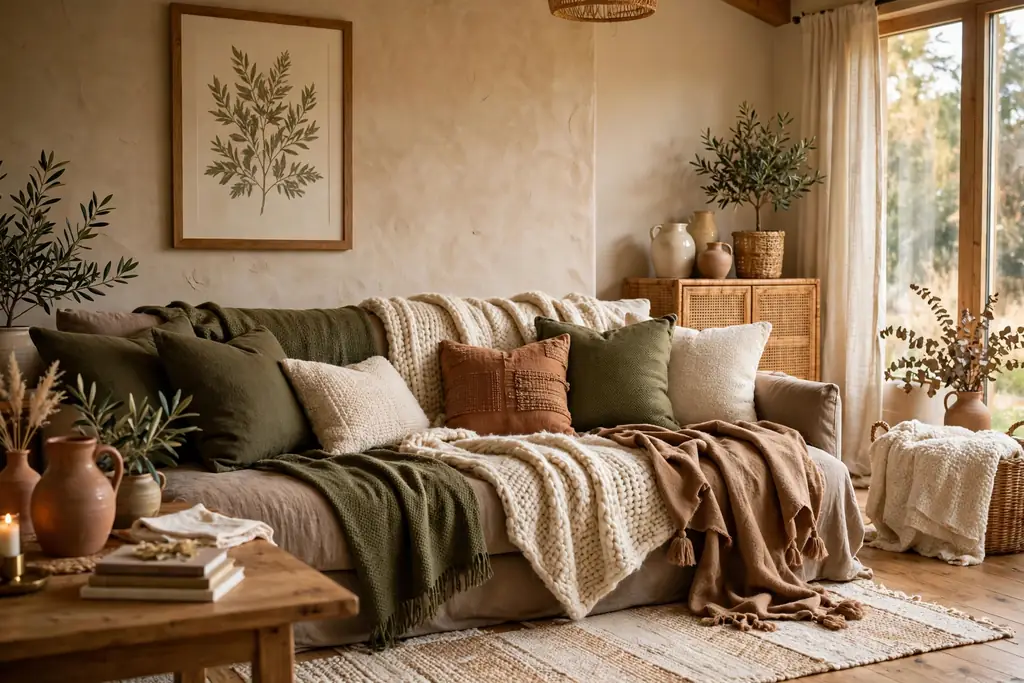
    Sofa layered with wool throws and cushions in clay, olive, and cream.

    Layer wool throws and cushions in clay, olive, and cream over sofas and chairs for warmth you can use every day. Throws make a room feel cozy at a glance, and they earn their place on cool evenings, so they are decoration and comfort in one. Keep the palette to those three tones so the layering stays calm even when several pieces are out.

    Fold one throw over an arm or the back of the sofa, and keep a second in a basket nearby for guests. Limit cushions to three or four on a standard sofa, in mixed textures rather than mixed patterns, so the seat stays comfortable. Wash throws as the maker directs, and rotate them so one set does not wear out before the others.

    18. Build a Warm Plaster Fireplace Surround
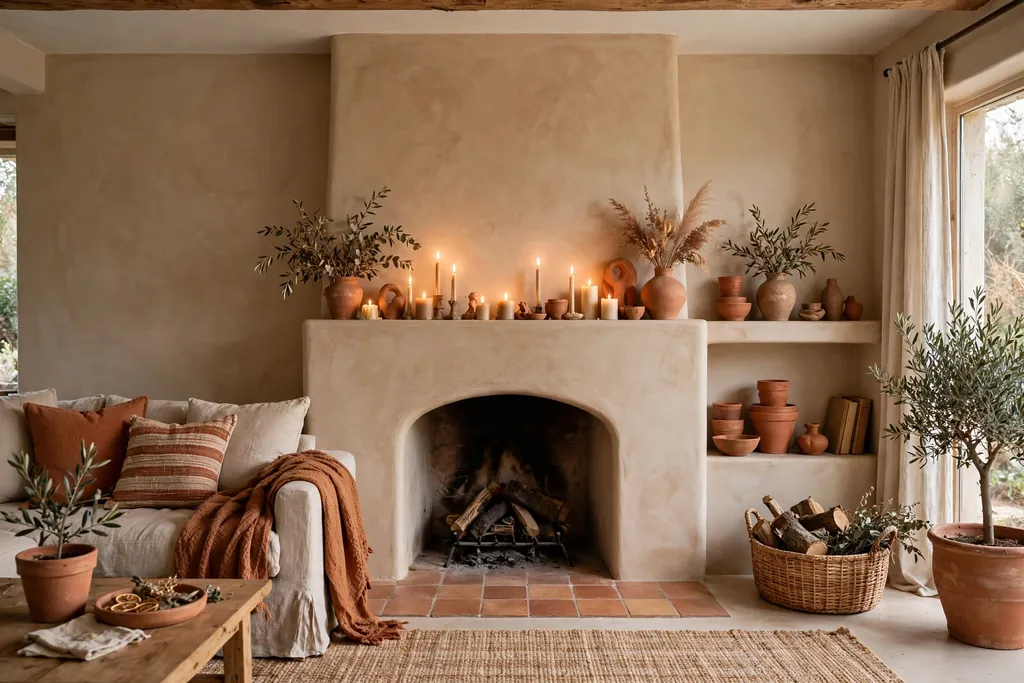
    Living room fireplace with a warm plaster surround and candles.

    Finish a fireplace with a warm plaster surround for a soft, handmade focal point that suits Portuguese style better than a sharp stone slab. Plaster gives the fireplace a rounded, sun warmed look, and it pairs well with terracotta, wood, and iron details nearby. This suits a living room where the fireplace wall feels plain, or where a dark stone surround makes the room feel heavy.

    Keep the mantel mostly clear, with one pair of candles and a small vase, so the plaster shape stays visible. Paint the surround in warm white or a soft clay tone, and keep the wall beside it plain. If you do not have a working fireplace, a plaster style surround around a simple firebox or a candle grouping gives the same focal point without building work.

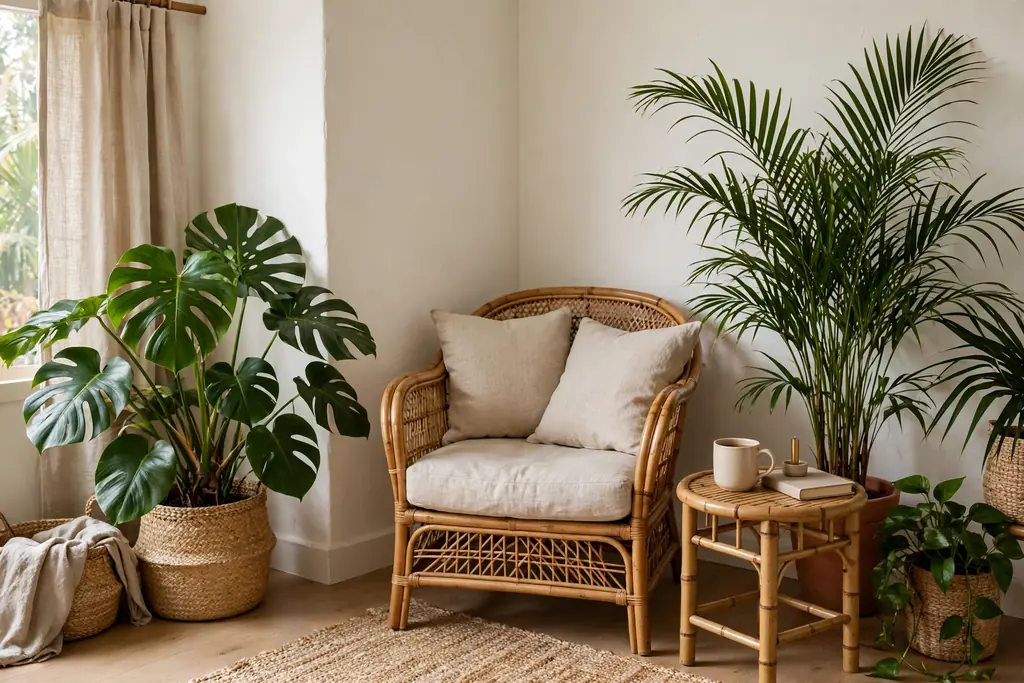
    19. Create a Reading Nook With a Rattan Chair and Basket
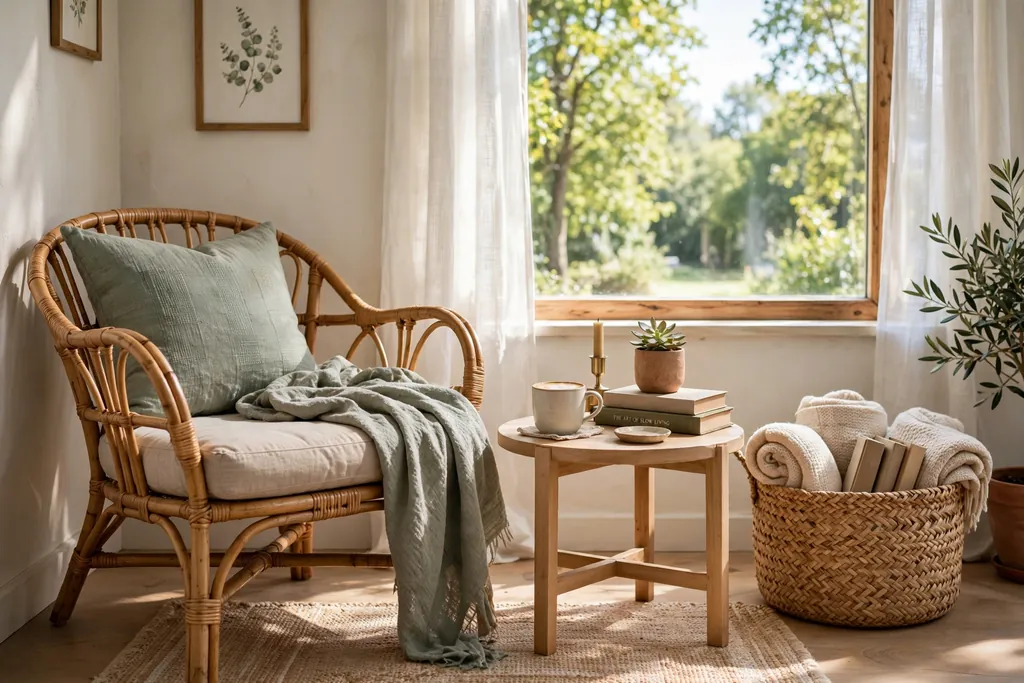
    Reading corner with a rattan chair and woven basket by a window.

    Set a rattan chair beside a window, add a small side table for a book and a drink, and keep a woven basket beside it for a throw. The nook gives a Portuguese room a quiet corner for reading, and the woven chair and basket repeat the natural textures used elsewhere in the room. This suits a living room or bedroom corner that currently holds nothing.

    Choose a chair deep enough to sit in for an hour, not a stiff accent chair that looks good but stays empty. Keep the side table clear except for the book you are reading, and move the chair a little away from the window if strong sun fades the fabric over time. Add a small lamp with warm light, so the nook works in the evening as well as by day.

    20. Grow Kitchen Herbs in Terracotta Pots on the Sill
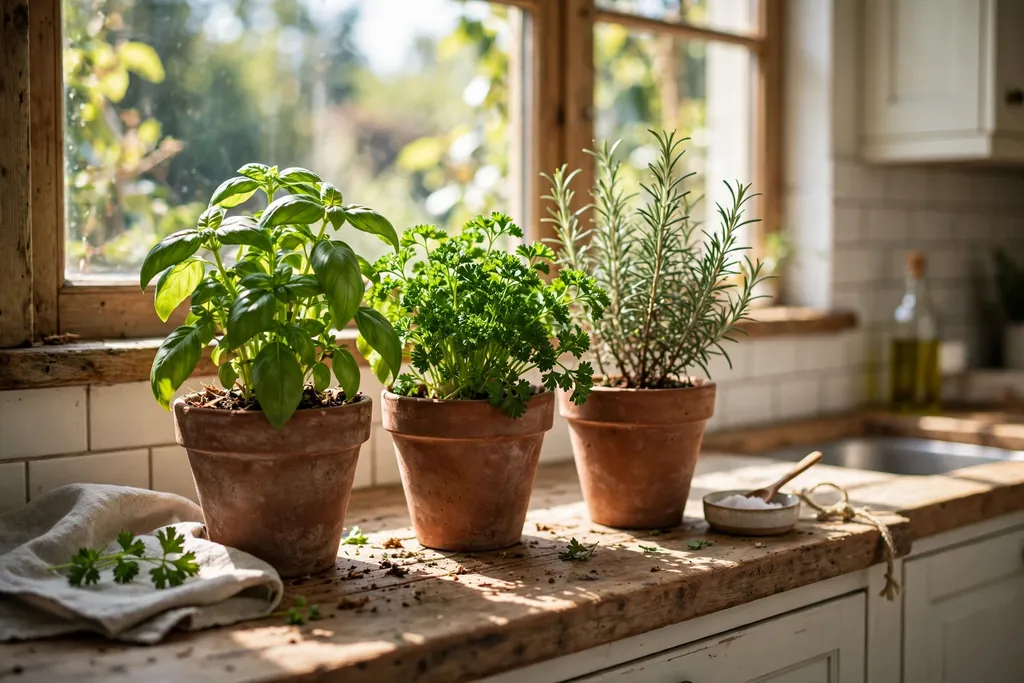
    Kitchen windowsill with terracotta pots of basil, parsley, and rosemary.

    Set basil, parsley, and rosemary in terracotta pots on a sunny kitchen windowsill for fresh leaves where you cook. The pots suit the warm palette, the herbs sit within reach, and a sunny sill gives most kitchen herbs the light they need. This suits a kitchen with even a narrow sill and a cook who reaches for fresh herbs often.

    Use pots with drainage holes and a saucer under each, so water does not mark the sill. Trim the herbs often so they stay compact rather than leggy, and turn the pots now and then so growth stays even. If a windowsill is too narrow, a small wood shelf above the sill holds the same pots without crowding the window.

    21. Style the Coffee Table With a Mosaic Tile Tray
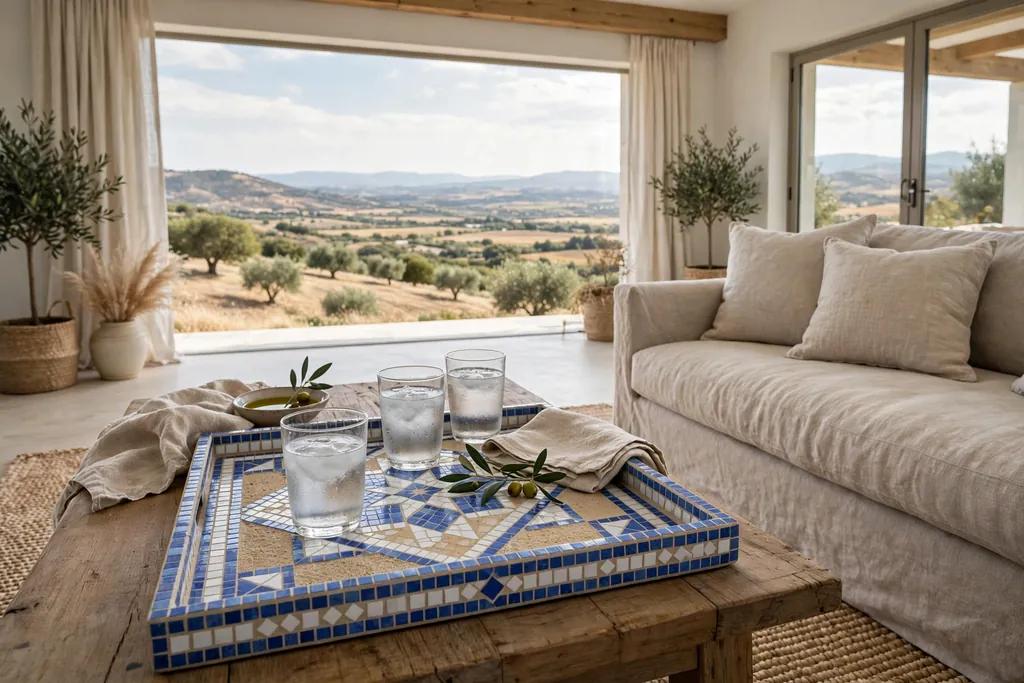
    Coffee table with a mosaic tile tray in blue, white, and sand.

    Use a small tray topped with mosaic tiles, in blue, white, and sand, as the drinks tray on the coffee table. The tile top handles wet glasses better than wood or fabric, and its pattern gives the table a Portuguese courtyard feel. A mosaic tray also works as a second anchor on a long table, holding glasses while the main tray holds candles and books.

    Choose a tray with a rim high enough to stop a glass sliding off, and wipe the grout lines after use so spills do not stain them. Keep the tray near the sofa edge where guests can reach it, rather than in the center behind the main vignette. For more table styling in the same warm style, see these Mediterranean coffee table styling ideas.

    22. Stow Throws and Magazines in Woven Baskets
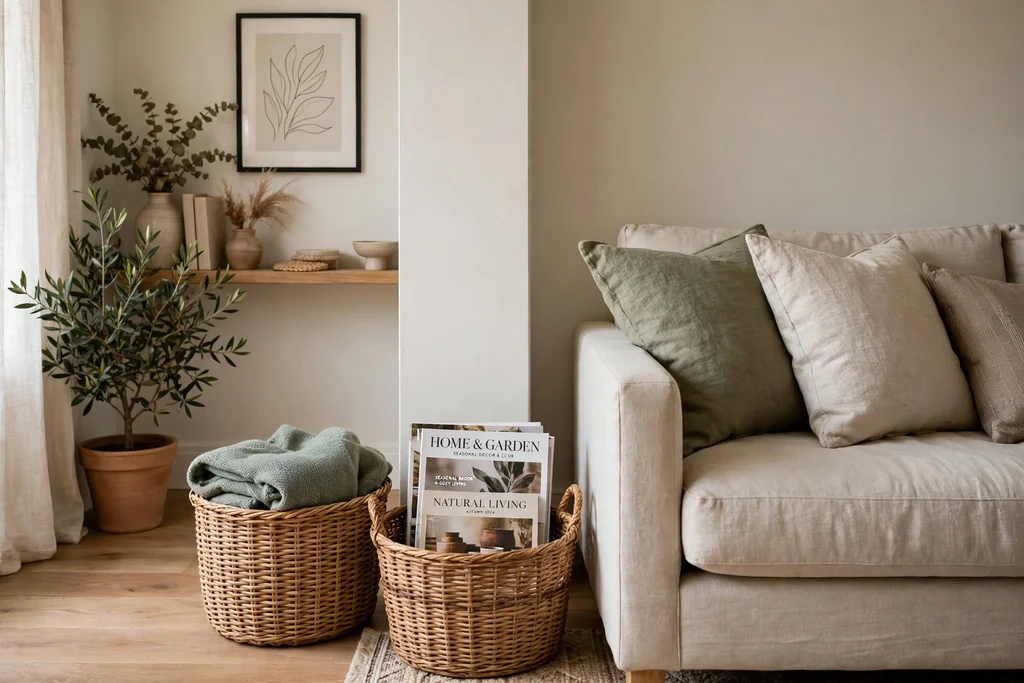
    Living room corner with woven baskets holding a folded throw.

    Slide low woven baskets beside the sofa and under a console, holding a folded throw and a few magazines, so surfaces stay clear. Baskets add a second woven layer to the room and give the styling a practical job: everything guests might want is close, but off the surface. A basket also suits a bedroom corner, where it keeps spare bedding tidy.

    Choose baskets that fit their spots with room to slide out easily, and keep each basket to one throw and three or four magazines, so it does not overflow. Baskets with handles are easier to carry to tidy before guests arrive. If a room already has rattan chairs, use plain seagrass baskets here, so the woven textures vary rather than matching exactly.

    23. Set a Lemon Bowl Centerpiece on the Dining Table
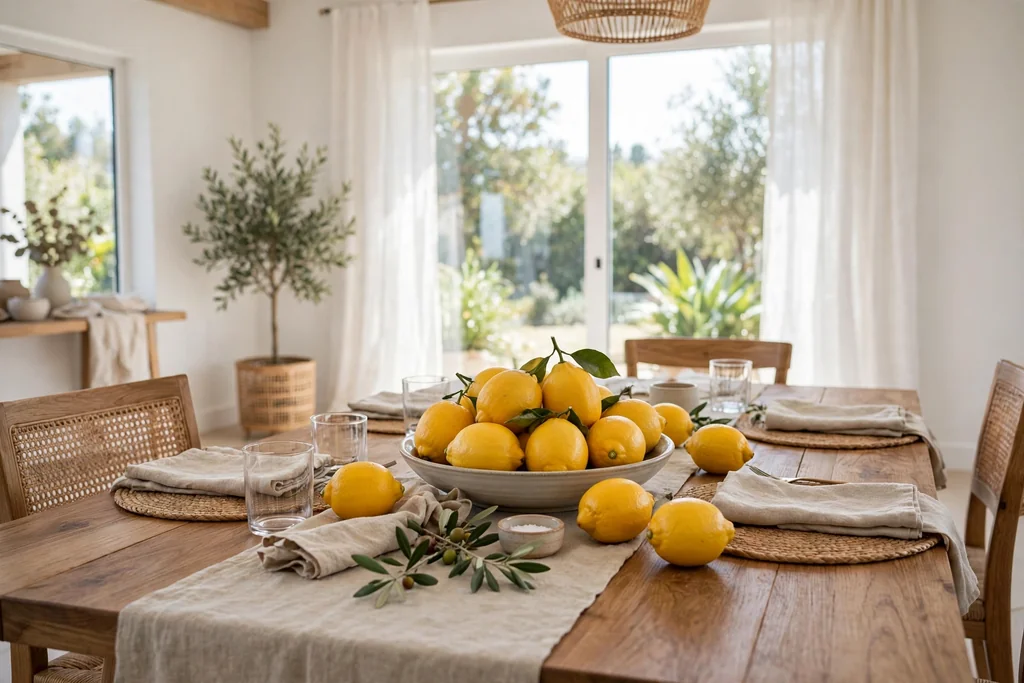
    Dining table with a shallow bowl filled with fresh lemons.

    Fill a shallow wood or ceramic bowl with fresh lemons and set it where the light catches the yellow. Lemons are the quickest Portuguese table accent: bright, easy to replace, and a natural link to Mediterranean cooking, and their color lifts a table of terracotta and wood without a painted object. A bowl of lemons also suits a table that needs a low centerpiece, since it does not block conversation.

    Use six to eight lemons for a medium bowl, and turn them so the skin, not a cut face, shows upward. Replace any lemon that softens, and wash the bowl before refilling. In cooler months, swap lemons for oranges to keep the same idea with a seasonal color, and keep the bowl in the same spot so the table layout stays settled.

    24. Choose an Iron and Wood Bed Frame
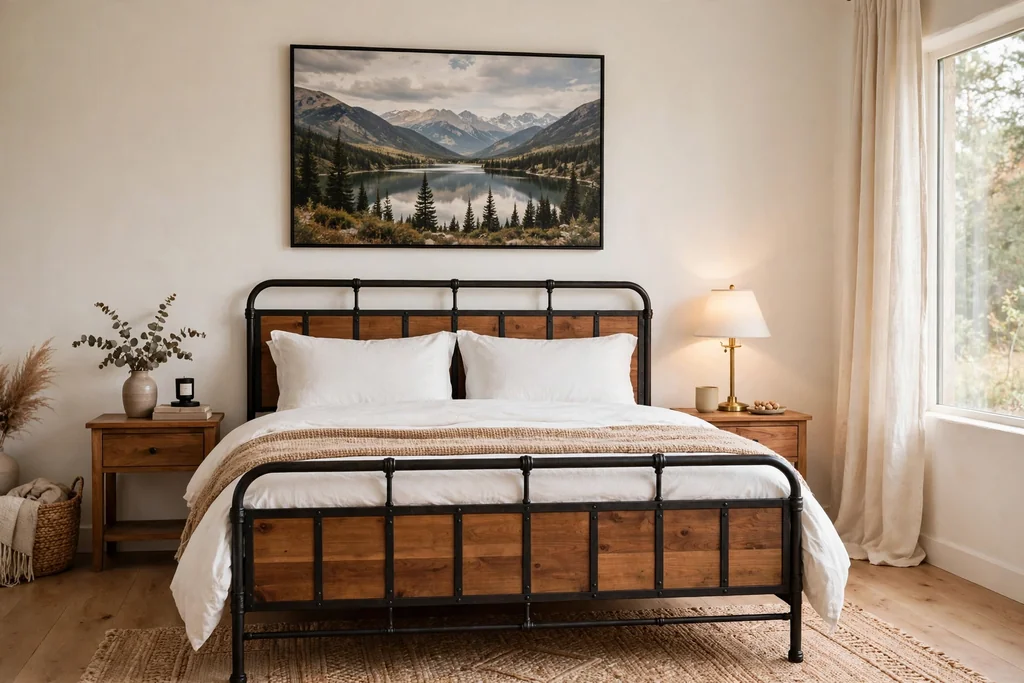
    Bedroom with a dark iron and warm wood bed frame and white bedding.

    Choose a bed frame that pairs a dark iron frame with warm wood details for a Portuguese bedroom that feels sturdy and relaxed. Iron gives the bed a handmade, slightly rustic line, while wood headboard panels or wood feet warm the metal and link the bed to other wood furniture. This suits a bedroom with plaster walls and linen bedding, where a fully upholstered bed would feel too soft.

    Keep the bedding plain white or soft blue, so the frame stays the detail, and repeat the iron once more in a lamp or a mirror frame. Check that the frame sits steady on your floor, and tighten the joints now and then, since iron frames can loosen with use. Dust the iron with a dry cloth, and keep the wood parts out of strong direct sun.

    25. Hang Coastal Prints in Simple Wood Frames
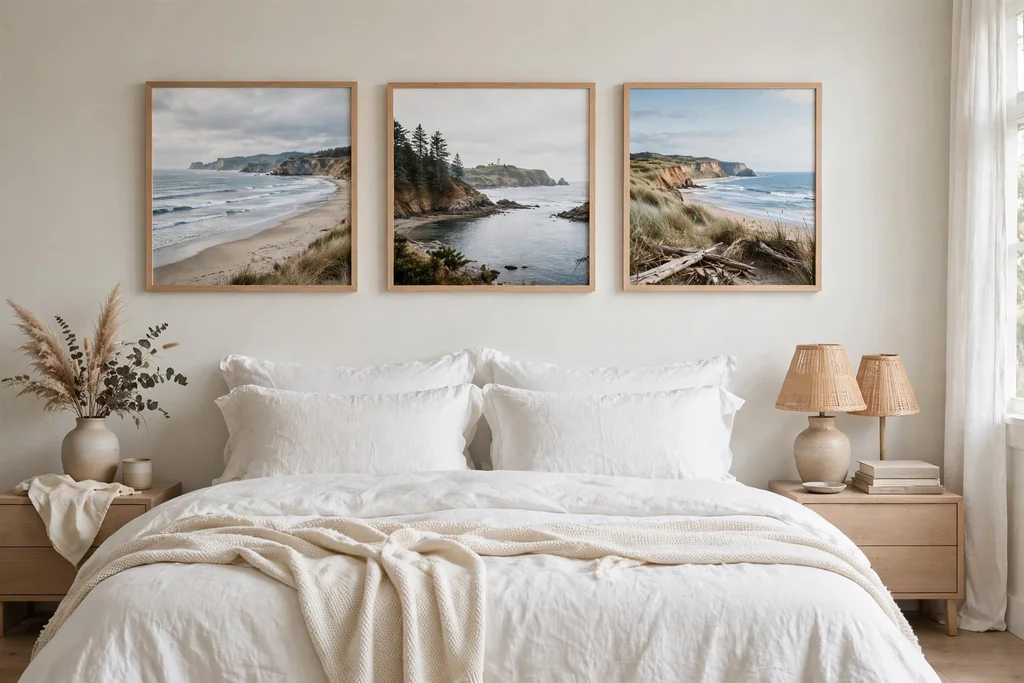
    Bedroom wall with coastal prints in simple light wood frames.

    Hang a small group of coastal prints, of the sea, the shore, boats, or coastal plants, in simple light wood frames above a bed or along one wall. Prints in pale blue, white, sand, and soft grey give a Portuguese coastal note without a bold color that fights the scheme. Hang them in a loose grid, with even spacing, so the wall feels calm rather than crowded.

    Lay the frames on the floor first and plan the spacing, leaving equal gaps between frames, then hang the middle frame at eye level. Use picture hanging strips if you rent, and keep the largest frame near the center so the arrangement feels balanced. Swap one print with the seasons if you want a small change without redecorating the whole room.

    26. Pull the Room Together With a Three Color Palette
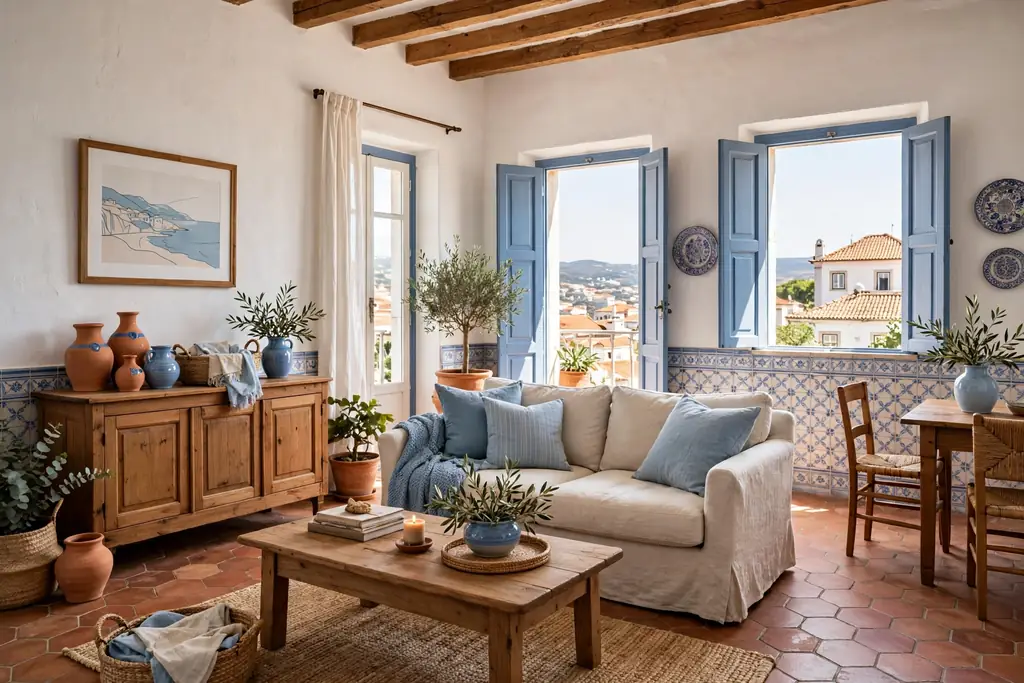
    Portuguese living room in warm white, terracotta, and soft blue.

    Finish the room by limiting the palette to warm white, terracotta, and soft blue, with wood and olive as quiet supports. A short palette is what makes a Portuguese room look pulled together rather than collected at random, since every new piece then has a clear color home. This suits a room that already has the right materials but still feels busy, because the palette, not a new purchase, does the fixing.

    Repeat each of the three colors at least twice, in tiles and cushions, or in pottery and a throw, so no color appears only once. Keep large surfaces in warm white, use terracotta for pottery and floors, and save soft blue for tiles, cushions, and art. If a piece falls outside the palette, move it to another room or cover it with a throw, and the room will read as calm at once.

    Conclusion

    A relaxed, pulled together Portuguese home comes down to a calm palette, a few handmade materials, and rooms arranged for daily life. Start with warm white walls, add terracotta and wood, bring in one blue and white tile feature, and layer linen, wool, and woven texture on top. Keep surfaces mostly clear, let daylight in through linen curtains, and warm the evenings with iron lanterns and candles, so the home feels bright by day and restful at night.

    Save this list for your next free hour at home, and work through it in order: walls and floors first, then seating and tables, then tiles and pottery, and finally the plants, prints, and table details. One or two ideas are enough to shift a room, and the full set gives a whole home the same relaxed, coastal warmth.

    FAQs

    What colors work best for Portuguese home decor?

    Warm white, terracotta, soft blue, olive, and natural wood work best, because they mirror plaster walls, clay floors, blue and white tiles, and olive groves. Keep warm white as the base, use terracotta for floors and pottery, and add soft blue in tiles, cushions, and art. Test paint and fabric samples in daylight and evening light before committing, since warm white and blue shift a lot through the day.

    What is the easiest Portuguese decor change with no painting or building?

    Start with terracotta pottery, a lemon bowl, linen cushions, and a potted olive tree, since all four need no tools and can move to another room later. A group of terracotta pots on a bench, a striped linen cushion on the sofa, and a bowl of lemons on the table give a clear Portuguese note in one afternoon. Add a woven basket and a wool throw next, and save tile panels and plaster walls for a bigger project.

    How do I use azulejo tiles without making a room look busy?

    Use tiles in one controlled dose, such as one feature wall panel, a kitchen backsplash, or a stair riser, and keep the rest of the walls in plain warm white. Let the tile pattern be the only strong pattern in the room, and keep cushions, rugs, and curtains in solid colors from the tile palette. If a full wall feels like too much, frame a smaller tile panel so the pattern reads as art rather than wallpaper.

    Can Portuguese decor work in a small apartment?

    Yes. Portuguese style suits small rooms well, because its base is light: warm white walls, linen, and one or two natural materials. Use tiles on a backsplash or a single panel rather than a whole wall, choose a linen sofa and rattan chairs that stay light in scale, and use baskets and open shelves for storage that stays visible. Keep the palette to three colors, so a small room reads as calm rather than crowded.

    What materials define Portuguese home decor?

    Plaster, terracotta, cork, wood, wrought iron, linen, and hand painted ceramic define the style. Plaster and terracotta give the warm base, cork and wood add natural texture, iron adds a handmade line in lighting and bed frames, and linen and ceramic add softness and pattern. Mix one rough texture with one smooth finish, such as terracotta beside glazed tile, so the room feels relaxed but finished.

    Does Portuguese decor suit a modern home?

    Yes, if you keep the lines simple and the palette short. A modern sofa in warm white linen, a plain wood table, and one blue and white tile panel give a Portuguese note without a rustic or themed look. Avoid filling the room with themed objects, and let one tile feature, one iron light, and a few terracotta pots carry the style, so the modern furniture still leads the room.
  • 12 Thai Home Decor Ideas to Inspire Your Next Room Refresh

    12 Thai Home Decor Ideas to Inspire Your Next Room Refresh

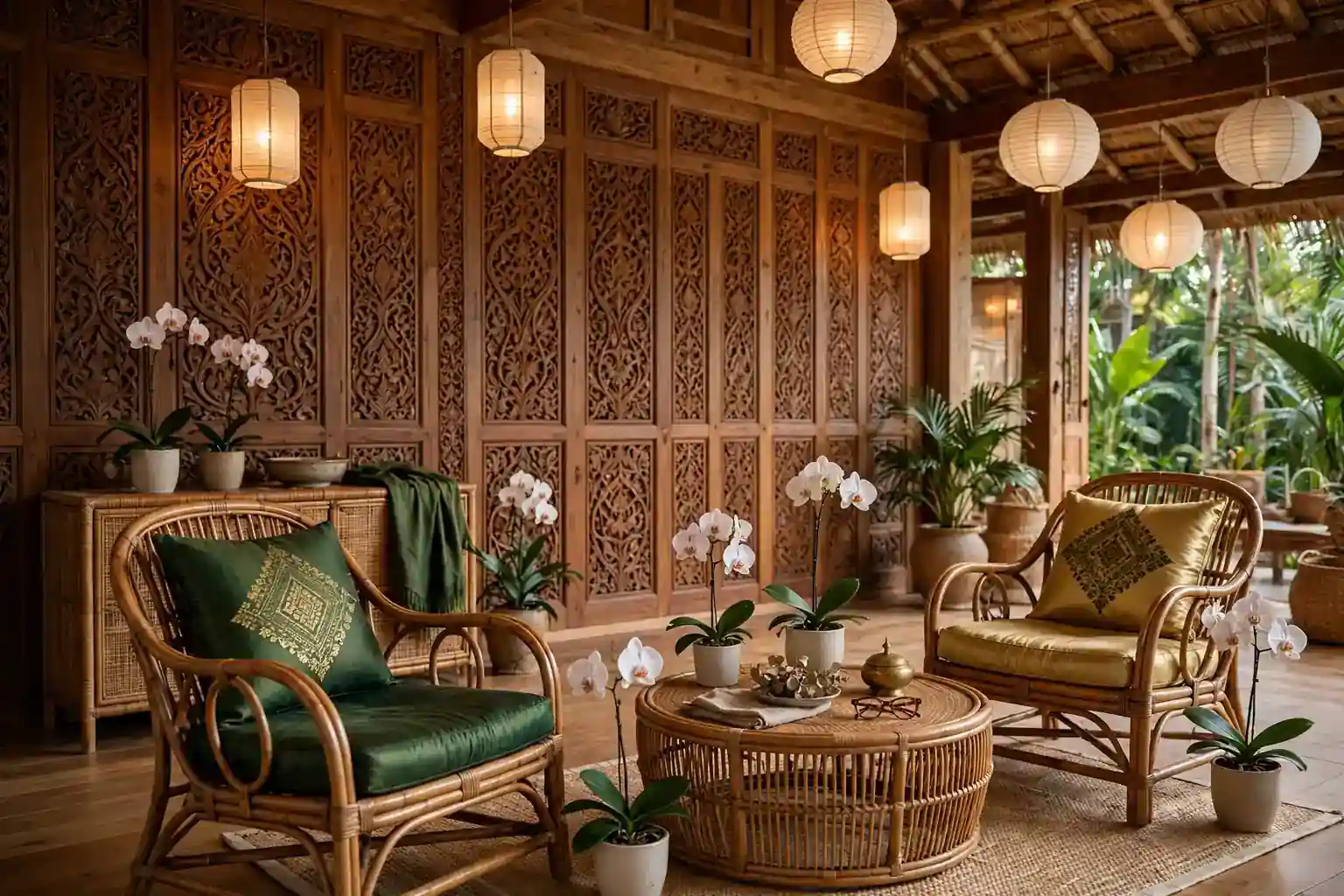
    Thai home decor earns its warmth from natural materials, soft light, and a few rich details, not from filling every surface. Carved teak, Thai silk, rattan, orchids, and warm lantern light can make a room feel calm and welcoming, while a restrained palette keeps the look from feeling busy. These 12 Thai home decor ideas cover walls, seating, bedding, lighting, plants, and small displays, so you can add one Thai layer or plan a fuller room refresh. Start with the change that fixes what bothers you most, keep one or two materials as the lead, and let the rest of the room stay quiet.

    Key Takeaways

    • Let two or three materials lead: warm teak, rattan, and Thai silk give a Thai room a clear, warm base.
    • Keep the palette calm: warm white, deep green, gold, and soft brown suit carved wood better than a long list of competing colors.
    • Repeat each material at least twice, in a teak frame and a teak table, or in silk cushions and a silk throw, so the room looks planned.
    • Mix one carved or patterned piece with plain surfaces, so the detail has room to be seen.
    • Use warm, low light from lanterns and lamps at sitting height, since harsh overhead light can make wood and silk look flat.
    • Start with cushions, orchids, and lanterns for a no-paint refresh, and save panel walls, dividers, and platform beds for a weekend project.

    1. Add a Carved Teak Panel Feature Wall

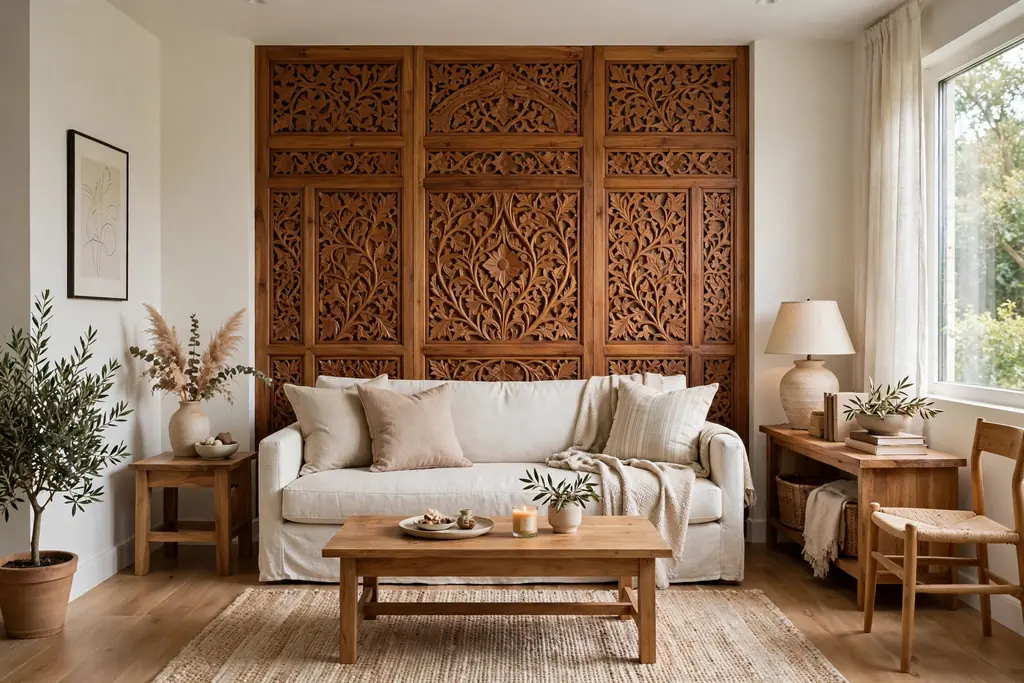
    Fit a carved teak panel, or a row of teak panels, on one wall behind a sofa or a bed, and keep the other walls warm white. The carving gives the room a clear focal point and a sense of craft, while the pale side walls keep the room open. This suits a plain room where the main wall feels empty, and it works with a simple sofa or a plain wood bed.

    Choose panels in a similar tone range, with carving that reads well from across the room rather than fine detail that disappears at a distance. Fix the panels firmly to the wall, and leave a clean edge at the ceiling and corners. Keep art on this wall to a minimum, since the carving already carries the detail, and dust the panels with a soft, dry cloth.

    2. Layer Thai Silk Cushions and Throws

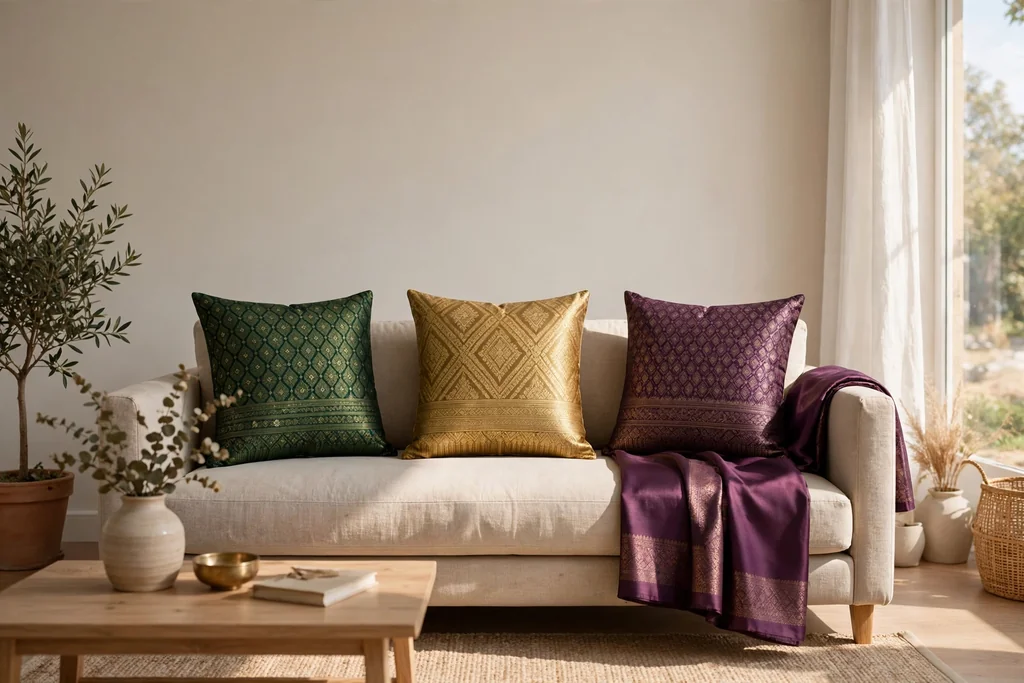
    Layer Thai silk cushions in deep green, gold, and plum on a plain sofa or bed, and add one silk throw folded across an arm or the foot of the bed. Silk has a soft sheen that catches light, so a few silk pieces can warm a whole seating group without new furniture. This suits a neutral room that needs color and texture in small doses.

    Pick cushions in two or three tones that already appear in the room, and mix one patterned silk with plain silk, so the group looks planned rather than random. Keep the sofa or bedding plain underneath, so the silk stays the focus. Check the care label before washing silk, and keep silk out of strong, direct sun, which can fade it over time.

    3. Choose Rattan and Bamboo Seating

    Choose a rattan armchair, a bamboo lounge chair, or a pair of rattan side chairs for a seating corner that feels light and tropical. Rattan and bamboo add natural texture without the weight of solid wood, and their open weave keeps a small room feeling airy. This suits a living room or a bedroom corner where a heavy upholstered chair would crowd the space.

    Pair rattan seating with plain linen or cotton cushions in warm white or soft green, so the weave stays easy to see. Keep the chair clear of damp spots, and wipe the weave with a soft brush now and then, since woven pieces collect dust in their gaps. Add a small side table in teak or bamboo, so the corner has a place for a cup and a book.

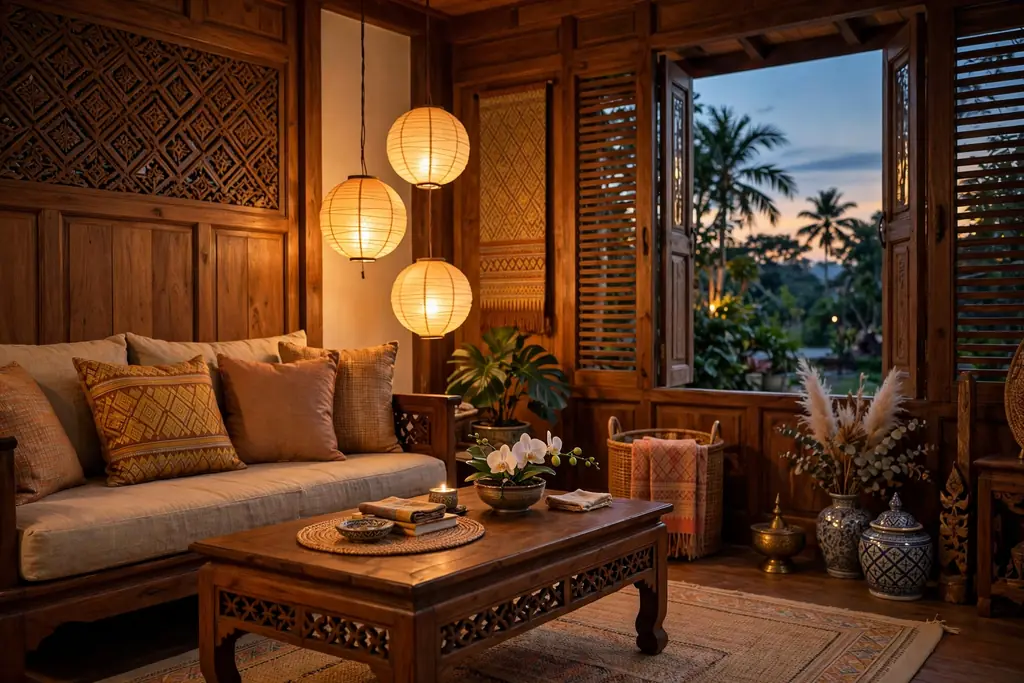
    4. Glow With Warm Thai Paper Lanterns

    Hang warm paper lanterns, or set them on a side table, for soft light that suits a Thai room after dark. Paper diffuses light, so a lantern gives a gentle pool of light for reading and talking, without the glare of a bare bulb. This suits a living room or a bedroom where the main ceiling light feels too harsh in the evening.

    Use a warm white bulb suited to the lantern, and keep paper clear of heat sources, candles, and curtains. Hang one lantern over a seating group, or place a pair at different heights on a console, so the light feels layered rather than lined up. For more lantern placement ideas, see these lantern decor ideas.

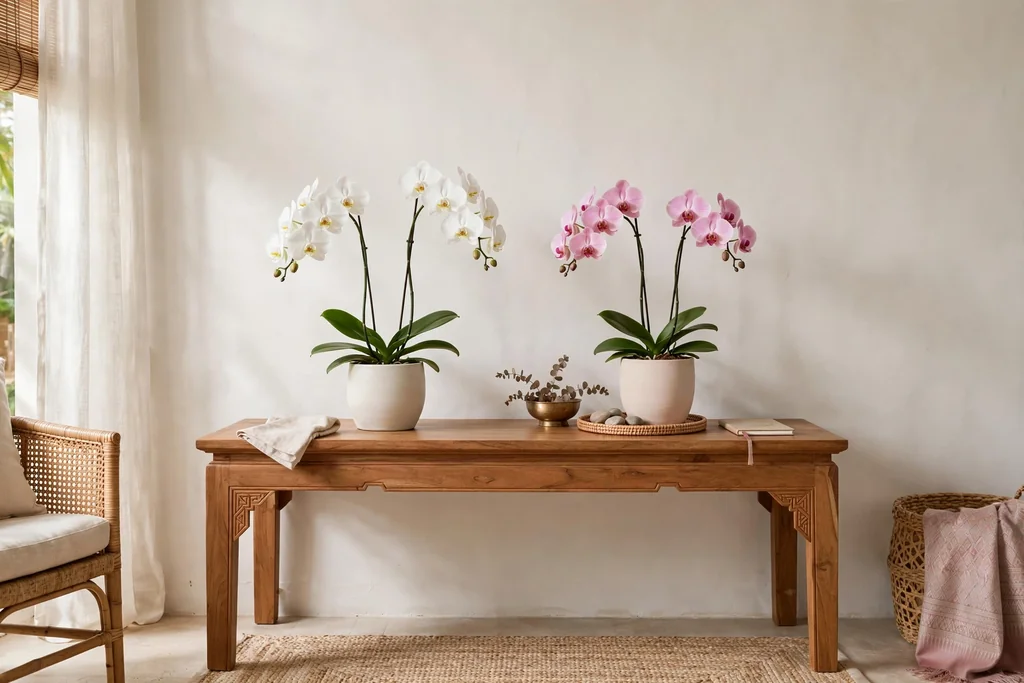
    5. Display Orchids in Simple Pots

    Display one or two orchids in simple ceramic or clay pots on a console, a dining table, or a bedroom dresser. Orchids give a Thai room its classic flower note, and a simple pot lets the blooms carry the color. This suits a room with bright, indirect light, where a large bouquet would fade in days but an orchid lasts for weeks.

    Choose white, pink, or purple orchids against a plain pot, and keep the display to one or two plants per surface, so each orchid has room to be seen. Water as the plant label advises, and keep orchids clear of cold drafts and hot radiators. When the blooms fade, keep the plant in its spot and let the leaves stay, since a healthy orchid will bloom again.

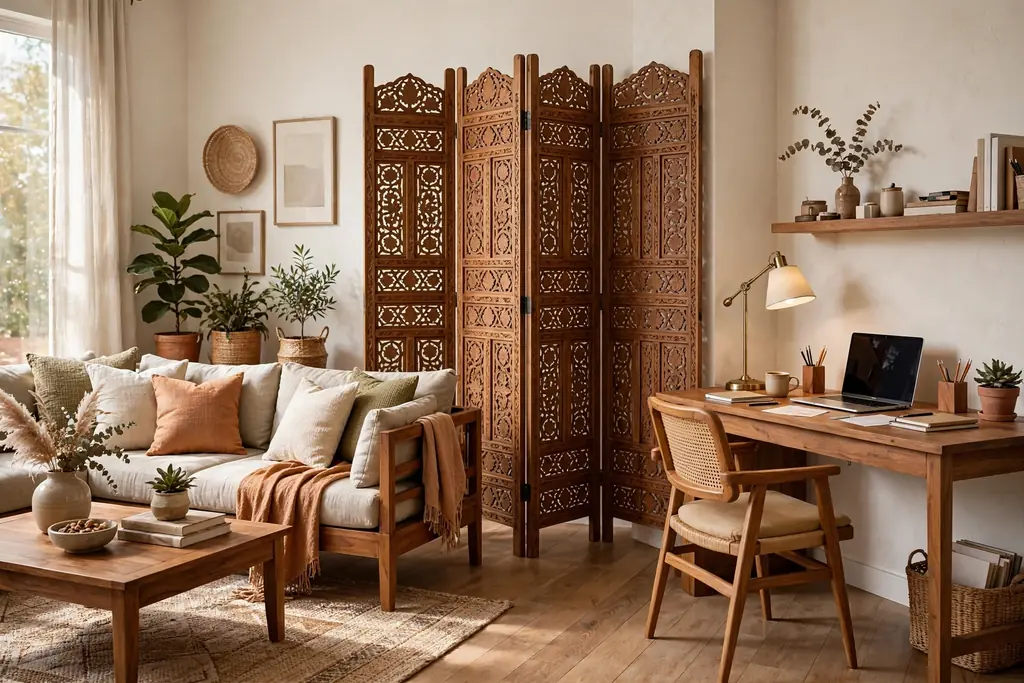
    6. Divide a Room With a Carved Wood Screen

    Use a carved wood screen, or a folding teak screen, to divide a room, hide a work corner, or soften a wide doorway. The carving adds pattern at eye level, and the screen gives privacy without a solid wall. A folding screen works in a rented home, while a fixed panel suits a room with a wide opening.

    Keep the screen clear of heaters and open flames, and dust the carving gently with a dry cloth. Choose a simple, open carving pattern and a warm wood tone, and let one screen do the dividing work, rather than filling the room with panels. Place the screen where it frames a seating zone, not where it blocks a walking route.

    7. Layer Handwoven Mudmee Textiles

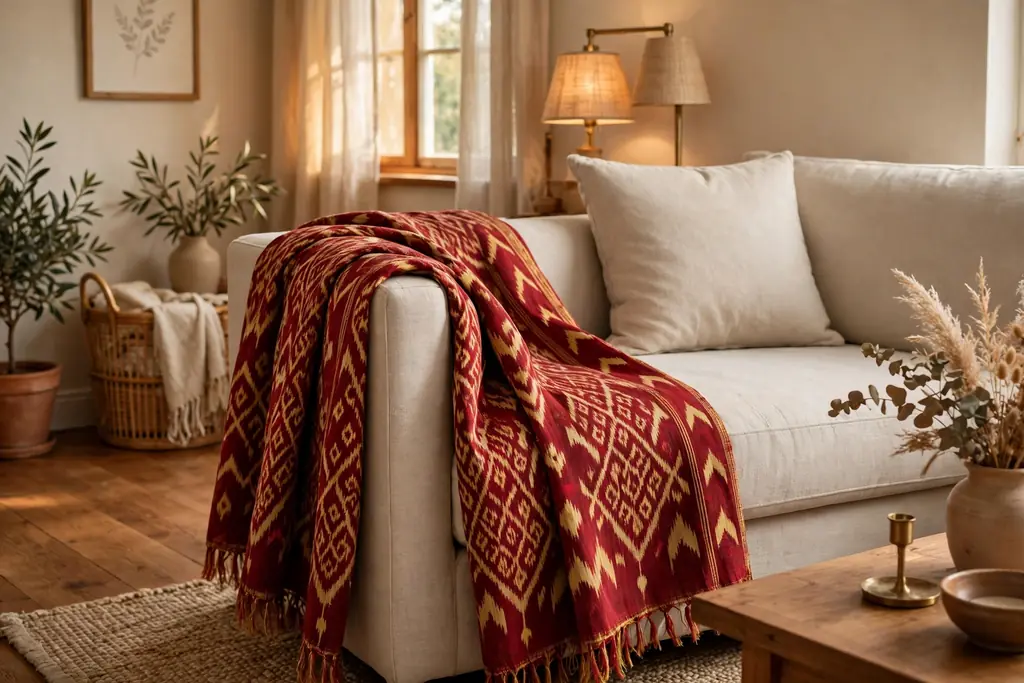
    Layer handwoven mudmee textiles, the tie-dyed ikat cloth made in Thailand, as a table runner, a throw, or a wall hanging. Mudmee patterns add color and craft in one piece, and they suit a room that already has plain wood and plain bedding. This works best as one strong textile per room, so the pattern stays a feature rather than a clash.

    Pick a mudmee piece in tones that repeat colors already in the room, such as deep red, indigo, or gold against warm white. Drape a throw over a sofa arm, or hang a runner flat on a plain wall with a simple rod, so the pattern lies smooth and easy to see. Wash woven textiles as the maker directs, since strong dyes can transfer when wet.

    8. Try a Low Platform Bed With Floor Cushions

    Try a low teak platform bed in the bedroom, with plain linen bedding and two or three floor cushions beside it for reading or dressing. A low bed keeps sight lines open across the room, which helps a small bedroom feel larger, and it suits the calm, grounded feel of Thai decor. This works with a plain wall and a simple bedside lamp, so the bed stays the focus.

    Choose a platform frame in a warm teak tone, and keep the bedding in warm white or soft sage, with one silk cushion for color. Place a low bench or a basket at the foot of the bed for extra cushions, so they stay tidy when not in use. Check that the frame sits on felt pads, so it does not mark the floor when moved for cleaning.

    9. Display Celadon and Benjarong Pottery

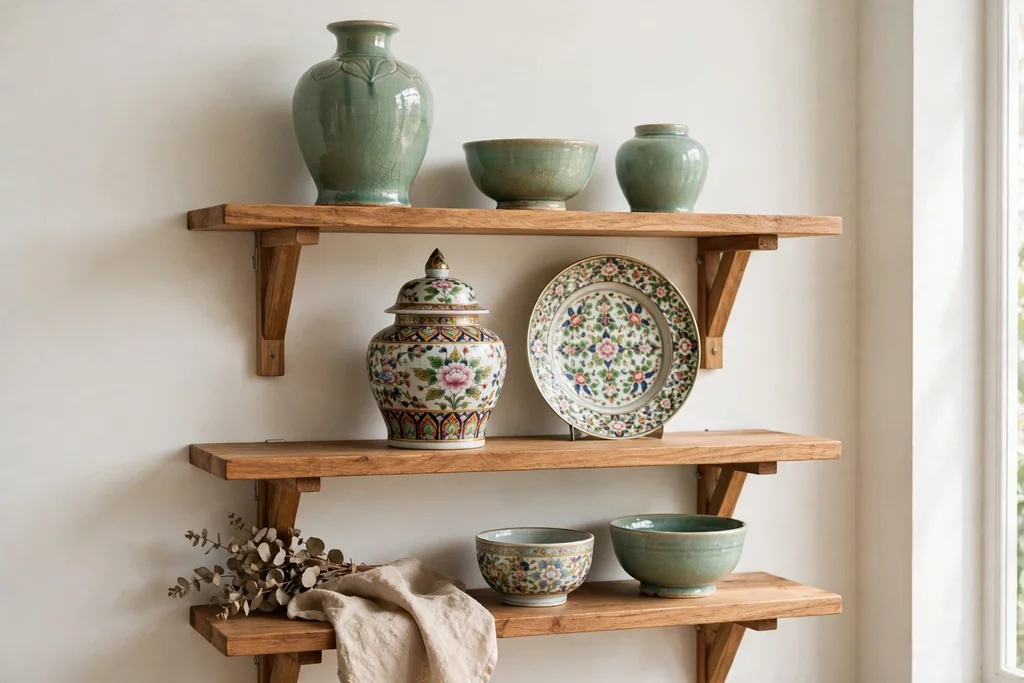
    Display a small group of Thai celadon pottery, with its soft green glaze, and one or two Benjarong porcelain pieces, with their fine painted patterns, on a shelf or a low cabinet. Celadon gives a room a calm, cool note, while Benjarong adds fine color detail, and the pair shows two sides of Thai craft. A group of three to five pieces, with space between them, suits a shelf better than a crowded collection.

    Use one or two of the pieces daily, such as a small celadon bowl, so the display stays part of life rather than a museum shelf. Keep pottery clear of the shelf edge, wash painted pieces by hand where the maker advises it, and pair the group with plain wood, so the glazes and patterns stand out. Keep the shelf itself simple, with no extra ornaments crowding the pottery.

    10. Add Temple Gold Accents in Small Doses

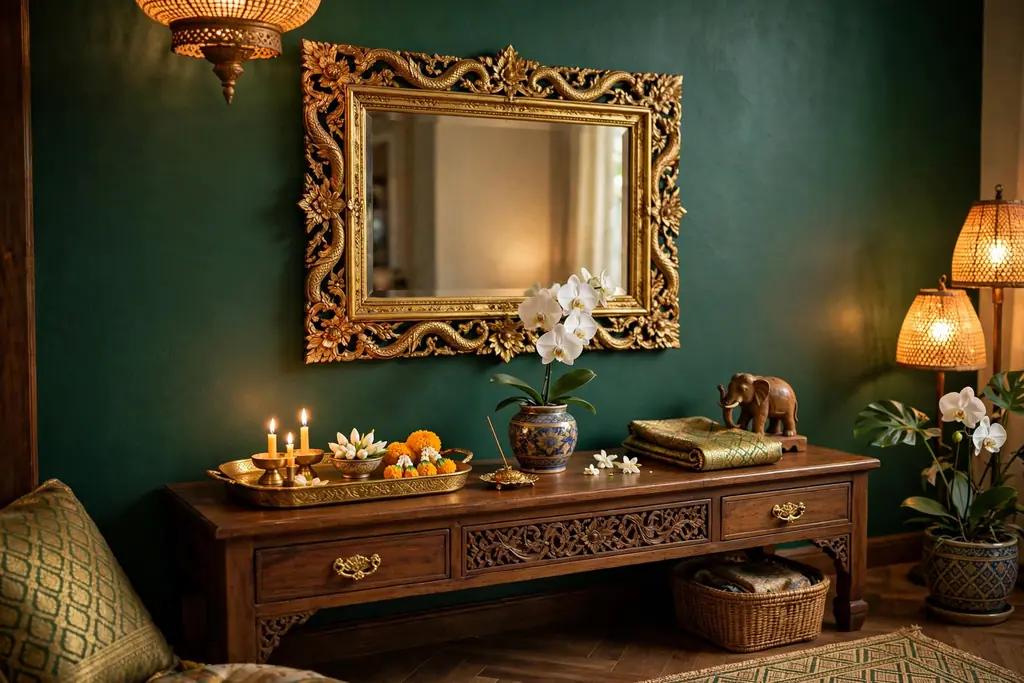
    Add gold accents in small doses, such as a gilded mirror frame, gold picture frames, or a gold-trimmed tray, against deep green or warm white walls. Gold echoes the gilded details of Thai temples, and a little gold goes a long way in a calm room. This suits a living room or a bedroom where the base palette is plain and needs one warm, bright note.

    Keep gold to three places in the room, such as a mirror, a tray, and a lamp base, so it reads as a plan rather than a random splash. Pair gold with deep green, teal, or warm brown, and keep the rest of the metal finishes in the room close in tone. Wipe gilded frames with a soft, dry cloth, and keep them out of damp spots, which can dull the finish.

    11. Fill Corners With Tall Tropical Plants

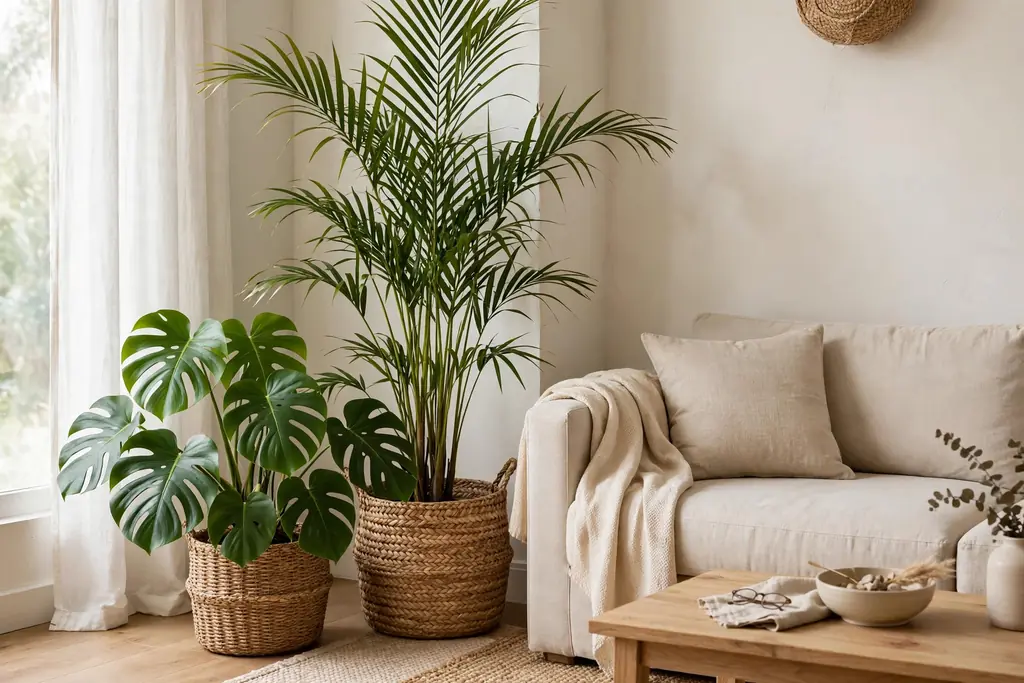
    Fill a bare corner with tall tropical plants, such as a Kentia palm, a banana leaf plant, or a monstera, in woven baskets or simple clay pots. Tall plants add green height and a tropical feel without new furniture, and they soften the hard angle where two walls meet. This suits a living room with bright, indirect light and a plain sofa wall.

    Place the tallest plant at the back of the corner and a smaller plant in front, so the group reads as one display rather than a row. Use saucers inside baskets to protect floors, and rotate pots now and then for even growth. For more ways to place plants around seating, see these living room decor ideas for plant lovers.

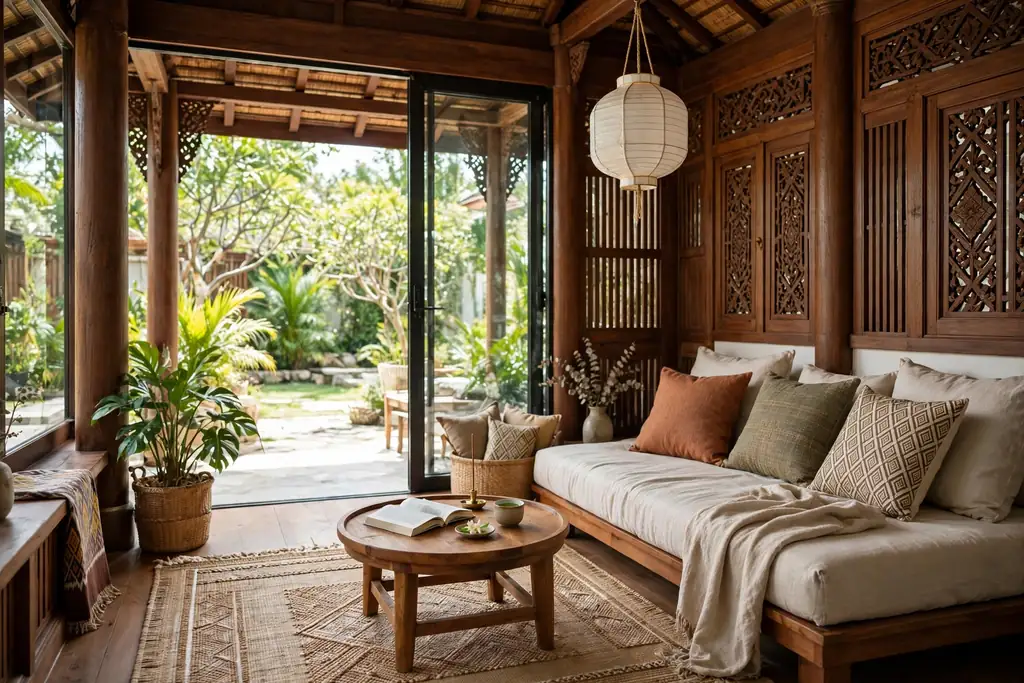
    12. Build a Sala Inspired Reading Nook

    Build a sala inspired reading nook, based on the open Thai pavilion, in a bright corner or beside a patio door, with a low daybed or floor cushions, a small teak table, and a woven rug. A nook gives you a clear spot to read, drink tea, or rest, and the open, low seating keeps the corner feeling relaxed rather than formal. This suits a room with good daylight and a view, even if the nook itself stays indoors.

    Keep the nook to one seat, one table, and one light, so it stays easy to use every day. Add a paper lantern or a small lamp for evening reading, and a basket for books and a throw, so the nook tidies in minutes. If the nook sits near a patio door, keep the walking route through the door fully clear, and use weather tolerant pots for any plants beside it. For calm, low seating ideas from a related tradition, see these Japanese living room decor ideas.

    Conclusion

    Thai home decor works best when a few warm materials and a little gold carry the room, and everything else stays plain enough to let them be seen. Start with one idea that fits your room, such as silk cushions, an orchid, or a lantern, and live with it for a week before adding more. Add teak, rattan, and woven textiles in small steps, repeat each material twice, and keep the light warm and low in the evening. Save this list to your Thai decor board on Pinterest so you can find it when you are ready for the next room.

    FAQs

    What colors work best for Thai home decor?

    Warm white, deep green, teal, gold, and soft brown form a reliable Thai palette. Use warm white and wood as the base, add deep green or teal in cushions and plants, and use gold in small doses for frames and trays. Keep the palette to four or five tones in one room, so carved wood and silk patterns stay easy to see.

    How do I add Thai decor without making the room look busy?

    Add one strong Thai piece per zone, such as a carved panel on one wall or a silk throw on one sofa, and keep the surfaces around it plain. Repeat one material twice, rather than adding a new pattern in every corner, and leave empty space on shelves and walls. If a room starts to feel busy, remove one patterned piece before adding another.

    Is teak furniture hard to care for?

    Teak is a durable hardwood, and indoor teak needs only simple care. Dust it with a soft, dry cloth, wipe spills promptly, and use felt pads under lamps and cups. Keep teak out of standing water and strong, direct sun where possible, and follow the maker guidance for any oil or sealant, since finishes differ between pieces.

    Can Thai decor work in a small room?

    Yes, if you choose light pieces and keep the palette calm. Use silk cushions, a paper lantern, an orchid, and a woven basket, rather than a large carved screen or a heavy teak cabinet. Use low seating and one tall plant in a corner, keep walking routes clear, and let one wall carry the main detail while the other walls stay plain.

    Are orchids hard to keep alive indoors?

    Orchids suit bright, indirect light and a steady routine, and they are not hard to keep if you match water to the plant label. Water only when the potting mix feels dry, keep the plant clear of cold drafts and hot radiators, and do not let the pot sit in standing water. When blooms fade, keep the leaves healthy and the plant will usually bloom again in time.

    How much gold is too much in Thai decor?

    Gold works best as an accent, not as the main color. Keep gold to two or three places in a room, such as a mirror frame, a tray, and a lamp base, and pair it with deep green, warm white, or wood. If gold appears on every surface, it stops reading as an accent, so remove one gold piece and let the remaining pieces carry the look.


  • 32 Calming Bedroom Color Schemes to Refresh Your Home’s Look

    32 Calming Bedroom Color Schemes to Refresh Your Home’s Look

    Color sets the mood of a bedroom before any furniture does. A calm scheme does not mean a colorless room: it means one soft color leads, one or two quiet colors support it, and the rest of the room stays plain enough for the eye to rest. These 32 calming bedroom color schemes cover walls, bedding, furniture, and small accents, so you can start with bedding for a quick refresh or plan a full repaint. Test paint and fabric samples in daylight and lamplight before you commit, since soft colors shift a lot with light, and keep one surface plain in every scheme so the palette has room to breathe.

    Key Takeaways

    • Let one color lead per room: a wall color, a headboard, or a bedding set, with the other colors in smaller doses.
    • Keep the palette to three or four colors at most, and repeat each color at least twice so the room looks planned.
    • Use warm white or cream as the base in most schemes, since it softens strong colors and keeps pale colors from feeling cold.
    • Pair every color with texture, such as linen, wool, wood, or rattan, so a quiet palette still feels layered.
    • Test samples in daylight and lamplight, since soft blues, greens, and greys can look very different at night.
    • Start with bedding or cushions for a quick refresh, and save walls and large furniture for a bigger project.

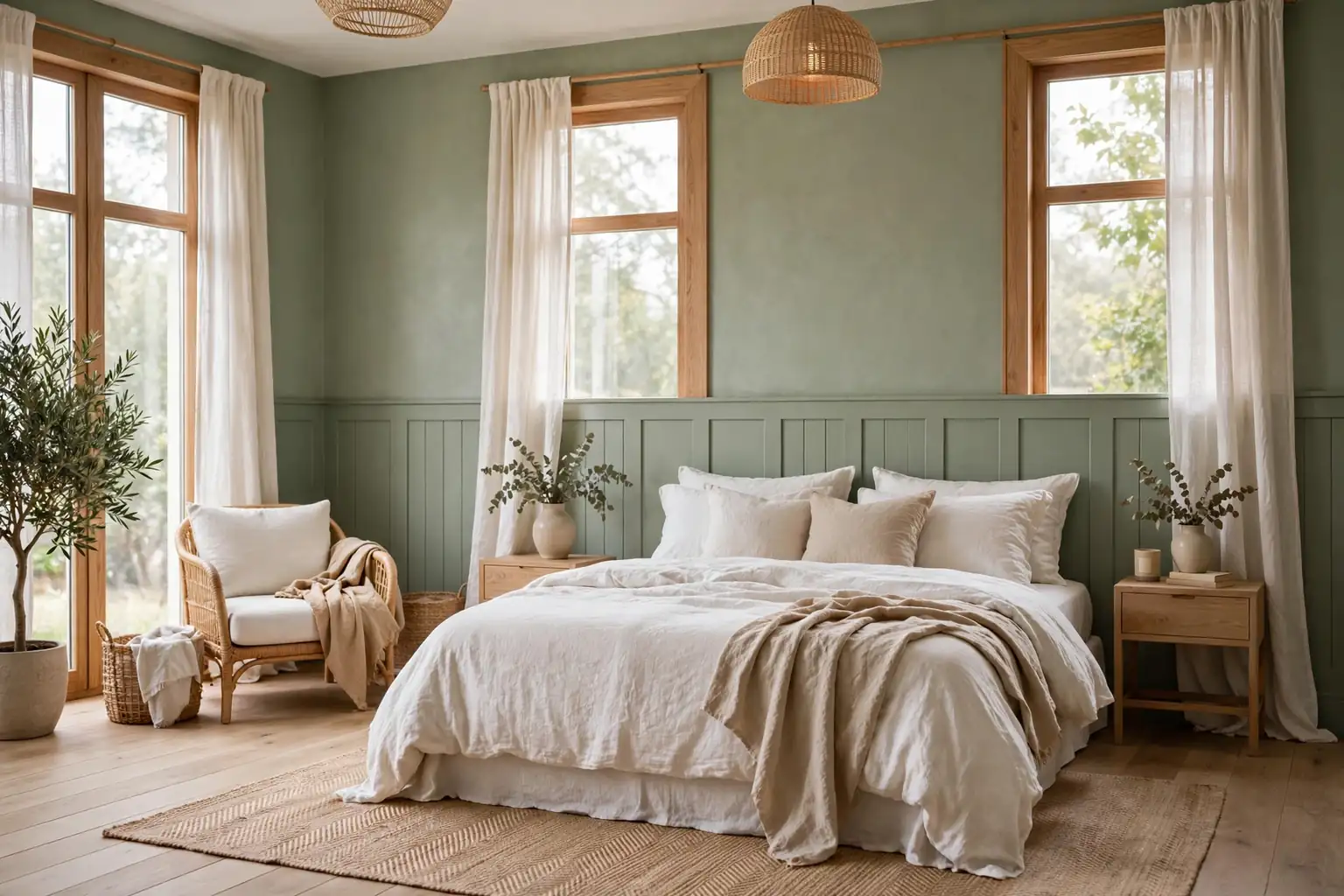
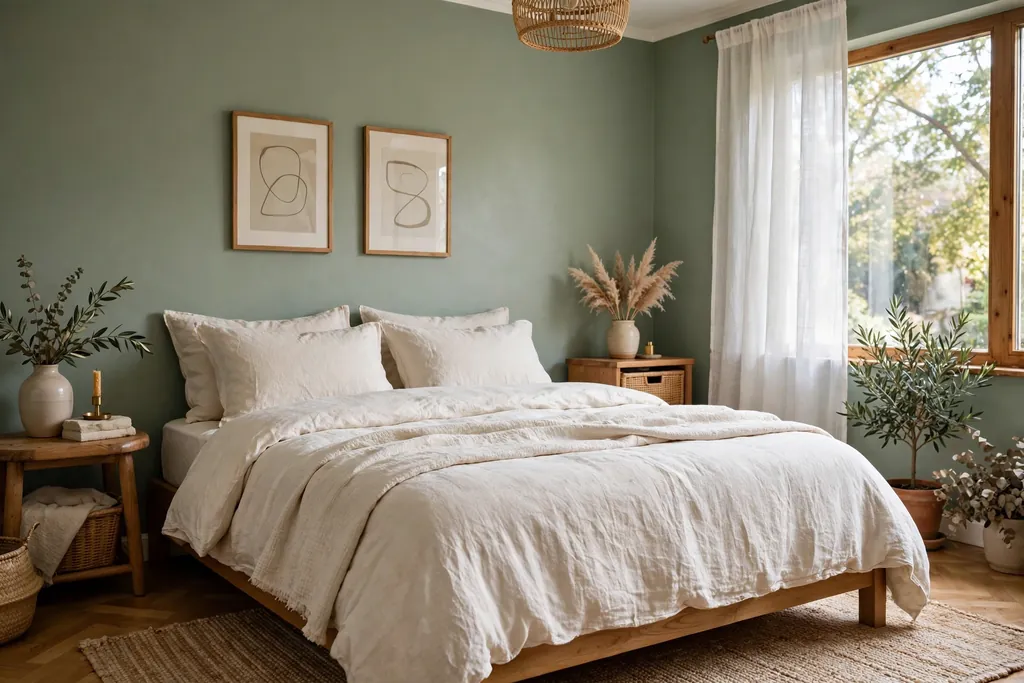
    1. Sage Green Walls With Warm White Bedding

    Bedroom with sage green walls and warm white linen bedding.

    Paint the walls soft sage green and dress the bed in warm white linen for a scheme that feels fresh and settled at once. Sage sits between green and grey, so it reads as a color without shouting, and white bedding keeps the bed light against the green walls. This suits a bedroom with good daylight, where the green stays lively rather than dull.

    Keep the furniture in pale wood or warm white, and repeat the sage once more in a cushion or a throw at the foot of the bed. Use warm white bulbs in the evening, since cool light can push sage toward grey. If the room is small, paint only the bed wall sage and keep the other walls warm white, so the color frames the bed without closing the room in.

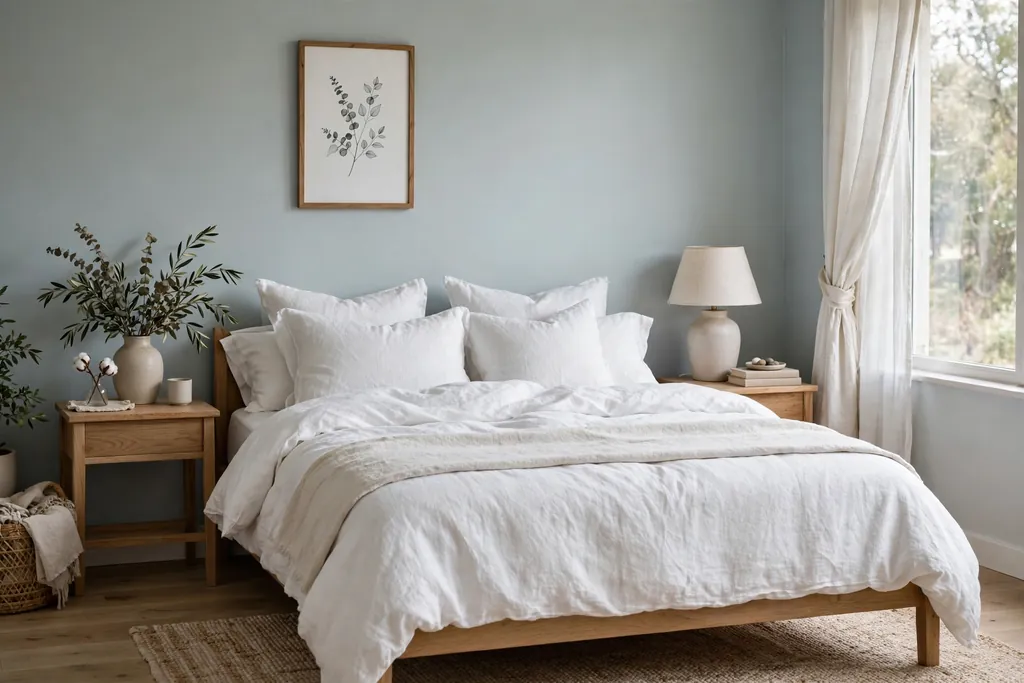
    2. Pale Blue Grey Walls With White Linen

    Bedroom with pale blue grey walls and white linen bedding.

    Paint the walls a pale blue grey and use plain white linen bedding for a cool, quiet room that still feels soft. The grey in the blue keeps it from feeling icy, while white bedding and pale wood furniture warm the edges. This suits a bedroom that gets warm afternoon sun, since the cool walls balance the light.

    Keep curtains in white or a very pale blue, and add one dusty blue cushion so the wall color appears on the bed too. For a related blue pairing with a warmer base, see these blue and cream bedroom ideas. Avoid bright blue accessories here, since one strong item can break the calm balance of the whole room.

    3. Warm Greige Walls With Ivory Bedding

    Bedroom with warm greige walls and ivory bedding.

    Use warm greige, a mix of grey and beige, on the walls with ivory bedding for a neutral scheme with more depth than plain beige. The warm undertone keeps the grey from feeling cold, and ivory sheets and a soft throw give the bed a gentle glow. This suits a bedroom with mixed wood tones, since greige sits well beside both pale and mid wood.

    Repeat the greige in a cushion or a rug, and keep the wood in one tone range so the room reads as calm rather than patched together. Choose a greige with a warm, not pink, undertone if your room gets cool northern light. A plain ivory rug by the bed finishes the scheme without adding a new color.

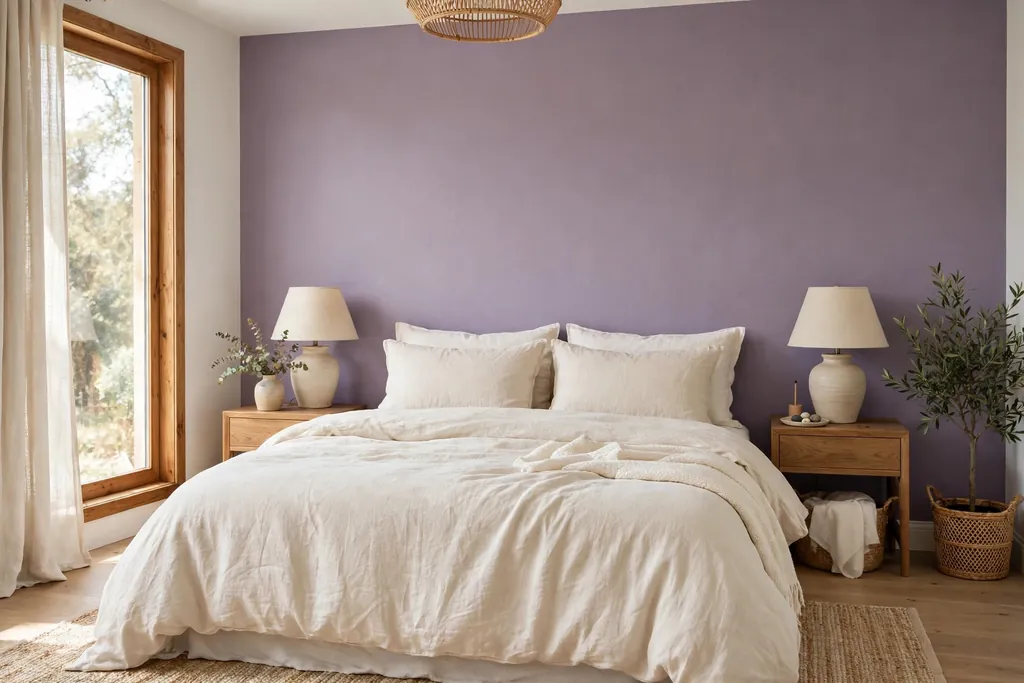
    4. Dusty Lavender Accent Wall With Cream Bedding

    Bedroom with a dusty lavender accent wall and cream bedding.

    Paint one dusty lavender accent wall behind the bed and keep the other walls and the bedding cream for a soft, restful scheme with a gentle color note. Dusty lavender reads as grey first and purple second, so it feels calm rather than sweet, and cream bedding stops it from feeling cold. This suits a bedroom where a full lavender room would feel like too much.

    Hang two simple framed prints on the lavender wall, in cream and soft grey, so the bed zone feels finished. Keep cushions in cream and one dusty lavender tone, and avoid bright purple or silver accessories, which can push the scheme toward a sharper look. Test the paint at night, since lavender can look greyer under lamplight.

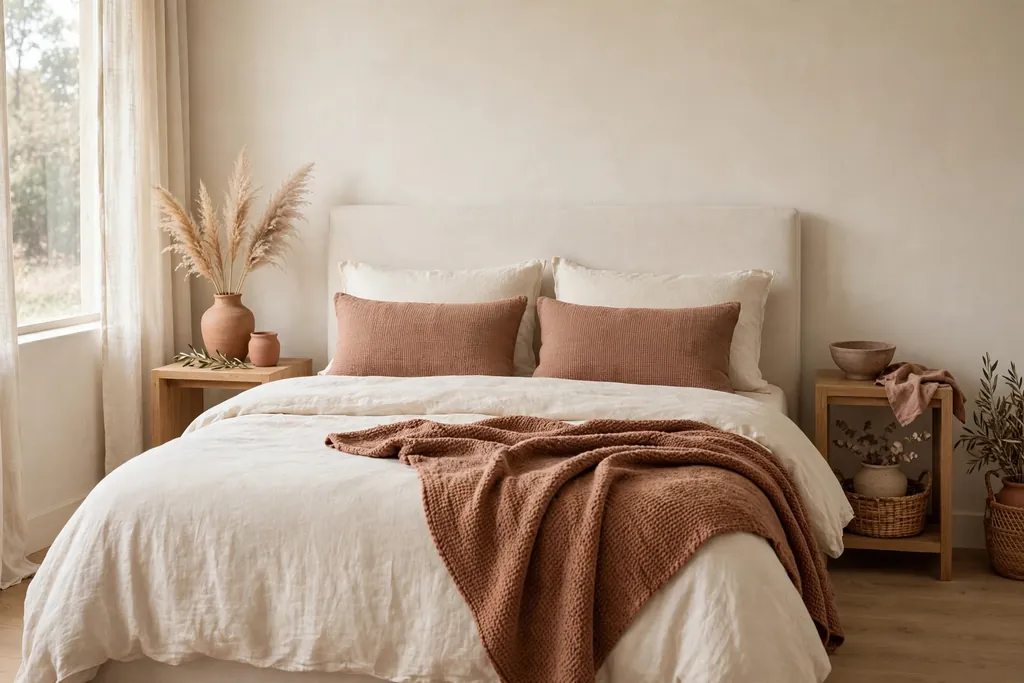
    5. Cream Base With Muted Clay Cushions

    Cream bedroom bed with muted clay cushions and a clay throw.

    Keep walls, bedding, and furniture cream and add muted clay cushions and a clay throw for warmth in small, changeable doses. Clay, a soft terracotta with brown in it, warms a cream room without the heat of a bright orange, and because it appears only on the bed, you can swap it out with the seasons. This suits a renter or a reader who likes to refresh a room often.

    Use two clay cushions and one clay throw, and repeat the clay once more in a small vase or a picture frame, so the color looks planned rather than random. Keep the rest of the bedding plain cream, and use wood or rattan beside the bed to echo the earthy tone. Wash cushion covers on a regular cycle, since cream shows marks sooner than darker colors.

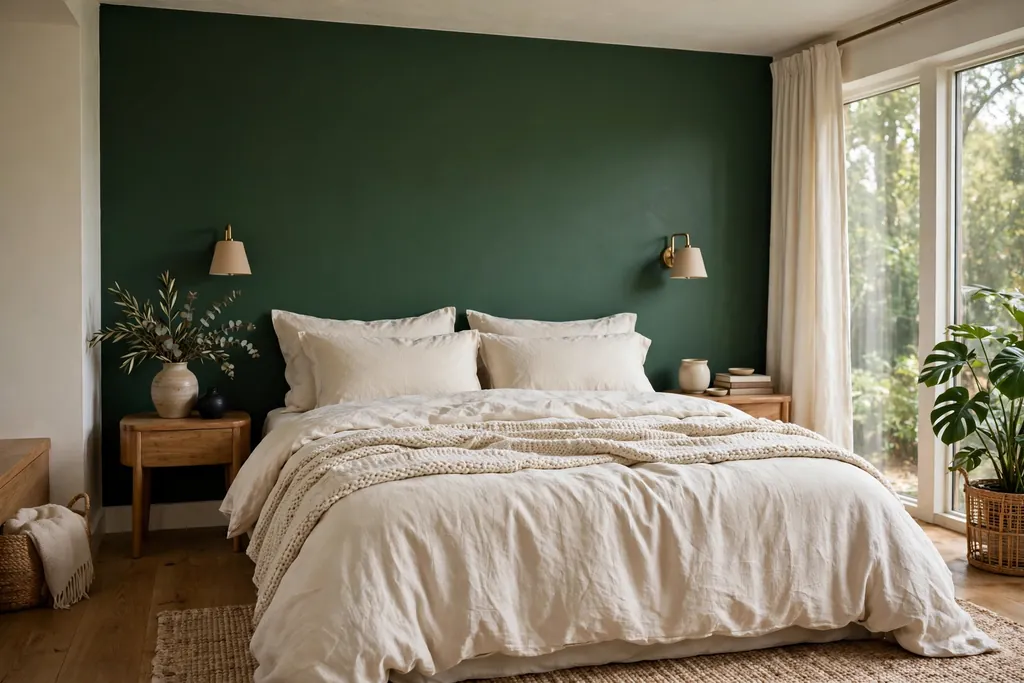
    6. Forest Green Accent Wall With Cream Bedding

    Bedroom with a forest green accent wall and cream linen bedding.

    Paint the bed wall deep forest green and dress the bed in cream linen for a scheme with a strong anchor and a soft center. The dark green gives the room depth and makes cream bedding glow, while pale wood nightstands and cream lamps keep the dark wall from feeling heavy. This suits a larger bedroom with good daylight, where a dark wall adds drama without shrinking the room.

    Keep the other walls warm white, and repeat the green once in a cushion or a plant by the window, so the accent wall does not stand alone. Use warm bulbs and a bedside lamp on each side, since a dark wall needs even light at night. If the room is small, use the green on a narrower bed wall or on a headboard panel instead of the full wall.

    7. Blush Pink Bedding on Warm White Walls

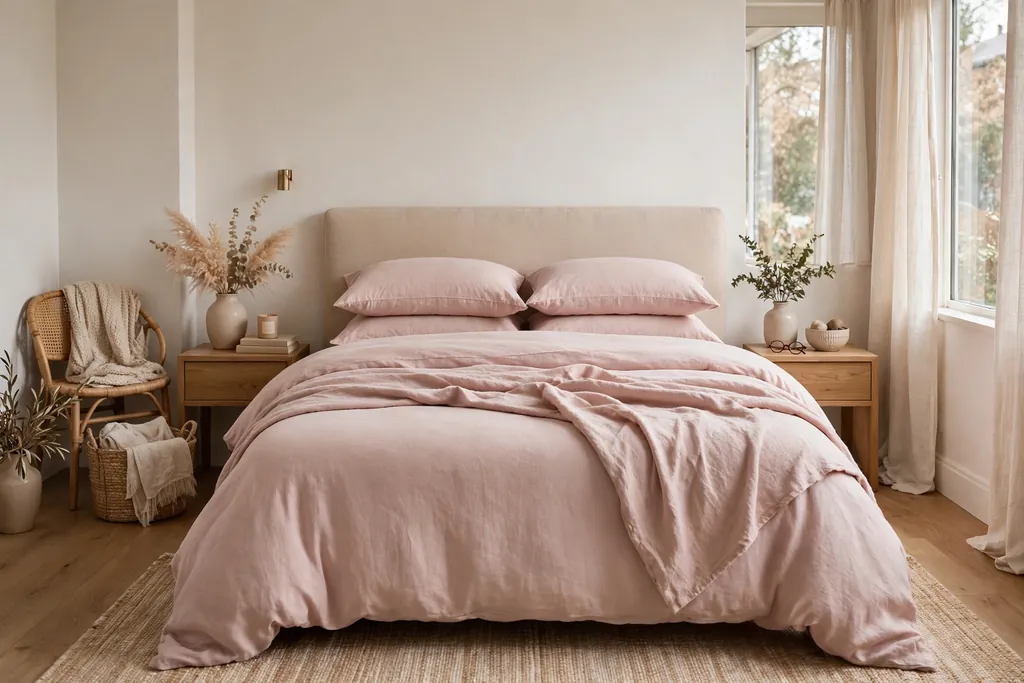
    Bedroom with muted blush pink bedding and warm white walls.

    Dress the bed in muted blush pink bedding against warm white walls for a gentle, warm scheme that feels soft rather than girlish. Muted blush has grey and beige in it, so it reads as a warm neutral, and warm white walls keep the room bright. This suits a bedroom with pale wood furniture, where the pink adds warmth without a repaint.

    Layer blush sheets, a blush duvet, and a cream throw, and keep cushions in blush and cream only, so the bed stays calm. Add a wood tray or a rattan basket beside the bed to ground the soft colors with a natural texture. Avoid hot pink or gold accessories here, since strong colors can quickly undo the quiet mood.

    8. Seafoam Walls With White Bedding and Rattan

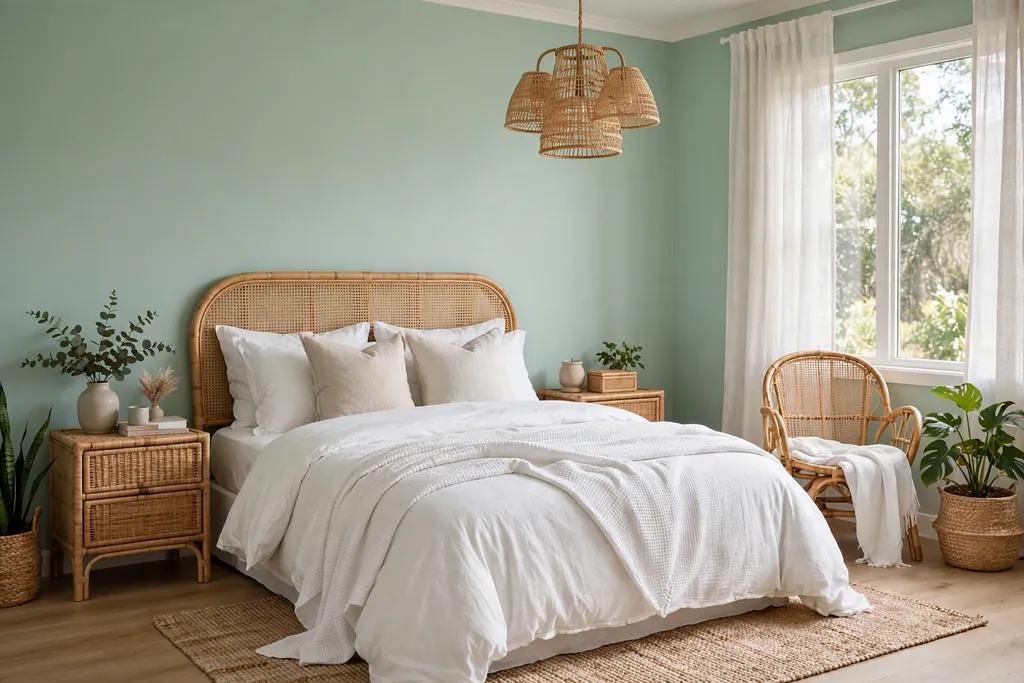
    Bedroom with seafoam walls, white bedding, and rattan furniture.

    Paint the walls pale seafoam green and pair them with white bedding and rattan furniture for a light, coastal calm. Seafoam sits between blue and green, so it feels fresh in daylight, and rattan adds woven warmth that stops the pale walls from feeling bare. This suits a bedroom with white trim and a light floor, where the scheme can stay airy.

    Use a rattan headboard or a rattan pendant light as the main woven piece, then repeat rattan once in a basket or a tray. Keep bedding plain white, with one seafoam cushion, and use sheer white curtains so daylight still fills the room. Dust woven pieces with a dry cloth, and keep rattan out of damp corners, since it can warp over time.
    9. Tone on Tone Taupe From Ivory to Deep Taupe

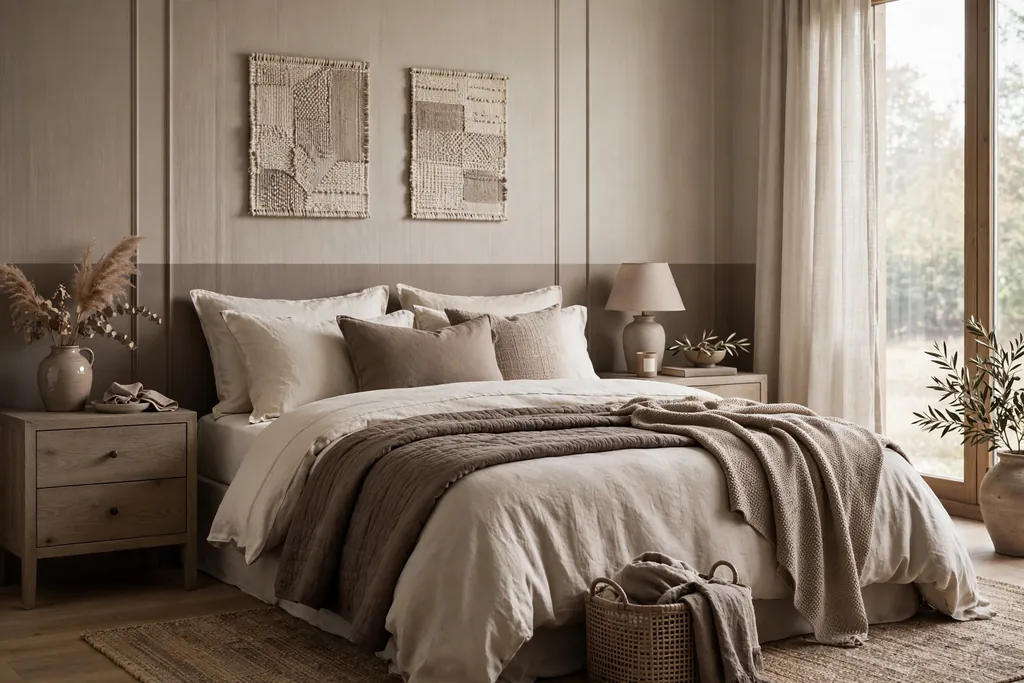
    Bedroom in tone on tone taupe from ivory to deep taupe.

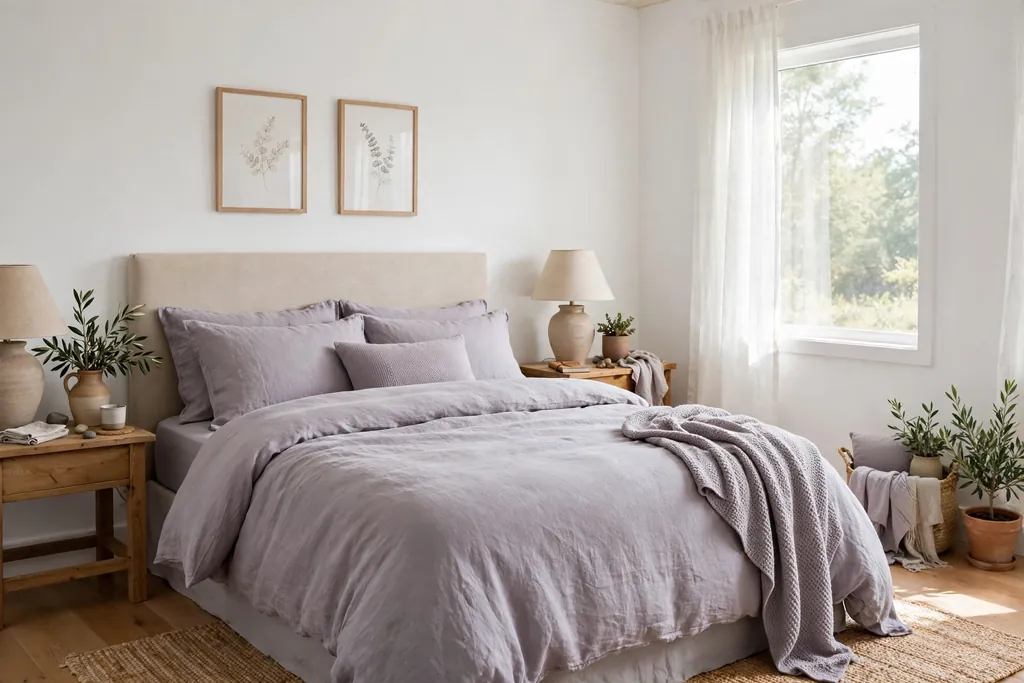
    Build the room in taupe shades from ivory to deep taupe, across walls, bedding, curtains, and rugs, for a calm scheme built on small steps of color. No single piece stands out, but the room as a whole feels layered, since each shade differs just enough from the next. This suits a bedroom where you want a hotel-like calm without a feature wall or a bright accent.

    Start with ivory walls or bedding, move to warm taupe for curtains and furniture, and finish with deep taupe cushions and a throw. Vary texture at every step, with smooth cotton sheets, nubby wool, matte paint, and woven baskets, all in taupe tones, so the room does not flatten. For a wider warm neutral base in the same spirit, see these beige bedroom ideas. If two shades blend into one in daylight, swap one item a shade darker or lighter.

    10. Slate Grey Bedding on White Walls

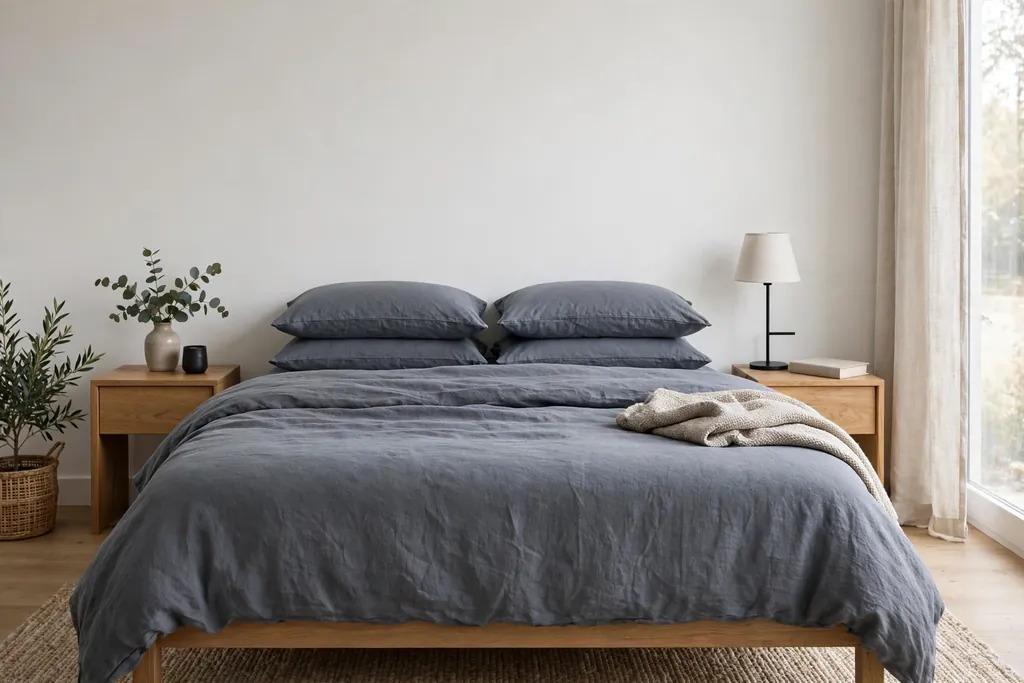
    Bedroom with slate grey bedding and plain white walls.

    Dress the bed in soft slate grey bedding against plain white walls for a clean, modern calm that suits almost any furniture. Slate grey is muted enough to rest the eye, and white walls keep the room bright, while the grey bedding gives the bed a clear presence. This suits a bedroom with grey floors or a grey rug, where the bedding can link the floor to the bed.

    Layer slate grey sheets with a lighter grey throw, and keep cushions in grey and white only, so the bed reads as one calm block. Warm the scheme with pale wood nightstands and warm white lamps, since grey and white alone can feel cool at night. Avoid black bedding here, which would push the scheme from calm to stark.

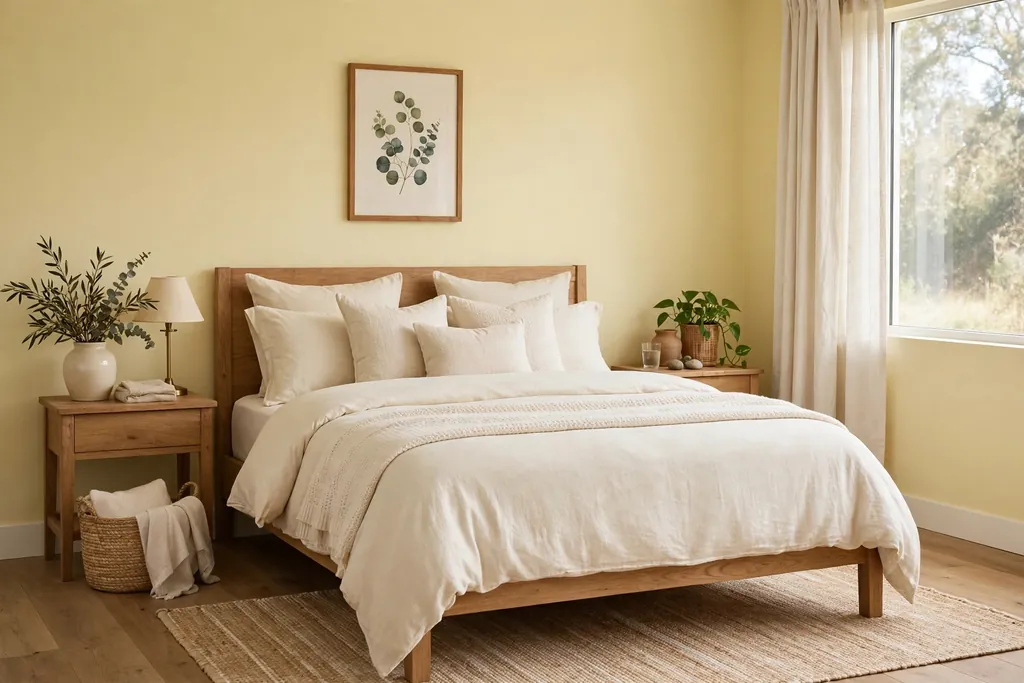
    11. Butter Yellow Walls With Cream Bedding

    Bedroom with pale butter yellow walls and cream bedding.

    Paint the walls pale butter yellow and use cream bedding for a warm, sunny calm that suits a bedroom short on daylight. Butter yellow has enough warmth to lift a dim room, but at a pale strength it stays soft rather than loud, and cream bedding keeps the bed gentle. This suits a north-facing bedroom or a small room that needs light.

    Keep furniture in pale wood or warm white, and repeat the yellow once in a cushion or a small vase, so the wall color appears on the bed too. Use cream curtains rather than yellow ones, so the window does not add a second block of yellow. Test the paint in morning light, since yellow can look stronger in direct sun than on a small swatch.

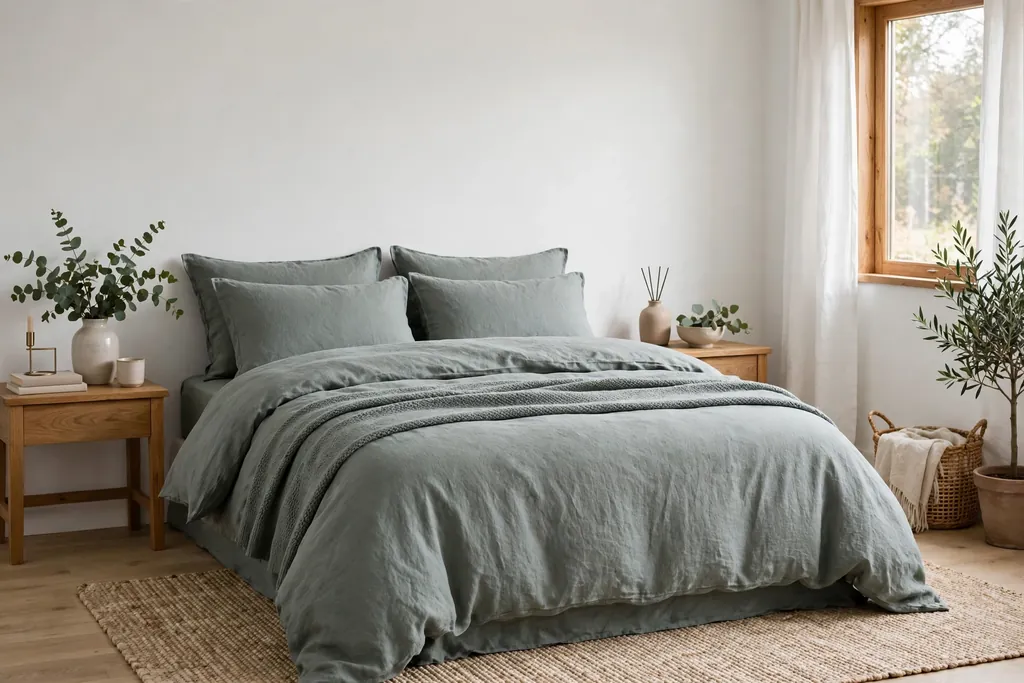
    12. Eucalyptus Bedding on White Walls

    Bedroom with eucalyptus green bedding and white walls.

    Use eucalyptus green bedding, a soft grey green, on white walls for a calm scheme that needs no paint at all. The bedding carries the color, while white walls and pale wood furniture keep the room bright, and the grey in the green keeps it restful rather than vivid. This suits a renter or a reader who wants a green room without repainting.

    Layer eucalyptus sheets, a matching duvet, and a cream throw at the foot, and add one eucalyptus cushion in a slightly deeper tone for depth. Keep the rug plain cream or pale grey, and add a real plant by the window to echo the green in a natural form. Wash the bedding on a regular cycle, since pale green shows dust more than a deeper shade.

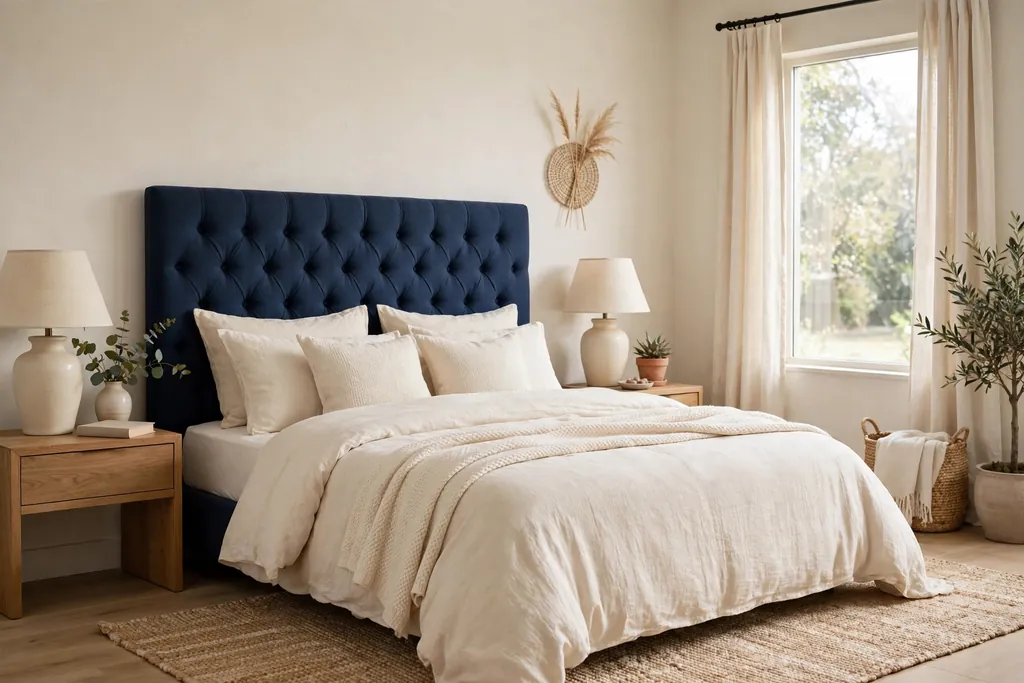
    13. Navy Headboard With Cream Bedding

    Bedroom with a navy upholstered headboard and cream bedding.

    Choose a navy upholstered headboard with cream bedding for a classic calm scheme where the color sits in one strong, useful piece. The navy headboard anchors the bed wall without paint, while cream bedding and pale wood nightstands keep the bed light. This suits a main bedroom where the bed sits against a long blank wall and needs a focal point.

    Keep the walls warm white or very pale grey, and repeat the navy once in a cushion or a throw, so the headboard does not stand alone. Use cream lampshades for warm evening light, since navy can look cold under cool bulbs. Measure the headboard width against the bed and the wall, since a headboard that is too narrow looks lost and one that is too wide crowds the nightstands.

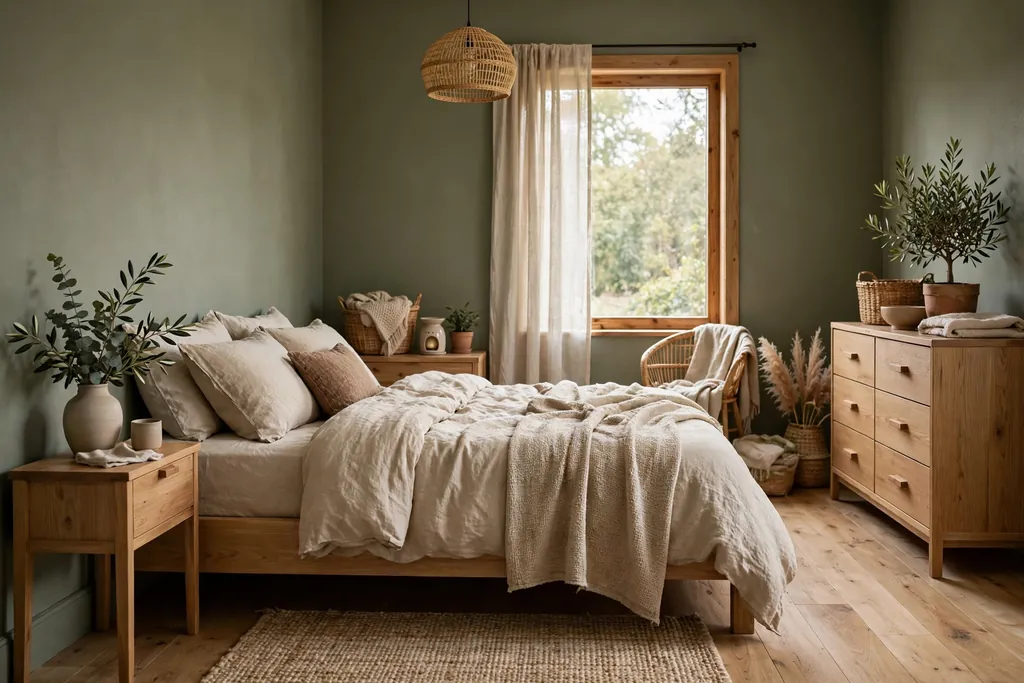
    14. Olive Green Walls With Natural Wood Furniture

    Bedroom with muted olive green walls and natural wood furniture.

    Paint the walls muted olive green and use natural wood furniture for an earthy calm that feels grounded and warm. Olive has yellow and brown in it, so it pairs naturally with wood grain, and cream bedding keeps the room from feeling dark. This suits a bedroom with wood floors, where the wall color and the floor can share a warm base.

    Keep the wood in one tone range, such as mid oak, across the bed, nightstands, and dresser, so the room reads as calm rather than busy. Repeat the olive once in a cushion or a throw, and use cream curtains to let daylight soften the green. Avoid bright green plants in large numbers here, since vivid green can clash with the muted olive.

    15. Lilac Grey Bedding on White Walls

    Bedroom with lilac grey bedding and white walls.

    Dress the bed in lilac grey bedding, a lavender softened with grey, against white walls for a cool, quiet scheme with a gentle color note. The grey keeps the lilac restful, and white walls and pale furniture keep the room bright, so the bed becomes the one colored surface. This suits a bedroom with white or pale grey furniture, where the bedding can carry the palette.

    Layer lilac grey sheets with a white duvet, and add two lilac grey cushions in slightly different tones for depth. Keep the rug plain white or pale grey, and use warm white lamps at night, since cool light can push lilac grey toward a colder blue. If the lilac feels too cool, swap one cushion for a warm cream one to soften the bed.

    16. Soft Peach Walls With Cream Bedding

    Bedroom with soft peach walls and cream linen bedding.

    Paint the walls soft peach and dress the bed in cream linen for a warm, gentle scheme that suits a bedroom that feels cold or stark. Soft peach has enough warmth to glow in morning light, but at a pale strength it stays calm, and cream bedding keeps the bed from competing with the walls. This suits a bedroom with white trim and pale wood furniture.

    Keep cushions in peach and cream only, and use a cream rug so the floor does not add a new color. Repeat the peach once in a small vase or a framed print, so the wall color appears elsewhere in the room. Avoid coral or bright orange accessories, which can push this soft scheme toward a much louder look.
    17. Cool White Walls With Pale Wood Furniture

    Bedroom with cool white walls, pale wood furniture, and white bedding.

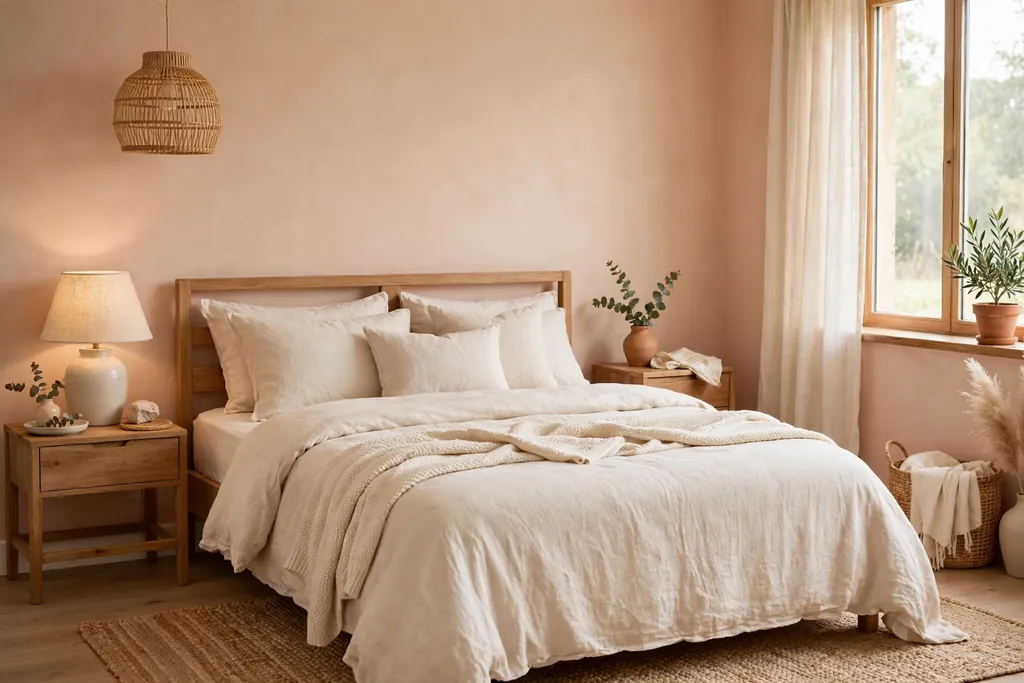
    Use cool white walls with pale wood furniture and white bedding for a Scandinavian calm built on light and natural texture. The white walls bounce daylight around the room, pale wood adds warmth through grain rather than color, and plain white bedding keeps the bed quiet. This suits a small bedroom or a room with one window, where light matters most.

    Add texture through linen bedding, a wool throw, and a woven rug, since a white room without texture can feel bare. Keep accessories to pale wood, rattan, and cream, and leave some surfaces empty, so the room feels open rather than styled to the edge. Use warm white bulbs in the evening, since cool white walls can feel stark under cool light.

    18. Teal Cushions and Throw on a White Bed

    White bedroom bed with deep teal cushions and a teal throw.

    Keep walls, bedding, and furniture white and cream, and add deep teal cushions and a teal throw for a calm jewel note in small doses. Teal, a blue green with depth, gives a white room a clear accent without repainting, and because it appears only on the bed, it is easy to change. This suits a bedroom with white furniture, where one rich color can anchor the bed.

    Use two teal cushions and one teal throw, and repeat the teal once in a small vase or a book cover on the nightstand. Keep the rest of the room plain, with pale wood or white furniture, so the teal reads as a deliberate accent. Avoid pairing teal with bright yellow or red here, since strong second accents can break the calm balance.

    19. Sage and Blush Combined Bedding

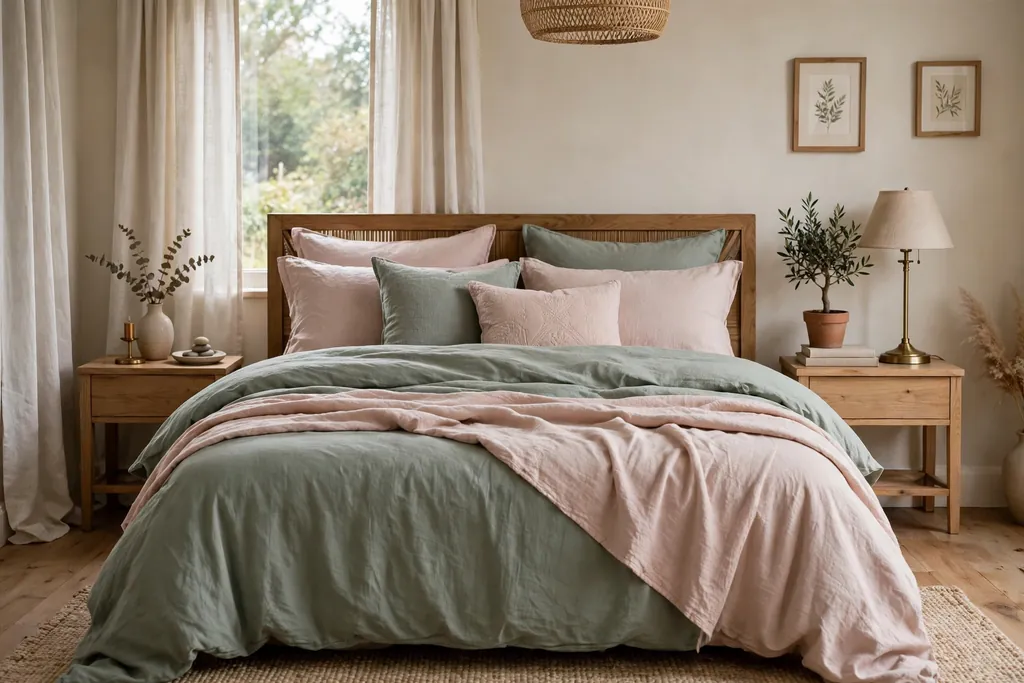
    Bedroom bed with sage green and muted blush pink bedding.

    Combine sage green and muted blush pink bedding on a warm white base for a soft, natural pairing that feels like a garden in muted tones. Sage cools the scheme while blush warms it, and warm white sheets underneath keep the two colors from competing. This suits a bedroom with pale wood furniture and cream walls, where the bed can carry the whole palette.

    Use sage for the duvet and blush for two cushions, or the reverse, and keep the ratio close to two parts sage to one part blush, so one color still leads. Add a cream throw at the foot to separate the colors on the bed, and keep the rug plain cream. If the pairing feels too sweet, swap one blush cushion for a sage one to cool the bed down.

    20. Stone Grey Walls With White Bedding and Wood Accents

    Bedroom with warm stone grey walls, white bedding, and wood accents.

    Paint the walls warm stone grey and pair them with white bedding and mid wood accents for a calm, grounded scheme with a natural edge. Stone grey has warm undertones that suit wood, white bedding keeps the bed bright, and wood nightstands and a wood-framed mirror add warmth. This suits a bedroom with wood floors, where the wall color and the floor share a warm base.

    Hang a small gallery of prints in wood frames above the dresser or bed, in soft grey and cream, so the wall has interest without a new color. For gallery wall ideas in a calm palette, see these bedroom wall art ideas. Keep cushions in stone grey and white, and use warm white lamps, since grey walls can look cold under cool bulbs.

    21. Pale Mint Walls With Cream Linen Curtains

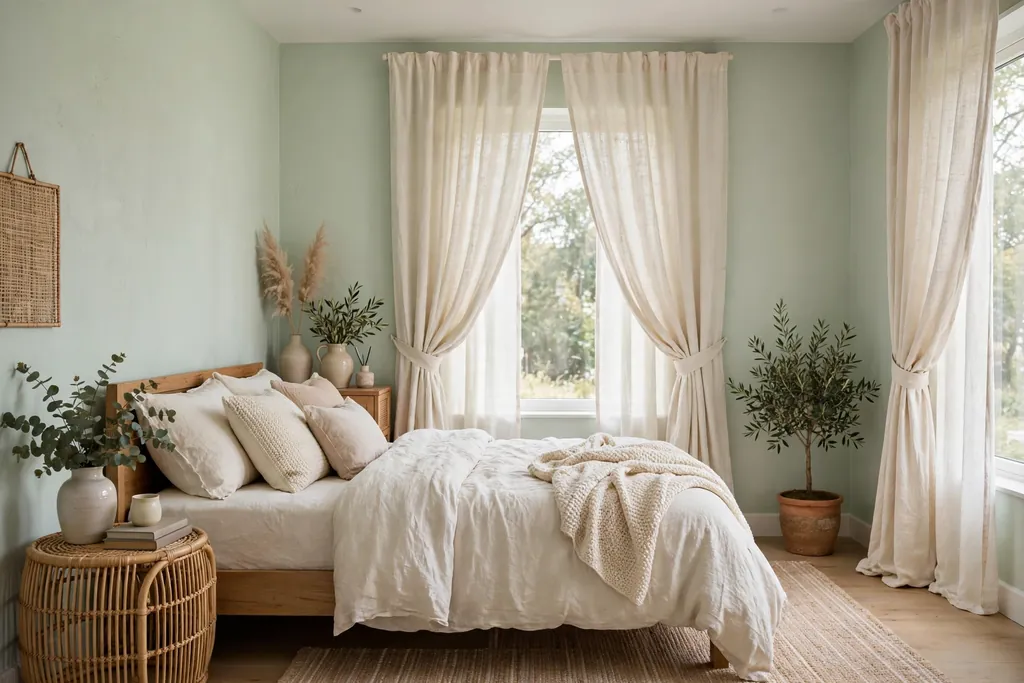
    Bedroom with pale mint walls and cream linen curtains.

    Paint the walls pale mint green and hang cream linen curtains for a fresh, airy scheme that suits a bedroom with a large window. Mint is a light green with a cool edge, so it feels clean in daylight, and cream linen softens the window and warms the room. This suits a bedroom with white trim, where the mint can stay the one clear color.
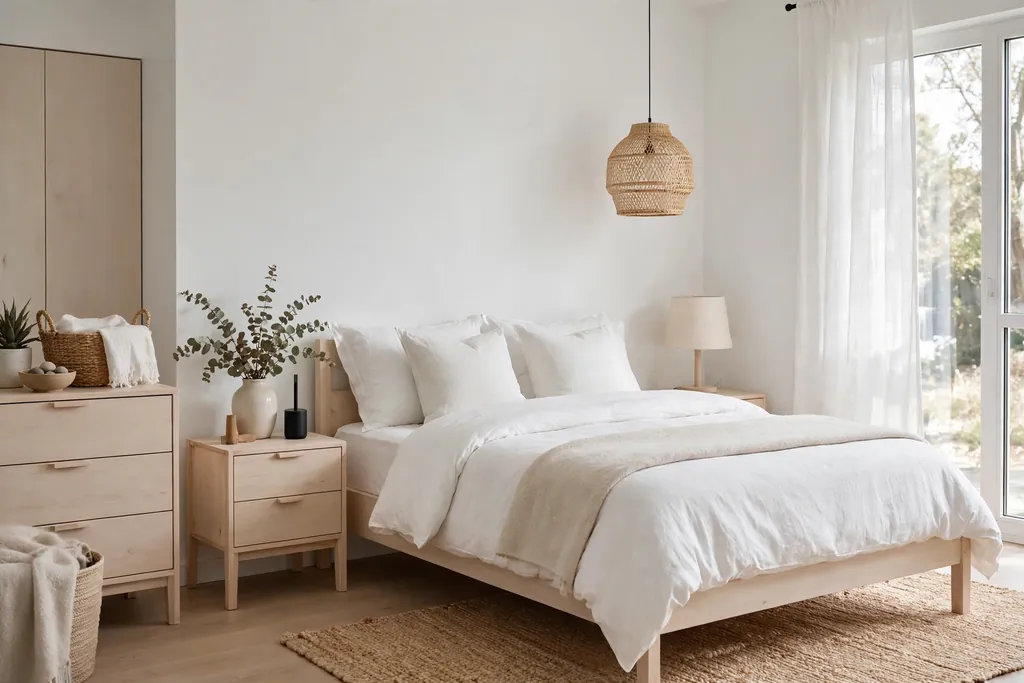
    Keep bedding in cream and white, with one mint cushion, so the wall color appears on the bed too. Hang the curtain rod high and wide, so the window looks larger and the panels clear the glass when open. For more curtain fabrics, lengths, and hanging tips, see these bedroom curtain ideas. Use a sheer cream layer behind the linen if the room faces a street, so daytime privacy does not block the light.

    22. Warm White and Natural Linen Throughout

    Bedroom in warm white and natural linen with pale wood furniture.

    Use warm white walls, natural linen bedding, and undyed linen curtains for a calm scheme built entirely on warm neutrals and texture. With no strong color at all, the interest comes from the weave of the linen, the grain of pale wood, and the soft shadows of the room. This suits a bedroom where color feels like too much, or a room you want to keep flexible for future accents.
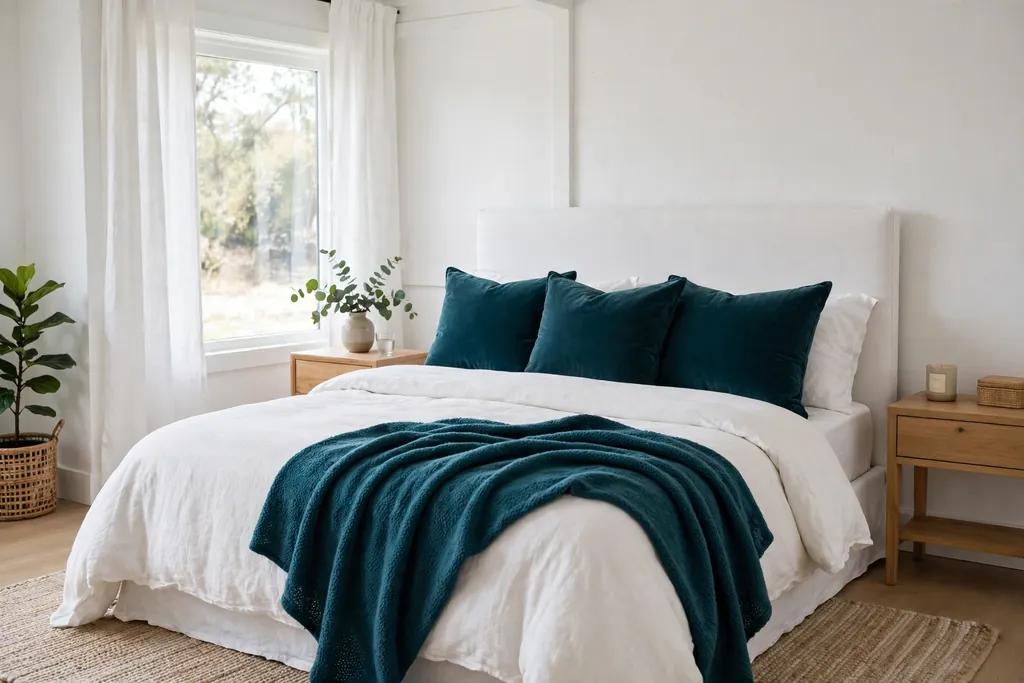
    Layer natural linen sheets, a cream duvet, and a wool throw in oatmeal, and keep furniture in pale wood or warm white. Add a woven rug and a rattan basket, so the room has at least three textures even though the colors stay close. Use warm white bulbs throughout, since cool light can make an all-white room feel stark at night.

    23. Dusty Rose Walls With Cream Bedding

    Bedroom with dusty rose walls and cream linen bedding.

    Paint the walls dusty rose, a pink softened with grey and beige, and dress the bed in cream linen for a warm, mature scheme that feels restful rather than bright. Dusty rose glows gently in daylight, and cream bedding keeps the bed light against the colored walls. This suits a bedroom with warm wood furniture, where the rose can share a warm base with the wood.

    Keep cushions in dusty rose and cream, and use a cream rug so the floor stays quiet. Repeat the rose once in a small vase or a framed print, so the wall color appears elsewhere in the room. Avoid bright pink or red accessories, which can push this muted scheme toward a much bolder look.
    24. Pale Blue Walls With Sand Bedding

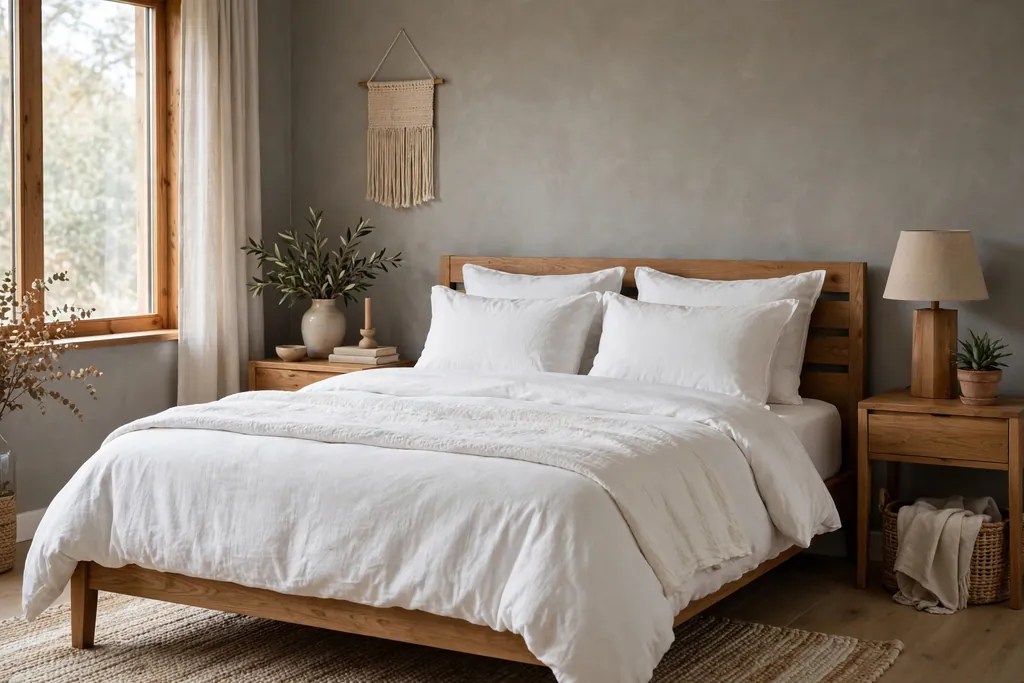
    Bedroom with pale blue walls and sand colored bedding.

    Pair pale blue walls with sand colored bedding for a coastal calm that feels like sky over a beach, without any beach-themed decor. The pale blue cools the room, sand warms the bed, and white trim between them keeps the pairing clean. This suits a bedroom with a light floor and white furniture, where the two colors can stay the whole story.

    Use sand for the duvet and pale blue for two cushions, and keep the rug in cream or natural jute, so the floor does not add a third strong tone. Add a rattan basket or a pale wood tray to echo the sand tone in a natural material. If the blue feels too cool at night, swap one cushion for a sand one to warm the bed.

    25. Charcoal Headboard With Soft Grey Bedding

    Bedroom with a charcoal upholstered headboard and soft grey bedding.

    Choose a charcoal upholstered headboard with soft grey bedding for a calm scheme with a dark anchor and a gentle middle. Charcoal gives the bed wall structure, soft grey bedding keeps the bed from feeling heavy, and white walls around the bed keep the room bright. This suits a larger bedroom where a pale headboard would disappear against a long wall.

    Keep nightstands in pale wood or white, and use cream lampshades for warm evening light, since a dark headboard needs soft light beside it. Repeat the charcoal once in a small item, such as a picture frame or a throw, so the headboard does not stand alone. Avoid black bedding here, which would make the bed feel darker than the calm scheme intends.

    26. Warm Brown and Cream Earthy Scheme

    Bedroom with warm brown wood furniture, cream walls, and cream bedding.

    Use warm brown furniture and accents with cream walls and cream bedding for an earthy calm built on wood tones rather than paint color. Mid brown wood for the bed, nightstands, and dresser gives the room a warm base, cream walls and bedding keep it bright, and a brown throw or cushion links the furniture to the bed. This suits a bedroom with wood floors, where the furniture and the floor can share a warm tone.

    Keep the brown in one tone range, so the pieces read as a set rather than a collection of different woods. Add a cream rug and a woven basket, and keep art in warm brown and cream, so no new color enters the room. Use warm white bulbs, since cool light can make brown wood look dull at night.
    27. Pale Aqua Bedding on White Walls

    Bedroom with pale aqua bedding and white walls.

    Dress the bed in pale aqua bedding against white walls for a light, watery calm that suits a bedroom that gets strong sun. Aqua, a pale blue green, cools the bed without darkening the room, and white walls and pale furniture keep the whole space bright. This suits a summer bedroom or a room with white trim, where the pale color can stay fresh.

    Layer aqua sheets with a white duvet, and add two aqua cushions in slightly different tones for depth. Keep curtains white or very pale aqua, and use a cream rug so the floor stays quiet. If the aqua feels too cool in winter, swap the throw for a cream wool one to warm the bed without changing the scheme.

    28. Sage Walls With Cream Bedding and Green Plants

    Bedroom with sage walls, cream bedding, and green plants by the window.

    Paint the walls soft sage and add several green plants beside the window and on the dresser, so the living green echoes the wall color in a natural form. The plants give the sage scheme life and texture, cream bedding keeps the bed light, and pale wood furniture keeps the room warm. This suits a bedroom with a bright window, where plants can thrive and the green can stay lively.

    Choose plants in simple cream or terracotta pots, and keep the pots to one or two colors, so the plants, not the pots, carry the interest. Repeat the sage in a cushion or a throw, and keep the rug plain cream. Water plants on a regular routine and keep them out of cold drafts, since a struggling plant can dull an otherwise calm room.
    29. Grey Blue Bedding on Cream Walls

    Bedroom with grey blue bedding and cream walls.

    Use grey blue bedding, a blue softened with grey, on cream walls for a calm scheme where the bed carries a cool color and the walls stay warm. Cream walls stop the grey blue from feeling cold, while the bedding gives the bed a clear presence. This suits a bedroom with cream trim and pale wood furniture, where the warm walls and cool bedding balance each other.

    Layer grey blue sheets with a cream duvet, and add two grey blue cushions in slightly different tones. Keep the rug cream or pale grey, and use warm white lamps at night, since cool bedding can feel colder under cool light. For a related pairing with a stronger blue note, see these blue and cream bedroom ideas. If the grey blue feels too cool, swap one cushion for a cream one.

    30. Muted Terracotta Accent Wall With Cream Bedding

    Bedroom with a muted terracotta accent wall and cream bedding.

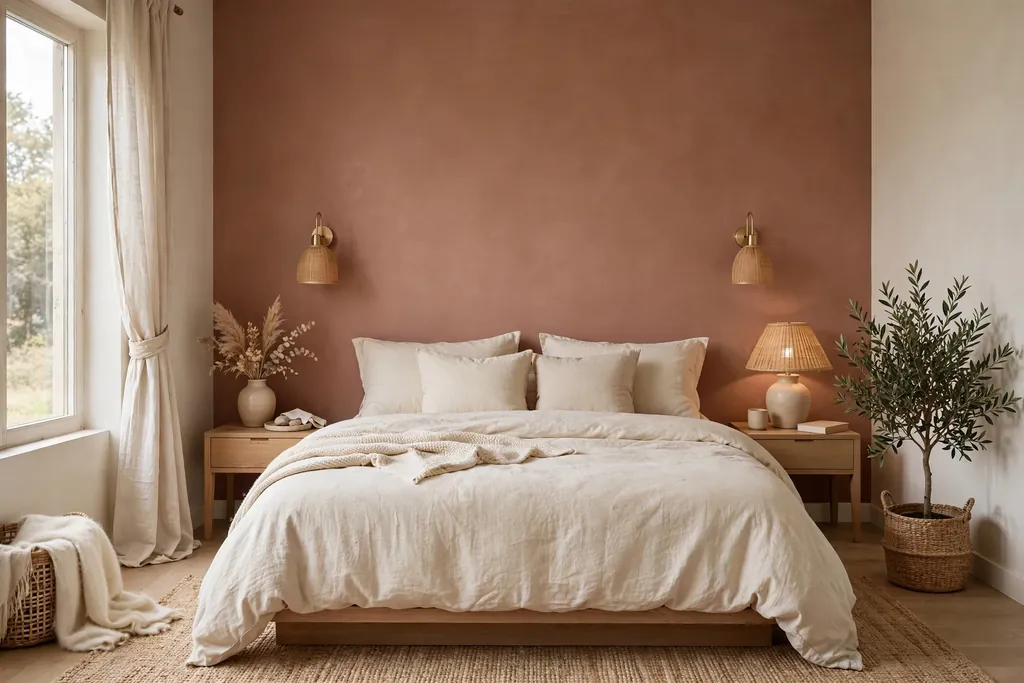
    Paint one muted terracotta accent wall behind the bed and keep the other walls and the bedding cream for a warm scheme with a single earthy anchor. Muted terracotta has brown in it, so it reads as warm clay rather than bright orange, and cream bedding keeps the bed soft against the strong wall. This suits a bedroom with good daylight, where the warm wall can glow without overwhelming the room.
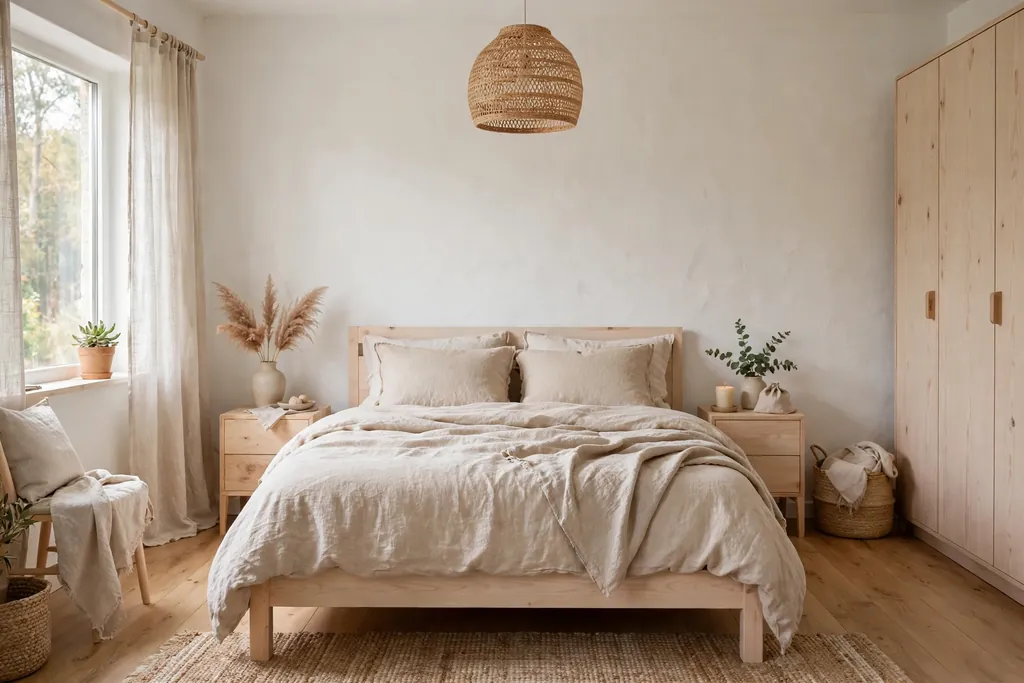
    Keep furniture in pale or mid wood, and repeat the terracotta once in a cushion or a small vase, so the accent wall does not stand alone. Use cream curtains and a cream rug, so the terracotta appears only on the wall and in one or two small items. Test the paint in evening light, since terracotta can look deeper under lamplight than in daylight.

    31. Ivory Walls With Soft Gold Accents

    Ivory bedroom with soft gold lamp bases and picture frames.

    Keep walls, bedding, and furniture ivory and warm white, and add soft gold accents in lamps, frames, and hardware for a calm scheme with a gentle glow. Soft gold, in a brushed or matte finish, warms an ivory room without the shine of bright gold, and because it appears only in small hard items, the room stays restful. This suits a bedroom with ivory furniture, where a little warmth can lift the whole room.
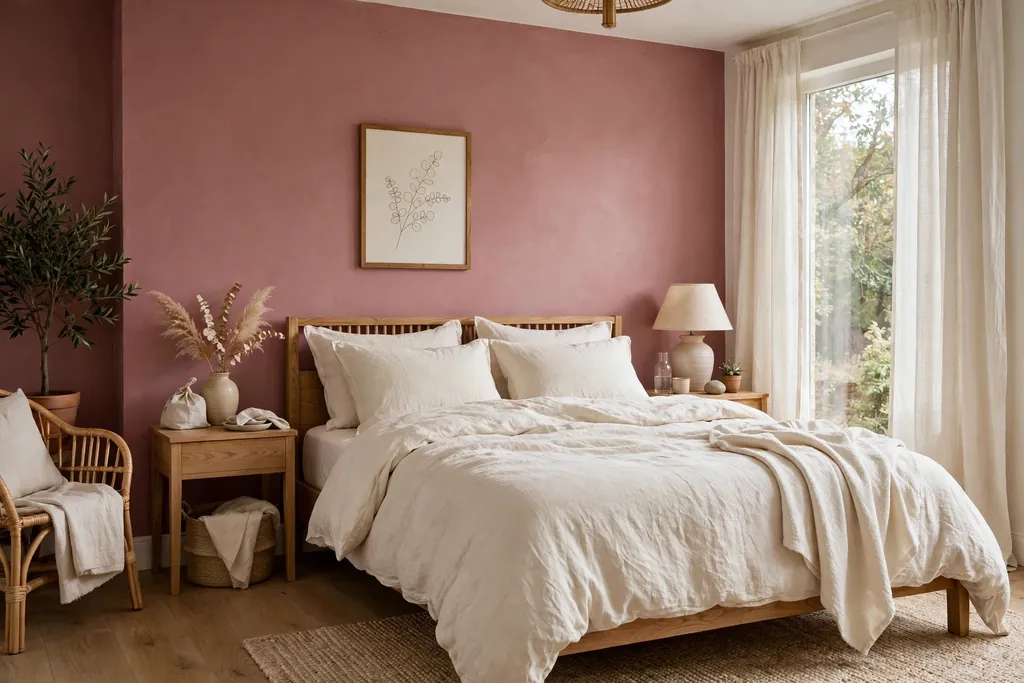
    Use gold in three small spots, such as lamp bases, picture frames, and drawer handles, and keep the finish consistent across them. Keep bedding plain ivory, with one oatmeal cushion, so the gold has a quiet background. Avoid shiny gold or crystal accessories here, which can push the scheme from calm to formal.
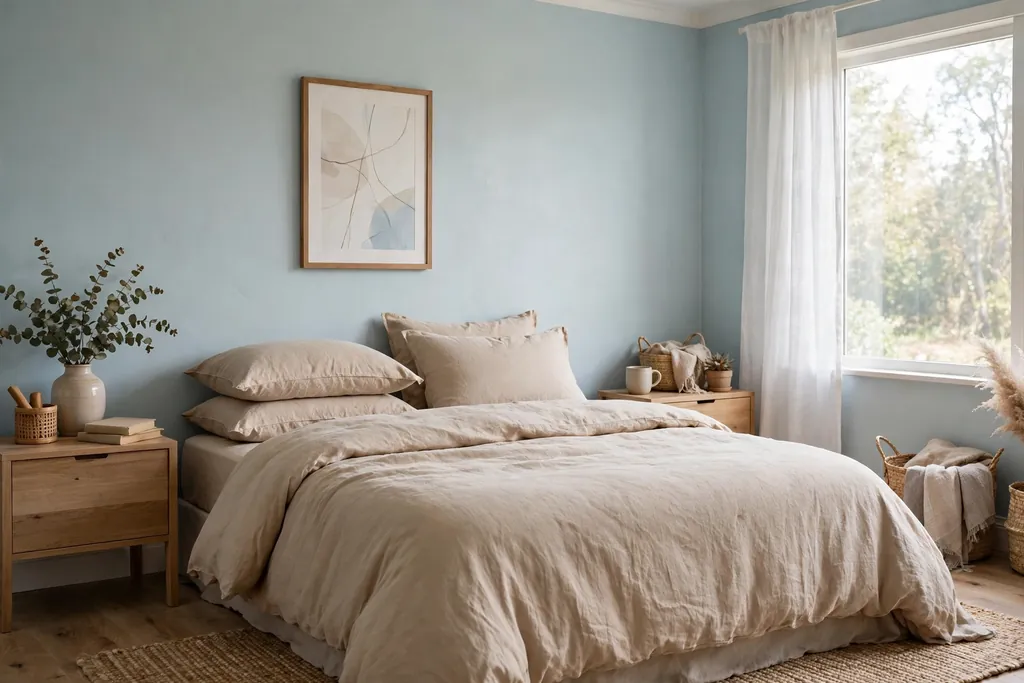
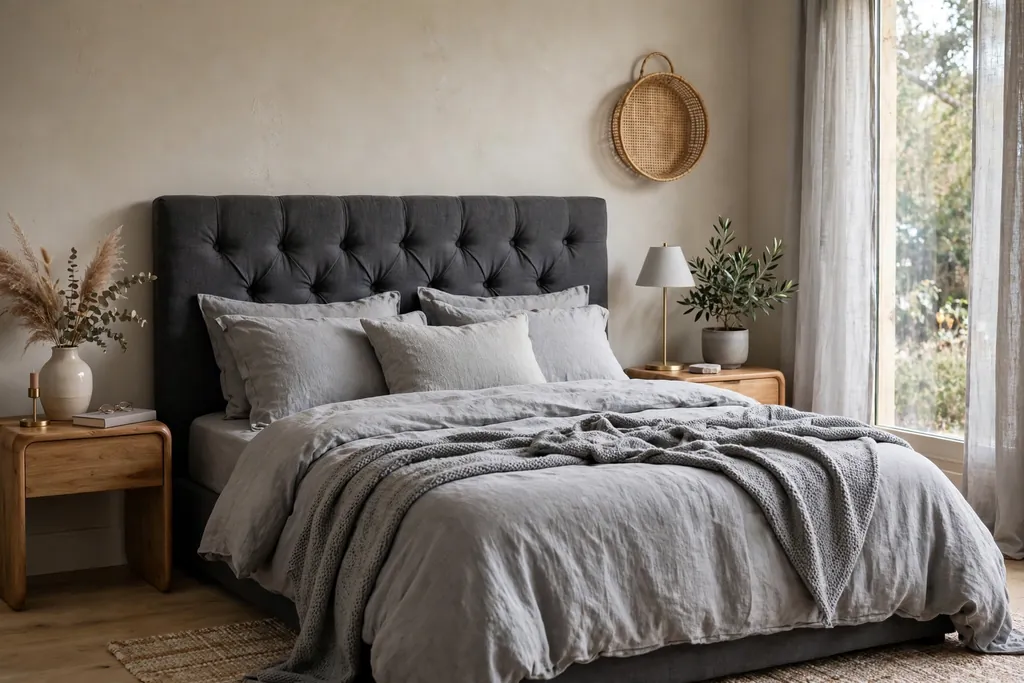
    32. Two Tone Walls in Sage Below and White Above

    Bedroom with two tone walls, sage below and white above.

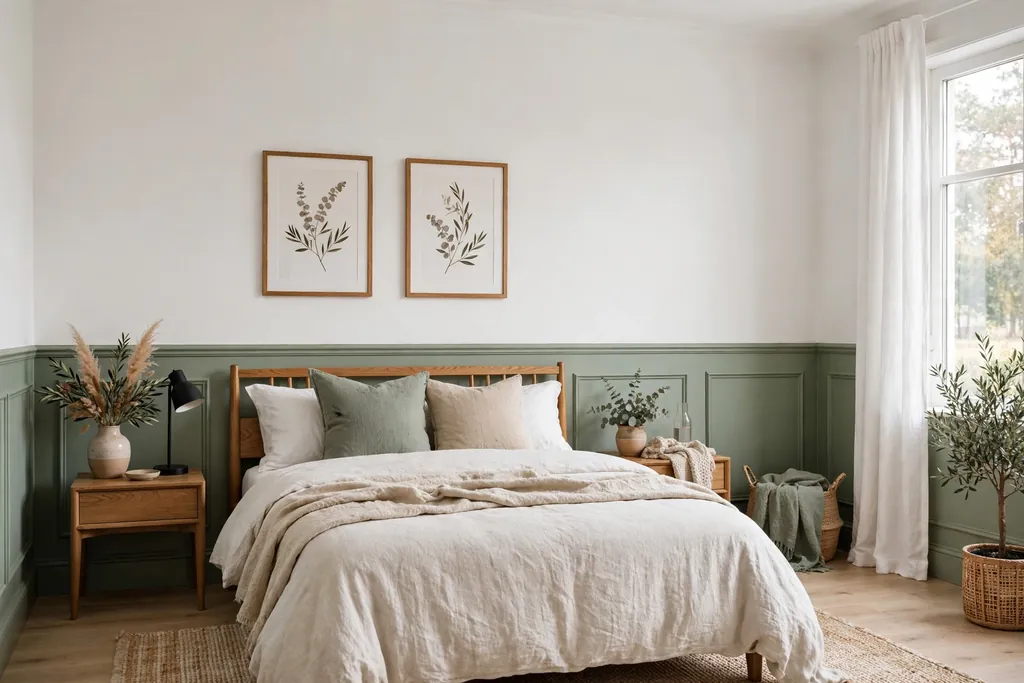
    Paint the lower half of the walls sage green and the upper half warm white, with a simple chair rail or a clean painted line between them, for a calm scheme with built-in structure. The sage below grounds the room, the white above keeps it bright, and the horizontal line gives the walls a finished, planned look. This suits a bedroom with plain walls that need interest without a full repaint in a strong color.

    Keep bedding in warm white and cream, with one sage cushion to link the bed to the lower wall color. Use pale wood furniture and a cream rug, so the two-tone wall stays the main feature. Paint the rail or the dividing line in warm white, and keep the line level around the room, since a wavy edge shows fast on a two-tone wall.

    Conclusion

    A calming bedroom color scheme comes down to restraint: one color leads, one or two quiet colors support it, and the rest of the room stays plain. Start with the layer you notice most, usually the bed or one wall, then repeat that color once or twice in smaller spots, such as cushions, curtains, or a rug. Keep the palette to three or four colors, add texture through linen, wool, wood, or rattan, and test every sample in daylight and lamplight before you commit.

    If you found a palette here that suits your room, save this post on Pinterest so you can find it again when you are ready to start. Save the scheme you like most, whether it is sage walls, a navy headboard, or a tone on tone taupe room, and use it as a guide for your next refresh, one layer at a time.

    FAQs

    How do I choose a calming color for a small bedroom?

    Keep the walls pale and let bedding carry the color. Pale sage, pale blue grey, warm greige, or warm white walls keep a small room open, while bedding, cushions, and a throw add color in a changeable dose. Avoid a dark color on all four walls in a small room, and keep one surface plain, such as a plain rug or plain curtains, so the palette has room to breathe.

    What is the most restful bedroom color?

    Soft, muted colors with grey or warm undertones tend to feel most restful: sage green, pale blue grey, warm greige, dusty lavender, and warm taupe all work well. The exact shade matters more than the color family, so test a large sample in daylight and lamplight, and choose the version that still looks soft at night, when the room matters most for sleep.

    Should bedroom walls be lighter or darker than the bedding?

    Either can work, as long as one leads and the other supports it. Light walls with colored bedding suit a quick refresh and a small room, since the bedding can change with the seasons. A darker accent wall with light bedding suits a larger room, where the dark wall can anchor the bed without shrinking the space. Avoid dark walls and dark bedding together, which can make a calm room feel heavy.

    How many colors should a calming bedroom scheme use?

    Three or four colors at most, including warm white or cream as the base. Use the lead color on one large surface, such as a wall or the bedding, the second color in two or three smaller spots, and the third color only in tiny accents, such as a vase or a frame. Repeat each color at least twice, so the room looks planned rather than random.

    Can I use a dark color in a calming bedroom?

    Yes, if it appears in one place and the rest of the room stays light. A forest green accent wall, a navy headboard, or a charcoal headboard can anchor a calm room, as long as the bedding, the other walls, and the lighting stay soft and warm. Use warm bulbs and a lamp on each side of the bed, since a dark feature needs even light at night to stay restful.

    How do I keep a pale bedroom from feeling cold or flat?

    Add texture and one warm material. Linen bedding, a wool throw, pale wood furniture, a woven rug, and warm white lamps all warm a pale scheme without adding a new color. Vary the texture at every step, so smooth cotton, nubby wool, matte paint, and woven baskets sit side by side, and keep at least one warm tone, such as cream, sand, or pale wood, in the room.

  • 23 Hotel Vibe Bedroom Ideas That Feel Both Cozy and Current

    23 Hotel Vibe Bedroom Ideas That Feel Both Cozy and Current

    A hotel room feels restful for a reason. The bed is made with care, the lighting is soft, the surfaces are clear, and every item in the room has a clear place. You can bring that same calm into your own bedroom without a full remodel. These 23 hotel vibe bedroom ideas cover bedding, lighting, storage, scent, and small daily habits, so you can start with one change or plan a full room refresh. Pick the idea that fixes what bothers you most, keep the palette calm, and let the room stay tidy enough to feel restful every night.

    Key Takeaways

    • Start with the bed: crisp white or pale bedding, layered in two or three textures, sets the hotel tone more than any other single change.
    • Keep the palette calm: warm white, soft grey, and one muted accent suit a hotel look better than many competing colors.
    • Use layered, dimmable light: bedside lamps, sconces, and one soft overhead light beat a single harsh ceiling light at night.
    • Clear the surfaces: tidy nightstands, closed storage, and a place for luggage or clothes keep the room feeling cared for.
    • Add small hotel touches last: a carafe, fresh flowers, a robe hook, and a light scent finish the room without clutter.
    • Repeat each choice twice, in matching lamps, matching nightstands, or matching frames, so the room looks planned rather than collected at random.

    1. Make the Bed With Crisp White Layered Bedding

    Bed with crisp white layered bedding

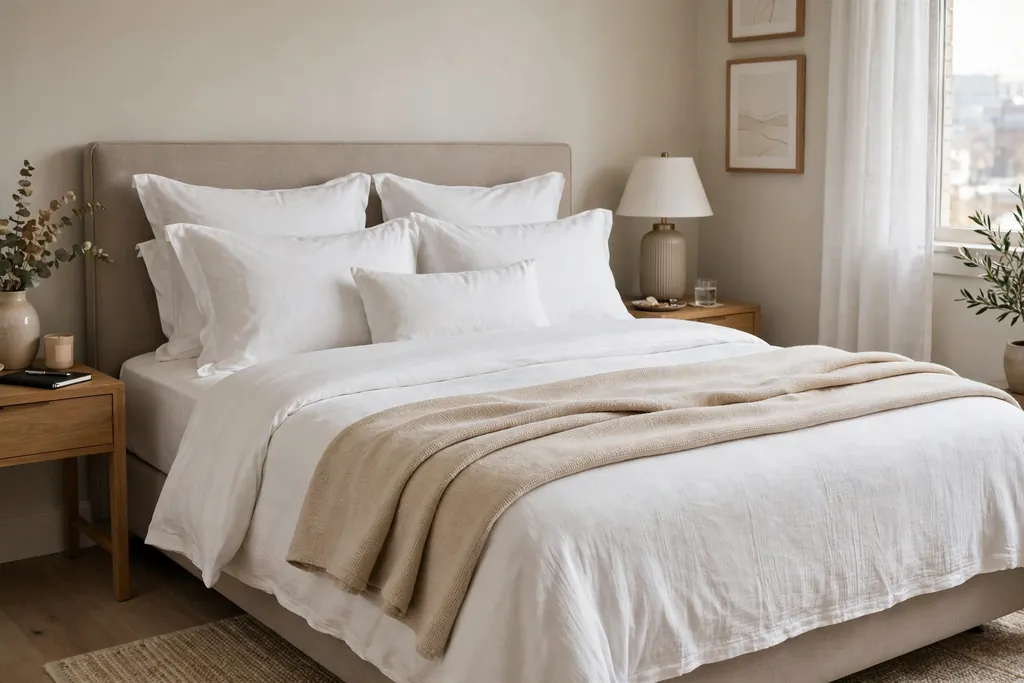
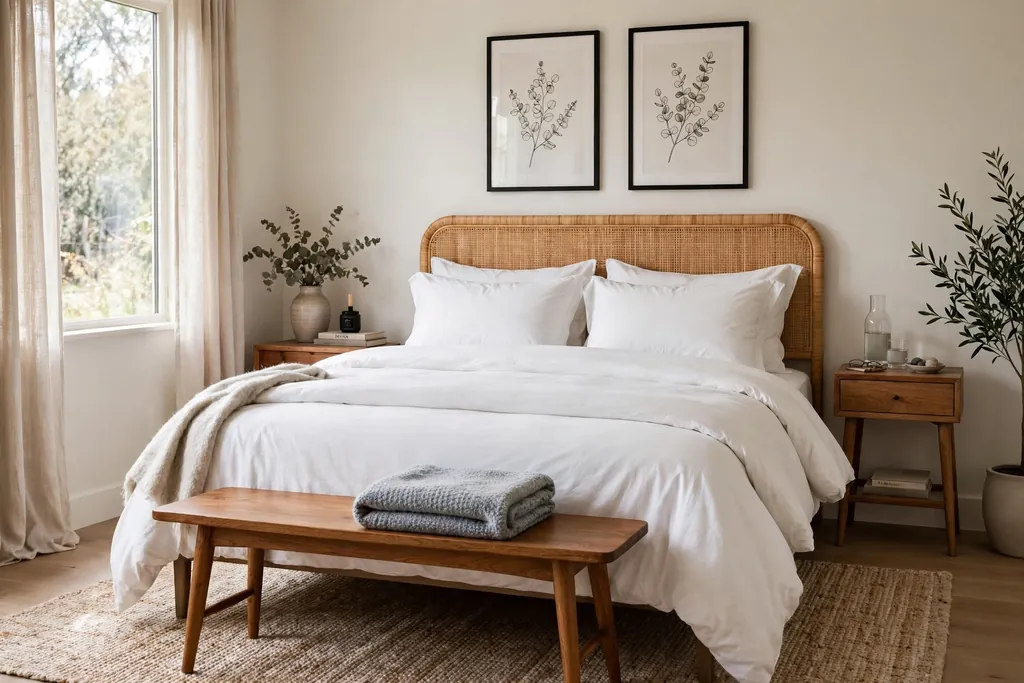
    Start with crisp white or pale bedding, layered with a fitted sheet, a duvet, and a light coverlet folded across the lower half of the bed. White bedding reads as clean and fresh, and it suits almost any wall color or wood tone. This is the single change that most makes a bedroom feel like a hotel room, since hotels build the whole room around a neat, bright bed.

    Layer two textures rather than two patterns, such as smooth cotton sheets with a waffle or matelasse coverlet, so the bed looks soft without looking busy. Pull the duvet up neatly each morning, fold the top edge back over the pillows, and keep the coverlet straight. Wash the bedding often, since white shows wear sooner than darker colors, and keep a spare set so the bed never waits for laundry day.

    2. Choose a Tall Upholstered Headboard

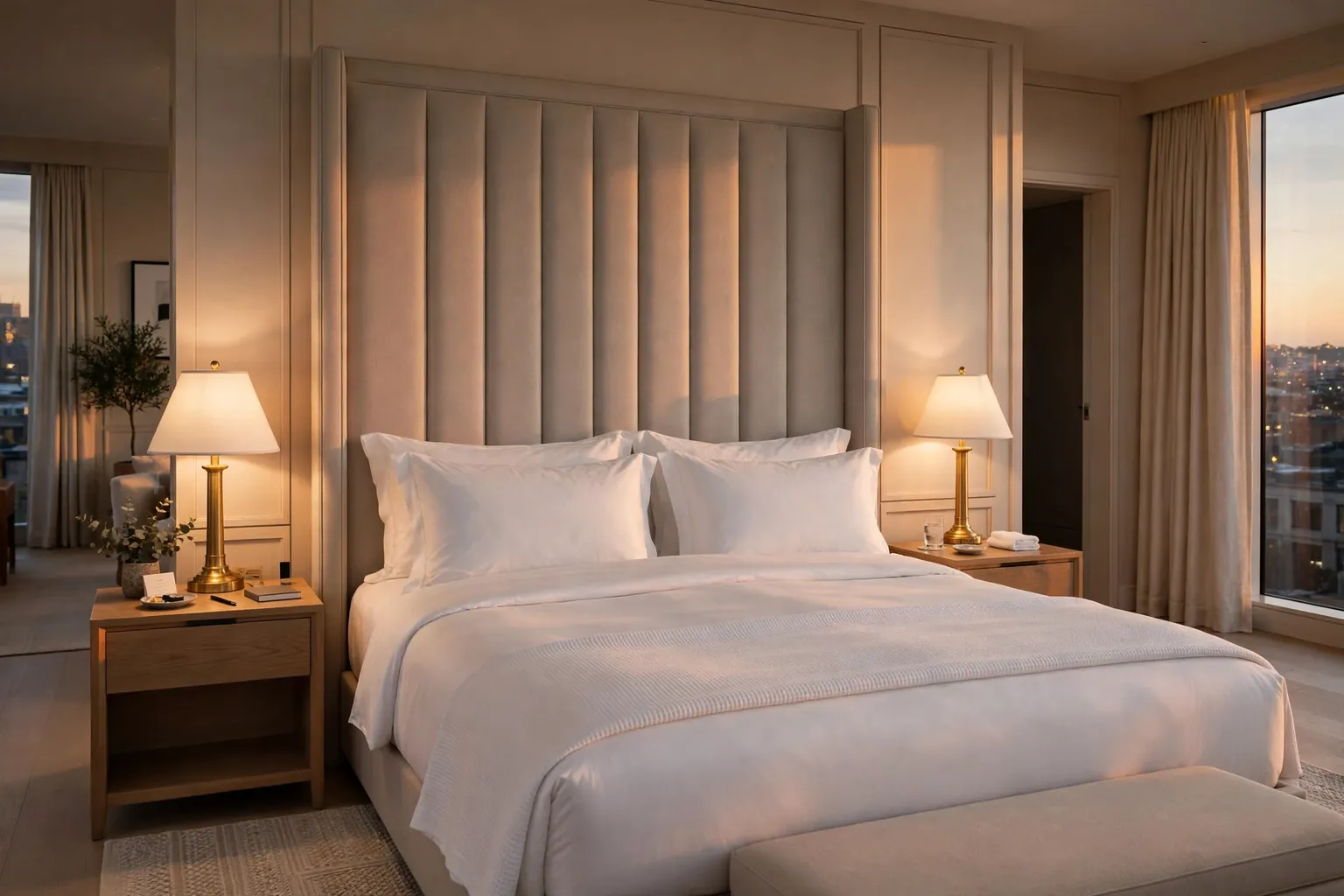
    Bedroom with a tall pale upholstered headboard behind a bed with white bedding.

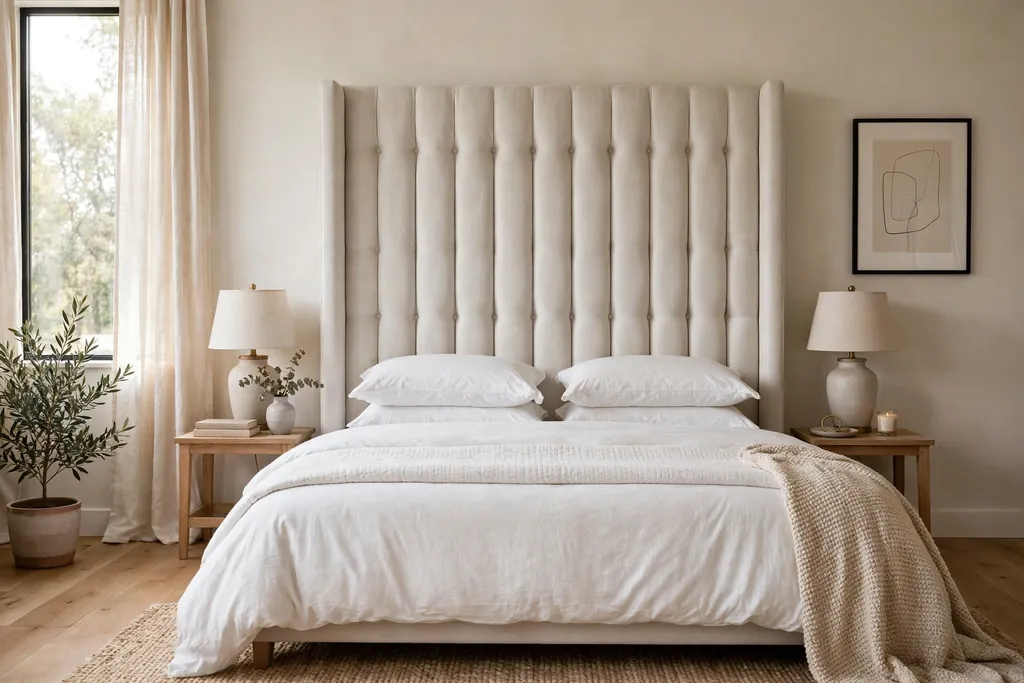
    A tall upholstered headboard in a pale neutral gives the bed a clear focal point and a comfortable backrest for reading. It suits a bedroom with plain walls, where the bed needs presence without heavy wood or ornate detail. Linen, cotton, or velvet in warm white, soft grey, or pale beige all suit a hotel look, and a simple panel or channel shape keeps it current.

    Measure the bed width first, so the headboard spans the bed without crowding the nightstands, and check the height against your wall, since a very tall headboard can crowd low art or a shelf above it. Keep the bedding in a matching pale tone, and add one darker cushion for contrast. Vacuum the fabric now and then, and treat marks promptly, since a headboard sits close to pillows and shows use.

    3. Match the Nightstands and Bedside Lamps

    Bedroom with matching wood nightstands and matching bedside lamps on both sides of a bed.

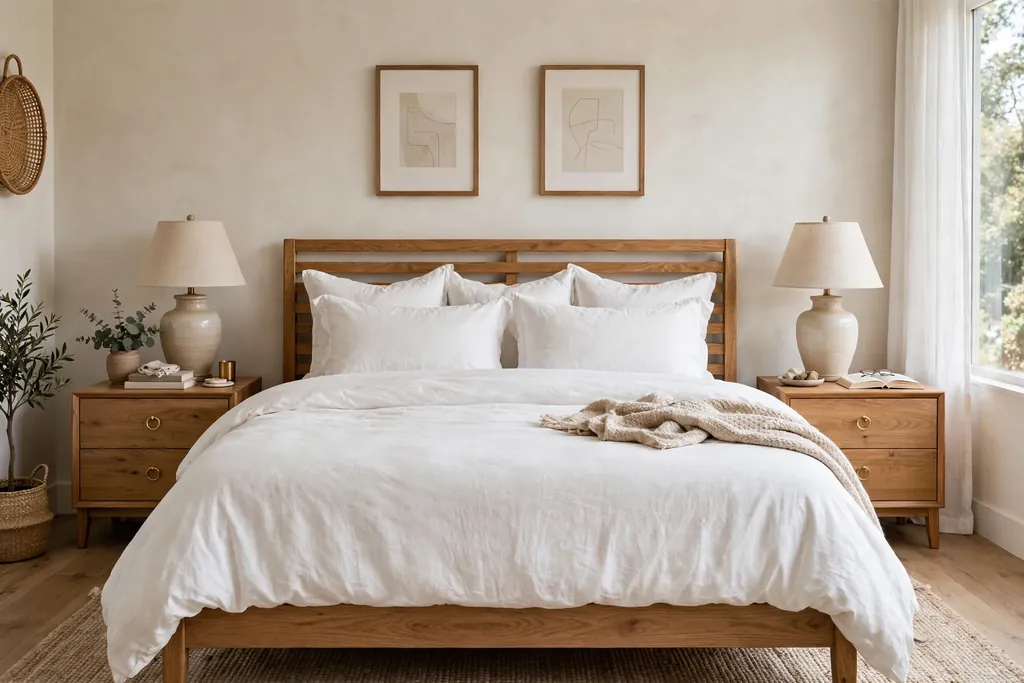
    Matching nightstands and matching bedside lamps give a bedroom the symmetry hotels rely on. The pair frames the bed, calms the room, and makes the whole layout look planned, even when the rest of the furniture is simple. This suits any bedroom with space on both sides of the bed, and it works with wood, painted, or upholstered nightstands.

    Choose lamps with the same shade shape and a warm bulb, and keep the nightstand tops mostly clear, with a book, a glass of water, and a phone charger. If your nightstands differ, matching lamps alone can still tie the two sides together. Keep the lamp height close to shoulder height when you sit in bed, so reading light falls on the page rather than in your eyes.

    4. Layer Sheer and Blackout Curtains

    Bedroom window with sheer white panels layered under blackout curtains beside a bed.

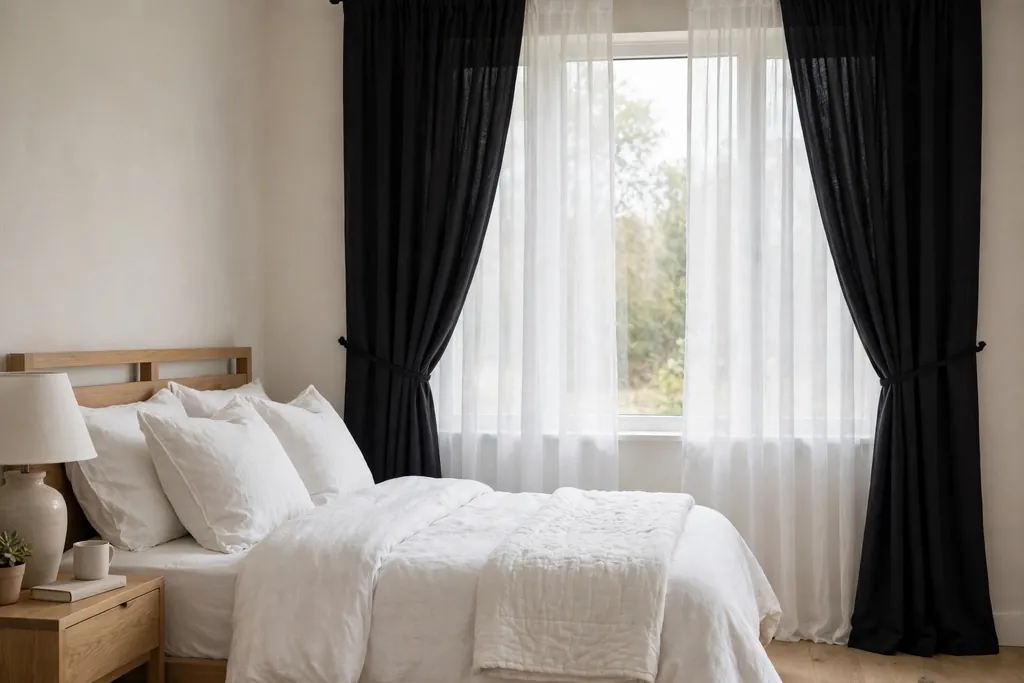
    Layer a sheer panel closest to the glass with a blackout panel on the outside for a window that works all day and all night. Open the blackout panels in the morning for soft light through the sheer, then close them at night for darkness and privacy, just as a hotel room does. This pair suits a bedroom on a bright street, a light sleeper, or a room used for daytime rest.

    Use a double rod, or a rod plus a track, so each layer moves on its own, and hang the rod high and wide so the window looks larger. Keep the sheer in white or cream, and choose the blackout panel in a color from your bedding, so the layers look linked when closed. For more window ideas, from sheer linen to lined drapes, see these bedroom curtain ideas.

    5. Add a Bench or Luggage Rack at the Foot of the Bed

    Bedroom with a bench at the foot of a bed with white bedding and a folded throw.

    A bench or a folding luggage rack at the foot of the bed gives you a place to lay out clothes, set down a bag, and keep the bed clear during the day. Hotels use this trick to keep the bed as a place for sleep, not storage, and it works just as well at home. This suits a bedroom with clear floor space at the foot of the bed and a bed that tends to collect clothes.

    Choose a bench slightly narrower than the bed, so it does not crowd the walkway, and keep the top mostly clear, with one folded throw or a small tray. A folding rack can be stored flat when guests leave, which suits a smaller room. Keep the floor beside the bench clear too, so the room still feels open when you walk in.

    6. Set Out a Bedside Carafe and Glass

    Nightstand with a glass carafe of water and a glass on a small tray beside a bed.

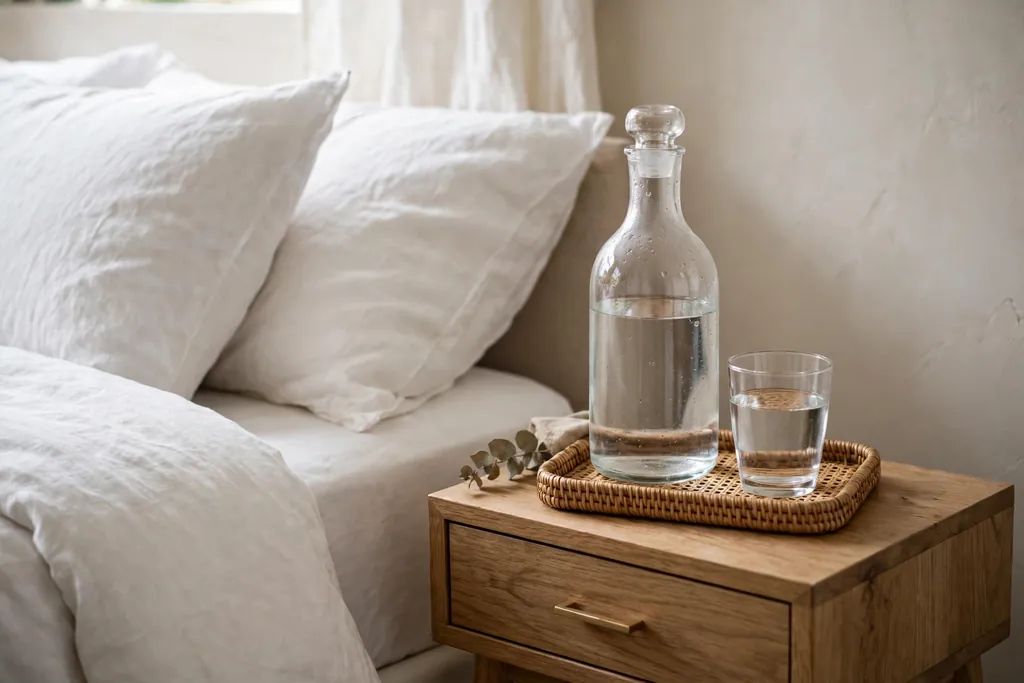
    A small carafe of water with a glass on the nightstand is a classic hotel touch, and it is useful every night. It saves a trip to the kitchen, keeps water within reach, and makes the nightstand look cared for rather than cluttered. This suits any bedroom, and it costs almost nothing to start.

    Choose a carafe and glass that match in style, such as clear glass or simple ceramic, and keep them on a small tray so drips stay contained. Refill the carafe each evening as part of your bedtime routine, and wash it often so it stays fresh. If space is tight, a single glass on a coaster gives the same effect in less room.

    7. Hang One Large Piece of Art Above the Bed

    Bedroom with one large calm landscape print in a simple frame above a bed.

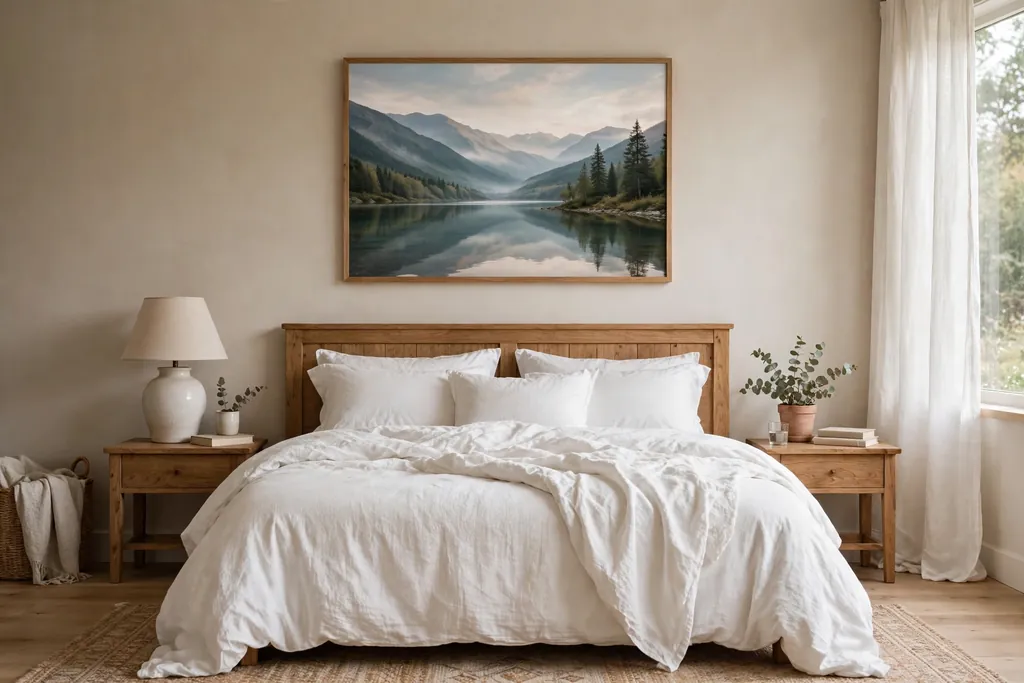
    One large piece of art above the bed anchors the room the way a hotel feature wall does, without the fuss of a full gallery. A calm landscape, an abstract wash, or a large botanical print suits a bedroom, since it reads as one restful scene. This suits a wide wall behind the bed, where small frames would look lost.

    Choose a piece roughly two thirds of the bed width, and hang it so the bottom edge sits 6 to 8 inches above the headboard, or above the pillows if you have no headboard. Keep the frame simple and the colors linked to your bedding, so the art feels connected to the room. For help sizing and placing art, from single pieces to grids, see these bedroom wall art ideas.

    8. Use Warm Dimmable Lighting at Bedside Height

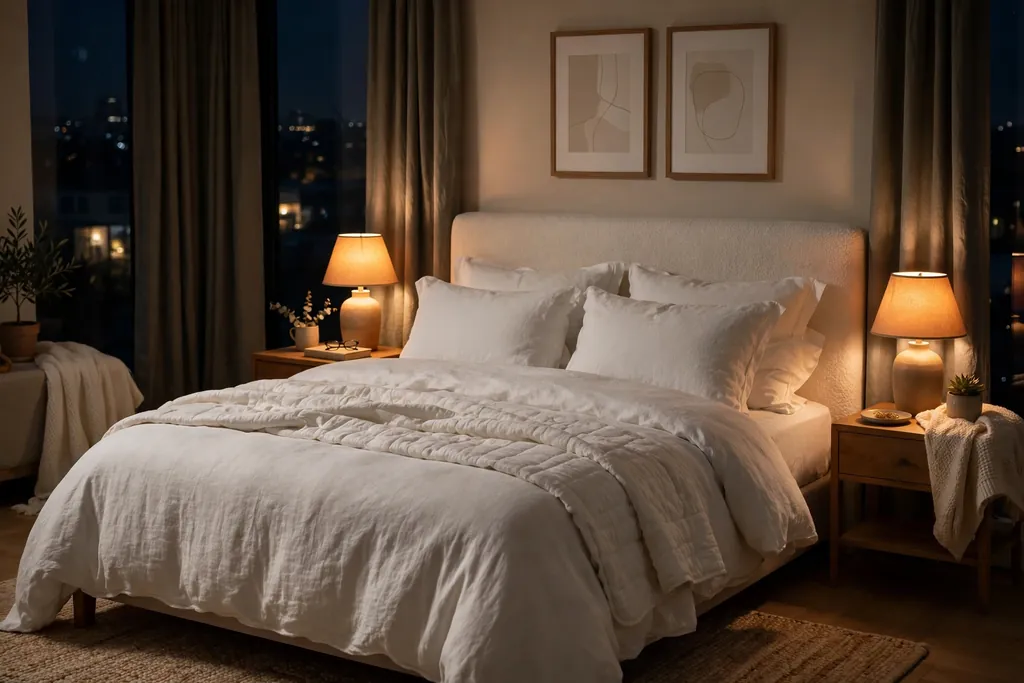
    Bedroom at night with warm dimmable bedside lamps glowing beside a bed.

    Warm, dimmable light at bedside height is what makes a hotel room feel calm after dark. Overhead light alone can feel harsh, while low lamps with warm bulbs make the room feel soft and settled. This suits any bedroom, and it matters most in a room with white walls or pale bedding, where bright light can feel stark.

    Put bedside lamps or wall sconces on a dimmer, and use warm bulbs throughout the room so the light stays consistent. Keep one soft overhead light for dressing, and switch to bedside light in the evening. If you rent, plug-in dimmers and battery candles in glass holders give a similar effect with no wiring changes.

    9. Arrange Pillows in a Hotel Stack

    Bed with a hotel pillow stack of sleeping pillows

    A hotel pillow stack uses sleeping pillows at the back, square Euro pillows in the middle, and one or two decorative cushions at the front. The stack looks full and inviting, and it gives you real support for reading, since the Euro pillows sit upright behind you. This suits a bed with a headboard, where pillows can lean without sliding.

    Start with two sleeping pillows flat, add two Euro pillows upright in front of them, then finish with one or two cushions in a tone from the bedding or the art. Keep the total to five or six pillows for a double bed, so making the bed stays quick. Store extra cushions in a basket at night if they crowd your sleep space.

    10. Place a Plush Rug Beside the Bed

    Bedroom with a plush pale rug beside a bed with white bedding.

    A plush rug beside the bed, or a larger rug tucked under the lower two thirds of the bed, gives your feet a soft landing each morning, which is a small hotel pleasure. It also warms a hard floor and adds a layer of color or texture without painting. This suits a bedroom with wood or tile floors, where bare feet meet a cold surface.

    Choose a rug large enough to extend past each side of the bed, so both sleepers step onto it, and use a non-slip pad beneath it. Keep the rug in a pale or muted tone that repeats a color from the bedding, and vacuum it often, since a bedside rug collects dust. In a small room, two matching runners, one on each side of the bed, give the same effect with less floor coverage.

    11. Create a Towel and Robe Station

    Bedroom bench with neatly folded white towels and a robe hanging on a hook nearby.

    A towel and robe station brings a hotel bathroom habit into the bedroom, and it helps guests and hosts alike. Fold two plush white towels on a bench, a chair, or an open shelf, and hang a robe on a hook or a valet stand nearby. This suits a guest room most of all, but it also suits a main bedroom where you want mornings to feel less rushed.

    Roll or fold the towels neatly, and keep the station to one spot, so towels do not drift around the room. Use white towels for the hotel look, and wash them with no fabric softener if you want them to stay absorbent. Add a small tray with a spare toothbrush or travel sizes for guests, and the station feels complete.

    12. Add a Reading Chair and Lamp in the Corner

    Bedroom corner with a reading chair

    A reading chair with a small side table and a floor lamp turns an empty bedroom corner into a hotel lounge corner. It gives you a place to read, dress, or wind down that is not the bed, which helps the bed stay a place for sleep. This suits a bedroom with one unused corner and enough floor space for a chair you can sit in without blocking a door or drawer.

    Choose a chair with a supportive back and arms, in a fabric that repeats a tone from the bedding, and keep the side table clear for a book and a drink. Use a floor lamp with a warm bulb beside the chair, so you can read without the overhead light. If space is tight, a small armless chair with a wall sconce above it gives a similar corner in less room.

    13. Keep Nightstands Clear With Closed Storage

    Tidy bedroom nightstand with a lamp

    Clear nightstands are a hotel habit worth copying, since a tidy surface helps a room feel calm at night. Use a nightstand with a drawer or a door, and move chargers, medicines, and small items inside, leaving only a lamp, a book, and a glass on top. This suits a bedroom where nightstands tend to collect clutter, and it works in small rooms too.

    Empty the drawer once a month, and keep a small tray inside for the items you reach for most, so the drawer stays usable. Run charger cables through a small hole or a clip at the back, so cords do not trail across the top. If your nightstand has no drawer, a lidded box on a nearby shelf gives the same hidden storage.

    14. Bring in Fresh Flowers or a Single Green Stem

    Bedroom nightstand with a small vase holding one fresh green stem beside a bed.

    Fresh flowers or a single green stem on the nightstand or dresser add life to a bedroom the way hotels use a small arrangement in the lobby and the room. One stem in a simple vase looks intentional, costs little, and changes with the season. This suits a bedroom that already feels tidy, where one natural detail can stand out.
    Choose a sturdy stem that lasts, such as eucalyptus, a rose, or a sprig of greenery, and keep the vase small so it does not crowd the nightstand. Change the water every couple of days, and trim the stem when you do, so the arrangement lasts longer. If fresh flowers are hard to keep, a small potted plant on the dresser gives lasting green with little care.

    15. Choose a Calm Palette With One Muted Accent

    Calm hotel style bedroom in warm white and soft sage with one muted accent in cushions.

    A calm hotel palette uses warm white walls, pale bedding, and one muted accent, such as sage, dusty blue, or soft clay, repeated in cushions, art, and a throw. The limited palette keeps the room restful, and the single accent stops it from feeling flat. This suits a bedroom that feels busy, where too many colors compete.

    Pick the accent from one item you already like, such as a piece of art or a cushion, and repeat it only two or three times in the room. Keep walls and large furniture pale, so the accent stays a detail rather than a theme. If you tire of the accent, swapping cushions and a throw changes the room without repainting.

    16. Fit a Full-Length Mirror Near the Dresser

    Bedroom with a full-length mirror with a simple frame standing near a dresser.

    A full-length mirror near the dresser or the wardrobe is a hotel staple, since it lets you check an outfit without leaving the room. It also bounces light around the bedroom, which helps a darker room feel brighter. This suits a bedroom with a plain wall near the dresser, where a mirror can lean or hang without blocking a door.

    Choose a mirror with a simple frame in a tone from the room, such as black, wood, or brass, and hang it at a height where you can see head to toe. Keep the wall beside it plain, so the mirror reads as a feature, and check what it reflects before you fix it, since a view of the window or a plant looks better than a view of clutter. Wipe the glass often, since a bedroom mirror shows dust quickly.

    17. Set Up a Small Coffee and Tea Corner

    Bedroom dresser corner with a tray holding cups

    A small coffee and tea corner on a dresser or a tray table brings a hotel breakfast habit into the bedroom. A kettle or a small coffee maker, two cups, and a tin of tea or coffee make slow mornings easier, and the corner looks cared for when it is kept tidy. This suits a main bedroom or a guest room where mornings start slowly.

    Keep the corner to one tray, with cups, spoons, and supplies contained, so it does not spread across the dresser. Use a heat-safe tray and keep cords tidy, and refill supplies as part of your weekly routine. If you prefer not to keep drinks in the bedroom, a tray with a carafe and two glasses gives a similar welcoming corner.

    18. Add a Light Signature Scent

    Bedroom with a lit candle on a nightstand beside a bed with white bedding.

    A light, consistent scent is part of what makes a hotel room feel distinct, and it is easy to copy at home. Choose one scent for the bedroom, such as lavender, cedar, or clean linen, and use it in one form only, such as a candle, a diffuser, or linen spray. This suits a bedroom that already feels clean, where scent can be the final layer rather than a cover for clutter.

    Keep the scent light, since a bedroom is a small, closed room, and avoid mixing several scented products at once. Use a candle only when you are awake and in the room, and keep a diffuser away from bedding and electronics. Air the room daily too, since fresh air keeps any scent from building up.

    19. Make the Room Dark, Cool, and Quiet for Sleep

    Dark quiet bedroom at night with blackout curtains closed and soft bedside light.

    Hotels control light, temperature, and sound for sleep, and you can do the same with a few practical steps. Close blackout curtains fully at night, check for light gaps at the sides, keep the room cool, and use soft bedding that does not trap heat. This suits any bedroom, and it matters most for light sleepers or rooms on bright streets.

    Add door draft strips if hallway light or sound leaks in, and keep electronics on silent or outside the room at night. Use a white noise machine or a fan if street sound disturbs you, and keep the bed for sleep and reading, so your body links it with rest. These steps cost little, but they change how the room feels at night.

    20. Style a Vanity Tray on the Dresser

    Bedroom dresser with a tray holding perfume

    A vanity tray on the dresser gathers perfume, a watch, jewelry, and a small plant into one tidy group, the way a hotel dresser holds a few chosen items. The tray stops small items from spreading across the dresser, and it makes the dresser look styled rather than cluttered. This suits a bedroom with a dresser that collects loose items.

    Choose a tray in a material from the room, such as wood, marble, or mirrored glass, and keep it to five or six items at most. Put daily items on the tray and move the rest into a drawer, so the tray stays easy to use. Wipe the tray weekly, since perfume and dust build up on a flat surface.

    21. Layer a Textured Throw Across the Bed

    Bed with a textured throw folded across the foot over white bedding.

    A textured throw folded across the foot of the bed adds warmth and a hotel finish in one easy layer. A waffle, knit, or woven throw in a muted tone repeats the accent color and makes the bed look dressed during the day, without extra cushions. This suits a bedroom with plain bedding that needs one soft accent.

    Fold the throw in thirds across the foot of the bed, so it is easy to pull up at night, and keep it off the floor. Choose a washable fabric, since a throw at the foot of the bed gets daily use, and store a spare in a basket nearby for cold nights. Keep the throw in one tone from the room, so it links the bed to the art or the rug.

    22. Add a Luggage-Style Storage Bench or Trunk

    Bedroom with a storage bench at the foot of a bed holding folded blankets.

    A storage bench or a trunk at the foot of the bed, or against a side wall, hides spare bedding, off-season clothes, and guest supplies while giving the room a hotel furniture piece. It suits a bedroom short on closet space, where spare blankets and pillows need a home that is not the bed or the floor.

    Choose a bench or trunk that fits the wall it sits against, with a lid that stays open safely, and keep the inside sorted with one basket or bag per category. Use the top for a folded throw or a tray, but keep it mostly clear so the piece stays useful. Air the inside now and then, and keep heavy items at the bottom so the lid stays easy to lift.

    23. End the Day With a Simple Turndown Routine

    Bedroom prepared for the night with the duvet folded back

    A simple turndown routine copies the hotel habit of preparing the room for sleep, and it takes only a few minutes. Fold back the duvet, plump the pillows, clear the nightstand, close the curtains, and switch to bedside light. This suits any bedroom, and it works best when the room is already tidy, since the routine then feels like a small ritual rather than a chore.

    Do the routine at the same time each evening, so it becomes a habit, and keep it short, with five steps at most, so you keep doing it. Add one pleasant detail, such as a fresh glass of water or a lit candle while you change, and the room feels prepared rather than just used. Over time, this small routine is what makes the room feel like a hotel every night, not just after a deep clean.

    Conclusion

    A hotel vibe bedroom comes from care more than from cost. A neat bed, calm colors, warm light, clear surfaces, and a few small touches, such as a carafe, fresh flowers, and a light scent, do most of the work. Start with the bed and the lighting, then add storage and finishing touches one at a time, so the room stays calm rather than crowded. With those layers in place, your bedroom can feel restful every night, like a room that was prepared just for you.

    If you found an idea here that suits your room, save this post on Pinterest so you can find it again when you are ready to start. Pin the look you like most, whether it is layered white bedding, a reading corner, or a tidy nightstand, and use it as a guide for your next weekend refresh.

    FAQs

    How do I make my bedroom feel like a hotel room on a small budget?

    Start with the bed, the lighting, and the surfaces, since those three changes cost little and change the room most. Use crisp pale bedding you already own, add warm bulbs and bedside light, clear the nightstands, and add one small touch, such as a carafe or fresh flowers. Save larger buys, such as a headboard or a bench, for later, once the free changes have settled.

    What colors work best for a hotel vibe bedroom?

    Warm white, soft grey, pale beige, and one muted accent, such as sage, dusty blue, or soft clay, work best. Use warm white for walls and sheets, pale tones for large furniture, and the accent only in cushions, a throw, and art, so the room stays calm. Avoid many strong colors at once, since a hotel look relies on a limited, restful palette.

    How can I keep a hotel look in a small bedroom?

    Keep the layers light and limited. Use pale bedding, matching bedside lamps, one piece of art, and closed storage, rather than a bench, a reading chair, and a trunk together. Keep the floor clear and the surfaces mostly tidy, and use mirrors and light colors to keep the room feeling open. A folding luggage rack that stores flat suits a small room better than a fixed bench.

    What bedding do hotels use to get that crisp look?

    Hotels commonly use white cotton or cotton blend sheets, a duvet, and a light coverlet, layered and pulled up neatly each day. At home, choose smooth cotton sheets in white or pale cream, add a duvet with a plain cover, and fold a coverlet or a textured throw across the lower half of the bed. Wash the bedding often and keep a spare set, since white shows wear sooner than darker colors.

    How do I stop a hotel style bedroom from feeling cold or plain?

    Add texture and warmth in small doses. Use a knit or waffle throw, a plush rug, wood nightstands, warm light, and one natural detail, such as fresh flowers or a plant. Keep the palette pale but mix two or three textures, such as smooth cotton, woven linen, and soft wool, so the room feels layered rather than flat. A single muted accent color also stops a white room from feeling stark.

    Can a hotel vibe bedroom work in a rented home?

    Yes, since most hotel touches need no building work. Bedding, lamps, mirrors, trays, baskets, and a folding rack all move with you, and curtains on a tension rod or an existing rail need no new holes. Use removable hooks for robes and art, and plug-in dimmers for warm light, so you can take the whole look to your next home.


  • 22 Cute Master Bedroom Closet Ideas to Add Character to Your Space

    22 Cute Master Bedroom Closet Ideas to Add Character to Your Space

    A master bedroom closet gets used every single day, yet it is often the last space to get any attention. A coat of paint, a prettier door, or better lighting can change how the whole bedroom feels, since the closet is usually the first thing you see in the morning. These 22 cute master bedroom closet ideas cover color, doors, shelving, lighting, and small comfort touches, so you can pick one quick fix or plan a full closet refresh. Start with the change that solves your biggest daily annoyance, whether that is dark corners, tangled accessories, or shoes piled on the floor, and build from there.

    Key Takeaways

    • Paint is the fastest character boost: one soft color on built-ins, a back wall, or the ceiling can make a plain closet feel custom.
    • Light matters as much as storage: warm LED strips and a small pendant make clothes easier to see and the closet more inviting.
    • Keep everyday items at eye and hand level, and move seasonal or rarely used pieces to the top shelf.
    • Match bins, hangers, and hardware in one finish or color so an open closet still looks calm.
    • Add one comfort touch, such as a bench, a rug, or a mirror, so the closet feels like part of the bedroom rather than a cupboard.
    • Start small if you rent: curtains, baskets, hooks, and battery lights add charm with no building work.

    1. Paint the Built-Ins a Soft Sage Green

    Master bedroom closet with soft sage green painted built-in shelves, wood hangers, and cream baskets.

    Painting built-in closet shelves and drawers a soft sage green gives a plain white closet a gentle, custom feel. The color reads as calm rather than loud, and it pairs well with wood hangers, cream baskets, and brass hardware. This suits a master closet that feels flat or builder grade, and it works with both warm and cool bedroom palettes.

    Use a satin or semi-gloss paint so the shelves wipe clean, and paint the inside of the closet rather than only the door frame, so the color shows when the doors open. Keep the walls pale, so the sage stays the star, and repeat the same green in one bedroom accent, such as a cushion or a throw, to tie the rooms together.

    2. Add Open Shelves With Matching Baskets

    Open closet shelves with matching seagrass baskets holding folded knitwear and scarves.

    Open shelves with matching baskets turn folded clothes and accessories into a tidy display. Baskets hide small items that look messy on open shelves, while the shelves keep everyday pieces easy to grab. This suits a closet with deep shelves where items get lost at the back, and it works well for knitwear, scarves, and workout clothes.

    Choose baskets in one material, such as seagrass or cotton rope, and in a size that leaves a small gap on each side so they slide out easily. Label the baskets only if it helps you, since plain baskets look calmer. Fold knitwear loosely rather than stacking it high, so you can lift one piece out without disturbing the rest.

    3. Fit Glass-Front Wardrobe Doors

    Wardrobe with clear glass-front doors showing neatly hung clothes on matching hangers.

    Glass-front wardrobe doors let you see your clothes at a glance while keeping dust off them. The glass makes a small closet feel more open, since the eye travels past the door front instead of stopping at a solid panel. This suits a master bedroom where the closet doubles as a display, and it works best when the inside stays fairly tidy.

    Choose clear glass for a boutique feel, or reeded glass if you want a softer view that still hides some clutter. Keep hangers matching and clothes grouped by type, since everything behind the glass is visible. Wipe the glass with a dry cloth once a week, and keep the top of the wardrobe clear so the doors stay the focus.

    4. Shape an Arched Closet Opening

    Bedroom wall with an arched closet opening, white painted trim, and a linen curtain.

    An arched closet opening softens a boxy bedroom wall and gives even a simple reach-in closet a sense of character. The curve draws the eye and makes the closet feel like a designed feature rather than a plain hole in the wall. This suits a bedroom with soft, romantic styling, and it pairs well with painted trim and a linen curtain.

    If you cannot change the wall shape, a painted arch outline or an arched mirror hung beside the opening can suggest the same curve. Keep the trim color the same as the bedroom woodwork, so the arch looks built in rather than added on. Hang the curtain rod above the arch, so the curtain falls in a full, graceful line when closed.

    5. Paper the Back Wall With a Pretty Pattern

    Closet with a small floral wallpaper back wall behind open shelves and folded clothes.

    Wallpapering the back wall of a closet adds a surprise every time you open the doors. A small floral, gingham, or dot pattern brings color and personality to a space that is usually plain white, and it costs little since the area is small. This suits a closet with open shelving or glass doors, where the back wall stays visible.

    Choose a peel-and-stick paper if you rent or want an easy change later, and smooth it from the center outward to avoid bubbles. Keep the pattern scale small, so it does not fight with patterned clothes. Pick one color from the paper for your baskets or drawer pulls, so the closet looks planned rather than busy.

    6. Hang a Sliding Barn Door With Black Hardware

    Warm wood sliding barn door with black iron hardware covering a bedroom closet opening.

    A sliding barn door in warm wood with black iron hardware gives a master closet a clear focal point and saves the swing space of a hinged door. This suits a bedroom where floor space is tight beside the bed, or where a plain hollow door feels dull. The door also adds wood at a height that balances a wood bed frame.

    Check that the wall above the opening can take the rail, and that the door can slide fully clear of the opening without hitting a light switch or a vent. Keep the door tone close to other wood in the room, and use soft-close hardware if the door will be used at night. For more door styles that suit different rooms, see these closet door ideas.

    7. Build a Vanity Nook Inside the Closet

    Vanity nook inside a walk-in closet with a narrow desk, a lit mirror, and a small stool.

    A small vanity nook inside a walk-in closet turns an unused corner into a getting-ready spot. A narrow desk, a mirror, and a stool give you a place to sit for jewelry, hair, and makeup, and the nook keeps those items out of the bedroom. This suits a larger closet with a corner that is too small for hanging clothes.

    Fit the desk at a comfortable sitting height, and add a mirror with light on both sides or a small lamp, so your face is lit evenly. Keep the desktop to a tray, a small organizer, and one pretty dish for earrings, so the nook stays easy to use. Store taller items, such as hair tools, in a drawer below rather than on the desk.

    8. Use Double Hanging Rails With a Shoe Shelf Below

    Closet with double hanging rails for shirts and trousers and a low shelf of shoes below.

    Double hanging rails make one tall closet section work twice as hard. Shirts and jackets hang on the top rail, trousers and skirts on the lower rail, and a low shoe shelf below keeps footwear off the floor. This suits a reach-in closet with a single high rail and wasted space below it, which is one of the most common closet layouts.

    Measure your longest hanging item first, so the lower rail still clears the shoe shelf. Keep the top rail for items you wear most, and use slim matching hangers so more pieces fit. Place shoes in pairs with a small gap between them, and keep the shelf shallow enough that you can see every pair at a glance.

    9. Line a Drawer With Velvet for Jewelry

    Open shallow drawer lined with velvet holding organized rings, earrings, and necklaces.

    A velvet-lined drawer keeps jewelry tidy, visible, and protected from scratches. Small compartments stop necklaces from tangling and earrings from getting lost, and the soft lining makes the drawer feel special each time you open it. This suits a master closet with at least one shallow drawer, even if the rest of the closet is simple.

    Use a ready-made velvet tray insert if you do not want to line the drawer yourself, and measure the drawer before buying so the insert sits flat. Group pieces by type, with rings in one section, earrings in another, and necklaces laid flat rather than coiled. Keep everyday pieces at the front, and store fine or rarely worn pieces further back.

    10. Add Warm LED Strips Under the Shelves

    Closet shelves lit by warm LED strips with clothes clearly visible on each level.

    Warm LED strips under closet shelves light up dark corners and make it far easier to tell navy from black in the morning. The soft glow also makes the closet feel welcoming, almost like a small shop display, rather than a dark cupboard. This suits any closet, but it helps most in closets with no window and a single dim ceiling bulb.

    Choose warm white strips, around 2700 to 3000 kelvin, so clothes look true to color and skin tones stay flattering in the mirror. Fix the strips toward the front edge of each shelf, so light falls on the clothes rather than the wall behind them. Use battery or plug-in strips with a remote or motion sensor if you cannot wire new lights, and keep cords tucked behind the shelf edge.

    11. Choose Mirrored Sliding Doors

    Wide reach-in closet with mirrored sliding doors reflecting a bright master bedroom.

    Mirrored sliding doors bounce light around the bedroom and remove the need for a separate full-length mirror. They suit a smaller master bedroom, since the reflection makes the room feel larger, and they work well on wide reach-in closets where hinged doors would need swing space. The mirrors also make outfit checks part of the daily routine.

    Keep the mirror tracks clean, since dust in the track makes sliding doors stick. Wipe the glass with a streak-free cloth, and avoid hanging anything on the door handles that could scratch the surface. If full mirrors feel too much, choose doors with a mirror panel on one side and a painted panel on the other, for a softer look.

    12. Hang Linen Curtains Instead of Doors

    Closet opening dressed with natural linen curtain panels hanging from a rod near the ceiling.

    Linen curtains in place of closet doors add softness and a relaxed, cottage feel. They cost less than new doors, they need no swing space, and they can be changed with the seasons or the bedroom palette. This suits a rented home, a small bedroom, or a closet whose doors are damaged or missing.

    Hang the rod close to the ceiling and wider than the opening, so the panels stack clear of the clothes when open. Choose a medium-weight linen that hangs well rather than a sheer fabric that shows every lump behind it. Hem the panels so they brush the floor rather than pool, and wash them as advised on the label so they stay fresh.

    13. Style a Boutique Open Clothing Rail

    Slim open clothing rail styled like a boutique with a capsule of outfits and a basket below.

    A boutique-style open clothing rail turns a few favorite outfits into a display. A slim rail with matching hangers, a small shelf above, and a basket below can hold a capsule of current-season clothes in plain sight. This suits a bedroom with a spare wall or a large walk-in closet, and it works well for outfits you reach for often.

    Limit the rail to pieces you truly wear each week, so it looks curated rather than crowded. Group clothes by color or by outfit, and leave space between hangers so each piece is easy to lift off. Keep the floor below clear except for one basket or a pair of shoes, so the rail reads as a feature rather than overflow storage.

    14. Build a Shoe Display Wall With Angled Shelves

    Walk-in closet wall with angled shelves displaying shoes in neat pairs.

    Angled shoe shelves display shoes like a shop wall and make every pair easy to spot. Tilting each shelf slightly forward stops shoes from sliding off while keeping heels and toes visible. This suits a walk-in closet with one free wall, and it works well for collectors as well as for households where shoes tend to pile by the door.

    Space the shelves to fit your tallest pair, and leave the lowest shelf flat for boots. Keep the shelf color the same as the rest of the closet, so the shoes provide the color. Place the pairs you wear most at eye level, and move occasion shoes higher, so the display stays practical as well as pretty.

    15. Fit a Pull-Out Laundry Hamper Drawer

    Closet drawer pulled open to show a removable laundry hamper bag inside.

    A pull-out laundry hamper drawer hides dirty clothes inside the closet and frees up bedroom floor space. The hamper slides out for loading and lifts out for carrying to the wash, so laundry stops piling on a chair or the floor. This suits a master closet near the bedroom door, where a freestanding basket often ends up in the walkway.

    Choose a hamper with a removable bag or bin, so you can carry it without dragging the whole drawer. Split the drawer into two bags if you sort lights and darks, and keep the drawer front matching the other closet fronts. Empty it on wash day rather than letting it overflow, since a full hamper can strain the drawer runners.

    16. Add a Valet Rod and a Hook Rail

    Closet shelf with a pulled-out valet rod holding an outfit and hooks holding bags.

    A valet rod and a hook rail give you a landing spot for tomorrow’s outfit, a handbag, or a scarf you just wore. The rod pulls out from under a shelf when you need it and tucks away when you do not, while hooks hold bags and belts without tangling them. This suits a busy morning routine, since it lets you plan an outfit the night before.

    Fit the valet rod near the mirror or the closet entrance, so you can see the outfit as you choose shoes and accessories. Keep only one outfit on the rod at a time, so it stays a planning tool rather than extra storage. Hang bags by their straps on sturdy hooks, and keep hooks away from hanging clothes so straps do not snag sleeves.

    17. Place an Upholstered Bench With Hidden Storage

    Walk-in closet with an upholstered storage bench, a cushion, and shelves beside it.

    An upholstered bench with storage inside gives you a seat for putting on shoes and a hidden spot for spare blankets, bags, or seasonal accessories. The soft top makes the closet feel more like a dressing room, and the storage keeps bulky items out of sight. This suits a walk-in closet with a clear wall or a window nook.

    Choose a bench slightly shorter than the wall it sits against, so it does not crowd the walkway, and pick a fabric that wipes clean, such as a treated cotton or faux leather. Keep the inside to one category per section, such as bags in one half and blankets in the other, so you can find things without emptying the bench. Add a small cushion in a bedroom accent color to link the bench to the room.

    18. Hang a Small Pendant or Chandelier

    Walk-in closet with a small pendant light hanging above the center aisle.

    A small pendant or chandelier in a walk-in closet adds a touch of glamour and gives better light than a bare ceiling bulb. A pretty fixture makes the closet feel like a room in its own right, and it helps you see colors and details accurately when choosing an outfit. This suits a walk-in closet with enough ceiling height to hang a fixture safely above head height.

    Choose a fixture sized to the closet, roughly one third of the narrowest wall width, and hang it high enough to clear the door swing. Use a warm bulb with a dimmer if you can, so evening light feels soft. Keep the rest of the ceiling plain, and dust the fixture now and then, since closets gather lint.

    19. Fix a Peg Rail for Scarves, Belts, and Hats

    Closet wall with a painted peg rail holding hats, scarves, and belts.

    A peg rail along one closet wall keeps scarves, belts, and hats visible and tangle-free. Pegs are easier to use than hooks for wide-brimmed hats, since the hat sits on the peg rather than hanging from a loop, and scarves draped over pegs stay wrinkle-free. This suits a narrow closet wall or the inside of a closet door, where a rail would not fit.

    Space the pegs wide enough that hats do not squash each other, and keep heavier bags on the lowest pegs. Group items by type, with hats on one stretch, scarves on another, and belts looped over the last pegs. Paint the rail the same color as the closet trim, so it looks built in rather than added as an afterthought.

    20. Create a Cozy Corner With a Rug and a Leaning Mirror

    Closet corner with a small rug and a full-length leaning mirror.

    A cozy corner with a small rug and a full-length leaning mirror turns the end of a walk-in closet into a dressing spot. The rug warms bare feet on cold mornings, and the leaning mirror lets you check a full outfit without fixing anything to the wall. This suits a closet with a spare corner or a window wall that cannot hold shelving.

    Choose a low-pile rug that fits the corner without bunching under the door swing, and secure the mirror to the wall with a safety strap, since leaning mirrors can slip. Keep the corner free of storage boxes, so it stays a place to stand and look rather than another pile. Add a small stool or a hook nearby for a bag while you dress.

    21. Store Seasonal Clothes in Labeled Bins on the Top Shelf

    Top closet shelf with labeled bins with lids holding seasonal clothes.

    Labeled bins on the top shelf keep out-of-season clothes tidy and out of the way, while freeing everyday shelves for what you actually wear. Clear or matching bins protect clothes from dust, and labels mean you can find winter coats or summer dresses without opening every box. This suits any closet with a high shelf that is hard to reach daily.

    Use bins with lids and handles, and keep each bin to one season or one category, such as swimwear or heavy knitwear. Write labels large enough to read from below, and place the current season’s bin at the front if space allows. Fold clothes loosely and add a lavender sachet or cedar block, so stored pieces smell fresh when you bring them back out.

    22. Paint the Closet Ceiling a Soft Blush

    Small closet with a soft blush painted ceiling, white shelving, and brass hardware.

    Painting the closet ceiling a soft blush adds an unexpected hint of color that you notice each time you look up. The pale pink warms the space without competing with your clothes, and it pairs well with white shelving, brass hardware, and wood hangers. This suits a small closet where painting the walls might feel too strong, since the ceiling carries color in a smaller dose.

    Use the same paint finish as the walls, and paint the ceiling before touching up the walls, so drips are easy to fix. Keep the walls pale and the bins neutral, so the blush stays a gentle surprise rather than a theme. If blush feels too sweet, a pale peach or a soft lilac gives the same warm effect with a different mood.

    Conclusion

    A cute master bedroom closet does not need a full rebuild. One painted surface, one prettier door, better light, and storage that matches your routine can give the space real character, and most of these ideas work in a weekend or less. Pick the change that fixes your biggest daily frustration first, then add one comfort touch, such as a bench, a rug, or a pendant light, so the closet feels like part of the bedroom. With the right mix of color, light, and order, getting dressed becomes a small pleasure rather than a morning chore.

    If one of these ideas caught your eye, save this post on Pinterest so you can find it again when you are ready to start. Pin the look that suits your closet best, whether it is a painted built-in, a glass door, or a cozy dressing corner, and use it as a guide for your next refresh.

    FAQs

    How can I make a small master closet look cute without a rebuild?

    Paint is the easiest route: one soft color on the built-ins, the back wall, or the ceiling can change the whole feel. Add matching baskets, warm LED strips, and a linen curtain or a pretty door, and keep hangers matching. These small changes add character with no building work, and they all come off or paint over easily if you move.

    What is the best lighting for a master bedroom closet?

    Warm white light, around 2700 to 3000 kelvin, shows clothing colors most truly and flatters skin tones in the mirror. LED strips under shelves light each level evenly, while a small pendant or ceiling fixture lights the center of a walk-in closet. Avoid a single harsh overhead bulb, since it leaves the lower shelves in shadow.

    Should closet doors match the bedroom doors?

    Matching doors look calm and built in, but the closet door is also a chance to add character. A barn door, a glass-front door, or a linen curtain can set the closet apart while still suiting the room, as long as the hardware finish matches other hardware in the bedroom. For more door styles, see these closet door ideas.

    How do I keep an open closet looking tidy?

    Limit what stays visible to pieces you wear often, and hide the rest in matching baskets or bins. Use slim matching hangers, group clothes by type and color, and leave a little space between hangers so nothing looks crammed. Put one small tray or basket near the entrance for items you grab daily, and return them there each evening.

    What storage works best for a master closet with no drawers?

    Open shelves with baskets can stand in for drawers for folded clothes and accessories. Add a hanging organizer for smaller items, a peg rail for scarves and belts, and a pull-out hamper or a basket for laundry. If you plan a bigger change, a single drawer unit or a small dresser inside a walk-in closet adds proper drawer space. For layout ideas, see these closet design ideas.

    Can I add character to a rented master closet?

    Yes, and most of the best rental-friendly ideas need no tools. Use peel-and-stick wallpaper on the back wall, linen curtains instead of doors, baskets, hooks, a peg rail that hangs over the door, and battery LED strips. Keep the original doors and hardware safe, so you can return the closet to its starting state when you move out.