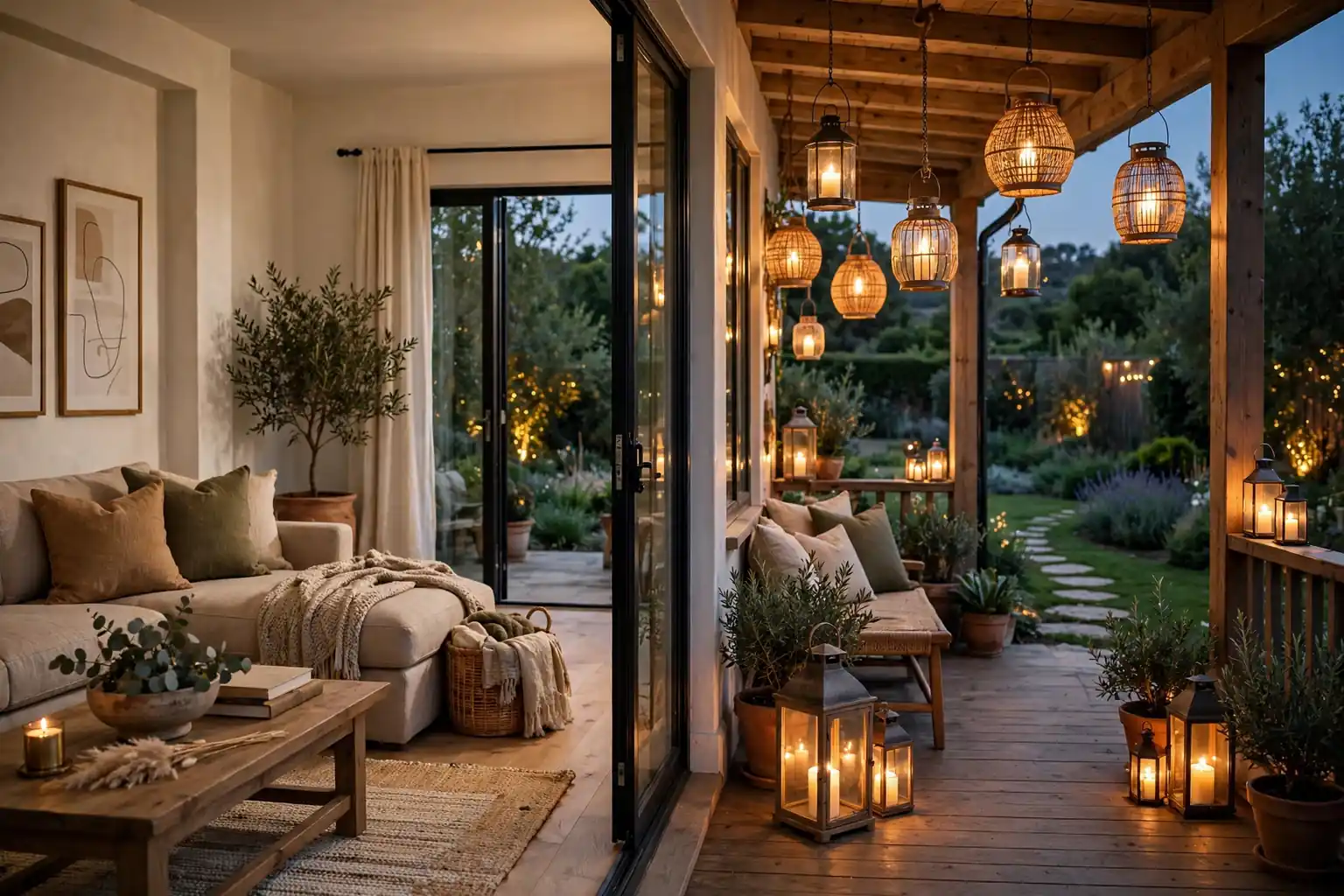
Lanterns are one of the easiest ways to add warm light to a room or a porch without rewiring anything. A single glass lantern softens a dark corner, a pair frames a doorway, and a row along a garden path makes an evening outside feel planned rather than improvised. These 12 lantern decor ideas cover coffee tables, fireplaces, bedrooms, bathrooms, porches, patios, and gardens, with safe candlelight notes for each spot. The layered lighting advice in these cozy apartment living room ideas pairs well with lantern light, since a lantern works best as one glow among several, not the only light in the room.
Key Takeaways
- Start with one lantern and one clear spot, then repeat the look only where the light is actually needed.
- Match the light source to the spot: real candles only where you stay nearby, battery candles for bedrooms and shelves, solar for garden paths.
- Group lanterns in odd numbers and mix heights rather than lining up identical lanterns in a row.
- Keep glass clean and wicks trimmed, since a dirty lantern gives a dull glow no matter how good it looks.
- Choose one finish, such as black metal, wood, or brass, and repeat it in at least two places so the look feels planned.
- Move lanterns between indoors and outdoors with the seasons instead of buying a new set for every spot.
1. Coffee Table Lantern Cluster
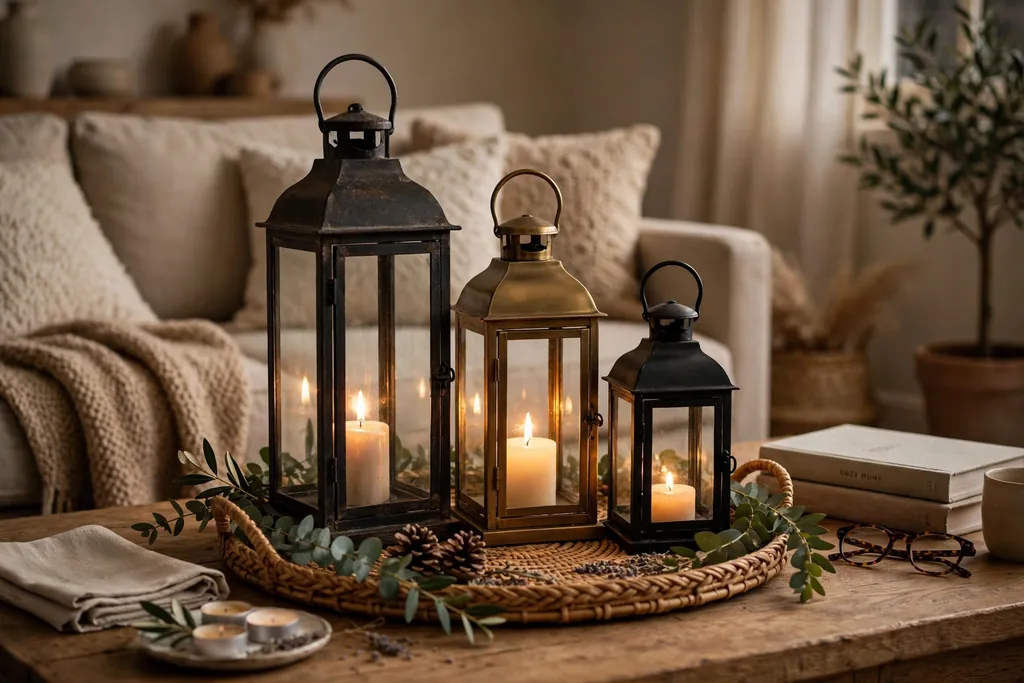
Group three lanterns of different heights on a coffee table, with the tallest at the back and the smallest at the front, so the group reads as one display from the sofa. A tray under the cluster keeps the table tidy, protects the surface from heat and wax, and lets you lift the whole display away when you need the table for games or a meal. This suits living rooms where the coffee table is the natural focal point in the evening.
Use battery candles inside the cluster if the table sits within reach of children or pets, and keep at least one lantern unlit or empty so the group does not look crowded. Add a small stack of books or a low plant beside the tray, not inside it, so the lanterns stay the focus. Change the candle colour with the season, warm white for most of the year and a deeper tone for winter evenings.
2. Fireplace Hearth Lantern Pair
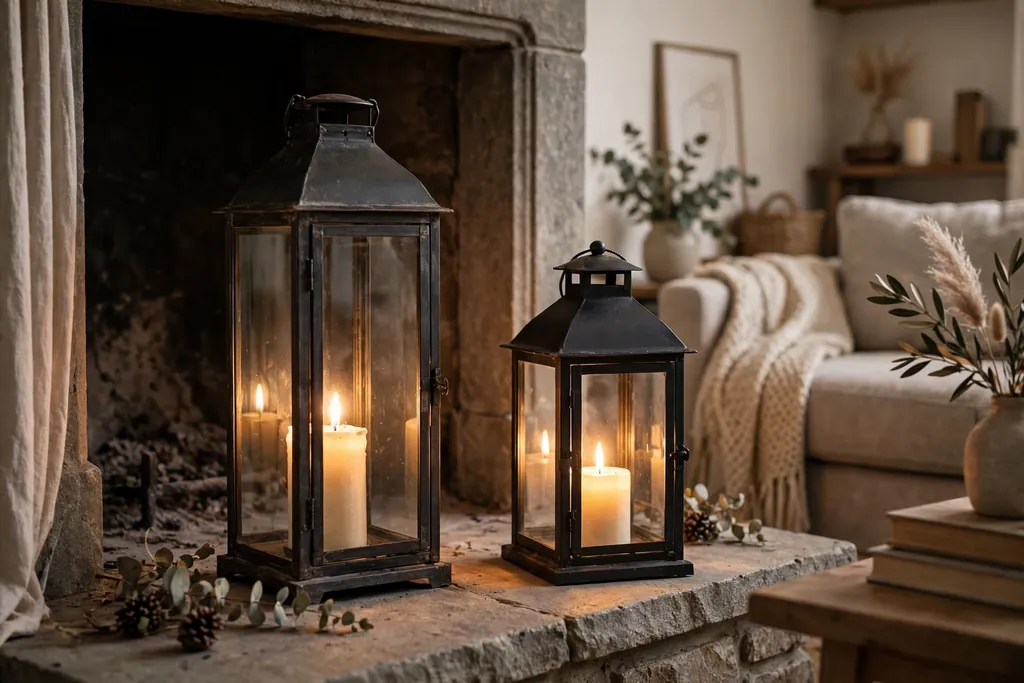
Place a pair of lanterns on the hearth of an unused fireplace, one tall and one medium, to give the fireplace a purpose through the warmer months. The glass reflects the room light during the day, and candlelight in the evening gives the fireplace a glow without a fire. This works well in living rooms where the fireplace is a focal point but is not lit every night.
Never place a lit candle lantern inside a working fireplace while a fire is burning, and keep lanterns clear of the opening if the fireplace is in use. For a working fireplace, use the lanterns on the hearth only when the fire is out and cool. Battery candles make this idea simple for daily use, since you can switch them on with a remote and leave them glowing all evening without watching a flame.
3. Entryway Console Lantern Welcome
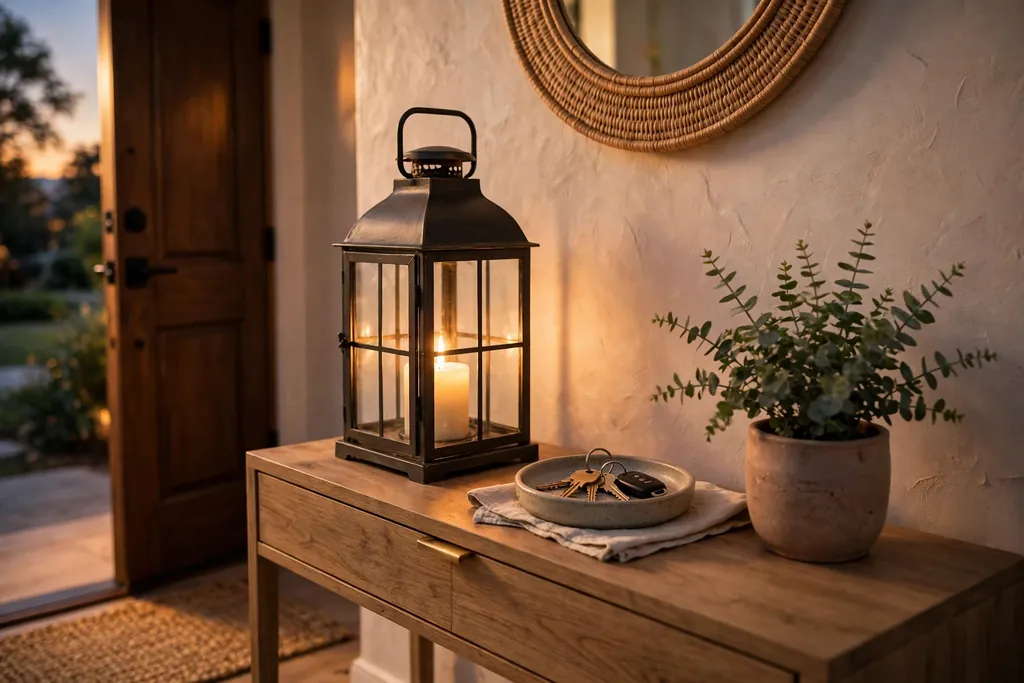
Set one substantial lantern on an entryway console beside a small dish for keys, so guests are met with warm light as soon as they step inside. A lantern at entry height draws the eye past the door and into the house, and it gives a narrow hallway a focal point without taking floor space. Choose a lantern large enough to be seen from the door, rather than a small one that disappears among keys and mail.
Keep the console top clear around the lantern, with only the key dish and perhaps a small plant, so the entry still works as a landing spot. A battery candle on a timer is ideal here, since it switches on before you get home in winter and you never need to remember it. If the console sits near a mirror, the lantern light doubles in the reflection and the entry feels brighter.
4. Dining Table Lantern Centerpiece
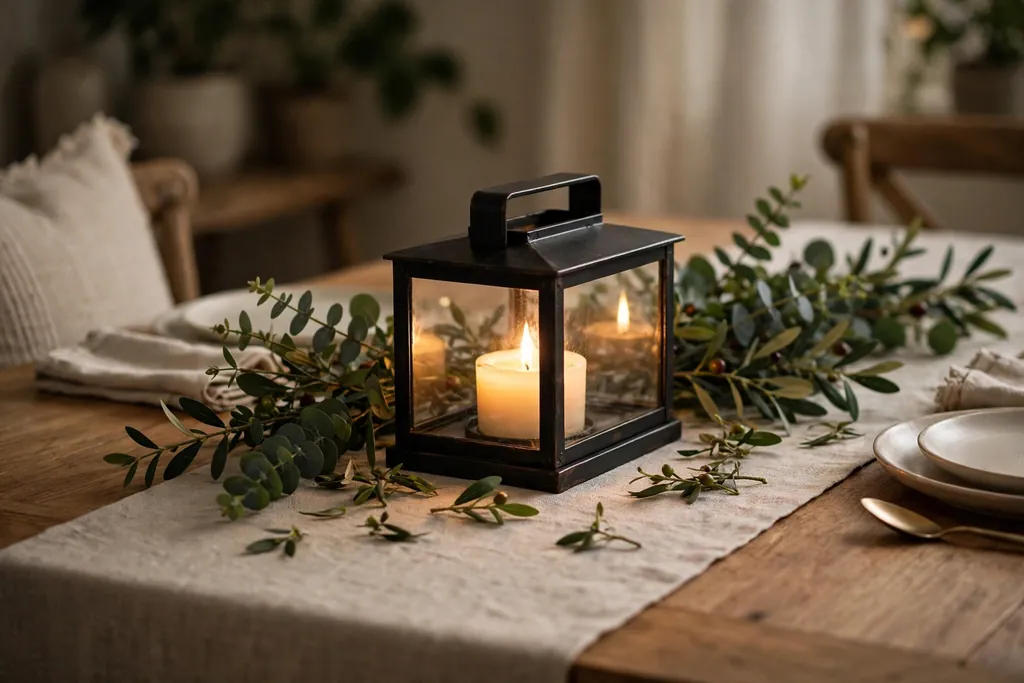
Build a dining table centerpiece around a single low, wide lantern, or a row of three small lanterns down the middle of a long table, keeping the light below eye level so guests can see each other across the table. A lantern centerpiece suits everyday meals as well as gatherings, since it can stay on the table between meals and only needs the candle lit at dinner. Add a simple runner and a few sprigs of greenery or a short vase of flowers beside the lanterns, not in front of them.
Check the height before a dinner party by sitting at the table and looking across it, and swap a tall lantern for a shorter one if it blocks faces. Use unscented candles for dining, since a strong scent competes with food. After the meal, blow out real candles and leave the lanterns in place, so the table still looks dressed for the next morning.
5. Bedroom Bedside Lantern Glow
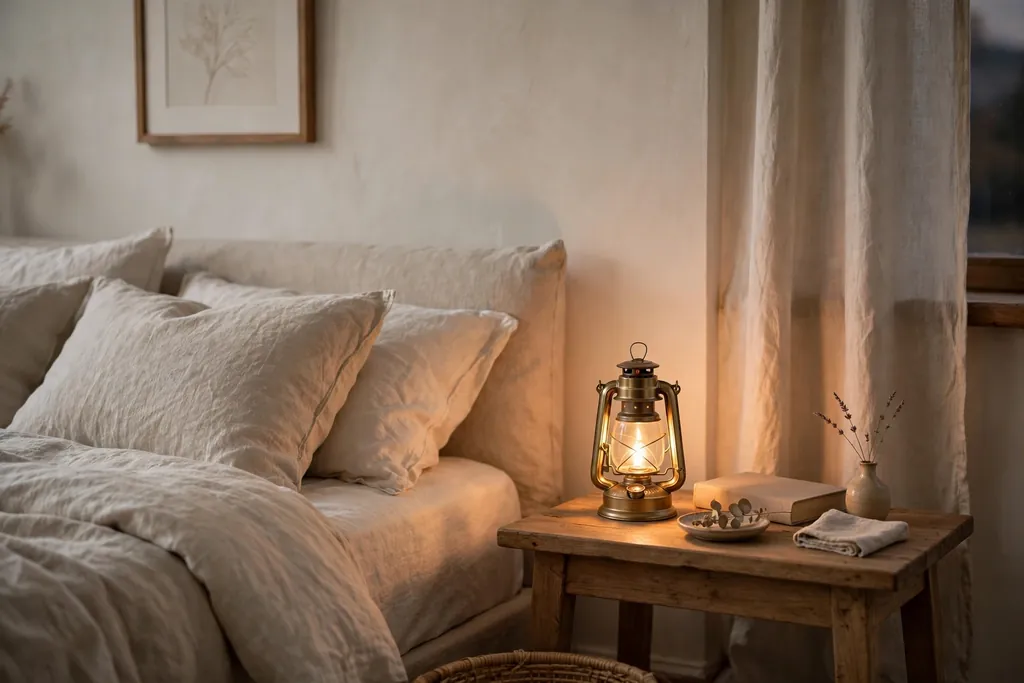
Place a small lantern on a bedside table as a soft evening light, with a battery candle inside so you can fall asleep without worrying about a live flame. A lantern gives a bedroom a calmer glow than a bright bedside lamp, and it works well for reading wind down time when paired with a low lamp on the other side of the bed. Choose a lantern with a handle or a closed top so it is easy to move if you need the table space.
Keep the lantern away from curtains, bedding, and anything that could fall onto it, even with a battery candle, since good habits matter for every light source. A warm white battery candle looks closest to real candlelight, while a flickering setting adds movement without a flame. If you share the room, a lantern on each bedside table keeps the light balanced on both sides.
6. Bathroom Spa Shelf Lantern
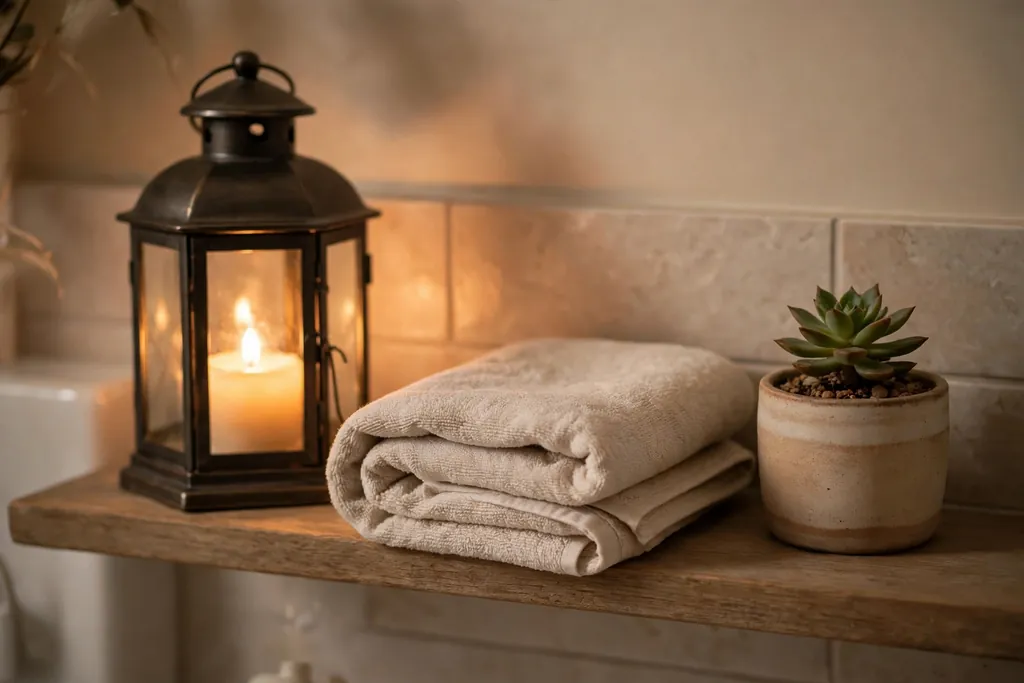
Style a lantern on a bathroom shelf or on the edge of a wide bath surround, with a battery candle and a folded towel nearby, to give the bathroom a calm, spa like feel. Bathrooms often have harsh overhead light, and a low lantern glow softens the room for an evening bath. A lantern with a closed glass design suits a bathroom, since it keeps splashes away from the candle inside.
Never use a real candle lantern near a bath where it could be knocked into water, and never leave a lit candle unattended in a bathroom. Battery candles remove that worry entirely and still give the flicker that makes the idea work. Keep the lantern off the floor and away from the direct splash zone, and wipe the glass after steamy baths so water marks do not dull the glow.
7. Porch Step Lantern Path
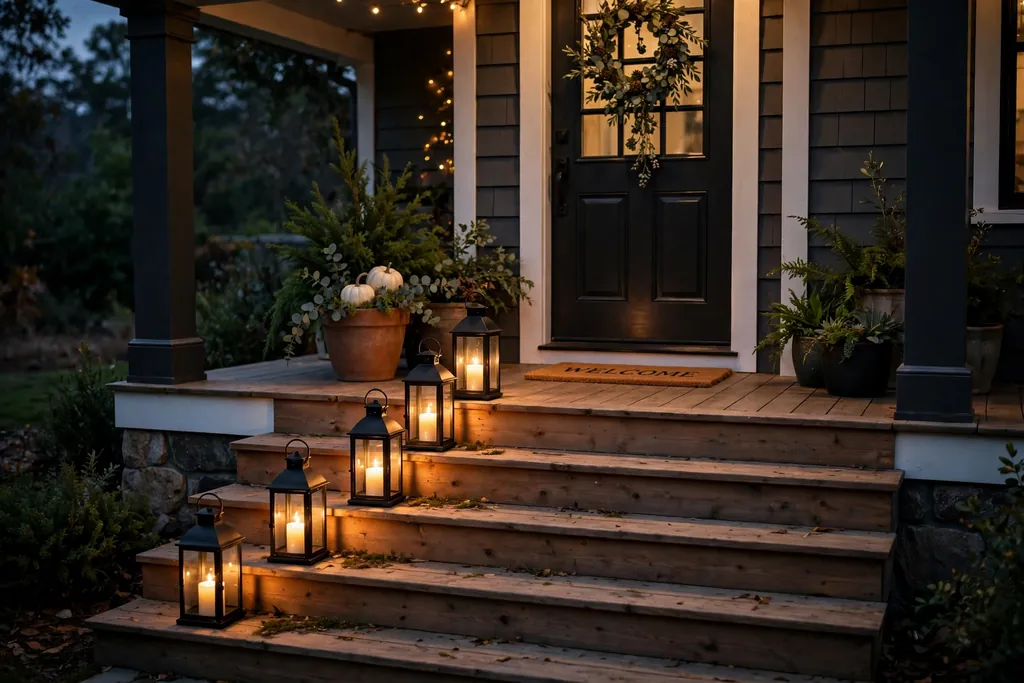
Line porch steps with a lantern on every second step, or one on each side of the bottom step, to guide guests to the door after dark. Step lanterns make a porch feel welcoming and they mark the edges of the steps, which helps visitors see where to place their feet. Heavy lanterns or lanterns with a flat, stable base suit steps best, since they are less likely to be knocked over.
Use battery or solar candles on steps, since a real flame on a step is easy to bump and hard to watch from inside. Place lanterns toward the wall side of each step rather than the open edge, so they do not narrow the walking path. Bring glass lanterns inside during storms or high winds, and choose a weather resistant finish for any lantern that stays out through the season.
8. Patio Table Lantern Centerpiece
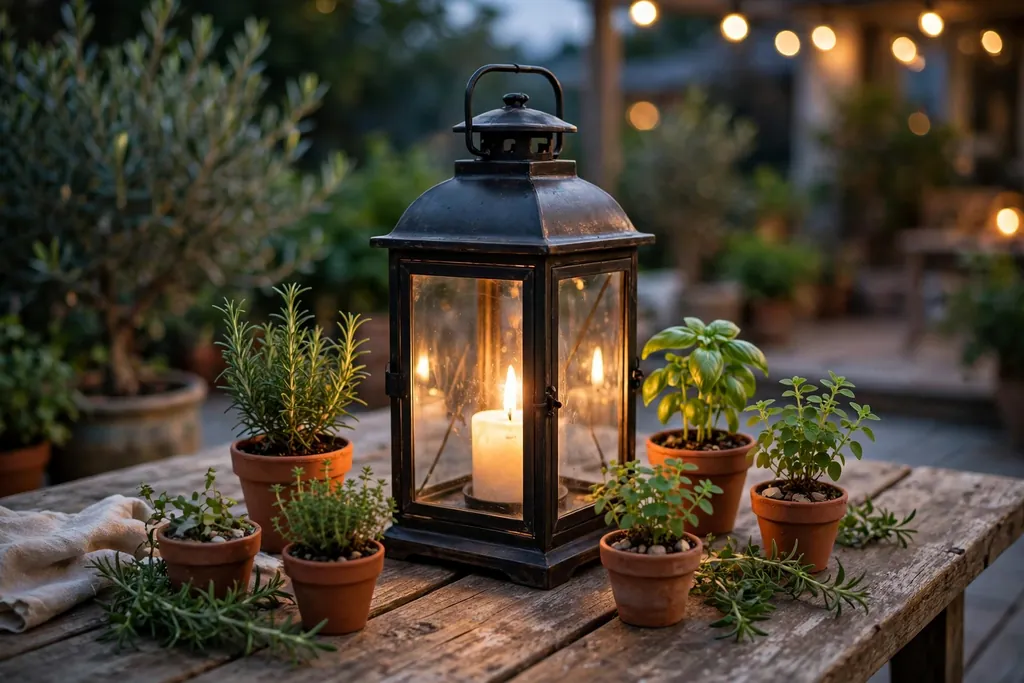
Set a large lantern in the middle of a patio table, surrounded by a few small potted herbs or a low bowl of stones, for an outdoor centerpiece that needs no power point. A patio lantern lets dinner outside run past sunset, and it can move to a side table or the ground beside a chair when the table is cleared. One large lantern usually works better outdoors than several small ones, since wind and table clutter can make small lanterns look lost.
Choose a lantern rated for outdoor use, with glass panels that latch or sit firmly in the frame, so a gust does not rattle them loose. A battery candle with a timer suits a patio table, since you can set it once and have light every evening. Keep a spare set of batteries or a second candle nearby during a gathering, so the table never goes dark halfway through the meal.
9. Garden Path Solar Lantern Line
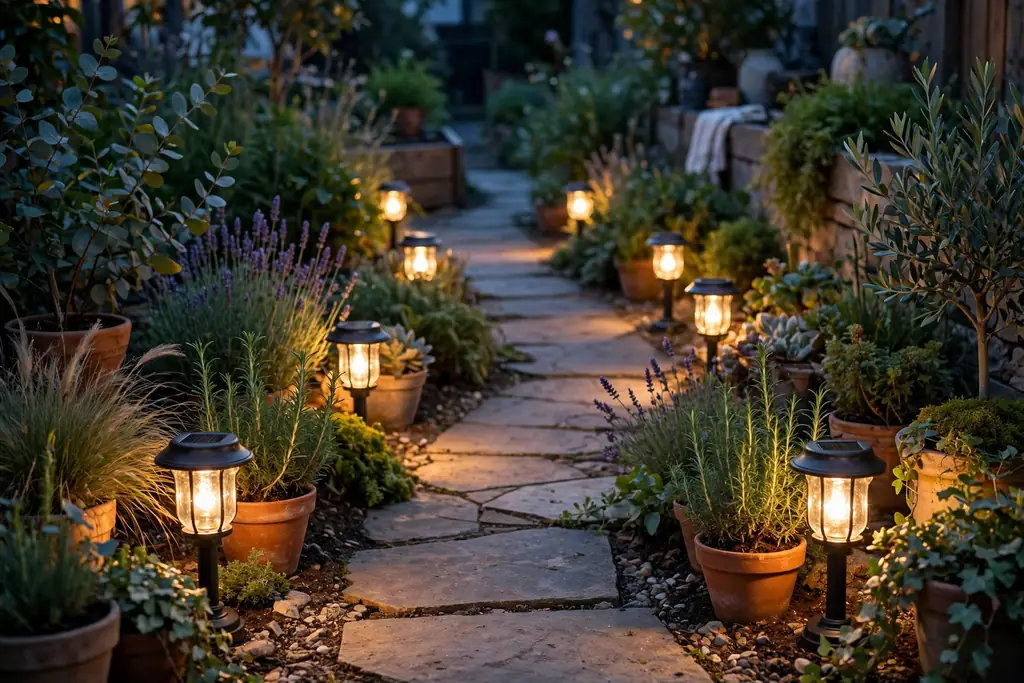
Place solar lanterns along a garden path at even intervals, with the solar panel facing the sky and clear of overhanging plants, so they charge by day and glow by night. A path line works best when the lanterns match in style but vary slightly in height, which keeps the path from looking like a runway. Start with the turns and the steps first, since those are the spots where light matters most, then fill the straight stretches.
Check the path after dark before fixing positions, since a lantern hidden behind a shrub gives no light where feet land. Wipe solar panels a few times a season, since dust and pollen cut charging more than most people expect. In winter, move solar lanterns to the sunniest stretch of the path or bring them in for a full charge, since short days give them less power.
10. Hanging Lanterns From a Pergola or Branch
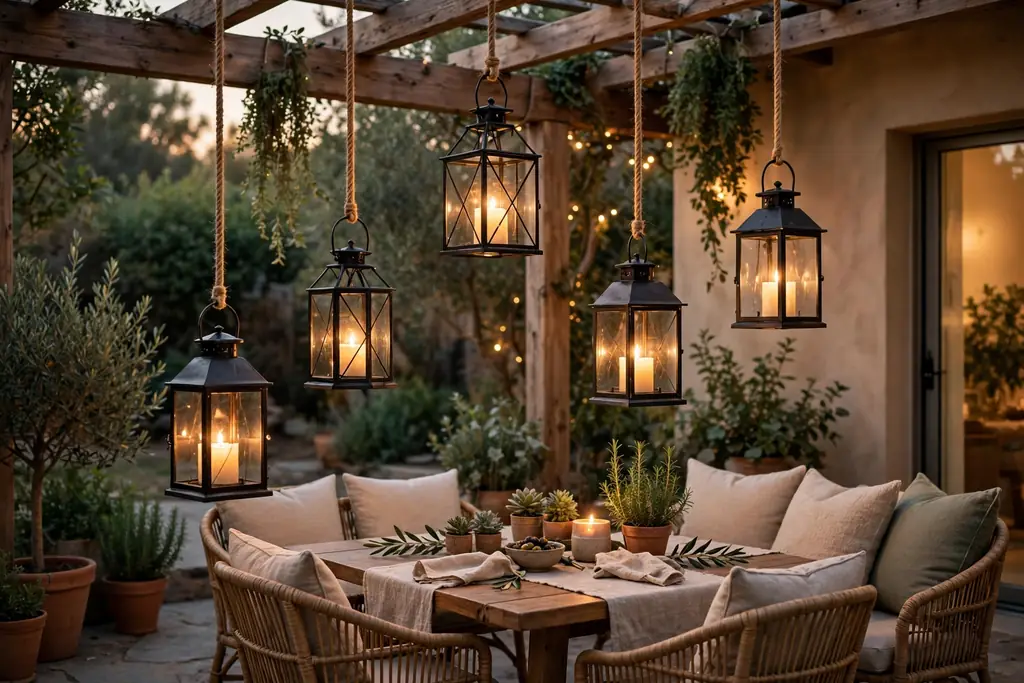
Hang two or three lanterns at different heights from a pergola beam or a sturdy tree branch, using hooks and wire rated for the lantern weight, to add light above a seating area without a table lamp. Hanging lanterns suit outdoor dining and evening sitting areas, since the light falls from above and leaves the table free. Vary the drop lengths by at least a few inches so the lanterns look grouped rather than lined up.
Check the branch or beam before hanging, and hang lanterns where they cannot swing into faces or into a grill. Battery candles are the safe choice for hanging lanterns, since a real candle in a swinging lantern is a fire risk and hard to light. Take hanging lanterns down before storms, and store the hooks with the lanterns so the setup is quick to repeat next weekend.
11. Window Sill Lantern Row
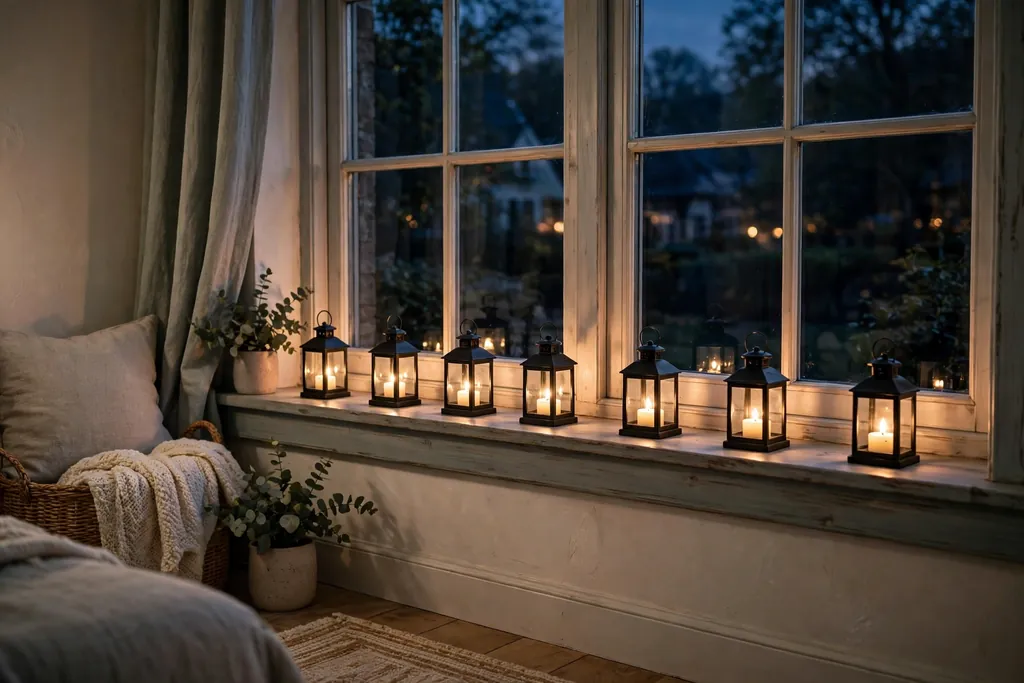
Line a deep window sill with two or three small lanterns, spaced so daylight can still reach the room and the glass catches light from both sides. A window sill row gives a room a glow that is visible from outside as well as inside, which makes it a good choice for a front room in the evening. Small lanterns suit sills best, since a large lantern can block the window and crowd the sill.
Keep lanterns away from curtain edges and blinds cords, and use battery candles on a sill so heat never builds up near fabric. A row of matching lanterns works on a long sill, while a single lantern suits a narrow one. In winter, a window sill lantern row pairs well with the warm light of the room behind it, and it can stay in place all season with only a battery change.
12. One Lantern, Four Seasonal Swaps
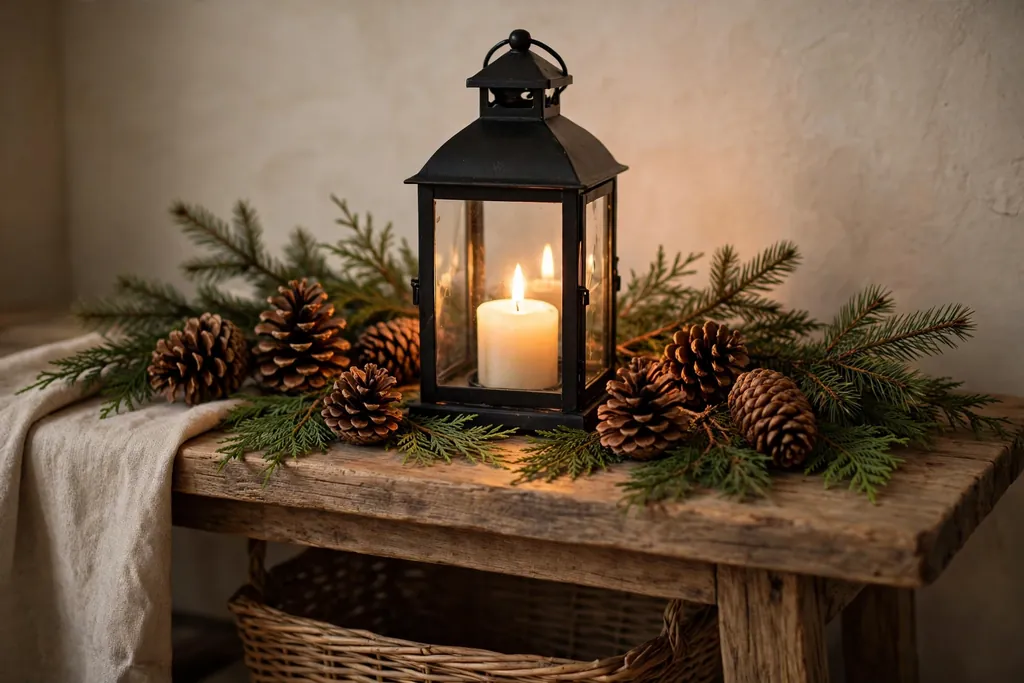
Keep one good lantern and change only what sits around it through the year, so a single piece carries four different looks without new purchases. In spring, set it beside a small pot of fresh green leaves. In summer, pair it with a bowl of shells or pale stones. In autumn, add a few pinecones and a plaid cloth under the tray. In winter, surround it with evergreen sprigs and a red candle. The lantern stays the same, and the season comes from the small items around it.
This idea suits anyone who likes seasonal decorating but not seasonal storage, since only the small extras change. Store the extras in one labelled box, with the lantern candle and spare batteries, so each swap takes minutes. Photograph each version once, so you can repeat a favourite next year without guessing what worked. The same swap approach works indoors on a console and outdoors on a porch, with weather hardy extras outside.
Conclusion
Lantern light works indoors and outdoors because it is small, movable, and warm, and the best lantern display is usually the simplest one that fits the spot. Start with a single lantern where you sit in the evening, choose the safe light source for that spot, and add a second or third only where the light is needed. Move lanterns between rooms and outside as the seasons change, and let one finish and one style run through the house so the look feels connected. For small rooms, the zoning advice in these studio apartment decorating ideas helps a lantern corner share space with seating and sleeping areas without crowding either.
Try one idea this week, such as a coffee table cluster or a porch step pair, and live with it for a few evenings before adding more. Save this list to your lantern and lighting board on Pinterest so you can find it when you are ready for the next room or the next season.
FAQs
Are real candles safe to use inside lanterns?
Real candles are safe in lanterns only when you stay in the room, keep the lantern away from curtains, bedding, and anything that can fall onto it, and place it on a stable, heat resistant surface. The glass guards the flame from drafts, but it does not remove the need to watch it. Never leave a lit candle lantern unattended, near children or pets, or in a room where you might fall asleep. Battery candles give the same glow without these limits and suit bedrooms, bathrooms, and high shelves.
Should I choose battery, solar, or real candles for lanterns?
Choose by spot. Real candles suit a dining table or a fireplace hearth where you sit nearby and can watch the flame. Battery candles suit bedrooms, bathrooms, shelves, and hanging lanterns, where a flame is risky or hard to reach, and many come with timers and remotes. Solar suits garden paths and outdoor spots with direct sun, since they need no batteries and switch on by themselves. Many homes use all three, one type per spot, rather than one type everywhere.
What size lantern works best on a coffee table or a porch?
On a coffee table, a lantern between 20 and 30 centimetres tall usually suits a standard table without blocking conversation, and a cluster should mix heights rather than match exactly. On a porch, go larger, since outdoor spaces swallow small decor, and a lantern of 30 centimetres or more reads well from the path. Measure the spot first, and leave clear space around the lantern for cups, books, or foot traffic. When in doubt, one larger lantern beats two small ones that disappear in the space.
Can lanterns stay outside all year?
Lanterns made for outdoor use, with weather resistant metal and firmly seated glass, can stay outside through most of the year, but glass lanterns last longer if they come in during storms, hard frost, and long wet spells. Bring candles and battery units inside when not in use, since damp shortens battery life and can stain glass. Wipe frames and glass at the start of each season, and check hooks, latches, and solar panels before putting lanterns back out in spring.
How do I style lanterns without making a room look cluttered?
Limit lanterns to one display per room, or one per zone in a large open room, and keep the rest of the surface clear. Group in odd numbers, repeat one finish, and vary heights so the group looks planned. Remove one item from a surface for every lantern you add, and keep the area around the lantern free of small clutter. A tray helps, since it gives the group a clear boundary and makes the whole display easy to lift away when the surface is needed.
How do I clean glass lanterns and remove candle soot?
Let the lantern cool fully, remove the candle, and wash the glass panels with warm water and a drop of washing up liquid, then dry with a soft cloth to avoid water marks. For soot, a paste of bicarbonate of soda and water rubbed gently on the inside of the glass usually lifts the marks without scratching. Trim candle wicks before each lighting to cut future soot, and keep the lantern out of strong drafts, which make flames smoke. Clean solar panels with a damp cloth a few times a season so they keep charging well.