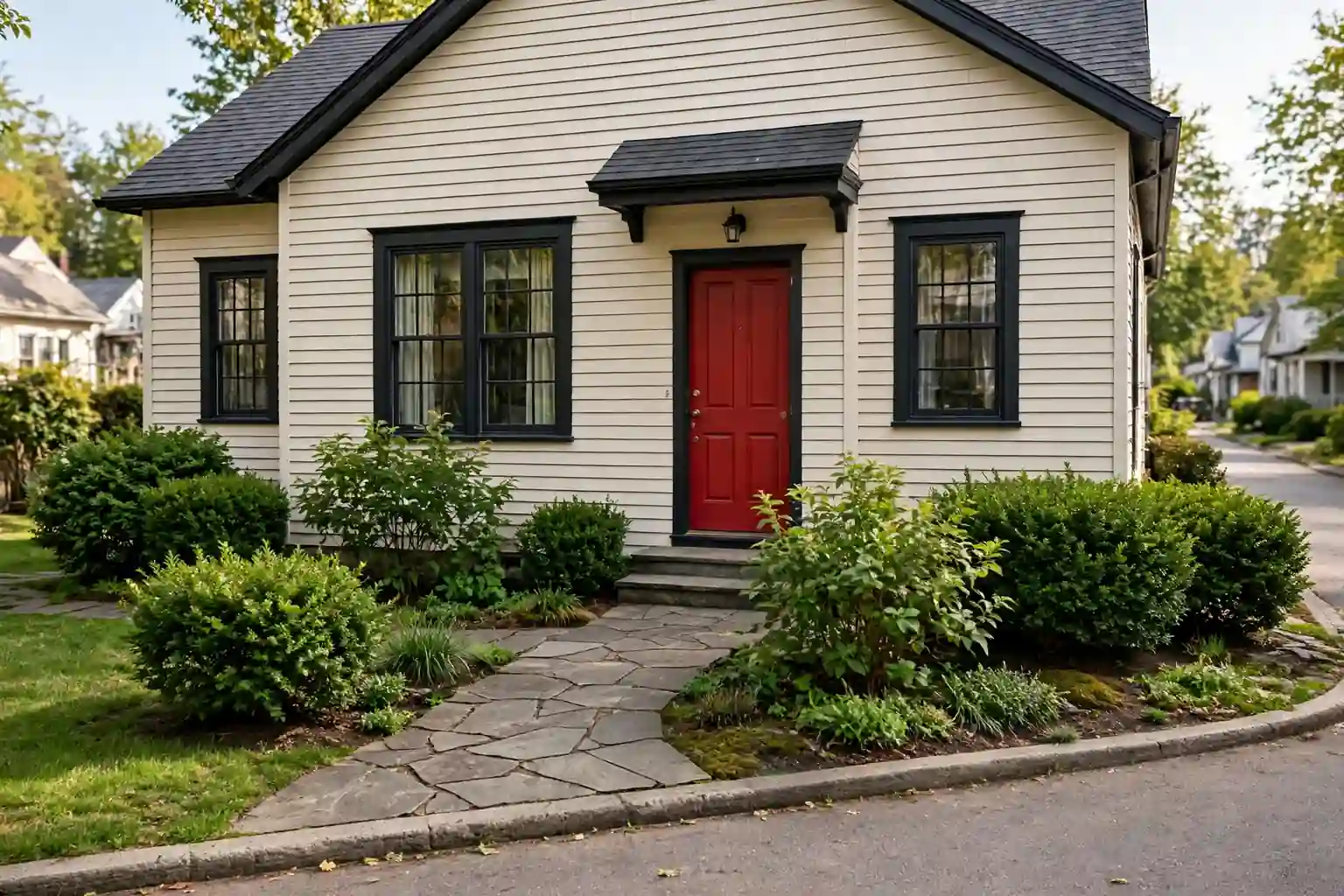
Picking an exterior color is really picking a small team of colors: the main wall shade, the trim, the door, and the roof all have to get along. A wall color that looks right on a swatch can turn cold beside a brown roof, or disappear against grey stone. These 27 exterior house color schemes cover classic, coastal, farmhouse, Mediterranean, and modern houses, and each one names the full combination so you can picture it on your own home. Start with your roof and your fixed materials, test large samples in real daylight, and choose the scheme that fits both.
Key Takeaways
- Start with what you cannot change: roof color, brick, and stone set the limits for every paint choice that follows.
- Give every scheme a clear job for each color: one main wall color, one trim color, and one accent for the door or hardware.
- Test a scheme on a large board in morning, midday, and evening light, since exterior colors shift more than interior ones.
- Repeat the accent once more, in planters, a light fixture, or house numbers, so the scheme looks planned rather than random.
- Match the scheme to the house style: crisp white and black suits colonial and modern forms, warm cream and terracotta suits Mediterranean forms, soft sage suits cottages and farmhouses.
- Keep planting in the plan: green shrubs and pale gravel change how a wall color reads from the street.
1. Classic White Siding with Black Trim and a Red Door
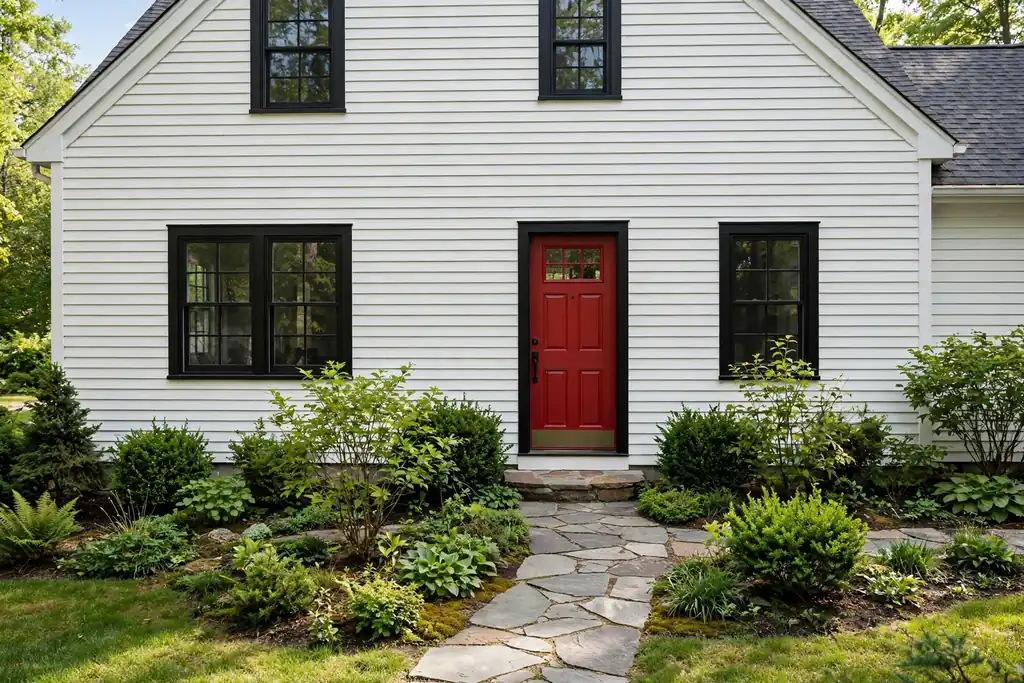
White siding with black trim is the most dependable classic scheme, because the strong outline makes the shape of the house easy to read from the street. Paint the siding a clean, warm white, keep window frames, corner boards, and fascia in black, and paint the door a true red. The red is the single warm note, and it draws the eye straight to the entry.
Keep the roof grey or black, since a brown roof can make white siding look yellow by comparison. A black mailbox, black lanterns, and a plain stone path repeat the trim color at ground level without adding new colors. This scheme suits colonial, farmhouse, and traditional suburban houses, and it photographs well in every season because the contrast stays clear in snow, sun, and rain.
2. Warm Cream Stucco with Terracotta Roof Tiles
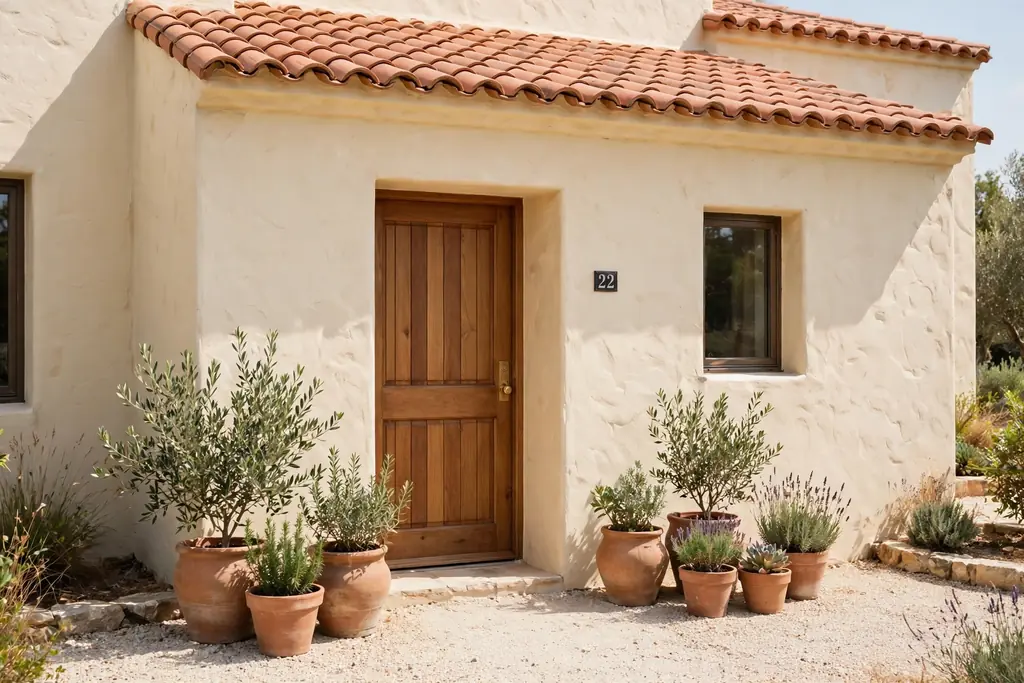
Warm cream stucco with terracotta roof tiles suits Mediterranean and Spanish style houses, because the wall color and the roof share the same warm, sun-baked family. Render the walls in a soft cream with a yellow base, keep the roof in natural terracotta, and use a wood door with iron details. The cream keeps the house bright, while the terracotta roof gives it weight and warmth.
Keep window frames in a warm white or light bronze, since bright white can look harsh against cream stucco. Pale gravel, clay pots, and olive or lavender planting suit this scheme and repeat its warm, dry-climate character. Cream stucco shows dirt near the ground, so a darker stone base or a gravel border helps the lower walls stay tidy between washes.
3. Soft Sage Green with Cream Trim and a Wood Door
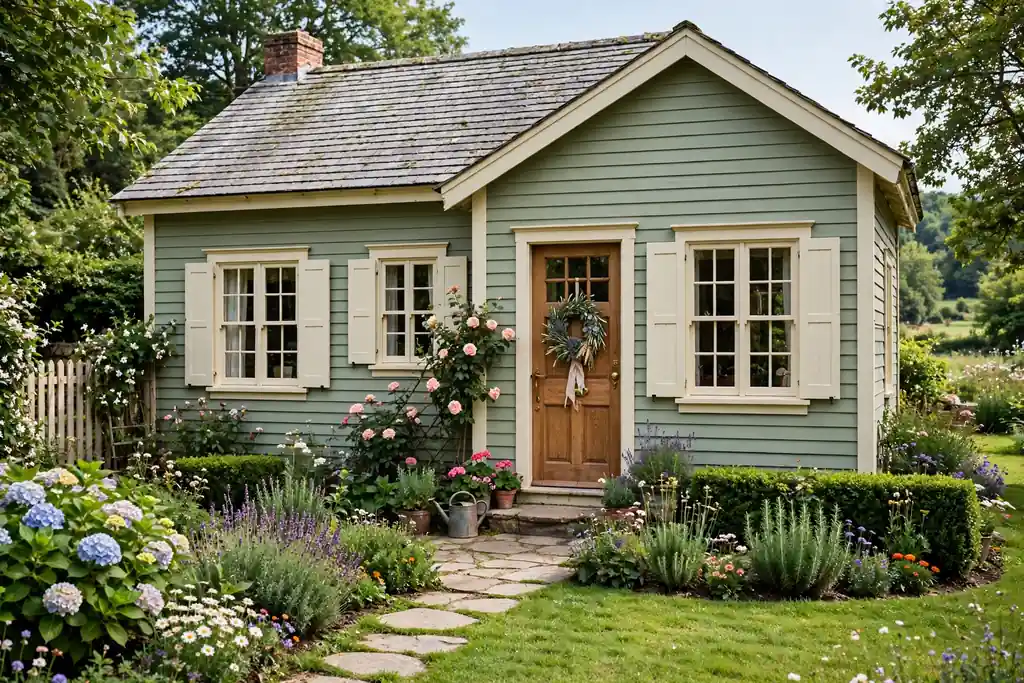
Soft sage green with cream trim suits cottages, farmhouses, and craftsman houses, because the muted green sits comfortably beside lawns, trees, and garden beds. Paint the siding a grey leaning sage, keep window frames, porch posts, and fascia in cream, and set a natural wood door against the green. Cream warms the sage in a way that bright white would not, since white can make sage look cold.
Repeat the wood once more in planters, a bench, or porch brackets, so the door does not stand alone. A grey or brown roof both suit sage, while a black roof can sharpen the scheme for a more modern cottage. Sage reads greyer on cloudy days, so test it on the wall that faces the street, and pick a shade one step clearer than the sample you first like if your house sits in shade.
4. Pale Grey Siding with White Trim and a Navy Door
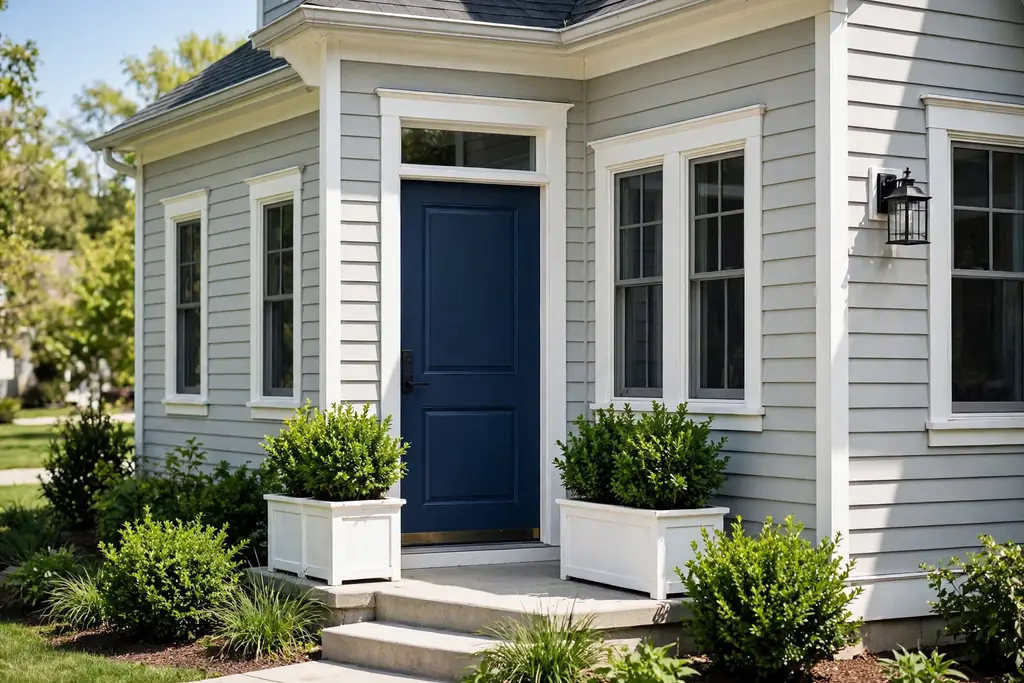
Pale grey siding with white trim and a navy door is a calm, tailored scheme that works on almost any suburban house. Paint the siding a light, neutral grey, keep the trim bright white, and paint the door navy. The navy gives the entry depth without the heaviness of black, and it reads as a color rather than as another neutral. For more navy door shades in this family, see these blue front door colors.
Keep the roof grey or black, and use nickel or black hardware to suit the cool palette. A navy door pairs well with white planters and green shrubs, which stop the grey and white from feeling flat. Pale grey shifts with light, looking bluer on a bright day and warmer at dusk, so check the siding sample beside the roof and the trim before committing.
5. Butter Yellow Cottage with White Porch and Green Shutters
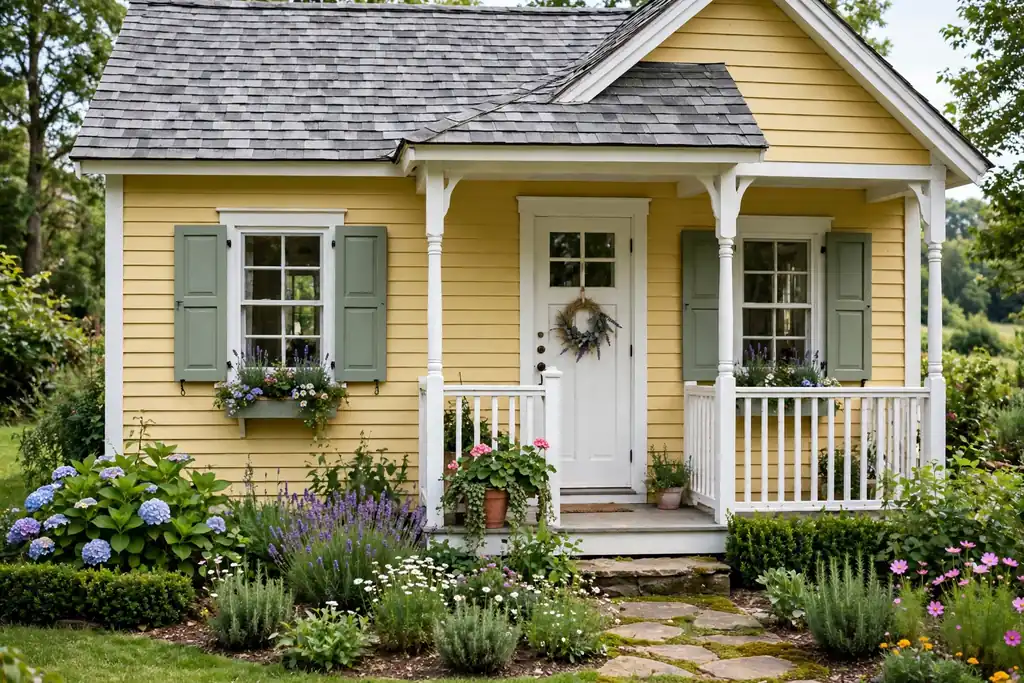
Butter yellow with a white porch and green shutters is a cheerful cottage scheme that stays gentle rather than loud. Paint the siding a soft butter yellow, keep the porch rails, posts, and window trim white, and paint the shutters a muted leaf green. The white porch reads as a bright frame around the yellow walls, while the green shutters tie the house to the garden.
Keep the roof grey or soft brown, and use a white or green door to avoid adding a fourth strong color. Butter yellow looks stronger across a whole wall than on a small chip, so pick a shade one step paler than the sample you first like. This scheme suits small cottages and bungalows best, where the yellow can stay friendly, and it needs decent daylight, since yellow can turn dull on a heavily shaded, north facing wall.
6. Natural Red Brick with Cream Trim and a Charcoal Roof
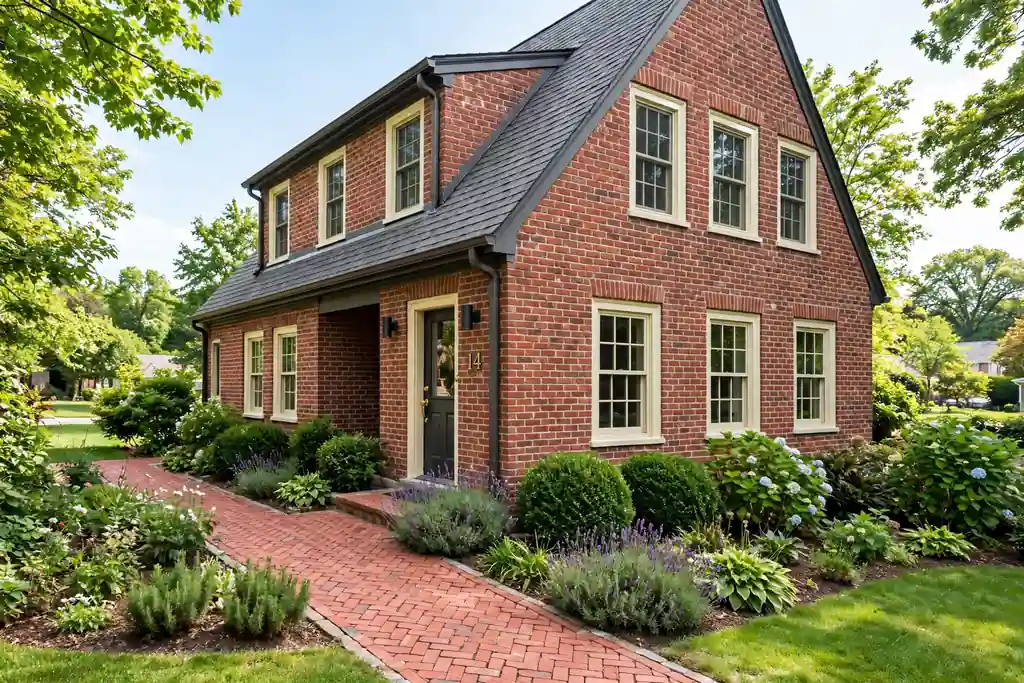
Natural red brick with cream trim and a charcoal roof is a scheme built on a material you do not paint. Keep the brick bare, paint the trim, fascia, and porch details cream, and choose a charcoal grey roof. Cream softens the brick without the stark edge that bright white gives, and the charcoal roof grounds the warm brick from above.
Keep the door in a warm wood stain, a deep green, or a classic black, since all three sit well against red brick. A brick path or brick steps repeat the main material at ground level, and cream planters keep the entry bright. Red brick varies a lot from house to house, so hold the cream sample against your own brick in daylight: a pink leaning brick needs a warmer cream, while an orange leaning brick suits a cooler cream.
7. Sky Blue Coastal Cottage with White Shutters
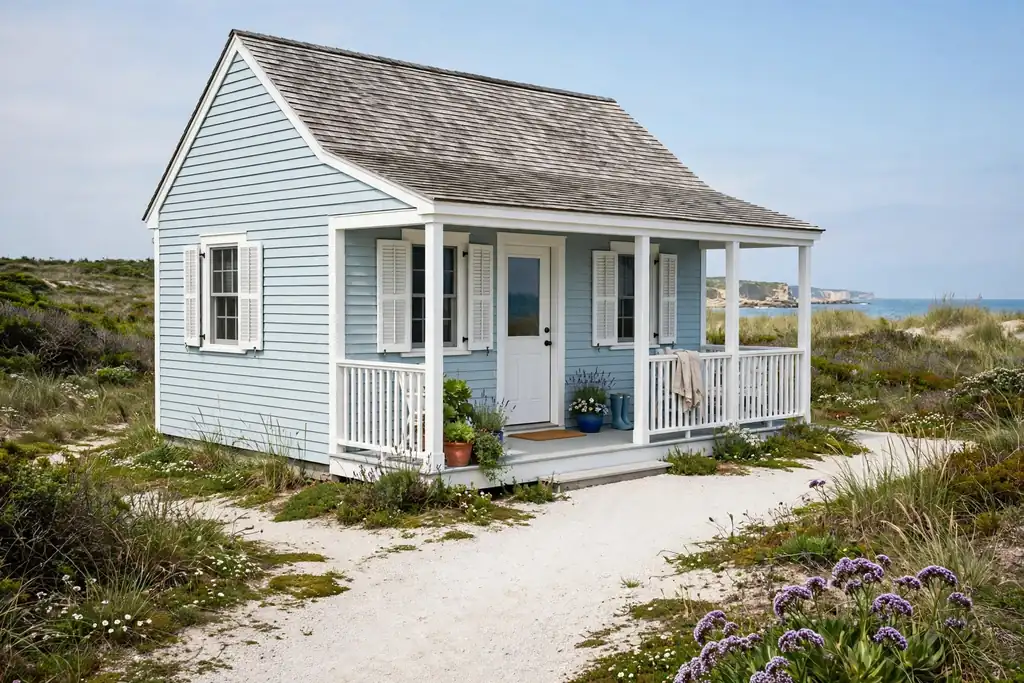
Sky blue with white shutters gives a coastal cottage color without turning it into a beach theme. Paint the siding a pale, clear sky blue, keep shutters, trim, and porch rails white, and use a white or pale wood door. The white shutters read as a crisp pattern across the blue walls, which suits small cottages with several windows on the front.
Keep the roof light grey or white, and use pale gravel or sand colored paths to suit the coastal feel. A single brass lantern or a wood bench adds warmth, since blue and white alone can feel cool. Sky blue can wash out to near white in very strong sun, so test it one step deeper than the swatch you first pick, and check it in midday light before painting the whole house.
8. Warm Greige with Bronze Hardware and a Wood Door
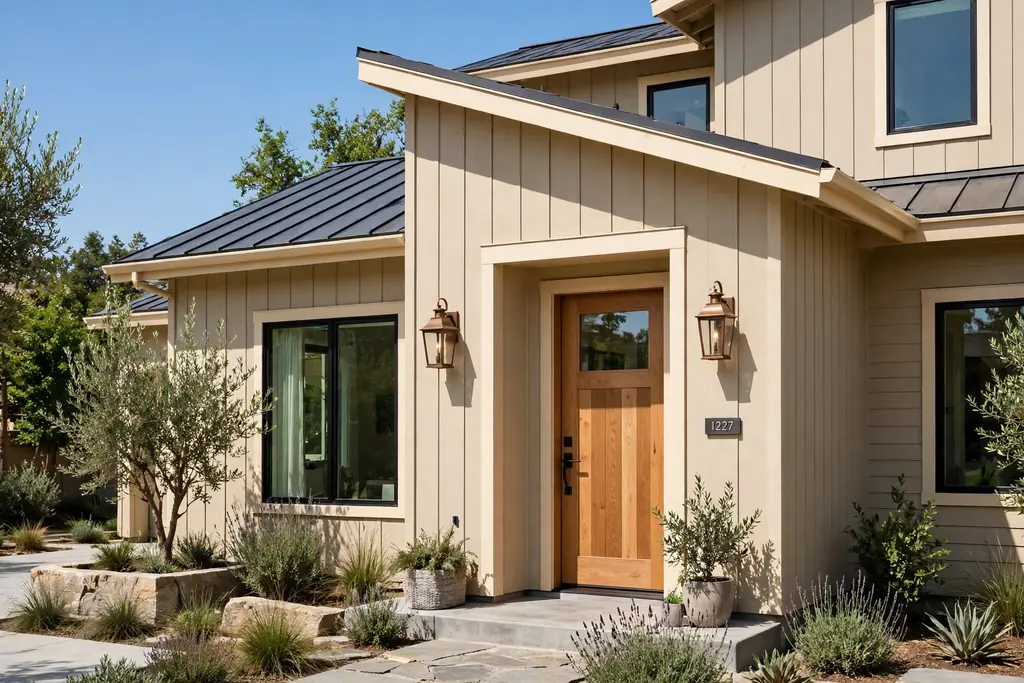
Warm greige, a blend of grey and beige, with bronze hardware and a wood door is a quiet, modern neutral scheme. Paint the siding a warm greige, keep the trim a shade lighter in warm white, and add bronze in the door hardware, lanterns, and house numbers. The bronze warms the neutral walls and gives the entry a clear focal point after dark.
Keep the roof grey or brown, since greige sits between those two families and suits both. A natural wood door repeats the warmth of the bronze and stops the scheme from feeling flat. Greige shifts through the day, looking greyer in morning light and warmer at night, so test it on two walls, one facing the street and one in shade, before choosing the final shade.
9. Olive Green Farmhouse with Black Window Frames
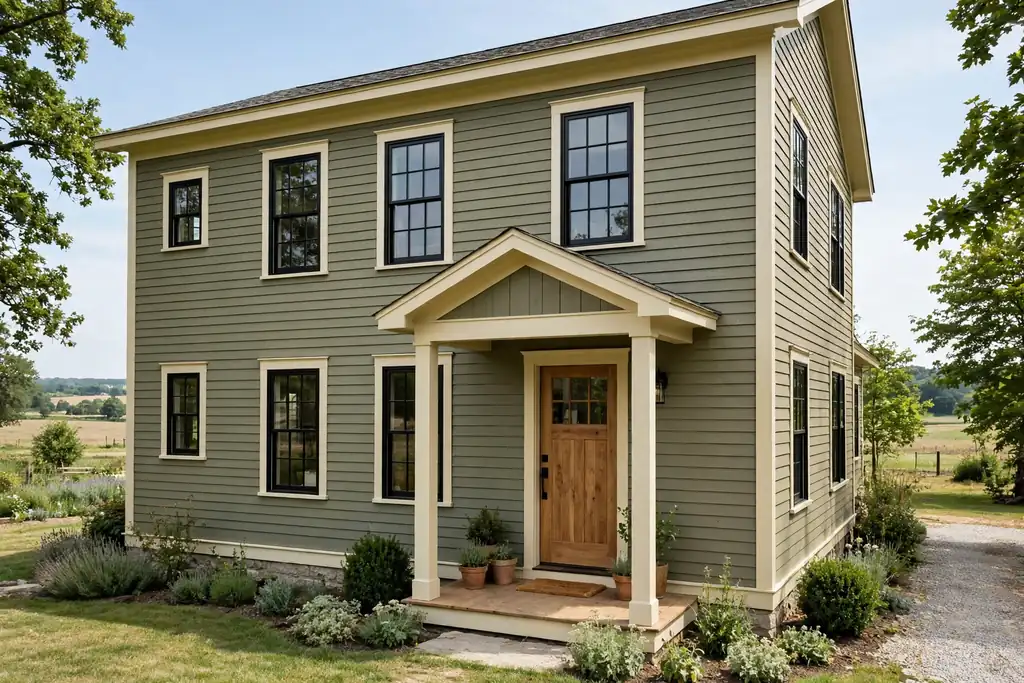
Olive green with black window frames suits a farmhouse because the earthy green and the dark frames feel settled rather than new. Paint the siding a muted olive with a brown base, set black framed windows into the walls, and keep the trim cream or pale stone. The black frames give the olive a tidy outline, while cream trim keeps the entry bright.
Use a wood door and wood porch posts to warm the scheme, and keep the roof brown or grey, since both suit olive. If you want to go darker still, these dark exterior house color schemes show how deep greens and charcoals behave on larger houses. Olive can turn muddy beside cool grey stone or a grey roof, so test the pair on site and pick a greener olive if your roof runs cool.
10. Navy and White Colonial Revival
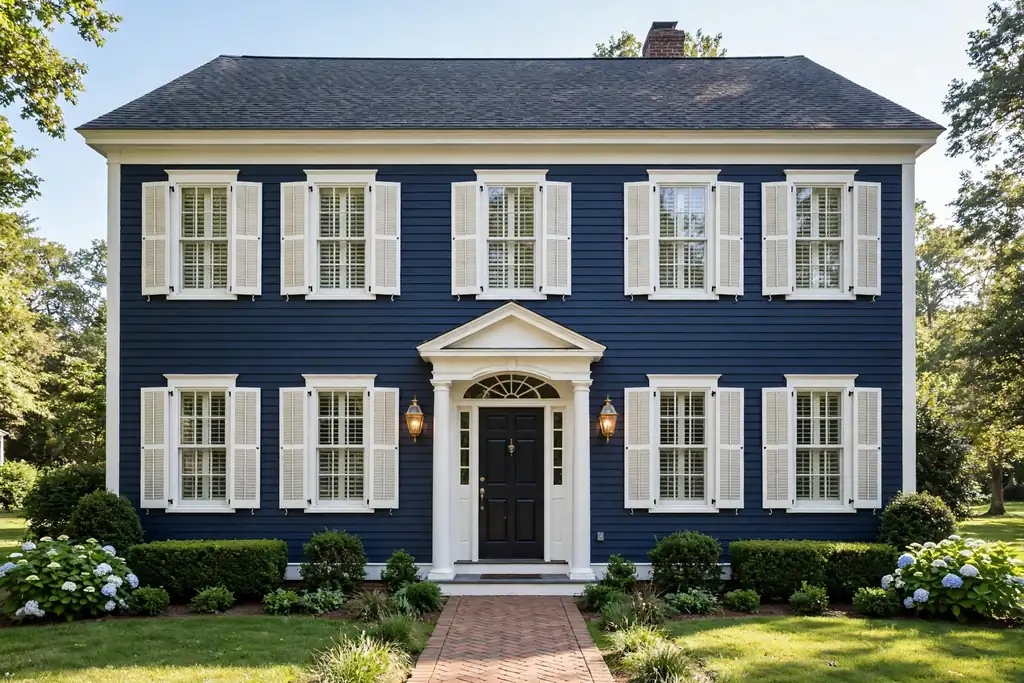
Navy siding with white trim suits a colonial revival house because the symmetrical form and divided windows give the strong color structure to sit on. Paint the siding navy, keep shutters, corner boards, and window trim white, and add brass in the door hardware and lanterns. Brass warms the cool navy and gives the entry a clear focal point.
Use a navy with a grey base rather than a bright blue, so the house reads as calm and classic from the street. Keep the roof grey or black, since a brown roof can pull navy toward purple in warm evening light. A white door frame helps the entry stand out against the navy wall, and a red brick path or chimney adds a traditional warm note that suits the colonial form.
11. Taupe Stucco with Pale Stone Accents
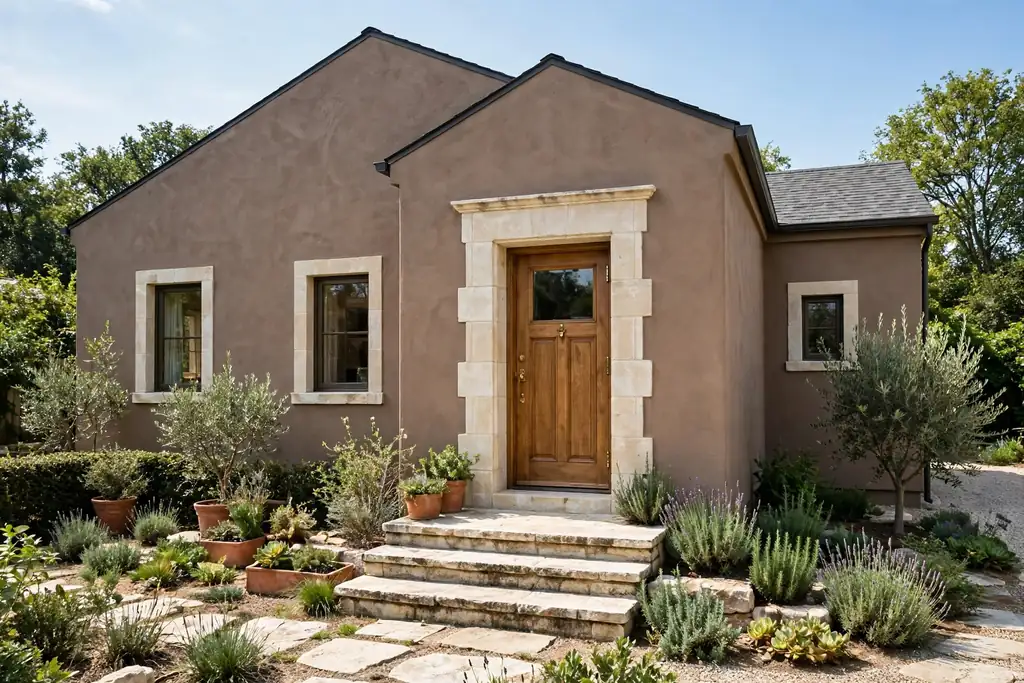
Taupe stucco with pale stone accents suits a house with traditional or Mediterranean bones, because the warm neutral and the stone feel settled together. Render the walls in a warm taupe, and use pale limestone or light stone for the door surround, window sills, and steps. The stone gives the taupe a light edge without the sharpness of white paint.
Keep the roof brown or grey, and use bronze or black hardware, since bright brass can look too crisp against taupe. A wood door in a mid stain suits this scheme and repeats the warmth of the stone. Taupe absorbs light like other mid tones, so keep the entry well lit and the planting pale near the door, which matters because a dim entry can make taupe read darker than planned.
12. Hunter Green Shutters on a Cream House
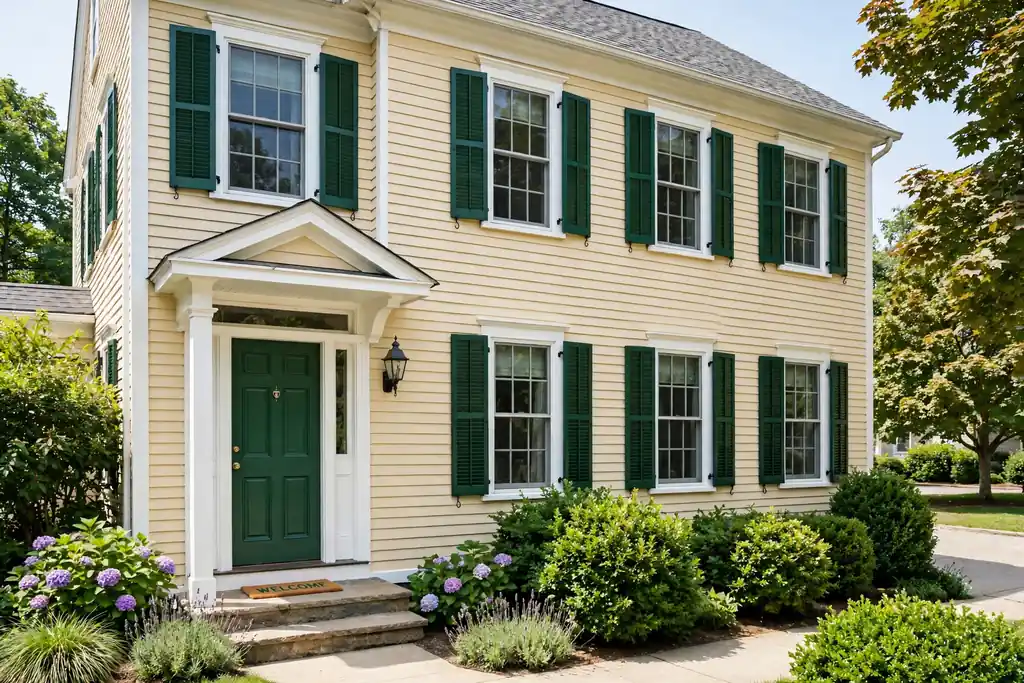
Hunter green shutters on a cream house is an accent scheme: the walls stay pale, and the shutters carry the color. Paint the siding a warm cream, keep the trim white or cream, and paint the shutters a deep hunter green. The green reads as a pattern across the front of the house, which suits houses with several windows and a simple, symmetrical facade.
Repeat the green once more in the front door or in planters, so the shutters do not stand alone. A brown or grey roof both suit cream and hunter green, and brass hardware fits the traditional character of the pair. This scheme is a good first step for owners who want color but are not ready to paint the whole house, since shutters can be repainted far more easily than siding.
13. Warm White and Walnut Contemporary
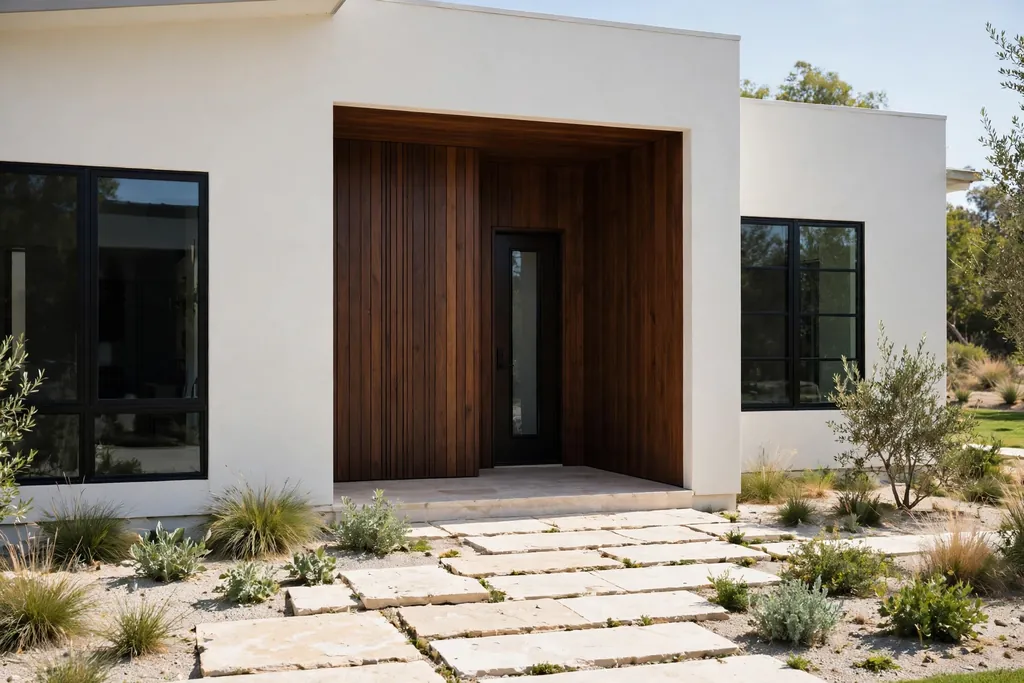
Warm white walls with dark walnut cladding suit a contemporary house because the two materials give the pale color texture to play against. Keep the main walls in a warm white render or siding, clad one section, such as the entry or a gable, in dark walnut boards, and set black framed windows into the white walls. The walnut section marks the entry and stops a large white house from looking plain.
Keep other materials quiet: black metal, pale stone, and plain concrete suit walnut, while bright trim fights it. A pale stone path leading to the entry helps visitors find the door, and a wood bench repeats the walnut note at ground level. The same rule about giving each color a clear job applies indoors too, as these wall color combinations show for rooms. Protect the cladding with an exterior oil suited to the wood, and plan on regular care, since dark wood shows weathering faster than painted siding.
14. Dusty Blue with Red Brick Accents
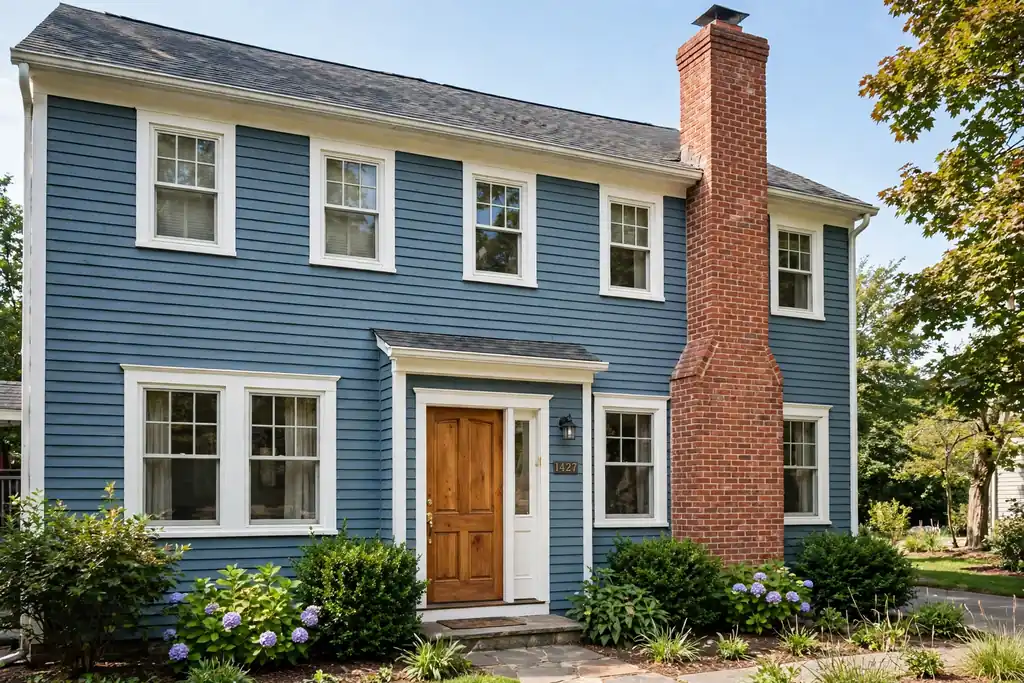
Dusty blue siding with red brick accents pairs a cool, muted blue with the warmth of bare brick. Paint the siding a grey leaning dusty blue, keep the trim white, and let a red brick chimney, brick steps, or a brick porch base carry the warm note. The brick stops the blue from feeling cold, while the blue keeps the brick from dominating the front of the house.
Keep the roof grey or charcoal, and use a white or wood door to avoid adding a third strong color. Dusty blue suits coastal, cottage, and traditional houses, and it reads as a soft neutral in low light, which makes it forgiving on a shaded lot. Check the blue against your own brick in daylight, since a pink leaning brick needs a cooler blue, while an orange leaning brick suits a warmer, greyer blue.
15. Terracotta and Cream Mediterranean Villa
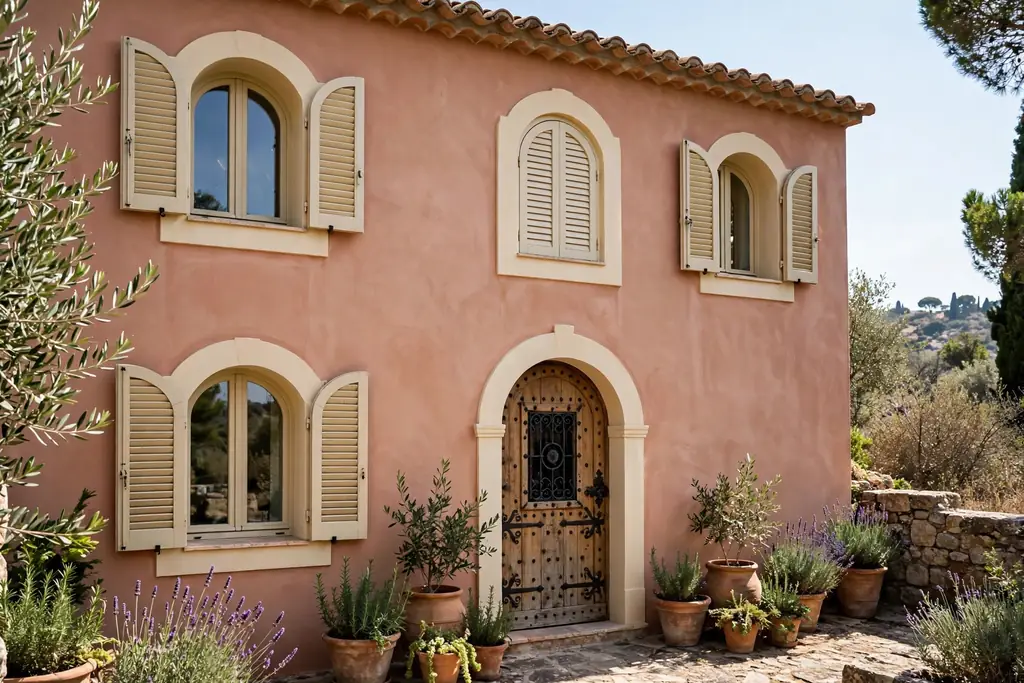
Terracotta walls with cream trim suit a Mediterranean villa because the warm clay color and the pale trim echo sun baked plaster and stone. Paint the main walls a soft terracotta, keep window surrounds, arches, and trim cream, and use a wood door with iron details. The cream outlines the arches and windows, which matters most on a villa with curved forms.
Keep the roof in terracotta tiles or a warm brown, and use pale gravel, clay pots, and olive planting at the entry. Terracotta looks stronger across a whole wall than on a chip, so pick a shade one step softer than the sample you first like, especially on a small house. A cream door or cream trim on the porch keeps the entry bright, since terracotta absorbs light like other warm mid tones.
16. Soft Peach Stucco with White Trim
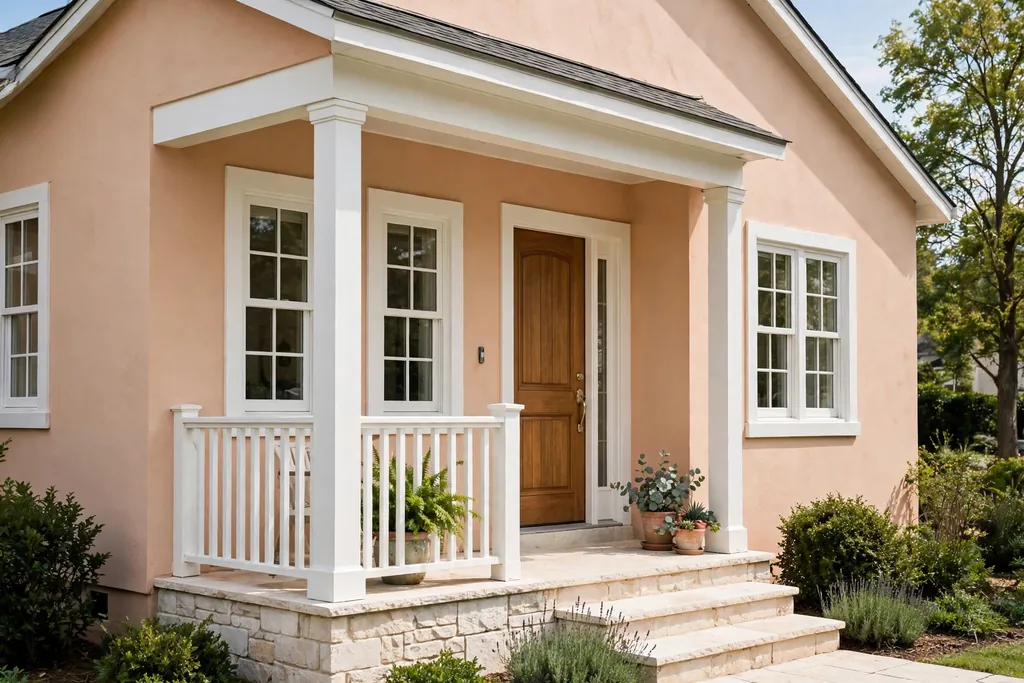
Soft peach stucco with white trim is a gentle warm scheme that suits Spanish, Mediterranean, and coastal houses. Render the walls in a pale peach with a pink base, keep the trim, window surrounds, and porch details white, and use a wood or white door. The white keeps the peach fresh, while the peach keeps the white from looking stark.
Keep the roof in terracotta tiles or warm brown, and use pale stone or gravel at the entry to suit the warm palette. Peach can turn pink beside cool grey stone or a grey roof, so test the pair on site and pick a peach with a warmer, apricot base if your roof runs cool. This scheme suits houses with arched windows or curved stucco details, where the soft color follows the form rather than fighting it.
17. Slate Blue with a Stone Chimney
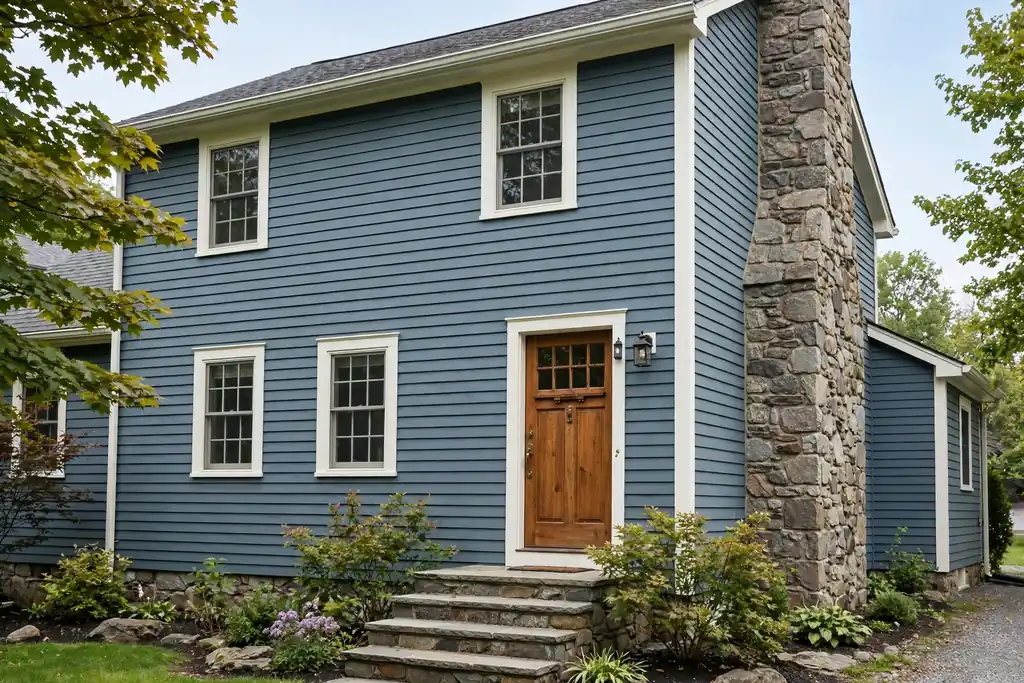
Slate blue siding with a stone chimney pairs a cool, grey leaning blue with the texture of natural stone. Paint the siding a muted slate blue, keep the trim white or pale grey, and let a stone chimney or stone porch piers carry the natural note. The stone adds texture at the level people see up close, where a flat blue wall would otherwise meet the lawn without a break.
Repeat the stone once more at ground level, in stone steps or a low garden wall, so the chimney does not stand alone. A grey or black roof suits slate blue, and a wood door adds warmth beside the cool walls. Slate blue shifts with light, looking bluer on a bright day and greyer at dusk, so test it on the wall that faces the street before committing.
18. Cream and Chocolate Brown Craftsman
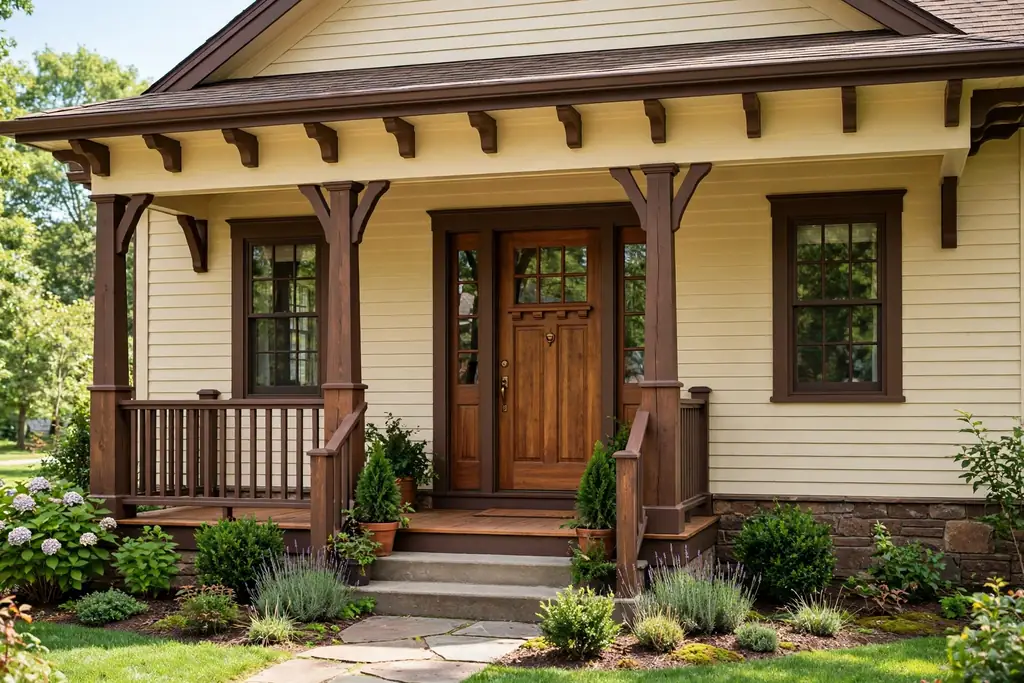
Cream siding with chocolate brown trim suits a craftsman house because the deep brown picks out the brackets, beams, and porch details that define the style. Paint the siding a warm cream, keep the trim, brackets, and porch posts in chocolate brown, and use a wood door in a mid stain. The brown gives the cream a rich outline, while the cream keeps the house bright.
Keep the roof brown or dark grey, and use bronze or black hardware to suit the warm palette. A stone porch base or stone steps repeat the craftsman character at ground level. Cream and chocolate brown need decent daylight, so on a heavily shaded lot, pick a cream one step brighter than the sample you first like, and keep the porch well lit so the brown details stay readable.
19. Pale Mint with a Deep Green Door
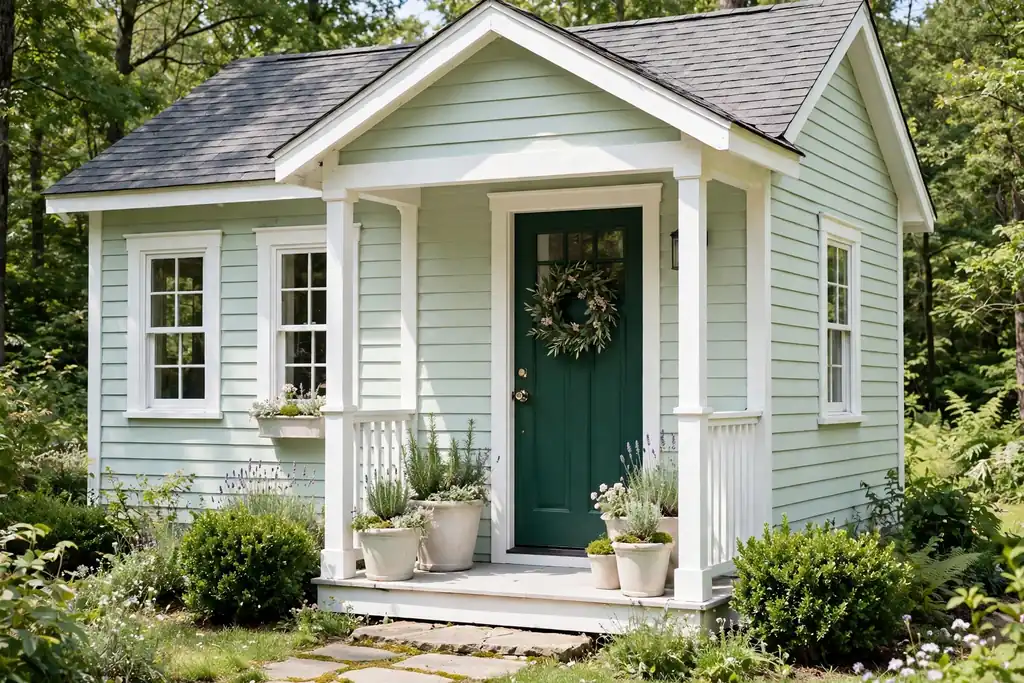
Pale mint siding with a deep green door is a fresh, light scheme that suits cottages, bungalows, and coastal houses. Paint the siding a pale mint with a grey base, keep the trim white, and paint the door a deep forest green. The deep green door gives the pale walls a clear focal point, and it ties the house to the garden without painting the whole house green.
Keep the roof grey or soft brown, and use black or bronze hardware to suit the green door. A white porch and pale planters keep the entry bright, since mint can look washed out beside dark soil or dark mulch. Mint reads greener in shade and paler in sun, so test it on the front wall through a full day, and pick a mint with enough grey in it to stay calm rather than bright.
20. Brick and Cream Tudor Revival
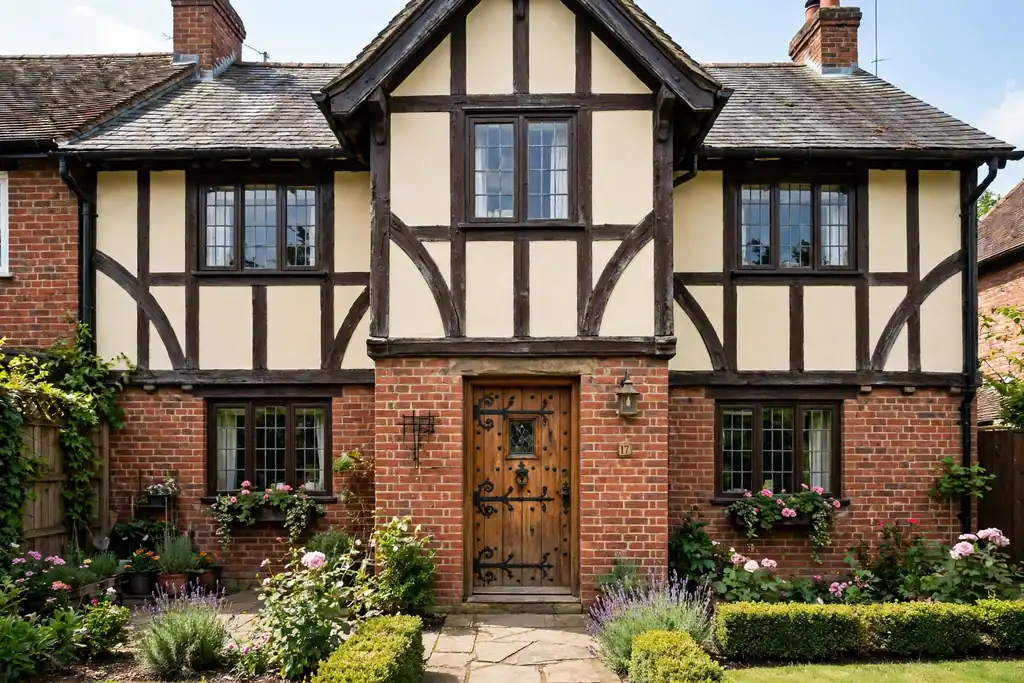
Brick and cream Tudor revival is a scheme built on pattern: cream render panels, dark timber framing, and red brick details. Keep the brick bare on the lower story or chimney, render the upper panels cream, and paint the timber framing dark brown or black. The dark timber draws the pattern of the house clearly, while the cream panels keep it bright.
Keep the roof dark brown or charcoal, and use a wood door with iron details to suit the Tudor character. A brick path or brick steps repeat the main material at ground level, and cream planters keep the entry light. This scheme suits houses that already have the Tudor form, since the pattern needs real timber or trim boards to carry it, and painted lines alone will not give the same effect.
21. Sand and Driftwood Coastal
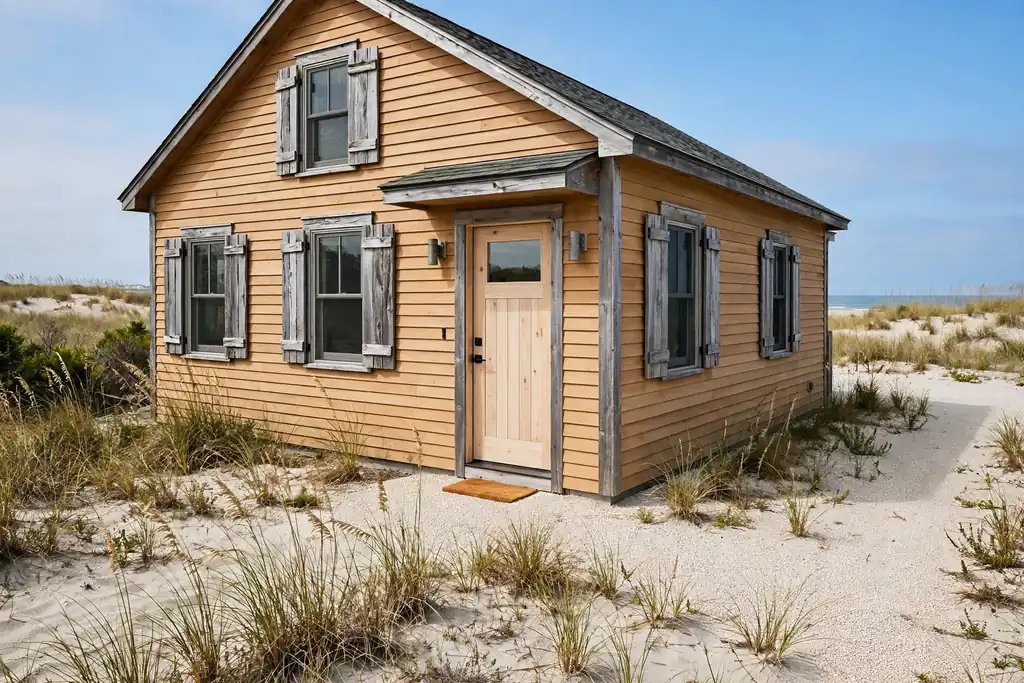
Sand colored siding with driftwood grey trim suits a coastal house because both colors come from the beach palette without turning the house into a theme. Paint the siding a warm sand, keep the trim, shutters, and porch details in a weathered driftwood grey, and use a pale wood door. The grey trim gives the sand a soft outline, while the pale wood door keeps the entry warm.
Keep the roof light grey or pale brown, and use pale gravel, dune grass, and light stone at the entry. Sand can look yellow beside a brown roof, so hold the sample against the roof in daylight before choosing. This scheme suits beach cottages, shingle style houses, and coastal new builds, where the muted palette sits comfortably beside sand, grass, and sea light.
22. White Painted Brick with Black Shutters and a Wood Door
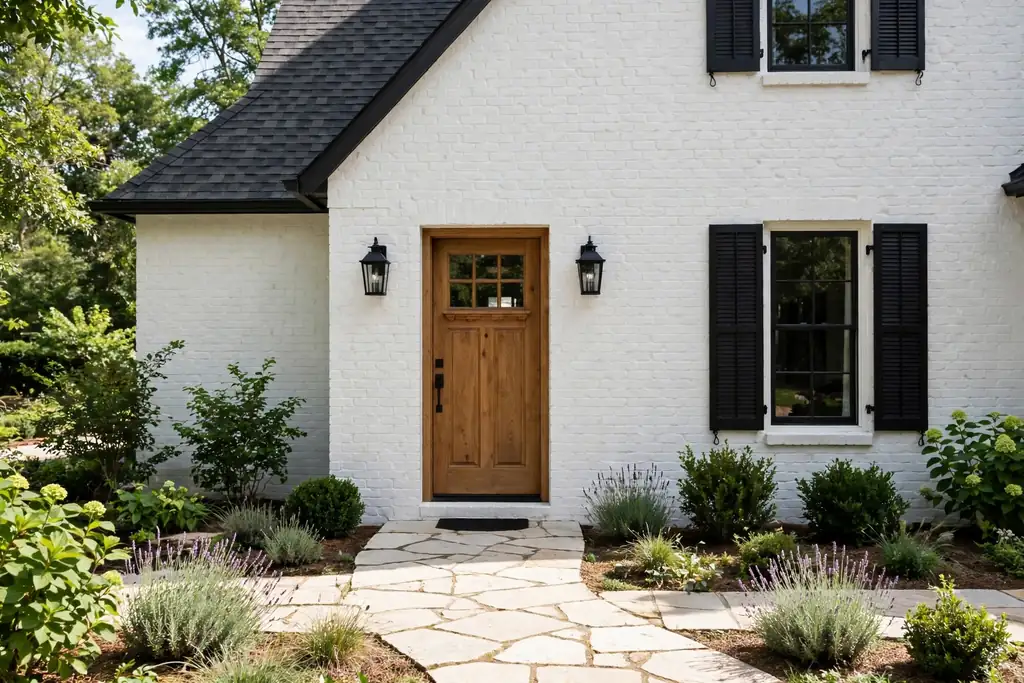
White painted brick with black shutters and a wood door suits a traditional house that needs a fresh, clean look without losing its brick texture. Paint the brick a warm white, keep the shutters and window frames black, and set a natural wood door against the white wall. The brick texture stays visible through the paint, which keeps the house from looking flat, while the wood door is the single warm note.
Keep the roof grey or black, and use black hardware and lanterns to repeat the shutter color. A pale stone path or light steps help, since a white house with a dark path can lose its entry at dusk. Check the brick condition first, since painted brick needs sound mortar and a breathable paint suited to masonry, and a white finish shows dirt near the ground, so a gravel border helps.
23. Mustard and Charcoal Mid-Century Ranch
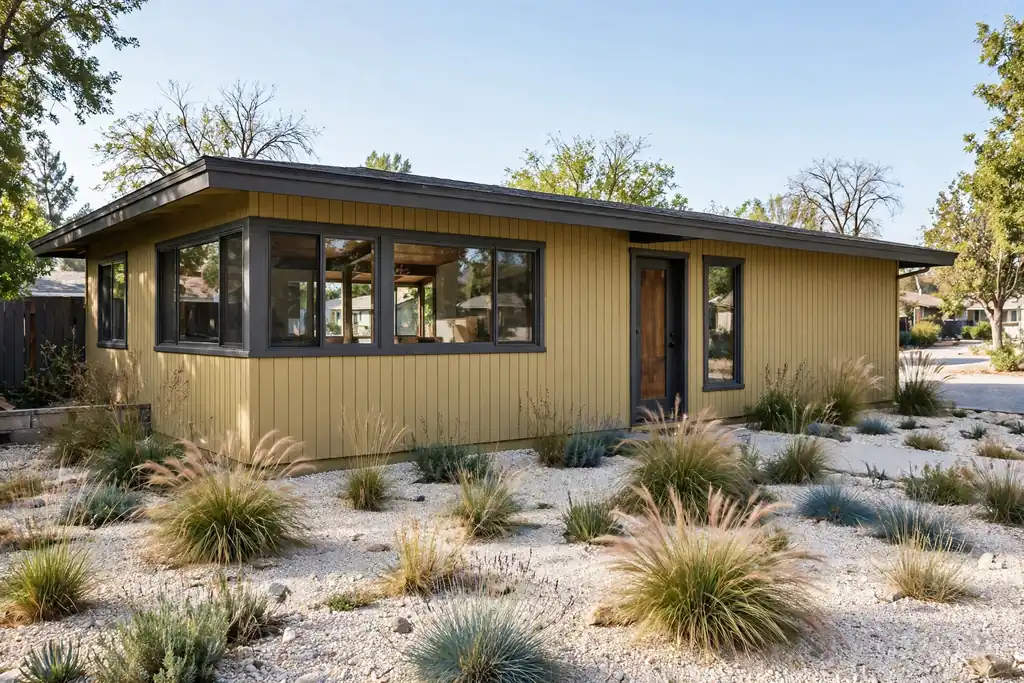
Mustard siding with charcoal trim suits a mid-century ranch because the bold, warm yellow and the dark trim match the clean lines and low roof of the style. Paint the siding a muted mustard, keep the trim, fascia, and window frames charcoal, and use a wood or charcoal door. The charcoal outlines the long, low form of the ranch, while the mustard gives it a clear color identity.
Keep the roof charcoal or dark grey, and use simple, plain landscaping with grasses and pale gravel to suit the modern character. Mustard looks stronger across a whole wall than on a chip, so pick a shade one step softer than the sample you first like, and test it in full sun, since yellow deepens a lot in bright light. This scheme suits ranches best, where the low, wide form can carry a strong color without feeling loud.
24. Blush Pink Stucco with White Trim
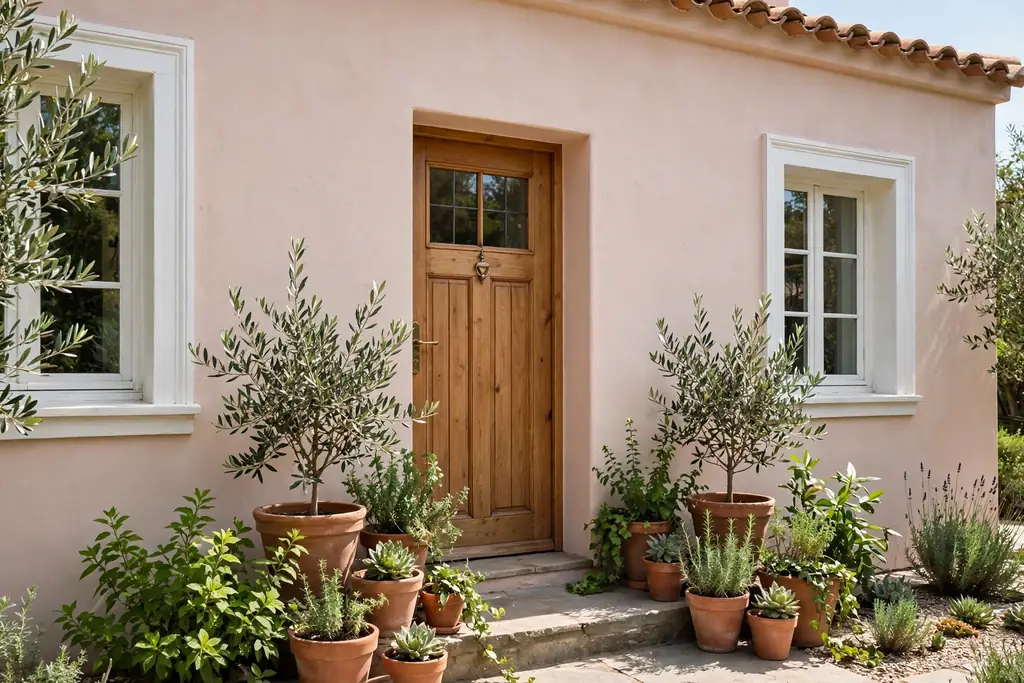
Blush pink stucco with white trim is a soft, warm scheme that suits Spanish, Mediterranean, and coastal houses. Render the walls in a pale blush with a warm base, keep the trim, window surrounds, and porch details white, and use a wood or white door. The white keeps the blush fresh, while the blush keeps the white from looking stark.
Keep the roof in terracotta tiles or warm brown, and use pale stone, clay pots, and green planting at the entry. Blush can turn peach beside warm stone or orange leaning brick, so test the pair on site and pick a blush with a cooler, pinker base if your fixed materials run warm. This scheme suits houses with arched details and curved stucco, where the soft color follows the form.
25. Grey Stone and White Render Mix
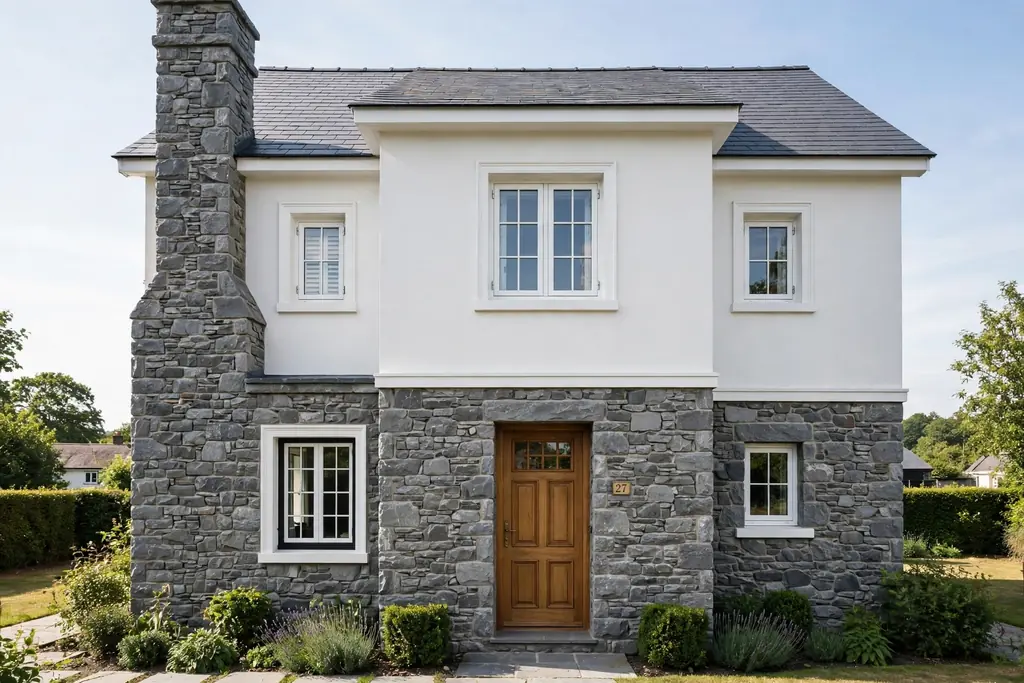
Grey stone with white render suits a house that already has stone, because the mix lets the stone lead and the render brighten the rest. Keep the stone bare on the lower story, chimney, or entry section, render the remaining walls white, and keep the trim white or pale grey. The white render stops a full stone house from feeling heavy, while the stone gives the white a natural, textured partner.
Keep the roof grey or charcoal, and use a wood door to warm the cool palette. A stone path or stone steps repeat the main material at ground level, and pale gravel suits the mix. Grey stone varies from warm to cool, so hold the white sample against your own stone in daylight: a warm stone needs a warmer white, while a cool stone suits a brighter white.
26. Teal Door on a Warm Grey House
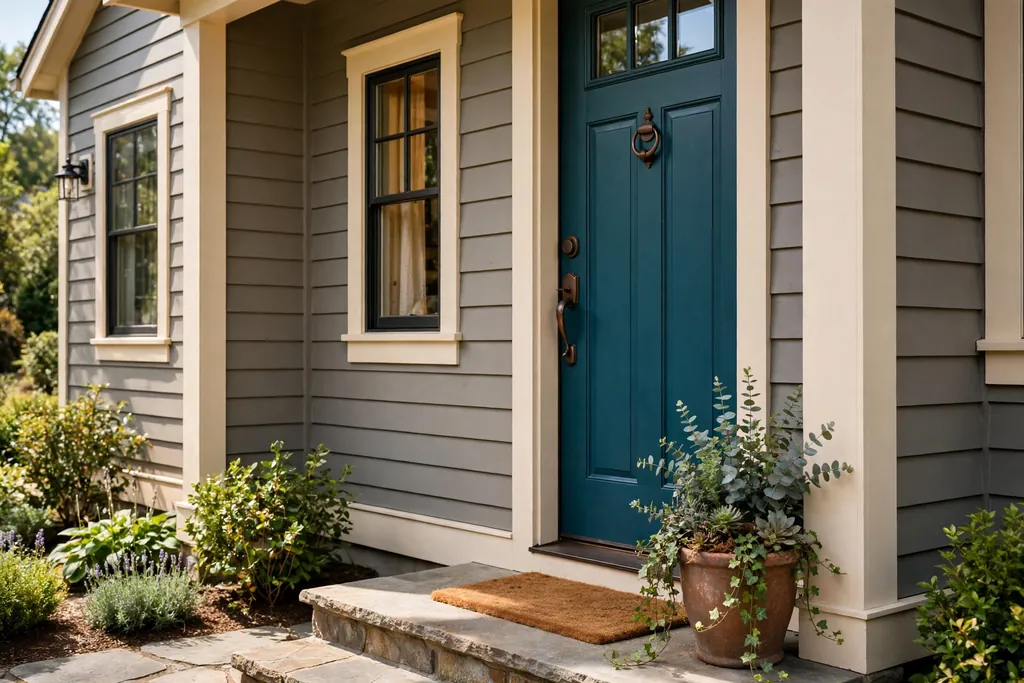
A teal door on a warm grey house is an accent scheme: the walls stay neutral, and the door carries the color. Paint the siding a warm grey, keep the trim white or warm white, and paint the door a rich teal. The teal gives the entry a clear focal point without painting the whole house a strong color, which suits owners who want one bold note.
Repeat the teal once more in a planter glaze or house numbers, so the door does not stand alone. A grey or black roof suits warm grey, and brass or bronze hardware picks up warmth beside the cool teal. Teal is a forgiving mid depth shade that hides dust well, which makes it practical for doors on busy streets, but test it in shade, since teal can turn dark on a north facing entry.
27. All White Monochrome with Mixed Textures
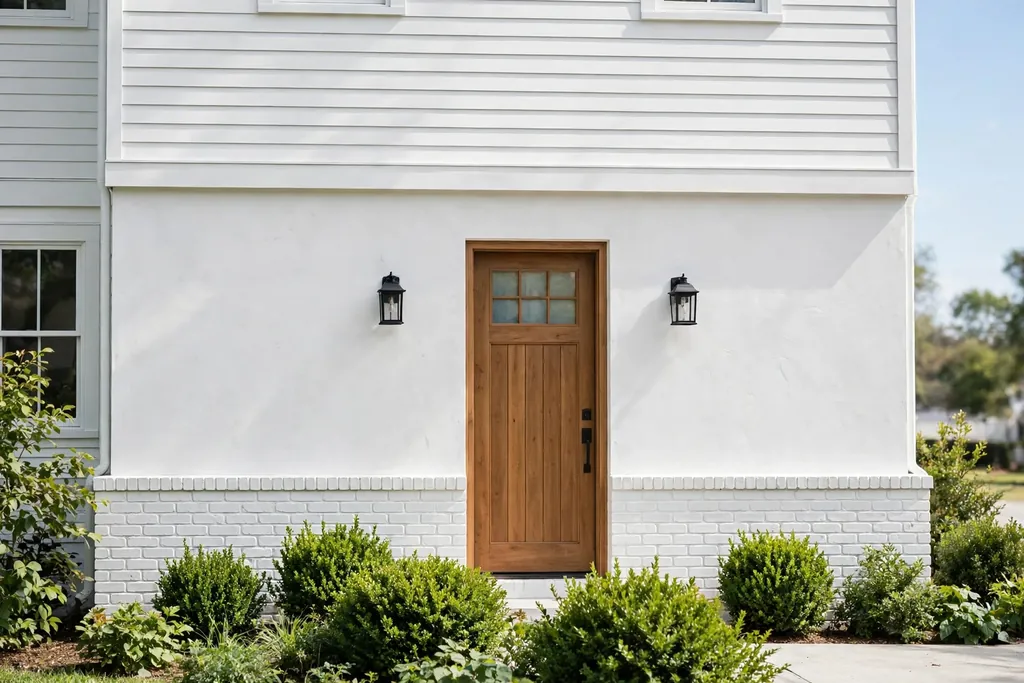
All white monochrome with mixed textures suits a modern or traditional house that wants a clean look without feeling plain. Use white across siding, brick, and render, but vary the texture: horizontal siding on one section, painted brick on another, and smooth render on the entry. The texture changes give the white depth and shadow through the day, which keeps a large white house from looking flat.
Keep the trim white as well, and let the door, hardware, and planting carry the contrast: a wood door, black lanterns, and green shrubs give the eye somewhere to rest. A grey or black roof suits all white walls, since a brown roof can make white look yellow. All white shows dirt near the ground, so a stone base or gravel border helps the lower walls stay tidy, and a wash down each season keeps the white bright.
Conclusion
A good exterior scheme is a small team of colors with clear jobs, not one favorite shade stretched across the whole house. Start with your roof, brick, and stone, since those set the limits, then choose a main wall color, a trim color, and one accent for the door or hardware. Test large samples in real daylight, repeat the accent once more at ground level, and let the house style guide the choice: crisp contrast for colonial and modern forms, warm neutrals for Mediterranean forms, soft greens and blues for cottages and farmhouses. Once the scheme sits right from the street, the rest of the front garden gets easier, because planting, paths, and lighting only need to echo colors that are already there.
Save this list on Pinterest for your next painting project, and work through it in order: pick the scheme for your roof and style first, test samples second, then paint the trim and door before the main walls, so you can stop and adjust if the balance feels off.
FAQs
How do I pick an exterior house color scheme for my roof color?
Start with the roof, since it is the hardest part to change. A grey or black roof suits cool schemes such as pale grey, slate blue, and navy, while a brown roof suits warm schemes such as cream, taupe, sage, and terracotta. Hold wall samples against the roof in daylight, and avoid pairing a warm wall color with a cool roof, or the reverse, unless a neutral trim separates them.
Should the trim be white, cream, or a contrasting color?
White trim suits cool schemes and gives the crispest outline, while cream trim suits warm schemes and softens the edge. A contrasting trim, such as black or chocolate brown, works when the house has strong architectural details worth outlining, such as craftsman brackets or colonial shutters. Pick the trim after the wall color, and test both together on a large board.
How many colors should an exterior scheme have?
Three is a good limit: one main wall color, one trim color, and one accent for the door, shutters, or hardware. A fourth color can work when it comes from a fixed material, such as brick or stone, rather than from paint. More painted colors than that tend to chop the house into pieces instead of tying it together.
How do I test an exterior paint color before painting the whole house?
Paint a large board, at least two feet square, and move it around the house through the day, checking it in morning, midday, and evening light. Hold it against the roof, the trim, and any brick or stone, since a wall color is judged against those surfaces, not on its own. Two coats on the board give a truer reading than one thin coat.
What exterior color scheme works best for a small house?
Pale main colors with one stronger accent work best on a small house, since pale walls keep the house looking open from the street. Put the stronger color on the door, the shutters, or one section only, and keep the trim light. Dark main colors can work on a small house with simple architecture, but they need pale trim and bright planting to keep the entry readable.
Do exterior colors fade, and how do I keep a scheme looking fresh?
Yes, sun and weather fade exterior paint over time, with south and west facing walls fading fastest. Choose a quality exterior paint suited to your siding, wash the walls down each season, and touch up the trim and door first, since those are the parts people see up close. A scheme with a pale main color and a strong door color is easy to refresh, because repainting the door alone can lift the whole front.