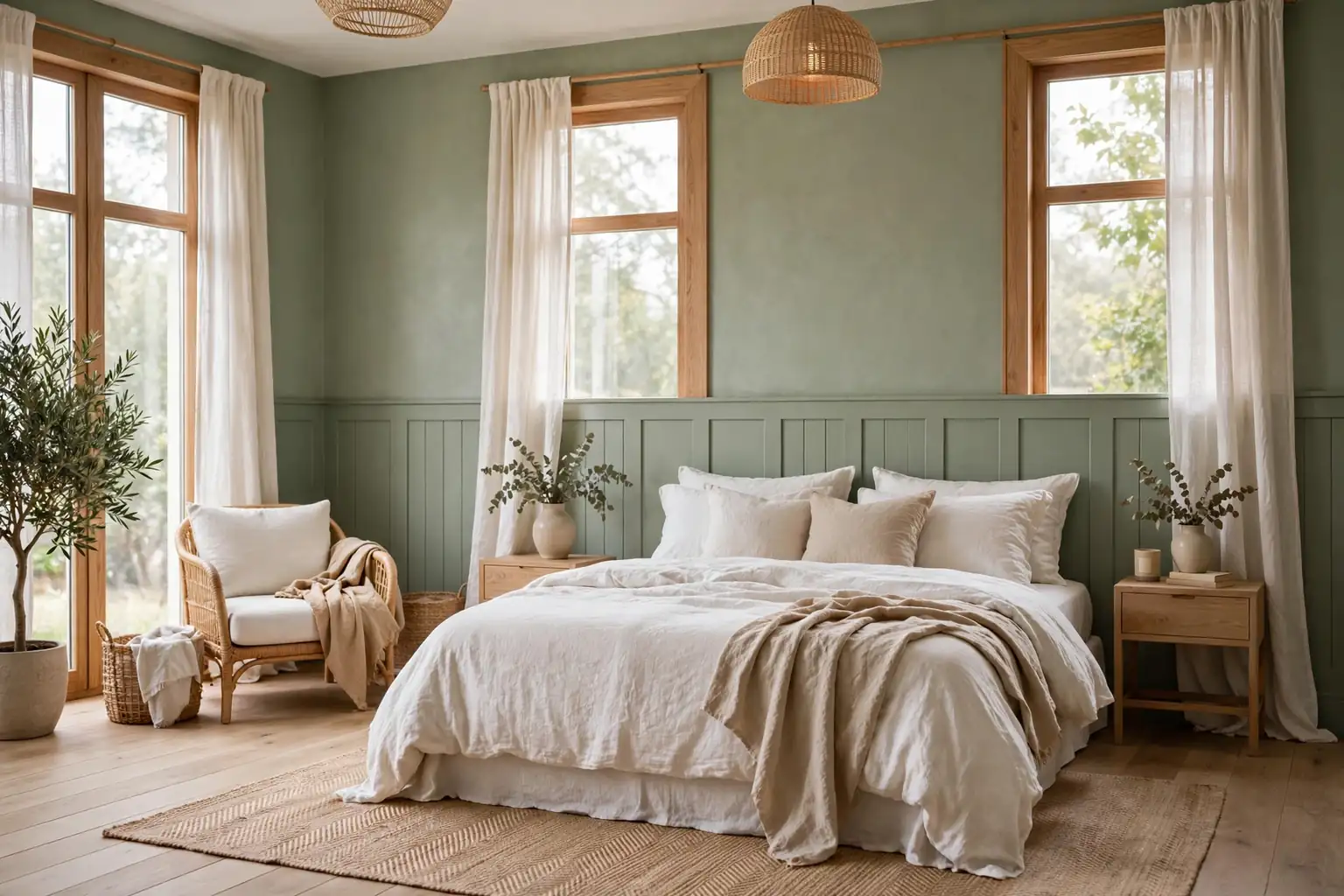
Color sets the mood of a bedroom before any furniture does. A calm scheme does not mean a colorless room: it means one soft color leads, one or two quiet colors support it, and the rest of the room stays plain enough for the eye to rest. These 32 calming bedroom color schemes cover walls, bedding, furniture, and small accents, so you can start with bedding for a quick refresh or plan a full repaint. Test paint and fabric samples in daylight and lamplight before you commit, since soft colors shift a lot with light, and keep one surface plain in every scheme so the palette has room to breathe.
Key Takeaways
- Let one color lead per room: a wall color, a headboard, or a bedding set, with the other colors in smaller doses.
- Keep the palette to three or four colors at most, and repeat each color at least twice so the room looks planned.
- Use warm white or cream as the base in most schemes, since it softens strong colors and keeps pale colors from feeling cold.
- Pair every color with texture, such as linen, wool, wood, or rattan, so a quiet palette still feels layered.
- Test samples in daylight and lamplight, since soft blues, greens, and greys can look very different at night.
- Start with bedding or cushions for a quick refresh, and save walls and large furniture for a bigger project.
1. Sage Green Walls With Warm White Bedding
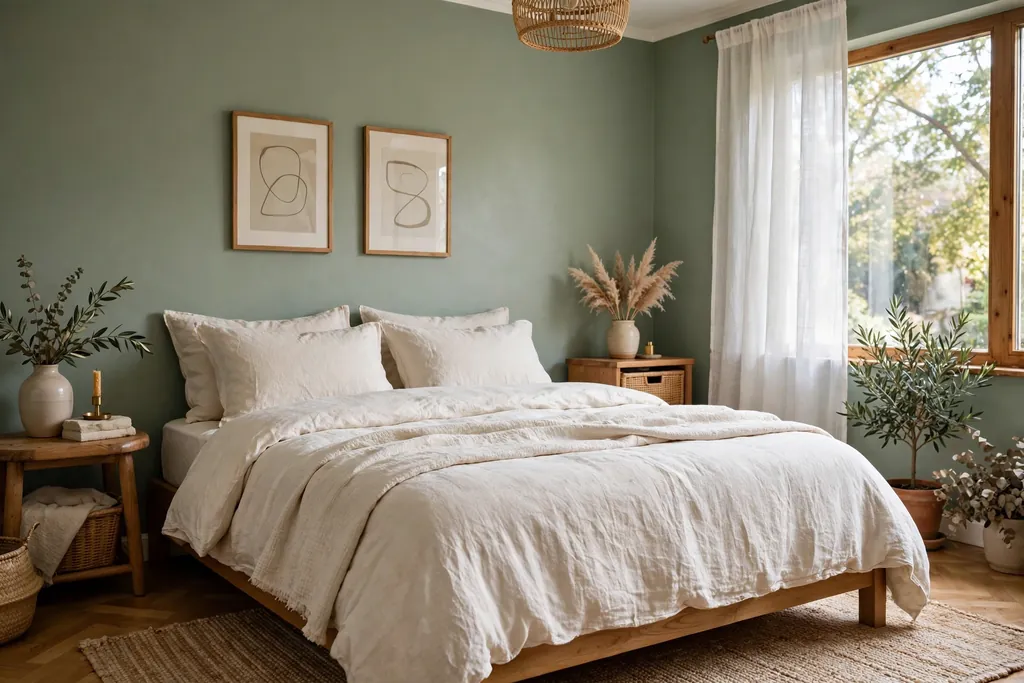
Paint the walls soft sage green and dress the bed in warm white linen for a scheme that feels fresh and settled at once. Sage sits between green and grey, so it reads as a color without shouting, and white bedding keeps the bed light against the green walls. This suits a bedroom with good daylight, where the green stays lively rather than dull.
Keep the furniture in pale wood or warm white, and repeat the sage once more in a cushion or a throw at the foot of the bed. Use warm white bulbs in the evening, since cool light can push sage toward grey. If the room is small, paint only the bed wall sage and keep the other walls warm white, so the color frames the bed without closing the room in.
2. Pale Blue Grey Walls With White Linen
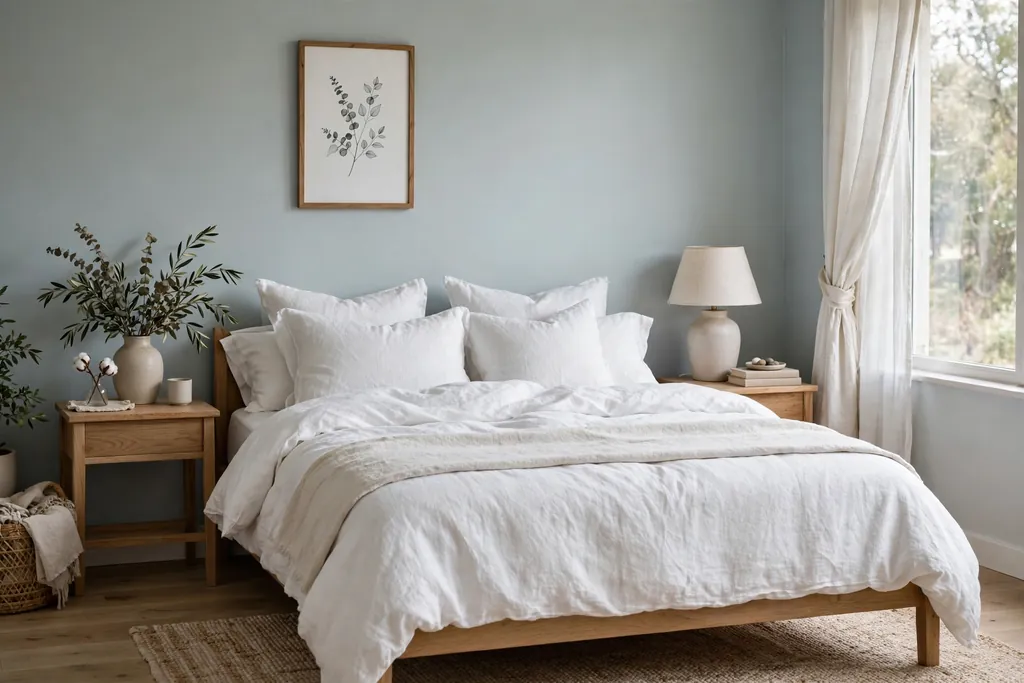
Paint the walls a pale blue grey and use plain white linen bedding for a cool, quiet room that still feels soft. The grey in the blue keeps it from feeling icy, while white bedding and pale wood furniture warm the edges. This suits a bedroom that gets warm afternoon sun, since the cool walls balance the light.
Keep curtains in white or a very pale blue, and add one dusty blue cushion so the wall color appears on the bed too. For a related blue pairing with a warmer base, see these blue and cream bedroom ideas. Avoid bright blue accessories here, since one strong item can break the calm balance of the whole room.
3. Warm Greige Walls With Ivory Bedding

Use warm greige, a mix of grey and beige, on the walls with ivory bedding for a neutral scheme with more depth than plain beige. The warm undertone keeps the grey from feeling cold, and ivory sheets and a soft throw give the bed a gentle glow. This suits a bedroom with mixed wood tones, since greige sits well beside both pale and mid wood.
Repeat the greige in a cushion or a rug, and keep the wood in one tone range so the room reads as calm rather than patched together. Choose a greige with a warm, not pink, undertone if your room gets cool northern light. A plain ivory rug by the bed finishes the scheme without adding a new color.
4. Dusty Lavender Accent Wall With Cream Bedding
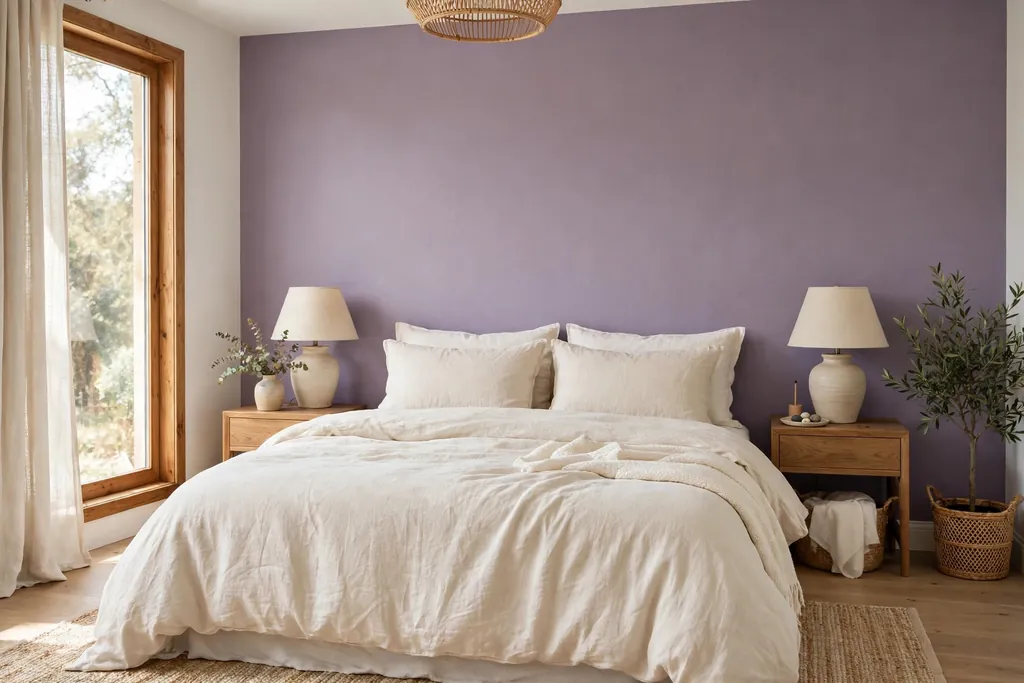
Paint one dusty lavender accent wall behind the bed and keep the other walls and the bedding cream for a soft, restful scheme with a gentle color note. Dusty lavender reads as grey first and purple second, so it feels calm rather than sweet, and cream bedding stops it from feeling cold. This suits a bedroom where a full lavender room would feel like too much.
Hang two simple framed prints on the lavender wall, in cream and soft grey, so the bed zone feels finished. Keep cushions in cream and one dusty lavender tone, and avoid bright purple or silver accessories, which can push the scheme toward a sharper look. Test the paint at night, since lavender can look greyer under lamplight.
5. Cream Base With Muted Clay Cushions

Keep walls, bedding, and furniture cream and add muted clay cushions and a clay throw for warmth in small, changeable doses. Clay, a soft terracotta with brown in it, warms a cream room without the heat of a bright orange, and because it appears only on the bed, you can swap it out with the seasons. This suits a renter or a reader who likes to refresh a room often.
Use two clay cushions and one clay throw, and repeat the clay once more in a small vase or a picture frame, so the color looks planned rather than random. Keep the rest of the bedding plain cream, and use wood or rattan beside the bed to echo the earthy tone. Wash cushion covers on a regular cycle, since cream shows marks sooner than darker colors.
6. Forest Green Accent Wall With Cream Bedding
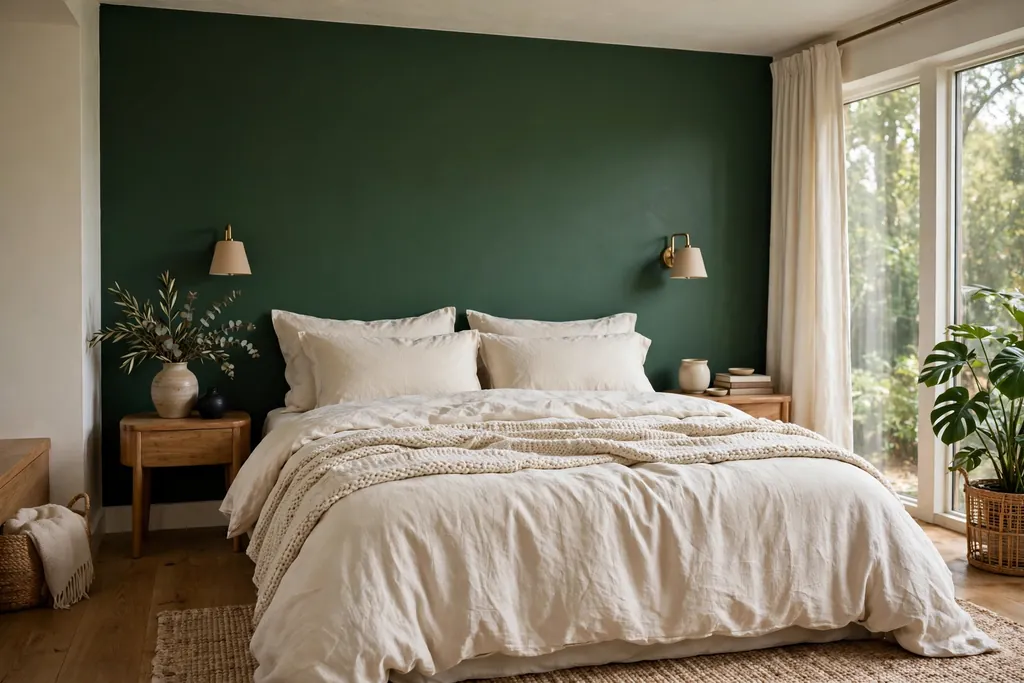
Paint the bed wall deep forest green and dress the bed in cream linen for a scheme with a strong anchor and a soft center. The dark green gives the room depth and makes cream bedding glow, while pale wood nightstands and cream lamps keep the dark wall from feeling heavy. This suits a larger bedroom with good daylight, where a dark wall adds drama without shrinking the room.
Keep the other walls warm white, and repeat the green once in a cushion or a plant by the window, so the accent wall does not stand alone. Use warm bulbs and a bedside lamp on each side, since a dark wall needs even light at night. If the room is small, use the green on a narrower bed wall or on a headboard panel instead of the full wall.
7. Blush Pink Bedding on Warm White Walls
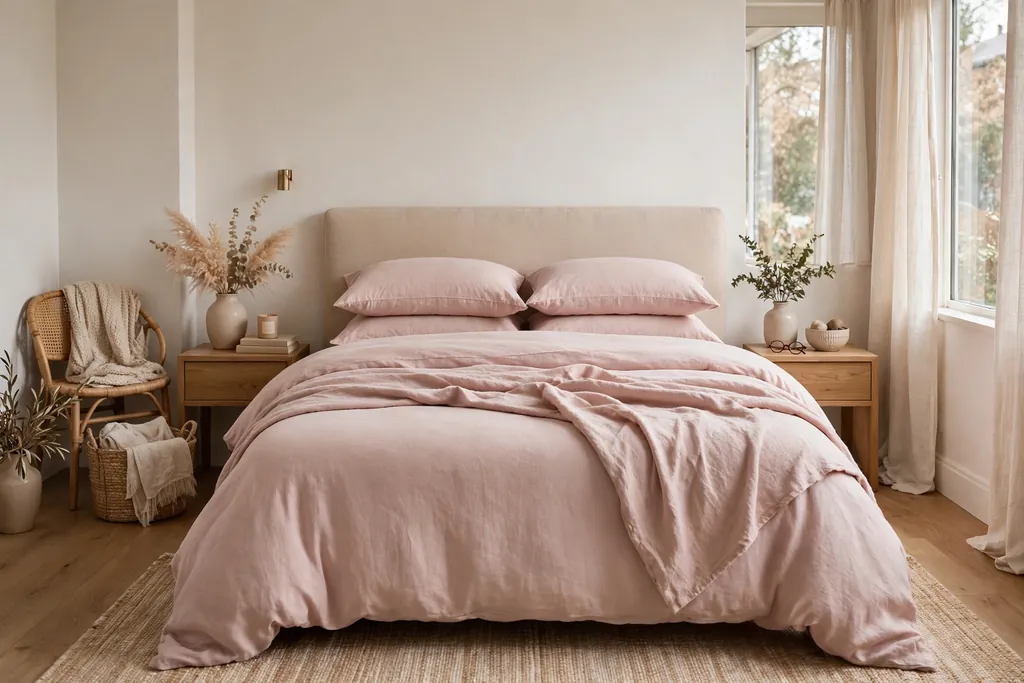
Dress the bed in muted blush pink bedding against warm white walls for a gentle, warm scheme that feels soft rather than girlish. Muted blush has grey and beige in it, so it reads as a warm neutral, and warm white walls keep the room bright. This suits a bedroom with pale wood furniture, where the pink adds warmth without a repaint.
Layer blush sheets, a blush duvet, and a cream throw, and keep cushions in blush and cream only, so the bed stays calm. Add a wood tray or a rattan basket beside the bed to ground the soft colors with a natural texture. Avoid hot pink or gold accessories here, since strong colors can quickly undo the quiet mood.
8. Seafoam Walls With White Bedding and Rattan
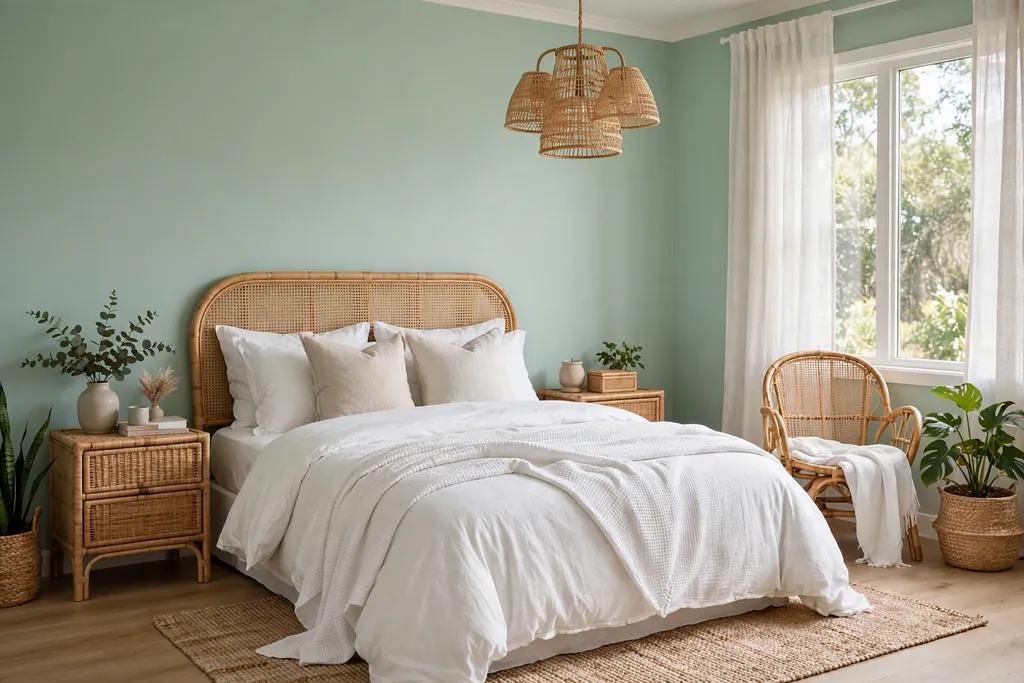
Paint the walls pale seafoam green and pair them with white bedding and rattan furniture for a light, coastal calm. Seafoam sits between blue and green, so it feels fresh in daylight, and rattan adds woven warmth that stops the pale walls from feeling bare. This suits a bedroom with white trim and a light floor, where the scheme can stay airy.
Use a rattan headboard or a rattan pendant light as the main woven piece, then repeat rattan once in a basket or a tray. Keep bedding plain white, with one seafoam cushion, and use sheer white curtains so daylight still fills the room. Dust woven pieces with a dry cloth, and keep rattan out of damp corners, since it can warp over time.
9. Tone on Tone Taupe From Ivory to Deep Taupe

Build the room in taupe shades from ivory to deep taupe, across walls, bedding, curtains, and rugs, for a calm scheme built on small steps of color. No single piece stands out, but the room as a whole feels layered, since each shade differs just enough from the next. This suits a bedroom where you want a hotel-like calm without a feature wall or a bright accent.
Start with ivory walls or bedding, move to warm taupe for curtains and furniture, and finish with deep taupe cushions and a throw. Vary texture at every step, with smooth cotton sheets, nubby wool, matte paint, and woven baskets, all in taupe tones, so the room does not flatten. For a wider warm neutral base in the same spirit, see these beige bedroom ideas. If two shades blend into one in daylight, swap one item a shade darker or lighter.
10. Slate Grey Bedding on White Walls
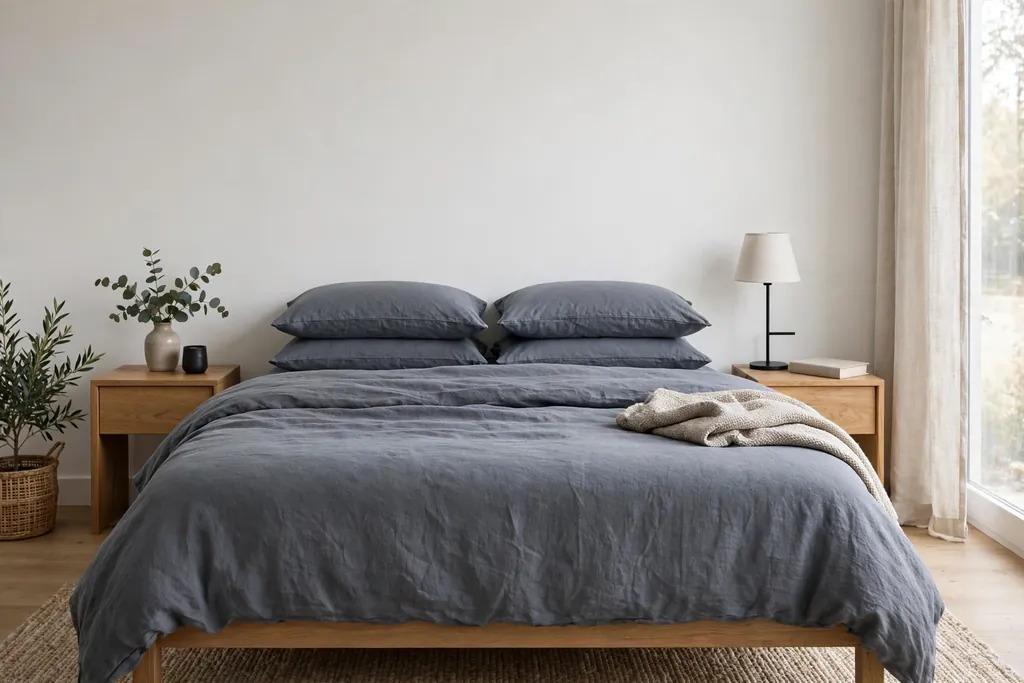
Dress the bed in soft slate grey bedding against plain white walls for a clean, modern calm that suits almost any furniture. Slate grey is muted enough to rest the eye, and white walls keep the room bright, while the grey bedding gives the bed a clear presence. This suits a bedroom with grey floors or a grey rug, where the bedding can link the floor to the bed.
Layer slate grey sheets with a lighter grey throw, and keep cushions in grey and white only, so the bed reads as one calm block. Warm the scheme with pale wood nightstands and warm white lamps, since grey and white alone can feel cool at night. Avoid black bedding here, which would push the scheme from calm to stark.
11. Butter Yellow Walls With Cream Bedding

Paint the walls pale butter yellow and use cream bedding for a warm, sunny calm that suits a bedroom short on daylight. Butter yellow has enough warmth to lift a dim room, but at a pale strength it stays soft rather than loud, and cream bedding keeps the bed gentle. This suits a north-facing bedroom or a small room that needs light.
Keep furniture in pale wood or warm white, and repeat the yellow once in a cushion or a small vase, so the wall color appears on the bed too. Use cream curtains rather than yellow ones, so the window does not add a second block of yellow. Test the paint in morning light, since yellow can look stronger in direct sun than on a small swatch.
12. Eucalyptus Bedding on White Walls

Use eucalyptus green bedding, a soft grey green, on white walls for a calm scheme that needs no paint at all. The bedding carries the color, while white walls and pale wood furniture keep the room bright, and the grey in the green keeps it restful rather than vivid. This suits a renter or a reader who wants a green room without repainting.
Layer eucalyptus sheets, a matching duvet, and a cream throw at the foot, and add one eucalyptus cushion in a slightly deeper tone for depth. Keep the rug plain cream or pale grey, and add a real plant by the window to echo the green in a natural form. Wash the bedding on a regular cycle, since pale green shows dust more than a deeper shade.
13. Navy Headboard With Cream Bedding

Choose a navy upholstered headboard with cream bedding for a classic calm scheme where the color sits in one strong, useful piece. The navy headboard anchors the bed wall without paint, while cream bedding and pale wood nightstands keep the bed light. This suits a main bedroom where the bed sits against a long blank wall and needs a focal point.
Keep the walls warm white or very pale grey, and repeat the navy once in a cushion or a throw, so the headboard does not stand alone. Use cream lampshades for warm evening light, since navy can look cold under cool bulbs. Measure the headboard width against the bed and the wall, since a headboard that is too narrow looks lost and one that is too wide crowds the nightstands.
14. Olive Green Walls With Natural Wood Furniture
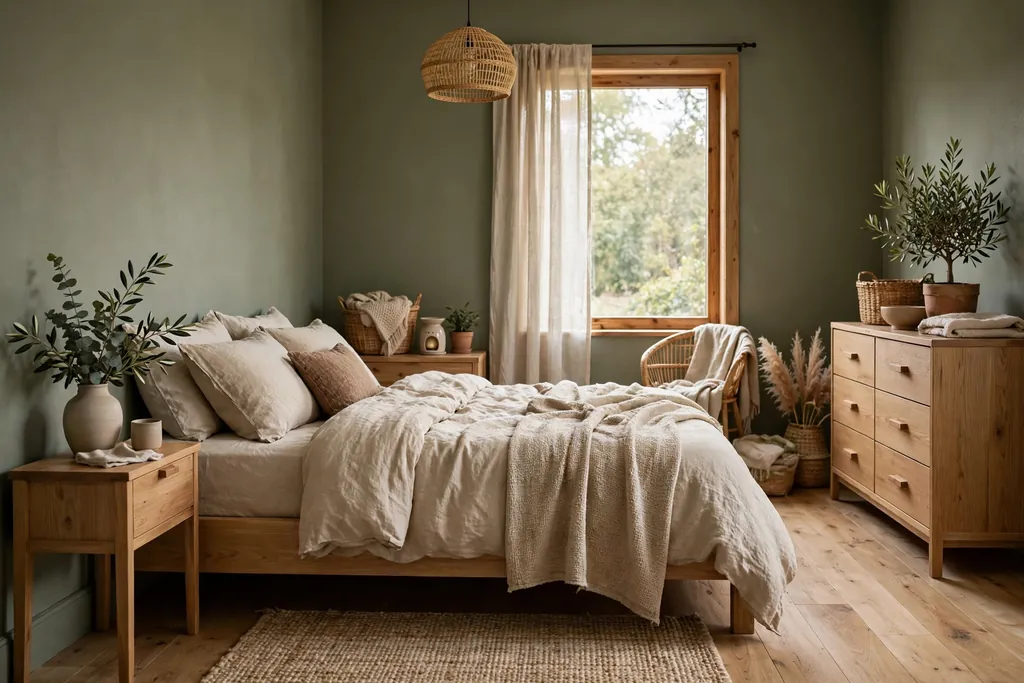
Paint the walls muted olive green and use natural wood furniture for an earthy calm that feels grounded and warm. Olive has yellow and brown in it, so it pairs naturally with wood grain, and cream bedding keeps the room from feeling dark. This suits a bedroom with wood floors, where the wall color and the floor can share a warm base.
Keep the wood in one tone range, such as mid oak, across the bed, nightstands, and dresser, so the room reads as calm rather than busy. Repeat the olive once in a cushion or a throw, and use cream curtains to let daylight soften the green. Avoid bright green plants in large numbers here, since vivid green can clash with the muted olive.
15. Lilac Grey Bedding on White Walls
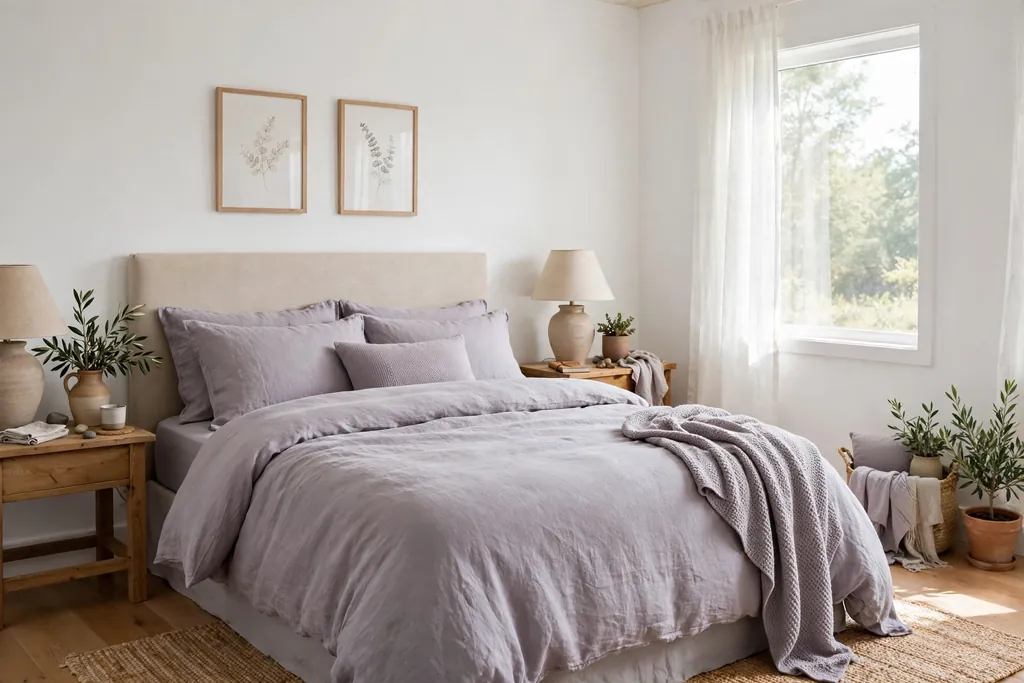
Dress the bed in lilac grey bedding, a lavender softened with grey, against white walls for a cool, quiet scheme with a gentle color note. The grey keeps the lilac restful, and white walls and pale furniture keep the room bright, so the bed becomes the one colored surface. This suits a bedroom with white or pale grey furniture, where the bedding can carry the palette.
Layer lilac grey sheets with a white duvet, and add two lilac grey cushions in slightly different tones for depth. Keep the rug plain white or pale grey, and use warm white lamps at night, since cool light can push lilac grey toward a colder blue. If the lilac feels too cool, swap one cushion for a warm cream one to soften the bed.
16. Soft Peach Walls With Cream Bedding
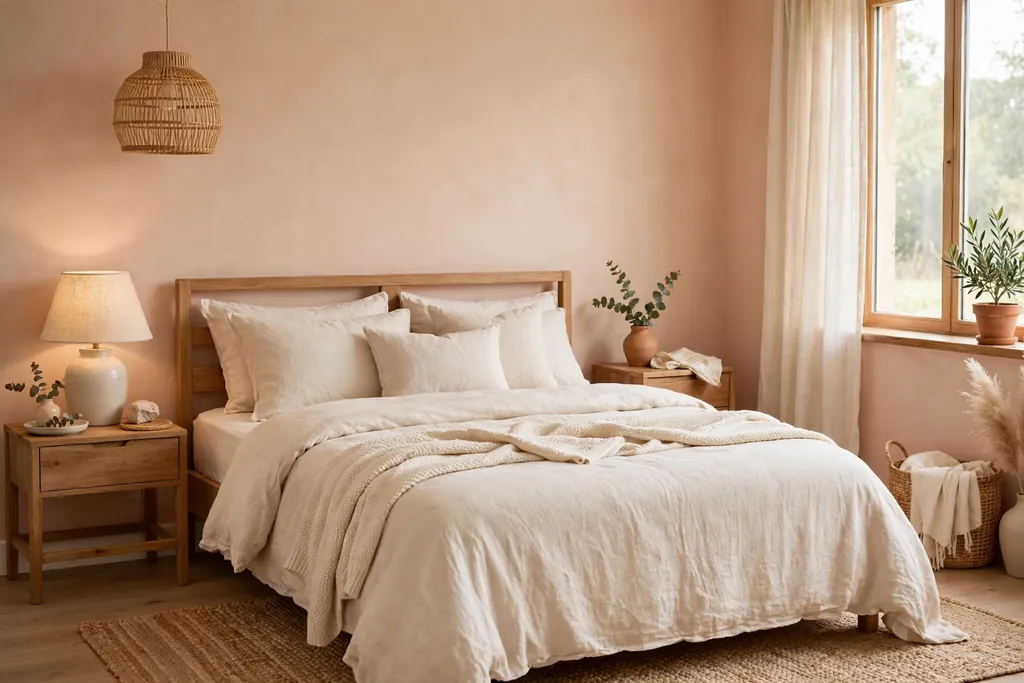
Paint the walls soft peach and dress the bed in cream linen for a warm, gentle scheme that suits a bedroom that feels cold or stark. Soft peach has enough warmth to glow in morning light, but at a pale strength it stays calm, and cream bedding keeps the bed from competing with the walls. This suits a bedroom with white trim and pale wood furniture.
Keep cushions in peach and cream only, and use a cream rug so the floor does not add a new color. Repeat the peach once in a small vase or a framed print, so the wall color appears elsewhere in the room. Avoid coral or bright orange accessories, which can push this soft scheme toward a much louder look.
17. Cool White Walls With Pale Wood Furniture

Use cool white walls with pale wood furniture and white bedding for a Scandinavian calm built on light and natural texture. The white walls bounce daylight around the room, pale wood adds warmth through grain rather than color, and plain white bedding keeps the bed quiet. This suits a small bedroom or a room with one window, where light matters most.
Add texture through linen bedding, a wool throw, and a woven rug, since a white room without texture can feel bare. Keep accessories to pale wood, rattan, and cream, and leave some surfaces empty, so the room feels open rather than styled to the edge. Use warm white bulbs in the evening, since cool white walls can feel stark under cool light.
18. Teal Cushions and Throw on a White Bed

Keep walls, bedding, and furniture white and cream, and add deep teal cushions and a teal throw for a calm jewel note in small doses. Teal, a blue green with depth, gives a white room a clear accent without repainting, and because it appears only on the bed, it is easy to change. This suits a bedroom with white furniture, where one rich color can anchor the bed.
Use two teal cushions and one teal throw, and repeat the teal once in a small vase or a book cover on the nightstand. Keep the rest of the room plain, with pale wood or white furniture, so the teal reads as a deliberate accent. Avoid pairing teal with bright yellow or red here, since strong second accents can break the calm balance.
19. Sage and Blush Combined Bedding

Combine sage green and muted blush pink bedding on a warm white base for a soft, natural pairing that feels like a garden in muted tones. Sage cools the scheme while blush warms it, and warm white sheets underneath keep the two colors from competing. This suits a bedroom with pale wood furniture and cream walls, where the bed can carry the whole palette.
Use sage for the duvet and blush for two cushions, or the reverse, and keep the ratio close to two parts sage to one part blush, so one color still leads. Add a cream throw at the foot to separate the colors on the bed, and keep the rug plain cream. If the pairing feels too sweet, swap one blush cushion for a sage one to cool the bed down.
20. Stone Grey Walls With White Bedding and Wood Accents

Paint the walls warm stone grey and pair them with white bedding and mid wood accents for a calm, grounded scheme with a natural edge. Stone grey has warm undertones that suit wood, white bedding keeps the bed bright, and wood nightstands and a wood-framed mirror add warmth. This suits a bedroom with wood floors, where the wall color and the floor share a warm base.
Hang a small gallery of prints in wood frames above the dresser or bed, in soft grey and cream, so the wall has interest without a new color. For gallery wall ideas in a calm palette, see these bedroom wall art ideas. Keep cushions in stone grey and white, and use warm white lamps, since grey walls can look cold under cool bulbs.
21. Pale Mint Walls With Cream Linen Curtains
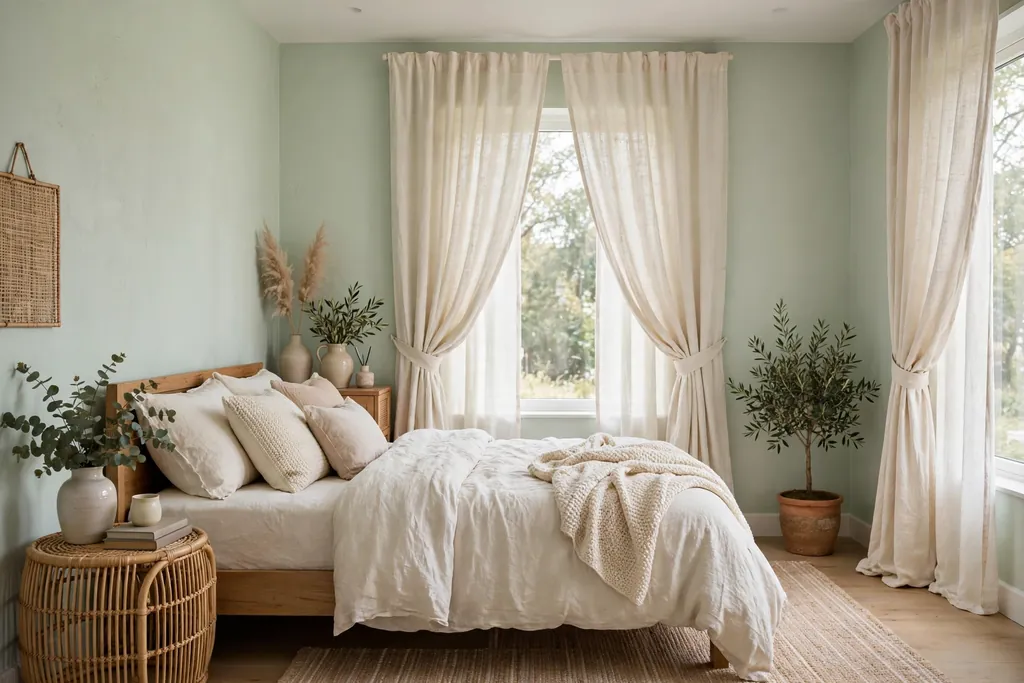
Paint the walls pale mint green and hang cream linen curtains for a fresh, airy scheme that suits a bedroom with a large window. Mint is a light green with a cool edge, so it feels clean in daylight, and cream linen softens the window and warms the room. This suits a bedroom with white trim, where the mint can stay the one clear color.
Keep bedding in cream and white, with one mint cushion, so the wall color appears on the bed too. Hang the curtain rod high and wide, so the window looks larger and the panels clear the glass when open. For more curtain fabrics, lengths, and hanging tips, see these bedroom curtain ideas. Use a sheer cream layer behind the linen if the room faces a street, so daytime privacy does not block the light.
22. Warm White and Natural Linen Throughout
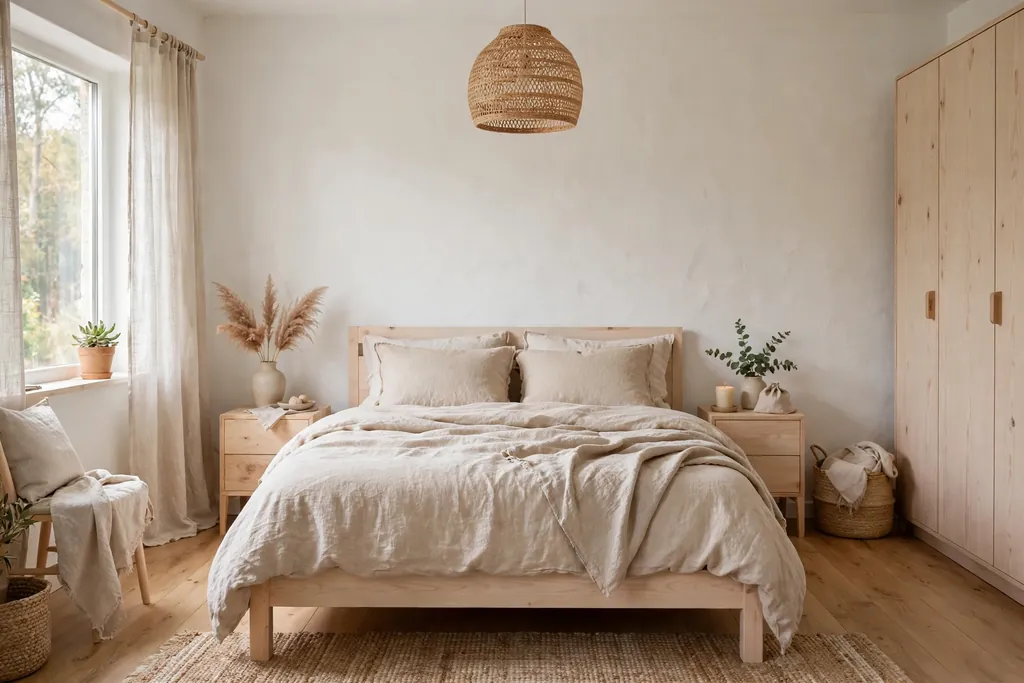
Use warm white walls, natural linen bedding, and undyed linen curtains for a calm scheme built entirely on warm neutrals and texture. With no strong color at all, the interest comes from the weave of the linen, the grain of pale wood, and the soft shadows of the room. This suits a bedroom where color feels like too much, or a room you want to keep flexible for future accents.
Layer natural linen sheets, a cream duvet, and a wool throw in oatmeal, and keep furniture in pale wood or warm white. Add a woven rug and a rattan basket, so the room has at least three textures even though the colors stay close. Use warm white bulbs throughout, since cool light can make an all-white room feel stark at night.
23. Dusty Rose Walls With Cream Bedding
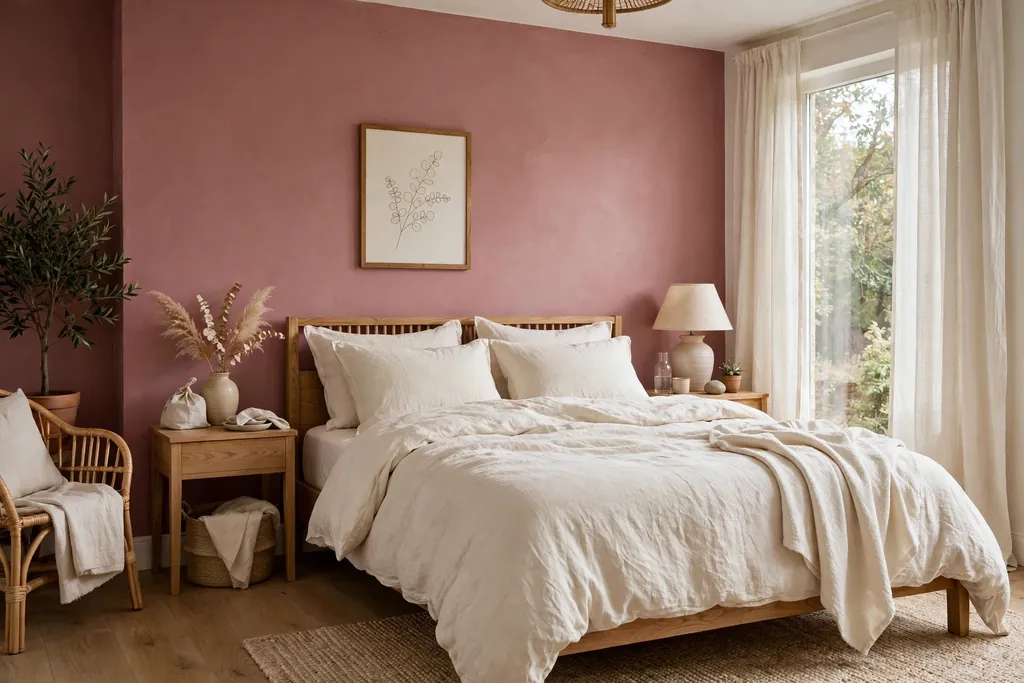
Paint the walls dusty rose, a pink softened with grey and beige, and dress the bed in cream linen for a warm, mature scheme that feels restful rather than bright. Dusty rose glows gently in daylight, and cream bedding keeps the bed light against the colored walls. This suits a bedroom with warm wood furniture, where the rose can share a warm base with the wood.
Keep cushions in dusty rose and cream, and use a cream rug so the floor stays quiet. Repeat the rose once in a small vase or a framed print, so the wall color appears elsewhere in the room. Avoid bright pink or red accessories, which can push this muted scheme toward a much bolder look.
24. Pale Blue Walls With Sand Bedding
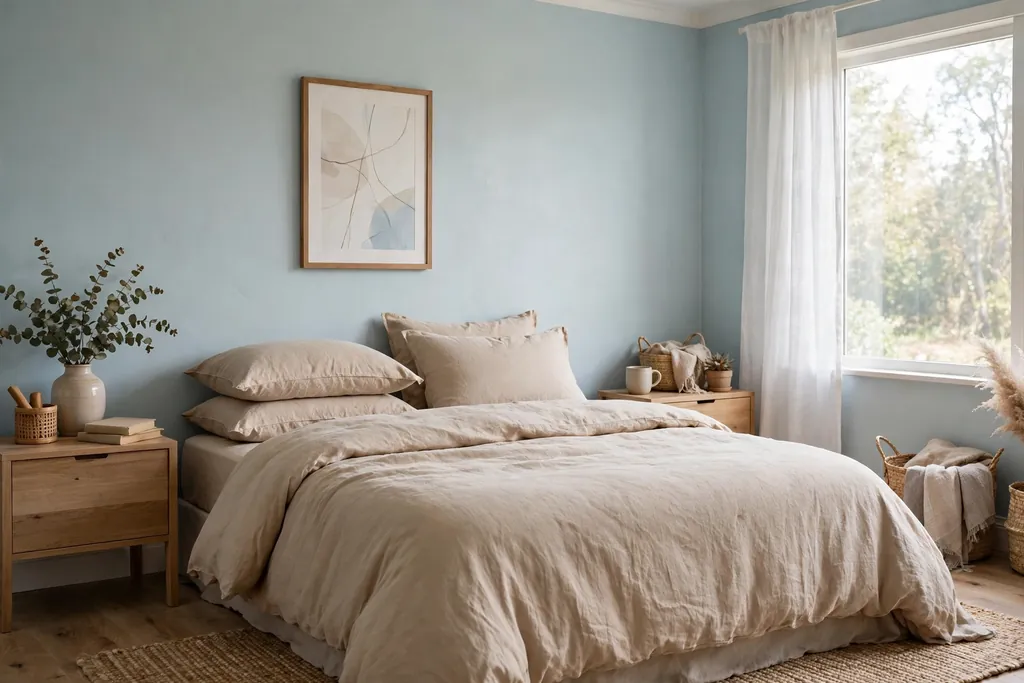
Pair pale blue walls with sand colored bedding for a coastal calm that feels like sky over a beach, without any beach-themed decor. The pale blue cools the room, sand warms the bed, and white trim between them keeps the pairing clean. This suits a bedroom with a light floor and white furniture, where the two colors can stay the whole story.
Use sand for the duvet and pale blue for two cushions, and keep the rug in cream or natural jute, so the floor does not add a third strong tone. Add a rattan basket or a pale wood tray to echo the sand tone in a natural material. If the blue feels too cool at night, swap one cushion for a sand one to warm the bed.
25. Charcoal Headboard With Soft Grey Bedding

Choose a charcoal upholstered headboard with soft grey bedding for a calm scheme with a dark anchor and a gentle middle. Charcoal gives the bed wall structure, soft grey bedding keeps the bed from feeling heavy, and white walls around the bed keep the room bright. This suits a larger bedroom where a pale headboard would disappear against a long wall.
Keep nightstands in pale wood or white, and use cream lampshades for warm evening light, since a dark headboard needs soft light beside it. Repeat the charcoal once in a small item, such as a picture frame or a throw, so the headboard does not stand alone. Avoid black bedding here, which would make the bed feel darker than the calm scheme intends.
26. Warm Brown and Cream Earthy Scheme
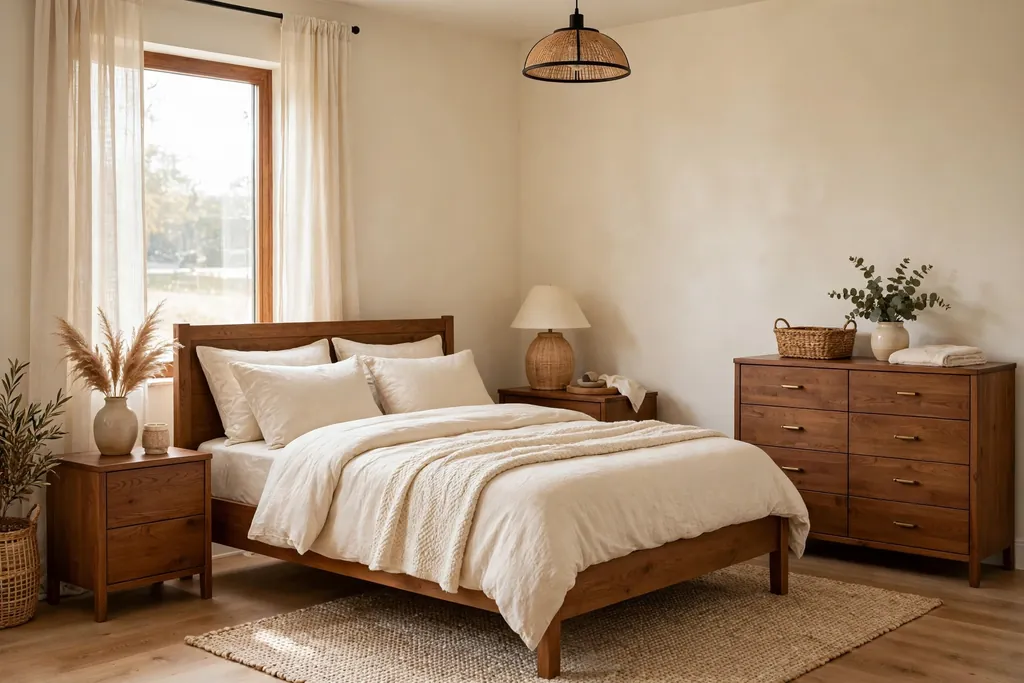
Use warm brown furniture and accents with cream walls and cream bedding for an earthy calm built on wood tones rather than paint color. Mid brown wood for the bed, nightstands, and dresser gives the room a warm base, cream walls and bedding keep it bright, and a brown throw or cushion links the furniture to the bed. This suits a bedroom with wood floors, where the furniture and the floor can share a warm tone.
Keep the brown in one tone range, so the pieces read as a set rather than a collection of different woods. Add a cream rug and a woven basket, and keep art in warm brown and cream, so no new color enters the room. Use warm white bulbs, since cool light can make brown wood look dull at night.
27. Pale Aqua Bedding on White Walls
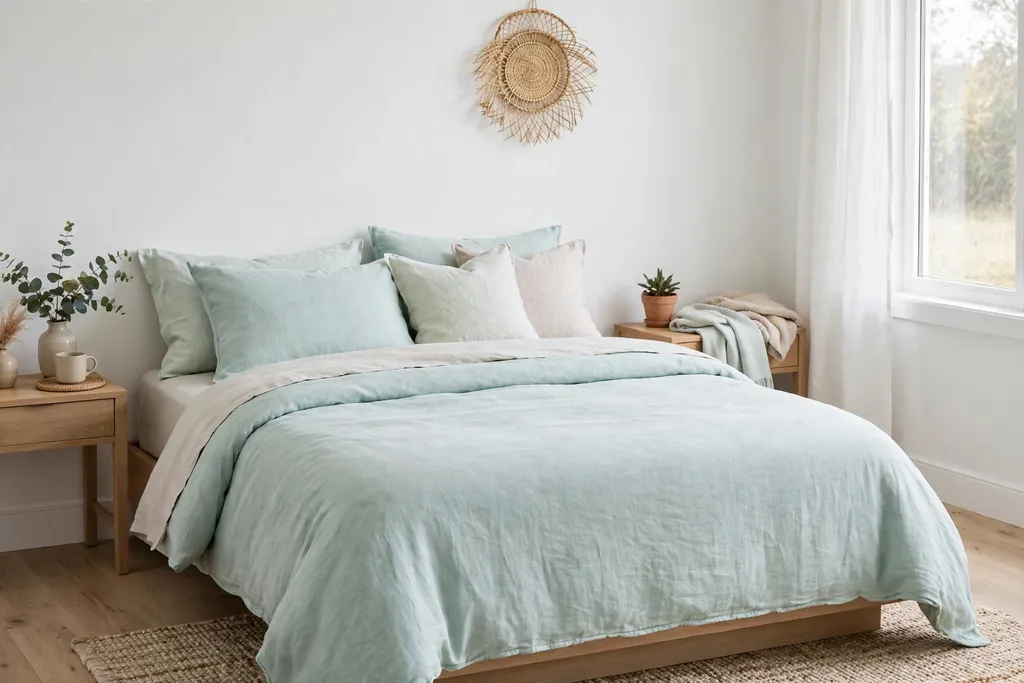
Dress the bed in pale aqua bedding against white walls for a light, watery calm that suits a bedroom that gets strong sun. Aqua, a pale blue green, cools the bed without darkening the room, and white walls and pale furniture keep the whole space bright. This suits a summer bedroom or a room with white trim, where the pale color can stay fresh.
Layer aqua sheets with a white duvet, and add two aqua cushions in slightly different tones for depth. Keep curtains white or very pale aqua, and use a cream rug so the floor stays quiet. If the aqua feels too cool in winter, swap the throw for a cream wool one to warm the bed without changing the scheme.
28. Sage Walls With Cream Bedding and Green Plants

Paint the walls soft sage and add several green plants beside the window and on the dresser, so the living green echoes the wall color in a natural form. The plants give the sage scheme life and texture, cream bedding keeps the bed light, and pale wood furniture keeps the room warm. This suits a bedroom with a bright window, where plants can thrive and the green can stay lively.
Choose plants in simple cream or terracotta pots, and keep the pots to one or two colors, so the plants, not the pots, carry the interest. Repeat the sage in a cushion or a throw, and keep the rug plain cream. Water plants on a regular routine and keep them out of cold drafts, since a struggling plant can dull an otherwise calm room.
29. Grey Blue Bedding on Cream Walls

Use grey blue bedding, a blue softened with grey, on cream walls for a calm scheme where the bed carries a cool color and the walls stay warm. Cream walls stop the grey blue from feeling cold, while the bedding gives the bed a clear presence. This suits a bedroom with cream trim and pale wood furniture, where the warm walls and cool bedding balance each other.
Layer grey blue sheets with a cream duvet, and add two grey blue cushions in slightly different tones. Keep the rug cream or pale grey, and use warm white lamps at night, since cool bedding can feel colder under cool light. For a related pairing with a stronger blue note, see these blue and cream bedroom ideas. If the grey blue feels too cool, swap one cushion for a cream one.
30. Muted Terracotta Accent Wall With Cream Bedding
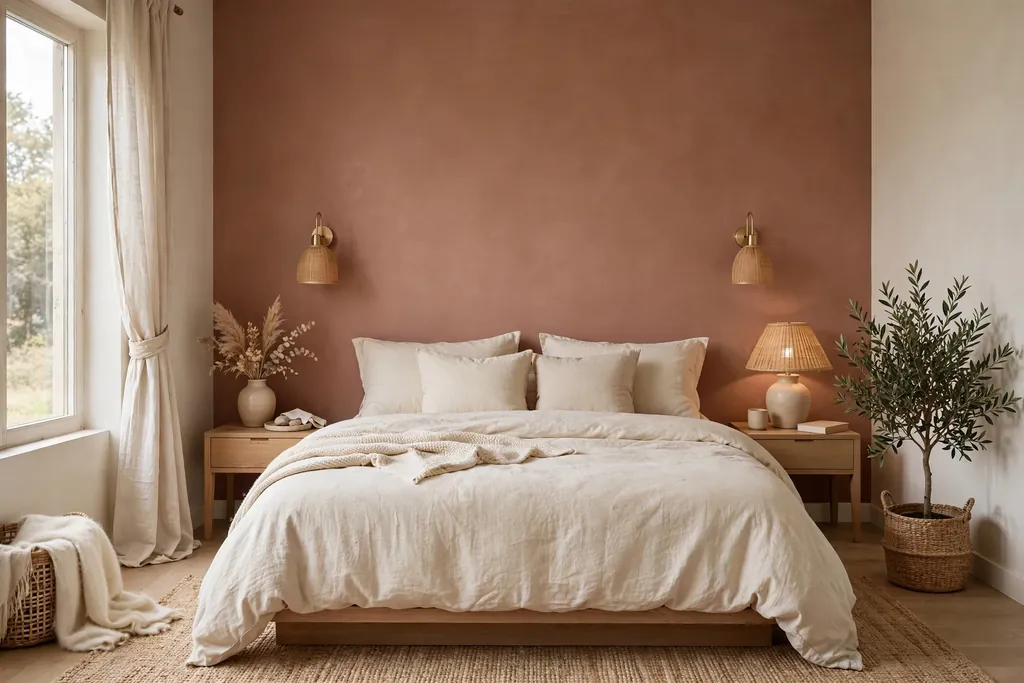
Paint one muted terracotta accent wall behind the bed and keep the other walls and the bedding cream for a warm scheme with a single earthy anchor. Muted terracotta has brown in it, so it reads as warm clay rather than bright orange, and cream bedding keeps the bed soft against the strong wall. This suits a bedroom with good daylight, where the warm wall can glow without overwhelming the room.
Keep furniture in pale or mid wood, and repeat the terracotta once in a cushion or a small vase, so the accent wall does not stand alone. Use cream curtains and a cream rug, so the terracotta appears only on the wall and in one or two small items. Test the paint in evening light, since terracotta can look deeper under lamplight than in daylight.
31. Ivory Walls With Soft Gold Accents

Keep walls, bedding, and furniture ivory and warm white, and add soft gold accents in lamps, frames, and hardware for a calm scheme with a gentle glow. Soft gold, in a brushed or matte finish, warms an ivory room without the shine of bright gold, and because it appears only in small hard items, the room stays restful. This suits a bedroom with ivory furniture, where a little warmth can lift the whole room.
Use gold in three small spots, such as lamp bases, picture frames, and drawer handles, and keep the finish consistent across them. Keep bedding plain ivory, with one oatmeal cushion, so the gold has a quiet background. Avoid shiny gold or crystal accessories here, which can push the scheme from calm to formal.
32. Two Tone Walls in Sage Below and White Above
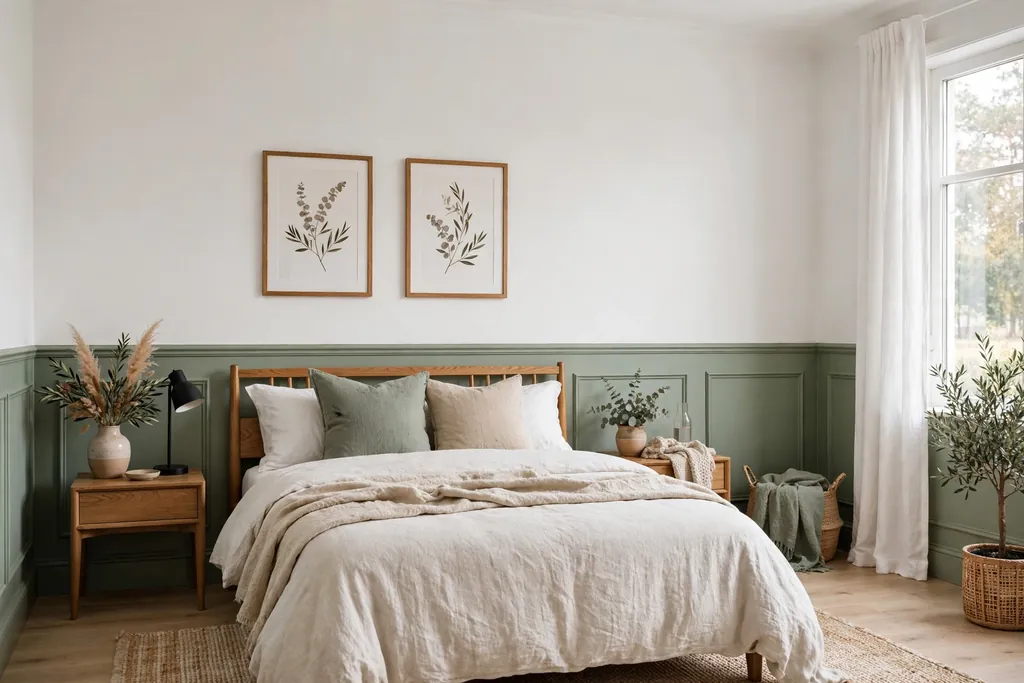
Paint the lower half of the walls sage green and the upper half warm white, with a simple chair rail or a clean painted line between them, for a calm scheme with built-in structure. The sage below grounds the room, the white above keeps it bright, and the horizontal line gives the walls a finished, planned look. This suits a bedroom with plain walls that need interest without a full repaint in a strong color.
Keep bedding in warm white and cream, with one sage cushion to link the bed to the lower wall color. Use pale wood furniture and a cream rug, so the two-tone wall stays the main feature. Paint the rail or the dividing line in warm white, and keep the line level around the room, since a wavy edge shows fast on a two-tone wall.
Conclusion
A calming bedroom color scheme comes down to restraint: one color leads, one or two quiet colors support it, and the rest of the room stays plain. Start with the layer you notice most, usually the bed or one wall, then repeat that color once or twice in smaller spots, such as cushions, curtains, or a rug. Keep the palette to three or four colors, add texture through linen, wool, wood, or rattan, and test every sample in daylight and lamplight before you commit.
If you found a palette here that suits your room, save this post on Pinterest so you can find it again when you are ready to start. Save the scheme you like most, whether it is sage walls, a navy headboard, or a tone on tone taupe room, and use it as a guide for your next refresh, one layer at a time.
FAQs
How do I choose a calming color for a small bedroom?
Keep the walls pale and let bedding carry the color. Pale sage, pale blue grey, warm greige, or warm white walls keep a small room open, while bedding, cushions, and a throw add color in a changeable dose. Avoid a dark color on all four walls in a small room, and keep one surface plain, such as a plain rug or plain curtains, so the palette has room to breathe.
What is the most restful bedroom color?
Soft, muted colors with grey or warm undertones tend to feel most restful: sage green, pale blue grey, warm greige, dusty lavender, and warm taupe all work well. The exact shade matters more than the color family, so test a large sample in daylight and lamplight, and choose the version that still looks soft at night, when the room matters most for sleep.
Should bedroom walls be lighter or darker than the bedding?
Either can work, as long as one leads and the other supports it. Light walls with colored bedding suit a quick refresh and a small room, since the bedding can change with the seasons. A darker accent wall with light bedding suits a larger room, where the dark wall can anchor the bed without shrinking the space. Avoid dark walls and dark bedding together, which can make a calm room feel heavy.
How many colors should a calming bedroom scheme use?
Three or four colors at most, including warm white or cream as the base. Use the lead color on one large surface, such as a wall or the bedding, the second color in two or three smaller spots, and the third color only in tiny accents, such as a vase or a frame. Repeat each color at least twice, so the room looks planned rather than random.
Can I use a dark color in a calming bedroom?
Yes, if it appears in one place and the rest of the room stays light. A forest green accent wall, a navy headboard, or a charcoal headboard can anchor a calm room, as long as the bedding, the other walls, and the lighting stay soft and warm. Use warm bulbs and a lamp on each side of the bed, since a dark feature needs even light at night to stay restful.
How do I keep a pale bedroom from feeling cold or flat?
Add texture and one warm material. Linen bedding, a wool throw, pale wood furniture, a woven rug, and warm white lamps all warm a pale scheme without adding a new color. Vary the texture at every step, so smooth cotton, nubby wool, matte paint, and woven baskets sit side by side, and keep at least one warm tone, such as cream, sand, or pale wood, in the room.