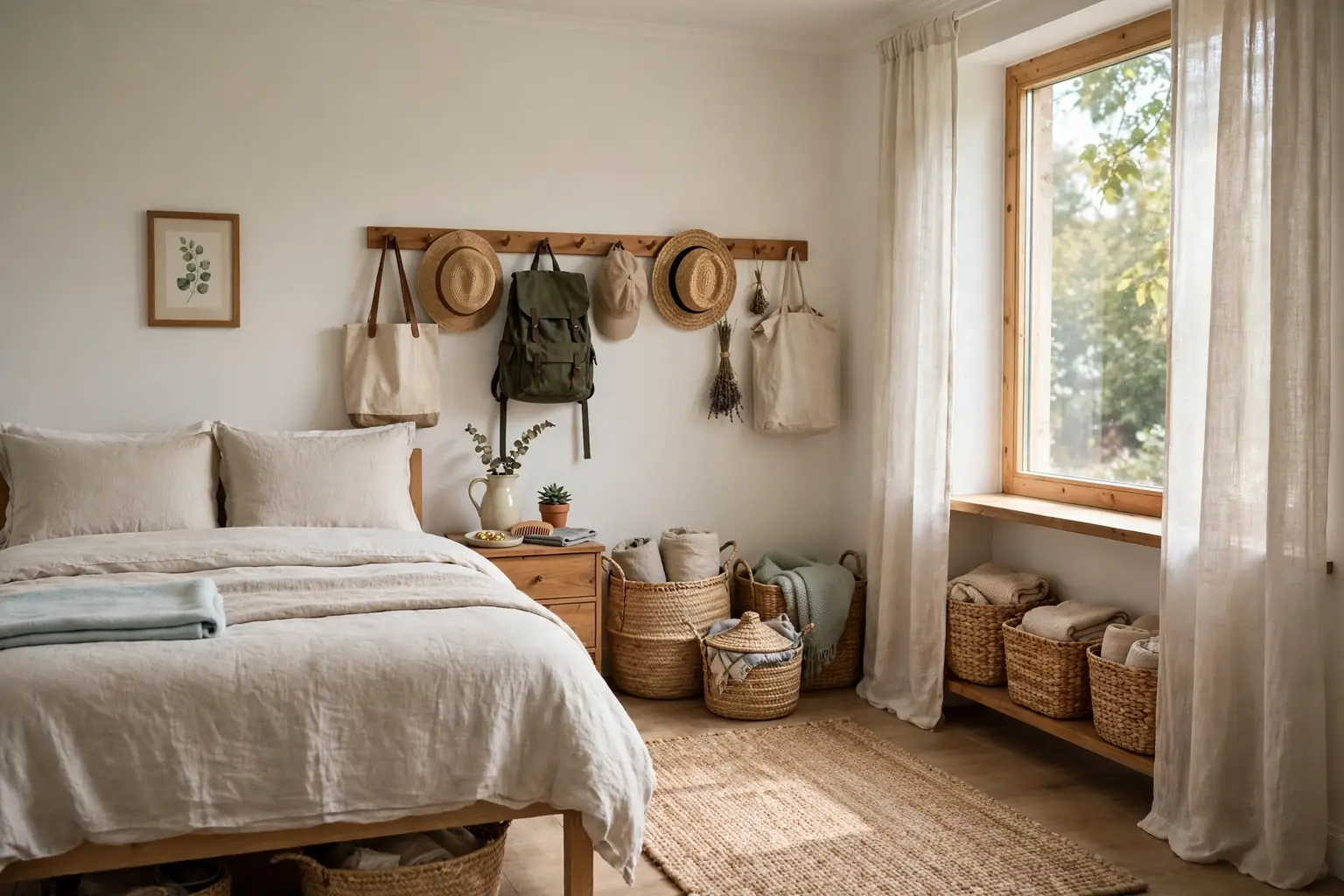
A small bedroom feels larger when everything has a set place, and that order does not need a large budget. The best low cost fixes use space that is already there: under the bed, inside the closet door, on a bare stretch of wall, and in the narrow gap beside a dresser. These 13 inexpensive small bedroom organization ideas focus on simple tools such as bins, hooks, rails, and carts, each chosen to keep daily items close and clutter out of sight. Pick the spot that bothers you most, add one fix, and live with it for a week before you buy anything else, so each change earns its place.
Key Takeaways
- Start with the biggest clutter point, usually clothes, shoes, or bedside items, and give it one clear home before adding more storage.
- Use space that costs nothing to claim: under the bed, the back of a door, the top of a wardrobe, and the wall above a dresser.
- Keep daily items at hand height, seasonal items up high, and rarely used pieces out of the main bedroom flow.
- Repeat one material or color across bins and baskets, so budget storage looks planned rather than patched together.
- Label every bin and basket, since a label is what stops a tidy box from turning into a mixed pile again.
- Measure first: bed clearance, closet width, door swing, and the gap beside furniture decide whether a cheap fix fits or fails.
1. Slide Flat Rolling Bins Under the Bed
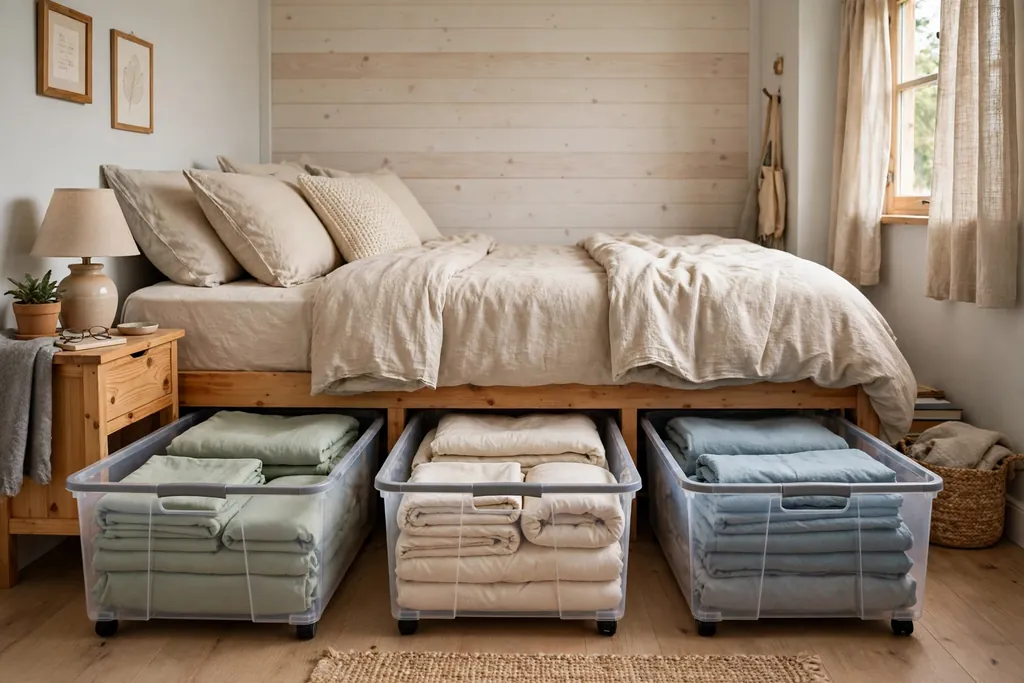
Flat rolling bins claim the space under the bed for spare bedding, off season clothes, and shoes, with no floor space lost and no furniture to buy. Choose low bins with wheels and a lid, and sort them by use, so one bin holds spare sheets, another holds winter knitwear, and a third holds shoes you wear less often. Measure the clearance under the bed frame first, and leave a small gap so bins roll out without catching the rug.
Label the end of each bin that faces out, and pull each bin out fully once a month to remove anything you have not used in a season. If the bins will show, pick one color for all of them, such as natural canvas, grey, or clear plastic with matching lids, so the row reads as one tidy unit. For more under-bed and bedroom storage that keeps the room restful, see these bedroom storage ideas.
2. Hang Fabric Shelves Inside the Closet
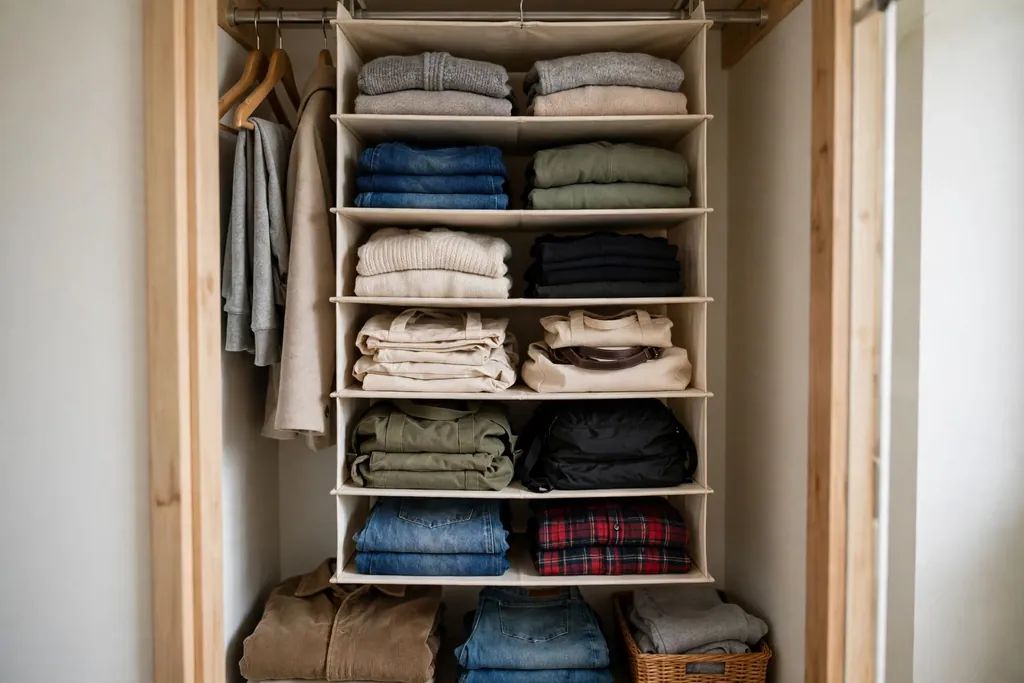
A hanging fabric shelf unit hooks over the closet rail and adds instant shelves for folded clothes, bags, and accessories, with no drilling and no built-in unit. This suits a closet with one long rail and a pile of folded items on the floor, since it turns hanging space into stacked, visible storage. Use the top cubby for bags, the middle cubbies for folded tops and knitwear, and the lowest cubby for sleepwear or gym clothes.
Keep each cubby to one category, and fold clothes to the same width so stacks stay upright and easy to see. If a cubby starts to overflow, that is a sign to move items out, not to add another unit. For more closet layouts that make a small space work harder, see these creative closet ideas for small spaces.
3. Add a Second Hanging Rail With a Tension Rod
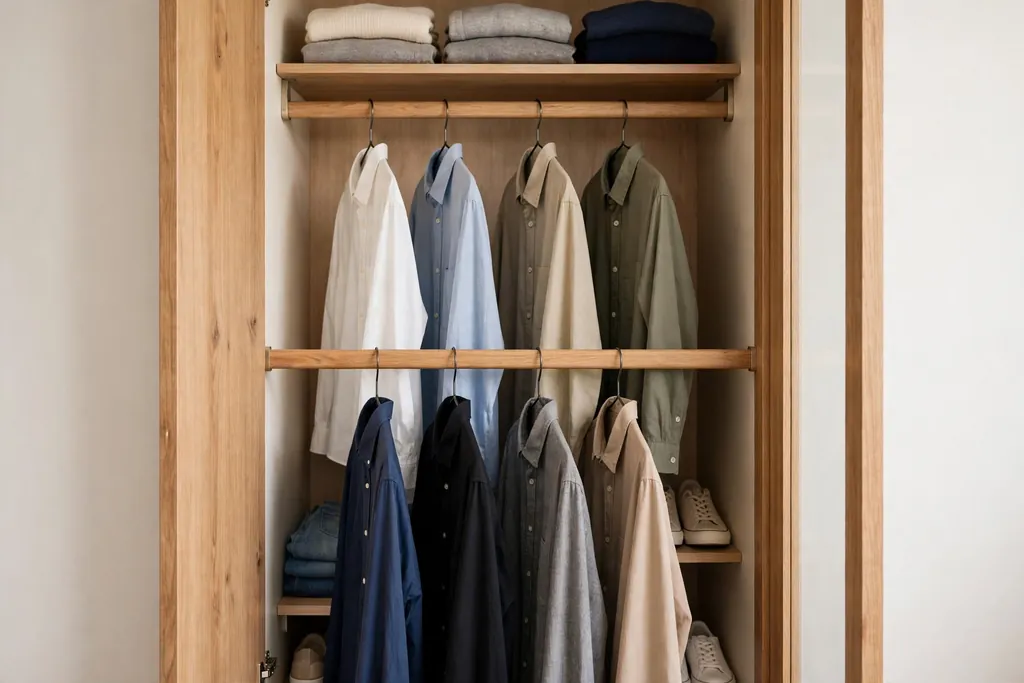
A tension rod fitted below the main closet rail creates a second row of hanging space for shirts, skirts, and jackets, at the cost of one rod and a set of slim hangers. Short clothes need far less height than a single long rail allows, so the space below the first rail is often wasted air. This is the single biggest gain in most small closets, and it comes out cleanly if you rent.
Measure your longest shirt first, then set the lower rod so shirts clear a shoe shelf or the closet floor below. Keep one section of the closet at full height for coats and long dresses, so nothing gets folded that should hang. Use slim, matching hangers on both rails, since mixed hangers crowd the rail and make clothes hard to slide.
4. Divide Dresser Drawers and File Fold Clothes
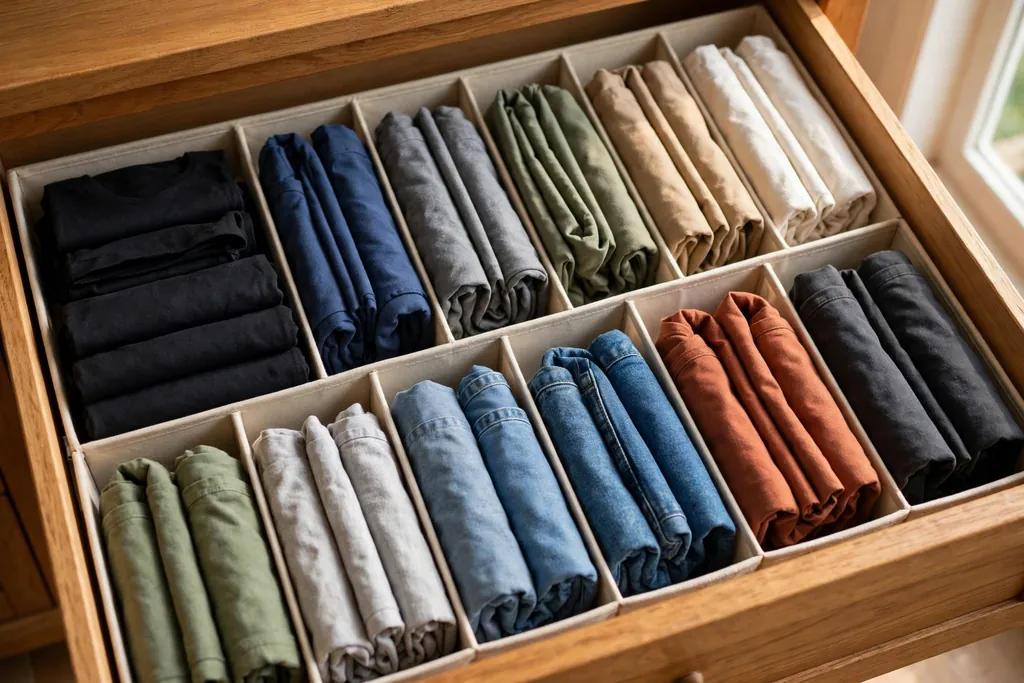
Drawer dividers and file folding make a dresser hold far more without new furniture, since folded clothes stop collapsing into one mixed pile. Use adjustable dividers or small boxes inside each drawer, sort by type and color, and fold clothes upright like files, so you can pull one item without disturbing the rest. Tops in one drawer, bottoms in another, and sleepwear in a third keeps the system easy to keep up.
Keep each row to a height you can lift with one hand, and leave one slot empty for laundry in progress or new items. Wipe the drawer when you refold, since folded stacks collect lint at the edges. This fix costs little, takes an afternoon, and often frees a whole drawer that can then hold accessories or spare bedding.
5. Fit an Over-Door Hook Rail for Daily Outfits
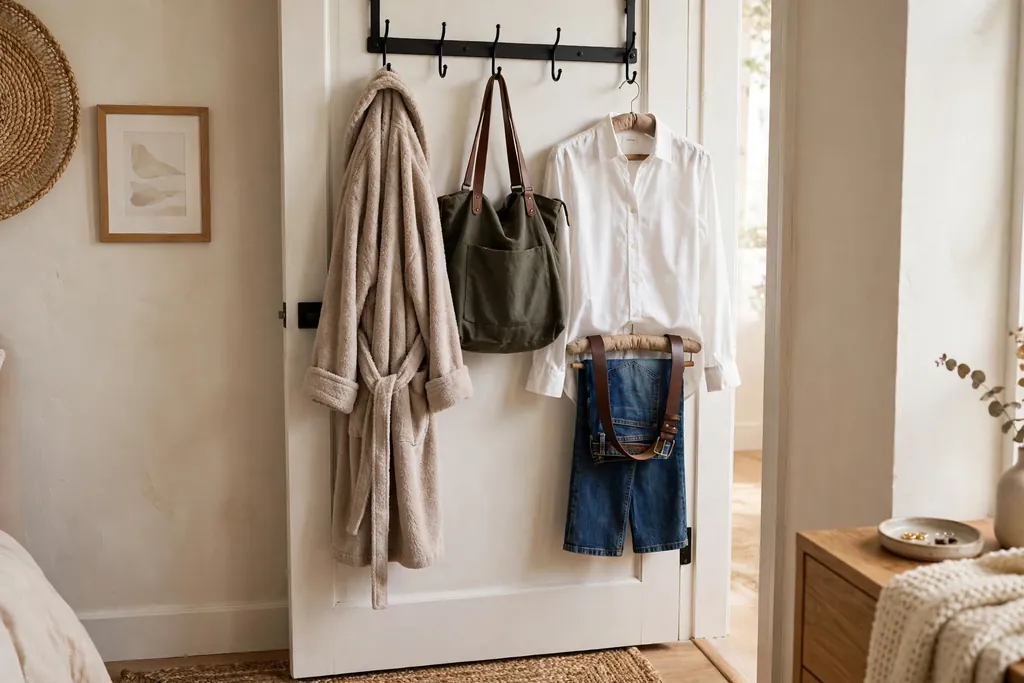
An over-door hook rail turns the back of the bedroom door into storage for tomorrow’s outfit, a robe, and a bag, with no drilling and no floor space used. Choose hooks with a flat profile, so the door still closes fully and does not mark the frame. Limit the rail to items you use daily, since an overloaded door is hard to open and looks messy.
Hang the heaviest bag lowest, and keep the top hook for a light robe or scarf. If the door is used often, choose hooks with a soft backing to protect the door surface. This is a good renter friendly first step, and it frees the chair that may have been doing the same job badly.
6. Hang a Pocket Organizer on the Closet Door
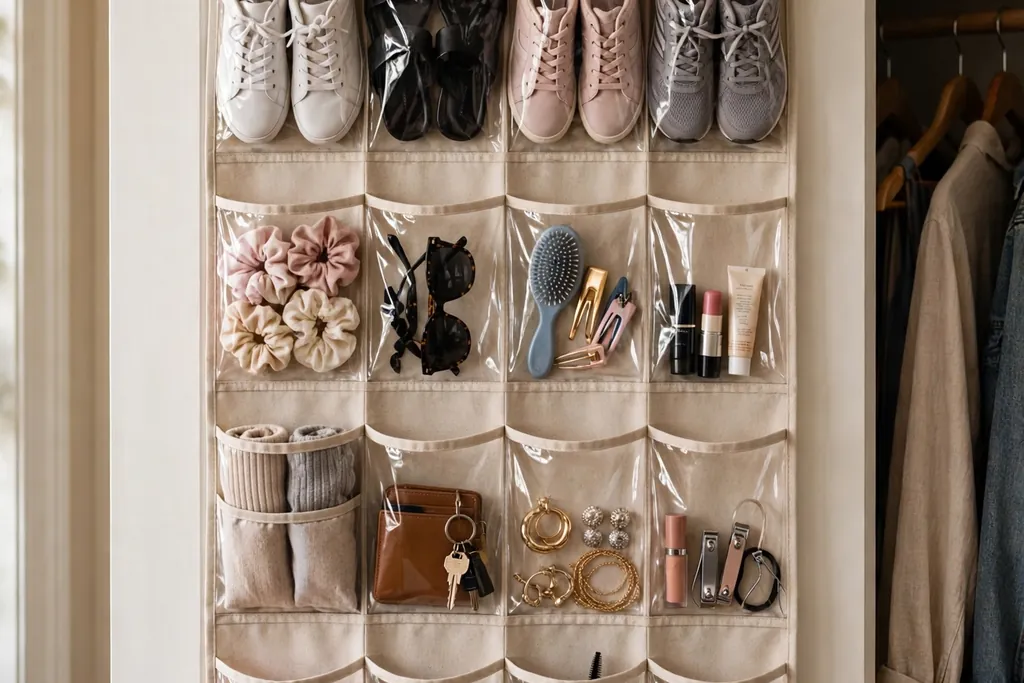
A pocket organizer that hangs over the closet door holds shoes, scarves, belts, and small accessories upright and visible, instead of stacked in a pile by the wall. Clear pockets suit items you wear often, since you can see each pair or piece at a glance, while fabric pockets suit a calmer look. Sort by use, with daily shoes at eye level and occasion pairs higher up.
Keep heavy boots out of a hanging organizer, since weight can pull it off the door, and store boots on the floor instead. Wipe shoes before putting them away, so dirt does not build up in the pockets. One organizer per person is usually enough, and a second one often signals that it is time to pass on unworn pairs.
7. Fix a Peg Rail Above the Dresser
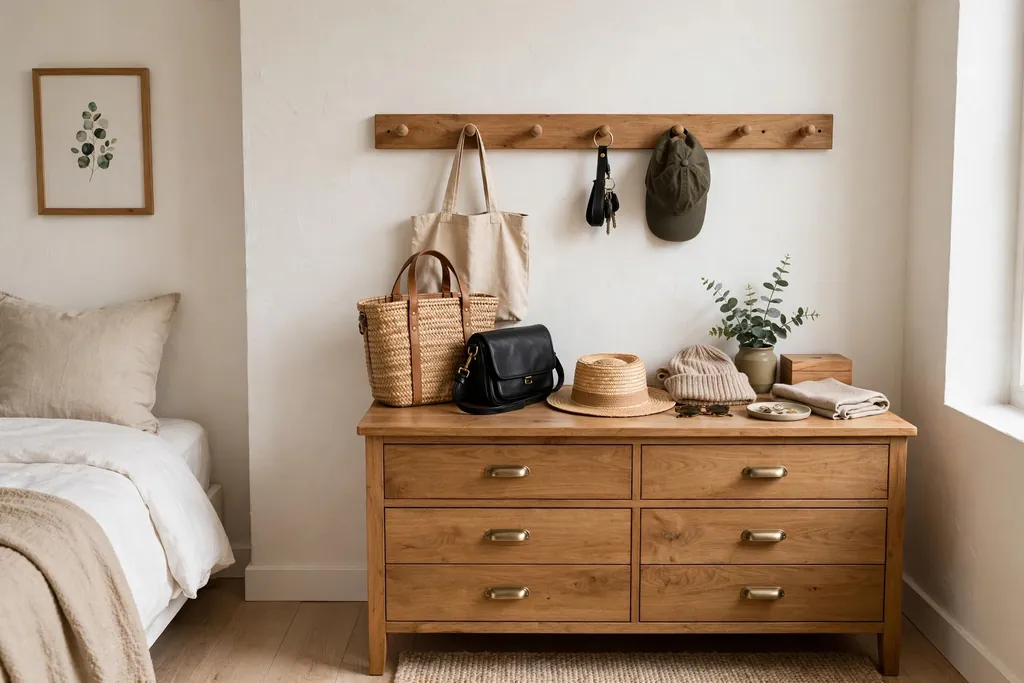
A simple wood peg rail above the dresser gives hats, bags, scarves, and tomorrow’s jacket a home on a wall that usually stays bare. Pegs keep items visible and easy to grab, which suits pieces you reach for every day, and they add a neat row of wood that suits most bedroom styles. Fix the rail into studs or with fixings rated for the load, and space the pegs so bags do not press against each other.
Keep one peg empty if you can, so a new bag or a guest coat has a place without crowding the rail. Hang the heaviest bag on the peg nearest a stud, and keep the rail to items you actually wear, so it stays a tool rather than a display of pieces you never use. A single coat of paint in the wall color can help a plain rail blend in.
8. Use a Bedside Caddy That Hangs on the Bed Frame
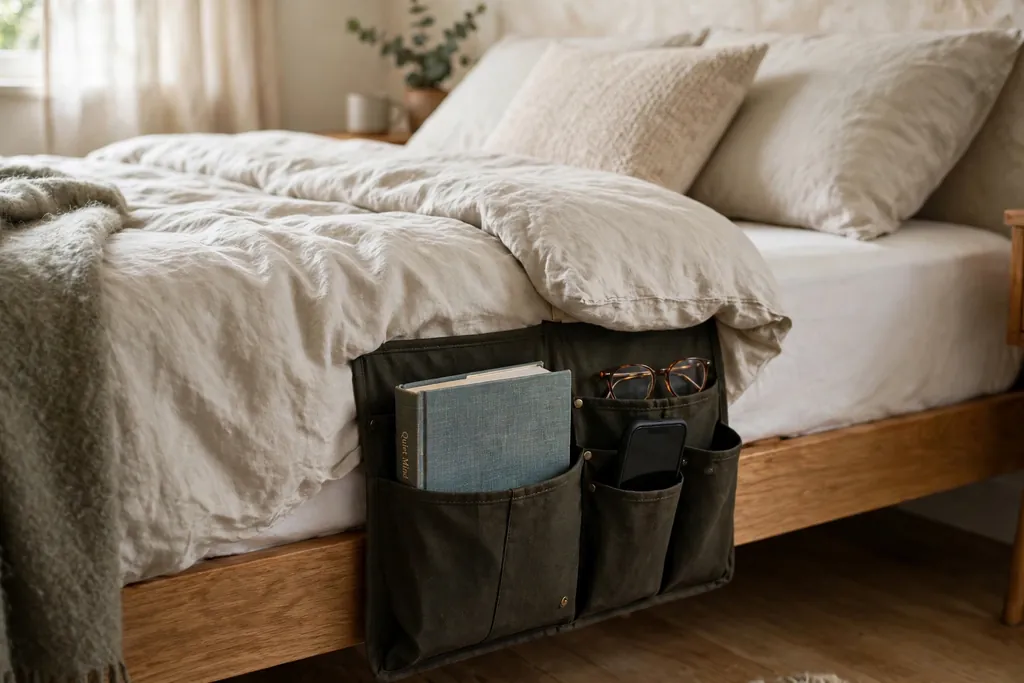
A bedside caddy that slips between the mattress and the frame holds a phone, a book, glasses, and a charger, with no nightstand taking up floor space. This suits a bedroom where the bed sits close to the wall, or where a nightstand would block a door or a walkway. Choose a caddy with firm pockets and a flat top edge, so it stays in place when you reach for an item at night.
Keep the caddy to evening items only, and move daytime clutter elsewhere, so the bed area stays calm at night. Run the charging cable through the caddy pocket rather than across the floor, and check that the caddy does not press against the mattress in a way that disturbs sleep. If you share the bed, one caddy per side stops the shared nightstand from filling up.
9. Roll a Slim Cart Into the Gap Beside the Bed
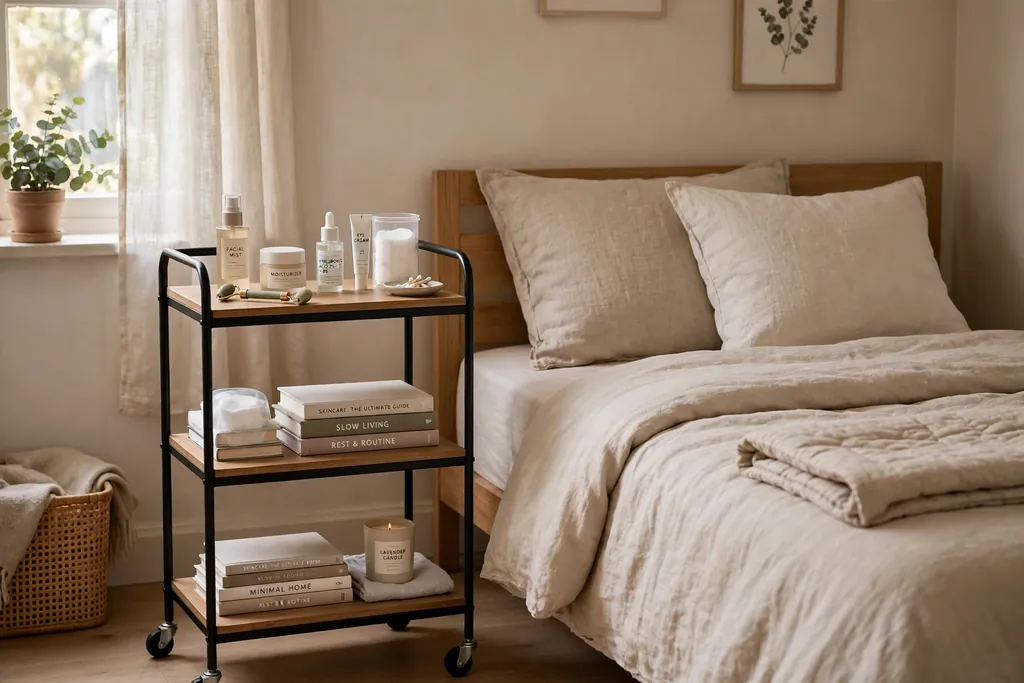
A slim rolling cart with two or three tiers fits in the narrow gap beside a bed or dresser, and moves where you need it. Use the top tier for daily items, the middle for books or skincare, and the lowest for spare supplies. Choose a cart with a small footprint and wheels that lock, so it does not drift at night or roll when you pull a drawer open.
Keep the cart to items for one routine, such as bedtime reading or morning skincare, rather than general overflow. Wipe the tiers weekly, since carts near a bed collect dust fast. Measure the gap before you buy, including skirting boards, since a cart that is a fraction too wide will not roll in at all.
10. Add Picture Ledge Shelves for Books and Small Items
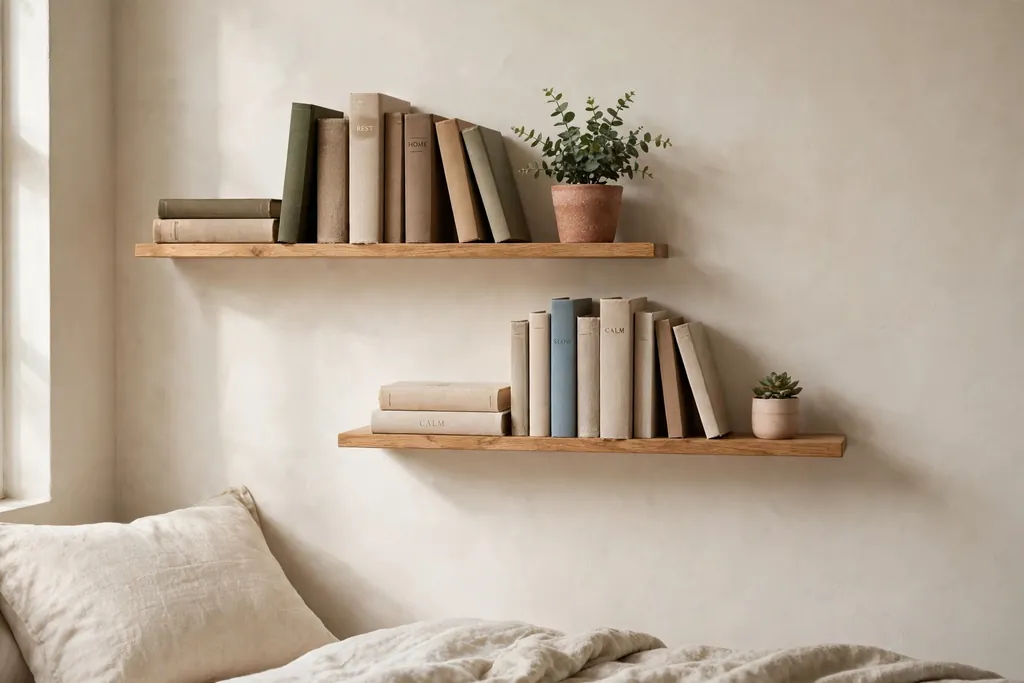
Narrow picture ledge shelves hold books, small plants, and framed prints on a wall that a headboard or a dresser leaves empty, with far less depth than a bookcase. Mount them at a height where you can reach a book while sitting up, but where pillows do not knock items off. Fix shelves into studs or with fixings rated for the load, and keep the weight light.
Limit each ledge to one group of items, such as books on one and a plant and a photo on another, so the wall reads as display rather than storage overflow. Leave one ledge partly empty, since a full ledge above a bed can feel heavy. Dust the ledges weekly, since items above a bed collect lint fast.
11. Place Matching Baskets on Top of the Wardrobe
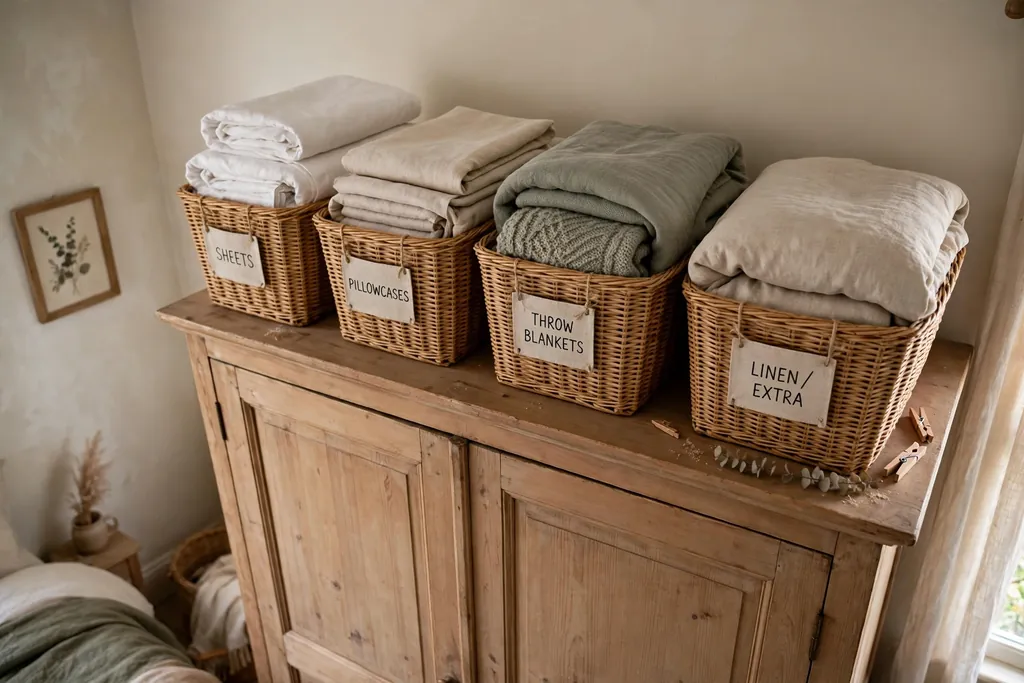
Matching baskets on top of the wardrobe turn a dusty, wasted strip into closed storage for spare bedding, bags, and seasonal clothes. Use baskets of one material, such as woven seagrass or cotton, in no more than two sizes, and label the front of each one, so the top row reads as planned from below. Keep the baskets light enough to lift down with one hand, and keep a small step stool nearby so the row stays usable.
Store only light, soft items up high, such as throws and spare pillowcases, and keep heavy books or files elsewhere. Line baskets with fabric if they hold small items that slip through the weave. Replace a basket when the weave frays, since a damaged basket snags clothes and looks tired.
12. Build a Nightstand From a Crate and a Basket
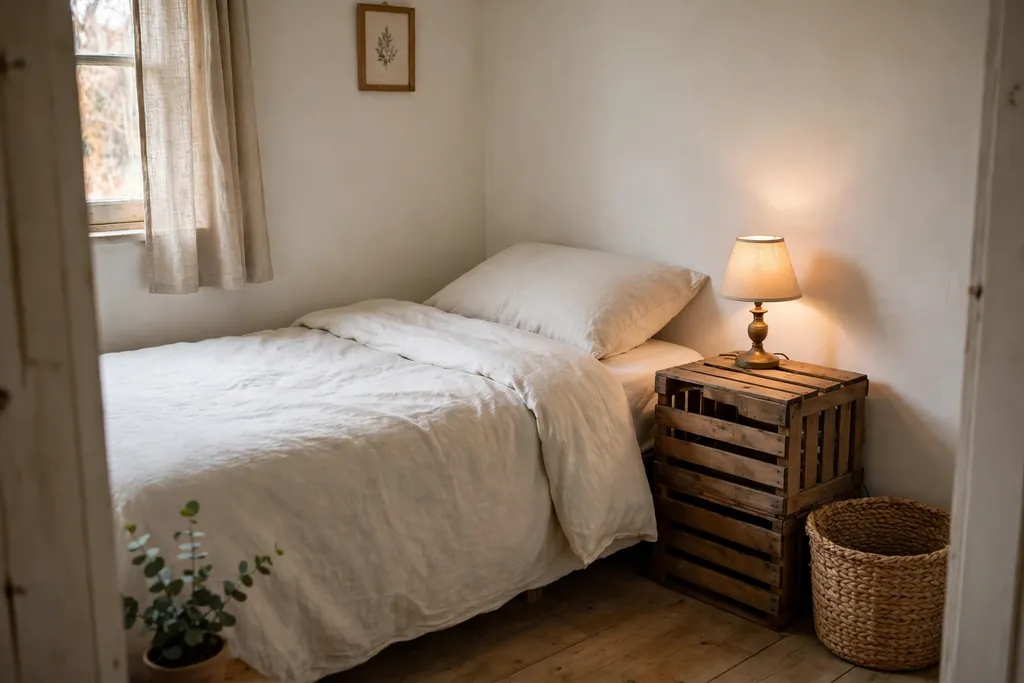
A sturdy wood crate set on its side, with a basket tucked inside, works as a nightstand, a book holder, and a small storage box in one low cost piece. Place it beside the bed with the open side facing out, so the basket slides in and out for chargers, notebooks, and small personal items. A firm board or a small tray on top holds a lamp and a glass of water.
Keep the top to three groups at most: light, a tray, and one small decor piece, so the crate reads as furniture rather than a packing box. If the crate feels rough, sand the edges and add a coat of paint or clear finish in a tone that matches the room. For a calm, small room that stays easy to keep tidy, these minimalist small apartment ideas show how fewer, well chosen pieces keep a small space feeling open.
13. Keep a Labeled Seasonal Box on the Closet Top Shelf
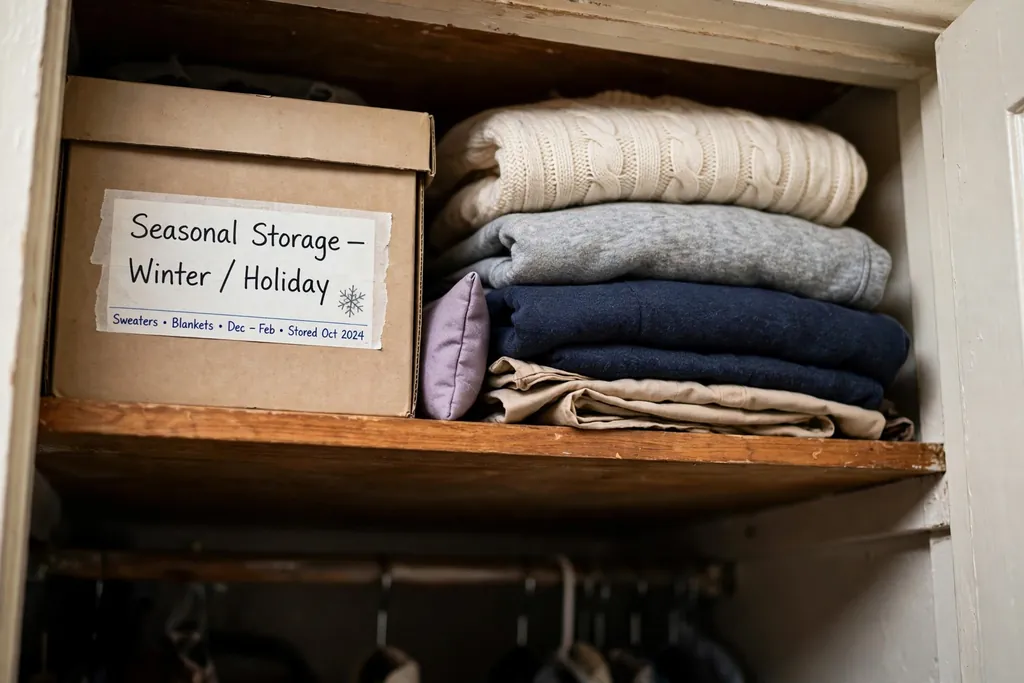
One labeled box on the closet top shelf holds the clothes you are not wearing this season, so the rails and drawers below stay clear for daily use. Use a closed box or bin with a lid, so the top row looks tidy from below and dust stays off the contents. Put a short list on the label, such as “winter hats, gloves, scarves,” rather than a single vague word.
Swap the box each season, and review it as you swap, moving out anything you did not wear during its season. Keep the box shallow enough to lift safely from a step stool, and avoid packing it so full that the lid will not close. This single box often frees more rail space than a new piece of furniture, and it costs almost nothing.
Conclusion
An organized small bedroom does not come from buying more furniture. It comes from giving every item one clear home, using space that is already there, and keeping daily items easy to reach. Start with the biggest clutter point, add one low cost fix, and repeat the material and color across bins and baskets so the room looks planned. With under-bed bins, closet shelves, hooks, and a seasonal box in place, the room stays tidy with a short weekly reset, and it keeps its style without a large spend.
If you found an idea here that suits your room, save this post on Pinterest so you can find it again when you are ready to start. Pin the look you like most, whether it is an under-bed bin, a peg rail, or a rolling cart, and use it as a guide for your next weekend refresh.
FAQs
What is the cheapest way to organize a small bedroom?
Start with the space you already own: flat bins under the bed, hooks on the back of a door, and one labeled box on the closet top shelf. These three fixes cost little, need no tools or only basic fixings, and clear the most common clutter points: spare bedding, daily outfits, and off season clothes.
How do I organize a small bedroom with no closet?
Use the bed, the walls, and the door. Rolling bins under the bed hold bedding and shoes, a peg rail above the dresser holds bags and jackets, and an over-door rail holds daily outfits. A slim rolling cart beside the bed and a crate nightstand add bedside storage without a closet or a large piece of furniture.
How can I make budget bedroom storage look stylish?
Repeat one material and one color across bins, baskets, and boxes, such as natural seagrass, grey canvas, or clear bins with matching lids. Label each container, keep surfaces mostly clear, and leave one shelf or ledge partly empty, so the storage reads as planned rather than patched together.
What should I store under the bed?
Store flat, light, and rarely needed items under the bed, such as spare sheets, off season clothes, and shoes you wear less often. Use bins with lids to keep dust out, label the end that faces out, and avoid storing heavy items or anything you need daily, since pulling a heavy bin out each morning gets old fast.
How do I keep a small bedroom organized long term?
Give every item a home, and keep one empty basket or drawer for new items, so they have a place instead of landing on a chair. Do a short weekly reset: return items to their homes, empty the bedside caddy, and check the door hooks. Review the closet and the seasonal box each season, and move out anything you did not wear.
Do I need to buy matching furniture to organize a small bedroom?
No. Matching bins, baskets, and hangers matter more than matching furniture, since containers are what the eye sees most. Keep large furniture simple and in a similar tone, then let one basket material and one label style tie the storage together across the bed, closet, and dresser.