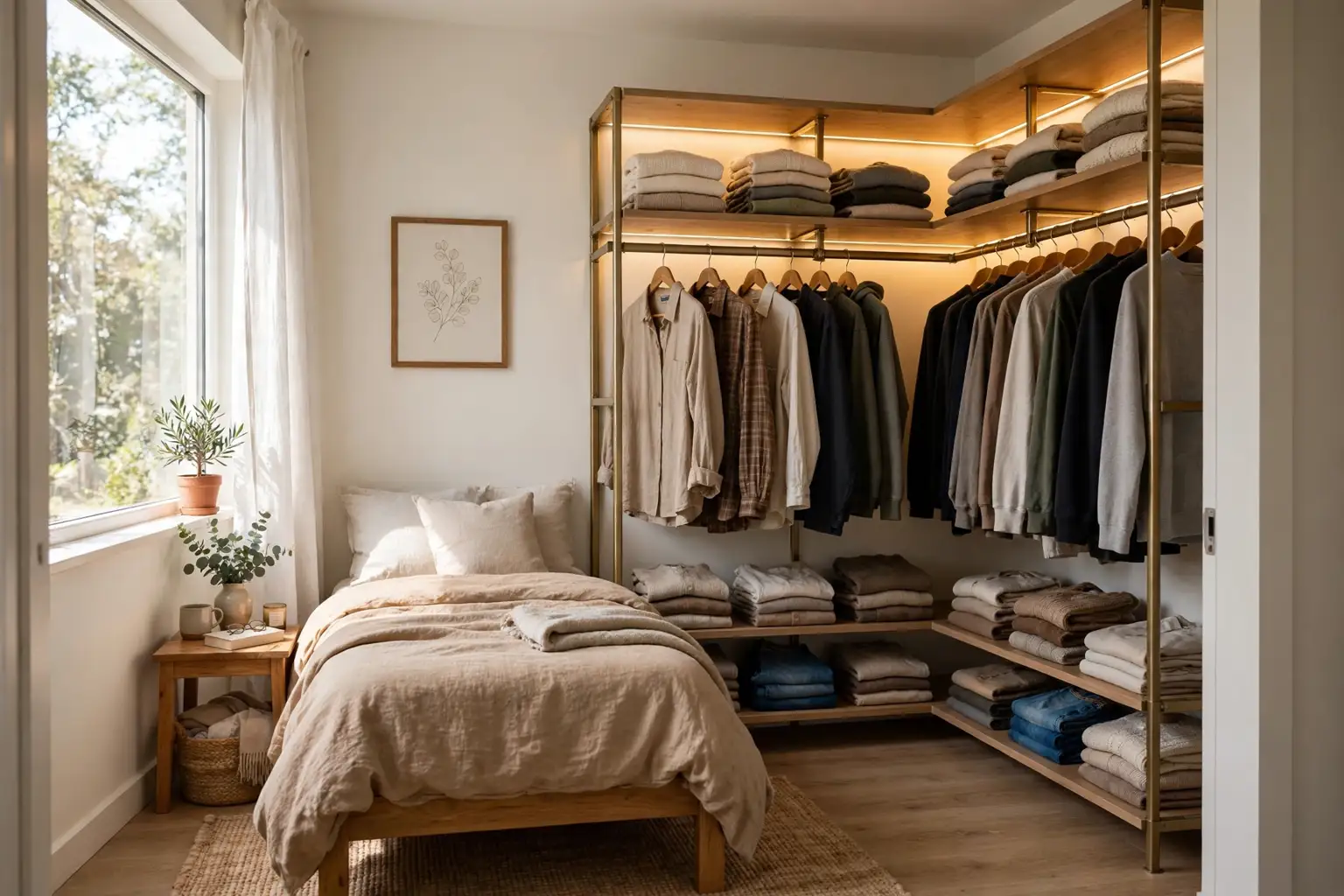
A closet corner is often the hardest part of a small bedroom to use well. One wall gets the rail, the other wall gets ignored, and the deep corner in between collects bags, single shoes, and clothes you forgot you owned. With a plan for both walls, that same corner can hold daily clothes, shoes, bags, and seasonal items without taking floor space from the bed. These 22 closet corner ideas for small bedrooms cover rails, shelves, doors, lighting, and dressing corners, with options for renters and for built-in closets alike. For the wider closet picture, see these creative closet ideas for small spaces. Measure the corner first, then pick the ideas that fit your width, depth, and door swing.
Key Takeaways
- Treat both walls of the corner as storage, not just the wall you see first, since the return wall is where most wasted space sits.
- Put daily clothes at hand height on the easy side, and reserve the deep corner for items you reach for less often.
- Use one clear job per zone, such as hanging on one wall and folded clothes or shoes on the other, so the corner stays easy to use.
- Add light to a dark corner before adding more storage, since you cannot use what you cannot see.
- Choose doors and fronts that suit the bed position, since a swinging door can eat the floor space a corner closet was meant to save.
- Start with low-cost, removable fixes, such as hooks, bins, and a freestanding rack, before committing to a built-in corner unit.
1. Wrap Double Hanging Rails Around the Corner in an L Shape
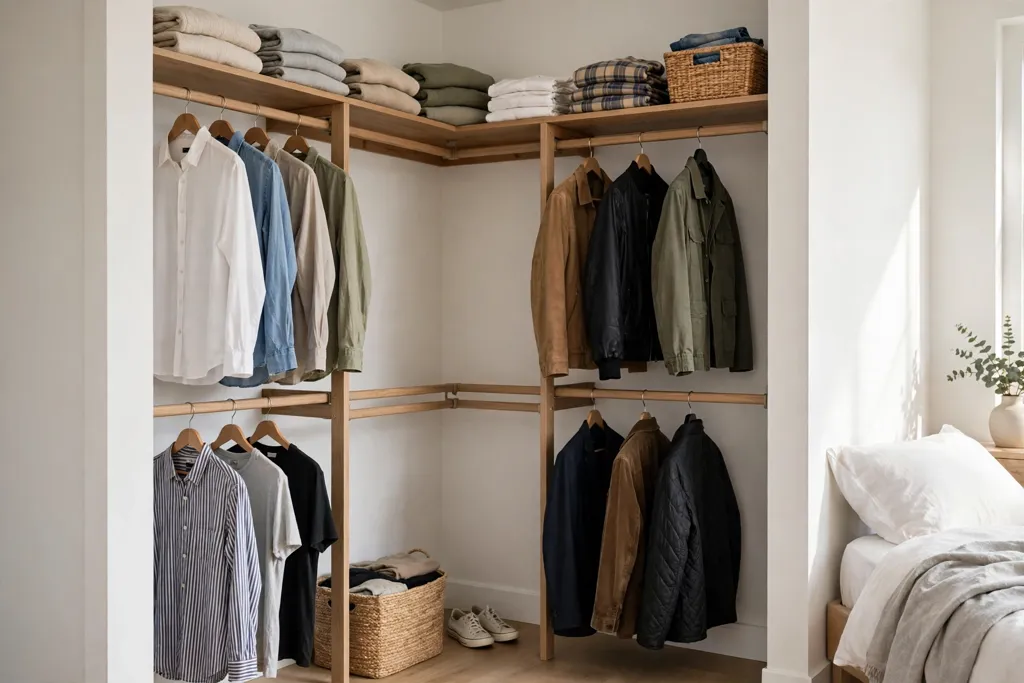
Fit rails on both walls of the corner so hanging space turns the corner instead of stopping at it. Short clothes, such as shirts and jackets, can hang on two levels on the main wall, while the return wall holds a second rail for the same length of clothes. This uses the full corner footprint and suits a closet that feels full even though one wall is empty.
Keep one section at full height for coats and long dresses, so nothing that should hang gets folded at the bottom of a pile. Use slim, matching hangers on both rails, since mixed hangers catch and crowd the rail. Leave a small gap where the two rails meet, so clothes slide around the corner without bunching at the joint.
2. Build Floor-to-Ceiling Corner Tower Shelves
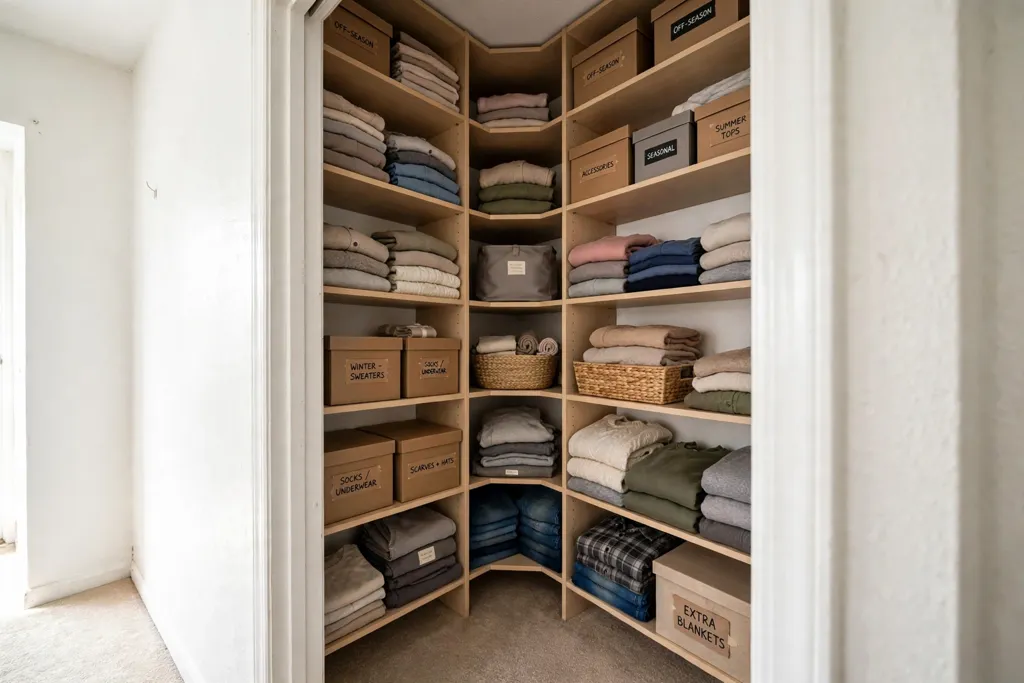
Fit a tall shelf tower into the corner for folded clothes, bags, and boxes, with the shelves sized to the items they will hold. A tower works well beside a hanging rail, since it gives folded items a home that does not compete with hanging space. It also suits a corner with no door, where open shelves can stay tidy with bins.
Set shelf spacing before you build, with shorter gaps for T-shirts and knitwear and one taller gap for bags or boots. Put daily folded clothes at eye and hand level, and seasonal items in closed boxes near the top. Keep a small step stool nearby if the top shelf sits above easy reach, so the highest shelf stays useful rather than forgotten.
3. Fit Tiered Corner Shoe Shelves
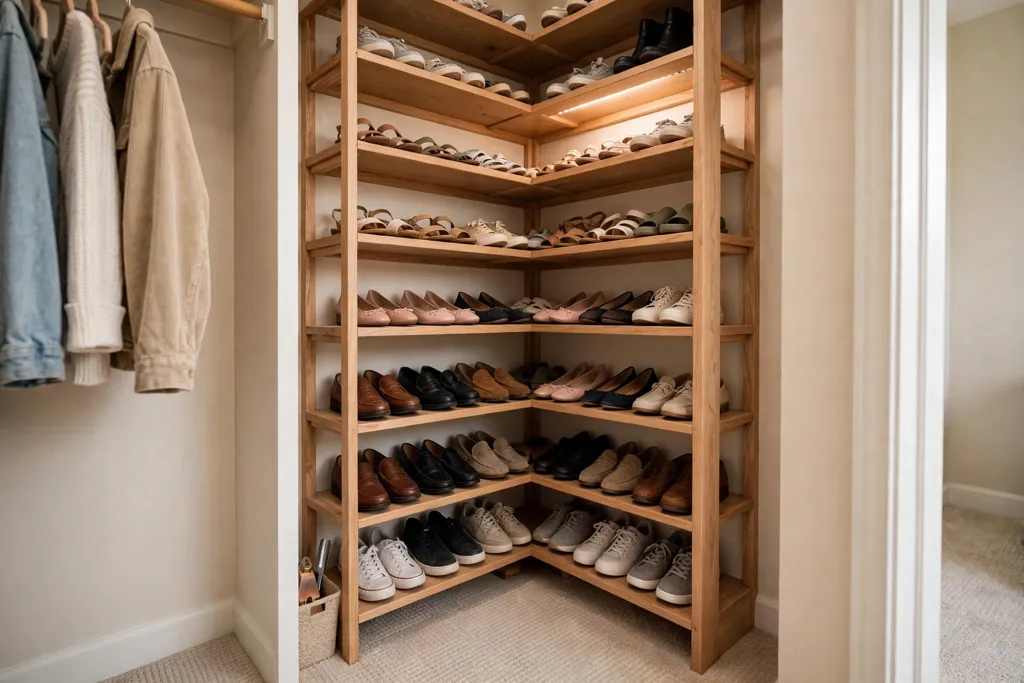
Fit two or three low, tiered shelves into the base of the corner so shoes sit in rows you can see at a glance. A corner base is often a dark pile of pairs, but shallow tiered shelves turn it into a clear shoe zone. This suits a bedroom where shoes currently live by the door or under the bed because the closet floor is too awkward to use.
Keep tall boots off tiered shelves, since they slide and topple, and store boots upright beside the shelves instead. Wipe shoes before putting them away, so dirt does not build up on the shelf below. Leave one tier partly empty if you buy shoes often, since a completely full shoe shelf pushes overflow straight back onto the floor.
4. Fit an Angled Corner Wardrobe With Diagonal Doors
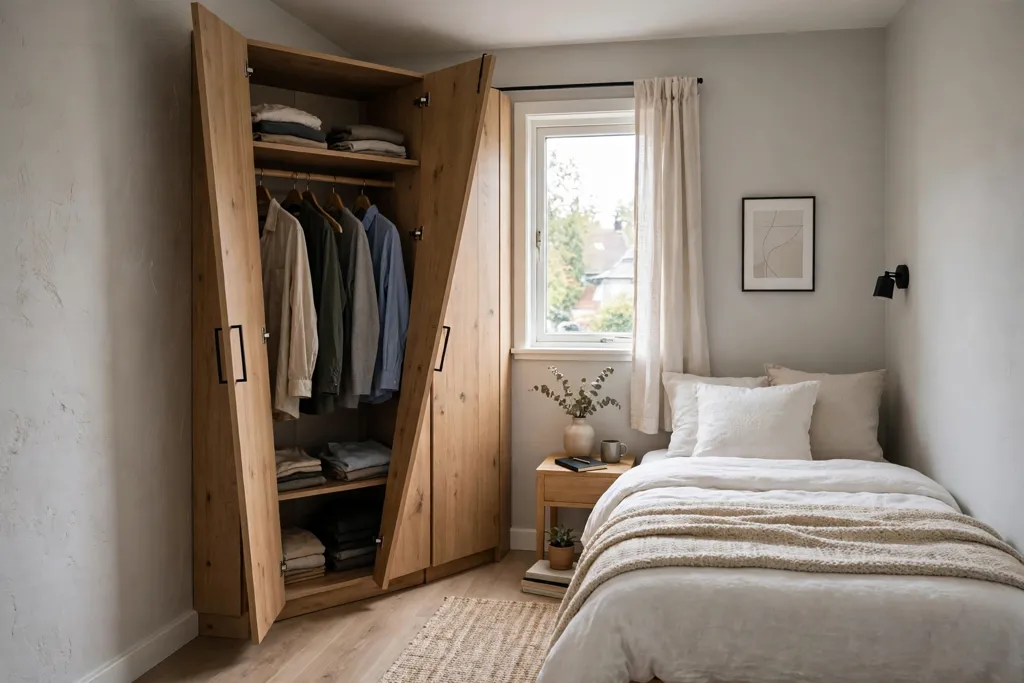
Fit a wardrobe that cuts across the corner at an angle, with doors on the diagonal face, so the deep corner becomes usable hanging space instead of a dead triangle. An angled front also opens into the room at a point, which can suit a bedroom where a square wardrobe would block the bed or a walkway. This is a bigger project, so it suits a closet corner you plan to keep for years.
Check the diagonal depth before ordering, since an angled unit needs enough room for hangers to swing without catching the doors. Hang daily clothes near the front of the angle and longer or seasonal pieces toward the back corners. Keep the doors plain and close in color to the wall, so a large angled unit does not dominate a small room.
5. Run an Open Corner Rail on Both Walls
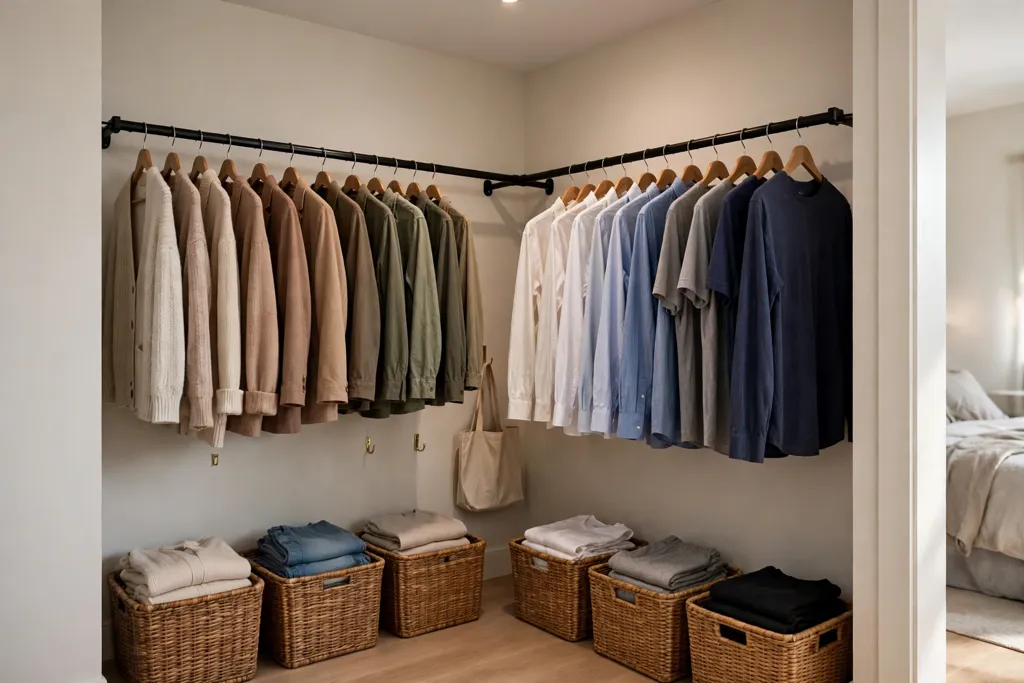
Run open clothing rails along both walls of the corner for a boutique style setup with no doors at all. Open rails suit a small bedroom where doors would hit the bed, and they suit a tidy wardrobe, since everything stays visible. They also cost less than a built-in unit and can move with you if you rent.
Use rails of one finish and hang clothes in a consistent order, such as tops, then trousers, then jackets, so the open corner reads as planned. Put matching baskets below the rails for items you want hidden, such as underwear, gym clothes, and accessories. Dust the open rails and shelves weekly, since open storage collects lint faster than closed storage.
6. Hang a Corner Curtain Front for a Doorless Closet
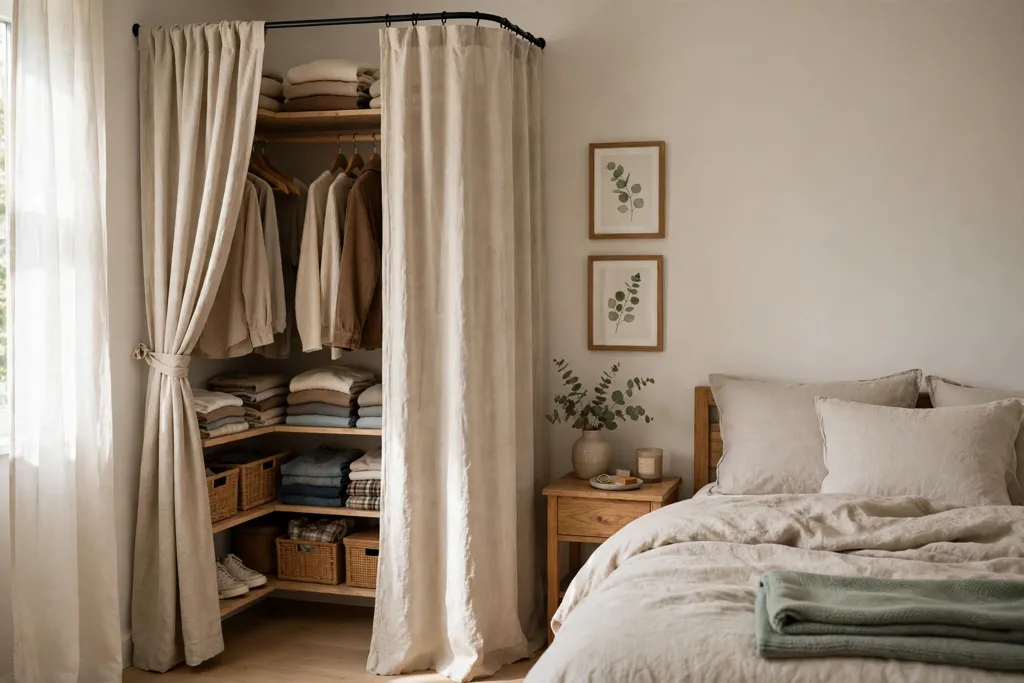
Hang a curtain across the corner opening for a soft, low-cost front that needs no swing space. A curtain suits a corner closet in a tight bedroom, or a room where a door would hit the bed or a nightstand. It hides the contents when closed and opens fully for access, which matters in a corner where a half-open door can block the return wall.
Hang the curtain as close to the ceiling as the opening allows, so the closet looks taller, and extend the rod past the opening so the curtain stacks neatly to one side. Pick a fabric heavy enough to hide the contents but light enough to slide with one hand. Choose a washable fabric, since closet curtains collect dust, and tie the curtain back during the day if you prefer an open look.
7. Fit Deep Corner Pull-Out Drawers
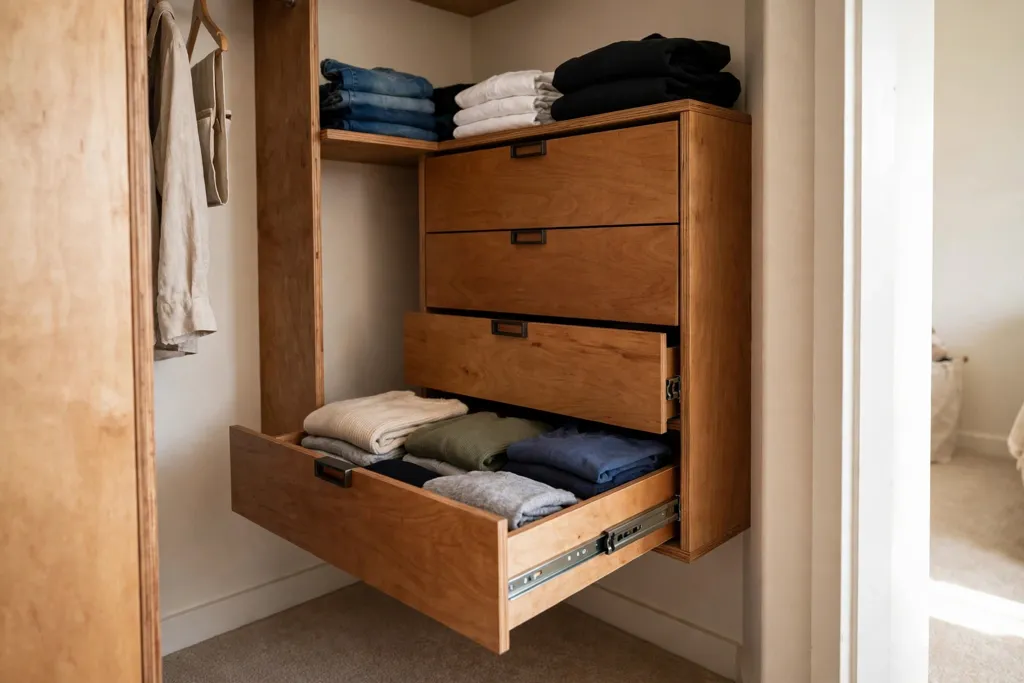
Fit pull-out drawers into the deep part of the corner so folded clothes, sleepwear, and accessories slide out to you instead of hiding at the back. Deep corners fail because you cannot reach what is stored there, and a drawer solves that problem by bringing the contents forward. This suits a built-in corner unit or a base unit placed into a closet corner.
Sort each drawer by one category, such as tops in one, sleepwear in another, and gym clothes in a third, and add small dividers inside so stacks stay upright. Keep each drawer shallow enough to lift and close with one hand, since deep drawers get heavy and hard to use. Leave a little air above the top drawer so the rail above it still clears hanging clothes.
8. Add a Corner Valet Rail for Outfit Staging
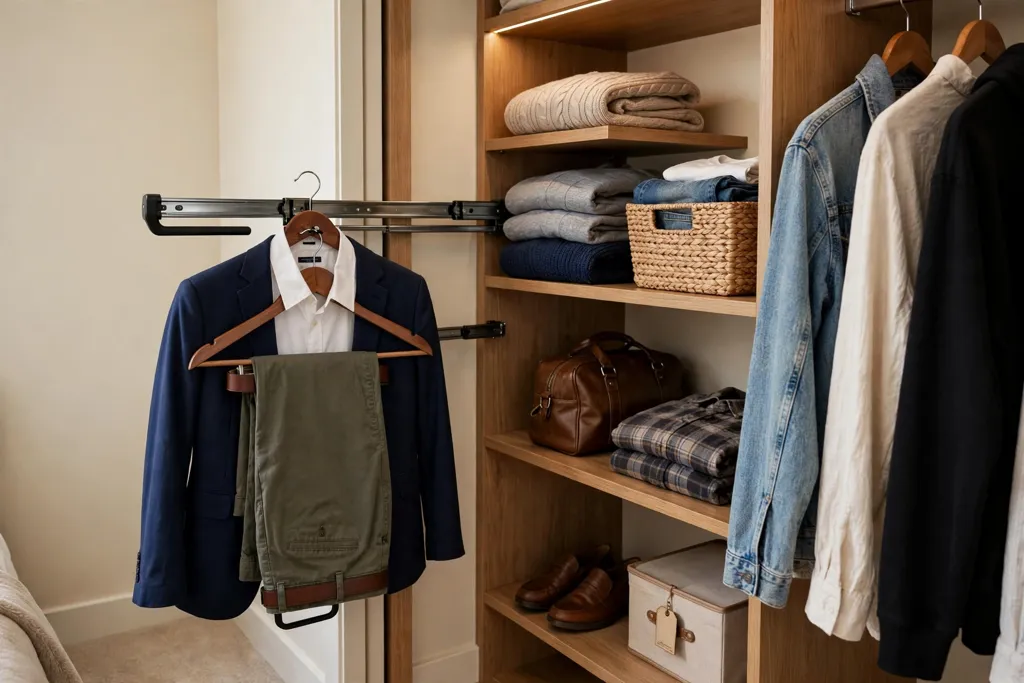
Fit a small pull-out valet rail near the front of the corner for a temporary hanging spot while you plan an outfit or unpack laundry. A valet rail pulls out when you need it and pushes back flush when you do not, so it takes no permanent space. It suits a small bedroom closet because it gives you a staging area without a chair or a hook on the door.
Use the rail for one outfit at a time, such as tomorrow’s clothes or items that need steaming, and clear it daily so it does not become a second rail. Fix it near the front of the closet, where it is easy to reach, and check that it clears the door or curtain when pulled out. A valet rail also helps when steaming, since you can hang the garment where you can work around it.
9. Run a High Corner Shelf for Seasonal Bins
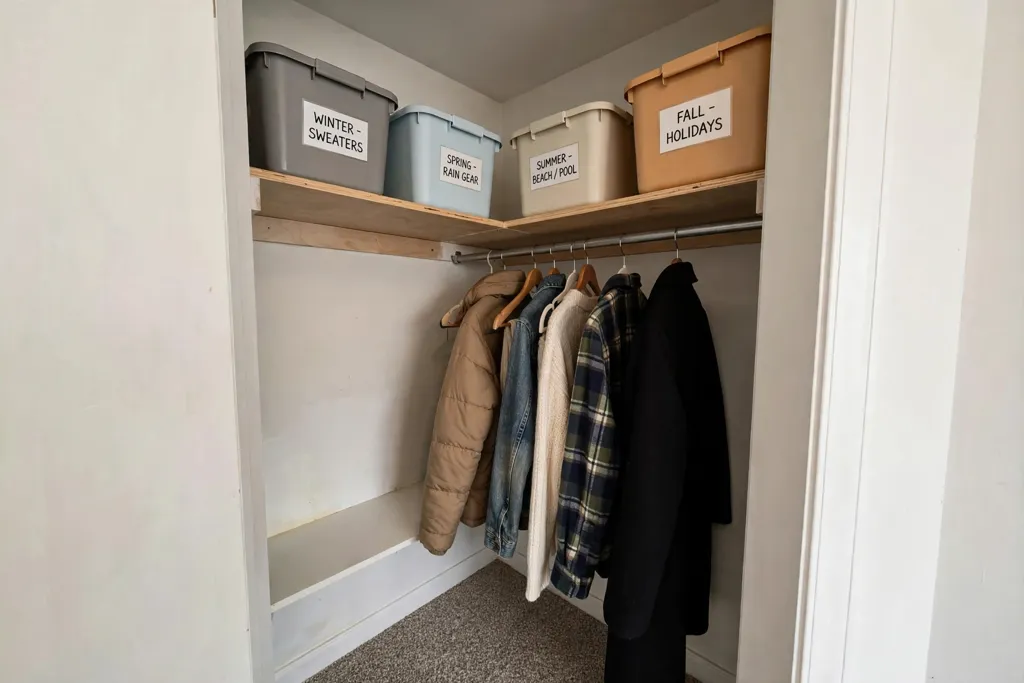
Run a shelf close to the ceiling around the corner for items you reach for a few times a year, such as spare bedding, holiday clothes, or luggage. The top of a corner closet is often empty because the standard shelf sits too low, leaving a gap that collects dust and nothing else. A high shelf claims that gap for real storage.
Keep a small step stool nearby, since a shelf you cannot reach safely becomes a place where things are forgotten. Use closed boxes or bins on the high shelf, so the top row looks tidy from below and dust stays off the contents. Label each box on the side that faces out, and keep the weight light enough to lift down with one hand.
10. Place a Rotating Shoe Turntable in the Deep Corner
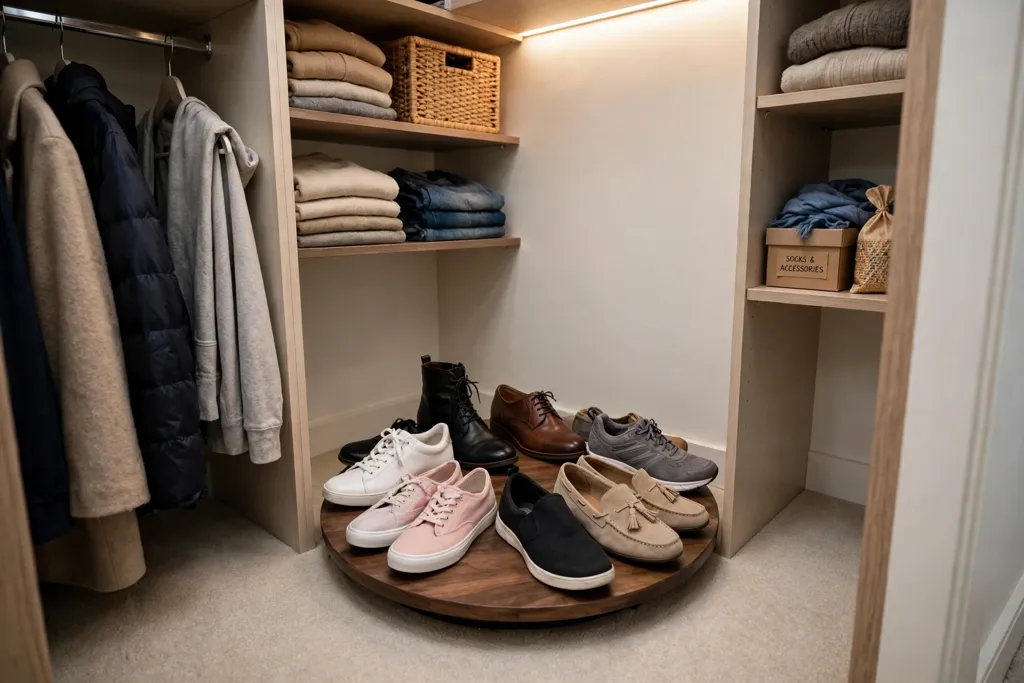
Place a round shoe turntable in the deepest part of the corner so a spin brings the pair you want to the front. A turntable suits a corner that is too deep to reach into comfortably, and it works for shoes, bags, or small accessory boxes. It turns the worst spot in the closet into a spot you can actually use every day.
Choose a turntable sized to the corner depth, with a low edge so shoes do not slide off when it turns. Keep heavy boots off the turntable, since weight makes it hard to spin and can tip the unit. Put the pairs you wear most on the turntable, and keep rarely worn pairs in boxes on a high shelf, so the turntable never fills with shoes you do not need.
11. Fix Hooks and a Peg Rail on the Return Wall
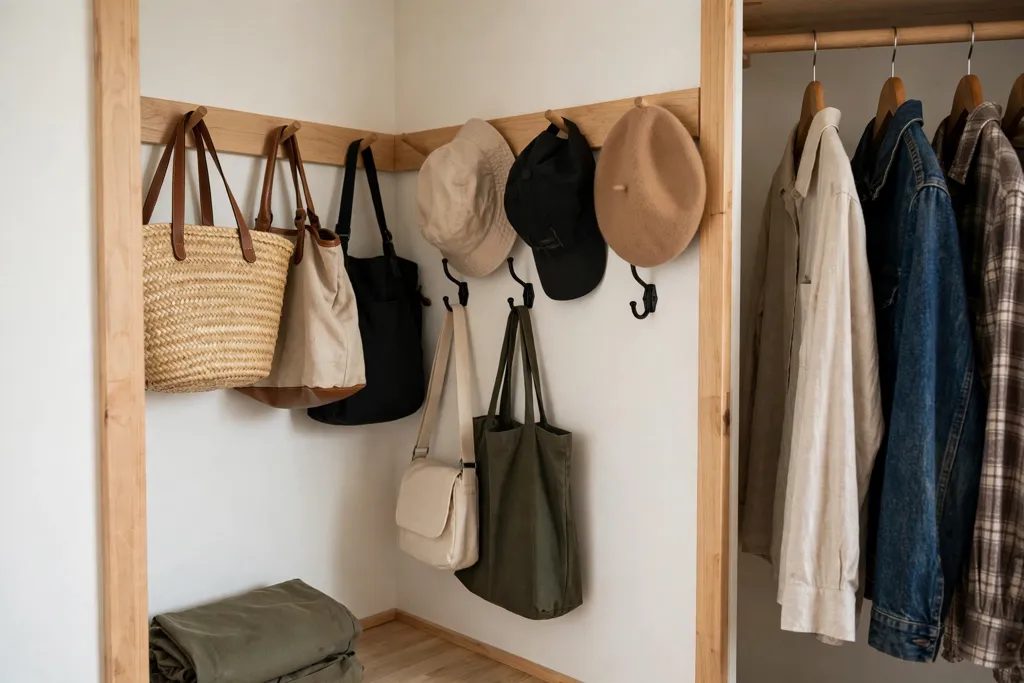
Fix a row of hooks or a peg rail on the return wall of the corner for bags, hats, and tomorrow’s outfit. The return wall is often bare, yet it sits at hand height and holds items that otherwise land on the floor or on a chair. One hook per bag keeps straps from tangling, and hats hung by their inner band keep their shape better than hats stacked in a pile.
Keep the heaviest bag on the lowest hook, and check that hooks are fixed into studs or with fixings rated for the load. Leave a gap between hooks so bags do not press against each other and mark the fabric. If you rent, removable hooks give a similar result, but check their weight rating and test one hook before loading them all.
12. Place a Corner Drawer Unit With a Folding Counter on Top
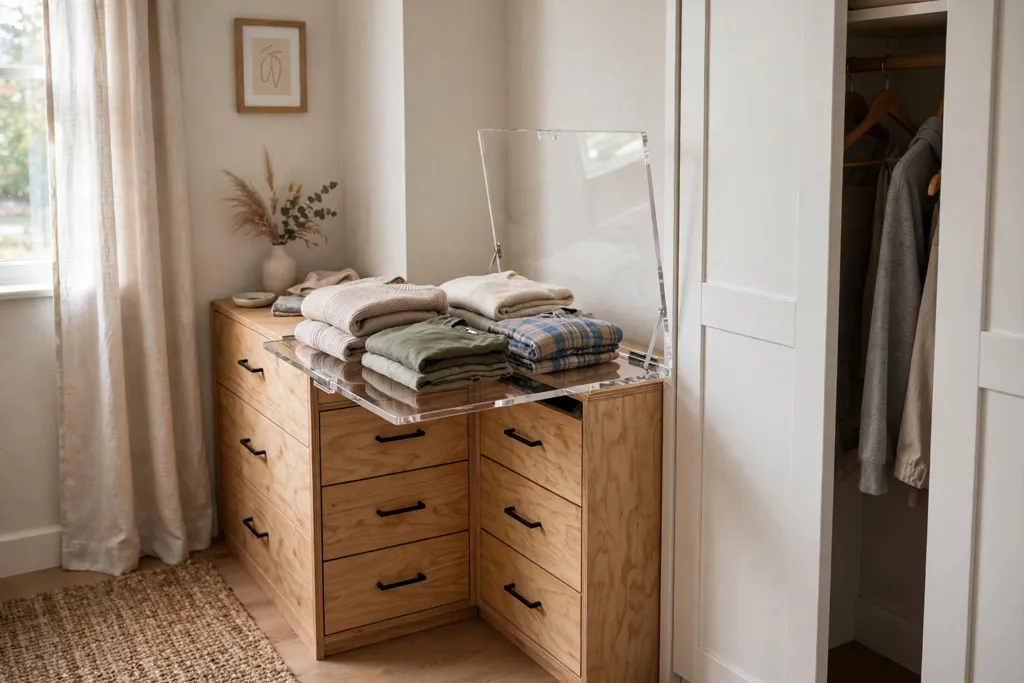
Place a small drawer unit in the corner with a clear top surface that doubles as a folding counter. This suits a bedroom where laundry lands on the bed because there is nowhere to fold it, and it gives folded clothes a drawer to go into right after folding. The unit also anchors the corner, so the space beside the rail stops feeling like leftover floor.
Keep the top mostly clear, with only a small tray for items in progress, so the counter stays usable. Sort drawers by type, and fold clothes to the same width so stacks line up inside each drawer. If the unit sits beside a hanging rail, check that the top clears the longest hanging garment, so clothes do not brush the counter.
13. Fit Mirrored Corner Doors to Bounce Light
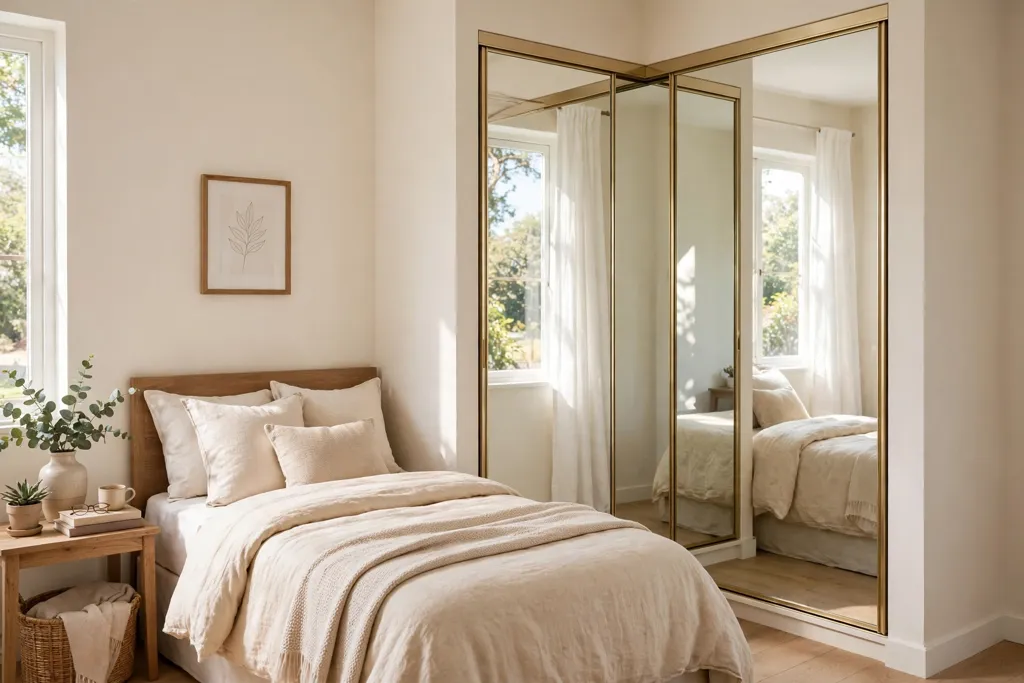
Fit mirrored doors on the corner closet to bounce daylight around a small bedroom and give you a full length dressing view without a separate mirror taking wall space. Mirrors suit a dark corner, since they brighten the area around the closet as well as the closet itself. They also make a small room feel wider, which helps when the bed fills most of the floor.
Check what the mirror reflects before fitting it, since a mirror facing a messy corner doubles the mess. Keep the mirror clean, since smudges show quickly on a large mirrored door. If full mirrored doors are not possible, a mirror fixed to the inside of a hinged door gives the same dressing view without changing the door type.
14. Fit Sliding Corner Doors That Clear the Bed
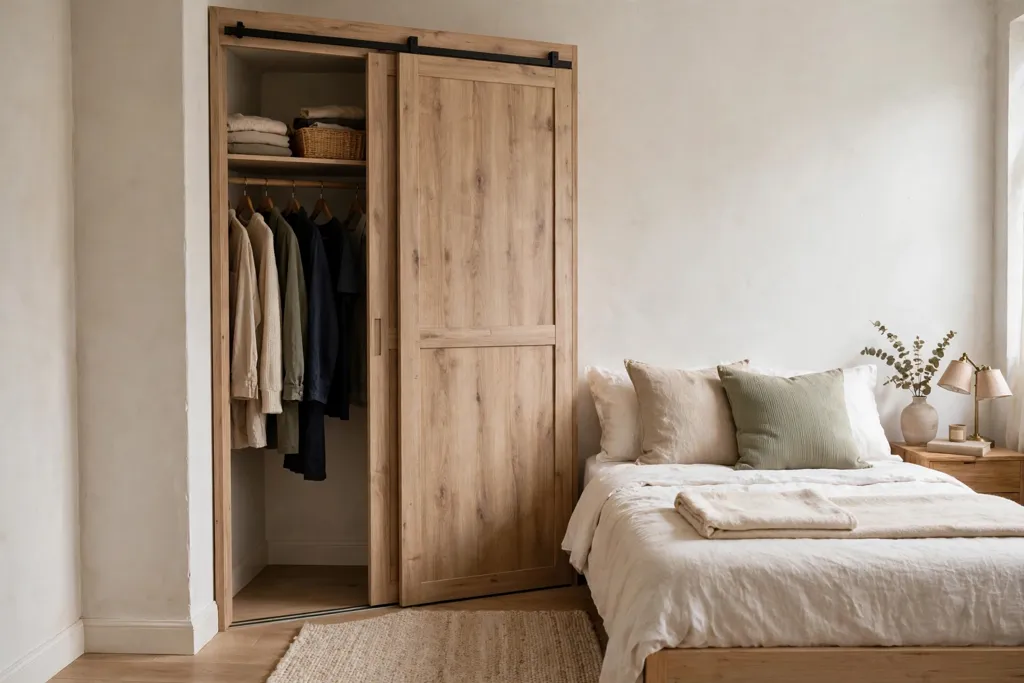
Fit sliding doors on the corner closet so the doors move along the wall instead of swinging into the room. A hinged door needs clear floor in front of it, which a small bedroom may not have, while a sliding door saves that floor for the bed or a walkway. Sliding doors also suit a corner beside a nightstand, where a hinged door would hit the furniture.
Keep the track clean, since dust in the track makes sliding doors stick. Check that each door slides fully clear of the opening, so you can reach both walls of the corner without moving a door back and forth. If sliding doors are not possible, a curtain front gives a similar space saving result with less hardware.
15. Set a Corner Dressing Mirror With a Small Stool
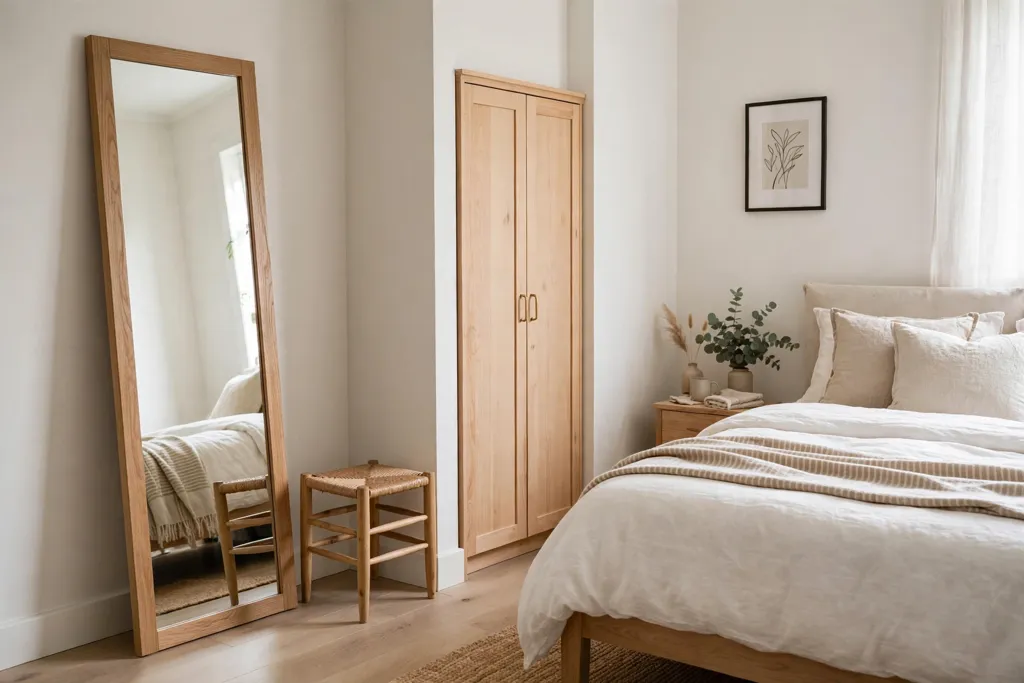
Set a full length mirror in the corner beside the closet, with a small stool tucked under it, for a dressing spot that uses the corner rather than a whole wall. This suits a bedroom with no room for a separate dressing table, since the mirror and stool take only the corner footprint. It also puts the dressing view right where the clothes are, which saves morning steps.
Angle the mirror slightly toward the window light, so you see your outfit in daylight rather than in shadow. Keep the stool small enough to tuck fully into the corner, and use it for shoes or for a bag while you dress. Keep the floor in front of the mirror clear, since a dressing corner only works if you can stand back far enough to see the full outfit.
16. Add a Corner Vanity Shelf Inside the Closet Corner
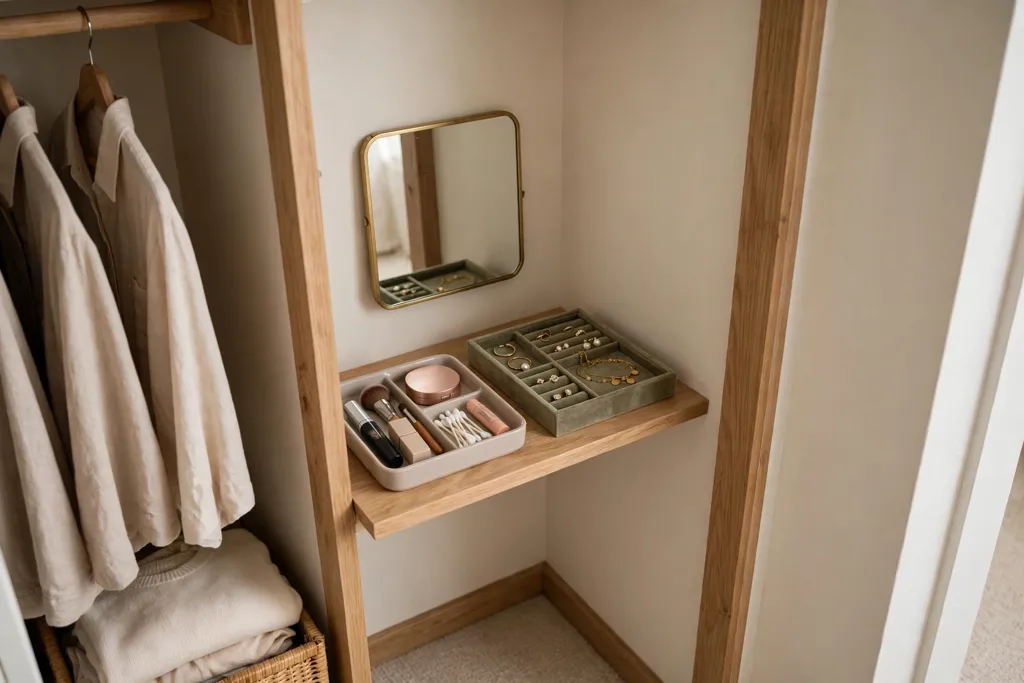
Add a narrow shelf and a small mirror inside the closet corner for a vanity spot that hides behind the closet front when closed. This suits a small bedroom with no dressing table, since the vanity uses space that would otherwise hold one more rail. It also keeps makeup, jewelry, and hair tools in one place, close to the mirror and the clothes.
Fix the shelf at a height that suits sitting on a small stool, and keep only daily items on it, so the shelf stays clear. Add a small tray for jewelry and a hook for a hair tool, and keep cords tidy so they do not tangle with hanging clothes. If the closet corner is dark, add a small battery light above the shelf before you rely on the vanity each morning.
17. Add Battery LED Strip Lighting to the Dark Corner
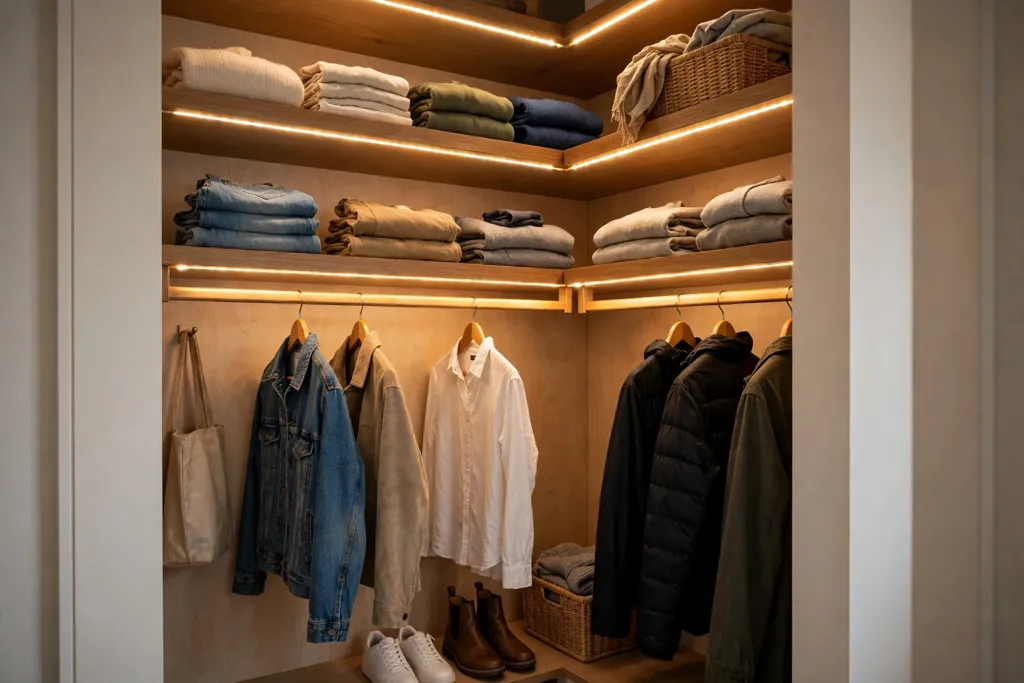
Add battery LED strips along the corner shelves and rails so the deep corner is lit without wiring work. A dark corner hides what you own and makes getting dressed slower, and light is often a better first fix than more shelves. This suits a rental, since battery strips need no electrician and leave no wiring behind.
Run the strip along the front edge of each shelf, so light falls on the clothes rather than on the wall behind them. Choose a warm white light, which suits bedroom clothes and skin tones better than a cold white strip. Keep spare batteries or a charging cable nearby, and check the strip position after a week, since strips can peel in a warm closet.
18. Set a Corner Laundry Sorter and Hamper Station
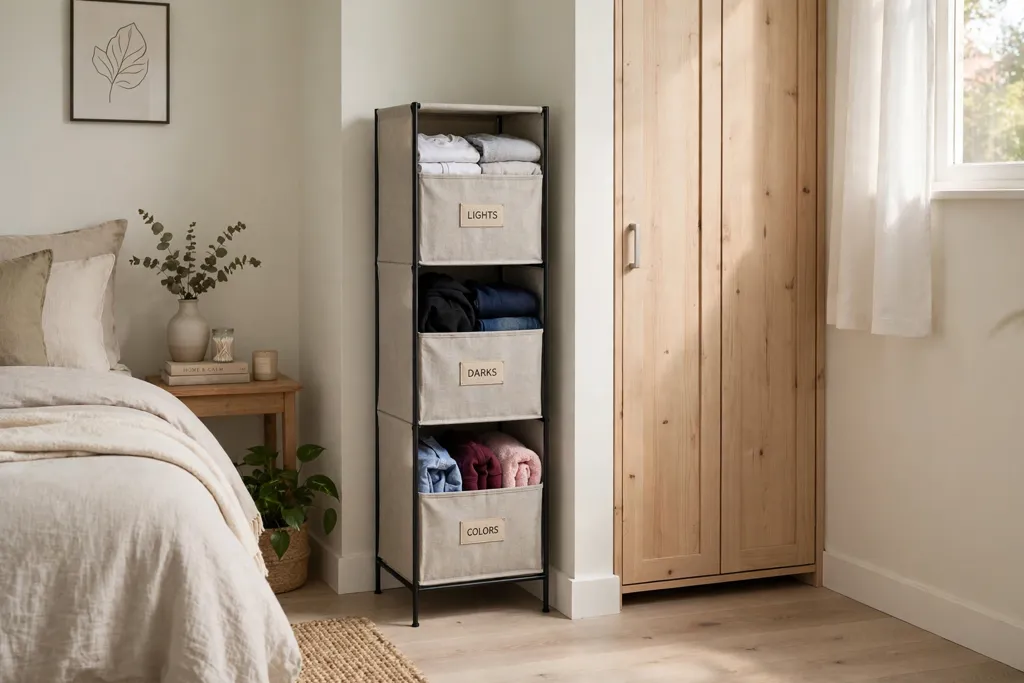
Set a slim laundry sorter in the corner beside the closet, with one section per load type, so dirty clothes stop landing on the bedroom floor. A corner hamper station suits a small bedroom where a laundry basket currently sits in a walkway, and it keeps sorting close to where clothes come off and go back on. It also makes laundry day faster, since loads are already sorted.
Choose a sorter narrow enough to fit the corner without blocking the closet door or curtain. Empty the sorter on laundry day, and wipe the sections now and then, since a hamper corner can collect lint and dust. If floor space is too tight for a sorter, a hanging laundry bag on the inside of the closet door gives a similar result in less space.
19. Use a Renter-Friendly Freestanding Corner Rack System
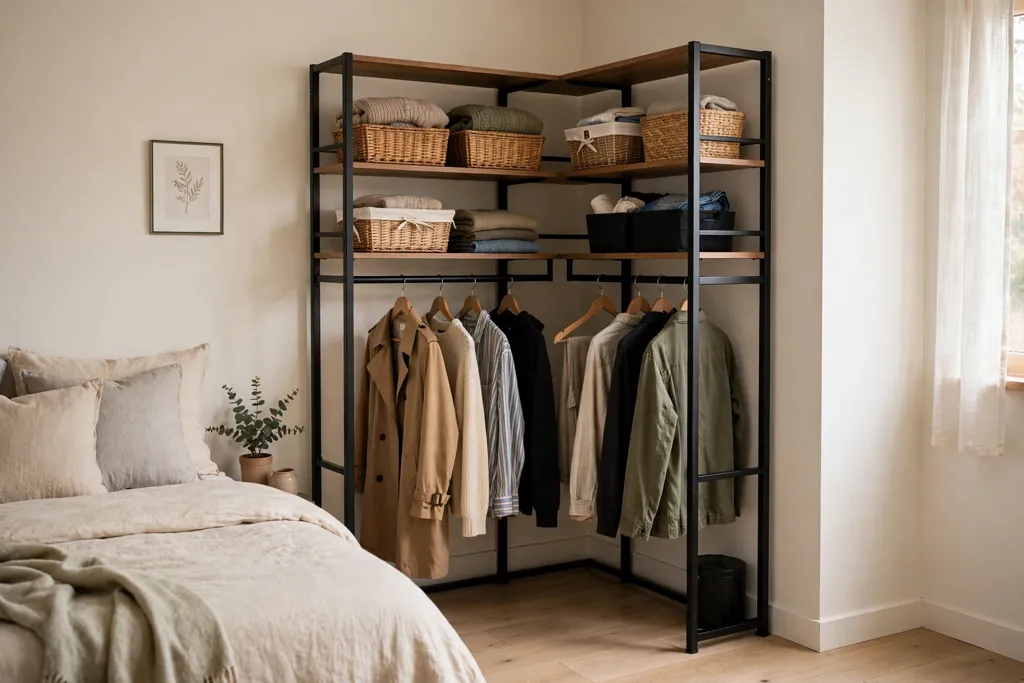
Use a freestanding corner rack system, with rails and shelves that stand on the floor, for a closet corner you cannot build into. Freestanding racks suit a rental, a room with no built-in closet, and a corner you may want to change later, since the whole unit can move. They also let you test a layout before committing to a fitted unit.
Measure the corner width and ceiling height before buying, since freestanding units vary and a unit that is too wide will crowd the bed. Anchor a tall unit to the wall if the maker advises it, especially in a home with children or pets. Keep the unit to one finish and one hanger type, so a freestanding corner reads as furniture rather than as temporary storage.
20. Create a Corner Capsule Wardrobe Zone
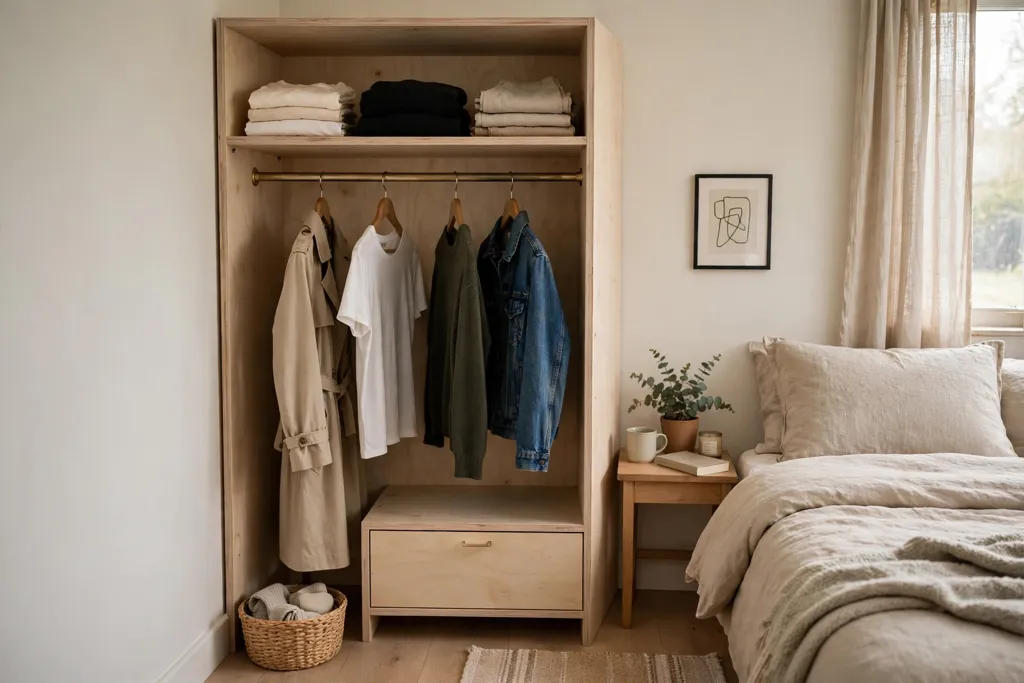
Create a capsule zone in the corner with one rail, one shelf, and one small drawer for the clothes you wear most, and move the rest to another closet or to high storage. A capsule zone suits a small bedroom where a full wardrobe overwhelms the corner, since it forces a clear limit on what lives at hand height. It also makes morning choices faster, since every item in the zone earns its place.
Set a rail limit, such as one rail section for daily clothes, and review the zone each season, moving out items you did not wear. Keep work clothes, daily clothes, and occasion clothes in that order on the rail, so the eye learns where things live. If the capsule fills again, the rail count is a useful signal: if you need more rail, it may be time to pass on clothes you no longer wear.
21. Use Shelf Dividers and Labelled Bins for Folded Corner Clothes
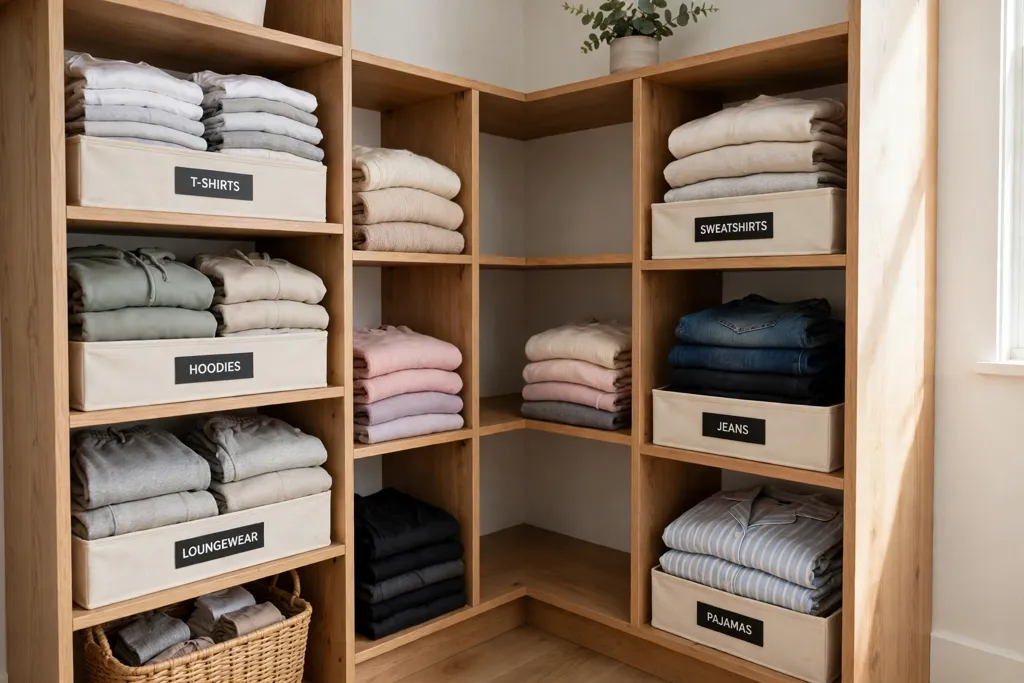
Add shelf dividers and labelled bins to the corner shelves so folded stacks stay upright and separate. Folded clothes slide and collapse without a boundary, and dividers give each stack its own slot, like books on a shelf. Bins suit smaller items, such as scarves, sleepwear, and gym clothes, that do not stack well on an open shelf.
Fold clothes to the same width so stacks line up, and file them in rows rather than tall piles where you can. Keep each stack to a height you can lift with one hand, and leave one slot empty for new items or laundry in progress. Label each bin on the side that faces out, with a short list, such as “scarves and hats,” rather than a single vague word.
22. Pair a Door-Back Organizer With a Slim Rolling Cart
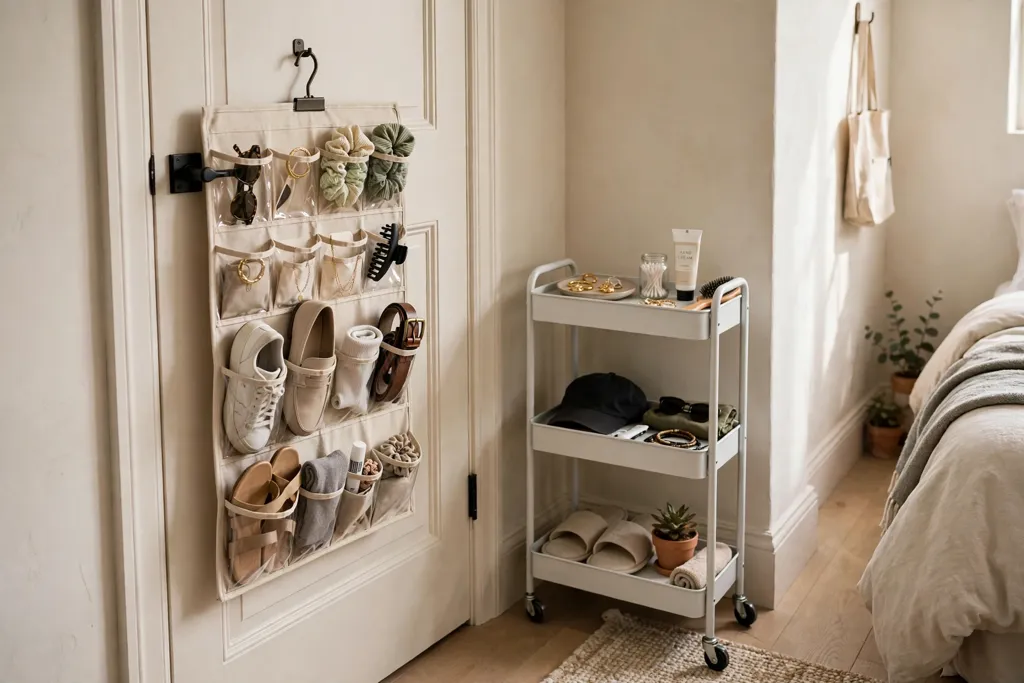
Pair a pocket organizer on the inside of the closet door with a slim rolling cart that tucks into the corner gap. The door organizer holds shoes, accessories, and small items without taking rail or shelf space, while the cart holds items you roll out for dressing and roll back when done. Together, they use two spots that are often wasted: the door back and the narrow gap beside the closet.
Keep heavy items off a hanging organizer, since weight can pull it off the door or stop the door closing fully. Sort pockets by use, such as daily shoes at eye level and occasion pairs higher up. Choose a cart narrow enough to roll clear of the door swing, and keep only daily items on it, so it stays easy to roll and easy to tuck away. For the wider storage picture, see these bedroom storage ideas.
Conclusion
A small bedroom closet corner works best when both walls have a job, daily items sit at hand height, and the deep corner holds items you reach for less often. Start by measuring the corner, then add light, then pick one layout change, such as L-shaped rails, corner shelves, or a curtain front, before adding smaller tools like hooks, bins, and dividers. Save this list to Pinterest for your next closet refresh, and try the idea that fixes the corner problem that bothers you most first.
FAQs
How do I use the deep corner of a small bedroom closet?
Put rarely used items in the deep corner, such as seasonal bins or a shoe turntable, and keep daily clothes on the easy side. Pull-out drawers and a turntable help because they bring deep items forward, so you do not have to reach into a dark corner each morning.
What is the best layout for a corner closet in a small bedroom?
An L-shaped layout usually works best, with hanging on one wall and shelves, drawers, or shoes on the return wall. This uses both walls, keeps one clear job per zone, and leaves the middle of the closet clear for access to the rail.
Can I make a corner closet work in a rental?
Yes. Use a freestanding corner rack, a curtain front, removable hooks, battery LED strips, and bins, all of which leave little or no damage behind. Measure the corner first, and test one removable hook before loading a full row.
Should corner closet doors be hinged, sliding, or a curtain?
Sliding doors or a curtain suit most small bedrooms, since they need no swing space in front of the closet. Hinged doors suit a corner with clear floor in front of it, while mirrored doors add light and a dressing view if the wall can take them.
How do I light a dark closet corner without wiring?
Use battery LED strips along the front edge of each shelf, so light falls on the clothes rather than on the wall. Choose a warm white strip, keep spare batteries nearby, and check the strip position after a week, since strips can peel in a warm closet.
How do I stop a corner closet from looking cluttered?
Use one finish for rails and shelves, slim matching hangers, and closed bins for small items, so the corner reads as planned. Keep daily clothes in a consistent order, leave one shelf slot empty, and review the corner each season to move out items you did not wear.