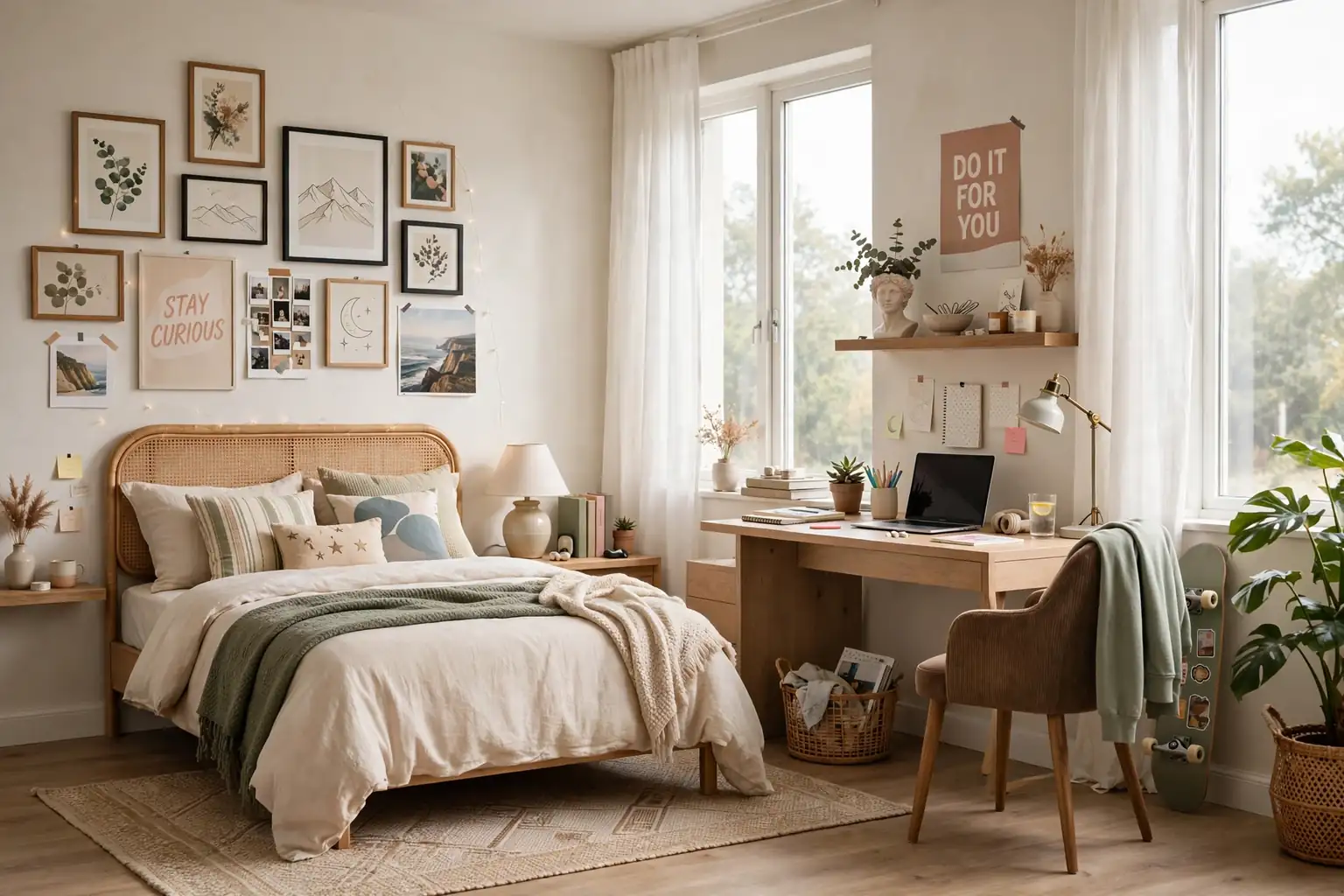
A teens bedroom has to do a lot of jobs at once. It is a sleep space, a study spot, a place to hang out with friends, and a room that shows off hobbies and taste. A revamp does not need a full remodel. Small, focused changes to one wall, the bed, the desk, or a corner can shift how the whole room feels and works day to day. These 22 ideas to revamp a teens bedroom cover walls, bedding, study zones, storage, lighting, and unused corners. Start with the change that fixes the biggest daily annoyance, then add one idea at a time.
Key Takeaways
- Start with one clear job per zone: sleep at the bed, study at the desk, and relaxing in a corner, so each change has a purpose.
- Use changeable layers first, such as bedding, peel-and-stick wallpaper, and clip displays, so the room can keep up as tastes change.
- Repeat one main color in three spots, such as bedding, a cushion, and a piece of art, so the room looks planned rather than random.
- Give every item a home, with bins, shelves, and hooks, since a tidy room is easier to study and relax in.
- Layer light with a ceiling light, a desk lamp, and a soft evening light, rather than relying on one bright overhead bulb.
- Check house rules before anything fixed to a wall, and choose removable options for rented rooms or shared homes.
1. Peel-and-Stick Accent Wall Behind the Bed
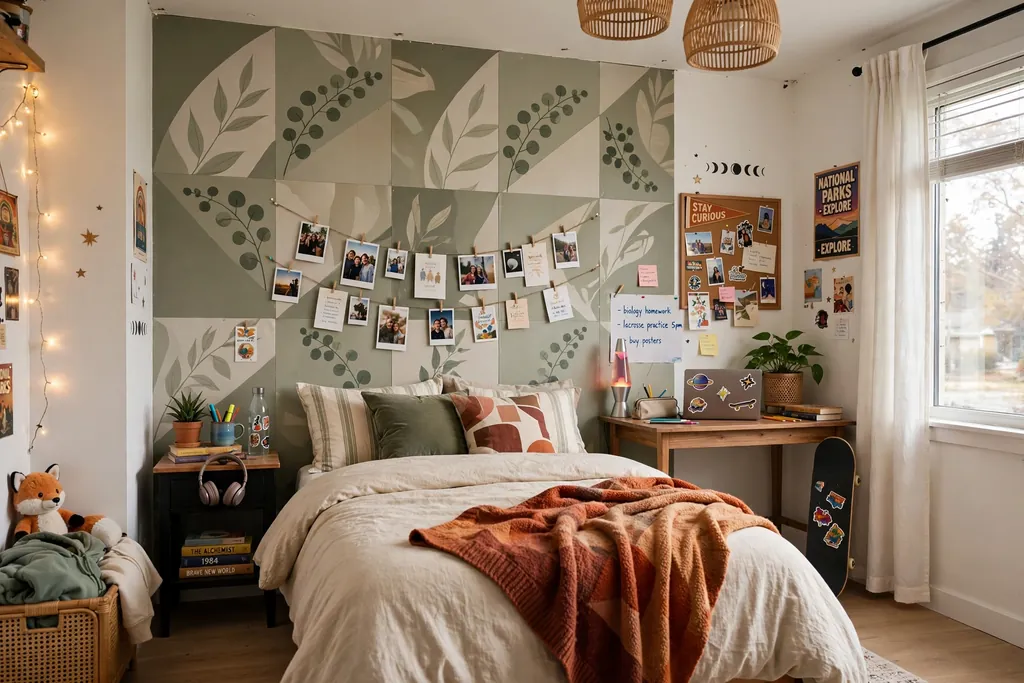
Cover the wall behind the bed with peel-and-stick wallpaper for a fast focal point with no paint and no lasting damage. One patterned or colored wall is enough in most teen rooms, since covering every wall can make a small space feel closed in. Measure the wall first, order a little extra for pattern matching, and start at a top corner, smoothing down slowly to push out air bubbles.
Test a small piece first, especially on textured or freshly painted walls, and keep bedding mostly plain on this wall so the pattern stays the main event. Choose a pattern that links to the bedding color, such as a soft stripe with a plain duvet, so the bed and wall read as one plan. If the paper starts to lift near a humid window wall, choose a drier wall instead.
2. Gallery Wall With Posters in Matching Frames
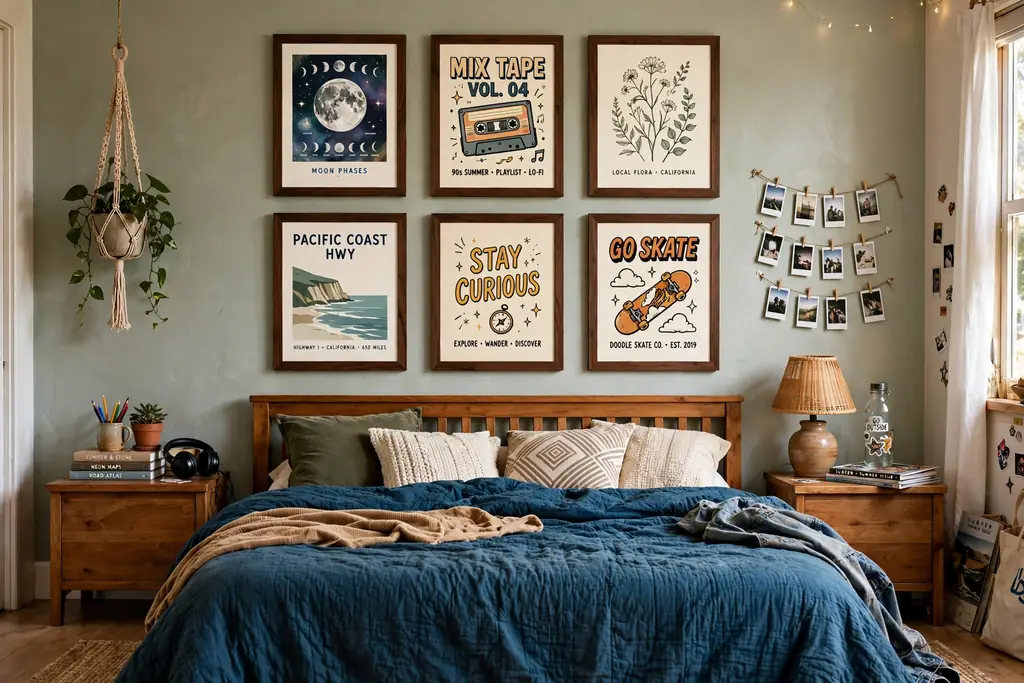
Hang a gallery wall of posters, prints, and photos in matching frames above the bed or desk for a display that looks neat even when the subjects vary. Matching frames calm a busy mix of music posters, art prints, and photos, and a tight layout reads as one display rather than scattered pieces. Lay the frames on the floor first, measure the full block, and mark the wall with painter tape before you hang anything.
Keep the gallery to one wall or one stretch of wall so the room still feels calm at night. Leave a small gap for one new piece later, rather than filling the wall at once, so the display can grow with new interests. For more on sizing and hanging art over a bed, see these bedroom wall art ideas. Use fixings rated for the frame weight, and keep heavy frames off walls above a bed in a room where safety is a concern.
3. Loft Bed With a Study Zone Underneath
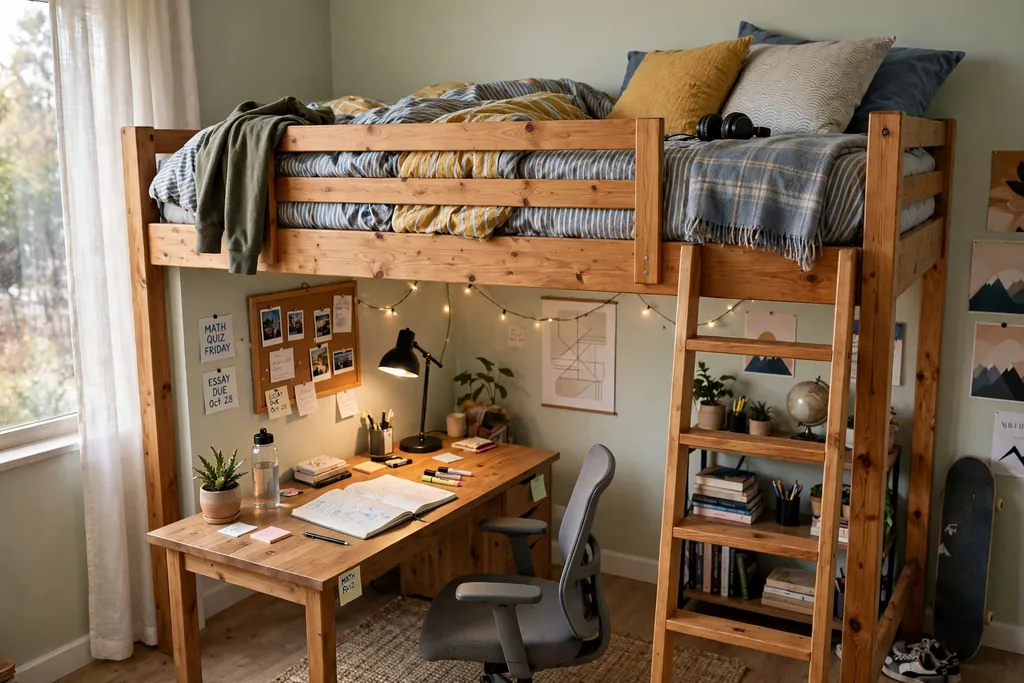
Raise the bed on a loft frame and place a desk, a chair, and a small shelf underneath to free up floor space in a small room. This works best when the ceiling is high enough to sit up in bed without hitting the ceiling, so measure sitting height before you buy. A loft bed turns one footprint into two zones, sleep above and study below, which suits a teen who needs both in one room.
Keep the desk zone lit with a task lamp and a small shelf for books, since the area under a loft bed can feel dark. Add a guard rail and a sturdy ladder, and keep the area under the bed clear of clutter so the desk stays usable. If a full loft feels too high, a mid sleeper with storage drawers below gives some of the same benefit with less height.
4. Reading Nook in an Unused Corner
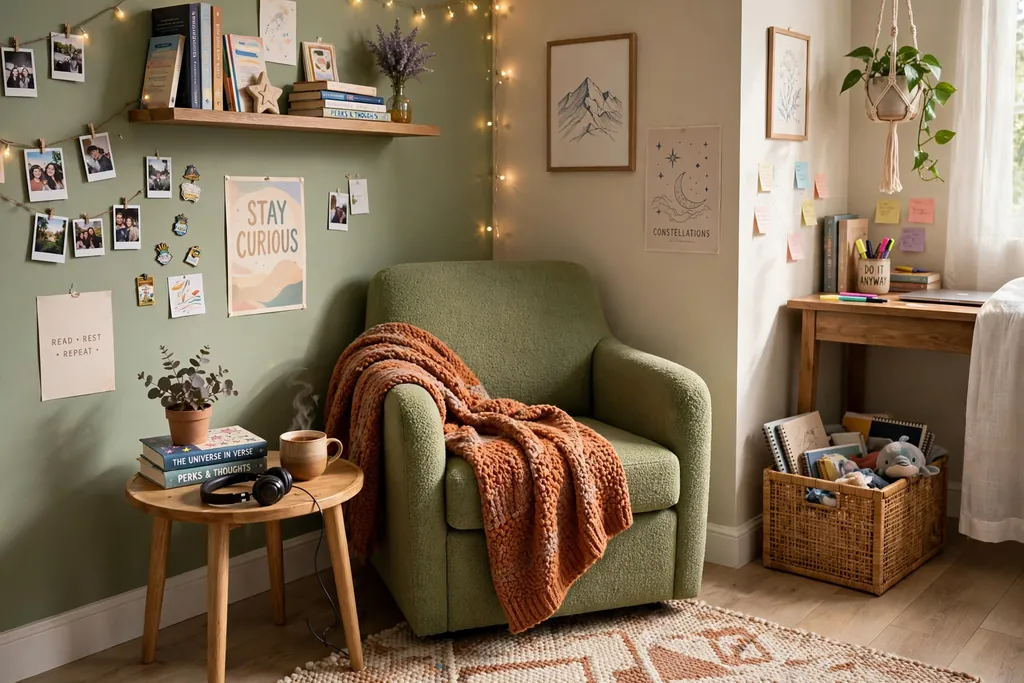
Turn an unused corner into a reading nook with a floor cushion or a small armchair, a soft throw, and a small side table for a book and a drink. A defined corner gives a teen a place to read, listen to music, or talk with a friend without sitting on the bed all day. Place the chair near a window or a lamp, since good light makes the corner inviting in the evening as well as in daylight.
Keep the nook simple: one seat, one light, and one small surface, so it does not become a dumping ground for clothes and bags. Add a small basket beside the chair for current books, so the corner stays tidy between uses. If floor space is tight, a thick floor cushion and a wall mounted light can make a nook with almost no furniture at all.
5. Vanity Station for Getting Ready
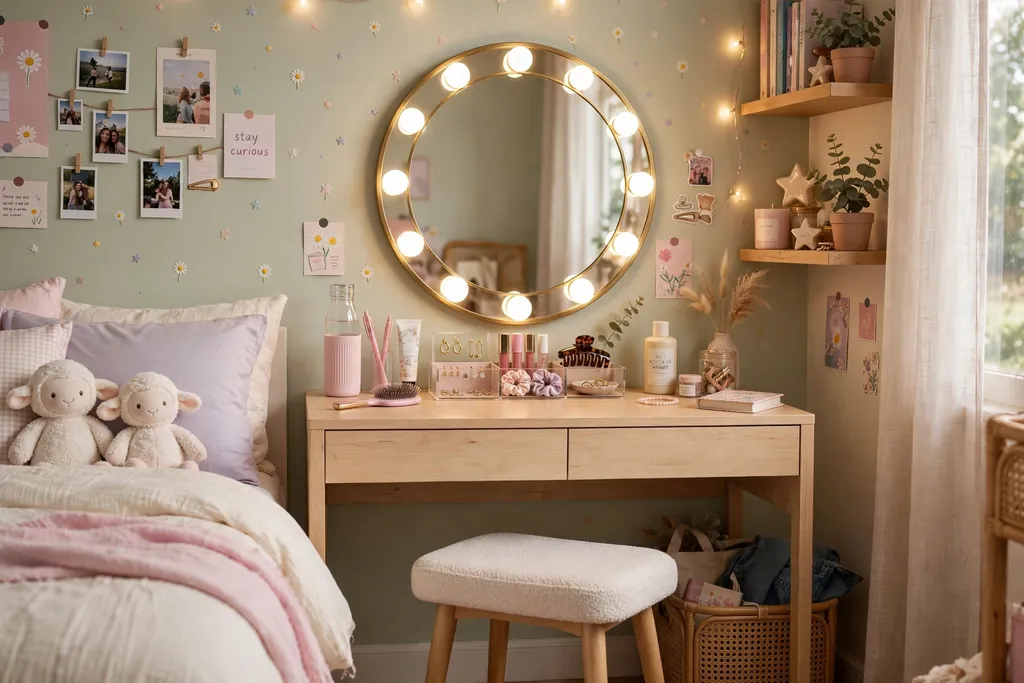
Set up a small vanity station with a mirror, a stool, and a tray or a small organizer for daily items, so getting ready has its own spot instead of spreading across the desk. A wall mounted mirror above a narrow table works in a small room, and a tray keeps small items together and easy to wipe clean. Place the station near daylight or a bright lamp, since good light matters more than a large mirror.
Keep only daily items on the surface, and store the rest in a drawer or a box nearby, so the station stays clear. A small stool that slides under the table saves floor space when the station is not in use. This also frees the study desk for homework, since getting ready and studying no longer compete for the same surface.
6. Pegboard Study Desk Zone
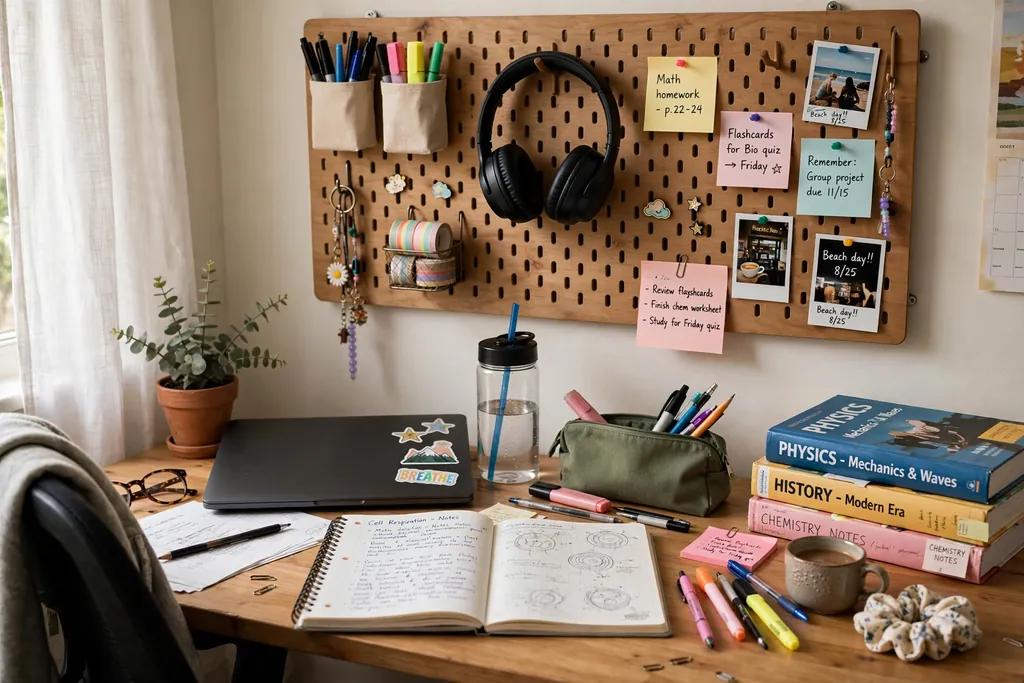
Mount a pegboard above the study desk for pens, notes, headphones, and small supplies, so the desk surface stays clear for homework. Pegboards suit a teen room because items can move as needs change, with hooks, small shelves, and cups that shift without new holes. Group items by use, such as writing tools on one side and notes and reminders on the other, so the board reads as a plan rather than a cluttered wall.
Keep the heaviest items low on the board, and check the fixings for the wall type before loading it. Leave one empty section for new notes or a timetable, since a full board is hard to use. Pair the pegboard with a desk lamp and a chair at the right height, so the whole desk zone works as one study spot rather than a collection of separate pieces.
7. Closet Refresh With Open Shelves and Bins
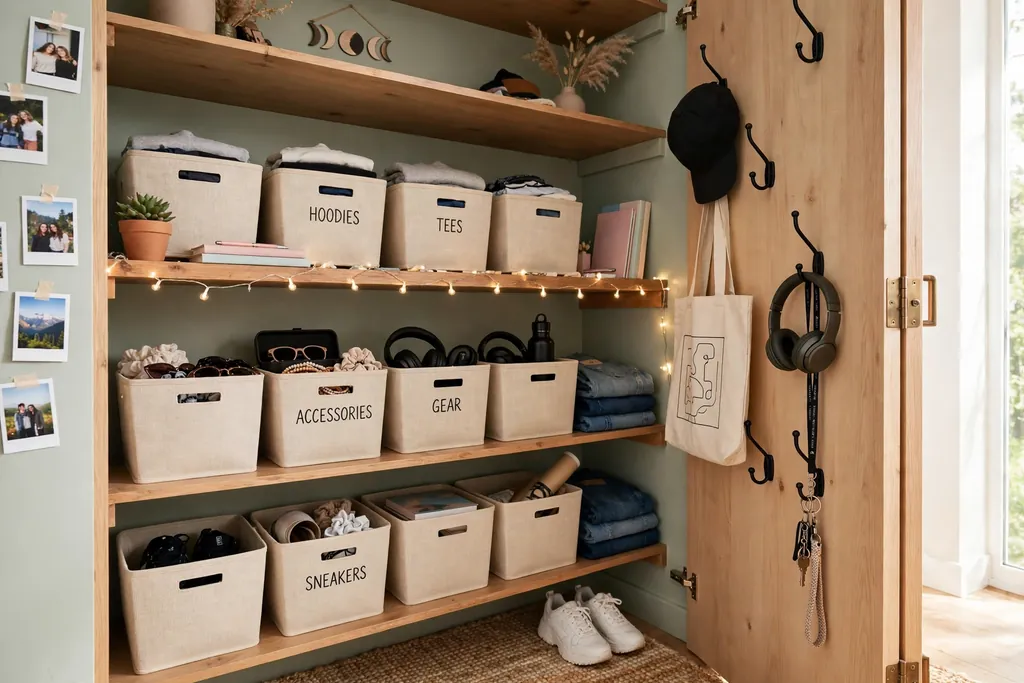
Refresh the closet with open shelves, matching bins, and hooks on the inside of the door, so clothes and gear are easy to find and put away. Open shelves suit folded clothes, shoes, and bags, while labeled bins hide smaller items such as chargers, belts, and sports gear. Measure shelf heights around the clothes that are actually stored there, rather than copying a standard layout that wastes space.
Put everyday clothes at eye level and seasonal or rarely used items higher up, so the closet works on a busy school morning. Add one hook per bag or jacket, and keep the floor of the closet clear so shoes do not pile up by the door. A small step stool helps reach high shelves safely, and a weekly five minute tidy keeps the new system working.
8. Layered Bedding Swap in a New Palette
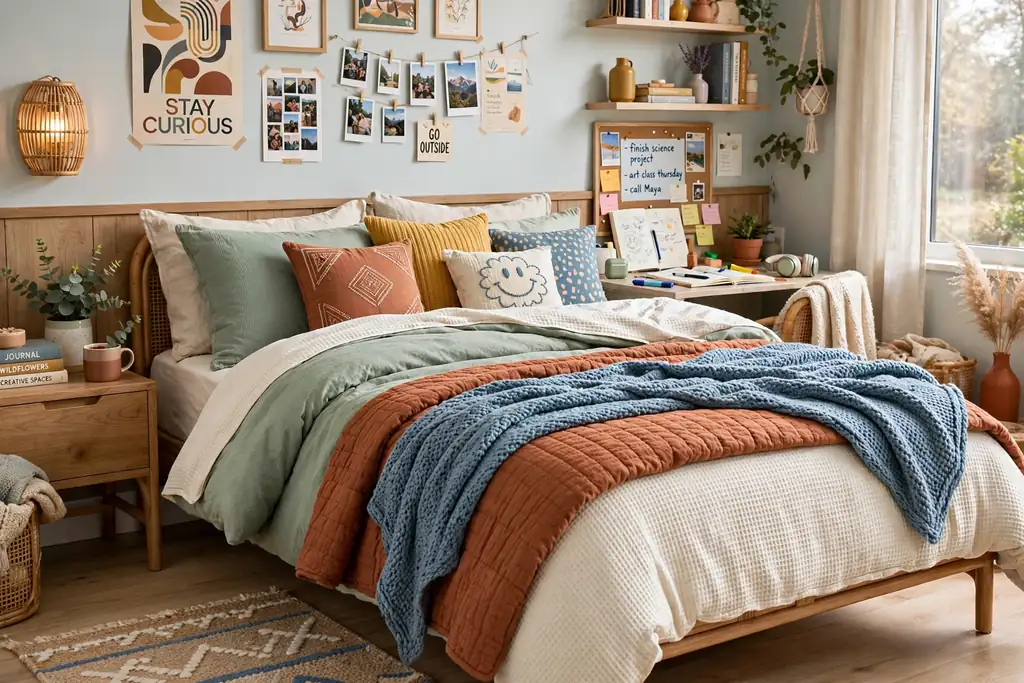
Swap the bedding for a layered set in a new palette, with a plain duvet, a folded throw, and two or three cushions, for a room refresh that needs no paint or new furniture. Bedding covers a large area, so a color change there shifts the whole room fast. Choose a main color, a neutral base, and one accent, and repeat the accent in a cushion and a small piece of art so the bed links to the rest of the room.
Pick washable fabrics, since teen bedding gets daily use, and keep one spare duvet cover so the bed can be remade on wash day without a gap. Layer a light throw for warm nights and a heavier one for cold nights, rather than buying a whole new set for each season. If bright color feels risky, start with bedding in a muted tone and add one brighter cushion that can be swapped later.
9. Layered Lighting for Day and Evening
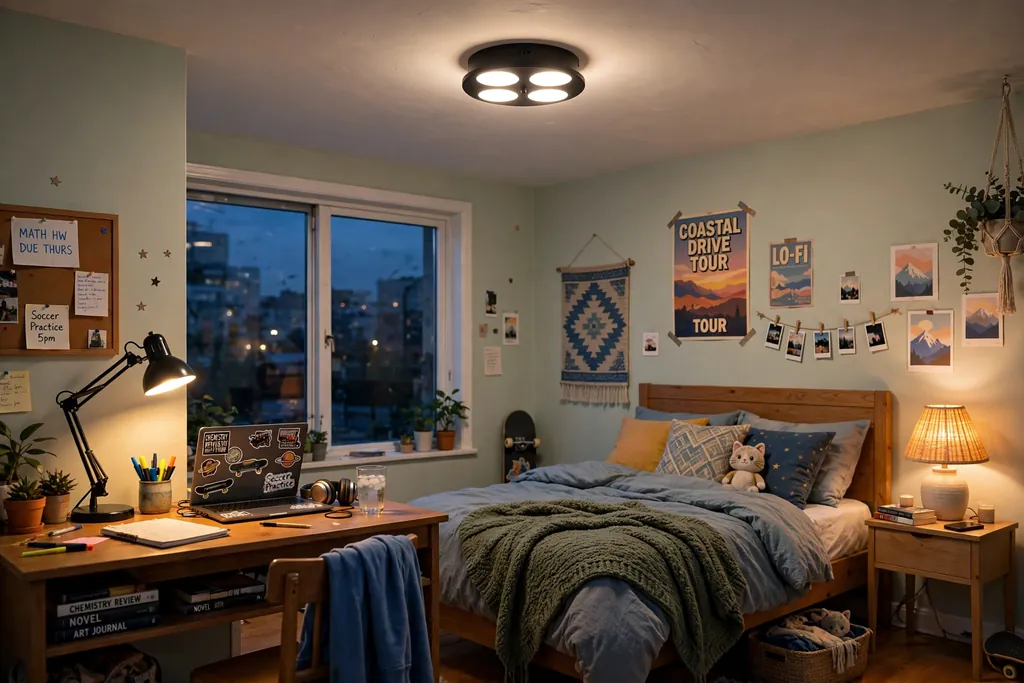
Replace reliance on one overhead light with three layers: a ceiling light for general use, a desk lamp for study, and a soft lamp or string lights for evening relaxing. Layered light lets a teen switch the mood of the room without changing any furniture, with bright light for homework and softer light for winding down. Use warm white bulbs in the evening lamps, since cool bright light late at night can make it harder to relax.
Put the desk lamp on the opposite side from the writing hand, so shadows do not fall across homework, and keep cords tidy with clips along the wall or desk edge. A dimmer or a lamp with two brightness settings gives more control than a single bright bulb. Check that string lights are rated for indoor use, keep them clear of bedding and curtains, and plug them into a switched socket so they can be turned off easily.
10. Neon Style Word Sign Above the Bed
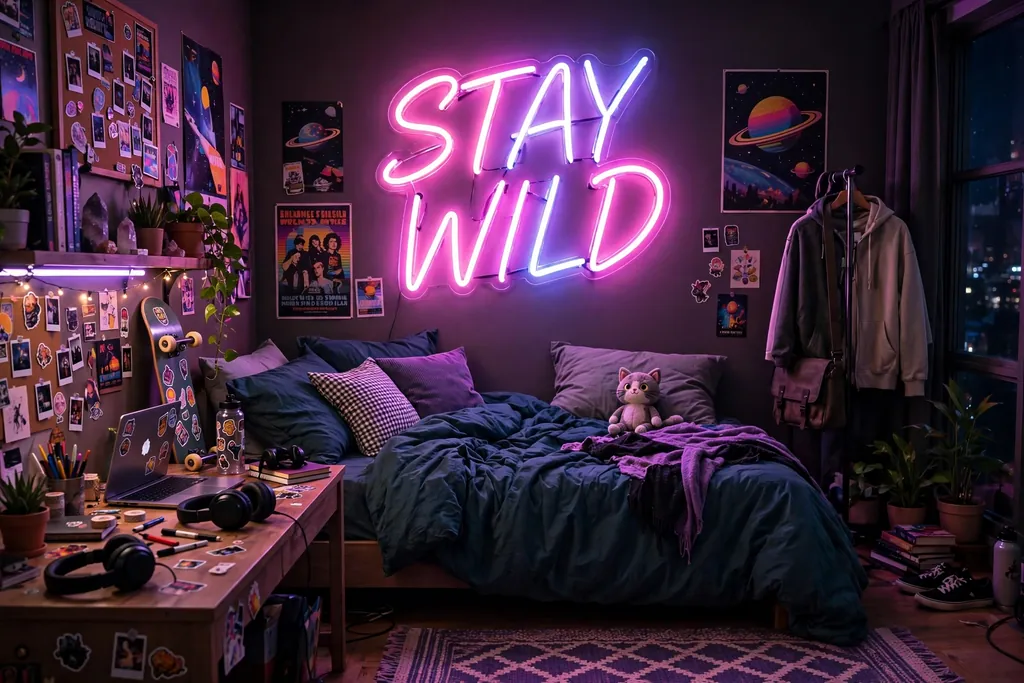
Hang a neon style word sign above the bed or on the wall seen from the door for a personal glow that suits a teen room. Choose a short word or a simple shape, and keep the color warm white or a soft tone for a bedroom, since harsh colors can feel jarring at night. The sign works best on a plain wall with plain bedding nearby, so the glow stays the main feature.
Mount the sign with the fixings supplied, keep the cord tidy with clips, and plug it into a switched socket so it can be turned off at bedtime. Pair it with one matching cushion color if you want the sign to link to the bed, but keep the rest of the wall quiet. If a plug in sign is not practical, a battery sign with a timer gives a similar effect with no cord across the wall.
11. Clip Display for Rotating Posters and Photos
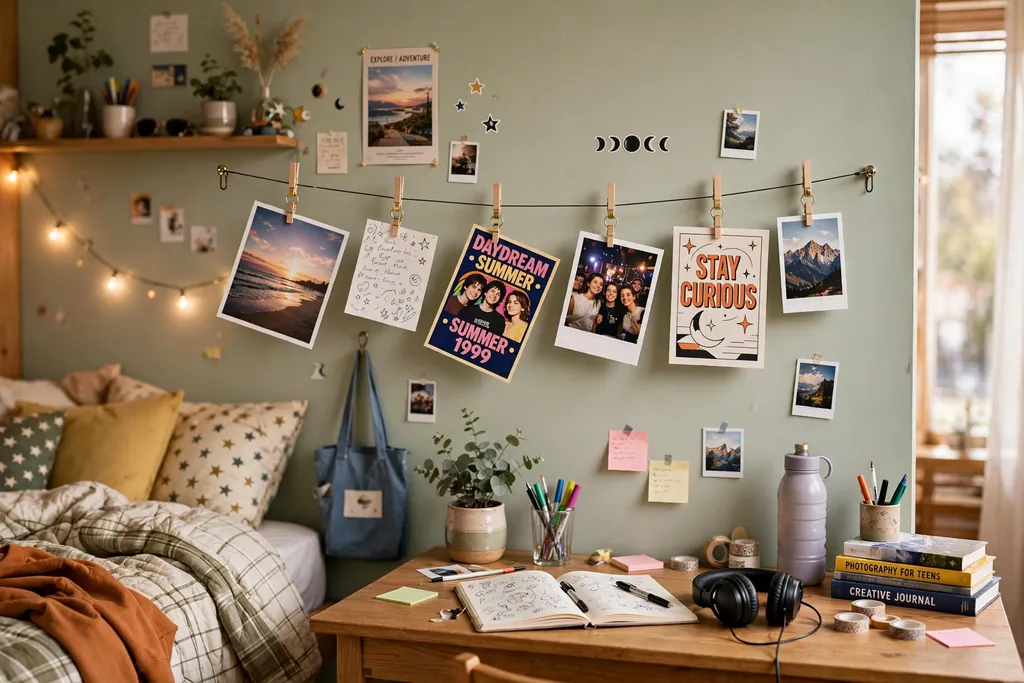
Fit a picture ledge, a wire with clips, or a rail with clips for posters and photos that can be swapped without new holes in the wall. A clip display suits a teen room because tastes change fast, and a print can be replaced in minutes when a new band, show, or hobby takes over. Hang the display at a height that is easy to reach, and keep it to one wall so the room does not feel covered in paper.
Rotate the display every few weeks, and store older prints flat in a folder so favorites are kept rather than torn. Mix one larger print with smaller photos for balance, and keep frames off this display so swaps stay quick. This also protects walls in rented rooms, since clips and ledges need fewer fixings than a full gallery of framed pieces.
12. Floor Cushion Hangout Corner
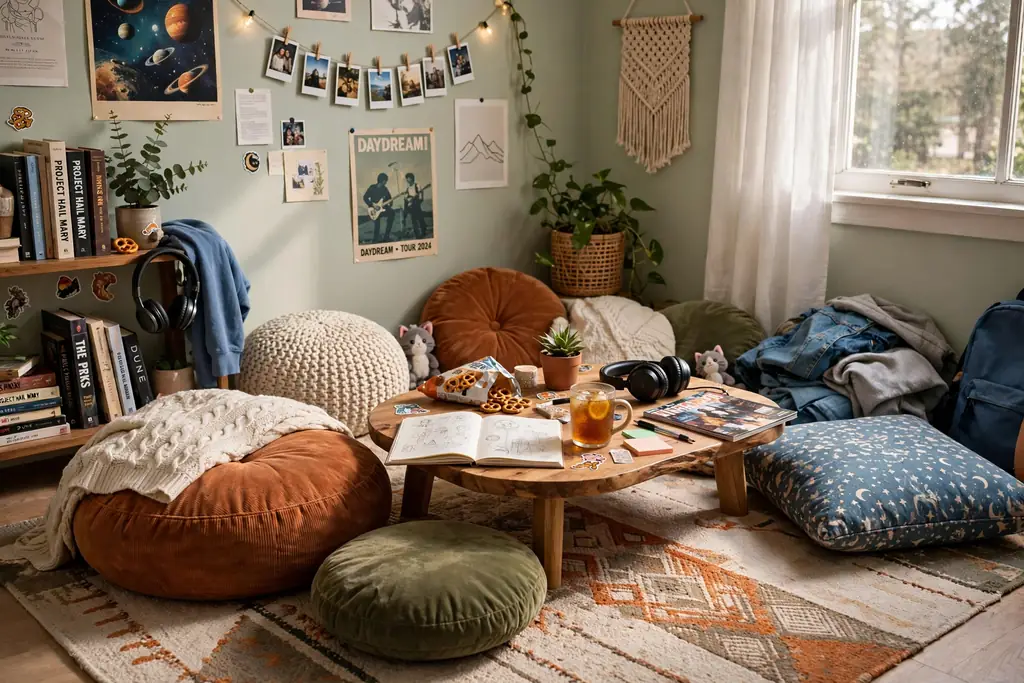
Make a hangout corner with large floor cushions, a low table, and a small rug, so friends have a place to sit that is not the bed. Floor seating suits a teen room because it can be stacked or moved when the room needs to be cleared for study or sleep. Choose cushion covers that wash well, and a rug large enough for the cushions to sit on without sliding on a hard floor.
Keep the corner near a wall with a shelf or a small speaker, so snacks, phones, and music have a home during a hangout. Stack the cushions against the wall when they are not in use, so the floor stays clear for daily routines. A low table with a wipe clean top handles drinks better than a soft surface, and a small bin nearby keeps the corner tidy after friends leave.
13. Music Corner With a Speaker Shelf
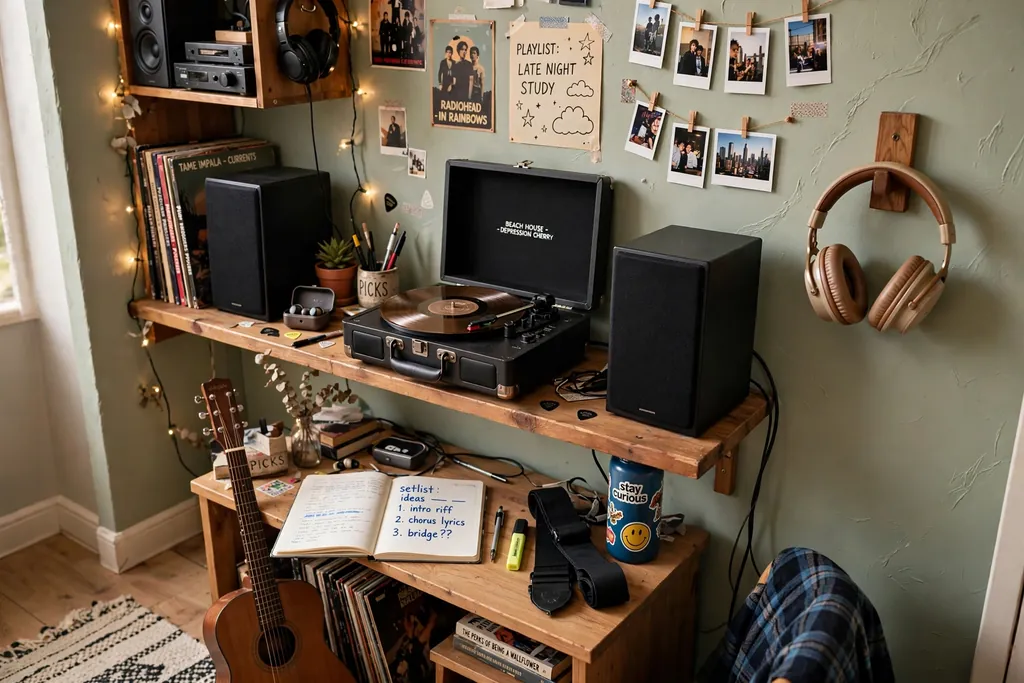
Set aside a music corner with a sturdy shelf for a speaker, headphones on a hook, and space for records, instruments, or a small collection. A defined music spot keeps gear off the desk and the bed, and a hook for headphones stops them from tangling with chargers. Place the shelf near a socket, and keep cords in a small tray or clipped along the shelf edge so they do not trail across the floor.
Keep the collection to the items in regular use, and store the rest in a box on a closet shelf, so the corner stays a listening spot rather than a storage pile. A small plant or a framed print beside the shelf links the corner to the rest of the room. If the room is shared or noise matters, add a headphone stand and a small rug under the chair to soften sound.
14. Hobby Display Shelves for Collections
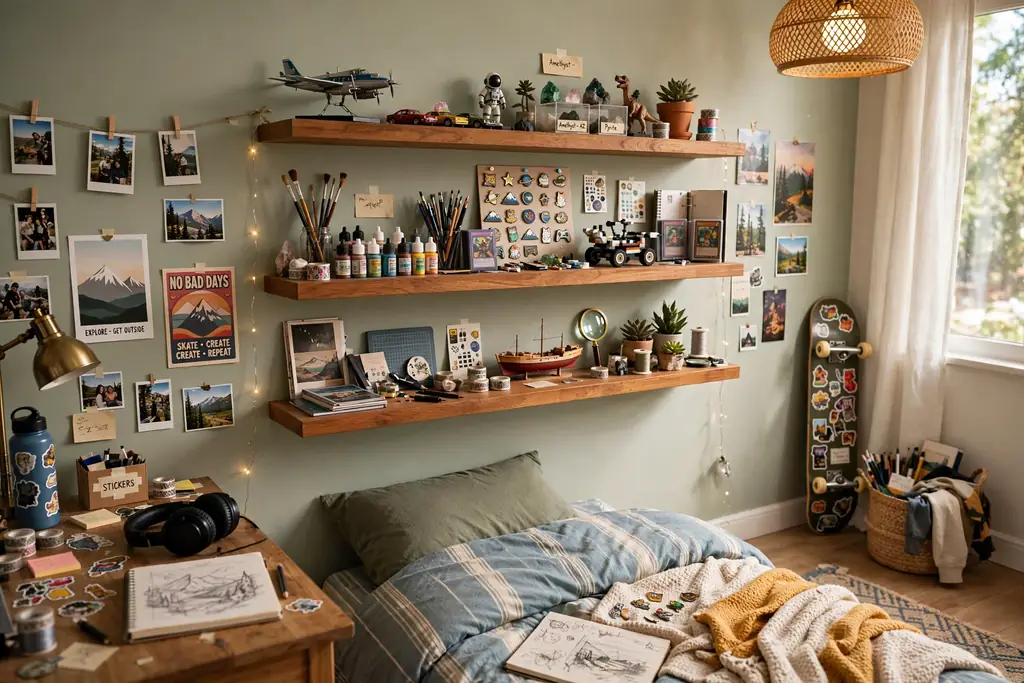
Add two or three floating shelves for a hobby collection, such as models, books, sports items, or craft pieces, so the collection is shown rather than boxed away. Shelves suit a teen room because they use wall space that would otherwise stay empty, and they free up desk and floor space. Space the shelves to fit the tallest item, and leave one shelf partly empty so new pieces have a home.
Group items by type or color, and put heavier items low, with lighter items higher up. Use shelf brackets rated for the weight, and keep shelves out of the main walkway so nothing gets knocked off. Dust the shelves with a dry cloth on a regular cycle, since displayed items show dust faster than items in a closed closet.
15. DIY Headboard From a Painted Arch or Slats
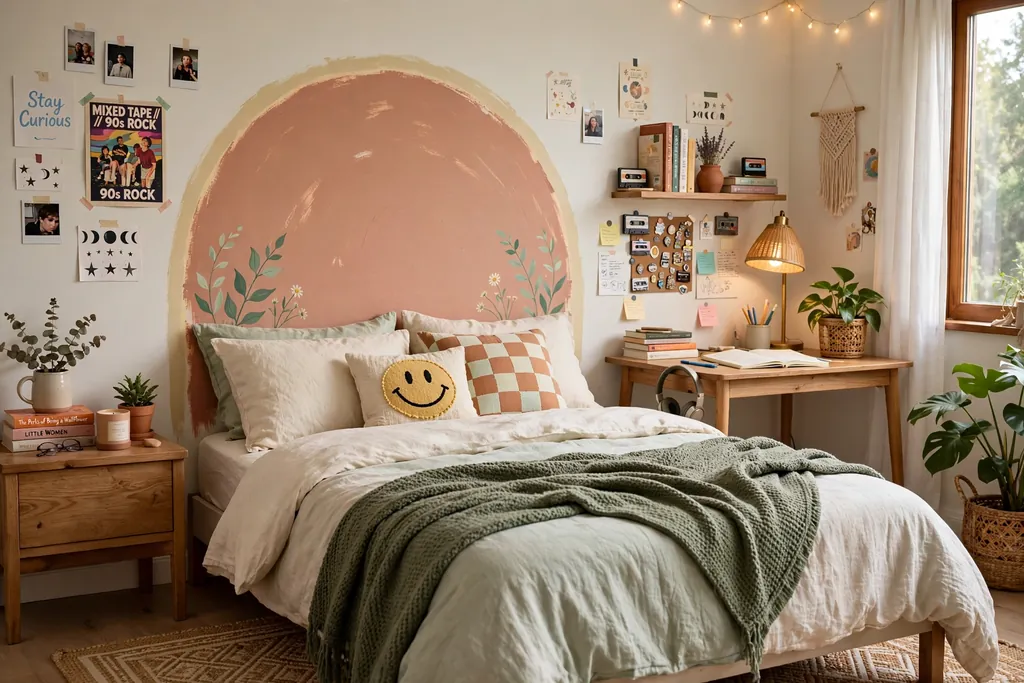
Give the bed a focal point with a do it yourself headboard, such as a painted arch on the wall, a row of wood slats, or an upholstered panel. A painted arch suits a rented room if the paint is approved, while slats or a panel can be removed without wall damage. Measure the bed width first, and center the headboard on the bed, so it frames the pillows rather than floating off to one side.
Keep bedding plain when the headboard is patterned or textured, so the bed does not look busy. A slat headboard in pale wood pairs with most bedding colors, while a fabric panel adds softness for reading in bed. Check that any wall mounted panel is fixed securely, and keep it clear of lamps and cords so nothing gets caught behind it.
16. Under Bed Storage Drawers and Rolling Bins
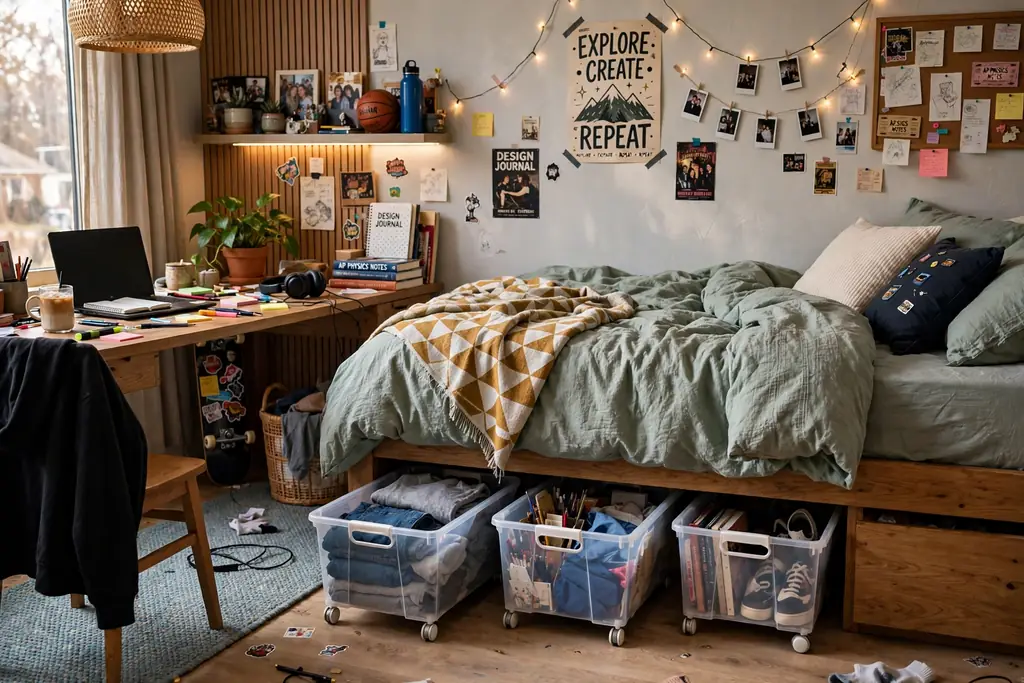
Use the space under the bed with shallow drawers or rolling bins for out of season clothes, sports gear, and spare bedding. Under bed storage suits a small teen room because it hides bulky items without taking floor or closet space. Choose bins with lids and wheels, so they slide out easily and keep dust off the contents, and label each bin so nothing has to be pulled out to be identified.
Keep only items that are needed a few times a month under the bed, and keep daily items in the closet or on shelves, so the bins do not need to move every morning. Measure the clearance under the bed before buying, including the height of the wheels, so the bins actually fit. A quick vacuum under the bed when bins are pulled out keeps the area clean.
17. Full Length Mirror and Dressing Corner
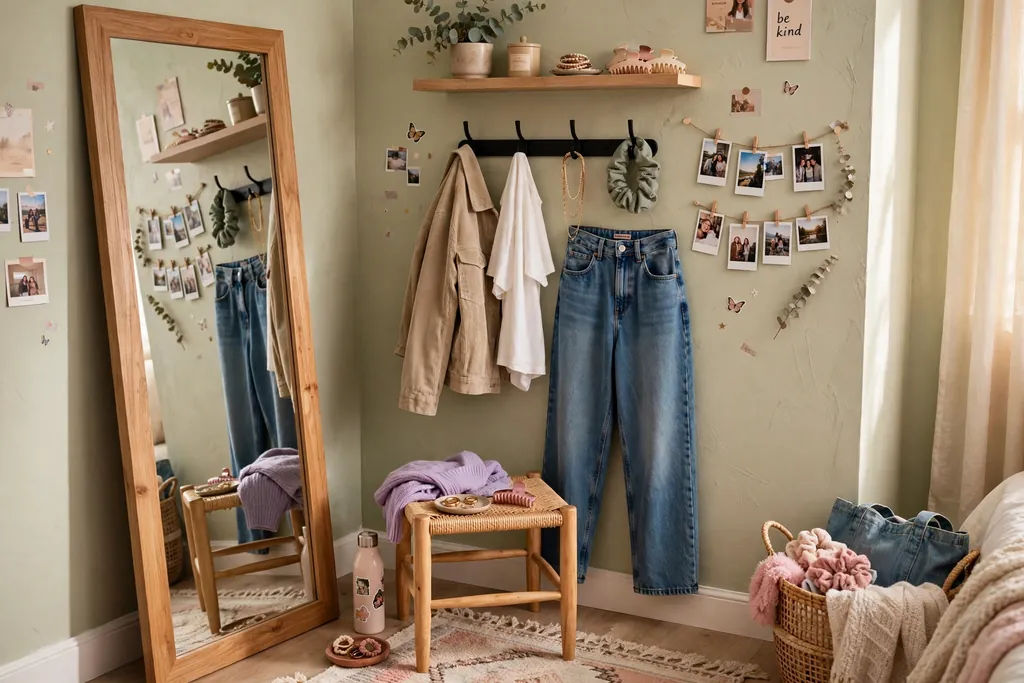
Place a full length mirror in a dressing corner with a small stool, a hook for tomorrow’s outfit, and a tray for daily items. A mirror near daylight helps with getting ready, and a dedicated corner stops clothes from piling on a chair. Lean the mirror securely against the wall with a non slip pad, or fix it to the wall with proper fixings, and keep it out of the main walkway so it does not get knocked.
Hang tomorrow’s outfit on the hook the night before, so mornings start faster and the chair stays clear. Keep the tray to daily items only, such as a watch, keys, and a small bag, and store the rest in the closet. If space is tight, a mirror on the inside of a closet door gives the same function with no extra floor space at all.
18. Inspiration Board for Goals and Ideas
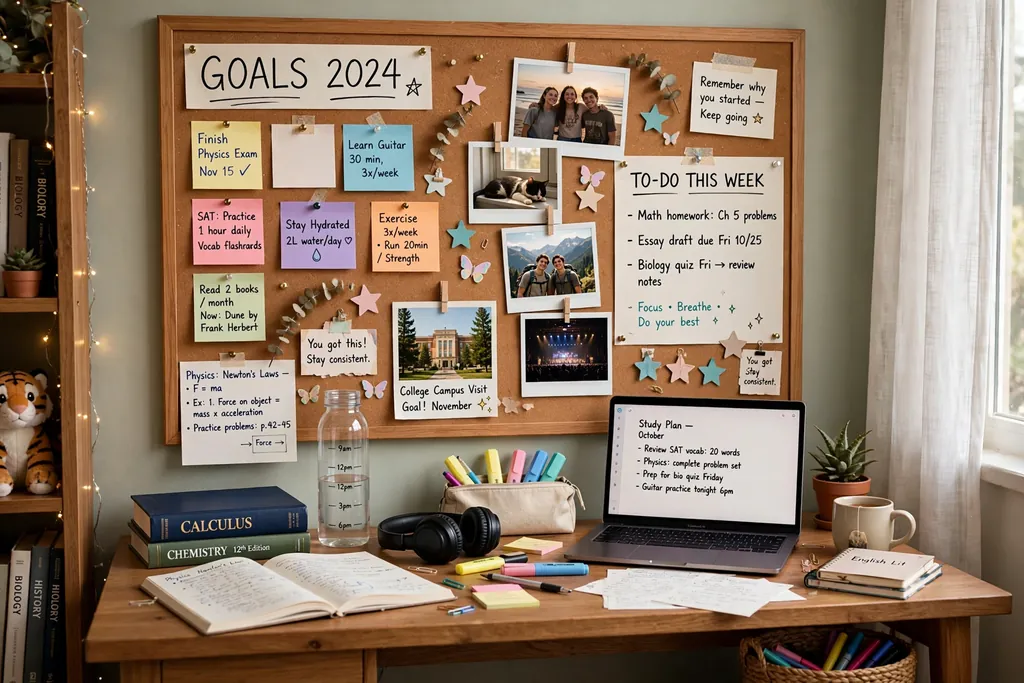
Pin an inspiration board above the desk or beside the bed for goals, timetables, photos, and ideas, so plans stay visible without covering the whole wall. A cork board, a fabric board, or a magnetic board all work, and each lets items move as goals change. Group the board into three parts, such as this week, ideas, and favorites, so it reads as a plan rather than a random pile of paper.
Update the board at the start of each week, and remove items that no longer matter, so it stays useful rather than crowded. Keep the board to one size that fits the wall, and use pins or magnets that hold paper without tearing it. This also gives posters and photos a home that is not the desk, so homework space stays clear.
19. Low Maintenance Plant Corner
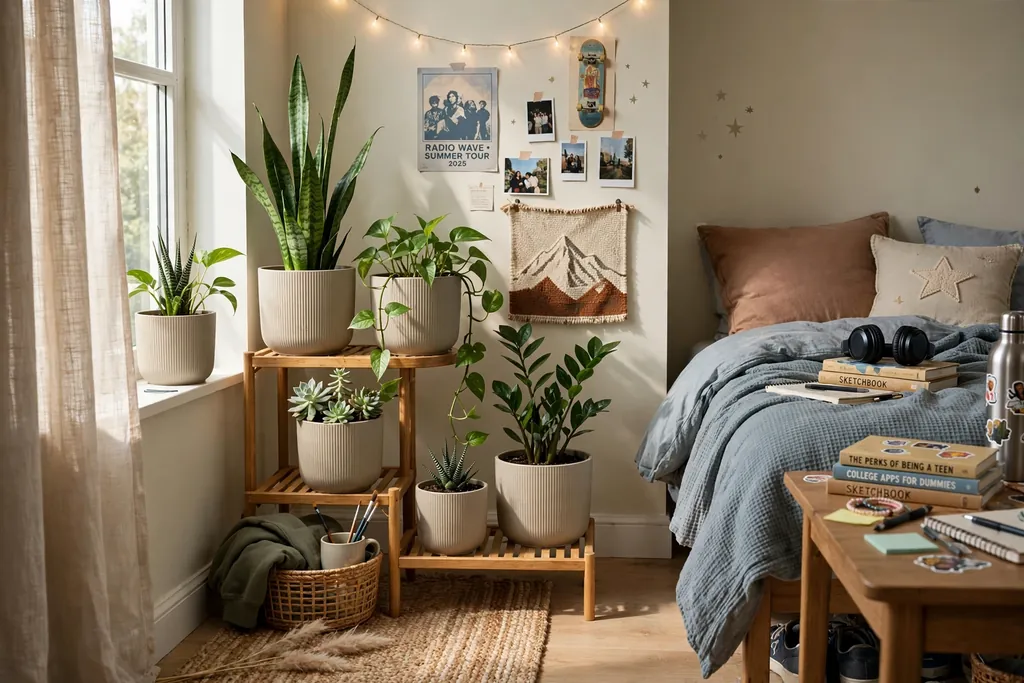
Add a plant corner with two or three low maintenance plants in matching pots, on a stand or a shelf near daylight. Plants suit a teen room because they add green and life with little daily work, and a grouped corner reads as a plan rather than one lonely pot on a windowsill. Choose plants that suit the light in the room, and check watering needs before buying, since overwatering harms more houseplants than dry soil.
Use pots with drainage and a tray underneath, so water does not mark furniture or floors. Group plants at different heights, with one taller plant and two smaller ones, for a natural look. Keep plants out of the path to the bed and desk, and wipe leaves with a damp cloth now and then so they stay healthy and dust free.
20. Rug Layering to Zone the Room
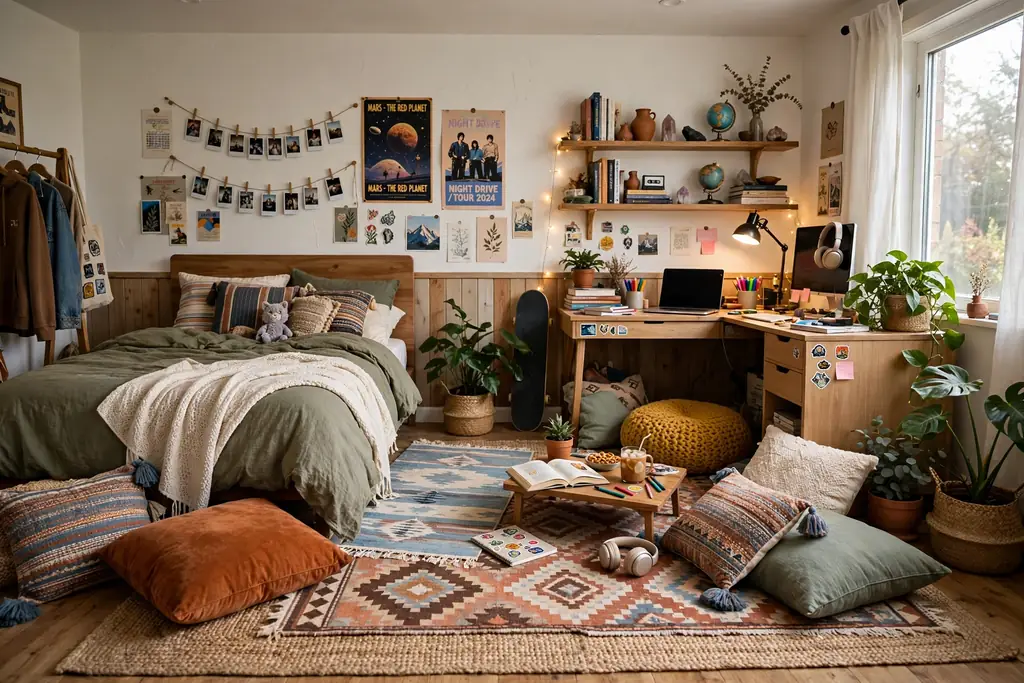
Lay a large rug under the bed or in the hangout corner, with a smaller rug layered on top if the style suits it, to mark zones in a room that serves many purposes. A rug defines where relaxing happens, softens a hard floor, and adds color without paint. Choose a flat, washable rug for a teen room, and use a rug pad or rug tape underneath to stop slipping.
Size the rug so it sits under at least the front legs of the bed or under all the floor cushions in a hangout corner, so it looks placed on purpose rather than floating. Keep the rug color linked to the bedding palette, with one shared tone, so the floor and bed read as one room. Shake or vacuum the rug often, since small rooms show dust fast, and roll it up if the room needs to be cleared for a larger project.
21. Bedside Charging and Nightstand Refresh
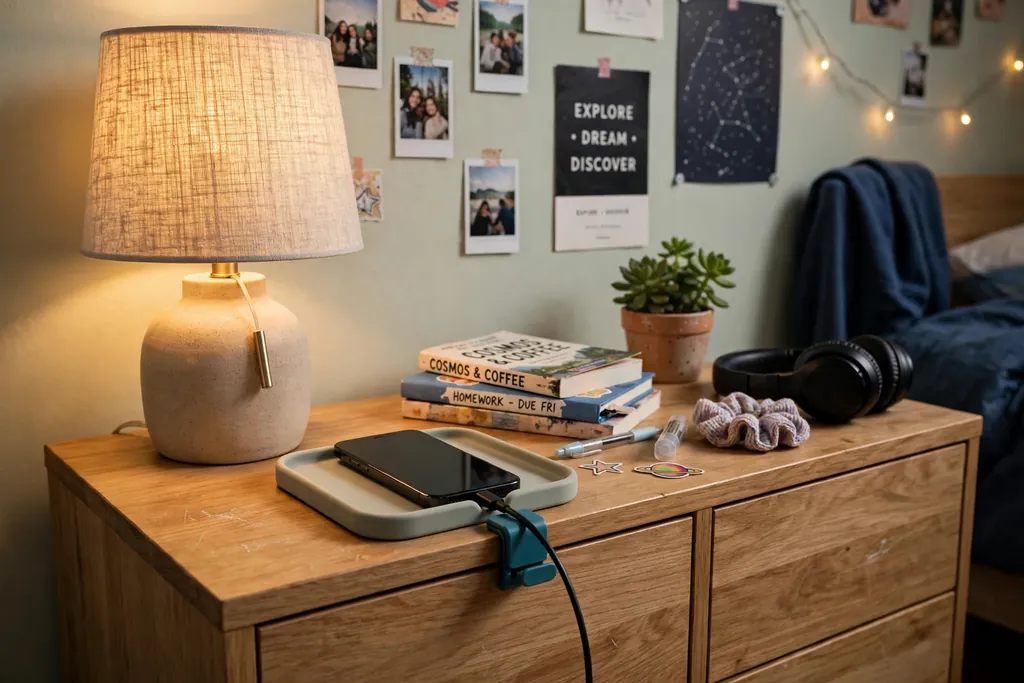
Refresh the nightstand with a small tray for a phone, a charging cable routed through a clip, and a lamp, so the bedside stays tidy and phones charge safely. A dedicated charging spot stops cables from trailing across the floor and stops the nightstand from becoming a pile of books, chargers, and cups. Use a cable clip on the side of the nightstand, and keep the charging area clear of bedding and water.
Keep only three or four items on the nightstand surface: a lamp, a phone tray, and a book or a glass of water, with the rest stored in a drawer. Charge devices on a hard surface, not under bedding, and use the charger made for the device. A small drawer organizer inside the nightstand keeps chargers and small items sorted without adding clutter to the surface.
22. Seasonal Swap System for Bedding and Art
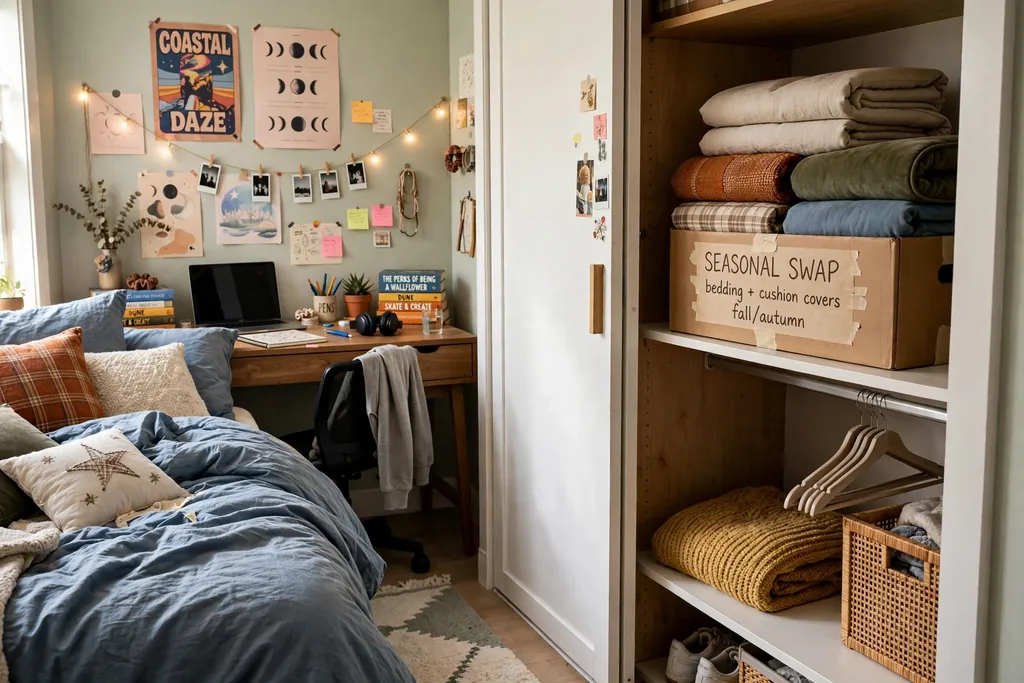
Set up a seasonal swap system with a labeled box for spare bedding, cushion covers, and small art prints, so the room can change with the seasons without new purchases each time. A swap box suits a teen room because tastes and seasons change, and a stored set can feel new when it returns after a few months. Store one spare duvet cover, two cushion covers, and two or three small prints in the box, and keep the box on a closet shelf.
Swap the set at the start of each season, and wash the outgoing set before storing it, so it is ready next time. Keep the main furniture and wall color steady, and change only the soft layers and small art, so the room feels fresh without a full revamp each time. For color ideas that work across seasons, see these dorm room color ideas. Label the box clearly, so the swap takes minutes rather than a full closet search.
Conclusion
A teen bedroom revamp works best when each change has a clear job. Start with the zone that causes the most daily friction, whether that is a cluttered desk, a bed that feels dull, or a corner that goes unused, and fix that zone first. Use changeable layers such as bedding, peel-and-stick wallpaper, and clip displays for the biggest visual change with the least commitment, then add storage and lighting so the new look stays usable week after week.
If you found an idea here that suits your room, save this post on Pinterest so you can find it again when you are ready to start. Pick one idea to try this weekend, whether it is a gallery wall, a reading nook, or a closet refresh, and use it as a starting point for the next change, one corner at a time.
FAQs
How can a teen revamp a bedroom on a small budget?
Start with changeable layers that cost little: bedding, cushion covers, a rug, and a clip display for art. A peel-and-stick accent wall on one wall, a closet tidy with bins you already own, and a reading corner made from floor cushions can shift the room without new furniture. Spend first on the zone that causes the most daily trouble, such as a desk that does not work for homework, and add larger pieces only after the low cost changes are in place.
What is the best way to revamp a small teens bedroom?
Give each zone one job, and use walls and under bed space for storage so the floor stays clear. A loft or mid sleeper bed, floating shelves, a pegboard above the desk, and rolling bins under the bed all add function without taking floor space. Keep the palette to three colors, use a large rug to mark one zone, and keep one wall mostly plain so a small room does not feel crowded.
How do I help a teen choose a bedroom style that lasts?
Let the teen choose the changeable layers, such as bedding, art, and cushions, while keeping furniture and wall color more neutral. That way the room can shift with new interests by swapping soft layers and prints, without repainting or replacing furniture each time. A clip display and a seasonal swap box make those changes easy, and a short trial with one new color in bedding shows whether it still appeals after a few weeks.
How often should a teens bedroom be refreshed?
A small refresh each season works well, with a bedding and art swap from a stored box, while larger changes such as a desk zone or a closet system can last a year or more. Check the room at the start of a school term, since study needs, hobbies, and storage needs change across the year. Remove items that no longer fit the room before adding new ones, so each refresh starts from a tidy base.
Can a teens bedroom work for both study and relaxing?
Yes, if the zones are kept separate. Place the desk near daylight with a task lamp and a pegboard, and place relaxing in a different corner with floor cushions or a reading chair and softer light. Keep study items on the desk and relaxing items in the corner, and use a rug or a lighting change to mark the switch between zones. A tidy desk at the end of homework time also helps the room feel ready for relaxing.
What should I check before hanging anything on a bedroom wall?
Check house rules for rented rooms, check the wall type, and use fixings rated for the weight of the item. Measure the space and mark the layout with painter tape before drilling or nailing, and keep heavy frames and shelves out of the area directly above a bed where safety matters. Test removable options such as peel-and-stick wallpaper, clip displays, and picture ledges first, since they leave less damage if the layout changes later.