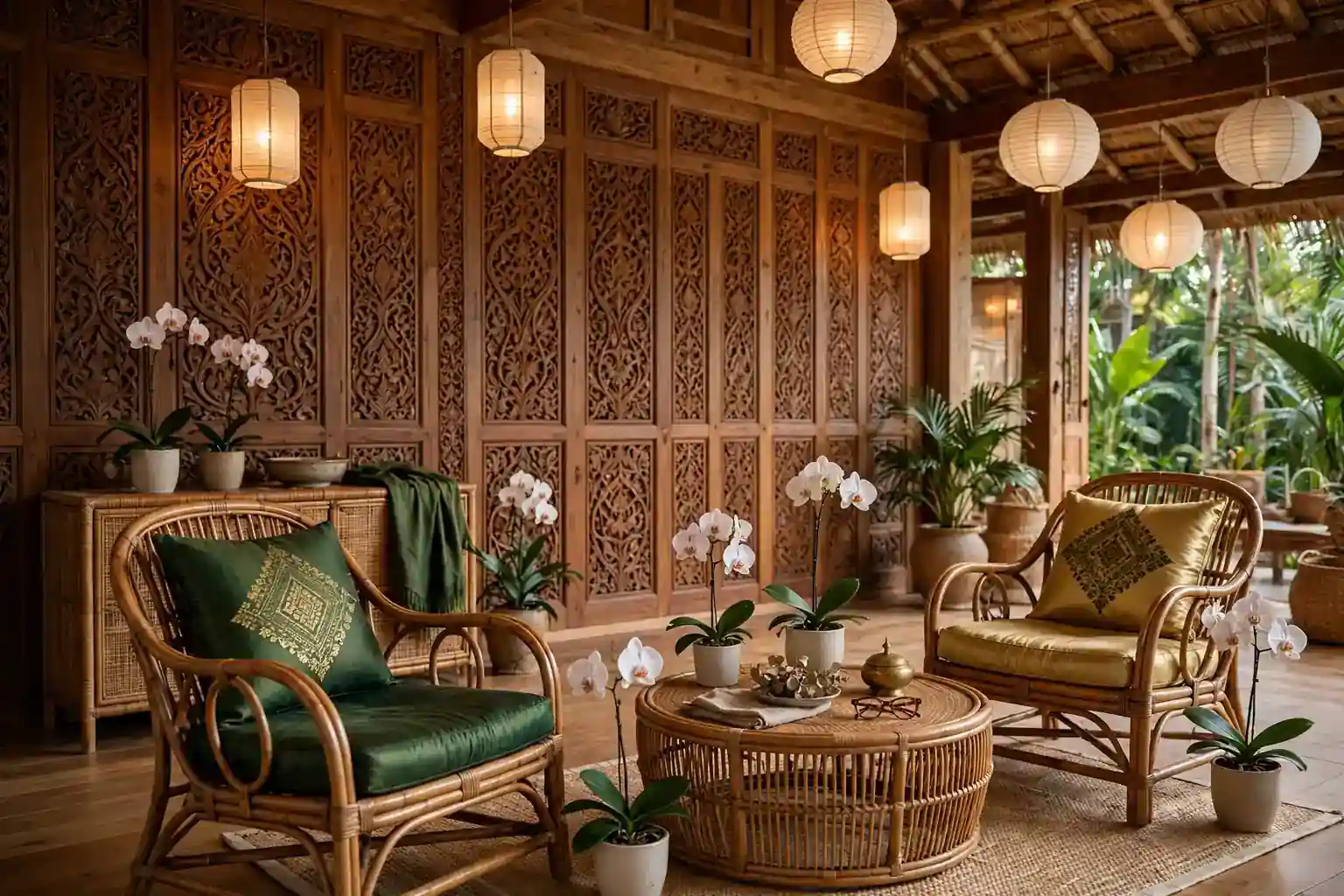
Thai home decor earns its warmth from natural materials, soft light, and a few rich details, not from filling every surface. Carved teak, Thai silk, rattan, orchids, and warm lantern light can make a room feel calm and welcoming, while a restrained palette keeps the look from feeling busy. These 12 Thai home decor ideas cover walls, seating, bedding, lighting, plants, and small displays, so you can add one Thai layer or plan a fuller room refresh. Start with the change that fixes what bothers you most, keep one or two materials as the lead, and let the rest of the room stay quiet.
Key Takeaways
- Let two or three materials lead: warm teak, rattan, and Thai silk give a Thai room a clear, warm base.
- Keep the palette calm: warm white, deep green, gold, and soft brown suit carved wood better than a long list of competing colors.
- Repeat each material at least twice, in a teak frame and a teak table, or in silk cushions and a silk throw, so the room looks planned.
- Mix one carved or patterned piece with plain surfaces, so the detail has room to be seen.
- Use warm, low light from lanterns and lamps at sitting height, since harsh overhead light can make wood and silk look flat.
- Start with cushions, orchids, and lanterns for a no-paint refresh, and save panel walls, dividers, and platform beds for a weekend project.
1. Add a Carved Teak Panel Feature Wall
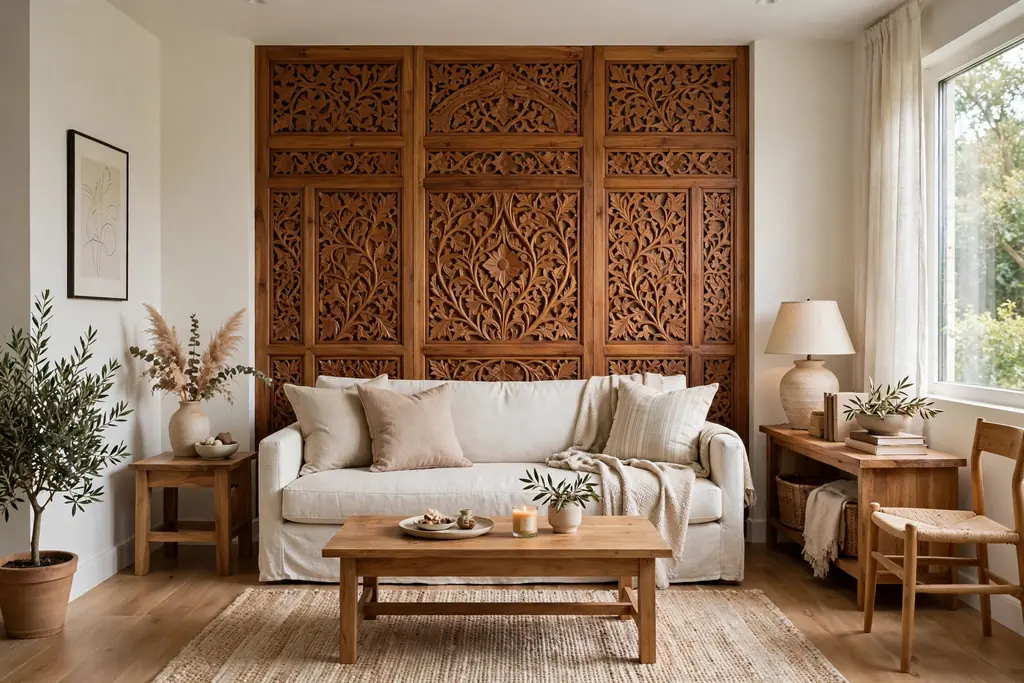
Fit a carved teak panel, or a row of teak panels, on one wall behind a sofa or a bed, and keep the other walls warm white. The carving gives the room a clear focal point and a sense of craft, while the pale side walls keep the room open. This suits a plain room where the main wall feels empty, and it works with a simple sofa or a plain wood bed.
Choose panels in a similar tone range, with carving that reads well from across the room rather than fine detail that disappears at a distance. Fix the panels firmly to the wall, and leave a clean edge at the ceiling and corners. Keep art on this wall to a minimum, since the carving already carries the detail, and dust the panels with a soft, dry cloth.
2. Layer Thai Silk Cushions and Throws
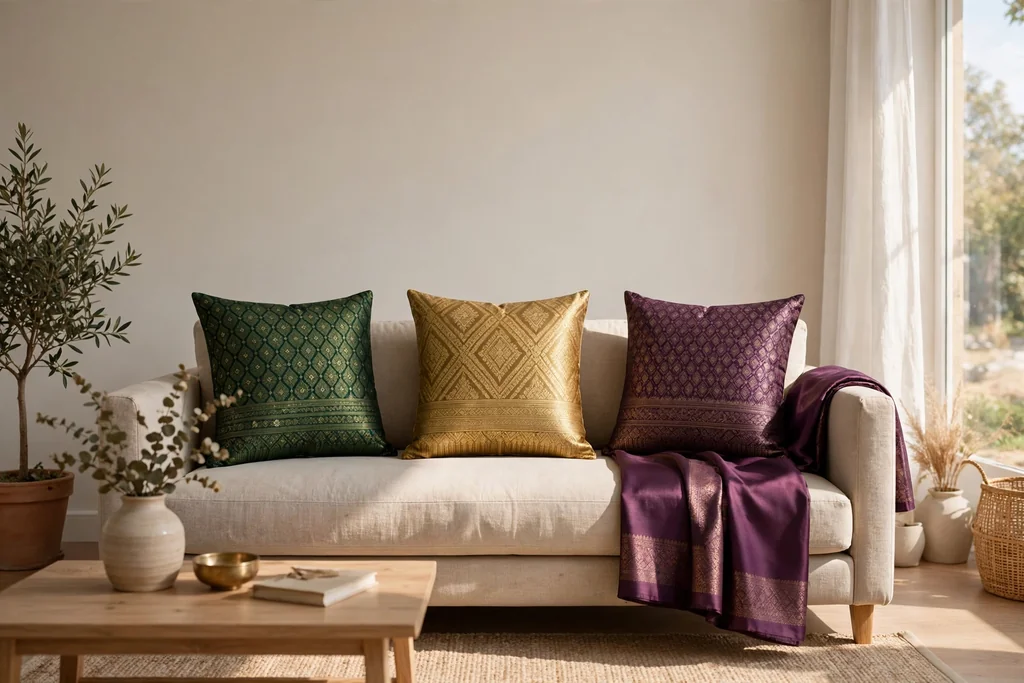
Layer Thai silk cushions in deep green, gold, and plum on a plain sofa or bed, and add one silk throw folded across an arm or the foot of the bed. Silk has a soft sheen that catches light, so a few silk pieces can warm a whole seating group without new furniture. This suits a neutral room that needs color and texture in small doses.
Pick cushions in two or three tones that already appear in the room, and mix one patterned silk with plain silk, so the group looks planned rather than random. Keep the sofa or bedding plain underneath, so the silk stays the focus. Check the care label before washing silk, and keep silk out of strong, direct sun, which can fade it over time.
3. Choose Rattan and Bamboo Seating
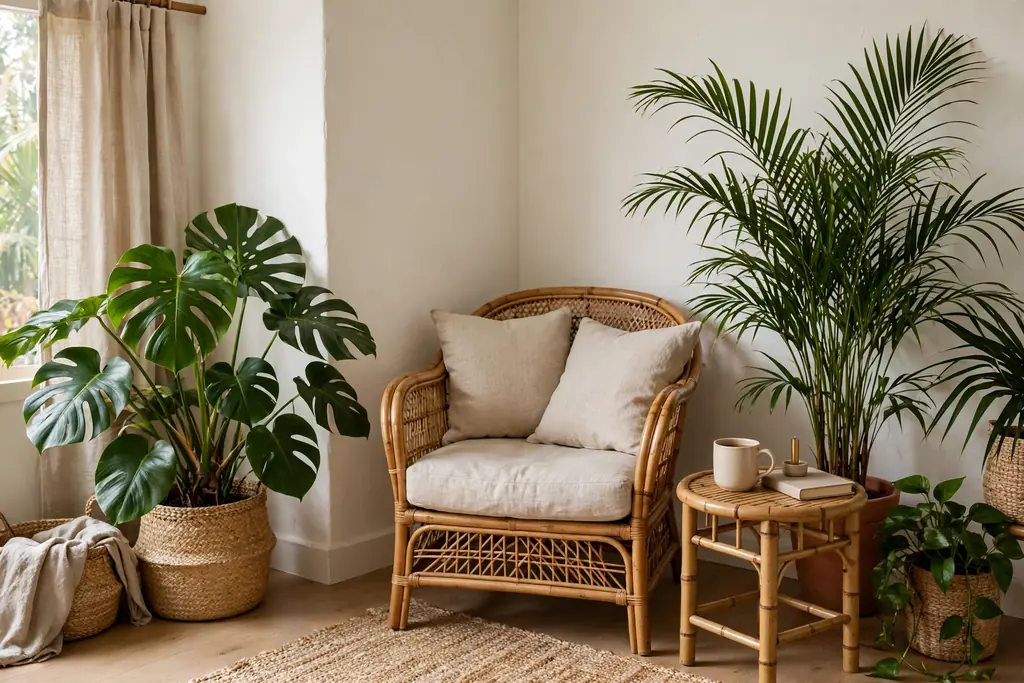
Choose a rattan armchair, a bamboo lounge chair, or a pair of rattan side chairs for a seating corner that feels light and tropical. Rattan and bamboo add natural texture without the weight of solid wood, and their open weave keeps a small room feeling airy. This suits a living room or a bedroom corner where a heavy upholstered chair would crowd the space.
Pair rattan seating with plain linen or cotton cushions in warm white or soft green, so the weave stays easy to see. Keep the chair clear of damp spots, and wipe the weave with a soft brush now and then, since woven pieces collect dust in their gaps. Add a small side table in teak or bamboo, so the corner has a place for a cup and a book.
4. Glow With Warm Thai Paper Lanterns
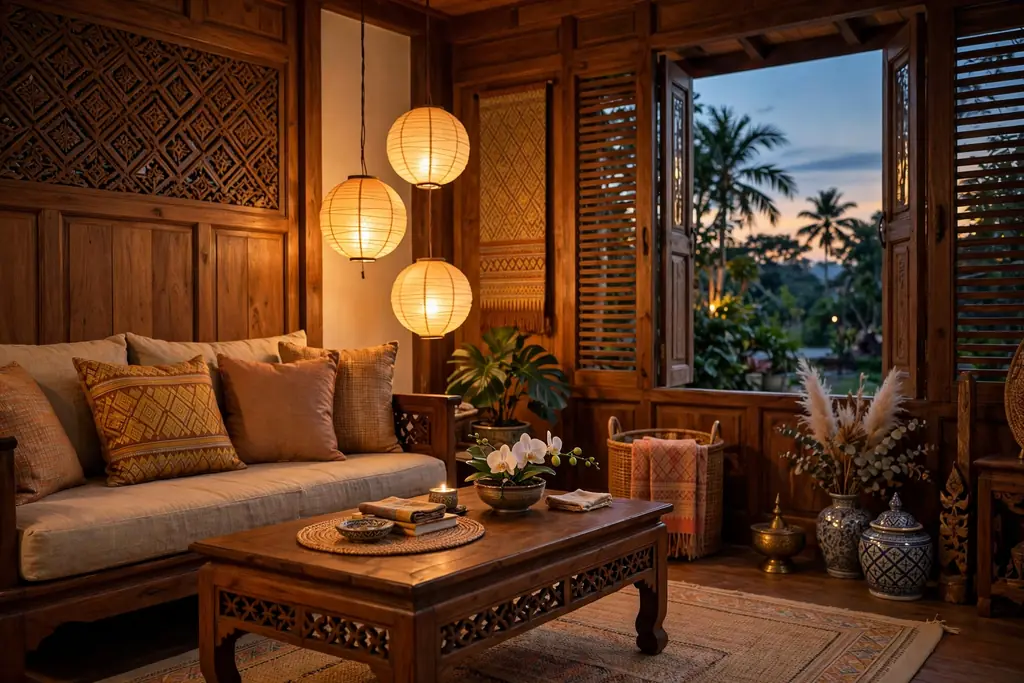
Hang warm paper lanterns, or set them on a side table, for soft light that suits a Thai room after dark. Paper diffuses light, so a lantern gives a gentle pool of light for reading and talking, without the glare of a bare bulb. This suits a living room or a bedroom where the main ceiling light feels too harsh in the evening.
Use a warm white bulb suited to the lantern, and keep paper clear of heat sources, candles, and curtains. Hang one lantern over a seating group, or place a pair at different heights on a console, so the light feels layered rather than lined up. For more lantern placement ideas, see these lantern decor ideas.
5. Display Orchids in Simple Pots
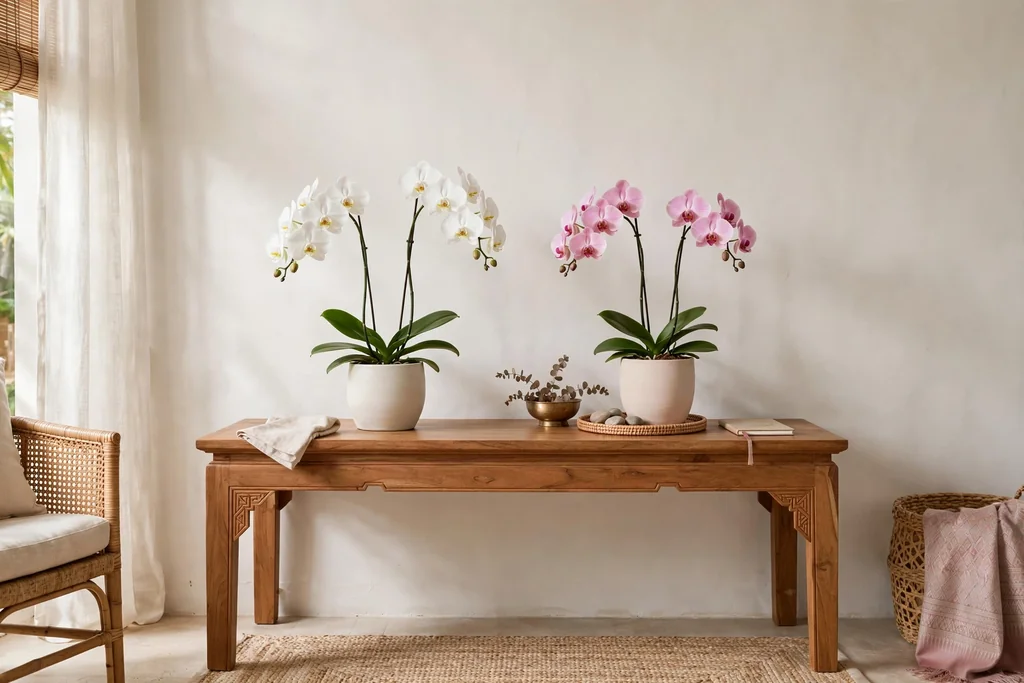
Display one or two orchids in simple ceramic or clay pots on a console, a dining table, or a bedroom dresser. Orchids give a Thai room its classic flower note, and a simple pot lets the blooms carry the color. This suits a room with bright, indirect light, where a large bouquet would fade in days but an orchid lasts for weeks.
Choose white, pink, or purple orchids against a plain pot, and keep the display to one or two plants per surface, so each orchid has room to be seen. Water as the plant label advises, and keep orchids clear of cold drafts and hot radiators. When the blooms fade, keep the plant in its spot and let the leaves stay, since a healthy orchid will bloom again.
6. Divide a Room With a Carved Wood Screen
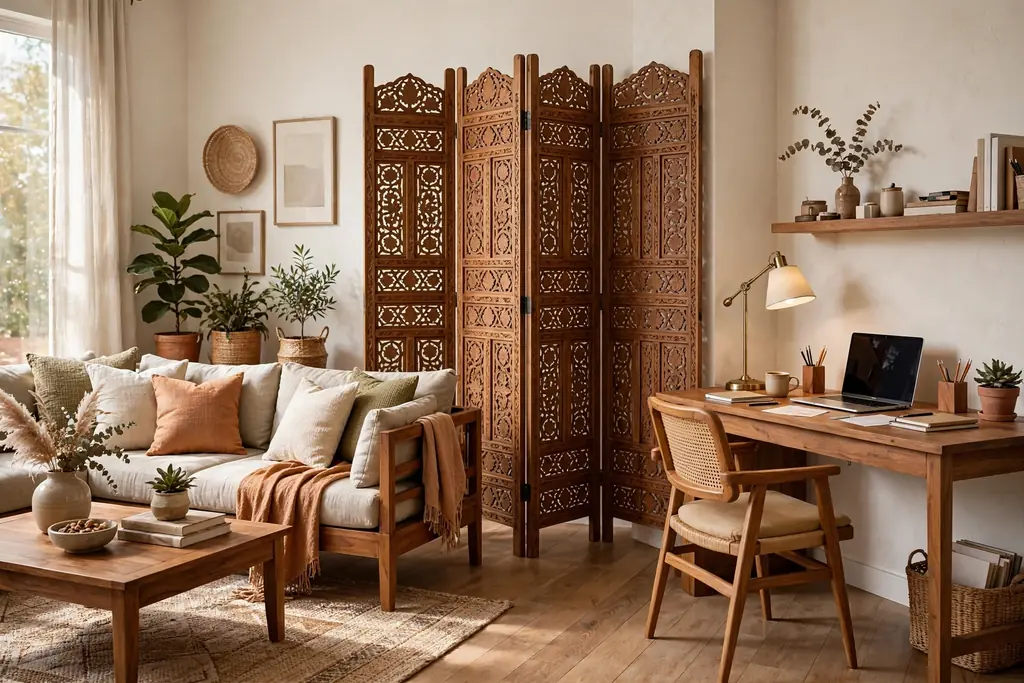
Use a carved wood screen, or a folding teak screen, to divide a room, hide a work corner, or soften a wide doorway. The carving adds pattern at eye level, and the screen gives privacy without a solid wall. A folding screen works in a rented home, while a fixed panel suits a room with a wide opening.
Keep the screen clear of heaters and open flames, and dust the carving gently with a dry cloth. Choose a simple, open carving pattern and a warm wood tone, and let one screen do the dividing work, rather than filling the room with panels. Place the screen where it frames a seating zone, not where it blocks a walking route.
7. Layer Handwoven Mudmee Textiles
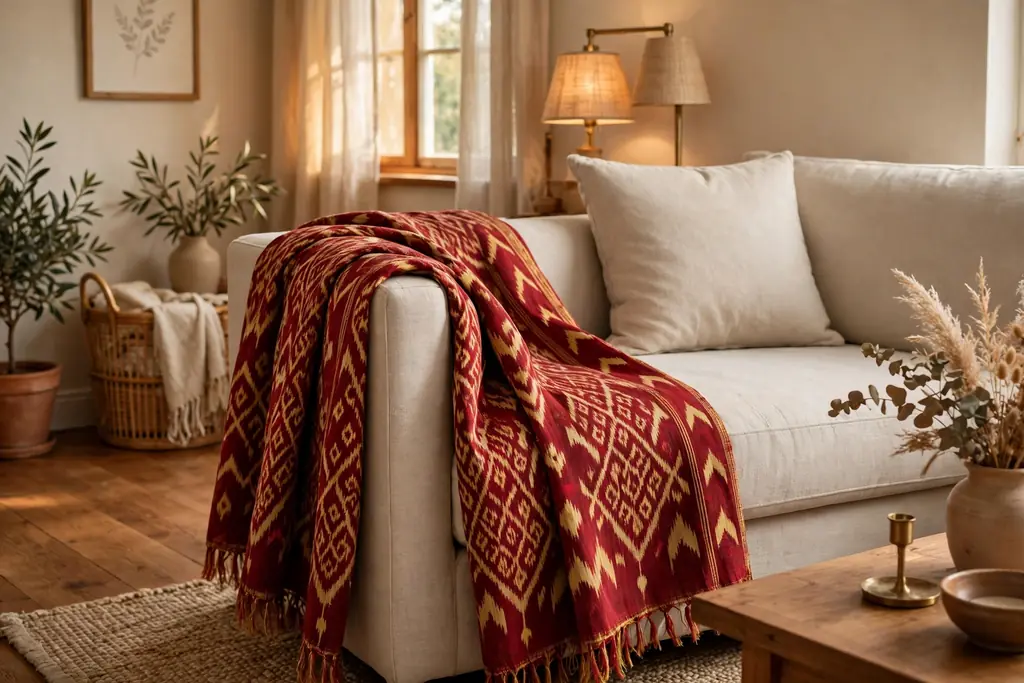
Layer handwoven mudmee textiles, the tie-dyed ikat cloth made in Thailand, as a table runner, a throw, or a wall hanging. Mudmee patterns add color and craft in one piece, and they suit a room that already has plain wood and plain bedding. This works best as one strong textile per room, so the pattern stays a feature rather than a clash.
Pick a mudmee piece in tones that repeat colors already in the room, such as deep red, indigo, or gold against warm white. Drape a throw over a sofa arm, or hang a runner flat on a plain wall with a simple rod, so the pattern lies smooth and easy to see. Wash woven textiles as the maker directs, since strong dyes can transfer when wet.
8. Try a Low Platform Bed With Floor Cushions
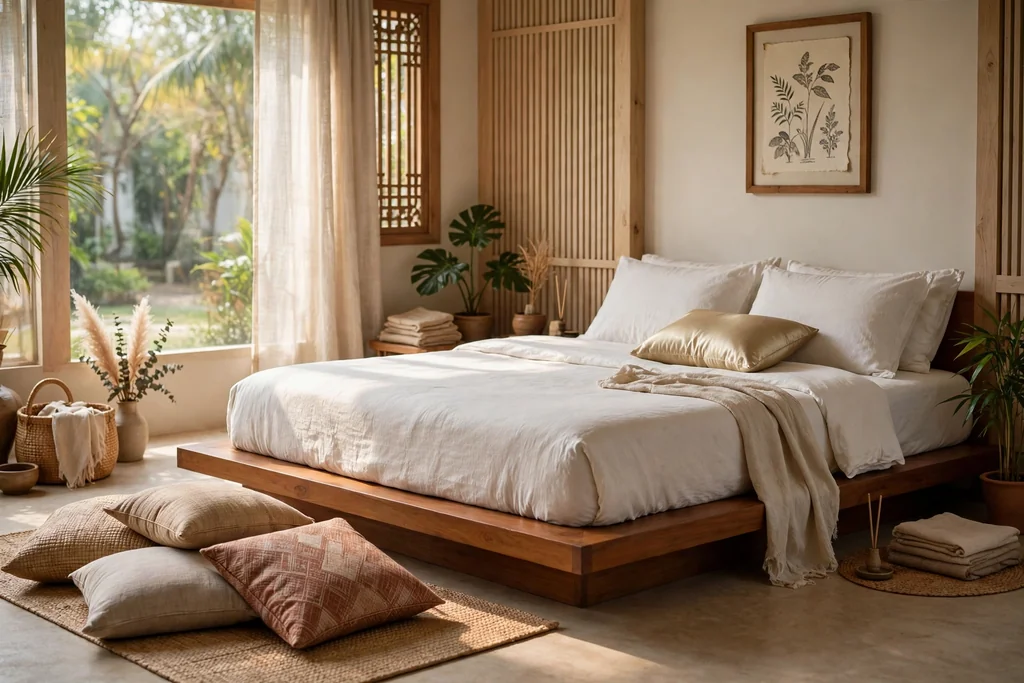
Try a low teak platform bed in the bedroom, with plain linen bedding and two or three floor cushions beside it for reading or dressing. A low bed keeps sight lines open across the room, which helps a small bedroom feel larger, and it suits the calm, grounded feel of Thai decor. This works with a plain wall and a simple bedside lamp, so the bed stays the focus.
Choose a platform frame in a warm teak tone, and keep the bedding in warm white or soft sage, with one silk cushion for color. Place a low bench or a basket at the foot of the bed for extra cushions, so they stay tidy when not in use. Check that the frame sits on felt pads, so it does not mark the floor when moved for cleaning.
9. Display Celadon and Benjarong Pottery
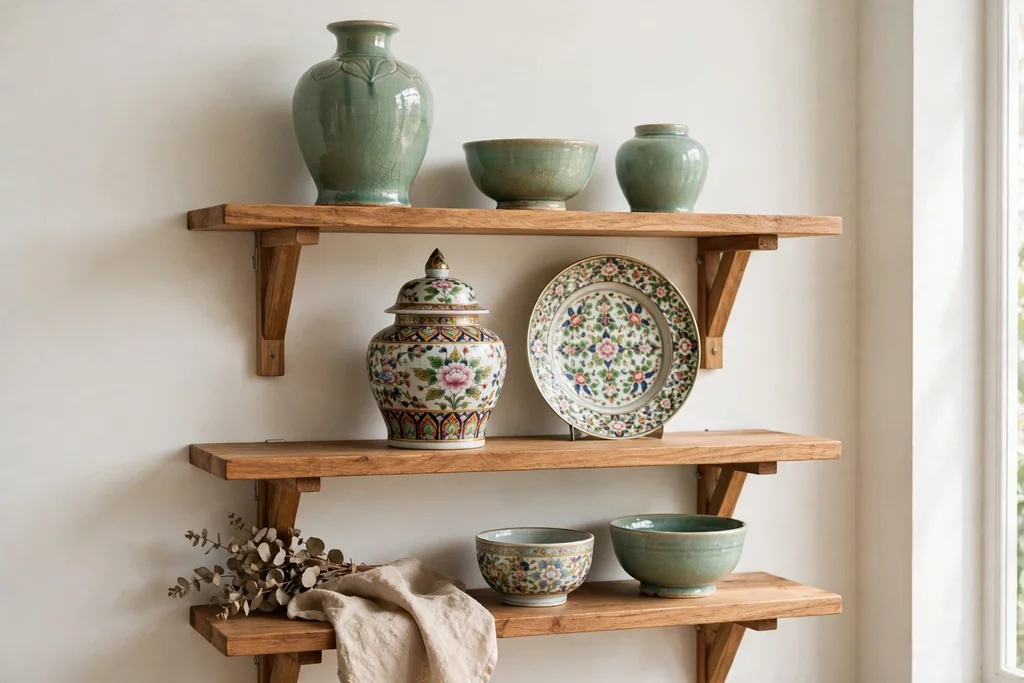
Display a small group of Thai celadon pottery, with its soft green glaze, and one or two Benjarong porcelain pieces, with their fine painted patterns, on a shelf or a low cabinet. Celadon gives a room a calm, cool note, while Benjarong adds fine color detail, and the pair shows two sides of Thai craft. A group of three to five pieces, with space between them, suits a shelf better than a crowded collection.
Use one or two of the pieces daily, such as a small celadon bowl, so the display stays part of life rather than a museum shelf. Keep pottery clear of the shelf edge, wash painted pieces by hand where the maker advises it, and pair the group with plain wood, so the glazes and patterns stand out. Keep the shelf itself simple, with no extra ornaments crowding the pottery.
10. Add Temple Gold Accents in Small Doses
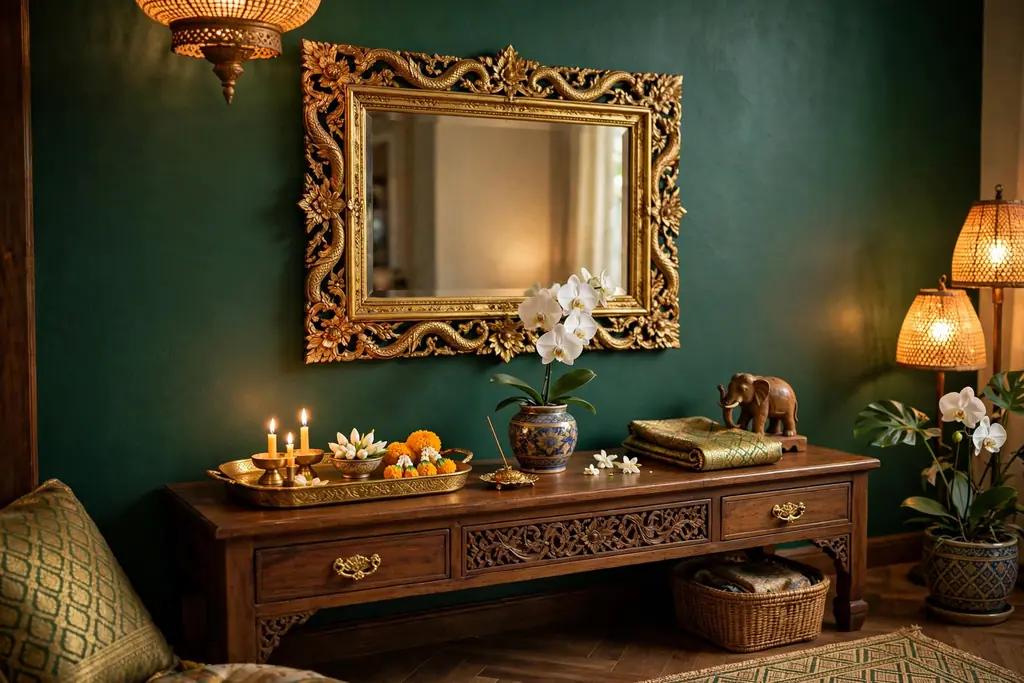
Add gold accents in small doses, such as a gilded mirror frame, gold picture frames, or a gold-trimmed tray, against deep green or warm white walls. Gold echoes the gilded details of Thai temples, and a little gold goes a long way in a calm room. This suits a living room or a bedroom where the base palette is plain and needs one warm, bright note.
Keep gold to three places in the room, such as a mirror, a tray, and a lamp base, so it reads as a plan rather than a random splash. Pair gold with deep green, teal, or warm brown, and keep the rest of the metal finishes in the room close in tone. Wipe gilded frames with a soft, dry cloth, and keep them out of damp spots, which can dull the finish.
11. Fill Corners With Tall Tropical Plants
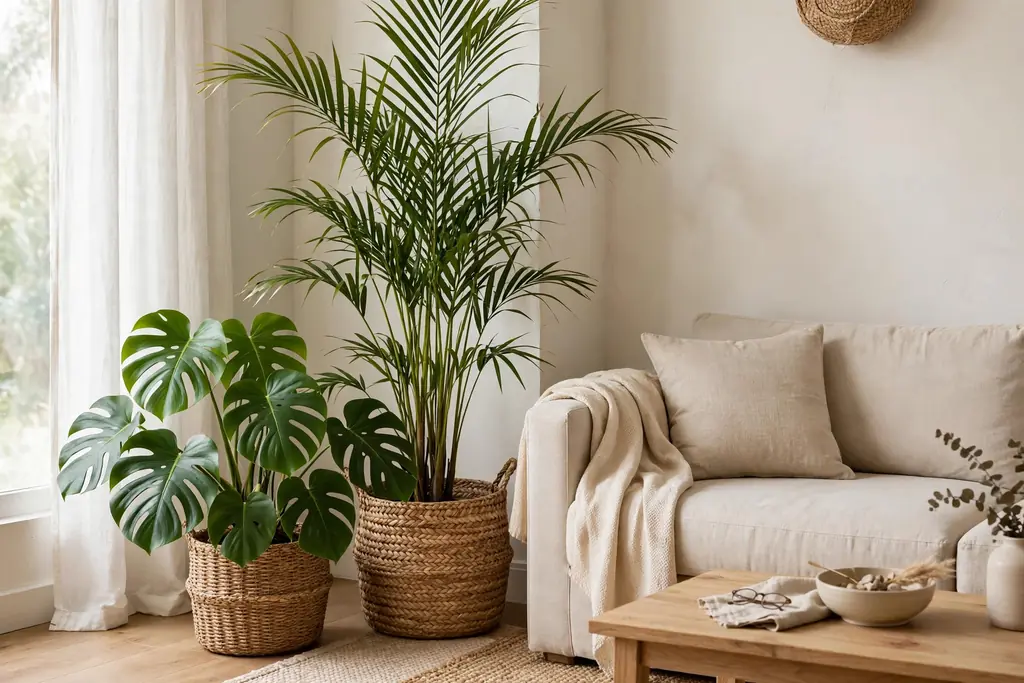
Fill a bare corner with tall tropical plants, such as a Kentia palm, a banana leaf plant, or a monstera, in woven baskets or simple clay pots. Tall plants add green height and a tropical feel without new furniture, and they soften the hard angle where two walls meet. This suits a living room with bright, indirect light and a plain sofa wall.
Place the tallest plant at the back of the corner and a smaller plant in front, so the group reads as one display rather than a row. Use saucers inside baskets to protect floors, and rotate pots now and then for even growth. For more ways to place plants around seating, see these living room decor ideas for plant lovers.
12. Build a Sala Inspired Reading Nook
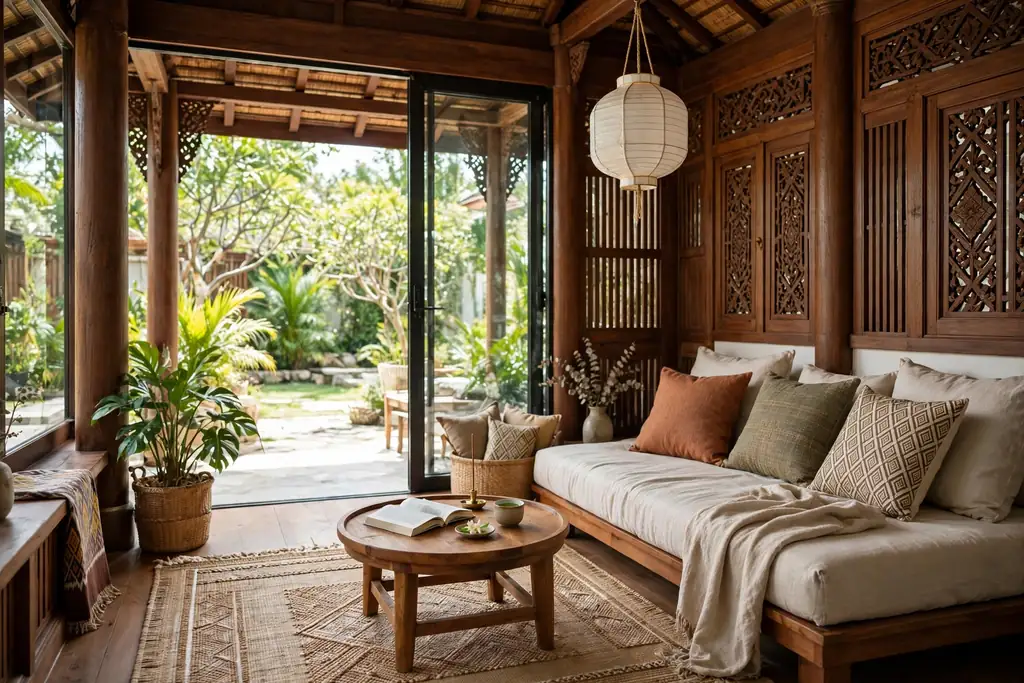
Build a sala inspired reading nook, based on the open Thai pavilion, in a bright corner or beside a patio door, with a low daybed or floor cushions, a small teak table, and a woven rug. A nook gives you a clear spot to read, drink tea, or rest, and the open, low seating keeps the corner feeling relaxed rather than formal. This suits a room with good daylight and a view, even if the nook itself stays indoors.
Keep the nook to one seat, one table, and one light, so it stays easy to use every day. Add a paper lantern or a small lamp for evening reading, and a basket for books and a throw, so the nook tidies in minutes. If the nook sits near a patio door, keep the walking route through the door fully clear, and use weather tolerant pots for any plants beside it. For calm, low seating ideas from a related tradition, see these Japanese living room decor ideas.
Conclusion
Thai home decor works best when a few warm materials and a little gold carry the room, and everything else stays plain enough to let them be seen. Start with one idea that fits your room, such as silk cushions, an orchid, or a lantern, and live with it for a week before adding more. Add teak, rattan, and woven textiles in small steps, repeat each material twice, and keep the light warm and low in the evening. Save this list to your Thai decor board on Pinterest so you can find it when you are ready for the next room.
FAQs
What colors work best for Thai home decor?
Warm white, deep green, teal, gold, and soft brown form a reliable Thai palette. Use warm white and wood as the base, add deep green or teal in cushions and plants, and use gold in small doses for frames and trays. Keep the palette to four or five tones in one room, so carved wood and silk patterns stay easy to see.
How do I add Thai decor without making the room look busy?
Add one strong Thai piece per zone, such as a carved panel on one wall or a silk throw on one sofa, and keep the surfaces around it plain. Repeat one material twice, rather than adding a new pattern in every corner, and leave empty space on shelves and walls. If a room starts to feel busy, remove one patterned piece before adding another.
Is teak furniture hard to care for?
Teak is a durable hardwood, and indoor teak needs only simple care. Dust it with a soft, dry cloth, wipe spills promptly, and use felt pads under lamps and cups. Keep teak out of standing water and strong, direct sun where possible, and follow the maker guidance for any oil or sealant, since finishes differ between pieces.
Can Thai decor work in a small room?
Yes, if you choose light pieces and keep the palette calm. Use silk cushions, a paper lantern, an orchid, and a woven basket, rather than a large carved screen or a heavy teak cabinet. Use low seating and one tall plant in a corner, keep walking routes clear, and let one wall carry the main detail while the other walls stay plain.
Are orchids hard to keep alive indoors?
Orchids suit bright, indirect light and a steady routine, and they are not hard to keep if you match water to the plant label. Water only when the potting mix feels dry, keep the plant clear of cold drafts and hot radiators, and do not let the pot sit in standing water. When blooms fade, keep the leaves healthy and the plant will usually bloom again in time.
How much gold is too much in Thai decor?
Gold works best as an accent, not as the main color. Keep gold to two or three places in a room, such as a mirror frame, a tray, and a lamp base, and pair it with deep green, warm white, or wood. If gold appears on every surface, it stops reading as an accent, so remove one gold piece and let the remaining pieces carry the look.