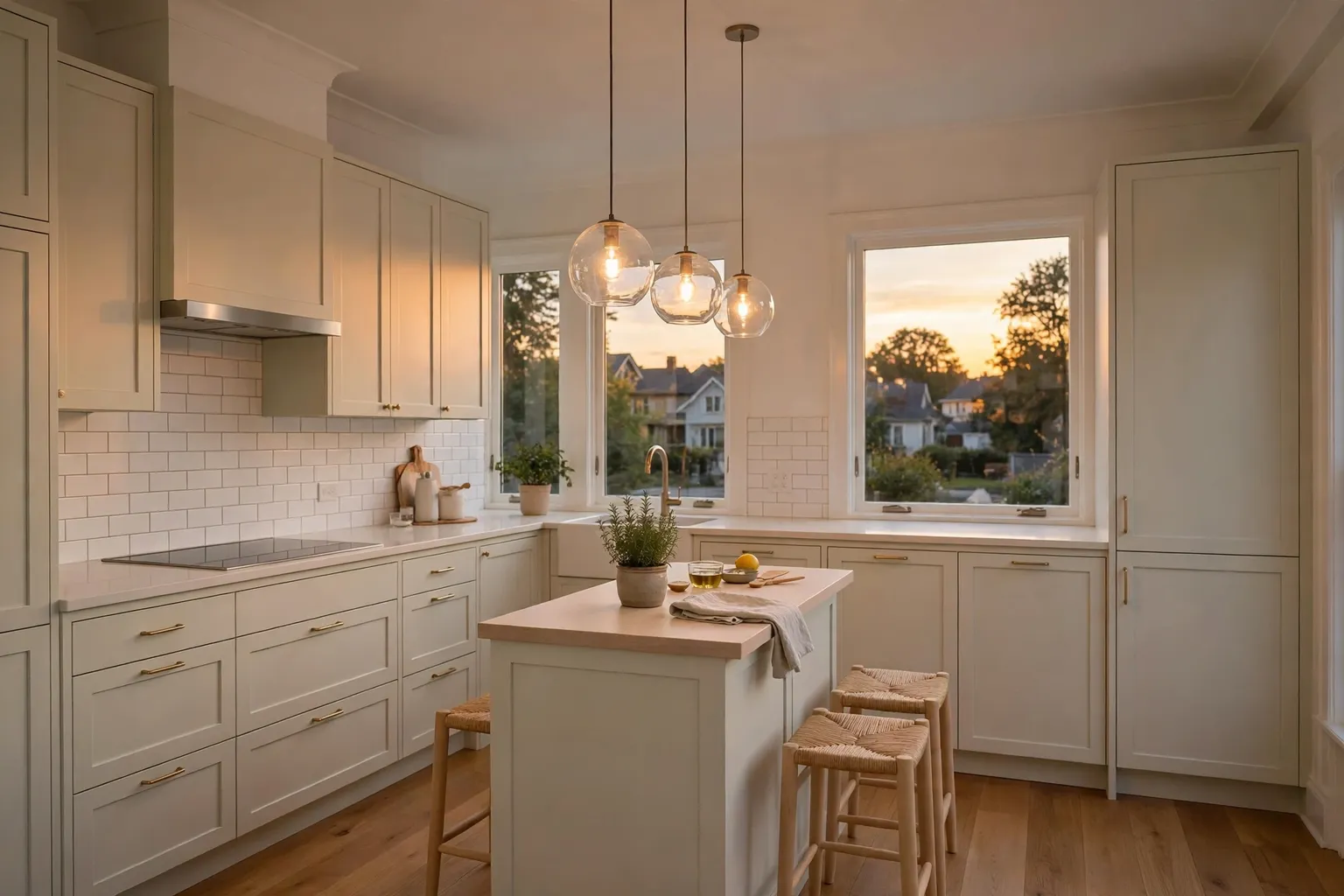
A small kitchen island needs light that works hard without crowding the room. The right fixture lights the counter for chopping and homework, marks the island as a gathering spot, and leaves clear sight lines across the kitchen. These 22 lighting ideas for a small kitchen island cover pendants in several materials, ceiling lights that stay out of the way, LED strips that add a soft glow, and controls that let one fixture serve cooking, eating, and evening conversation. Before you choose, measure the island length, note the ceiling height, and check where the wiring already sits, since those three facts narrow the list fast.
Key Takeaways
- Size the light to the island, not the room: a short island suits small shades, a slim bar, or one statement pendant, while an oversized fixture crowds a compact kitchen.
- Hang pendants low enough to light the counter, usually with the lowest point about 75 to 90 centimeters above the island top, and high enough to see across to the person opposite.
- Layer the light: pair a main island light with under-cabinet light or a soft strip, so the island is not the only bright spot in a dark room.
- Choose warm white light, around 2700 to 3000 Kelvin, for a kitchen that feels calm in the evening, and check that the bulb works with a dimmer before you buy.
- Keep shades light in weight and simple in shape on a small island, since heavy or wide shades block sight lines and make the island feel larger than it is.
- Put the light on a dimmer or a smart bulb when you can, so the same island works for bright prep, relaxed meals, and late evening drinks.
1. Trio of Clear Glass Globe Pendants
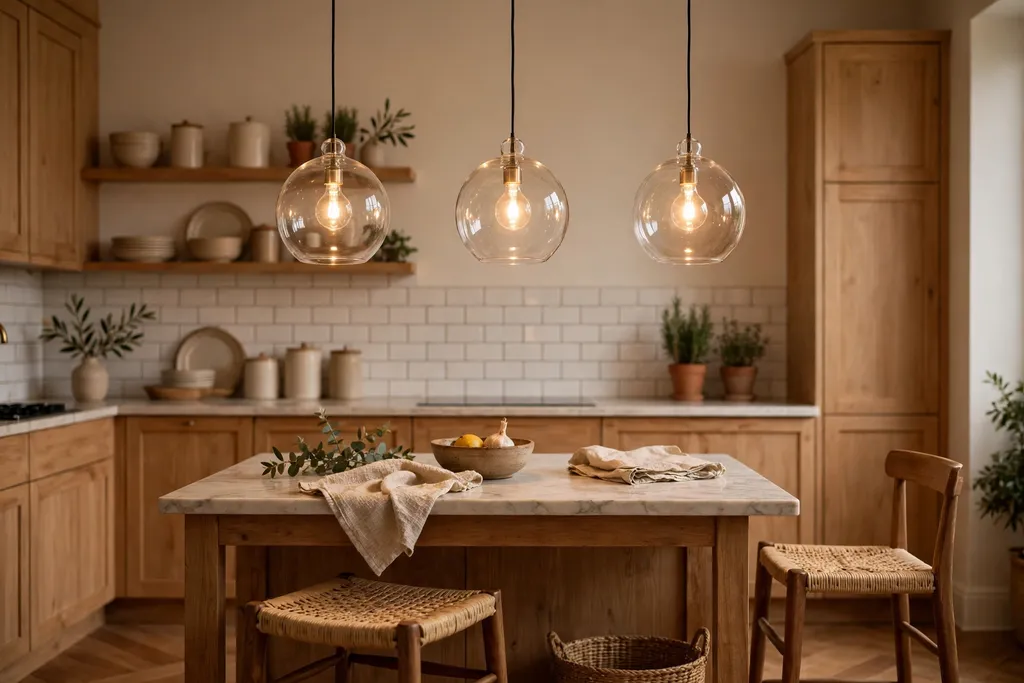
Three small clear glass globes in a row suit a short island because each shade is light in look and small in size. The clear glass shows the bulb, so the light spreads in all directions, and the row marks the island length without blocking the view across it. This layout works well in kitchens with pale cabinets and a plain counter, where the glass adds detail without adding color.
Space the globes evenly over the island, with the outer globes set in from each end by about 15 to 20 centimeters, so the row reads as one group. Hang them at the same height, and use warm white bulbs so the clear glass glows softly rather than glaring. If the island is very short, drop to two globes rather than squeezing three into a tight row.
2. Slim Linear LED Bar Over the Island
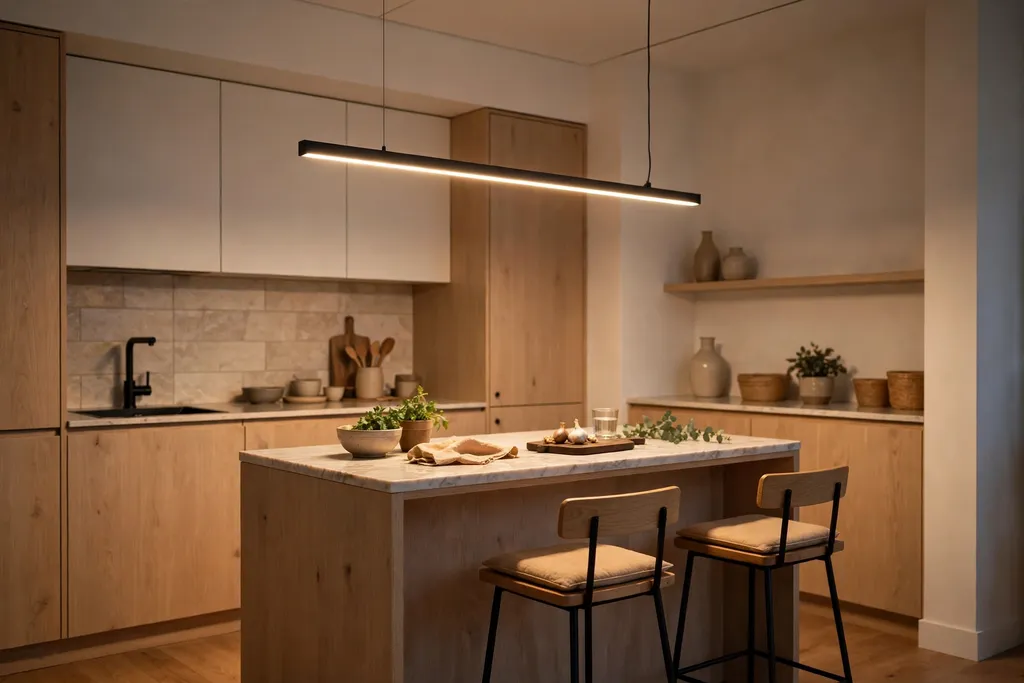
A slim linear LED bar runs the length of the island in one clean line, which suits a modern kitchen where pendants would feel busy. The bar gives even light across the whole counter, with no dark gaps between shades, and it sits close to the ceiling, so headroom stays clear. It also suits islands used mainly for prep, since the light falls straight down onto the work surface.
Choose a bar slightly shorter than the island, so the light stays over the counter and does not spill far past the ends. Look for a bar with a diffuser, which softens the LEDs into one even glow, and check the color temperature before fitting, since a cool white bar can make a warm kitchen feel clinical. A dimmable bar lets you drop the light for meals.
3. Single Woven Rattan Pendant
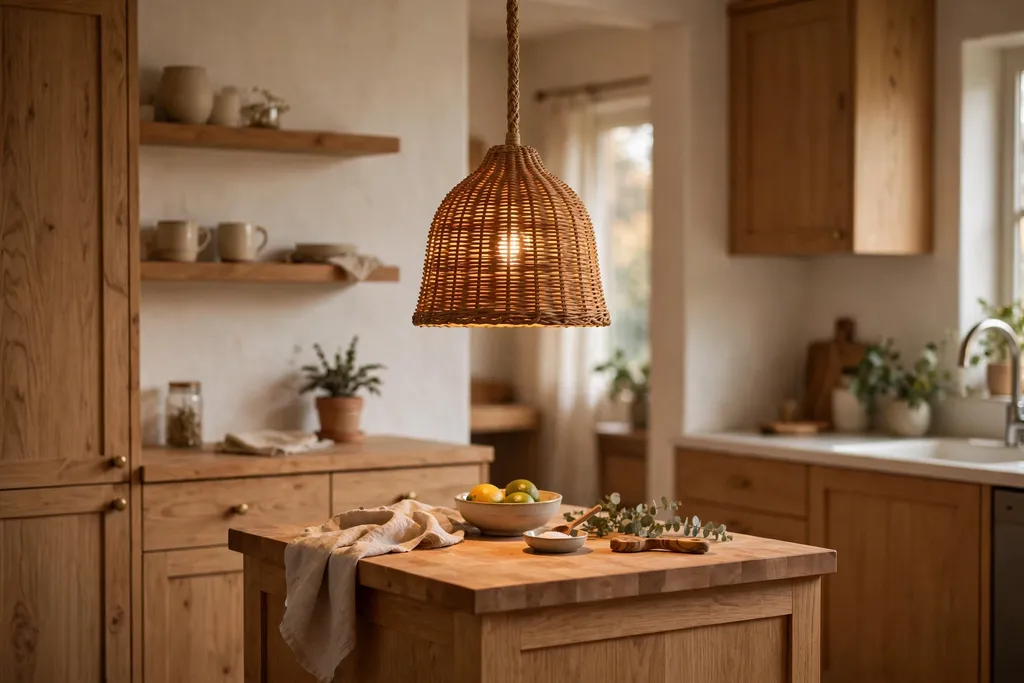
One woven rattan pendant over a small island adds texture and warmth, and a single shade keeps the ceiling line simple. The woven pattern throws soft, patterned shadows in the evening, which suits a kitchen with wood counters, plants, or natural fibers. Because there is only one fixture, the island keeps an open feel, and the eye rests on the pendant rather than on a row of shades.
Hang the pendant over the center of the island, and check the shade diameter against the island width, since a shade wider than half the island can look top heavy. Use a warm bulb inside the weave, and keep the pendant clear of steam from a hob if the island holds a cooktop. Dust the weave with a soft brush, since kitchen film settles in the gaps.
4. Row of Recessed Ceiling Downlights
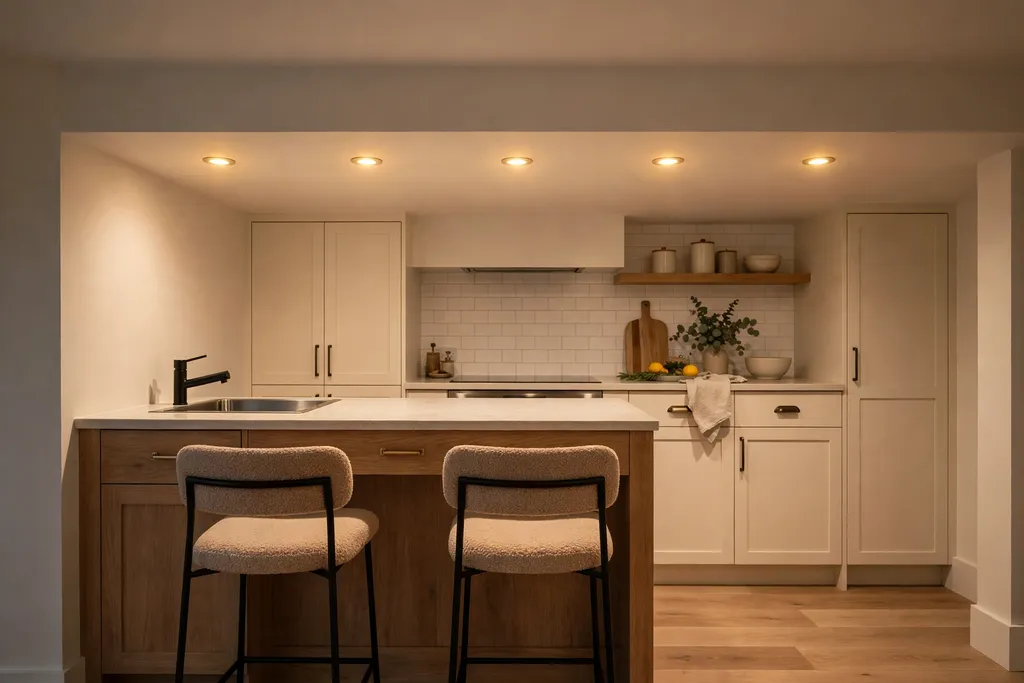
Recessed downlights sit flush in the ceiling, so they light a small island without adding any visible fixture at all. This suits a low ceiling, where pendants would hang too close to heads, and it suits a kitchen where the island already carries stools, boards, and bowls that compete for attention. A row of two or three downlights gives even, shadow free light for prep.
Space the downlights evenly over the island, and angle adjustable ones slightly toward the counter center if the ceiling line sits off center. Choose warm white downlights to match the rest of the kitchen, and put them on a dimmer, since recessed lights at full brightness can feel harsh in the evening. If you rent, this idea needs wiring work, so check with the landlord first.
5. Adjustable Track Lighting Over the Island
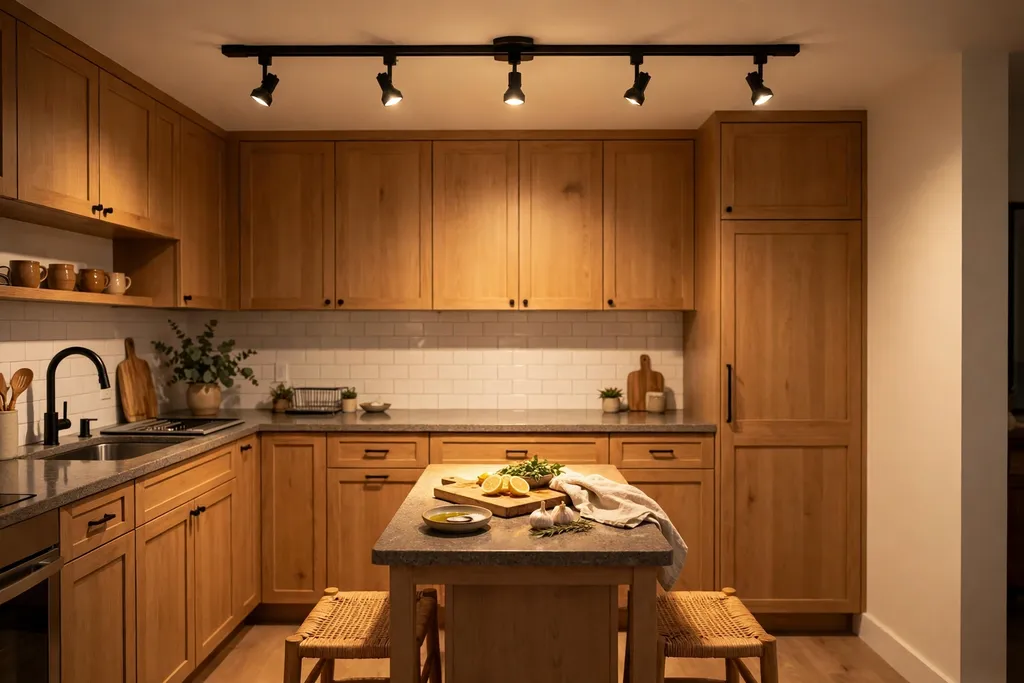
Track lighting lets you aim each head where it is needed, which suits an island used for several jobs, such as prep at one end and eating at the other. The track runs along the ceiling, and each head can be tilted toward the counter, a stool, or a display shelf. This flexibility helps when the island layout changes, since you can re-aim a head rather than moving a fixture.
Fit a short track that matches the island length, and keep the heads small so the track does not dominate the ceiling. Aim one head at each end of the island and one at the center, then adjust after dark, when you can see the pools of light on the counter. Use matching bulbs in every head, so the color stays even across the island.
6. LED Strip Under the Island Counter Overhang
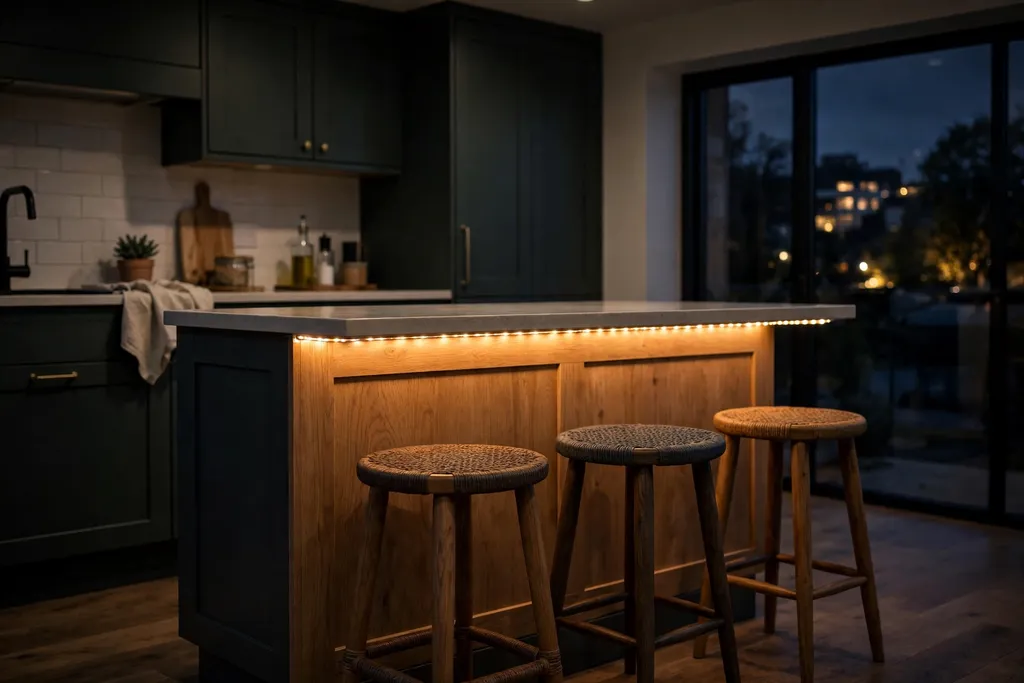
An LED strip fixed under the island counter overhang lights the stool area and the floor below, which makes the island look lighter and easier to find at night. The glow marks the seating edge, so guests see where to sit, and it adds a second layer of light without a new ceiling fixture. This idea suits islands with a seating overhang, where the strip hides neatly under the lip.
Fix the strip to the underside of the overhang, set back from the edge so the strip itself stays hidden and only the glow shows. Choose warm white for evening use, and run the strip to a switch or dimmer near the main kitchen switch, so it is easy to turn on after dark. Wipe the strip cover often, since kitchen grease dulls the light over time.
7. Toe Kick Glow Strip Around the Island Base
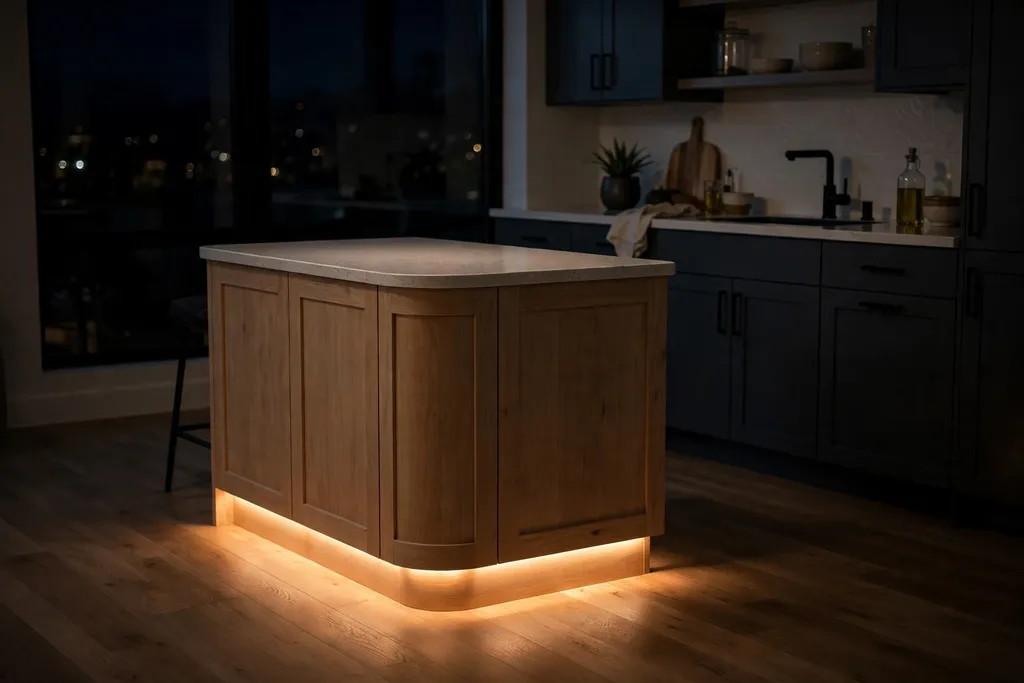
A toe kick strip around the island base throws a soft line of light onto the floor, which makes the island appear to float and helps with night time trips to the kitchen. The low glow suits open plan kitchens, where a lit island base reads as a gentle night light, and it costs little to run, since LED strips use little power. It also helps children and older guests judge where the island edge sits in the dark.
Fit the strip in the recessed toe kick, so it stays hidden behind the island base, and choose a warm, low brightness strip rather than a bright one, since the point is guidance, not work light. Connect it to the same evening circuit as the main island light if possible, so one switch controls both layers. Keep the strip clear of mop water, since the base is the first spot to get wet during cleaning.
8. Pair of Brass Dome Pendants
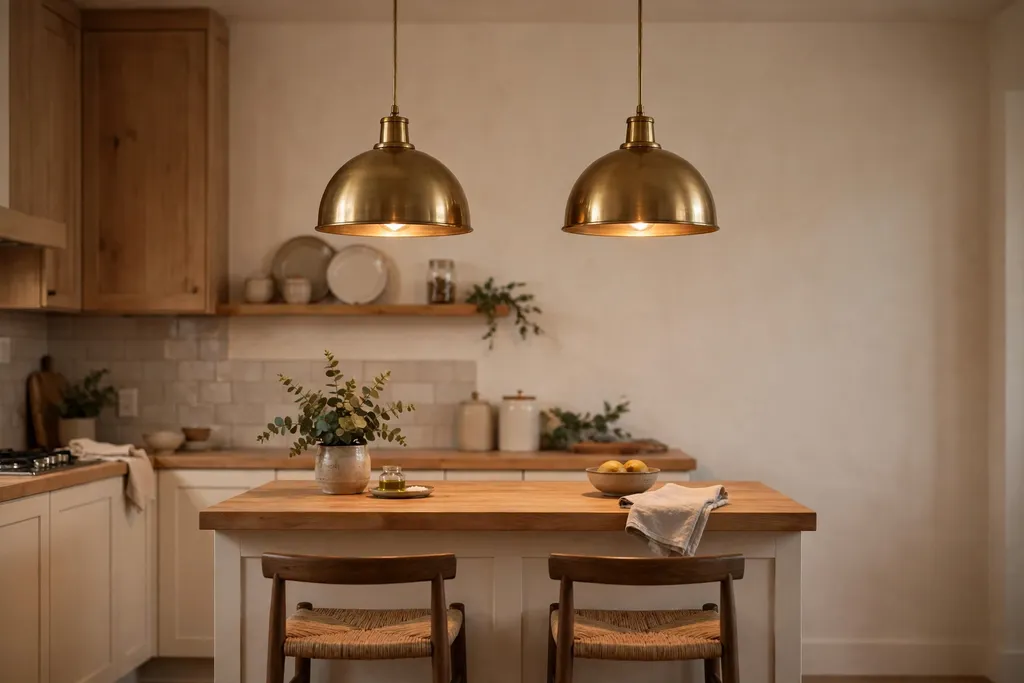
Two brass dome pendants bring a warm metal accent to a small island, and the dome shape focuses light downward onto the counter. Brass suits kitchens with brass taps, brass cabinet pulls, or a brass range hood, since the repeated finish ties the room together. The dome also hides the bulb from eye level, which cuts glare when you sit at the island.
Hang the pair evenly spaced over the island, with the same drop on both pendants, and match the brass tone to the other metals in the room, since mixed brass tones can clash. Polish the domes now and then, since kitchen steam dulls brass over time, and use warm bulbs to keep the metal glow soft. If the island is very short, check that two domes do not crowd the ceiling line.
9. Pair of Matte Black Cone Pendants
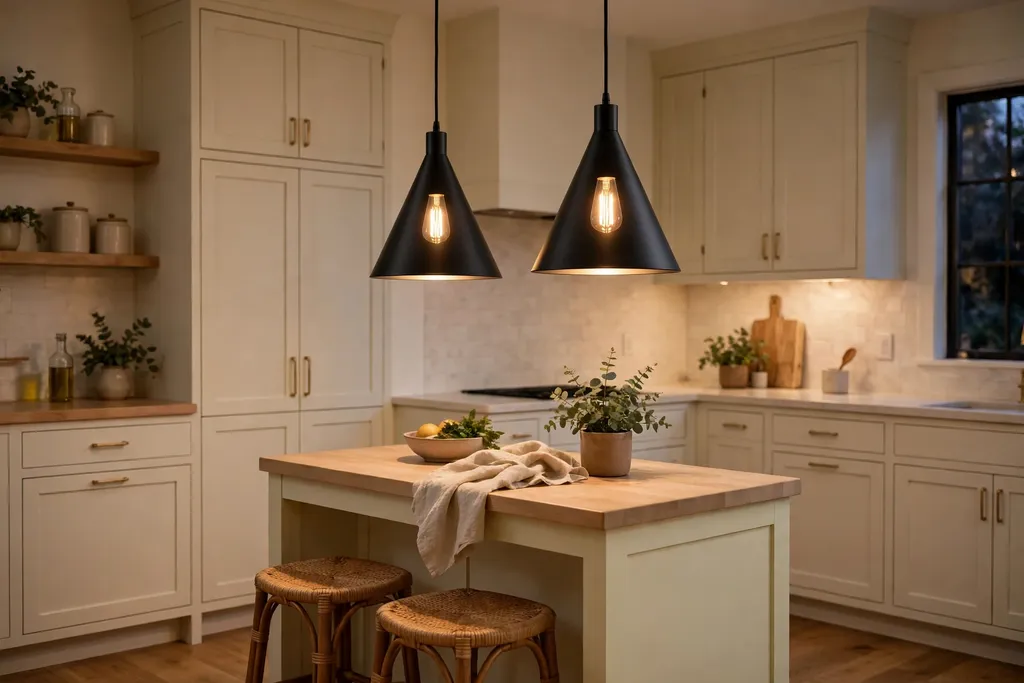
Matte black cone pendants give a small island a crisp, modern outline, and the cone shape directs light straight down to the work surface. Black suits kitchens with black taps, black hardware, or dark stools, and the matte finish avoids reflections that glossy black can show. The narrow cone also keeps the fixture small in the air, which helps a compact kitchen feel open.
Space the pair evenly over the island, and hang them high enough that the cone rim sits above eye level when seated, so the light does not shine directly into eyes. Pair black cones with a pale counter or pale cabinets, so the dark shades read as an accent rather than a heavy block. Wipe the cones with a soft cloth, since dust shows clearly on matte black.
10. Cluster of Small Paper Lantern Pendants
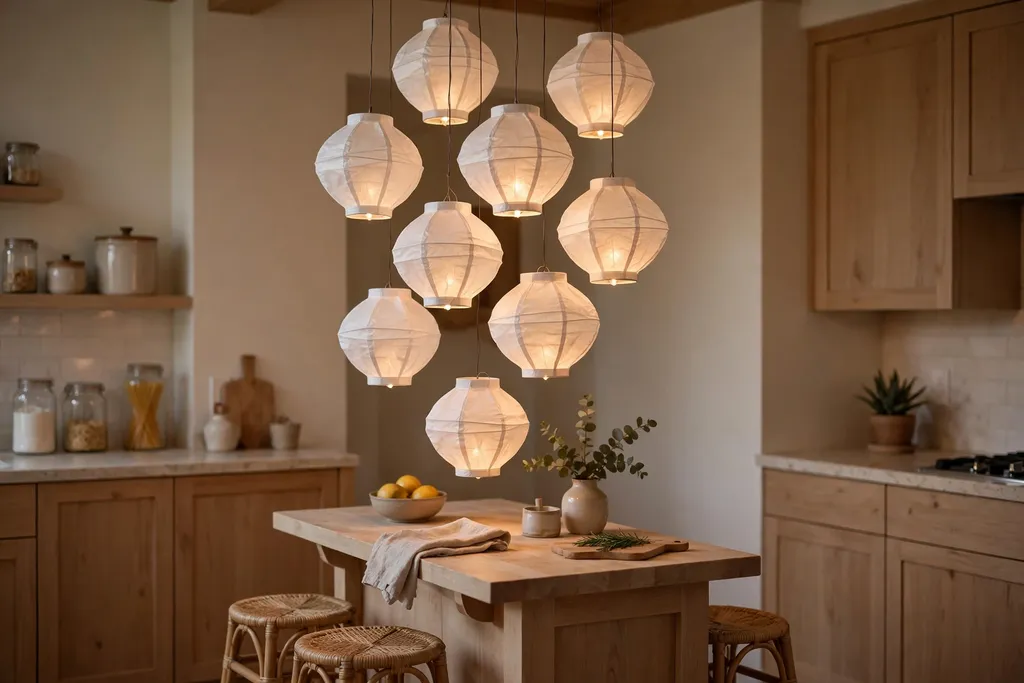
A cluster of small paper lantern pendants hangs at slightly different heights, which gives a small island a soft, relaxed glow. Paper diffuses the bulb into a gentle light with no hard glare, and the cluster shape suits a kitchen with a casual, lived in feel. The lanterns are light in weight and low in cost, which suits a first island light or a rental update.
Hang the cluster over the island center, with the lowest lantern still well above head height, and keep the lanterns clear of the hob and steam, since paper and heat do not mix. Use LED bulbs that run cool, and replace any lantern that gets stained or torn, since paper shows marks fast. For a calmer look, keep the lanterns in one color, such as white or cream.
11. Exposed Filament Edison Pendants
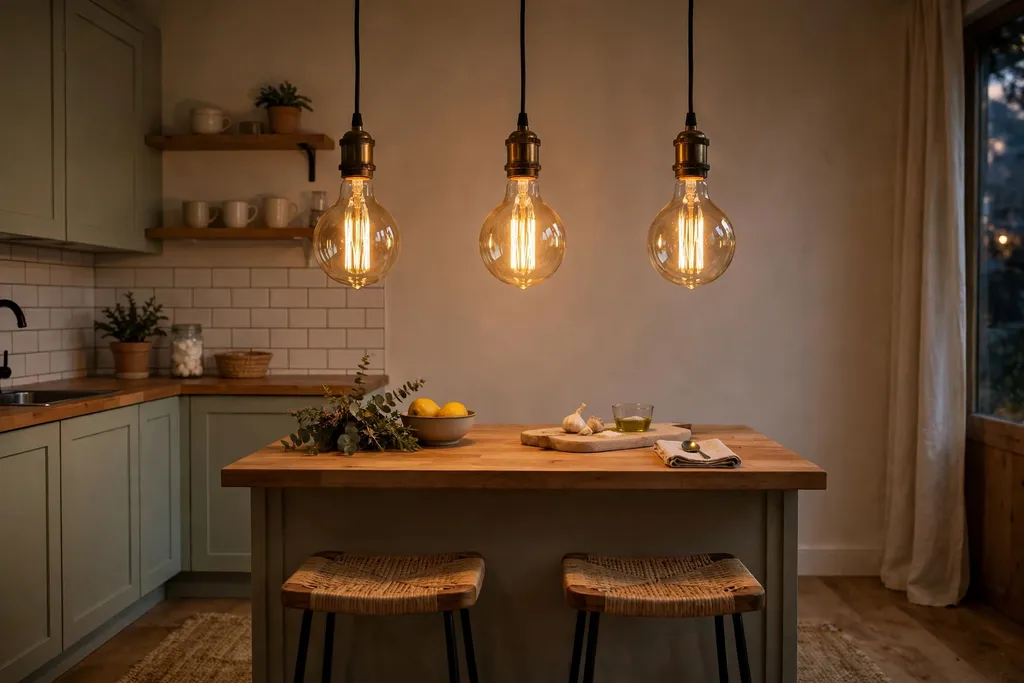
Exposed filament pendants show a warm, old style bulb with a visible filament, which suits an industrial or vintage kitchen. The filament gives a soft amber glow that flatters wood counters and brick or dark cabinets, and the simple cord and socket keep the fixture small over a short island. This idea works best as an evening light, since filament bulbs give a gentle light rather than a bright work light.
Pair the Edison pendants with a brighter layer, such as recessed lights or under-cabinet strips, so prep still gets enough light, and put the pendants on a dimmer to control the amber glow. Hang two or three pendants in a row, with the same drop, and choose LED filament bulbs, which give the same look with far less heat and power. Check the bulb brightness before buying, since filament bulbs vary widely.
12. Frosted Glass Shades for Soft Diffusion
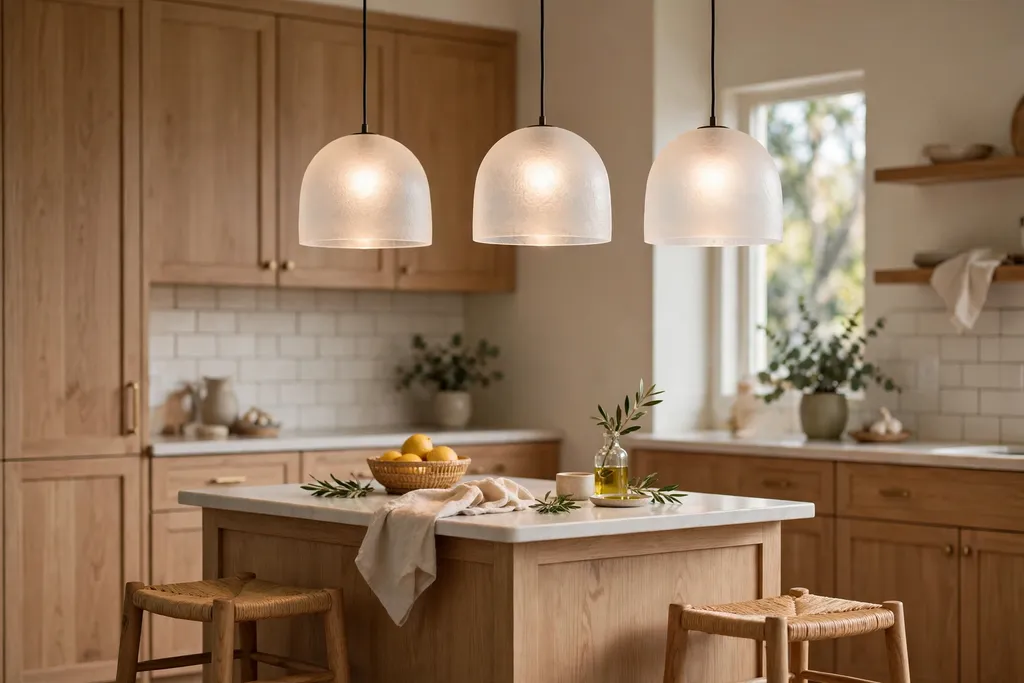
Frosted glass shades soften the bulb into an even glow with no visible filament and no harsh spots, which suits an island used for long meals and conversation. The frosted surface hides the bulb, so the light feels calm from every seat, and the shades suit kitchens where clear glass would glare. Frosted glass also pairs well with pale cabinets and stone counters, since the soft light flatters both.
Choose shades in a simple shape, such as a dome or a globe, and keep the shade size modest, so the fixture does not crowd a short island. Use warm white bulbs, since frosted glass cools the light slightly, and clean the shades with a soft cloth, since grease film dulls frosted glass faster than clear glass. If you want more light for prep, add a second layer, such as a strip under the overhang.
13. Copper Pendants for a Warm Metal Accent
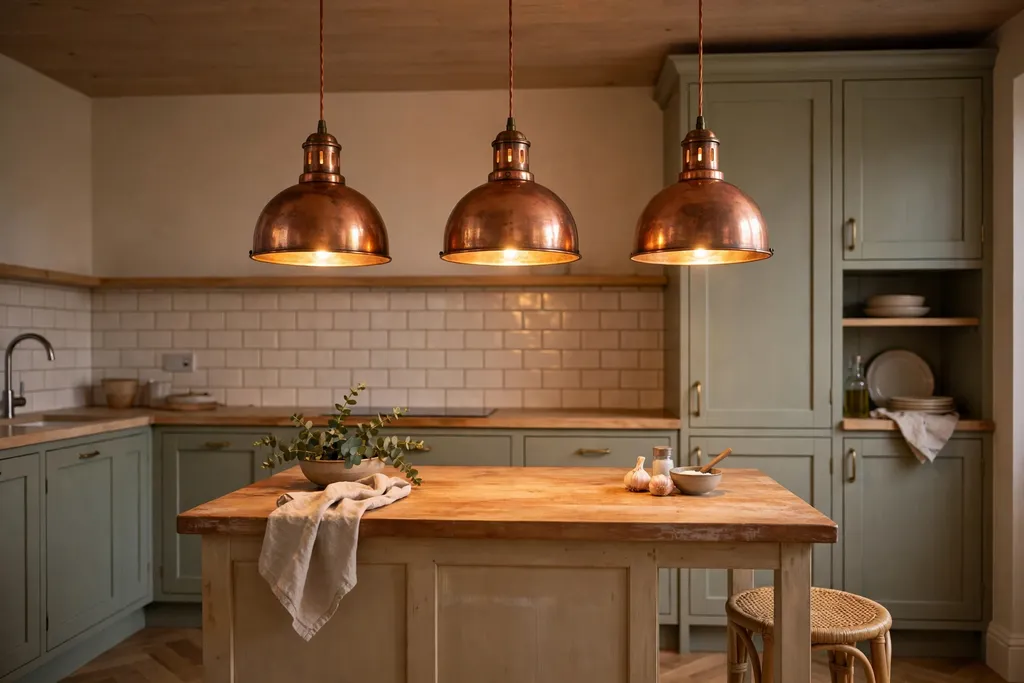
Copper pendants add a warm, rosy metal tone that suits kitchens with wood counters, cream cabinets, or terracotta tiles. The metal reflects warm light back into the room, which makes the island area feel inviting in the evening, and a small copper shade keeps the fixture light over a compact island. Copper also ages with a soft patina, which suits a kitchen with natural materials.
Match the copper tone to one other copper item, such as a pot, a tap, or a tray, so the pendants look planned rather than random, and hang a pair evenly over the island. Polish the shades if you prefer a bright finish, or let the patina build for a softer look, and use warm bulbs to keep the copper glow gentle. Keep copper shades clear of heavy steam, since constant damp dulls the finish.
14. Linen Drum Shade Pendant
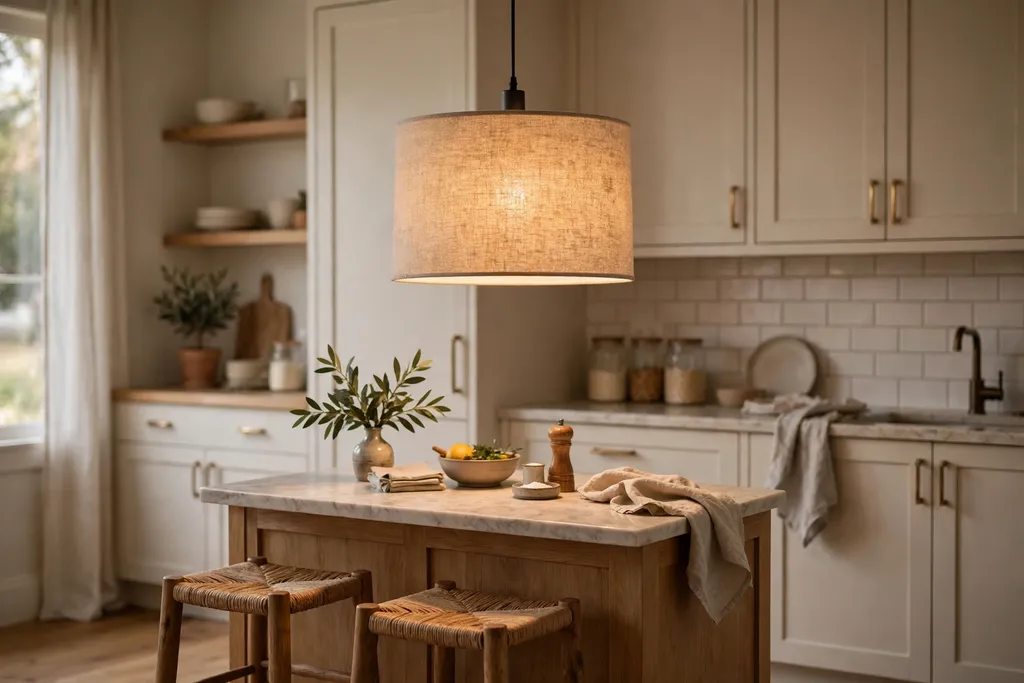
A linen drum shade pendant gives a small island a soft, fabric glow, similar to a table lamp, which suits a kitchen that opens onto a living area. The fabric diffuses the light in all directions, so the island feels like part of the living space rather than a work zone, and the drum shape keeps the fixture simple and calm. Linen suits kitchens with soft colors, wood floors, and upholstered stools.
Hang one drum shade over the island center, and check the shade diameter against the island width, since a drum wider than half the island can look heavy. Keep the shade clear of the hob and steam, since fabric absorbs cooking film, and vacuum the shade lightly now and then. Use a warm bulb, and put the drum on a dimmer, so the soft light can drop further for evening meals.
15. Schoolhouse Milk Glass Pendants
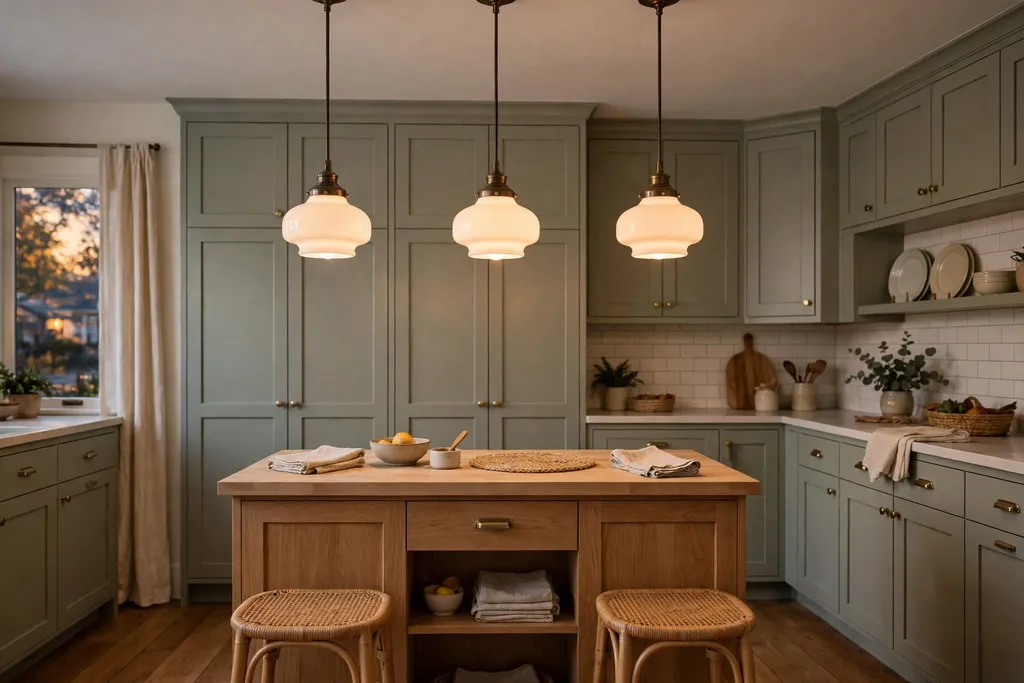
Schoolhouse pendants use opal milk glass in a simple dome or globe shape, which gives a small island a classic, timeless look. The milk glass diffuses the bulb evenly, so the light is soft from every angle, and the plain shape suits kitchens with shaker cabinets, subway tile, or a farmhouse sink. A pair of schoolhouse pendants reads as a quiet, settled choice rather than a trend piece.
Hang the pair evenly over the island, with matching drops, and choose a shade size that leaves clear space between the shades and above the counter. Use warm white bulbs, since milk glass softens the light, and clean the glass inside and out now and then, since dust inside a milk glass shade shows as a dull patch. This idea pairs well with a simple metal finish, such as brushed nickel or aged brass.
16. Dimmable Pendants for Day and Evening
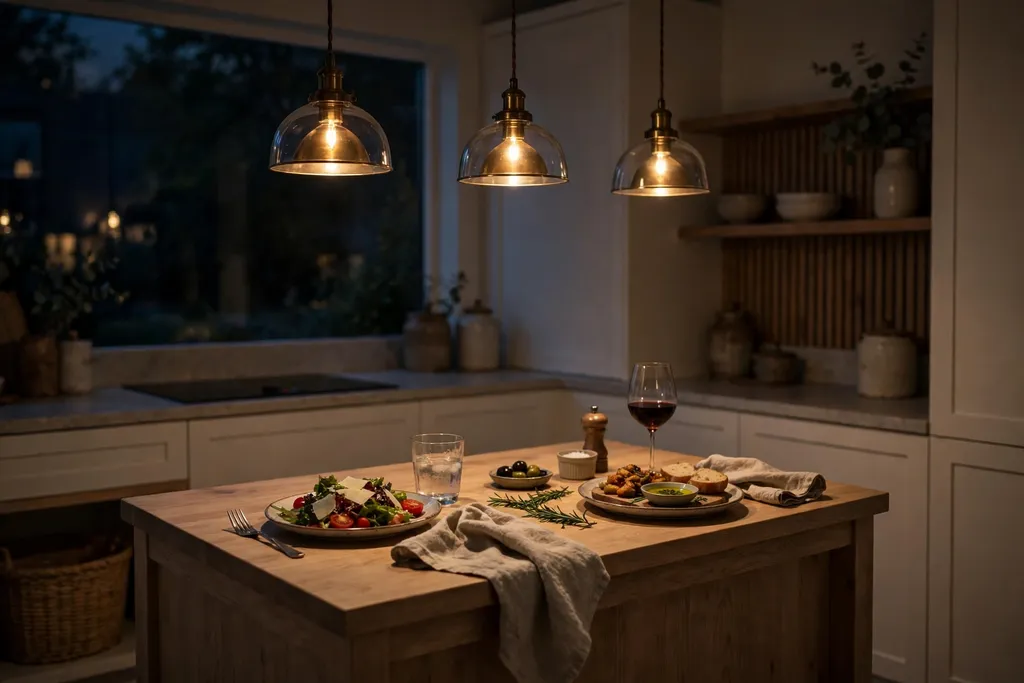
Putting island pendants on a dimmer turns one fixture into two lights: bright for prep and low for meals. This suits a small island that serves as both a work counter and a dining spot, since the light can change with the job without a second fixture. A dimmer also extends bulb life and cuts power use in the evening, when full brightness is rarely needed.
Check that the bulbs and the dimmer work together before fitting, since some LED bulbs flicker on the wrong dimmer, and test the full range from bright to low after dark. Place the dimmer switch near the kitchen entry or beside the main light switch, so it is easy to reach when you sit down to eat. If the pendants are already fitted, a dimmer switch swap is often a simpler job than changing the fixture.
17. Smart Bulbs With Scene Settings
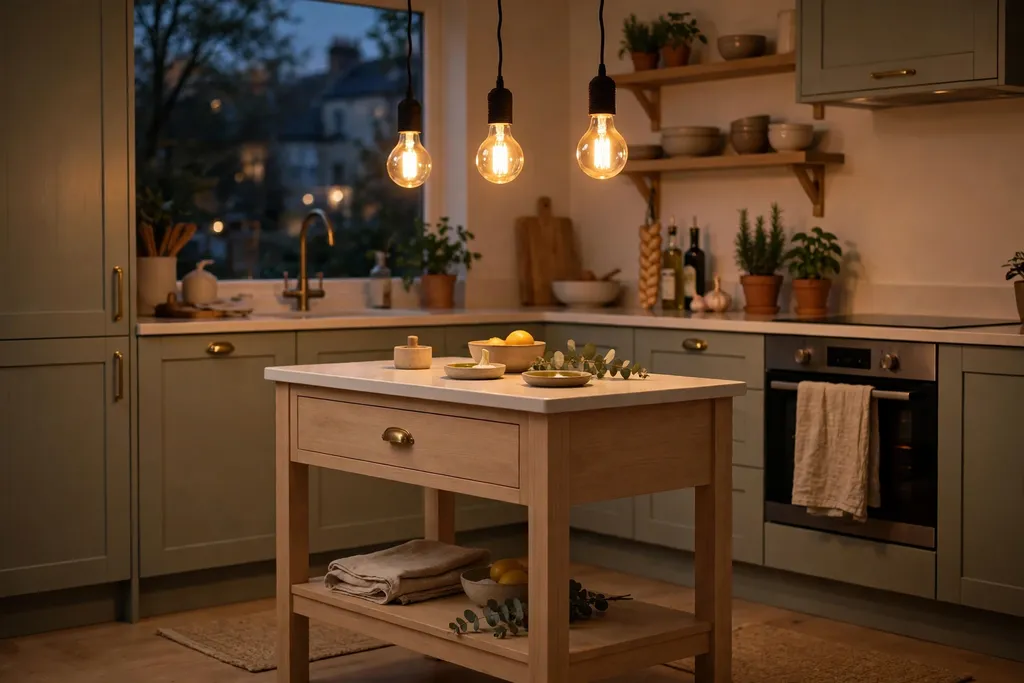
Smart bulbs in island pendants let you set scenes, such as bright white for cooking and warm low light for dinner, from a phone or a voice command. This suits a small island used at different times of day, since the scene changes the light without touching a switch, and it suits households where different people prefer different light levels. Scenes also help when the island sits in an open plan room, since the island light can match the living area light.
Choose smart bulbs that fit the pendant sockets and work with the home system you already use, and set two or three scenes at most, so the choice stays simple. Keep a normal switch as a backup, since a smart bulb still needs power from the wall switch, and test each scene after dark, when the difference shows clearly. If you rent, smart bulbs are a simple change, since they need no wiring work.
18. Plug In Swag Pendants for Renters
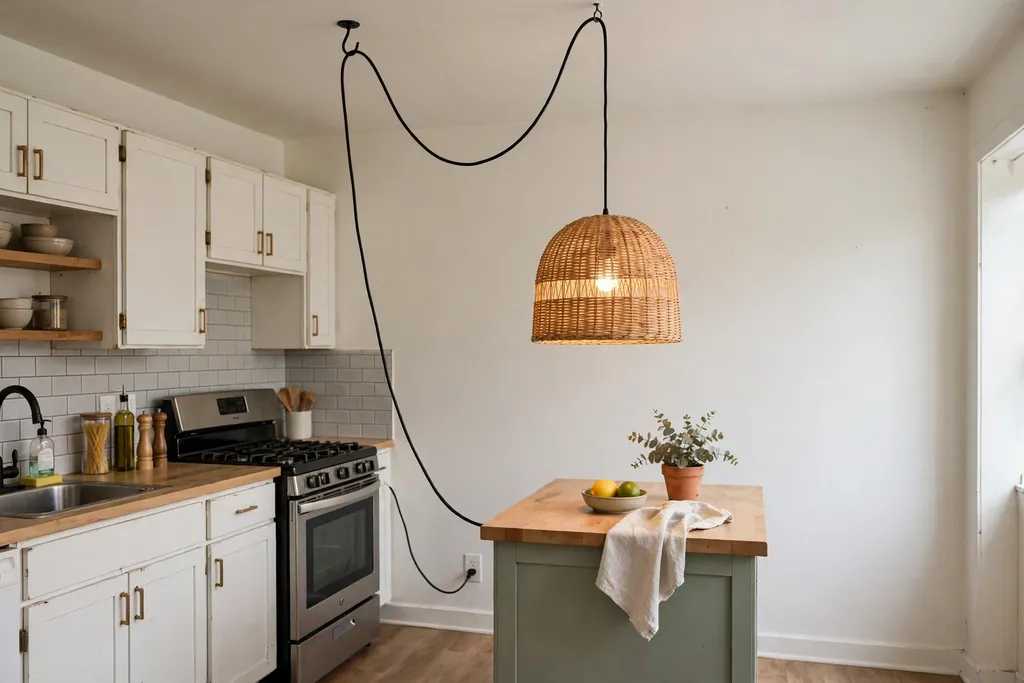
Plug in swag pendants hang from a ceiling hook and plug into a wall outlet, with the cord draped in a gentle curve, which suits a rental where new wiring is not allowed. This idea gives a small island a pendant look with no electrician visit, and the pendant can move to a new home when you move. Swag pendants suit kitchens where the island sits near a wall outlet and the ceiling has a solid hook point.
Fix the hook into a ceiling joist or a rated ceiling anchor, since a pendant with a cord and shade has real weight, and drape the cord so it does not hang over the work surface or near the hob. Choose a light shade and a warm LED bulb, and hide the cord run along the wall or ceiling edge with small clips. For ideas that refresh a kitchen without rewiring, see these kitchen ideas on a budget.
19. Staggered Height Pendant Row
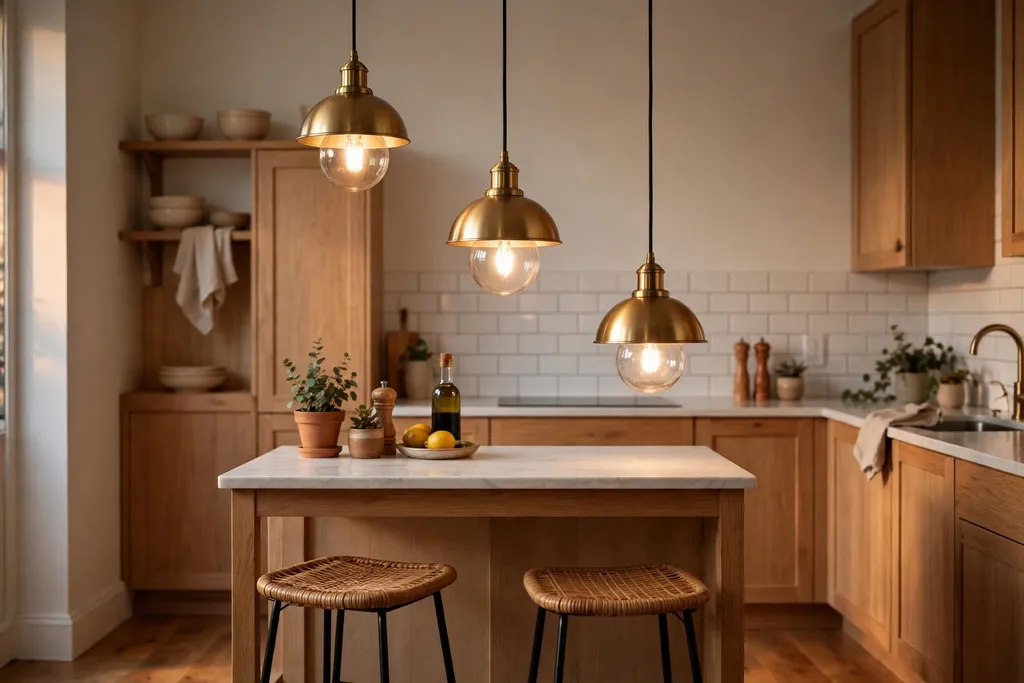
Hanging pendants at staggered heights turns a simple row into a feature, with each shade sitting a few centimeters higher or lower than the next. This suits a small island in a kitchen with a high ceiling, where a flat row would look plain, and it suits islands used for display as well as prep, since the varied heights draw the eye along the counter. The stagger also helps when the island has two levels, such as a prep height and a bar height.
Keep the height differences small, about 8 to 15 centimeters between shades, so the row still reads as one group, and keep the lowest shade well above head height. Use matching shades and bulbs, so the stagger is the feature, not a mix of shapes, and check the row from the kitchen entry, since that is where the stagger shows most. If the ceiling is low, skip this idea, since staggered shades can feel crowded overhead.
20. Pendants Matched to Cabinet Hardware
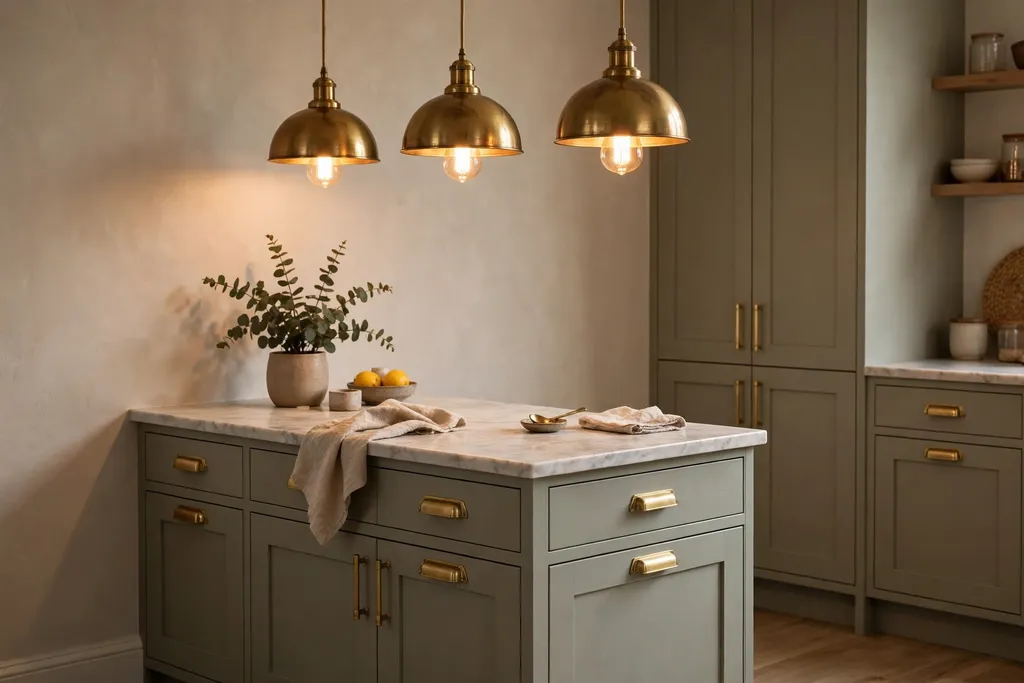
Matching the pendant finish to the cabinet hardware, such as brass pendants with brass pulls or black pendants with black knobs, ties a small island into the rest of the kitchen. This small repeat makes the room feel planned, even when the pendants themselves are simple, and it suits kitchens where the hardware is already a clear feature. The match also helps a small island feel like part of the kitchen, rather than a separate piece.
Pick the hardware finish first, then find pendants in the same finish family, and repeat that finish once more, such as in the tap or a stool frame, so the match looks deliberate. Keep the pendant shape simple, since the finish is doing the work, and avoid mixing two strong metals in one small room. For help choosing a finish that suits the room, see these colors for your kitchen cabinets.
21. Statement Pendant Plus Recessed Fill Light
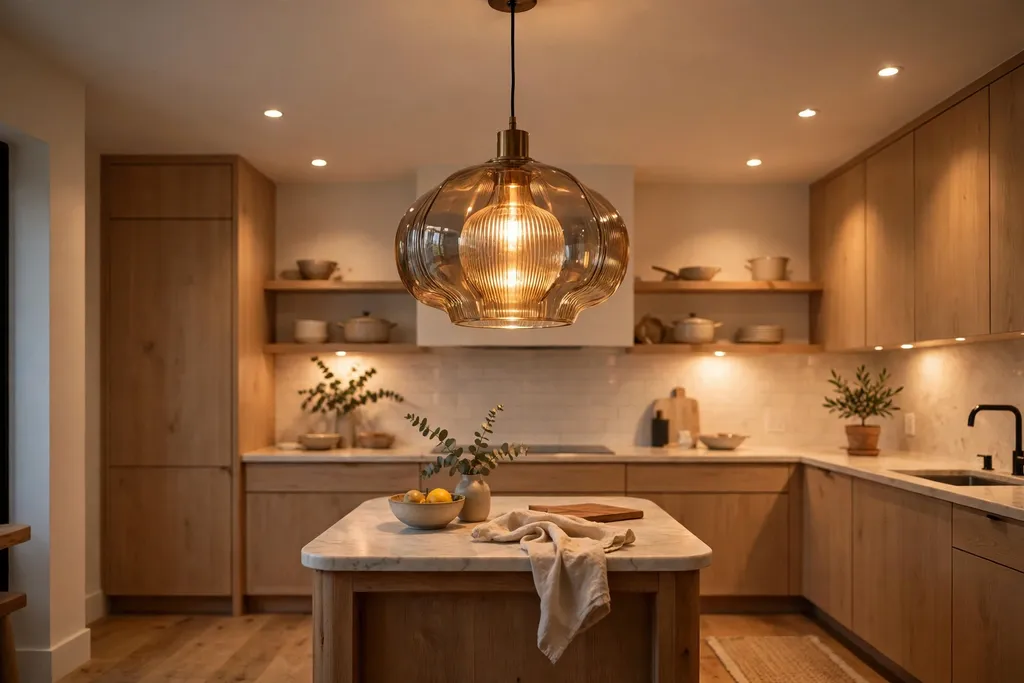
One statement pendant over the island center, paired with recessed lights for fill, gives a small kitchen both a focal point and even work light. The pendant carries the look, while the recessed lights handle the prep light, so neither job asks too much of one fixture. This layered pair suits islands with a clear center, where a single pendant can sit without blocking the view.
Hang the statement pendant over the island center, and place the recessed lights toward each end, so the whole counter gets light. Put the pendant and the recessed lights on separate switches or dimmers when possible, so you can run the pendant alone in the evening and add the fill lights for cooking. Check the pendant size against the island, since a statement shade still needs to leave clear space at each end.
22. Light That Bounces Off a Pale Ceiling
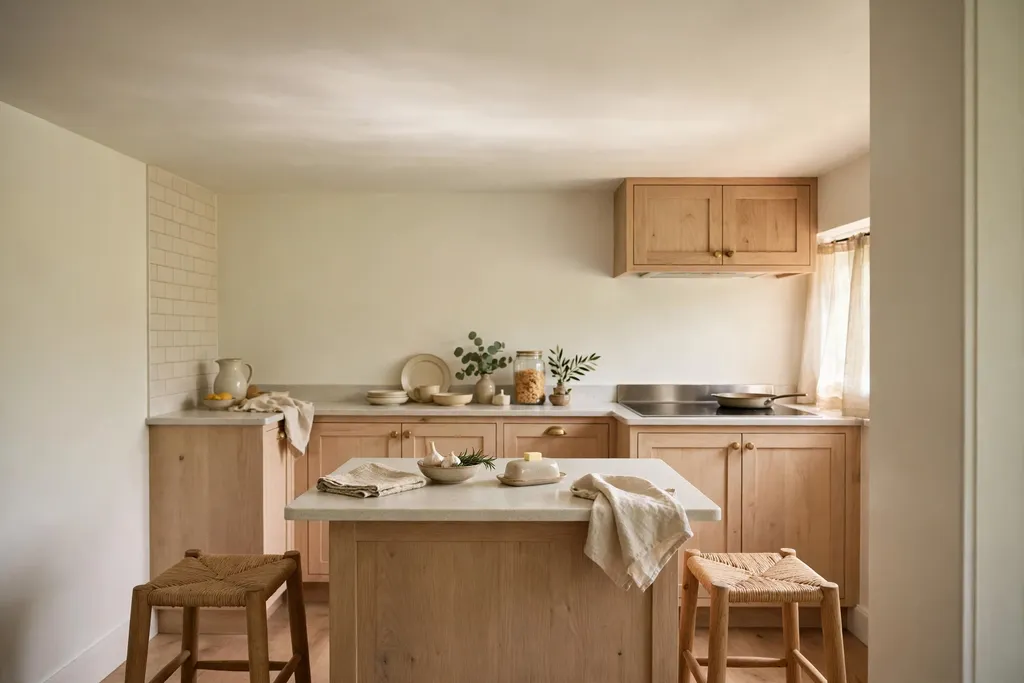
Bouncing light off a pale ceiling, with an uplight or a pendant that throws light upward as well as down, softens a small kitchen and makes the ceiling feel higher. This suits a kitchen with a low or dark ceiling, where direct downlights alone can feel harsh, and it suits islands in open plan rooms, where soft ambient light helps the kitchen blend with the living area. The bounced light fills the room without a visible bright spot.
Use a fixture with an open top or an uplight setting, and keep the ceiling pale and matte, since a dark or glossy ceiling absorbs or reflects the light unevenly. Pair the bounced light with a focused island light for prep, so the counter still gets direct light for chopping. For broader ideas on making a compact kitchen work harder, see these small kitchen remodel ideas.
Conclusion
Lighting a small kitchen island is less about finding one perfect fixture and more about matching size, height, and light level to how the island is actually used. A trio of glass pendants, a slim linear bar, or a single woven shade can each work well, as long as the light falls on the counter, the shades stay clear of heads, and the room keeps a soft layer for the evening. Start with the island length and ceiling height, pick one main light from this list, add a dimmer or a soft strip for the evening, and test the result after dark before calling the job done. Save the ideas that fit your island, and return to them when you are ready to change the fixture.
FAQs
How many pendant lights should go over a small kitchen island?
Two small pendants suit most small islands, while a very short island suits one pendant and a longer island suits three. Space the pendants evenly, with the outer shades set in from each end, and check the row from the kitchen entry, since that view shows whether the spacing looks even. When in doubt, choose fewer, smaller shades rather than more large ones.
How high should pendant lights hang above a kitchen island?
Hang pendants so the lowest point of the shade sits about 75 to 90 centimeters above the island counter, which lights the work surface while keeping the shade above eye level when seated. In a kitchen with a low ceiling, stay near the lower end of that range only if the shade still clears heads, and in a tall room, hang slightly higher so the pendant does not block the view across the island.
What color temperature is best for kitchen island lighting?
Warm white light, around 2700 to 3000 Kelvin, suits most kitchen islands, since it flatters food, wood, and skin tones in the evening. A cooler white, around 3500 to 4000 Kelvin, gives brighter prep light but can feel clinical in a small room, so use it only if the kitchen gets little daylight. Dimmable warm white bulbs give the most flexibility, since they cover both prep and meals.
Can you light a small kitchen island without pendants?
Yes, recessed downlights, a slim linear bar, track lighting, or LED strips can all light a small island without pendants. Recessed lights suit low ceilings, a linear bar suits modern kitchens, and strips under the overhang or at the toe kick add a soft layer. The key is even light across the counter, so choose the option that covers the full island length without dark gaps.
Should island lighting match the rest of the kitchen?
The finish should relate to the rest of the kitchen, such as matching the pendant metal to the taps or cabinet pulls, but the shade shape can differ. One repeated finish ties the room together, while a matching shape in every light can feel repetitive. Keep the island light simple if the rest of the kitchen already has strong details, and let the island light carry more character only if the rest of the room is plain.
Do I need an electrician to change island lighting?
A simple bulb swap, a smart bulb change, or a plug in swag pendant needs no electrician, but new wiring, a new ceiling point, or a dimmer switch swap usually does. If the job involves opening the ceiling, moving a junction box, or working on the main circuit, hire a licensed electrician, since kitchen wiring sits near water and heat. For renter friendly options, see these kitchen ideas on a budget.