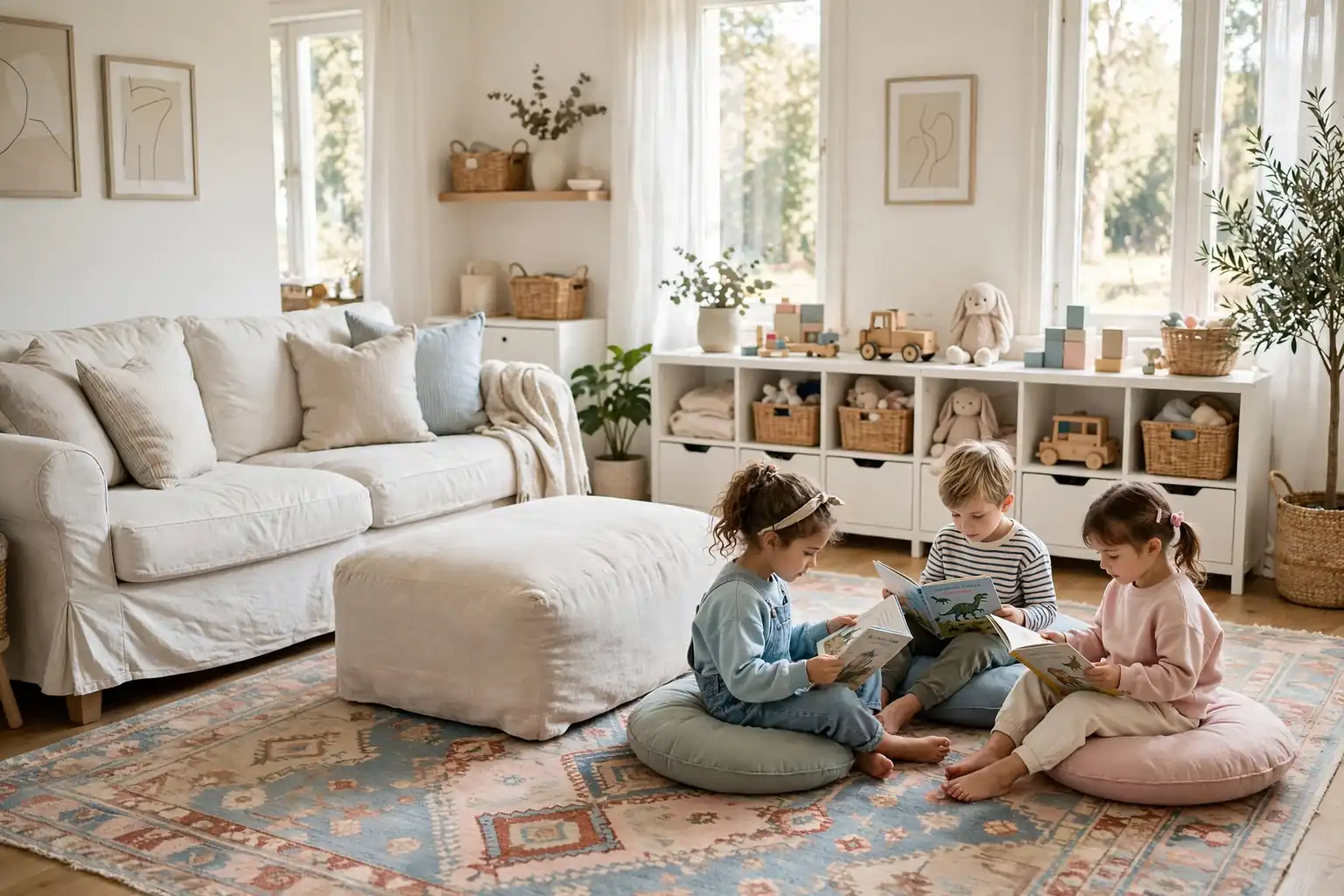
A living room shared with children has to work twice as hard as an adults only room. It needs a sofa you can sit on without worry, a floor that survives spills and building blocks, and storage that lets toys disappear before guests arrive. These 11 kid friendly living room decor ideas cover seating, tables, rugs, storage, walls, and play zones, so you can pick the mix that fits your room size and your children’s ages. Start with the pieces your family touches every day, then add the fun details once the practical base is in place.
Key Takeaways
- Choose washable, wipeable, and rounded pieces first, since the sofa, rug, and coffee table take the most daily wear.
- Give every toy category one low, open home children can reach, so tidying becomes a habit rather than a nightly battle.
- Keep one soft floor zone for play and one clear walking route through the room, so adults and children can share the space safely.
- Use the walls for art display and storage, which frees floor space and lets children see their work valued.
- Pick decor children cannot easily break, such as fabric wall hangings, soft poufs, and shatterproof frames.
- Plan for growth: adjustable shelves, a table that suits more than one age, and neutral large pieces that outlast a favorite color phase.
1. Washable Slipcovered Sofa
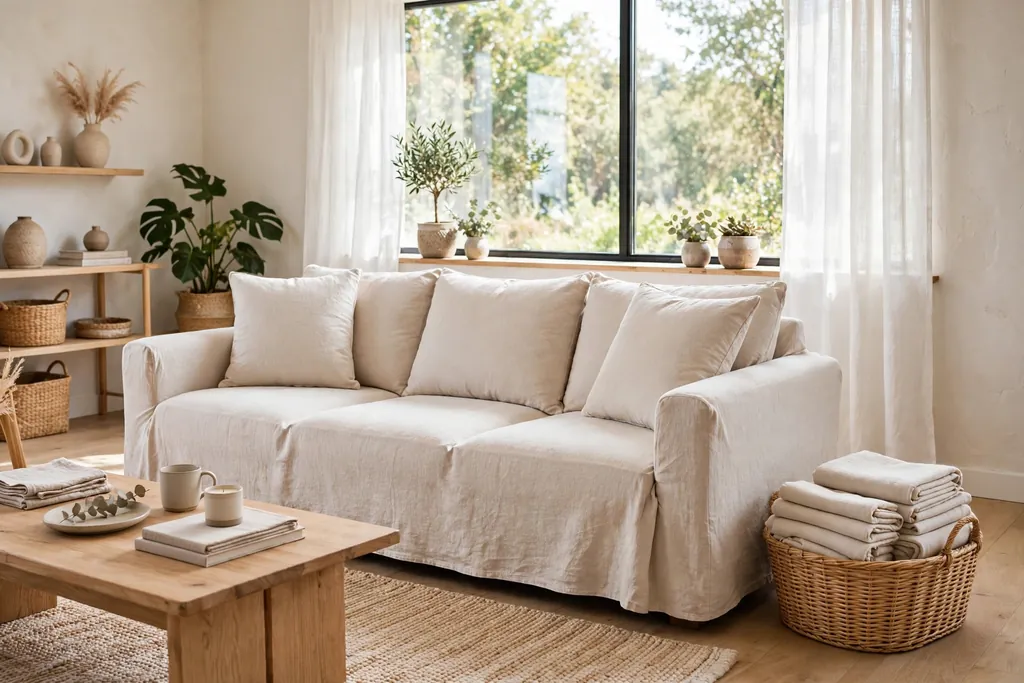
A slipcovered sofa is the most forgiving seat for a family room, because the covers come off and go in the wash after juice spills, muddy knees, and craft glue. Choose a tight weave cotton or performance fabric in a mid tone, which hides marks better than very pale or very dark fabric, and keep a spare set of covers if the maker sells them. Check that the slipcover fits snugly after washing, and follow the care label for drying so the cover does not shrink.
Pair the sofa with washable cushion covers in the same fabric family, so the whole seat can be refreshed at once. A sofa with removable legs also helps, since you can lift it to retrieve lost toys and clean underneath. For more ideas on pairing a practical sofa with the rest of the room, see these grey couch living room ideas.
2. Soft Ottoman as a Coffee Table
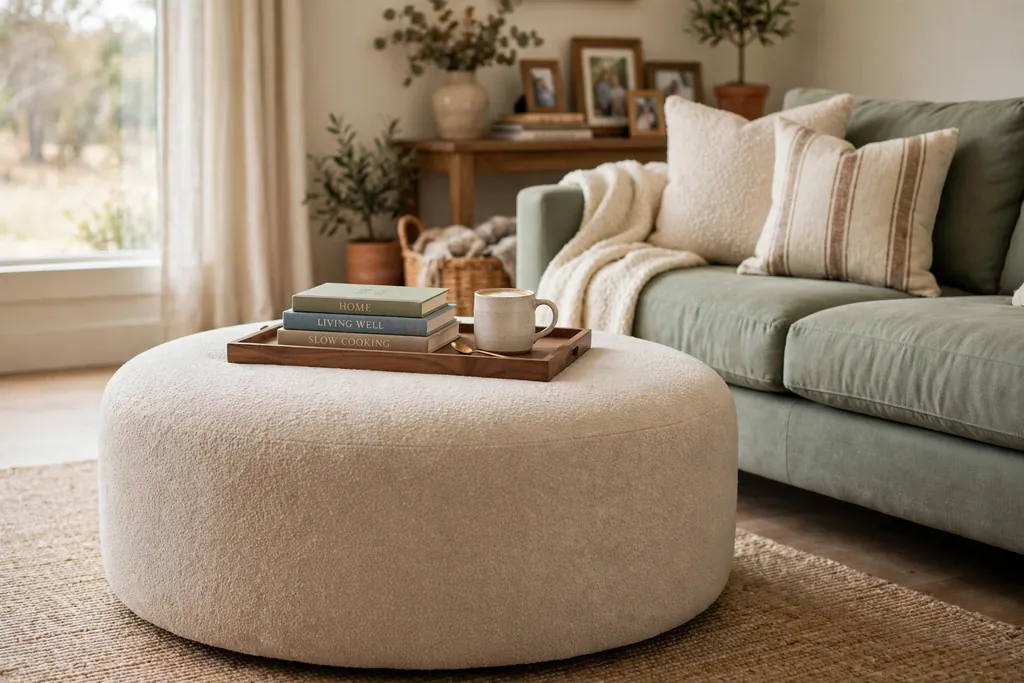
Swap a hard cornered coffee table for a large, soft ottoman and you remove the most bumped into piece in the room. A firm topped ottoman still holds a tray for drinks and books, while its padded sides are kind to toddlers learning to walk and to older children racing past. Choose one with a removable, washable top or a wipe clean surface, and check that it is heavy enough not to slide when a child leans on it.
Many ottomans open for storage, which gives blankets, board games, and small toys a home right where they are used. Place a sturdy tray on top to create a flat surface for mugs, and lift the tray away when the ottoman needs to become extra seating. This one swap suits small rooms especially well, since the ottoman can serve as table, seat, and storage in a single footprint.
3. Low Open Toy Cubbies
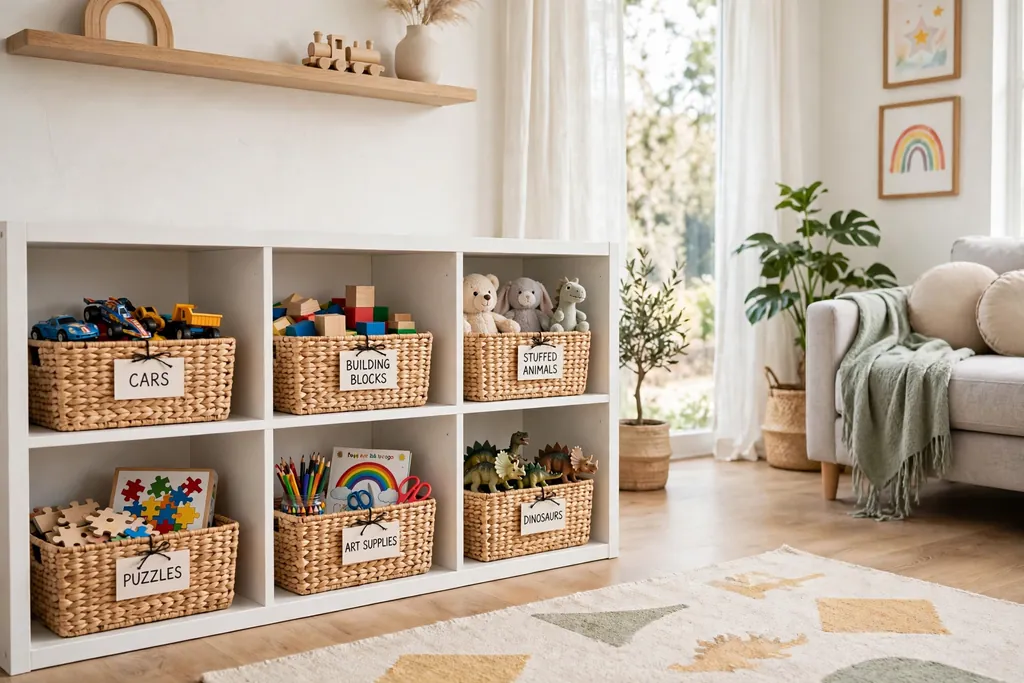
Low open cubbies let children see, reach, and return their own toys, which is the simplest way to keep a living room tidy. Set the unit at child height, with one basket or bin per category, such as blocks, dolls, cars, and art supplies, and label each bin with a picture as well as a word for younger children. Anchor the unit to the wall following the maker’s instructions, since climbing children can tip unsecured furniture.
Keep the cubbies to one wall or one section of the room, so toys have a clear boundary and the rest of the room stays adult. Rotate the contents every few weeks, storing the rest out of sight, so the selection stays fresh without buying more. In a small home, the same low storage approach works well alongside the layout ideas in these cozy apartment living room ideas.
4. Washable Stain-Resistant Rug
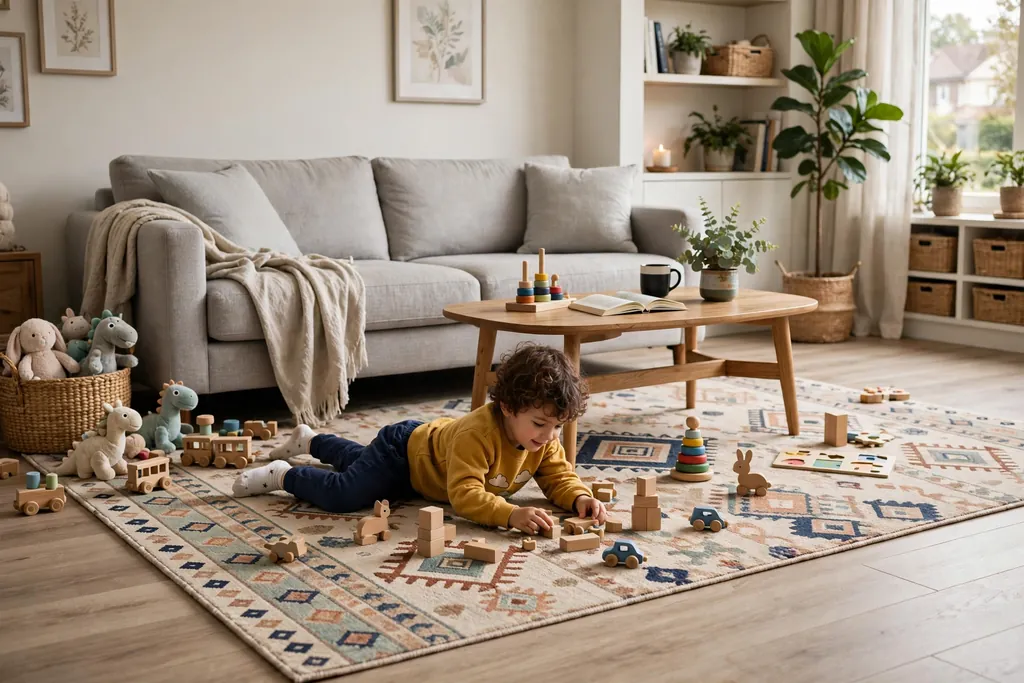
A washable rug changes how relaxed you can be about a family living room, because spills stop being emergencies. Choose a low pile, machine washable rug large enough for the front legs of the sofa to rest on it, and keep a second rug pad or a spare rug if you want a quick swap on wash day. Darker patterns and busy prints hide crumbs and marks between washes better than a plain pale rug.
Check the washing instructions before buying, since some washable rugs need a large capacity machine or air drying. A rug pad underneath stops sliding on hard floors and adds a little cushioning for floor play. For sizing and placement guidance, see these living room rug ideas, and pick the size that fits your seating group before you pick a pattern.
5. Floor Cushion Reading Nook
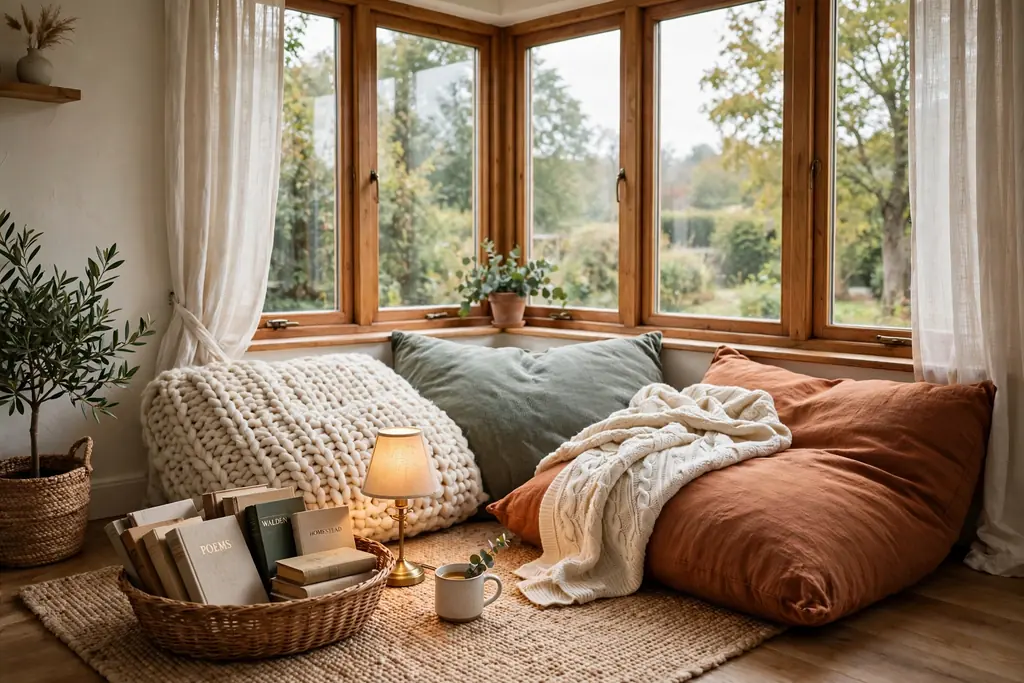
A reading nook built from floor cushions gives children a cozy spot that does not need a dedicated room. Place a low book basket or a short shelf beside a window or a quiet corner, add two or three large floor cushions and a soft throw, and keep a small lamp nearby for evening reading. The cushions can be stacked or moved aside when adults need the floor space back.
Let children choose a few favorite books for the basket and rotate them with the seasons, so the nook stays inviting. Washable cushion covers matter here too, since the nook will see snacks, naps, and sprawled out reading sessions. This corner also doubles as a calm down spot, which is useful on busy days when the main seating area feels too lively.
6. Rotating Kids Art Display Wall
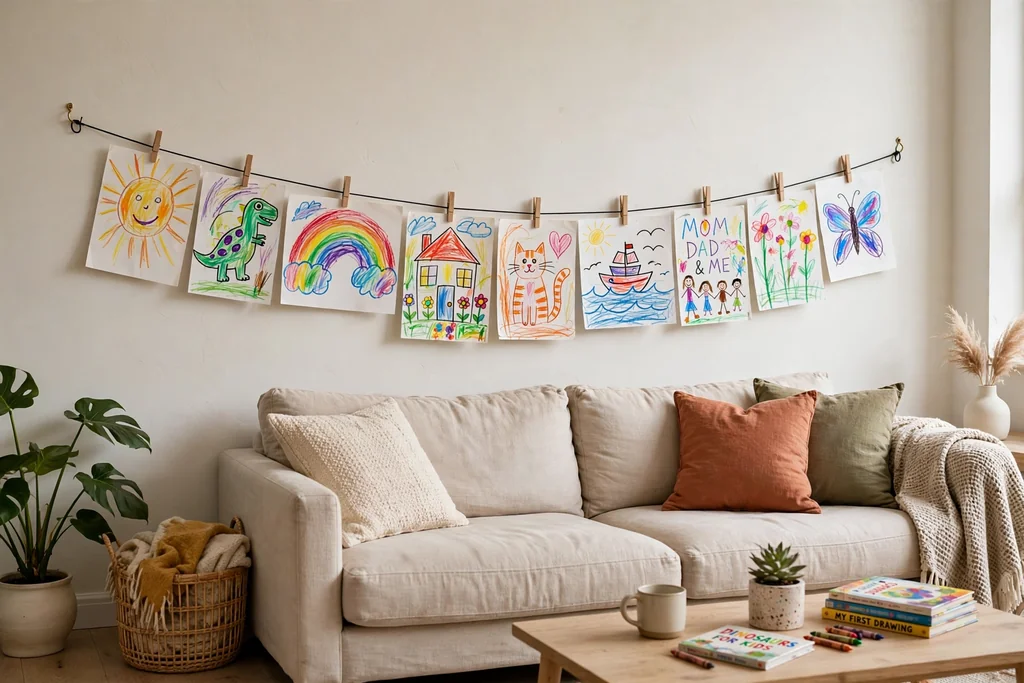
A display wall for children’s art turns the living room into a gallery children feel proud of, without damaging the walls. Hang a wire with clips, a picture ledge, or a set of clip frames at child eye height, and swap the pieces every few weeks as new work comes home. Keeping the display to one defined wall or one row of ledges stops art from spreading to every surface.
Use lightweight frames and fixings suited to their weight, and keep glass out of reach of very young children, or use open clip frames with no glazing. Photograph favorite pieces before they are retired, so the wall can change without losing the memory. A rotating display also teaches children that their work is valued and that change is part of decorating, not a rejection of older pieces.
7. Wipe-Clean Walls and Wainscot
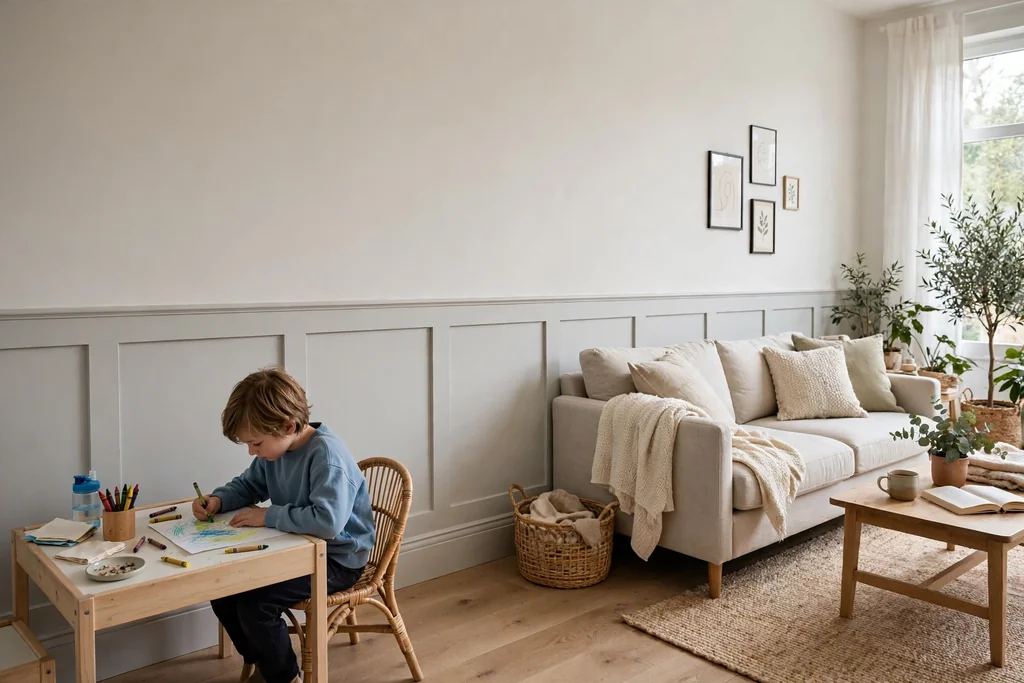
Walls in a family living room take crayons, fingerprints, and ball marks, so the finish matters as much as the color. A washable, scrubbable paint in eggshell or satin lets you wipe most marks away with a damp cloth, while flat paint tends to show every touch. Paint the lower half of the wall, or add a wipe clean wainscot or beadboard panel, to protect the zone little hands reach most.
Keep the upper walls a calm neutral and save stronger color for the lower panels or one accent wall, so the room still feels grown up. Test the paint finish on a small patch first, and check that your cleaning method suits the paint maker’s guidance. This idea pays for itself the first time a crayon masterpiece appears at toddler height and wipes away in minutes.
8. Soft Play Mat Zone
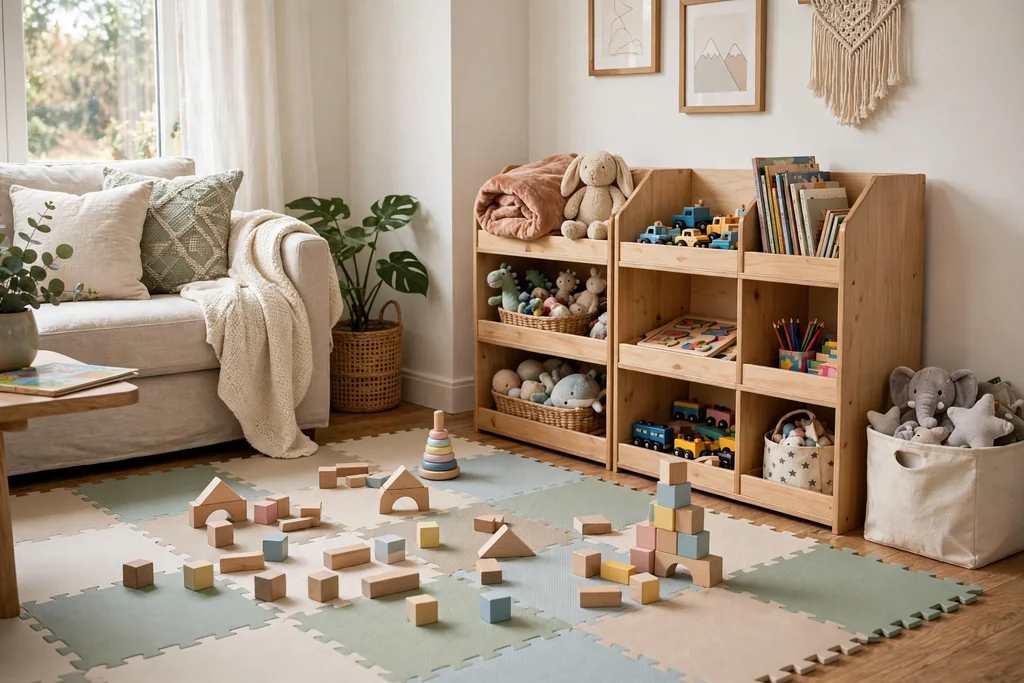
A defined play mat zone gives children a clear place to build, tumble, and sprawl, while the rest of the room stays a seating area. Use interlocking foam mats, a thick padded play rug, or a foldable mat in a pattern that suits the room, and place it beside the toy cubbies so play and storage stay close together. The mat also protects hard floors from dropped blocks and toy cars.
Choose mats that wipe clean and lie flat without curling edges, which can trip small feet. Foldable mats can be leaned against a wall or slid behind a sofa when guests visit, while a permanent play rug suits a room that is mainly a family space. Keep the zone away from the television stand and any tip prone furniture, and leave a clear path around it for adults walking through.
9. Hidden Storage Bench and Trunk
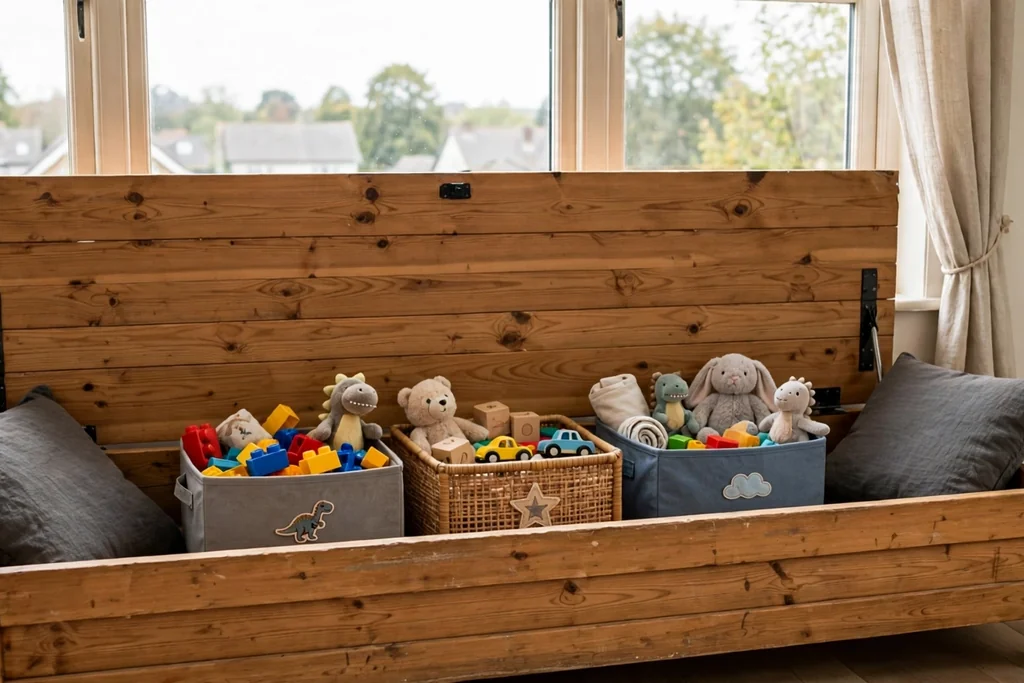
A storage bench or a sturdy trunk hides the toys that do not fit the open cubbies, such as large sets, dress up clothes, and sports gear. Place the bench under a window or against a wall where it can also serve as extra seating, and choose a lid with a soft close hinge so small fingers do not get caught. Inside, use small bins to sort categories, so the bench does not become one mixed pile.
A trunk with a flat top can double as a side table, holding a lamp or a stack of books, which helps it look like adult furniture. Label the bins inside, and do a quick sort once a month to remove broken or outgrown toys. Hidden storage is what makes a family living room look calm in the evening, after the open cubbies have done their daytime job.
10. Unbreakable and Soft Decor
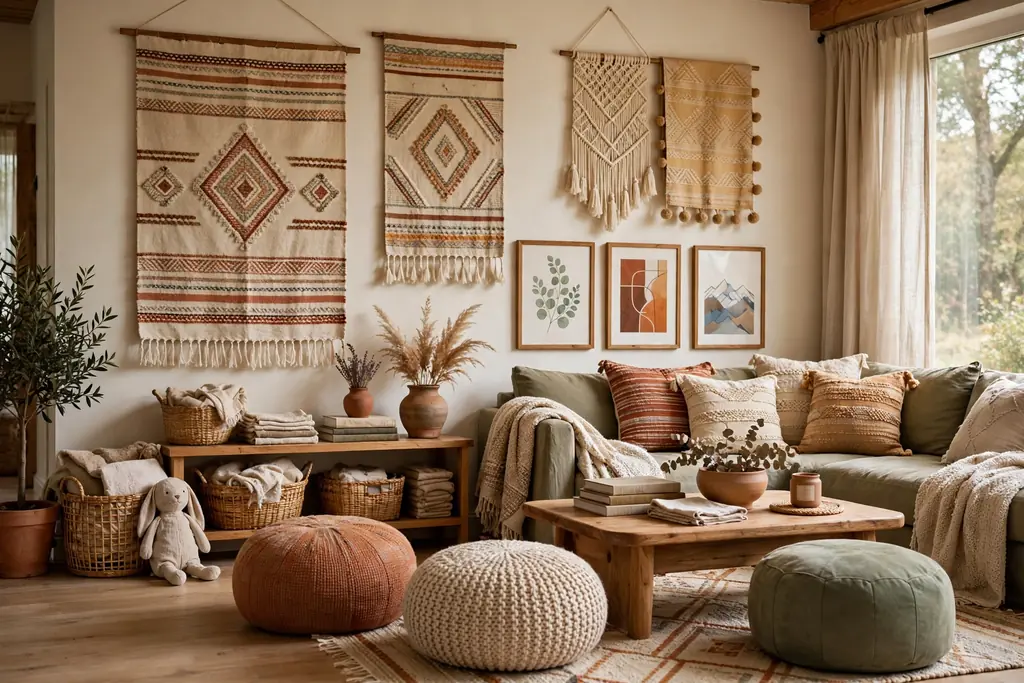
Decor that cannot break removes a whole category of worry from a family living room. Swap glass vases for ceramic, wood, or metal ones, use shatterproof acrylic frames instead of glass, and hang fabric wall hangings, felt banners, or woven pieces where a child might reach. Soft poufs and floor cushions add seating and color without a single sharp edge.
Keep treasured or fragile pieces high, behind closed doors, or in a room children use less, rather than hoping children will remember not to touch them. Check that wall hangings are fixed securely and that any cords, such as those on blinds or lamps, are cord free or safely secured out of reach. The room will still look finished, because texture, color, and shape carry the style, not fragile materials.
11. Kid-Sized Craft and Homework Table
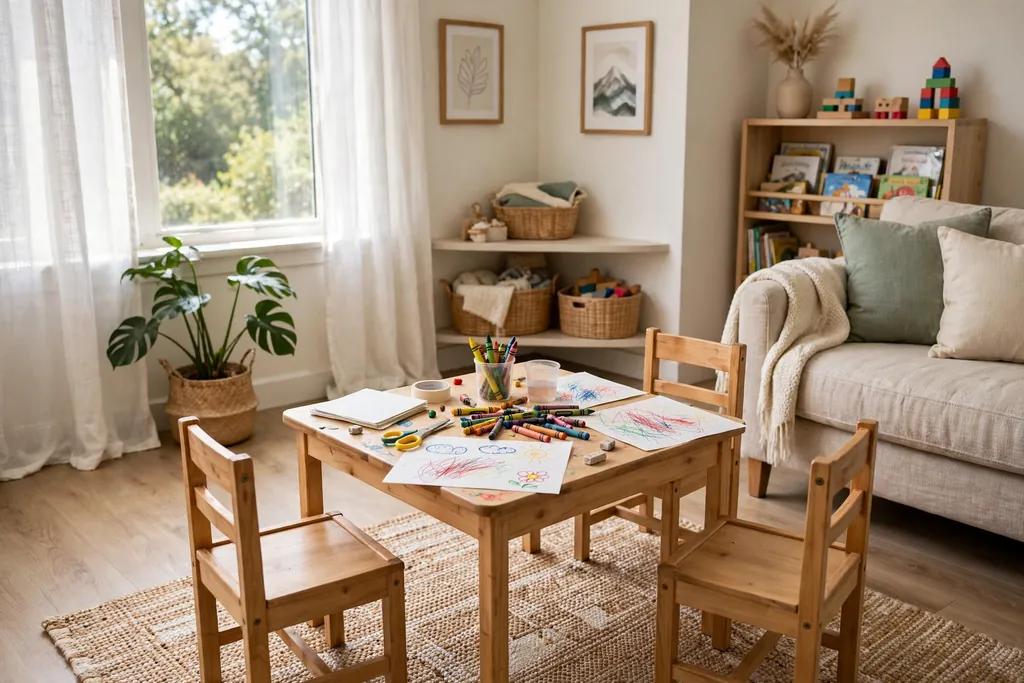
A small table at child height gives drawing, homework, and crafts a proper home, instead of spreading across the coffee table. Choose a sturdy table with wipe clean top and two or three small chairs, and place it near daylight with a low shelf or a caddy for paper, crayons, and glue. A table with a wipe clean surface means paint and marker accidents stay on the table, not on the sofa.
Keep the table’s supplies in one caddy that children can carry to the table and put away themselves, which builds the tidy habit the rest of the room relies on. As children grow, the same table can hold homework and board games, and the chairs can be swapped for taller ones. If your living room also holds a dining table, the zoning ideas in these small living room dining room combo ideas help the craft table sit beside the adult table without crowding the room.
Conclusion
A kid friendly living room is not a room without style, and it is not a playroom with a sofa in it. It is a shared space where washable fabrics, soft edges, low storage, and wipe clean surfaces do the hard work quietly, so both adults and children can relax. Start with the sofa, the rug, and one storage solution, then add the art wall, the reading nook, and the craft table as your family settles into the routine. Try one or two ideas this weekend, watch how your children use them, and adjust before adding more. If an idea here helped your space, save this post to your family home board on Pinterest so you can find it when you are ready for the next change.
Frequently Asked Questions
What fabric holds up best on a family living room sofa?
A tight weave cotton slipcover or a performance fabric rated for heavy use is usually the most practical choice, because both handle frequent cleaning. Slipcovers have the extra benefit of coming off for washing, while performance fabrics resist stains on the sofa itself. Check the care label before buying, and keep a spare set of covers if the maker offers them, so the sofa is never out of action on wash day.
How do I keep toys from taking over the living room?
Give every toy category one low, open home, such as a labeled basket in a cubby unit, and keep the rest in hidden storage or rotation boxes elsewhere. Children tidy more willingly when they can see and reach the right bin, and a weekly rotation keeps the selection fresh without new purchases. A short tidy routine before bedtime, with children returning items to their own bins, keeps the room calm for the evening.
What coffee table is safest for a home with toddlers?
A soft ottoman with a tray on top is the safest common choice, since it has no sharp corners and doubles as extra seating and storage. If you prefer a table, choose one with rounded corners, a stable base that will not tip when leaned on, and a height that keeps hot drinks out of easy toddler reach. Avoid glass topped tables in the toddler years, since they show every mark and can be a hazard if broken.
How can I display my children’s art without damaging the walls?
Use a wire with clips, a picture ledge, or clip frames fixed with a small number of fixings, and rotate the pieces regularly. These options need far fewer holes than hanging each piece separately, and they let you change the display as new work arrives. Keep the display at child eye height on one wall, use lightweight frames, and photograph favorite pieces before retiring them.
What rug works best in a kid friendly living room?
A low pile, machine washable rug in a busy pattern or mid tone is the most forgiving choice, since it hides marks and can be washed after spills. Size it to your seating group first, with the front legs of the sofa resting on it, and use a rug pad to stop sliding. Check the washing instructions before buying, since some washable rugs need a large machine or air drying.
How do I make a small living room kid friendly without crowding it?
Pick furniture that does two jobs, such as a storage ottoman and a storage bench, and use the walls for cubbies, shelves, and art display instead of adding floor standing units. Keep one soft play zone and one clear walking route, and rotate toys so only a small selection is out at once. A calm neutral base with washable covers keeps the room feeling adult, while the children’s pieces stay contained in their zones.