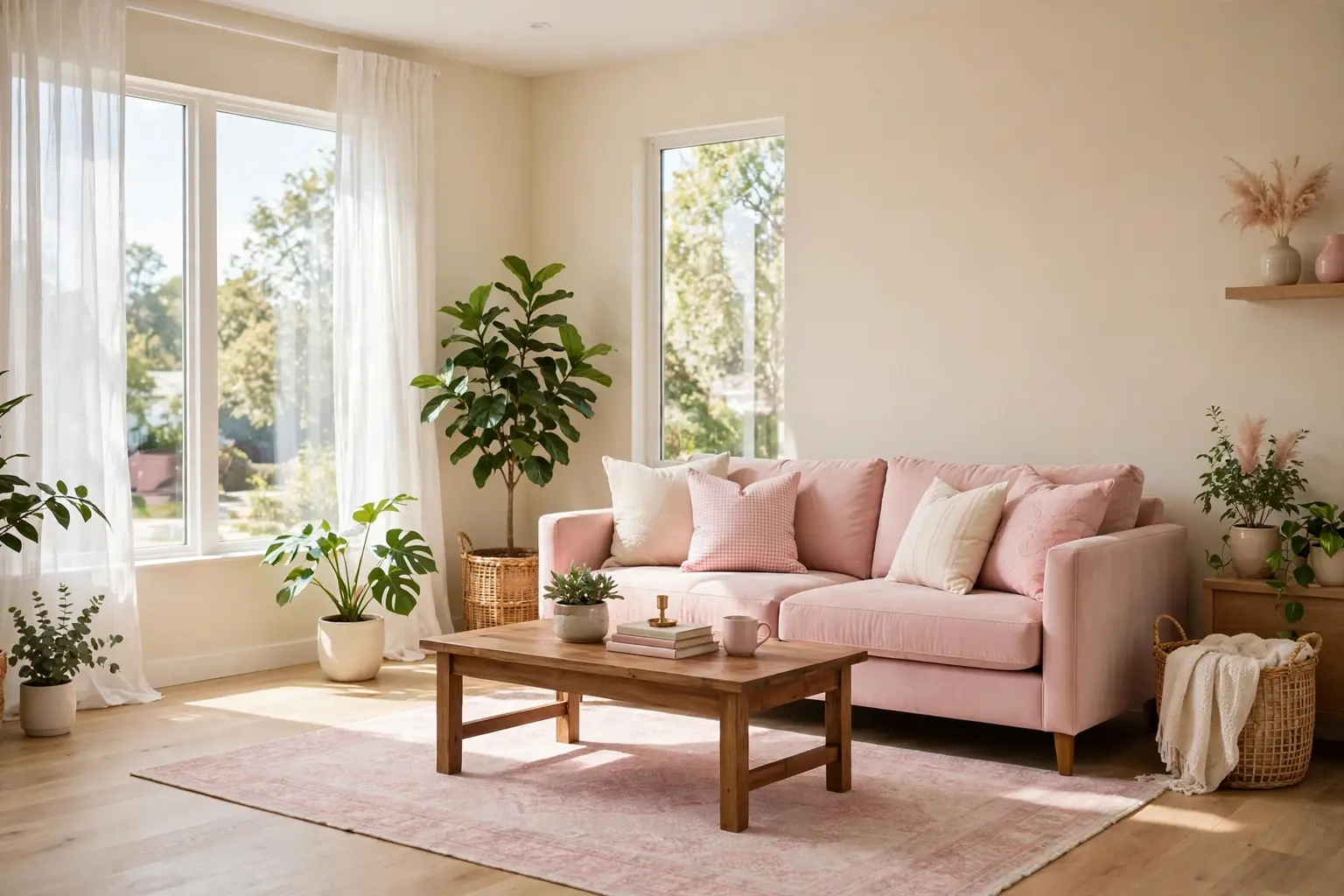
Pink can make a living room feel warm, soft, and welcoming when it is used with care. The trick is to pick a pink you like living with, such as blush or dusty rose, and pair it with calm neutrals like cream, warm grey, and pale wood. A little pink in the right places feels cozy and grown up, while pink on every surface can feel tiring. These 26 pink living room decor ideas cover walls, seating, textiles, lighting, storage, and small accents, so you can start with one change or build a full scheme over time. Begin with the largest piece, usually the sofa or the rug, then repeat the same pink once or twice more around the room.
Key Takeaways
- Pick one pink family and stay with it: blush, dusty rose, or muted raspberry, mixed with cream, warm grey, and pale wood.
- Let one large piece carry the pink, such as the sofa, the rug, or an accent wall, and keep the rest of the room calm.
- Repeat the pink in two or three places, not in every corner, so the room looks planned rather than crowded.
- Mix textures to keep pink from looking flat: velvet, knit, linen, ceramic, and wood all soften the same color in different ways.
- Use warm light, plants, and wood tones to keep a pink room feeling inviting rather than sugary.
- Test paint, fabric, and rug samples in daylight and lamplight before you commit, since pink shifts a lot between the two.
1. Paint One Blush Accent Wall
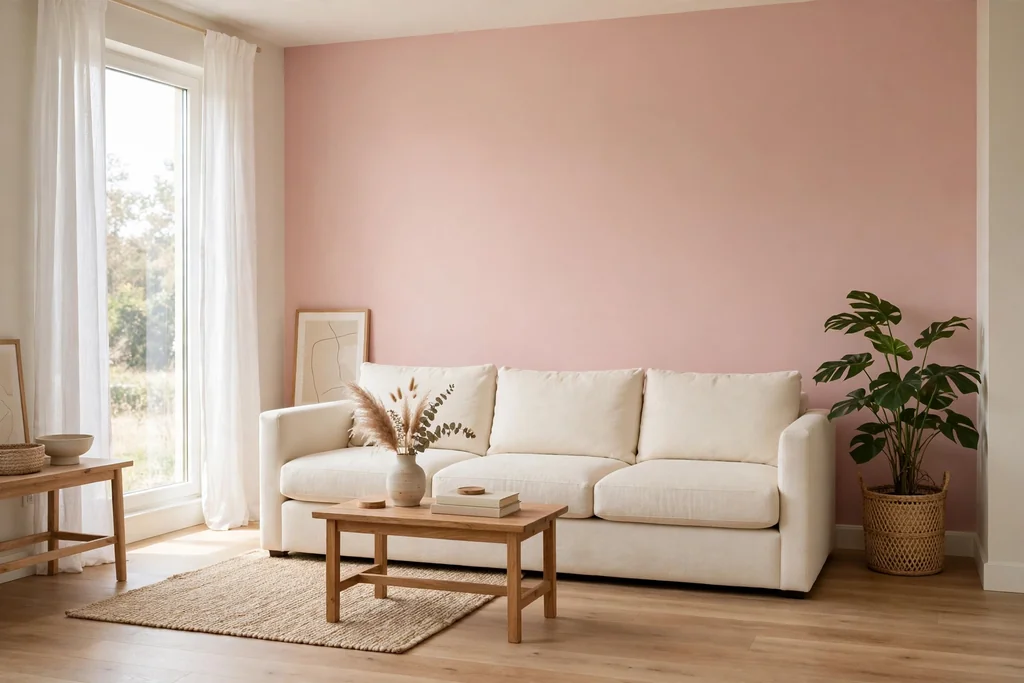
Paint a single wall in soft blush pink, usually the wall behind the sofa, and keep the other walls cream or warm white. One pink wall gives the room a clear focal point and a warm glow, while the pale walls around it stop the color from closing the room in. Blush suits most rooms because it reads as a warm neutral in daylight, especially with pale wood floors and cream furniture.
Test two or three blush samples on the wall and look at them in morning light and evening lamplight before painting the full wall. Keep the ceiling, trim, and skirting in warm white so the pink wall stands out cleanly. If the room is small or dark, paint only the wall behind the sofa and leave the wall with the window pale, so daylight still bounces around the room.
2. Choose a Blush Pink Sofa
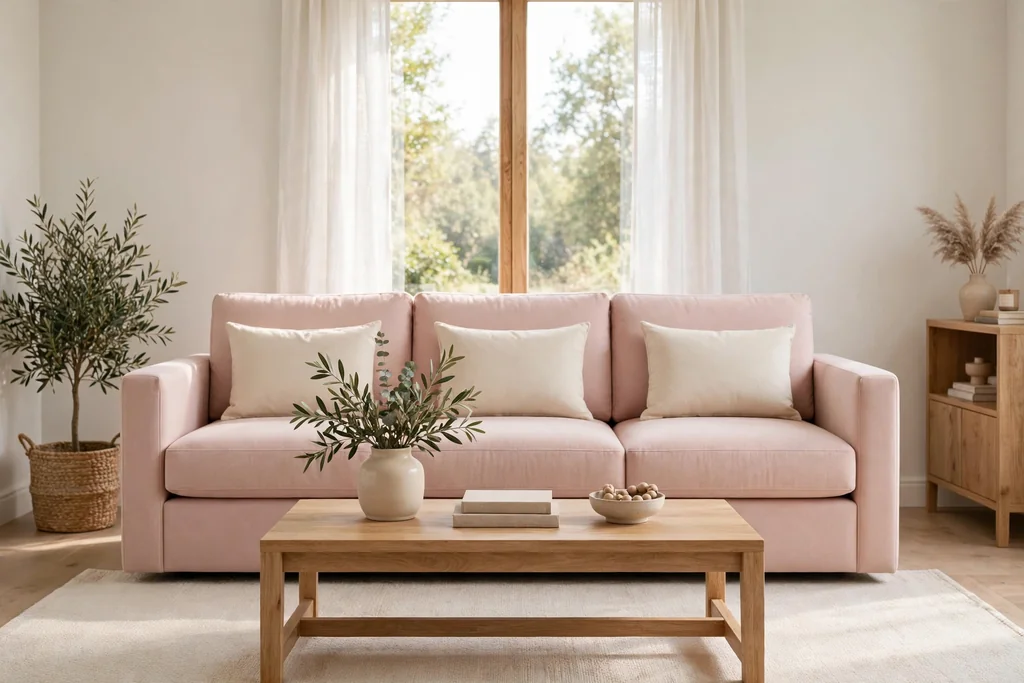
Choose a blush pink sofa as the main seat in the room, in a plain fabric that can take daily use. A pink sofa sets the whole scheme at once, so cushions, rugs, and throws can stay simple in cream, grey, and wood tones. A two or three seat sofa with slim arms suits most rooms better than a large sectional, which can leave little room for other pink notes.
Pick a washable or removable cover where you can, since a light pink sofa shows marks faster than a darker one. Keep the cushions in cream and one deeper pink, and let a wood coffee table and a pale rug ground the seating group. If a full pink sofa feels like a big step, a pink slipcover on a sofa you already own lets you test the color for a season.
3. Add a Pink Velvet Armchair
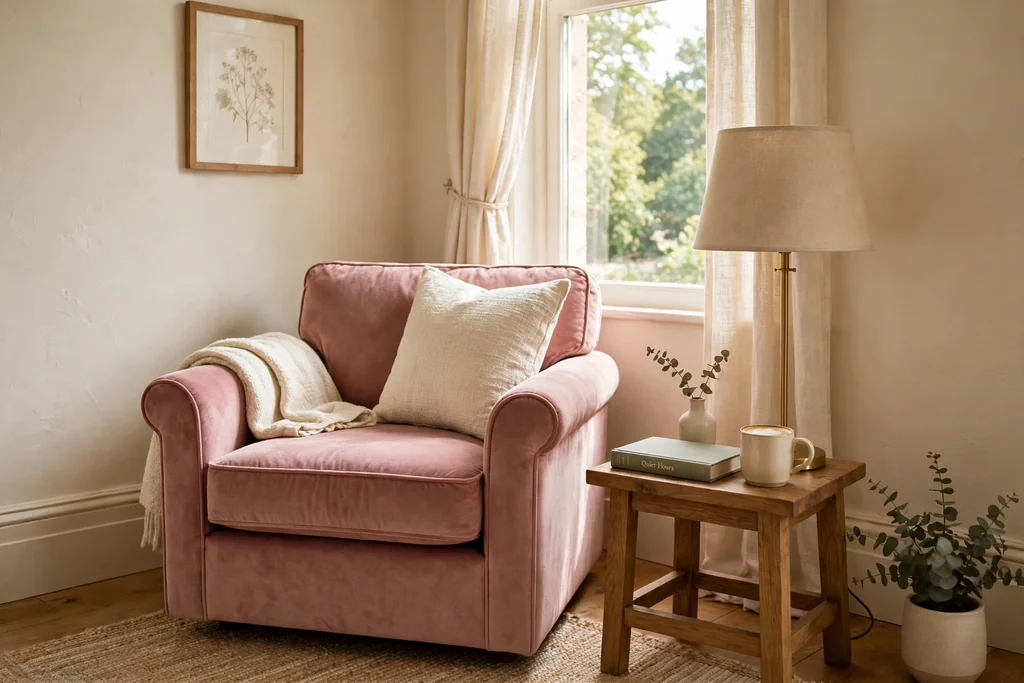
Add a dusty pink velvet armchair as a second seat beside the sofa or by the window. Velvet gives pink a richer, deeper look than flat cotton, and one chair is enough to make the color feel deliberate without dominating the room. A chair with wooden legs keeps the piece light, which matters in a small room where a fully upholstered chair can look heavy.
Pair the chair with a small side table and a reading lamp, so it becomes a seat people actually use rather than a display piece. Keep the chair cushion plain and let a cream throw soften the velvet. If you already own a neutral armchair, a pink velvet cushion and a pink throw can hint at the same idea while you decide whether a new chair is worth the cost.
4. Layer Pink and Cream Cushions
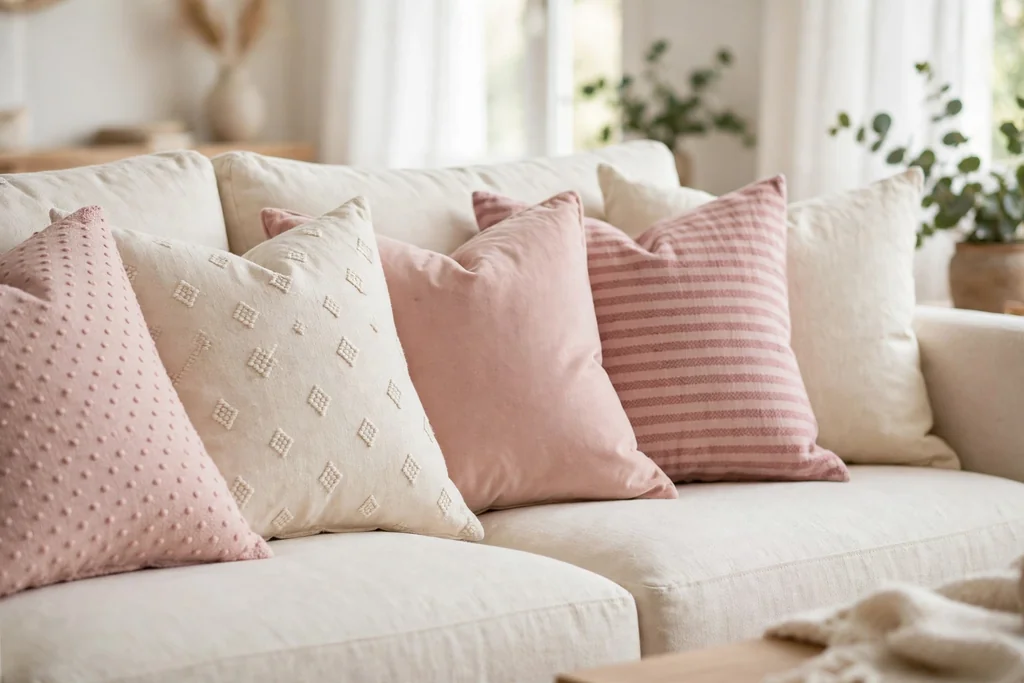
Layer cushions in blush pink, dusty pink, and cream on a cream or grey sofa, mixing plain cushions with one simple pattern. Cushions are the easiest way to try pink, since they cost little, need no tools, and can be swapped with the seasons. Three to five cushions suit a standard sofa, with the largest at the outer ends and smaller ones in front.
Vary the texture rather than adding more colors: one velvet cushion, one linen cushion, and one knit cushion give more interest than three identical pink cushions. Keep one cushion in a deeper pink so the group has depth, and keep the rest pale. If the sofa is already pink, use cream cushions with a single pink one, so the seat does not turn into one solid block of color.
5. Anchor the Room With a Pink Patterned Rug
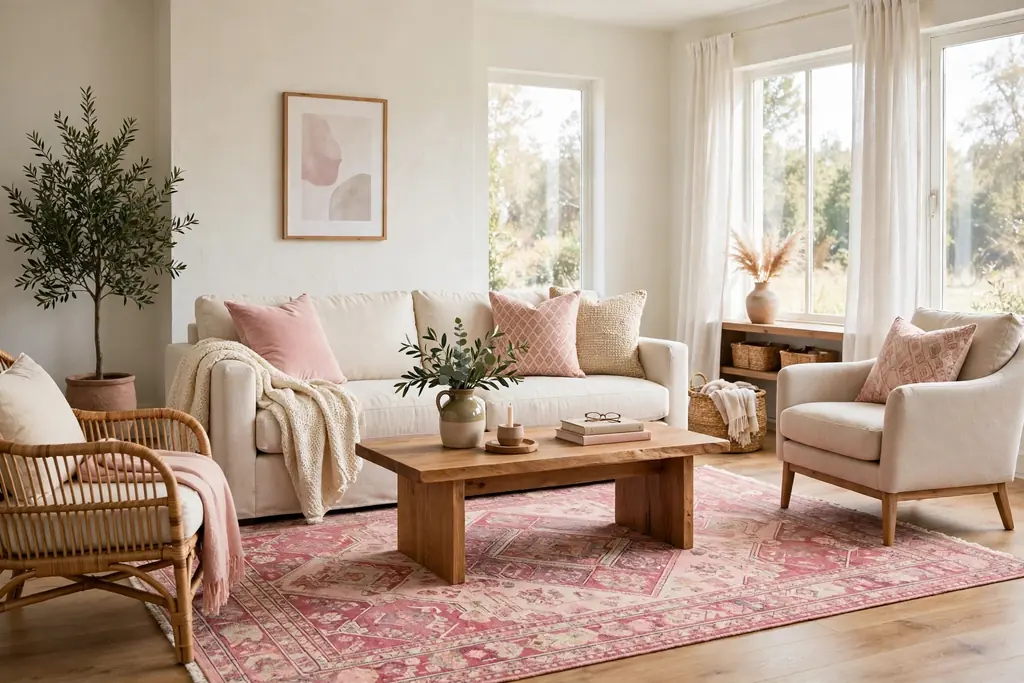
Lay a pink patterned rug under the seating group, large enough for the front legs of the sofa and chairs to rest on it. A rug in pink with cream, grey, or soft terracotta pattern anchors the room and ties the sofa, chairs, and coffee table into one group. Pattern also hides everyday marks better than a solid pink rug, which helps in a room that gets daily use.
Measure the seating zone before buying, and tape the rug outline on the floor to check walking routes and door swings. For more help with size and placement, see these living room rug ideas. Keep the rug pattern simple if cushions or art already carry pattern, and use a rug pad underneath on a smooth floor. A flatweave or low pile rug is easier to vacuum and to slide chairs across than a thick pile.
6. Hang Sheer Blush Curtains
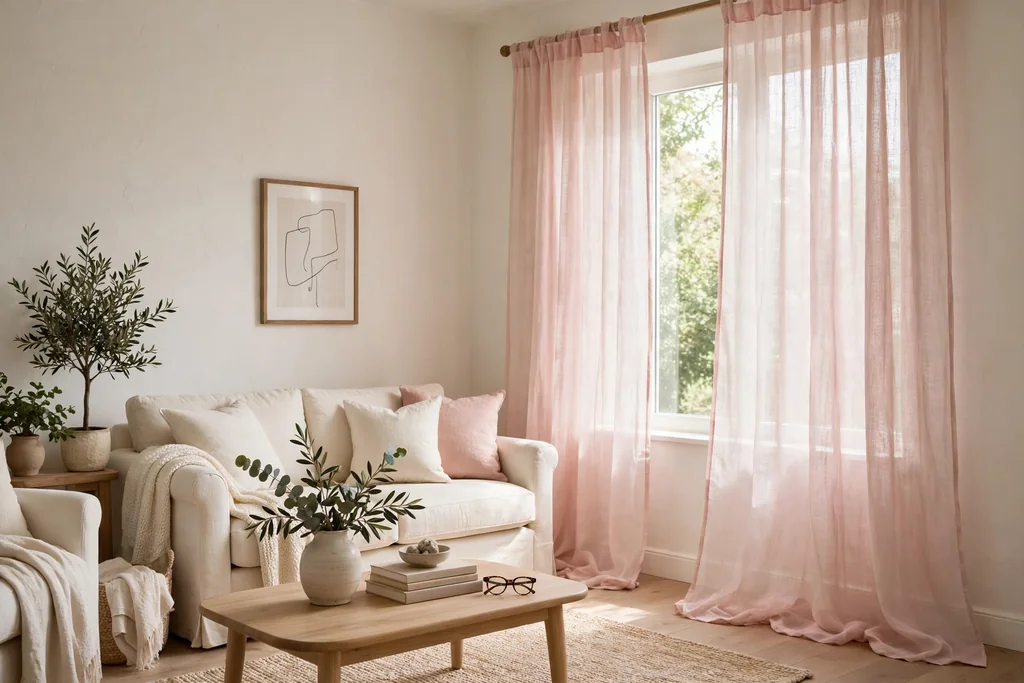
Hang sheer blush curtains from close to the ceiling to the floor, so daylight filters in softly and the window feels taller. Sheer pink linen or voile gives privacy in the daytime without shutting out light, and the pale pink tint warms the daylight in the room. White, cream, and blush sheers all work, with blush giving the strongest warm glow.
Use a simple rod in wood or black metal, and let the curtains fall straight rather than pooling heavily on the floor. Add a heavier cream pair at the sides only if the room gets cold drafts or needs evening privacy. Wash the sheers now and then, since pale pink shows dust faster than a darker curtain, and check the color in daylight before you buy, since sheer fabric looks paler on the window than on the roll.
7. Drape a Chunky Pink Knit Throw
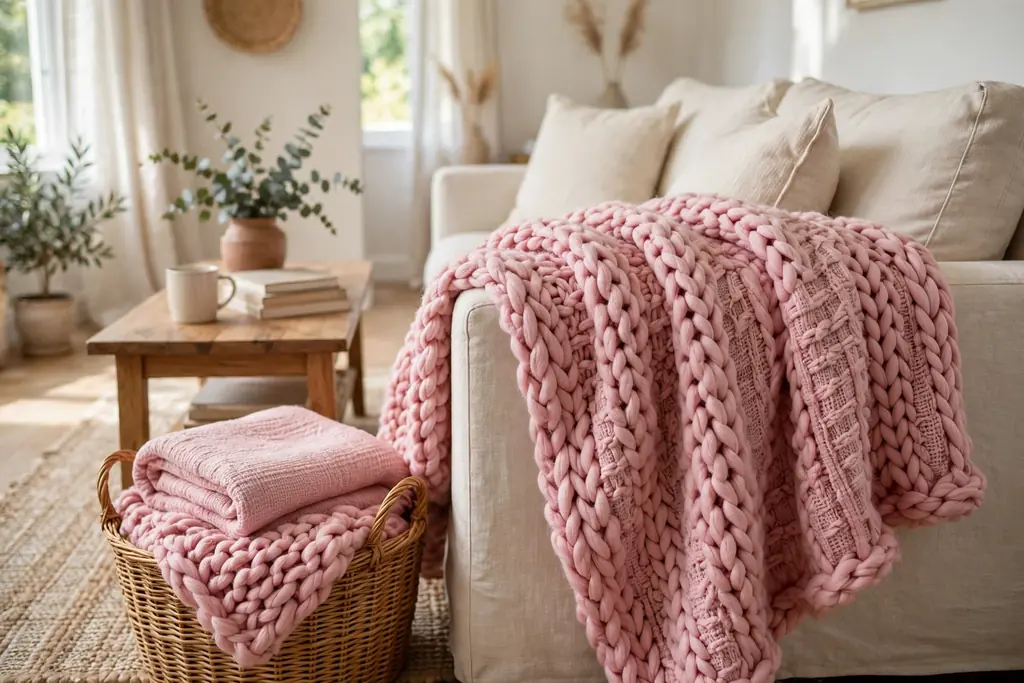
Drape a chunky pink knit throw over one sofa arm or across the back of an armchair, and keep a second folded throw in a basket nearby. A knit throw adds warmth and texture at once, and the chunky weave breaks up smooth velvet and linen in the same room. Blush, dusty pink, and soft raspberry knits all suit a cream sofa, with dusty pink giving the calmest result.
Choose a throw you can wash, since a throw on a sofa arm sees daily use, and fold it neatly rather than leaving it in a loose pile. Keep the throw on the seat people actually use, not on a chair kept only for show, so it stays part of daily life. In warm months, fold the throw over the chair back instead of removing it, so the room keeps its soft pink layer without feeling heavy.
8. Build a Pink Art Gallery Wall
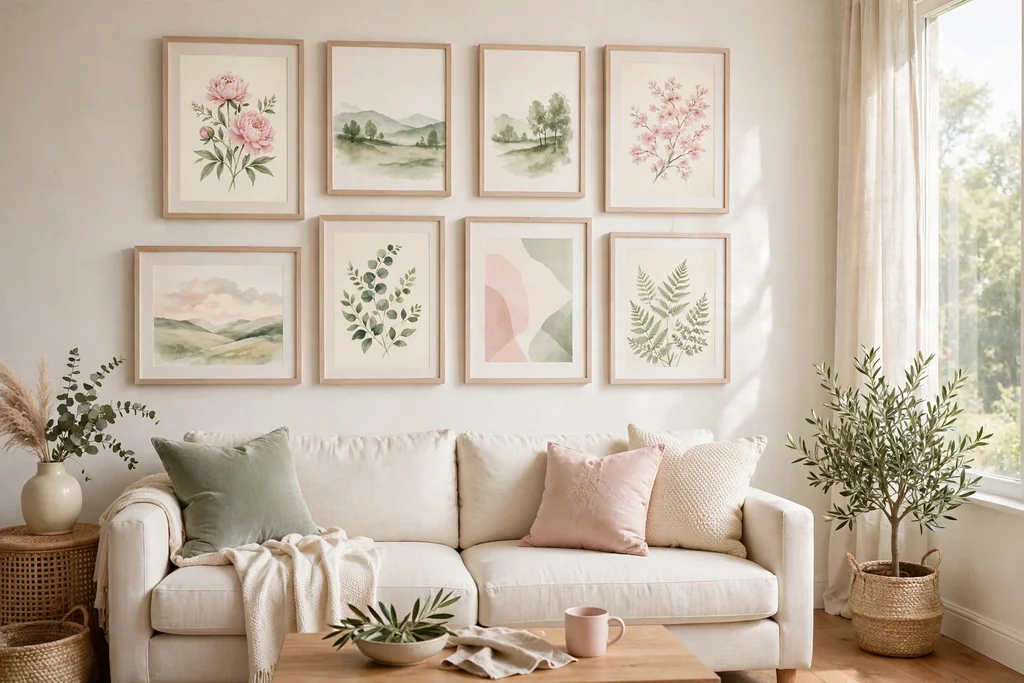
Hang a gallery wall above the sofa or along one wall, using art prints in pink, cream, and soft green with matching frames in pale wood, white, or black. A gallery wall lets you use pink in art rather than paint or furniture, which suits renters and anyone who likes to change art with the seasons. Keep the frames consistent so the group reads as calm rather than busy, even when the prints differ.
Hang the center of the group at eye level when seated, and keep the outer edges inside the width of the sofa. Mix one large print with smaller ones, and leave even gaps between frames so the wall does not look crowded. Include one print with no pink at all, such as a cream or green botanical print, so the pink prints stand out instead of blending into one pink block.
9. Style Pink Ceramic Vases on Shelves
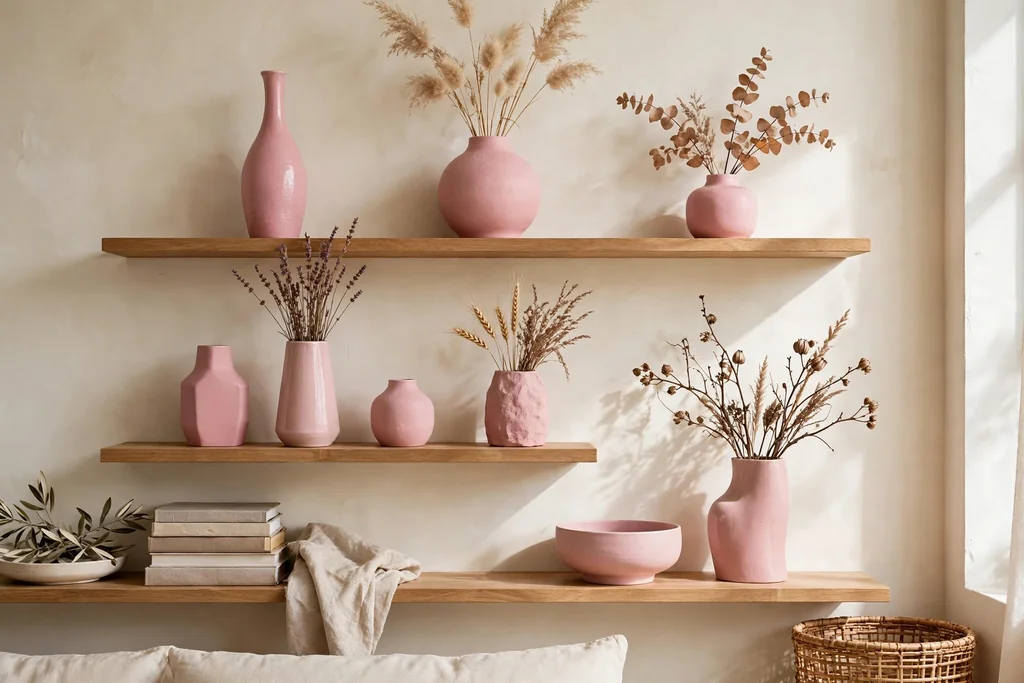
Style pink ceramic vases in different heights and shapes on open shelves, a mantel, or a sideboard, with some left empty and some holding dried stems. Ceramics are a low cost way to bring pink into a room, and a group of three vases in blush, dusty pink, and cream looks collected rather than matched. Matte glazes suit a calm room, while a gloss glaze suits a room that needs a little shine.
Group vases in odd numbers, vary the heights, and leave space around each group so the shelf does not look crowded. Keep heavier vases low and lighter ones higher, and anchor shelves into studs or with fixings suited to your wall type before loading them with ceramics. If the shelves already hold books, place one pink vase at the end of a row of books rather than filling a whole shelf with vases.
10. Bring In Fresh Pink Flowers
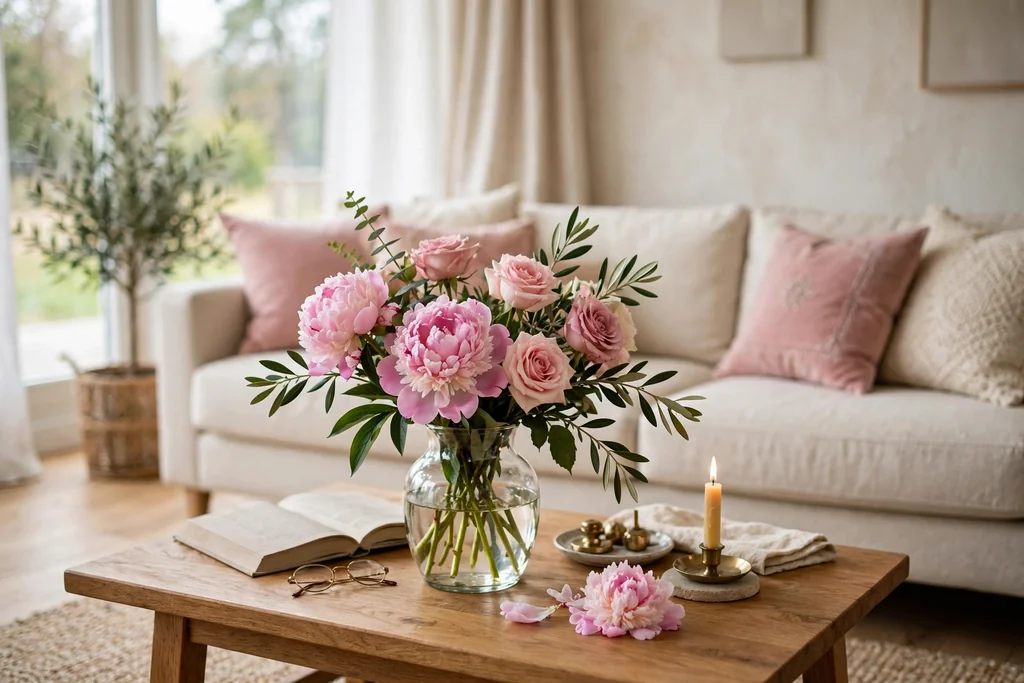
Bring in fresh pink flowers, such as peonies, roses, ranunculus, or tulips in season, in a plain glass or cream vase on the coffee table or sideboard. Fresh flowers give pink a natural, changeable note that no painted surface can match, and they suit a room that is otherwise neutral. A single bunch in one color looks calmer than a mixed bunch in many colors.
Change the water every couple of days, trim the stems at an angle, and keep the vase out of direct sun so the blooms last longer. When fresh flowers are out of season or out of budget, good quality dried pink stems or a single faux bunch in a ceramic vase gives a similar color note. Keep the arrangement low enough that it does not block conversation across the coffee table.
11. Add a Pink Velvet Ottoman
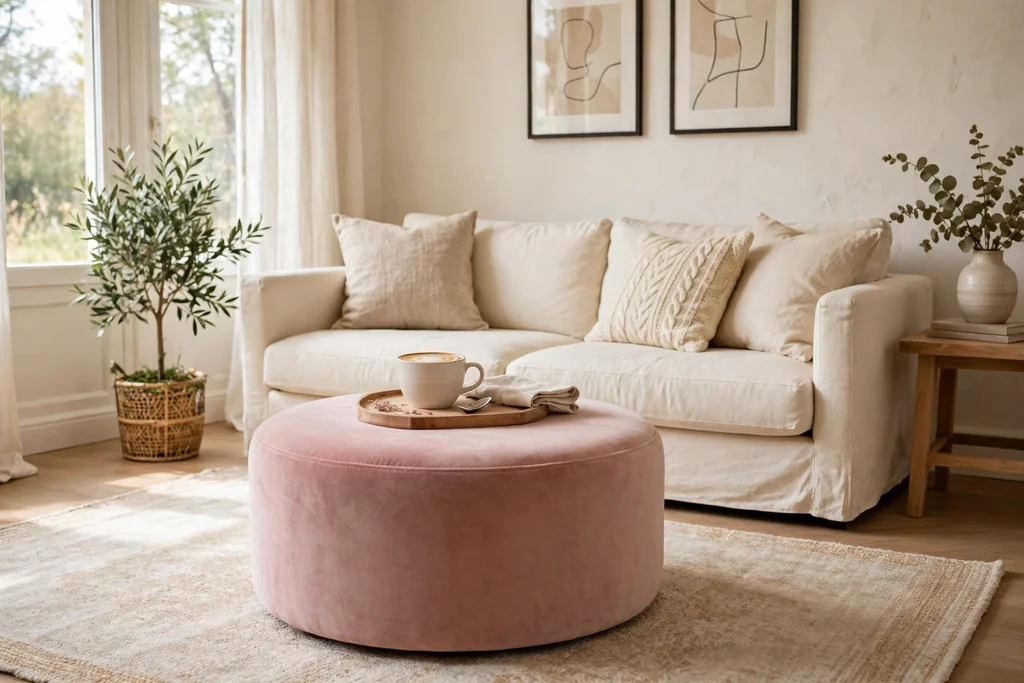
Add a round or square dusty pink velvet ottoman in front of the sofa, with a tray on top for a cup, a book, or a candle. An ottoman works as a footrest, an extra seat, and a coffee table in one piece, which suits a small room where a full table and a footrest would crowd the floor. Velvet keeps the ottoman soft to sit on and pleasant to rest feet on.
Pick an ottoman with a firm top if you plan to set a tray on it, and keep the tray in wood or brass so cups do not tip on soft velvet. Store the ottoman close to the sofa when it is used as a footrest, and pull it out as extra seating when guests visit. If the sofa is already pink, choose a cream ottoman with a pink tray instead, so the seating group does not turn into one solid color.
12. Paint a Bookcase Dusty Pink
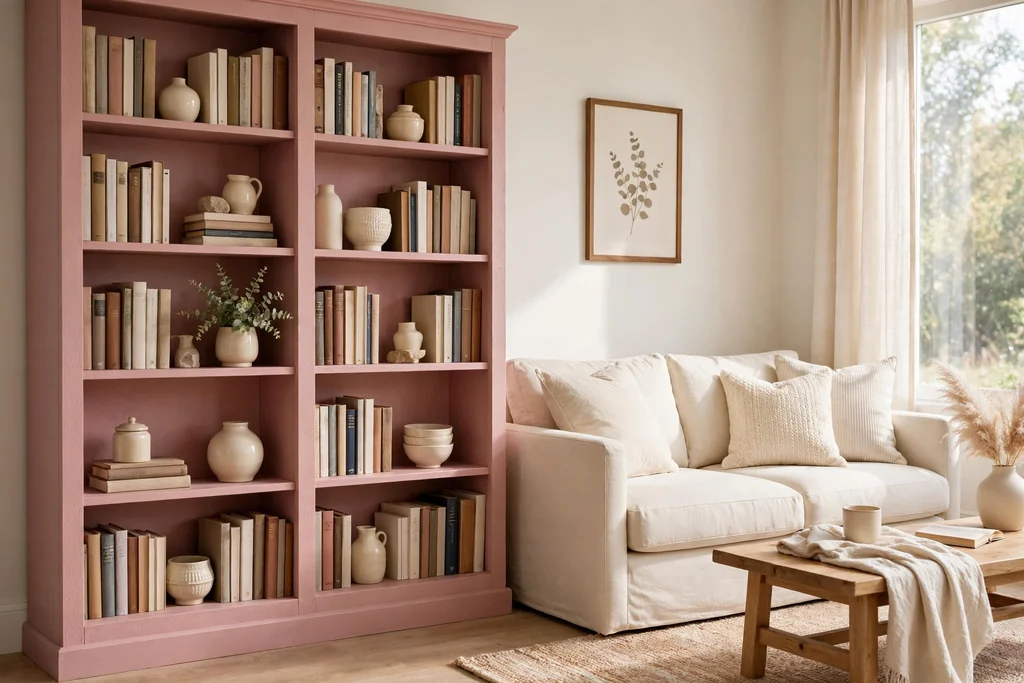
Paint a bookcase or a freestanding cabinet in dusty pink, and fill it with books, cream ceramics, and a small plant. A painted bookcase gives a large block of pink without painting a wall, and it suits a room where the walls must stay pale, such as a rental with a painted wall limit. Dusty pink reads as warm and calm on furniture, especially with wood shelves and cream objects.
Prepare the surface well, use paint suited to furniture, and let each coat dry fully before loading the shelves, so books do not stick to tacky paint. Keep the objects on the shelves mostly cream, wood, and green, with only one or two pink pieces, so the pink frame stays the detail. If painting a whole bookcase feels like a big step, paint only the back panel pink and leave the frame cream, which gives a pink glow behind the books.
13. Make a Pink Window Bench
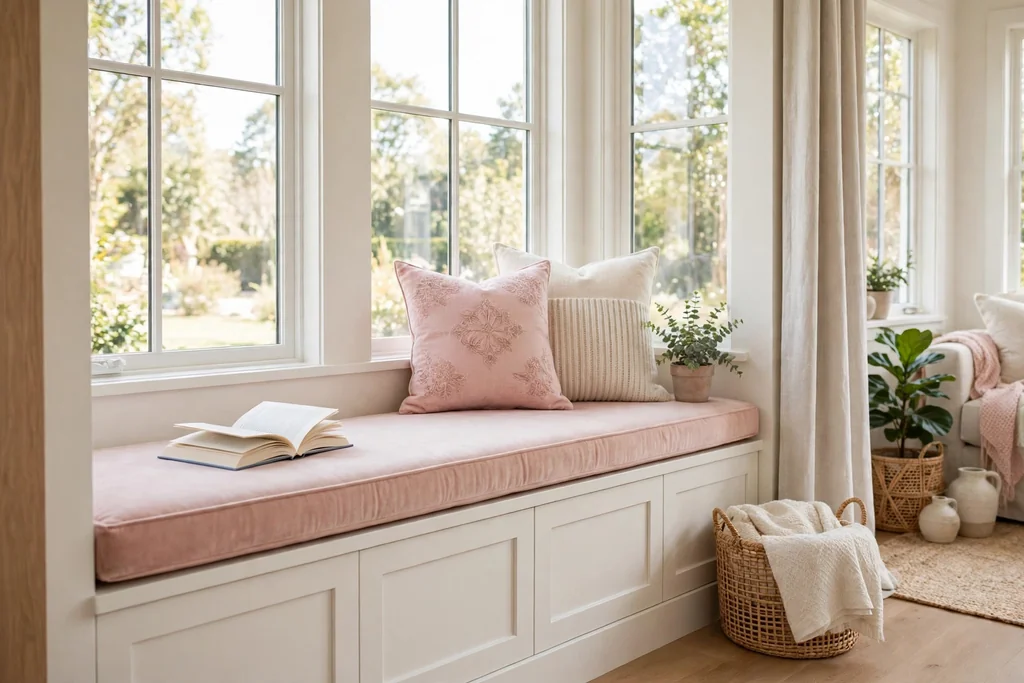
Make a window bench inviting with a blush pink bench cushion, pink and cream cushions, and a folded throw, in a bay window or under a wide living room window. A window seat turns an unused spot into a reading corner, and pink cushions make it feel like a deliberate part of the scheme rather than an afterthought. A bench cushion in a washable fabric matters here, since window seats get sun, dust, and daily sitting.
Add a small side table or a shelf nearby for a book and a cup, and keep the bench clear of clutter so it stays usable. If the window gets strong sun, pick a pink fabric that resists fading, and rotate the cushions now and then so one end does not fade faster than the other. In a room without a built in bench, a low storage bench under the window gives the same seat with useful storage inside.
14. Pick a Pale Pink Coffee Table
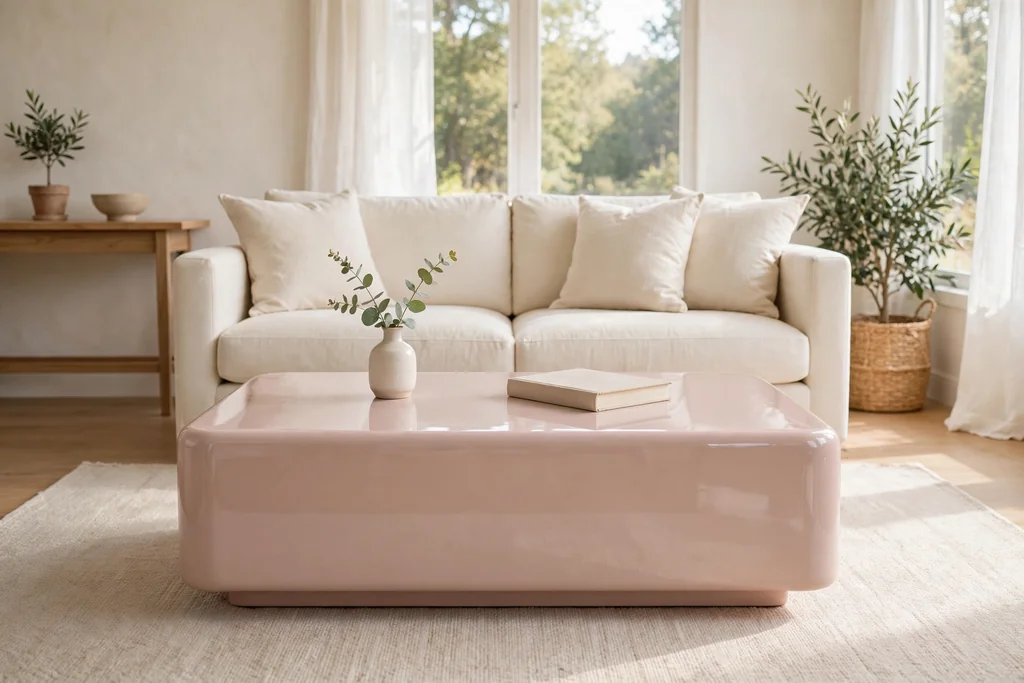
Pick a pale pink lacquer or painted coffee table as the center of the seating group, in front of a cream or grey sofa. A pink table adds color at the center of the room without changing the sofa or the walls, and a plain top leaves room for a tray, a book, and a cup. A round table suits a small room and a room where people walk past the seating group often, while a rectangular table suits a long sofa.
Keep the table top mostly clear, with one tray to gather small items, and choose a table height close to the sofa seat height so cups and books are easy to reach. Wipe the top after use, since pale pink shows rings and marks more readily than dark wood. If a pink table feels bold, a cream table with a pink tray and a pink vase gives a softer version of the same idea.
15. Light the Room With a Pink and Brass Lamp
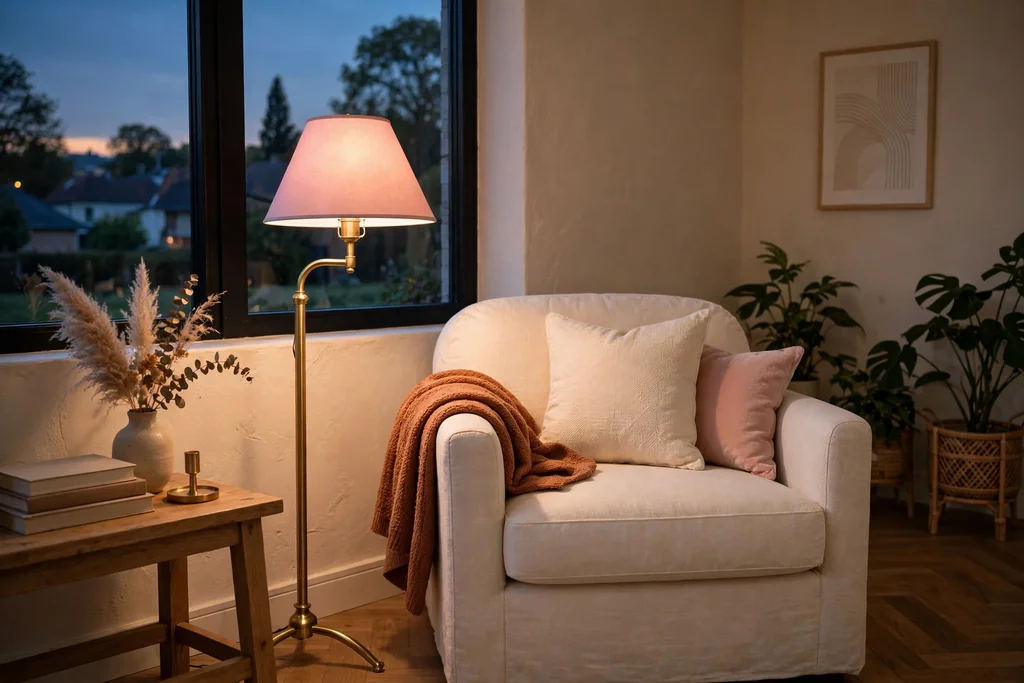
Light a seating corner with a brass floor lamp fitted with a soft pink lampshade, or a table lamp in pink ceramic with a cream shade. Warm lamplight through a pink shade gives a gentle glow in the evening, which suits a room meant for reading and conversation. Brass keeps the lamp from looking sugary, since the metal adds a warm, grown up note beside the pink.
Place the lamp beside the chair or sofa end where reading actually happens, with the shade at about seated eye level so light falls on the book rather than into the eyes. Use a warm white bulb, and keep the shade clean, since dust dims the glow and dulls the pink. If the room already has pink cushions and art, a cream shade on a brass lamp still warms the corner without adding another pink note.
16. Line Shelf Backs With Pink Wallpaper
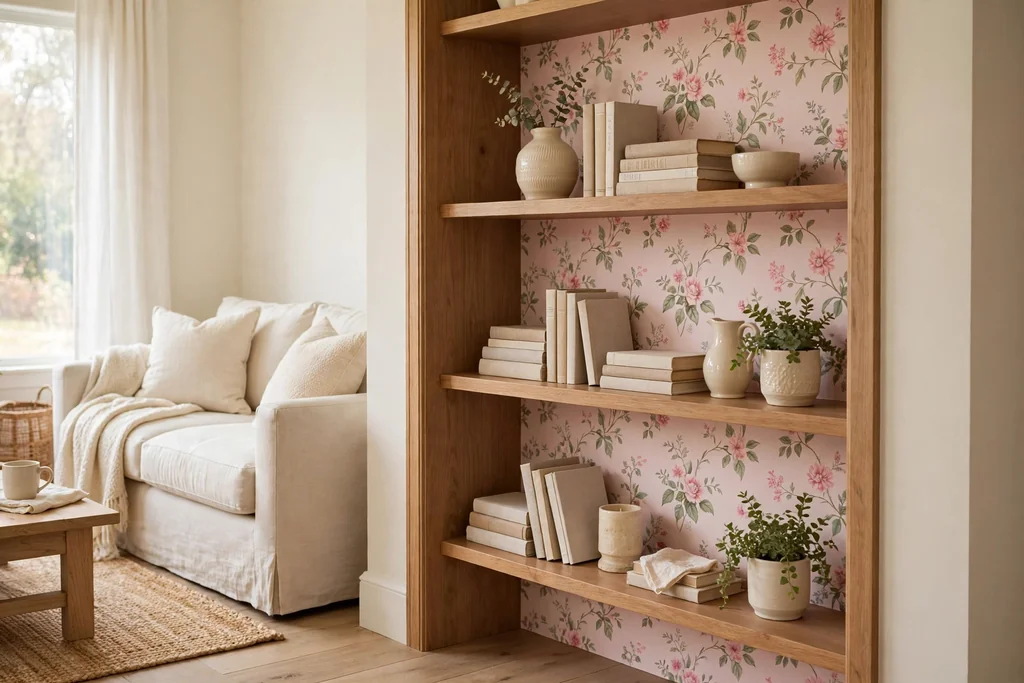
Line the backs of alcove shelves or a bookcase with pink patterned wallpaper, in a small floral, stripe, or dot pattern, and style the shelves with cream ceramics and books. Wallpaper on a shelf back gives a pink pattern in a small, contained area, which suits a room where a full wallpapered wall would feel too strong. The pattern shows between objects, so the shelves look styled even when they are not full.
Use paste or self adhesive wallpaper made for small areas, measure each shelf back carefully, and smooth out air bubbles before replacing objects. Keep the pattern small in scale, since a large pattern gets lost behind books and looks busy in a narrow alcove. If you rent, a removable wallpaper or a painted board cut to fit the shelf back gives the same effect without marking the wall, and the board can move with you.
17. Add a Soft Pink Floor Pouf
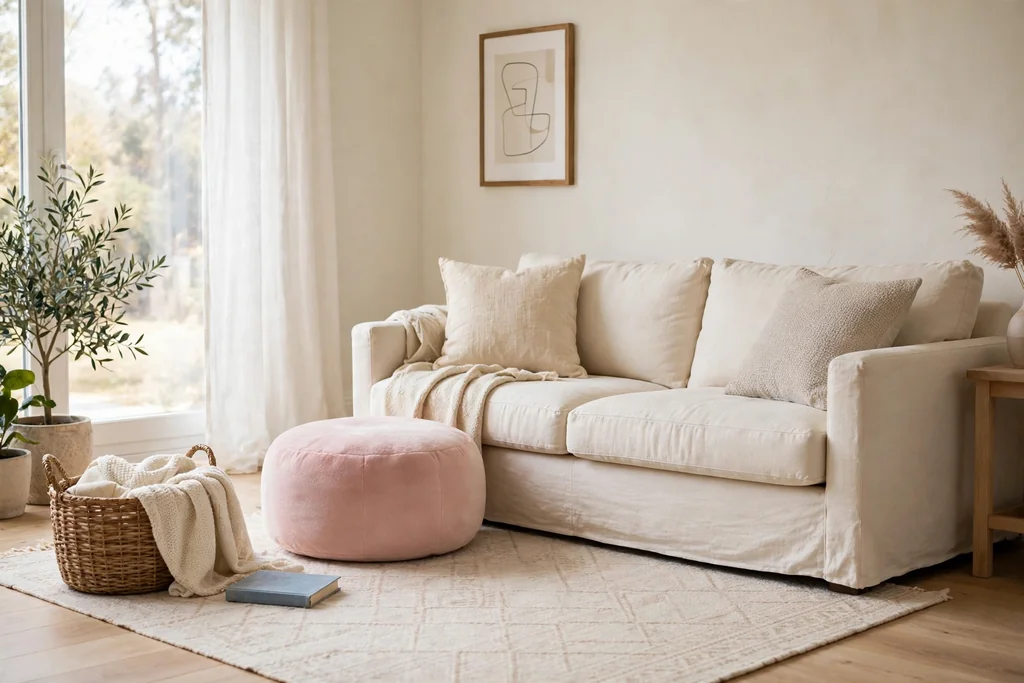
Add a soft pink floor pouf beside the sofa or in a corner, as extra seating that can move where it is needed. A pouf suits a room that needs flexible seating for guests, children, or a footrest, without the weight of another chair. A round pouf in a knit, woven, or velvet cover in dusty pink adds color at floor level, which balances pink used higher up on walls or art.
Pick a pouf with a firm, stable fill if it will be used as a seat, and a washable cover if it will be used by children or pets. Tuck the pouf under a side table or beside the sofa when it is not in use, so it does not block walking routes. If the room already has a pink ottoman, use a cream pouf with a pink cushion instead, since two pink floor pieces in one group can look repetitive.
18. Hang a Pink Framed Mirror Over the Mantel
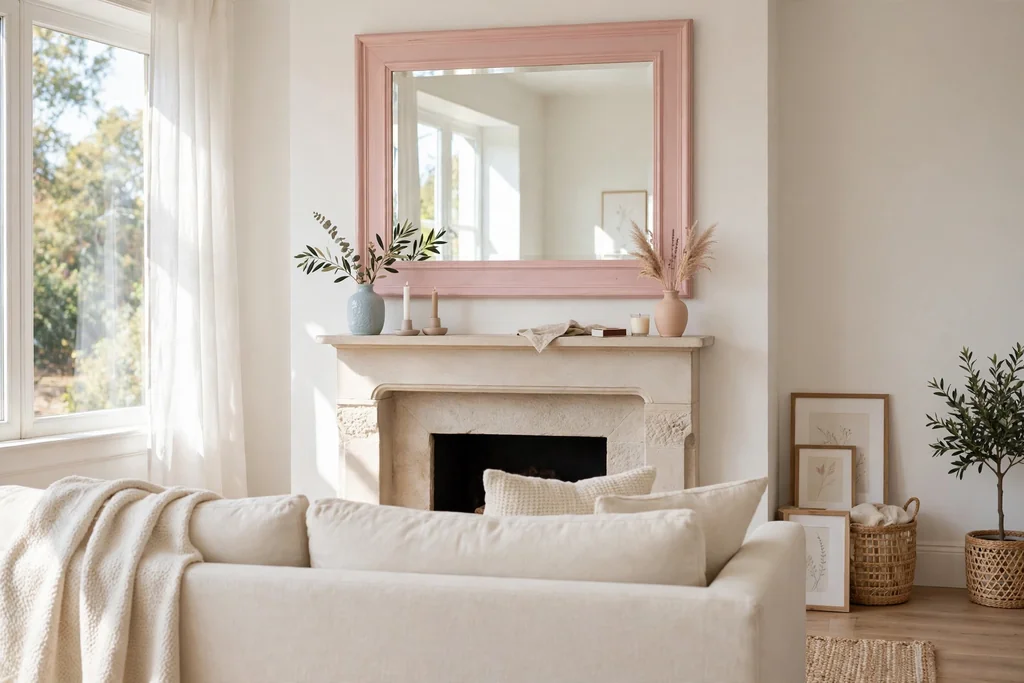
Hang a large mirror in a soft pink painted frame over the mantel or above a sideboard, to bounce light around the room and add pink at eye level. A mirror makes a small or dark living room feel larger and brighter, and a pink frame turns a plain mirror into a deliberate part of the scheme. A round mirror suits a room with straight lined furniture, while a rectangular mirror suits a wide mantel.
Hang the mirror securely with fixings suited to its weight and your wall type, and center it over the mantel rather than pushing it to one side. Keep the mantel styling simple, with two small vases or candles, so the mirror stays the focus. Check what the mirror reflects before fixing it, since a mirror facing a cluttered corner will double the clutter instead of the light.
19. Group Pink Candles on a Tray
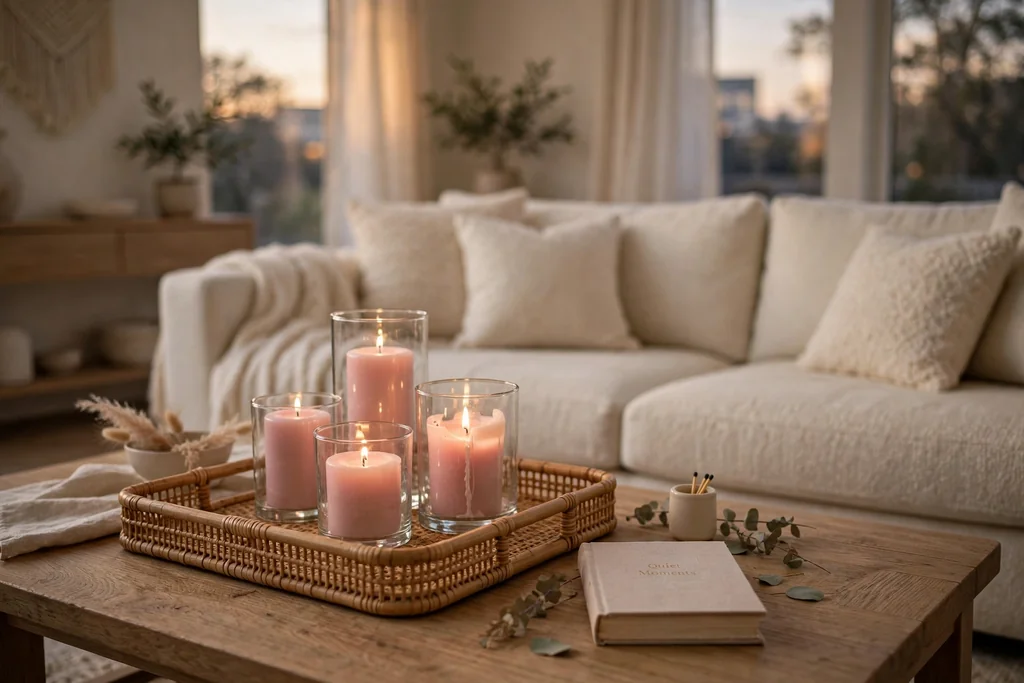
Group pink pillar candles in glass or ceramic holders on a tray on the coffee table, sideboard, or windowsill, and light them in the evening for a warm, low glow. Candles are a small, low cost pink note that can be changed with the seasons, and a tray keeps wax, matches, and holders in one tidy place. Plain pink candles in different heights suit the look best, with cream candles mixed in so the group does not look flat.
Use sturdy holders that cannot tip easily, keep candles clear of curtains, throws, and paper, and never leave them burning in an empty room. Battery candles give a similar glow where real flames are not practical, such as a shelf near books. A tray also makes it easy to move the whole group when you need the table surface for food or work, which keeps the pink note from becoming clutter.
20. Group Plants in Pink Pots
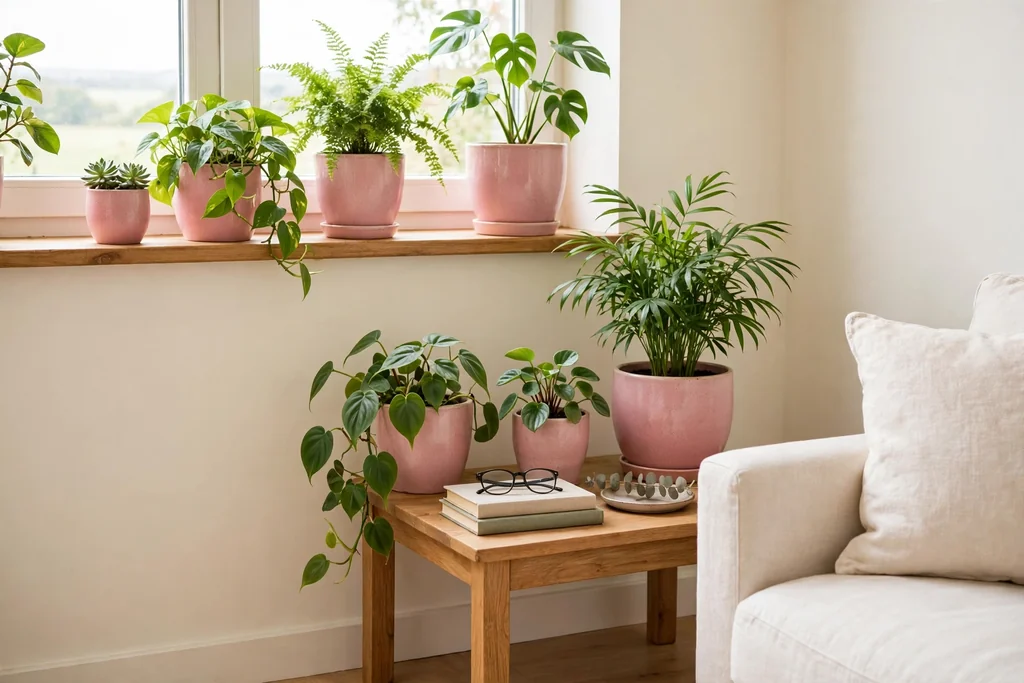
Group green houseplants in pink ceramic pots of different sizes on a windowsill, a side table, or a plant stand, to bring pink and green together in one display. Plants soften a pink room and stop it from feeling flat, while pink pots tie the plants into the scheme instead of leaving them as a separate green corner. Trailing plants suit high shelves, while upright plants suit the floor beside the sofa.
Pick pots with drainage holes or use a liner pot inside, so water does not damage wood surfaces, and match the pot size to the plant so roots have room to grow. Keep the pink pots in one family, such as matte blush or dusty rose, rather than mixing bright pink, pale pink, and patterned pots in one group. If the room already has pink vases, use cream pots with one pink pot, so the plant display does not repeat the same note too often.
21. Place a Small Pink Side Table
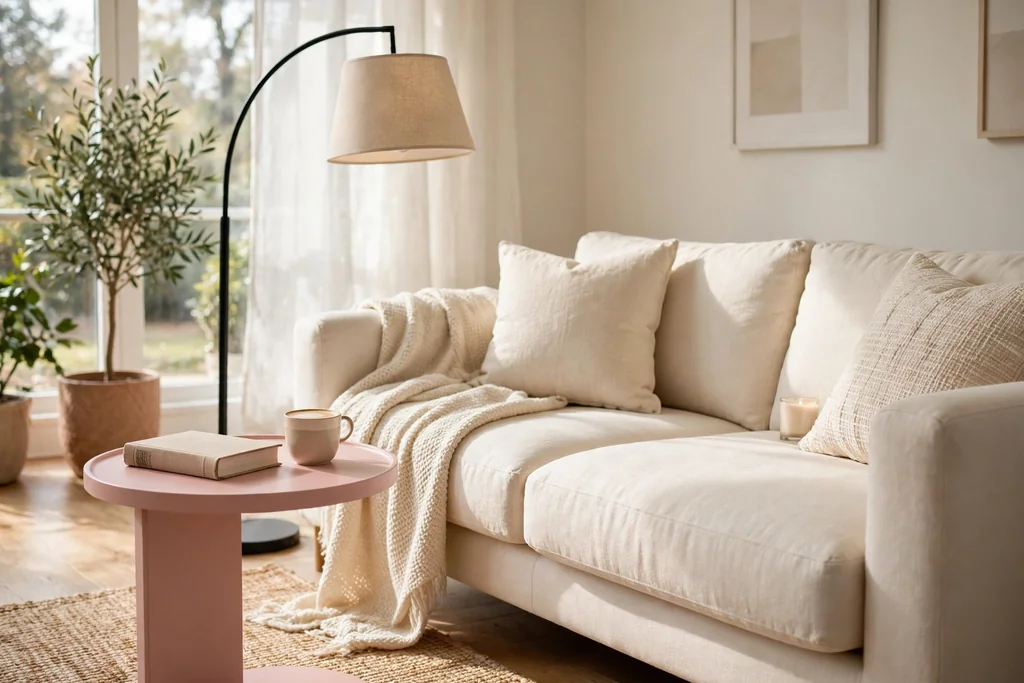
Place a small round pink side table beside the sofa or armchair, holding a cup, a book, and a small lamp or vase. A side table adds pink at a useful height, right where a seat needs a surface, without changing any large furniture. A round top suits a tight corner, since it has no corners to catch hips or knees, and a lower shelf gives a place for books or a basket.
Keep the top mostly clear, with only two or three items, so the table stays useful rather than becoming a display shelf. Choose a table height close to the sofa arm height, so a cup is easy to reach without stretching. If the room already has a pink coffee table, use a wood or brass side table with a pink vase instead, so the two tables do not compete for attention.
22. Store Throws in Pink Trimmed Baskets
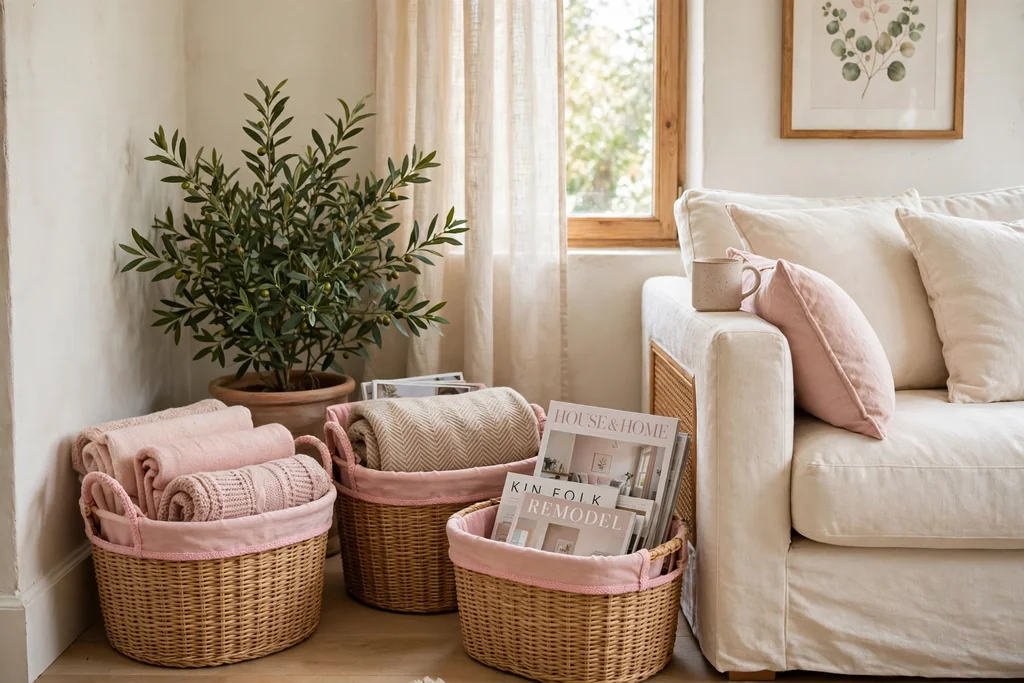
Store throws, magazines, and children’s toys in woven baskets with pink trim or pink fabric liners, beside the sofa or under a side table. Baskets keep a living room tidy while adding a soft pink note at floor level, and they suit a room that needs storage without bulky furniture. Natural woven baskets with a pink liner or pink handles look calmer than fully pink baskets, which can read as bright in a large size.
Pick baskets sized to what they hold, with a throw basket tall enough for folded throws and a magazine basket low enough to slide under a table. Label the inside, not the outside, if baskets hold different things, so the room still looks calm. Keep one basket for throws near the sofa and one for toys or magazines near the play corner, rather than lining up many baskets along one wall.
23. Paint an Interior Door Dusty Pink
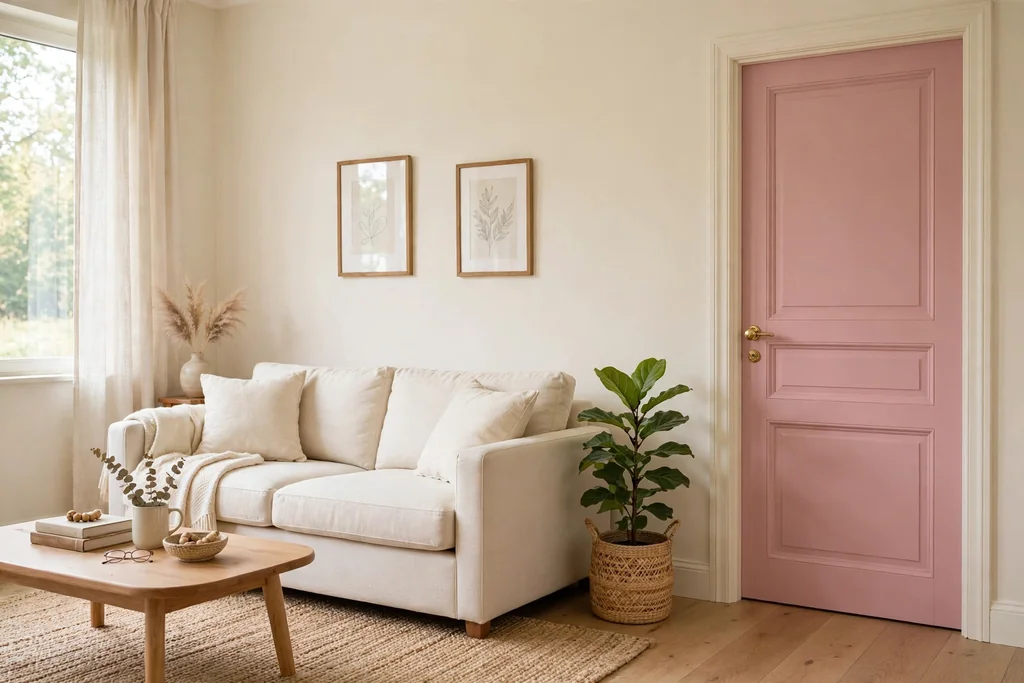
Paint an interior door in dusty pink, with cream walls and a brass or black handle, to add a surprising block of color that does not take up floor space. A pink door suits a living room doorway, a closet door, or a door to a hallway, and it works well in a room where the walls must stay pale. Dusty pink on a door reads as warm and calm, especially with cream trim around it.
Prepare the door well, remove or mask the handle, and use paint suited to doors so the finish stands up to daily handling. Paint both sides only if the next room suits pink too, and keep the hallway side cream if the hallway scheme is different. If painting a door feels permanent, a pink door curtain or a pink wreath on the door gives a temporary version of the same color note for a season.
24. Fit Soft Pink Roman Blinds
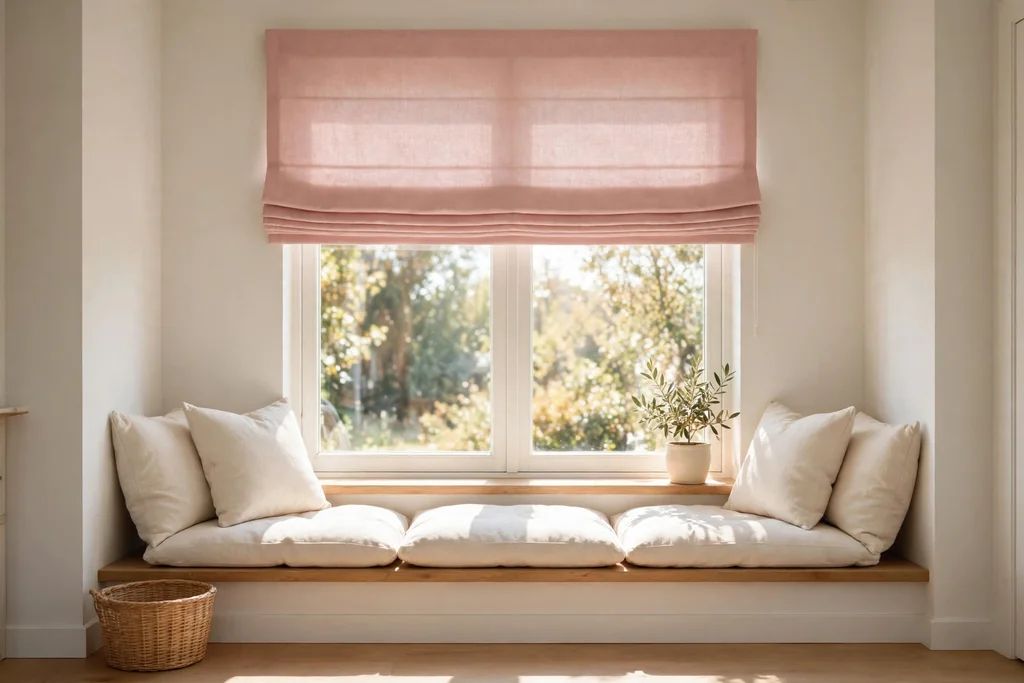
Fit soft pink roman blinds on living room windows, in a plain linen or a small stripe, as a tidier window treatment than full length curtains. Roman blinds fold up neatly when raised, which suits a window with a sofa, a bench, or a radiator below it, where long curtains would bunch or block heat. Blush pink blinds soften daylight in a similar way to sheer curtains, but with a cleaner, more tailored line.
Measure each window carefully, including the recess depth, and check that the blind clears handles and vents when it is raised and lowered. Pair pink blinds with cream sheer curtains only if the room needs evening privacy, and keep the blind fabric plain if cushions or art already carry pattern. For a small room seating plan that pairs well with a window seat, see these cozy apartment living room ideas. Choose a cordless or child safe operating system where children or pets use the room.
25. Hang One Oversized Pink Canvas
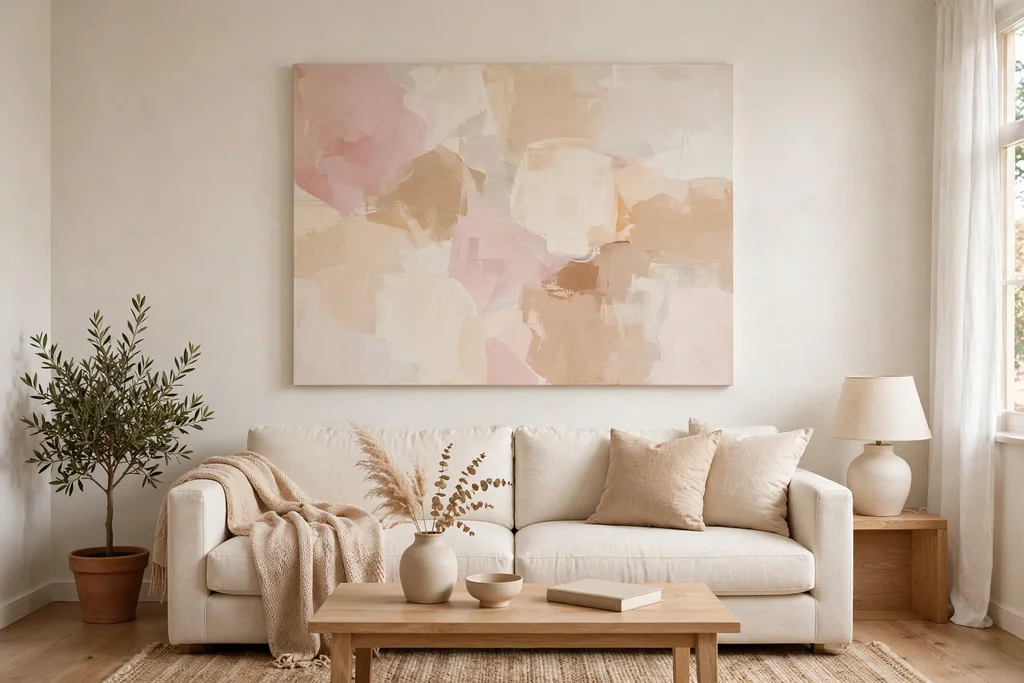
Hang one oversized abstract canvas in soft pink, cream, and warm beige above the sofa, instead of a group of small prints. A single large canvas makes a strong, calm statement, since the eye rests on one piece rather than scanning many frames, and it suits a room where the sofa wall is wide and bare. Abstract washes of pink suit a modern room, while a soft pink botanical print suits a classic room.
Hang the canvas so its center sits at eye level when seated, and keep its width within the width of the sofa, usually about two thirds of the sofa width. Keep the wall around it plain and the cushions simple, since a large canvas already carries the color and pattern for that wall. If a large canvas feels costly, a stretched fabric panel in pink linen gives a similar scale for a lower cost, with a calmer, more textured finish.
26. Repeat Pink in Three Places
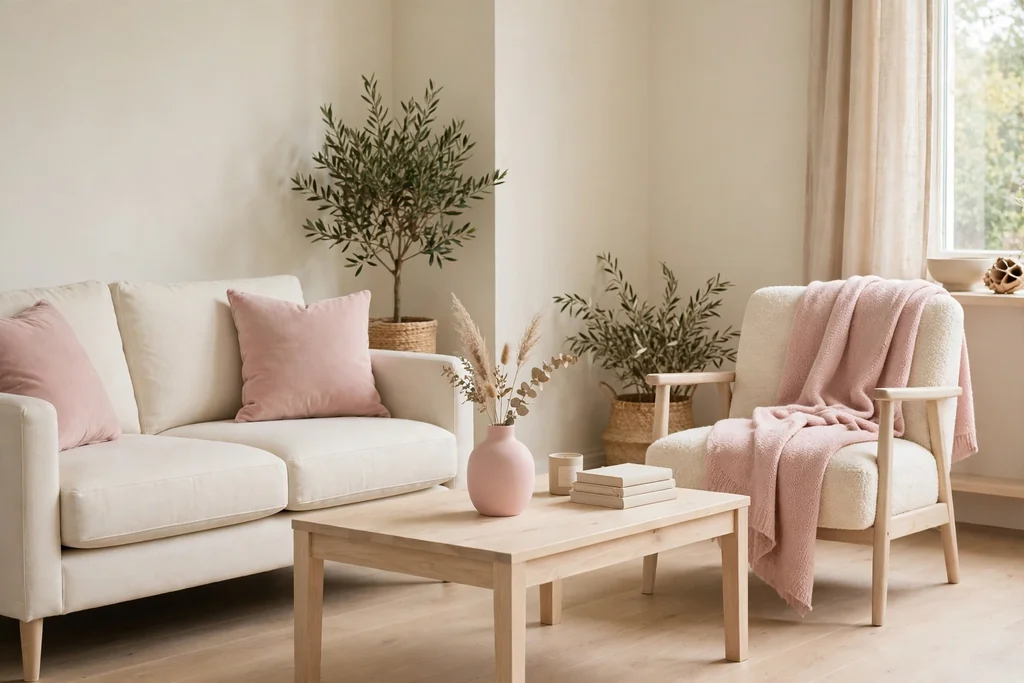
Repeat the same pink in three places around the room, such as cushions on the sofa, a vase on the coffee table, and a throw on an armchair, and keep everything else neutral. The rule of three keeps pink looking deliberate, since the eye links the three notes into one scheme, while a single pink item can look accidental and pink everywhere can look tiring. Three repeats suit most rooms, with a fourth small note, such as a candle, only if the room is large.
Pick one pink and use the same shade in all three places, rather than mixing blush, bright pink, and raspberry in one room. Spread the three notes around the room, not all on one side, so the color feels balanced from every seat. Step back and look at the room from the doorway: if one pink note stands out far more than the others, soften it with a cream cushion or a wood tray until the three notes feel even.
Conclusion
Pink works best in a living room when it is chosen with care and repeated with restraint. Start with one large piece, such as a blush sofa, a pink rug, or a painted wall, then add two smaller notes in the same shade, such as cushions, a vase, or a throw. Keep the base calm with cream walls, pale wood, and warm grey, and let texture, plants, and warm light do the rest of the work. A pink living room built this way feels warm and inviting every day, not just in a photo, and it leaves room to swap small accents with the seasons. Pick the idea that fits your room, your budget, and your daily life, try it for a few weeks, and add the next pink note only when the first one still feels right. If you save an idea you love, pin it to a board for your next room refresh, so you can find it again when you are ready to start.
FAQs
What shade of pink works best in a living room?
Blush and dusty rose work best in most living rooms, since they read as warm neutrals in daylight and pair well with cream, warm grey, and pale wood. Bright or hot pink suits small accents, such as a vase or a candle, better than large pieces, since a large area of bright pink can feel tiring over time. Test samples in your own room, since pink shifts a lot between daylight and lamplight, and pick the shade that still feels calm in the evening.
How much pink should a living room have?
A good guide is one large pink piece, such as a sofa, rug, or accent wall, plus two smaller pink notes, such as cushions and a vase, with the rest of the room in neutral tones. This keeps pink looking deliberate without overwhelming the room. If the room is small, keep pink to cushions, a throw, and one vase, and let cream walls and pale floors carry the space.
Does pink go with grey in a living room?
Yes, pink pairs well with warm grey, especially dusty pink with a grey sofa, grey cushions, or a grey rug. Warm grey keeps pink from looking sugary, while pink keeps grey from looking cold. For ideas on styling a grey seat in a pink scheme, see these grey couch living room ideas. Keep the grey warm rather than blue grey, and add wood tones so the room still feels inviting.
Can a pink living room still look grown up?
Yes, when pink is used in muted shades, such as blush or dusty rose, and paired with wood, brass, linen, and plain ceramics. Velvet, knit, and linen textures also help pink read as calm and layered rather than childish. Avoid pairing bright pink with many other bright colors in one room, and keep patterns simple, with one pattern at a time rather than several competing prints.
How do I add pink to a living room without painting?
Use cushions, throws, rugs, art, vases, candles, and plant pots, all of which add pink without touching the walls. A pink armchair, ottoman, or side table also adds a large pink note without paint, and all of these pieces can move to another room later. Start with cushions and a throw, since they cost little and can be swapped with the seasons, then add a rug or art when the color feels right.
What colors go with a pink living room?
Cream, warm white, warm grey, pale wood, brass, and soft green go well with pink, since they keep the room calm and natural. Cream and wood suit a soft, classic pink room, while warm grey and brass suit a more modern pink room. For a calm, light base that pairs well with pink accents, see these Swedish living room ideas. Avoid adding many strong colors at once, and let green plants supply the only other strong color in the room.