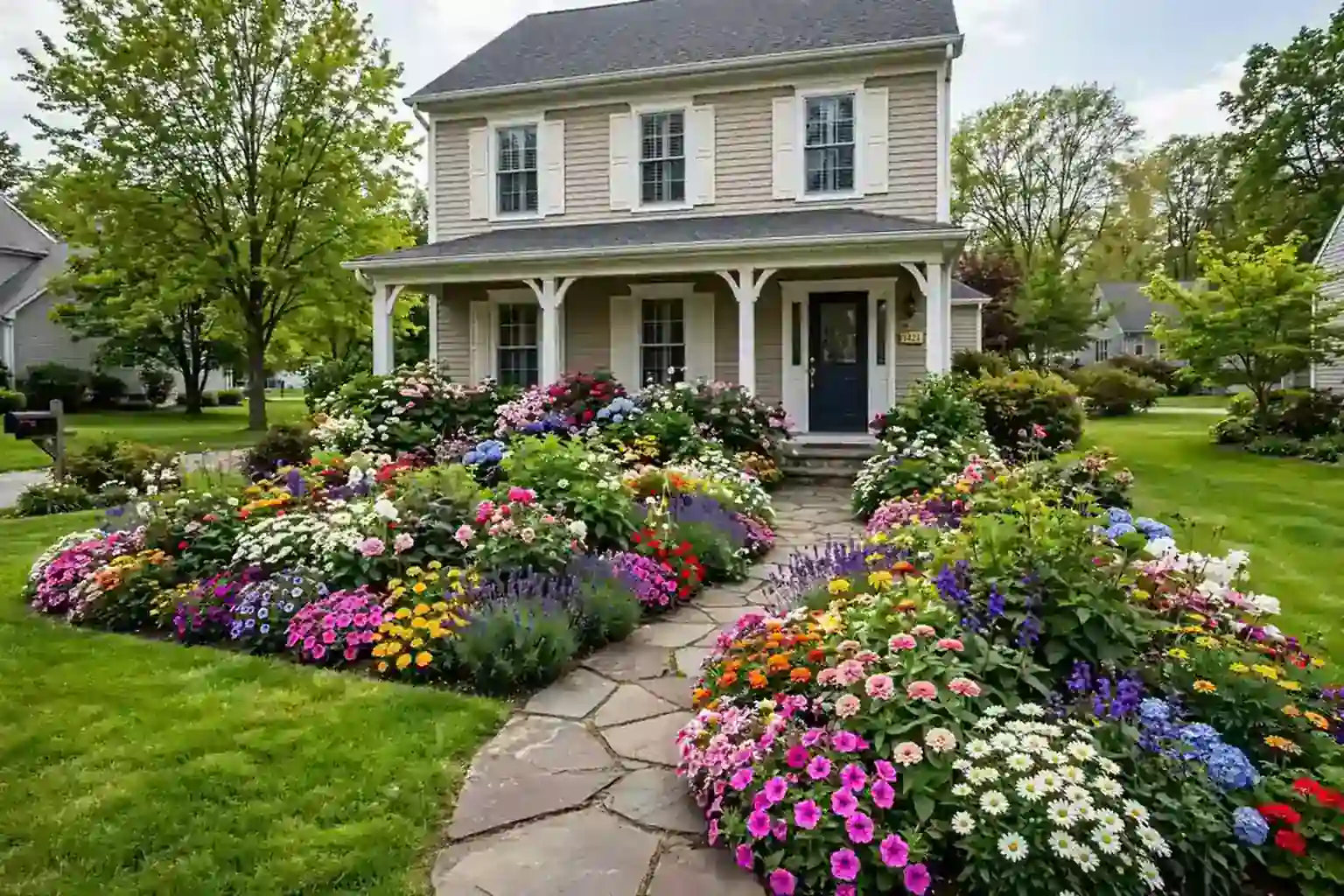
The front yard is the first part of your home most visitors see, and a flower bed is the quickest way to give it a clear, cared for look. A good bed frames the door, softens hard edges, and gives you planting to enjoy from the window as well as from the street. These 23 ideas cover layered borders, island beds, shade and sun planting, pollinator beds, and low care options for a small plot, a wide lawn, or a sloped yard. Note sun, rain, and upkeep time first, then build one bed well before adding another. For tall, sunny color that also feeds bees, these sunflower garden ideas show how height can anchor a front bed.
Key Takeaways
- Map sun, shade, drainage, and foot traffic before you dig, since those four facts decide which plants will last.
- Layer heights on purpose: tall plants at the back, mid height plants in the middle, and low edging plants at the front.
- Repeat one or two colors or plants along a bed so the planting reads as a plan, not a collection of singles.
- Mix evergreen structure with seasonal flowers so the bed looks cared for in winter as well as in summer.
- Edge the bed clearly and mulch it, since a clean edge and covered soil cut weeds and watering work.
- Start with one bed near the door or path, where you will see it daily, and add more beds only once that one works.
1. Layer a Border by Height Along the House
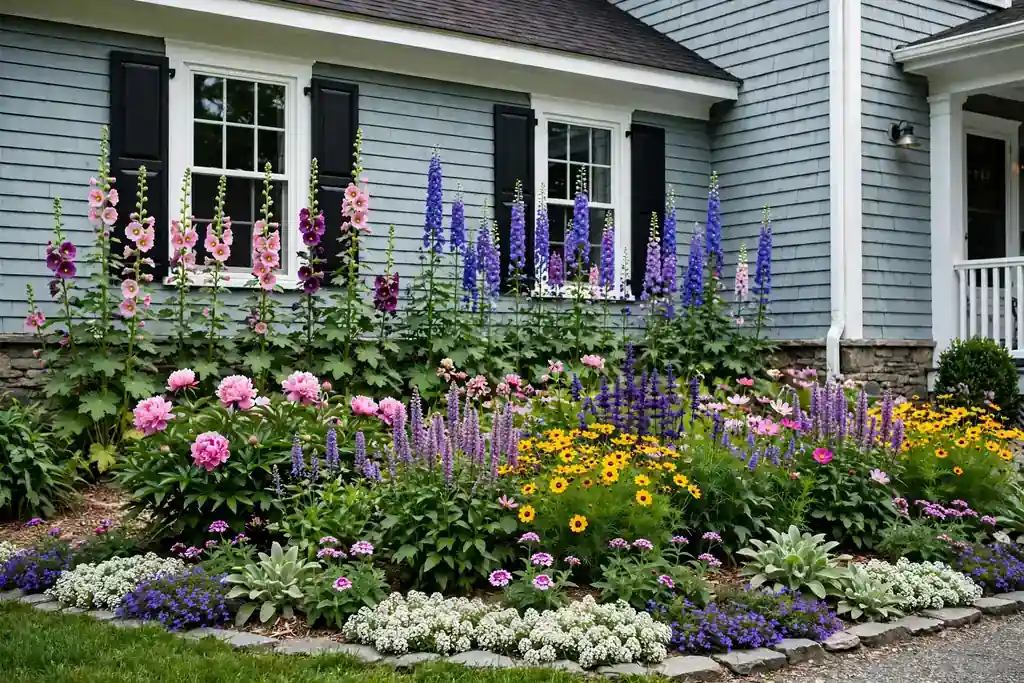
Build a border along the front of the house with tall plants at the back, mid height plants in the middle, and low plants at the front. This classic layering means every plant stays visible from the street, and it keeps the bed looking full even when one group is between flowers. Put shrubs or tall perennials such as hollyhocks or delphiniums against the wall, roses or salvias in the middle, and geraniums or catmint at the front edge.
Leave a narrow gap between the back row and the wall so air can move and you can reach plants for trimming. Water at the base, mulch the whole bed, and step back to the street after planting to check that no tall plant blocks a window. Repeat the same mid height plant in three or four spots along the border to tie the length together.
2. Shape a Curved Island Bed in the Lawn
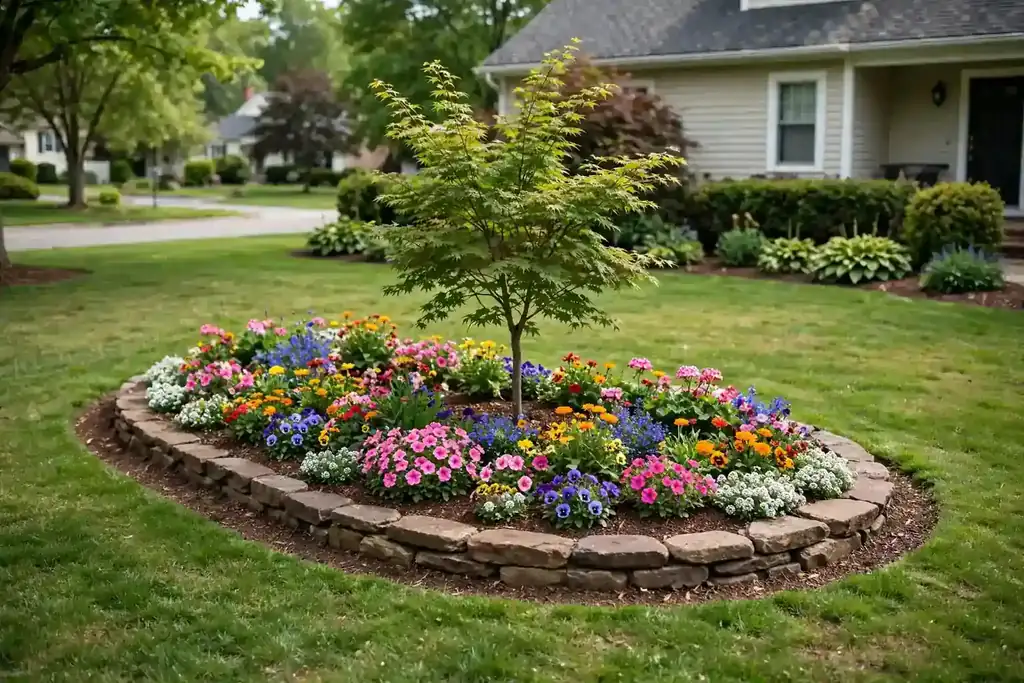
Cut a curved island bed into the middle of a front lawn to break up a flat expanse of grass and give flowers a focal point of their own. A curved shape looks softer than a rectangle and is easier to mow around, since the mower follows one smooth line. Mark the shape with a hose or rope first, then cut the turf and edge the bed with stone, brick, or a simple spade cut edge.
Plant one small tree or tall shrub as the center, then ring it with mid height flowers and a low edge of ground cover. Keep the bed wide enough to reach the middle from either side without stepping on plants. An island bed suits wide front yards best, and it works well where a straight border would feel too formal for the house.
3. Frame the Front Door With Matching Beds
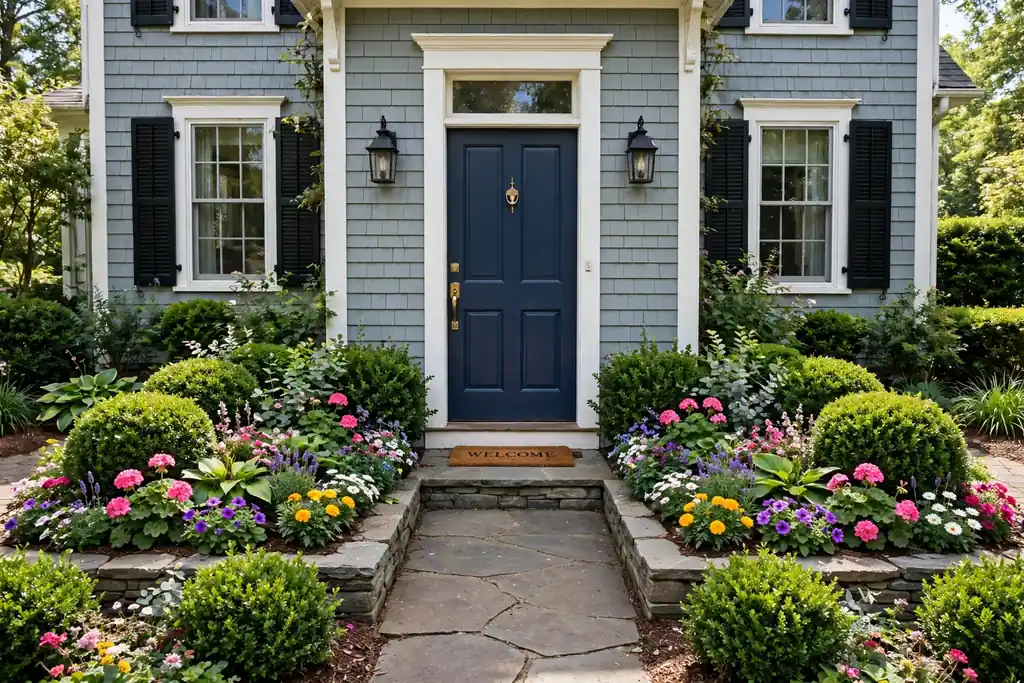
Place a matching bed on each side of the front door to give the entry a balanced, welcoming frame. Symmetry suits formal and traditional houses, and it helps visitors know at once where to walk. Plant the same shrubs and the same edging flowers in both beds, and keep heights similar so neither side looks heavier than the other.
Add one pot or small tree in each bed for height, and keep the path between the beds clear and wide enough for two people to pass. For a door color that sits well beside flower color, see these blue front door colors, which cover deep navy through pale sky shades. Trim both beds at the same time so they stay matched through the season.
4. Edge a Formal Bed With Low Boxwood
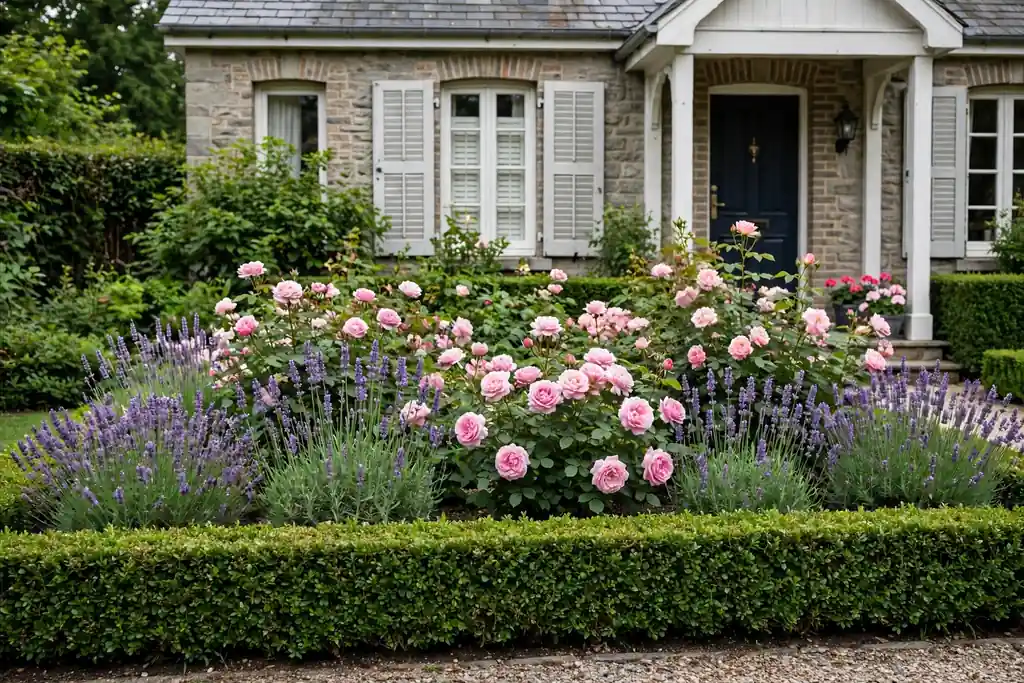
Edge a front bed with a low row of boxwood or another small evergreen to give it a crisp outline all year. The evergreen edge acts like a frame for seasonal flowers inside it, so the bed never looks empty in winter. Plant the boxwood in a single straight or gently curved line, spaced so the plants will join into one hedge within a couple of seasons.
Fill the inside with roses, lavender, or seasonal annuals, and keep the center planting lower than the house windows. Clip the boxwood once or twice a year to hold its shape, and feed it in spring. This bed suits brick and stone houses and small front yards, where a tidy edge matters more than a large planting area.
5. Plant a Loose Cottage Mix Bed
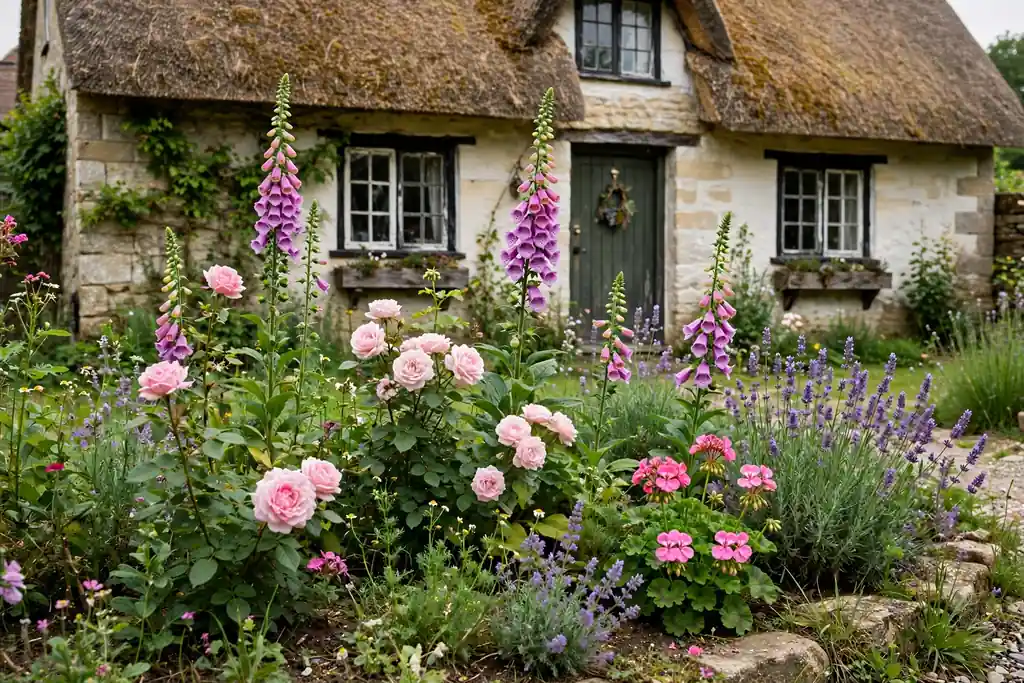
Fill a front bed with a loose mix of roses, lavender, foxgloves, hardy geraniums, and catmint for a cottage look that feels relaxed rather than arranged. Cottage beds work by layering many flowers at different heights and letting them overlap, so the bed looks full from early summer into autumn. Plant in groups of three or five, and let self seeding plants such as foxgloves find their own spots over time.
Keep a clear path edge so the looseness reads as a choice, and cut back spent stems to keep new flowers coming. This bed suits older houses, picket fences, and front yards where a formal edge would feel stiff. Stake tall foxgloves and hollyhocks early, since they lean once the flower spikes open.
6. Build a Pollinator Bed for Bees and Butterflies
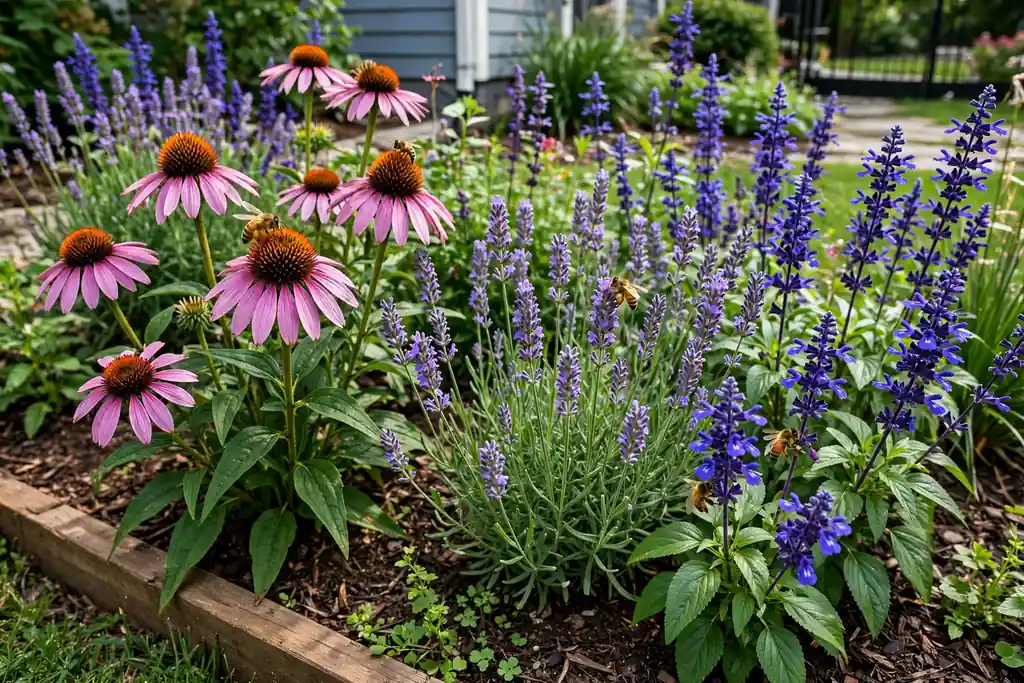
Plant a front bed with coneflowers, lavender, salvia, catmint, and single flowered dahlias to give bees and butterflies food from spring to autumn. Pollinator beds work best in full sun, with flowers grouped in drifts so insects can find them easily, and with no bare soil showing once plants fill in. Leave some seed heads standing in autumn for birds, and avoid spraying the bed when insects are active.
Add a shallow dish of water with pebbles for drinking, set where it will not tip. Keep the bed free of double flowered types that offer little nectar, and check plant labels for bloom times so the bed never has a gap with nothing in flower. A pollinator bed near the path also lets you watch visitors to the garden from the window.
7. Plant a Shade Bed Under a Front Tree
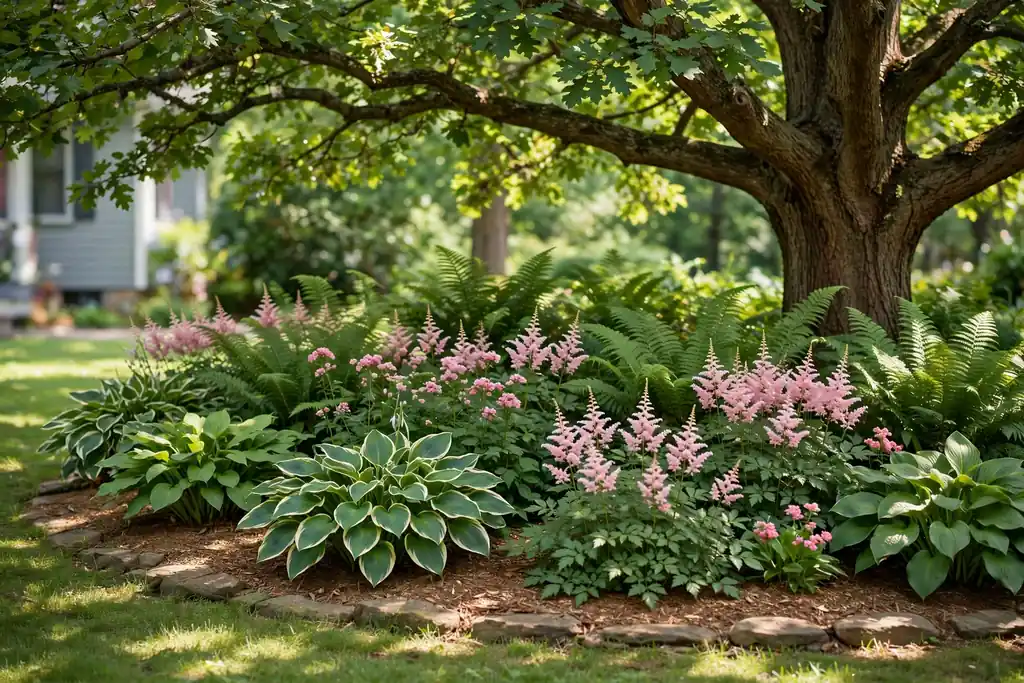
Use the ground under a front tree for a shade bed of hostas, ferns, astilbe, and spring bulbs, instead of struggling to grow lawn or sun lovers there. Shade beds need plants that cope with dry soil and root competition, so improve the soil with compost at planting and mulch well to hold moisture. Plant in drifts under the canopy, and keep plants clear of the trunk so air can move around the bark.
Water new plants well in their first season, since tree roots take much of the available water. Add snowdrops or crocus for early spring color before the tree leafs out, then let hostas and ferns carry summer. This bed suits north facing fronts and yards shaded by a large street tree.
8. Try a Sun Loving Gravel Bed for Dry Spots
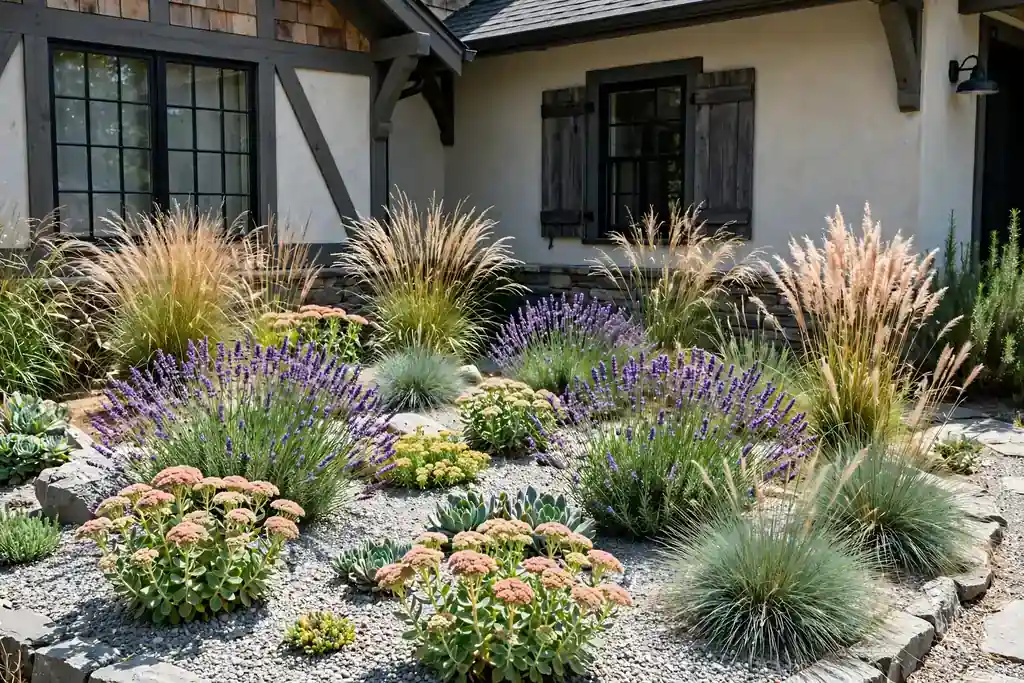
Make a gravel bed for hot, dry front yards with lavender, sedums, ornamental grasses, and Mediterranean herbs that like sharp drainage and full sun. Gravel beds need little watering once plants settle, and the stone surface keeps weeds down and shows off plant shapes. Dig in grit or coarse sand if your soil holds water, then plant through a weed barrier and top with a layer of gravel.
Choose plants that stay compact so they do not flop over the path, and leave gaps between them so each plant has room to spread. Gravel beds suit south facing fronts, new houses with poor soil, and owners who want color without daily watering. Rake the gravel once a season to keep it level and clear of leaves.
9. Plan a Seasonal Rotation Bed
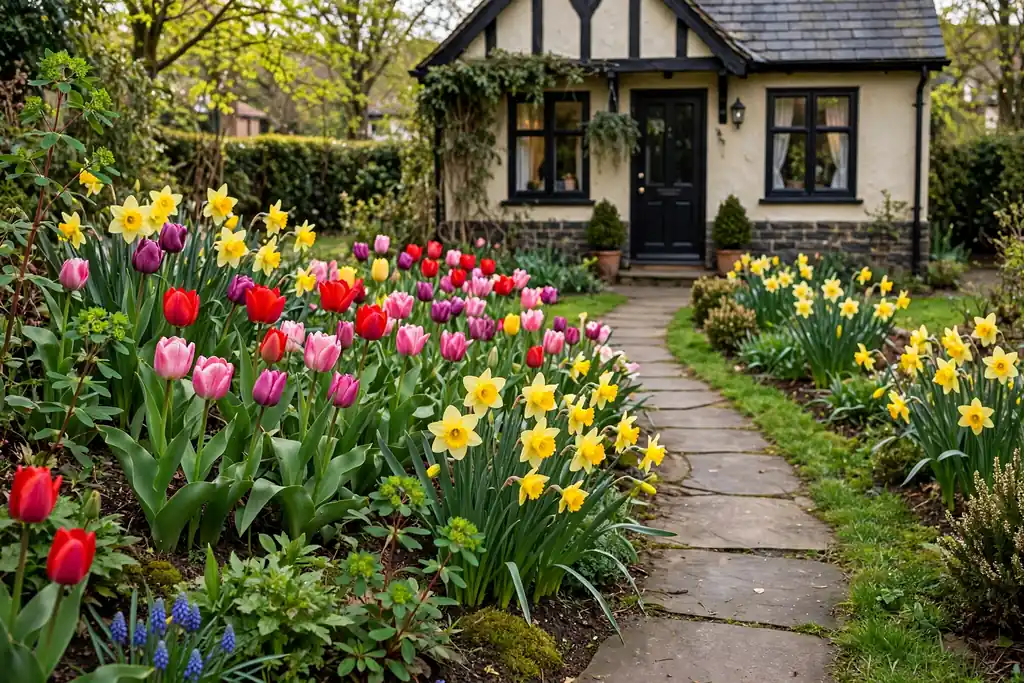
Design one front bed to change with the seasons, starting with tulips and daffodils in spring, then summer annuals, then chrysanthemums and ornamental kale in autumn. A rotation bed keeps the front of the house looking fresh all year, since something is always at its peak. Plant bulbs in autumn in the spaces between perennials, and lift or replace annuals as each season ends.
Keep a simple note of what was planted where, so you do not dig up bulbs by mistake. This bed suits a small front yard where one bed must do all the work, and it works well beside the door, where you will notice each change. Save money by using perennials for the backbone and annuals only for seasonal color.
10. Dress Up the Mailbox With a Small Bed
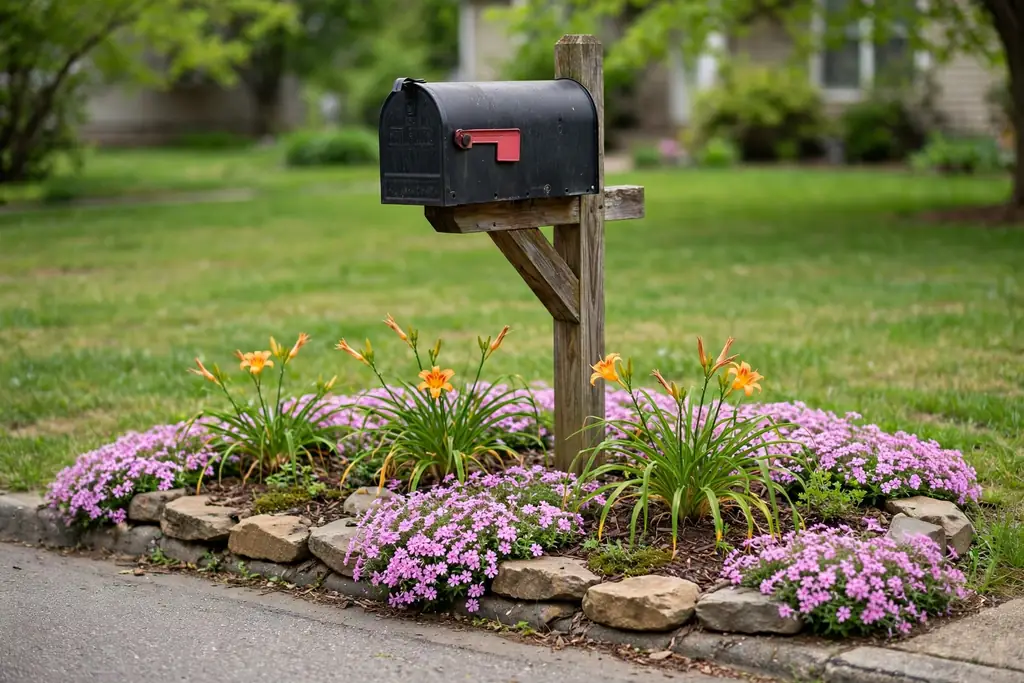
Plant a small bed around the mailbox post to give a plain entrance a clear focal point at the street. Use low plants such as dwarf daylilies, creeping phlox, or small ornamental grasses, so blooms never block the mailbox door, the house number, or the view of the street. Keep plants clear of the path the mail carrier uses, and trim any stems that lean over the pavement.
Add one or two pots beside the post if the ground is paved or the soil is poor, and choose plants that cope with roadside dust and winter salt if your street is treated. A mailbox bed is a small job that makes the whole front yard look more cared for, and it is a good first bed for a new gardener. Check plant labels for your zone before buying, using a reference such as the RHS plant pages for growing advice.
11. Wrap a Bed Around a House Corner
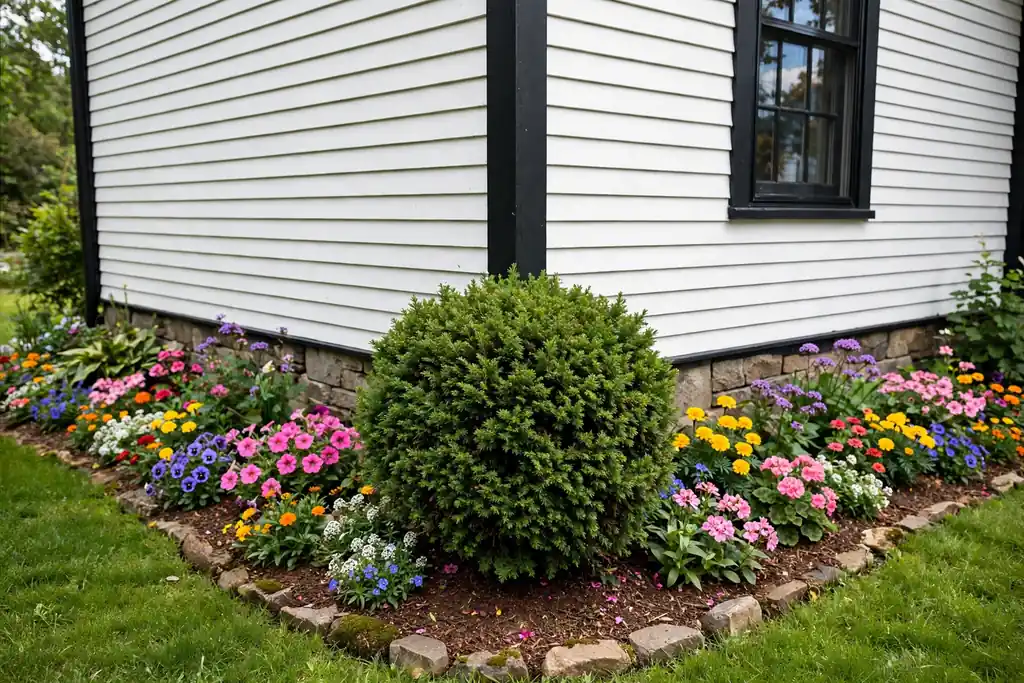
Wrap a flower bed around the corner of the house to soften a sharp angle and link the front garden to the side garden. Corner beds work best with one taller plant at the corner itself, such as a small shrub or a climbing rose on a trellis, then lower plants stepping down along both sides. This layout stops the corner from looking bare and gives you a longer bed without taking much lawn.
Keep the corner plant clear of gutters and windows, and leave access to taps and meters hidden behind the planting. Repeat one flower color along both arms of the bed so the two sides read as one design. Corner beds suit houses where the front door sits to one side, since they pull the eye around the house.
12. Raise a Stone Bed Along the Porch
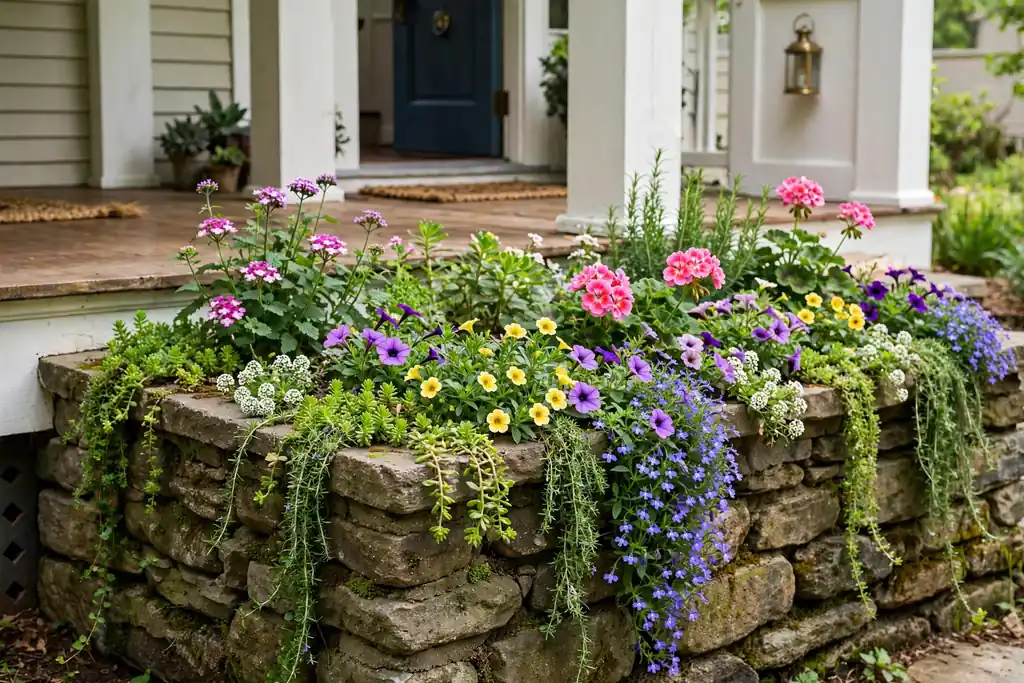
Build a low raised stone bed along the front of a porch to lift flowers to eye level and give the porch a planted base. Raised beds warm up early, drain well, and keep planting contained, which suits a narrow front yard. Build the wall no higher than knee height for easy reach, fill it with a mix of garden soil and compost, and plant the front edge with trailing plants that spill softly over the stone.
Choose stone that matches the house, such as brick for a brick house or fieldstone for a stone house, so the bed looks like part of the building. Water raised beds more often than ground beds, since they dry out faster. Keep the bed clear of the porch steps so the entry stays safe and wide.
13. Group Pots as a Bed on Porch Steps
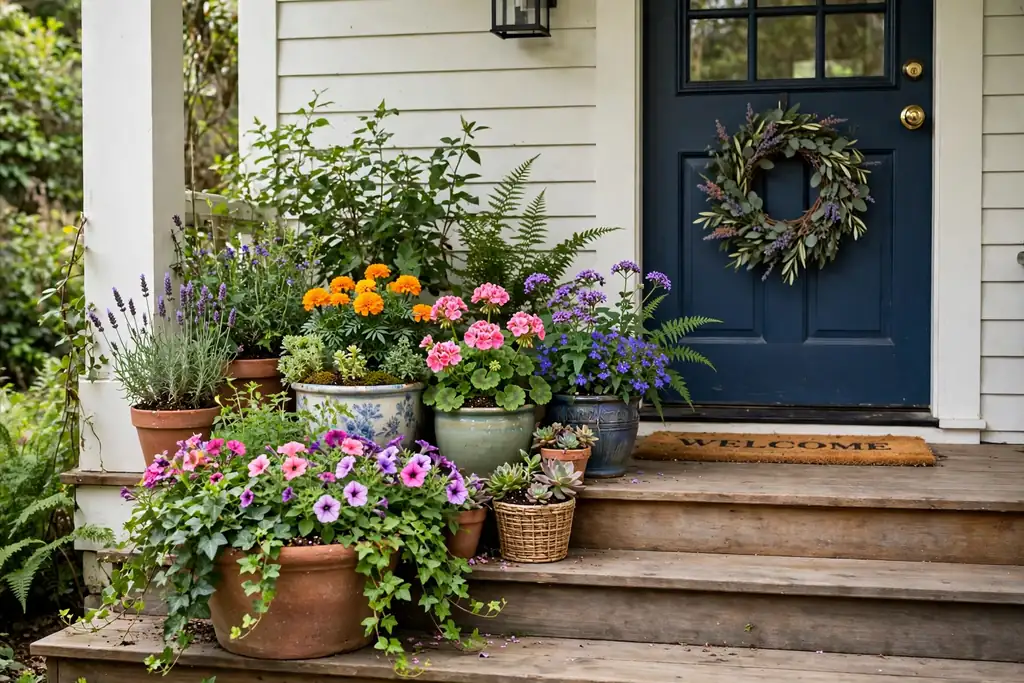
Group pots of different sizes on porch steps and beside the door to make a flower bed where there is no ground to dig. Pots suit rented homes, paved fronts, and houses where the soil near the house is poor. Use one tall plant, one mid height plant, and one trailing plant in each large pot, and group pots in threes or fives for a fuller look than a single pot alone.
Water pots often in hot weather, since they dry out faster than beds, and feed container plants through the season. Move pots to follow the sun or to frame the door for a special occasion, and bring tender plants under cover before frost. This idea also works as a trial bed: grow a plant in a pot for a season before committing it to a ground bed.
14. Build a Rock Garden Bed for a Sunny Bank

Turn a sunny bank or a sloped corner into a rock garden bed with alpine plants, small sedums, creeping thyme, and dwarf shrubs tucked between stones. Rock beds suit spots where soil is thin and drainage is sharp, and the stones hold heat and shelter small plants. Bury at least a third of each large stone so it looks settled, fill behind the stones with gritty soil, and plant in the pockets between rocks.
Keep planting low and open so the stones stay visible, and top dress with gravel to keep plant crowns dry. A rock bed near the path gives a close up view of small flowers that would be lost in a big border. Avoid rich compost that holds water around alpine roots, since wet crowns rot in winter.
15. Plant a White Flower Bed for Evening Glow
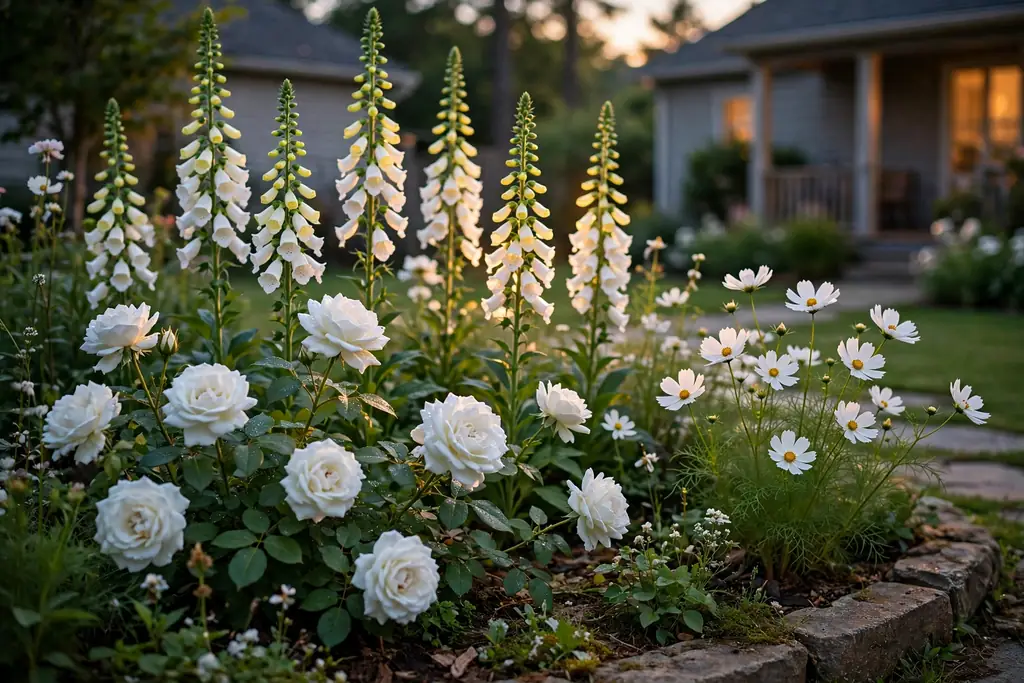
Plant a front bed in white flowers such as white roses, white foxgloves, white cosmos, and white hydrangeas for a bed that glows in evening light. White beds suit front yards used in the evening, since pale flowers stay visible after sunset, and they look calm beside any house color. Mix white flowers with green foliage only, and avoid adding a second strong color, so the bed stays restful.
Add scented white flowers such as jasmine or white stocks near the path, where you will pass them at dusk. White beds need regular deadheading, since spent white blooms show more than colored ones. This bed also photographs well from the street, since white reads clearly even in shade.
16. Use Bold Color Blocks in Drifts
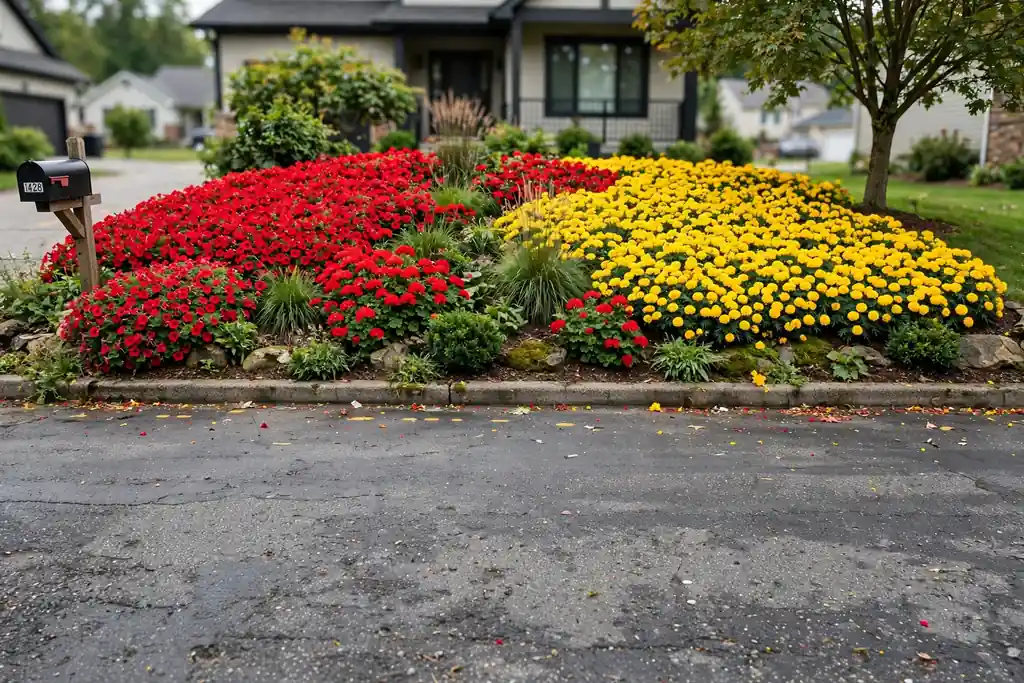
Plant large drifts of one color at a time, such as a block of red tulips followed by a block of yellow daylilies, for a front bed that reads clearly from the street. Color blocks work because the eye sees a mass of color before it sees single plants, so even a small bed can make a strong impression. Plant each color in a group of at least nine plants, and keep the blocks large enough to see from the road.
Repeat one color in a second spot, such as a pot by the door, to link the bed to the house. For pink led schemes, these pink flower garden ideas show how drifts of one color make the color read clearly. Avoid mixing too many colors in one bed, since that can look busy from a distance.
17. Edge a Bed With Edible Flowers and Herbs
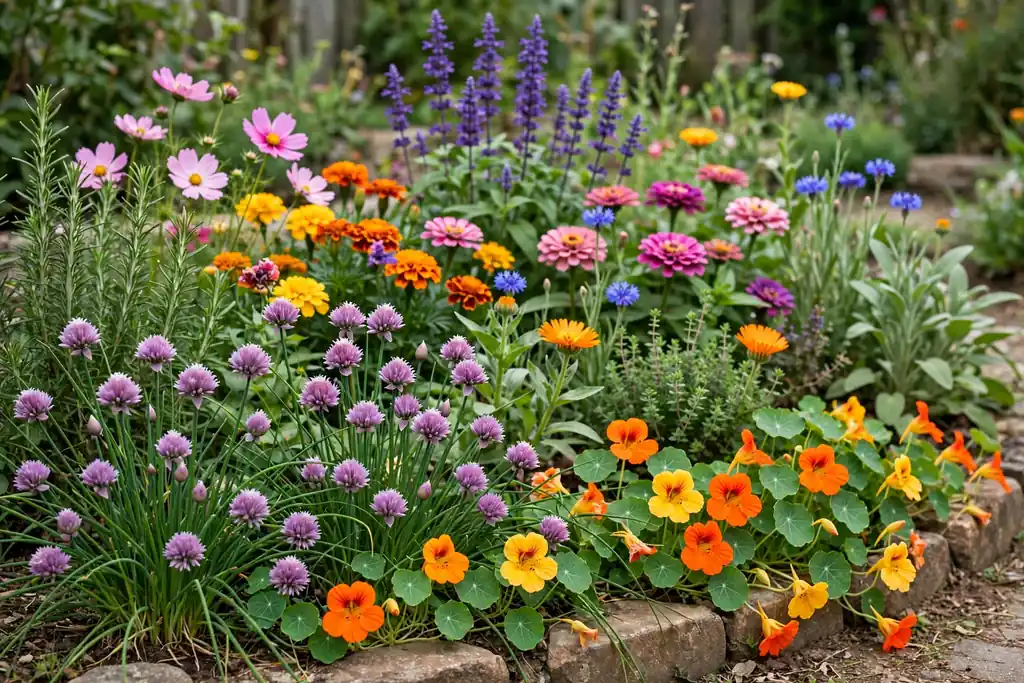
Edge a front flower bed with edible flowers and herbs such as nasturtiums, chives, rosemary, and thyme, so the bed is useful as well as pretty. Herb edges suit beds near the kitchen door or the path to the house, where you can pick leaves on the way inside. Plant herbs at the front edge where you can reach them, and keep taller flowers behind so they do not shade the herbs for most of the day.
Check that any flower you plan to eat is grown without spray and is known to be safe to eat, since not all garden flowers are edible. Trim herbs often to keep them compact, and replace any that get leggy with fresh plants in the same spots. This bed gives a front garden a kitchen garden feel without a separate vegetable plot.
18. Make a Rain Garden Bed for a Wet Corner
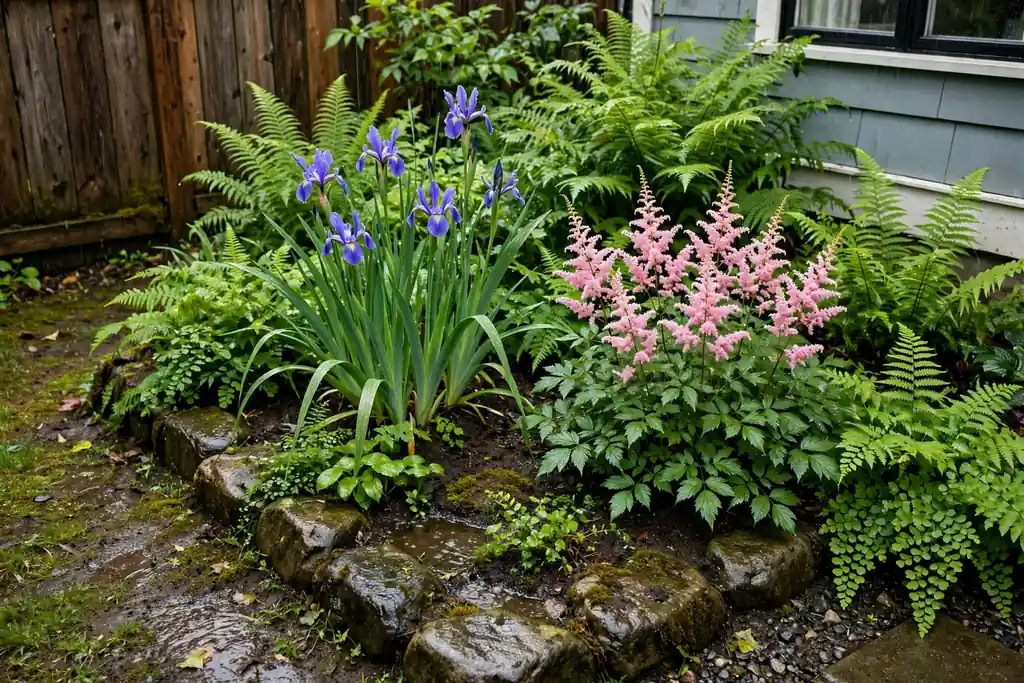
Turn a wet corner or the spot where a downspout empties into a rain garden bed of moisture loving plants such as astilbe, iris, ferns, and Joe Pye weed. Rain beds slow water, let it soak in, and stop puddles from forming on paths and lawns. Dig a shallow basin, direct the downspout into it through a short channel or pipe, and plant the wettest center with plants that cope with standing water for a day or two.
Plant the drier edges with plants that like moist but not wet soil, and mulch the basin to hold moisture between rains. Check local rules before redirecting a downspout, and keep the bed away from house foundations. A rain bed turns a problem corner into one of the lushest parts of the front yard.
19. Terrace a Sloped Front Yard Bed
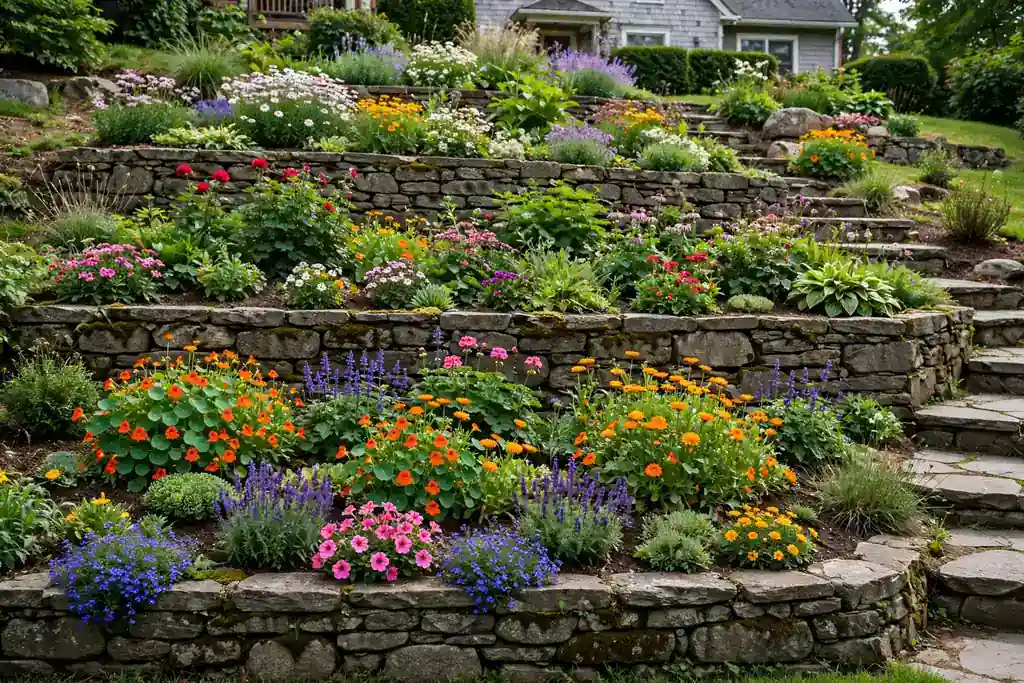
Terrace a sloped front yard into two or three level beds with low stone or timber walls, so each level stays flat and easy to plant. Terraced beds stop soil from washing downhill, make watering fairer, and give each level its own planting job, such as shrubs on the top level and flowers on the lower ones. Build from the bottom up, keep each wall low, and leave a path or step between levels for access.
For stepped layouts and wall types that suit different slopes, see these tiered garden ideas. Plant the top level with taller plants that catch the light, and the lowest level with low edging plants seen from the street. Keep walls below knee height unless a professional builds them, and check local height and drainage rules first.
20. Sow a Wildflower Strip Along the Front
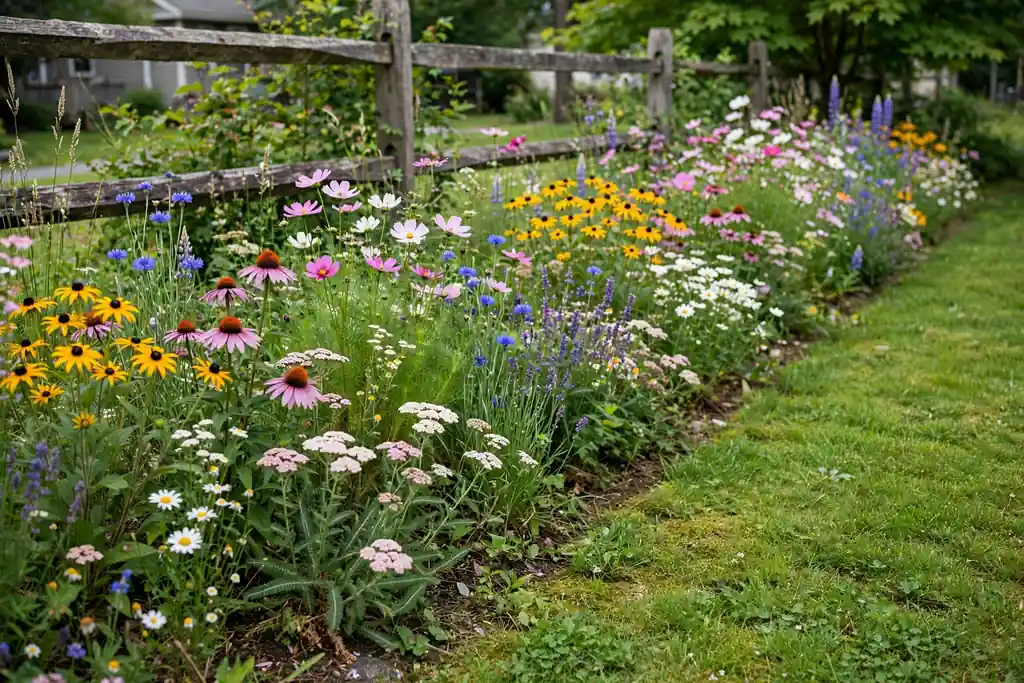
Sow a wildflower strip along the front edge of the yard, beside a fence or a path, for a loose, natural bed that needs little care once it settles. Choose a seed mix suited to your region, clear weeds first, and sow thinly on bare, raked soil in spring or autumn as the packet directs. Mark the strip edges with a mown edge or a simple stone line so it reads as a choice, not neglect.
Let the strip stand into autumn so plants can self seed and birds can use the seed heads, then cut it down once the season ends. The first year can look patchy while perennials establish, so set expectations and mix fast annuals in for first year color. Wildflower strips suit wide front yards and houses with a relaxed style.
21. Plant a Fragrant Bed Beside the Path
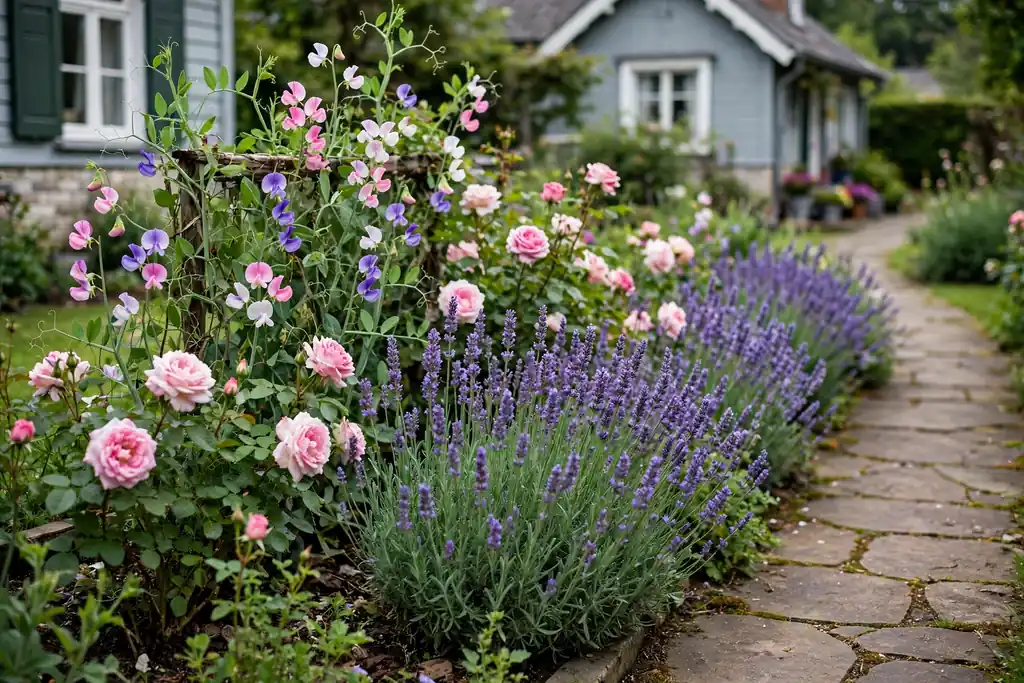
Plant a fragrant bed beside the front path with lavender, roses, jasmine, sweet peas, and stocks, so visitors smell the garden before they reach the door. Fragrant beds work best in a sunny, sheltered spot, with scented plants at the path edge where you brush past them. Plant lavender and rosemary where hands can touch them, and train jasmine or sweet peas up a small trellis beside the gate.
Water fragrant plants at the base rather than over the leaves, since wet leaves can lose scent and invite disease. Keep the path clear by trimming plants that lean across it, and deadhead roses and sweet peas often to keep new scented blooms coming. This bed makes a short walk to the door feel like part of the garden, not just a route through it.
22. Keep a Low Care Perennial Bed
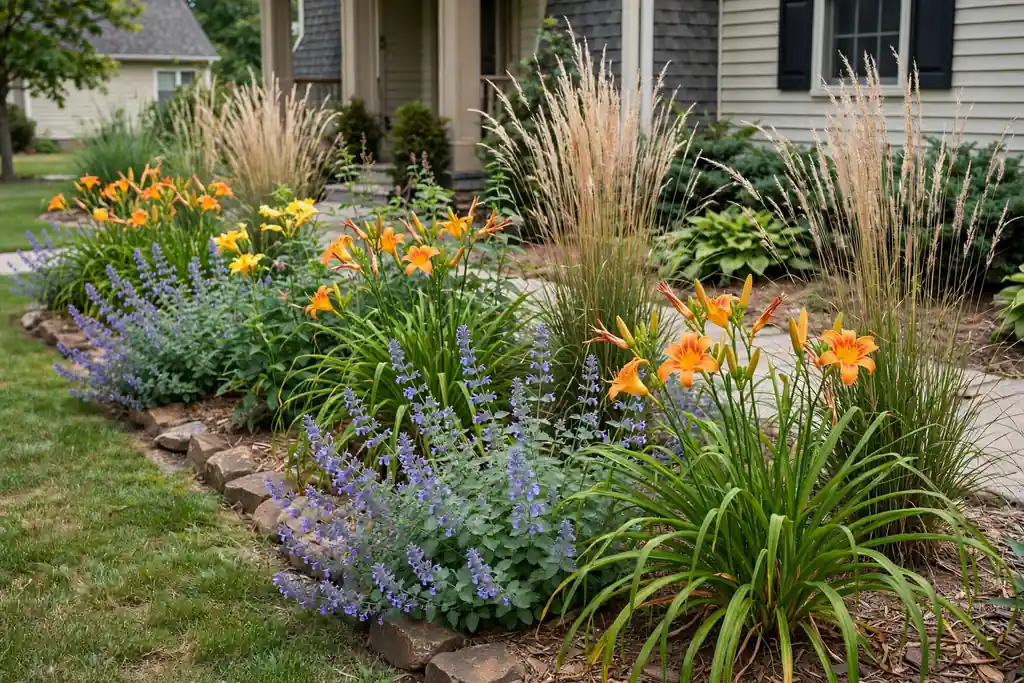
Build a front bed from tough perennials such as daylilies, hostas for shade, sedums for sun, ornamental grasses, and catmint, for color that returns each year with little work. Low care beds suit busy owners and rental homes, since perennials need no yearly replanting and most need only one tidy up a year. Plant in groups, mulch well, and space plants by their mature size, not by how they look in the pot.
Cut the whole bed down once a year in late winter or early spring, and divide crowded clumps every few years to keep them flowering well. Avoid plants that need staking, frequent deadheading, or winter protection, since those add work each season. A low care bed still looks cared for if its edge stays clean and its mulch is topped up each spring.
23. Design a Four Season Bed With Evergreen Structure
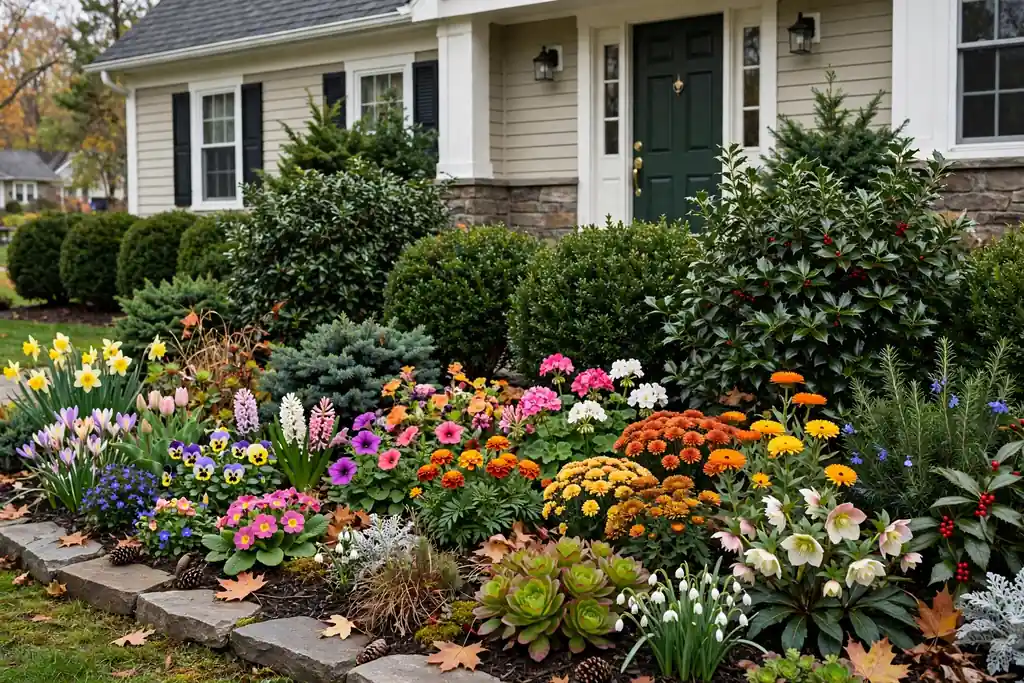
Design a front bed around evergreen shrubs such as boxwood, yew, or dwarf conifers, then add seasonal flowers around them for color through the year. Evergreen structure stops the bed from looking empty in winter, while bulbs in spring, roses in summer, and asters in autumn give it changing color. Plant evergreens first, spaced for their mature size, and fill the gaps with seasonal plants that can be changed without disturbing the shrubs.
Add one winter interest plant, such as a shrub with colored stems or early flowers, so the bed earns its place in the coldest months. Feed and mulch in spring, prune evergreens lightly to hold their shape, and step back each season to check that the bed still reads well from the street. This bed is the best choice if you want one front bed that works all year with no bare season.
Conclusion
A front yard flower bed does not need every idea on this list. Pick one bed that fits your sun, soil, and time, such as a layered border by the house, a pollinator bed by the path, or a low care perennial bed for a busy household. Build its edge well, mulch it, and plant in groups rather than singles, so the bed looks deliberate from the street from the first season. Add evergreen structure for winter, spread flowering across spring, summer, and autumn, and keep the path and door clear so the garden welcomes visitors instead of blocking them.
Save this list on Pinterest before your next nursery trip, and work through it one bed at a time: structure first, then the plants that suit your light and soil, then the seasonal color that keeps the front of your home looking fresh.
FAQs
What is the easiest front yard flower bed for a beginner?
Start with a low care perennial bed in full sun, using daylilies, catmint, sedums, and ornamental grasses. These plants return each year, need little watering once settled, and need only one tidy up a year. Plant in groups of three or five, mulch well, and keep the edge clean. Once that bed works, add a second bed, such as a mailbox bed or a pot group by the door, rather than digging the whole front yard at once.
How wide should a front yard flower bed be?
A bed along the house should be at least three to four feet deep, so you can layer tall plants at the back, mid height plants in the middle, and low plants at the front. Narrower beds force plants into a single row, which looks thin and leaves little room for layering. For an island bed, make it wide enough to reach the middle from either side without stepping on plants, usually six to eight feet across for a medium bed.
Which flowers grow best in a front yard bed in full sun?
In full sun, try coneflowers, lavender, salvias, daylilies, zinnias, and ornamental grasses, all of which flower well with at least six hours of direct sun. Check the plant label for your growing zone and mature size, and group sun lovers together rather than mixing them with shade plants. Water new plants well in their first season, mulch to hold moisture, and deadhead where the label advises it to keep new blooms coming.
How do I keep a front yard flower bed low care?
Choose tough perennials, mulch the whole bed to cut weeds and hold moisture, and edge the bed clearly so grass does not creep in. Avoid plants that need staking, frequent deadheading, or winter protection, and space plants by their mature size so they do not crowd each other. One yearly tidy up, a spring mulch top up, and watering only in dry spells is enough for most low care beds once plants settle.
Should front yard flower beds match the house style?
Yes, in a broad sense. Formal houses suit edged beds, boxwood, and matching beds by the door, while cottages suit loose mixes and curved shapes. A modern house suits simple drifts of one or two colors and clean stone or metal edging. Matching the bed to the house does not mean copying the house color, only choosing a bed shape and plant style that sits comfortably beside it, so the garden and the house read as one place.
How do I stop weeds taking over a front flower bed?
Mulch the bed with two to three inches of bark or compost, edge it clearly, and plant densely so little bare soil shows once plants fill in. Pull weeds when they are small, before they seed, and avoid digging the whole bed over each year, since that brings new weed seeds to the surface. Ground cover plants at the front edge, such as creeping thyme or hardy geraniums, also shade the soil and leave less room for weeds to start.