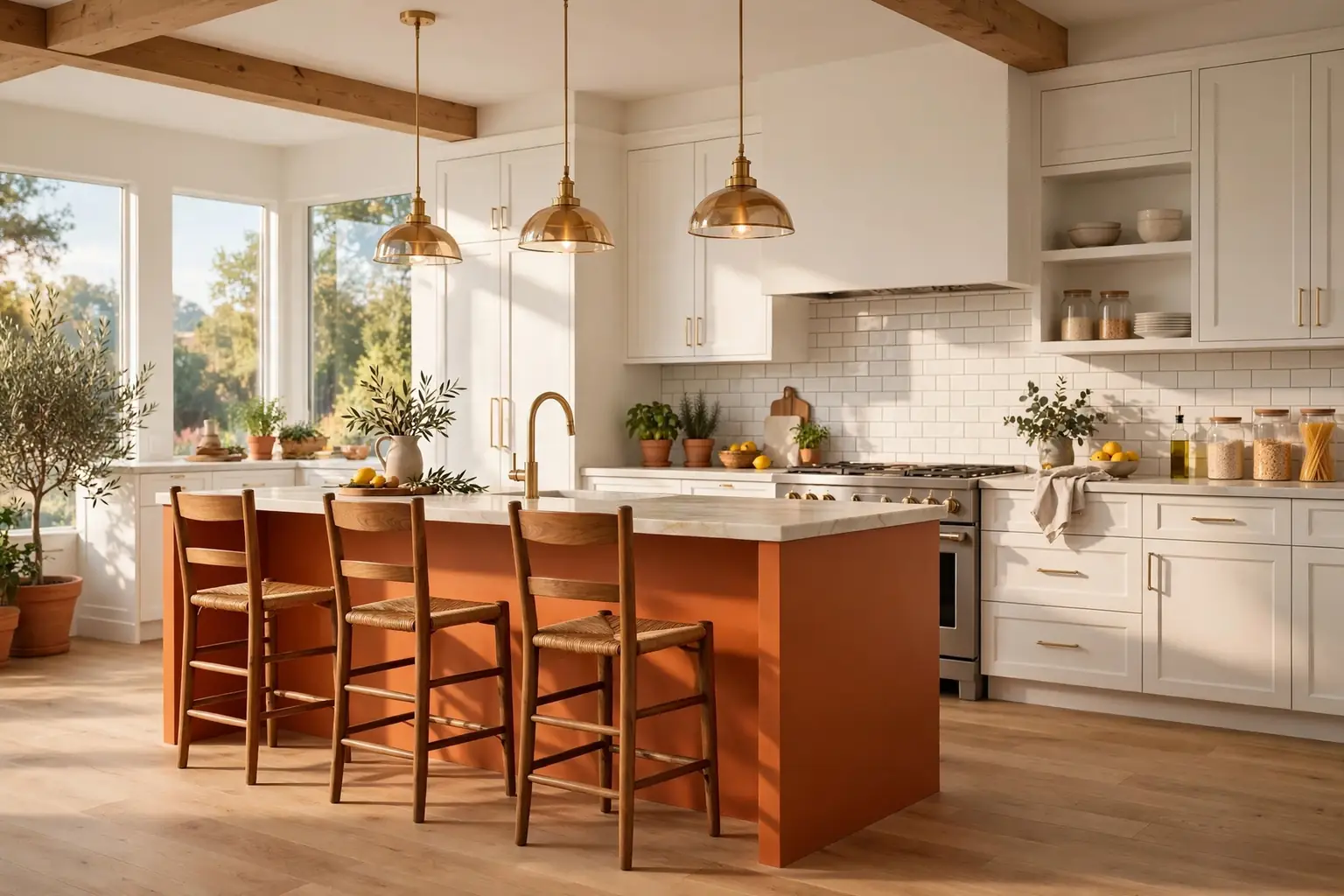
Orange can warm a kitchen fast, but it needs a plan, or it can take over the room. The trick is to pick one main orange feature, then repeat the color in small, useful places, while the rest of the kitchen stays calm. These 24 orange kitchen ideas cover painted cabinets, tile, islands, seating, lighting and small accents, so you can start with a weekend change or build toward a full refresh. Test a paint or tile sample in daylight and evening light first, since orange shifts a lot between the two.
Key Takeaways
- Pick one main orange feature, such as cabinets, an island or a backsplash, and keep the rest of the kitchen calm so the color has room to work.
- Test orange samples in daylight and evening light before you commit, since warm tones look very different under kitchen lighting.
- Pair orange with white, cream, wood or soft grey for daily use, and save strong pairings such as navy or black for small accents.
- Use orange where it earns its place: seating, storage, lighting and work zones, not just on a wall you rarely look at.
- Start small if you are unsure. Stools, dishware, a rug or hardware can be changed later, while painted cabinets and tile are harder to undo.
1. Paint the Lower Cabinets Orange and Keep Uppers White
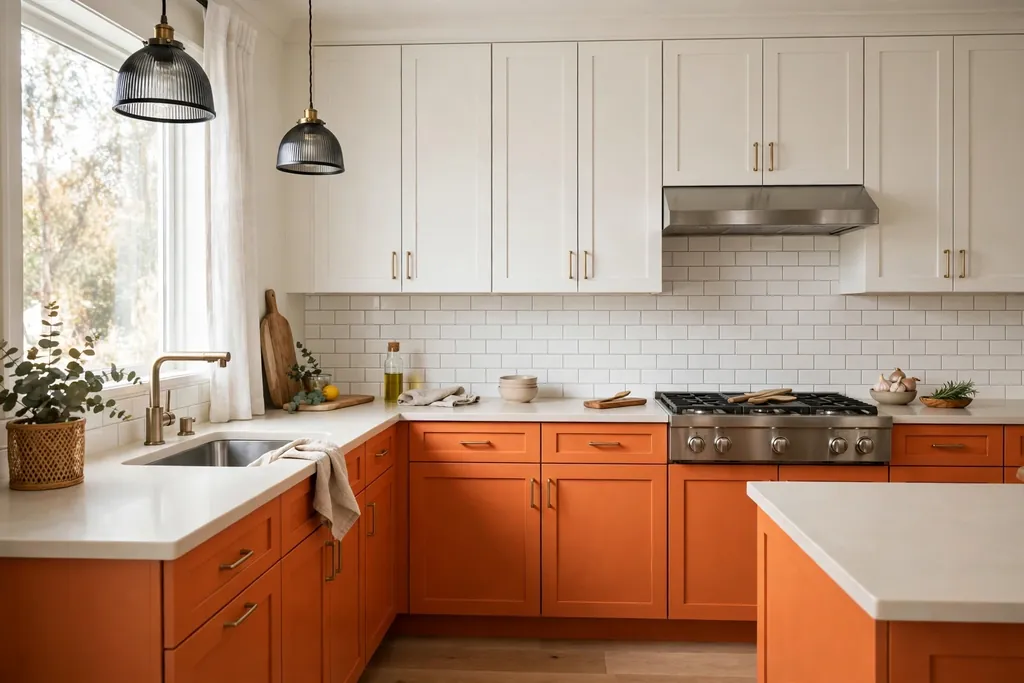
Painting only the lower cabinets orange gives the kitchen warmth at eye level and below, while white upper cabinets keep the room bright. This split suits kitchens that feel cold or plain, and it costs less than a full repaint, since you only change one set of doors. Choose a mid orange rather than a neon shade, and use a durable cabinet paint with a primer made for your door material.
Remove the doors and hardware before painting, label each door on the back, and paint in thin coats so the finish stays smooth around the panels. Keep counters and backsplash plain while you live with the change for a week. If the orange feels strong, soften it with wood boards, cream towels and plain dishware rather than adding more color. This guide to colors for your kitchen cabinets can help you compare orange with other cabinet colors before you start.
2. Make a Burnt Orange Island the Room’s Focal Point
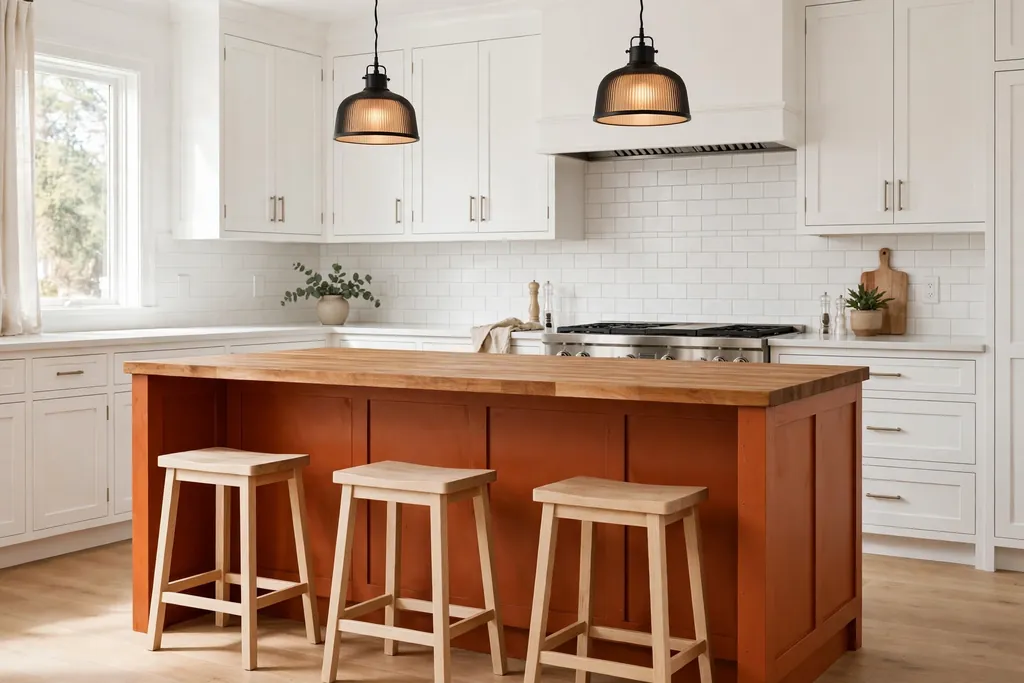
A burnt orange island works well in a kitchen where the wall cabinets are white, cream or pale wood, because the island becomes the one strong shape in the room. The deeper, browner orange reads as warm rather than bright, and it pairs well with a wood or light stone top. Use the island for prep, serving and casual meals, so the color sits at the center of daily use, not just on display.
Keep the stools simple and the pendant lights plain, so the island stays the focus. A wood top softens the painted base, while a light stone top keeps the whole unit feeling fresh. For holiday serving, the same island can carry a simple centerpiece, as in these christmas kitchen island decor ideas, without changing the paint. Wipe the painted base often, since an island takes more knocks than wall cabinets.
3. Lay a Terracotta Tile Backsplash
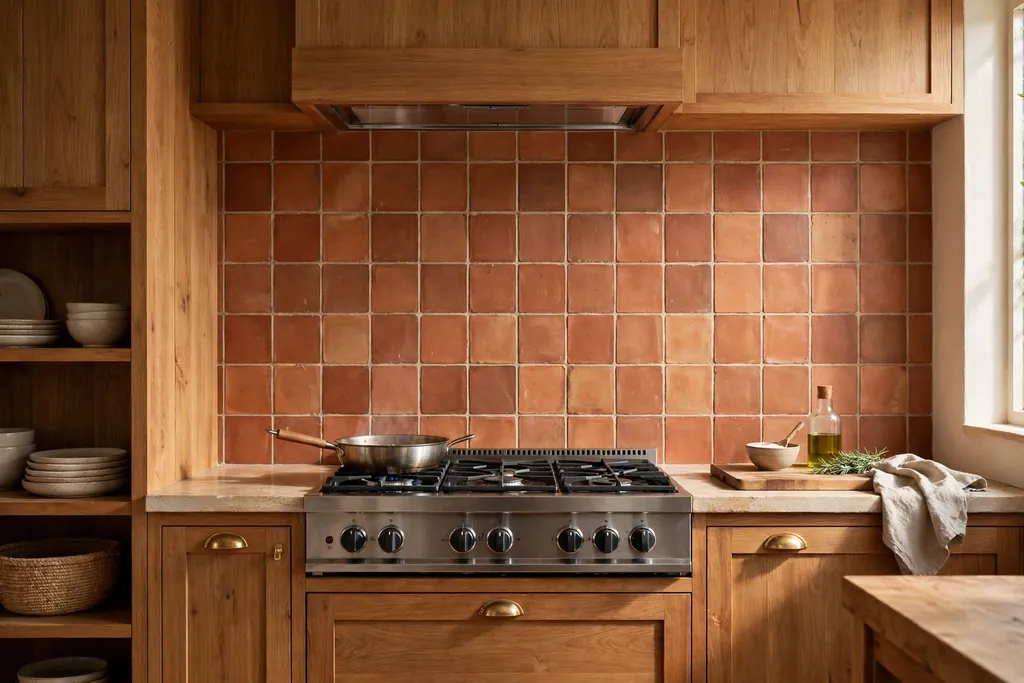
Terracotta tiles bring orange into the kitchen through texture as well as color, and small variations in each tile keep the wall from looking flat. A terracotta backsplash suits wood cabinets, cream walls and stone counters, and it ties in well with warm cooking styles, as seen in these mexican kitchen decor ideas. Choose a matte or lightly glazed tile, since a high gloss finish can look harsh next to orange.
Seal the tile and grout, especially behind the stove and sink, where steam and splashes land daily. Keep the rest of the backsplash run simple: one tile shape, one grout color, and no competing pattern on the counters. If a full wall feels like too much, run the terracotta only behind the stove and use a plain tile elsewhere, so the orange reads as a feature, not a border.
4. Choose an Orange Retro Range Cooker
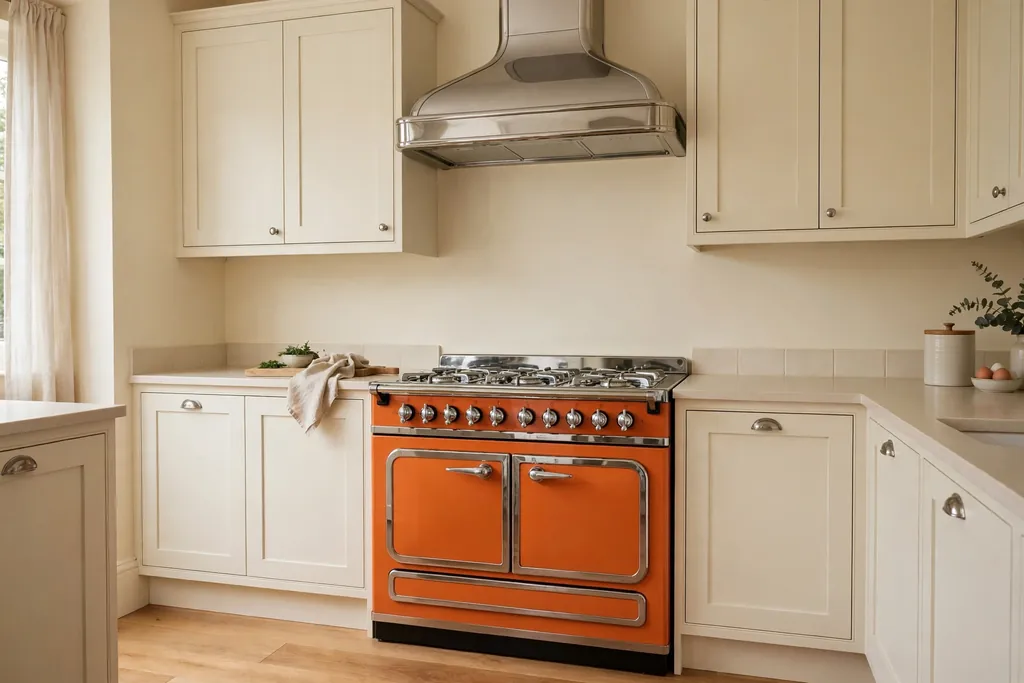
An orange retro range cooker adds color and character in one appliance, and it suits kitchens with plain cabinets, where the stove can carry the room. The curved shape and chrome trim of a retro range give the kitchen a clear focal point, and the color is contained to one unit, so the rest of the room can stay quiet. Check the width, fuel type and venting needs before you order, since a range is harder to swap than a small appliance.
Keep the wall behind the range plain, with a simple backsplash or a plain tile, so the stove shape stays clear. Match one small detail to the range, such as a kettle or a tea towel in a close orange, and leave other appliances in steel or cream. Clean the enamel with a soft cloth and a mild cleaner, since harsh pads can dull the finish over time.
5. Add Orange Bar Stools at the Island
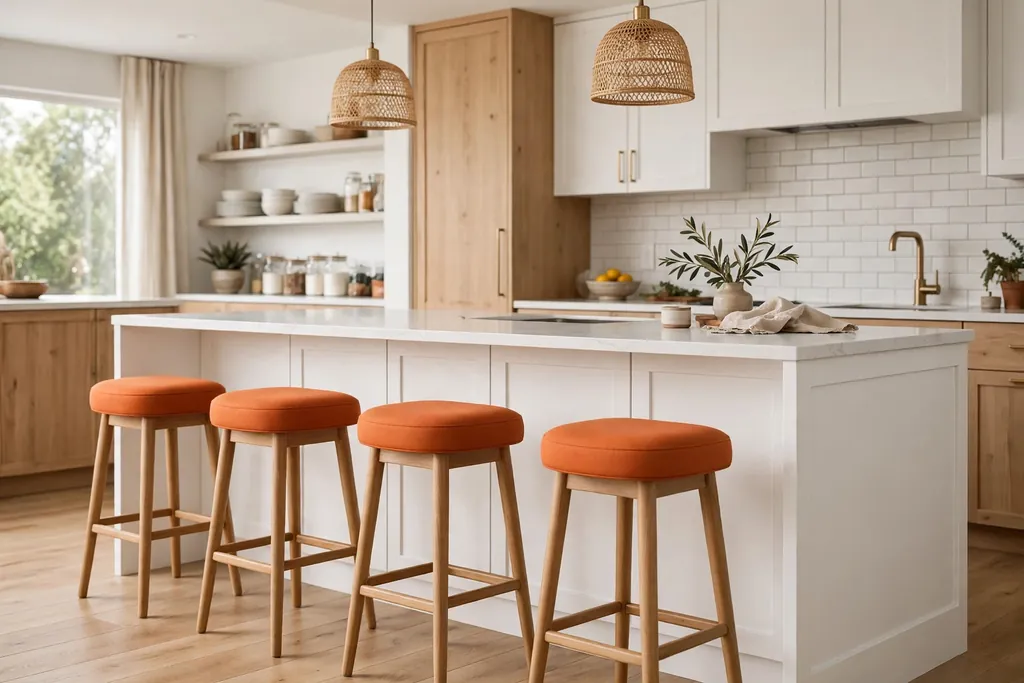
Orange bar stools are a low risk way to test the color, since they can be moved, recovered or sold if you change your mind. They work best at a plain island or peninsula, where the stools add the main color, and they suit families, because a wipe clean seat handles spills better than fabric. Measure the counter height first, and leave about 25 centimetres of leg room between the seat and the underside of the counter.
Choose a simple stool shape with no extra pattern, and repeat the orange only once more in the room, such as in a tea towel or a fruit bowl. If you have a wood floor, add felt pads to the stool feet to stop scratches when stools are pulled out daily. For a calmer look, mix two orange stools with two wood or cream stools, rather than a full row of bright seats.
6. Hang Orange Pendant Lights Over the Island
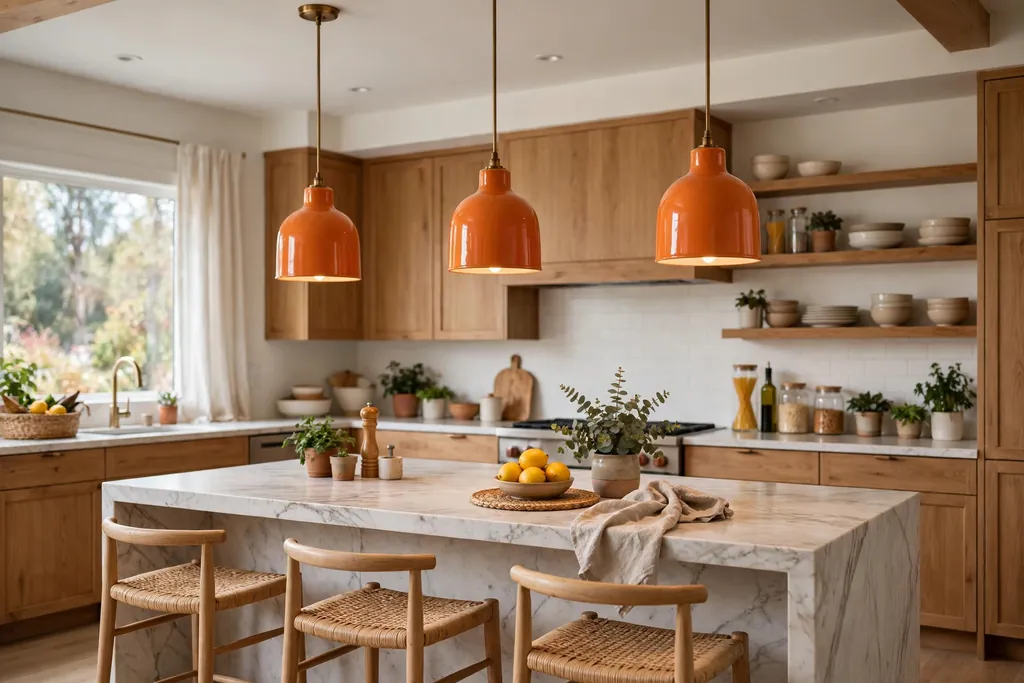
Orange pendant lights add color above the work surface without using any counter or cabinet space, which suits small kitchens. The shade color shows most when the light is off, while the warm glow matters most in the evening, so pick a shade that looks good in both states. A metal or enamel shade is easy to wipe clean, while a fabric shade needs more care near cooking steam.
Hang two or three pendants in a straight line over the island, spaced evenly, and keep the bottom of each shade clear of head height for anyone working at the counter. Use warm white bulbs, since cool white light can make orange look harsh. Keep the rest of the lighting plain, with simple ceiling or under cabinet lights, so the pendants stay the clear feature.
7. Show Orange Dishware on Open Shelves
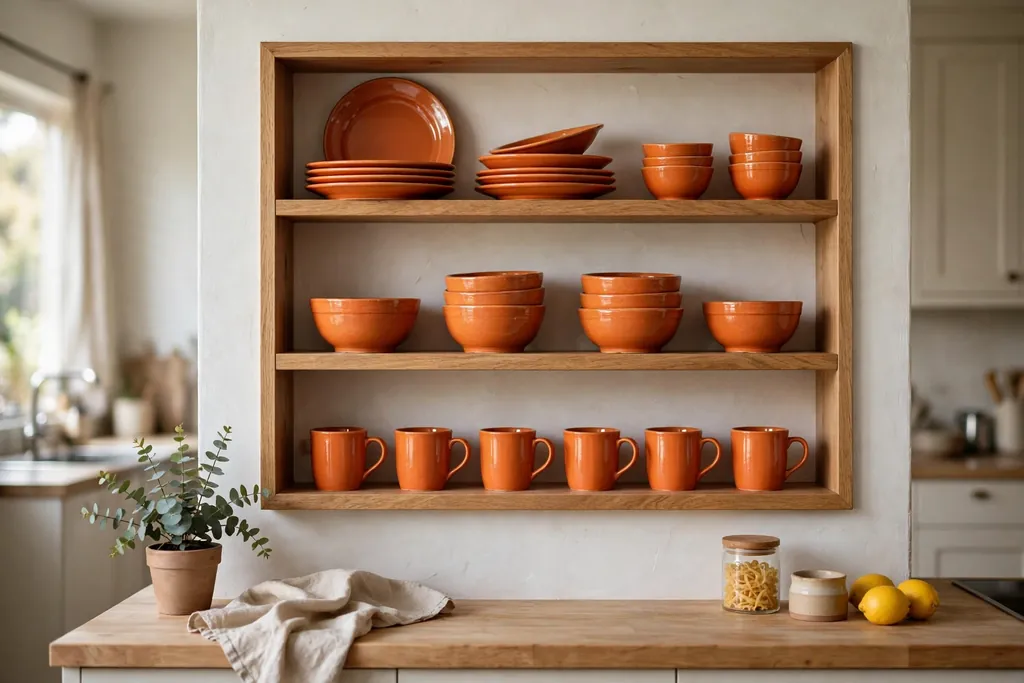
Open shelves filled with orange plates, bowls and mugs give the kitchen color that changes with daily use, since the display is also the storage. This idea suits cooks who already use open shelves, because the dishware is easy to reach and easy to put away. Group orange pieces together in one or two stacks, and mix in cream or white pieces so the shelf does not look like a single block of color.
Our guide to how to style open shelves shows how to leave breathing room between groups, which matters here, since a crowded shelf makes orange feel loud. Keep the shelves near the sink or dishwasher for a short trip from washing to storage, and limit each shelf to one or two groups. Wash and dry pieces before shelving them, so the open display stays clean.
8. Build an Orange Banquette Dining Nook
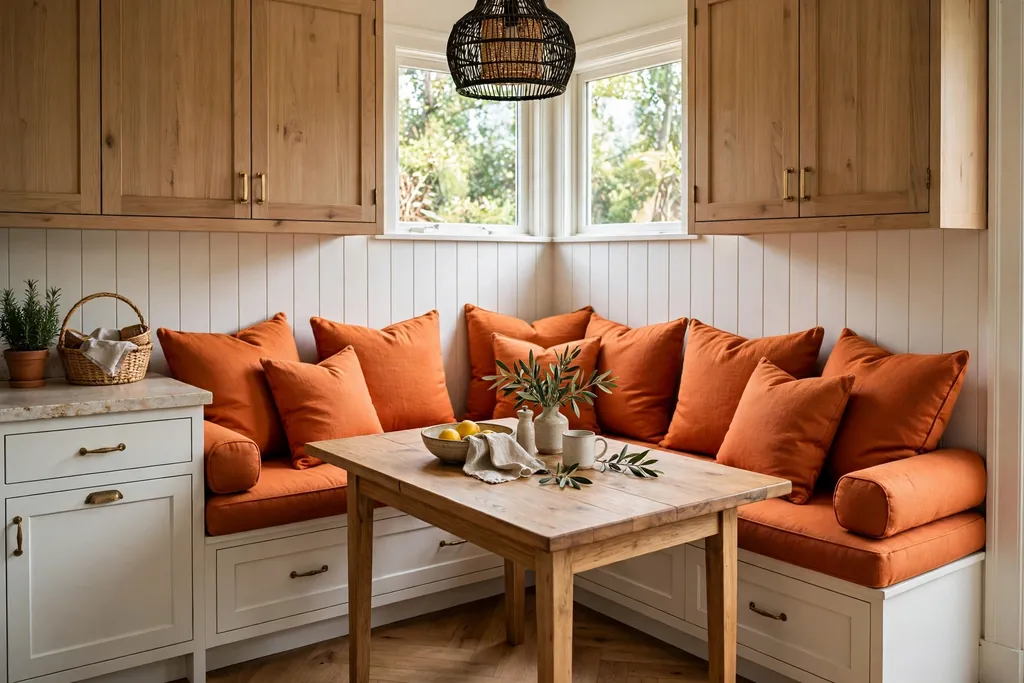
An orange banquette, with a bench seat and back cushions in a warm orange fabric, turns a kitchen corner into a dining spot that invites people to sit longer. The bench uses a corner that often holds nothing, and the storage under the seat can hold tablecloths, placemats or rarely used serving pieces. Choose a stain resistant fabric, since a dining bench sees food and drink daily.
Keep the table plain wood or white, and the wall behind the bench simple, so the orange cushions carry the color. Add one or two cream cushions to break up the orange, and keep the cushion covers removable for washing. If the nook is small, use a round or oval table, which is easier to slide in and out of than a square table in a tight corner.
9. Lay an Orange Patterned Runner Rug
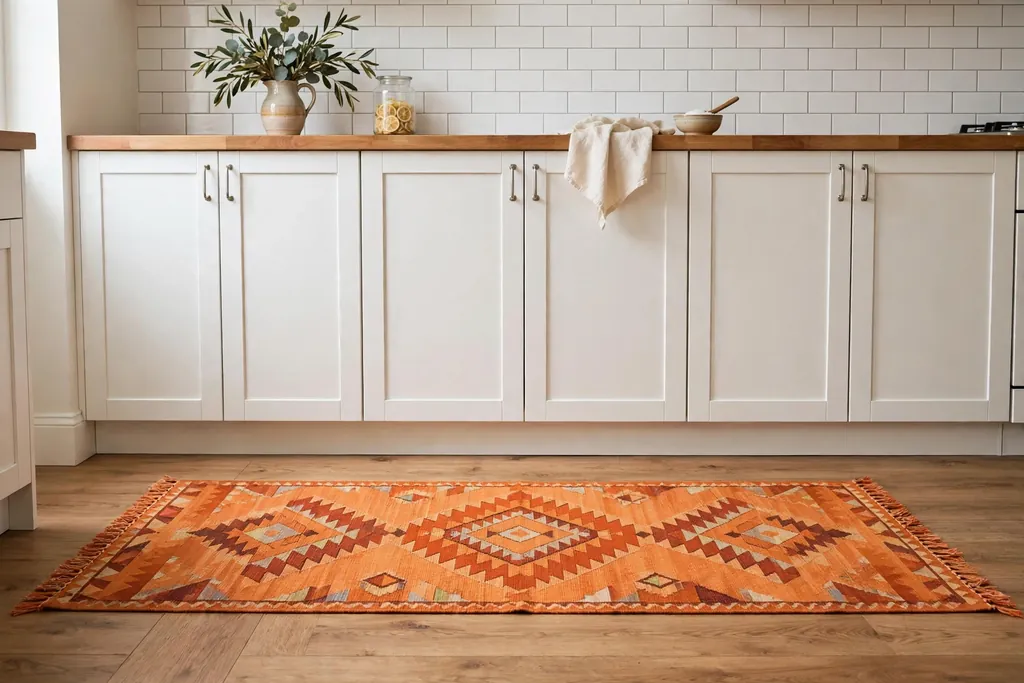
An orange runner rug adds color at floor level, where it warms a plain kitchen without changing any fixed surface. A patterned runner in orange, cream and soft grey suits a long galley kitchen or the stretch in front of a sink and stove, and it softens hard floors underfoot. Choose a low pile, washable rug, since kitchen rugs collect crumbs, water and cooking spills.
Measure the run first, and leave a clear border of floor on each side, so the rug looks placed rather than squeezed in. Use a non slip pad under the rug, and keep the rug clear of the oven door swing and any floor vents. Shake it out weekly and wash it on a regular cycle, since a kitchen rug shows marks faster than a rug in another room.
10. Fit Orange Roman Shades at the Kitchen Window
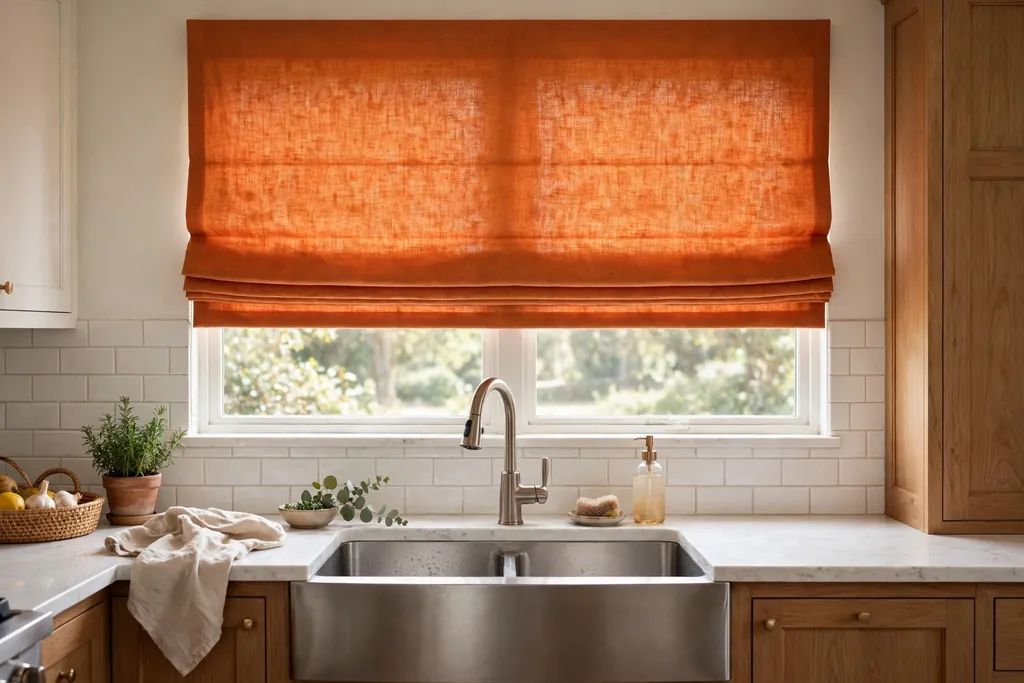
Orange roman shades frame the kitchen window with color that can be raised or lowered, so you control both light and privacy through the day. A flat roman shade in a mid orange fabric suits a kitchen with plain walls, and it is easier to keep clean than long curtains near a sink or stove. Measure the window recess carefully, and decide whether the shade sits inside the recess or across the face of the frame.
Keep the fabric plain, with no busy pattern, so the shade reads as a color block rather than a print. Pair it with a plain cream or white blind behind it if you need extra privacy at night. For more window ideas, see these kitchen window decor ideas. Wipe the shade with a dry cloth often, and wash it following the fabric care label, since cooking grease settles on window fabrics.
11. Paint the Pantry Door Orange
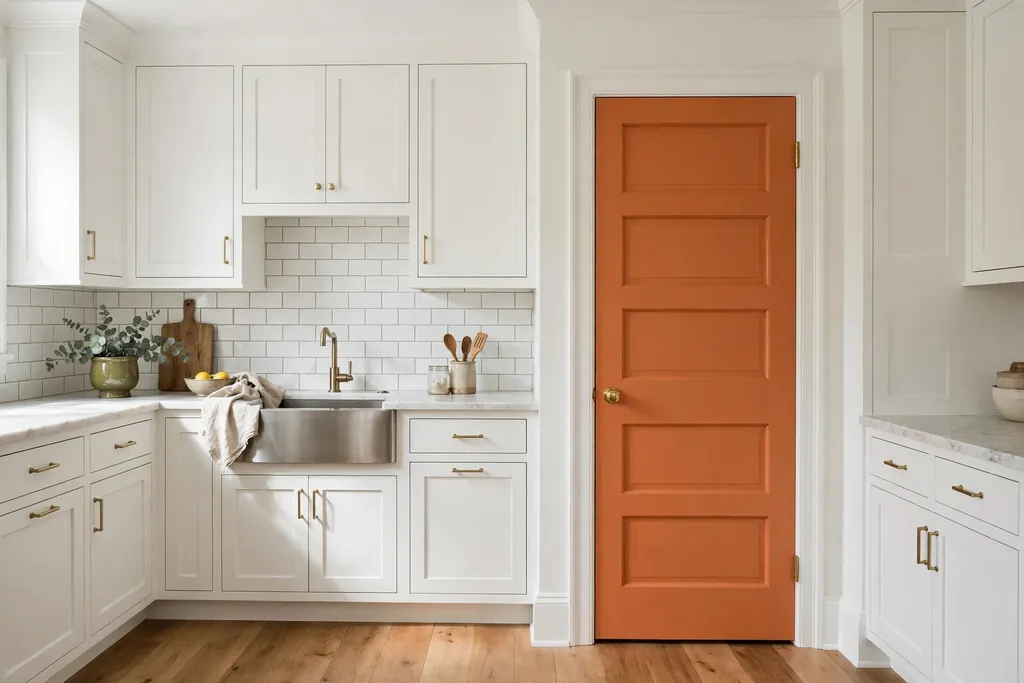
Painting the pantry door orange turns a plain door into a small feature, and it is a good first step if you are not ready to paint cabinets. The door is a single, contained surface, so the color stays in one place, and it helps guests find the pantry in a kitchen with many white doors. Use the same durable paint you would use on cabinets, since a pantry door gets frequent handling.
Keep the door hardware simple, in black, brass or steel, and leave the surrounding trim white, so the orange door stands out cleanly. If the pantry is a walk in cupboard, paint only the outer face, and keep the inside plain for easy cleaning. This small change also works well in a rented kitchen, if your lease allows painting, since one door is easy to repaint later.
12. Set Up an Orange Small Appliance Station
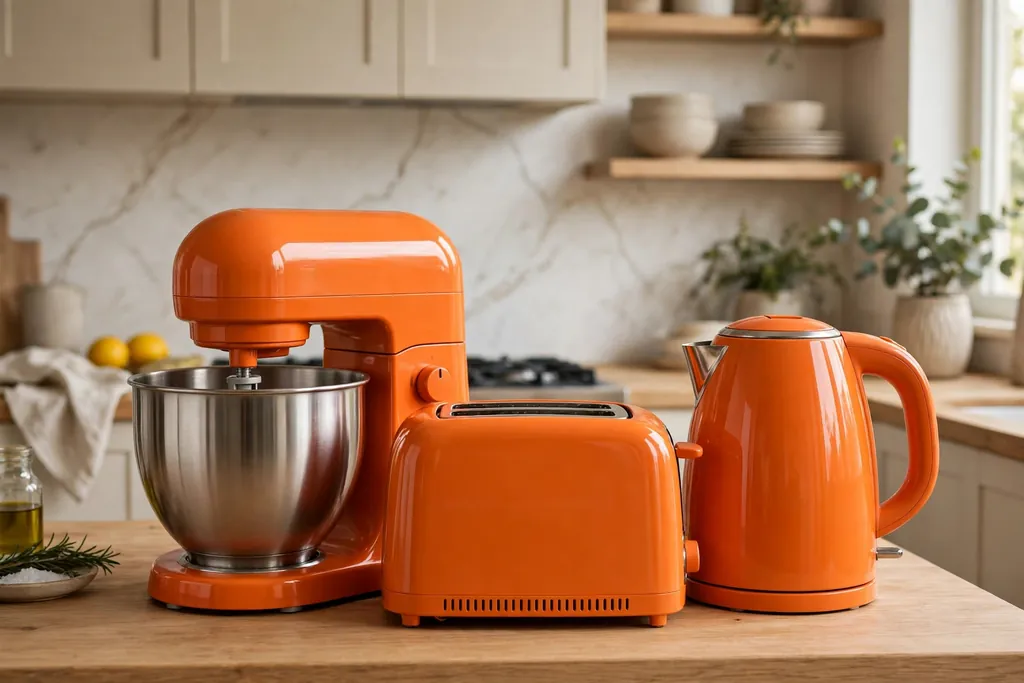
Group orange small appliances, such as a kettle, toaster and stand mixer, on one stretch of counter, and the group reads as a planned station rather than a random collection. This idea suits kitchens where a full repaint is not planned, because the color comes from items you already use daily. Keep the station near a power point and clear of the sink splash zone, and leave space to pull each appliance out for use.
Limit the station to two or three orange items, and keep other appliances in steel or cream, so the group does not look like a shop display. Store cords neatly behind the appliances, and wipe the station during your usual counter clean, since crumbs and coffee grounds gather around small appliances fast. If you buy one new orange appliance, match it loosely to the ones you own, rather than chasing an exact shade.
13. Paint One Orange Accent Wall
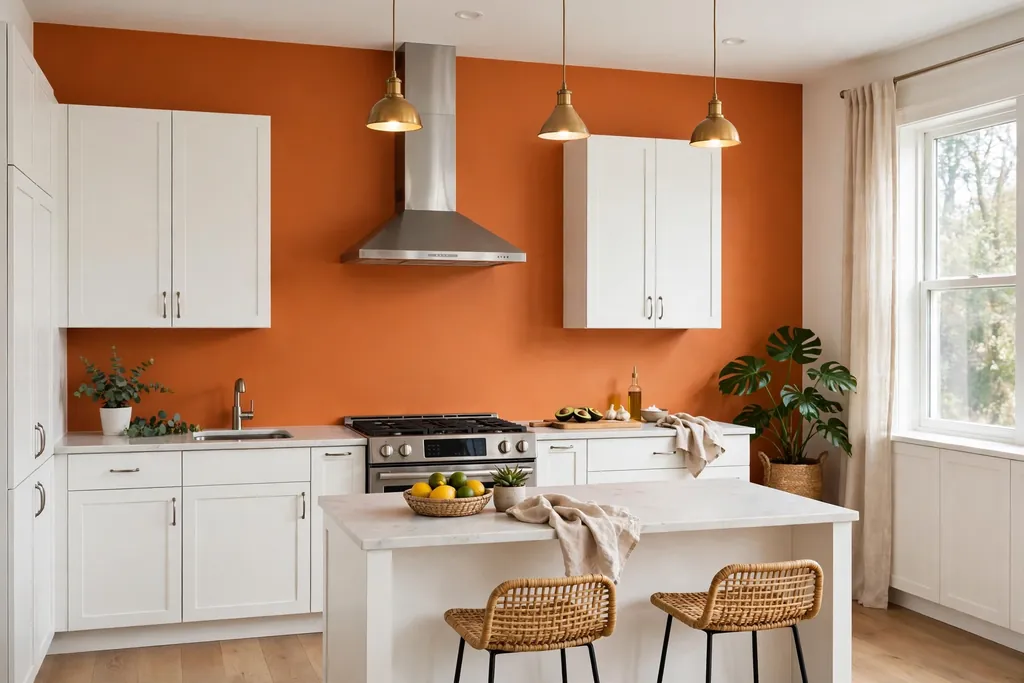
One orange accent wall can warm a kitchen that has plain cabinets and counters, without the cost of new cabinetry. Pick the wall you see first when you enter the room, and keep the other walls white or cream, so the orange has a clear job. A mid orange works better than a bright one on a large wall, since a full wall of bright orange can feel tiring over time.
Keep art and shelving on the accent wall simple, with one or two plain frames or a single open shelf, so the wall color stays the feature. Test a large painted sample on the wall and live with it for a few days, checking it in morning, daylight and evening light. If the wall sits behind a dining table, the color will frame meals nicely, but keep the table and chairs plain so the room does not feel crowded with color.
14. Paint the Kitchen Table and Chairs Orange
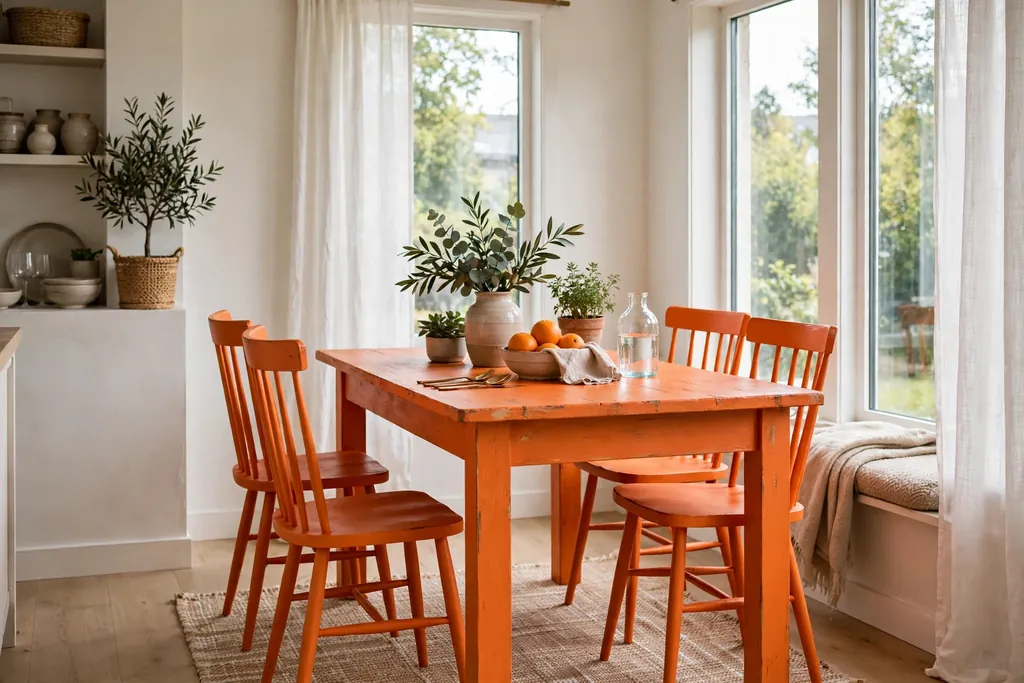
A painted kitchen table and chairs give a dining area its own identity inside an open plan kitchen, and the set can be repainted later if tastes change. This idea suits a secondhand wood table, where paint covers marks and gives the set a fresh start. Use a durable furniture paint, and seal the tabletop well, since it sees hot plates, spills and daily wiping.
Keep the chairs in the same orange as the table, or paint the table orange and the chairs cream, for a calmer mix. Add simple placemats and plain dishware, following the same calm table rules in these everyday dining table decor ideas, so the painted set stays the focus. Touch up chips promptly, since a painted table shows wear at the edges first.
15. Swap Cabinet Hardware for Orange Pulls and Knobs
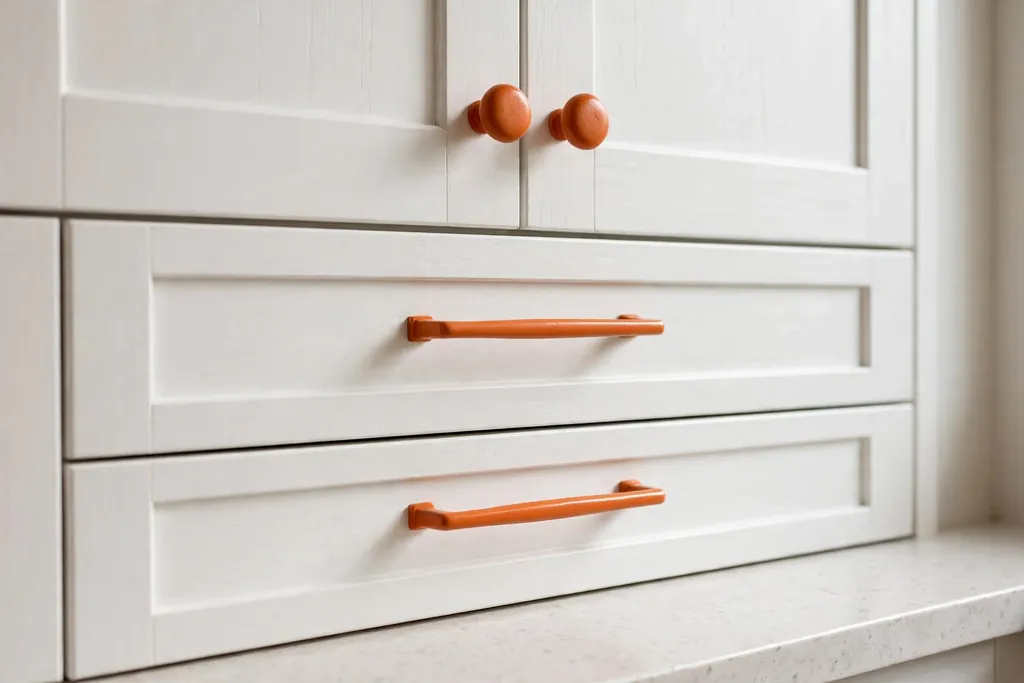
Orange cabinet pulls and knobs are one of the cheapest orange changes, and they can be fitted in an afternoon with a screwdriver. This idea suits plain white, cream or wood cabinets, where a row of orange handles adds a steady line of color across the room. Choose one handle style for the whole kitchen, and keep the finish consistent, so the change looks planned.
Measure the existing screw spacing before you buy, since many pulls come in fixed sizes, and keep the old hardware in a bag in case you want to swap back. Pair the orange handles with one other small orange item, such as a tea towel, and leave the rest of the hardware in steel or brass. For a bolder mix, orange handles on dark cabinets can echo the contrast in these black and gold kitchen ideas, but keep the pairing to handles only, so the room stays calm.
16. Lay Orange and Cream Checkerboard Floor Tiles
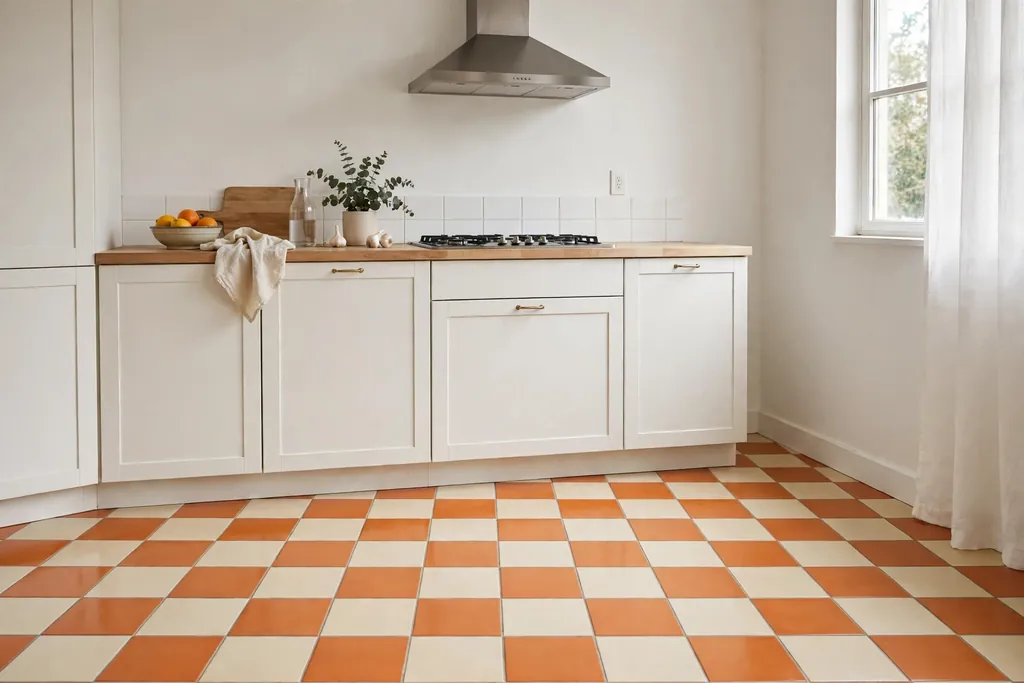
An orange and cream checkerboard floor gives a kitchen a classic pattern with a warm twist, and the floor carries color without touching cabinets or walls. This idea suits kitchens with plain wall cabinets, where the floor can be the main pattern, and it works well in a kitchen with a simple table and chairs. Use durable floor tile, and a grout color that sits between the two tile colors, so the pattern stays crisp.
Keep the rest of the room plain: one wall color, plain counters, and simple stools, since a patterned floor plus patterned walls quickly feels busy. Seal the grout, especially near the sink and stove, and mop the floor regularly, since light cream tiles show marks. If a full floor feels like too much, lay the checkerboard only in a small entry strip or under the table, and use plain tile elsewhere.
17. Paint the Range Hood Orange
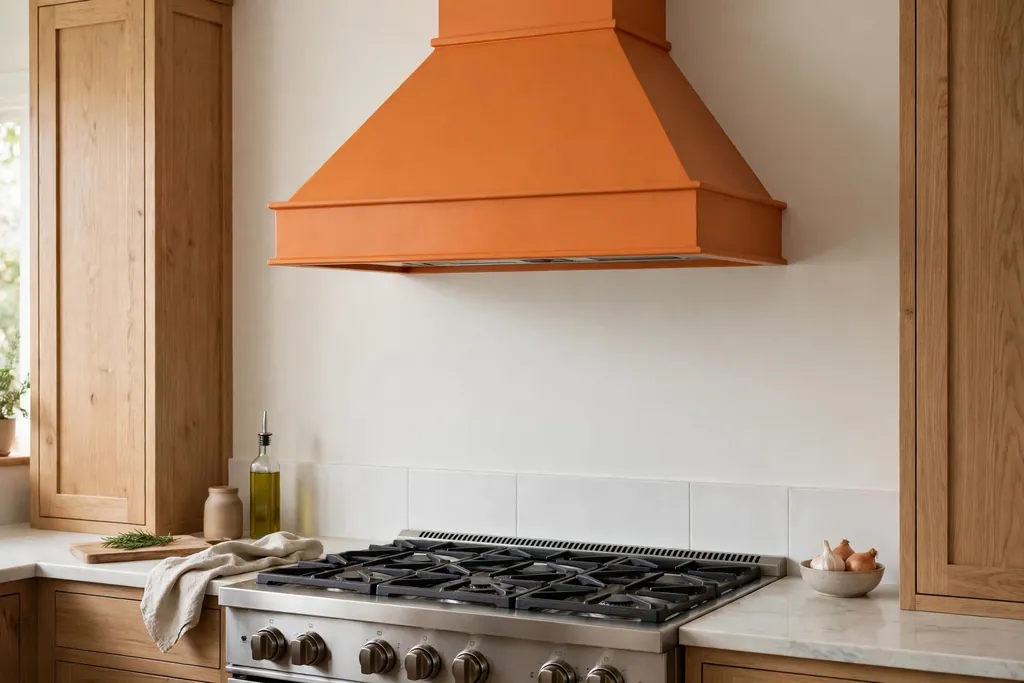
A painted range hood in orange turns the stove wall into a focal point, and it suits kitchens where the cabinets are plain and the hood is already a large shape. The hood sits at eye level, so the color is easy to see, but it is also one contained unit, which keeps the change from spreading across the room. Use a heat resistant paint made for the hood material, and check the maker guidance before painting any part near the fan or filters.
Keep the backsplash plain and the nearby cabinets quiet, so the hood stays the clear feature. Match the hood loosely to one other orange item, such as a kettle or a stool, and leave other metals in steel. Wipe the hood often, since steam and grease settle on the surface above the stove faster than on other kitchen surfaces.
18. Paint the Inside of Glass Front Cabinets Orange
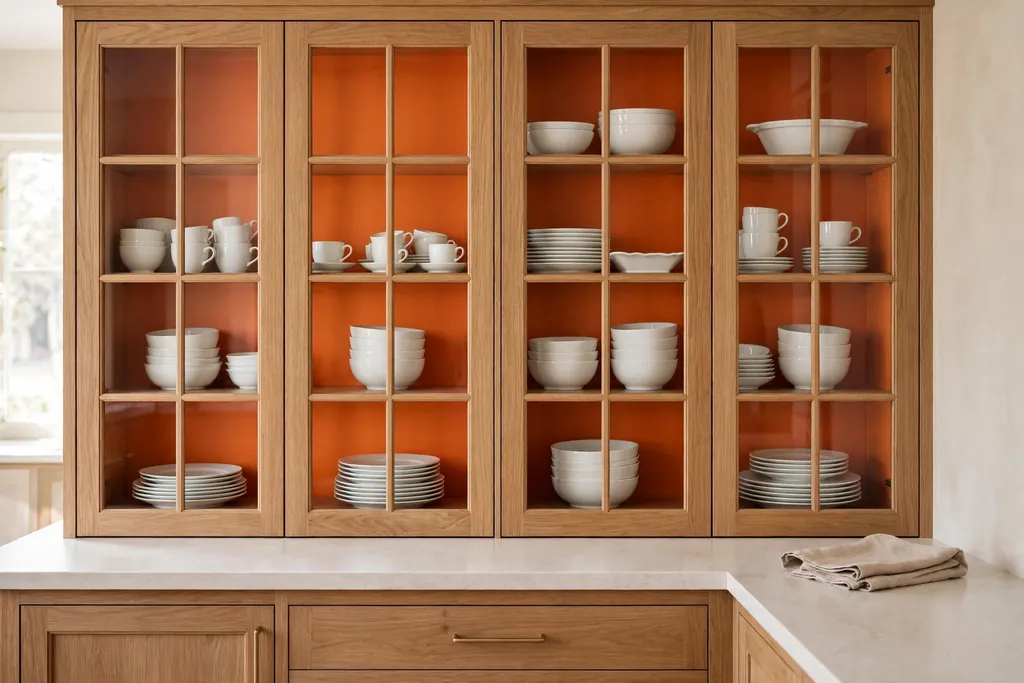
Painting the inside back panel of glass front cabinets orange gives a flash of color behind dishes and glassware, without painting the whole cabinet. This idea suits kitchens with a few glass doors, where the color shows through the glass and changes with what is stored. Keep the cabinet frames white or cream, and the dishes inside mostly white or clear, so the orange back panel stays visible.
This is a useful trick for a corner cabinet, as the color draws the eye into a spot that is often dark, and these corner kitchen cabinet ideas show how to make corner storage work harder. Paint in thin coats and let each coat dry fully before replacing shelves, since the inside of a cabinet is seen up close. If you tire of the color, repainting one back panel is a small job compared with repainting a full cabinet run.
19. Fit an Orange Apron Front Sink
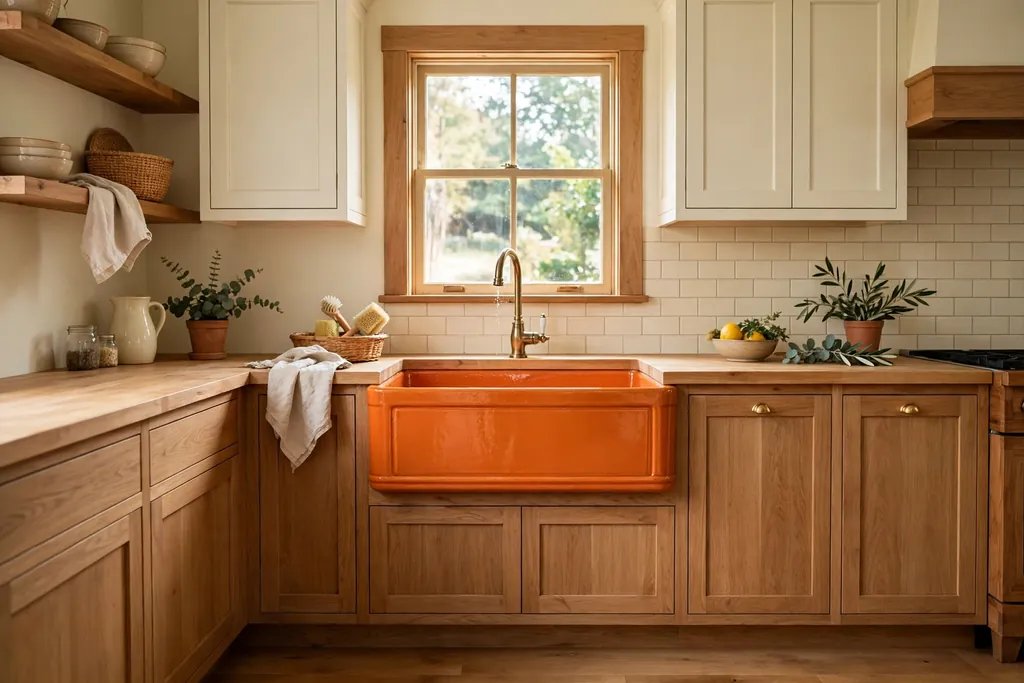
An orange apron front sink, also called a farmhouse sink, adds color at the main washing zone, where it is seen many times a day. The deep bowl suits large pots and baking trays, and the front panel gives the sink a furniture look rather than a plain inset shape. Check the cabinet and counter support before fitting, since a large ceramic or composite sink is heavy when full of water.
Keep the faucet in steel, brass or black, and the counters plain, so the sink front stays the feature. Wipe the front panel dry after washing up, since water marks show more on a colored surface than on steel. Pair the sink with a plain wood or stone counter, and keep dish soap and brushes in a simple tray, so the sink area stays tidy.
20. Build an Orange Breakfast Bar Peninsula
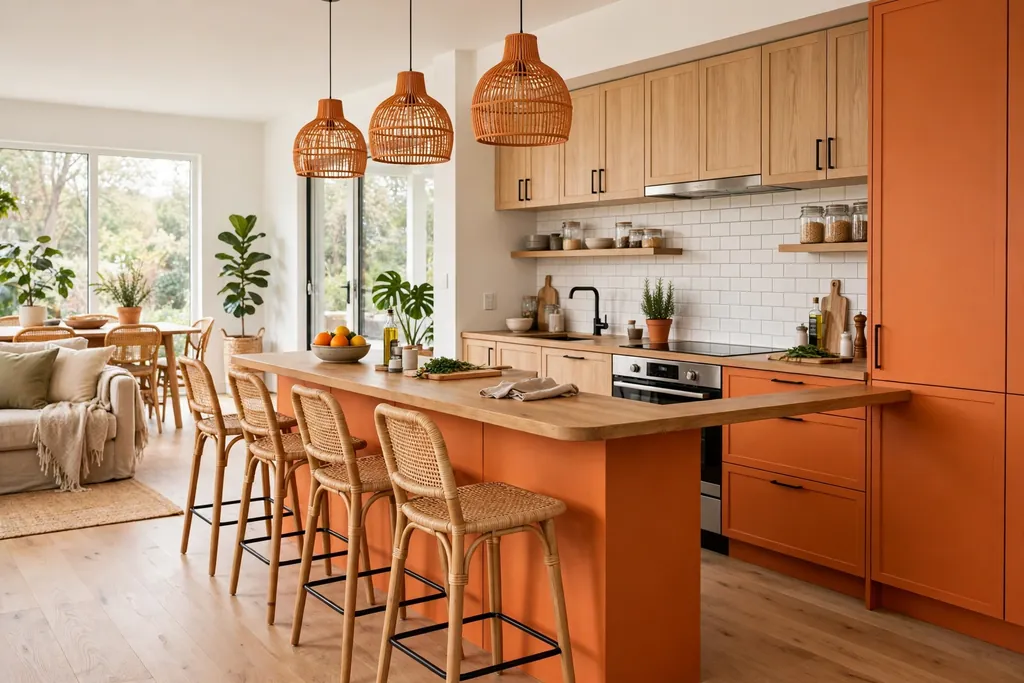
An orange breakfast bar peninsula adds seating and prep space in one unit, and it suits an open plan kitchen where a full island would block the walkway. The peninsula extends from a wall or a cabinet run, so it needs less floor space than an island, and the orange base gives the seating zone its own identity. Use a wood or light stone top for a surface that is easy to wipe after meals.
Place two or three stools along the outer side, and keep the inner side clear for prep, so the bar works for both jobs. Leave enough walkway behind the stools for someone to pass while another person is seated. Keep pendant lights above the bar plain, and the wall behind it simple, so the orange base carries the color without competition.
21. Style an Orange Fruit and Herb Display
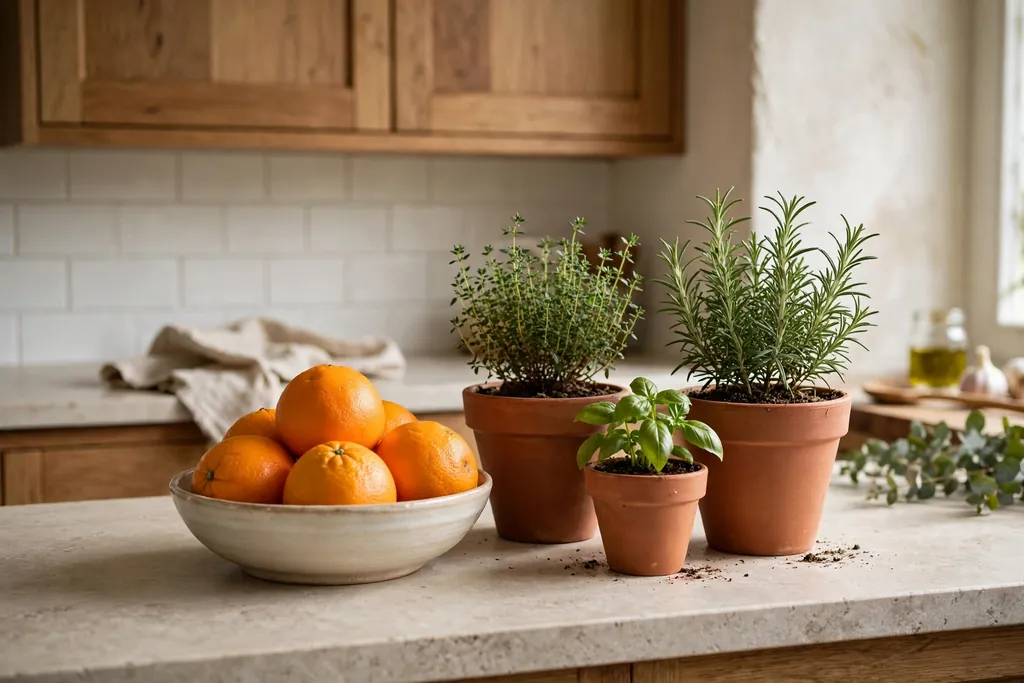
A fruit bowl full of oranges, plus terracotta pots of herbs, adds real orange color that changes with the seasons and costs almost nothing. This idea suits kitchens with a plain counter or a windowsill, where a bowl and two pots can sit without crowding prep space. Keep the bowl near the prep area, so fruit is easy to grab for cooking and snacks, and the herbs are easy to snip while you cook.
Use one large bowl rather than several small ones, and keep the pots in matching terracotta, so the group looks planned. Rotate fruit regularly, and water herbs little and often, checking that pots do not drip onto the counter. If you have a balcony off the kitchen, the same pots can move outside in good weather, as in these kitchen balcony ideas, and come back inside when the weather turns.
22. Hang an Orange Art Gallery Wall
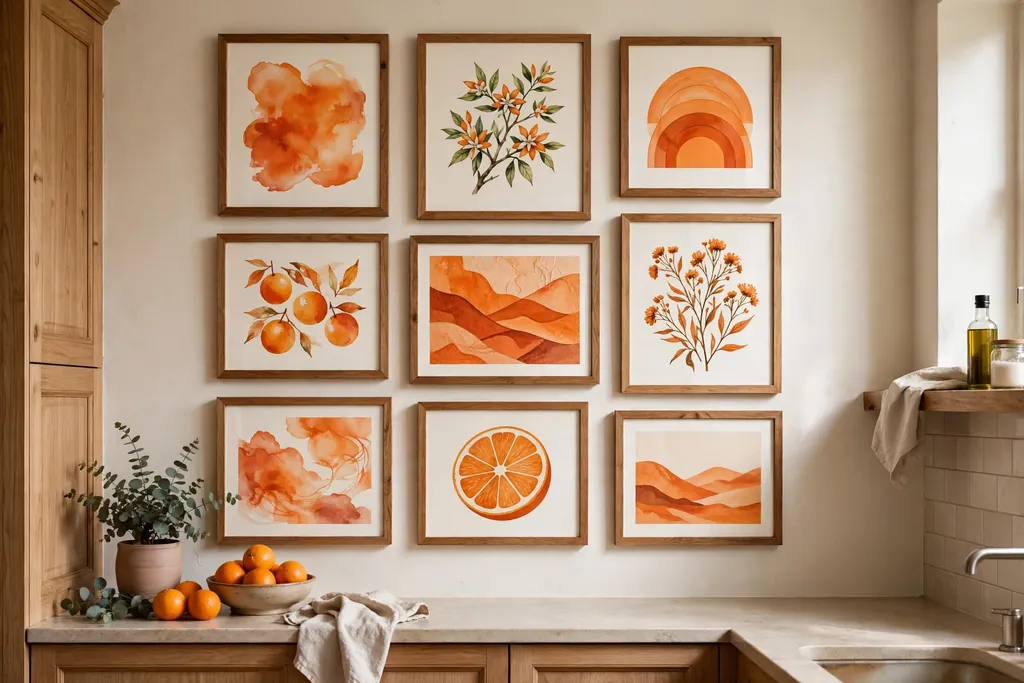
A gallery wall with orange prints, food illustrations or abstract shapes adds color that can be changed without painting or tiling. This idea suits a plain kitchen wall, a dining corner, or the wall beside a pantry, where art is seen but not splashed by cooking. Choose frames in one finish, such as natural wood or black, so the orange prints, not the frames, carry the color.
Plan the layout on the floor first, with the largest print in the center, and keep even gaps between frames. Hang the group at eye level, and keep the wall below it clear, so the gallery does not compete with a shelf or a rail. Swap one or two prints with the seasons if you like, since a gallery wall is easy to update, while painted surfaces are not.
23. Create an Orange Tea and Coffee Station Nook
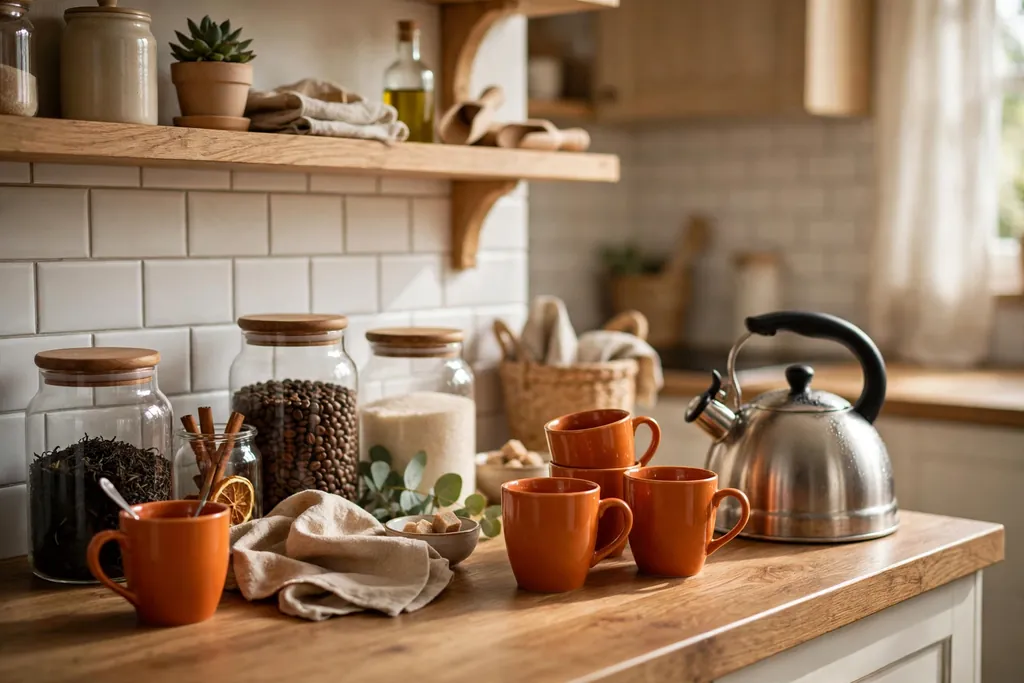
An orange tea and coffee station gathers the kettle, mugs, jars and filters in one nook, and the color makes the station easy to find in a busy morning. This idea suits a corner of counter, a small shelf unit, or a section of open shelving near a power point, where everything for one job sits together. Use orange mugs, a jar or two, and a small tray to hold the group, and keep the rest of the counter clear.
Keep the station clear of the sink splash zone, and store bulk coffee, tea and sugar in a cabinet, so only daily items sit out. Wipe the tray and shelf often, since coffee grounds and tea dust scatter. If the station sits on open shelves, follow the same grouping rules as Idea 7, with one or two groups per shelf, so the nook stays tidy rather than crowded.
24. Style Orange Seasonally for Fall Gatherings
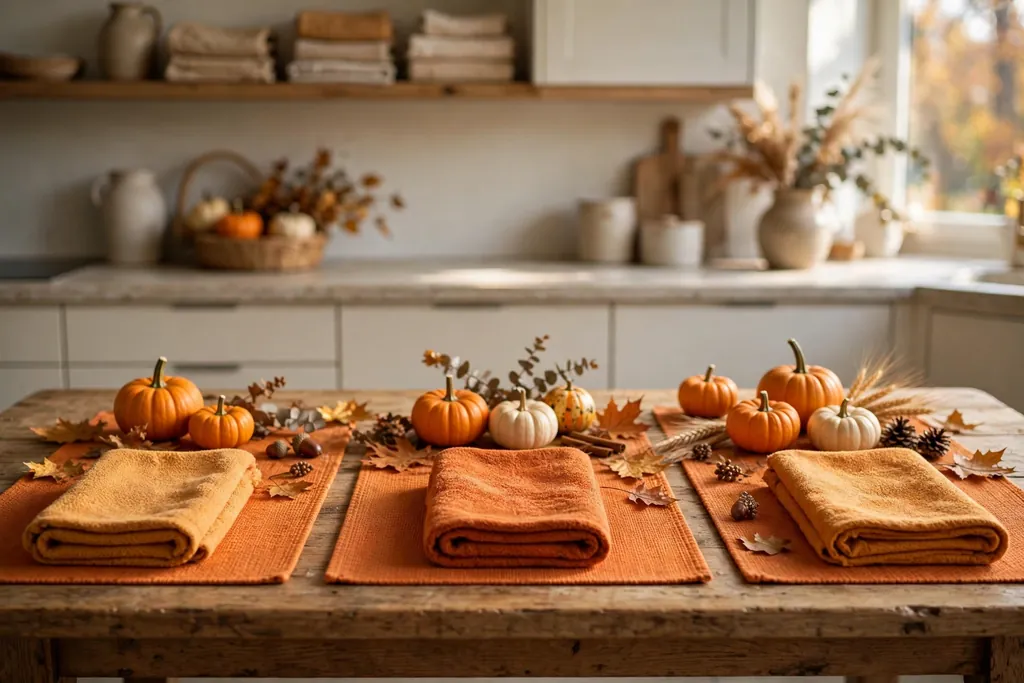
Orange is the natural color for fall, so a seasonal orange refresh lets you enjoy the color at its best without a permanent change. Swap in orange placemats, a pumpkin or two, dried orange slices, and warm towels for fall meals, and keep the base kitchen plain, so the seasonal layer stands out. This approach suits cooks who host often, since the table can be dressed for each gathering and cleared again after.
Start with the table, then add one or two items elsewhere, such as a bowl of small pumpkins on the counter or an orange runner on the island. These fall kitchen decor ideas show how to layer fall color without clutter, and the same pieces can carry into thanksgiving, as in these thanksgiving kitchen decor ideas, and even a halloween table, as in these halloween kitchen decor ideas. Pack the seasonal pieces away after fall, so the kitchen returns to its everyday calm.
Conclusion
Orange works in a kitchen when it has a clear job and a calm background. One painted cabinet run, a terracotta backsplash, an orange island or a set of stools can warm the whole room, while small repeats in dishware, towels or a fruit bowl tie the scheme together. Start with the change you can undo most easily, live with it for a week, and add more orange only where the room still feels plain. With that pace, you get the warmth of orange without a kitchen that feels loud, and you keep the room practical for everyday cooking and gathering.
FAQs
How much orange should I use in a kitchen?
Use orange as one main feature plus a few small repeats, and keep about two thirds of the room in white, cream, wood or soft grey. One orange cabinet run, island or backsplash is usually enough, with stools, dishware or towels repeating the color in small doses. If you can count more than three strong orange areas at a glance, the room may feel busy, so remove one and live with the rest for a week.
What colors go best with orange in a kitchen?
White, cream, pale wood and soft grey are the safest partners, since they calm orange and suit daily use. Navy and black can work as small accents, such as hardware or a light fixture, but a large navy wall plus orange cabinets can feel heavy. Warm wood tones suit burnt orange and terracotta especially well, while cool steel suits a brighter orange range or stool.
Is orange a good color for a small kitchen?
Yes, if you use it in small, useful places, such as stools, a rug, dishware on open shelves, or one painted door. A full orange cabinet run can work in a small kitchen too, if the uppers stay white and the counters stay light, since the bright upper half keeps the room feeling open. Avoid orange on every surface in a small room, and keep the floor and backsplash plain.
How do I test an orange paint color before committing?
Paint a large sample board, not just a small swatch, and move it around the kitchen through the day. Check it next to your cabinets, counters and floor in morning light, daylight and evening light, since orange shifts a lot under different bulbs. Live with the sample for a few days, and compare two or three close shades, since a shade that looks good in a shop can look very different at home.
Can I add orange to a rented kitchen without painting?
Yes. Bar stools, a rug, roman shades, dishware, small appliances, a fruit bowl and a gallery wall all add orange with no paint, and most can move with you. A painted pantry door or cabinet hardware can work too, if your lease allows it, but keep the original hardware and a record of the original color, so you can restore the kitchen when you move out.
How do I keep an orange kitchen from looking dated?
Keep the shapes simple and the orange in a mid or burnt tone, rather than a bright or neon shade, and pair it with plain, current materials such as wood, stone and steel. Avoid matching every item in the same orange, and avoid busy patterns on top of a strong color. When the room feels tired, swapping towels, dishware and a rug is often enough to refresh it, without repainting cabinets or tile.