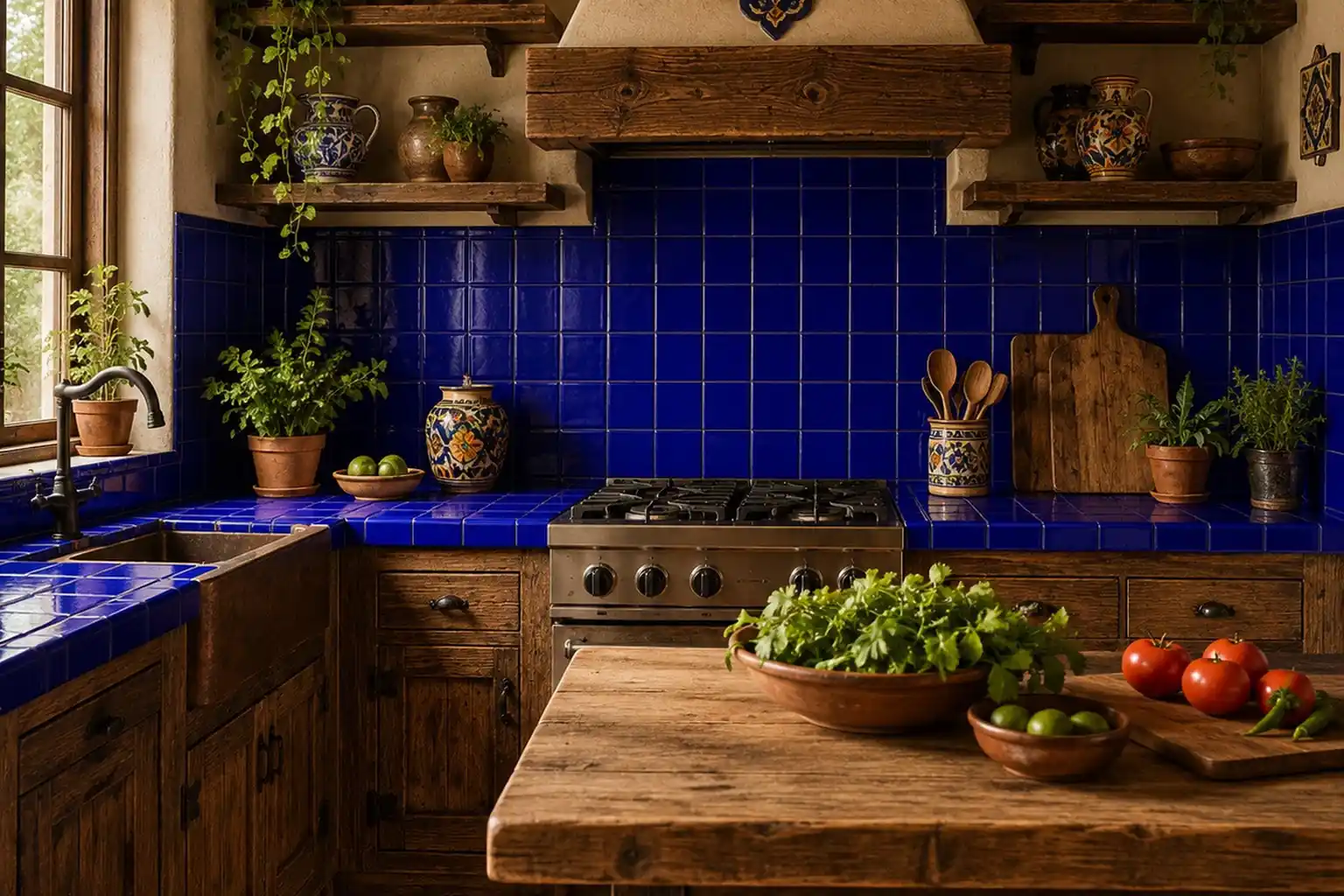
A Mexican style kitchen rests on a few repeat elements: warm earthy color, patterned tile, painted pottery, woven textiles, and natural wood. You do not need all of them at once. These 11 Mexican kitchen decor ideas start with color and tile, then move through shelves, tables, floors, and light, so you can add one layer at a time and stop when the room feels balanced. Pick the ideas that suit the size of your kitchen first, and keep everyday cooking space clear as you go.
Key Takeaways
- Build the look from a short list of linked elements: warm color, Talavera tile, painted pottery, woven textiles, terracotta, and wood.
- Put pattern in set places, such as the backsplash, one runner, and one rug, and keep the remaining surfaces plain.
- Use open shelves and a pot rail to display useful items you already own instead of buying decor that only sits out.
- Small kitchens need fewer, larger pieces. Renters can lean on textiles, pots, and glassware that move out easily.
- Repeat each color at least twice so bold pieces look planned rather than random.
1. Start With a Warm, Earthy Color Base
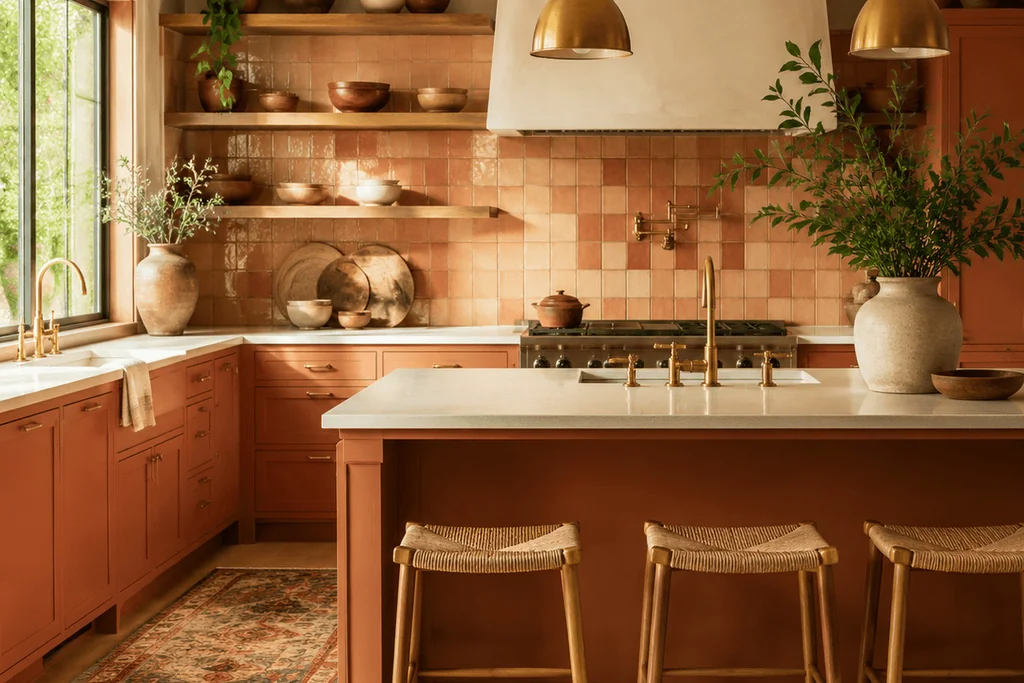
Choose one warm base color for the largest surfaces you plan to change, such as terracotta, warm clay, soft cream, or a deep green, and let tile and textiles carry the brighter accents. Warm bases keep strong patterns from feeling scattered, because every bold piece sits against the same calm ground. If you are not repainting, build the base with a large rug, curtains, or a painted hutch instead. Test paint beside your counter and floor in daylight and evening light, since warm colors can read much deeper after dark in a small room.
2. Use Talavera Tile on the Backsplash
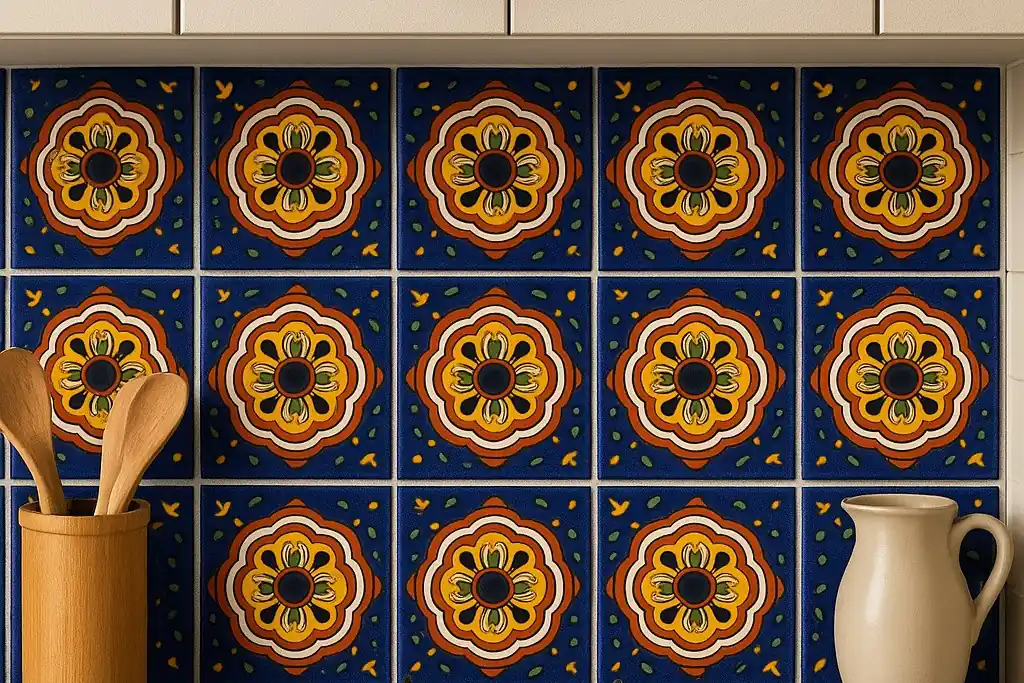
Talavera style tiles bring the clearest Mexican pattern into a kitchen: hand painted floral and geometric designs in cobalt blue, yellow, orange, and green. Cover the full backsplash in a retiling project, or tile only the area behind the stove and use plain field tiles around it to control cost and visual weight. Keep grout lines neat and counters mostly clear so the pattern stays readable. If a full tile job is out of reach, use a small framed group of tiles, a tile trivet, or a tile topped tray as a contained first step.
3. Display Painted Pottery on Open Shelves
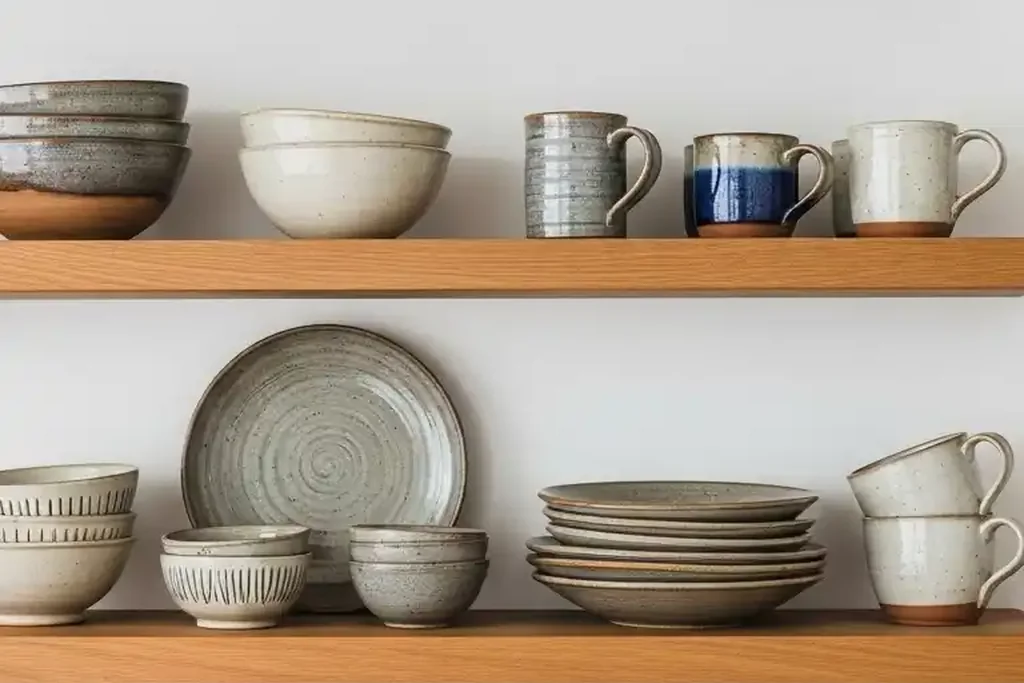
Open shelves suit painted pottery because bowls, pitchers, and plates in mixed patterns work as daily dishes and as decor at the same time. Group pieces by color family rather than by type, keep the heaviest items on the lowest shelf, and leave gaps so each group reads clearly. UNESCO lists traditional Mexican cuisine as cultural heritage, and the handmade dishes used to serve it deserve the same care in display. For shelf order and spacing, follow the approach in this guide on how to style open shelves.
4. Lay a Striped Woven Runner on the Table or Counter
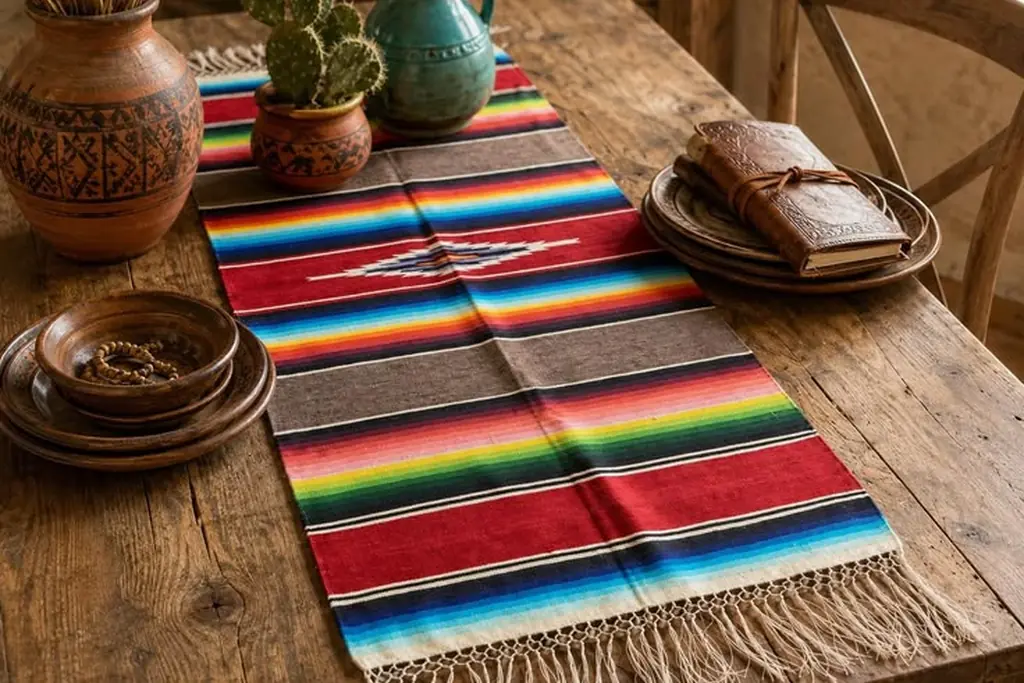
A striped woven runner in the serape tradition adds several linked colors in one flat, washable layer. Run it down the center of the table and set plain dishes on top, or fold it lengthwise along a counter or island edge where it will not sit near heat or water. The stripes give you a palette to repeat in napkins, a rug, or one painted pot. Choose cotton or a cotton blend that can be washed after meals. On a small table, use the runner across the width instead so place settings stay clear of the fringe.
5. Line the Windowsill With Terracotta Herb Pots
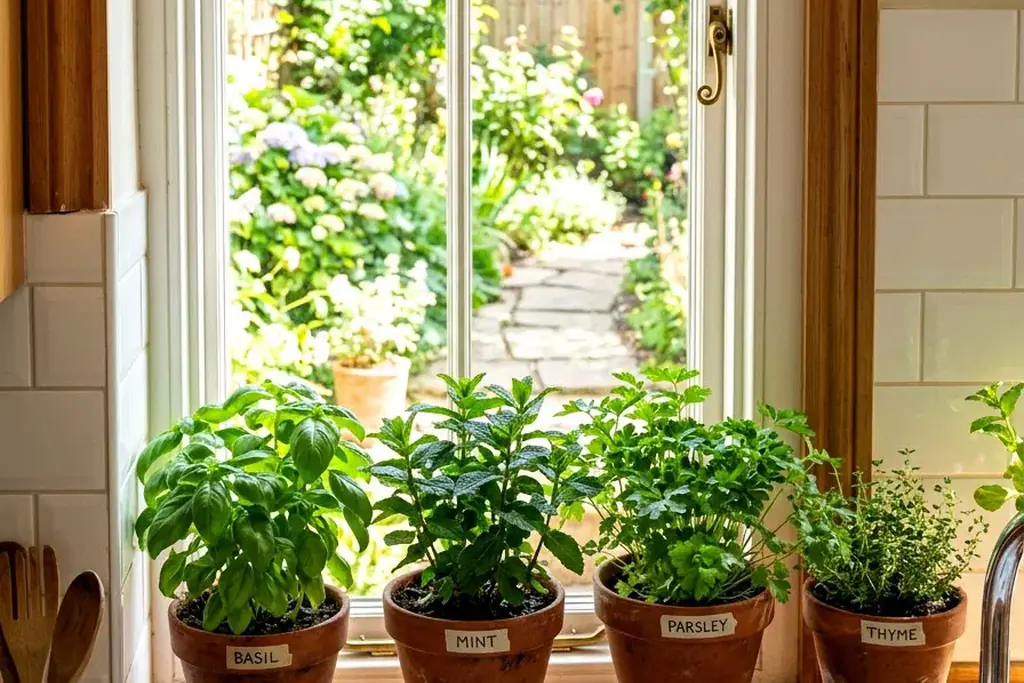
Terracotta pots suit a Mexican kitchen in both color and material, and a row of herbs on the windowsill puts them to daily use. Plant basil, mint, parsley, or thyme in pots with drainage holes and a shared tray underneath to protect the sill from water marks. Keep the pots in one size family so the row looks ordered even when the plants grow at different rates. Herbs need the brightest light you have, so reserve this idea for a window that gets steady sun. In a kitchen with little natural light, use the same pots for utensils beside the stove instead.
6. Choose Rustic Wood Shelves and Surfaces
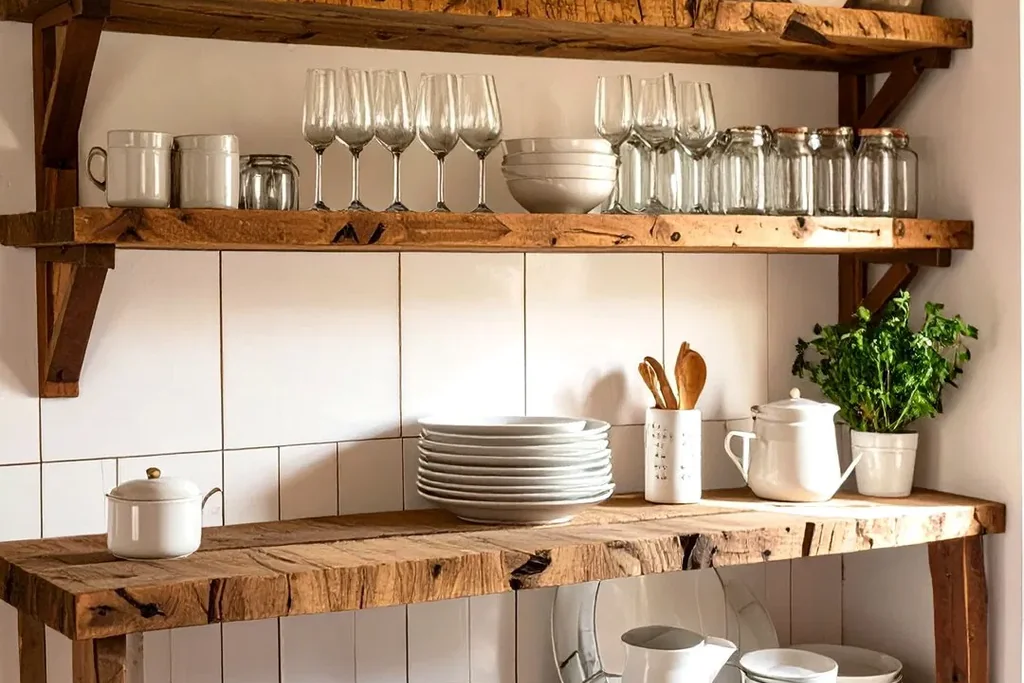
Warm, visible wood grain balances painted color and shiny tile. Thick wood shelves, a worn wood table, or a simple wood bench gives the room weight and a place for baskets and boards. You do not need to replace furniture to get this effect: a large cutting board leaned against the backsplash, wood crates for produce, or a wood stool by the counter all add the same tone. Keep wood finishes in a similar depth across the room, and oil or seal pieces that sit near the sink so splashes do not mark them.
7. Hang Pots From an Iron Rail
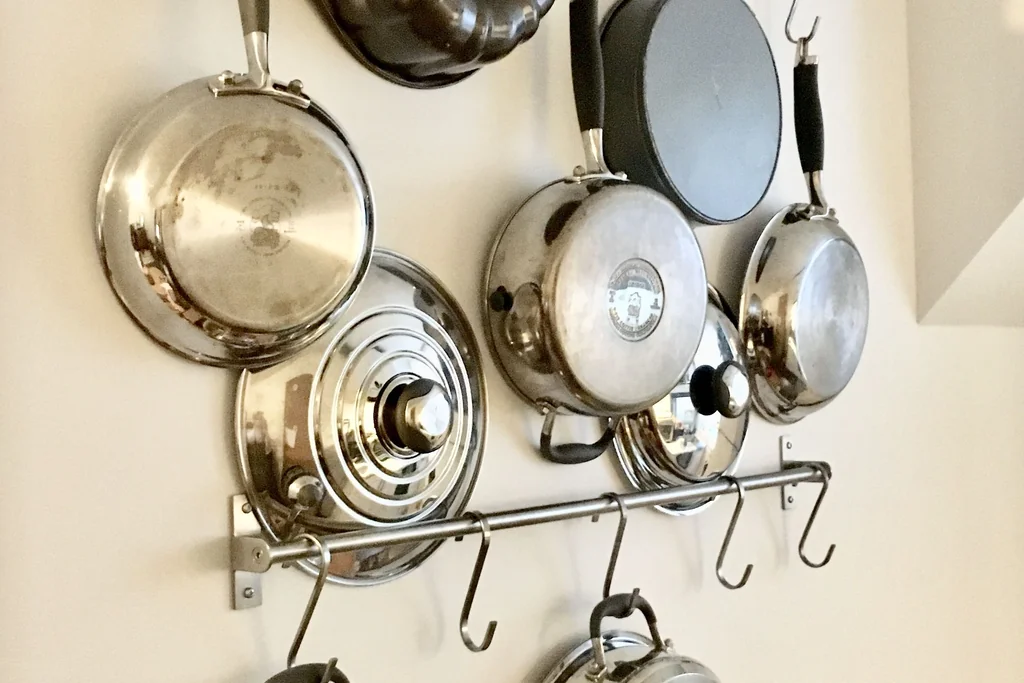
A black iron rail with hooks is a practical storage piece that also fits the style: copper, steel, or enamel pots become part of the decor while freeing a cabinet. Mount the rail into studs or use fixings rated for the weight of your fullest pot, and hang the pieces you reach for daily at the front. Leave space between pots so they do not clang and chip. In a rental where drilling is limited, a sturdy over door rack or the side of a tall shelf unit can hold a smaller set of utensils in the same spirit.
8. Group Colorful Glassware in One Place
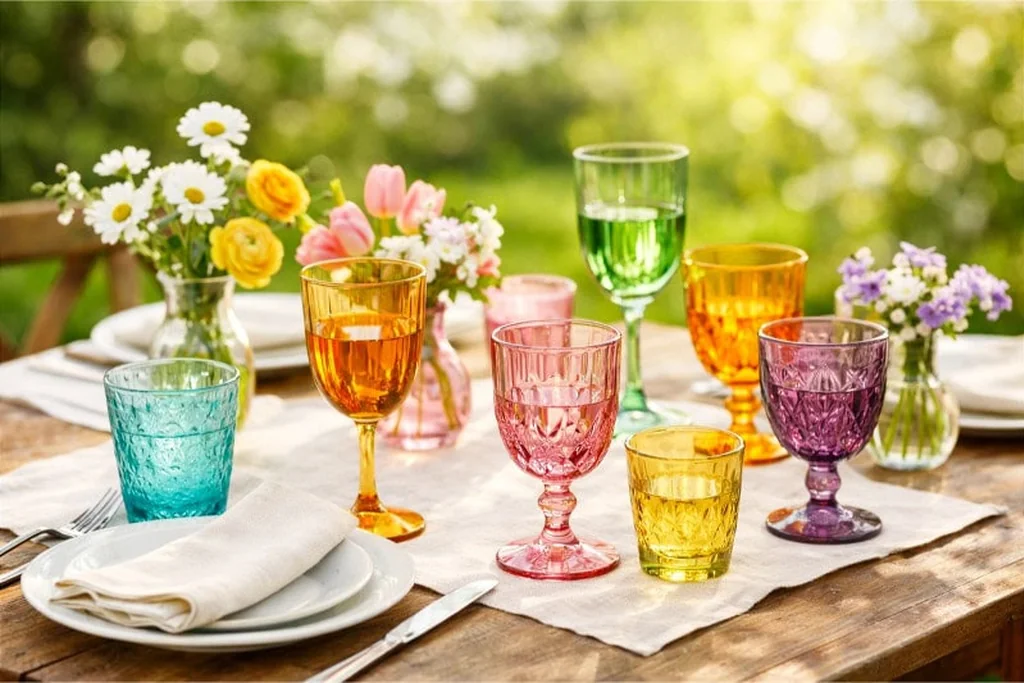
Colored glass in blue, green, amber, and pink is a familiar part of Mexican table settings, and it looks best kept together. Store glasses on one open shelf, in one glass front cabinet, or on a tray so the color reads as a single planned note instead of scattered pieces. Use the same set for everyday drinks so the display earns its space. Keep fragile pieces away from the shelf edge and out of the busiest path between sink and stove. If you own only a few colored pieces, mix them with plain glass in the same group.
9. Add a Patterned Runner Rug by the Sink
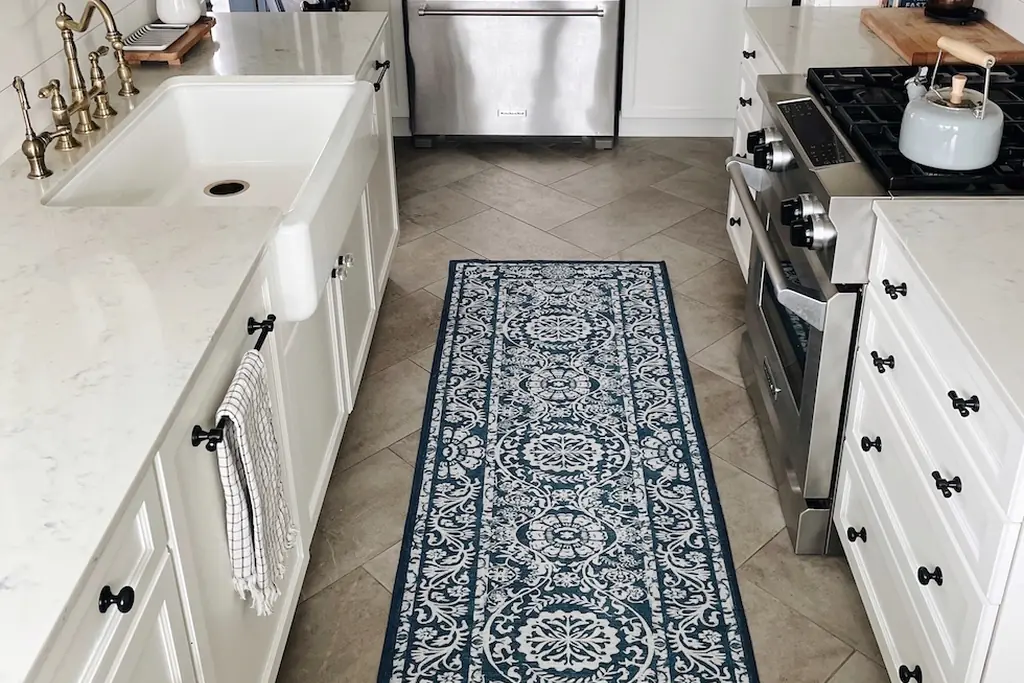
A flat woven runner in front of the sink and stove adds pattern at floor level and makes long prep sessions easier on your feet. Choose a low pile or flat weave that doors can clear and that can be washed, since kitchen rugs collect drips and crumbs. Let the rug carry two or three colors already used in your tile or runner so the room feels linked from floor to counter. Use a rug pad on smooth floors to stop slipping. Measure the run between counters first, because a galley kitchen needs a narrower width than an open plan room.
10. Hang Woven Baskets and Folk Art on One Wall
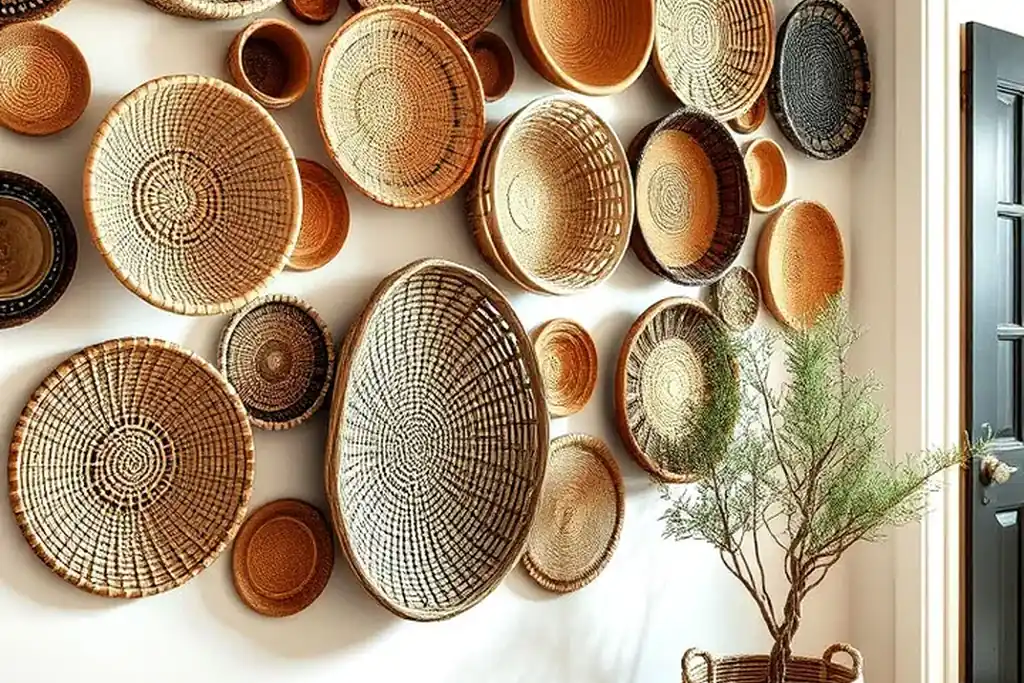
One wall of woven baskets, a carved wood piece, or framed folk art prints gives the room a finished focal point without using counter space. Arrange baskets in a loose cluster with varied sizes but similar natural tones, and hang the group at eye level where it will not collect steam above the stove. Keep the rest of the walls plain so the cluster has room to read. Use fixings suited to your wall type, and dust woven pieces with a soft brush. If wall space is limited, lean one framed print on a shelf instead.
11. Finish With Woven Pendants and Warm Light
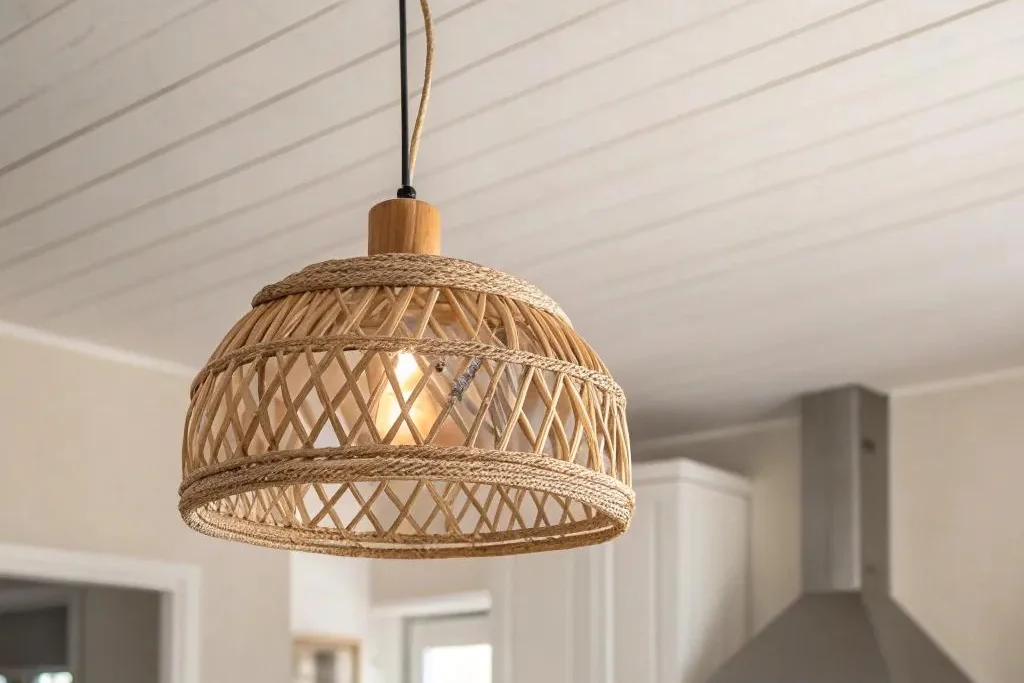
Lighting sets the final tone. Woven rattan or fiber pendants above an island or table add texture and cast warm, patterned light in the evening. Use warm bulbs and put pendants on a dimmer if your wiring allows, so the room can shift from bright prep light to softer meal light. Keep woven shades clear of steam and grease where you can, and dust them often, since kitchen air carries fine oil. In a kitchen with no island, one woven pendant over the table or a pair over the sink gives the same effect.
Conclusion
A Mexican style kitchen comes together in layers rather than in one purchase: a warm base color, one field of patterned tile, pottery and glassware you use daily, a striped textile, and wood and woven texture to steady the color. Start with the ideas that fit your space and budget, repeat each color at least twice, and keep work surfaces clear. When you set the table for a shared meal, these everyday dining table decor ideas pair well with the runner and glassware above. For a seasonal table in the same warm palette, see these thanksgiving kitchen decor ideas, and carry leftover accent colors into adjoining rooms with these fall living room decor ideas.
Save this list on Pinterest for your next kitchen refresh, and work through it one surface at a time: color and tile first, then shelves and table, then floor and light.
FAQs
What colors define a Mexican style kitchen?
Warm earthy colors form the base: terracotta, clay, warm cream, and deep green or brown wood tones. Brighter accents come from Talavera tile and textiles in cobalt blue, yellow, orange, pink, and green. The pattern matters as much as the color, so keep large surfaces plain and let tile, runners, and pottery carry the designs. Repeat each accent color at least twice in the room so it looks chosen rather than scattered.
How can I add Mexican style to a small kitchen?
Use fewer, larger pieces. One striped runner, a small group of painted pottery on a single shelf, terracotta pots on the sill, and a patterned rug give the look without crowding counters. Skip the full tile change and use tiles as a trivet or framed group instead. Keep everyday appliances stored away where you can, because clear counters make a small patterned kitchen feel calm rather than busy.
Can renters use these Mexican kitchen decor ideas?
Yes. Most of the list needs no fixed changes: runners, rugs, herb pots, glassware, pottery, baskets, and framed prints all move with you. Use a pot rail only where fixings are allowed, and choose removable hooks rated for the weight instead. Peel and stick tile is sometimes offered as an option, but check heat and moisture guidance for the area behind a stove and confirm your lease allows it before applying anything to walls.
How do I use Talavera tile without redoing the whole backsplash?
Tile a smaller field. The strip behind the stove, the wall inside a cooking niche, or one section between counter and cabinet gives a clear pattern moment at a lower cost. If you prefer no tile work at all, set a few tiles as trivets, frame a group of four as wall art, or use a tile topped tray on the counter. Keep the tiles in one place so the pattern stays strong instead of spreading thinly around the room.
How much pattern is too much in one kitchen?
A workable limit is pattern in three places: tile, one textile, and one floor or wall piece. If your backsplash is busy, keep the runner plain striped rather than floral, and choose a rug in linked colors with a simple design. Stand at the door and check that your eye settles somewhere, usually on the tile. If every surface competes, remove one patterned item and the room usually settles without buying anything new.
Where should I start if my budget is small?
Start with textiles and pots, because they cost the least and change the most visible surfaces: a striped runner for the table, a washable rug by the sink, and terracotta pots for herbs or utensils. Then display the pottery and glassware you already own on one shelf in grouped colors. Paint, tile, and lighting can come later, one project at a time, once you know which colors you enjoy living with.