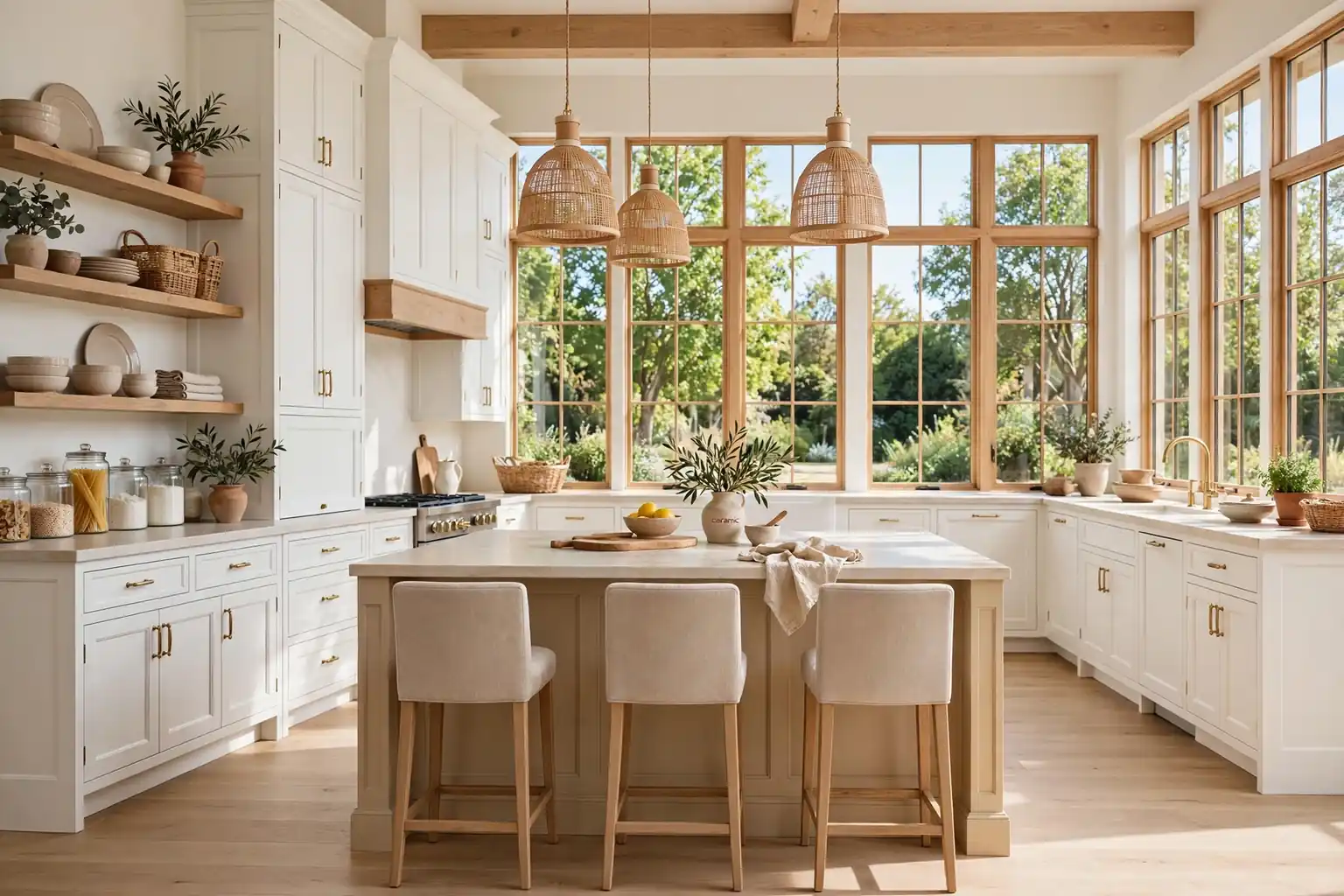
White and beige are a calm pairing, but only when you use more than one shade of each. A kitchen with a single flat white and a single flat beige can look washed out, while a kitchen that layers warm white, cream, sand, and taupe feels soft and finished. These 18 white and beige kitchen ideas cover cabinets, counters, tile, floors, lighting, and seating, so you can refresh one corner or plan a full room. Start with the change you notice most, test samples in your own light, and keep one warm material in the mix. For a wider look at white rooms first, see these white kitchen ideas.
Key Takeaways
- Use at least three tones, such as bright white, warm cream, and sand beige, so the room has depth instead of one flat color.
- Pick one warm material, like wood, brass, or rattan, to keep white and beige from feeling cold or clinical.
- Put the strongest contrast where it helps most: dark handles, a wood counter, or a patterned floor, and keep the rest quiet.
- Test paint and tile samples in morning and evening light, since beige shifts a lot through the day.
- Layer texture through linen, wood grain, stone veining, and woven rugs, so a neutral room stays interesting without bold color.
- Start small if you rent or want a quick refresh: hardware, stools, rugs, and open shelves change the look without paint or building work.
1. White Shaker Cabinets Against Beige Walls
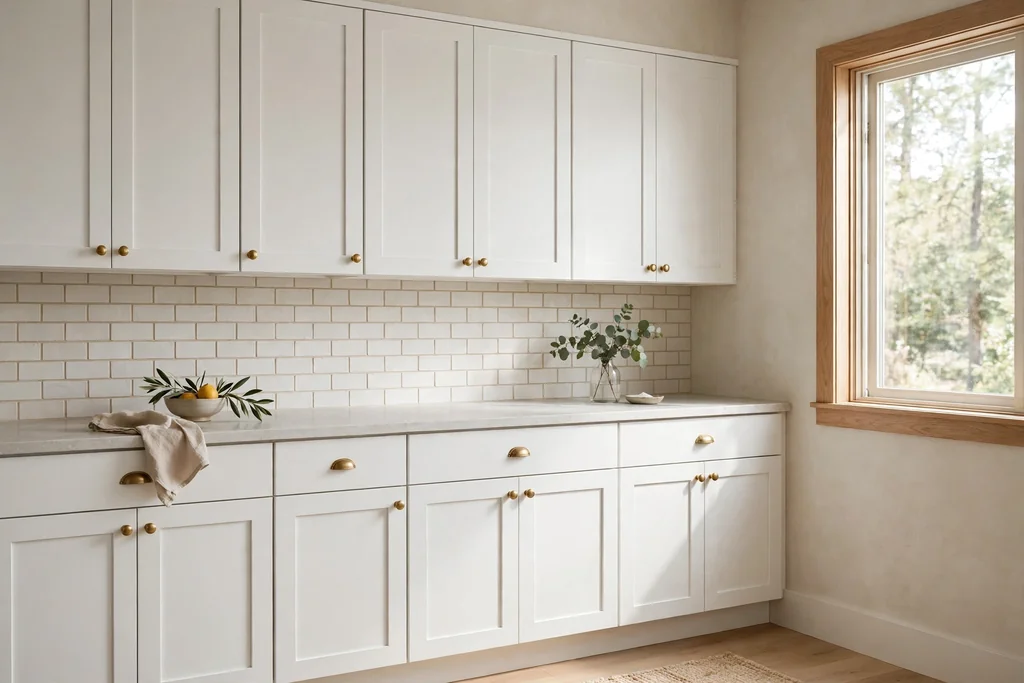
Paint Shaker cabinets in a warm white and keep the walls in a soft beige, so the cabinets stand out gently instead of blending into the wall. The Shaker frame gives the doors shape without fussy detail, and the beige wall behind them adds warmth that a pure white wall would not. This suits most homes, from farmhouse to transitional, and it works well in a kitchen with modest daylight.
Keep the trim and ceiling in the same warm white as the cabinets, so the edges of the room stay clean. Choose a beige with a warm undertone if your kitchen gets cool light, and test a large swatch beside the floor before you commit. Wipe cabinet doors near the stove each week, since pale paint shows cooking splashes sooner than darker colors.
2. Two-Tone Cabinets With Beige Lowers and White Uppers
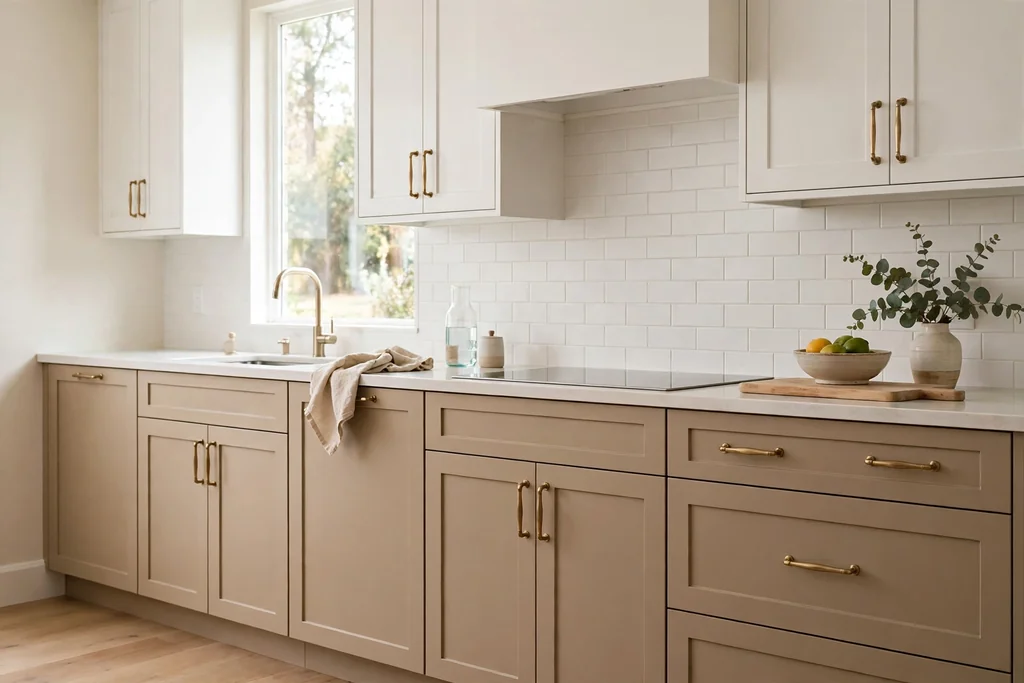
Use beige on the lower cabinets and white on the uppers for a lighter take on a two-tone kitchen. The white uppers keep the eye moving up and make a small kitchen feel taller, while the beige base grounds the room and hides everyday marks better than white. This split also makes repainting easier later, since only half the cabinets need a new color.
Pair the scheme with a pale counter and a simple backsplash, so the two cabinet colors can do the work. Repeat one handle finish across both tones to tie them together, such as brushed brass or matte black. If you worry about commitment, paint the island or one run first and live with it for a week before painting the rest.
3. Beige Island in an All-White Kitchen
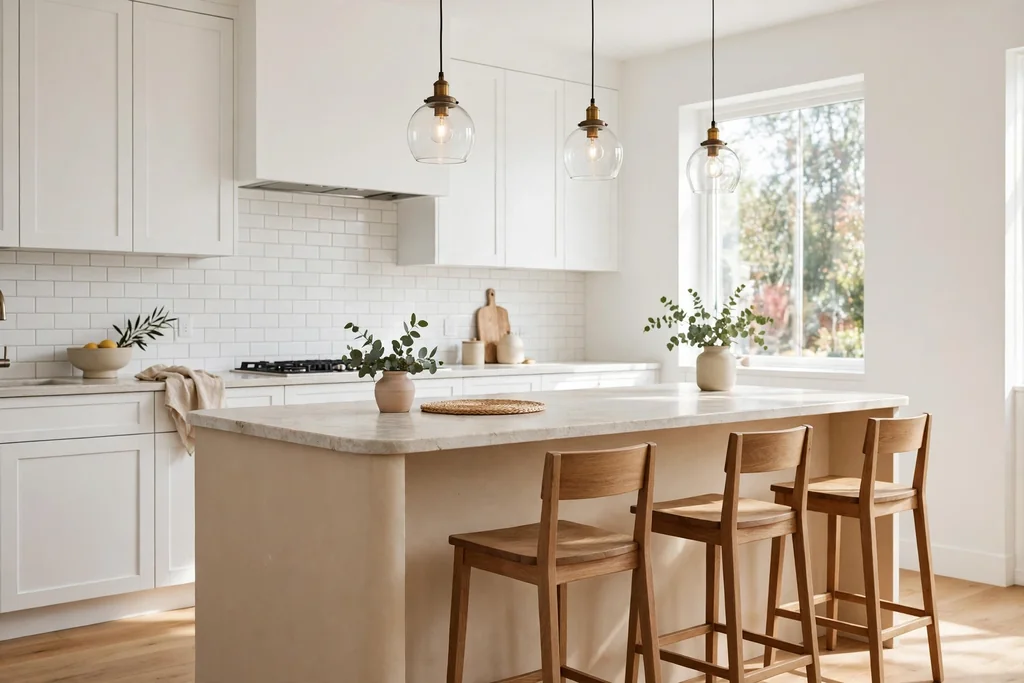
Keep the main cabinets white and paint only the island in a warm beige, so the island becomes a clear focal point and the rest of the kitchen stays neutral. A beige island suits a white kitchen with wood floors or a stone counter, and it is a lower risk change than repainting every cabinet, since it is easy to repaint one piece later.
Repeat the island tone once more, in stools, a runner, or a vase, so it looks planned rather than random. Choose a hard wearing counter for the island, since it takes the most daily use, and keep the island front simple so the beige reads as a calm block. For help choosing the right undertone for the rest of the room, see these ideas for colors for your kitchen cabinets.
4. Marble-Look Counters With Soft Beige Veining
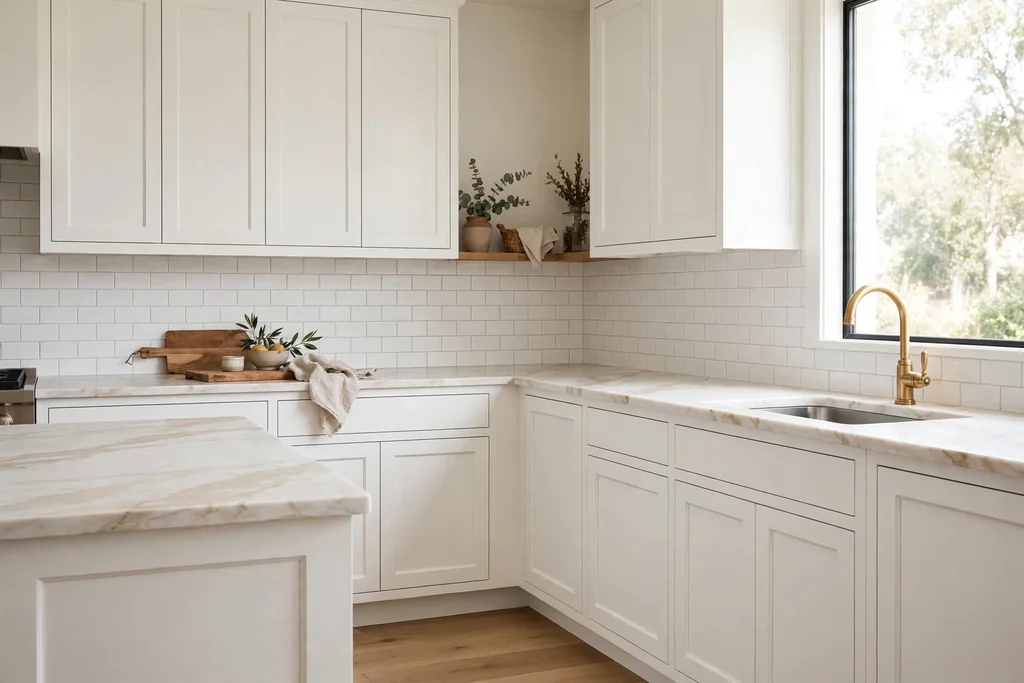
Choose a marble-look counter with soft beige veining for movement across an otherwise plain surface. The veining links white cabinets to beige walls or floors, and it adds interest without a new color. This suits traditional and transitional kitchens, and it looks at home with Shaker cabinets, brass hardware, and a simple tile backsplash.
Pick a slab with gentle veining if you want a calm look, or a bolder vein pattern if the counter is meant to be the main feature. Seal natural stone as advised by the supplier, wipe acidic spills quickly, and use trivets under hot pans. If you cook daily with citrus and tomato, consider a hard wearing quartz with a beige vein on the main prep run and save real marble for a serving area.
5. Warm Wood Counters Against White Cabinets
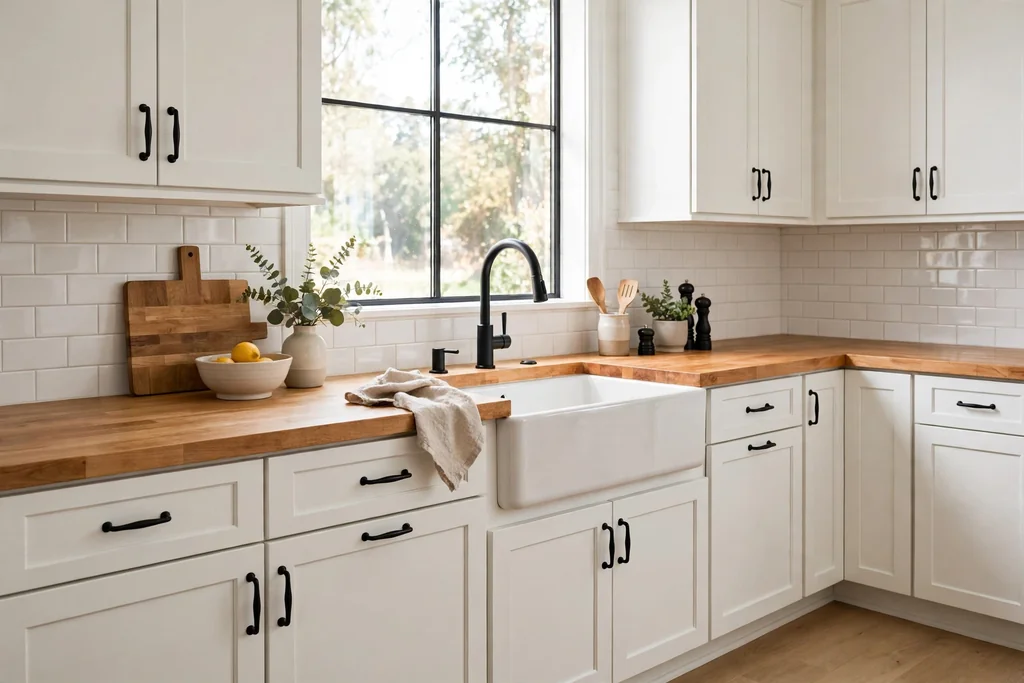
Add warm wood counters to white cabinets for instant warmth under your hands and eyes. Butcher block or a light oak counter softens the white, suits farmhouse and Scandinavian style kitchens, and pairs with black, brass, or nickel hardware. A wood counter is also pleasant to work on, since it is warm to the touch and kind to dishes and glasses.
Use wood on an island or a single run of counter, rather than everywhere, if you want to limit care. Oil the surface on a regular schedule, wipe spills promptly, and use a board for cutting so the counter keeps an even look. Near the sink, a stone or quartz section avoids constant water contact on wood, and the mix of white cabinets and one wood counter is often enough to warm the whole room.
6. Handmade Beige Tile Backsplash
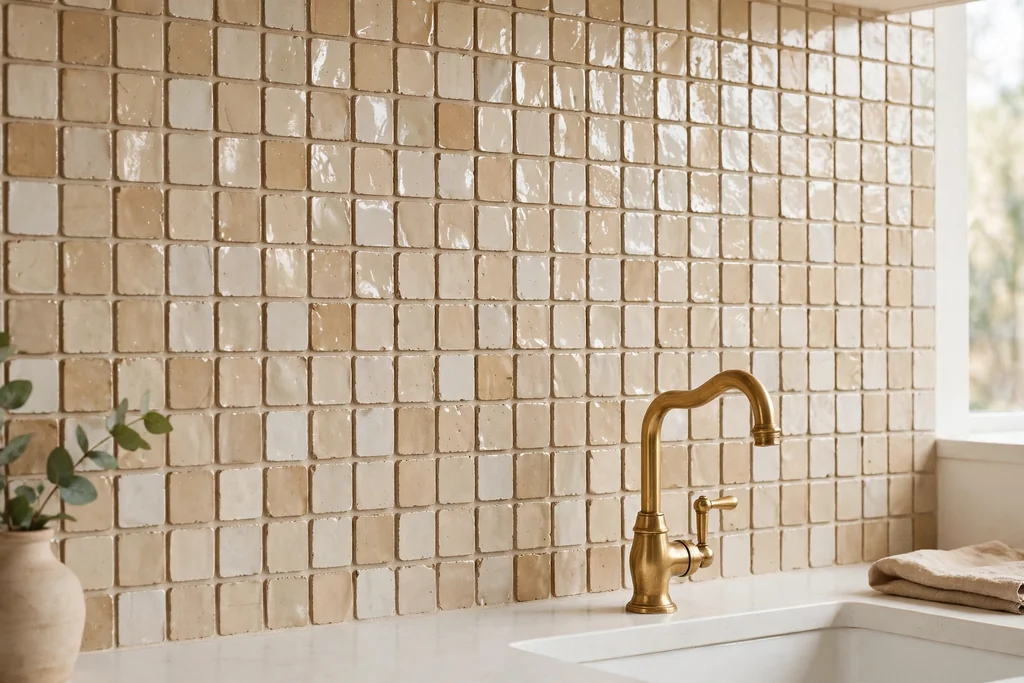
Lay handmade-look beige tiles as a backsplash for texture that flat tiles cannot give. Slight variations in tone and surface catch light across the wall, so the backsplash reads as crafted rather than factory perfect. In a soft sand or cream beige, the tile adds depth without color, which suits a calm kitchen that still wants character.
Use the tile on the backsplash only, and keep counters and cabinets plain, so the texture stays the focus. Order extra tiles, since handmade batches vary and a few spares help if a tile chips later. Seal the grout to keep cooking splashes from staining it, and wipe the surface with a soft cloth during a normal clean.
7. White Open Shelves With Beige Dishes
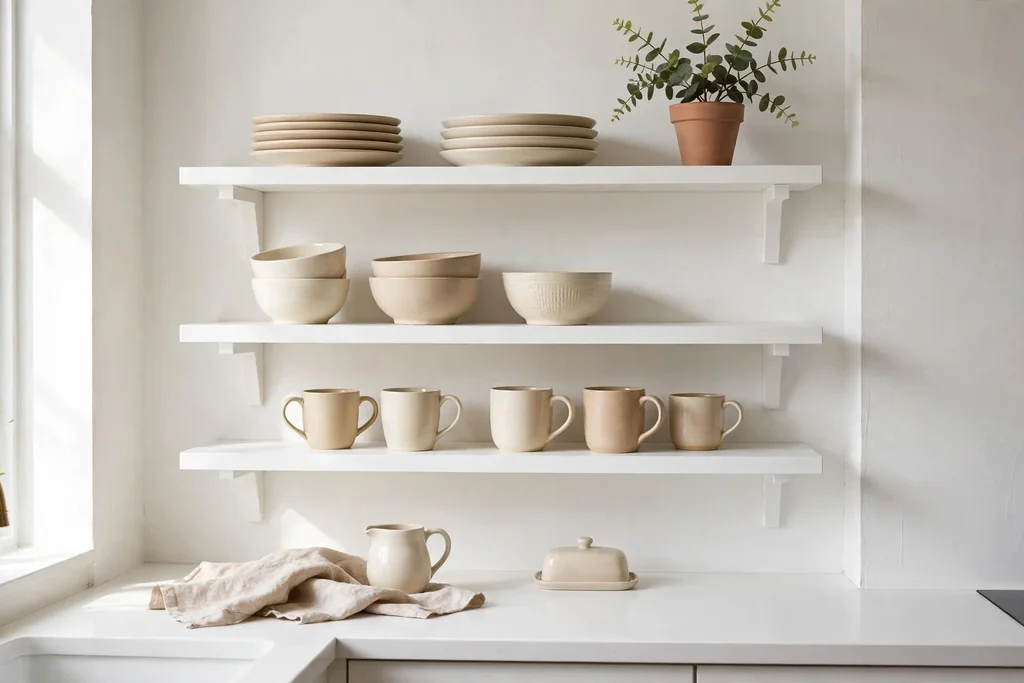
Swap a short run of upper cabinets for white open shelves, and display beige and cream dishes, bowls, and mugs on them. The shelves make a white and beige kitchen feel taller and more open, especially above a sink, and the beige dishes add the second color without paint. This works best when you keep the shelves to items you use often, so nothing sits long enough to gather dust.
Style each shelf with stacked plates, a jug, and one small plant, and leave breathing room between groups so the shelves read as tidy, not crowded. Keep the rest of the kitchen storage closed, so the open shelves are a feature rather than a necessity. If dust is a worry, use open shelving for one short run only, and keep the remaining uppers closed for items you use less often.
8. Beige Linen Roman Shades at the Window
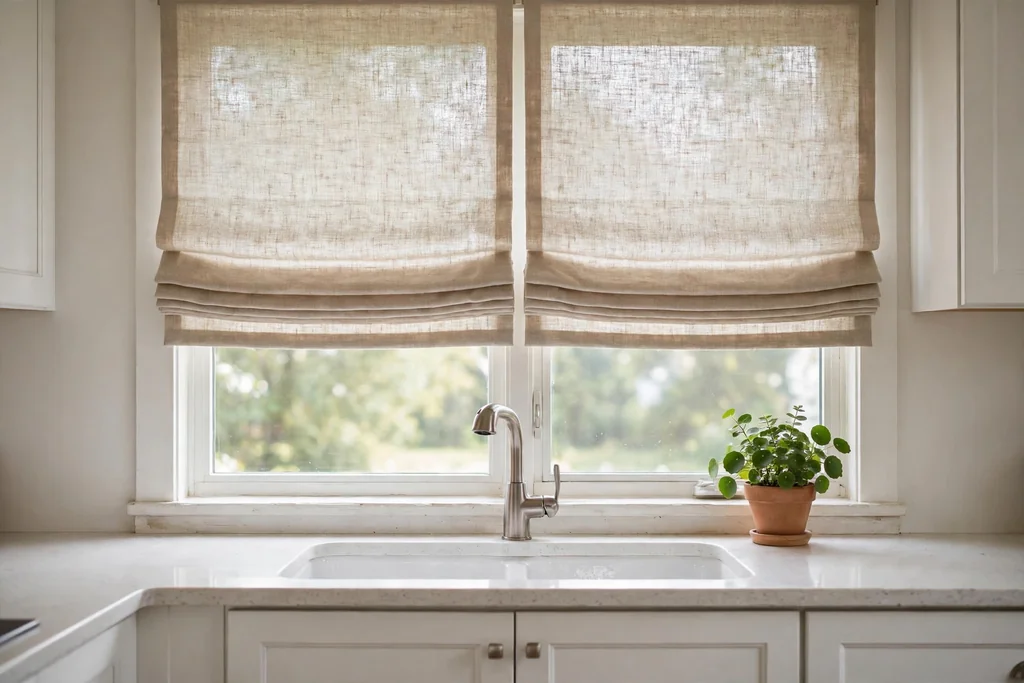
Hang beige linen roman shades at the kitchen window for soft light and a fabric layer that hard surfaces lack. Linen filters daylight gently, which suits beige walls, since harsh light can make beige look washed out. A shade in a tone deeper than the walls reads as a deliberate layer, not a match that disappears.
Choose a washable or wipeable fabric near the sink, and mount the shade so it clears the window frame when raised, so daylight still fills the room. For a wider look at dressing the window without blocking light, the tone and fabric advice in these beige bedroom ideas applies well to kitchens too, since both rooms benefit from linen texture. Keep the shade clear of the tap splash zone where you can.
9. Brass Hardware Warming White Cabinets
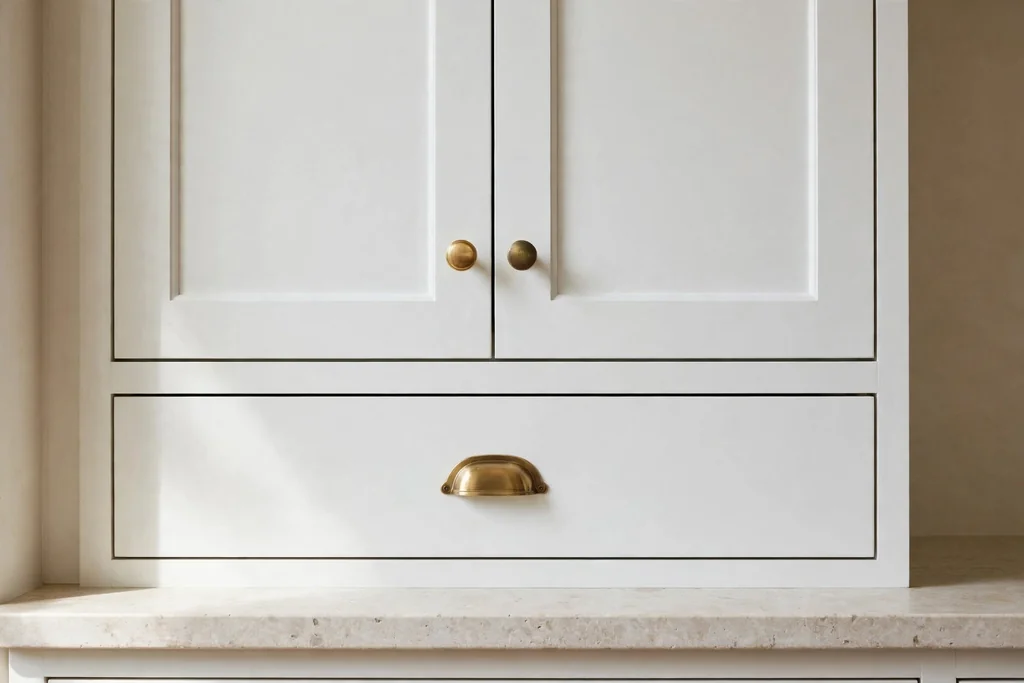
Fit brass cup pulls and knobs on white cabinets, and let beige walls or a beige runner carry the second neutral. Brass warms white cabinets in a way that black or chrome cannot, adding a soft golden glow that suits traditional, farmhouse, and transitional kitchens. Cup pulls on drawers and knobs on doors are a classic pairing that still looks current.
Match the brass to the tap and to any pendant or shelf brackets, so the metal reads as one thread through the room. If brass feels too yellow beside your white, pick a brushed or aged brass rather than a bright polished one. Swapping hardware is a low cost change you can test on one drawer bank before you buy pulls for the whole kitchen, which makes it a good first step for renters too.
10. Beige Breakfast Nook With a White Table
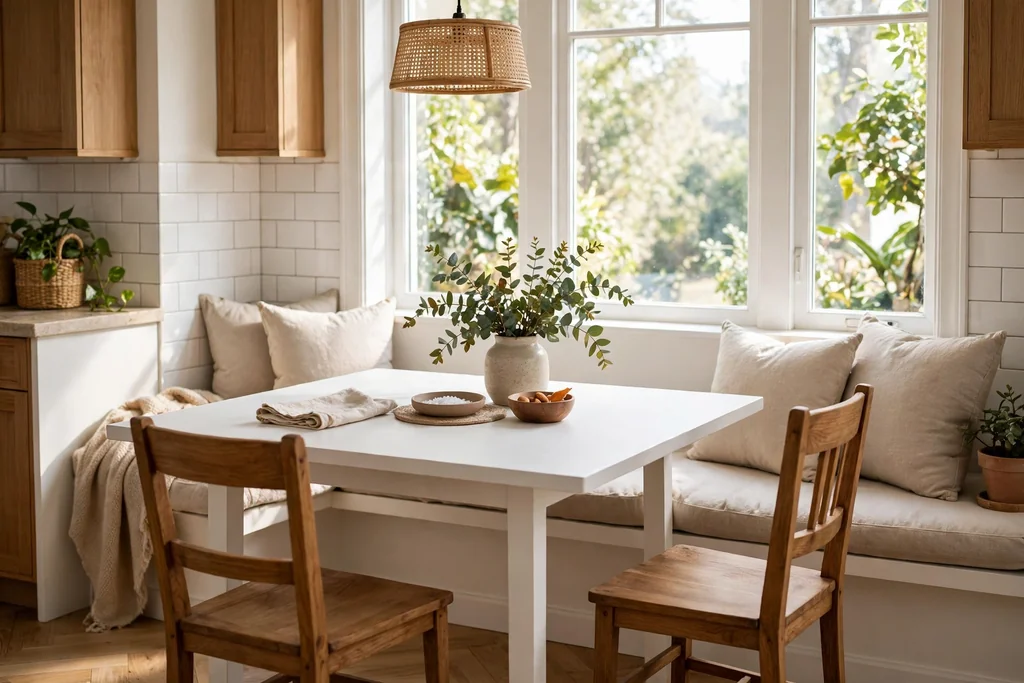
Build a breakfast nook in beige and white, with a white table, beige bench cushions, and a wood or rattan chair or two. The nook gives the kitchen a place to sit that feels dressed without new cabinets, and the beige cushions are easy to change by season. A small table suits a corner by the window, where daylight makes pale colors glow.
Keep cushion covers washable, since kitchen seating takes daily spills, and add a plain runner on the table to calm the white top. If the nook is small, a bench against the wall saves floor space and adds storage under the seat for table linen. One pendant light over the table, in brass or rattan, ties the nook to the rest of the kitchen.
11. Apron-Front Sink With a Beige Stone Surround
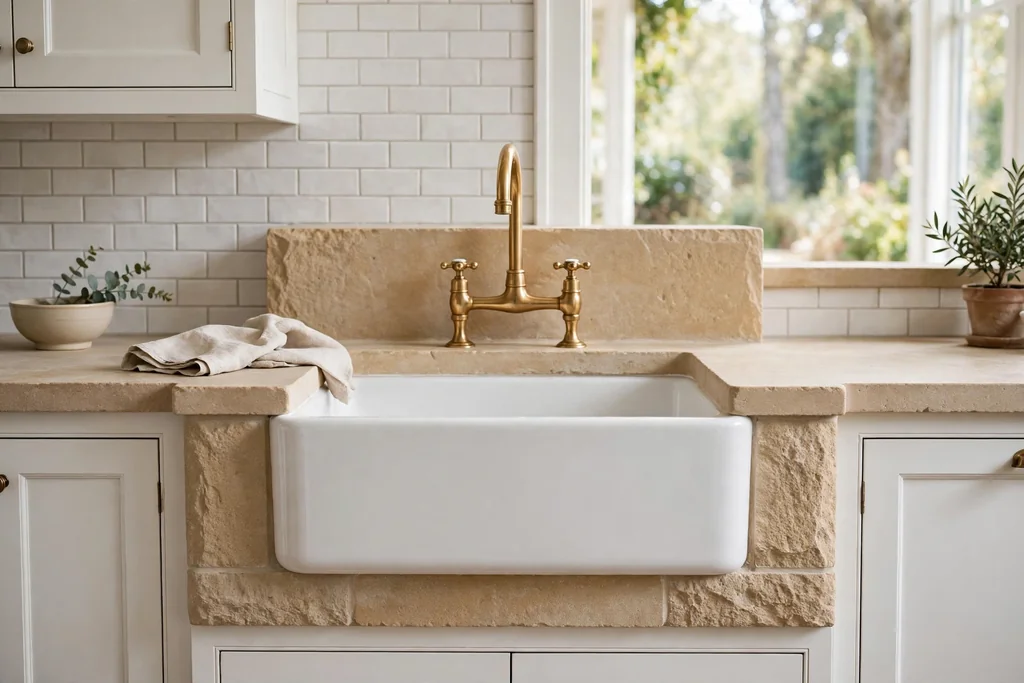
Fit an apron-front sink in white ceramic, and set it into a beige stone or tile surround, so the sink wall becomes a quiet feature. The deep basin handles large pots and baking trays with ease, and the beige surround links the sink to beige walls, floors, or an island. Pair it with white Shaker or beadboard cabinets and a simple bridge tap for a room that feels practical and welcoming.
Check the cabinet size before you order, since apron sinks need a purpose built base unit. Keep the area around the sink clear, with a dish rack or a folded linen cloth nearby, and let the sink and surround do the talking rather than adding a busy backsplash behind it. A single large basin suits most cooks better than a split basin in this kind of kitchen.
12. Layered Beige Rugs Along the Work Run
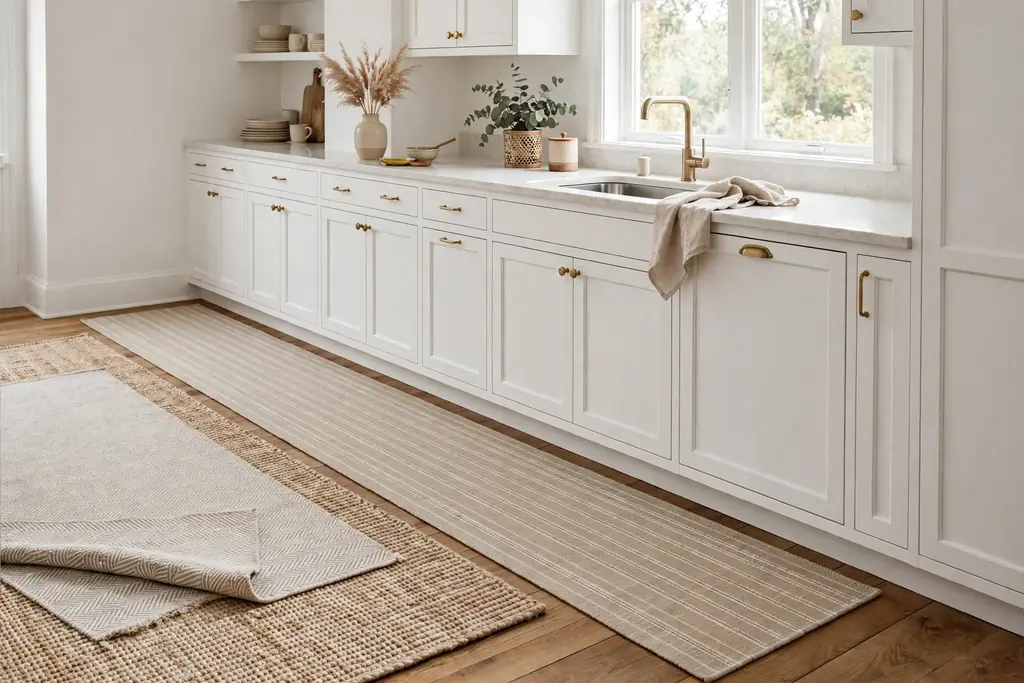
Lay a large flat weave rug in sand beige along the main work run, then add a smaller washable runner in front of the sink or stove. Layered rugs soften hard floors, warm up early mornings, and define the work zone without any fixed change, which suits renters well. Measure the run first and leave space for cabinet doors and the dishwasher to open fully.
Use a thin rug pad on smooth floors to stop slipping while you carry hot dishes. Choose a low pile you can shake out daily and wash when cooking spills build up, and keep rugs clear of the oven door swing. A beige rug with a subtle border or stripe adds pattern without breaking the calm palette, and it is easy to swap when it wears out.
13. Glass-Front Cabinets With Beige Interiors
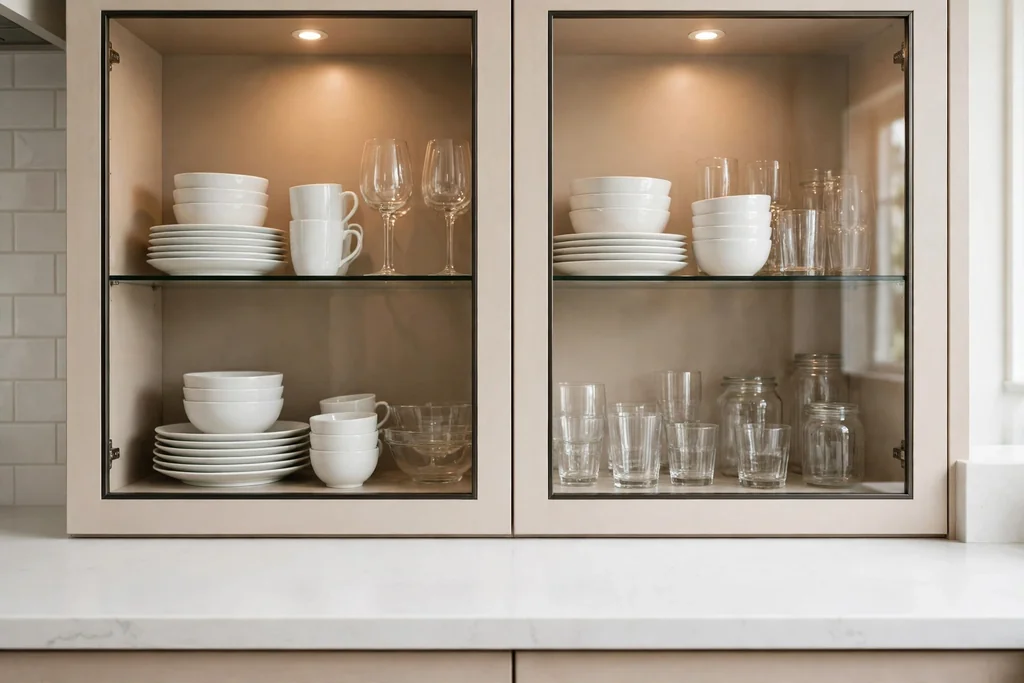
Paint the inside of glass-front upper cabinets in a warm beige, and display white dishes and clear glassware against it. The beige interior adds depth behind the glass, so the cabinet reads as a dressed display rather than a plain box, and the white dishes stay the focus. Use glass fronts on one run of cabinets, or on either side of a window or range, rather than everywhere, so the display stays calm.
Keep what you show to a small set of matching pieces, and leave space on each shelf so the cabinet does not look crowded. Clear glass shows everything, so it suits tidy households, while reeded glass softens the view and hides a less perfect shelf. Add a small light inside the cabinet if you want the display to glow in the evening, and keep daily items on lower shelves.
14. Floor-to-Ceiling Beige Pantry Wall
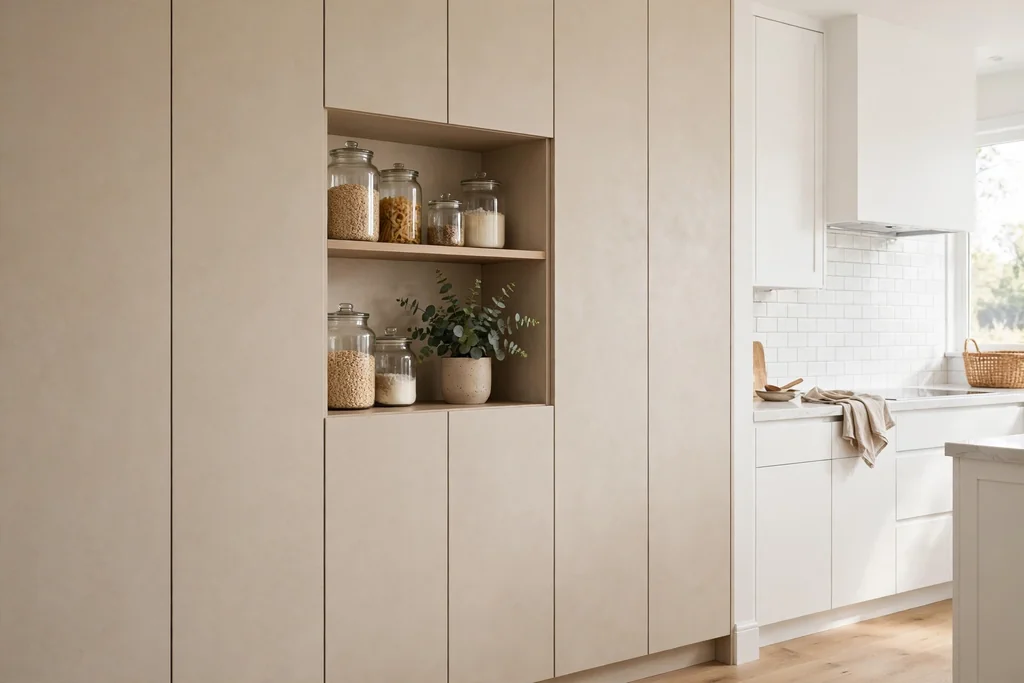
Build a floor-to-ceiling pantry wall in warm beige, with closed doors and a few open shelves for books, jars, and a plant. The beige wall reads as part of the room rather than a block of furniture, and it gives a kitchen generous storage without a bulky freestanding unit taking over the floor. Handleless doors keep the surface calm, and a full height unit uses wall space that a shorter cabinet would waste.
Plan the interior before the doors: tall shelves for appliances at one end, drawers in the middle, and high shelves for seasonal items. Keep the beige a shade deeper than the walls so the pantry wall looks deliberate, and add under-cabinet light on the open shelves so the display glows at night. Measure door swings carefully, since a pantry wall that blocks a walkway will annoy you daily.
15. Layered Lighting to Warm White Surfaces
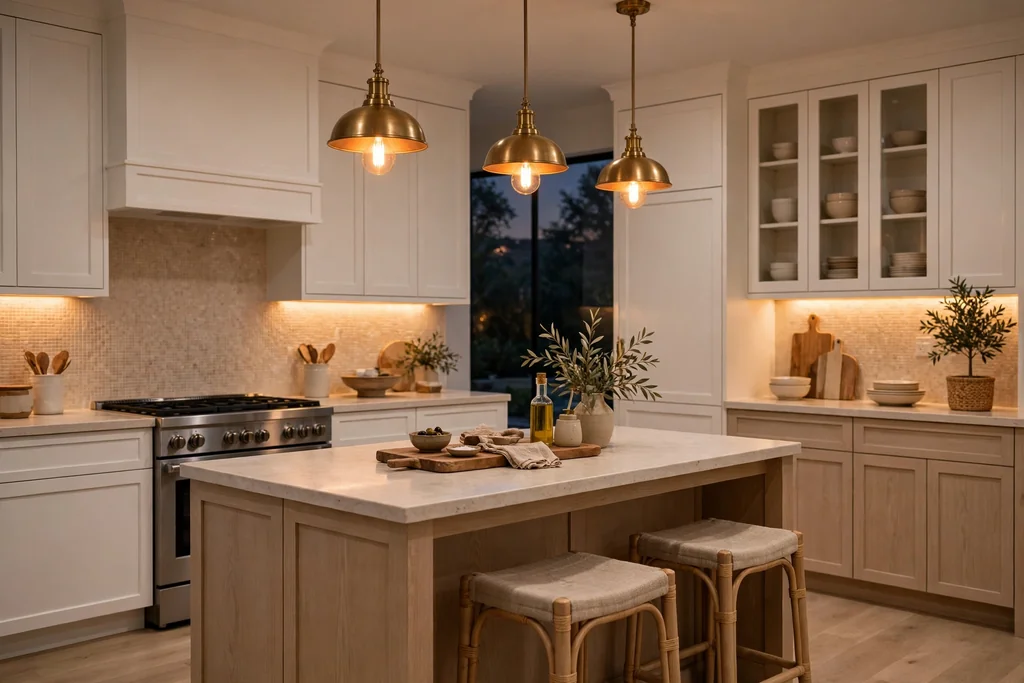
Layer three kinds of light so white and beige surfaces glow at night as well as by day: daylight or a bright ceiling light for prep, under-cabinet task light for counters, and warm pendants over an island or table for evenings. White surfaces bounce light well, but a single cold ceiling light can make beige look grey, so warm white bulbs matter more here than in a colorful kitchen.
Put the task lights and pendants on separate switches or dimmers, so you can brighten the room for cooking and soften it for dinner. Keep pendant shades simple, in brass, rattan, or white, and hang them high enough to clear steam from the hob. Dust the shades often, since kitchen pendants collect a grease film over time, and a dimmer on the pendants is the cheapest way to change the mood of the room.
16. Beige Upholstered Stools at a White Island
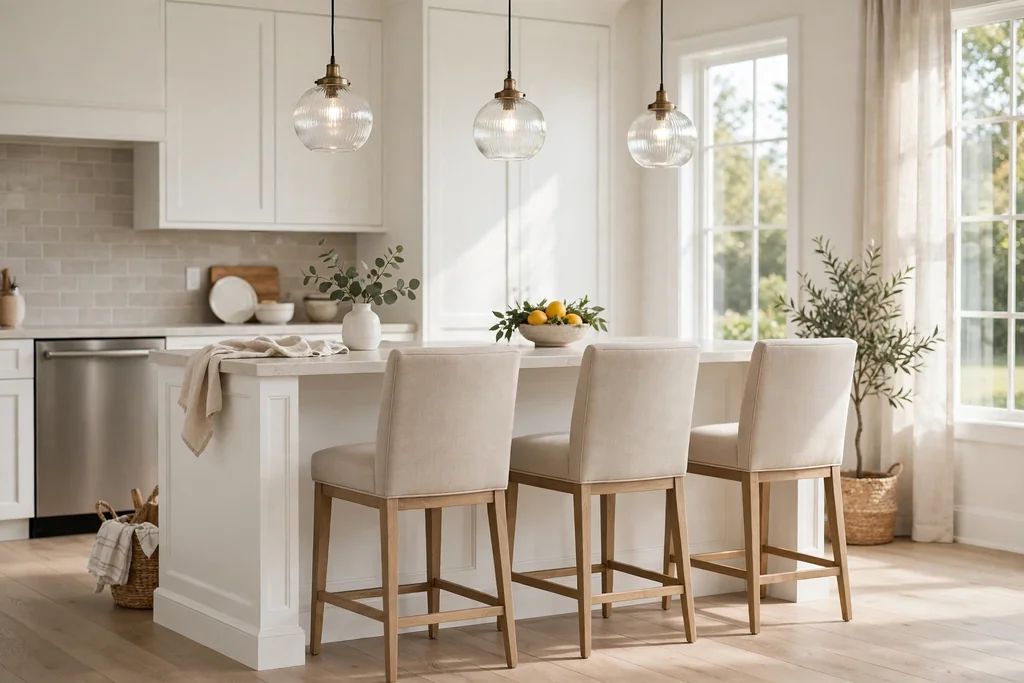
Add beige upholstered stools at a white island for seating that softens the hard surfaces around it. A beige linen or leather seat on a wood or metal frame suits most kitchens, and the stools are easy to move when you need floor space. Choose stools that slide fully under the island overhang, so the walkway stays clear.
Keep the stool count to the island length, usually two for a short island and three for a long one, and leave room between seats. Wipe frames often, since stool legs pick up floor dust and cooking splashes, and pick washable seat covers if the stools are used daily. If the stools are the only beige in the room, add one small match, such as a tray or a vase, so they do not look isolated.
17. Patterned White and Beige Floor Tile
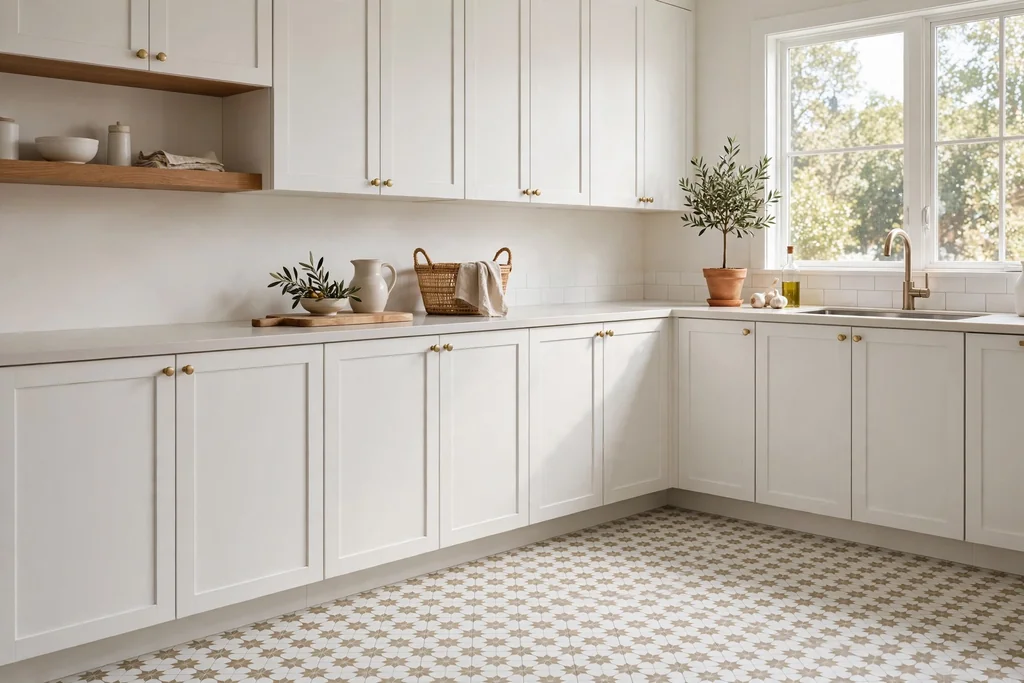
Lay patterned floor tile in white and beige for a floor that carries the whole scheme. A simple geometric or encaustic-look pattern in two quiet tones adds interest underfoot without a bold color, and it suits galley kitchens and open plan rooms where the floor is always in view. The pattern also hides crumbs and marks better than a plain pale floor.
Keep the rest of the room plain when the floor is patterned, with simple cabinets and a plain counter, so the floor stays the feature. Order spare tiles for future repairs, and seal grout in the splash zone near the sink and cooker. Check a tile sample under kitchen lights at night as well as in daylight, since beige tones shift a lot between lights, and pick a matte finish for grip underfoot.
18. Herbs and Beige Pottery on Open Display
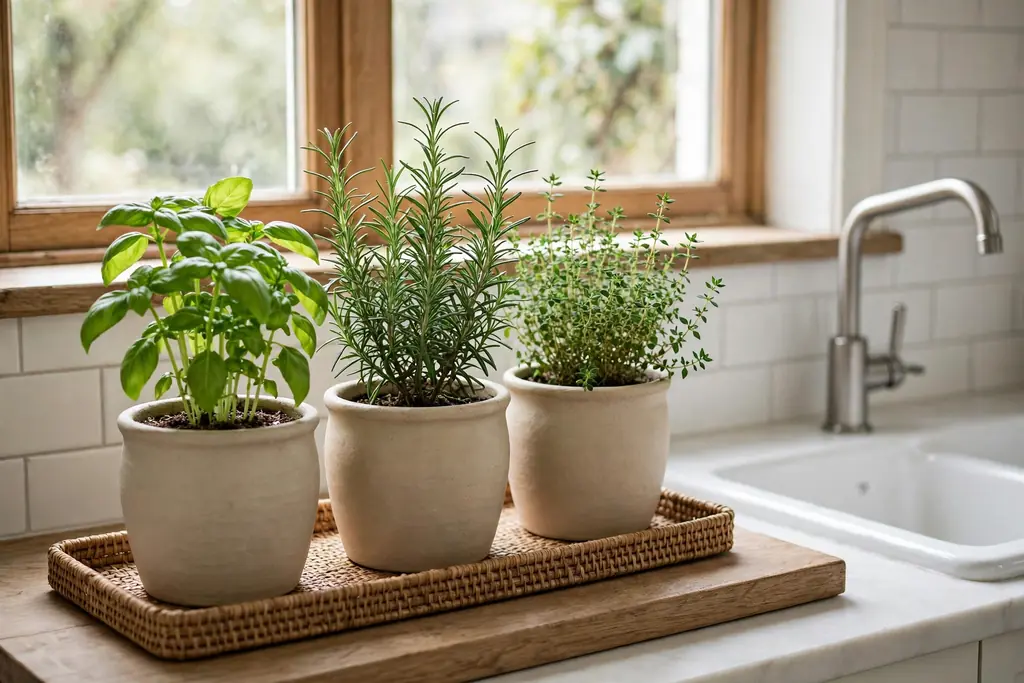
Finish the kitchen with herbs in beige pottery, grouped on a windowsill, a shelf, or a tray by the stove. The plants add life and a soft green note that keeps white and beige from feeling flat, while the beige pots tie the display to the rest of the room. Use pots of a similar size and material, such as plain ceramic or terracotta washed in beige, so the row looks calm rather than collected at random.
Set the pots on a narrow tray or saucers to protect the sill and shelves from water marks. Choose herbs based on the light your window actually gets, and keep the sill clear of the tap splash zone where possible. For a warmer metal accent beside the pottery, the small touches in these rose gold kitchen ideas show how one repeated finish can link a display to taps and handles elsewhere in the room.
Conclusion
A white and beige kitchen works best when white and beige are each a family of tones and textures, not a single shade repeated everywhere. Start with the layer you notice most, usually cabinets or walls, then add wood, linen, and stone texture, and finish with one warm metal and one quiet pattern. Keep the palette tight, let light in, and give each tone a job, so the room feels fresh and calm rather than flat.
Save this list on Pinterest before you start, and work through it one idea at a time: hardware and stools first for a quick refresh, then rugs and window treatments, then cabinets, tile, and floors when you have a weekend or a renovation to spare. For a wider look at white rooms to compare against your beige choices, see these white kitchen ideas.
FAQs
Will a white and beige kitchen look boring?
It only feels boring when it is one flat white and one flat beige with no texture. Mix bright white, warm cream, sand, and taupe, and add linen, wood grain, stone veining, and woven rugs, and the room gains depth without bold color. One warm metal, such as brass, and one quiet pattern, such as a floor tile, also help, as long as both stay to a few places.
What is the best white paint for kitchen cabinets with beige walls?
A warm white with a slight yellow or cream undertone usually sits best beside beige walls, since a blue white can make beige look dingy by comparison. Test a large sample board beside your wall color, floor, and counter in morning and evening light before you commit. A washable satin or semi gloss finish is worth choosing, since pale cabinets show cooking splashes quickly.
Should beige go on the upper or lower cabinets?
Beige usually works better on the lower cabinets, with white uppers keeping the room feeling tall and light. Lower cabinets also take more knocks and marks, and beige hides everyday wear better than white. If your kitchen is large and bright, beige on all cabinets can work, but keep walls and counters pale so the room does not feel heavy.
How do I stop beige from looking yellow or pink?
Check the undertone of every sample beside your floor and counter, not on its own. Beige with a yellow base warms a cool room, while beige with a pink base can look rosy under warm bulbs. Test samples in your own light, and keep nearby whites in the same warm family, so one item does not make the rest look off.
Is a white and beige kitchen hard to keep clean?
Pale colors show crumbs, splashes, and scuffs sooner than mid tones, so plan for it rather than avoiding the palette. Choose washable paint finishes, sealed stone or quartz counters, sealed grout, and washable rug and cushion covers. A quick wipe of doors near the stove each week, and a washable runner in front of the sink, keep the room looking fresh without constant deep cleaning.
Can I use white and beige in a small kitchen?
Yes, and the pairing suits small kitchens well, since pale colors reflect light and make the room feel larger. Keep the palette to two or three tones, use white on uppers and walls, add beige on lowers or the island, and avoid a busy pattern on both the floor and the backsplash at once. Open shelves on one short run, good under-cabinet light, and a clear counter plan matter more than extra decoration in a small room.