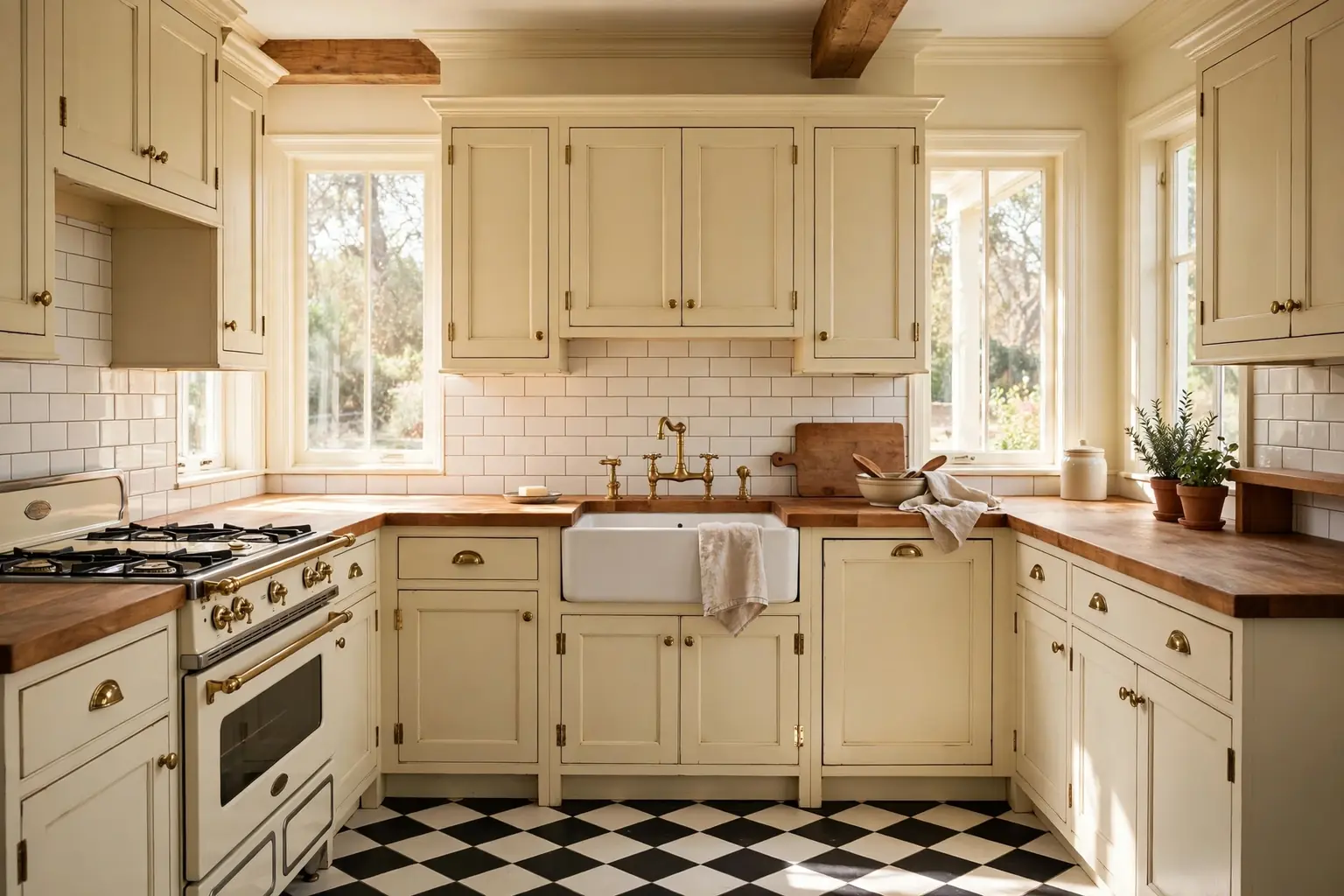
A vintage kitchen works when it feels collected over time, not staged in one shopping trip. Cream cabinets, a deep sink, worn wood, and a few pieces with age give the room warmth, while good lighting and clear worktops keep it easy to cook in. These 29 vintage kitchen ideas cover cabinets, sinks, floors, lighting, storage, and small details, so you can start with one change or build a full old style look room by room. Pick the idea that fixes your biggest frustration first, then add pieces slowly so the room keeps its balance.
Key Takeaways
- Start with one large anchor, such as cabinets, a sink, or the floor, before adding small vintage details.
- Keep the palette calm: cream, soft white, warm wood, and one or two muted accent colors work better than many competing patterns.
- Mix one or two true vintage pieces with simple new items, so the kitchen stays practical and easy to clean.
- Repeat one material or finish, such as brass, wood, or enamel, across the room to tie old and new together.
- Leave clear worktop space and good task lighting, since a vintage look should never make cooking harder.
1. Cream Shaker Cabinets With Brass Cup Pulls
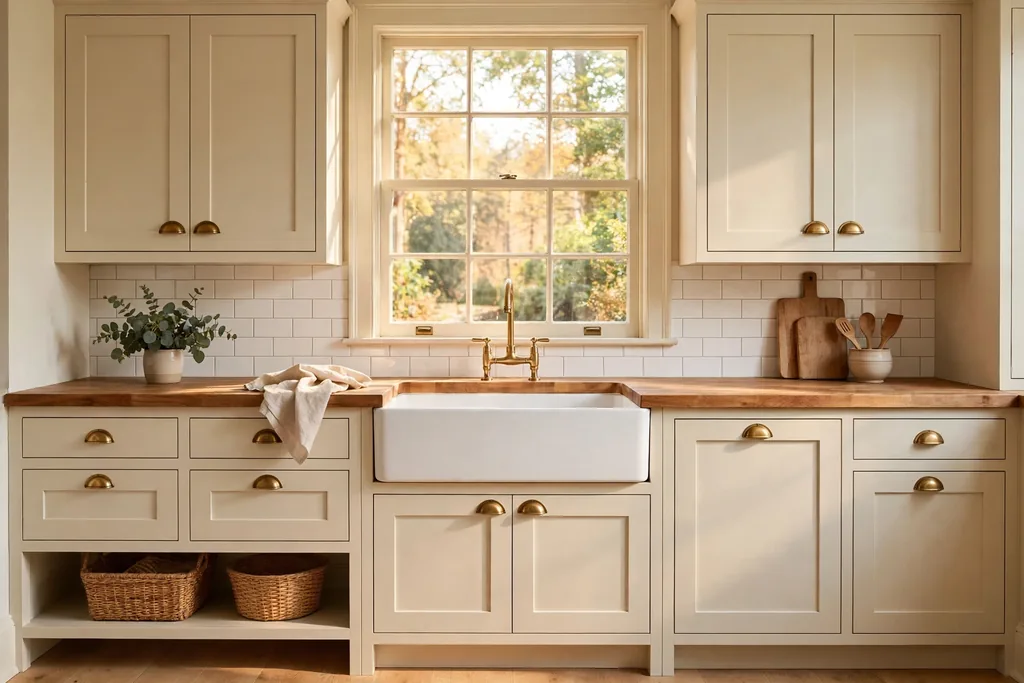
Cream shaker cabinets are the easiest starting point for a vintage kitchen, because the flat panels and simple frames suit many older styles without looking fussy. A soft cream, rather than bright white, warms the room and hides small marks better. Pair the cabinets with brass cup pulls, which are easy to grip and add a warm metal note that suits wood counters and stone sinks.
If your cabinets are sound, painting them cream and changing only the hardware can give the same effect for far less work than a replacement. Test the paint color on one door in daylight and evening light, since cream shifts a lot between the two. For more color direction, these colors for your kitchen cabinets show how muted shades sit with wood and brass.
2. Apron Front Farmhouse Sink
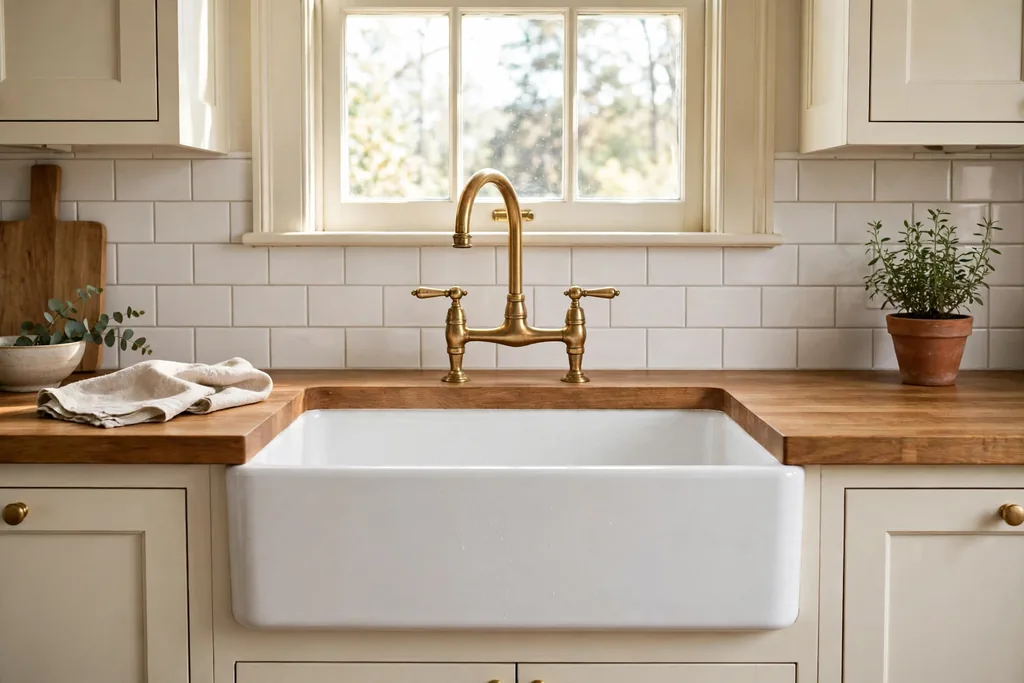
A deep apron front sink sits forward of the cabinet line, so you can stand close while washing large pots and baking trays. The exposed front panel becomes a feature in itself, and white fireclay or porcelain suits cream cabinets and wood counters well. A single large bowl is more useful for most cooks than two small bowls, since it fits roasting pans flat.
Check the cabinet below before you choose, because an apron sink needs a special base cabinet and solid support for its weight. Fit a grid or mat in the base to protect the surface from heavy pans, and wipe the front panel when you clean the counters. A simple bridge faucet, covered in Idea 15, completes the look without extra fuss.
3. Butcher Block Countertops
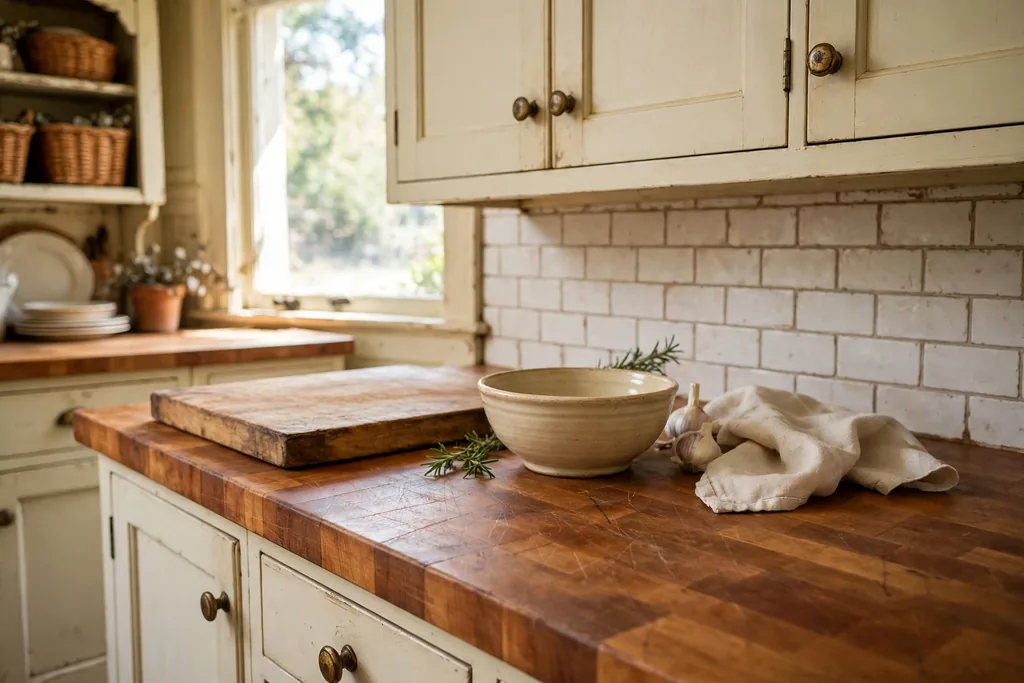
Butcher block counters bring warmth and a workmanlike feel that stone alone cannot match, and they suit a vintage kitchen because they age with use. Maple and oak are common choices, and a matte oil finish keeps the surface soft to the eye and easy to repair with a light sand and fresh oil. Use butcher block for a full run of counter, or for one prep section beside the sink, if you want to test the look first.
Keep the area near the sink well sealed, and wipe up standing water promptly, since wood and constant moisture do not mix well. Cut on a board rather than directly on the counter, and accept small marks as part of the patina. A wood counter also pairs well with the warm wood breakfast bar in Idea 27.
4. Open Shelves for Vintage Dishes
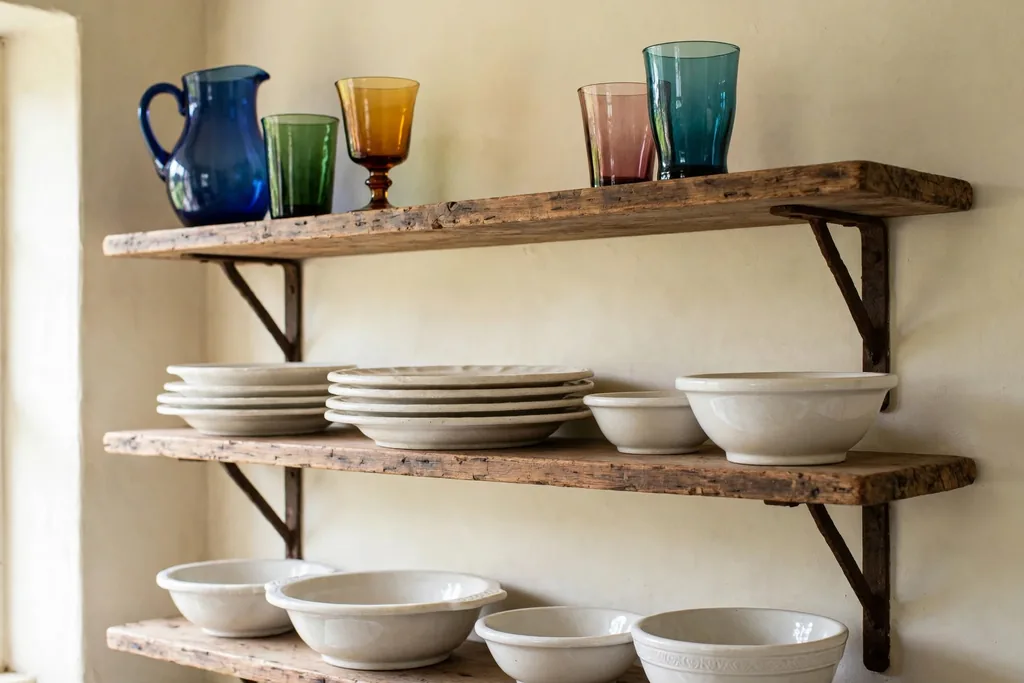
Open shelves let you show the pieces that make a vintage kitchen feel personal: ironstone plates, colored glass, old mixing bowls, and a few jugs. Choose one or two shelves near the sink or stove, and keep the daily dishes there so the display is used, not just looked at. Group plates in stacks, bowls together, and glasses in a single row, with space left at each end.
This guide to how to style open shelves shows how to leave breathing room so shelves read as storage, not clutter. Keep heavy stacks low, limit each shelf to one or two groups, and move anything you have not used in months into a closed cabinet. A shelf that holds only what you reach for weekly stays tidy on its own.
5. Retro Freestanding Range
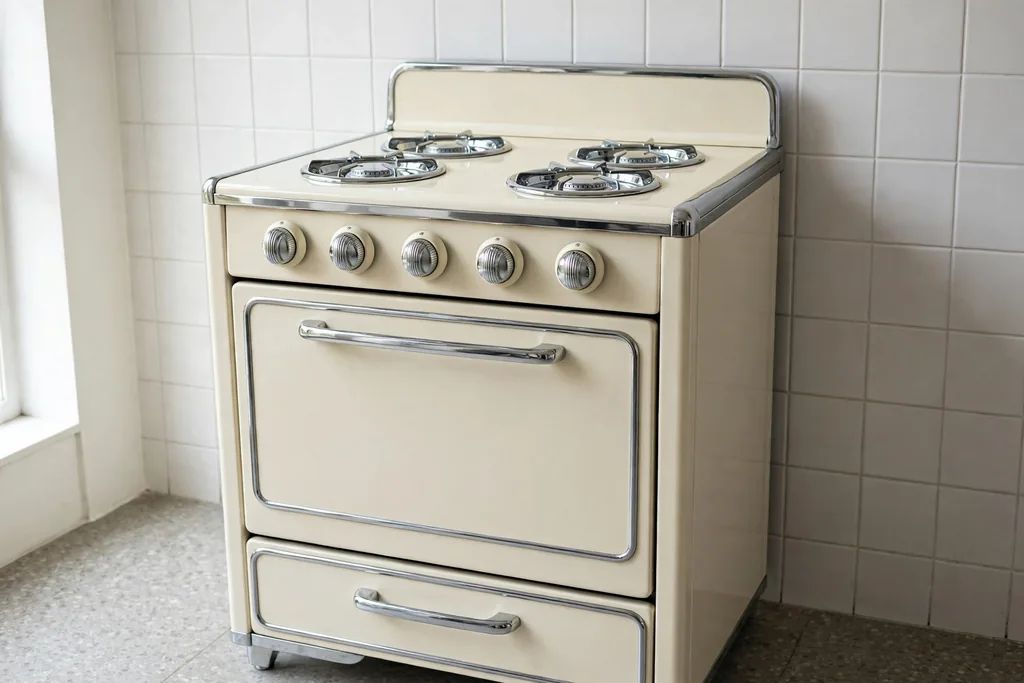
A freestanding range with rounded edges, chunky knobs, and a cream or soft mint finish can set the tone for the whole kitchen. It reads as a piece of furniture rather than a built in appliance, which is exactly what older kitchens did. Choose the width to match your cooking: a standard width suits most households, while a wider range suits cooks who use several pans at once.
Before you buy, check the fuel type, the venting route, and the clearance your maker specifies around the range. A retro look does not mean old performance, so compare oven size, burner output, and cleaning features as you would for any range. Keep the wall behind it simple, with plain tile or beadboard, so the range stays the focal point.
6. Black and White Checkerboard Floor
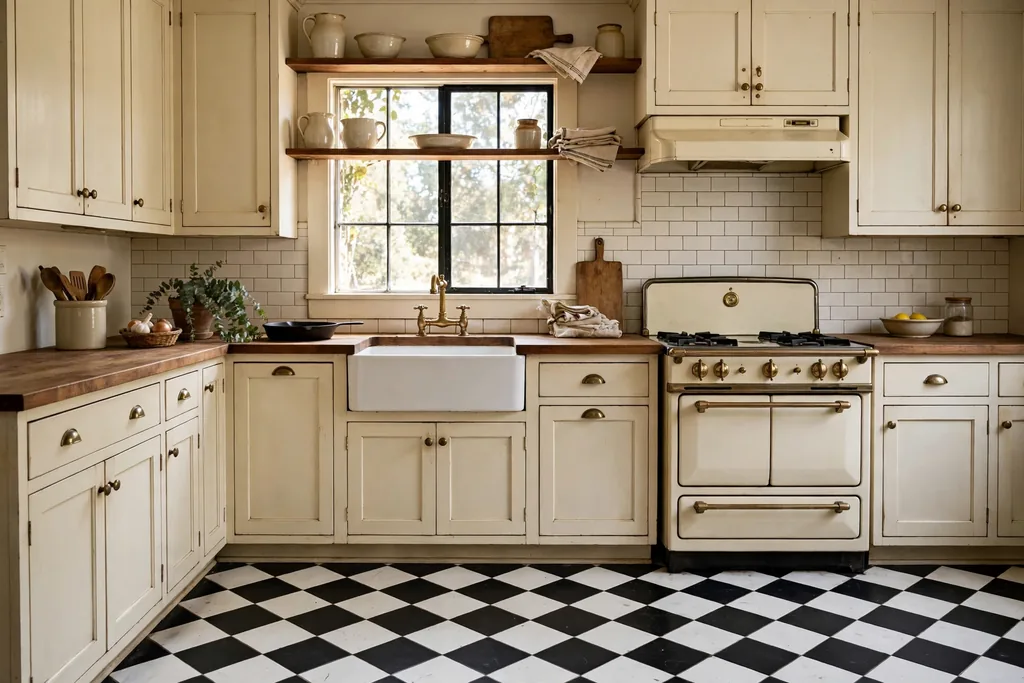
A black and white checkerboard floor is one of the clearest vintage signals in a kitchen, and it works in small and large rooms alike. Large squares suit a bigger floor, while smaller squares suit a compact kitchen or a hallway run. The strong pattern grounds cream cabinets and wood counters, and it hides crumbs better than a plain pale floor.
Use tile rather than a printed sheet if the floor sees heavy wear, and choose a grout color you can live with: light grout brightens the pattern, dark grout softens it. Seal the grout and keep a spare box of tiles for repairs. If a full checkerboard feels too bold, run it in the main walkway and use plain tile under the cabinets.
7. Beadboard Backsplash
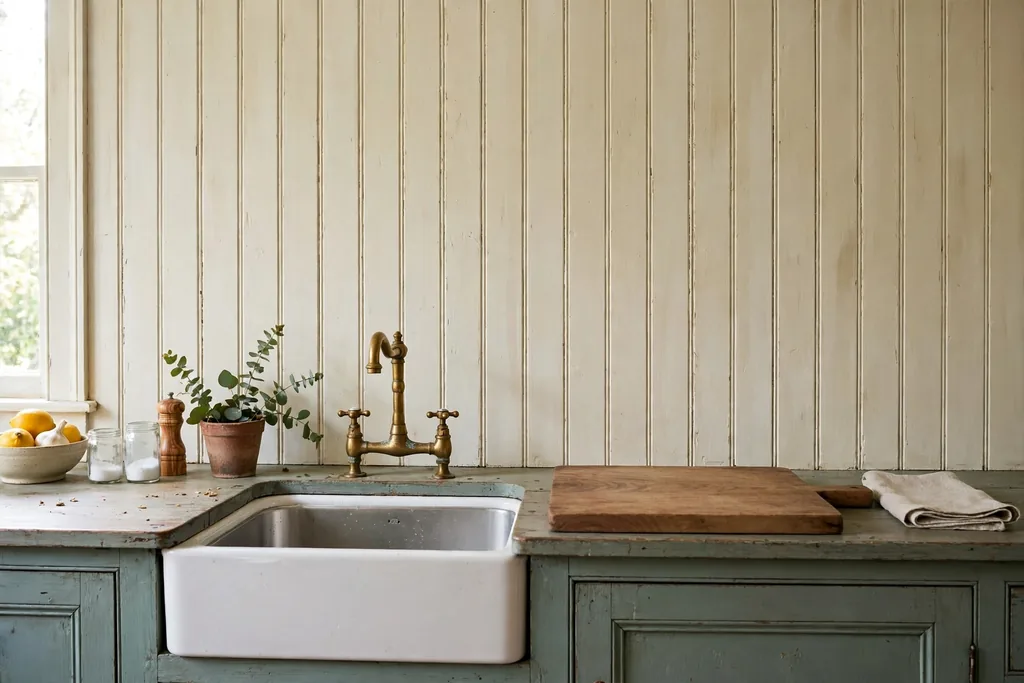
Beadboard gives a kitchen wall a lined, cottage texture that flat tile cannot match, and it suits the area between counter and upper cabinets well. Painted beadboard in cream or soft white brightens the work zone, while a natural wood finish warms a kitchen with pale cabinets. The vertical lines draw the eye up and make a low ceiling feel a little taller.
Seal painted beadboard well, especially behind the sink and stove, where steam and splashes land daily. Use a wipeable paint finish so cooking grease comes off with a damp cloth. If you like the lined look but want tile near the stove, use beadboard on the remaining walls and tile only in the splash zone.
8. Glass Front Upper Cabinets
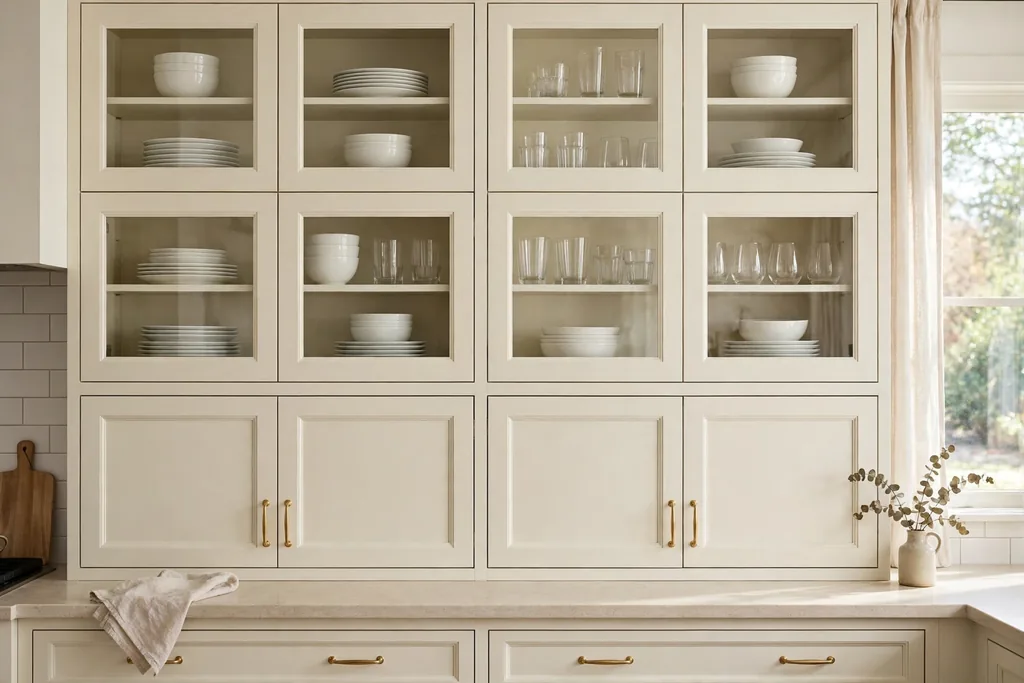
Glass front cabinets show a small, edited collection instead of hiding everything behind solid doors, which suits a vintage kitchen built around pretty dishes. Use glass on one run of uppers, or on a single cabinet beside the sink, and keep the rest solid for everyday clutter. Clear glass shows the most, while seeded or fluted glass softens the view and hides mismatched pieces.
Keep what sits behind glass to one color family or one set of dishes, so the cabinet reads as a display rather than a crowded cupboard. Line the back of the cabinet in a pale color to bounce light, and add a small light inside if the shelf sits in a dark corner. This idea pairs naturally with the open shelves in Idea 4.
9. Enamel Pendant Lights
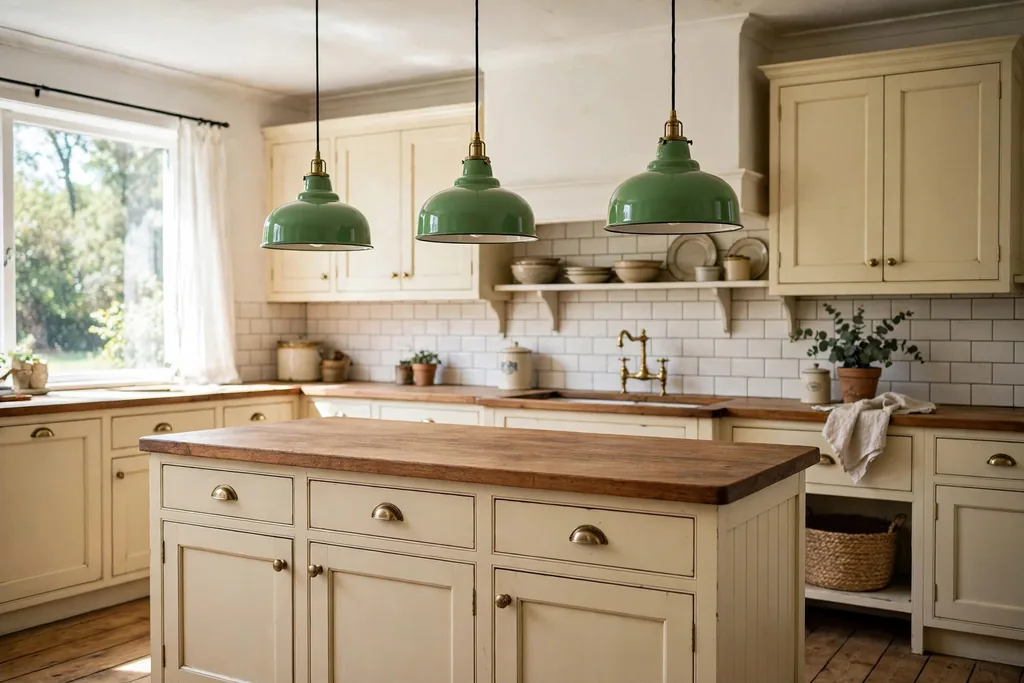
Enamel pendant lights with a wide dome shade give focused light over an island, a table, or a sink, and their glossy finish suits a vintage kitchen. Green, cream, black, and soft red are classic enamel colors, and a single color repeated two or three times ties the room together. Hang the shades low enough to light the work surface, but high enough that they do not block sight lines across the room.
Check the bulb type and brightness before fitting, since a pendant that looks right but lights poorly will frustrate daily cooking. Use warm white bulbs for a soft evening feel, and fit dimmers if you eat at the same table you prep on. Keep cords or rods straight and level, since uneven pendants are easy to spot.
10. Pressed Tin Backsplash
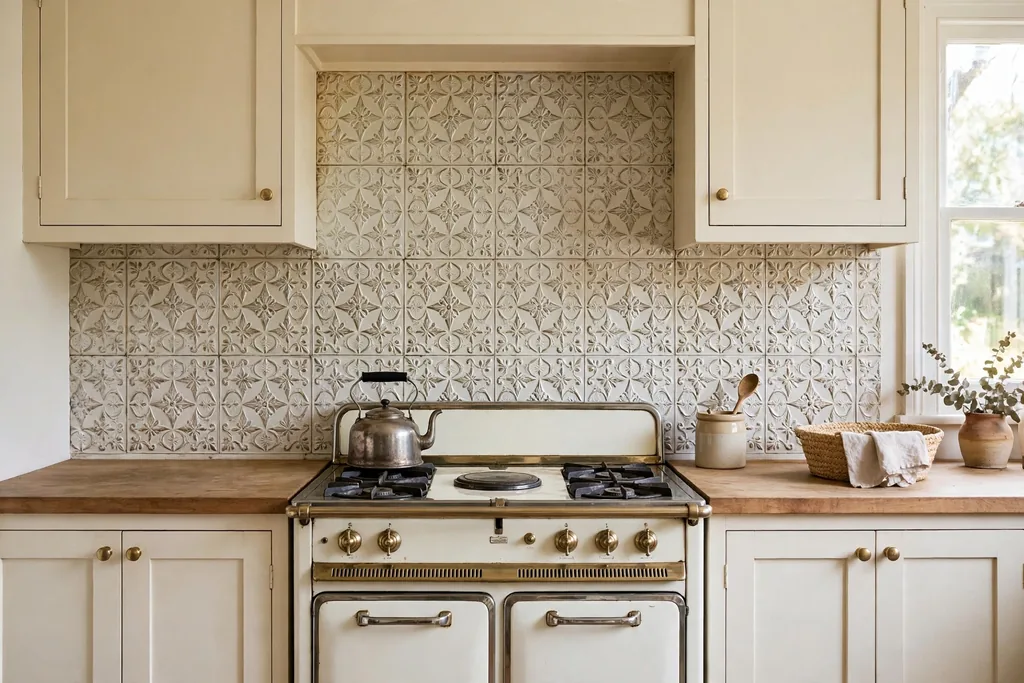
Pressed tin panels bring a pattern and a soft metallic sheen to a kitchen wall, and they recall older kitchens where tin lined ceilings and walls. A simple repeating pattern suits a backsplash, while a bolder pattern suits a single feature wall. Painted tin in cream or pale sage reads softer than bare metal, and it wipes clean with a damp cloth.
Fix tin panels over a flat, dry wall, and seal the edges near the sink so moisture cannot get behind them. Avoid tin directly behind a high heat burner unless your panel maker says it is safe there, and use tile for that strip instead. A pressed tin backsplash works well with the enamel pendants in Idea 9, since both add a little shine without glare.
11. Freestanding Kitchen Hutch
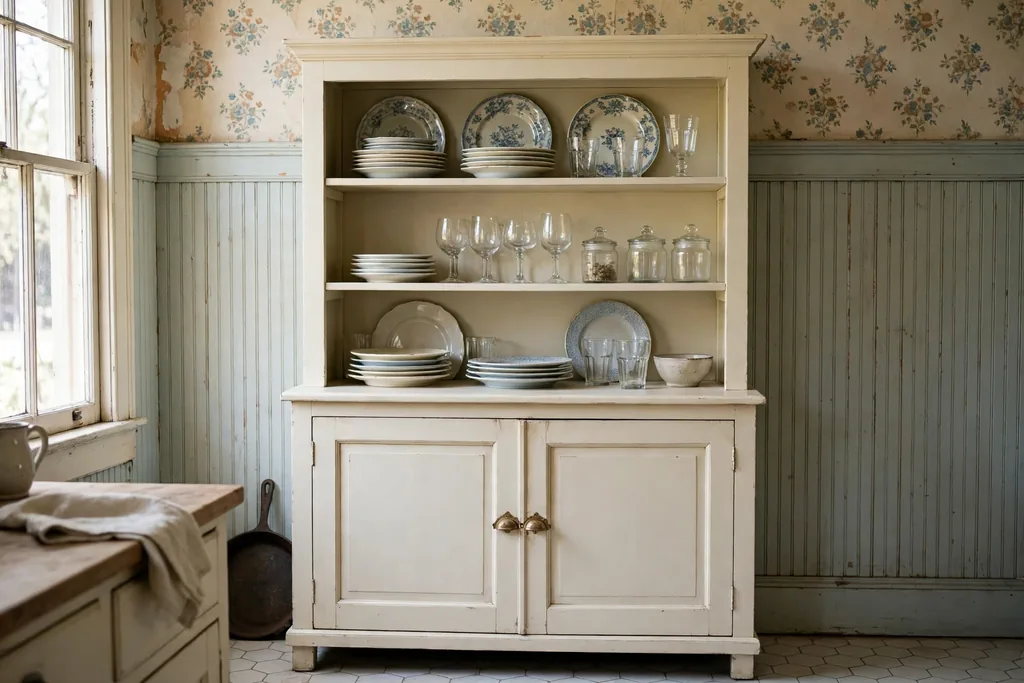
A freestanding hutch or dresser adds storage and display in one piece, and it suits a vintage kitchen because older kitchens often mixed fitted cabinets with separate furniture. Use the lower cupboard for table linens, baking trays, or small appliances, and the upper shelves for plates, glasses, and a few decorative pieces. A painted hutch in cream or muted green links to the cabinets without matching them exactly.
Measure the wall and the door swing before you buy, since a hutch is deep and needs clear space in front. Fix tall pieces to the wall if the household includes children, and keep the top shelf for light items you reach for rarely. A hutch also gives a small kitchen extra storage without a full cabinet run.
12. Rounded Retro Refrigerator
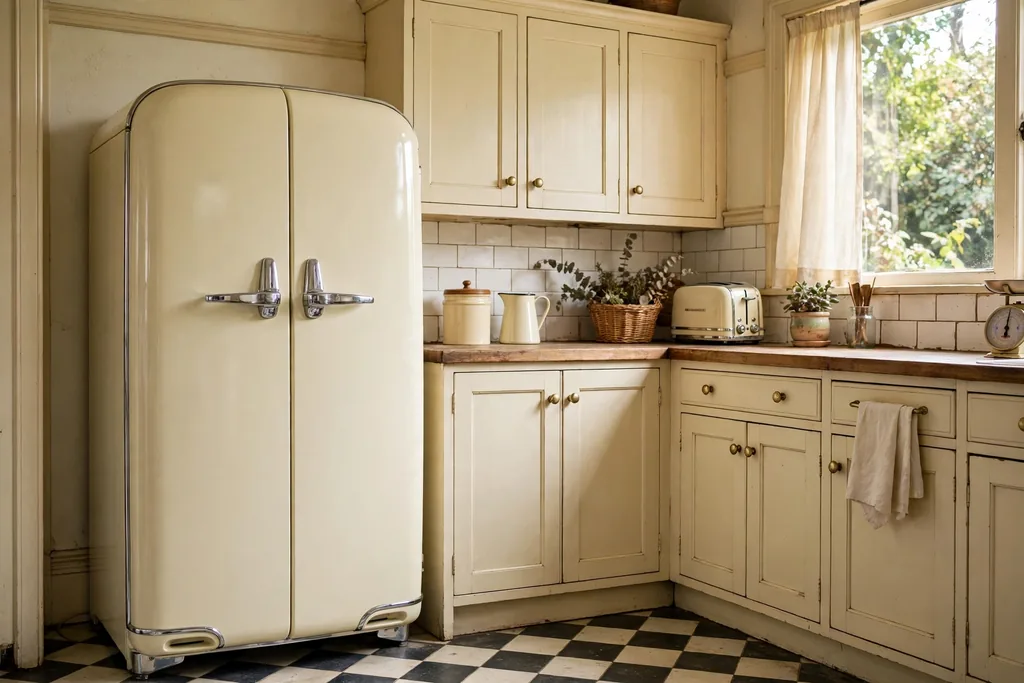
A rounded retro refrigerator with chrome handles and a soft pastel or cream finish can carry the vintage theme on its own. The curved shape softens a wall of square cabinets, and a single door with a small freezer section suits smaller households. Larger retro style models with a full freezer suit families who need more cold storage, so check the interior layout, not just the outside shape.
Measure doorways, turning space, and the gap beside the fridge before ordering, since retro models can be wider or deeper than they look. Check energy use and noise ratings too, since a pretty fridge that hums loudly will wear thin fast. Keep the wall around it plain, so the shape and color stay the feature.
13. Hoosier Baking Cabinet
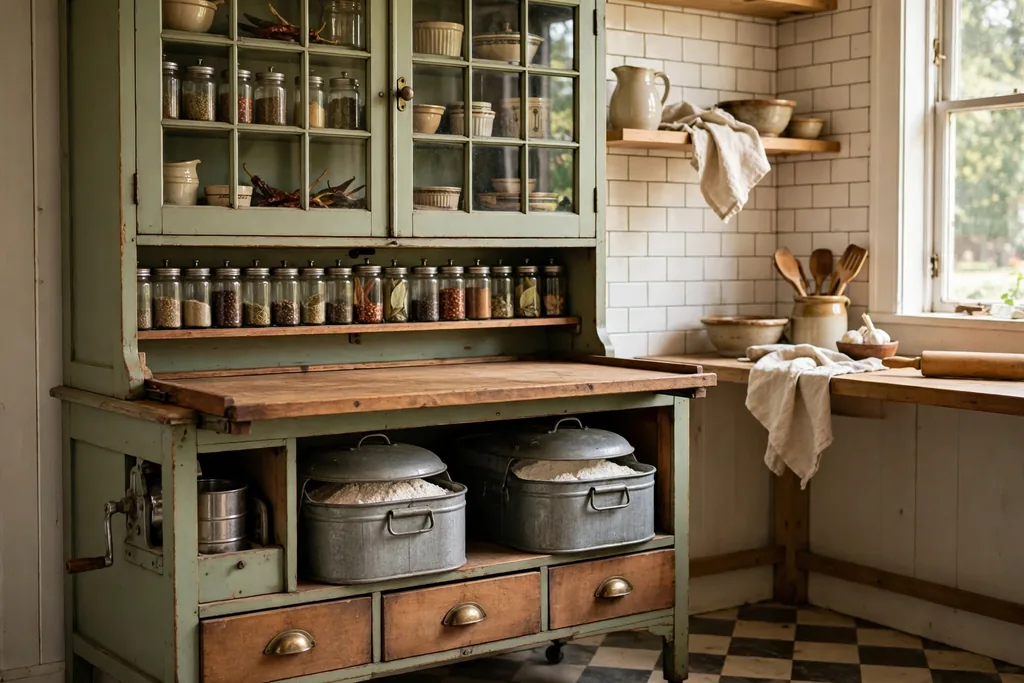
A Hoosier style baking cabinet is a tall, freestanding unit with a work surface, flour and sugar bins, spice racks, and shallow drawers, built for baking before fitted kitchens existed. It gives a vintage kitchen a real work station: measure and mix at the counter, reach flour from the bin below, and store baking trays in the drawers. Original pieces vary in condition, so check drawers, hinges, and the worktop before buying.
If an original is hard to find, a reproduction cabinet gives the same layout with new fittings and a clean work surface. Place it near the oven, with a clear landing spot for hot trays beside it. Keep the top clear except for a mixing bowl and a small jar of utensils, so it stays a working surface rather than a display shelf.
14. Sink Skirt Curtain
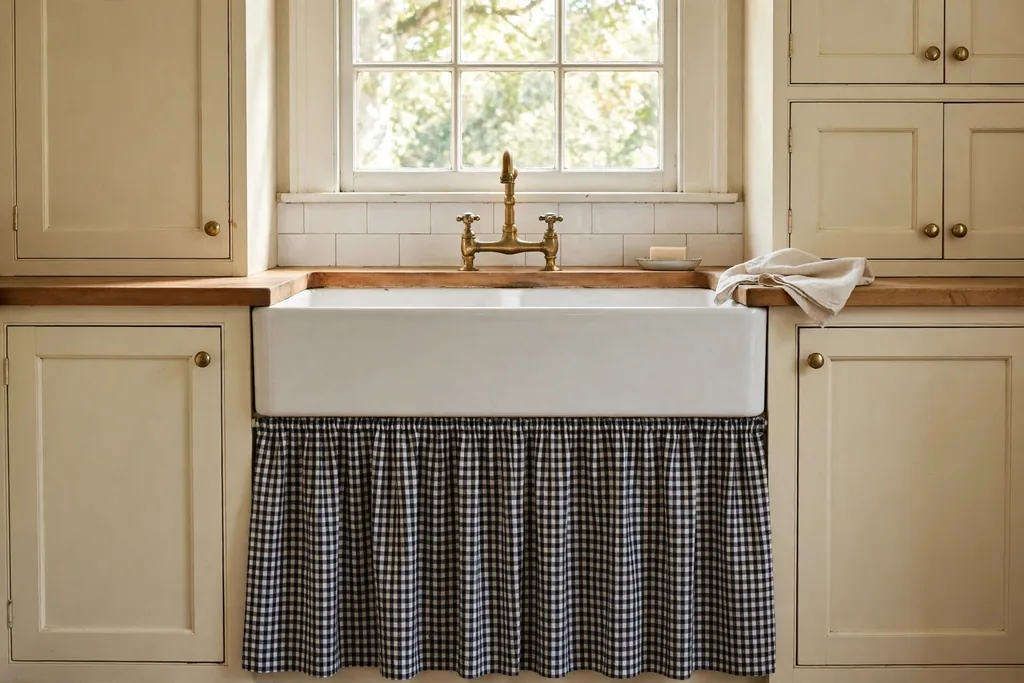
A curtain under the sink, instead of a cabinet door, is a soft vintage detail that also hides cleaning supplies and pipes. Choose a washable cotton or linen fabric in a small check, stripe, or plain muted color, and hang it from a tension rod or small rail inside the cabinet opening. The fabric softens a hard run of cabinets and adds a cottage note for very little cost.
Wash the curtain often, since the sink area sees splashes and steam, and keep a second curtain ready to swap in on laundry day. This idea suits a single sink cabinet rather than a full run of curtained cabinets, which can look busy. It also works well beside the beadboard in Idea 7, since both add texture without pattern overload.
15. Bridge Faucet With Cross Handles
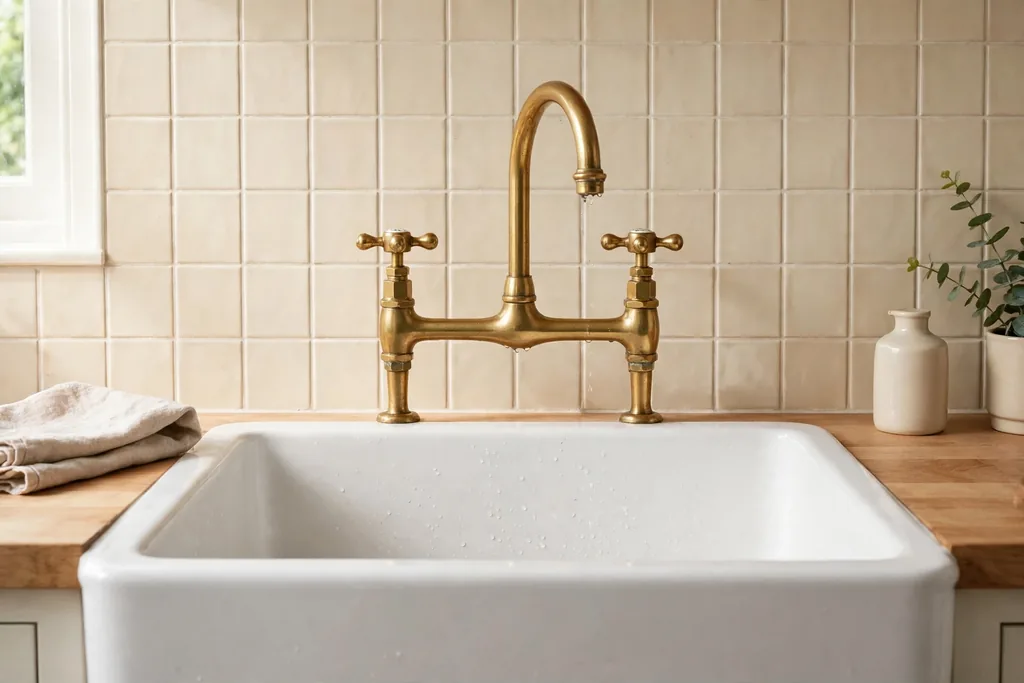
A bridge faucet joins the hot and cold taps with a horizontal bar above the sink, and cross handles give it a clear old style shape. The design suits an apron sink and a traditional kitchen, and the raised bar makes the faucet a feature rather than a background fitting. Choose a finish that matches your other hardware, such as polished nickel, brass, or chrome, so the sink area reads as one planned group.
Check the hole spacing on your sink or counter before ordering, since bridge faucets need a specific spread. A single lever mixer is easier for one handed use, so a bridge faucet suits cooks who are happy to use two handles. Wipe the bar and handles dry after use, since water marks show fast on polished metal.
16. Patterned Encaustic Floor Tiles
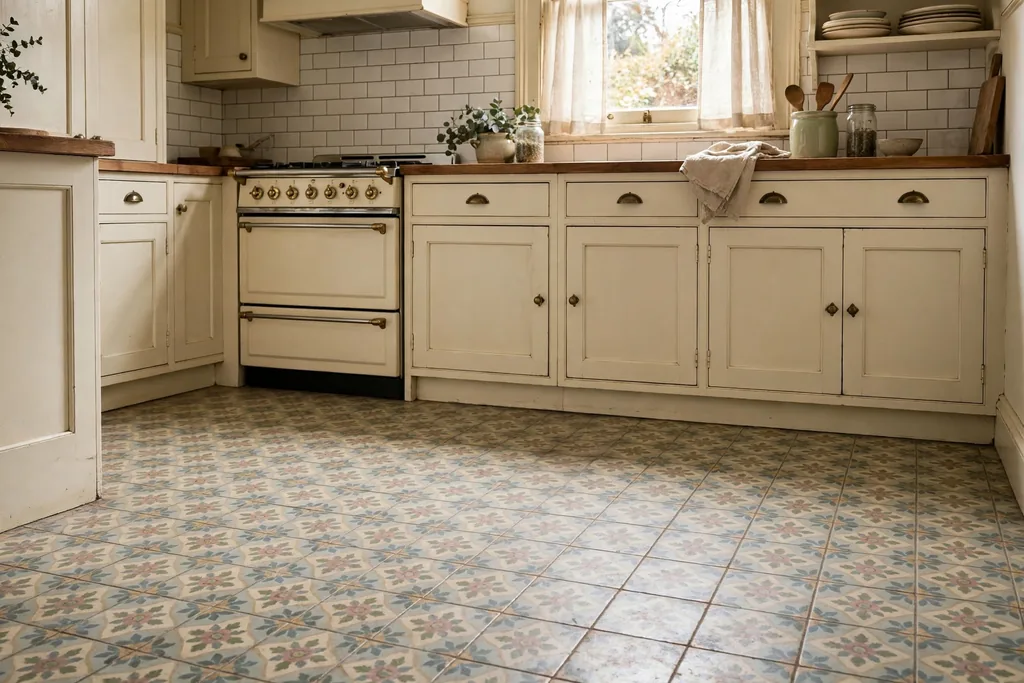
Patterned encaustic style tiles give a vintage kitchen a floor with history, using floral, star, or geometric motifs in muted colors. Unlike the bold checkerboard in Idea 6, these tiles use softer tones and smaller repeats, so they suit a kitchen that already has patterned curtains or a busy backsplash. Use them across the full floor in a small kitchen, or as a rug style panel in front of the sink or range in a larger room.
Keep the rest of the floor plain if you use a patterned panel, so the eye has one place to rest. Seal the tiles as your supplier directs, and choose a grout color close to the main tile tone to keep the pattern calm. A patterned floor pairs well with plain cream cabinets, since the floor carries the decoration and the cabinets stay quiet.
17. Wrought Iron Pot Rack
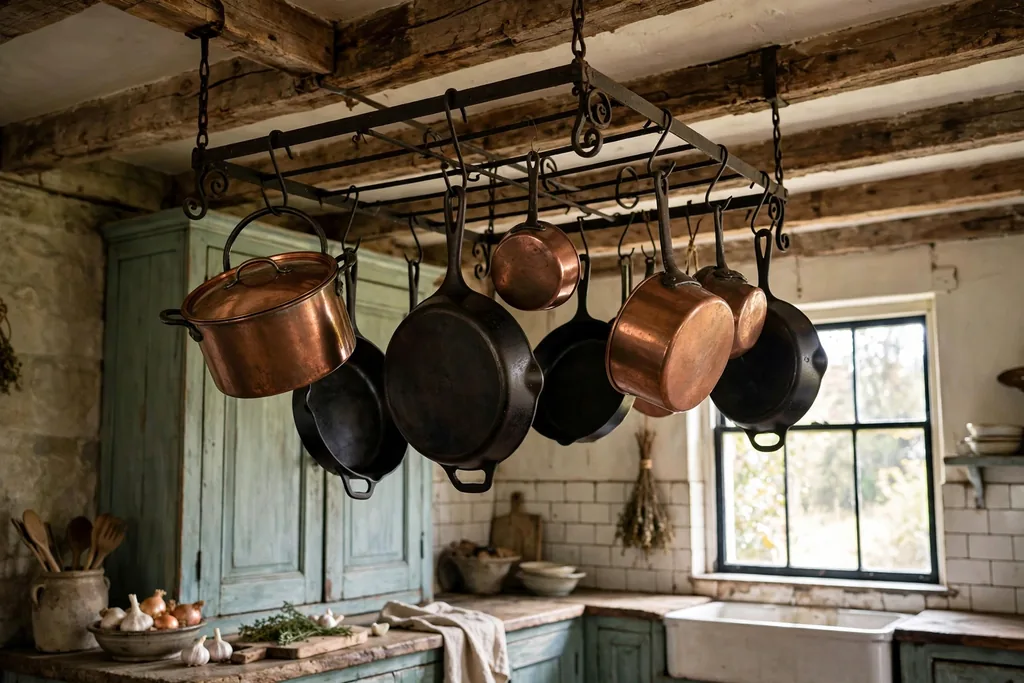
A wrought iron pot rack hung from the ceiling or fixed to the wall keeps pans in sight and frees a full cabinet. The dark iron suits a vintage kitchen with wood beams, brick, or warm wood counters, and it gives the room a working kitchen feel. Hang the rack where pans can be lifted without bumping a light or a cabinet door, and keep the longest pan clear of head height.
Fix the rack into ceiling joists or solid wall brackets, since a loaded rack is heavy, and test the hold before hanging every pan. Hang the most used pans at the outer edges for easy reach, and keep lids in a separate rack or drawer so they do not clang against the pans. Wipe the rack when you clean the stove, since cooking grease settles on iron near the range.
18. Diner Style Breakfast Nook
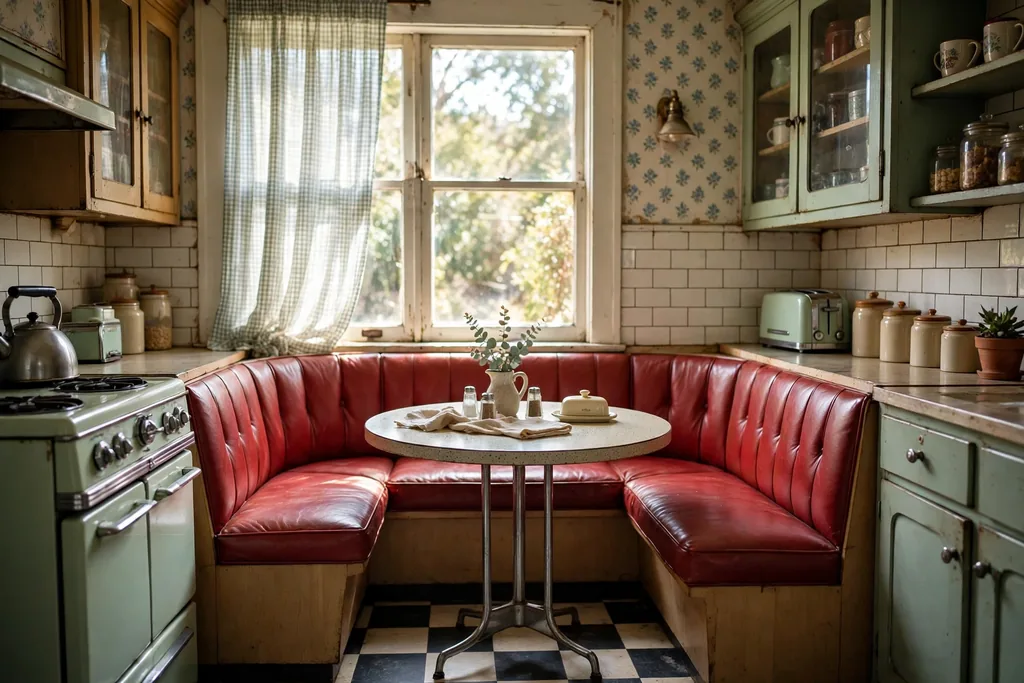
A breakfast nook with a bench seat, a small table, and a second bench or chairs gives a vintage kitchen a diner feel and a clear place for everyday meals. Built in bench seating uses a corner well, and storage under the bench seat holds table linens or rarely used trays. A round or oval table leaves more passing room than a square one in a tight corner.
Add a cushion in a wipeable fabric and a small pendant or wall light above the table, so the nook works for homework and coffee as well as meals. Keep the table size modest, since a nook table that seats four comfortably is more useful than a large table that blocks the walkway. For table styling that works every day, see these everyday dining table decor ideas.
19. Vintage Canisters and Bread Box
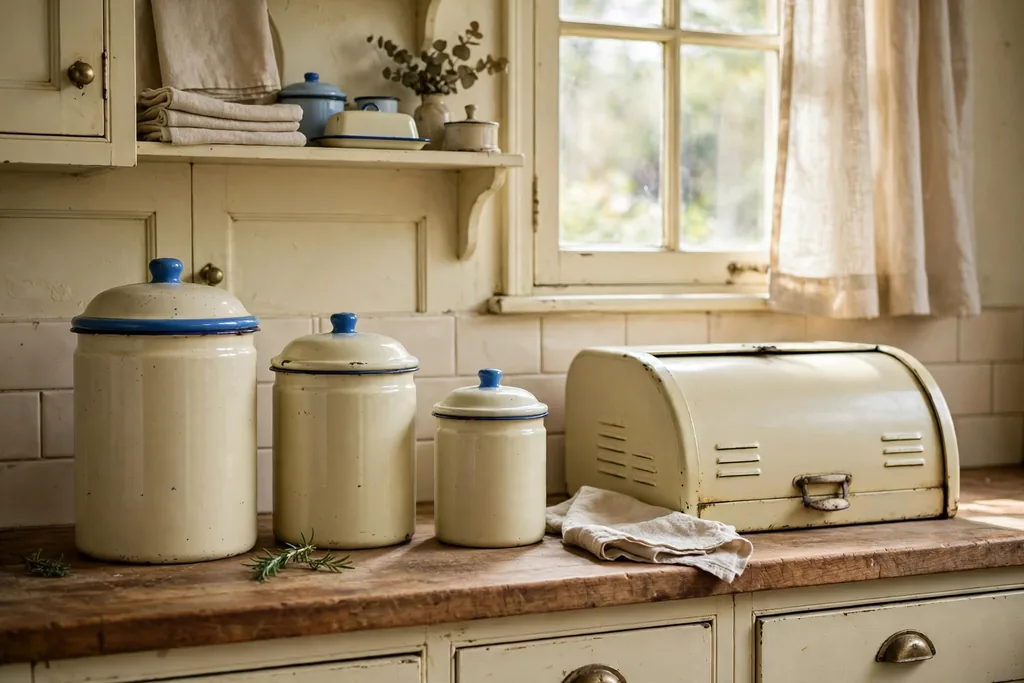
A set of matching canisters for flour, sugar, coffee, and tea, plus a bread box, gives a counter a tidy vintage group without a renovation. Enamel, ceramic, or painted metal canisters in cream, sage, or soft red suit most vintage palettes, and labels keep the group practical. Keep the set to four or five pieces, and store bulk refills in a cabinet so the counter stays calm.
Choose canisters with tight lids, and wash them fully before refilling with a different food. A bread box keeps bread fresh longer than a bag on the counter, and it hides the loaf from view, which helps a small counter look neat. Place the group near the prep zone, not beside the stove, where heat and steam shorten storage life.
20. Enamelware and Stoneware Display
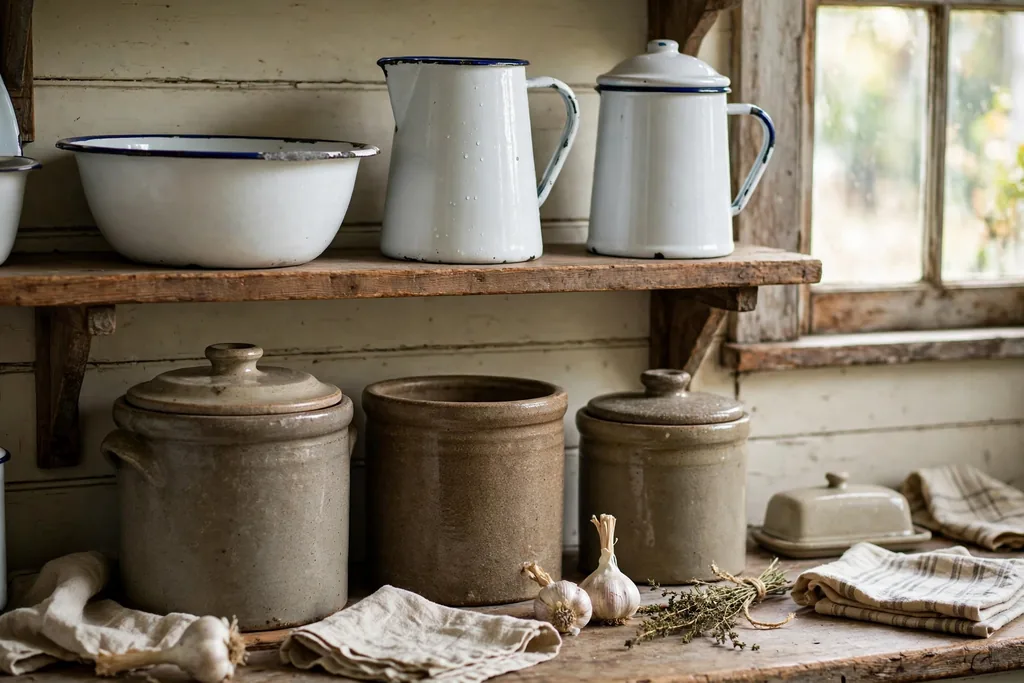
White enamelware with a colored rim, plus a few stoneware crocks and jugs, gives a vintage kitchen an honest, everyday display. These pieces were made for daily use, so showing them on a shelf, a hutch top, or a rail keeps the look grounded. Group enamelware by rim color, and use stoneware crocks for utensils, so the display also does a job.
Check old enamelware for chips inside before using it for food, and keep chipped pieces for dry storage or display only. Stoneware crocks are heavy, so place them low and stable, not on a high shelf edge. This display sits well beside the open shelves in Idea 4 and the hutch in Idea 11, as long as each spot holds only a few pieces.
21. Antique Rug Runner
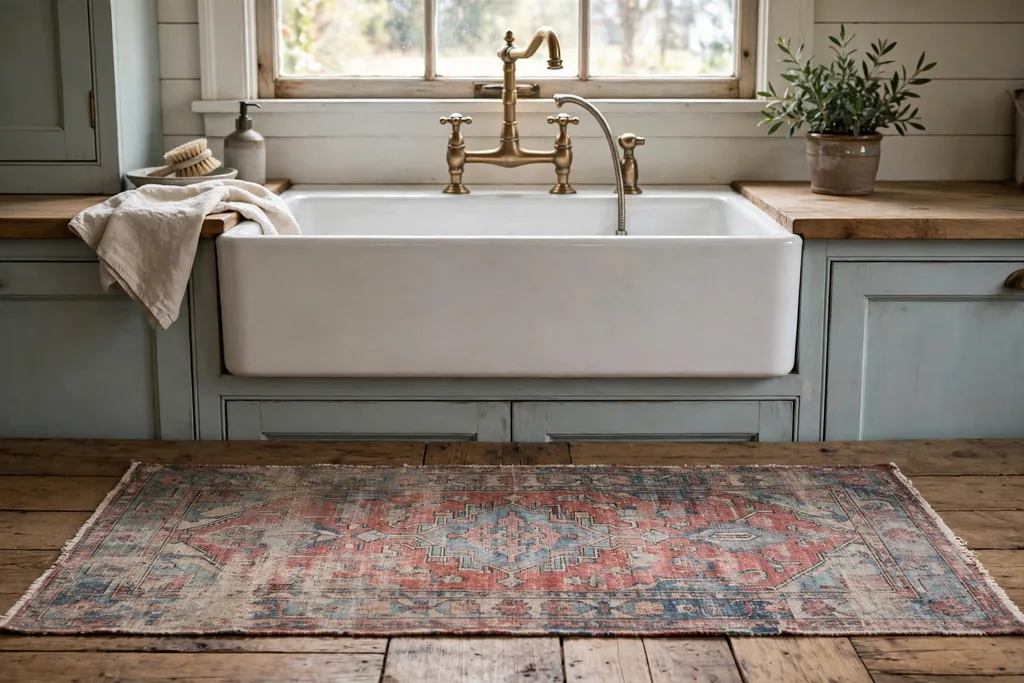
A flat weave rug runner in muted reds, blues, or faded floral tones softens a hard kitchen floor and adds a layer of age that new mats cannot match. Place it in front of the sink or along the main prep run, where it also cushions standing time. Choose a low pile rug that a chair or a step stool can cross without catching, and use a non slip pad underneath for safety.
Keep the rug away from the stove splash zone, and shake it outside and vacuum it often, since kitchen rugs collect crumbs fast. If you worry about stains, use an antique look rug in a washable flat weave instead of a true antique, and save the older piece for a dining area. A runner in faded tones suits both the checkerboard floor in Idea 6 and plain wood floors.
22. Cafe Curtains at the Window
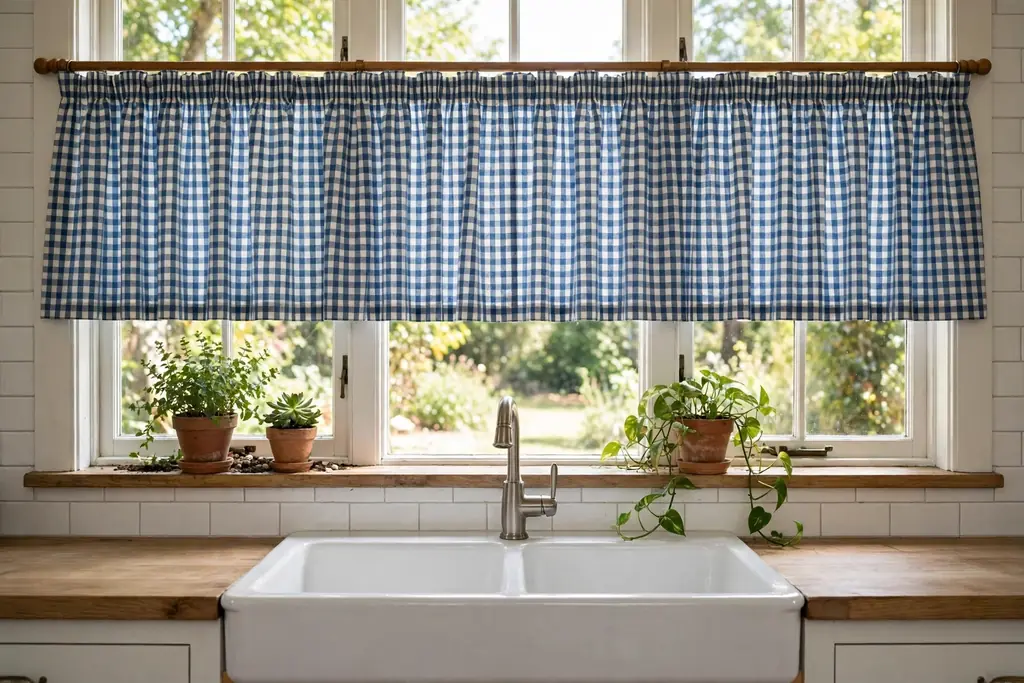
Cafe curtains cover only the lower half of a window, so they give privacy while letting daylight in above. A small check, gingham, or plain linen curtain on a simple rod suits a vintage kitchen and softens a bare window without darkening the room. This is a good choice for a kitchen window that faces a street or a neighbor, where full privacy matters less than light.
For more window ideas, these kitchen window decor ideas show how curtains, plants, and shelves can share one window. Hang the rod at the midpoint of the window or a little above it, and keep the fabric short enough to clear the sill. Wash the curtains often, since kitchen windows collect cooking film, and keep the fabric clear of the stove.
23. Screen Door Pantry
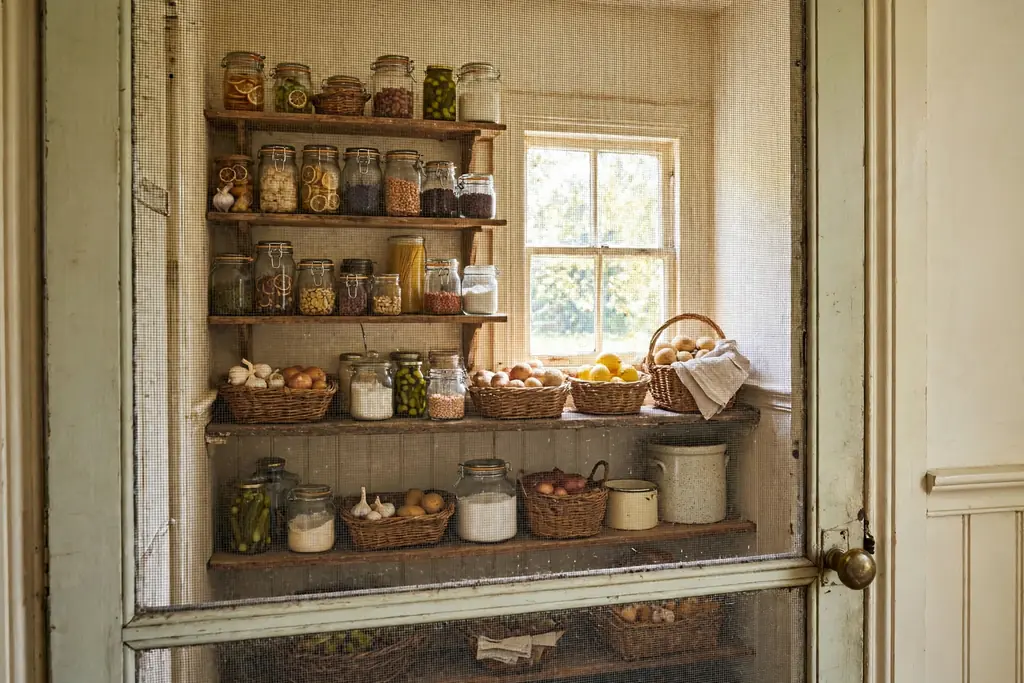
A pantry closed with a screen or mesh door, instead of a solid door, recalls older kitchens where air flow kept stored food cool. The mesh also gives a glimpse of jars and baskets inside, which suits a vintage kitchen built around visible storage. Use a screen door on a walk in pantry, a tall larder cupboard, or a small closet near the kitchen, and keep the frame painted to match the cabinets.
Keep pantry shelves tidy, since the contents are partly visible, and group jars by type with labels facing out. A screen door also helps air move in a pantry that holds onions, garlic, and potatoes, which store better with ventilation. If dust is a concern, use a fine mesh and wipe the door and shelves during your weekly clean.
24. Vintage Wall Clock and Framed Prints
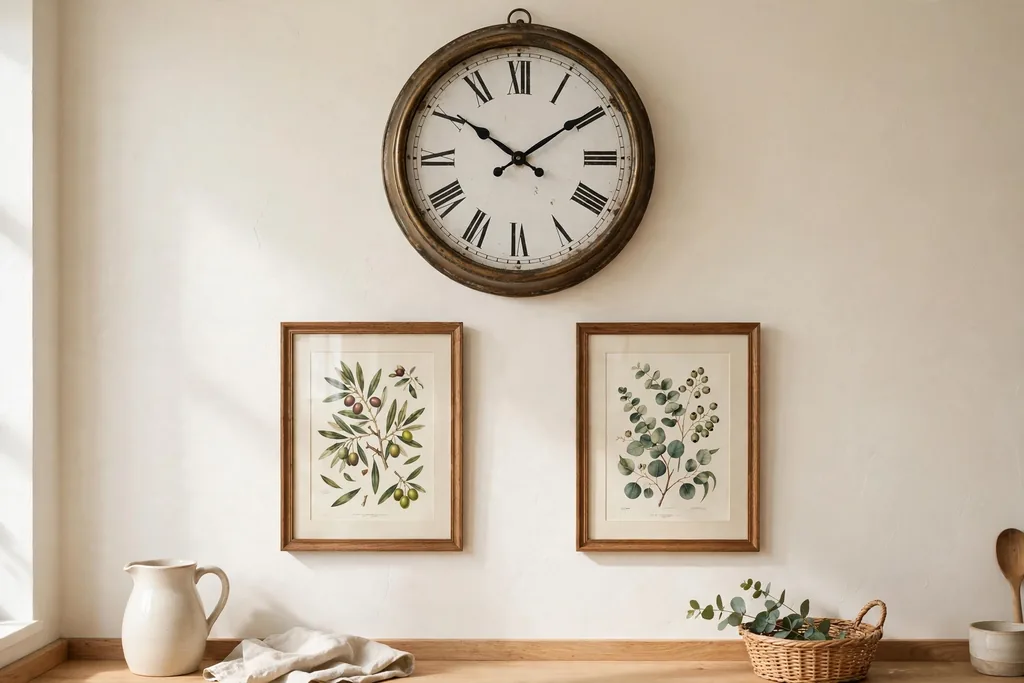
A large wall clock with Roman numerals or a simple enamel face gives a vintage kitchen a focal point above a doorway, a hutch, or a small wall. Pair it with one or two framed prints, such as old fruit labels, seed packets, or simple botanical art, rather than filling the wall with many small frames. One clock and two prints make a calm group; a full gallery wall can compete with cabinets and shelves.
Hang the clock where it can be read from the stove and the table, since a kitchen clock is used while cooking. Keep frames at eye level and in similar wood or metal tones, so the group reads as planned. Avoid hanging prints directly above the stove, where steam and grease will mark the glass and frames over time.
25. Cast Iron Cookware on Show
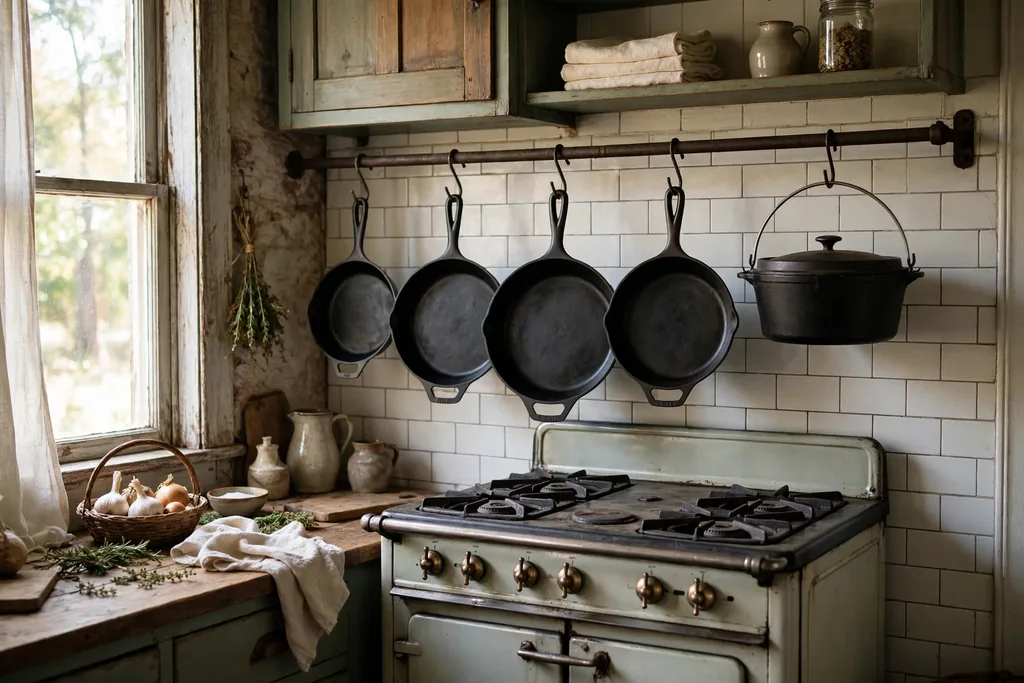
Cast iron skillets and Dutch ovens, hung on a rail or stacked on an open shelf, give a vintage kitchen a working display that also gets used daily. The dark, seasoned surface suits wood counters and iron racks, and a skillet that hangs by the stove is reached for more often than one buried in a cabinet. Keep one or two pieces on show, and store the rest in a cabinet, so the display stays useful rather than crowded.
Dry cast iron fully after washing, and oil it lightly before storing, to protect the seasoning. Use a sturdy rail and hooks rated for the weight, since cast iron is heavy, and keep handles turned so they do not stick out into a walkway. This idea links well with the iron pot rack in Idea 17, but one of the two is enough in a small kitchen.
26. Formica Table With Chrome Chairs
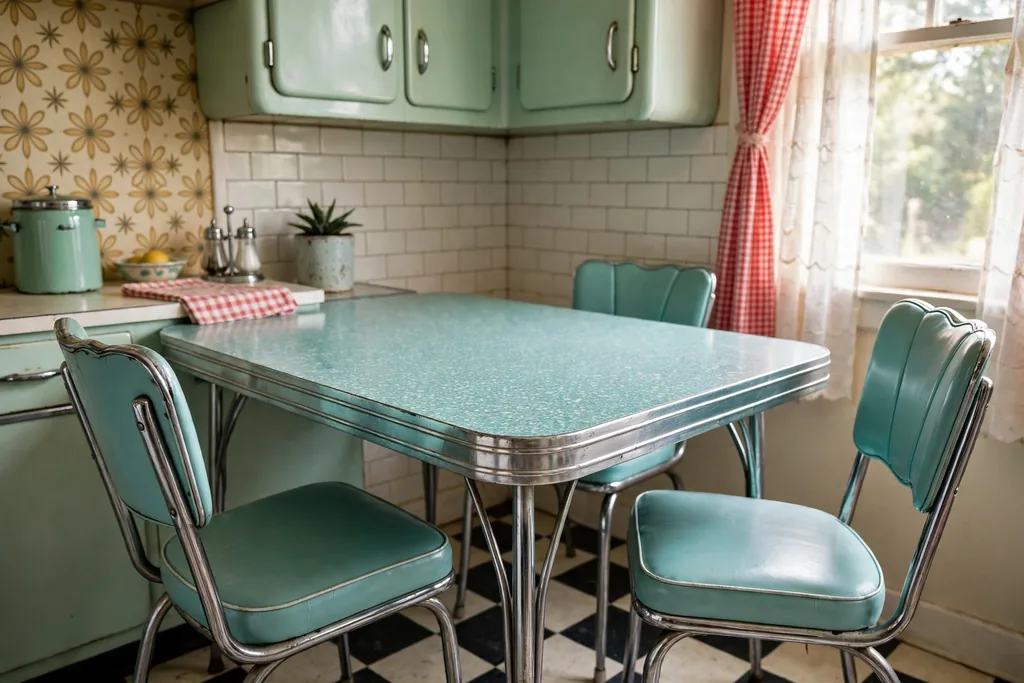
A Formica topped table with chrome legged chairs gives a vintage kitchen a diner style eating spot that is tough, wipeable, and easy to live with. Boomerang, crackle, or plain speckled patterns in cream, grey, or soft pastel suit a retro room, and the smooth top wipes clean after meals. Chrome chairs with vinyl seats are practical for families, since spills wipe off and the seats can be recovered when they wear.
Check the table size against your room before buying, since retro tables vary in shape and a round table suits a corner better than a rectangular one. Keep the chairs to the number you use daily, and store spares elsewhere, so the eating area stays open. A simple centerpiece, such as a small vase or a bowl of fruit, is enough on a patterned top.
27. Warm Wood Breakfast Bar
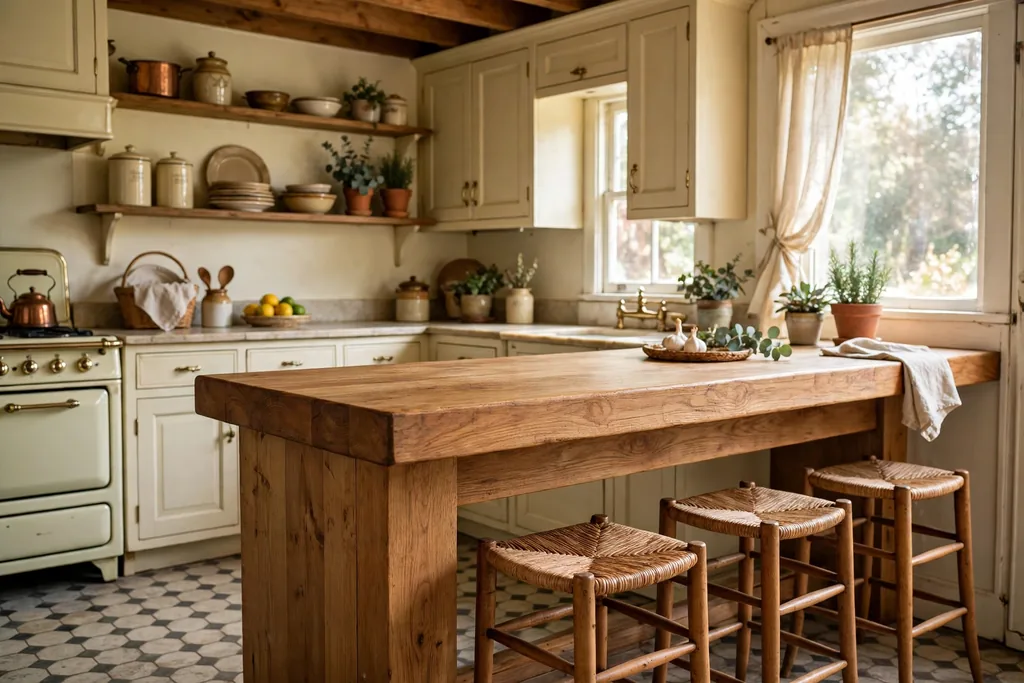
A warm wood breakfast bar, built from a thick slab or a simple plank counter on brackets, gives a vintage kitchen a casual eating and prep spot. It suits a kitchen with an open side, a pass through, or a long counter run, and it keeps the main worktop clear for cooking. Pair the bar with wood or metal stools that tuck fully underneath, so the walkway stays open when the bar is not in use.
Seal the wood well, especially at the ends and around the sink end, and wipe spills promptly. Choose stools at the right height for the bar, with a footrest if the bar is high, since a stool without one is uncomfortable for a long sit. The wood tone should echo another wood element in the room, such as the butcher block in Idea 3 or a wood beam, so the bar looks linked to the kitchen.
28. Vintage Touches for the Seasons
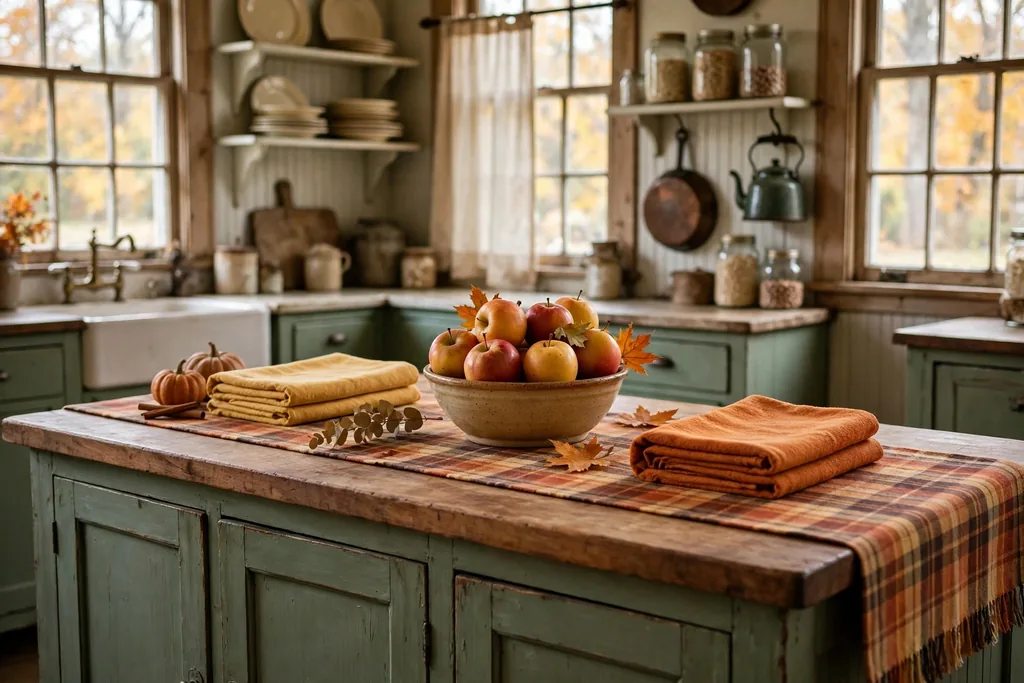
Small seasonal swaps let a vintage kitchen change through the year without changing its base look. In fall, add a bowl of apples, a plaid runner, and warm toned towels, as in these fall kitchen decor ideas. At Thanksgiving, a simple centerpiece and a few extra serving dishes suit the table, as shown in these Thanksgiving kitchen decor ideas. For Christmas, a garland on the island and a few vintage ornaments keep the room festive without clutter, as in these Christmas kitchen island decor ideas. At Halloween, a few old style pumpkins and black and orange towels add a seasonal note, as in these Halloween kitchen decor ideas.
Keep the base kitchen the same and swap only three or four items per season: a runner, towels, a centerpiece, and one shelf display. Store seasonal pieces in one labelled box per season, so the swap takes minutes. This habit keeps a vintage kitchen feeling lived in and current, without a full redecoration four times a year.
29. Hide Modern Appliances Behind Vintage Panels
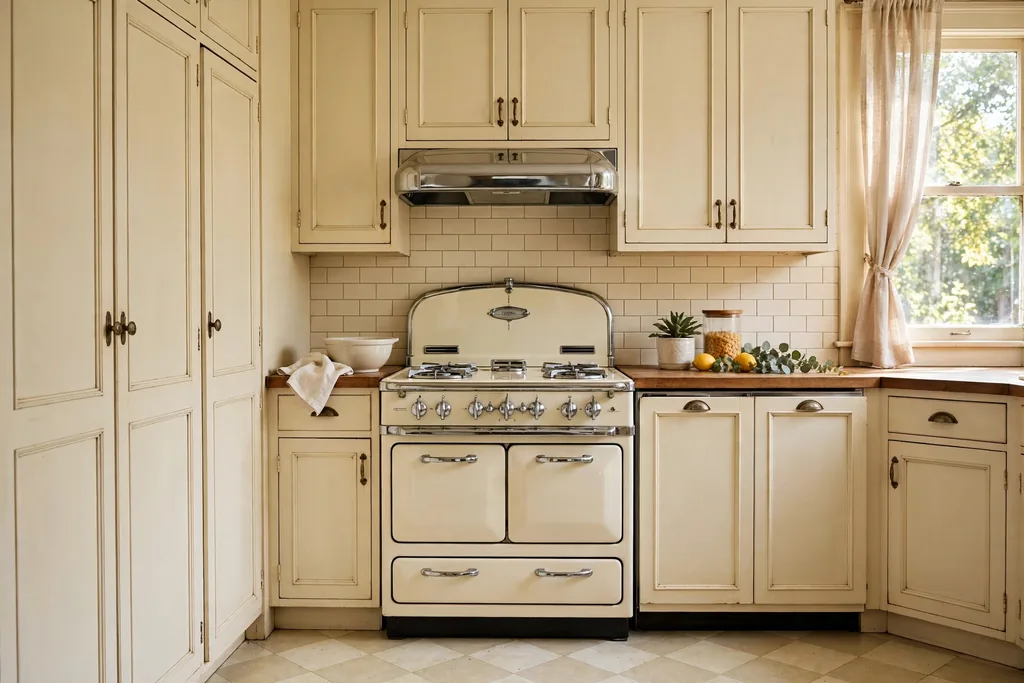
A vintage kitchen does not have to give up a dishwasher, a modern oven, or a large fridge, since panels can hide them behind cabinet fronts. Dishwasher and fridge panels matched to the cabinets let the run of cream or wood fronts stay unbroken, while the appliances inside work as normal. This trick suits cooks who love the old look but want quiet, efficient machines and easy cleaning.
Plan panel sizes and ventilation before ordering cabinets, since integrated appliances need specific gaps and access for filters and service. Keep one appliance visible if it earns its place, such as the retro range in Idea 5, and hide the rest. A kitchen that hides the dishwasher and shows the range gets the best of both: vintage character where you look, and modern function where you work.
Conclusion
A vintage kitchen is built in layers: a calm base of cream cabinets, warm wood, and simple hardware, then a few pieces with age, and finally small details that get used every day. Start with the anchor that matters most to you, whether that is a sink, a floor, or a range, and let the rest follow slowly. Keep worktops clear, lighting good, and modern function hidden where it helps, and the room will feel warm and comfortable rather than like a set. Pick one idea from this list this week, live with it, and add the next when the first feels like part of the kitchen.
FAQs
How do I get a vintage kitchen look without a full renovation?
Start with paint and hardware: cream paint on sound cabinets, brass or nickel pulls, and a new faucet change the room fast. Add open shelves, a rug runner, cafe curtains, and a few vintage dishes for low cost impact. Save larger changes, such as a sink, floor, or range, for later, once the smaller details show you which vintage direction suits your home.
What colors work best in a vintage kitchen?
Cream, soft white, warm wood, sage green, dusty blue, and muted red are the most reliable vintage palette, with brass or nickel as the metal accent. Keep walls and cabinets in pale tones, then add color through a rug, curtains, canisters, or a retro fridge. One or two accent colors, repeated in small pieces across the room, keep the look calm instead of busy.
Can a vintage kitchen still work for modern cooking?
Yes, if you keep modern function behind the vintage look. Use a good range with modern oven features, hide the dishwasher behind a cabinet panel, and keep task lighting bright over counters and the sink. Store daily tools where they are reached easily, and let vintage pieces do the display work while modern appliances do the heavy work.
Is a checkerboard floor too bold for a small kitchen?
Not if the scale fits the room. Smaller squares suit a compact kitchen, and a checkerboard in the main walkway with plain tile elsewhere keeps the pattern from taking over. Pair it with plain cream cabinets and simple walls, so the floor is the one bold element. If you still worry, test the look with a large sample board on the floor for a week first.
How do I mix vintage and modern pieces without clashing?
Repeat one material or finish across old and new pieces, such as brass hardware on both a new cabinet and an old hutch, or wood tones that sit close together. Keep the palette limited, and let one piece be the clear vintage star, such as a retro fridge or a Hoosier cabinet, while the rest stays simple. Step back to the doorway and check the whole room, since that view shows clashes fastest.
Where should I look for true vintage kitchen pieces?
Check local salvage yards, antique shops, estate sales, and secondhand marketplaces for hutches, Hoosier cabinets, enamelware, and old hardware, and inspect each piece for damage, lead paint on very old painted items, and working hinges before buying. Measure doorways and the space at home first, since large vintage furniture is hard to return. If a true vintage piece is too worn for daily use, a good reproduction gives the same look with new fittings.