
To refresh a sofa with spring pillows, start with two neutral base pillows, add two or three spring colors such as sage, blush, and sky blue, and finish with one patterned or textured accent. Keep the palette to three main colors, mix one pattern with solids, and leave clear seat space so the sofa stays comfortable.
A spring sofa refresh works best when the change is light and easy to undo. Swap covers rather than whole pillows where you can, keep heavier winter fabrics out of the mix, and let one spring color repeat in a throw or a nearby vase. The ideas below start with simple solids, then add prints, color, and texture, so you can stop at two or three changes or work through the full list. For a matching seasonal table change, see these spring tablescapes.
Key Takeaways
- Start with neutral base pillows, then add two or three spring colors.
- Limit the sofa palette to three main colors so the mix looks planned.
- Pair one pattern with solids, and repeat each accent color at least twice.
- Mix light fabrics such as linen and cotton with one soft texture such as boucle or velvet.
- Keep covers washable for everyday sofas, and leave clear seat space for sitting.
- Store winter covers clean, dry, and folded flat so they are ready next season.
1. Sage Green Linen Squares

Use two sage green linen squares at the ends of a neutral sofa to set a calm spring base. Linen has a relaxed surface that suits spring light, and sage pairs with cream, white, blush, and sky blue without pulling attention away from the rest of the room.
Choose a cover one or two inches smaller than its insert so the pillow looks full at the corners. Press linen covers while slightly damp if you want a neater finish, or leave them unpressed for a relaxed look. Keep sage as the repeated green across the sofa, and avoid adding a second strong green nearby.
2. Blush Velvet Accent Pillows

Add one or two blush velvet pillows as a soft color accent on a cream or grey sofa. Velvet gives a smooth, light catching surface that contrasts well with linen and cotton, and blush reads as spring without being bright.
Place blush velvet beside a plainer pillow so the color stands out, and keep it away from direct sun for long stretches, since strong sun can fade color unevenly. Brush the pile lightly after use to keep it even. If blush feels too pale for the room, pair it with a deeper peach cover on a second pillow.
3. Cream Boucle Pair

Use a pair of cream boucle pillows as a neutral anchor on a sofa with spring color elsewhere. Boucle has a soft, nubby texture that adds interest without adding color or pattern, which makes it useful when the rest of the sofa already has a print.
Place boucle on the largest square pillows so the texture shows across the room. Boucle can snag on jewelry and rough zippers, so use it on pillows that get gentle use, and trim snags rather than pulling them. Shake the covers outside between washes to clear dust from the loops.
4. Botanical Floral Print Pillows

Choose one botanical floral print pillow with leaves and small blooms in sage, blush, and cream for a clear spring feature. A floral print works best as a single feature on a sofa, with solid covers around it, so the print does not compete with another pattern.
Match one color from the print to a solid pillow elsewhere on the sofa, such as sage or blush, to tie the group together. Keep the print scale in proportion to the sofa: a medium scale suits a three seat sofa, while a very large print can crowd a loveseat. Wash printed covers with similar colors to protect the print.
5. Lemon Yellow Accent Pillows

Add one lemon yellow pillow as a bright accent on a sofa in white, cream, or pale grey. Yellow gives a fresh, sunny note, and a single pillow is enough to lift a calm palette without changing the whole room.
Place the yellow pillow near the center or at one end, beside a white or sage pillow, so it reads as an accent rather than a block of color. If the room already has yellow in art or a rug, repeat that tone rather than adding a second, different yellow. For a softer version, choose pale butter yellow instead of a strong lemon.
6. Sky Blue Gingham Pillows

Use sky blue gingham pillows for a small, even check pattern that feels light for spring. Gingham is quieter than a large plaid, which makes it a good partner for a floral print or a solid velvet pillow on the same sofa.
Pair gingham with cream and white solids, and keep the check size in proportion to the pillow: a small check suits a standard square, while a large check needs a bigger pillow to read clearly. Wash gingham covers with similar colors, and check that the dye is colorfast before the first wash if the cover is new.
7. Green Leaf Print Pillows

Pick a green leaf print on a white or cream ground for a botanical look without flowers. Leaf prints suit rooms where a floral print feels too busy, and they pair well with wood, rattan, and natural linen in a spring living room.
Use one or two leaf print pillows, and keep the rest of the sofa plain so the leaves stay the focus. Match the leaf green to a solid sage pillow elsewhere on the sofa. If the print has several greens, choose the mid tone for the solid pillow, since very dark green can feel more like autumn than spring.
8. Pastel Ticking Stripe Pillows

Choose pastel ticking stripe pillows in soft blue, cream, and white for a narrow, even stripe that bridges solids and prints. Ticking stripe is calm enough to sit beside a floral pillow, and it adds order to a sofa with several soft colors.
Place a striped pillow between a solid and a print, so it acts as a visual link between the two. Cotton ticking stripe washes well and holds its pattern, which suits an everyday sofa. Iron covers on a medium setting if you want crisp stripes, or leave them slightly soft for a relaxed finish.
9. Embroidered Daisy Covers
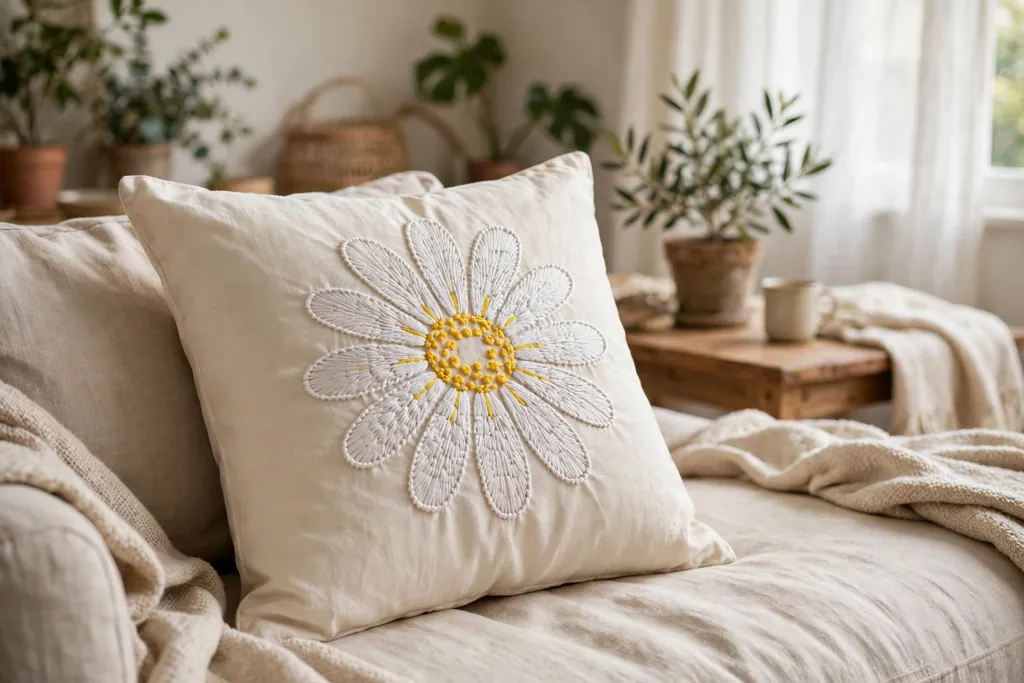
Use embroidered daisy covers for spring detail through stitching rather than a flat print. Look for white or yellow daisy stitching on a cream, sage, or pale blue ground, and keep the rest of the sofa plain so the stitching stays visible.
Wash embroidered covers gently, inside a laundry bag, to protect the threads, and press from the back if ironing is needed. Avoid placing embroidered covers where they will be leaned on heavily all day, since raised stitching can flatten over time. One or two embroidered covers are usually enough for most sofas.
10. Woven Cotton Lumbar Pillows

Add a woven cotton lumbar pillow in front of two square pillows to break up a row of squares. The long, rectangular shape gives the sofa a layered look, and woven cotton adds a light texture that suits spring.
Place the lumbar in the center of a three seat sofa, or use one lumbar per sofa section on a longer sofa. Choose a lumbar in a color already on the sofa, such as cream, sage, or sky blue, so it ties the group together rather than adding a new color. A removable lumbar cover also makes washing simple for an everyday seat.
11. Pastel Patchwork Quilted Pillows

Use one pastel patchwork quilted pillow as a feature on a neutral sofa. Patchwork combines small fabric squares in soft pink, mint, cream, and sky blue, with a stitched, padded surface that adds color, pattern, and texture in a single pillow.
Keep the other covers solid so the patchwork does not compete with another pattern. Quilted covers are thicker than flat covers, so check that the insert fills the cover well and the quilting lies flat at the corners. Wash quilted covers gently and dry them flat or on a low setting, so the stitching keeps its shape.
12. Lavender Pillows with Tassel Trim

Choose lavender pillows with small tassel trim for a soft color and a gentle edge detail. Lavender pairs with cream, white, and sage, and the tassels add movement that helps a solid pillow stand out next to plainer covers.
Use tassel trim on one or two accent pillows only, since the trim is a strong detail on its own. Wash tassel covers gently in a laundry bag, so the trim does not tangle or flatten in the wash, and fluff the tassels by hand once dry. Place the pillow where the trim will not be dragged across a rough sofa fabric often.
13. Peach and Coral Block Pillows

Pair peach and coral block pillows for a warm spring accent that sits between pink and orange. Color blocking, with two solid blocks of color on one cover, gives a clear, modern shape without a busy print, and it works well on a plain sofa.
Use one block pillow per sofa section, beside cream or white solids, so the warm tones stay balanced. If peach and coral feel strong together, use peach as the main block and coral as the smaller block. Repeat one of the two tones in a throw or a small vase nearby to connect the pillow with the room.
14. Small Bird Print Pillows

Add a small bird print pillow for a gentle spring motif that suits a family living room. Look for small birds in soft blue, sage, or blush on a cream ground, with plenty of plain fabric around the motif, so the print reads as light rather than busy.
Use one bird print pillow on a sofa, with solids around it, and match one bird color to a solid pillow elsewhere. Small scale prints suit smaller sofas and reading chairs, where a large floral print can feel heavy. Keep the print clear of heavy leaning use if the fabric is light in color, so marks show less.
15. Light Blue Seersucker Pillows

Use light blue seersucker pillows for a puckered cotton texture that feels cool and casual for spring. Seersucker has a light, airy surface that suits a bright room, and pale blue pairs with white, cream, and sage without adding weight.
Place seersucker beside smooth linen or cotton solids, so the puckered texture stands out. Seersucker covers usually need little ironing, since the puckered surface hides creases, which makes them practical for an everyday sofa. Wash them with similar light colors, and avoid high heat drying that can flatten the texture.
16. Mint and White Check Pillows

Choose mint and white check pillows for a fresh, even pattern that suits a spring sofa in a farmhouse or cottage style room. A small check reads as lighter than a large plaid, and mint pairs well with cream, white, and soft green solids.
Use check pillows on one or two pillows, and pair them with a plain mint or cream solid to keep the palette calm. Match the check size to the sofa: a small check suits a loveseat, while a medium check suits a three seat sofa. Wash check covers promptly after spills, since mint dye can mark light fabric if left to set.
17. Neutral Anchor Pillows with Spring Swaps

Keep two neutral anchor pillows on the sofa all year, and swap only their covers for spring. This approach costs less than replacing whole pillows, and it keeps the sofa shape steady while the color changes with the season.
Store the winter covers clean, dry, and folded flat, with the matching spring covers in the same place, so the next swap takes minutes. When you swap, check the inserts for flat spots, fluff them by hand, and replace any insert that no longer holds its shape. For more seasonal ideas beyond the sofa, see these spring wreath ideas and these fall pillow covers for the autumn version of the same swap.
Conclusion
A spring sofa refresh does not need a full room change. Start with neutral base pillows, add two or three spring colors, and finish with one pattern or texture that you enjoy looking at every day. Keep the palette to three main colors, leave clear seat space, and choose washable covers for sofas that get daily use. With that simple order in place, you can swap covers in an afternoon and enjoy a lighter living room through the season. Save this list to try one idea at a time, and revisit it when you want a fresh combination next spring.
Frequently Asked Questions
How many spring pillows should a sofa have?
A three seat sofa usually looks balanced with five or six pillows, while a loveseat suits three or four, with clear seat space left for sitting. Count the pillows after you sit down, and remove one if you have to move pillows before you can sit comfortably.
What colors work best for spring pillows?
Sage green, blush pink, sky blue, cream, lemon yellow, and lavender work well for spring, since they read light in bright rooms. Limit the sofa to three main colors, and repeat each accent color at least twice so the mix looks planned.
Should spring pillows match the rest of the room?
Spring pillows should share at least one color with the room, such as a rug, throw, or wall art, so the sofa connects with its surroundings. You do not need an exact match: a shared tone, such as sage or blush, is enough to tie the look together.
Are pillow covers better than new pillows for spring?
Pillow covers are usually better for a seasonal change, since they cost less, store flat, and let you keep inserts that already fit your sofa. Choose a cover one or two inches smaller than its insert for a full shape, and check the care label before washing.
How do you layer spring pillows on a sofa?
Layer spring pillows from large to small, with the largest squares at the ends, medium pillows in front of them, and a small lumbar or accent pillow near the center. Angle the front pillows slightly, step back to check balance, and adjust one pillow at a time.
How do you store winter pillow covers?
Store winter pillow covers clean, dry, and folded flat in a closed container or bag, away from damp and direct sun. Wash or clean them before storing, since marks left through the off season can set, and label the container so the next swap is easy to find.