
Swap in fall pillow covers in warm rust, mustard, and cream, in velvet, wool, knit, and linen, to refresh a sofa for autumn without new furniture. Mix two solids, one pattern, and one texture, keep covers washable, and repeat one warm tone elsewhere in the room. The 17 ideas below cover fabrics, patterns, sizes, and styling for a fall sofa.
Start with the covers you already own, then add two or three fall pieces in a warmer tone or a heavier fabric. Check the insert size before ordering, since a cover that is one or two inches smaller than its insert looks fuller on a sofa. Keep the palette to three main colors so the mix reads as planned, and step back to check the whole sofa before adding another pillow.
Key Takeaways
- Start with a warm base of rust, mustard, cream, or sage, and limit the sofa palette to three main colors.
- Mix two solids, one pattern, and one texture so the sofa looks layered without looking busy.
- Use a cover one or two inches smaller than its insert for a full, plump shape.
- Pair heavier fall fabrics, such as velvet, wool, and knit, with a lighter linen or cotton cover to keep the sofa comfortable.
- Repeat one warm tone in a throw, a rug, or wall art so the new covers connect with the rest of the room.
- Choose washable covers for everyday sofas, and store off-season covers clean, dry, and folded flat.
1. Burnt Orange Velvet Covers

Burnt orange velvet covers give a sofa an instant fall focal point, thanks to the rich color and soft pile that catches light. Use two 20 inch square covers in burnt orange on a neutral sofa, one at each end, so the color frames the seating area without covering it. Velvet suits living rooms used mainly for sitting and reading, since the fabric shows pressure marks where people lean.
Brush the pile lightly after use to keep it even, and keep velvet covers away from direct sun for long stretches, since strong sun can fade the color unevenly. If burnt orange feels strong for the whole room, pair it with cream and warm grey covers, and add a cream throw to soften the contrast. Spot clean promptly, and follow the care label before washing.
2. Rust and Cream Plaid Wool Covers
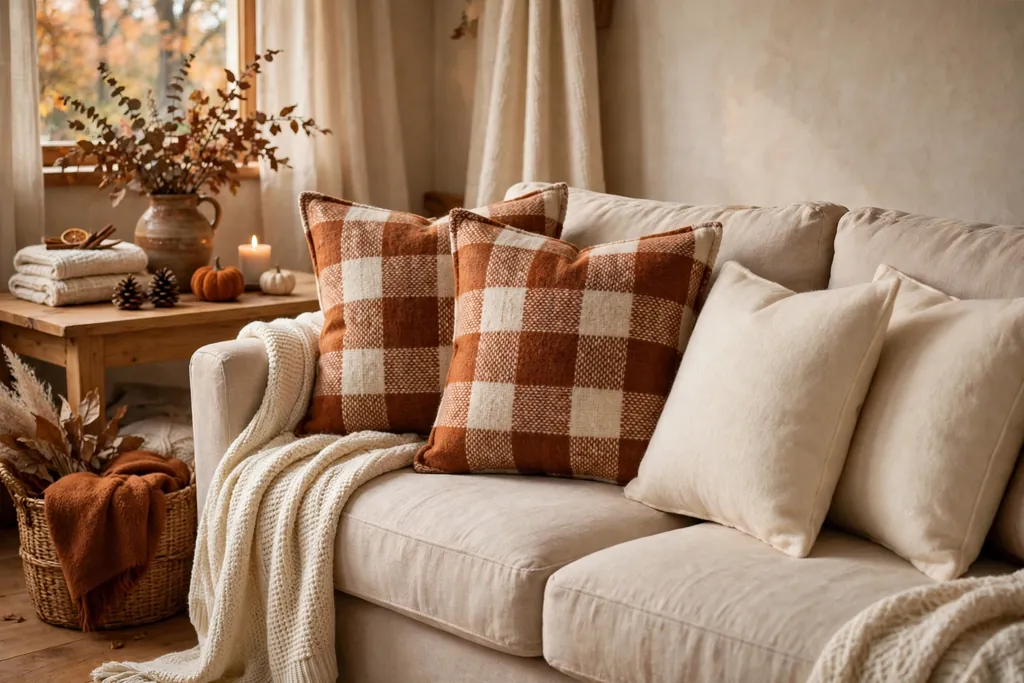
Rust and cream plaid wool covers bring a classic fall pattern to a sofa, with a woven texture that suits cooler months. Choose a large-scale plaid, so the pattern reads clearly from across the room, and pair it with solid rust or cream covers to avoid pattern overload. Wool blends hold their shape well, which helps a cover keep its corners neat after daily use.
Check whether the cover is machine washable or dry clean only before buying, since wool care varies by blend. A plaid cover works well on a grey, beige, or cream sofa, and also on a sofa in a muted green, where the rust picks up the warm tones. Keep one plaid cover per sofa section, rather than covering every pillow in plaid, so the pattern stays a feature.
3. Chunky Knit Covers in Oatmeal
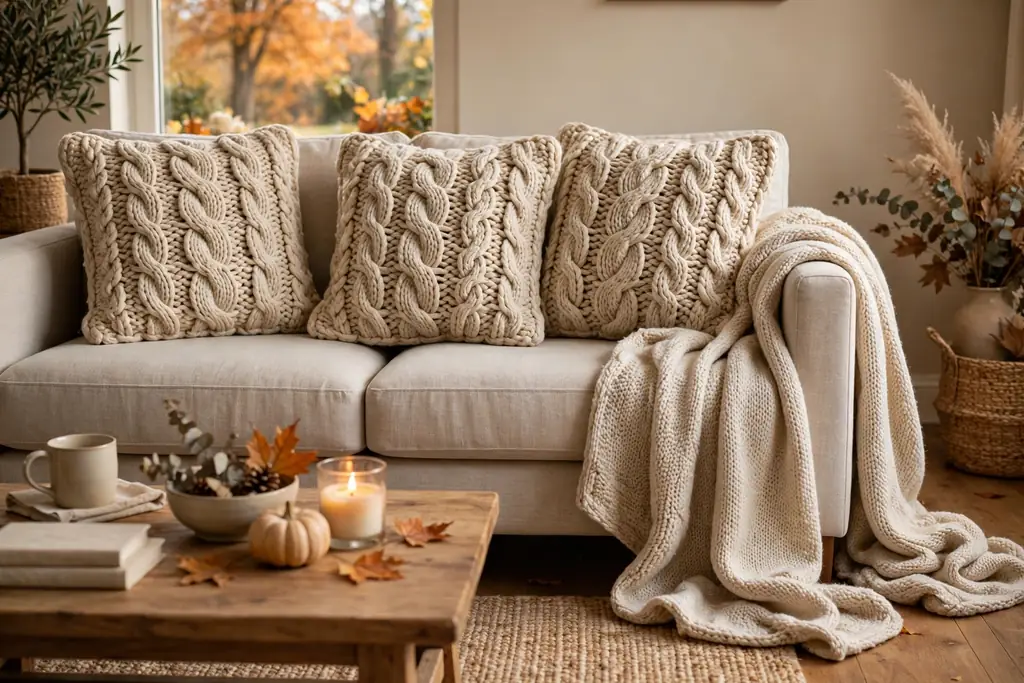
Chunky knit covers in oatmeal add warmth and a handmade feel to a fall sofa, without a strong color or pattern. The thick knit texture contrasts well with smooth sofa fabric, leather, or velvet, and oatmeal works with rust, mustard, sage, and brown. Use knit covers on the pillows you lean against most, since the soft texture is comfortable for reading and resting.
Knit covers can stretch with use, so choose a cover with a firm lining and a hidden zipper that holds its shape. Wash knit covers gently and dry them flat, since heat and tumbling can shrink or distort the knit. If the knit snags, trim loose threads close to the fabric rather than pulling them, which can unravel a row.
4. Faux Fur Covers in Warm Taupe
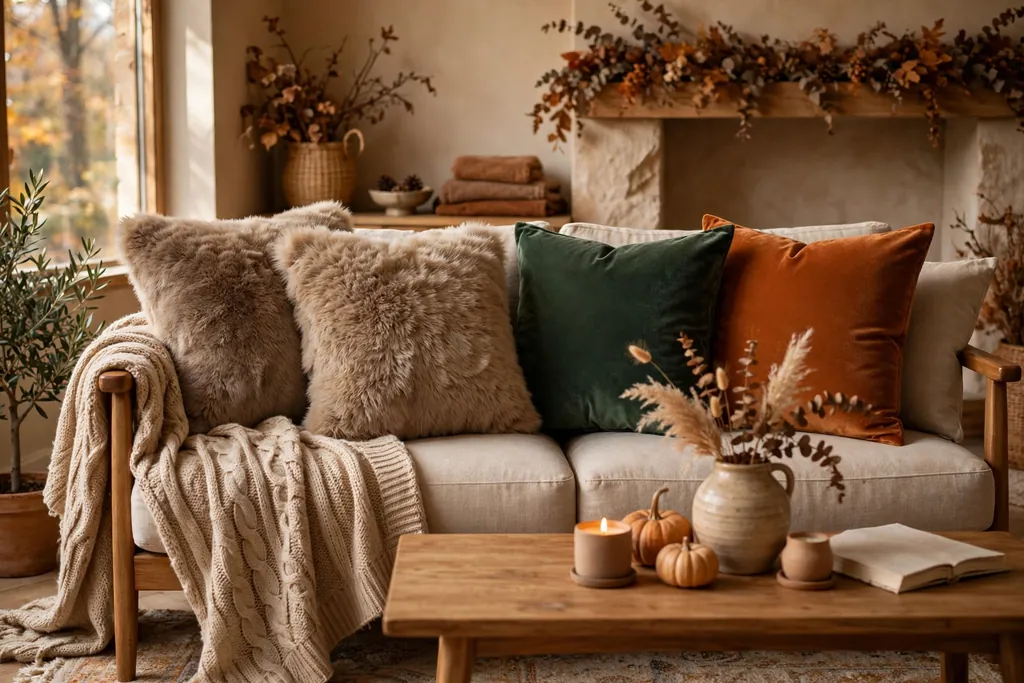
Faux fur covers in warm taupe add softness and a sense of warmth to a fall sofa, especially in a room with hard floors or leather seating. Use one or two faux fur covers as accent pillows, rather than on every pillow, so the texture stays special. Taupe sits between grey and brown, which makes it easy to pair with cream, rust, and sage covers.
Brush faux fur lightly after washing to restore its soft look, and keep it away from high heat, which can mat the fibers. Faux fur collects dust and pet hair more readily than smooth fabric, so shake covers outside between washes. For a balanced sofa, place a faux fur cover next to a smooth velvet or linen cover, so each texture stands out.
5. Leaf Print Linen Covers
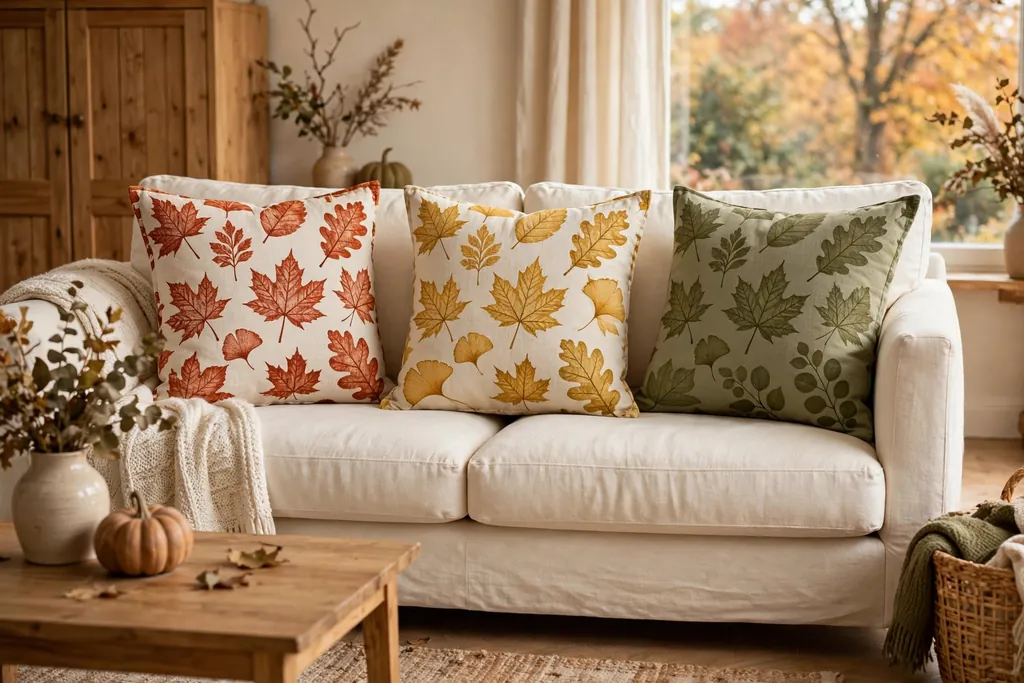
Leaf print linen covers bring a fall motif to a sofa in a light, breathable fabric that suits rooms that stay warm into autumn. Look for a print with leaves in rust, gold, and olive on a cream or natural linen ground, and pair it with solid covers in one of the print colors. Linen wrinkles naturally, and that relaxed texture suits a casual living room.
Pre-wash linen covers if the care label allows it, since linen can shrink on the first wash. Press covers on a medium setting while slightly damp for a neater look, or leave them unpressed for a relaxed finish. Leaf print covers work best as one or two feature pillows on a sofa, with solids around them, so the print does not compete with other patterns.
6. Mustard Corduroy Covers
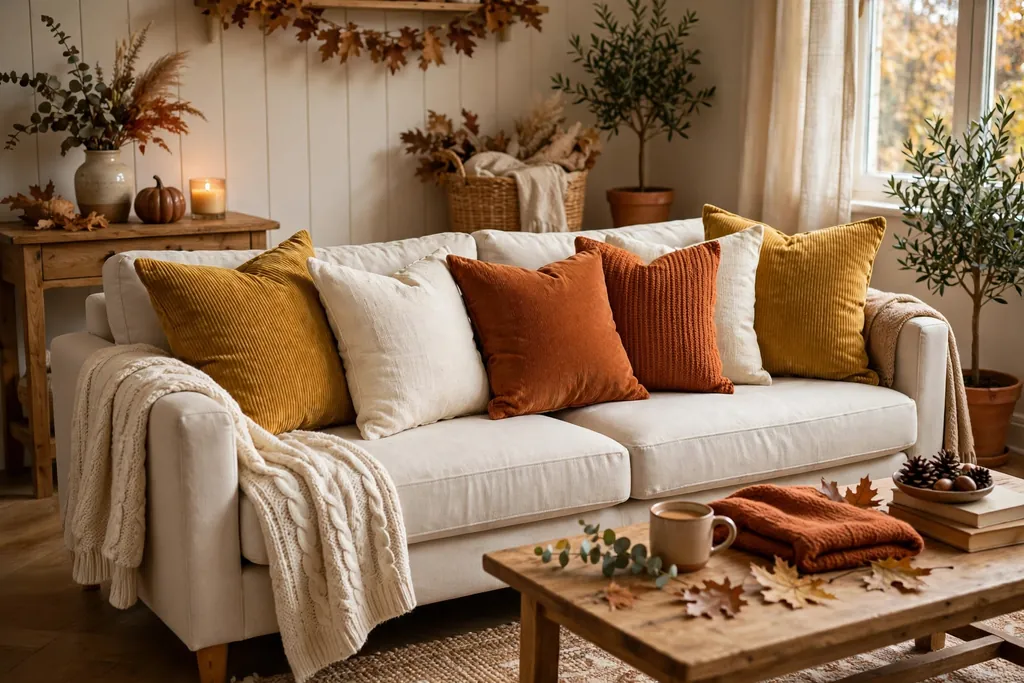
Mustard corduroy covers add a warm golden tone and a ribbed texture that reads as distinctly autumnal. Corduroy is sturdy and holds its shape, which makes it a good choice for a family sofa or a seat used every day. Pair mustard corduroy with cream, rust, and brown covers, and avoid adding another strong yellow elsewhere on the sofa.
Turn corduroy covers inside out before washing, and wash them with similar colors to protect the ribbed surface. Brush the cords in one direction after drying to keep the texture even. Mustard corduroy also works well as a lumbar cover on a long sofa, where its color can run along the back without dominating the seat cushions.
7. Embroidered Pumpkin Covers
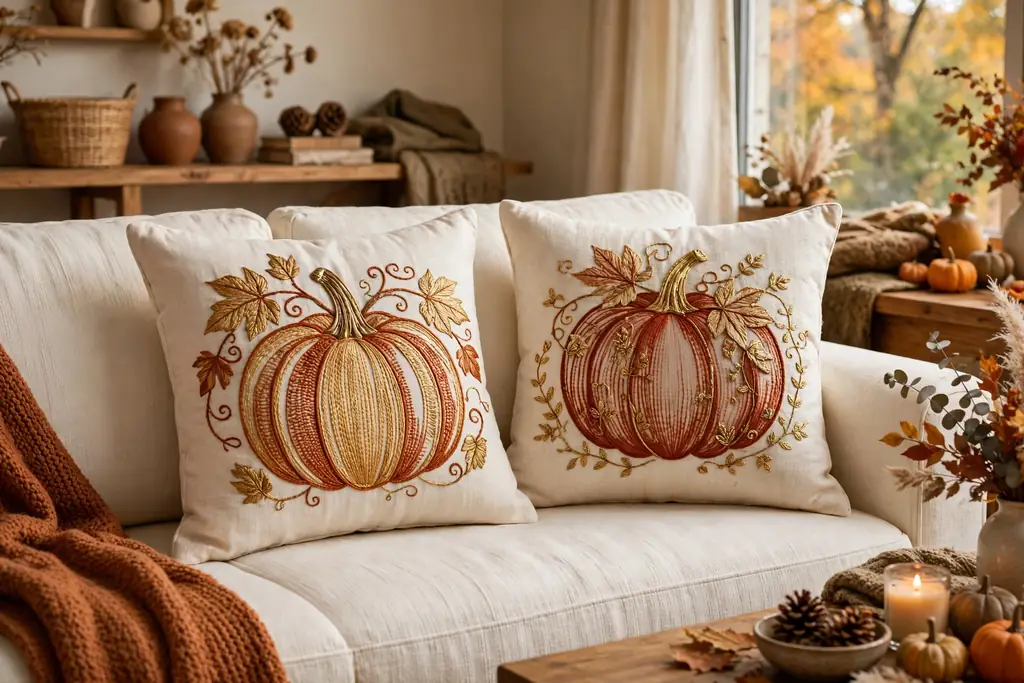
Embroidered pumpkin covers add a clear fall motif through stitched detail, rather than a printed image, which gives the pillow a crafted look. Choose embroidery in rust, gold, and green thread on a cream, oatmeal, or sage ground, and keep the rest of the sofa plain so the stitching stays the focus. One or two embroidered covers are enough for most sofas.
Check the back of the embroidery before washing, and use a gentle cycle inside a laundry bag to protect the threads. Avoid placing embroidered covers where they will be leaned on heavily all day, since raised stitching can flatten over time. Embroidered pumpkin covers pair well with solid velvet or linen covers in a matching rust or cream.
8. Sage Gingham Covers
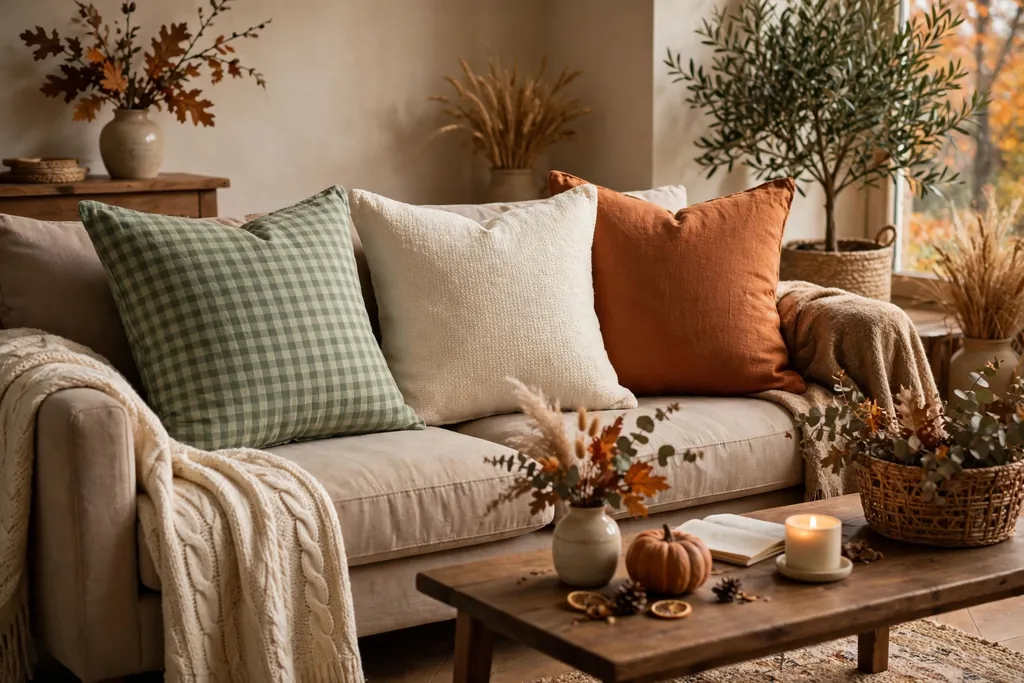
Sage gingham covers add a small, even check pattern that softens a fall sofa without adding a strong color. Gingham reads as lighter than plaid, which makes it a good partner for heavier fall fabrics such as velvet and wool. Use sage gingham on one or two pillows, and pair it with cream and rust solids to keep the palette warm.
Wash gingham covers with similar colors, and check that the dye is colorfast before the first wash if the cover is new. Gingham suits farmhouse, cottage, and traditional living rooms, and it also works on a modern sofa when the rest of the palette stays muted. If sage feels too cool for the room, add a rust throw nearby to bring the warm fall tone back in.
9. Cream Boucle Covers
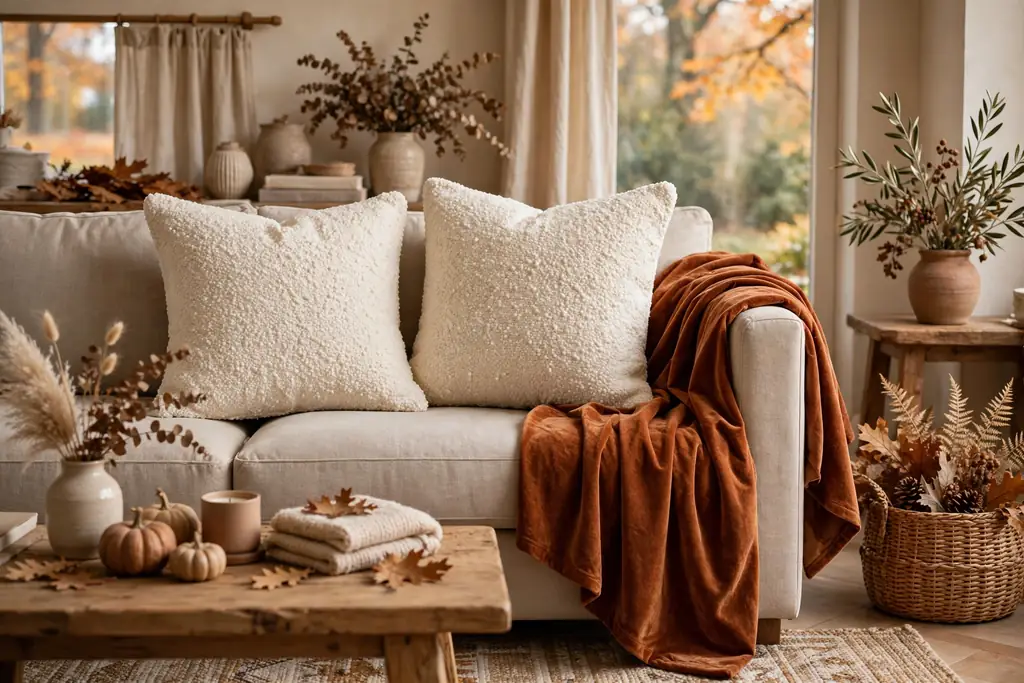
Cream boucle covers add a soft, nubby texture that makes a fall sofa feel inviting, without adding color or pattern. Boucle works as a neutral base cover: it pairs with rust, mustard, sage, and brown, and it softens the look of bold patterned covers nearby. Use cream boucle on the largest square pillows, so the texture is visible across the sofa.
Boucle can snag on jewelry, zippers, and pet claws, so place it on pillows that get gentle use, and trim snags rather than pulling them. Shake boucle covers outside to clear dust from the loops, and follow the care label, since some boucle blends need gentle washing. A cream boucle cover with a rust velvet cover beside it is a simple two-pillow combination that works on most neutral sofas.
10. Faux Leather Lumbar Covers
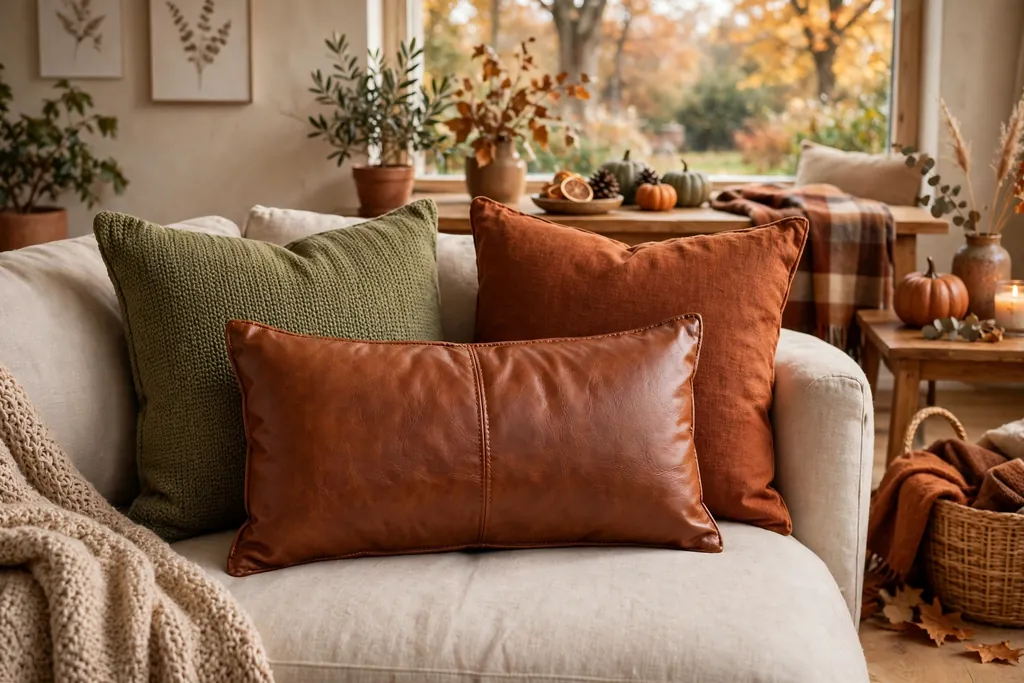
Faux leather lumbar covers add a smooth, structured shape to a fall sofa, and the long rectangular form breaks up a row of square pillows. Choose a warm cognac or dark brown tone, which pairs with cream, rust, and sage covers, and place the lumbar in the center of the sofa or in front of two square pillows. The smooth surface contrasts well with knit, boucle, and velvet textures.
Wipe faux leather covers with a damp cloth to clean them, and keep them away from direct heat, which can crack the surface over time. Faux leather does not breathe as well as cotton or linen, so use it as an accent pillow rather than the pillow you lean on for long periods. A single lumbar cover can also anchor a sofa when the other covers are changed for the season.
11. Harvest Ticking Stripe Covers
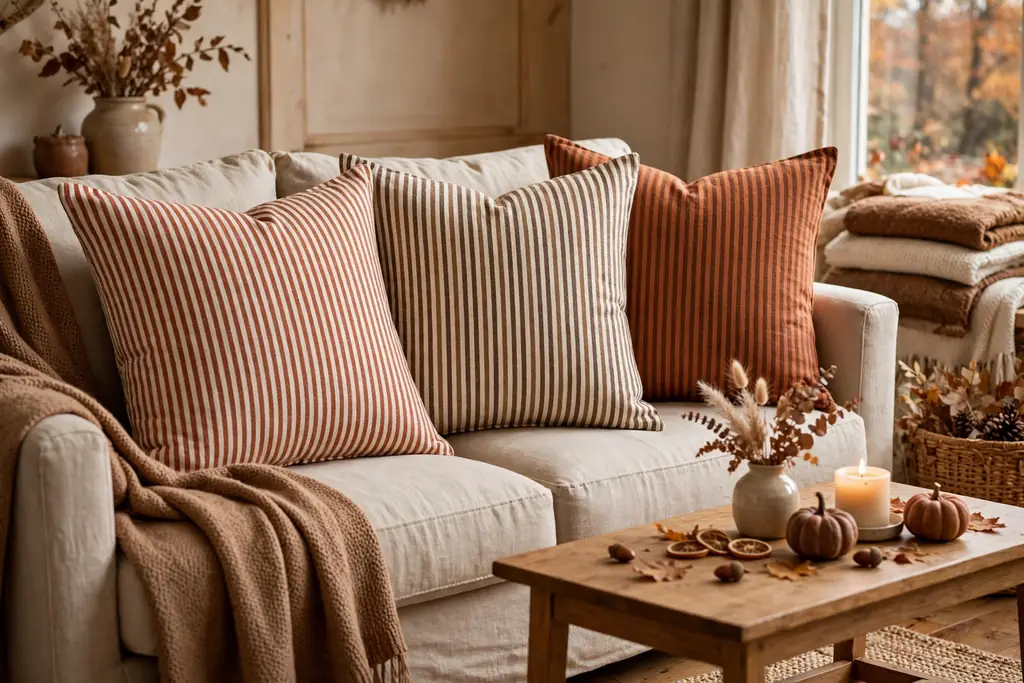
Harvest ticking stripe covers use narrow, even stripes in rust, cream, and brown, a pattern with a long history in home textiles. Ticking stripe is quieter than plaid or gingham, which makes it a good bridge between a solid cover and a bold print on the same sofa. Use it on one or two pillows, and repeat one stripe color in a solid cover elsewhere on the sofa.
Choose a cotton ticking stripe cover for everyday use, since cotton washes well and holds the stripe pattern. Iron covers on a medium setting if you want crisp stripes, or leave them slightly soft for a relaxed look. Ticking stripe suits rustic, farmhouse, and traditional rooms, and it pairs well with denim blue or sage when you want a cooler contrast to the warm fall palette.
12. Earthy Tweed Covers
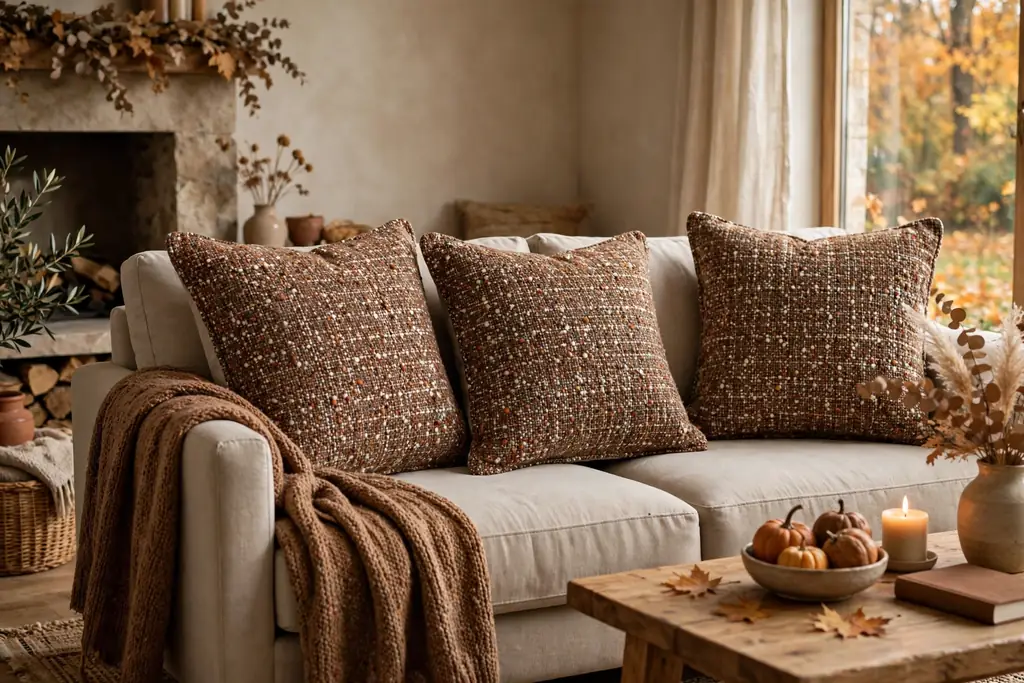
Earthy tweed covers bring a woven, speckled texture to a fall sofa, with flecks of brown, rust, cream, and gold in the yarn. Tweed is sturdy and keeps its shape, which suits a sofa used daily, and the mixed yarns help hide minor marks. Pair tweed covers with smooth solids in cream or rust, so the speckled texture stays visible.
Check the care label before washing tweed, since some tweed blends need dry cleaning. Brush tweed covers lightly to clear surface dust, and keep them out of prolonged damp, which can affect wool blends. A tweed cover on each end of a sofa, with a velvet cover in the middle, gives a layered fall look that still reads as calm and settled.
13. Appliqued Acorn and Leaf Covers
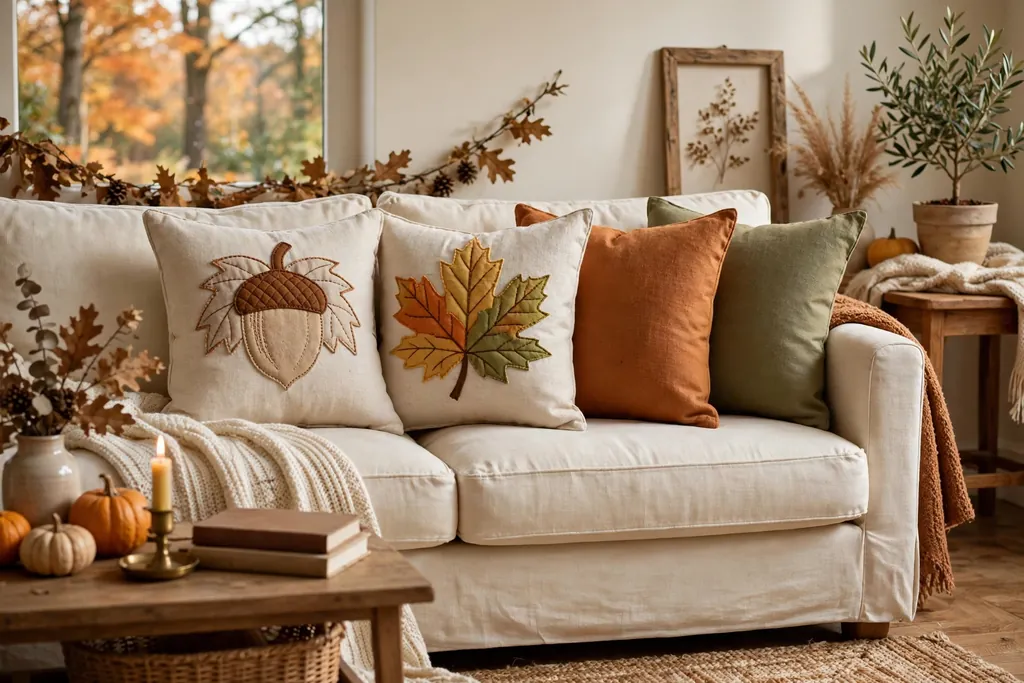
Appliqued acorn and leaf covers use fabric shapes stitched onto a cover, which adds dimension that a flat print cannot match. Look for applique in felt or cotton, in rust, gold, and brown, on a cream or oatmeal ground, and keep the rest of the sofa plain so the shapes stand out. Applique suits a sofa in a living room where pillows are displayed more than leaned on heavily.
Wash appliqued covers gently, inside out, in a laundry bag, to protect the stitched edges. Press from the back if ironing is needed, so the applique shapes keep their raised edge. One appliqued cover per sofa is usually enough, paired with solid covers in matching tones, since the detail is the point of the pillow.
14. Quilted Patchwork Covers
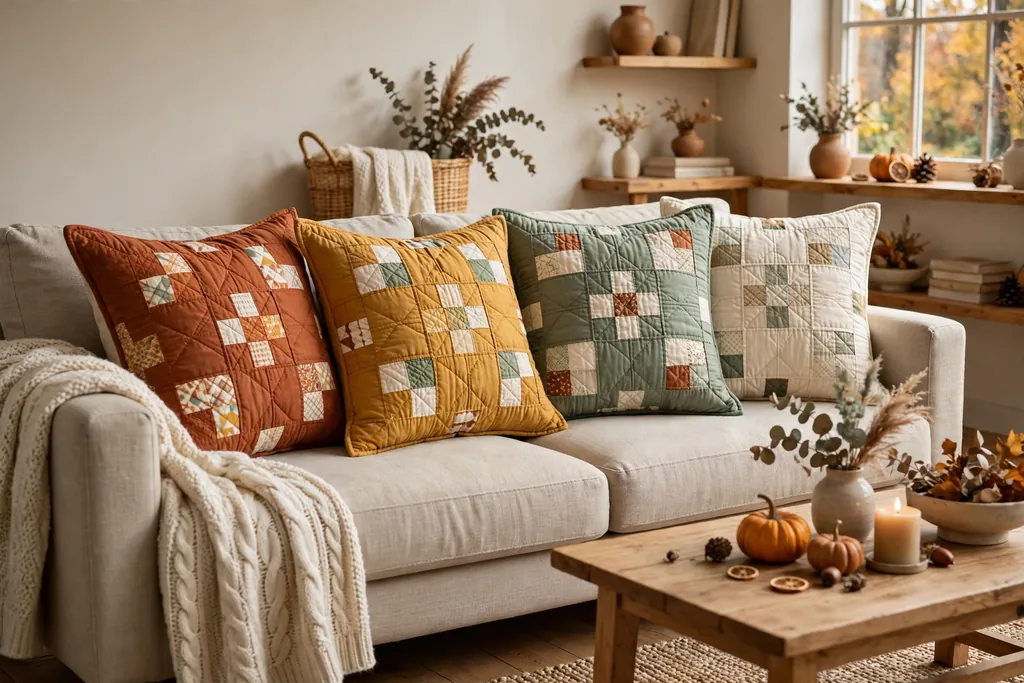
Quilted patchwork covers combine small fabric squares in fall colors, such as rust, mustard, sage, and cream, into one cover with a stitched, padded surface. Patchwork adds color, pattern, and texture in a single pillow, which makes it a good feature pillow on a neutral sofa. Keep the other covers solid, so the patchwork does not compete with another pattern.
Quilted covers are thicker than flat covers, so check that the insert fills the cover well and the quilting lies flat at the corners. Wash quilted covers gently and dry them flat or on a low setting, so the stitching and padding keep their shape. Patchwork also suits a bedroom or a reading chair, if you buy a spare cover to move between rooms.
15. Terracotta Covers with Pom Pom Trim
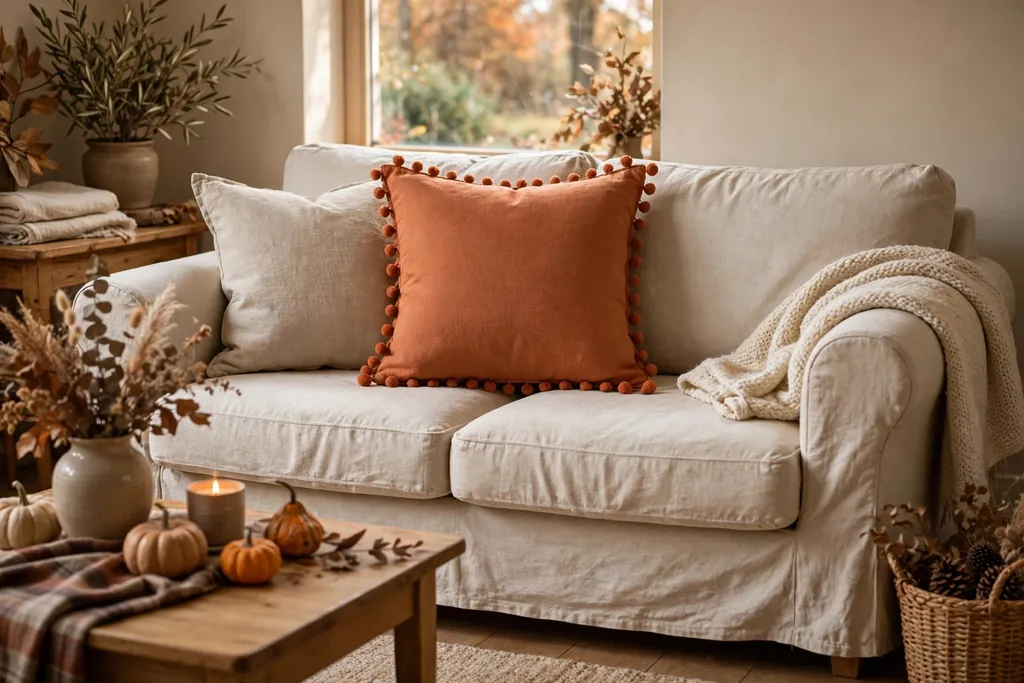
Terracotta covers with pom pom trim add a warm color and a playful edge detail that suits a relaxed fall sofa. The pom poms outline the cover and add movement, which helps a solid terracotta cover stand out next to plain velvet or linen covers. Use this cover as a single accent pillow, since the trim is a strong detail on its own.
Wash pom pom covers gently in a laundry bag, so the trim does not tangle or flatten in the wash. Dry them flat and fluff the pom poms by hand once dry. Trim can catch on rough sofa fabric, so place the cover where it will not be dragged across a coarse surface often. Terracotta pairs with cream, sage, and warm brown covers for a balanced fall palette.
16. Natural Woven Jute Blend Covers
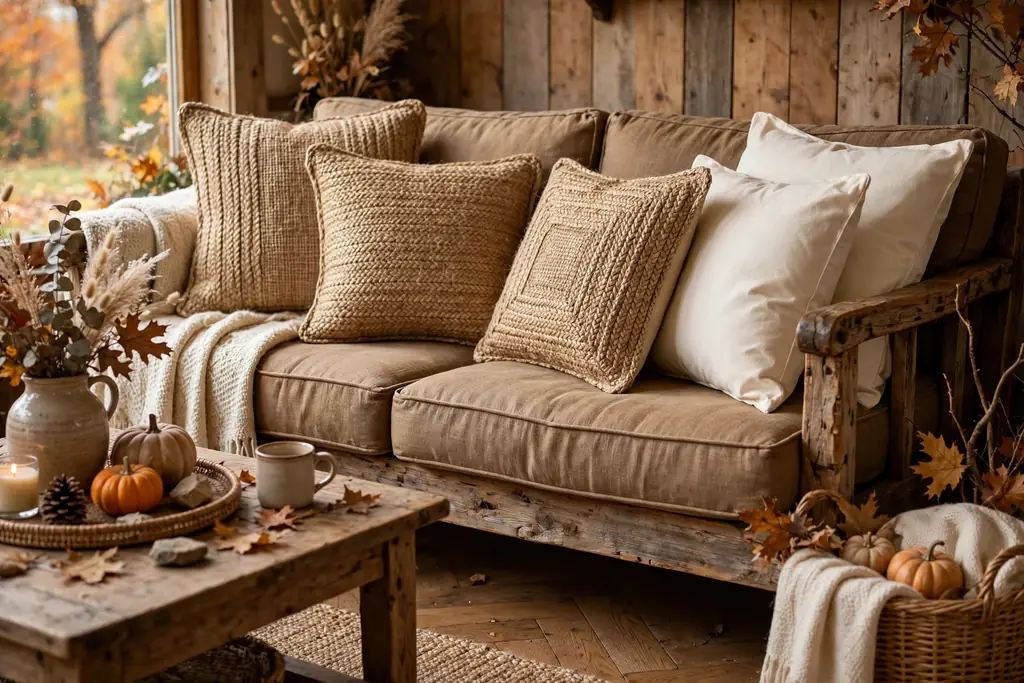
Natural woven jute blend covers add a coarse, earthy texture that contrasts with soft velvet, knit, and faux fur on a fall sofa. Jute blends suit rustic and natural living rooms, and the neutral tan tone pairs with rust, mustard, and sage without adding another strong color. Use a woven cover on one pillow per sofa section, rather than on every pillow, since the texture is firm.
Brush woven covers to clear dust from the weave, and spot clean spills promptly, since natural fibers can stain. Jute can feel rough against skin, so use woven covers as decorative pillows at the ends of a sofa, with softer covers where people lean. A woven cover beside a cream boucle cover shows the contrast between rough and soft textures clearly.
17. Fall Typography Lumbar Covers
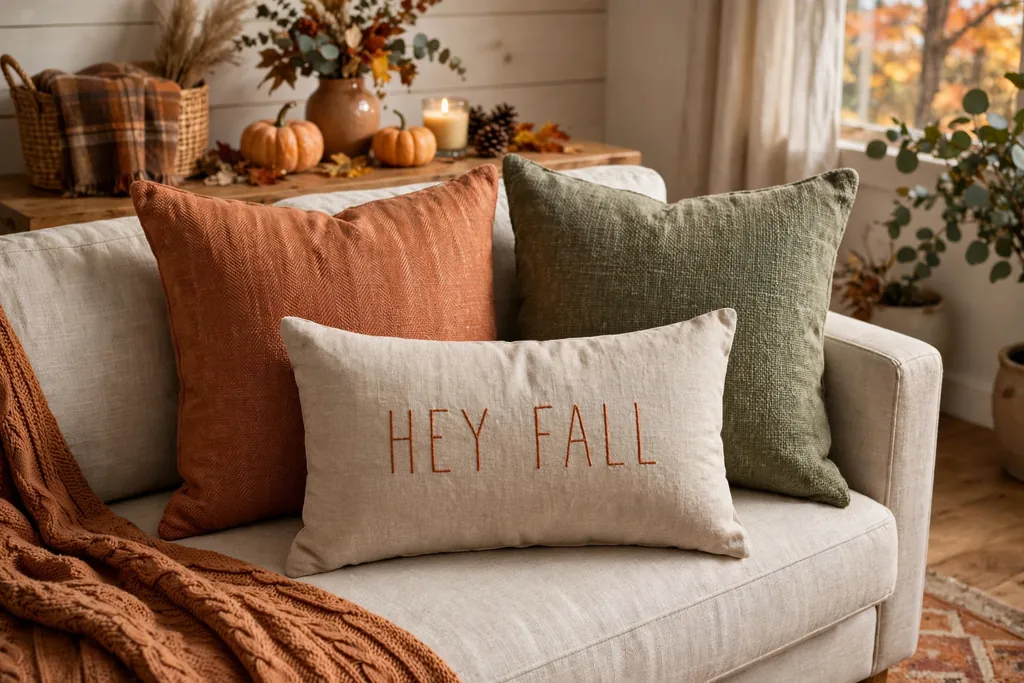
Fall typography lumbar covers use a short seasonal phrase, such as “hello fall” or “gather here,” in simple lettering on a cream, rust, or sage cover. Lettering adds a direct seasonal message to a sofa, and the long lumbar shape sits well in front of square pillows. Choose plain lettering in one color, rather than mixed fonts and colors, so the cover reads clearly from across the room.
Pair a typography lumbar with solid covers only, since lettering plus another pattern can look crowded. Wash printed lettering gently and inside out, and avoid high heat, which can crack or fade the print over time. If the phrase feels too seasonal for everyday use, keep the lumbar as a display pillow and swap it for a solid cover after the fall season ends.
Conclusion
Fall pillow covers are a low cost, low effort way to refresh a sofa for autumn, since a few covers in warm colors and heavier fabrics can change the whole feel of a living room. Start with a palette of three colors, mix solids with one pattern and one or two textures, and check that each cover fits its insert well. Store summer covers clean and dry, so the swap back in spring is simple. For more home decor ideas, visit the Dwell Ovell home page.
FAQs
What colors work best for fall pillow covers?
Rust, mustard, cream, sage, and warm brown work best for fall pillow covers, since they echo autumn leaves and pair with most neutral sofas. Start with one warm lead color, such as rust, add cream as a light neutral, and use mustard or sage as a third accent so the sofa palette stays to three main colors.
How many fall pillow covers should I put on a sofa?
Use three to five pillow covers on a standard three seat sofa, with two larger squares at the ends, one or two medium squares or a lumbar in the middle, and one accent cover for texture or pattern. Fewer pillows suit a small sofa or a sofa used daily, since too many pillows end up on the floor, while a larger sectional can take one extra cover per section.
What fabrics are best for fall pillow covers?
Velvet, wool, knit, corduroy, and tweed are the best fabrics for fall pillow covers, since they feel warmer and heavier than summer linen and cotton. Mix one or two heavier fabrics with a lighter linen or cotton cover, so the sofa stays comfortable and the textures contrast clearly instead of feeling uniformly heavy.
Can I mix patterns on fall pillow covers?
Yes, you can mix patterns on fall pillow covers if you keep one pattern large, one pattern small, and the rest solid, and hold all patterns to the same three color palette. Pair a large plaid with a small gingham or ticking stripe, for example, and use solid covers between them so each pattern has space to read clearly.
How do I wash fall pillow covers?
Wash fall pillow covers according to the care label, since velvet, wool, knit, and embroidered covers often need gentle cycles or dry cleaning, while cotton and linen covers usually wash at home. Turn covers inside out, close the zippers, wash with similar colors, and dry flat or on a low setting for knit, quilted, and appliqued covers.
How do I store pillow covers between seasons?
Store pillow covers between seasons clean, dry, and folded flat in a cotton bag or a lidded box, away from damp and direct sun, so they stay fresh for the next season. Label the bag by season and room, and keep inserts separate from covers if space allows, since stored inserts can flatten if they are compressed under heavy items.