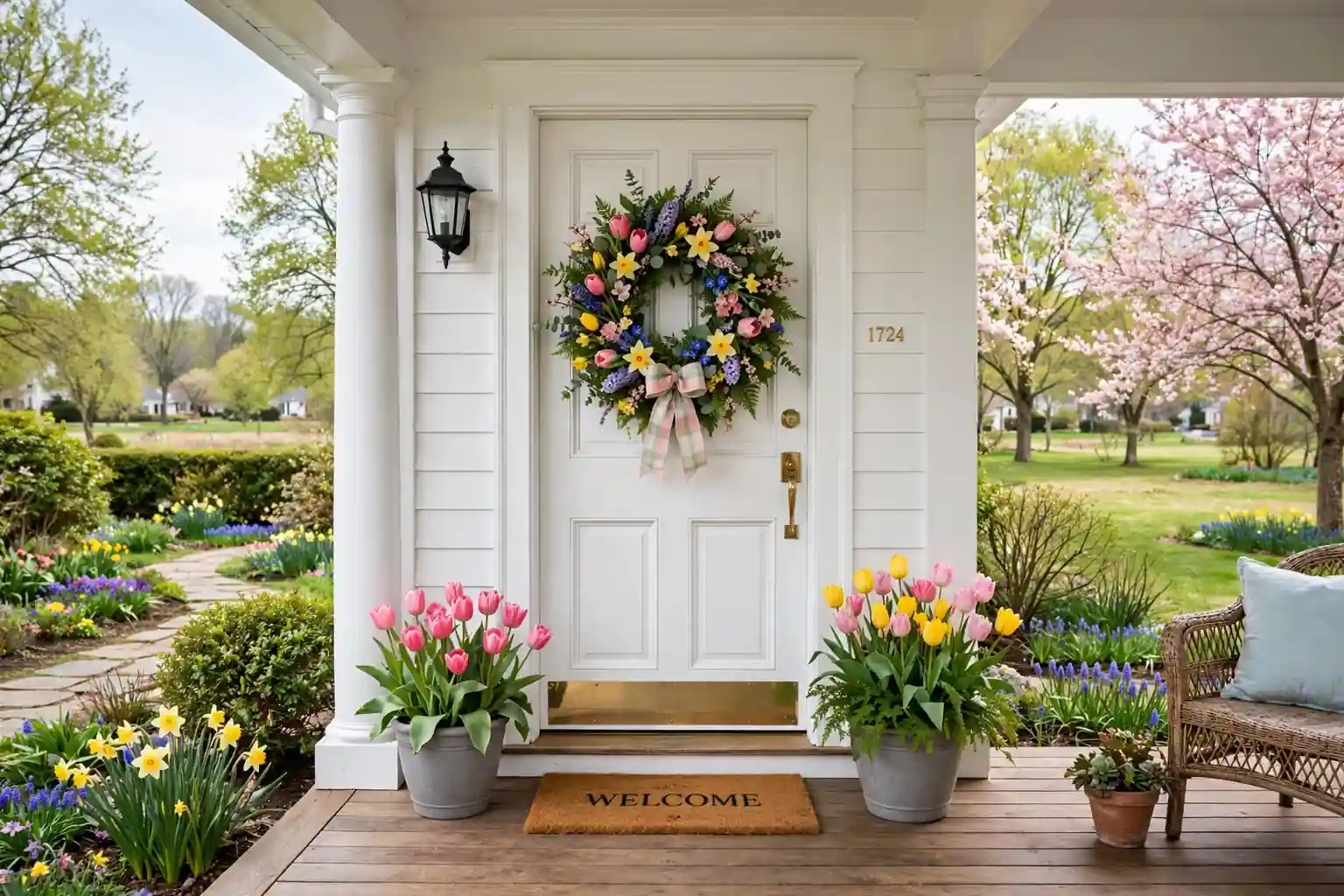
A spring wreath should suit your door, your style, and how much upkeep you want. Choose fresh flowers for a short, fragrant welcome, dried or faux blooms for a wreath that lasts all season, and a grapevine, hoop, or moss base that fits your home. Hang it at eye level and protect it from harsh sun and rain.
A front door wreath is one of the simplest seasonal changes you can make, since it needs no paint, no tools beyond a hook, and no change to the rest of the porch. Start with the base and the flowers you like, then check the size against your door before you buy or build. For more seasonal ideas to pair with these looks, browse the Dwell Ovell decor ideas index. A wreath about one half to two thirds the width of the door usually looks balanced, and a covered porch will suit fresh flowers better than a door in full sun and rain.
Key Takeaways
- Match the wreath to your door size, porch cover, and how much upkeep you want.
- Fresh flowers give scent and soft color for a short time; dried and faux blooms last all season.
- Grapevine, moss, and hoop bases each give a different look, from rustic to modern and minimal.
- Hang a wreath at eye level with a sturdy hook, and keep it clear of the door handle and hinges.
- Protect fresh wreaths from harsh sun, wind, and rain, and mist or replace stems as needed.
- Reuse a base year after year, and refresh it with new ribbon, greenery, or seasonal accents.
1. Classic Tulip and Boxwood Wreath
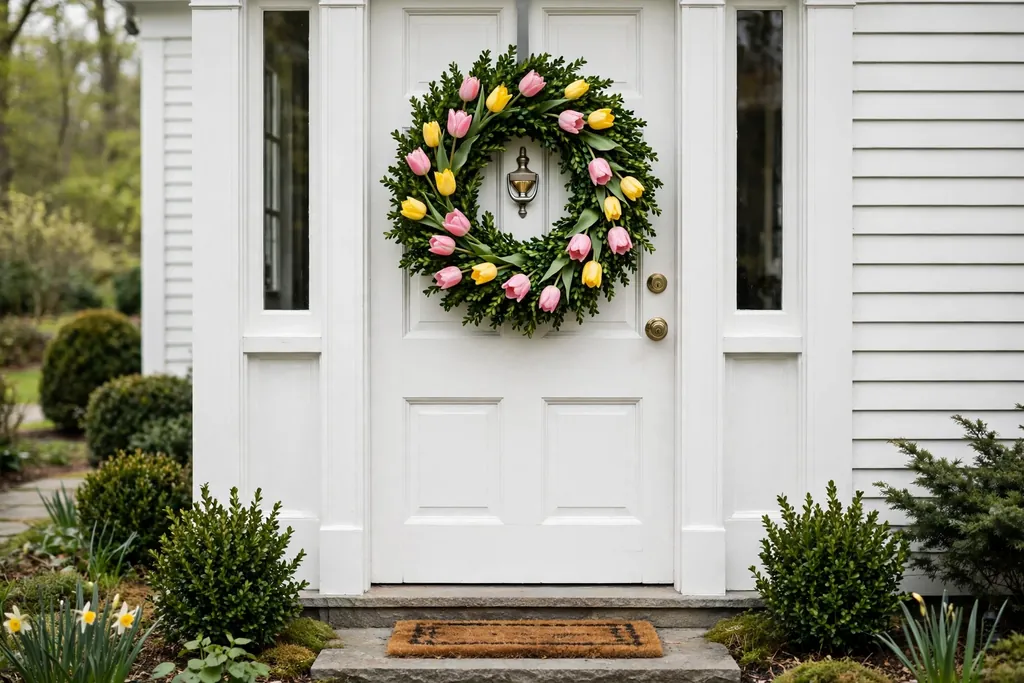
Pair pink, yellow, or white tulips with clipped boxwood on a round grapevine base for a classic spring front door look. The boxwood fills gaps between blooms, so the wreath reads full from the street, while the tulips give clear spring color. Place larger blooms evenly around the ring, then tuck short boxwood sprigs into bare spots.
Use fresh tulips for a short display on a covered porch, or good quality faux tulips for a wreath that holds its shape in sun and rain. Mist fresh boxwood lightly and keep the wreath out of direct afternoon sun. When fresh tulips fade, pull them out and replace them with a new bunch, or switch to faux stems for the rest of the season.
2. Pastel Hydrangea Wreath
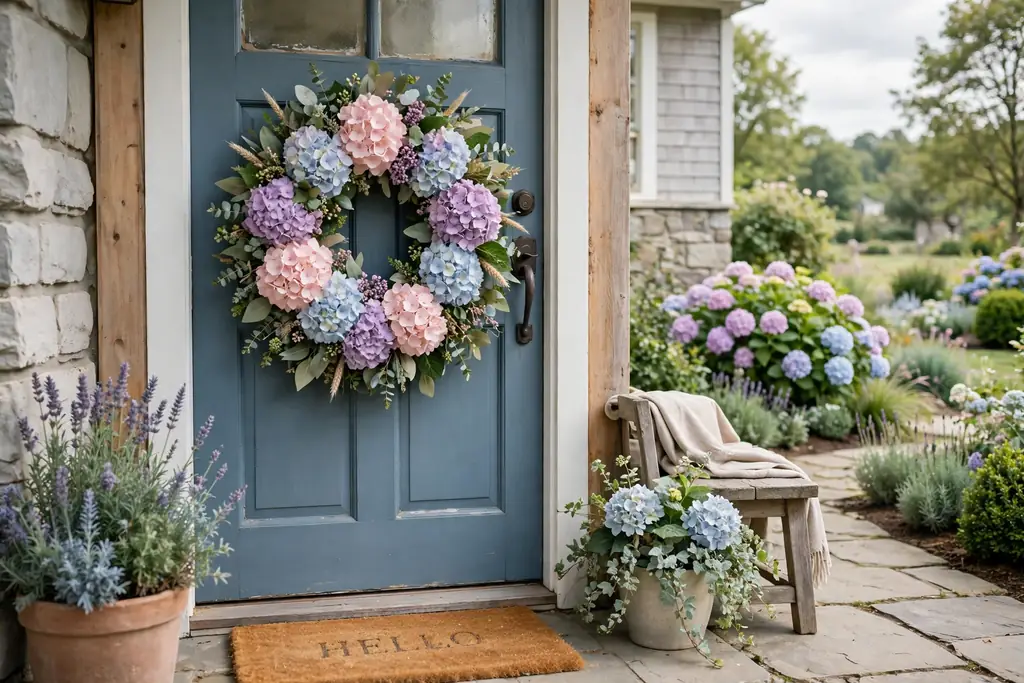
Build a soft, full wreath from pastel hydrangea heads in blush, lilac, and pale blue on a foam or grapevine base. Hydrangeas cover a base quickly because each head is wide, so this is a good choice when you want a full look with fewer stems. Keep the color mix to two or three pastels so the wreath stays calm rather than busy.
Fresh hydrangeas need water and shade, so they suit a covered porch for a short display. Faux hydrangeas hold their color and shape much longer and suit a sunny door. Add a few green leaves between heads to break up the color, and finish with a simple linen ribbon loop at the top.
3. Lavender and Eucalyptus Wreath
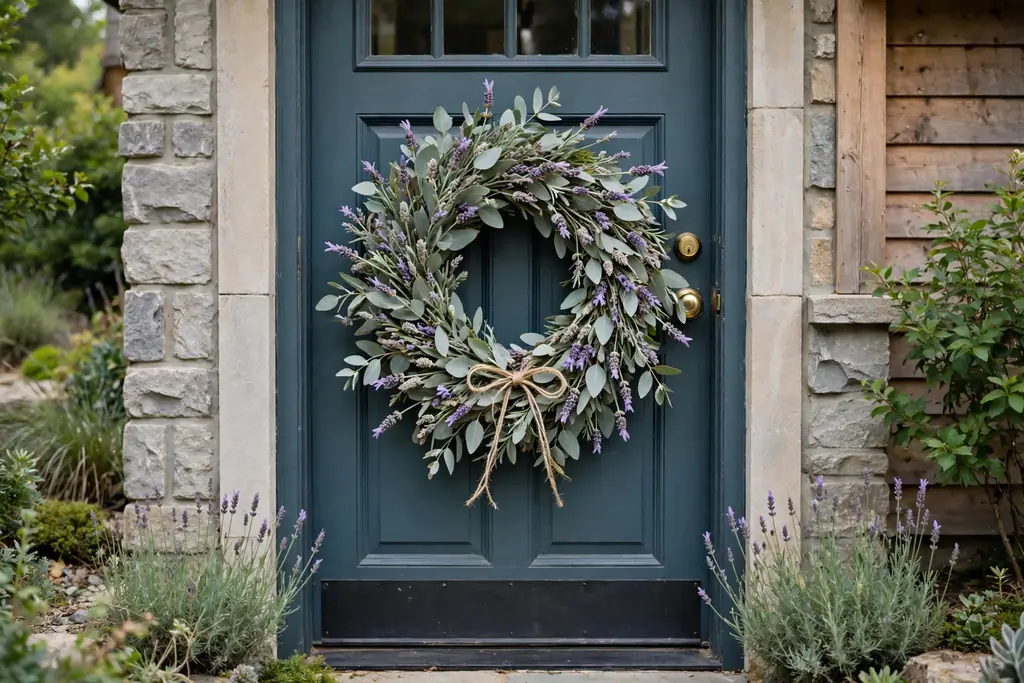
Combine bundles of lavender with silver green eucalyptus on a grapevine base for a fragrant wreath with a soft, muted palette. The narrow stems and small buds give a lighter, airier shape than a full flower wreath, which suits a narrow door or a simple porch. Tie small bundles together first, then wire them around the base in the same direction.
Dried lavender keeps its scent for weeks and needs no water, though it will shed a little if handled often. Keep the wreath sheltered from heavy rain so the buds stay intact. Add a plain twine bow at the bottom, and replace any faded bundles with fresh dried stems when the color dulls.
4. Cherry Blossom Branch Wreath
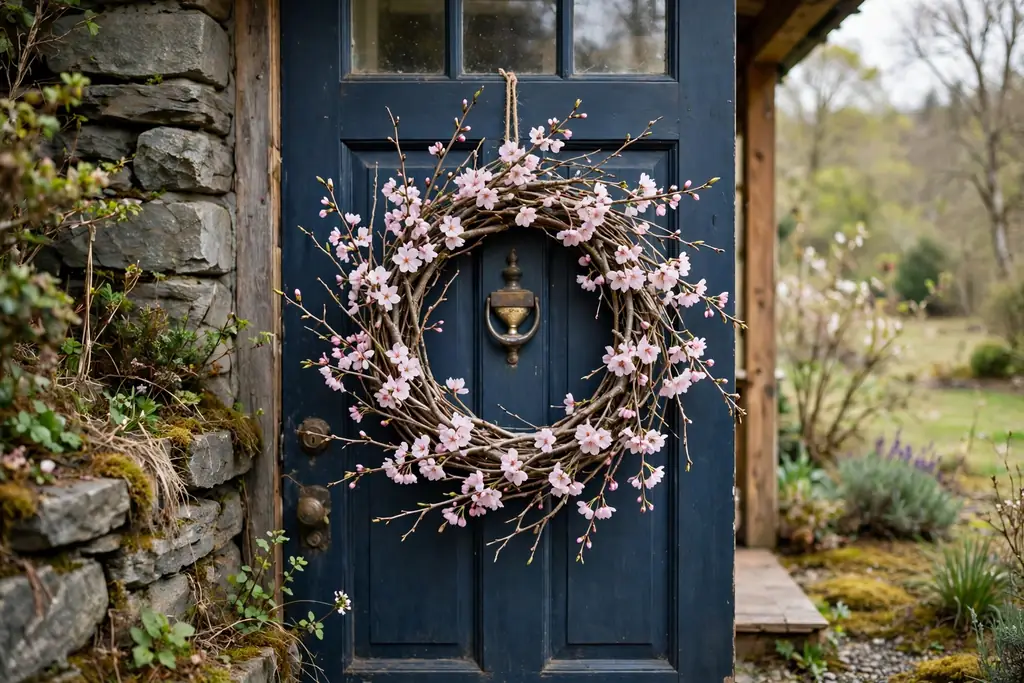
Use cherry blossom branches, fresh or faux, wired to a grapevine base for a wreath that feels light and open, with pale pink blooms against bare twigs. Leave some branch tips free so the shape stays loose and branchlike, rather than a tight ball of flowers. This style suits a white, gray, or natural wood door, where the pink shows clearly.
Fresh branches last about a week on a covered porch and need cool shade. Faux branches last all season and suit a sunny or windy door. Check that no branch blocks the door handle or scrapes the door frame when the door opens, and trim any stem that sticks out too far.
5. Wildflower Meadow Wreath
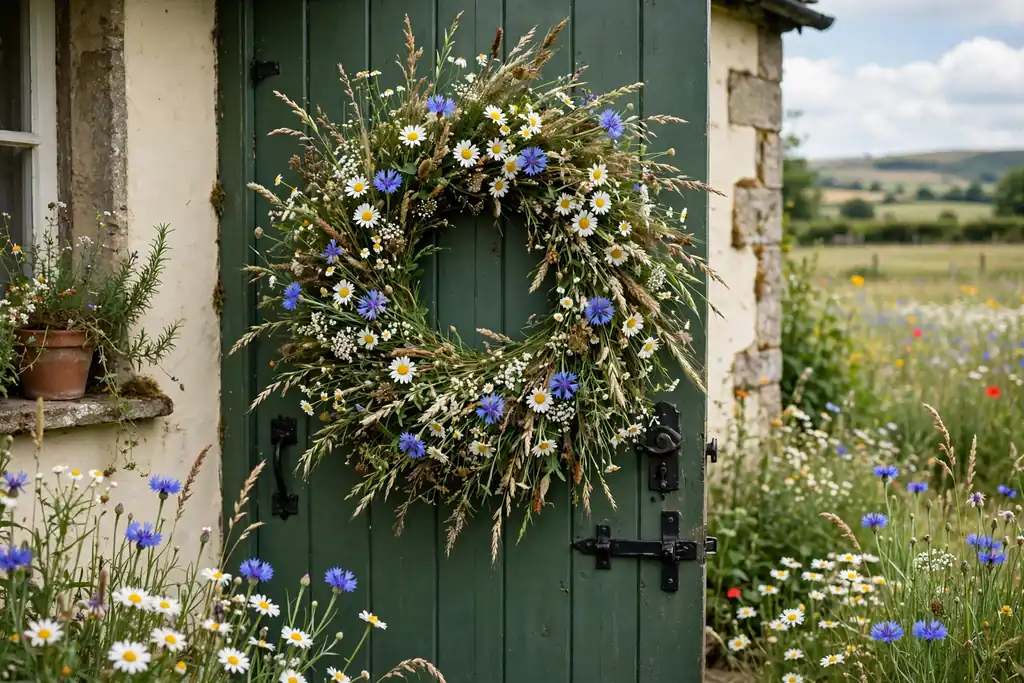
Mix small wildflowers such as daisies, buttercups, cornflowers, and Queen Anne’s lace with grasses on a moss or grapevine base for a loose meadow look. Use a mix of heights and flower sizes, and let a few grass stems trail past the edge, so the wreath looks gathered rather than arranged. This style suits a cottage, farmhouse, or garden style home.
Faux wildflowers are the practical choice here, since fresh small blooms fade fast outdoors. Choose stems with varied greens so the wreath does not look flat. Keep the color mix natural, with white, yellow, and one accent color, and avoid adding too many flower types at once.
6. Grapevine Wreath with Moss and Ferns
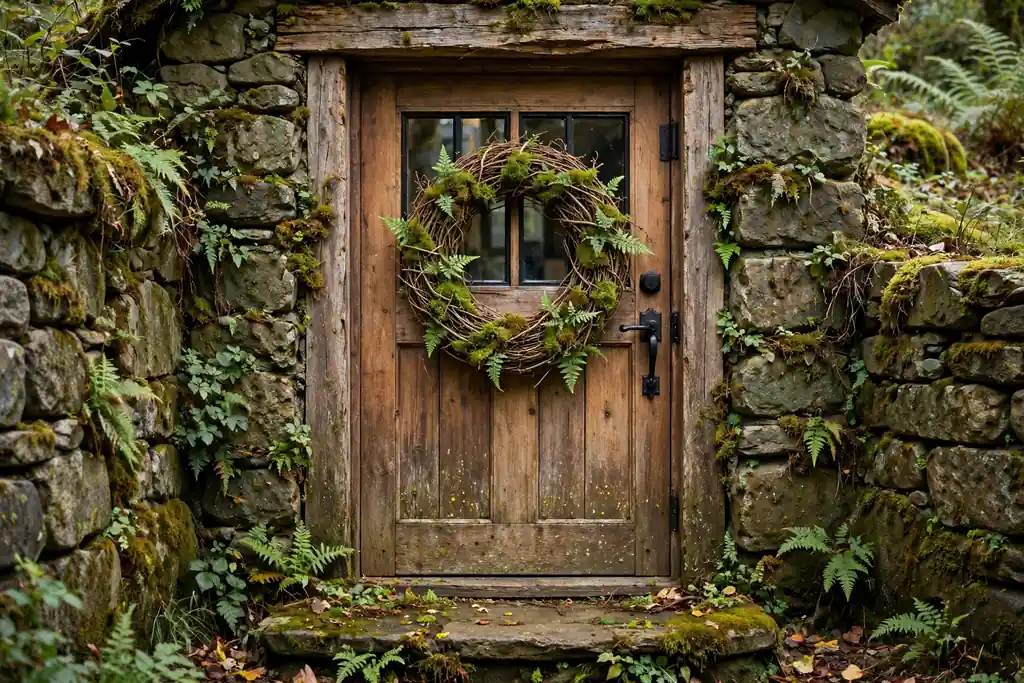
Start with a plain grapevine base, then add sheet moss and small ferns for a green, woodland spring wreath with no large blooms. The moss covers the vine and gives a soft texture, while ferns add height and a fresh green shape. This is a good choice when you want a quiet, natural door that pairs with stone, brick, or wood.
Use preserved moss and faux ferns for a wreath that lasts outdoors, since live moss dries out fast in sun and wind. Wire moss in small patches rather than gluing large sheets, so the vine still shows in places. Add a few tiny white blooms if you want a hint of flower color, but keep them small so the green stays the focus.
7. Lemon and Leaf Wreath
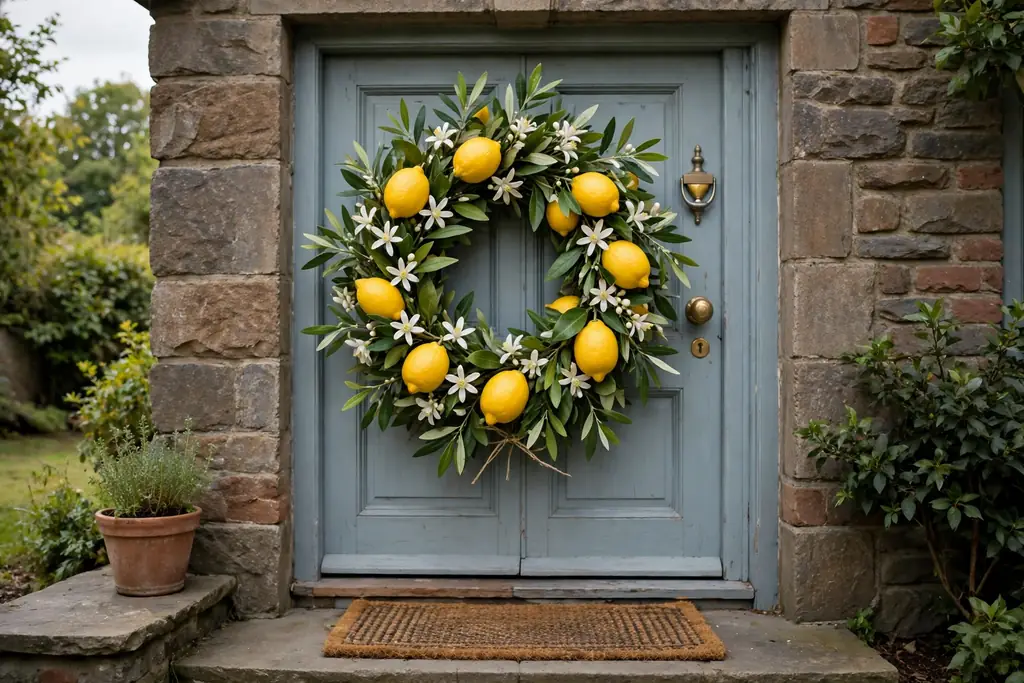
Pair faux lemons with green leaves and small white blossoms on a grapevine base for a bright spring wreath with a fresh, kitchen garden feel. Space the lemons evenly, three or four around the ring, and fill between them with leaves so the fruit reads as an accent rather than a pile. This style suits a white, navy, or sage door.
Use faux lemons outdoors, since real fruit will spoil, attract insects, and stain the door. Choose lemons in a similar size and a clear yellow, and wire each one firmly so it does not shift in wind. Add a gingham or plain ribbon in white or green, and keep the wreath out of heavy rain to protect the ribbon.
8. Pussy Willow and Birch Wreath
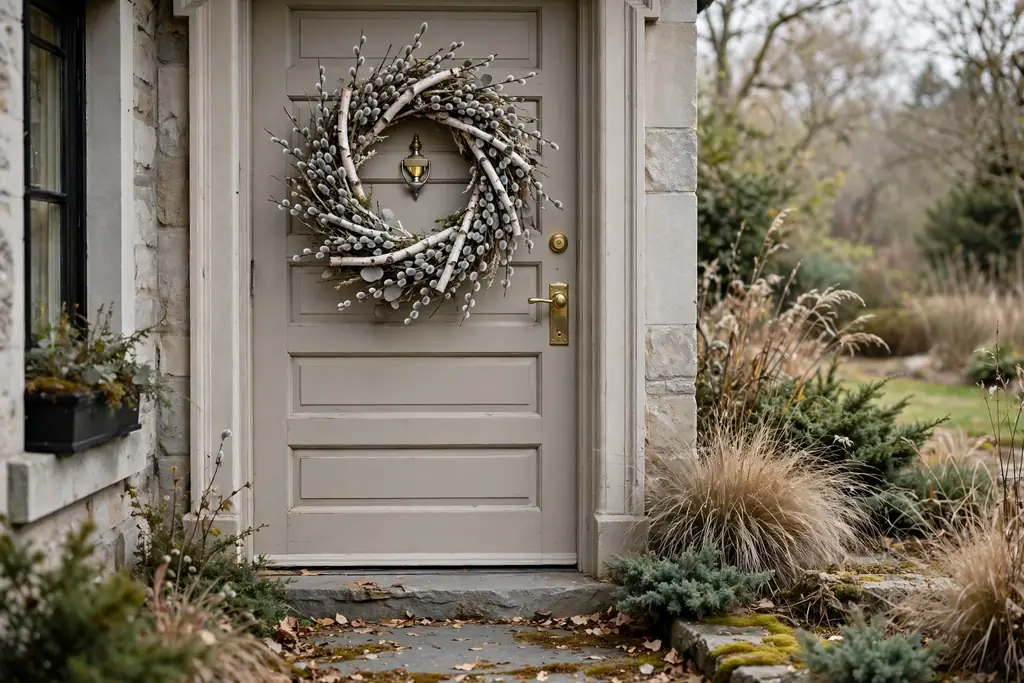
Wrap pussy willow stems around a birch twig base for a simple, early spring wreath in soft gray and brown tones. The fuzzy buds give texture without bright color, which suits a home with a calm, neutral porch. Bend willow stems gently around the base, wire them in place, and let a few tips extend past the ring for a natural shape.
Dried pussy willow lasts for months indoors and on a covered porch, and needs no water. Keep it away from heavy rain and strong wind, which can break the soft buds. Add a small bunch of dried grasses or a plain linen bow if you want a finish, and avoid adding large blooms that would hide the willow texture.
9. Peony and Ranunculus Wreath
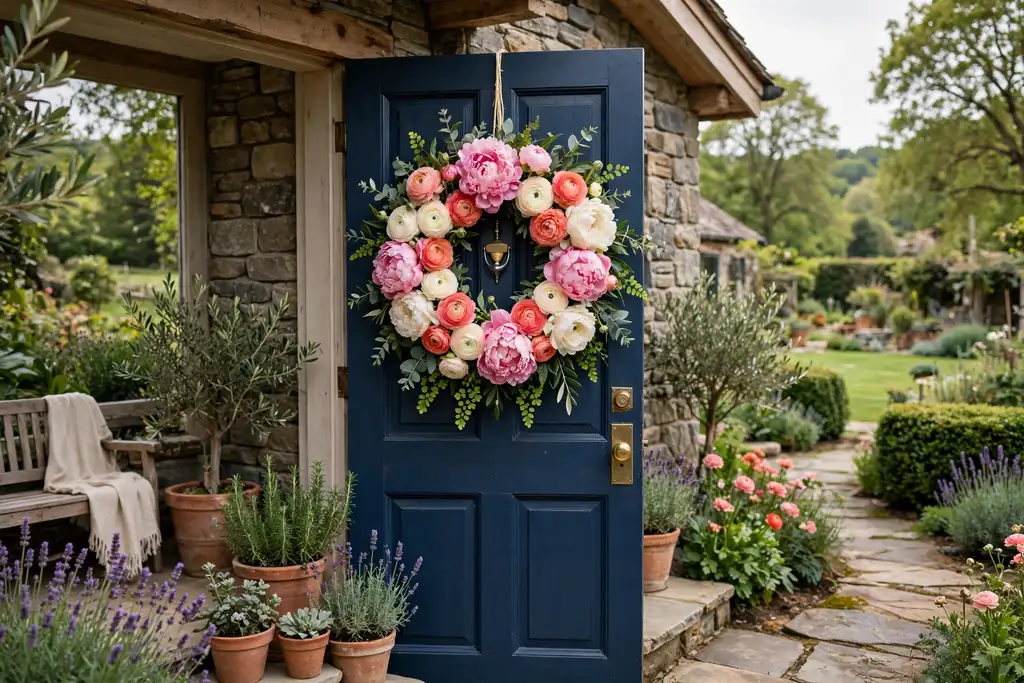
Combine large peonies with smaller ranunculus blooms in pink, coral, and cream on a foam base for a full, soft spring wreath. Place the peonies first, spaced evenly, then fill gaps with ranunculus and green leaves. The mix of large and small blooms gives depth, so the wreath looks full from the street and up close.
Fresh peonies last only a few days outdoors, so faux peonies are the better choice for a front door. Choose blooms with layered petals and varied shades, rather than one flat color, so the wreath looks natural. Keep the wreath sheltered from rain, since heavy faux petals can hold water and sag.
10. Dried Flower and Straw Wreath
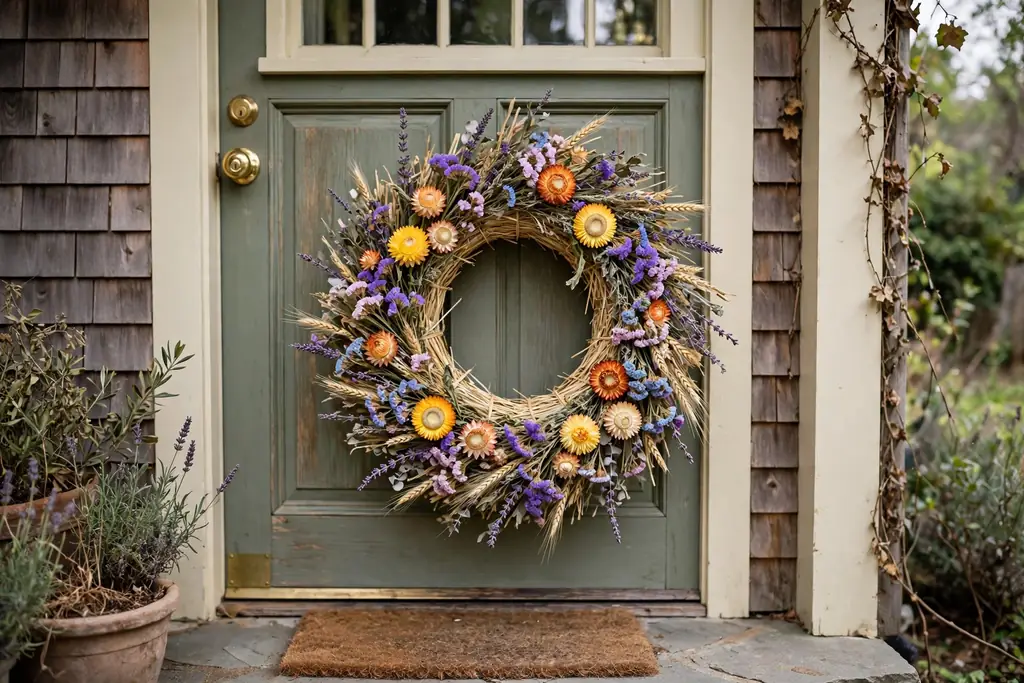
Build a long lasting wreath from dried strawflowers, statice, and lavender on a straw base for a muted, vintage spring look. Dried flowers hold their shape and color for a full season, and the straw base is light and easy to hang. Work in small bundles, wiring each one to the base in the same direction, and overlap bundles so no straw shows.
Keep a dried wreath on a covered porch, out of direct rain and harsh sun, so colors fade slowly. Handle it gently when hanging, since dried stems can snap. Shake it lightly outdoors now and then to remove dust, and store it in a box with tissue paper when spring ends.
11. Herb Garden Wreath
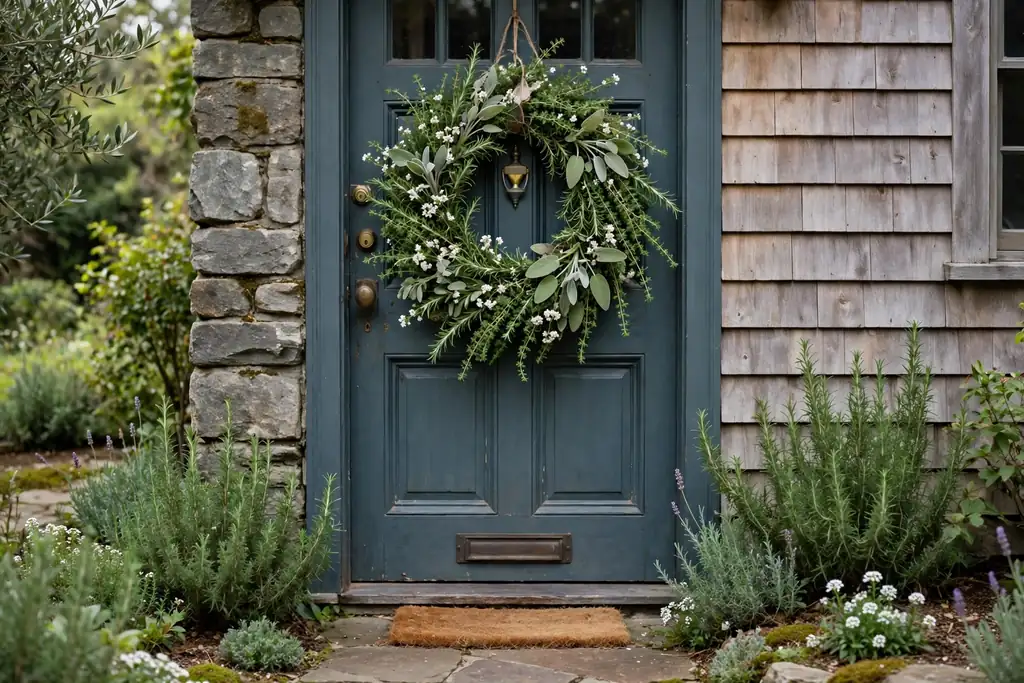
Make a useful and fragrant wreath from rosemary, thyme, sage, and bay leaves wired to a grapevine base, with a few small white blooms for contrast. The herbs give scent and a kitchen garden feel, and the green palette suits a plain or painted door. Use fresh herbs for a short display, and replace stems as they dry, or use dried herbs for a longer lasting wreath.
Tie herb bundles with twine before wiring them to the base, so stems stay grouped and easy to replace. Keep the wreath on a covered porch and out of heavy rain, since wet herbs will darken fast. Snip a sprig for cooking only from a wreath kept clean and away from road dust, and wash herbs before use.
12. Butterfly and Blossom Wreath
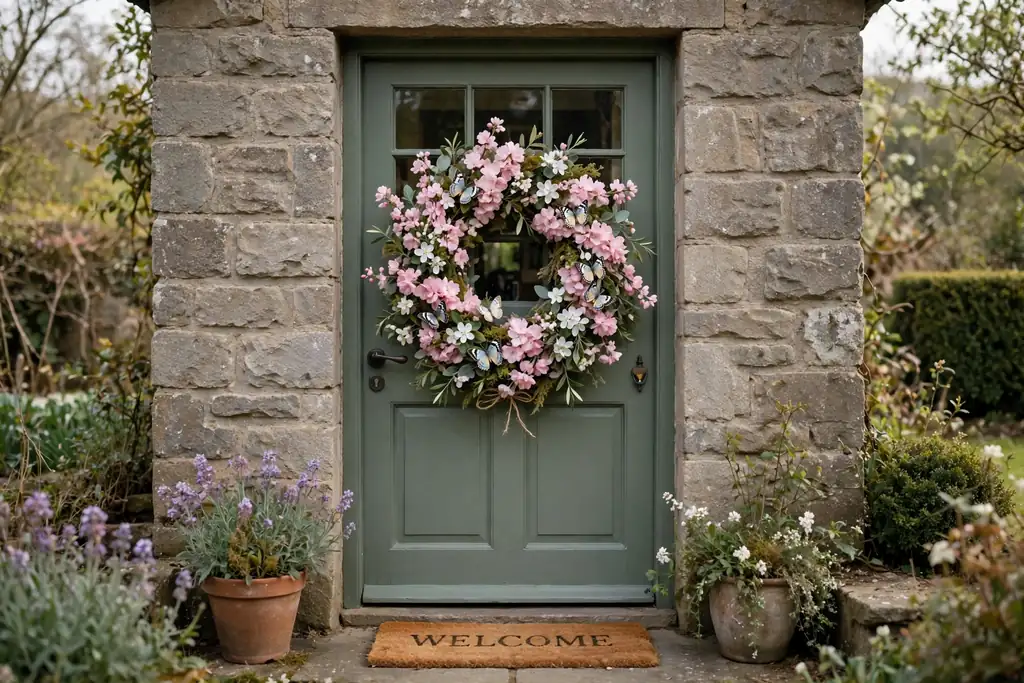
Add small decorative butterflies to a wreath of pink and white blossoms and green leaves for a playful spring door that suits a family home. Place three or four butterflies at different points around the ring, rather than clustering them together, so the eye moves around the wreath. Choose butterflies in colors that match the blooms, such as soft pink, white, or pale yellow.
Use butterflies made for outdoor use, wired firmly to the base, so they do not blow off in wind. Keep the wreath out of heavy rain, since paper wings will spoil. This style pairs well with a simple porch, where the butterflies can be seen clearly, and it works best when the rest of the porch stays plain.
13. Minimal White Blossom Wreath
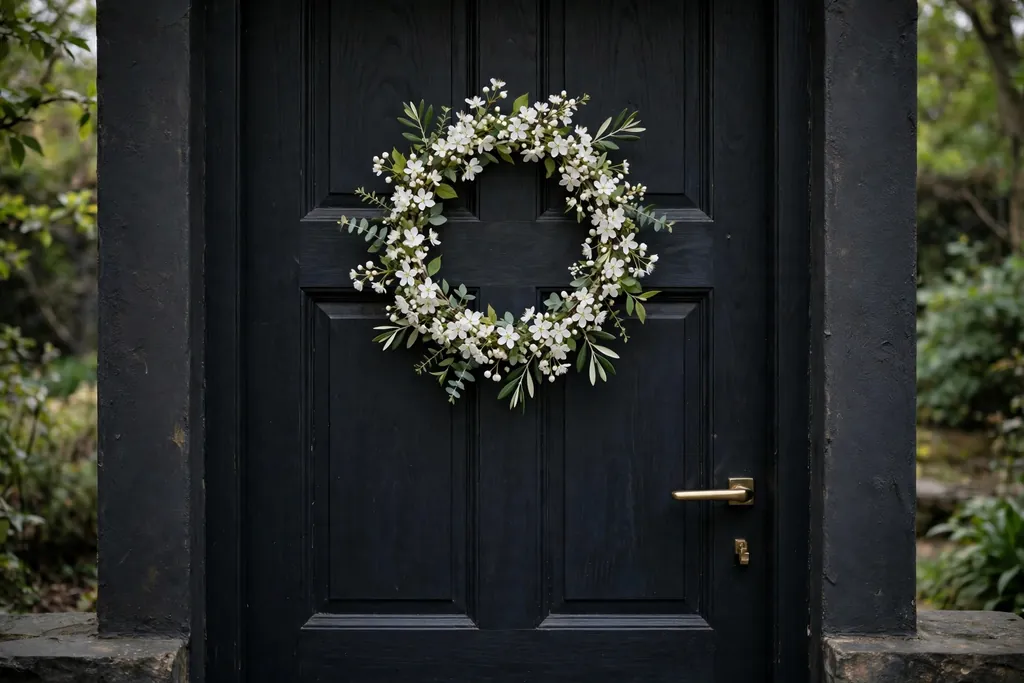
Use white blossoms, such as faux cherry blossom, jasmine, or small roses, with green leaves on a slim grapevine base for a minimal spring wreath. Keep the blooms spaced, with green showing between them, so the wreath feels light rather than crowded. This style suits a modern home, a dark door, or a porch with strong colors elsewhere.
A slim wreath needs a firm hook and a level hang, since any tilt shows clearly. Choose blooms in one shade of white, with varied petal shapes, so the wreath does not look flat. Add a single white or natural ribbon loop, and avoid extra accents that would break the calm, simple look.
14. Pink and White Dogwood Wreath
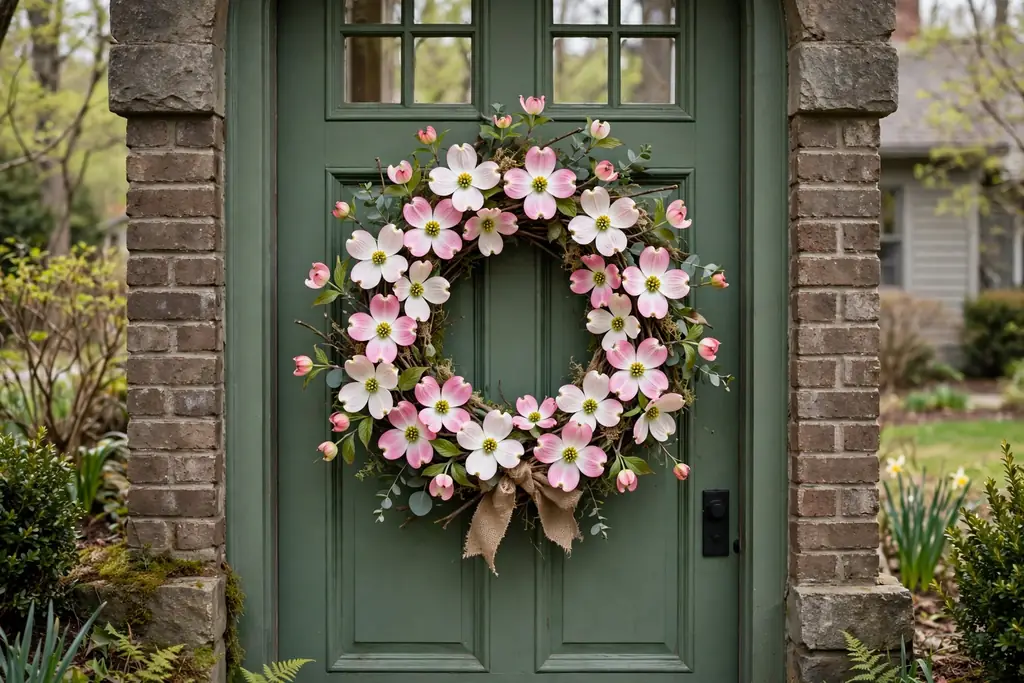
Combine pink and white dogwood blooms with green leaves on a grapevine base for a wreath that echoes spring trees. Dogwood blooms have a clear four petal shape, so they read well from the street, and the pink and white mix keeps the wreath soft. Place white blooms as the base, then add pink blooms in small groups for balance.
Faux dogwood suits a front door, since fresh dogwood branches are short lived and brittle. Wire branches firmly and trim any stem that sticks out at an odd angle. Keep the wreath out of strong wind, which can bend thin faux branches, and pair it with a plain doormat so the pink stays the focus.
15. Coastal Spring Wreath
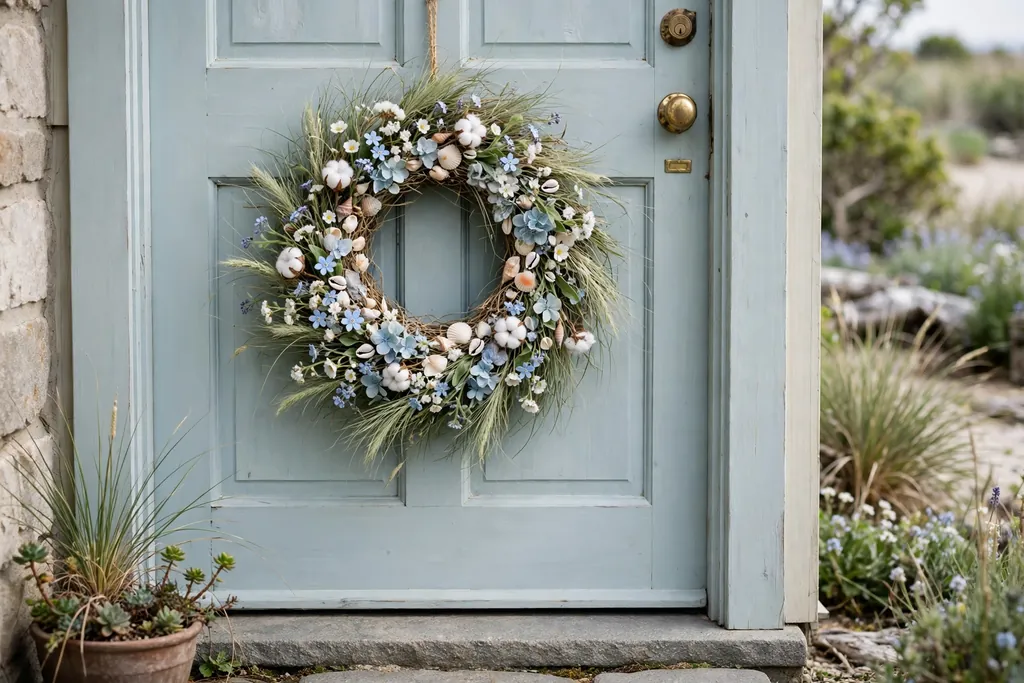
Make a light coastal wreath from white and pale blue blooms, sea grass, and small shells on a driftwood style base for a beach house or a light, airy porch. Keep the palette pale, with white, sand, and soft blue, and use shells sparingly as accents rather than covering the wreath. This style suits a white or pale blue door near the coast.
Use faux blooms and shells glued or wired firmly, since real shells can crack and fresh blooms fade fast in sea air. Keep the wreath sheltered from strong wind, and check wires after storms. Pair it with a plain rope or linen hanger, and keep other porch items simple so the coastal palette stays clear.
16. Farmhouse Cotton and Burlap Wreath
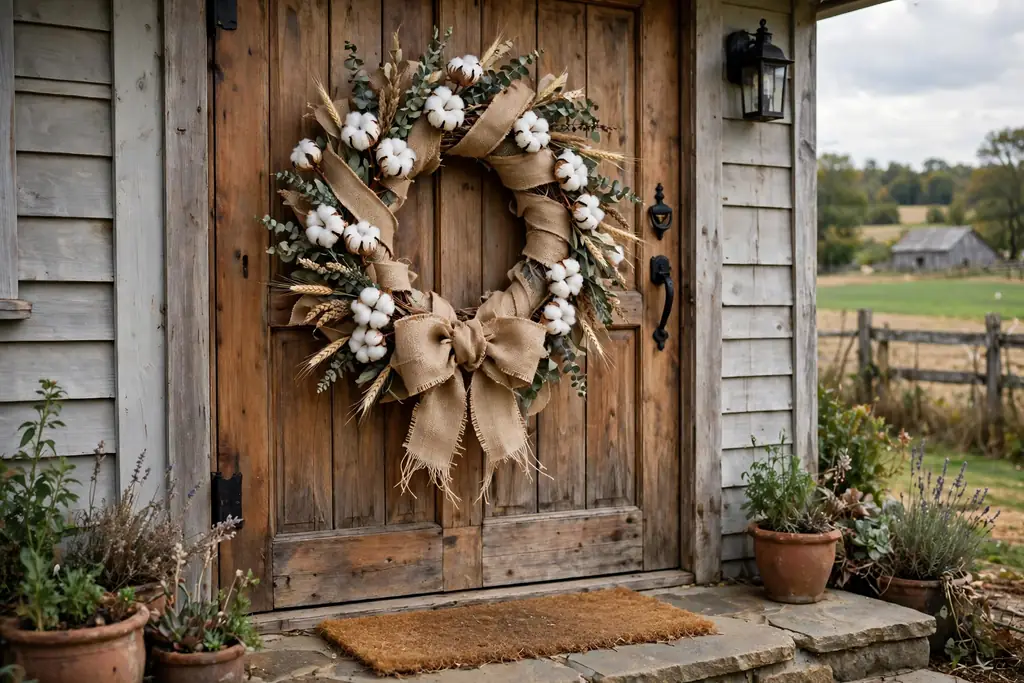
Wrap a grapevine base with a burlap bow and add cotton stems, small white blooms, and greenery for a farmhouse spring wreath. The cotton bolls give a soft, neutral texture, while the burlap adds a rustic finish without bright color. Place cotton stems in three groups around the ring, rather than spreading them evenly, for a more natural farmhouse look.
Use faux cotton stems outdoors, since real cotton will stain and break down in rain. Keep the burlap bow out of heavy rain, or choose a weather resistant ribbon in a burlap look. This wreath suits a wood, black, or white door, and pairs well with a wooden porch sign or a plain woven doormat.
17. Birdhouse and Nest Wreath
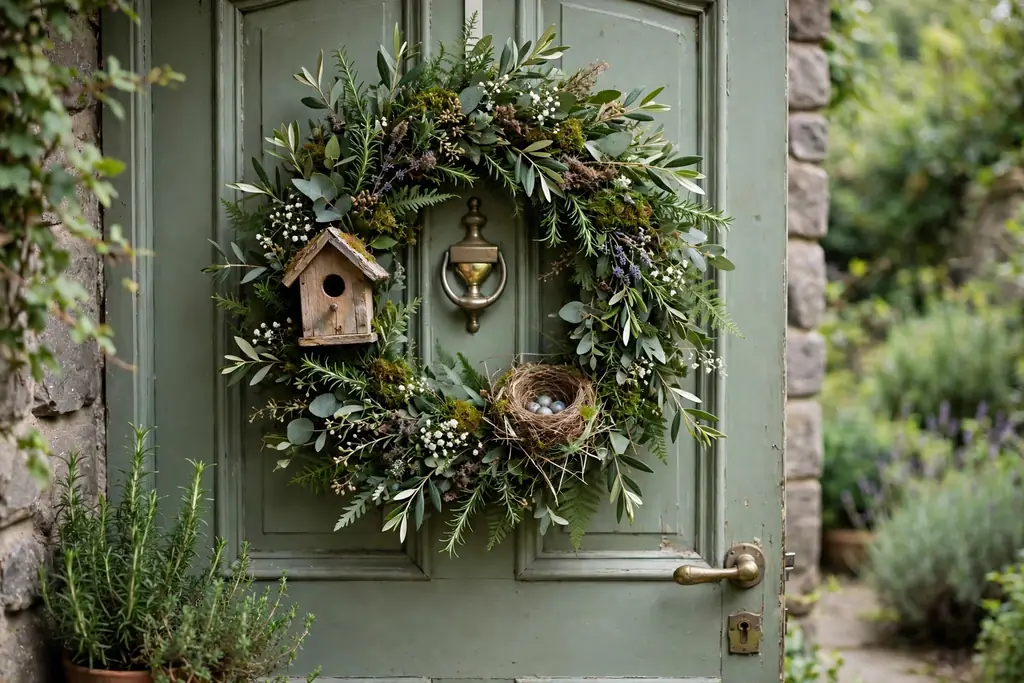
Add a small decorative birdhouse and a tiny nest with faux eggs to a wreath of greenery and small blooms for a garden themed spring door. Place the birdhouse slightly off center, at the bottom or side of the ring, so it reads as a feature rather than blocking the center. Keep the rest of the wreath simple, with leaves and small blooms around the birdhouse.
Use a lightweight birdhouse made for outdoor decor, wired firmly to the base, so it does not swing when the door opens. Keep faux eggs fixed in the nest, and avoid using a real nest or real eggs. This style suits a garden style home, and it pairs well with potted plants by the door.
18. Asymmetric Crescent Wreath
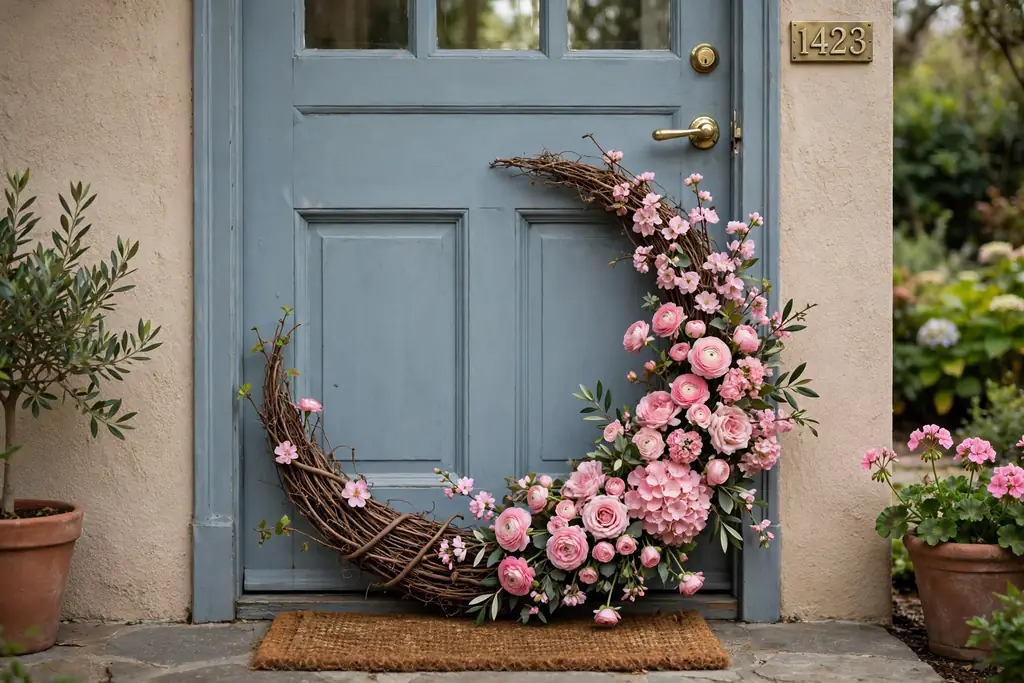
Build a modern crescent wreath by covering only the lower half or one side of a grapevine base with blooms and leaves, leaving the rest bare. The open shape feels fresh and modern, and it suits a home with clean lines and a plain door. Place the fullest blooms at the bottom of the crescent, thinning out toward the ends, so the shape tapers naturally.
A crescent wreath needs careful hanging, since the weight sits on one side and can tilt the ring. Use a firm hook and check the hang from the street. Choose two or three flower types in one color family, with plenty of green, so the crescent looks planned rather than unfinished.
19. Hoop Wreath with a Single Floral Cluster
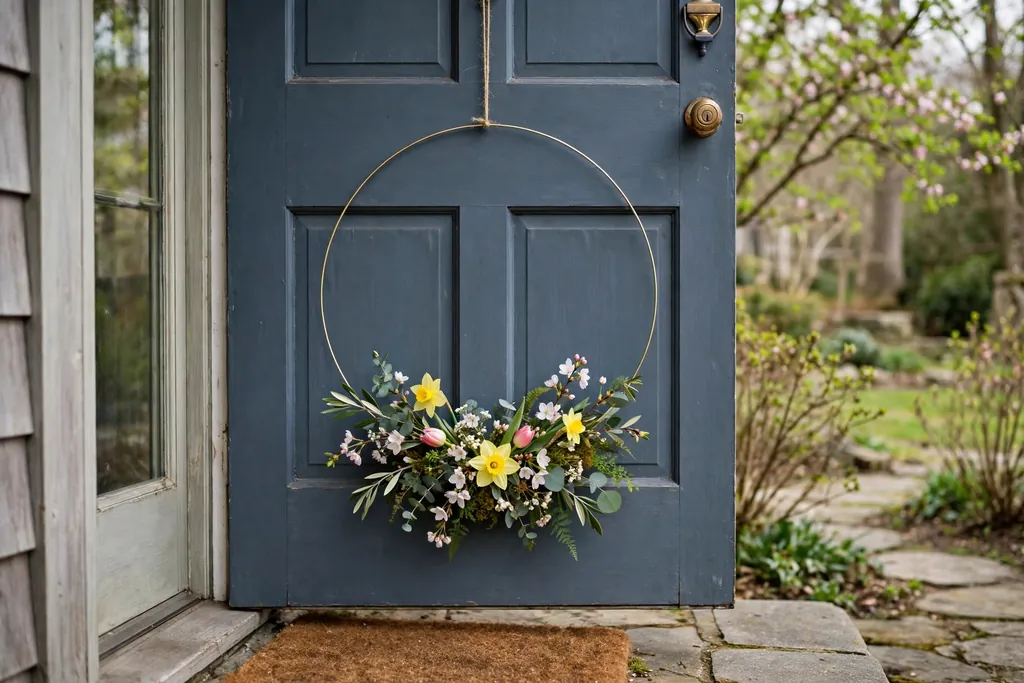
Use a thin metal or wood hoop with one cluster of spring blooms and leaves at the bottom, leaving most of the hoop bare, for a minimal modern wreath. The open hoop suits a small door, a glass door, or a narrow porch, where a full wreath would feel heavy. Wire the cluster firmly at the bottom of the hoop, and let a few stems trail below the ring.
Keep the cluster to one color family, such as pink and cream, with green leaves, so the hoop stays calm. Hang the hoop from a clear line or a slim ribbon so the open shape shows. This style works best when the door color is plain, since the hoop itself is part of the design.
20. Monogram Initial Wreath
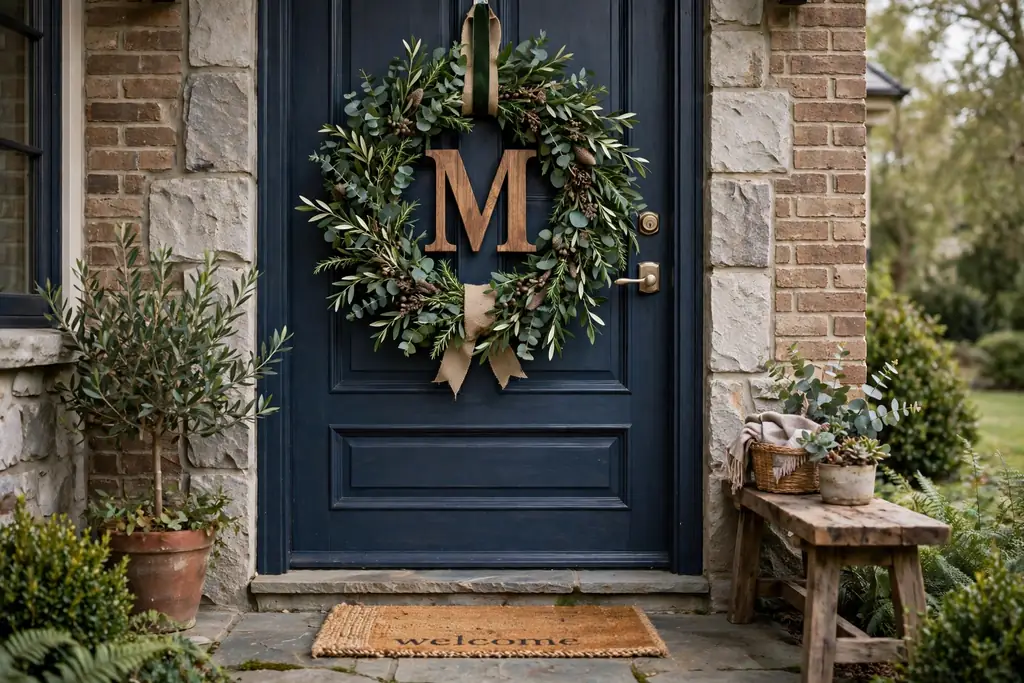
Add a wooden or metal initial to the center of a green or floral wreath for a personal front door welcome. Choose an initial in a size that fits inside the ring without touching the blooms, and hang it from thin wire or ribbon so it sits flat. The wreath around it can stay simple, with greenery and a few small blooms, so the letter stays easy to read.
Paint or stain the initial to match the door hardware or the porch trim, and seal it for outdoor use. Wire it at two points, top and bottom, so it does not spin in wind. This style suits a family home, and it pairs well with a matching doormat or porch sign in the same finish.
21. Easter Egg Pastel Wreath
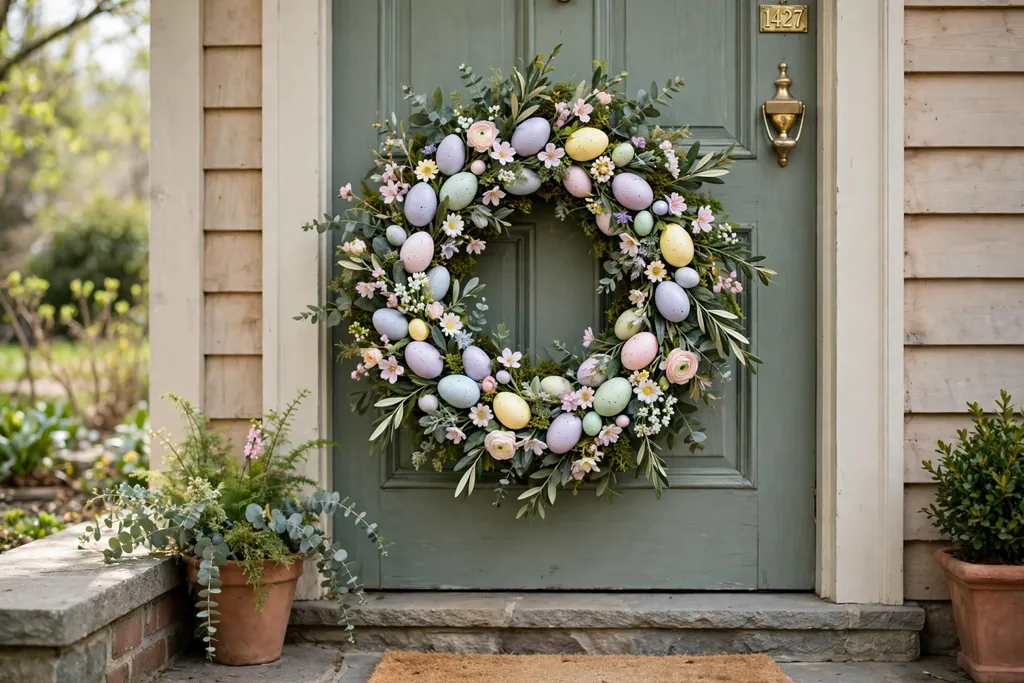
Make a spring wreath for the Easter weeks from pastel faux eggs, small blooms, and greenery on a grapevine base. Space the eggs evenly, in soft pink, blue, yellow, and lilac, and fill between them with leaves and tiny white blooms. Keep the eggs small, so the wreath does not look heavy, and use a simple ribbon in white or pastel.
Use faux eggs only, since real eggs will spoil outdoors. Glue or wire each egg firmly, and keep the wreath on a covered porch out of heavy rain. After Easter, lift the eggs off and replace them with plain blooms, so the same base can serve for the rest of spring.
22. Succulent and Air Plant Wreath
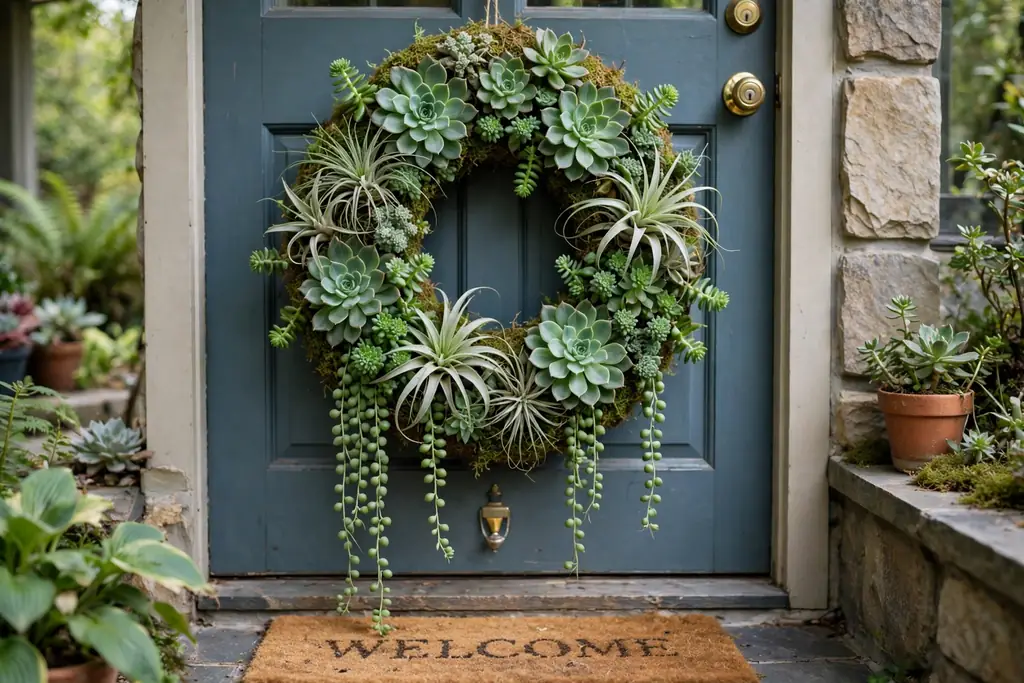
Build a wreath from faux succulents and air plants on a moss base for a modern spring door that needs almost no upkeep. Mix succulent shapes and greens, with a few small blooms for spring color, and space plants so each one shows. This style suits a warm, sunny door where fresh flowers would fade fast.
Use faux succulents outdoors, since live succulents need light, air, and careful watering that a door wreath cannot give. Wire each plant firmly to the moss base, and keep the wreath out of heavy rain so the moss does not sag. Dust the plants now and then, and replace any faded plant with a new faux stem.
23. Spring Wreath on a Garden Gate
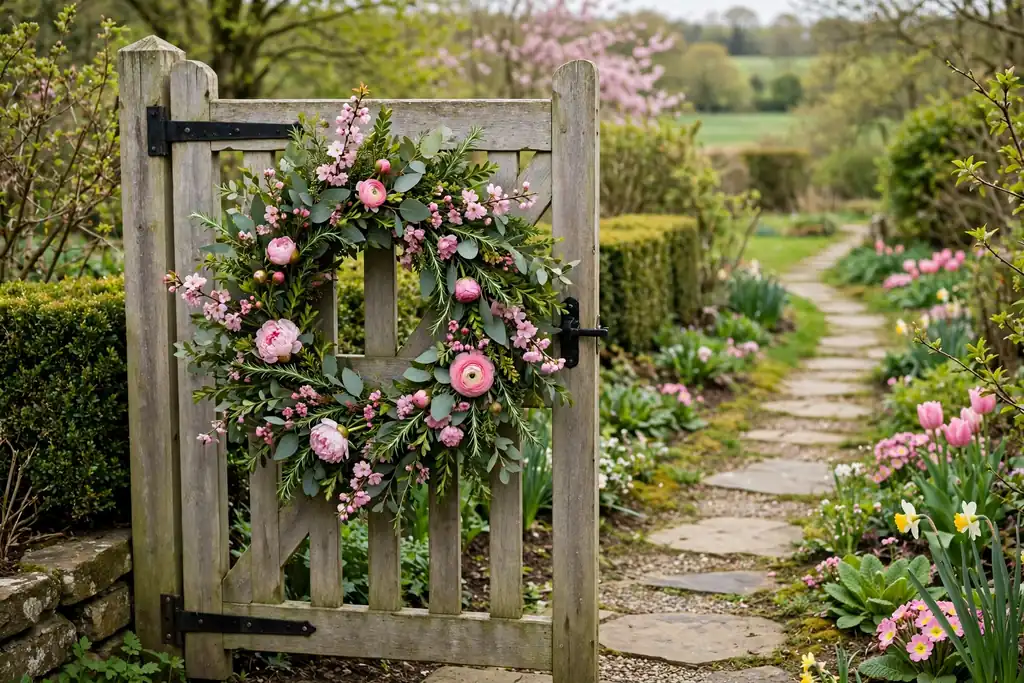
Hang a spring wreath on a garden gate, rather than the front door, to welcome guests along a garden path. Choose a wreath that suits the gate material, such as a grapevine wreath on a wood gate or a hoop wreath on a metal gate, and use a hook that fits over the gate without drilling. Keep the wreath light, so the gate still swings freely and latches cleanly.
Check the gate swing and latch before you hang the wreath, and trim any stem that catches on the gate post. Use weather resistant blooms and a firm wire hanger, since a gate gets more wind and rain than a covered porch. Pair the gate wreath with potted spring flowers by the path, and keep the front door plain or use a smaller matching wreath there.
Conclusion
A good spring wreath starts with a base and flowers you like, sized to your door and suited to your porch. Fresh blooms give scent and soft color for a short time, while dried and faux options last through the season with little care. Choose one style from this list, hang it at eye level, and refresh the ribbon or accents as spring moves on. Your front door will give a clear, welcoming first look all season.
FAQs
What size spring wreath should I hang on a front door?
Choose a wreath about one half to two thirds the width of your door, so it looks balanced from the street and does not crowd the handle. For a standard front door, a wreath around 22 to 24 inches across usually works well, while a double door can take a larger wreath or a matching pair.
How long will a fresh spring wreath last outdoors?
A fresh spring wreath usually lasts one to two weeks on a covered porch, less in full sun, wind, or rain. Mist greenery lightly, keep the wreath out of harsh afternoon sun, and replace faded stems as needed. For a display that must last all season, choose dried or faux blooms instead.
Are faux spring wreaths a good choice for a sunny front door?
Yes, good quality faux wreaths suit a sunny door, since they hold color and shape in sun and rain far longer than fresh flowers. Choose blooms with varied shades and natural leaf shapes, and keep the wreath out of heavy rain so petals and ribbon do not sag.
How do I hang a wreath without damaging my door?
Use an over door hook, a suction hook on glass, or a removable adhesive hook rated for the wreath weight, and hang the wreath at eye level. Avoid nails or screws in a finished door, and check that the wreath clears the handle, hinges, and door frame when the door opens and closes.
Can I reuse a spring wreath base next year?
Yes, a grapevine, foam, or hoop base can be reused for years if you store it dry and out of direct sun. Remove faded blooms and ribbon at the end of the season, clean the base lightly, and store it in a box with tissue paper so stems do not bend or break.
What spring wreath style suits a modern home best?
A hoop wreath with a single floral cluster, a minimal white blossom wreath, or an asymmetric crescent wreath suits a modern home, since each leaves open space and uses a limited palette. Keep blooms to one color family, use a slim base, and pair the wreath with a plain doormat and simple porch items.