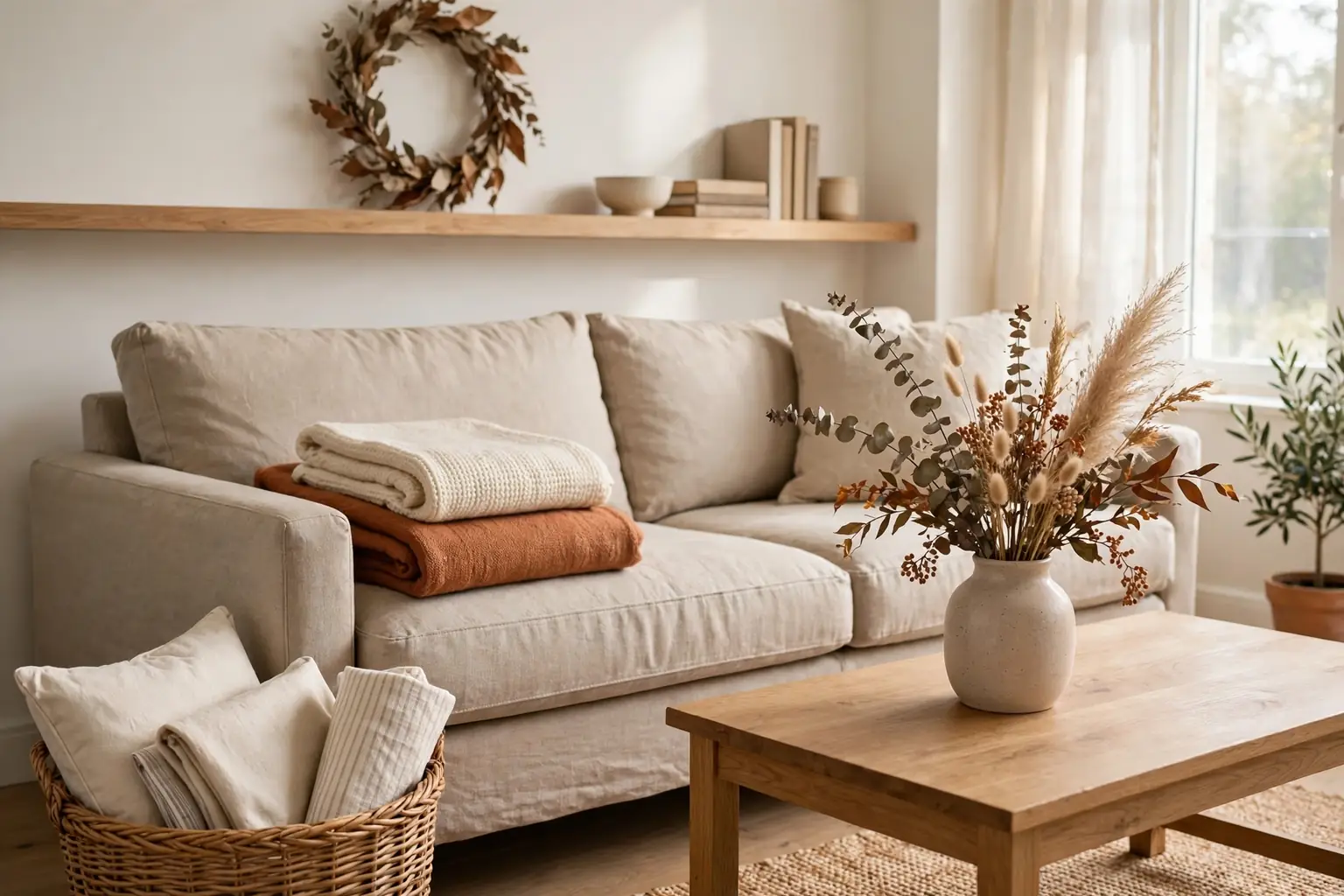
Change seasonal decor without redecorating by keeping your furniture, wall color, and large pieces the same and swapping only small, easy layers: pillow covers, throws, table linens, wreaths, art prints, and small accents. Pick one small palette per season, change the entry and living room first, then repeat one or two touches elsewhere.
This method works because the eye reads color, texture, and small focal points before it reads furniture. A sofa does not need to change for a room to feel like fall or spring. New covers, a different throw, and a fresh centerpiece do that work. For season-specific inspiration to pair with this method, browse these fall decor ideas. The steps below build one reusable system, so each season change gets faster and costs less than the last.
Key Takeaways
- Keep furniture, wall color, and large pieces constant, and change only small layers each season.
- Build one labeled swap kit per season so the next change takes an hour or less.
- Limit each season to three or four colors, and repeat one color in at least three rooms.
- Change the entryway and living room first, since those rooms set the tone for the whole home.
- Swap covers, not inserts, and swap prints, not frames, to save money and storage space.
- Store off-season pieces clean, dry, and labeled, and edit each display before you call it done.
1. Define Your Year-Round Base
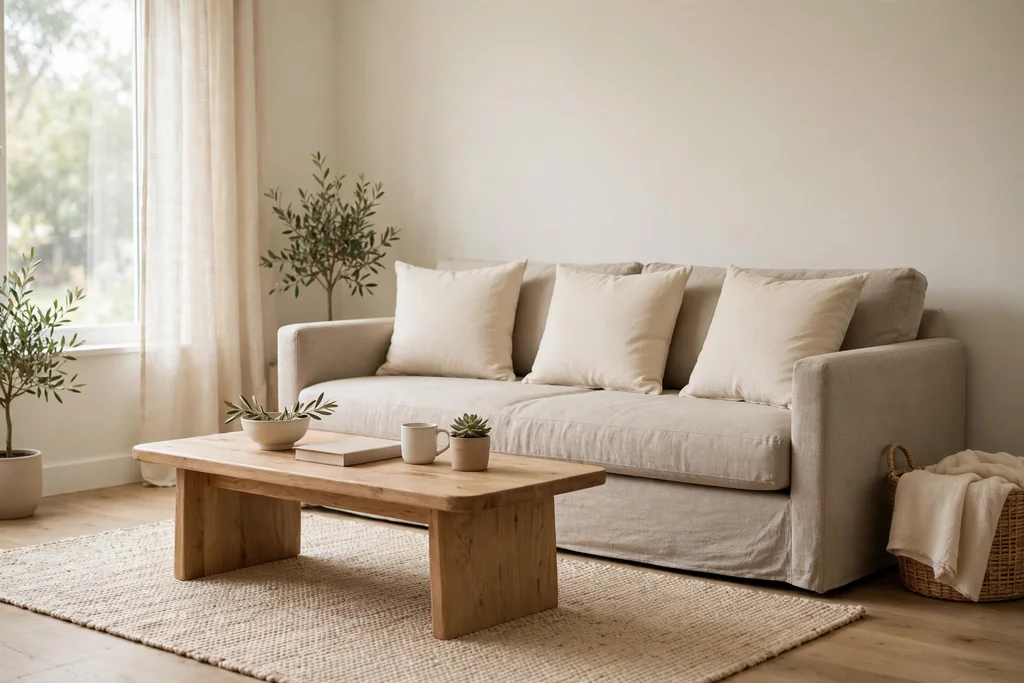
Start by naming the pieces that never change. These are usually the sofa, the main rug, the bed frame and bedding base, the dining table, and the largest art or mirror in each room. Choose calm, plain versions of these pieces when you can, in cream, beige, grey, wood, or soft green, so seasonal colors sit neatly on top of them.
Walk through each room and note anything that fights with many colors, such as a loud patterned rug or a bright accent chair. You do not need to replace those pieces. Just plan seasonal swaps that tone them down, for example a plain throw over a patterned chair, or a solid runner under a busy centerpiece. A calm base is what makes the rest of this guide work.
2. Build One Seasonal Swap Kit Per Season
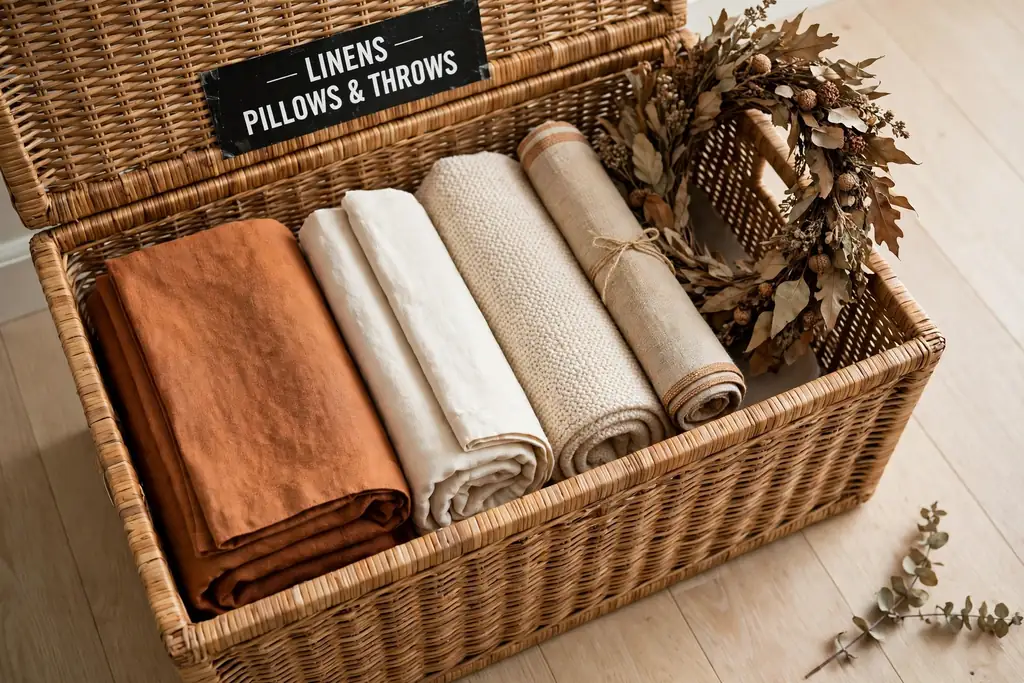
A swap kit is a single labeled bin that holds everything you need for one season, so you are not hunting through closets each time. Pack one bin per season, and keep the bins in the same spot year after year. When the season changes, you take out one bin and put the old season back in it.
Your basic swap kit list:
- Two to four pillow covers in the season palette
- One throw in a seasonal color or texture
- One table runner or set of placemats
- One wreath for the front door
- Two or three framed prints or art cards that fit your existing frames
- One set of hand towels or kitchen towels in a seasonal tone
- A small group of accents, such as a vase filler, a candle set, or a tray
- Spare batteries for battery candles and string lights
Buy slowly. Start with pillow covers and a throw, then add one kit item per season until each bin is full. A kit built over a year feels planned, while a kit bought all at once often holds pieces you never use.
3. Pick a Small Palette for the Season
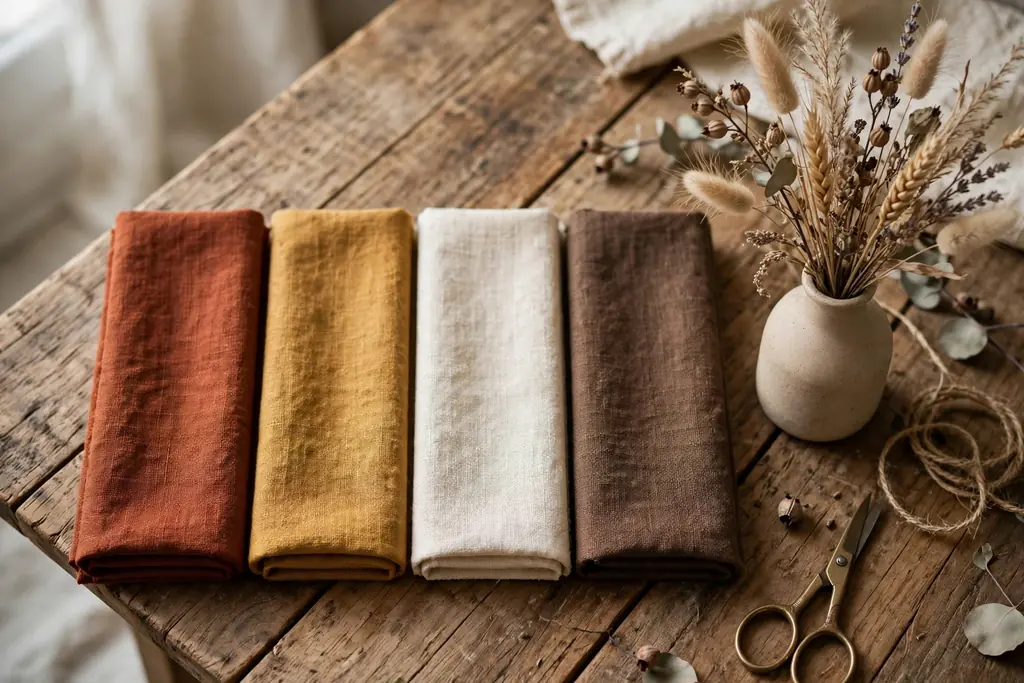
Choose three or four colors for the season, with one strong color, one or two supporting colors, and one calm neutral. For fall, that might be rust, gold, cream, and wood brown. For spring, it might be sage, soft yellow, white, and light wood. Write the palette on a card and keep it in the swap kit bin.
Use the palette as a filter for every swap. If a piece does not match at least one palette color, it stays in the bin. This one rule keeps rooms from looking busy, even when you decorate several rooms at once. It also makes shopping easier, since you can pass over anything outside the palette without a second thought.
4. Start With the Entryway
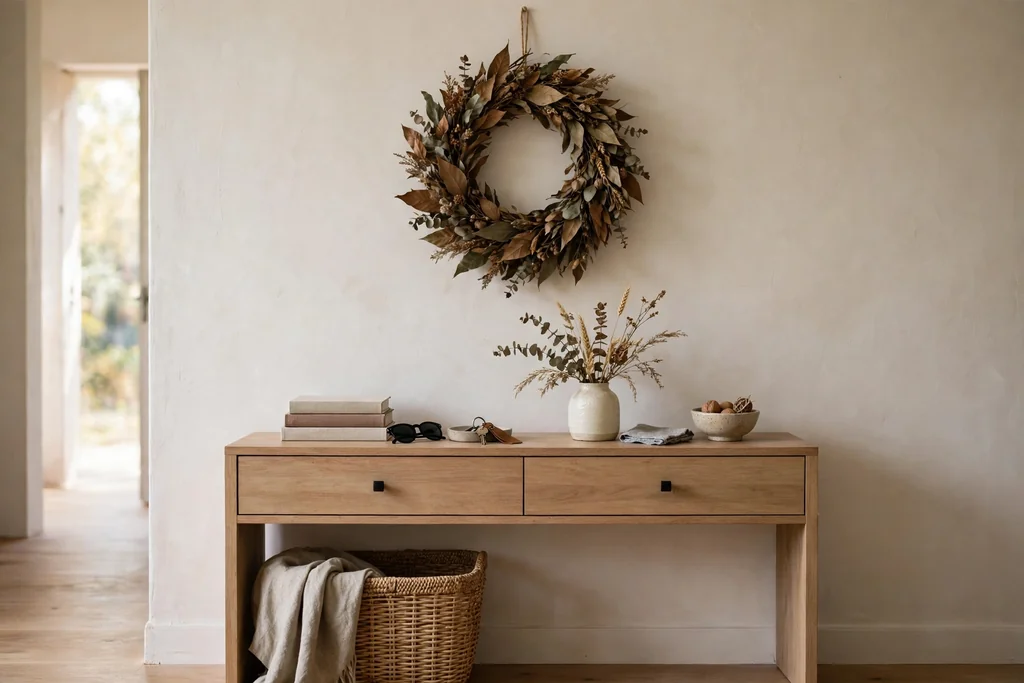
The entryway is the first room guests see, and it is also the room you pass through every day, so a small change there has a large effect. Swap the wreath on the door, change the doormat layer, and set out one seasonal item on the console, such as a small vase of stems or a bowl of pinecones.
Keep the entry practical. Leave clear space for keys, mail, shoes, and bags, and keep walkways open. A basket for scarves in cold months or a tray for sunglasses in warm months adds a seasonal note while also keeping the entry tidy. When the entry feels right, the rest of the house tends to follow.
5. Swap Pillow Covers, Not Whole Pillows

Pillow covers are the fastest seasonal swap in the home. Keep your inserts year-round and change only the covers, which fold flat for storage and cost less than full pillows. Choose a cover one or two inches smaller than its insert so the pillow looks full and holds its shape.
Mix two solids, one pattern, and one texture on a sofa, and repeat one cover color elsewhere in the room, such as in a throw or a piece of art. For cover ideas by fabric and pattern, see these fall pillow covers. Wash covers before storing them, fold them flat, and keep each season set together in its bin so you can find the full set next year.
6. Change Throws and Table Linens
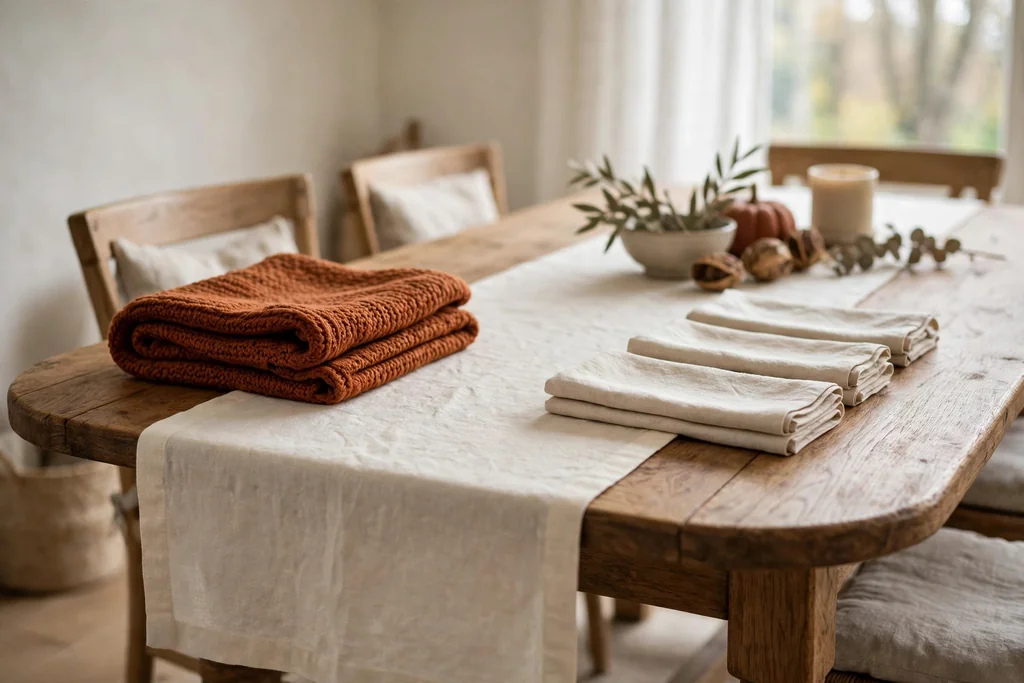
Throws and table linens cover large areas, so they shift a room faster than small accents do. Drape a seasonal throw over one sofa arm or across the foot of the bed, and change the table runner or placemats to match the season palette. Keep the rest of the bedding and sofa cushions the same.
Choose washable fabrics for pieces that get daily use, and keep a spare set ready so the look lasts through the week. Fold throws neatly when they are not in use, and keep one extra throw in a basket for guests. A linen change takes minutes, yet it makes the dining table feel set for the season even on an ordinary weekday.
7. Update the Mantel or Main Shelf in Layers
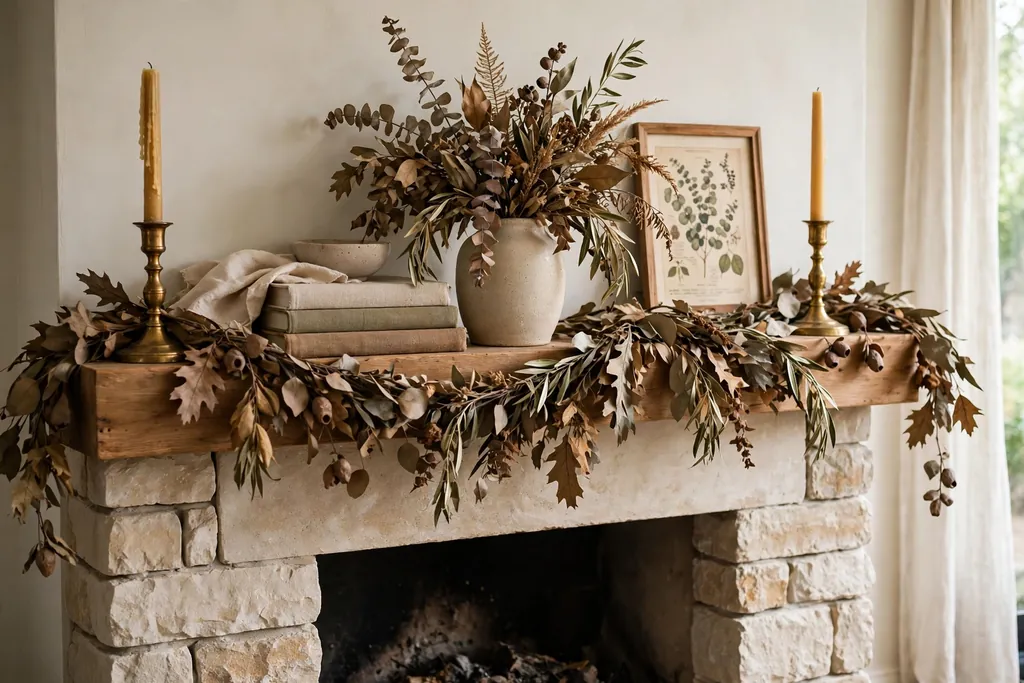
Work on the mantel or the main shelf in three layers: a base, a middle, and a small accent. The base might be a garland or a runner. The middle might be two candle holders or a pair of vases. The small accent might be a framed print, a tiny plant, or a seasonal figurine.
Change only the top layer each season if you want the simplest version of this step. Keep the candle holders and vases in place, and swap the garland, the print, and the small accent. Step back after each change and check the balance from across the room. If one side looks heavy, move one piece rather than adding more.
8. Refresh the Dining or Coffee Table Centerpiece
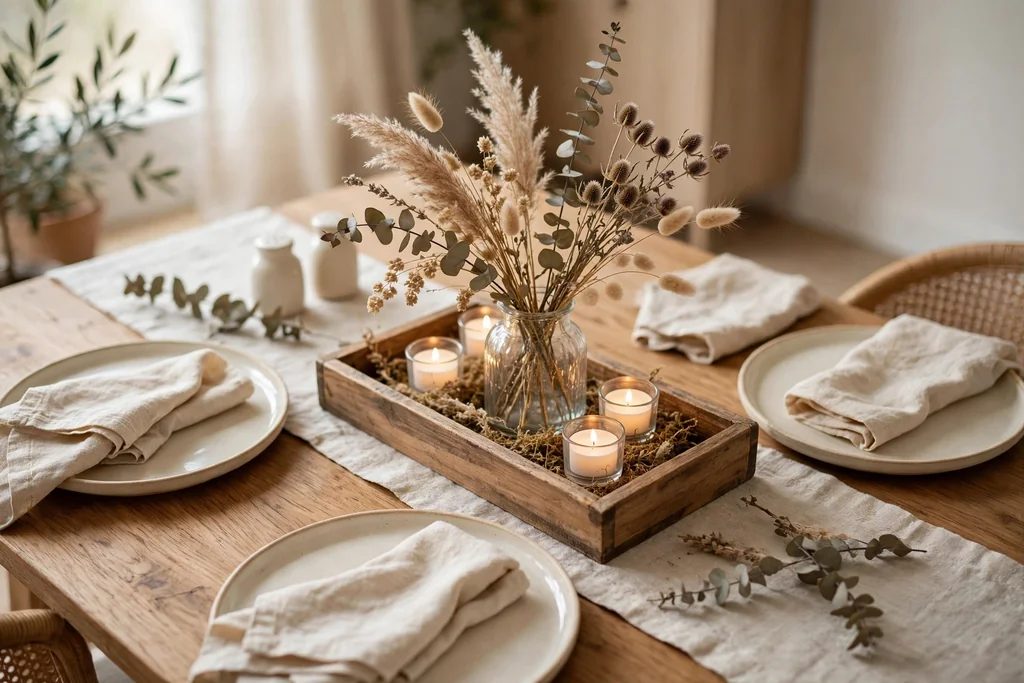
Build the centerpiece on a tray or a low board so you can lift the whole display off the table in one move. Start with the largest item in the middle, such as a vase of stems or a bowl, then fill gaps with smaller pieces, such as candles or a short garland. Keep the display low so people can talk across the table.
Change the centerpiece with the season by swapping stems, candles, and one or two small pieces, while keeping the tray and the vase. Fresh stems suit spring, dried stems suit fall, and simple greenery suits winter. Clear wilted or dusty pieces promptly, since one tired item can make the whole table look neglected.
9. Swap Wall Art and Framed Prints
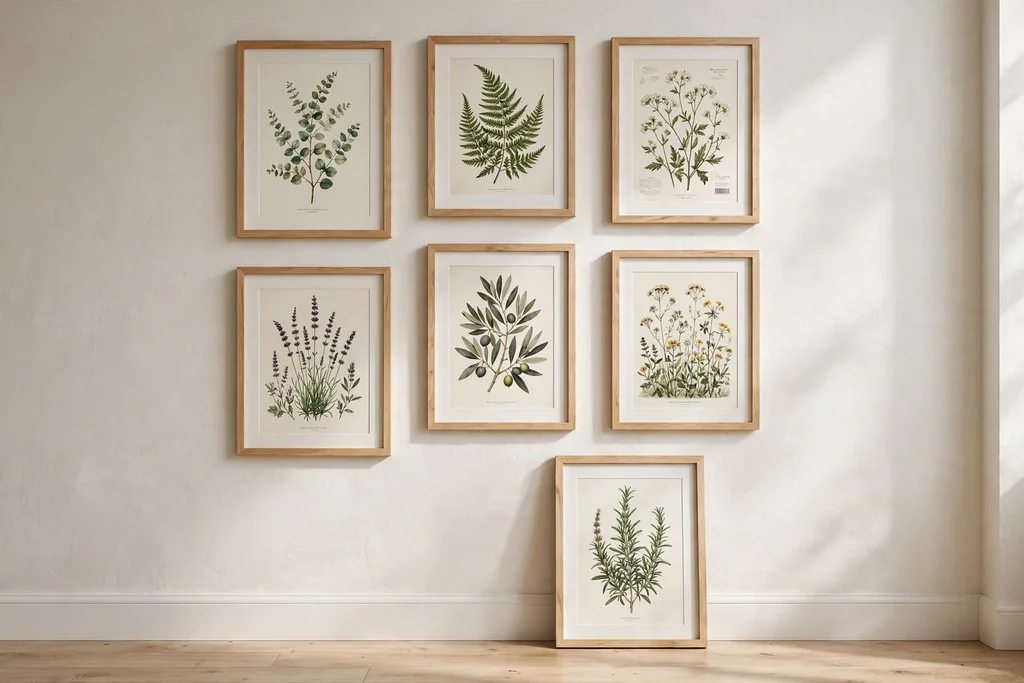
Art changes a wall faster than paint does, and swapping prints inside existing frames costs little and needs no new holes in the wall. Keep your frames up year-round and change only the prints or art cards inside them. Botanical prints suit spring, landscapes suit summer, leaf art suits fall, and simple line art suits winter.
Plan the layout on the floor before you hang anything, and keep spacing even between frames. Swap prints in one or two frames per room rather than redoing a whole gallery wall, so the change feels fresh without feeling like a project. Store off-season prints flat, between sheets of plain paper, so they stay clean and unbent.
10. Change Wreaths and Door Decor

A wreath is the clearest seasonal signal on a house, and it takes seconds to hang. Choose one wreath per season that matches your palette, and hang it at eye level on the front door, checking that it does not block the handle or the lock. Use a simple hook or hanger that leaves no marks.
If you have an interior door or a large mirror that suits a wreath, repeat a smaller version there for a connected look. Bring wreaths inside during heavy rain or strong wind if they are not rated for outdoor use, and store them in a wreath bag or a large box so they keep their shape. One good wreath, reused each year, beats three thin ones bought in a rush.
11. Add Seasonal Scent and Light
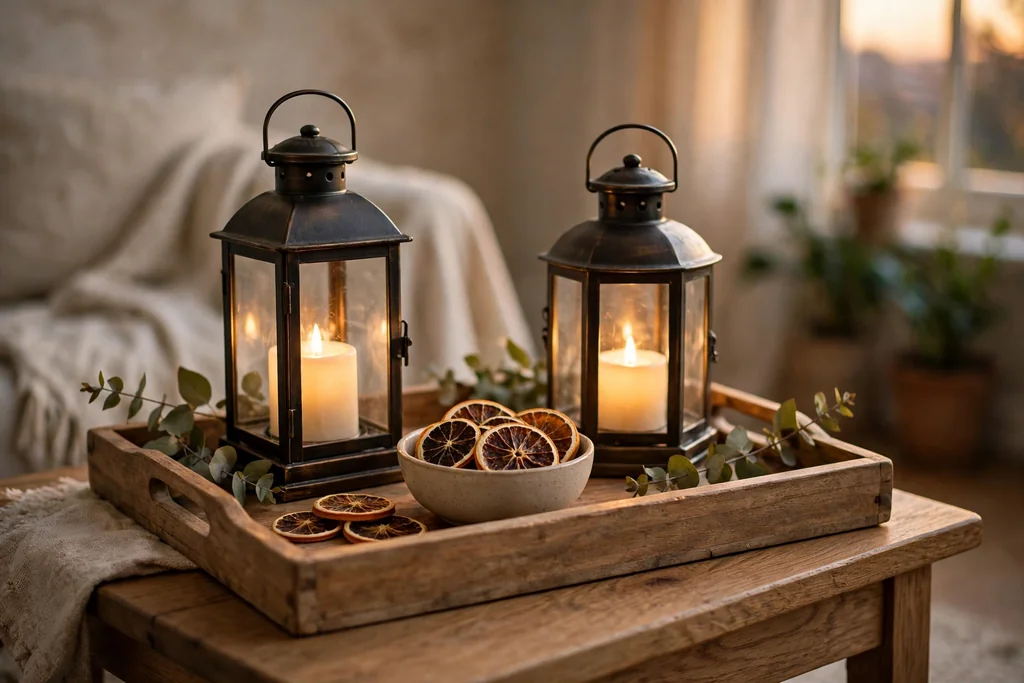
Scent and light change how a room feels without changing how it looks, which makes them useful for seasons when you want a light touch. Use battery candles in lanterns or holders for a warm evening glow, and set out a seasonal scent through a simmer pot, a candle, or fresh stems, depending on what suits your home.
Keep safety first. Never leave a lit candle or a pot on the heat unattended, keep flames away from curtains, dried stems, and paper, and use battery candles near fabric and dried greenery. Put string lights on a timer so they switch off on their own. Scent should stay subtle, since a strong scent in every room quickly becomes tiring.
12. Rotate Small Accents Room by Room
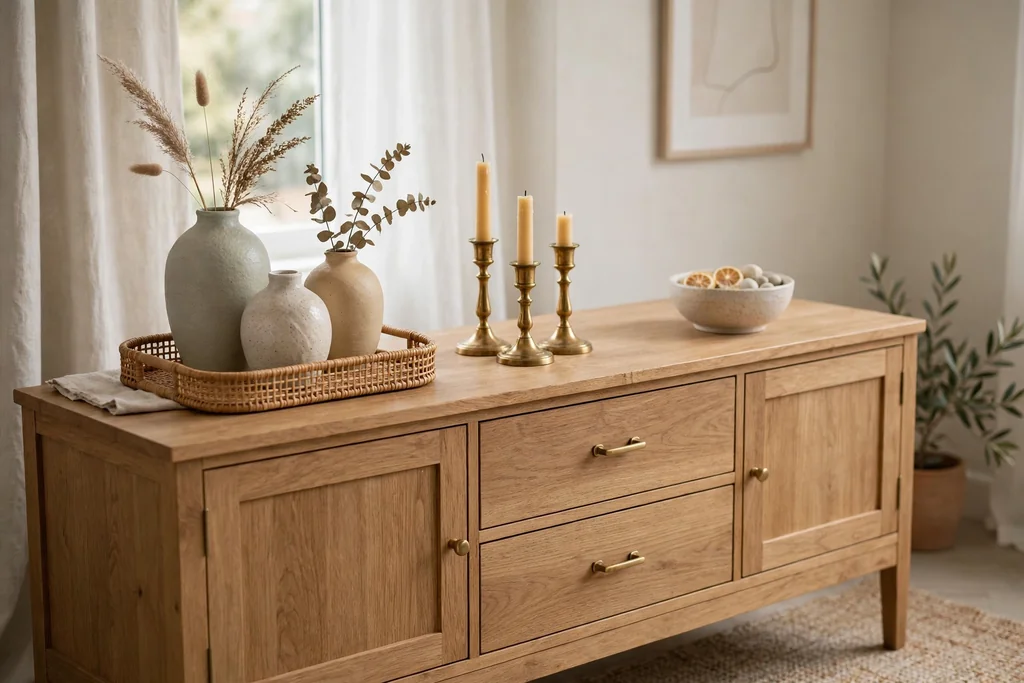
Small accents are vases, candle holders, trays, bowls, books, and baskets that you already own. Move them between rooms instead of buying new ones for each season. A tray from the living room can anchor a bedroom dresser, and a vase from the kitchen can hold stems on a side table.
Work room by room, and change no more than three small items per room. Group items in odd numbers, leave breathing room between groups, and repeat one material, such as wood, brass, or ceramic, across rooms for a calm, connected feel. If a surface starts to look crowded, remove one item before adding another. Editing is part of decorating, not a sign that the room failed.
13. Store Off-Season Pieces in Labeled Bins
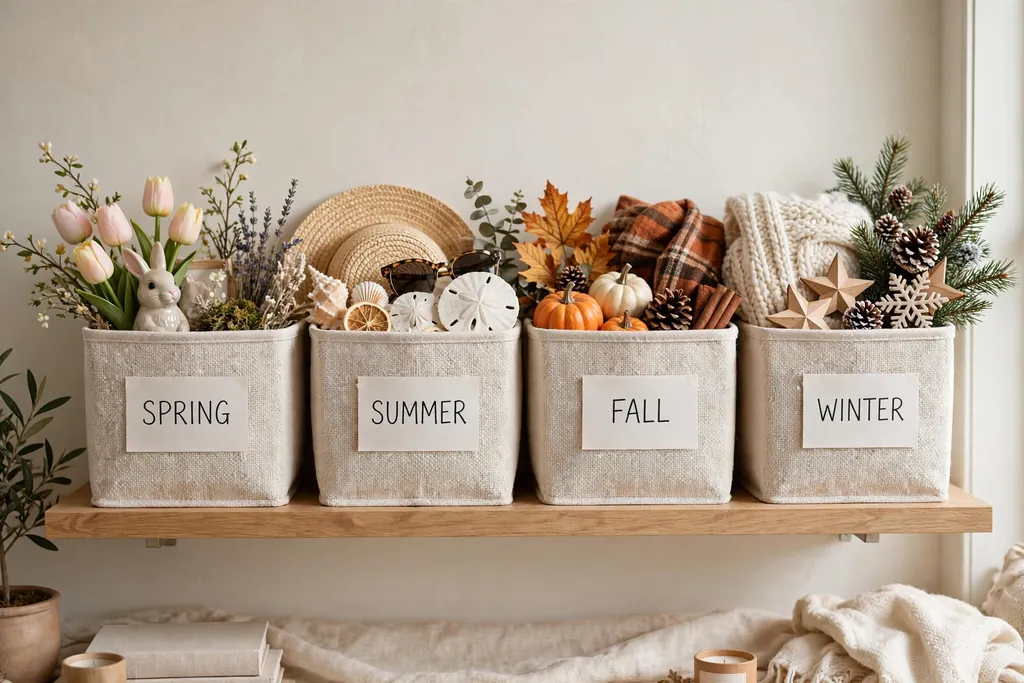
Good storage is what makes this system last. Clean each piece before it goes back in the bin, fold textiles flat, and wrap fragile items in tissue or plain cloth. Label each bin with the season and a short list of what is inside, and keep a photo of the styled room taped inside the lid if that helps you next year.
Store bins in a dry spot, off the floor if the area can get damp, and keep the current season bin in the easiest spot to reach. At the end of each season, check the bin before you close it. Remove anything you did not use, and note one item you wish you had owned, so next season shopping stays focused and short.
14. Do a 20-Minute Walk-Through Edit
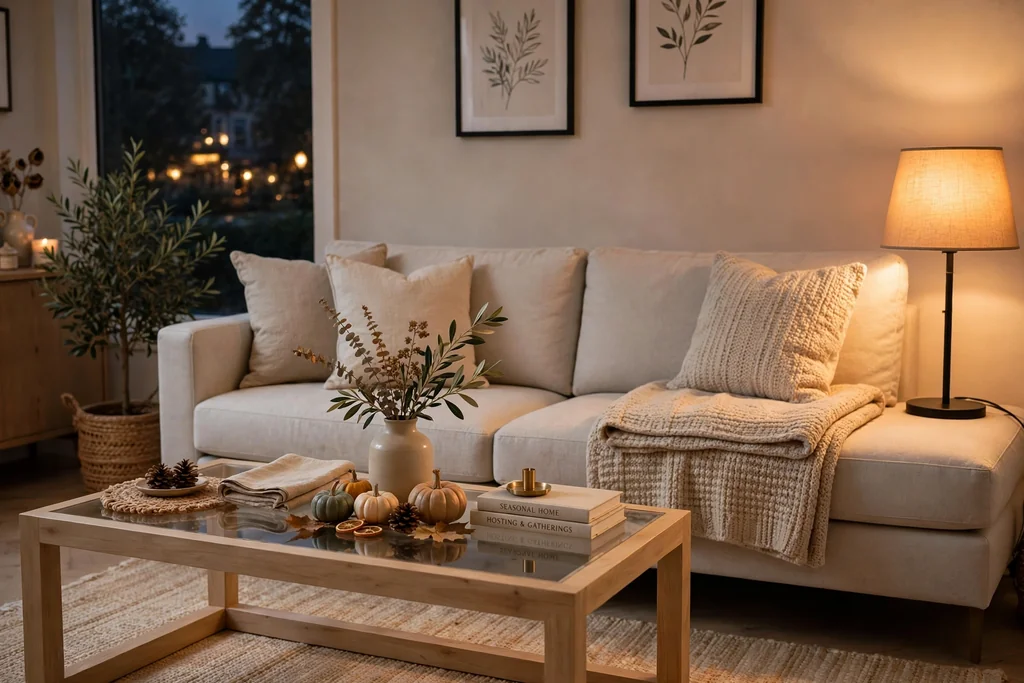
Finish every season change with a slow walk through the house, room by room, with fresh eyes. Look for crowded surfaces, clashing colors, blocked walkways, and displays that only look good from one angle. Fix small problems on the spot, and move anything that does not earn its place back into the bin.
Check the house in evening light too, since battery candles and lamps change how colors read after dark. Take a quick photo of each styled room, which makes it easier to spot imbalance and to repeat the look next year. When the walk-through finds nothing left to fix, the season change is done, and the house is ready to enjoy.
Conclusion
Changing seasonal decor without redecorating comes down to a calm base, a small palette, and a kit of swappable layers. Keep your furniture and wall color steady, change covers, throws, linens, wreaths, prints, and small accents, and store each season in a labeled bin. The first change takes the longest, since you are building the system. Every change after that gets faster, cheaper, and easier to enjoy.
Start with one season and one room if the full plan feels large. Pick a palette, swap the entry and the sofa, and see how far a few small layers go. For more seasonal ideas to add to your kit over time, browse the Dwell Ovell decor ideas index. Save this guide, and use the same steps next season, so your home feels fresh four times a year without a single room makeover.
FAQs
How often should I change seasonal decor?
Change seasonal decor four times a year, at the start of each season, or whenever the weather and light clearly shift in your area. A full change takes about an hour once your swap kits are built, and a light refresh of one or two rooms takes far less. If a season feels long, swap one small item mid-season, such as stems or a candle color, for a fresh note.
What is the cheapest way to change seasonal decor?
The cheapest way is to swap what you already own: move accents between rooms, change pillow covers instead of pillows, and swap prints inside frames you already have. Natural items such as pinecones, dried stems, and branches from your yard add seasonal color at no cost. Add one or two new kit items per season rather than buying a full set at once.
How do I keep seasonal decor from looking cluttered?
Keep seasonal decor from looking cluttered by limiting each room to one focal point, such as a mantel, a table centerpiece, or a wreath, and leaving clear space around it. Use a palette of three or four colors, group small items on a tray, and remove one item before adding another. If a surface looks busy, take a photo of it, since a photo often shows crowding that the eye misses in person.
How should I store seasonal decor between seasons?
Store seasonal decor clean and dry in labeled bins, one bin per season, with fragile items wrapped in tissue or plain cloth and textiles folded flat. Keep bins in a dry spot off the floor, and label each bin with the season and a short list of its contents. Check each bin at the end of the season and remove pieces you did not use, so storage stays lean.
Can I use the same seasonal decor in a small home?
Yes, small homes suit this method well, since it relies on swaps rather than new furniture or large displays. Choose small-scale items such as one wreath, a set of pillow covers, and a low table centerpiece, and style surfaces you already use, such as a windowsill, a side table, or a shelf. One clear focal point per room is enough, and covers and prints store flat, which saves space.
Do I need to match seasonal decor in every room?
No, you do not need to match every room exactly. Repeat one palette color and one material in at least three rooms so the home feels connected, and let each room keep its own function and style. Bedrooms can stay calmer than living rooms, and bathrooms need only a towel and scent change. A shared color thread matters more than identical displays.