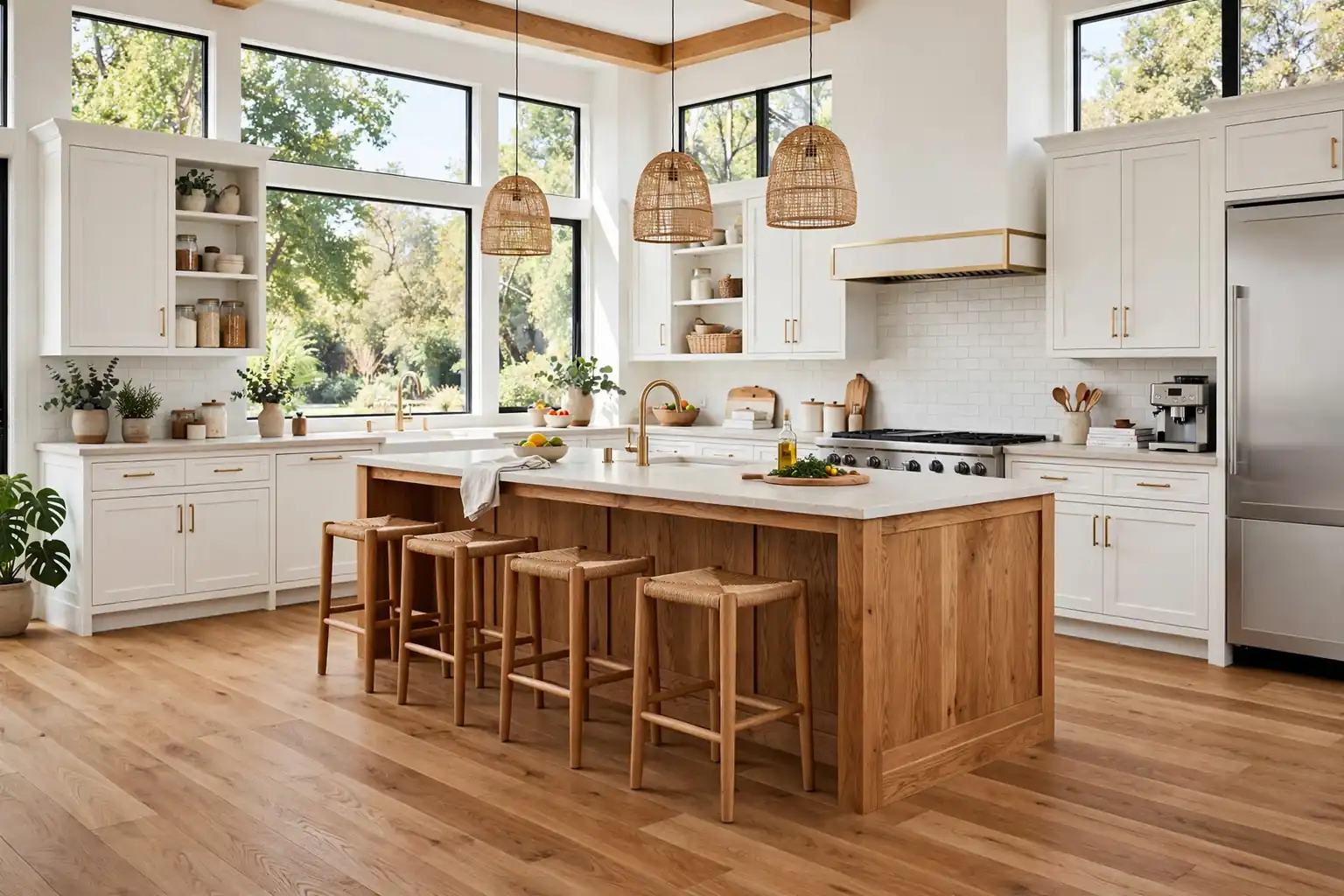
A kitchen floor takes more daily use than any other floor in the house. It meets wet feet, dropped pans, muddy shoes, and chair legs, and it stays in view from the doorway, the table, and the living room beyond. The right floor makes the whole kitchen feel settled, while the wrong one can fight with cabinets and counters no matter how tidy the rest of the room is. These 18 kitchen flooring ideas cover wood, tile, stone, concrete, and softer options, so you can match a floor to the way you actually cook, clean, and gather. Start with the cabinets and counters you already have, order samples you can stand on in your own light, and keep the rest of the room calm so the floor can do its job. If your cabinets are white, these white kitchen ideas show how pale cabinetry pairs with warm wood, stone, and patterned tile floors.
Key Takeaways
- Choose the floor for how you cook and clean first, and let color and pattern follow, since a kitchen floor must handle water, grease, and dropped items every day.
- Order samples and test them beside your cabinets, counters, and wall color in daylight and evening light before you commit to a full floor.
- Keep the rest of the room plain when the floor carries pattern, and use a patterned floor to add interest when cabinets and counters are plain.
- Wood warms a kitchen, tile and stone handle water best, and softer floors like cork and vinyl plank suit households that want comfort underfoot.
- Repeat one tone from the floor elsewhere, such as in a wood counter, a stool, or a rug, so the floor reads as part of the room rather than a separate layer.
- Ask about sealing, grout care, and spare pieces before fitting, since kitchen floors need repairs and cleaning plans from the start.
1. Warm Oak Plank Wood Floor
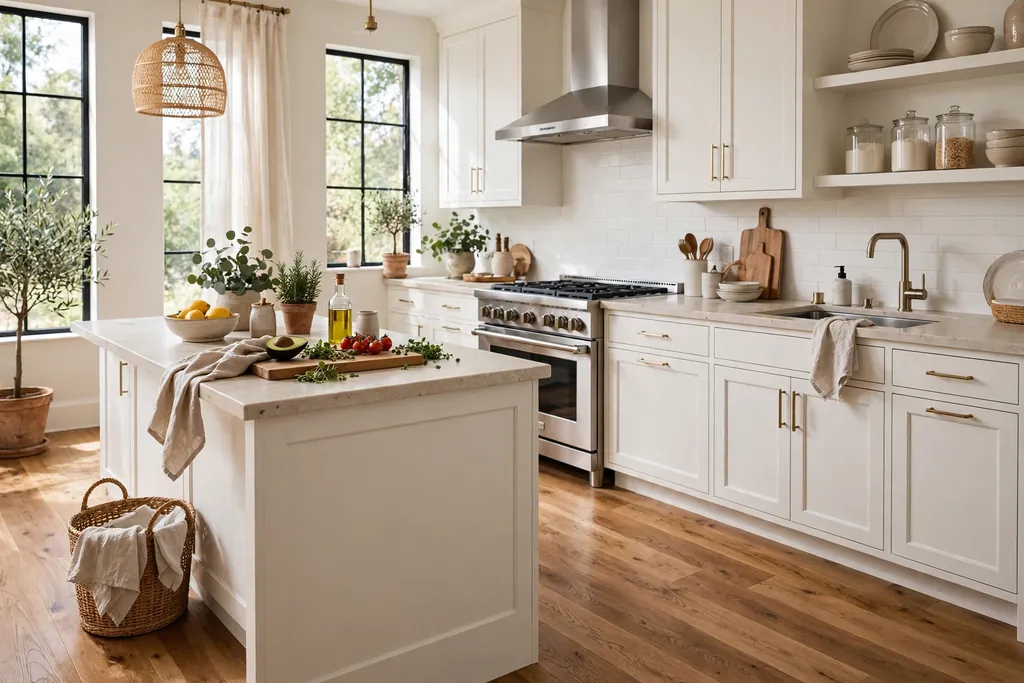
Lay wide oak planks in a warm, mid tone for a kitchen floor that feels relaxed and familiar. Oak suits white, cream, sage, and navy cabinets alike, and its grain adds movement without a busy pattern. A matte or satin finish keeps the floor from looking glossy under kitchen lights, and it hides small marks better than a high shine finish.
Keep counters simple in pale stone or wood so the oak stays the warm note in the room. Use felt pads on chair legs, wipe spills promptly, and place a mat at the sink and the back door where water lands most. If you have a dog, a mid tone oak with visible grain hides scratches better than a very pale or very dark floor.
2. Herringbone Wood Floor
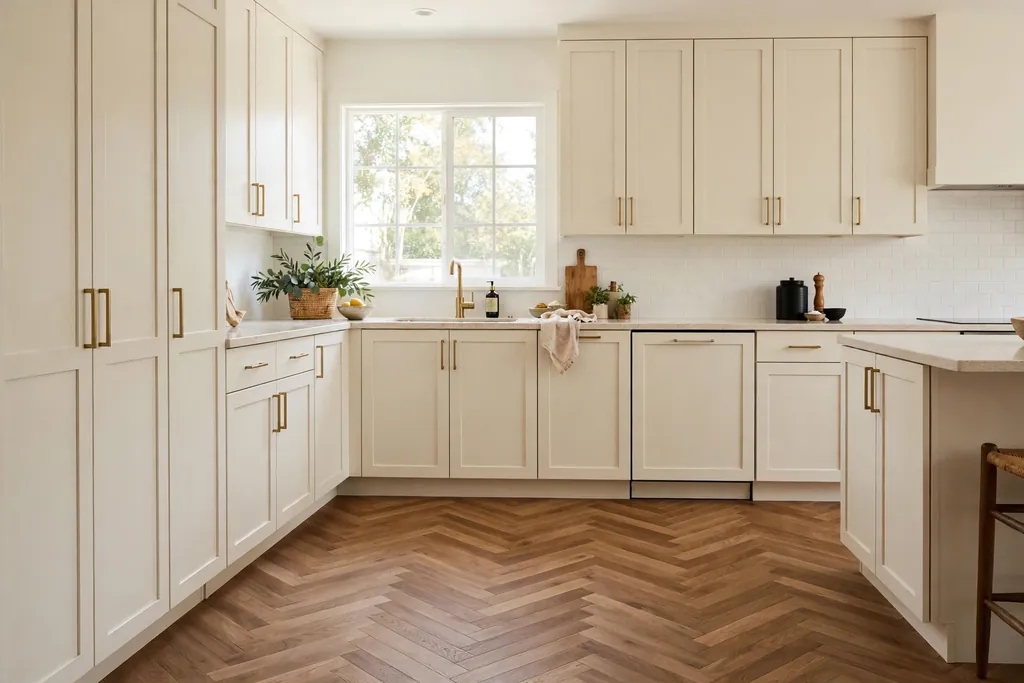
Lay wood in a herringbone pattern for a floor with clear structure and a sense of craft. The zigzag layout draws the eye along the room and suits both classic kitchens and modern rooms with plain cabinets. Herringbone works best where the floor can be seen in a good stretch, such as an open plan kitchen or a room with an island that does not cover the whole floor.
Keep the wood tone calm, since the pattern already gives plenty of interest, and pair it with plain cabinets and a simple backsplash. Herringbone fitting takes more time and more cuts than straight planks, so ask your fitter about waste and cost before you order. Use a rug runner in a plain tone in the main work run if you want to soften the pattern underfoot.
3. Pale Whitewashed Wide Planks
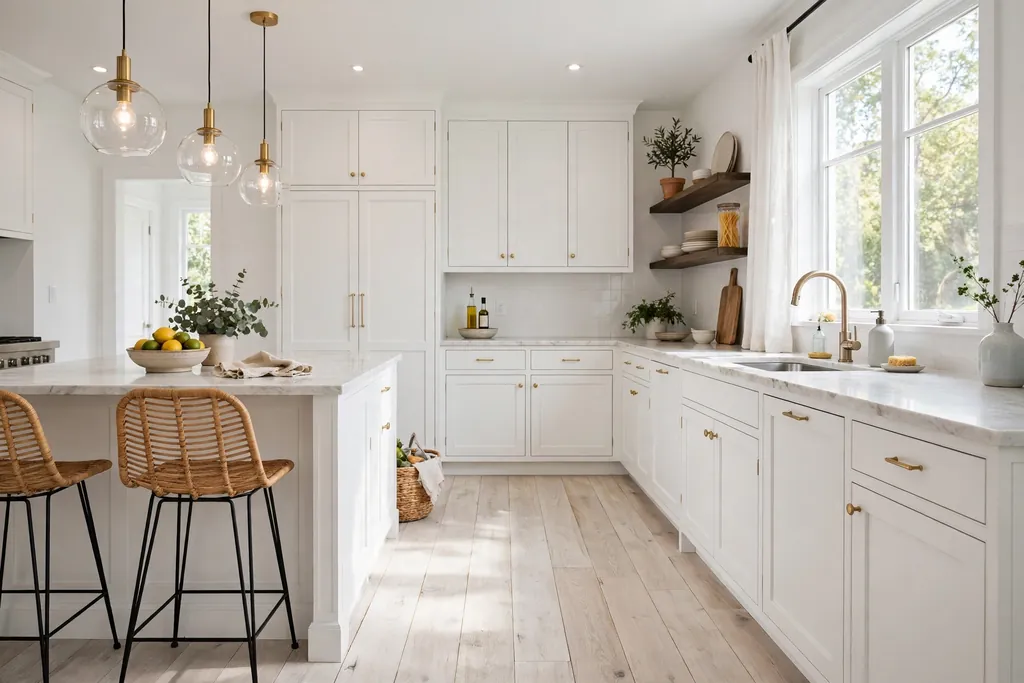
Choose wide planks in a pale, whitewashed finish for a kitchen that needs light. The pale wood lifts a north facing room or a kitchen with small windows, and it pairs well with white cabinets, pale stone, and linen tones. Wide planks keep the floor calm, since fewer joints mean fewer lines across the room.
Balance the pale floor with one warm material, such as a wood island top, oak stools, or brass handles, so the room does not feel washed out. Pale floors show crumbs and dirt more readily than mid tones, so a quick daily sweep matters. Choose a finish made for kitchens, and wipe water at once, since pale wood shows water marks if puddles sit.
4. Dark Walnut Wood Floor
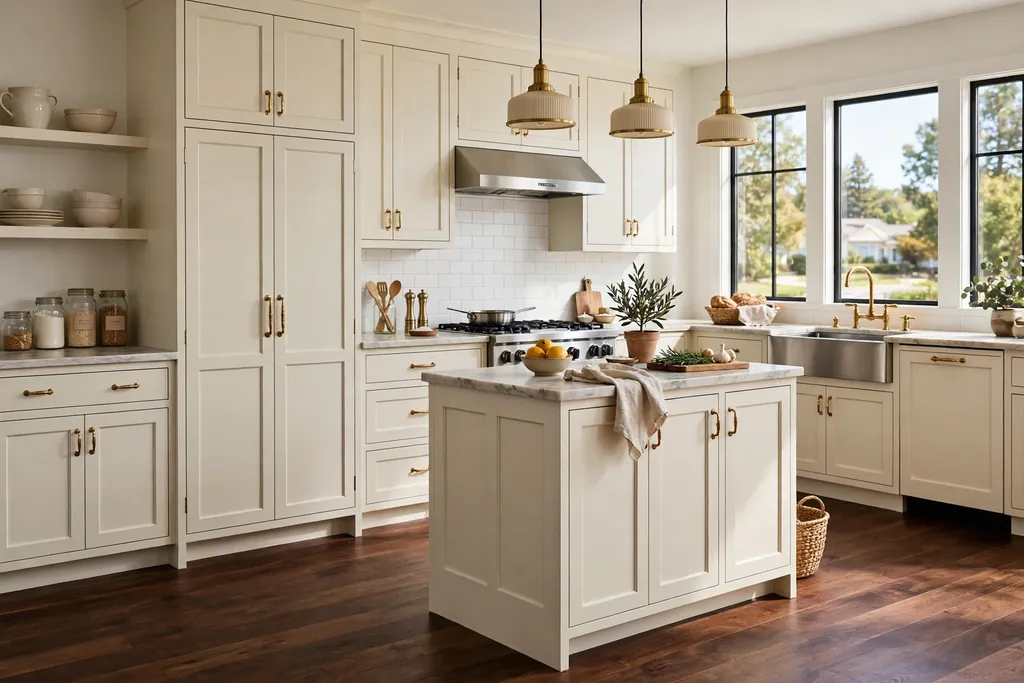
Lay dark walnut planks for a kitchen floor with depth and a grounded feel. Walnut suits cream cabinets, brass hardware, and marble look counters, and it makes a large kitchen feel more intimate. The dark tone also anchors a room with tall ceilings or a lot of white on the walls.
Pair walnut with pale counters and light walls so the room stays bright, and add warm light under cabinets to keep the floor from reading black at night. Dark floors show dust, crumbs, and pet hair more than mid tones, so plan on regular sweeping. Use mats at entrances and felt pads under furniture to protect the finish where chairs move daily.
5. Large-Format Stone-Look Porcelain Tile
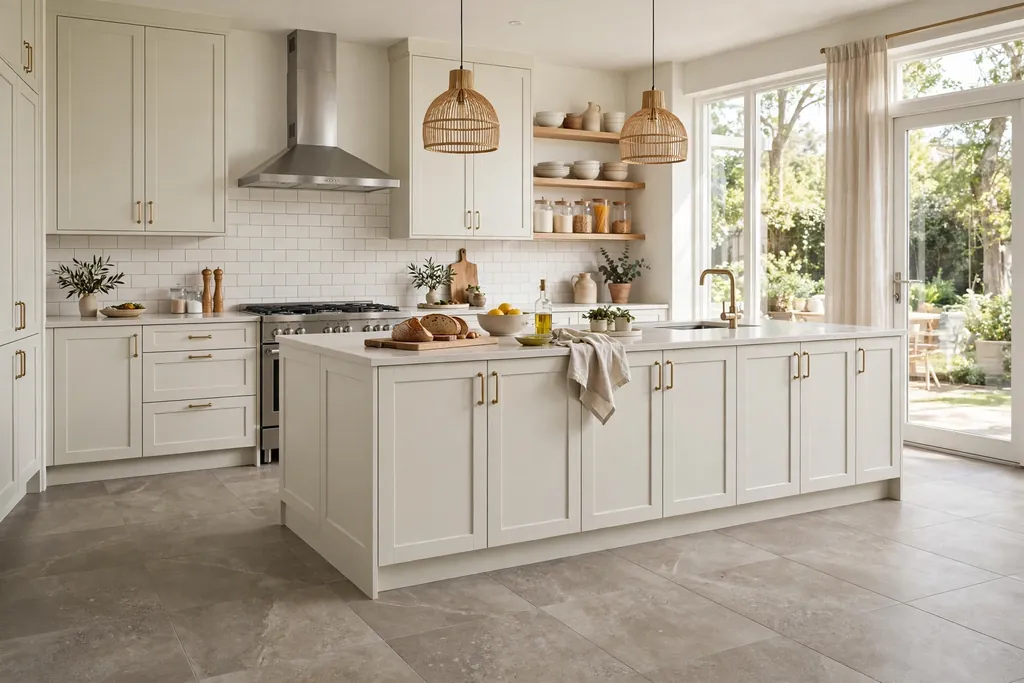
Use large-format porcelain tiles with a stone look for a kitchen floor that handles water with ease. Large tiles mean fewer grout lines, so the floor reads as calm and is quicker to mop. Stone-look porcelain gives the texture of limestone or sandstone without the sealing and staining worries of real stone.
Choose a mid tone stone color, such as warm grey or pale beige, so crumbs do not stand out as they would on very pale or very dark tile. Pick a tile with some grip underfoot, since kitchen floors get wet, and match the grout to the tile tone for a seamless look. Keep spare tiles from the same batch for future repairs, since tile shades vary between batches.
6. Terracotta Tile Floor
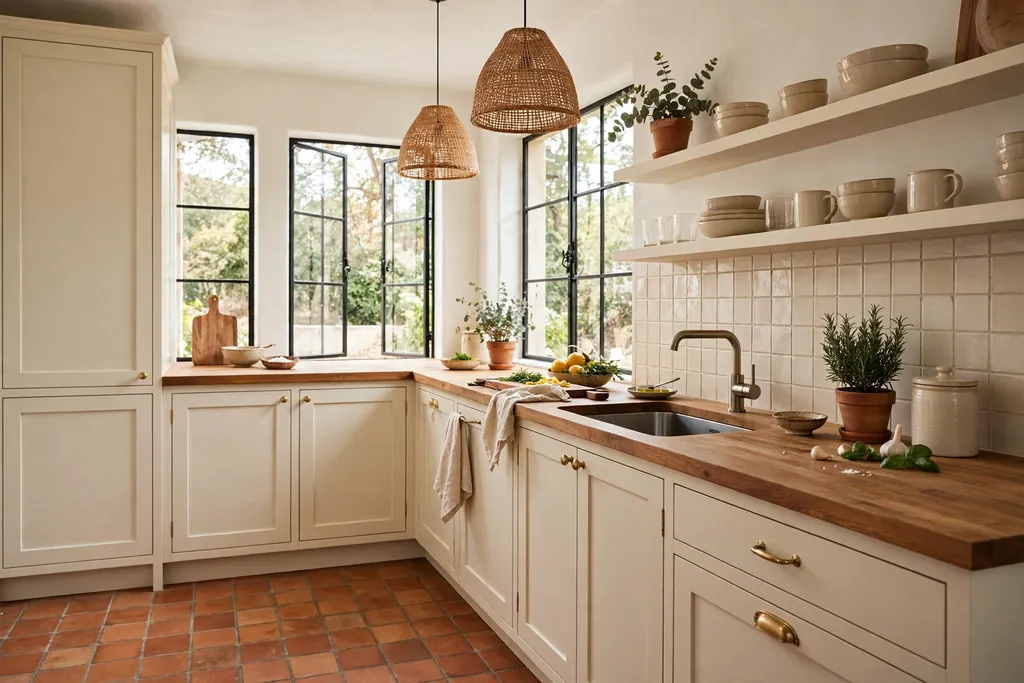
Lay terracotta tiles for a kitchen floor with warmth, texture, and a Mediterranean feel. The earthy red brown tone suits cream cabinets, wood counters, and black hardware, and it warms up a kitchen with white walls. Terracotta tiles vary slightly from tile to tile, which gives the floor a handmade, lived-in character.
Seal terracotta as advised by the supplier, since unsealed tiles stain from oil and tomato spills. Pair the floor with plain cabinets and a simple backsplash so the tile color leads. A terracotta floor suits a kitchen with good daylight, where the warm tone glows, and it pairs well with plants and woven baskets for a relaxed finish.
7. Classic Black and White Checkerboard Tile
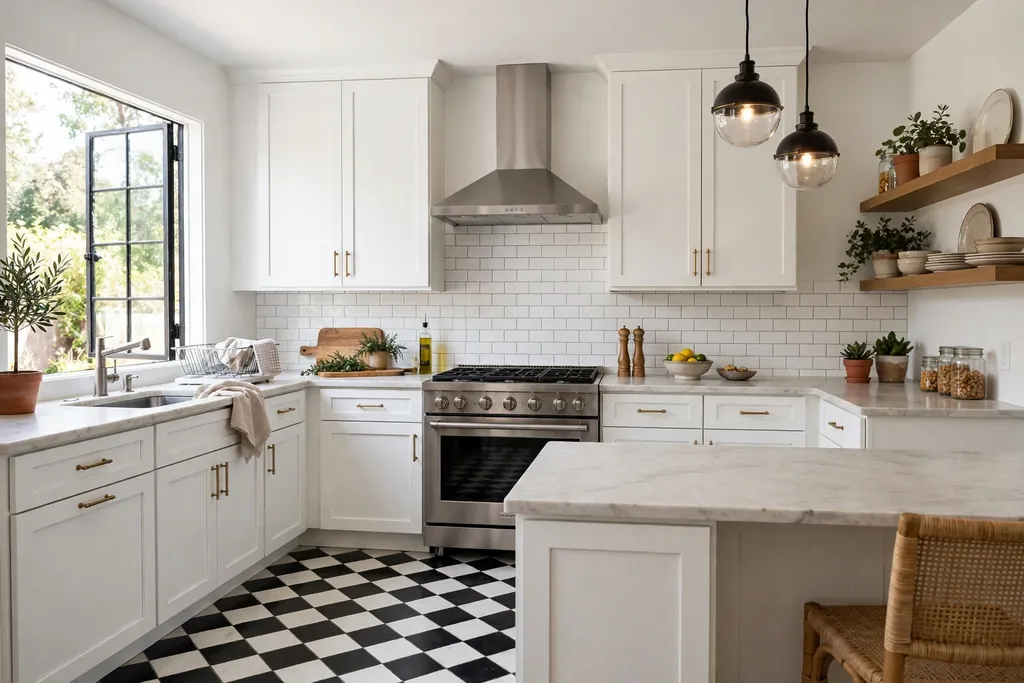
Lay black and white checkerboard tile for a kitchen floor with a clear, graphic pattern. The checkerboard suits farmhouse, retro, and classic kitchens, and it sets the tone for the whole room at once. Small squares feel busy and vintage, while larger squares feel calmer and more modern, so choose the tile size to match the room.
Keep walls and cabinets plain, in white, cream, or pale wood, so the floor can lead without competition. Use a plain rug runner in the main work zone if the pattern feels busy underfoot. Choose a tile finish suited to kitchens, with grip and easy cleaning, and keep spare tiles for repairs, since a cracked tile in a checkerboard stands out.
8. Patterned Cement Tile Floor
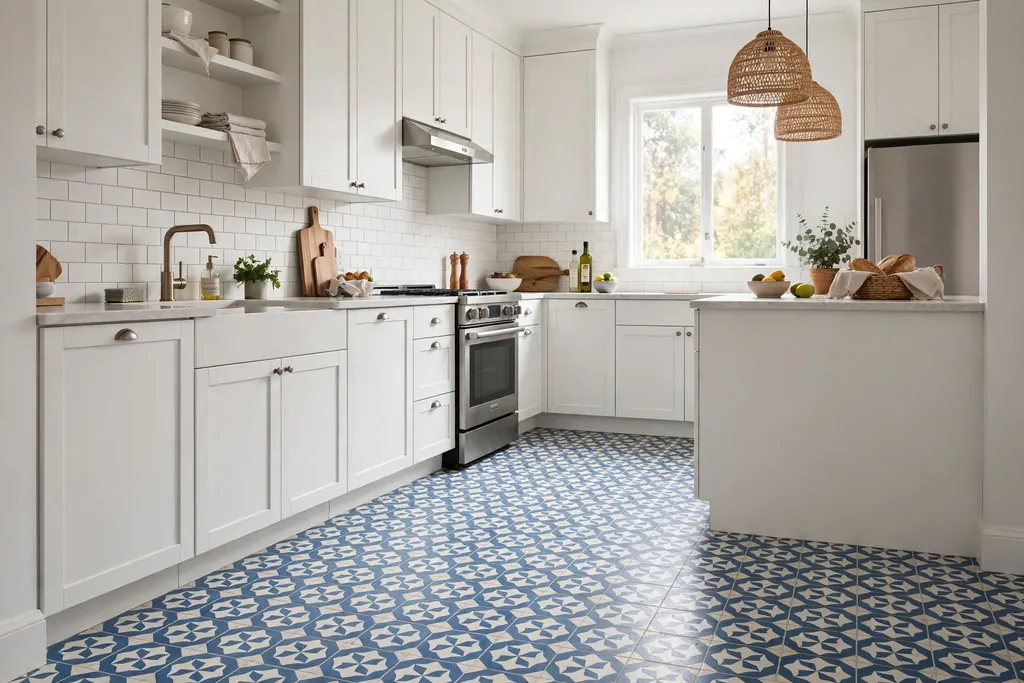
Choose patterned cement tiles for a kitchen floor that acts as the room’s main decoration. A floral, star, or geometric pattern in two or three colors adds interest without new cabinets or wall color, and it suits a kitchen with plain white or wood cabinets. Patterned tile works best across the whole floor rather than in a small patch, so the pattern reads as a plan.
Pick one color from the tile to repeat in a towel, a stool cushion, or a vase, and keep counters and backsplash plain. Cement tiles need sealing and gentle cleaning, so check the maker’s care advice before fitting. Order a few spare tiles, since patterned tiles can be hard to match later if a tile chips.
9. Natural Slate Stone Floor
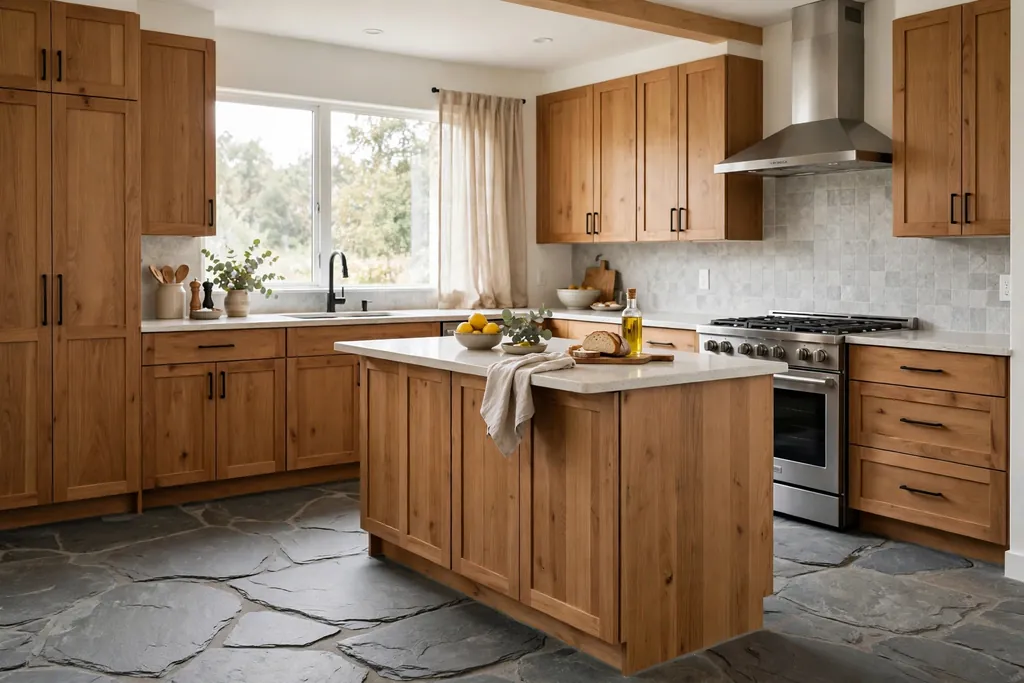
Lay natural slate for a kitchen floor with texture, variation, and a rugged, honest feel. Slate comes in greys, greens, and rust tones, and no two tiles look exactly alike, which gives the floor depth. It suits farmhouse kitchens, cottages, and rooms with wood beams or stone walls.
Seal slate to resist stains, and choose a finish with enough grip for a wet kitchen floor. Slate feels cool underfoot, so pair it with warm wood cabinets or a wood island top, and add a rug in the seating area for comfort. Because slate tones vary, mix tiles from several boxes as you lay them so no one patch of color stands out.
10. Marble-Look Porcelain Tile
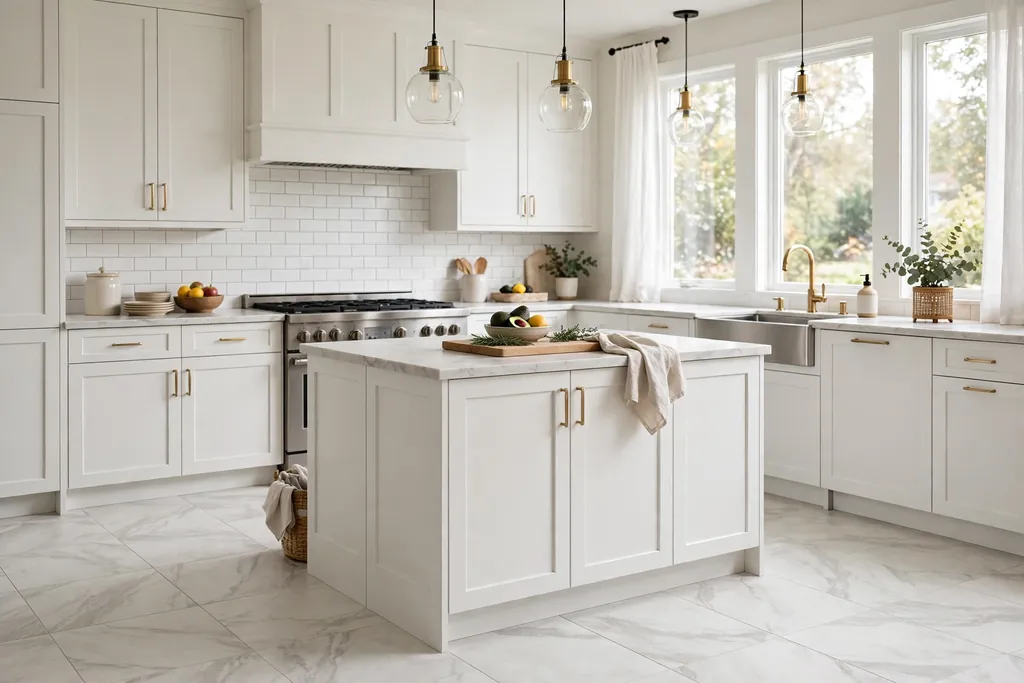
Use marble-look porcelain tile for a kitchen floor with pale stone veining and the easy care of porcelain. The soft grey veins add movement to a plain kitchen, and the pale base keeps the room bright. This suits white, cream, and pale grey cabinets, and it pairs well with brass hardware and a simple white backsplash.
Keep the rest of the room plain so the veining stays the main detail, and choose a matte or lightly textured finish for grip. Unlike real marble, porcelain resists stains from lemon, tomato, and wine, which makes it a practical pick for a busy cooking kitchen. Lay large tiles with narrow grout joints for a calm, stone slab feel.
11. Warm Brick Floor
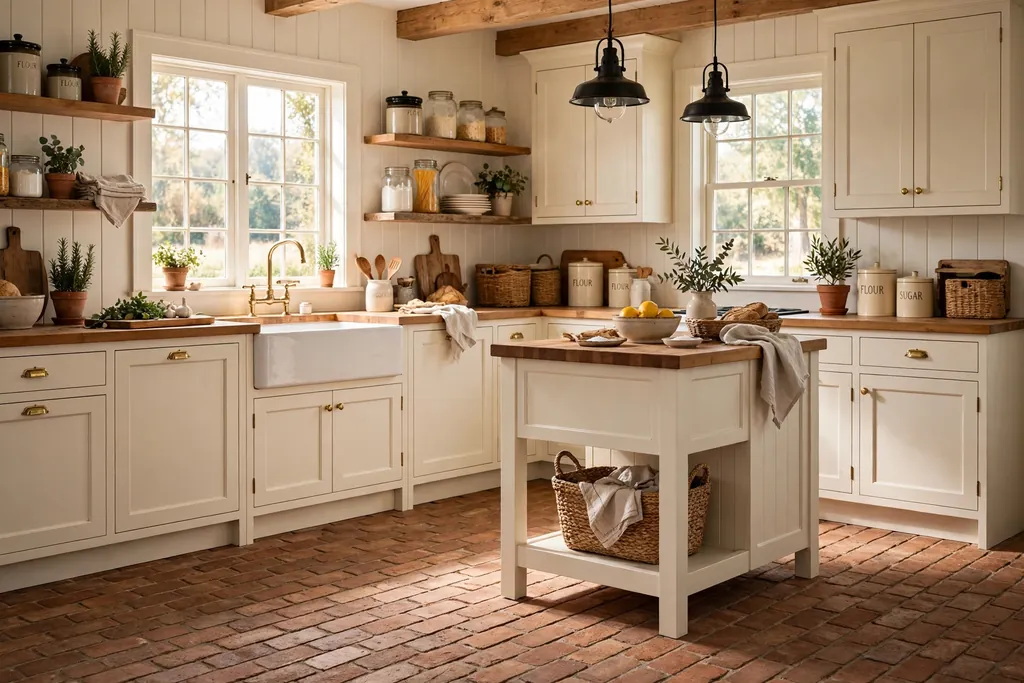
Lay brick pavers for a kitchen floor with warmth, texture, and a farmhouse character. Brick suits cream cabinets, wood counters, and black hardware, and it gives an older house a floor that feels original to the building. The rough surface and warm red brown tone soften a kitchen with a lot of white or steel.
Seal brick to resist grease and water, and choose a paver made for interior floors rather than an outdoor brick. Brick floors are hard underfoot, so add a cushioned mat at the sink and stove where you stand longest. Keep the grout or mortar joints clean with a stiff brush, since cooking grease settles into rough joints over time.
12. Polished Concrete Floor
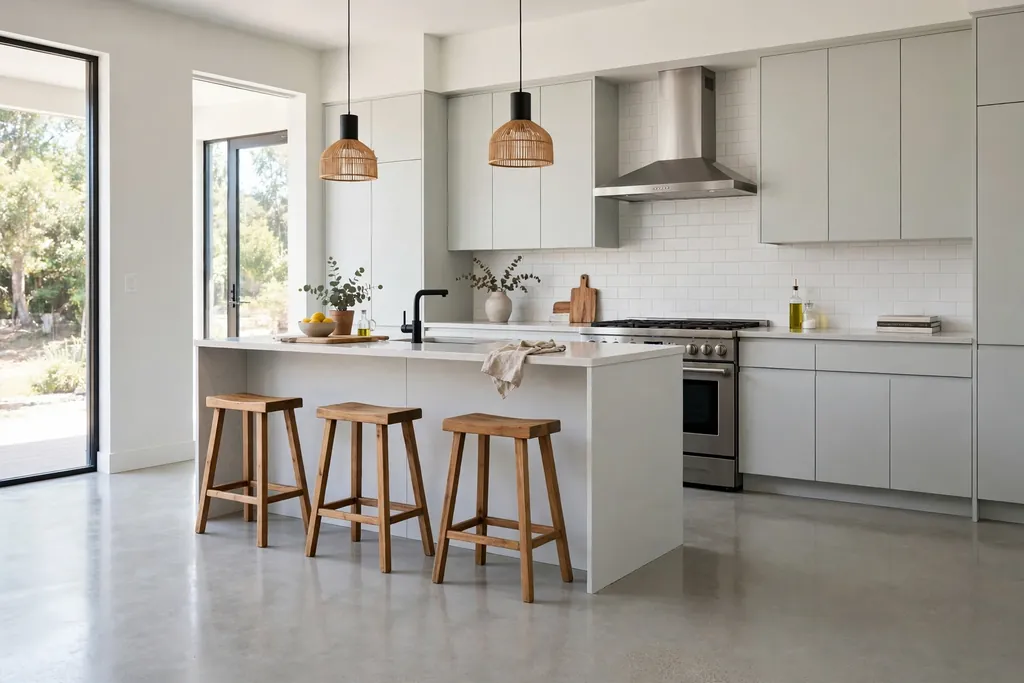
Choose polished concrete for a kitchen floor with a smooth, modern, and hard wearing surface. Concrete suits open plan kitchens, industrial rooms, and homes with plain cabinets, since the floor stays quiet and lets furniture and food take the focus. A light grey or warm grey polish keeps the room bright, while a darker stain adds drama.
Seal concrete as advised, and wipe spills promptly, since even sealed concrete can mark from strong colors if left sitting. Concrete feels hard and cool, so add warmth with wood stools, a wood table, and a rug in the seating zone. Rugs with a non slip backing stop slipping on a smooth polished floor, which matters when carrying hot dishes.
13. Terrazzo Floor
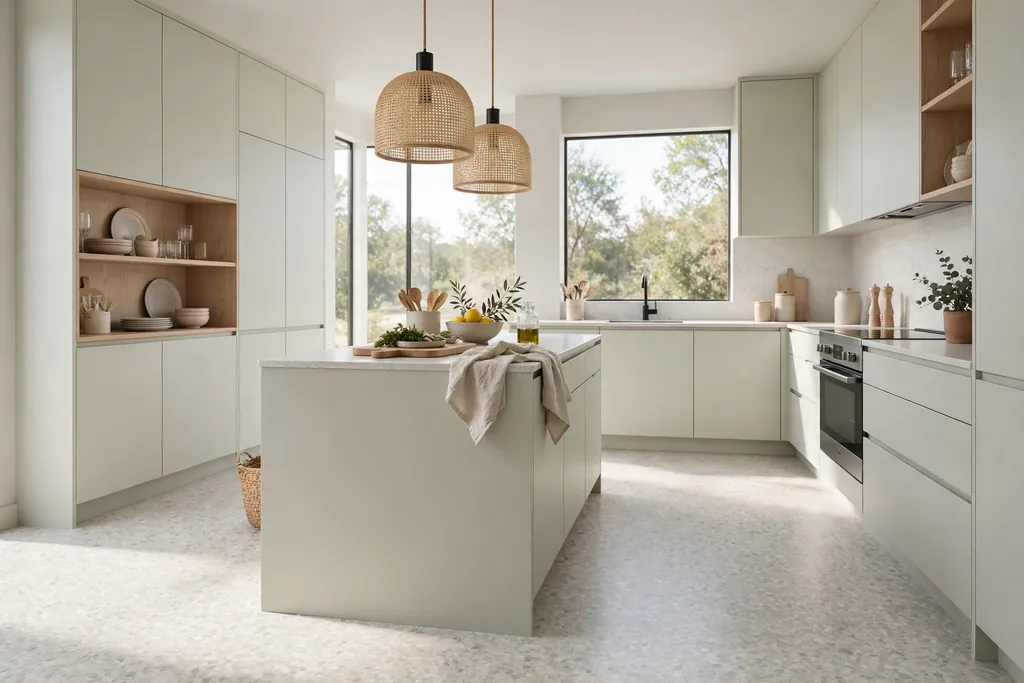
Lay terrazzo for a kitchen floor with speckled color and a surface that hides crumbs well. Terrazzo mixes chips of stone, glass, or marble in a cement or resin base, so each floor has its own mix of tones. A pale base with warm grey, cream, and soft pink chips suits a modern kitchen, while a darker base suits a bolder room.
Choose cabinet and wall colors from the lightest tones in the terrazzo mix, so the room stays calm. Keep the backsplash simple, since the floor already has plenty of detail. Seal the surface as advised by the supplier, and use felt pads under chairs, since terrazzo is hard and chair legs can mark a polished finish over time.
14. Soft Cork Floor
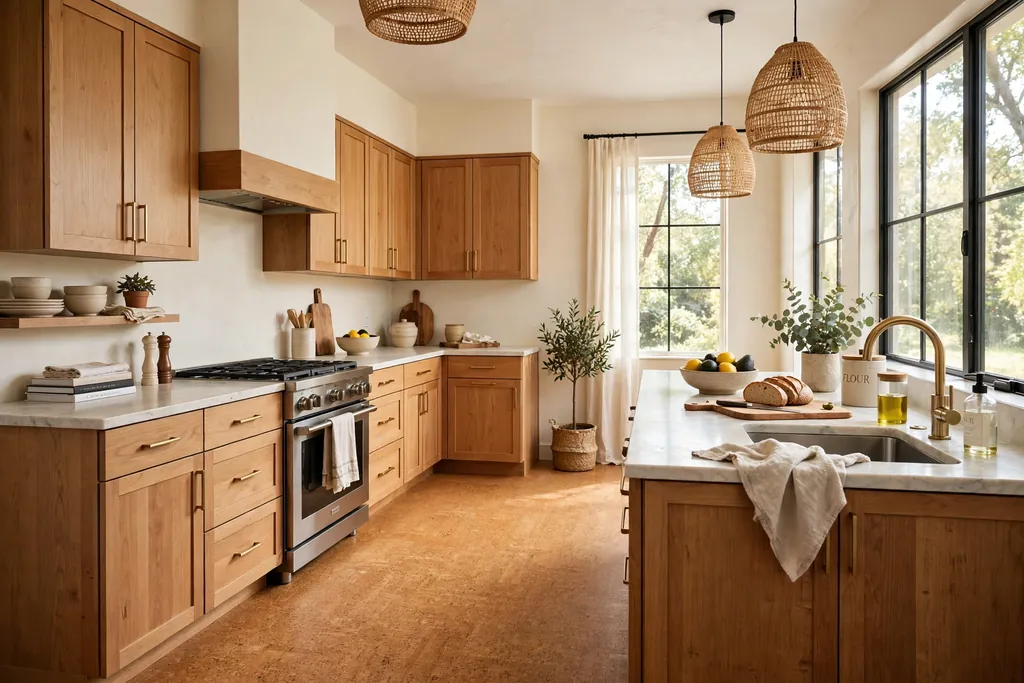
Choose cork for a kitchen floor that feels warm, quiet, and kind to feet and dropped dishes. Cork gives slightly underfoot, which suits cooks who stand for long stretches, and it muffles sound in an open plan home. Natural cork tones range from pale honey to warm brown, and they pair well with wood cabinets and cream walls.
Seal cork for kitchen use, and wipe water at once, since standing water is the main risk for cork floors. Use mats at the sink and dishwasher, and choose a cork tile or plank with a wear layer made for kitchens. Cork suits a household that wants comfort first and does not mind a floor with a softer, more natural look than tile or stone.
15. Wood-Look Luxury Vinyl Plank
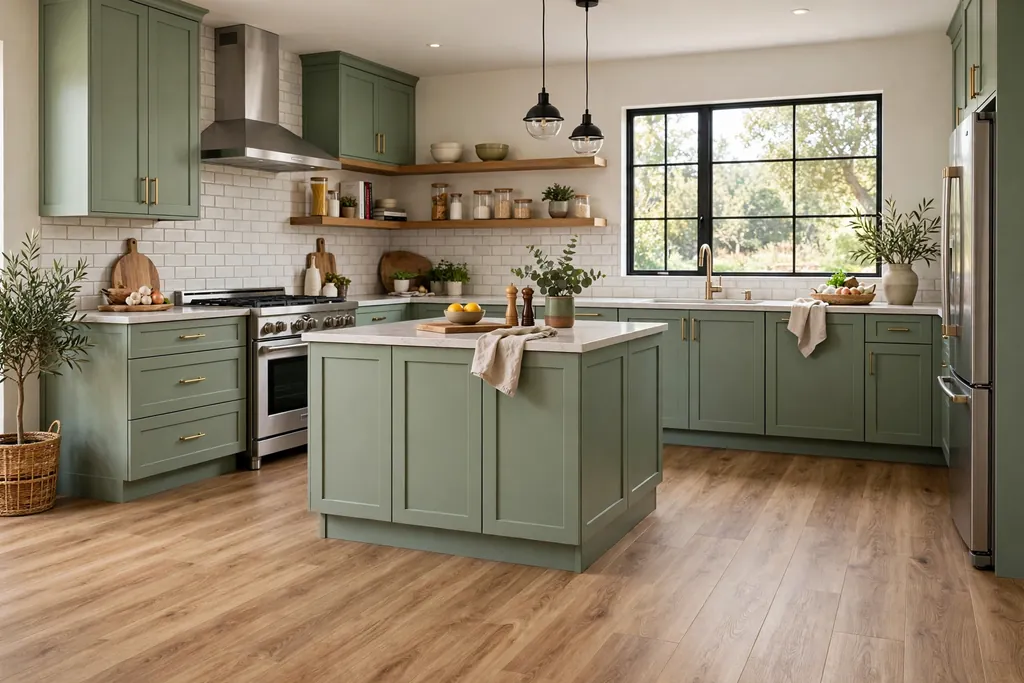
Lay wood-look luxury vinyl plank for a kitchen floor that looks like wood and handles water like vinyl. The planks come in oak, walnut, and pale wood tones, and they suit renters and households with pets, since the surface resists scratches and spills. Vinyl plank also works well over an existing floor, which can keep fitting simpler.
Choose a plank with a realistic grain and a matte finish, and check the wear layer before buying, since thicker wear layers last longer in a busy kitchen. Pair vinyl plank with cabinets in a tone that matches the wood look, and for help choosing that cabinet color, see these colors for your kitchen cabinets. Use a non slip rug pad under runners, and keep spare planks for repairs.
16. Painted Floorboards
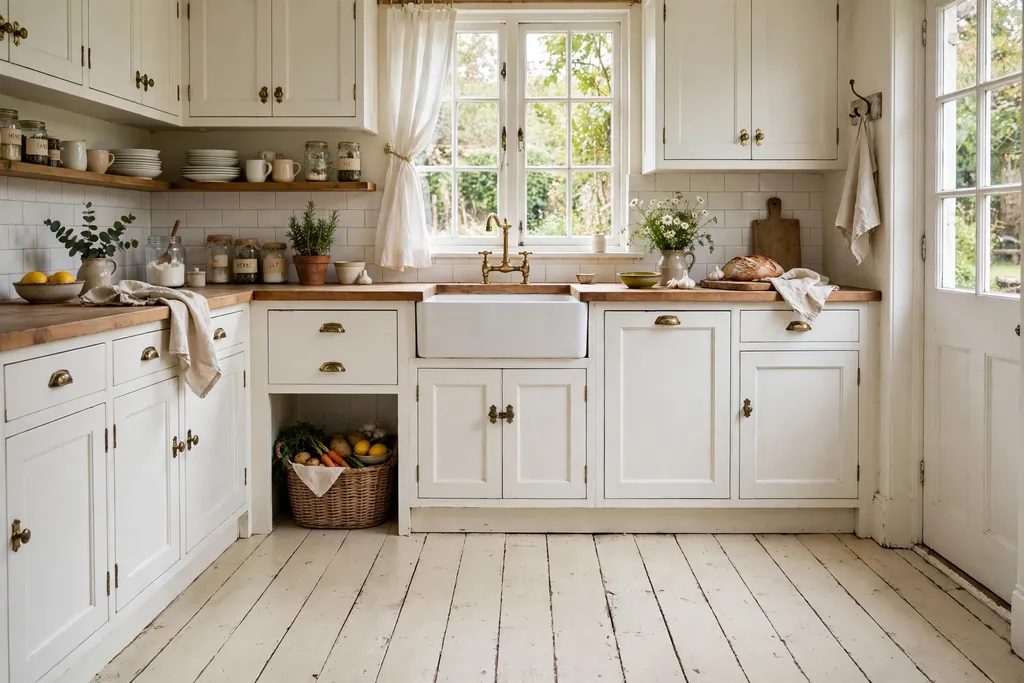
Paint existing floorboards for a kitchen floor with a fresh color and a low cost change. White or cream paint lifts a dark kitchen, while a soft grey or sage paint adds color without new material. Painted boards suit cottages, farmhouses, and older homes where the boards are sound but tired.
Sand and prime the boards first, and use a floor paint made for high traffic areas, since ordinary wall paint wears quickly under chairs and feet. Keep a small pot of the same paint for touch ups, and use a rug runner in the main work run to slow wear. Painted floors show scuffs over time, so treat touch ups as part of the look rather than a flaw.
17. Penny Round Mosaic Tile
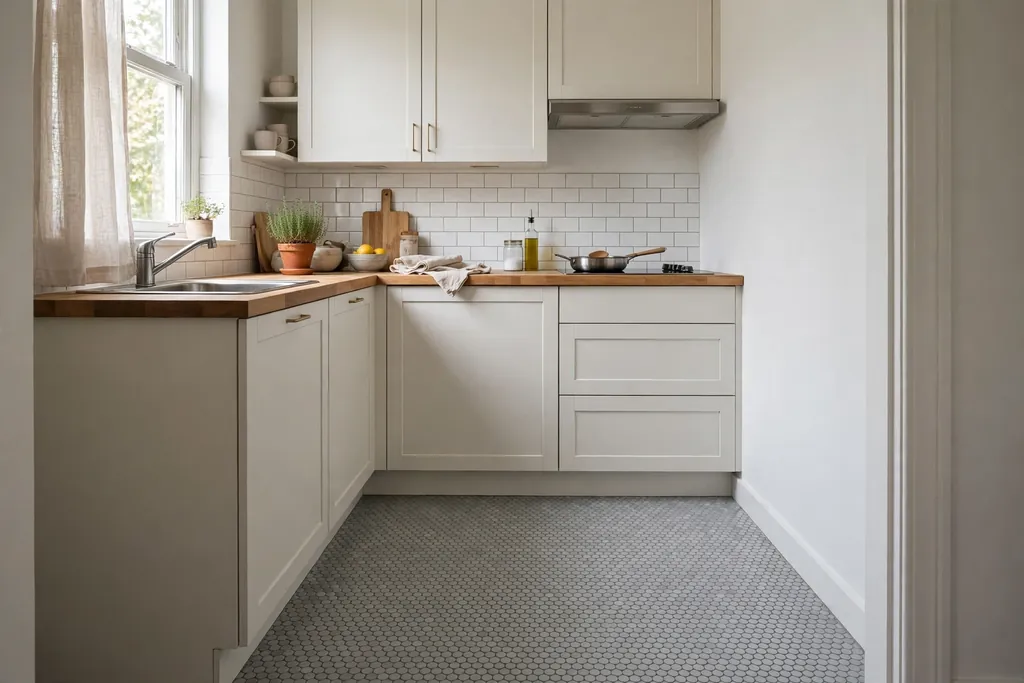
Use penny round mosaic tile for a kitchen floor with small scale texture and a vintage feel. The small round tiles suit a kitchen nook, a pantry floor, or a small galley kitchen, where a large tile pattern would feel too bold. A single color, such as soft grey or cream, keeps the floor calm, while a mix of two tones adds gentle movement.
Grout lines are many on a mosaic floor, so seal the grout and plan on regular cleaning in the splash zone. Pair mosaic tile with plain cabinets and a simple counter, so the small pattern does not compete with a busy backsplash. Order spare sheets from the same batch, since mosaic shades vary and a repair sheet should match.
18. Sheet Linoleum in a Plain Warm Tone
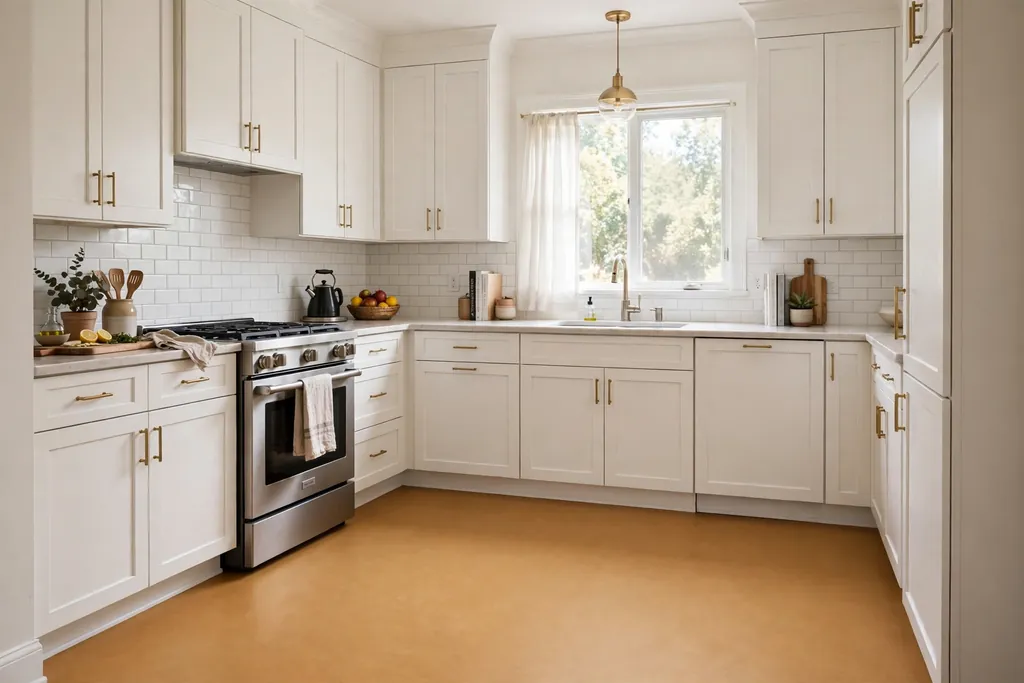
Lay sheet linoleum in a plain warm tone for a kitchen floor that is seamless, soft underfoot, and easy to clean. Sheet linoleum has almost no joints, so water has few places to sit, and it suits a small kitchen or a rental where a practical floor matters most. Warm tones such as honey, warm grey, or soft terracotta keep the room relaxed without a pattern.
Keep cabinets and counters plain so the floor reads as a quiet background, and add color through a rug, stools, or tableware that you can change easily. Linoleum needs a smooth, clean subfloor for a good finish, so ask your fitter to check the base before laying. Use felt pads on furniture and avoid dragging heavy appliances across the sheet.
Conclusion
A relaxed kitchen floor starts with honest choices about water, cleaning, and daily wear, then adds color and pattern in a way the rest of the room can support. Wood warms the room, tile and stone handle spills best, concrete and terrazzo suit modern rooms, and cork, vinyl plank, and linoleum keep comfort and easy care in focus. Test samples beside your cabinets and counters, ask about sealing and spares, and repeat one floor tone elsewhere so the room feels pulled together. Save this list on Pinterest for your next kitchen refresh, and start with the floor you stand on most: the run between the sink, the stove, and the fridge.
FAQs
What is the best flooring for a busy kitchen?
The best floor for a busy kitchen is one that handles water, grease, and dropped items with little fuss. Porcelain tile, stone-look porcelain, luxury vinyl plank, and sealed concrete all clean easily and resist stains. Wood and cork can work well too, if you wipe spills promptly and use mats at the sink and dishwasher. Choose the material that fits your cleaning habits as much as your style, since a floor you dread cleaning will never feel relaxed.
Is wood flooring practical in a kitchen?
Yes, wood works in a kitchen if you choose a finish made for the room and keep water from sitting on it. Wipe spills at once, use mats at the sink and back door, and add felt pads to chair legs. A mid tone oak with visible grain hides small marks better than very pale or very dark wood. If water damage worries you, wood-look vinyl plank gives a similar look with stronger water resistance.
How do I choose a kitchen floor color?
Start with your cabinets and counters, since those are harder to change than a rug or a stool. A warm wood floor suits white, cream, and sage cabinets, while a pale stone floor suits dark cabinets and keeps the room bright. Order samples and check them in daylight and evening light beside your cabinets, since floor colors shift a lot between lights. If you plan to change cabinets later, a mid tone neutral floor is the safest long term choice.
Does a patterned kitchen floor suit a small kitchen?
Yes, if the pattern stays calm and the rest of the room stays plain. A checkerboard in large squares, a soft patterned cement tile, or a single color mosaic can add character to a small kitchen without crowding it. Keep cabinets, counters, and backsplash plain, and use a plain rug runner in the main work run to calm the pattern underfoot. Avoid mixing a patterned floor with a patterned backsplash, since two strong patterns compete in a small room.
What kitchen flooring is easiest to clean?
Porcelain tile, sheet linoleum, and luxury vinyl plank are among the easiest kitchen floors to clean, since their surfaces wipe clean and resist most stains. Large-format tile has fewer grout lines to scrub, and sheet linoleum has almost no joints at all. Natural stone, cement tile, and brick need sealing and more care with grout, while wood and cork need prompt wiping of spills. Whatever you choose, a daily sweep and a weekly mop keep most kitchen floors in good shape.
Can renters change a kitchen floor without a full remodel?
Yes. Renters can use peel and stick vinyl tiles, a large washable rug, or a runner over an existing floor to change the look with no fixed work. Luxury vinyl plank in a click fit system also suits some rentals, but check your lease and get written permission before fitting anything fixed. Keep the original floor in good shape underneath, save any spare pieces, and choose a change you can remove cleanly at the end of the tenancy.