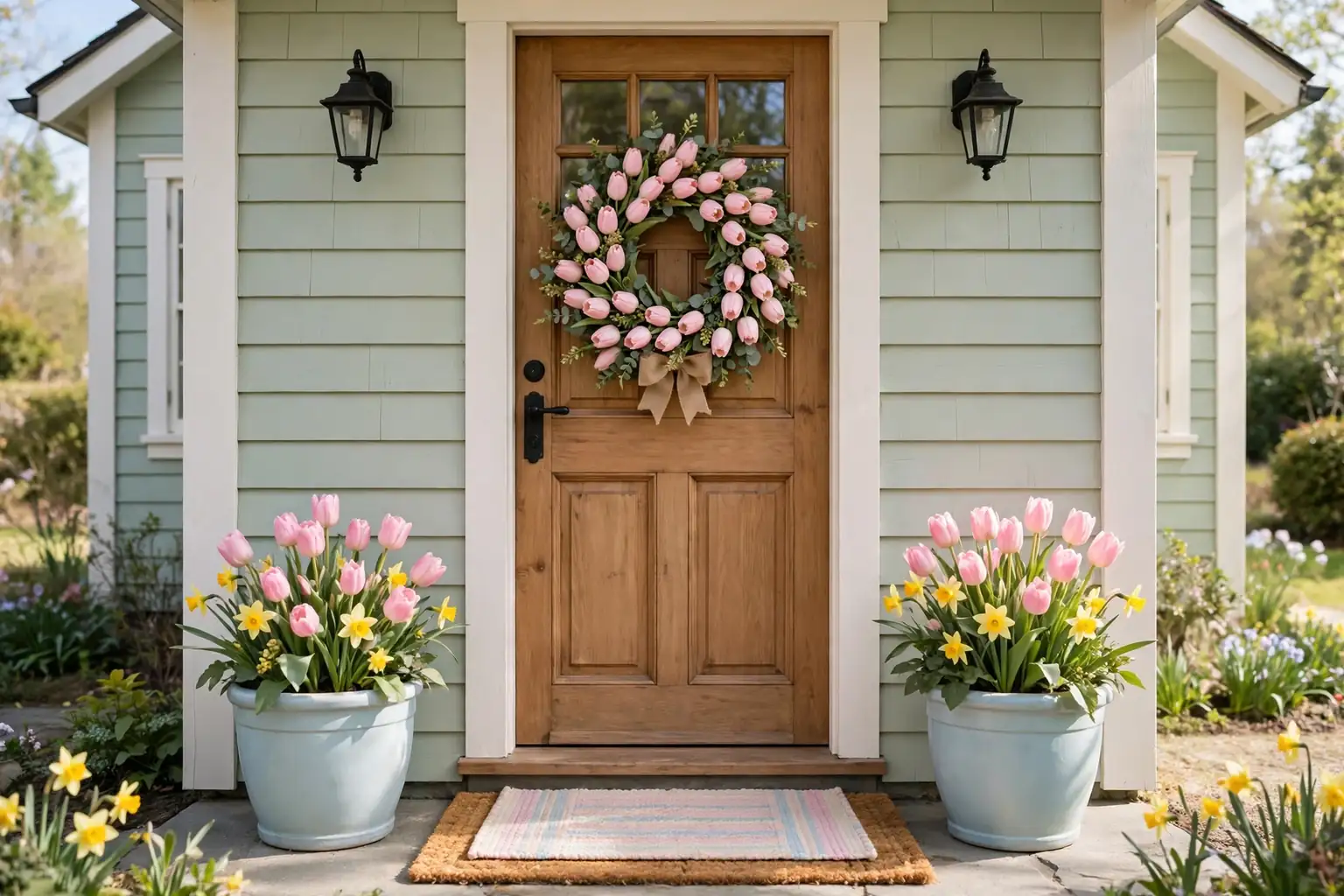
A front door is the first thing guests notice, and spring is the easiest season to refresh it. Fresh flowers, soft color, and a clean porch can make an ordinary entry feel welcoming without a full makeover. You do not need to change everything at once. Start with one focal point, such as a wreath or a pair of planters, then add smaller details only where they help. These 22 ways to create spring front door decor cover wreaths, planters, paint, lighting, and small seasonal touches, so you can pick the ideas that suit your porch size, your light, and the way you use your entry every day.
Key Takeaways
- Start with one focal point, such as a wreath, a painted door, or a pair of planters, and keep the rest of the porch calm around it.
- Repeat one flower or one pastel color in two or three places so the entry reads as planned rather than crowded.
- Use planters and pots at different heights, but keep the path and the door swing fully clear.
- Choose flowers and plants that suit your porch light, and water pots often in the first weeks after planting.
- Keep candles and lanterns clear of wreaths, garlands, fabric, and dry leaves, and use battery candles in windy spots.
- Refresh only a few pieces as spring moves into summer, rather than clearing the whole porch each month.
1. A Classic Tulip Wreath on the Door
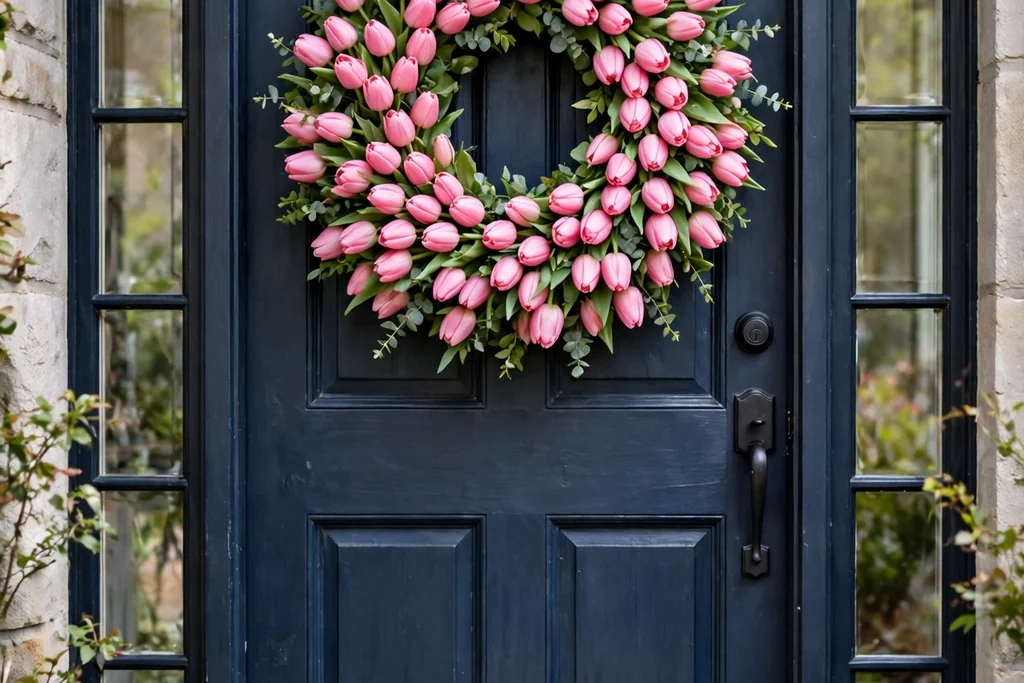
A wreath of fresh or faux tulips is the quickest spring change you can make to a front door. Choose one color, such as soft pink, white, or butter yellow, and keep the wreath full enough to read from the street without covering the whole door. Hang it at eye level with a hook over the top of the door or a nail on the door itself, and check that it does not catch on the handle or the letterbox.
Fresh tulip wreaths suit a covered porch, where they stay out of wind and strong sun. Faux tulips suit an exposed door, since they hold their shape through rain and sun. Either way, step back to the street and check the size: a wreath that looks right from inside the porch can look small from the pavement, so a wider wreath often works better on a large door.
2. A Soft Pastel Painted Door
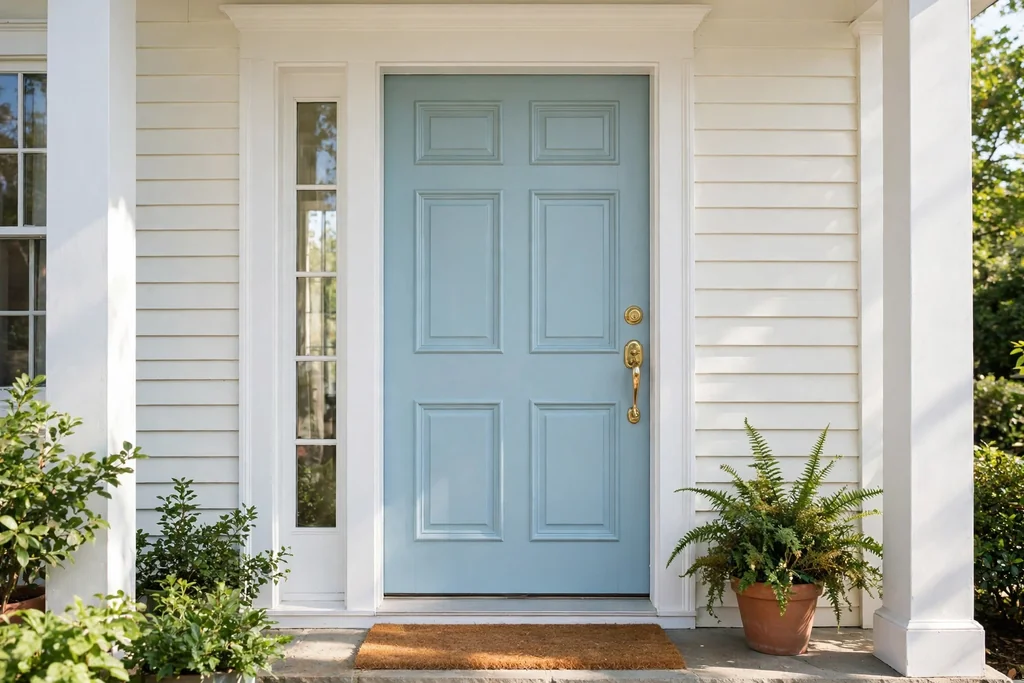
A fresh coat of pastel paint gives a spring entry a clear new mood, even before any flowers arrive. Pale blue, soft mint, butter yellow, and blush pink all suit spring, and each one reads differently against brick, stone, or white siding. Test two or three sample shades on the door itself and check them in morning, midday, and evening light before you commit to a full coat.
Paint the door in dry, mild weather, and use an exterior paint made for doors so the finish stands up to rain and daily use. Keep the trim simple, in white or cream, so the pastel stays the focus. For shade ideas and hardware pairings, these blue front door colors show how one color family can suit many house styles.
3. Matching Planters of Spring Bulbs
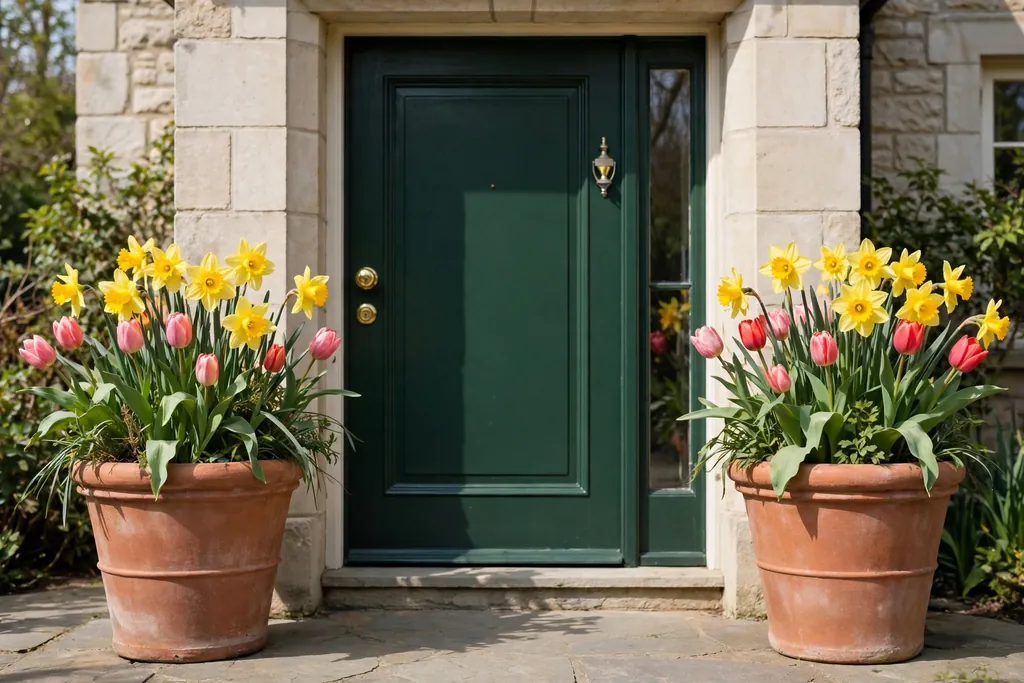
Two matching planters flanking the door give a spring entry instant balance. Fill them with potted tulips, daffodils, or hyacinths, with a ring of small pansies or trailing ivy at the edge for fullness. Matching pots, in terracotta, glazed ceramic, or painted wood, make the pair read as one planned feature rather than two separate pots.
Set the planters clear of the door swing and the path, and raise them on pot feet or a low stand so water drains freely. Water bulbs often while they are in flower, and deadhead spent blooms so the planters stay tidy. When the bulbs finish, swap them for summer bedding and keep the same pots, so the entry keeps its shape through the season.
4. Layered Doormats for a Finished Look
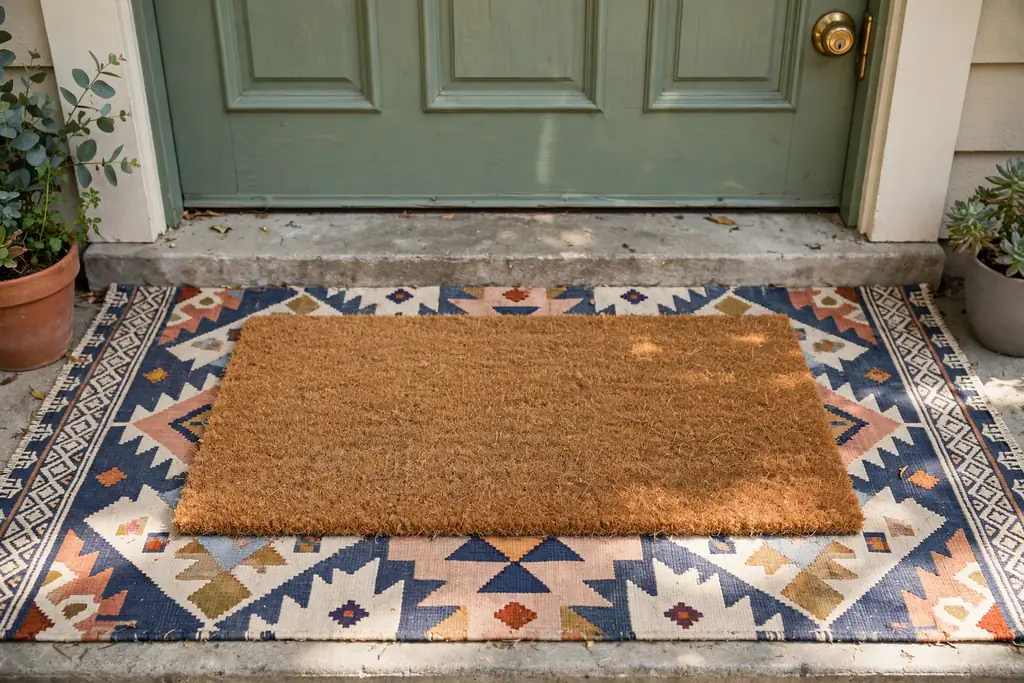
Layering a larger patterned rug under a smaller coir doormat is a simple way to dress a plain porch floor. Choose a flat outdoor rug in a soft pattern, such as a stripe or a small floral print, then place a plain or welcoming coir mat on top of it, centered on the door. The layers add color and texture without blocking the door or taking up wall space.
Keep both layers flat and low, so the door opens freely over them and no one trips on a curled edge. Shake out the coir mat weekly, and hose down the rug when it gets dusty. This idea suits a small porch especially well, since it uses floor space that would otherwise stay bare, and it can be changed cheaply when the season moves on.
5. A Hanging Basket of Trailing Spring Flowers
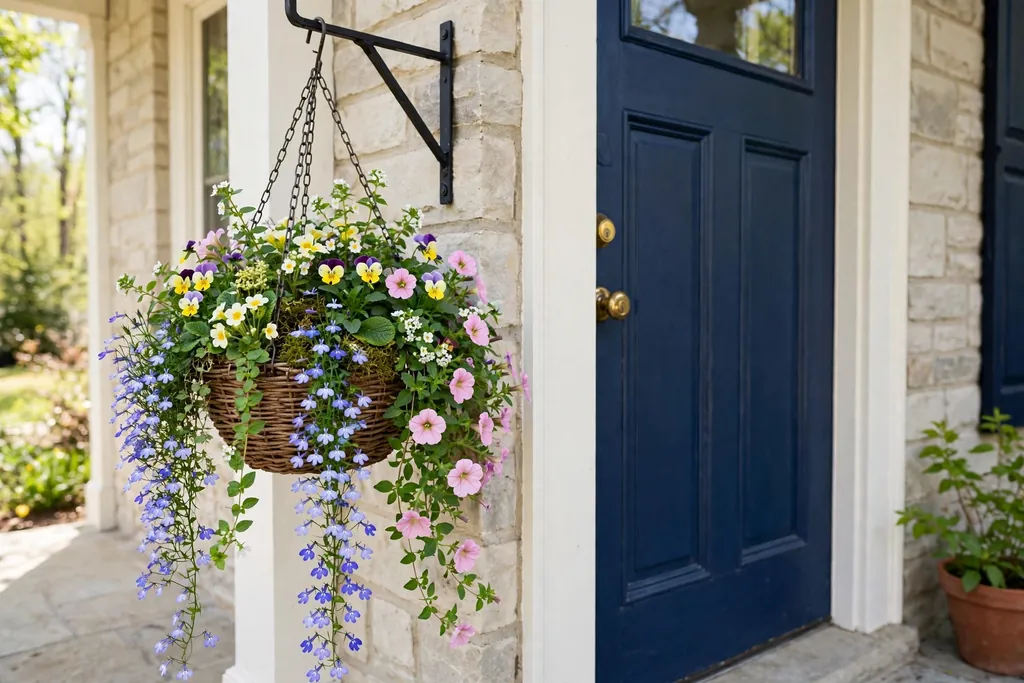
A hanging basket beside the door brings spring color up to eye level, which helps on a porch with little floor space. Fill it with trailing lobelia, bacopa, or ivy, plus a few upright pansies or petunias in the center for fullness. Hang the basket from a sturdy bracket fixed into the wall or porch beam, not from a gutter or a light fitting.
Water hanging baskets often, since they dry out faster than pots on the ground, and check the bracket weight once the basket is wet. Turn the basket a quarter turn each week so all sides get light and the planting stays even. One basket is usually enough beside a door; two baskets, one on each side, suit a wider porch with room for them to sway.
6. A Tall Vase of Forsythia Branches
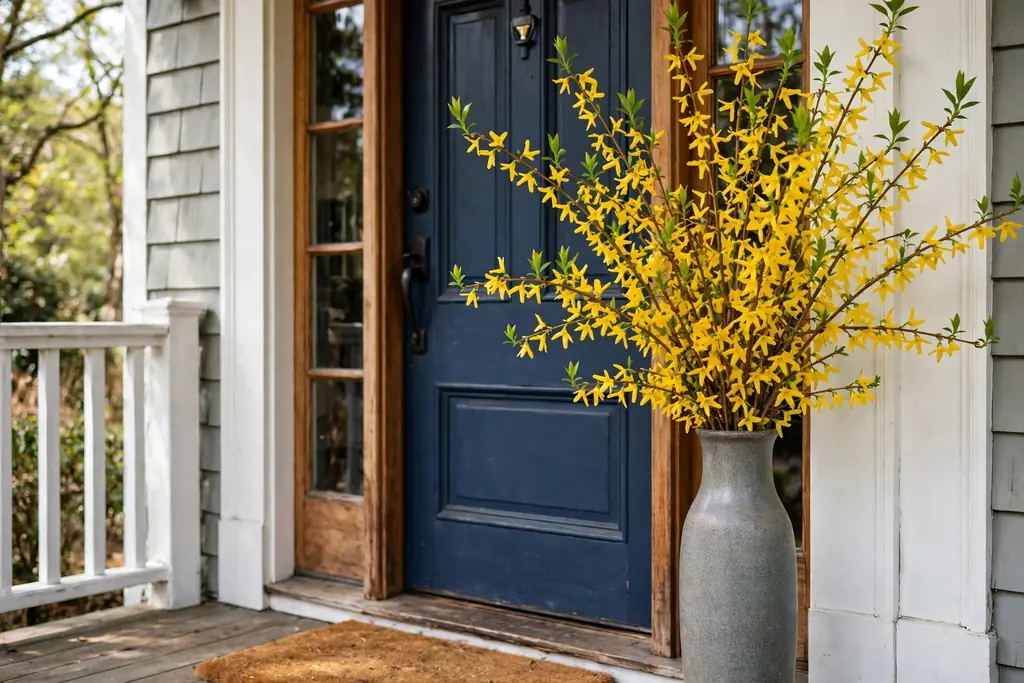
Tall forsythia branches in a large porch vase make a bold spring statement with very little planting skill. Cut long branches, about twice the height of the vase, and stand them in a heavy stone, ceramic, or metal container beside the door. The bright yellow flowers open on bare branches, so the display looks fresh even before any leaves appear.
Weight the base of the vase with stones if it will stand in wind, and keep it clear of the path so branches do not catch on coats or bags. Change the water every few days, and trim the branch ends at an angle to help the flowers last longer. When the forsythia fades, the same vase can hold pussy willow, cherry blossom branches, or tall grasses later in the season.
7. A Greenery and Blossom Garland Around the Frame
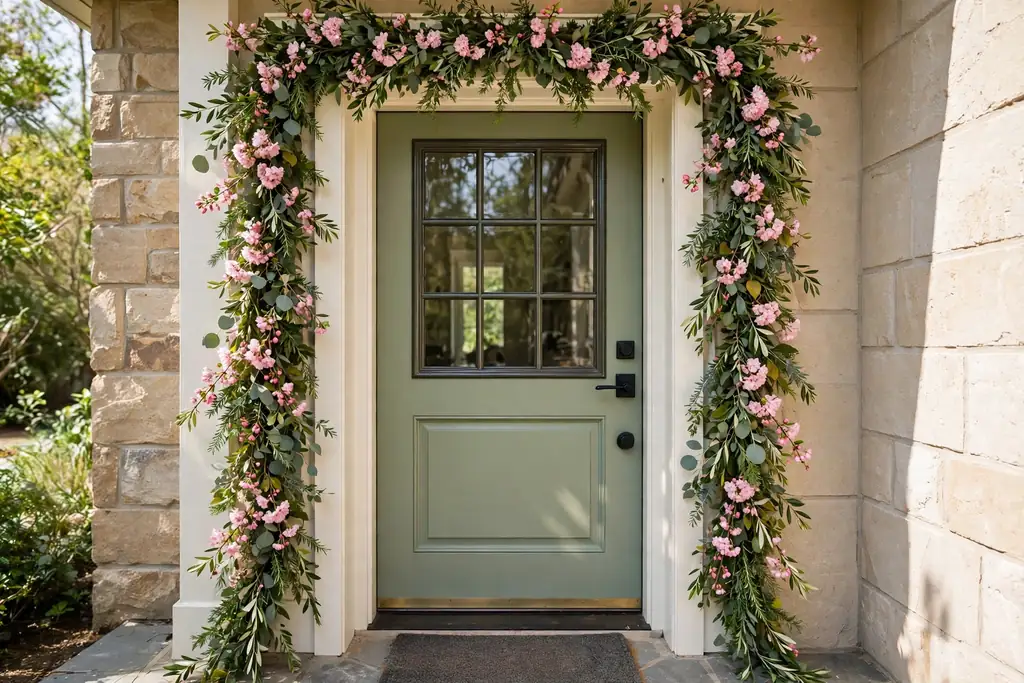
A garland around the door frame turns a plain entry into a spring feature without touching the door itself. Start with a base of fresh or faux greenery, such as eucalyptus or ivy, and fix it along the top and sides of the frame with small hooks or clear clips. Then tuck in small clusters of blossom, such as cherry blossom, lilac, or faux spring blooms, at intervals along the garland.
Keep the garland clear of the hinges and the handle, and leave the lock and letterbox fully free. Fresh garlands suit a covered porch and need misting every few days, while faux garlands suit an exposed frame and can stay up for the whole season. Step back and check that the garland frames the door evenly, rather than hanging lower on one side.
8. A Small Flowering Tree in a Large Pot
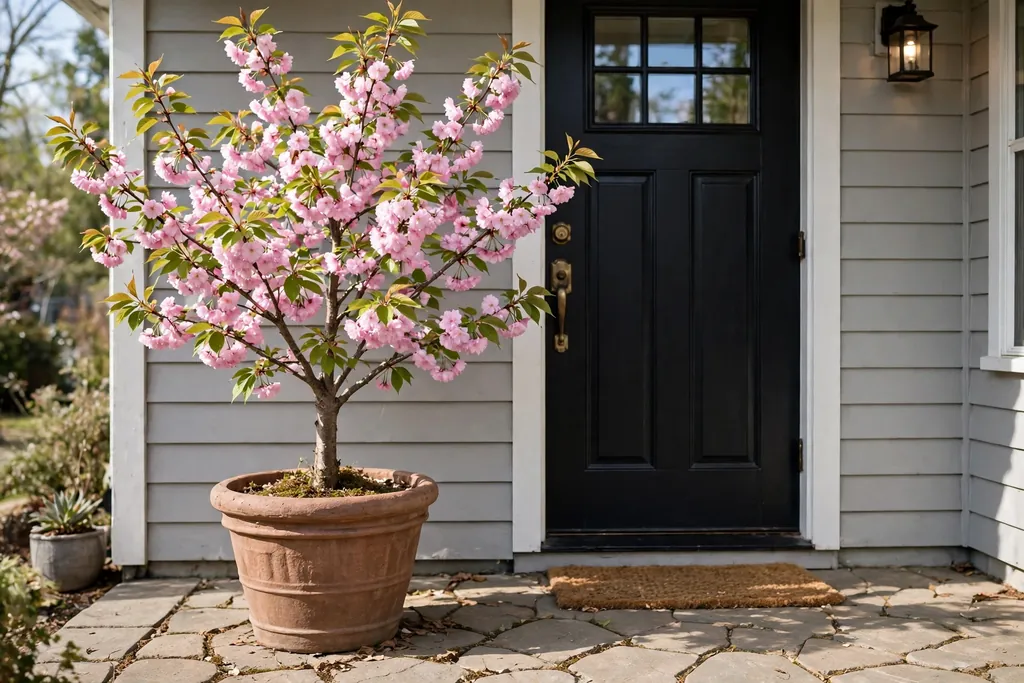
A small flowering tree, such as a dwarf cherry or a flowering crabapple in a pot, gives a spring entry height and presence that small planters cannot match. Choose a large, heavy pot, at least wide enough that the tree cannot tip in wind, and plant the tree in good quality compost with drainage holes at the base. Place it to one side of the door, where it frames the entry without blocking the path or the house number.
Water the tree often in its first season, and feed it as directed for container trees. Prune lightly after flowering to keep its shape compact, since a pot grown tree should stay in proportion to the porch. This idea suits a larger porch or a door with a paved area beside it, where a big pot has room to sit safely.
9. A Wooden Welcome Sign With Spring Flowers
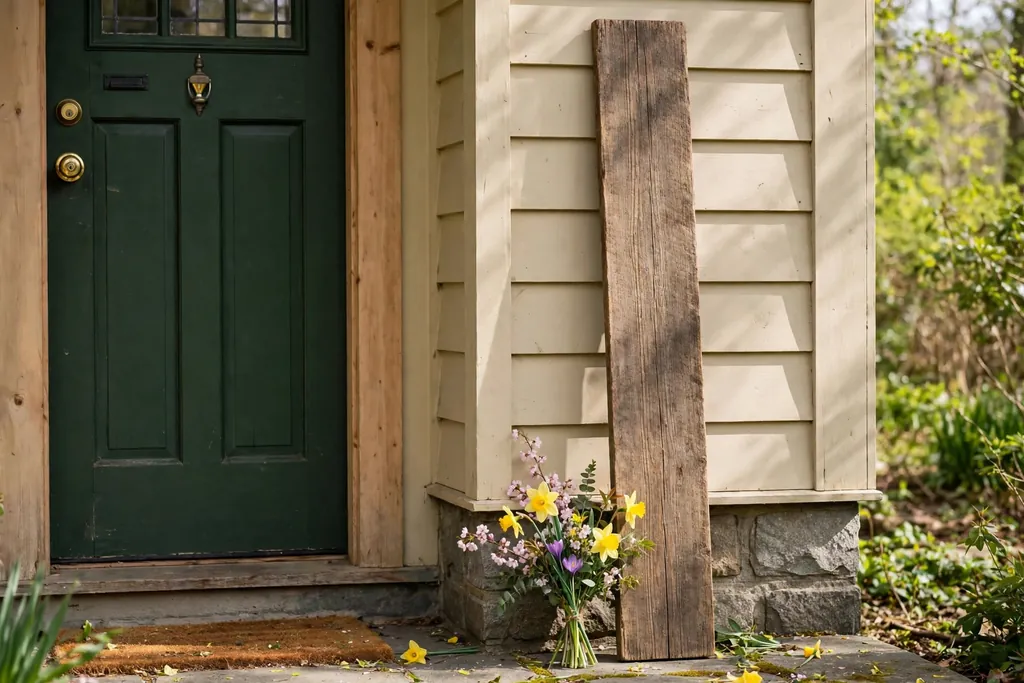
A simple wooden welcome sign leaning beside the door adds a personal, handmade note to a spring porch. Choose a tall, narrow board in painted or natural wood, with short, plain wording, and lean it against the wall or porch post at a slight angle. Add a small bunch of faux or dried flowers tied at the top, or a tiny planter at its base, so the sign feels part of the porch rather than a lone board.
Fix the sign so it cannot fall in wind, either by leaning it inside a heavy planter or by fixing a small bracket behind it. Keep the wording short and easy to read from the path, and keep the sign clear of the door swing. A plain sign with one flower detail usually suits a spring porch better than a sign covered in many decorations.
10. A Bench With Pastel Cushions Beside the Door
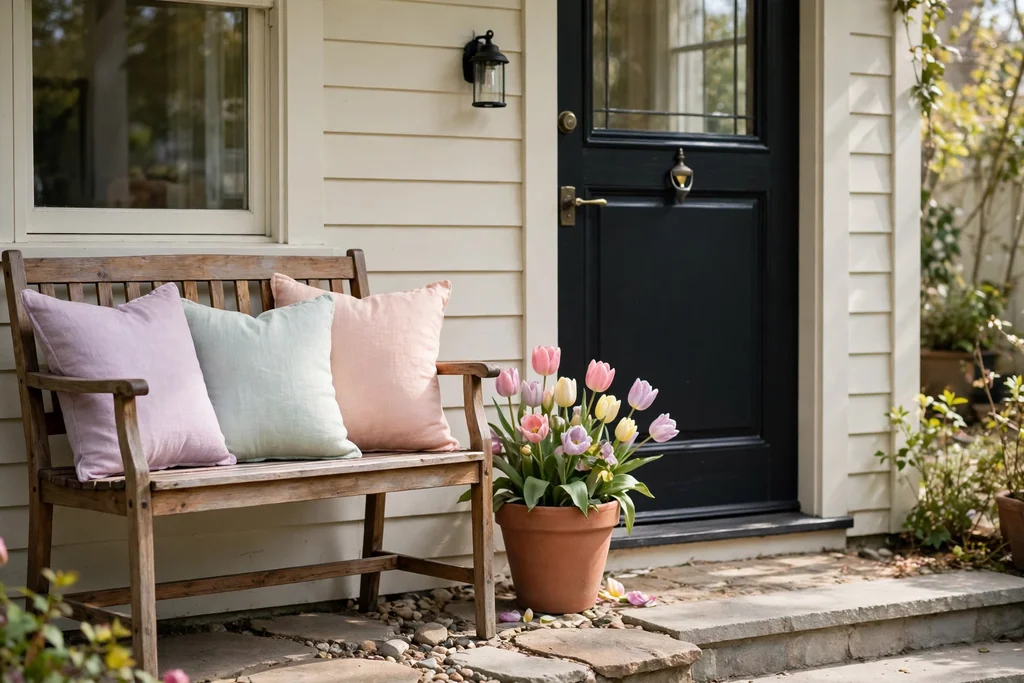
A small bench beside the door gives a spring porch a place to sit, set down bags, or arrange flowers, and pastel cushions make it look ready for the season. Choose a bench in wood, metal, or painted timber that fits the space without blocking the path, and add one or two outdoor cushions in soft pink, sage, or butter yellow. Fold a light throw over one end for cooler evenings.
Bring cushions inside in rain, unless they are made for outdoor use, and wipe the bench down weekly in pollen season. A bench also works as a display surface: a small pot of tulips or a lantern at one end ties it to the rest of the porch. For more outdoor seating ideas that suit a gathering, see these garden party ideas.
11. A Pair of Lanterns Flanking the Door
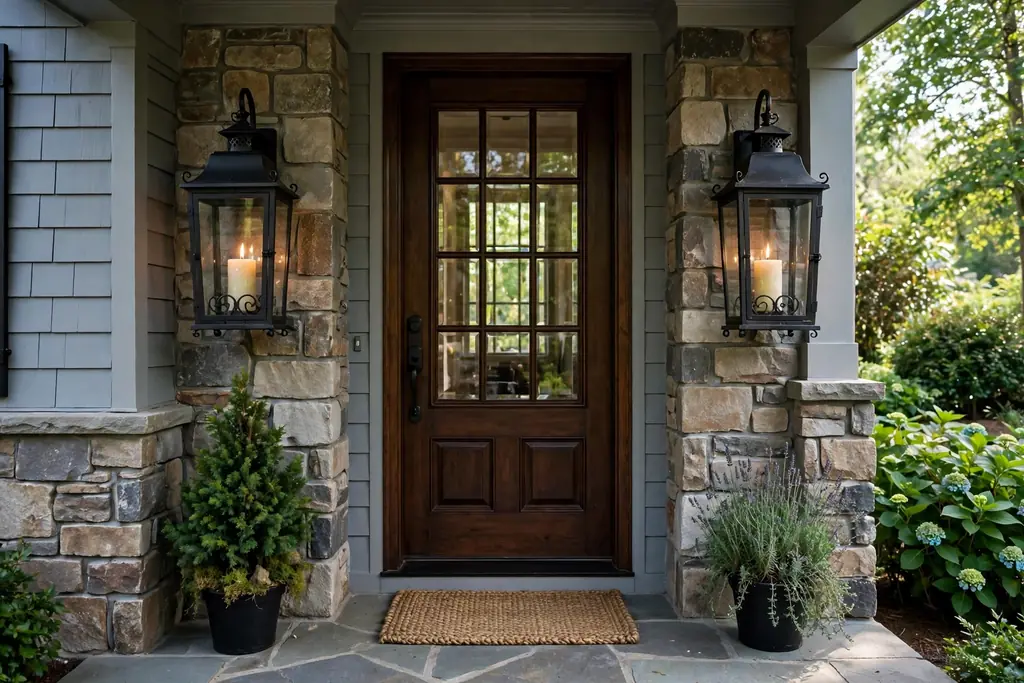
Two matching lanterns, one on each side of the door, give a spring porch a calm, even look day and night. Choose lanterns in black metal, brass, or wood and glass, in a size that suits the door: tall lanterns suit a large door, while smaller lanterns suit a cottage porch. Place them on the porch floor, on low stands, or on wall brackets, at the same height on both sides.
Use real candles only in sheltered spots, and keep flames clear of garlands, wreaths, and dry leaves. Battery candles suit windy porches and homes with children or pets, and they can be set on a timer so the porch glows at dusk without daily attention. Clean the glass often in spring, since pollen and dust dull the light quickly.
12. A Window Box of Pansies and Violas
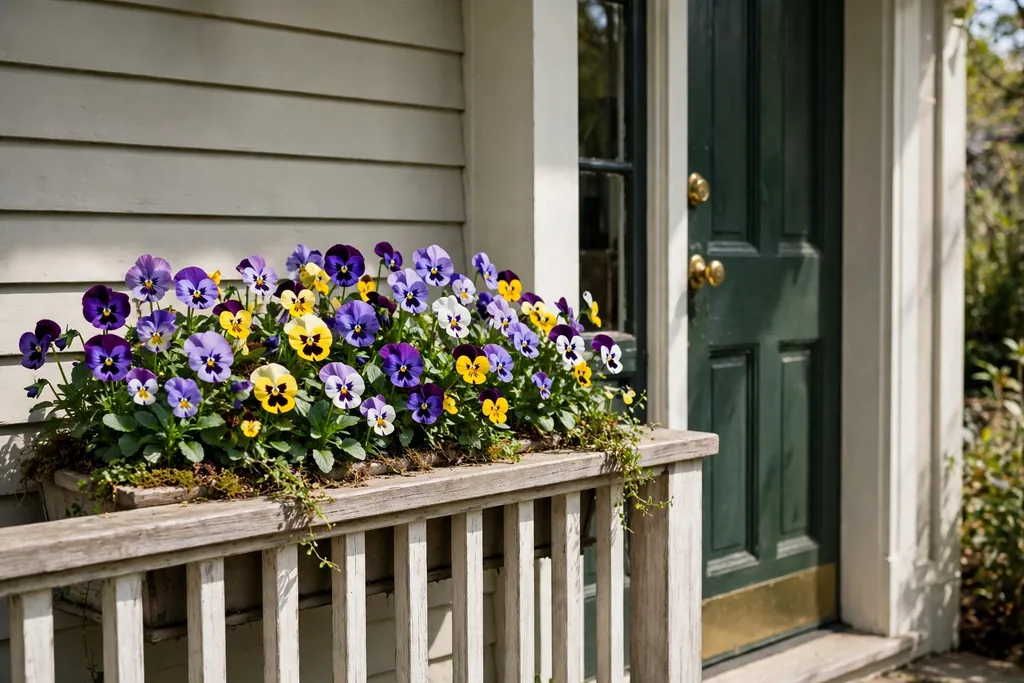
A window box on a porch rail, a door side window, or a low wall brings spring color close to the door without taking floor space. Fill it with pansies and violas in one or two colors, plus a trailing plant such as ivy at the front edge, so the box looks full from the path. Line the box and check that it has drainage holes, so plants do not sit in water after rain.
Fix the box firmly to its rail or bracket, since a full window box is heavy when wet. Water it often in dry spells, and deadhead spent flowers to keep new blooms coming. This idea suits porches with a rail, a low wall, or a window beside the door, and it can be replanted with summer flowers when the pansies finish.
13. A Decorative Birdhouse on a Porch Post
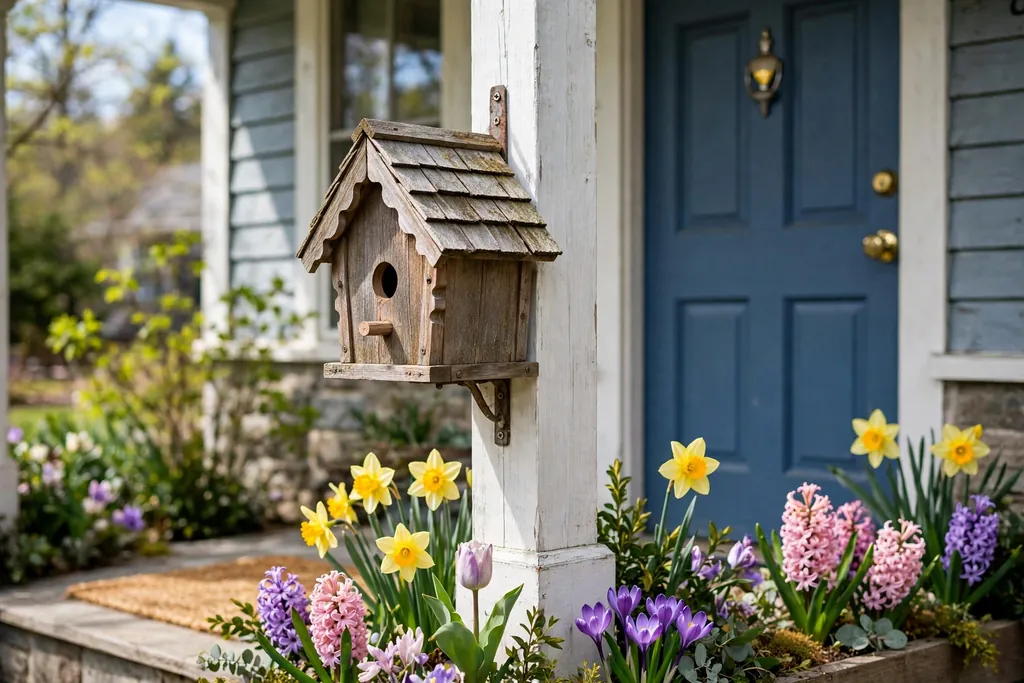
A decorative birdhouse on a porch post or a nearby fence post adds a gentle spring detail that suits a garden facing entry. Choose a birdhouse in painted wood or natural timber, in a simple shape that matches the house, and fix it firmly at a height that is easy to see but clear of the door and the path. Keep the birdhouse plain, with one color or one small flower detail, so it reads as a porch accent rather than a toy.
If you want birds to use it, site it away from the busiest part of the porch and keep the entrance hole clear of plants. Clean the birdhouse out at the end of the season if it is used, and check its fixings each spring. A birdhouse also pairs well with a small pot of flowers at the base of the post, which ties it to the rest of the entry.
14. Herb Pots for a Scented Entry
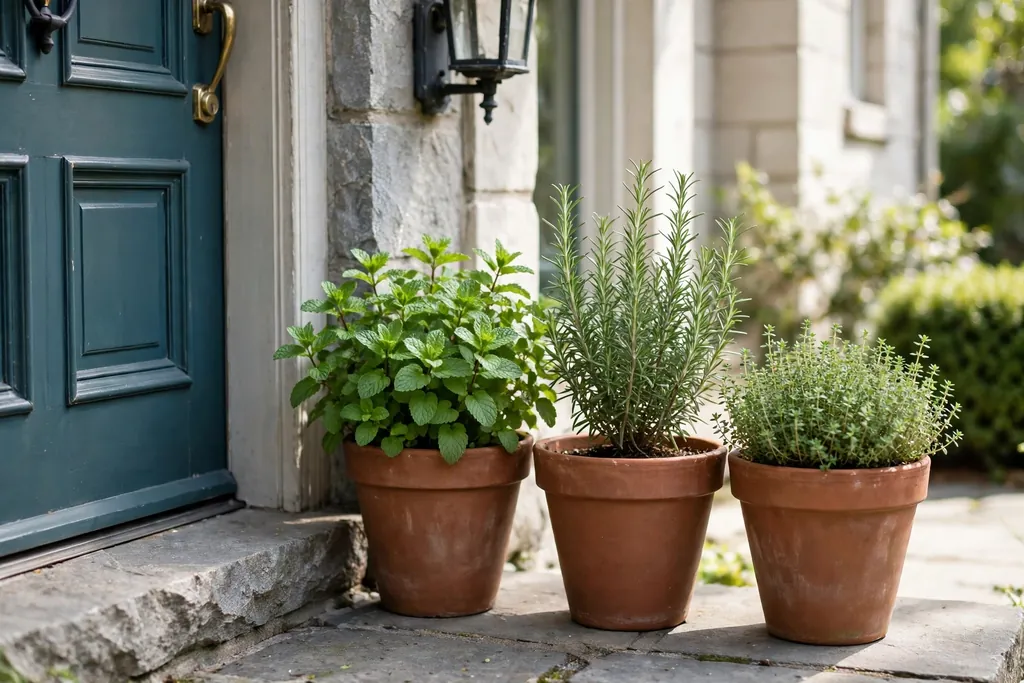
Pots of herbs beside the door give a spring entry scent as well as color, and they are useful in the kitchen too. Plant mint, rosemary, thyme, and chives in separate terracotta pots, or group them in one wide planter, and place them where guests brush past them on the way in. Mint spreads fast, so keep it in its own pot rather than sharing a planter.
Water herbs often while they establish, and snip them regularly to keep them bushy. Place herb pots in sun where possible, since most culinary herbs need several hours of light to stay full. Label the pots if guests or children will pick from them, and bring tender herbs inside if a late frost is forecast.
15. Refreshed Hardware and House Numbers
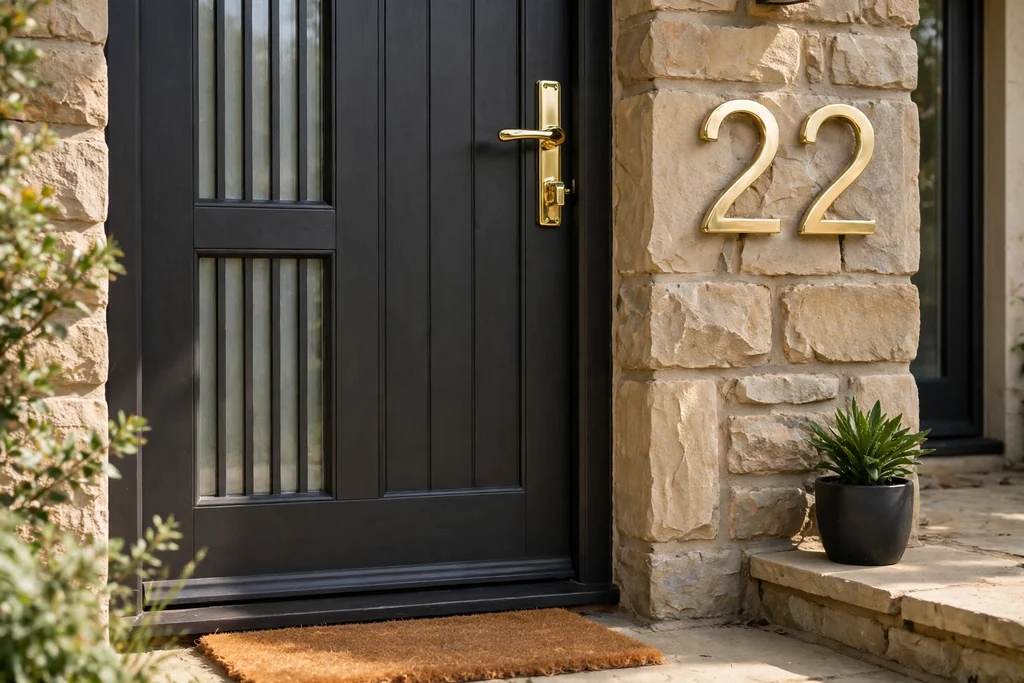
New door hardware and house numbers are a small change that can lift a whole spring entry. Swap a dull handle, letterbox, or knocker for a finish that suits the door color, such as brass on a pastel door or matte black on a white door. Replace faded or mismatched house numbers with a clear, matching set, fixed level and at a height that is easy to read from the street.
Clean the door and the frame before fitting new hardware, and check that the handle, lock, and letterbox all work smoothly after fitting. Keep the finish consistent across handle, knocker, and numbers, rather than mixing three metals. This idea suits any porch, and it pairs well with a fresh coat of paint or a new wreath, since the details finish the look.
16. A Pair of Boxwood Topiaries in Urns
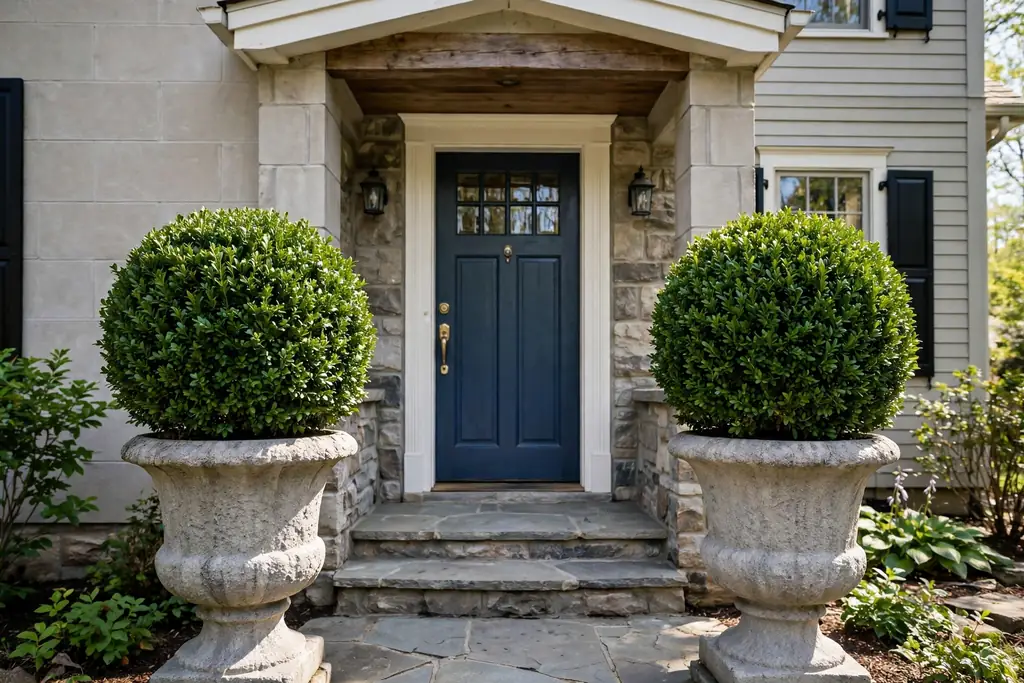
Two boxwood topiaries in matching urns give a spring entry a tidy, formal frame that lasts beyond spring. Choose ball or cone topiaries in a size that suits the door, and set them in heavy urns, one on each side of the entry, clear of the path. The deep green of boxwood suits pastel flowers well, and it keeps the porch looking cared for between flower changes.
Water topiaries often, especially in pots, and trim lightly a few times a year to keep their shape. Feed container boxwood in spring, and check for dry patches on the side facing the house, since topiaries can thin where they get less light. Turn the urns occasionally so all sides get sun, and keep the urns level so the pair reads as a matched set.
17. A Spring Nest Vignette on a Side Table
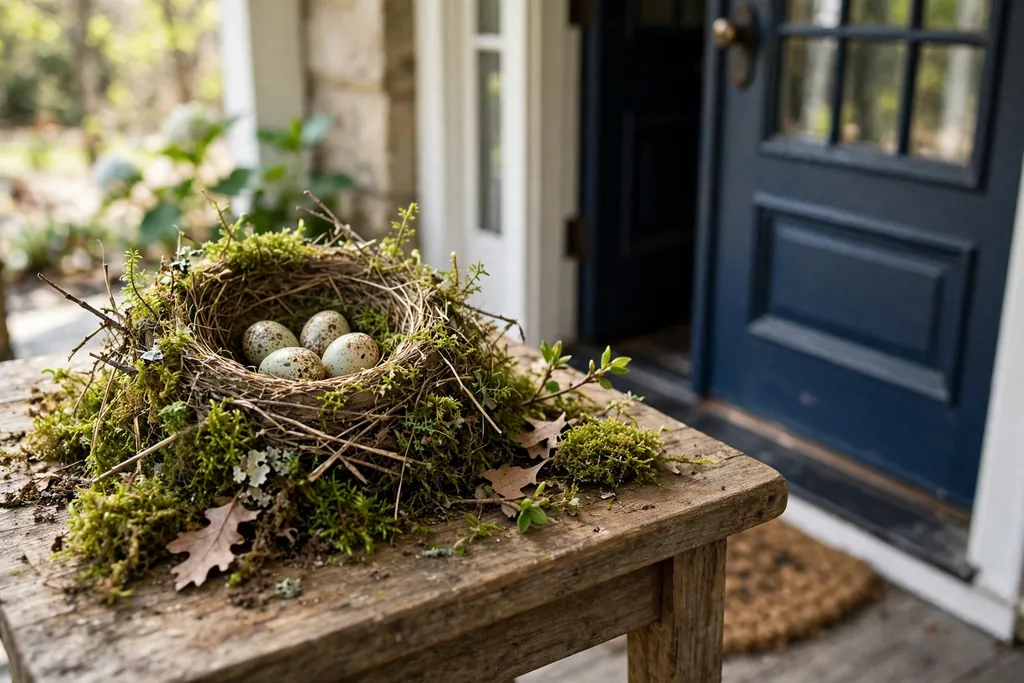
A small nest vignette on a porch side table or a bench adds a quiet spring detail without covering the door in decorations. Set a shallow bowl or a small nest form on the table, with a few faux eggs in soft speckled colors and a ring of moss or small greenery around it. Keep the display small, roughly the size of a side plate, so it reads as one detail rather than a full theme.
Place the vignette where it will not be knocked by bags or coats, such as the far end of a bench or a small table beside the door. Bring it inside in heavy rain if it uses natural moss or paper eggs, and keep it clear of candles and lanterns. This idea suits a covered porch best, and it can be packed away easily when summer arrives.
18. A Galvanized Watering Can Planter
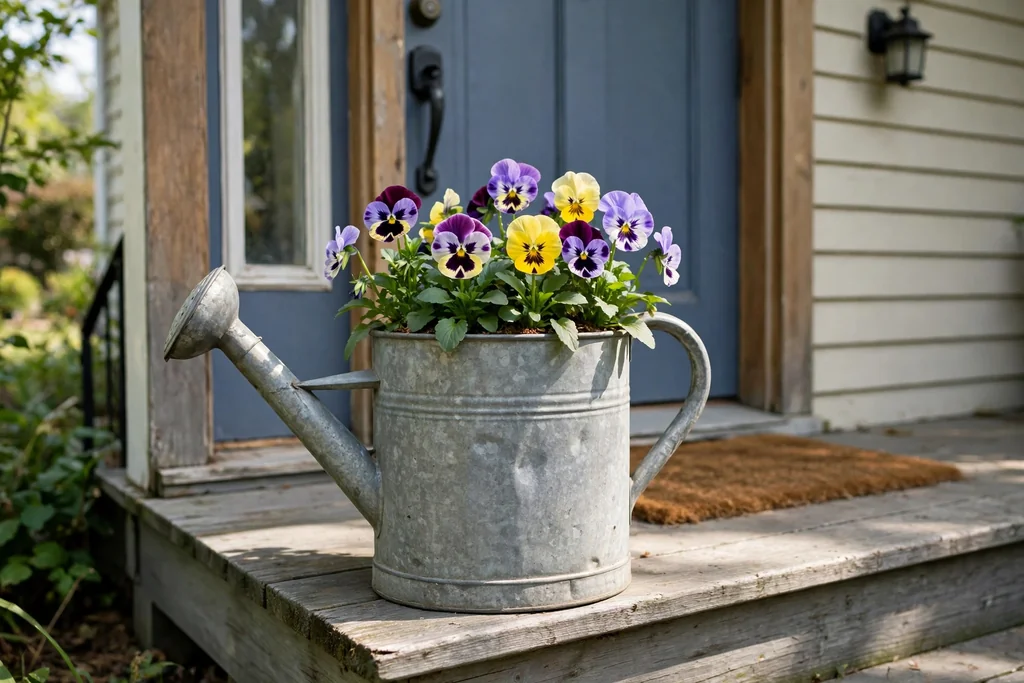
A galvanized watering can planted with spring flowers is a charming, low cost porch detail that suits a cottage or farmhouse entry. Fill the can with compost, plant a few pansies, violas, or small bulbs in the top, and let one trailing plant spill over the side. Set the can on a porch step, a bench, or beside a larger planter, where its shape can be seen.
Drill or check for drainage holes in the base, since a can without drainage will waterlog the plants. Water often, since a small can dries out fast, and deadhead the flowers to keep it tidy. Keep the can clear of the path, and pair it with a larger planter in the same metal or color family so it looks planned rather than left over from gardening.
19. Rain Boots as Playful Planters
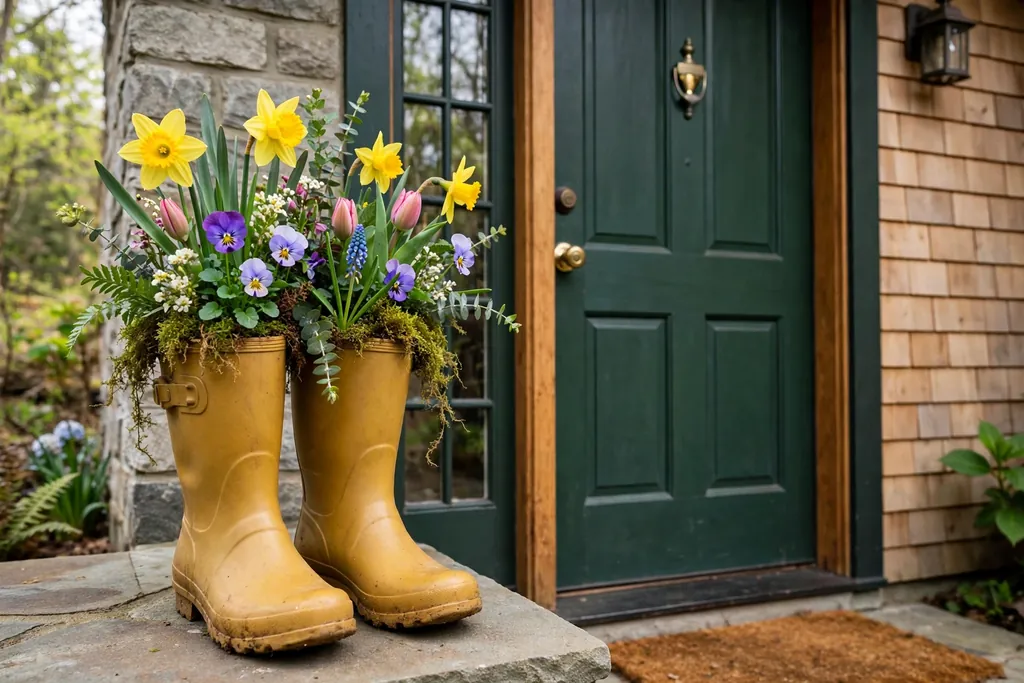
A pair of old rain boots planted with spring flowers makes a playful porch detail, especially for a family home. Clean the boots, add drainage holes in the soles, fill them with compost, and plant pansies, small bulbs, or trailing ivy in each boot. Stand the pair by the door, on a step, or beside a bench, with the boots upright and stable.
Water boots often, since they hold little compost, and check that they cannot tip onto the path. Keep the planting simple, with one flower color in both boots, so the pair reads as a set. This idea suits a casual porch and a home with children, and it is easy to change: swap the flowers when they finish, or move the boots to the garden for summer.
20. A Tiered Plant Stand by the Door
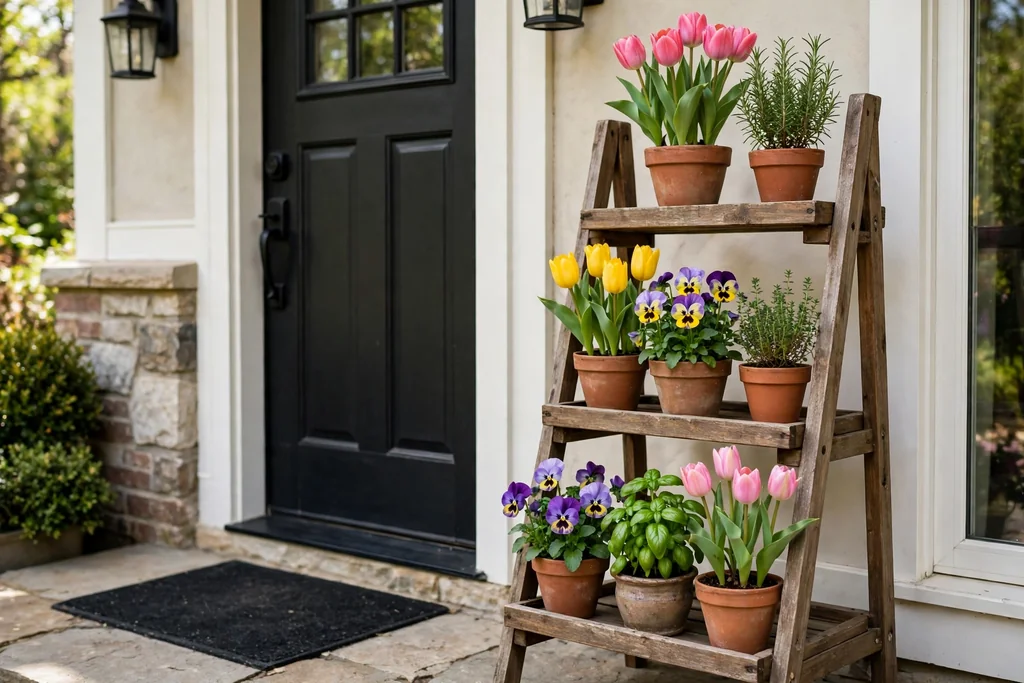
A tiered plant stand beside the door lets a small porch hold many spring plants without covering the floor. Choose a stand in wood, metal, or bamboo, with two or three shelves, and fill it with pots of tulips, pansies, herbs, and trailing plants. Put the tallest plants at the back or on the lowest shelf, and the smallest at the front, so every pot gets light and can be seen from the path.
Fix the stand against the wall or a porch post so it cannot tip, and keep it clear of the door swing. Water each pot separately, since pots on a stand dry out at different rates, and turn the stand occasionally if one side faces the house. A tiered stand suits a narrow porch well, since it uses vertical space that would otherwise stay empty.
21. A Clean Porch Light With Warm Bulbs
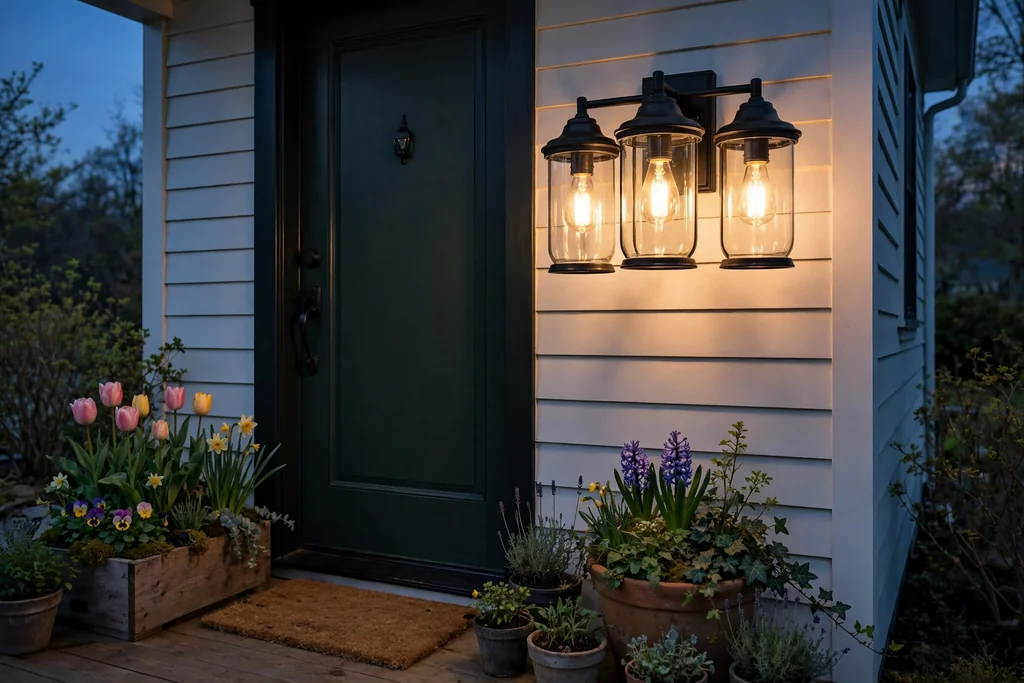
A clean porch light with warm bulbs makes a spring entry feel welcoming after dark, and it is often overlooked beside flowers and wreaths. Clean the fixture glass, remove cobwebs and dust, and fit warm white bulbs that suit the fixture size. Check that the light covers the door, the step, and the house numbers, so guests can find the entry and read the numbers at night.
If the fixture is damaged or dated, swap it for a simple lantern style fitting that matches the door hardware. Keep the light on a timer or a dusk sensor so it comes on without daily attention. This idea pairs well with lanterns on the porch floor, but keep the two light sources at different heights so the entry glows in layers rather than from one bright spot.
22. Butterfly and Bee Garden Stakes in Porch Beds
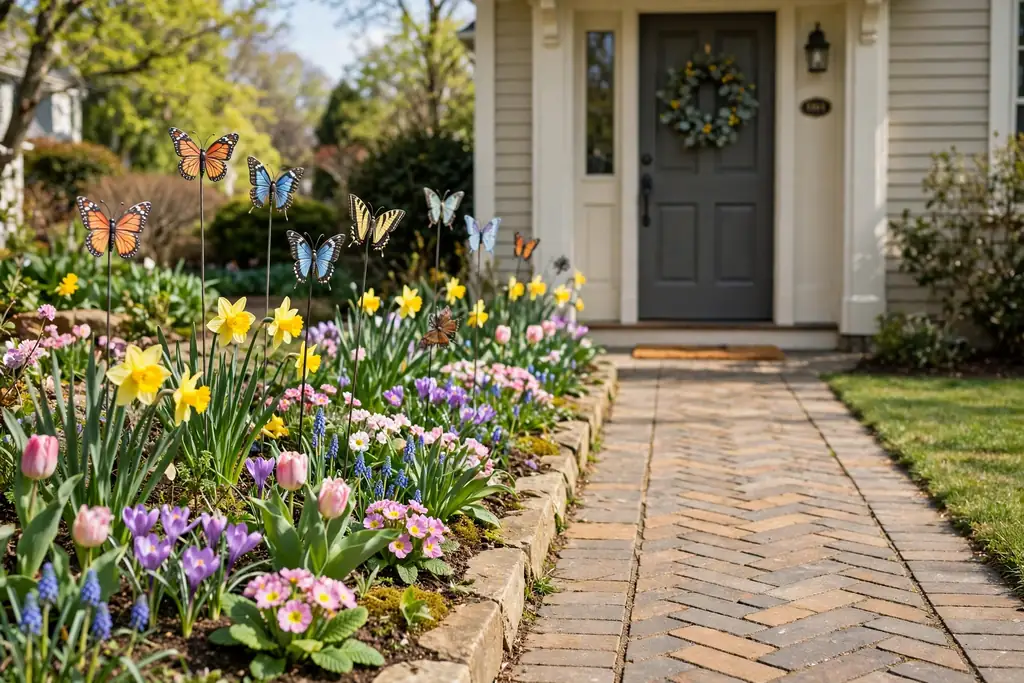
Decorative garden stakes with butterfly or bee shapes in the beds beside the door add a light spring note at ground level. Choose stakes in metal or painted wood, in a simple shape and one color, and push them firmly into the soil among low spring flowers or fresh mulch. Space them so each stake can be seen, rather than crowding several into one bed.
Keep stakes clear of the path and the door swing, and check them after wind or heavy rain. This idea suits a porch with beds on one or both sides of the path, and it ties the entry to the wider front garden. For path planting and edging ideas that suit the same beds, see these front walkway ideas.
Conclusion
A spring front door does not need every idea on this list. Pick one focal point, such as a wreath, a painted door, or a pair of planters, then add two or three smaller details that suit your porch size and light. Keep the path clear, repeat one flower or one pastel color, and choose plants you can water and care for through the season. Start with the idea that fits your entry today, whether that is a tulip wreath or a pair of bulb planters, and add more only if the porch still feels calm and welcoming.
Save this list on Pinterest before your next spring refresh, and work through it one area at a time: door first, then planters, then light and small details.
FAQs
How do I choose a spring wreath for my front door?
Start with the door size and the porch cover. A full tulip or blossom wreath suits a covered porch, while a greenery wreath with faux blooms suits an exposed door. Hang it at eye level, keep it clear of the handle and letterbox, and step back to the street to check that it reads clearly from the path.
What spring flowers last longest in porch planters?
Pansies and violas usually flower for weeks in cool spring weather, and potted tulips and daffodils hold their blooms for one to three weeks depending on warmth and sun. Deadhead spent flowers, water pots often, and keep planters out of strong wind, which dries compost fast and shortens flowering.
Can I decorate a small porch for spring?
Yes. Use the door itself, with a wreath or a fresh coat of paint, plus one or two vertical details, such as a hanging basket or a tiered plant stand. Keep the floor clear apart from a layered doormat, and choose one flower color so a small space reads as planned rather than crowded.
When should I put up spring front door decor?
Put up spring decor when the risk of hard frost has passed in your area and spring bulbs are in flower locally, which is usually early to mid spring in most temperate regions. Start with hardy plants, such as pansies and violas, and add tender plants and fresh cut flowers once nights are reliably mild.
How do I keep a spring porch tidy through the season?
Water pots on a set day each week, deadhead flowers as they fade, and sweep leaves and petals from the porch floor and steps. Swap out finished bulbs for new plants rather than leaving empty pots, and bring cushions and fabric details inside in rain so they stay fresh.
What colors work best for a spring front door?
Soft pastels, such as blush pink, butter yellow, pale blue, mint, and lilac, work well against white, cream, and pale wood, with fresh green from plants as the main contrast. Pick one pastel for the door or the main planters, repeat it in one or two smaller details, and keep the rest of the porch neutral so the color reads clearly.