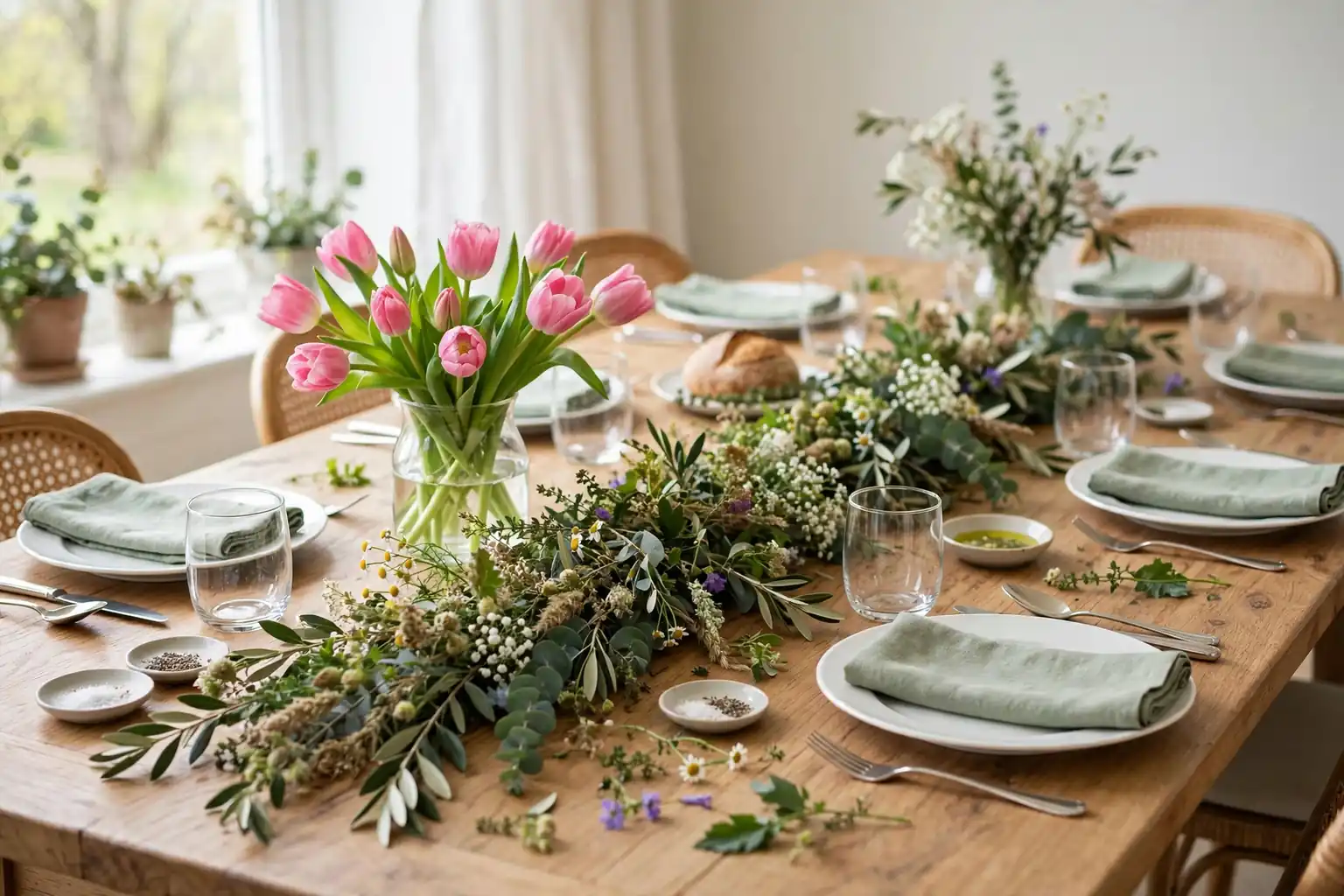
A spring table should feel like the season itself: fresh, light, and a little bit relaxed. That does not mean covering every surface in flowers or buying a new set of dishes. A few well chosen details, a low runner of greenery, one good vase of tulips, or a stack of soft linen napkins, can make an ordinary weeknight dinner feel like an occasion. These 18 spring table decor ideas cover centerpieces, place settings, color, and light, so you can pick the pieces that suit your table, your budget, and the way you actually eat. Start with one idea, see how it looks in your room, and add more only if the table still feels calm.
Key Takeaways
- Keep the centerpiece low so guests can see each other across the table, and save tall arrangements for a sideboard or an entry table.
- Pick one flower or one color to repeat, such as tulips, lemons, or soft sage, so the table reads as planned rather than crowded.
- Use linen, wood, rattan, and glass for warmth, and keep the base palette pale so spring color can stand out.
- Choose flowers and greenery you can find locally, and swap fresh stems for potted herbs if you want a centerpiece that lasts longer than a weekend.
- Light candles only where they sit clear of flowers, napkins, and sleeves, and use hurricanes or holders for safety.
- Set the table the day before a gathering when you can, so the day itself is for cooking and guests, not for hunting down plates.
1. A Wildflower Runner Down the Center
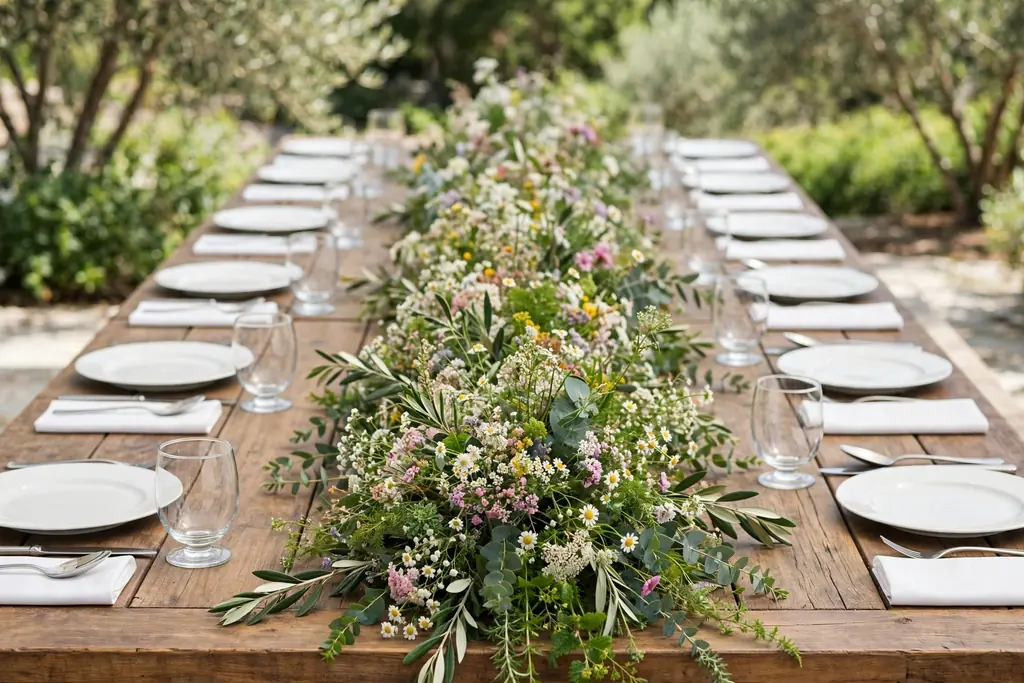
A loose runner of wildflowers and greenery down the center of the table is the simplest spring centerpiece, because it needs no vase and no arranging skill. Lay a length of greenery, such as eucalyptus or ivy, along the middle of the table, then tuck in short stems of daisies, ranunculus, or whatever is in season near you. Keep the runner narrow, about the width of a dinner plate, so plates and glasses still have room.
This suits a long table best, where the runner can run the full length without crowding the ends. If your table is round, make a small wreath shape of greenery in the center instead. Mist the stems lightly before guests arrive, and lay a thin cloth or a strip of kraft paper under the greenery to protect the table from damp stems. Clear the runner before serving hot dishes, since a long runner can get in the way of passing platters.
2. One Tall Vase of Tulips
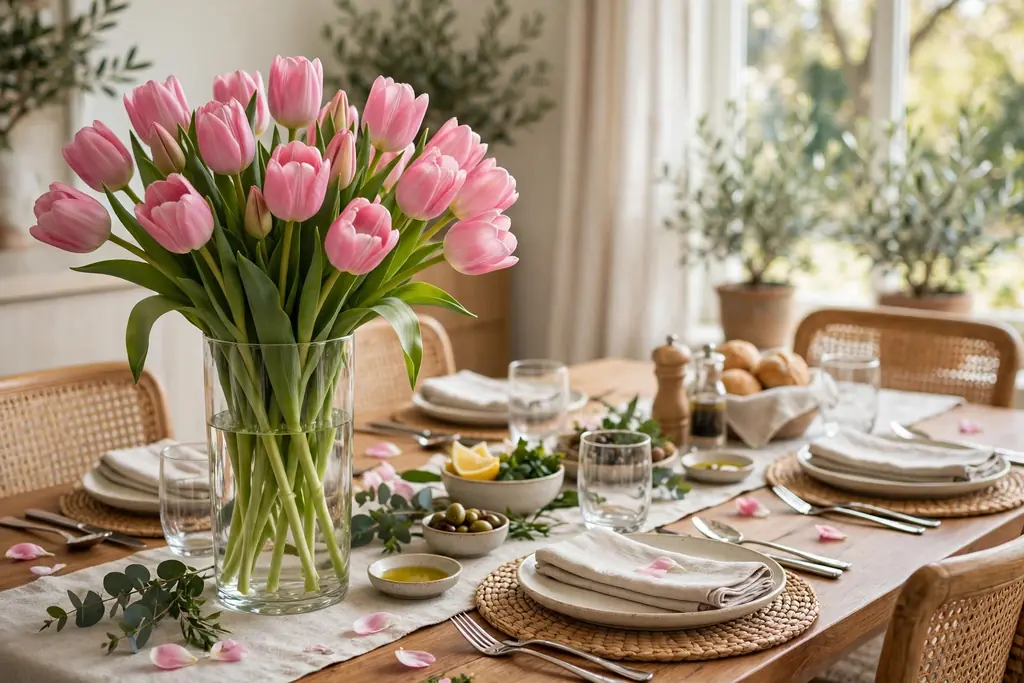
One tall vase of tulips makes a clear spring statement without the fuss of a mixed arrangement. Choose a single color, such as soft pink, white, or coral, and use enough stems, usually 15 to 25, to fill a tall glass or ceramic vase. Tulips keep growing after they are cut and bend toward the light, so the arrangement will change shape over a few days, which is part of its charm.
Place the tall vase on a sideboard or at the end of a long table rather than in the middle, so it does not block faces across the table. For the table itself, use a shorter version of the same idea: five to seven tulips in a low jar or a small jug. Change the water every two days and trim the stems at an angle to keep tulips fresh for up to a week.
3. A Sage Linen Cloth With White Stoneware
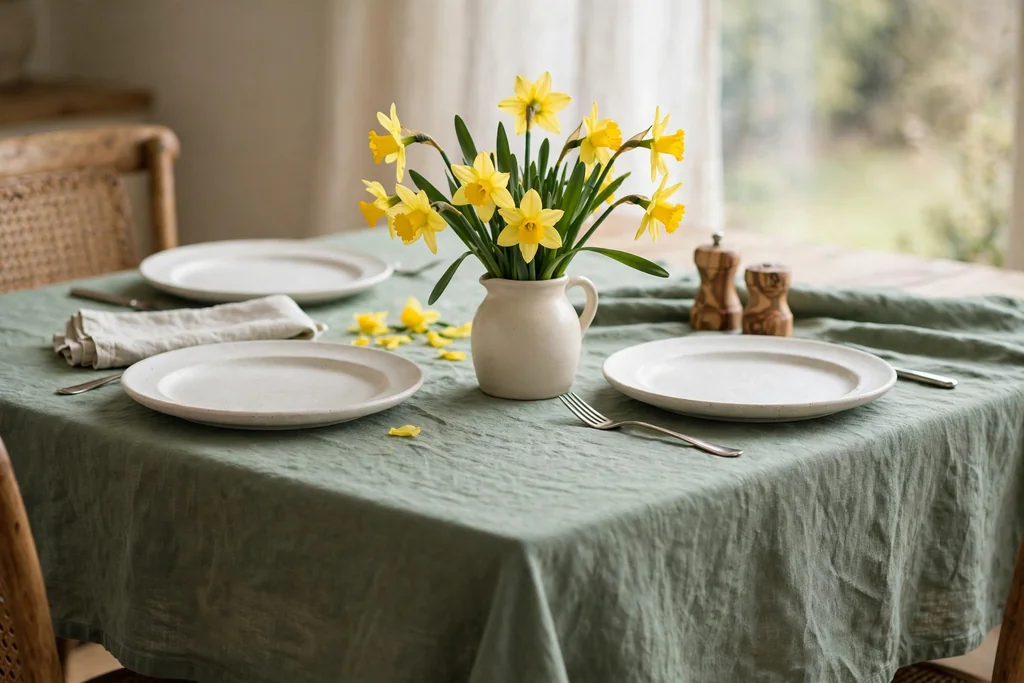
A sage green linen tablecloth with plain white stoneware is a calm spring base that lets flowers and food do the talking. Sage sits well with wood, rattan, and cream, and it suits both a formal dining room and a plain kitchen table. The white plates keep the look light, and a linen cloth adds a soft texture that a bare table cannot match.
Wash and press the cloth the day before, or use a linen look cloth if ironing is not your idea of fun. If you worry about stains, lay a clear runner of kraft paper or a washable table protector under the cloth at the center. Add one accent, such as soft yellow napkins or a small jug of daffodils, so the sage does not sit alone. For a table that must also work in a small shared room, see these small living room dining room combo ideas.
4. Single Stem Bud Vases in a Row
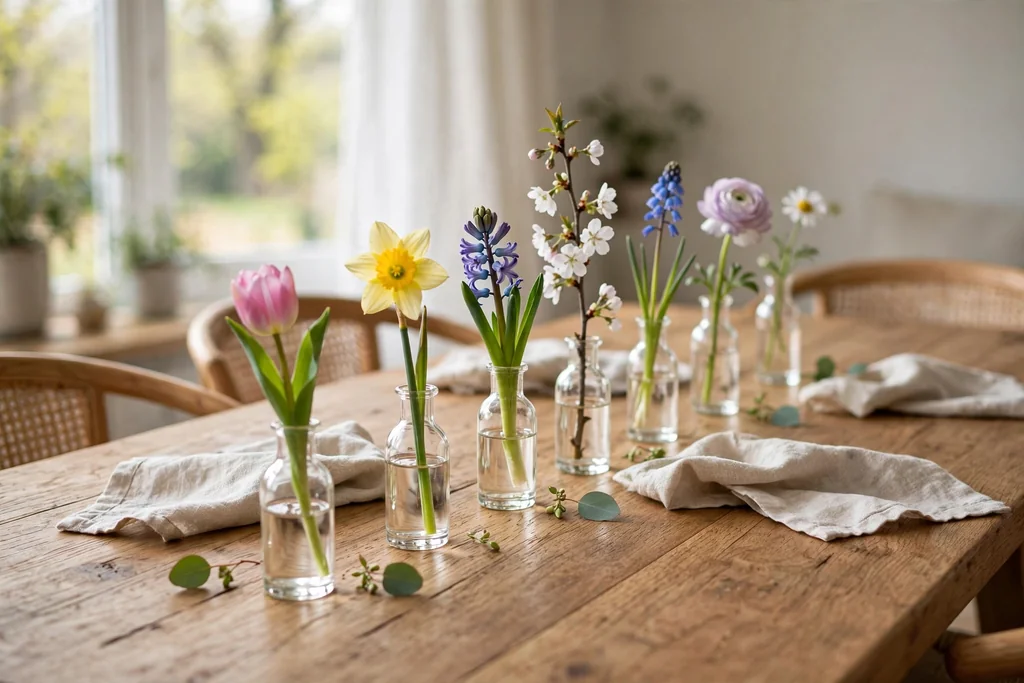
A row of small bud vases, each holding a single stem, gives a spring table a collected, delicate feel. Use five to seven vases in mixed shapes, glass bottles, tiny ceramic jugs, or old jam jars, spaced evenly down the center of the table. One stem per vase, a tulip, a daffodil, a sprig of blossom, or a single ranunculus, keeps the look light and stops the center from becoming a wall of flowers.
This idea works well on a narrow table where a wide centerpiece would crowd the plates. Mix the heights slightly, but keep every stem below eye level so guests can talk across the table. If you do not own bud vases, small drinking glasses or spice jars work just as well, and mismatched glass still looks planned when the flowers share one color family.
5. A Moss Tray With Candles
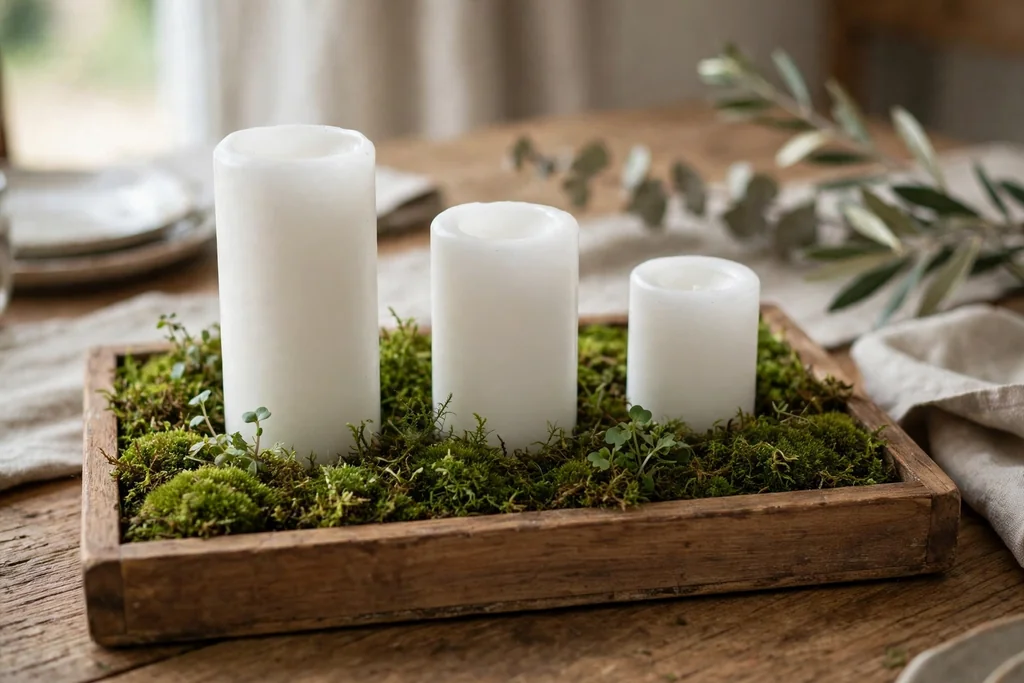
A shallow tray lined with moss and dotted with candles makes a spring centerpiece that feels like a small piece of garden brought indoors. Choose a wood, metal, or ceramic tray, cover the base with sheet moss or preserved moss, and set three pillar candles of different heights on it. Add a few small stones or a handful of tiny spring flowers tucked into the moss for color.
Keep the candles clear of the moss edges, and use candle plates or holders under each candle so wax never touches the moss. Battery candles suit this idea well if you worry about open flames near dry moss. This centerpiece suits a table that stays set between meals, since moss needs no water and no daily care, and it can stay in place for the whole season.
6. Lemons and Greenery as a Centerpiece
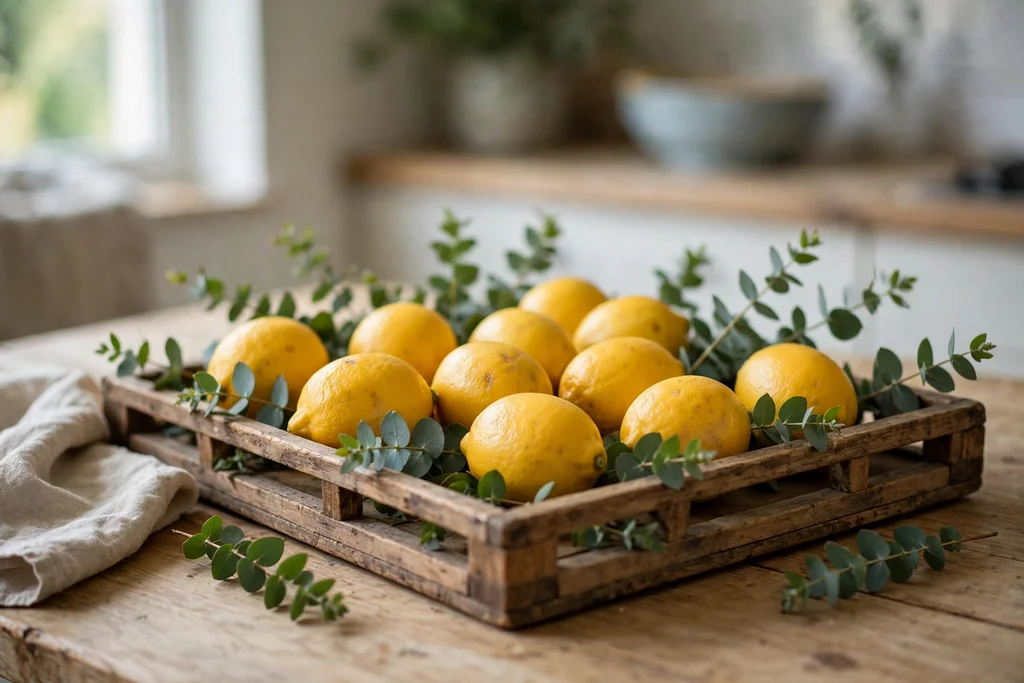
Lemons and fresh greenery make a bright, low cost spring centerpiece that doubles as a kitchen staple. Fill a low bowl or a shallow wooden tray with whole lemons, then tuck sprigs of olive branches, rosemary, or eucalyptus between them. The yellow against green is fresh without being loud, and the scent of citrus and herbs suits a table set for lunch or brunch.
This idea suits a kitchen table or a breakfast table especially well, since the lemons can go back to the kitchen after the meal. Replace any lemon that softens, and keep the bowl away from direct sun so the fruit lasts longer. If you want a taller version, stack lemons in a glass cylinder vase with a candle or a few stems in the center, and keep the top open so the arrangement stays airy.
7. Pastel Plates Layered Over Plain Chargers
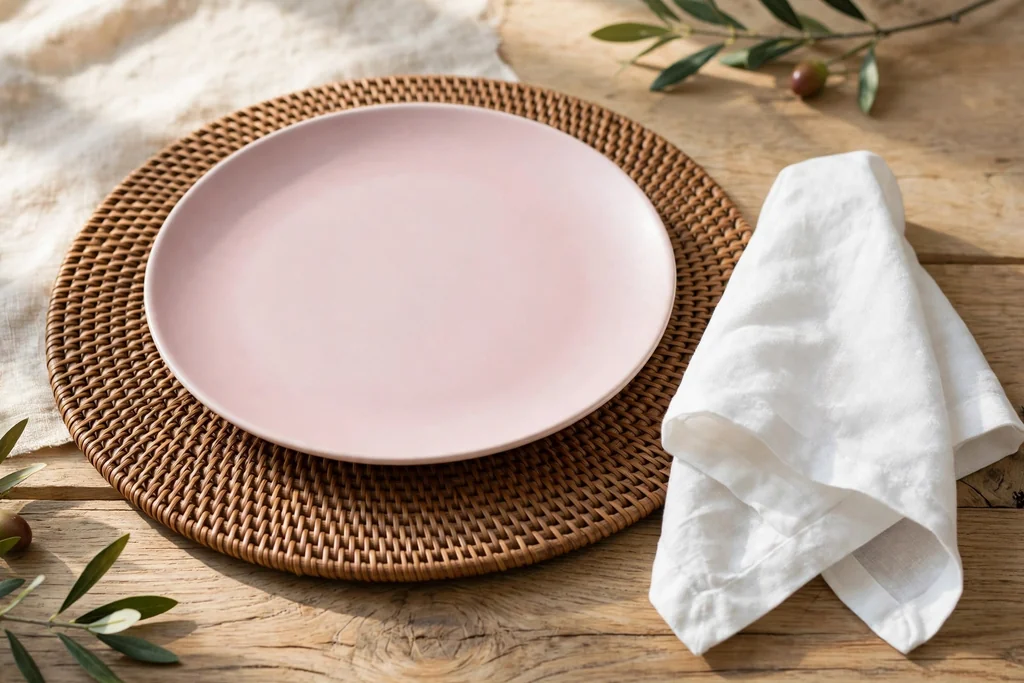
Layering pastel plates over plain chargers is an easy way to bring spring color to the table without buying a new dinner set. Use a plain charger, rattan, wood, or white ceramic, then set a pastel dinner plate on top, in blush, butter yellow, pale blue, or mint. The charger frames the plate and makes even a simple meal look considered.
Keep the rest of the setting plain: white or cream napkins, clear glasses, and simple cutlery, so the pastel plates carry the color. If your pastel plates are mismatched, that is fine, as long as they share a similar softness of tone. A set of four to six pastel plates is enough for most tables, and you can mix two pastel shades, such as blush and pale blue, for a table that feels collected rather than matched.
8. Seed Packet Place Cards
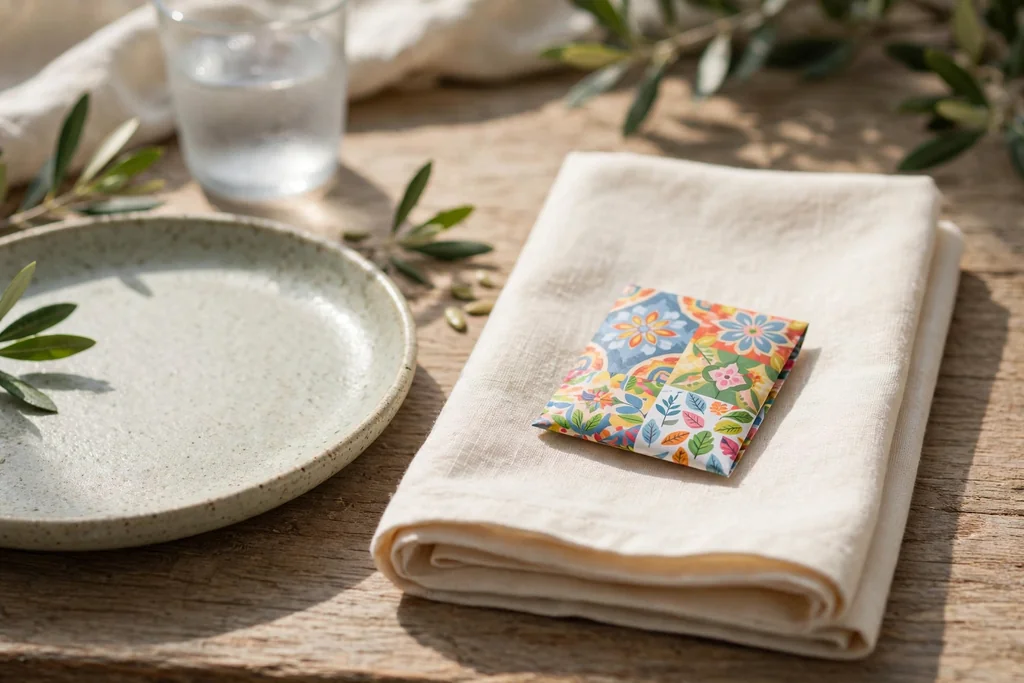
Seed packet place cards are a spring place setting that guests can take home and plant. Write each guest name on a small card, or on the packet itself, and prop it against the glass or lay it on the napkin. Choose seeds that suit the season, such as sweet peas, basil, or wildflowers, and match the packet colors loosely to your table palette.
This idea costs little and suits a spring lunch or a garden themed dinner. If you have guests who do not garden, choose herb seeds, since most people can grow basil on a windowsill. Keep the packets small and flat so they do not crowd the plate, and write names clearly in a dark pen. For an outdoor version of this table, these garden party ideas show how to carry a garden theme through seating, light, and food.
9. Woven Placemats With Rattan Chargers
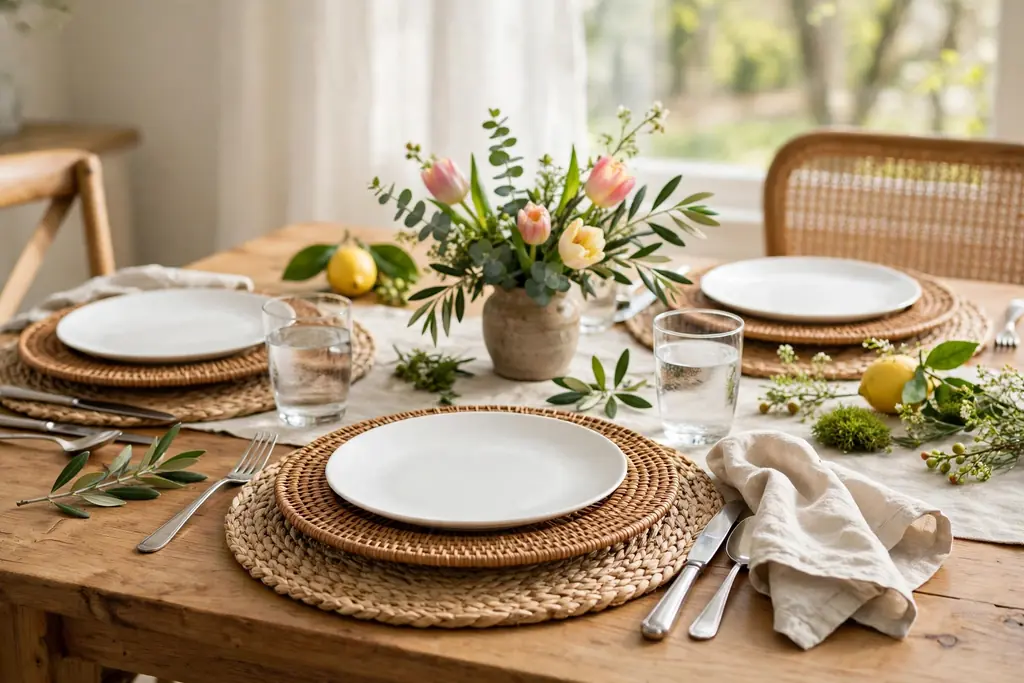
Woven placemats with rattan chargers give a spring table a warm, natural texture that suits both indoor and outdoor meals. Choose placemats in a light natural tone, such as seagrass, jute, or pale rattan, and pair them with a matching or plain charger. The woven texture softens a plain wood or white table and pairs well with linen napkins and simple glassware.
This setting suits a casual spring table, a brunch, or a table on a porch or patio. Wipe the placemats with a damp cloth after meals, since woven fibers catch crumbs, and store them flat so they keep their shape. If your table is small, use round placemats rather than rectangular ones, since they take up less room and leave more space for shared dishes in the center.
10. Potted Herbs Guests Can Take Home
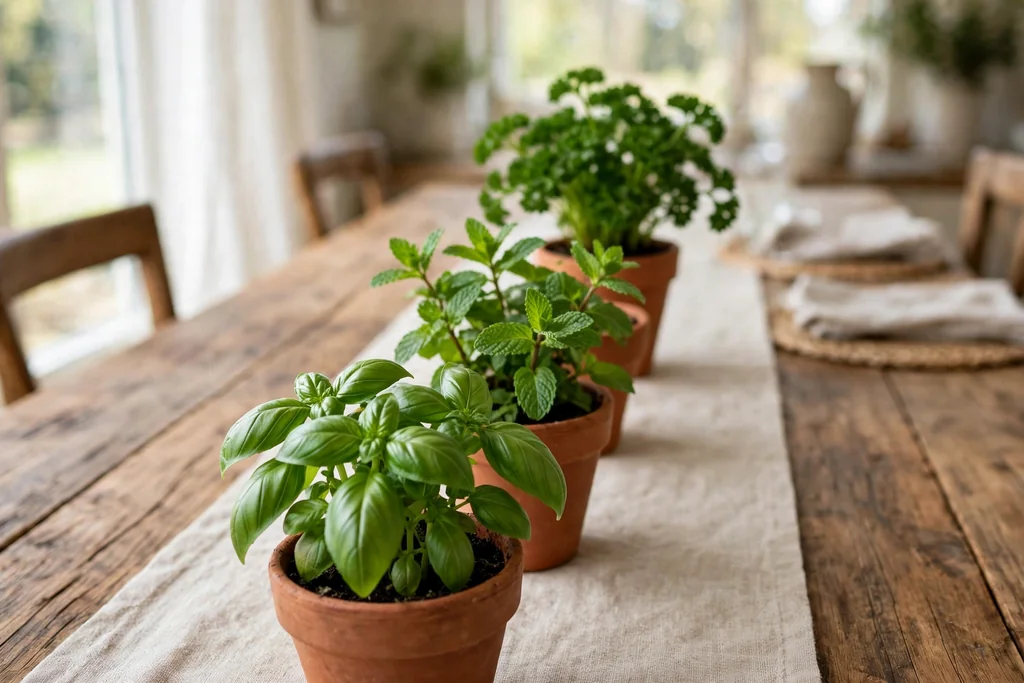
A row of small potted herbs down the center of the table works as a centerpiece, a place setting favor, and a kitchen supply in one. Use terracotta or plain ceramic pots planted with basil, mint, parsley, or chives, and set three to five pots along the table. The green is fresh, the scent is gentle, and the pots stay useful long after the meal.
Water the herbs the morning of the meal and set each pot on a small saucer to protect the table. Label each pot with a small wooden marker or a tied tag, so guests know what they are taking home. This idea suits a spring table where you want a centerpiece that lasts, since potted herbs keep growing on a windowsill while cut flowers fade in a week.
11. Cherry Blossom Branches in a Tall Jug
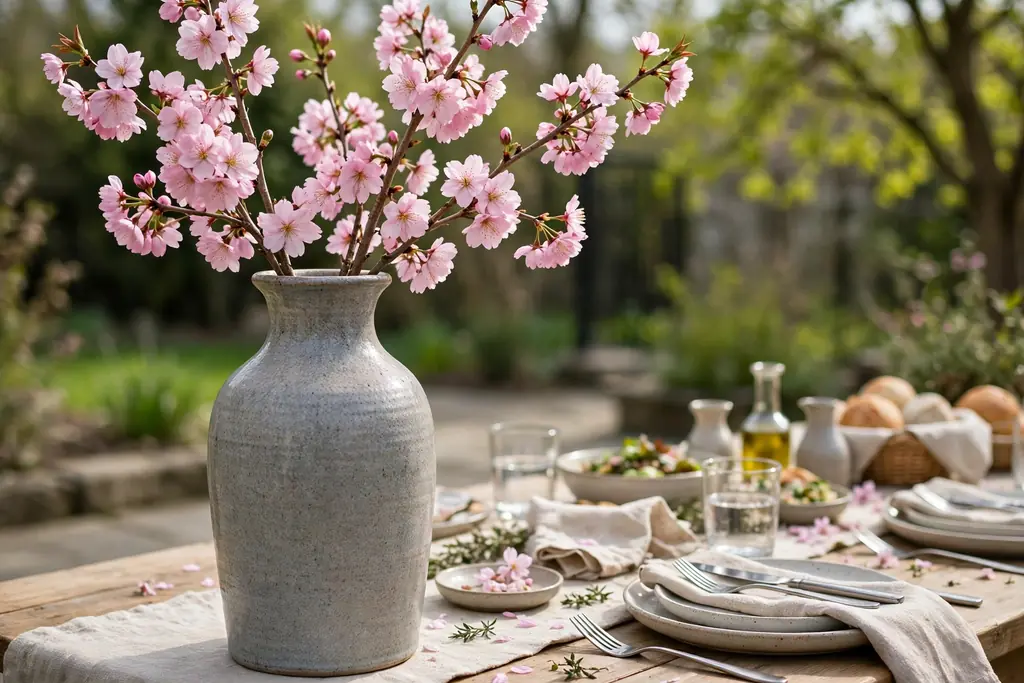
Cherry blossom branches in a tall jug bring spring height to a table without blocking conversation, because the branches are airy and the blooms sit above eye level. Use a tall ceramic jug, a stoneware pitcher, or a large glass vase, and place three to five branches in it, trimming the ends at an angle. The bare branches with soft pink or white blossom read as spring even before any other decoration goes on the table.
Place the jug at the end of the table or on a nearby sideboard if the table is small, and keep the branches clear of pendant lights and ceiling fixtures. Real branches last about a week in water, while good quality faux branches can stay out all season if you prefer a no care option. Pair the jug with plain white plates and a pale runner, so the blossom stays the focus.
12. Butter Yellow Napkins Tied With Twine and a Sprig
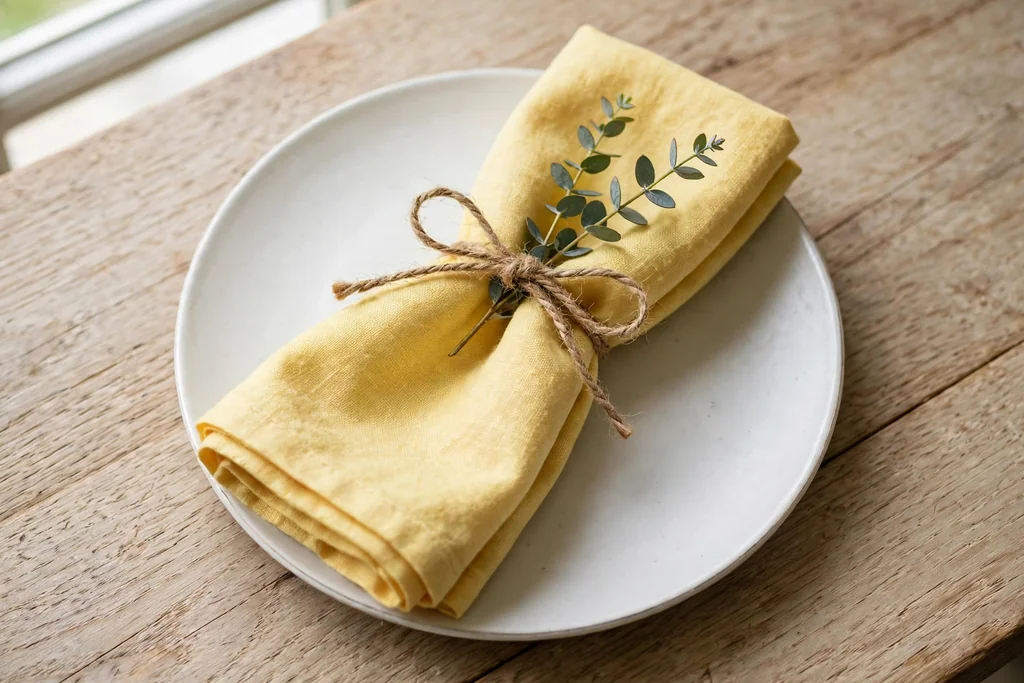
Butter yellow napkins tied with twine and a small sprig of greenery or lavender add spring color to each place setting for very little cost. Fold each napkin into a simple rectangle or a loose roll, wrap a short length of twine around it, and tuck a sprig of rosemary, lavender, or a tiny daisy under the twine. The yellow is soft enough for a daily table and bright enough for a gathering.
This idea suits any table, since it needs no matching dishes or centerpiece to work. Use cloth napkins if you have them, since they hold a fold and a sprig better than paper, and keep the sprigs small so they do not shed onto plates. If yellow does not suit your room, the same trick works in blush pink, pale blue, or soft green, as long as all the napkins share one color.
13. Mismatched Vintage Plates in Spring Colors
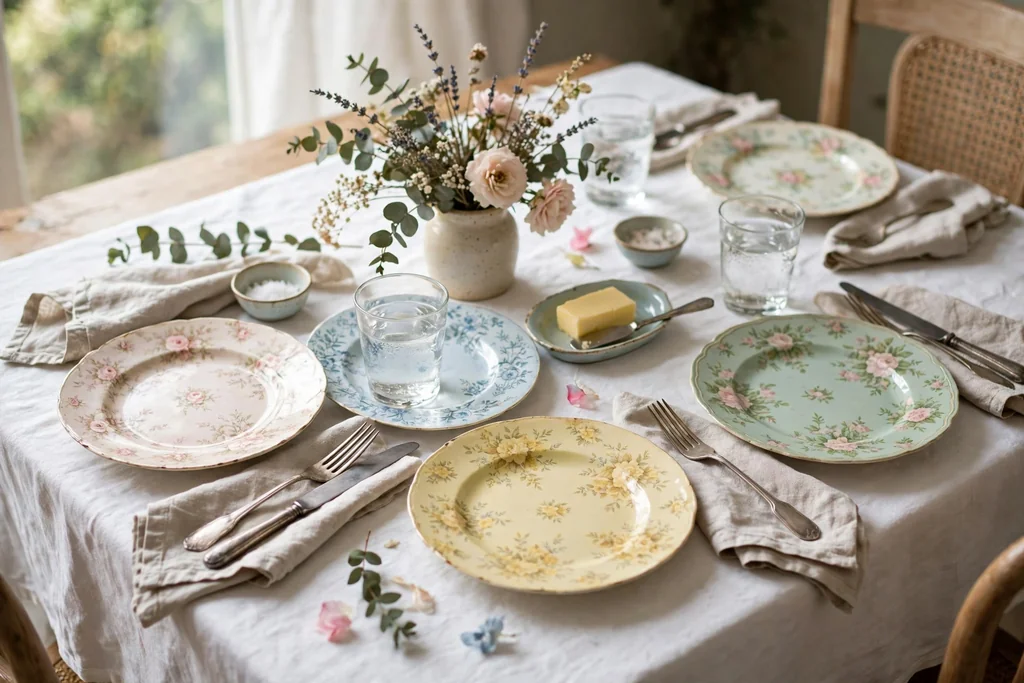
Mismatched vintage plates in spring colors give a table a collected, homely feel that a matched set cannot match. Gather plates in soft floral patterns, pastel rims, or plain pastel shades from charity shops, family cupboards, or your own shelves, and mix them across the table. The shared softness of the colors ties the mix together, even when no two plates match.
Keep the glasses, cutlery, and napkins plain so the plates stay the focus, and use a plain white or cream tablecloth under them so the patterns show clearly. This idea suits a spring brunch or a table for friends, where a relaxed mix feels welcoming rather than formal. Check each plate for chips before setting the table, and keep one or two spare plain plates ready in case a guest prefers a simpler setting.
14. A Glass Cloche Over a Small Spring Scene
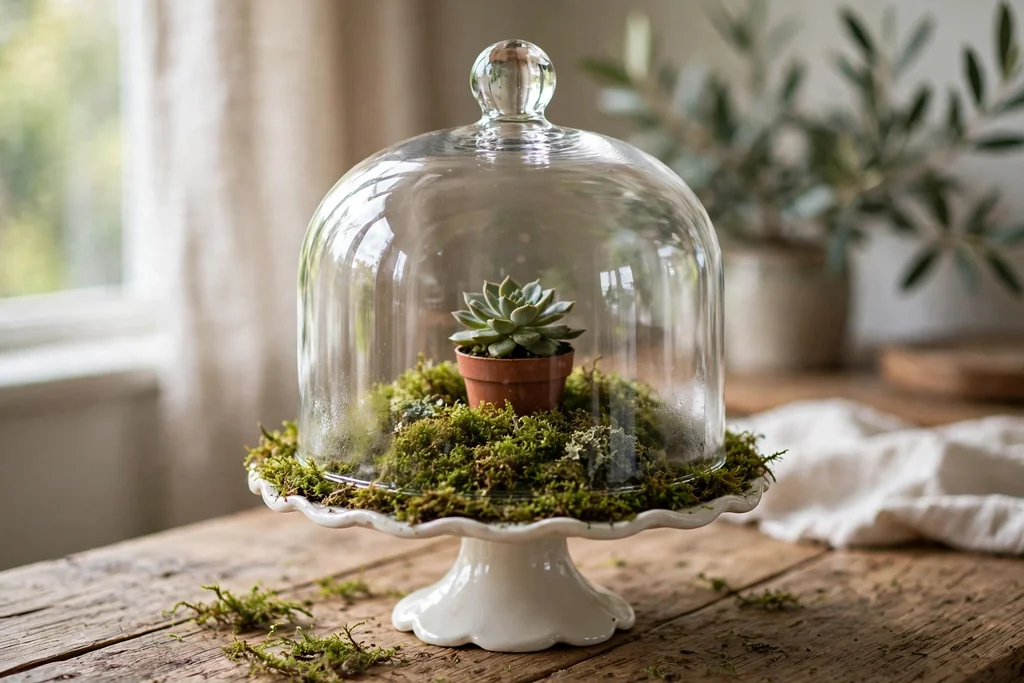
A glass cloche over a small spring scene turns a simple group of objects into a table feature. Set a small cake stand or a flat plate on the table, arrange a tiny potted plant, a few painted eggs, or a small nest of moss and flowers on it, and cover it with a glass dome. The cloche protects the scene from drafts and curious hands, and it catches the light in a way an open display does not.
Keep the scene low and simple: one plant, one or two small objects, and a little moss is enough. A crowded cloche looks cluttered through the glass, while a sparse scene looks deliberate. This idea suits a sideboard or a console table as well as a dining table, and it works as a spring display that stays set for weeks. Lift the cloche to water a live plant, and wipe the glass inside now and then so it stays clear.
15. White Candles in Glass Hurricanes With Scattered Petals
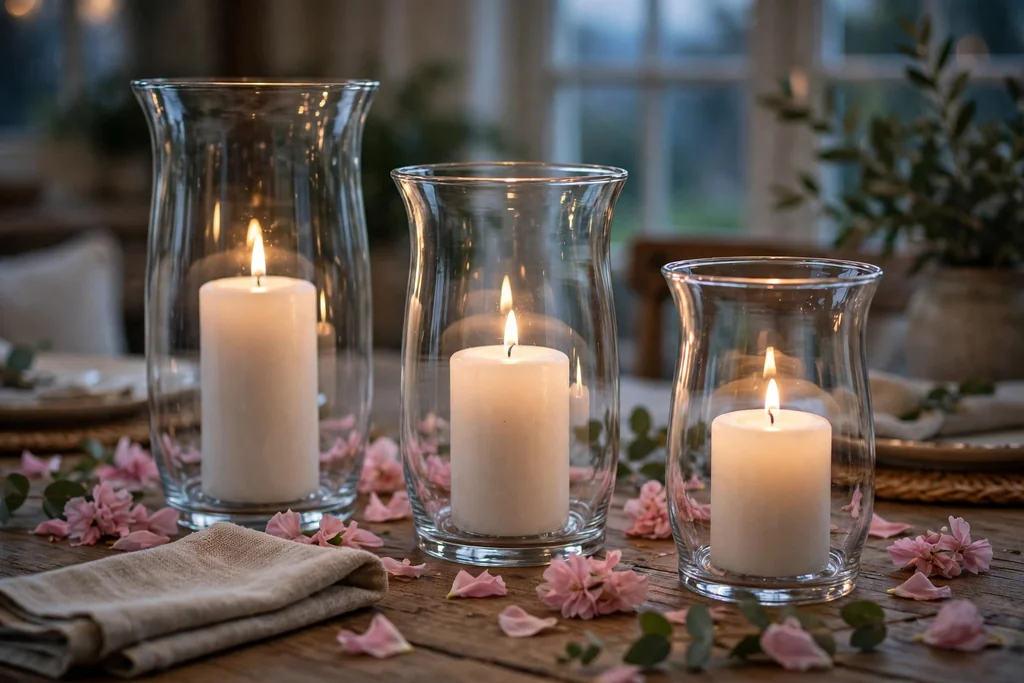
White candles in glass hurricanes, with a few fresh petals scattered around the base, give a spring table soft evening light without a large centerpiece. Place two or three hurricanes of different heights down the center of the table, each holding a white pillar candle, and scatter a small handful of petals, rose, ranunculus, or peony petals, on the table around them. The glass shields the flame from drafts, and the petals add color at table level.
Keep petals clear of the candle flame and away from plates, and use fresh petals on the day of the meal since they wilt quickly. This idea suits an evening spring dinner, when candlelight matters more than flowers, and it pairs well with a plain linen cloth and white plates. Battery candles inside the hurricanes give a similar glow if you prefer no open flame near petals and napkins.
16. A Small Posy at Every Breakfast Setting
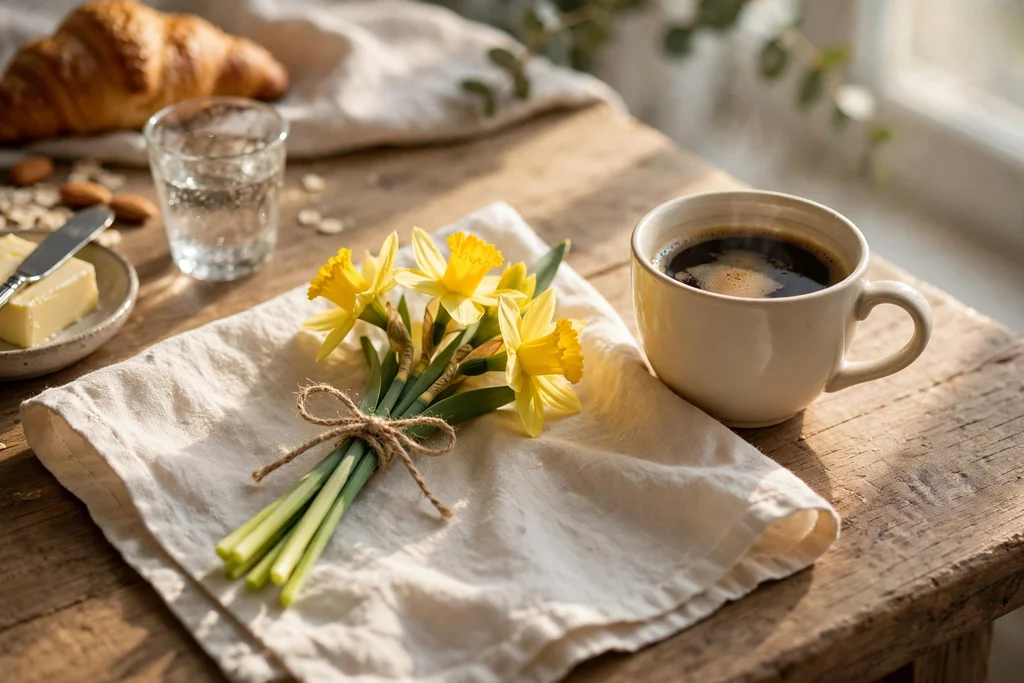
A small posy at every breakfast setting makes an ordinary morning table feel like a spring occasion. Tie three or four short stems, such as daffodils, grape hyacinths, or small tulips, with twine, and lay one posy across each napkin or stand it in a small glass at each place. The posies cost little if you cut from your own garden, and they suit a table set for family breakfast or a weekend brunch.
Keep each posy short, no longer than a hand span, so it does not crowd the plate or the coffee cup. If you have no garden flowers, a single stem per setting still gives the same effect, and guests can take the posy away after the meal. For a cozy eating corner that suits this kind of small table dressing, see these kitchen nook ideas.
17. A Tiered Stand as a Brunch Centerpiece
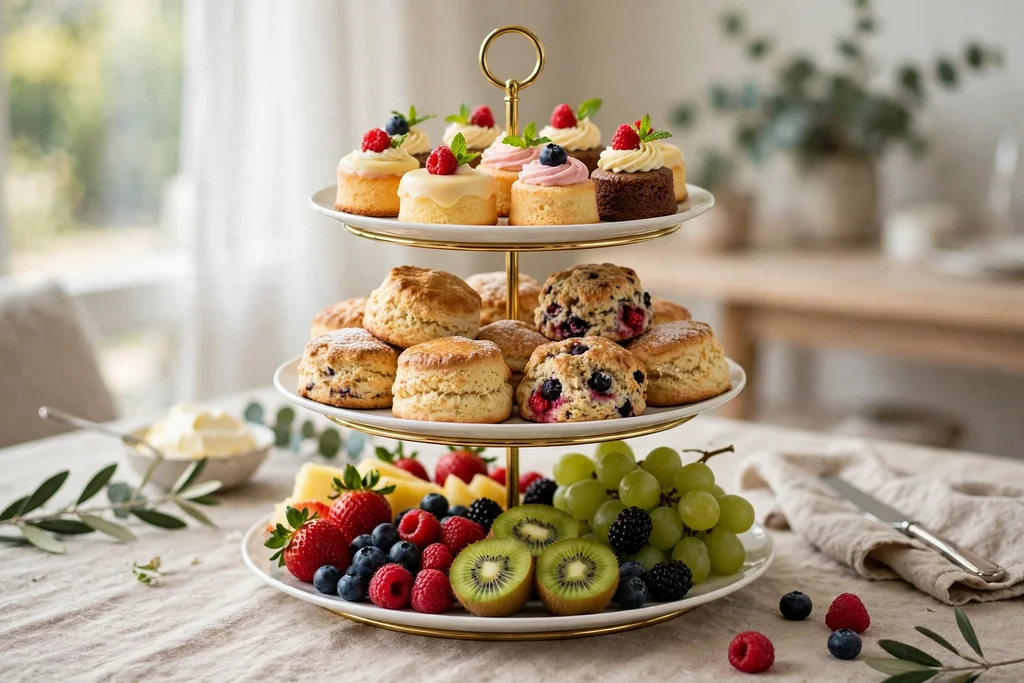
A tiered stand as a brunch centerpiece turns serving into decoration. Set a two or three tier stand in the center of the table and fill it with brunch food, such as scones, fruit, small cakes, or pastries, with a few small flowers or greenery sprigs tucked between the tiers. The stand lifts food above plate level, so the table looks full without needing a separate centerpiece.
This idea suits a spring brunch or a tea table, where finger food and small plates are the menu. Keep the stand low enough that guests can reach every tier, and put the heaviest items on the bottom tier so the stand stays steady. Clear and refill the stand partway through a long brunch, and keep a small plate nearby for crumbs so the table stays tidy.
18. Blue and White Porcelain With Fresh Green Foliage
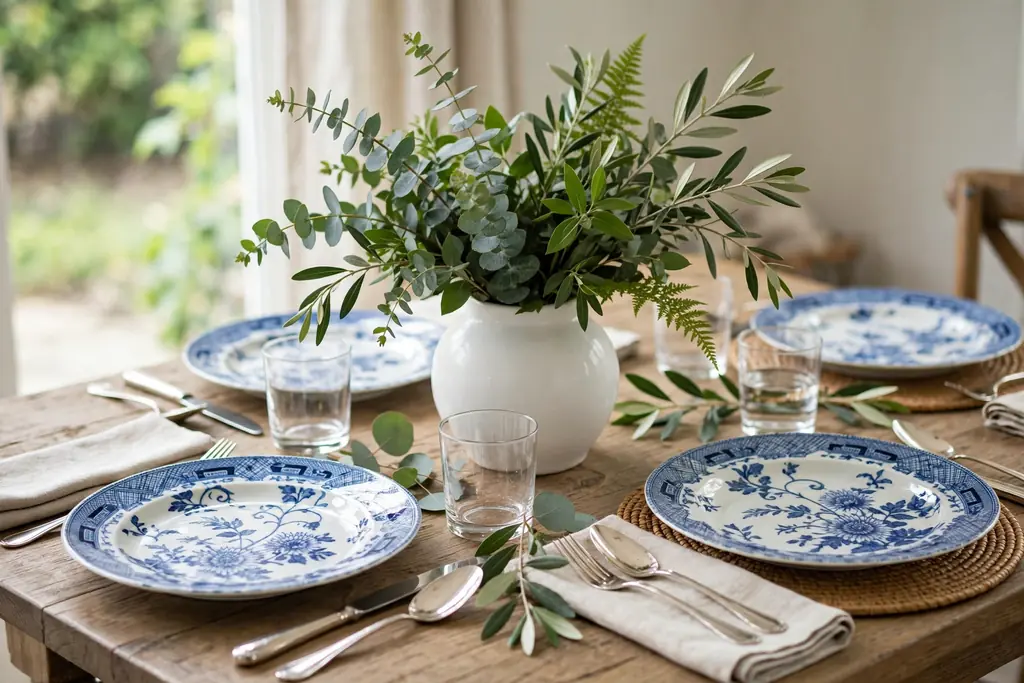
Blue and white porcelain with fresh green foliage is a classic spring table that feels current when the foliage is simple and the setting is plain. Use blue and white plates, bowls, or a serving platter, and pair them with fresh green stems, such as eucalyptus, olive branches, or simple leafy cuttings, in a plain white or glass vase. The blue and white pattern gives the table structure, while the green keeps it feeling like spring rather than a formal set.
Keep the rest of the table quiet: white napkins, clear glasses, and a plain wood or white table, so the porcelain and foliage lead. This idea suits a table that already owns blue and white pieces, since it needs no new dishes, only fresh greenery. Swap the foliage weekly to keep it fresh, and use one large arrangement rather than many small ones, so the pattern and the green each have room to show.
Conclusion
A cozy spring table does not need a large budget or a new set of dishes. It needs one clear idea, such as tulips in a tall vase, lemons and greenery in a low bowl, or a linen cloth in sage, plus a few small details that repeat that idea across the table. Keep the centerpiece low, keep the palette soft, and leave room for plates, glasses, and conversation. Start with the idea that fits your table today, whether that is a wildflower runner for a long table or a small posy at each breakfast setting, and build from there next spring.
Save this list on Pinterest before your next spring gathering, and work through it one area at a time: centerpiece first, then place settings, then light.
FAQs
How do I keep a spring centerpiece low enough for conversation?
Keep flowers and candles below the eye line of seated guests, roughly below 12 inches above the table, and save tall arrangements for a sideboard or the end of a long table. A runner of greenery, a low bowl of lemons, or a row of bud vases all keep the center open so guests can see and hear each other.
What flowers last longest on a spring table?
Tulips, ranunculus, and daffodils usually last five to seven days in fresh water if you trim the stems and change the water every two days. Potted herbs and potted bulbs last longer still, since they keep growing, and they make a good choice for a table that stays set for more than a weekend.
Can I decorate a spring table on a small budget?
Yes. Cut greenery and flowers from your own garden, use lemons from the kitchen as a centerpiece, tie napkins with twine and a sprig, and reuse plain white plates with one pastel accent. One strong idea, such as a wildflower runner or a row of bud vases, usually matters more than many small decorations bought at once.
How do I decorate a round spring table?
Use one central arrangement rather than a long runner: a low bowl of flowers, a moss tray with candles, or a tiered stand for brunch. Keep the arrangement compact so plates have room, and place one small detail, such as a posy or a tied napkin, at each setting to carry the theme around the table.
What colors work best for a spring table?
Soft pastels, such as blush pink, butter yellow, pale blue, and mint, work well against white, cream, and pale wood. Sage green and fresh leafy green suit almost any spring palette. Pick one main pastel and one green, then repeat them in flowers, napkins, and plates, rather than using every pastel at once.
How early should I set a spring table for guests?
Set the table the day before when you can: lay the cloth, place chargers and plates, and arrange any non perishable details such as candles, placemats, and place cards. Add fresh flowers, petals, and food on the day itself, and check water levels and candle positions just before guests arrive so everything looks fresh.