Author: Sophie Hayes

  • 22 Ideas to Revamp Teens Bedroom to Make Every Corner Count

    22 Ideas to Revamp Teens Bedroom to Make Every Corner Count

    A teens bedroom has to do a lot of jobs at once. It is a sleep space, a study spot, a place to hang out with friends, and a room that shows off hobbies and taste. A revamp does not need a full remodel. Small, focused changes to one wall, the bed, the desk, or a corner can shift how the whole room feels and works day to day. These 22 ideas to revamp a teens bedroom cover walls, bedding, study zones, storage, lighting, and unused corners. Start with the change that fixes the biggest daily annoyance, then add one idea at a time.

    Key Takeaways

    • Start with one clear job per zone: sleep at the bed, study at the desk, and relaxing in a corner, so each change has a purpose.
    • Use changeable layers first, such as bedding, peel-and-stick wallpaper, and clip displays, so the room can keep up as tastes change.
    • Repeat one main color in three spots, such as bedding, a cushion, and a piece of art, so the room looks planned rather than random.
    • Give every item a home, with bins, shelves, and hooks, since a tidy room is easier to study and relax in.
    • Layer light with a ceiling light, a desk lamp, and a soft evening light, rather than relying on one bright overhead bulb.
    • Check house rules before anything fixed to a wall, and choose removable options for rented rooms or shared homes.

    1. Peel-and-Stick Accent Wall Behind the Bed
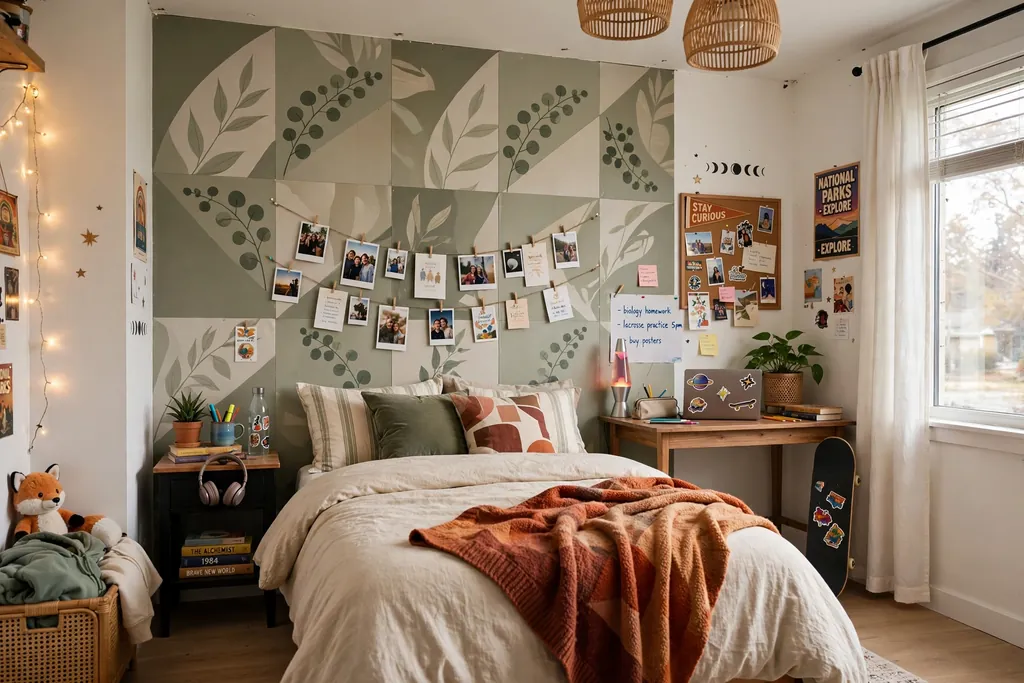
    Teen bedroom with a peel-and-stick accent wall behind the bed.

    Cover the wall behind the bed with peel-and-stick wallpaper for a fast focal point with no paint and no lasting damage. One patterned or colored wall is enough in most teen rooms, since covering every wall can make a small space feel closed in. Measure the wall first, order a little extra for pattern matching, and start at a top corner, smoothing down slowly to push out air bubbles.

    Test a small piece first, especially on textured or freshly painted walls, and keep bedding mostly plain on this wall so the pattern stays the main event. Choose a pattern that links to the bedding color, such as a soft stripe with a plain duvet, so the bed and wall read as one plan. If the paper starts to lift near a humid window wall, choose a drier wall instead.

    2. Gallery Wall With Posters in Matching Frames
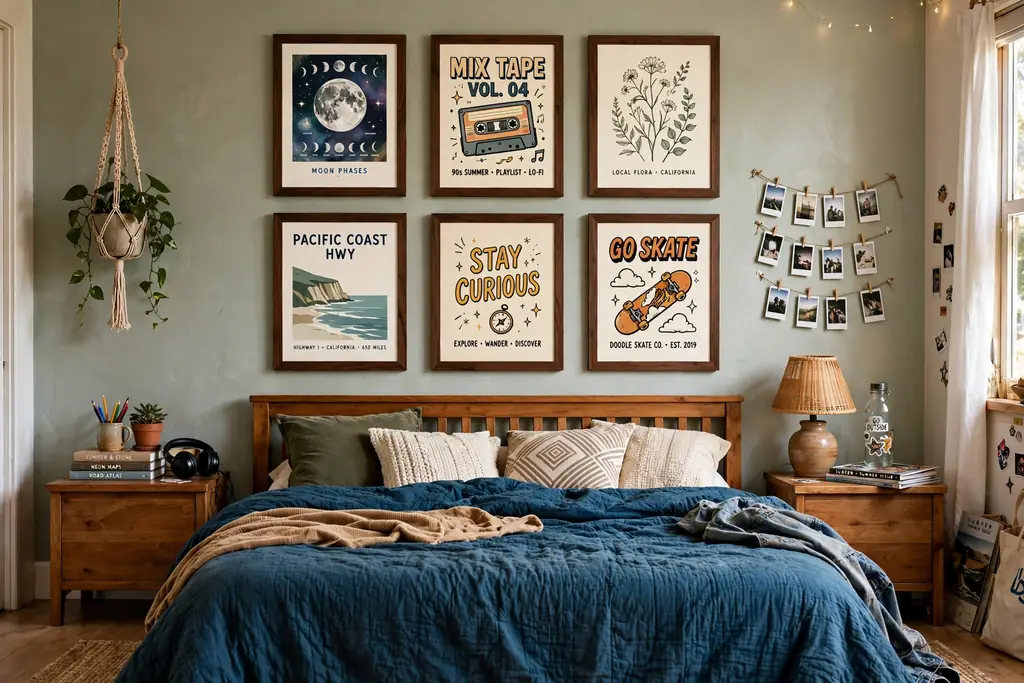
    Teen bedroom gallery wall with posters in matching frames above the bed.

    Hang a gallery wall of posters, prints, and photos in matching frames above the bed or desk for a display that looks neat even when the subjects vary. Matching frames calm a busy mix of music posters, art prints, and photos, and a tight layout reads as one display rather than scattered pieces. Lay the frames on the floor first, measure the full block, and mark the wall with painter tape before you hang anything.

    Keep the gallery to one wall or one stretch of wall so the room still feels calm at night. Leave a small gap for one new piece later, rather than filling the wall at once, so the display can grow with new interests. For more on sizing and hanging art over a bed, see these bedroom wall art ideas. Use fixings rated for the frame weight, and keep heavy frames off walls above a bed in a room where safety is a concern.

    3. Loft Bed With a Study Zone Underneath
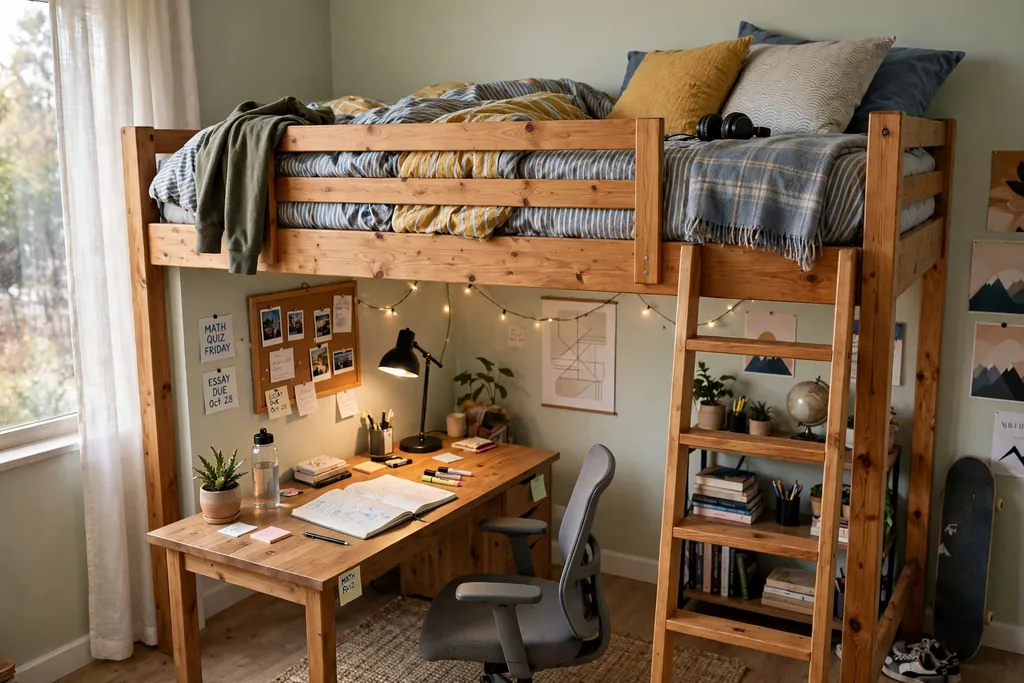
    Teen loft bed with a desk and chair in the study zone underneath.

    Raise the bed on a loft frame and place a desk, a chair, and a small shelf underneath to free up floor space in a small room. This works best when the ceiling is high enough to sit up in bed without hitting the ceiling, so measure sitting height before you buy. A loft bed turns one footprint into two zones, sleep above and study below, which suits a teen who needs both in one room.

    Keep the desk zone lit with a task lamp and a small shelf for books, since the area under a loft bed can feel dark. Add a guard rail and a sturdy ladder, and keep the area under the bed clear of clutter so the desk stays usable. If a full loft feels too high, a mid sleeper with storage drawers below gives some of the same benefit with less height.

    4. Reading Nook in an Unused Corner
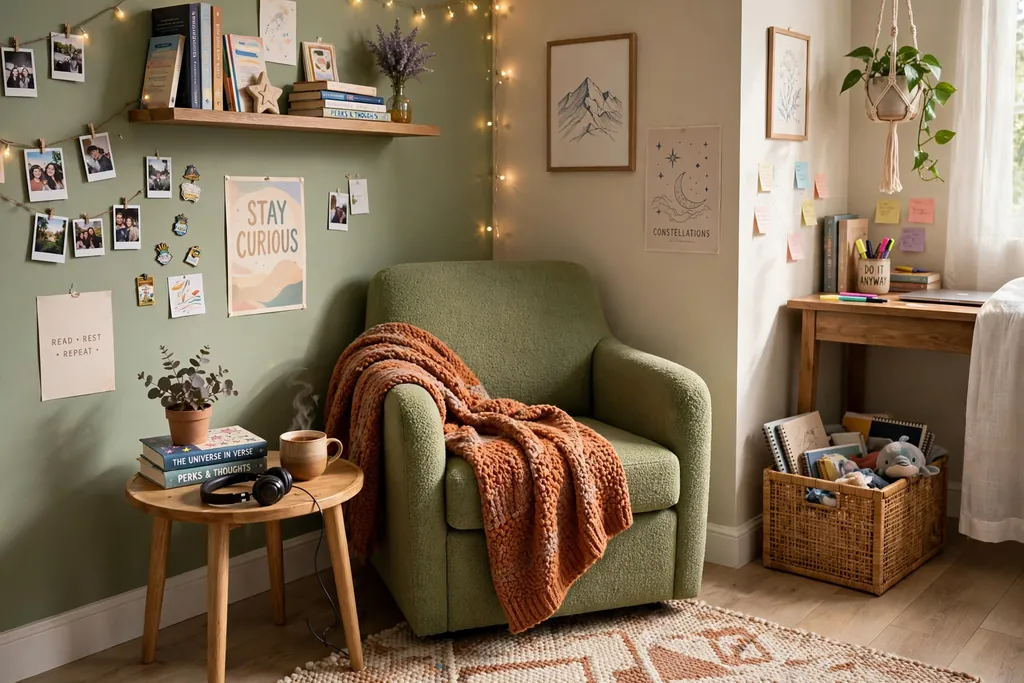
    Teen bedroom reading nook in a corner with a chair

    Turn an unused corner into a reading nook with a floor cushion or a small armchair, a soft throw, and a small side table for a book and a drink. A defined corner gives a teen a place to read, listen to music, or talk with a friend without sitting on the bed all day. Place the chair near a window or a lamp, since good light makes the corner inviting in the evening as well as in daylight.

    Keep the nook simple: one seat, one light, and one small surface, so it does not become a dumping ground for clothes and bags. Add a small basket beside the chair for current books, so the corner stays tidy between uses. If floor space is tight, a thick floor cushion and a wall mounted light can make a nook with almost no furniture at all.

    5. Vanity Station for Getting Ready
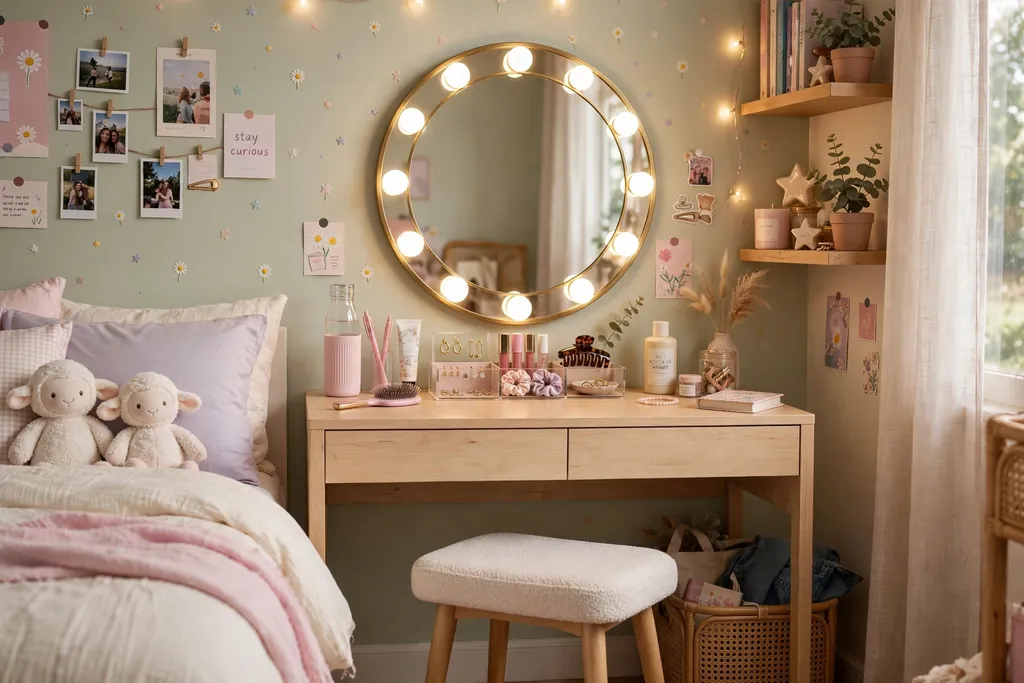
    Teen bedroom vanity station with a mirror

    Set up a small vanity station with a mirror, a stool, and a tray or a small organizer for daily items, so getting ready has its own spot instead of spreading across the desk. A wall mounted mirror above a narrow table works in a small room, and a tray keeps small items together and easy to wipe clean. Place the station near daylight or a bright lamp, since good light matters more than a large mirror.

    Keep only daily items on the surface, and store the rest in a drawer or a box nearby, so the station stays clear. A small stool that slides under the table saves floor space when the station is not in use. This also frees the study desk for homework, since getting ready and studying no longer compete for the same surface.

    6. Pegboard Study Desk Zone
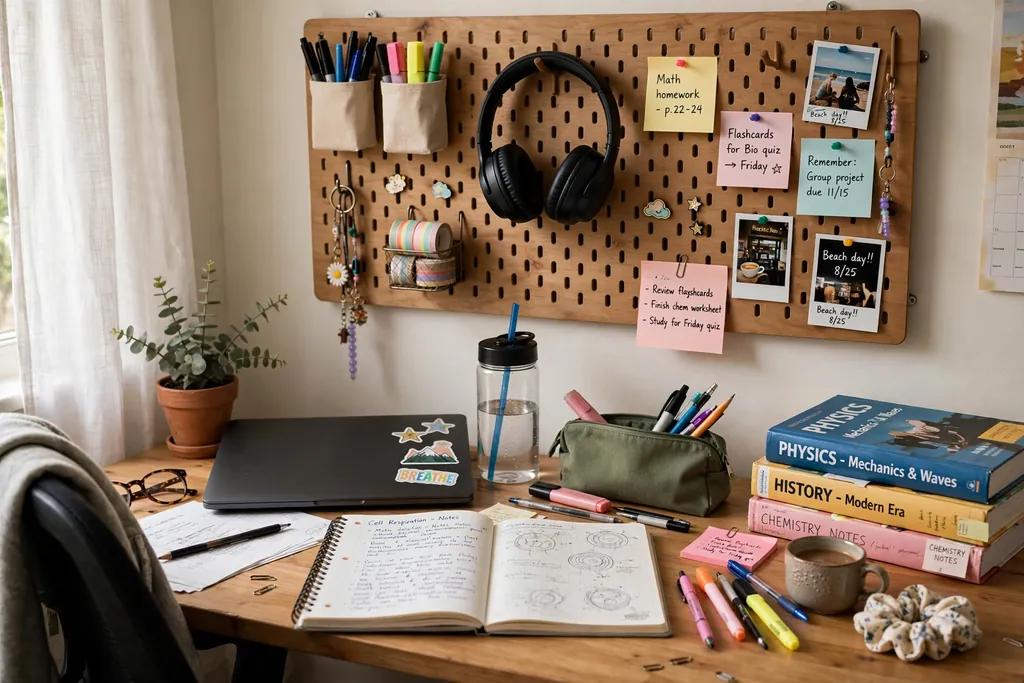
    Teen study desk with a pegboard above it holding pens

    Mount a pegboard above the study desk for pens, notes, headphones, and small supplies, so the desk surface stays clear for homework. Pegboards suit a teen room because items can move as needs change, with hooks, small shelves, and cups that shift without new holes. Group items by use, such as writing tools on one side and notes and reminders on the other, so the board reads as a plan rather than a cluttered wall.

    Keep the heaviest items low on the board, and check the fixings for the wall type before loading it. Leave one empty section for new notes or a timetable, since a full board is hard to use. Pair the pegboard with a desk lamp and a chair at the right height, so the whole desk zone works as one study spot rather than a collection of separate pieces.

    7. Closet Refresh With Open Shelves and Bins
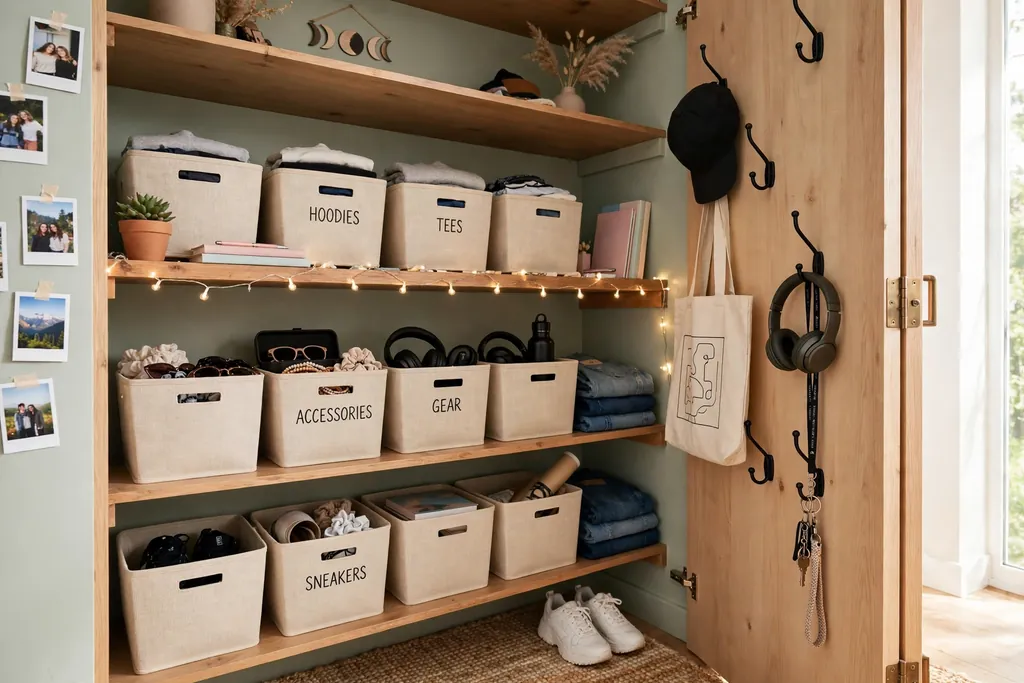
    Teen closet refreshed with open shelves

    Refresh the closet with open shelves, matching bins, and hooks on the inside of the door, so clothes and gear are easy to find and put away. Open shelves suit folded clothes, shoes, and bags, while labeled bins hide smaller items such as chargers, belts, and sports gear. Measure shelf heights around the clothes that are actually stored there, rather than copying a standard layout that wastes space.

    Put everyday clothes at eye level and seasonal or rarely used items higher up, so the closet works on a busy school morning. Add one hook per bag or jacket, and keep the floor of the closet clear so shoes do not pile up by the door. A small step stool helps reach high shelves safely, and a weekly five minute tidy keeps the new system working.

    8. Layered Bedding Swap in a New Palette
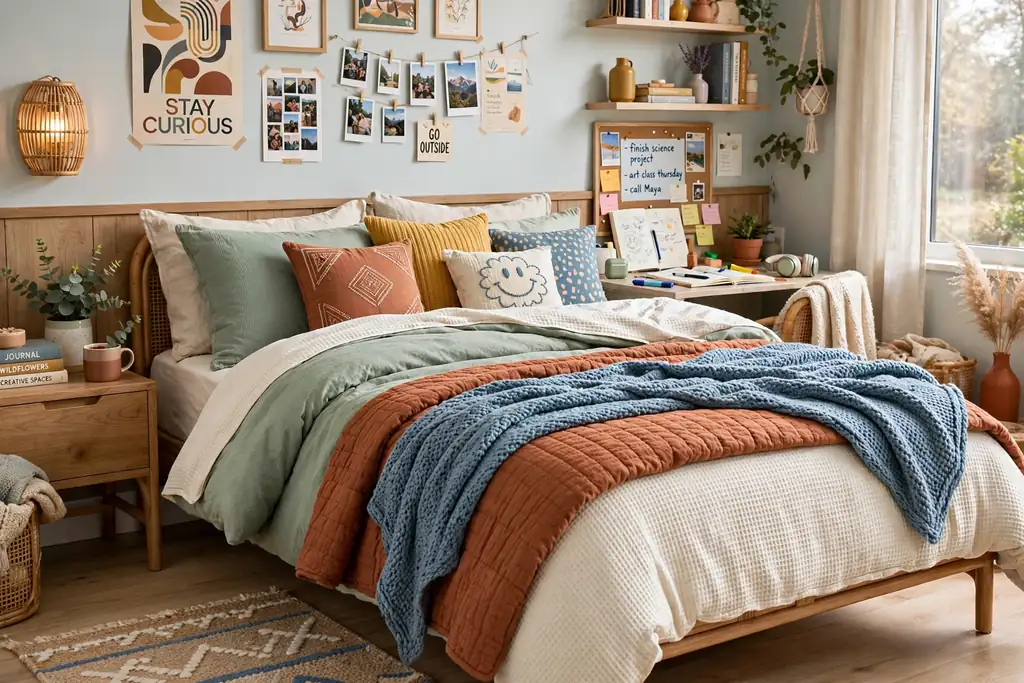
    Teen bed with layered bedding in a new palette

    Swap the bedding for a layered set in a new palette, with a plain duvet, a folded throw, and two or three cushions, for a room refresh that needs no paint or new furniture. Bedding covers a large area, so a color change there shifts the whole room fast. Choose a main color, a neutral base, and one accent, and repeat the accent in a cushion and a small piece of art so the bed links to the rest of the room.

    Pick washable fabrics, since teen bedding gets daily use, and keep one spare duvet cover so the bed can be remade on wash day without a gap. Layer a light throw for warm nights and a heavier one for cold nights, rather than buying a whole new set for each season. If bright color feels risky, start with bedding in a muted tone and add one brighter cushion that can be swapped later.

    9. Layered Lighting for Day and Evening
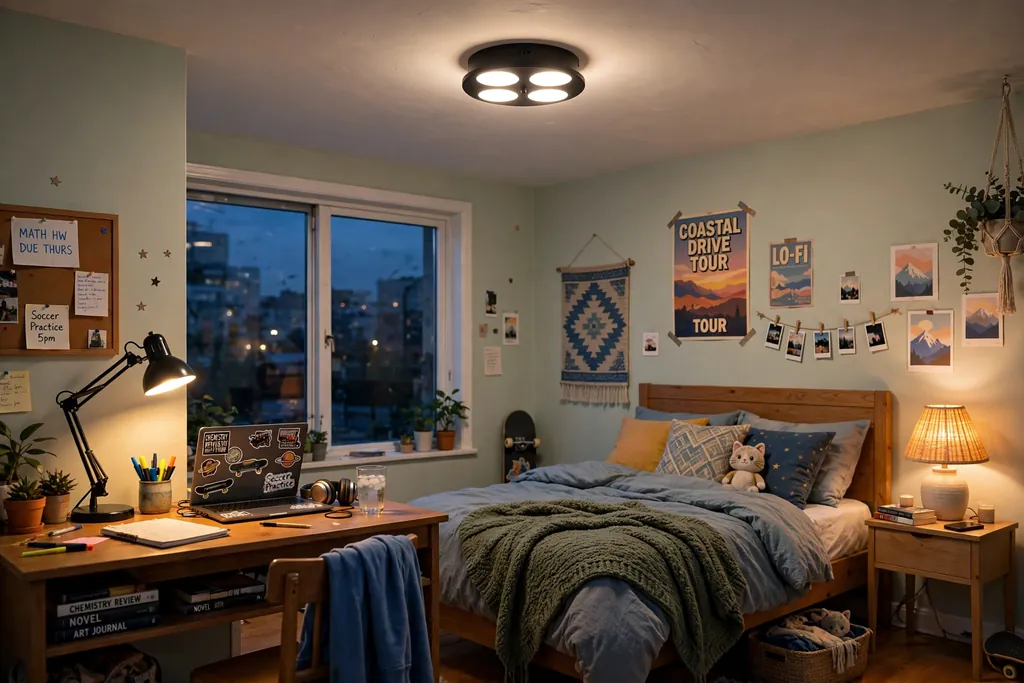
    Teen bedroom with layered lighting

    Replace reliance on one overhead light with three layers: a ceiling light for general use, a desk lamp for study, and a soft lamp or string lights for evening relaxing. Layered light lets a teen switch the mood of the room without changing any furniture, with bright light for homework and softer light for winding down. Use warm white bulbs in the evening lamps, since cool bright light late at night can make it harder to relax.

    Put the desk lamp on the opposite side from the writing hand, so shadows do not fall across homework, and keep cords tidy with clips along the wall or desk edge. A dimmer or a lamp with two brightness settings gives more control than a single bright bulb. Check that string lights are rated for indoor use, keep them clear of bedding and curtains, and plug them into a switched socket so they can be turned off easily.

    10. Neon Style Word Sign Above the Bed

    Teen bedroom with a neon style word sign glowing above the bed.

    Hang a neon style word sign above the bed or on the wall seen from the door for a personal glow that suits a teen room. Choose a short word or a simple shape, and keep the color warm white or a soft tone for a bedroom, since harsh colors can feel jarring at night. The sign works best on a plain wall with plain bedding nearby, so the glow stays the main feature.

    Mount the sign with the fixings supplied, keep the cord tidy with clips, and plug it into a switched socket so it can be turned off at bedtime. Pair it with one matching cushion color if you want the sign to link to the bed, but keep the rest of the wall quiet. If a plug in sign is not practical, a battery sign with a timer gives a similar effect with no cord across the wall.

    11. Clip Display for Rotating Posters and Photos
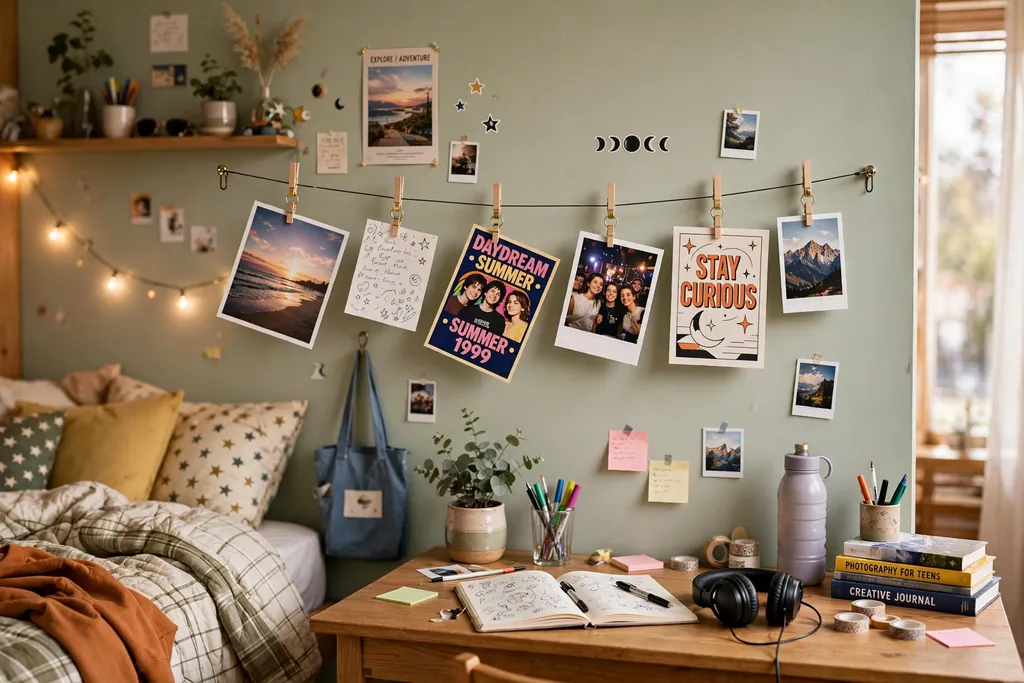
    Teen bedroom clip display with rotating posters and photos on a wire.

    Fit a picture ledge, a wire with clips, or a rail with clips for posters and photos that can be swapped without new holes in the wall. A clip display suits a teen room because tastes change fast, and a print can be replaced in minutes when a new band, show, or hobby takes over. Hang the display at a height that is easy to reach, and keep it to one wall so the room does not feel covered in paper.

    Rotate the display every few weeks, and store older prints flat in a folder so favorites are kept rather than torn. Mix one larger print with smaller photos for balance, and keep frames off this display so swaps stay quick. This also protects walls in rented rooms, since clips and ledges need fewer fixings than a full gallery of framed pieces.

    12. Floor Cushion Hangout Corner
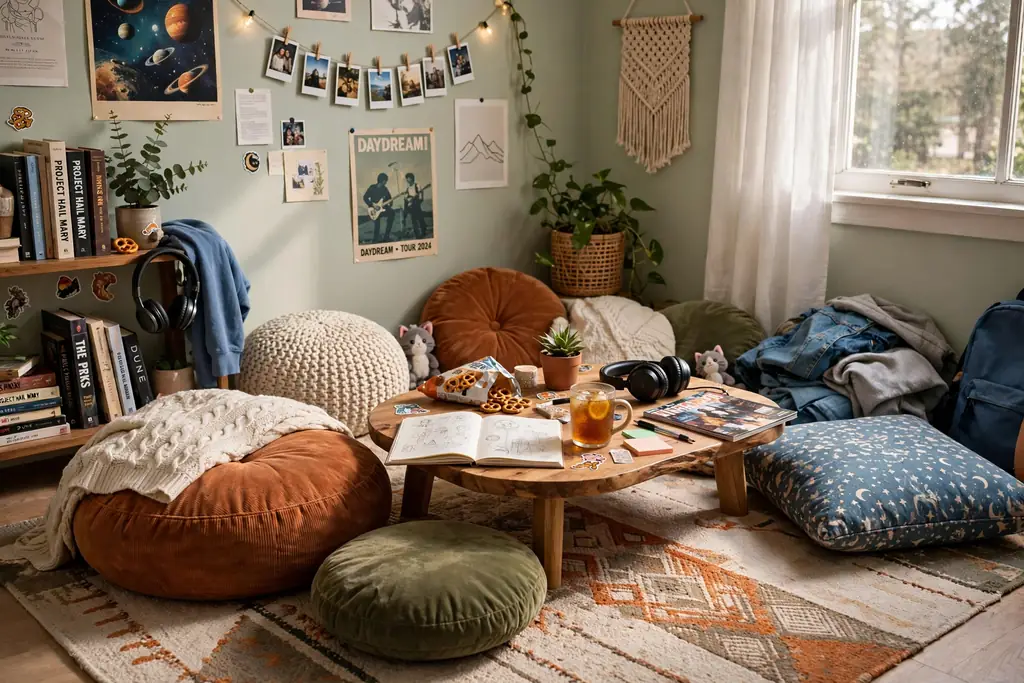
    Teen bedroom floor cushion hangout corner with a low table and rug.

    Make a hangout corner with large floor cushions, a low table, and a small rug, so friends have a place to sit that is not the bed. Floor seating suits a teen room because it can be stacked or moved when the room needs to be cleared for study or sleep. Choose cushion covers that wash well, and a rug large enough for the cushions to sit on without sliding on a hard floor.

    Keep the corner near a wall with a shelf or a small speaker, so snacks, phones, and music have a home during a hangout. Stack the cushions against the wall when they are not in use, so the floor stays clear for daily routines. A low table with a wipe clean top handles drinks better than a soft surface, and a small bin nearby keeps the corner tidy after friends leave.

    13. Music Corner With a Speaker Shelf
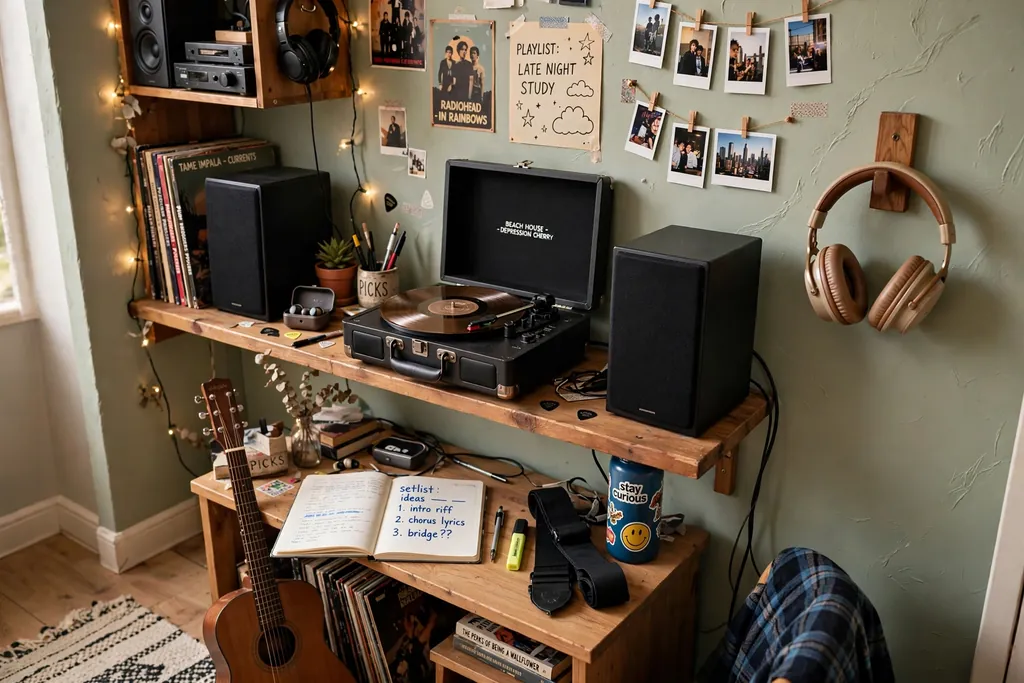
    Teen bedroom music corner with a speaker shelf and headphones on a hook.

    Set aside a music corner with a sturdy shelf for a speaker, headphones on a hook, and space for records, instruments, or a small collection. A defined music spot keeps gear off the desk and the bed, and a hook for headphones stops them from tangling with chargers. Place the shelf near a socket, and keep cords in a small tray or clipped along the shelf edge so they do not trail across the floor.

    Keep the collection to the items in regular use, and store the rest in a box on a closet shelf, so the corner stays a listening spot rather than a storage pile. A small plant or a framed print beside the shelf links the corner to the rest of the room. If the room is shared or noise matters, add a headphone stand and a small rug under the chair to soften sound.

    14. Hobby Display Shelves for Collections
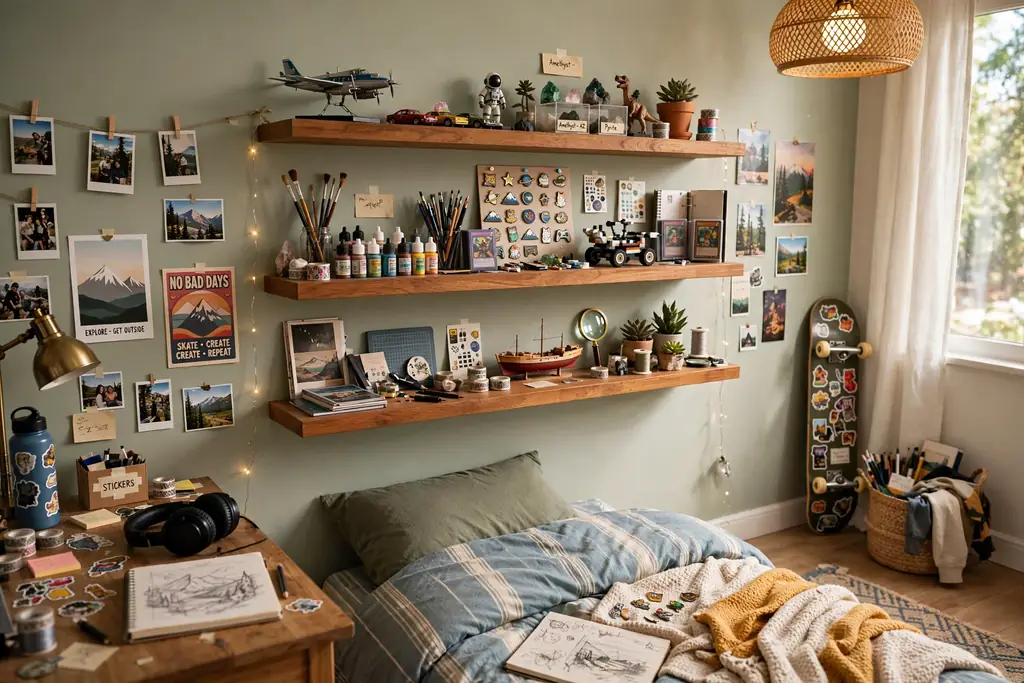
    Teen bedroom floating shelves displaying a hobby collection.

    Add two or three floating shelves for a hobby collection, such as models, books, sports items, or craft pieces, so the collection is shown rather than boxed away. Shelves suit a teen room because they use wall space that would otherwise stay empty, and they free up desk and floor space. Space the shelves to fit the tallest item, and leave one shelf partly empty so new pieces have a home.

    Group items by type or color, and put heavier items low, with lighter items higher up. Use shelf brackets rated for the weight, and keep shelves out of the main walkway so nothing gets knocked off. Dust the shelves with a dry cloth on a regular cycle, since displayed items show dust faster than items in a closed closet.

    15. DIY Headboard From a Painted Arch or Slats
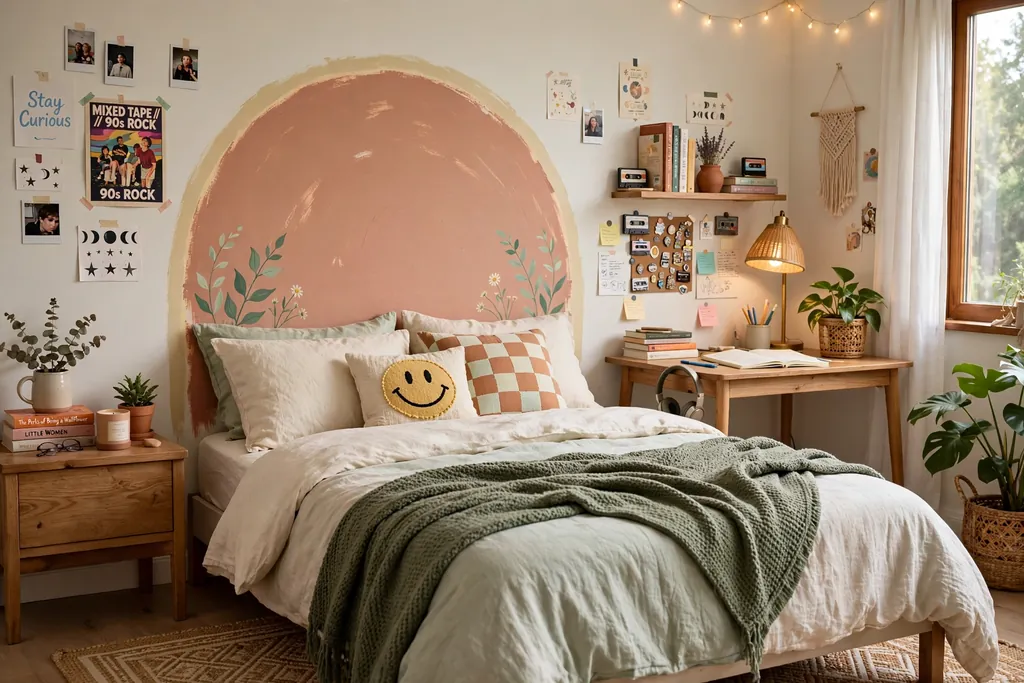
    Teen bedroom with a DIY painted arch headboard behind the bed.

    Give the bed a focal point with a do it yourself headboard, such as a painted arch on the wall, a row of wood slats, or an upholstered panel. A painted arch suits a rented room if the paint is approved, while slats or a panel can be removed without wall damage. Measure the bed width first, and center the headboard on the bed, so it frames the pillows rather than floating off to one side.

    Keep bedding plain when the headboard is patterned or textured, so the bed does not look busy. A slat headboard in pale wood pairs with most bedding colors, while a fabric panel adds softness for reading in bed. Check that any wall mounted panel is fixed securely, and keep it clear of lamps and cords so nothing gets caught behind it.

    16. Under Bed Storage Drawers and Rolling Bins
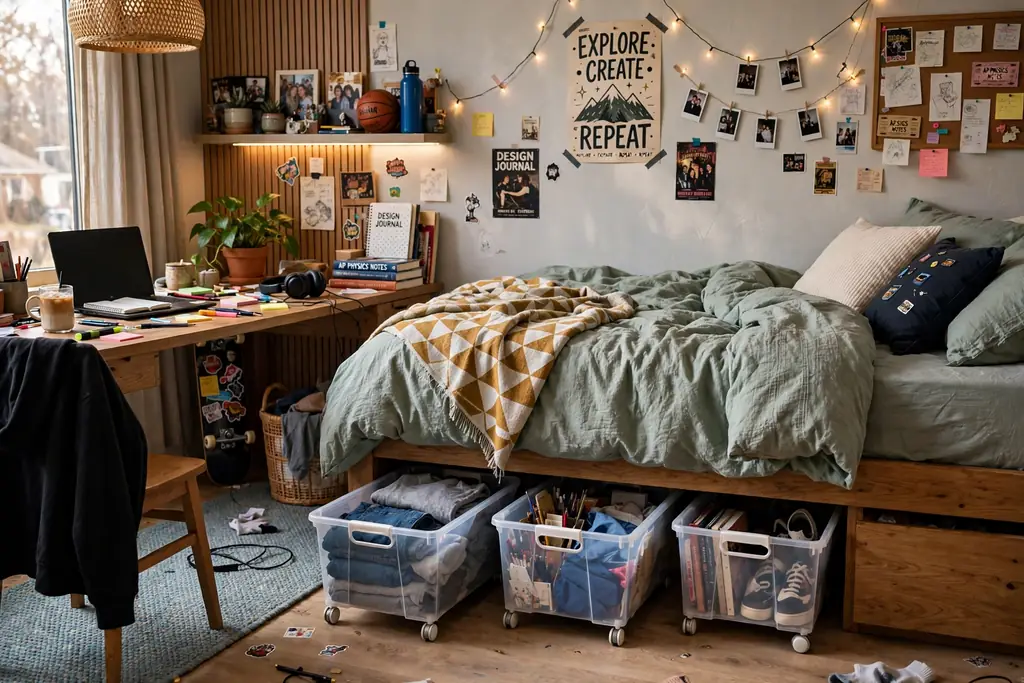
    Teen bedroom with rolling storage bins sliding out from under the bed.

    Use the space under the bed with shallow drawers or rolling bins for out of season clothes, sports gear, and spare bedding. Under bed storage suits a small teen room because it hides bulky items without taking floor or closet space. Choose bins with lids and wheels, so they slide out easily and keep dust off the contents, and label each bin so nothing has to be pulled out to be identified.

    Keep only items that are needed a few times a month under the bed, and keep daily items in the closet or on shelves, so the bins do not need to move every morning. Measure the clearance under the bed before buying, including the height of the wheels, so the bins actually fit. A quick vacuum under the bed when bins are pulled out keeps the area clean.

    17. Full Length Mirror and Dressing Corner
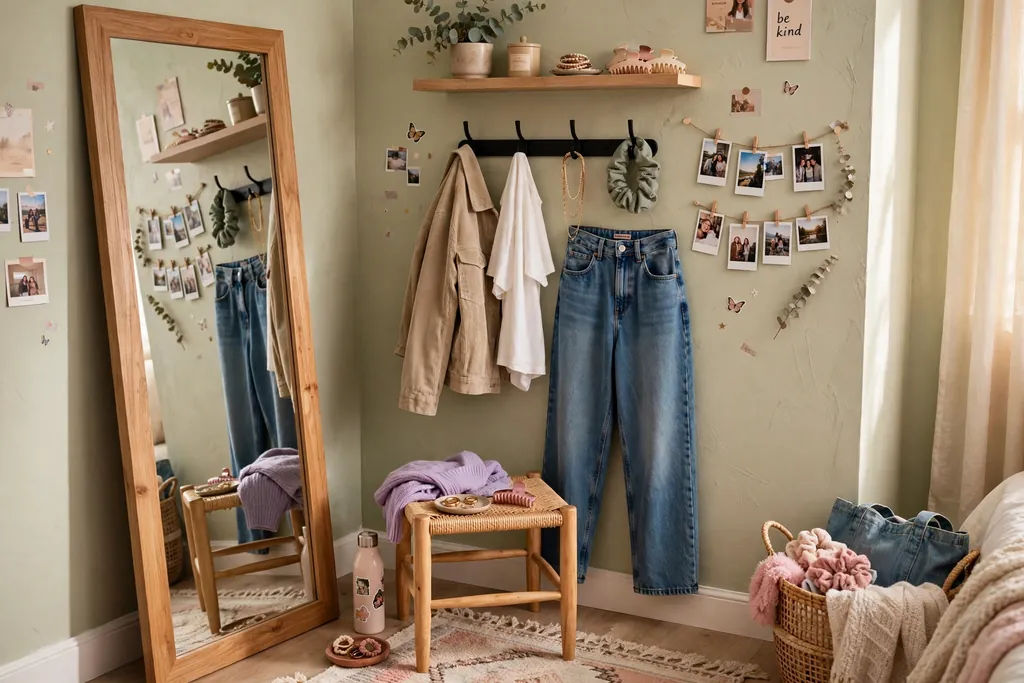
    Teen bedroom dressing corner with a full length mirror

    Place a full length mirror in a dressing corner with a small stool, a hook for tomorrow’s outfit, and a tray for daily items. A mirror near daylight helps with getting ready, and a dedicated corner stops clothes from piling on a chair. Lean the mirror securely against the wall with a non slip pad, or fix it to the wall with proper fixings, and keep it out of the main walkway so it does not get knocked.

    Hang tomorrow’s outfit on the hook the night before, so mornings start faster and the chair stays clear. Keep the tray to daily items only, such as a watch, keys, and a small bag, and store the rest in the closet. If space is tight, a mirror on the inside of a closet door gives the same function with no extra floor space at all.

    18. Inspiration Board for Goals and Ideas
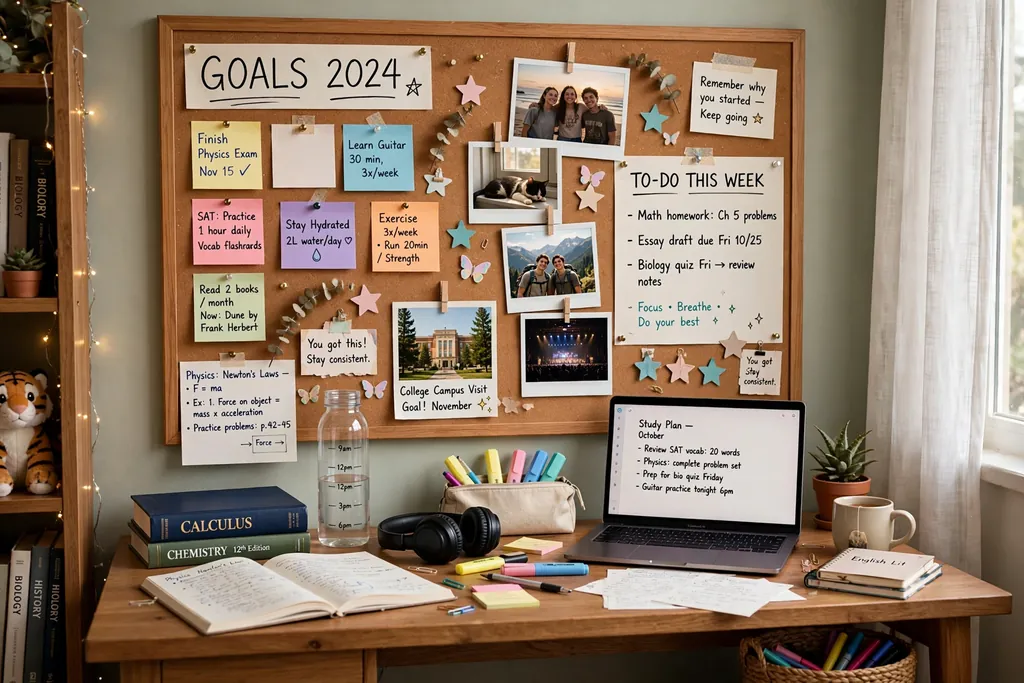
    Teen study area with an inspiration board for goals

    Pin an inspiration board above the desk or beside the bed for goals, timetables, photos, and ideas, so plans stay visible without covering the whole wall. A cork board, a fabric board, or a magnetic board all work, and each lets items move as goals change. Group the board into three parts, such as this week, ideas, and favorites, so it reads as a plan rather than a random pile of paper.

    Update the board at the start of each week, and remove items that no longer matter, so it stays useful rather than crowded. Keep the board to one size that fits the wall, and use pins or magnets that hold paper without tearing it. This also gives posters and photos a home that is not the desk, so homework space stays clear.

    19. Low Maintenance Plant Corner
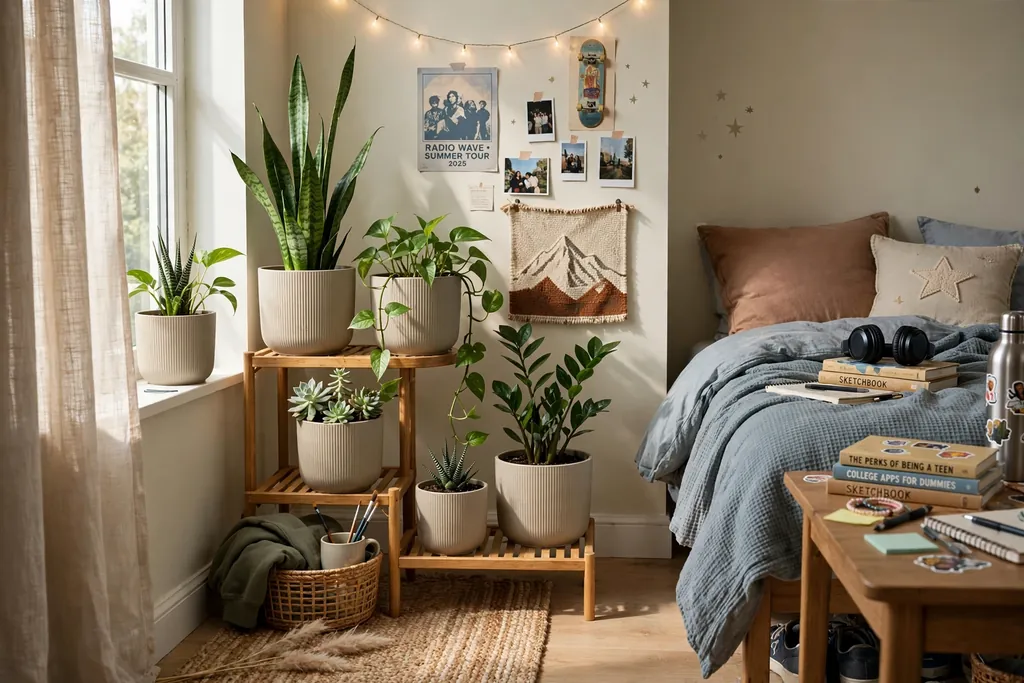
    Teen bedroom plant corner with low maintenance plants in matching pots.

    Add a plant corner with two or three low maintenance plants in matching pots, on a stand or a shelf near daylight. Plants suit a teen room because they add green and life with little daily work, and a grouped corner reads as a plan rather than one lonely pot on a windowsill. Choose plants that suit the light in the room, and check watering needs before buying, since overwatering harms more houseplants than dry soil.

    Use pots with drainage and a tray underneath, so water does not mark furniture or floors. Group plants at different heights, with one taller plant and two smaller ones, for a natural look. Keep plants out of the path to the bed and desk, and wipe leaves with a damp cloth now and then so they stay healthy and dust free.

    20. Rug Layering to Zone the Room
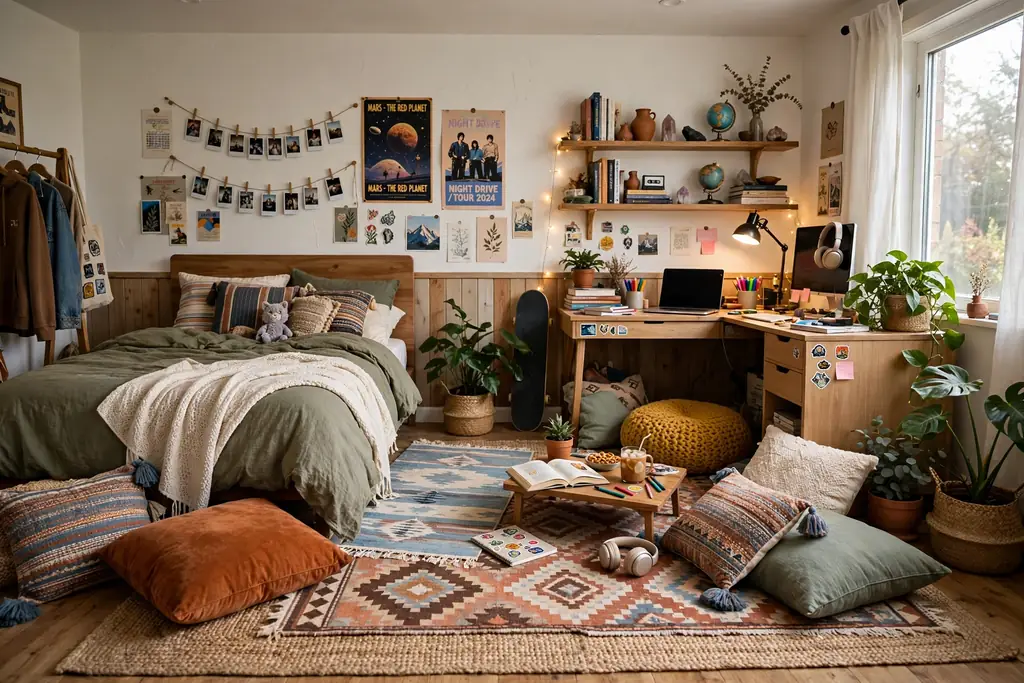
    Teen bedroom with layered rugs marking a hangout zone.

    Lay a large rug under the bed or in the hangout corner, with a smaller rug layered on top if the style suits it, to mark zones in a room that serves many purposes. A rug defines where relaxing happens, softens a hard floor, and adds color without paint. Choose a flat, washable rug for a teen room, and use a rug pad or rug tape underneath to stop slipping.

    Size the rug so it sits under at least the front legs of the bed or under all the floor cushions in a hangout corner, so it looks placed on purpose rather than floating. Keep the rug color linked to the bedding palette, with one shared tone, so the floor and bed read as one room. Shake or vacuum the rug often, since small rooms show dust fast, and roll it up if the room needs to be cleared for a larger project.

    21. Bedside Charging and Nightstand Refresh
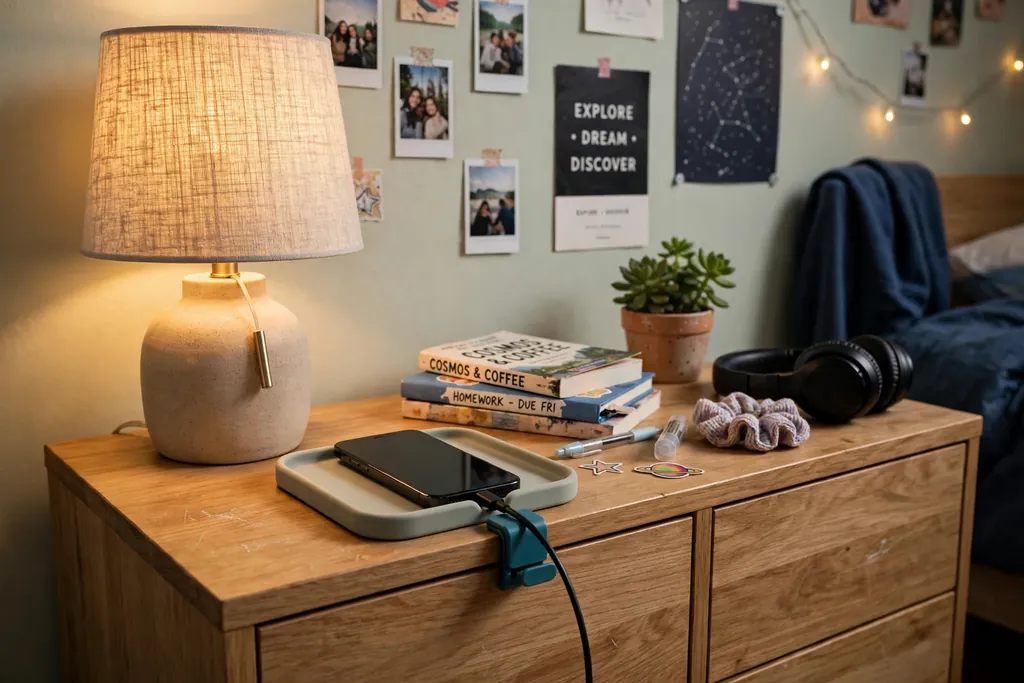
    Teen bedroom nightstand refreshed with a lamp

    Refresh the nightstand with a small tray for a phone, a charging cable routed through a clip, and a lamp, so the bedside stays tidy and phones charge safely. A dedicated charging spot stops cables from trailing across the floor and stops the nightstand from becoming a pile of books, chargers, and cups. Use a cable clip on the side of the nightstand, and keep the charging area clear of bedding and water.

    Keep only three or four items on the nightstand surface: a lamp, a phone tray, and a book or a glass of water, with the rest stored in a drawer. Charge devices on a hard surface, not under bedding, and use the charger made for the device. A small drawer organizer inside the nightstand keeps chargers and small items sorted without adding clutter to the surface.

    22. Seasonal Swap System for Bedding and Art
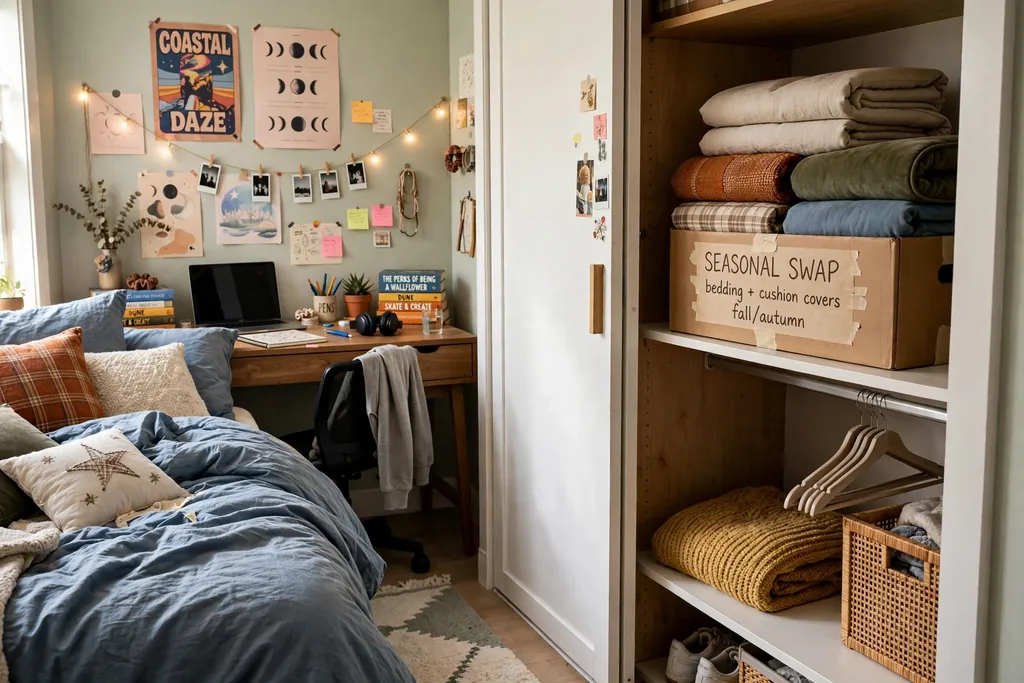
    Teen bedroom with a seasonal swap box of folded bedding and cushion covers on a closet shelf.

    Set up a seasonal swap system with a labeled box for spare bedding, cushion covers, and small art prints, so the room can change with the seasons without new purchases each time. A swap box suits a teen room because tastes and seasons change, and a stored set can feel new when it returns after a few months. Store one spare duvet cover, two cushion covers, and two or three small prints in the box, and keep the box on a closet shelf.

    Swap the set at the start of each season, and wash the outgoing set before storing it, so it is ready next time. Keep the main furniture and wall color steady, and change only the soft layers and small art, so the room feels fresh without a full revamp each time. For color ideas that work across seasons, see these dorm room color ideas. Label the box clearly, so the swap takes minutes rather than a full closet search.

    Conclusion

    A teen bedroom revamp works best when each change has a clear job. Start with the zone that causes the most daily friction, whether that is a cluttered desk, a bed that feels dull, or a corner that goes unused, and fix that zone first. Use changeable layers such as bedding, peel-and-stick wallpaper, and clip displays for the biggest visual change with the least commitment, then add storage and lighting so the new look stays usable week after week.

    If you found an idea here that suits your room, save this post on Pinterest so you can find it again when you are ready to start. Pick one idea to try this weekend, whether it is a gallery wall, a reading nook, or a closet refresh, and use it as a starting point for the next change, one corner at a time.

    FAQs

    How can a teen revamp a bedroom on a small budget?

    Start with changeable layers that cost little: bedding, cushion covers, a rug, and a clip display for art. A peel-and-stick accent wall on one wall, a closet tidy with bins you already own, and a reading corner made from floor cushions can shift the room without new furniture. Spend first on the zone that causes the most daily trouble, such as a desk that does not work for homework, and add larger pieces only after the low cost changes are in place.

    What is the best way to revamp a small teens bedroom?

    Give each zone one job, and use walls and under bed space for storage so the floor stays clear. A loft or mid sleeper bed, floating shelves, a pegboard above the desk, and rolling bins under the bed all add function without taking floor space. Keep the palette to three colors, use a large rug to mark one zone, and keep one wall mostly plain so a small room does not feel crowded.

    How do I help a teen choose a bedroom style that lasts?

    Let the teen choose the changeable layers, such as bedding, art, and cushions, while keeping furniture and wall color more neutral. That way the room can shift with new interests by swapping soft layers and prints, without repainting or replacing furniture each time. A clip display and a seasonal swap box make those changes easy, and a short trial with one new color in bedding shows whether it still appeals after a few weeks.

    How often should a teens bedroom be refreshed?

    A small refresh each season works well, with a bedding and art swap from a stored box, while larger changes such as a desk zone or a closet system can last a year or more. Check the room at the start of a school term, since study needs, hobbies, and storage needs change across the year. Remove items that no longer fit the room before adding new ones, so each refresh starts from a tidy base.

    Can a teens bedroom work for both study and relaxing?

    Yes, if the zones are kept separate. Place the desk near daylight with a task lamp and a pegboard, and place relaxing in a different corner with floor cushions or a reading chair and softer light. Keep study items on the desk and relaxing items in the corner, and use a rug or a lighting change to mark the switch between zones. A tidy desk at the end of homework time also helps the room feel ready for relaxing.

    What should I check before hanging anything on a bedroom wall?

    Check house rules for rented rooms, check the wall type, and use fixings rated for the weight of the item. Measure the space and mark the layout with painter tape before drilling or nailing, and keep heavy frames and shelves out of the area directly above a bed where safety matters. Test removable options such as peel-and-stick wallpaper, clip displays, and picture ledges first, since they leave less damage if the layout changes later.
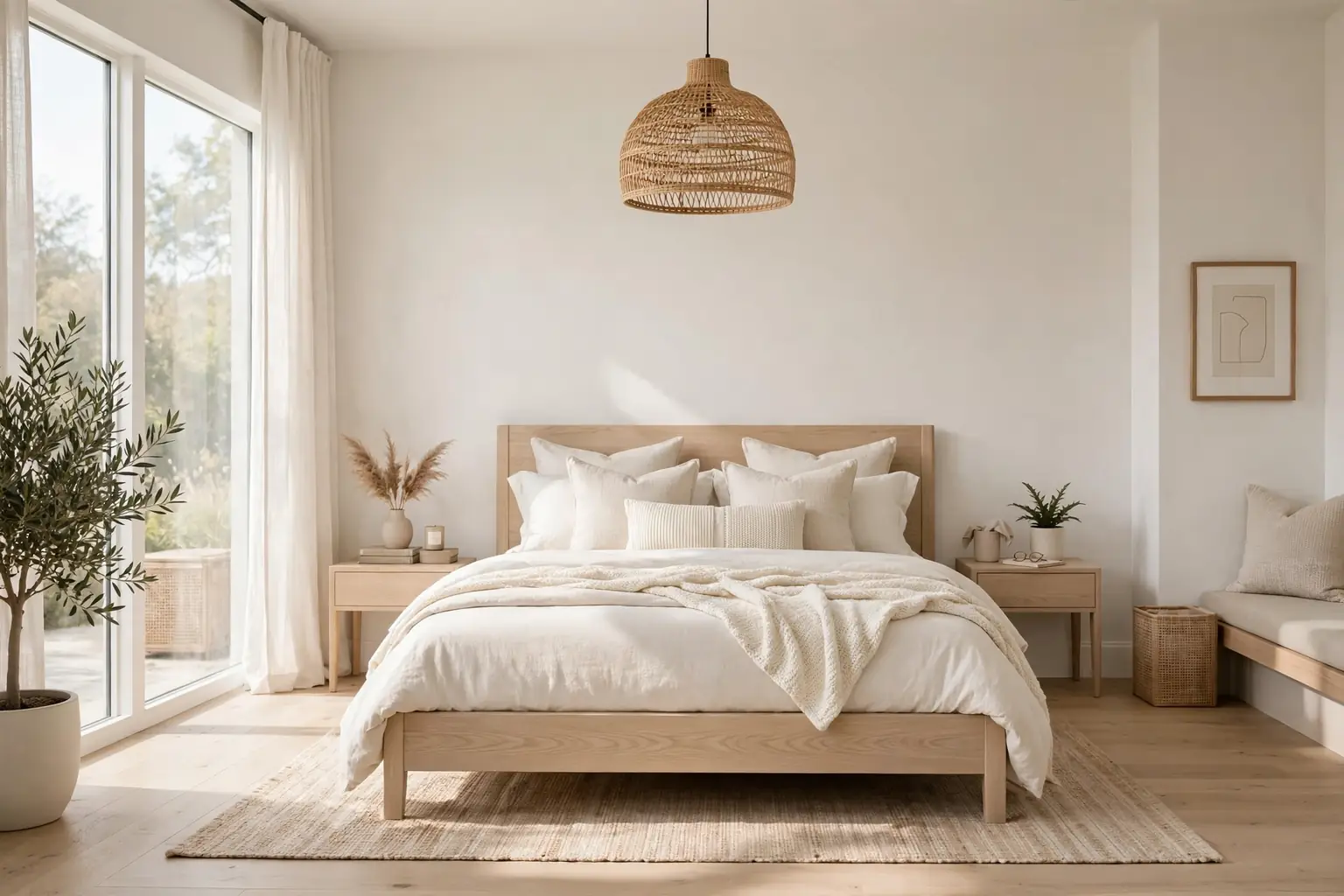
  • 28 Modern Neutral Bedroom Ideas to Bring More Personality Home

    28 Modern Neutral Bedroom Ideas to Bring More Personality Home

    A neutral bedroom can feel calm and still show who lives in it. The trick is to let texture, shape, and a few well chosen contrasts do the work, rather than adding more color. Warm whites, sand, stone, and soft greige give the room a quiet base, while wood, linen, rattan, brass, and matte black add depth and character. These 28 modern neutral bedroom ideas cover walls, beds, furniture, lighting, storage, and small personal touches, so you can start with one change or plan a full refresh. Pick the idea that fixes what feels most flat in your room, repeat its material once more nearby, and keep the rest of the room simple.

    Key Takeaways

    • Start with a warm neutral base of warm white, sand, and stone, then add personality through texture and shape, not through a long list of colors.
    • Repeat each material at least twice, in the bed and a nightstand, or in lighting and a mirror frame, so the room looks planned.
    • Add one clear contrast, such as matte black lamps or a dark wood dresser, so a pale room does not look washed out.
    • Mix soft textures with hard ones, such as linen beside travertine, rattan beside brass, or knit beside smooth wood.
    • Let one personal detail lead, such as art you chose, books you read, or a plant you tend, and keep the rest of the display quiet.
    • Start with bedding, curtains, and lighting for a no-paint refresh, and save wall panels, limewash, and furniture swaps for a weekend project.

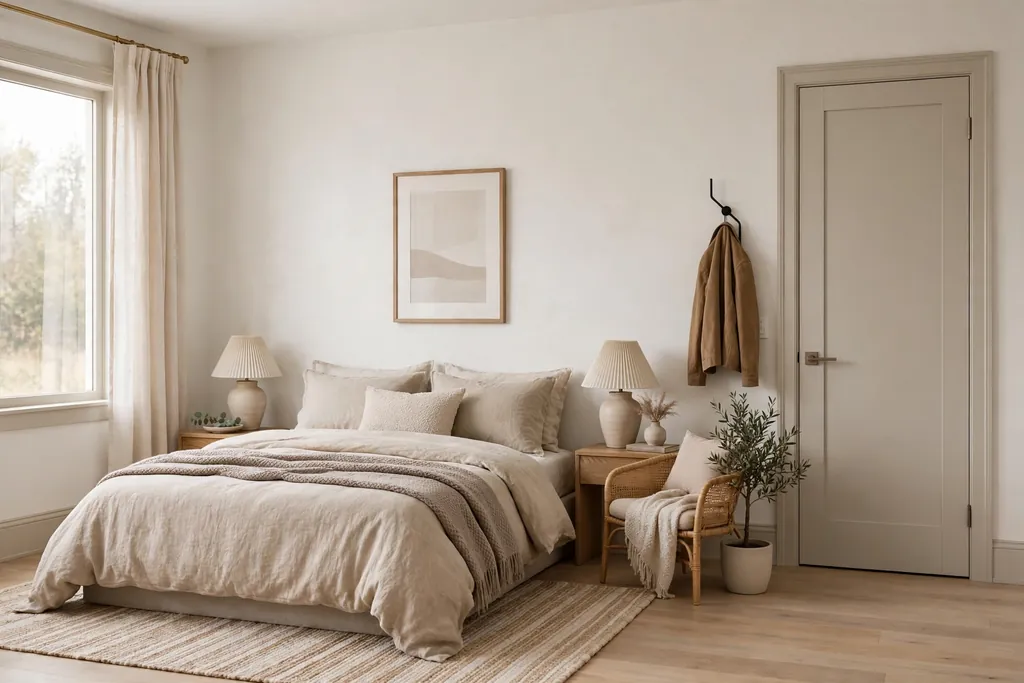
    1. Paint the Walls Warm White and the Trim Soft Greige

    Modern neutral bedroom with warm white walls and soft greige trim, doors, and skirting.

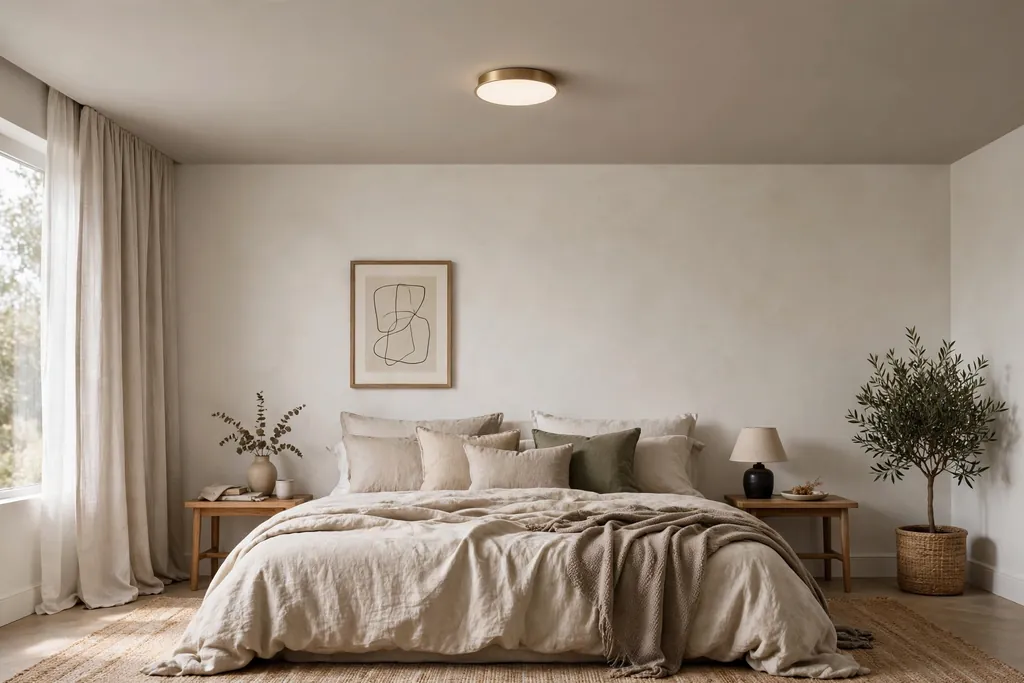
    Paint the walls a warm white and the trim, doors, and skirting a soft greige, so the room gains gentle depth without a strong color change. The slight shift between wall and trim outlines the room and makes furniture stand out, while the overall feel stays pale and calm. This suits a plain bedroom where white walls feel flat, and it works with almost any wood tone.

    Choose a warm white with a hint of cream rather than a cold blue white, and test both tones in evening light before you commit. Paint the ceiling the same warm white, so the greige trim reads as a frame rather than a border. Keep bedding in ivory or sand, so the wall tones stay the quiet base of the room.

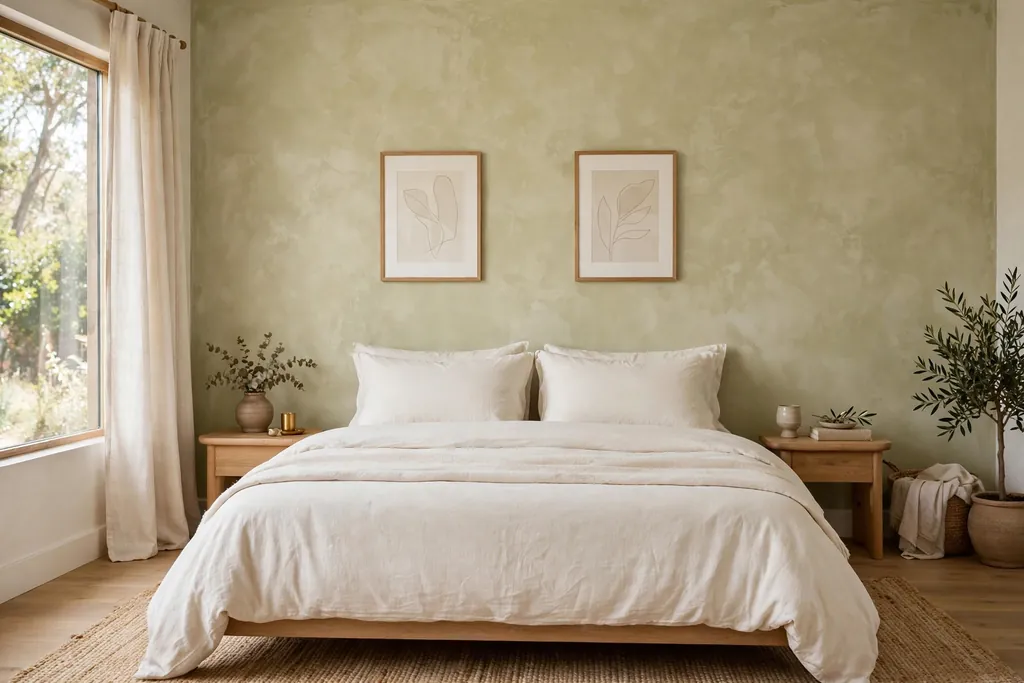
    2. Limewash the Wall Behind the Bed

    Bedroom with a limewash wall behind a bed with plain ivory bedding.

    Limewash the wall behind the bed for a soft, chalky surface that moves slightly as the light changes. The subtle variation gives a flat neutral wall a hand finished feel, without pattern or bold color. This suits a modern bedroom that needs one focal wall, and it pairs well with a simple bed and plain bedding.

    Apply the wash in thin, crossed strokes, and let each coat dry fully before you judge the tone, since limewash lightens as it dries. Keep the other walls plain warm white, and keep art on the limewashed wall to one piece or none, so the texture stays easy to see. Seal it as advised by the product maker if the wall will be touched often.

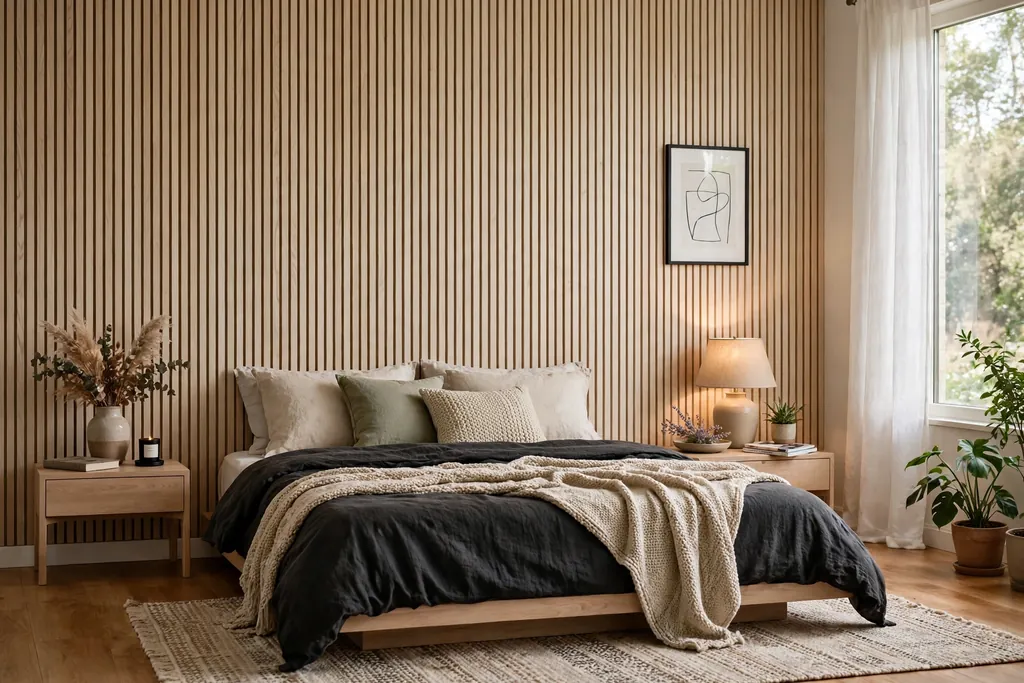
    3. Fit Vertical Wood Slats Behind the Bed

    Bedroom with vertical pale oak wood slats on the wall behind a low bed.

    Fit vertical wood slats on the wall behind the bed for a clean, modern feature that adds warmth and rhythm. The slim slats catch light and shadow through the day, which gives a neutral room movement without color. This suits a bedroom with a low bed or a plain headboard, where the wall needs structure.

    Use pale oak or a mid walnut tone, and space the slats evenly with a narrow gap between each one. Run them from floor to ceiling, or stop them at picture rail height for a calmer look. Keep the bed and bedding plain, since the slats already carry the detail, and use simple bedside lamps rather than busy wall lights.

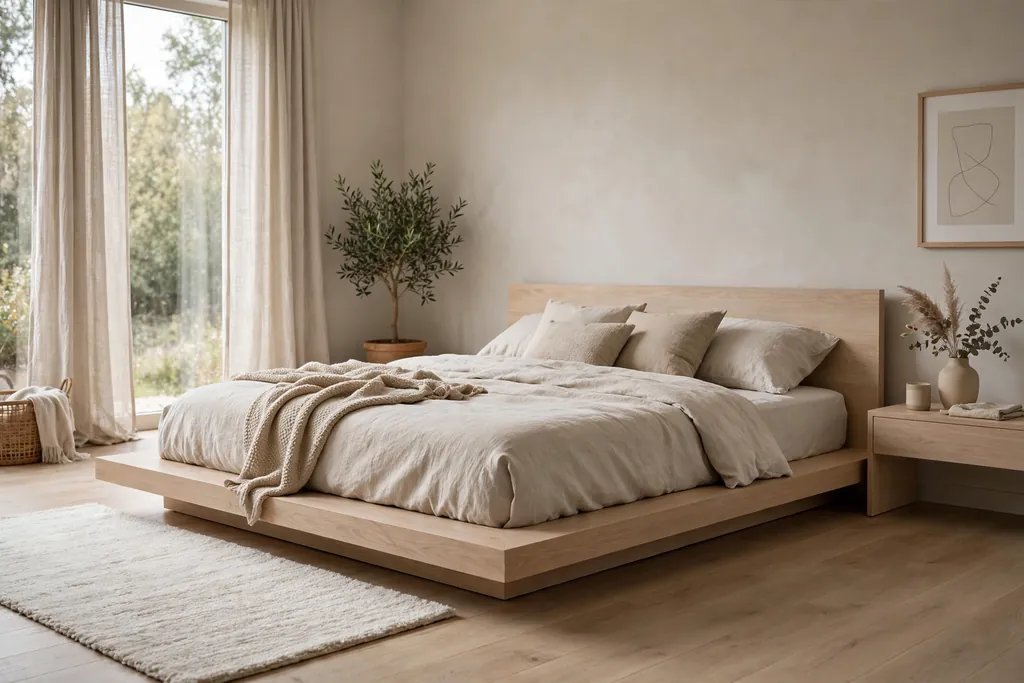
    4. Choose a Low Pale Oak Platform Bed

    Modern neutral bedroom with a low pale oak platform bed and a light rug beside it.

    Choose a low pale oak platform bed for a modern neutral bedroom that needs warmth at floor level. The low profile makes the ceiling feel higher, and the pale wood keeps the room light, while the simple frame suits plain bedding and a single textured throw. This suits a bedroom with a plain floor, where a tall dark bed would feel heavy.

    Pick a frame with a simple headboard panel or no headboard at all, and pair it with a light rug beside the bed so bare feet meet a soft surface. Keep the bed base clear of stored boxes where possible, so the low frame reads as intentional. If you need storage, choose a frame with neat built in drawers in the same oak.

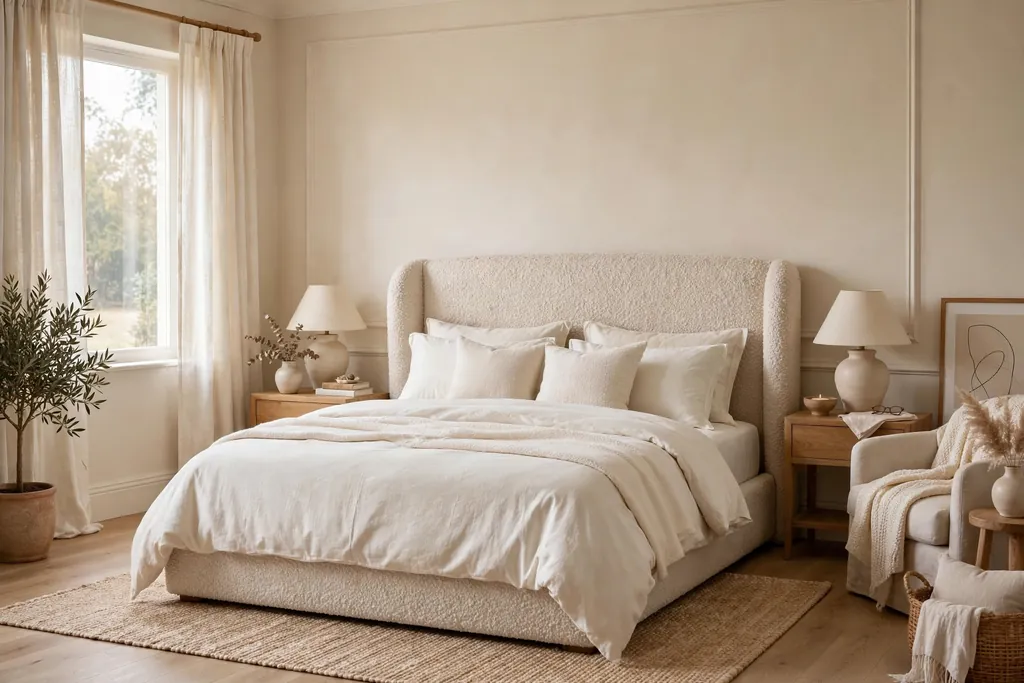
    5. Add a Boucle Headboard in Oatmeal

    Bedroom with an oatmeal boucle headboard and ivory bedding.

    Add a boucle headboard in oatmeal for instant softness in a neutral bedroom. The nubby fabric adds texture at eye level, it is comfortable for reading in bed, and the pale tone keeps the room calm. This suits a bedroom with smooth walls and plain bedding, where one tactile piece can change the whole feel.

    Pick a simple shape, such as a straight panel or a gentle arch, and a removable cover if you can find one, so it stays easy to clean. Keep the bedding in ivory or warm white, and add one cushion in a deeper neutral, such as taupe or clay, for contrast. Measure the bed width first, so the headboard spans the bed without crowding the nightstands.

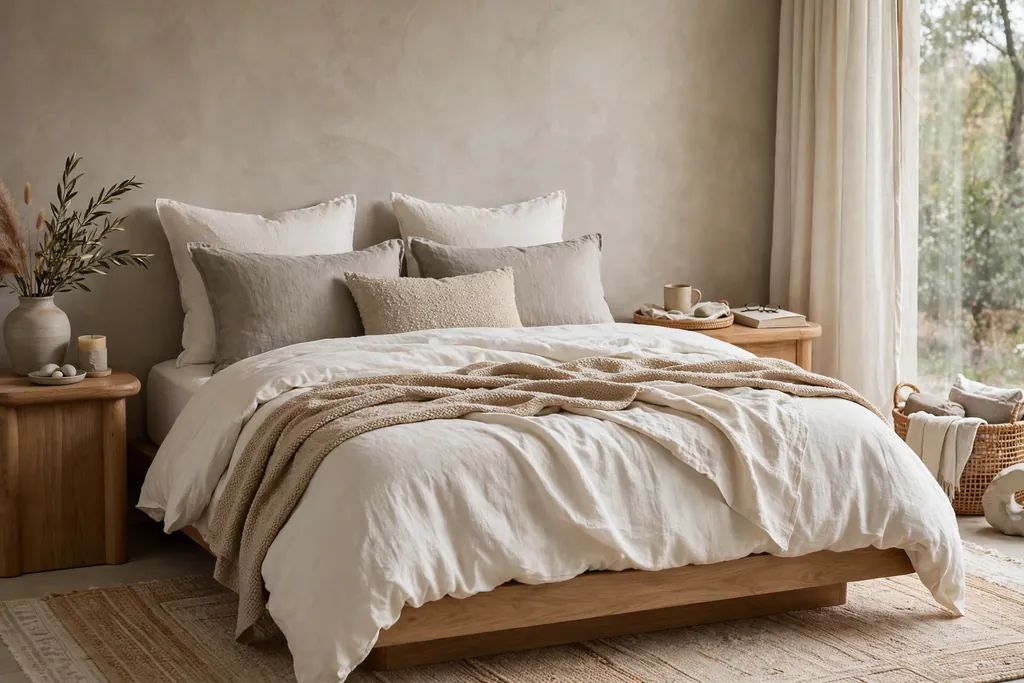
    6. Layer Bedding in Ivory, Sand, and Stone

    Bed with layered bedding in ivory, sand, and stone tones.

    Layer bedding in ivory, sand, and stone for a bed that looks full and restful without pattern. The close tones build depth through shade rather than color, and the mix suits both linen and cotton. This suits a neutral room with wood furniture, since the soft layers balance the hard surfaces.

    Start with ivory sheets, add a sand duvet, then fold a stone colored quilt or coverlet across the lower half of the bed. Keep sleeping pillows plain, and add only two or three cushions in tones already on the bed. Shake the duvet out each morning, so the layers stay light rather than flat.

    7. Mix Cushion and Throw Textures in One Palette

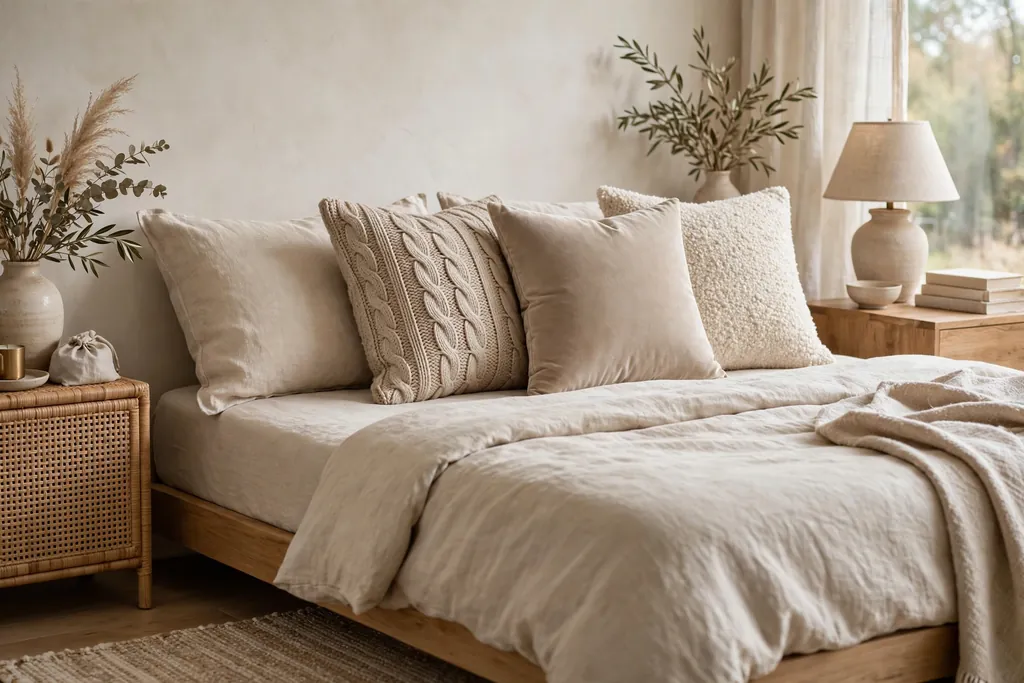
    Bed with mixed texture cushions in linen, knit, velvet, and boucle in neutral tones.

    Mix cushion and throw textures in a single neutral palette, using linen, knit, velvet, and boucle side by side. The mix keeps a plain bed interesting, since the eye reads texture even when the colors stay close. This suits a bed that looks tidy but flat, and it is an easy change with no tools needed.

    Choose three textures at most, and keep the colors within warm white, sand, taupe, and soft grey. Place a knit throw across the foot of the bed, a velvet cushion at the back, and a linen cushion in front, so each texture is easy to see. Avoid adding a bright or patterned cushion, since it would break the calm palette.

    8. Repeat One Clay Accent in Three Places

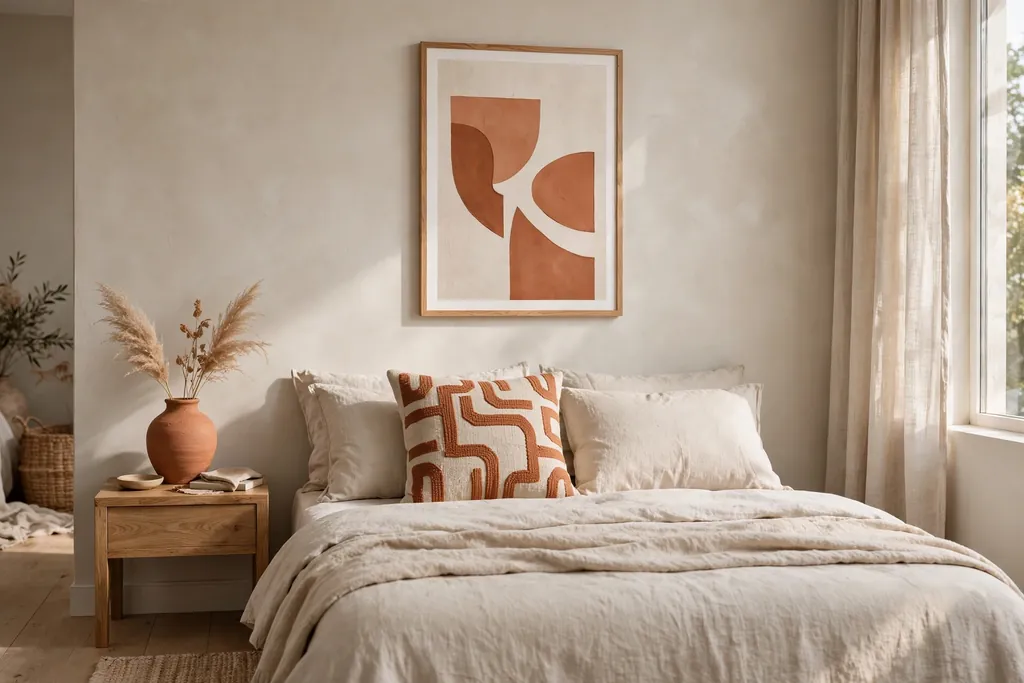
    Neutral bedroom with a clay accent repeated in a cushion, a vase, and a wall print.

    Repeat one clay accent in three places, such as a cushion, a vase, and a print, so a neutral room gains a clear personal note. The warm terracotta tone suits sand, stone, and wood, and the repetition makes it look planned rather than random. This suits a room that feels too pale, where one warm accent can anchor the whole scheme.

    Keep the clay tone muted and close in shade across all three pieces, and keep the rest of the room neutral. Place the pieces where the eye travels, such as the bed, the dresser, and the wall opposite the bed. If the accent starts to appear in more than three places, pull one piece back, so the room stays calm.

    9. Use Matte Black Bedside Lamps for Contrast

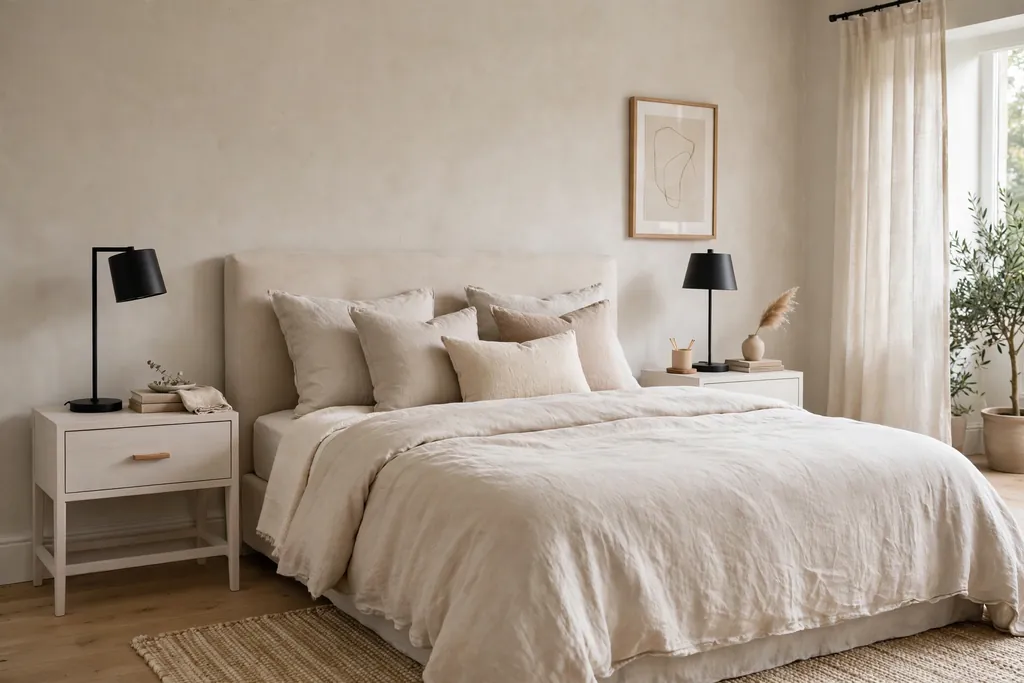
    Neutral bedroom with matte black bedside lamps on pale nightstands beside a bed.

    Use matte black bedside lamps for a clear contrast in a pale neutral bedroom. The dark bases ground the bedside tables, the lampshades in warm white soften the light, and the pairing keeps the room modern. This suits a room with pale wood and ivory bedding, where everything else is light and the room needs one dark note.

    Choose lamps of the same height and shape on both sides, so the bed stays balanced, and use warm bulbs that can dim in the evening. Keep the lamp bases simple, with no ornate detail, so they read as modern. Repeat black once more nearby, such as in a frame or a drawer pull, so the lamps do not look isolated.

    10. Hang Brass Wall Sconces Beside the Bed

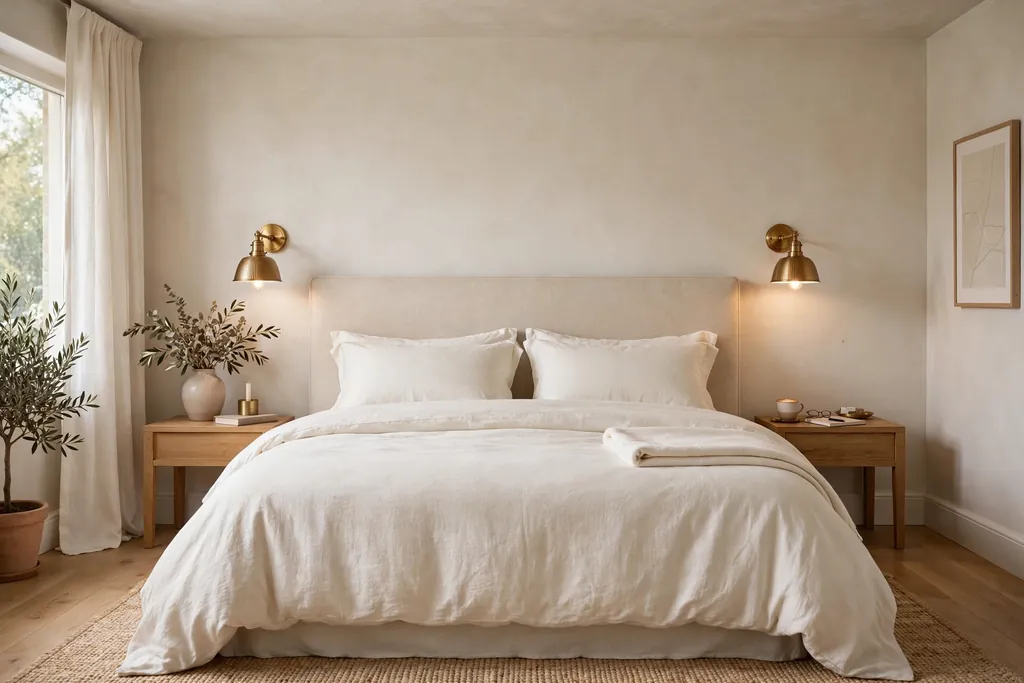
    Bedroom with brass wall sconces beside a bed with ivory bedding.

    Hang brass wall sconces beside the bed for warm light at reading height and a touch of metal in a soft room. The brass adds a gentle glow against warm white walls, it frees nightstand space, and it suits a neutral bedroom that already uses wood and linen. This suits a small bedroom, where table lamps would crowd the nightstands.

    Fit the sconces at a height where the light falls on a book without shining in your eyes, and choose a simple arm or a fixed shade. Use warm bulbs and a dimmer where possible, so the light can drop low at night. Keep the brass finish the same on both sides, and repeat it once more in a mirror frame or a tray, so the metal feels linked.

    11. Hang a Rattan Pendant in the Center of the Room

    Modern neutral bedroom with a rattan pendant light in the center of the ceiling.

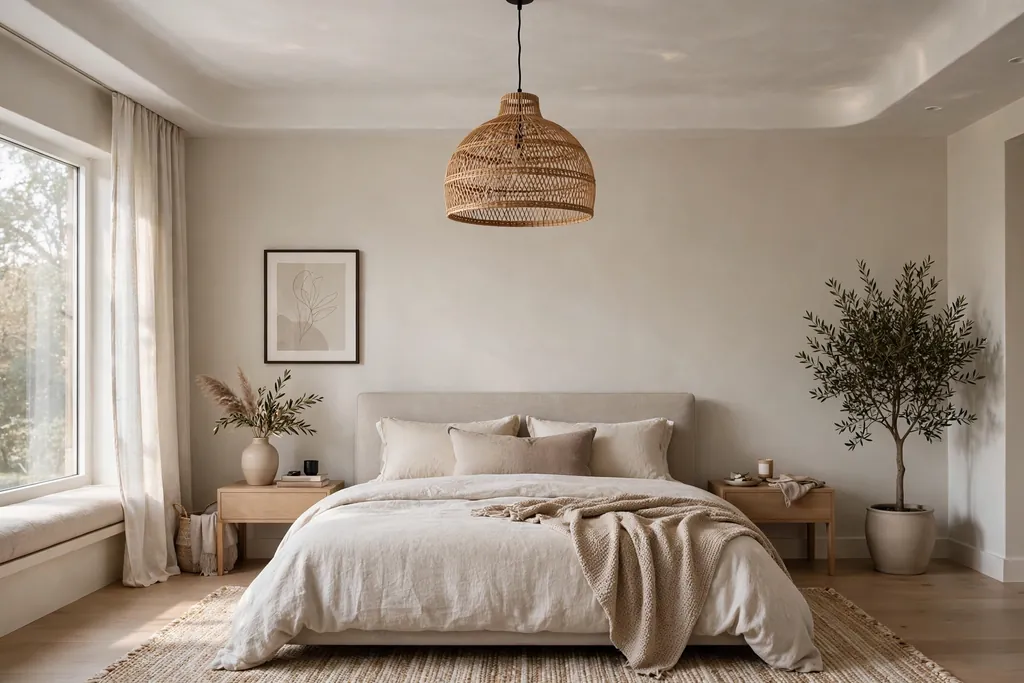
    Hang a rattan pendant in the center of the room for a natural focal point that suits a modern neutral bedroom. The woven shade casts a soft, patterned light in the evening, and its warm tone links to wood furniture and jute rugs. This suits a bedroom with a plain ceiling, where the room needs one clear feature overhead.

    Choose a shade sized to the room, large enough to read as a feature but not so large that it hangs low over the bed. Keep the rest of the ceiling plain, and use a warm bulb, since cool light can make rattan look harsh. If the pendant is the only ceiling light, pair it with bedside lamps, so the room has light at more than one height.

    12. Use Travertine Bedside Tables

    Bedroom with travertine bedside tables beside a bed with soft neutral bedding.

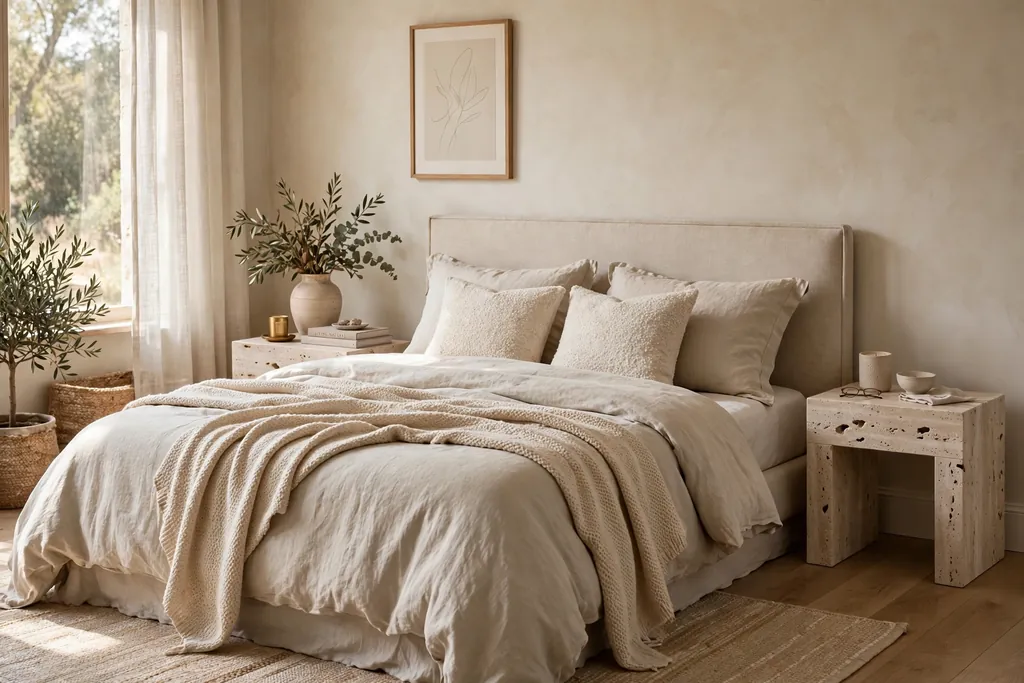
    Use travertine bedside tables for a stone surface that adds weight and texture beside a soft bed. The pale stone with its natural veining suits warm white walls and pale wood, and the solid top holds a lamp, a book, and a glass without wobble. This suits a neutral bedroom that feels too soft, where one hard, natural material can balance the linen and knit.

    Keep the tops mostly clear, with a lamp and one small object, so the stone stays easy to see. Pair the tables with a simple bed frame, since an ornate frame would compete with the stone. Wipe spills quickly, and use a coaster under a glass, since travertine can mark if liquid sits on it.

    13. Choose a Walnut Dresser With Black Pulls

    Neutral bedroom with a walnut dresser with black pulls and a mirror above it.

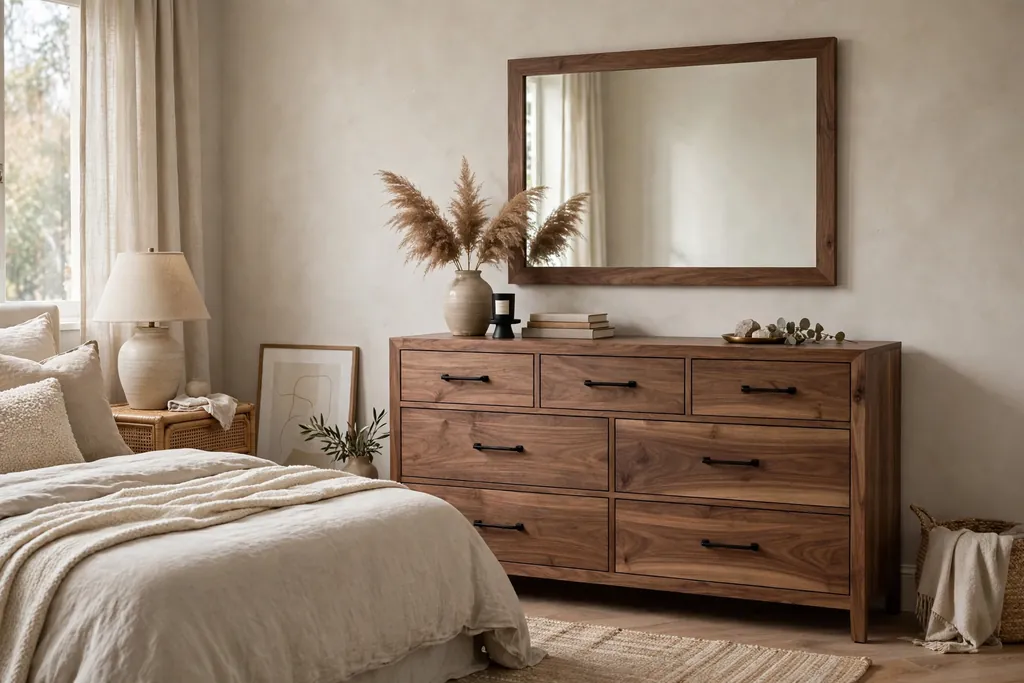
    Choose a walnut dresser with simple black pulls for a dark wood anchor in a pale neutral bedroom. The deep wood gives the room depth, the black pulls link to black lamps or frames, and the plain front keeps the piece modern. This suits a bedroom with pale walls and a light bed, where the furniture needs one darker piece to stop the room looking washed out.

    Place the dresser on a wall with space above it for a mirror or a single print, and keep the top styled with only three or four objects. Use the drawers for folded clothes and spare bedding, so the room stays tidy. Keep the wood tone close to other dark wood in the room, so the dresser does not stand apart.

    14. Hang Stone Linen Curtains High and Wide

    Bedroom window with stone linen curtains hung high and wide in soft daylight.

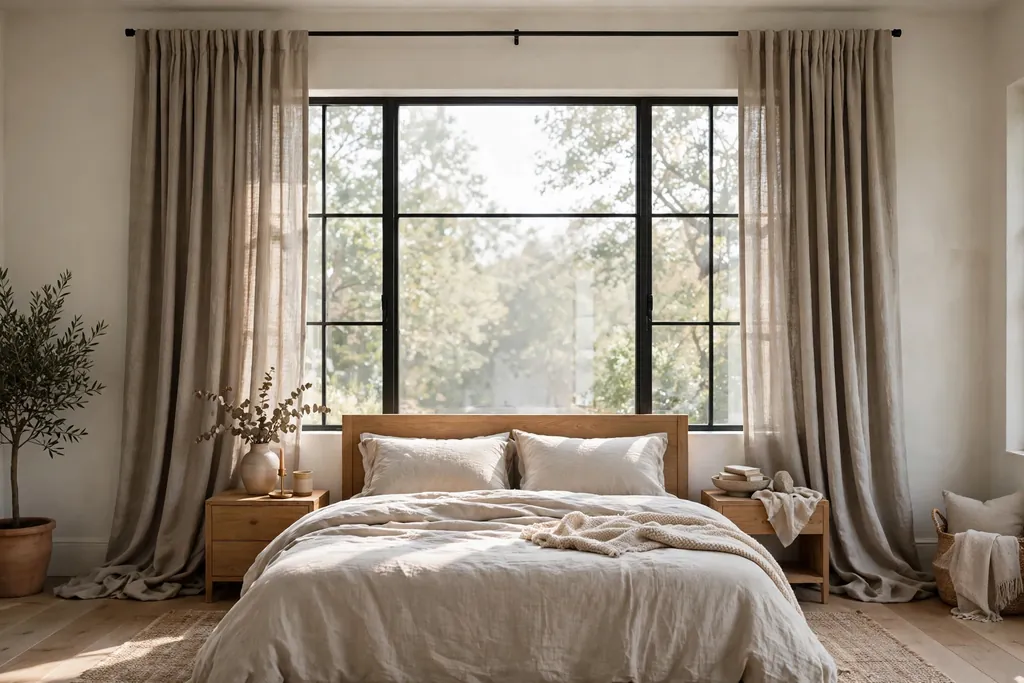
    Hang stone linen curtains high and wide, so the window looks larger and the room gains soft texture at the edges. The stone tone suits warm white walls, the linen weave filters light gently, and the high rod draws the eye upward. This suits almost any neutral bedroom, and it costs little beyond a longer rod. For more window ideas in a bedroom, see these bedroom curtain ideas.

    Set the rod close to the ceiling and wider than the frame, so the panels stack on the wall when open and cover the frame fully when closed. Let the panels fall to just above the floor, so they do not pool or trip. Keep the curtain color plain, and repeat the stone tone once in bedding or a cushion, so the window treatment looks linked to the room.

    15. Layer a Jute Rug Over a Wool Rug

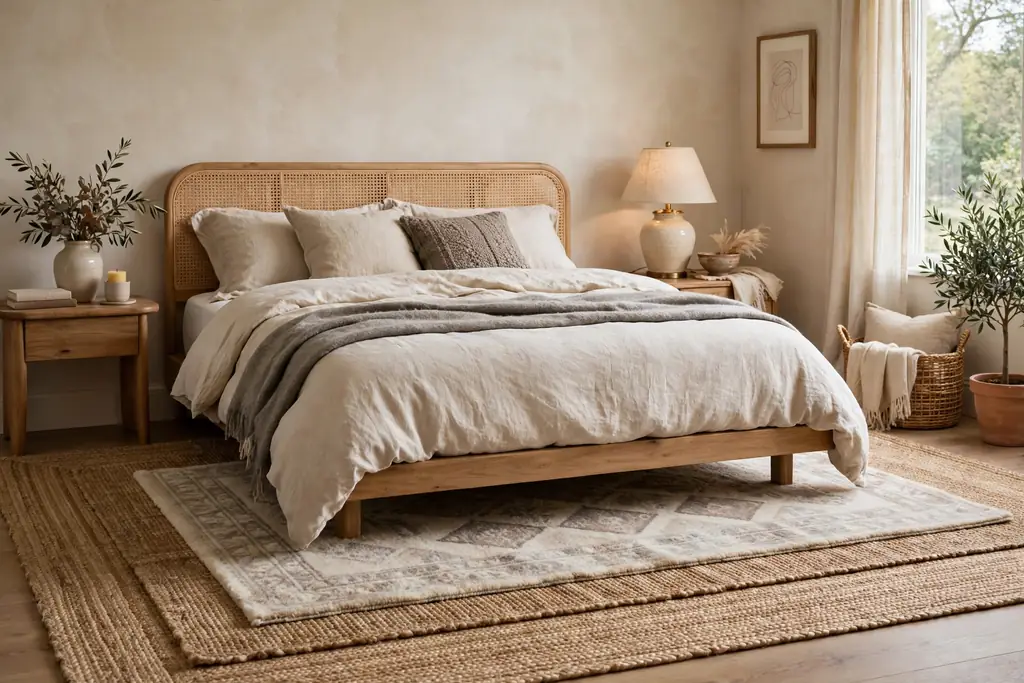
    Bedroom with a jute rug layered under a wool rug beneath a bed.

    Layer a flat jute rug under a softer wool rug beneath the bed, for texture underfoot and a clear zone around the bed. The jute adds a natural, woven base, the wool adds softness where you step, and the pairing suits pale wood floors. This suits a bedroom with a hard floor, where a single small rug would look lost.

    Choose a jute rug larger than the wool rug, so a border of jute shows on all sides, and keep both rugs in natural tones with no strong pattern. Place the rugs so they extend past the sides of the bed, giving a soft landing on both sides. Vacuum the jute with a brush head, and shake the wool rug outside now and then, so the layers stay fresh.

    16. Lean an Arched Wood Frame Mirror Against the Wall

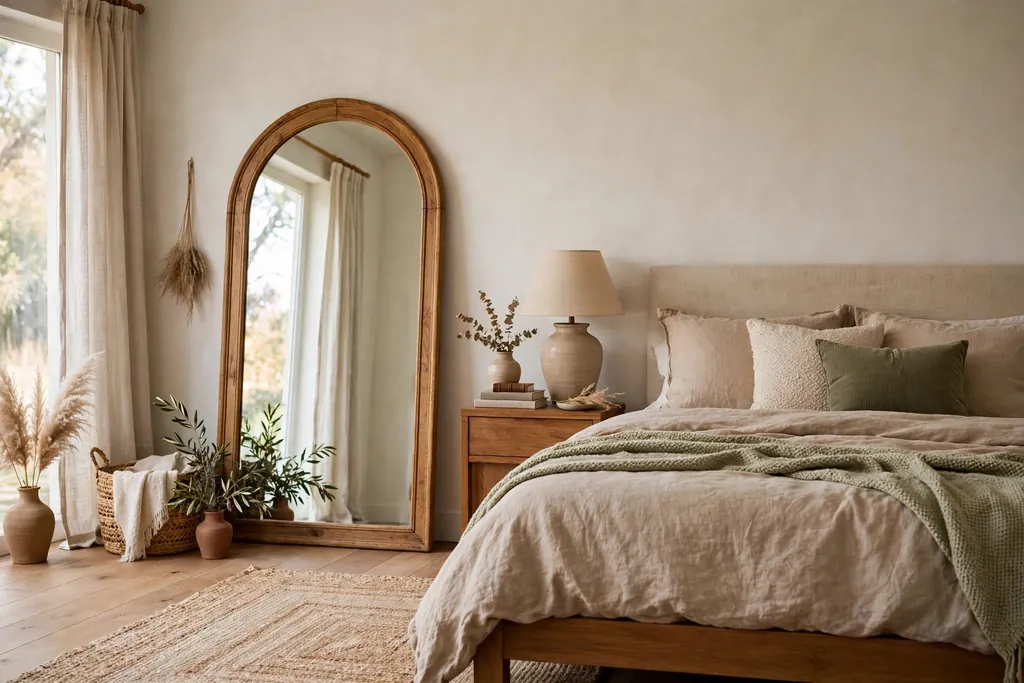
    Bedroom with an arched wood frame mirror leaning against a wall beside a bed.

    Lean an arched wood frame mirror against a bedroom wall for height, light, and a soft shape in a room full of straight lines. The arch breaks up rectangular furniture, the mirror bounces daylight around the room, and the wood frame links to other wood tones. This suits a bedroom with a wide empty wall, where a framed print would feel too small.

    Choose a mirror taller than the bedside table, so it reads as a deliberate piece, and place it where it reflects a window or a plant rather than clutter. Anchor the base with a non slip pad, and keep it out of the main walkway, so it cannot be knocked. Check the reflection from the bed at night, and move the mirror if the reflection feels distracting.

    17. Hang One Oversized Abstract Print in Neutral Tones

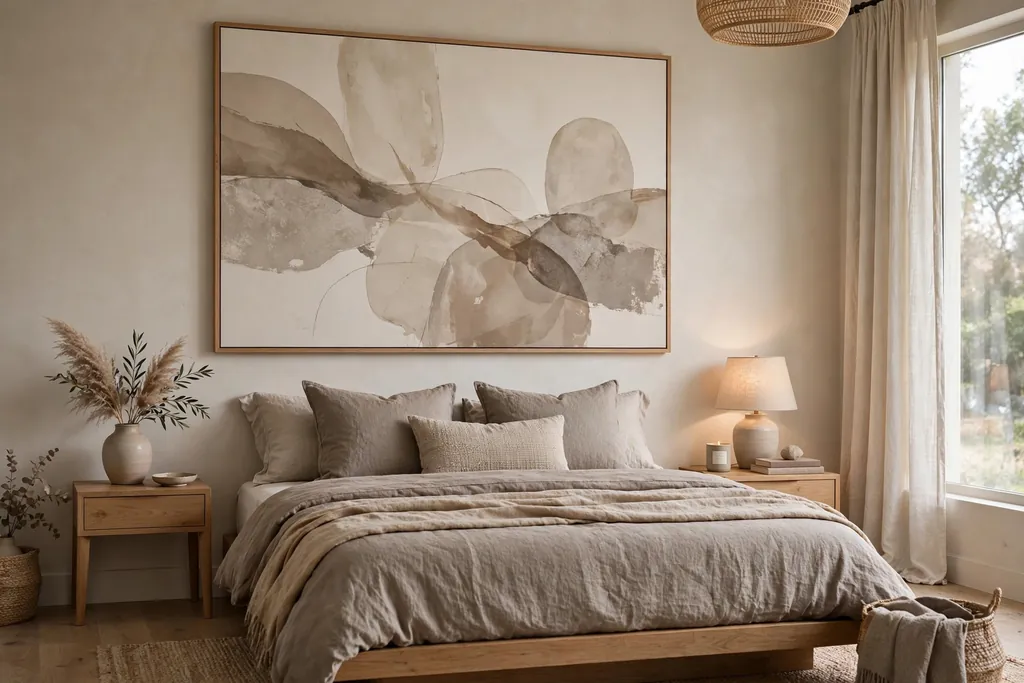
    Bedroom with one oversized abstract print in sand, stone, and taupe above a bed.

    Hang one oversized abstract print in neutral tones above the bed or the dresser, for art that adds personality without adding color. Soft brush strokes in sand, stone, taupe, and charcoal suit a modern neutral room, and a single large piece gives the wall a clear focus. This suits a bedroom with plain walls, where a gallery wall would feel busy.

    Choose a print about two thirds of the bed width, and hang it so the bottom edge sits 6 to 8 inches above the headboard. Use a simple frame in pale wood or matte black, and keep the bedding plain, so the art stays the focus. For more ways to choose and hang bedroom art, see these bedroom wall art ideas.

    18. Group Sculptural Ceramics on the Dresser

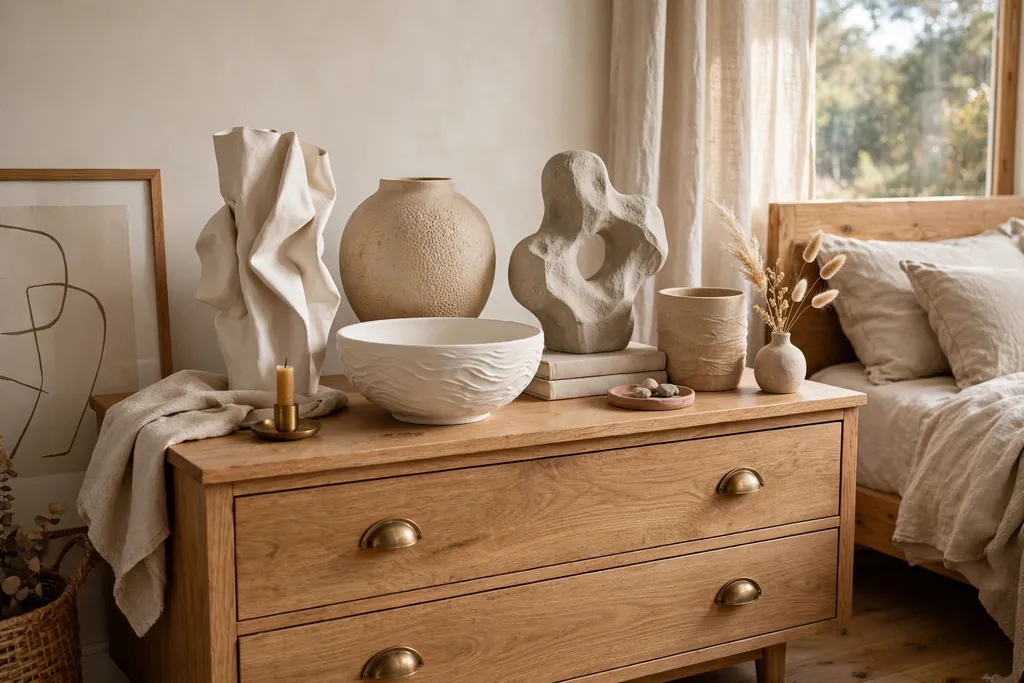
    Bedroom dresser styled with grouped sculptural ceramics in warm white, sand, and stone.

    Group sculptural ceramics on the dresser in warm white, sand, and stone, for a display that adds shape without color. Curved vases, a small bowl, and a tall vessel read as a set when the tones stay close, and the mix of heights keeps the display interesting. This suits a dresser that looks bare, or a room where art is already doing the work on the walls.

    Use three or five pieces, in different heights but a shared palette, and leave empty space between groups, so the display does not look crowded. Keep one vase empty and one with a single stem, such as dried grass, so the group feels lived in. Dust the ceramics with a soft cloth, since matte finishes show dust more than glazed ones.

    19. Use Woven Baskets for Open Storage

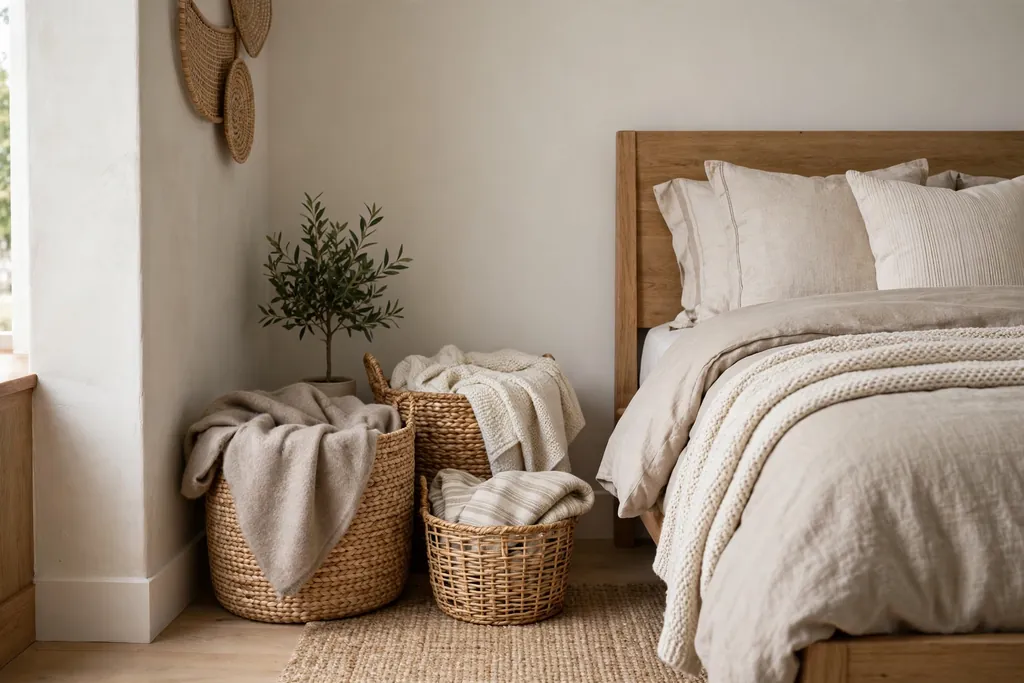
    Neutral bedroom corner with woven baskets holding throws beside a bed.

    Use woven baskets for open storage of throws, spare bedding, and laundry, so a neutral bedroom gains texture in useful places. The weave adds warmth beside smooth wood and linen, the baskets hide clutter without closed doors, and they can move from room to room. This suits a bedroom with limited closet space, or a room where throws and blankets need a home.

    Choose baskets in a natural seagrass or rattan tone, in two sizes at most, and place one beside the bed and one near the closet or the reading chair. Fold throws neatly inside, rather than stuffing them in, so the baskets look tidy. Line a basket used for laundry with a washable bag, so it stays fresh.

    20. Add an Olive Tree in a Terracotta Pot

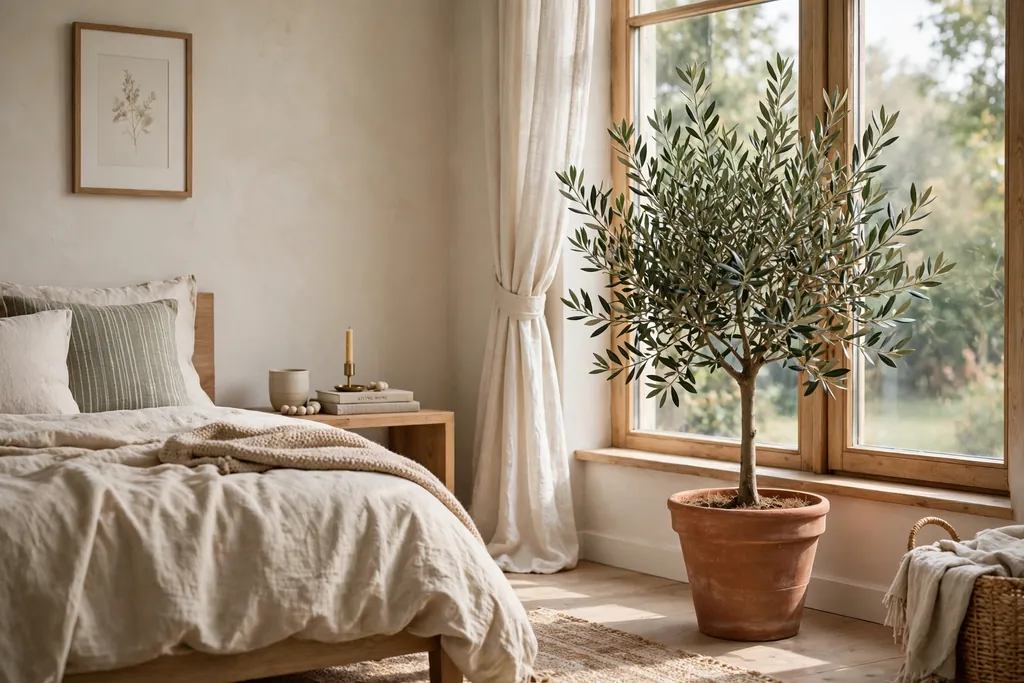
    Bedroom corner with an olive tree in a terracotta pot beside a window.

    Add an olive tree in a terracotta pot beside a window for a living accent in a neutral bedroom. The soft grey green leaves suit sand and stone tones, the terracotta pot repeats a warm clay note, and the height of the tree fills an empty corner. This suits a bedroom with good daylight, where a plant can thrive and the room needs one organic shape.

    Place the tree where it gets bright, indirect light for most of the day, and rotate the pot now and then, so the growth stays even. Water only when the top soil feels dry, and keep the pot on a tray, so the floor stays protected. If an olive tree is too large for your room, use a smaller potted plant in the same terracotta pot, and keep the corner simple.

    21. Place a Cognac Leather Accent Chair in a Corner

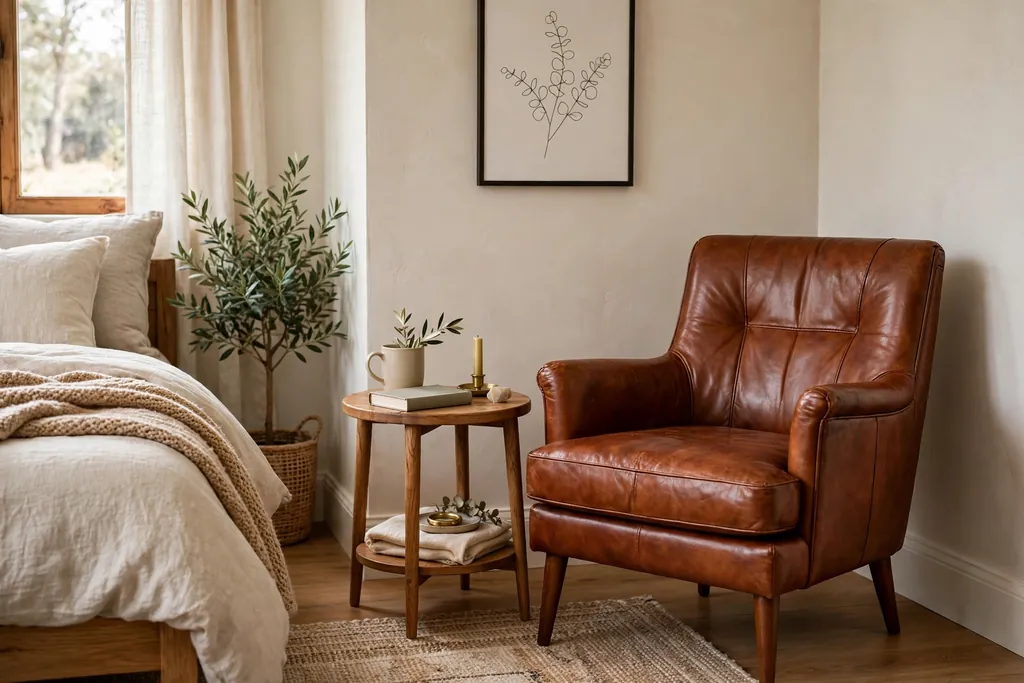
    Bedroom corner with a cognac leather accent chair and a small side table.

    Place a cognac leather accent chair in a corner for a warm, smooth contrast to linen and knit. The rich tan tone suits sand, stone, and pale wood, the leather adds a polished surface, and the chair gives the room a place to sit beyond the bed. This suits a larger bedroom with an empty corner, where a chair can anchor a small reading spot.

    Keep the chair close to a window or a floor lamp, and add a small side table for a book and a drink. Choose a simple chair shape with no ornate carving, so it stays modern. Condition the leather as advised by the maker, and keep the chair out of direct sun, since strong sun can dry and fade it.

    22. Build a Window Seat With Linen Cushions

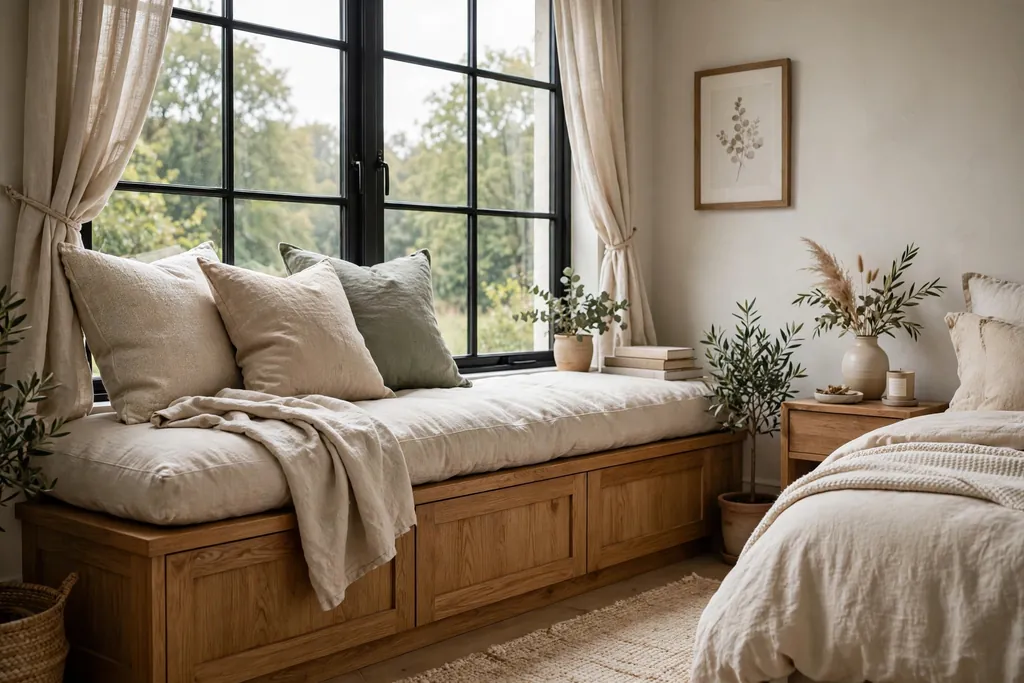
    Bedroom window seat with a wood base and thick linen cushions.

    Build a window seat with a wood base and thick linen cushions for a calm spot to read, look outside, or lay out clothes. The seat uses space that often goes to waste, the linen cushions link to the bedding, and the view gives the room a natural focal point. This suits a bedroom with a wide window and a deep sill, or a bay window that can hold a bench.

    Make the seat deep enough to sit on comfortably, with a cushion at least 4 inches thick, and add two or three cushions in tones from the bed. Use the base for storage, with a lift up lid or drawers for spare bedding. Keep the window seat clear of clutter, so it stays inviting rather than becoming another surface for piles.

    23. Fit Floating Oak Shelves for Books and Ceramics

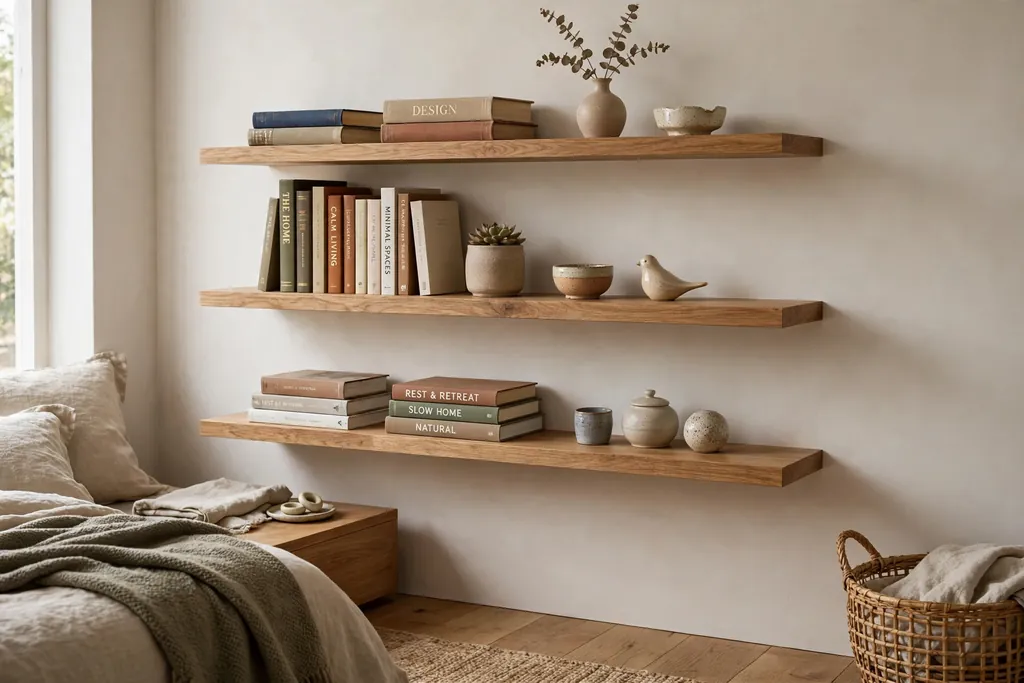
    Bedroom side wall with floating oak shelves holding books and small ceramics.

    Fit floating oak shelves on a side wall for books, small ceramics, and one or two personal objects, so personality shows without a full gallery wall. The pale oak links to a wood bed or dresser, the open shelves keep the display light, and the mix of books and objects tells a story about who lives in the room. This suits a bedroom with an empty side wall, where art alone would feel too formal.

    Fit two shelves at most, and leave empty space on each shelf, so the display does not look packed. Group books in small stacks, with one ceramic or plant beside each stack, and keep the tallest object at the end of the shelf. Check that the shelves can take the weight, and use fixings suited to your wall type.

    24. Add an Upholstered Bench at the Foot of the Bed

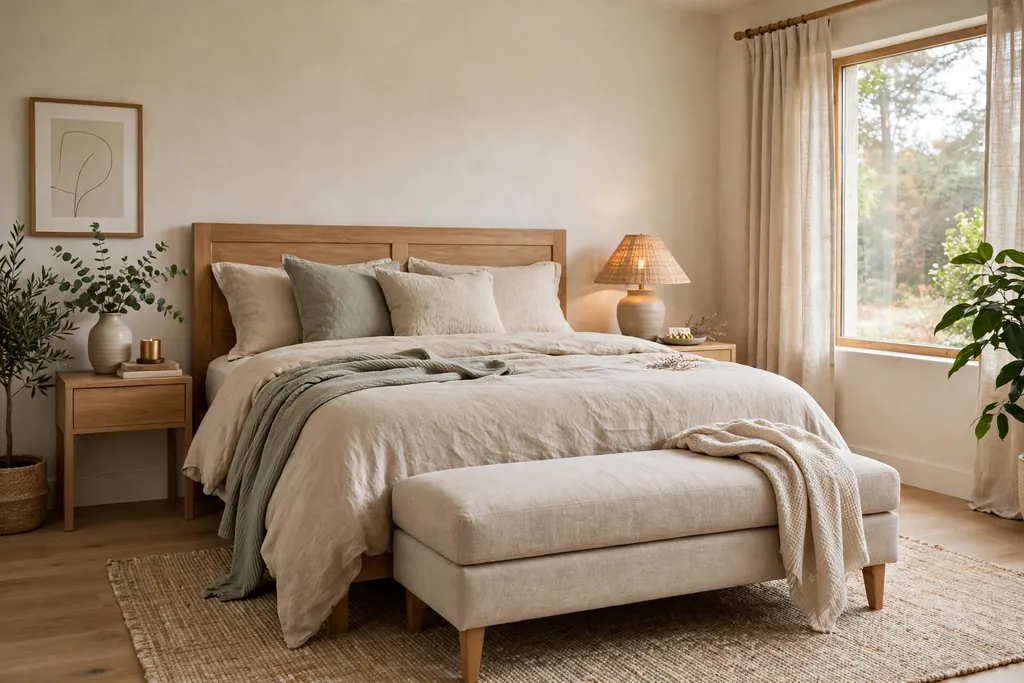
    Bedroom with an oatmeal linen upholstered bench at the foot of a bed.

    Add an upholstered bench at the foot of the bed in oatmeal linen for a place to sit, lay out clothes, and store a spare throw. The soft bench balances a hard wood bed frame, the oatmeal tone links to the bedding, and the low shape keeps the room open. This suits a bedroom with clear floor space at the foot of the bed, where a bench will not crowd the walkway.

    Choose a bench slightly narrower than the bed, with a simple wood or metal base, and keep the top mostly clear, with one folded throw. Use the space under the bench for a pair of slippers or a flat basket, but keep it tidy. If the room is small, choose a bench without a back, so it does not block the view of the bed.

    25. Set Up a Small Oak Desk Corner

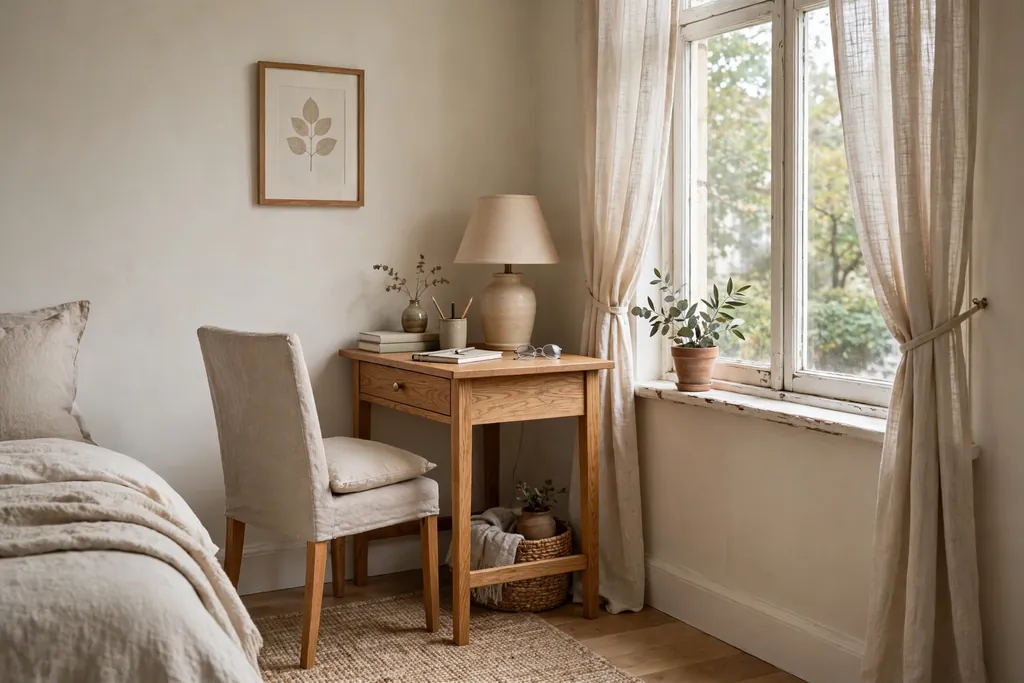
    Bedroom corner with a small oak desk, linen chair, and lamp near a window.

    Set up a small oak desk corner for writing, planning, or getting ready, so a neutral bedroom gains a useful second zone. The pale oak links to other wood in the room, a simple desk keeps the corner calm, and a linen covered chair softens the work area. This suits a bedroom with an empty corner near a window, where natural light helps for reading and writing.

    Keep the desk surface mostly clear, with a lamp, a notebook, and a small plant, and use a drawer or a basket for papers, so the corner does not become a clutter spot. Choose a chair that can tuck fully under the desk, so the corner stays neat when not in use. If the desk faces a wall, hang one small print above it, rather than a full gallery.

    26. Use an Open Black Metal Clothing Rail

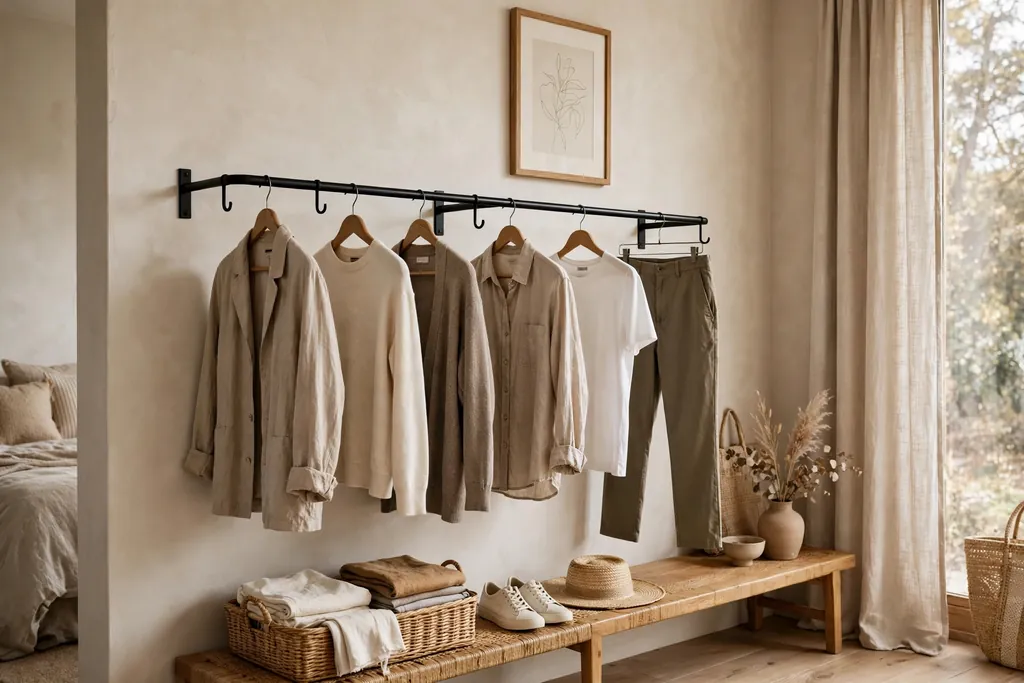
    Bedroom side wall with an open black metal clothing rail holding neutral clothes.

    Use an open black metal clothing rail on a side wall for a small capsule of clothes you wear most, so the room gains a boutique feel and a dark accent. The rail shows texture in linen shirts, knit jumpers, and a coat, the black metal links to black lamps or pulls, and the open display keeps the room from feeling closed in. This suits a bedroom with limited closet space, or a guest room where guests need a place to hang clothes.

    Choose a rail sized to the wall, with a lower shelf for shoes or baskets, and hang only clothes in neutral tones, so the display stays calm. Keep the rail to one wall, and keep the rest of the room tidy, since an open rail shows everything. Rotate the clothes by season, so the rail stays useful rather than becoming extra storage.

    27. Paint the Ceiling Soft Greige With a Slim Flush Light

    Bedroom with a soft greige ceiling and a slim flush mount light above a bed.

    Paint the ceiling a soft greige and fit a slim flush light, for a ceiling that adds warmth without lowering the room. The greige tone softens the junction between wall and ceiling, the slim light keeps the ceiling clear, and the pairing suits a bedroom with a low ceiling, where a pendant would hang too low. This suits a room where the walls are warm white, and the ceiling currently looks stark.

    Choose a greige close to the trim tone, so the ceiling and trim link, and test the tone in daylight and lamplight before you paint the full ceiling. Use a flush light with a simple shape and a warm bulb, and keep the rest of the ceiling free of extra fittings. If the room has beams or a sloped ceiling, paint only the flat sections, so the structure still shows.

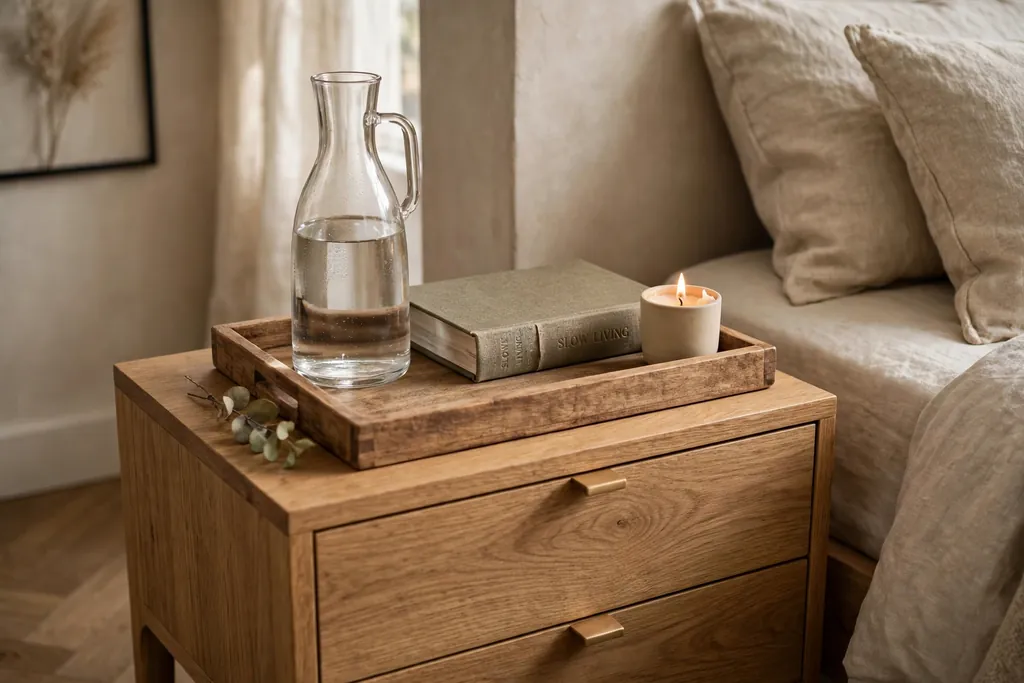
    28. Style One Bedside Tray With Personal Details

    Bedside table with a wood tray holding a carafe, a book, and a small candle.

    Style one bedside tray with personal details, such as a carafe and glass, a book you are reading, and a small candle, so the room shows daily life in a tidy way. The tray keeps small objects together, the personal items add character that no shop display can copy, and the grouping is easy to change. This suits a bedside table that looks bare, or a room that feels finished but impersonal.

    Choose a tray in wood, brass, or stone, sized to the table, and keep it to three or four objects at most. Place the tray on the side you use most at night, and keep the other nightstand simpler, so the pair stays balanced. Change the book and the candle by season, but keep the tray itself, so the bedside always has a clear home for small things.

    Conclusion

    A modern neutral bedroom gains personality when texture, shape, and contrast do the work that color usually does. Choose a warm base, repeat each material once or twice, add one dark accent and one warm accent, and let a few personal details show. Start with bedding, curtains, and lighting if you want a quick refresh, then add a wall feature, a wood piece, or a plant when you have a weekend to spare. With those layers in place, the room stays calm and restful, but it also feels like yours every day.

    If you found an idea here that suits your room, save this post on Pinterest so you can find it again when you are ready to start. Pin the look you like most, whether it is a limewash wall, a rattan pendant, or a bedside tray, and use it as a guide for your next refresh.

    FAQs

    How do I add personality to a neutral bedroom without adding color?

    Use texture, shape, and contrast. Mix linen, knit, boucle, wood, rattan, brass, and stone in a close neutral palette, add one dark accent such as matte black lamps, and include one personal detail such as books, art you chose, or a plant. The room will feel personal because of what you touch and see every day, not because of a new paint color.

    What neutral colors work best in a modern bedroom?

    Warm white, ivory, sand, stone, taupe, and soft greige work well together, since they share a warm base and suit pale and dark wood alike. Use warm white for walls and sheets, sand and stone for bedding and rugs, and taupe or greige for trim, curtains, and cushions. Add clay or cognac only in small doses, so the room stays calm.

    Can a small bedroom suit a modern neutral scheme?

    Yes, if the layers stay light and limited. Use warm white walls, a low bed, linen curtains hung high and wide, one mirror to bounce light, and one or two textured pieces, such as a knit throw and a woven basket. Keep the floor clear and the surfaces mostly tidy, so the room still feels open.

    What is the easiest neutral bedroom change with no painting or building?

    Start with bedding, cushions, and lighting. Layer bedding in ivory, sand, and stone, mix cushion textures in one palette, swap bedside lamps for matte black or brass, and add a woven basket and a plant. These swaps add texture and contrast in an afternoon, with no paint or tools needed.

    How do I stop a neutral bedroom looking flat or washed out?

    Add one clear contrast and one clear texture. A dark wood dresser, matte black lamps, or a black clothing rail can ground a pale room, while a limewash wall, wood slats, a jute rug, or a boucle headboard can add depth. Repeat each new material once more nearby, so the contrast looks planned rather than random.

    How many neutral tones should I use in one bedroom?

    Three or four main tones work best, plus one accent tone in small doses. For example, use warm white, sand, and stone as the base, greige for trim and curtains, and clay or cognac for a cushion, a vase, and a chair. If a new piece does not fit those tones, keep it out of the bedroom or save it for another room.


  • 14 Bedroom Ideas for Small Rooms for a Cozy Seasonal Update

    14 Bedroom Ideas for Small Rooms for a Cozy Seasonal Update

    A small bedroom can still feel calm, warm, and easy to live in when every choice earns its place. The trick for a seasonal update is to change the layers you touch every day, such as bedding, light, and storage, and to leave the room itself as open as possible. These 14 bedroom ideas for small rooms cover pale walls, hidden storage, wall mounted furniture, mirrors, curtains, and autumn bedding, so you can pick one change for a weekend or plan a full cozy refresh. Start with the problem that bothers you most, whether it is clutter, dim light, or a cold feeling room, and add only what helps that problem.

    Key Takeaways

    • Keep the base pale and warm, then add one seasonal accent color, such as rust, ochre, or deep green, so the room feels cozy without feeling crowded.
    • Move storage up the wall or under the bed, since floor space in a small bedroom is the scarcest resource.
    • Use mirrors, high curtains, and wall mounted lights to add light and a sense of height without adding furniture.
    • Swap bedding layers by season: a lighter quilt for summer, a wool throw and warmer cushions for autumn.
    • Choose furniture that does two jobs, such as a storage bed, a fold down desk, or a basket that holds spare throws.
    • Leave one surface and one wall mostly clear, so the room has somewhere for the eye to rest.

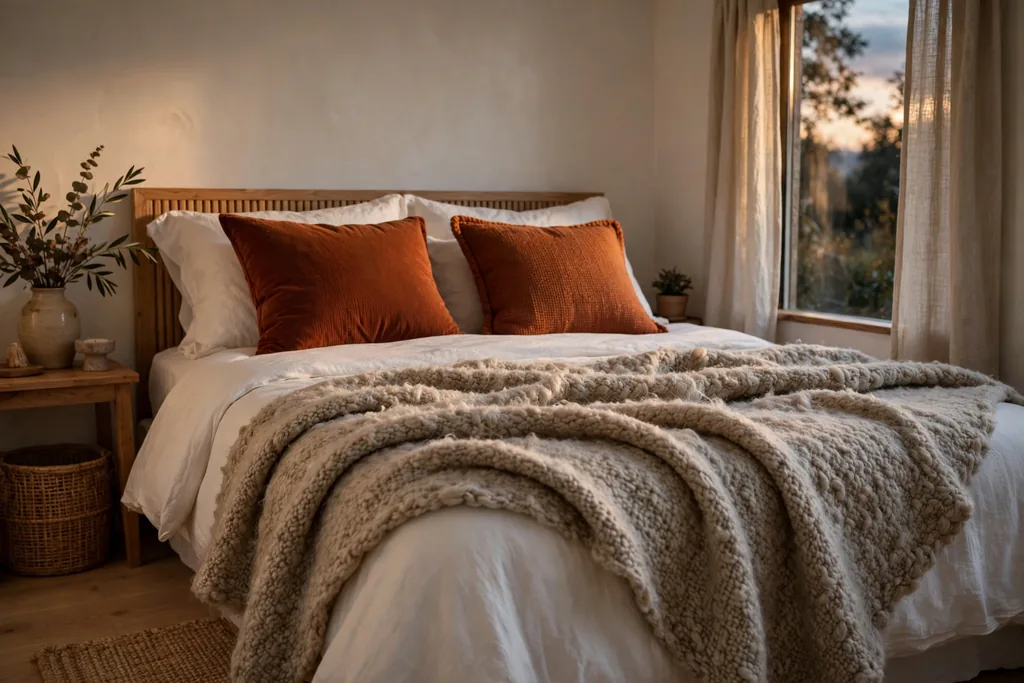
    1. Keep Walls Pale and Warm, Add One Seasonal Accent

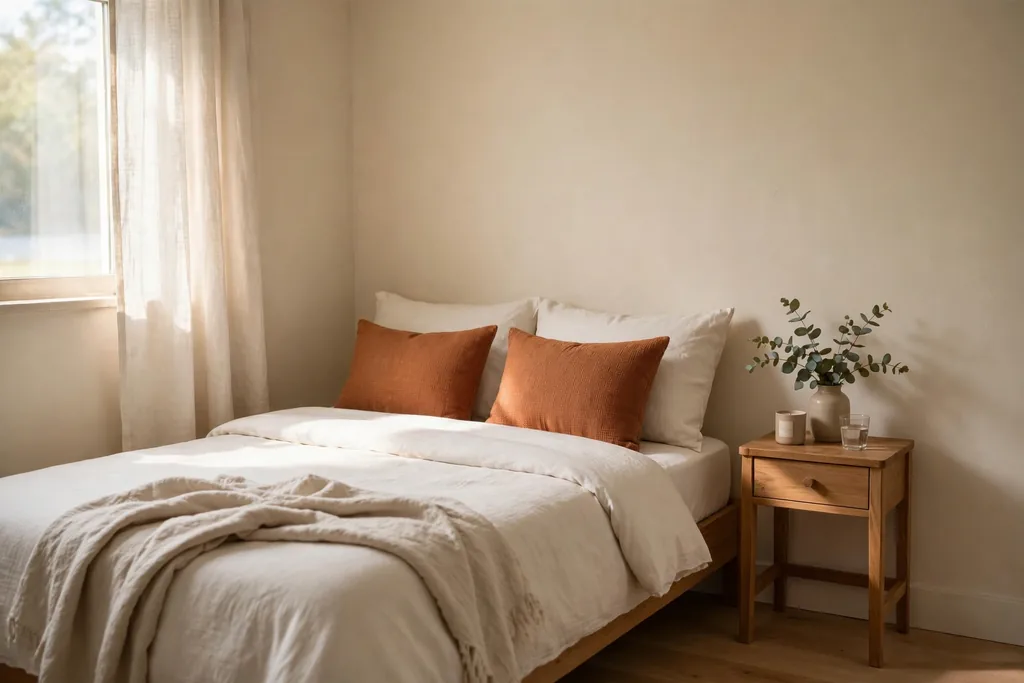
    Small bedroom with pale warm walls and rust accent cushions on plain bedding.

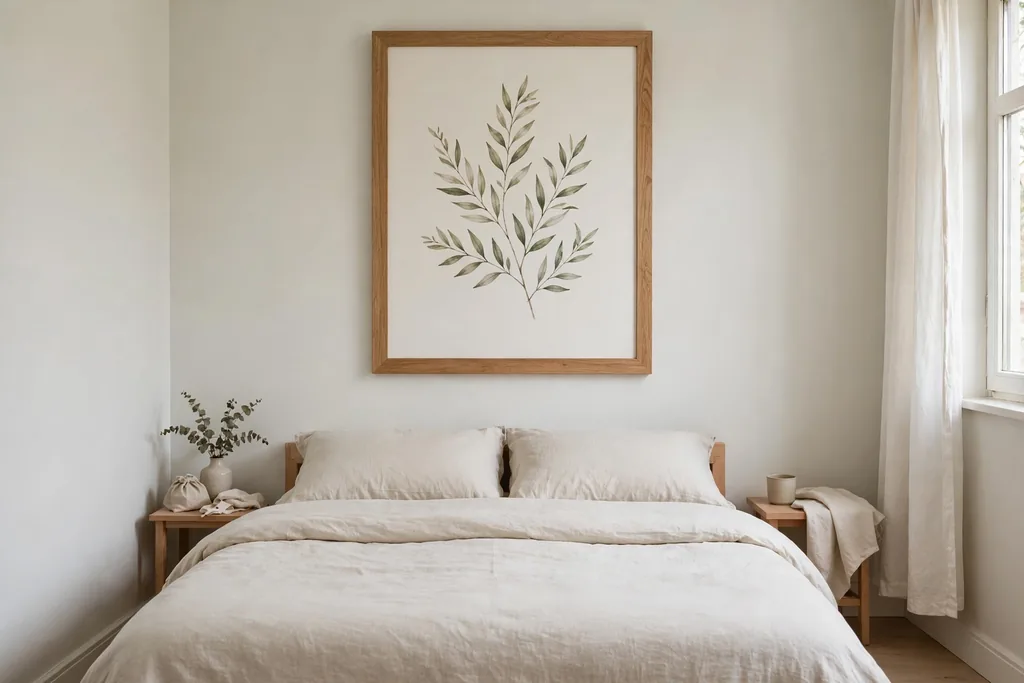
    Paint or keep the walls in a pale warm white, soft cream, or light greige, and add one seasonal accent color through bedding, cushions, or art. Pale walls bounce light around a small room, while a single accent keeps the autumn update clear and easy to change later. This suits a bedroom that feels dark or busy, and it works with most existing furniture.
    Choose the accent from a color already in the room, such as the wood tone of the bed or a rug, and repeat it in just two or three places. If you rent, use removable art, cushion covers, and a throw for the accent instead of paint. Keep the ceiling white and the trim simple, so the wall color stays the quiet background.

    2. Choose a Storage Bed for Off Season Bedding

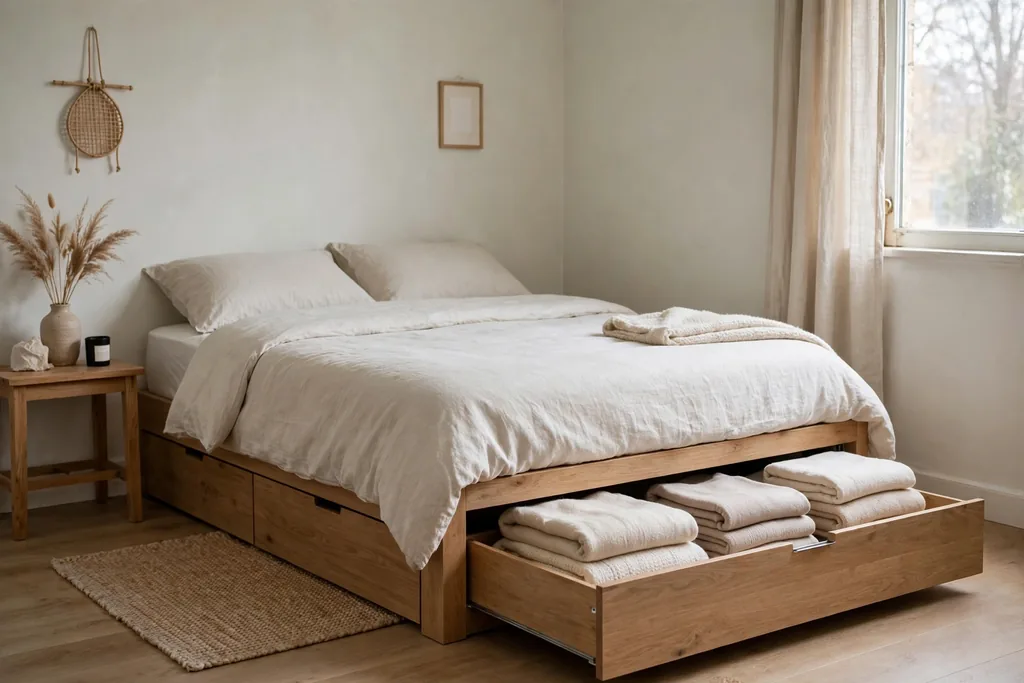
    Small bedroom with a storage bed drawer open showing folded blankets.

    A storage bed with drawers or a lift up base turns the space under the bed into a full cupboard for off season bedding, spare blankets, and bulky coats. This suits a small bedroom with no spare closet, since it adds storage without taking any extra floor space. A lift up base suits large flat items, while drawers suit clothes and bedding you reach for often.

    Measure the clearance beside the bed before you choose drawers, since they need room to open fully. Keep a simple list on the inside of a drawer or on your phone of what is stored where, so seasonal swaps stay quick. Air the stored bedding for a day before you use it, and keep it in washable bags so dust stays out.

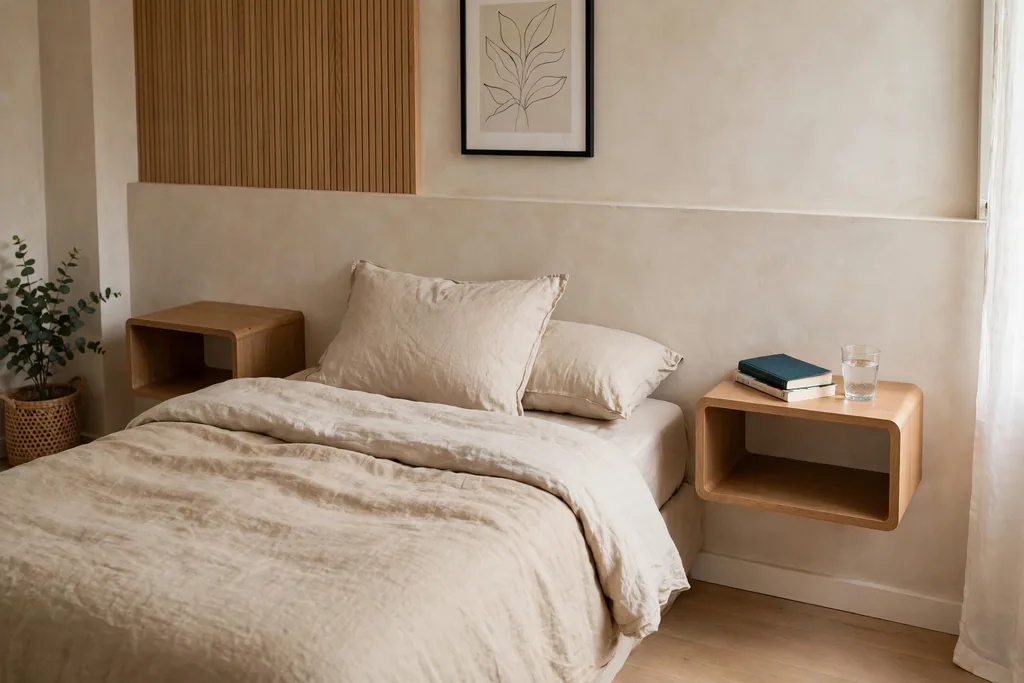
    3. Hang Floating Nightstands to Free Floor Space

    Small bedroom with floating nightstands mounted beside the bed and clear floor below.

    Wall mounted nightstands give you a place for a phone, a book, and a glass of water, while leaving the floor beneath them clear. The clear floor makes the room look larger and makes vacuuming easier, which matters in a tight space beside the bed. This suits a bedroom where a standard nightstand blocks a walkway or crowds the bed.

    Fit each shelf at mattress height, so you can reach it easily from bed, and fix it into a stud or with fixings rated for the wall type. Keep only daily items on the shelf, and move chargers and clutter into a small drawer or box nearby. If you need a lamp, pair the shelf with a wall sconce, as in idea 11, so the shelf stays clear.

    4. Run Shelving to the Ceiling on One Wall

    Tall shelves with boxes and books above a dresser in a small bedroom.

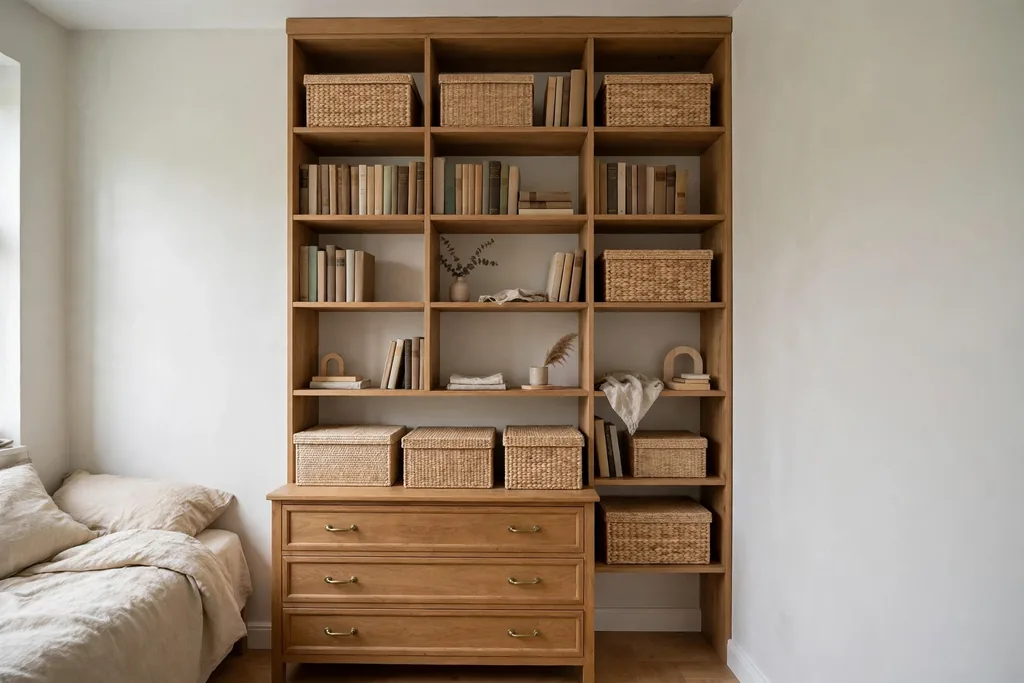
    One tall run of shelves, from above a dresser to near the ceiling, uses wall height that often goes unused in a small bedroom. It suits books, folded clothes in boxes, and seasonal items kept out of daily reach, while keeping the floor free for the bed and a clear path. Choose one wall only, usually above a dresser or beside the wardrobe, so the room does not feel boxed in.

    Put daily items at waist to shoulder height and seasonal items up high, where a step stool is needed only a few times a year. Use matching boxes or baskets on the shelves, so open storage still looks tidy. Anchor tall shelving into studs, and leave the top shelf for light items only, so nothing heavy sits overhead.

    5. Place a Large Mirror to Bounce Window Light

    Large mirror reflecting window light in a small bedroom.

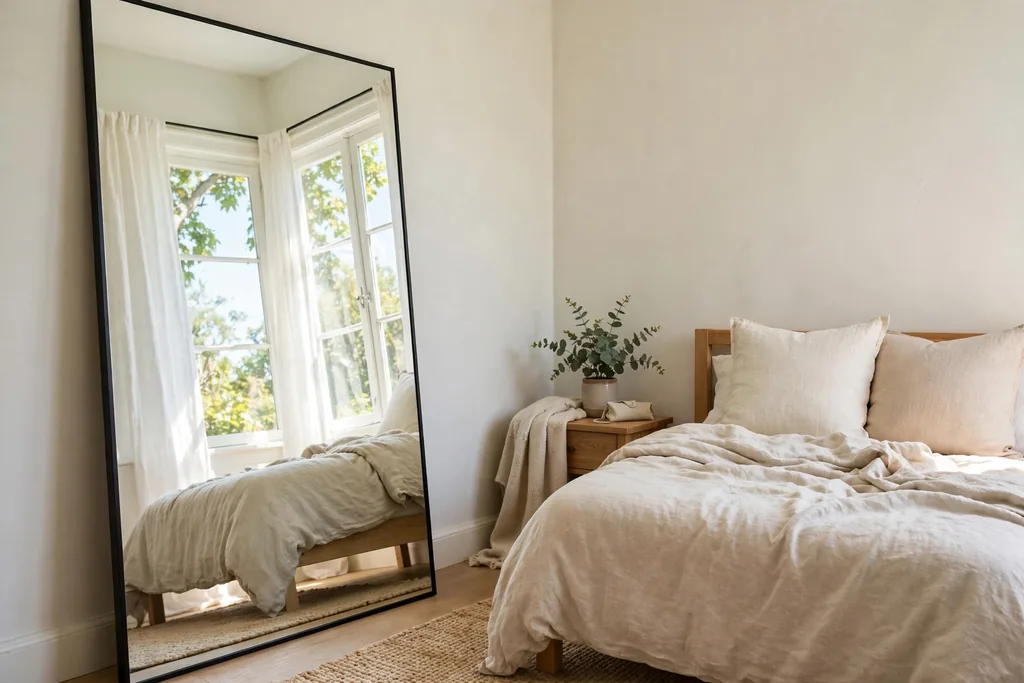
    A large mirror on the wall opposite or beside a window bounces daylight deeper into a small bedroom and makes the room feel wider. This suits a bedroom with one window or a dark corner, since the mirror adds brightness without a new light fitting. A leaner mirror on a dresser or a wall hung mirror above a chest both work, as long as the glass faces the light.
    Check what the mirror reflects before you fix it: a window, a plant, or a plain wall looks good, while a view of clutter does not. Keep the frame slim and simple, so the mirror reads as light rather than as another object. For more ways to use mirrors and art on bedroom walls, see these bedroom wall art ideas.

    6. Hang Curtains High and Wide

    Bedroom window with curtains hung high and wide beside a bed.

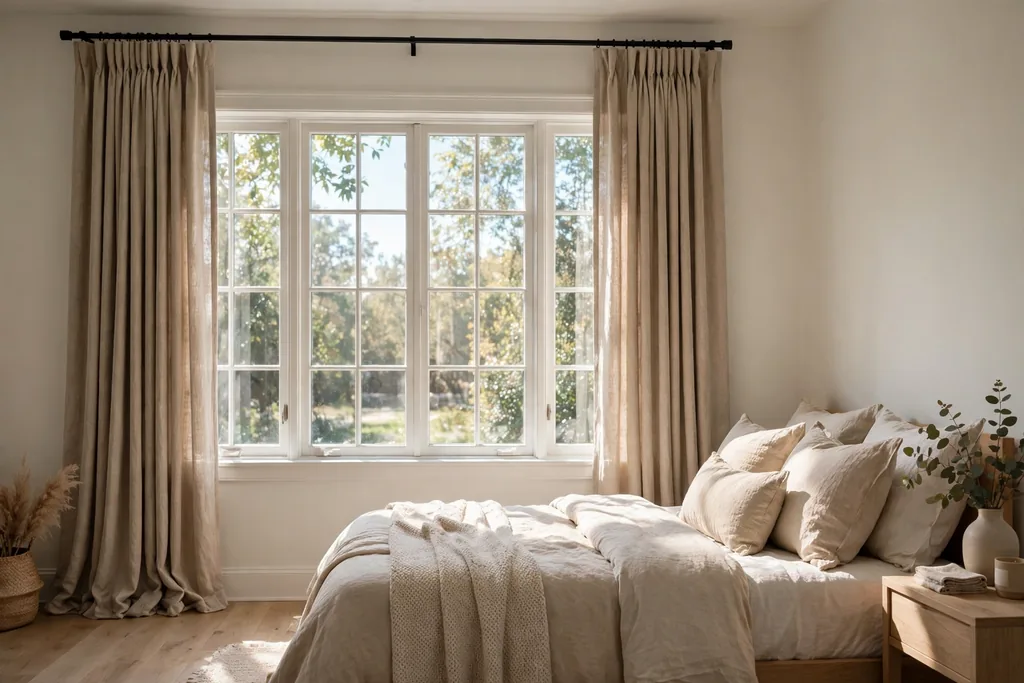
    Hang the curtain rod close to the ceiling and wider than the window frame, so the panels stack on the wall when open and daylight fills the room. When closed, the wider panels cover the frame with no light gaps at the edges. This suits almost any small bedroom, and it costs little beyond a longer rod and a second pair of panels if needed.

    Choose a warm, light filtering fabric for autumn days, and add a heavier layer at night if the room faces a street or a bright light. Let the panels brush the floor rather than pool, so they stay clean and easy to vacuum around. For fabric, length, and lining choices that suit different windows, see these bedroom curtain ideas.

    7. Layer Autumn Bedding You Can Swap by Season

    Bed layered with a wool throw and rust cushions in a small bedroom.

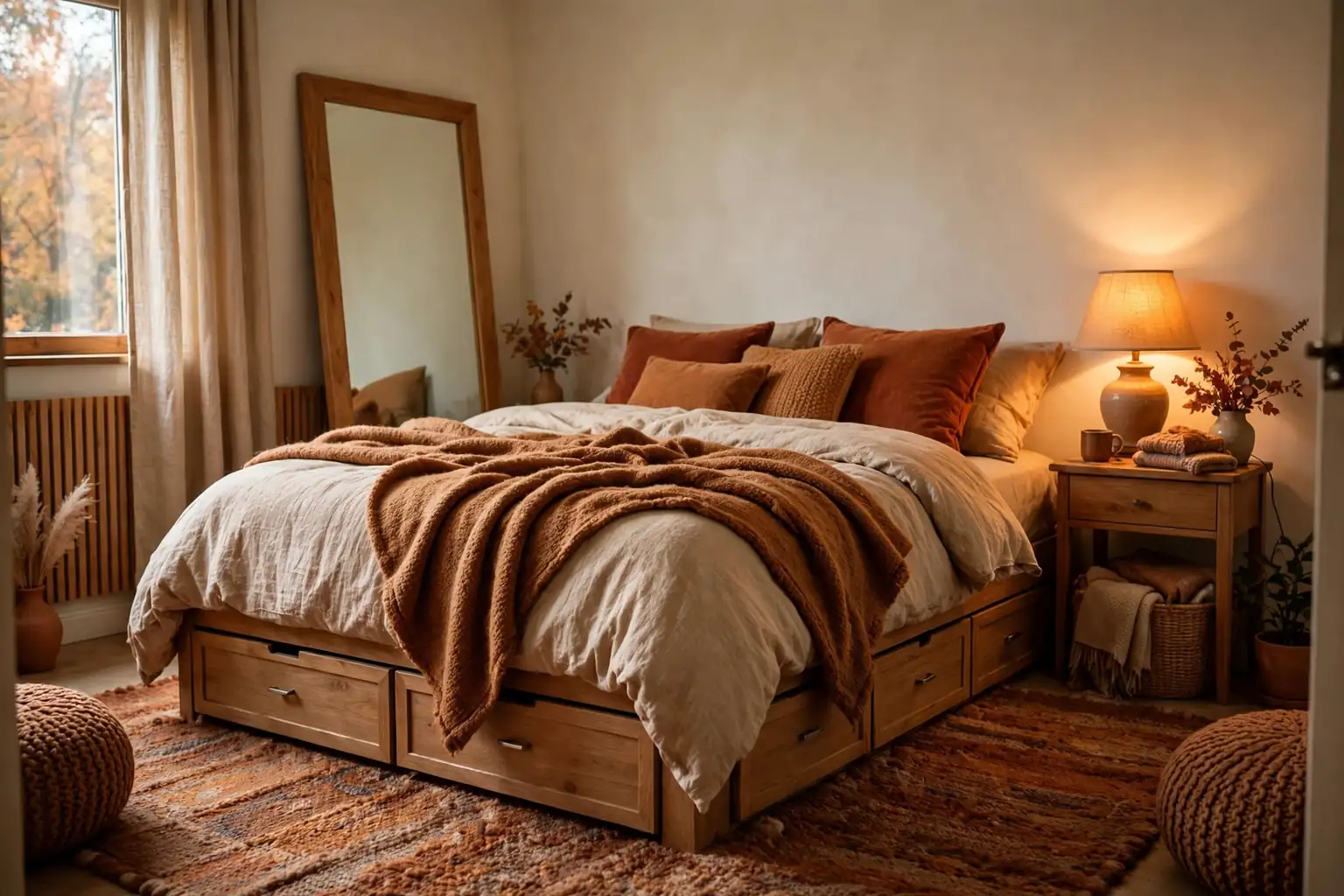
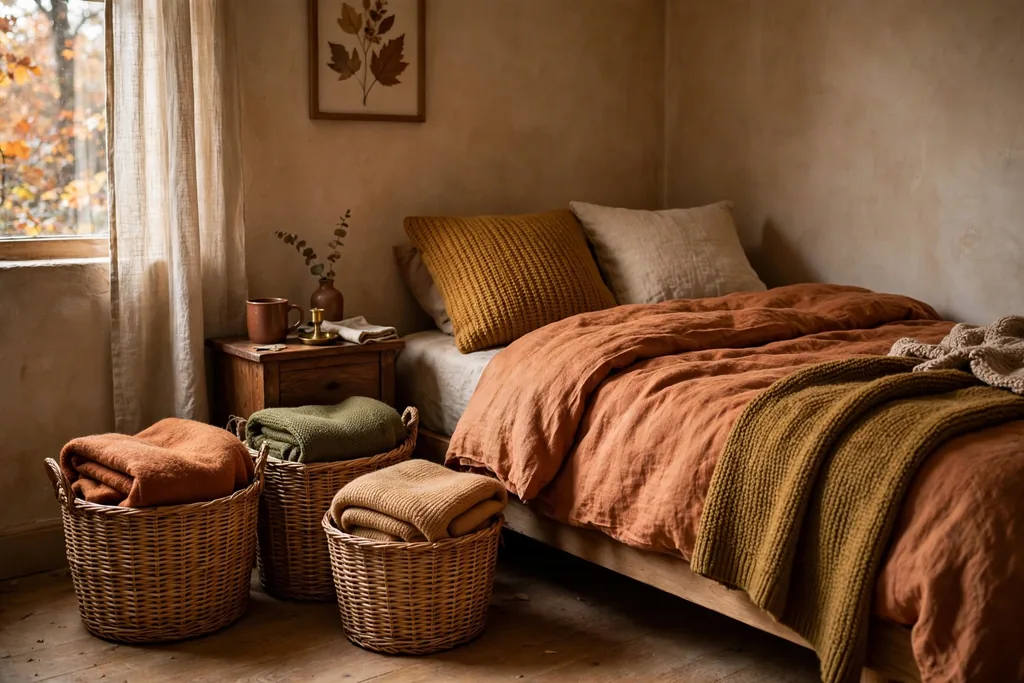
    Layer a plain duvet with a light quilt, a wool throw, and two or three cushions in autumn tones for a bed that feels warm without a heavy, bulky cover. The layers can be added or removed as nights cool, and the whole look can be swapped back in spring by changing only the throw and cushion covers. This suits a small bedroom where the bed is the largest item and sets the tone for the room.
    Start with bedding in warm white or oatmeal, then add the seasonal layer in rust, ochre, mustard, or deep green. Fold the throw across the lower third of the bed, so it is easy to pull up at night and easy to fold away in the morning. Wash the throw and cushion covers before the season starts, and store the summer set in a labeled bag under the bed.

    8. Roll Seasonal Clothes Under the Bed in Flat Bins

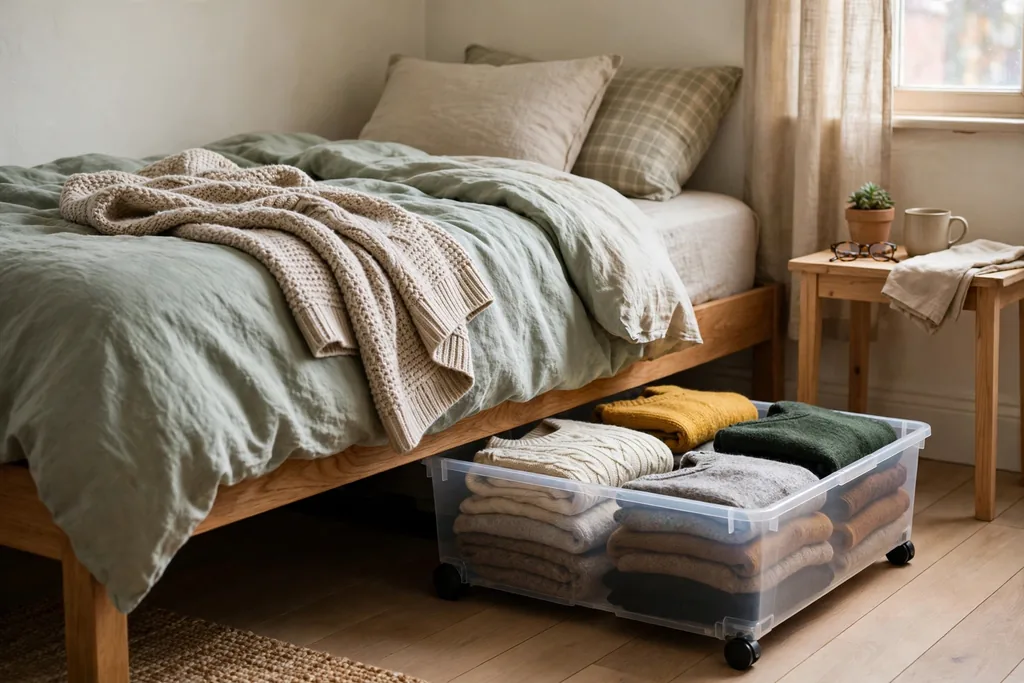
    Flat rolling bins under a bed holding folded clothes.

    Flat rolling bins under the bed hold seasonal clothes, spare sheets, and shoes in a space that would otherwise go unused. This suits a small bedroom with a short wardrobe, since it moves bulky off season clothes out of daily reach but keeps them easy to pull out for a swap. Clear bins or labeled bins both work, as long as you can find items without emptying every bin.

    Measure the height under the bed frame before you buy bins, and leave a small gap so they roll freely. Pack clothes clean and dry, and add a simple label on the end you see first. Swap the bins at the start of autumn and again in spring, and use the swap as a prompt to pass on clothes you did not wear last season.

    9. Fit a Fold Down Desk That Closes Away

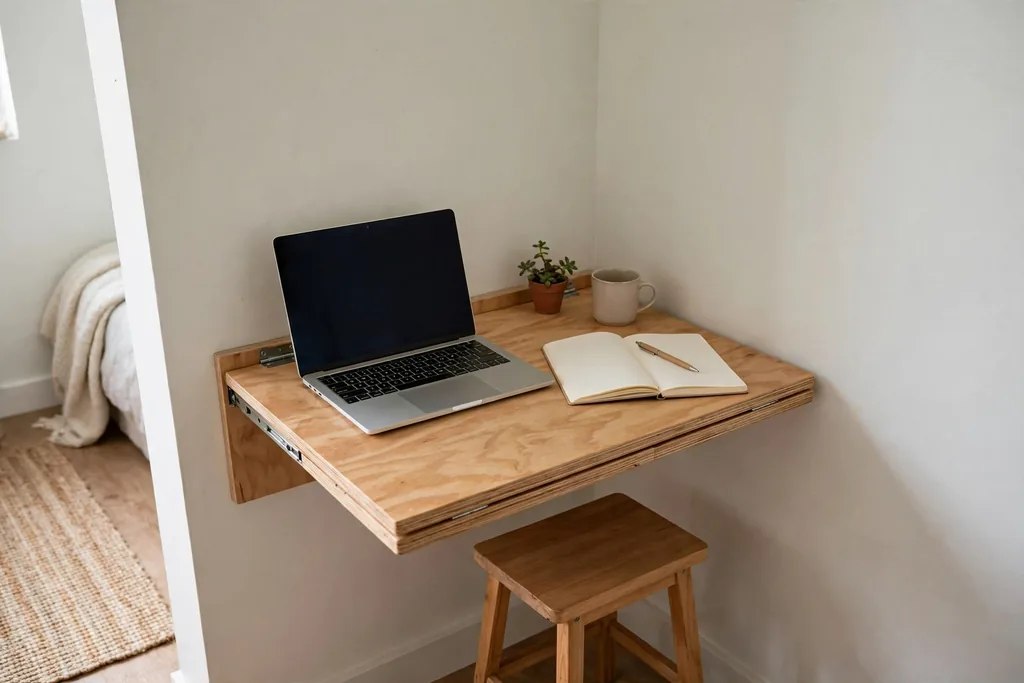
    Fold down wall desk open with a laptop in a small bedroom.

    A wall mounted fold down desk gives you a work or dressing surface that closes flat against the wall when you finish. This suits a small bedroom that also needs a desk, a vanity, or a homework spot, but cannot spare floor space for a full table and chair. A stool that tucks under the bed or in the closet completes the setup without a permanent chair.

    Fit the desk at a comfortable sitting height, with fixings rated for the weight of a laptop and books, and keep the closed front plain so it reads as a panel on the wall. Store only daily items inside, such as a notebook and charger, and keep the rest in a box on the tall shelves from idea 4. Close the desk each evening, so the room returns to a restful bedroom at night.

    10. Hang One Large Print Instead of a Busy Gallery

    One large framed print above a bed in a small bedroom.

    One large print above the bed or dresser gives a small bedroom a clear focal point without the visual noise of many small frames. This suits a room that already has pattern in bedding or curtains, since one calm image keeps the walls restful. Choose a print with plenty of light background and one or two colors from the room, so it links to the bedding rather than competing with it.

    Hang the print so its width spans about two thirds of the bed or dresser below it, with the center at eye level from where you see it most. Keep the frame slim and the wall around it empty, so the print has room to breathe. For sizing and hanging tips for art above a bed or a dresser, see these bedroom wall art ideas.

    11. Swap Table Lamps for Wall Sconces

    Wall sconces with warm light beside a bed in a small bedroom.

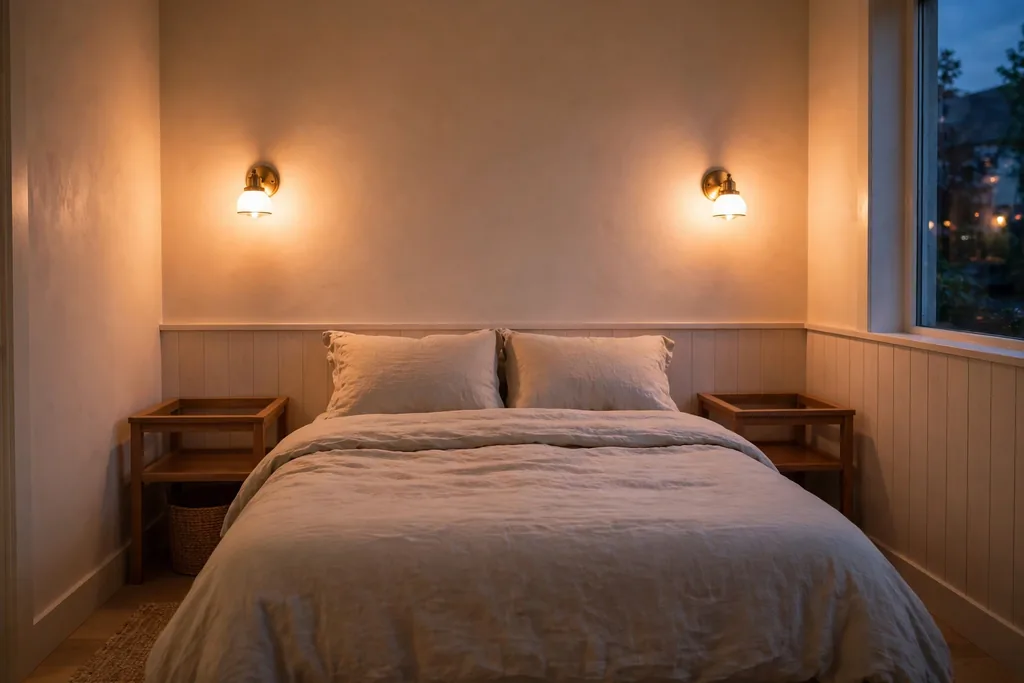
    Wall sconces beside the bed free both nightstands and give focused reading light at the right height. This suits a small bedroom with floating nightstands or narrow bedside tables, where a lamp base would crowd the surface. Plug in sconces suit renters, while wired sconces suit a longer term room, as long as the wiring is done safely.

    Fit each sconce just above shoulder height when you sit in bed, and use warm bulbs with a dimmer for evening reading. Keep both sconces at the same height and in the same finish, so the pair looks planned. If the wall cannot take a wired fitting, choose a plug in sconce with a tidy cord run, and keep the cord clipped close to the wall.

    12. Keep Throws and Spares in Woven Baskets

    Woven baskets holding folded throws beside a bed.

    One or two woven baskets beside the bed or under a bench hold spare throws, extra cushions, and magazines in a way that still looks like decor. This suits a small bedroom in autumn, when extra layers come out each evening and need a home during the day. Baskets also make the seasonal swap easy, since you can lift out the summer set and drop in the autumn set.

    Choose baskets that fit the space, such as a tall basket beside the bed or a flat basket under a bench, and keep the contents to one category per basket. Fold throws neatly, with the nicest one on top, so the basket looks cared for rather than stuffed. Empty and shake out baskets now and then, since woven fibers collect dust.

    13. Use the Back of the Door for Daily Storage

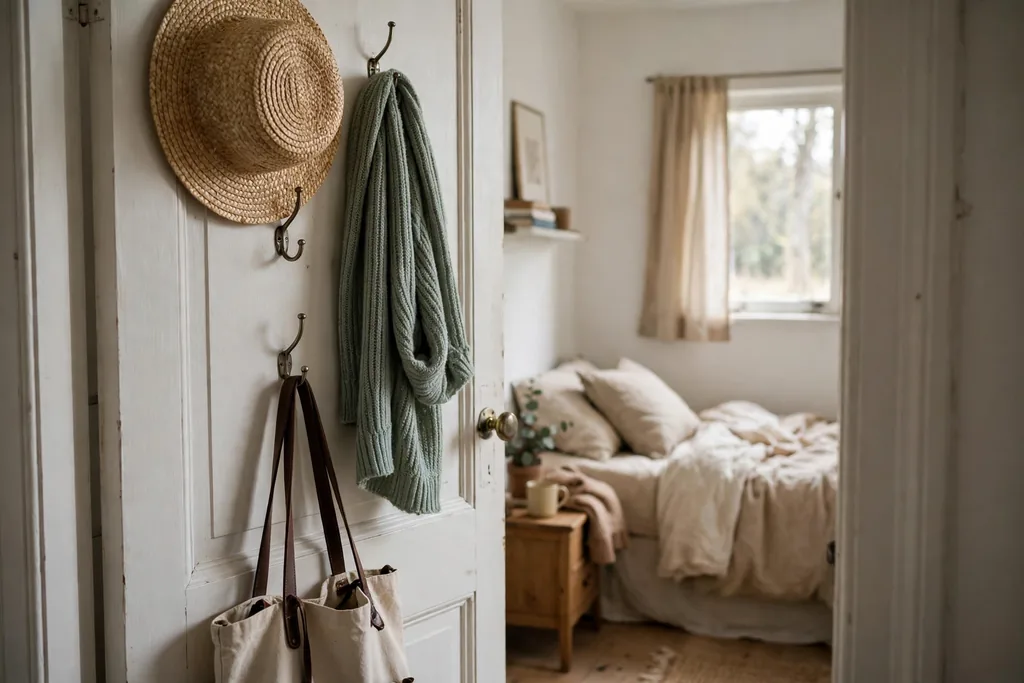
    Back of a bedroom door with hooks holding a bag and scarf.

    Hooks, a pocket organizer, or a slim mirror on the back of the bedroom door add storage without using a single inch of floor or wall space elsewhere. This suits bags, scarves, hats, belts, and tomorrow’s outfit in a small bedroom with a full closet. It also suits renters, since over door hooks need no drilling.

    Keep the door organizer to items you use daily, and leave bulky coats in the closet, so the door still closes and opens freely. Check that hooks do not hit the frame or a nearby wall when the door swings. Empty the organizer once a month, since door storage fills fast and can start to look cluttered from the hallway.

    14. Refresh One Rug and Cushion Set for Autumn

    Small bedroom with a warm rug under the bed and autumn cushions.

    Swap a light summer rug for a warmer, thicker rug, and change cushion covers to autumn tones, for a seasonal update that touches the floor and the bed in one move. This suits a small bedroom where painting or new furniture is not planned, since a rug and cushions change the feel of the room without changing its layout. A rug also warms cold floors on autumn mornings.

    Choose a rug large enough to sit under the front legs of the bed, so it anchors the room, and keep its pattern simple if the bedding already has pattern. Repeat one rug color in a cushion cover, so the two changes look linked. Store the summer rug rolled, clean and dry, in a bag under the bed or on a high shelf until spring.

    Conclusion

    A cozy seasonal update in a small bedroom does not need new furniture or a full redecoration. It needs a pale, warm base, storage that uses height and the space under the bed, light that reaches every corner, and bedding layers you can swap as the weather changes. Pick the ideas that fix your room’s real problems, whether that is clutter, dim light, or cold floors, and leave the rest for another season. Keep one wall and one surface clear, store the summer set where you can find it in spring, and let the room stay calm enough for good sleep.

    FAQs

    What bed size works best in a small bedroom?

    A double bed suits most small bedrooms, since it leaves room for a walkway on at least one side and space for storage beside it. A king bed can work in a longer room if you accept narrow bedside gaps and use floating nightstands, but measure the walkways first. Leave enough space to make the bed and open drawers, and choose a storage bed if closet space is short.

    Can renters use these ideas without drilling?

    Yes, many of these ideas need no drilling: over door hooks, rolling bins, baskets, layered bedding, a rug swap, and plug in sconces all work in a rented room. For floating shelves or sconces that need fixings, check your lease first and use removable options where the lease requires it. Keep the original fittings and paint colors noted, so you can return the room to its starting state.

    How do I make a dark small bedroom feel brighter?

    Start with pale warm walls, a large mirror facing the window, and curtains hung high and wide so daylight is not blocked. Add warm layered light at bedside height, and keep bedding and the rug in light tones with one darker accent, rather than many dark pieces. Clear clutter from the window wall, since a blocked window cuts light more than any paint color can restore.

    What is the cheapest way to give a small bedroom a seasonal update?

    Change cushion covers, add a wool throw, and swap a rug if you have one stored, since these three changes touch the bed and the floor for a low cost. Add a basket for spare layers and move summer clothes into under bed bins, so the room also feels tidier. Save shelves, sconces, and a storage bed for later, and start with the layers you see and use every day.

    Where should I store summer bedding in a small bedroom?

    Store clean, dry summer bedding in flat bins or washable bags under a storage bed or on a high shelf, labeled so you can find it in spring. Keep the bag out of damp spots and away from direct sun, and air the bedding for a day before you use it again. If under bed space is full, use the top of a wardrobe or a tall shelf, and keep only light items up high.

    How many seasonal accent colors should a small bedroom have?

    One accent color works best in a small bedroom, with neutrals doing the rest of the work. Repeat that color in two or three places, such as a throw, a cushion, and a print, so the room looks planned. A second accent can work if it is close in tone, such as rust with ochre, but a long list of competing colors will make a small room feel busy.