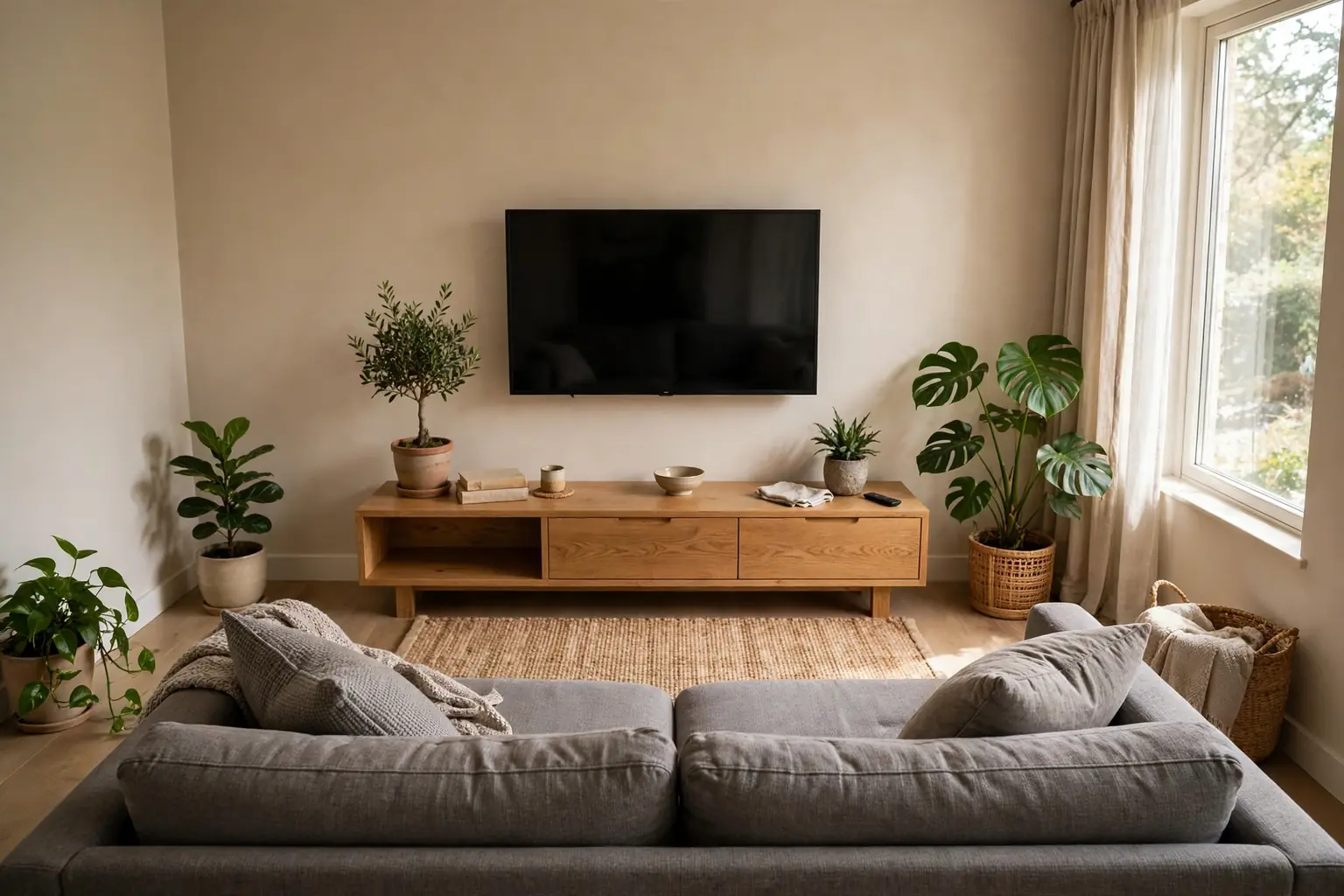
A television can easily take over a small living room, but it does not have to. With the right wall, the right furniture, and a clear viewing distance, the screen becomes one part of a room with its own character, not the only thing you notice. These 23 small living room ideas with a TV cover wall mounts, gallery walls, corner layouts, hidden screens, slat walls, bookshelves, and storage that keeps cables and clutter out of sight. Start by measuring your seating distance and your wall, then pick the idea that fits how you actually watch, whether that is nightly films, weekend sport, or background viewing while you cook nearby.
Key Takeaways
- Mount the TV at seated eye level and keep a clear viewing distance, since height and distance matter more than screen size in a small room.
- Give the TV wall one strong idea, such as slats, a gallery, or a dark paint colour, and keep the rest of the room calm.
- Hide cables and small devices in a console, a cabinet, or a cable channel painted to match the wall.
- Use closed storage for clutter and open shelves for a few books and objects, so the media wall looks lived in rather than crowded.
- Repeat one wood finish, one metal, and one accent colour across the TV wall and the seating area to tie the room together.
- Keep walkways clear and choose apartment scale furniture, so the room still works when the TV is off.
1. Wall Mounted TV Above a Low Oak Console
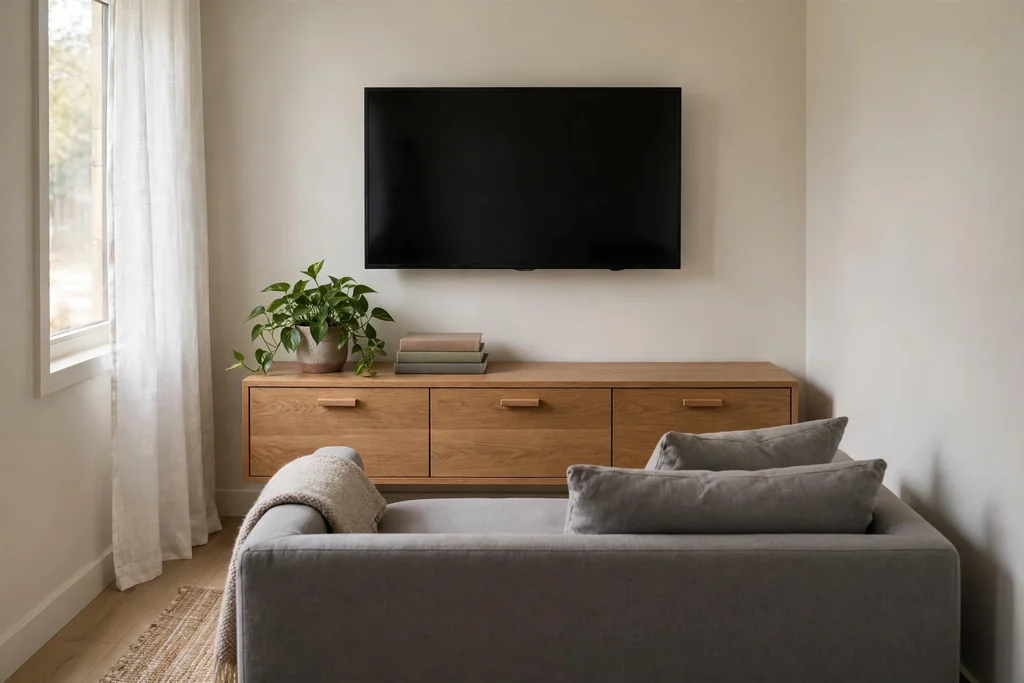
Mount the TV on the wall above a low oak console, and the whole arrangement gains a calm, finished look without a bulky unit. The console grounds the screen, holds devices in its drawers, and leaves the floor visible beneath it, which helps a small room feel larger. Keep the screen centre close to seated eye level, and leave a small gap between the TV and the console for a soundbar or a row of books.
Choose a console that is slightly wider than the TV, so the screen does not overhang the furniture below it. Run cables through the wall or a painted channel behind the console, and keep the top mostly clear, with one plant and one stack of books. This layout suits a rented room too, as long as the wall fixings suit the wall type and the mount is rated for the TV weight.
2. TV Set into a Gallery Wall of Framed Prints
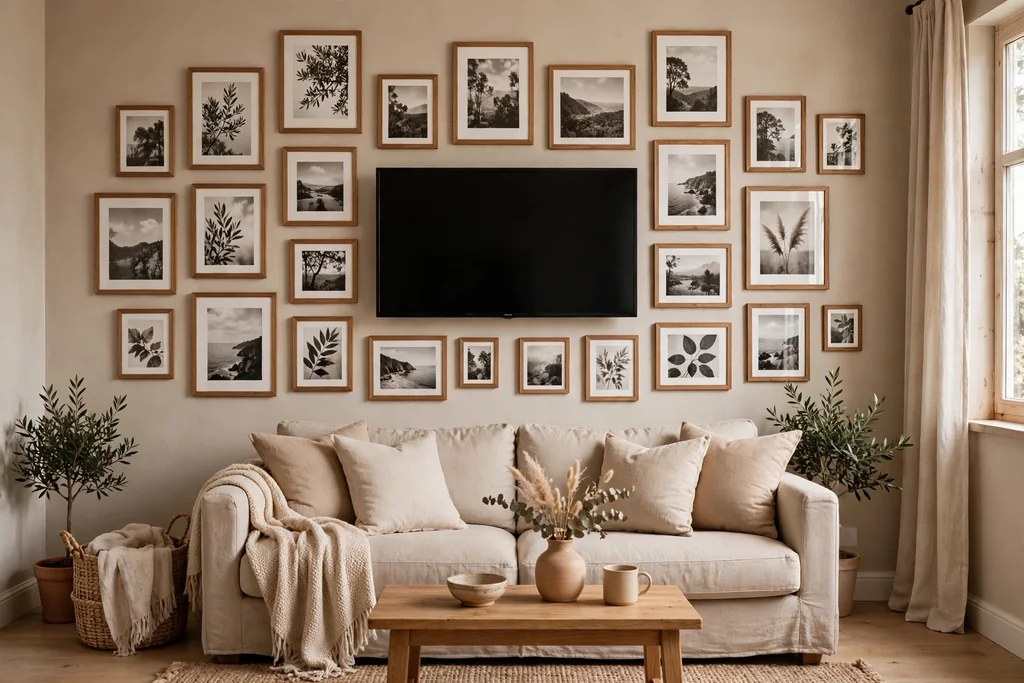
Set the TV into a gallery wall, and the screen becomes one rectangle among many, rather than a black hole on a blank wall. Hang framed prints, photos, and small mirrors around the TV, keeping the frame style consistent and the spacing even. A mix of sizes works well, as long as the TV sits near the centre of the arrangement and the largest frames are not competing with it for attention.
Plan the layout on the floor first, and tape the TV outline on the wall before you hang anything. Keep the frames close to the screen, but leave enough space to reach the TV controls and to clean around it. This idea suits a room where art already matters, and it works best when the print colours share one palette with the sofa cushions or the rug.
3. Corner TV with an L Shaped Sofa
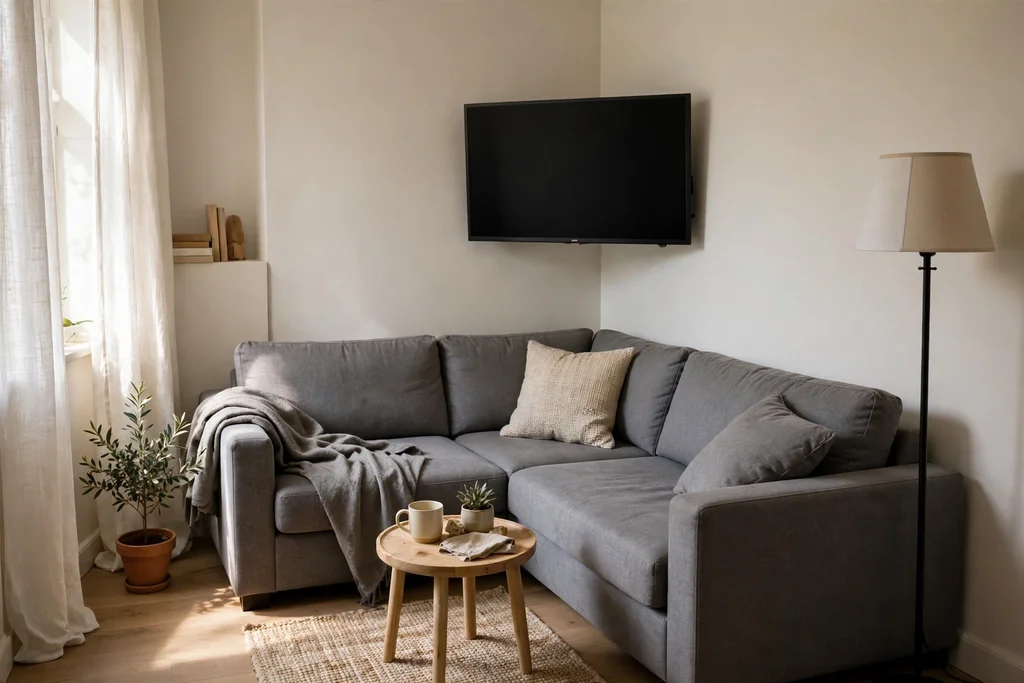
Place the TV in a corner with an L shaped sofa angled toward it, and a tricky corner becomes the best seat in the room. A corner mount or a small corner stand turns the screen toward the main seat, while the L shape gives everyone a clear view without craning their necks. This layout also frees the longest wall for shelves, art, or a window, which helps a small room feel balanced.
Keep the corner unit compact, and check that the screen is not too close to the nearest seat. A rug under the sofa and a small side table within reach complete the corner, and a floor lamp in the opposite corner balances the light. This suits a square room or a room with a door on the main wall, where a flat wall mount would block the walking route.
4. TV Hidden Behind Sliding Wooden Panels
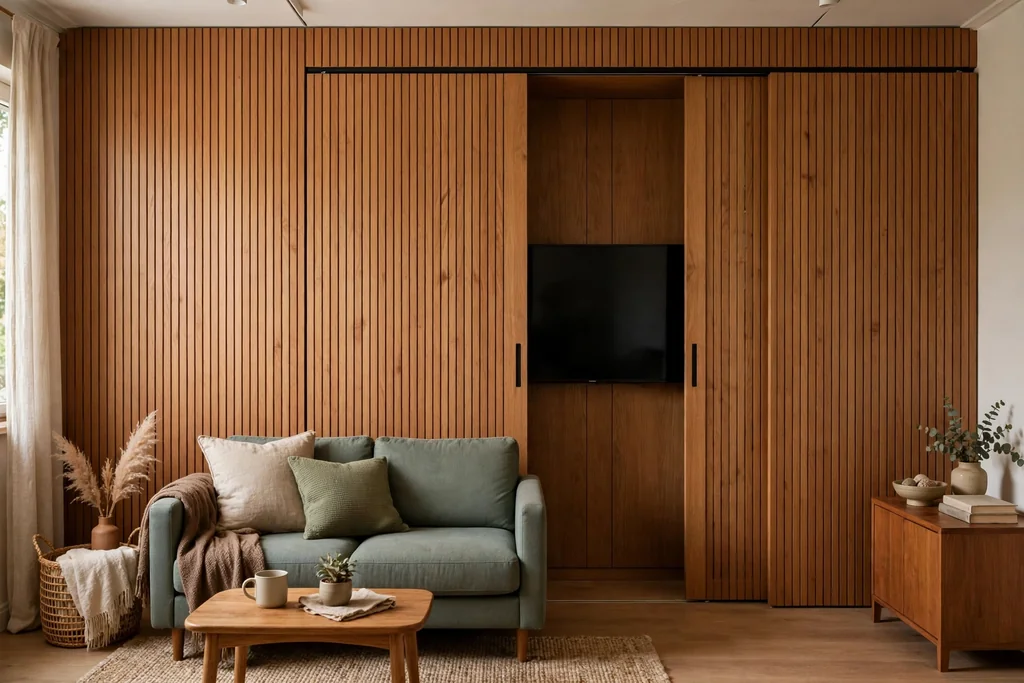
Hide the TV behind sliding wooden panels, and the living room can look like a calm panelled room when the screen is off. The panels slide across on a track, covering the TV and its shelves, and slide back to reveal the screen for viewing. Choose panels in a warm wood that matches the floor or the console, so the closed wall looks planned rather than like a cover up.
Fit the track level and leave clearance for the panels to move freely, and keep the TV mount slim so the panels sit close to the wall. This idea suits a room used for conversation and reading as much as viewing, since the TV disappears between sessions. Keep remotes and devices in the console below, so nothing needs to sit on show when the panels are closed.
5. Vertical Timber Slat Media Wall
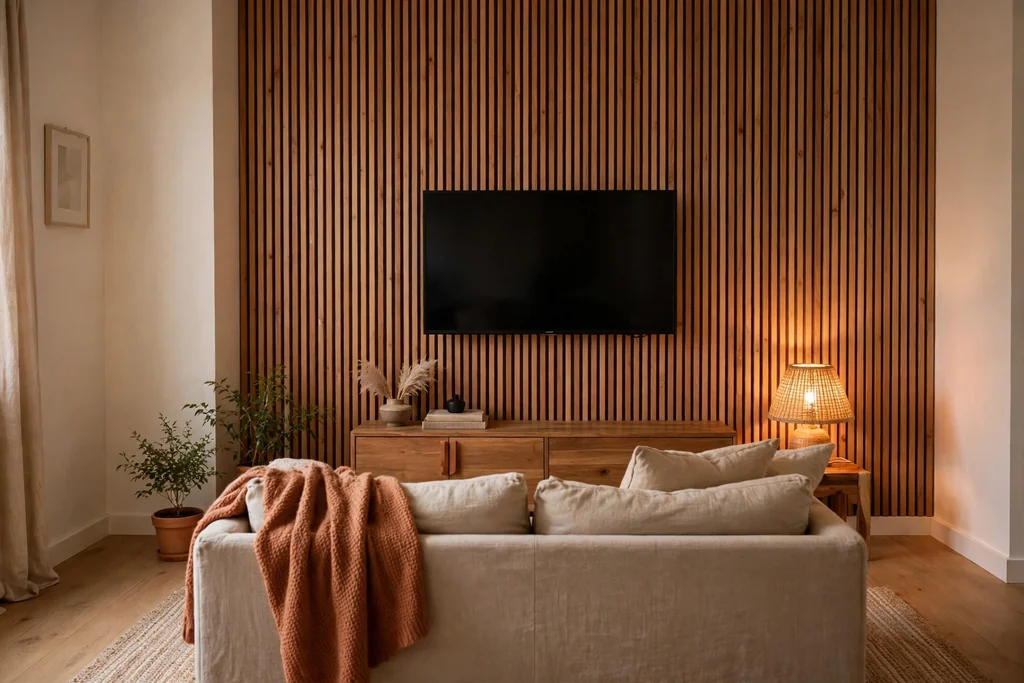
Build a vertical timber slat wall behind the TV, and the screen gains texture, warmth, and a clear focal point. Narrow slats fixed to the wall, with small gaps between them, add rhythm without taking up floor space, and they hide cables in the gap behind the slats. A pale oak slat wall keeps a small room light, while a darker walnut tone gives a cosier, evening feel.
Fix the slats to battens so the wall behind stays ventilated, and paint the wall behind in a tone close to the slats for a tidy finish. Keep the console low and simple, so the slats stay the main feature, and add one warm lamp beside the seating to soften the screen light. This suits a modern room that needs warmth without extra furniture.
6. TV Above a Compact Fireplace Mantel
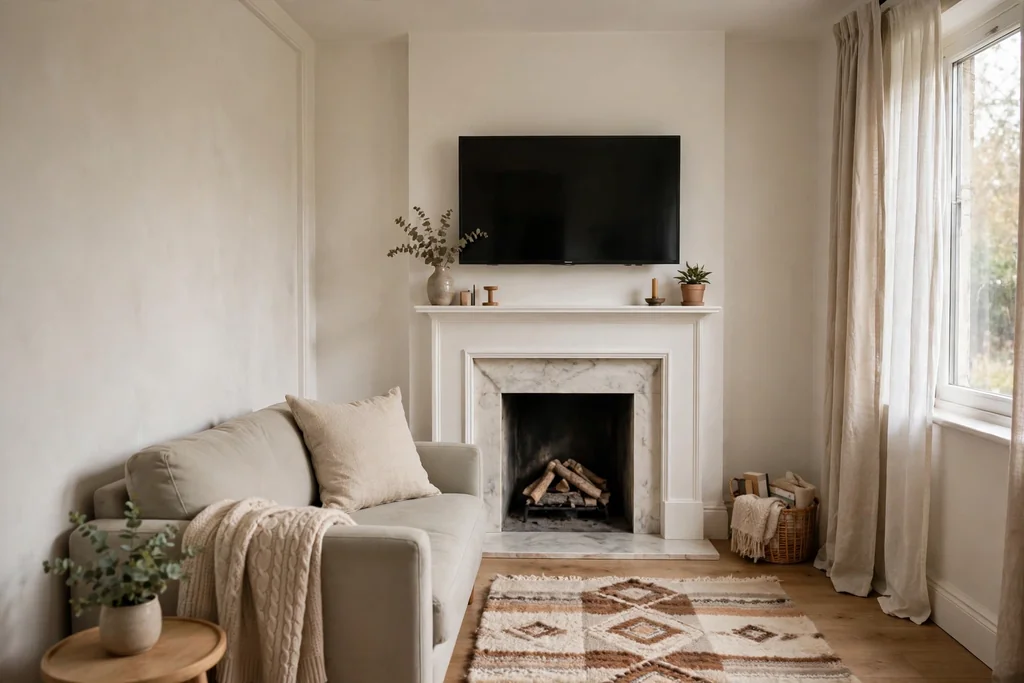
Mount the TV above a compact fireplace mantel, and two focal points become one, which saves wall space in a small room. The mantel gives the screen a shelf for a clock, a vase, or a pair of candlesticks, and the fireplace below adds warmth and a gathering point. Keep the mantel simple and the TV slim, so the arrangement does not feel top heavy.
Check the heat guidance for your fireplace and TV before mounting, and keep the screen at a height that does not strain your neck during a long film. A small rug in front of the fireplace and chairs angled toward both the fire and the screen complete the layout. For rooms where the fire is the main focus, keep the TV smaller than the mantel width so the fireplace stays the anchor.
7. Swivel Wall Mount That Turns Toward Dining
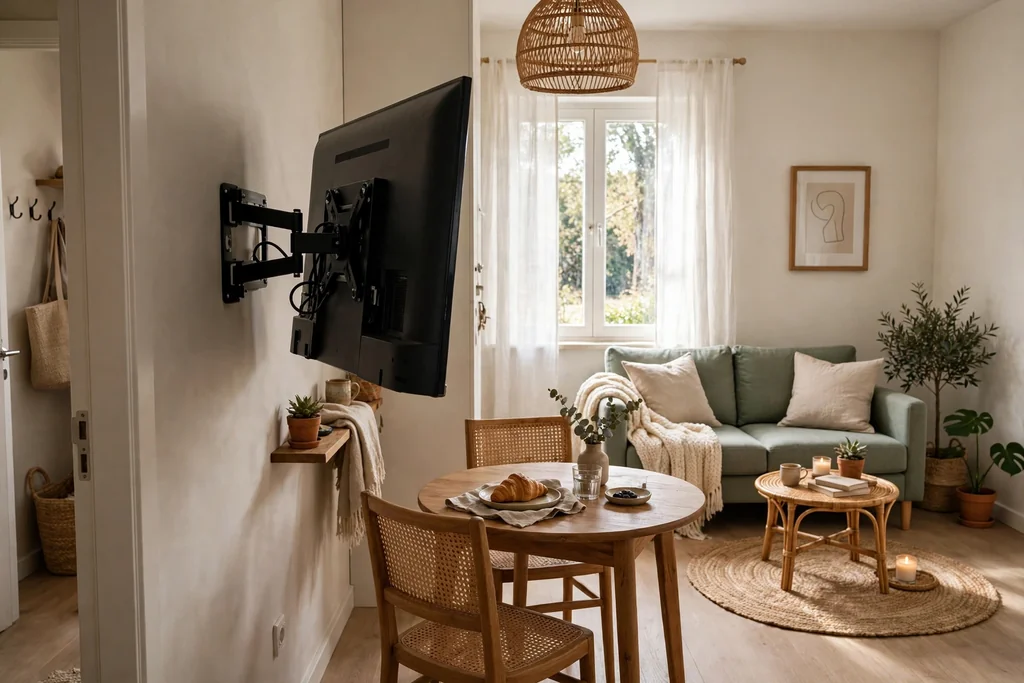
Use a swivel wall mount, and one TV can serve both the sofa and a nearby dining table in a small open plan room. The arm pulls out and turns the screen toward the dining area for a meal or a quiz night, then swings back to face the sofa for films. This is a practical answer to a combined room, where a fixed TV would only suit one zone.
Choose a mount rated well above the TV weight, and fix it into studs or with fixings suited to your wall. Keep cables long enough for the full swing, with a cable tidy that moves with the arm. This pairs well with the zoning ideas in these small living room dining room combo ideas, since the TV follows the same two zone logic as the furniture.
8. Recessed Alcove Niche with Soft Lighting
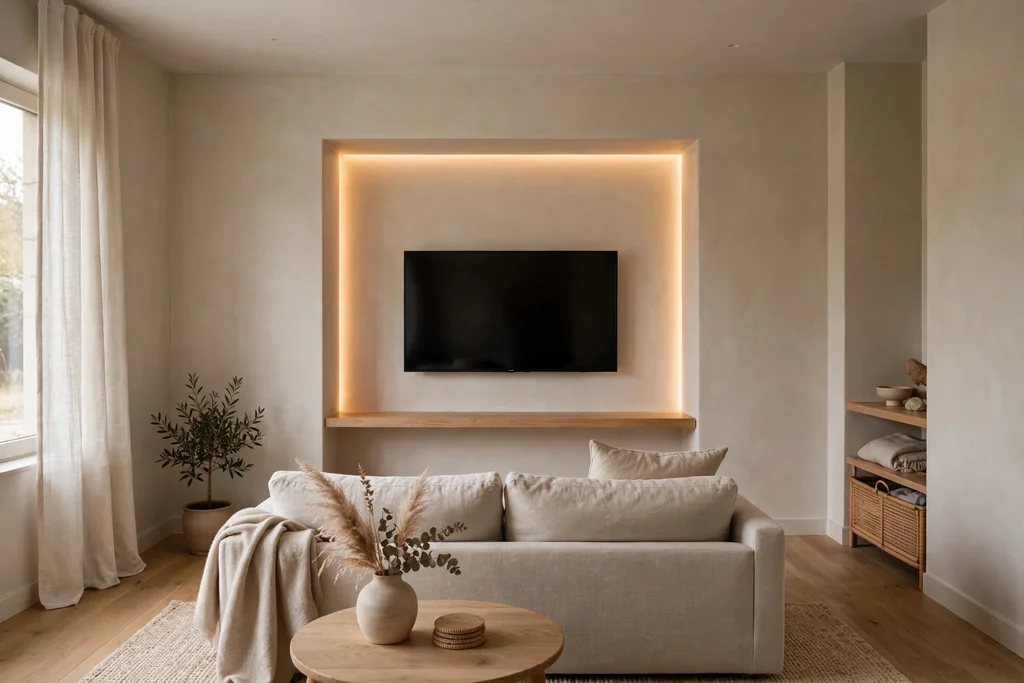
Set the TV into a recessed alcove niche, and the screen sits flush with the wall instead of jutting into the room. An alcove between chimney breasts, beside a wardrobe, or built from a stud wall gives the TV a framed home, and a strip of warm light inside the niche softens the black screen when it is off. Paint the inside of the niche one tone darker than the room for depth.
Measure the alcove carefully, and leave ventilation gaps around the TV so it does not overheat. Keep devices on a shelf inside the niche or in a nearby cabinet, with cables routed through the back. This suits a period home with existing alcoves, and it keeps a small room feeling tidy because the TV has a clear, built in place.
9. TV Framed Like a Piece of Artwork
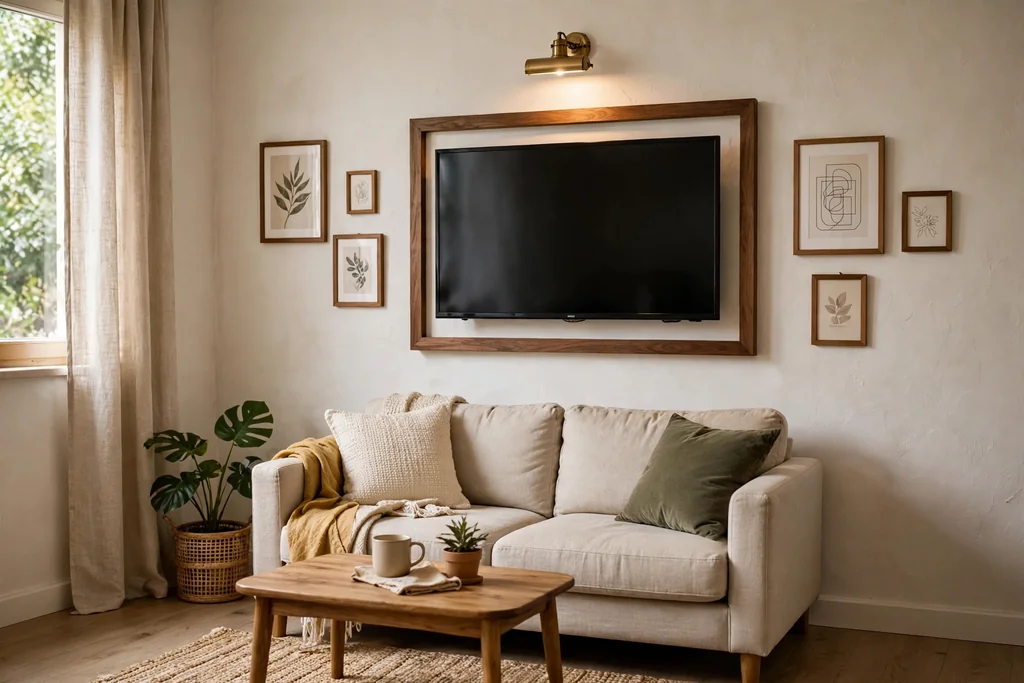
Frame the TV like a piece of artwork, with a slim picture frame around the screen and a picture light above it. The frame turns the black rectangle into something that looks at home among prints and photos, and a TV with an art display mode can show a painting or a photo when it is not in use. Choose a frame finish that matches other frames in the room, such as oak, black, or brass.
Hang the TV at picture height, which is close to seated eye level for a living room, and keep the wall around it simple so the framed screen stays the focus. This idea suits a room where the TV shares a wall with art, since the frame bridges the gap between screen and gallery. Keep the remote in a small dish nearby, so the artwork look is not broken by clutter.
10. Freestanding Room Divider with a TV
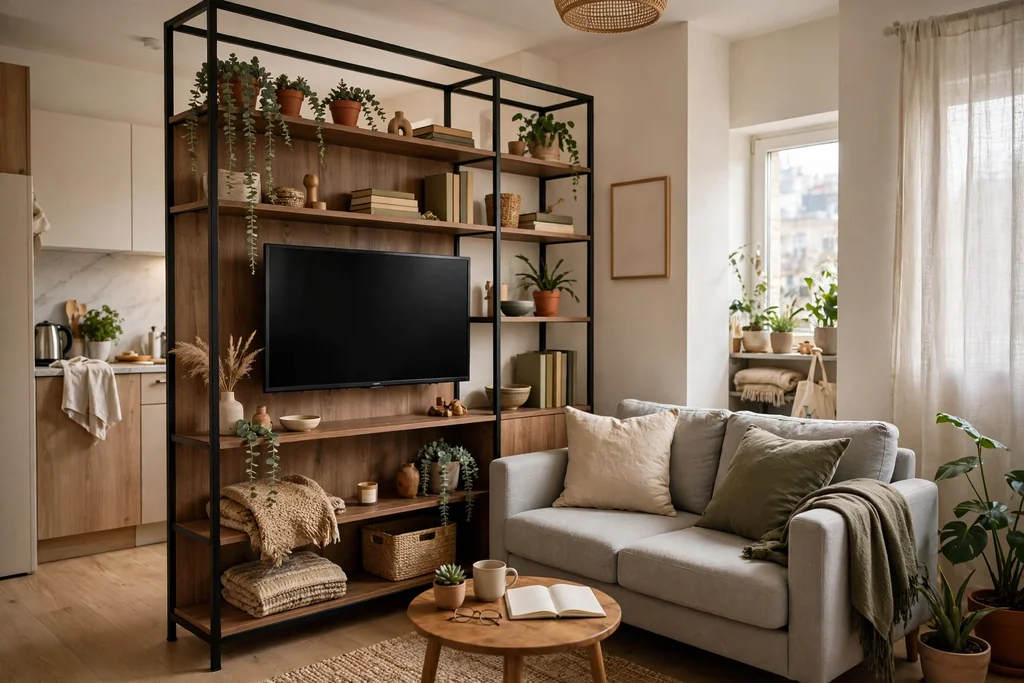
Use a freestanding room divider with a TV mounted on one side, and the screen can define a living zone in a studio or an open plan room. The divider stands between the sofa and a sleeping or work area, with the TV facing the sofa and shelves or a plain back facing the other side. A divider on feet keeps the floor visible beneath it, which helps the room feel open.
Anchor the divider safely, especially if children or pets could pull on it, and keep the base wide enough to stay stable. Run power to the divider through a floor cable cover, and keep the back of the divider tidy with a fabric panel or closed shelves. This suits a studio where a wall mount is not possible, and it gives the living zone a clear edge without building a wall.
11. Bookshelf Wall with the TV at the Centre
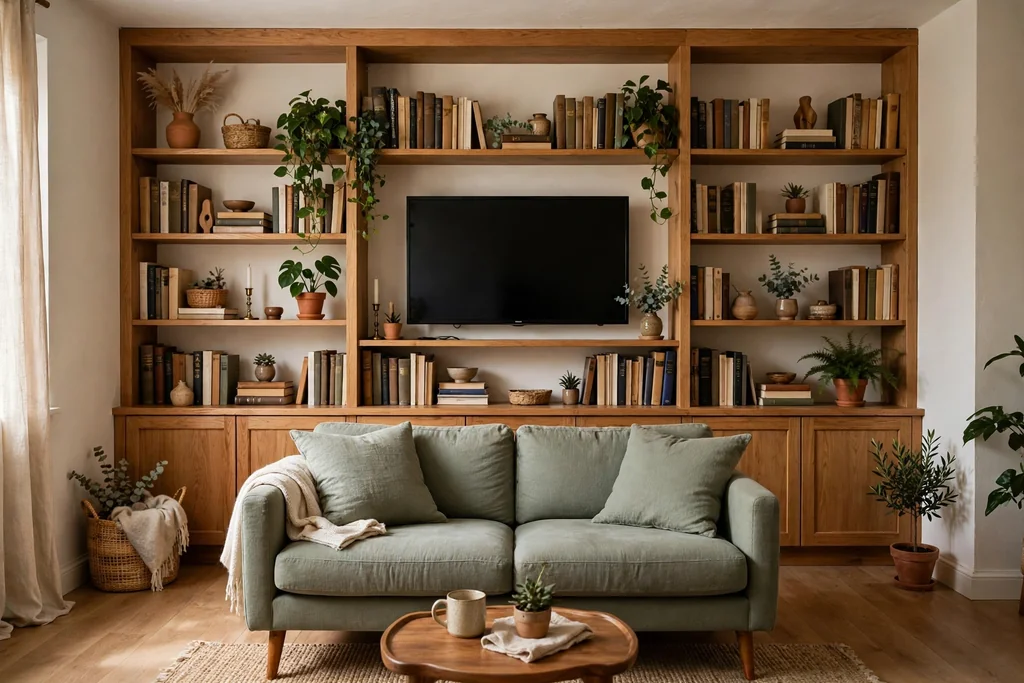
Build a bookshelf wall with the TV at the centre, and the screen sits among books, plants, and objects that show who lives there. Flanking shelves in the same finish as the console give the wall symmetry, while the books soften the hard edge of the screen. Keep the shelves near the TV for closed storage and the higher shelves for books, so daily items stay within reach.
Leave the shelf space around the TV a little wider than the screen, so the TV can breathe and you can reach its edges. Style the shelves in groups of two or three items, with space between groups, rather than filling every gap. This idea suits a reader’s room, where the TV is one pleasure among many, and it works well in a narrow room because the shelves use wall space, not floor space.
12. Low Media Bench for Floor Cushion Seating
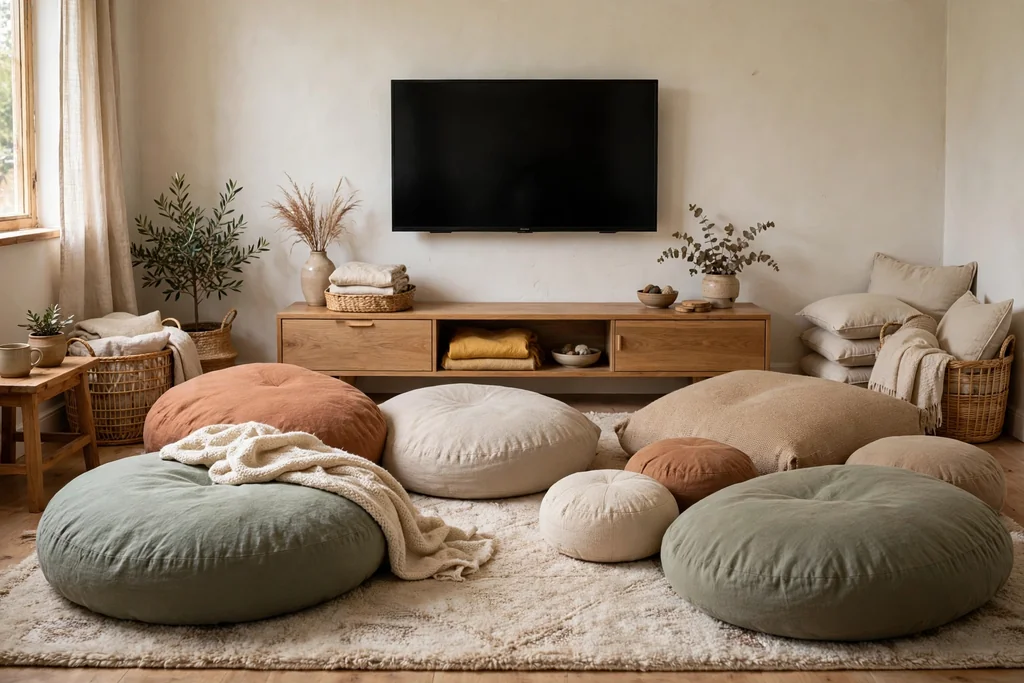
Pair the TV with a low media bench and floor cushions, and a small room gains a relaxed, lounge style viewing spot. The bench sits low under a wall mounted TV, holding devices and a few books, while large floor cushions and a soft rug create extra seating without bulky chairs. This layout suits a room with a low ceiling or a young household, where sitting low feels natural.
Choose a bench with closed doors for devices and cables, and keep the rug thick enough to sit on comfortably. Add a small side table at sofa height for drinks, since floor seating still needs a place to set a cup down. Keep the TV height low too, matching the lower seating, so viewers are not looking up for a whole film.
13. Rolling TV Stand for a Flexible Layout
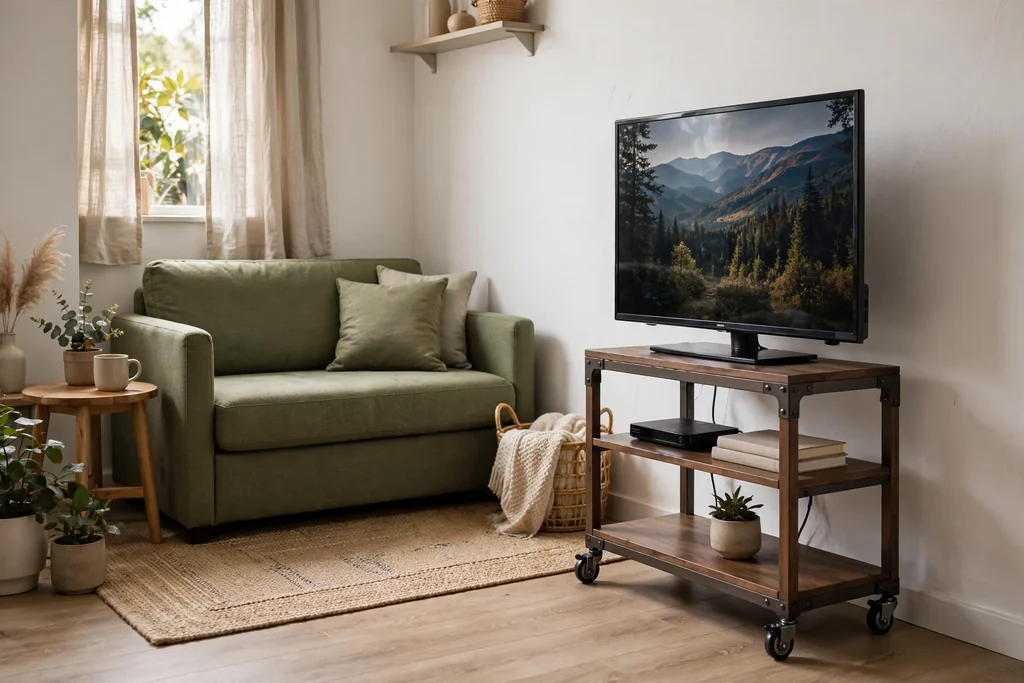
Put the TV on a rolling stand, and a small room can change its layout in a minute. The stand holds the TV at viewing height, with shelves below for devices, and it rolls to face the sofa, a reading chair, or a guest bed when needed. Locking castors keep it steady during viewing, and a cable tidy keeps the power lead from trailing across the floor.
Choose a stand rated for the TV size and weight, and keep the base wide enough to stay stable when it moves. This suits a rented room, a multi use room, or a room where the best viewing spot changes with the seasons and the light. Store the stand against a wall when it is not in use, and keep the walking route clear so it can roll out without moving other furniture.
14. TV on a Limewash Plaster Accent Wall
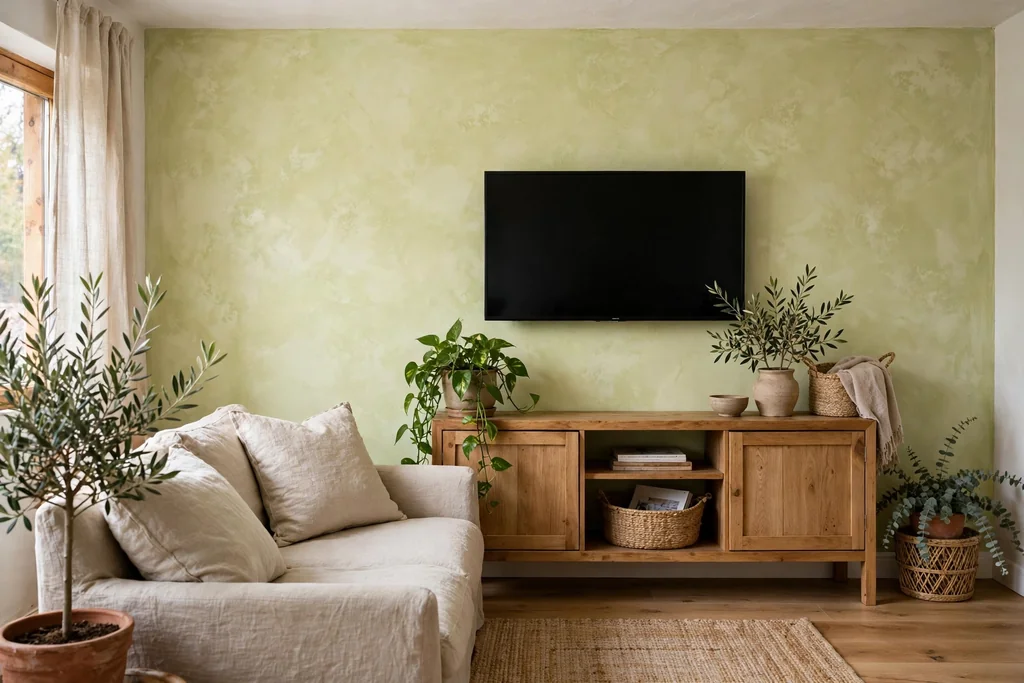
Mount the TV on a limewash plaster accent wall, and the screen gains a soft, textured backdrop that adds character without pattern or colour blocking. Limewash gives a cloudy, hand finished surface in a pale warm tone, which softens the hard edge of a flat screen and suits a calm, natural room. Keep the rest of the walls plain, so the accent wall stays the focus.
Apply limewash following the maker guidance, and let it dry fully before mounting the TV bracket. Keep the console simple, in pale wood or painted white, and add a linen sofa and a wool throw to echo the soft texture. This idea suits a room that needs character but cannot take a bold colour, and it pairs well with plants and natural wood.
15. Floating Shelves with Closed Cabinets Beside the TV
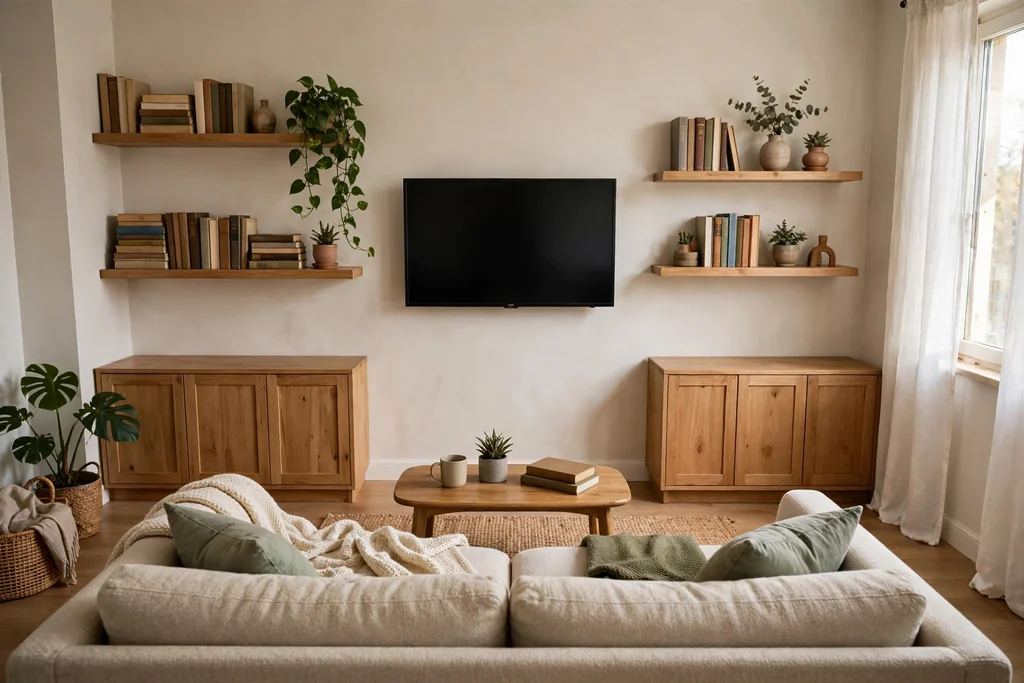
Flank the TV with floating shelves above closed cabinets, and the wall gains display space and hidden storage in equal measure. The cabinets hold devices, games, and clutter behind doors, while the shelves above hold a few books, a plant, and a framed photo. This balance keeps a small room tidy without making the TV wall look like a blank storage unit.
Hang the shelves at a height that does not block the screen, and keep the cabinet tops clear except for one lamp or one vase. Choose cabinets in the same finish as the shelves for a built in look, and paint the wall a calm tone so the display items stand out. This suits a household with a lot of small devices, since everything has a closed home when viewing ends.
16. TV Beside a Window Framed by Curtains
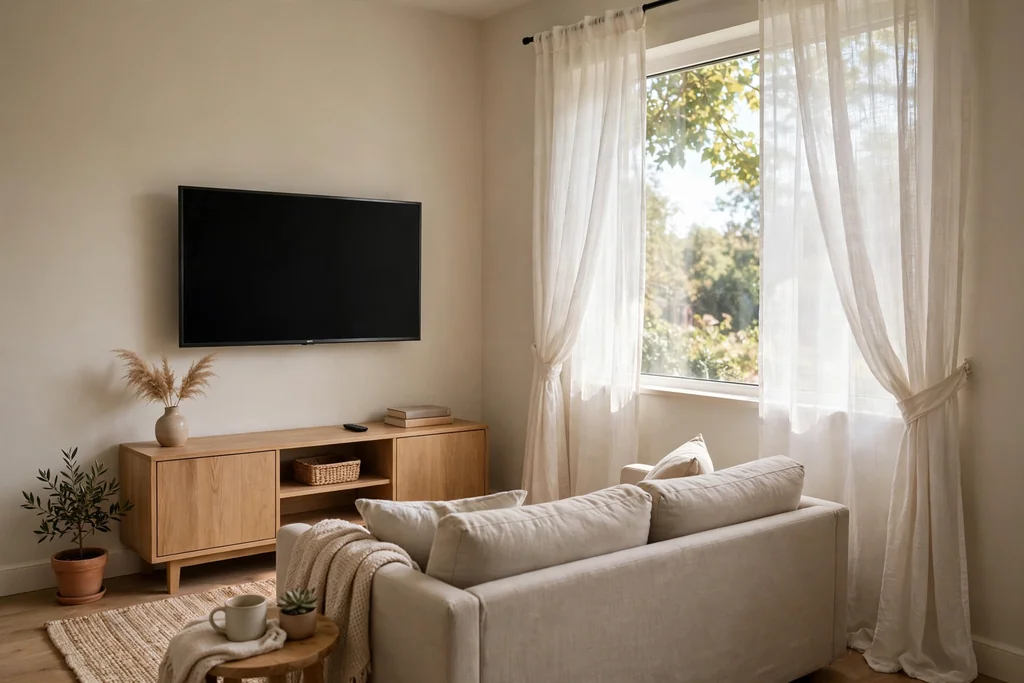
Place the TV beside a window framed by curtains, and the screen shares a wall with daylight and soft fabric instead of sitting alone on a blank wall. Hang the TV on the wall next to the window, with curtains that frame the window and soften the edge of the screen zone. A sheer layer cuts glare on bright days, while a heavier curtain closes the room for evening viewing.
Keep the TV out of direct sunlight where possible, since glare washes out the picture and heats the screen. Choose curtain fabric in a tone already used in the room, and keep the console below the TV low so it does not block the window light. This suits a room with one good window and a short TV wall, where the window and the screen must share the same side of the room.
17. Converted Closet Turned into a Media Nook
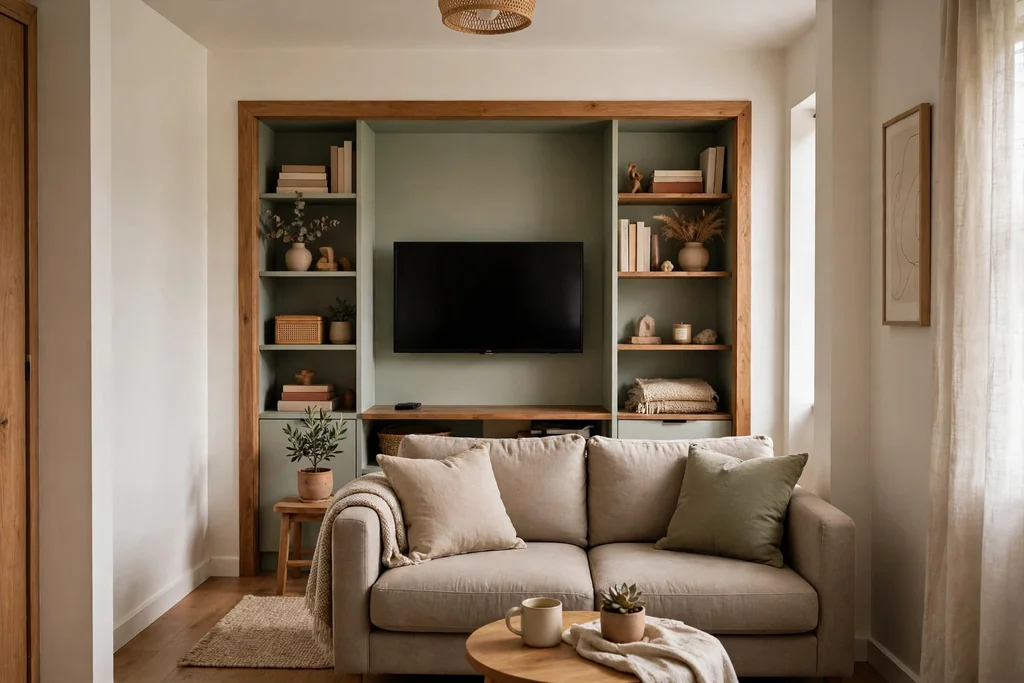
Turn a shallow closet into a media nook, and a small room gains a TV zone without losing a whole wall. Remove the closet doors, paint the inside, and mount the TV at the back of the nook, with shelves above or beside it for devices and books. A curtain or a sliding panel can close the nook when the TV is not in use, which keeps the room calm.
Check the nook depth before you buy a mount, and leave ventilation space around the TV and devices. Keep the seating directly opposite the nook, and add a small lamp inside the nook for soft light during evening viewing. This suits a bedroom living room, a studio, or a room with a closet that is too shallow for hanging clothes but deep enough for a slim TV.
18. Curved Sofa in a Bay Window Room Facing the TV
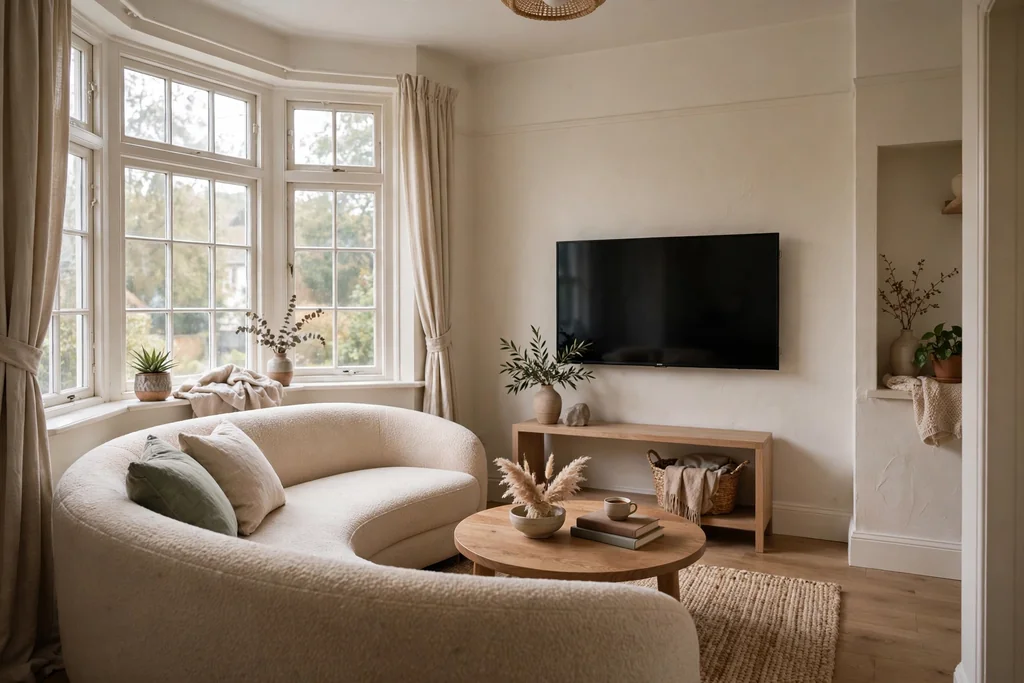
Place a curved sofa in a bay window room facing the TV, and the curve of the seating softens a room full of straight lines. The sofa sits with its back to the bay or angled toward it, while the TV hangs on the opposite wall, so every seat has a good view. A round coffee table in the middle echoes the sofa curve and leaves no sharp corners in the walking route.
Keep the rug round or curved to match the sofa, and choose a rug size that fits under the front legs of the sofa. For sizing and placement help, the guidance in these living room rug ideas covers round rugs and seating groups well. Keep the bay window dressed simply, so daylight still reaches the seating area without glare on the screen.
19. TV on a Dark Painted Accent Wall
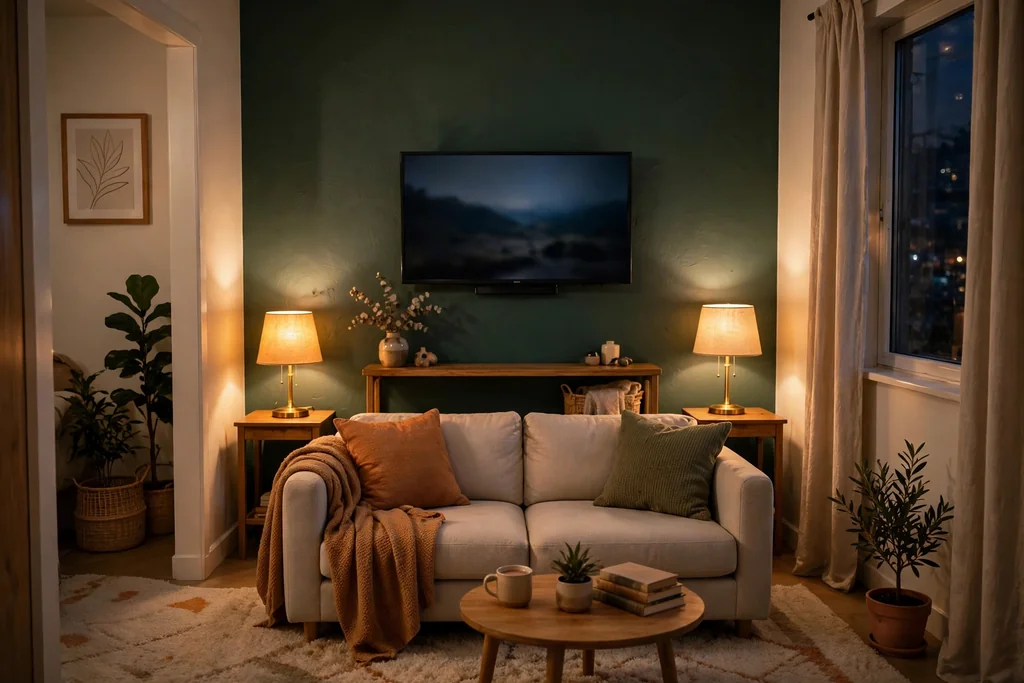
Paint the TV wall a dark colour, such as deep green, navy, or charcoal, and the black screen blends into the wall instead of standing out against white paint. The dark wall also makes the seating area feel cosier in the evening, especially with warm lamps and a soft rug. Keep the other walls pale, so the dark wall reads as a feature rather than closing the room in.
Paint the wall behind the TV and its console in the same dark tone, including any cable channels, so nothing light breaks the effect. Add brass or wood accents for warmth, and keep art on the dark wall minimal, since the TV is already the focus. This suits a room used mainly in the evening, where a dark wall feels inviting rather than gloomy.
20. TV Tucked into an Under Staircase Wall
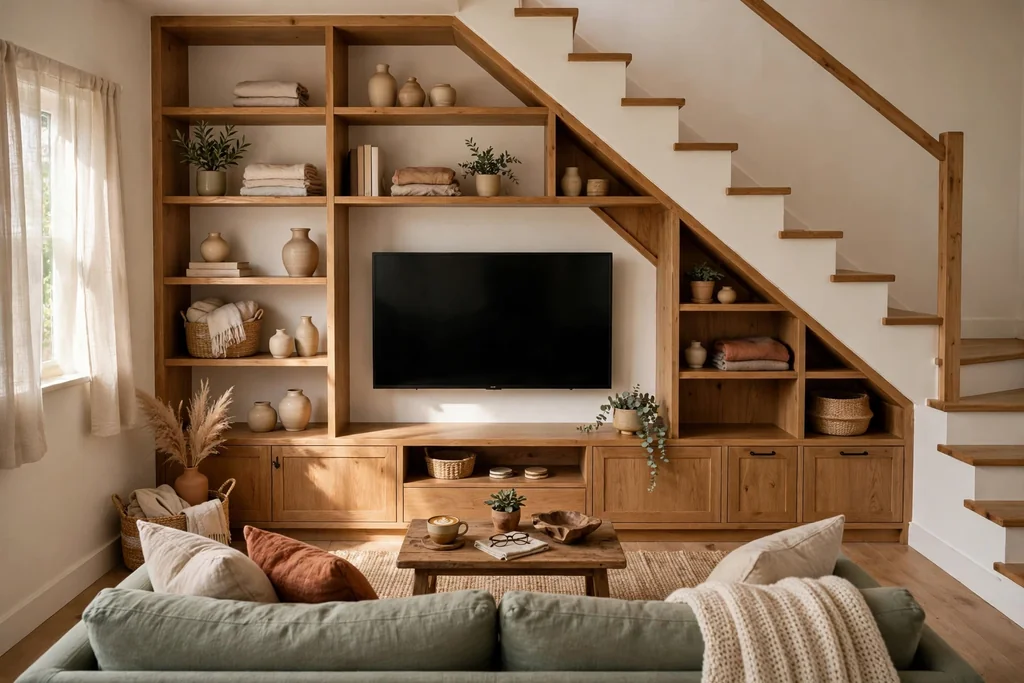
Tuck the TV into an under staircase wall, and an awkward slope becomes a useful viewing zone. The TV mounts on the tallest part of the staircase wall, with a low console or built in shelves filling the lower, sloping section. This layout uses space that is often wasted, and it leaves the main walls free for seating, art, or a window.
Measure the head height and the screen height carefully, since the slope limits where a tall screen can sit. Keep the seating opposite the staircase wall, and add a lamp on the console for evening light. This suits a small house or a split level room, where the staircase wall is the only free wall long enough for a TV and its storage.
21. Gallery Ledge Shelf Below the TV
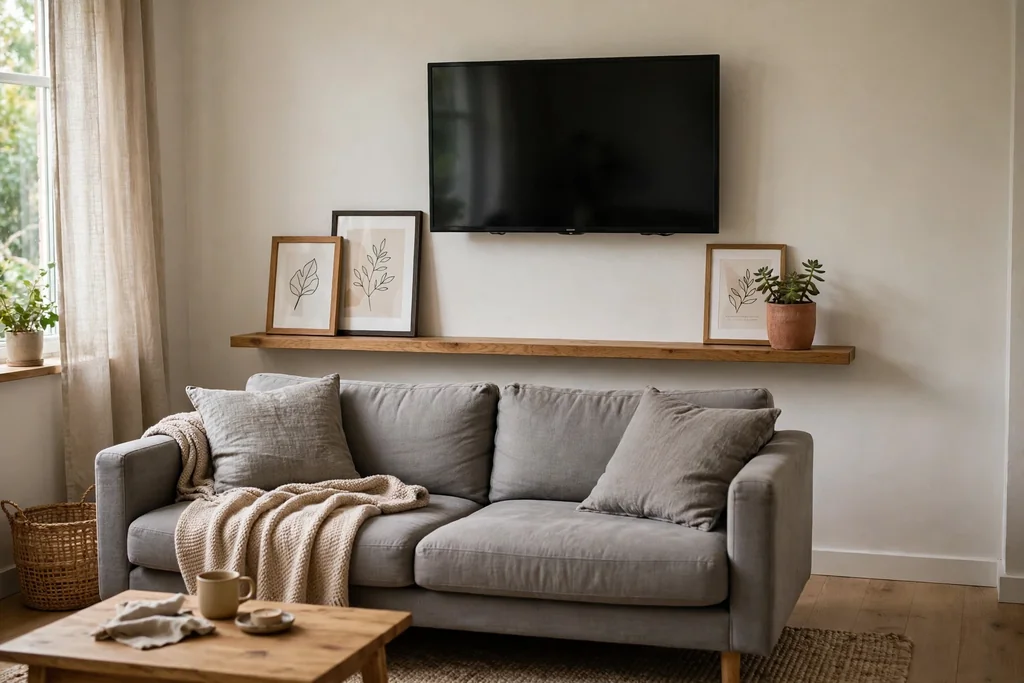
Hang a gallery ledge shelf below the TV, and the screen gains a changing display that is easy to refresh. The ledge holds framed prints, small photos, and a plant, leaning against the wall rather than hanging, so you can swap pieces without new fixings. Keep the ledge slightly wider than the TV, and hang the TV just above it, so the display reads as one arrangement.
Style the ledge with three or four items in varied heights, and leave a gap at one end so it does not look overfilled. Keep the items light and secure, especially if the ledge is above a console that gets bumped. This suits a renter or a household that likes to change art with the seasons, since the ledge makes a new look a five minute job.
22. TV in a Dual Purpose Guest Room
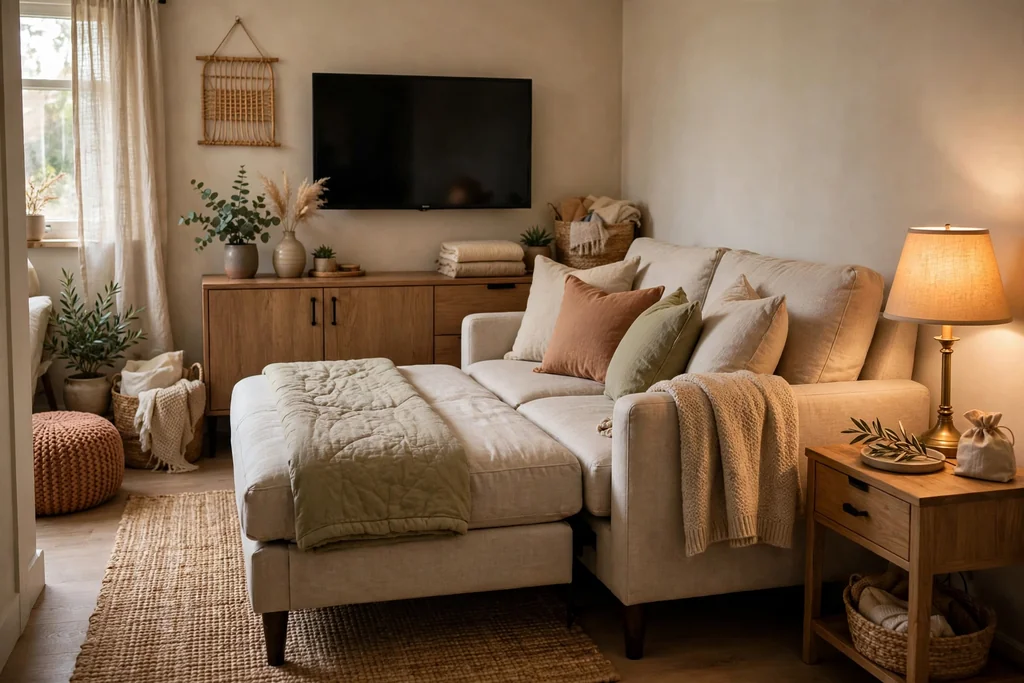
Put the TV in a dual purpose guest room, and one small room can serve as both a living room by day and a guest room by night. A sofa bed or a daybed faces the TV, with a console that holds bedding in closed storage and devices behind doors. When guests stay, the bed pulls out and the TV becomes their evening screen, and by day the room returns to living use.
Choose a sofa bed that is comfortable to sit on as well as sleep on, since it will be the main seat most days. Keep the TV mount simple and the cables hidden, and add a small bedside lamp that doubles as a reading lamp for guests. This suits a small home with no spare bedroom, where every room must earn its floor space twice over.
23. TV Above a Vintage Sideboard Console
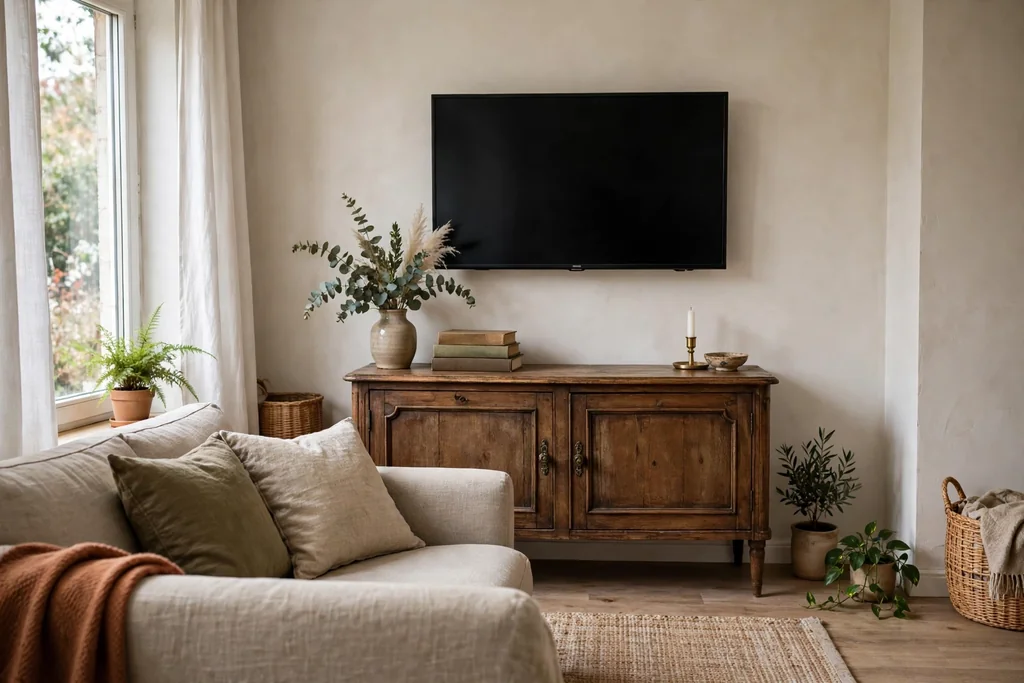
Set the TV above a vintage sideboard console, and the room gains character from furniture with a past. A mid century sideboard, a painted dresser, or a second hand cabinet gives the TV wall warmth, patina, and closed storage for devices, while the TV above stays simple and modern. The contrast between old furniture and a new screen is what gives this idea its charm.
Check that the sideboard is sturdy, level, and wide enough for the TV, and keep the top mostly clear, with one vase and one stack of books. If the sideboard is tall, wall mount the TV rather than resting it on top, so the screen sits at a comfortable viewing height. This suits a room that already mixes old and new pieces, and it is a good way to reuse a piece you already own.
Conclusion
A small living room with a TV works best when the screen has a clear place, a comfortable viewing distance, and storage that keeps the rest of the room calm. Pick one wall idea from this list, whether that is a gallery, a slat wall, a dark accent, or a vintage console, and build the seating around it rather than around the screen alone. Measure first, hide the cables, and leave the walkways clear, and the room will feel like a living room that happens to have a TV, not a TV room that happens to have a sofa. Save the ideas that fit your wall and your furniture, and start with the one change that will make the biggest difference in your room.
FAQs
How high should a TV be mounted in a small living room?
Mount the TV so the centre of the screen sits close to seated eye level, which is usually around 100 to 110 centimetres from the floor for a standard sofa, though your own sofa height and seating distance matter more than a fixed number. Sit in your usual seat and check that you look slightly down or straight ahead, not up, during a long programme. If the TV must go above a fireplace or a tall console, tilt the mount slightly downward to reduce neck strain.
What size TV suits a small living room?
Choose a TV size based on your seating distance rather than the wall size alone. As a rough guide, a viewing distance of about 1.5 to 2 metres suits a screen around 43 to 55 inches, while a shorter distance suits a smaller screen. Measure from your sofa to the TV wall, check the maker guidance for that model, and remember that a screen that is too large for a small room can feel overwhelming and strain your eyes.
How can I hide TV cables in a small living room?
Run cables through the wall where the wall type allows it, or use a paintable cable channel that matches the wall colour. A console with a cable hole in the back, a basket for a power strip, and devices stored behind closed doors will hide most of the clutter. Keep the power lead and the device leads together with a cable tie, and leave a little slack so you can pull a device out without unplugging everything.
Should the TV go above the fireplace in a small room?
A TV above a fireplace can work in a small room because it combines two focal points on one wall and frees the other walls. Check the heat guidance for both the fireplace and the TV first, and keep the screen at a height that does not strain your neck. If the mantel is high, a pull down mount that lowers the TV for viewing can help, or choose a different wall and let the fireplace stay the main feature.
How do I make a TV look less dominant in a small living room?
Give the TV a frame, a gallery wall, a dark accent wall, or sliding panels, so the screen blends into a larger arrangement rather than sitting alone on a white wall. Keep the surrounding shelves styled simply, with books and plants rather than clutter, and repeat one colour from the TV wall in cushions or a throw. When the TV is off, a dark wall or a framed screen draws far less attention than a bare black rectangle.
Can I put a TV in a corner of a small living room?
Yes, a corner TV can work well in a small room, especially with a corner mount or a small corner stand and an L shaped sofa angled toward it. Check that the nearest seat is not too close to the screen, and that the corner unit does not block a door or a walking route. A corner placement also frees the longest wall for shelves, art, or a window, which can make a small room feel more balanced.