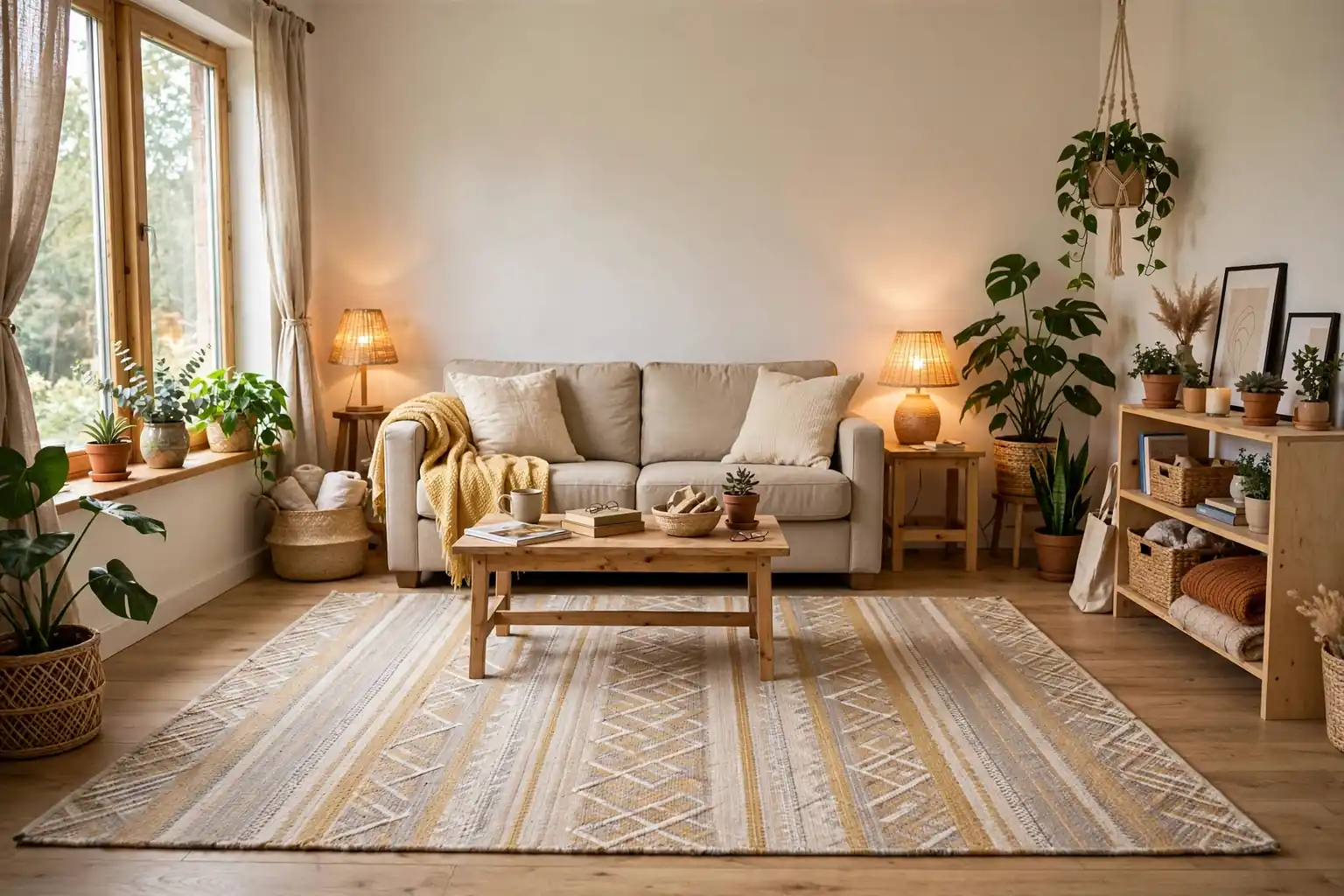
A living room can feel fresh without a new sofa or a full renovation. Most of the change comes from small, careful choices: a better layout, a rug that fits, light at more than one height, and storage that hides the daily clutter. These 33 living room decor ideas on a budget focus on that kind of change. They use paint, thrifted finds, fabric, plants, and things you already own, and each one names what to do first so you can start this weekend. Pick the three ideas that solve your biggest frustrations, live with them for a week, and then add more only if the room still asks for it.
Key Takeaways
- Start with a simple spend plan and a short list, and buy nothing until the layout and the rug size are settled.
- Change the biggest surfaces first: layout, paint, rug, curtains, and lighting give more change than small ornaments.
- Use fabric for fast, low cost change: cushion covers, throws, and curtains can refresh a room without new furniture.
- Give clutter a closed home, such as a basket or a lidded box, so styling on show stays calm.
- Shop secondhand and from your own home first, and repeat one or two colors so budget pieces look planned.
- Change small things by season, not the whole room, so the budget stretches across the year.
1. Write a Small Spend Plan Before You Buy Anything
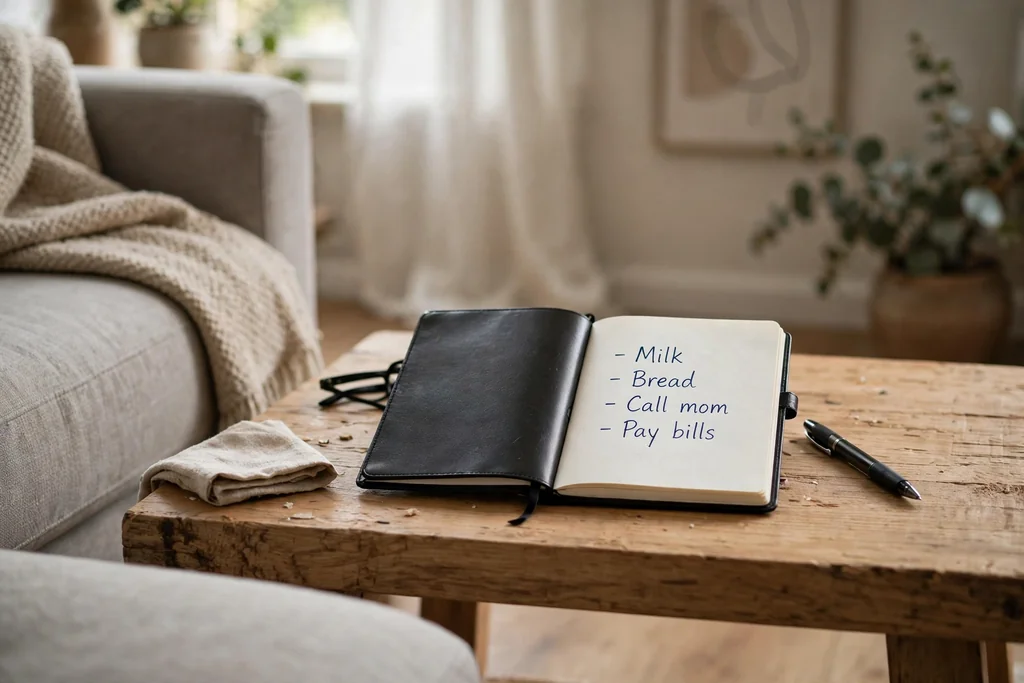
List what bothers you most about the room, then put a rough limit beside each fix before you shop. A plan stops a cheap cushion haul from eating the money you needed for a rug or a lamp, and it makes it easier to say no to a bargain that does not solve a real problem. Write the room size, the sofa size, and the rug size you need on the same page, so you do not buy the wrong size twice.
Start with free fixes, such as layout and decluttering, then move to low cost fabric and paint, and leave furniture until last. If a fix needs more than your limit, break it into steps, such as painting one wall now and the rest later. Keep receipts and return anything that does not earn its place after a week in the room.
2. Refresh the Walls With One Tin of Paint
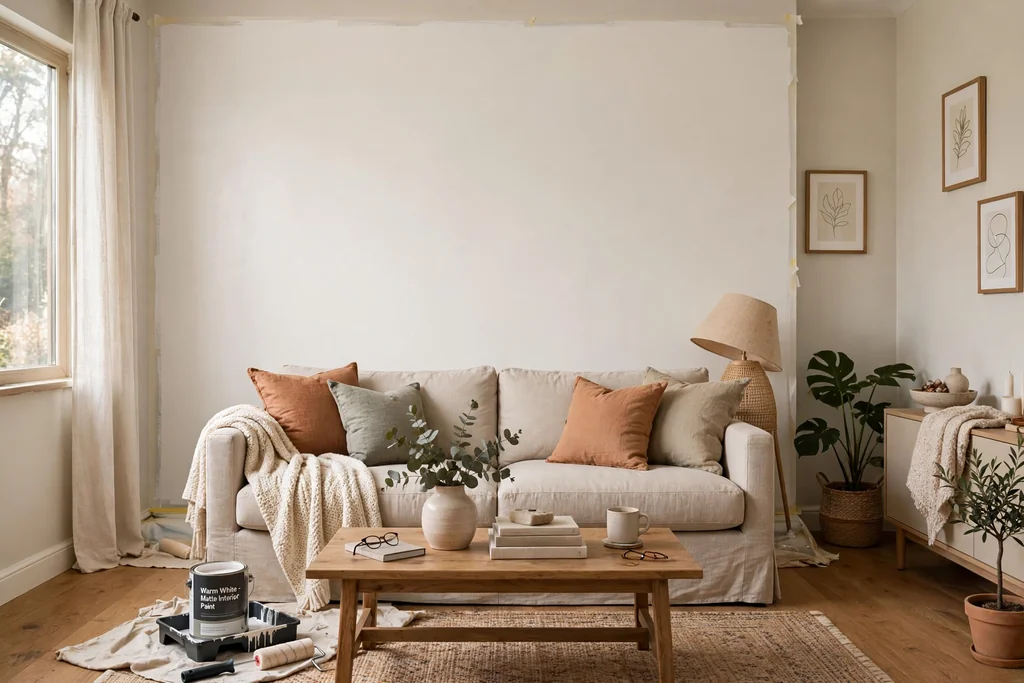
One tin of paint can change the whole mood of a living room, especially on the wall behind the sofa or around a fireplace. Choose a warm white, soft greige, or pale sage that suits your sofa and your daylight, and test a small patch in both daylight and lamplight before you commit. Paint the chosen wall properly, with edges taped and two thin coats, rather than rushing one thick coat that shows brush marks.
If the budget is very tight, paint only the wall you see first when you walk in, and leave the other walls as they are. Keep the leftover paint for touch ups, and use a washable finish near doorways and seating where scuffs show fastest. A painted wall also makes older furniture look more intentional, since the background is calm and clean.
3. Rearrange the Furniture for Free
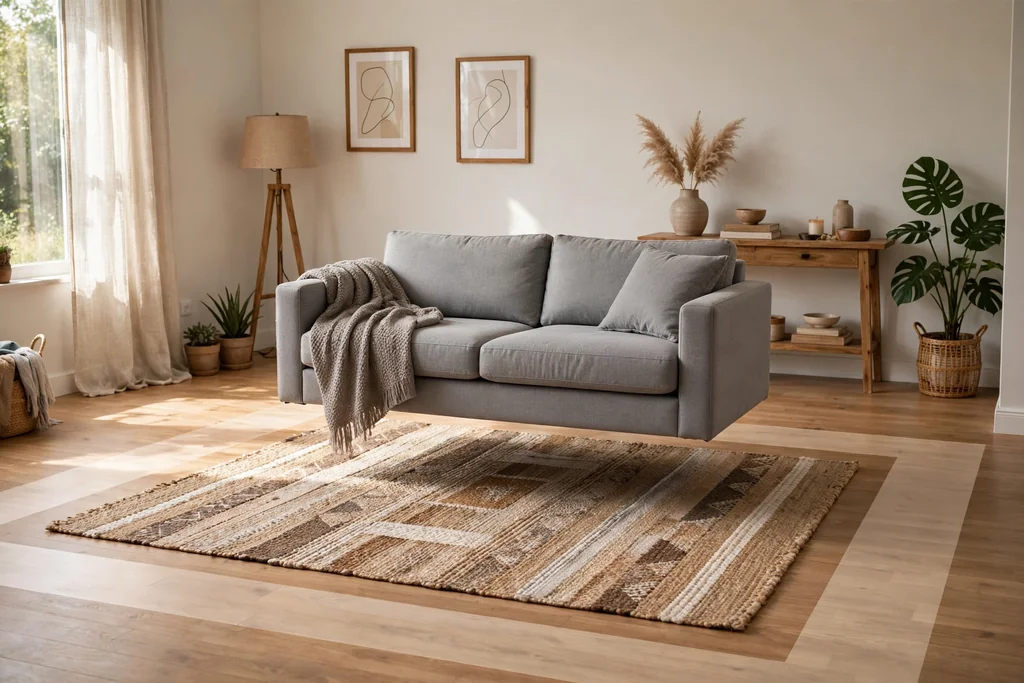
Move the sofa, chairs, and tables into a new layout before you spend anything, since layout changes how a room feels more than most purchases do. Try floating the sofa off the wall with a rug under its front legs, turning chairs toward each other for conversation, and clearing the main walking route. Tape the footprint of large pieces on the floor first if the furniture is heavy, and check that doors and drawers still open.
The measuring and layout advice in these cozy apartment living room ideas works for larger rooms too, since the same rule applies: furniture sized to the room, with clear routes and one clear focal point. Live with a new layout for a few days before you decide it failed. A room often feels odd for a day simply because it is different, not because the layout is wrong.
4. Cover a Tired Sofa With a Washable Slipcover
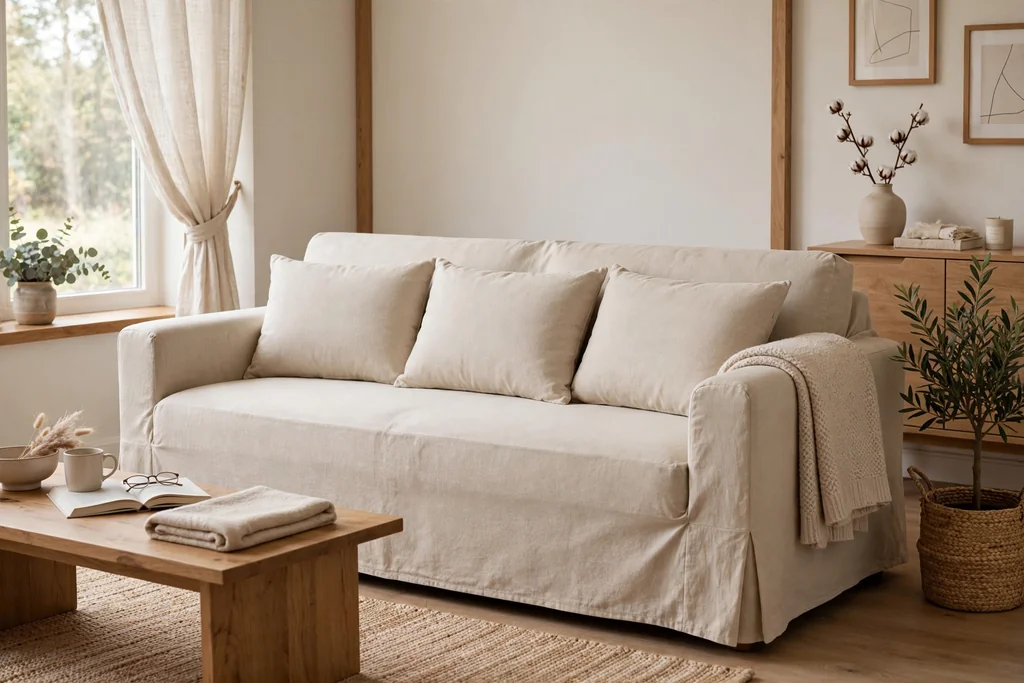
A washable slipcover can give a stained or dated sofa a second life for far less than reupholstery or a replacement. Measure the sofa carefully, including arm height and seat depth, and choose a stretch cover in a plain color that suits your rug and curtains. Tuck the fabric into the seat and back creases, and use foam rollers or a rolled towel in the gaps if the cover slips.
Wash the cover on its own before first use, so you know how it handles laundry, and keep a spare set of cushion covers if the sofa gets daily use from pets or kids. A slipcover works best when the sofa frame is still sound. If the springs sag or the frame wobbles, fix the frame first, since no cover will hide a broken seat. For color pairings that suit a plain sofa, see these grey couch living room ideas.
5. Swap Cushion Covers and Keep the Inserts
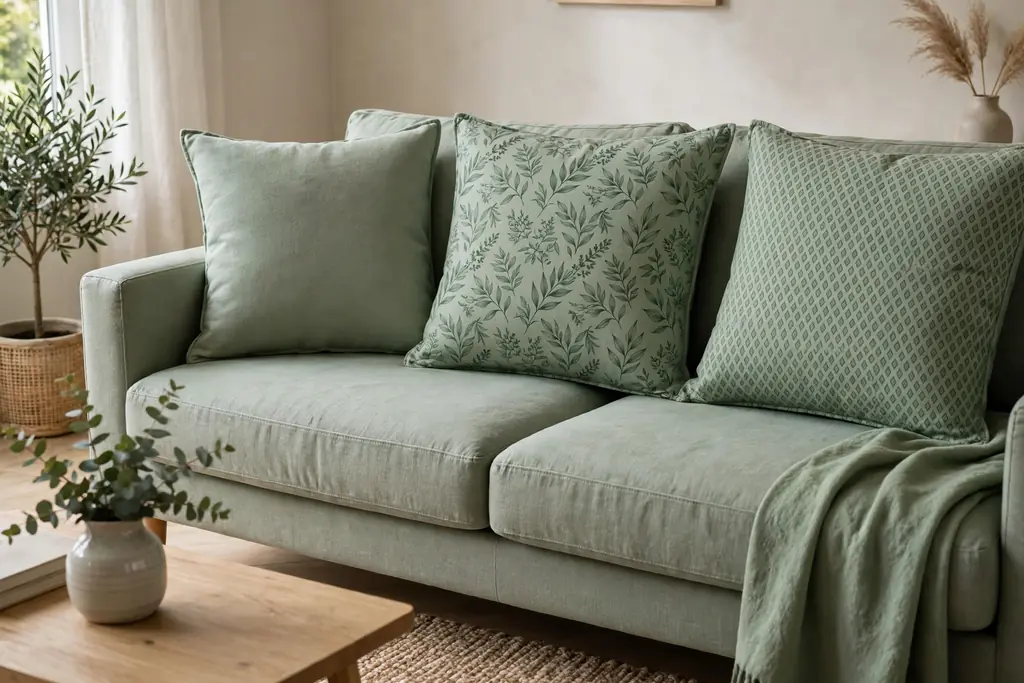
New cushion covers cost far less than new cushions, and they change the color story of a whole seating group in minutes. Keep your existing inserts if they are still plump, and buy covers one size smaller than the insert so they sit full rather than flat. Choose two plain covers and one patterned cover, all sharing one color, so the group looks collected rather than random.
Use washable covers in a busy room, and store out of season covers in a labeled bag so the swap stays quick. If a cushion insert has gone flat, replace only that insert, not the whole set. Rotate cushions weekly so one seat does not wear faster than the others, and fluff them after washing so they keep their shape.
6. Layer Throws You Already Own
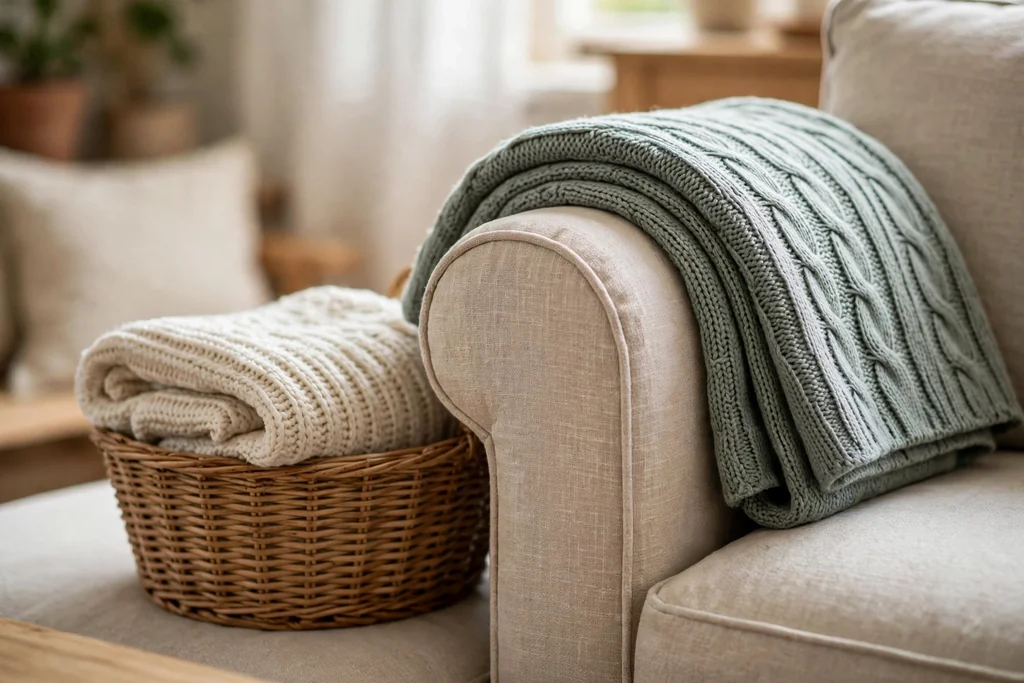
A throw over a sofa arm or folded on a chair adds warmth and color without a purchase, especially if you shop your own linen cupboard first. Choose a throw with a different texture from the sofa, such as knit over smooth fabric or linen over leather, and fold it neatly rather than draping it in a heap. One throw on the sofa and one in a basket nearby is usually enough.
If you do buy a throw, pick a washable one in a color you can use in more than one room, so it stays useful when the living room scheme changes. Keep throws out of direct sun where possible, since strong sun fades color over time. A throw also hides a worn sofa arm in the short term, while you save for a slipcover or a repair.
7. Anchor the Seating With One Large Flatweave Rug
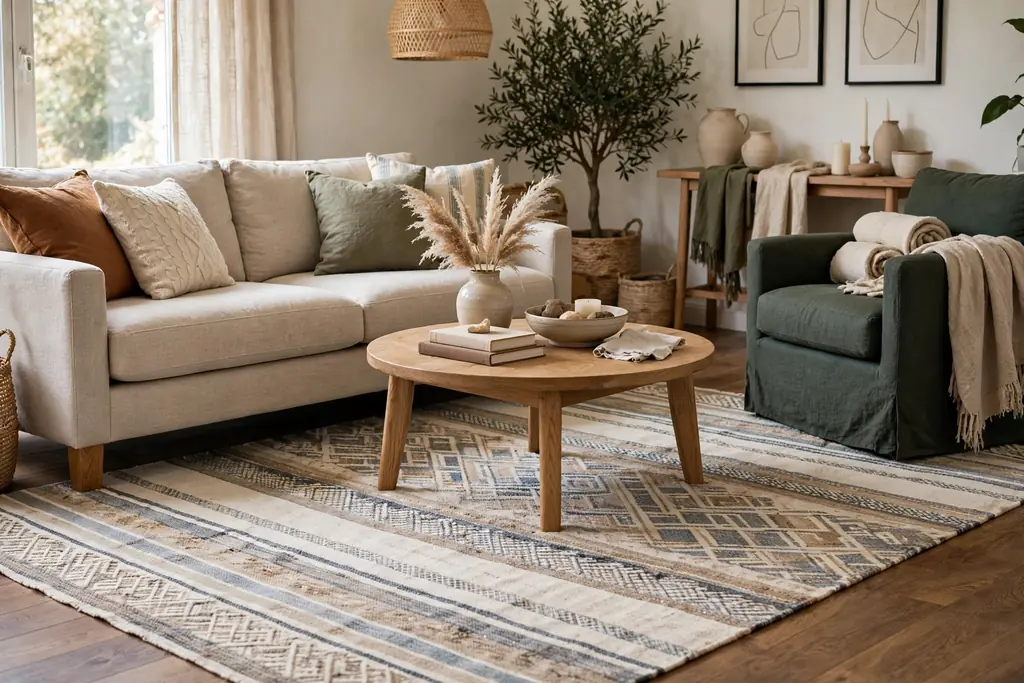
A rug that fits the seating group makes a living room feel finished, and a flatweave rug is often the most budget friendly way to get the right size. Choose a rug large enough for the front legs of the sofa and chairs to rest on it, and keep the pattern simple if the cushions are already patterned. A flatweave rug is light, easy to move for cleaning, and suits rooms with pets and kids.
The size and placement guidance in these living room rug ideas helps you tape the size on the floor before you buy, which avoids the most common budget mistake: a rug that is too small. Add a thin rug pad under the rug if it slides on a hard floor, and vacuum both sides now and then so grit does not wear the back.
8. Layer a Small Rug Over a Plain Base Rug
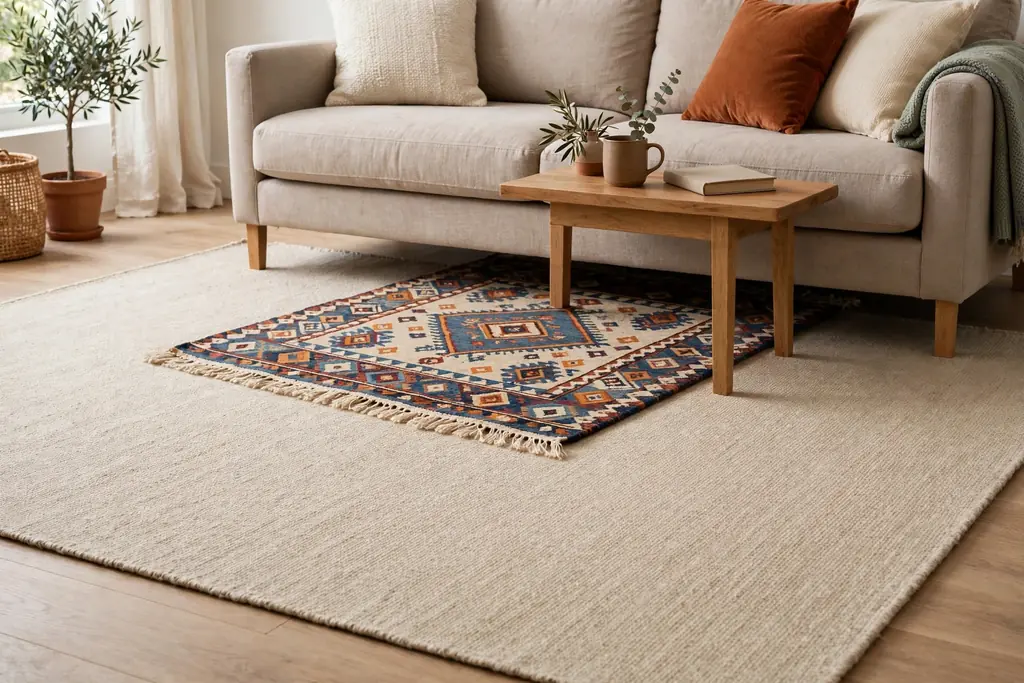
If you already own a large plain rug, layer a smaller patterned rug on top at a slight angle to add color without buying a large patterned rug. The base rug handles the size, the top rug adds the pattern, and the pair looks collected rather than matched. Keep a clear margin of base rug showing on all sides, so the top rug reads as a layer, not a patch.
Use a rug gripper or a thin pad under the top rug so it does not slide when people walk over it. This trick also lets you use a rug you loved in another room, or a thrifted rug that was too small on its own. If the room feels busy, keep the top rug pattern simple and the cushions plain, so only one pattern leads.
9. Build a Gallery Wall From Prints You Print at Home
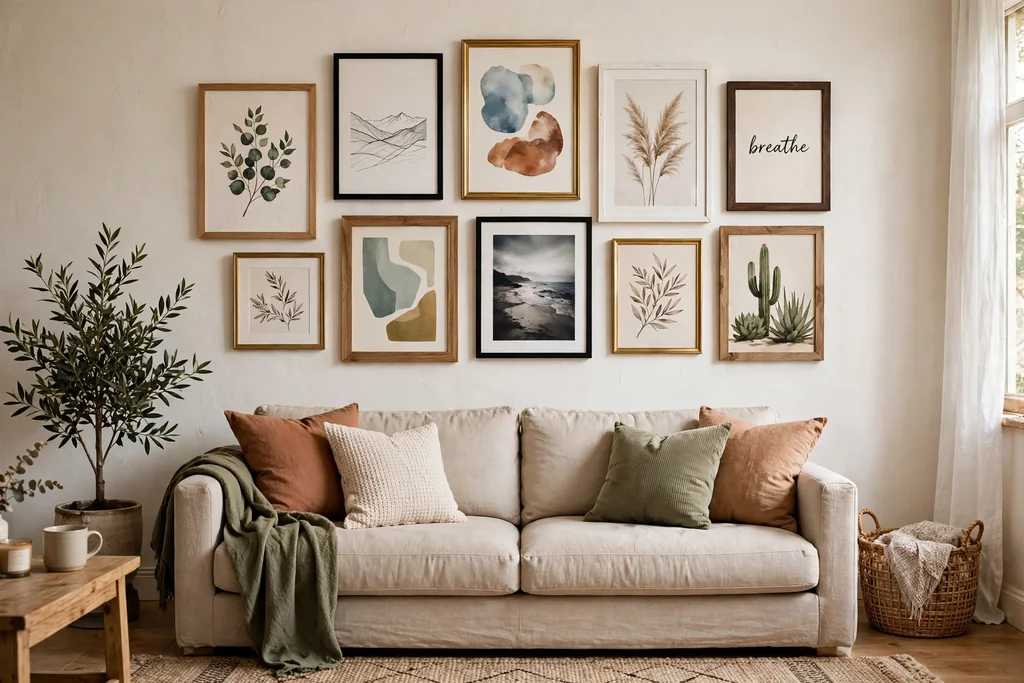
A gallery wall does not need costly art. Print photos, simple line drawings, or pages from old books and calendars at home, and hang them in frames you already own or find secondhand. Plan the arrangement on the floor first, keep the center of the group at eye level when seated, and keep the outer edges inside the width of the sofa so the wall does not look wider than the seating.
Mix frame sizes but repeat one frame color through the group, so the wall looks planned. Use picture hanging strips rated for the frame weight if you rent, and leave one gap in the arrangement so you can add a new print later without starting again. A gallery wall works best above a sofa or a console, where it gives the eye a clear focal point.
10. Use a Picture Ledge So Art Can Rotate
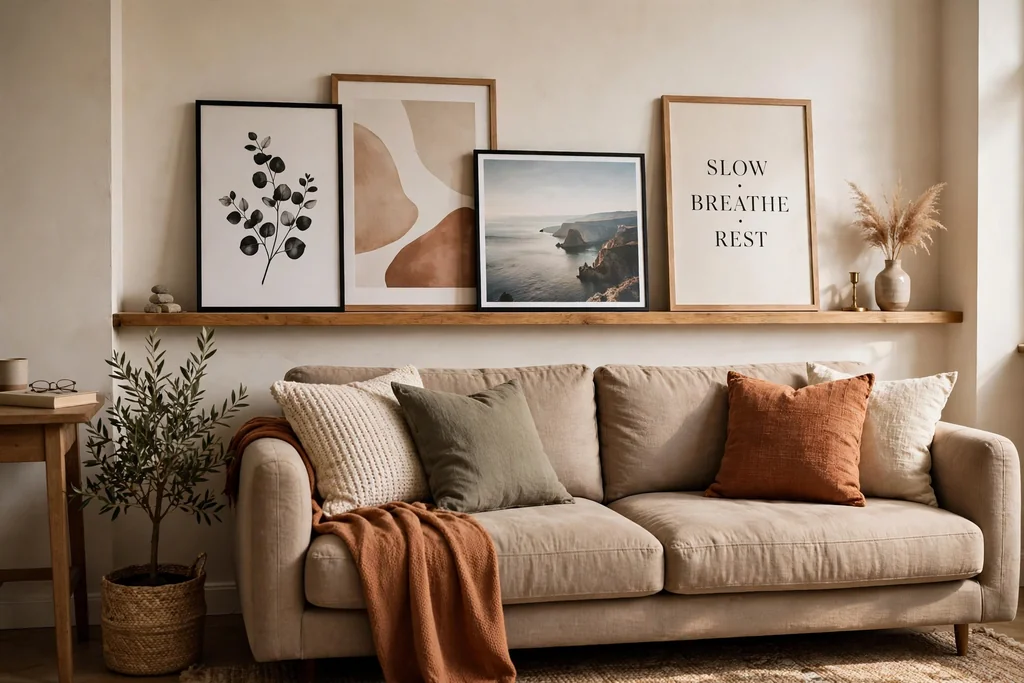
A narrow picture ledge lets you lean framed prints against the wall and swap them without new holes each time. Hang one or two ledges at eye level above a sofa or a sideboard, lean the largest frame at the back, and overlap smaller frames in front. Rotating art with the seasons keeps the room feeling fresh without buying new furniture or art.
Secure the ledge into studs or with fixings suited to your wall type, and keep the ledge clear of walkways so frames cannot be knocked off. A ledge also suits renters, since one ledge needs fewer holes than a full gallery grid. Keep one end of the ledge empty, so the arrangement looks intentional rather than crowded.
11. Paint Thrifted Frames One Shared Color
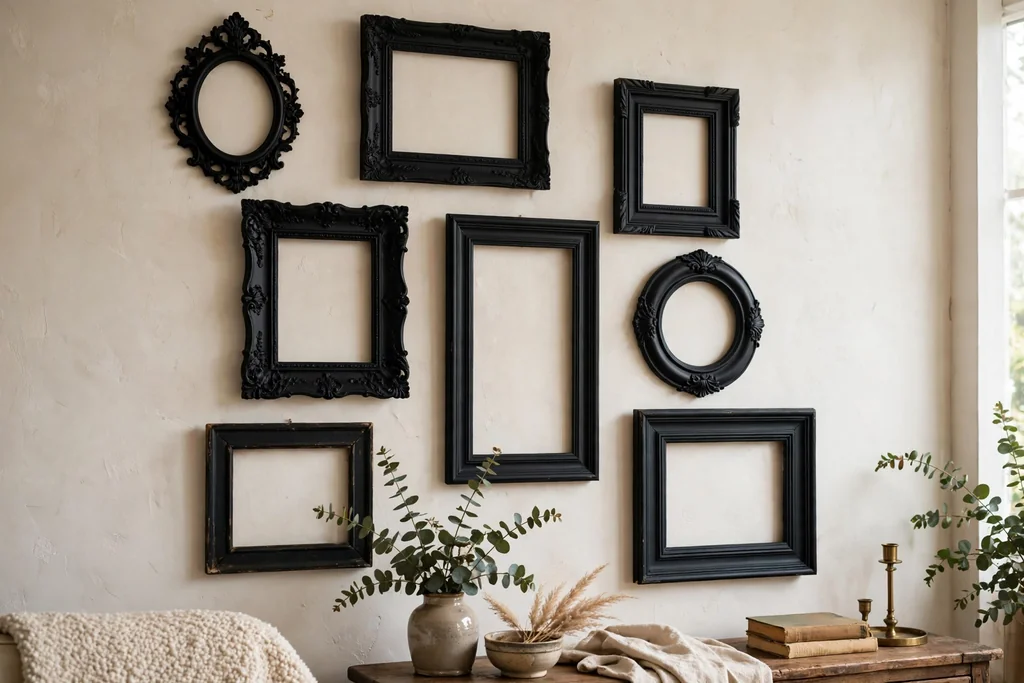
Frames found secondhand often come in mixed finishes that clash, but one coat of spray paint or brush paint in a single color can unite them. Choose matt black, warm white, or a wood tone that suits the room, and paint the frames outside or in a well aired space. Let each coat dry fully before the next, and keep the glass out until the paint is dry.
This trick also works for a mirror frame or a small shelf, and it costs far less than buying a matching set. Check secondhand frames for solid corners and clean glass before you buy, since a warped frame will not hang straight even after painting. Label the paint used, so you can touch up chips later with the same color.
12. Lean a Large Mirror to Bounce Daylight
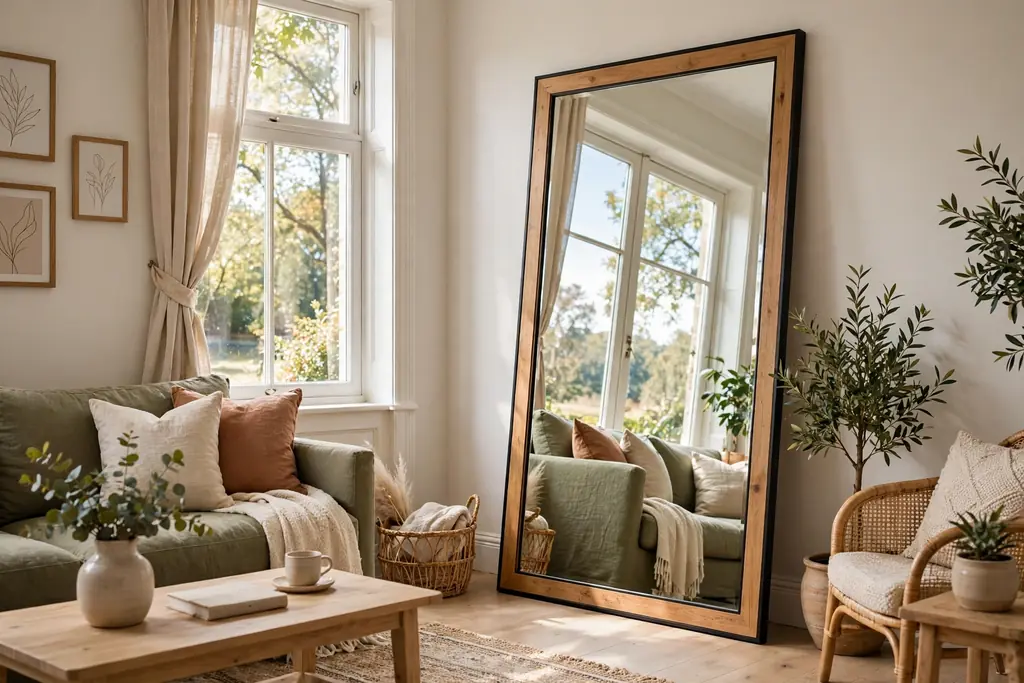
A large mirror placed opposite or beside a window reflects daylight deeper into the room and makes a small living room feel wider. Lean a full length mirror against the wall in a corner, or hang a framed mirror above a console, and check that it reflects something pleasant, such as the window view or a plant, rather than clutter. Fix a leaning mirror to the wall with a discreet anchor if kids or pets use the room, so it cannot tip.
Secondhand mirrors are often cheap, since people sell them when they move, and a painted frame can update an old mirror to match the room. Check for glare at different times of day before you settle on a final position, and keep the mirror clean, since dust dulls the reflection. A mirror above a fireplace or a console also gives the wall a finished focal point.
13. Hang Curtains High and Wide in a Linen Look
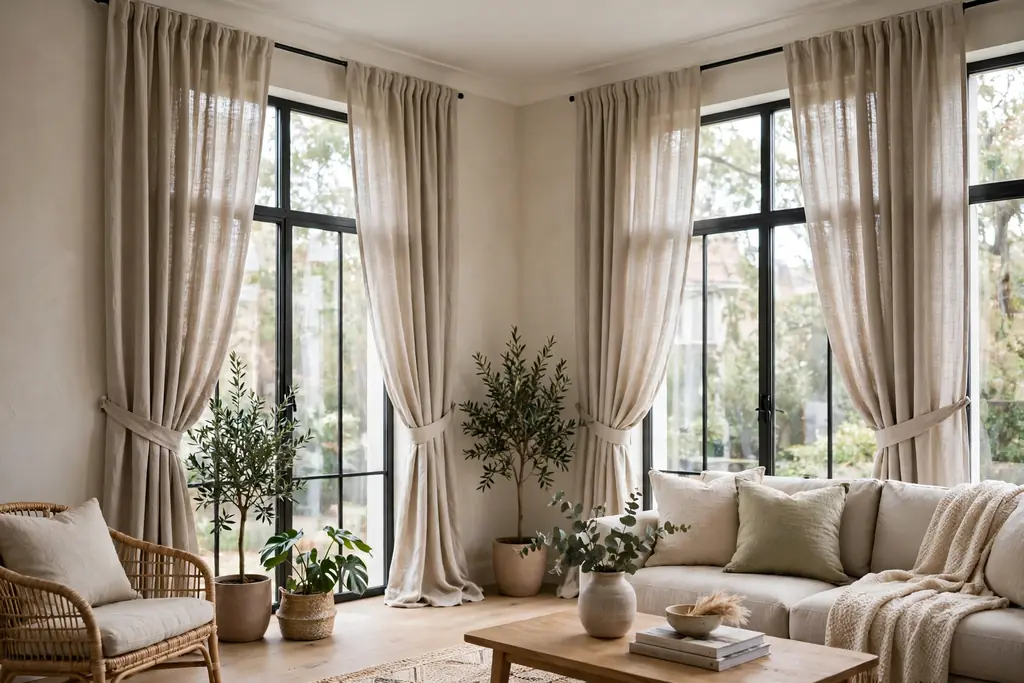
Curtains hung close to the ceiling and wider than the window frame make windows look taller and the room feel larger, even when the fabric itself is a budget linen look. Choose a plain color a shade lighter than the wall or the sofa, and let the curtains fall to the floor, just brushing it, so the line stays clean. A rod that extends past the frame lets curtains stack clear of the glass in the daytime, so light still enters.
Wash or steam the curtains before hanging, since creases show on plain fabric. If the budget only allows one pair, dress the largest window first and use a simple blind on smaller windows in the same tone. Keep curtain fabric out of the way of radiators and open fires, and choose washable fabric in a room used daily.
14. Add Sheer Curtains for Daytime Privacy
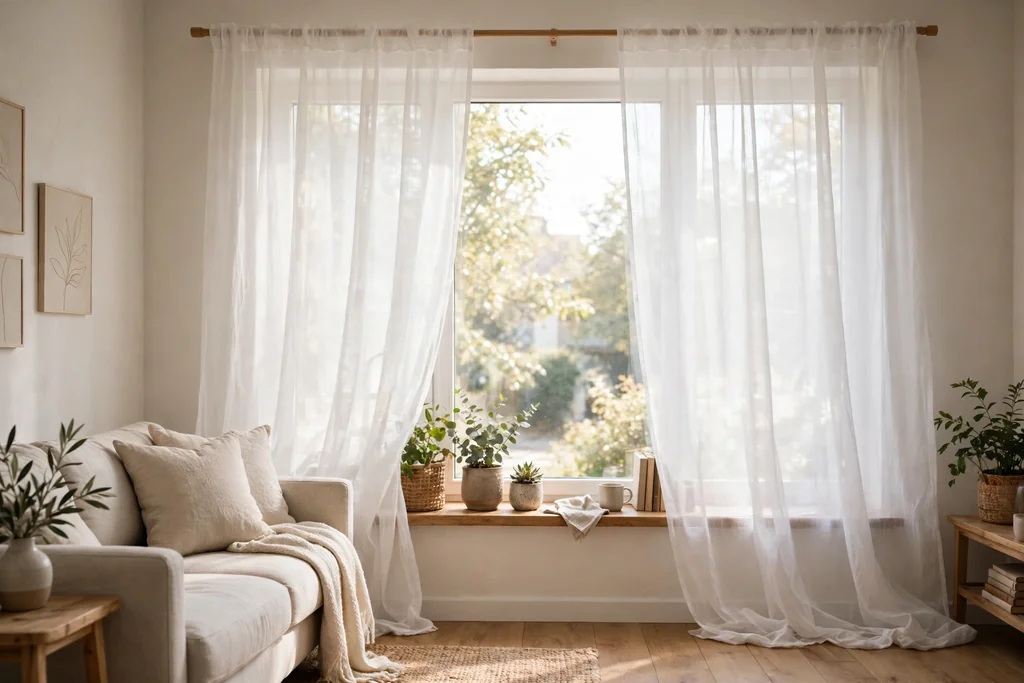
Sheer curtains let daylight in while softening the view from outside, which suits a living room that faces a street or a neighbor. Hang sheers on a slim rod inside the main curtain rod, or on a tension rod if you rent and cannot drill. White or warm ivory sheers suit most rooms, and they soften harsh sun on a sofa or a rug.
Sheers are cheap to replace and easy to wash, so they suit a room with pets or kids. Pair them with heavier curtains only if you need night privacy or warmth, and keep the sheer layer simple so the room does not feel layered for its own sake. If the window gets strong sun, rotate sheer panels now and then so one panel does not fade faster than the others.
15. Light the Room at Three Levels With Secondhand Lamps
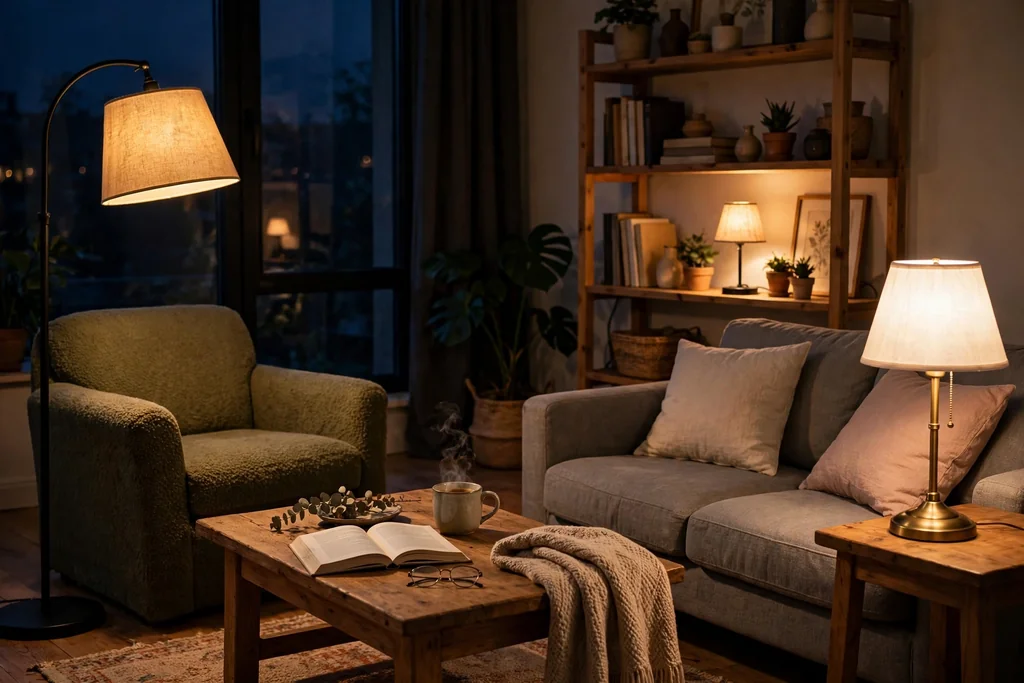
One ceiling light flattens a living room in the evening, while three levels of light make it feel warm and lived in. Add a floor lamp behind the seating for ambient light, a table lamp beside the sofa for reading, and a small lamp or candle style light on a shelf for a low evening glow. Secondhand lamps are easy to find, and a new shade or a warm bulb can update an old base.
Choose warm white bulbs for the evening, and keep the brightest light where you read or work. Dimmable bulbs or a simple plug dimmer let you shift from bright daytime light to a calm evening mood without rewiring. Check secondhand lamp wiring and plugs before use, and replace any frayed cord rather than using it.
16. Swap a Lampshade Instead of Buying a New Lamp
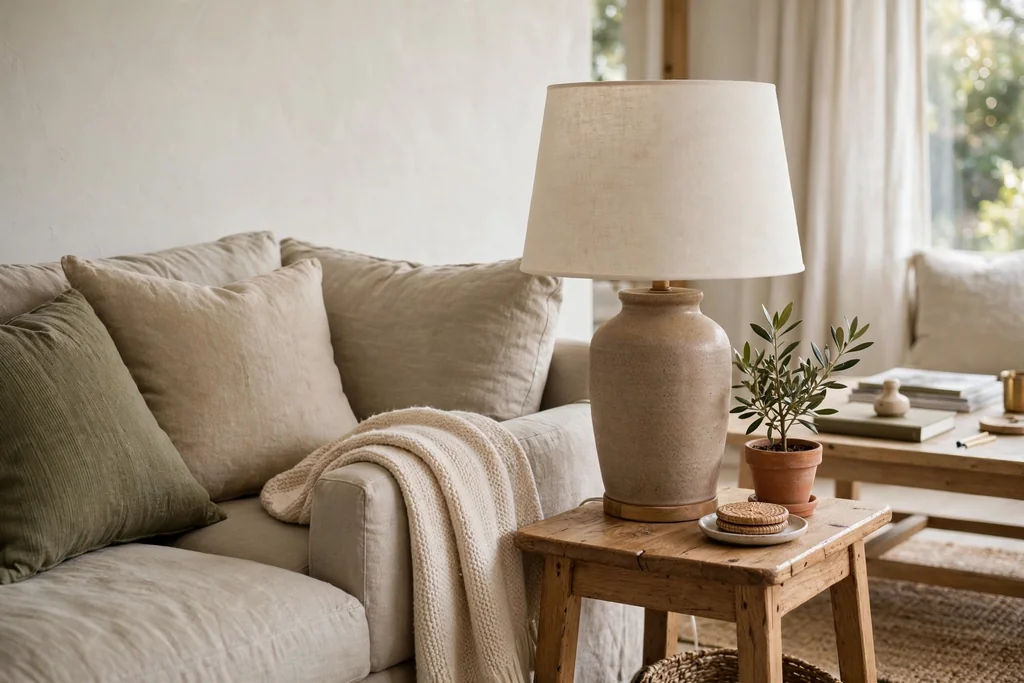
A new lampshade changes the look and the light of a lamp for a fraction of the cost of a new lamp. Choose a shade size that suits the base, with the bottom of the shade roughly at eye level when you sit beside it, so the bulb is hidden but light still spreads. A plain linen shade gives a soft, even glow, while a paper shade gives a lighter, airier look.
Keep the shade color warm white or cream in a room that already has color, so the lamp does not add another competing tone. Clean shades with a lint roller or a soft brush, and keep fabric shades away from very hot bulbs by using the bulb type the maker advises. If you have two matching lamps, swap both shades together so the pair still matches.
17. Grow Plants From Cuttings and Thrifted Pots
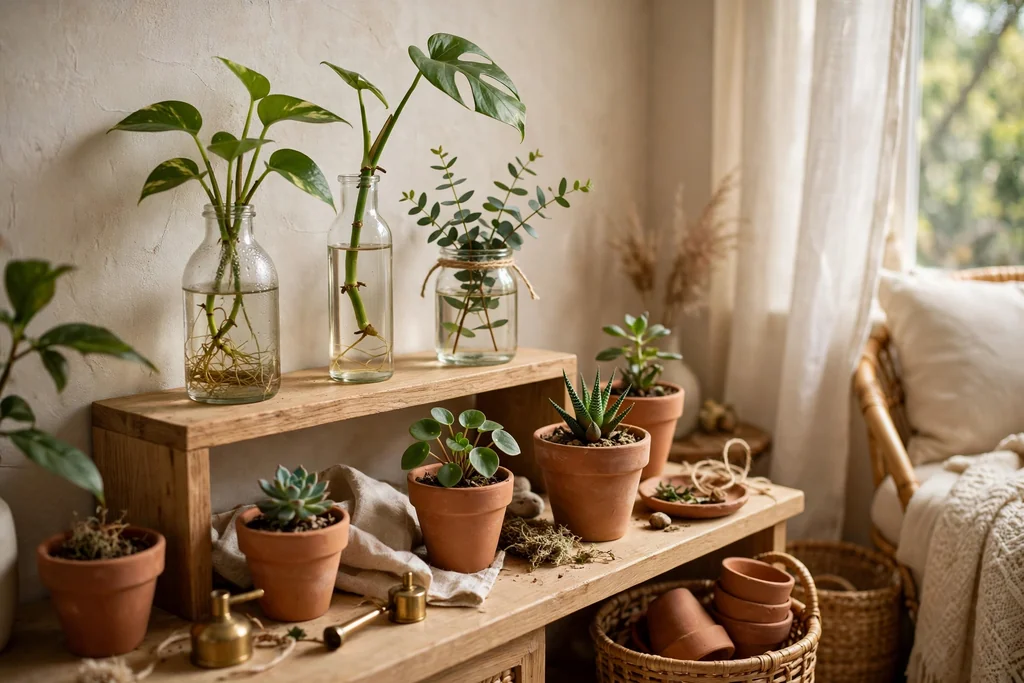
Plants bring life to a living room, and cuttings from friends or your own plants cost nothing but time. Root cuttings in water on a windowsill, then pot them in terracotta or thrifted pots with drainage holes. Match each plant to the light it will actually get, and group plants that need similar watering together, so care stays simple.
Start with three or four plants rather than a dozen, and place them at different heights: a tall plant in a corner, a trailing plant on a shelf, and a small pot on the coffee table. Use saucers under pots on wood floors, and check plant labels for pet safety if pets sit at sofa height. A plant corner looks planned when the pots share one or two materials, such as terracotta and woven baskets.
18. Fit One Board Shelf for Plants and Books
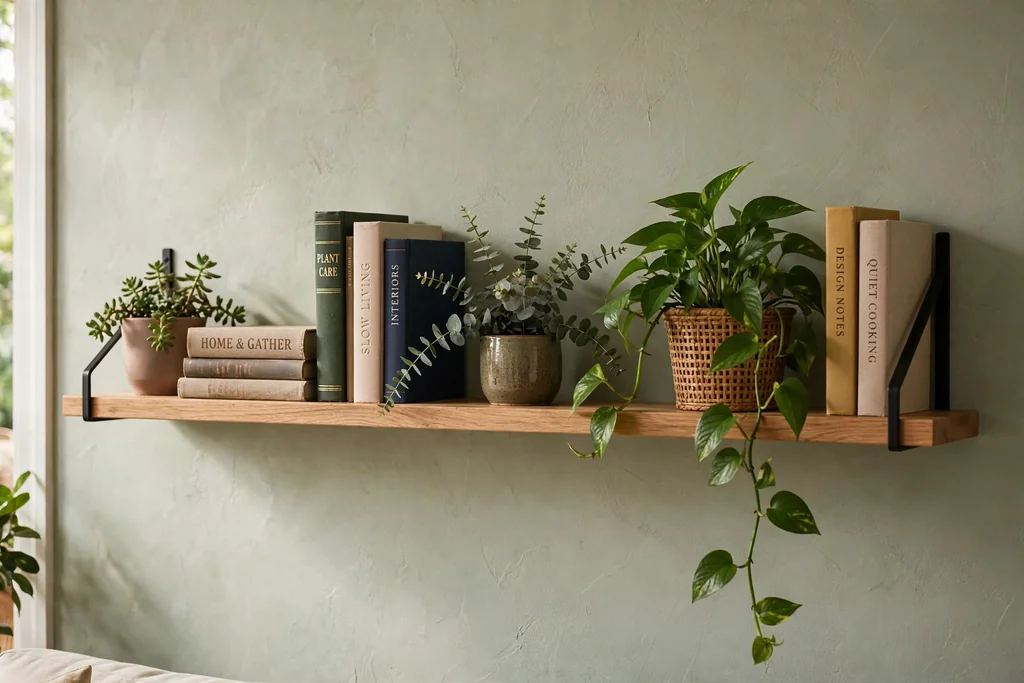
A single board on two brackets can hold plants, books, and a few display pieces without the cost of a full bookcase. Fix the shelf into studs or with fixings suited to your wall type, and keep heavy books low or near the brackets, with lighter plants and display pieces toward the middle. Leave open space on the shelf, so it reads as display with breathing room rather than packed storage.
Paint or stain the board to match nearby wood, and keep trailing plants at one end so leaves do not drip onto books below. A board shelf above a sofa or beside a window suits a small room, since it uses wall space and leaves the floor clear. Check the shelf level before you load it, since a sloping shelf shows at once with plants and books on it.
19. Style the Books You Already Own
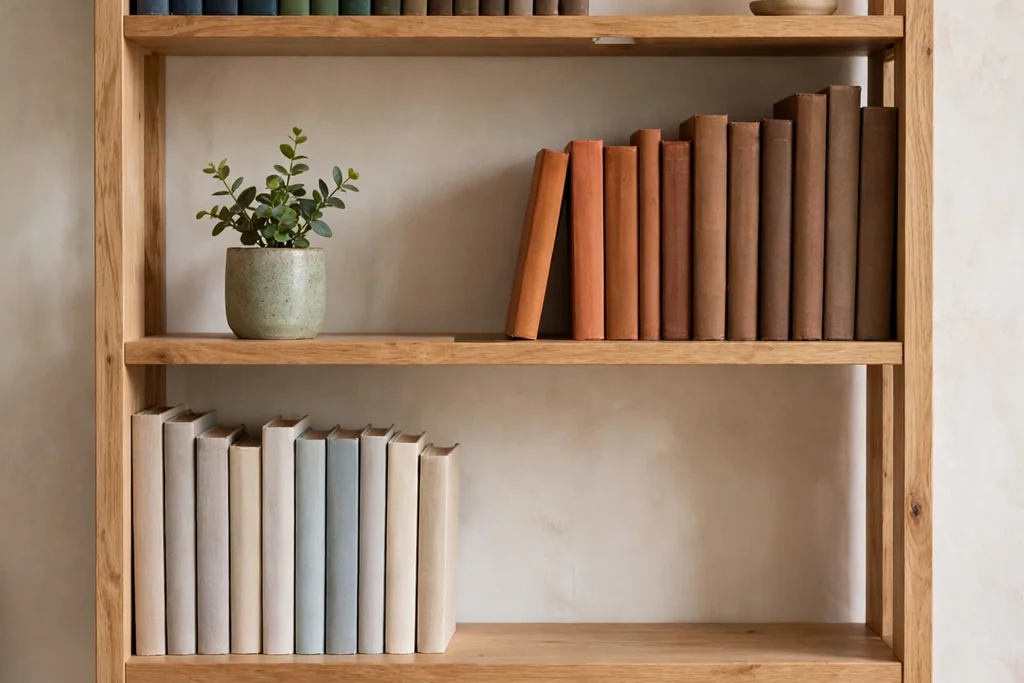
Books styled with care can act as decor without a purchase, especially when you group them by height or color and leave gaps for a small plant or a candle. Take all books off one shelf, keep the ones you read or love, and move the rest to another room or a box. Place taller books at the ends, stack a few flat books as a base for a small object, and leave one shelf partly empty.
This is also a good time to dust shelves and check for books you can pass on, which frees space for the pieces you keep. If the shelf still looks busy, remove one item for every new display piece you add. Books with torn covers can turn spine inward for a calmer look, but keep a few favorite spines showing so the shelf still feels personal.
20. Restyle Open Shelving With Items From Around the House
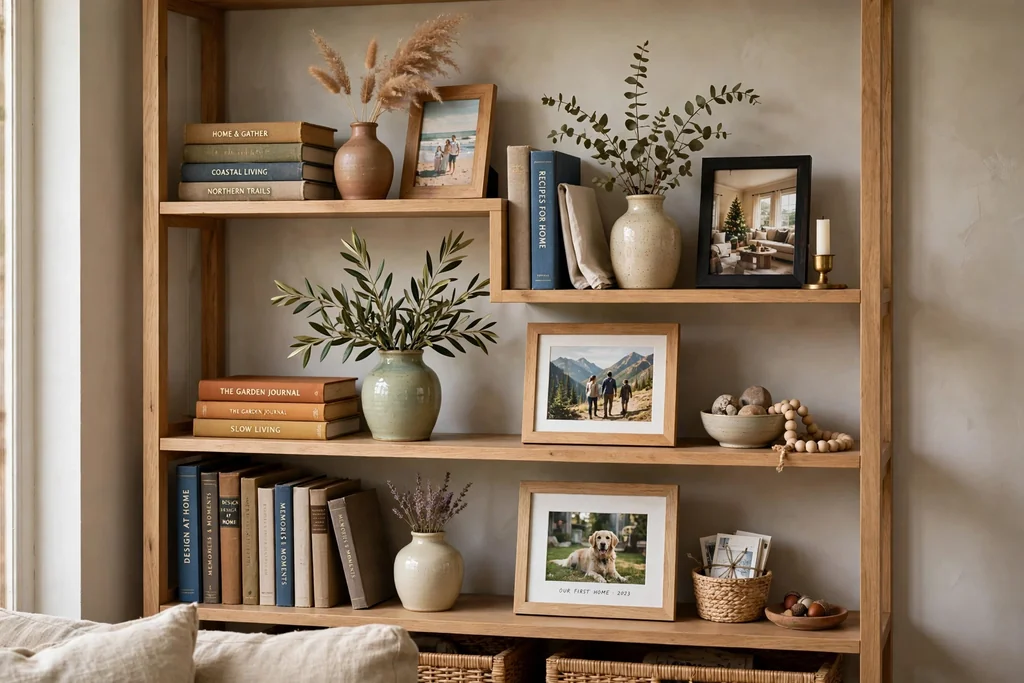
Open shelves look best when they hold a mix of useful and decorative items you already own, rather than a set bought at once. Gather vases, baskets, framed photos, and books from other rooms, then group them in odd numbers with space between groups. Put everyday items at hand height, heavier items low, and lighter display pieces up high.
Step back and check the shelf from the doorway, since shelves often look fine up close and crowded from across the room. Remove the weakest group if the shelf feels full, and store spares in a box for a later rotation. A shelf that changes a little each season feels fresh without new spending, and it keeps display pieces from gathering dust in one spot all year.
21. Hide Daily Clutter in Baskets and Lidded Boxes
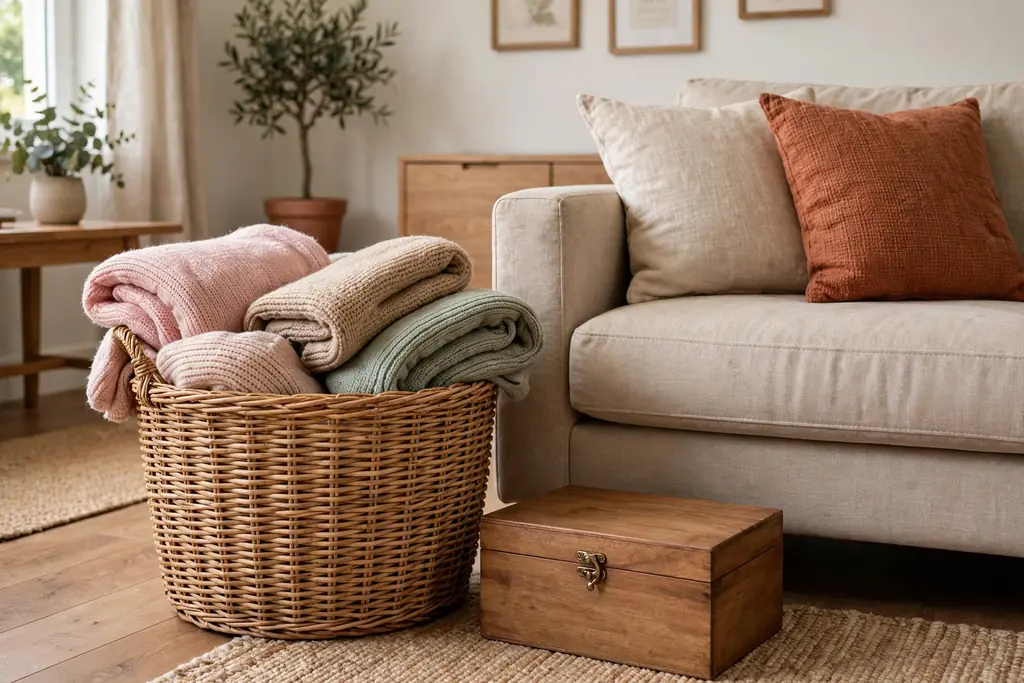
A living room stays calm when everyday clutter has a closed home. Use a basket for throws, a lidded box for remote controls and chargers, and a tray on the coffee table for coasters and a candle. Place the basket beside the sofa, the box on a shelf, and the tray where it is easy to reach but not in the way of drinks and books.
Choose baskets and boxes in natural materials that suit the room, such as woven seagrass or plain cotton, and label the inside of a box if more than one person uses it. Once a week, walk the room with a basket and return anything that has drifted out of place. When everything has a home, tidying becomes putting things back rather than deciding where things belong.
22. Style the Coffee Table With a Tray and Three Pieces
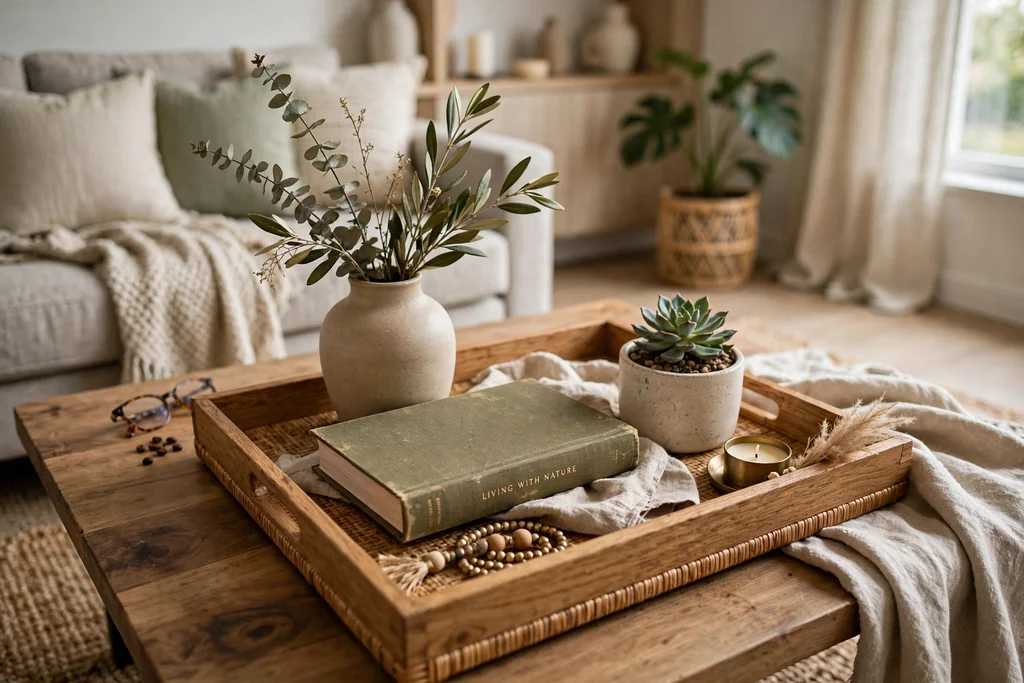
A tray on the coffee table corrals small items and gives the table a clear center, even when the rest of the room is busy. Choose a tray that leaves room for drinks on both sides, then add three pieces: something tall, such as a vase or a candle, something flat, such as a book or a magazine, and something natural, such as a small plant or a bowl. Keep the rest of the table clear.
Change the tray contents with the seasons by swapping the book or the plant, not the tray itself. If the coffee table is small, use a round tray and two pieces instead of three, so the table still works for drinks. Wipe the tray weekly, since coffee rings and dust show fast on a tray that sits in the middle of the room.
23. Refinish a Wood Coffee Table With Sandpaper and Oil
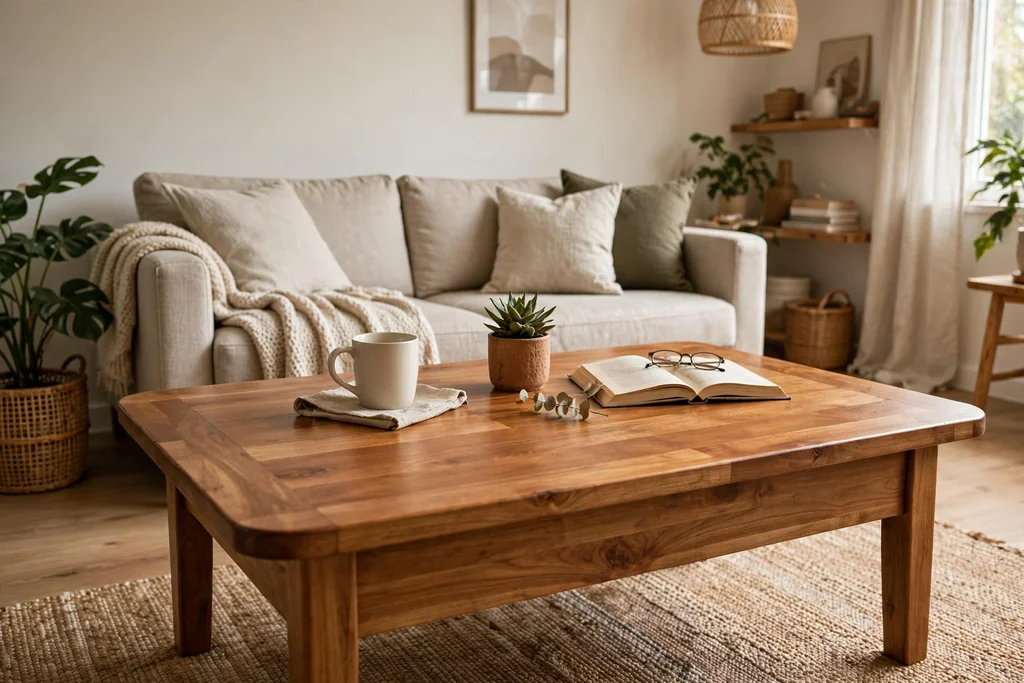
A scratched wood coffee table can look new again with sanding, a coat of oil or wax, and a day of drying time. Sand in the direction of the grain, starting with a coarser paper and moving to a finer one, then wipe off dust before you apply the finish. Work outside or in a well aired space, and follow the finish maker instructions for drying time before you put drinks back on the table.
This fix suits a solid wood table, not a thin veneer that could sand through, so check the edge of the table first. A refinished table also lets you keep a table shape that already fits the room, which matters more than a new table in a different size. Keep coasters on the table after refinishing, since heat and water rings will mark a fresh finish fast.
24. Turn a Crate or Stool Into a Side Table
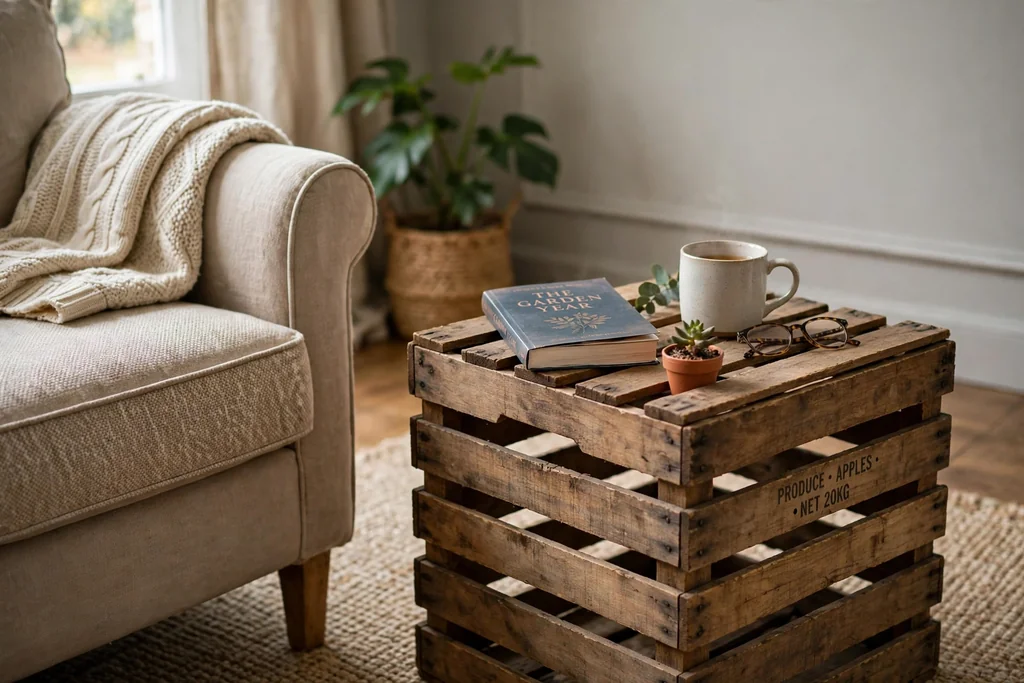
A sturdy wooden crate turned on its side, or a small stool you already own, can serve as a side table beside a sofa or a chair for no cost or very little. Place a book or a tray on top to make a flat surface, and store a throw or magazines inside the crate so the piece does two jobs. Check that the crate or stool is stable and does not wobble before you put a drink on it.
Paint or oil the crate to match nearby wood if the raw wood looks out of place, and keep the piece in scale with the seating: a side table should sit near seat height, not far above or below it. This idea suits a small room, since a crate table can move to another room or stack away when guests need floor space.
25. Dress One Nook With Removable Wallpaper
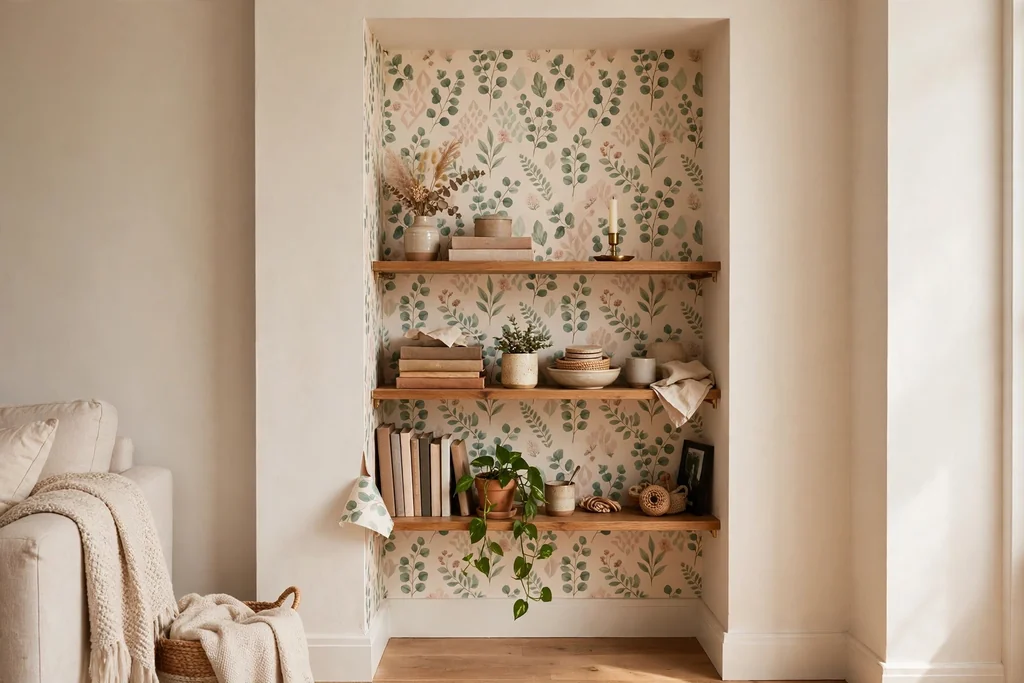
Removable wallpaper on one small wall, such as behind shelves or in an alcove, adds pattern without the cost or commitment of papering a whole room. Choose a pattern with one color already in the room, so the nook feels linked to the rest of the scheme, and measure the wall twice before you order, since removable paper is sold by the roll. Apply it slowly from the top, smoothing air bubbles as you go.
Removable paper suits renters, since it peels off without damage when applied and removed as the maker advises. Keep it away from damp walls and very hot radiators, and save a spare strip for repairs. If the pattern feels strong, keep the rest of the nook simple, with plain shelves and a few books, so the paper leads and nothing competes with it.
26. Paint a Simple Arch Behind the Sofa
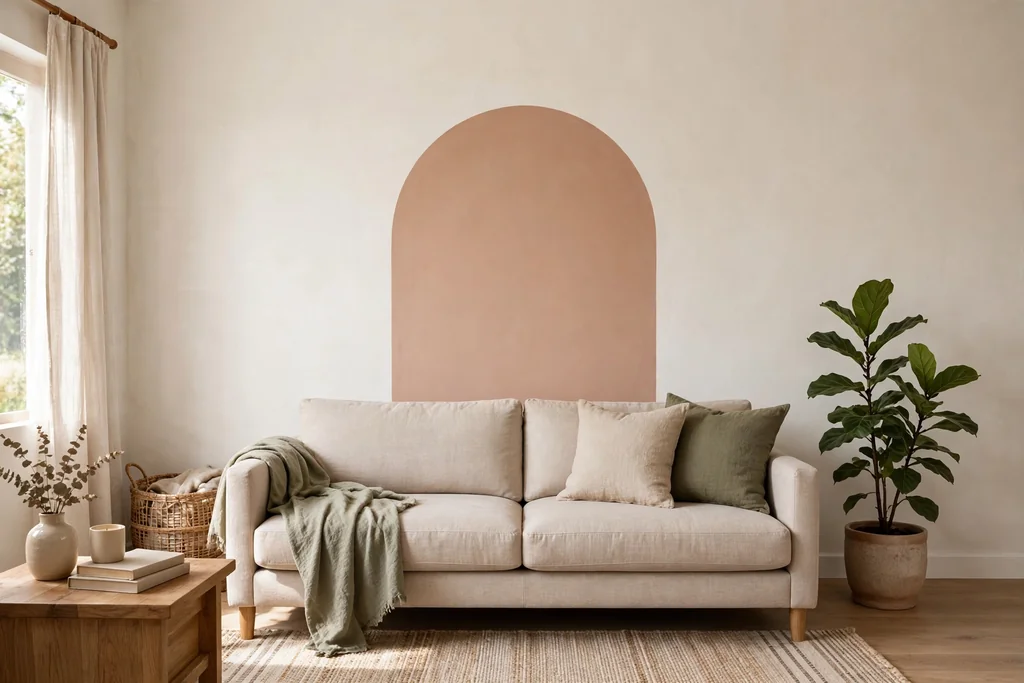
A painted arch behind a sofa or a chair gives the wall a focal point for the cost of a small tin of paint and a roll of tape. Mark the arch lightly in pencil, using a string tied to a pin for a smooth curve, then tape the edge and paint two thin coats in a color a step deeper than the wall. Let the paint dry before you remove the tape, so the edge stays clean.
Keep the furniture and art inside the arch simple, since the arch itself is the feature. A chair and a small plant in front of a painted arch can form a reading corner without new furniture. If you rent, check that paint is allowed, or use removable wall decals in an arch shape for a similar effect that peels off later.
27. Fit Floating Shelves for Display and Storage
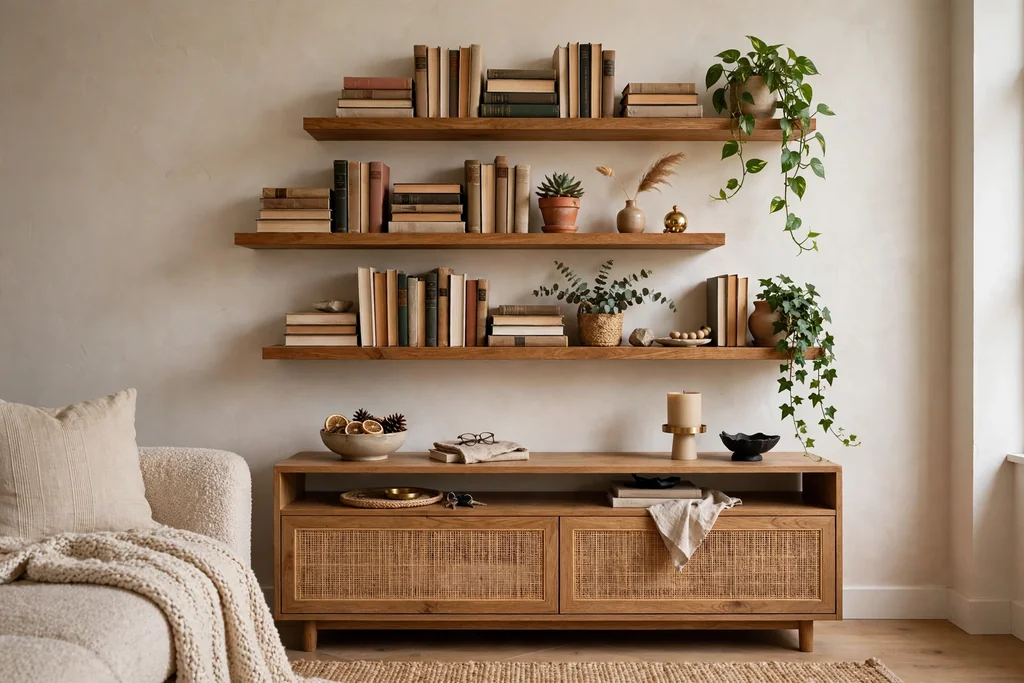
Floating shelves add storage and display space on a bare wall without the footprint of a bookcase. Fit two shelves above a console or beside a window, fixed into studs or with fixings rated for the load, and keep the lower shelf at a height you can reach without a step. Style the shelves with books, plants, and a few display pieces, leaving gaps so the wall still shows through.
Load heavier items near the wall brackets and lighter items toward the front, and check the shelf level after loading, since a full shelf can sag if the fixings are weak. Floating shelves suit a room where floor space is tight but wall space is free, and they cost far less than a matching bookcase. Keep one shelf partly empty for books or plants you add later.
28. Hide Open Storage Behind a Fabric Skirt
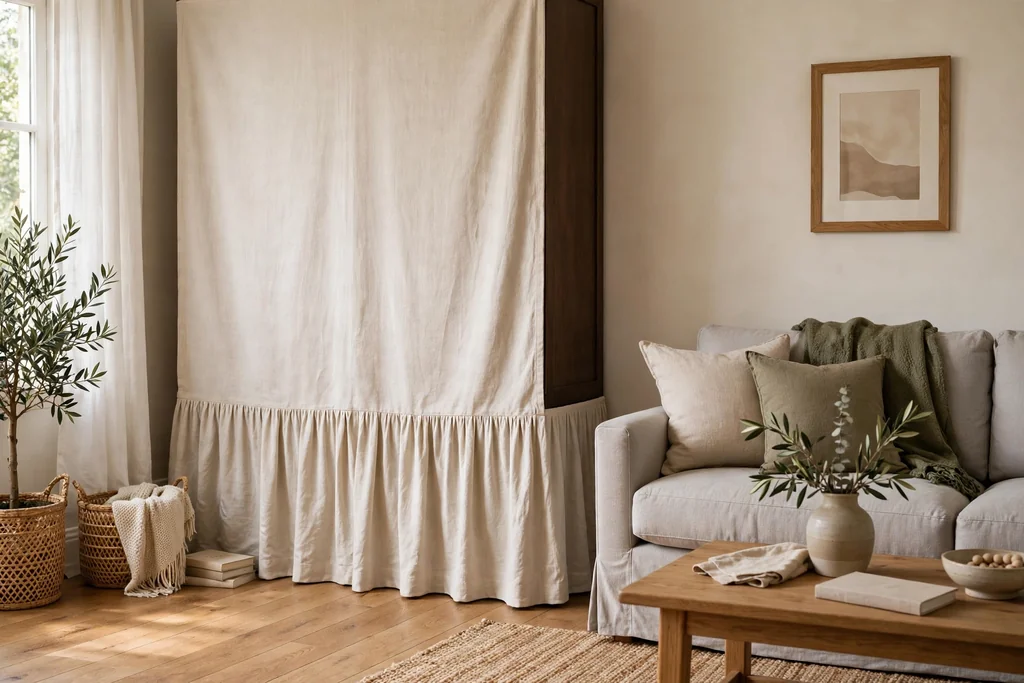
Open shelves or a TV unit with messy cables and boxes can look tidy behind a simple fabric skirt hung from a tension rod or a strip of hook fastener. Choose a washable fabric in a plain color that matches the sofa or the curtains, and hem it to just above the floor so it does not drag. The skirt hides clutter while keeping the storage easy to reach behind it.
This trick also works under a console table or around a low shelf unit, and it suits renters since it needs no drilling if you use a tension rod. Keep cables tidy behind the skirt with a cable tie, so the skirt does not bulge, and wash the fabric now and then since it sits near the floor. Lift the skirt once a month to check that nothing damp or forgotten sits behind it.
29. Refresh a Secondhand Armchair With a Throw and Cushion
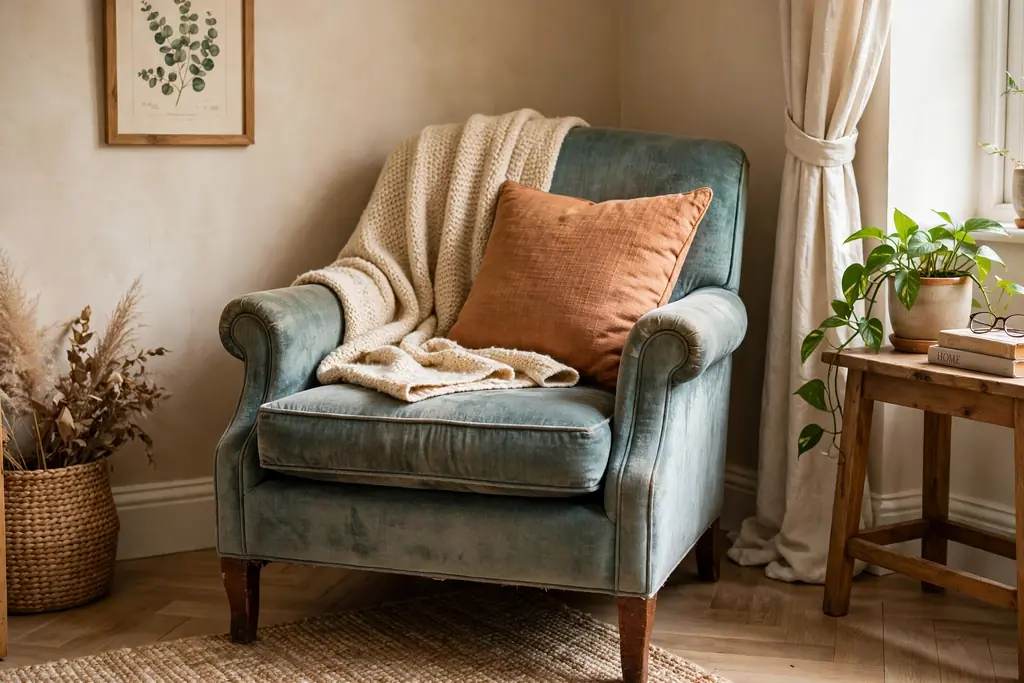
A secondhand armchair with sound springs and a solid frame can look at home with a throw over one arm and a cushion that repeats a room color. Drape the throw over the arm you use least, so it stays neat, and choose a cushion cover in a color already in the room, such as the rug or the curtains. Clean the chair fabric first, following the care label, so the refresh starts from clean fabric.
Check the chair for wobble, loose joints, and smells before you buy, since a throw will not fix a broken frame. A chair that sits at a slight angle to the sofa, with a small side table beside it, forms a conversation corner without new furniture. If the chair fabric is very worn, a loose cover or a larger throw can cover the seat and back until you can reupholster or replace it.
30. Add Floor Cushions for Extra Seats
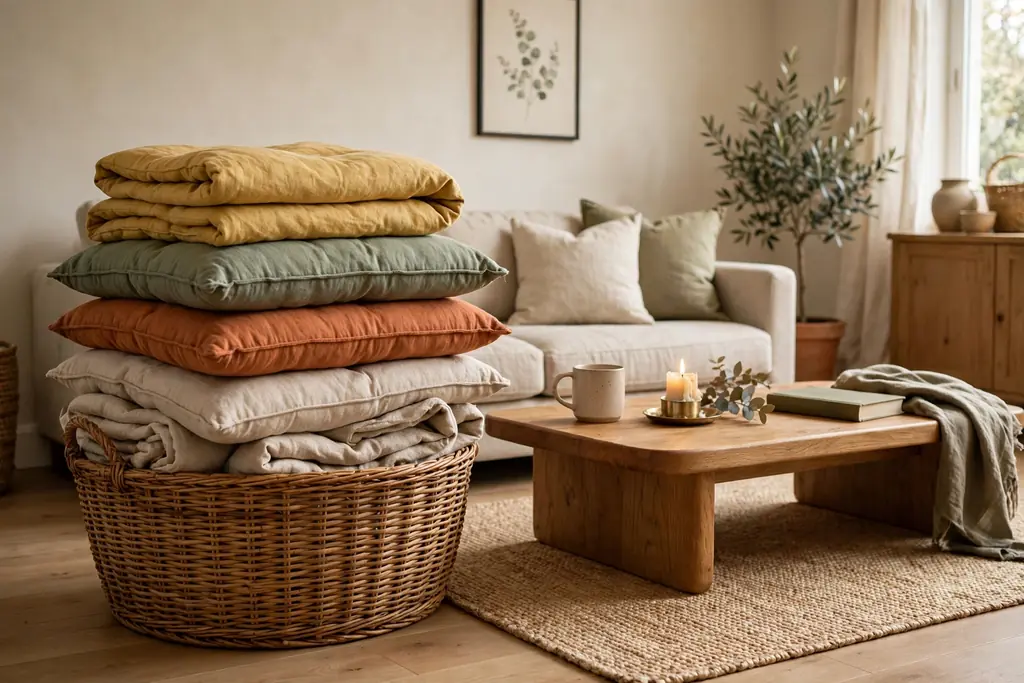
Floor cushions give a living room extra seats for guests without buying chairs that crowd the room every day. Stack two or three large cushions in a basket or on a shelf when they are not in use, and pull them out around the coffee table when friends visit. Choose washable covers in a plain color that suits the rug, so the cushions look planned rather than spare bedding.
Keep floor cushions off damp floors and away from open fires, and store them where they stay dry and clean. A low coffee table suits floor seating better than a high table, since guests can reach drinks without stretching. If floor seating is hard for older guests, keep at least one proper chair free as well, so everyone has a comfortable option.
31. Rotate Cushion Covers and Throws by Season
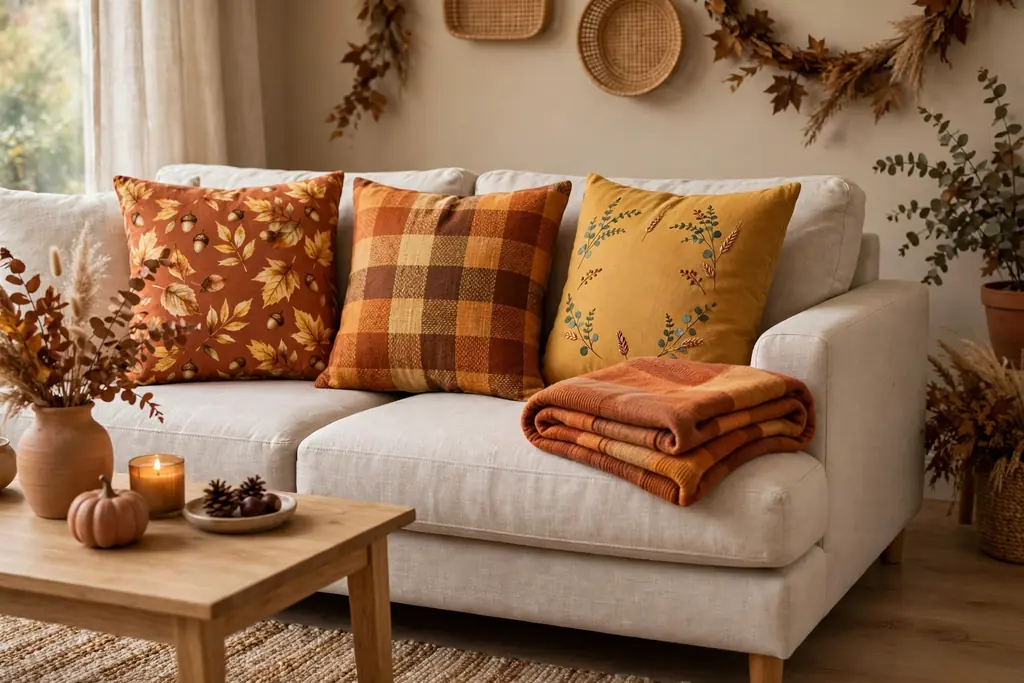
A seasonal swap of cushion covers and one throw can refresh a living room four times a year for the cost of a few covers. Use warm tones and heavier textures in winter, and pale tones and lighter fabrics in summer, storing out of season covers in a labeled bag. Keep the rug, curtains, and furniture the same, so the swap feels like a refresh rather than a new room.
Wash covers before you store them, so they come out clean next season, and check for faded or worn covers before you rotate them back in. A seasonal swap also gives you a reason to clean behind the sofa and under cushions, which keeps the room feeling fresh in a way new decor alone cannot. Write the swap dates on a calendar, so the change happens rather than staying a plan.
32. Style Candlelight With Jars and Plates You Own
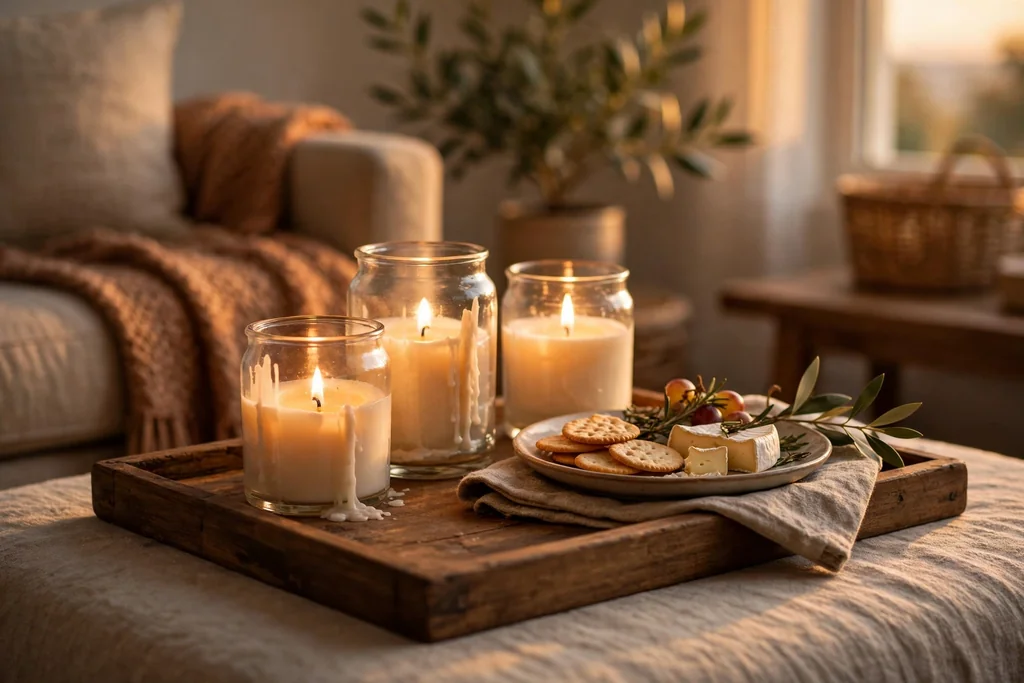
Candles in jars, on plates, or in glasses you already own add warm evening light without new candle holders. Group two or three candles of different heights on a tray or a plate, away from curtains, throws, and paper, and never leave them burning in an empty room. Use unscented candles near food and seating if scent bothers guests, and keep matches in a small dish nearby so lighting them stays easy.
Glass jars also protect the flame from drafts near windows, and a plate under a candle catches wax drips. Trim wicks before lighting, and replace candles that burn unevenly or smoke heavily. Candlelight suits an evening living room best when the main lights are dimmed, since the low glow softens the room and makes the seating feel more inviting.
33. Keep the Room Calm With a Weekly Reset and a Slow Shopping Rule
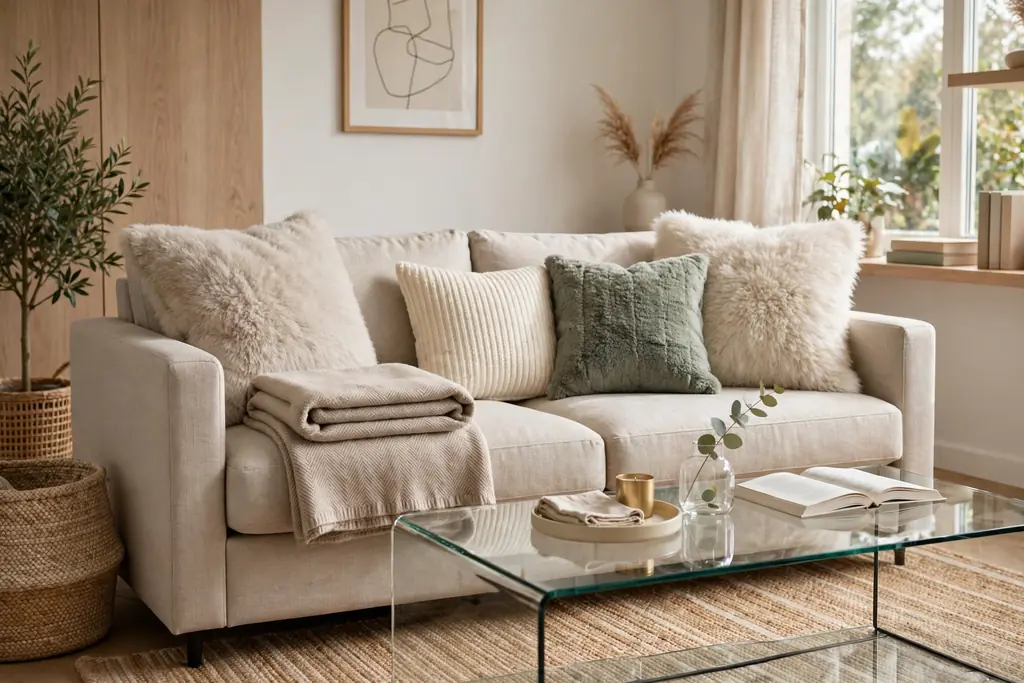
A weekly ten minute reset keeps a budget living room looking finished long after the decorating stops. Walk the room with a basket, return items to their homes, fluff cushions, fold throws, and wipe the coffee table and tray. Put one item back for every new decorative piece you bring in, so the room does not slowly fill again.
Pair the reset with a slow shopping rule: wait a week before buying any non essential decor, and check first whether something you own, or a secondhand find, can do the same job. This rule stretches a small budget, since it stops impulse buys that do not solve a real problem. A calm room with a few well chosen pieces feels more finished than a full room of bargains, and it leaves money for the one larger piece that truly matters.
Conclusion
A living room on a budget feels right when the layout works, the rug fits, the light is warm at more than one level, and clutter has a home. Start with the free fixes, such as rearranging furniture and styling what you own, then add paint, fabric, and secondhand pieces that solve a clear problem. The living room rug ideas and the cozy apartment living room ideas linked above can help with sizing and layout if you get stuck. Try three ideas this weekend, live with them for a week, and add more slowly. If this guide helped your room, save it to your living room board on Pinterest so you can find it when you are ready for the next small change.
Frequently Asked Questions
How can I decorate my living room on a small budget?
Start with free changes: rearrange the furniture, declutter, and style books, plants, and throws you already own. Then spend on the biggest surfaces first, such as paint, a rug that fits, and cushion covers, since those give the most visible change for the least money. Shop secondhand for lamps, frames, and side tables, and wait a week before buying non essential decor, so impulse buys do not eat the budget for the pieces that matter.
What is the cheapest way to make a living room look better?
Clear clutter, clean the room well, and fix the layout so walking routes are clear and seating faces a focal point. Then add light at more than one level, a rug that fits the seating group, and a throw or cushion covers in one shared color. These changes cost little or nothing, yet they make a room feel finished, since the eye reads a calm layout and warm light before it notices individual ornaments.
How do I choose a rug for a budget living room?
Measure the seating group first, then choose a rug large enough for the front legs of the sofa and chairs to rest on it. A flatweave rug in a plain color or a simple pattern is often the most budget friendly choice, and it is easy to clean and move. Tape the rug size on the floor before you buy, and check that doors and drawers still open. If a large patterned rug is out of reach, layer a smaller patterned rug over a plain base rug you already own.
Can I decorate a living room without buying new furniture?
Yes. Paint, fabric, lighting, plants, and a better layout can change a room without new furniture. A slipcover or a throw can refresh a tired sofa, a tray and three pieces can style a coffee table, and baskets can hide clutter that makes a room feel messy. Keep the furniture that fits the room and works well, and spend only on the pieces that solve a problem the existing furniture cannot, such as a side table beside a chair with nowhere to put a drink.
How do I decorate a rented living room on a budget?
Use changes that peel off, wash off, or lift away: removable wallpaper on one nook, picture ledges or hanging strips for art, a leaning mirror, rugs, throws, and cushion covers. Avoid drilling large grids of holes, and use tension rods for curtains and fabric skirts where possible. Keep paint to one accent wall only if your lease allows it, and save the original fittings and paint color so you can return the room to its starting state when you move out.
Where should I spend first in a budget living room refresh?
Spend first on layout, rug size, and lighting, since those shape how the whole room feels. Next, spend on fabric: cushion covers, a throw, and curtains in a shared color. Leave ornaments, art, and small decor until last, since they only work once the bigger surfaces are calm. If one piece of furniture is broken or unsafe, fix or replace that first, before any decorative spending, since no styling will hide a wobbly chair or a sagging sofa seat.