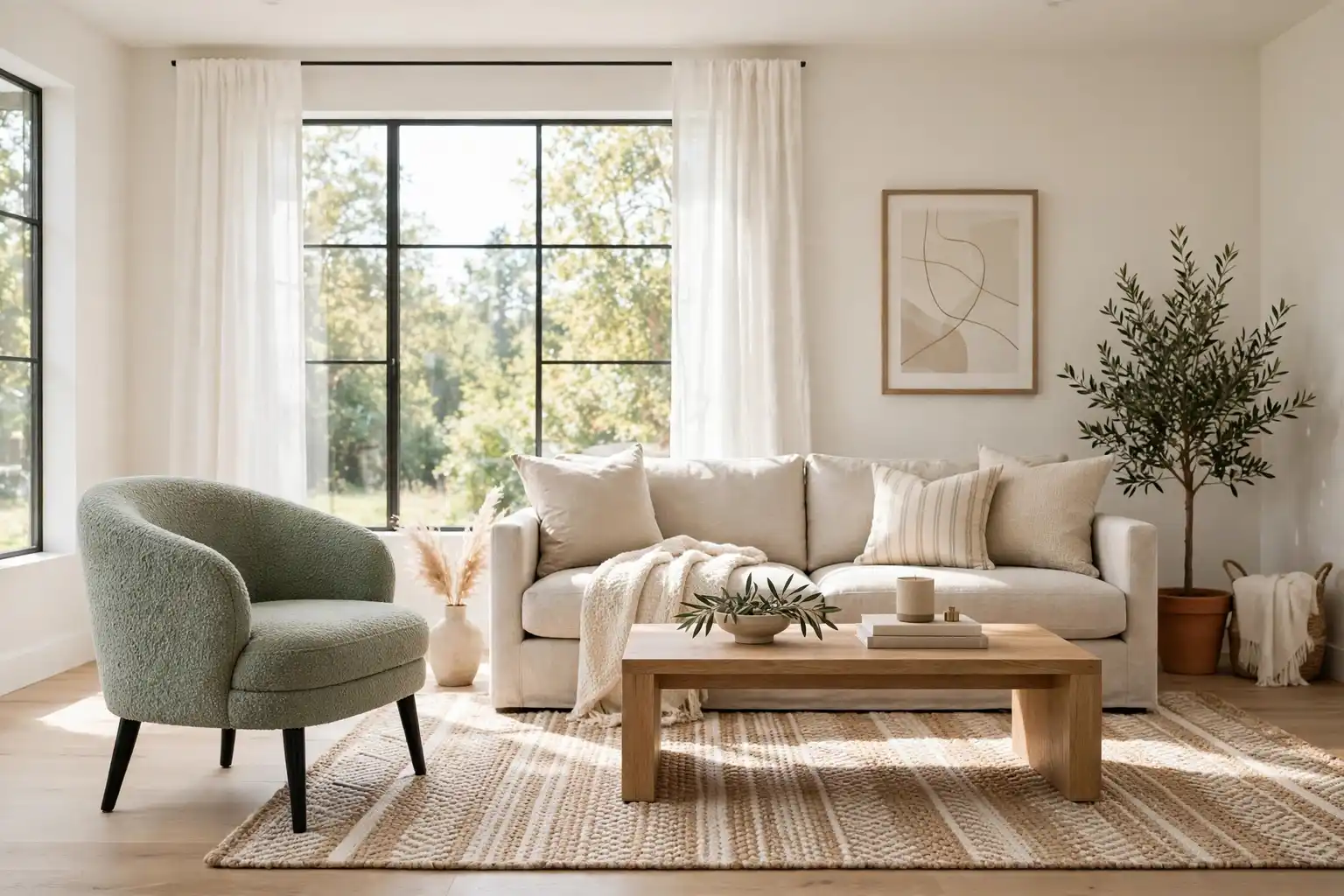
An accent chair is one of the fastest ways to make a living room look finished. It adds a second seat, a new shape, and a chance to bring in color or texture without changing the sofa. The right chair also fixes a room that feels one sided, since it can balance a long sofa, fill an empty corner, or give a window a purpose. These 14 chic accent chair living room ideas cover velvet, boucle, leather, rattan, and sculptural shapes. Before you buy, measure the spot, check the walking routes around it, and sit in the chair if you can.
Key Takeaways
- Pick the chair for a job first: extra seating, a reading spot, a balance for the sofa, or a focal point, then choose the style.
- Keep one strong feature per chair: a rich fabric, a bold color, or a sculptural shape, and keep the rest of the room calmer.
- Angle the chair toward the sofa or fireplace, not flat against a wall, so it joins the conversation group.
- Leave enough room to walk past it and to pull it out slightly, especially for swivel and rocking styles.
- Repeat the chair color or material once elsewhere, in a cushion, a throw, or a lamp base, so it looks planned.
- Match the chair scale to the sofa: a deep, tall chair suits a large sofa, while a slim slipper chair suits a small room.
1. Velvet Chair Beside the Sofa
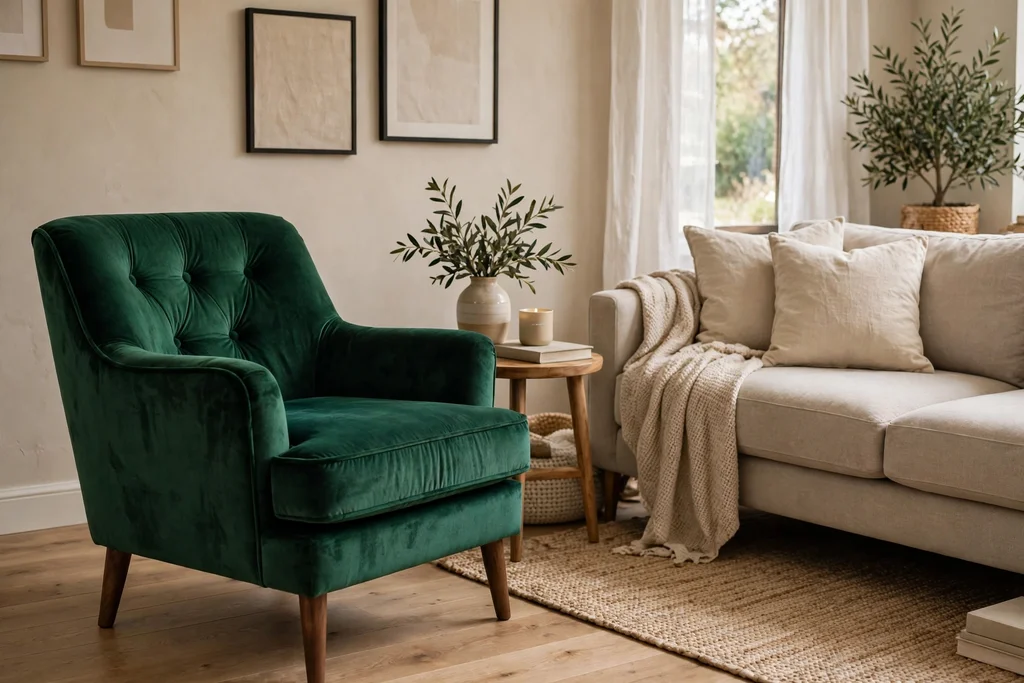
A velvet accent chair beside the sofa adds softness and a touch of evening polish to a living room. Emerald, navy, or rust velvet works well against a neutral sofa, since the sheen catches lamplight and gives the seating group depth. Place the chair at a slight angle to the sofa, with a small side table between them, so the two seats form a natural conversation corner.
Keep the rest of the seating plain so the velvet stays the focus, and add one cushion in a matching tone on the sofa to link the two pieces. Velvet shows pressure marks where people sit, so rotate the cushion and brush the pile lightly to keep it even. This pairing suits a room used for hosting, and it pairs well with brass or wood details.
2. Boucle Chair in a Reading Corner
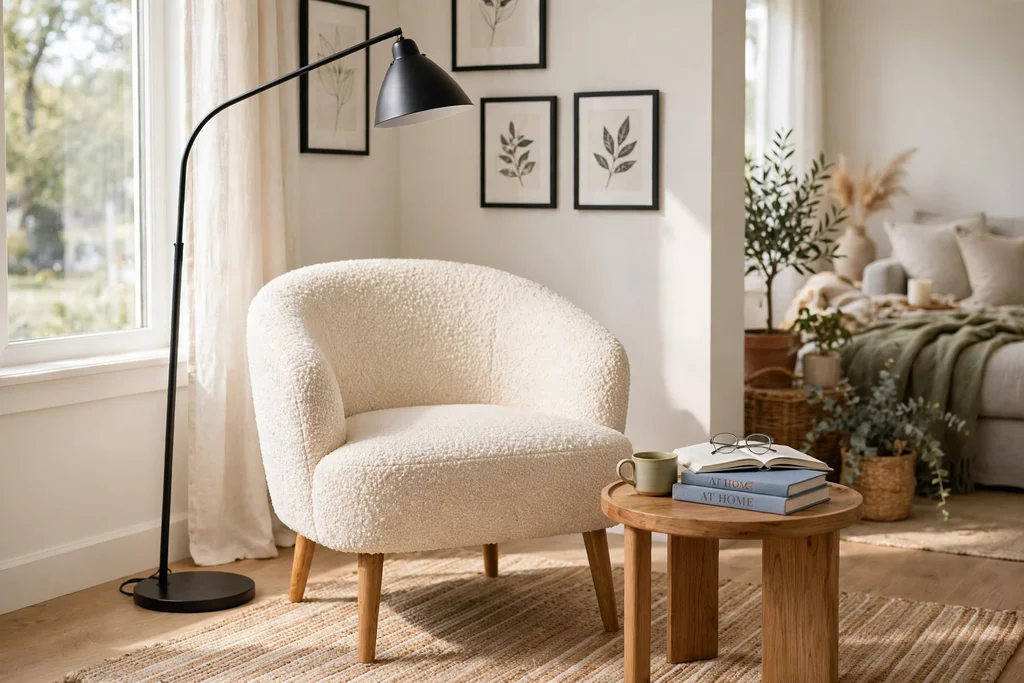
A boucle chair turns an unused corner into a reading spot that looks soft and inviting. The nubby white or cream fabric suits a room with pale walls and wood floors, and it softens harder pieces such as a leather sofa or a glass table. Place the chair near a window or a floor lamp, with a small side table for a book and a mug.
Add a folded throw over one arm for warmth, and keep the floor beneath it clear so the chair can be pulled toward the light. Boucle can be hard to clean, so choose a washable cover or keep it out of the busiest route if you have pets or small children. This idea works best where the corner is quiet, not a main walkway.
3. Leather Chair Angled to the Sofa
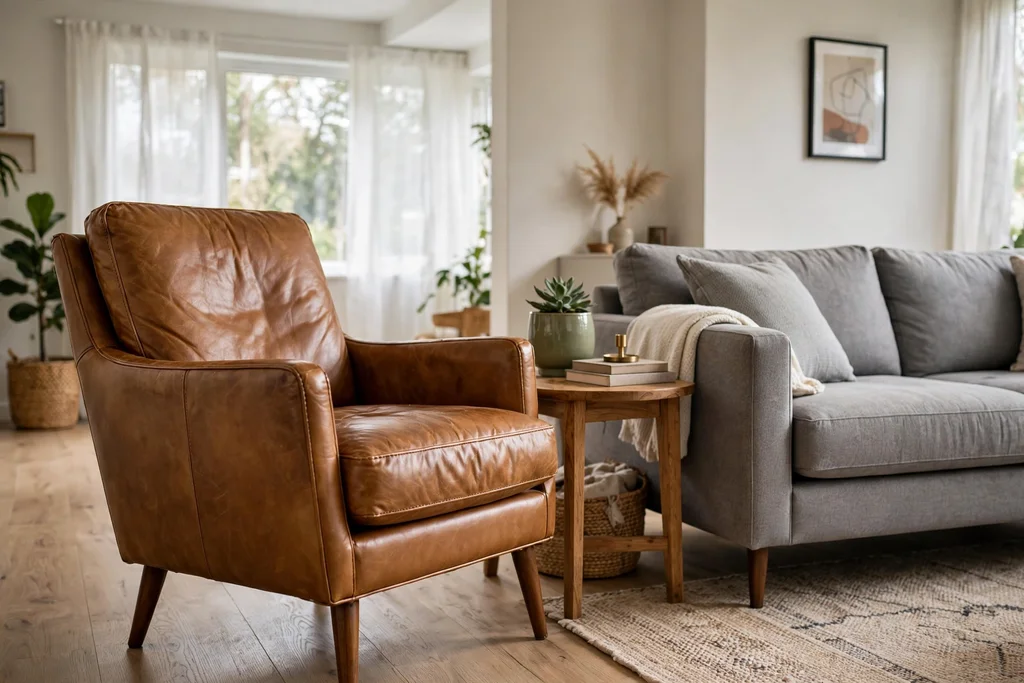
A tan leather accent chair beside a fabric sofa adds contrast in texture, and that contrast keeps the room from feeling flat. Place the chair at an angle to the sofa, with a small side table between them, so the two seats form a conversation corner rather than a row. A black leather chair sharpens a pale room, while tan leather warms a grey or cream scheme, as shown in these grey couch living room ideas.
Leather needs simple care: wipe spills promptly, keep it out of strong direct sun where possible, and condition it as the maker advises. If the chair is new and the sofa is older, a throw over the chair arm can soften the contrast until the leather settles in. This pairing suits a room that needs one strong piece.
4. Rattan Chair for Relaxed Texture
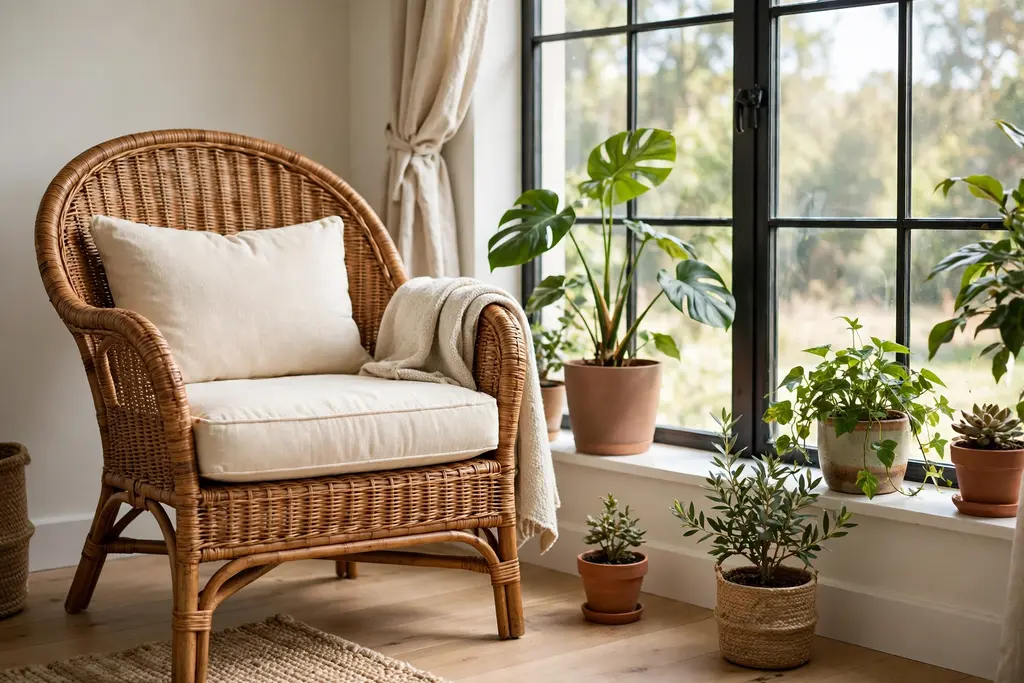
A rattan accent chair brings natural texture into a living room without adding color. The open weave suits a bright room, a coastal style room, and a home with plants, since rattan and green sit well together. Place it near a window or beside a sofa, with a soft cushion on the seat so it stays comfortable for longer sits.
Keep rattan to two or three pieces in the room, such as the chair and a side table or basket, so the room reads as textured, not themed. Natural materials vary in tone, so check the rattan against the sofa in daylight before buying a large piece. A cushion in cream or sage keeps the chair soft while the frame stays the feature.
5. Bold Patterned Chair as the Single Statement
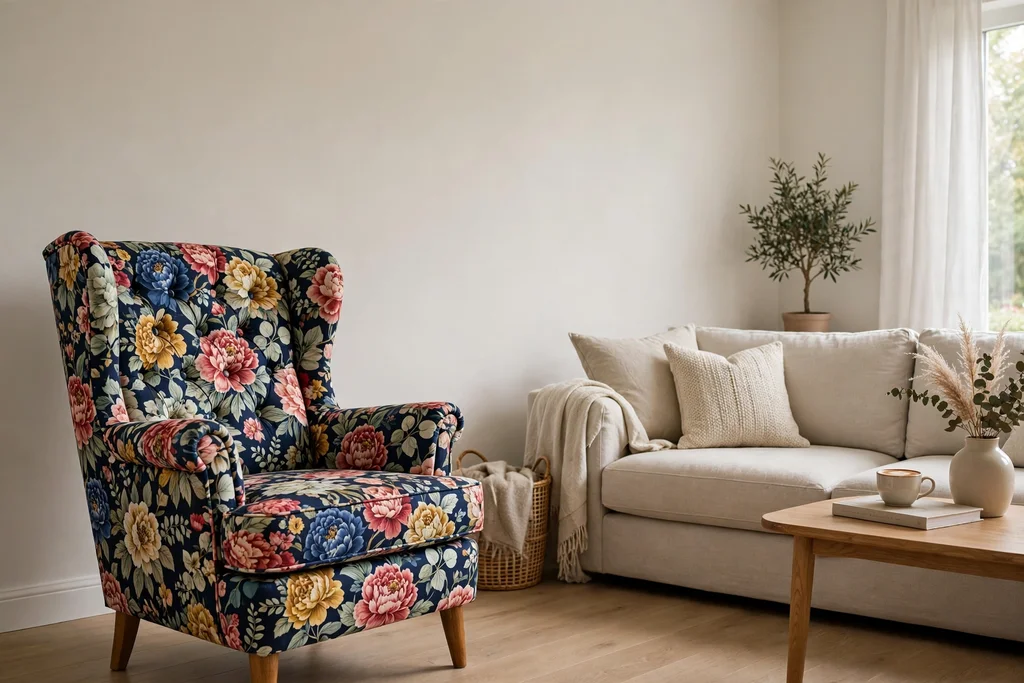
One patterned accent chair can carry the whole color story of a living room, which makes it a good choice for a plain room. Choose a floral, geometric, or striped fabric with one color that already appears in the room, such as a cushion or a piece of art, so the chair looks linked to the scheme. Place it where it is seen on entering the room, angled toward the sofa.
Keep the sofa, rug, and curtains plain when the chair is busy, so the pattern has room to breathe. If the pattern is strong, use it once only, and avoid matching curtains or a second patterned chair nearby. This idea suits a renter too, since one chair changes the room without paint or new large furniture.
6. Swivel Chair for an Open Plan Room
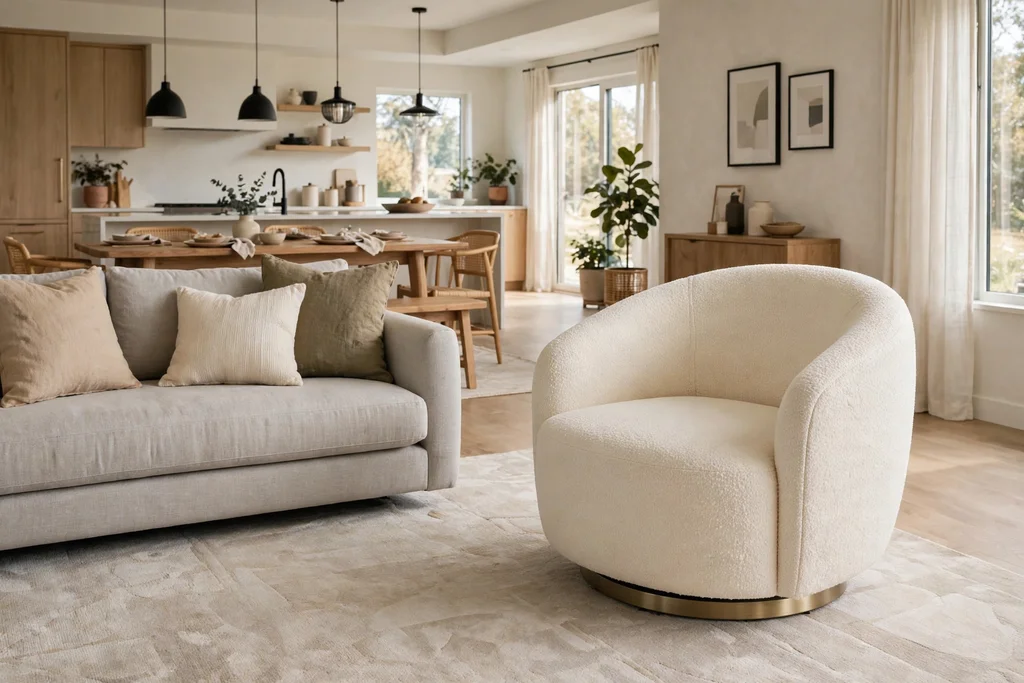
A swivel chair suits an open plan room because it can turn toward the sofa, the television, or the kitchen without being moved. Place it at the edge of the seating group, where it can pivot between two zones, and leave clear floor around the base so it turns freely. A low, rounded swivel chair in boucle or plain fabric keeps the look calm while the function stays flexible.
Check the swivel range before you buy, since some chairs turn fully and others stop at a set point. Keep cords, rug edges, and small side tables clear of the base so nothing catches as it turns. This idea suits a family room where one seat must serve conversation, television, and watching children in another zone.
7. Wingback Chair by the Fireplace
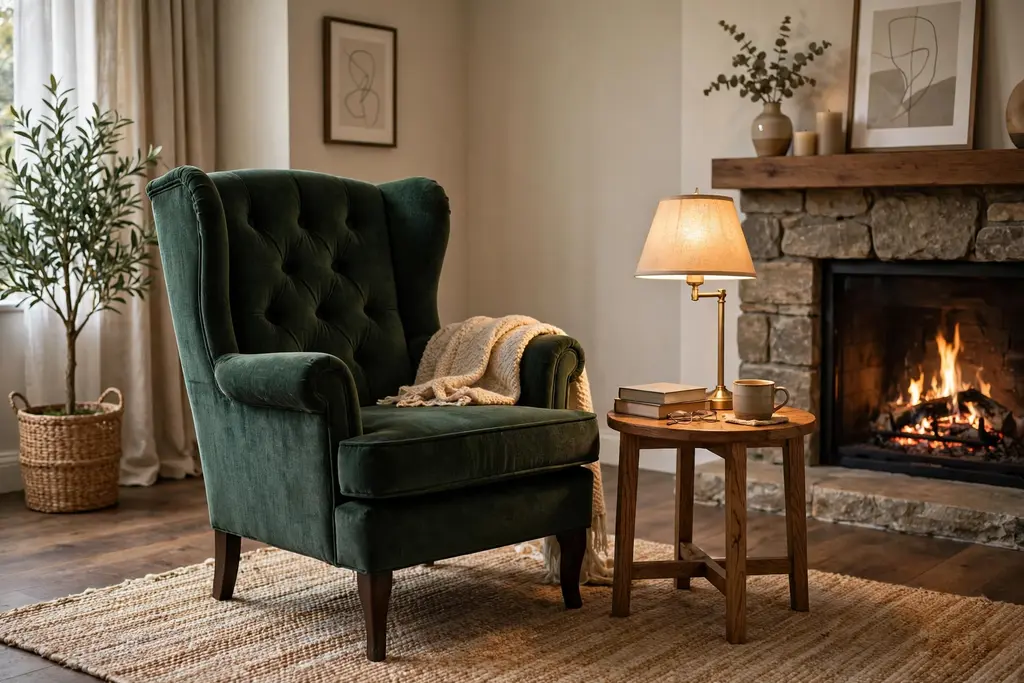
A wingback chair by the fireplace gives a living room a classic, settled focal point. The high back and side wings frame the sitter and block drafts from the sides, which makes it a good seat for cold evenings. Place it at an angle to the fireplace, not straight in front of it, with a small side table and a reading lamp within reach.
Choose a plain fabric in a deep tone, such as forest green, navy, or warm grey, so the shape stays the feature rather than a print. Keep the hearth clear and the chair far enough back that heat does not damage the fabric. This layout suits a traditional room and a room where conversation, not the television, is the main focus.
8. Mid-Century Chair With Tapered Legs
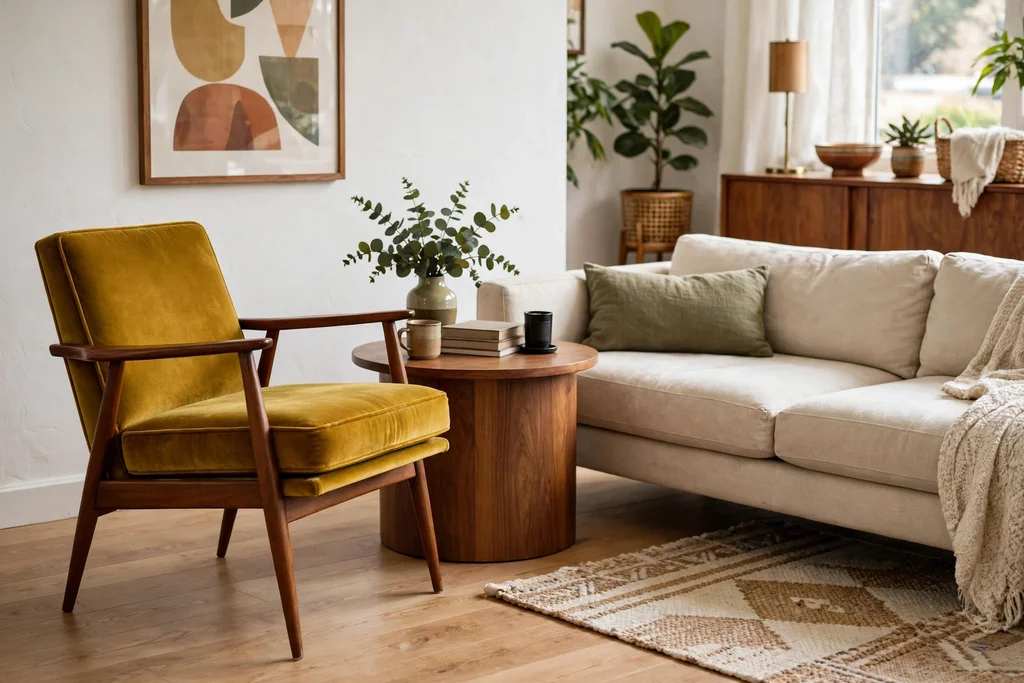
A mid-century accent chair with tapered wood legs suits a room with straight lines and a low sofa. The raised legs show more floor beneath the chair, which helps a small room feel less crowded, and the wood tone adds warmth to a modern scheme. Place it opposite or beside the sofa, with a small round side table nearby.
Match the leg wood to another wood piece in the room, such as a coffee table or a shelf, so the chair links to the scheme. Keep the upholstery plain, in a muted tone such as olive, mustard, or warm grey, and let the leg shape and the chair silhouette carry the style. This idea suits apartments, where a heavy chair can crowd the floor.
9. Slipper Chair for a Tight Corner
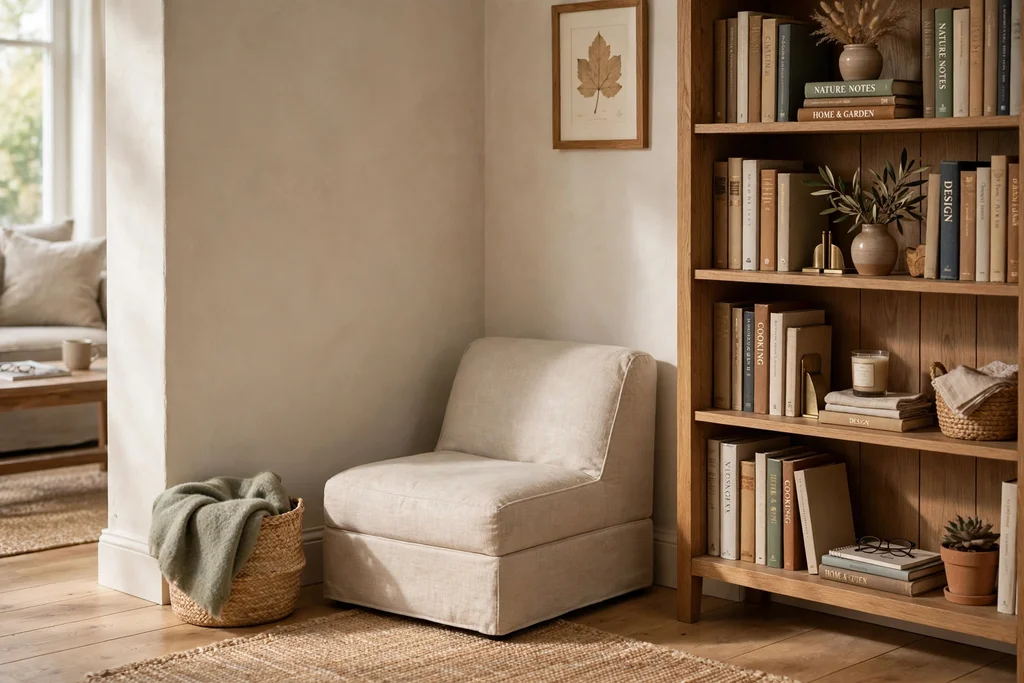
A slipper chair, with no arms and a low profile, fits corners and narrow gaps where a full armchair would block the route. Place it beside a bookcase, under a window, or at the end of a sofa, where it gives extra seating without taking over the room. Its small footprint also suits a bedroom corner that opens into a living area.
Add a cushion in a color from the room to stop the small chair from looking lost, and pair it with a small side table or a floor lamp so the corner reads as a seat, not a spare chair. Because it has no arms, a slipper chair is easy to pull out for guests and tuck back again. Check the seat height against the sofa so guests do not sit noticeably lower than everyone else.
10. Pair of Matching Chairs Facing the Sofa
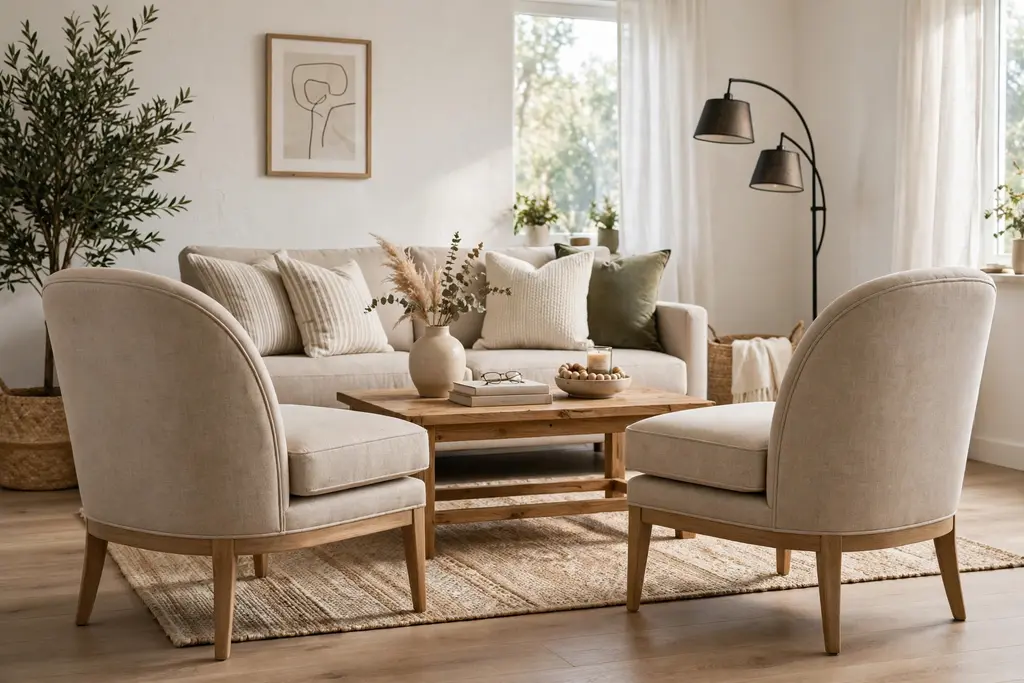
Two matching accent chairs facing the sofa create a balanced, formal seating group that suits a larger living room. Place them side by side or slightly angled toward each other, with a small table or a shared rug beneath them, so the group reads as one arrangement. The pair works best when the chairs are in a fabric or color that contrasts gently with the sofa, rather than matching it exactly.
Keep the space between the chairs and the coffee table wide enough to walk through, and use the same cushion or throw on both chairs to tie them together. This layout suits a room used for hosting, since it gives four clear seats in one conversation group. For a smaller room, use one chair from the pair idea and leave the second spot open.
11. Black Frame Chair With Linen Cushions
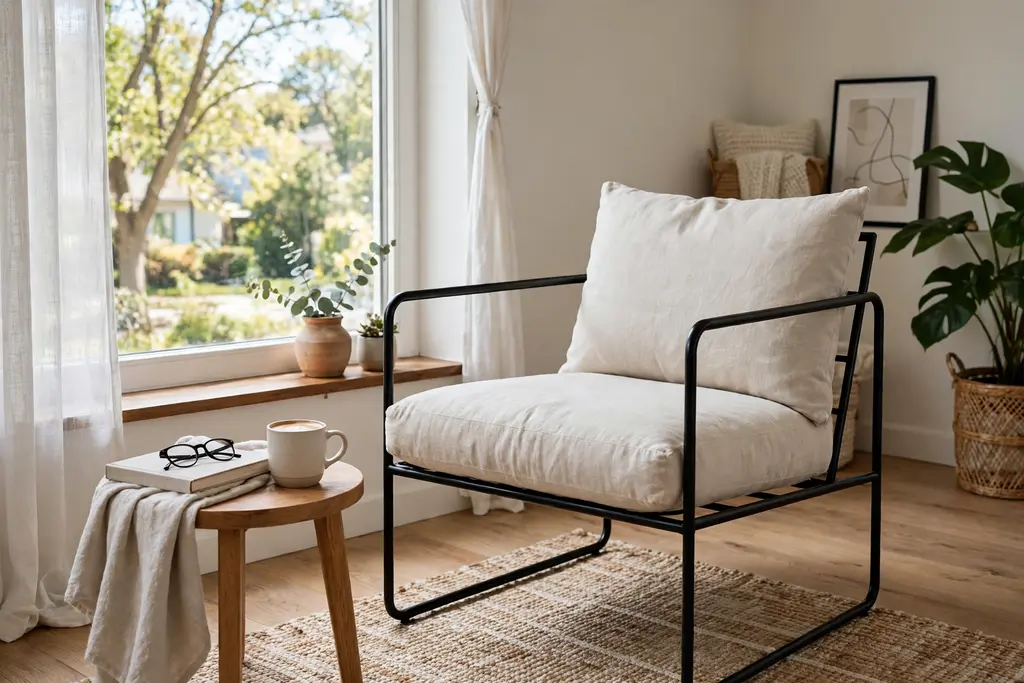
A black metal frame chair with pale linen cushions gives a living room a clean, modern edge without feeling cold. The dark frame outlines the chair clearly against pale walls, while the linen softens it and keeps the seat comfortable. Place it beside a sofa or near a window, with a wood or stone side table to warm the metal.
Keep the linen in cream, oatmeal, or soft grey, and choose covers that can be removed and washed, since pale fabric shows marks. The slim frame suits a small room, where a bulky chair would crowd the floor, and it pairs well with a glass or light wood coffee table. Avoid pairing it with too many other black pieces at once, or the room can feel harsh.
12. Blush Chair to Soften a Neutral Room
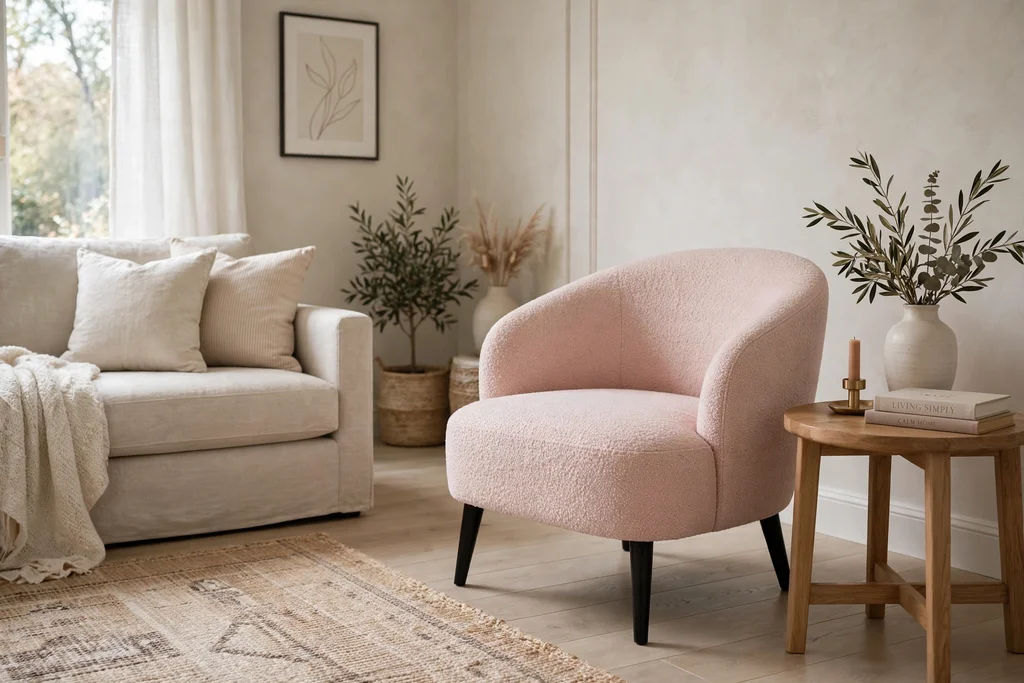
A blush accent chair softens a neutral living room in a gentle way, and it suits rooms that should feel calm rather than bold. Pair a pale pink or dusty rose chair with a cream or light grey sofa, a pale rug, and one wood piece, such as a side table, to keep the soft palette grounded. Place the chair where daylight reaches it, since blush looks best in natural light.
Avoid pairing blush with too many other pastels at once, or the room can look sugary. One deeper tone, such as a walnut table or a dark frame, adds enough contrast to keep the chair from fading into the room. This idea suits a living room that already has white walls and plain curtains, where one soft color is enough.
13. Chair and Ottoman Reading Nook
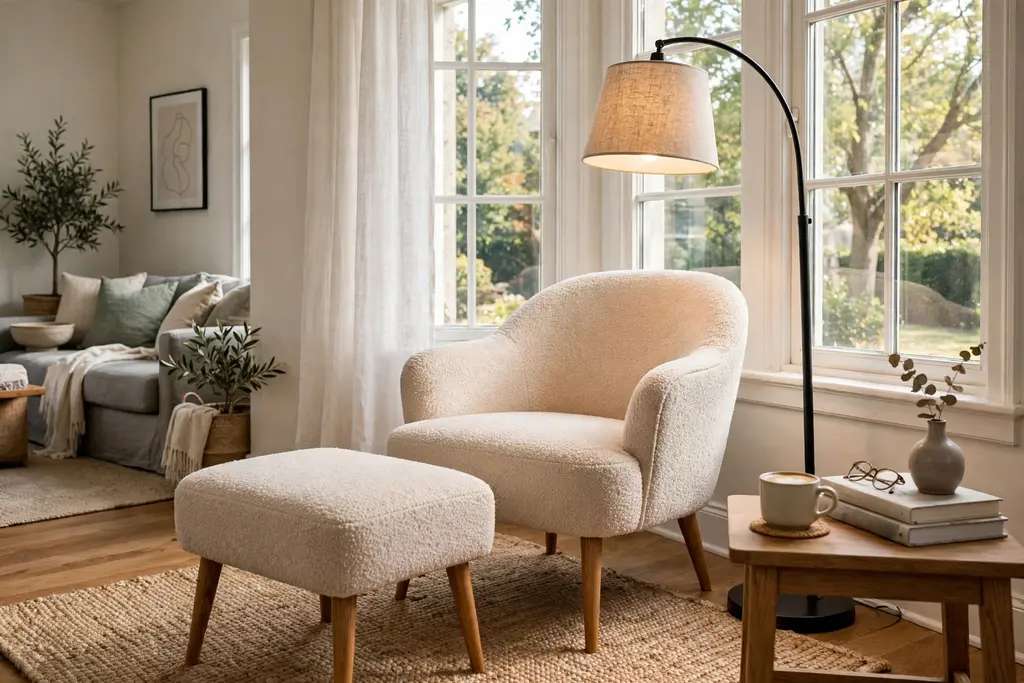
A chair paired with a matching ottoman makes a proper reading nook, since the ottoman lets the sitter stretch out without needing a full chaise. Place the pair near a window or a floor lamp, with a small side table for a book and a drink, and leave enough floor to push the ottoman aside when the seat is needed for conversation. A rounded ottoman suits a small nook, since it leaves no sharp corners in the walkway.
Choose the ottoman in the same fabric as the chair, or in a plain tone that matches the rug, so the pair reads as one piece. Keep a throw folded on the ottoman for colder evenings, and avoid placing the nook in a main walkway, where feet on the ottoman would block the route. This idea suits a quiet corner of a larger room.
14. Sculptural Curved Chair by the Window
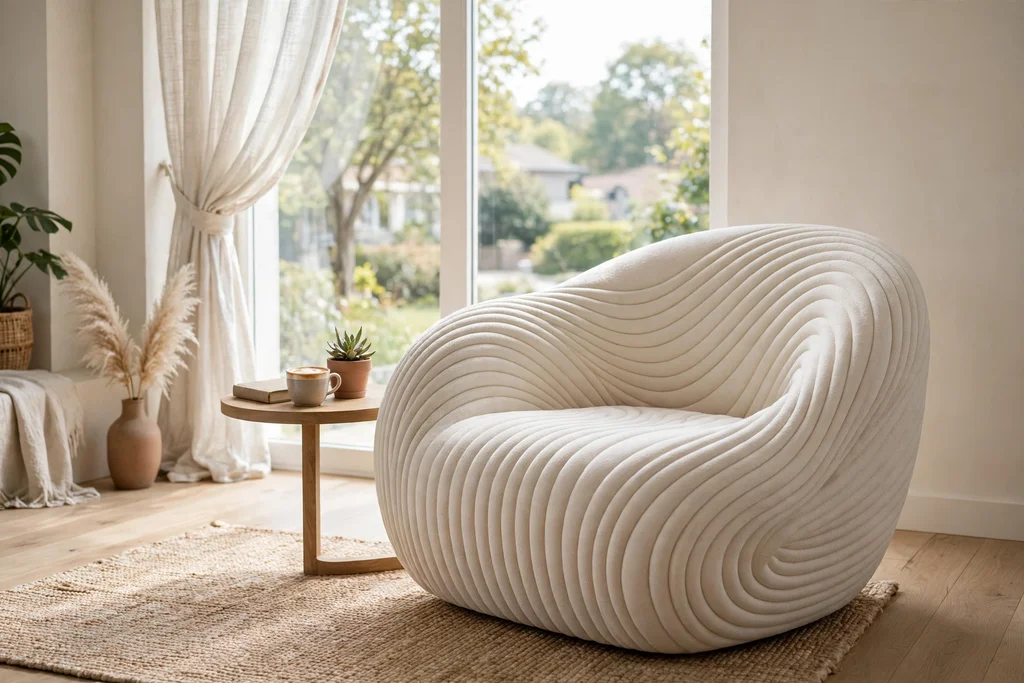
A sculptural curved chair by the window works as both seating and a piece of design in the room. The rounded back and soft curves break up straight lines from the sofa, the rug, and the shelves, and the shape draws the eye without needing a bold color. Place it where it is seen from the doorway, with daylight behind it and a small side table beside it.
Keep the fabric plain, in cream, grey, or a muted green, so the curve stays the feature, and keep the wall behind it fairly bare so the silhouette reads clearly. This chair suits a room that already has its practical seating covered, since its job is to add character as well as a seat. Check the seat depth before buying, since deep curved chairs can take more floor than they appear to.
Conclusion
A chic accent chair works best when it has a clear job in the room, whether that is extra seating, a reading spot, or a balance for the sofa. Start with the spot and the scale, then pick one strong feature, such as velvet, leather, rattan, or a curved shape, and keep the rest of the seating calm. Angle the chair toward the conversation group, leave room to walk past it, and repeat its color or material once elsewhere so it looks planned. With the right size and placement, one chair can make the whole living room feel more finished. For help grounding the seating group underfoot, see these living room rug ideas.
Frequently Asked Questions
How do I choose the right size accent chair for my living room?
Measure the spot first, then check the chair width, depth, and height against the sofa. A chair seat height close to the sofa seat height keeps guests sitting at the same level, and a chair about two thirds the width of a three seat sofa usually looks balanced. Leave at least 60 centimeters of walking space around the chair where people pass, and more if it swivels or rocks.
Should an accent chair match the sofa?
It does not need to match, and a gentle contrast usually looks more polished. Match one element, such as the leg wood, a cushion color, or the general style, and let the fabric or shape differ. An exact match can make the room look like a furniture set, while a chair that shares nothing with the room can look like an afterthought.
Where is the best place to put an accent chair?
Place it angled toward the sofa or fireplace, in a corner that gets light, or facing the sofa in a larger room. Avoid pushing it flat against a wall in an empty corner, since that can make it look unused. A chair near a window, a lamp, and a side table gets used far more than one placed for looks alone.
What accent chair fabric is easiest to live with?
Plain, mid tone fabrics in a tight weave are the most forgiving, since they hide everyday marks better than pale boucle or velvet. Leather wipes clean but needs care in strong sun, while removable linen covers suit homes where covers can be washed. Choose the fabric for the traffic the chair will get, not just for the color.
Can I use an accent chair in a small living room?
Yes, if the scale is right. A slipper chair, a slim black frame chair, or a small mid-century chair with raised legs fits a small room better than a deep wingback. Show more floor beneath the chair, keep the fabric plain, and place it where it does not block a door, a drawer, or a walking route.
How many accent chairs should a living room have?
One chair suits a small room or a room that already has a large sofa, while a pair facing the sofa suits a larger room used for hosting. Two different chairs can work if they share a color, a material, or a leg style, but three or more accent chairs in one small group can crowd the room. Start with one, live with it, and add a second only if the seating still feels short.