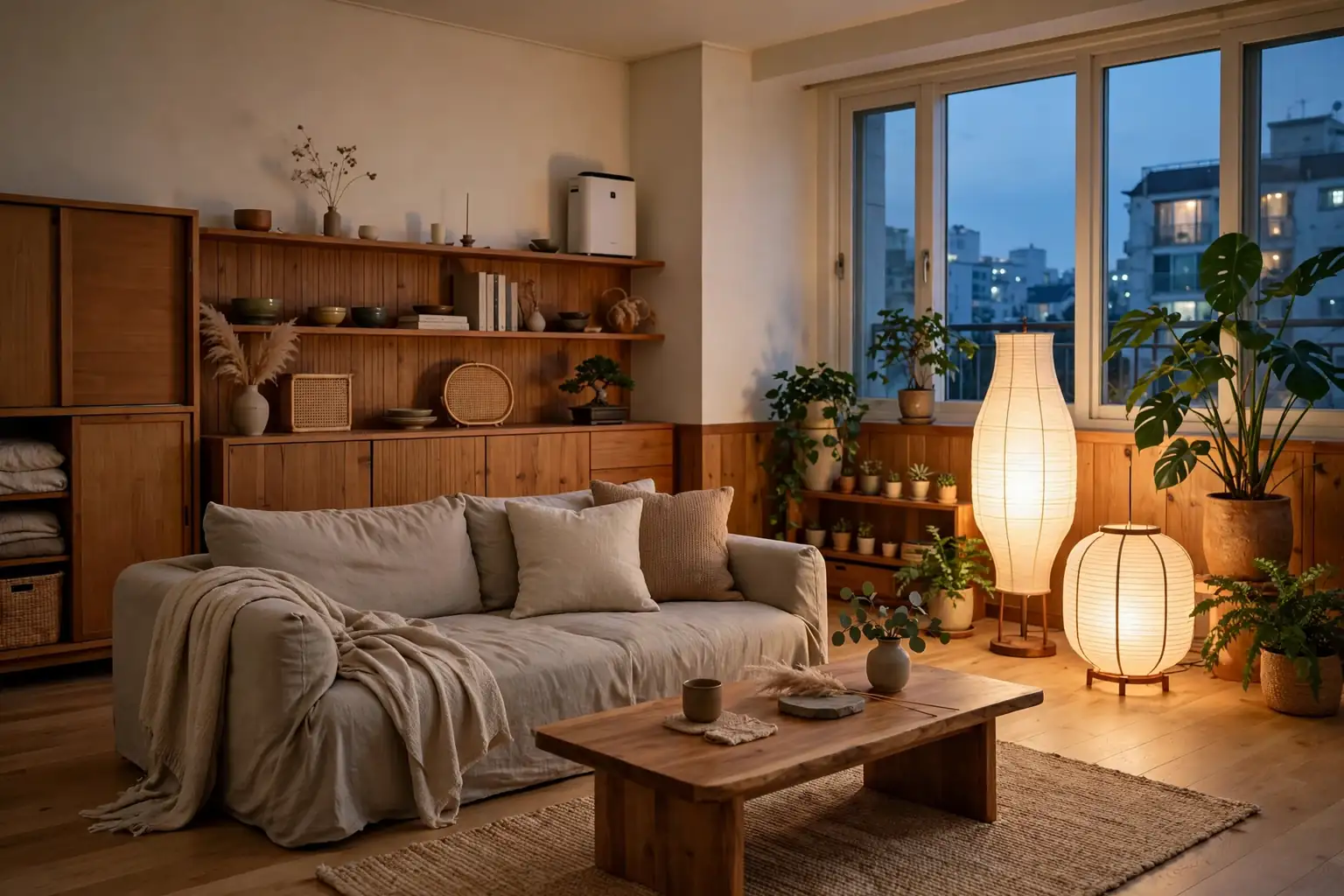
A Korean apartment often works hard in a small footprint, with one room serving as a living room, a dining spot, and a place to rest. That inviting look is not about buying new furniture. It comes from low lines, warm wood, soft layers, and light that stays gentle in the evening. These 29 Korean apartment design ideas cover the living room, bedroom, kitchen, entry, and balcony, with storage and seating that suit rented and compact homes. Start with one calm base and one comfortable seat, then add layers that fit your routine. For small space layout basics, the zoning ideas in these studio apartment decorating ideas pair well with the room by room ideas below.
Key Takeaways
- Start with a calm base of warm white, soft beige, and light wood, then add color in cushions, throws, and art you can move.
- Keep furniture low and light in look, so a small room keeps its sense of height and air.
- Give every daily routine a spot: sleeping, eating, working, reading, and coming home each deserve a small zone.
- Layer light at more than one level, with a paper lamp, a floor lamp, and a small warm light for evenings.
- Use hidden storage and furniture that does two jobs, so surfaces stay clear and the room stays easy to tidy.
- Add soft texture and one or two plants, rather than filling every shelf, to keep the room warm without clutter.
1. Warm Wood and White Base
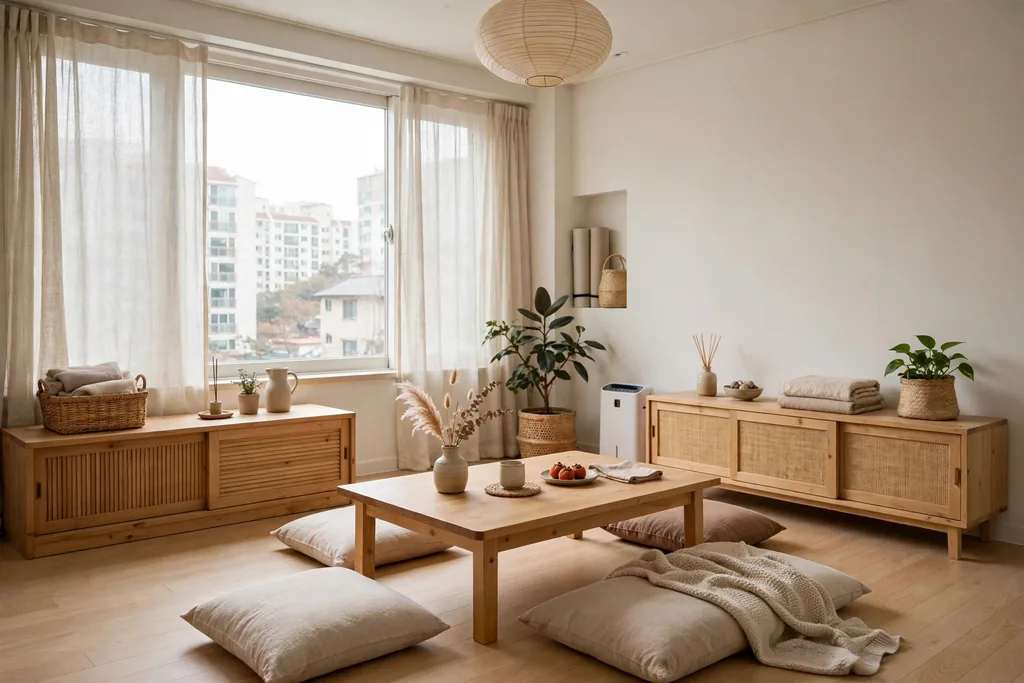
Pair warm white walls with light wood floors and furniture to set a calm base for the whole apartment. Light wood on a bed frame, a low table, or open shelves adds warmth without darkening a small room, and white walls keep daylight moving through the space. Keep the largest pieces in these two tones, so smaller items in soft beige, sage, or muted blue can sit against them without clashing.
If you rent and cannot change floors or wall color, get the same base from a large light rug, light wood toned furniture, and plain white or cream bedding. Repeat the wood tone in two or three places, such as a shelf, a frame, and a tray, so the room reads as planned rather than random. Avoid mixing many dark and light wood tones in one room, since that can make a small space feel busy.
2. Low Platform Bed With Storage
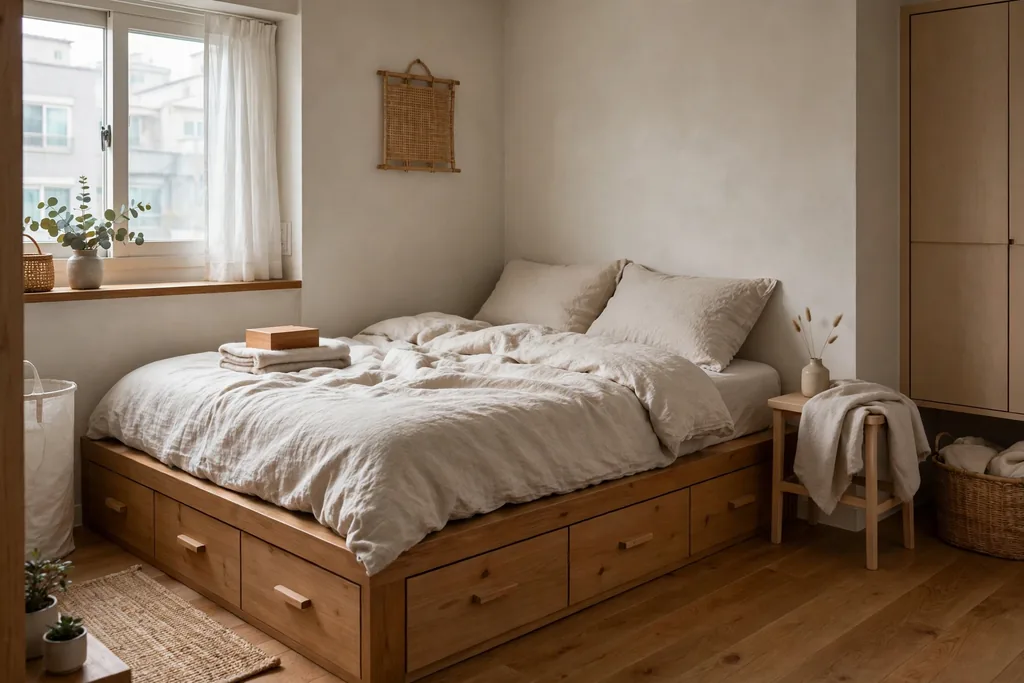
Choose a low platform bed to give the bedroom a grounded, restful feel and to free up visual height above the bed. A low frame suits a small bedroom because it leaves more wall visible, which makes the room feel taller, and it pairs well with a simple padded headboard or a plain wall with one piece of art. Keep bedding in soft, solid colors with one folded throw at the foot of the bed.
Use drawers or boxes under the platform for off season clothes, spare bedding, or bags, so the room needs one less chest of drawers. Measure the platform height before you buy, so you can sit on the edge of the bed with ease and so drawers open fully without hitting a rug. Keep the top of the bed made each morning, since a low bed is the first thing the eye meets in a small bedroom.
3. Floor Seating Corner for Relaxed Living
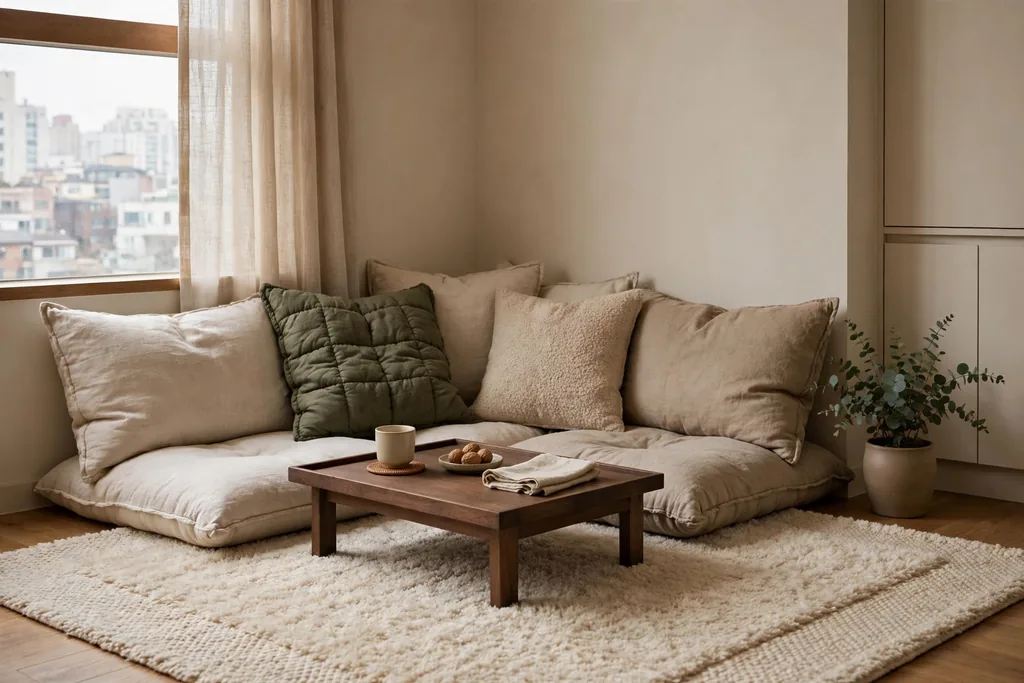
Build a floor seating corner with thick floor cushions, a low tray table, and a soft rug for reading, tea, and quiet evenings. Floor seating suits a Korean inspired living room because it keeps the eye line low and leaves the room feeling open, and it can be packed away when you need floor space for guests or exercise. Choose cushions with firm filling and washable covers, so the corner stays comfortable and easy to keep fresh.
Place the corner near a window or a wall with a shelf for books and a cup, and add a small basket for throws so the corner works as a complete spot. If sitting on the floor is hard on your knees, add a low backrest cushion or a short bench beside the cushions for support. Keep the rug large enough for all the cushions, so the corner reads as one seating group rather than scattered pads.
4. Warm Floor Layers Inspired by Ondol Living
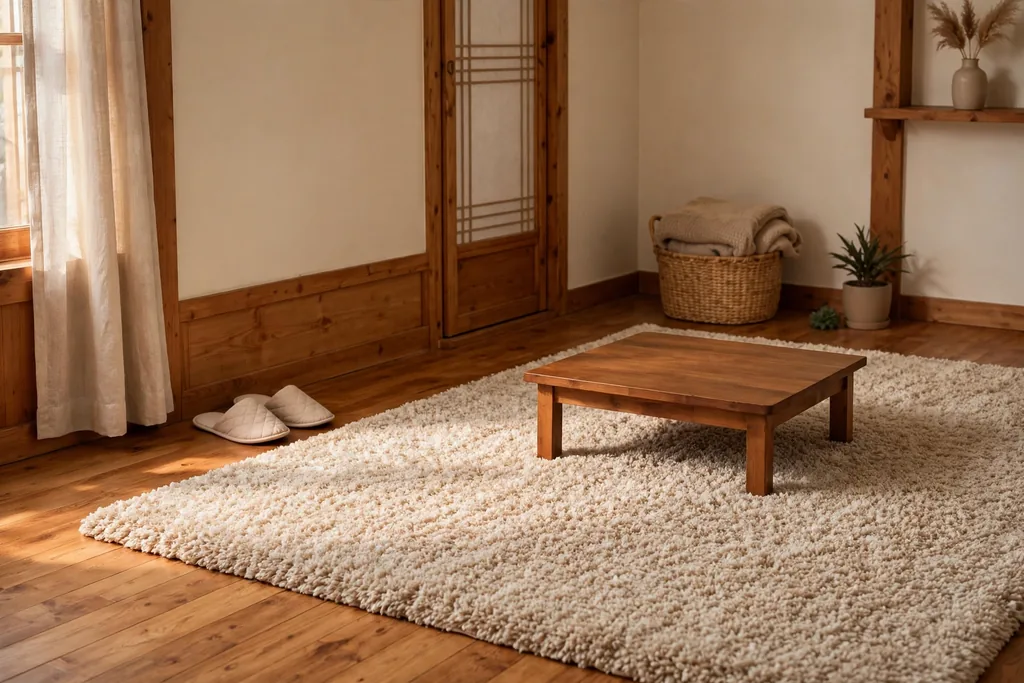
Take inspiration from ondol floor living by making the floor itself a comfortable place to sit and rest. Use a thick rug over a soft underlay, warm slippers by the door, and a low table for meals or tea, so the floor feels like part of the living space rather than just a surface to walk on. This approach suits apartments with hard floors, which can feel cold in winter and echoey all year.
Add a washable rug in the living area and a smaller rug beside the bed, and keep a pair of indoor slippers at the entry so the floor stays clean for sitting. If your home has underfloor heating, check the rug maker guidance for heat suitability before you buy a very thick rug. A floor level lifestyle works best when the floor is kept clear, so store shoes, bags, and chargers off the floor in a basket or cabinet.
5. Sliding Doors and Light Room Dividers
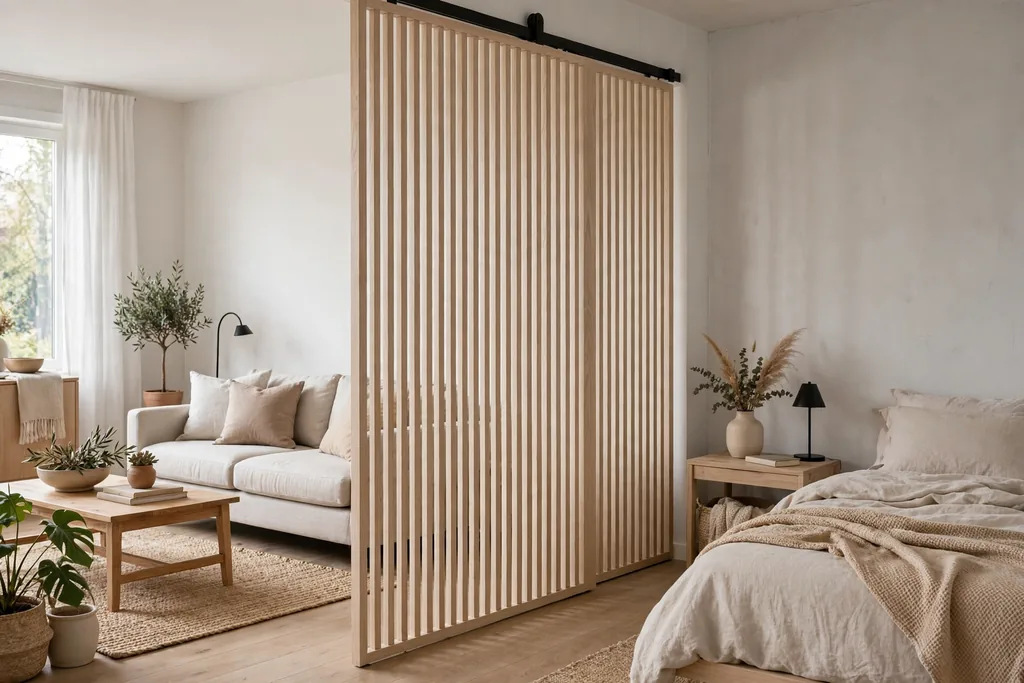
Use a sliding door, a light curtain, or an open shelf unit to divide a studio or a long room without blocking daylight. A divider that slides or hangs gives you privacy for sleep or work when you need it, and opens the room again during the day, which matters in a one room home. Choose a light material, such as pale wood slats, sheer fabric, or an open shelf, so light still reaches both sides.
Hang a ceiling track curtain if a solid divider would block too much light, and extend the track past the bed or desk so the curtain stacks out of the way. An open shelf divider adds storage as well as a boundary, but keep the shelves partly open so the room does not feel walled in. Check your lease before fixing a track to the ceiling, and use a freestanding screen if fixing is not allowed.
6. Paper Lantern Light for Soft Evenings
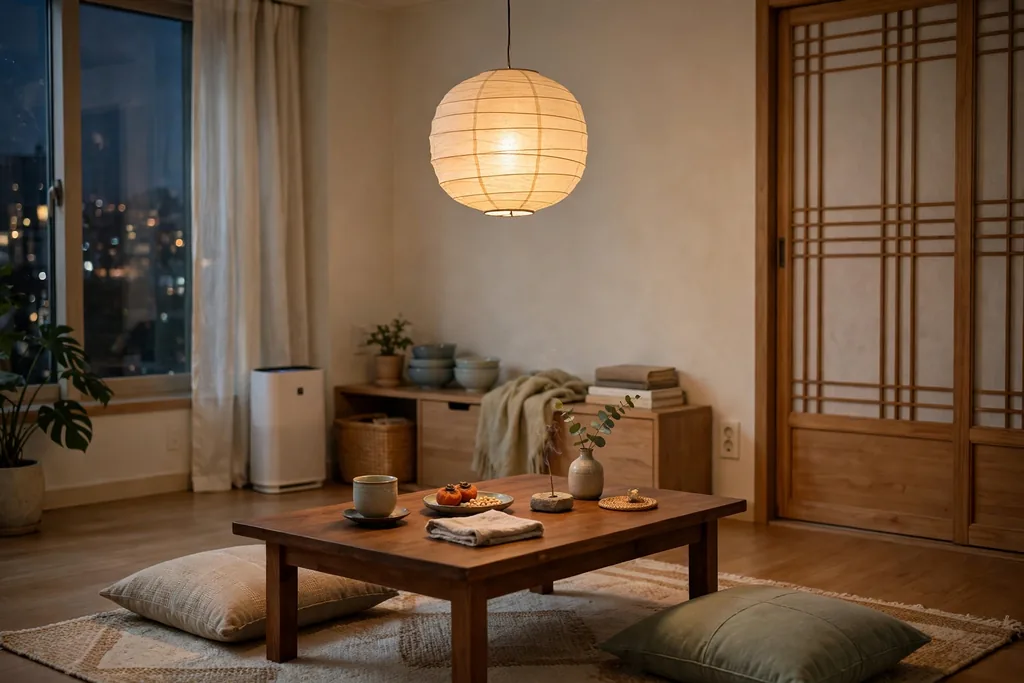
Hang a paper lantern or place a paper shaded lamp in the living room or bedroom for soft, even evening light. Paper shades spread light gently and hide the harsh point of a bare bulb, which helps a small room feel calm after dark. Choose a warm white bulb and a shade size that suits the room, since a very large lantern can dominate a small ceiling.
Hang the lantern over a seating area or a low table, not over a walkway where it could be bumped, and keep it clear of curtains and bedding. A floor standing paper lamp works well in a corner where ceiling hanging is not allowed, and it can move with you when you rearrange the room. Pair the paper light with one smaller lamp, so you can read without turning on a bright overhead light.
7. Built In Look Wardrobe Wall
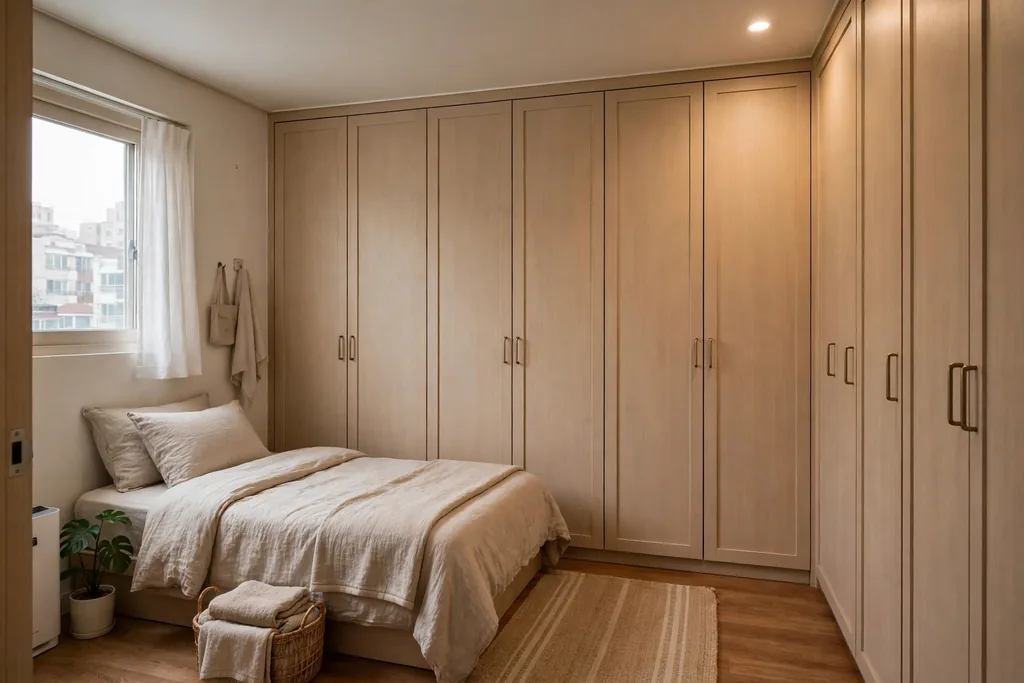
Give the bedroom a built in look by running wardrobes or tall cabinets along one full wall in a single color. A wall of matching doors reads as architecture rather than a row of separate wardrobes, and it hides clothes, bedding, and bags behind closed fronts. Keep handles simple and the color close to the wall color, so the wall feels calm rather than heavy.
If built in units are not possible in a rental, use two matching freestanding wardrobes with a top board or a curtain rail across them to link the look. Inside, use boxes and hanging shelves to sort clothes by season or use, since a tidy inside makes the outside easier to keep closed. Leave one section for daily clothes at hand height, and store off season items up high or under the bed.
8. Fold Away Table for Dining and Work
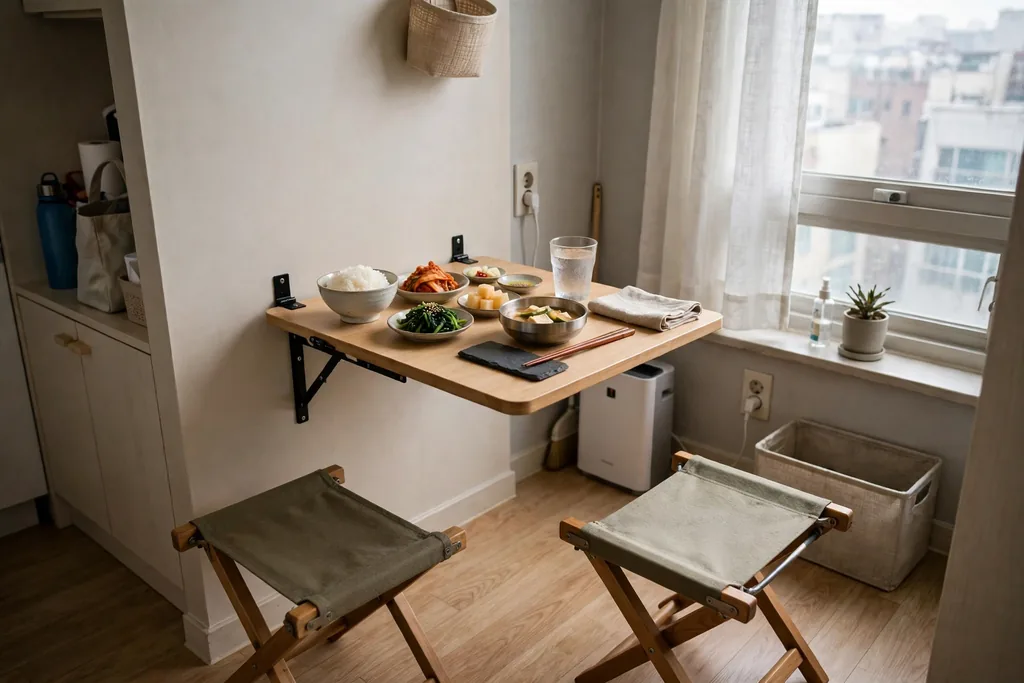
Use a fold down wall table or a drop leaf table so a small apartment can have a real dining spot without a table standing in the middle of the room all day. Fold it down for meals, study, or a puzzle, then fold it away to free the floor for walking or guests. Two stackable stools or folding chairs stored nearby complete the setup without a full dining set.
Fix a wall table firmly into studs or suitable anchors, and check the weight rating before you load it with books or a laptop. A drop leaf table on casters is a good choice if wall fixing is not allowed, since it can roll to the wall when closed. Keep the table clear as a habit, because a fold away table only helps if folding it away stays easy, and keep a small tray for condiments so meals do not spread across the whole surface.
9. Balcony Turned Into a Tea Nook
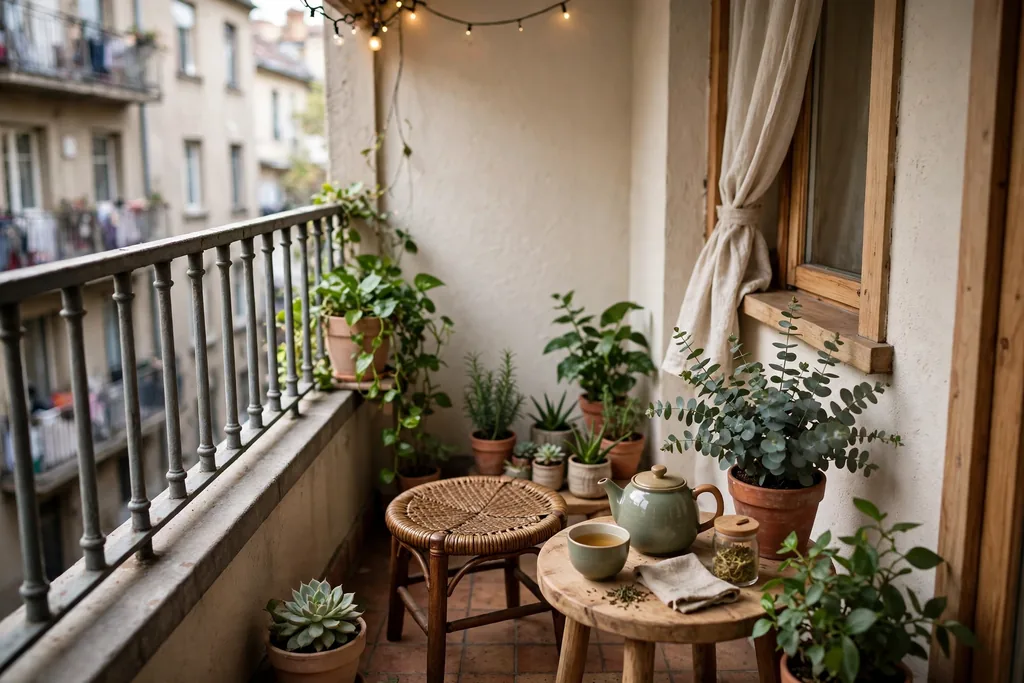
Turn a small balcony into a tea nook with a low stool, a small side table, and one or two pots, so the balcony becomes a daily pause rather than a storage ledge. Many Korean apartments have a balcony used for laundry or storage, and carving out even a chair sized corner for sitting gives that space a second job. Choose weather resistant pieces that can stay outside, and bring cushions in when rain is forecast.
Keep the nook to what fits without blocking the door or a drying rack, and add a small tray for a teapot and cups so the spot feels ready to use. A trailing plant or a small herb pot adds green without taking floor space, and a wind screen or a tall pot can cut drafts on an open balcony. Check building rules before fixing anything to the railing, and keep the route from the door clear for safety.
10. Compact Kitchen With Open Shelves
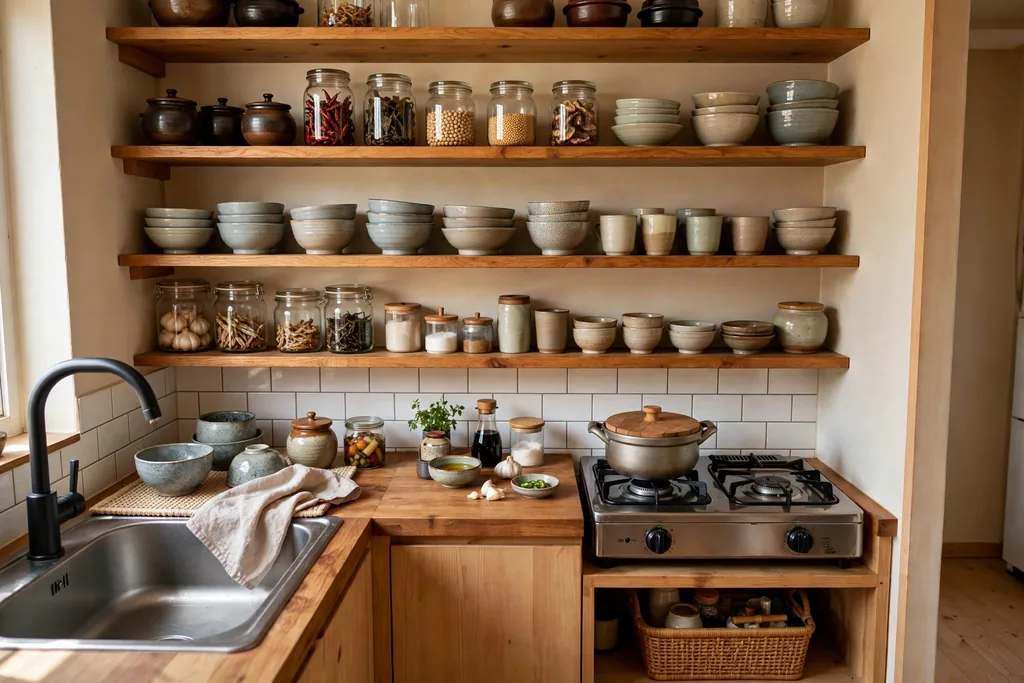
Open up a compact kitchen with one run of open shelves for daily bowls, cups, and jars, while keeping less used items behind closed doors. Open shelves make a small kitchen feel less boxed in, and they put daily items within one reach, which speeds up cooking and tidying. Keep the shelf display to items you use weekly, in matching or plain colors, so the shelf reads as tidy rather than crowded.
Place heavy items low and light items high, and anchor shelves firmly following the maker instructions. Group similar items together, such as bowls in one stack and mugs in one row, and leave a little empty space at the end of each shelf. A small rail under the shelf for utensils or cups adds storage without another shelf, and a tray on the counter can hold oils and sauces used daily.
11. Entryway Shoe Cabinet and Bench
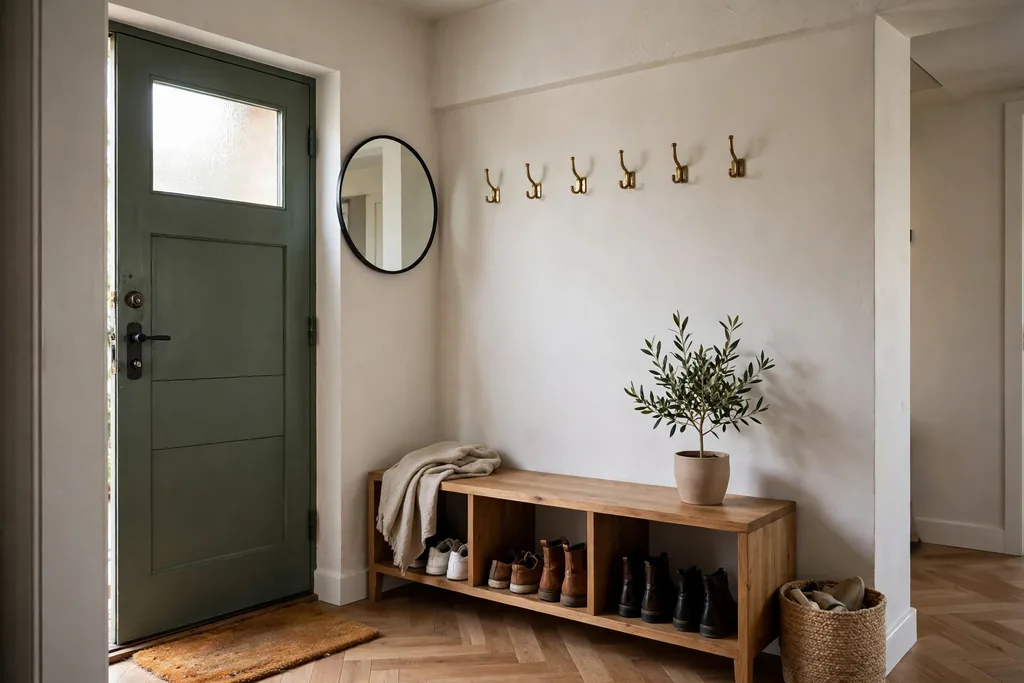
Set a low shoe cabinet with a bench top by the front door, so shoes, keys, and bags have a home the moment you come in. A bench top gives you a seat for putting on shoes, and closed cabinet doors hide footwear that would otherwise spread across the entry floor. Add a small tray or dish on top for keys and a hook row above for coats and bags.
Measure the entry before you buy, and leave a clear path from the door into the room, since a cabinet that blocks the walkway will be worked around rather than used. Keep daily shoes in the cabinet and off season shoes in a box elsewhere, so the cabinet never overflows. A mirror above the bench gives a last check before leaving and bounces light into a narrow entry.
12. Window Reading Nook With Deep Cushions
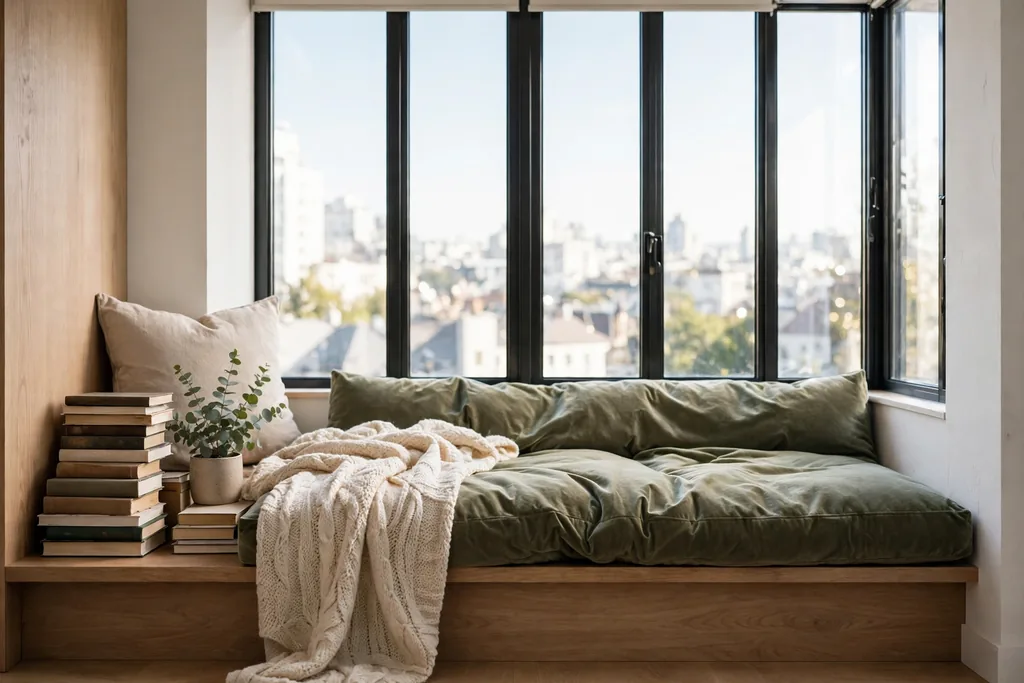
Make a window reading nook with a deep cushion on a low bench or a wide sill, a throw, and a small shelf for books. A window seat uses a stretch of wall that often stays empty, and it gives the apartment a quiet corner for reading, looking out, and slow mornings. Choose a cushion with a washable cover, since a seat beside a window collects dust and light fading faster than other seats.
Add a small wall lamp or a clip light for evening reading, and keep a basket beside the seat for the current book and a throw. If a built in bench is not possible, a low storage bench pushed against the window wall does the same job and adds a place for shoes or bags underneath. Keep the window opening clear, and check that cushions do not block a vent or a radiator.
13. Low Sofa and Low Coffee Table Living Room
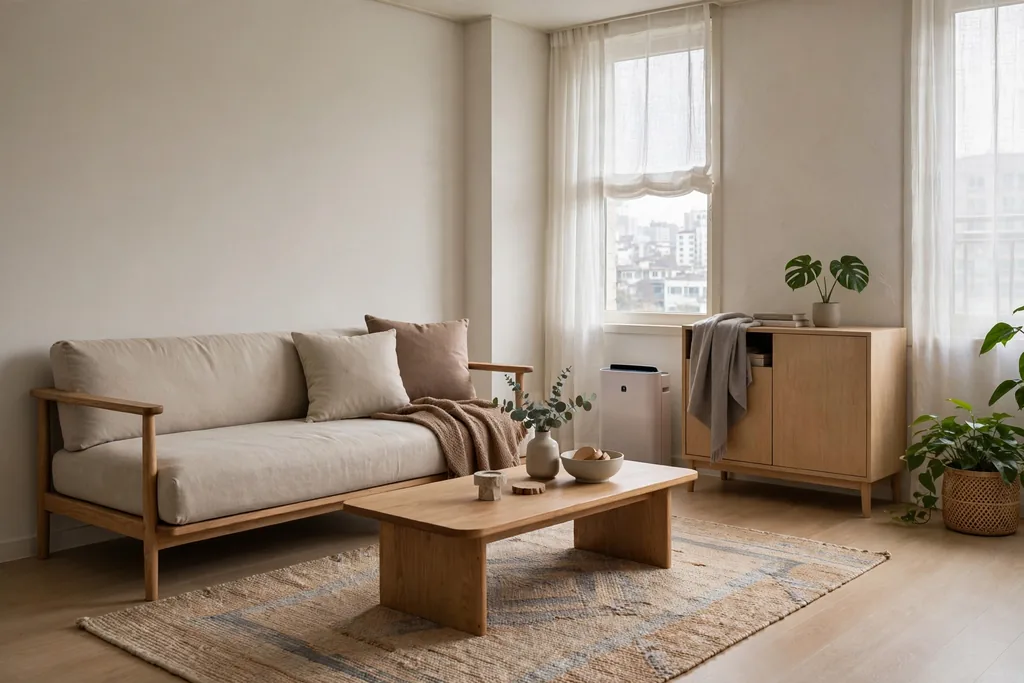
Choose a low sofa with slim arms and a low coffee table to keep the living room feeling open and grounded. Low furniture leaves more wall visible above it, which helps a small room feel taller, and it suits floor cushions and a low rug layered beside it. Pick a sofa depth that lets you sit with feet on the floor, and a coffee table height that sits just below the seat height for easy reach.
Keep the coffee table surface mostly clear, with one tray for remotes and a small plant or candle, so the room stays easy to tidy. A sofa with raised legs shows more floor underneath and can make the room feel lighter, while a sofa close to the floor reads cozier and more grounded. The seating guidance in these cozy apartment living room ideas shows how one rug and a floated seating group can define the living zone in a small home.
14. Plants at Different Heights by the Window
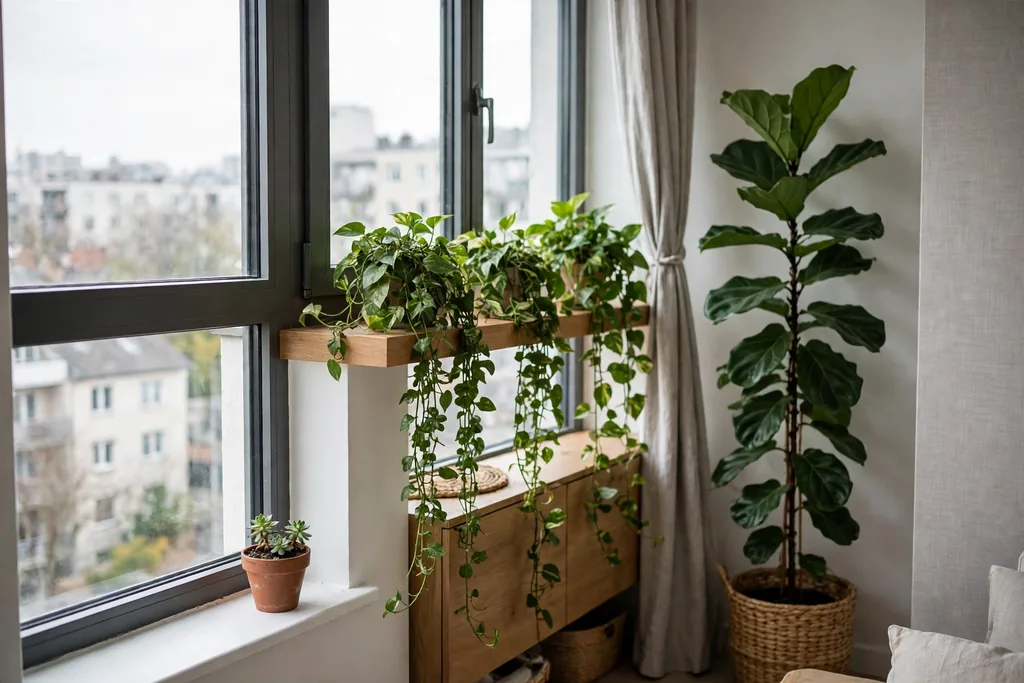
Place plants at three heights near a window: a tall floor plant in a corner, trailing plants on a shelf, and a small pot on the sill or a side table. Plants at different heights keep green from crowding one surface, and they soften the straight lines of shelves and window frames. Match each plant to the light it will actually get, since a bright window suits different plants than a dim corner.
Start with three or four plants rather than a dozen, so watering stays manageable, and group plants that need similar water together. Use saucers under pots on wood floors, and wipe leaves now and then so they stay healthy in a small room. A tall plant can also screen a view you do not love, while trailing plants soften a shelf edge without taking floor space.
15. Neutral Bedding With One Soft Accent
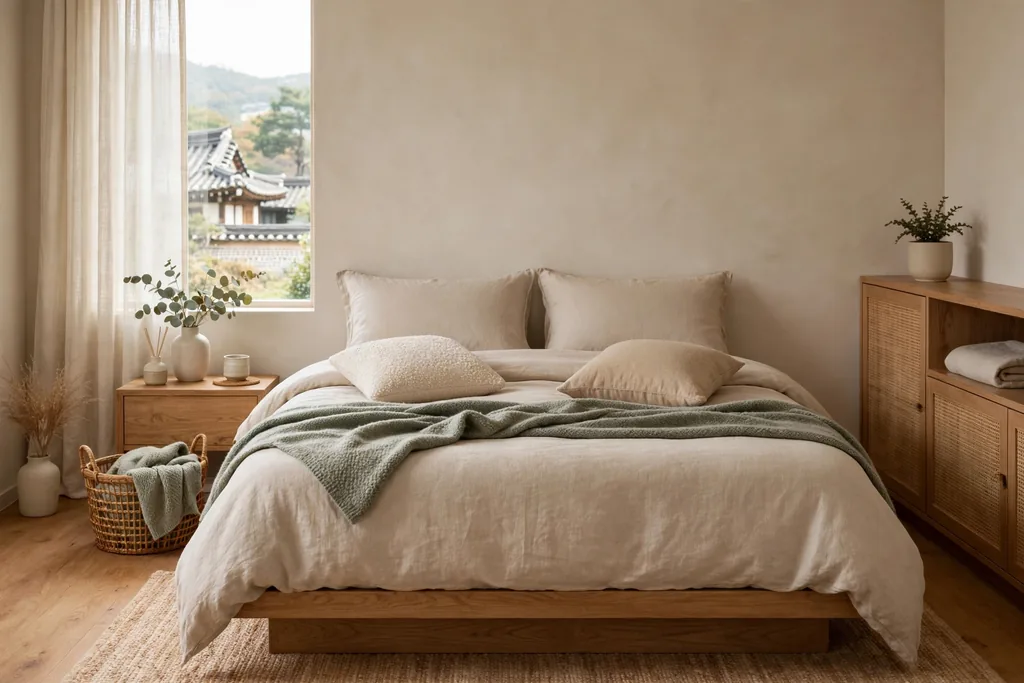
Dress the bed in neutral bedding in white, cream, or soft beige, then add one accent color in a throw and two cushions. A neutral bed makes a small bedroom feel restful and lets you change the mood by swapping only the throw and cushions, rather than buying new bedding. Choose natural feeling fabrics such as cotton or linen blends, with a lighter layer for warm nights and a warmer layer for cold ones.
Keep sleeping pillows separate from daytime cushions, and store extra bedding in one labeled box so the bed never doubles as a storage pile. Make the bed each morning, since a made bed sets the tone for the whole bedroom, especially in a studio where the bed is visible from the living area. Fold the throw at the foot of the bed so it looks intentional rather than tossed aside.
16. Wall Mounted Desk for a Work Corner
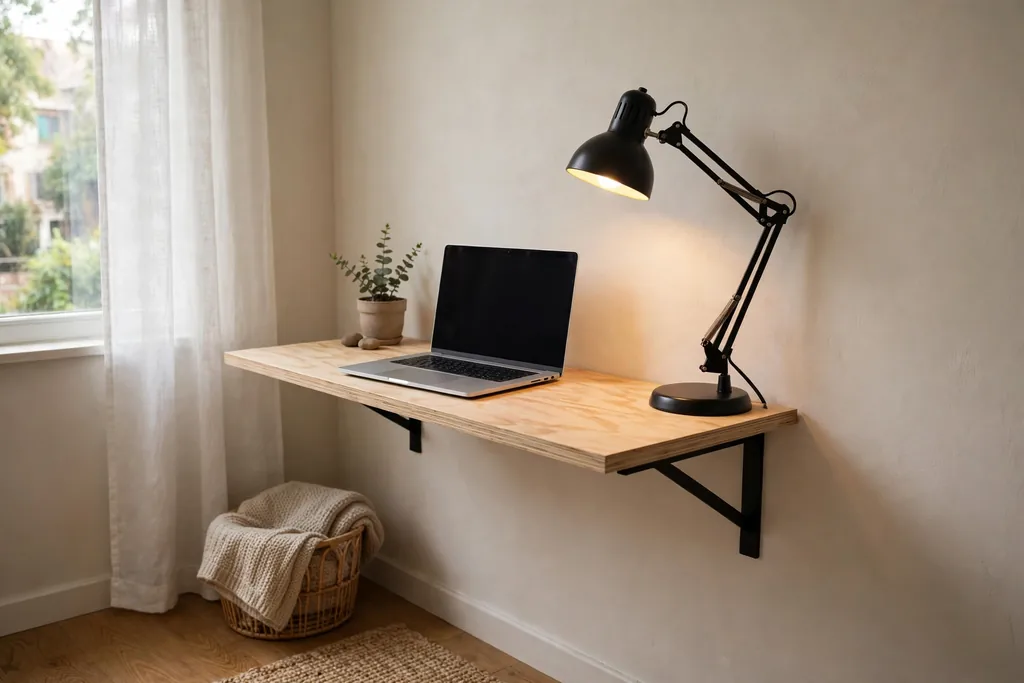
Mount a fold down or slim wall desk in a quiet corner to give work a clear home that closes away at the end of the day. A wall desk needs little floor space, and closing it at night marks the shift from work to rest, which matters when the living room is also the office. Mount it at a comfortable writing height, and keep a small shelf above it for a laptop, notebook, and charger.
Choose a chair that slides fully under a nearby table or folds flat, so the work corner does not block the room when work ends. Keep work papers in one tray or drawer, and put the charger in a fixed spot so cables do not spread across the floor. If wall fixing is not allowed, a narrow console table against the wall with a laptop stand gives a similar corner without drilling.
17. Curtain Divider for a Studio Sleeping Zone
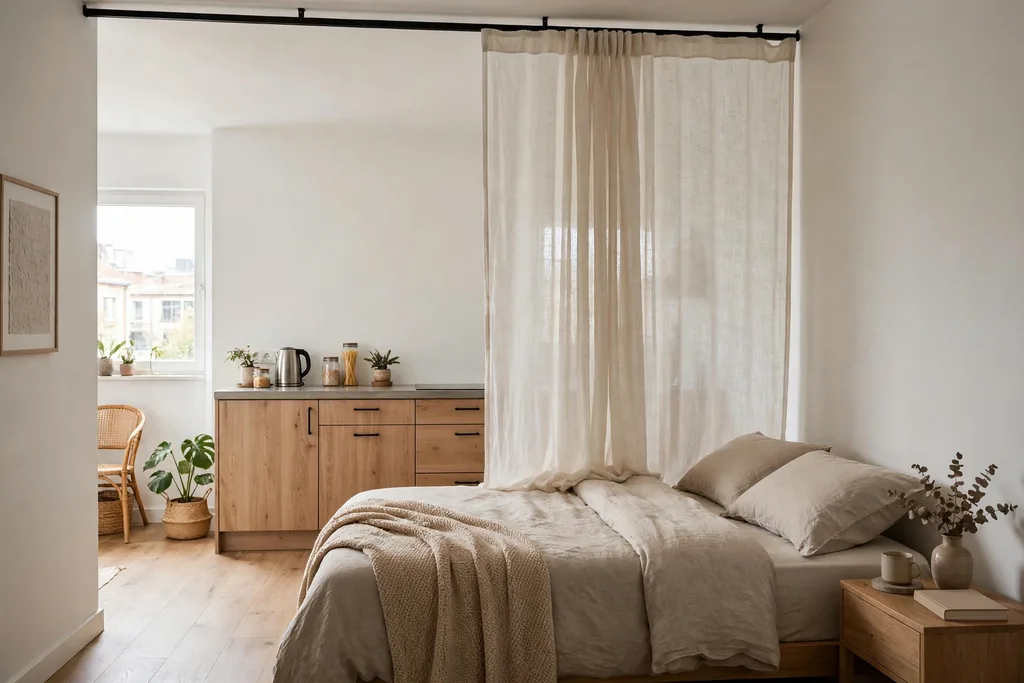
Hang a curtain from a ceiling track to close off the sleeping zone in a studio at night and open the whole room again in the morning. A curtain divider is softer and lighter than a solid screen, and it can be drawn in seconds, which suits a room that changes jobs through the day. Choose a fabric heavy enough to block the view of the bedding, but light enough to slide easily with one hand.
Hang the curtain as close to the ceiling as possible so the sleeping area feels taller, and extend the track a little past the bed on each side so the curtain stacks out of the way during the day. Washable fabric is a practical choice, since a bed curtain collects dust and cooking smells faster than a window curtain. Keep the curtain clear of a heater or a lamp, and check the track fixings suit your ceiling type before you buy.
18. Large Mirror Opposite the Window
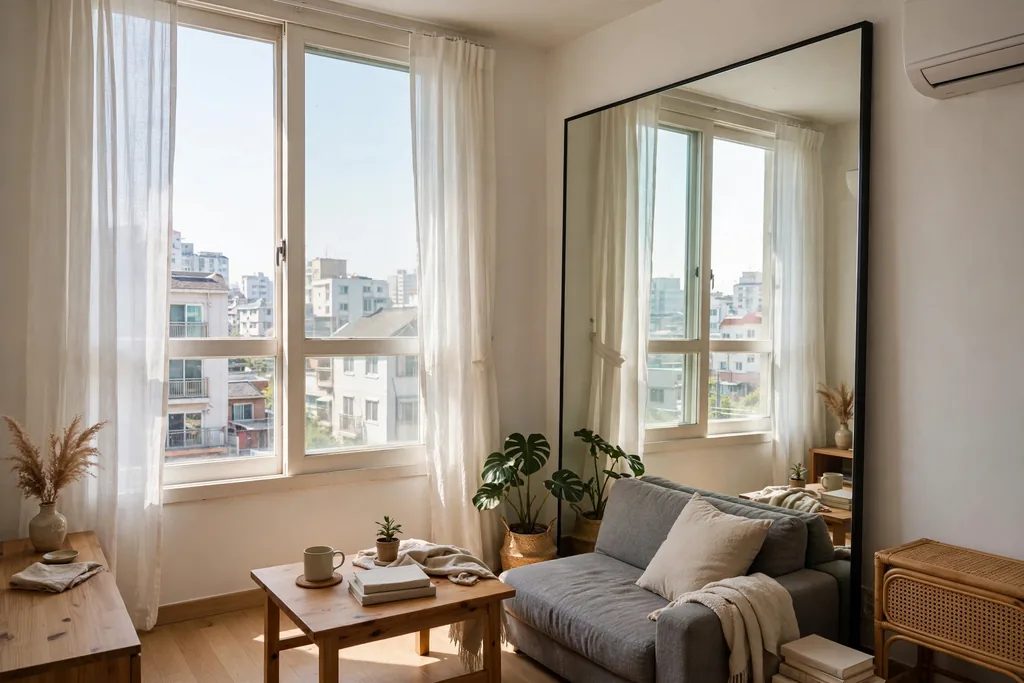
Place a large mirror opposite or beside a window to bounce daylight deeper into the room and make the far wall feel farther away. In a small apartment, that extra sense of depth matters, because the room has no hallway or second room to give your eyes a break. Lean a full length mirror against the wall if hanging is not allowed, and secure it so it cannot slide on a smooth floor.
Check what the mirror reflects before you fix its position, since a mirror that reflects a messy corner doubles the mess. Aim it toward the window, a plant, or a calm stretch of wall for the best result. One large mirror usually works better than several small ones scattered across the room, and a simple frame in light wood or black suits most Korean inspired rooms.
19. Layered Warm Light for Evenings
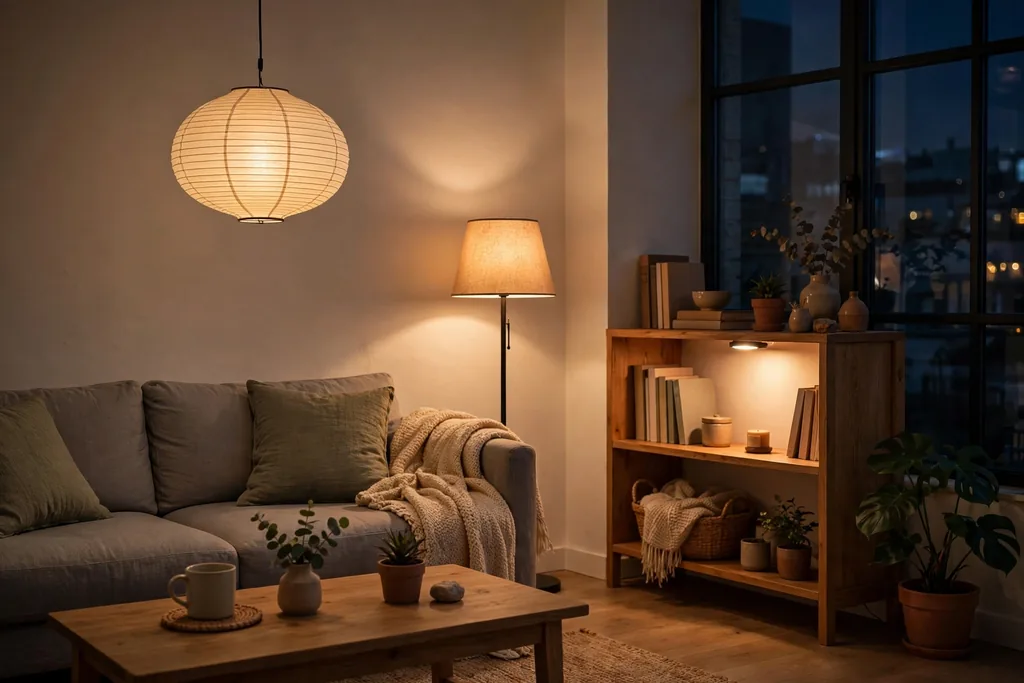
Layer light at three levels for evenings: a soft ceiling or paper light for the whole room, a floor or table lamp where you sit, and a low glow on a shelf or side table. A single ceiling light flattens a small room and feels harsh after dark, while layered light lets you shift from a bright daytime room to a calm evening one. Use warm white bulbs throughout, so the levels agree rather than clash.
Put the brightest light where you need to see, such as beside the reading chair, and keep the overall level soft in the evening. Dimmable bulbs or smart plugs let you change the mood without rewiring, which matters in a rental where electrical changes are limited. Switch off the harsh overhead light after dinner and let the lamps set a calmer mood for the night, with a small light left on near the entry for coming home.
20. Textile Layers for Warmth Without Clutter
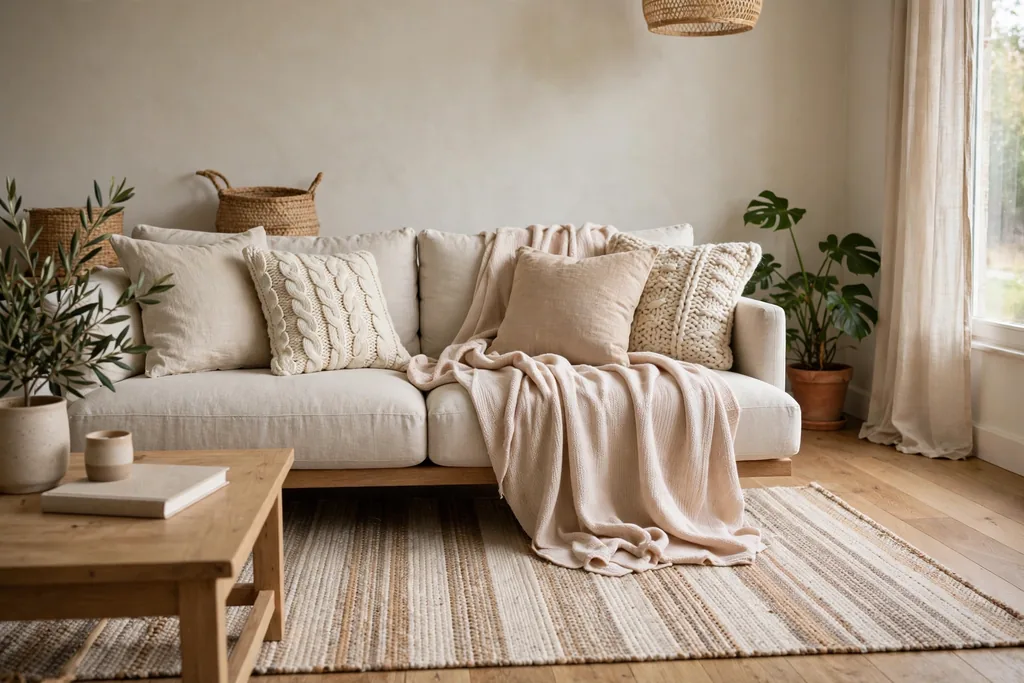
Layer textiles for warmth: a flat weave rug to anchor the seating, a softer rug or throw on top in the sitting zone, and cushions in two textures such as linen and knit. Hard apartment floors can feel cold and echoey, and textiles soften them faster than new furniture. Start with the rug, since it defines the seating group, then add a throw folded over one sofa arm and cushions that repeat one accent color.
Choose washable covers where you can, since apartment seating sees daily use, and shake out or vacuum the layers regularly so they stay fresh. Limit strong color to two or three accents, such as a cushion, a piece of art, and a plant pot, and repeat those accents in more than one spot so the room feels connected. Remove one item for every new decorative piece you add, and the room will stay warm rather than crowded.
21. Display Shelf for Books and Keepsakes
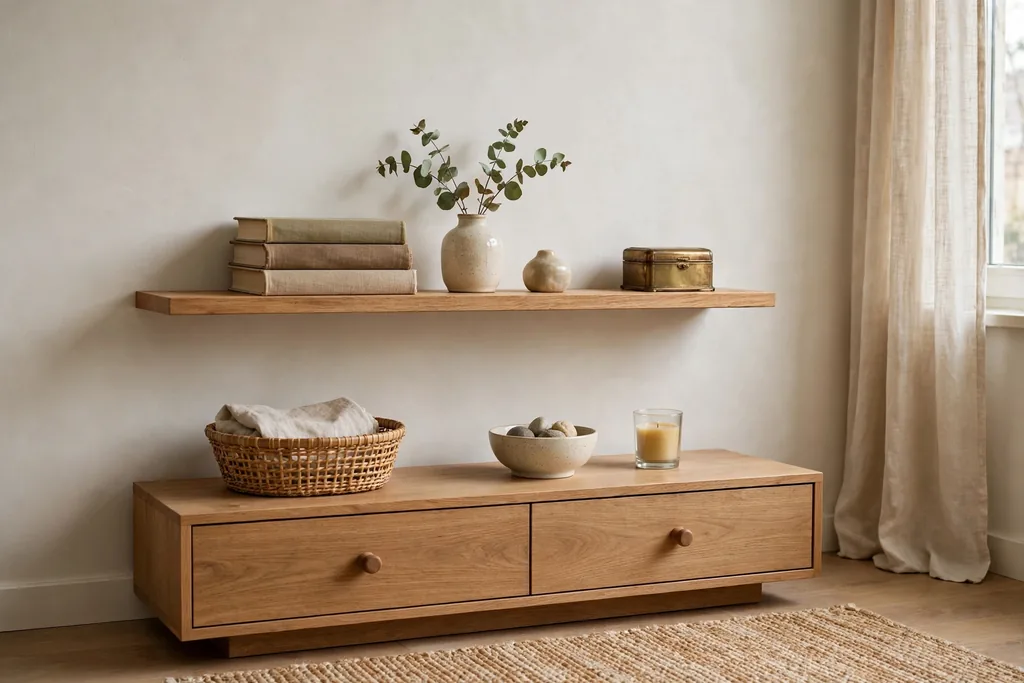
Dedicate one shelf, not every shelf, to books and keepsakes, so display feels chosen rather than crowded. A single display shelf with books, a small vase, and one or two meaningful objects gives the room personality without filling every surface. Arrange books in a mix of upright rows and one flat stack, and leave empty space at one end so the shelf looks intentional.
Keep the rest of the shelving for closed storage or plain daily items, so the display shelf stands out. Rotate the display with the seasons or when you find a new print, rather than adding more objects each time. Use a picture ledge for art you can swap easily, which suits renters who want to limit holes, and lean the largest frame at the back with smaller frames in front.
22. Dining Nook With Bench Seating
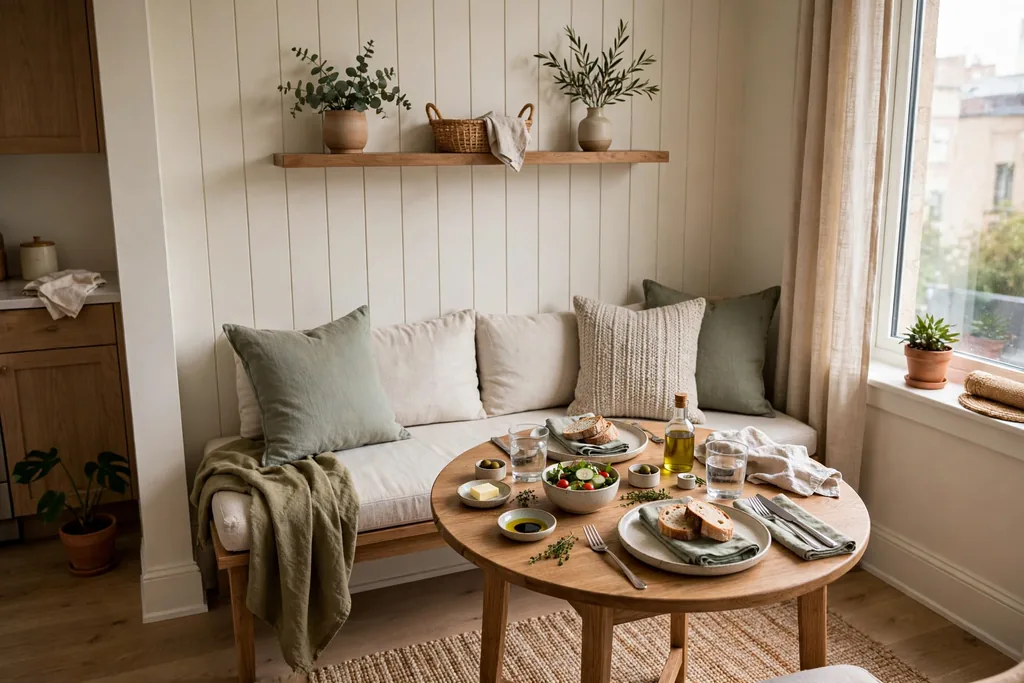
Build a dining nook with a bench against the wall and a small table, so a tight corner can seat three or four people without a full dining set. A bench tucks close to the wall, needs no chair clearance behind it, and can hold storage underneath for placemats or board games. Pair it with one or two chairs on the open side, so people can slide in and out with ease.
Keep the table size modest, with room for plates and a low centerpiece that people can talk across, and store extra placemats and napkins in a nearby drawer or basket. A cushion on the bench makes a long meal comfortable, and a washable cover keeps it practical near food. Site the nook near the kitchen if you can, so carrying food is short, and keep the route to the table clear.
23. Bathroom With Warm Wood and Closed Storage
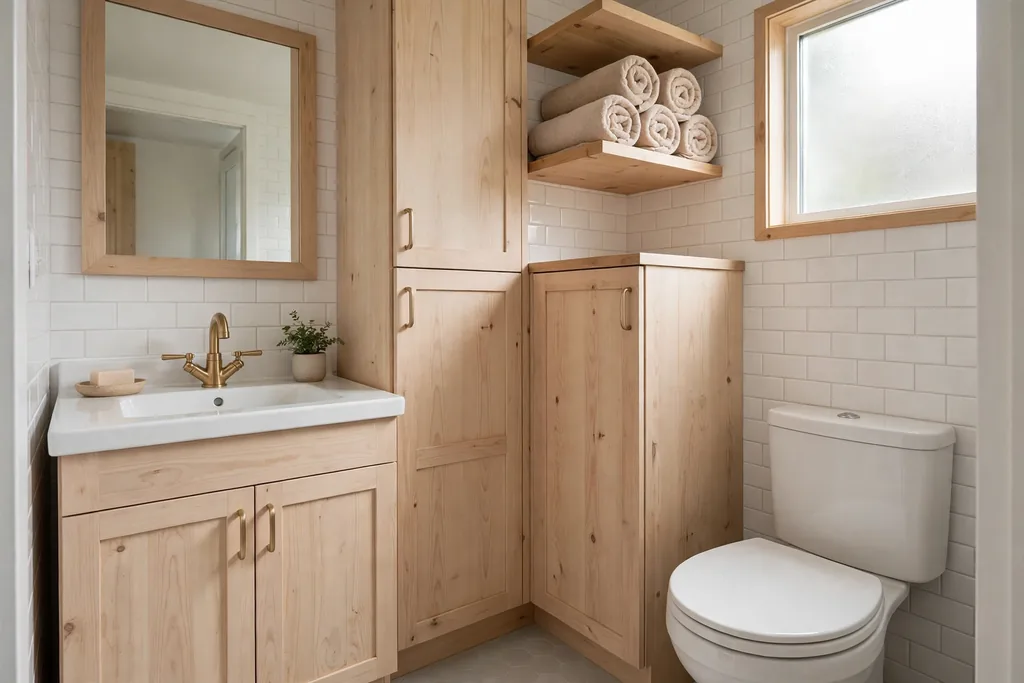
Warm up a plain bathroom with light wood accents, such as a wood framed mirror, a wood tray, and a wood stool, paired with closed storage for toiletries. Wood softens tile and white fittings, and closed storage keeps counters clear, which matters most in a small bathroom. Choose wood items made for damp rooms, and wipe them dry after showers so they last.
Add a wall shelf above the toilet or beside the mirror for daily items, with matching dispensers so the shelf reads as tidy. Keep towels rolled on the shelf or in a basket, and store backup supplies in a cabinet rather than on the counter. A small plant that suits humidity, placed where it will not be splashed, adds green without taking counter space, and a warm light bulb keeps the room from feeling clinical.
24. Balcony Drying and Laundry System
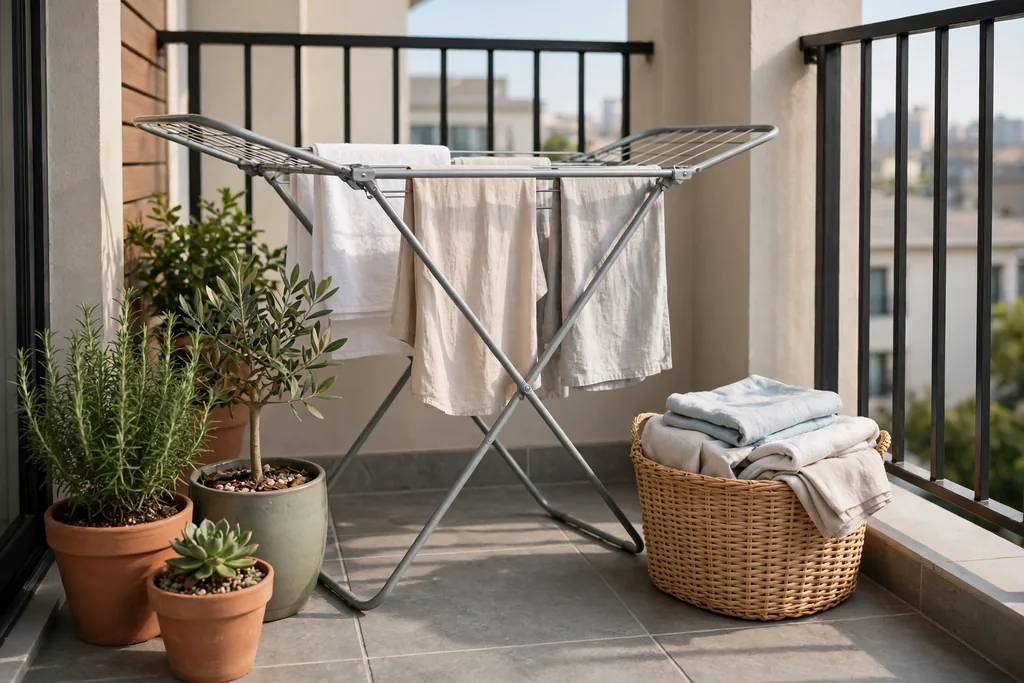
Set up a tidy laundry system on the balcony or in a utility corner, with a folding drying rack, a basket for clean laundry, and a small shelf for supplies. Many small apartments dry clothes indoors or on a balcony, and a planned system keeps that daily job from taking over the living room. Choose a rack that folds flat against the wall when not in use, and keep pegs and hangers in one small box.
Sort laundry into one basket for washing and one for folding, so clean clothes do not pile on chairs. If the balcony is the drying spot, keep the rack clear of the tea nook seat and the door route, and bring clothes in before evening damp sets in. A lidded basket for dirty laundry near the bathroom or bedroom stops piles from forming in the living area, and a weekly laundry day keeps the system working.
25. Seasonal Bedding and Curtain Swap
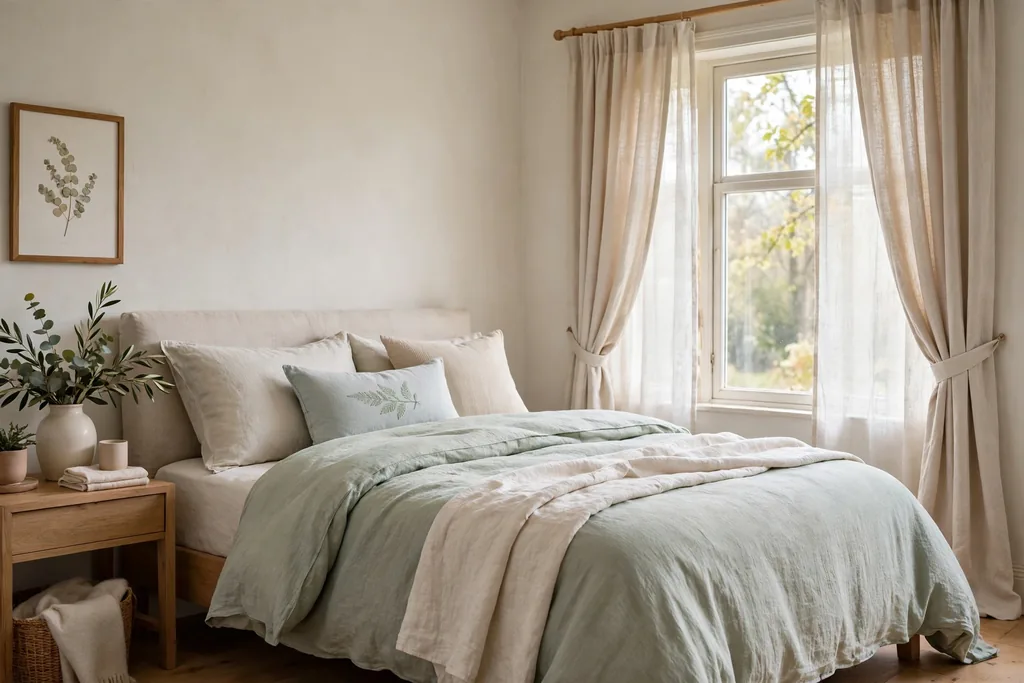
Swap bedding and curtains with the seasons to change the feel of the apartment without buying new furniture. Use lighter cotton bedding and sheer curtains in warm months, and warmer bedding with heavier curtains in cold months, so the room suits the weather and feels fresh twice a year. Store the off season set in one labeled box under the bed or on top of the wardrobe.
Choose curtain colors that match the bedding accent, so the swap feels planned across the room, and wash the stored set before you pack it away. A seasonal swap is also a good time to check cushions, throws, and rugs for wear, and to rotate the display shelf. Keep the swap to one afternoon, and put the new set on the bed and windows the same day, so the room changes in one clear step.
26. Hidden Storage in Every Room
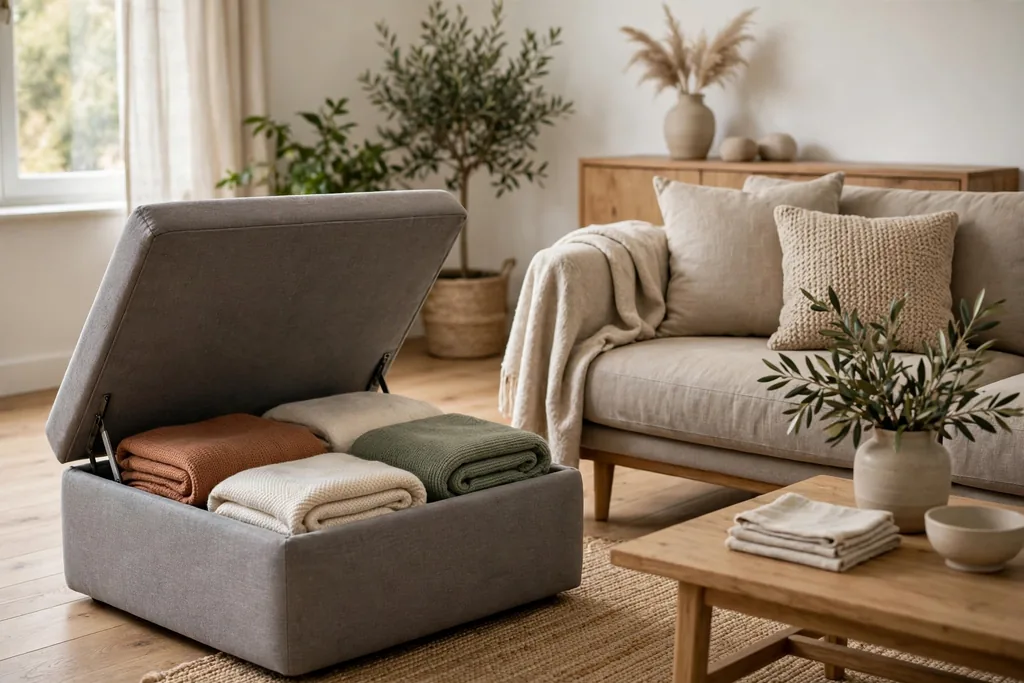
Give every room one piece of hidden storage: a storage ottoman in the living room, a platform bed in the bedroom, a bench with a lid in the entry, and a cabinet in the bathroom. Hidden storage keeps daily clutter out of sight without adding more furniture to the floor plan, and it makes tidying a matter of putting things back rather than deciding where they belong. Choose pieces with lids or doors that open fully without hitting nearby furniture.
Keep only items you reach for often inside each hidden store, because a storage seat filled with things you never use becomes a box you never open. Label boxes inside wardrobes and cabinets, and do a short reset once a week, walking each room with a basket and returning anything that has drifted out of place. When everything has a home, a small apartment stays calm even on busy days.
27. Calligraphy and Print Accent Wall
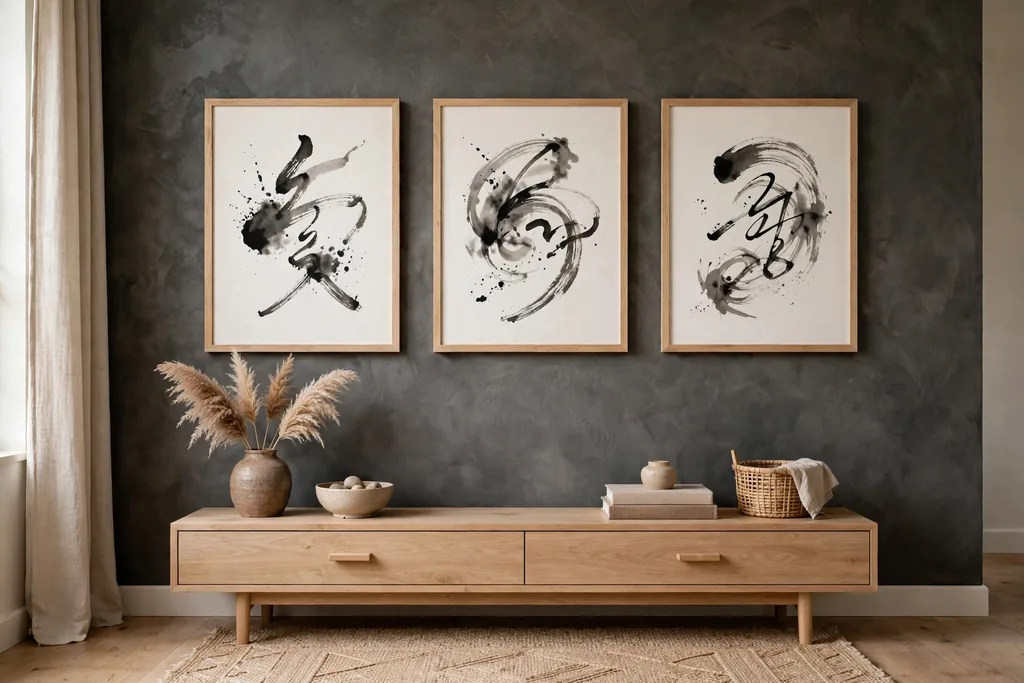
Create one accent wall with framed Korean calligraphy, a Hangul print, or a simple landscape print in a plain frame, rather than covering every wall with art. One focused wall gives the room a cultural anchor and a talking point, while the other walls stay calm and give the eye rest. Choose prints in muted colors that match the room accent, and keep frames in one finish, such as light wood or black, so the group reads as a set.
Hang the group at eye level above a sofa, a low console, or the bed, and lay the frames on the floor first to test the layout before anything goes up. Use adhesive strips or picture ledges if drilling is not allowed, and check the weight rating for each frame. Leave one wall in the room free of art, so the accent wall stands out and the small room does not feel crowded.
28. Small Kitchen Table for One or Two
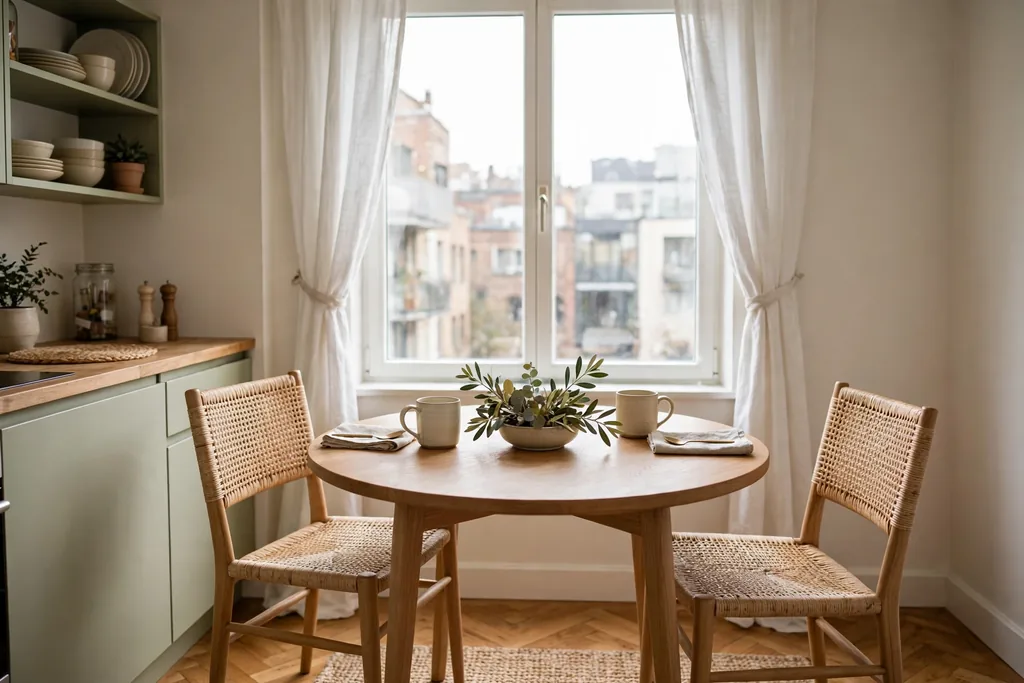
Set a small round table for one or two people in the kitchen corner or by a window, so everyday meals have a proper place even when a full dining room is missing. Eating at a table, even a small one, turns a solo dinner into a pause in the day rather than a task finished standing up. Choose a pedestal base, so chairs tuck in and no one bumps a corner leg, and keep the centerpiece low and moveable.
Store placemats and napkins in one nearby drawer, so setting the table does not become a search through cupboards, and keep the table clear between meals so it can switch to work or a puzzle. The solo living ideas in these solo apartment ideas show how one small table can serve meals, work, and guests in a home for one person. A round table also suits a tight corner, since it has no sharp corners to catch a hip in a walkway.
29. Evening Wind Down Corner With Tea
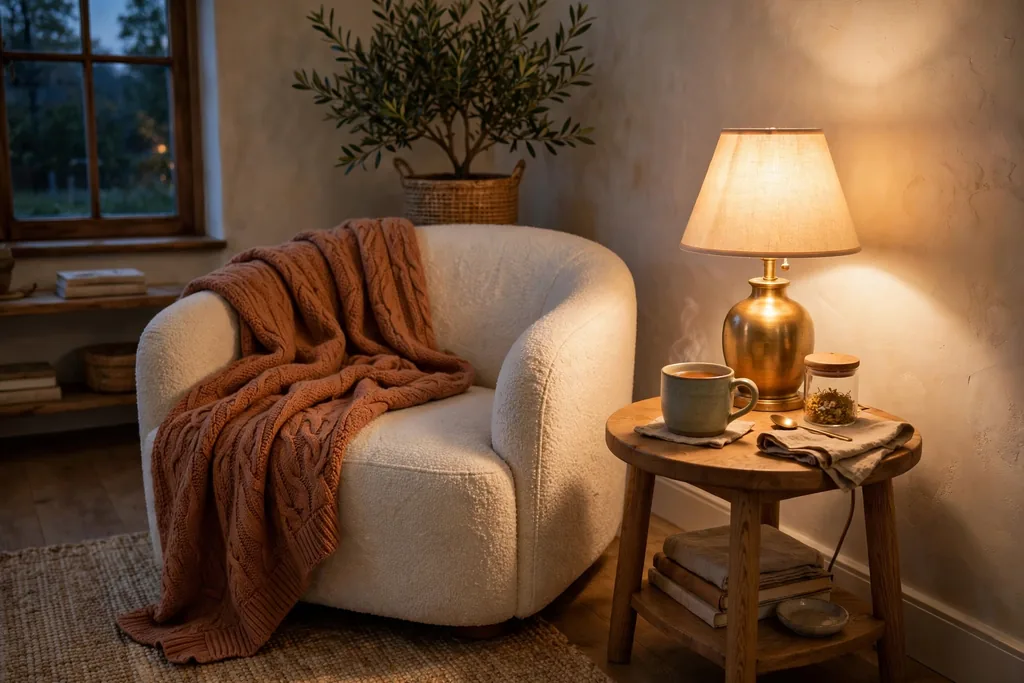
Finish the apartment with an evening wind down corner: a comfortable chair or floor cushion, a small side table for tea, a warm lamp, and a basket for a book and a throw. A wind down corner gives the end of the day a place of its own, separate from the work corner and the dining table, so evenings feel slower and more restful. Keep the corner away from screens where possible, or turn the main screen off when you sit there.
Set a simple tea ritual for the corner: a teapot or mug, a small tray, and a place for the cup when you finish, so the corner is ready each evening without setup. Add a candle style light or a dim lamp, and keep the throw folded in the basket so the corner looks inviting even when empty. Use the corner for reading, tea, and quiet talk, and let it be the last lit spot in the apartment before bed.
Conclusion
A Korean apartment feels cozier when the base stays calm, the furniture stays low, and every daily routine has a small, clear spot. Start with warm wood and white, one comfortable seat, and layered light, then add the storage, textile, and balcony ideas that solve your biggest daily frustrations. Try one or two ideas this weekend, live with them for a week, and adjust before adding more. Pick the idea that fits the room you use most, set it where you will actually sit, eat, or sleep, and let the rest of the apartment grow around it one calm layer at a time. Save this list on Pinterest before your next home trip, and work through it one room at a time.
FAQs
How can I make a small Korean apartment feel cozy without clutter?
Start with a calm base of warm white and light wood, then add warmth through textiles and light rather than more objects. Use a rug to anchor seating, layer light at more than one level, and give every everyday item a home in closed storage. Add one accent color in cushions and art, and remove one item for every new decorative piece you bring in, so the room stays warm rather than crowded.
What colors work best for a Korean apartment?
Warm white, soft beige, and light wood form a calm base that suits small rooms and daylight. Add muted accents such as sage, soft blue, dusty pink, or warm grey in cushions, throws, and art, and repeat one accent in two or three spots so the room feels connected. Keep strong color to small, moveable items, so you can change the mood without repainting or replacing large furniture.
Is low furniture practical in a small apartment?
Yes, when it is chosen for comfort as well as looks. A low platform bed, a low sofa, and a low table leave more wall visible, which helps a small room feel taller, and they pair well with floor cushions and rugs. Check seat heights before you buy, add a backrest cushion for floor seating if needed, and keep walkways clear, so low furniture feels restful rather than hard to use.
How do I add Korean style to a rental without permanent changes?
Use renter friendly pieces first: freestanding shelves, curtains on a track or tension rod, picture ledges, rugs, paper lamps, and low furniture that moves with you. Avoid drilling, painting, or changing fixed fittings until you check your lease, and use adhesive strips rated for the weight of each frame. A calm base, warm wood tones, and soft light give the Korean inspired feel without any permanent work.
What is the easiest Korean apartment idea to start with?
Start with bedding, light, and one rug. Swap in neutral bedding with one soft accent throw, add a paper shaded lamp for warm evening light, and lay a rug that anchors the main seating group. These three changes affect how the room feels every day, need no building work, and cost less than new furniture. Once that base works, add a floor seating corner or a display shelf one step at a time.
How can I store more in a Korean apartment without adding bulky furniture?
Use furniture that does two jobs and storage that hides away: a platform bed with drawers, a storage ottoman, a bench with a lid in the entry, and a wardrobe wall with closed doors. Take storage up the wall on one wall only, keep heavy items low, and use boxes inside cabinets so each category has a home. A short weekly reset keeps hidden storage working, since a tidy inside is what keeps the outside looking calm.