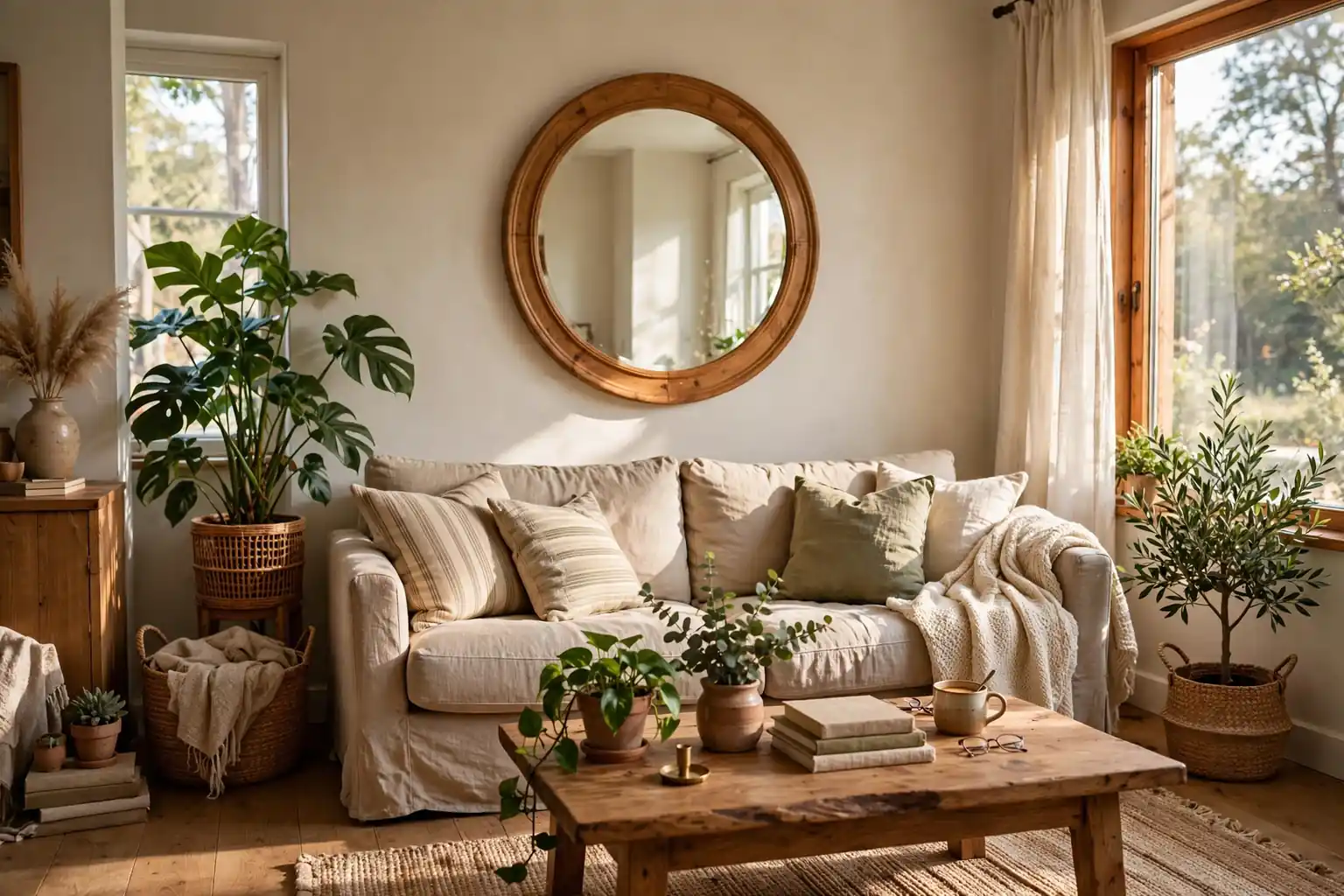
A mirror on the wall does more than show a reflection. It brings in light, opens up a small room, and gives a plain wall a clear focal point. The trick is to hang it where it reflects something worth seeing, such as a window, a plant, or a calm stretch of wall, and to size it to the furniture below it. These 11 mirror wall decor ideas cover round, arched, and sunburst mirrors, gallery walls, leaning mirrors, and full mirrored panels, so you can find one that fits your room and your budget. Start by standing where you sit most and noting what the mirror would reflect.
Key Takeaways
- Check the reflection before you hang anything: aim the mirror at a window, a plant, or a calm wall, never at clutter.
- Size the mirror to the furniture below it, usually about two thirds of the sofa, console, or mantel width.
- Hang the center of a mirror at eye level from where you see it most, and lower above a sofa or console.
- Use fixings rated for the mirror weight and your wall type, especially for large or vintage framed mirrors.
- One large mirror suits a big wall, while a grid or a tight cluster works better on a narrow wall.
- Keep the rest of the wall quiet around a statement mirror, so the mirror stays the focal point.
1. Round Mirror Above the Sofa
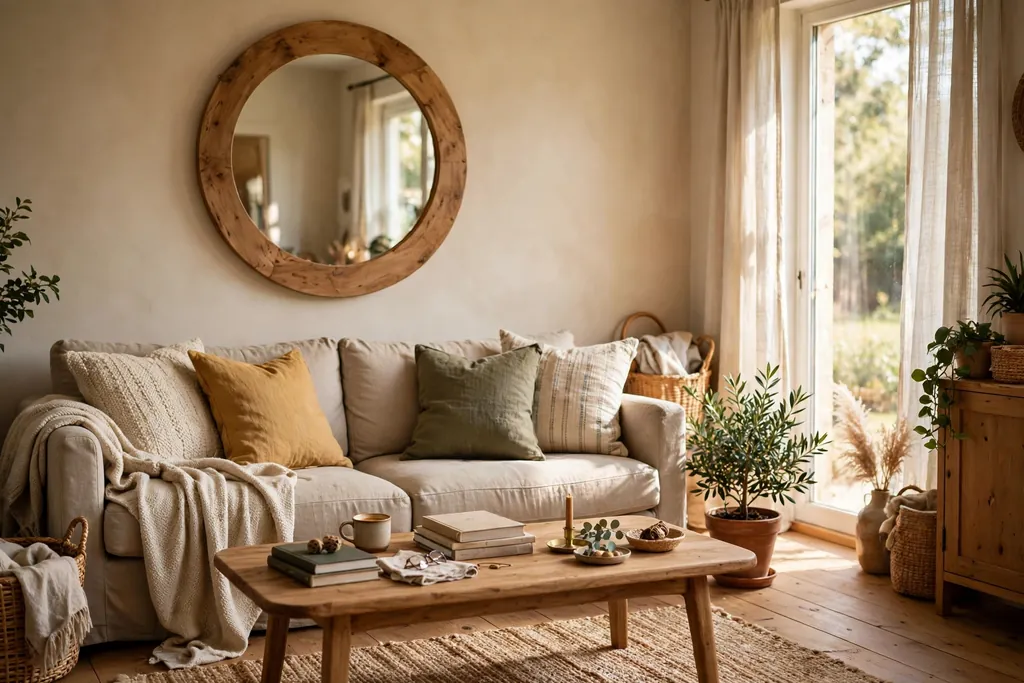
Hang one large round mirror above the sofa for a simple focal point that softens a wall full of straight lines. The curve breaks up the rectangle of the sofa, the rug, and the coffee table, and it suits almost any style, from plain wood frames in a calm room to brass frames in a warmer one. Choose a diameter that spans about two thirds of the sofa width, so the mirror looks sized to the furniture rather than lost above it.
Hang it so the bottom edge sits 6 to 8 inches above the sofa back, and check the reflection from your usual seat. A round mirror above the sofa should reflect the opposite wall or a window, not the ceiling. If the wall is very wide, add a small sconce or a plant on each side, but keep the sides simple so the round shape stays the focus.
2. Leaning Full-Length Mirror in a Corner
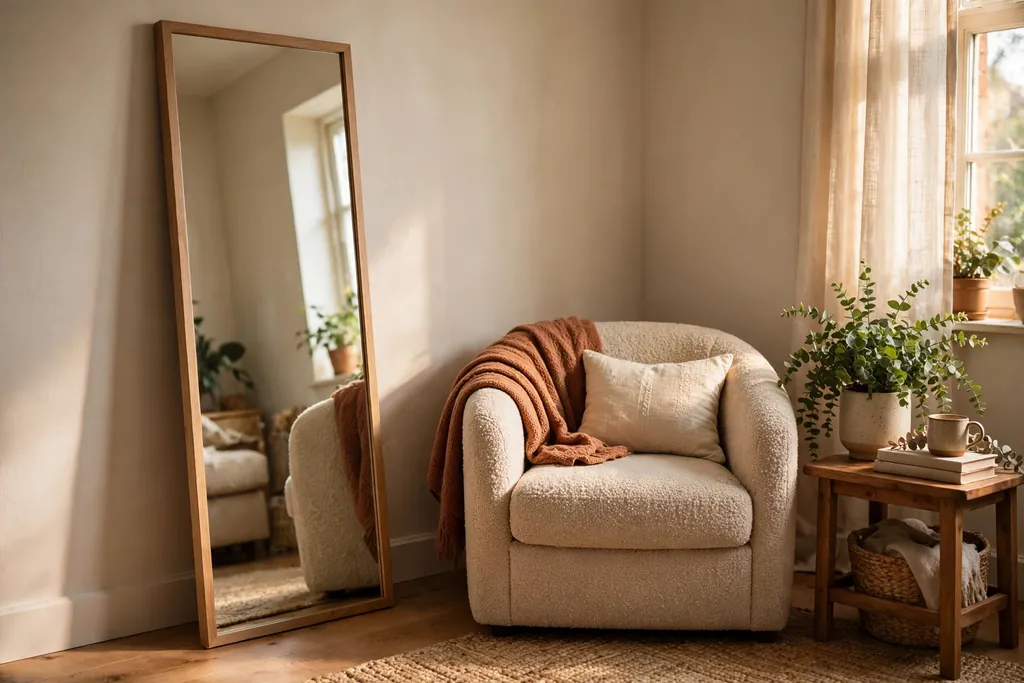
Lean a full-length mirror against the wall in a corner for a relaxed look that needs no hanging at all. This suits renters and anyone who rearranges often, since the mirror moves in seconds and leaves no holes. Choose a mirror taller than the side table or chair beside it, so it reads as a deliberate piece rather than a mirror waiting to be hung.
Anchor the top edge to the wall with a small anti-tip strap if children or pets could knock it, and place a non-slip pad behind the bottom edge so it cannot slide on a hard floor. Keep it out of the main walkway, and angle it slightly so it reflects the window or the seating area. A leaning mirror also gives a last look before leaving the house when it stands near the door.
3. Grid of Matching Square Mirrors
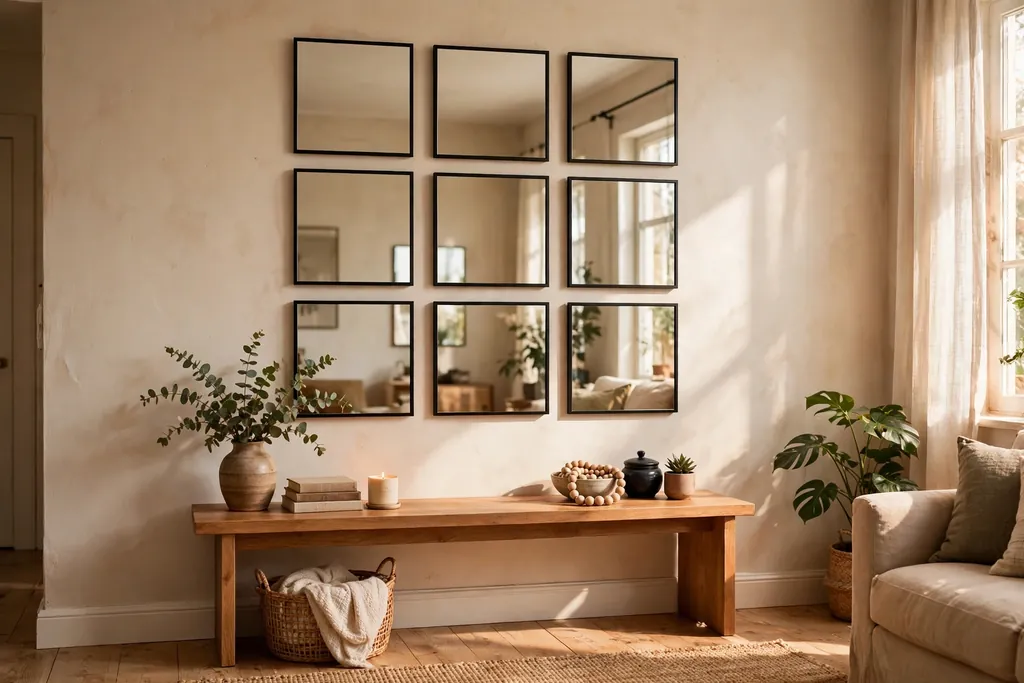
Hang a grid of matching square mirrors for instant order on a wall that feels bare. Use nine mirrors in three rows of three, or six in two rows of three, with equal gaps of 2 to 3 inches between them. Keep the frame color the same across the grid, and let the small differences in reflection give the display its life.
This layout works well above a console table, on a hallway wall, or on the wall opposite the bed. Lay the mirrors on the floor first, measure the full block, and mark the wall with painter tape before you hang anything. A grid suits a room that already has a lot of pattern elsewhere, since the even spacing keeps the wall calm.
4. Arched Mirror Over a Console Table
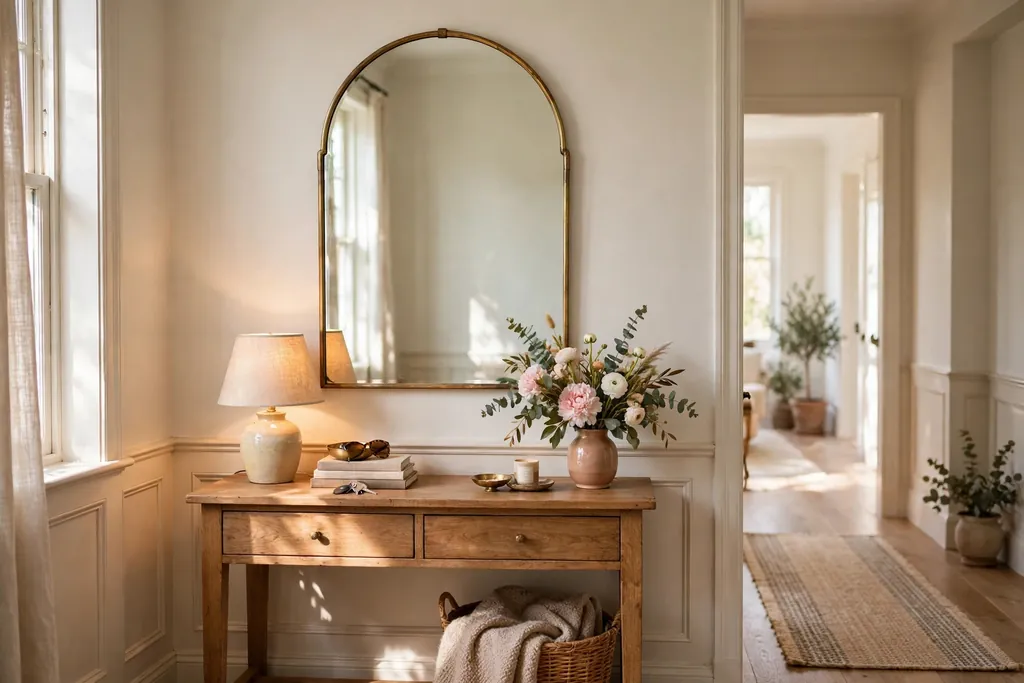
Place an arched mirror over a console table in a hallway or living room for a soft, classic shape that suits narrow walls. The arch draws the eye upward, which helps a low ceiling or a tight entry feel taller, and the console below gives the mirror a clear base. Match the mirror width to about two thirds of the console width, and keep the tabletop simple with one lamp, a small vase, or a bowl.
Hang the mirror so its lowest point sits 6 to 8 inches above the tabletop, leaving room for the lamp or vase in front of it without blocking the glass. A wood frame suits a warm room, while a slim black or brass frame suits a plainer scheme. If the console holds keys and mail, add a small tray so the reflection stays tidy.
5. Mixed-Shape Mirror Gallery Wall
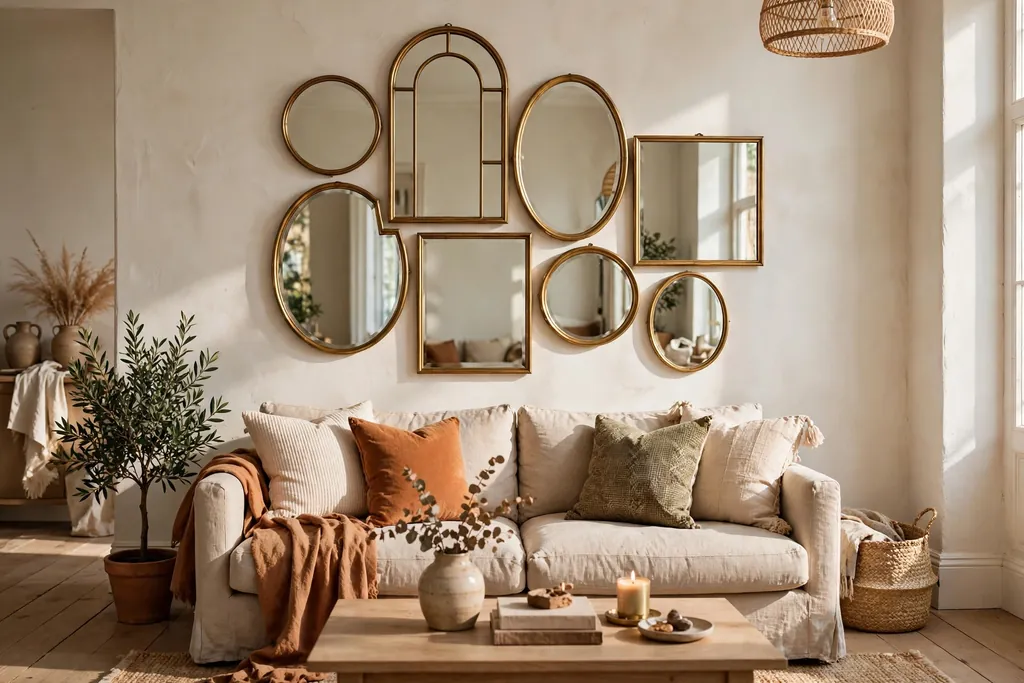
Build a gallery wall from mirrors in mixed shapes, such as round, oval, arched, and rectangular pieces, for a collected display that still reads as one piece. This suits a wall that needs interest but cannot take a single huge mirror, such as a stair wall or a wall beside a door. Keep one element consistent, such as brass frames or wood frames, so the mix looks planned rather than random.
Hang the largest mirror first, near the center of the arrangement, then fill around it with smaller pieces, keeping gaps of 2 to 4 inches. Check each reflection as you go, since a gallery of mirrors can easily reflect clutter from several angles. For spacing and grouping advice, the grid and cluster ideas in these bedroom wall art ideas apply just as well to a mirror gallery.
6. Sunburst Mirror as a Statement Piece
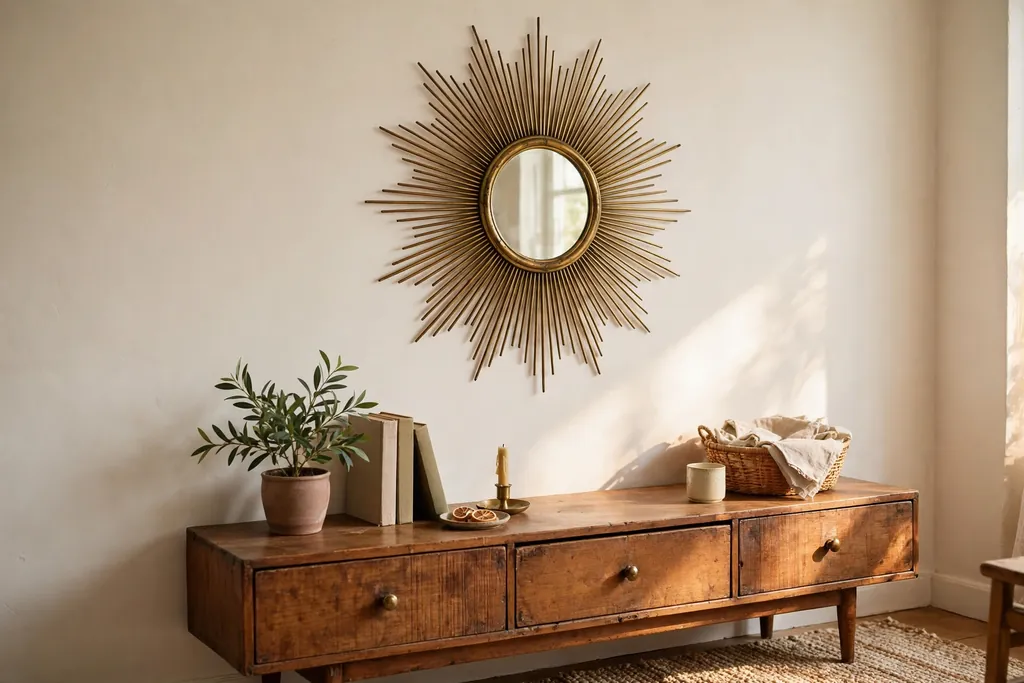
Hang a sunburst mirror on a plain wall for a statement piece that needs no other art beside it. The rays give the wall shape and movement, and the small central mirror bounces a little light without dominating the room. This suits a wall above a sideboard, in a dining area, or at the end of a hallway, where a flat mirror might feel plain.
Keep the wall around it empty and the nearby furniture simple, since the rays already carry plenty of detail. Choose a size that fits the wall with clear space on all sides, and hang it at eye level from a standing view. A gold or brass sunburst suits a warm room, while a black or wood version suits a quieter scheme. Dust the rays now and then, since they show dust faster than a flat frame.
7. Floor-to-Ceiling Mirrored Panels
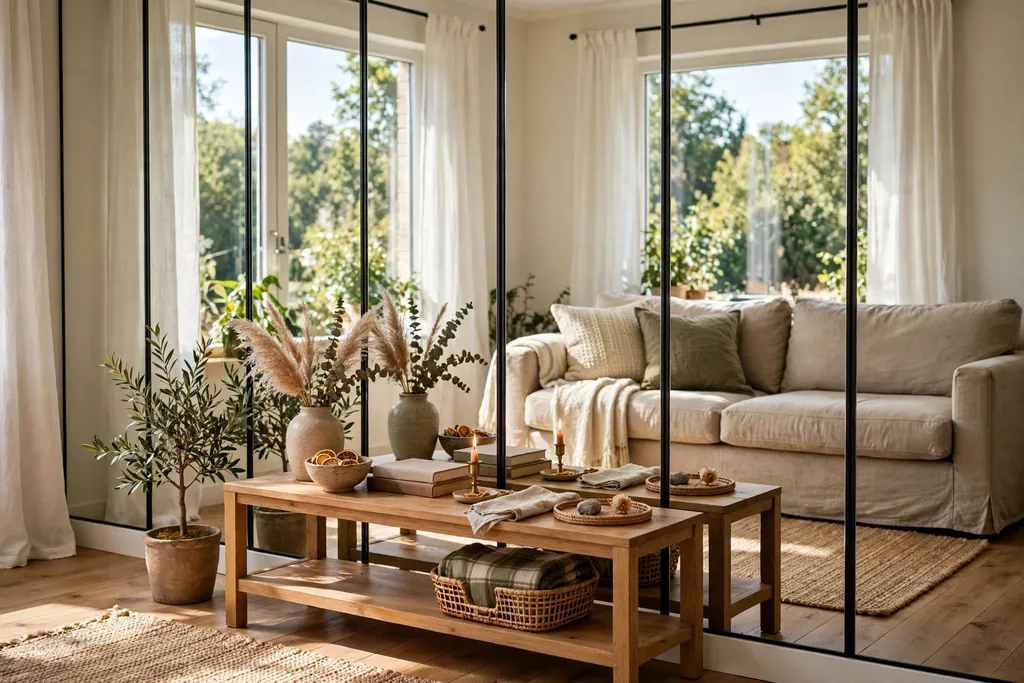
Fit floor-to-ceiling mirrored panels on one wall to open up a small or dark room. Full panels bounce the most light and double the sense of space, which helps a narrow living room, a basement room, or a room with one small window. Use panels with slim seams, and keep the wall opposite the panels calm, since every detail there will be reflected.
This is a bigger job than hanging one mirror, so measure carefully and fix the panels with hardware suited to their weight, or hire a fitter for large panels. Keep furniture in front of the panels low and simple, such as a low console or a bench, so the reflection stays clean. Avoid mirrored panels on a wall that faces a television, since the moving reflection can distract viewers.
8. Vintage Framed Mirror With Patina
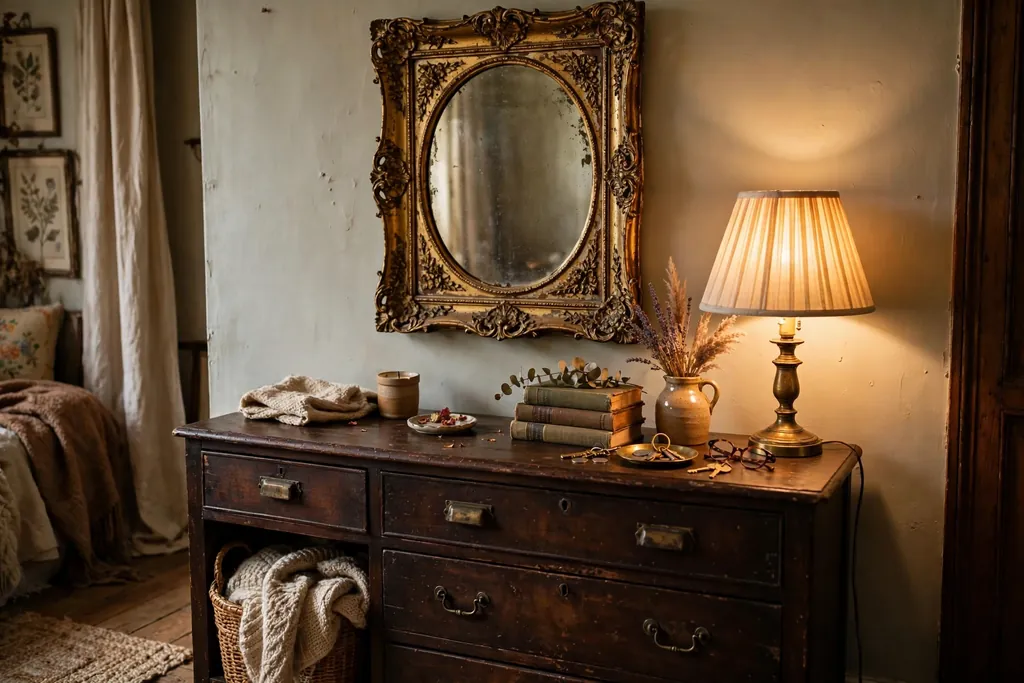
Hang a vintage framed mirror with a worn gold or dark wood frame for a settled, traditional feel. The patina and aged frame add character that a new mirror cannot match, and it suits wooden furniture, warm lamp light, and rooms that already mix old and new pieces. Look for a frame with sound joints and a clear, undamaged mirror, since resilvering an old mirror is a specialist job.
Use fixings rated for the weight, since vintage frames with thick wood and old glass are often heavier than they look, and check the wall type before hanging. Hang it above a dresser, a console, or a fireplace, where the frame can be seen up close. If the mirror has foxing or small age spots, treat them as part of the piece rather than a flaw, and keep the rest of the wall plain so the frame stands out.
9. Mirror Above the Fireplace Mantel
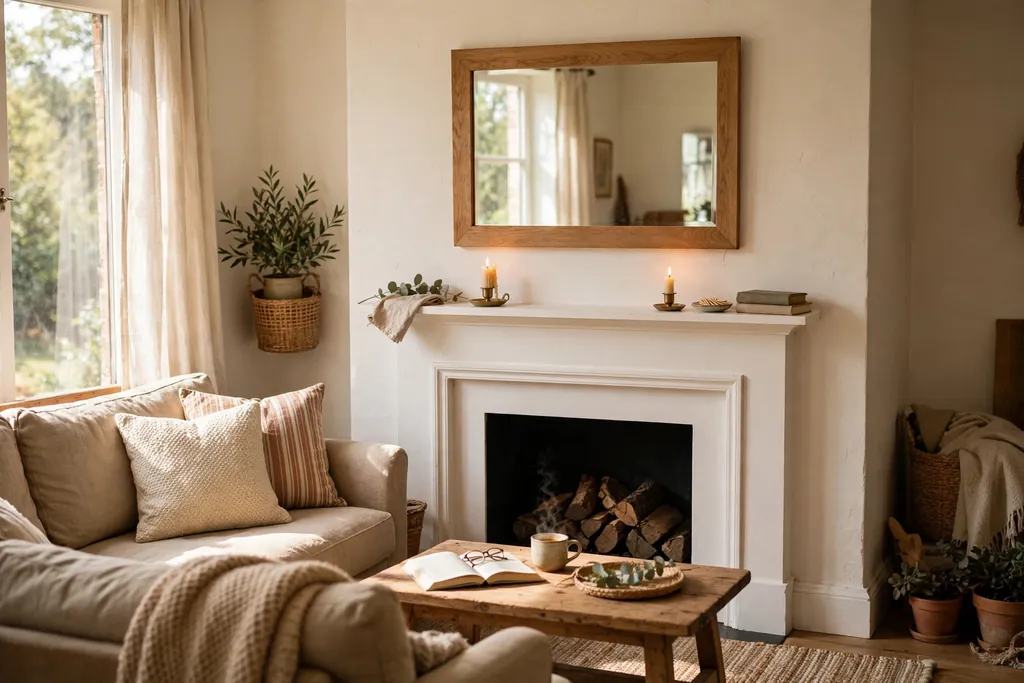
Hang a mirror above the fireplace mantel to give the fireplace a finished focal point and to bounce light around the seating area. A rectangular mirror that matches the mantel width, or a round mirror centered above it, both work, as long as the mirror does not extend past the mantel ends. Keep the mantel itself simple, with one or two low items, so the mirror stays visible.
Check what the mirror reflects from the sofa, since a mantel mirror often faces the seating area and can reflect the television or a cluttered shelf. If the fireplace is used often, hang the mirror high enough that heat and soot do not reach it, and wipe it regularly, since mantel mirrors show dust fast. A plain frame suits a busy mantel, while a detailed frame suits a plain one.
10. Layered Mirrors on a Picture Ledge
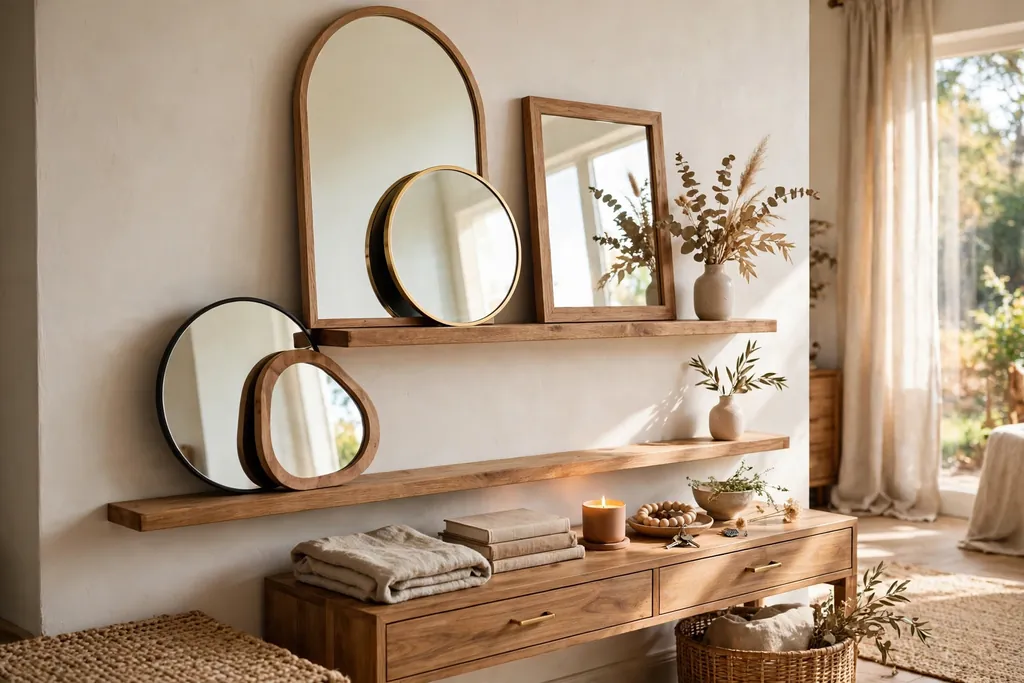
Stand mirrors on a picture ledge for a display you can rearrange without new holes in the wall. Fit one or two long ledges above a console or a sofa, then layer mirrors of different sizes, with larger pieces at the back and smaller ones in front. You can swap a mirror in minutes, which makes ledges ideal for testing a layout before you hang anything properly.
Keep the ledge depth in mind: shallow ledges suit flat framed mirrors, while deeper ones hold small objects such as a vase or a candle beside the mirrors. Leave one end of the ledge empty so the display does not look packed, and use a small lip or rail on the ledge so mirrors cannot slide forward. This idea suits renters and anyone who likes to change the display with the seasons.
11. Mirror Opposite a Window to Bounce Daylight
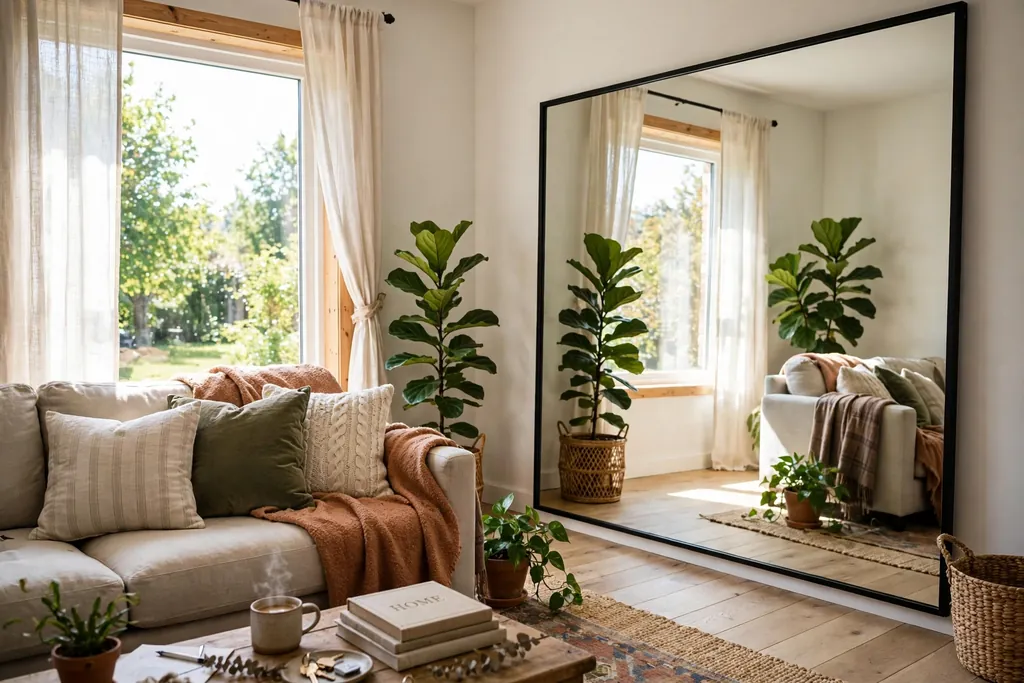
Hang a large mirror on the wall opposite a window to bounce daylight across the room and make it feel wider. This is the most useful mirror placement in a room with one window or a north facing aspect, where light is limited. Place it where it reflects the window itself or a pleasant view, not a cluttered corner, and keep its frame in the same finish as other pieces in the room.
Keep the mirror large enough to matter, rather than a small decorative piece, and hang it securely with fixings suited to its weight. Wipe it often, since a mirror facing a window shows dust and fingerprints faster than one on a side wall. This placement also suits a combined living and dining room, as shown in these small living room dining room combo ideas, where one mirror can brighten both zones at once.
Conclusion
A welcoming mirror wall starts with the reflection, not the frame. Check what the mirror will show from your usual seat, size it to the furniture below it, and hang it securely at a height that suits the room. Start with one idea from this list, such as a round mirror above the sofa or a mirror opposite the window, and live with it for a week before adding more. A single well placed mirror will do more for a room than a wall full of small ones hung at random. For sizing and grouping help, the rug placement advice in these living room rug ideas and the gallery spacing ideas in these bedroom wall art ideas pair well with the mirror ideas above.
Keep this list handy for your next free hour at home, and build your mirror wall one piece at a time: measure first, check the reflection, hang it well, and let the light do the rest.
FAQs
What size mirror should I hang above a sofa?
Choose a mirror about two thirds of the sofa width, so it looks sized to the furniture rather than lost above it or wider than the sofa. Hang it with the bottom edge 6 to 8 inches above the sofa back, and check the reflection from your usual seat before fixing it. A round mirror suits most sofas, while a rectangular mirror suits a wide sofa on a long wall.
Where is the best place to hang a mirror for more light?
Hang a large mirror on the wall opposite a window, so it reflects daylight back across the room. This works best in a room with one window or a north facing aspect, where light is limited. Keep the mirror large enough to matter, and aim it at the window or a pleasant view, not at clutter or a blank wall.
Can I hang a heavy mirror on a plasterboard wall?
Yes, if you use fixings rated for the mirror weight and the wall type, such as heavy duty plasterboard anchors or a fixing into a stud where one is available. Check the mirror weight on a scale if you are unsure, and follow the fixing maker instructions. For very large or vintage framed mirrors, a stud fixing or a professional fitter is the safer choice.
How high should I hang a mirror on a wall?
Hang the center of the mirror at eye level from where you see it most, usually around 57 to 60 inches from the floor for a standing view. Above a sofa, console, or mantel, hang it lower, with the bottom edge 6 to 8 inches above the furniture. In a hallway, hang it so most household members can see their full reflection or at least head and shoulders.
Is a leaning mirror safe in a home with children or pets?
A leaning mirror can be safe if you anchor the top edge to the wall with an anti-tip strap and place a non-slip pad behind the bottom edge so it cannot slide. Keep it out of main walkways and away from doors that could swing into it. If the corner is very busy, a wall hung mirror with proper fixings is the safer option.
How do I keep a mirror wall from looking cluttered?
Let one mirror or one tight group lead, and keep the rest of the wall quiet. Use matching frames for a grid, or one shared frame finish for a mixed gallery, and keep gaps even. Check every reflection before fixing, and remove any item the mirror shows that you would rather not double, such as open storage or a messy desk.