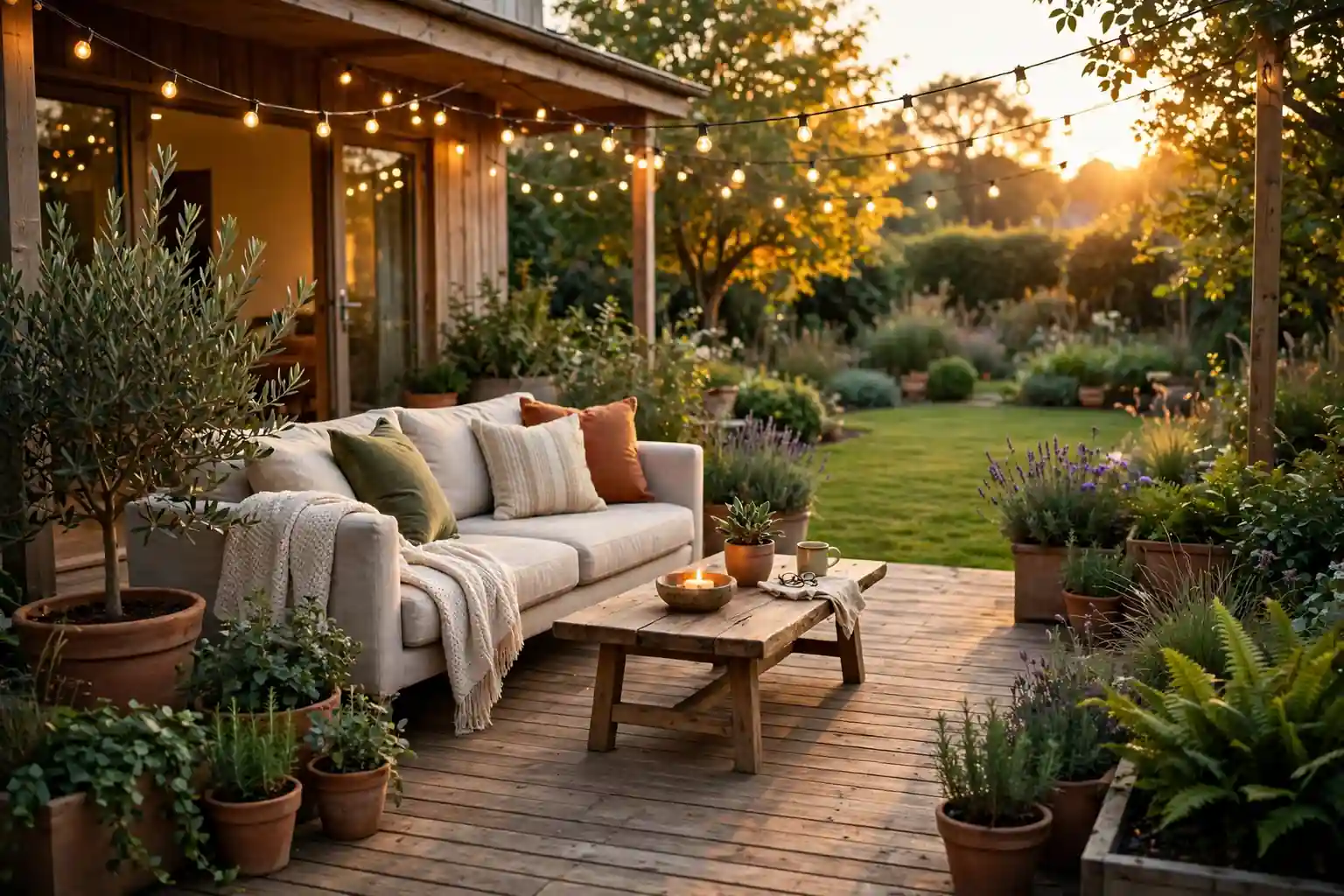
A ground level deck is the easiest outdoor room to love, because it sits close to the lawn, needs no long staircase, and connects the house to the garden in one step. It gives you a dry, level place for morning coffee, evening meals, and quiet reading, without the height and cost of a raised deck. These 30 ground level deck ideas cover boards, borders, seating, shade, lighting, and planting for a low deck that drains well and feels lived in. Start with a level base and one comfortable seat. For yards where the ground slopes, the ideas in these tiered garden ideas show how to give each level a clear job.
Key Takeaways
- Keep a ground level deck low, level, and well drained, with boards clear of soil and a gap for air under the frame.
- Choose boards for how you will use the deck: timber for warmth, composite for low upkeep, and a grippy finish for wet weather.
- Give the deck zones: one for sitting, one for eating, and one for planting, so it feels like a room, not a platform.
- Add shade, soft light, and a wind break early, since comfort decides whether you actually use the deck.
- Keep the step to the lawn low and wide, with a clear path and no trip edge at the door.
- Mix evergreen structure with seasonal pots, so the deck looks cared for in every season.
1. Wide Plank Timber Deck Flush with the Lawn
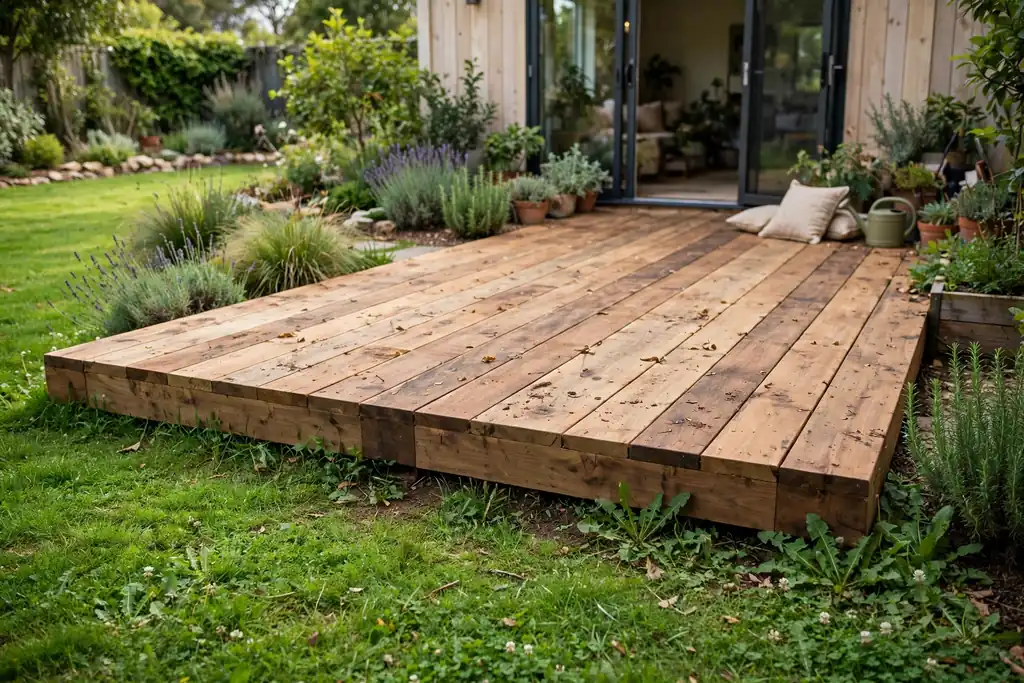
Lay wide plank timber boards so the deck surface sits almost level with the lawn, with only a small step down to the grass. A flush deck feels like part of the garden rather than a platform added on top of it, and it suits bungalows, patios doors, and homes where step free movement matters. Choose timber rated for outdoor ground contact, and keep the board ends clear of soil so air can move under the deck.
Leave small gaps between boards for drainage and for the timber to expand in wet weather, and brush the surface regularly so leaves do not trap damp. A warm brown or natural grey finish suits most gardens, and a clear oil finish, reapplied as the maker directs, keeps the boards from drying out and splintering.
2. Low Upkeep Composite Deck in Warm Grey
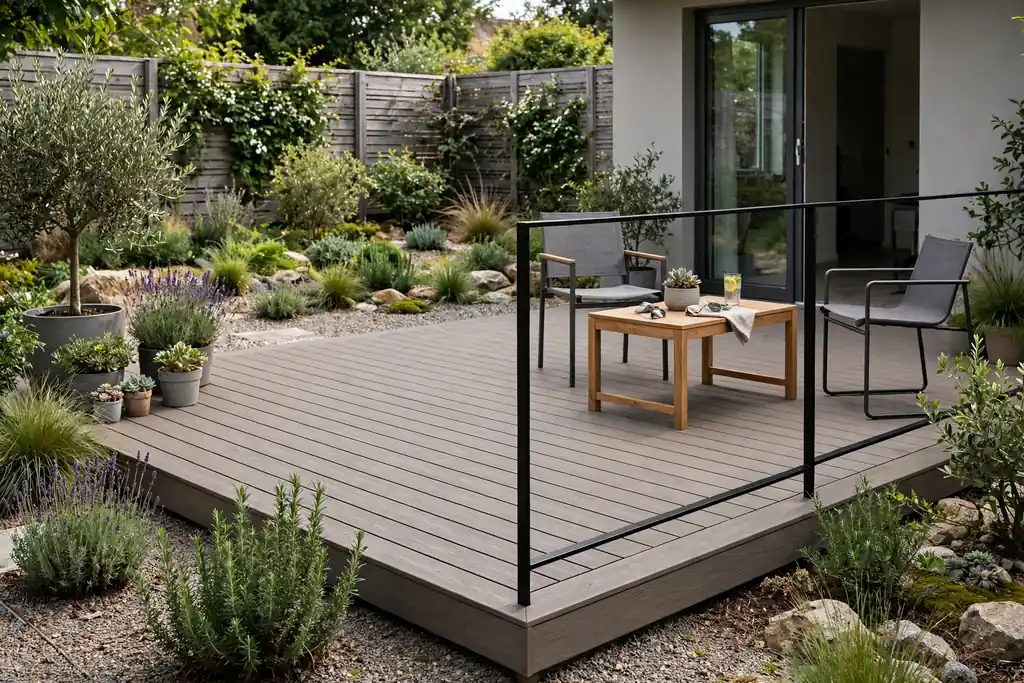
Choose composite boards in a warm grey for a ground level deck that needs little more than sweeping and an occasional wash. Composite suits busy households and shaded gardens, where timber would stay damp and need frequent oiling. The even colour also calms a mixed garden, letting planting and furniture provide the change through the seasons.
Check the board fixing system before you buy, since hidden clips give a clean surface with no visible screws, while face screws are easier to replace one board at a time. Keep the deck clear of standing water, sweep grit off the surface so it does not scratch, and leave the expansion gaps the maker specifies at board ends and edges.
3. Picture Frame Border Around the Deck
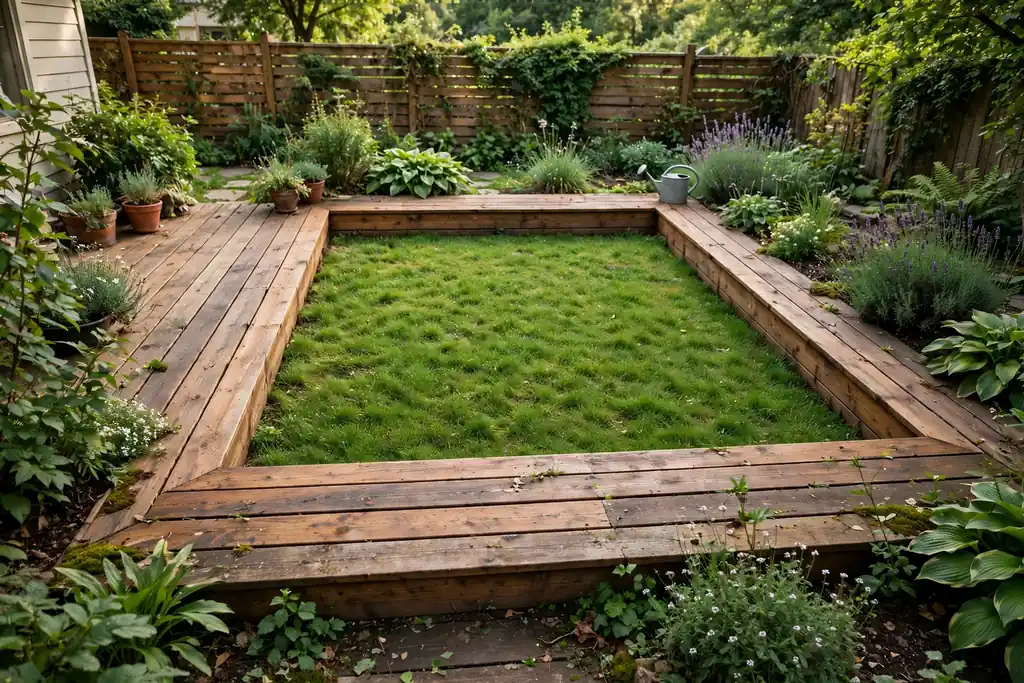
Frame the deck with a border of boards running at right angles to the main field, like a picture frame, to give even a plain rectangle a finished edge. The border hides cut board ends, marks the deck edge clearly at dusk, and gives the eye a clean line to follow. It suits decks of any size, and it works in timber or composite, as long as the border boards are the same thickness as the field boards.
Plan the border width before you cut the field boards, so the last full board lands neatly against the frame. Use a contrasting tone for the border only if the rest of the garden is simple, since a strong contrast can dominate a small deck. Keep the border boards level with the field, so chairs and tables do not rock at the join.
4. Deck Built Around a Mature Tree
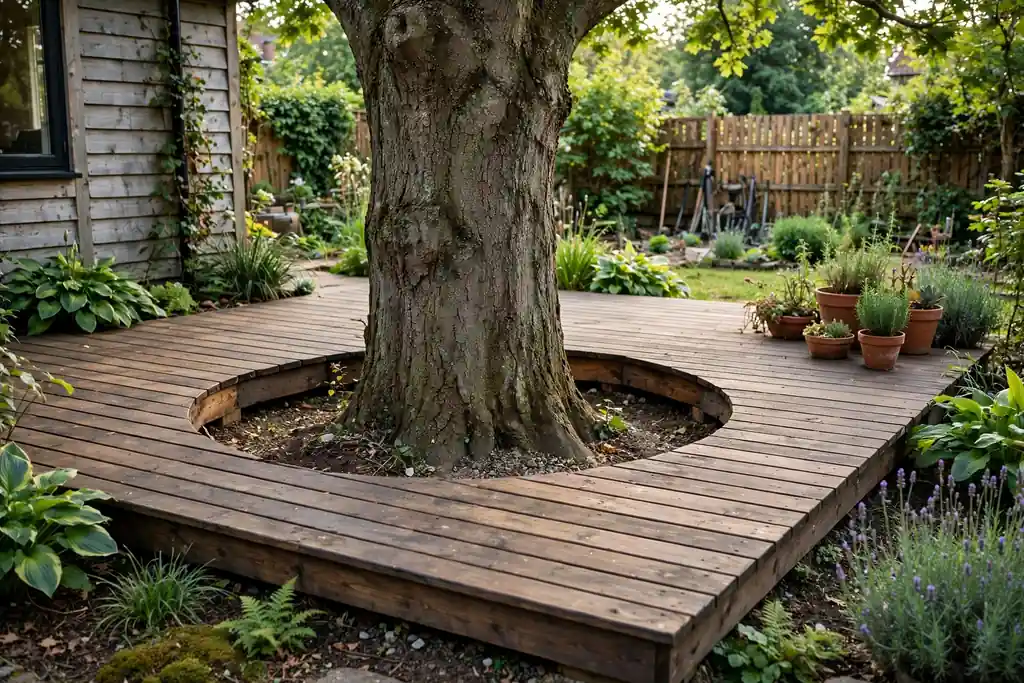
Build the deck around a mature tree, leaving a generous opening for the trunk and room for it to grow. A tree deck gives instant shade, a natural focal point, and a reason to sit outside on hot days, without waiting years for new planting to grow. Keep the opening wide, at least a hand span clear of the bark all round, and never fix boards tightly against the trunk.
Raise the frame on posts rather than filling soil against the trunk, since piled soil and trapped damp can harm the tree. Sweep fallen leaves from the opening so they do not rot against the bark, and check the gap each year, widening the opening if the trunk has thickened. A bench ring or a few pots around the opening finishes the feature without crowding the tree.
5. Built-In Bench Along the Deck Edge
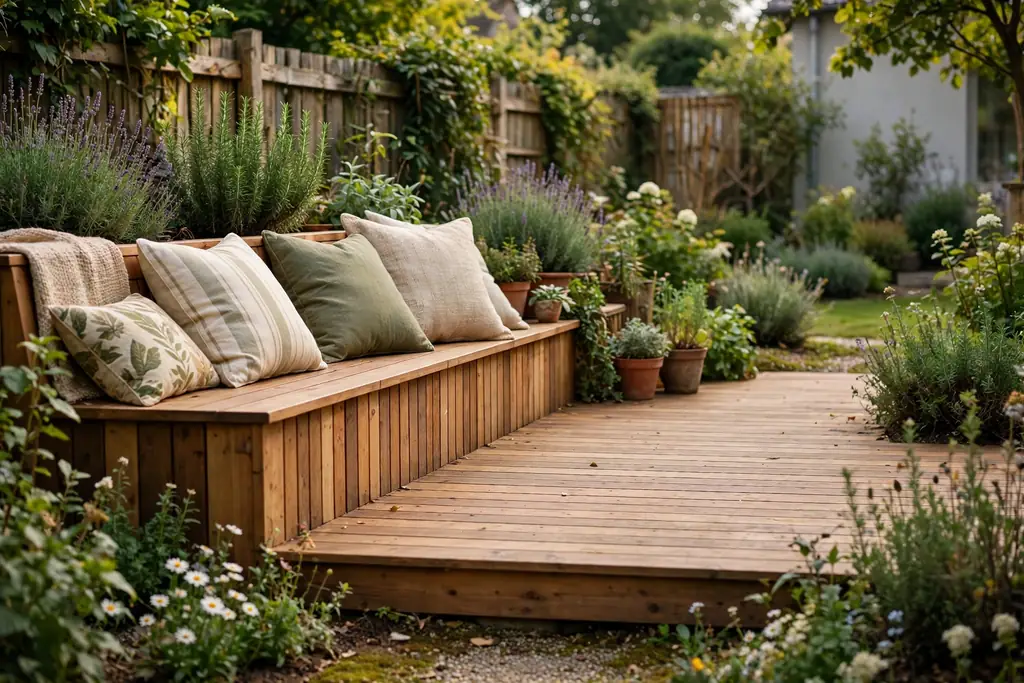
Run a built-in bench along one edge of the deck to give seating that never needs to be carried in or out, and that leaves the middle of the deck open. A fixed bench suits small decks, where loose chairs would crowd the space, and it doubles as a boundary that marks where the deck ends and the lawn begins. For seating that works in gardens as well as on decks, these garden bench ideas show how to choose a spot first and match the seat to it.
Build the bench at a comfortable sitting height, with a back rest only where the deck faces a view you want to lean into, since a backless bench is easier to sit on from either side. Leave a gap under the bench front for feet, and choose boards that match or tone with the deck so the bench reads as part of the structure. Add loose cushions for comfort, and store them nearby in dry weather.
6. Planter Boxes Built Into the Deck Edge
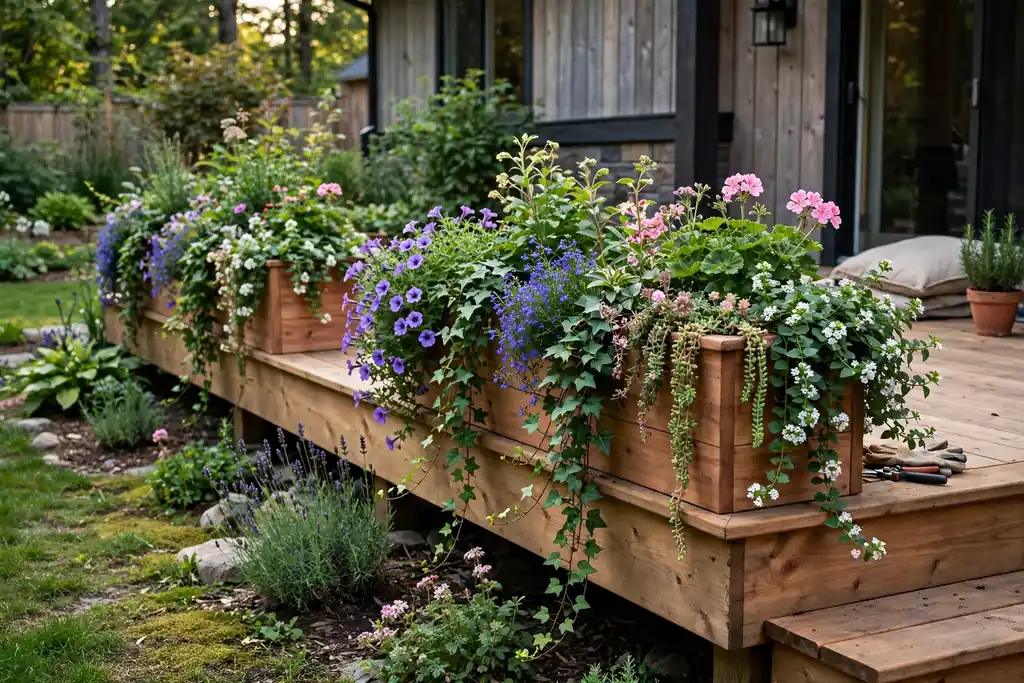
Set planter boxes into the deck edge, either as raised boxes along one side or as square planters dropped into the deck surface, so planting is part of the deck rather than an afterthought. Built-in planters soften hard edges, give trailing plants a place to spill, and let you change colour with the seasons without moving heavy pots. They suit decks beside a fence or a wall, where a planted edge breaks up a plain boundary.
Line each box so soil does not sit against the deck frame, and give every box drainage holes that lead away from the boards. Plant a mix of one upright plant, one mid height plant, and one trailing plant per box for a full look, and water boxes more often than beds, since they dry out fast in sun and wind. Keep planters clear of door swings and the main path across the deck.
7. Dining Deck Right Outside the Back Door
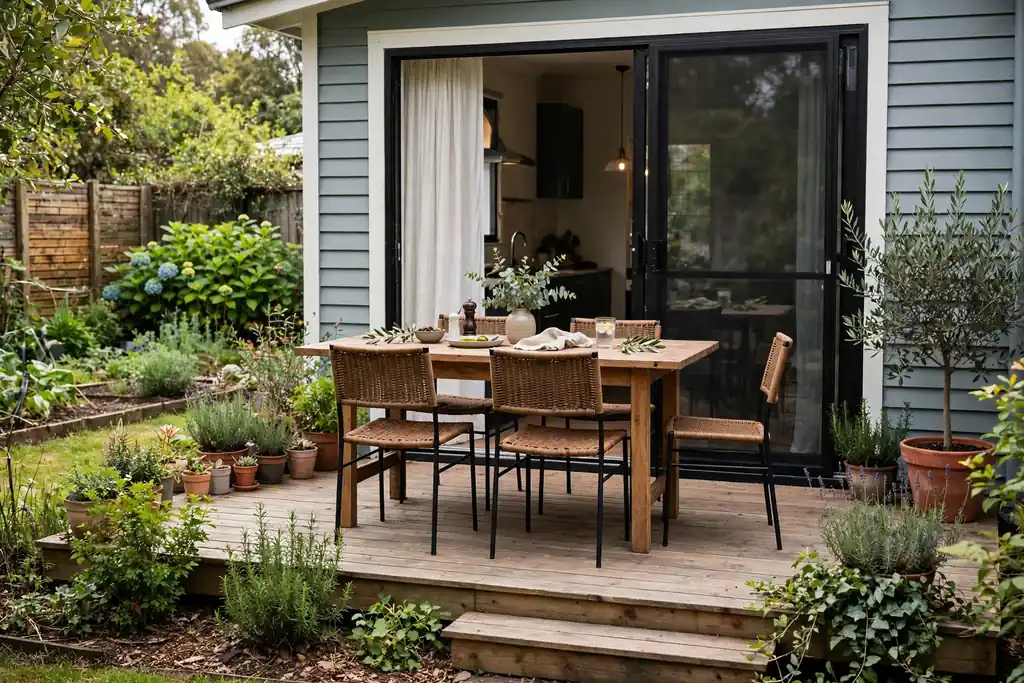
Place a dining table and chairs on the deck closest to the back door, so carrying food, plates, and drinks is short and level. A dining deck earns its place fastest in summer, when meals move outside most evenings, and it only needs a flat area, a table that seats your household, and a shade option for midday. Keep the table clear of the door swing and leave room to pull chairs out without stepping off the deck edge.
Choose a table with a top that wipes clean and chairs that stack or fold for stormy days, and add a low centerpiece pot that still lets people see across the table. A washable outdoor rug under the table defines the dining zone and catches crumbs, and a small side bench gives extra seats for guests without a second table.
8. Lounge Deck with a Sofa and Outdoor Rug
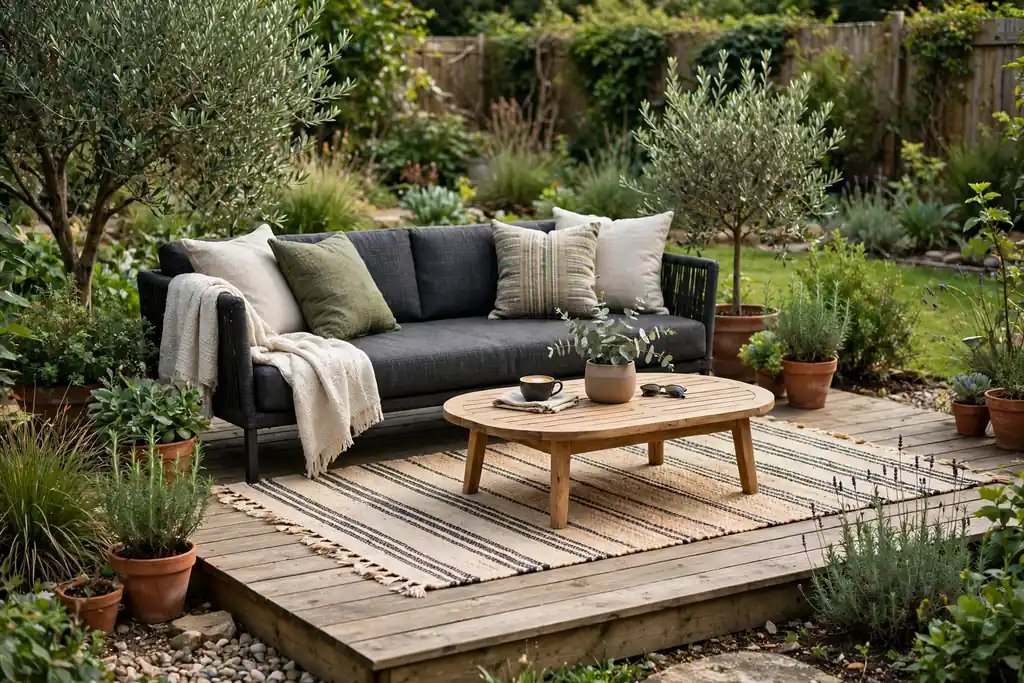
Set a low outdoor sofa, a coffee table, and a large outdoor rug on the deck to make a lounge that invites long sits rather than quick visits. A rug softens boards underfoot, defines the seating zone, and adds colour that can change with the seasons. Choose weather resistant cushions with removable covers, and bring them inside during long wet spells so they stay fresh.
Face the sofa toward the best view, whether that is the garden, a fire feature, or the evening sun, and leave a clear path behind it for access to the lawn. A side table at each end holds drinks and books, and a basket for throws keeps the lounge ready for cooler evenings without extra furniture. Keep the rug flat and grippy, so it does not curl at the edges and trip passers by.
9. Pergola Over the Main Seating Area
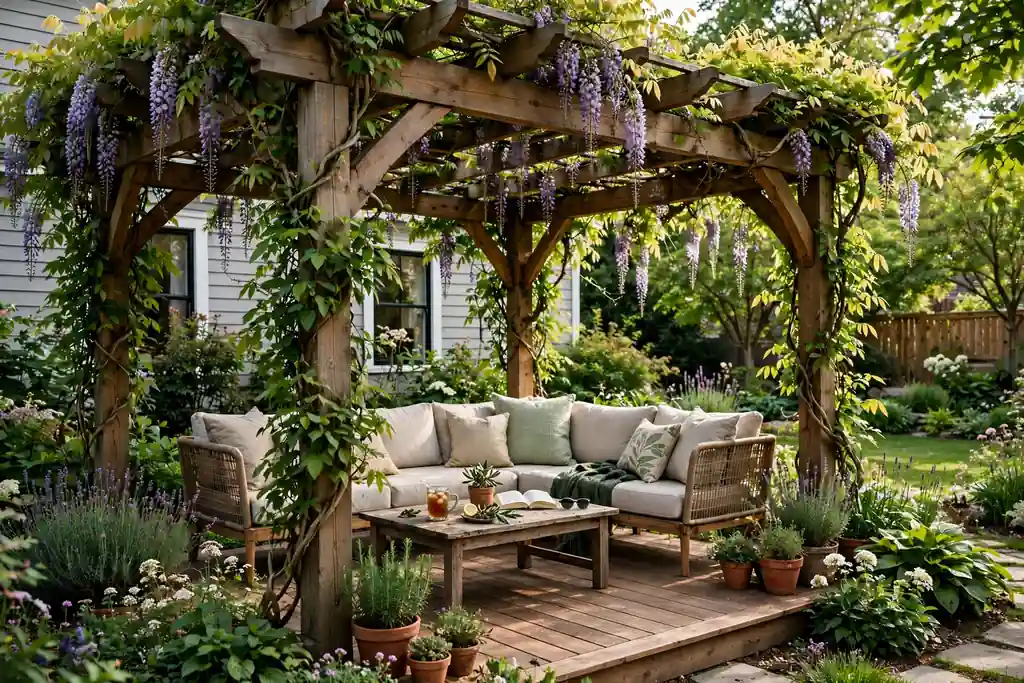
Build a pergola over the main seating area to give dappled shade, a sense of enclosure, and a frame for climbing plants and string lights. A pergola suits a ground level deck because its posts can sit on or beside the deck frame without a tall structure, and it marks the sitting zone clearly. Choose timber or metal posts that suit the house style, and fix them firmly so wind does not rock the frame.
Train climbers such as jasmine, clematis, or grape vine along the top beams, tying stems loosely as they grow, and prune after flowering as the plant type requires. Keep climbers clear of gutters and roof lines, and leave headroom under the beams so tall guests can stand comfortably. A pergola plus a rug below it often makes a bare deck feel like a room in one weekend.
10. Shade Sail Over the Sunny Corner
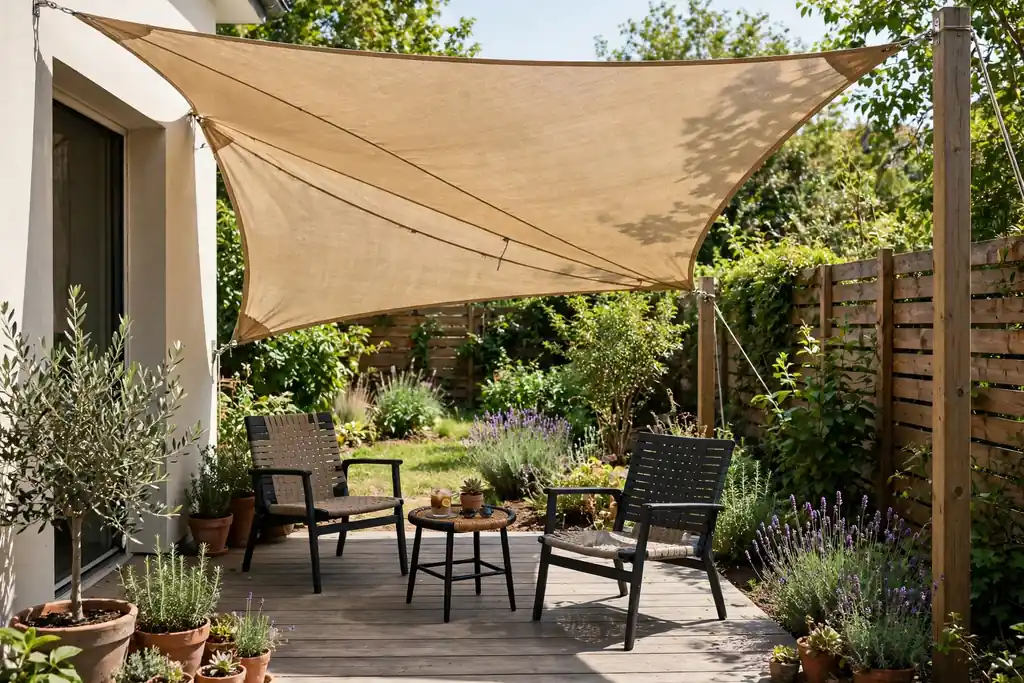
Stretch a shade sail over the sunniest corner of the deck for instant shade where a pergola would be too fixed or too heavy. A sail gives broad shade, moves gently in the breeze, and can be taken down in storms, which suits rented homes and decks that need shade only in high summer. Fix it to strong posts or wall points rated for wind load, with a slight slope so rain runs off one side rather than pooling in the middle.
Choose a light, breathable fabric in a warm neutral, and test the shade pattern at midday before fixing the final points. Keep the sail clear of fire features and climbing plants that could snag it, and store it dry over winter. A sail plus a screen on the windward side often makes a hot, exposed deck comfortable for most of the day.
11. Fire Table Zone on a Stone Pad
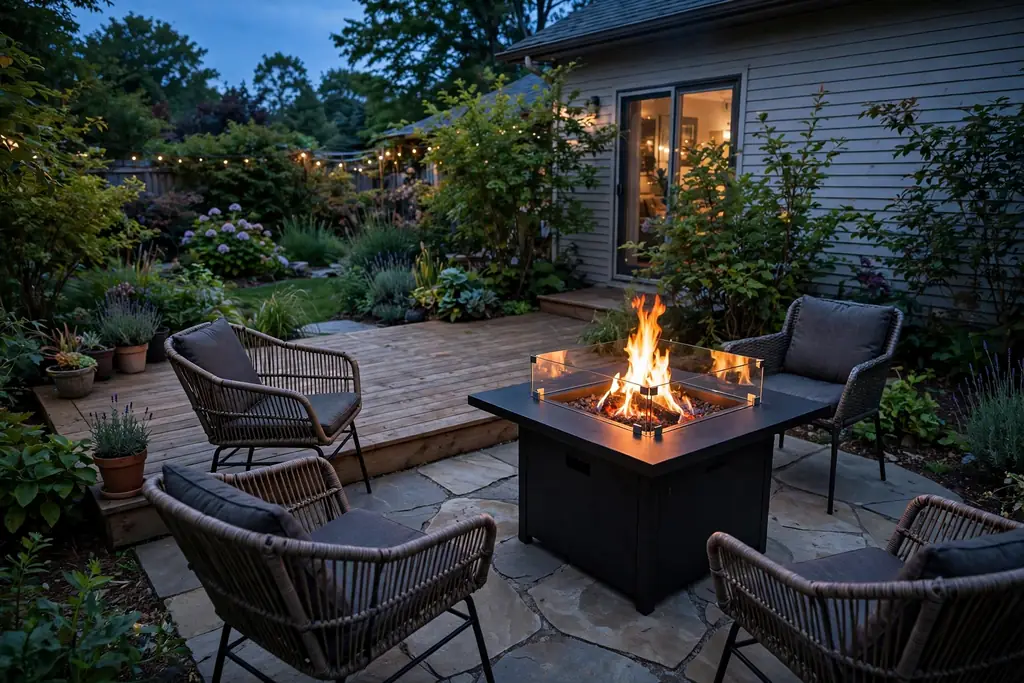
Set a fire table on a stone or paver pad at one end of the deck, rather than directly on boards, to give evening warmth with a safe, heat resistant base. A fire zone makes a deck usable later in the year, and it gives evening gatherings a focal point that draws chairs together. Check local rules first, keep the pad clear of cushions, planters, and overhanging climbers, and keep water or a fire blanket nearby.
Use the fire table only in calm weather, on a stable base, and never leave it lit unattended. If open flame is not allowed where you live, a cluster of large lanterns with candles or battery lights on the same stone pad gives a similar glow without the risk. Store fuel safely and away from the seating area, and sweep ash from the pad after use.
12. String Lights on Deck Posts
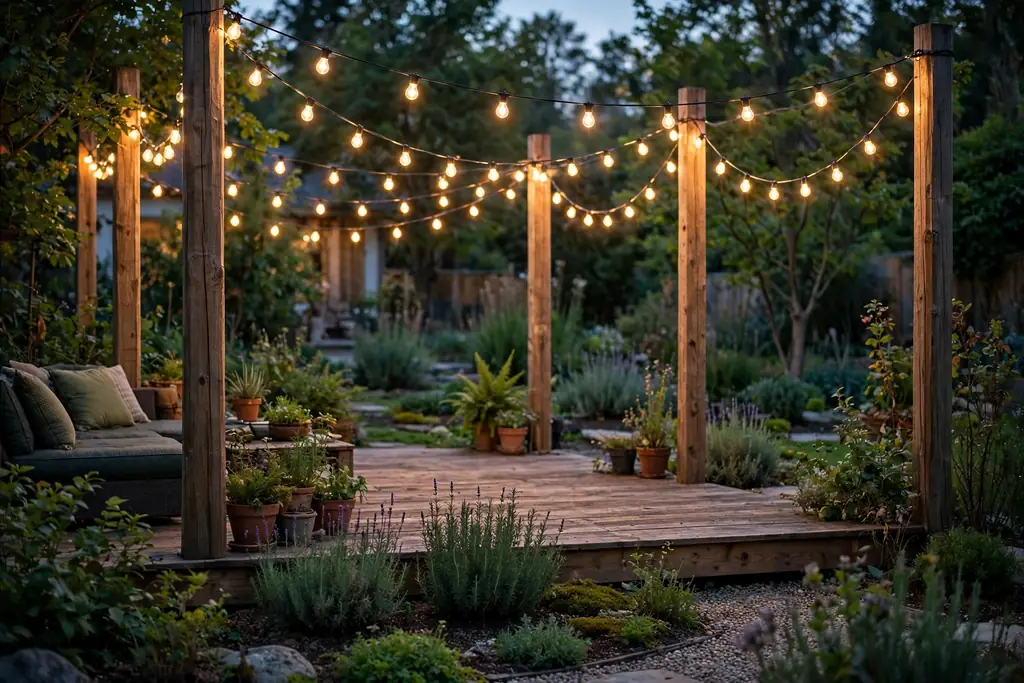
Fix string lights along deck posts, a pergola, or a simple post and wire run to keep the deck usable after sunset with soft, warm light. Light at deck level should be low and warm, so it feels cozy rather than harsh, and so it does not glare into neighboring windows. Solar or plug-in strings both suit a ground level deck, as long as cables are kept out of walkways and solar panels get sun during the day.
Drape strings in gentle swags rather than tight straight lines, so the light feels relaxed and the wire does not strain at the fixings. Test the light level at dusk before guests arrive, and add one brighter task light near a cooking or reading spot if needed. Bring plug-in strings inside in winter if the maker advises it, and check outdoor rated fittings before first use.
13. Solar Post Cap Lights Along the Edge
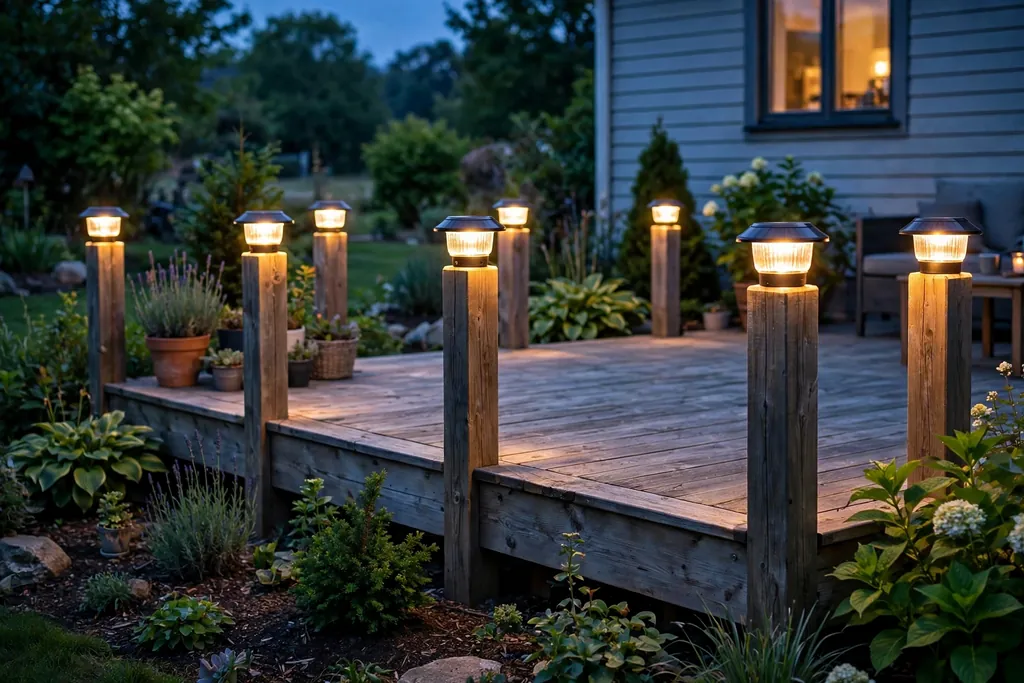
Fit solar post cap lights to short deck posts or edge posts to mark the deck boundary and light the step to the lawn after dark. Post caps suit ground level decks because they need no wiring, sit at a low height that does not glare, and charge from daylight on the deck itself. They also help guests find the deck edge and the steps when the main lights are off.
Space caps evenly along the edge, and keep one cap near each step and near the door, where a missed step is most likely. Clean the small solar panels now and then, since dust and leaves cut charging, and replace rechargeable cells when the light fades early. Caps pair well with string lights above, giving light at two heights without a harsh overhead glare.
14. Wide Steps Down to the Lawn
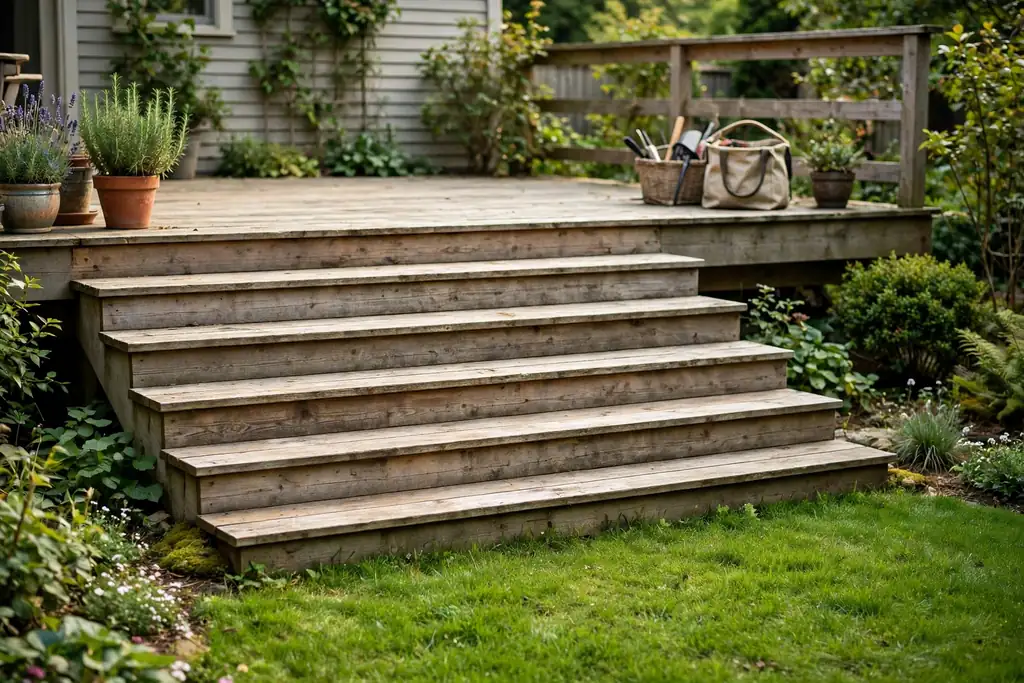
Build wide, shallow steps from the deck to the lawn, spanning much of the deck width, so the move from deck to garden feels easy and open. Wide steps suit families, gardeners carrying trays, and anyone with a walking aid, since there is no narrow pinch point at the deck edge. Keep each step low and deep enough for a full foot, and use the same board or a non slip nosing so the step reads clearly.
Add a handrail only where the drop or the user needs it, since a rail across wide steps can block the open feel, but never skip a rail where safety calls for one. Keep the bottom step clear of soil and mulch so it does not rot, and sweep leaves from the treads so they stay grippy after rain. A pot at each end of the steps anchors the transition in planting.
15. Step Free Ramp Deck for Easy Access
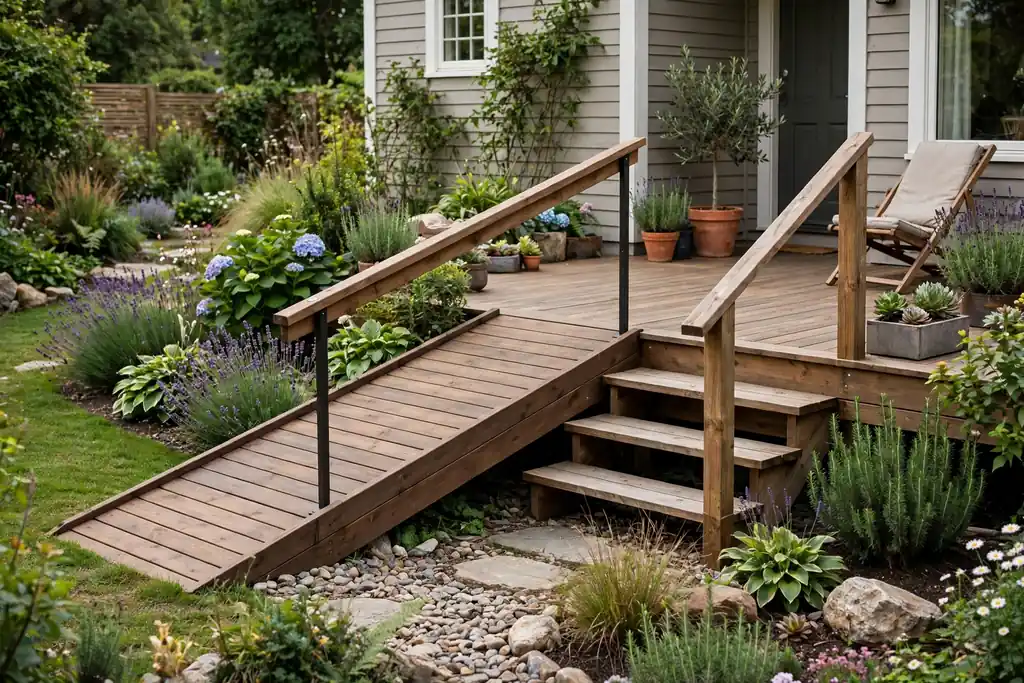
Add a gentle ramp beside or instead of steps to make the deck step free for wheelchairs, pushchairs, and trolleys. A ramp is one of the most useful ground level deck features, since the deck is already low, so only a short, gentle slope is needed. Keep the slope gentle, the surface grippy, and the ramp wide enough to turn at the top and bottom.
Edge the ramp with a low kerb or a contrasting board so wheels stay on the surface, and keep the ramp clear of pots, hoses, and door mats. A ramp that doubles as a plant edged path, with low planting on one side, looks like part of the garden rather than an add on. Check the finished height at the door threshold, so the ramp meets the doorway without a lip.
16. Storage Hatch and Bench Boxes Under the Deck Edge
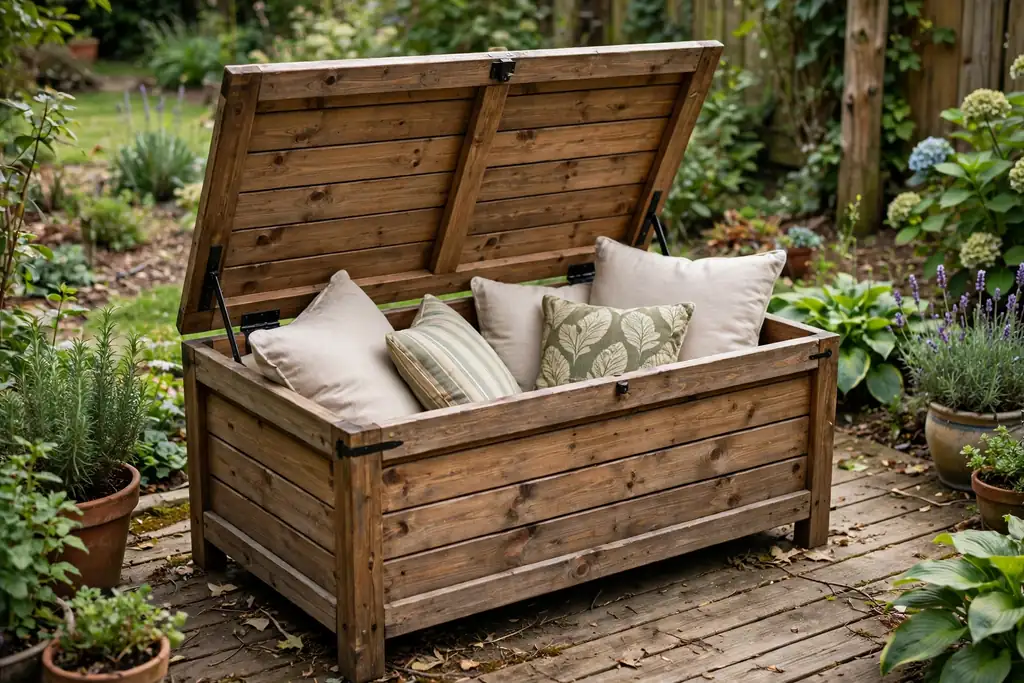
Use the space under a low deck edge for a storage hatch, or build bench boxes into the deck seating, to hide cushions, watering cans, tools, and small pots. Deck gear gathers fast, and hidden storage keeps it dry and out of sight without taking a whole shed. Choose boxes made for outdoor use, with lids that close fully to keep rain out, and keep heavy items at the bottom so boxes stay stable.
Leave clearance behind bench boxes so lids open fully, and never seal the whole under deck space, since air must still move under the boards to keep the frame dry. Label one box for cushions and one for tools, so the right box opens first. Storage close to the lounge corner means cushions are close at hand, so you are more likely to use the deck on a whim.
17. Grill and Prep Station at One End
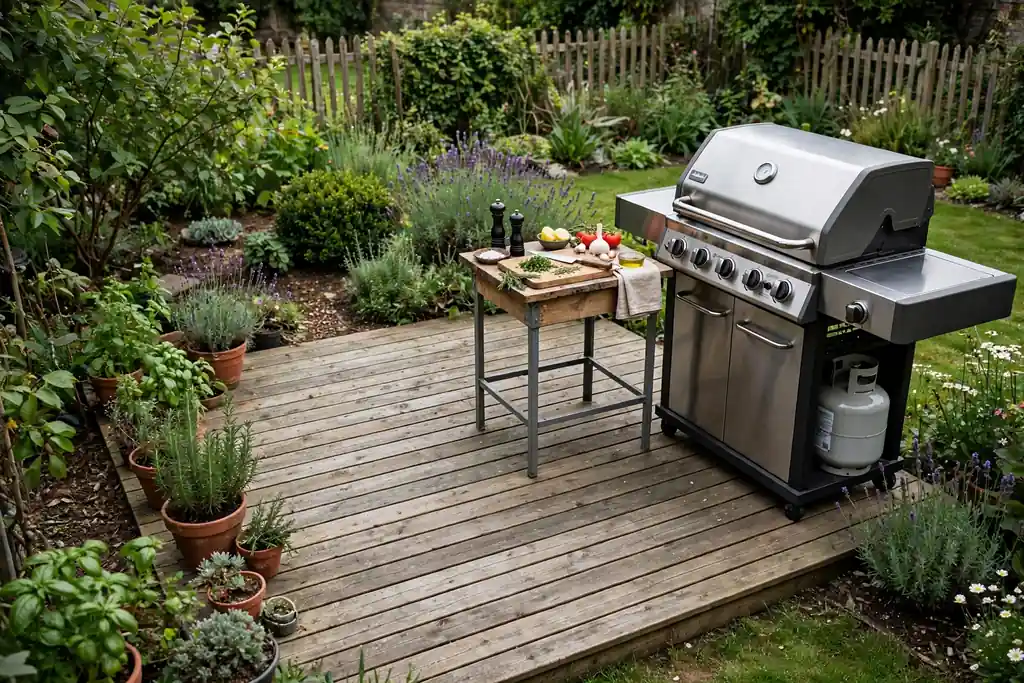
Set a grill and a small prep table at one end of the deck, near the back door but clear of seating, so cooking outside stays easy and smoke drifts away from guests. A grill station needs a heat resistant base, a stable table for trays and tools, and room to move around the grill safely. Keep the station away from pergola fabric, cushions, and low climbers, and store fuel and tools in a lidded box nearby.
Add a small shelf or a wall hook for tongs, brushes, and a thermometer, and a bin or a bucket for ash and waste so the deck stays tidy during cooking. A prep table with a lower shelf holds plates and trays, so trips back indoors stay short. Clean the grill and the table after use, since grease and food scraps attract pests and stain boards.
18. Container and Herb Garden Corner
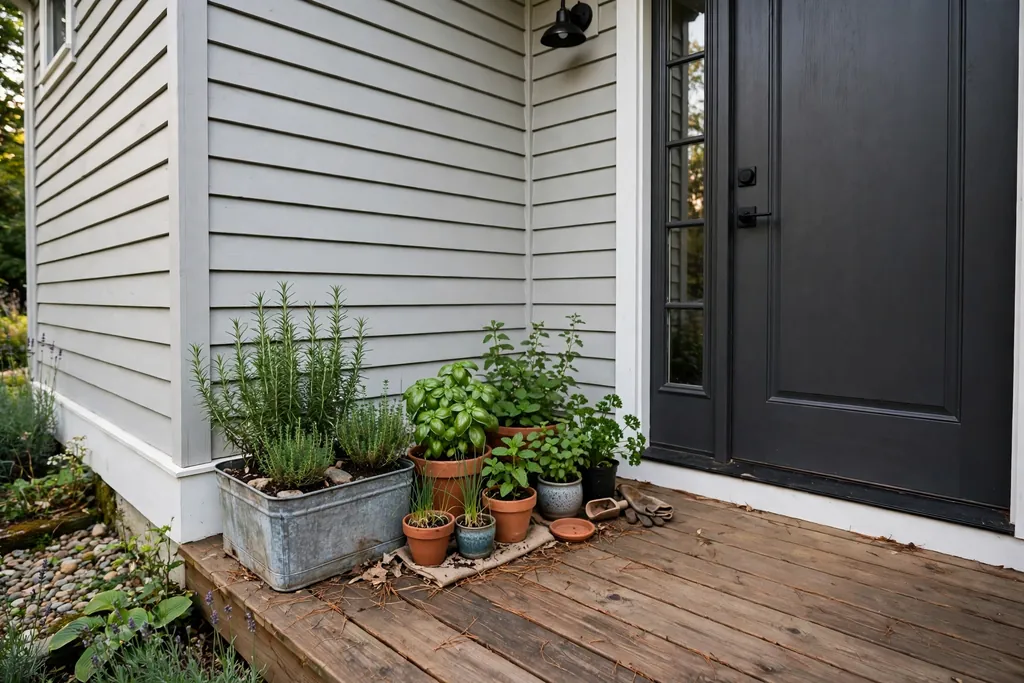
Group containers and herb pots in one deck corner near the kitchen door for fresh leaves within a few steps of cooking, plus colour that changes with the seasons. Herbs such as rosemary, thyme, basil, mint, and chives grow well in pots, and they add scent as well as flavour. Grow mint in its own pot, since it spreads fast and can take over a shared planter.
Raise pots on feet so water drains freely and does not stain the boards, and group them in clusters of three or five so the corner reads as a garden, not a row of stray pots. Label herbs while they are young, water pots often in hot weather, and pick little and often to keep plants bushy. In winter, move tender herbs to a sheltered corner or indoors, and replace annual herbs each spring.
19. Slatted Privacy Screen on the Windy Side
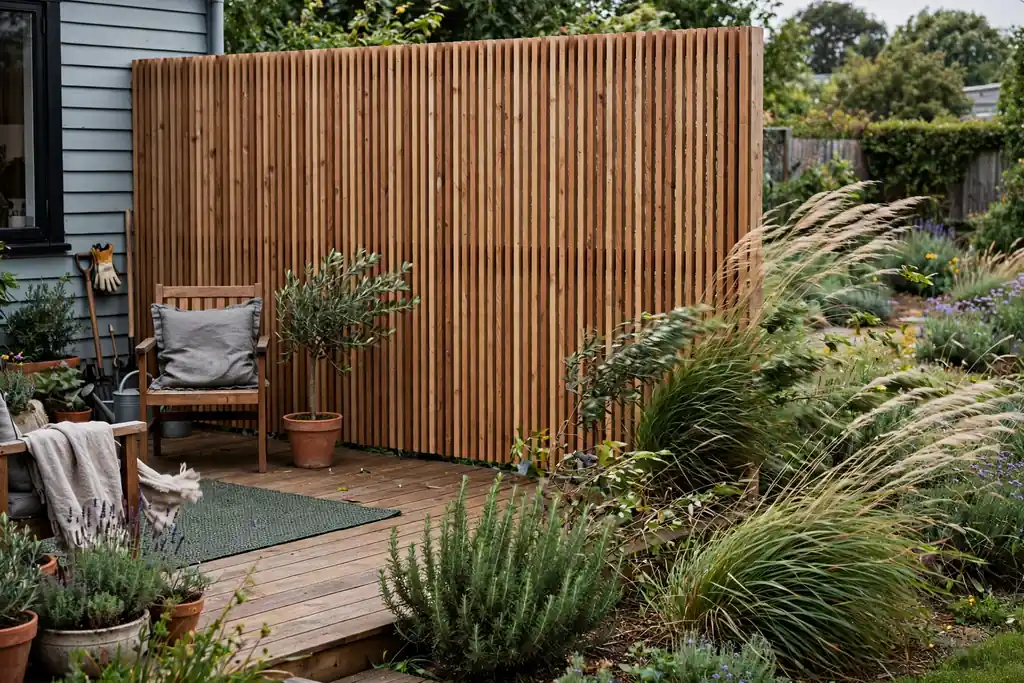
Stand a slatted screen along the windy or overlooked side of the deck to cut wind and give privacy without building a solid wall. Screens suit decks close to neighbours, and they give climbers a place to grow while still letting air through. Choose panels that let some air pass, since a solid screen catches more wind and puts more load on its fixings.
Fix screens firmly to posts set beside the deck frame, and check that they do not block paths, drains, or access to the house. Plant climbers at the base for a green screen in summer, and keep the panels clear of the grill and fire zone. A screen on the windward side often makes the whole deck feel calmer, even before plants cover it.
20. Low Floor Cushion Lounge for Lazy Days
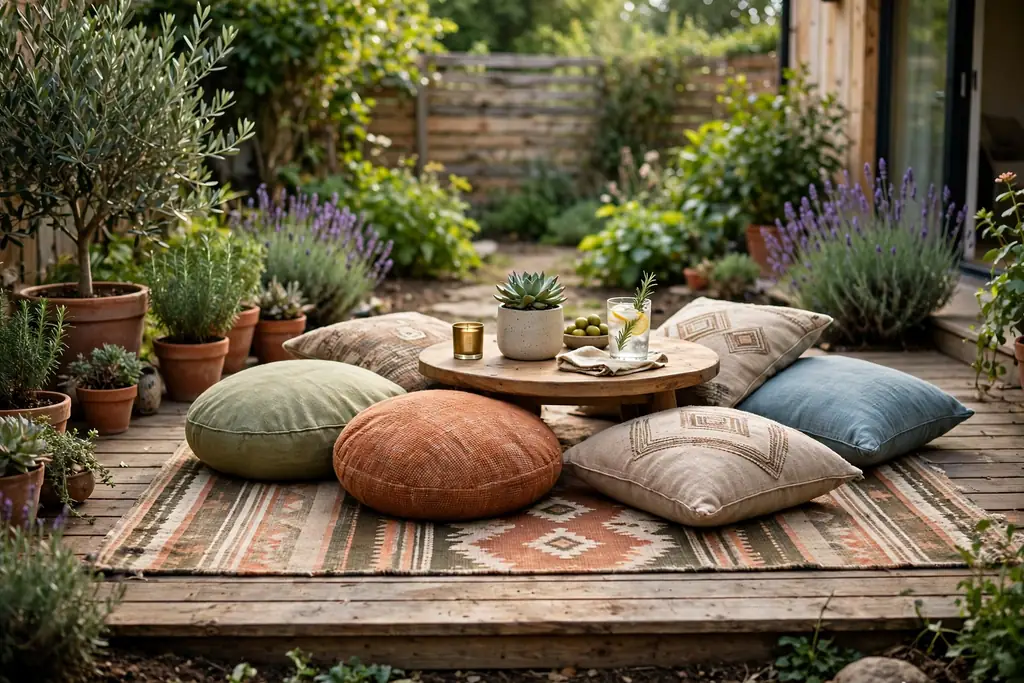
Lay a large outdoor rug and add floor cushions, a low table, and a basket for throws to make a relaxed lounge that can change shape for guests. Floor seating suits a ground level deck because it is light, flexible, and easy to pack away in a storm, and it sits at lawn height, so children and pets join in easily. Choose a washable rug and cushions with removable covers, and keep the setup on a dry, level patch of deck.
Move the lounge to follow shade during the day, and stack cushions in a storage box at night. Keep food and drinks on a low tray so cups do not tip on soft seating, and keep the rug edges flat so they do not trip passers by. This lounge pairs well with string lights in the evening, when low seating and warm light make a small deck feel like a room.
21. Hammock Corner Between Two Sturdy Posts
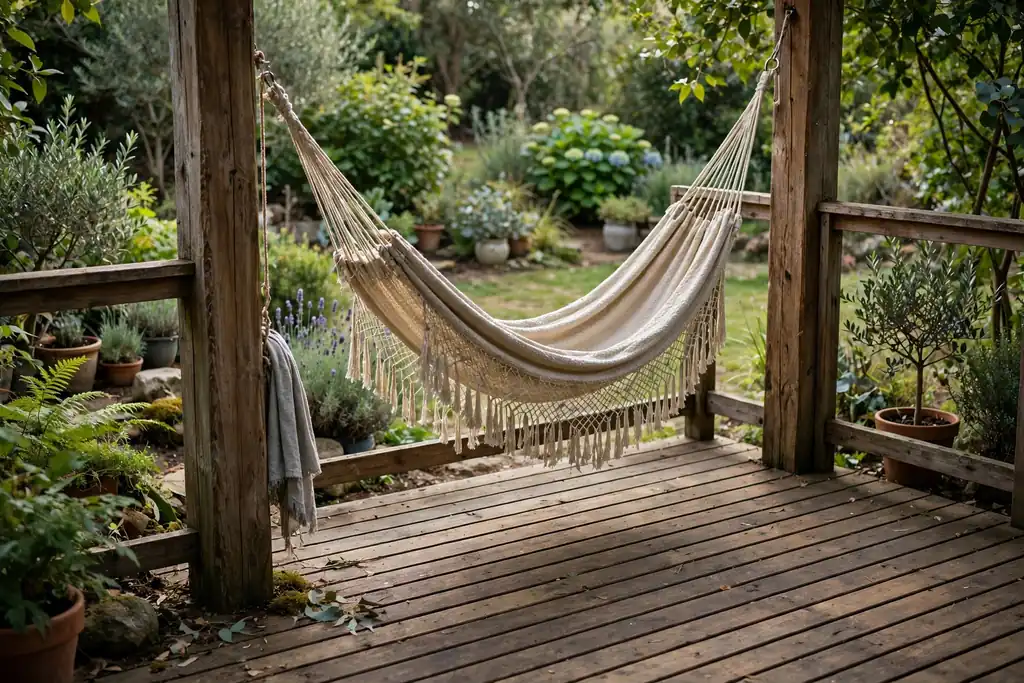
Hang a hammock between two sturdy posts at a quiet deck corner for a lazy reading spot that moves gently in the breeze. A hammock suits a ground level deck because the posts can be set beside the deck frame at lawn height, with no tall structure needed, and the hammock itself packs away in winter. Check the post fixings and the hammock weight rating, set the posts on firm footings, and keep a clear swing zone around the hammock.
Add a small side stool for a book and a drink, and a light blanket for cooler evenings. Avoid hanging a hammock from a pergola or a fence unless that structure is rated for the load, since a garden fence is not always built for swinging weight. Take the fabric inside in wet weather to keep it fresh, and check ropes and fixings each spring.
22. Small Fountain Corner for Sound and Calm
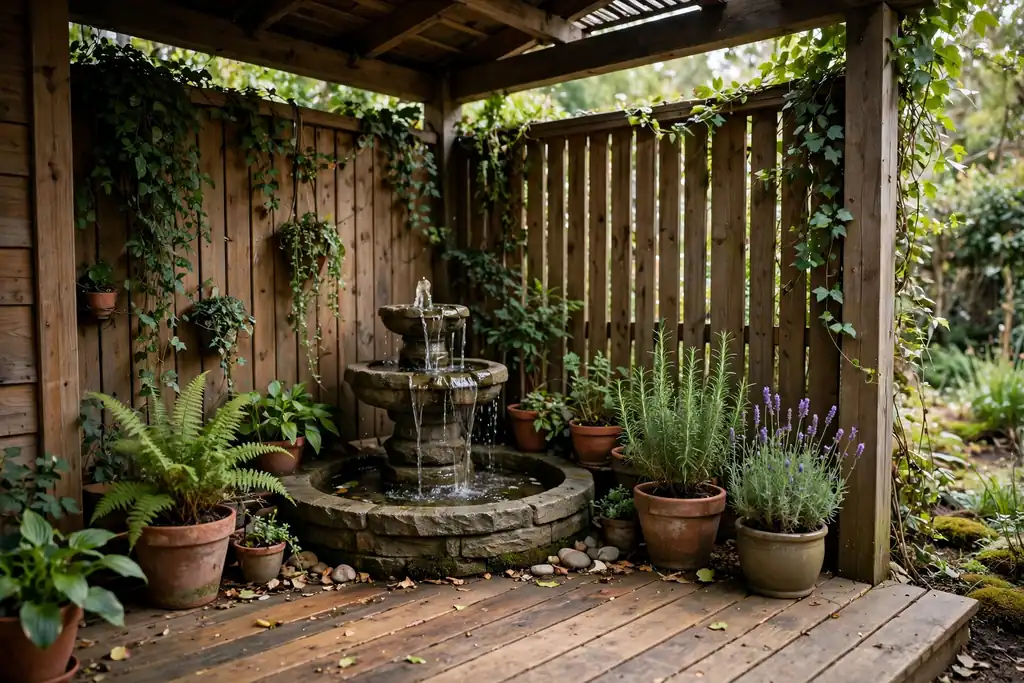
Set a small fountain or a wide water bowl in a sheltered deck corner for sound, reflection, and birds. Moving water masks street noise, which makes a deck seating area feel more private, and a still bowl reflects sky and planting. Choose a light bowl or a solar fountain, keep the water shallow, and place it where you can reach it for cleaning.
Refresh the water often, especially in hot weather, and keep the bowl clear of fallen leaves. If mosquitoes are a problem in your area, a small solar fountain that keeps water moving helps. Keep the feature away from seating cushions and electrical items, and empty it before frost if the bowl could crack. A fountain near the lounge corner gives the whole deck a calm background sound.
23. Gravel Border and Stepping Stones Off the Deck
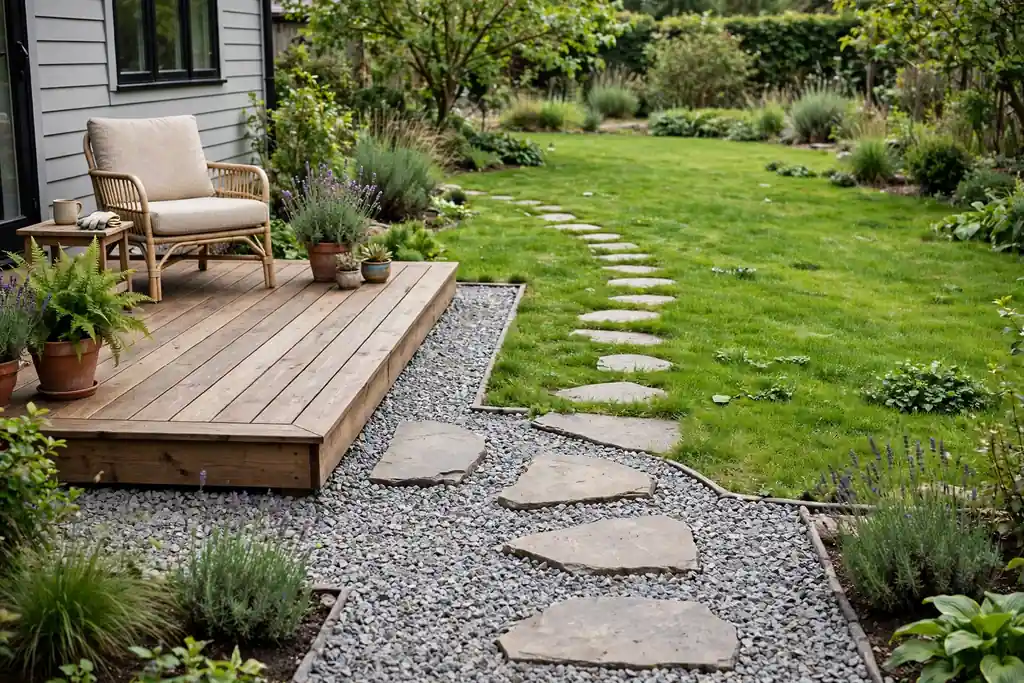
Edge the deck with a gravel border and a few stepping stones leading into the lawn, so the move from boards to grass feels gradual and stays usable after rain. Gravel drains fast, stays light underfoot, and gives a clean line that stops lawn from creeping onto the boards. Use a shallow layer of gravel over a weed barrier, and set stepping stones level with the gravel so feet do not catch.
Choose stones wide enough for a full step, and keep the path route clear of drains and door thresholds. Plant low edging plants such as thyme or small grasses along the gravel edge to soften the line, and top up gravel each spring where it has thinned. A gravel border also gives pots and a boot scraper a dry home beside the deck steps.
24. Two Low Levels with a Shallow Step Between
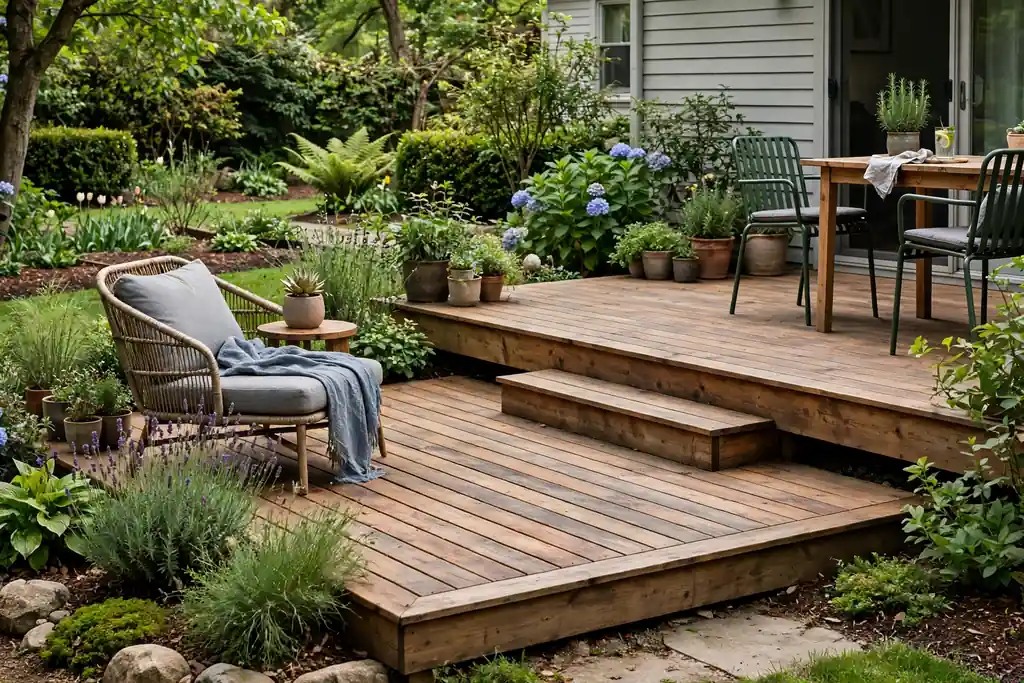
Split a ground level deck into two low levels, joined by one shallow step, to give a long or wide deck two distinct rooms without a staircase. One level can hold dining, the other lounging, and the single step marks the change without blocking movement. Keep the step low, deep, and clearly edged, and use the same boards on both levels so the deck still reads as one design.
Place the level you use most nearest the house, and the quieter level toward the garden view. A low level change also helps drainage, since each level can fall slightly away from the house. Add a pot or a post cap light at each end of the step, so the level change is easy to see at dusk as well as in daylight.
25. Diagonal Boarding for a Wider Feel
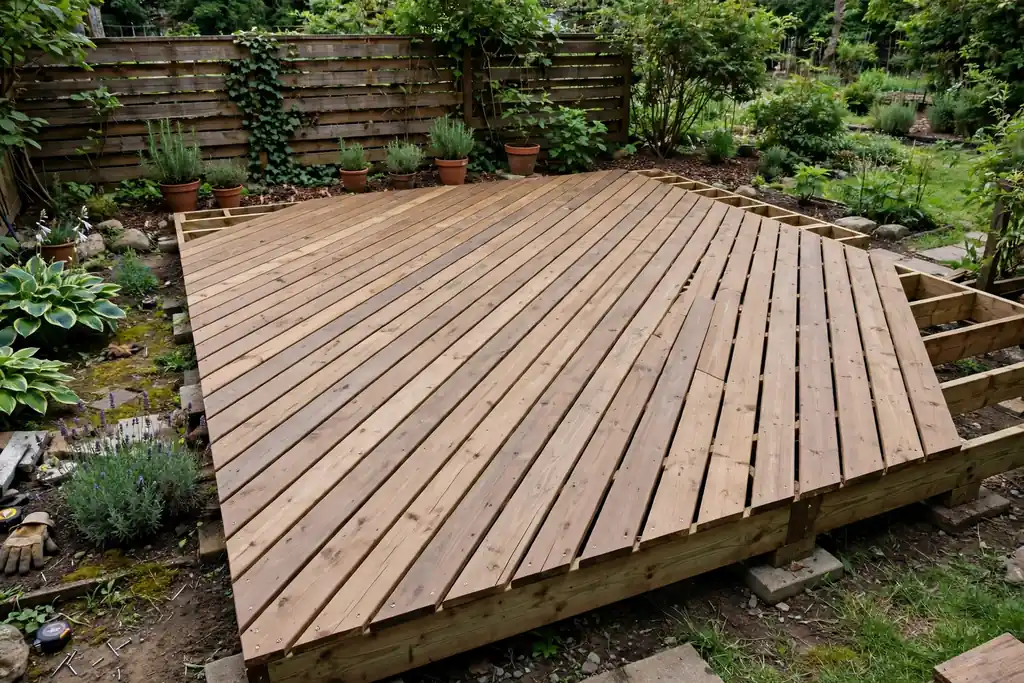
Lay the deck boards diagonally across the frame to make a narrow or small deck feel wider and more dynamic. Diagonal boards draw the eye across the deck rather than along its shortest side, and they suit decks where the main view is at an angle to the house. The pattern needs more boards and more cuts than straight boarding, so plan the layout and allow extra material.
Keep the board gaps even, since uneven gaps show more clearly on a diagonal, and use a picture frame border to hide the angled cut ends at the deck edge. Diagonal boarding pairs well with a simple furniture layout, since the boards already provide visual interest. Sweep diagonally laid boards along the board direction, so dirt does not lodge in the gaps.
26. Patterned Inlay Panel as a Deck Centrepiece
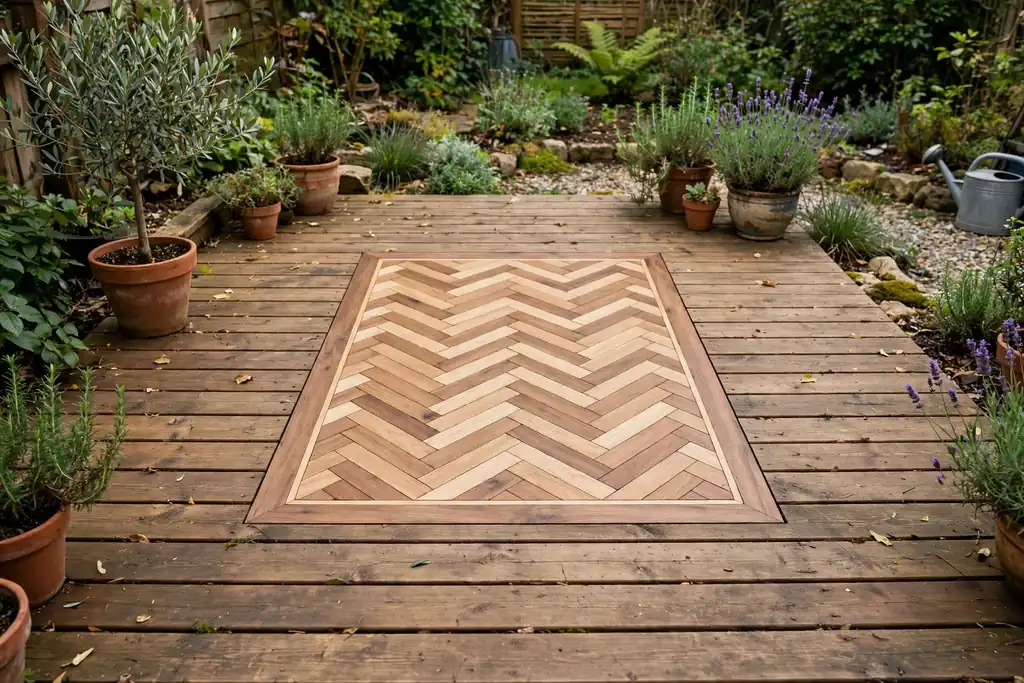
Set a patterned inlay panel, such as a herringbone or chevron square, into the middle of the deck as a centrepiece under a table or a lounge rug. An inlay gives a plain deck a crafted focal point without changing the whole board layout, and it suits decks where one area deserves extra attention. Keep the inlay flush with the surrounding boards, so chairs and tables do not rock at the join.
Plan the inlay size before you lay the field boards, so the panel lands centrally and the surrounding boards meet it neatly. Use a second board tone for the inlay only if the rest of the deck is simple, since a strong pattern can dominate a small deck. Seal the inlay as the maker directs, and check the joints each spring, since patterned cuts can open if boards move.
27. Railing Bar Ledge for Drinks and Snacks
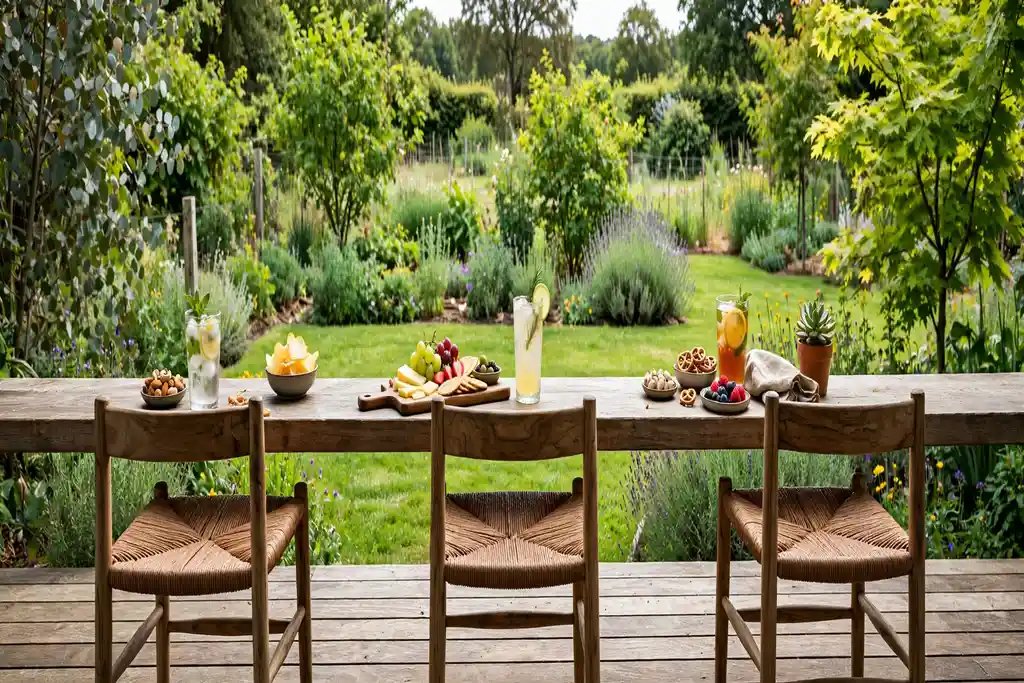
Fix a wide, flat bar ledge along the deck edge or along a low railing, so guests have a place to set drinks and snacks without a table. A bar ledge suits decks used for gatherings, since it adds serving space without taking floor area, and it gives standing guests a natural place to gather. Choose a board or a stone top that wipes clean, and fix it firmly so leaning weight does not loosen it.
Keep the ledge at a comfortable standing height, and leave a clear path behind it so people can pass without squeezing. Add a few stools only where the ledge faces the garden, not where it blocks the steps, and keep food and glass away from the deck edge where they could fall to the lawn. A bar ledge beside the grill station also gives cooks a landing spot for trays.
28. Swing Bench Nook in a Sheltered Corner
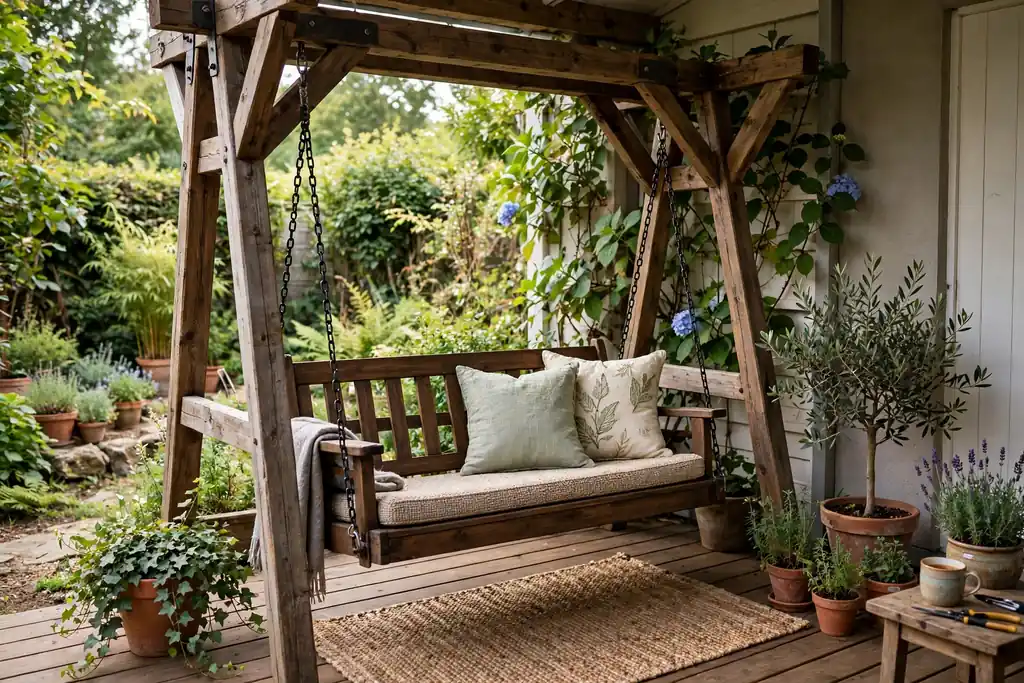
Hang a swing bench from a sturdy frame in a sheltered deck corner for a gentle, sociable seat that suits two people. A swing bench suits a ground level deck because the frame sits at deck height, takes little floor space, and adds a soft, moving shape among straight boards and planters. Check the frame weight rating, set it on level ground, and keep a clear swing zone around it.
Add weather resistant cushions and a small side table for drinks, and a throw for cooler evenings. Avoid hanging a swing from a pergola unless that structure is rated for the load, since a pergola frame is not always built for swinging weight. Bring cushions inside in wet weather, and check chains and fixings each spring before the swing gets daily use.
29. Four Season Deck with Heater and Lanterns
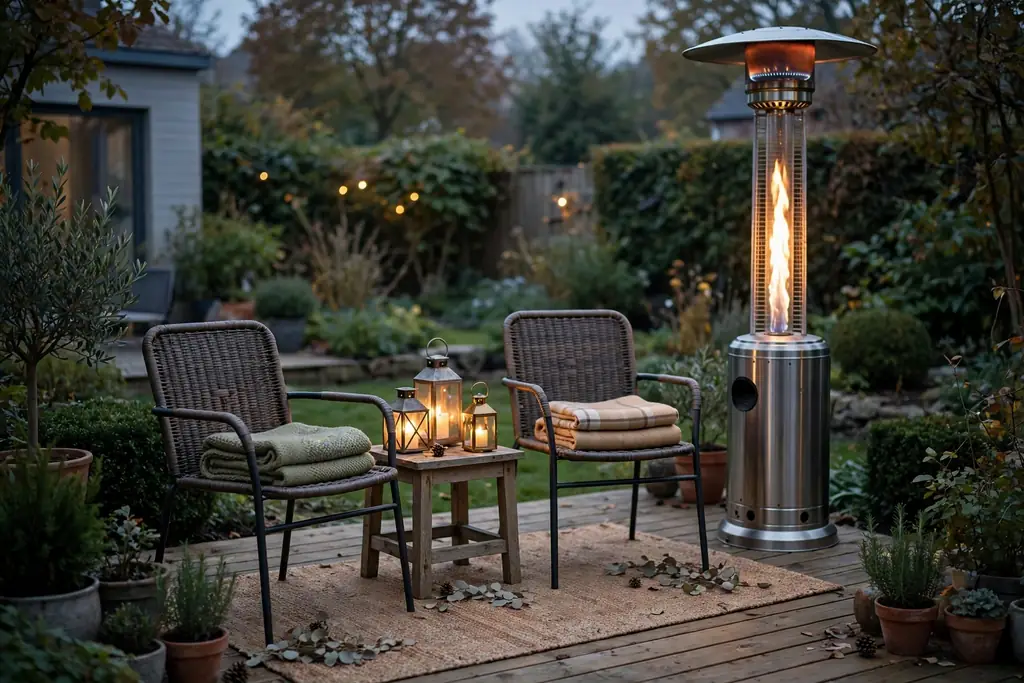
Set up the deck for four season use with a patio heater, warm lanterns, and a basket of throws, so the deck stays inviting beyond summer. A heater extends evening use into spring and autumn, lanterns give soft light without wiring, and throws make a cool evening sit comfortable rather than brief. Place the heater clear of pergola fabric, cushions, and climbers, and follow the maker safety guidance for clearance and fuel.
Store throws in a dry box beside the lounge corner, so they are close at hand when the temperature drops. In winter, sweep the deck clear of leaves and ice, and bring fabric items inside during long wet spells. A four season setup does not need a full redesign, just one warm seat, one safe heat source, and light that works at dusk.
30. Curved Edge Deck Following a Flower Bed
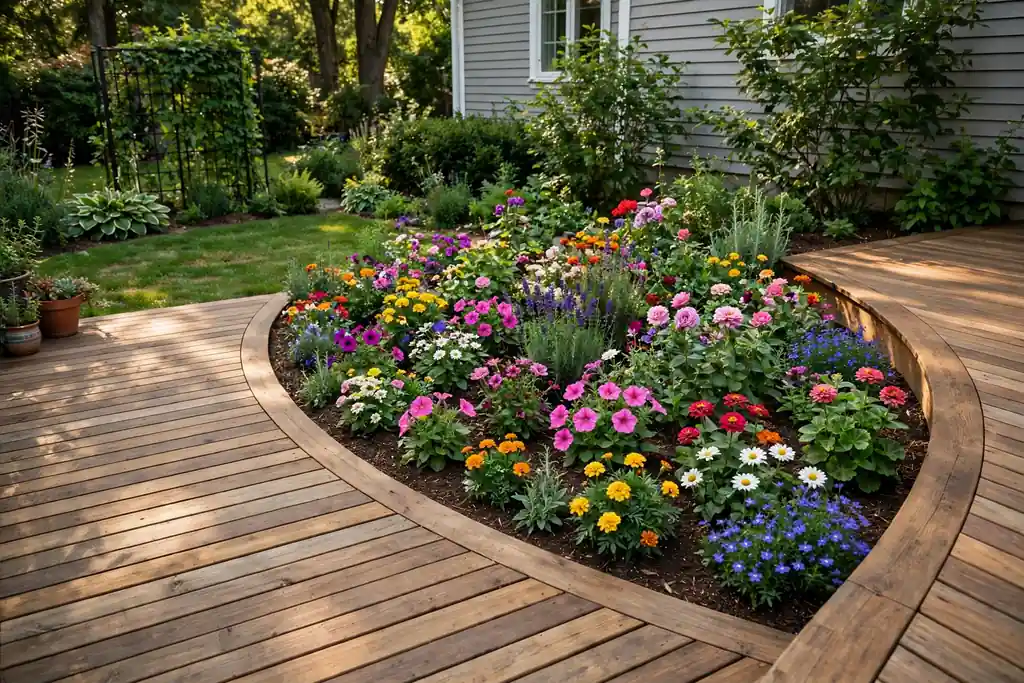
Shape one edge of the deck as a gentle curve that follows a flower bed, so the deck and the planting share one flowing line. A curved edge suits gardens with rounded beds, cottage planting, or a lawn that already curves, and it softens the rectangle that most decks default to. The curve needs careful board cutting and a flexible or segmented edge trim, so plan the radius before you cut.
Plant the bed beside the curve with a mix of heights, low edging plants at the front and taller plants behind, so the curve reads from the deck as well as from the lawn. Keep the curved edge clear of furniture legs, since chairs placed on a curve can rock if a leg lands off the boards. Sweep the curve regularly, since leaves gather in a curved edge more than on a straight one.
Conclusion
A good ground level deck starts with the ground itself, not the shopping list. Keep it low, level, and well drained, then choose one comfortable seat, one shade option, and boards that suit how you will use the deck. Add zones for sitting, eating, and planting, and keep steps, drains, and paths clear. Pick one idea from this list, set it where you will actually sit, and add lighting, planting, and comfort details only after that first seat feels right.
Save this list on Pinterest before your next garden trip, and work through it one area at a time: structure first, then seating, then the shade and planting that make the deck yours.
FAQs
How high should a ground level deck sit above the ground?
A ground level deck usually sits just above the ground, low enough that only one shallow step or a small ramp is needed to reach the lawn. Keep boards clear of soil, with air moving under the frame, so the structure stays dry. The exact height depends on drainage, the door threshold, and local rules, so measure from the door and plan the step before you build.
Do ground level decks need planning permission or a permit?
Rules vary by area, and they often depend on deck height, size, distance from property lines, and whether the deck sits near a protected tree or a drainage route. Low decks often fall under simpler rules than raised decks, but that is not guaranteed everywhere. Check local rules and, if in doubt, ask your local planning office before you build, especially for decks near boundaries or drains.
What is the best board material for a ground level deck?
Timber gives warmth and a natural look, and it suits gardens where the deck should blend with planting. Composite needs less upkeep, resists splinters, and suits shaded or busy households, but it costs more up front. Whichever material you choose, pick a grippy finish for wet weather, follow the maker fixing guidance, and keep boards clear of standing water and soil.
How do I keep a ground level deck from rotting?
Keep air moving under the deck, keep boards clear of soil and mulch, and sweep leaves so damp debris does not sit on the surface. Use timber rated for ground contact, seal or oil it as the maker directs, and fix drainage so rain runs away from the house and off the deck. Check the frame and board fixings each spring, and replace any soft board before rot spreads.
How can I make a small ground level deck feel bigger?
Use diagonal boards or a light board colour to draw the eye across the deck, keep furniture low and few in number, and use built-in seating along one edge instead of loose chairs all round. A wide step to the lawn, a gravel border, and planting at the deck edge all blur the boundary with the garden, which makes a small deck feel like part of a larger outdoor room.
How much upkeep does a ground level deck need through the year?
Sweep regularly, wash the surface a few times a year, and check fixings, gaps, and drainage each spring. Timber decks need oiling or sealing as the maker directs, while composite decks mainly need sweeping and washing. Bring cushions and fabric items inside during long wet spells, clear leaves in autumn, and check steps, lights, and screens before the main outdoor season.